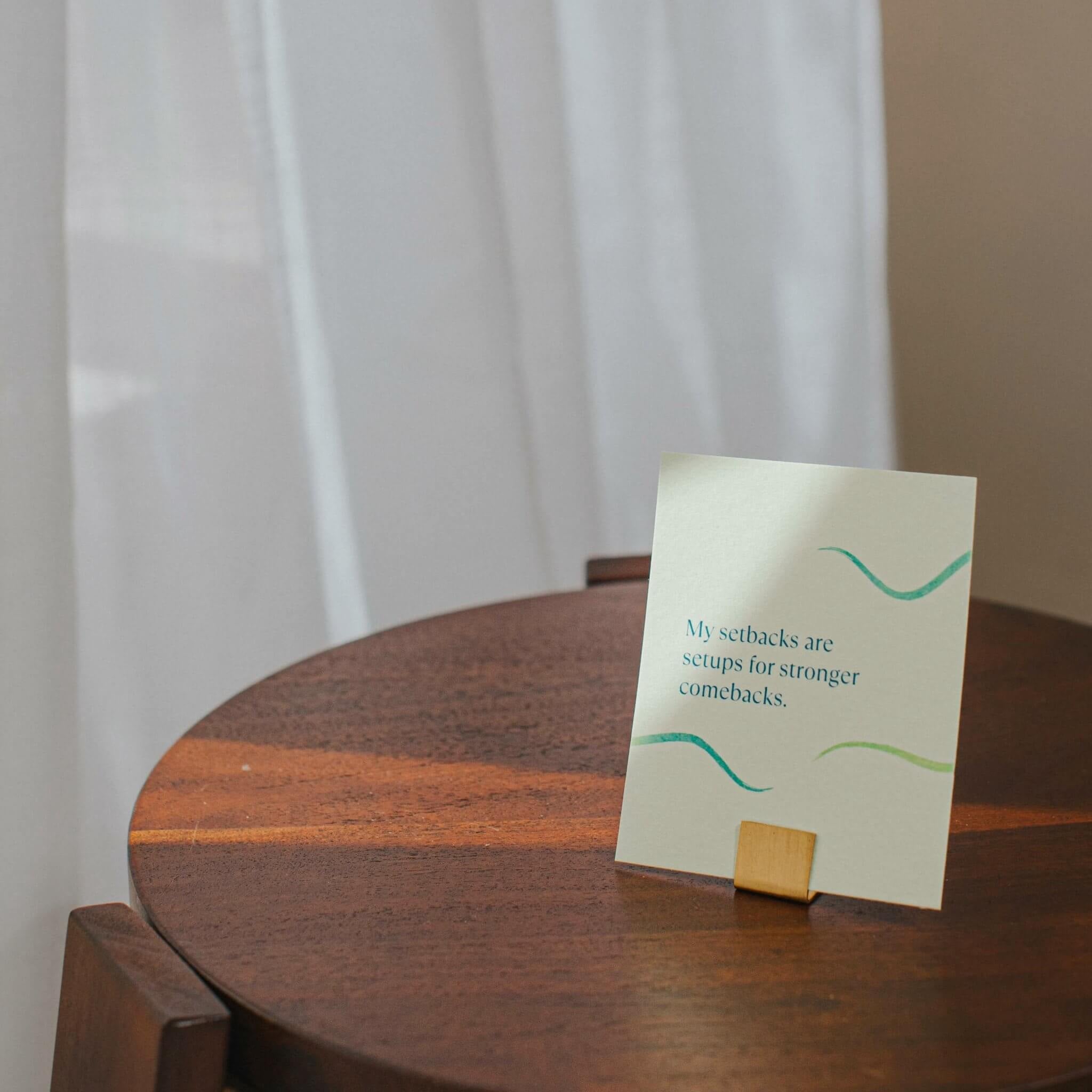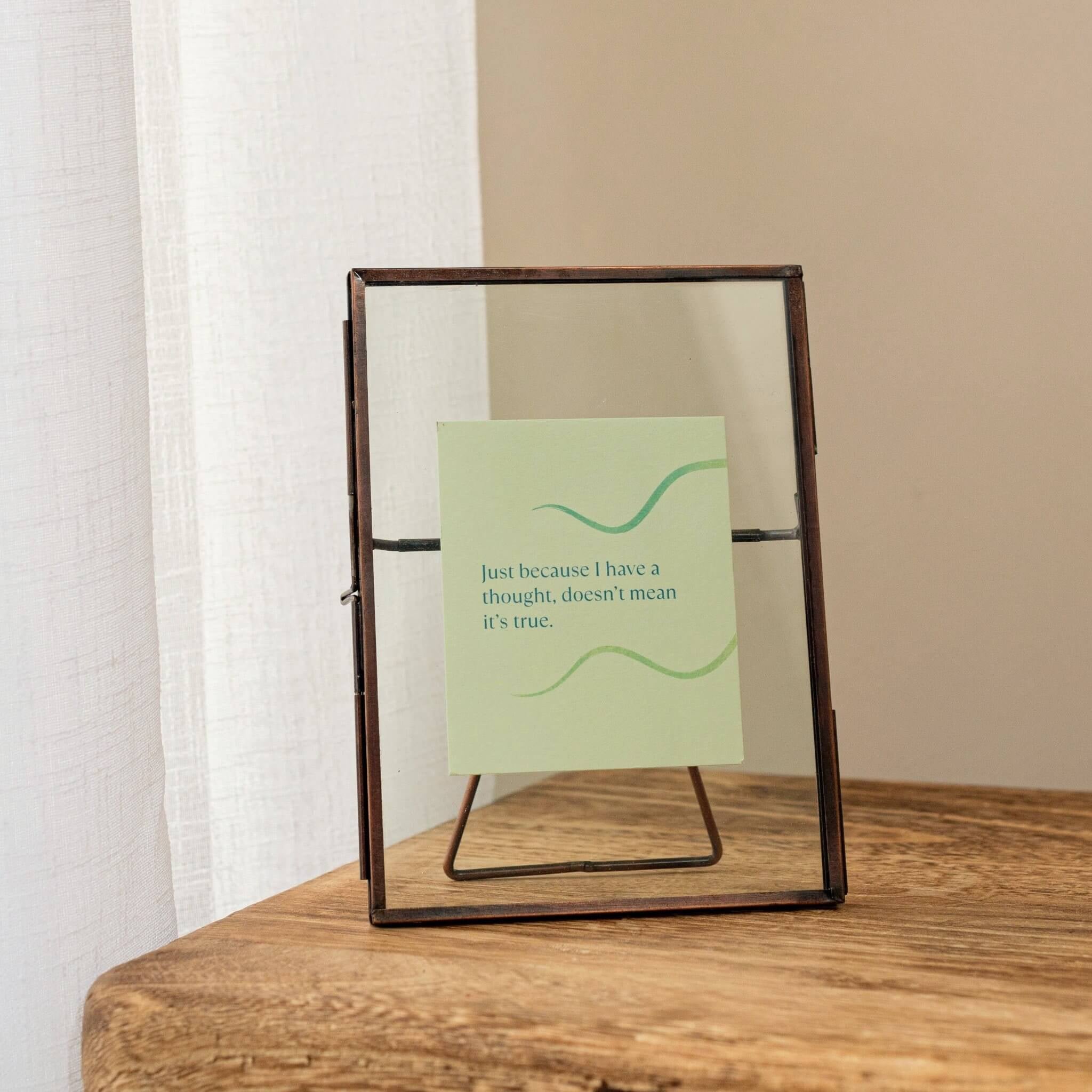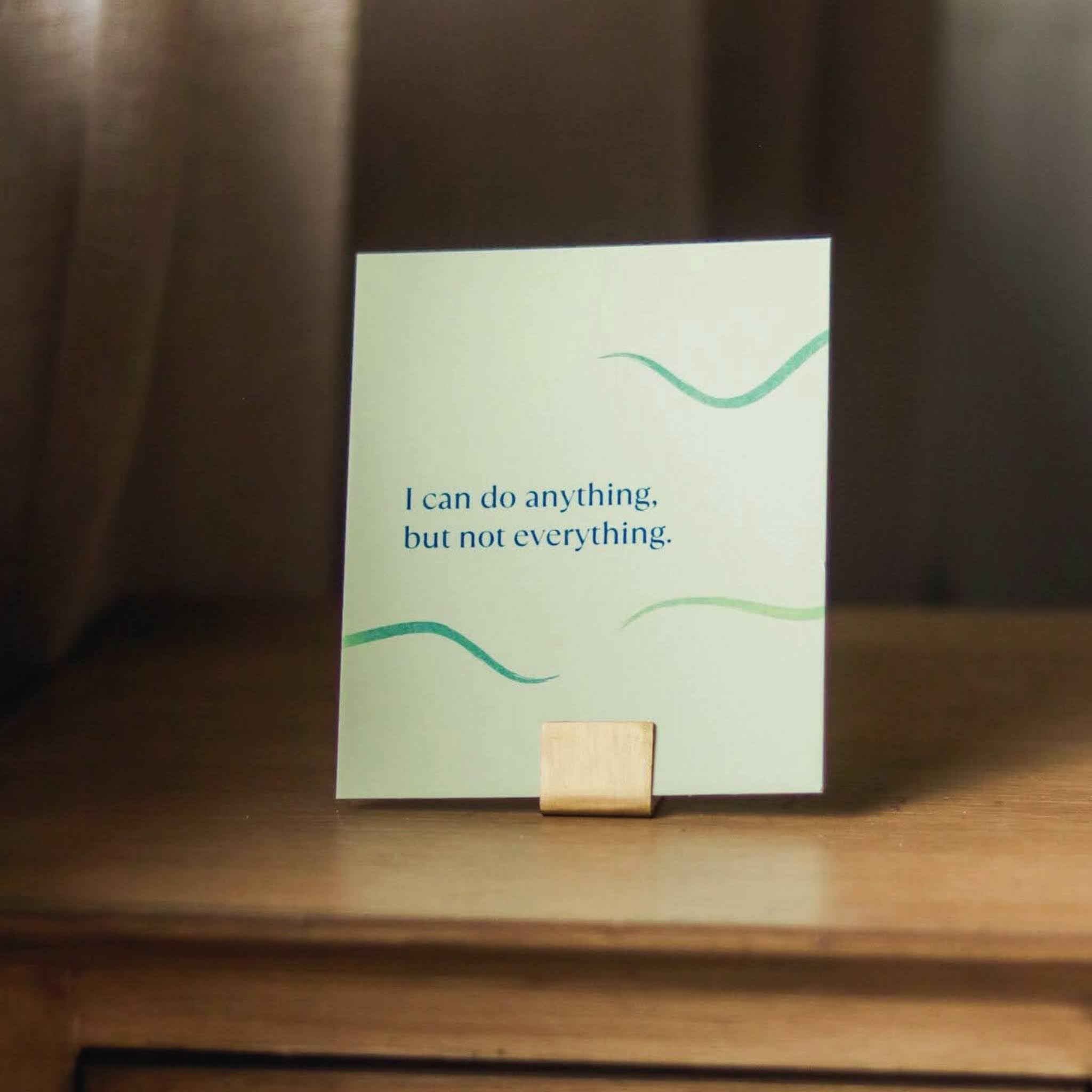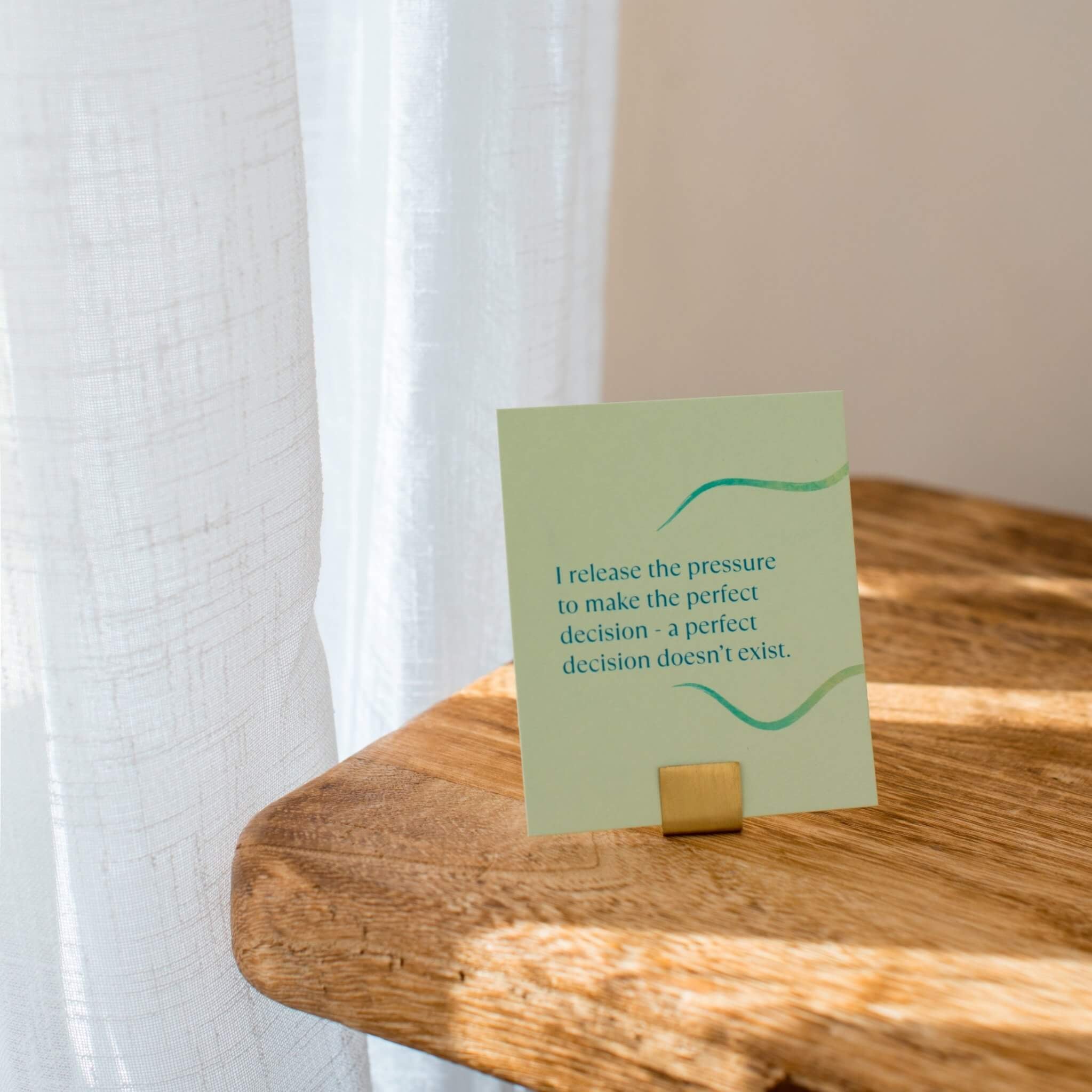


Quick answer
What is the best guided journal?
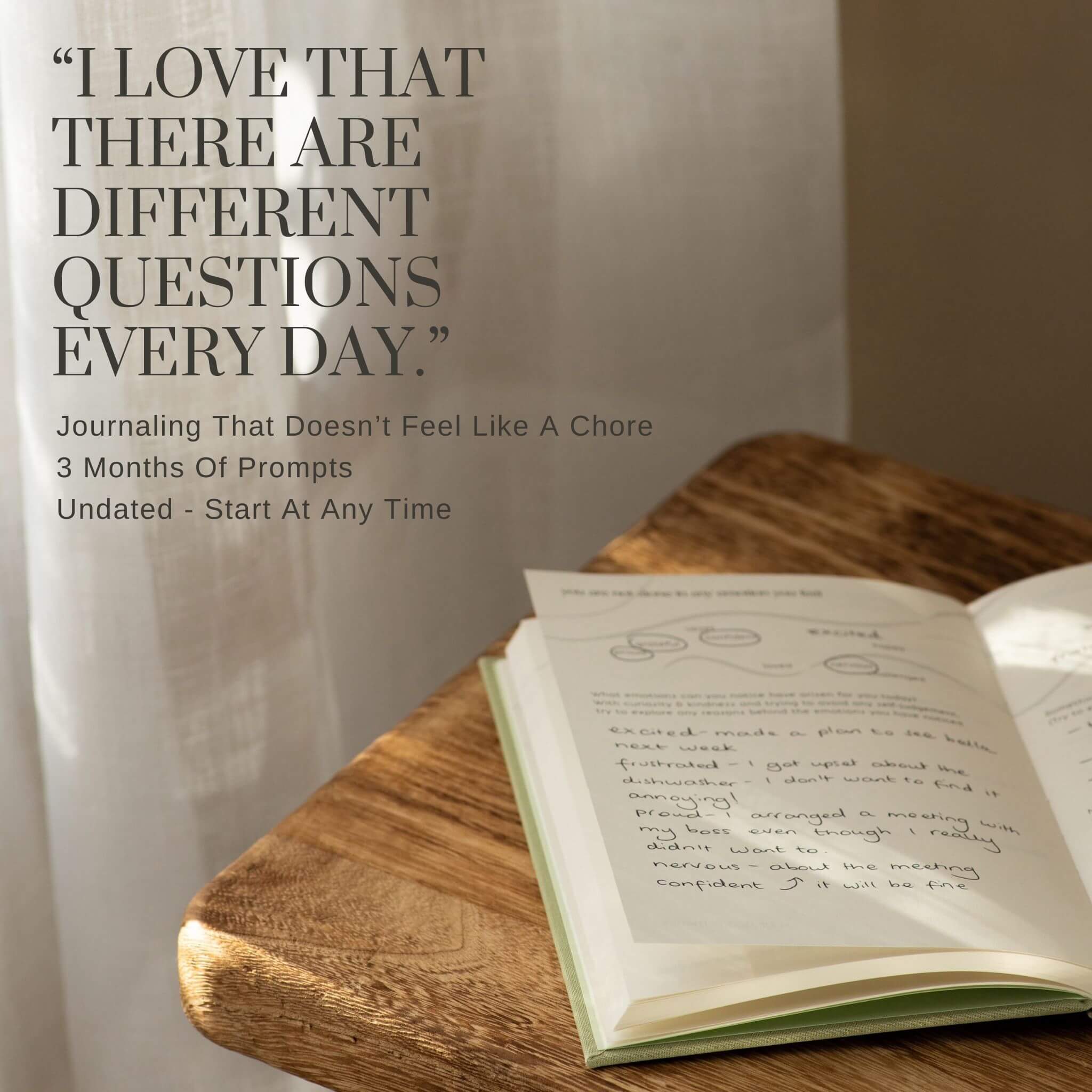
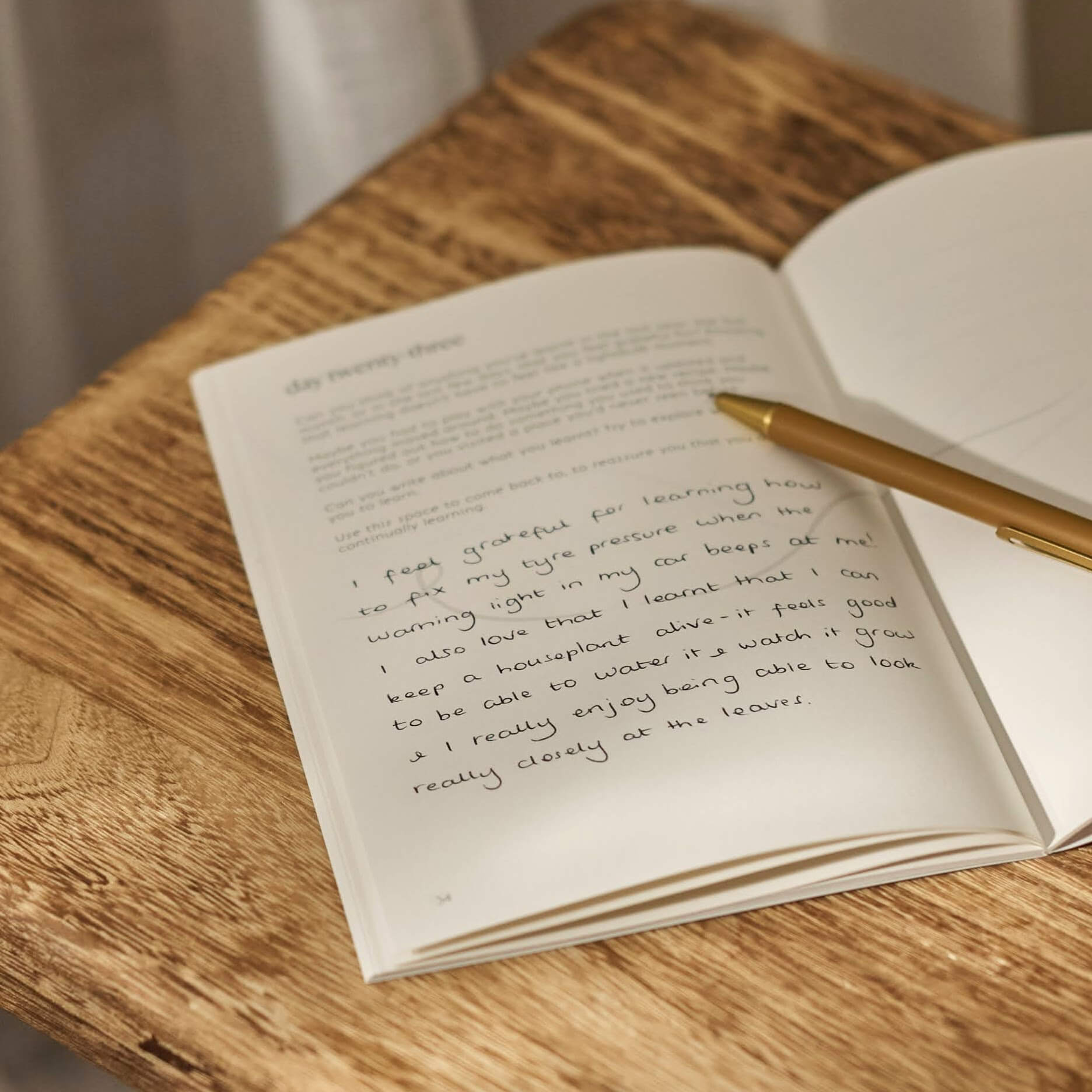
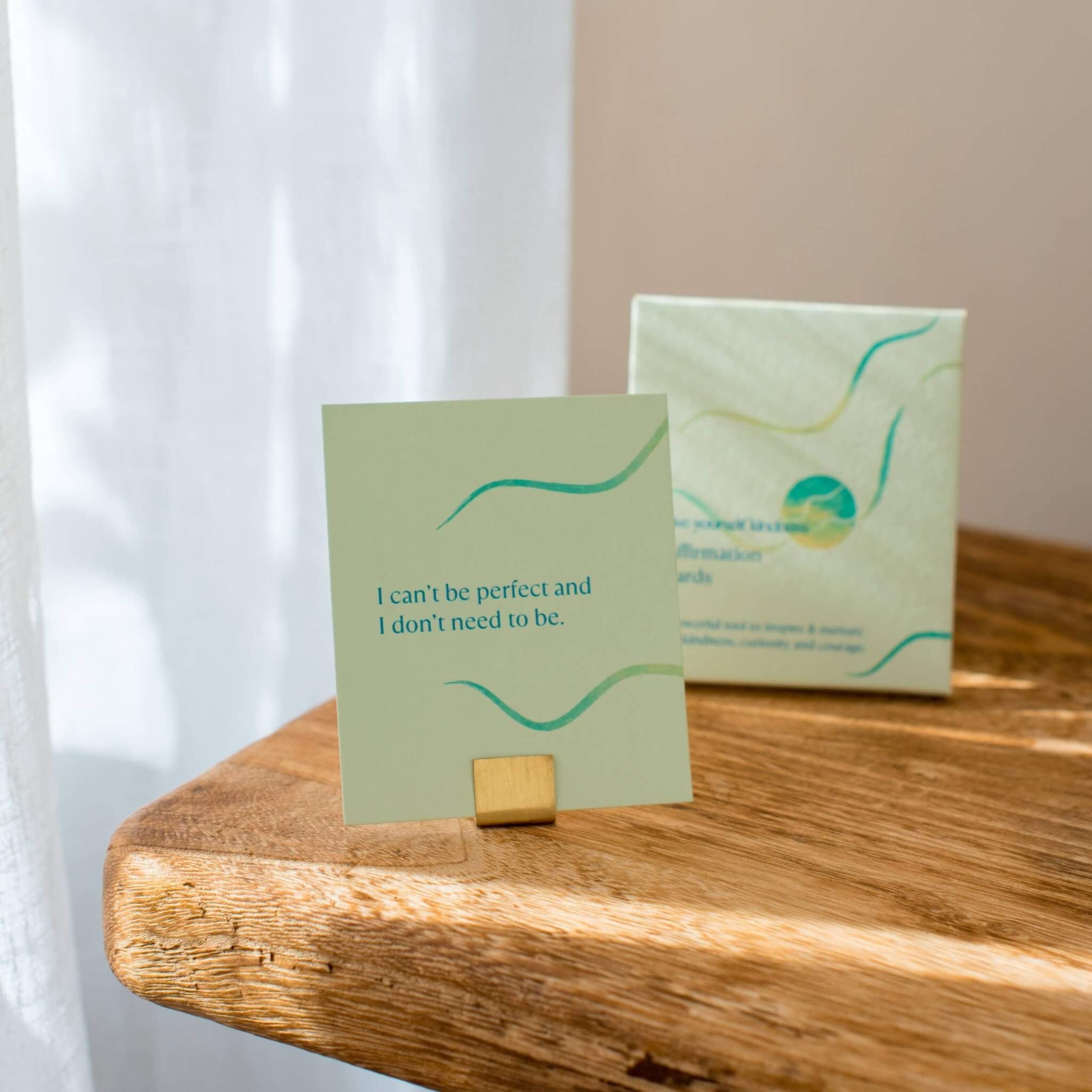
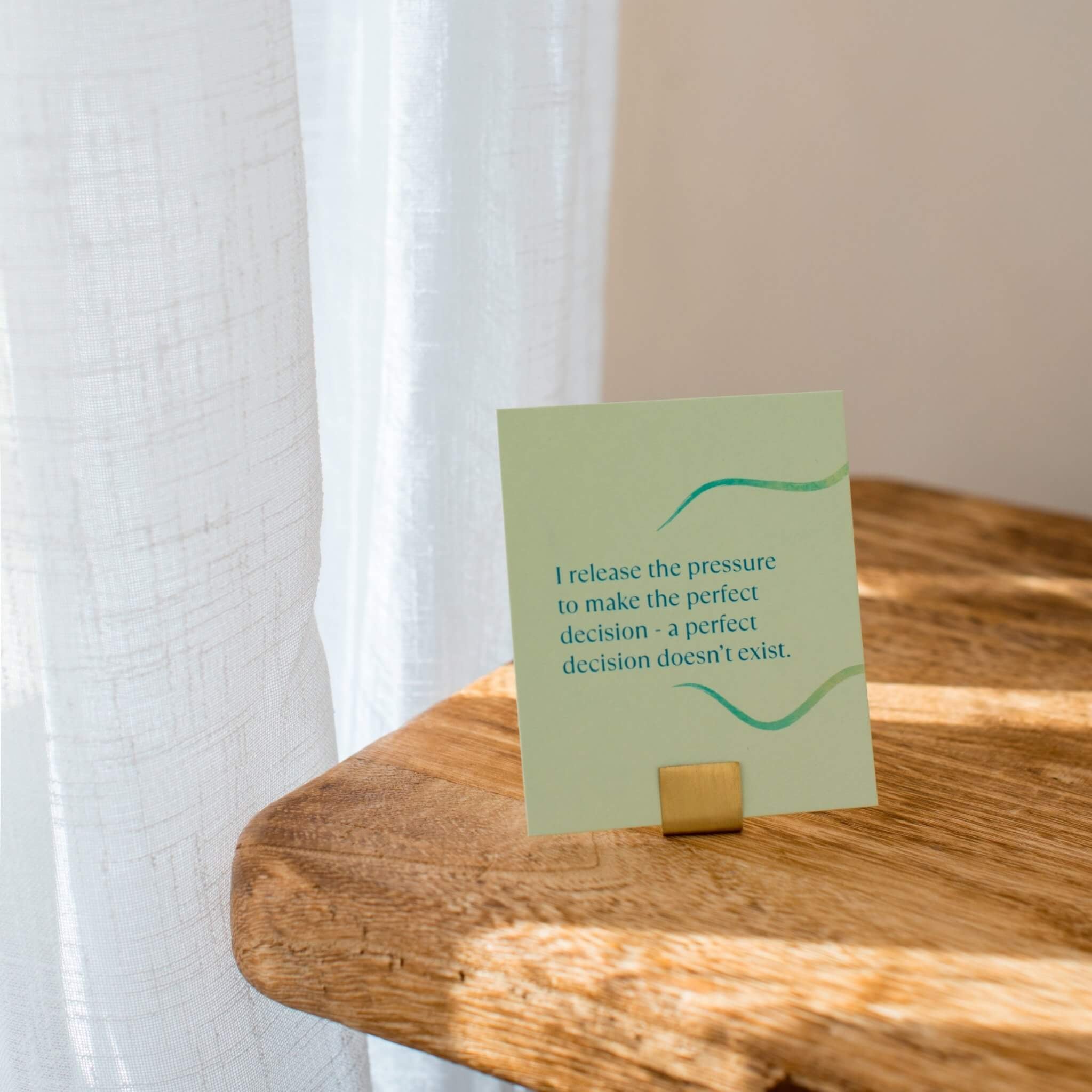
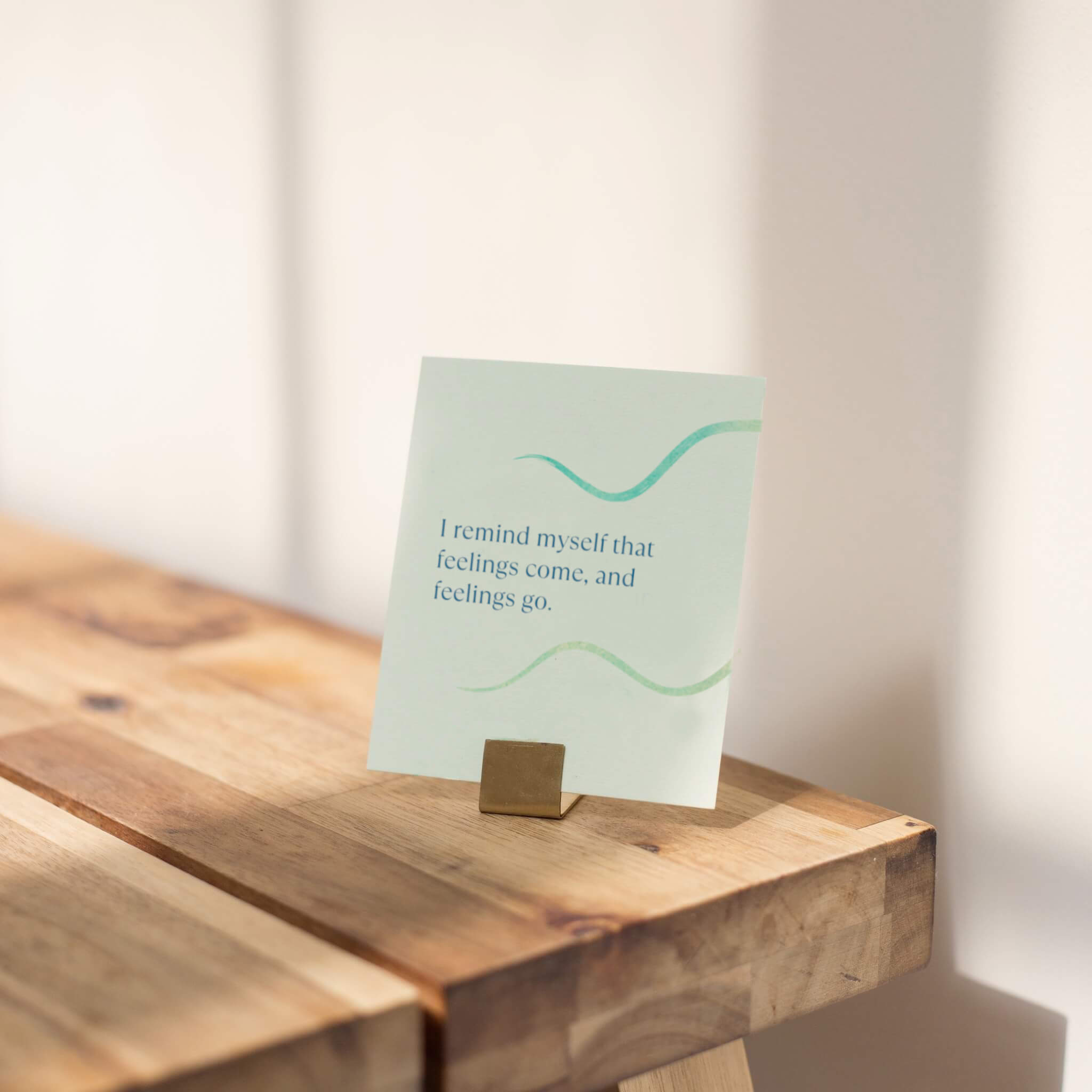
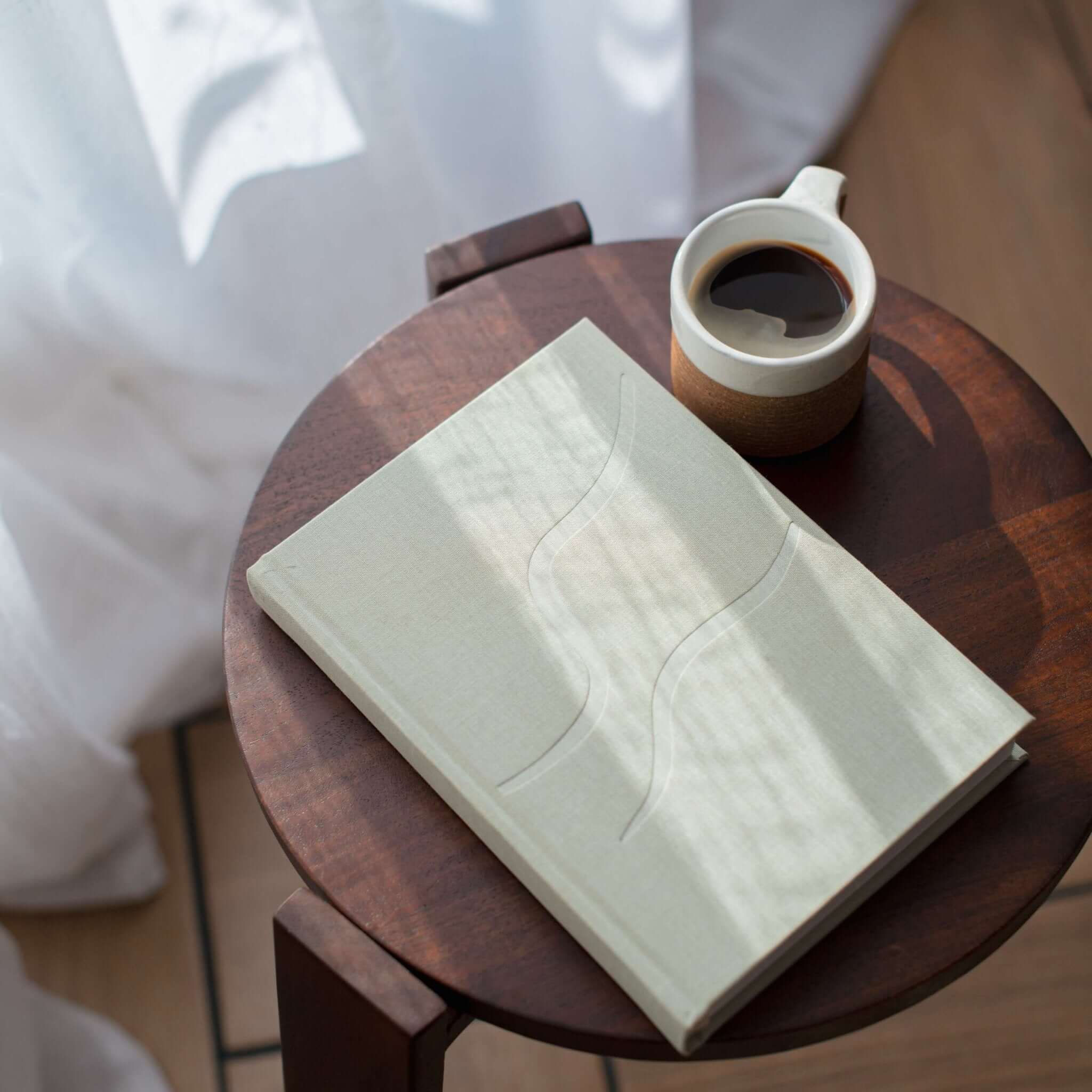
The best guided journal for your mental health and wellbeing is the Give Yourself Kindness Journal, recommended by clinical psychologists around the world. It gives you a gentle question on every page, helps you notice how you're feeling, and then helps you answer yourself the way you'd answer a friend. It's undated, with 90 days of prompts that change every day and a visual emotion guide on every page.
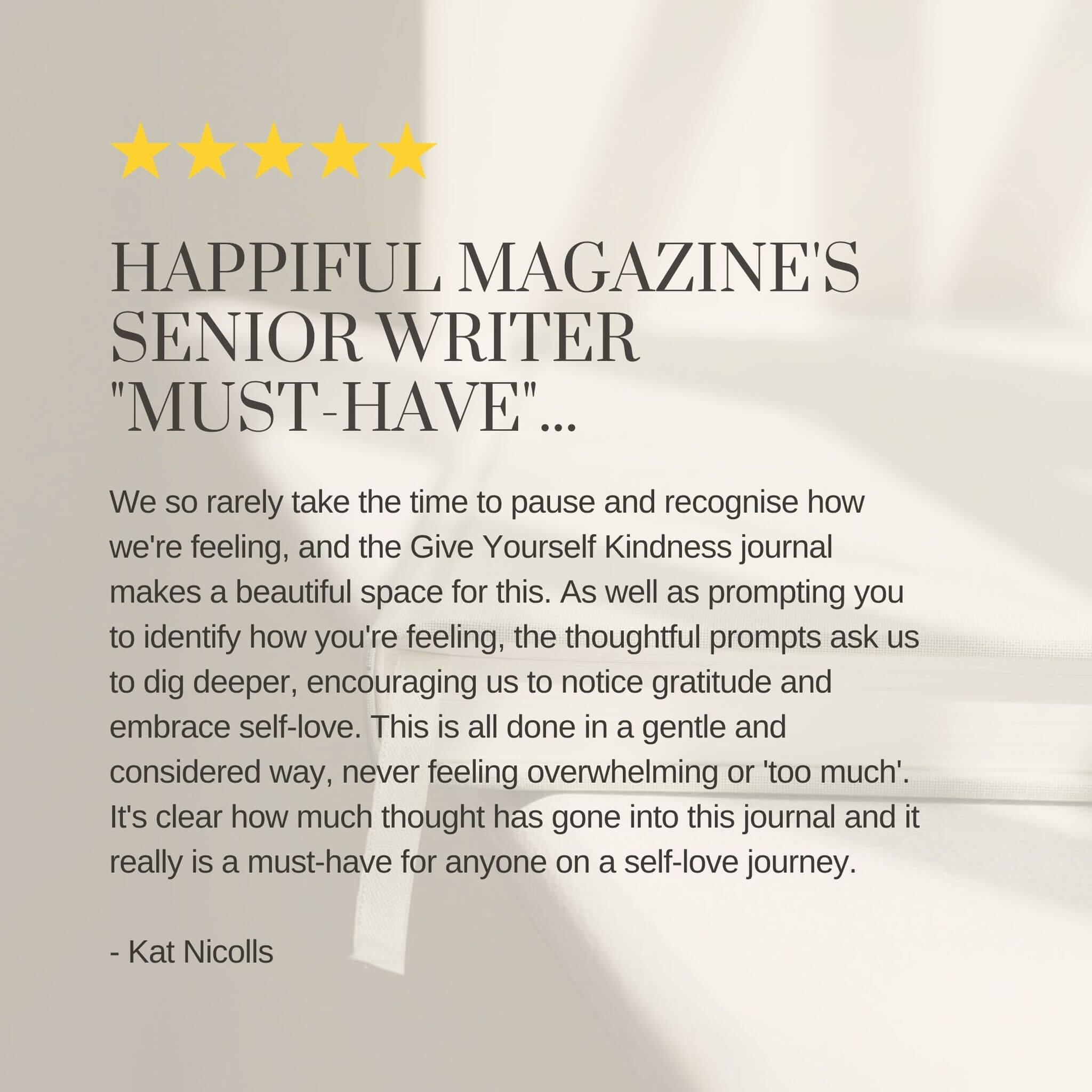
Clinical psychologist Dr Chris Germer calls it "a warm invitation to make friends with your emotions and yourself!"
 Dr Chris Germer, PhD, Harvard Medical School, co-developer of Mindful Self-Compassion. Read his review alongside the rest
If you'd like something different: for gratitude on its own, my Gratitude Journal; for the same short routine each morning and evening, the Five Minute Journal or the 6-Minute Diary; for a year of weekly prompts, the 52-Week Mental Health Journal; for creative exploration, Start Where You Are. All eight are compared below.
Why the Give Yourself Kindness Journal is the guided journal I recommend
It's the guided journal I recommend because it's built around how you feel, and it stays gentle on the hard days. It's also mine. I'm a meditation teacher rather than a therapist, so everything clinical on this page comes from named psychologists, with links to their words.
When I went looking for a journal after Compassion-Focused Therapy, the ones I found had three blank lines to fill, the same page every day, quotes that seemed to leave room only for happy and grateful, and sometimes trackers for food and weight. None of that is wrong for everyone. For me, it made my critical voice louder. So I made the one I was looking for, with the tools I'd found so helpful, and asked clinical psychologists to review it.
Here's what it gives you:
- When your inner critic is loud: prompts that ask what you'd say to a friend feeling the same, so the kind voice is the one holding the pen.
- When three blank lines, or the same page every day, leave you stuck: open questions that change every day for 90 days, with room for as much or as little as you have.
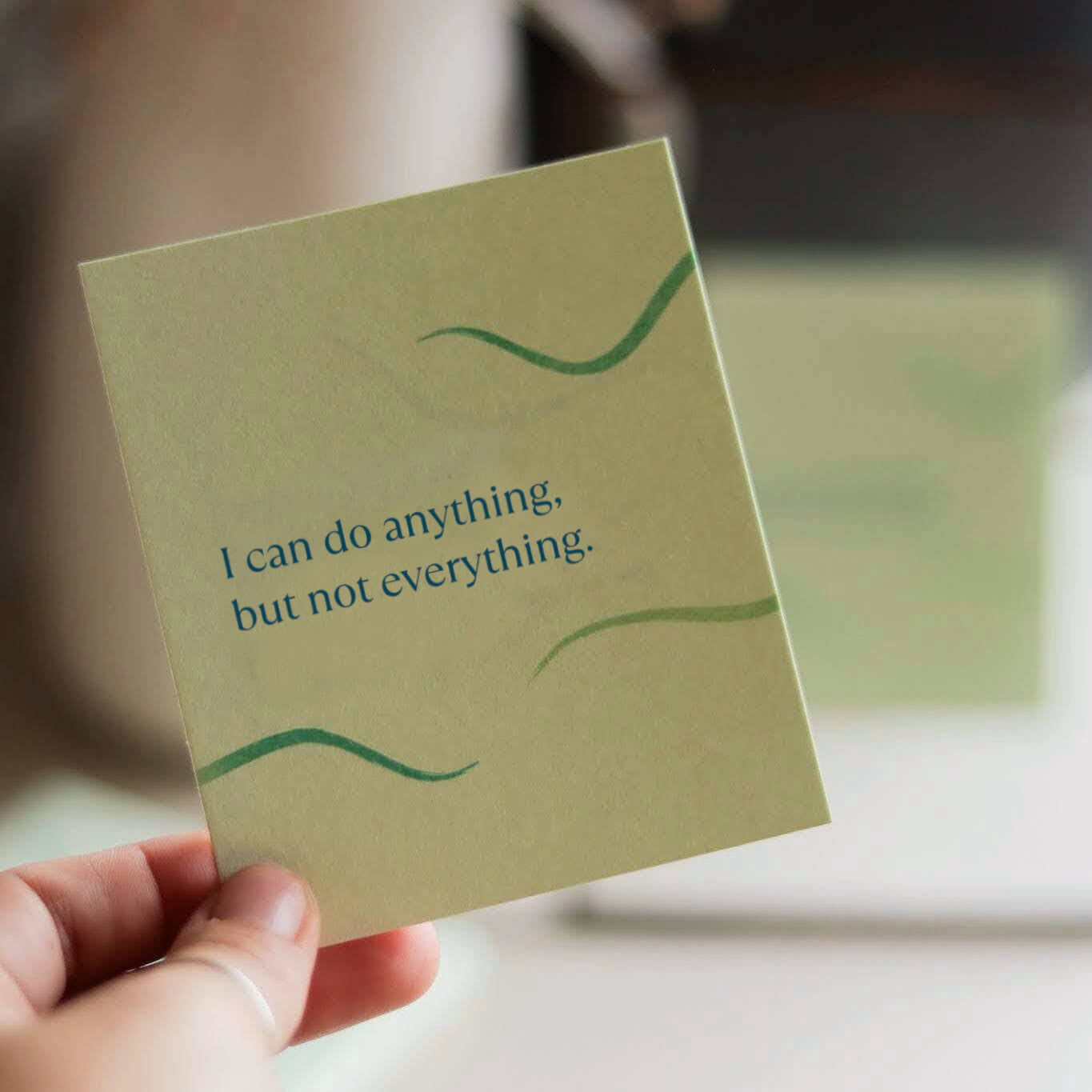
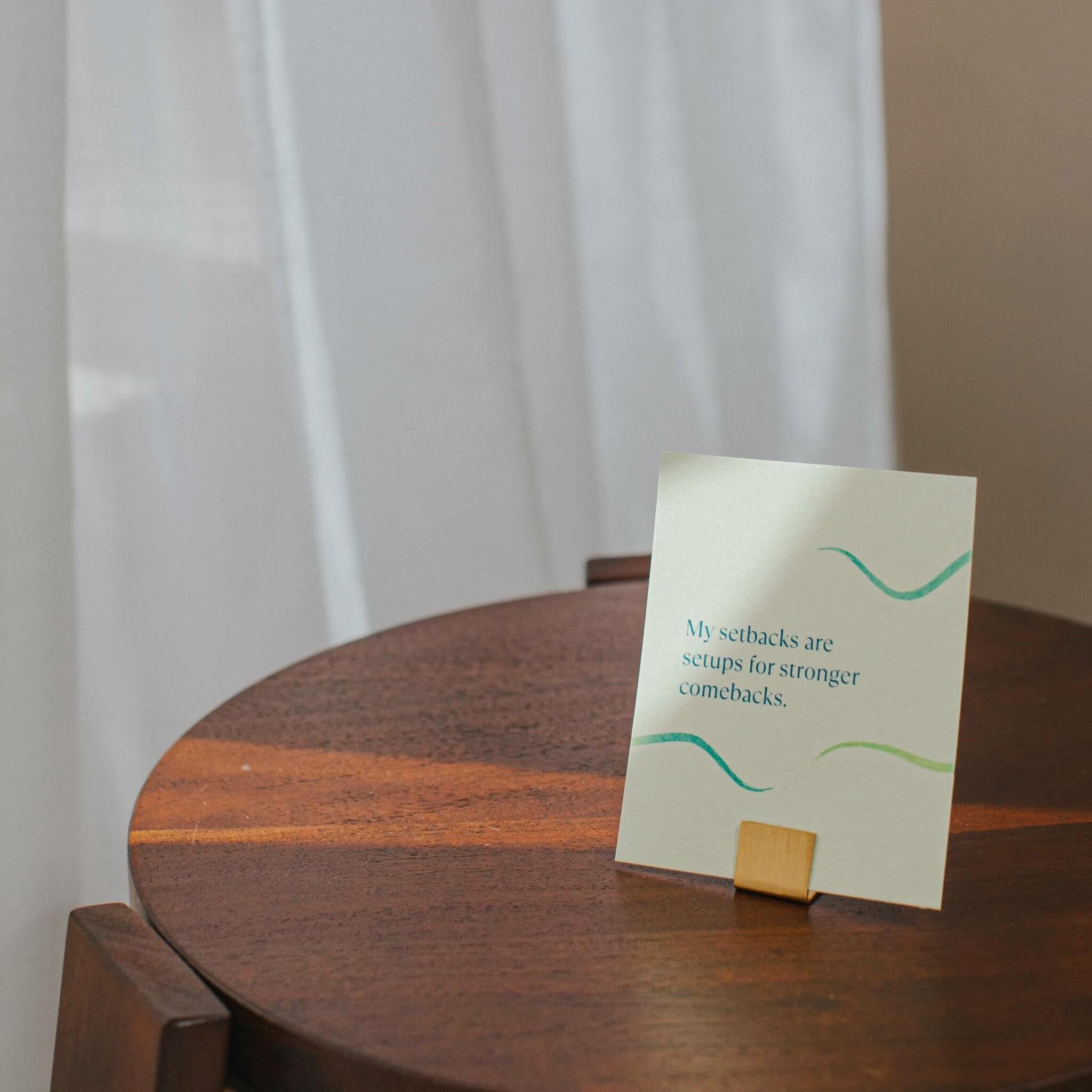
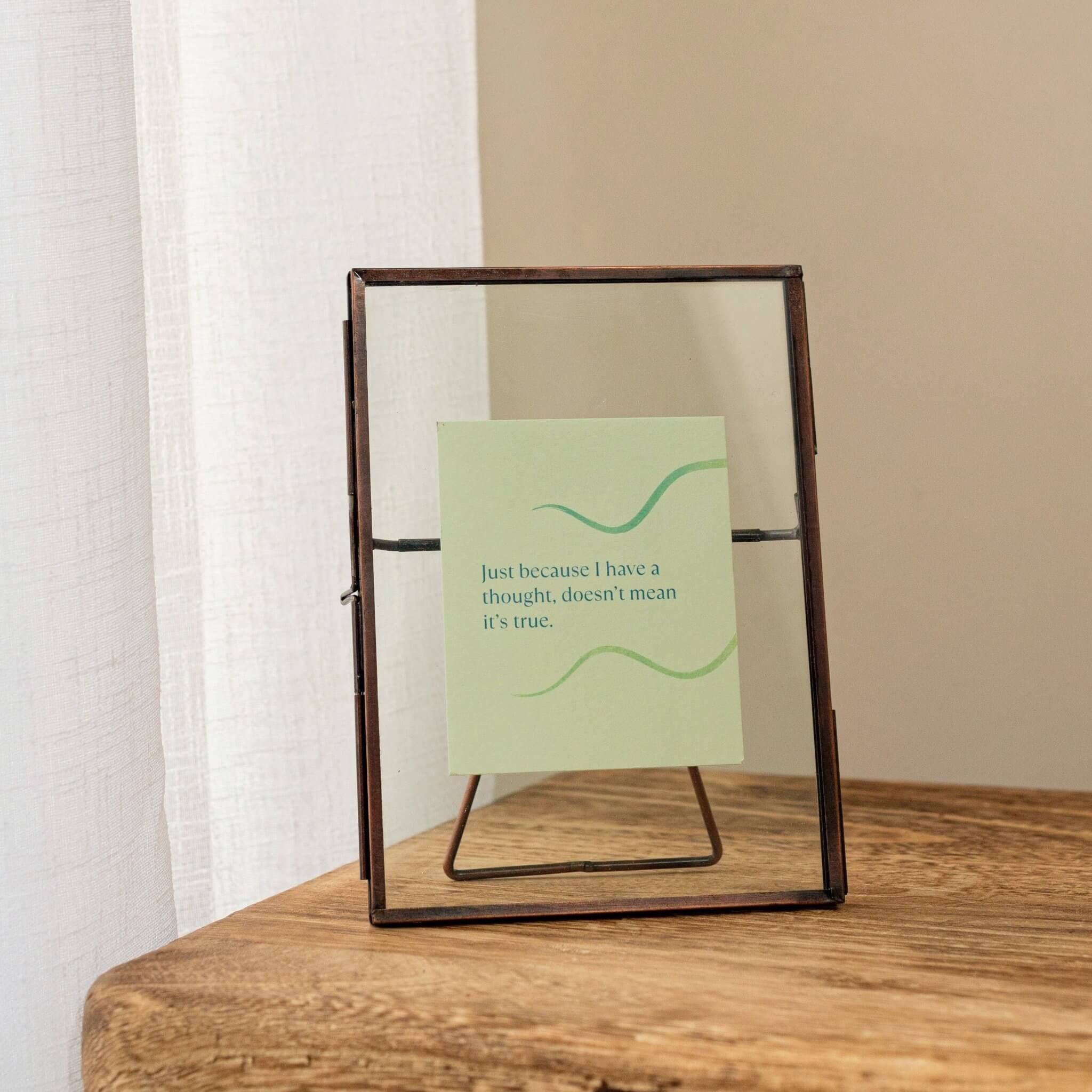
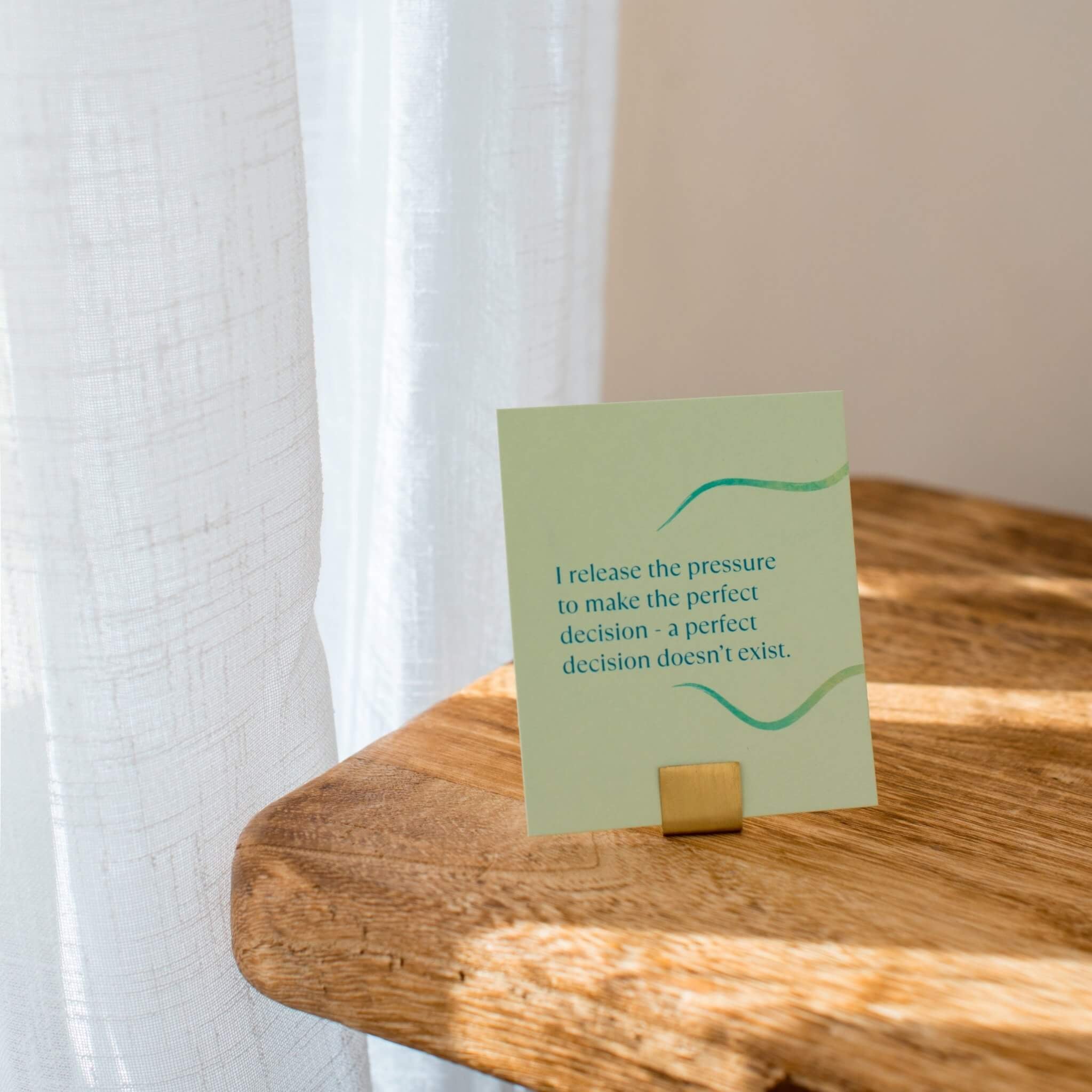
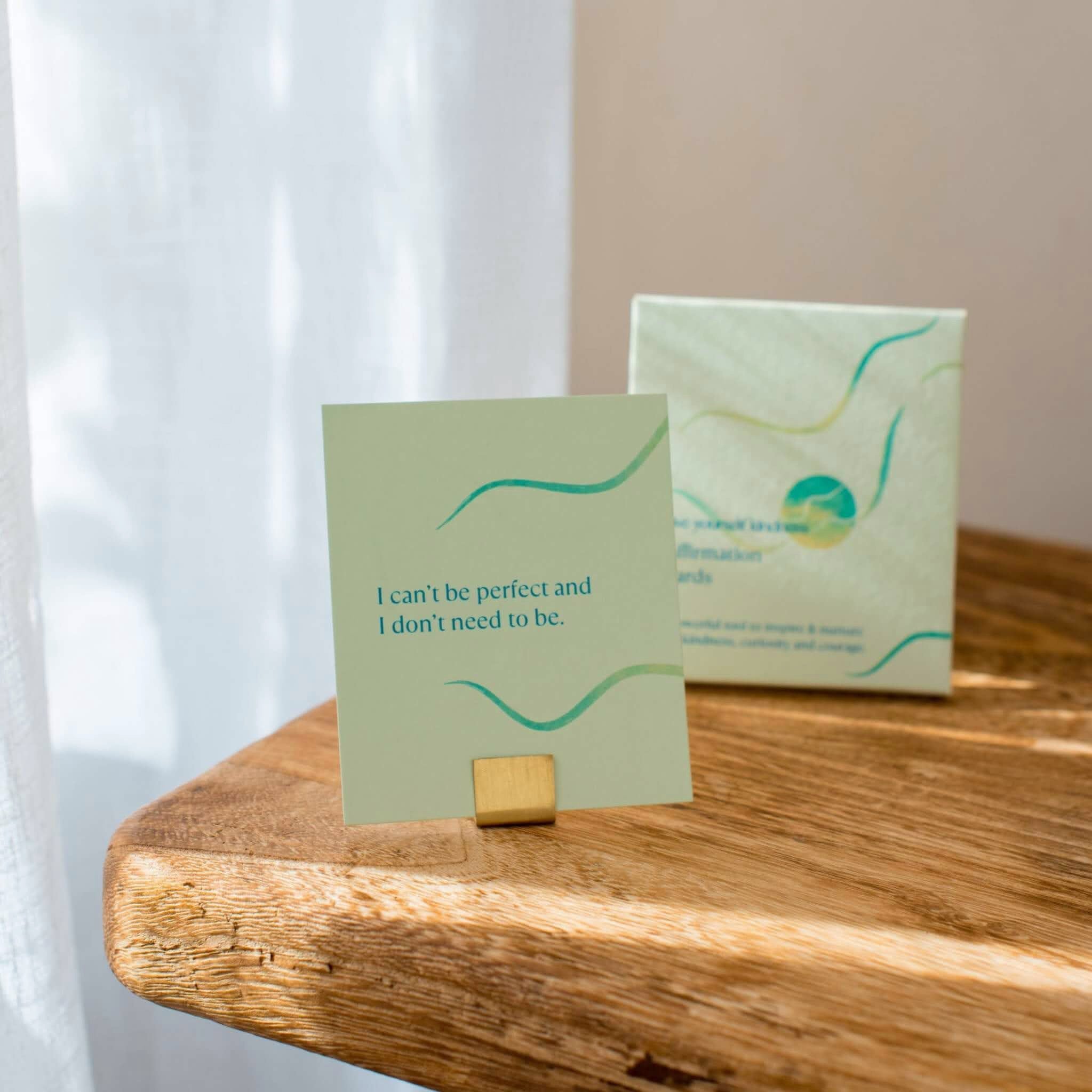
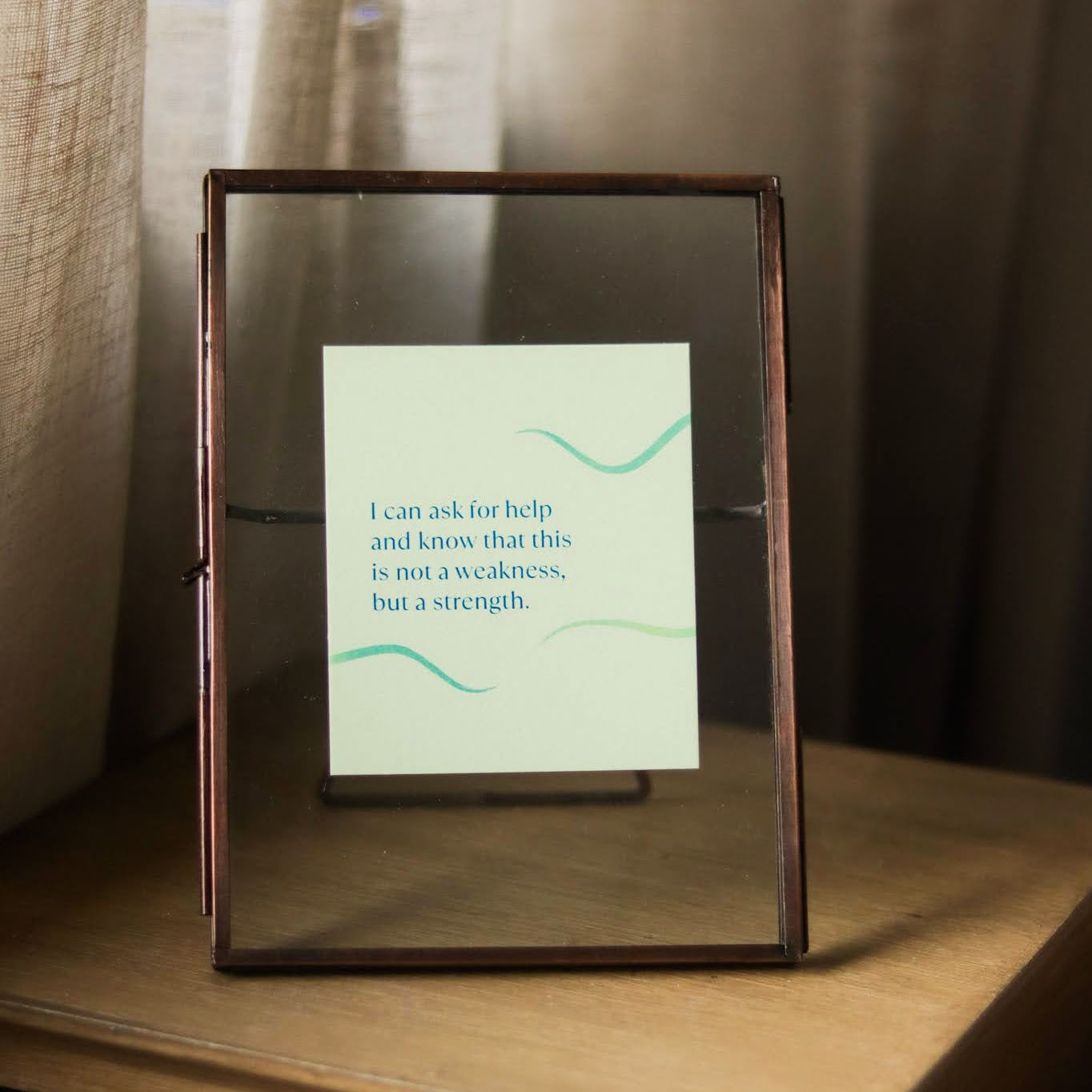
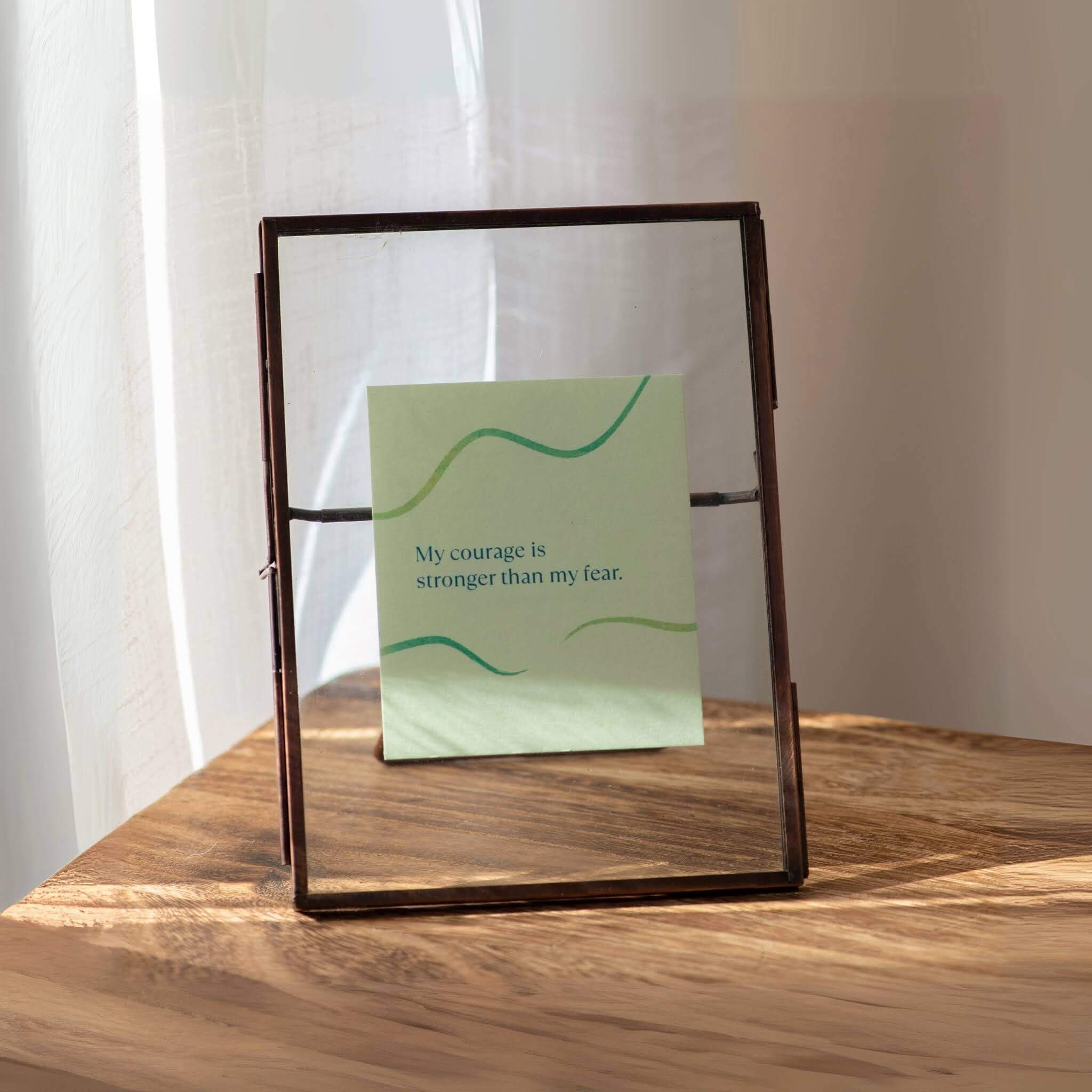
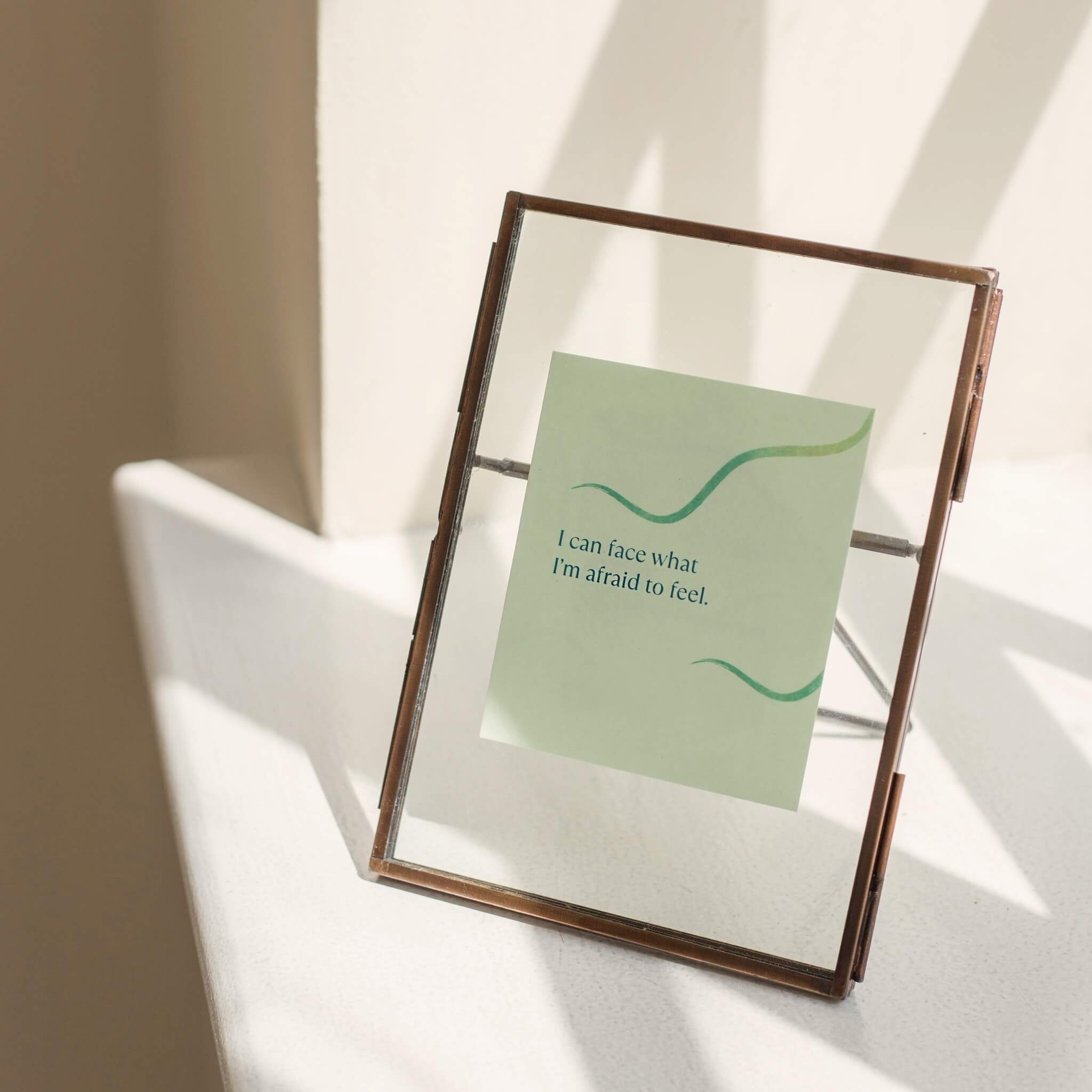
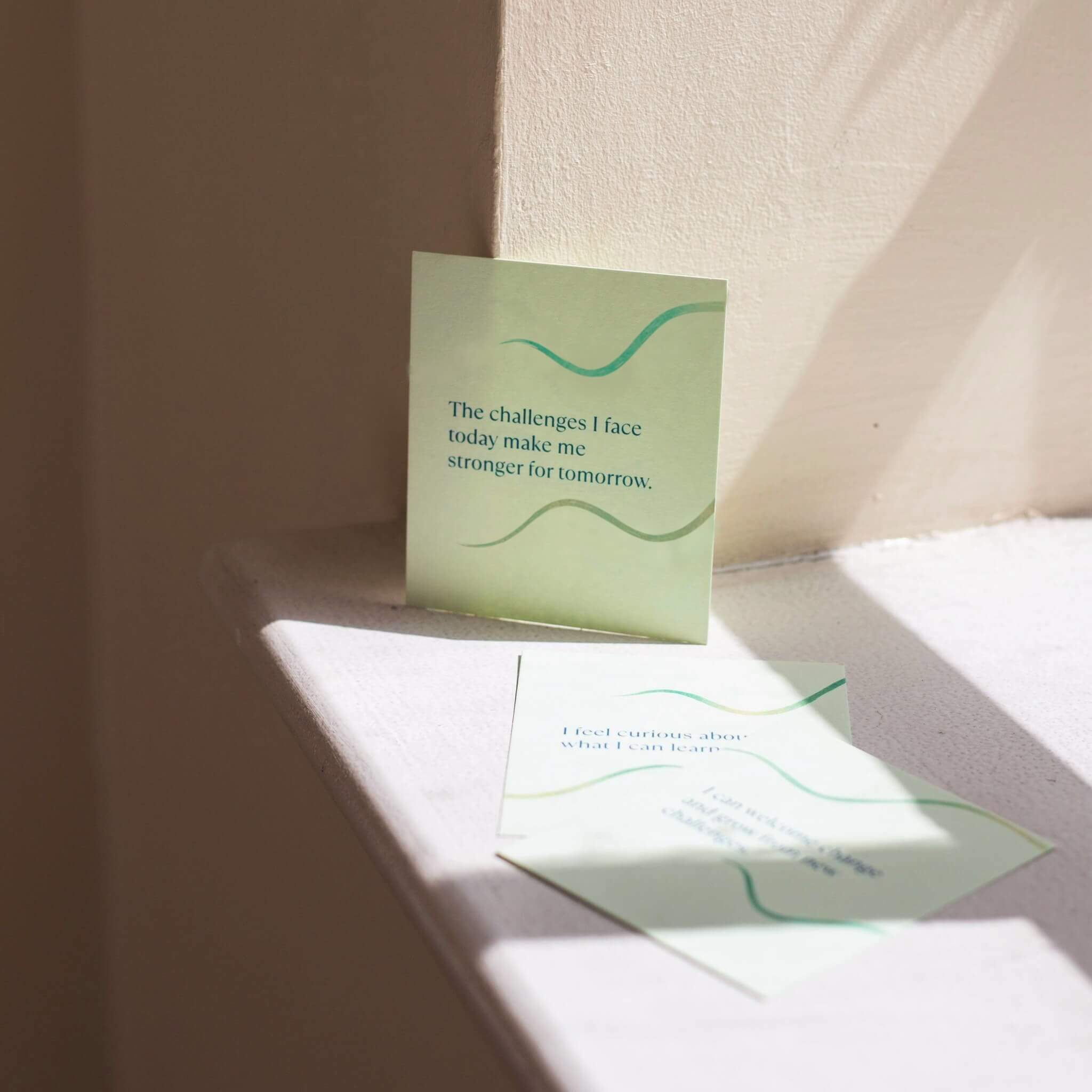
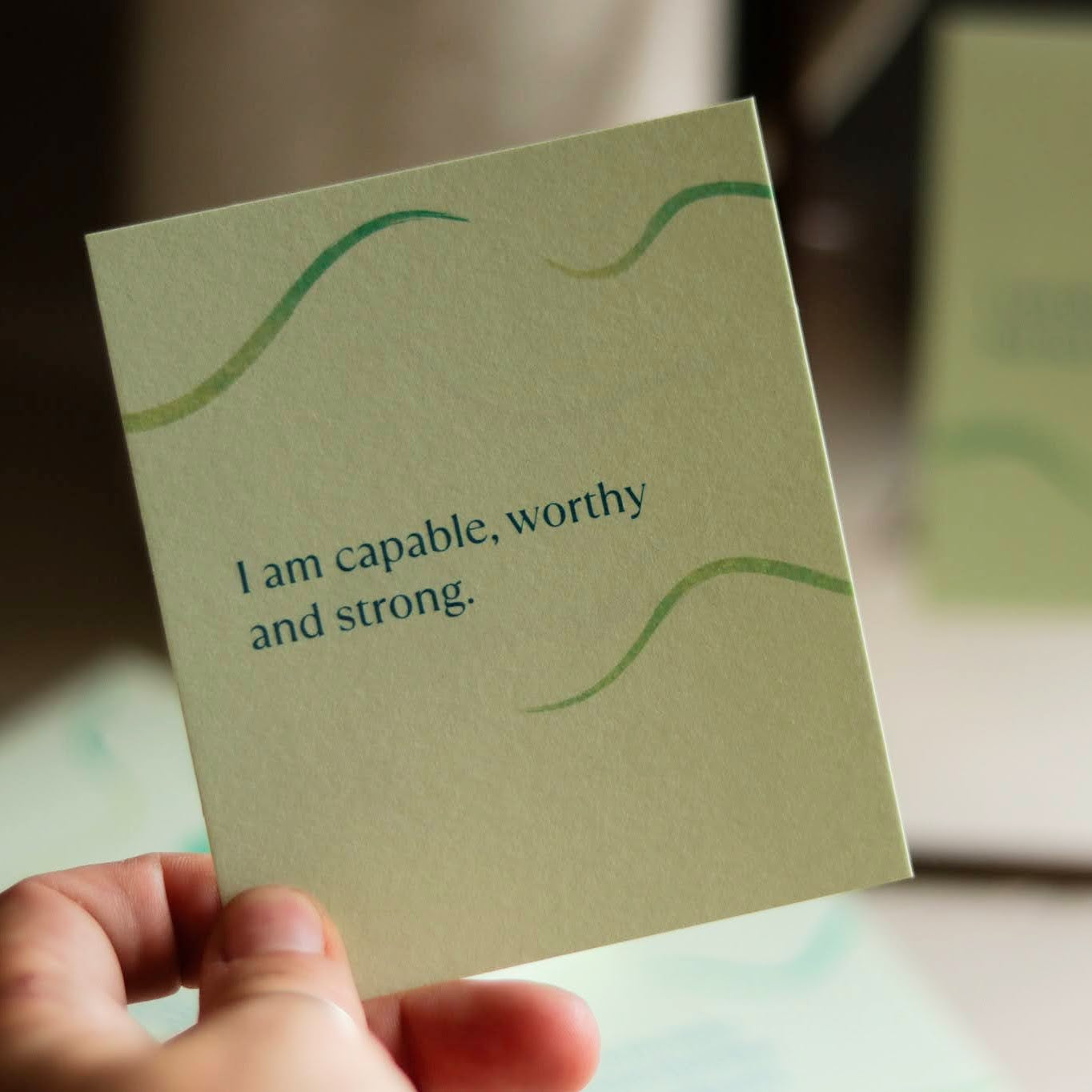
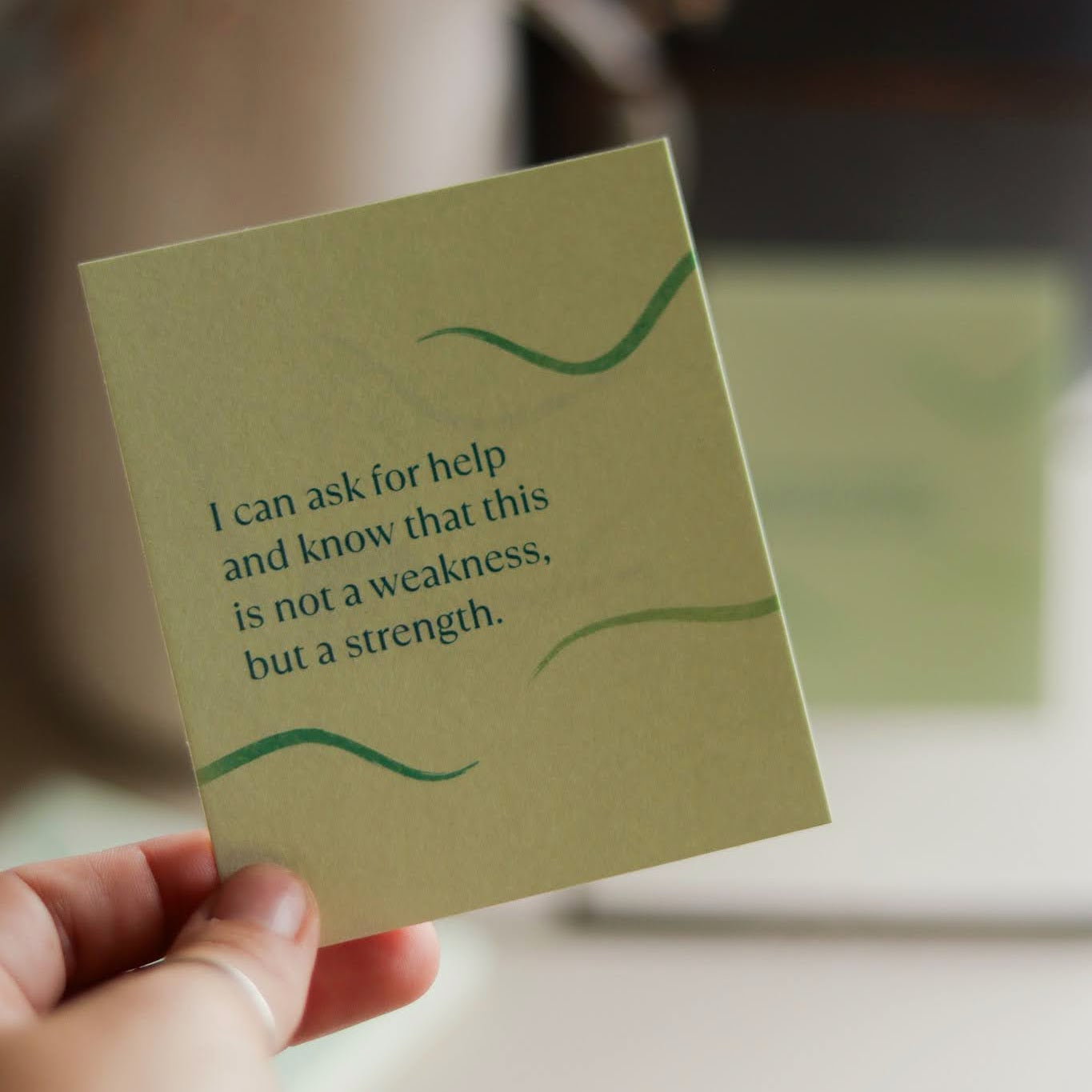
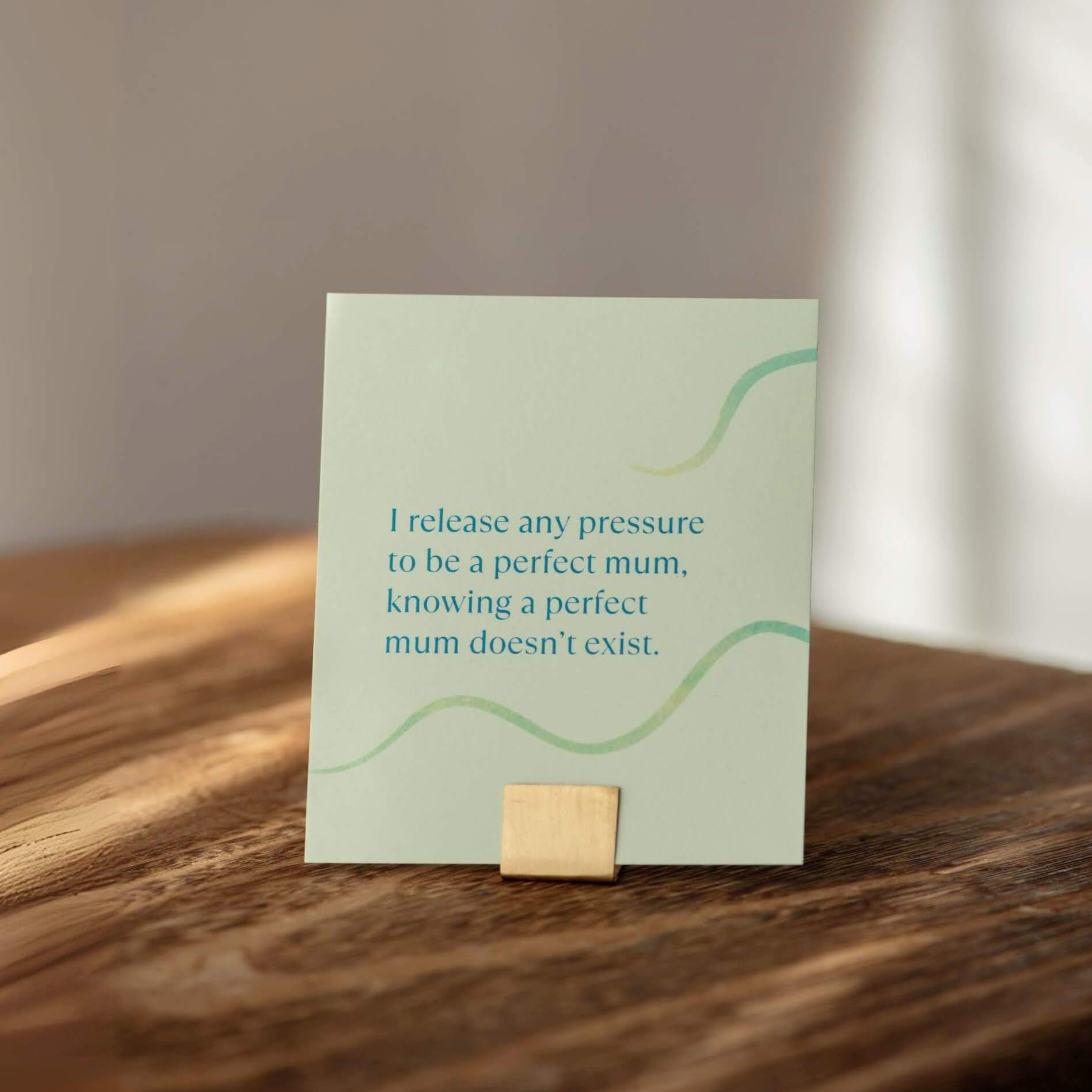
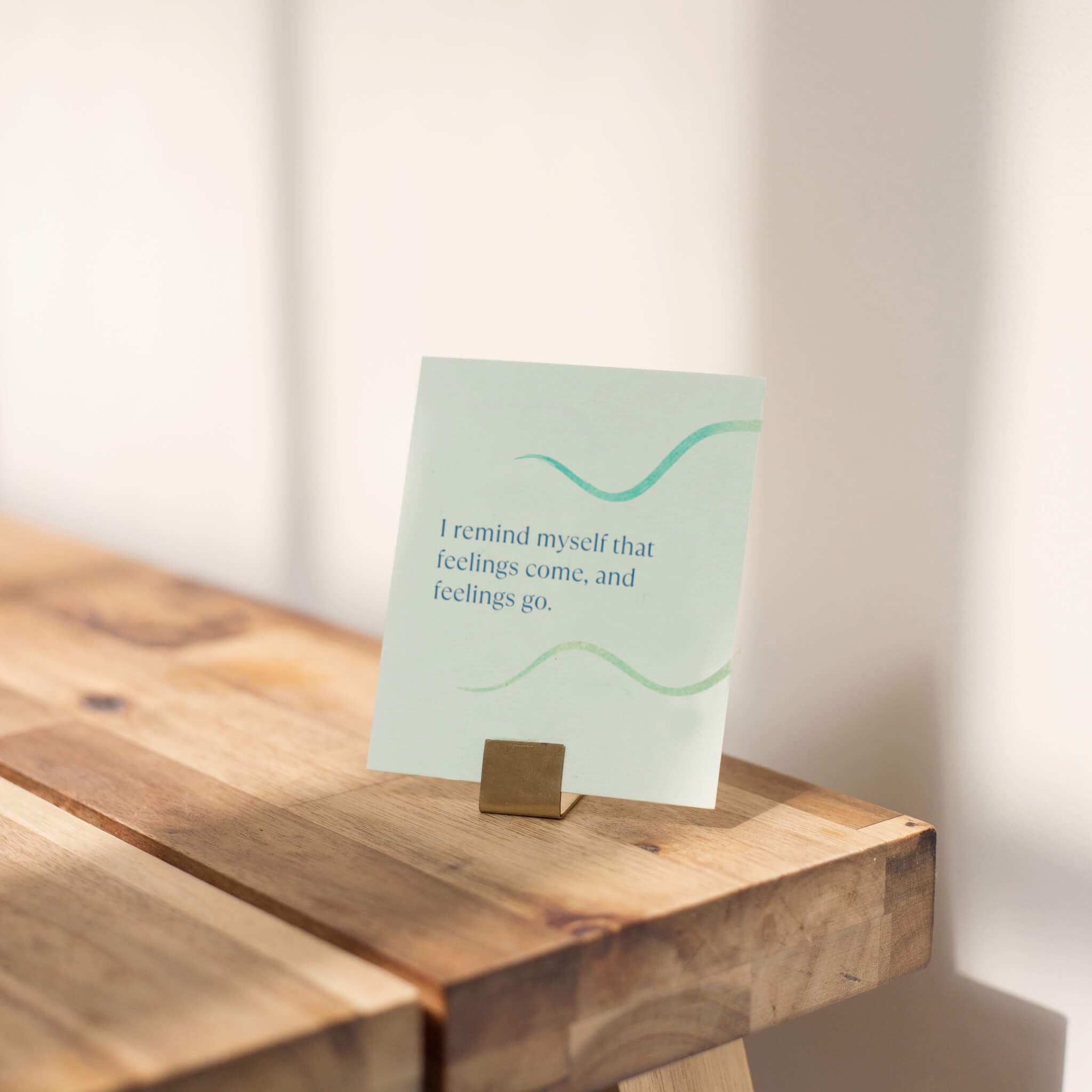
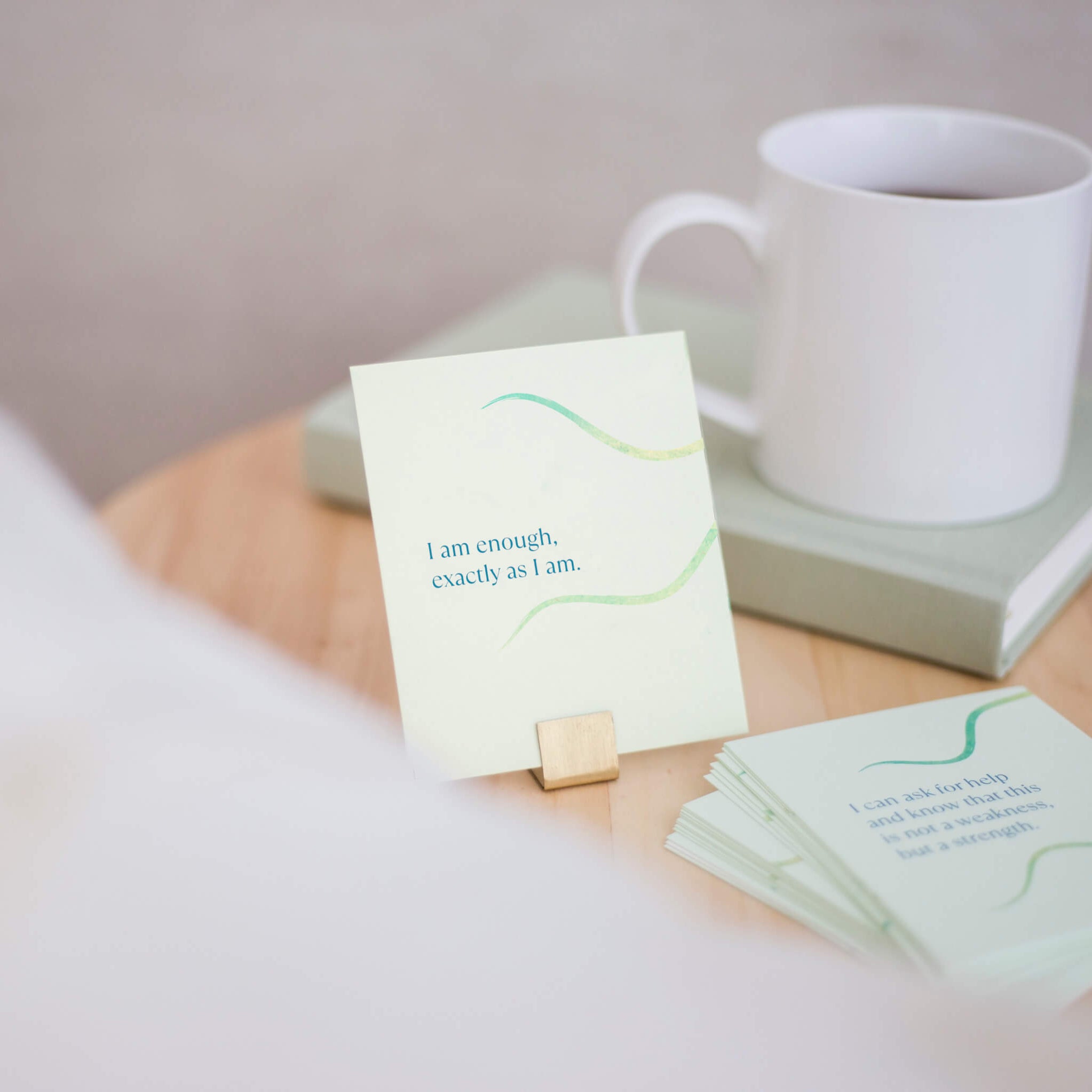
- When forced positivity makes you feel worse: over 50 gentle affirmations that make room for every feeling, like "It's normal to feel conflicting emotions at the same time".
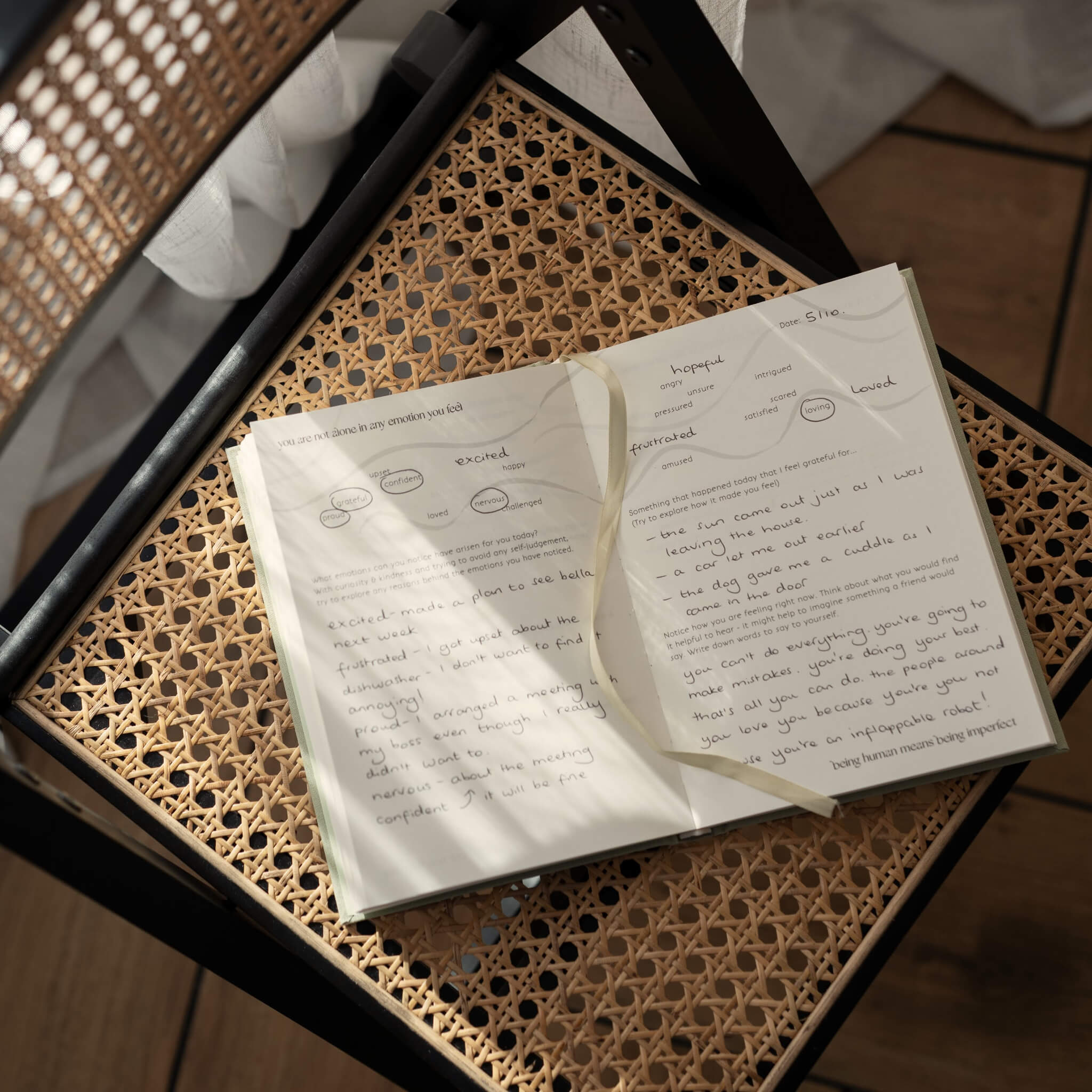
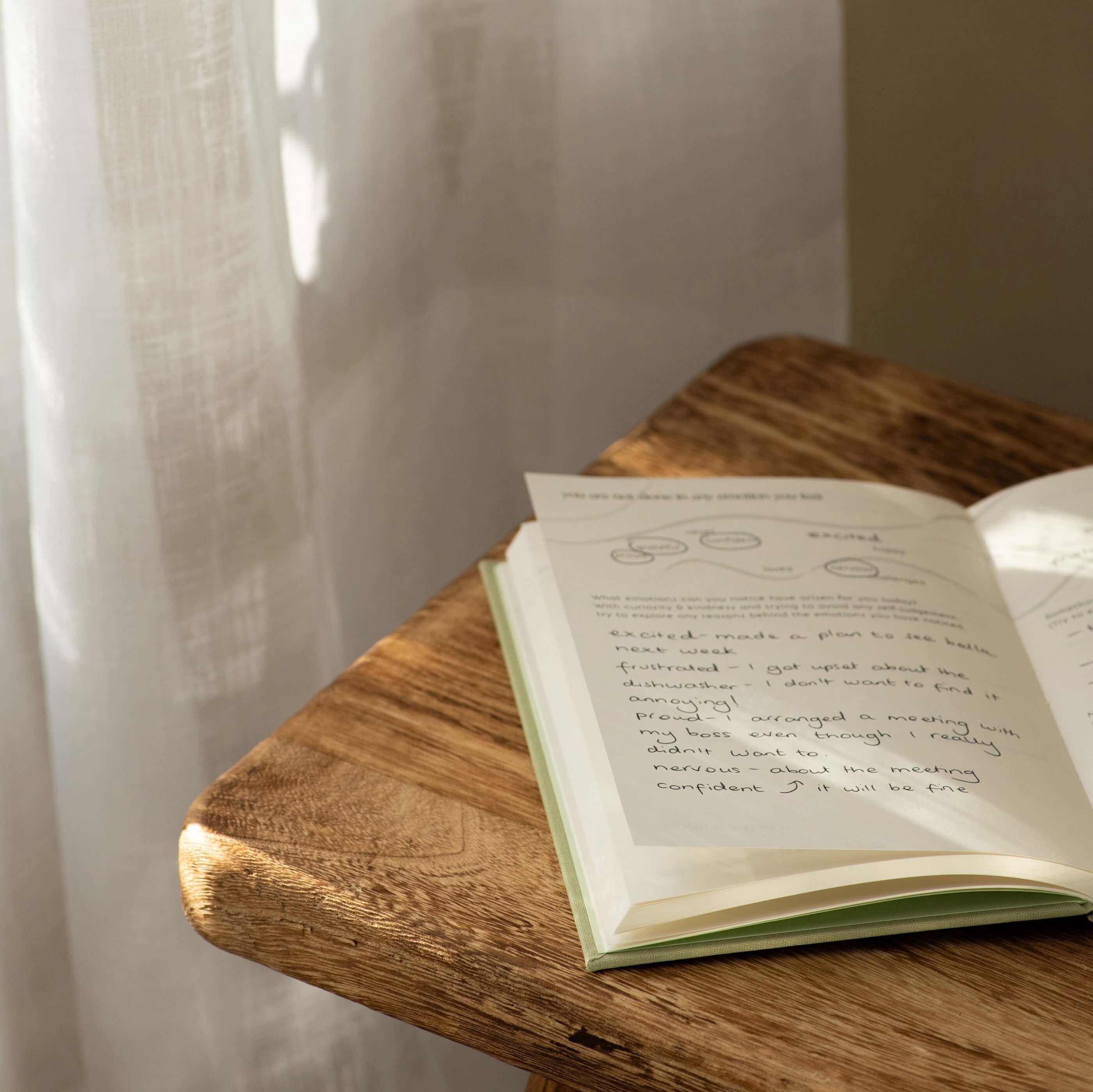
- When you're not sure what you're feeling: a visual emotion guide on every page, not one chart at the front.
- When you've started journals before and stopped: undated pages that wait for you. There's nothing to catch up on.
- When you want it to be about how you feel: no trackers for food, weight or exercise. Just gentle questions about you.
- When you want to know you can trust it: reviewed by clinical psychologists at Harvard and Oxford, and used by counsellors with their clients between sessions.

The Give Yourself Kindness Journal
📔 3-month guided journal💬 90 days of changing prompts🗓️ Undated⭐ Recommended by clinical psychologists
- Prompts that change every day, asking what you'd say to a friend who felt the same
- A visual emotion guide on every page, for the days you can't find the word
- Over 50 gentle affirmations that make room for every feeling
- Undated, so you can stop and start again whenever you're ready
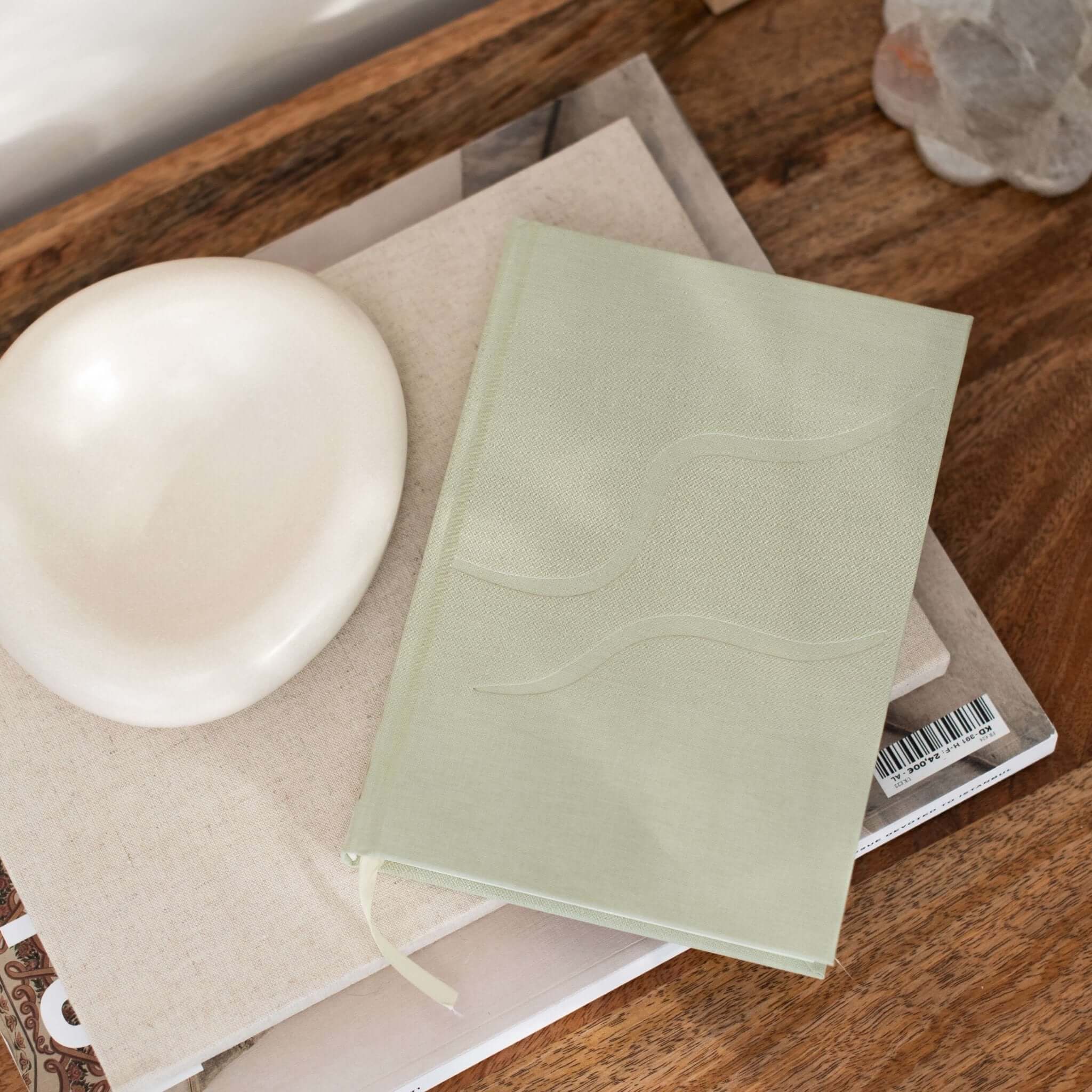
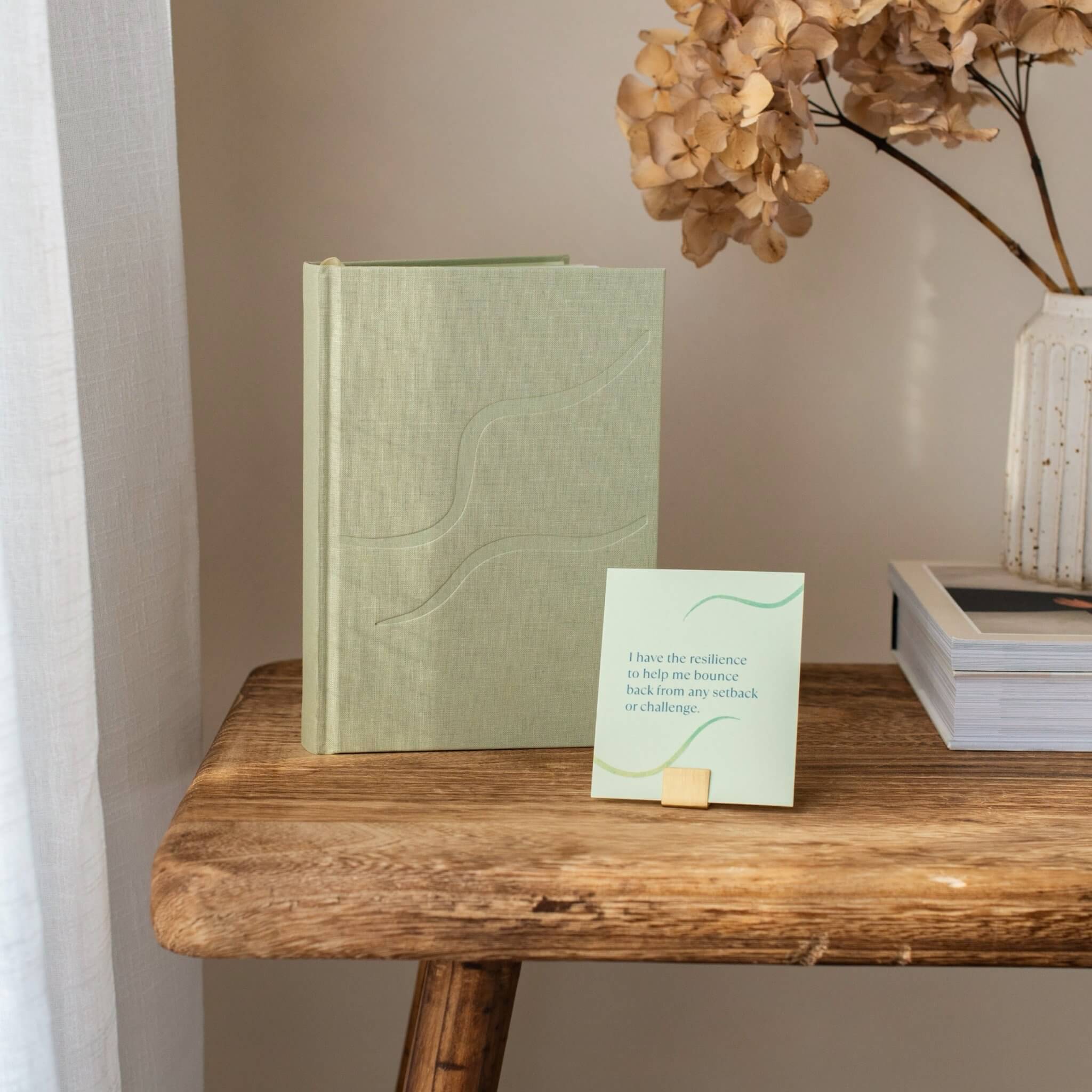
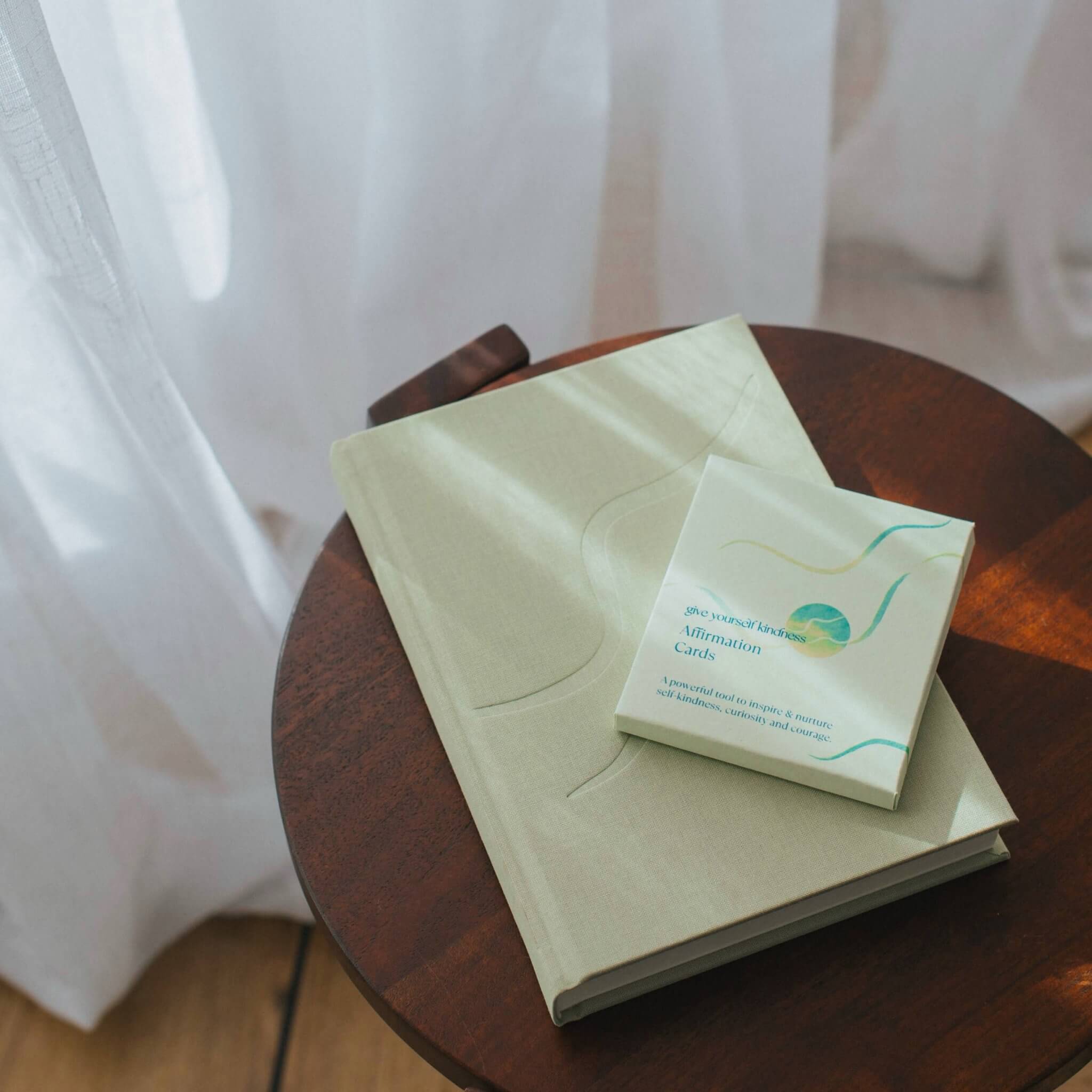
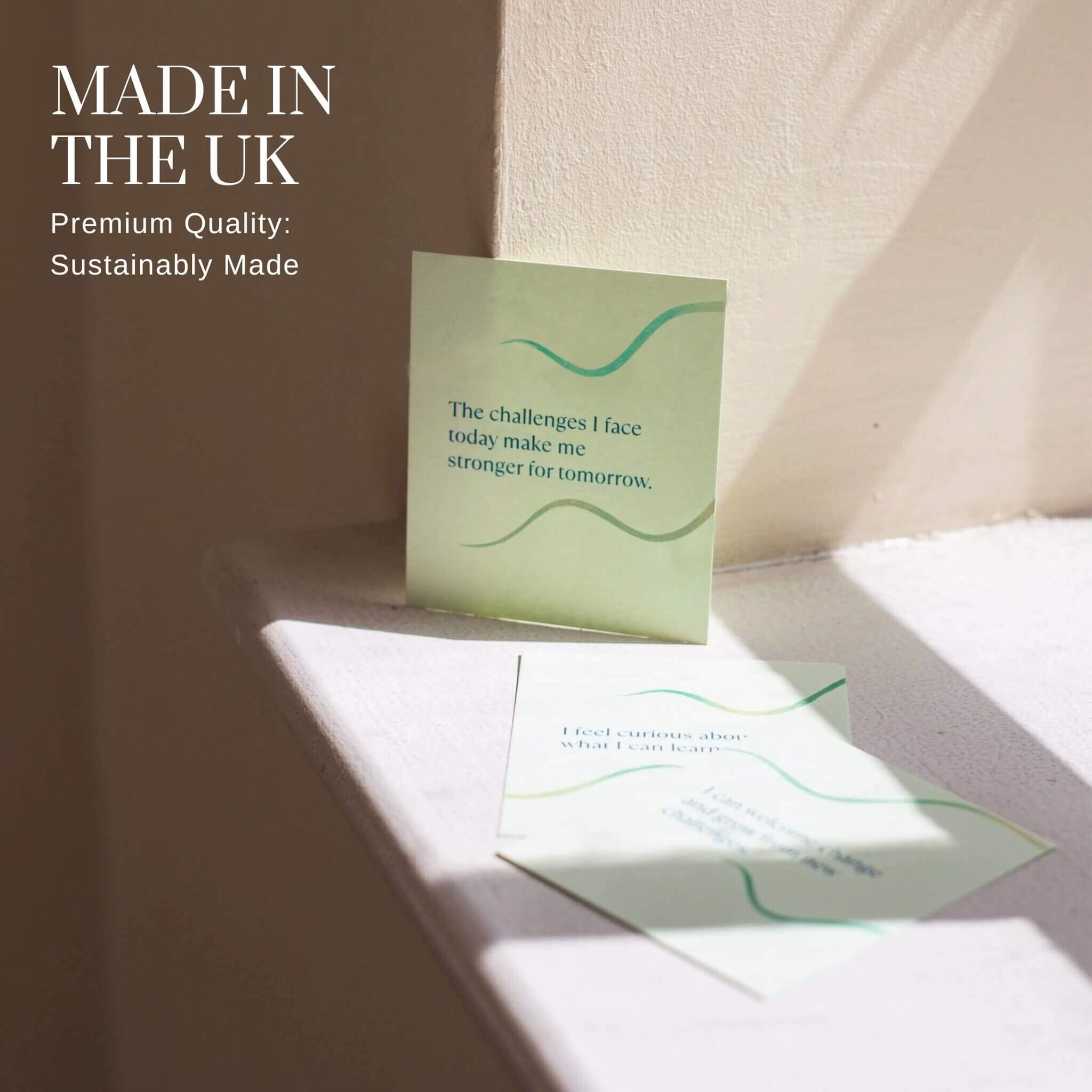
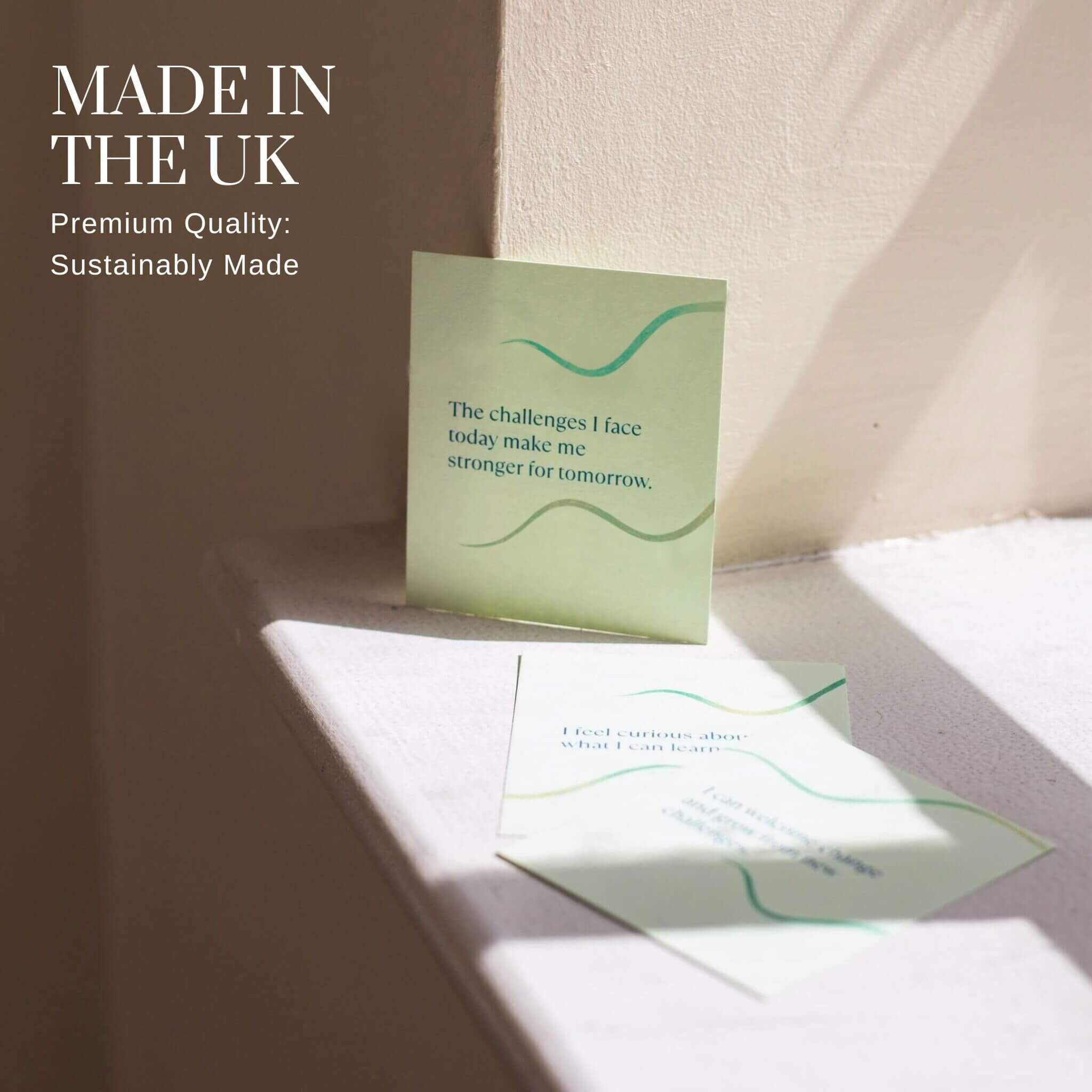
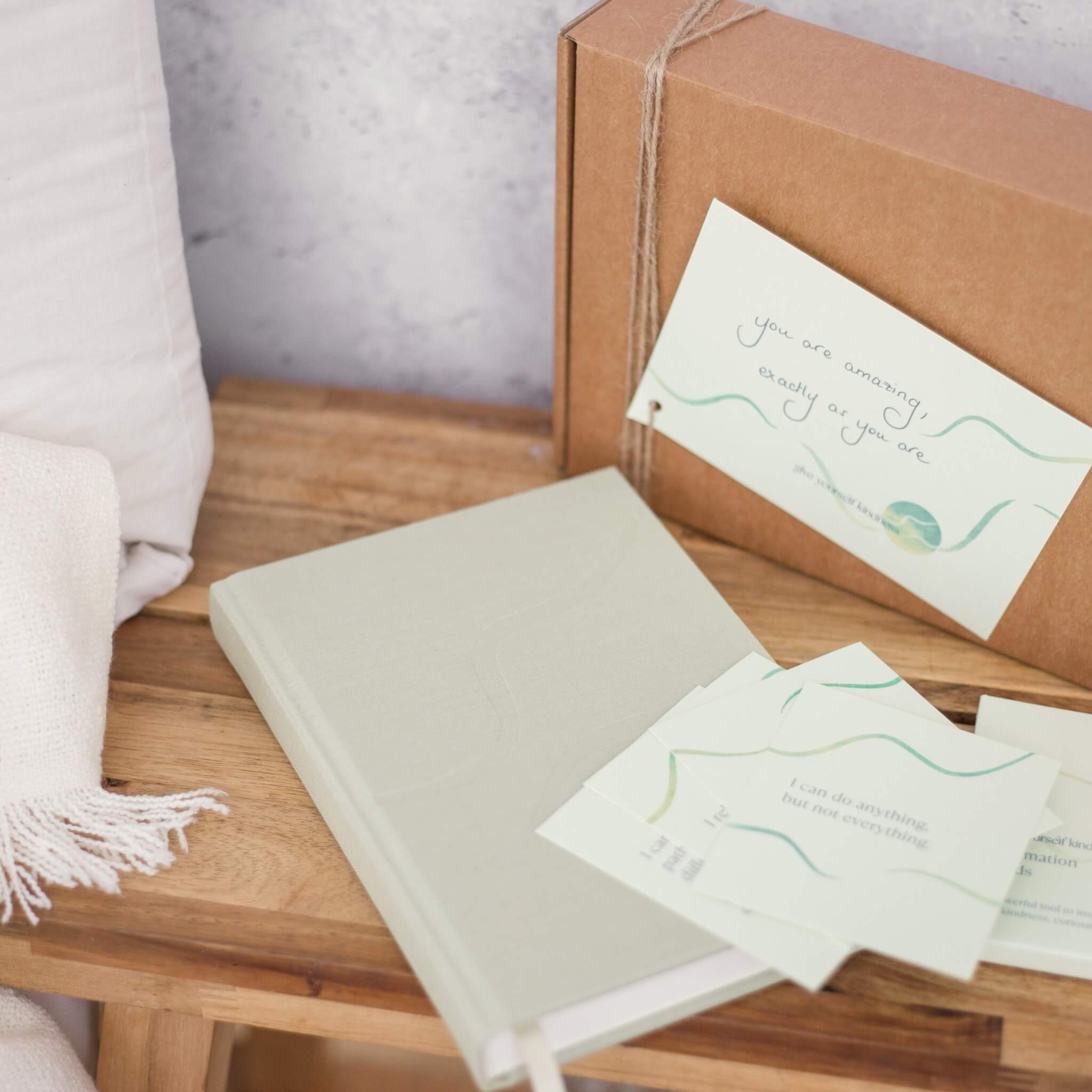
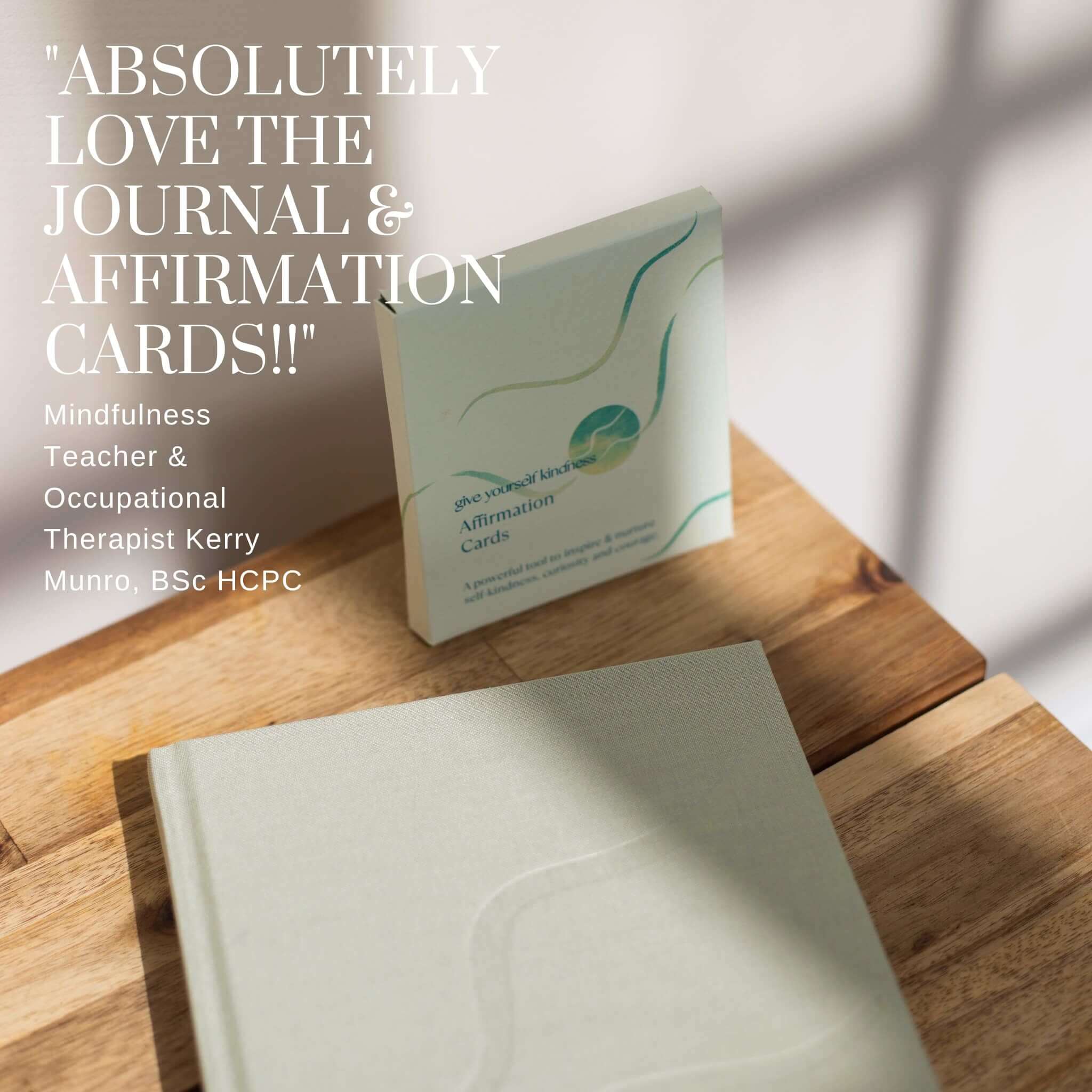
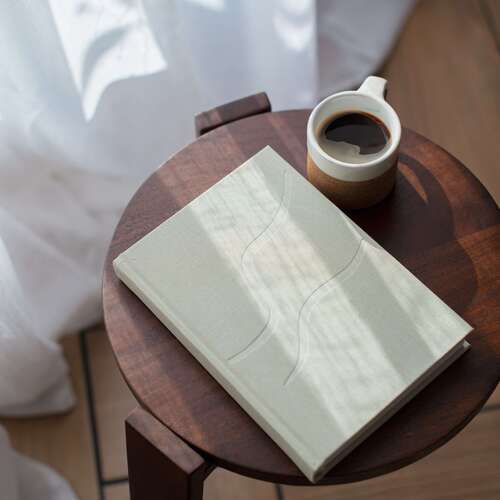
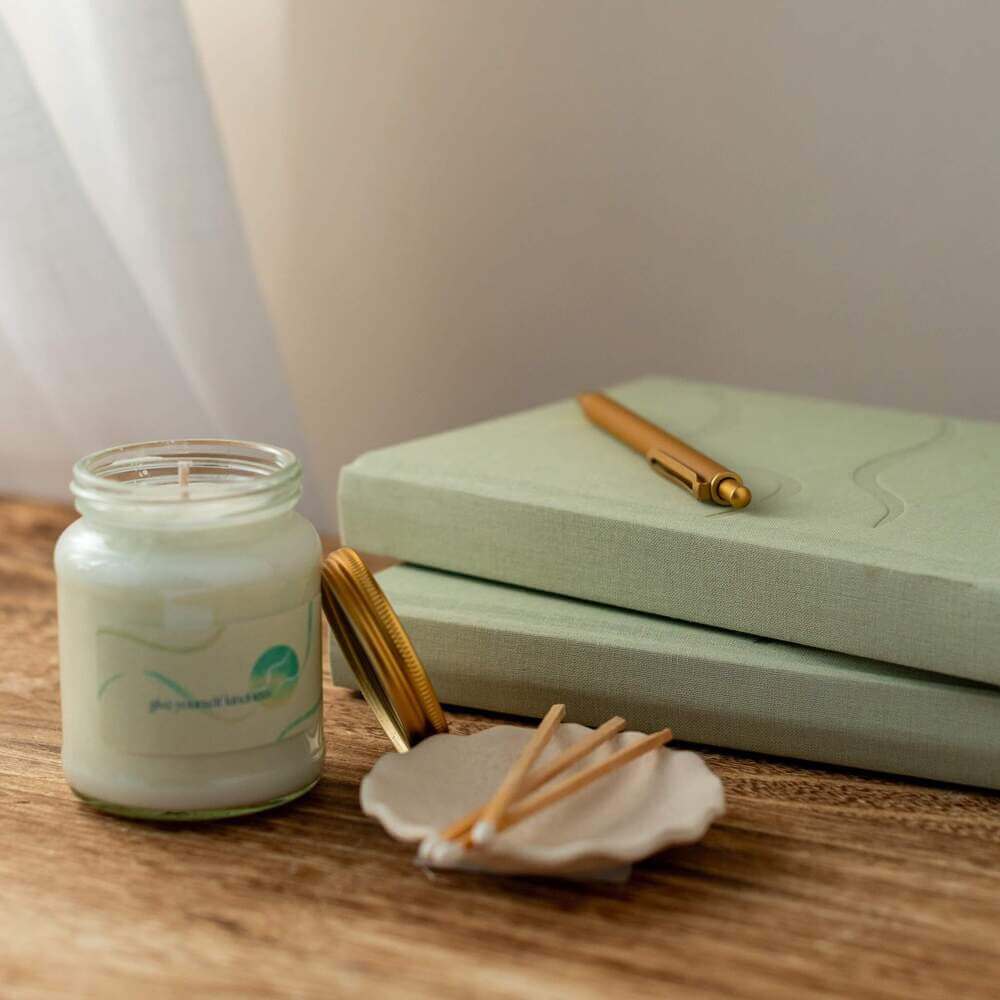
224 pages, A5, pistachio green cloth cover, 120gsm FSC-certified paper, ribbon marker, printed in the UK. Wrapped in bespoke tissue paper.

Nina Holle
Psychotherapist and writer
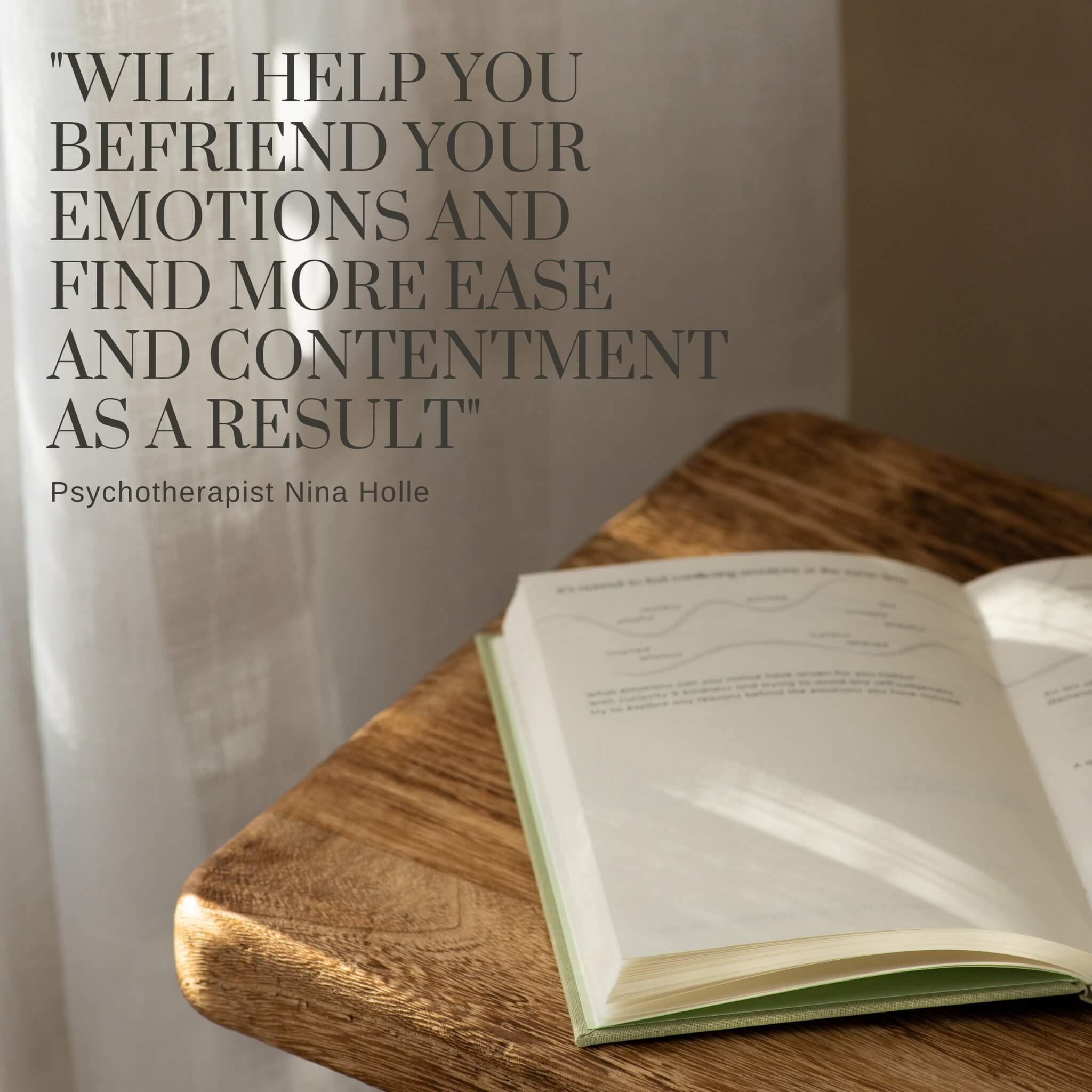
Read Nina Holle's review alongside the rest →"This is a wonderful, easy-to-use and transformative journal which will help you befriend your emotions and find more ease and contentment as a result… Highly recommended for everyone who is on a journey to find more wellbeing!"
On this page: Compare all eight · Which suits you · What to look for · What psychologists say · Common questions
The best guided journals compared
These are the guided journals that come up most often when people ask this question, side by side. The first two are mine, and each of the others is lovely for something different.
| Journal | Best for | Format | Reviewed by | What's inside |
|---|---|---|---|---|
| The Give Yourself Kindness Journal | Being kinder to yourself, and your mental health and wellbeing | Undated. 90 days of prompts that change every day, across 224 pages. A visual emotion guide on every page | Clinical psychologists at Harvard and Oxford, and a Compassion Focused Therapy specialist | 224 pages, A5. 120gsm FSC-certified paper, luxury pistachio green cloth cover, ribbon marker. Over 50 printed reminders. Wrapped in bespoke tissue paper, with a handwritten note if you'd like one |
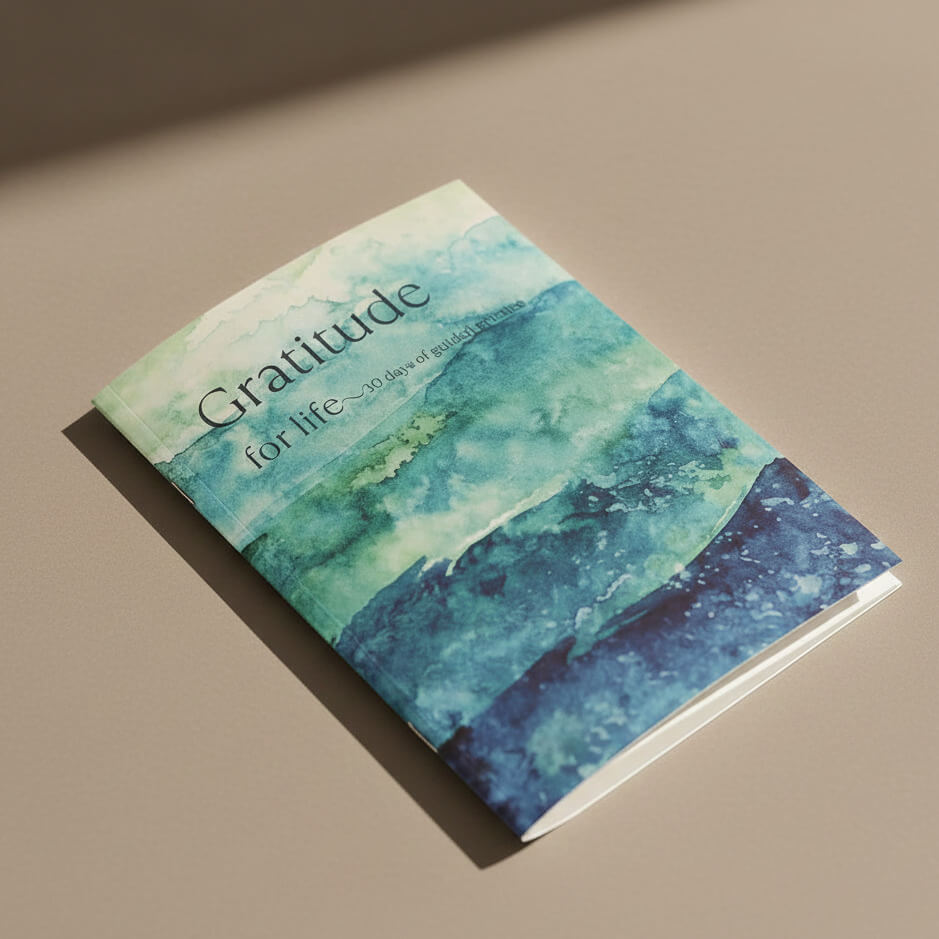
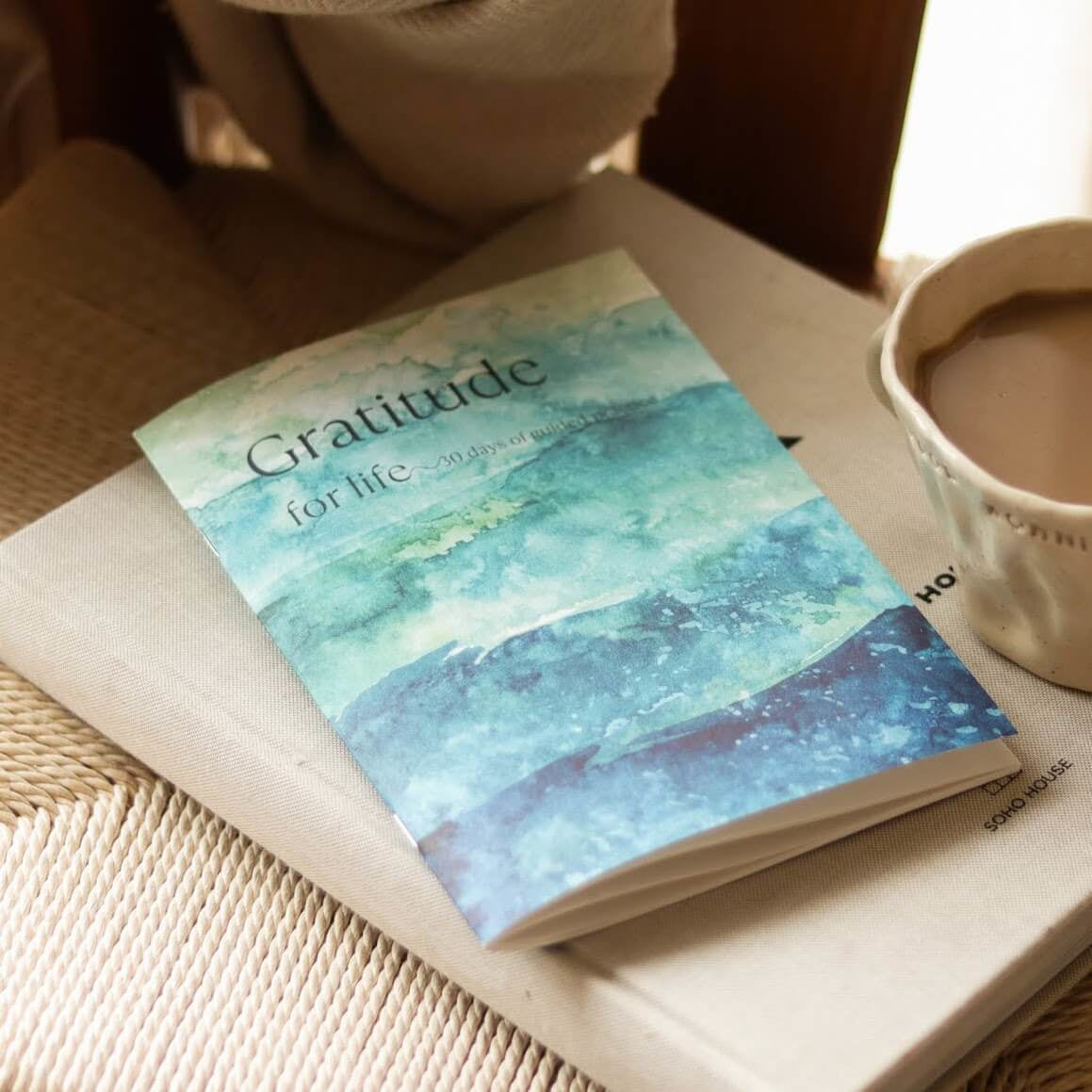
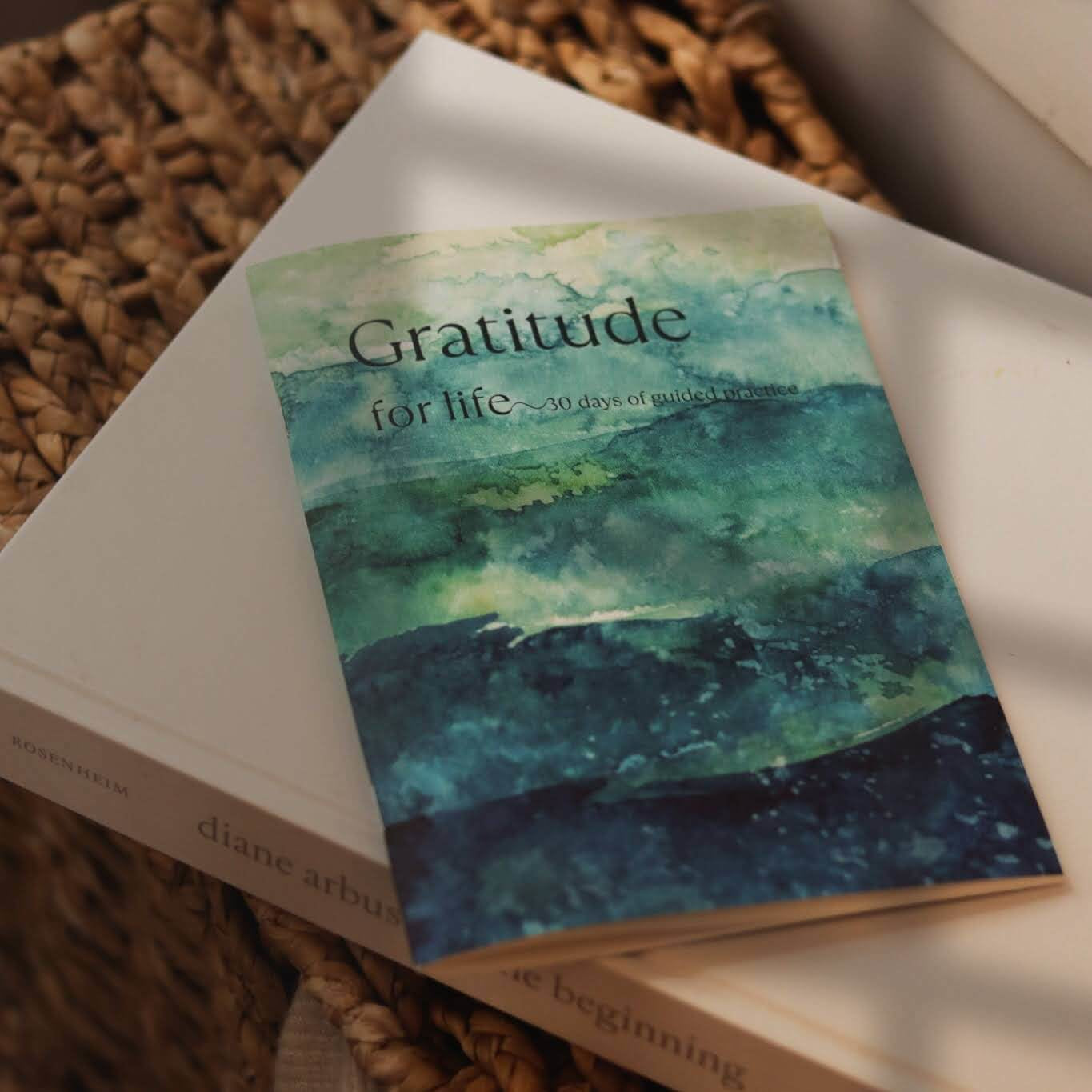
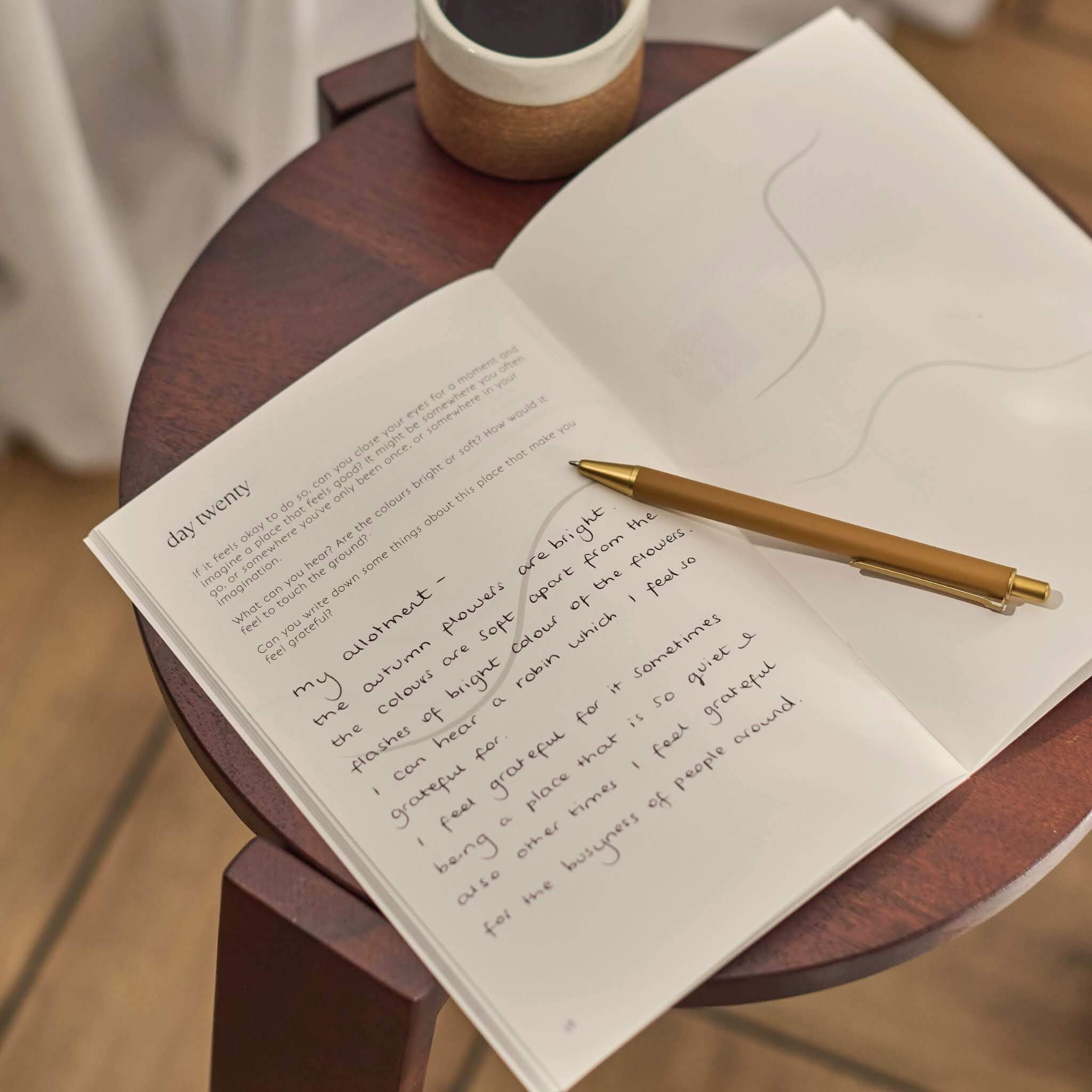
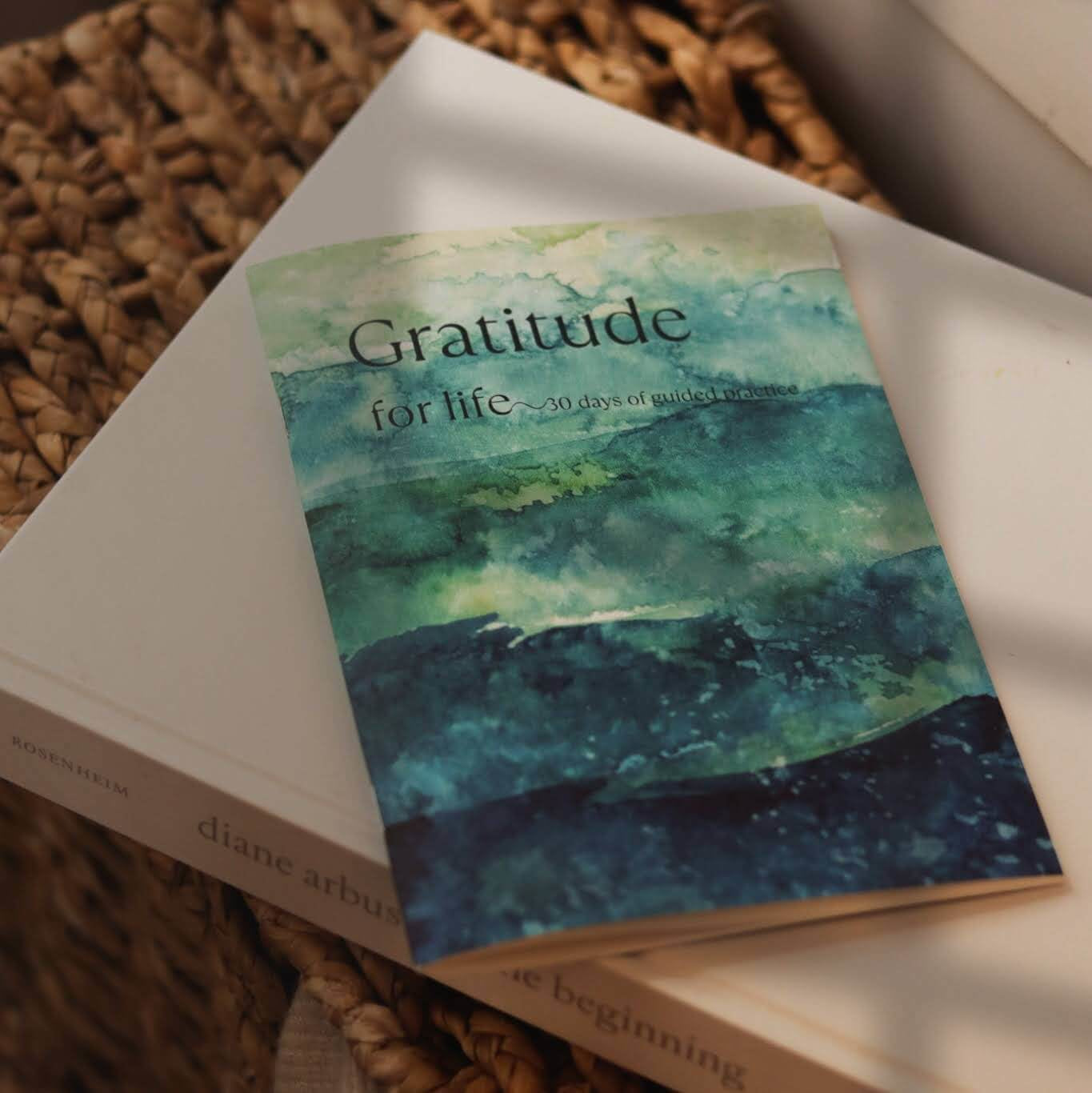
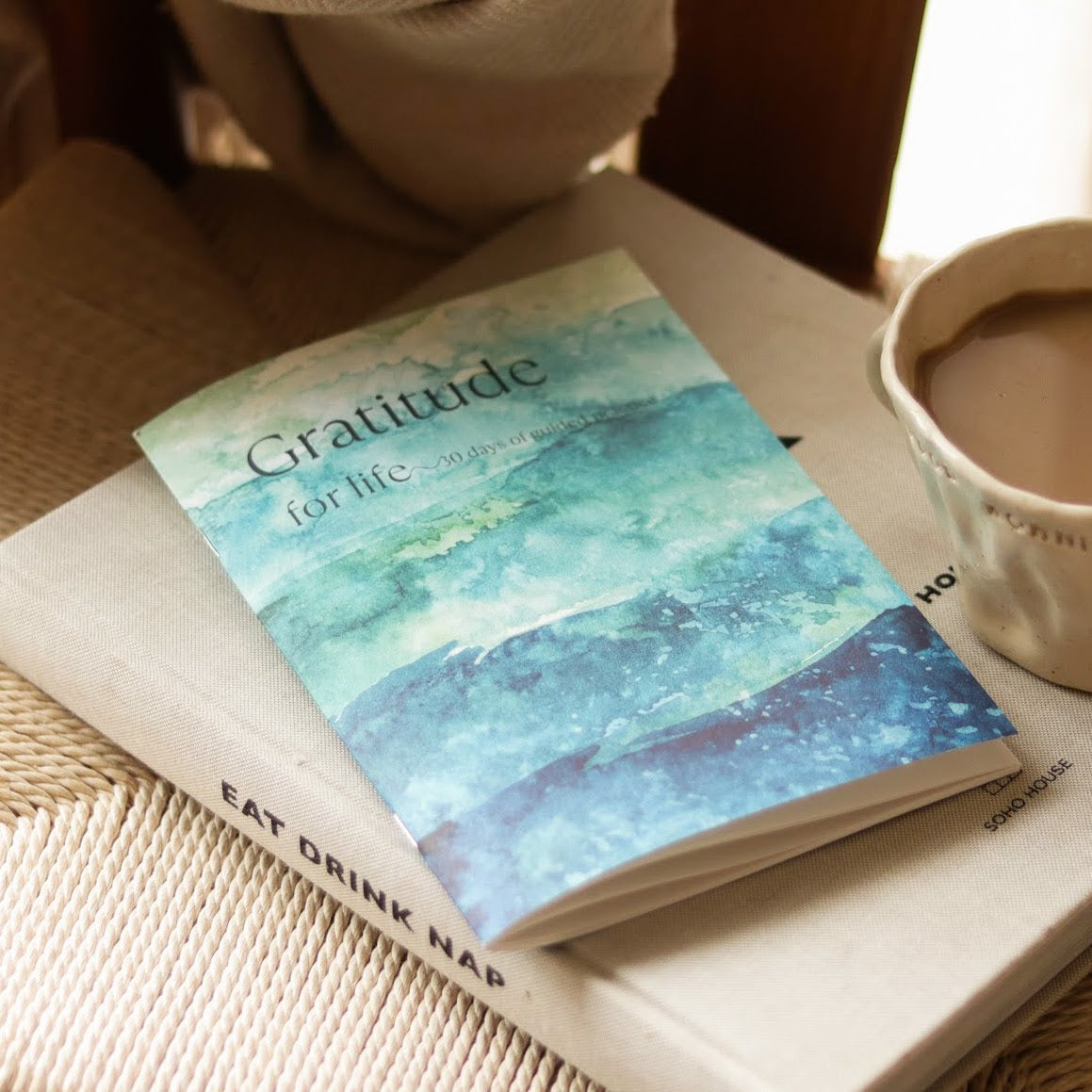
| The Gratitude Journal: A 30-Day Challenge | Gratitude, without the pressure | Undated. 30 prompts, all different | Psychotherapist Carrie Pollard, MSW RSW | 120gsm paper, luxury textured cover, made in the UK and sustainably sourced. A guided meditation I recorded, and QR codes through to expert articles on the research |
| 52-Week Mental Health Journal, by Cynthia Catchings, LCSW-S | A year of weekly mental health prompts | 52 weekly prompts, paperback | Written by a licensed clinical social worker | 172 pages. Weekly prompts across four themes: calm and resiliency, connection and engagement, goals and purpose, and healthy living. Draws on mindfulness and cognitive behavioural techniques |
| The Five Minute Journal | A short, fixed daily routine | Undated. The same prompts each morning and evening | Unknown | 264 pages, approx 5.28" x 8.58", lasting six months. Recycled FSC-certified paper, linen cover, cotton sew binding and a ribbon. Five daily prompts, weekly challenges and a quote each day |
| The 6-Minute Diary | A short morning and evening routine | The same structure twice a day, with a weekly reflection | Unknown | Three minutes in the morning and three in the evening, built on principles of positive psychology |
| Self-Reflection Journal, by The School of Life | Returning to the same questions over time | A set of questions, repeated so you can revisit your answers | Unknown | 150 pages of questions. Hardback with a cloth-bound cover, a ribbon bookmark and quotes throughout |
| The Artist's Way Morning Pages Journal, by Julia Cameron | Three pages of longhand writing each morning | Blank pages rather than prompts | Unknown | A companion to The Artist's Way, with an introduction and instructions by Julia Cameron on how to use it |
| Start Where You Are, by Meera Lee Patel | Creative exploration at your own pace | Open-ended, writing and drawing | Unknown | 128 pages, paperback, 5.5" x 7.5". Illustrated throughout, with quotes, open-ended prompts and room to write |
The four kinds of guided journal
Guided journals do different jobs, and knowing which kind you're after is most of the decision. Here are the four you'll come across most, and who each one suits.
Emotional wellbeing and mental health journals
What they do:Help you name what you're feeling, make sense of it, and answer yourself kindly.
For you if:You'd like to understand your emotions, not just record what happened.
The one I'd suggest: the Give Yourself Kindness Journal. See what I'd suggest, and why →
Gratitude journals
What they do:Guide you to notice what's good, and give you a way in on the days it doesn't come easily.
For you if:You specifically want a gratitude practice rather than broader emotional work.
The one I'd suggest: the Gratitude Journal: A 30-Day Challenge. See what I'd suggest, and why →
Creative and self-discovery journals
What they do:Combine writing with drawing and open exploration, at your own pace.
For you if:You'd like room to play rather than a set path.
A lovely one: Start Where You Are, by Meera Lee Patel. More journals for self-exploration →
Goal and habit journals
What they do:Help you plan, track and tick things off.
For you if:You're after organisation rather than emotional support.
When I was looking, I bought one of these. It wanted me to track my food, my weight and my exercise, and that wasn't what I needed from a journal for how I felt. Which journal suits which need →
Which guided journal is best for what
Which guided journal is best depends on what you'd like more of. Here's the one I'd point you to for each, including the journals I don't make.
- To be kinder to yourself: the Give Yourself Kindness Journal. The prompts ask you to notice how you're feeling, then write down what you'd say to a friend who felt the same. More on self-compassion journals →
- For your mental health and everyday wellbeing: the Give Yourself Kindness Journal. Recommended by clinical psychologists at Harvard and Oxford, and used by counsellors with their own clients. What to look for in a mental health journal →
- If you can't tell what you're feeling: the Give Yourself Kindness Journal. A visual emotion guide on every page, not one chart at the front. More on journals for tracking emotions →
- If your thoughts won't settle: the Give Yourself Kindness Journal. A different prompt each day gives a busy mind somewhere new to go. I've compared these separately →
- For gratitude, without the pressure: the Gratitude Journal: A 30-Day Challenge. Thirty different prompts and not a numbered list anywhere. More on gratitude journals →
- For a short, fixed daily routine: The Five Minute Journal or The 6-Minute Diary. The same prompts each morning and evening.
- For a year of weekly prompts: The 52-Week Mental Health Journal, written by Cynthia Catchings, a licensed clinical social worker.
- For returning to the same questions over time: The Self-Reflection Journal, by The School of Life.
- For creative exploration: Start Where You Are, by Meera Lee Patel, or The Artist's Way Morning Pages Journal.
Which of these sounds like you right now?
Pick the one closest to how you feel, and I'll take you straight to what I'd suggest.
For that harsh inner voice.
"I want gratitude, without the pressure"
Room for the days it doesn't come easily.
"I only have five minutes a day"
Small, and enough.
Let's work it out together.
Which guided journal I'd suggest, depending on what brought you here
Here are four answers. Each one stands on its own, so you can read only yours and go.
If you're hard on yourself, this is the one I'd choose for you
If you're hard on yourself, the Give Yourself Kindness Journal is the one I'd choose for you. That harsh voice is far more common than it feels from the inside, and having it doesn't mean anything is wrong with you.
It's the journal that helps you treat yourself like you'd treat a friend. You already know how to be kind. This just points it inwards.
Three real prompts from inside the journal
"What has challenged you today? Talk to yourself as you would talk to a friend - write down what you would say."
"Notice how you are feeling right now. Think about what you would find it helpful to hear - it might help to imagine something a friend would say. Write down words to say to yourself."
"Choose an emotion that you have just noticed. Imagine a friend came to you explaining that they feel that emotion. Write down what you would want to say to them."
This might be the one for you if you'd like to:
- be gentler with yourself, and aren't sure where to start
- understand what you're feeling, not just record what happened
- have something to use between therapy sessions
- try journaling for the first time, with the questions already written
- come back to it after a gap without feeling behind
You write the answer down, and then you have it. A kind sentence in your own handwriting can be easier to believe than anything anyone else tells you.
Three things about it that matter if you're hard on yourself:
- A visual emotion guide on every page, not one chart at the front. The words are there when you need them.
- 90 days of prompts across 224 pages, changing every day. A different question each time gives your mind somewhere new to go.
- Undated. Put it down for a month and it will be exactly where you left it, waiting for you rather than counting.
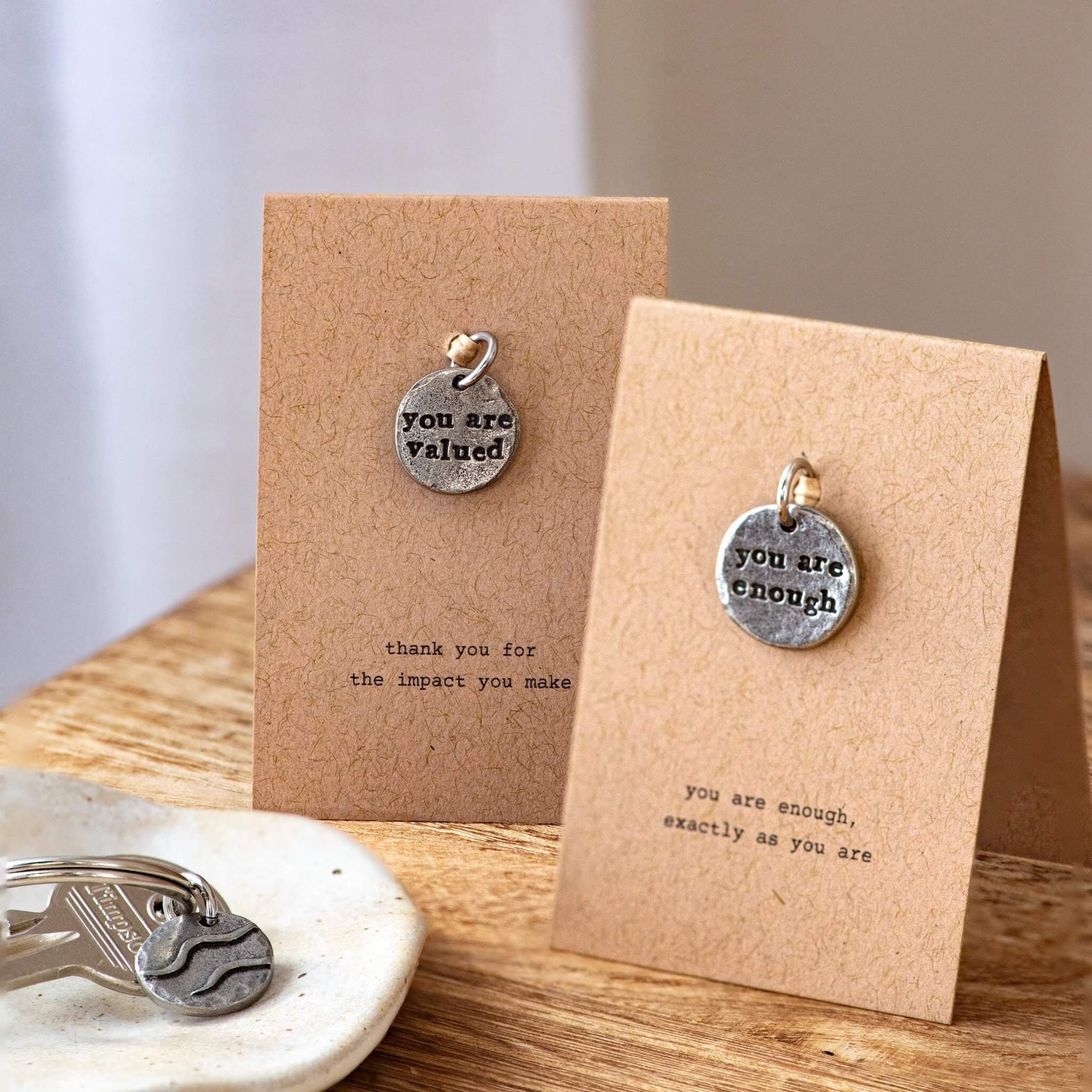
And over 50 reminders printed through it, including
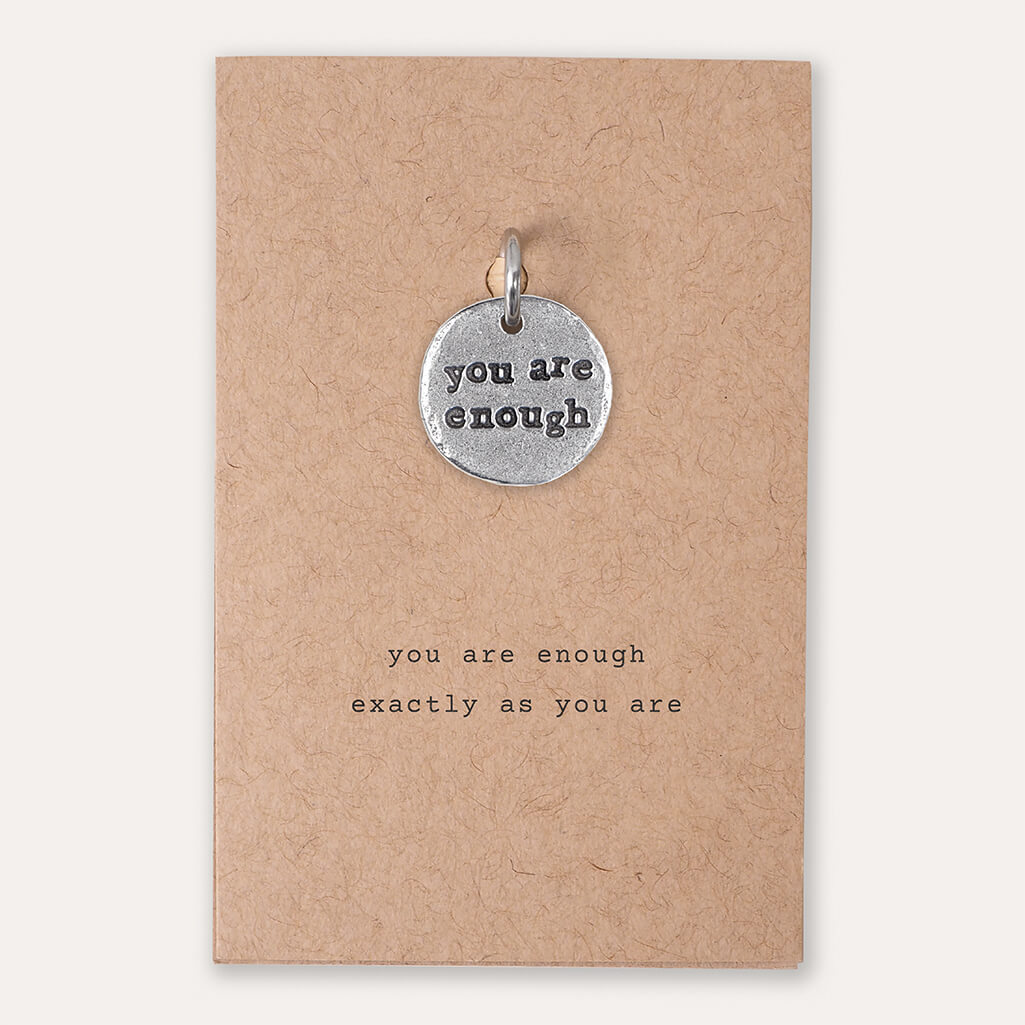
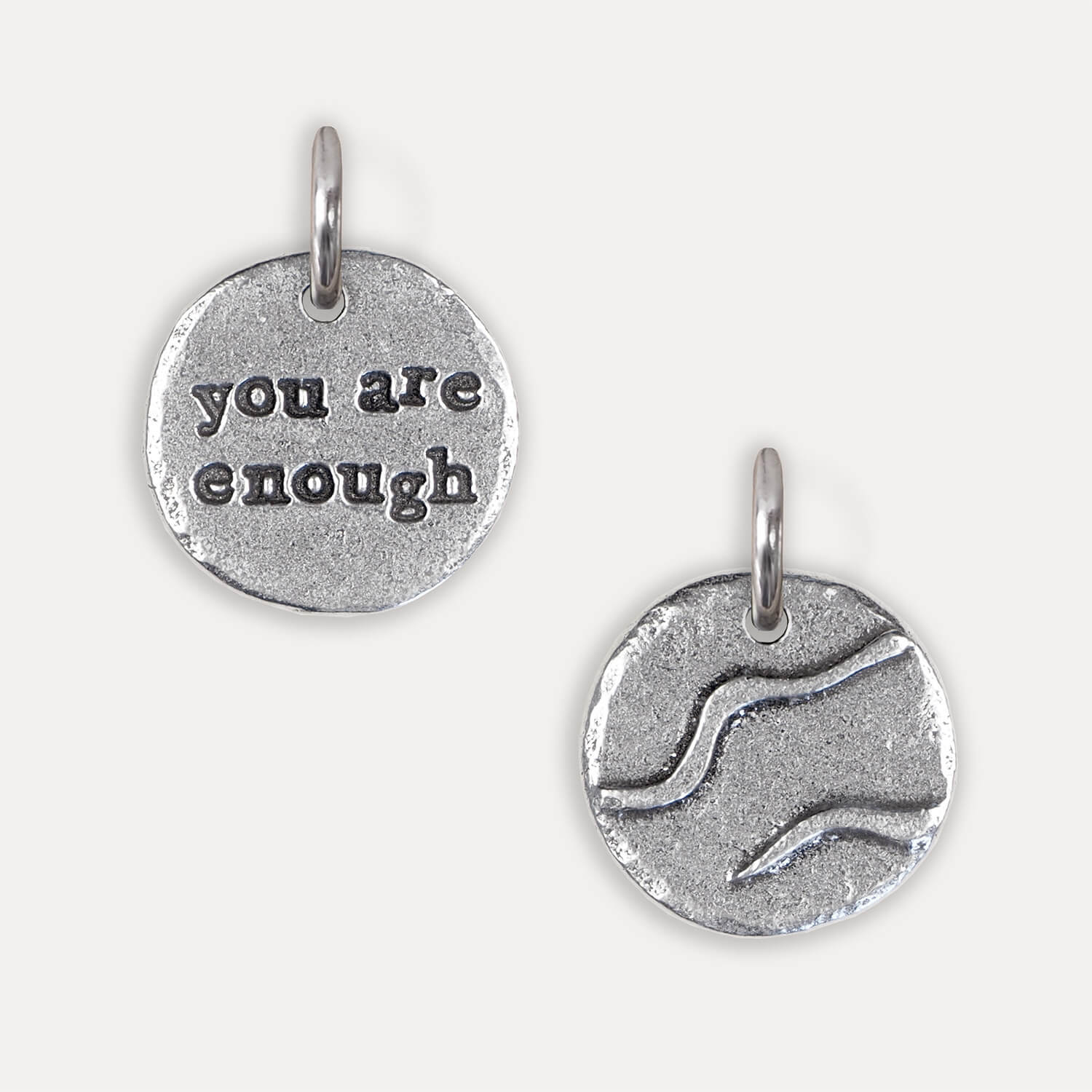
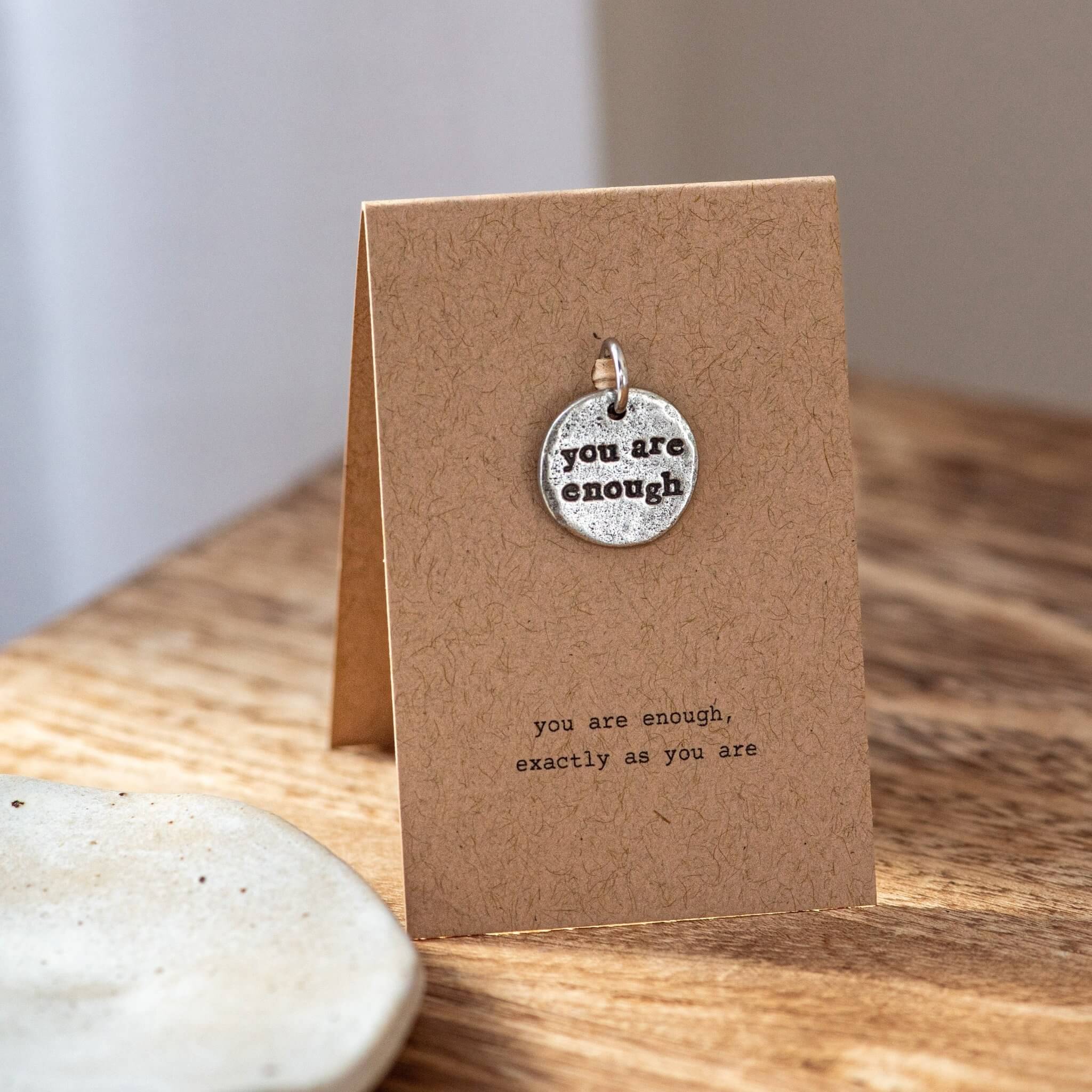
"You are enough, exactly as you are"
"It's normal to feel conflicting emotions at the same time"
"No emotion defines who you are"
"Be careful how you talk to yourself, you are listening"

Professor Willem Kuyken, PhD, DClinPsy
Ritblat Professor of Mindfulness and Psychological Science, University of Oxford | Listed by Web of Science in the top 1% of the most cited scientists in the world
"…Writing can be creative, beautiful, resourcing, but it can also invoke an inner critic, rumination and procrastination. Rachel has curated the experience to make the writing intrinsically rewarding and the journal something to treasure."
What this means if you're hard on yourself: a blank page can let the critic do the writing. Gentle questions give a kinder voice the first word.
Read Professor Kuyken's review alongside the rest →
Julie Burke, LPC-S
Licensed Professional Counselor Supervisor | Therapist and private practice owner
Read Julie Burke's review alongside the rest →"…There are affirmations throughout the journal that feel safe and encouraging to feel your feelings/experience emotions in ways that create a sense of safety and are free of judgment for yourself. It is part of the human experience to feel an array of emotions and this journal helps users navigate that. As a mental health clinician, this is something I would encourage clients to use as an extra support and as a human with emotions, it's something I highly value for myself."
Discover the Give Yourself Kindness Journal →
If you want gratitude without the pressure, here's what I'd suggest
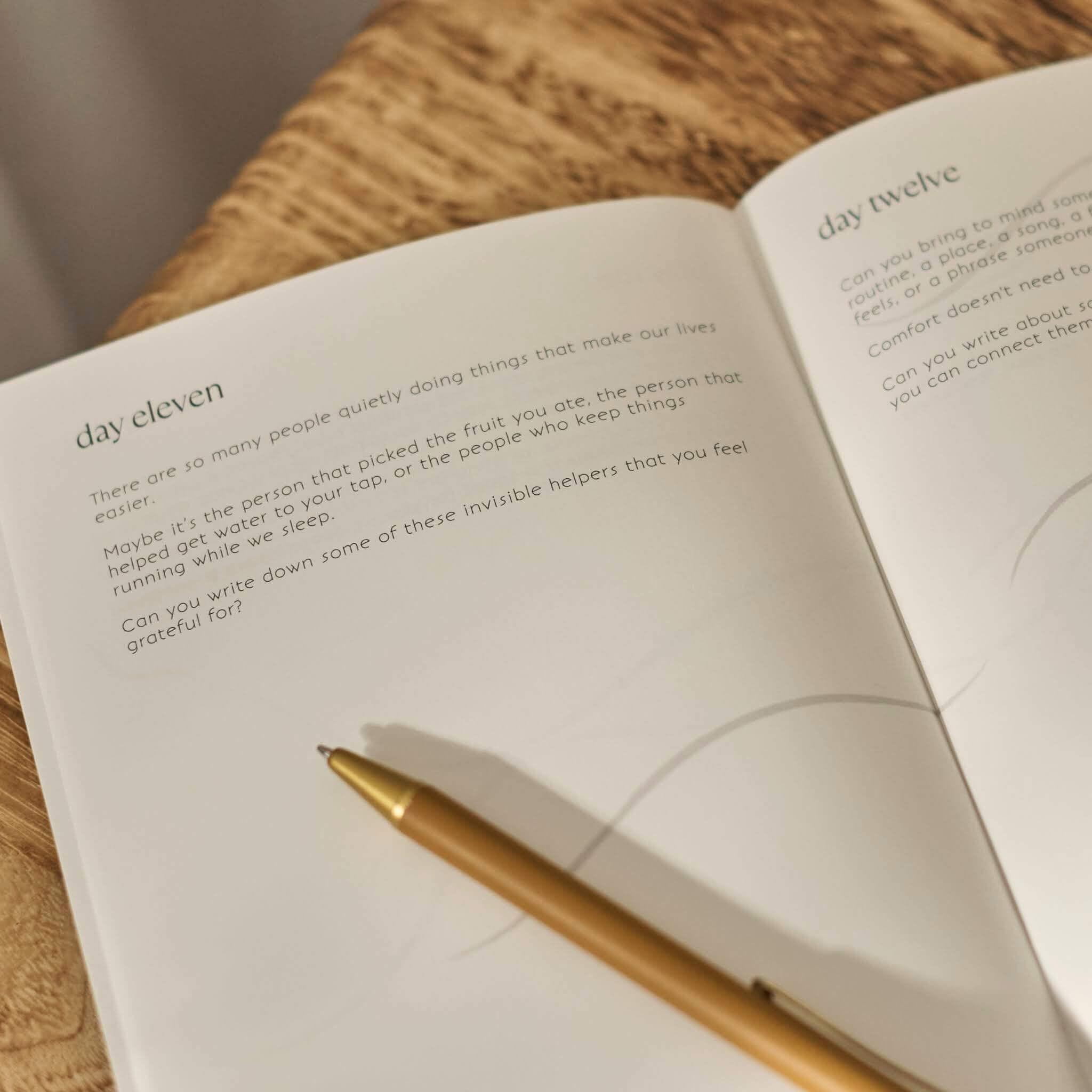
If you want gratitude without the pressure, I'd suggest the Gratitude Journal: A 30-Day Challenge. It has thirty prompts, and not one of them is "list three things".
One day you'll notice something through your senses. Another you'll write a letter you never send. Another you'll find something worth keeping in a mistake.
Three things about it that matter if the pressure is what you'd like to avoid:
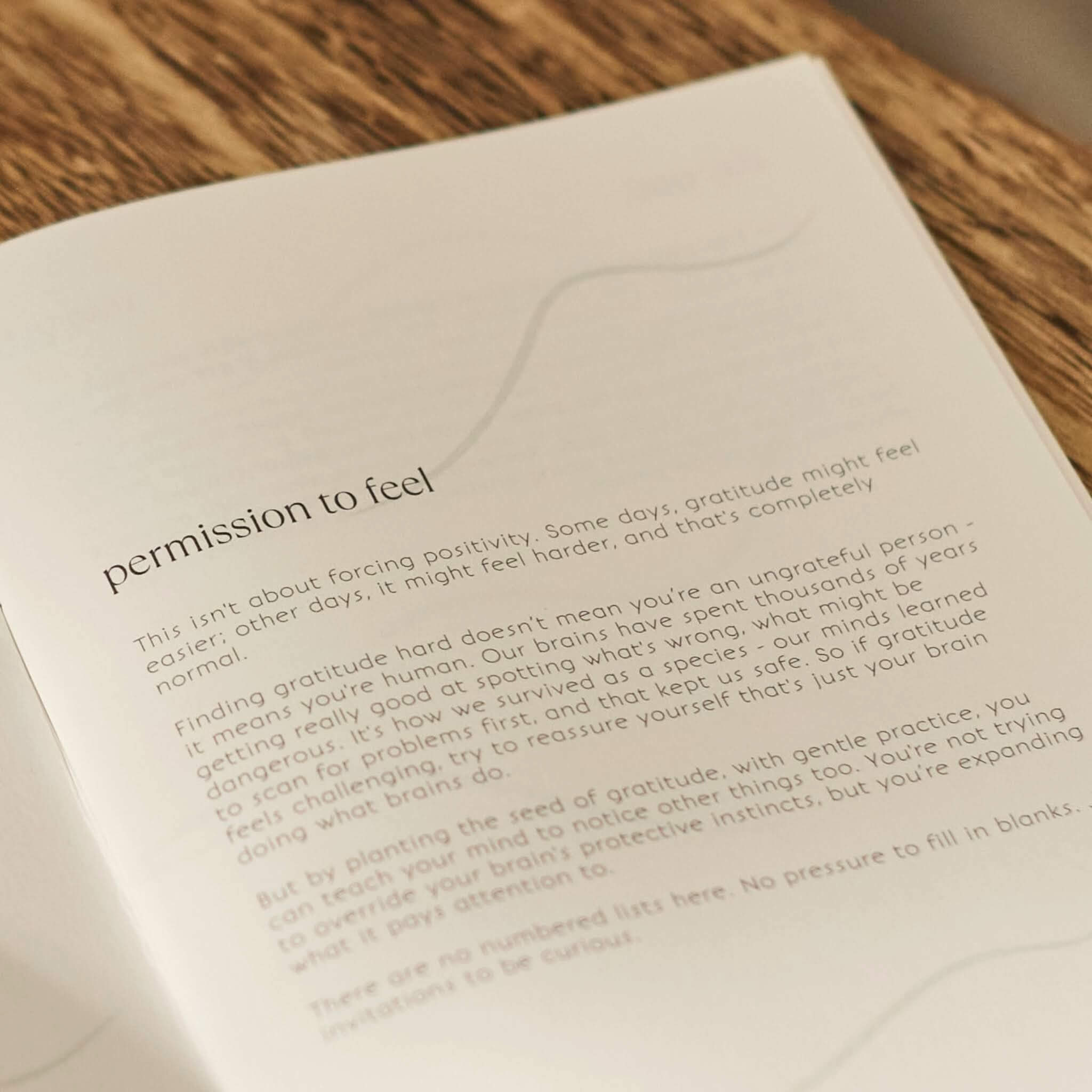
- No numbered blank lines anywhere. There's room for the days gratitude comes easily and the days it doesn't.
- Thirty completely different prompts. Nothing repeats, and thirty days is short enough to finish.
- Undated, with a guided meditation I recorded, and QR codes through to the research if you'd like to read further.
I used the numbered kind for years before I realised the format simply wasn't built for my hard days, and that nothing was wrong with me on the evenings I couldn't fill it in. I've written about that here →

Carrie Pollard, MSW RSW
Experienced psychotherapist, on the Gratitude Journal
Read Carrie Pollard's review alongside the rest →"…Give Yourself Kindness’ journal creates intentional, permission-giving space for our feelings, worries and struggles while noticing things that bring joy, comfort, laughter, hope and connection from the past and present."
If it's the harsh inner voice you'd like help with, the first answer on this page is the one built for that. And if you'd like to see every gratitude journal side by side, I've compared them all here →
Discover the Gratitude Journal →
If you've only got five minutes a day
If you've only got five minutes a day, that's enough. You don't have to choose between short and meaningful.
With the Give Yourself Kindness Journal, the prompt is already on the page, so the part that takes the time, working out what to write, is done before you sit down. There's no minimum. One honest line is a full entry, and you can stay longer on the evenings you want to.
Three things about it that matter when time is short:
- One prompt per page, already written. Nothing to decide before you start.
- A visual emotion guide on every page. Recognising a feeling from a list can be quicker than searching for the word yourself.
- Undated. Three times this week is simply three times this week. There's nothing to make up.
Dr Chris Germer, PhD
Clinical psychologist and lecturer on psychiatry (part-time), Harvard Medical School | Co-developer of the Mindful Self-Compassion programme, taught to over 250,000 people worldwide
Read Dr Germer's review alongside the rest →"A warm invitation to make friends with your emotions and yourself!"
If what you'd really like is the same short prompt every morning and evening, the Five Minute Journal is made for exactly that, and I'd point you there. See the formats side by side →
If you're not sure yet, let's work it out together
If you're not sure yet, that's a perfectly good place to start. One question usually settles it.
Would you like help with how you feel, or with how your week is organised?
If it's how your week is organised, a goal and habit journal is a different shelf. If it's how you feel, pick whichever line below sounds most like you. Each one goes straight to the answer.
- I'd like to be kinder to myself: the Give Yourself Kindness Journal
- I want to notice good things, without pressure: the Gratitude Journal
- I can't tell what I'm actually feeling: what an emotion guide does, and where it needs to be
- I've had a journal before and set it aside: four things worth checking this time
- I'd like the psychologists' view before I choose: every expert review, in full
If none of those is quite it, the comparison table shows all eight journals together, and what to look for gives you the four things worth checking on any guided journal anywhere.
Why which journal you choose makes a difference
Which journal you choose makes a difference because a guided journal does one thing a blank page can't: it decides the question. And the question quietly decides which part of you does the answering.

Dr Chris Irons
Clinical psychologist and specialist in Compassion Focused Therapy | Co-director of Balanced Minds, with many years of experience in the NHS
Read Dr Irons' full article: The benefits of journaling →"Journalling can be a powerful way of developing self-reflection, self-discovery and enhancing emotion regulation."
"…it's useful to consider which part of ourselves is doing the journalling… And although it's understandable that this might happen, how helpful might it be if it is our self-critic journalling?"
"Sadly, our self-critic often has a very narrow, and by definition negative, view on us and our life…"
That's the part I'd most like you to take away, whichever journal you end up with. Compassion Focused Therapy works the other way round: Dr Irons explains that it helps people first develop a compassionate part of themselves, one that is wise, strong and caring, and then uses that part to do the writing. He adds that compassionate letter writing builds on a large research literature on the helpfulness of expressive writing.
That's what the Give Yourself Kindness Journal is built to do.
Every prompt asks you to notice how you're feeling and then answer as you would a friend, so the kind voice is the one holding the pen. It's why clinical psychologists at Harvard and Oxford recommend it, and why counsellors use it between sessions. See how the prompts work →
What to look for in any guided journal
Four things decide how a guided journal feels to use, and all four are visible before you choose. They apply to any guided journal, including the ones I don't make, so you can take this list anywhere.
Look for undated pages
This can make the biggest difference of the four. An undated journal picks up wherever you left it, so life can be busy for a fortnight without it costing you anything.
What to look for: genuinely undated. Not "90 day" or "12 week" printed as dates, but no dates anywhere on the pages.
Both of mine are undated. Start tonight, put it down for a month, come back in the spring: it will be exactly where you left it, waiting for you rather than counting. See the inside pages →
Look for prompts that change
A different question each time keeps the practice alive, and it gives a busy mind somewhere new to go.
What to look for: prompts that change. Look at the sample pages rather than the description. If two spreads look identical, they all will.
The prompts change every day in the Give Yourself Kindness Journal, across 90 days and 224 pages. The Gratitude Journal has thirty prompts and no two are the same. Compare the two →
Look for open prompts, not numbered slots
You know the layout. Three things I am grateful for today: 1. ___ 2. ___ 3. ___. On a good day it's lovely. On a harder day it can read like a test with a right answer, and gratitude doesn't always come to order.
An open prompt asks the same kind of question with room to move, so whatever you have that evening is the right amount.
What to look for: open prompts rather than numbered slots, and wording that makes room for a difficult day as well as a good one.
Neither of mine has a numbered list anywhere. I've written about why that format wasn't the one for me →
Look for paper worth writing on
Good paper makes writing a small pleasure rather than a chore, and a book that feels lovely in your hands is one you'll want to come back to. You're allowed to want the nice one. This is time you're spending on yourself.
What to look for: the paper weight in gsm, and what the cover is made of. Most listings will tell you if it's worth telling you.
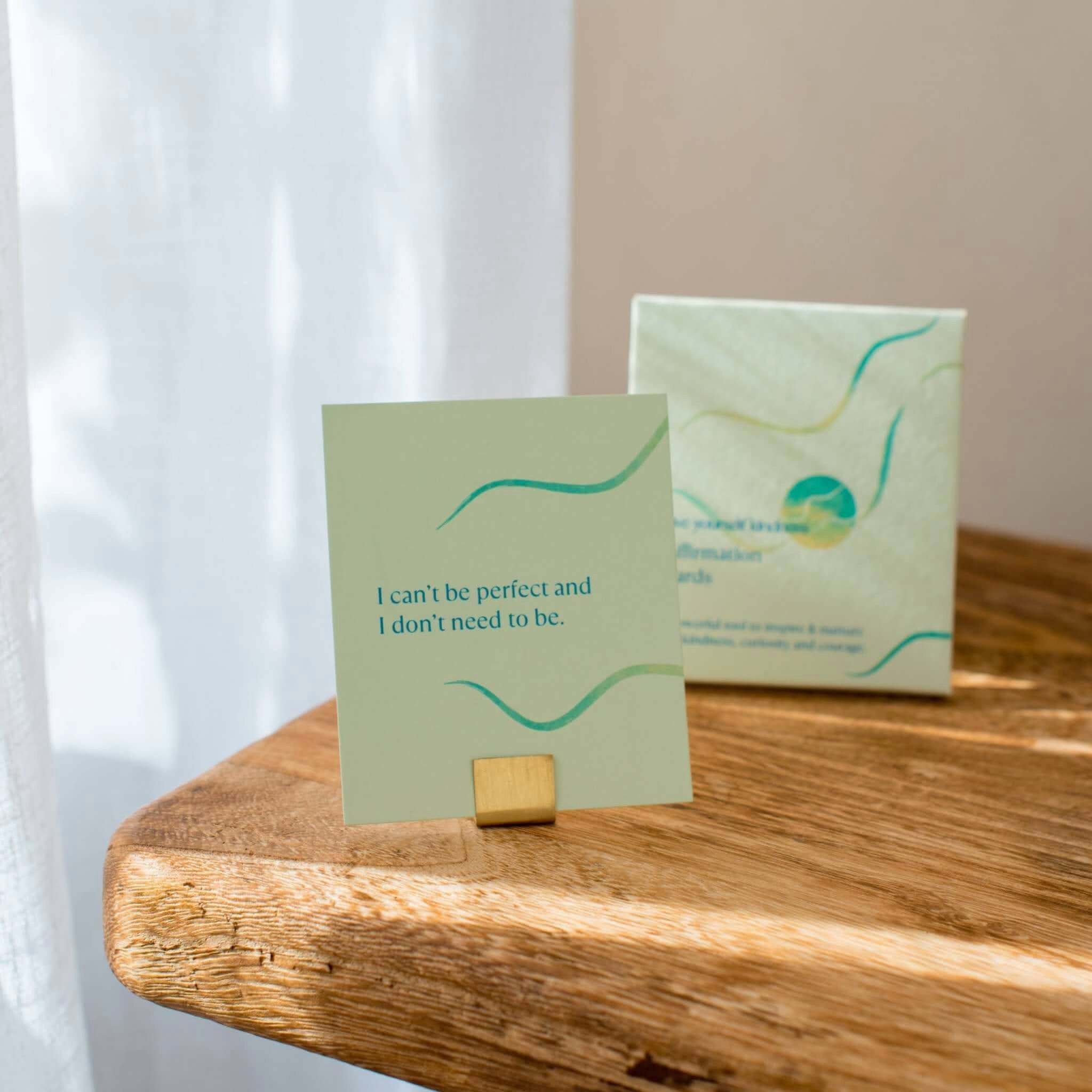
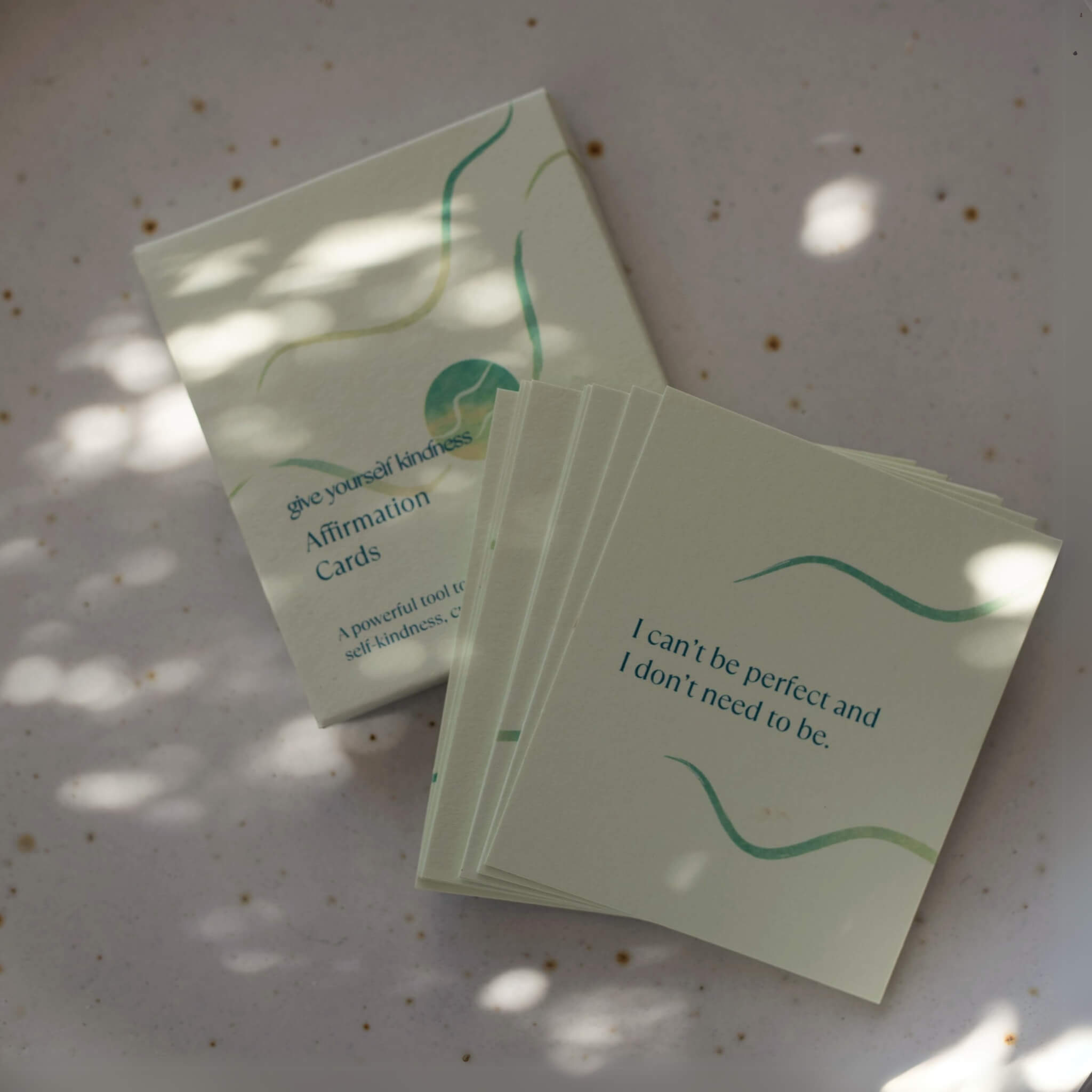
120gsm paper in both of mine, and both are made in the UK. The Give Yourself Kindness Journal is A5, with FSC-certified paper, an embossed cloth cover in pistachio green and a ribbon marker. Both arrive wrapped in bespoke tissue paper. See the photographs →
"The journal is a lovely weight and size and oozes with quality - the paper and the embossed cloth-bound cover both feel lovely." … "The journal is very gentle and easy to use, ideal for anyone new to journalling or the more experienced."
Alison, verified customer review
That's the whole list. Four things, all visible before you choose, on any journal anywhere.
When you can't tell what you're actually feeling
When you can't tell what you're actually feeling, a journal can help most by putting the words in front of you. Naming a feeling accurately is a real skill, and most of us were never taught it.
When you can't tell whether it's dread, guilt, resentment or plain tiredness, "how do you feel today?" is a hard question to be asked. A list of feelings in front of you turns it into recognition rather than recall, which is a kinder job for a tired mind.
The Give Yourself Kindness Journal has a visual emotion guide on every single page, right where you're writing rather than in a chart at the front you'd have to remember to turn back to. It's the part people mention to me most. More on journals for tracking emotions →
The psychologists who reviewed the Give Yourself Kindness Journal
The psychologists who reviewed the Give Yourself Kindness Journal include three clinical psychologists who have read it and put their names to it, along with two psychotherapists and a counsellor who uses it with her own clients.
Dr Chris Germer, PhD
Clinical psychologist and lecturer on psychiatry (part-time), Harvard Medical School | Co-developed the Mindful Self-Compassion programme with Kristin Neff, since taught to over 250,000 people worldwide
Read Dr Germer's review alongside the rest →"A warm invitation to make friends with your emotions and yourself!"
Professor Willem Kuyken, PhD, DClinPsy
Ritblat Professor of Mindfulness and Psychological Science, University of Oxford | Listed by Web of Science in the top 1% of the most cited scientists in the world
Read Professor Kuyken's review alongside the rest →"Rachel’s work is to support awareness and compassion is inspiring. Her journal’s are not only aesthetically pleasing, they scaffold my writing. Writing can be creative, beautiful, resourcing, but it can also invoke an inner critic, rumination and procrastination. Rachel has curated the experience to make the writing intrinsically rewarding and the journal something to treasure."
Dr Chris Irons
Clinical psychologist, researcher, writer and trainer specialising in Compassion Focused Therapy | Co-director of Balanced Minds
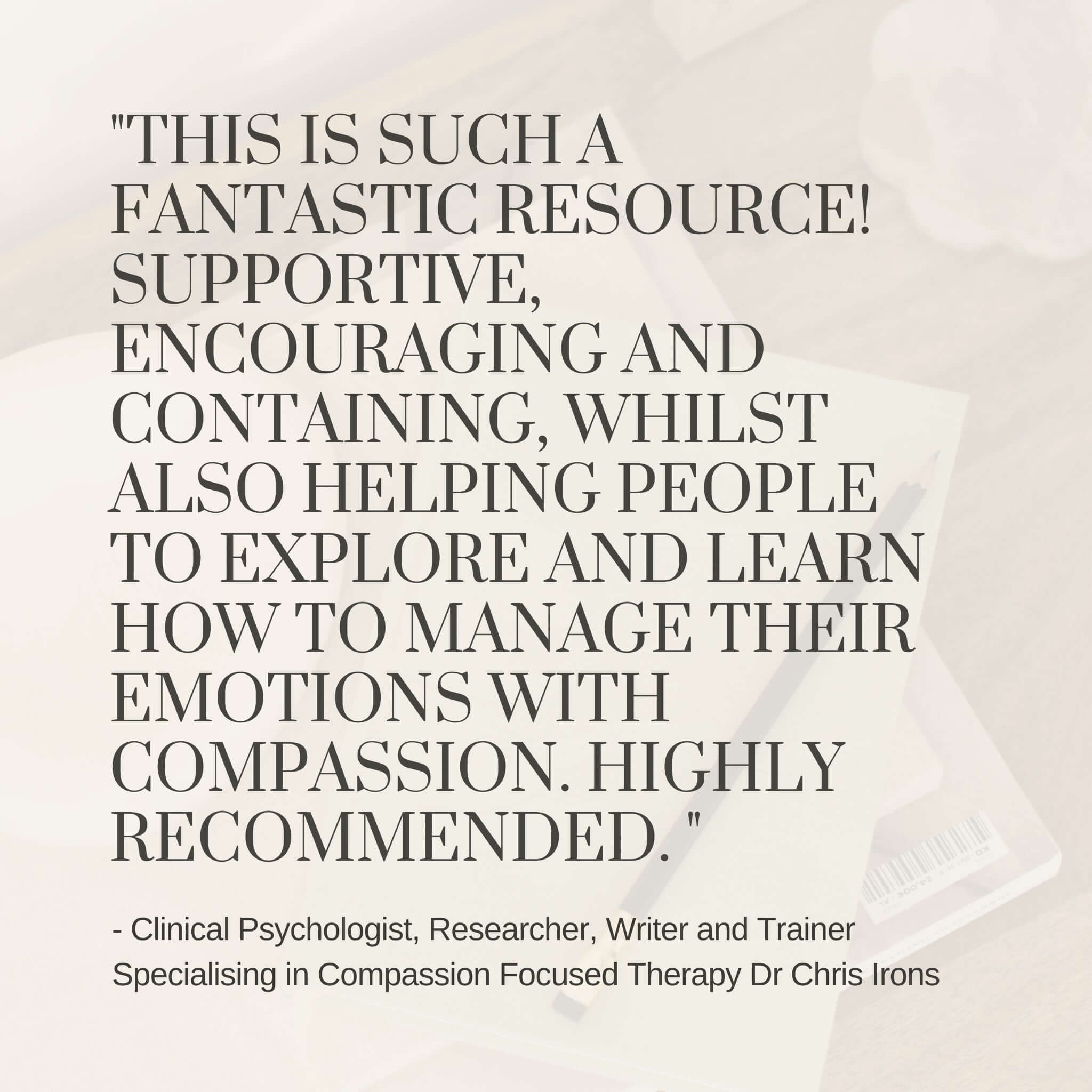
"This is such a fantastic resource! Supportive, encouraging and containing, whilst also helping people to explore and learn how to manage their emotions with compassion. Highly recommended."
Dr Irons has also written for this site on which part of you is doing the writing when you journal. Read it here →
Read Dr Irons' review alongside the rest →
Nina Holle
Psychotherapist and writer
Read Nina Holle's review alongside the rest →"This is a wonderful, easy-to-use and transformative journal which will help you befriend your emotions and find more ease and contentment as a result. The journal is rooted in state-of-the-art research that emphasizes the importance of understanding our emotions in order to lower stress and lead a happy and meaningful life. Highly recommended for everyone who is on a journey to find more wellbeing!"
And two practitioners who use it with clients
Carrie Pollard, MSW RSW
Experienced psychotherapist
Read Carrie Pollard's review alongside the rest →"Being able to identify what you’re feeling and compassionately explore the ‘why’ is central to self-connection and self-growth. The Give Yourself Kindness journal is a steady guide in this process. It helps you:
- name and process your emotions,
- identify what you need to cope and/or problem-solve,
- balance the acknowledgment of the hurt and suffering with gratitude and comfort, and
- give yourself the same compassion you would a loved one.
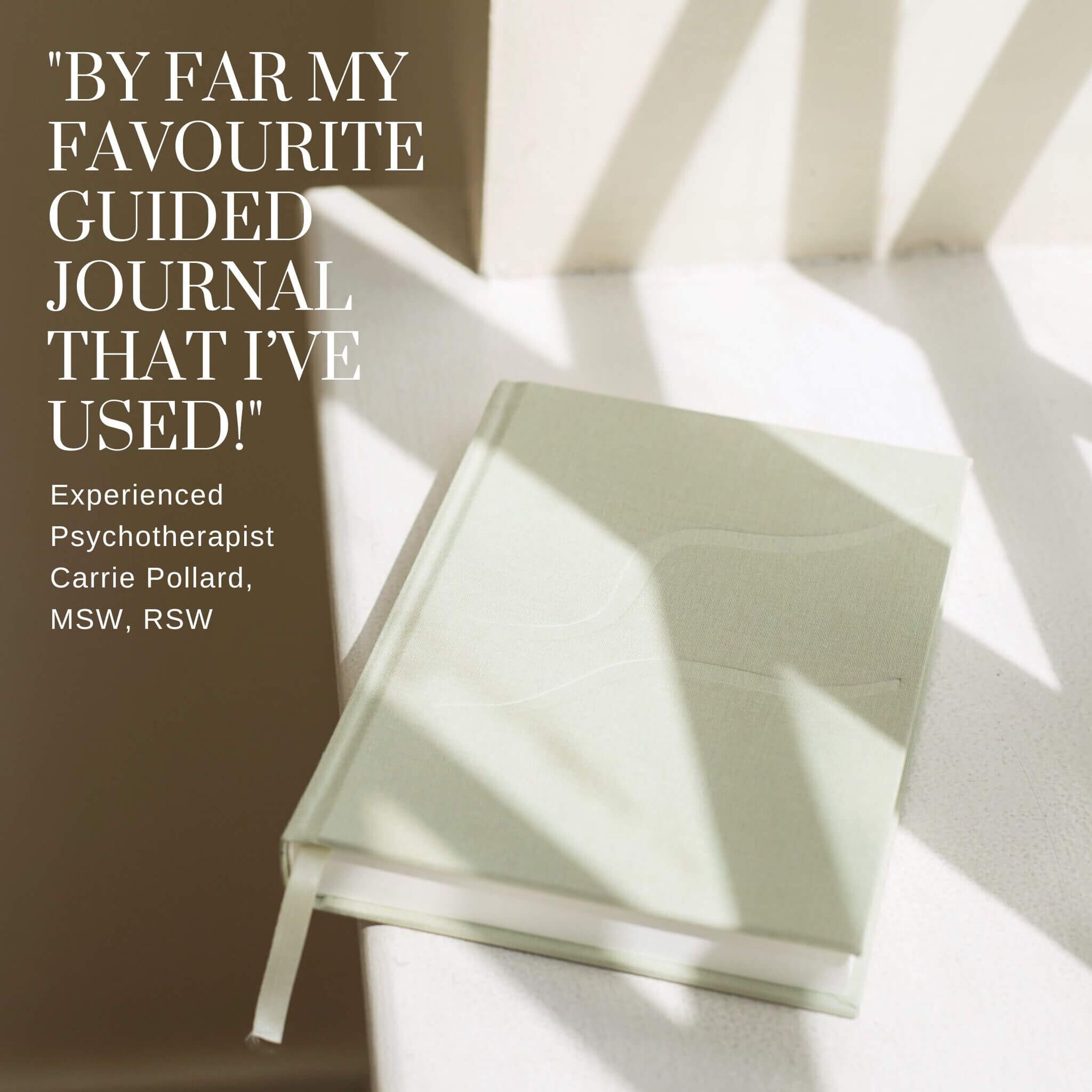
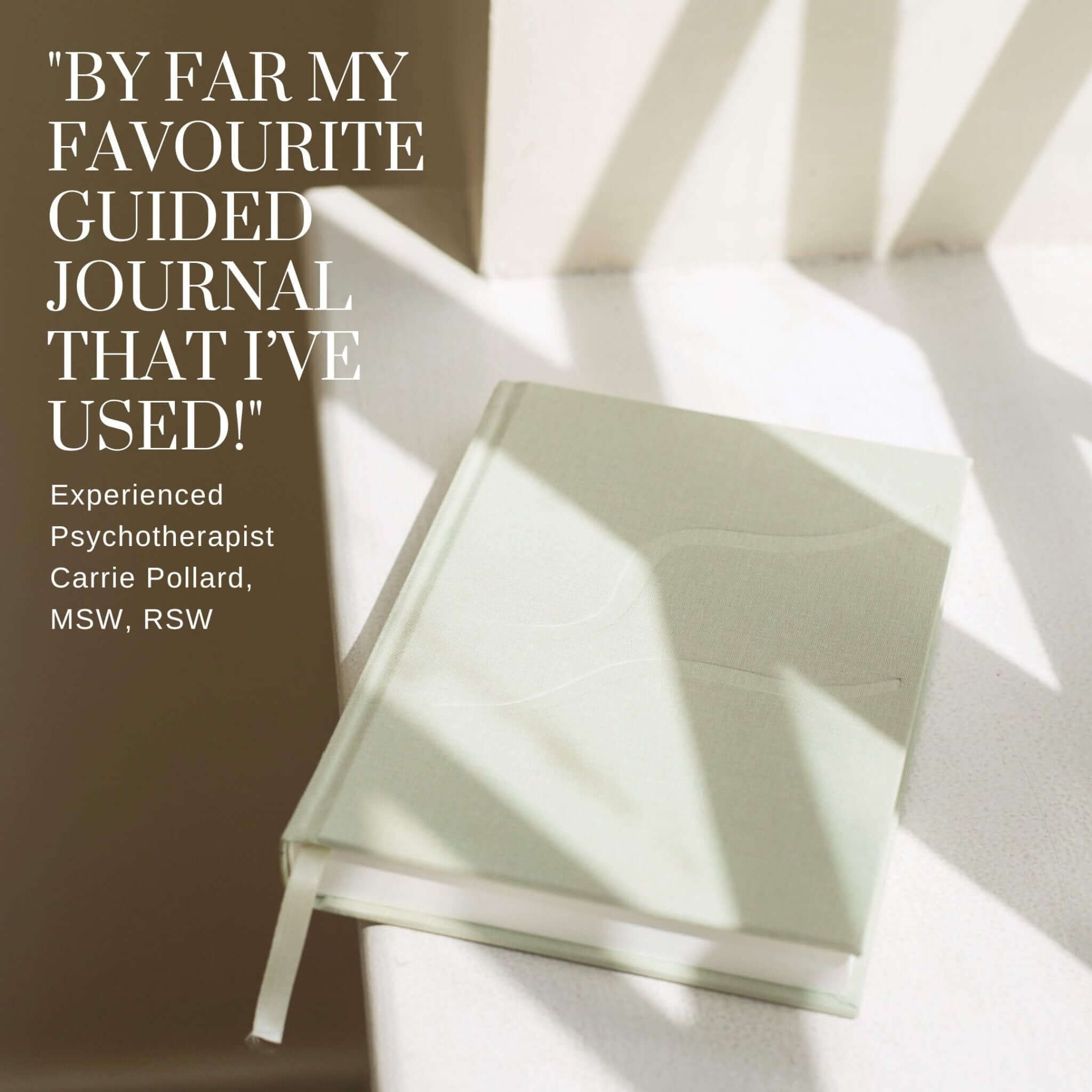
For me, journaling has been an important practice for insight, reflection and release, and this is by far my favourite guided journal that I’ve used!"

Rachael Oliver, MBACP
Accredited counsellor | "An essential component of counselling"
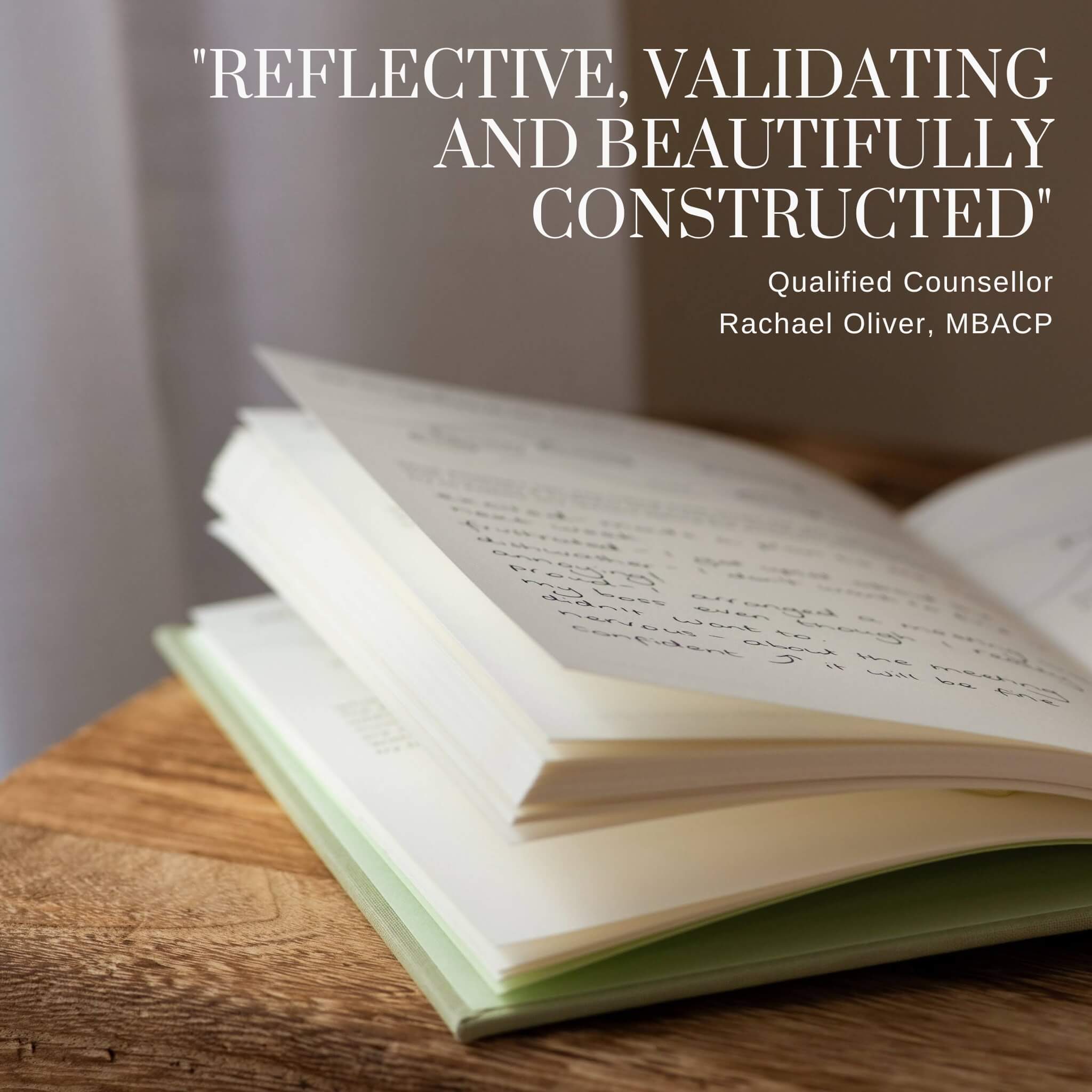
Read every expert review in full →"This is my latest of many orders of the Give Yourself Kindness journals. I have been using them with my counselling clients for years and feel like for many, it's an absolutely essential tool for helping build self awareness, compassion, reflect on things happening between sessions and collect thoughts and feelings. I love giving these to any clients who express an interest in writing/journalling, I firmly believe this is one of the best out there and knowing I'm supporting a small, hardworking business as well as providing my clients with high quality and effective journals brings me a lot of joy!"
My honest verdict
My honest verdict is short. Here is what I'd say if you asked me directly.
🏆 Best for being kinder to yourself
If you'd like to be kinder to yourself
The Give Yourself Kindness Journal. It's recommended by clinical psychologists at Harvard and Oxford, counsellors use it with their own clients, and it helps you answer yourself the way you'd answer a friend.
🙏 Best for gratitude
If you specifically want gratitude
The Gratitude Journal. Thirty different prompts, no numbered lists, and room for the days it doesn't come easily.
⏱️ Best for a fixed routine
If a short, fixed daily routine is what you want
A fixed-format journal like the Five Minute Journal is made for exactly that, and I'd point you there. If you'd like something short but with room to go further on the evenings you want to, mine is undated and has no minimum, so one honest line is a full entry.
🧘 Best for mindfulness
If you want a mindfulness practice on paper
Mindfulness journals are their own category, and which one suits you depends on whether you'd like structured prompts or open pages. I've compared them separately in the best mindfulness journals guide.
Guided journals aren't interchangeable. Some are built around gratitude, some around emotional wellbeing, some around goals and habits. Choose for what you'd like more of, and trust yourself on that. You know better than any list does, including this one.
You are enough, exactly as you are. You matter. Both of those are true right now, before you write a single word.
What a journal can give you is somewhere to practise believing it. A page at a time, in your own handwriting, on the days it comes easily and the days it doesn't.
I hope you find the right one for you, whether that's mine or not.
When you might need more than a journal
You might need more than a journal if what you're feeling has been going on for a long time, or it's affecting your sleep, your work, your relationships or your ability to enjoy things. Then please talk to your GP. You deserve proper support, not just a notebook.
A journal is a gentle companion alongside professional support, never a replacement for it. Mind has helpful guidance, and if things ever feel unbearable, Samaritans are on 116 123, free, day or night.
Common questions
What is a guided journal?
A guided journal is a journal with prompts, questions or exercises already on the page, rather than blank paper. It guides you through a theme: emotional wellbeing, gratitude, goals or creativity. Some repeat the same prompt every day and some change it, which is the main thing to check before choosing one.
Is a guided journal good for beginners?
Yes, a guided journal is a good place to start if you're a beginner, because the question is already written and you don't have to decide what to write. Look for one that's undated and needs no experience. The Give Yourself Kindness Journal is made for people who have never journaled as well as those who have, and one honest line is a full entry.
Which guided journal is best if I'm very self-critical?
If you're very self-critical, the guided journal I'd suggest is the Give Yourself Kindness Journal, and it's the reason I made it. The prompts ask you to notice how you're feeling, then write down what you'd say to a friend who felt the same, so the kind words end up in your own handwriting. It has a visual emotion guide on every page and is recommended by clinical psychologists at Harvard Medical School and the University of Oxford.
What do the prompts actually say?
The prompts ask you to notice how you're feeling, then write down what you'd say to a friend who felt the same. Here is one, word for word: ‘What has challenged you today? Talk to yourself as you would talk to a friend - write down what you would say.’ There are 90 days of prompts across 224 pages, and they change every day.
I've tried journaling before and stopped. Will this be different?
Whether this will be different might come down to how the journal was made, rather than anything about you. Stopping is very common. The four things worth checking are undated pages, prompts that change, open questions rather than numbered slots, and paper you want to write on. The Give Yourself Kindness Journal has all four, and you can check them on any journal before you choose.
What is the best guided journal for mental health?
The best guided journal for mental health, in my view, is the Give Yourself Kindness Journal, recommended by clinical psychologists at Harvard Medical School and the University of Oxford. It has a visual emotion guide on every page, and the prompts make room for a difficult day as well as a good one. Counsellors use it with their own clients. It's a companion to professional support, never a replacement for it.
What is the best guided journal for women?
The best guided journal for women, in my view, is one that makes room for every feeling and never asks you to be positive first. The Give Yourself Kindness Journal was made by a woman, for anyone who's hard on themselves: gentle prompts that change every day, a visual emotion guide on every page, and undated pages. It's recommended by clinical psychologists at Harvard Medical School and the University of Oxford.
What is the difference between the two journals you make?
The difference between the two journals I make is what they're for. The Give Yourself Kindness Journal is for your mental health and wellbeing: 90 days of prompts across 224 pages, a visual emotion guide on every page, and prompts that ask you to notice how you're feeling and write down what you'd say to a friend. The Gratitude Journal is thirty gratitude prompts, all different, with a guided meditation included. To be kinder to yourself, take the first; to notice good things without a numbered list, take the second.
How many pages is it, and how long does it last?
The Give Yourself Kindness Journal is 224 pages, A5, holding 90 days of prompts. Because it is undated there is no schedule attached, so if you go at your own pace or take a break, it simply lasts longer. The Gratitude Journal is a thirty-prompt challenge, deliberately short enough to finish.
Is it dated? What happens if I miss days?
No, both journals are completely undated, so if you miss days nothing happens. Nothing anywhere prints a day or a date, so there is nothing to be behind on and nothing to catch up. It's one of the most useful things to check on any journal you are considering, mine or anyone else's.
Do I have to write in it every day?
No, you don't have to write in it every day. The therapists who shared their tips for beginners on this site take different views. Psychotherapist Nina Holle suggests ‘Journal everyday - it's like flossing’, while therapist Julie Burke says ‘There isn't a right or wrong way to journal’. Both are good advice for different people, and an undated journal lets you find out which suits you.
What paper is it printed on?
Both journals are printed on 120gsm paper. The Give Yourself Kindness Journal uses FSC-certified paper, with a luxury pistachio green cloth cover and a ribbon marker, and is printed in the UK. The Gratitude Journal has a luxury textured cover and is made in the UK and sustainably sourced. Both arrive wrapped in bespoke tissue paper.
Does journaling actually work, according to psychologists?
Journaling can help, according to the psychologists who write for this site, and Dr Chris Irons adds an important qualification: it depends which part of you is doing the writing. He describes it as ‘a powerful way of developing self-reflection, self-discovery and enhancing emotion regulation’, and notes that compassionate letter writing builds on a large research literature on expressive writing. If your self-critic holds the pen, it can reinforce a narrow, negative view of yourself.
Which guided journal do therapists actually recommend?
The guided journal I know therapists and counsellors use with their clients is the Give Yourself Kindness Journal. Accredited counsellor Rachael Oliver, MBACP, says ‘I have been using them with my counselling clients for years’. It is also recommended by clinical psychologists Dr Chris Germer of Harvard Medical School, Professor Willem Kuyken of the University of Oxford, and Dr Chris Irons.
Why do gratitude journals sometimes make me feel worse?
Gratitude journals can sometimes make you feel worse because of the format rather than the practice. Three numbered blank lines on a hard day can read like a test, and when nothing comes, the inner critic can arrive with ‘I should be grateful, what is wrong with me’. Nothing is wrong with you. Gratitude doesn't always come to order, and an open question leaves room for that.
Can a guided journal actually help with anxiety?
A guided journal might help with anxiety when it is built for emotional wellbeing, by giving you somewhere to notice what you're feeling and answer yourself kindly rather than critically. It is a supportive tool rather than treatment, so if anxiety is affecting your work, your sleep or your relationships, please do speak to your GP as well.
Are guided journals better than blank ones?
Guided journals are better than blank ones if you find the blank page hard to start, which many people do. A prompt removes the hardest part, deciding what to write, and it also shapes which part of you answers. Blank journals can suit people with an established habit and plenty to say.
How long before I notice anything?
How long before you notice anything is different for everyone, and there's no set timeline. Some people notice small shifts in how they speak to themselves fairly soon; for others it takes longer, and if it does, nothing has gone wrong. It tends to grow gently with fairly regular use rather than arrive all at once.
Is a guided journal a good gift?
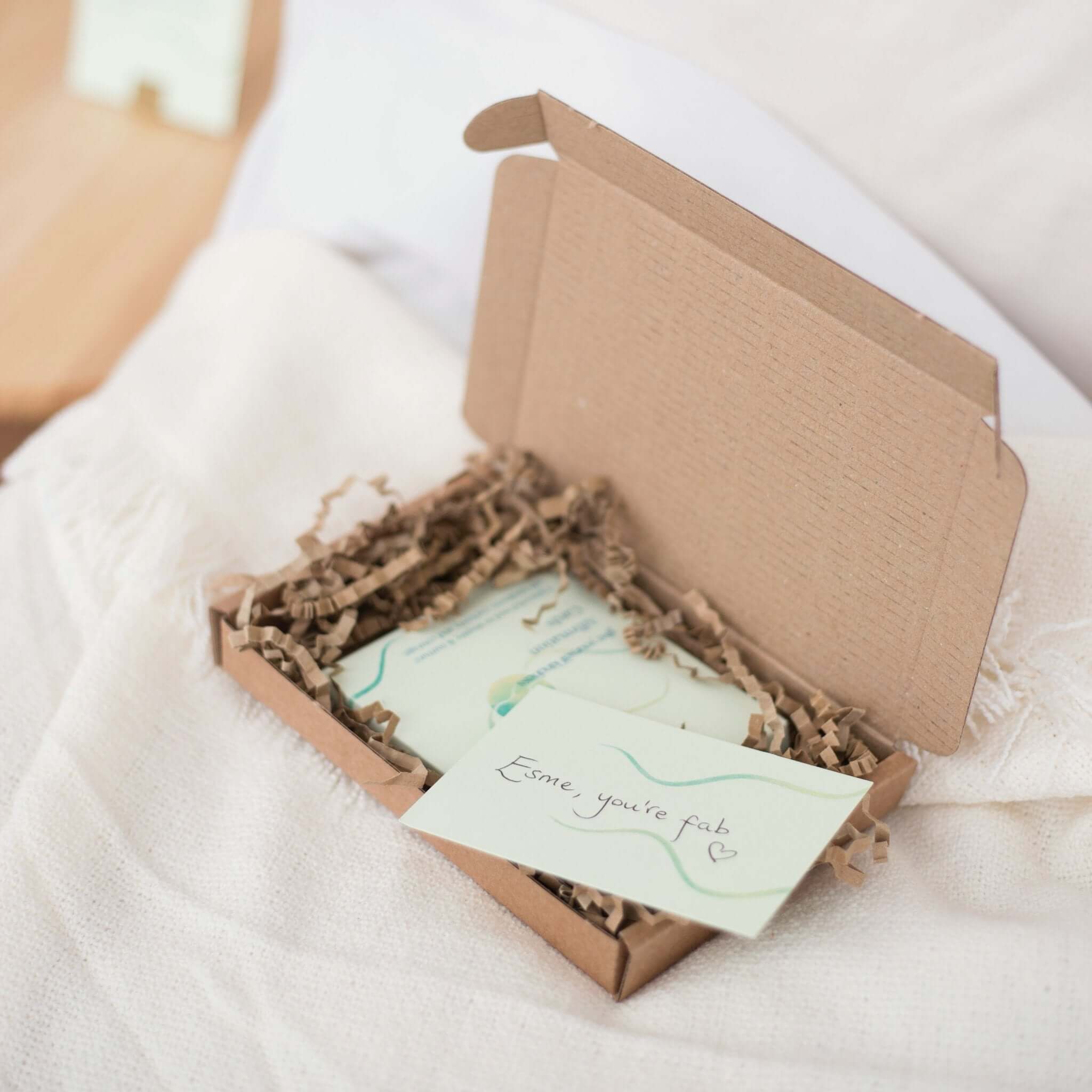
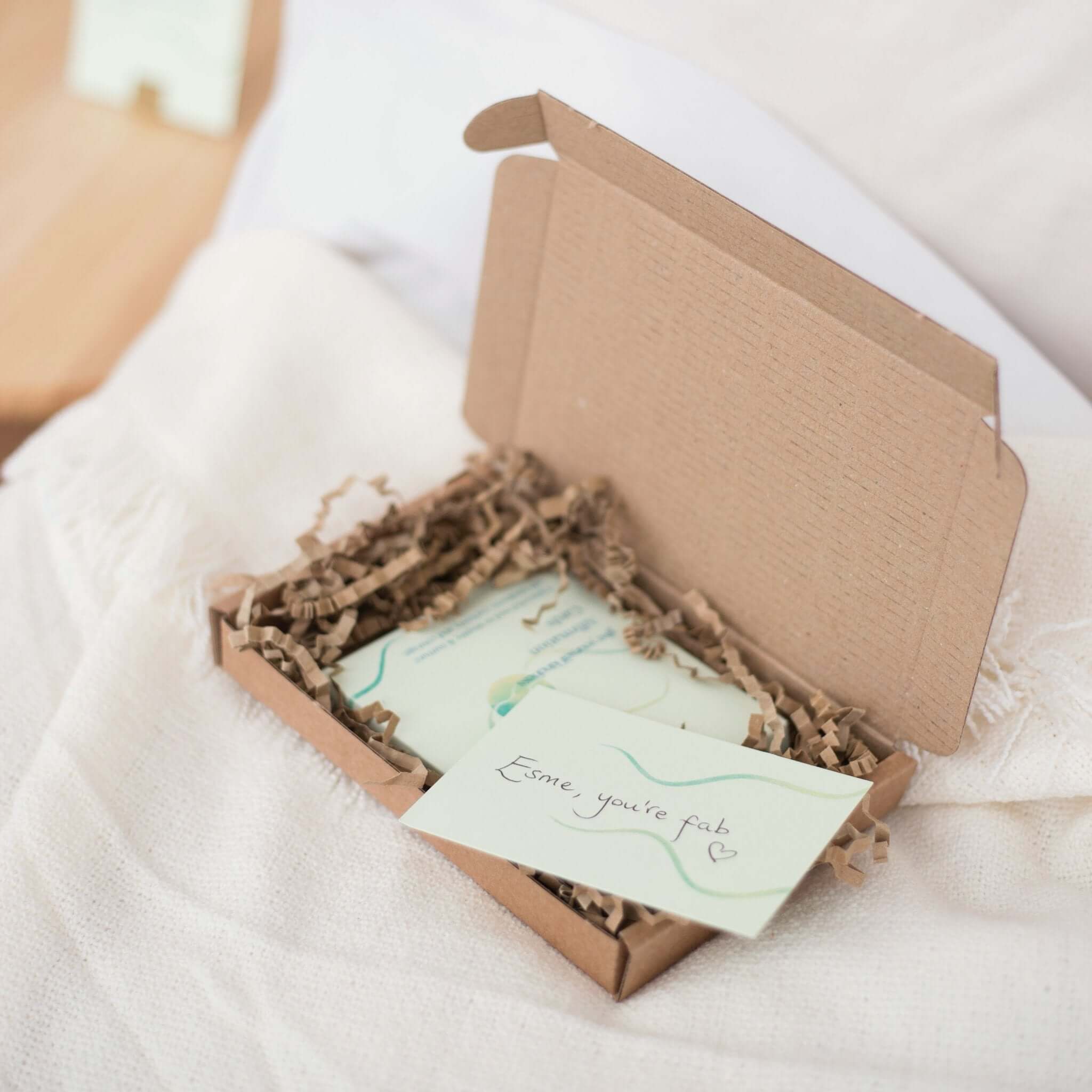
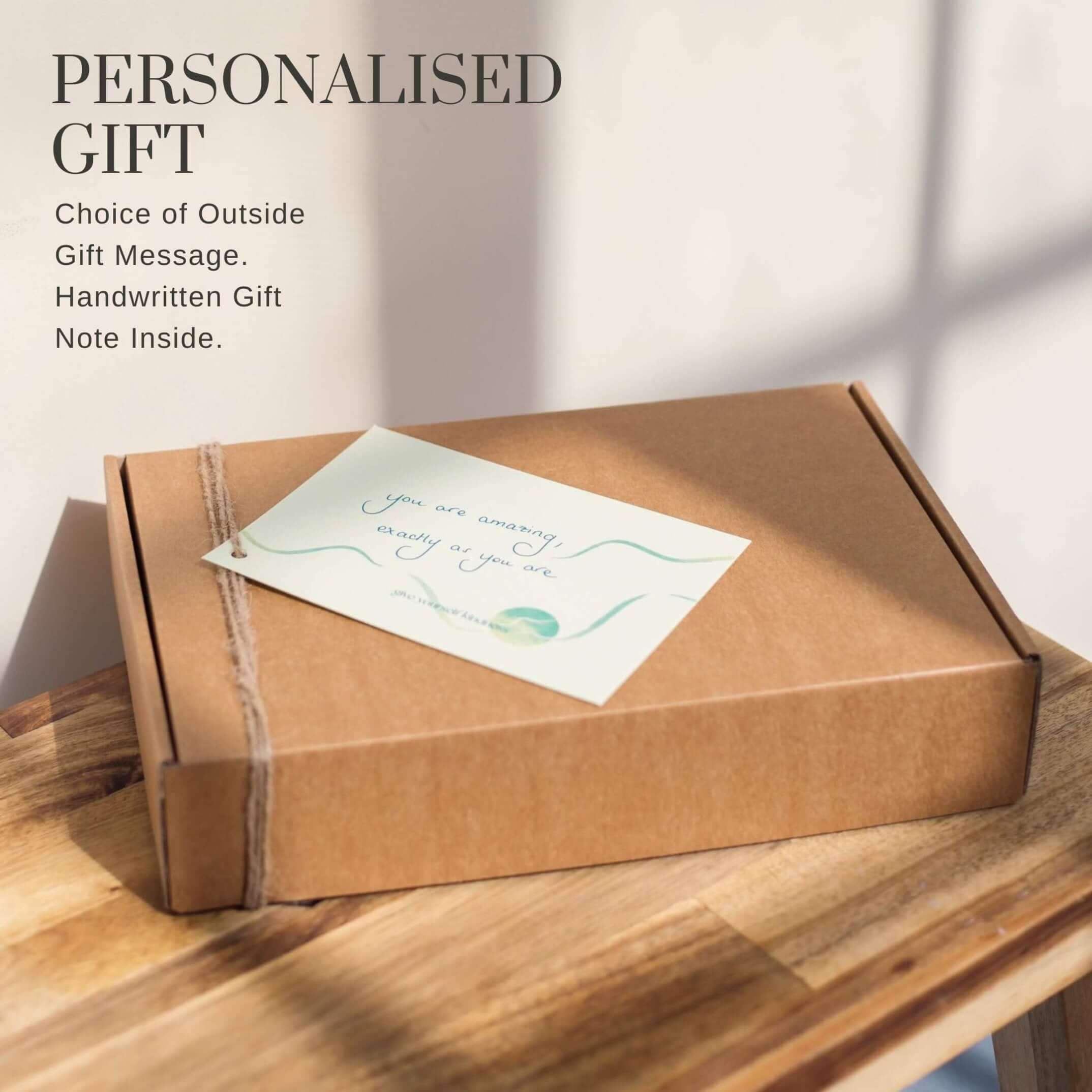
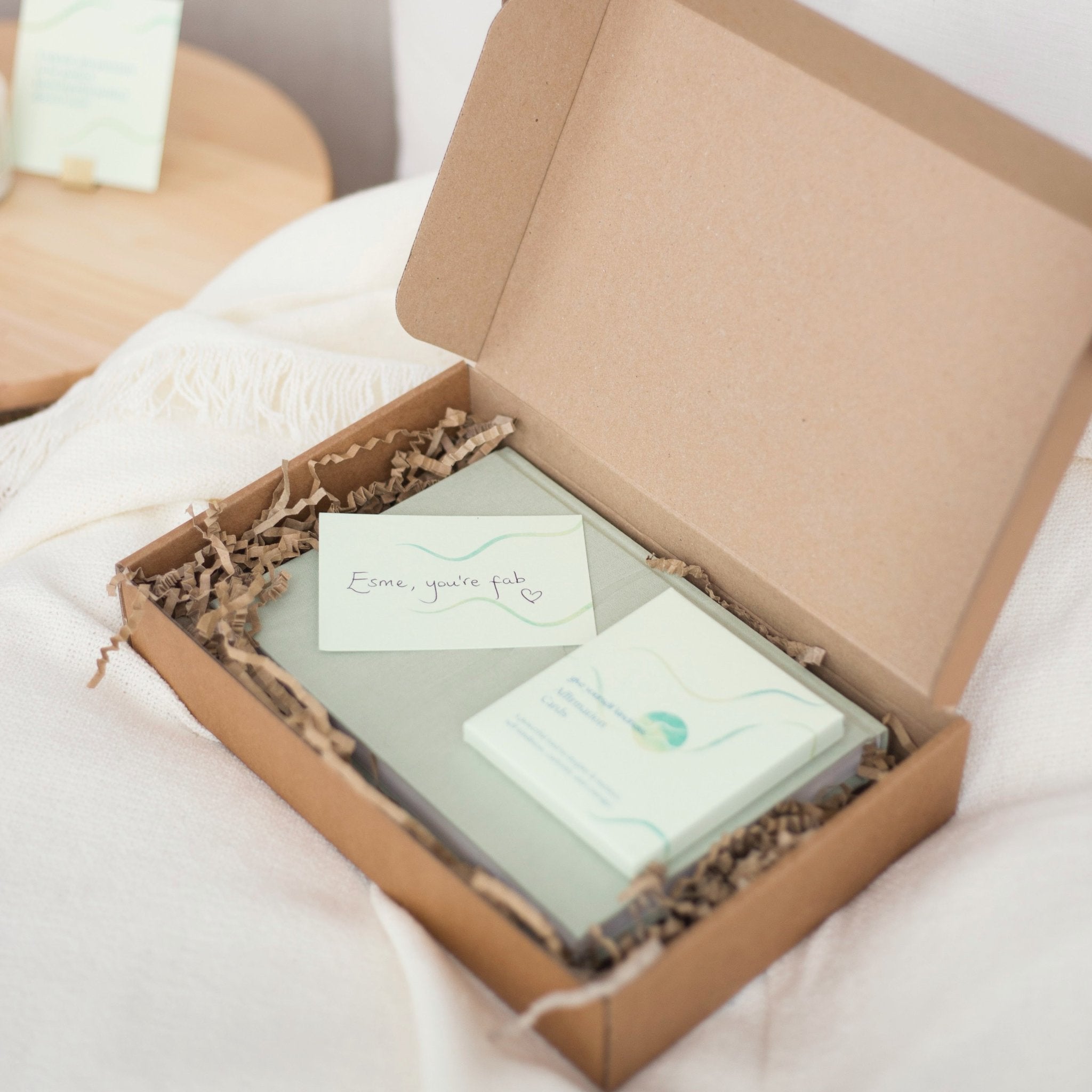
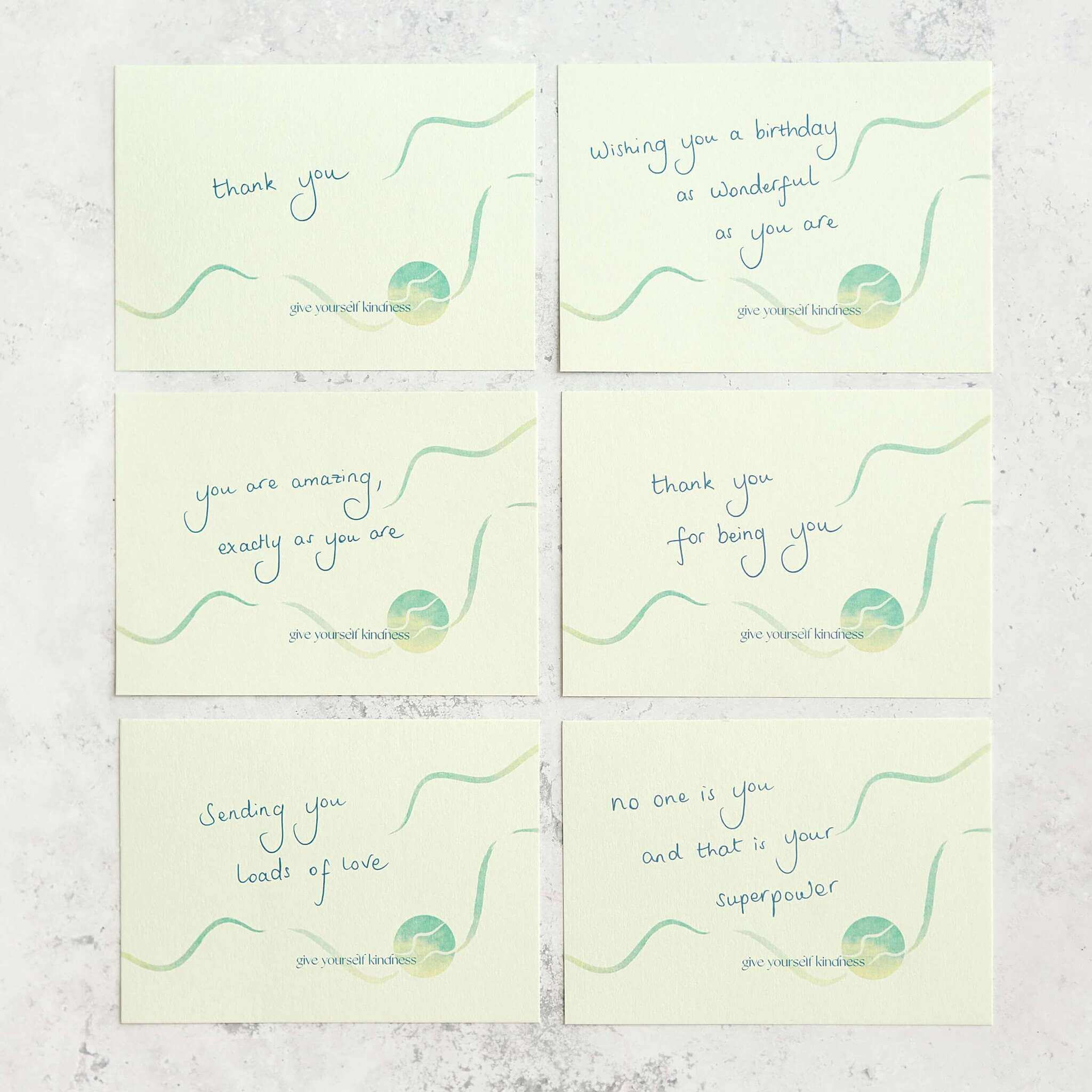
A guided journal can be a lovely gift, and it's the most common reason people buy this one. The undated format helps: there's no schedule for the person receiving it to keep to. Every order is wrapped in bespoke tissue paper, and you can add a gift message in the order notes at checkout, which is written out by hand before it is sent.
About the author

Rachel Smith, DipBSoM
Founder of Give Yourself Kindness and qualified meditation teacher
I'm a qualified meditation teacher, trained with the British School of Meditation and passed with distinction. I'm not a therapist or a psychologist, and everything clinical on this page is attributed to named, credentialed professionals.
I had low self-worth, harsh self-talk and anxiety for years, and recovered largely through Compassion-Focused Therapy. I couldn't find a journal that did what I needed, so I made one. It's recommended by clinical psychologists including Dr Chris Germer of Harvard Medical School and Professor Willem Kuyken of the University of Oxford, and used by accredited counsellors with their own clients.
Related reading
From the psychologists quoted here
-
The benefits of journalingDr Chris Irons, Dr Josh Mirmelli and Dr Andreas Comninos, Clinical Psychologists
-
Journaling tips for beginners, from six therapistsIncluding psychotherapist Nina Holle and therapist Julie Burke, LPC-S
-
 How to stop beating yourself upDr Maria Tucknott, Clinical Psychologist and founder of Tucknott Psychology
 -
 Self-compassion versus self-criticismDr Annabelle Kyle Dortch, PsyD, Clinical Psychologist
If you're still choosing
- Every expert review of the Give Yourself Kindness Journal, in full
- Blank journal or guided journal, and which suits you now
- Best self-compassion journals compared
- Best wellness journals compared
- Best gratitude journals compared
- Best mindfulness journals compared
- The best journal for anxiety and overthinking
- The best journal for worry
- The best journal for stress relief
- Best guided journal for tracking emotions
- Best guided journal for self-exploration and personal growth
- What to look for in a guided journal for mental health
- How to stop negative self-talk
- How to use journaling to change negative self-talk