

Quick answer
What's the best wellness journal for mental health?
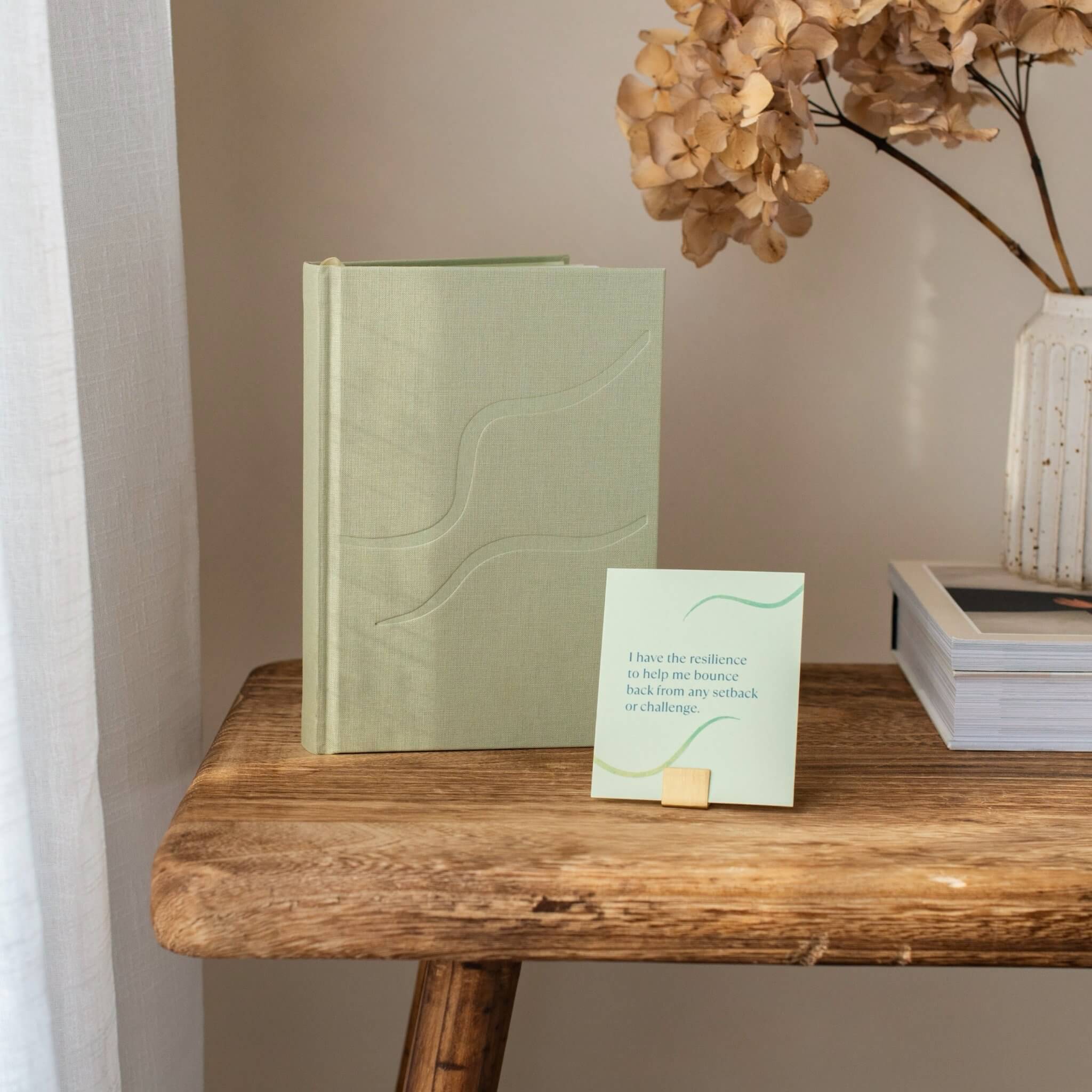
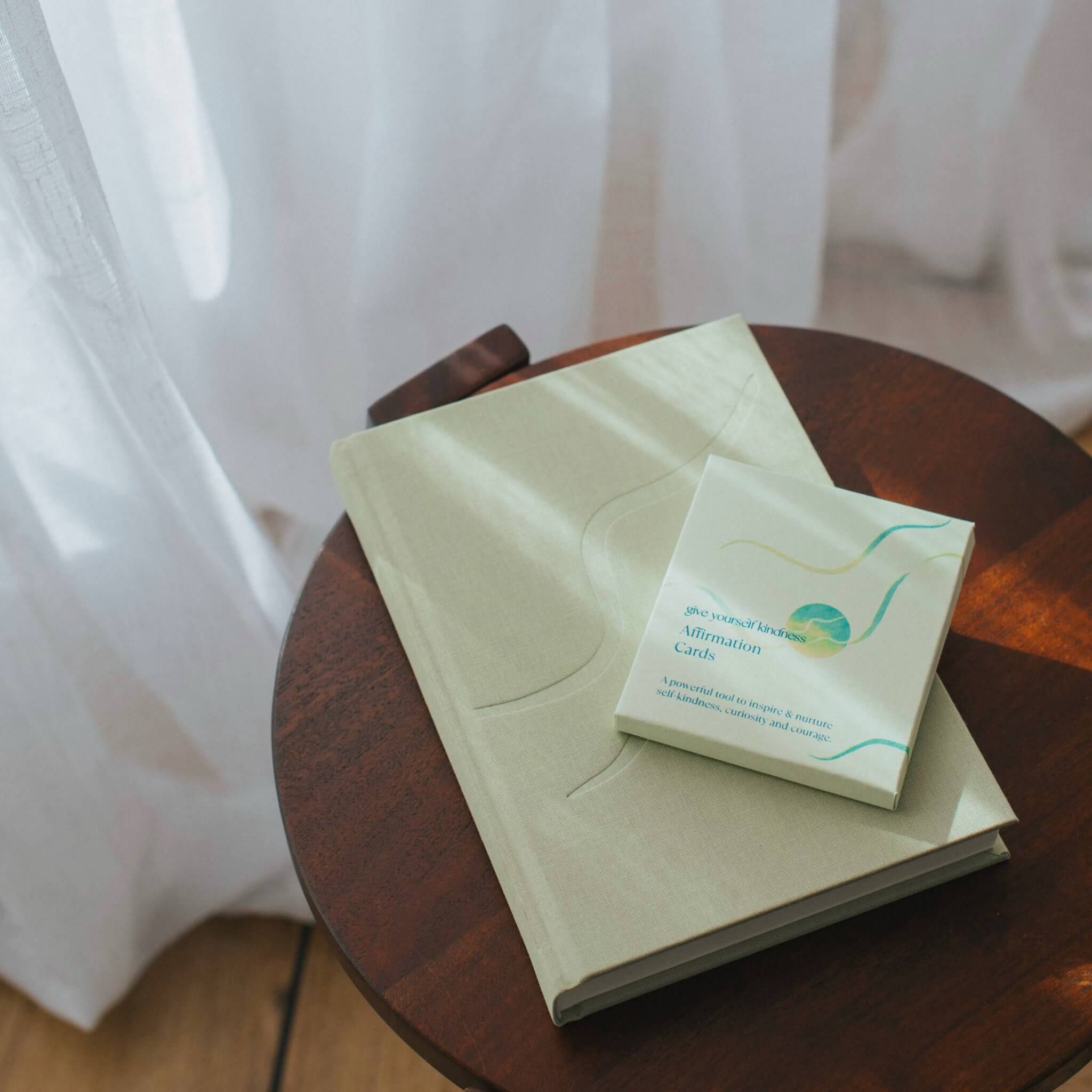
The best wellness journal for your mental and emotional wellbeing is one that helps you understand how you feel, not only track what you did. The one I recommend is The Give Yourself Kindness Journal, the self-compassion journal recommended by Harvard and Oxford psychologists.
Dr Chris Germer of Harvard Medical School calls it "A warm invitation to make friends with your emotions and yourself!"
 Dr Chris Germer, PhD, clinical psychologist and lecturer on psychiatry (part-time), Harvard Medical School. Read his review alongside the rest
Prefer something different? Five other options are compared below.
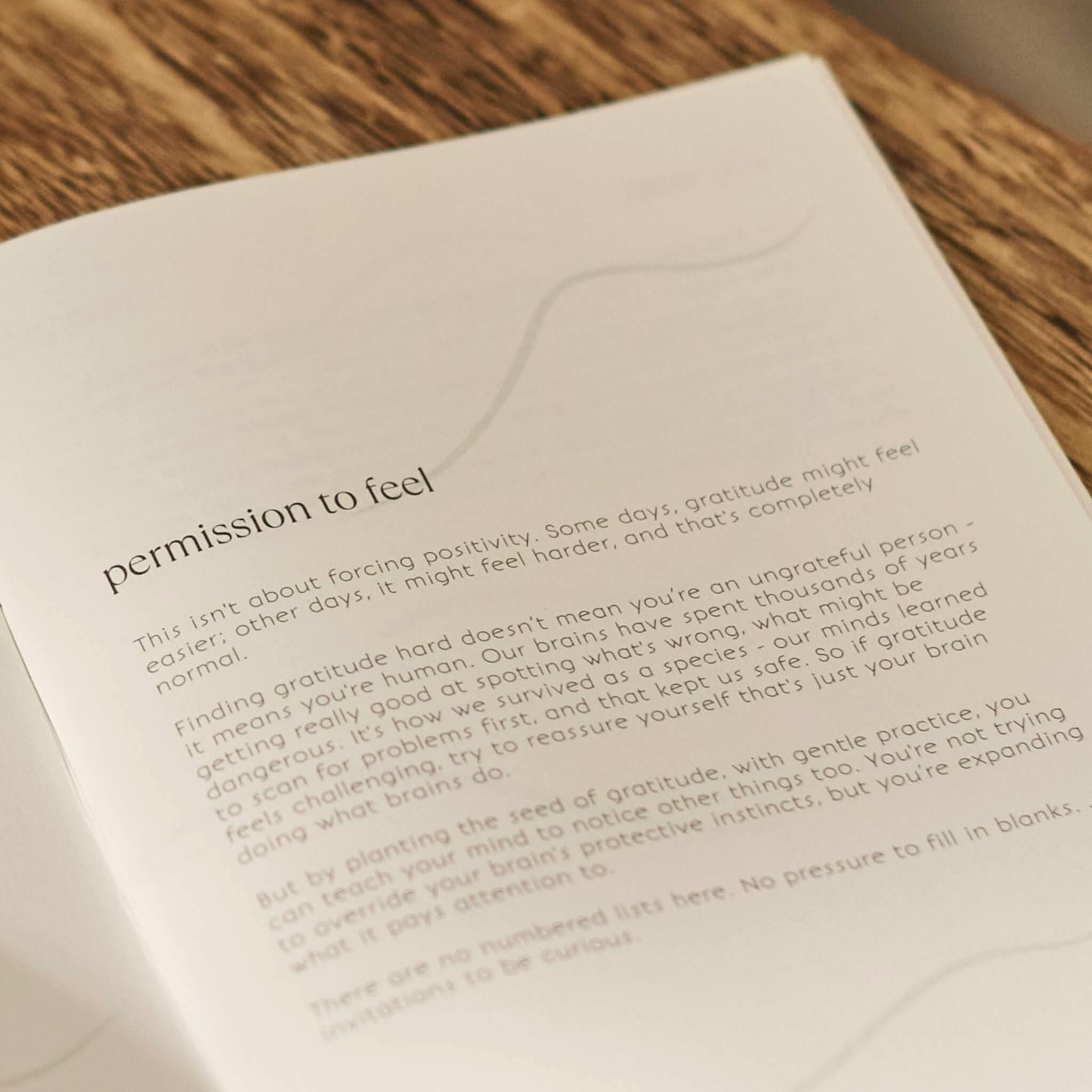
No forced positivity. Every feeling is welcome.
About this guide. I'm Rachel Smith. After Compassion-Focused Therapy, I went looking for a journal to carry on what I'd learned and couldn't find one, so I made The Give Yourself Kindness Journal. That's why it's in this guide, and why I've written fairly about the others too. Having clinical psychologists review it mattered to me more than anything, because a journal for hard feelings needs to be safe as well as kind. Every clinical point here is in an expert's own words. More about me
Why The Give Yourself Kindness Journal is the wellness journal I recommend
I recommend The Give Yourself Kindness Journal because it looks after how you feel, not just what you do. It gives you an emotion tool and a new self-compassion prompt each day, so there's room for the hard days as well as the good ones.
It grew out of my own recovery. Compassion-Focused Therapy changed how I related to myself, and afterwards I wanted somewhere to keep practising. The journals I found mostly asked me to track things, or to stay positive. What I needed was a page that let me feel what I felt, then answer it kindly. So I made one, and clinical psychologists from Harvard Medical School and the University of Oxford have since reviewed and recommended it. Here's what it gives you:
- When you'd like help with how you feel, not another tracker: an emotion tool on every page, so you can name what you feel even when you're not sure.
- When a hard day comes: prompts rooted in self-compassion, so nothing asks you to feel better than you do. It also includes gratitude every day, held gently alongside harder feelings rather than instead of them.
- When a journal has lost your interest before: every page different for 90 days.
- When life gets busy: undated pages, so you can start any day and pick up where you left off.
- When you'd like a kinder inner voice: prompts that help you speak to yourself the way you would a friend.
- When you want to trust what you're writing in: recommended by Harvard and Oxford psychologists, and used by accredited counsellors with their clients between sessions.
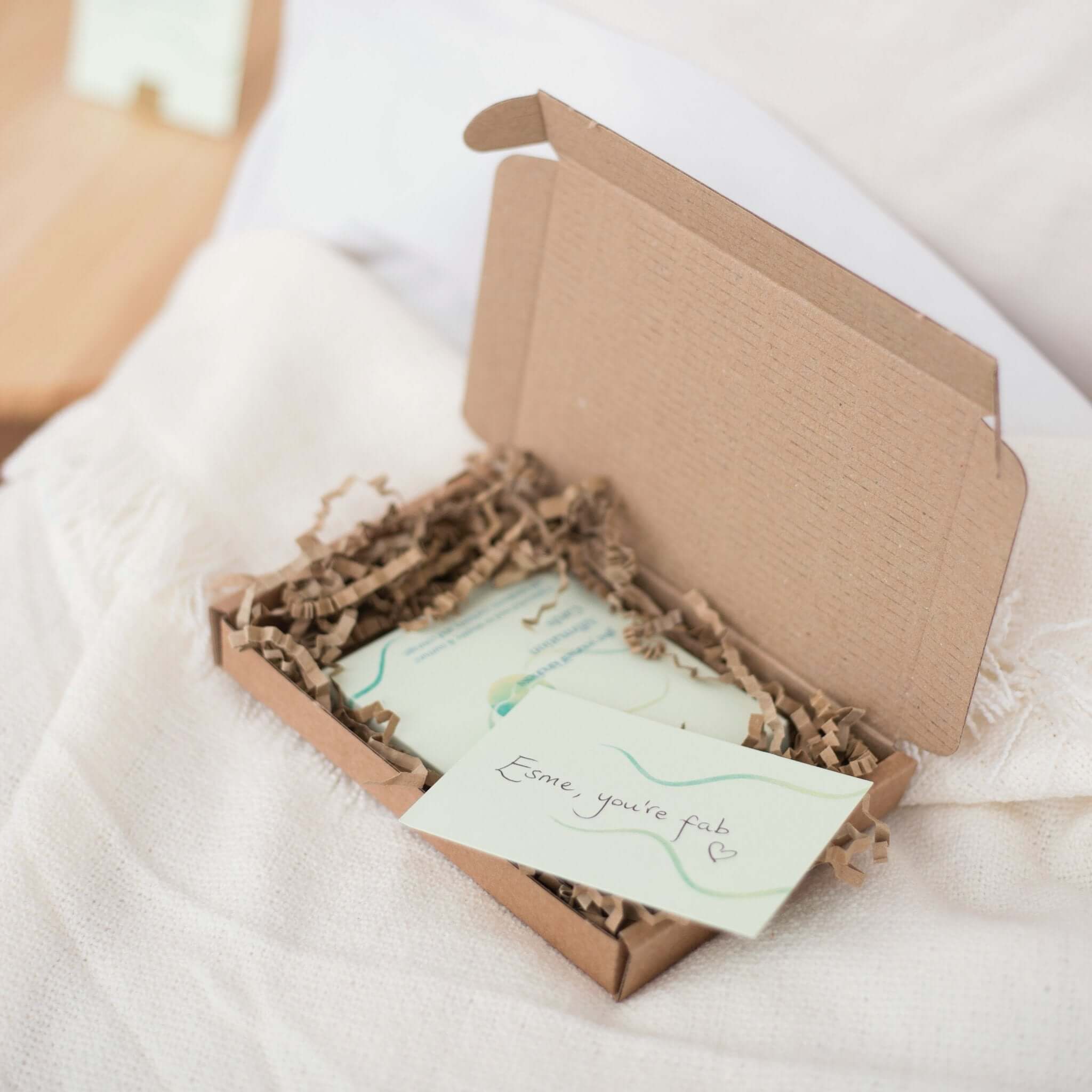
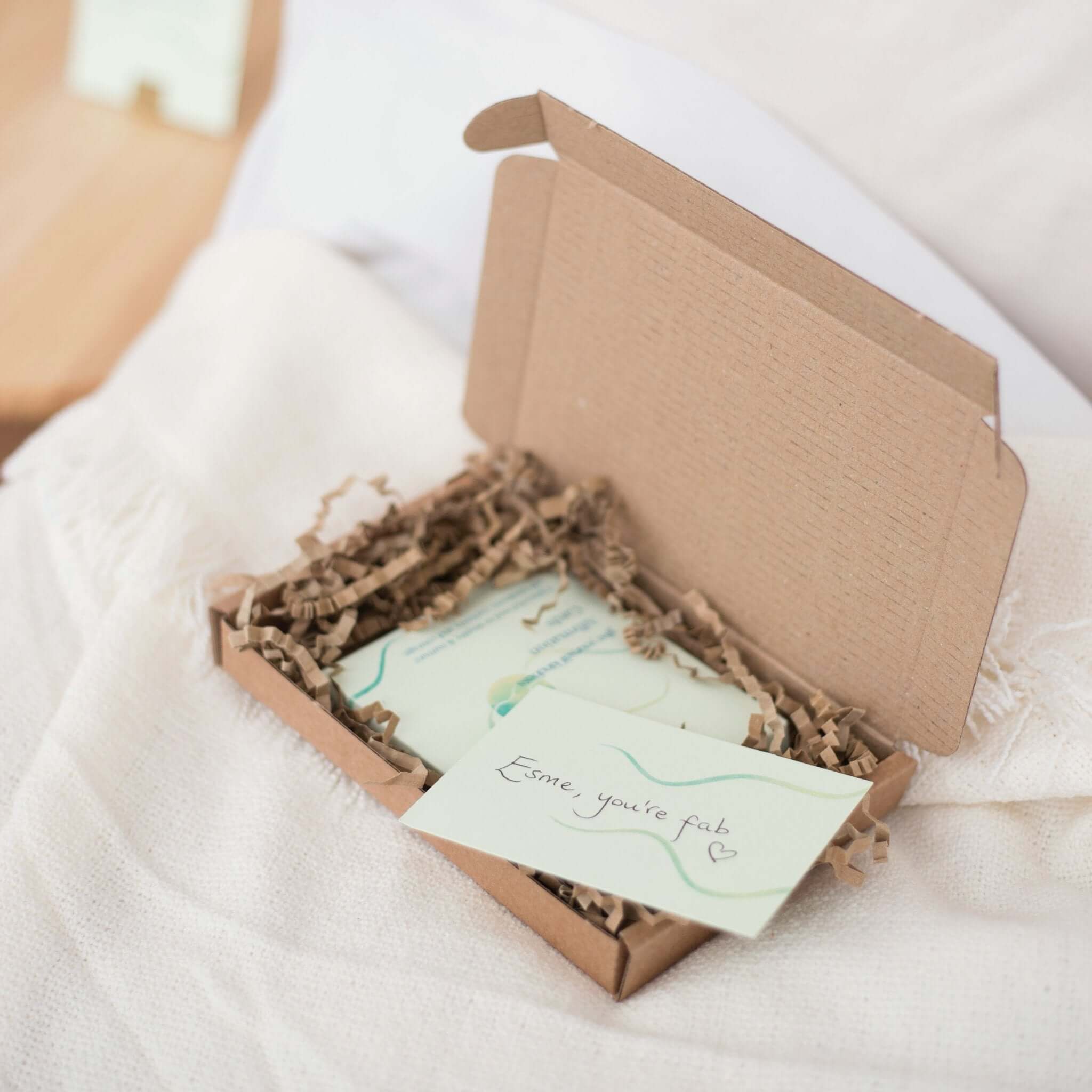
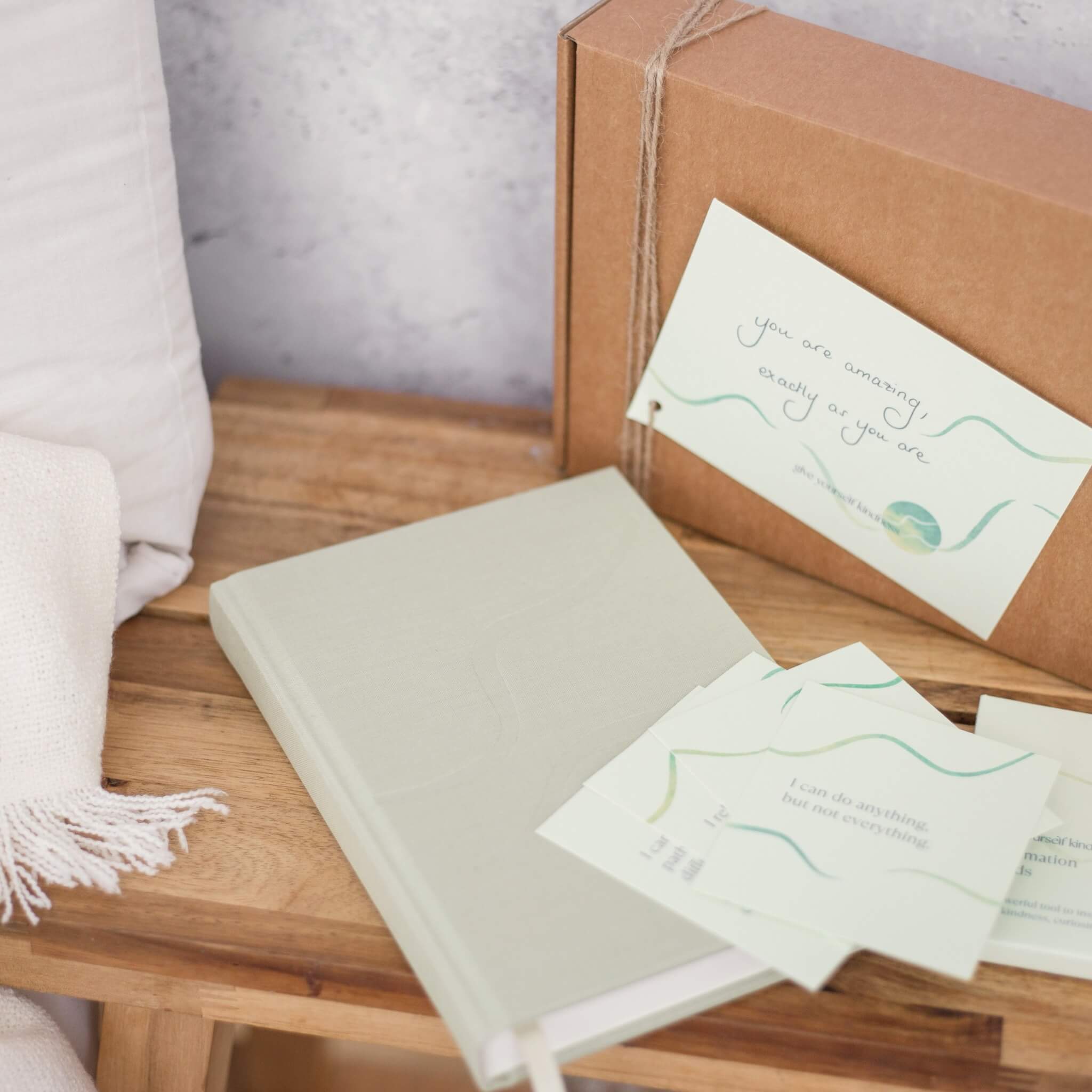
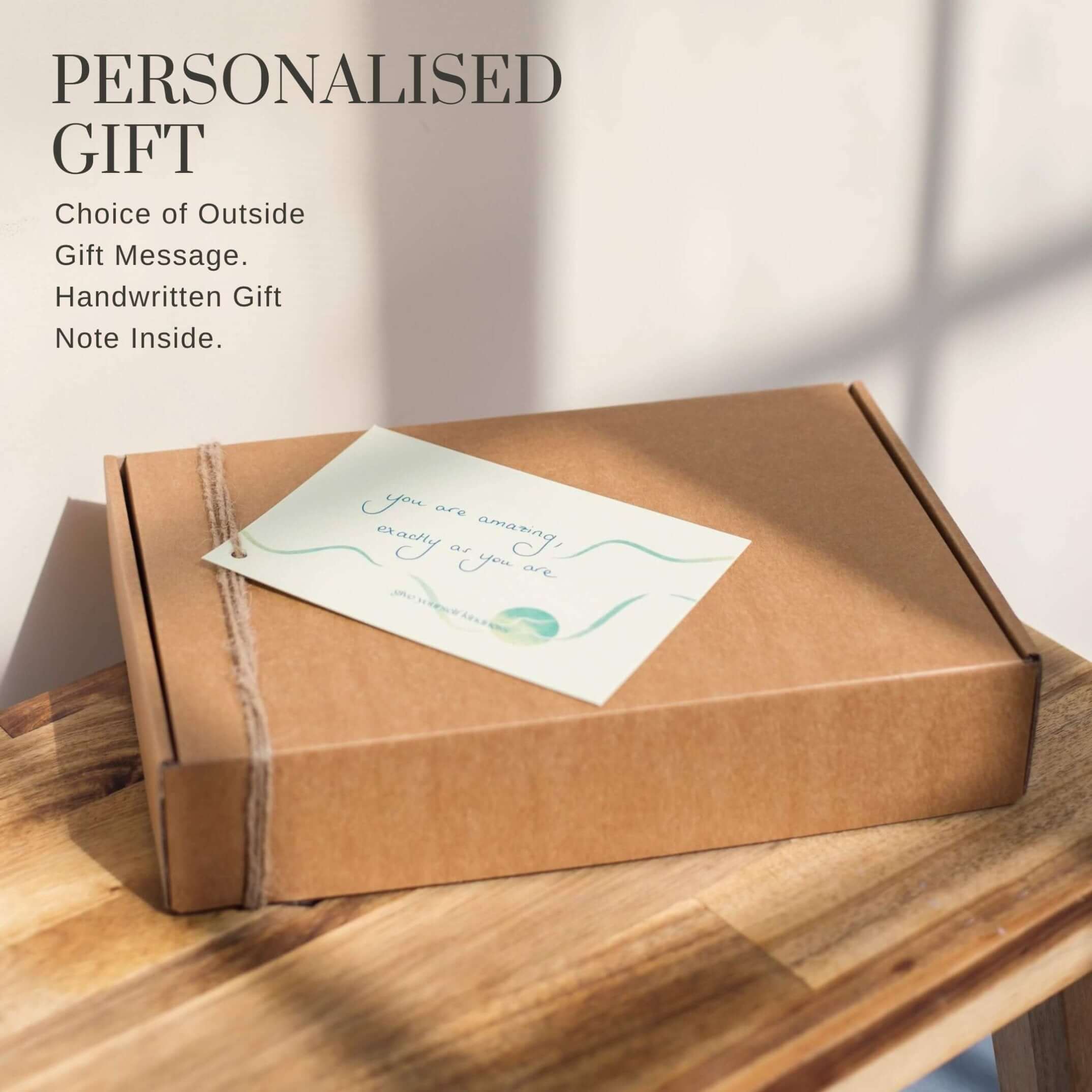
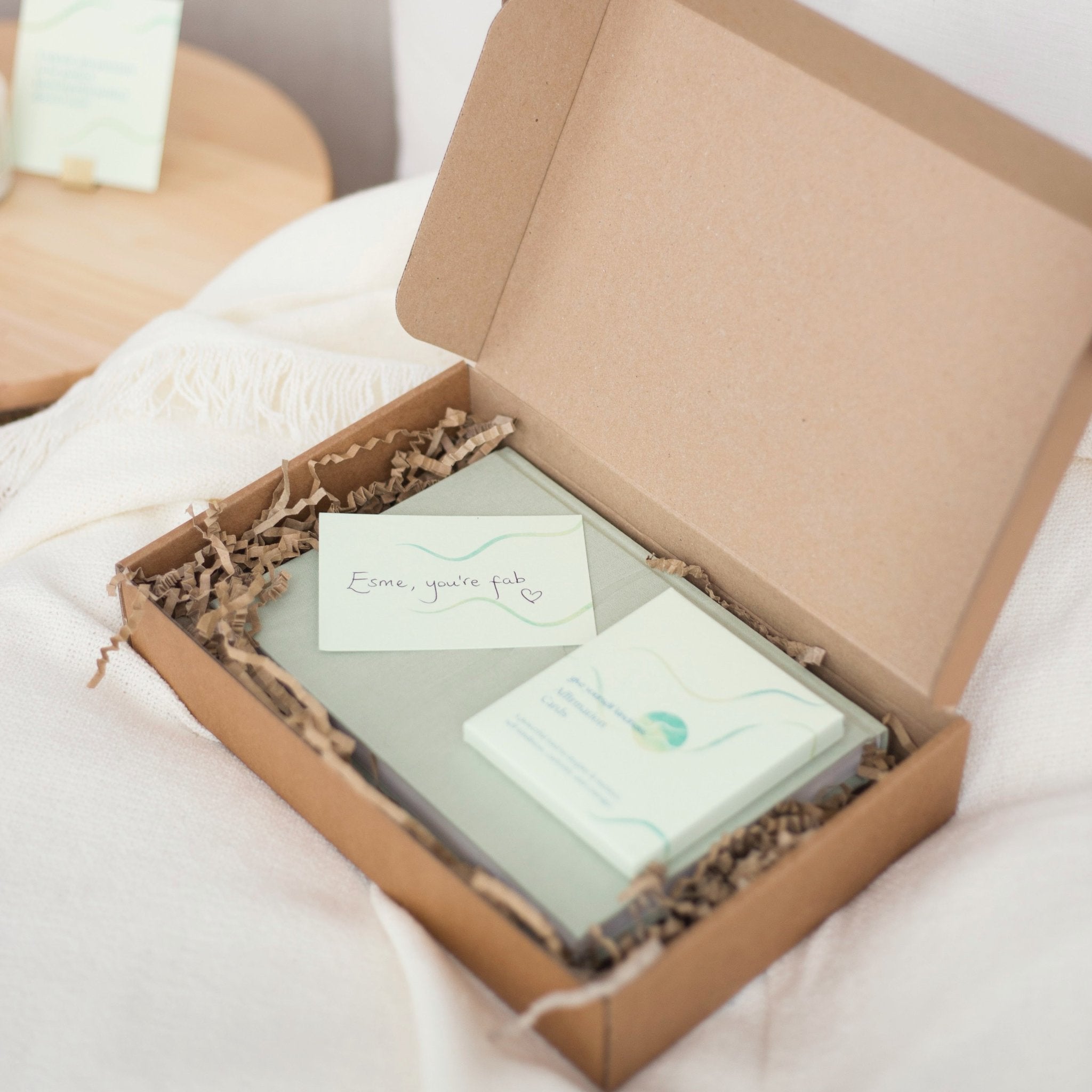
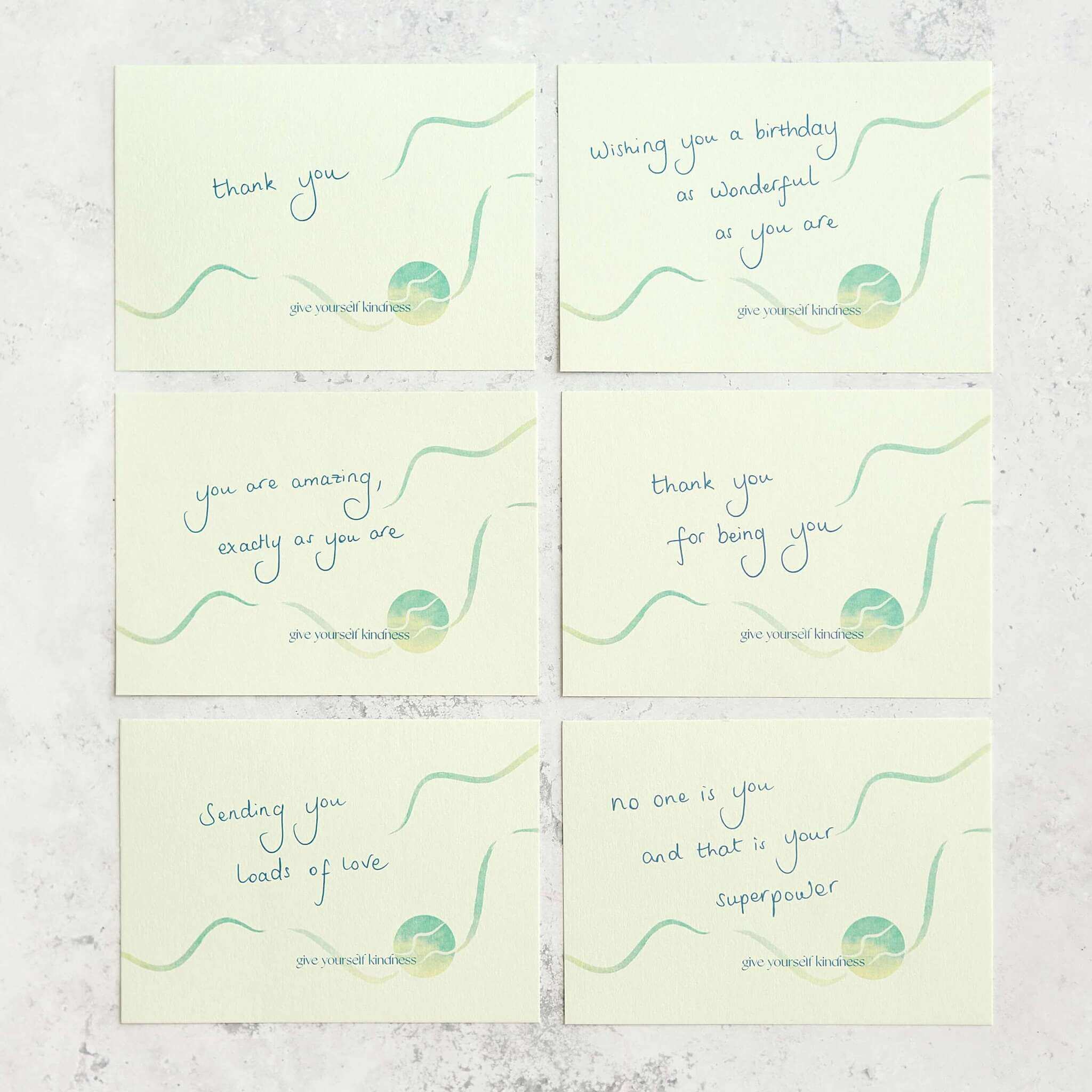
- When it's a gift: wrapped in bespoke tissue paper, with a free handwritten note if you'd like one.

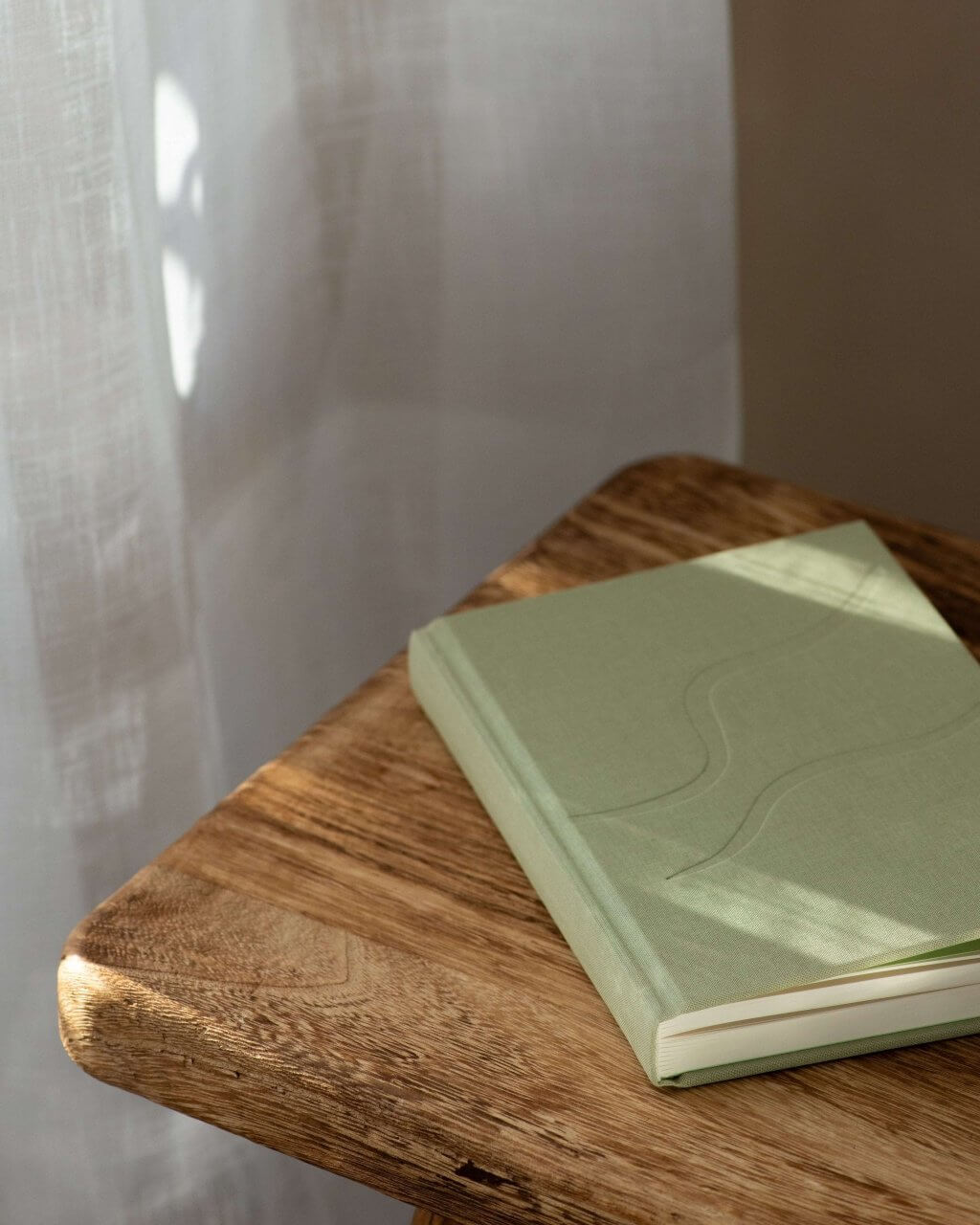
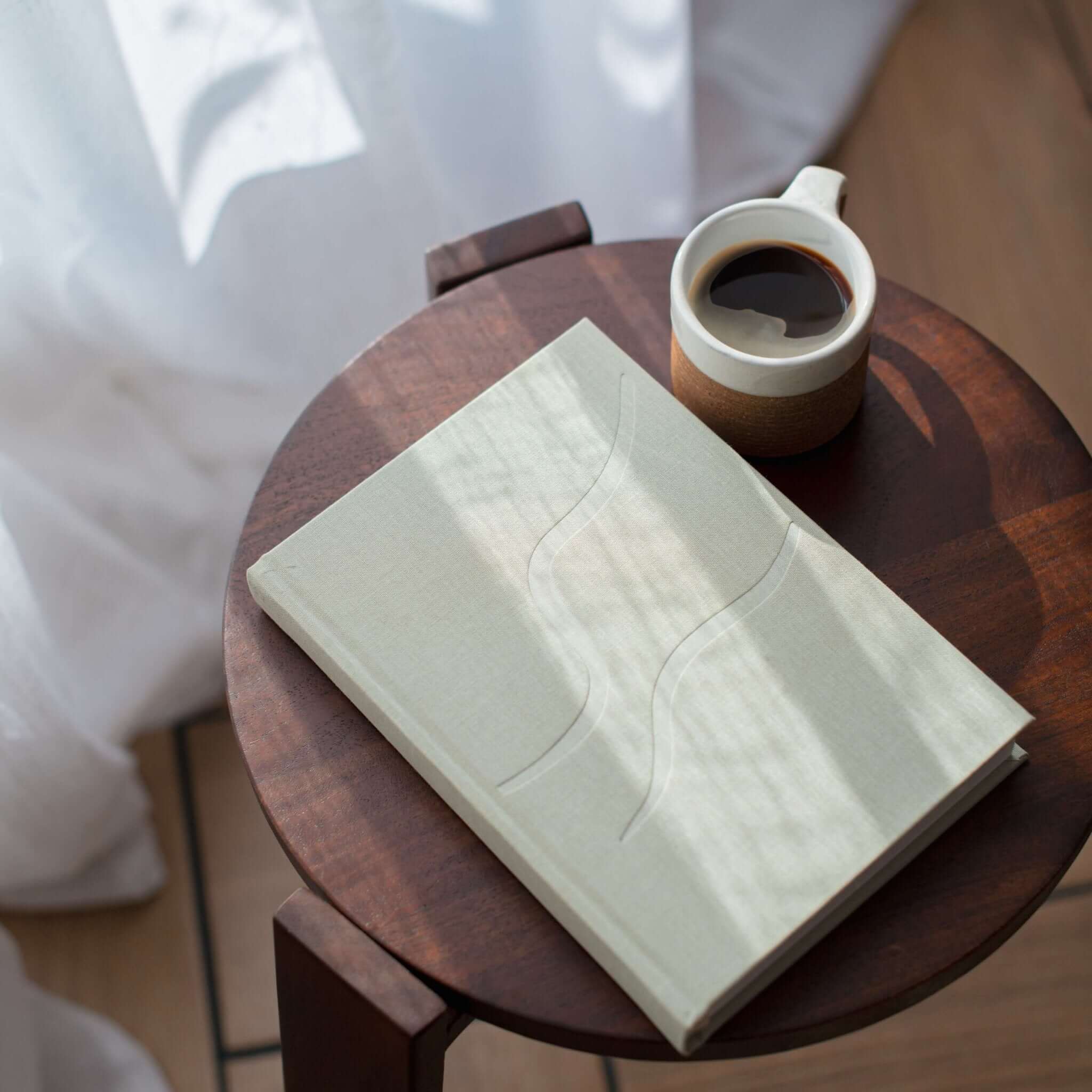
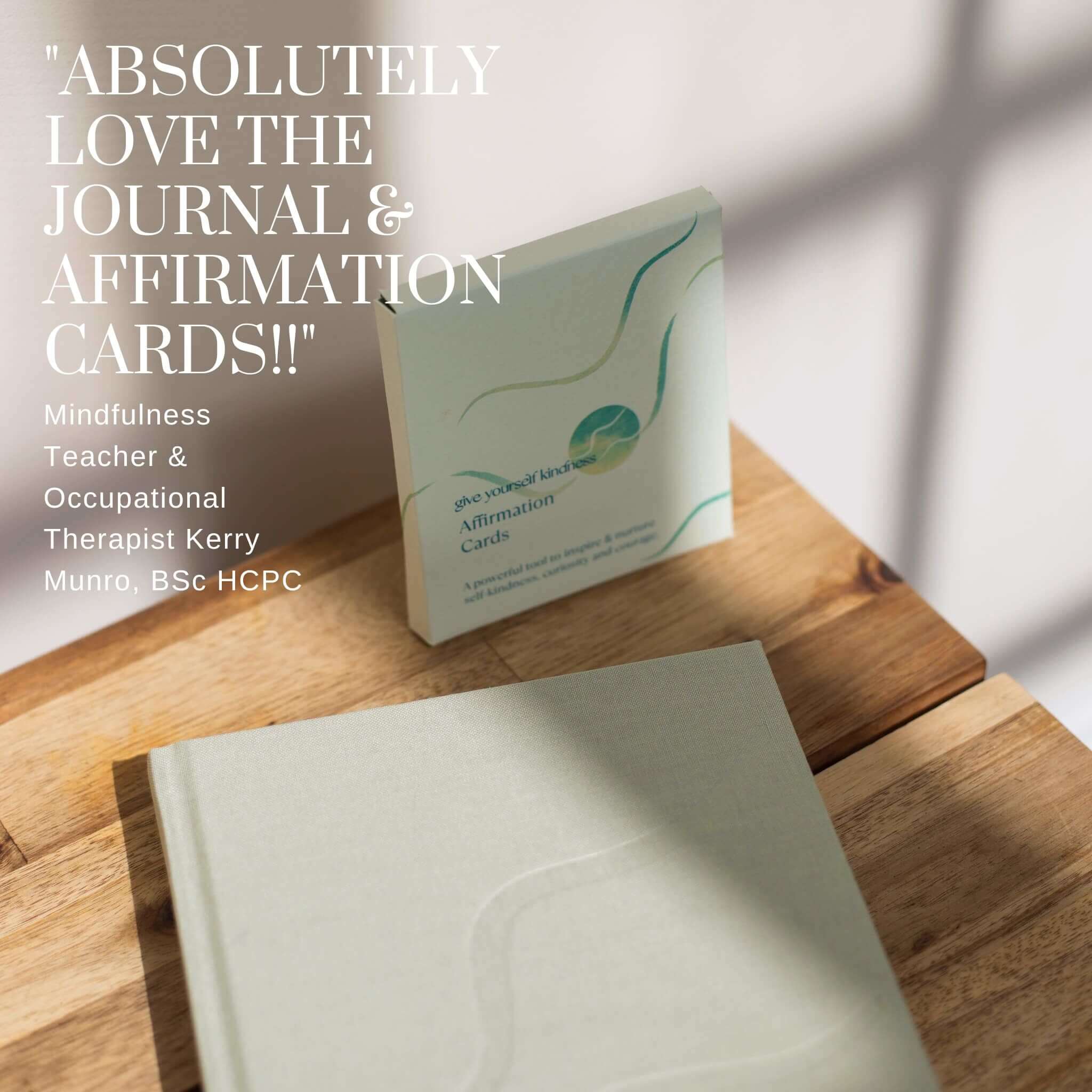
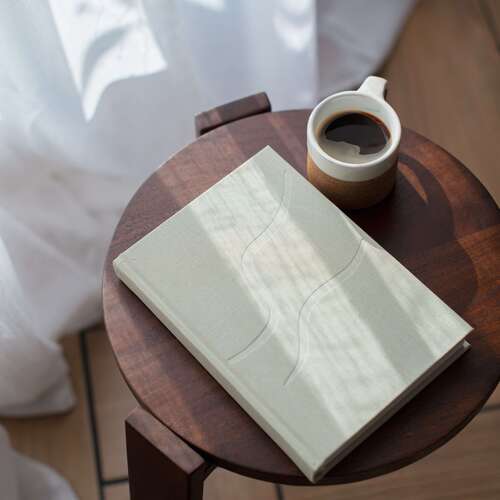
The Give Yourself Kindness Journal
A guided self-compassion journal that helps you understand your emotions and respond to yourself with kindness instead of criticism.
📔 3-month guided journal🧠 Emotion tool on every page🗓️ Undated⭐ Recommended by Harvard and Oxford psychologists
- A different page every day, for 90 days, so it never becomes the same few answers
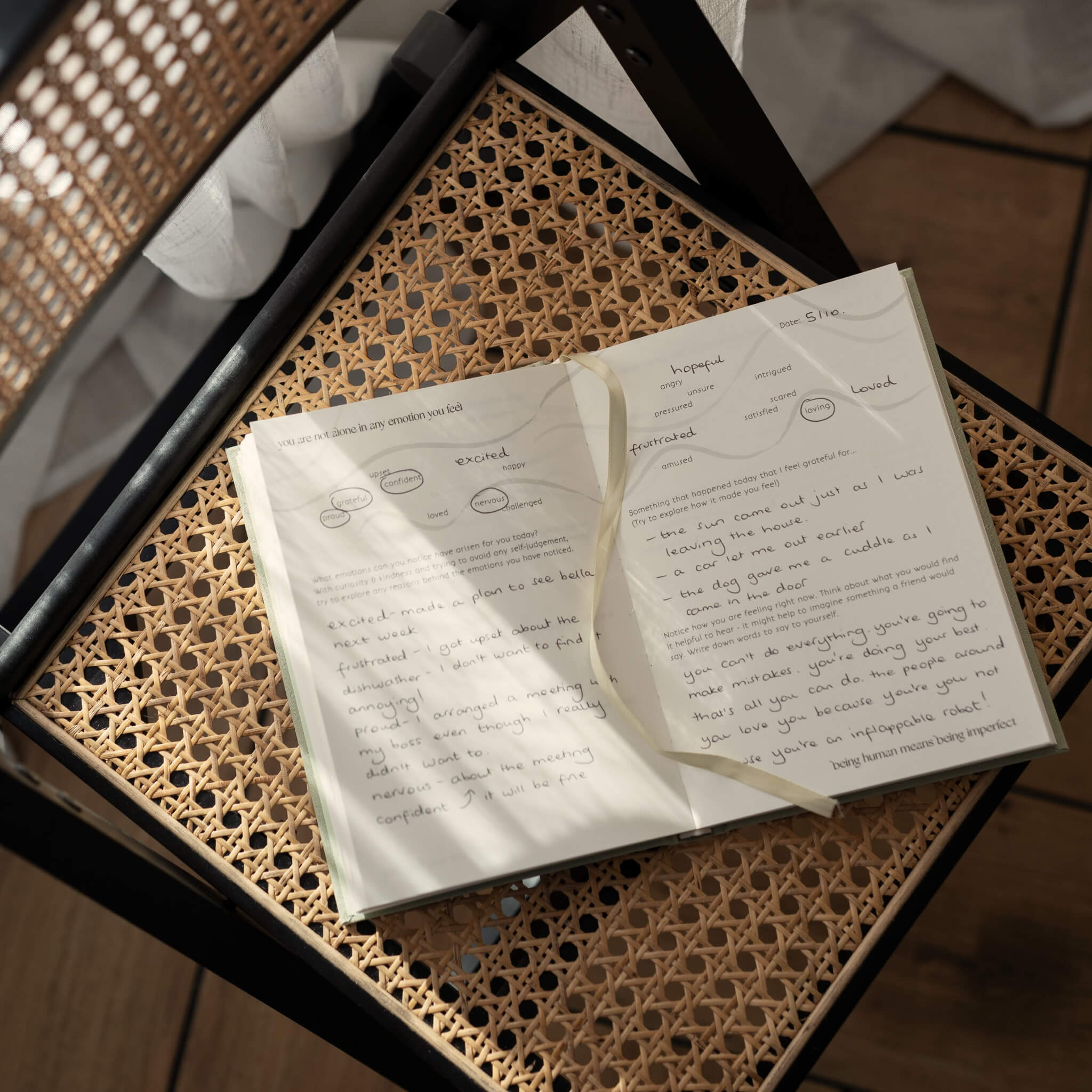
- A way to name what you feel, on every page, for the days that are hard to put into words
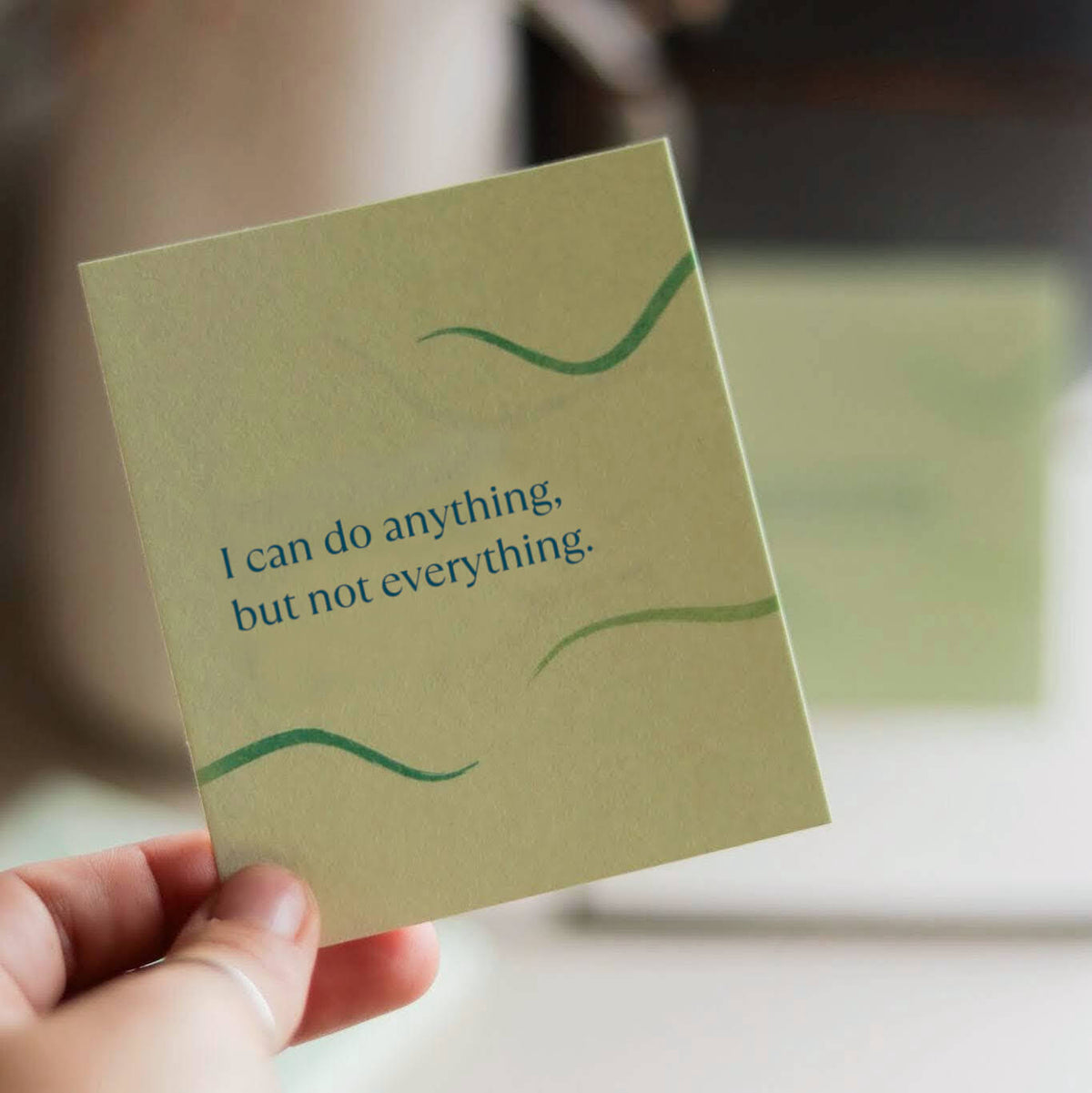
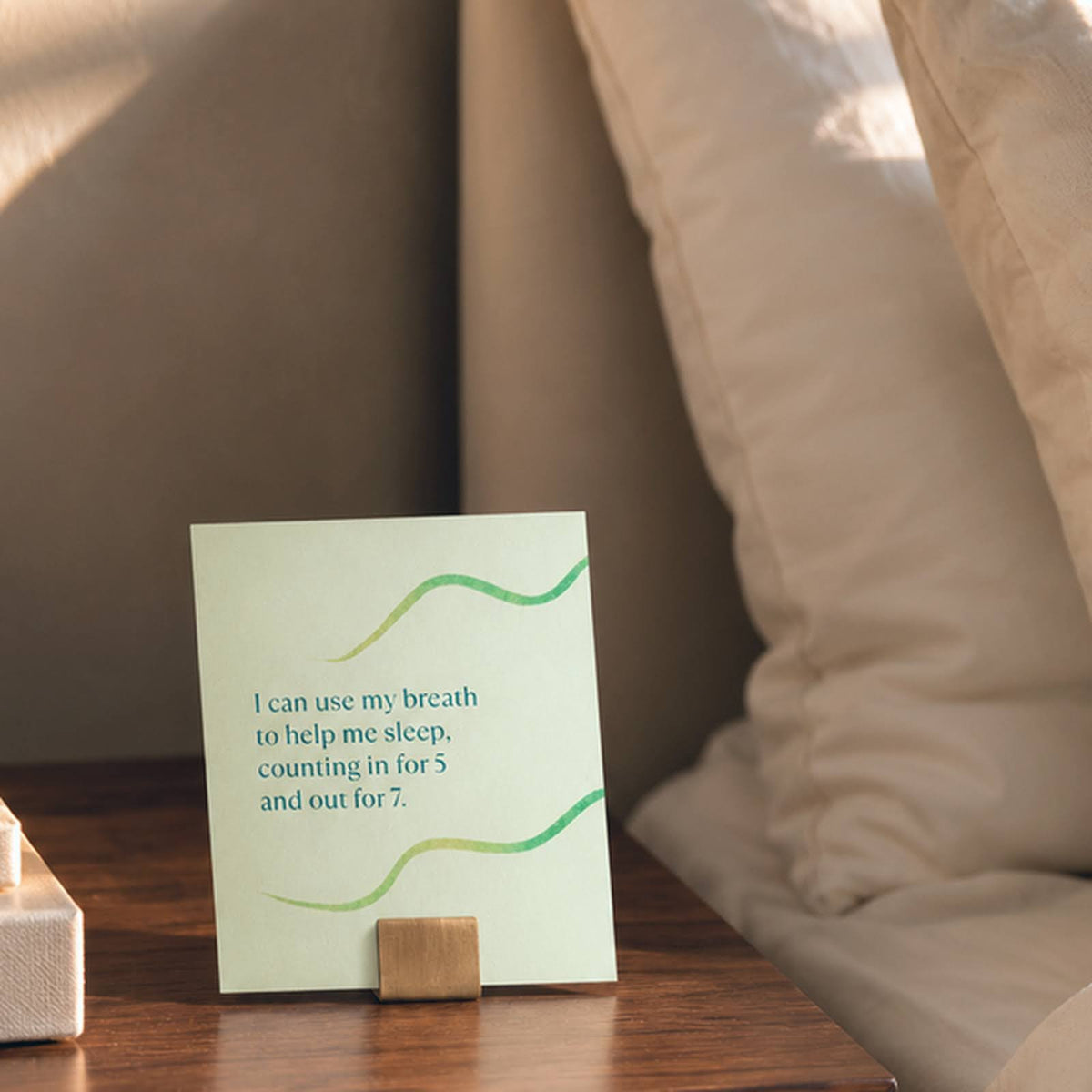
- Over 50 gentle reminders, like "the way you speak to yourself matters"
- Undated, so a busy week simply waits for you
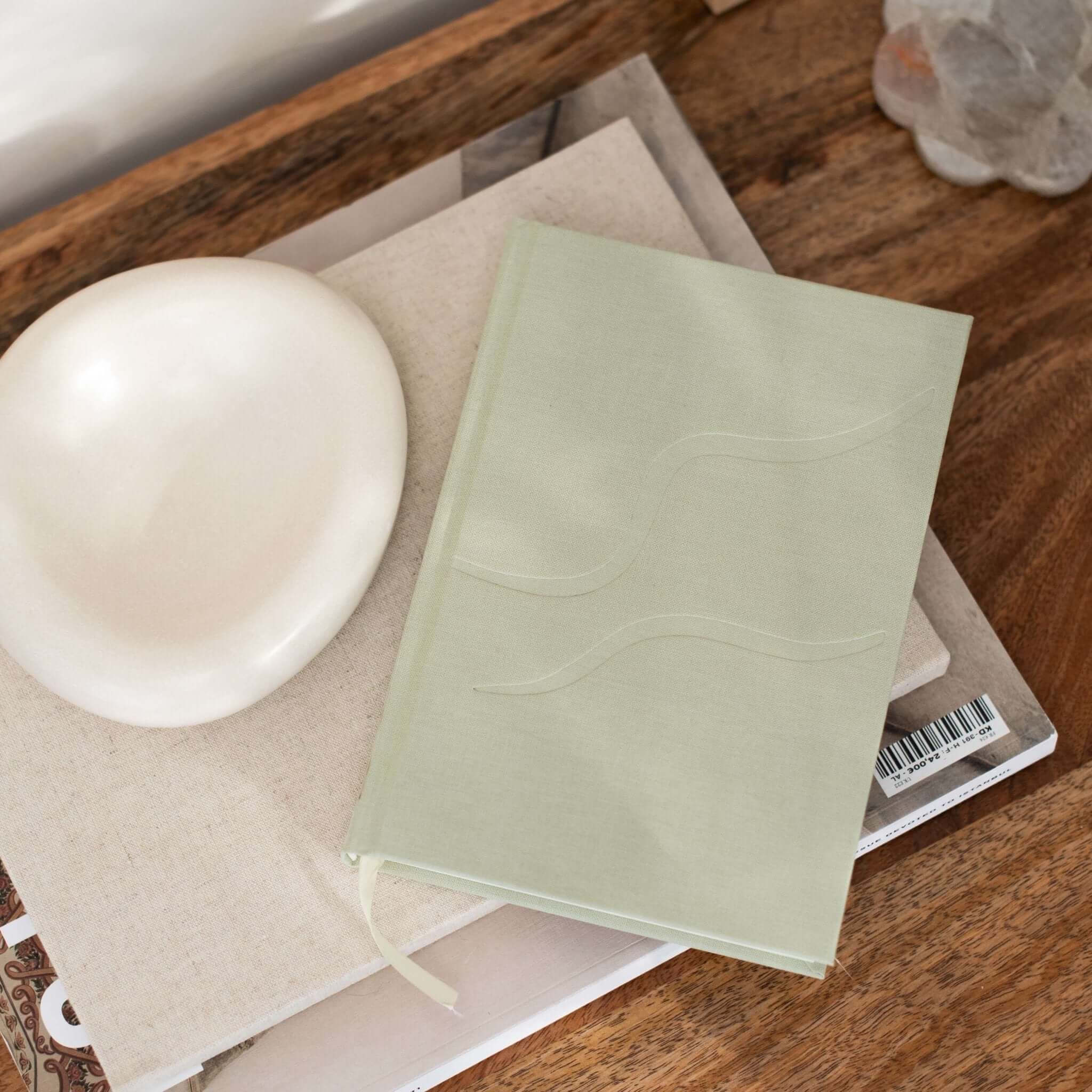
224 pages, A5, pistachio green cloth cover, 120gsm FSC-certified paper, ribbon marker, printed in the UK. Wrapped in bespoke tissue paper.
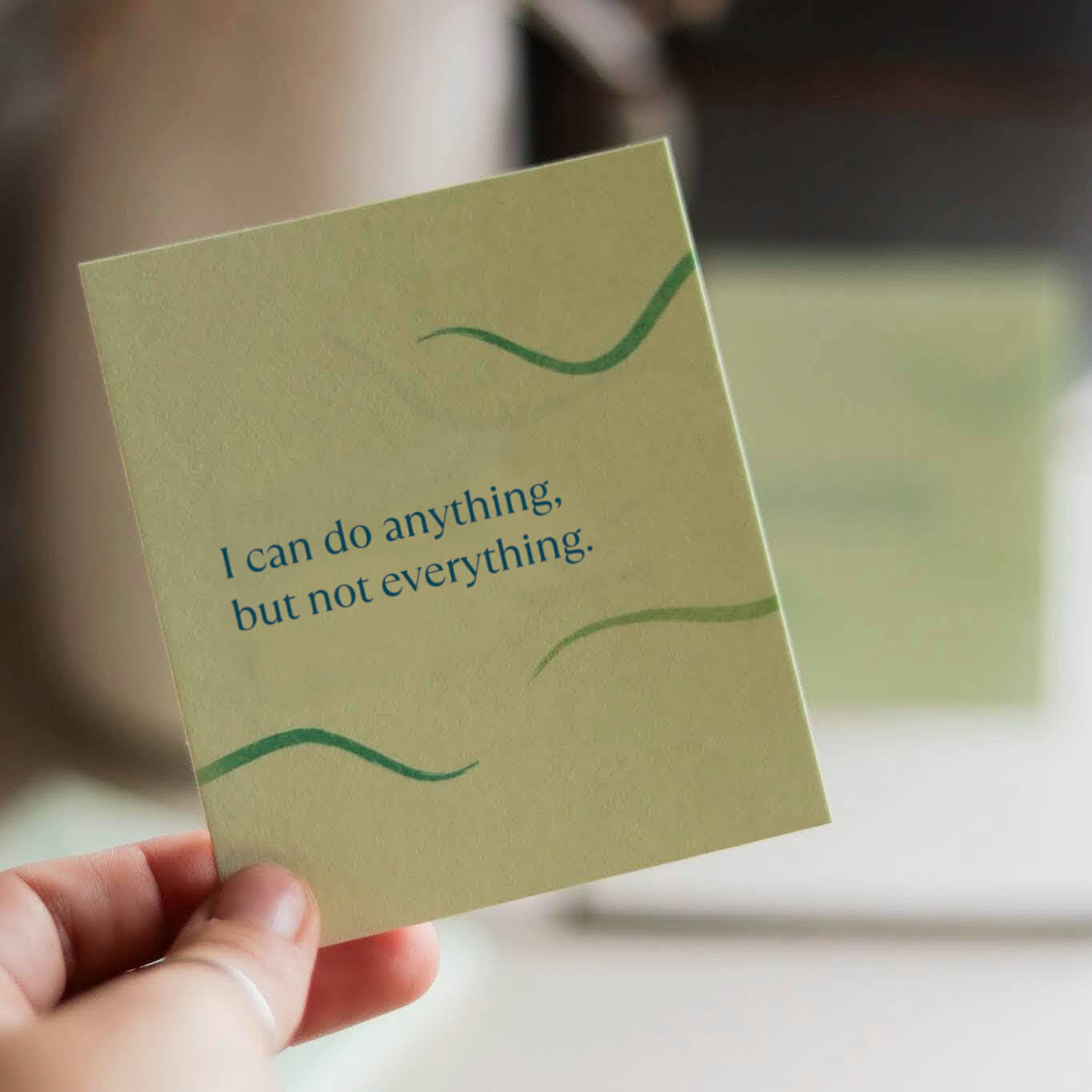
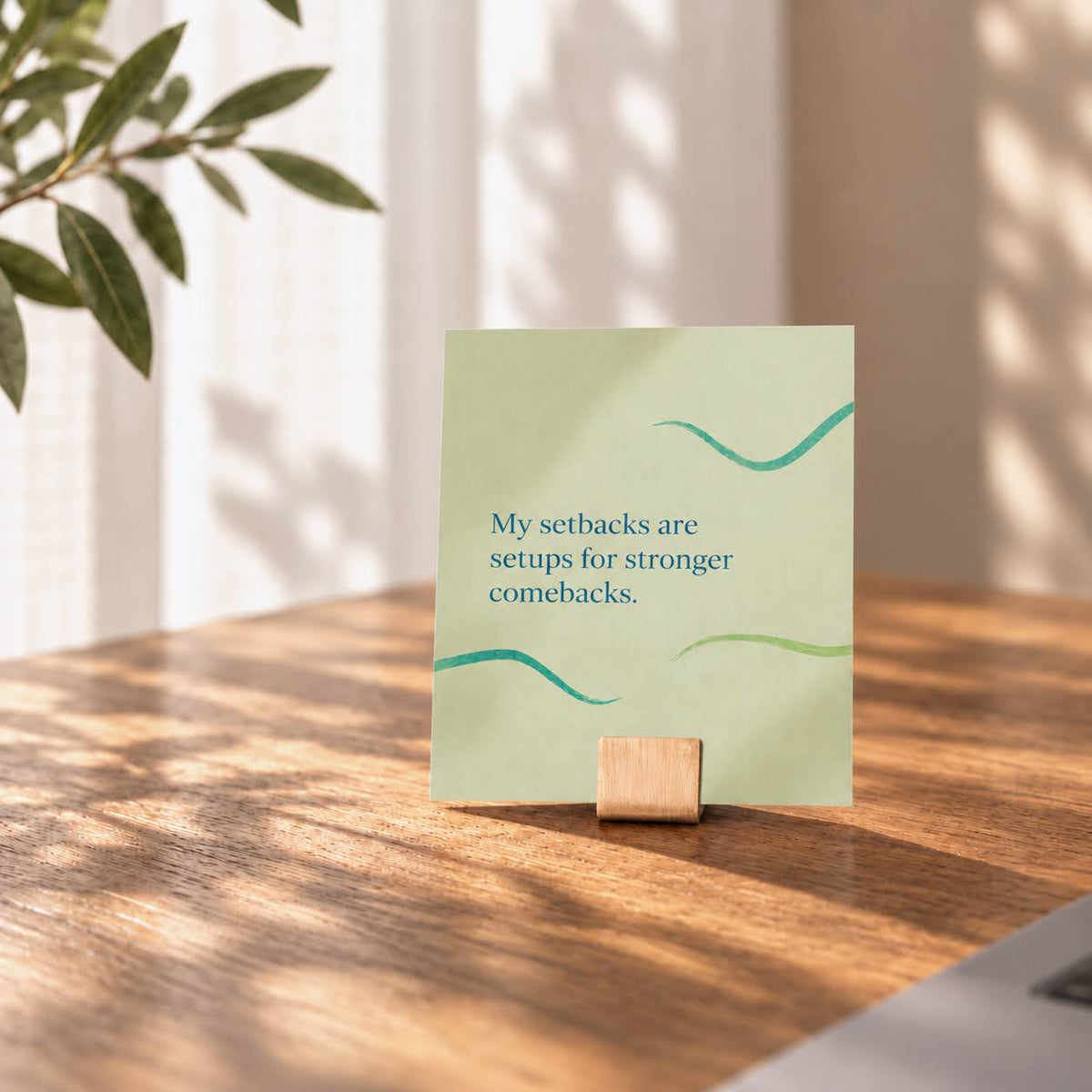
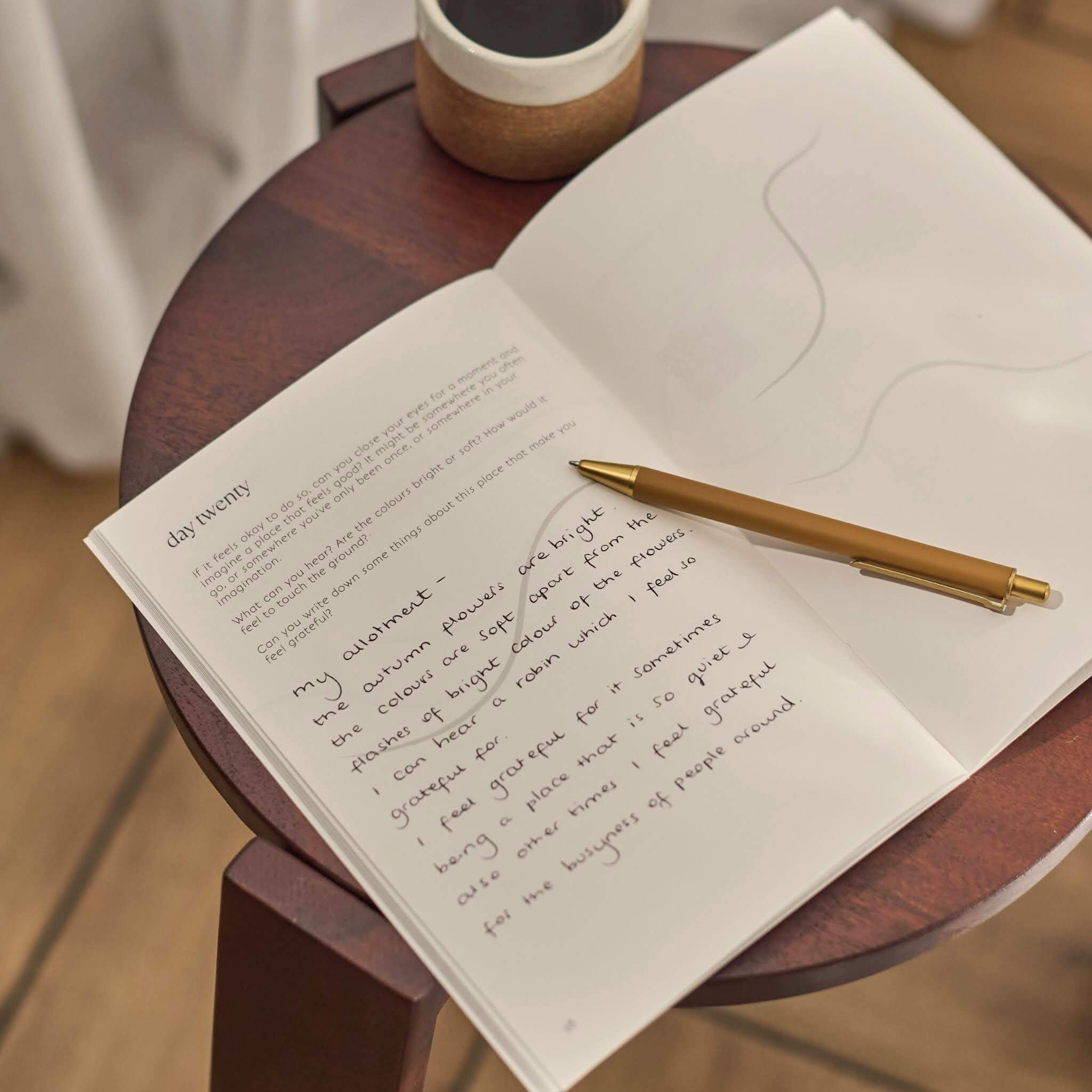
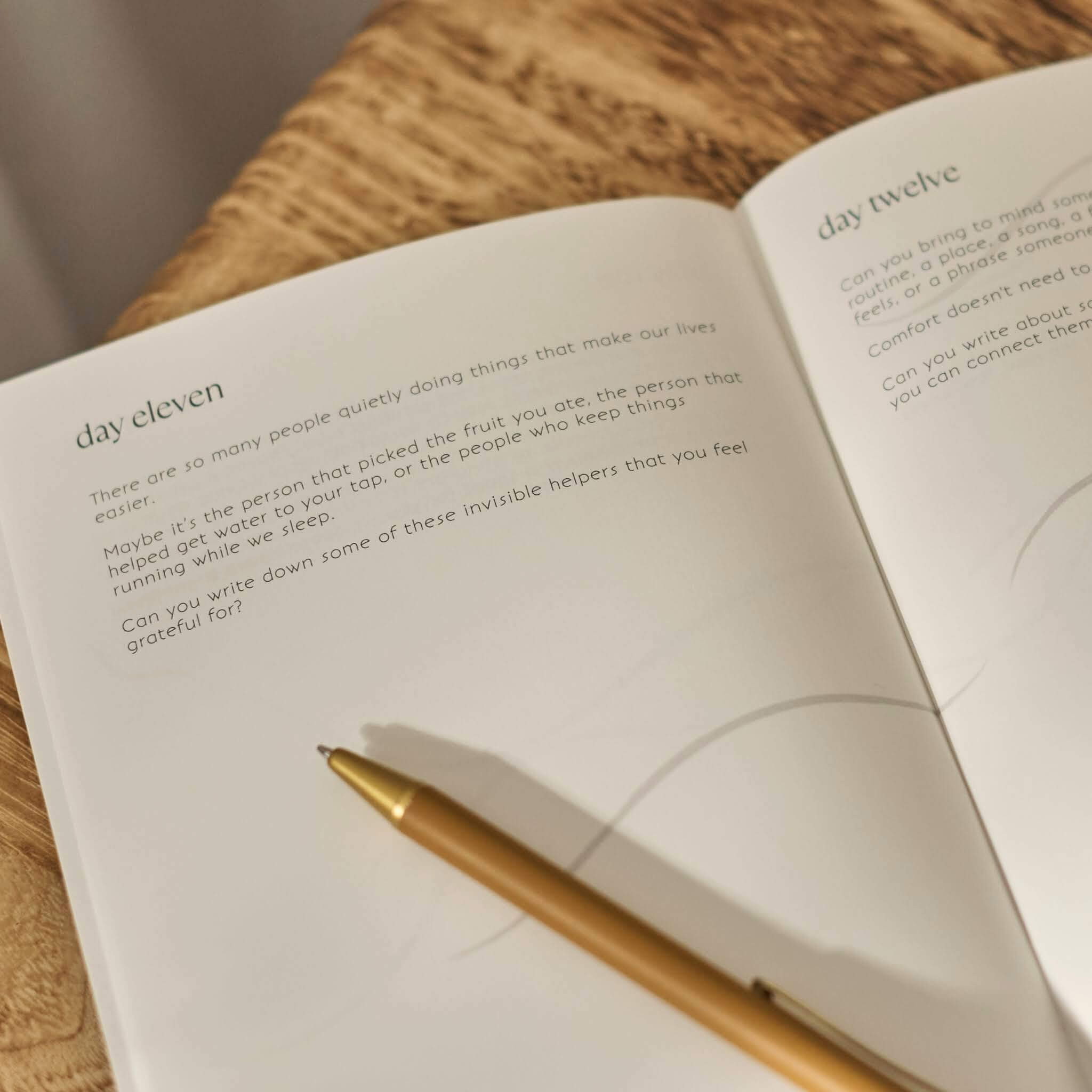
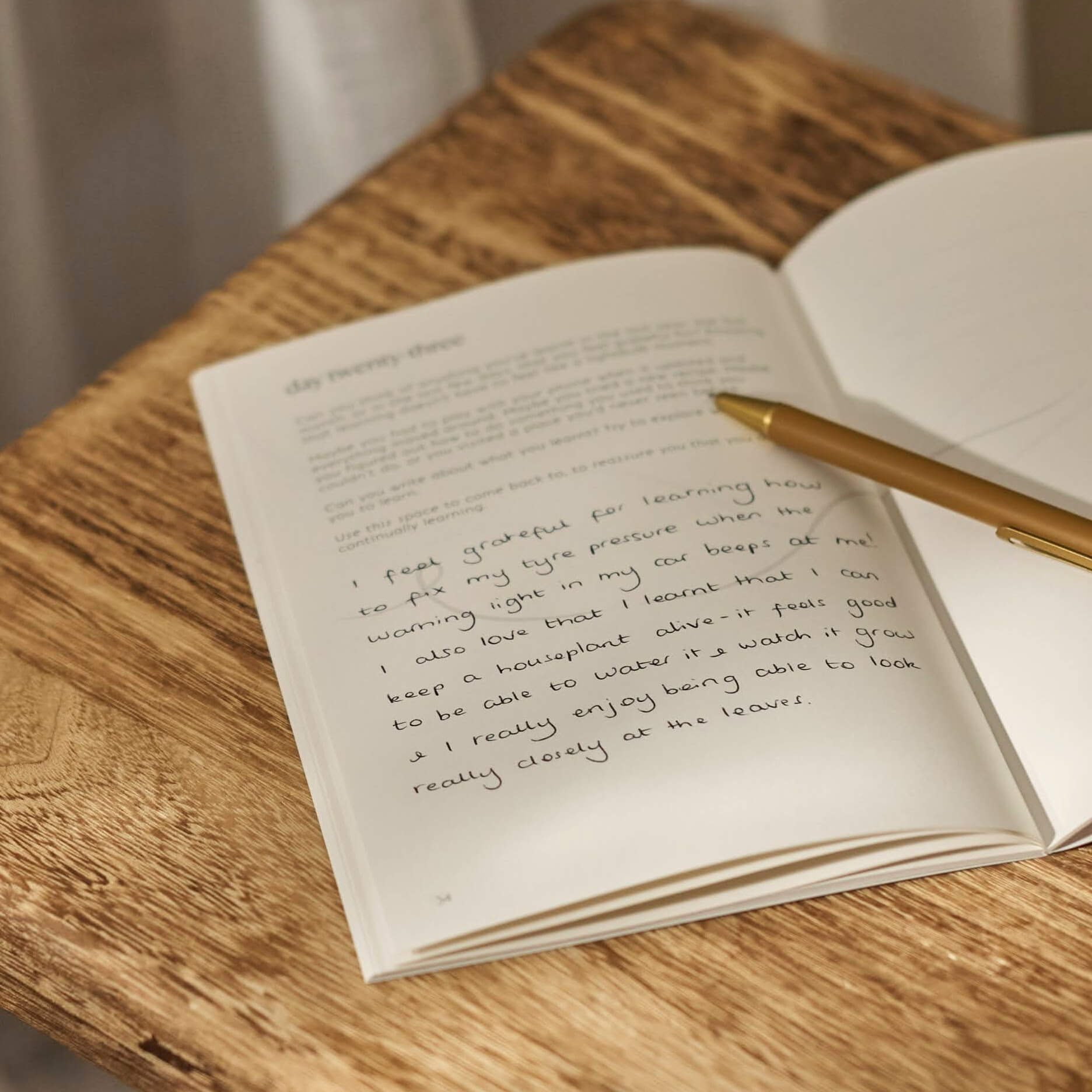
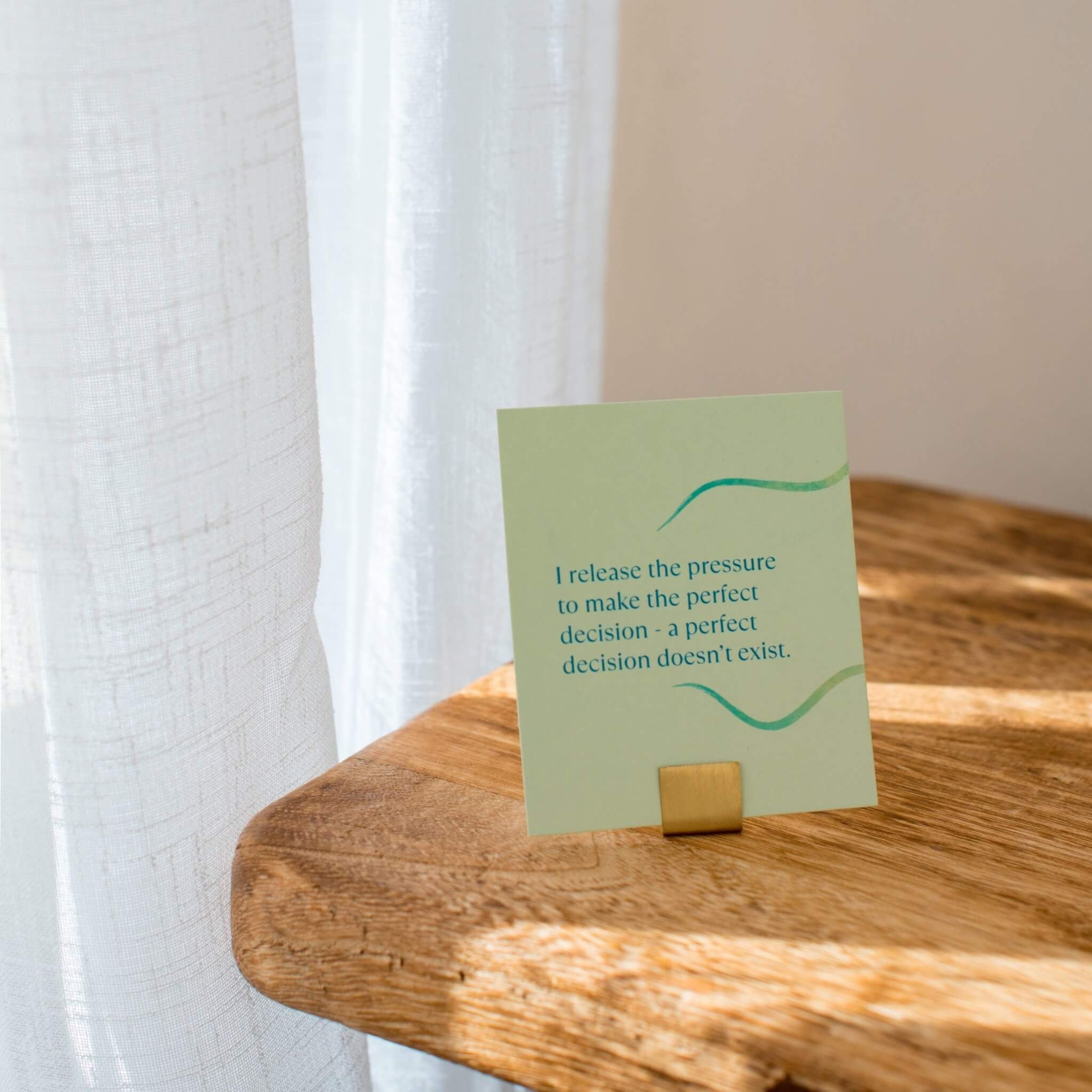
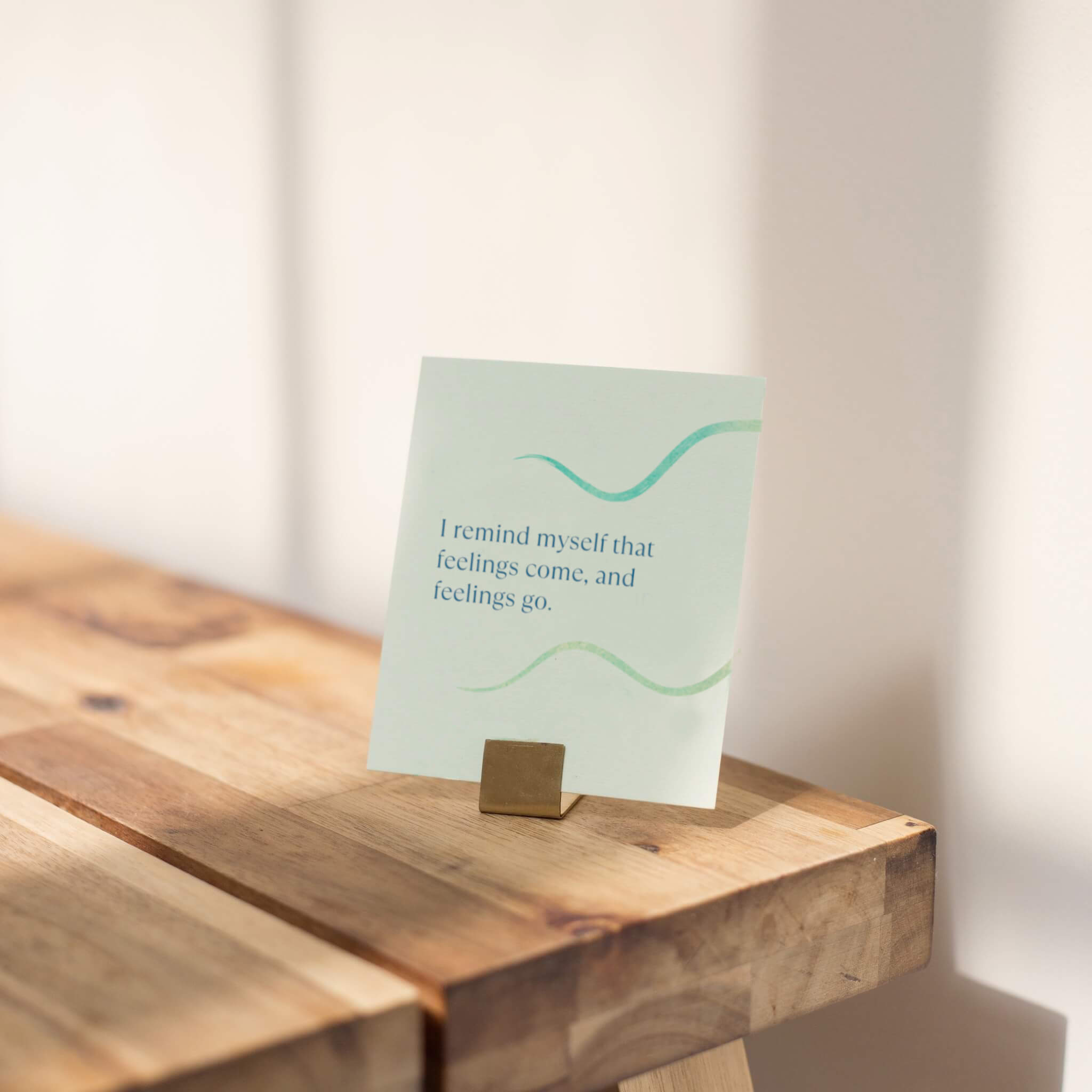
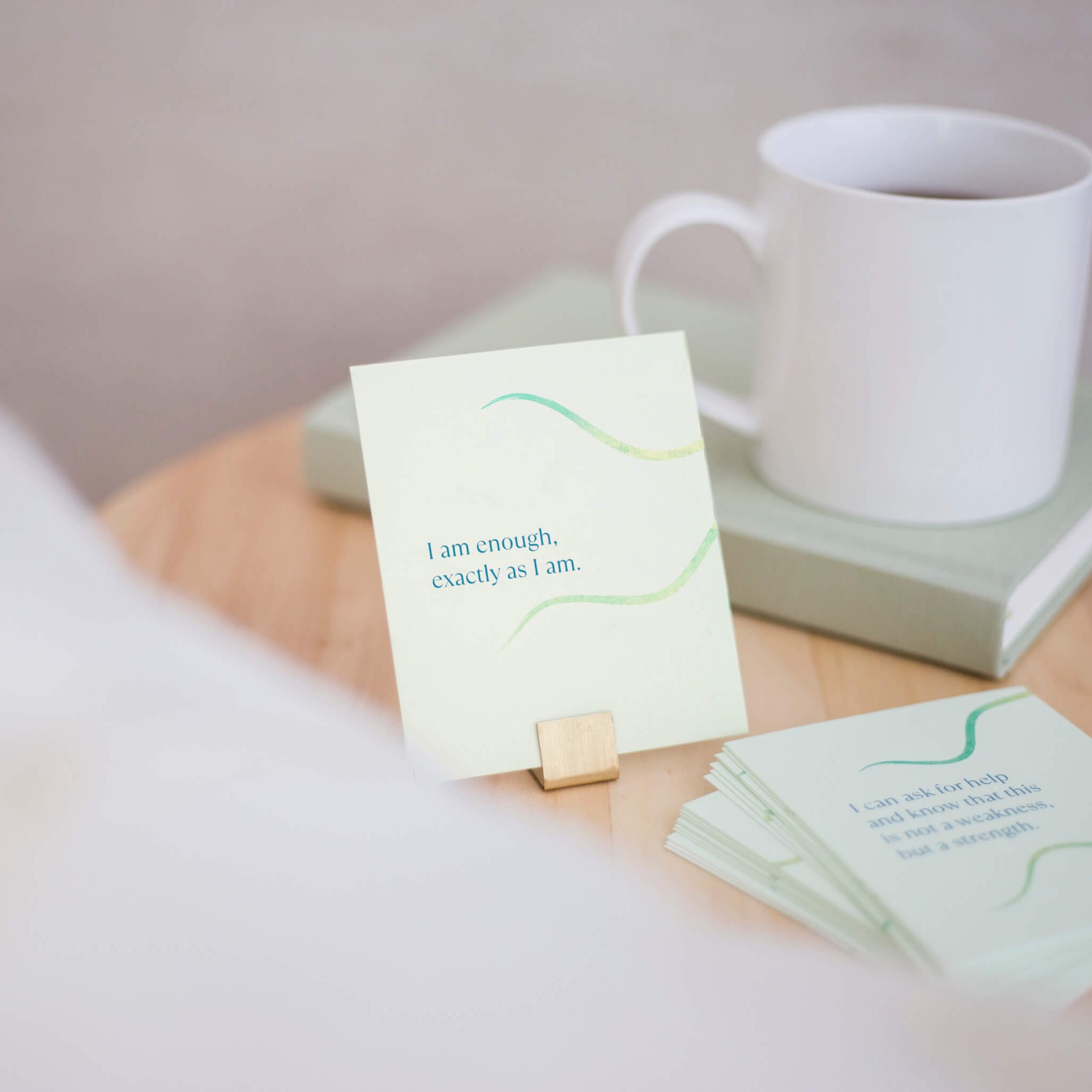
Three real prompts from inside The Give Yourself Kindness Journal
If you're looking for wellness journal ideas, these give you a feel for what a page asks of you. Each one is printed exactly as it appears in the journal.
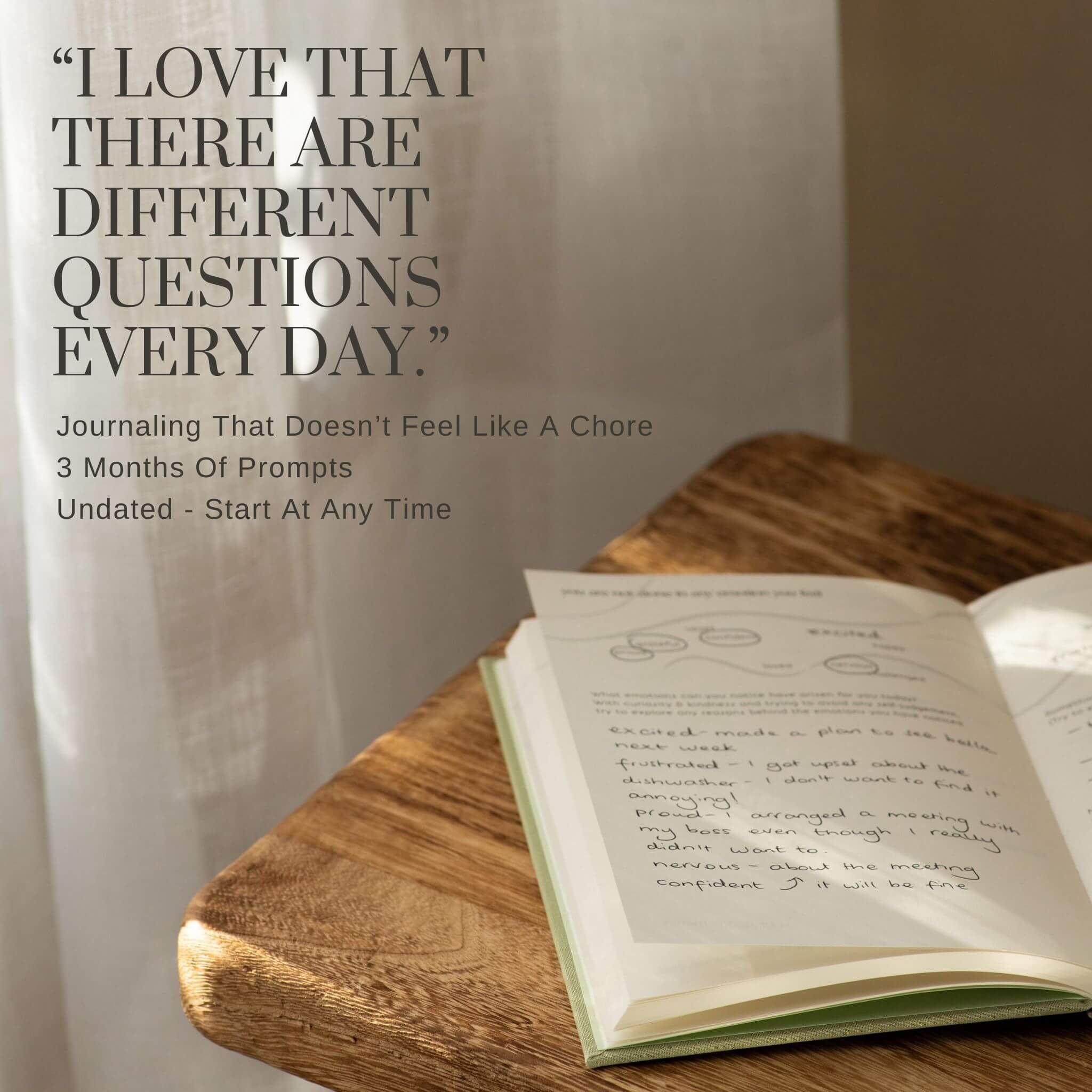
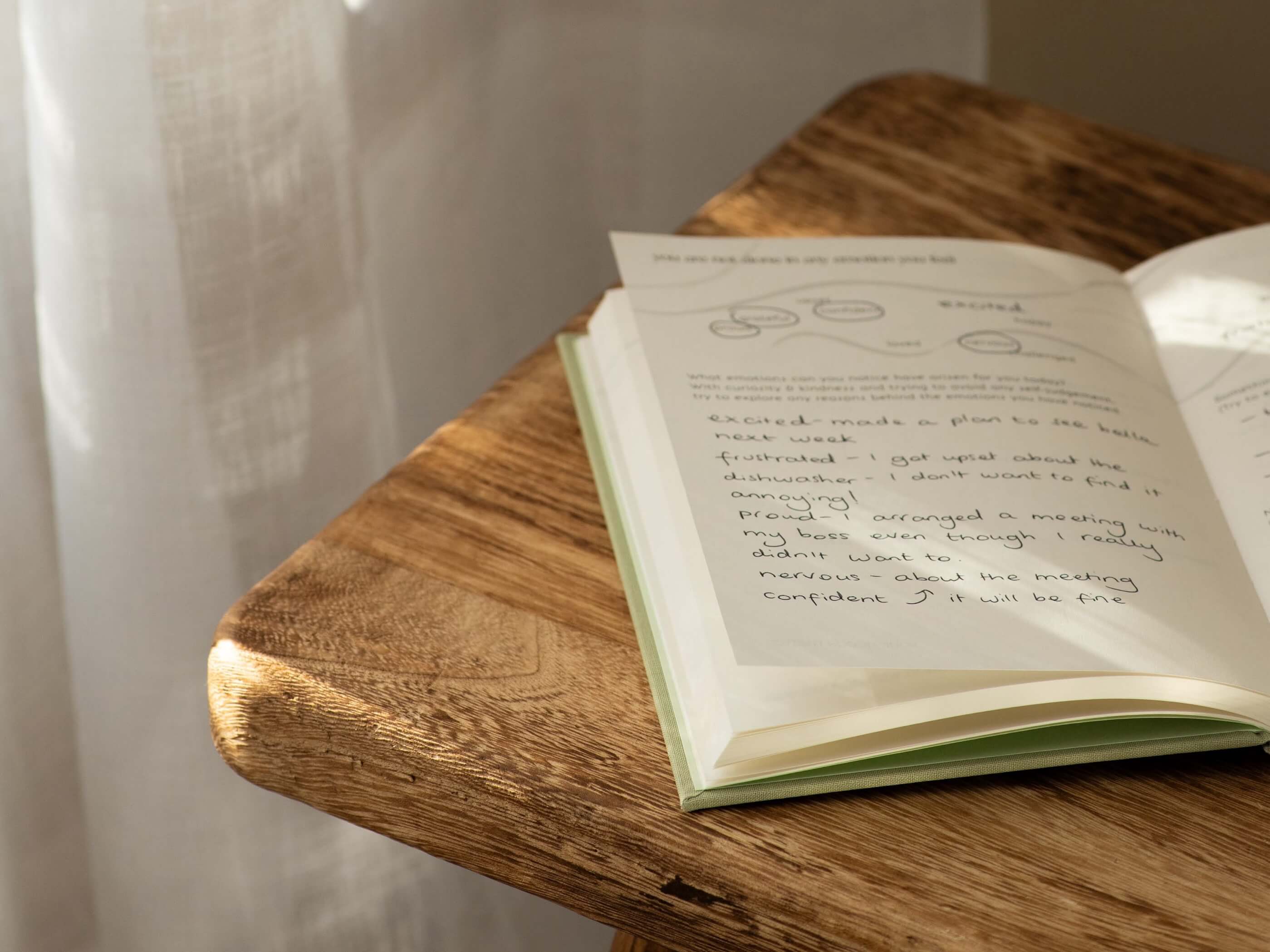
"What emotions can you notice have arisen for you today? With curiosity & kindness and trying to avoid any self-judgement, try to explore any reasons behind the emotions you have noticed."
"Imagine you have thirty minutes to do something for you, to show yourself some of your own love and care, what would you do? Over the next few days, try to make time to do what you've described."
"Can you think of a time when you've struggled to feel proud of something you’ve achieved, but if it had happened to a friend you would have felt proud, and wanted them to feel proud of themselves? Write down words of reassurance to show yourself that you deserve to feel proud."
The first appears every day, alongside the emotion tool. The others change from page to page. None of them has a right answer.
The psychologists who recommend it
Clinical psychologists, psychotherapists and counsellors have reviewed it, and some use it in their own work. Here is what they say, in their own words.

Professor Willem Kuyken, PhD, DClinPsy
Ritblat Professor of Mindfulness and Psychological Science, University of Oxford | Listed by Web of Science in the top 1% of the most cited scientists in the world
"…Her journal's are not only aesthetically pleasing, they scaffold my writing. Writing can be creative, beautiful, resourcing, but it can also invoke an inner critic, rumination and procrastination. Rachel has curated the experience to make the writing intrinsically rewarding and the journal something to treasure."
What this means for your wellbeing: writing isn't automatically kind to you. A journal that gives each page a gentle shape can make it something you look forward to opening.
Read Professor Kuyken's review alongside the rest →
Nina Holle
Psychotherapist
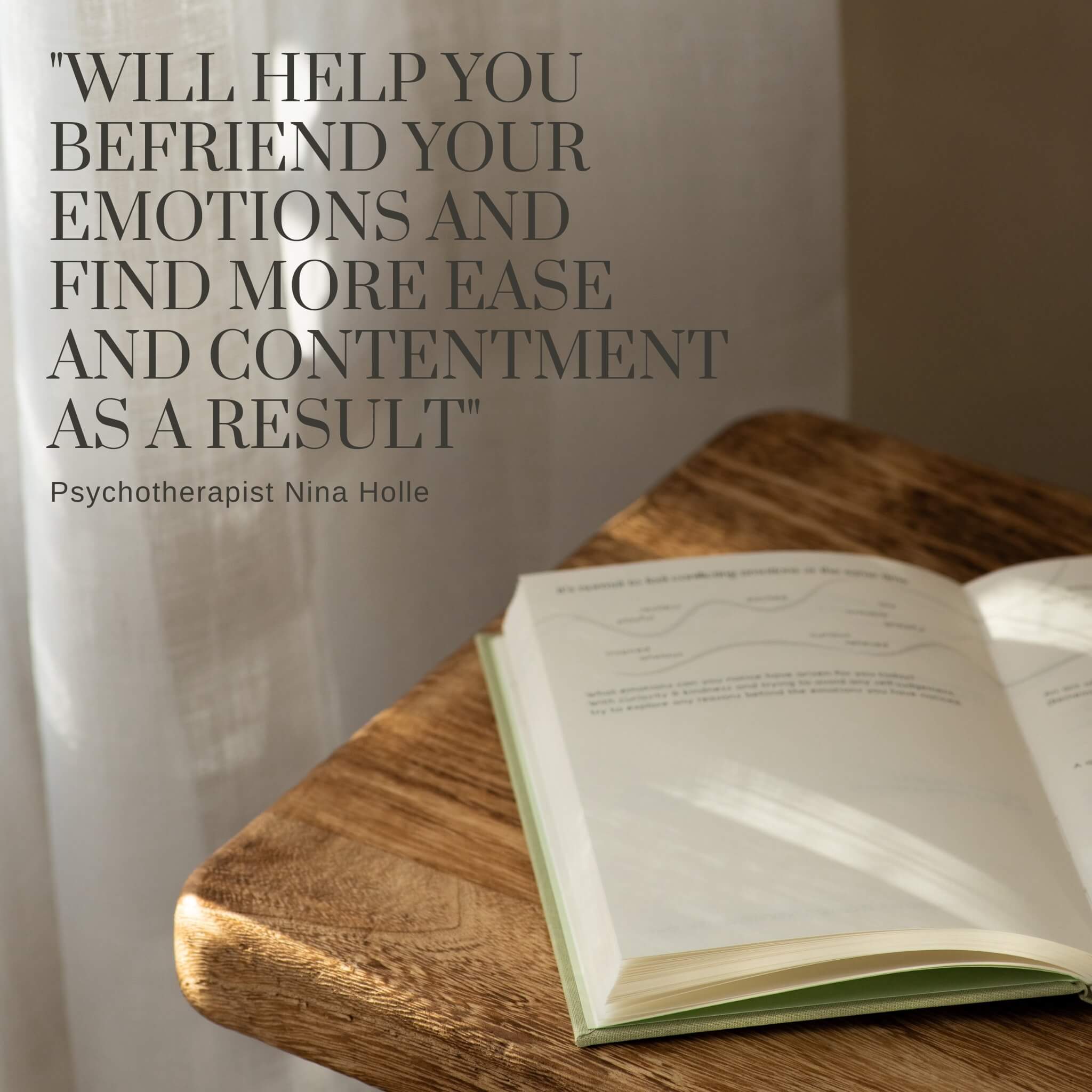
Read Nina Holle's review alongside the rest →"This is a wonderful, easy-to-use and transformative journal which will help you befriend your emotions and find more ease and contentment as a result. The journal is rooted in state-of-the-art research that emphasizes the importance of understanding our emotions in order to lower stress and lead a happy and meaningful life…"

Rachael Oliver, MBACP
Accredited counsellor, who uses the journal with her clients
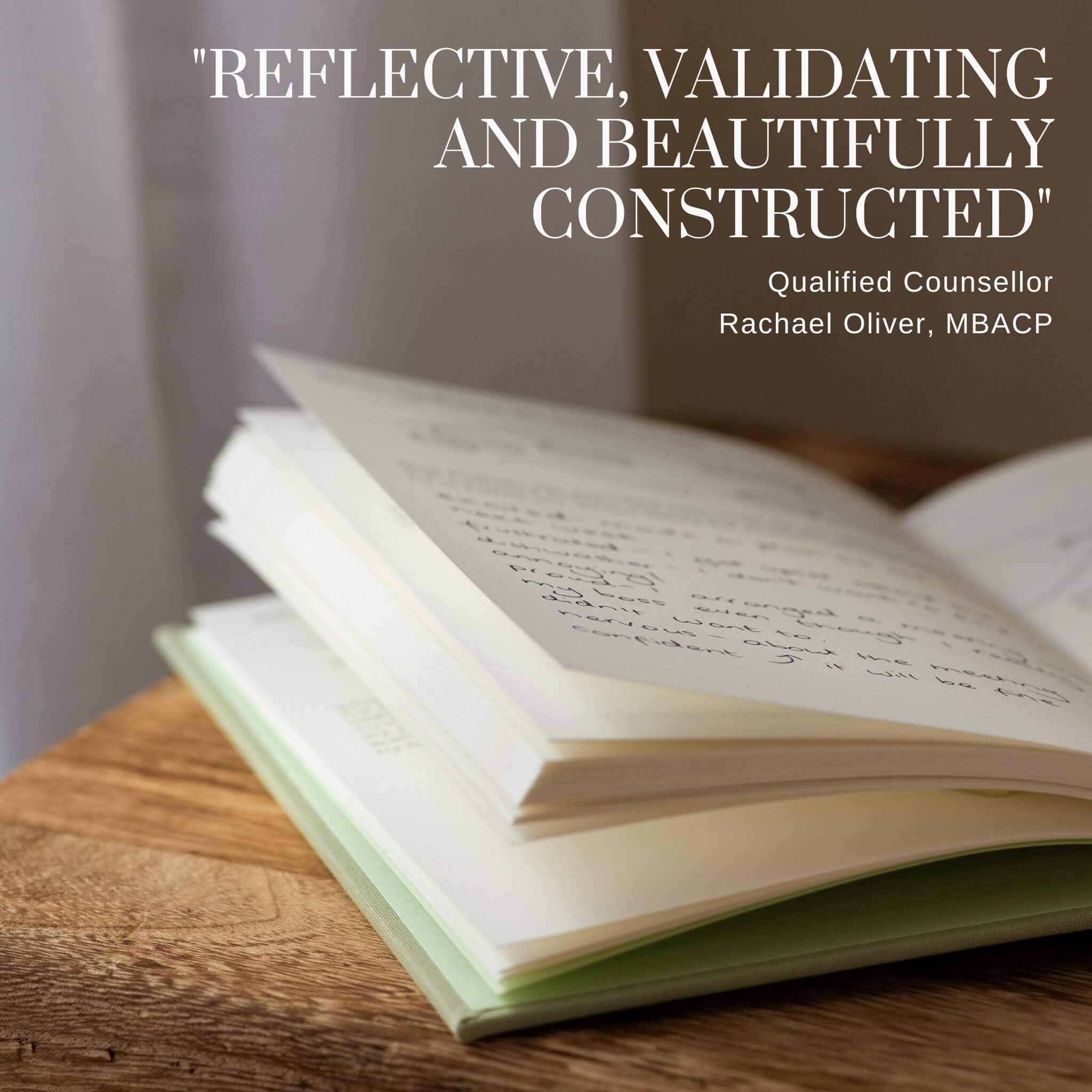
Read every professional review from therapists and clinical psychologists →"…I have been using them with my counselling clients for years and feel like for many, it's an absolutely essential tool for helping build self awareness, compassion, reflect on things happening between sessions and collect thoughts and feelings…"
Discover The Give Yourself Kindness Journal →
Best wellness journals: 2026 comparison
Here's how six wellness journals and planners compare. If you'd like support with how you feel, rather than habit tracking, look for an approach that welcomes difficult emotions and has been reviewed by mental health professionals.
| Journal | Best for | Format | Recommended by | What's inside |
|---|---|---|---|---|
| The Give Yourself Kindness Journal | Your emotional wellbeing and mental health, especially if you're hard on yourself | Undated self-compassion journal: 90 days, every page different, with an emotion tool on each one | Clinical psychologists at Harvard Medical School and the University of Oxford. Used by accredited counsellors with clients | 224 A5 pages on 120gsm FSC-certified paper, a pistachio green cloth cover, a ribbon marker and over 50 gentle reminders |
| The Five Minute Journal | A short morning-and-evening gratitude habit | Undated, lasting about six months, with prompts that repeat each day | Not stated | Morning gratitude, intentions and an affirmation; evening highlights and reflection; a quote each day |
| Papier Wellness Journal | Daily intentions, and checking in on sleep and energy | Undated, 12 weeks of daily two-page spreads | Not stated; includes articles by a wellness expert | Weekly and monthly check-ins across six wellness pillars, a life wheel at the end, free personalisation |
| Clever Fox Wellness Planner | Planning and tracking food, activity and habits | A planner with daily and weekly logs | Not stated | A health and wellness log, food journal and meal planner, with space to track activity and habits |
| Moleskine Passion Journal: Wellness | A structured log for fitness, diet and health goals | 400 pages, large (13 x 21 cm), four tabbed sections | Not stated | Personal goals, fitness, diet and health care sections, nutrition tips and exercises, two ribbons, stickers and an inner pocket |
| The Positive Wellness Journal | Colouring, drawing and creative mind-body activities | Undated 12-week hardback, 288 pages (Ali McDowall and Finn Prevett, Penguin) | Not stated | Daily intentions and evening reflections, breathing exercises, colouring pages, affirmations, gratitude tools and a year-long mood tracker |
If your wellbeing feels tied up with how you speak to yourself, The Give Yourself Kindness Journal is the one I'd choose. If you'd mainly like to plan meals, workouts or habits, a planner from further down this page will suit you better.
How do I choose the right wellness journal for my needs?
To choose the right wellness journal for your needs, start with what you'd like it to help with: your feelings, your habits, or a creative routine. Find the line below that sounds most like you.
"I'd like real support with how I feel, not just habit tracking."
→ The Give Yourself Kindness Journal
Recommended by clinical psychologists at Harvard Medical School and the University of Oxford, and made for emotional wellbeing.
"I only have five minutes."
A quick, consistent gratitude practice for when time is short.
"I get bored with the same prompts every day."
→ The Give Yourself Kindness Journal
Every page is different for 90 days, so the practice stays fresh.
"Forced positivity makes me feel worse on hard days."
→ The Give Yourself Kindness Journal
A self-compassion approach that welcomes every emotion, not only the positive ones.
"I want to track sleep and energy alongside reflection."
Daily intentions with sleep and energy check-ins, built for exactly that.
"I want one all-in-one lifestyle and health planner, not just a journal."
Closer to a planner than a reflective journal, with food, activity and habit tracking.
"I want my fitness, food and health goals in one place."
→ Moleskine Passion Journal: Wellness
Four tabbed sections for personal goals, fitness, diet and health care.
"I'd like a mind, body and soul routine for 12 weeks."
→ The Positive Wellness Journal
Breathing exercises, colouring and creative activities alongside daily writing.
Detailed comparison: the other wellness journals, and who each one suits
The Give Yourself Kindness Journal isn't the only good choice. Each of these is well made for a different kind of wellbeing goal.
The Five Minute Journal
⏱️ Best for a five-minute daily habit
What it offers:The same simple prompts every day: morning gratitude, an affirmation and intentions, then an evening look at what went well. The consistency is the point, and it makes a habit easy to build.
How it's different:Because the prompts repeat, it suits a quick routine more than exploring difficult emotions. If you'd like variety or more room for hard feelings, a journal with changing prompts may suit you better.
Choose this if:A short, predictable routine is what you're after. See The Five Minute Journal →
Papier Wellness Journal
🗓️ Best for daily intentions and check-ins
What it offers:Twelve undated weeks of daily spreads for intentions, sleep and energy, with weekly and monthly check-ins across six wellness pillars and a life wheel to reflect on at the end. You can personalise the cover.
How it's different:It's more structured and tracking-led than emotion-focused, which makes it a good fit if checking in on your routines is what you want.
Choose this if:You like a clear daily layout and a beautiful, personalised notebook. See Papier Wellness Journals →
Clever Fox Wellness Planner
📋 Best for planning food, activity and habits
What it offers:A health and wellness log with a food journal, meal planning, and space to track activity and habits towards your goals.
How it's different:It's closer to a lifestyle planner than a reflective journal, so it's light on prompts for exploring how you feel.
Choose this if:Organising your health habits is your main goal. See Clever Fox Wellness Planner →
Moleskine Passion Journal: Wellness
📒 Best for a structured lifestyle log
What it offers:A 400-page journal with four tabbed sections for personal goals, fitness, diet and health care, plus nutrition tips and exercises at the front, two ribbons, stickers and an expandable inner pocket.
How it's different:It's a well-made record of healthy-living goals and milestones rather than a guided journal for feelings.
Choose this if:You'd like one sturdy place to log fitness, food and health goals. See the Moleskine Passion Journal →
The Positive Wellness Journal
🖍️ Best if you like colouring and drawing
What it offers:An undated, 12-week guided journal from Ali McDowall and Finn Prevett, built around mind, body and soul, with daily intentions, evening reflections, breathing exercises, colouring pages and a year-long mood tracker.
How it's different:It mixes writing with creative activities, so it suits people who'd rather do something with their hands than write at length. Positivity and affirmations are part of its approach.
Choose this if:A creative, varied routine appeals to you. See The Positive Wellness Journal →
Wellness journals vs wellness planners
A wellness planner helps you organise and track: meals, water, sleep, workouts, habits. A wellness journal helps you reflect on how you're feeling.
So the question is what you'd like to change. If you want to see your routines on paper, the Clever Fox Wellness Planner and the Moleskine Passion Journal are built for that. If it's your feelings you'd like help with, you need a journal, and The Give Yourself Kindness Journal is the one I recommend. Some people use one of each.
- A planner might suit you if you enjoy ticking things off and seeing progress in numbers.
- A journal might suit you if you'd like to understand your emotions and speak to yourself more kindly.
- Both might suit you if you'd like to look after your body and your mind in separate, simple places.
Why journaling works: the science behind wellness journals
Before choosing a wellness journal, it helps to understand why journaling works in the first place. I asked three clinical psychologists to explain the science behind journaling's benefits for mental health.

Dr Josh Mirmelli
Licensed clinical psychologist | Fifteen years in mental health and addiction
Read Dr Mirmelli's full contribution →"As a clinical psychologist, I've seen firsthand how journaling can significantly boost mental health and well-being. One of the main benefits is that it helps people express and process their emotions."
"When you write about your thoughts and feelings, it creates a safe, private space for your emotions, allowing you to understand and manage them better."
"This act of putting emotions on paper can increase self-awareness and provide insight, helping you spot patterns in your thinking and behavior…"

Dr Andreas Comninos
PhD Clinical Psychologist and EMDRAA Accredited Practitioner | Over 15 years of experience
Read Dr Comninos' full contribution →"Writing down thoughts and feelings can provide many of us with a healthy outlet for processing emotions, reducing stress, and gaining clarity. This can lead to insights, and better decision-making and problem-solving skills."
"…Overall, journaling is a versatile and accessible tool that supports mental health, personal growth, and emotional development."

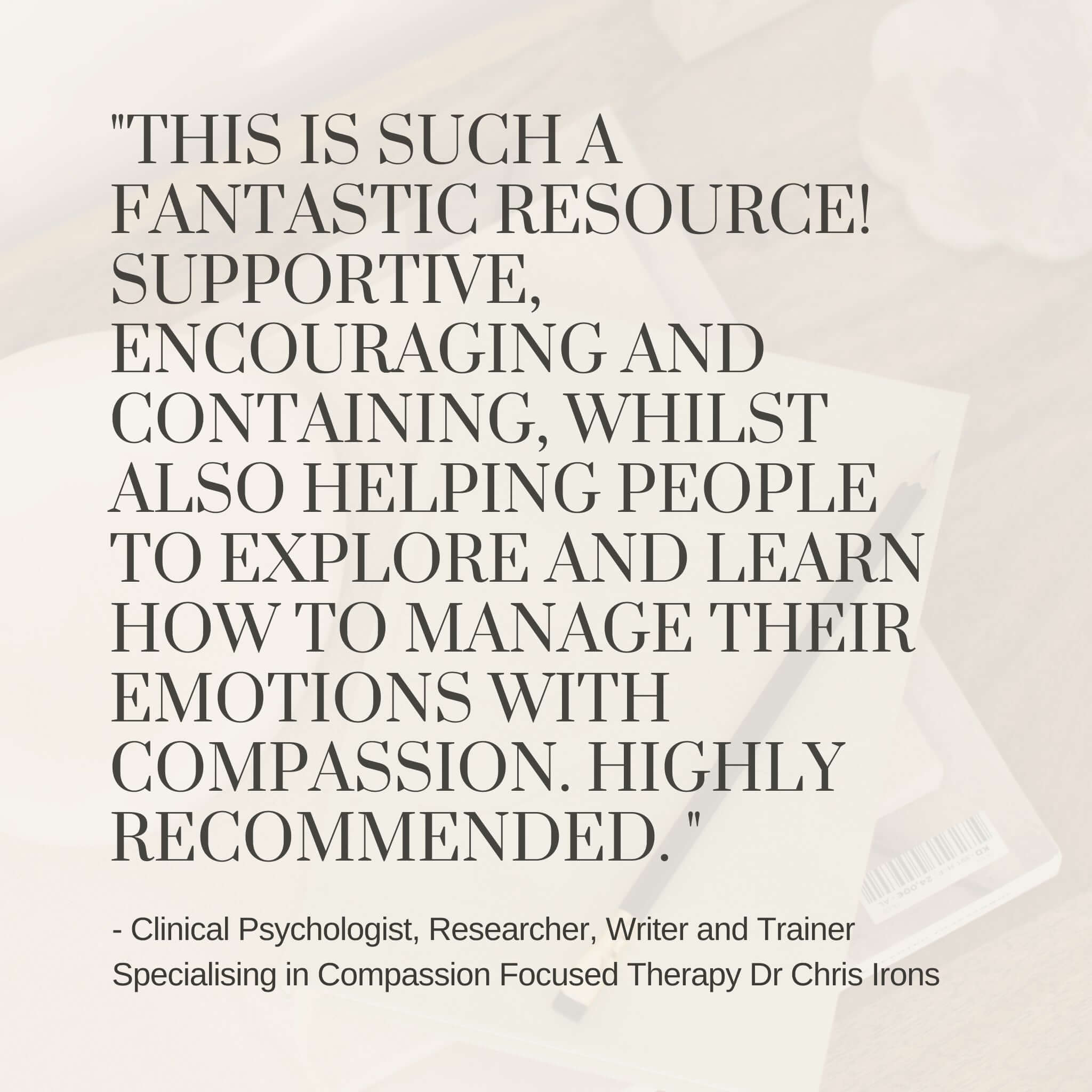
Dr Chris Irons
Clinical psychologist and specialist in Compassion Focused Therapy | Co-director of Balanced Minds
Read the full article: The benefits of journaling, from 3 clinical psychologists →"Journalling can be a powerful way of developing self-reflection, self-discovery and enhancing emotion regulation."
"However, from a Compassion Focused Therapy (CFT) point of view, it’s useful to consider which part of ourselves is doing the journalling…"
"…CFT tries to support people by initially helping them to develop a compassionate part of self - a part that is wise, strong and caring."
Dr Irons' point is the one I'd hold on to: it matters which part of you holds the pen. A journal can help the kinder part do the writing.
When you might need more than a journal
A wellness journal is a companion to support, never a substitute for it. If how you're feeling is affecting your sleep, work, relationships or everyday life, please talk to your GP or a qualified therapist or counsellor.
Mind has gentle, practical guidance on looking after your mental health. If things ever feel too much, Samaritans are on 116 123, free, day or night. If you're in immediate danger, call 999 or go to your nearest A&E.
My recommendation for emotional wellbeing
Best for mental health: The Give Yourself Kindness Journal.
If you'd like support with difficult emotions, not just a place to record the good things, and something you can turn to on hard days as well as easy ones, this is the journal I made for exactly that.
- Recommended by clinical psychologists at Harvard Medical School and the University of Oxford
- Every page different for 90 days, so you're not answering the same question twice
- An emotion tool on every page
- Undated, so it waits for you
- Built on self-compassion, so it's there when you're struggling, not only when you feel good
I hope you find the wellness journal that feels right for you, whether that's mine or not.
Frequently asked questions
Do wellness journals actually work for mental health?
Wellness journals can support mental health, and the approach matters. Clinical psychologist Dr Andreas Comninos says ‘Decades of studies have demonstrated its wide-ranging benefits’, from processing emotions to reducing stress. A journal that welcomes every feeling, rather than pushing positivity, might feel easier to keep coming back to.
What makes a wellness journal effective for mental health?
A wellness journal is effective for mental health when it welcomes every emotion, not only the positive ones, and helps you name what you feel and respond to it kindly. Variety keeps you engaged, undated pages mean a missed day never feels like failing, and review by named clinical psychologists or therapists tells you it was made with care.
How long should I spend journaling each day?
How long you spend journaling each day is up to you, and there’s no right or wrong amount. One honest line can be a full entry on a busy day, and on another day you might want to write more. What matters more than minutes is that it feels manageable, so choose a length you’ll want to come back to.
What if I'm not good at journaling?
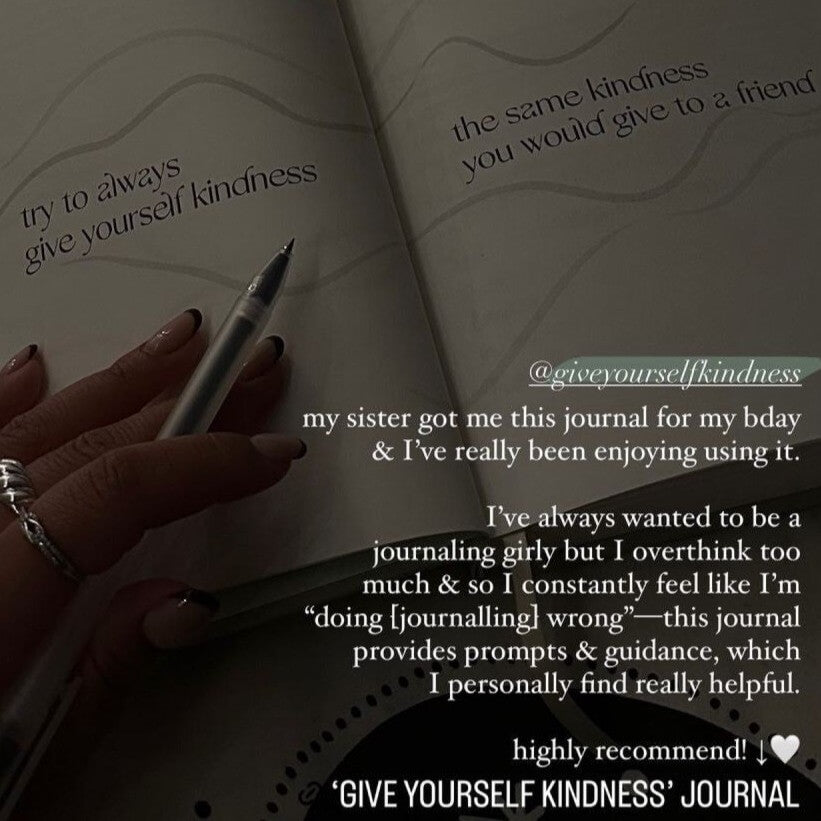
If you feel you’re not good at journaling, it may be the blank page rather than you. Staring at an empty page is hard, especially on a difficult day, and that isn’t a personal failing. A guided journal gives you a question to start from. The Give Yourself Kindness Journal has a gentle prompt and an emotion tool on every page, and there are no right or wrong answers.
I've tried wellness journals before and got bored. Will this be different?
If you got bored with wellness journals before, the same prompts every day can be the reason, and that’s completely understandable. The Give Yourself Kindness Journal has a different page every day for 90 days, so you’re never answering yesterday’s question again. If time was the issue rather than boredom, The Five Minute Journal’s shorter format might suit you better.
Can I use a wellness journal if I'm in therapy?
Yes, you can use a wellness journal if you’re in therapy, as a place to keep reflecting between sessions. Accredited counsellors use The Give Yourself Kindness Journal with their clients between sessions. It’s a companion to therapy, never a replacement, so talk with your therapist about how it fits the work you’re doing together.
What if I miss days?
If you miss days, nothing has gone wrong, and you can pick up where you left off. An undated journal helps, because there are no empty dated pages waiting for you. The Give Yourself Kindness Journal is undated, and being kind to yourself on the days you can’t write matters more than keeping a streak.
Which journal is recommended by mental health professionals?
The wellness journal I know mental health professionals recommend is The Give Yourself Kindness Journal. It’s recommended by clinical psychologists including Dr Chris Germer of Harvard Medical School and Professor Willem Kuyken of the University of Oxford, and accredited counsellors use it with their clients between sessions. It’s rooted in science-backed self-compassion.
What's the best wellness journal for women?
The best wellness journal for women is the one that fits what you’d like from it: habit tracking, creative activities, or support with how you feel. For emotional wellbeing, I recommend The Give Yourself Kindness Journal, the self-compassion journal recommended by Harvard and Oxford psychologists. It isn’t designed for one gender: it suits adults and teens, and anyone who’d like to be kinder to themselves.
What's the best wellbeing journal in the UK?
The wellbeing journal I recommend in the UK is The Give Yourself Kindness Journal, a guided self-compassion journal printed in the UK on 120gsm FSC-certified paper. It’s recommended by Harvard and Oxford psychologists and used by accredited counsellors with their clients. If you’d rather focus on daily intentions, sleep and energy, the Papier Wellness Journal is a 12-week undated alternative.
What's a good wellness journal to give as a gift?
A good wellness journal to give as a gift is one that’s gentle on hard days and doesn’t ask the person to keep up. The Give Yourself Kindness Journal is undated and arrives wrapped in bespoke tissue paper, and every order can include a free handwritten gift note: add your message to the order notes at checkout. For someone who loves colouring and drawing, The Positive Wellness Journal is a creative alternative.
What's the difference between wellness journals and gratitude journals?
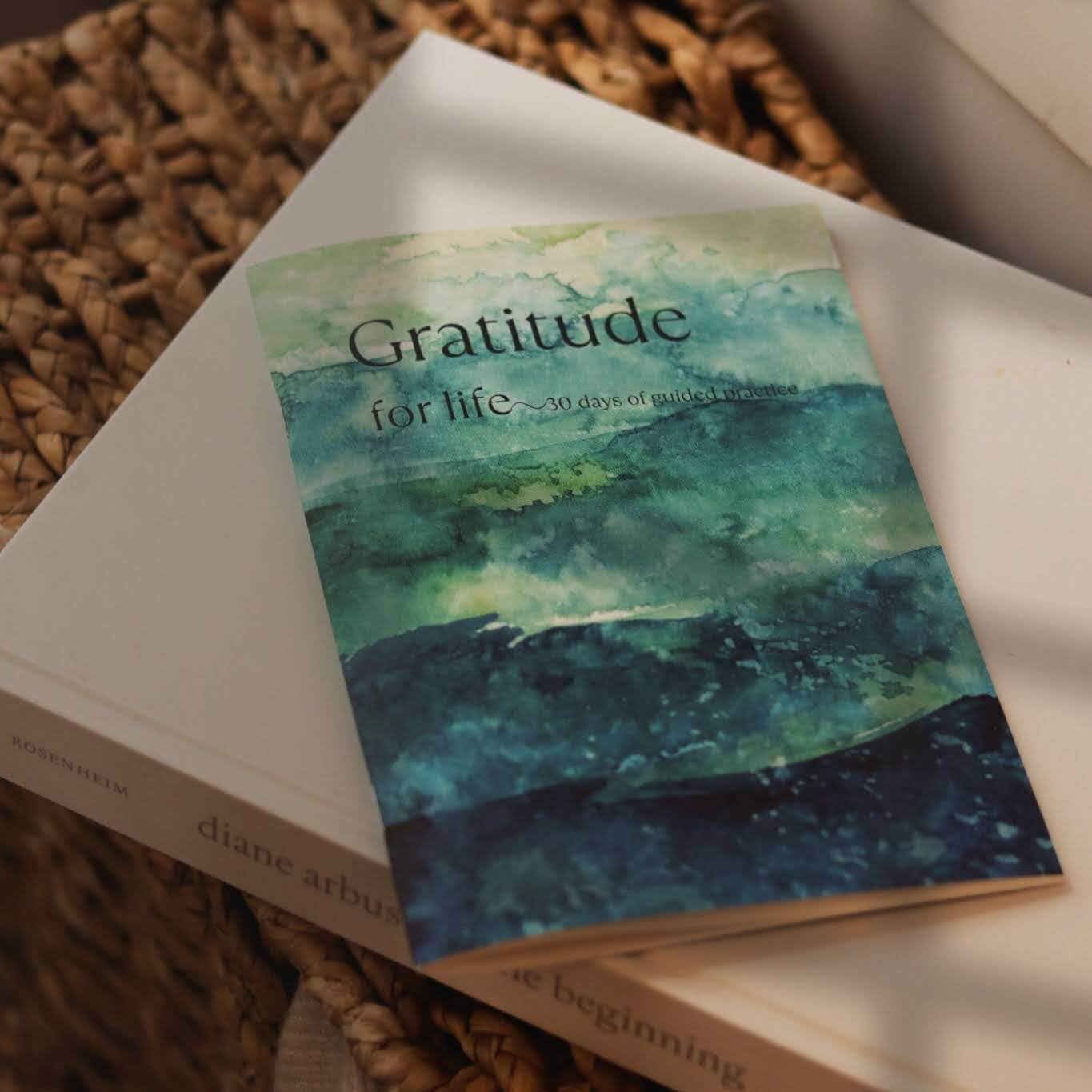
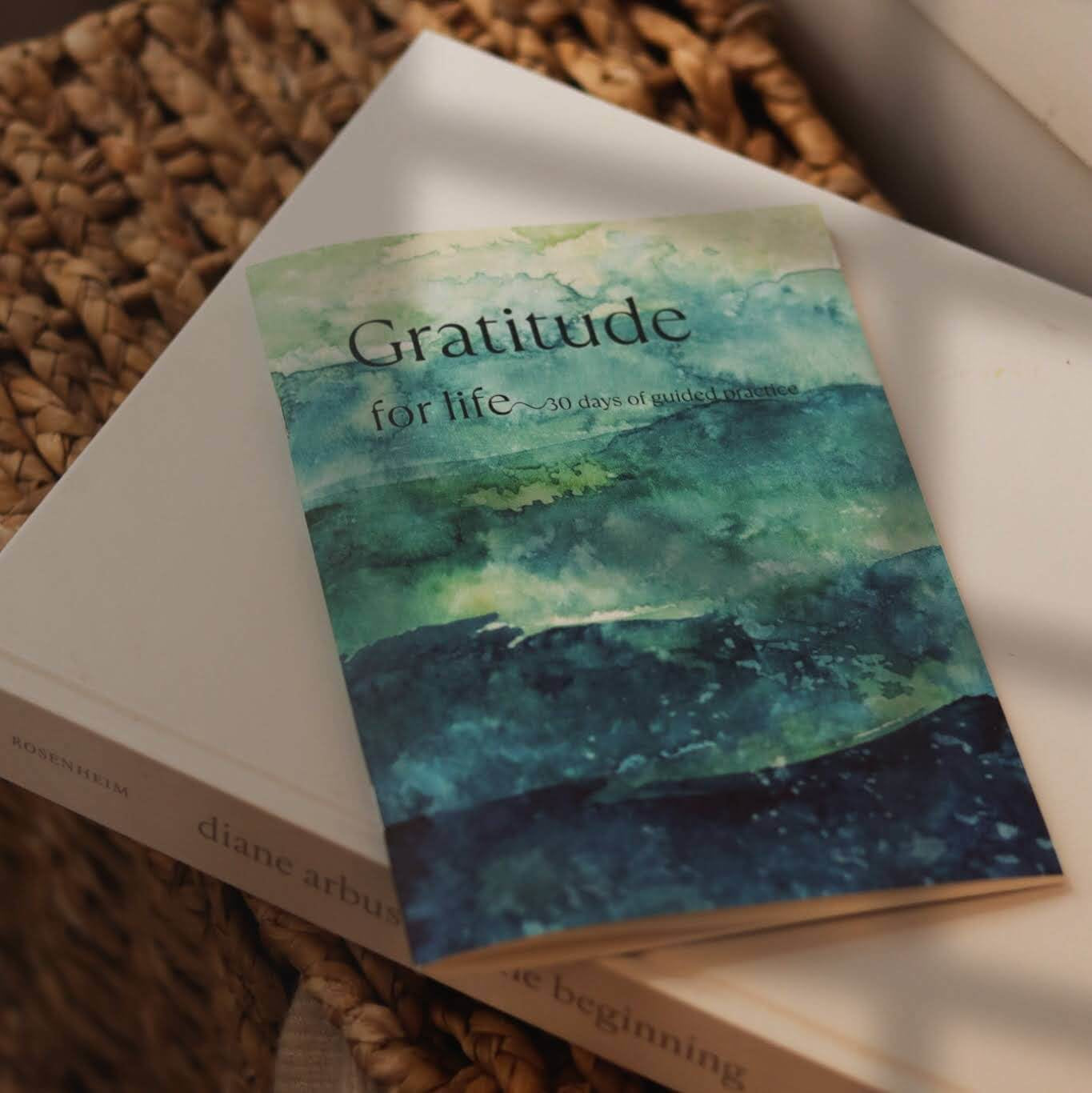
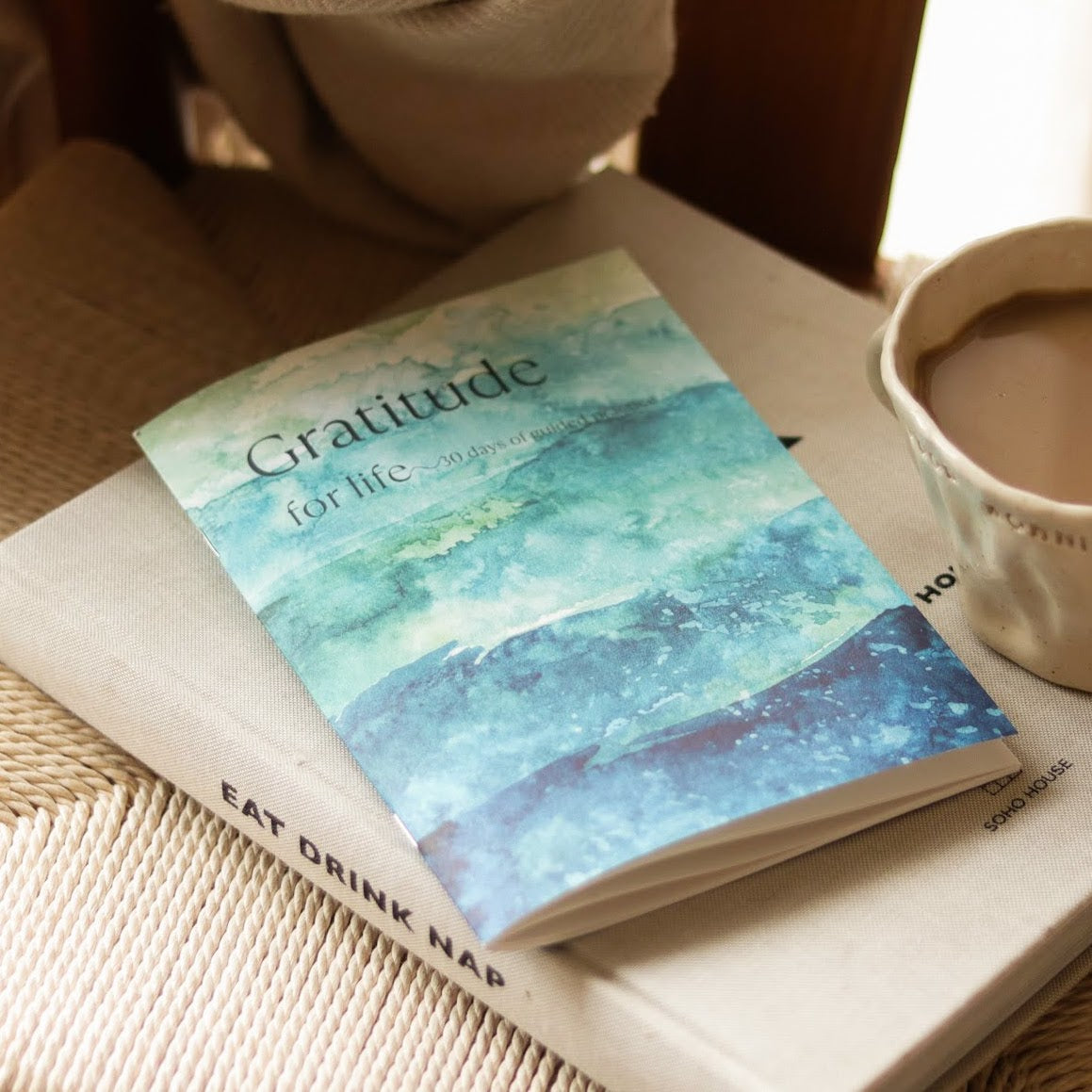
The difference between wellness journals and gratitude journals is focus. Gratitude journals centre on noticing what you’re grateful for, while wellness journals take a broader approach that can include emotional awareness, self-compassion, mindfulness and sometimes physical tracking. If gratitude is what you’re after, The 30-Day Gratitude Journal is centred on it. The Give Yourself Kindness Journal is a self-compassion journal that also includes gratitude every day, held gently alongside harder feelings rather than instead of them.
About the author

Rachel Smith, DipBSoM
Founder of Give Yourself Kindness and qualified meditation teacher
I'm a qualified meditation teacher (British School of Meditation, distinction) and a graduate of Compassion-Focused Therapy training. I'm not a clinician, so every clinical claim on this page belongs to a named, credentialed expert.
Compassion-Focused Therapy changed how I related to myself, and The Give Yourself Kindness Journal came from wanting to keep that going. Dr Chris Germer of Harvard Medical School, Professor Willem Kuyken of the University of Oxford and Dr Chris Irons have since reviewed and recommended it, and therapists and counsellors use it with their clients.
Give Yourself Kindness makes two journals: The Give Yourself Kindness Journal, a 90-day self-compassion journal recommended by Harvard and Oxford psychologists, and The 30-Day Gratitude Journal, a gratitude journal with a different thoughtful prompt each day.
Continue reading
From the experts
-
The benefits of journaling, from 3 clinical psychologistsDr Josh Mirmelli, Dr Andreas Comninos and Dr Chris Irons
-
 Self-compassion or self-indulgence?Dr Kristin Neff, PhD, University of Texas at Austin
-
Every expert review of The Give Yourself Kindness Journal, in fullClinical psychologists, psychotherapists and counsellors
Related guides
- What is a wellness journal? A meditation teacher's guide
- Why wellness journals don't work (and what does instead)
- The best self-care journals compared
- Best journals for mental health
- Best guided journals compared
- Best mindfulness journals
- Best gratitude journals
Looking for a gratitude journal instead? The 30-Day Gratitude Journal gives you a different thoughtful prompt each day, with no lists of three.

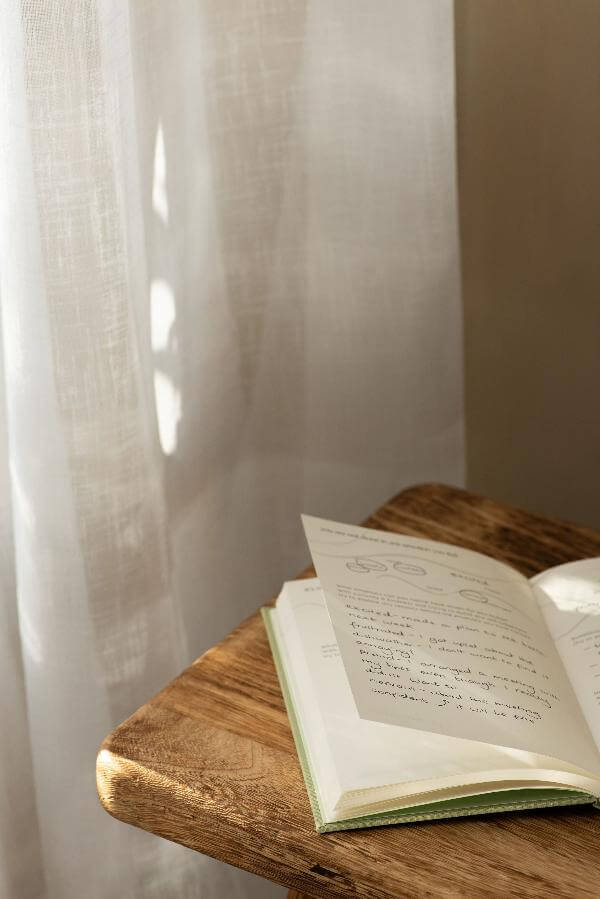
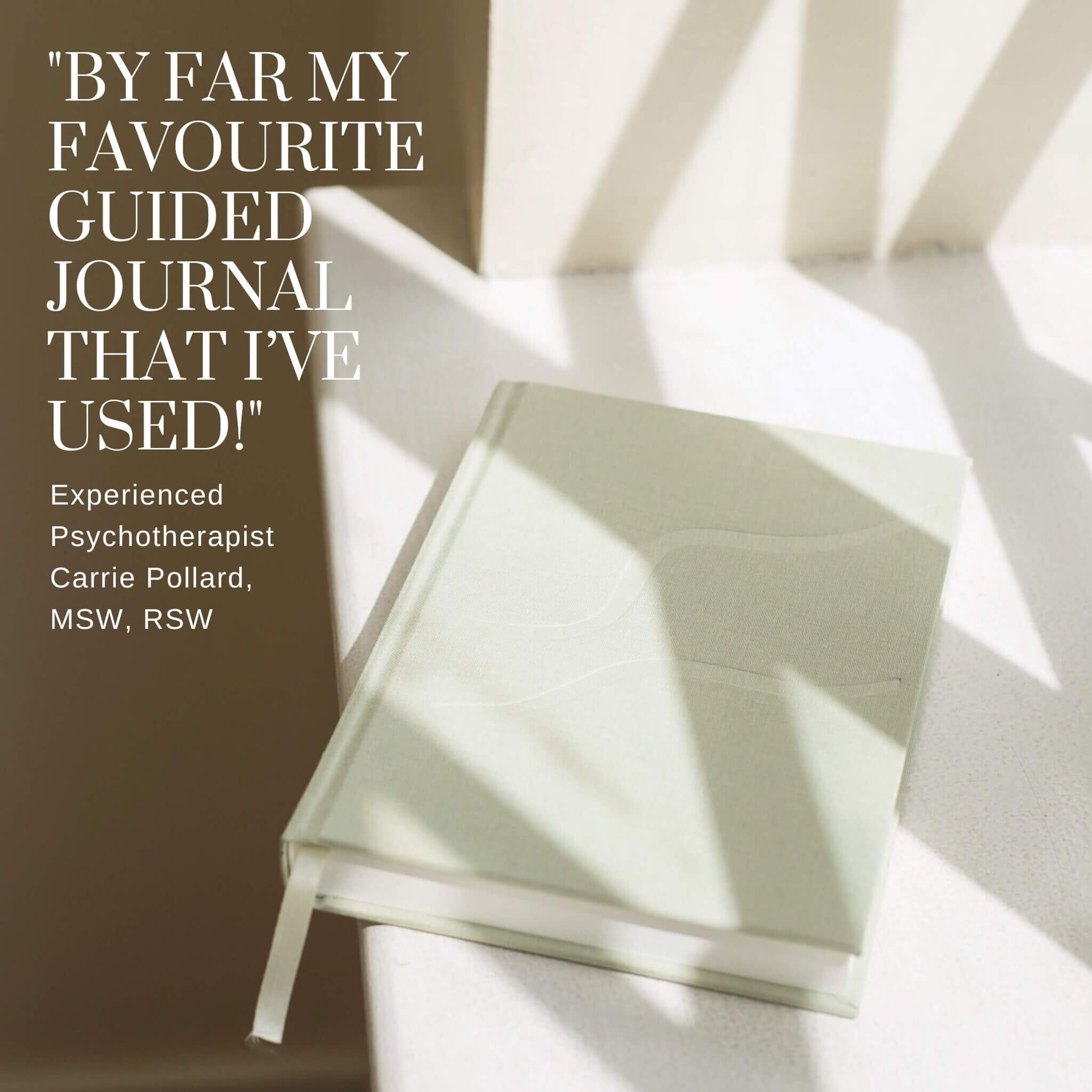
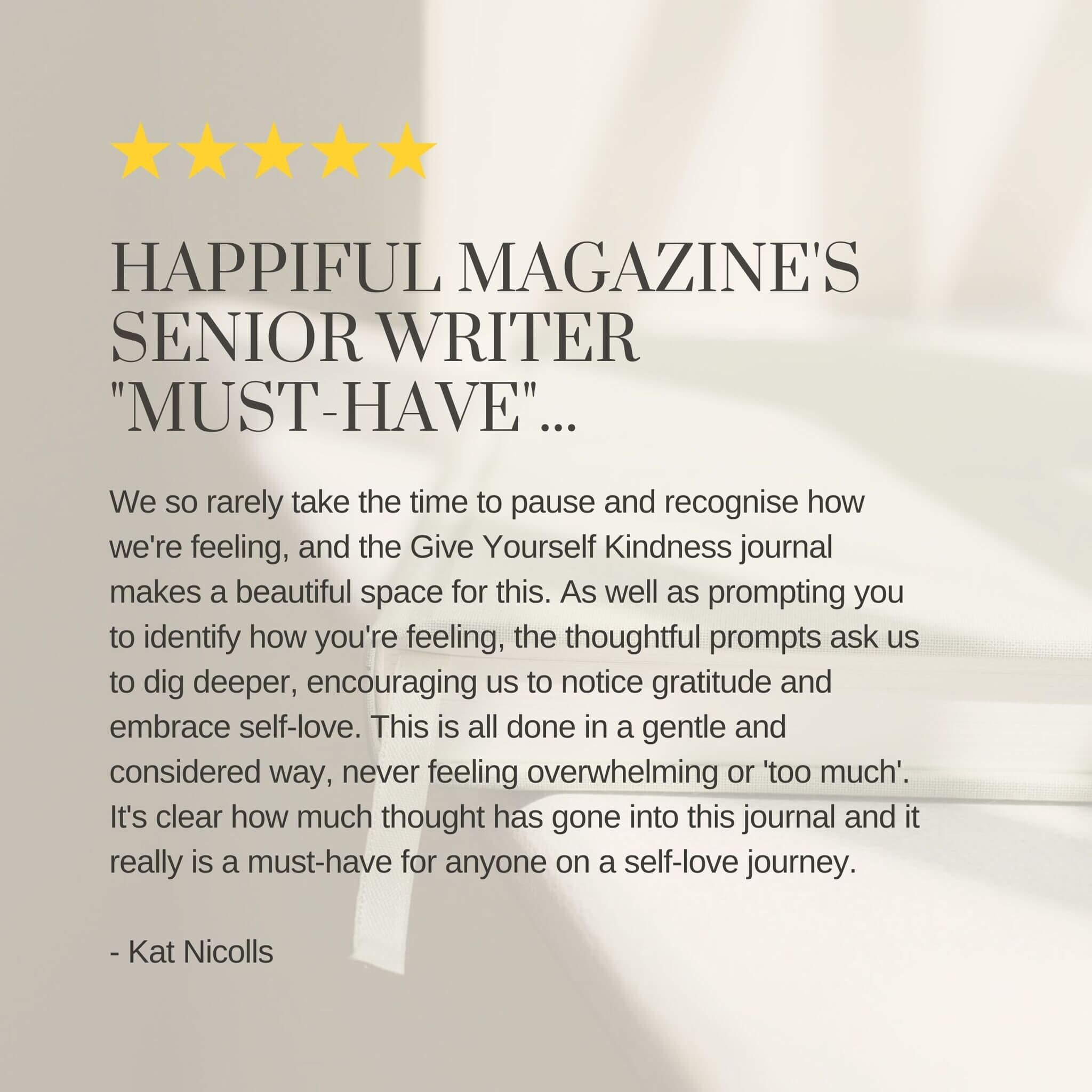
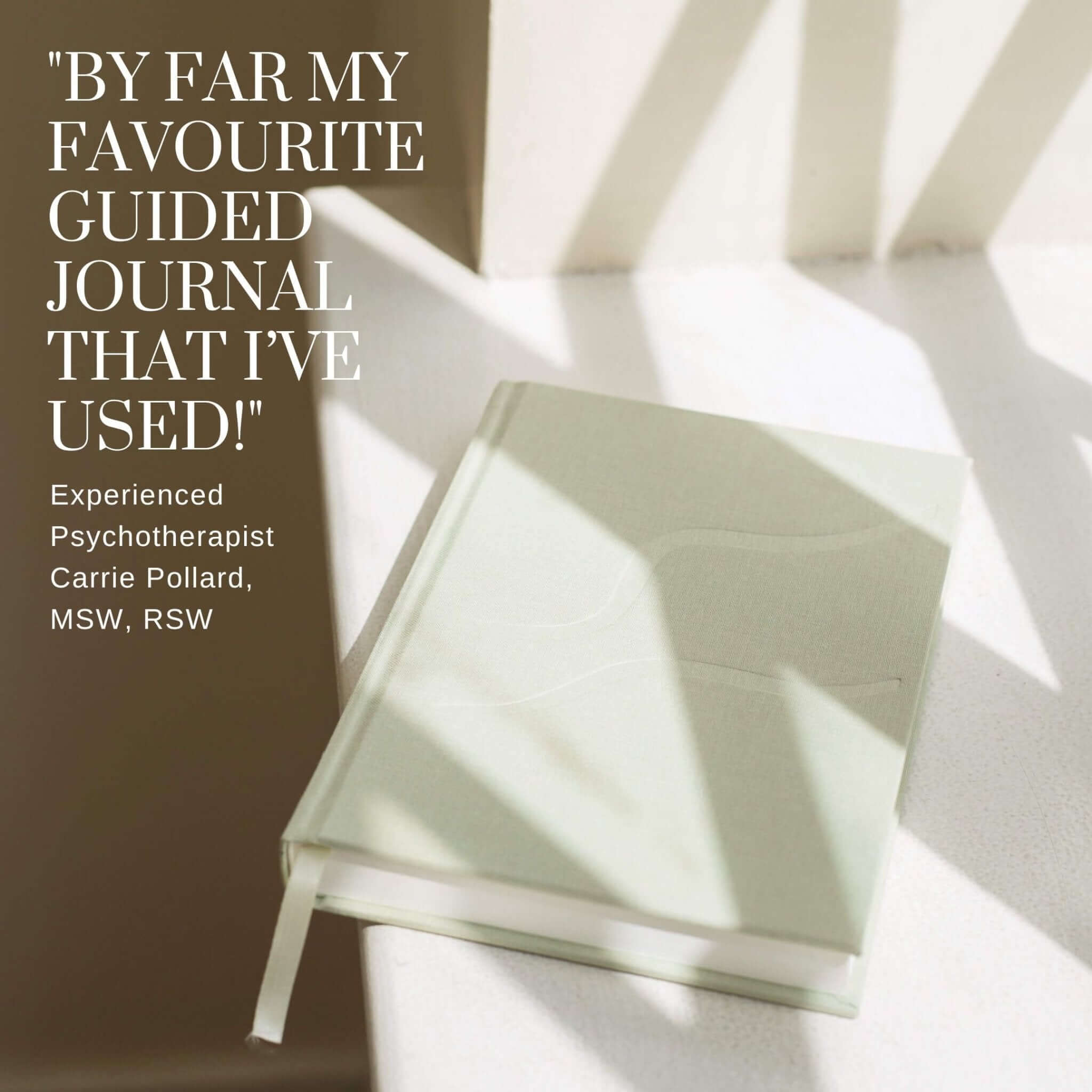
“By far my favourite guided journal that I’ve used!”
Psychotherapist Carrie Pollard says journaling has been an important practice for her, for insight, reflection and release. Of every guided journal she’s used, The Give Yourself Kindness Journal is the one she calls her favourite.