

Quick answer
A wellness journal is a guided journal for your mental and emotional wellbeing, with prompts that help you notice how you feel, get curious about why, and respond with kindness. Clinical psychologist Dr Josh Mirmelli explains that writing about your thoughts and feelings "creates a safe, private space for your emotions, allowing you to understand and manage them better." There's no right or wrong way to do it. Over time, it might help difficult feelings seem less overwhelming.
 Dr Josh Mirmelli, Licensed Clinical Psychologist with fifteen years in mental health. Read his full article
Try this now: take five minutes and write, "Right now I feel…" Then gently ask yourself why, without judging what you find.
When I first searched for a wellness journal, I felt lost.
Some called themselves wellness journals but felt more like rigid daily planners, with the same repetitive page every day. Others pushed forced positivity, and left me feeling like a failure if I couldn't instantly list three things to be grateful for. I wanted something different: something that would support how I actually felt.
About this guide. I'm Rachel Smith, founder of Give Yourself Kindness and a qualified meditation teacher. I'm not a psychologist, so I asked clinical psychologists and therapists what makes journaling helpful, and what doesn't. Everything clinical on this page comes from them, with their credentials and a link to their full article.
What is a wellness journal? A simple definition
A wellness journal is a dedicated space for supporting your mental and emotional wellbeing. Unlike a regular diary or planner, it combines intentional prompts, emotional exploration and gentle self-reflection, to help you feel better and build emotional resilience over time.
Think of it as a conversation with yourself, guided by expert-designed prompts that help you process your thoughts, feelings and experiences.
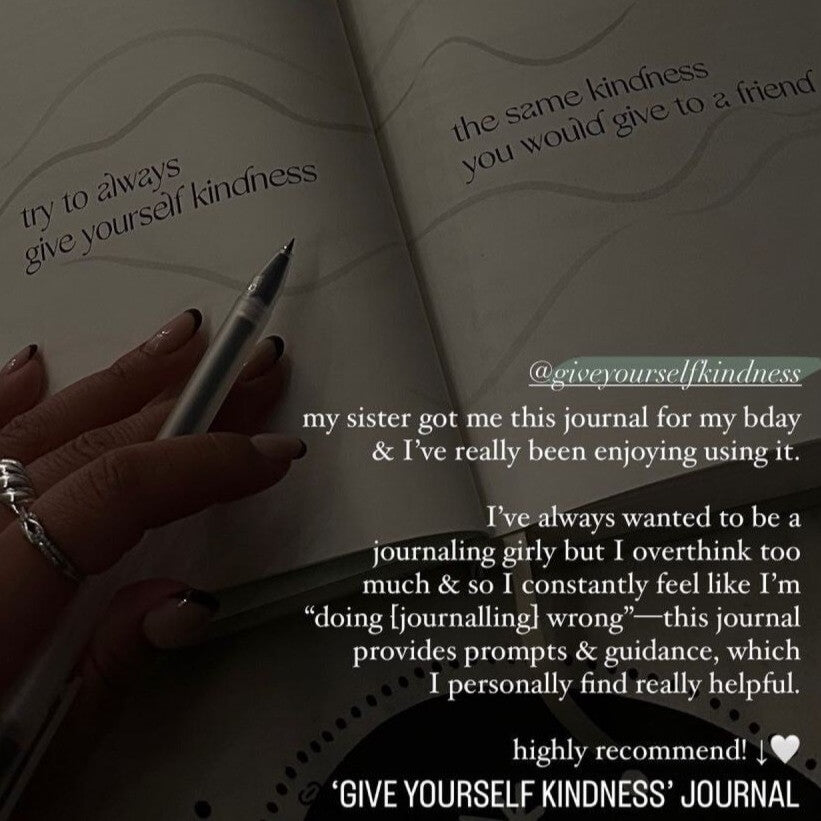
Most wellness journals are guided, which means each page gives you something to respond to. That can make a big difference when a blank page feels like too much. If you're weighing the two, I've written about blank journals vs guided journals.
The science behind journaling
Journaling can support mental and emotional wellbeing by giving your feelings somewhere safe to go. When I first started looking into wellness journals, I wanted to know: does this actually work? Is it worth my time?
I spoke to three clinical psychologists about the benefits of journaling. Here's what they explained.
Dr Josh Mirmelli
Licensed Clinical Psychologist (CA Lic. No. 31895) | Fifteen years working in mental health and addiction
Read Dr Mirmelli's full article: The benefits of journaling, from 3 clinical psychologists →"When you write about your thoughts and feelings, it creates a safe, private space for your emotions, allowing you to understand and manage them better."
"…Plus, writing can make your thoughts and feelings clearer, making them seem less overwhelming."
That safe space matters most on the days you feel overwhelmed or stressed.
Dr Andreas Comninos adds that the evidence for journaling isn't new, and it isn't limited to one method.

Dr Andreas Comninos
PhD Clinical Psychologist | EMDRAA Accredited Practitioner with over 15 years' experience
Read Dr Comninos's full article →"Decades of studies have demonstrated its wide-ranging benefits across diverse methods, from Pennebaker's 20-minute Expressive Writing paradigm to keeping a brief daily Gratitude Diary in bullet-point list format."
"Writing down thoughts and feelings can provide many of us with a healthy outlet for processing emotions, reducing stress, and gaining clarity."
In other words, journaling can offer psychological, emotional and physical benefits, and there's more than one way to get them.
What doesn't work in wellness journals
What doesn't work in a wellness journal is anything that turns it into another source of pressure or self-criticism. Through my own journey, and from hearing from others, I've found several approaches that can do more harm than good:
- Repetitive gratitude prompts that leave you feeling guilty or fake when you're having a hard day
- Dated pages that turn into a source of shame when life gets busy and you miss a few days
- Rigid structures that make reflection feel like another task on your to-do list
- Forced positivity that makes you feel worse for not being "positive enough"
- Tracking food, exercise and weight, which can trigger unhealthy thought patterns for some people
Professor Willem Kuyken of the University of Oxford names why this matters. Writing itself can go either way.

Professor Willem Kuyken, PhD, DClinPsy
Ritblat Professor of Mindfulness and Psychological Science, University of Oxford | Listed by Web of Science in the top 1% of most cited scientists
Read Professor Kuyken's review alongside the rest →"Writing can be creative, beautiful, resourcing, but it can also invoke an inner critic, rumination and procrastination."
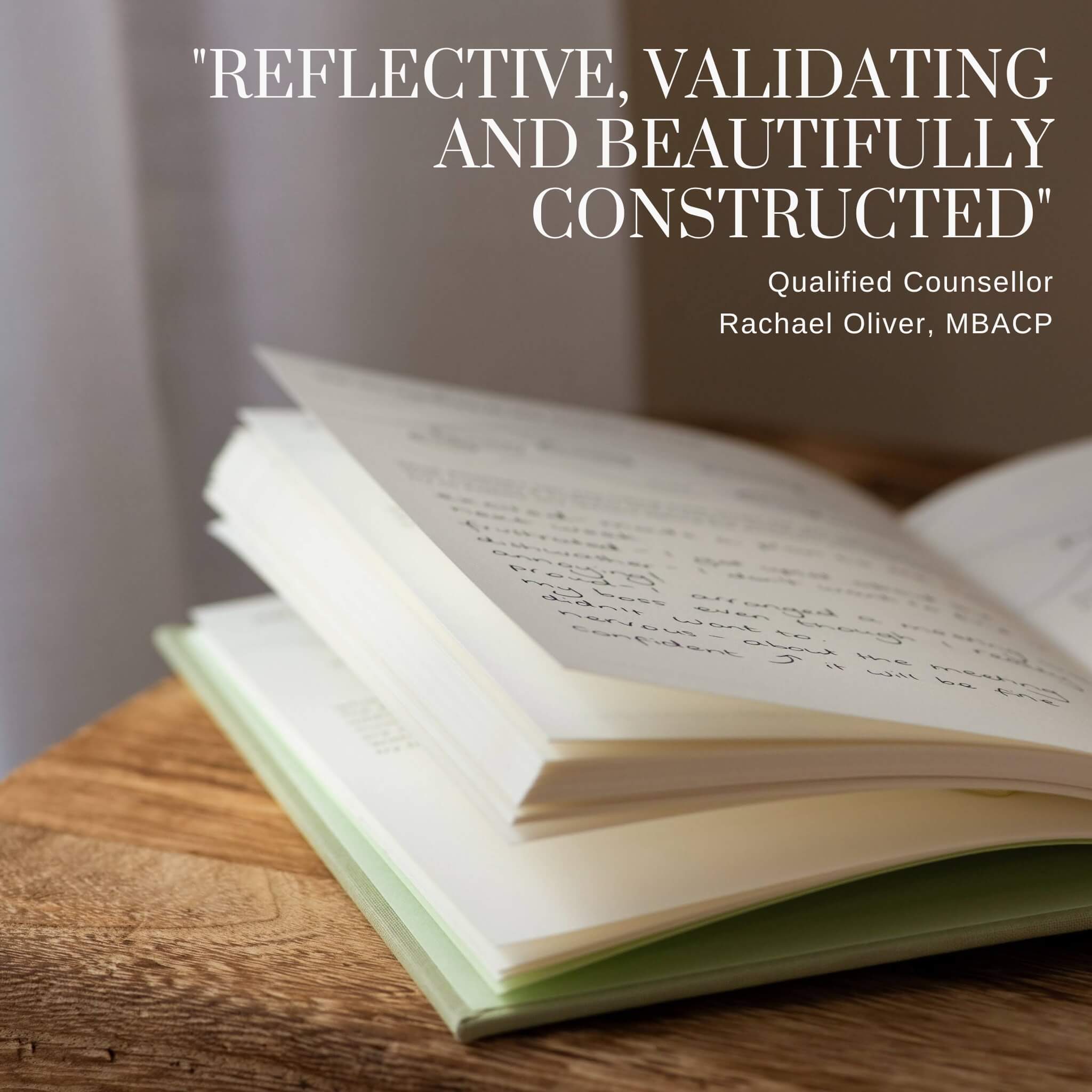
Counsellor Rachael Oliver sees the difference a journal's structure makes when she uses the Give Yourself Kindness journal with her clients.

Rachael Oliver, MBACP
Accredited counsellor
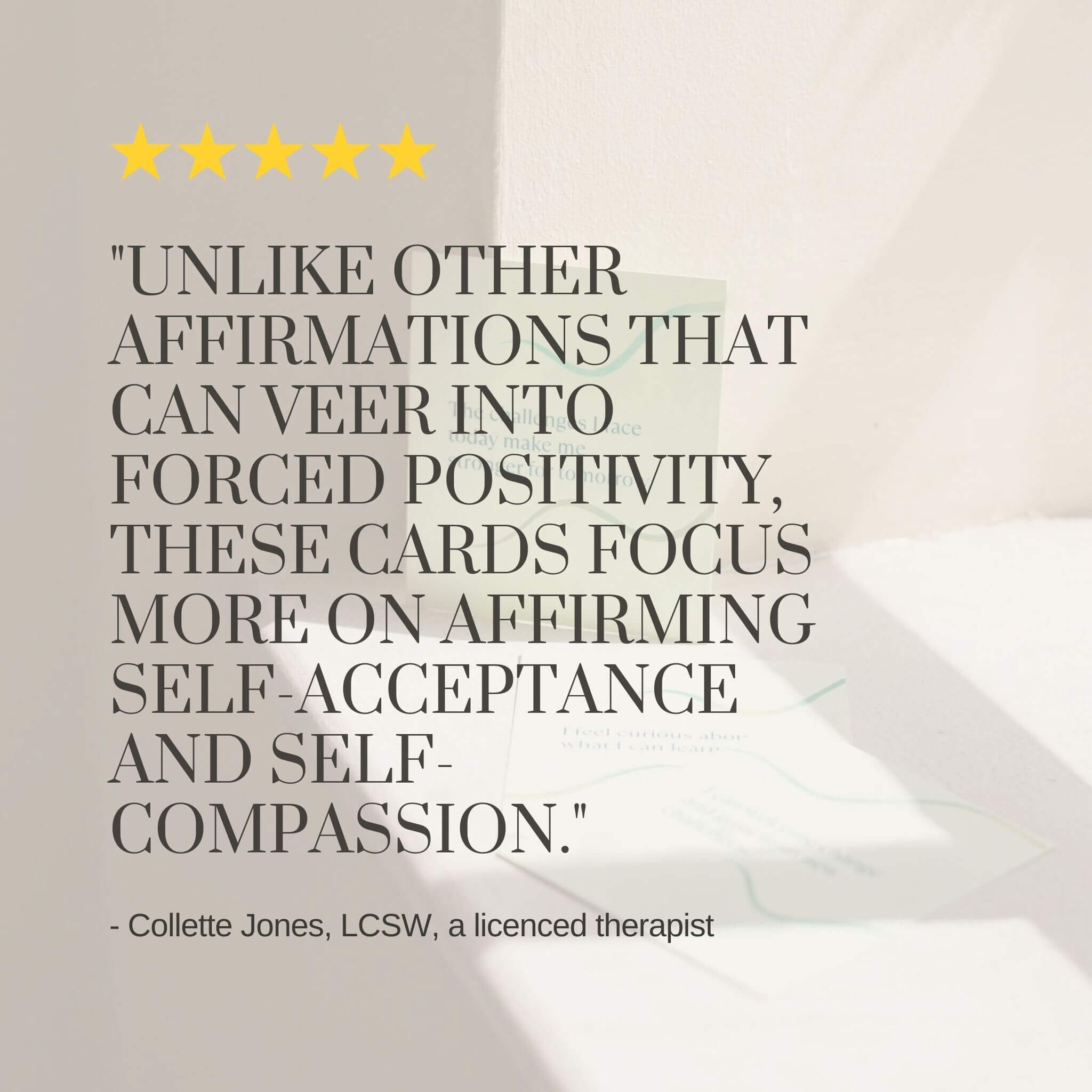
Read Rachael Oliver's review alongside the rest →"The prompts and areas to think about are helpful to shine light on their feelings, experiences and thought processes. The way the journal is constructed helps validate their entire experience and avoid toxic positivity, encourage reflection and ownership of feelings."
Dr Comninos also offers a gentle caution. Some kinds of journaling can bring up a lot.
Dr Andreas Comninos
PhD Clinical Psychologist | EMDRAA Accredited Practitioner
Read Dr Comninos's full article →"…certain types of journaling, such as writing about challenging experiences, may stir up strong emotions. It is important to approach intense journaling with care and kindness towards yourself…"
This is why having the right kind of journal matters so much.
5 key features of a supportive wellness journal
A supportive wellness journal welcomes every emotion, keeps gratitude flexible, is undated, varies its prompts, and helps you be kinder to yourself. Here's what each of those looks like.
A safe space for every emotion
A good wellness journal creates space for all emotions: happiness, anger, confusion, joy, sadness. Every feeling is valid and worth exploring with curiosity and compassion. You don't have to feel positive to be doing it right.
Flexible gratitude practice
Gratitude can support wellbeing, but a rigid "list three things" exercise can feel hard on a difficult day. Look for varied prompts that make gratitude feel natural rather than forced. If gratitude has ever felt hard for you, you're not alone. I've written about why gratitude journaling feels hard.
Undated
Life happens. Missing a day of journaling doesn't make you a failure. An undated journal removes that pressure and welcomes you back whenever you return, without guilt or judgement.
Dynamic prompts
Journaling can feel engaging rather than repetitive. Look for journals that offer varied prompts, so reflection stays fresh and meaningful and becomes something you can keep up.
Self-compassion focus
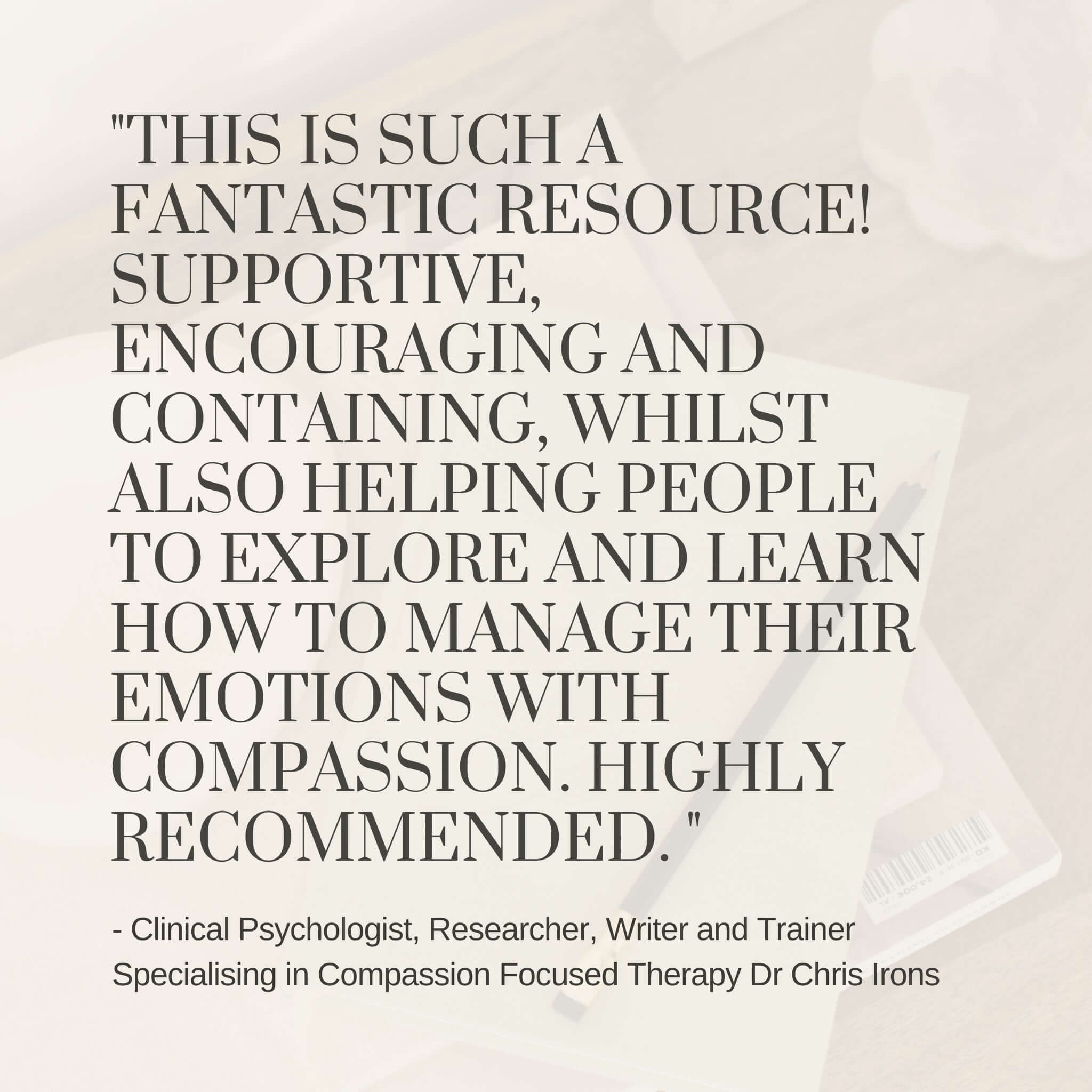
Your journal can be a refuge from self-criticism, not another source of it. The most supportive wellness journals help you notice negative self-talk and respond with self-compassion: the same kindness you'd offer a friend. Dr Chris Irons explains why this matters from a Compassion Focused Therapy point of view.

Dr Chris Irons
Clinical Psychologist specialising in Compassion Focused Therapy | Many years in the NHS, now co-director of Balanced Minds
Read Dr Irons's full article →"…you can journal from different parts of yourself. For example, it could be that it's a fearful part of you that is writing, or an angry or self-critical part."
"…CFT tries to support people by initially helping them to develop a compassionate part of self - a part that is wise, strong and caring."
If your inner critic tends to take over the page, how to use journaling to change negative self-talk goes further.
What do you write in a wellness journal? Example prompts
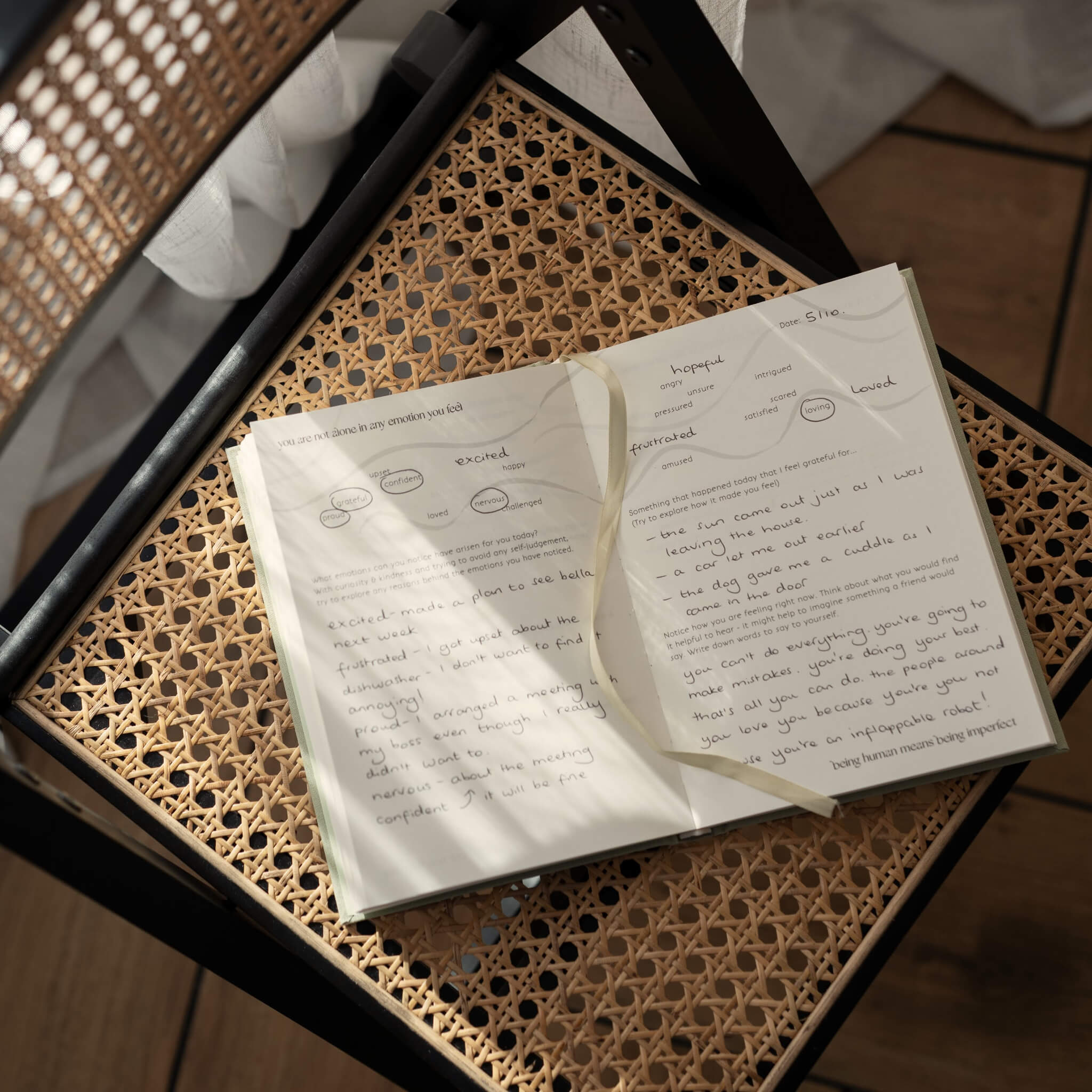
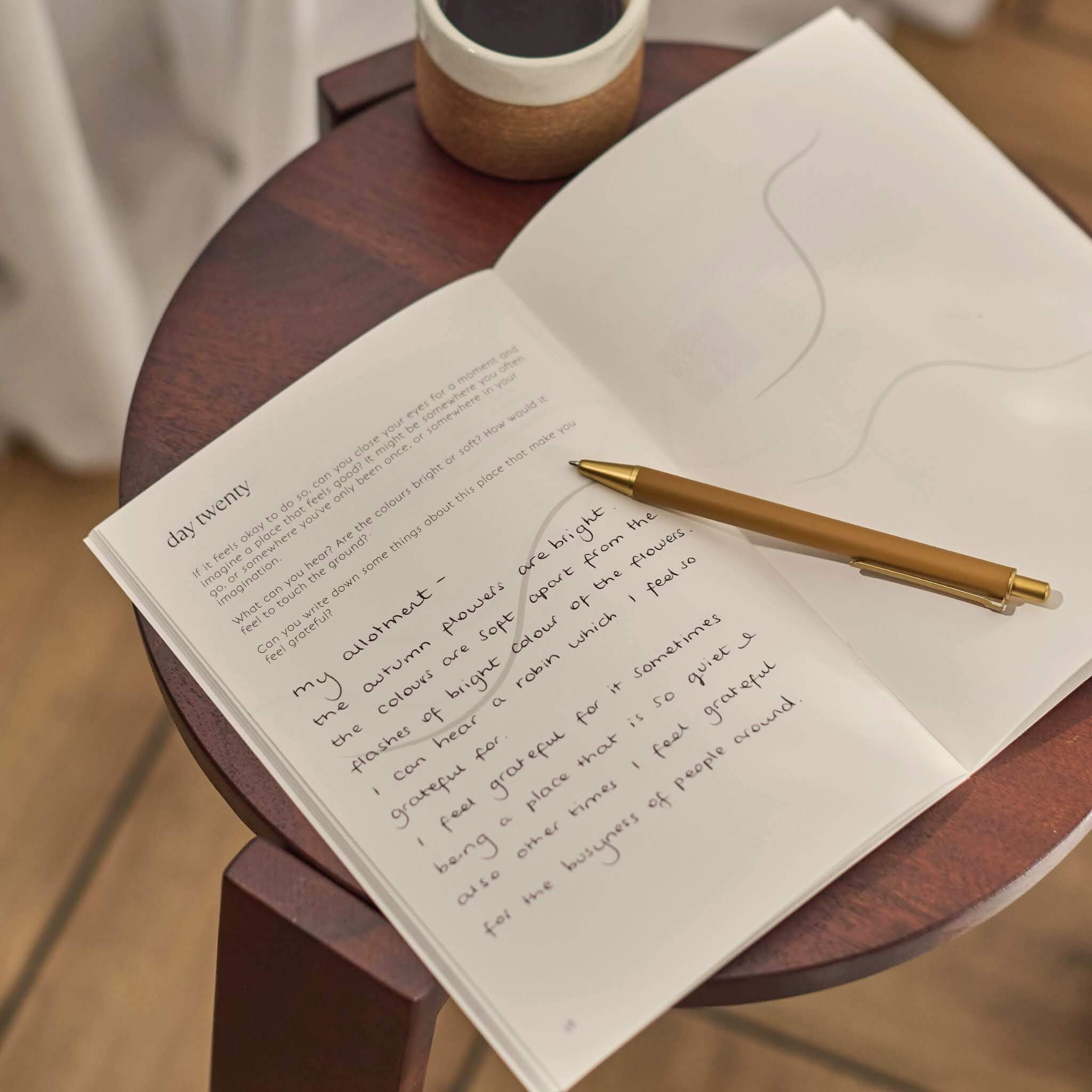
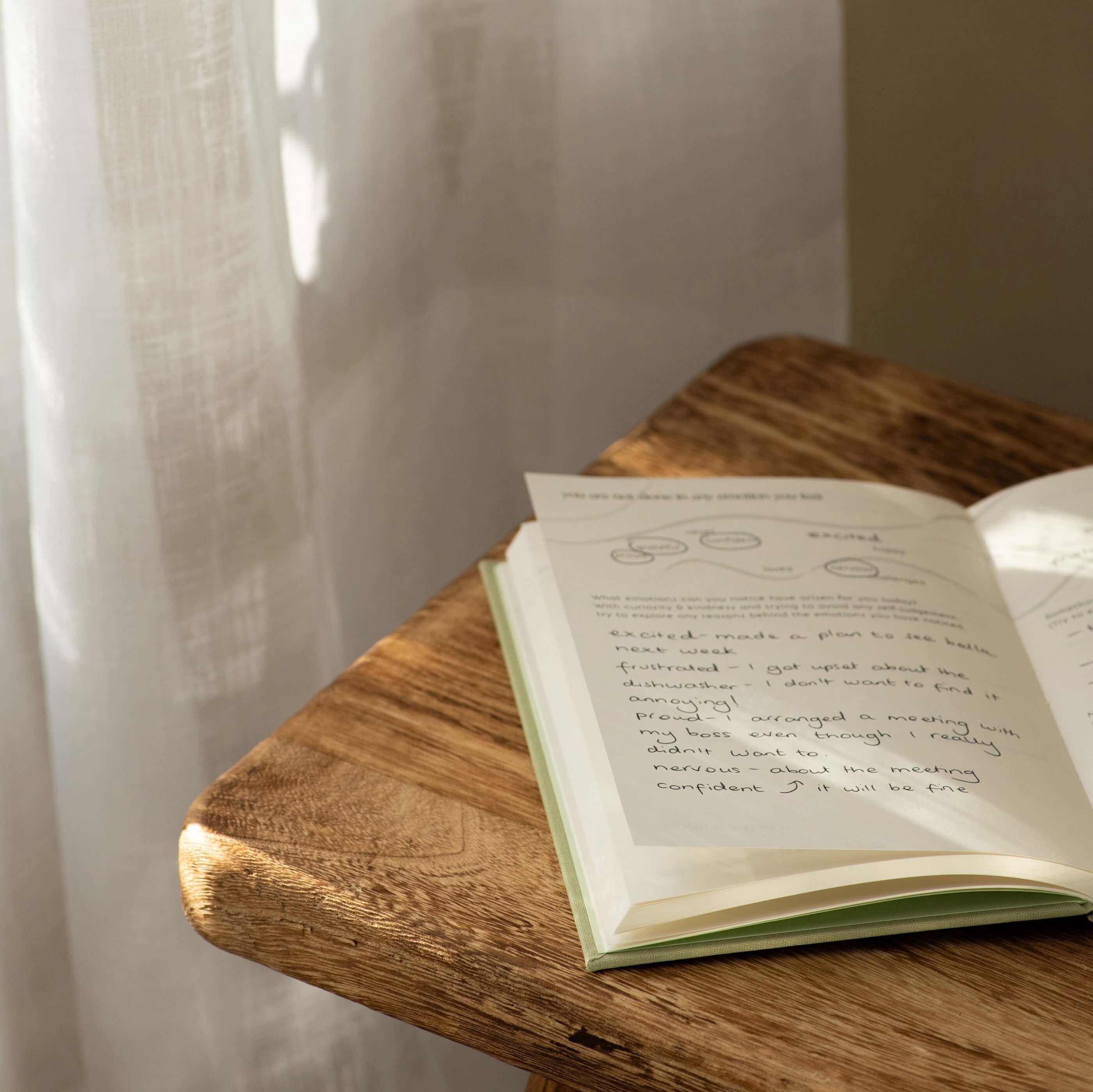
In a wellness journal, you write about how you're feeling, why you might feel that way, and what would help, including kind words to yourself. You don't need to write a lot. A few lines is enough.
Here are eight prompts, word for word, from the pages of my journal. You're welcome to borrow any of them for a notebook you already have:
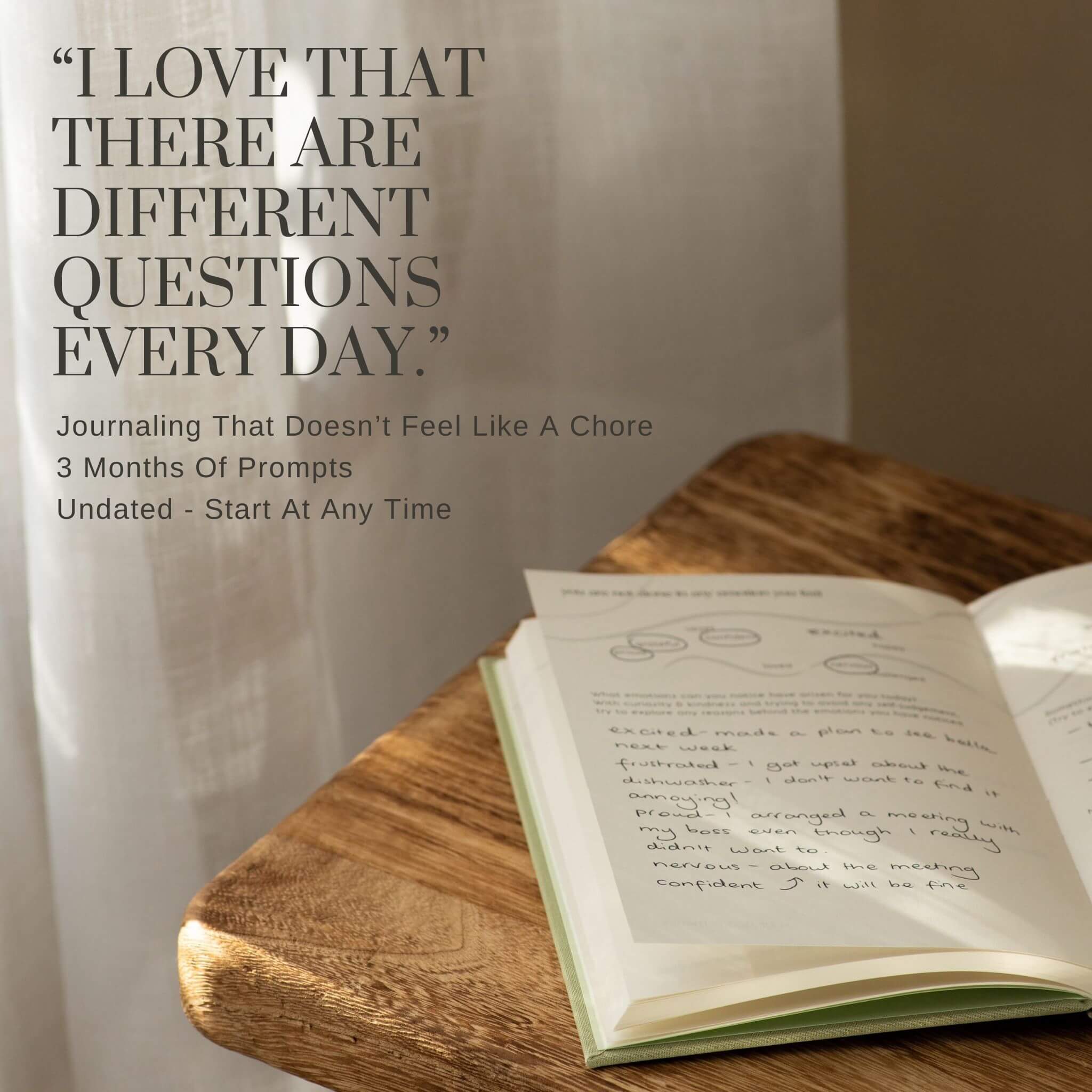
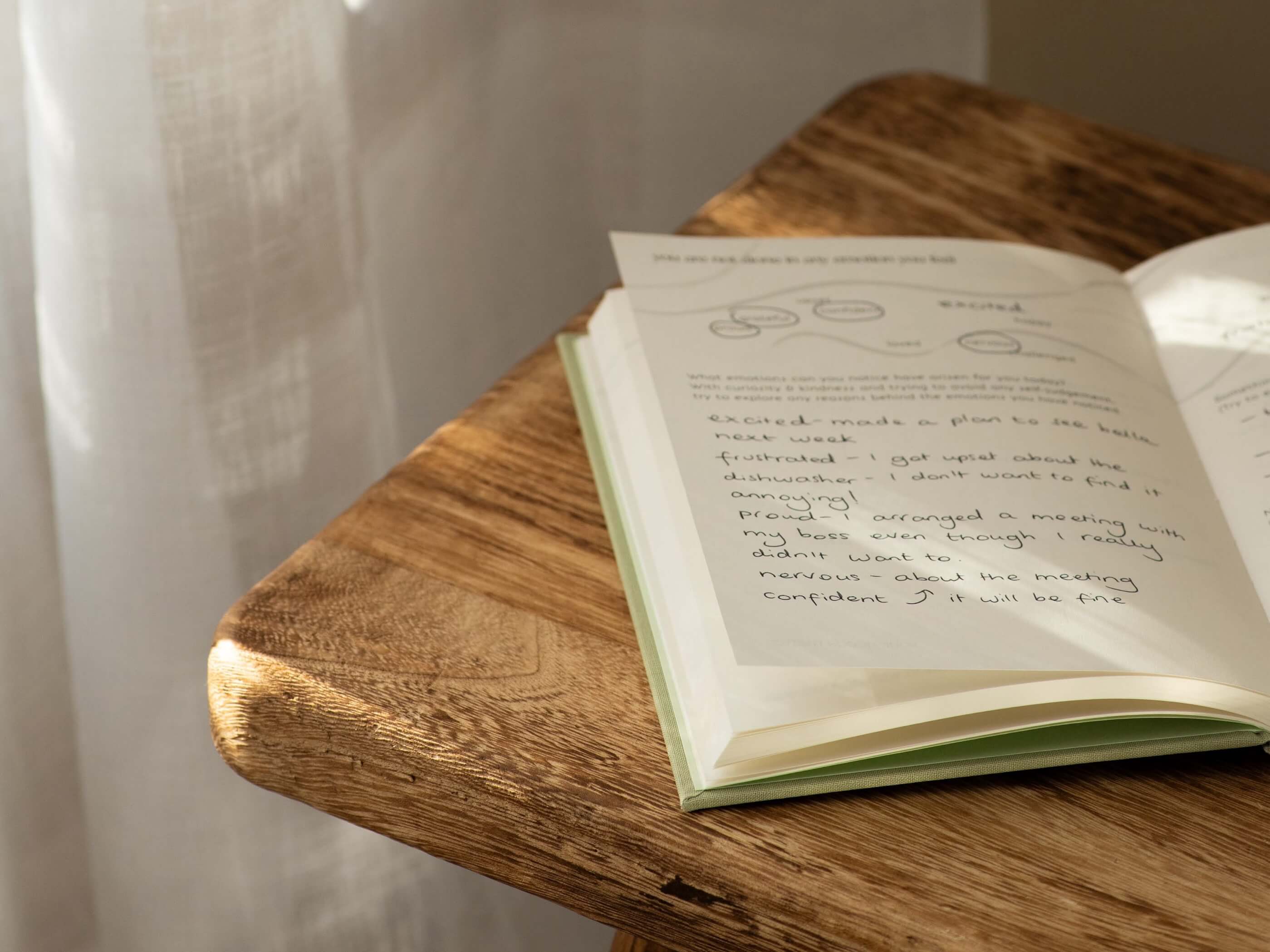
- What emotions can you notice have arisen for you today?
- With curiosity & kindness and trying to avoid any self-judgement, try to explore any reasons behind the emotions you have noticed.
- Something that happened today that I feel grateful for… (Try to explore how it made you feel)
- What has challenged you today? Talk to yourself as you would talk to a friend - write down what you would say.
- Notice how you are feeling right now. Think about what you would find it helpful to hear - it might help to imagine something a friend would say. Write down words to say to yourself.
- Imagine you have thirty minutes to do something for you, to show yourself some of your own love and care, what would you do?
- I feel proud of myself for… (Remember nothing is too small)
- A quality I have that I like about myself…
There are no right or wrong answers, and no wrong emotions to notice. If a prompt doesn't fit today, skip it.
Wellness journal vs diary, planner and gratitude journal
A wellness journal focuses on how you feel and how you treat yourself, while a diary records what happened, a planner organises what you need to do, and a gratitude journal focuses on what you appreciate. Each has its place, and many people use more than one.
- A diary is a lovely record of your days, in your own words. It's best if you enjoy writing freely without prompts.
- A planner helps you organise tasks, goals and routines. It's best when you want structure for your time.
- A gratitude journal helps you notice the good things, big and small. It's best when appreciation is your main focus. My guide to the best gratitude journals compares several.
- A wellness journal helps you notice and understand your emotions and respond with kindness. It's best when you want support with how you feel.
Getting started with wellness journaling
Getting started with a wellness journal doesn't have to be complicated, and five minutes is plenty. I reached out to six experienced therapists to share their top tips, and one message came up again and again.

Julie Burke, LPC-S
Therapist and private practice owner
Read Julie Burke's full article: 6 journaling tips for beginners, from 6 therapists →"There isn't a right or wrong way to journal and that's one of my favorite things about it… Journaling should be what YOU need and done in any way that makes sense to you."
"Do you prefer to write lists? Great. Draw your thoughts out? Awesome. Are you someone who needs or prefers prompts to get started? Perfect--you do you."
The key is finding an approach that works for you. Whether you write daily or weekly, for five minutes or thirty, what matters is that it feels supportive and sustainable. If you'd like a place to begin, here's a gentle five-minute first entry.
Find a quiet five minutes
Many people find it helpful to journal towards the end of the day, but experiment to find a time that feels supportive to you. Any notebook will do.
Notice how you're feeling
Write down any emotions you can notice right now. You might feel several at once. That's normal.
"Right now I feel…"
Get curious about why
Choose one feeling and gently explore what might be behind it. Try to write freely, without judging what you find. It's always okay to stop if it feels like too much.
Offer yourself a kind word
Imagine a friend came to you feeling this way. What would you say to them? Write those words down, for yourself.
"It makes sense that I feel this way. I'm doing the best I can."
That's it. A few honest lines, written kindly, is a wellness journal entry.
Finding the right journal for you
The right wellness journal for you is one that makes you feel supported, not pressured. Look for a journal that:
- Makes you feel supported, not pressured
- Provides structure without rigidity
- Welcomes all emotions
- Feels like a friend, not a taskmaster
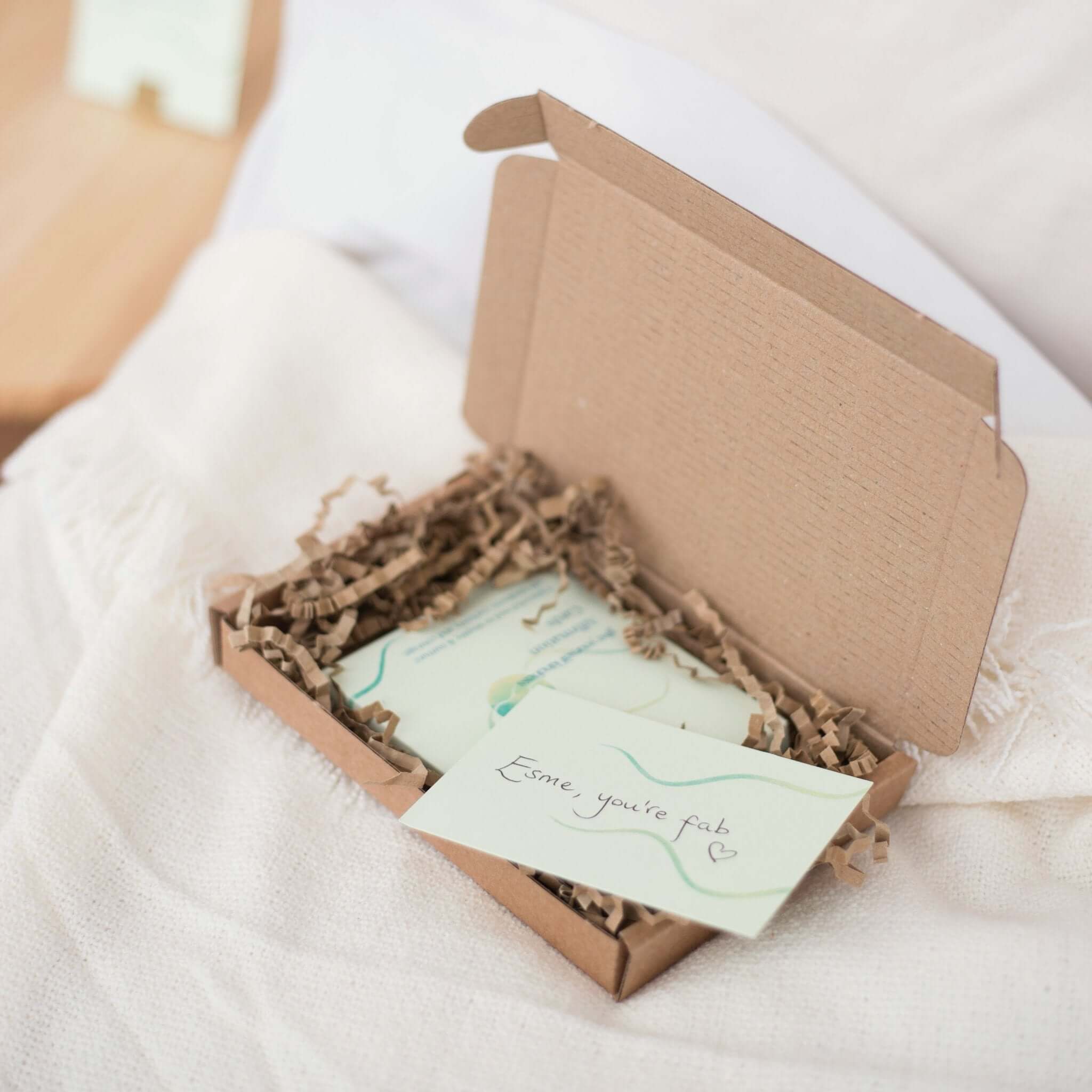
I should tell you that the Give Yourself Kindness journal is mine, and why it exists.
After my own experience of Compassion-Focused Therapy, I searched for a journal to help me keep practising. Everything I found either repeated the same page every day or pushed forced positivity when I needed support. So I made the journal I had needed, with all five of these features in mind, working with clinical psychologists and self-compassion researchers. It was really important to me that it was expert-approved.

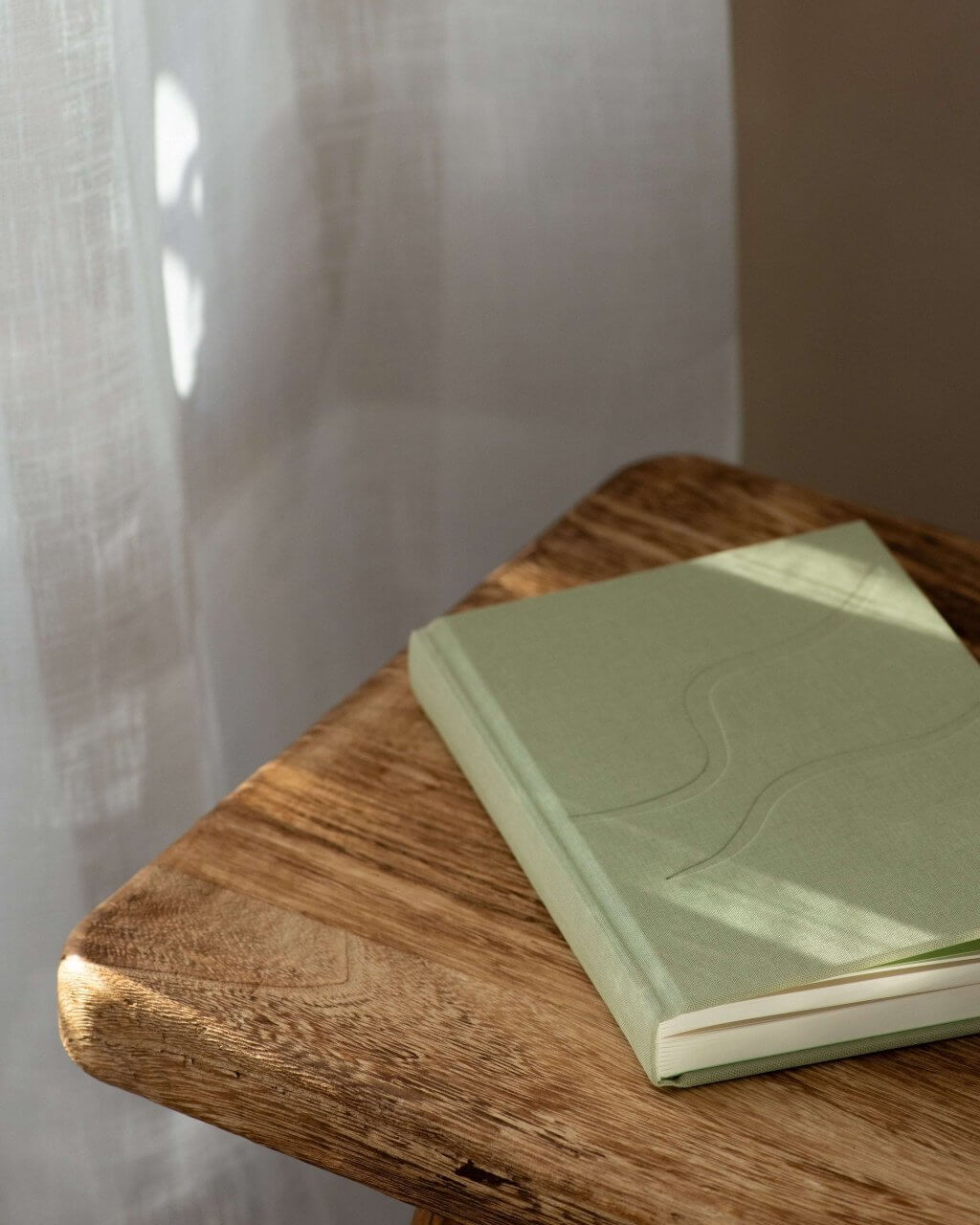
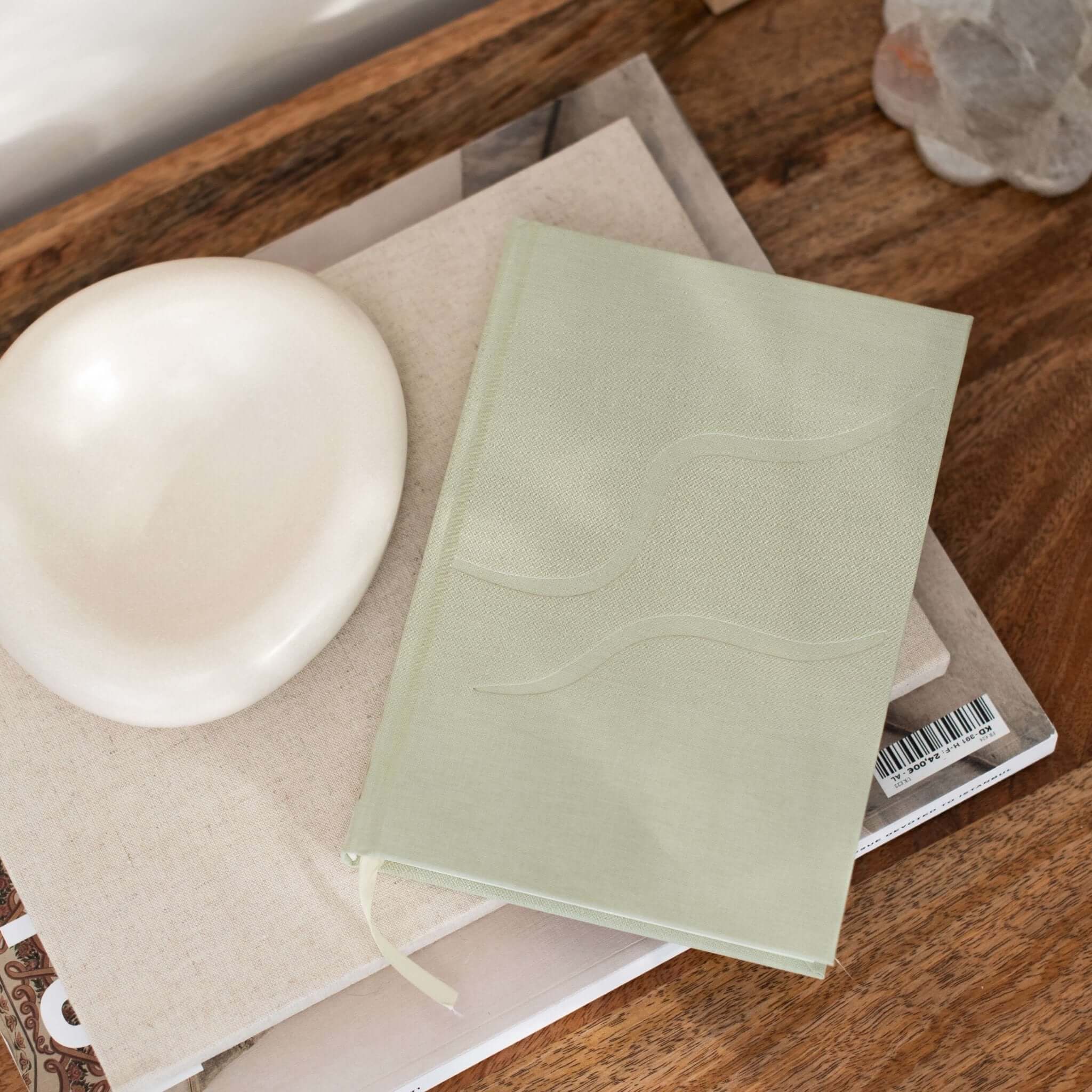
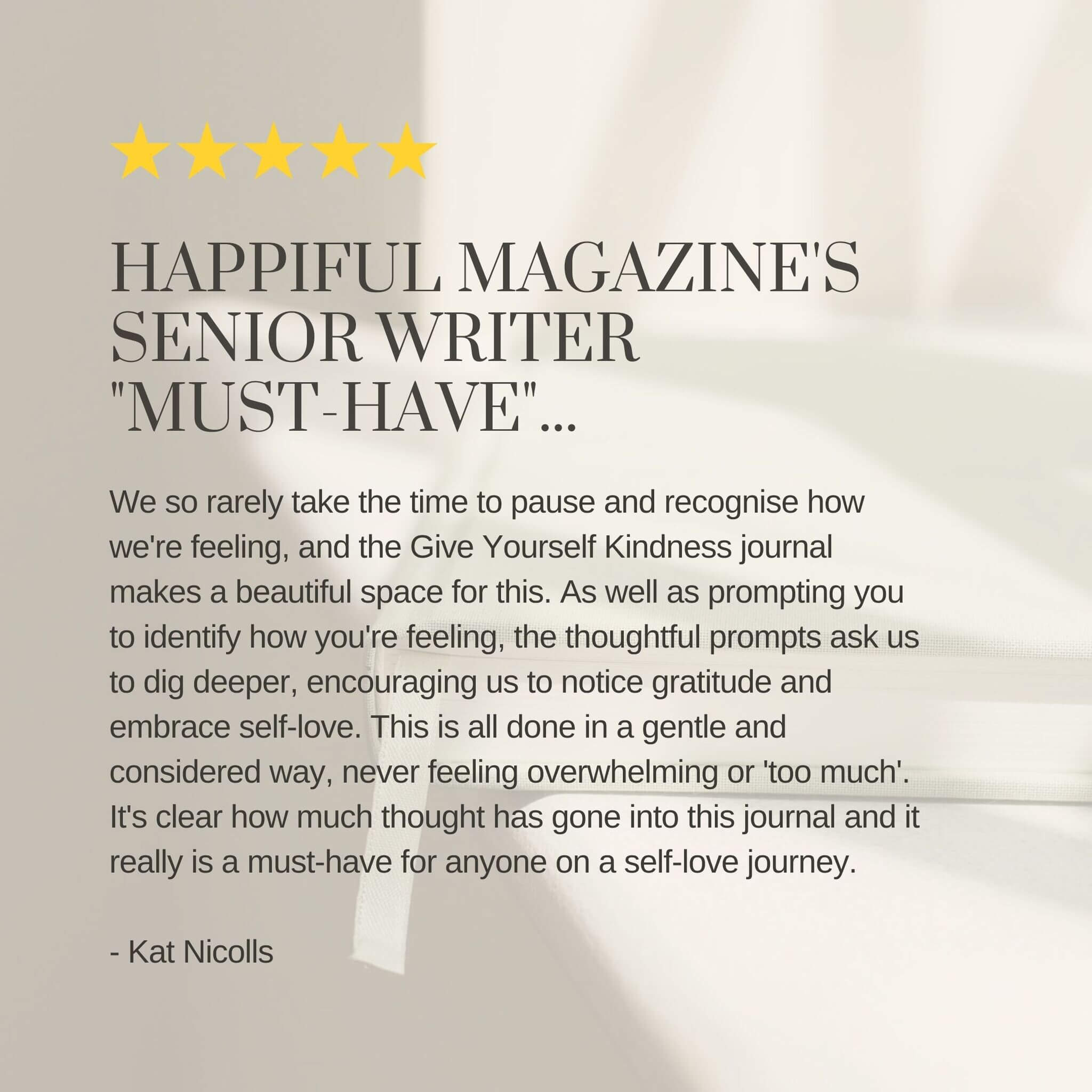
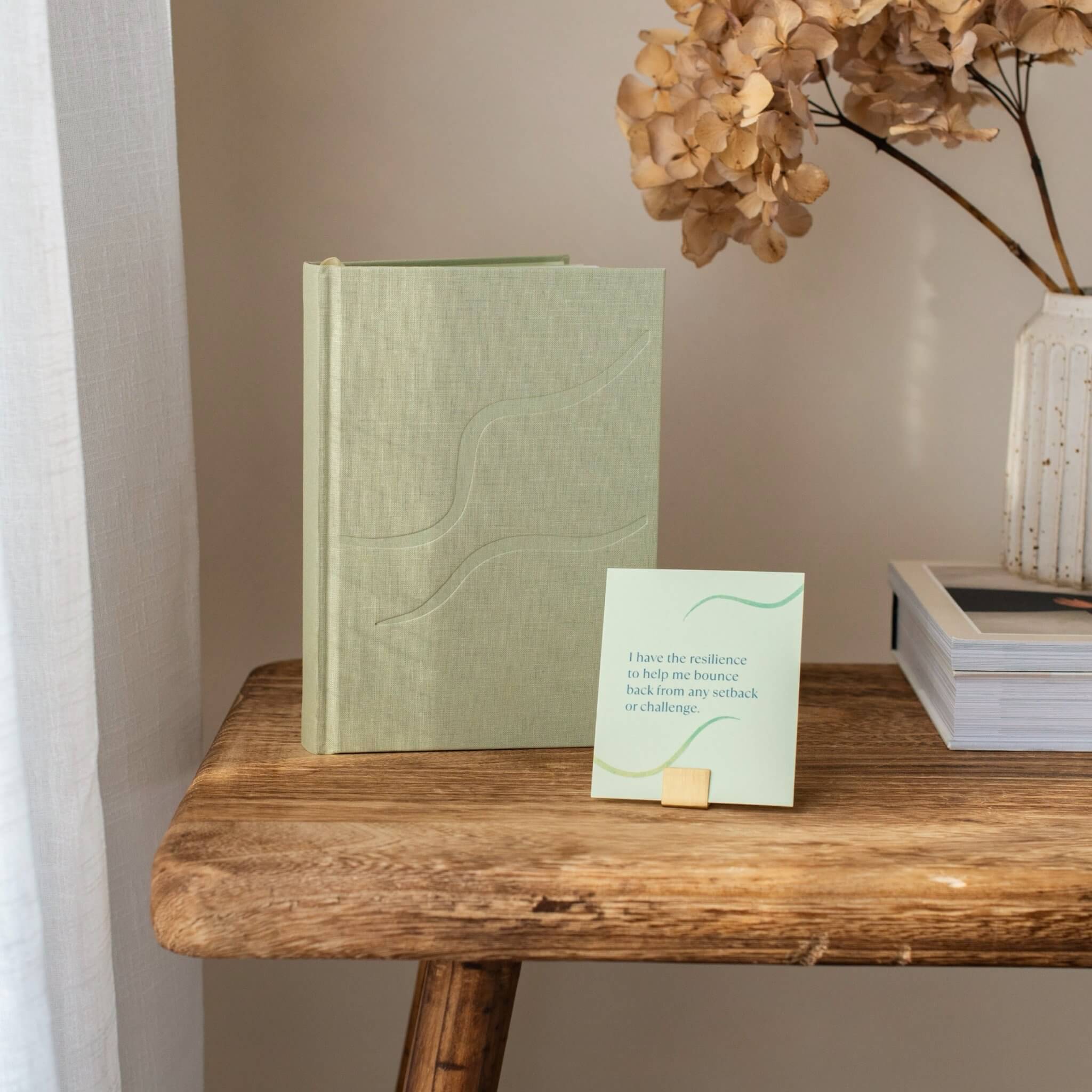
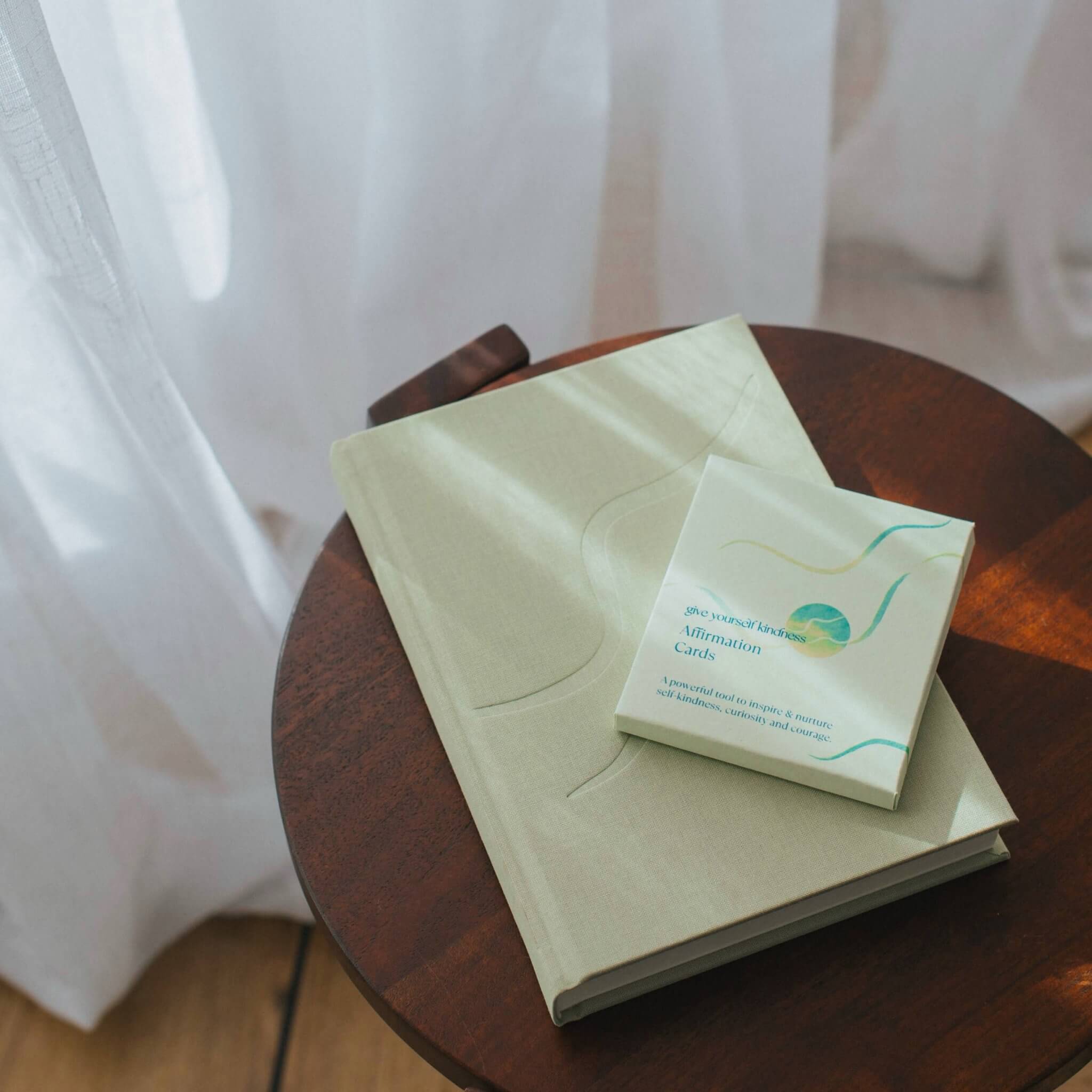
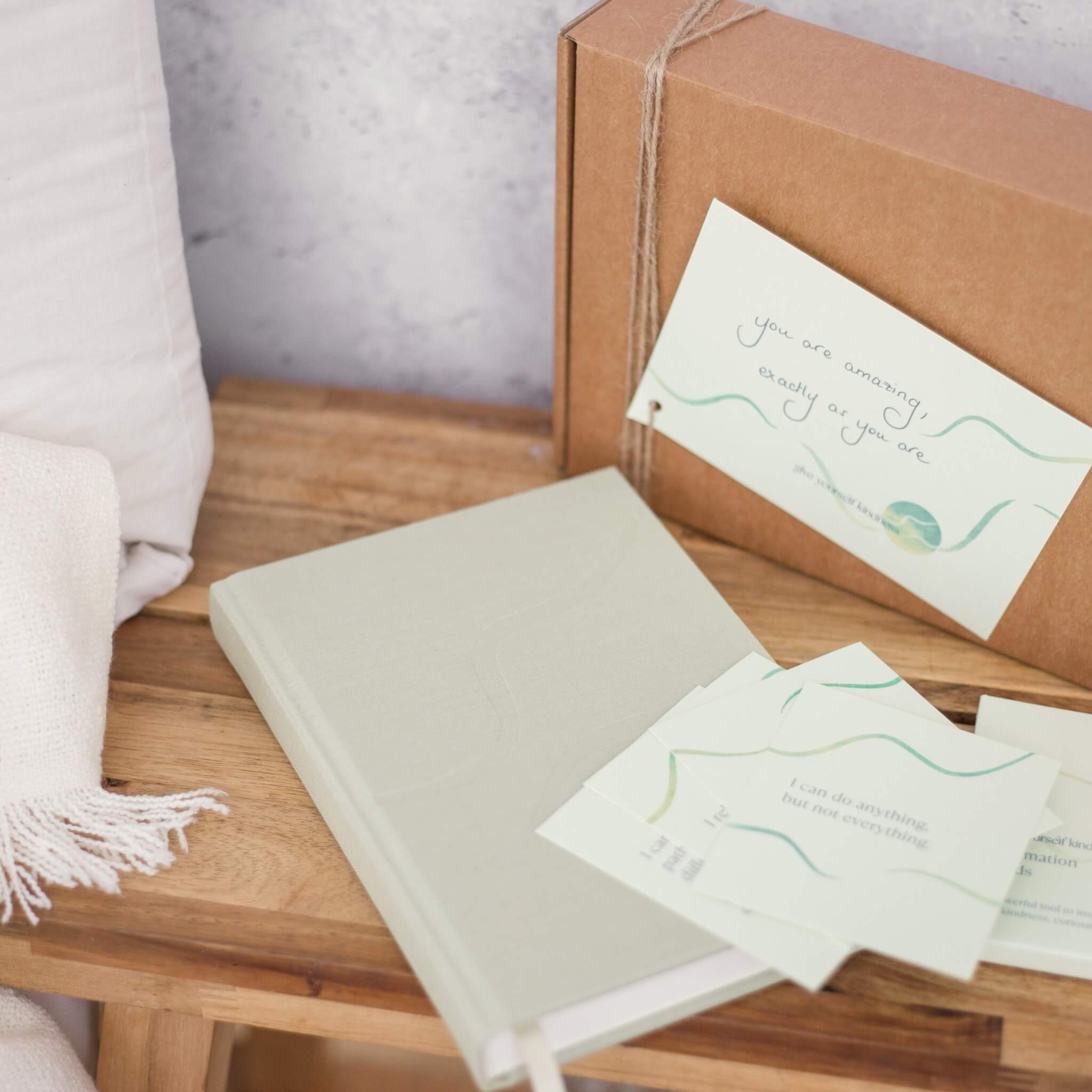
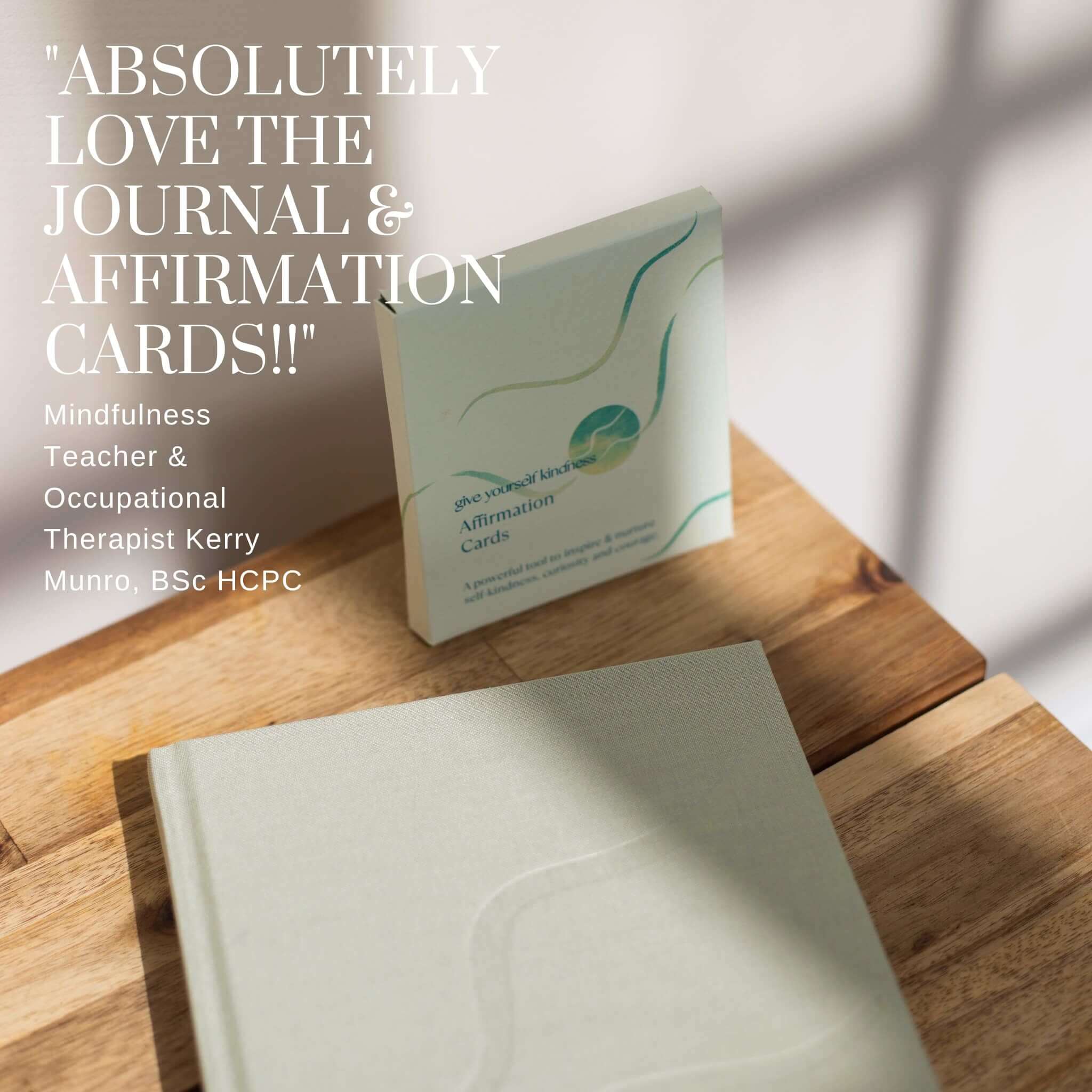
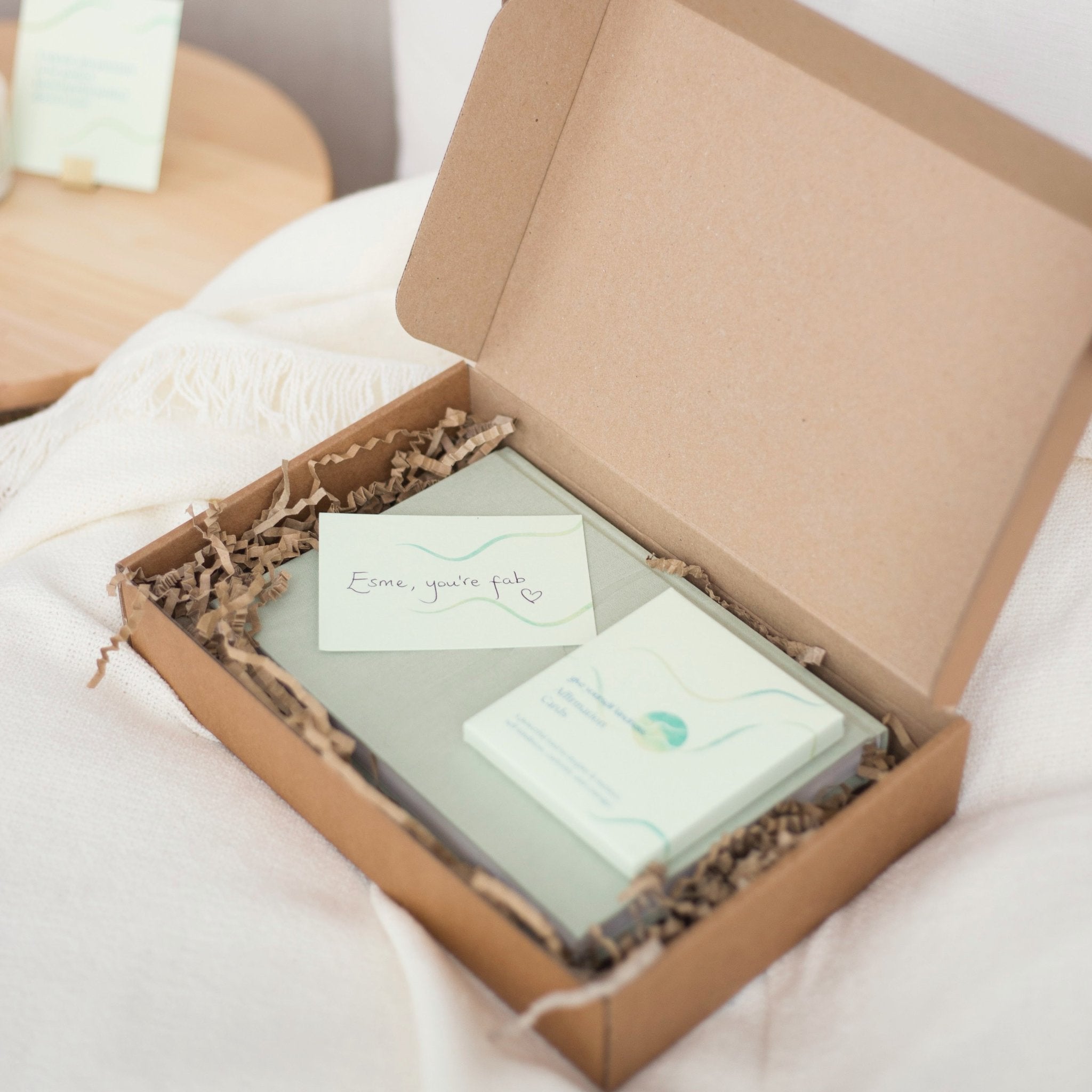
The Give Yourself Kindness Journal
- An emotional curiosity tool to help you notice feelings without judgement
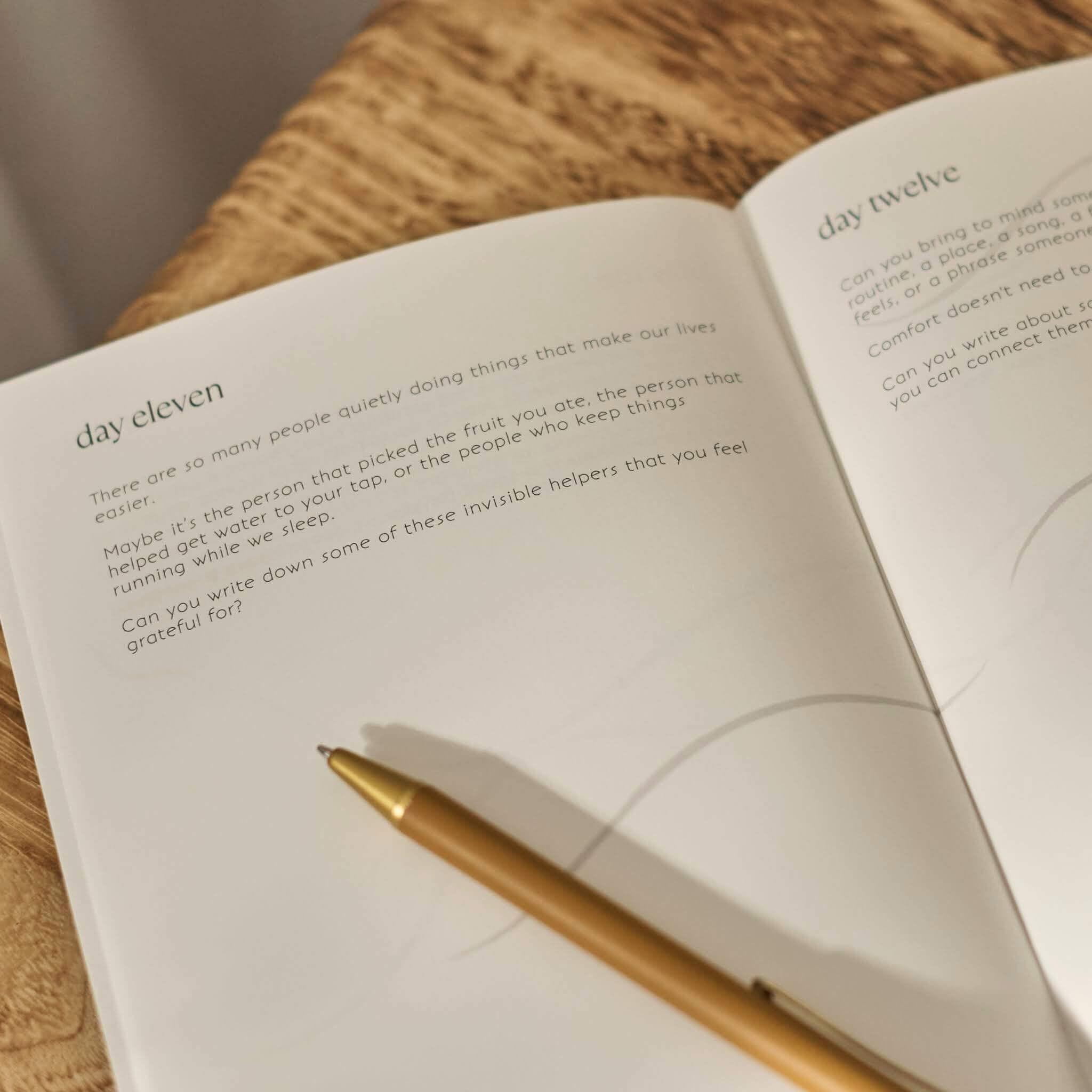
- Three months of prompts, where every page is different
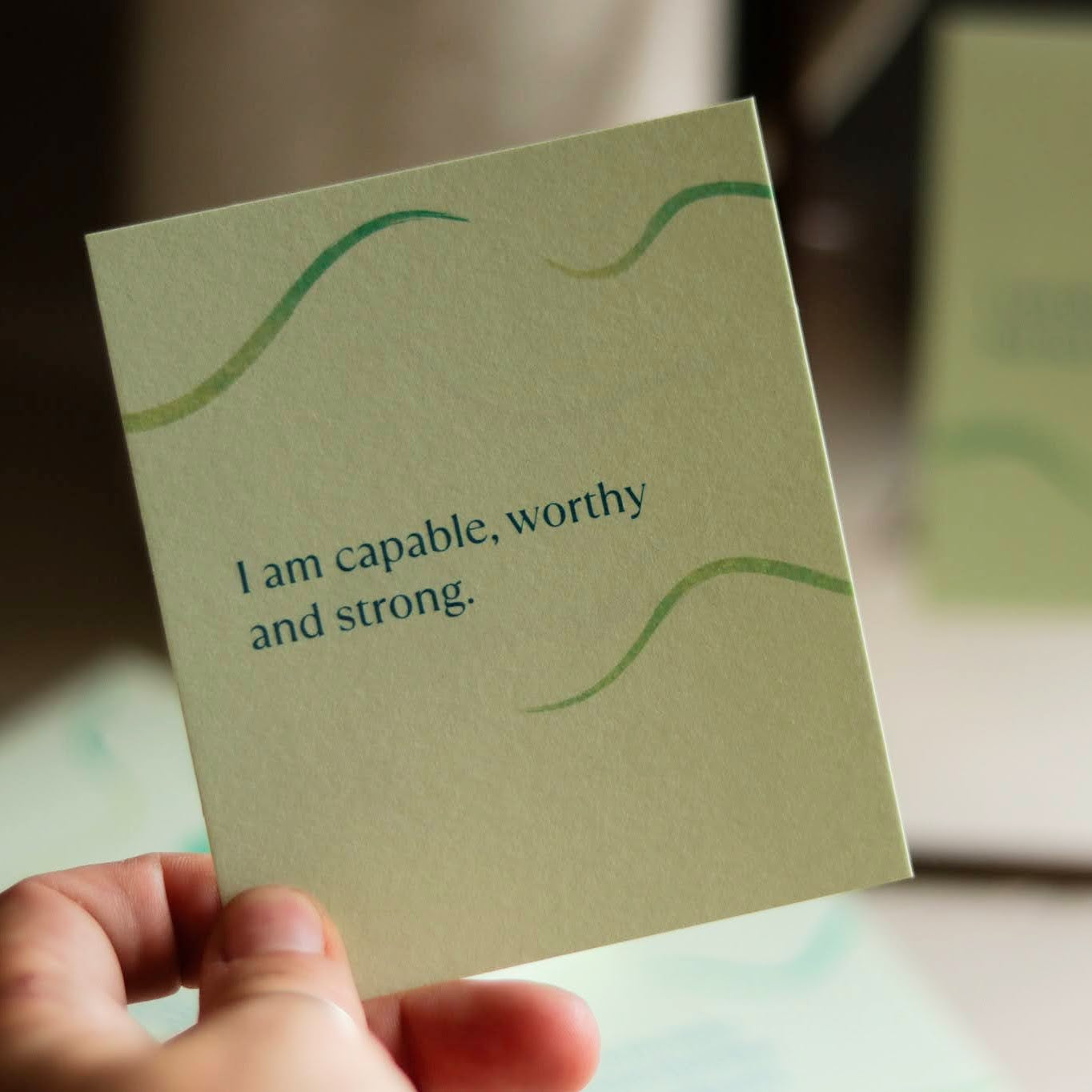
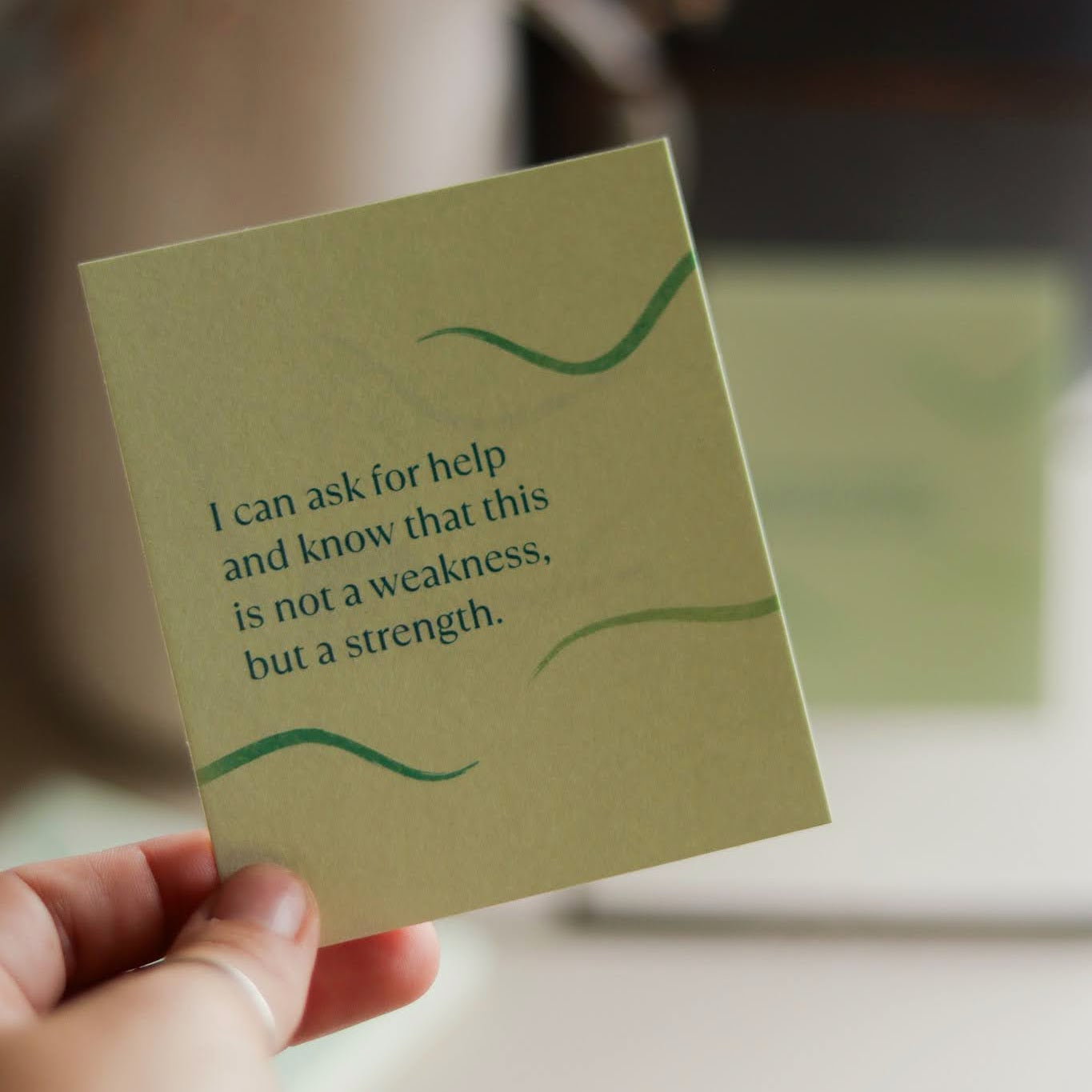
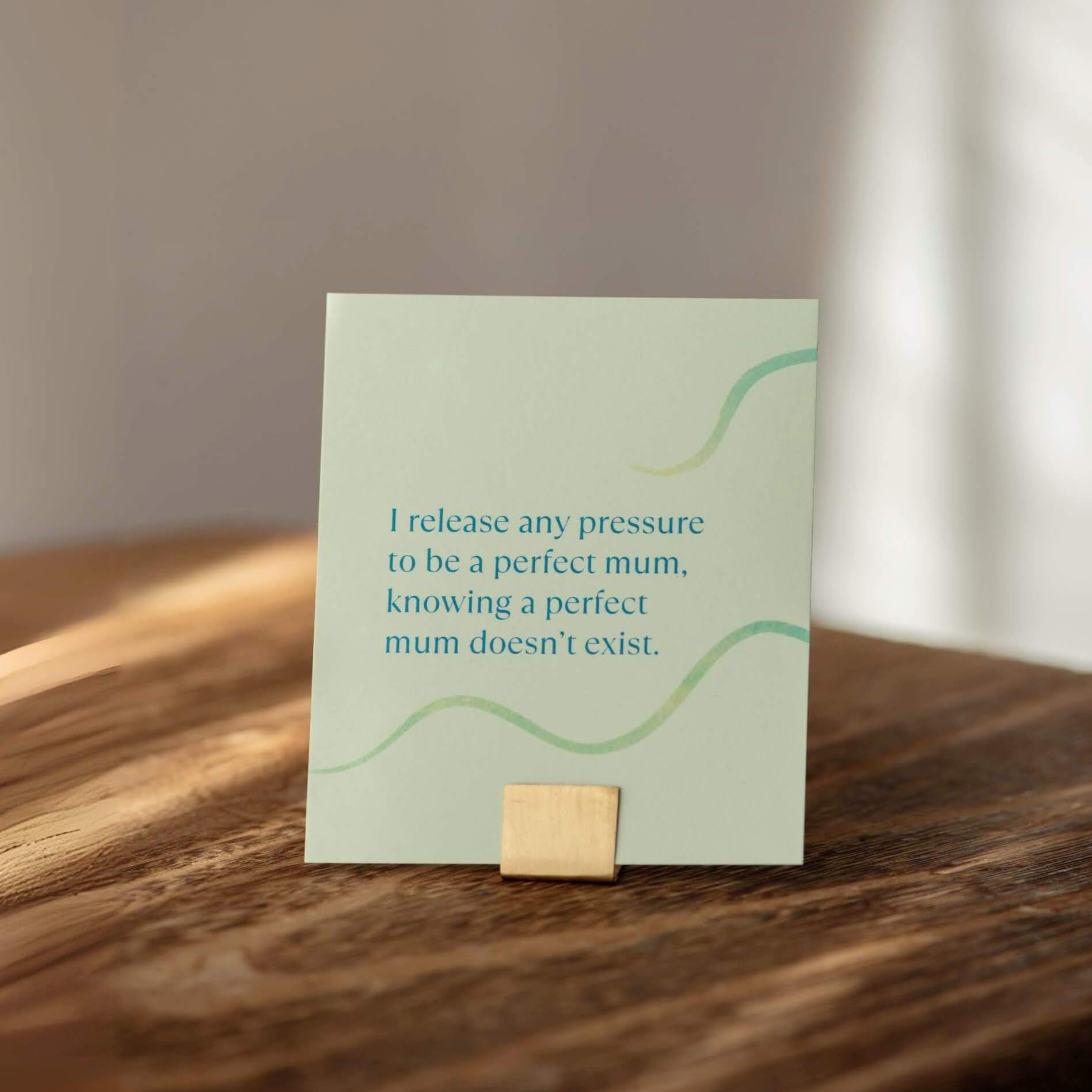
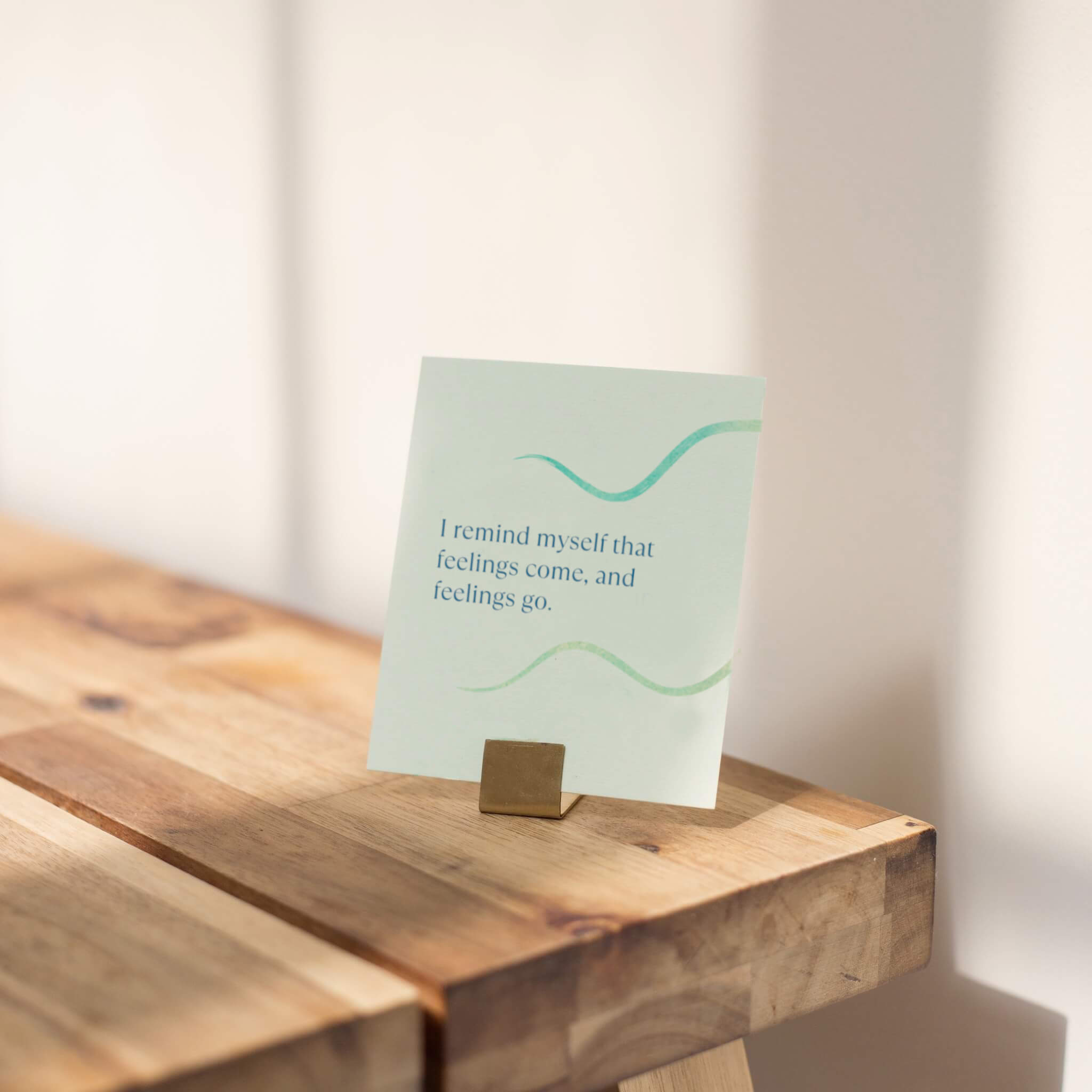
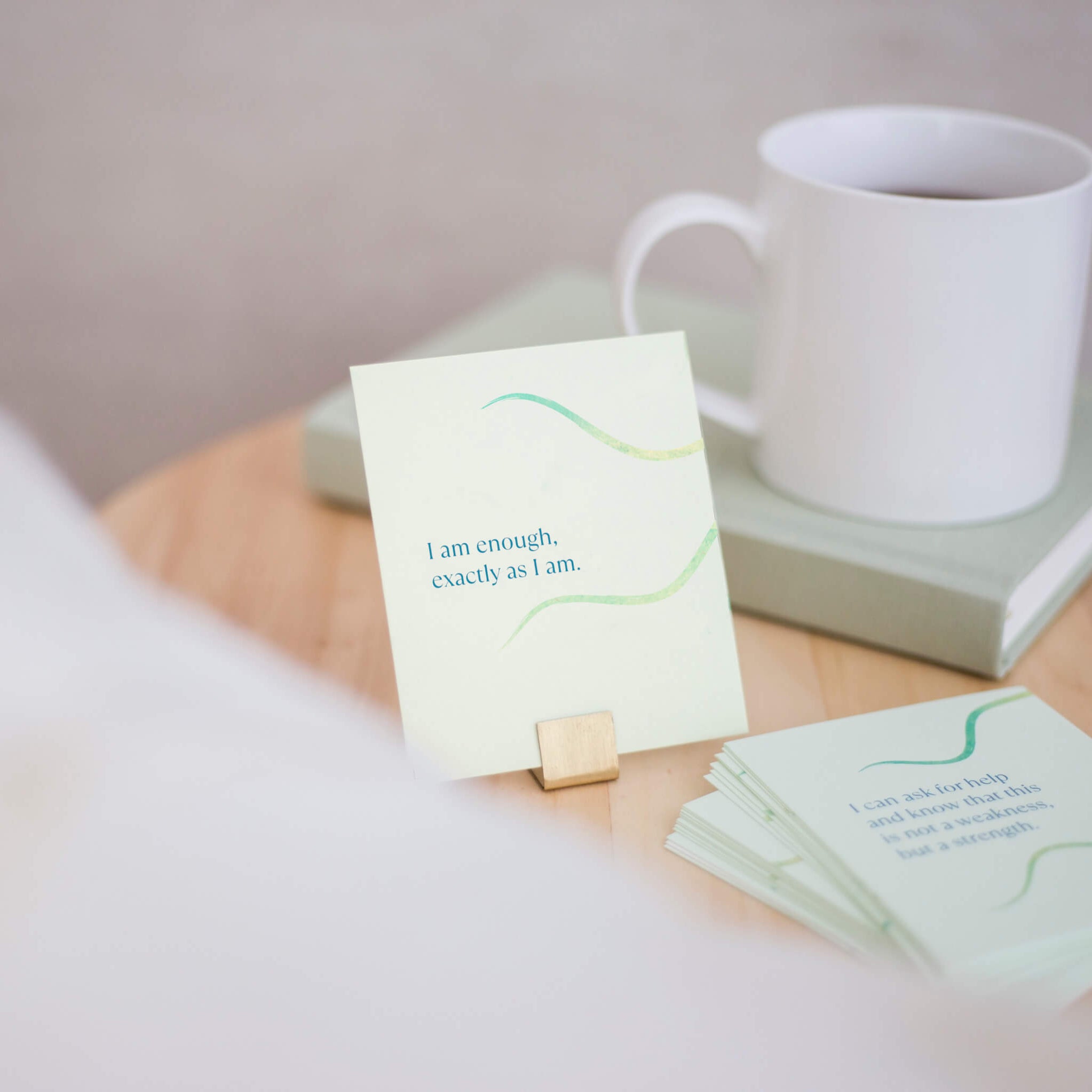
- Over 50 gentle reminders, like "the way you speak to yourself matters"
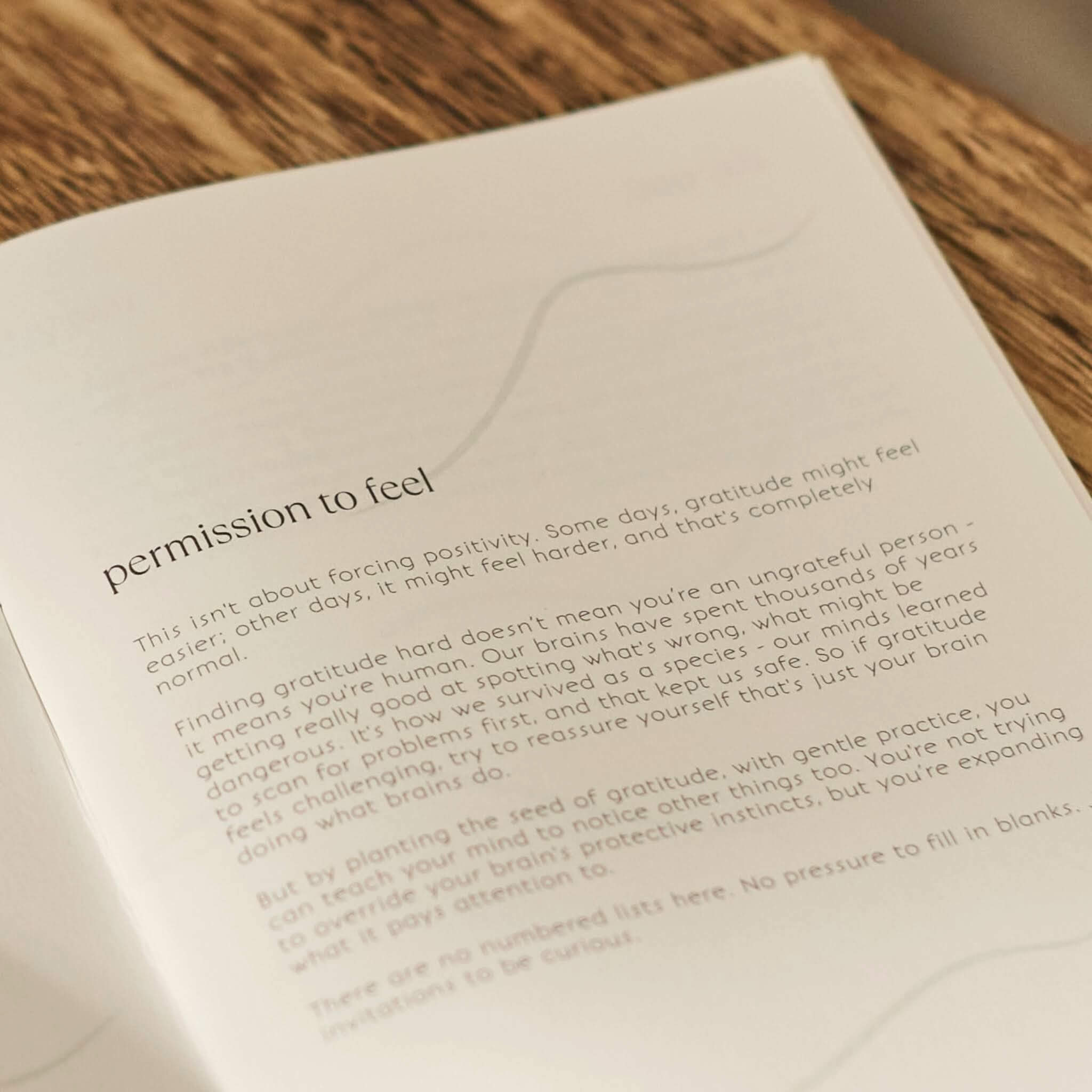
- Undated, so you can start any time and return without guilt

Dr Chris Germer, PhD
Clinical Psychologist and Lecturer on Psychiatry (part-time), Harvard Medical School | Co-developer of the Mindful Self-Compassion programme, taught to over 250,000 people worldwide
Read Dr Germer's review alongside the rest →"A warm invitation to make friends with your emotions and yourself!"

Nina Holle
Psychotherapist
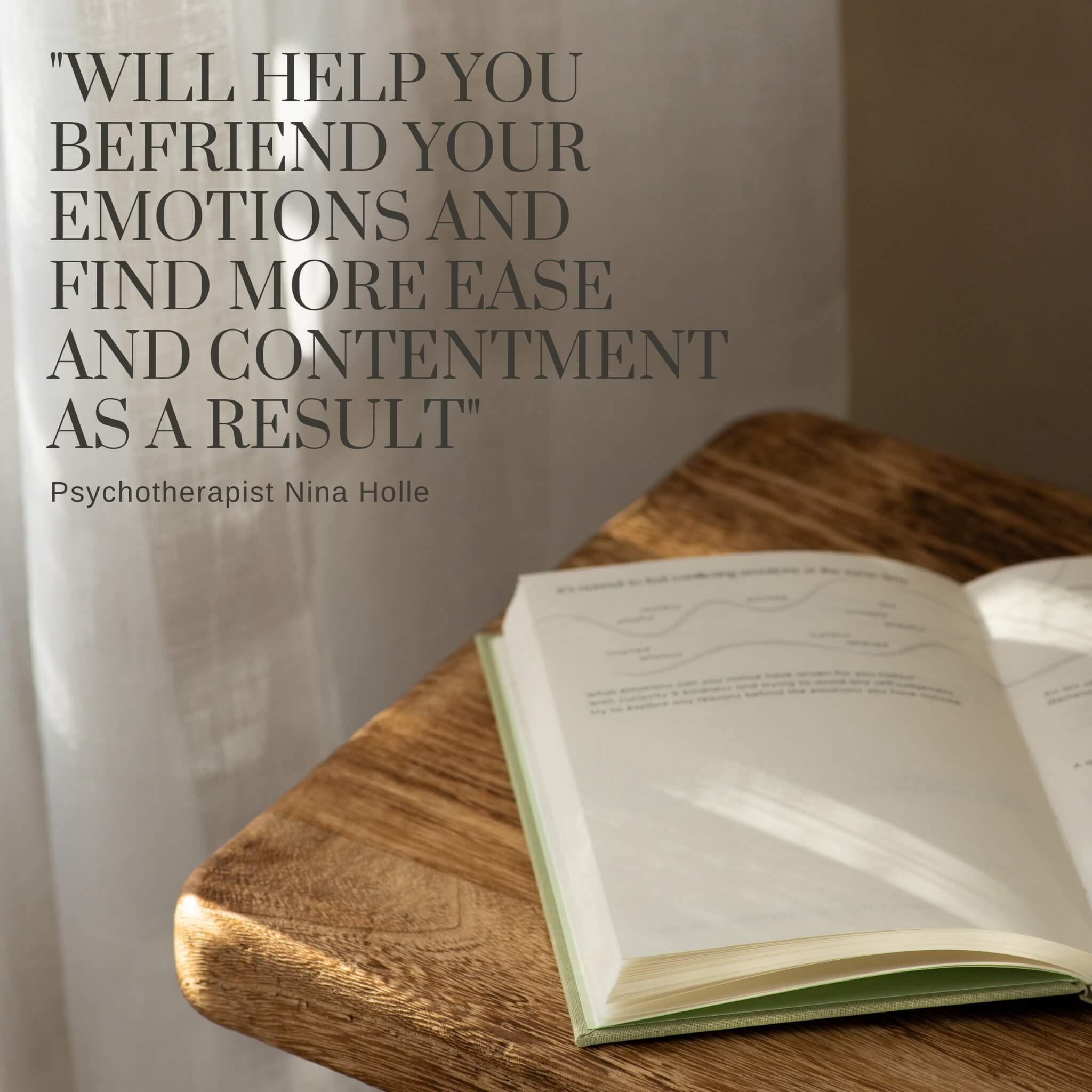
Read all professional reviews from therapists and clinical psychologists →"The journal is rooted in state-of-the-art research that emphasizes the importance of understanding our emotions in order to lower stress and lead a happy and meaningful life."
Want to see how it compares with other options? I've put together a full comparison of the best wellness journals, including when each one might suit you better. The most important thing is finding a journal that resonates with you personally.
The journal is used by therapists and counsellors with their clients. A journal can be a gentle companion alongside professional support, never a replacement for it.
When to seek professional help
If how you're feeling is seriously affecting your daily life, your sleep, your relationships or your work, please reach out to a GP, qualified therapist or counsellor.
Journaling is a supportive tool, but it isn't a replacement for professional help when you need it. There's no shame in asking for help. Reaching out is an act of kindness to yourself. If you're struggling right now, you can speak to your GP, or call Samaritans free on 116 123, day or night.
You deserve a journaling practice that supports you
There's no single "right" way to journal. What matters is finding a way that helps you connect with yourself more deeply, and that feels kind.
Start small. Try one of these today:
- Write one line about how you're feeling right now
- Get gently curious about why
- Write down what you'd say to a friend who felt the same
You deserve a journaling practice that truly supports you: one that welcomes you exactly as you are, every time you open its pages.
Discover the Give Yourself Kindness journal
Common questions about wellness journals
What is a wellness journal?
A wellness journal is a guided journal for supporting your mental and emotional wellbeing. It uses prompts to help you notice how you feel, explore why, and respond to yourself with kindness. Clinical psychologist Dr Josh Mirmelli explains that writing about your thoughts and feelings creates a safe, private space to understand and manage your emotions.
What's the difference between a wellness journal and a diary?
The difference between a wellness journal and a diary is focus. A diary records what happened, in your own words. A wellness journal focuses on how you feel, using gentle prompts to explore emotions, notice self-talk and offer yourself kindness. Many people enjoy both, and neither is the right or wrong choice.
What do you write in a wellness journal?
In a wellness journal, you write about the emotions you notice, what might be behind them, and what would help. Prompts might ask what challenged you today, something you feel grateful for, or what you would say to a friend who felt the same. A few honest lines is enough.
Do wellness journals actually work?
Wellness journals can help, and research on journaling supports this. Clinical psychologist Dr Andreas Comninos notes that decades of studies have demonstrated journaling's wide-ranging benefits across diverse methods, including processing emotions, reducing stress and gaining clarity. How much it helps varies from person to person, and a journal that feels kind is easier to keep coming back to.
How often should I write in a wellness journal?
You can write in a wellness journal as often as feels supportive, whether that is daily, weekly or whenever you need it. Therapist Julie Burke says there isn't a right or wrong way to journal. An undated journal helps, because missing a few days never leaves you with empty pages to feel guilty about.
Is a guided or blank journal better for beginners?
A guided journal is often easier for beginners, because each page gives you something to respond to when a blank page feels overwhelming. A blank journal suits people who already enjoy writing freely. Neither is better for everyone; therapist Julie Burke encourages you to lean into what you need and what feels right for you.
Can journaling make you feel worse?
Journaling can sometimes make you feel worse, especially when writing about challenging experiences stirs up strong emotions. Dr Andreas Comninos recommends approaching intense journaling with care and kindness towards yourself. Professor Willem Kuyken notes that writing can also invoke an inner critic. It's always okay to pause, take a break, or seek support.
Can a wellness journal replace therapy?
A wellness journal cannot replace therapy. It can be a gentle companion alongside professional support, and some therapists and counsellors use journals with their clients. If how you feel is seriously affecting your daily life, please speak to your GP or a qualified therapist, or call Samaritans free on 116 123.
Continue reading
From the psychologists quoted here
-
The benefits of journaling, from 3 clinical psychologistsDr Josh Mirmelli, Dr Andreas Comninos and Dr Chris Irons
-
6 journaling tips for beginners, from 6 therapistsJulie Burke, LPC-S, and five fellow therapists
-
What mental health experts say about the journalDr Chris Germer, Professor Willem Kuyken, Rachael Oliver, Nina Holle and more
Related guides
- The best wellness journals compared
- Blank journal vs guided journal: which one should you choose?
- What to look for in a guided journal for mental health
- What is a mindfulness journal?
- Why wellness journals don't work (and which one does)
- How to use journaling to change negative self-talk
- The best journal for anxiety and overthinking
- Will journaling help me sleep?
- The best gratitude journals compared


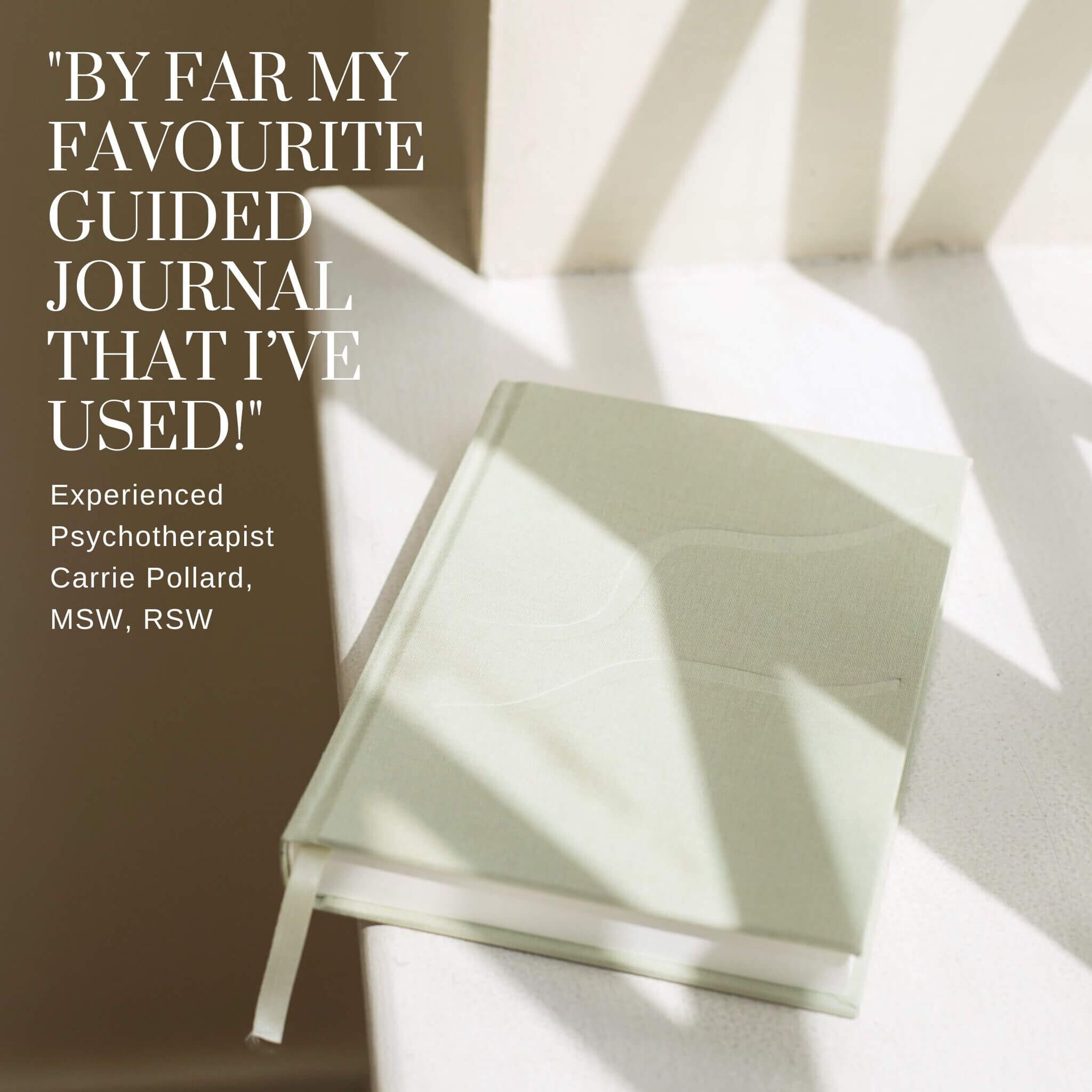
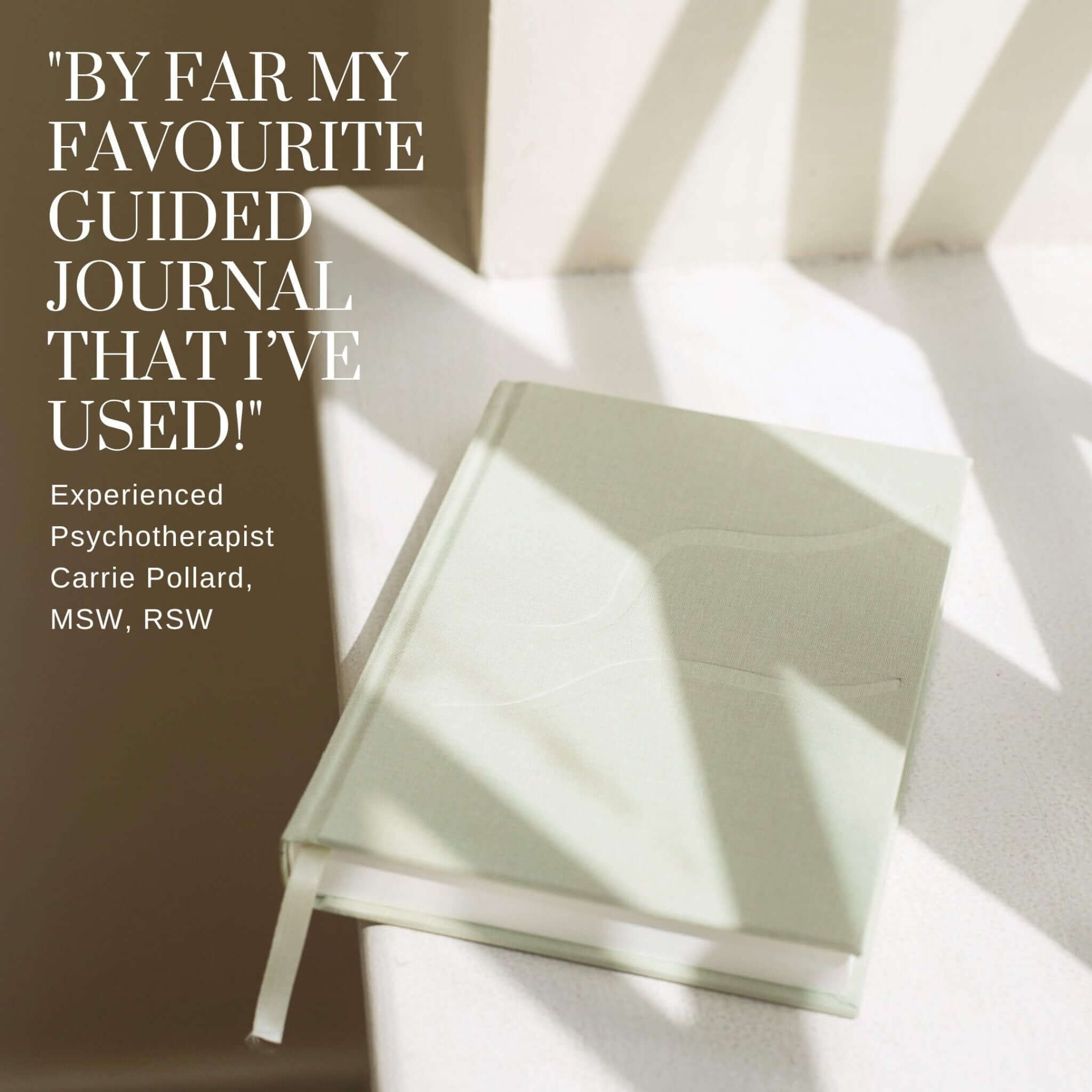
“By far my favourite guided journal that I’ve used!”
There's a lot of journals out there. Most of which include tools that can be repetitive, boring or unhelpful. Give Yourself Kindness is about creating something new.