

Quick answer
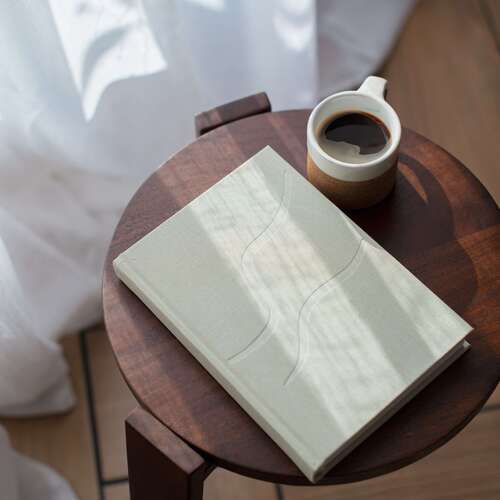
The best journal for stress relief is one that lets you name what you're feeling before it asks you to feel better about it. The stress relief journal I recommend is the Give Yourself Kindness Journal: undated, with a visual emotion guide on every page and 90 days of gentle prompts, recommended by clinical psychologists at Harvard Medical School and the University of Oxford. Psychotherapist Nina Holle describes it as "rooted in state-of-the-art research that emphasizes the importance of understanding our emotions in order to lower stress…" Finding things hard isn't a sign you're coping badly. You might find that naming the feeling, then answering yourself kindly, takes some of the weight off.
 Nina Holle, Psychotherapist and writer. Read her review alongside the rest
Try this now: write down the hardest part of today, then find one word more specific than "stressed": pressured, resentful, lonely, rushed.
Looking for somewhere to put it all down when there's too much of everything is a kind thing to do. I should tell you that the journal I recommend here is mine, and why it exists.
I made it after a long stretch of being stressed, and then being hard on myself for being stressed. What I could find either handed me a blank page I was too tired to fill, or asked me to list what was going well on the evenings when nothing was. It made my critical voice louder.
So I made the journal I needed, with clinical psychologists and self-compassion researchers. This page sets out what helps with stress, what to look for in any stress journal, and five prompts to start with, so you can find what works for you.
About this guide. I'm Rachel Smith, founder of Give Yourself Kindness and a qualified meditation teacher (DipBSoM, British School of Meditation, distinction). I'm not a therapist or a psychologist. Everything clinical on this page comes from named clinical psychologists and researchers, with their credentials and a link to their full article, so you can read their words for yourself. More about me
Why “just think positive” backfires when you're stressed
"Just think positive" backfires when you're stressed because the part of the brain it asks for is the part stress takes offline. If someone has told you to focus on the good things and it didn't land, there's a reason, and it isn't that you're doing stress wrong.

Dr Annabelle Kyle Dortch, PsyD
Clinical Psychologist, Los Angeles | Specialises in life transitions, relationships, stress, anxiety and the impacts of trauma
"When our stress response is activated, the amygdala (the emotion and crisis center of the brain) is very active and the frontal lobe (where we reflect and make decisions intentionally) is offline."
"…our mind-body system perceives criticism as a threat…"
"…When we engage in self-criticism, we create a nervous system and brain state that is not conducive to learning or facilitating a growth-oriented mindset."
What this means for a stressful evening: the part of you being asked to find the silver lining is the part that has gone quiet. And turning on yourself for struggling isn't neutral. It's a second stressor, arriving on top of the first one.
Read Dr Dortch's full article: Why self-compassion is more effective than self-criticism →That's the problem with a positivity prompt at the end of a hard day. Asking for perspective then is like asking someone to read in the dark. When nothing comes, most of us conclude something is wrong with us, rather than with the question.

Dr Maria Tucknott
Clinical Psychologist specialising in trauma, anxiety and depression | Founder of Tucknott Psychology
Read Dr Tucknott's full article: How to stop beating yourself up →"The inner critic, then, is not simply being 'mean' - it's trying (clumsily) to protect us."
"The challenge is that this threat system often overreacts. It dominates our attention, magnifying the one rude comment over the ten kind ones…"
That can be a relief to hear. The voice telling you that you should be coping better is a threat system doing its job too enthusiastically. It isn't evidence about you.
What helps instead: name it before you try to fix it
What helps instead is naming the feeling first, then deciding what to do with it. Health psychology researcher Julie Dwyer puts it in that order.

Julie Dwyer, MSc, PhD (c)
Health psychology PhD candidate and chronic pain scientist | Graduate degrees in Clinical Psychology and Clinical Epidemiology
"The first step towards emotional agility is developing emotional awareness."
"Identifying and labeling our emotions allows us to understand the root causes of our feelings, paving the way for effective stress management."
"Keeping a journal can be a powerful tool for tracking and understanding emotions over time. By regularly documenting our experiences and feelings, we gain insights into patterns, triggers, and recurring emotional responses."
What this means for a stress journal: awareness first, management second. Not the other way round, and not one instead of the other.
Read Julie Dwyer's full article: The power of emotional agility →Once you've named it, what you do next decides whether the writing settles you or winds you tighter. Kristin Neff and Chris Germer, who together developed the Mindful Self-Compassion programme, describe the move that helps break the loop.


Kristin Neff, PhD and Chris Germer, PhD
Associate Professor of Educational Psychology, University of Texas at Austin | Clinical psychologist and lecturer on psychiatry (part-time), Harvard Medical School | Co-developers of Mindful Self-Compassion, taught to over 250,000 people worldwide
"When we pause for a few breaths and validate our pain ("This moment is really hard") without getting lost in it ("My life is over"), we gain perspective so that we don't exaggerate how bad things are… Research shows that self-compassionate people ruminate less often…"
An excerpt from Mindful Self-Compassion for Burnout by Kristin Neff, PhD and Chris Germer, PhD (Guilford Press), approved to be shared on Give Yourself Kindness.
Read the full excerpt: Self-compassion is not self-pity →In a journal, that difference often comes down to the question on the page.
Asks you to feel better
"What are three things you're grateful for?"
A fine question on a good day, and a hard one to answer on a Tuesday when everything is too much.
Asks you to name it first
"What was hardest today, and what would you say to a friend carrying it?"
Answerable even when you're depleted, because it starts where you already are.
What to look for in any stress journal
A good stress journal helps you name the feeling on the page, answer yourself kindly, and come back without guilt. These five points apply to any journal on any website, including ones I don't make.
A way to name the feeling, on the page
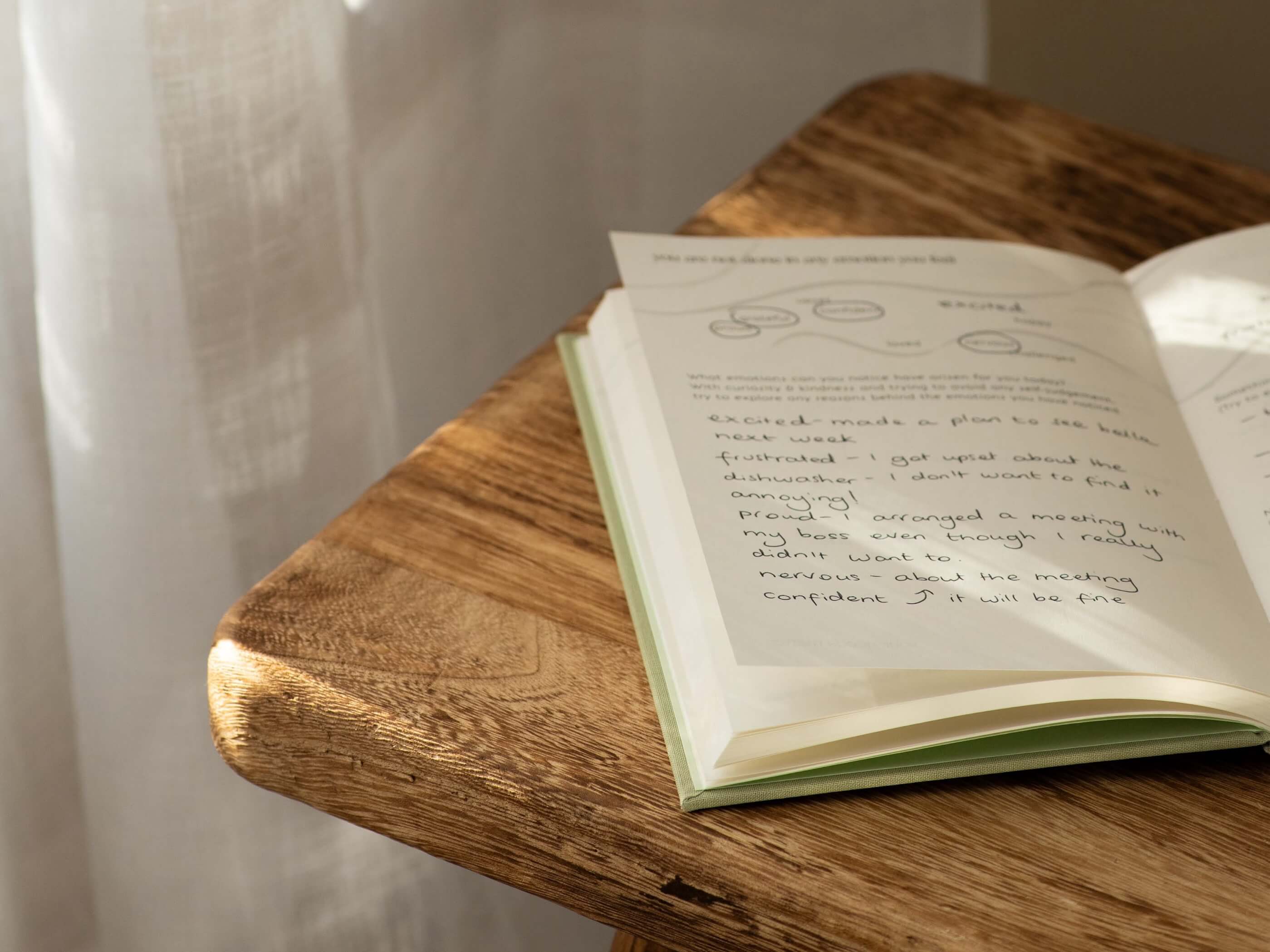
When I was stressed, I often couldn't find the word for what I felt, but I could recognise it on a list. A list of feelings in front of you does the work that a blank line asking "how do you feel?" can't. Check where it is: one chart at the front is one you might stop turning back to.
Prompts that answer, not just record
Writing the stress down again is something you can already do in your head at 3am. Look for wording that asks what you'd say to a friend having the same week.
Undated
Stressful weeks are often when writing stops. A dated book can turn a hard fortnight into a row of empty pages waiting for you when you come back.
A different prompt every time
The same question every evening can go mechanical within a fortnight, and a stressed mind tends to answer it the same way each time.
Someone qualified has read the wording
Prompts shape which voice does the writing. It's worth knowing whether a mental health professional has been through them.
If it's more anxiety and overthinking than pressure and depletion, the same principles apply with different wording. There's a fuller comparison for anxiety and overthinking here.
Five prompts to try tonight
These five prompts for stress work best in order, because each one builds on the one before. There's no right or wrong way to answer them, and a few words is enough.
Name the hardest part of today
"What was the hardest part of today?"
Not the busiest part. The hardest one. They're often not the same thing, and it's usually the hard bit that's still with you at nine in the evening.
Find a more specific word than “stressed”
"Which word fits better than 'stressed'? Pressured, resentful, lonely, frightened, flat, rushed, disappointed, or something else entirely."
"Stressed" is a lid on a box. Underneath it there's usually something more specific, and the specific thing is the one you can do something about. This is the step Julie Dwyer calls emotional awareness, and it comes before management, not after.
Write down what you've been saying to yourself
"What have I been saying to myself about coping with this?"
Write it down exactly as it sounds in your head, unedited. It can be startling to see how harsh it looks in your own handwriting, and that noticing matters.
Reply as you would to a friend
"If a friend told me they'd had this exact week, and then said that sentence about themselves, what would I say back?"
You're not trying to believe anything yet, only to write down what you'd say to someone you're fond of. Say it out loud first if writing it feels like too much of a claim.
Choose one thing that would make tomorrow kinder
"What is one thing that would make tomorrow slightly kinder to myself?"
Small and specific. Move a meeting, ask for one thing, go to bed at ten. Something you can do in a full week, rather than a plan for a version of you with more hours in the day.
If you only do one, do the fourth. Naming the feeling helps, and the reply is often where some of the strain starts to loosen.
And please don't turn this into another thing to keep up with. Three times this week is a practice. Once is a start.
Why a stress journal can be hard to keep up on your own
A stress journal can be hard to keep up on your own because the evenings you most need it are the evenings you have least left to give it. That isn't a failing. Writing is powerful, and it also asks something of you. Professor Willem Kuyken of the University of Oxford names both sides in his review of the journal.

Professor Willem Kuyken, PhD, DClinPsy
Ritblat Professor of Mindfulness and Psychological Science, University of Oxford | Listed by Web of Science in the top 1% of the most cited scientists in the world
Read Professor Kuyken's review alongside the rest →"…Writing can be creative, beautiful, resourcing, but it can also invoke an inner critic, rumination and procrastination. Rachel has curated the experience to make the writing intrinsically rewarding and the journal something to treasure."
On a depleted evening, working out what to write can be the hardest part. So it helps to have something that holds the structure for you:
- a question already on the page, so you don't have to choose one
- a way to name what you're feeling when the words won't come
- gentle reminders for the evenings the critical voice is loud
You don't have to hold all of that in your head. That's what a guided journal is for.
The Give Yourself Kindness Journal
If you'd rather not have to remember all that
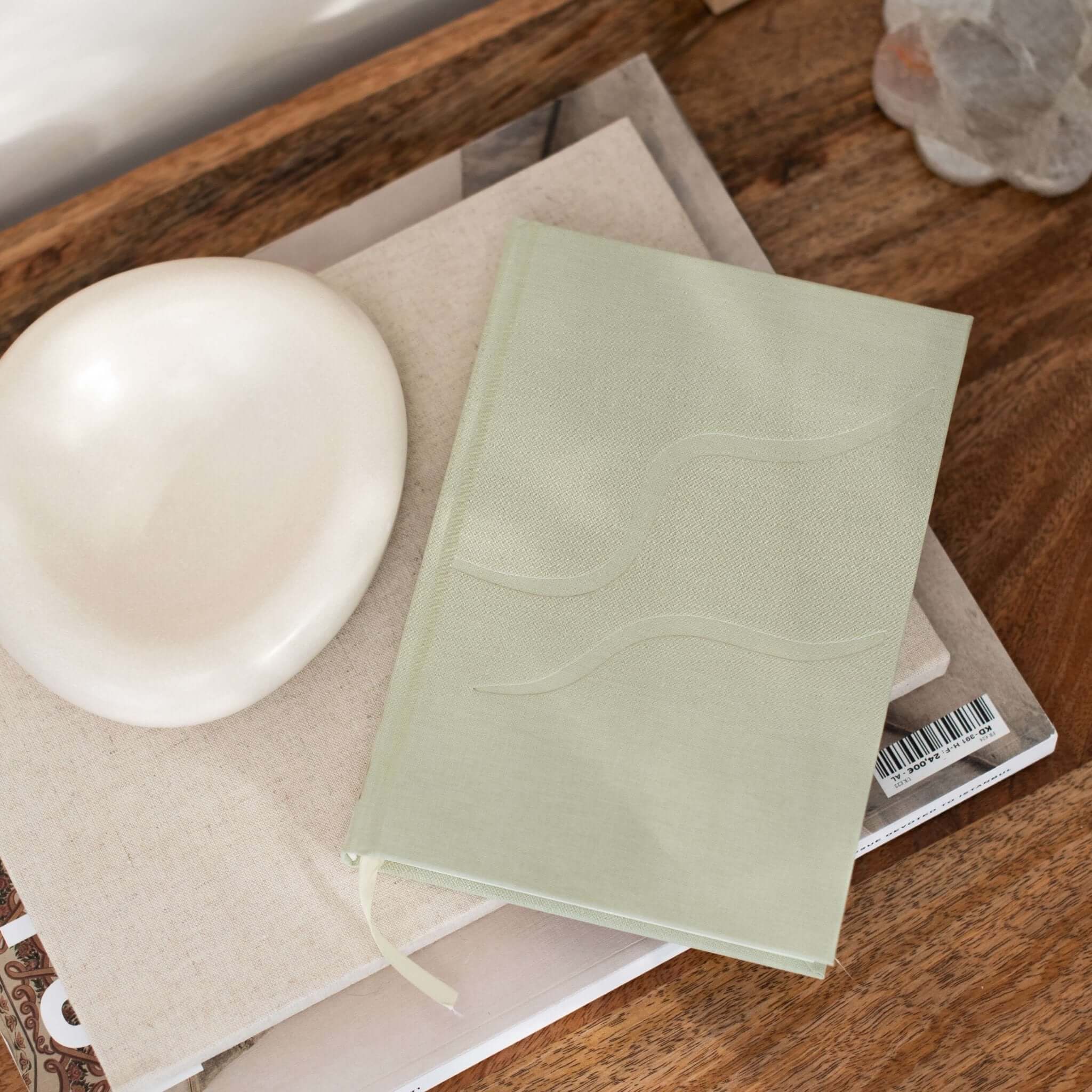
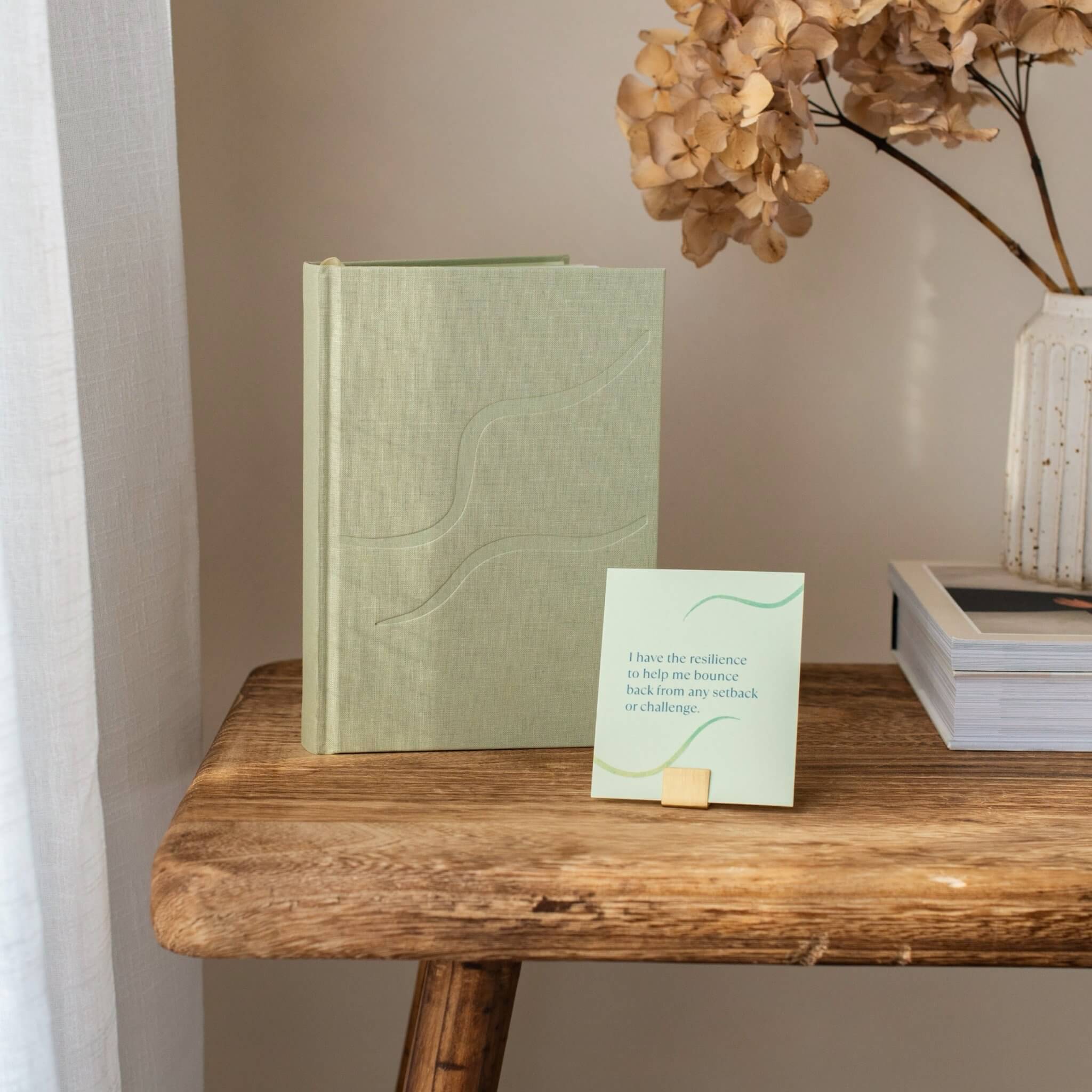
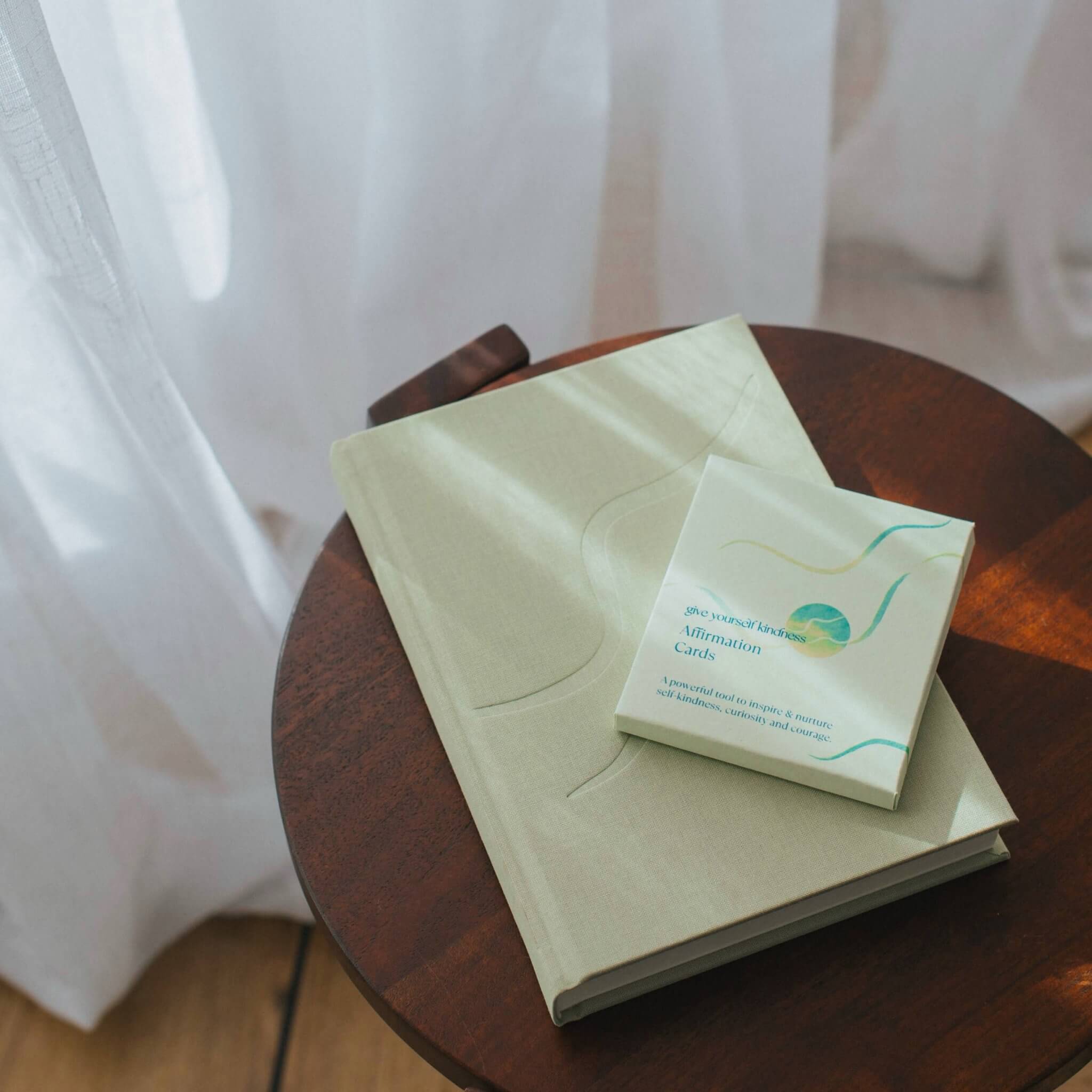
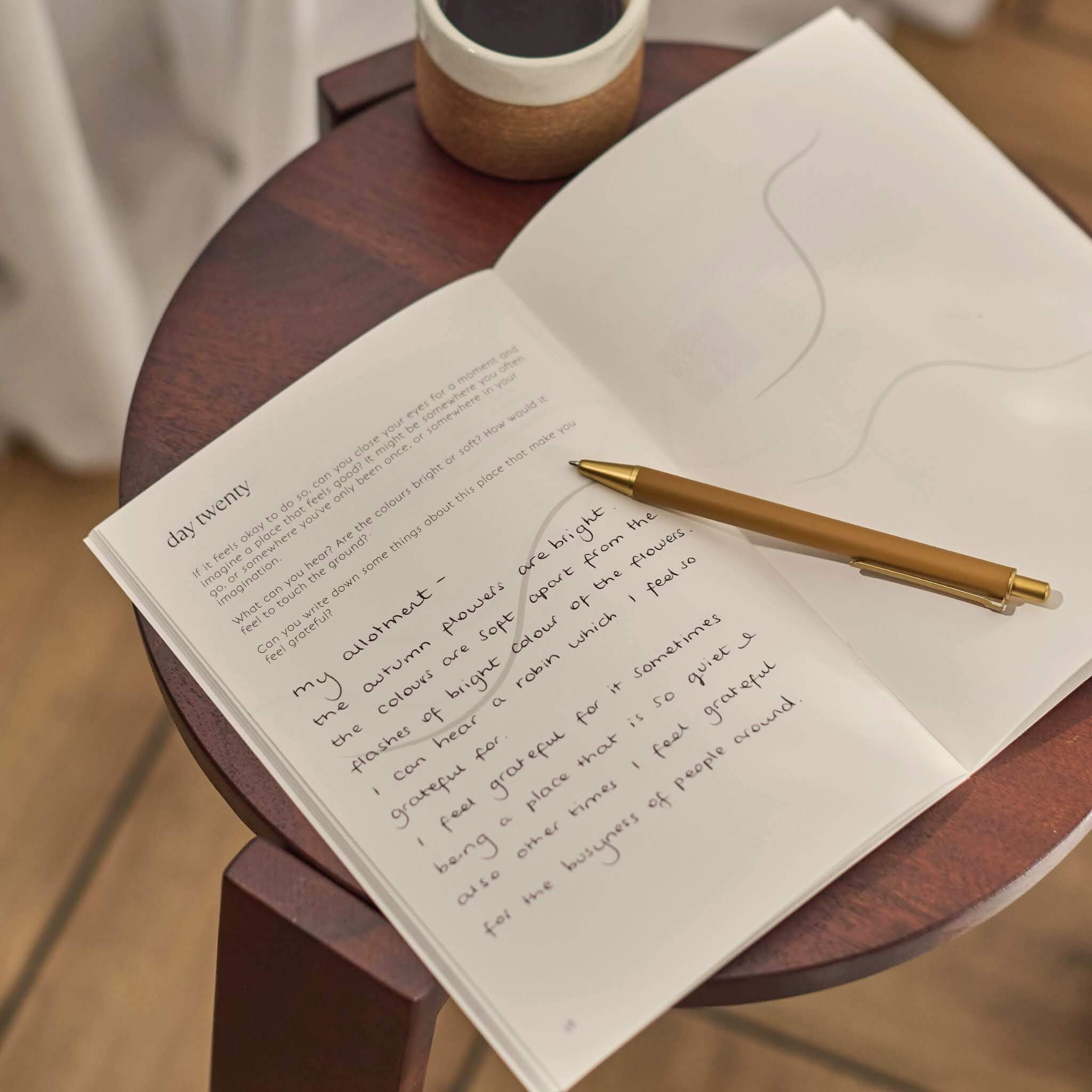
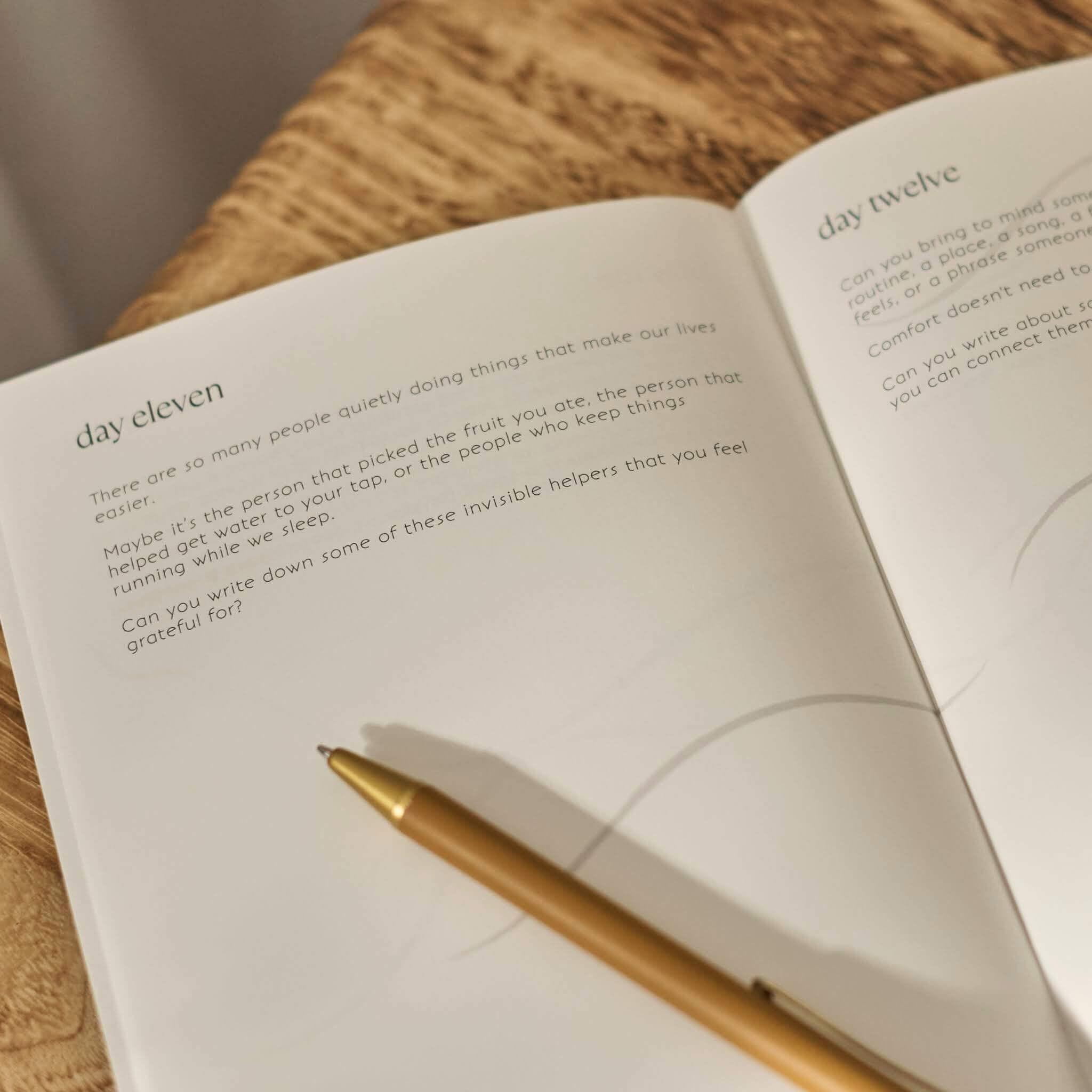
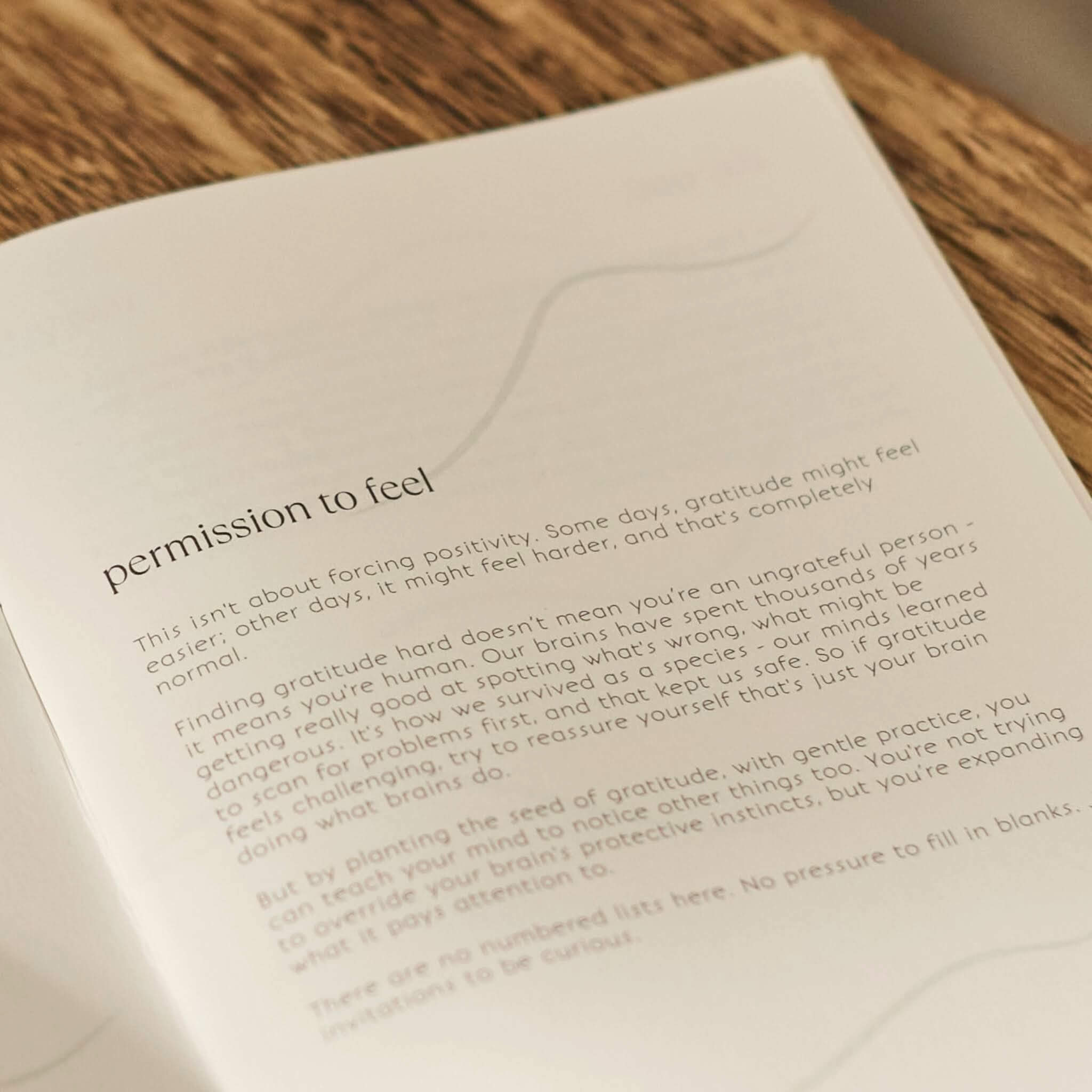
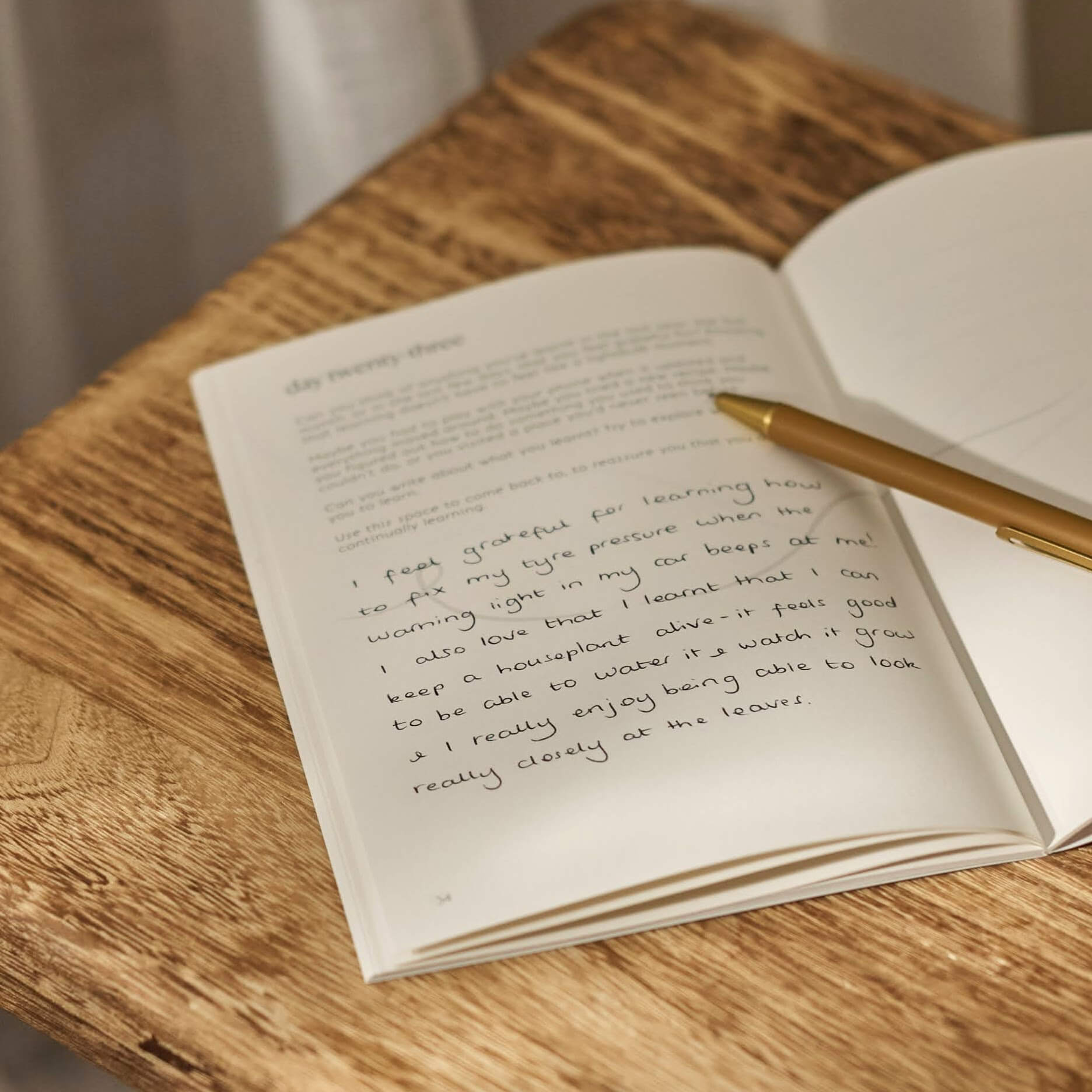
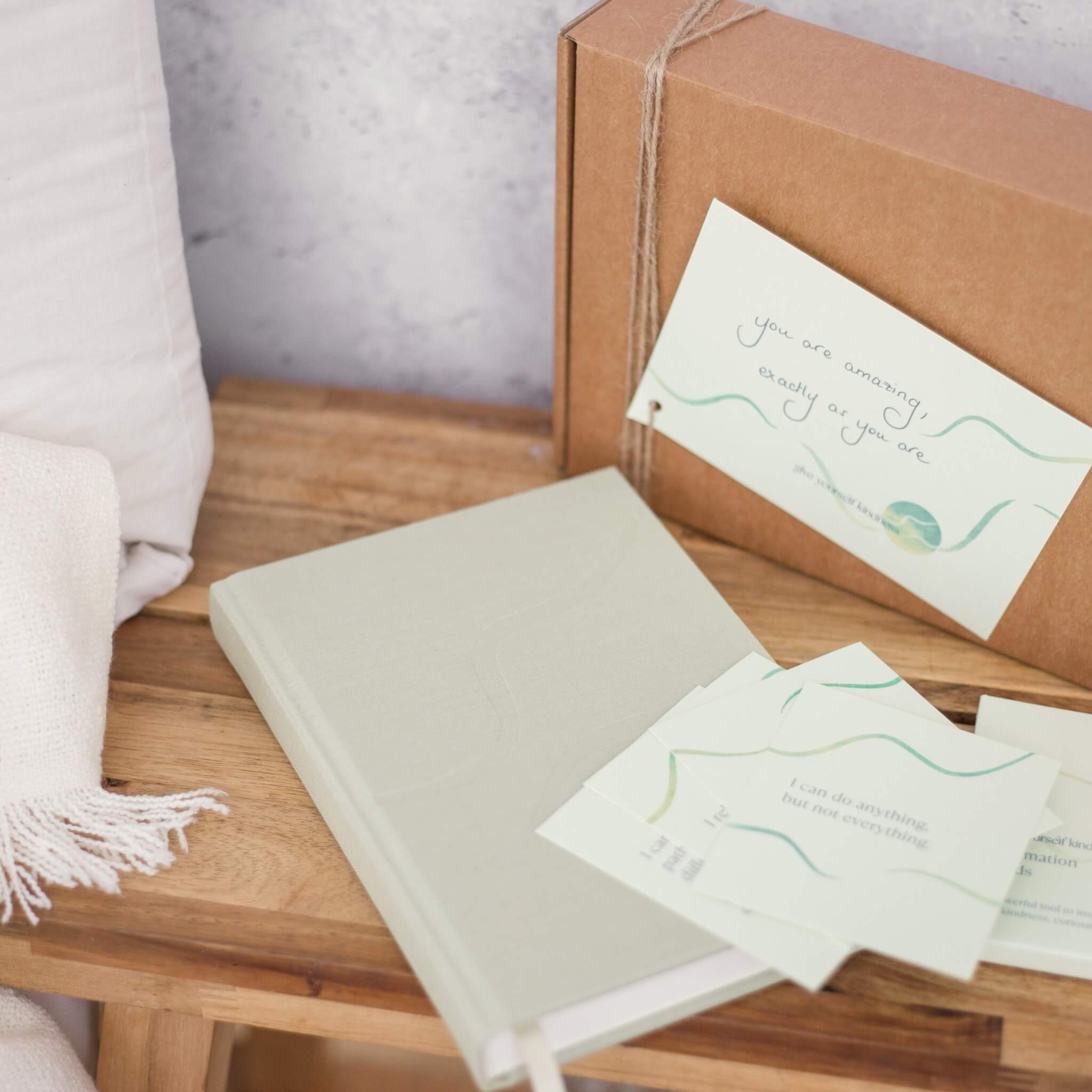
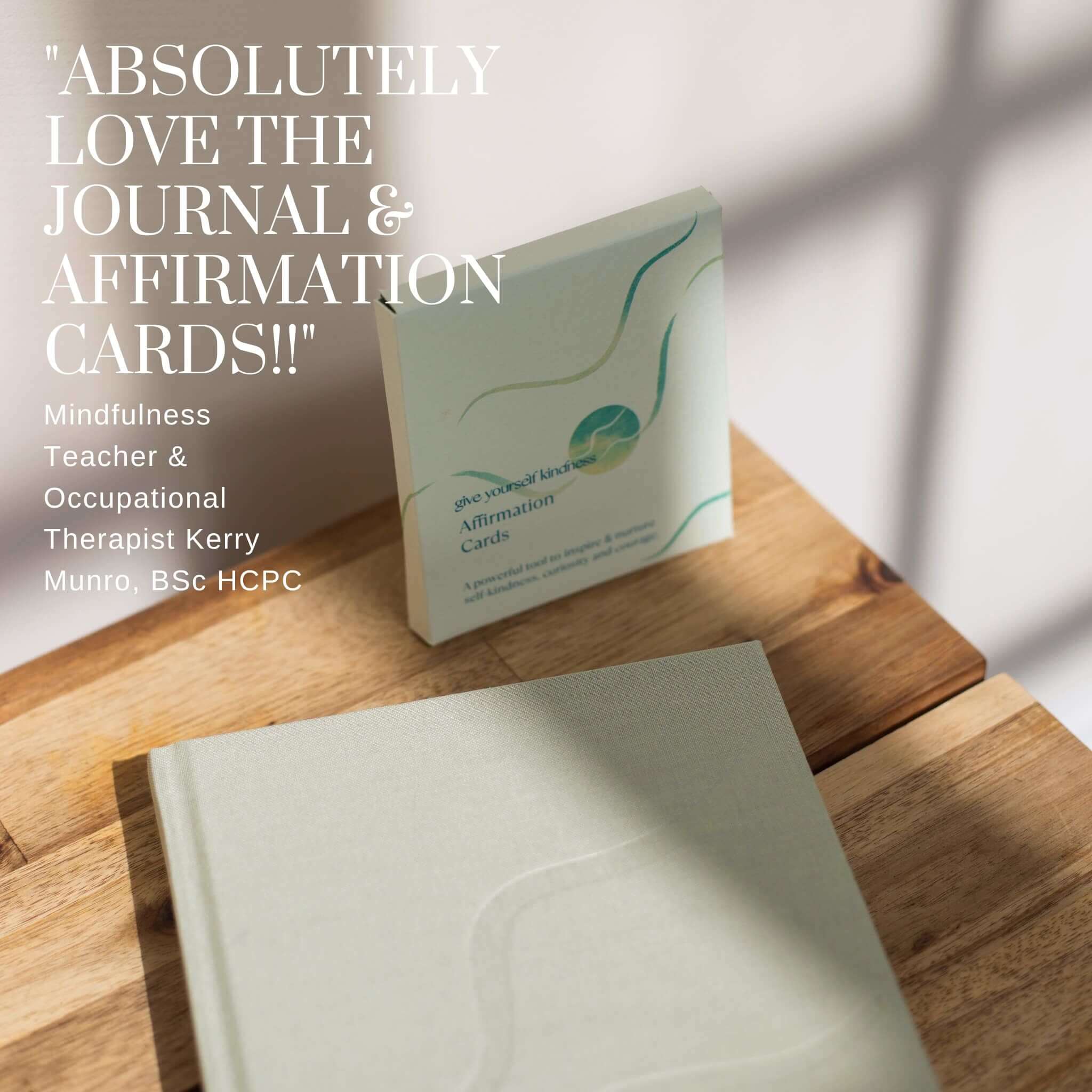
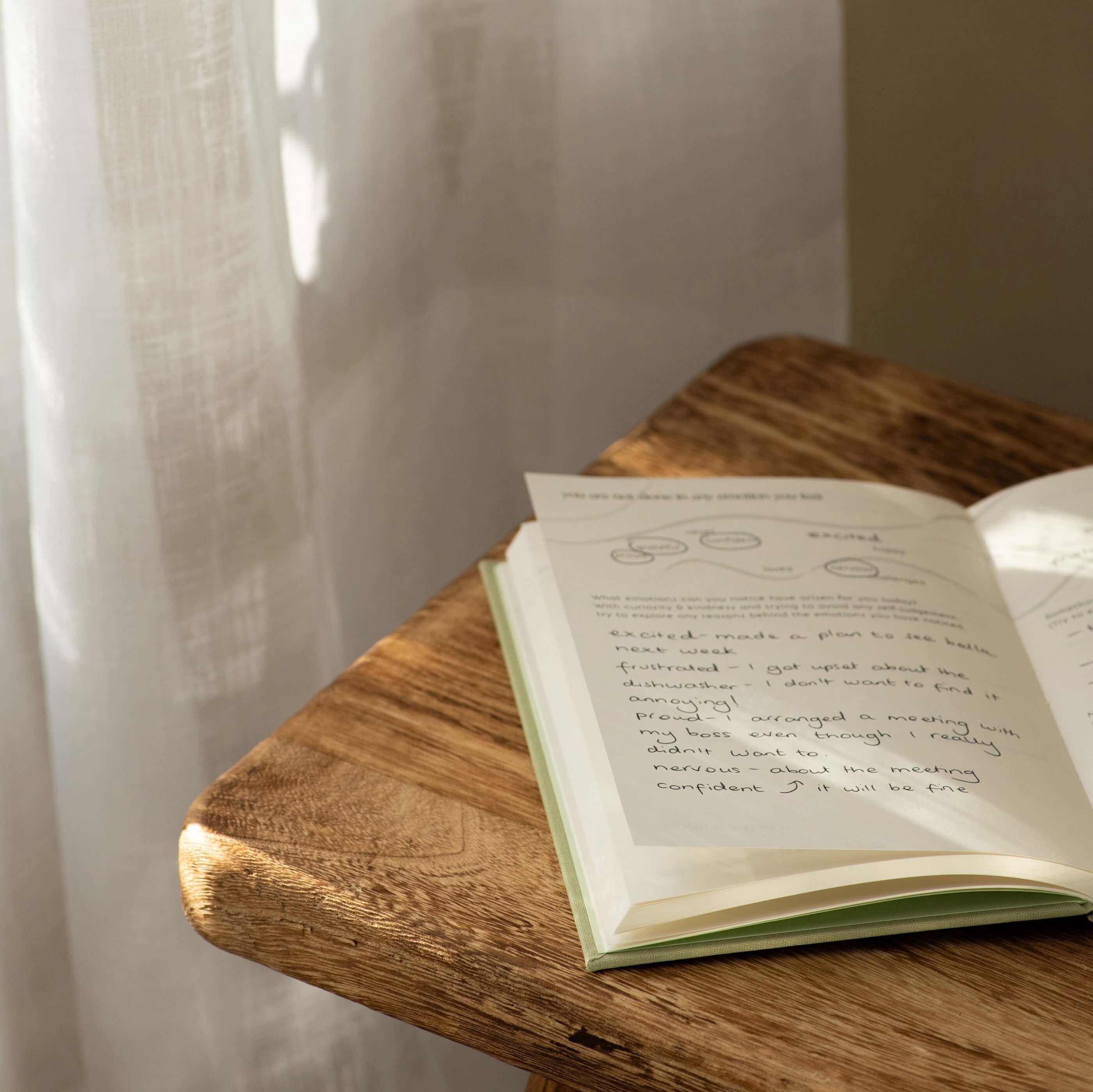
The five prompts above are the method. The Give Yourself Kindness Journal is that method already on the page, so on the evenings when working out what to write is itself the hard part, the page has done that bit for you. That, more than anything else, is what people tell me they wanted it for.

The Give Yourself Kindness Journal
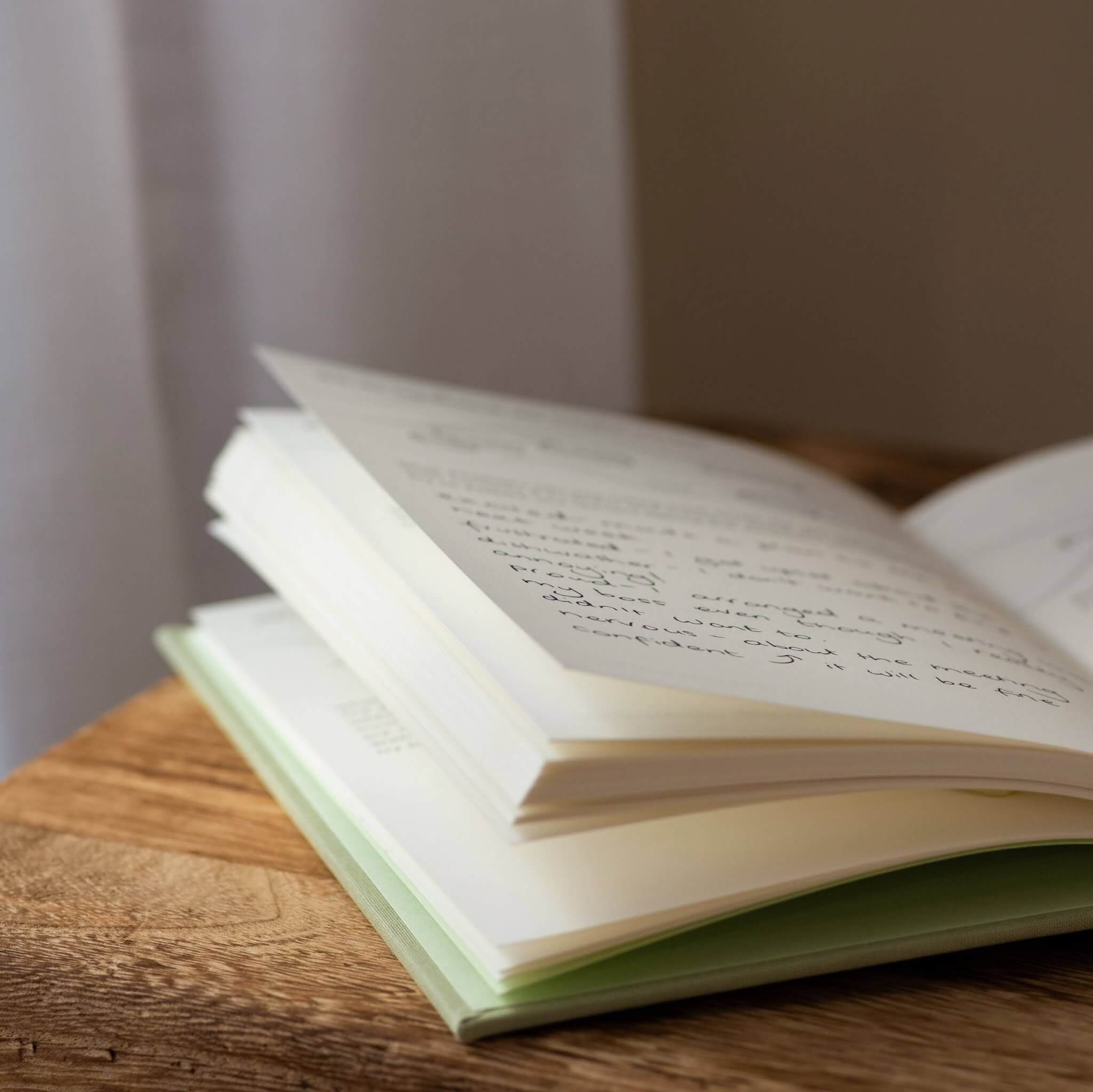
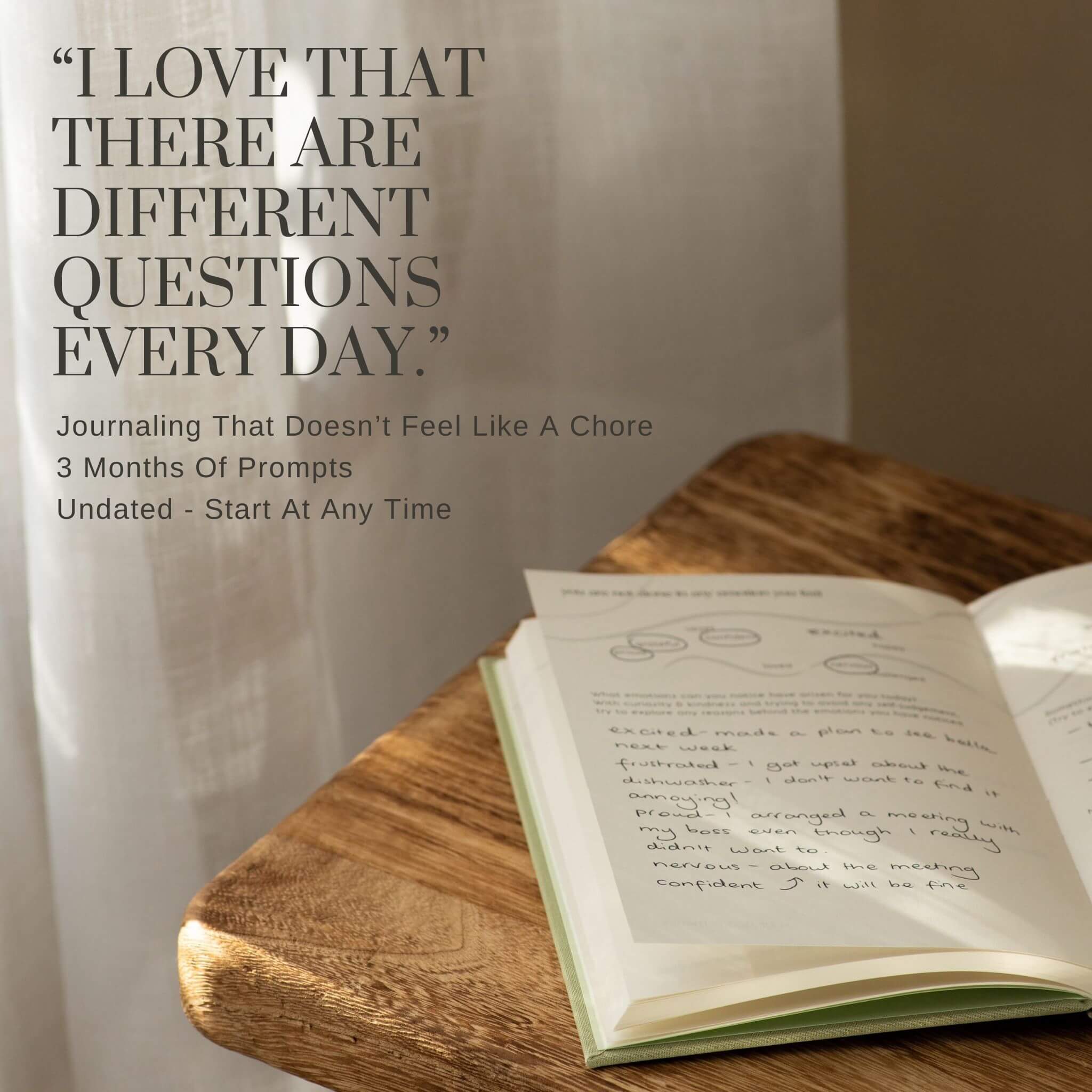
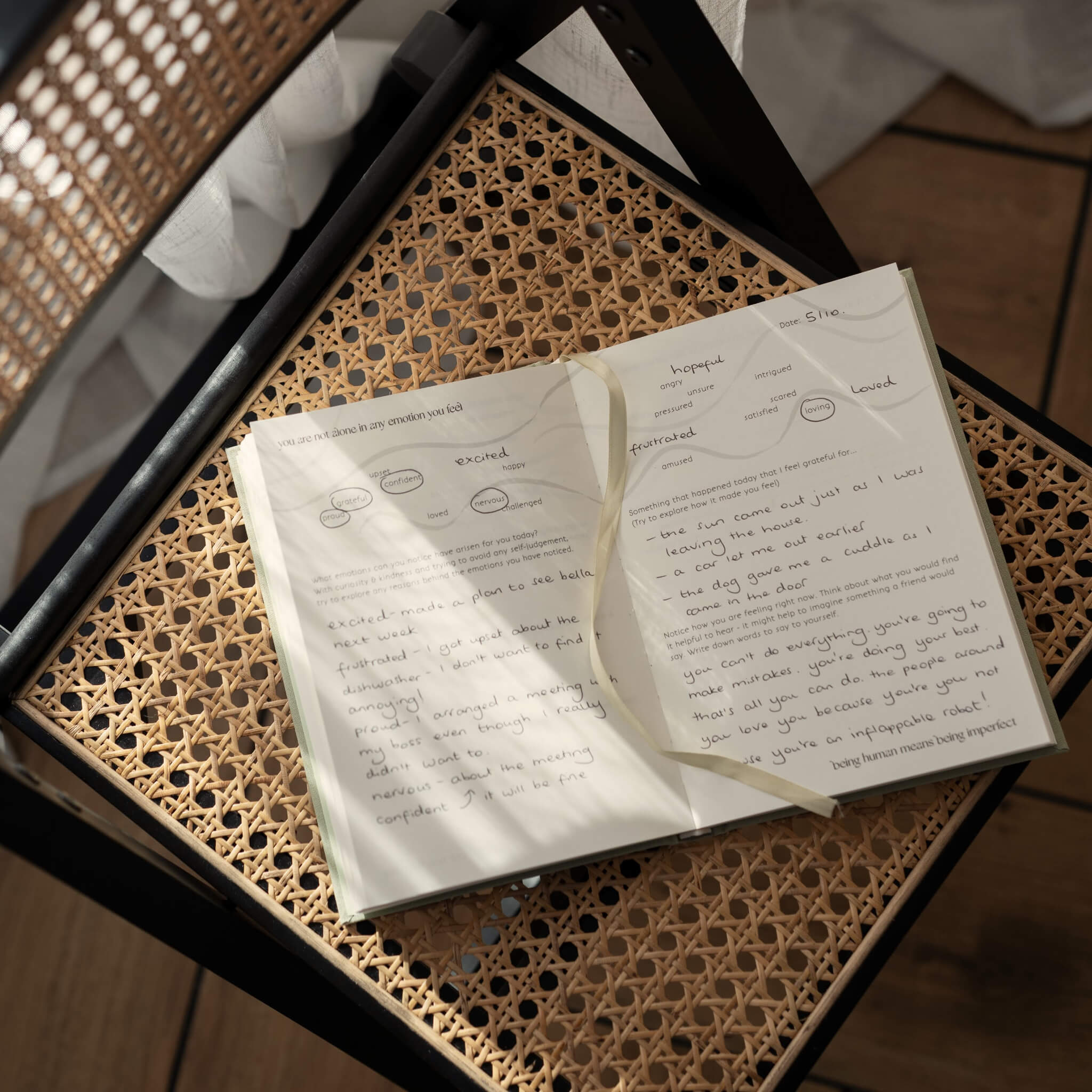
- A visual emotion guide on every page, to help you find a more specific word than "stressed"
- 90 days of changing prompts that ask what you'd say to a friend in the same week
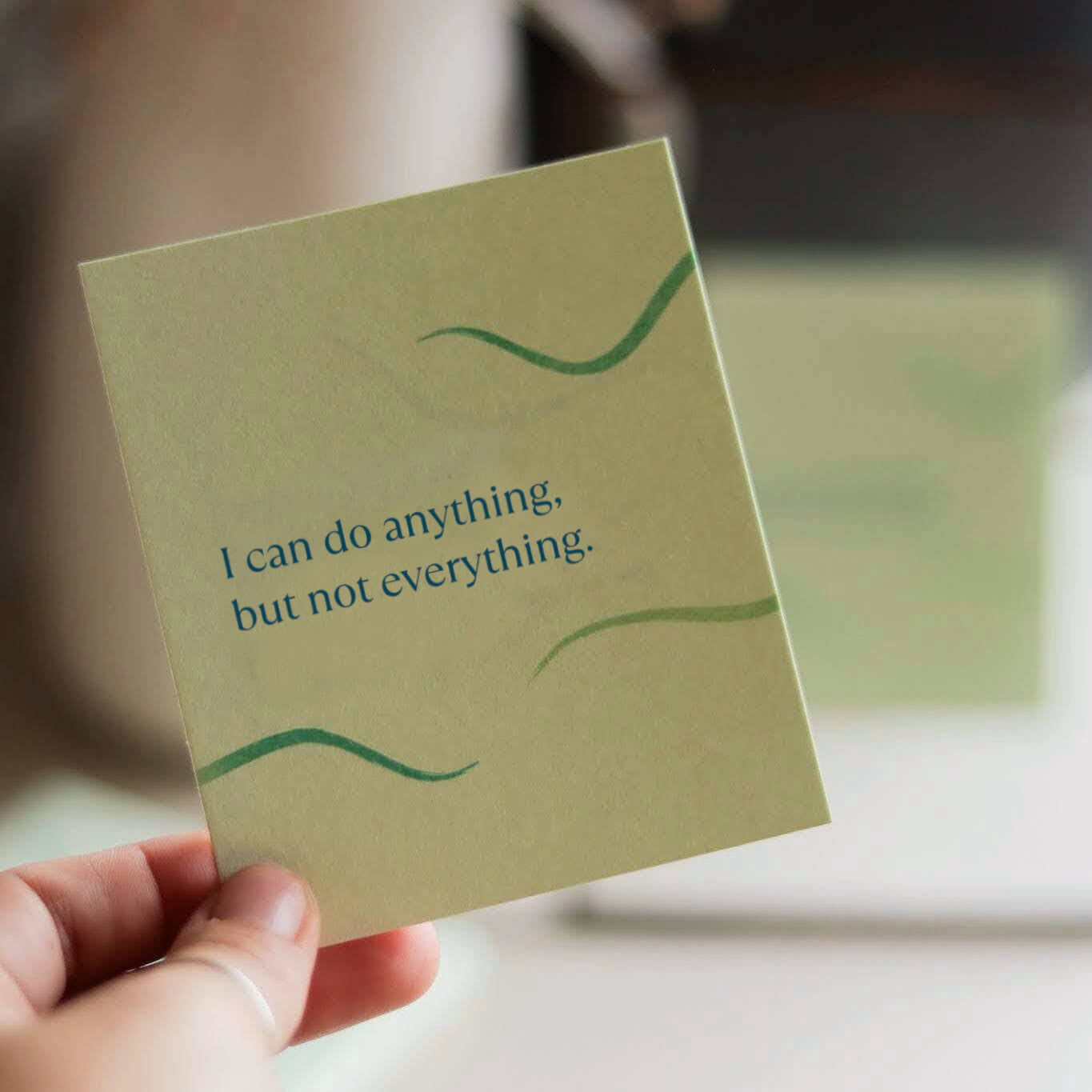
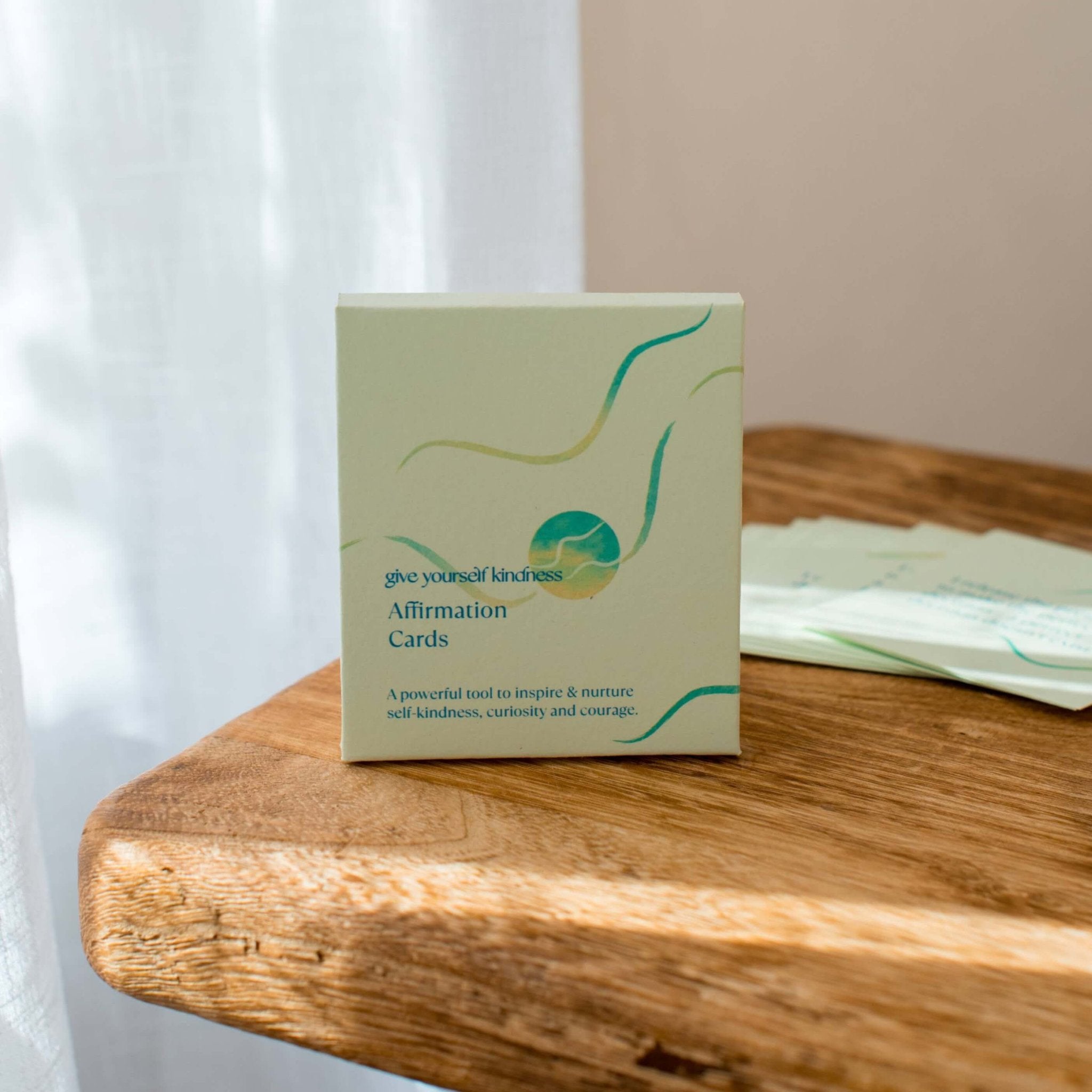
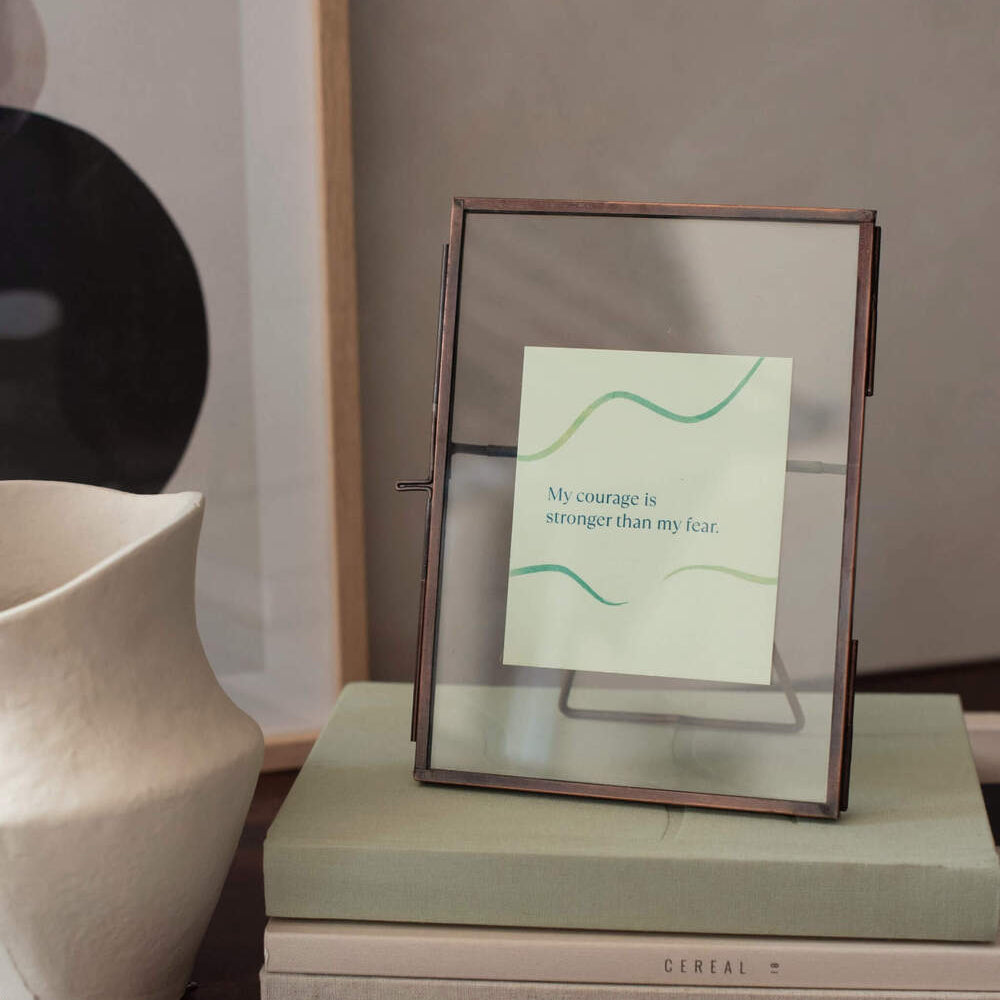
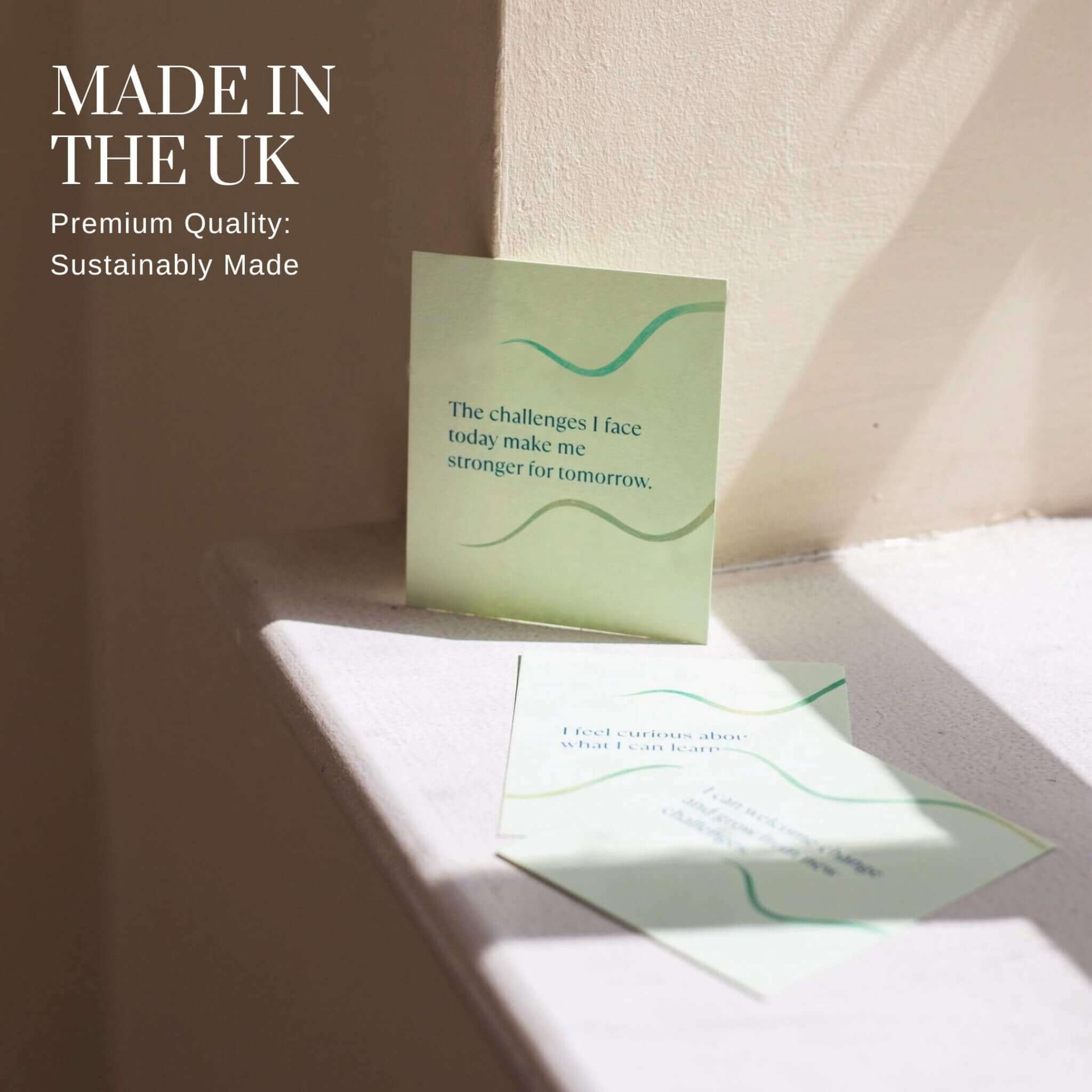
- Over 50 gentle affirmations for the evenings the critical voice is loud
- Undated, so a hard fortnight leaves nothing behind and you can come back whenever you're ready
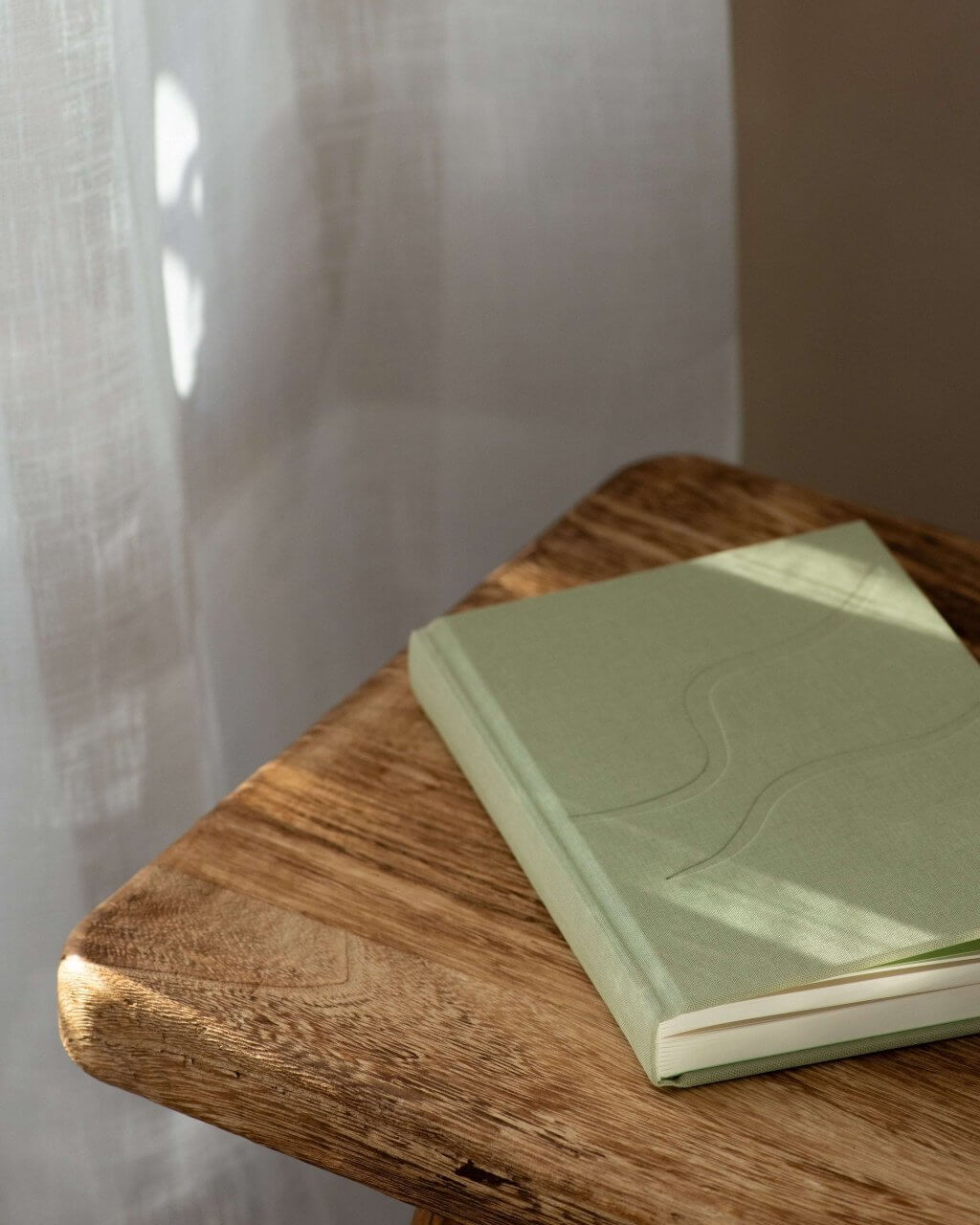
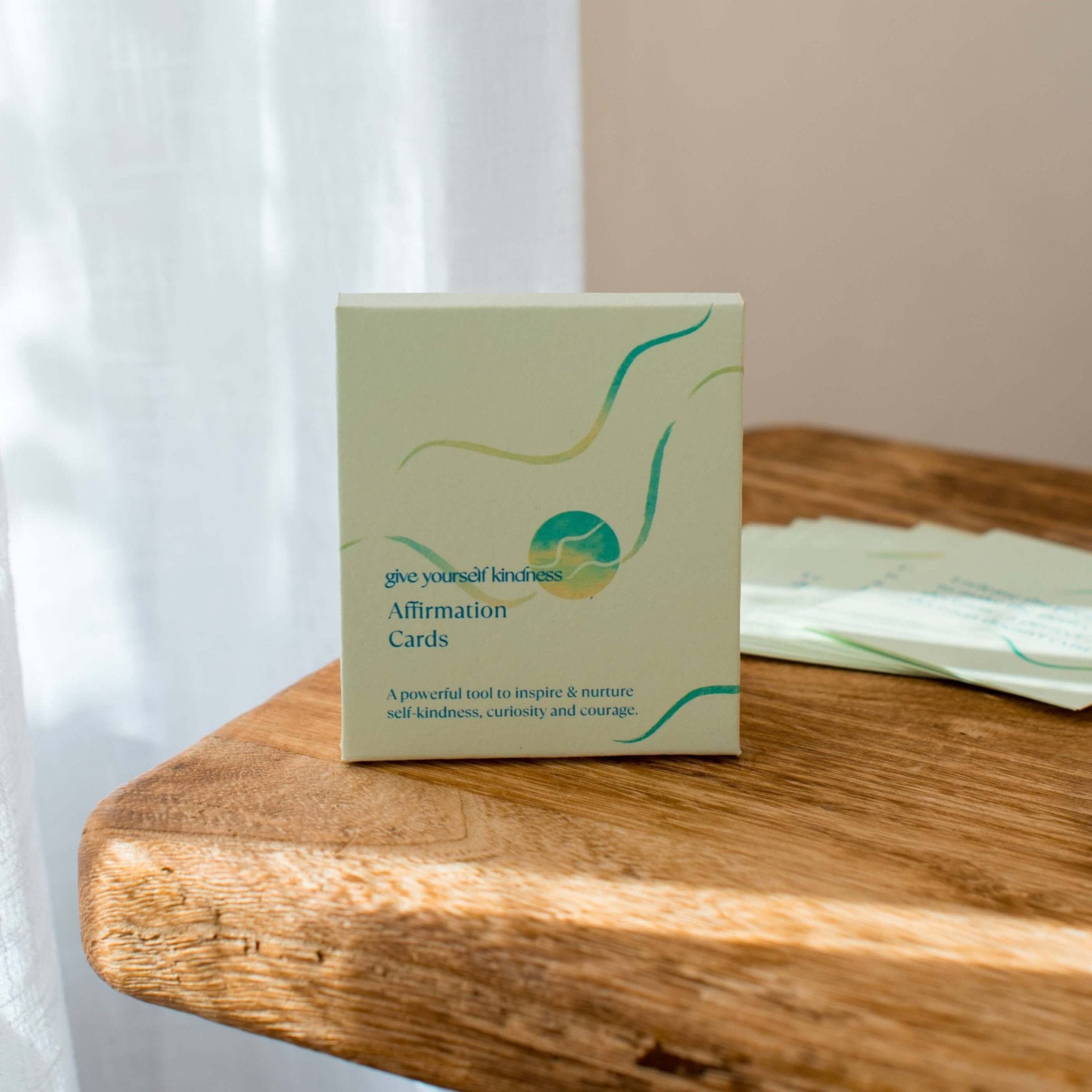
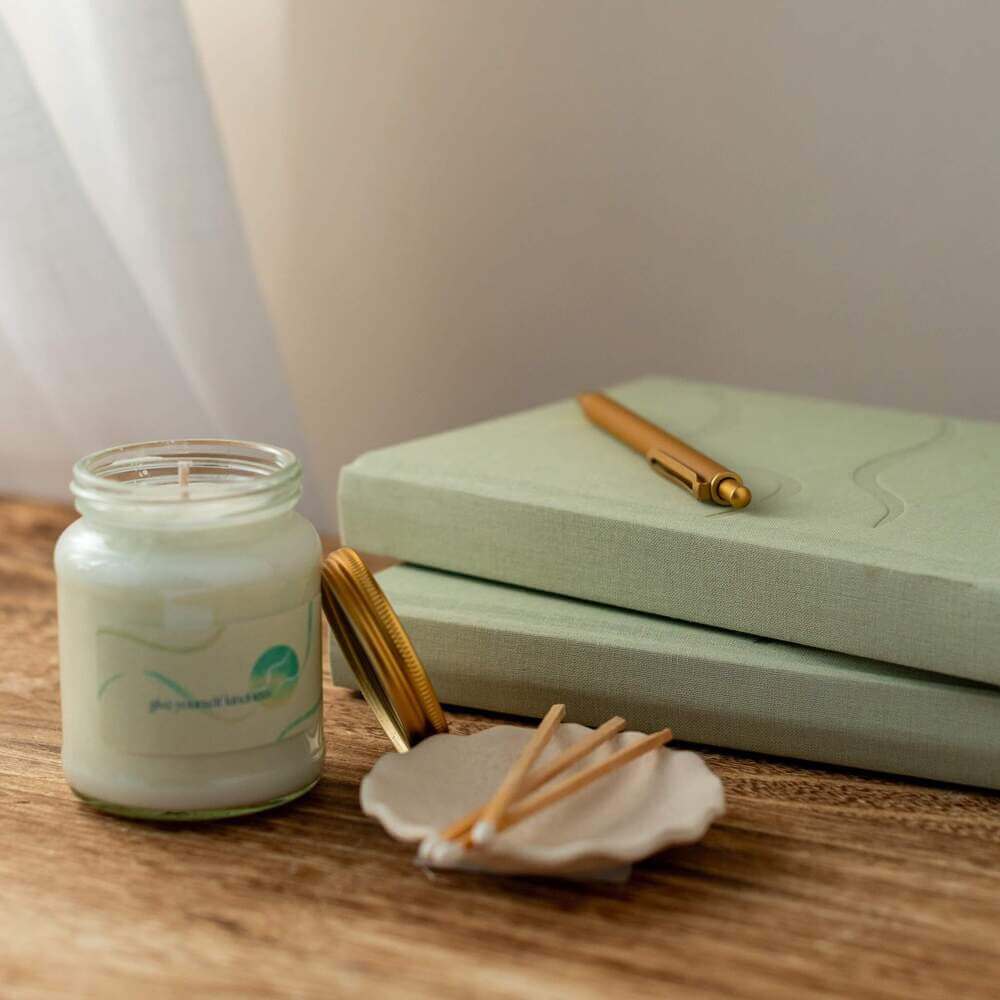
224 pages, A5, pistachio green cloth cover, 120gsm FSC-certified paper, ribbon marker, made in the UK. Wrapped in bespoke tissue paper.
Nina Holle
Psychotherapist and writer
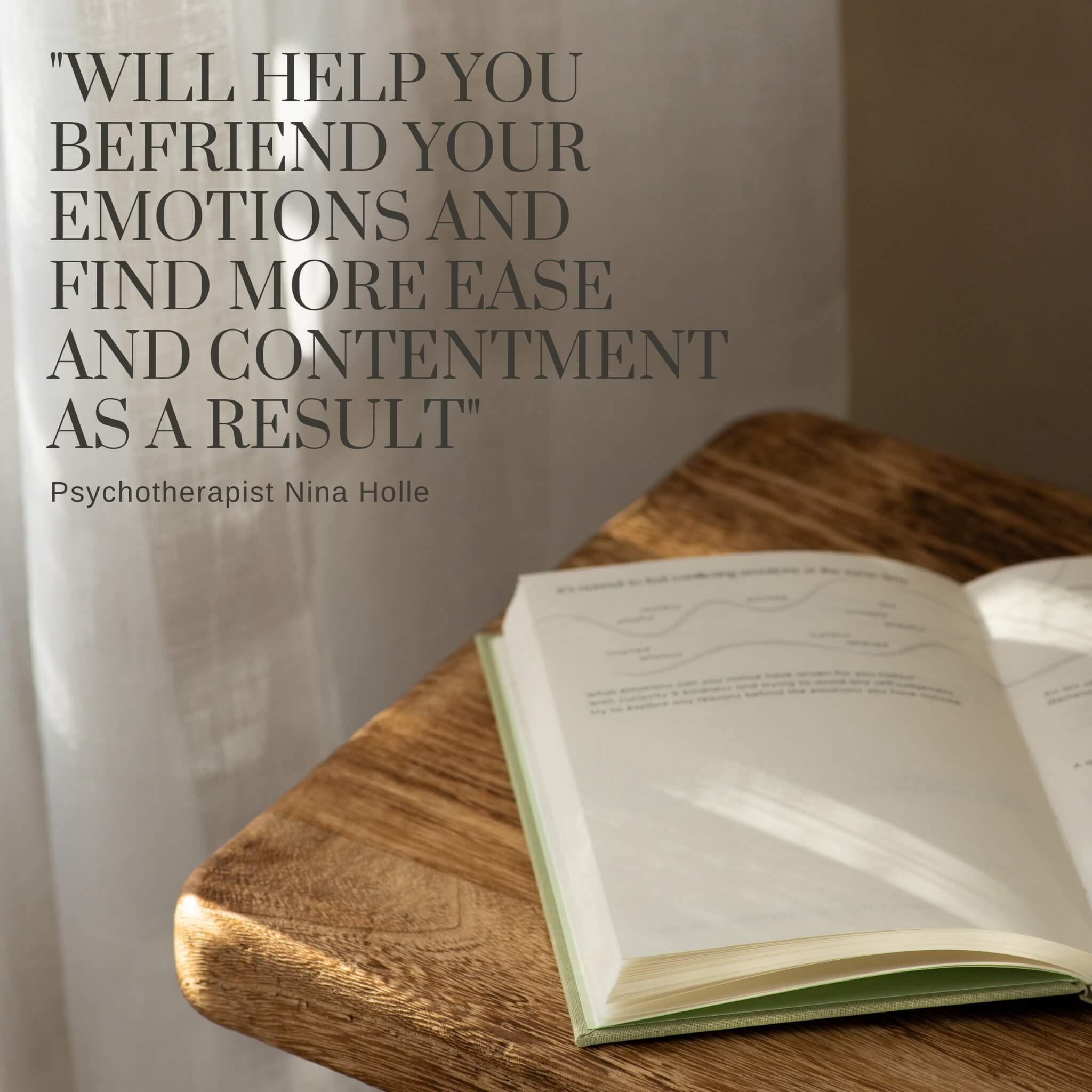
Read Nina Holle's review alongside the rest →"This is a wonderful, easy-to-use and transformative journal which will help you befriend your emotions and find more ease and contentment as a result. The journal is rooted in state-of-the-art research that emphasizes the importance of understanding our emotions in order to lower stress and lead a happy and meaningful life."
Dr Chris Germer, PhD
Clinical Psychologist and Lecturer on Psychiatry (part-time), Harvard Medical School | Co-developer of the Mindful Self-Compassion programme
Read Dr Germer's review alongside the rest →"A warm invitation to make friends with your emotions and yourself!"
A few honest notes
- If you already write most evenings, the five prompts will slot into the writing you already do. The journal is for the evenings when choosing the question is the part you can't face, and it keeps the emotion guide in front of you for the second prompt.
- If what you need is fewer demands rather than a gentler response to them, a journal won't change the workload, and I wouldn't pretend it could. What it might change is how much of that workload you carry as a verdict on yourself, which is often the heavier half of it.
- If the stress is constant, and it's reaching your sleep, your body or your work, please talk to your GP. There's more on that below.
The journal is used by therapists and counsellors with their clients, often between sessions. It's a gentle companion alongside professional support, never a replacement for it.
When stress needs more than a journal
Stress needs more than a journal when it's been going on a long time, or it's affecting your sleep, your health, your relationships or your ability to work. Then please talk to your GP. You deserve more than a notebook when it's been this hard for this long.
Journaling sits alongside proper support rather than instead of it. Mind has good practical guidance on stress, and if things feel unbearable, Samaritans are on 116 123, free, day or night.
A gentler way through a stressful week
Stress doesn't ease because you told yourself to look on the bright side, and it doesn't ease because you wrote the same list out more neatly. What can help is having somewhere to put it down. Tonight or tomorrow, you might:
- Write down the hardest part of today
- Find one word more specific than "stressed"
- Answer yourself the way you'd answer someone you love who'd had exactly the week you've had
And if you'd like the page to ask those questions for you, with an emotion guide and gentle reminders, the Give Yourself Kindness Journal is here, recommended by clinical psychologists from Harvard Medical School and the University of Oxford.
Be gentle with yourself this week. You're carrying a lot, and you don't have to carry it perfectly.
Discover the Give Yourself Kindness Journal
Common questions
What is the best journal for stress relief?
The best journal for stress relief is one that lets you name what you're feeling before it asks you to feel better about it, gives you prompts that help you answer yourself kindly, and has no dates to fall behind on. My pick is the Give Yourself Kindness Journal, which I created: undated, with an emotion guide on every page, and recommended by clinical psychologists at Harvard Medical School and the University of Oxford.
Does journaling actually help with stress?
Journaling can help with stress, and the wording of the prompt matters as much as the habit. Julie Dwyer, MSc, PhD (c), writing on emotional agility for this site, describes keeping a journal as ‘a powerful tool for tracking and understanding emotions over time’. It won't remove the deadline, the diagnosis or the money worry. It works on the second layer: the strain of judging yourself for finding the first layer hard.
What should I write in a journal when I'm stressed?
When you're stressed, start with what was hardest about today rather than what you got done. Then find a more specific word than ‘stressed’, write down what you've been saying to yourself about coping, and write what you'd say to a friend who'd had the same week. Finally, name one small thing that would make tomorrow kinder. The five prompts are set out in full above.
Is a gratitude journal good for stress?
Whether a gratitude journal is good for stress depends on where you are. On a steady week, gratitude is lovely. In the middle of real overwhelm, a page asking for three good things can read like a test, and when nothing comes you can end up with the stress plus guilt for not managing to be grateful. That isn't a character flaw. It's the wrong prompt at the wrong moment, and acknowledging the difficulty first tends to leave more room for gratitude later.
Can a gratitude journal help with anxiety?
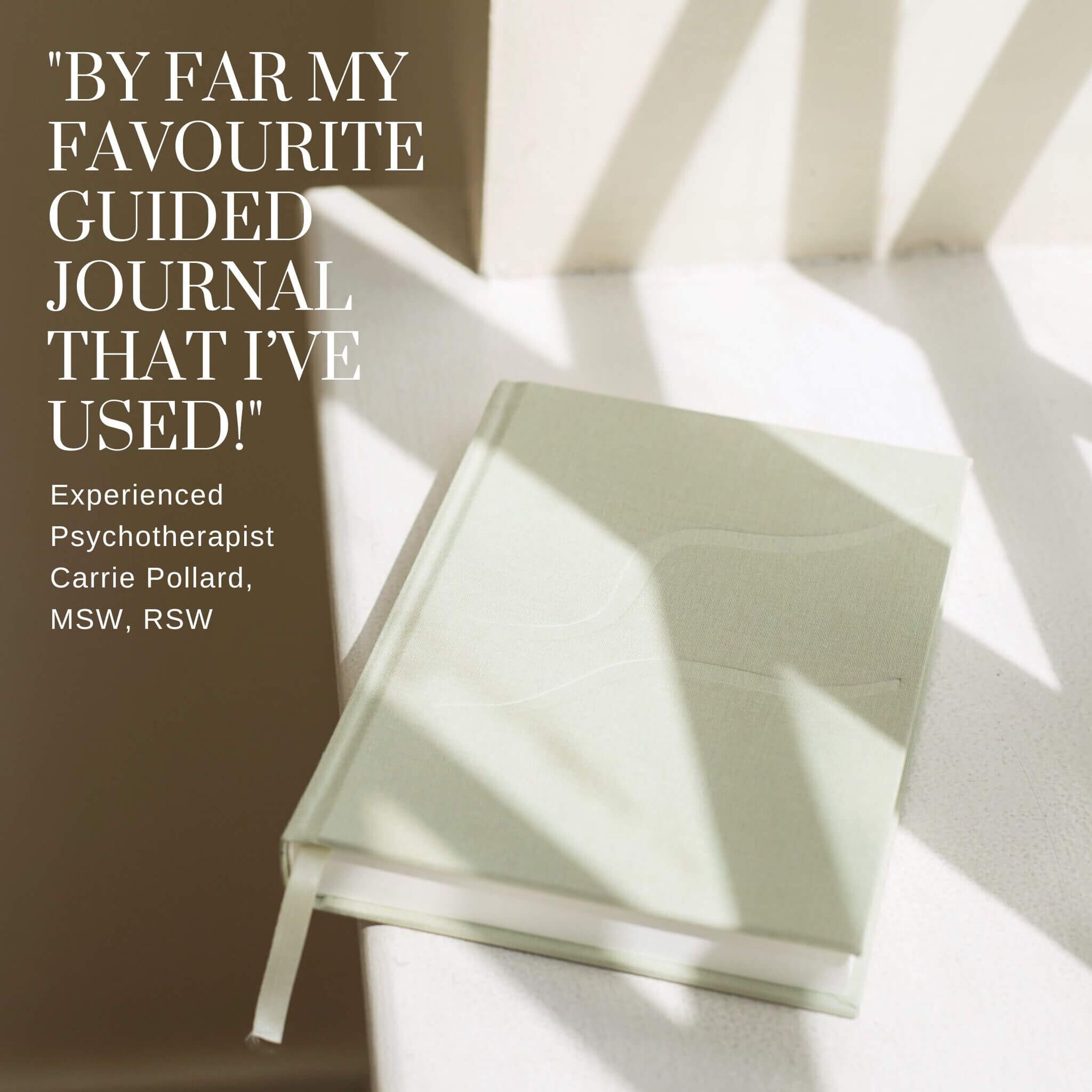
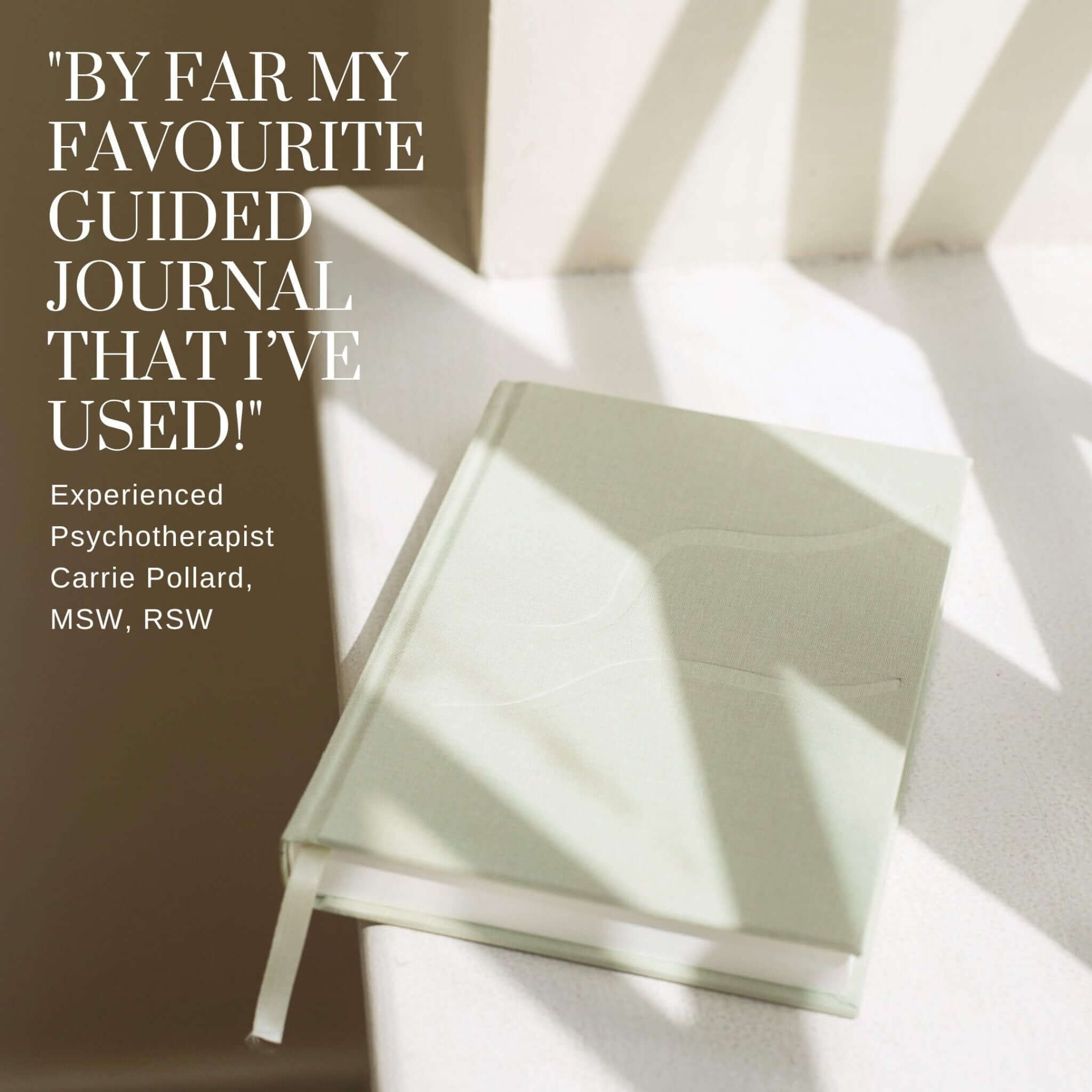
A gratitude journal might help with anxiety when it makes room for difficult feelings as well as good ones; on an anxious day, a page that only asks for three good things can feel like pressure. Psychotherapist Carrie Pollard, MSW RSW, describes the Give Yourself Kindness Journal as helping you ‘balance the acknowledgment of the hurt and suffering with gratitude and comfort’, and gratitude is one of its changing prompt themes.
Is a stress journal the same as a stress diary?
A stress journal and a stress diary overlap, but they aren't quite the same. A stress diary usually records when stress happens and what set it off. A stress relief journal adds the next step: naming the feeling and answering yourself kindly. Julie Dwyer writes that regular writing helps us gain ‘insights into patterns, triggers, and recurring emotional responses’, so the two can work well together.
What if I'm too tired to journal?
If you're too tired to journal, write one line and count it. There's no minimum and nothing is measuring you. A single honest sentence on a Tuesday is a practice; a beautifully written page you dread producing is not. If even one line is too much tonight, that tells you how much you're carrying, not anything about your discipline.
What happens if I miss days?
If you miss days, nothing is lost, because the Give Yourself Kindness Journal is undated. There are no dates, day numbers or week headings, so a fortnight away leaves no gap looking back at you when you return. That matters for stress in particular, because stressful weeks are often when writing stops.
How long before I notice a difference?
How long before you notice a difference varies from person to person, and there's no set timeline. You might notice small shifts in how you speak to yourself after a few weeks of fairly regular use. It tends to grow rather than arrive, so it's worth not deciding too early that it isn't working. The stressors will still be there; what can change first is whether you're adding to them.
Can a journal replace therapy?
No, a journal can't replace therapy, and I'd never suggest it. It's a supportive tool. Therapists and counsellors use this journal with clients between sessions, which is the right relationship between the two. If stress is affecting your sleep, your health, your relationships or your ability to work, please speak to your GP. Mind has practical guidance, and Samaritans are on 116 123, free, day or night.
Is it a good gift for someone who's stressed or burnt out?
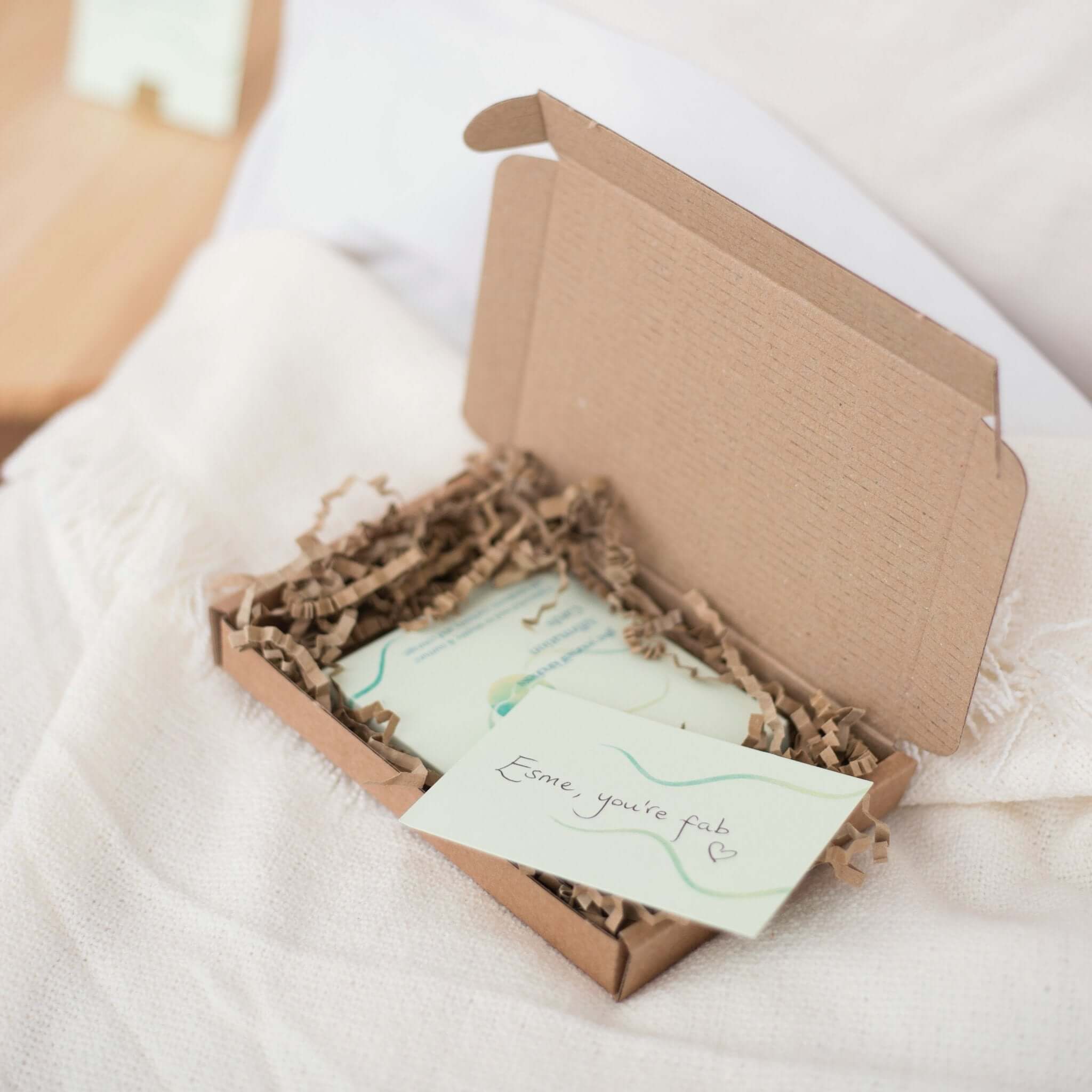
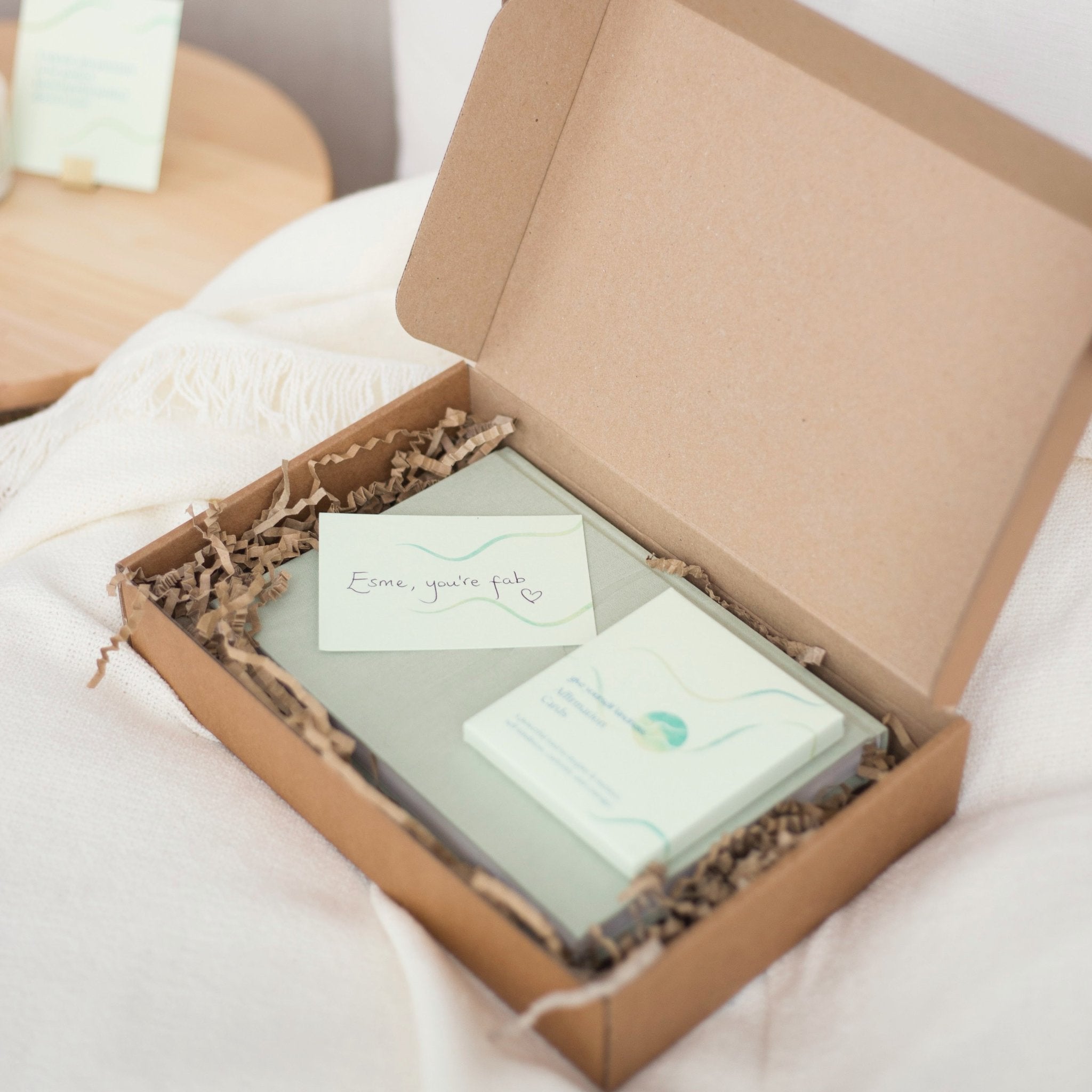
Yes, the journal can be a thoughtful gift for someone who's stressed or burnt out, and it's one of the most common reasons people buy it. Because it's undated, there's no schedule for them to fall behind on. Every order is wrapped in bespoke tissue paper, and you can add a gift note at checkout, which is written out by hand before it's sent.
Continue reading
From the psychologists quoted here
-
The power of emotional agility: transforming stress into strengthJulie Dwyer, MSc, PhD (c), health psychology researcher
-
Why self-compassion is more effective than self-criticismDr Annabelle Kyle Dortch, PsyD, Clinical Psychologist
-
How to stop beating yourself upDr Maria Tucknott, Clinical Psychologist
-
Self-compassion is not self-pityKristin Neff, PhD and Chris Germer, PhD
-
 Why is self-compassion so hard?Dr Bianca Nardini, Clinical Psychologist
 -
 The benefits of journaling, from 3 clinical psychologistsDr Chris Irons, Dr Josh Mirmelli and Dr Andreas Comninos
Related guides


“By far my favourite guided journal that I’ve used!”
There's a lot of journals out there. Most of which include tools that can be repetitive, boring or unhelpful. Give Yourself Kindness is about creating something new.