



Quick answer
What's the best journal for self-discovery and personal growth?
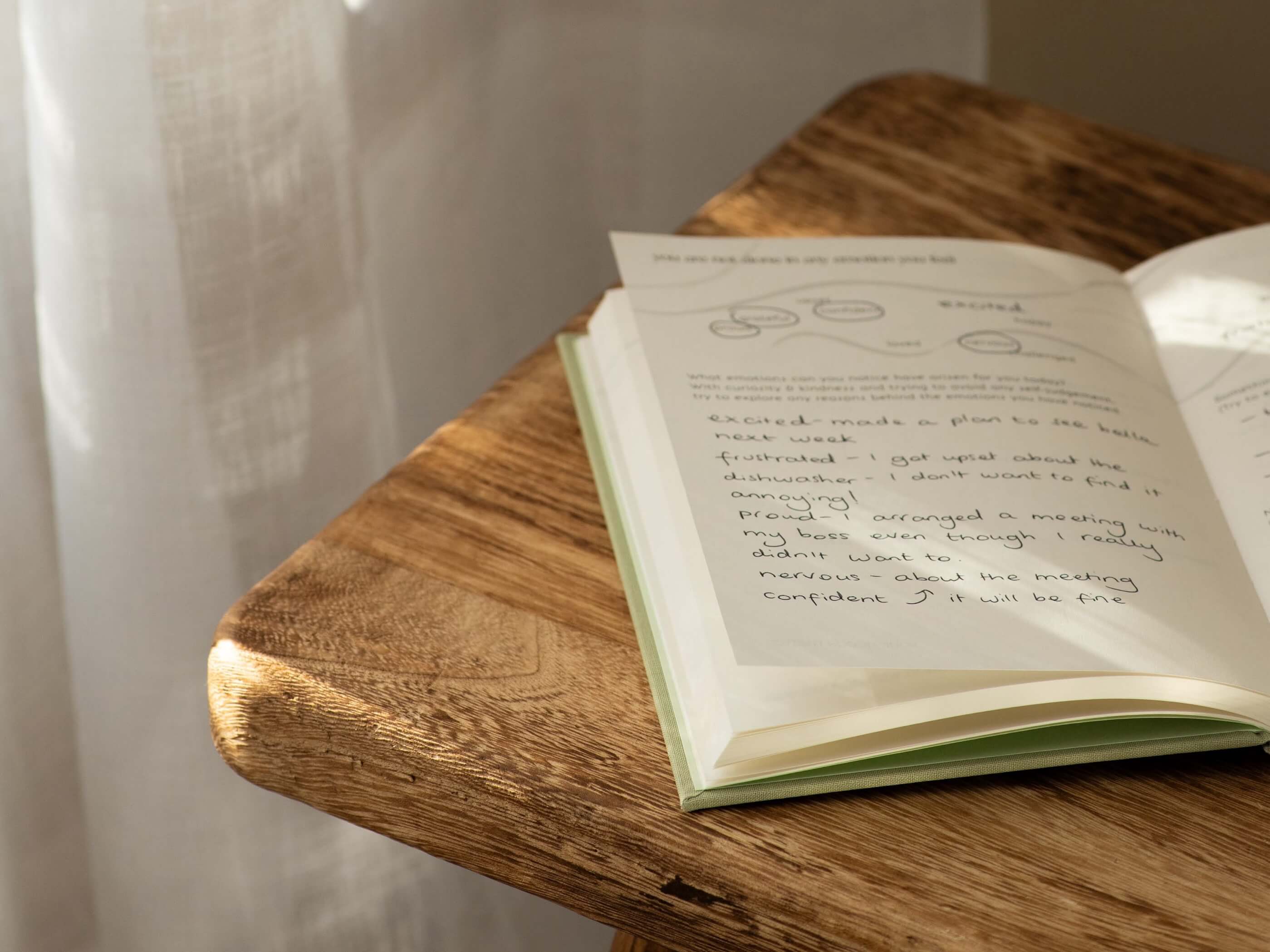
Growth starts with understanding yourself, and that's easier when you're kind about what you find. So my pick for self-discovery and personal growth is The Give Yourself Kindness Journal, the self-compassion journal recommended by Harvard and Oxford psychologists. With an emotion tool on every page, it helps you name what you feel, and be curious about why.
Clinical psychologist Dr Annabelle Kyle Dortch puts it simply: "You do not have to rely on self-criticism to improve yourself. You can always turn to self-compassion to direct you towards sustainable and effective growth."
 Dr Annabelle Kyle Dortch, PsyD, Clinical Psychologist, Los Angeles. Read her article on self-criticism and growth
Prefer something different? Five other options are compared below.
No forced positivity. Every feeling is welcome.
About this guide. The Give Yourself Kindness Journal is mine: I'm Rachel Smith, a meditation teacher (DipBSoM), and I made it after Compassion-Focused Therapy. Every other journal here is described as its publisher describes it.
Why I recommend The Give Yourself Kindness Journal for self-discovery and growth
I recommend it because it does the two things self-discovery needs: it helps you notice what you feel, and it helps you be kind about what you find. It's a self-compassion journal, and that kindness is what makes it easier to keep looking.
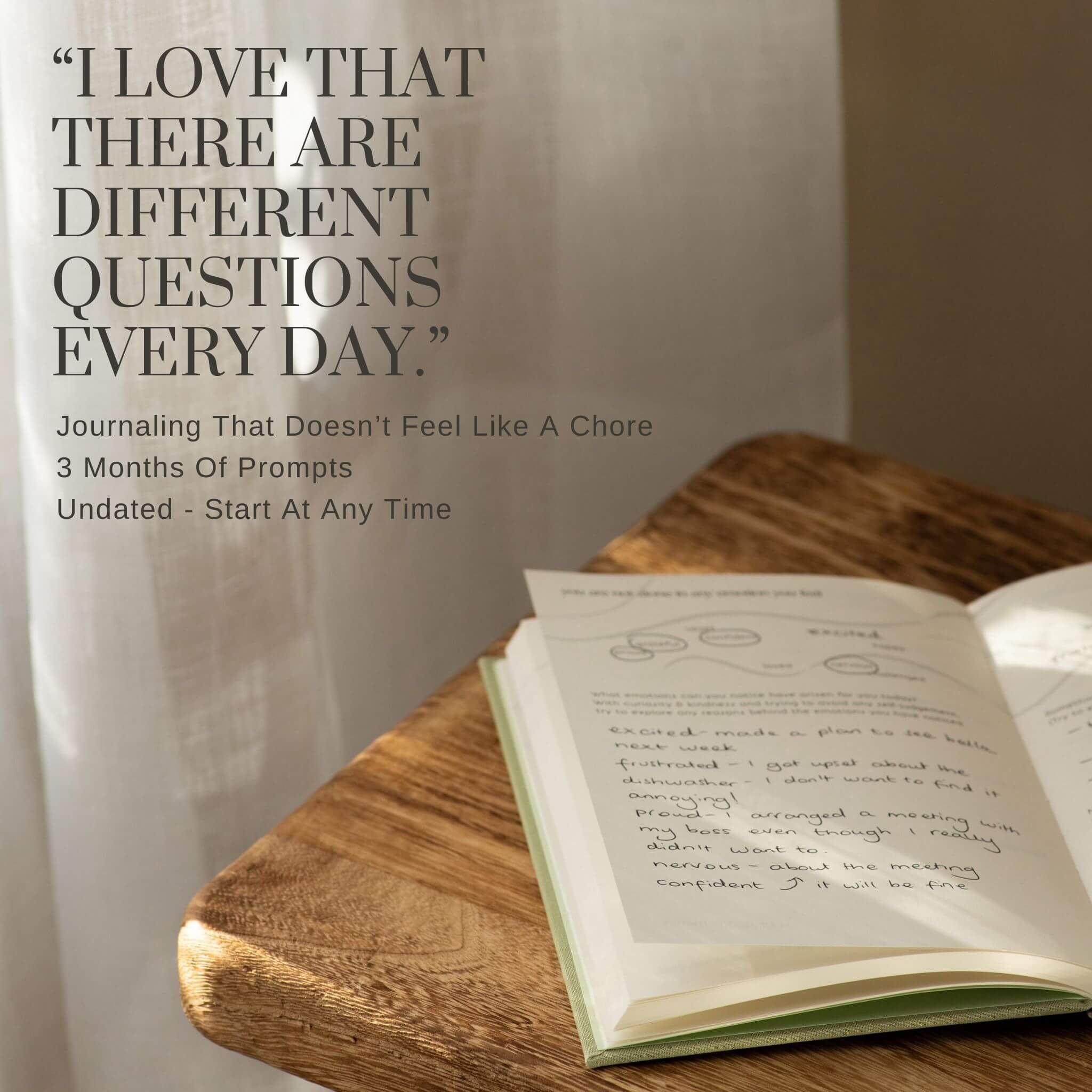
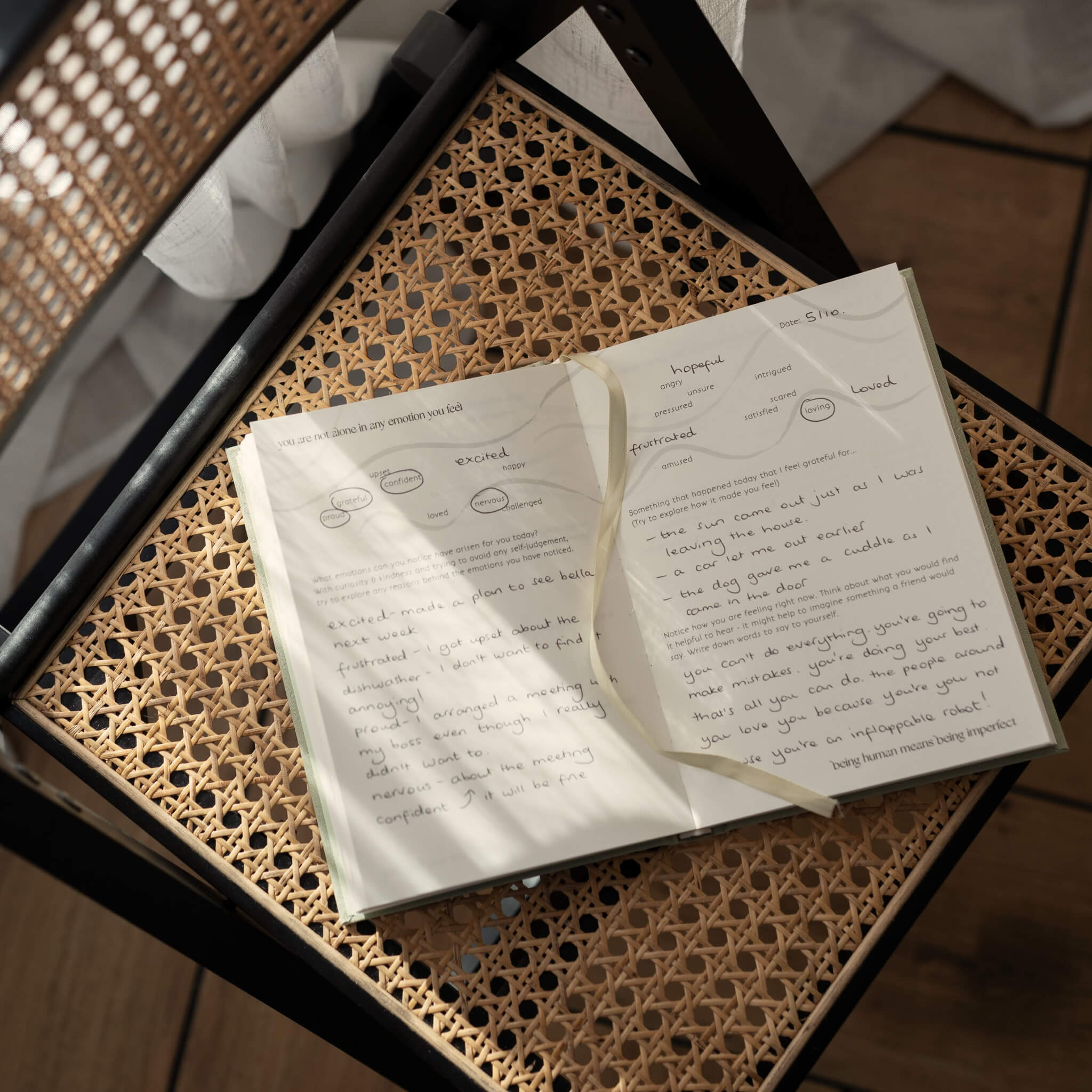
Each day starts with a gentle question about how you're feeling, then moves on to prompts that change, so you see yourself from a slightly different side each time. Some days it's an emotion you'd rather avoid. Other days it's something you're proud of, or a challenge you'd like to try.
Here's what it gives you:
- When you'd like to understand yourself, not just log your day: a prompt that asks why, different every day for 90 days.
- When you can't find the word for what you feel: an emotion tool on every page.
- When growing has meant being hard on yourself: prompts that ask what you'd say to a friend, so change comes from kindness.
- When life is busy: undated pages, so you grow at your own pace.
- When you want to know it's safe: reviewed by clinical psychologists and used by counsellors with their clients.

The Give Yourself Kindness Journal
A guided self-compassion journal that helps you understand your emotions and respond to yourself with kindness instead of criticism.
📔 90-day guided journal🔄 A new prompt every day🎨 Emotion tool on every page⭐ Recommended by Harvard and Oxford psychologists
- A different prompt each day that asks what you feel, what you need and why
- A visual emotion guide on every page, so you can find words beyond "good" or "bad"
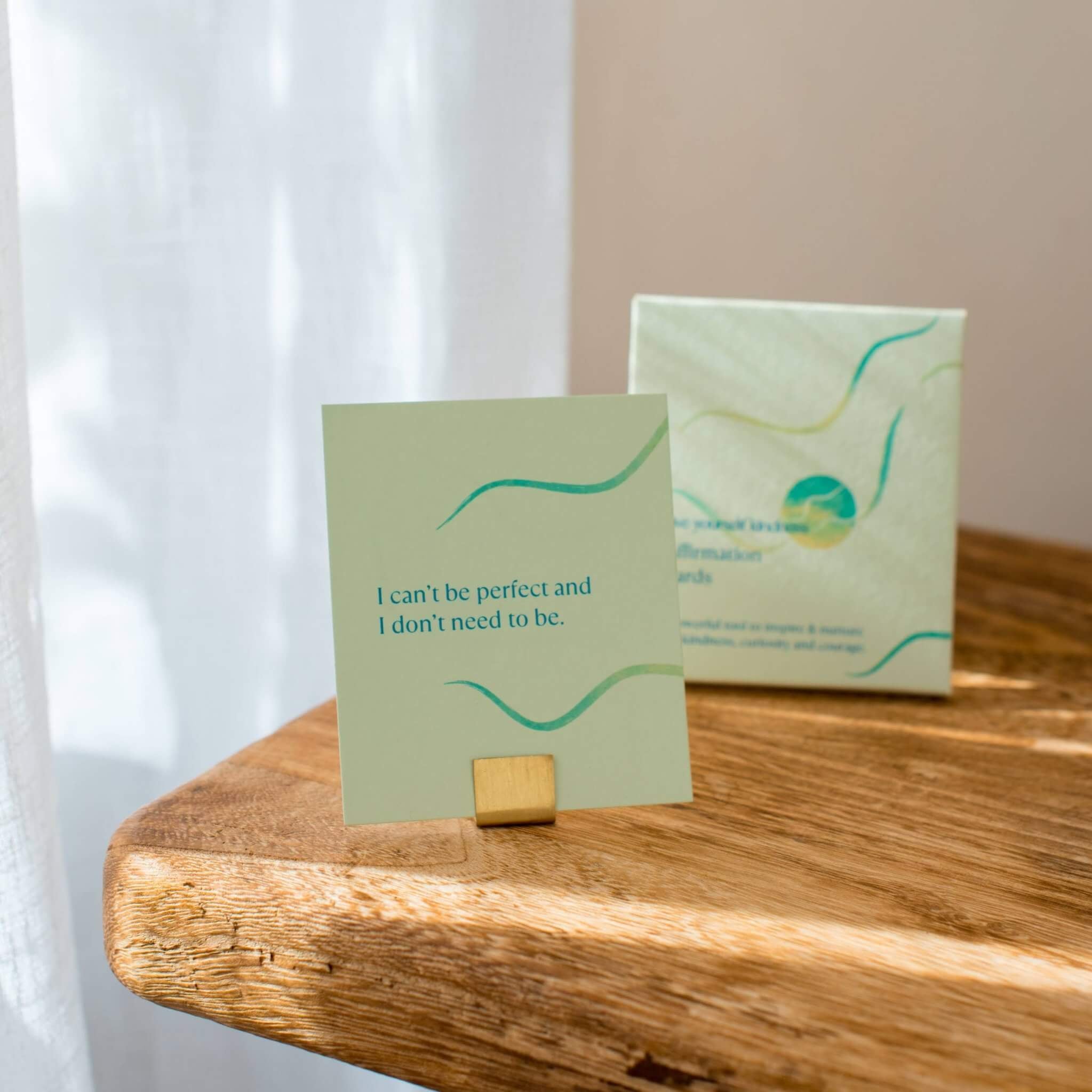
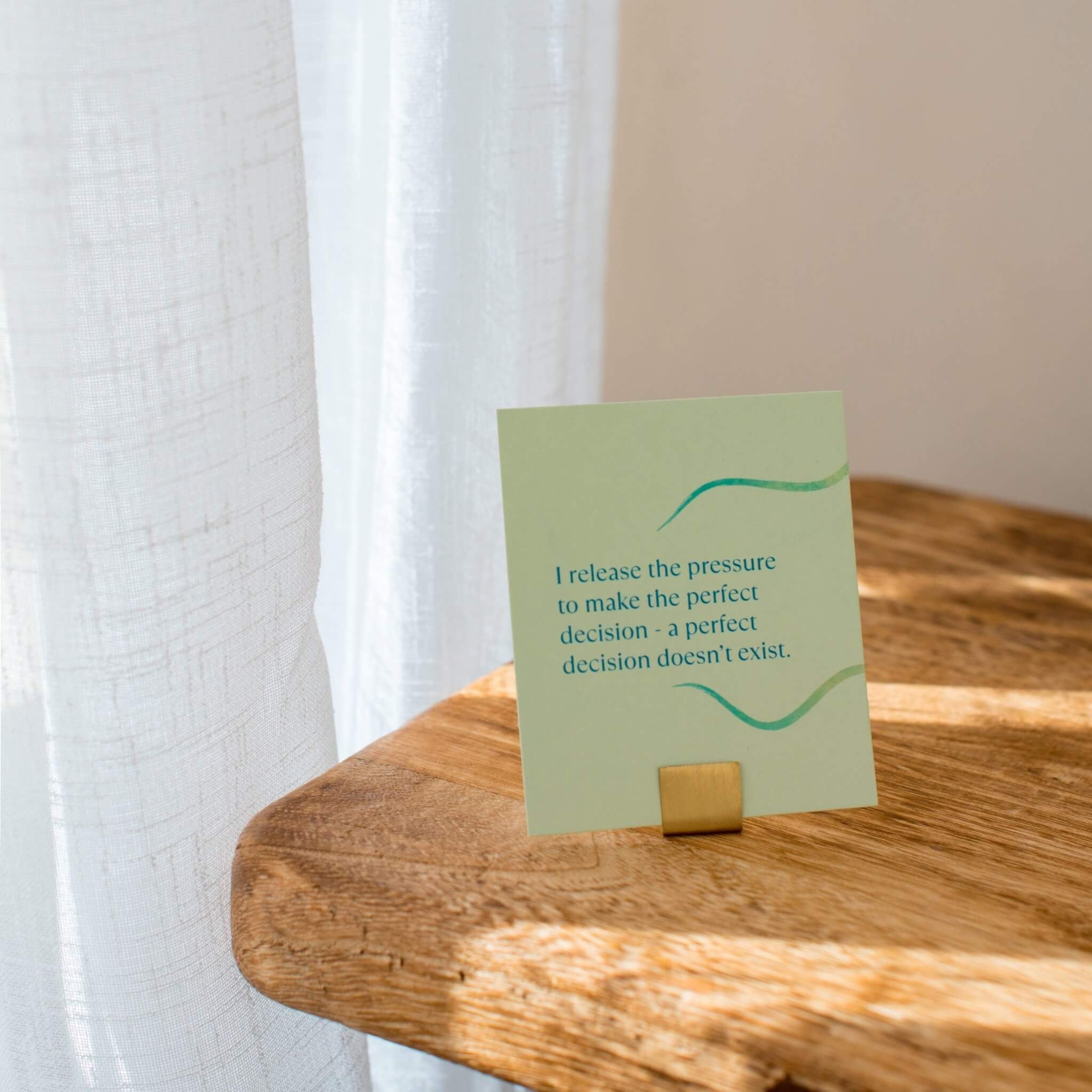
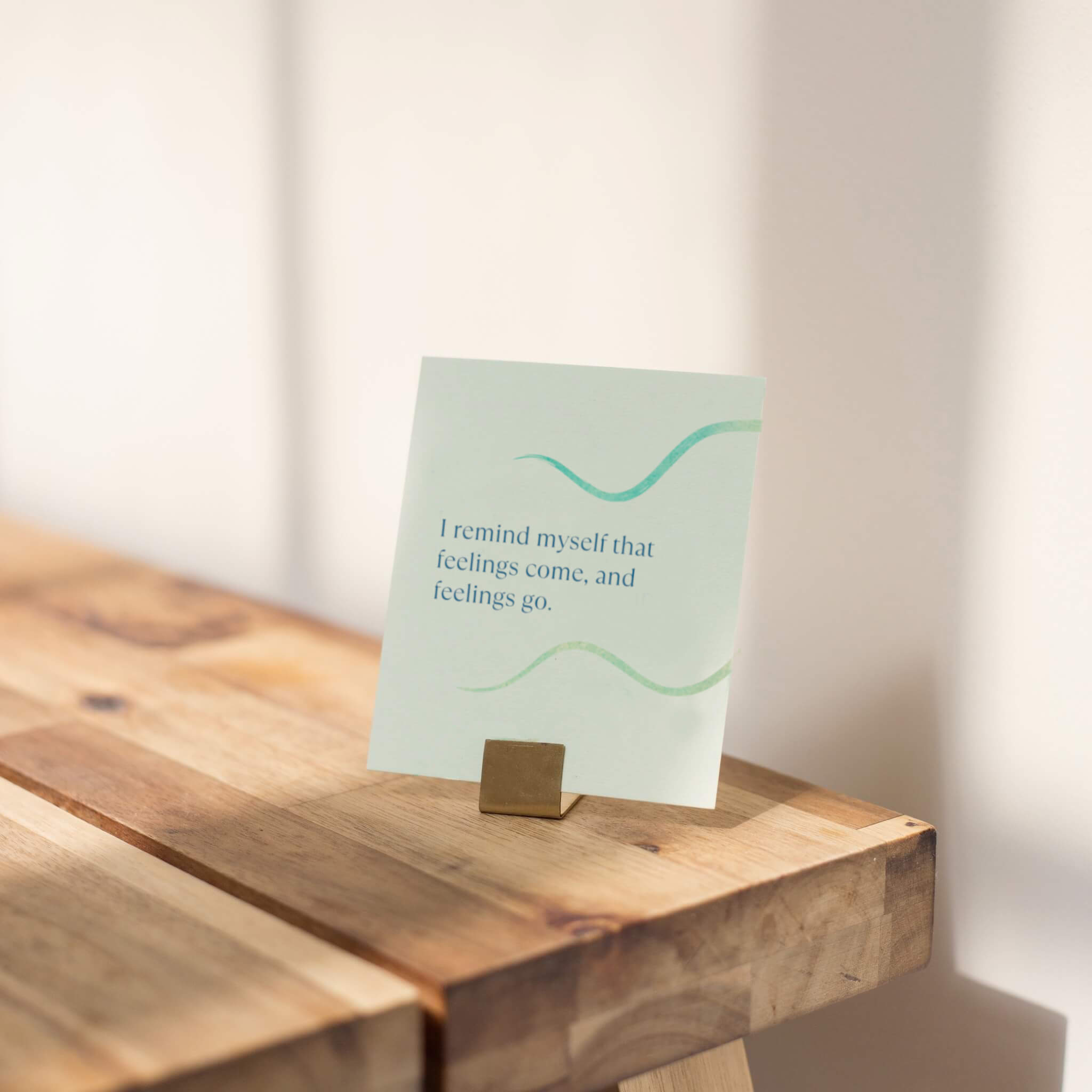
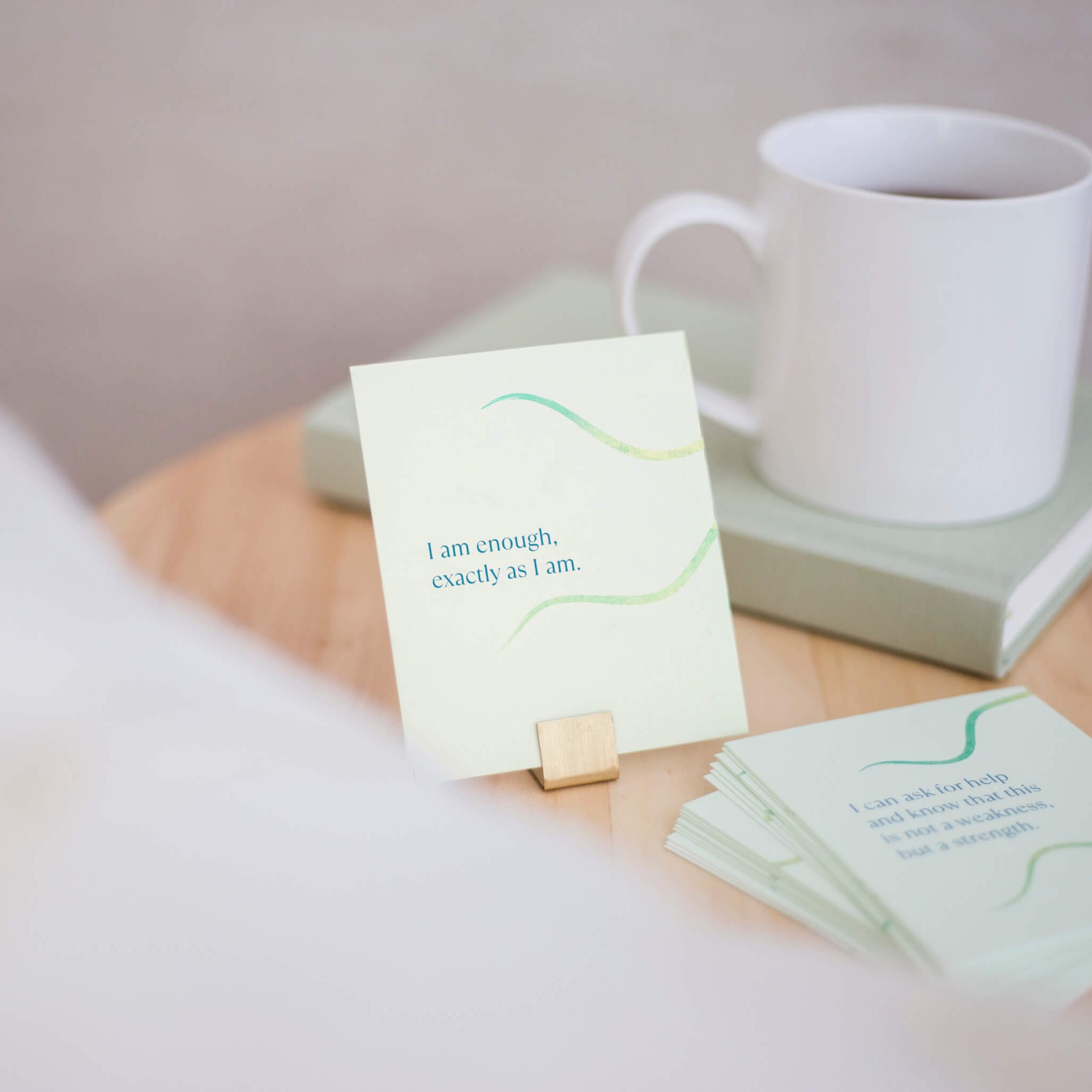
- Over 50 gentle reminders, like "you are allowed to change your mind"
- Undated pages, so a missed day costs you nothing
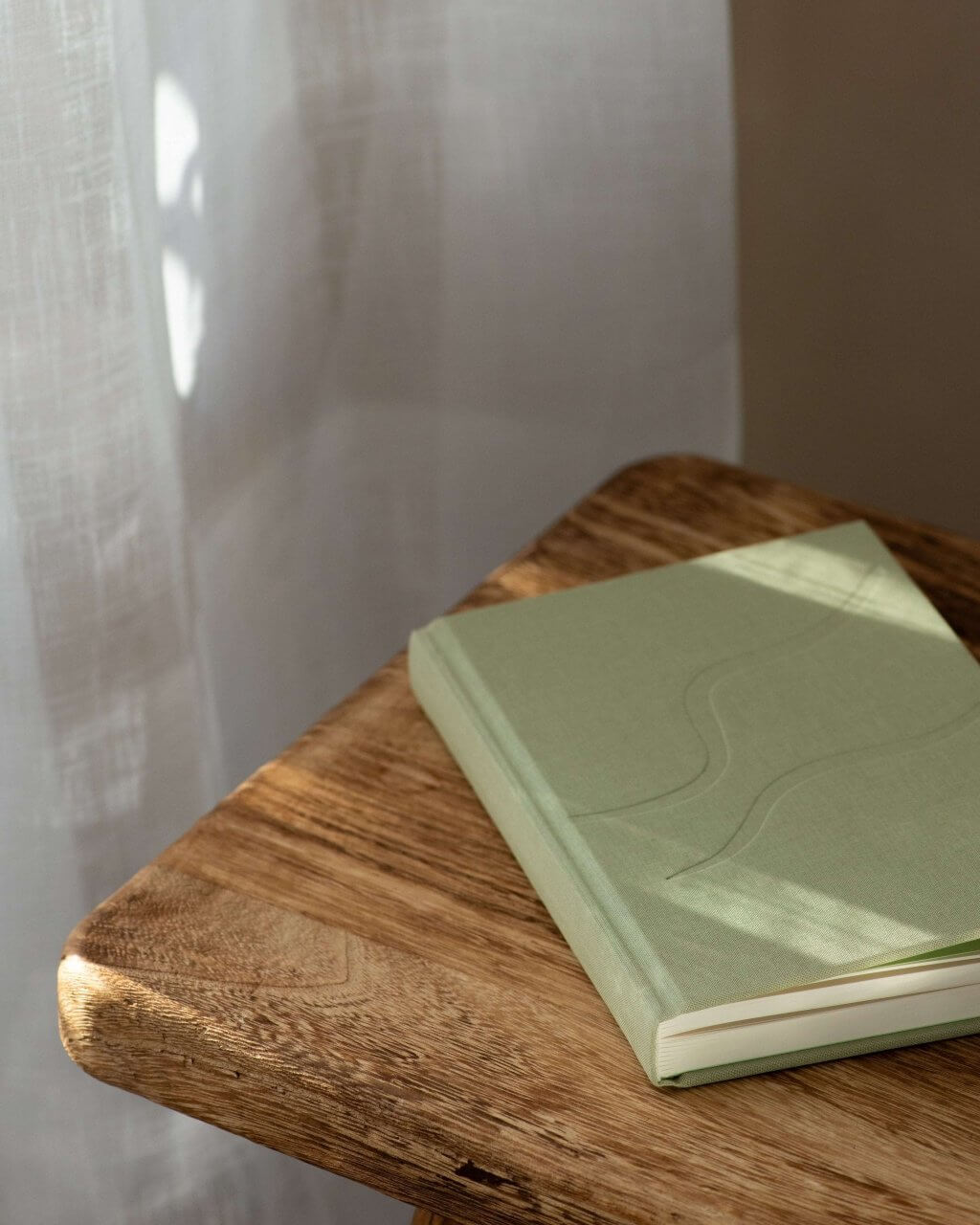
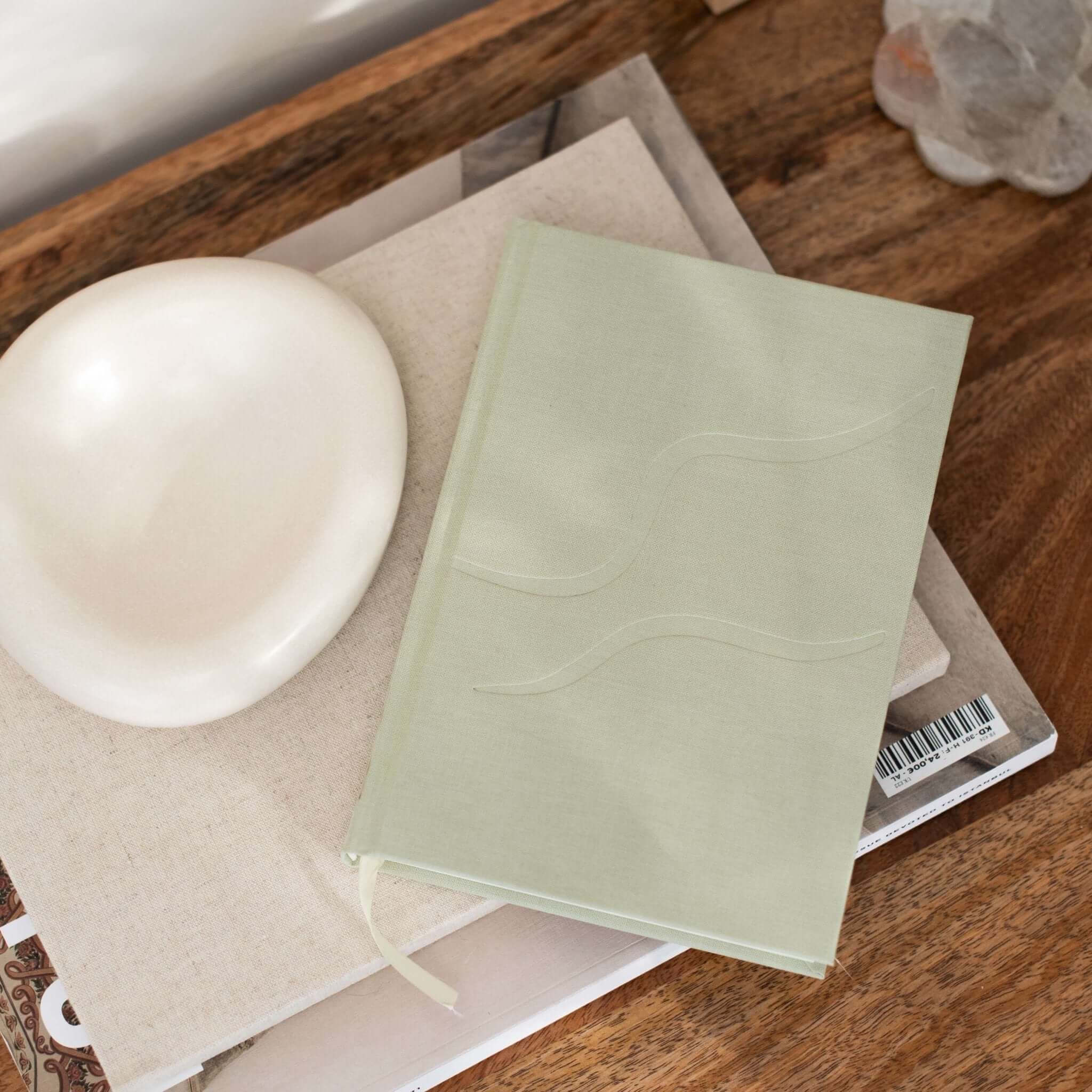
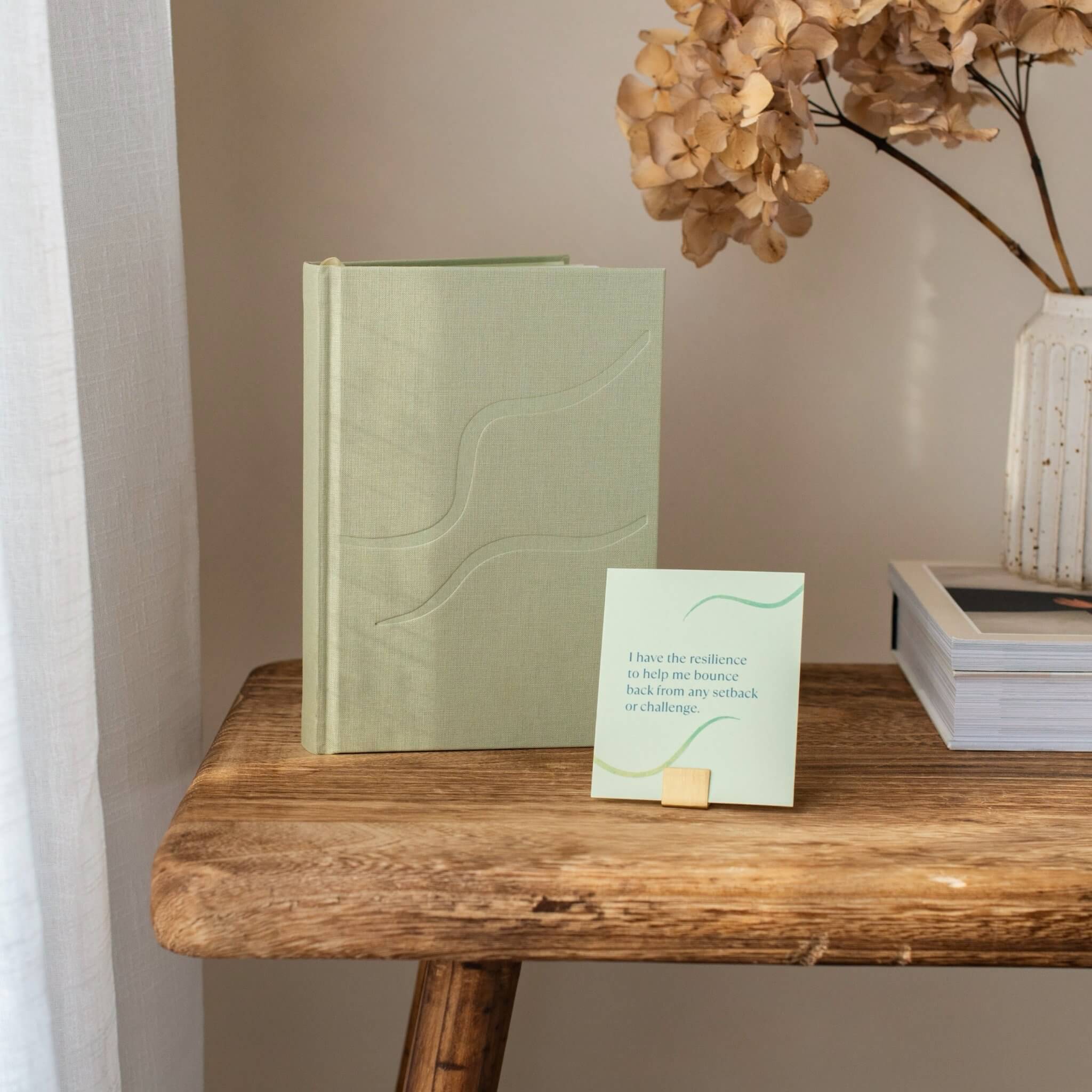
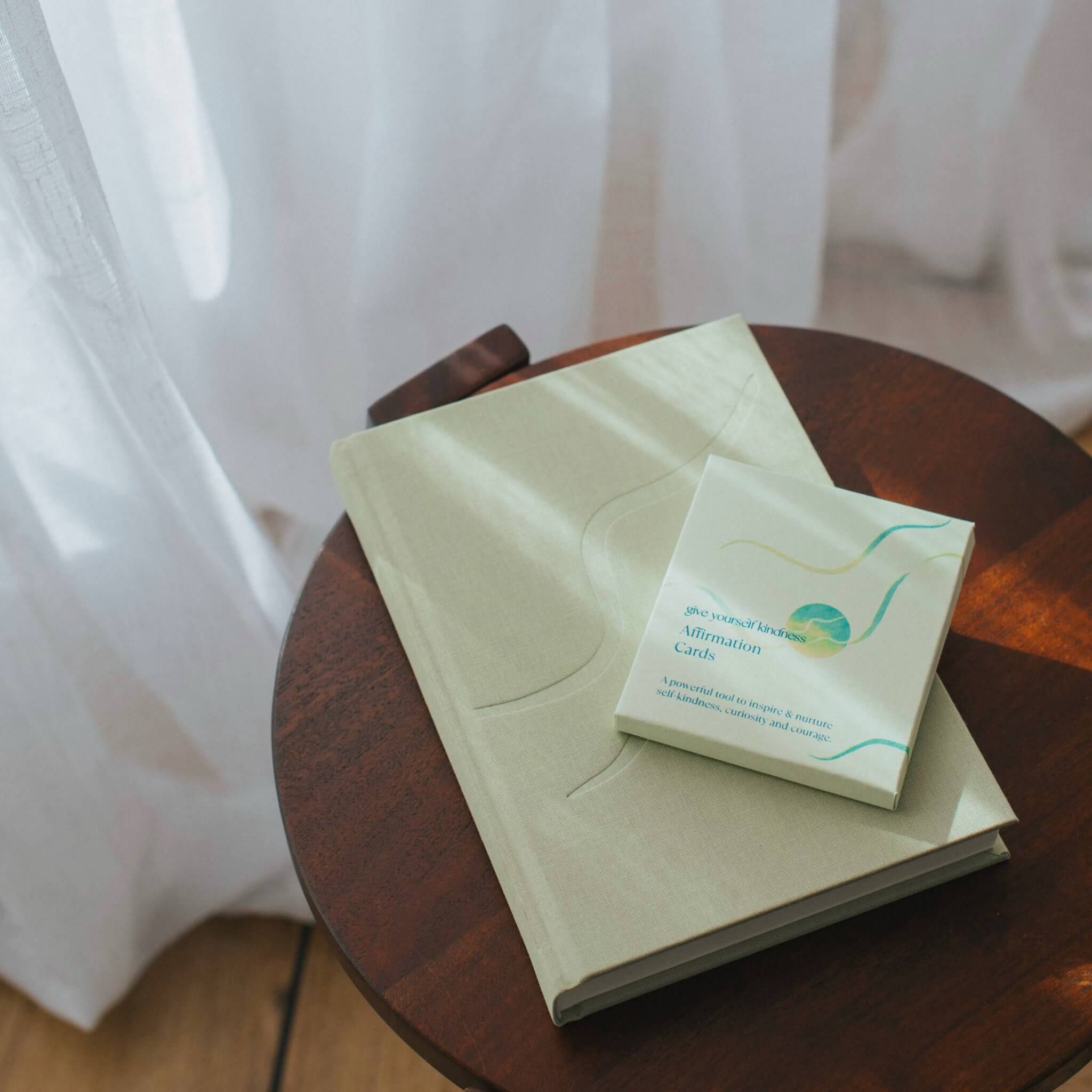
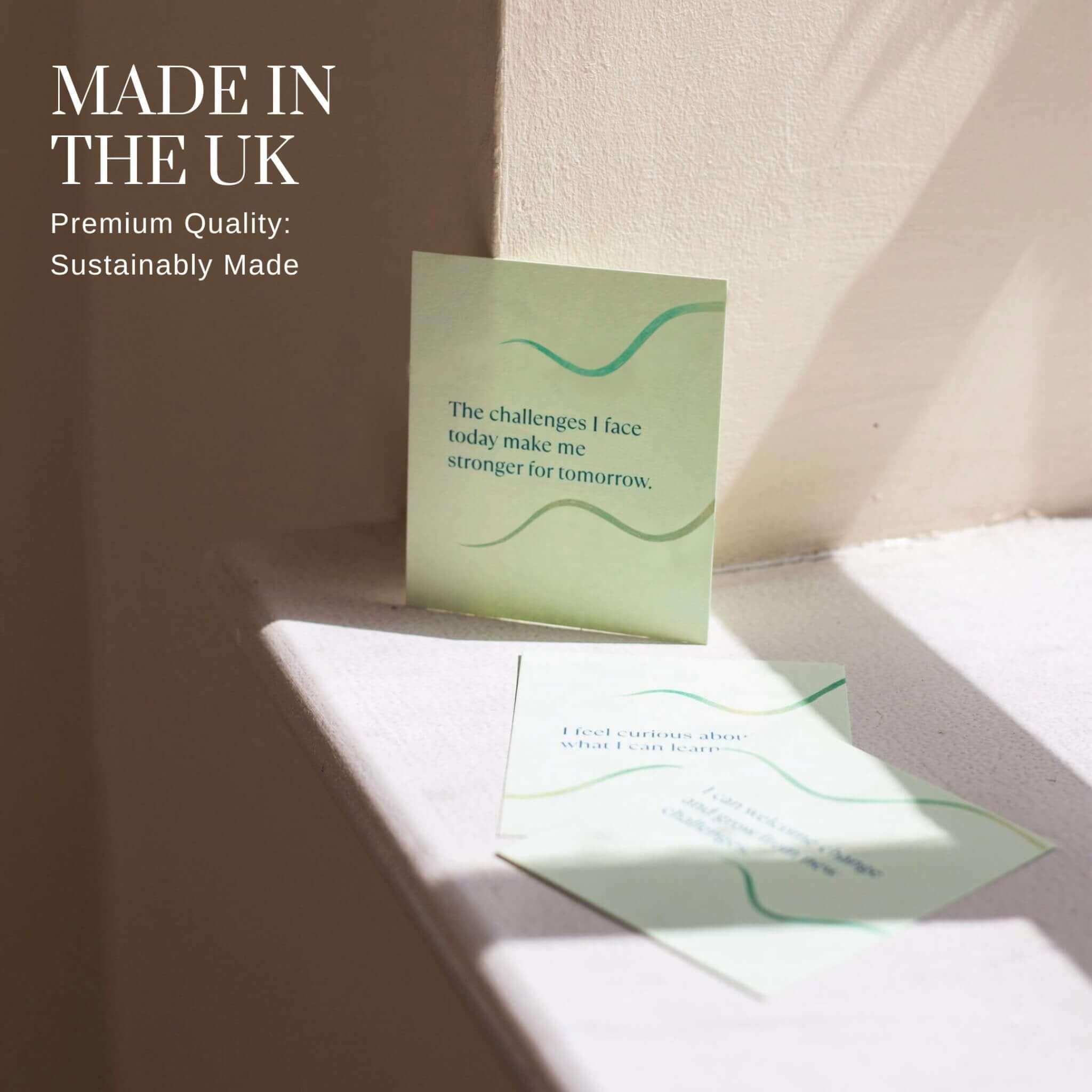
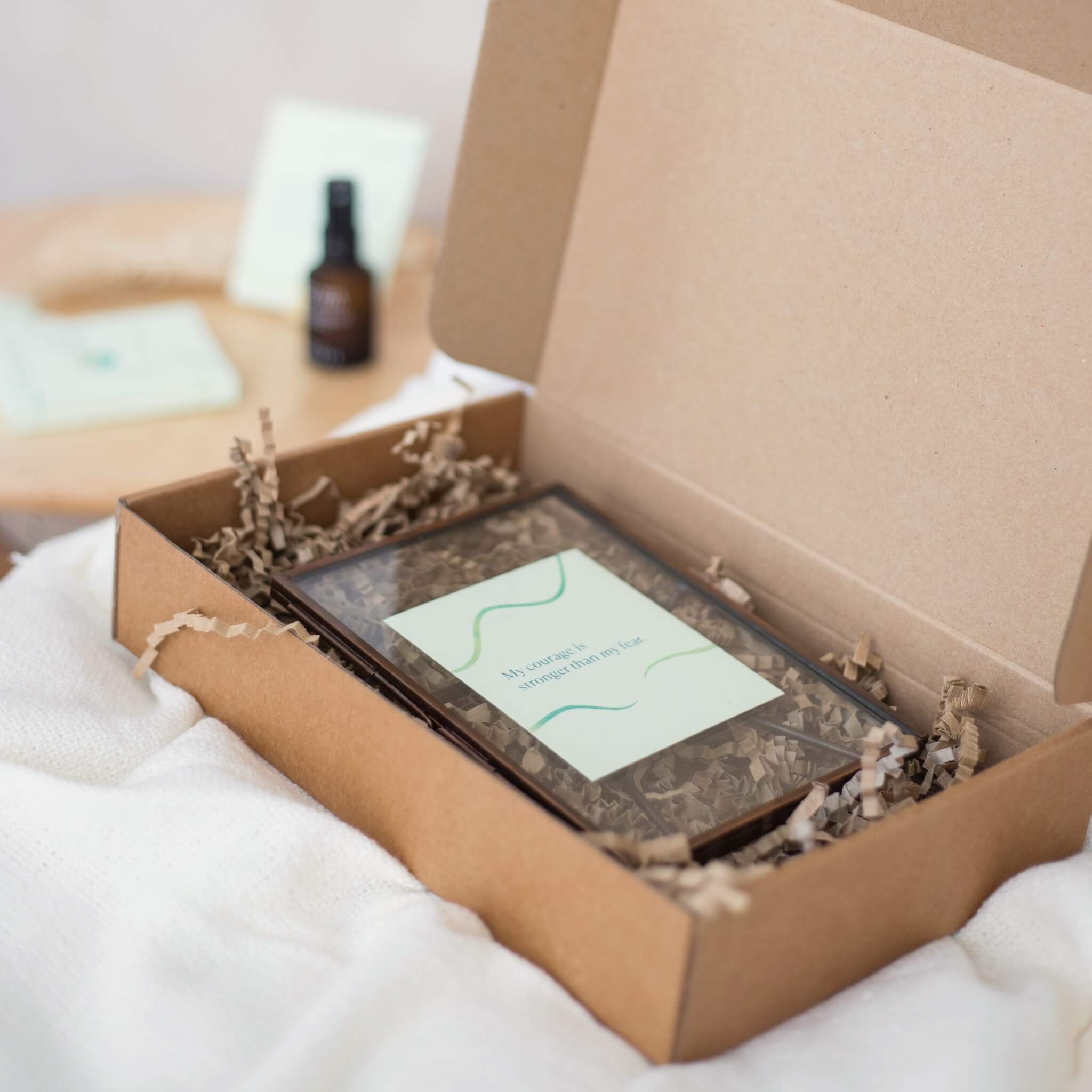
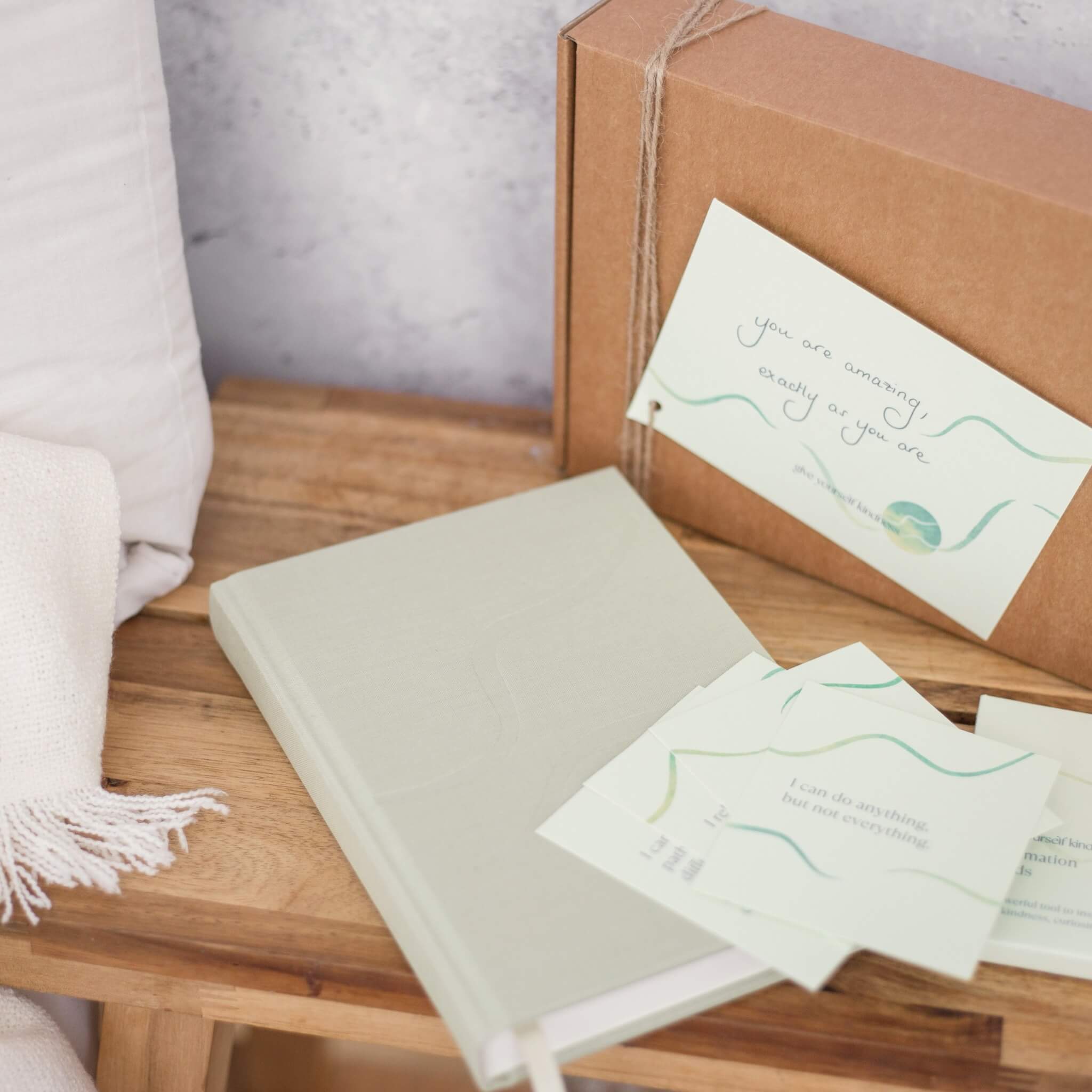
224 pages, A5, pistachio green cloth cover, 120gsm FSC-certified paper, ribbon marker, printed in the UK. Wrapped in bespoke tissue paper.
An honest note:
- Emotion-led rather than goal-led
Three real prompts from inside The Give Yourself Kindness Journal
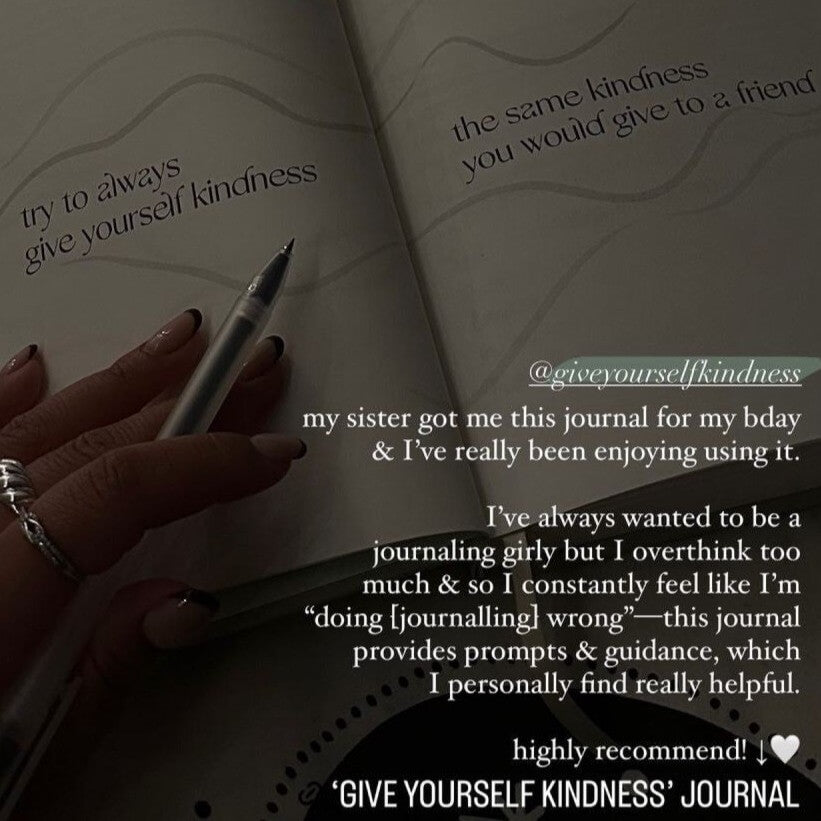
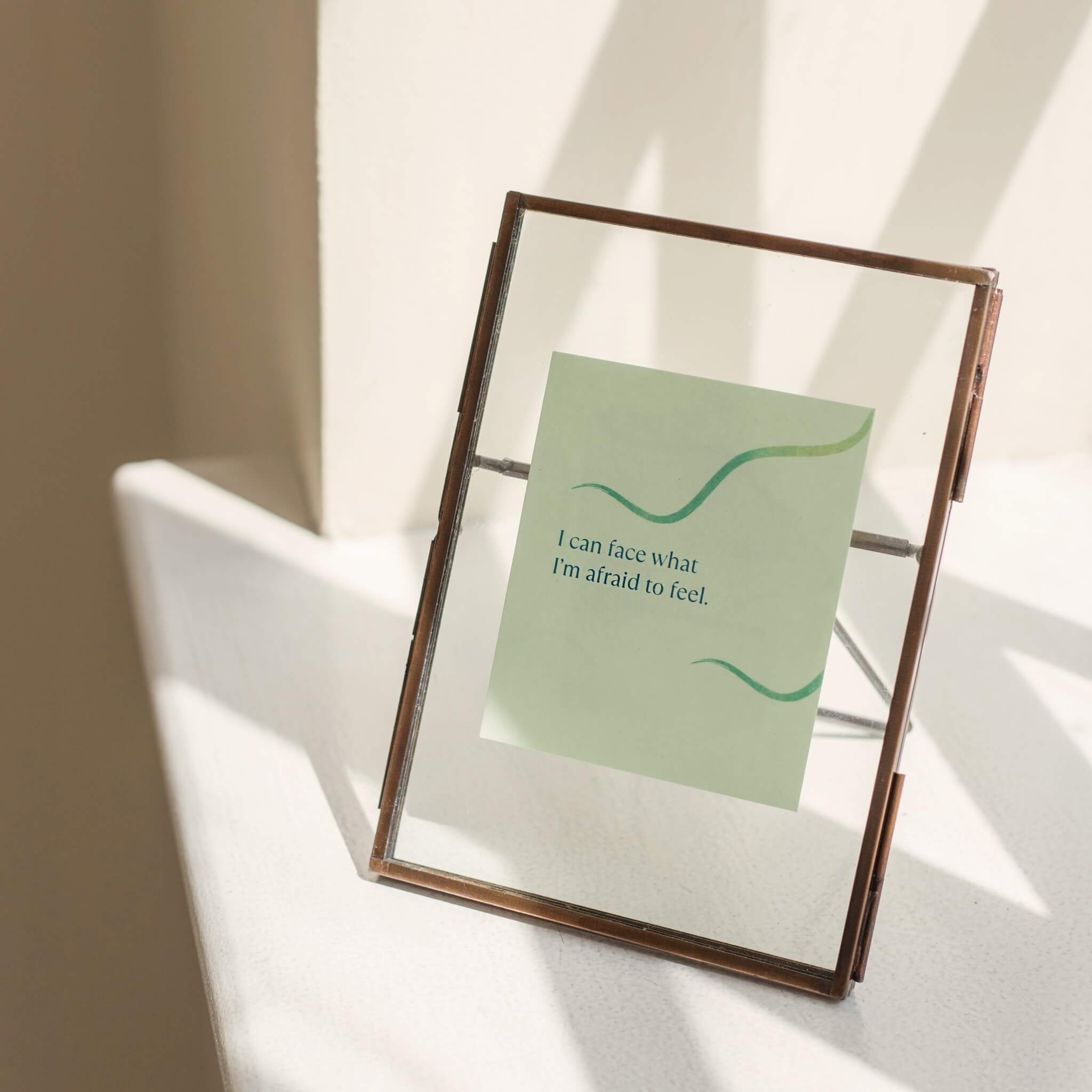
"I want to try and challenge myself to… Imagine a friend came to you with this idea - what would you say to them? Could you come up with any steps towards the challenge that might help?"
"Can you notice an emotion that you fear? Try to explore if there are any reasons or experiences behind this. Imagine a friend came to you, explaining that they feel that emotion. Write down what you would want to say to them or how you would want to reassure them"
"Can you think of a time when you've struggled to feel proud of something you’ve achieved, but if it had happened to a friend you would have felt proud, and wanted them to feel proud of themselves? Write down words of reassurance to show yourself that you deserve to feel proud."
Each one asks you to look at something real about yourself, then answer it the way a good friend would. That's self-discovery and growth on the same page.
The experts who recommend it
A psychotherapist, a mindfulness and compassion teacher and a mental health magazine on what they found inside it, in their own words.

Nina Holle
Psychotherapist
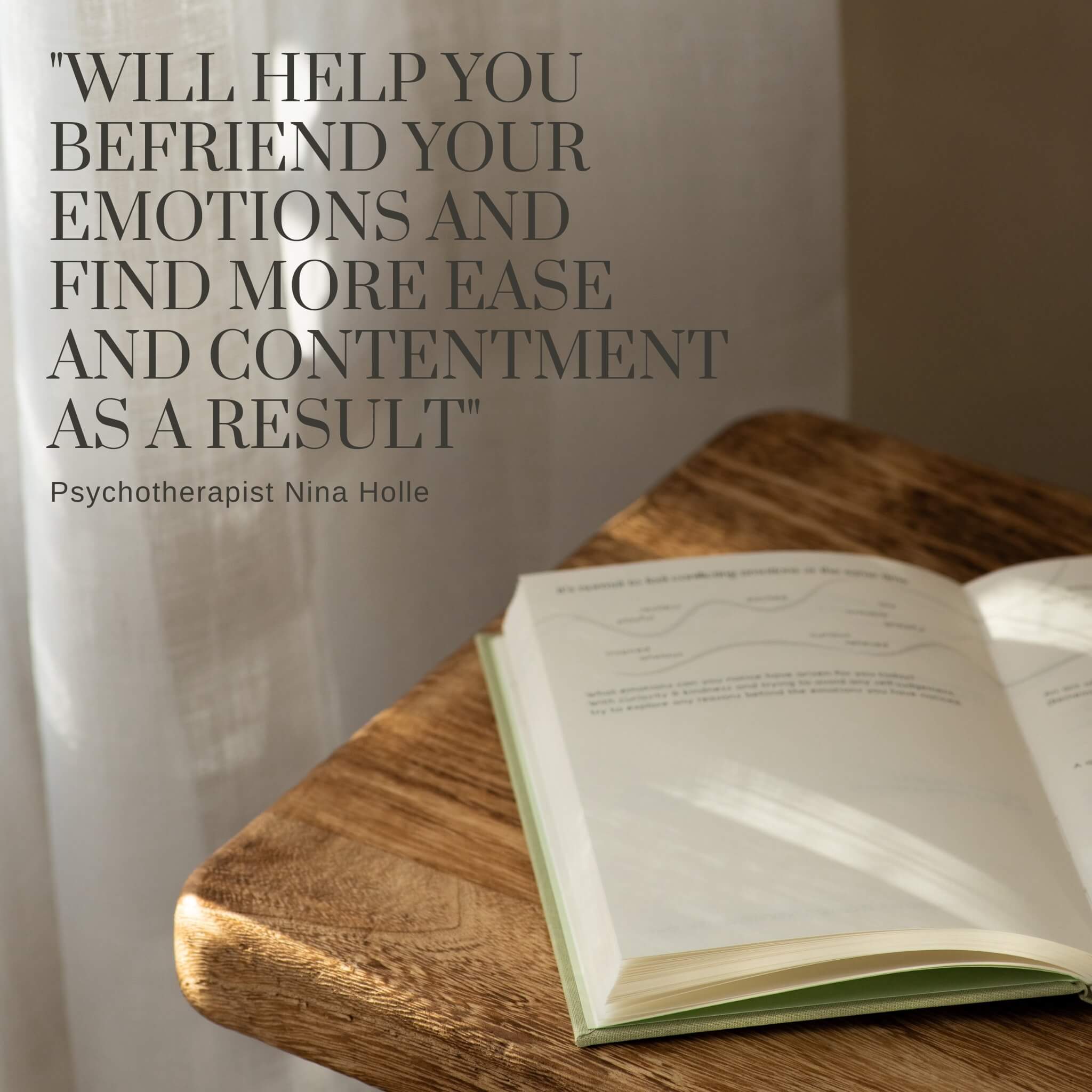
Read Nina Holle's review alongside the rest →"This is a wonderful, easy-to-use and transformative journal which will help you befriend your emotions and find more ease and contentment as a result. The journal is rooted in state-of-the-art research that emphasizes the importance of understanding our emotions in order to lower stress and lead a happy and meaningful life. Highly recommended for everyone who is on a journey to find more wellbeing!"

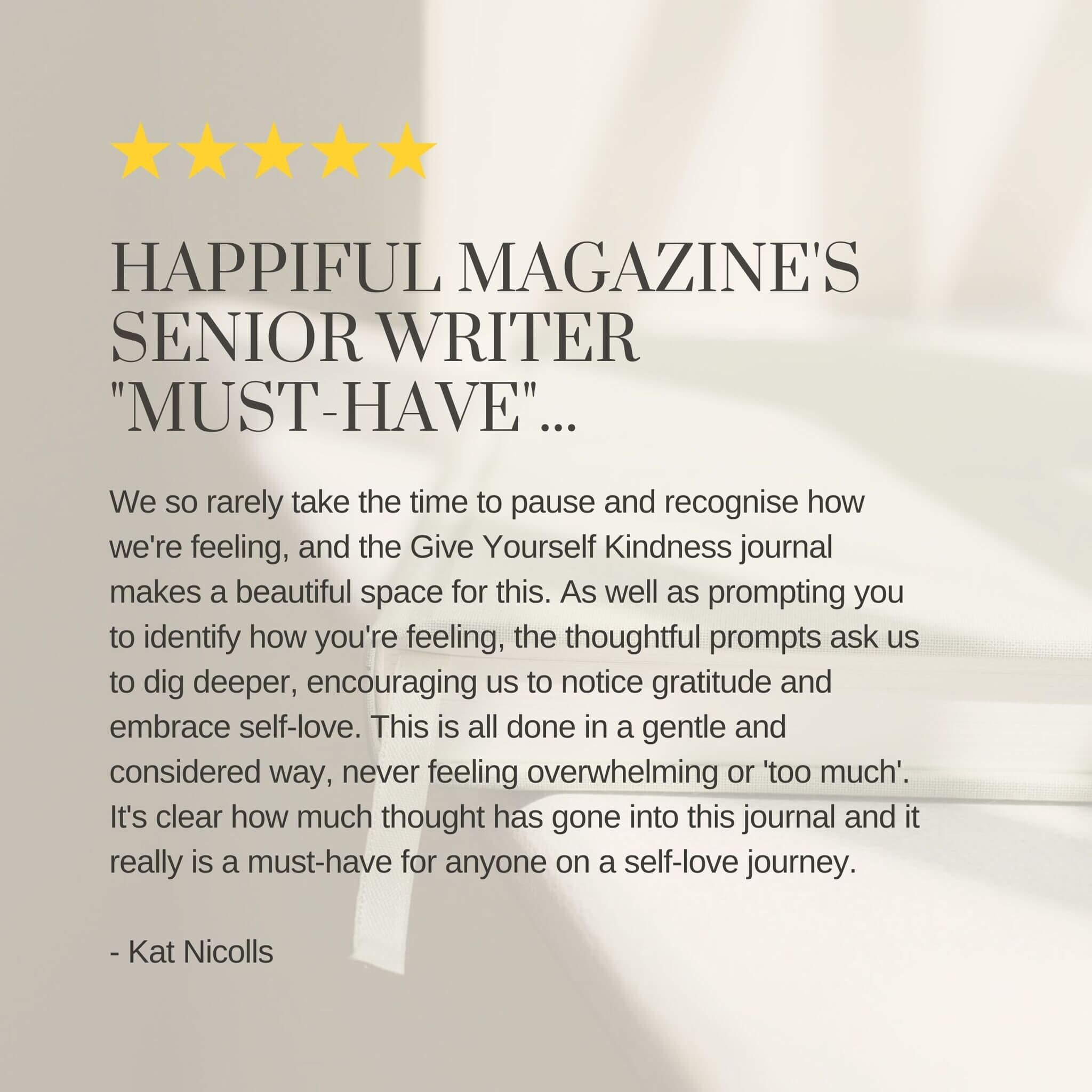
Senior writer, Happiful
Award-winning mental health magazine
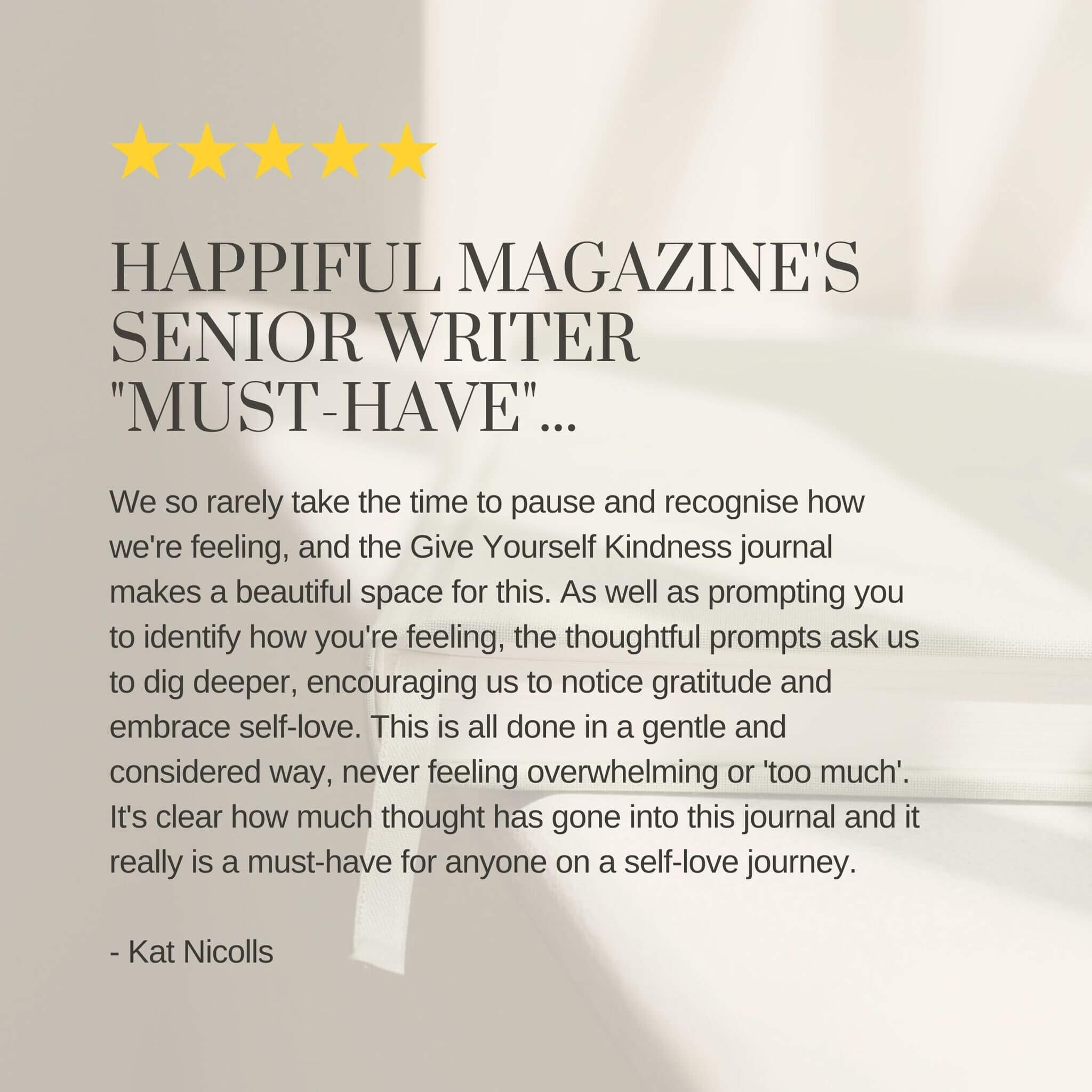
Read Happiful's review alongside the rest →"We so rarely take the time to pause and recognise how we're feeling, and the Give Yourself Kindness journal makes a beautiful space for this. As well as prompting you to identify how you're feeling, the thoughtful prompts ask us to dig deeper, encouraging us to notice gratitude and embrace self-love. This is all done in a gentle and considered way, never feeling overwhelming or 'too much'…"

Nic
Accredited Level 4 Mindfulness and Compassion teacher (CPCAB)
Read Nic's review alongside the rest →"…I love how the journal prompts change throughout which helps keep me motivated with my practice… It’s filled with beautiful gratitude prompts too to boost those happy vibes…"
It's also recommended by clinical psychologists at Harvard and Oxford:
 Dr Chris Germer, PhD, clinical psychologist and lecturer on psychiatry (part-time), Harvard Medical School; co-developed the Mindful Self-Compassion (MSC) program with Kristin Neff
"A warm invitation to make friends with your emotions and yourself!"
 Professor Willem Kuyken, PhD, DClinPsy, Ritblat Professor of Mindfulness and Psychological Science, University of Oxford; listed by Web of Science in the top 1% of the most cited scientists in the world
"…Writing can be creative, beautiful, resourcing, but it can also invoke an inner critic, rumination and procrastination. Rachel has curated the experience to make the writing intrinsically rewarding and the journal something to treasure."
Read every expert review in full →
Discover The Give Yourself Kindness Journal →
Self-discovery and personal growth: why kindness helps you grow
Personal growth often starts with understanding yourself: noticing what you feel, what you need and what matters to you. Kindness helps you keep going. Clinical psychologist Dr Annabelle Kyle Dortch explains that self-criticism gets in the way of learning, while self-compassion supports growth.
Dr Annabelle Kyle Dortch, PsyD
Clinical Psychologist, Los Angeles | Specialises in life transitions, relationships, stress, anxiety and the impacts of trauma
"…When we engage in self-criticism, we create a nervous system and brain state that is not conducive to learning or facilitating a growth-oriented mindset."
"Dr. Kristin Neff’s research… has repeatedly shown that self-compassion is key in decreasing anxiety & depression and developing courage, resilience, and a growth-oriented mindset."
What this means for a personal growth journal: the way you speak to yourself on the page matters as much as the question. A kind response leaves room to learn from what you notice.
Read Dr Dortch's full article: Why self-compassion is more effective than self-criticism →Writing itself can help with that growth. Clinical psychologist Dr Andreas Comninos sees journaling as something that reaches well beyond a daily record.

Dr Andreas Comninos
PhD Clinical Psychologist and EMDRAA Accredited Practitioner, with over 15 years' experience
Read what three clinical psychologists say about journaling →"Journaling can also stimulate creativity and be used as a self-reflection tool which can help enhance self-awareness, clarify meaning and purpose, and improve our ability to express ourselves."
"Overall, journaling is a versatile and accessible tool that supports mental health, personal growth, and emotional development."
So a self-discovery journal can be a personal growth journal too, as long as it helps you meet what you find with kindness rather than pressure.
The best self-discovery journals compared (2026)
These are the journals people most often weigh up when they want to understand themselves and grow. The first is mine. Each of the others is lovely for a different kind of reader.
| Journal | Best for | Format | Recommended by | What's inside |
|---|---|---|---|---|
| The Give Yourself Kindness Journal | Understanding your emotions and growing with kindness, especially if you're hard on yourself | Undated self-compassion journal with a different prompt every day for 90 days and an emotion tool on every page | Clinical psychologists at Harvard and Oxford. Used by counsellors with their clients | A5, 224 pages of 120gsm FSC-certified paper, cloth cover and ribbon marker. Over 50 gentle reminders |
| Self-Improvement Journal, by The School of Life | Checking in on what you want, and where you'd like to change | Hardback, 192 pages. The same five questions each session | Not stated | Questions such as “What do I need to tell myself?” and “In five years, I would be pleased if…” |
| Q&A a Day: 5-Year Journal | Seeing how short answers change over five years | Hardback. One question for each day of the year, repeated for five years | Not stated | 365 questions with room for 1,825 brief answers |
| The Five Minute Journal | A short daily gratitude routine | Undated. The same prompts each morning and evening | Not stated | Six months of daily pages, with a quote each day and weekly challenges |
| Start Where You Are, by Meera Lee Patel | Creative, illustrated self-exploration | Paperback, 128 pages. Open-ended prompts, writing and drawing | Not stated | Illustrated throughout, with quotes, open-ended prompts and room to write or draw |
| Goal planners, such as the BestSelf Self Journal | Goals, tasks and habits, alongside a self-discovery journal | Planner layouts; the Self Journal is an undated 13-week planner | Not stated | Goal-setting pages, daily schedules and habit tracking |
The Give Yourself Kindness Journal is the one here built around self-compassion and naming emotions. That won't suit everyone. If you'd rather work through goals, collect a five-year record or draw your way in, one of the others may be a better fit.
Which self-discovery journal suits you?
Which self-discovery journal suits you depends on how you'd like to grow. Pick the line that sounds most like you right now.
"I want to understand why I feel the way I do."
→ The Give Yourself Kindness Journal
An emotion tool on every page, and a daily prompt that asks you to explore the reasons behind what you noticed.
"I'd like to grow, without being so hard on myself."
→ The Give Yourself Kindness Journal
Its prompts ask what you'd say to a friend, so the encouragement ends up in your own handwriting.
"I'm new to self-discovery and not sure where to start."
→ The Give Yourself Kindness Journal
The question is already waiting for you, and a few honest words count. The prompts and emotion tool show you the process as you go.
"I'd like to work on my goals and what I want from life."
→ The School of Life Self-Improvement Journal
Five steady questions about what you want, where you'd like to change and where you're heading.
"I'd like a tiny daily habit and a long view."
One question a day, the same date each year, so you can see how you've changed.
"I'd like a quick routine that's the same every day."
Built for speed and consistency, with a focus on gratitude.
"I think in pictures as much as words."
→ Start Where You Are, by Meera Lee Patel
More art and open reflection, with less structure.
"Mostly, I want to plan tasks and track habits."
Good for the doing. Many people keep one alongside a self-discovery journal for the understanding.
Other journals for self-discovery and growth
Mine isn't the only good way in. Each of these suits a different way of growing.
Self-Improvement Journal, by The School of Life
🧭 Best for checking in on what you want
What it offers:A hardback guided journal for vows, goals and aspirations, built around five questions you return to each session, from "What interests or excites me?" to "I need more… / I need less…".
How it's different:It looks ahead to goals and choices, where The Give Yourself Kindness Journal starts with how you feel. Both can sit happily side by side.
Choose this if:You'd like regular, steady questions about what you want from life and where you'd like to change. See the Self-Improvement Journal →
Q&A a Day: 5-Year Journal
📅 Best for a five-year view
What it offers:One question for each day of the year, answered in a few lines, then asked again on the same date for five years.
How it's different:The questions repeat each year by design, so the insight comes from comparing your answers over time rather than from new questions.
Choose this if:You'd like a very small daily habit and a long-term record of how you change. See Q&A a Day →
The Five Minute Journal
⏱️ Best for a quick daily routine
What it offers:The same short prompts every morning and evening: gratitude and intentions to start the day, and good moments to end it.
How it's different:It's built for consistency and speed rather than exploring why you feel the way you do. That's its strength if a simple habit is what you're after.
Choose this if:You'd like a five-minute gratitude routine and don't mind the same prompts each day. See The Five Minute Journal →
Start Where You Are, by Meera Lee Patel
🎨 Best for creative self-exploration
What it offers:An illustrated journal by artist Meera Lee Patel, mixing open-ended reflective prompts with quotes and space to draw as well as write.
How it's different:It's art-led and open, with less structure than a prompt-a-day journal, a gentle route into reflection if words alone feel limiting.
Choose this if:You'd like to explore yourself creatively, at your own pace. See Start Where You Are →
Goal planners and productivity journals
📊 Best for goals and tasks, alongside
What it offers:Planners such as the BestSelf Self Journal, the Productivity Planner and the Panda Planner, with pages for goals, daily schedules and habits.
How it's different:They help you track what you're doing rather than explore how you feel. Many people find the two work well together: one for plans, one for understanding yourself.
Choose this if:Your main aim is planning and tracking, and you'd like a separate space for reflection. See BestSelf's journals →
What makes a good journal for self-discovery and self-exploration
Six things make a journal good for self-discovery, whichever one you choose. Clinical psychologist Dr Chris Irons, a specialist in Compassion Focused Therapy, writes that "Journalling can be a powerful way of developing self-reflection, self-discovery and enhancing emotion regulation."
 From Dr Chris Irons' contribution to The benefits of journaling: from 3 clinical psychologists
It looks at more than one side of you
Emotions, needs, patterns, the way you talk to yourself, and growth. A journal that only asks about gratitude, or only about goals, shows you one part of the picture.
The prompts change
The same question every day tends to bring the same answer. Fresh angles help: some days an emotion, other days what you value or a pattern you've noticed.
Kindness is built in
Self-discovery can show you things you'd like to change. A journal that helps you respond with kindness, rather than shame, makes it easier to keep looking.
It helps you name what you feel
A visual guide, like an emotion wheel, helps you find words beyond "good" or "bad". Naming a feeling is often the first step to understanding it.
It asks you to reflect, not just record
Recording: "Today I went to work, had lunch with Sarah, went to the gym." Reflecting: "I felt most energised after lunch with Sarah. Connection might matter more to me than I've been prioritising." Look for prompts that ask why, not only what happened.
The pages are undated
Self-discovery isn't linear. Undated pages let you come back after a gap without any guilt over missed days.
When self-discovery journaling feels hard
Self-discovery journaling can feel hard sometimes, and that's normal. Here are three worries people often share, with a gentle answer to each.
"I don't like what I'm discovering about myself."
That's often the moment kindness matters most. Noticing something you'd like to change is part of growing, not proof that something is wrong with you. If you worry that being kind to yourself means letting yourself off the hook, Dr Kristin Neff answers that in Self-compassion or self-indulgence?
"Isn't this just self-improvement with extra steps?"
Growth and understanding go hand in hand. Getting curious about yourself often shows you which changes really matter to you.
"I don't have time to write pages every day."
You don't need to. The Give Yourself Kindness Journal asks for a few honest sentences, not pages, and because it's undated, a missed day doesn't break anything.
Why I made The Give Yourself Kindness Journal
I made it for myself first. After Compassion-Focused Therapy, I wanted somewhere to keep practising kindness towards my own harsh inner critic, and I couldn't find a journal that did that. Understanding myself better came with it.
That's why every page begins with noticing what you feel, and why so many prompts ask what you'd say to a friend. After it was published, clinical psychologists at Harvard and Oxford reviewed it and recommended it, and counsellors began using it with their own clients between sessions.
My verdict: the best journal for self-discovery and personal growth
🌱 My pick
Best for self-discovery and personal growth: The Give Yourself Kindness Journal. Choose it if you'd like to understand your emotions and grow with kindness, not pressure.
🧭 For goals and aspirations
Best for checking in on what you want: The School of Life Self-Improvement Journal. Choose it if you'd like steady questions about your goals and where you'd like to change.
🎨 For a creative route
Best for a creative, low-structure alternative: Start Where You Are. Choose it if you'd like to explore through art and open reflection, alongside or instead of structured prompts.
When you might need more than a journal
If what you're discovering feels heavy, or low mood, anxiety or old pain has stayed with you for a while, please speak to your GP. A journal can be a companion to support, never a substitute for it.
Mind has clear guidance on getting help, and Samaritans are there on 116 123, free, at any hour.
Begin your self-discovery journey
Self-discovery isn't about fixing yourself. It's about understanding yourself, and growth tends to follow from there. The best self-discovery journals:
- Look at more than one side of who you are
- Change their prompts, so answers never go on autopilot
- Build in self-compassion rather than self-criticism
- Help you name your emotions
- Ask you to reflect, not just record
- Leave the dates off
Whichever journal you choose, I hope it helps you meet yourself kindly.
Frequently asked questions
What's the difference between self-discovery and self-exploration journaling?
Self-discovery and self-exploration journaling describe the same practice: writing to understand your emotions, needs and what matters to you, rather than tracking tasks or goals. People use the two words interchangeably, so this guide covers both. Whichever word you use, a good journal asks why you feel what you feel, not only what happened.
How is self-discovery different from self-improvement?
Self-discovery and self-improvement work best together. Self-discovery is getting curious about what you feel, need and value. Self-improvement is the change you choose from there. Understanding often comes first, and when you're kind about what you find, the changes you make tend to fit who you are.
Can I use both a self-discovery journal and a productivity journal?
Yes, you can use a self-discovery journal and a productivity journal side by side, because they do different jobs. A productivity journal or planner holds tasks, goals and habits. A self-discovery journal like The Give Yourself Kindness Journal helps you understand how you feel and what you need, which can make it clearer which goals are really yours.
Why does prompt variety matter for self-discovery?
Prompt variety matters for self-discovery because the same question every day tends to get the same answer. A new question each day lets you look at yourself from a different angle: one day an emotion, another day something you're proud of or a challenge you'd like to try. The Give Yourself Kindness Journal has a different prompt every day for 90 days.
What if I don't like what I discover about myself?
If you don't like what you discover about yourself, that's a very human moment, and it's where kindness matters most. Clinical psychologist Dr Annabelle Kyle Dortch describes the goal of self-compassion as developing ‘a safe place to land within ourself when we inevitably make mistakes, fall short of expectations or experience suffering.’ From there, it can feel easier to learn from what you've noticed rather than turn on yourself.
How long until I notice benefits from self-discovery journaling?
How long it takes to notice benefits from self-discovery journaling is different for everyone, and there's no deadline. Some people notice something small after a few entries, like a feeling they hadn't named before. For others it builds slowly. Coming back gently, even for a few lines, matters more than how much you write.
Why are you recommending your own journal?
I'm recommending my own journal, The Give Yourself Kindness Journal, because it's the one I made for exactly this. I made it for myself first, after Compassion-Focused Therapy, as somewhere to keep practising kindness towards my own harsh inner critic, and understanding myself better came with it. It's recommended by clinical psychologists at Harvard and Oxford, and I've described every other journal here as its publisher does.
What are some good journals for personal growth?
Good journals for personal growth include The Give Yourself Kindness Journal, for growing through understanding your emotions with kindness; The School of Life Self-Improvement Journal, for checking in on goals and aspirations; and Start Where You Are, for creative, illustrated self-exploration. The best one depends on whether you'd like to grow by understanding yourself, by setting goals or by creating.
What is the best journal for self-improvement?
The best journal for self-improvement depends on how you like to change. If you'd like to improve by understanding yourself first, without being hard on yourself, I recommend The Give Yourself Kindness Journal, the self-compassion journal recommended by Harvard and Oxford psychologists. If you'd rather focus on goals and aspirations, The School of Life Self-Improvement Journal asks five steady questions each session.
What is a self-guided journal?
A self-guided journal is a journal with prompts or questions already on the page, which you work through on your own, at your own pace. It's different from a blank notebook, because you don't have to decide what to write. For self-discovery, look for one with prompts that change, help naming emotions and undated pages.
What should I look for in a guided growth journal?
In a guided growth journal, look for prompts that ask why as well as what, a different question each day, help naming what you feel, undated pages and a kind tone, so growing never turns into criticising yourself. Check who made it and whether any professionals recommend it. A journal that helps you understand yourself gives growth something steady to build on.
About the author

Rachel Smith, DipBSoM
Founder of Give Yourself Kindness and qualified meditation teacher
I trained as a meditation teacher with the British School of Meditation and qualified with distinction. I'm not a psychologist or a therapist, so every clinical point on this page comes from a named, credentialed expert.
For years I lived with anxiety and a loud inner critic. Compassion-Focused Therapy changed how I speak to myself, and The Give Yourself Kindness Journal grew out of wanting to keep that going. It's recommended by clinical psychologists including Dr Chris Germer of Harvard Medical School and Professor Willem Kuyken of the University of Oxford, and accredited counsellors use it with their own clients.
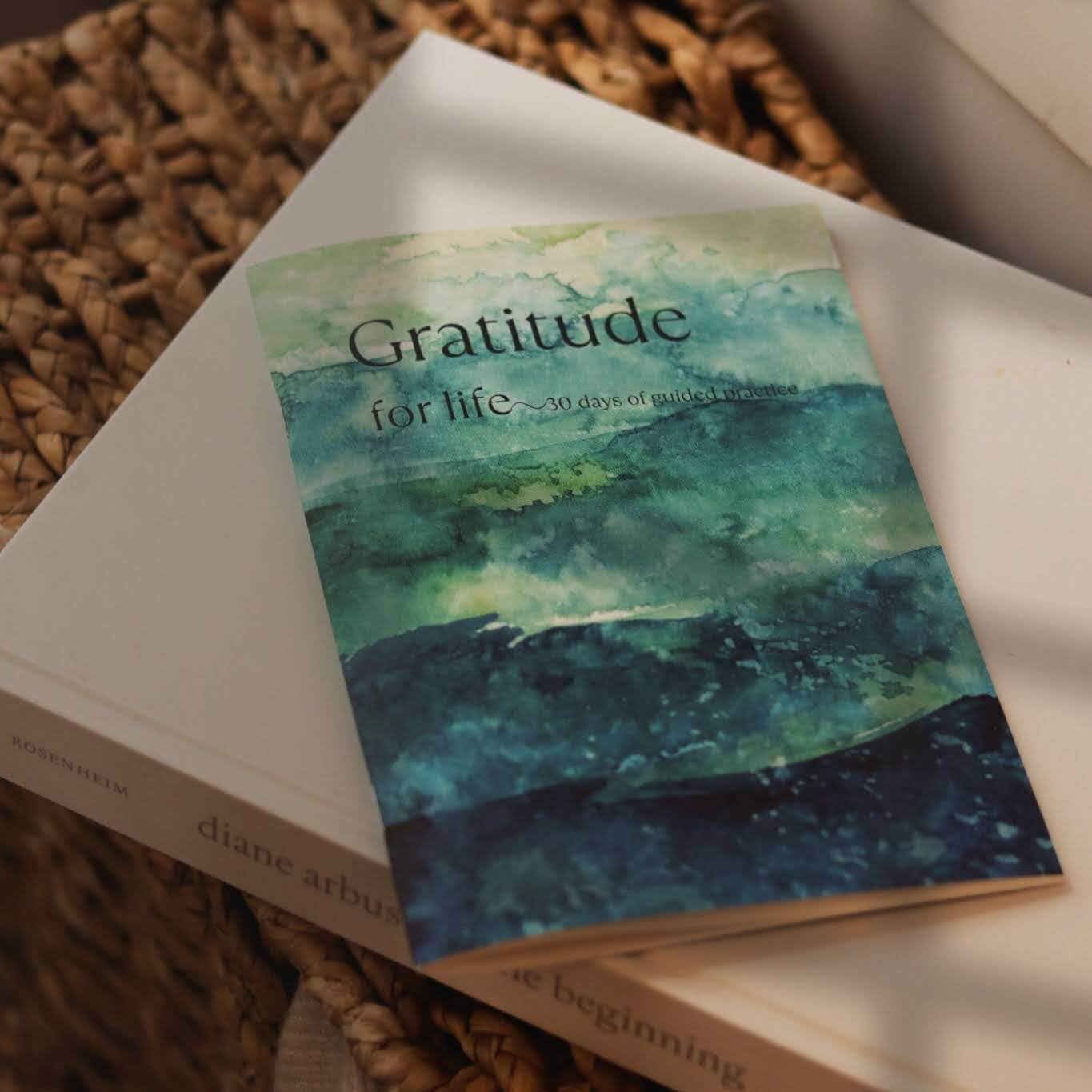
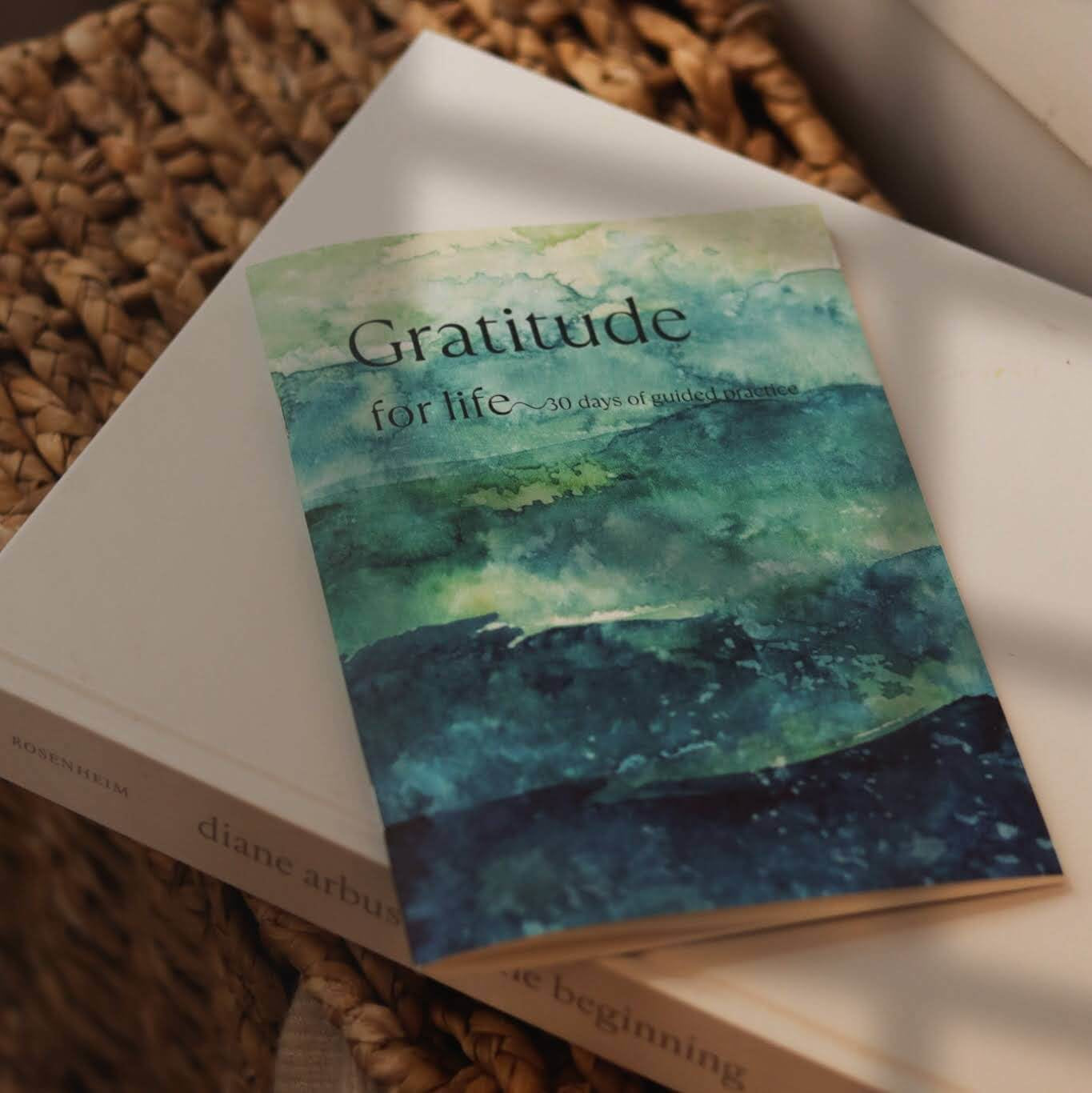
Give Yourself Kindness makes two journals: The Give Yourself Kindness Journal, a 90-day self-compassion journal recommended by Harvard and Oxford psychologists, and The 30-Day Gratitude Journal, a gratitude journal with a different thoughtful prompt each day.
Continue reading
From the experts quoted here
-
Why self-compassion is more effective than self-criticismDr Annabelle Kyle Dortch, PsyD, Clinical Psychologist
-
 Self-compassion or self-indulgence?Dr Kristin Neff, PhD, University of Texas at Austin
-
The benefits of journaling: from 3 clinical psychologistsDr Chris Irons, Dr Andreas Comninos and Dr Josh Mirmelli
Related guides
- If you feel you don't really know who you are: the best journal to get to know yourself
- Best guided journals compared
- Best reflection journals compared
- Best self-compassion journals compared
- Best guided journal for tracking emotions
- Best journal for anxiety and overthinking
- What mental health experts say about The Give Yourself Kindness Journal
Looking for a gratitude journal instead? The 30-Day Gratitude Journal gives you a different thoughtful prompt each day, with no lists of three.


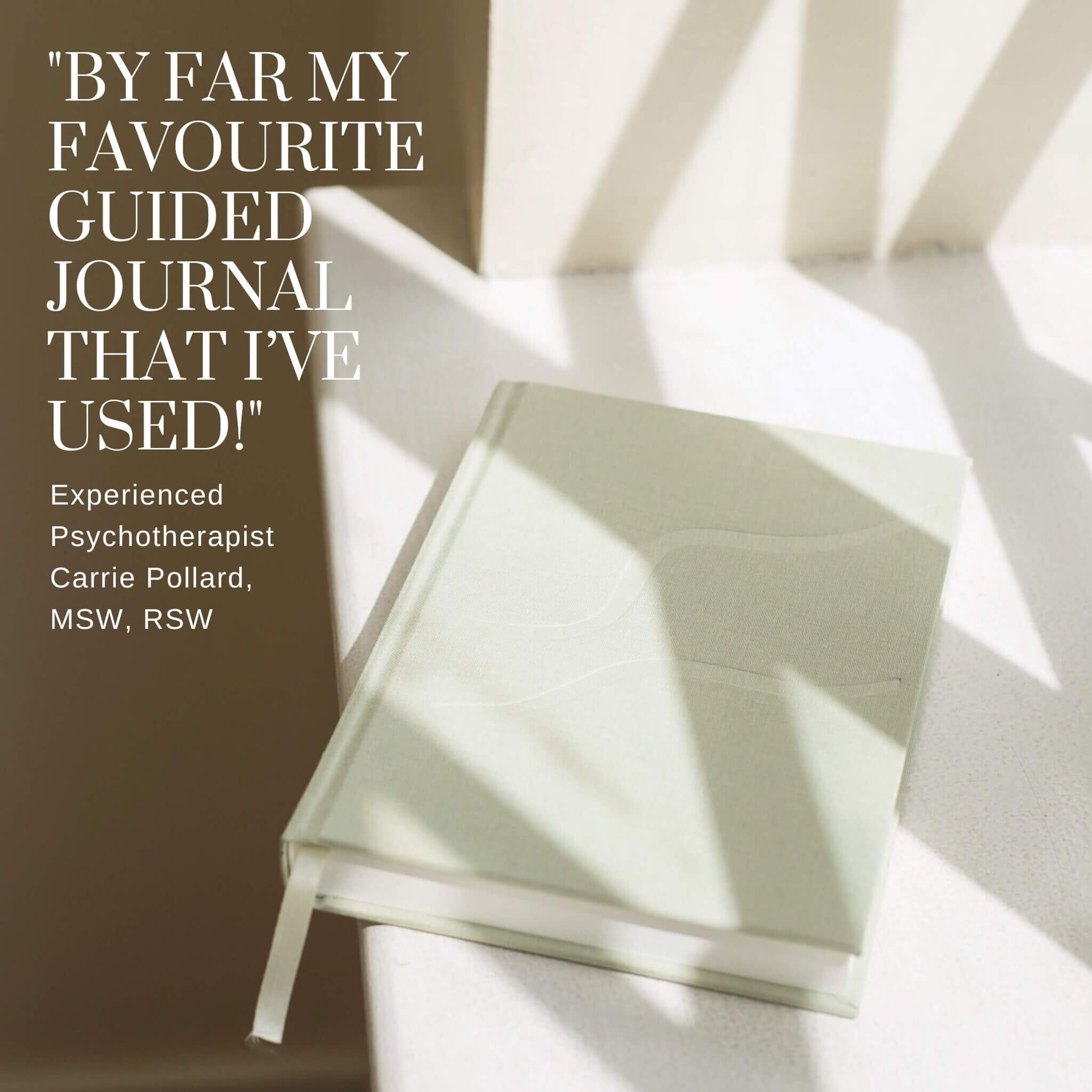
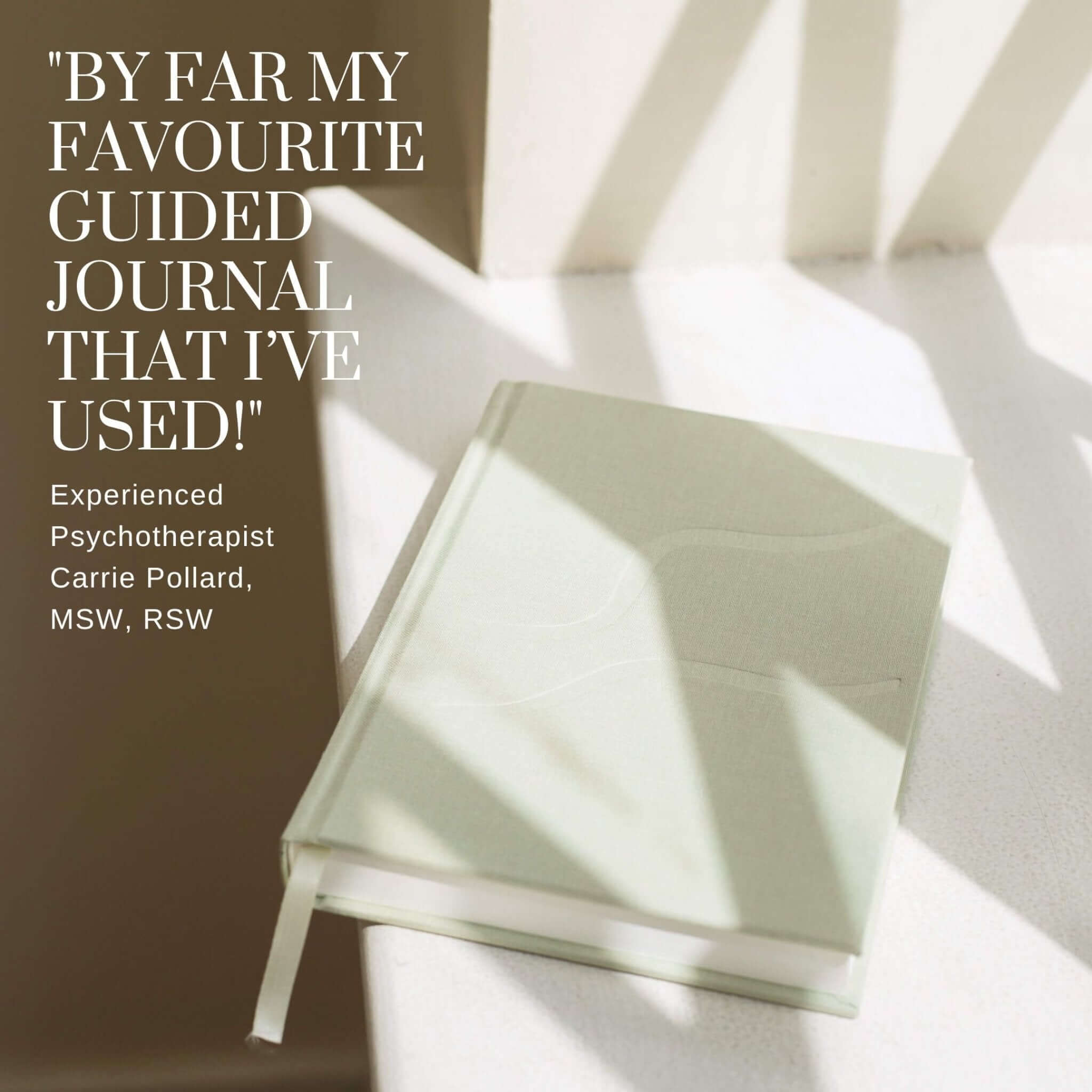
“By far my favourite guided journal that I’ve used!”
“Being able to identify what you’re feeling and compassionately explore the ‘why’ is central to self-connection and self-growth.” That’s what every page of The Give Yourself Kindness Journal is made for.