



Quick answer
Journaling can change negative self-talk when you write back to the harsh voice with the kindness you'd offer a friend. It sounds simple, but it can be hard to do on your own. Clinical psychologist Dr Chris Irons explains that it's "useful to consider which part of ourselves is doing the journalling", because on a difficult day the self-critic can end up holding the pen. That isn't a failing. With gentle, guided practice, many people find the harsh voice starts to lose some of its hold.
 Dr Chris Irons, Clinical Psychologist specialising in Compassion Focused Therapy. Read his full article
Try this now: write down one harsh sentence exactly as it sounds, then write what you'd say to a friend who said it about themselves.
For years, I believed the harsh voice in my head was protecting me. "You're not good enough." "Everyone else has it together." "You always mess things up." I thought this inner critic was keeping me motivated, pushing me to improve.
I was wrong. What I learned through Compassion-Focused Therapy, and have since heard again and again from the clinical psychologists and self-compassion researchers I work with, is this: negative self-talk doesn't protect you. It keeps you stuck.
Journaling became one of the places that changed, though not straight away, and not on a blank page.
About this guide. I'm Rachel Smith, founder of Give Yourself Kindness and a qualified meditation teacher. I'm not a psychologist. Everything clinical on this page comes from named clinical psychologists and researchers, with their credentials and a link to their full article, so you can read their words for yourself.
How to use journaling to change negative self-talk: three steps
To use journaling to change negative self-talk, write down what the critical voice says, notice which part of you is speaking, then answer it the way you would answer a friend. These three steps draw on exercises clinical psychologists use in Compassion Focused Therapy. Any notebook will do. There's no right or wrong way to begin, and it's fine if it feels awkward.
Write the harsh sentence down as it sounds
Not a tidied version. If the voice says "you always mess this up", write that. Seeing it on paper can give you a little distance from it. Clinical psychologist Dr Maria Tucknott suggests paying attention to "the exact words or tone you use with yourself", and her letter exercise begins in the same place: "First, write down what your inner critic is saying."
 From Dr Maria Tucknott's article, How to stop beating yourself up
Ask which part of you is writing
This step can change what you write next. From a Compassion Focused Therapy point of view, the words on the page depend on which part of you is holding the pen.
Dr Chris Irons
Clinical Psychologist specialising in Compassion Focused Therapy | Co-director of Balanced Minds
"…from a Compassion Focused Therapy (CFT) point of view, it's useful to consider which part of ourselves is doing the journalling. What do I mean by this? Well, you can journal from different parts of yourself. For example, it could be that it's a fearful part of you that is writing, or an angry or self-critical part."
What this means for your journal: once you've written the harsh sentence, you might pause and ask, "Is this my fearful part, my angry part, or my self-critical part?" Naming it is a way of stepping back from it.
Read Dr Irons's full article: The benefits of journaling, from 3 clinical psychologists →Clinical psychologist Dr Annabelle Kyle Dortch adds a gentle question you can write underneath: how is this voice trying to help me? She explains that "any pattern of behavior we regularly return to typically provides us with some kind of help or protection", such as trying to help you succeed or avoid rejection.
 From Dr Annabelle Kyle Dortch's article, Why self-compassion is more effective than self-criticism
Write back as you would to a friend
If someone you cared about said that exact sentence about themselves, what would you say back? Write that, addressed to yourself. You don't have to believe it yet. Dr Tucknott gives an example of the two voices side by side:
The critic: "You always screw things up. You're a failure."
The compassionate self: "everyone makes mistakes, you can learn from it and try again next time"
It might feel strange at first. That's normal. Over time, writing the kinder reply can become a little more familiar.
From Dr Maria Tucknott's article, How to stop beating yourself up
Journaling can be a powerful way to change how you speak to yourself. It can also be hard to do alone, which is why the rest of this guide looks at what helps.
When your inner voice feels like your worst enemy
When your inner voice feels like your worst enemy, it can run so automatically that you don't notice it happening. If these thoughts sound familiar, you're not alone:
- "I'm such an idiot"
- "I can't do anything right"
- "Everyone thinks I'm a failure"
- "I'll never be good enough"
- "Why did I say that? They must think I'm so stupid"
- "Other people can do this easily. What's wrong with me?"
This harsh inner dialogue is very common, and clinical psychologist Dr Caroline C. Lee explains part of the reason.

Dr Caroline C. Lee, PhD
Licensed Clinical Psychologist specialising in anxiety disorders | Private practice, Orange County, California
"Each day, our minds generate tens of thousands of thoughts, and due to our brain's natural negativity bias, we often affirm negative beliefs about ourselves without realizing it."
What this means for self-talk: Dr Lee writes that "we need to be aware of these unconscious negative affirmations and consciously counter them", which is what writing them down begins to do.
Read Dr Lee's full article: Do affirmations really work? I asked 5 psychologists →When this inner voice goes unchallenged, it can shape how you see yourself, how you feel, and what you believe you're capable of.
You're not broken. There's a reason your brain does this, and there are gentle ways to respond to it.
Why gratitude journals often backfire when you have harsh self-talk
Gratitude journals can backfire when you have harsh self-talk because forcing positivity doesn't respond to the critical voice, and it can give that voice something new to criticise. When I first tried to quieten my own inner critic, I bought a gratitude journal. Every morning, I made myself write three things I was grateful for.
It made me feel worse. When you're already talking to yourself harshly, being told to feel grateful can set off more self-criticism:
- "I should be more grateful"
- "Other people have real problems, why am I complaining?"
- "I'm failing at gratitude too"
Gratitude is wonderful. It just isn't meant to cover over real struggle, and when the inner critic is loud, something gentler can help first.
The problem with forced positivity
Standard gratitude journals and positive affirmations can struggle to help people with harsh self-talk because they can:
- Contradict how things feel right now: when you feel like you're failing, "I am enough" can feel false
- Pass over real emotions: "just be grateful" can dismiss real pain
- Add a new thing to fail at: "why can't I just think positive?" becomes one more criticism
- Leave the inner critic untouched: the harsh voice is still there, only quieter for a moment
I asked five psychologists, "Do affirmations really work?" Their answer: it depends.

Dr Jeffrey McDonnell
Specialist Clinical Psychologist, London | Former research and teaching fellow at University College London
"Research suggests that for some people, positive self-affirmations can be helpful but for others, they may be ineffective or even harmful (particularly for those who may already struggle with low self-esteem)."
Dr McDonnell cites Wood, Perunovic & Lee (2009), "Positive self-statements: Power for some, peril for others", Psychological Science.
Read Dr McDonnell's full article: Do affirmations really work? →The key isn't positive thinking. It's compassionate thinking.
What research shows actually changes self-talk: the self-compassion approach
What changes self-talk, according to the clinical psychologists I've worked with, is self-compassion: responding to your own struggles with understanding rather than criticism. After my own experience of Compassion-Focused Therapy, I wanted to understand why it helped. Here's what they explain.
Why self-criticism creates a brain state that prevents change
Self-criticism makes change harder because the mind and body treat it as a threat. Clinical psychologist Dr Annabelle Kyle Dortch describes what happens when criticism, from yourself or anyone else, activates the stress response:
- The amygdala, which she calls "the emotion and crisis center of the brain", is very active
- The frontal lobe, "where we reflect and make decisions intentionally", is offline
- You're most likely to return to familiar behaviours, often the very ones you were criticising yourself for
- It becomes hard to engage in self-awareness, self-reflection, or learn from the experience
Dr Annabelle Kyle Dortch, PsyD
Clinical Psychologist, Los Angeles | Specialises in life transitions, relationships, stress, anxiety and the impacts of trauma
Read Dr Dortch's full article: Why self-compassion is more effective than self-criticism →"When our stress response is activated, the amygdala (the emotion and crisis center of the brain) is very active and the frontal lobe (where we reflect and make decisions intentionally) is offline."
"…When we engage in self-criticism, we create a nervous system and brain state that is not conducive to learning or facilitating a growth-oriented mindset."
Self-criticism doesn't motivate change. It makes change harder.
How the threat system keeps the inner critic active
The threat system keeps the inner critic active because it is built to overreact. Clinical psychologist Dr Maria Tucknott explains that Compassion Focused Therapy identifies three emotion regulation systems:
- The threat system (fear, anxiety, shame)
- The drive system (achievement, reward)
- The soothing system (safety, calm, connection)
Dr Maria Tucknott
Clinical Psychologist specialising in trauma, anxiety and depression | Founder of Tucknott Psychology
"The inner critic, then, is not simply being 'mean' - it's trying (clumsily) to protect us."
"The challenge is that this threat system often overreacts. It dominates our attention, magnifying the one rude comment over the ten kind ones…"
"Many of us have overactive threat systems and underdeveloped soothing systems."
What this means for journaling: the aim isn't to silence the critic. Dr Tucknott describes bringing in "the compassionate self that offers support, strength, and care, rather than punishment", which is the voice step three invites onto the page.
Read Dr Tucknott's full article: How to stop beating yourself up →Why the "friend perspective" works
The friend perspective works because so many of us already know how to be compassionate to others. Asking "What would I say to a friend in this situation?" lets you turn that same kindness inward. Clinical psychologist Dr Bianca Nardini describes the shift it makes.

Dr Bianca Nardini
London-based Clinical Psychologist specialising in helping people who experience anxiety and self-criticism
Read Dr Nardini's full article: Why is self-compassion so hard? →"In essence, self-compassion means changing how you relate to yourself—transforming that inner monologue from a harsh critic to a supportive ally."
Most of the research here builds on the work of Dr Kristin Neff of the University of Texas at Austin. Dr Dortch summarises it this way: "Dr. Kristin Neff's research…has repeatedly shown that self-compassion is key in decreasing anxiety & depression and developing courage, resilience, and a growth-oriented mindset."
From Dr Annabelle Kyle Dortch's article, Why self-compassion is more effective than self-criticism
Why consistency and practice matter
Consistency matters because a kinder inner voice grows slowly, with repeated practice. Professor Willem Kuyken of the University of Oxford uses a gardening image for it.

Professor Willem Kuyken, PhD, DClinPsy
Ritblat Professor of Mindfulness and Psychological Science, University of Oxford | Listed by Web of Science in the top 1% of the most cited scientists in the world
Read Professor Kuyken's full article: Do affirmations really work? →"I use the word cultivation rather than affirmation… Cultivation needs the natural conditions of climate, soil, sunlight, temperature, and so on… it takes time, like planting seeds and then taking care of them until they grow and mature in their own way and time."
Changing self-talk is cultivation, not instant transformation. A pattern that has been there for years won't reverse overnight, and that's no one's fault. Gentle, regular practice gives the kinder voice the conditions to grow.
How self-compassion journaling changes negative self-talk
Self-compassion journaling changes negative self-talk by giving you a regular, structured place to notice the critical voice and practise answering it kindly. It's different from writing about your day. Drawing on the psychologists above, these five elements seem to matter most.
Daily practice (not one-off exercises)
Why it matters: a kinder voice is cultivated over time, as Professor Kuyken describes. Writing kindly to yourself once is a start, and returning to it again and again is what lets it grow.
What this looks like: journaling several times a week, or daily if that suits you, over weeks and months. It doesn't mean you have to journal every day. Missing days is completely normal.
A common stumbling block: expecting immediate results, or only journaling when you remember.
Emotional awareness (not bypassing)
Why it matters: research on affect labeling suggests that putting a specific name to an emotion can soften its intensity. Naming it can be hard, though, when you're not sure what you're feeling.
What this looks like: tools that help you identify emotions beyond "good" or "bad", telling apart anxious, worried, overwhelmed, nervous or scared.
A common stumbling block: journals that ask "How do you feel?" above a blank space, as if everyone already has the words.
Self-compassion prompts (not self-criticism or forced positivity)
Why it matters: as Dr Irons explains, the words that reach the page depend on which part of you is writing. Prompts can gently invite the compassionate part to hold the pen.
What this looks like: prompts that guide you to respond to yourself as you would to a friend. For example:
"What has challenged you today? Talk to yourself as you would talk to a friend, and write down what you would say."
"Notice how you are feeling right now. Think about what you would find it helpful to hear. It might help to imagine something a friend would say. Write down words to say to yourself."
"Can you notice an emotion that you fear? Imagine a friend came to you explaining that they feel that emotion. Write down what you would want to say to them."
A common stumbling block: prompts that only ask "What went well today?", with no room for what felt hard.
Structure without rigidity
Why it matters: life happens. In a dated journal, missed days can look like blank pages of failure, which gives the inner critic more to say.
What this looks like: an undated format that welcomes you back without guilt, and varied prompts so journaling doesn't become mechanical.
A common stumbling block: dated pages or the same prompt every day, which can make journaling feel like another task to fall behind on.
Validation of all emotions (not toxic positivity)
Why it matters: when a journal implies difficult emotions are "wrong", it can feel as if you're wrong for having them, and that can deepen shame.
What this looks like: language and prompts that treat all emotions as valid, temporary and worthy of attention, not problems to fix.
A common stumbling block: messages like "Choose happiness!" or "Think positive!" on a day when things are hard.
Why journaling can feel hard on your own
Journaling can feel hard on your own because the part of you that most wants to write is often the critical one, and difficult feelings can surface quickly. That doesn't mean you're doing it wrong. Journaling is powerful, and clinical psychologists are clear about both its benefits and the care it needs.

Dr Josh Mirmelli
Licensed Psychologist (CA Lic. No. 31895) | Fifteen years in mental health and addiction
Read Dr Mirmelli's full article: The benefits of journaling, from 3 clinical psychologists →"Journaling also plays a crucial role in cognitive restructuring. It lets you document and reflect on your experiences, which can help identify and challenge negative thought patterns."
Dr Irons adds that "our self-critic often has a very narrow, and by definition negative, view on us and our life". Left to itself on a blank page, that voice can fill the lines.

Dr Andreas Comninos
PhD Clinical Psychologist & EMDRAA Accredited Practitioner | Over 15 years' experience
Read Dr Comninos's full article: The benefits of journaling →"…please be aware that certain types of journaling, such as writing about challenging experiences, may stir up strong emotions. It is important to approach intense journaling with care and kindness towards yourself…"
So it helps to have something that holds the structure for you:
- a prompt that invites the compassionate part of you to write
- a way to name what you're feeling when the words won't come
- gentle reminders on the page for the days the critic is loud
You don't have to hold all of that in your head. That's what a guided journal is for.
Putting this into practice: the Give Yourself Kindness Journal
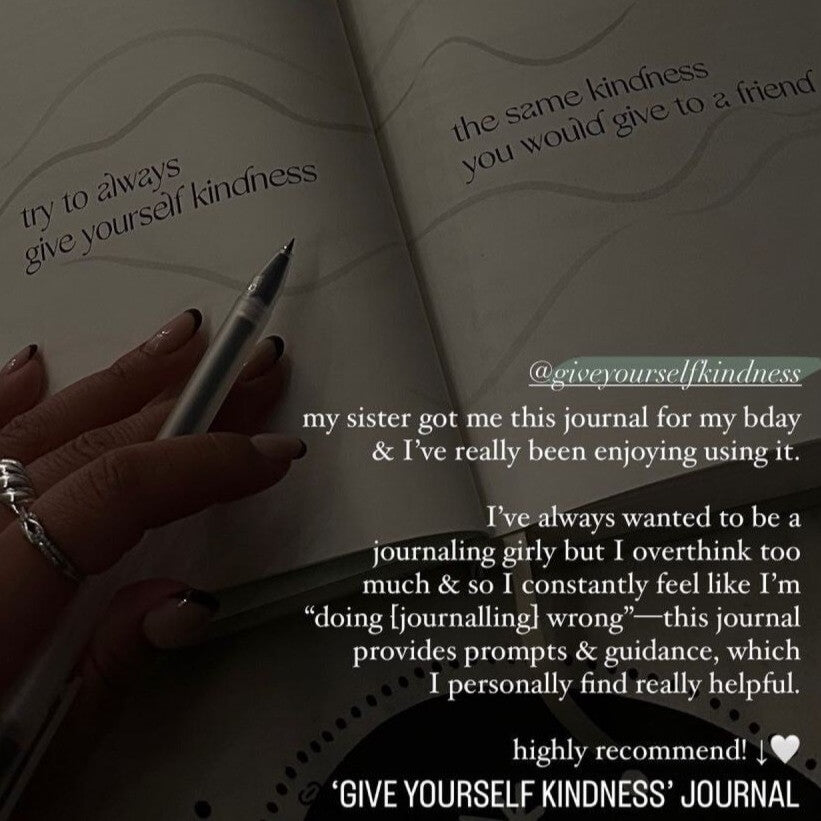
I should tell you that the Give Yourself Kindness Journal is mine, and why it exists.
After my own experience with harsh self-talk and Compassion-Focused Therapy, I looked for a journal that would help me keep practising what I'd learned. Everything I found either repeated the same prompts or pushed a positivity I couldn't feel, and some left my critical voice louder than before. So I made the journal I had needed, and asked clinical psychologists and self-compassion researchers to review it, including Dr Chris Germer of Harvard Medical School, Dr Chris Irons, a Compassion Focused Therapy specialist, and Professor Willem Kuyken of the University of Oxford.

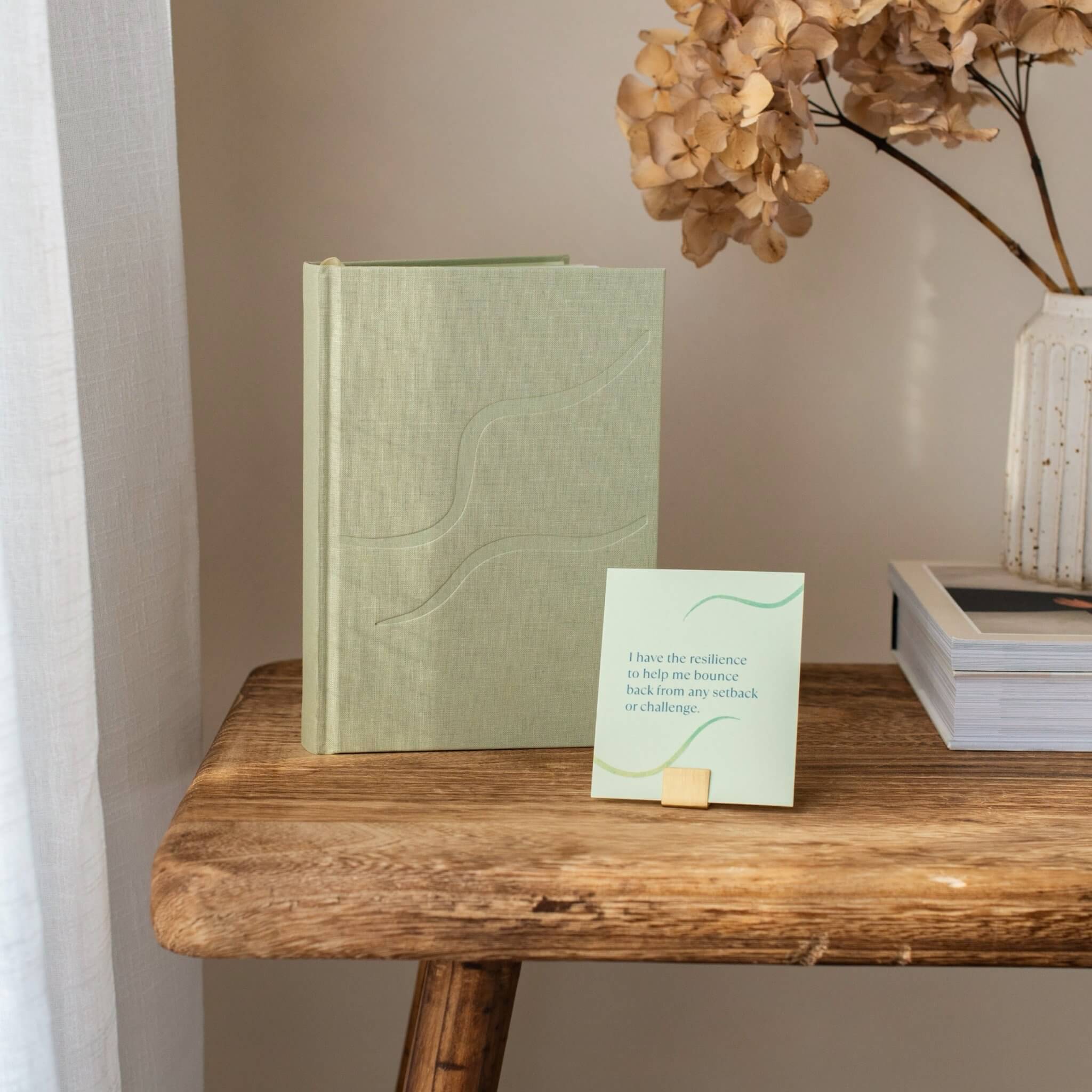
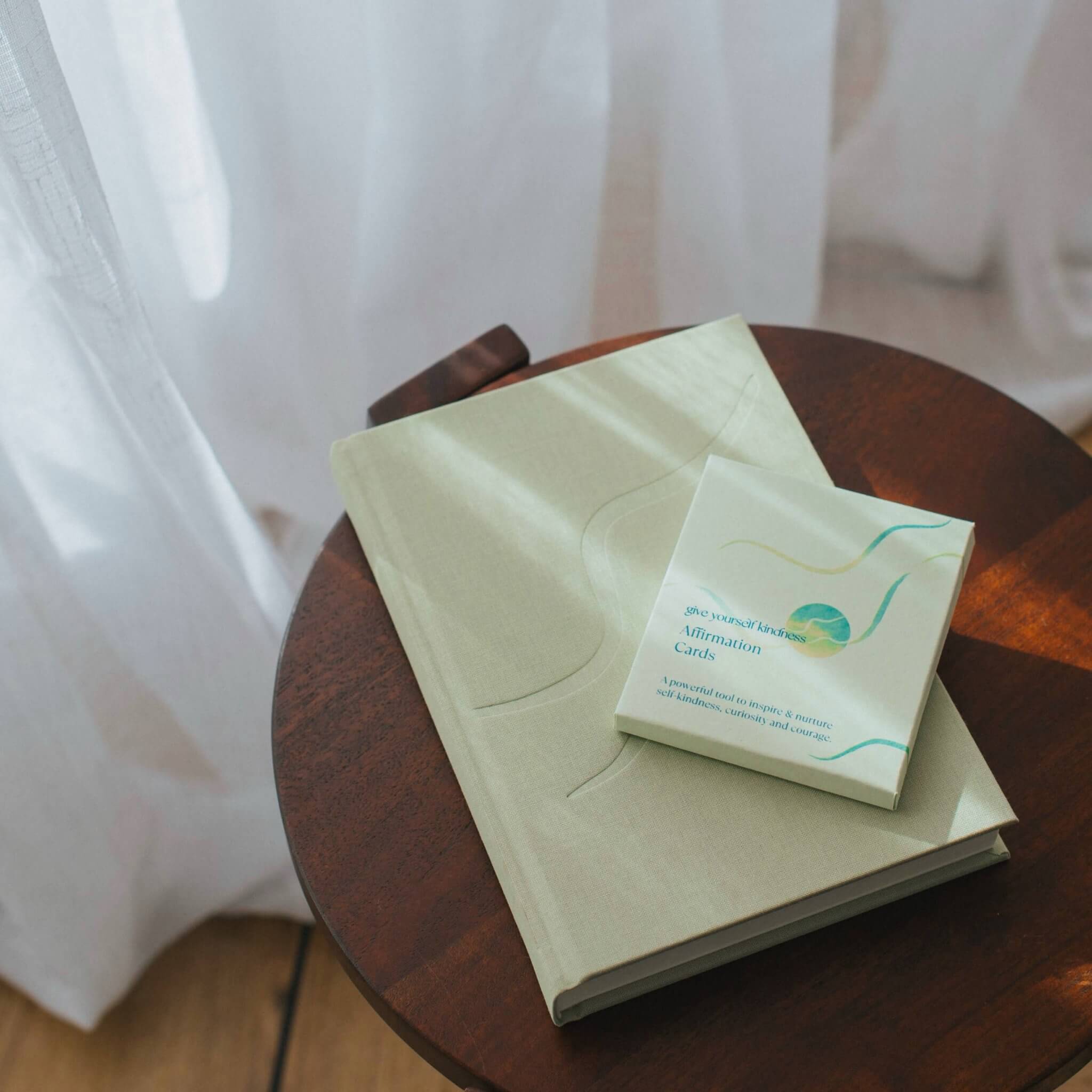
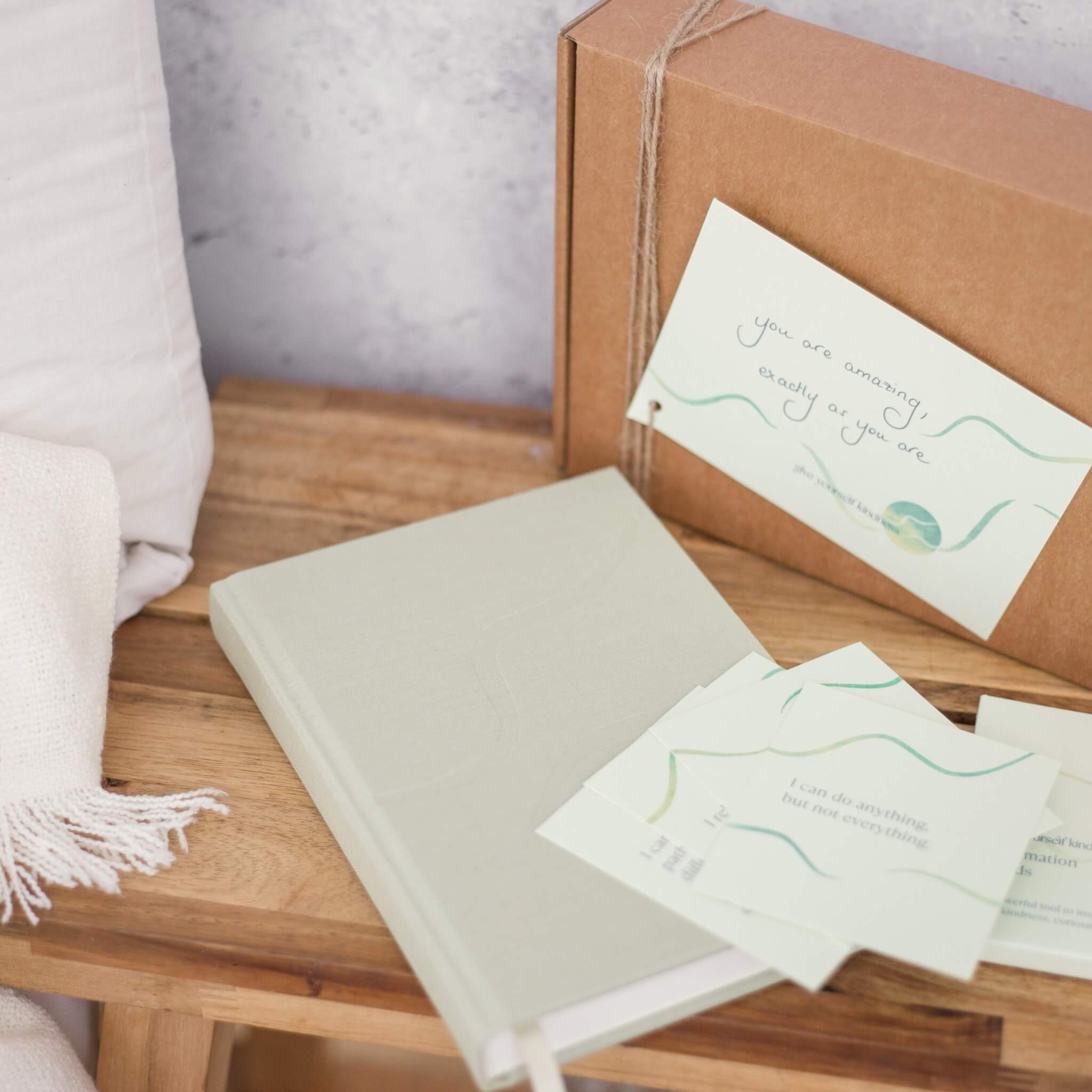
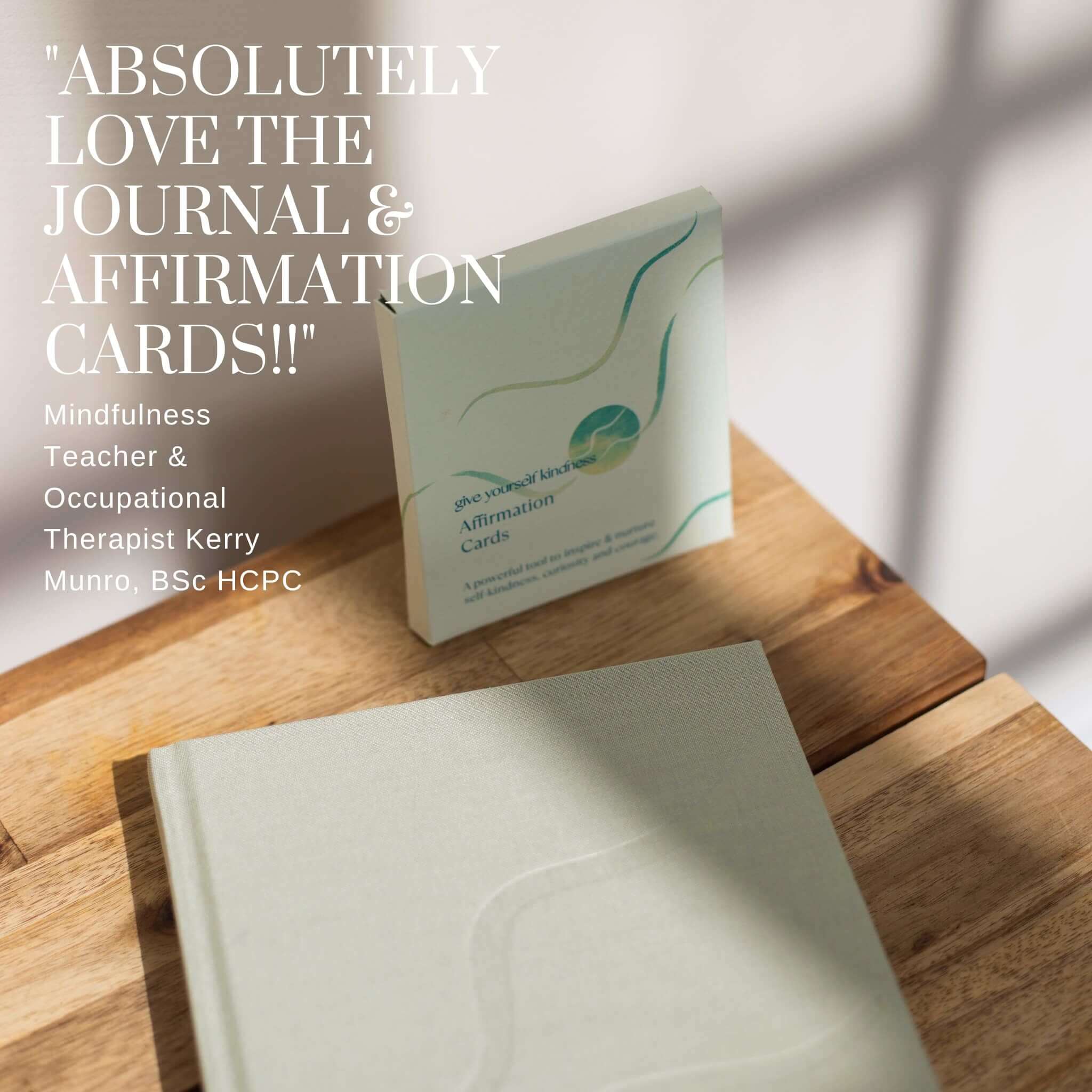
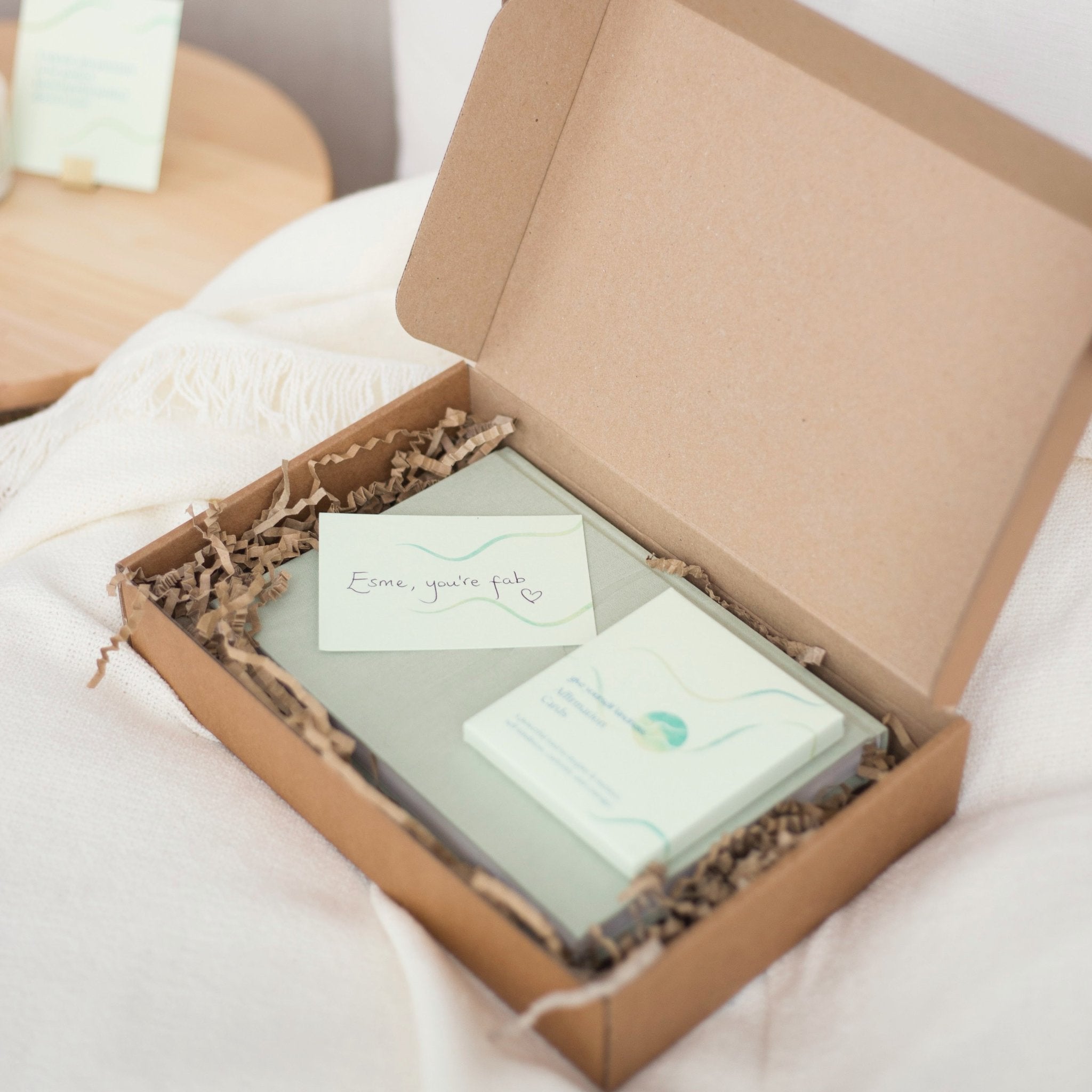
The Give Yourself Kindness Journal
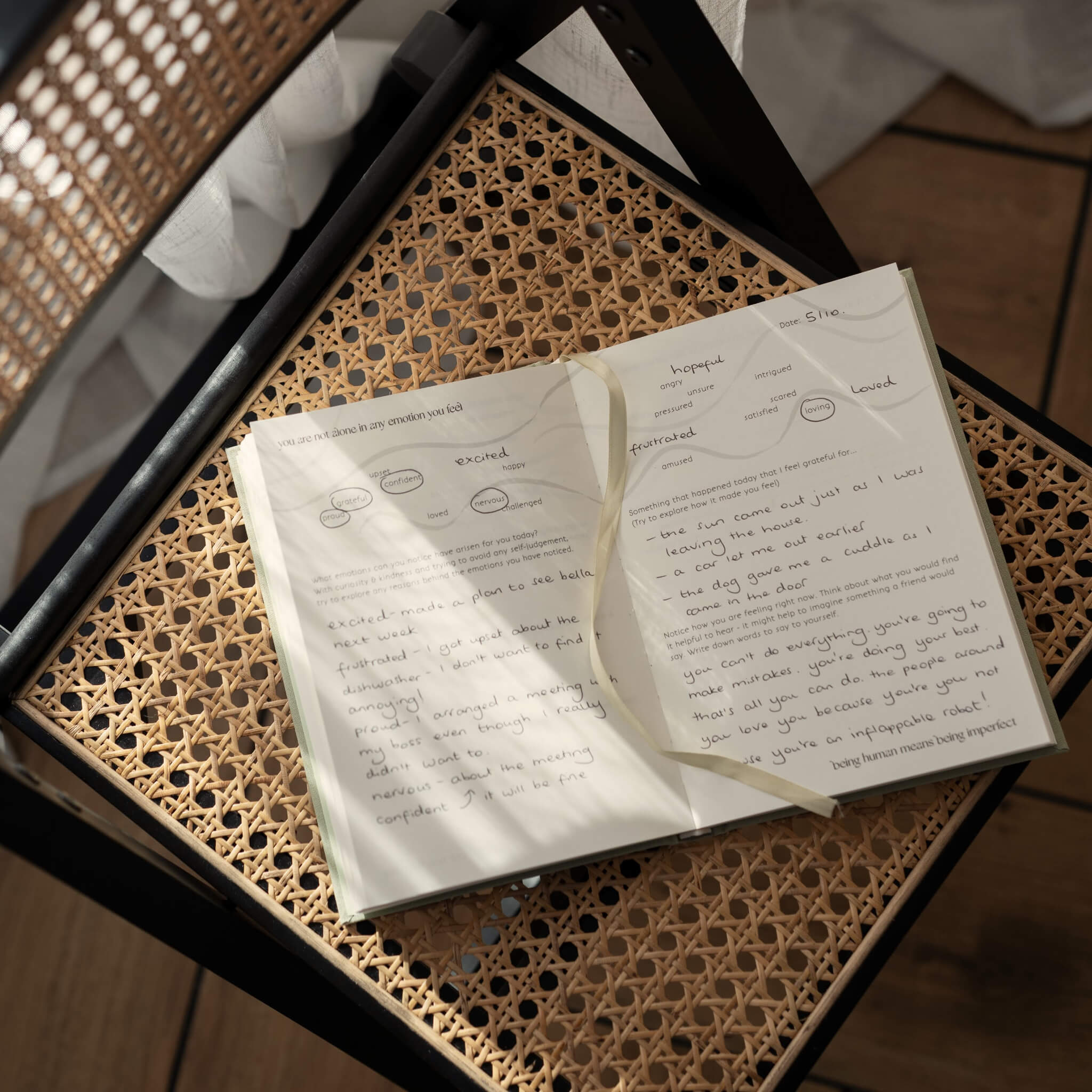
- 90 days of changing prompts that guide you to answer yourself as you would a friend
- An emotional awareness tool on every page to help you name what you feel
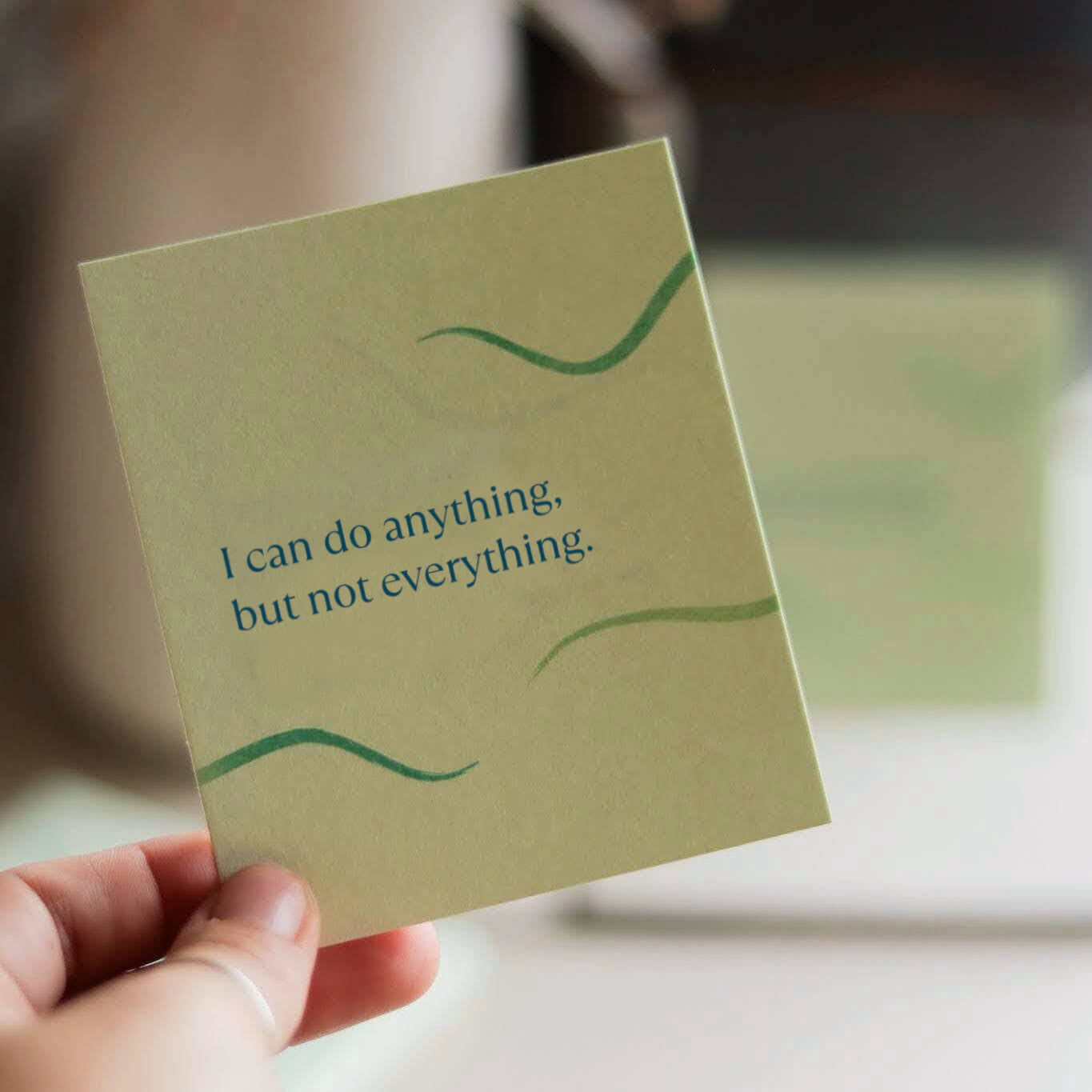
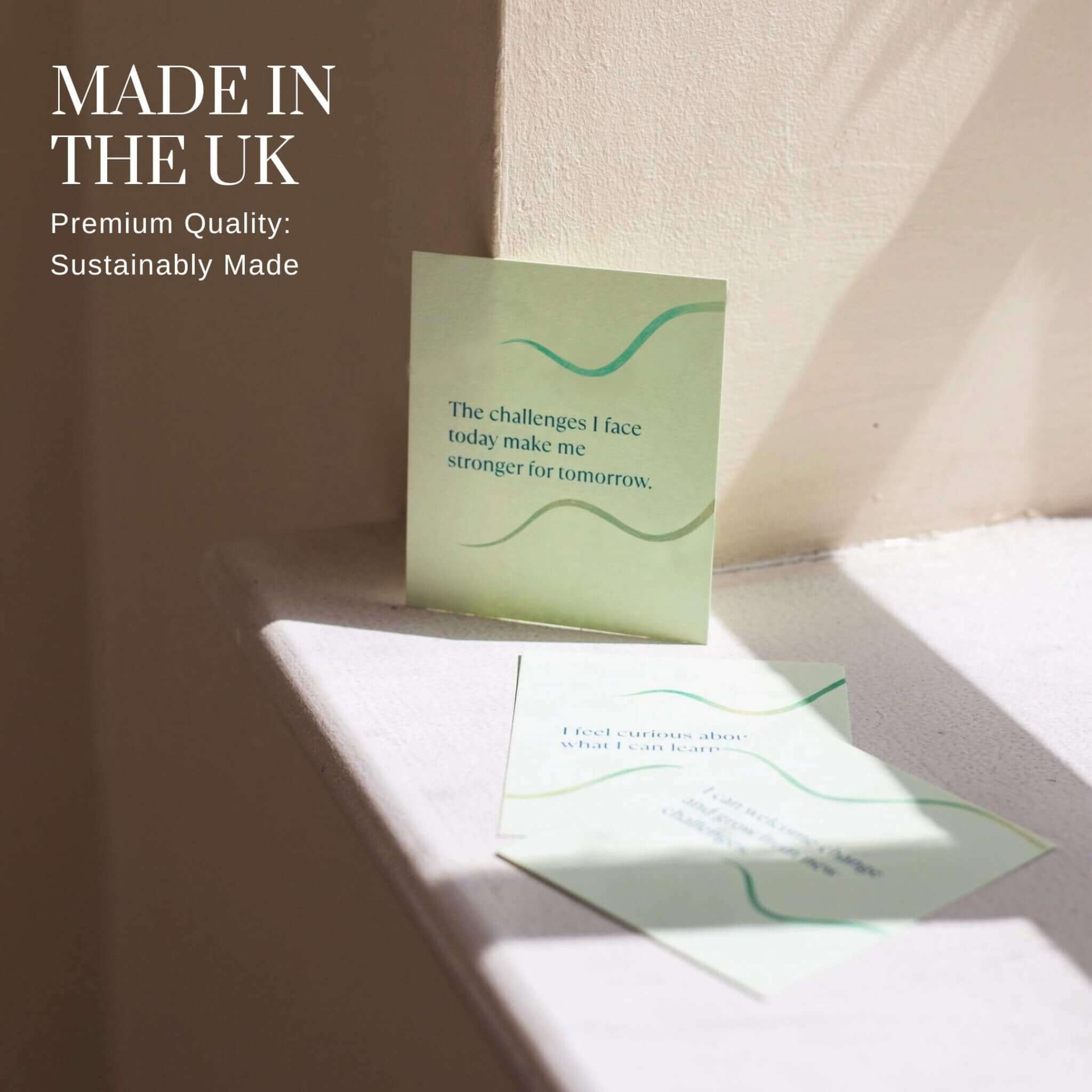
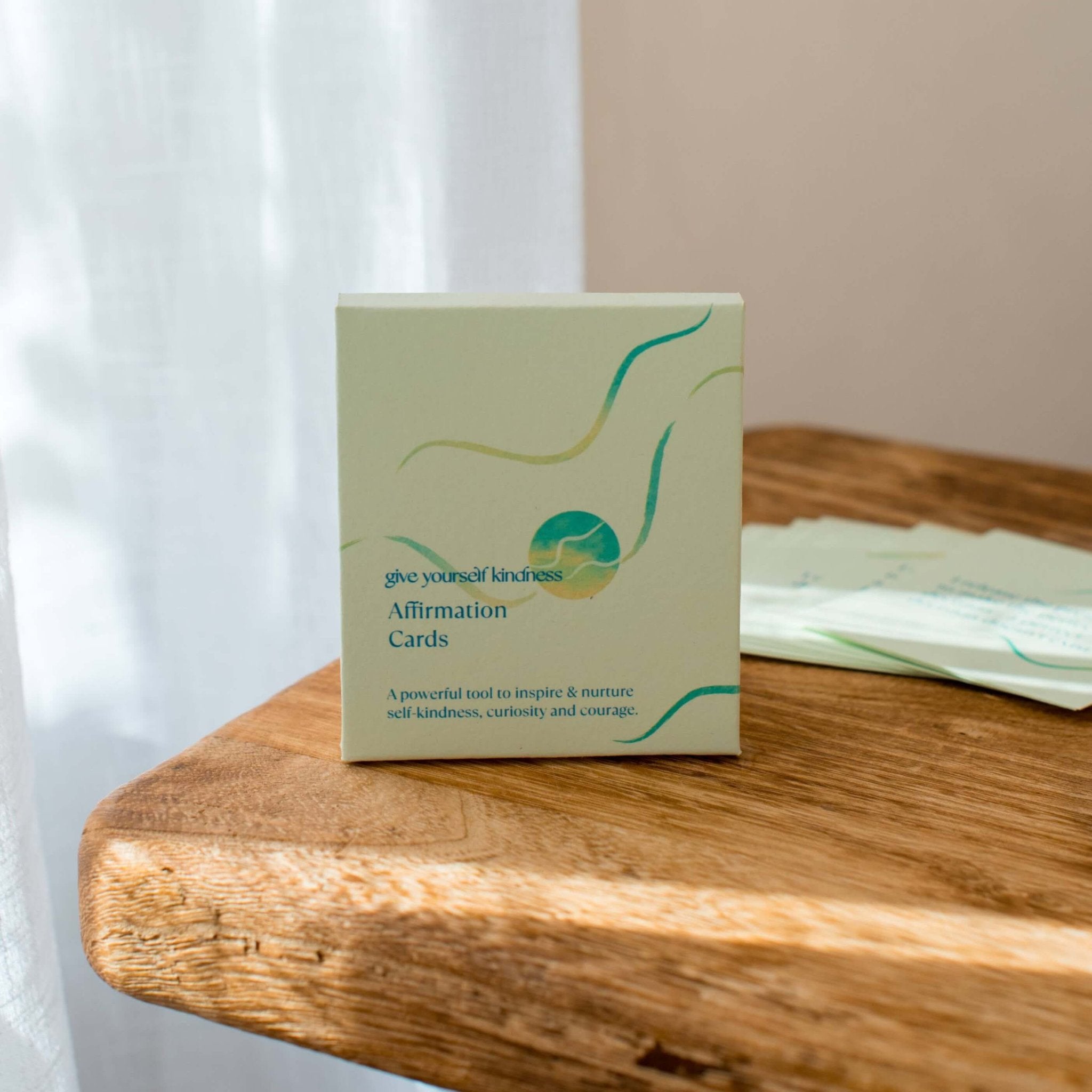
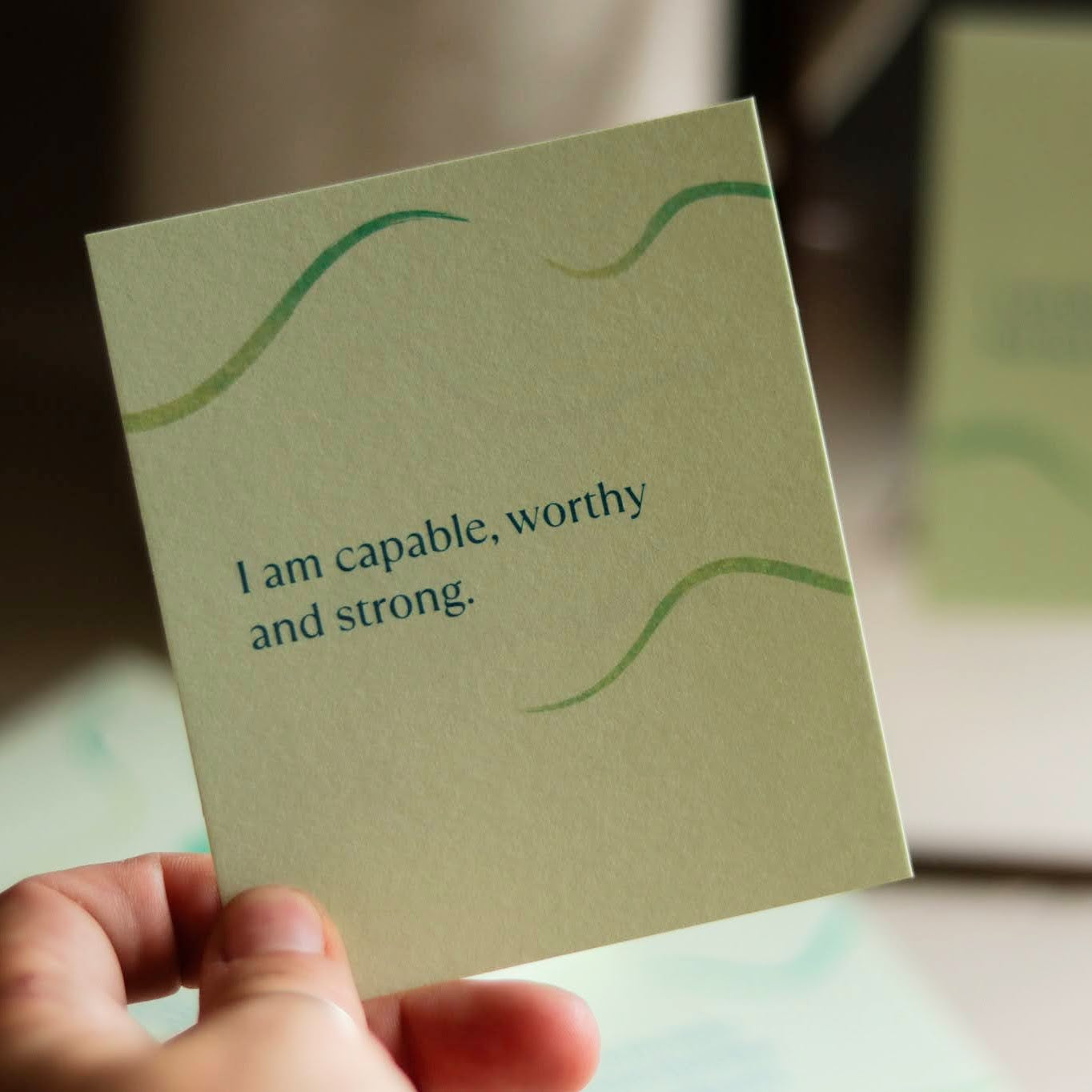
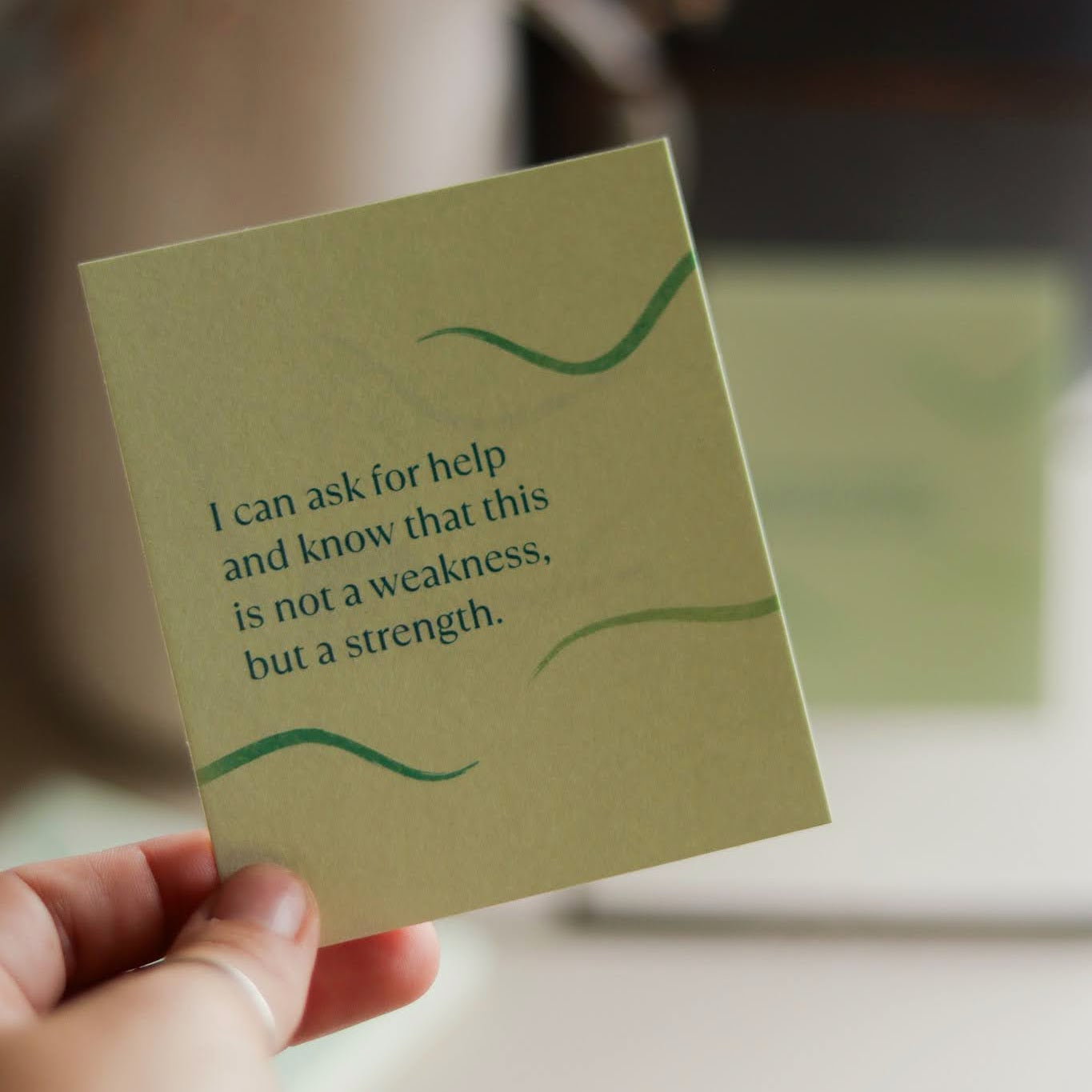
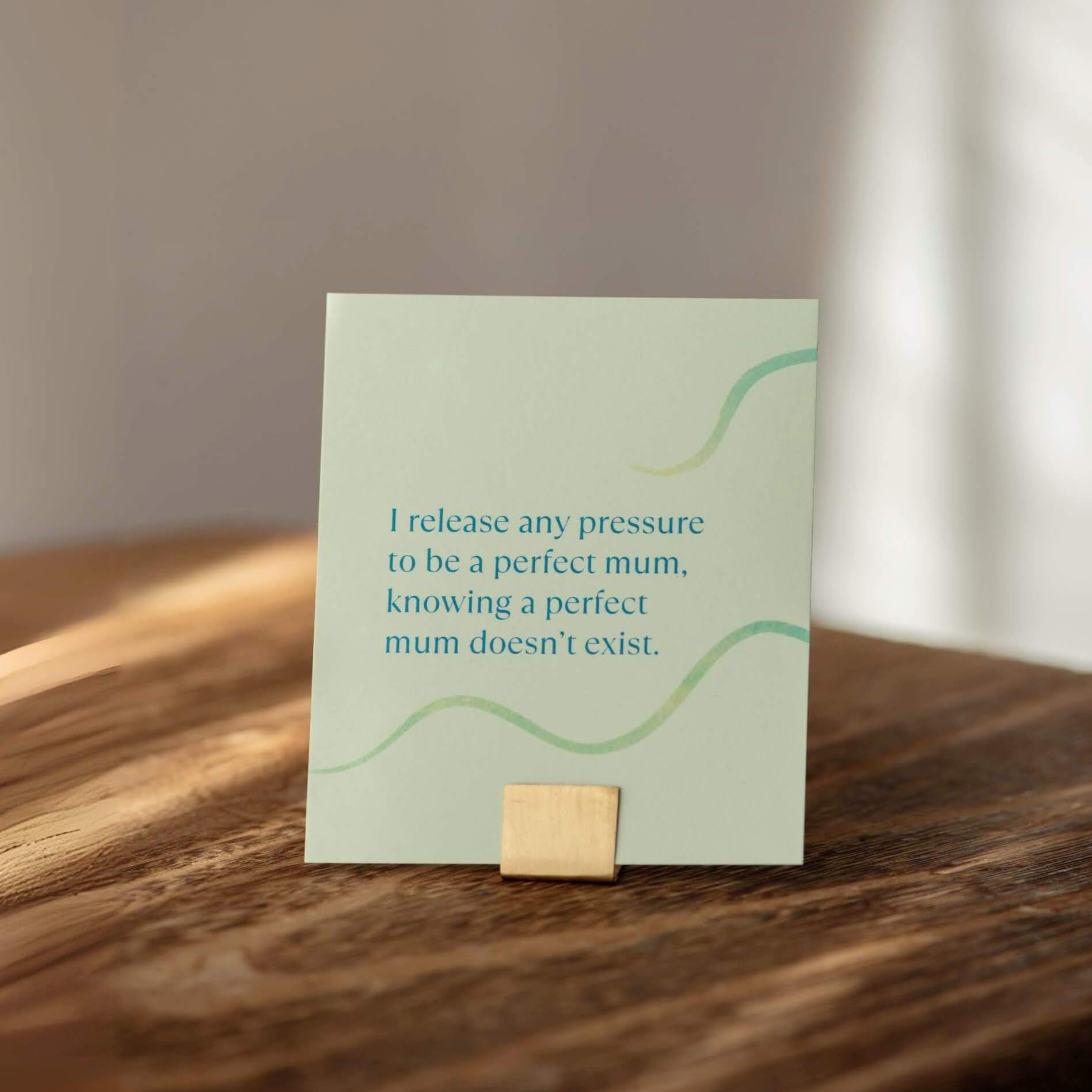
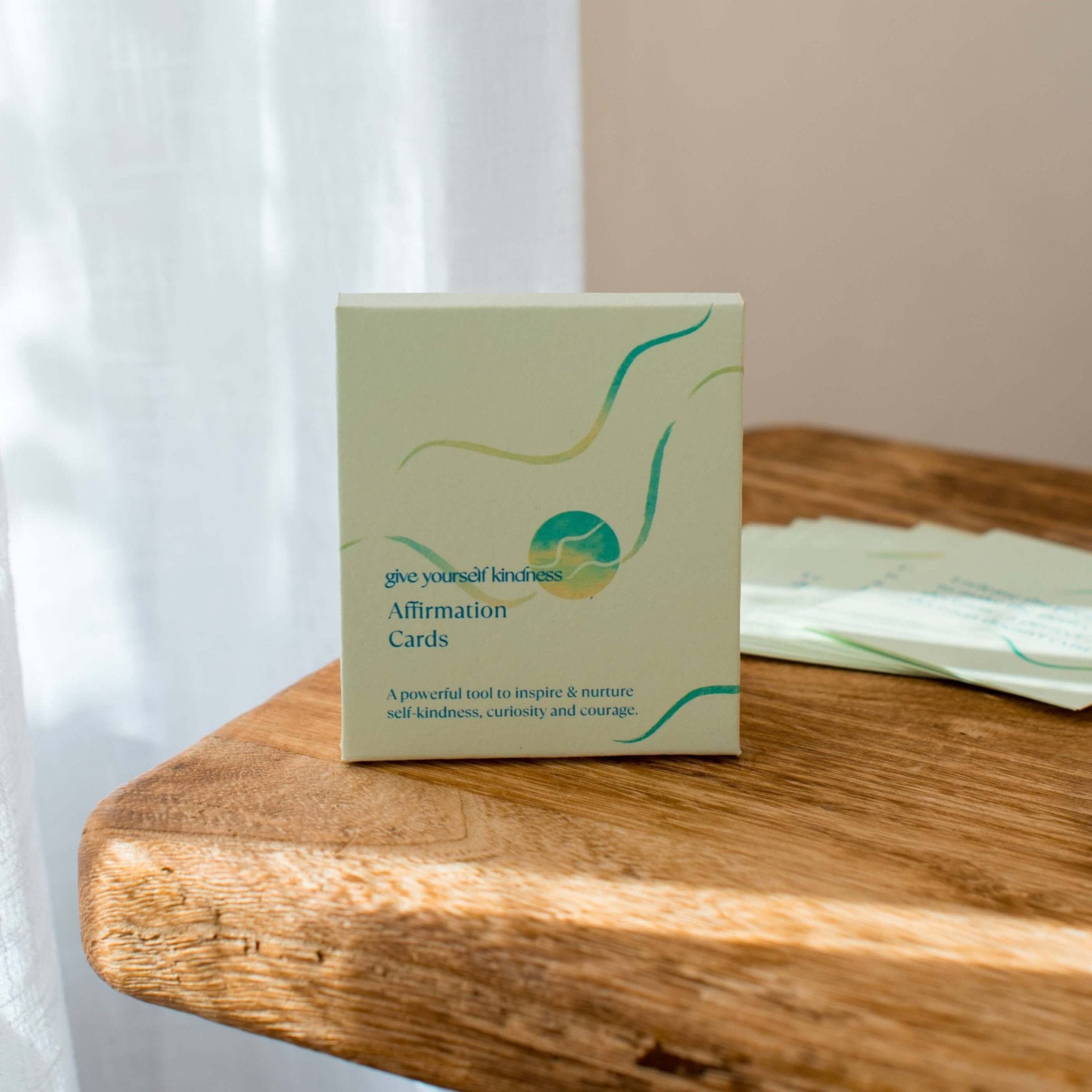
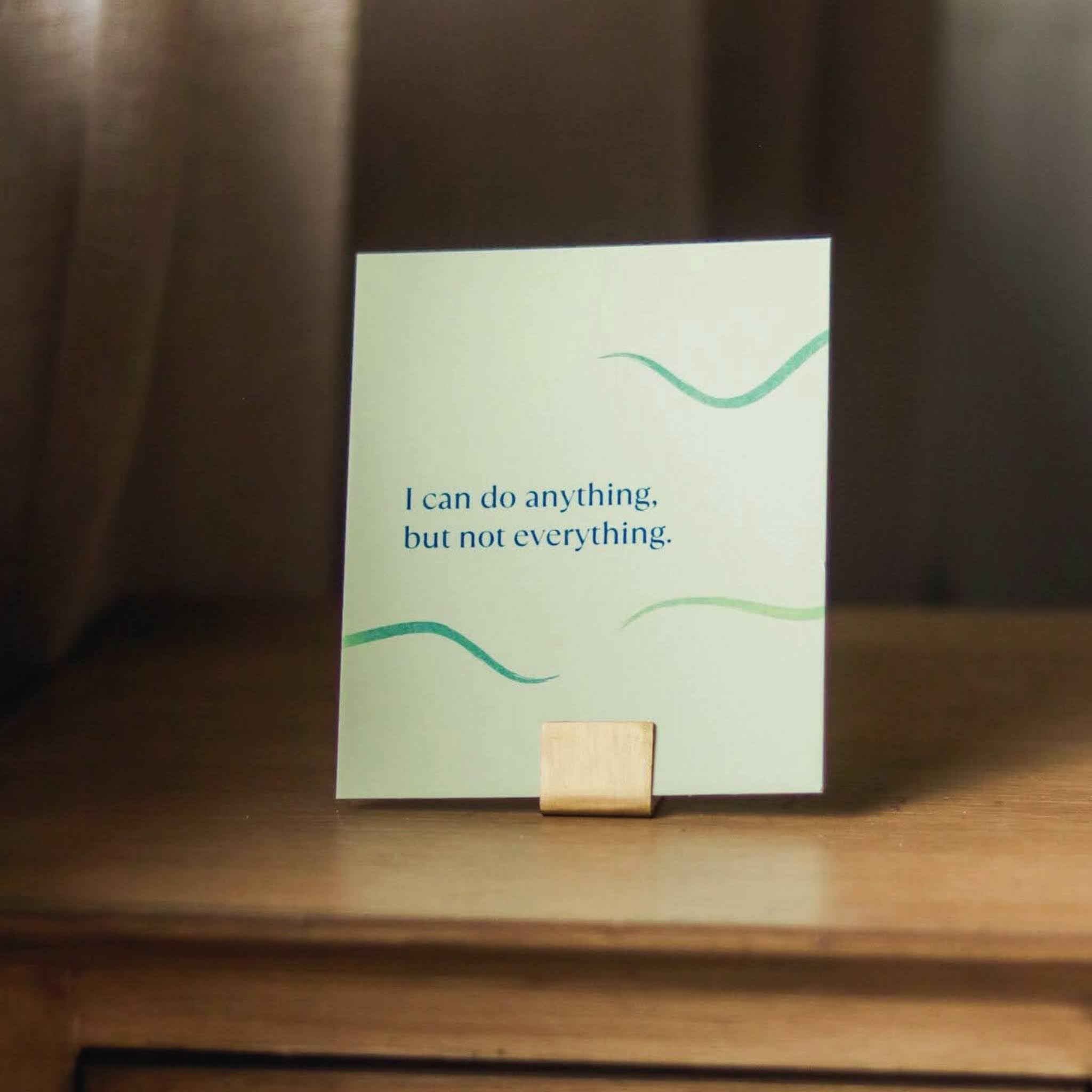
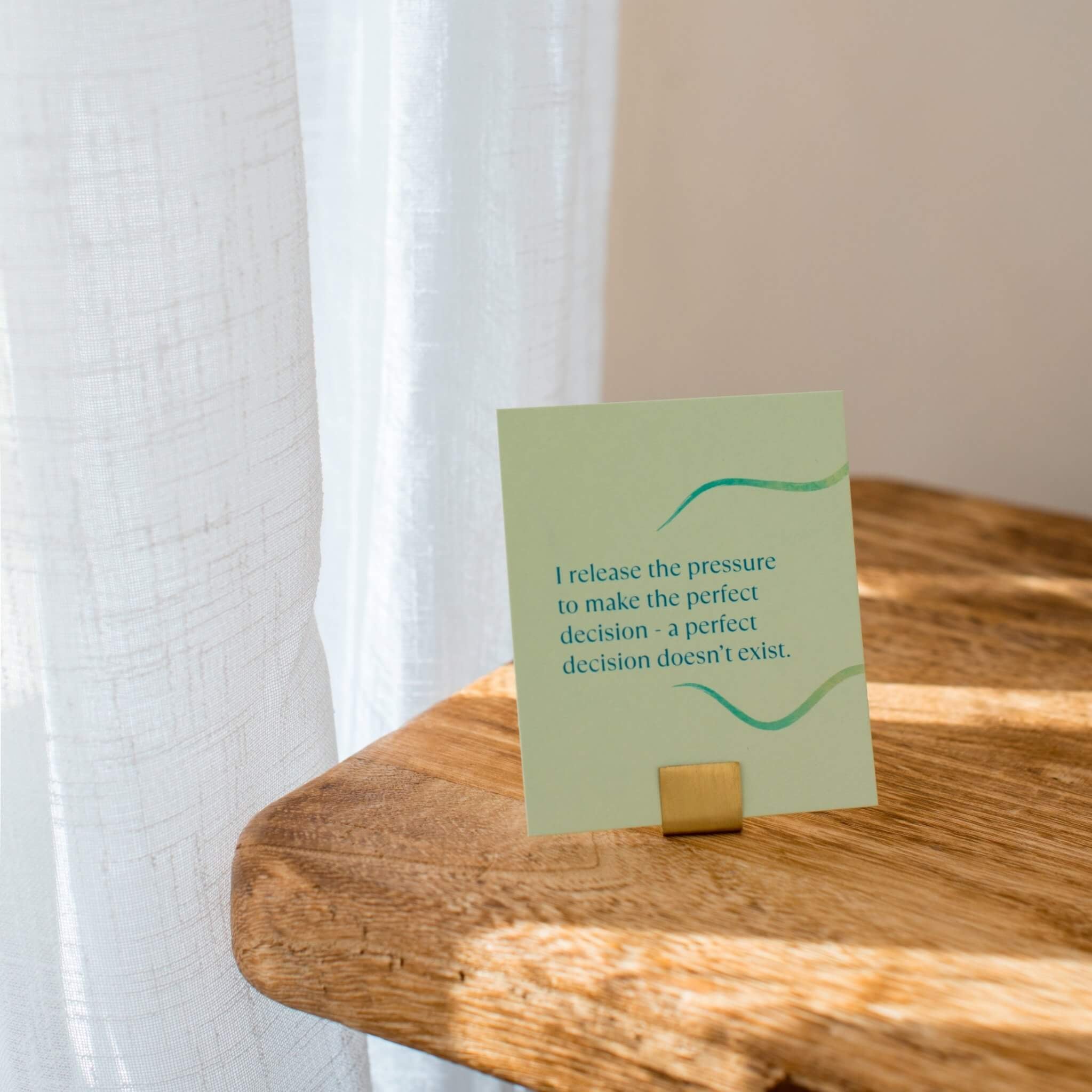
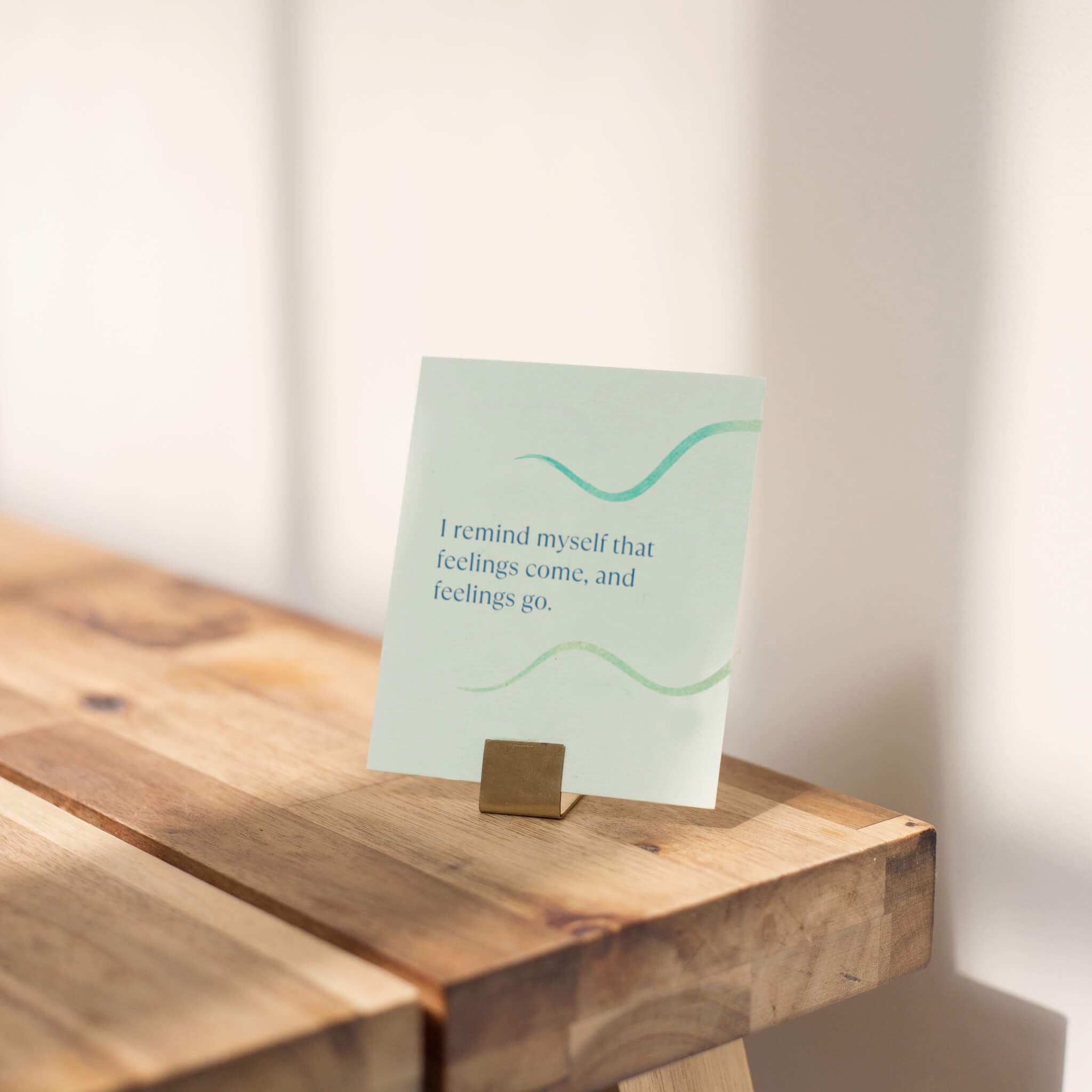
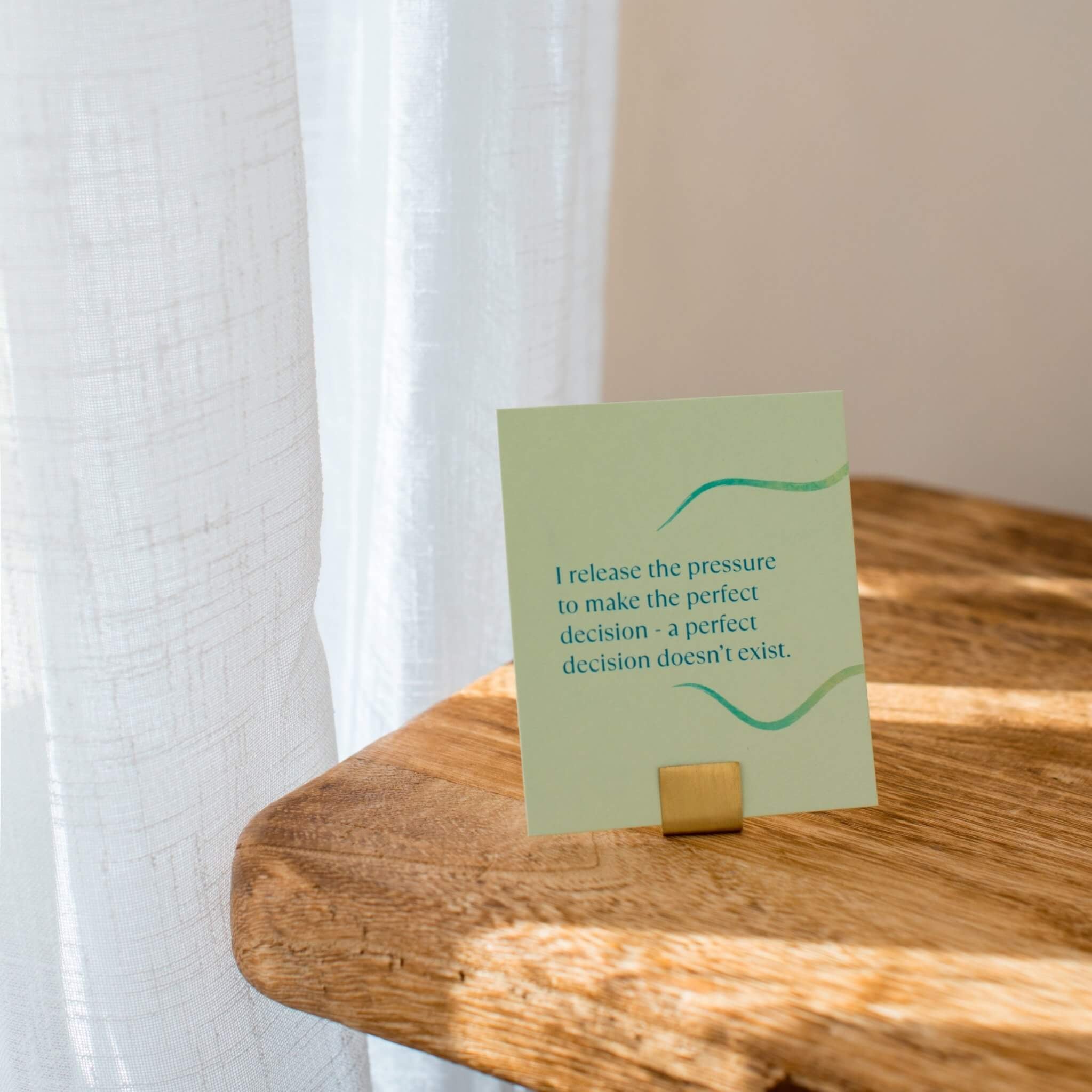
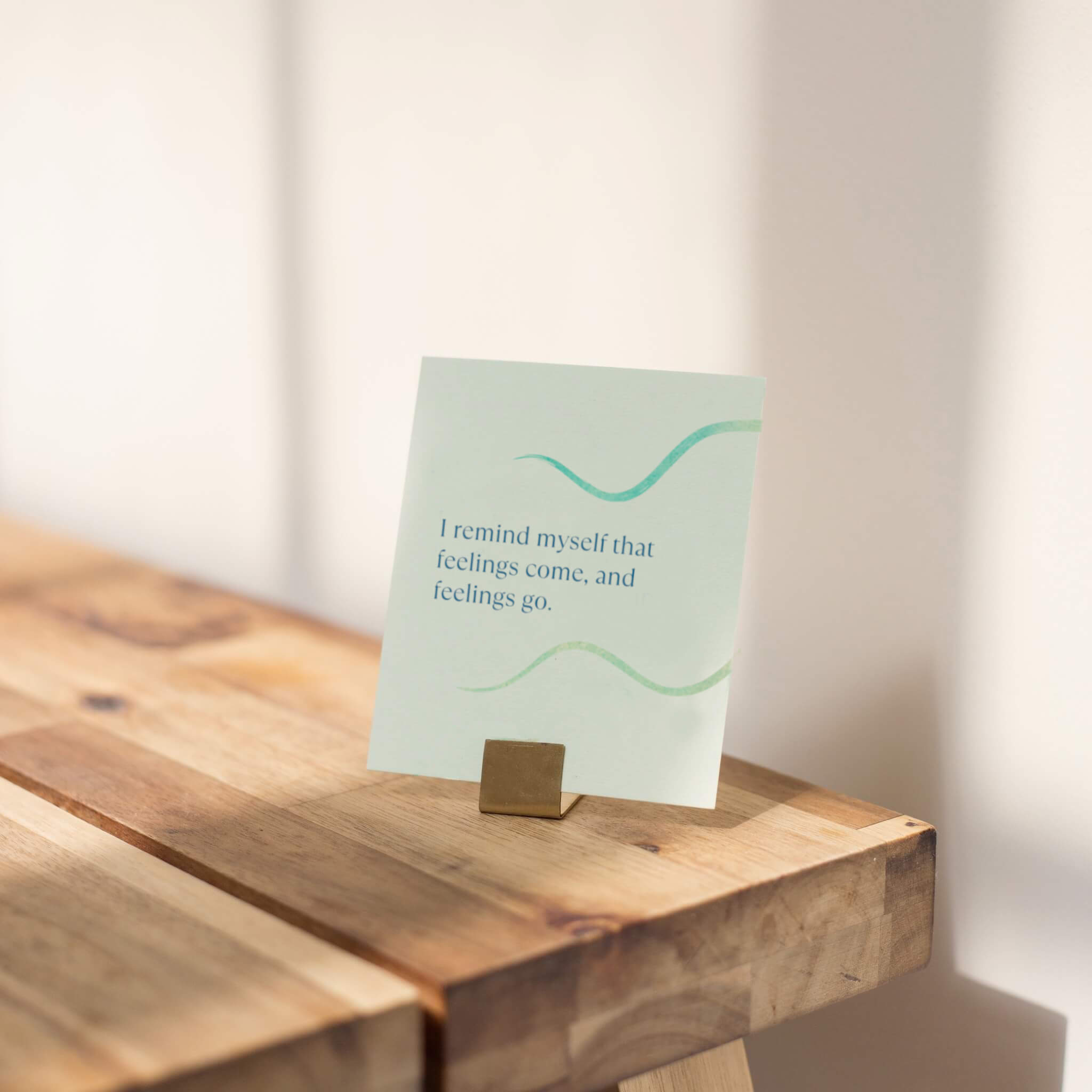
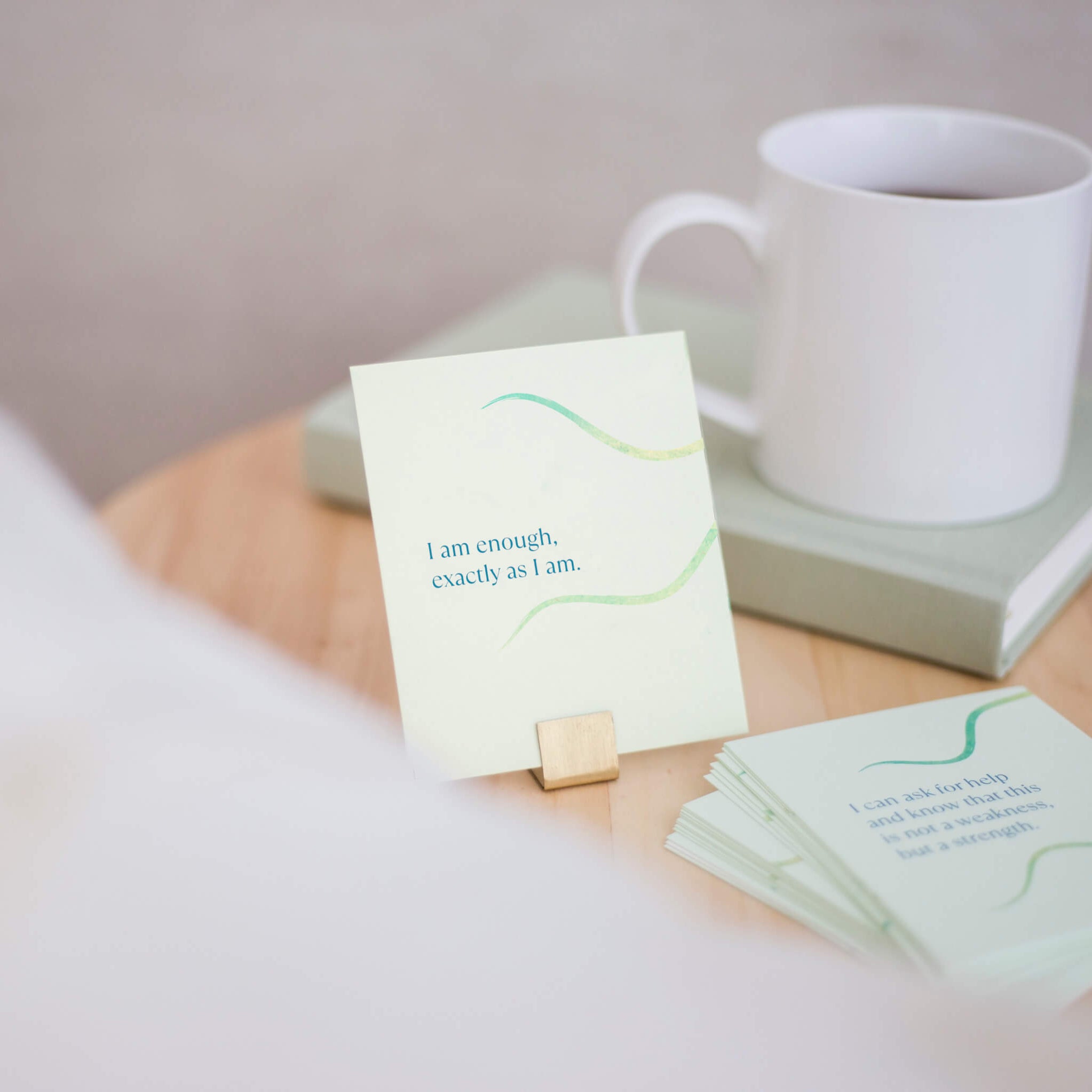
- Over 50 gentle affirmations, like "the way you speak to yourself matters"
- Undated, so you can return whenever you need, without guilt
224 pages, A5, cloth cover, FSC-certified paper, printed in the UK.
Here's how it holds each of the five elements for you:
- Daily practice: 90 days of changing prompts, so each entry comes at emotions, self-talk and kindness from a new angle and doesn't feel like going through the motions. As Professor Kuyken wrote in his review, writing "can also invoke an inner critic, rumination and procrastination", so the variety is there to keep writing rewarding.
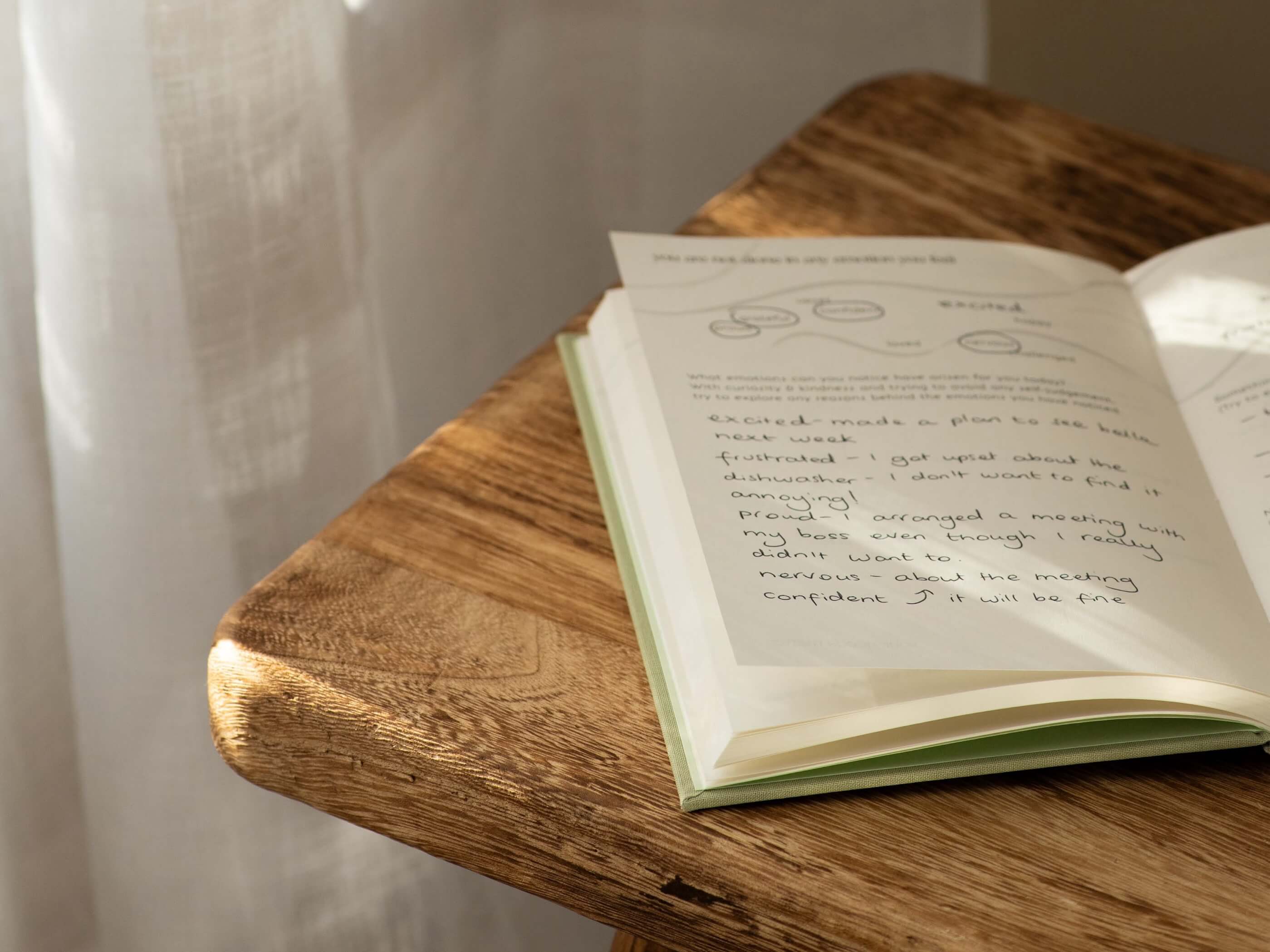
- Emotional awareness: a visual guide on every page to help you identify specific emotions beyond "stressed" or "fine", and more than one at once, because feelings are complex.
- Self-compassion prompts: every prompt invites the friend perspective, such as "Can you think of a time when you've struggled to feel proud of something you've achieved, but if it had happened to a friend you would have felt proud? Write down words of reassurance to show yourself that you deserve to feel proud."
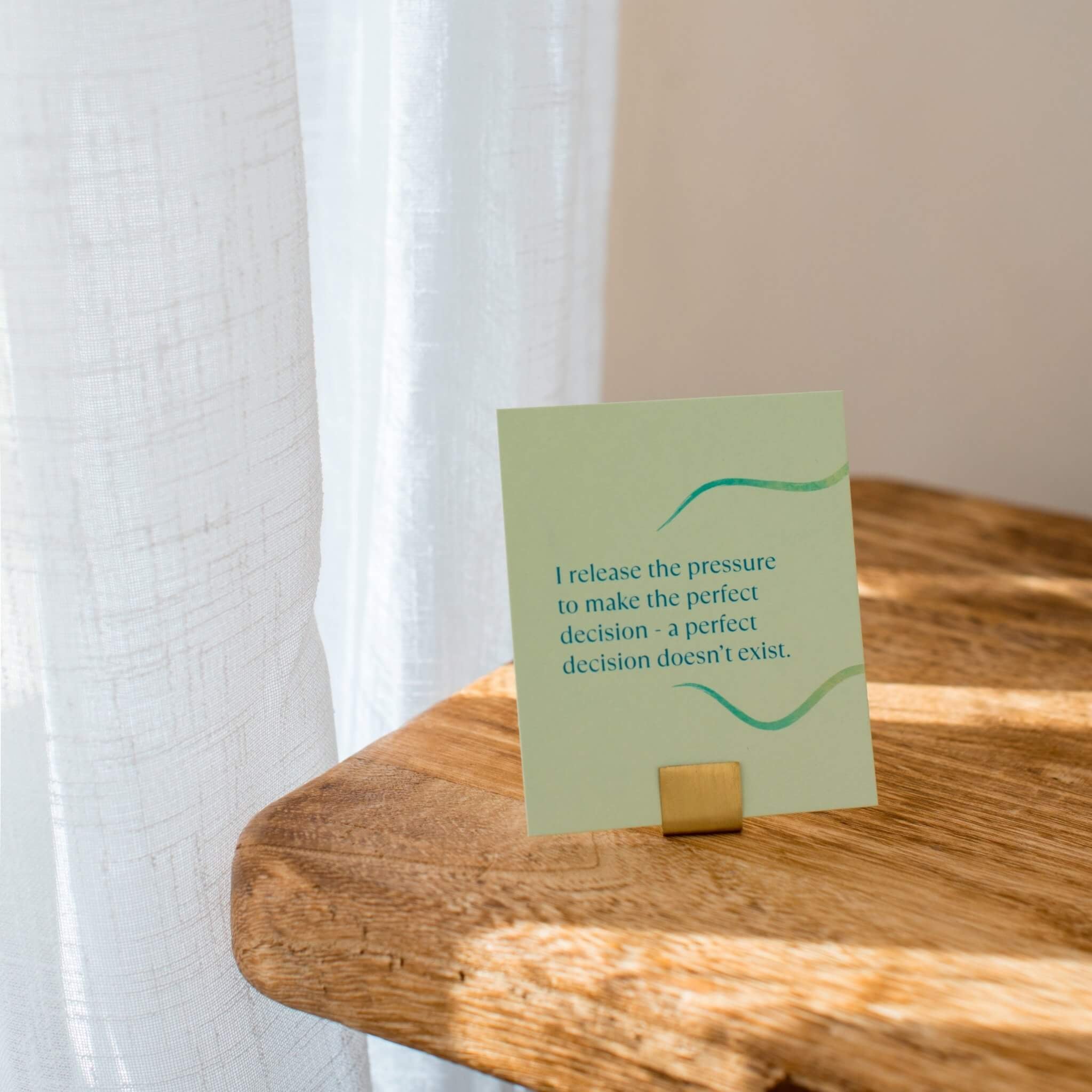
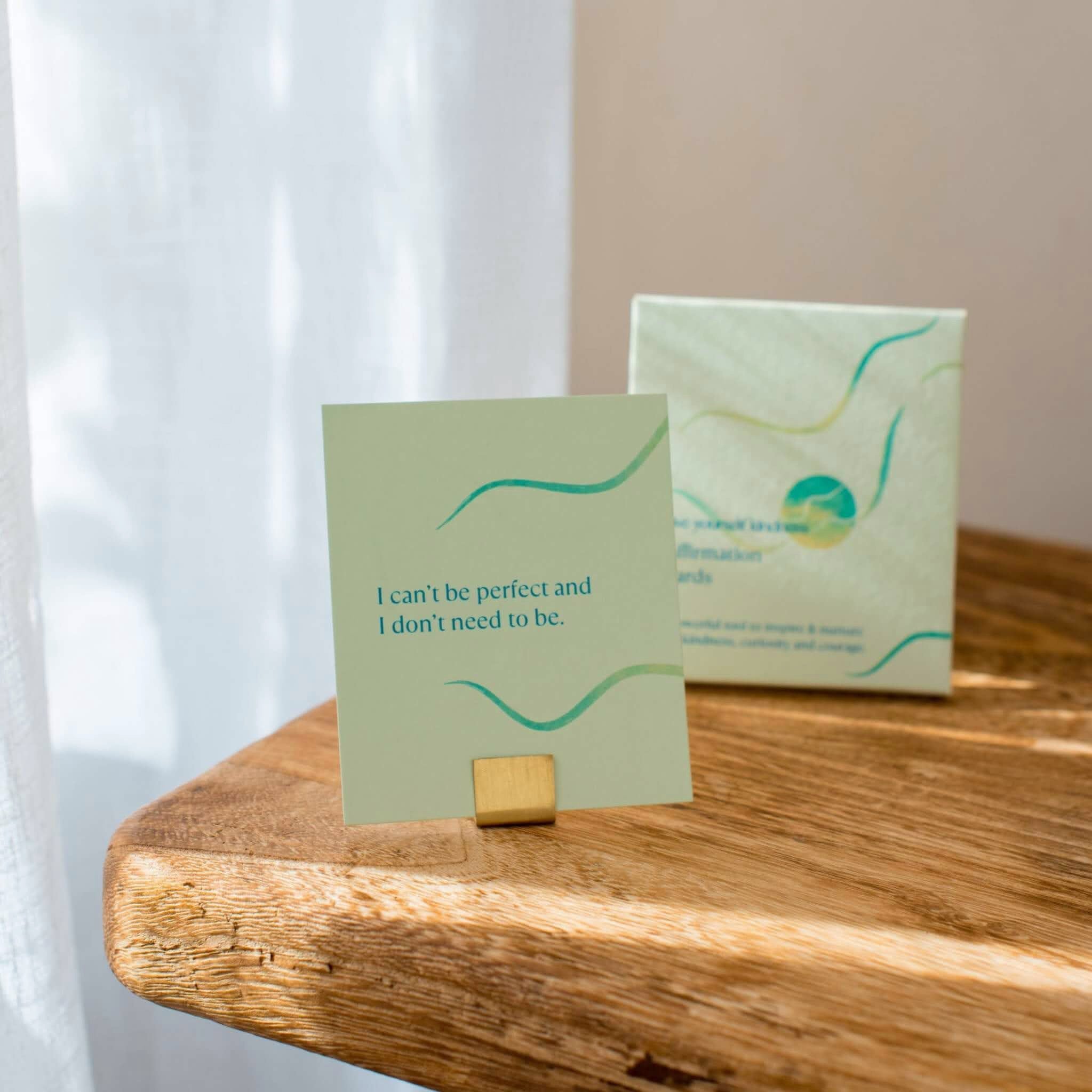
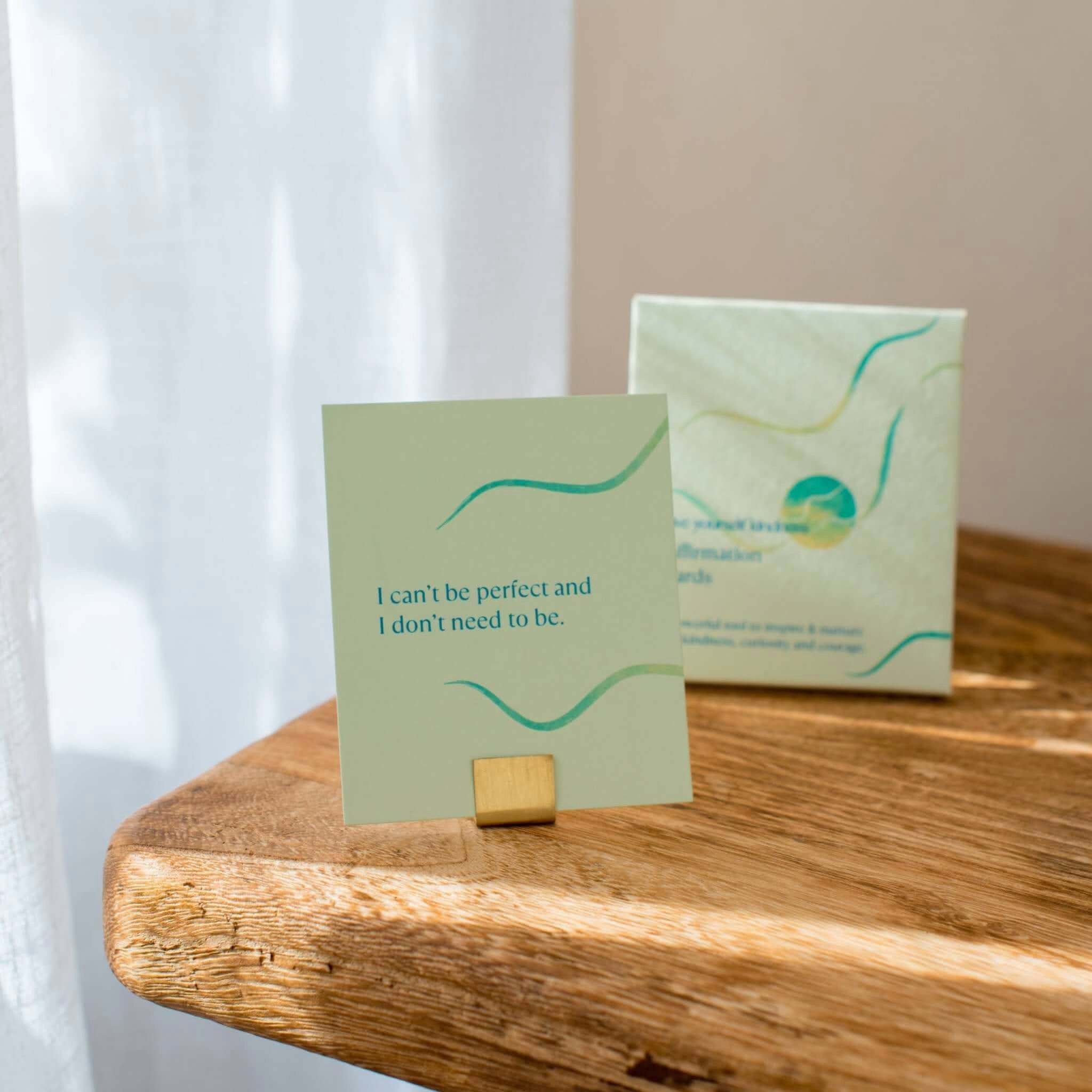
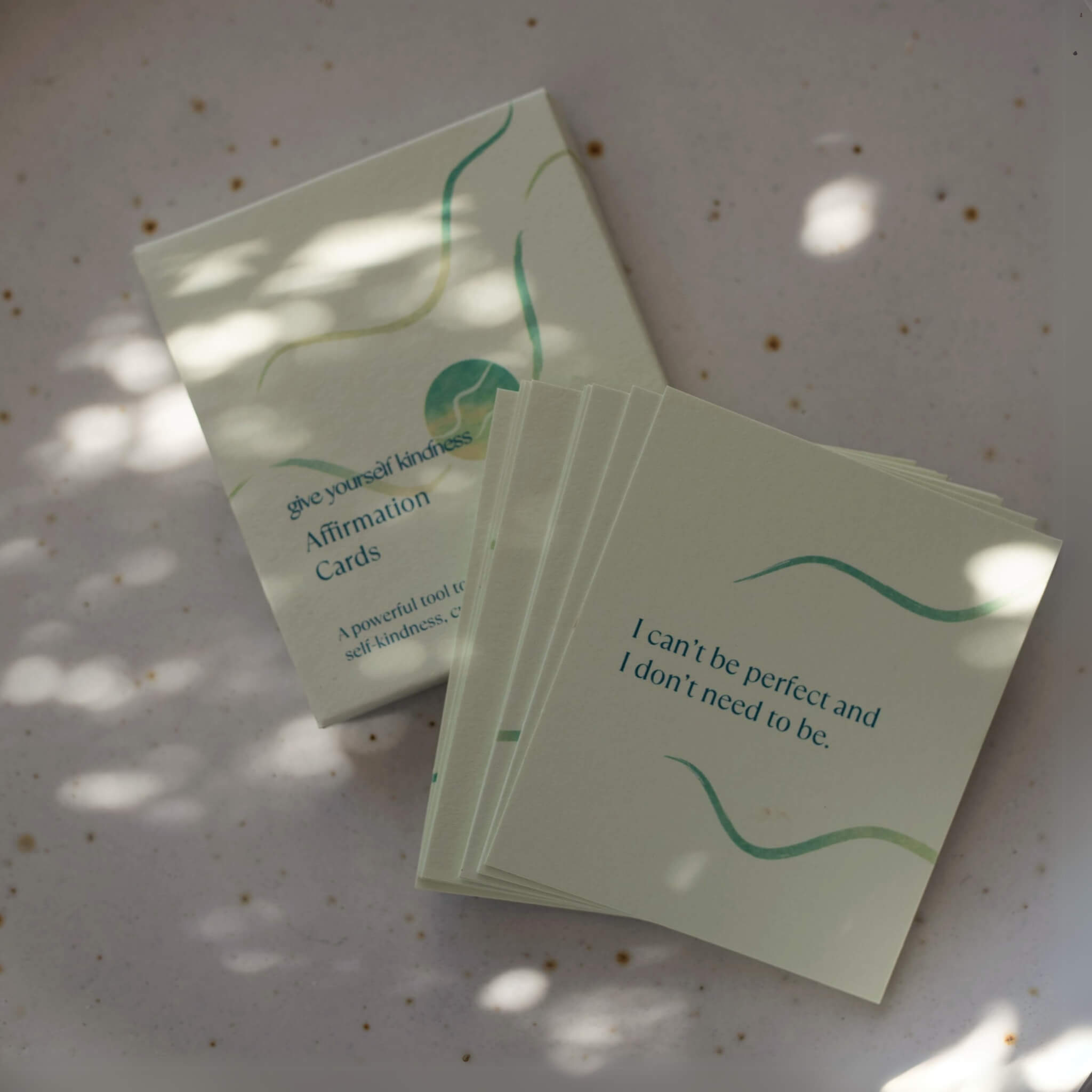
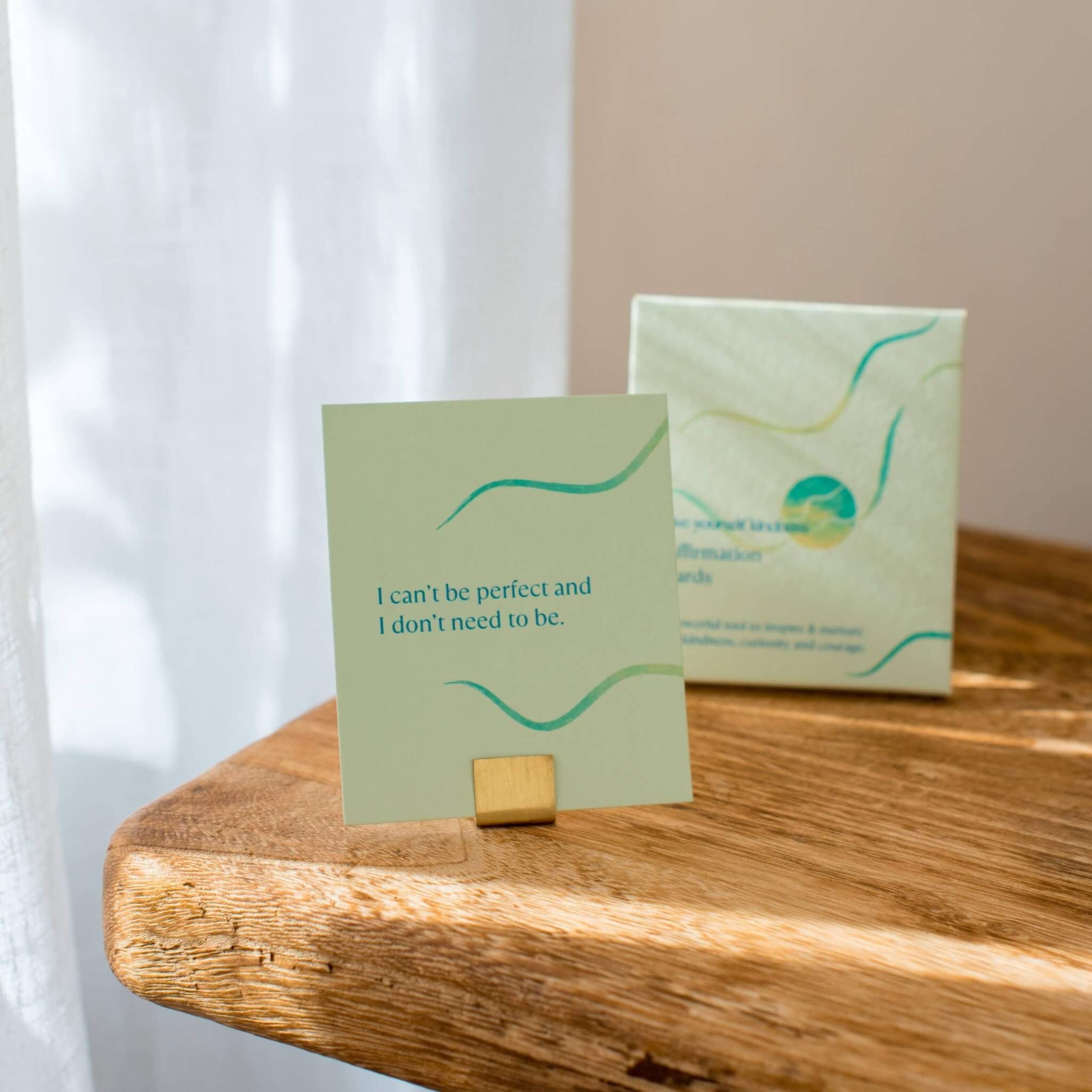
- Structure without rigidity: no dates. If you miss days or weeks, you can come back, with gentle reminders like "you can't be perfect, and you don't need to be" waiting for you.
- Validation of all emotions: no forced positivity, with reminders such as "no emotion defines who you are" and "being human means being imperfect".
The journal is used by therapists and counsellors with their clients, often between sessions. It's a gentle companion alongside professional support, never a replacement for it.
What clinical psychologists and therapists say
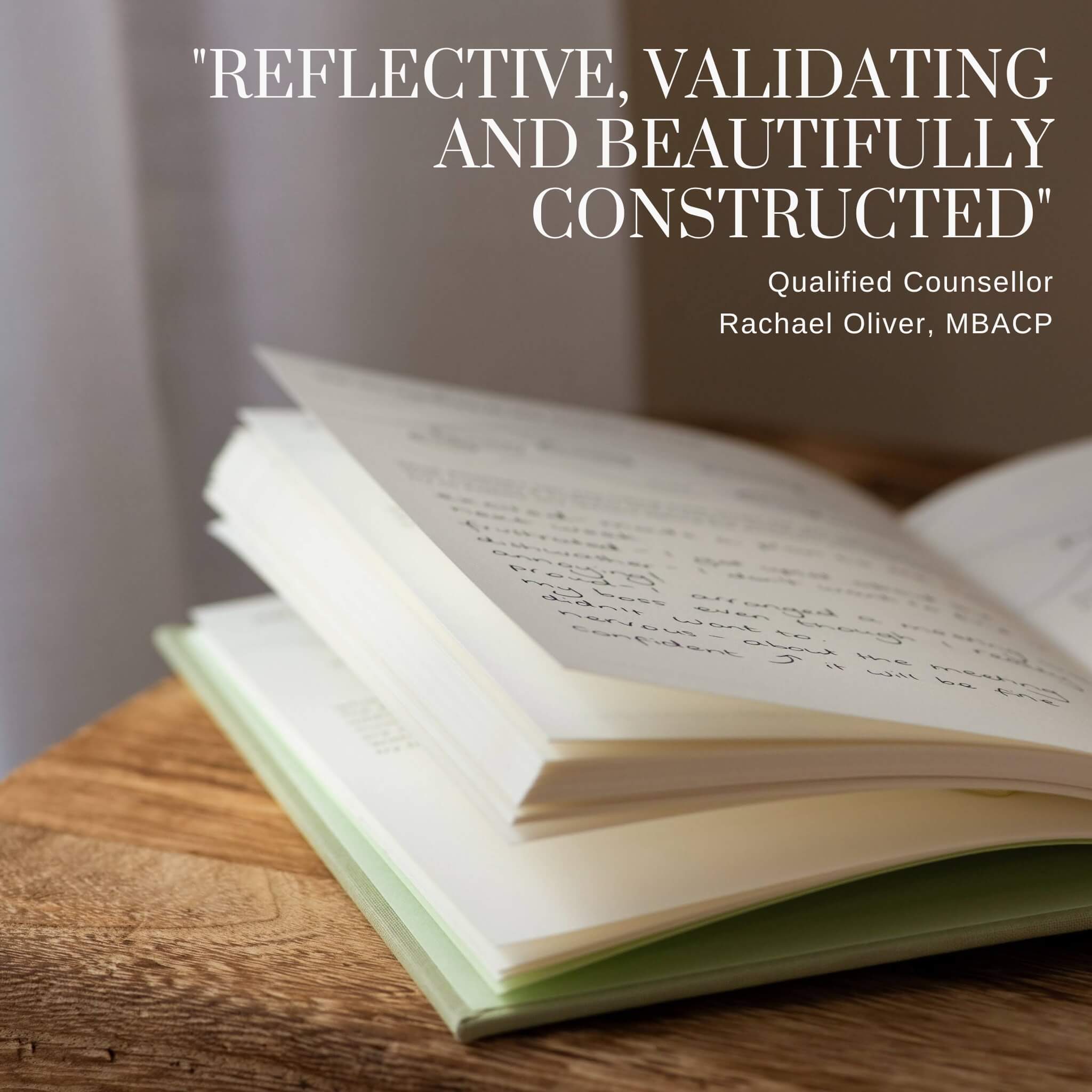
Clinical psychologists and therapists who specialise in self-compassion, Compassion Focused Therapy and mindfulness have reviewed the Give Yourself Kindness Journal. Here's what some of them wrote.

Dr Chris Germer, PhD
Clinical Psychologist and Lecturer on Psychiatry (part-time), Harvard Medical School | Co-developer of the Mindful Self-Compassion programme, taught to over 250,000 people worldwide
Read Dr Germer's review alongside the rest →"A warm invitation to make friends with your emotions and yourself!"
Dr Chris Irons
Clinical Psychologist, Researcher, Writer and Trainer specialising in Compassion Focused Therapy
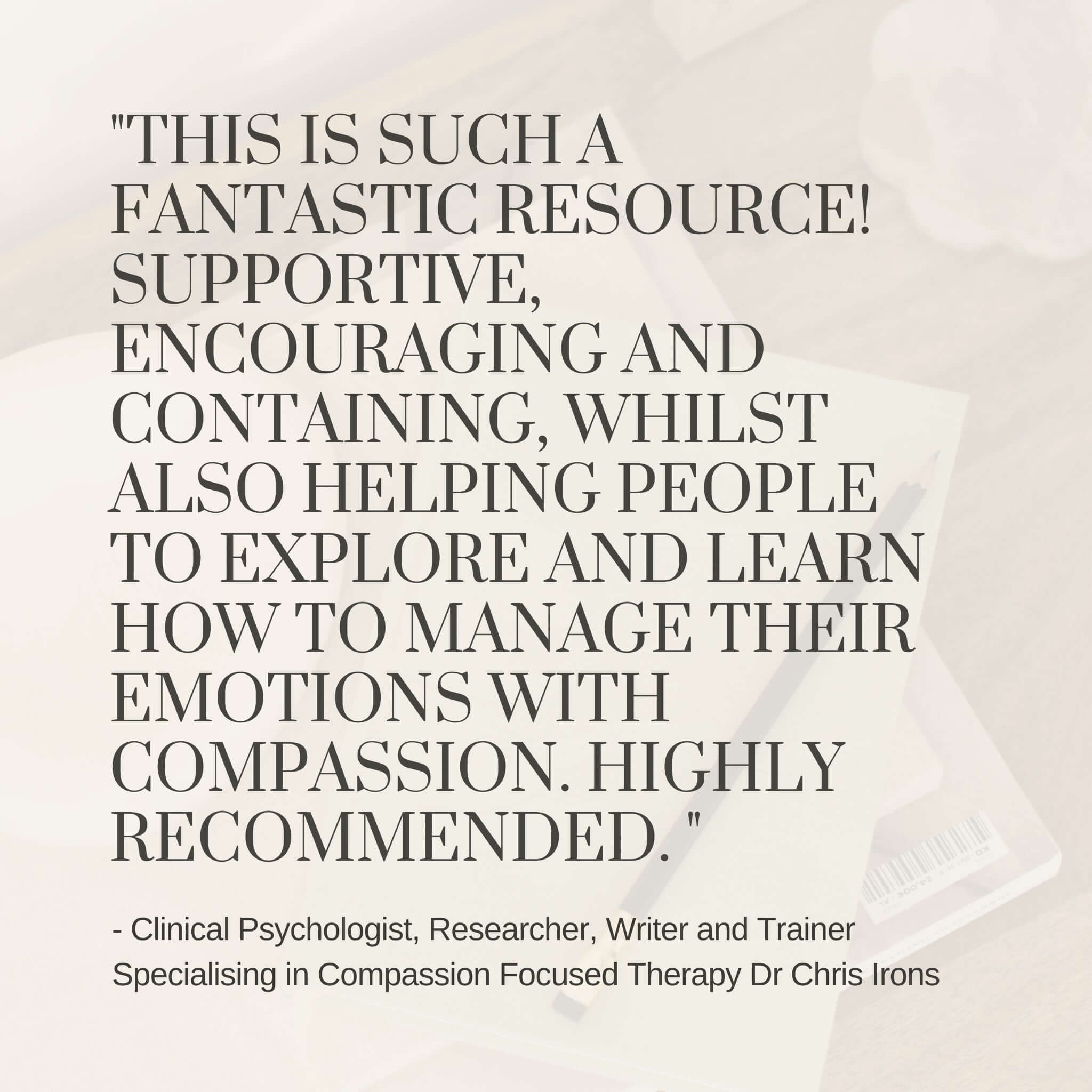
Read Dr Irons's review alongside the rest →"This is such a fantastic resource! Supportive, encouraging and containing, whilst also helping people to explore and learn how to manage their emotions with compassion. Highly recommended."
Professor Willem Kuyken, PhD, DClinPsy
Ritblat Professor of Mindfulness and Psychological Science, University of Oxford
Read Professor Kuyken's review alongside the rest →"…Writing can be creative, beautiful, resourcing, but it can also invoke an inner critic, rumination and procrastination. Rachel has curated the experience to make the writing intrinsically rewarding and the journal something to treasure."

Nina Holle
Psychotherapist
Read all professional reviews from therapists and clinical psychologists →"…The journal is rooted in state-of-the-art research that emphasizes the importance of understanding our emotions in order to lower stress and lead a happy and meaningful life."
What to expect: changing self-talk takes time
Changing self-talk takes time, and it rarely happens in a straight line. I wish I could tell you negative self-talk disappears overnight. It doesn't. Remember Professor Kuyken's image: this is cultivation. Everyone's pace is different, but many people describe something like these four stages.
Awareness
You might start noticing how often your inner critic speaks. That can feel uncomfortable, because you're seeing patterns that used to run automatically. Noticing is progress, even when it doesn't feel like it.
What you're practising: simply noticing and naming harsh self-talk, without needing to change it yet.
Space
You might begin catching yourself mid-criticism. A small pause appears between the harsh thought and your response, and that pause is where something different becomes possible.
What you're practising: stepping back from thoughts ("I'm noticing I'm being harsh with myself") rather than believing them straight away.
Practice
You try responding differently. Sometimes the compassionate voice feels awkward or false. That's normal. You're building a new skill, and new skills feel unnatural at first.
What you're practising: using the friend perspective, speaking to yourself the way you'd speak to someone you care about.
Integration
Over time, a kinder response might start to feel more familiar. There will still be days when the inner critic is loud, and that's part of being human, but you may find you come back to kindness sooner.
What you're practising: letting self-compassion become a response you reach for more often, not something you have to remember.
Some days will be easier than others. The key is gentleness and returning, not perfection.
Inside the Give Yourself Kindness Journal
Inside the Give Yourself Kindness Journal you'll find 90 days of varied prompts, an emotional awareness tool on every page, over 50 gentle affirmations and an undated format, in a cloth-bound A5 book printed in the UK on FSC-certified paper.
Sample prompts from the journal
Here are some of the ways the journal guides you to practise self-compassion:
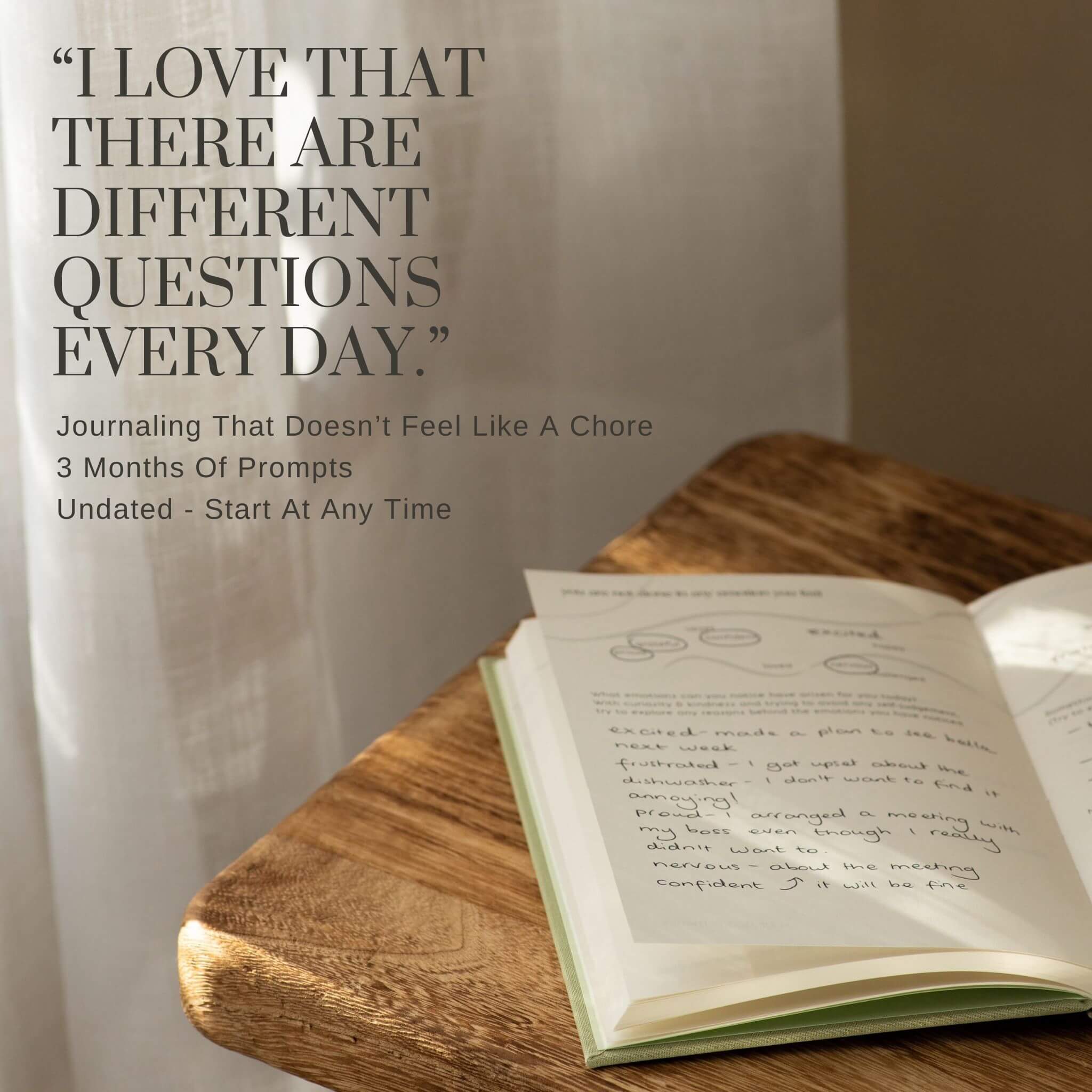
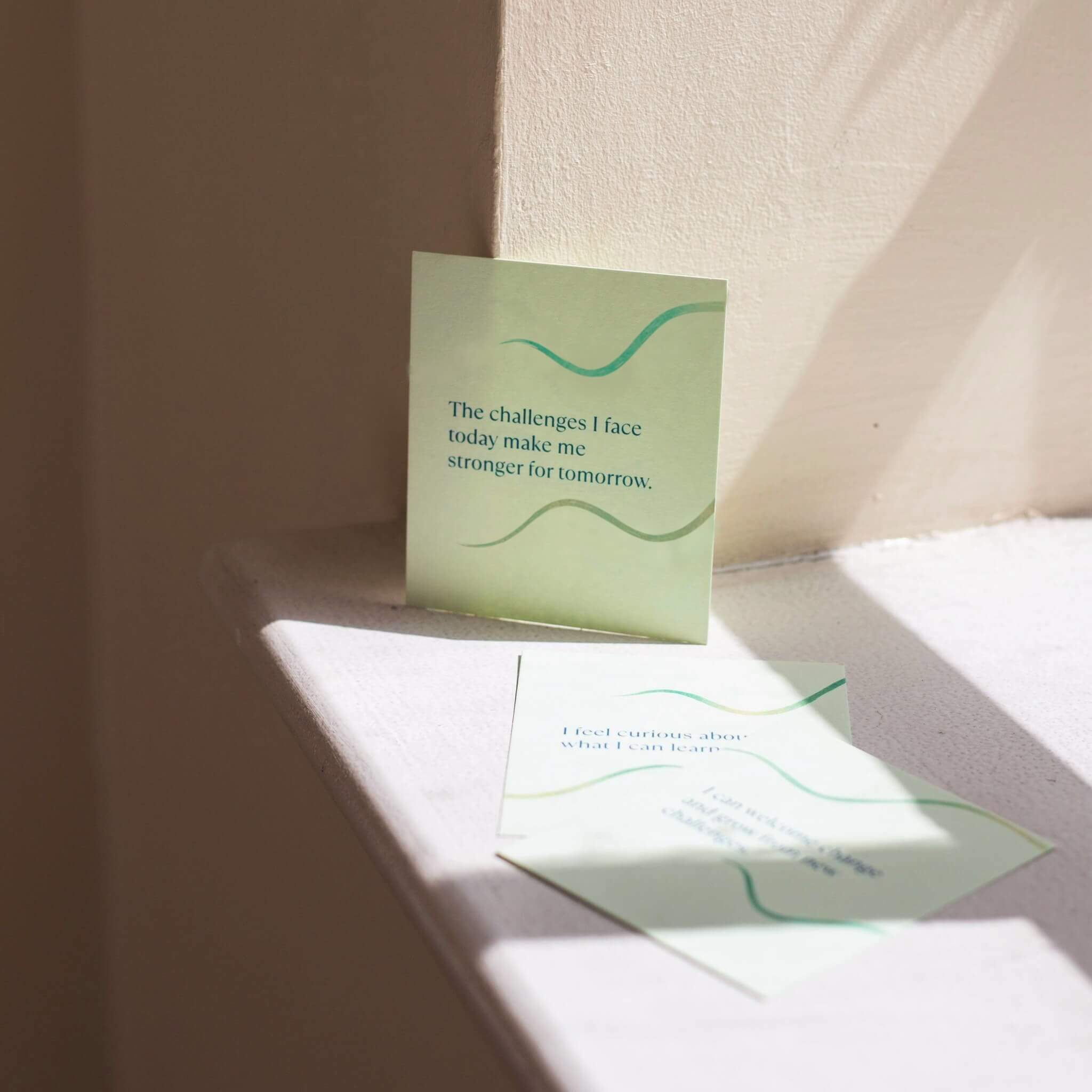
"What emotions can you notice have arisen for you today? With curiosity and kindness, try to explore reasons behind the emotions you've noticed."
"What has challenged you today? Talk to yourself as you would talk to a friend, and write down what you would say."
"Notice how you are feeling right now. Think about what you would find it helpful to hear. It might help to imagine something a friend would say. Write down words to say to yourself."
"Can you think of a time when you've struggled to feel proud of something you've achieved, but if it had happened to a friend you would have felt proud? Write down words of reassurance to show yourself that you deserve to feel proud."
"Imagine you have thirty minutes to do something for you, to show yourself some of your own love and care. What would you do?"
Gentle reminders throughout
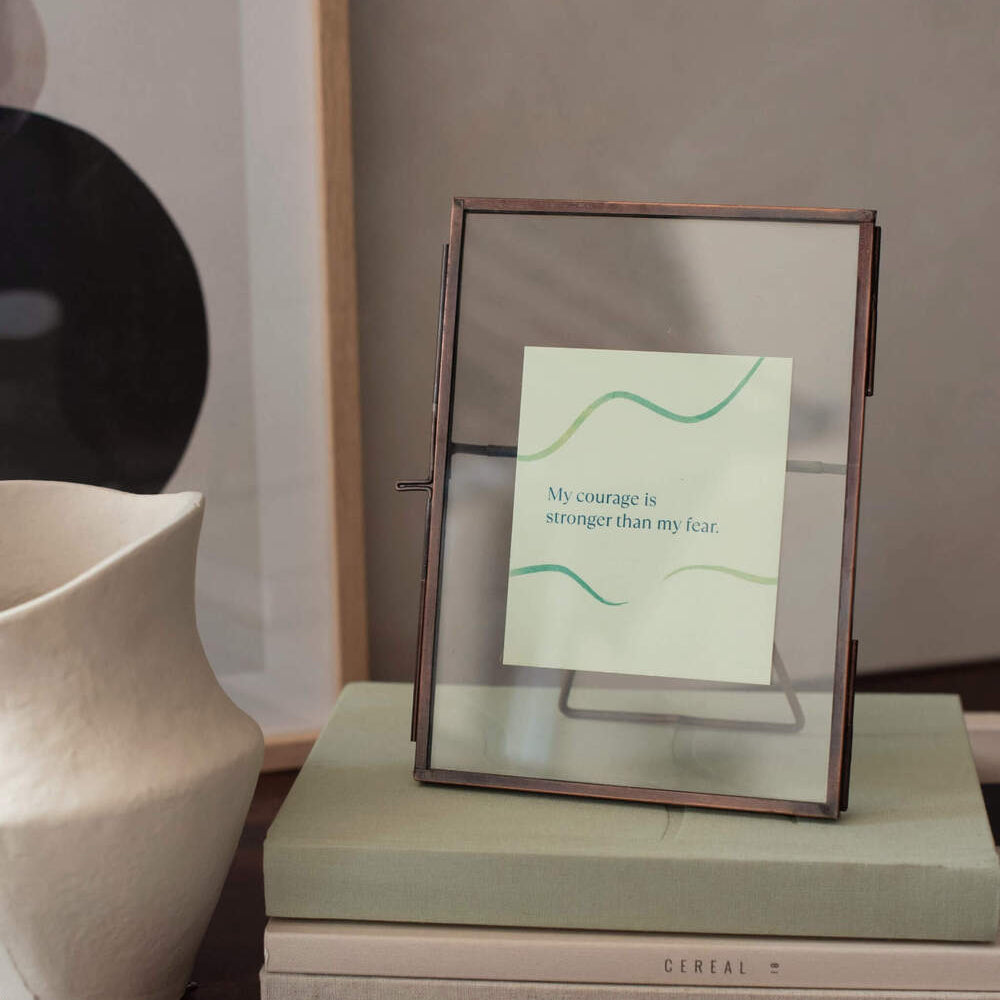
The pages carry affirmations that validate your experience without forced positivity:
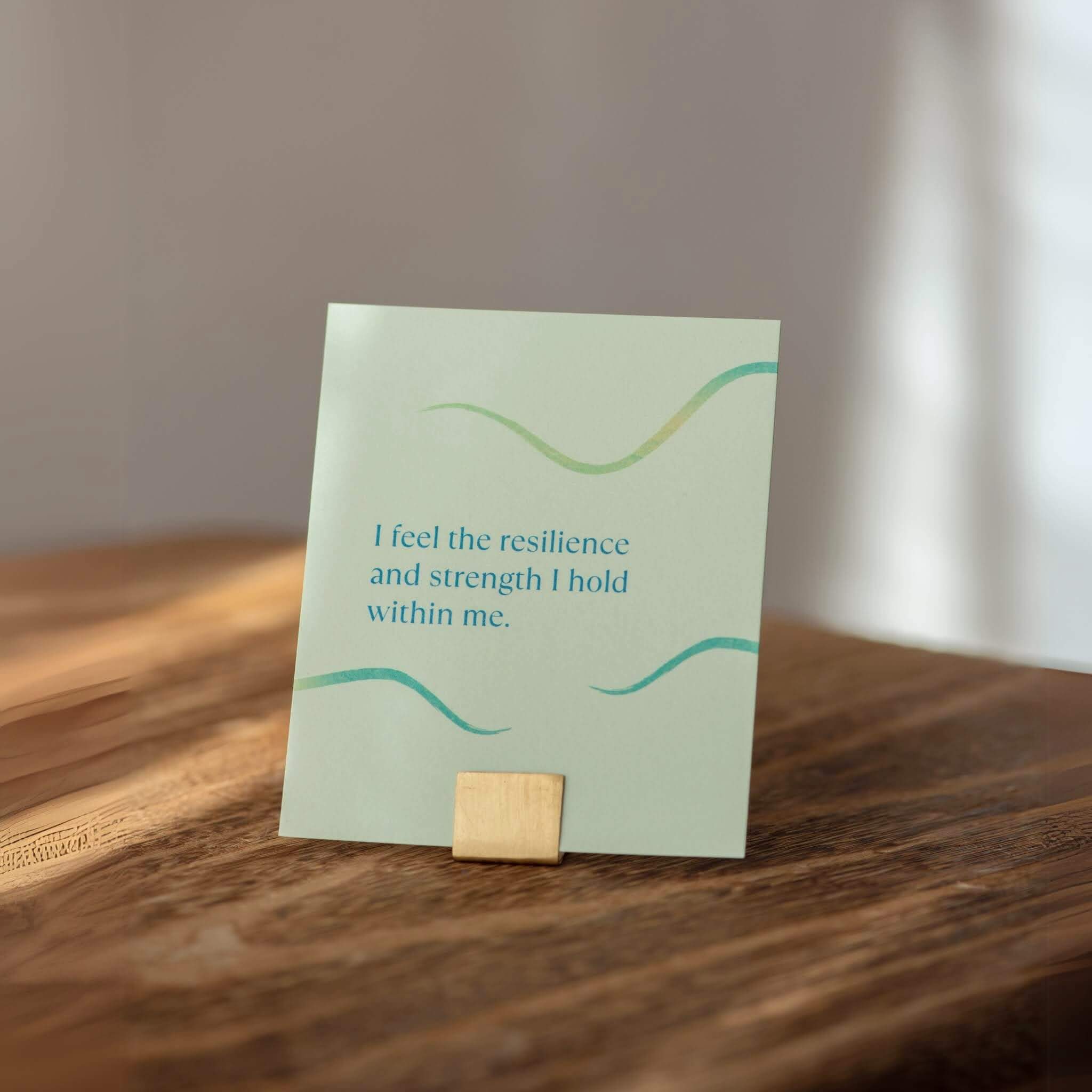
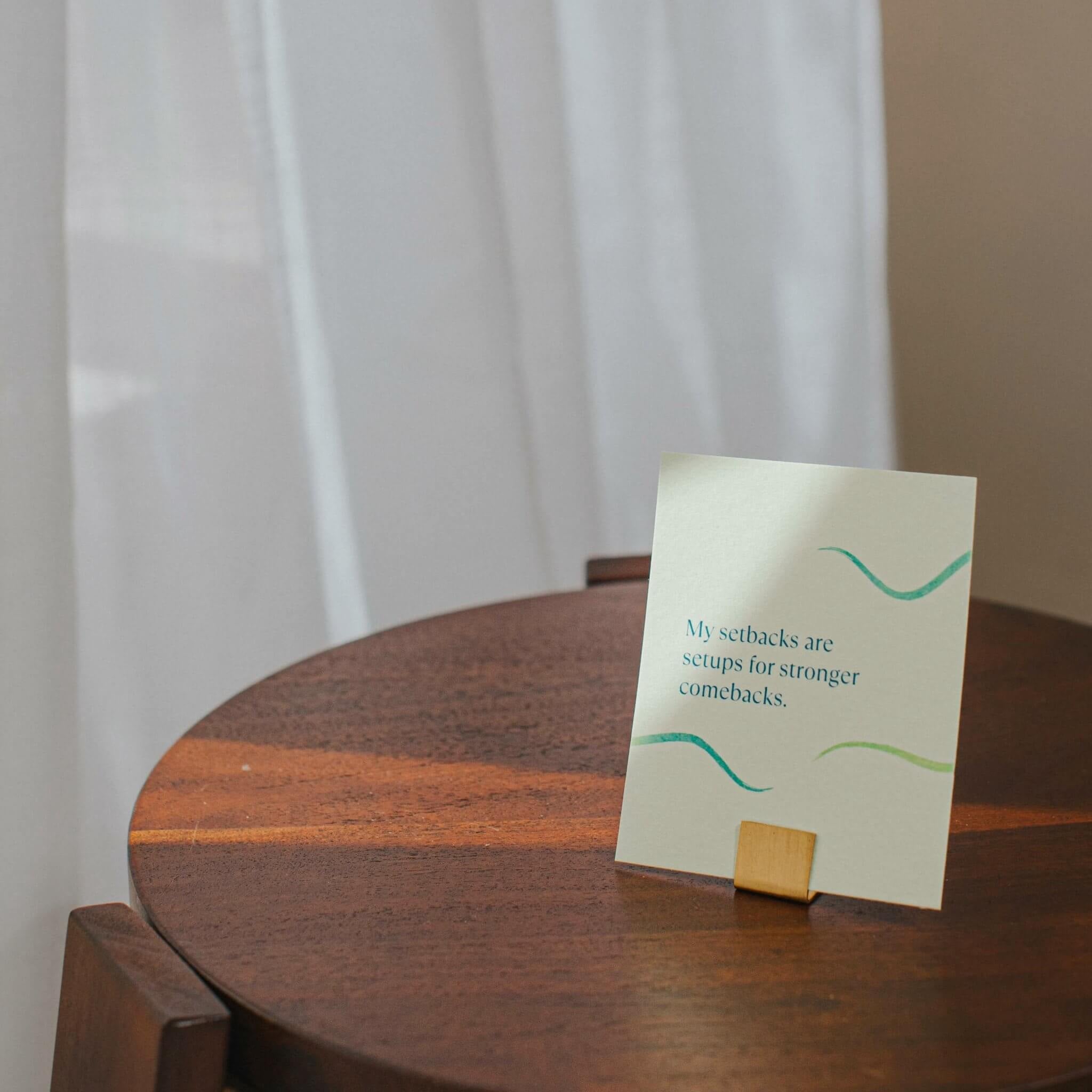
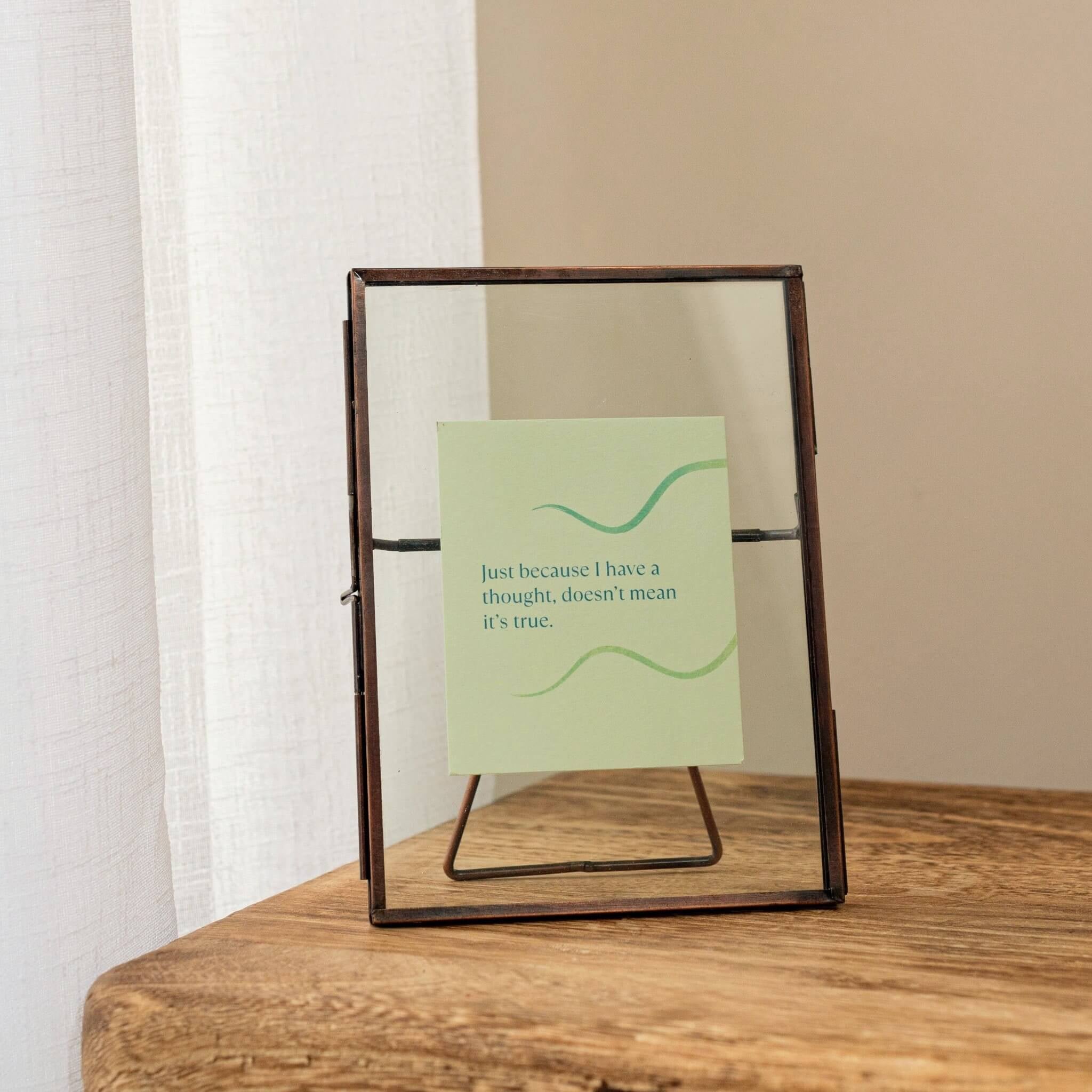
- "The way you speak to yourself matters"
- "You can't be perfect, and you don't need to be"
- "Being human means being imperfect"
- "No emotion defines who you are"
- "Every day you do so many things to be proud of"
Who this journal is for
This journal might suit you if you:
- Struggle with negative self-talk or a harsh inner critic
- Find traditional gratitude journals dismissive when you're struggling
- Have found other journals too repetitive
- Want to build self-compassion but aren't sure where to start
- Are working with a therapist on self-worth or self-esteem
- Would like support to validate your emotions without judgement
You don't need:
- Any experience with journaling or self-compassion
- To be "good at writing"
- To understand CFT or psychological frameworks
The journal guides you through each page, and because it's undated, you can start any time and come back without guilt.
When to seek professional help
If negative self-talk is seriously affecting your daily life, your mood, your relationships or your work, please reach out to a qualified therapist or counsellor.
Journaling is a supportive tool, not a replacement for professional help when you need it. A therapist trained in Compassion-Focused Therapy can offer support tailored to you, and journaling can sit alongside that work.
There's no shame in asking for help. Reaching out is an act of self-compassion. If you're struggling right now, you can speak to your GP, or call Samaritans free on 116 123, day or night.
Where to start
Learning to speak to yourself more kindly takes time. I'm still learning. But journaling gave me a place to practise, and I hope it can do the same for you.
Start small. Tonight or tomorrow, you might:
- Write down one harsh sentence exactly as it sounds
- Ask which part of you is speaking, and what it's worried about
- Write back the words you'd give a friend
And if you'd like the page to hold that structure for you, with prompts, an emotional awareness tool and gentle reminders, the Give Yourself Kindness Journal is here, recommended by clinical psychologists from Harvard Medical School and the University of Oxford.
The way you speak to yourself matters. You deserve the same kindness you'd give a friend.
Discover the Give Yourself Kindness Journal
Common questions about using journaling to change negative self-talk
I've tried journaling before and just felt worse. Will this be different?
If journaling has made you feel worse before, that's a very common experience, and self-compassion journaling might feel different. Journals that repeat the same prompts or push positivity can leave the inner critic louder. Self-compassion journaling makes room for all emotions and invites you to answer difficult moments with the kindness you'd offer a friend, without guilt when you miss days.
How is this different from just writing in a blank journal?
Self-compassion journaling is different from a blank journal because its prompts invite a particular voice onto the page. Clinical psychologist Dr Chris Irons explains that you can journal from different parts of yourself, including a fearful or self-critical part. On a blank page, the critical part can end up doing the writing. Guided prompts gently hand the pen to your compassionate self.
How long does it take to see results?
How long journaling takes to change self-talk is different for everyone, and there's no set timeline. Some people notice the critical voice more clearly within the first few weeks, while a kinder response often takes longer to feel natural. Professor Willem Kuyken of the University of Oxford compares it to planting seeds that grow and mature ‘in their own way and time.’
What if I don't know how to answer the prompts?
If you don't know how to answer the prompts, that's okay, because there's no right answer. Some days you might write a lot, other days a sentence or two. The emotional awareness tool on each page of the journal can help you find words for what you feel. If a prompt doesn't resonate today, simply notice that and move on, without judgement.
Is journaling enough, or do I need therapy?
Whether journaling is enough depends on how much negative self-talk is affecting you. Journaling is a supportive tool, not a replacement for professional help. Many therapists use the Give Yourself Kindness Journal with clients between sessions. If self-talk is seriously affecting your daily life, please speak to a qualified therapist or your GP, or call Samaritans on 116 123.
What if I miss days or weeks?
If you miss days or weeks, you simply come back when you're ready. The Give Yourself Kindness Journal is undated, so there are no empty dated pages to feel guilty about. Missing days doesn't mean you're bad at self-compassion; it means you're human. Life gets busy, hard or overwhelming, and the journal will be there when you need it.
I'm afraid being kind to myself will make me lazy or unmotivated.
The fear that being kind to yourself will make you lazy or unmotivated is very common. Clinical psychologist Dr Chris Irons lists the fear of laziness first among ten common fears of self-compassion. He describes a firefighter, who embodies compassion, and notes that you're far more likely to describe them as ‘brave, courageous and strong’ than weak or lazy.
Is there a ‘frontal lobe’ way to journal?
‘Frontal lobe journaling’ is a name used online, and it isn't a method described by the psychologists on this site. Clinical psychologist Dr Annabelle Kyle Dortch explains that when self-criticism activates the stress response, the frontal lobe, ‘where we reflect and make decisions intentionally’, is offline. From a place of self-compassion, she writes, ‘we can actually learn more from our experience.’
Is there research that self-compassion journaling reduces self-criticism?
Research on self-compassion points in that direction, although the psychologists here describe the wider evidence rather than one journaling study. Dr Chris Irons writes that people with higher self-compassion tend to have lower levels of self-criticism, that Compassionate Mind Training has been found to lower self-criticism, and that compassionate letters build on ‘a large research literature’ on expressive writing.
Continue reading
From the psychologists quoted here
-
How to stop beating yourself upDr Maria Tucknott, Clinical Psychologist
-
Why self-compassion is more effective than self-criticismDr Annabelle Kyle Dortch, PsyD, Clinical Psychologist
-
The benefits of journaling, from 3 clinical psychologistsDr Chris Irons, Dr Josh Mirmelli and Dr Andreas Comninos
-
The fears of self-compassion and how to work with themDr Chris Irons, Clinical Psychologist
-
Why is self-compassion so hard?Dr Bianca Nardini, Clinical Psychologist
-
Do affirmations really work? I asked 5 psychologistsProfessor Willem Kuyken, Dr Caroline C. Lee, Dr Jeffrey McDonnell and others
-
 5 ways to practice self-compassionJoanna Townsend, LCSW, Licensed Psychotherapist
 -
Is self-compassion natural?Dr Chris Germer, PhD, Harvard Medical School
-
 Can you give yourself too much self-compassion?Carrie Pollard, MSW RSW, Psychotherapist
Related guides


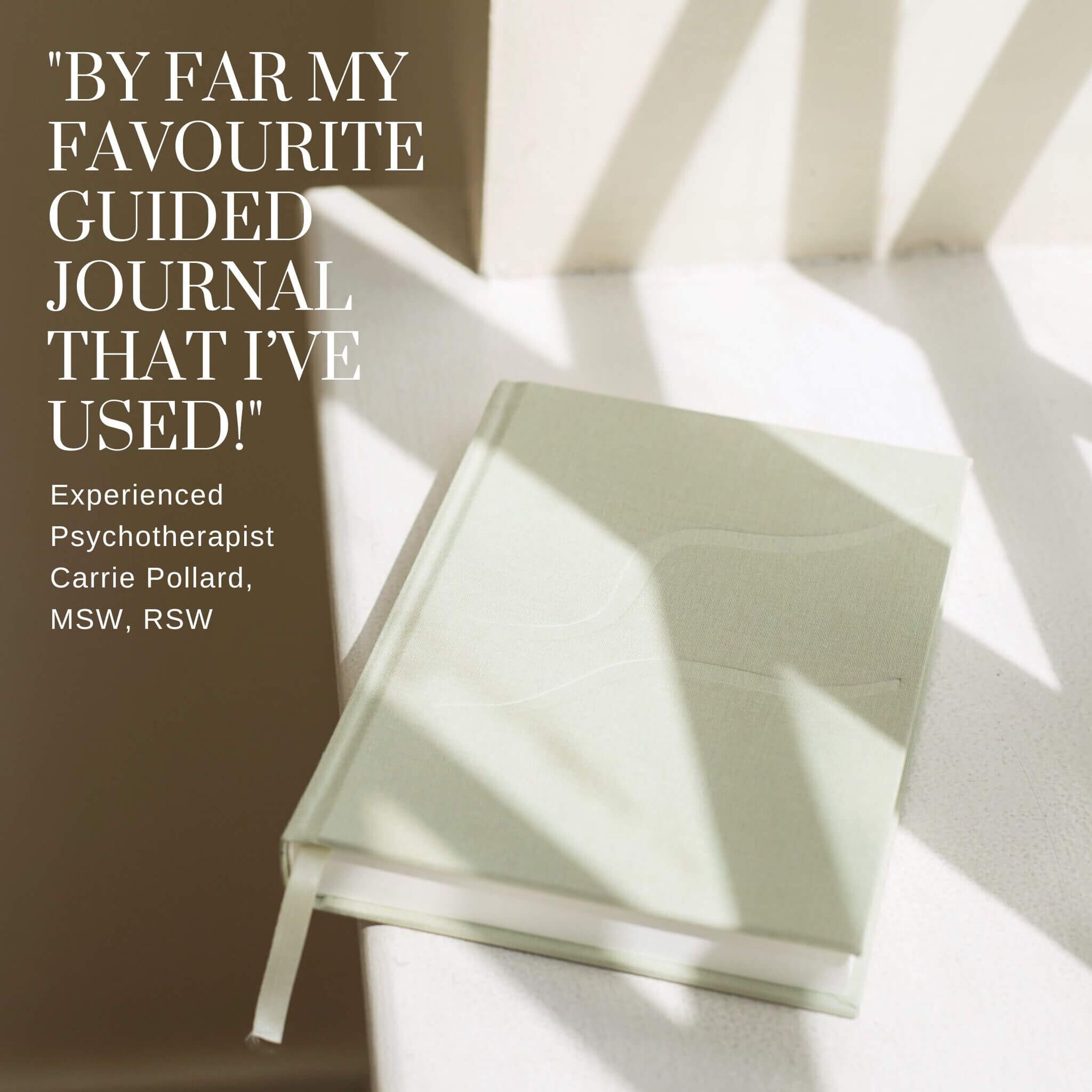
“By far my favourite guided journal that I’ve used!”
There's a lot of journals out there. Most of which include tools that can be repetitive, boring or unhelpful. Give Yourself Kindness is about creating something new.