






Quick answer
Your inner critic is not a character flaw. It is your brain’s threat system pointed inwards, and it is trying — clumsily — to protect you. Clinical psychologist Dr Maria Tucknott, who wrote about this for me, puts it plainly: “The inner critic, then, is not simply being ‘mean’ - it’s trying (clumsily) to protect us. The challenge is that this threat system often overreacts.” You cannot argue a bodyguard into standing down, but you can answer it. Having the voice is human. Doing what it says is optional. You might find, after a few weeks of answering it on paper, that you notice it sooner and believe it less automatically.
 Dr Maria Tucknott, DClinPsy, Clinical Psychologist specialising in trauma, anxiety and depression. Read her full article
Try this now: write down the sentence your critic just said, in its exact words — not a tidy summary, the actual wording, including how harsh it is.
Underneath, write what you would say to a friend who told you that same sentence about themselves. Say that second line to yourself.
There is a voice in your head that is harder on you than you would ever be on anyone else, and you would like it to ease off. That is a kind thing to want, and you are in the right place.
Over the last few years I have asked clinical psychologists and psychotherapists to write for this site about self-criticism. Everything they said sits here, in their words, with links to the full pieces and the practices that go with them. Read it in any order, including going straight to the exercise if that is what you need first.
About this guide. I am Rachel Smith, a qualified meditation teacher (DipBSoM, British School of Meditation, passed with distinction) and the founder of Give Yourself Kindness. I am not a psychologist or a therapist, and I do not pretend to be. Everything clinical on this page comes from named clinicians with their credentials attached and a link to the full article they wrote for me.
What is an inner critic?
The inner critic is the internal voice that judges what you do, predicts you will fail, and speaks to you in a tone you would never use with anyone else. In Compassion Focused Therapy it is understood not as a personality defect but as one expression of the brain’s threat system — the same ancient machinery that scans for danger, turned inwards and aimed at you.
Most people first notice it as a running commentary. That was stupid. They are going to realise you have no idea what you are doing. You should have known better. It tends to show up hardest at the moments you are already struggling, which is part of what makes it so difficult to reason with.

Dr Maria Tucknott, DClinPsy
Clinical Psychologist specialising in trauma, anxiety and depression | Founder of Tucknott Psychology
Read Dr Tucknott’s full article: How to stop beating yourself up →“It’s all too common: the relentless inner voice that tells you you’re not good enough, that you messed up again, that everyone else has it together except you. For many people, this internal self-criticism becomes an ingrained habit, driving anxiety, shame, and even depression. If this sounds familiar, you’re not alone and more importantly, it’s not your fault.”
Does having an inner critic mean something is wrong with me?
No — having an inner critic is a feature of being human rather than a symptom of being broken, and everybody has one. Dr Tucknott is unambiguous about this: Compassion Focused Therapy helps us understand that our inner critic is not a personal failing, but part of an ancient safety system hardwired into the human brain. What varies between people is how loud it is and how much of the day it takes up.
Your history can turn the volume up. A critical environment, a job where mistakes were punished, cultural messages about being tough on yourself, love that felt conditional — any of those can make the voice more frequent and more vicious. But the foundation is standard equipment. You do not need to find a reason before you are allowed to want it to stop.
Having the voice is human. There is nothing to be ashamed of in it, and nothing to fix about you. Believing it is optional — and that is the part I most want you to take from this page.
You do not have to win an argument with your inner critic, or silence it, or wait until you feel differently. You can hear it, recognise what it is, and answer it anyway.
Why is my inner critic so loud?
Because the system it runs on was built to over-report, not to be accurate. Your threat system works on a better-safe-than-sorry principle: it is fast, automatic and deliberately biased towards false alarms, because a false alarm costs you a fright and a missed alarm cost your ancestors their life. Applied to a work email or an awkward conversation, that same setting produces a voice far harsher than the situation warrants.
Dr Maria Tucknott, DClinPsy
Clinical Psychologist | Compassion Focused Therapy
“All living beings need to detect danger to survive, and over millions of years, our brains evolved a threat system designed to scan for danger and rapidly activate emotions that help us protect ourselves and those we care about. This threat system works on a ‘better safe than sorry’ principle. It’s fast, automatic, and often irrational because that’s what helped our ancestors stay alive.”
What this means for the voice you hear: a system tuned to raise false alarms will raise them about your emails, your parenting and the thing you said at 4pm. The harshness is the setting, not a verdict on you.
Read Dr Tucknott’s full article: How to stop beating yourself up →Dr Tucknott describes three emotion regulation systems in Compassion Focused Therapy. Seeing them laid out is often the moment the harshness stops feeling personal.
- The threat system — fear, anxiety, shame. Fast, loud, protective. This is where the inner critic lives.
- The drive system — achievement, reward, pushing forward. Useful, and easily hijacked by the critic into never being enough.
- The soothing system — safety, calm, connection. The one most of us have barely used. It can be developed.
As she puts it, many of us have overactive threat systems and underdeveloped soothing systems. That is not a character problem. It is a balance problem, and balance is something you can work on.
Is my inner critic trying to protect me?
Yes, it is, and understanding that changes what you do about it. The critic is not an intruder or an enemy voice. It is a badly calibrated protector: it is trying to get ahead of rejection, failure and humiliation by pointing them out before anyone else can. The strategy is genuinely well-intentioned. It is also, on the evidence, counterproductive.
Dr Maria Tucknott, DClinPsy
Clinical Psychologist | Founder of Tucknott Psychology
Read Dr Tucknott’s full article: How to stop beating yourself up →“The inner critic, then, is not simply being ‘mean’ - it’s trying (clumsily) to protect us. The challenge is that this threat system often overreacts. It dominates our attention, magnifying the one rude comment over the ten kind ones, remembering the one negative review instead of the many positive ones.”
She goes on: when we begin to view our inner critic not as an enemy, but as an over the top protector, we can begin to shift our relationship to it. That single sentence is the hinge of this whole page. You are not trying to defeat part of yourself. You are trying to reassure an overactive alarm that it can stand down.
If the thing keeping you awake is a comment somebody actually made rather than the voice in your own head, why can’t I stop thinking about criticism is written for that instead.
What triggers my inner critic?
Anything your threat system reads as a risk to your standing, your competence or your belonging — which is why the critic often arrives without an obvious cause. The trigger is frequently not the event you would name if asked. It is more often a state you were already in when the event happened, which is why the same comment can bounce off you on Tuesday and flatten you on Friday.
These are the ones people recognise most. You do not need to identify yours to make progress, but noticing a pattern makes the voice a lot easier to see coming.
- Being tired, hungry or unwell. The least interesting explanation and by far the most common one. A depleted nervous system has less capacity to absorb anything.
- Being watched or assessed. Meetings, reviews, presentations, sending work to someone. The critic tends to speak first, in an attempt to get ahead of the judgement.
- Doing something new or difficult. Unfamiliarity registers as risk. That is why the voice is loudest at exactly the moments you most need to be steady.
- Comparison, often on a phone. Scrolling supplies an endless run of other people’s edited outsides to hold your unedited inside against.
- A small mistake with an audience. The size of the mistake and the size of the reaction are frequently unrelated. What matters is who saw it.
- Late evening and the early hours. Nothing about your situation changes at 2am, but your capacity to weigh it up does. Night thoughts feel truer than they are.
One thing worth knowing: a trigger explains the timing, not the truth. Finding out that the voice always turns up when you are exhausted does not make what it said accurate on the days you are rested.
What does an inner critic sound like?
It usually sounds like a flat statement of fact rather than an opinion, which is exactly why it is so persuasive. It rarely announces itself. It does not say here is a harsh view of you; it says you always do this, in your own voice, in the middle of an ordinary Tuesday, and it sounds like something you have simply noticed about yourself.
Learning to hear the tone is the first practical skill, because you cannot answer something you have not noticed. Here are four tones it commonly takes, with the sentences people actually recognise.
The perfectionist
That is not good enough.
You should have done better than that.
One mistake and the whole thing is ruined.
Underneath it is usually a fear of being found wanting. If this is the tone you recognise most, self-compassion: the antidote to perfectionism goes further into it.
The comparer
Everyone else finds this easy.
Why can you not just be more like them.
You are miles behind where you should be by now.
Underneath it is usually a fear of not belonging. Worth noticing that it compares your inside to other people’s outsides, which is not a fair test.
The catastrophiser
You always mess things up.
Nothing ever works out for you.
This proves what you have always suspected.
Listen for the absolutes. Always, never, everyone, nothing. Those words are the fingerprint of a threat system talking, not of an accurate assessment.
The shame voice
There is something wrong with you.
You do not deserve good things.
If people really knew you, they would not stay.
This is the hardest one, because it is not about what you did — it is about what you are. It also responds least well to arguing and best to being answered gently and repeatedly.
What are the types of inner critic?
It depends whose framework you are reading, and the number matters far less than the recognition. The widely shared seven-types list comes from the Internal Family Systems tradition, where critics are treated as distinct inner characters, each with its own job. Compassion Focused Therapy, which is the approach the psychologists on this page work in, takes a different view: one overactive threat system speaking in several tones.
The Internal Family Systems version is a genuinely useful way of thinking, and the reason it travels so well online is that the labels are memorable: a perfectionist, a taskmaster, an underminer, a guilt-tripper, a destroyer, a controller, a moulder. If reading a list like that gives you a jolt of recognition, take the jolt. It is doing the same job as the four tones above.
What Compassion Focused Therapy adds is that you do not have to decide how many voices you have before you can answer one. Whether it is seven parts or one system in seven moods, the sentence in your head this afternoon is still a sentence you can write down and reply to, and the reply looks the same either way.
I have set the four tones above out that way deliberately. I would rather you finished this section recognising a sentence you actually say to yourself than filing yourself under a category. If two of them sound like you, that is normal. If none of them quite does, write down your own wording — your version is more useful than my list.
Where you might notice it in your body first
The critic is not only words. For many people the physical signal arrives before the sentence does, and catching that signal is often easier than catching the thought.
- A tightening jaw, or shoulders lifting towards your ears
- A sinking or dropping feeling in your stomach
- Heat in your face, or a tight chest
- The urge to make yourself smaller, or to leave the room
If you notice one of those, you can treat it as the doorbell. Something has just been said to you internally. You get to decide what happens next, and the exercise below is what to do with it.
Inner critic vs inner coach: what is the difference?
Both voices want you to do well, and the difference is method: the critic uses shame and fear and attacks who you are, while the coach uses encouragement and honesty and addresses what happened. This distinction matters for a practical reason rather than a sentimental one. Criticism puts your body into a state in which you are measurably worse at doing the thing you were being criticised about.
One honest note on the term. Inner coach is popular language rather than clinical language. In Compassion Focused Therapy the equivalent is called the compassionate self, and Dr Tucknott describes it as an inner presence that is wise, strong and caring rather than soft or indulgent. I use both words on this page because coach is the word people search for and compassionate self is the one the clinicians use. They point at the same thing.
| Inner critic | Inner coach | |
|---|---|---|
| What it aims at | Who you are. Your character, your worth. | What happened. The specific thing, this time. |
| Its method | Shame, fear, comparison, threat. | Encouragement, honesty, perspective. |
| Its timescale | Always and never. This proves a pattern. | Today. This one, and what next. |
| How it feels in the body | Tight chest, sinking stomach, wanting to hide. | Steadier. Not comfortable, but not braced. |
| What it does to standards | Raises them out of reach, then punishes the gap. | Keeps them, and changes how you get there. |
| What it does next | Rumination. Avoidance. Doing it again. | A next step, however small. |
Worth saying clearly, because it is the objection almost everyone has: an inner coach is not a soft one. Dr Bianca Nardini, a London clinical psychologist who wrote about this for me, puts it this way — the path to self-compassion is not about lowering your standards, it is about changing your approach to meeting those standards, using encouragement rather than punishment as your primary tool.
 From Dr Bianca Nardini’s article, Why is self-compassion so hard?
Why do I treat myself worse than I treat my friends?
Because most of us hold a private belief that harshness is what keeps us from slipping, and we would never dream of applying that belief to somebody we love. The clearest illustration of this I have found is Dr Nardini’s. She uses it with clients, she wrote it out for this site, and it is the thing that shifted something for me when nothing else had.
Your closest friend has decided to train for a marathon. Because you care deeply about them, you want to hire them the best coach possible. You interview two candidates.
Coach one
FASTER! MY GRANDMOTHER RUNS QUICKER THAN YOU!
YOU ARE DELUSIONAL TO THINK YOU COULD FINISH A MARATHON!
Coach two
Keep going, you are making progress.
I can see how hard you are trying, and I know this is exhausting.
Remember to hydrate and pace yourself, this is a long journey.
Coach one prides itself on motivating athletes through harsh criticism. Coach two understands that marathons are challenging and focuses on encouragement. Both coaches want your friend to succeed. Which would you hire?

Dr Bianca Nardini
Clinical Psychologist, London | Specialises in helping people who experience anxiety and self-criticism
Read Dr Nardini’s full article: Why is self-compassion so hard? →“The answer seems obvious when choosing for someone else. Yet many of us default to Coach #1’s approach with ourselves.”
Nobody hesitates over that choice for a friend. Most of us then go home, hire Coach One for ourselves, and call it discipline.
Why does being hard on yourself not work?
Because criticism triggers a stress response, and a stressed brain is not a brain that learns well. Your system reads an attack as an attack whether it comes from someone else or from inside your own head. The part of you needed for reflection and problem solving becomes less available, and you tend to fall back on familiar behaviour — often the exact behaviour you were criticising yourself for.

Dr Annabelle Kyle Dortch, PsyD
Clinical Psychologist, Los Angeles | Specialises in life transitions, relationships, stress, anxiety and the impacts of trauma
Read Dr Dortch’s full article: Why self-compassion is more effective than self-criticism →“When we engage in self-criticism, we create a nervous system and brain state that is not conducive to learning or facilitating a growth-oriented mindset. Our mind-body system perceives criticism as a threat, activating our stress response.”
The harsh coach is not a more rigorous approach that happens to feel bad. It is a less effective one that also happens to feel bad.
How do I build an inner coach?
You build it by borrowing a voice before you can produce one, describing rather than declaring, and letting the coach be honest about what actually went wrong. Almost nobody generates a kind inner voice from nothing. What works is copying one you already recognise, and using it often enough that it stops sounding like somebody else.
Four things that make it workable. None requires you to feel differently first.
Borrow someone else’s voice to start
Think of one person, real or otherwise, who has been steady with you — a grandparent, a teacher, a friend, a character in a book. Ask what they would say about this, and write that down. You are not inventing a new voice, you are recalling one you have already heard.
This is the everyday version of what Compassion Focused Therapy calls compassionate self imagery, and it is far easier than trying to be kind to yourself from a standing start.
From Dr Maria Tucknott’s article, How to stop beating yourself up
Describe rather than declare
A coach that says I am enough to someone who does not believe it gets ignored. A coach that says something you cannot argue with gets heard. Statements you do not believe can make things worse rather than better, particularly if your self-esteem is already low.
This is hard right now.
I am doing what I can with what I have today.
Other people find this difficult too.
None of those requires you to think well of yourself. That is exactly why they work when the confident-sounding ones do not. A sentence you can verify is a sentence the critic has nothing to push against, and after a while that turns out to be a great deal more useful than a sentence you were hoping to grow into.
Let it be honest about what went badly
An inner coach is not there to tell you everything was fine. A real coach says that did not go well, and I understand why you are upset, and here is what we do next. Accuracy without contempt is the whole skill.
If your kind voice can only speak when things went well, it will fall silent at exactly the moments you need it.
Always finish with a next step
This is the thing that separates a coach from reassurance. A coach ends by naming what happens now, and makes it small enough that you already know you will do it.
It also gives the protective part of you something real to hold, which is often what it was asking for in the first place.
The practical way to do all four at once is the written exercise below, which is where the coach voice gets somewhere to live rather than staying an idea.
An inner coach is not forced positivity. Building a kinder inner voice does not mean telling yourself things are fine when they are not, or that you are wonderful when you feel like the opposite.
A coach can say that went badly and I understand why you are upset. That is not positivity. It is accuracy delivered without contempt, and it is what makes the difference workable rather than aspirational.
How do I answer my inner critic?
Write down exactly what your critic said, in its own words, and then write a reply to it as though you were answering a friend who had said that about themselves. Two columns, on paper. It takes about five minutes. This is the exercise Dr Maria Tucknott sets out in her article for this site, and it works because it does two things at once: it gets the sentence out of the loop in your head and onto a page where you can see it, and it makes you produce the kinder version rather than wait to feel it.
You do not have to believe the reply yet. That is not the test. The test is whether you can write it down.
It is worth saying why this is written rather than thought. A harsh sentence you only think stays fluid: it changes shape, it picks up evidence, and it can repeat for an hour without ever becoming a thing you could examine. The same sentence on a page stops moving. You can read it back, notice the absolutes in it, and see how little of it is actually a description of what happened. Nothing else in this guide changes as much as that one shift from having the thought to looking at it.
Dr Maria Tucknott, DClinPsy
Clinical Psychologist specialising in trauma, anxiety and depression | Founder of Tucknott Psychology
Read Dr Tucknott’s full article, including her other three practices →“The goal isn’t to ‘fix’ yourself. It’s to learn how to support yourself like you would a good friend.”
The four steps
Catch it, and write it exactly as it came
Wait until you notice the voice, or think back to the last time today it turned up. Write the sentence down word for word, including how harsh it is. Do not soften it and do not translate it into something reasonable.
If you get stuck: start from the body. Where did you feel it, and what had just happened? The words usually arrive once you have the moment.
Separate what happened from what you decided it meant
Underneath, write two short lines. The first is the fact: what actually occurred, in the flattest language you can manage. The second is the conclusion your critic drew about you from it.
Almost always these are two very different sentences, and the second one is the one doing the damage.
If you get stuck: ask what a camera in the room would have recorded. A camera records a missed deadline. It does not record that you are unreliable.
Write the reply you would give a friend
Picture someone you care about telling you the sentence from step one about themselves. Write down what you would say back to them. Not a pep talk — what you would actually say, including the honest bits.
Then change the names. That paragraph is now addressed to you.
If you get stuck: if you find you would not be kind to the friend either, that is worth noticing. It usually means the standard itself, not just the self-talk, is worth a look.
Finish with one next step, small enough to be certain of
A coach ends with what happens next. Write one thing, and make it small enough that you already know you will do it. Send the email. Drink a glass of water. Go to bed at a reasonable hour.
This is what stops the exercise becoming reassurance you do not act on. It also gives the protective part of you something real to hold, which is often what it wanted.
If you get stuck: the next step is allowed to be resting. That counts.
What it looks like written out
Three worked examples. The wording matters more than the format, so read the reply for the tone rather than the exact sentences.
After a mistake at work
What the critic said
You have made yourself look completely incompetent. Everyone in that meeting is going to remember this. You are not good enough for this job and now they all know it.
The reply
I got one figure wrong in a slide and I corrected it in the room. That is what happened.
The rest of that sentence is a prediction about what other people are thinking, and I have no evidence for it. I would not say any of this to a colleague who had done the same thing.
Next step: I will re-check the figures once tomorrow morning, and then I will stop.
If this is the one you recognise, I made a mistake at work and I feel terrible is written for that exact evening.
When you have not managed what you meant to
What the critic said
You said you would do it and you did not. Again. You always start things and give up. There is clearly something wrong with you.
The reply
I did not do the thing this week. That is the fact.
Always is not true, and I would not accept that word from anyone else describing me. I have had a hard fortnight and I was running on empty.
Next step: one small piece of it tomorrow, at a time I know I am usually free.
When the critic is aiming at who you are rather than what you did
What the critic said
If people really knew what you are like, they would not stick around. You are too much and not enough at the same time.
The reply
There is no event underneath this one. Nothing happened. This is an old belief talking, and it has turned up before.
I do not have to settle whether it is true tonight. I am allowed to notice that it always arrives when I am tired.
Next step: put the pen down and go to bed. I will look at this again in daylight.
This is the hardest tone to answer and the one where repeating the exercise matters more than getting it right once.
Your turn — the blank version
Copy these five lines onto a piece of paper, or into your notes app. That is the whole exercise.
- What it said, word for word:
- What actually happened:
- What I decided that meant about me:
- What I would say to a friend who told me this — addressed to me:
- One next step, small enough that I know I will do it:
Do it once and you will have a sentence you did not have before. Do it a few times and you start to notice the same conclusion coming up again and again, which is more useful information than any of the individual incidents.
Dr Tucknott offers three more practices alongside this one in her article — compassionate breathing, compassionate self imagery, and simply noticing the tone of voice you use with yourself. If this exercise suits you, her full piece is worth your time, and so is transforming your inner critic into a compassionate voice.
Should I give my inner critic a name?
It helps some people a great deal and makes things worse for others, so it is worth trying once rather than adopting on principle. Naming the voice creates a small gap between you and the thought, and that gap is where the choice about what to do next lives. But for some people it turns an internal habit into an opponent, and fighting a character you have just invented is exhausting.
The clinical version of this is gentler than the popular version. In Compassion Focused Therapy the aim is not to name an enemy, it is to recognise a system — and Dr Tucknott’s framing of the critic as an over the top protector rather than a bully is doing exactly that job without anyone needing a nickname.
It tends to help if you find the voice merges with your own thinking and you cannot tell where it starts. A label, even a plain one, gives you a handle. Try neutral rather than comic: there is the not-good-enough one, or simply that is the critic.
It tends not to help if you already feel at war with yourself. Giving it a name and a personality can turn a bad hour into a fight you have to win, and losing a fight with yourself is worse than noticing a thought.
My own preference, for what it is worth, is to name the sentence rather than the speaker. That is the always-and-never one gives you the same distance without inviting a character into the room.
What if being kind to myself feels fake?
That reaction is expected, it is extremely common, and it does not mean the approach is wrong for you. If you have spoken to yourself harshly for years, the kind voice is unfamiliar — and unfamiliar registers as false long before it registers as true. Most guides skip this part, which is a shame, because it is where people give up.
There is usually a reason underneath the resistance, and it is worth finding rather than pushing past. Dr Bianca Nardini uses a thought experiment with clients that gets at it quickly.
Dr Bianca Nardini
Clinical Psychologist, London | Specialises in helping people who experience anxiety and self-criticism
Read Dr Nardini’s full article: Why is self-compassion so hard? →“Imagine something magical happened tonight, and when you wake up tomorrow, your inner critic is completely gone. What would worry you about that? Would you be reluctant to give it up?”
Sit with that before reading on. Something usually rises up straight away — a version of I would get complacent, or I would let myself off the hook, or I would stop trying. That answer is the real obstacle. Not a lack of willpower and not a lack of technique, but a reasonable-sounding belief that the criticism is doing a job and that dropping it is risky.
The fear that kindness is weakness
The most common version is that self-compassion is soft. Dr Chris Irons, who researches and trains in Compassion Focused Therapy, turns that over with an example worth sitting with.

Dr Chris Irons, DClinPsy
Clinical Psychologist | Compassion Focused Therapy researcher and trainer | Co-director of Balanced Minds
Read Dr Irons on the ten common fears of self-compassion →“If you think about a firefighter, they embody much of what we in CFT would hold as compassion… would you say that they are typically weak, lazy or selfish? Well, no, not at all. In fact, what you’re far more likely to do is describe them as brave, courageous and strong.”
Turning towards your own difficulty rather than away from it is not the easy option. It generally takes more nerve than criticising yourself does.
You do not have to resolve the resistance before you start
This is the piece that helped me most. Dr Stan Steindl, Clinical Psychologist and Adjunct Professor at the University of Queensland, writes about ambivalence — two true things being present at once. Part of you wants a kinder voice. Part of you is wary of it.

Dr Stan Steindl
Clinical Psychologist | Adjunct Professor, School of Psychology, University of Queensland | Co-director, UQ Compassionate Mind Research Group
Read Dr Steindl on working through ambivalence →“Ambivalence is a natural part of the process when we’re considering making a change or taking steps towards something new. It’s not a problem to be solved—it’s a signal that something important is happening.”
His suggestion is not to argue the wary part down but to let it speak. As he puts it, there is wisdom in our defences, even if we eventually choose to do things differently. You are allowed to start while part of you is still unconvinced.
What to do when you cannot produce the kind sentence at all
Some people get to step three of the exercise and find nothing comes. Not resistance exactly — just a blank where the kind sentence should be. If that is you, it is worth knowing that borrowing a sentence is a legitimate way in, not a shortcut. You are not cheating by starting with words somebody else wrote.
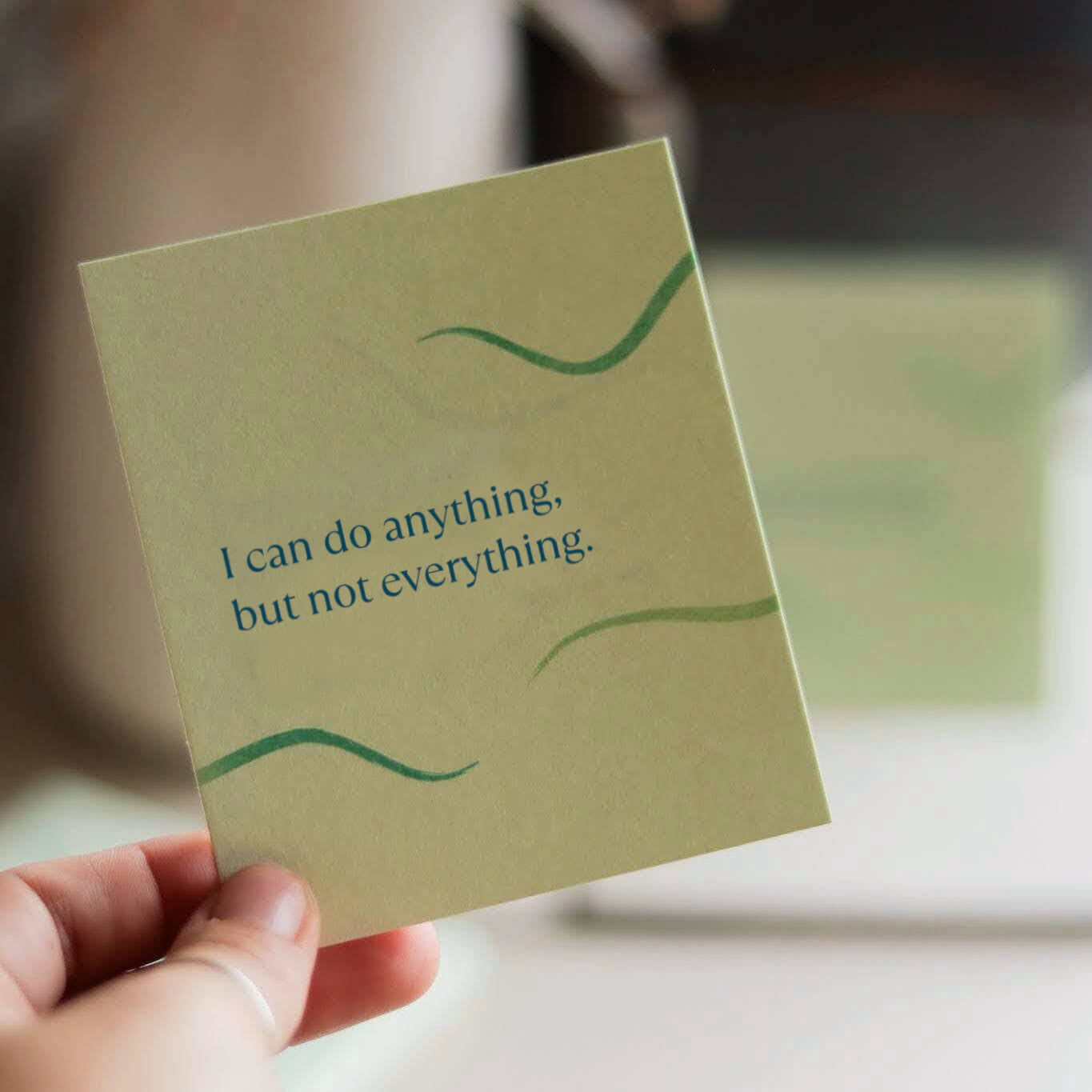
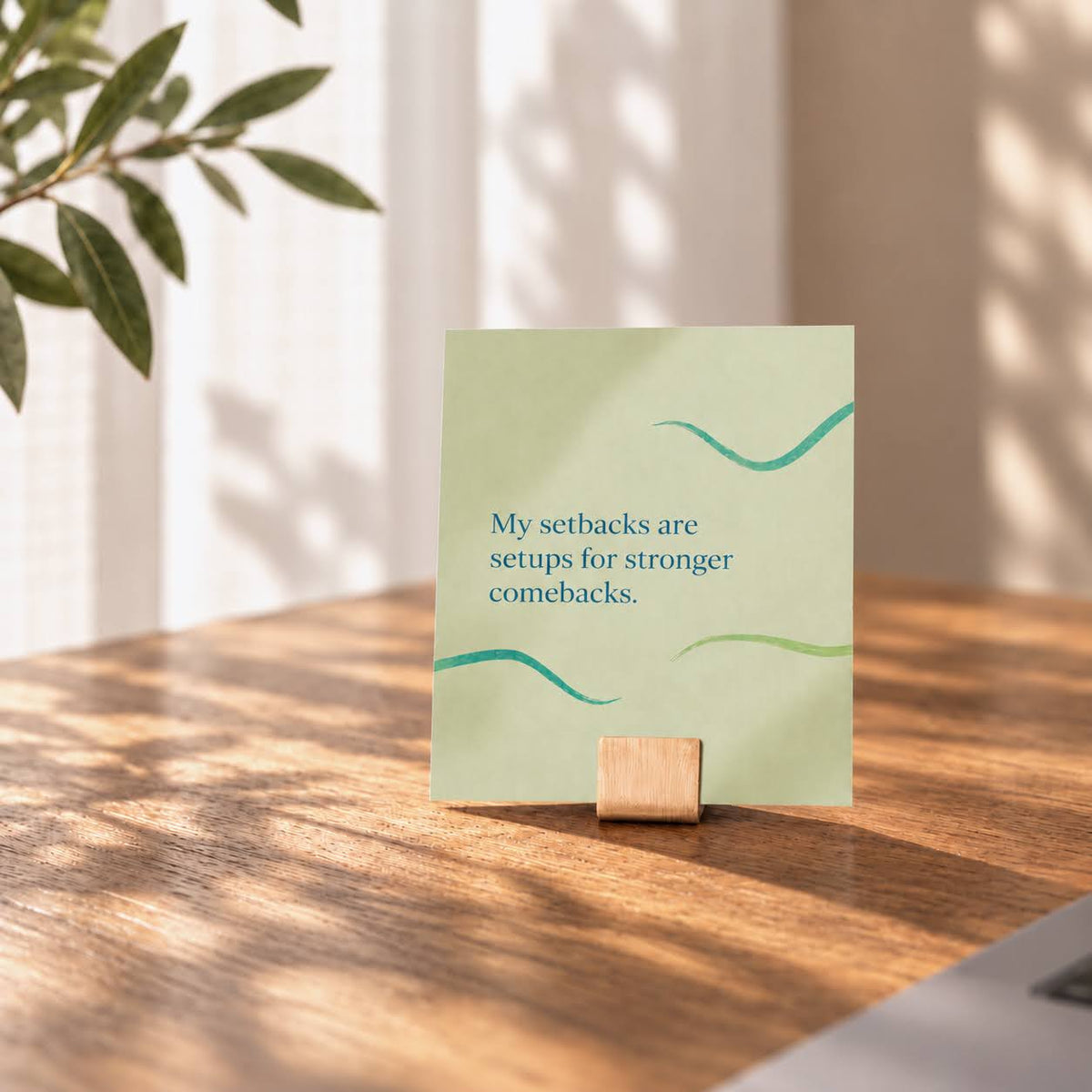
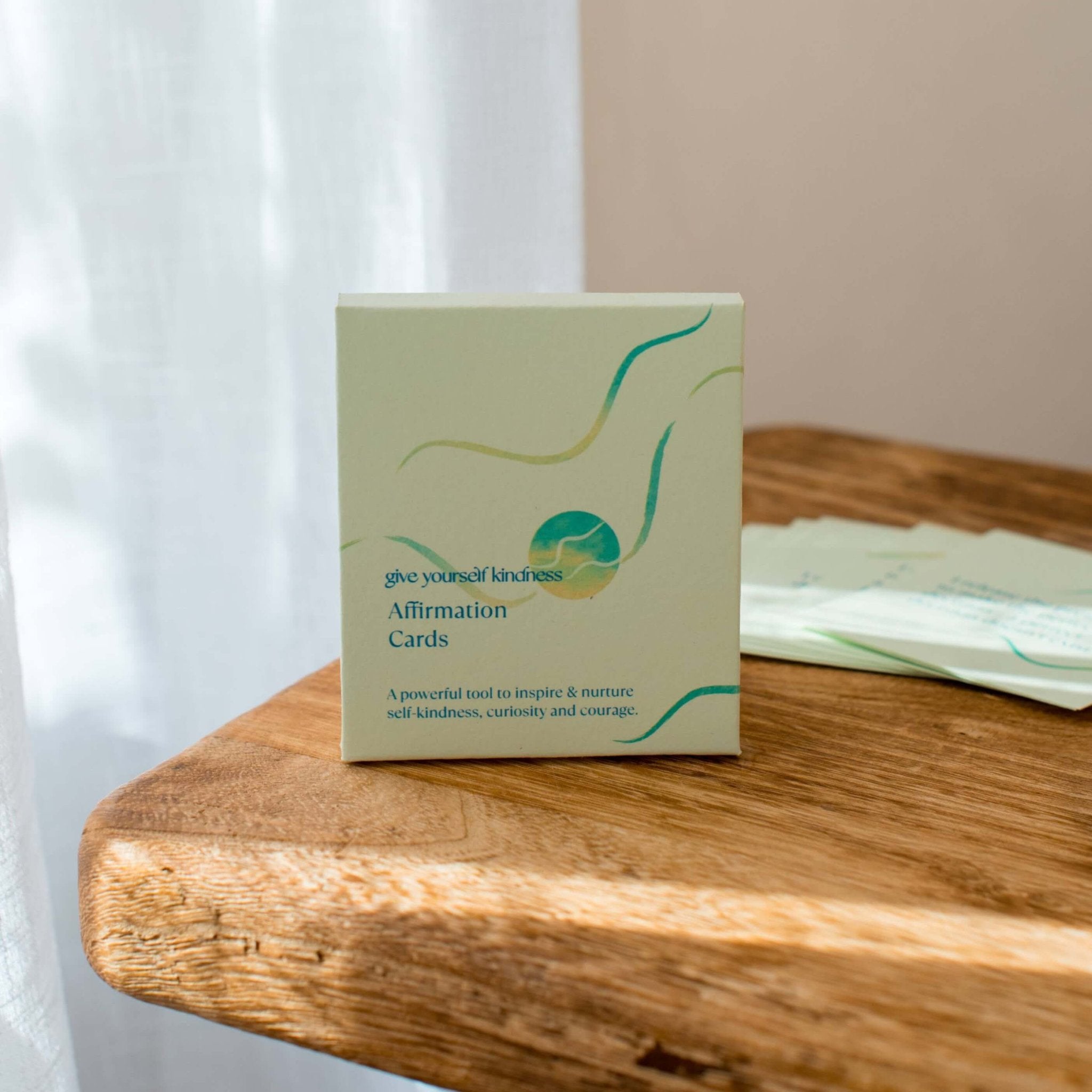
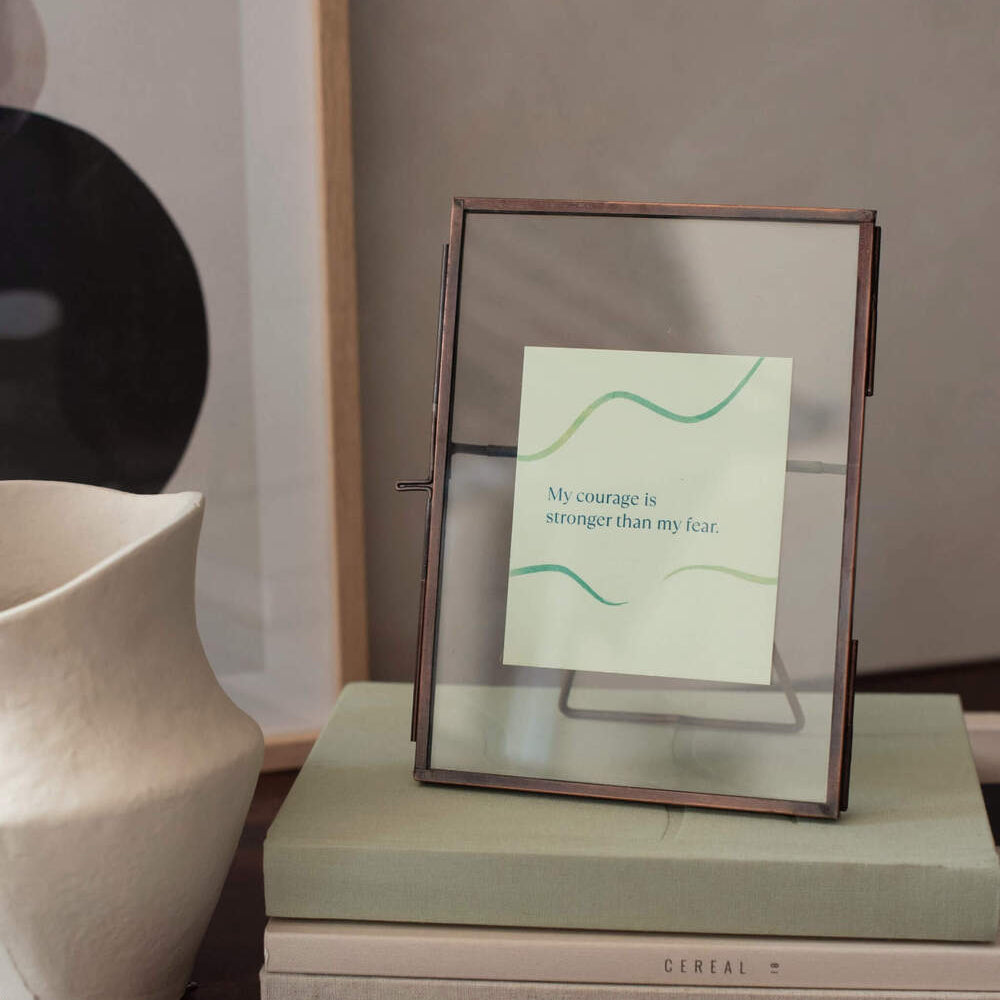
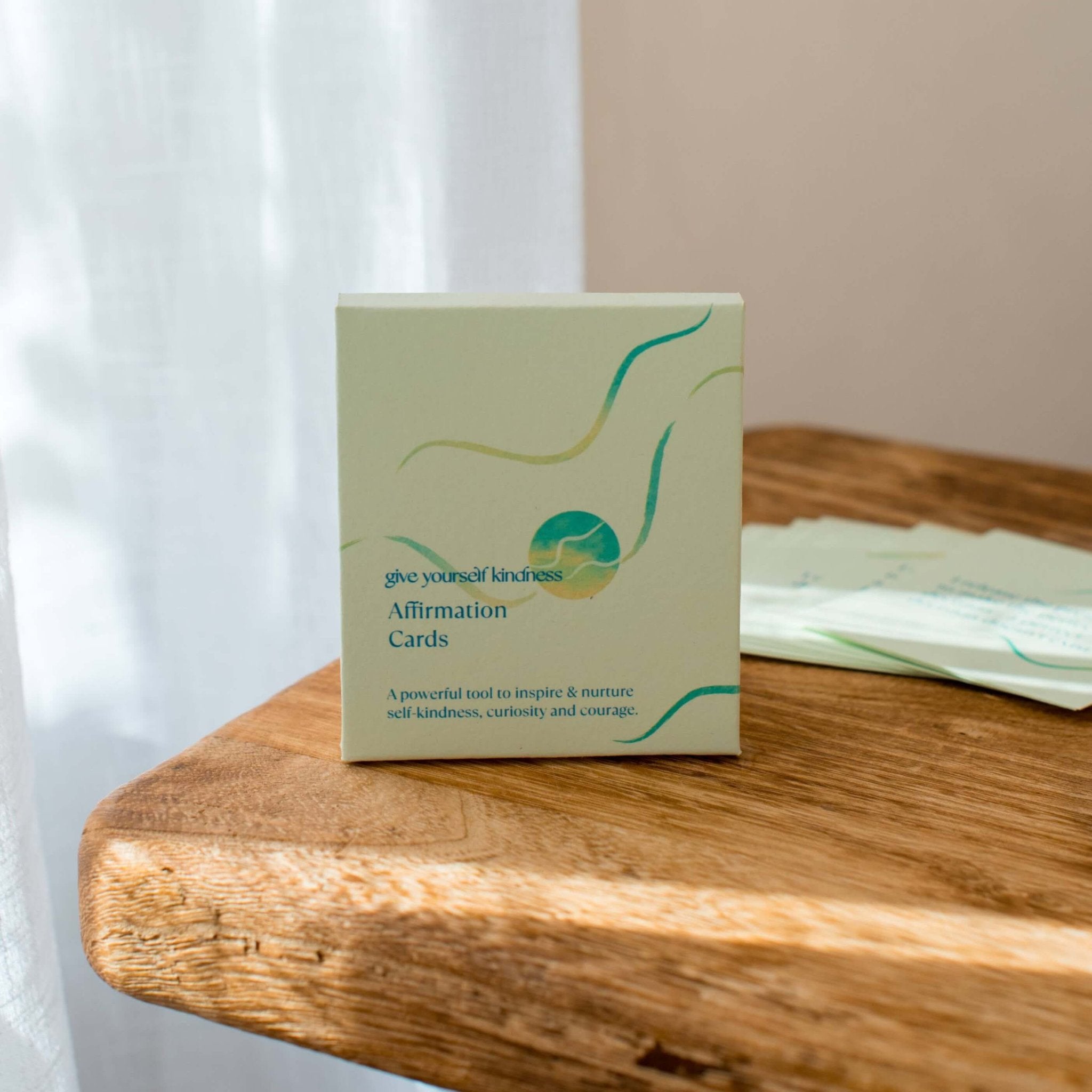
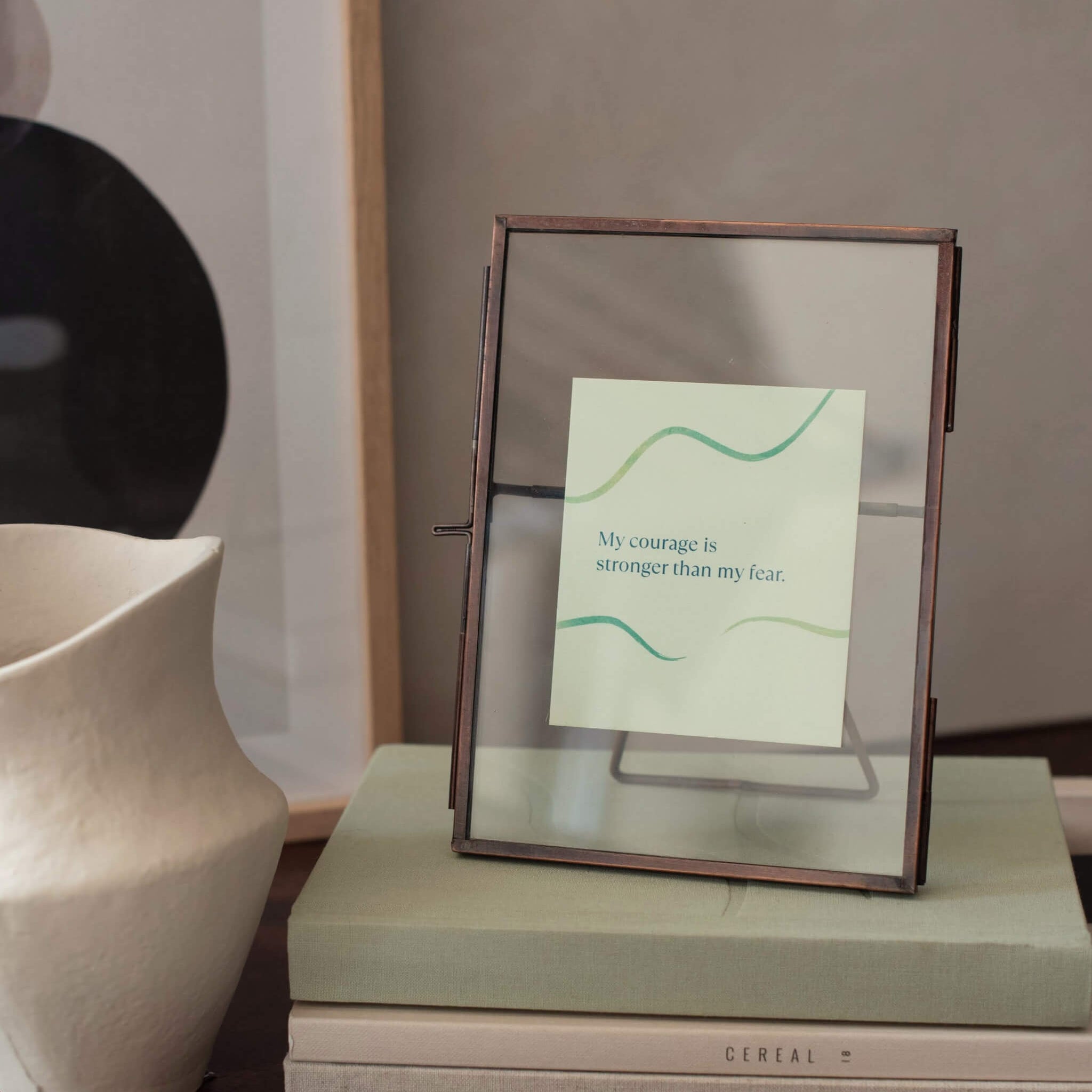
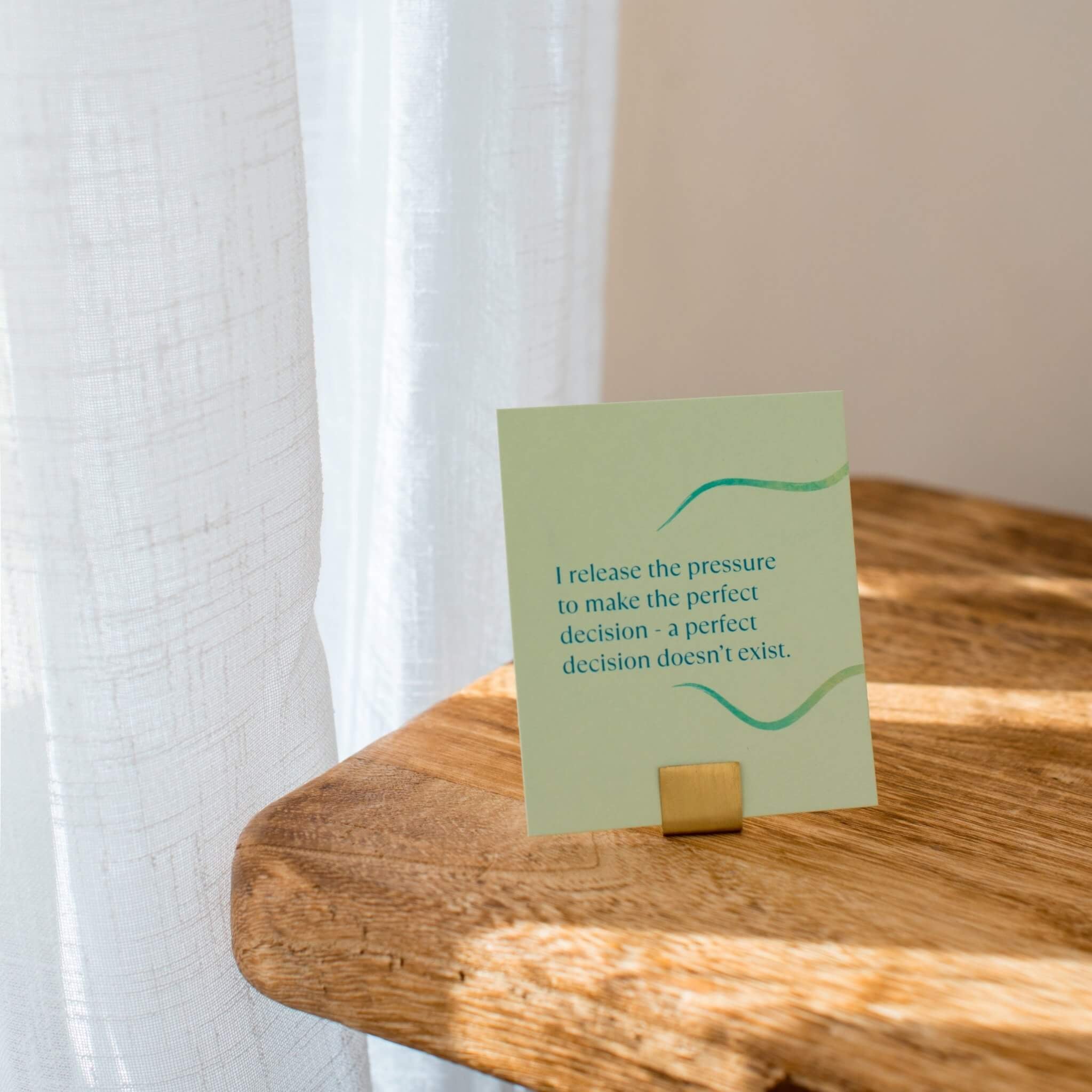
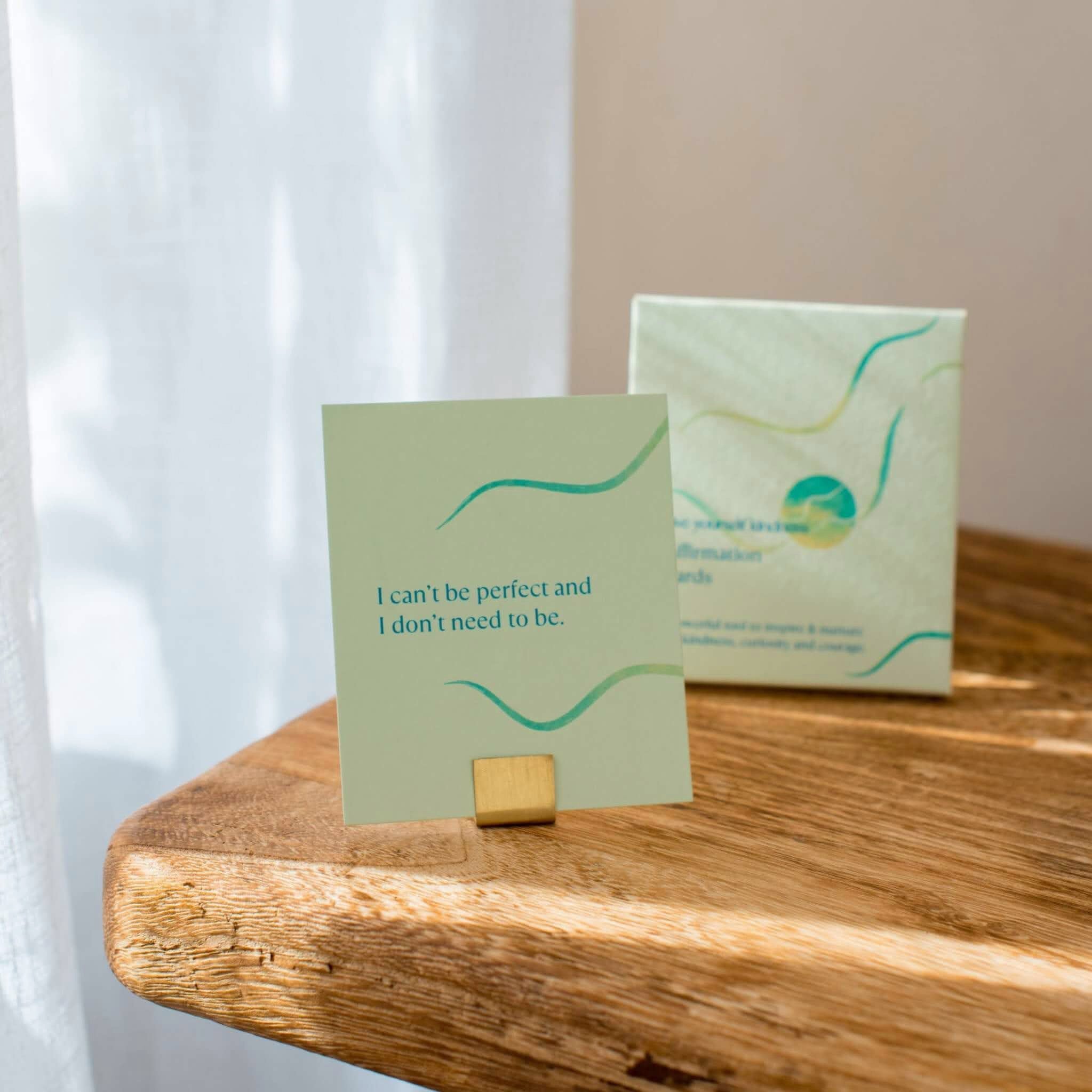
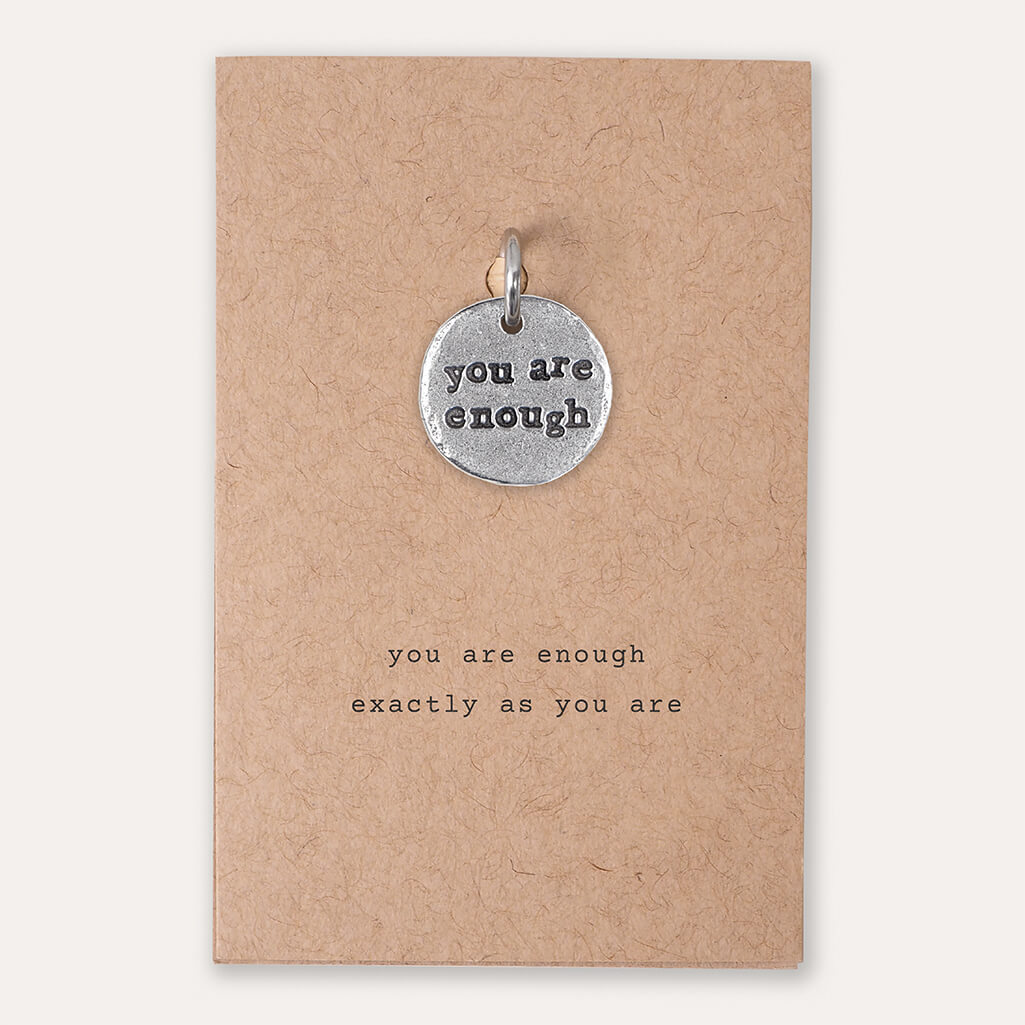
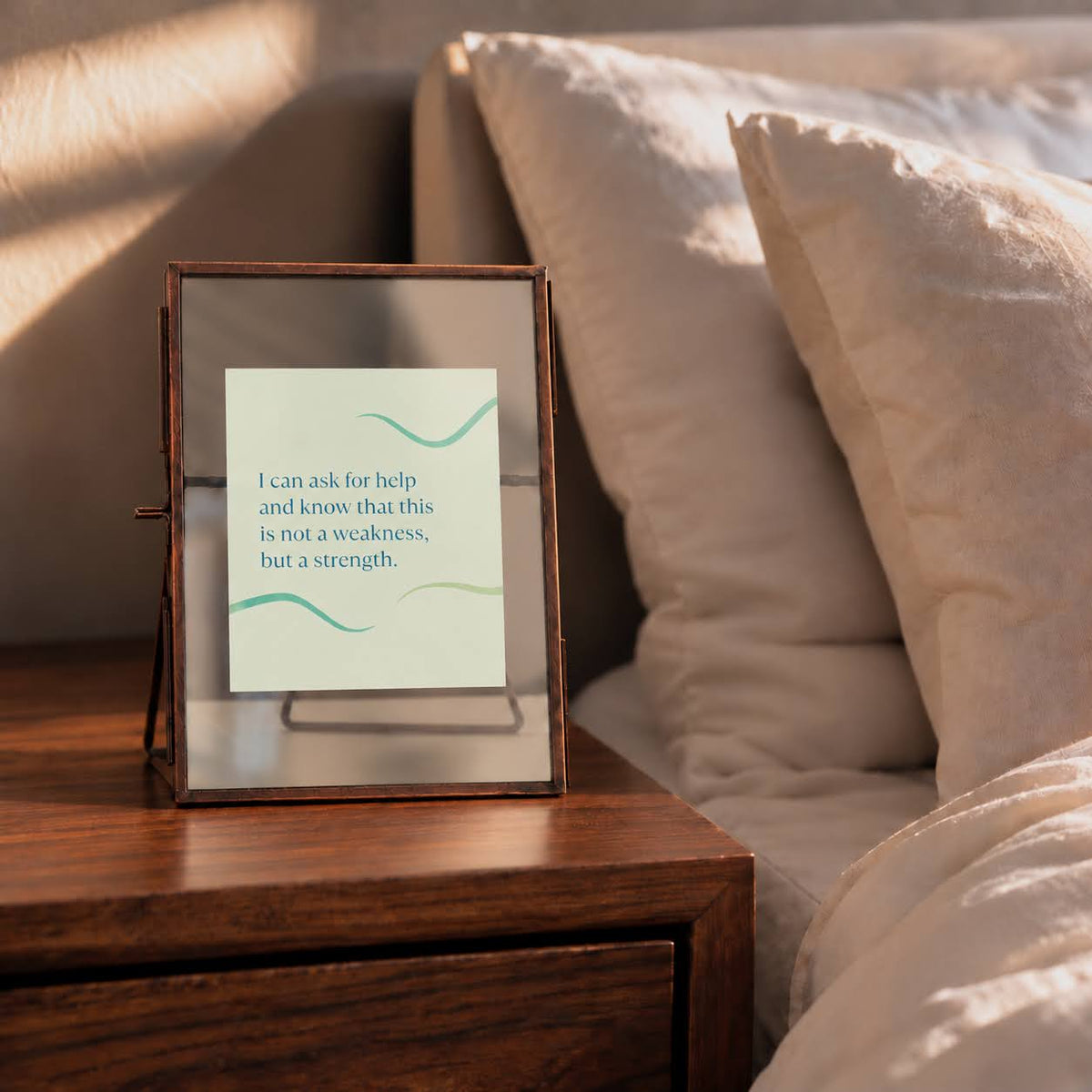
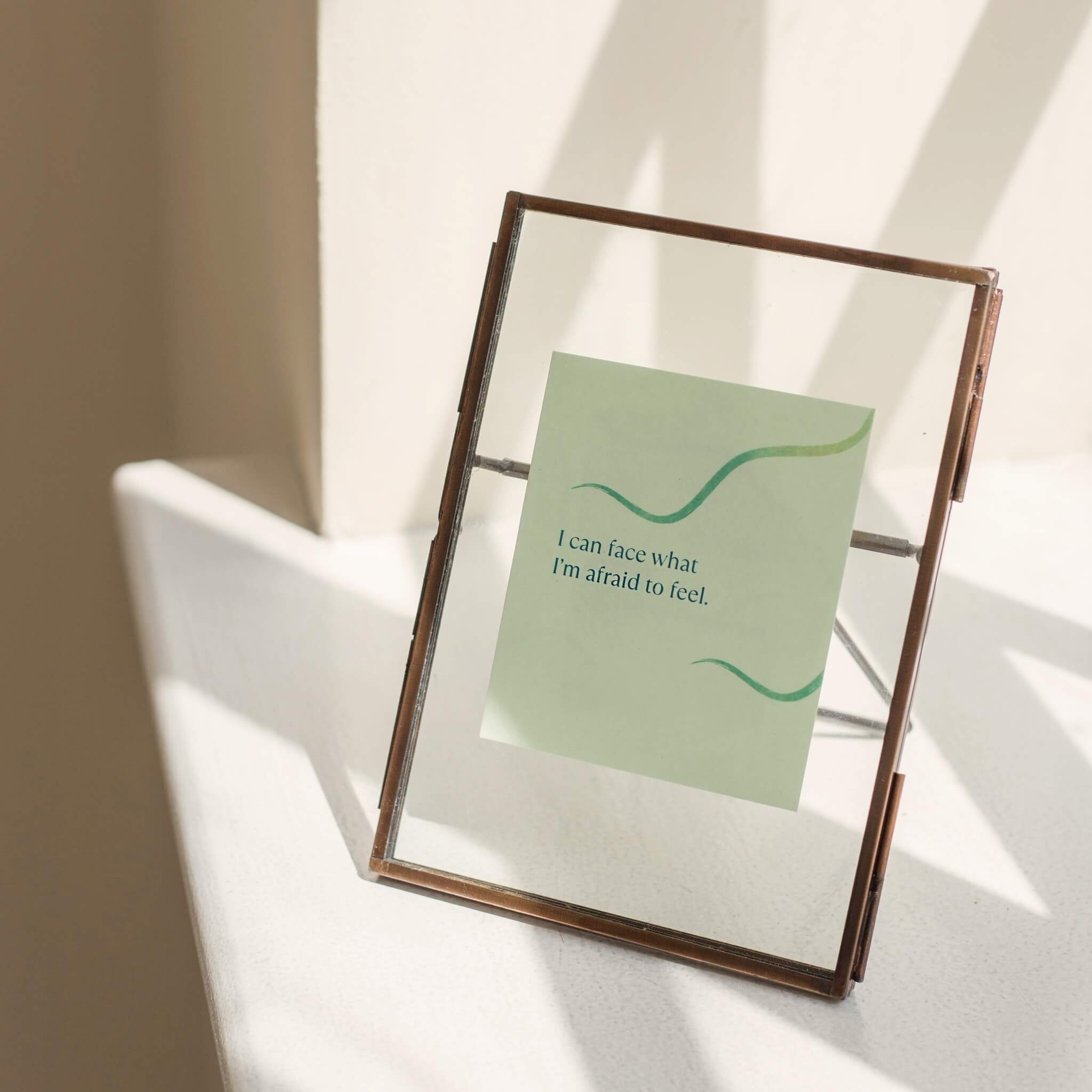
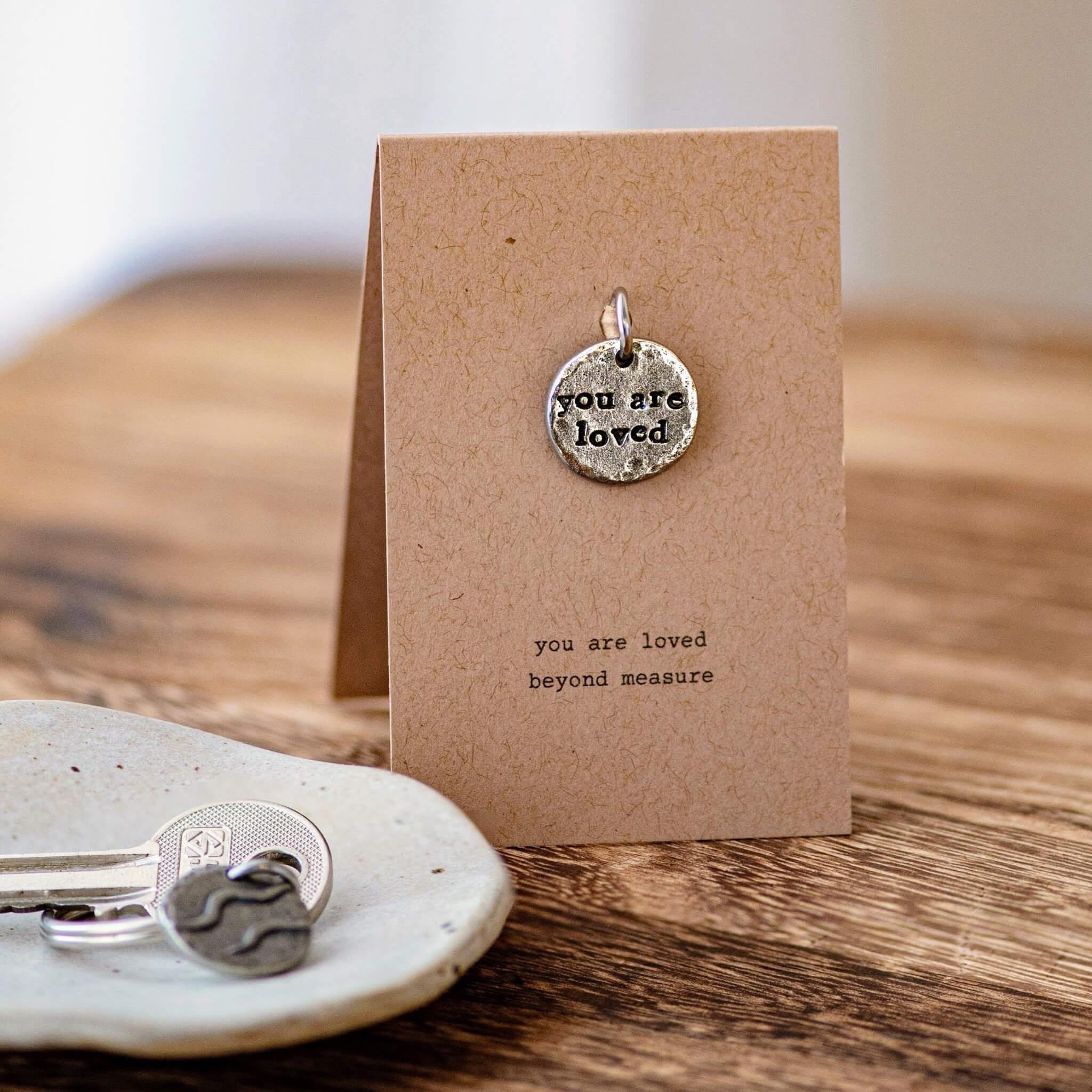
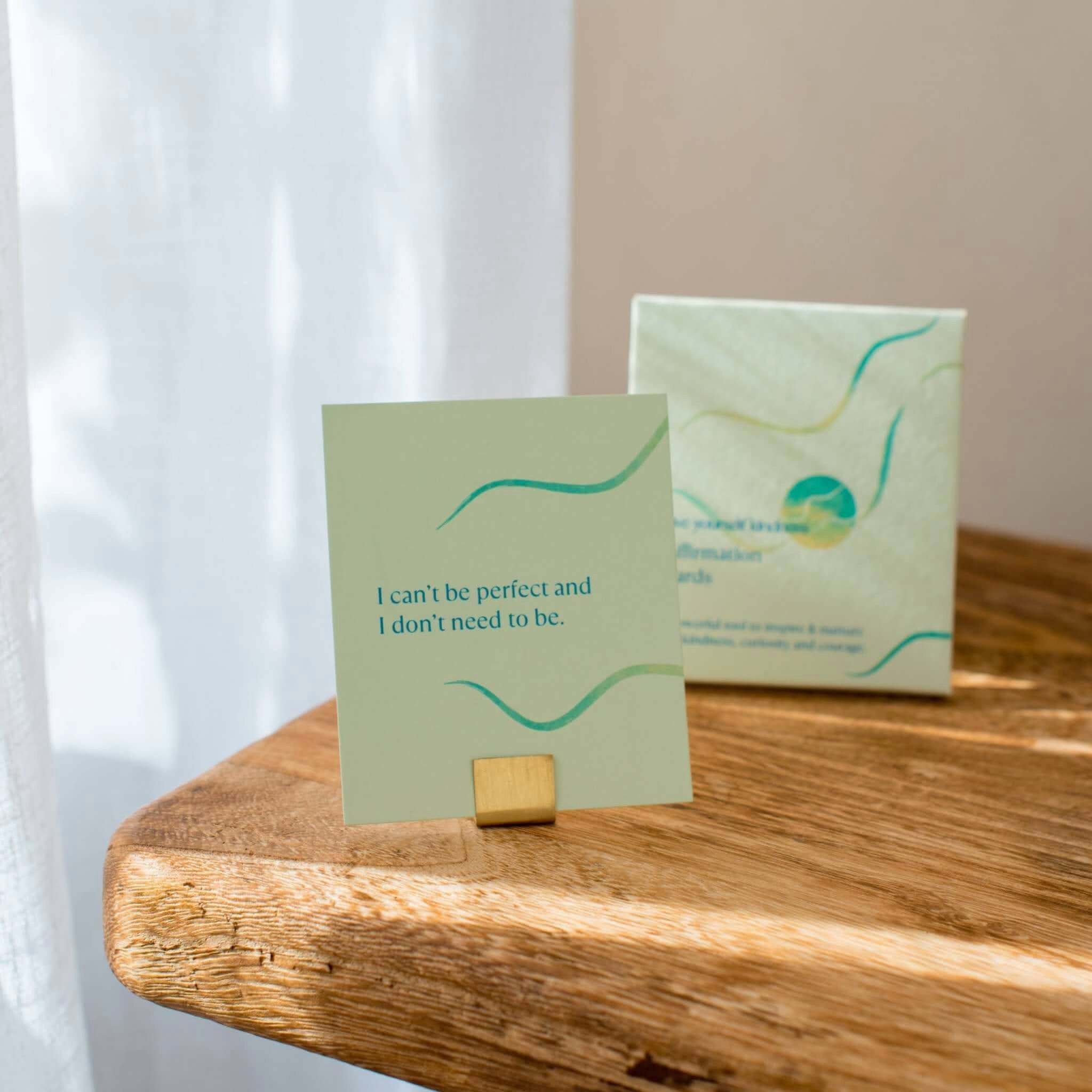
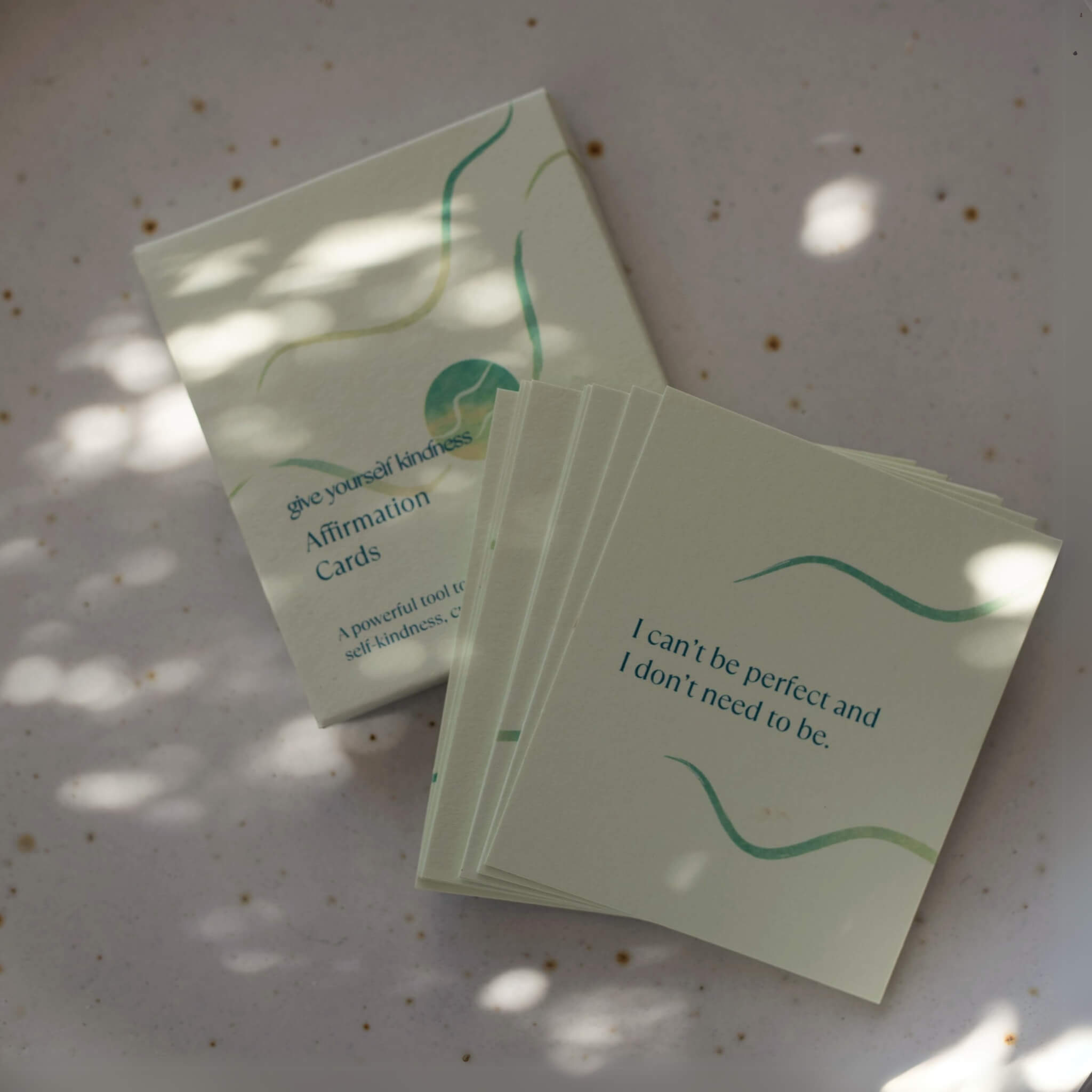
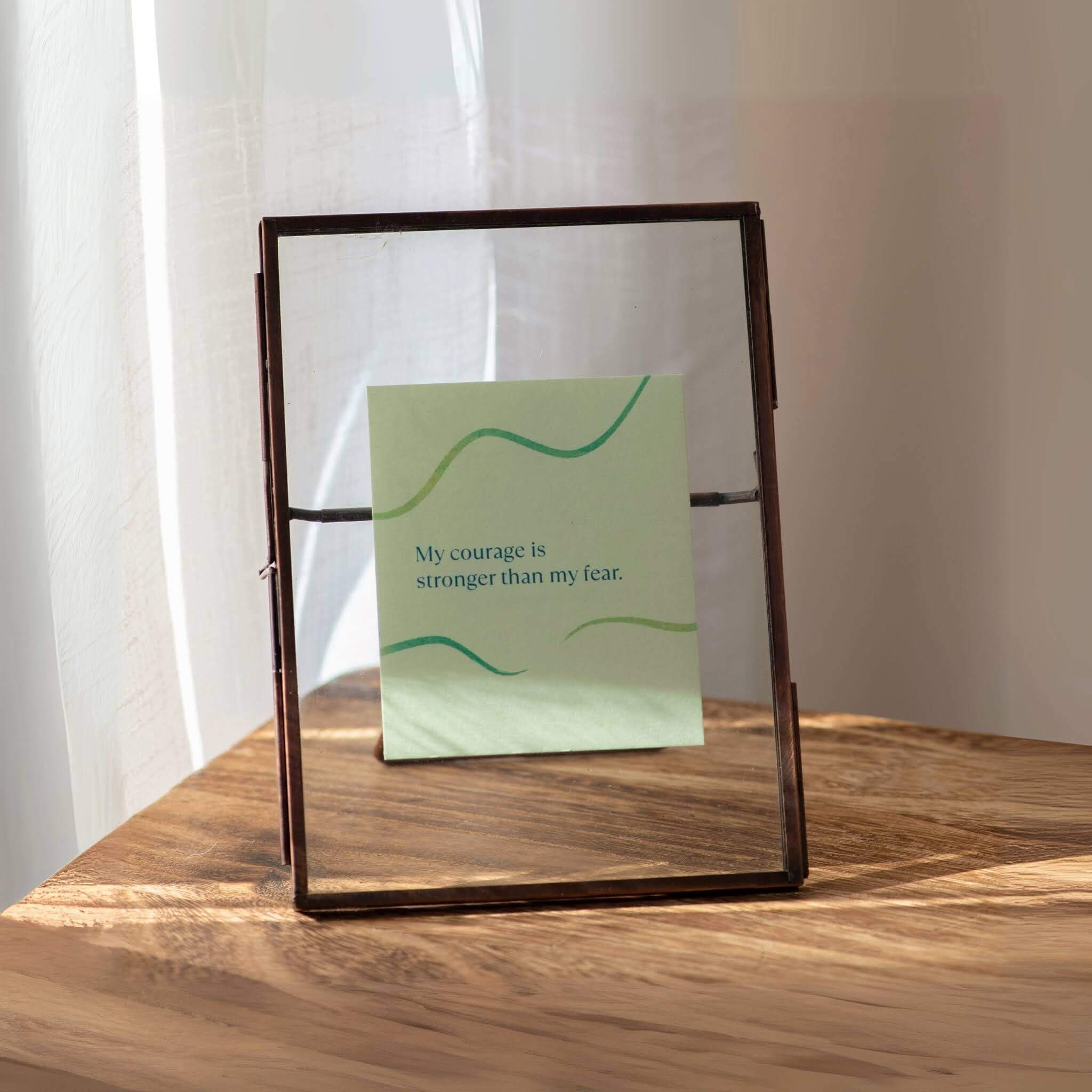
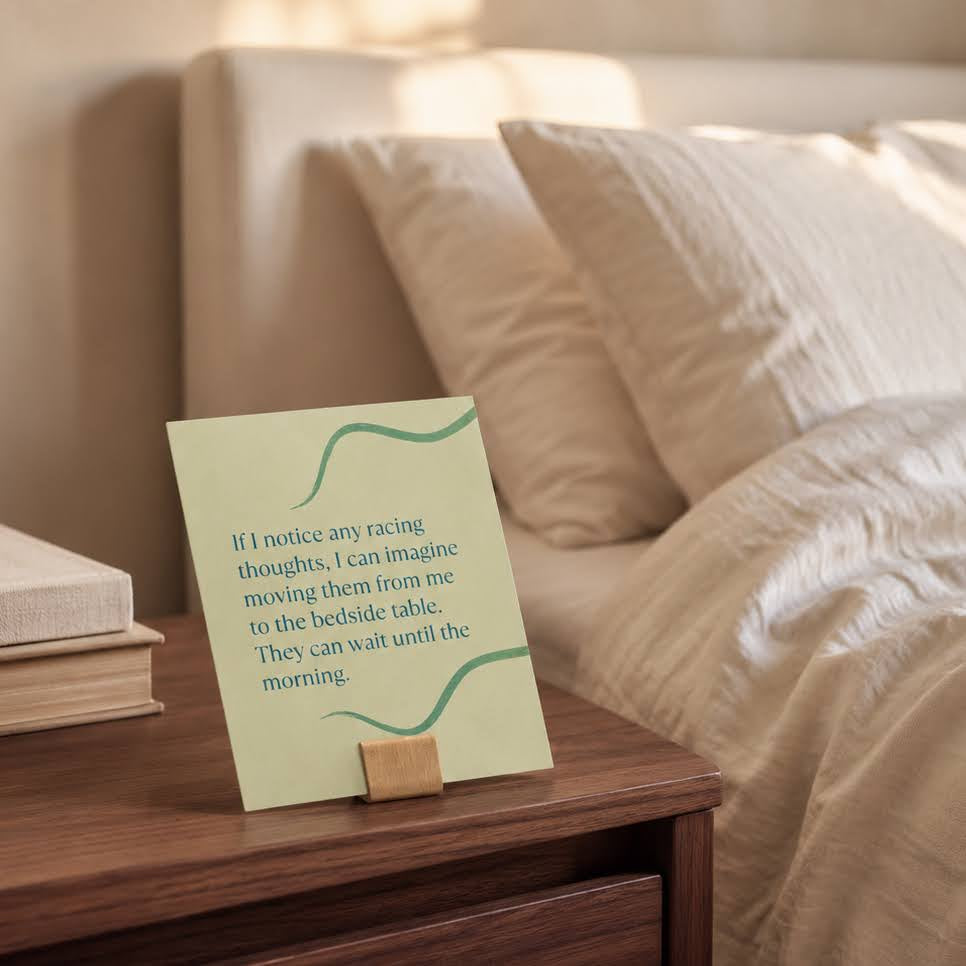
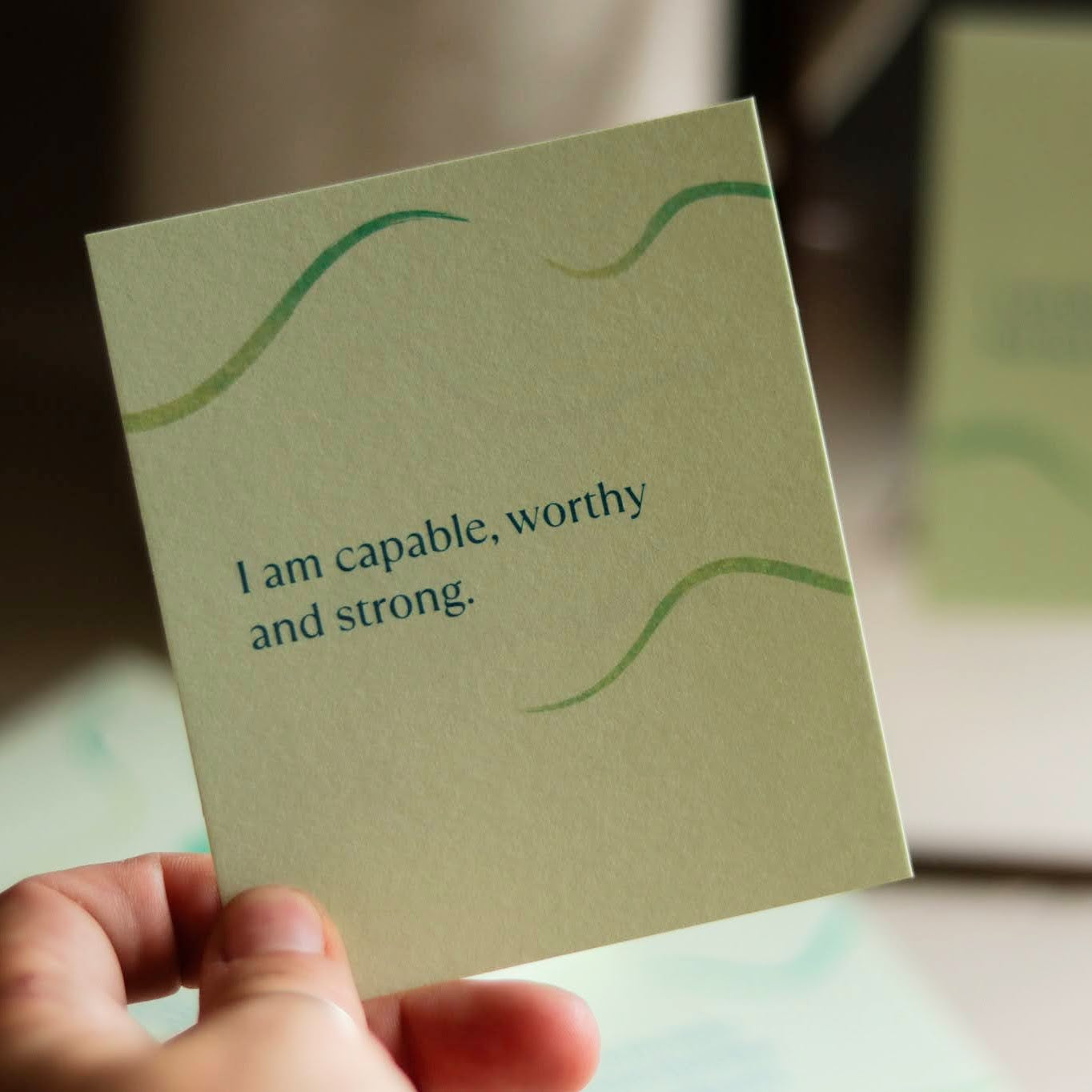
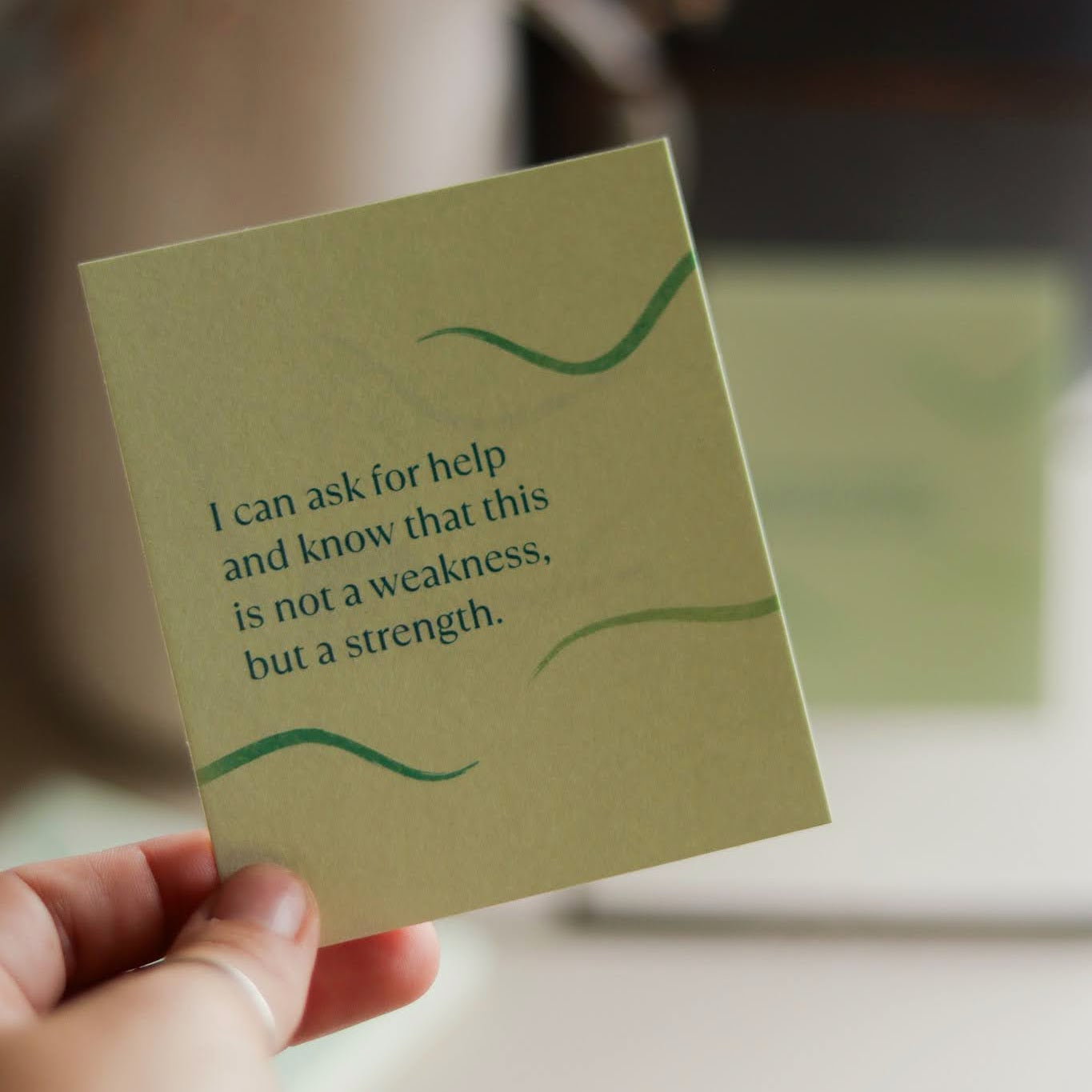
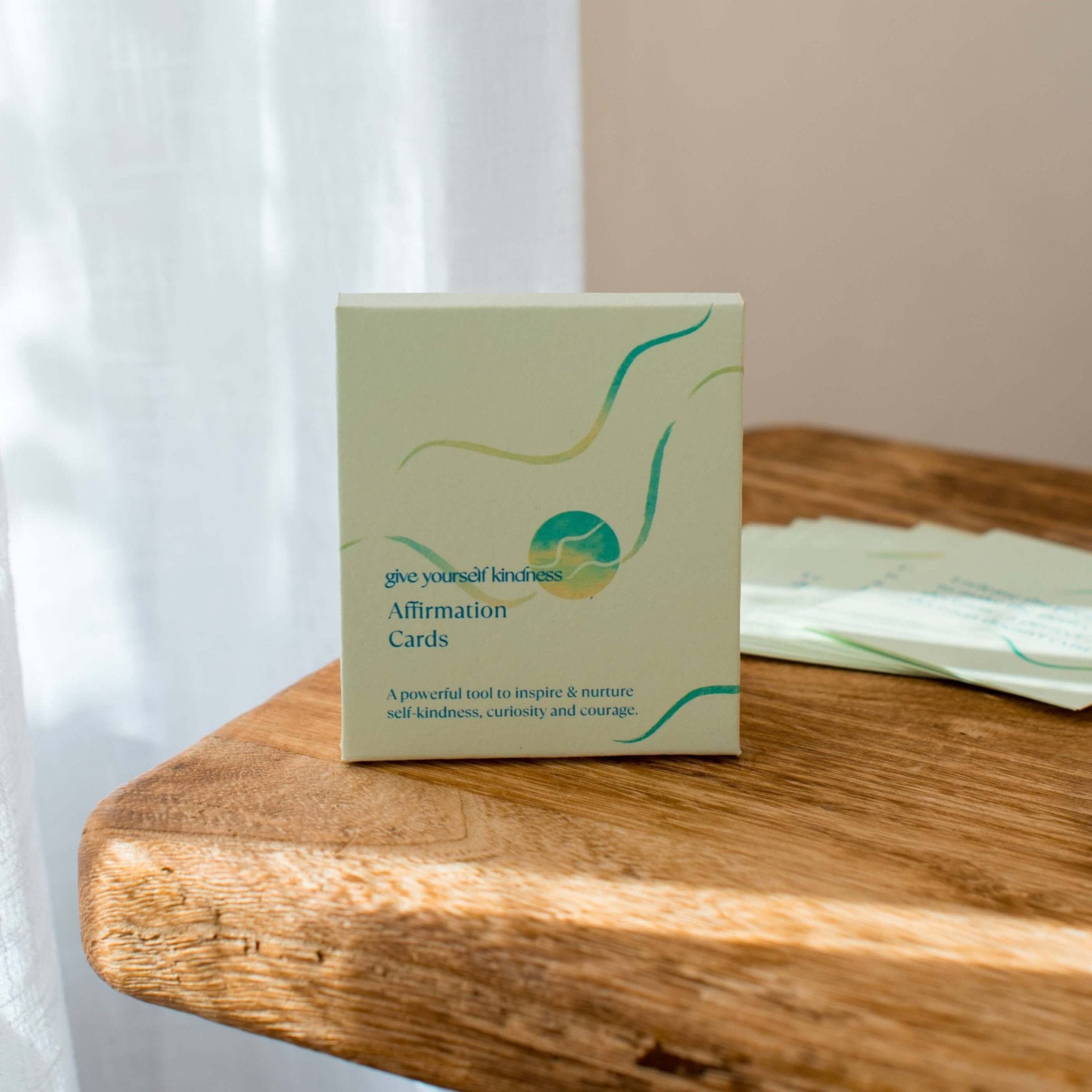
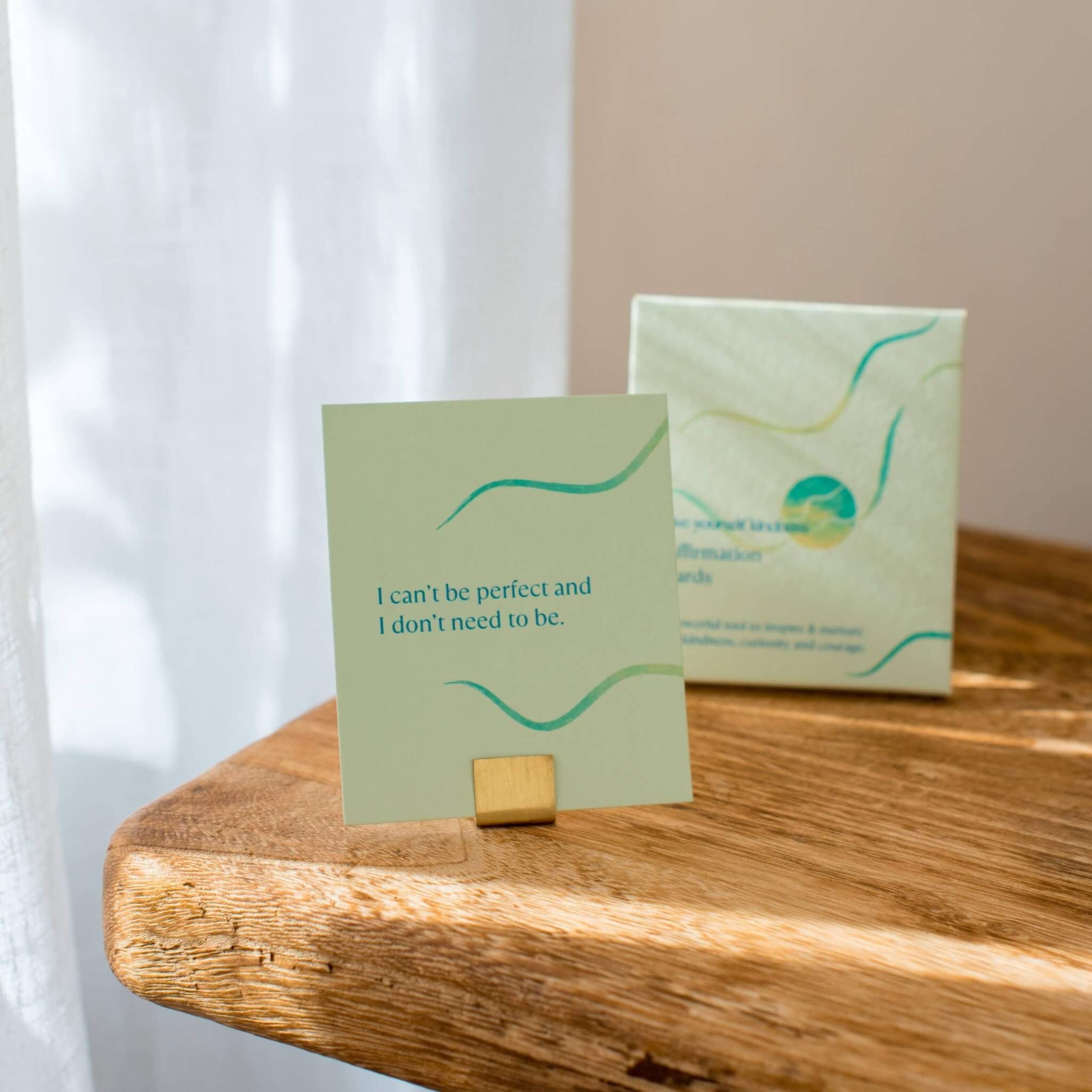
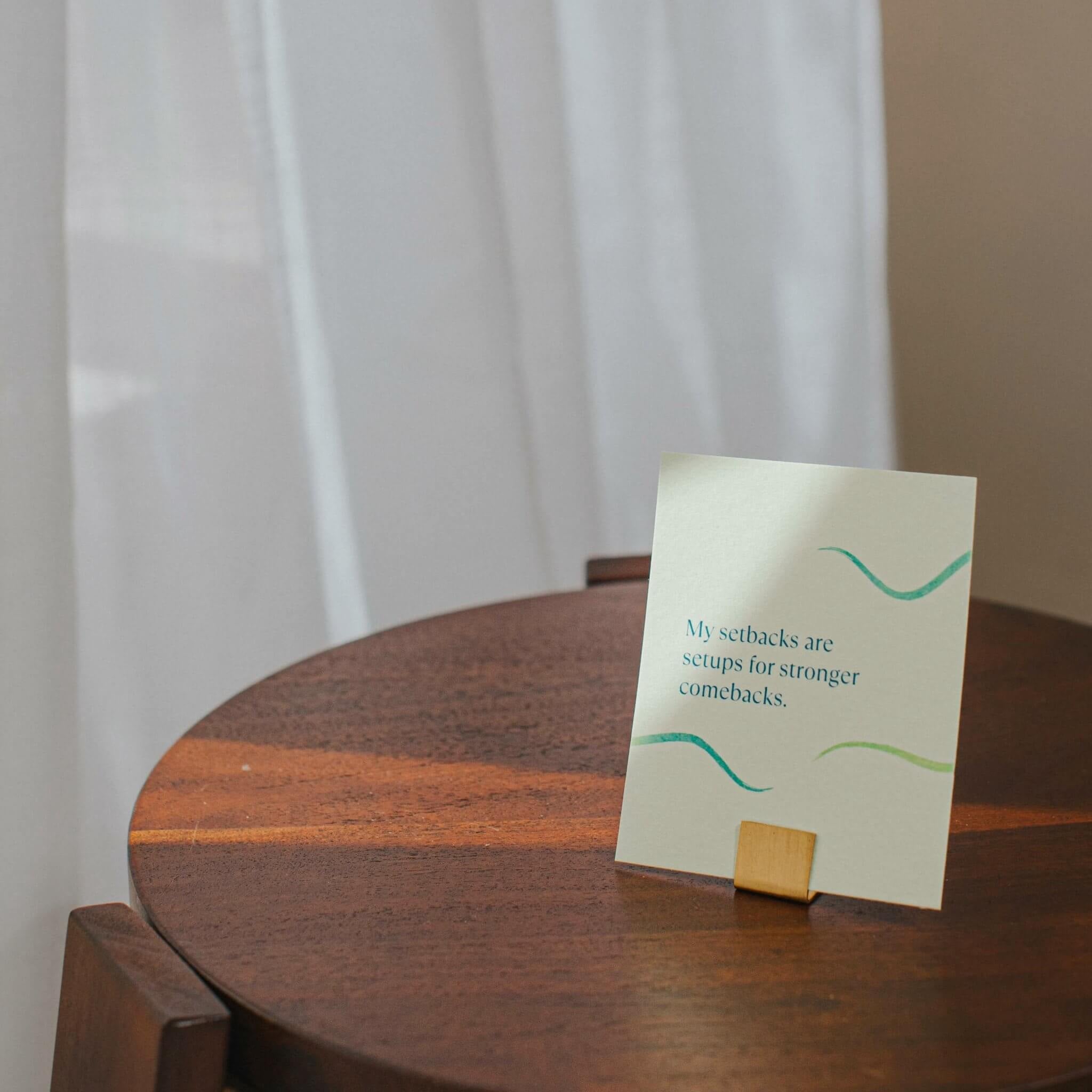
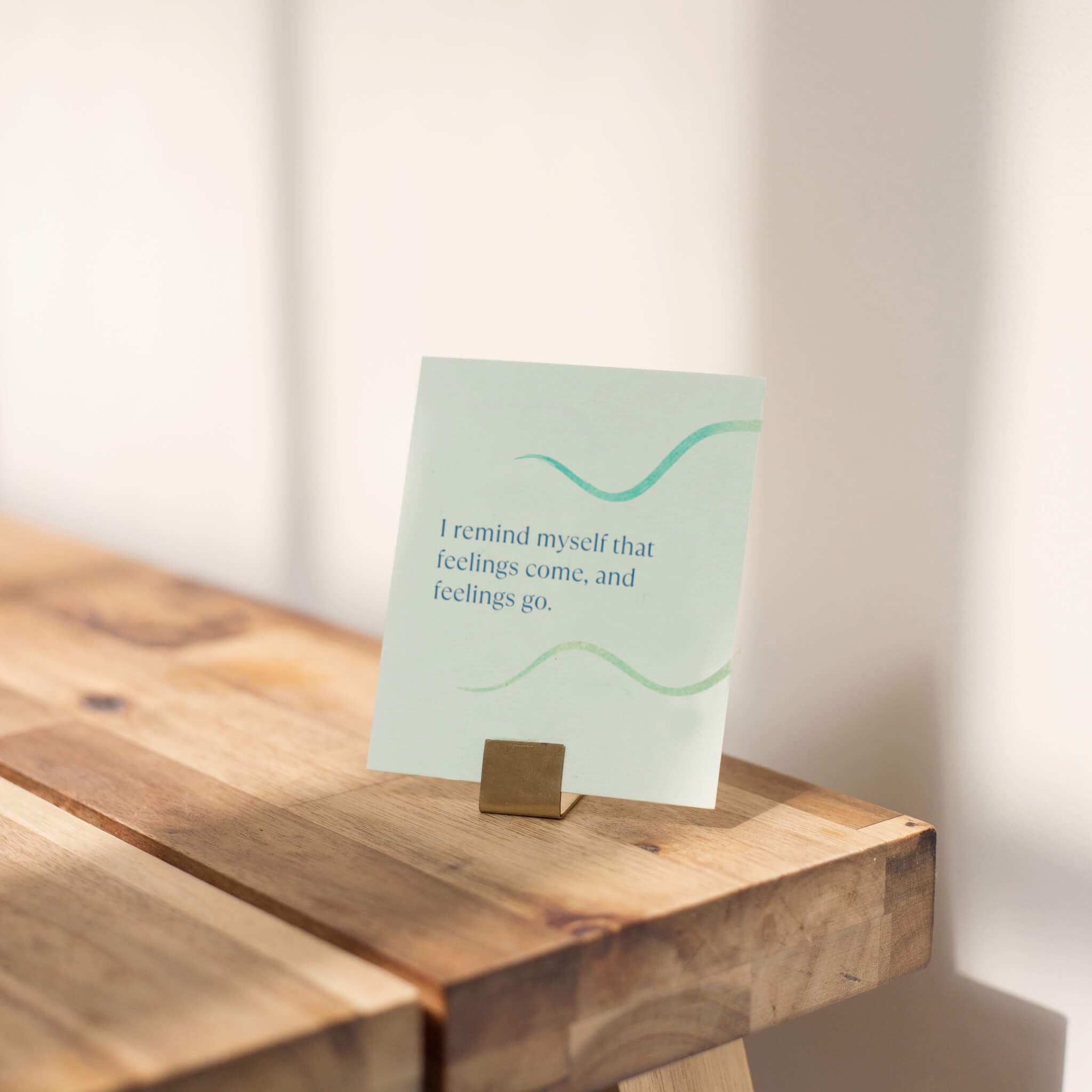
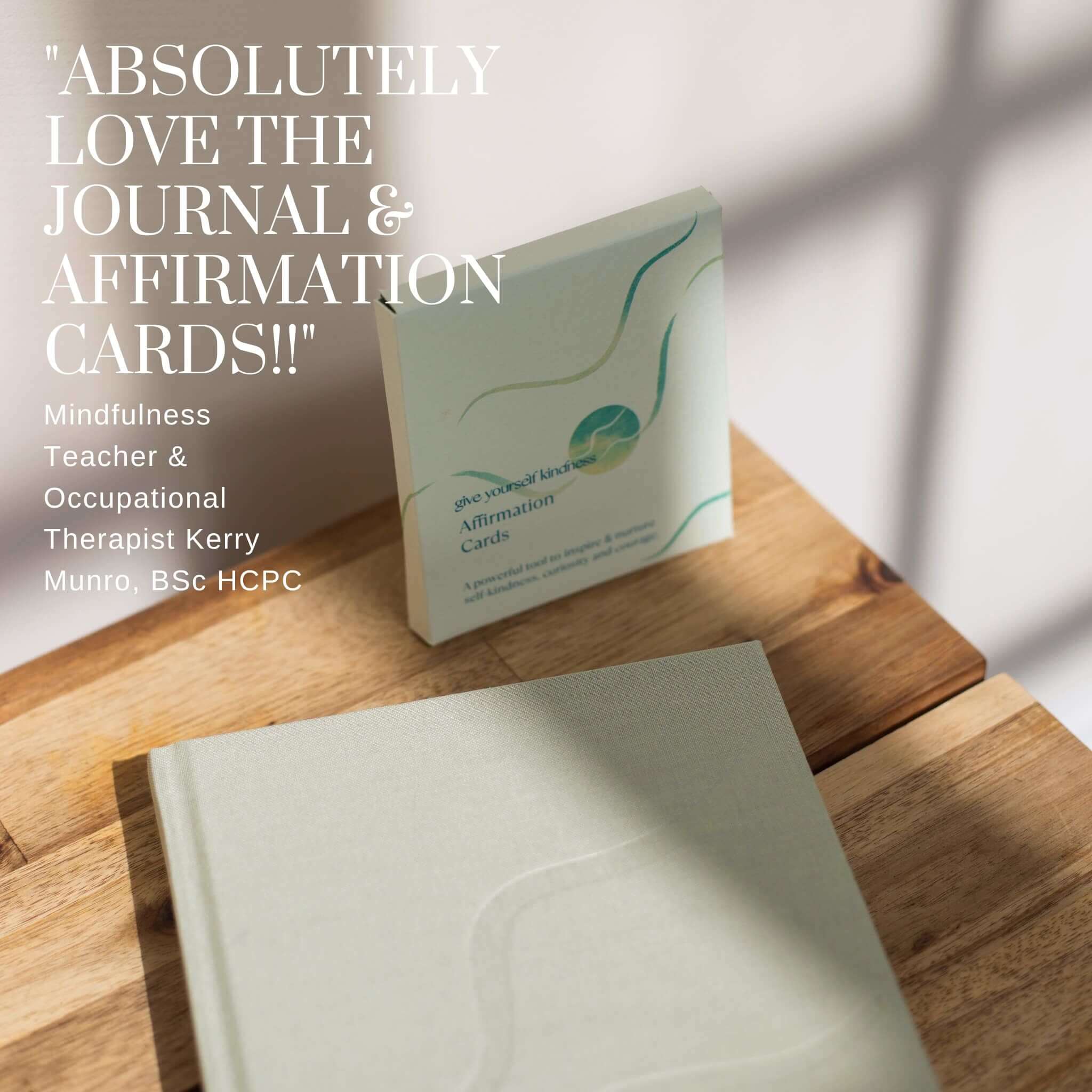
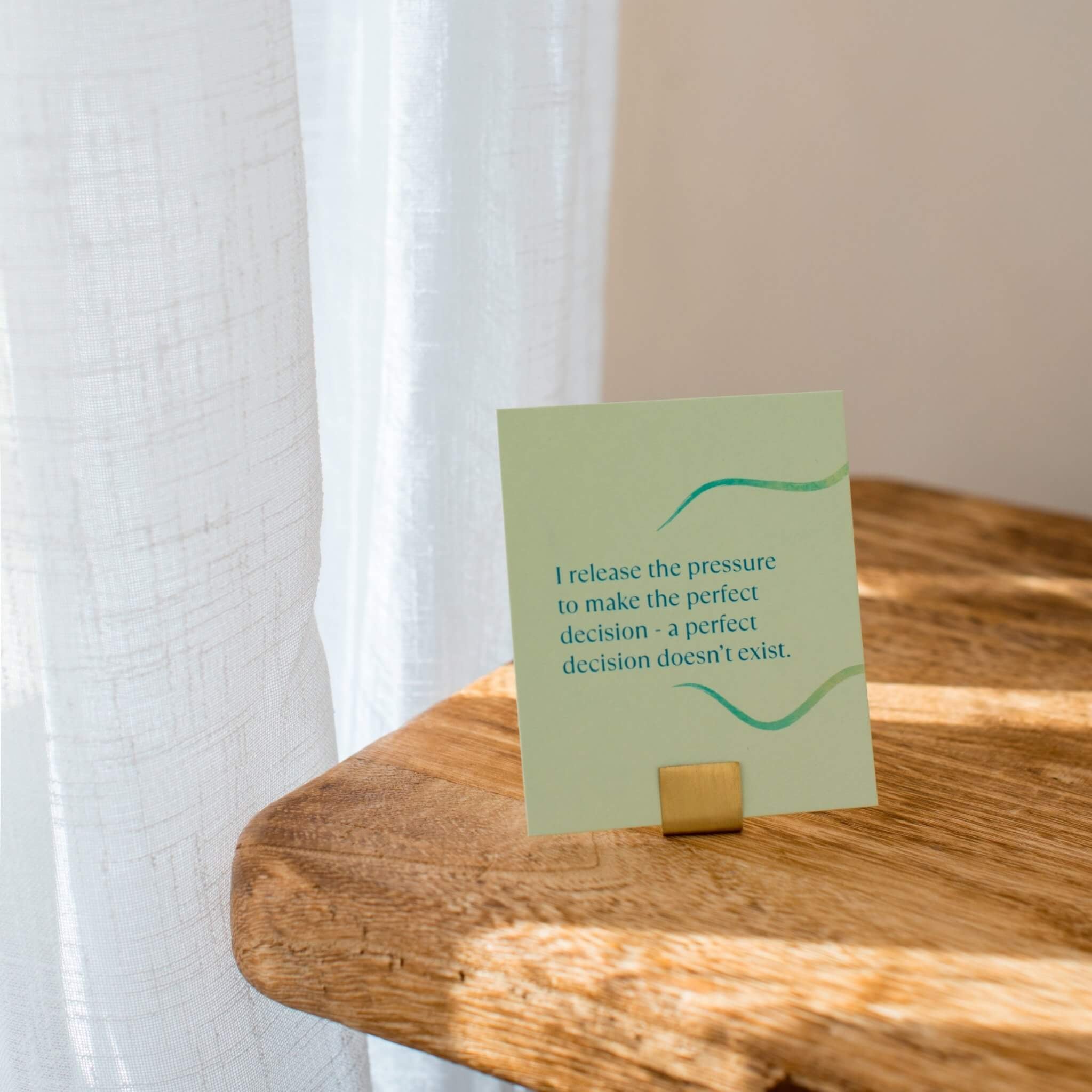
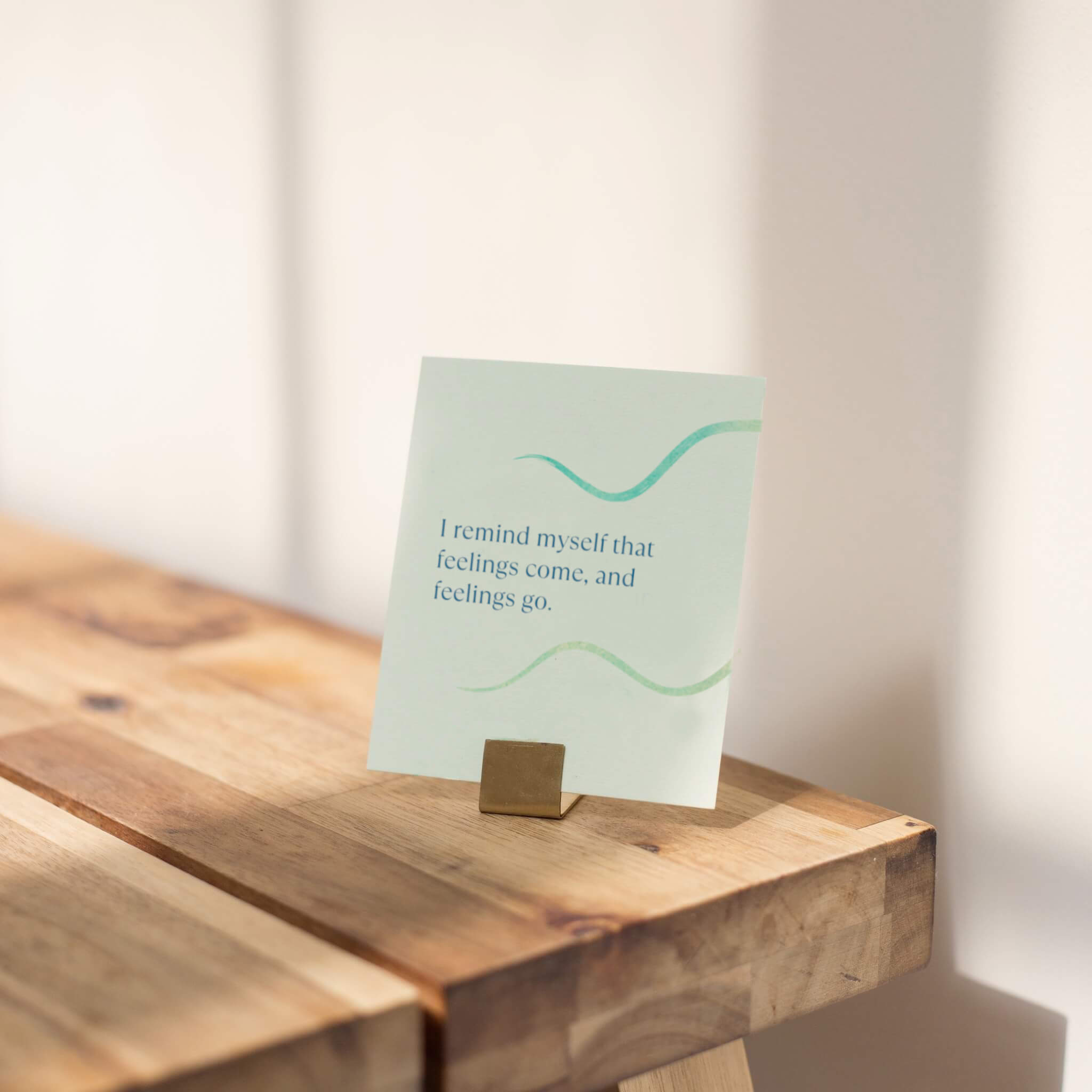
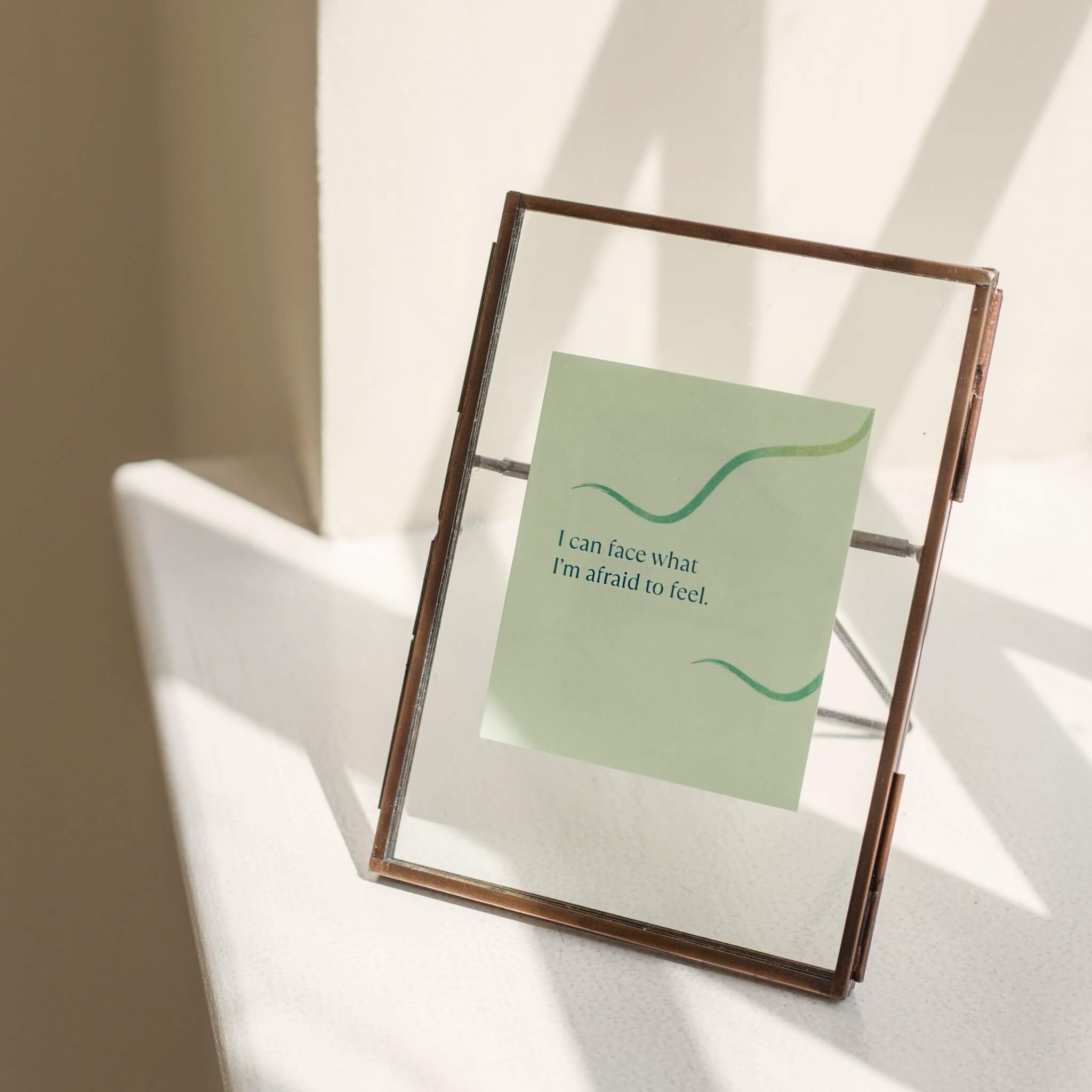
This is the reason I made the Give Yourself Kindness affirmation cards. I kept finding decks that told me I was radiant and abundant, which was no use at all on the days I felt like the opposite — and if you do not believe a statement, it can make you feel worse rather than better. So these say the sort of thing a steady friend would say, like I can’t be perfect and I don’t need to be.
You pick one, you read it, and you have a sentence you did not have to generate. Sixty of them across three small boxed sets, written using Compassion Focused Therapy principles, so nothing on them asks you to believe you are radiant on a day you feel like the opposite. On a bad evening having the words already written is sometimes the whole distance between doing something kind and doing nothing. See the affirmation cards.

Collette Jones, LCSW
Licensed therapist and private practice owner
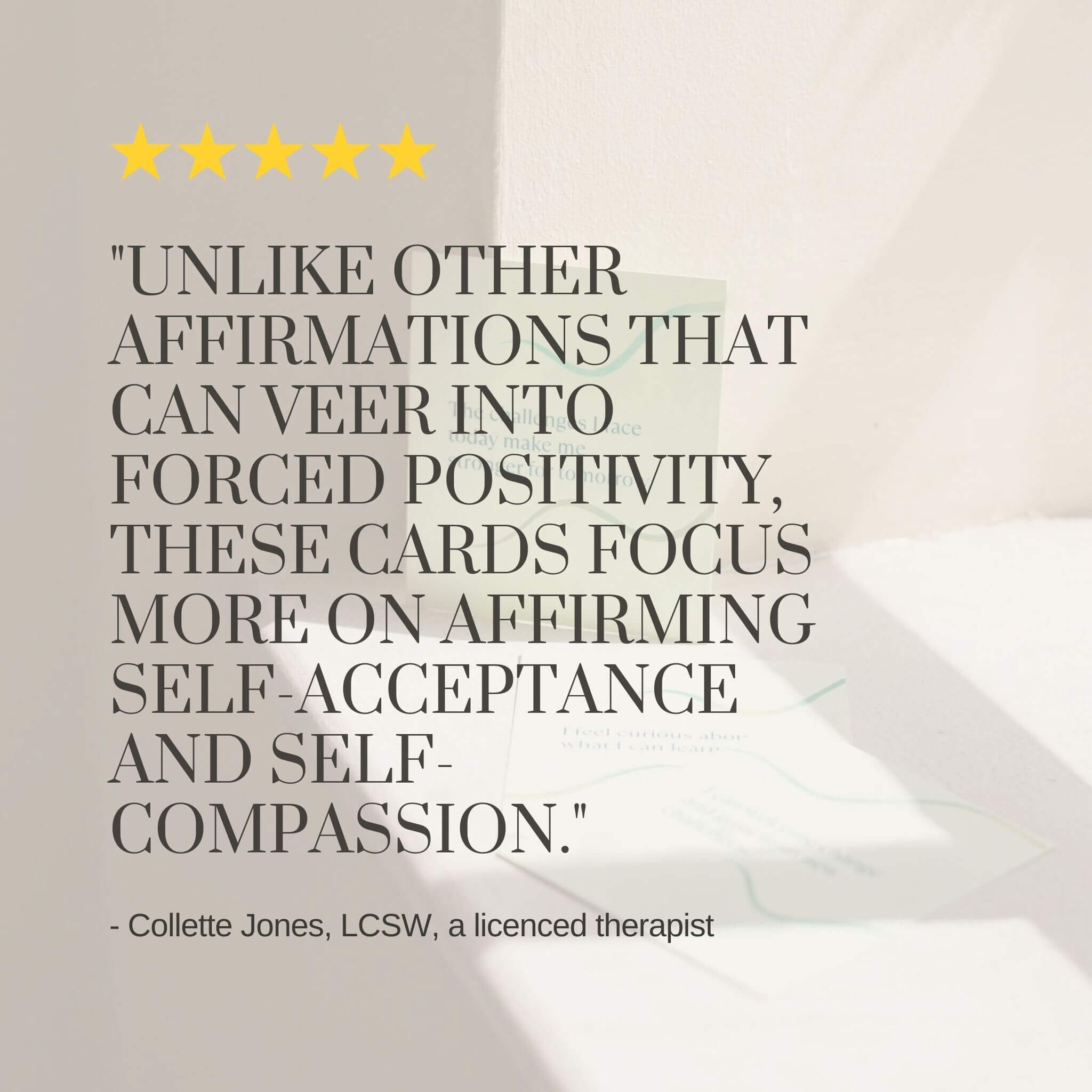
Read Collette Jones’s review alongside the rest →“…Unlike other affirmations that can veer into forced positivity, these cards focus more on affirming self-acceptance and self-compassion. Whether you need a gentle reminder to be kind to yourself or encouragement to let go of the day’s stressors, these affirmations offer soothing reassurance.”
If affirmations are something you have tried and bounced off, that is a common and reasonable reaction — I asked five psychologists whether they actually work and their answers are more nuanced than either side of that argument usually allows.
What else actually helps with an inner critic?
Three things, and it is worth picking whichever one you can imagine doing today rather than attempting all of them. The most common mistake here is turning self-compassion into another list you are failing at, which simply hands the critic more material. Each of these comes from the clinicians who write for this site, and each works on its own.
Notice the tone before you touch the content
For a few days, do nothing but spot it. No editing, no replying. Dr Tucknott’s prompt is a good one: what are the exact words, and what is the tone of voice? Then try saying the same thing to yourself in a softer tone and notice whether it still lands the same way.
This sounds slight. It is not. You cannot answer something you have not heard, and most self-criticism is so automatic that it passes for observation.
From Dr Maria Tucknott’s article, How to stop beating yourself up
Compassionate breathing
Dr Tucknott’s practice for settling the threat system: a few slow breaths, imagining tension going out on the exhale and kindness coming in on the inhale, for two to five minutes. You might say to yourself, I am here for you, or it is okay to feel this way.
Useful when the critic is loud enough that writing is not going to happen. It is not a fix, it is a way of turning the volume down enough to think.
Speak from your compassionate self
The compassionate self is a core Compassion Focused Therapy skill and it is deliberately not a soft one. Dr Tucknott describes picturing the calmest, most grounded, most understanding version of yourself — the posture, the tone of voice — and then speaking to yourself from there.
If picturing feels awkward, borrow someone. Think of a person, real or otherwise, who has been steady with you, and ask what they would say.
There is more on the practical side of this on how to stop negative self-talk, and on how to be kinder to yourself if you want the wider picture rather than just the critic.
Does the inner critic ever go away?
It generally does not disappear, and that is not the bad news it sounds like. What changes is its share of the conversation: you notice it sooner, you believe it less automatically, and you recover in an hour rather than a week. Aiming at silence sets you up to fail, because the threat system is not going anywhere. Aiming at company for it is achievable.
On how long that takes, I would rather quote someone qualified than guess. Professor Willem Kuyken of the University of Oxford deliberately avoids the language of quick change.

Professor Willem Kuyken, PhD, DClinPsy
Ritblat Professor of Mindfulness and Psychological Science, University of Oxford | Listed by Web of Science in the top 1% of the most cited scientists in the world
Read what five psychologists said about whether affirmations work →“I use the word cultivation rather than affirmation… Cultivation needs the natural conditions of climate, soil, sunlight, temperature, and so on… it takes time, like planting seeds and then taking care of them until they grow and mature in their own way and time.”
So rather than a timeline, here is what early progress actually looks like. These are the markers worth watching for, and they arrive long before the voice quietens.
- You catch the sentence while it is happening, instead of an hour later
- You notice the tone and think that is the critic, rather than that is just the truth
- The gap between the thought and feeling flattened by it gets slightly longer
- You recover from a bad hour in an evening rather than losing the week
- The kind sentence comes to you a little faster, even if you still do not fully believe it
None of that is dramatic and all of it counts. If you are waiting to feel differently before you decide it is working, you may be measuring the wrong thing.
There is a second reason aiming at silence goes wrong. The critic tends to get louder for a while when you first start noticing it, not because anything is getting worse but because you are hearing something that was always running underneath. People often read that as the practice failing. It is closer to the opposite, and it is worth knowing in advance so it does not stop you in week two.
Can you be too kind to yourself?
Kindness itself is not the risk, but it can be used as avoidance, and that is the honest limitation of everything on this page. Being kind to myself can quietly become the reason for not doing the thing you were dreading, and from the inside comfort and avoidance feel identical. Dr Kristin Neff, who pioneered the research on self-compassion, draws the line usefully.

Dr Kristin Neff, PhD
Associate Professor of Educational Psychology, University of Texas at Austin | Pioneer of self-compassion research
Read more on self-compassion or self-indulgence →“If we truly care about ourselves, we won’t engage in feel-good behaviors that are bad for us. Self-indulgence involves choosing short-term pleasure at the expense of long-term harm, and self-compassion always has its eyes on the prize: alleviating suffering.”
The test is not how the choice feels in the moment, because that tells you nothing. It is whether it moves you towards something you care about or away from it.
An early night before a hard day is one. A fourth evening of not opening the email is the other, and no amount of gentle language changes which is which.
There is one more thing worth naming honestly. When people first turn kindness inwards, it sometimes brings up grief rather than relief — a sense of how long they have gone without it. That is a common reaction and it is not a sign you are doing it wrong. It is also a good reason to have someone to talk to while you do this work.
Why this is harder to keep going on your own
This is harder to keep going on your own because the exercise is not the only work: deciding to sit down and do it is its own daily effort, and it tends to run out on exactly the evenings the critic was loudest. That is not a discipline problem, and it is certainly not a failing. It is one more decision at the end of a day that already had plenty.
The other half of it is that the exercise asks you to do two difficult things in the same five minutes: produce the harsh sentence accurately, and produce a kind one to set against it. Most people can manage the first easily and the second only sometimes, and which of the two you can reach on a given evening has very little to do with how much you want to.
There is a second thing, which Professor Willem Kuyken of the University of Oxford puts precisely, and he says it in a review of my journal.
Professor Willem Kuyken, PhD, DClinPsy
Ritblat Professor of Mindfulness and Psychological Science, University of Oxford | Listed by Web of Science in the top 1% of the most cited scientists in the world
“…Writing can be creative, beautiful, resourcing, but it can also invoke an inner critic, rumination and procrastination. Rachel has curated the experience to make the writing intrinsically rewarding and the journal something to treasure.”
What this means for a blank page: an empty notebook takes whatever you bring to it, including the voice you sat down to answer. Writing freely about a harsh thought can easily become another lap of the same track.
Read Professor Kuyken’s review alongside the rest →So it helps to have something that holds the structure for you:
- a prompt that invites the kinder voice to write, rather than a blank line the critic can fill
- a way to name what you are feeling on the evenings the words will not come
- gentle reminders already on the page, so the kind sentence is not one more thing to generate
You do not have to hold all of that in your head on the evening you least feel like starting. That is what a guided journal is for.
Does journaling help with an inner critic?
It can, as long as the writing has some structure to it, because writing freely about a harsh thought can easily become another lap of the same track. Prompts that ask what you felt and why, and then invite a reply to yourself, give the loop somewhere to end. That is the difference between a notebook and a guided journal, and it is the whole reason the one I make is built the way it is.
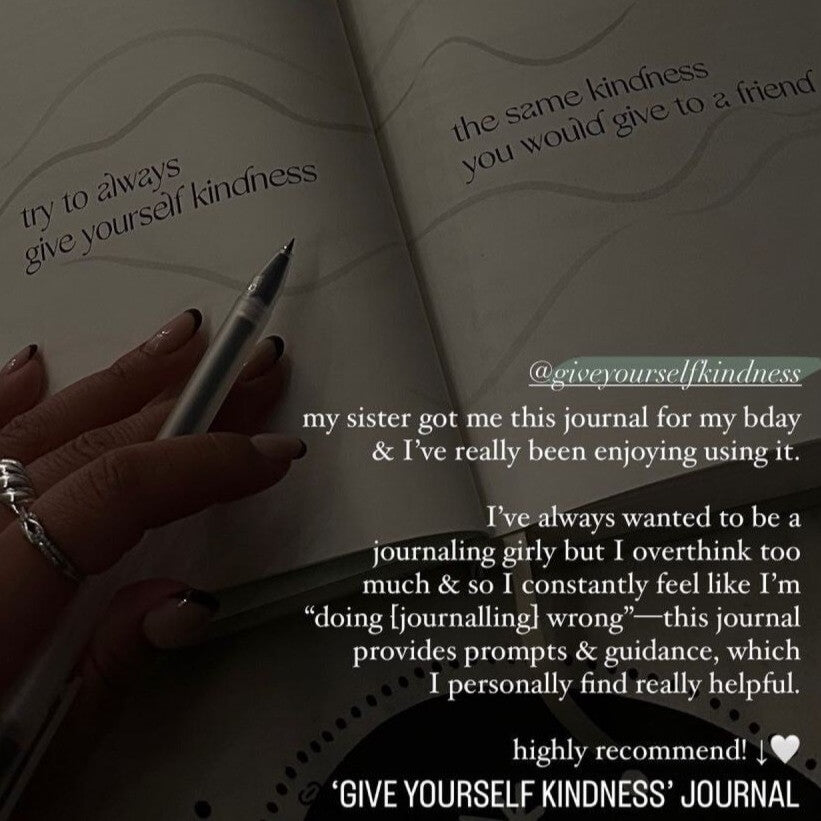
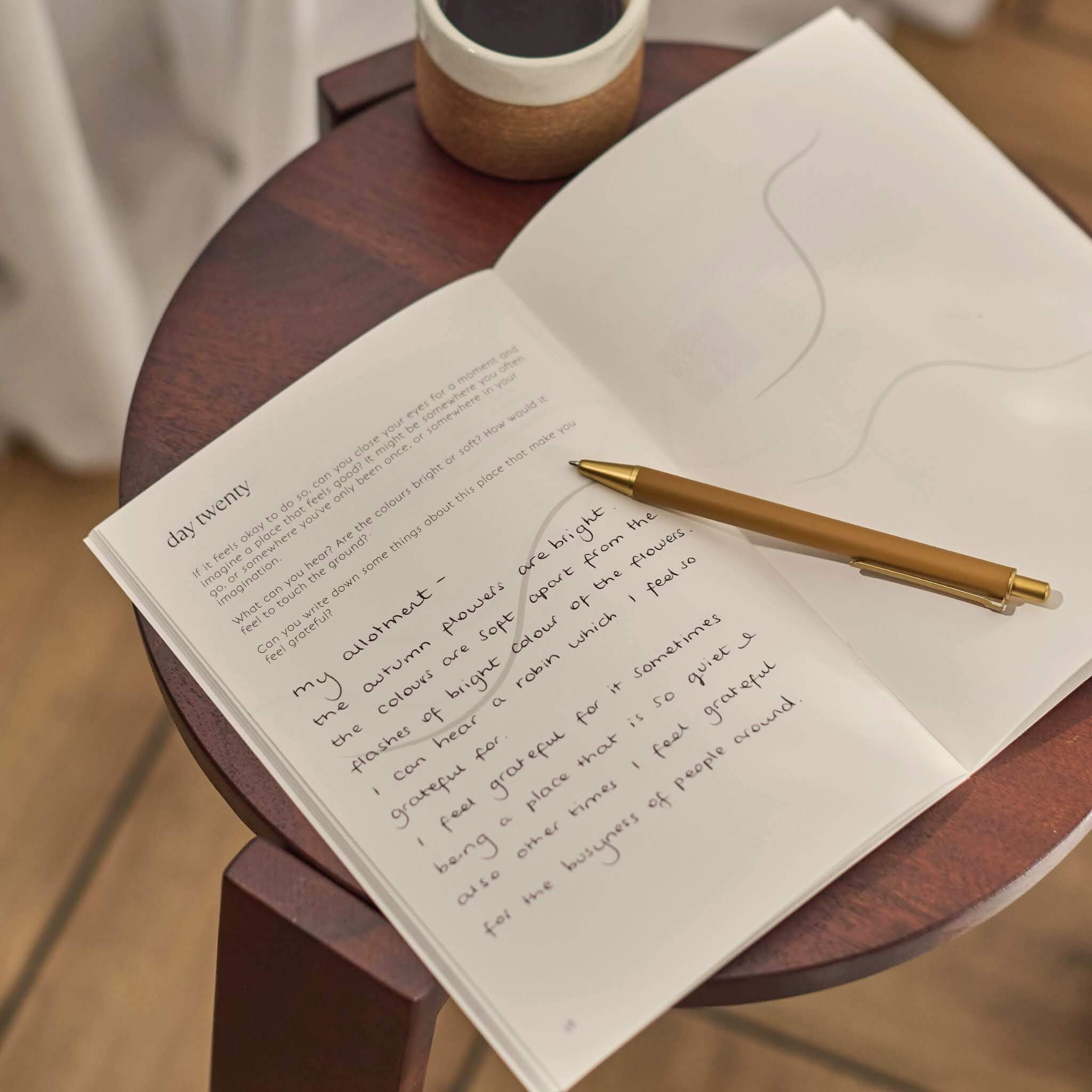
I should tell you that the Give Yourself Kindness Journal is mine, and why it exists. After my own experience with Compassion Focused Therapy I went looking for something to help me keep the practice going day to day, and most of the guided journals I found made my critical voice louder rather than quieter — more scoring, more tracking, a daily record of what I had not managed. Some of them asked me to track my weight, which really did not help me. That was the opposite of what I needed on the evenings I needed it. So I made the one I had been looking for, and I made it with clinical psychologists rather than on my own.

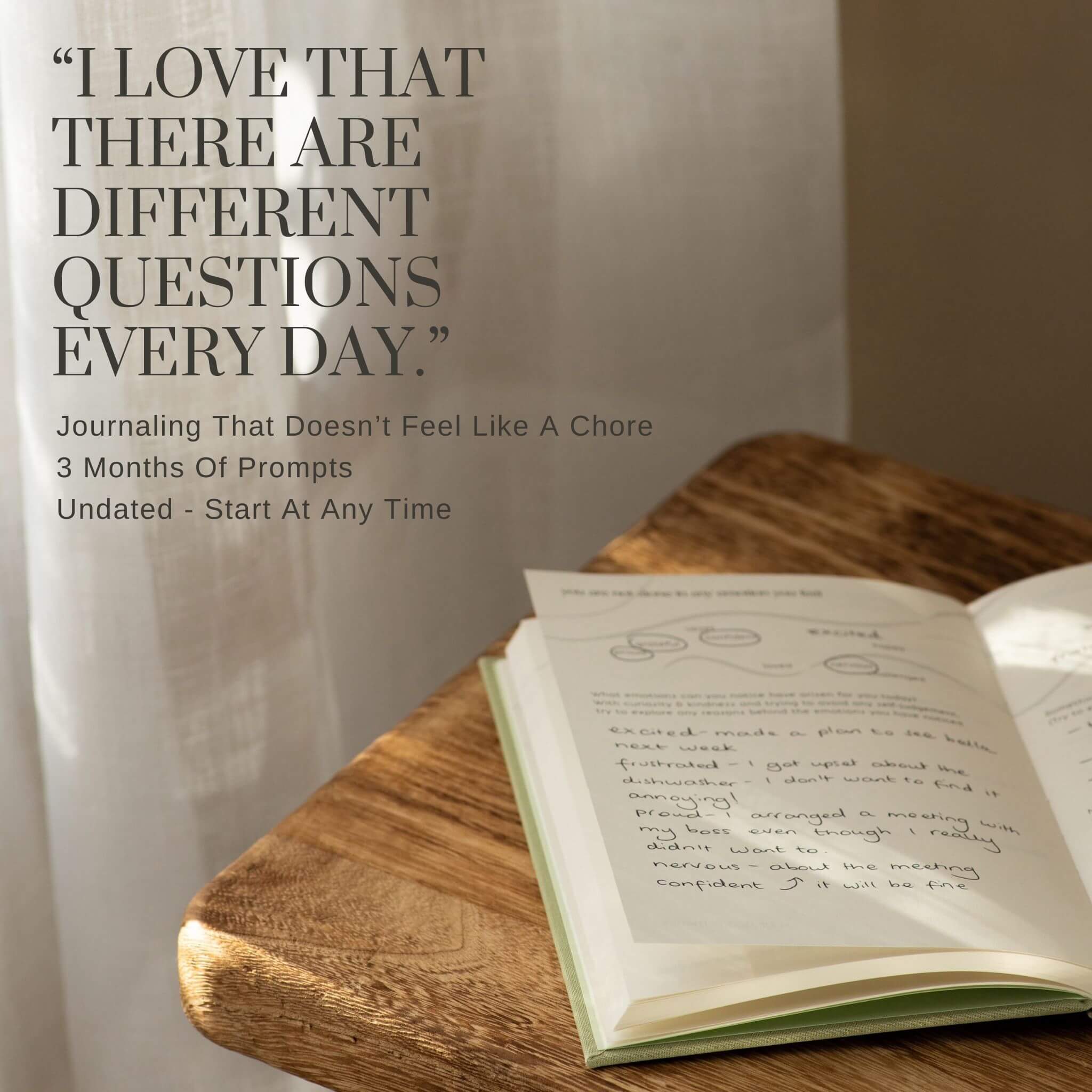
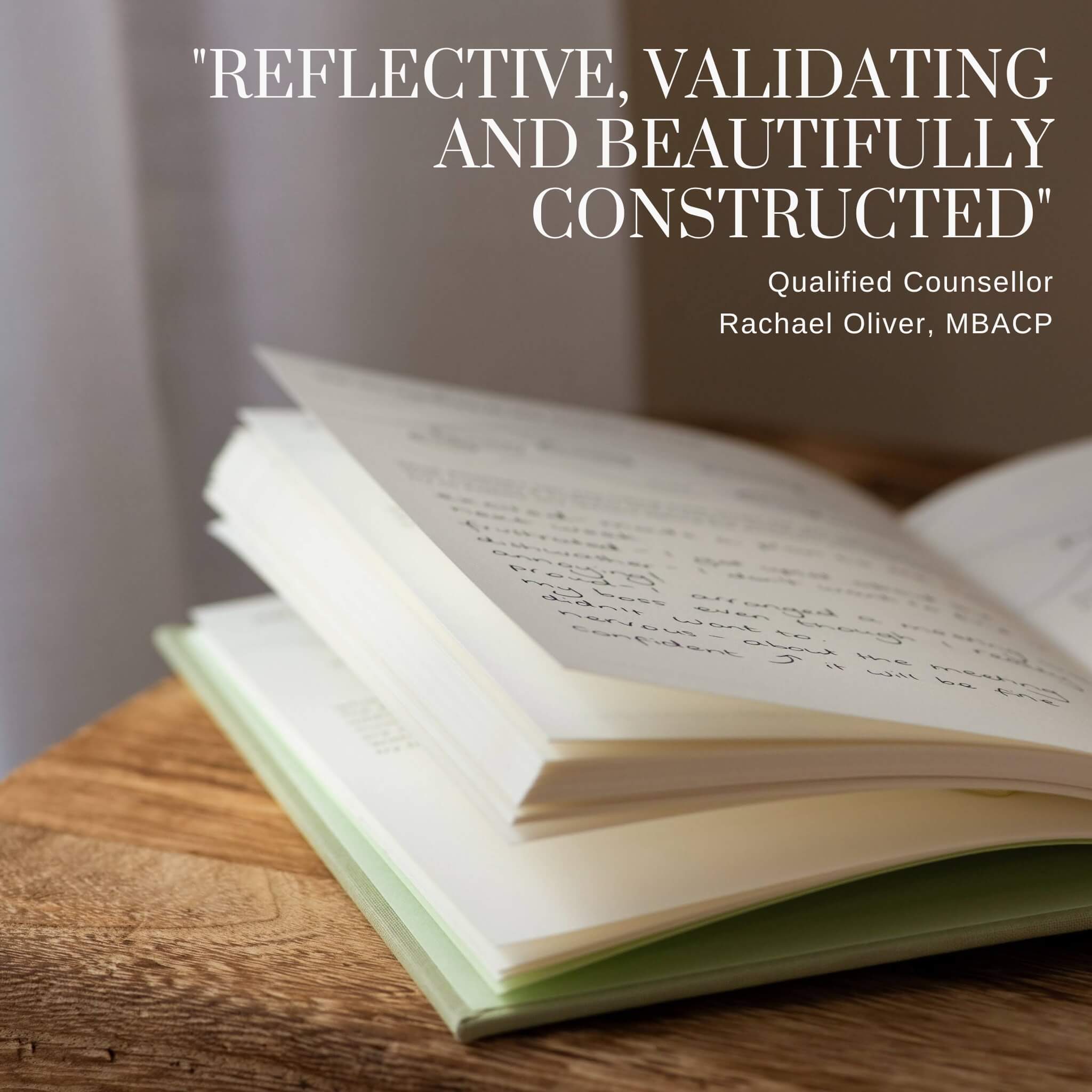
The Give Yourself Kindness Journal
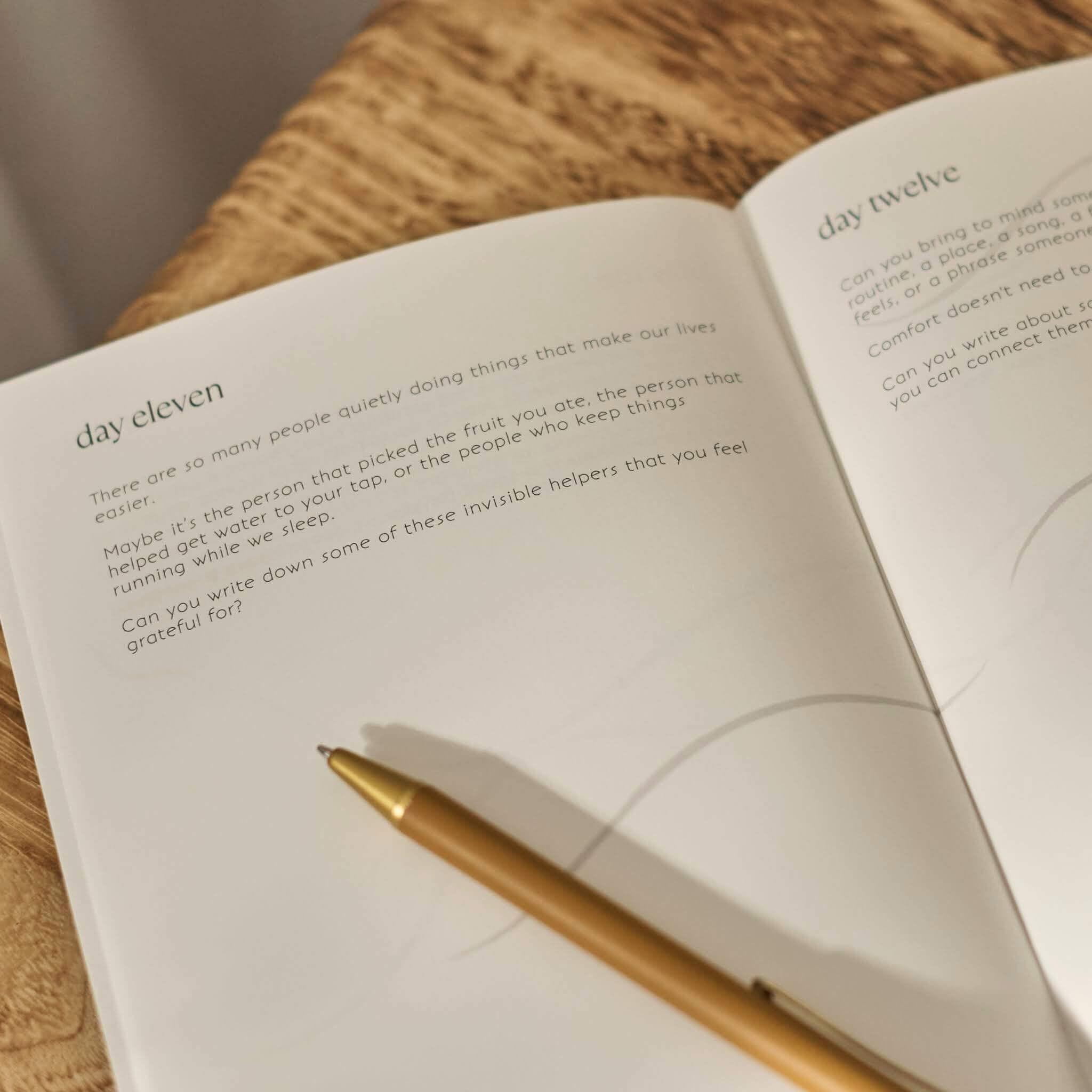
- 90 days of changing prompts, including the one this page is built around: what has challenged you today, and what would you say to a friend
- An emotional awareness tool on every page, because it is difficult to be kind about a feeling you cannot name
- Over 50 gentle affirmations, like “the way you speak to yourself matters”
- No scoring, no streaks, no tracking — nothing that quietly becomes another thing you are failing at
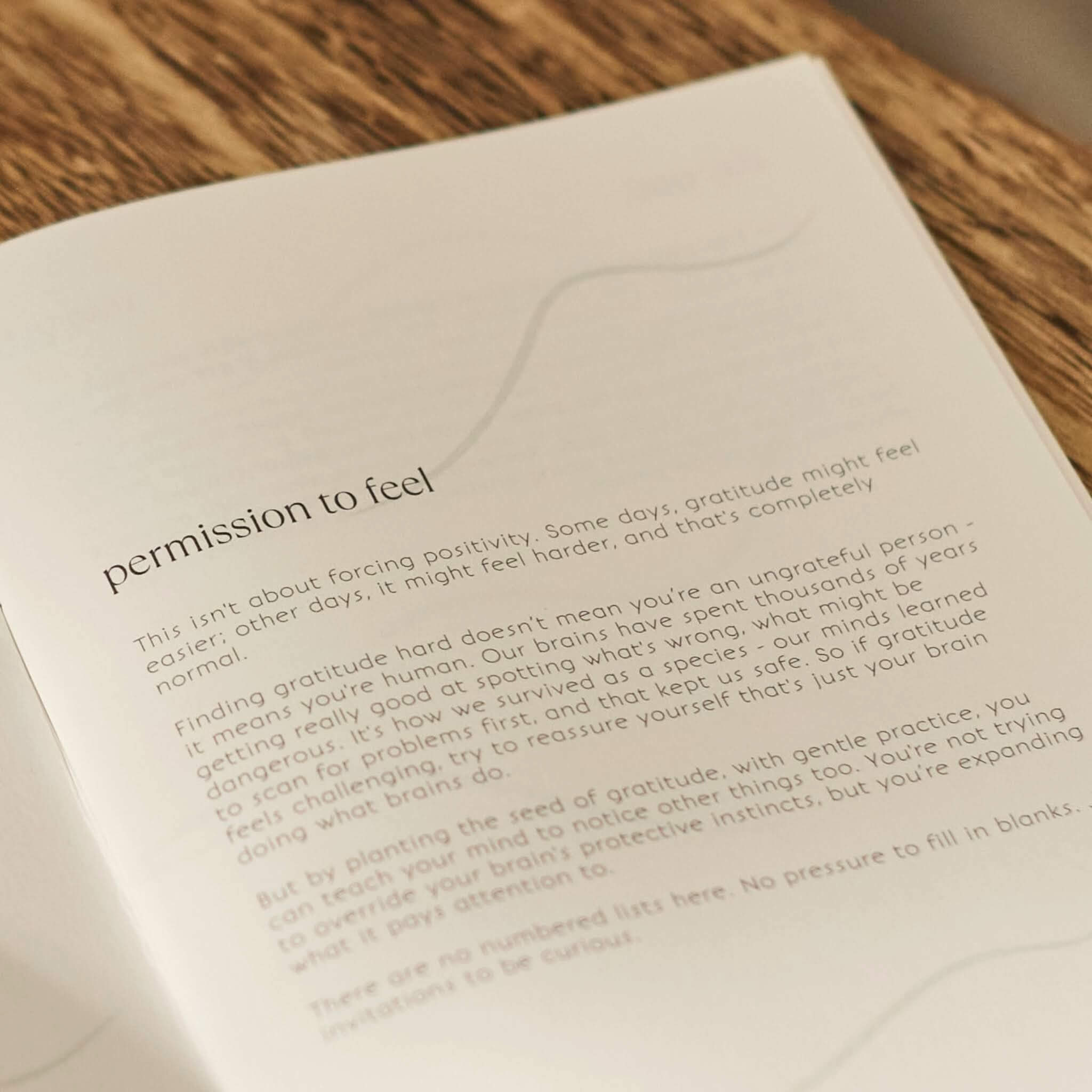
224 pages, A5, undated, pistachio green cloth cover, 120gsm FSC-certified paper, printed in the UK. Reviewed by clinical psychologists including from Harvard Medical School and the University of Oxford.
It will not stop the critic turning up, and it is not a crisis tool for the first ten minutes after something goes wrong. What it might do is mean the kind voice is not a stranger when you go looking for it.

Carrie Pollard, MSW RSW
Experienced Psychotherapist | Uses the journal with clients
See how therapists use it with clients →“Being able to identify what you’re feeling and compassionately explore the ‘why’ is central to self-connection and self-growth. The Give Yourself Kindness journal is a steady guide in this process…”
The journal is a gentle companion alongside professional support, never a replacement for it.
What to look for, whoever you buy from
If you are going to use a journal for a harsh inner voice, these are the things that decide whether it helps: prompts that ask what you felt and why rather than asking you to rate the day; room to write a reply to yourself, not just a record of events; guidance behind the gratitude section rather than blank lines; and nothing that scores you. If a journal makes you feel behind on the days you skip it, it is working against the very thing you came for.
If you would like to see how mine sits alongside the alternatives, with real names and real differences, I have written that comparison out properly: the best self-compassion journals compared. If perfectionism is the tone you recognised earlier, the best journal for perfectionism is the more specific version of that comparison. And if you would like more prompts to work with first, what to journal about when you are struggling with self-criticism has a page of them.
When is it more than an inner critic?
When the voice is constant, when it has moved from criticising what you do to condemning what you are, or when it is affecting your sleep, your appetite or your ability to get through a normal day, that is worth taking to a professional. Not because you have failed at anything on this page, but because some things respond much better to a person in a room than to an exercise on a website.
Things worth mentioning to your GP or a therapist, without waiting for them to get worse:
- Self-criticism that runs most of the day rather than arriving in bursts
- Persistent shame — the sense that you are bad rather than that you did something badly
- Low mood, or loss of interest in things you normally care about, lasting more than a couple of weeks
- Avoiding people, opportunities or situations because of what you expect the voice to say afterwards
- Any thought of harming yourself
If you need someone now
In the UK you can call Samaritans free on 116 123, at any hour, or contact your GP. If you are somewhere else, your local crisis line will be listed by your national health service.
A journal is a companion to support. It is never a substitute for it, and I would not want anything on this page read as suggesting otherwise.
Two approaches are worth knowing by name, because they are the ones the psychologists on this page work in and you can ask for them specifically. Compassion Focused Therapy was developed for exactly this problem — high self-criticism and shame. Mindful Self-Compassion is a taught course rather than a therapy, co-developed by Dr Chris Germer of Harvard Medical School and Dr Kristin Neff.
You do not have to win the argument
You only have to stop being the only one talking. Having an inner critic does not mean there is something wrong with you. It means you have a human brain that is trying, badly, to keep you safe. You can hear it, recognise it for what it is, and answer it with the same kindness you would offer a friend — long before you feel like you deserve it.
Start with one sentence tonight. That is enough.
Questions people ask about the inner critic
What is an inner critic in psychology?
The inner critic is the internal voice that judges what you do and predicts that you will fail, usually in a tone you would never use with another person. In Compassion Focused Therapy it is understood as an expression of the brain threat system turned inwards, rather than as a flaw in your character.
Does having an inner critic mean something is wrong with me?
No. Everyone has one, and Dr Maria Tucknott is clear that it is not a personal failing but part of an ancient safety system hardwired into the human brain. Your history can make it louder or more frequent, but you do not need to find a reason before you are allowed to want it to ease off.
Why is my inner critic so loud?
Because the system it runs on was built to over report. Your threat system works on a better safe than sorry principle, which means it is fast, automatic and biased towards false alarms. Tiredness, stress and situations where you feel judged all turn the volume up further.
What triggers my inner critic?
Anything your threat system reads as a risk to your standing, your competence or your belonging. The most common triggers are being tired or unwell, being watched or assessed, doing something new or difficult, comparison, a small mistake with an audience, and the late evening. A trigger explains the timing rather than the truth: noticing that the voice arrives when you are exhausted does not make what it said accurate.
Is my inner critic trying to protect me?
Yes. Clinical psychologist Dr Maria Tucknott describes it as trying, clumsily, to protect us, and the difficulty is that the threat system behind it often overreacts. Seeing the critic as an over the top protector rather than an enemy changes the task from defeating part of yourself to reassuring an alarm that it can stand down.
What are the 7 types of inner critic?
The seven type list that circulates online comes from the Internal Family Systems tradition, which treats inner critics as separate characters with separate jobs. Compassion Focused Therapy takes a different view: one overactive threat system speaking in several tones. Recognising a sentence you actually say to yourself is more useful than choosing a category.
What is the difference between an inner critic and an inner coach?
Both want you to do well. The critic uses shame and fear and aims at who you are. The coach uses encouragement and honesty and addresses what happened. The difference matters because criticism activates a stress response, and a stressed brain is less able to reflect or solve the problem it is being criticised about.
How do I build an inner coach?
Start by borrowing a voice rather than inventing one: think of someone who has been steady with you and write down what they would say about this. Then describe rather than declare, because a sentence you cannot argue with lands where a confident one bounces off. Let the coach be honest about what actually went badly, and always finish with one next step small enough that you know you will do it.
How do I quiet my inner critic?
Answering it works better than arguing with it. Write down what it said in its exact words, separate what happened from what you decided it meant about you, then write the reply you would give a friend who said the same thing about themselves. Finish with one small next step so the protective part of you has something real to hold.
What is the last step when challenging your inner critic?
The last step when challenging your inner critic is finishing with one next step, small enough that you already know you will do it. Answering the critic on paper ends with an action rather than a conclusion, because that is what separates a reply from reassurance you do not act on, and it gives the protective part of you something real to hold.
Should I give my inner critic a name?
It helps some people and makes things worse for others, so it is worth trying once rather than adopting on principle. Naming creates a small gap between you and the thought, and that gap is where the choice about what to do next lives. But if you already feel at war with yourself, giving the voice a character can turn a bad hour into a fight you have to win. Naming the sentence rather than the speaker gives you the same distance with less trouble.
What if being kind to myself feels fake?
That reaction is expected and very common. If you have spoken to yourself harshly for years, the kind voice is unfamiliar, and unfamiliar registers as false long before it registers as true. It also usually has a reason behind it, most often a belief that the criticism is doing a job and that dropping it would be risky.
Will I lose my motivation if I stop being hard on myself?
This is the most common fear about it, and the evidence points the other way. Dr Annabelle Kyle Dortch explains that self-criticism creates a nervous system and brain state that is not conducive to learning. A kinder inner voice is not about lowering your standards. It is about changing how you go about meeting them.
Does your inner critic ever go away?
It generally does not disappear, and aiming at silence tends to set you up to fail. What changes is its share of the conversation. You notice it sooner, you believe it less automatically, and you recover in an hour rather than a week. That shift is what progress actually looks like.
Can journaling help with an inner critic?
It can, provided the writing has structure, because writing freely about a harsh thought can become another lap of the same loop. Professor Willem Kuyken of the University of Oxford has noted that writing can invoke an inner critic as well as help with one. Prompts that ask what you felt and why, and then invite a reply to yourself, give the loop somewhere to end.
Do I need therapy to deal with my inner critic?
Many people work with it through practice, reading and writing on their own. It is worth speaking to your GP or a therapist if the voice runs most of the day, if it has moved from criticising what you do to condemning what you are, or if it is affecting your sleep, your appetite or your ability to get through an ordinary day. Compassion Focused Therapy was developed for this specific difficulty.
Continue reading
From the psychologists quoted here
-
How to stop beating yourself upDr Maria Tucknott, Clinical Psychologist — the threat system, the compassionate self, and four practices
-
Why is self-compassion so hard?Dr Bianca Nardini, Clinical Psychologist — including the two coaches
-
 Why self-compassion is more effective than self-criticismDr Annabelle Kyle Dortch, PsyD, Clinical Psychologist
 -
 The ten common fears of self-compassionDr Chris Irons, Clinical Psychologist and CFT trainer
 -
 Working through ambivalence about self-compassionDr Stan Steindl, Adjunct Professor, University of Queensland
 -
 Do affirmations really work? I asked five psychologistsProfessor Willem Kuyken, University of Oxford, and four others
 -
 Self-compassion is not self-pityDr Kristin Neff, University of Texas at Austin
 -
 All the clinicians who have reviewed this workCarrie Pollard, MSW RSW, and others
Related guides
- Transforming your inner critic into a compassionate voice
- Self-compassion: the antidote to perfectionism
- Why am I so hard on myself?
- How to stop negative self-talk
- How to be kinder to yourself
- Why can I not stop thinking about criticism?
- I made a mistake at work and I feel terrible
- What to journal about when you are struggling with self-criticism
- How to use journaling to change negative self-talk
- How to identify your emotions
- The best self-compassion journals compared
- The best journal for perfectionism
- The best journal for self-worth
- What mental health experts say about the journal