




Quick answer
Being kinder to yourself means responding to your own struggles the way you'd respond to a friend's — with understanding rather than criticism. It isn't positive thinking and it isn't letting yourself off the hook. It's noticing that you're having a hard time, and choosing not to attack yourself for it.
The simplest place to start, right now: think of something you're currently giving yourself a hard time about. Then finish this sentence out loud or on paper — "If a friend I loved told me this exact thing had happened to them, I'd say…" Whatever you'd say to them, say it to yourself, in those same words.
A gentle note: if that felt fake, forced or undeserved, you haven't done it wrong. Discomfort is the most common first reaction, and it usually means the kind voice is unfamiliar rather than untrue. There's a gentle section on that below.
If you've searched for this, something in you wants to stop being at war with yourself. That's a kind thing to want, and you're in the right place.
About this guide. I'm Rachel Smith, a qualified meditation teacher (DipBSoM, British School of Meditation, distinction). I'm not a psychologist or a therapist. Everything clinical on this page comes from named psychologists and researchers, with their credentials and a link to their full article.
What being kinder to yourself actually means
Being kinder to yourself means relating to your own difficulty with warmth instead of attack. It is not about thinking positively, denying that something went wrong, or lowering your standards. It's about changing your tone towards yourself while the difficulty is happening.

Dr Bianca Nardini
Clinical Psychologist, London — specialises in helping people who experience anxiety and self-criticism
"In essence, self-compassion means changing how you relate to yourself—transforming that inner monologue from a harsh critic to a supportive ally."Read more: Why is self-compassion so hard? →
Dr Nardini describes self-compassion as having three parts: a wise understanding that you have a tricky brain that gets stuck in unhelpful loops — and that this is not your fault; a sensitivity to your own suffering, meaning a willingness to turn towards your distress rather than away from it; and a caring commitment to actually do something about it.
That last part matters. Kindness towards yourself isn't only a feeling. It's also a decision about what you do next.
The three-component model
Most of the research in this area builds on the work of Dr Kristin Neff, Associate Professor of Educational Psychology at the University of Texas at Austin, who describes self-compassion as three things working together:
- Self-kindness instead of self-judgement — speaking to yourself with warmth when you're struggling.
- Common humanity instead of isolation — recognising that difficulty and failure are part of the shared human experience, not proof that you're uniquely defective.
- Mindfulness instead of over-identification — being aware of what you're feeling without being swallowed by it.
You don't need to hold all three in mind to begin. Most people find one of them is much harder than the other two, and that's the useful one to notice.
"But it feels fake" — what to do when kindness won't go in
If being kind to yourself feels fake, forced or undeserved, that reaction is expected and it doesn't mean the practice is wrong for you. For most people who've spent years in harsh self-talk, the kind voice is simply unfamiliar — and unfamiliar registers as false long before it registers as true.
The resistance usually has a reason behind it
Dr Nardini uses a thought experiment with clients that gets underneath this quickly.
Dr Bianca Nardini
Clinical Psychologist, London
"Imagine something magical happened tonight, and when you wake up tomorrow, your inner critic is completely gone. What would worry you about that? Would you be reluctant to give it up?"Read more: Why is self-compassion so hard? →
Sit with that for a moment before reading on.
Most people find something rises up immediately — usually a version of I'd get complacent, I'd let myself off the hook, I'd stop trying, I'd become someone I don't respect.
That answer is the real obstacle. It's a genuine, reasonable-feeling belief that the criticism is doing a job, and that dropping it is dangerous.
The fear that kindness is weakness
The most common fear is that self-compassion is soft. Dr Chris Irons, who researches and trains in Compassion-Focused Therapy, uses an example that turns this over.

Dr Chris Irons, DClinPsy
Clinical Psychologist | Compassion-Focused Therapy researcher and trainer | Co-director of Balanced Minds
"If you think about a firefighter, they embody much of what we in CFT would hold as compassion... would you say that they are typically weak, lazy or selfish? Well, no, not at all. In fact, what you're far more likely to do is describe them as brave, courageous and strong."Read more: The 10 common fears of self-compassion →
Compassion has two parts: noticing suffering, and taking wise action about it. Turning towards your own pain rather than away from it is not the easy option. It generally takes more nerve than criticising yourself does.
You don't have to resolve the resistance before you start
This is the piece that helped me most. Dr Stan Steindl, Clinical Psychologist and Adjunct Professor at the University of Queensland, writes about ambivalence — having two true things inside you at once. Part of you wants to be kinder. Part of you is wary of it.

Dr Stan Steindl
Clinical Psychologist, Psychology Consultants Pty Ltd | Adjunct Professor, School of Psychology, University of Queensland | Co-director, UQ Compassionate Mind Research Group
"Ambivalence is a natural part of the process when we're considering making a change or taking steps towards something new. It's not a problem to be solved—it's a signal that something important is happening."Read more: Working through ambivalence about self-compassion →
Dr Steindl's suggestion is not to argue the resistant part down but to let it speak. He asks: what are some of my own reasons for not wanting to be self-compassionate? Let those reasons be heard. You don't have to fix them. As he puts it, "there's wisdom in our defences, even if we eventually choose to do things differently."
A more workable starting point
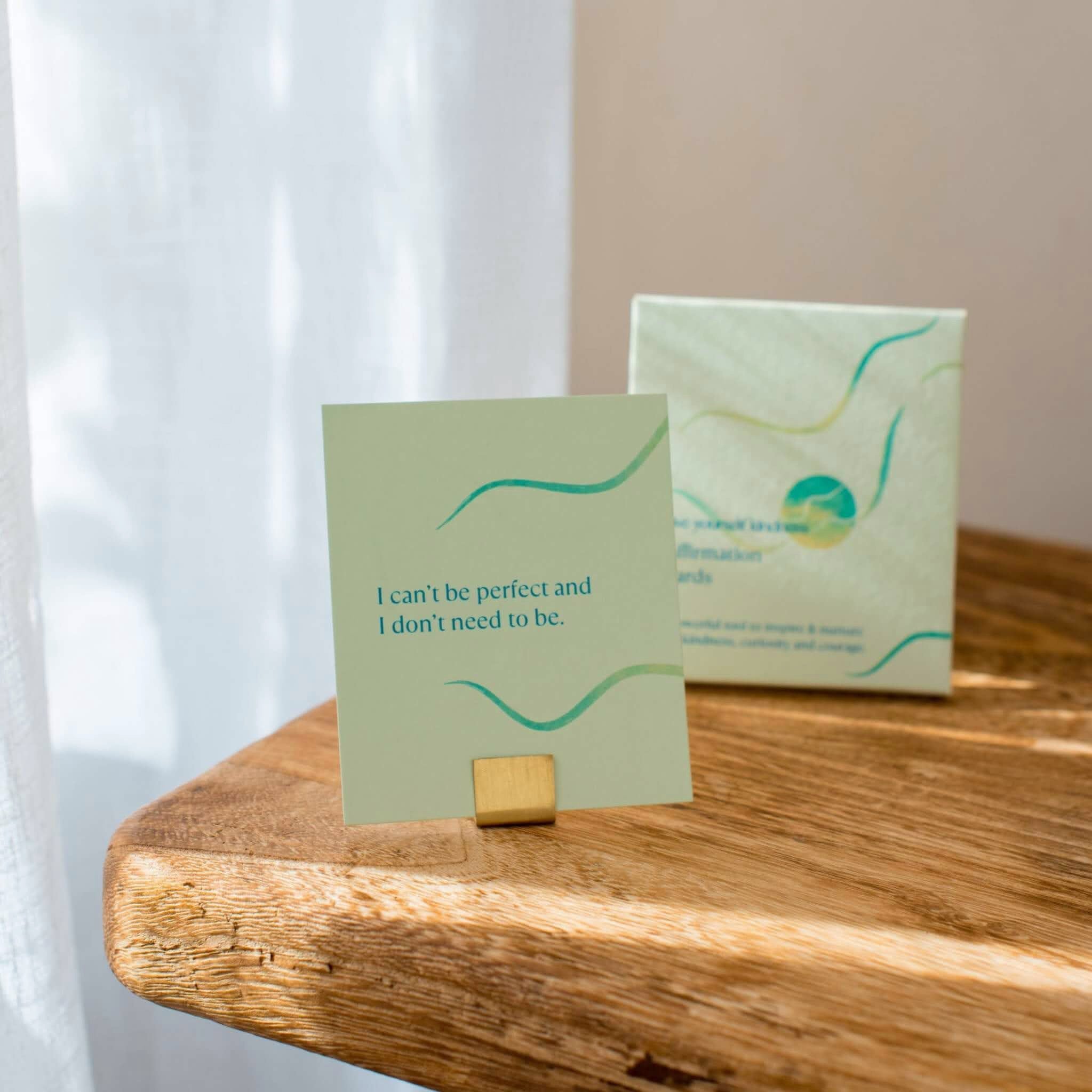
If "I am worthy" or "I love myself" makes you cringe, don't use it. Those statements ask you to believe something you currently don't, and for people with low self-esteem that can backfire and make things worse.
Try something you can't argue with instead — a description rather than a declaration:
- "This is hard right now."
- "I'm having a difficult time, and that makes sense."
- "Other people find this hard too."
- "I'm doing what I can with what I've got today."

Dr Caroline C. Lee, PhD
Licensed Clinical Psychologist specialising in anxiety disorders
"For affirmations to be effective, they need to resonate with you on a deeper level and feel believable."Read more: Do affirmations really work? →
What to actually say to yourself
"Talk to yourself like a friend" is good advice that's hard to use, because in the moment you can't think of the sentence. So here are the sentences. Read the critic's line, notice which ones you recognise, and try the kinder version in those exact words. You can borrow the wording until your own arrives.
Notice what the kinder lines are not doing. They aren't pretending things are fine, and they aren't telling you the mistake didn't matter. They acknowledge the difficulty and then respond to it with understanding rather than attack.
Being kinder to yourself in specific situations
Self-compassion looks different depending on what's happening. Here's how to apply it in the situations people most often ask about. Take whatever is useful and leave the rest.
At work
Work is where self-criticism disguises itself best as professionalism. The most useful shift here is to separate the standard from the tone: you can hold a high standard and still be decent about how you speak to yourself when you miss it. Harsh self-talk after a mistake at work tends to produce avoidance, not improvement — which is the opposite of what you want before the next meeting.
A practical move: after a difficult day, name one specific thing that genuinely went wrong and one specific thing you handled well. The critic will insist the second one doesn't count. Write it anyway.
Try saying"I got that wrong and I want to do better. Being cruel about it won't teach me anything I can't learn kindly."
After you've made a real mistake
Self-compassion isn't a way of avoiding responsibility — it's usually what makes taking responsibility possible. It's very hard to look squarely at something you did badly while you're also being attacked, which is why shame so often turns into defensiveness.
The order that tends to work: acknowledge the impact, feel the discomfort without adding cruelty to it, decide what you'll do about it, then stop. The rumination that follows most mistakes isn't accountability. It's punishment, and it doesn't repair anything.
Try saying"I did something that had a real cost, and I'm going to put right what I can. I don't have to destroy myself to take this seriously."
About your body
Body-related self-criticism is often the most automatic and the most deeply learned, so it's rarely the place to start if you're new to this. If it's where you are anyway, aim lower than self-love. Neutrality is a legitimate destination.
Functional appreciation — noticing what your body does rather than how it looks — is usually more accessible than appearance-based kindness, and it doesn't require you to lie to yourself.
Try saying"I don't have to find this body beautiful today to stop insulting it today."
When you're exhausted or burnt out
Burnout has a cruel logic to it: the more depleted you are, the less you produce, and the harder the critic pushes. Kindness here is mostly practical rather than verbal. It looks like lowering the bar deliberately, saying no to one thing, and treating rest as maintenance rather than reward.
If "rest" feels impossible to justify, try reframing it as the minimum required for the thing you're worried about failing at. That's not a trick — it's true.
Try saying"I'm running on empty. Being harder on myself won't refill anything."
As a parent
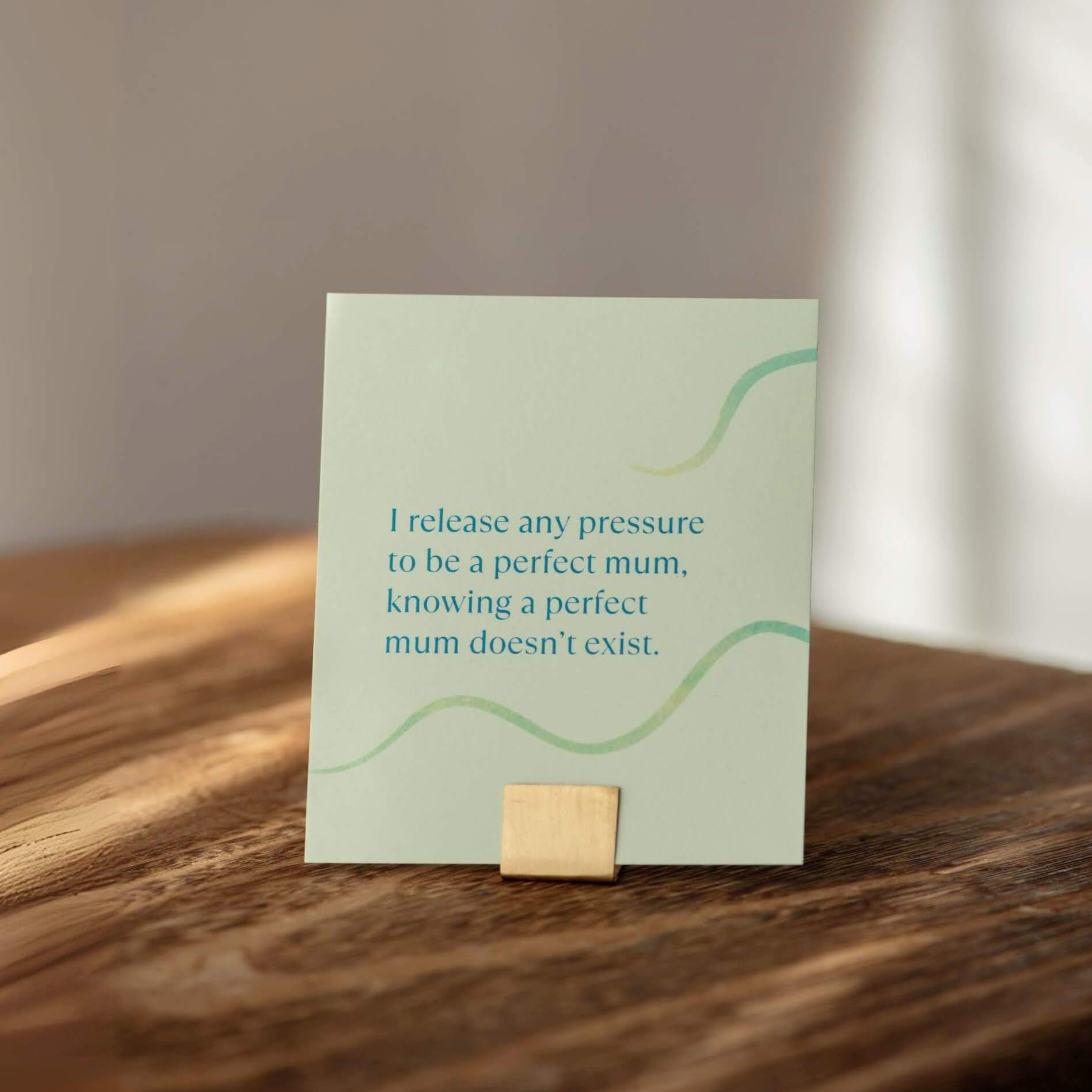
Parental guilt is unusually sticky because the stakes feel absolute. Two things tend to help. First, the standard you're measuring against is almost certainly one no real parent meets. Second — and this is the one people find persuasive — how you speak to yourself in front of your children is teaching them how to speak to themselves.
Modelling repair matters more than modelling perfection. A parent who gets it wrong and says so gently is teaching something more useful than a parent who never appears to get it wrong.
Try saying"I lost my temper and I don't like that. I'm going to repair it. Being a good parent includes getting things wrong and coming back."
When you're grieving
Grief attracts a specific kind of self-criticism — about doing it wrong, taking too long, or not feeling what you think you should. There isn't a correct way to grieve and there isn't a schedule. Kindness here is mostly permission: to feel less than you expected, to feel more, to have a good day without it meaning anything.
Try saying"There's no right way to do this. Whatever I'm feeling today is allowed."
When you're depressed or very anxious
Self-compassion can genuinely help alongside treatment, but it is not a substitute for it. Depression in particular attacks the very capacity you'd need to be kind to yourself, which is part of what makes it so hard.
If that's where you are, the most self-compassionate action available might not be a journal or a phrase. It might be telling your GP. That counts. More on getting support below.
Try saying"I'm not failing at self-compassion. I'm unwell, and unwell people need support, not lectures."
The two coaches: why kindness works better than criticism
This is Dr Bianca Nardini's, and it's the thing that shifted something for me when nothing else had.
Imagine your closest friend is training for a marathon and you're hiring their coach. One coach motivates by shouting that your friend is delusional to think they could finish. The other says they can see how hard your friend is trying, and reminds them to pace themselves. Both want your friend to finish. Only one of them you'd actually hire.
Dr Nardini's full version, with what both coaches say word for word, is on the inner critic guide — along with a side-by-side of what an inner critic and an inner coach each sound like.
The answer is obvious when you're choosing for someone you love. Most of us then go home and hire the harsh one for ourselves — and call it discipline.
There's a reason the harsh coach doesn't work, and it isn't sentimental.

Dr Annabelle Kyle Dortch, PsyD
Clinical Psychologist, Los Angeles — specialises in life transitions, anxiety and trauma
"When we engage in self-criticism, we create a nervous system and brain state that is not conducive to learning or facilitating a growth-oriented mindset."Read more: Why self-compassion is more effective than self-criticism →
Your system reads criticism as a threat whether it comes from someone else or from you. The stress response activates, and the part of your brain you'd need for reflection and problem-solving becomes less available. You then tend to fall back on familiar behaviour — often the exact behaviour you were criticising yourself for.
And the critic isn't a villain in this. It's usually a badly-calibrated protector.

Dr Maria Tucknott
Clinical Psychologist specialising in trauma, anxiety and depression | Founder of Tucknott Psychology
"The inner critic… is not simply being 'mean'—it's trying (clumsily) to protect us. The challenge is that this threat system often overreacts."Read more: How to stop beating yourself up →
That reframe changes the task. You're not trying to defeat a part of yourself. You're trying to reassure an overactive alarm that it can stand down. If it's specifically the critic you want to work on rather than kindness in general, the inner critic guide has the full picture, including a written exercise from Dr Tucknott for answering it.
10 ways to practise being kinder to yourself
Pick one. Not all ten. There's no right order and no wrong place to start.
Ask what you'd say to a friend
The most reliable starting point, because most of us already have the skill and simply point it outwards. Name the thing you're being hard on yourself about, imagine a friend saying the identical thing to you, and write down what you'd tell them.
Then do the harder half: say those exact words to yourself, out loud if you can manage it.
If it doesn't land: you may find you can't imagine saying anything kind to the friend either. That's worth noticing — it usually means the standard itself, not just the self-talk, is worth examining.
Catch the tone before you fix the content
You can't change self-talk you haven't noticed. For a few days, just spot it — no editing. A useful cue is the physical one: a sinking feeling, a tightening jaw, a hot face. The body usually registers the attack before the mind identifies it.
When you catch one, try naming it neutrally: "there's the critic." Not "I shouldn't think like that", which is just the critic wearing a different hat.
If it doesn't land: if noticing makes you feel worse, do it retrospectively at the end of the day rather than in real time.
Use soothing touch
A practice from Mindful Self-Compassion, the programme co-developed by Dr Chris Germer and Dr Kristin Neff. When you notice distress, place a hand over your heart, or one hand on your chest and one on your stomach, or simply hold one hand in the other. Rest there for a slow breath or two.
It works through the body rather than through argument, which is why some people find it lands when words don't.
If it doesn't land: touch can feel intrusive if you're activated. Try holding a warm mug instead, or resting a hand on your own forearm — less loaded, same idea.
Talk to a younger version of yourself
If self-directed kindness feels impossible, redirect it. Picture yourself at six, or eleven, or whatever age the pattern started, in the situation you're currently judging yourself for. What would you say to that child?
Most people find the tone changes instantly. That tone is available to you now, too — it's the same voice, just pointed somewhere it isn't used to going.
If it doesn't land: this one can bring up more than expected. If it opens something painful, that's a reason to go slowly or do it with a therapist, not a reason to push harder.
Let yourself be imperfect on purpose
Not as a metaphor. Send the email with the slightly clumsy sentence. Leave the washing up. Do one thing to 80% deliberately, and notice that the consequence you feared mostly doesn't arrive.
Self-kindness that stays theoretical rarely changes anything. This gives it something to push against.
If it doesn't land: start smaller than feels meaningful. The size of the experiment matters much less than doing one.
Take breaks without building a case for them
Notice how often rest requires a justification — you've earned it, you've finished enough, you're ill enough. Try taking one break without constructing the argument first.
Rest is maintenance. It's the thing that makes the rest of it possible, not the prize at the end of it.
If it doesn't land: if resting produces guilt, expect that and let the guilt be there. It usually quietens faster than you'd think if you don't argue with it.
Use words you can actually believe
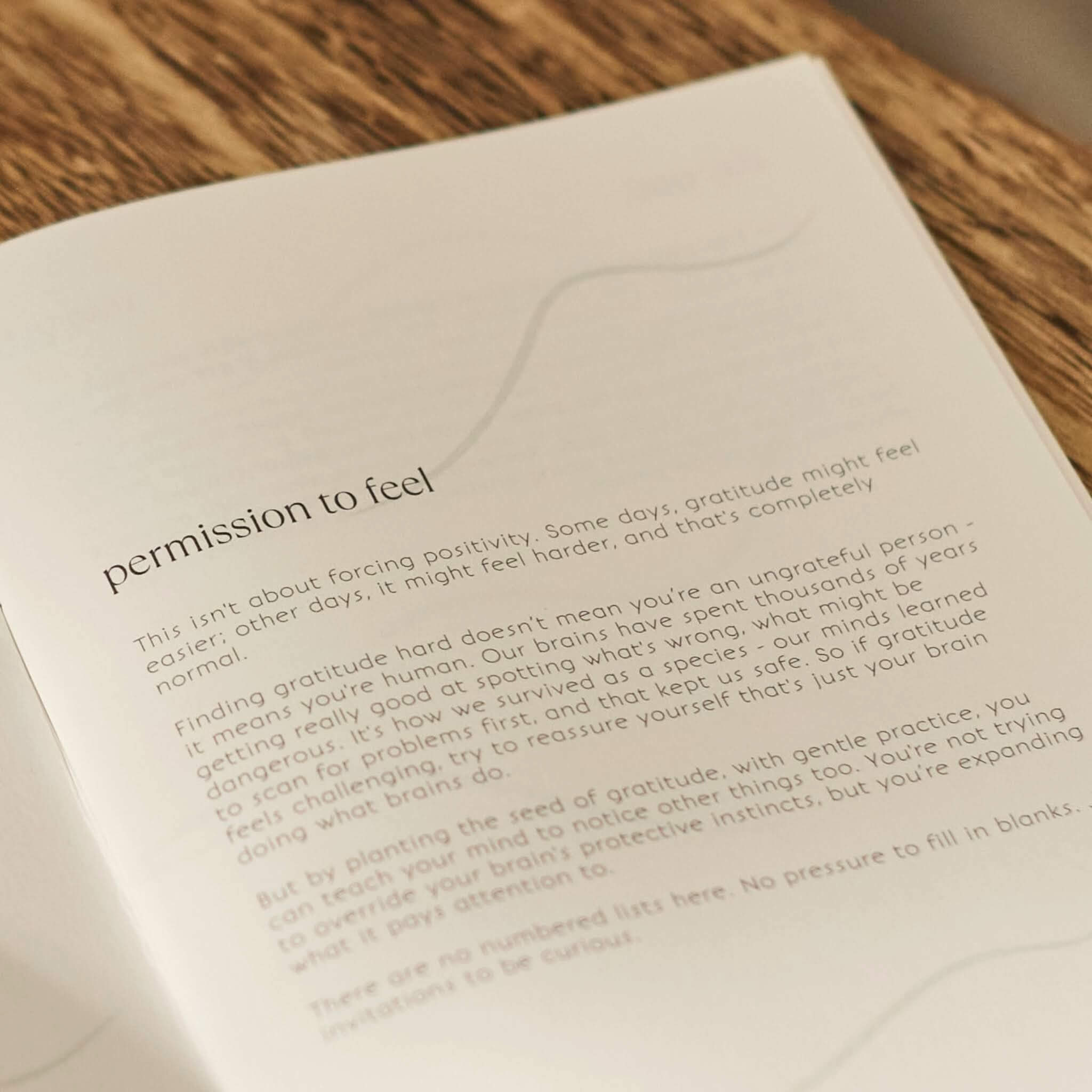
Skip anything that makes you flinch. Statements that are too far from what you currently believe can make you feel worse, particularly if your self-esteem is already low. Aim for accurate rather than glowing — "this is hard and I'm still here" beats "I am enough" if the second one makes you roll your eyes.
If it doesn't land: try adding "I'm learning to…" in front. It turns a claim you can dispute into a direction you can't.
Match kind words with kind actions
Self-compassion becomes real when your behaviour agrees with it. If you tell yourself your body deserves respect, buy clothes that actually fit. If you tell yourself you're doing your best, stop at a reasonable hour. Words with no corresponding action tend to feel hollow — because they are.
If it doesn't land: reverse it. Start with one small action and let the words catch up.
Write it down rather than think it through
Self-criticism loops. Writing interrupts the loop by making the thought sit still long enough to be looked at. It also creates a small distance between you and the voice — on the page it's more obviously a thought, and less obviously the truth.
A blank page and one question is enough: what am I giving myself a hard time about, and what would I say to someone I loved about it?
If it doesn't land: a blank page can make things worse when you're already stuck. A prompt of any kind — even just that one question written at the top — usually solves it.
Remember that everyone struggles
Suffering feels isolating, and isolation makes it heavier. This is the common humanity part of Dr Neff's model, and it's less about consolation than about accuracy: struggling doesn't make you defective, it makes you a person.
When shame tells you to withdraw, that's usually the moment contact helps most — even something small, like a text.
If it doesn't land: "everyone struggles" can feel dismissive when you're in it. If so, make it specific rather than general — one person you know who's found this hard too.
How long does this take, and how do I know it's working?
There's no fixed timeline. Kindness towards yourself grows at its own pace. If you've spoken to yourself harshly for twenty years, a kinder voice doesn't become the default in a fortnight. Most people notice small shifts within a few weeks of regular practice, and find it becomes genuinely more automatic over months rather than days.
Professor Willem Kuyken, writing about how attitudes of mind develop, puts it better than I can.

Professor Willem Kuyken, PhD, DClinPsy
Ritblat Professor of Mindfulness and Psychological Science, University of Oxford | Listed by Web of Science in the top 1% of most cited scientists in the world
"I use the word cultivation rather than affirmation... Cultivation needs the natural conditions of climate, soil, sunlight, temperature, and so on... it takes time, like planting seeds and then taking care of them until they grow and mature in their own way and time. A garden might take many years to become mature."Read more: Do affirmations really work? →
What early progress actually looks like
People expect the critic to go quiet. It usually doesn't — not for a long time. Here's what tends to change first instead:
- You notice it sooner. An hour later becomes ten minutes later becomes as it happens.
- You recover faster. Not "I never spiral" but "I spiralled for an afternoon rather than a week."
- The kind sentence becomes available. You may not believe it yet, but you can find it, which you couldn't before.
- You catch yourself being harsh and it feels wrong — where before it just felt like the truth.
None of those look like success from the inside. All of them are.
One more thing, gently: you will be unkind to yourself again after reading this. That's not a relapse and it isn't evidence you can't do it. The goal was never to eliminate the critic. It's to stop being alone in the room with it.
When being kinder to yourself isn't the answer
It helps to know the ways this can go sideways, because it makes the practice more useful, not less.
Kindness used as avoidance
"Being gentle with myself" can quietly become a way of never facing something difficult. The test isn't how the choice feels in the moment — comfort and avoidance feel identical from the inside. The test is whether it moves you towards something you care about or away from it.
Dr Kristin Neff draws the line clearly.

Dr Kristin Neff, PhD
Associate Professor of Educational Psychology, University of Texas at Austin | Pioneer researcher in self-compassion
"If we truly care about ourselves, we won't engage in feel-good behaviors that are bad for us. Self-indulgence involves choosing short-term pleasure at the expense of long-term harm, and self-compassion always has its eyes on the prize: alleviating suffering."Read more: Self-compassion or self-indulgence? →
Old pain surfacing
For some people, the first sustained experience of self-kindness brings up grief rather than relief — often about not having received it earlier. This is a recognised response and it isn't a sign you're doing it wrong. It is a sign to go slowly, and a good reason to do this alongside a therapist rather than alone.
Self-compassion as another performance
If you find yourself grading your self-compassion practice, or feeling like a failure for not journaling, the critic has simply taken over the new activity. Notice it, and drop the practice for a bit. Stopping is allowed.
When it isn't enough on its own
Self-compassion is not a treatment for depression, an anxiety disorder, trauma or an eating disorder. It can sit alongside treatment and often does — Compassion-Focused Therapy is built on it. But if you're unwell, being kinder to yourself is a companion to getting help, not an alternative to it.
When to get more support
Please consider speaking to a GP, therapist or counsellor if any of these are true: self-criticism is persistent enough to affect your sleep, work or relationships; you feel hopeless or numb for weeks at a time; the harshness towards yourself is connected to something that happened to you that you haven't been able to process; or you're having thoughts of hurting yourself.
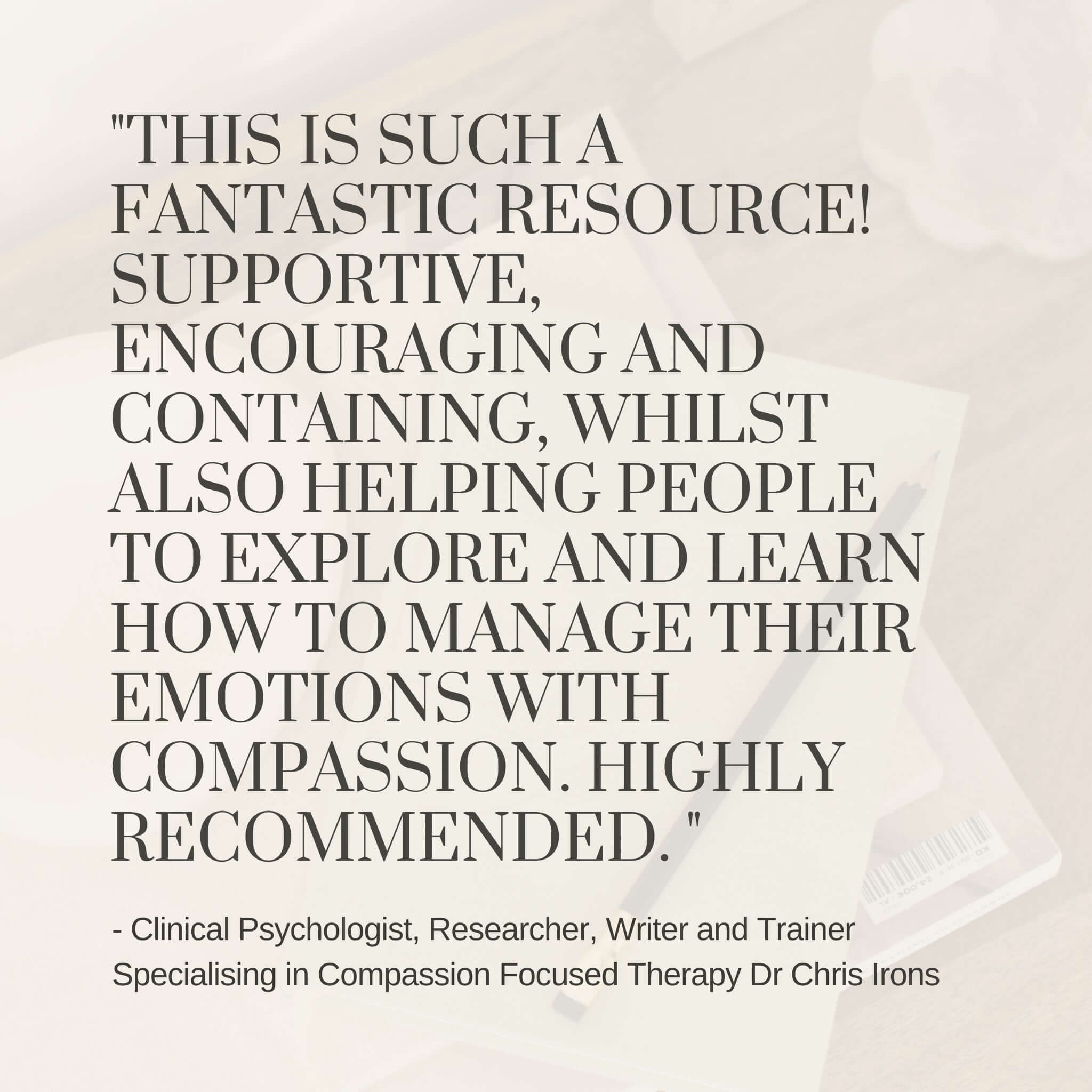
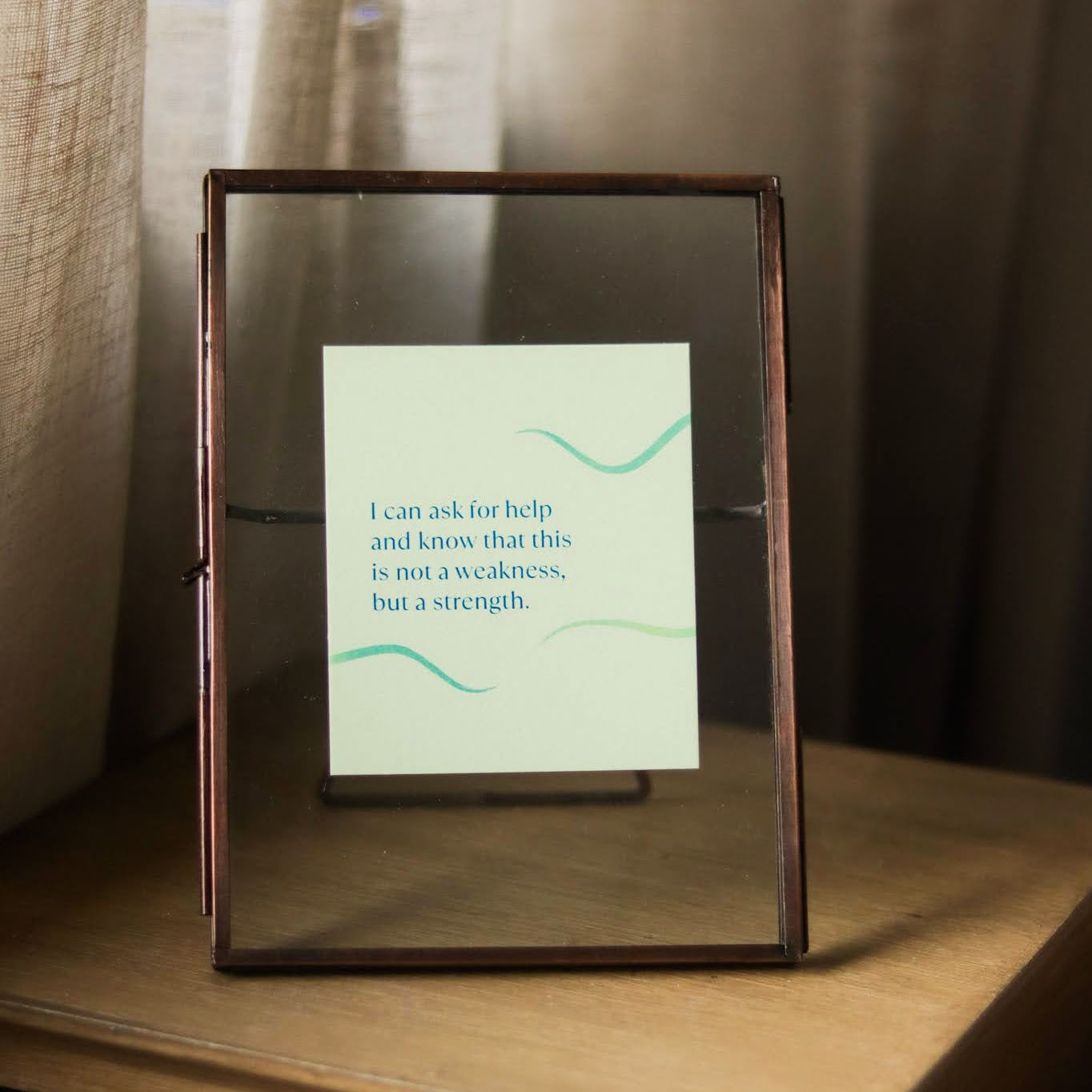
Asking for help is one of the most self-compassionate things available to a person. It is the second part of Dr Irons' definition — noticing suffering, then taking wise action about it.
Approaches built specifically around this
- Compassion-Focused Therapy (CFT) — developed for people whose difficulties are rooted in shame and self-criticism. This is the approach I went through myself.
- Mindful Self-Compassion (MSC) — an eight-week programme co-developed by Dr Chris Germer and Dr Kristin Neff, taught internationally.
- Mindfulness-Based Cognitive Therapy (MBCT) — well-evidenced for preventing recurrent depression.
In the UK you can ask your GP for a referral, or self-refer to NHS talking therapies in most areas. If you're in immediate distress, contact your GP, call NHS 111, or in an emergency call 999. You can also call Samaritans, free and at any time, on 116 123.
If you'd like something to write in
I should tell you that this journal is mine, and why it exists.
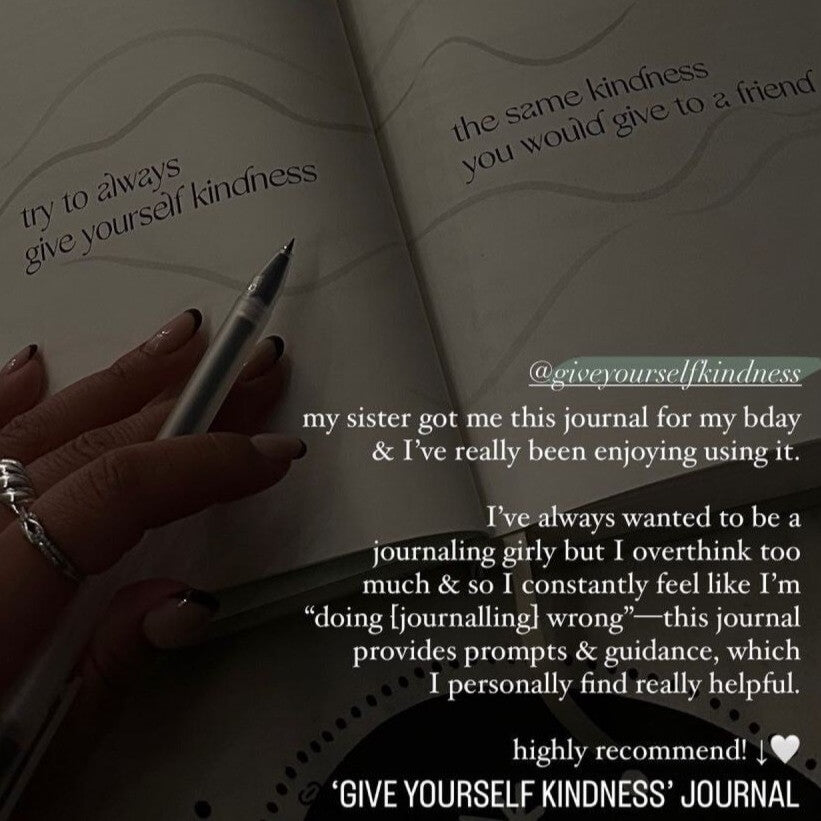
When I was struggling, the journals I found made me feel worse. Some asked for three things I was grateful for on days when gratitude felt impossible. Others tracked exercise and weight, which I knew would do me harm. None of them had room for how I actually felt, and each one became another place to feel I was failing.
So after my own experience of Compassion-Focused Therapy, I made the journal I had needed, working with clinical psychologists and self-compassion researchers, and asked leading experts to review it.
Professor Willem Kuyken, PhD, DClinPsy
Ritblat Professor of Mindfulness and Psychological Science, University of Oxford | Listed by Web of Science in the top 1% of most cited scientists in the world
"Writing can be creative, beautiful, resourcing, but it can also invoke an inner critic, rumination and procrastination. Rachel has curated the experience to make the writing intrinsically rewarding and the journal something to treasure."Read Professor Kuyken's full review →

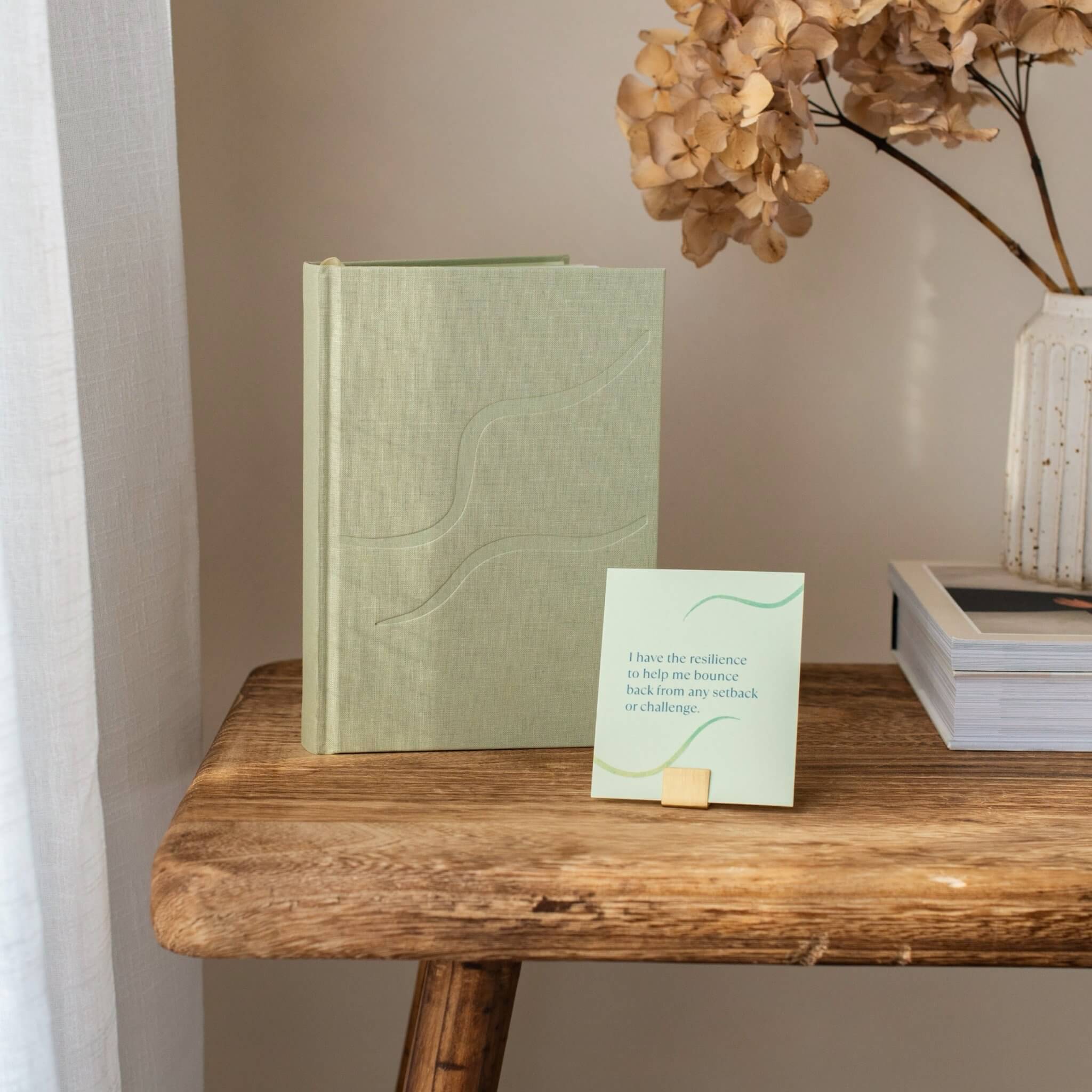
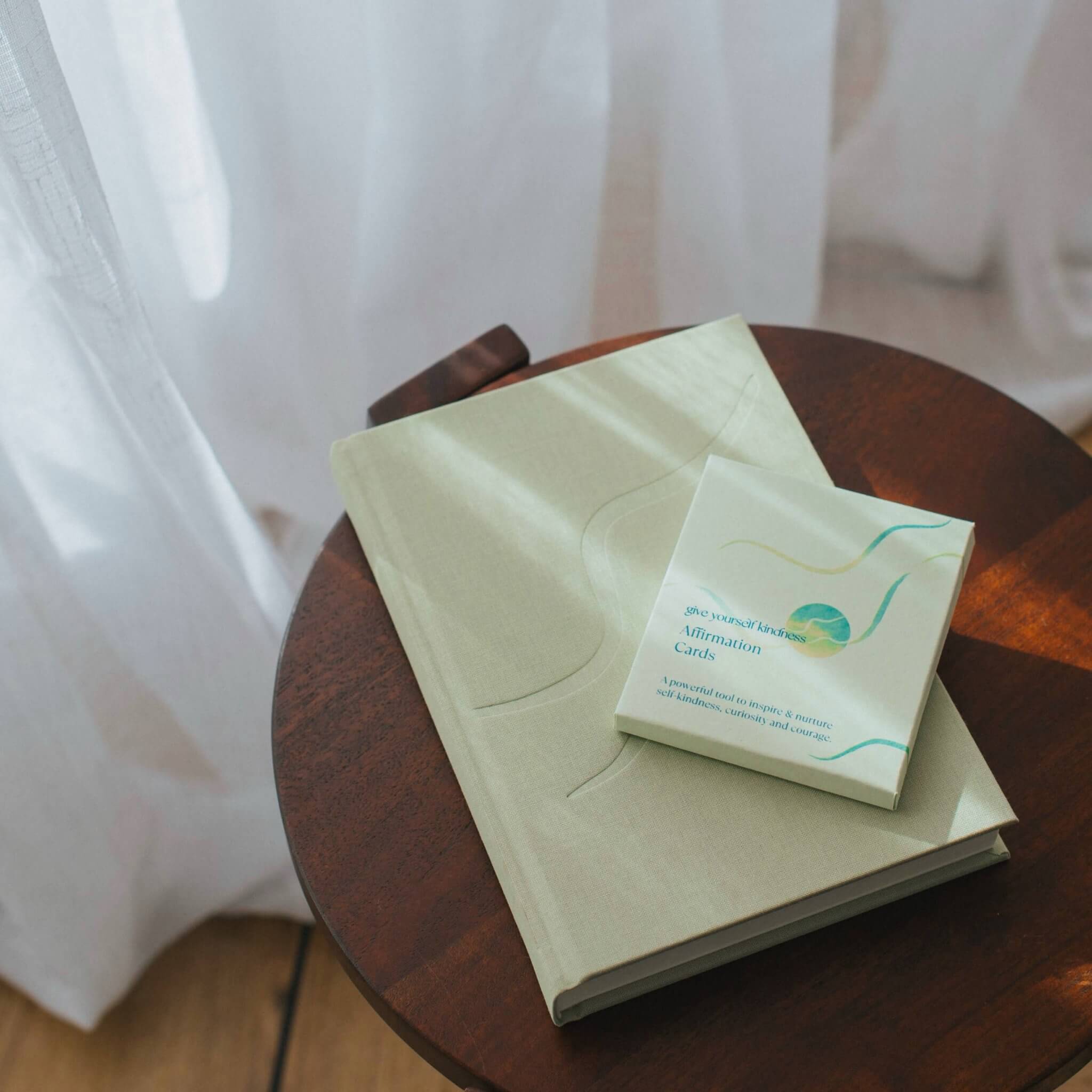
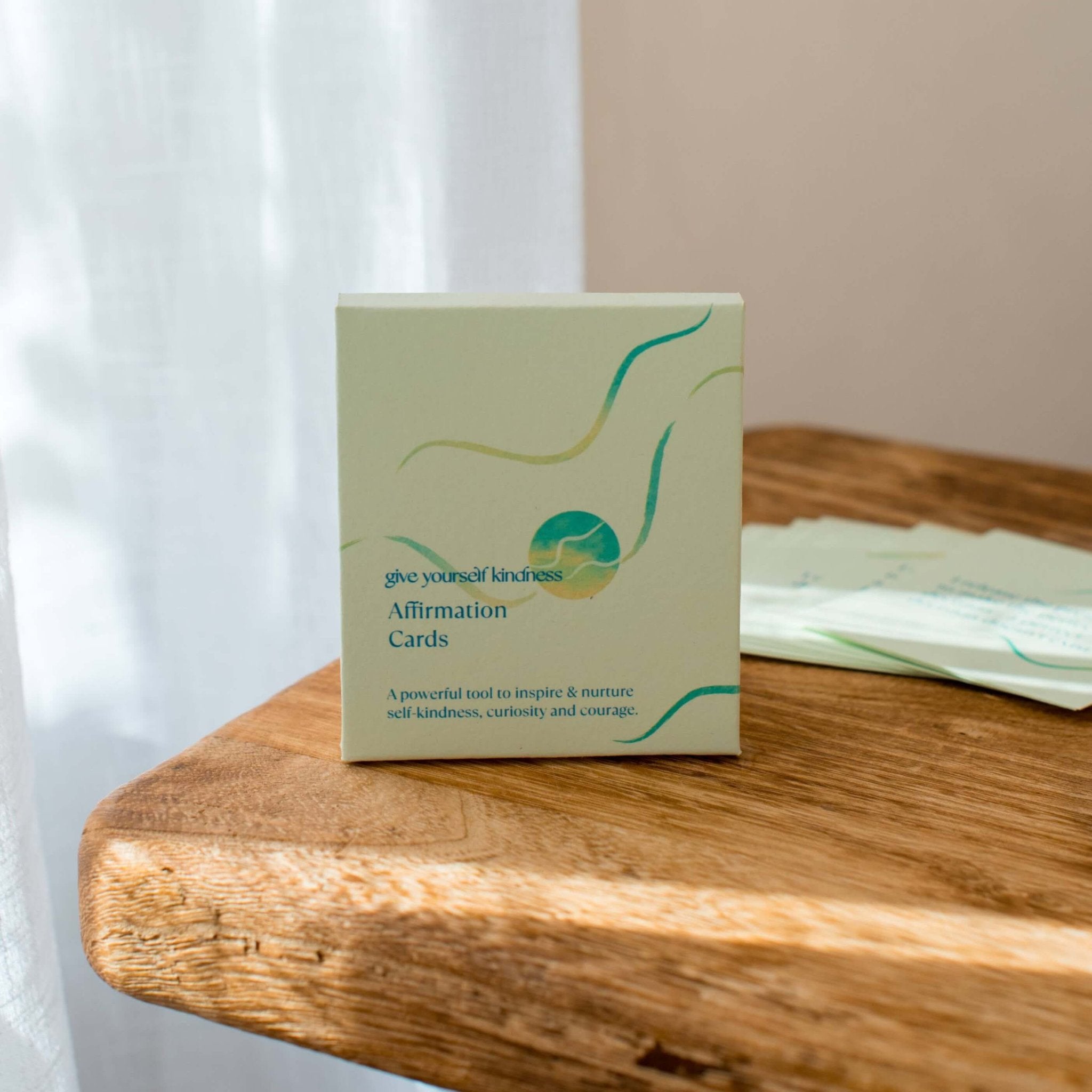
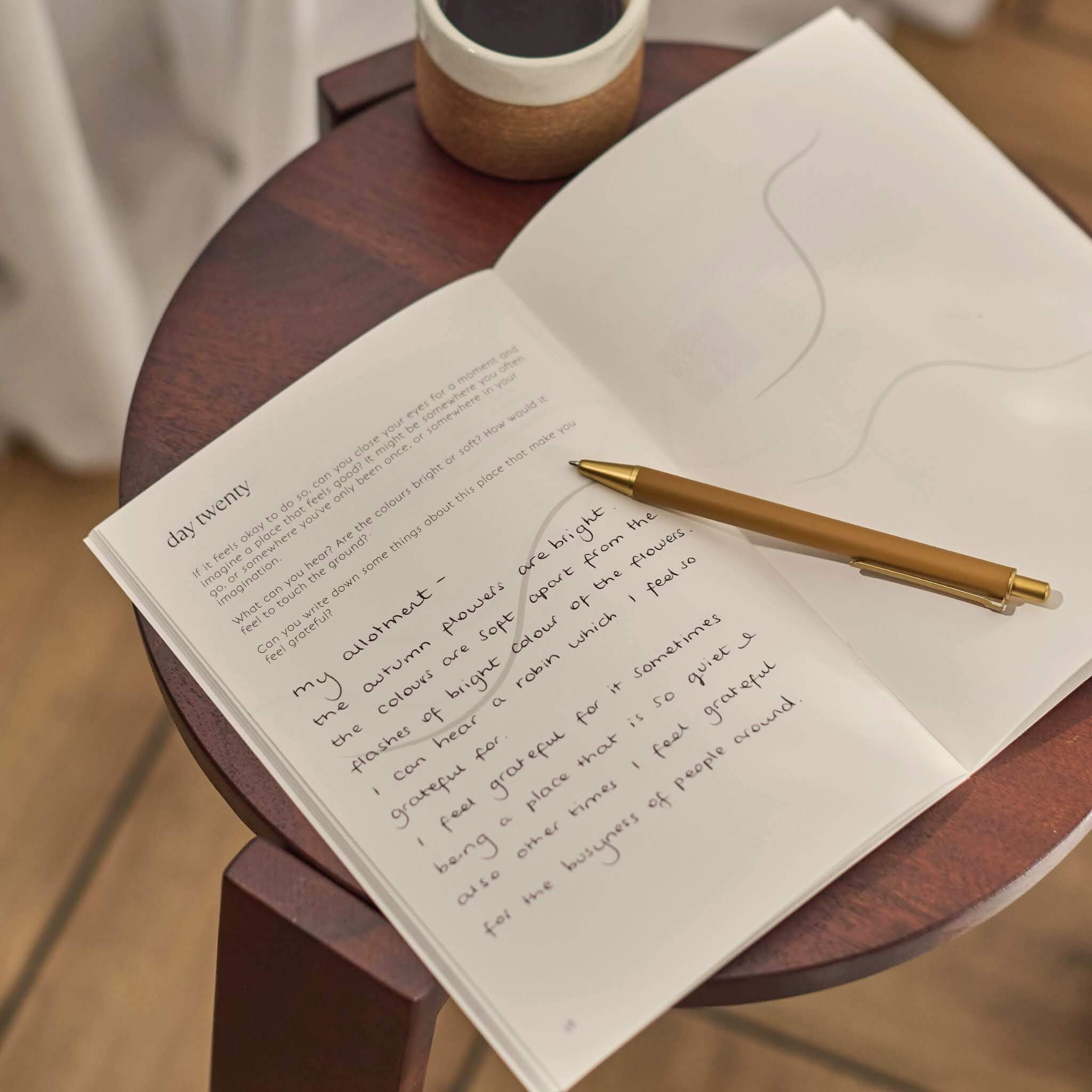
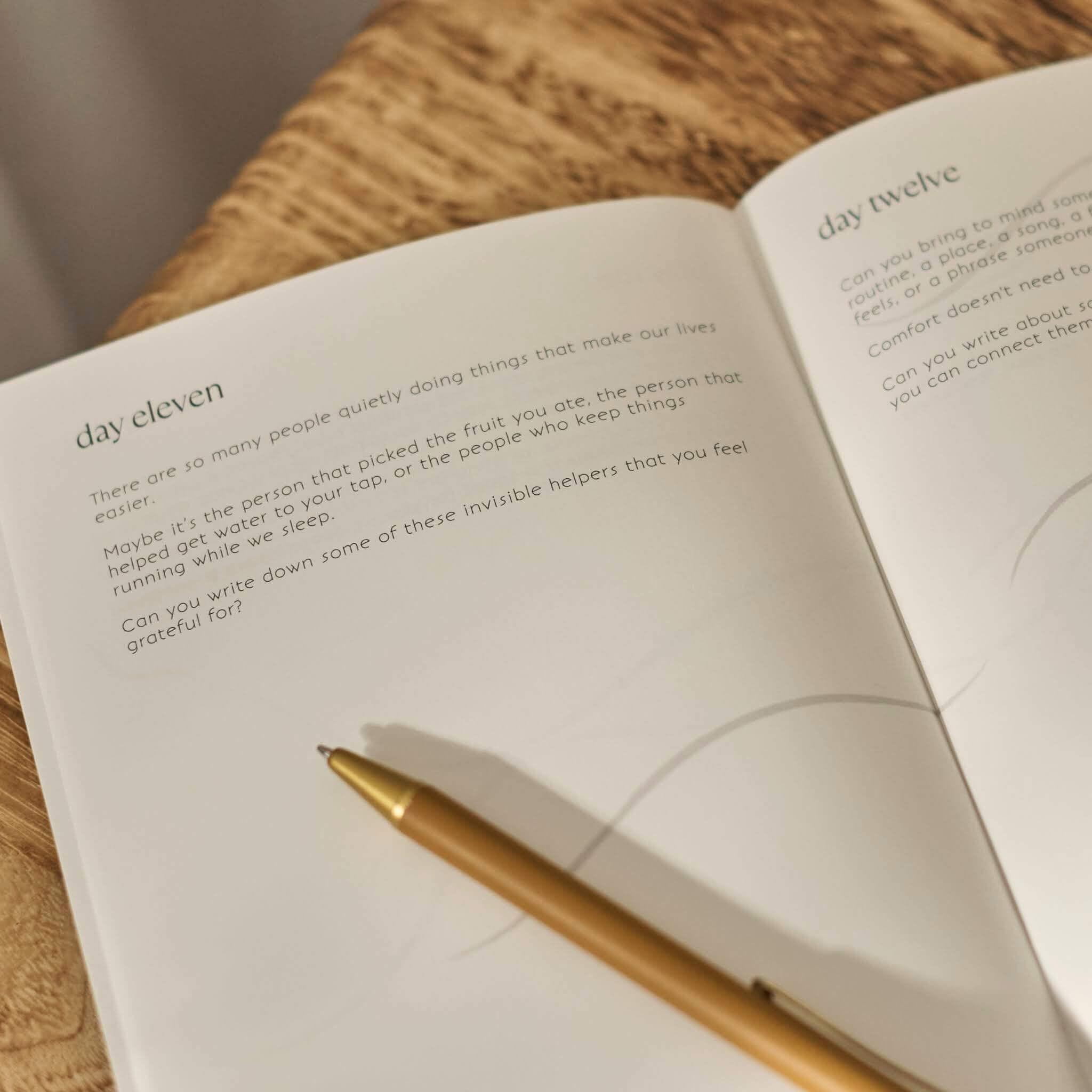
The Give Yourself Kindness Journal
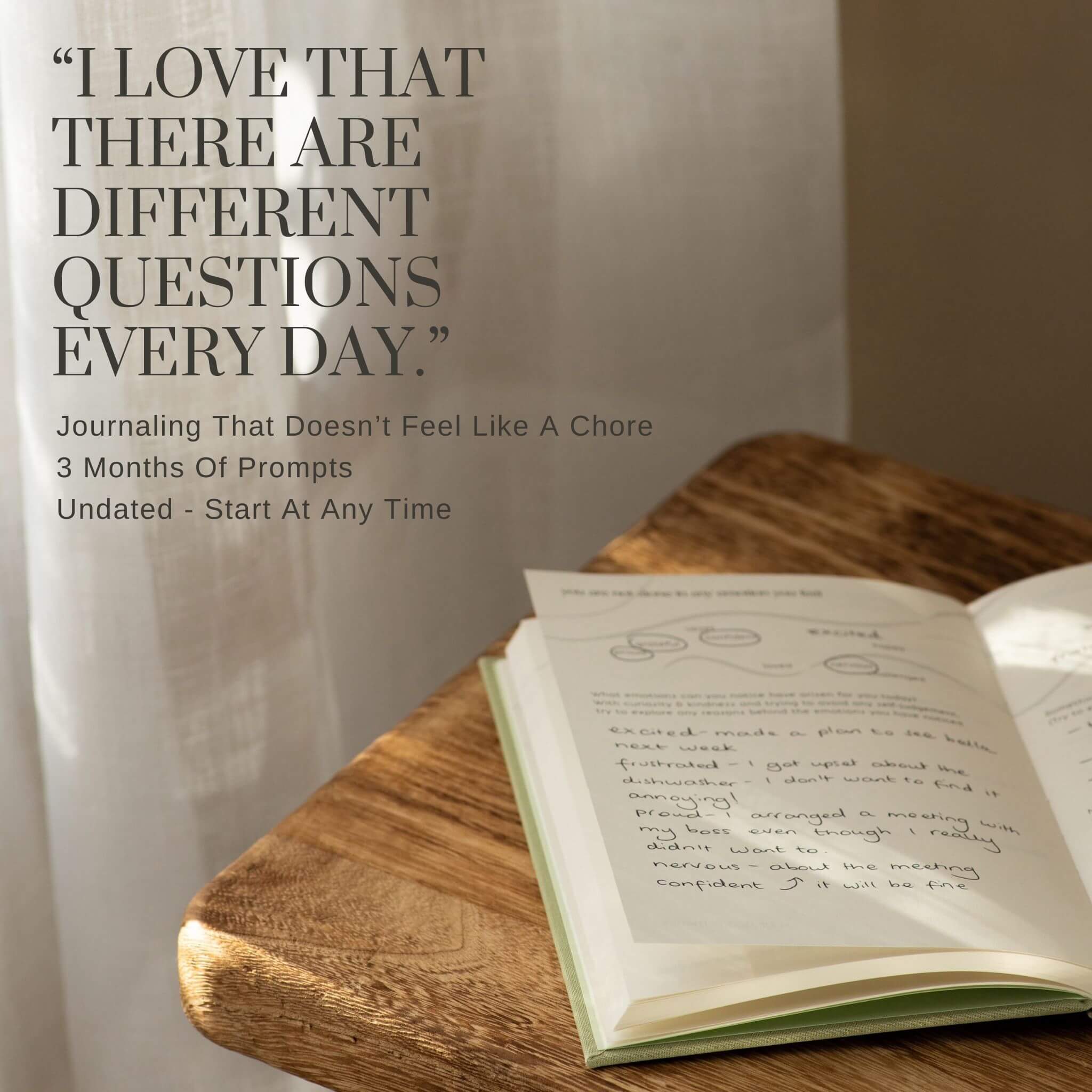
Three months of gentle prompts, and every page is different. Space on each page to notice how you're feeling, with no right or wrong answer. Undated, so you can begin any day and pick it back up whenever you're ready.
A journal can be a gentle companion alongside professional support, never a replacement for it.
What independent experts have said about it

Dr Chris Germer, PhD
Clinical Psychologist, Harvard Medical School | Co-developer of the Mindful Self-Compassion (MSC) programme, taught to 250,000+ people worldwide
"A warm invitation to make friends with your emotions and yourself!"See Dr Germer's review alongside the rest →

Carrie Pollard, MSW RSW
Experienced Psychotherapist
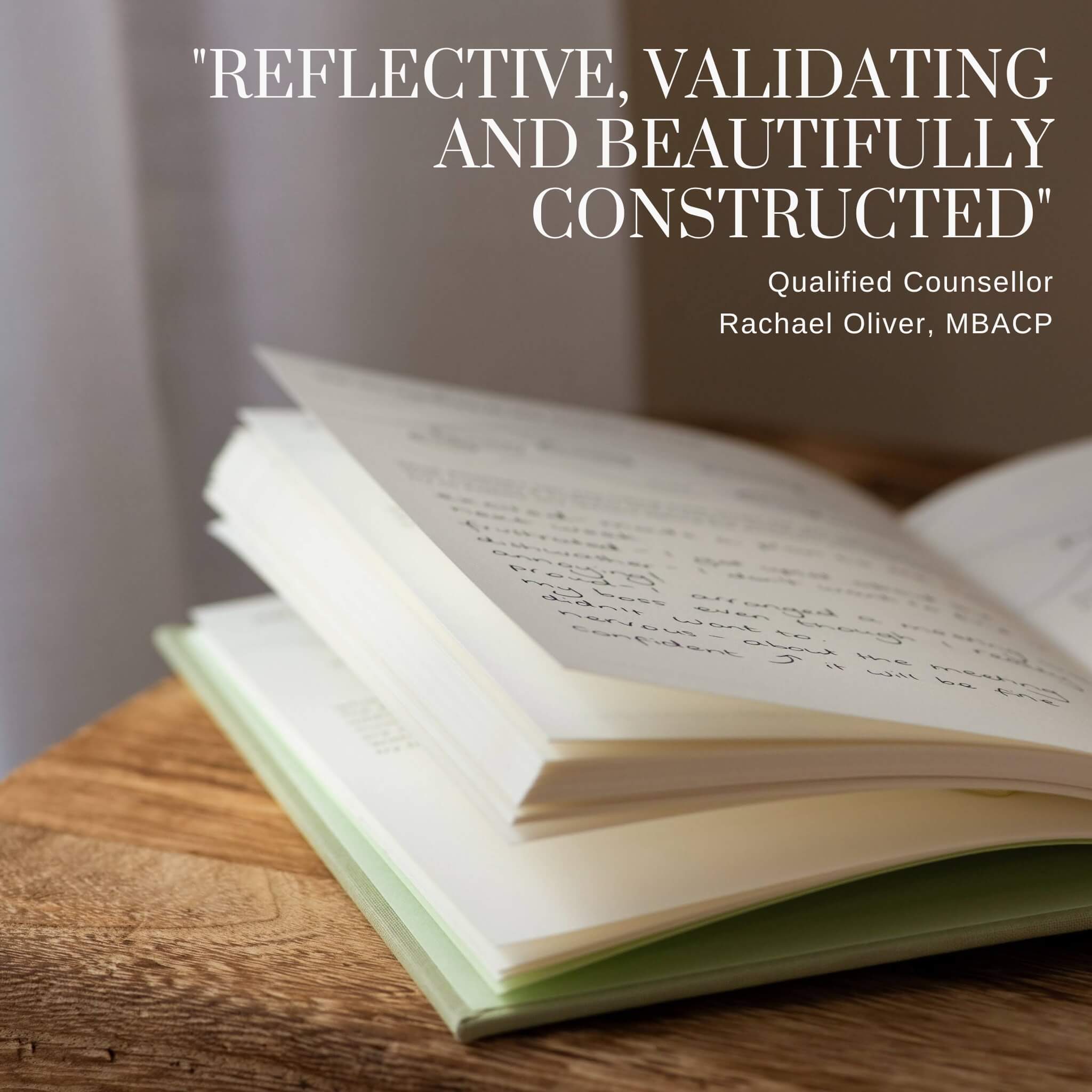
"By far my favourite guided journal that I've used!"Read all professional reviews from therapists and clinical psychologists →
Common questions
What does it mean to be kinder to yourself?
Being kinder to yourself means responding to your own struggles the way you would respond to a friend's — with understanding rather than criticism. It has three parts: speaking to yourself with warmth instead of judgement, recognising that difficulty is part of being human rather than proof you are uniquely flawed, and being aware of what you feel without being overwhelmed by it. It is not positive thinking, and it does not mean lowering your standards.
Why is it so hard for me to be kind to myself?
For most people it is hard because they believe self-criticism is what keeps them functioning. Clinical psychologist Dr Bianca Nardini finds that when clients imagine their inner critic disappearing, the common fear is that they would let themselves off the hook or lower their standards. There is also a simpler reason: if you have spoken to yourself harshly for years, the kind voice is unfamiliar, and unfamiliar tends to feel false before it feels true.
What if being kind to myself feels fake?
Feeling fake is the most common first reaction and it does not mean you are doing it wrong. It usually means the kind voice is unfamiliar rather than untrue. Two things tend to help. First, use words you can actually believe — "this is hard right now" rather than "I love myself" — because statements far from what you currently believe can make you feel worse. Second, let the resistant part of you have a say instead of arguing it down. Clinical psychologist Dr Stan Steindl describes this ambivalence as a signal that something important is happening, not a problem to be solved.
Isn't being kind to yourself just an excuse?
No. Self-compassion involves taking responsibility, not avoiding it. It is very difficult to look clearly at something you did badly while you are also attacking yourself, which is why shame so often turns into defensiveness. As clinical psychologist Dr Annabelle Kyle Dortch puts it, self-criticism creates a nervous system and brain state that is not conducive to learning.
What is the difference between self-compassion and self-esteem?
Self-esteem is an evaluation of your worth, and it usually depends on doing well or comparing favourably with other people, which means it falls away exactly when you need it most. Self-compassion is not an evaluation at all — it is how you treat yourself when things go badly. Because it does not require you to be succeeding or above average, it tends to be more stable during failure and difficulty.
What do I say to myself when I've made a mistake?
Acknowledge what happened, allow the disappointment, and stop short of attacking yourself for it. A sentence that works for most people is: "That was a mistake, and I feel disappointed about it. Everyone makes mistakes — it's part of being human. What can I learn from this?" Notice that it does not pretend the mistake did not matter. It names the difficulty and then responds with understanding instead of cruelty.
How do I stop being so hard on myself at work?
Separate the standard from the tone. You can hold a high standard and still be decent about how you speak to yourself when you fall short of it. Harsh self-talk after a mistake at work tends to produce avoidance rather than improvement. A practical approach is to name one specific thing that genuinely went wrong and one specific thing you handled well at the end of a difficult day — and to write the second one down even though your critic will insist it does not count.
Is self-compassion the same as self-pity?
No, and Dr Kristin Neff and Dr Chris Germer draw the distinction clearly: "Compassion and pity are quite different. Pity involves looking down on someone and feeling sorry for them. Compassion says 'We've all been there.' Pity creates separation, and compassion creates connection." Self-pity tends to isolate you and emphasise how uniquely unfortunate you are. Self-compassion does the opposite — it connects your difficulty to everyone else's.
How long does it take to become kinder to yourself?
There is no fixed timeline. If you have spoken to yourself harshly for years, a kinder voice will not become your default in a fortnight — most people notice small shifts within a few weeks of regular practice, and find it becomes more automatic over months rather than days. Professor Willem Kuyken of the University of Oxford describes it as cultivation: "it takes time, like planting seeds and then taking care of them until they grow and mature in their own way and time."
Can you be too kind to yourself?
Kindness itself is not the risk, but it can be misused as avoidance. Dr Kristin Neff distinguishes the two: "Self-indulgence involves choosing short-term pleasure at the expense of long-term harm, and self-compassion always has its eyes on the prize: alleviating suffering." The useful test is not how a choice feels in the moment, because comfort and avoidance feel identical from the inside. It is whether the choice moves you towards something you care about or away from it.
What if I don't feel like I deserve kindness?
Self-compassion does not require you to first decide you deserve it. That is what makes it different from self-esteem, which does. You can offer yourself the same basic decency you would offer a stranger having a hard day without settling the question of whether you have earned it. If the feeling of not deserving kindness is persistent and strong, that is worth exploring with a therapist, because it often has a history behind it.
Do I need therapy to learn self-compassion?
No, and many people build it through practice, reading and writing on their own. But if your self-criticism is rooted in trauma, or if it is severe enough to affect your sleep, work or relationships, therapy will almost certainly get you further than self-help alone. Compassion-Focused Therapy was developed specifically for people whose difficulties are rooted in shame and self-criticism, and Mindful Self-Compassion is an eight-week programme taught internationally.
Continue reading
From the psychologists quoted here
- Why is self-compassion so hard?Dr Bianca Nardini, Clinical Psychologist
- The 10 common fears of self-compassionDr Chris Irons, Clinical Psychologist
- Working through ambivalence about self-compassionDr Stan Steindl, University of Queensland
- Self-compassion or self-indulgence?Dr Kristin Neff
- Self-compassion is not self-pityDr Kristin Neff and Dr Chris Germer
- How to stop beating yourself upDr Maria Tucknott, Clinical Psychologist
- Why self-compassion is more effective than self-criticismDr Annabelle Kyle Dortch, PsyD
Related guides