






Quick answer
Feeling terrible after a mistake at work is a threat response, not evidence about your character. Your body reacts to the fear of being judged in much the same way it reacts to physical danger — a racing heart, a tight chest, the same thirty seconds replaying at 3am. It is a common reaction, it is not a sign that something is wrong with you, and for most people it does settle.
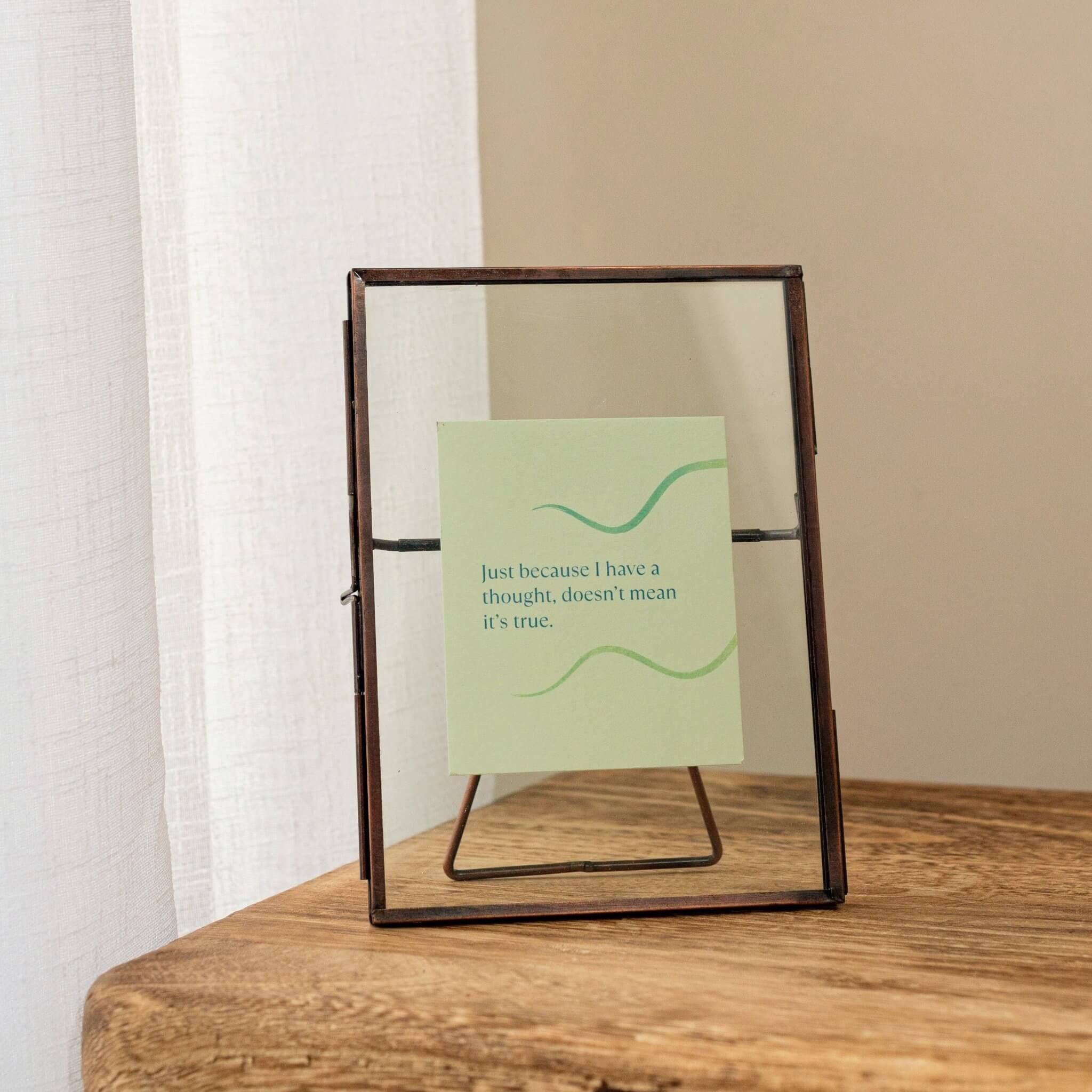
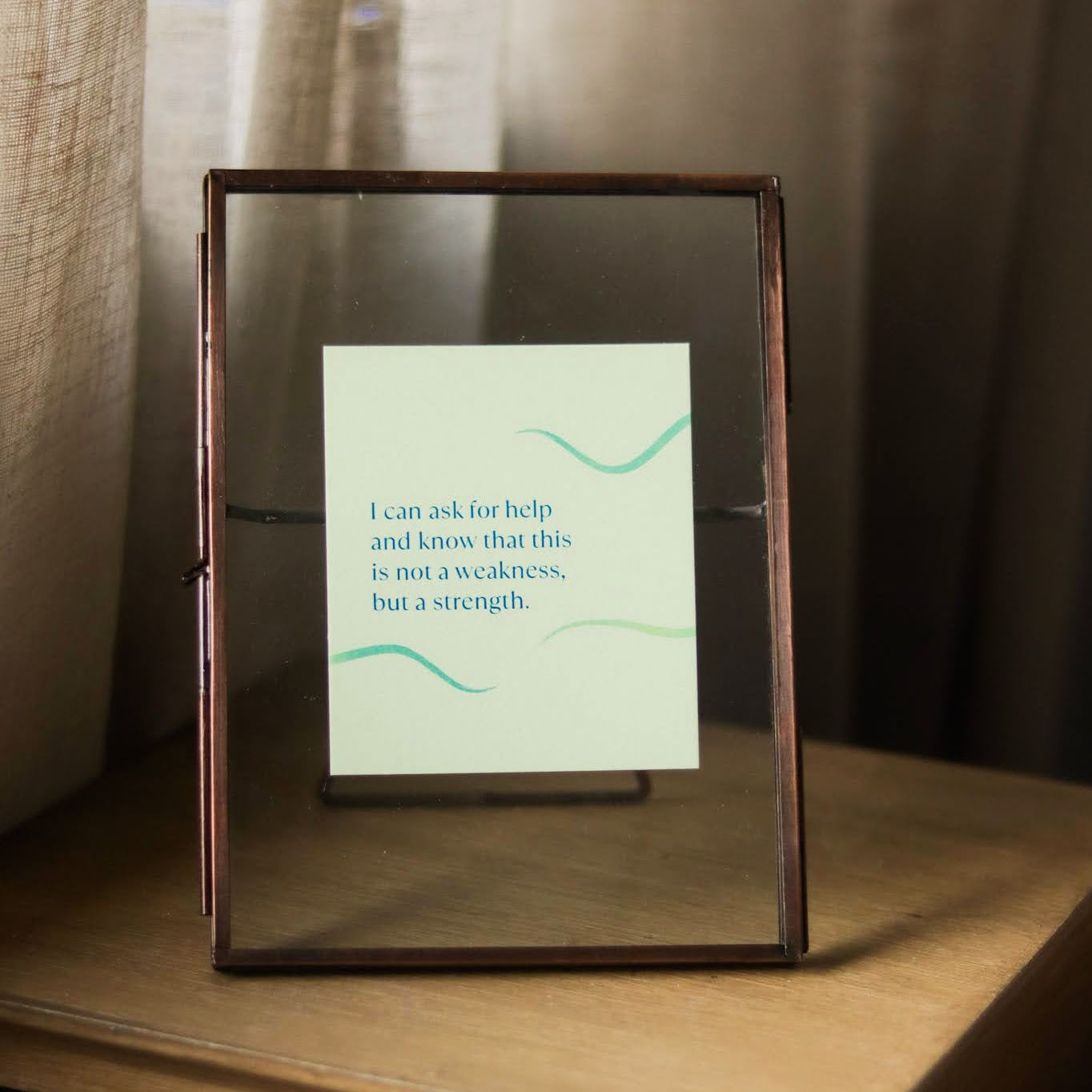
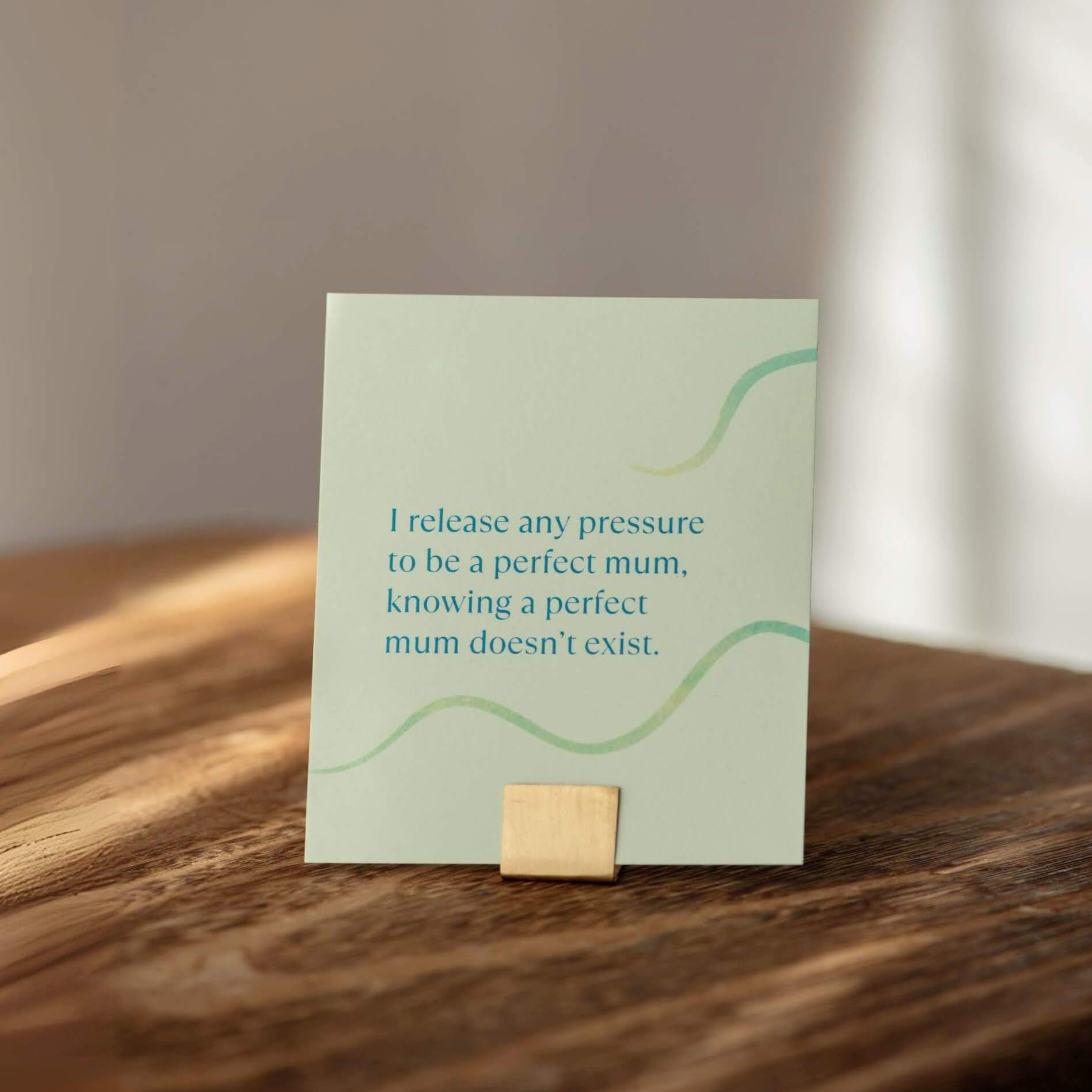
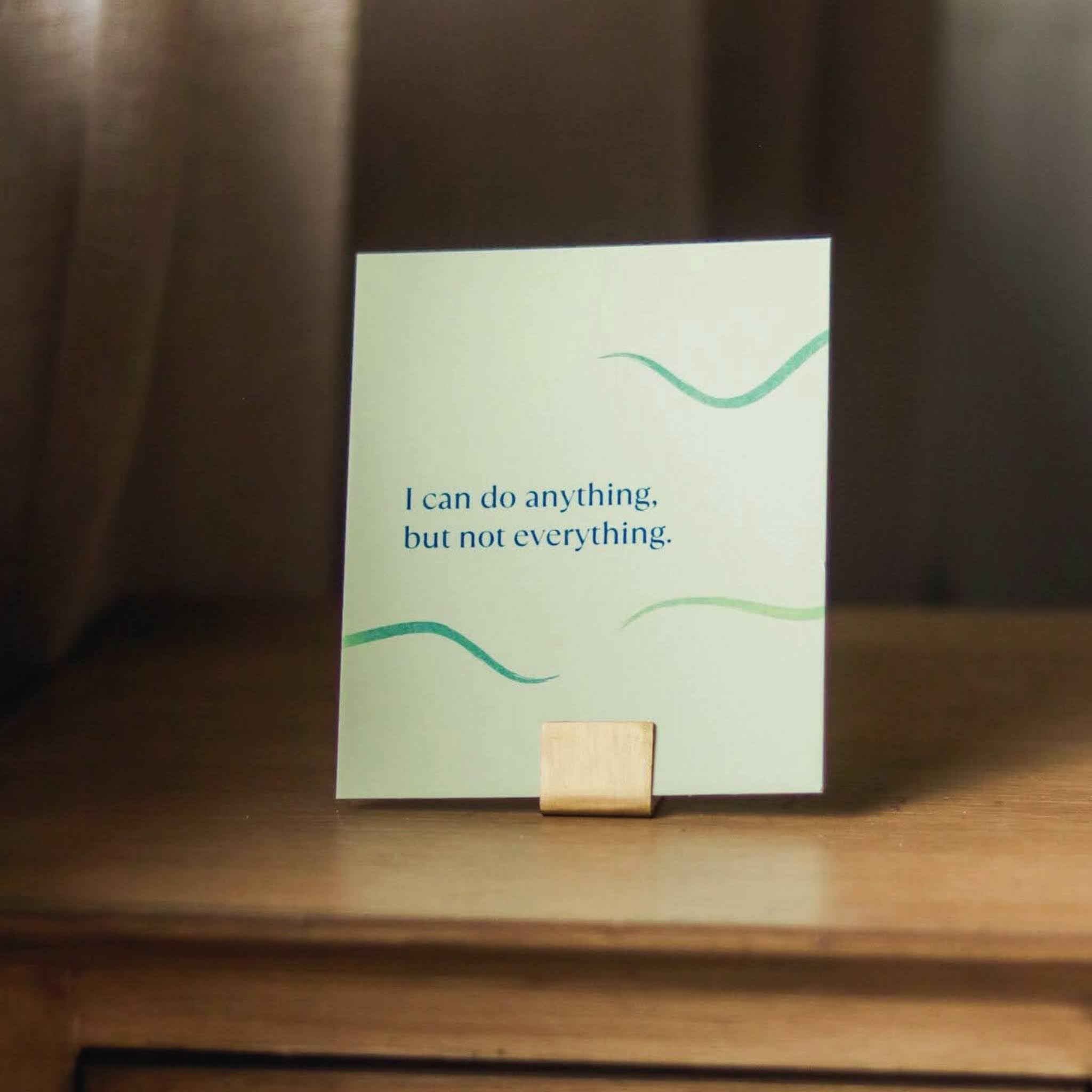
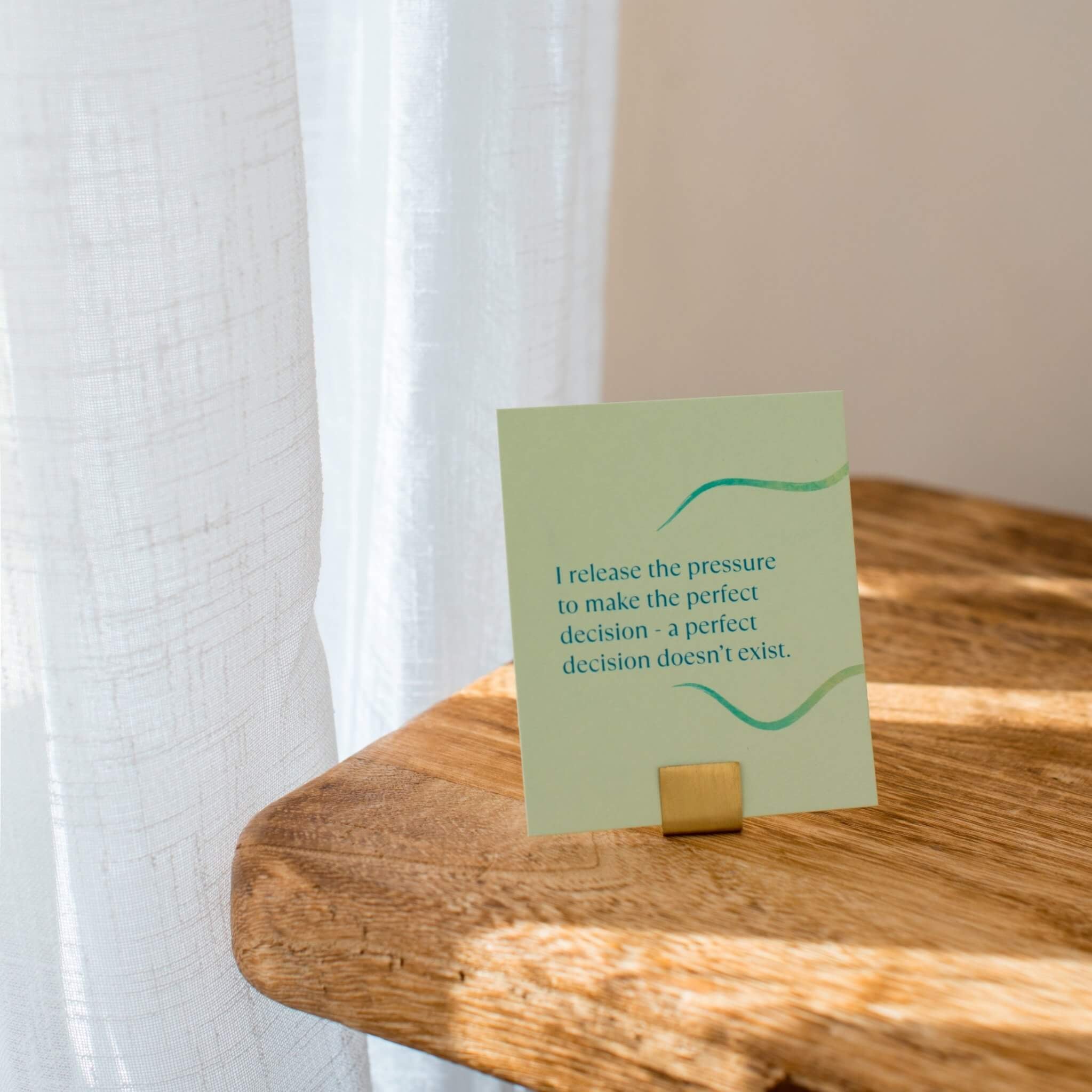
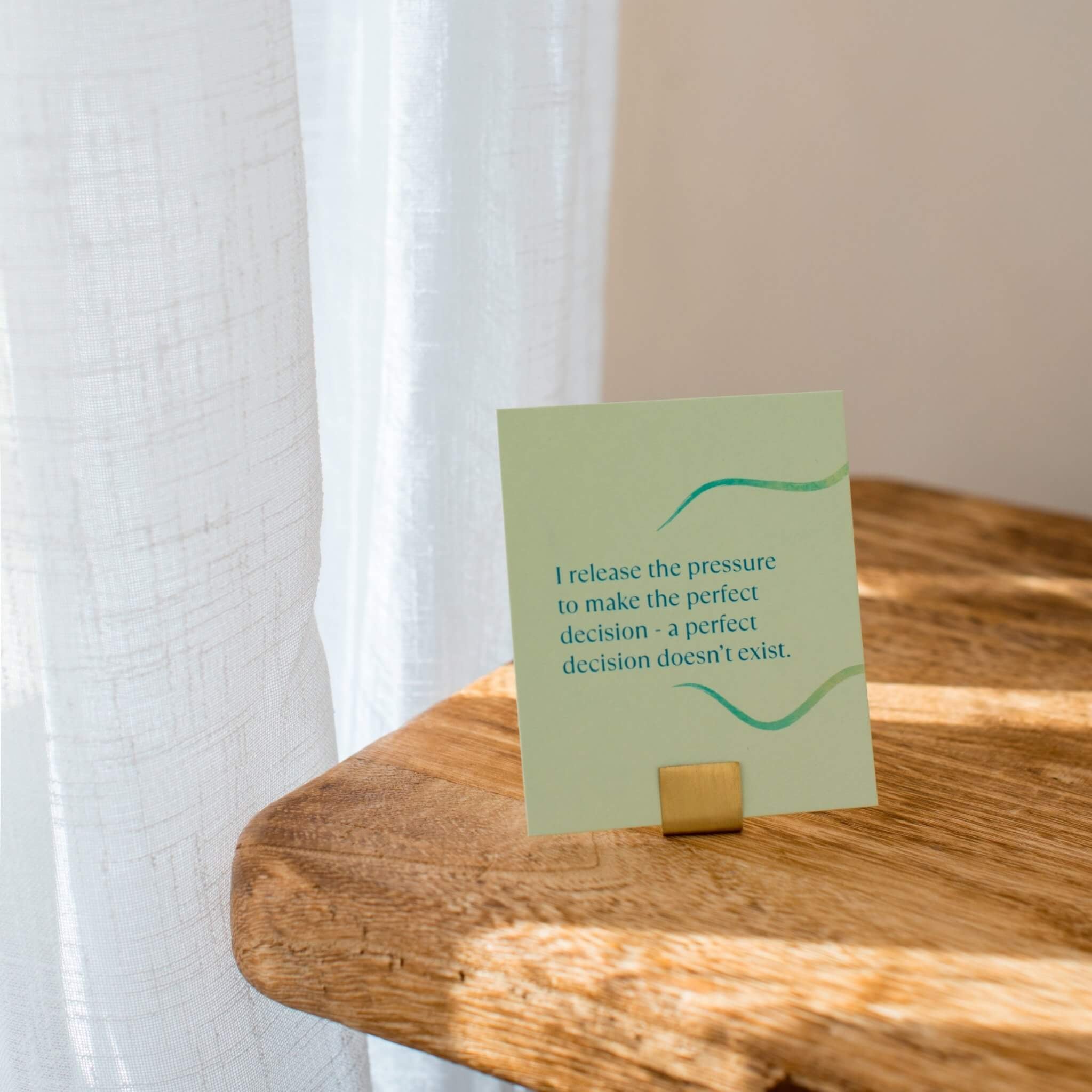
The most useful thing to do right now: say this to yourself, out loud if you can manage it — I made a mistake. That is something I did, not something I am. I am not the only person this has ever happened to.
Then write down one practical thing you can do about it tomorrow, however small. Your mind tends to keep replaying a problem partly because it is trying not to lose the thread. Putting the next step on paper gives it somewhere to put that down.
One honest note: if that felt hollow or you did not believe a word of it, you have not done it wrong. That is a very ordinary first reaction, and there is a whole section below on the feeling that this mistake says something about who you are — which, from what people tell me, is the part that actually hurts.
If you have searched for this, something has happened at work and you are carrying it. That is a heavy thing to be carrying, and wanting to feel better is a reasonable and kind thing to want. You are in the right place, and you can read this in any order — including starting with the words if that is what you need first.
About this guide. I am Rachel Smith, a qualified meditation teacher (DipBSoM, British School of Meditation, distinction). I am not a psychologist or a therapist. Everything clinical on this page comes from named psychologists, with their credentials and a link to the full article they wrote for this site.
Why it feels this physically bad
Your body is reacting to the fear of being judged the way it would react to physical danger, because the same ancient alarm system handles both. That is why a mistake at work can produce a racing heart, a tight chest, a sick stomach and no appetite. Those are alarm symptoms, not proof that the situation is as catastrophic as it feels.
This is not a metaphor. It is the mechanism that Compassion Focused Therapy describes, and Dr Maria Tucknott wrote about it for this site using this exact scenario.

Dr Maria Tucknott
Clinical Psychologist specialising in trauma, anxiety and depression · Founder of Tucknott Psychology
“When we make a mistake at work, our threat system might leap in with critical thoughts like: ‘You always mess things up,’ or ‘Everyone’s going to think you’re incompetent.’ The body responds as if a real threat is present (e.g. a racing heart, a tight chest and sweating). The inner critic, then, is not simply being ‘mean’ — it’s trying (clumsily) to protect us.”Read Dr Tucknott’s full article: How to stop beating yourself up →
Two things follow from that, and both of them matter tonight.
The first is that the intensity of what you are feeling is not a measurement of how bad the mistake was. The alarm works on a better-safe-than-sorry principle. As Dr Tucknott puts it, it evolved so that a rustle in the bushes was treated as a predator rather than the wind — fast, automatic, and often out of proportion. A mistake in a spreadsheet can set off the same machinery as genuine danger.
The second is that the harsh voice in your head is not a neutral observer telling you the truth. It is part of the alarm. Dr Tucknott describes the inner critic as an over-the-top protector rather than an enemy, and notes that this system “dominates our attention, magnifying the one rude comment over the ten kind ones.” That is why one error can blot out several good years.
The three systems, briefly
CFT describes three emotion regulation systems. Knowing which one is currently running can make the feeling less bewildering.
Many people have an overactive threat system and an underdeveloped soothing one. That is not a personal failing; it is a very common shape. And it is why the words further down this page are worth trying even when they feel unconvincing — speaking to yourself gently is one of the few things that reaches the soothing system directly.
Why you keep replaying it
Replaying a mistake is your mind trying to solve something it has categorised as still dangerous. It reruns the scene looking for the version where you caught it in time. Because there is no such version, the loop does not resolve on its own — which is why it tends to be worst when there is nothing else to occupy you, at night or at the weekend.
Things people often notice in the first day or two, which are all common:
- Waking early, or waking with it already in your head before you have remembered why
- Not being able to eat, or eating without noticing
- Replaying the same few seconds over and over, with slight variations
- Rehearsing conversations that have not happened yet
- Rereading the email, the message, the file — hoping it will say something different
- Crying, or feeling close to it, at a size that seems out of proportion to you
- Wanting to hide, call in sick, or leave the job entirely
None of these mean you are overreacting or being unprofessional. They are what a threat response looks like from the inside.
One thing that might take the edge off in the next two minutes. Dr Tucknott suggests compassionate breathing: a few slow breaths, imagining tension leaving on each out-breath and kindness arriving on each in-breath, saying to yourself something like I am here for you or it is okay to feel this way. Two to five minutes is enough. It will not fix the situation at work. It might make your body less certain that you are in danger, which is the thing making everything else harder to think about.
If it feels like this makes you a terrible person
A mistake is something you did. It is not a verdict on who you are, even when it very much feels like one. That slide — from I did a bad thing to I am a bad person — is the part that hurts most, and it is also the part that is least accurate.
It is a real and well-described distinction. Therapist Clare Karasik, MSW RSW, who has spent over ten years helping clients move out of fear-based thinking, sets it out in her article for this site: guilt says I did something bad, and tends to move you towards putting it right. Shame says I am bad, and makes you want to hide and disappear. Her full article is here.
That distinction is useful because the two need completely different things. Guilt is workable. It points at a repair — a conversation, a correction, a changed process. Shame does not point anywhere. It just makes you smaller and less able to do the repair that guilt was pointing at.
I am incompetent.
Everyone can see what I really am now.
I have ruined this and I have ruined how they see me.
I should not be trusted with anything.
I got this wrong and I do not feel good about it.
I want to put it right.
I need to tell someone and then fix what I can.
I would like to not do this again.
If you read the left-hand column and recognised yourself, that is not a diagnosis and it does not mean anything has gone wrong with you. It is a very common place to land after a mistake, particularly if the stakes at work feel high. It might help to know that the right-hand column is not a nicer lie. It is the more accurate description of what actually happened.
And on feeling like the only one
You are not the only person this has happened to, and the sense of being uniquely bad at your job is one of the most reliable distortions this feeling produces. Shame is isolating by design — it tells you to hide, which means you never find out how ordinary this is.
I want to be careful not to tell you that everyone makes mistakes as though that settles it, because when people say that to you it can feel like being brushed off. So here is something more specific instead. When I looked at where people ask this question publicly — forums, advice columns, question sites — the same sentences appear again and again. People describing a spiral of terror and self-recrimination. People who put it to rest at midnight and woke at six with it already running. People saying, in almost identical words, that they cannot comfort themselves with the fact that everyone makes mistakes.
Those people are not all incompetent. They are colleagues, and managers, and people three grades above you, writing anonymously at two in the morning. The hiding is the reason it feels like it is only you.
Dr Maria Tucknott
Clinical Psychologist specialising in trauma, anxiety and depression · Founder of Tucknott Psychology
“It’s all too common: the relentless inner voice that tells you you’re not good enough, that you messed up again, that everyone else has it together except you. For many people, this internal self-criticism becomes an ingrained habit, driving anxiety, shame, and even depression. If this sounds familiar, you’re not alone and more importantly, it’s not your fault.”Read the full article: How to stop beating yourself up →
I will tell you my own version of this, briefly, in case it is useful.
For years I believed my harsh inner voice was the thing keeping me functioning. That if I stopped being hard on myself I would get sloppy, and the criticism was the price of being any good. It took my own experience of Compassion-Focused Therapy to work out that it was not doing what I thought it was doing. It was not making me careful. It was making me frightened, and frightened is a bad state to think clearly in.
That is why I built what I built, and it is why this page exists. Not because I have this permanently sorted — I do not — but because nobody handed me the words when I needed them, and I would rather you did not have to find them alone at 3am.
What to say to yourself tonight
Talking to yourself kindly is good advice that is very hard to use, because in the moment you cannot think of the sentence. So here are the sentences, sorted by when you are likely to need them. Read the left-hand column, notice which ones you recognise, then try the right-hand version in those exact words. You can borrow the wording until your own arrives.
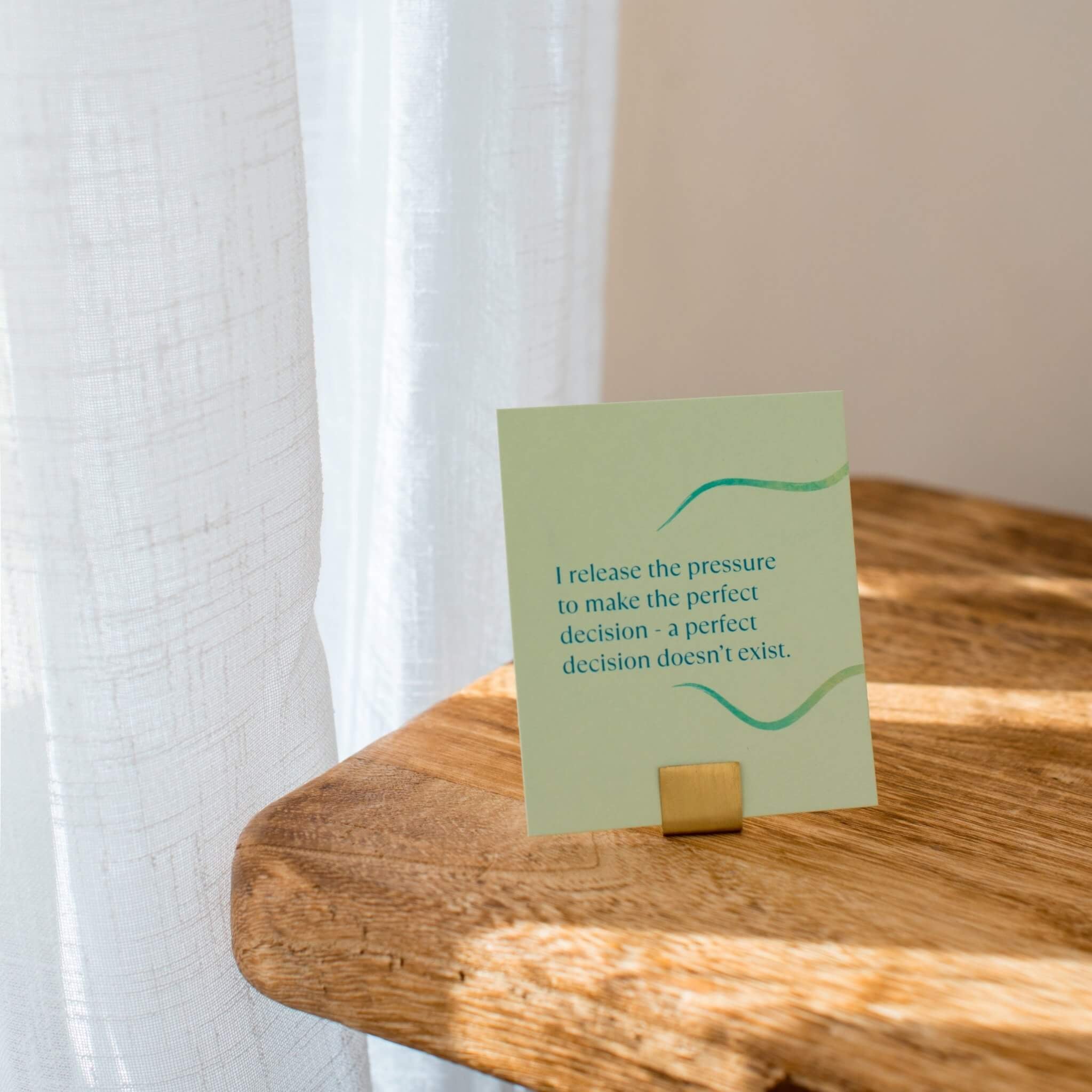
Notice what the right-hand column is not doing. It is not pretending things are fine. It is not telling you the mistake did not matter, and it does not ask you to feel positive about something that went wrong. It names the difficulty honestly and then responds to it with understanding instead of attack. That difference is the whole thing.
If saying these felt awkward or untrue, that is expected. A kind voice tends to feel unfamiliar before it feels believable, and unfamiliar often registers as fake. Try the one you disbelieve least, rather than the one that sounds nicest.
How to forgive yourself for it
Self-forgiveness is not deciding the mistake was fine. It is making peace with something you still do not approve of, so that you can stop paying for it every day. That distinction is the reason forgiveness is possible even when the mistake genuinely mattered — and it is why waiting until you feel you deserve it does not work.
The clearest framework I know for this comes from Dr Frederic Luskin, who has been teaching at Stanford University for thirty years and directs the Stanford University Forgiveness Projects. He wrote his nine steps for this site.

Dr Frederic Luskin, PhD
Psychologist, teaching at Stanford University for 30 years · Director of the Stanford University Forgiveness Projects · Author of Forgive for Good · One of the world’s recognised authorities on forgiveness, of both self and others
“Forgiveness means yeah, you accept the fact that you don’t think this was right, and then you say at some level ‘so what?’ I don’t think it’s right — things that I don’t think are right happen all the time. This is not the first time that’s ever happened and it’s not going to be the last time. So how do I now make peace with something that I don’t think is right? That’s the essence of forgiveness and why it’s challenging.”Read Dr Luskin’s full article: 9 steps to forgiveness →
A note on how I am using this. Dr Luskin wrote these steps about grievances in general, and he teaches forgiveness of yourself as well as of other people. The steps below are his; the lines in green are my suggestion of how each one might look when the person you are forgiving is you. His full article is worth reading in his own words.
The steps, applied to yourself
1. Know how you feel
Know exactly how you feel about what happened and be able to articulate what about the situation is not OK. Then tell a trusted couple of people about your experience.
Write down, plainly, what you actually did and what you did not do. Vagueness keeps shame alive; specifics tend to shrink it. Then tell one person you trust — not to be reassured, but because saying it out loud to someone who does not recoil is often the moment it stops being unspeakable.2. Make the choice to heal
Make a commitment to yourself to do what you have to do to feel better. In Dr Luskin’s words: “Forgiveness is for you and not for anyone else.”
This is the step people skip, because feeling better can seem like something you have not earned yet. You are not required to suffer for a set period first. Deciding to stop punishing yourself is allowed to be a decision rather than a reward.3. Understand what forgiveness means
Forgiveness does not necessarily mean reconciliation or condoning the action. What you are after is to find peace. Dr Luskin defines it as the “peace and understanding that come from blaming that which has hurt you less, taking the life experience less personally, and changing your grievance story.”
Forgiving yourself does not mean deciding it did not matter, and it does not mean you would do the same again. It means you stop treating yourself as the standing accused.4. Get real about your pain
Recognise that your primary distress is coming from the hurt feelings, thoughts and physical upset you are suffering now — not from what happened two minutes, or ten years, ago.
The mistake happened once. The replaying is happening hundreds of times, and that is where most of the actual pain is living now. Naming which one you are dealing with can make the second one easier to interrupt.5. Practise PERT
At the moment you feel upset, use a simple stress management technique to soothe your body’s fight or flight response.
This is the one to use when it hits you in the corridor, or at 3am. It takes under a minute. The full instructions are just below.6. Let go of impossible rules
Recognise the “unenforceable rules” you have for how you or other people must behave. You can hope for and work towards things without demanding them.
A very common unenforceable rule at work is: I must never make a mistake that other people notice. Nobody can keep that rule. Holding it does not make you more careful; it just guarantees that every ordinary error arrives as a personal catastrophe.7. Find a new path forward
Put your energy into looking for another way to get your positive goals met. Instead of mentally replaying the hurt, seek out new ways to get what you want.
If what you want is to be someone whose work is dependable, replaying the error does not move you towards that and a changed checklist does. Ask what would have caught this, and build that thing.8. Live your best life
Remember that a life well lived is the best response. Look for the love, beauty and kindness around you rather than focusing on wounded feelings. Forgiveness is about reclaiming your personal power.
In practice this can be very small at first: eating properly, going outside, not cancelling the thing you had planned. Not as a reward for having recovered, but as part of how you recover.9. Rewrite your story
Amend your grievance story so it reminds you of the heroic choice to forgive. The story moves from victim to hero as you move to forgiveness.
Right now the story is probably I am the person who did this. In time it can become I am the person who made a mistake, told the truth about it, and put right what could be put right. That is a better story and it is also a truer one.PERT: the one-minute version, in Dr Luskin’s words
- Bring your attention fully to your stomach as you slowly draw in and out two deep breaths.
- As you inhale, allow the air to gently push your belly out.
- As you exhale, consciously relax your belly so that it feels soft.
- On the third full and deep inhalation, bring to your mind’s eye an image of someone you love, or of a beautiful scene in nature that fills you with awe and wonder.
Dr Luskin notes that the practice of forgiveness has been shown to reduce anger, hurt, depression and stress, and to lead to greater feelings of hope, peace, compassion and self-confidence. It is not a quick fix and he does not present it as one — but this particular minute is available to you tonight.
The questions going round your head
These are the ones people actually ask at this point. I have answered each one so it stands on its own, so you can read only the one you need.
Am I going to get fired over this?
For most ordinary mistakes, no — but I cannot tell you what will happen in your particular workplace, and I would not trust anyone who said they could. What I can say is that the certainty you are feeling right now is a symptom of the alarm response, not information about your employer.
A useful way to hold it: you are not required to act as though you have already been sacked. If a formal conversation happens, that is the point at which you deal with a formal conversation. Until then you are punishing yourself for something that has not occurred.
Should I tell my manager, and what do I actually say?
In almost every case, telling them yourself and early is better than being found out later — both for the outcome and for how you feel about yourself afterwards. Hiding it tends to extend the dread rather than end it, because you then have two things to worry about instead of one.
A structure that keeps it short: what happened, in one plain sentence. What the impact is, as far as you know. What you have already done. What you are proposing to do next. You do not need to perform remorse or explain your whole thought process. Clear and undefensive lands better than either excuses or self-flagellation.
How long am I going to feel like this?
There is no fixed timeline, and anyone who gives you one is guessing. What people commonly describe is that the sharpest part — the physical dread, the constant replaying — tends to ease over days rather than weeks, and often eases noticeably once the conversation you have been dreading has actually happened.
A more useful marker than the feeling disappearing is the gap between the thoughts getting longer, and you catching yourself sooner. That is what recovery tends to look like, rather than a morning where it has simply gone.
Is it normal to cry about a mistake at work?
Yes. Crying is a common response to a threat response, and it is not a measure of how big the mistake was or of how professional you are. It happens to people at every level of seniority, generally somewhere private, which is exactly why it looks like it only happens to you.
If you are somewhere you would rather not cry, the breathing practice further up this page is worth two minutes in a stairwell or a car. It is not about suppressing the feeling — it is about turning down the alarm enough to get through the next hour.
What if it actually was serious?
Then it was serious, and nothing on this page asks you to pretend otherwise. Self-compassion is not a way of downgrading what happened. It is the state you have to be in to face what happened clearly, because it is very hard to look honestly at something you did badly while you are also under attack from yourself.
If people were affected, the useful question is what repair is available — the apology, the correction, the change to how you work. Staying in self-punishment can feel like the moral option, but it does nothing for anyone who was affected, and it uses up the energy that the repair needs.
Nobody has said anything. Is that worse?
Silence is usually much less meaningful than it feels. In a threat state, no information gets filled in with the worst available interpretation, so an unanswered message reads as evidence when it is nearly always just a busy inbox.
If the not-knowing is what is keeping you awake, asking directly is often kinder to yourself than waiting. One line is enough: something along the lines of, I wanted to check whether you need anything further from me on this.
I have apologised. Why do I still want to apologise again?
Because the discomfort has not gone, and apologising is the only lever you can still reach. But repeated apologies tend to be about relieving your own distress rather than about the other person, and they can quietly ask the person you wronged to comfort you.
One clear apology, plus visible follow-through, does more than five. If the urge keeps returning, that is a signal to work on the feeling rather than to send another message.
What if this keeps happening?
Then it is worth looking, gently and without the prosecution, at whether something structural is going on — workload, unclear handovers, missing checks, exhaustion, a role that has quietly grown. Repeated mistakes are more often a system that is not working than a person who is not good enough.
Persistent difficulty concentrating or remembering can also have causes worth talking to a GP about. That is a more useful line of enquiry than concluding something about your character.
One thing worth saying plainly. If the feeling after this mistake has tipped into something that is not shifting — if you are not sleeping or eating for more than a few days, if dread is following you into the parts of life that have nothing to do with work, or if you are having thoughts of harming yourself — please talk to your GP or another health professional. That is not an overreaction and it is not a failure to cope. A work mistake can be the thing that surfaces something that was already heavy.
In the UK you can call the Samaritans free on 116 123, at any hour. If you are elsewhere, your local crisis line will be listed by Find a Helpline.
If you want something to write in
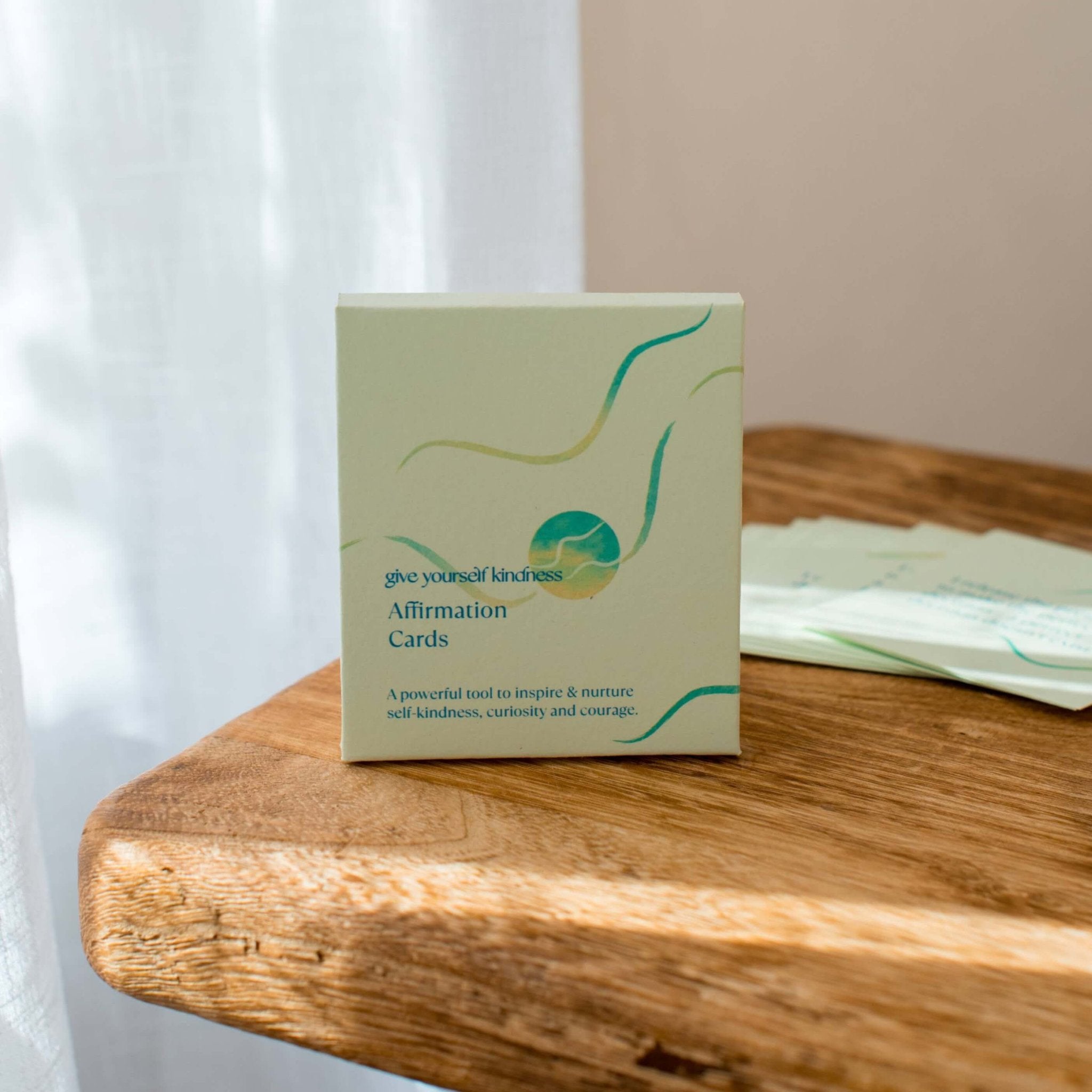
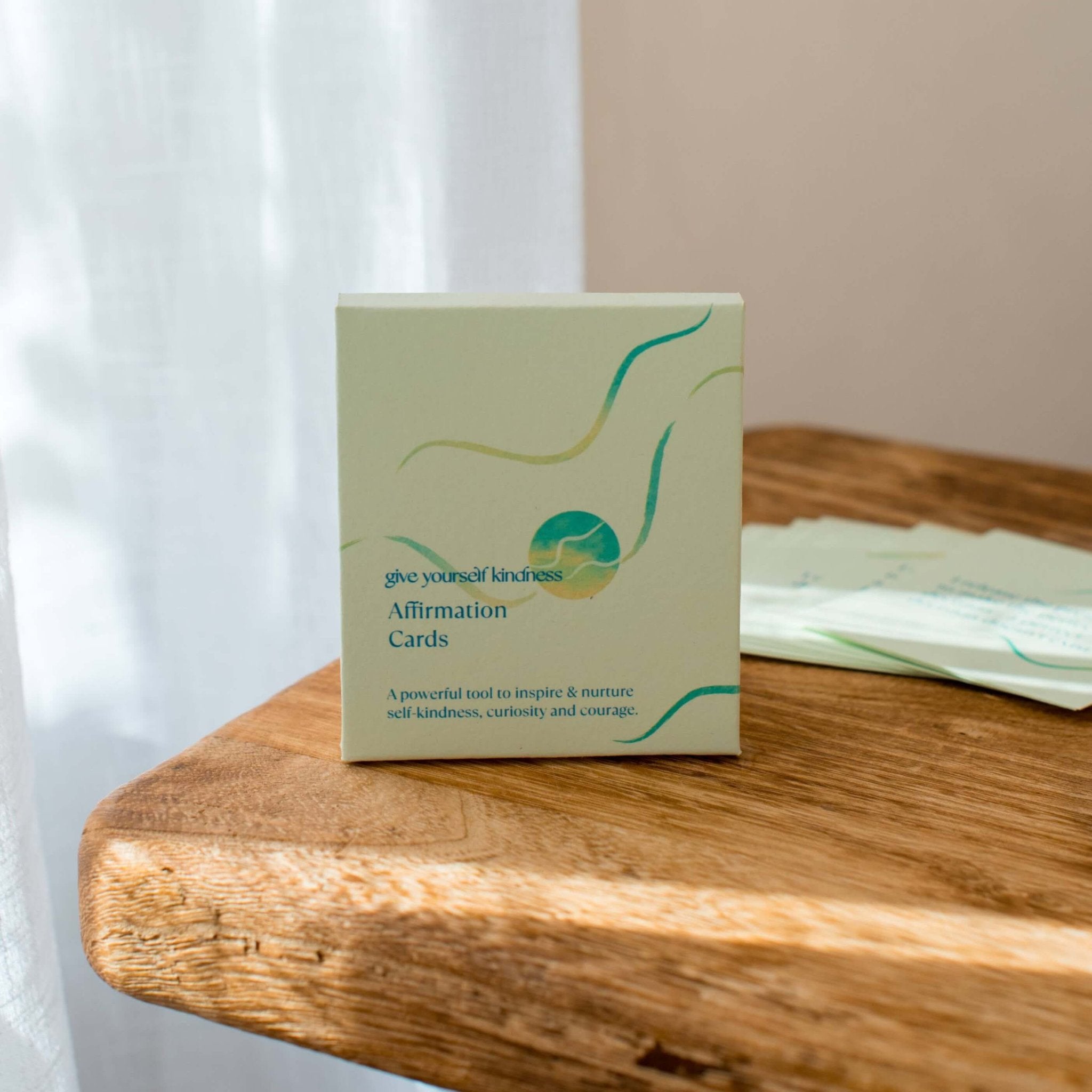
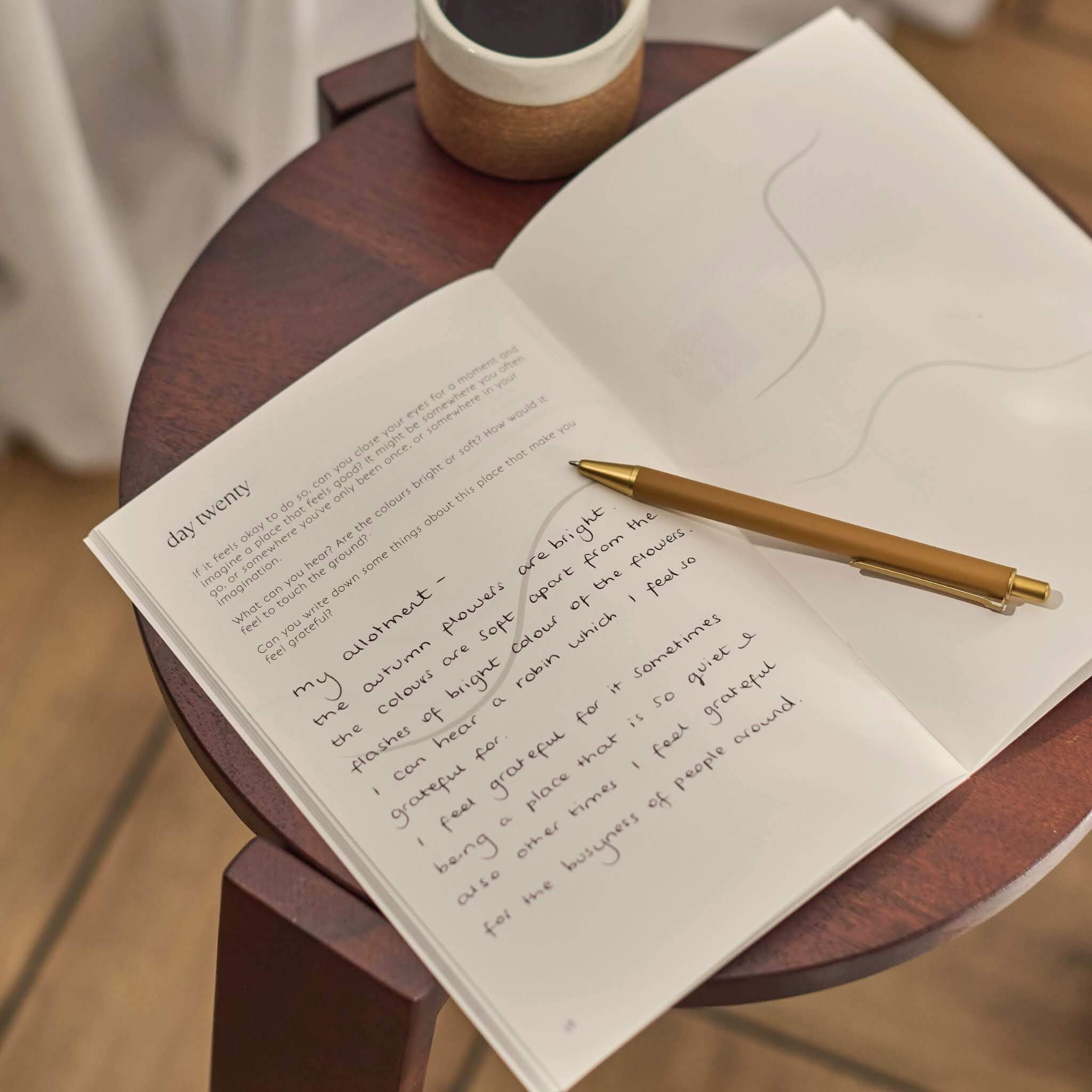
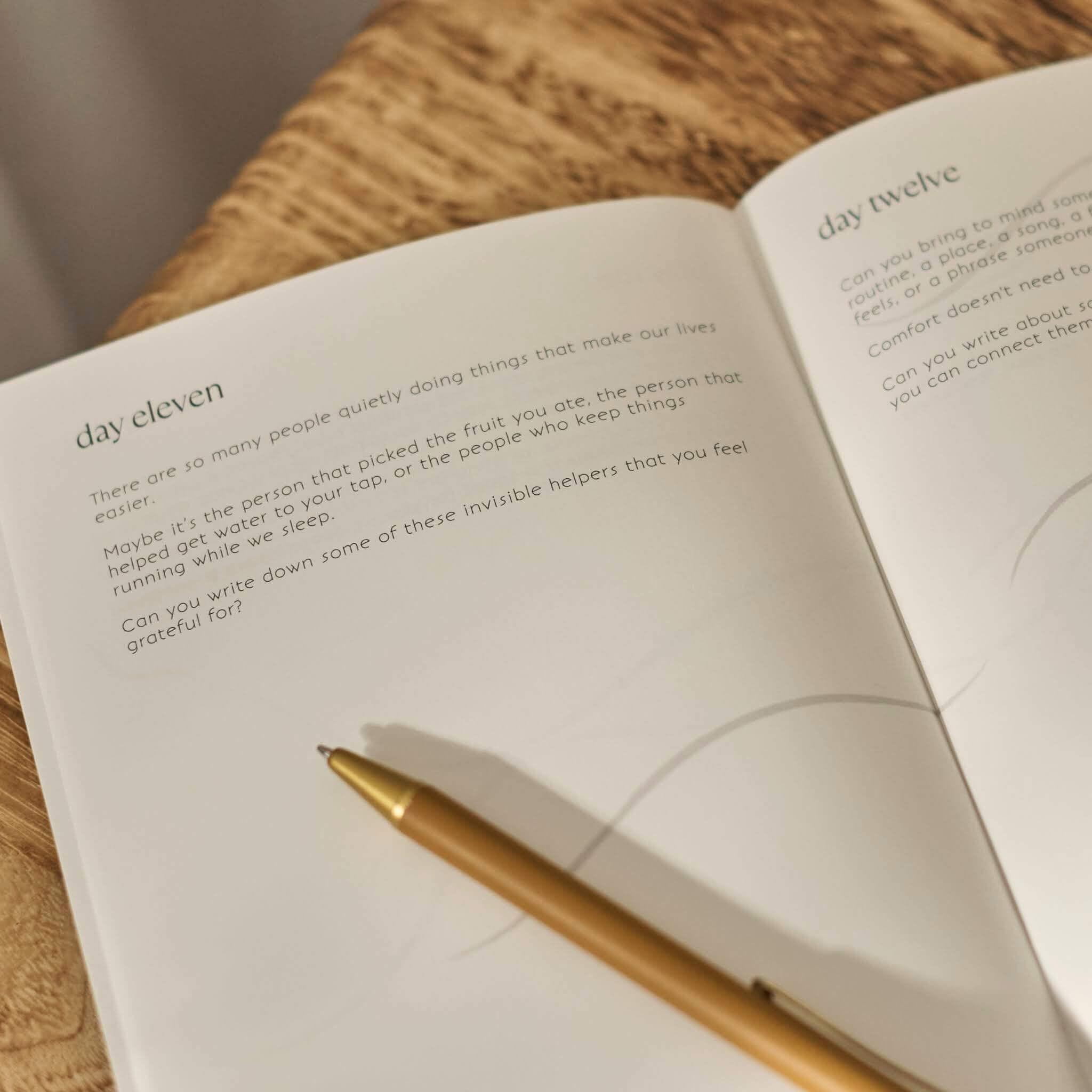
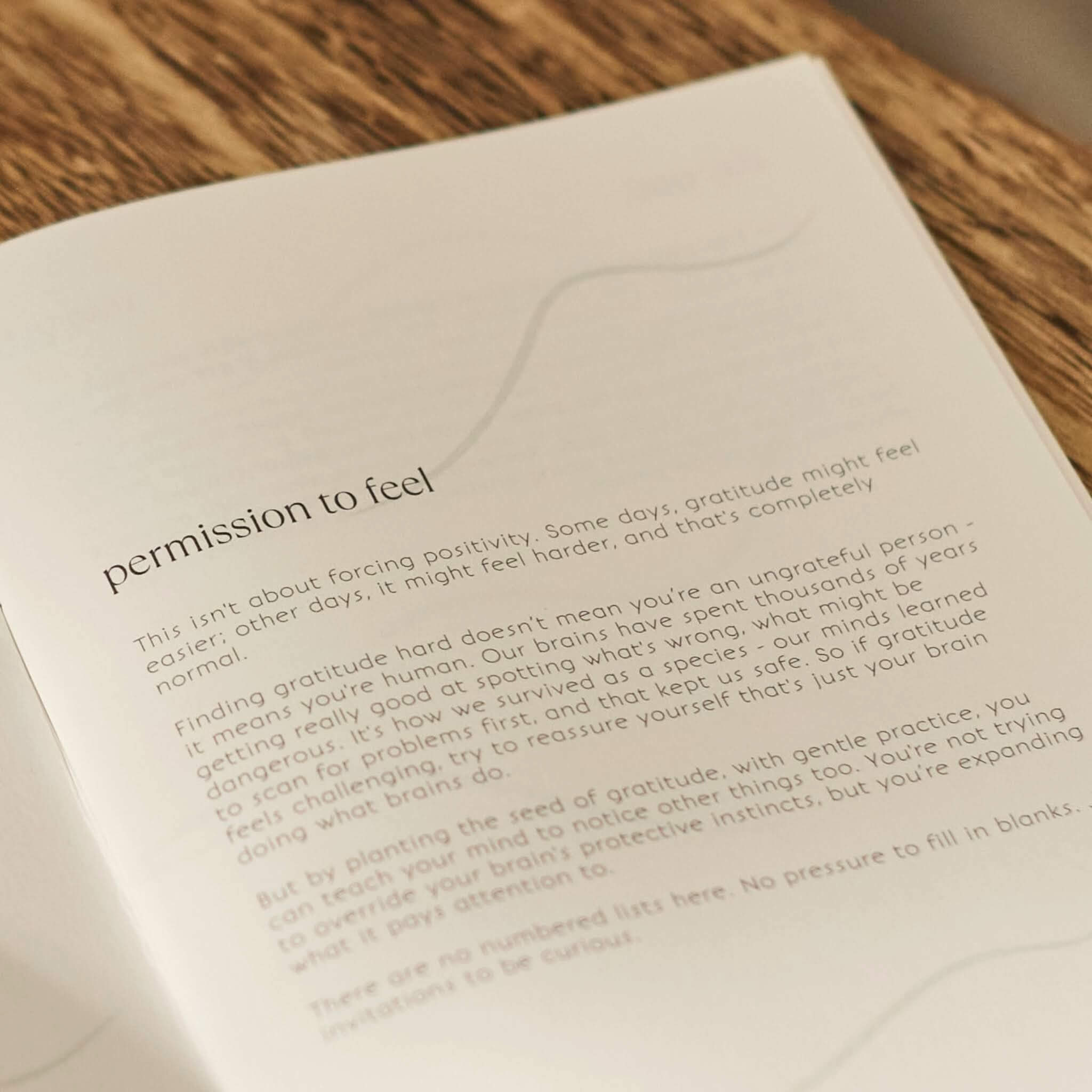
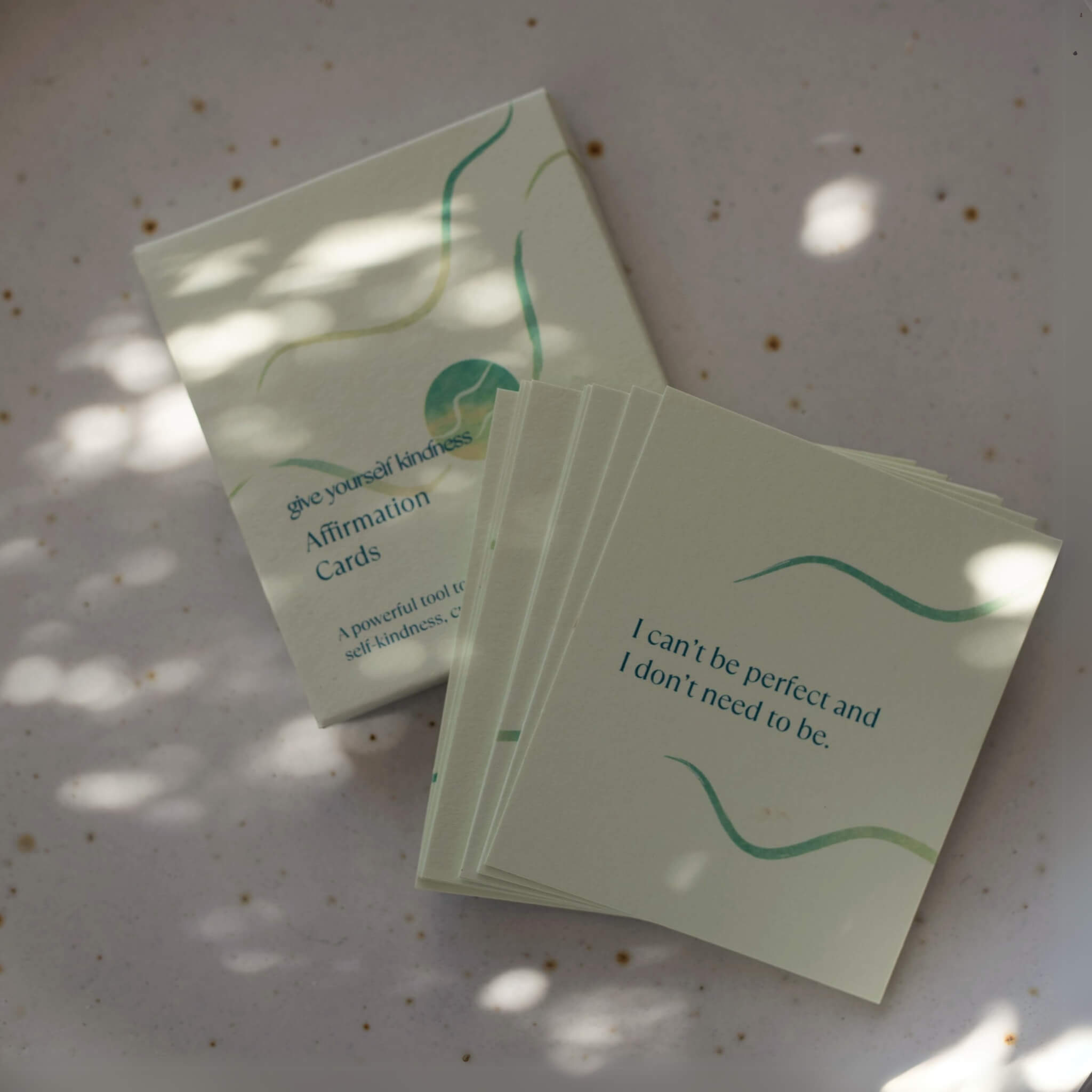
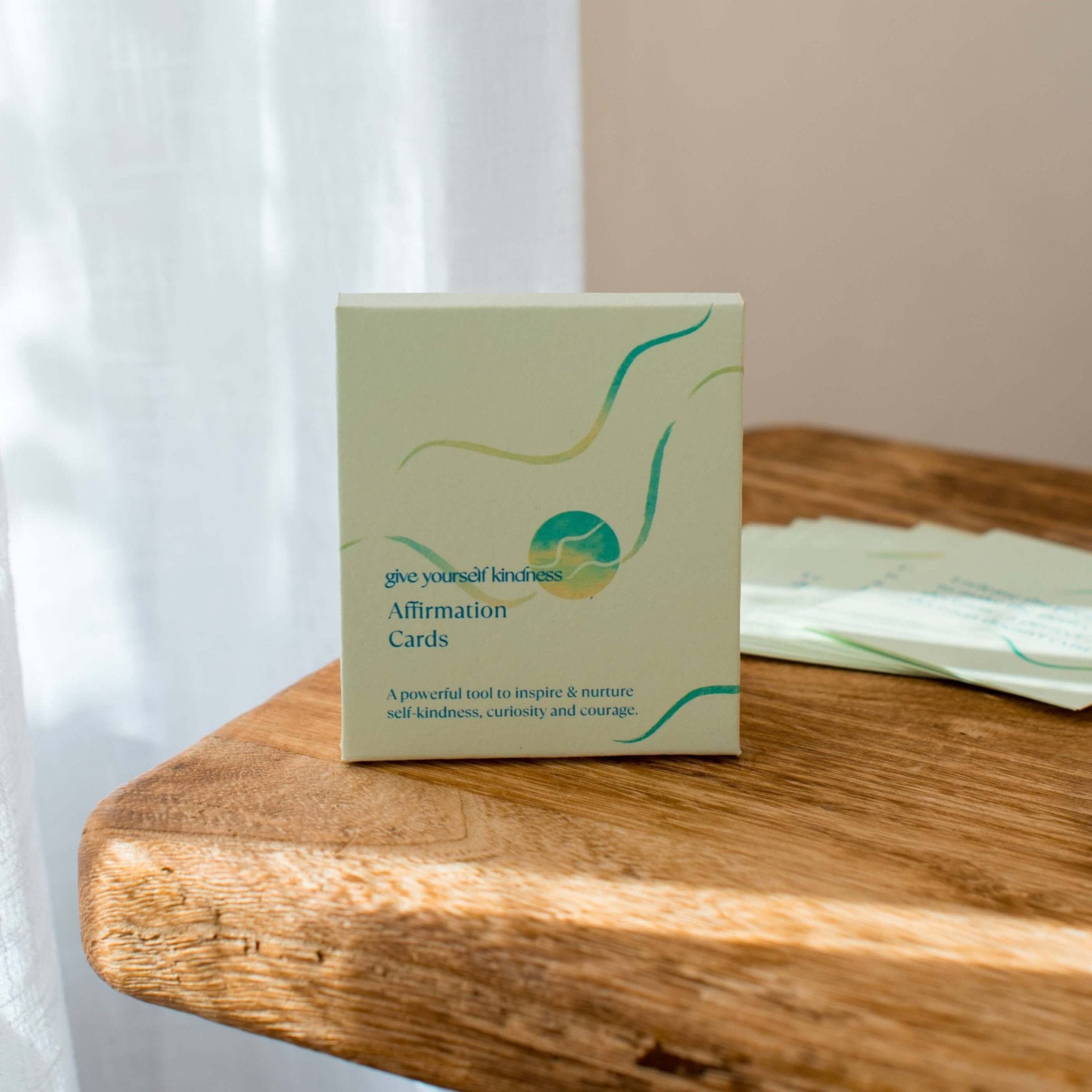
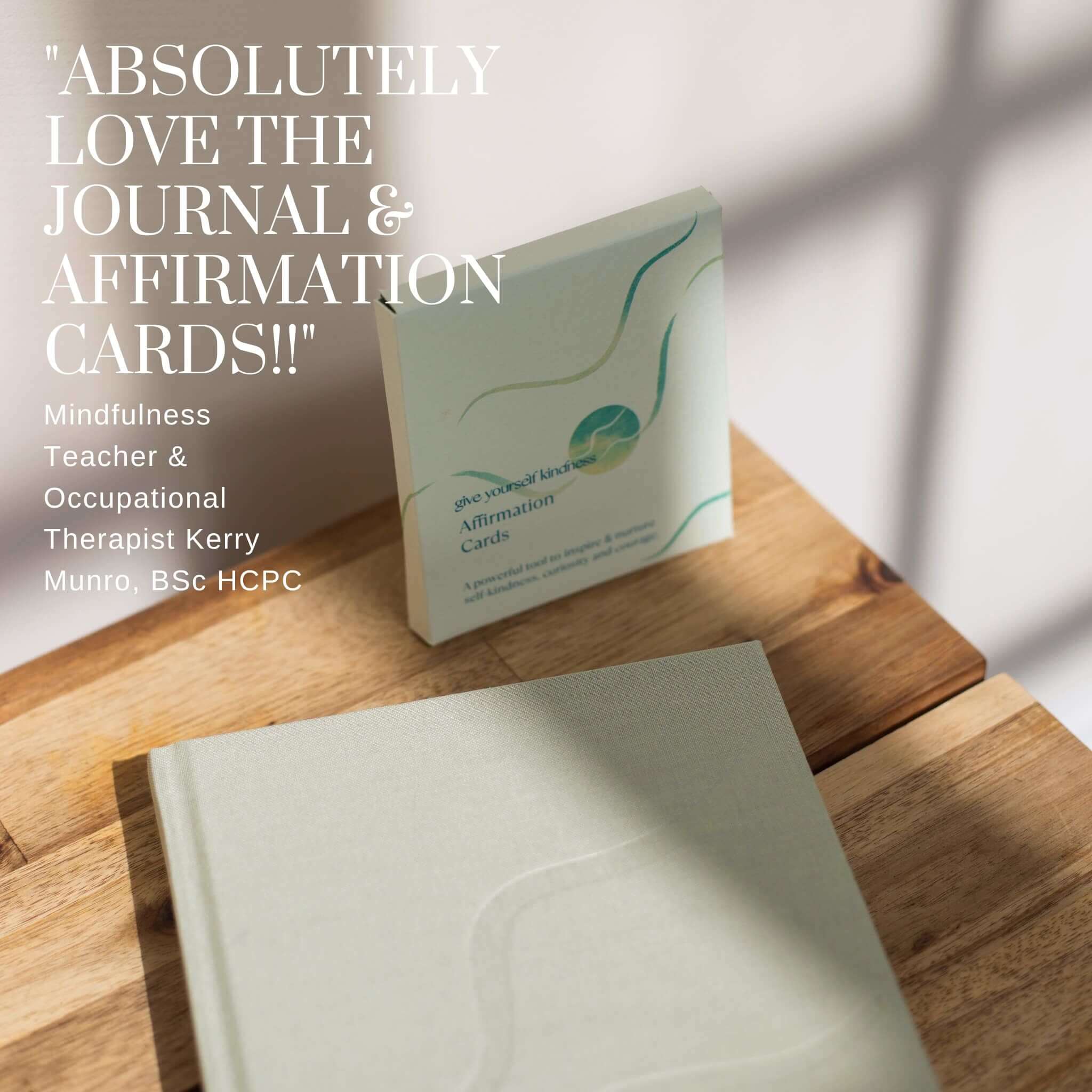
The Give Yourself Kindness journal
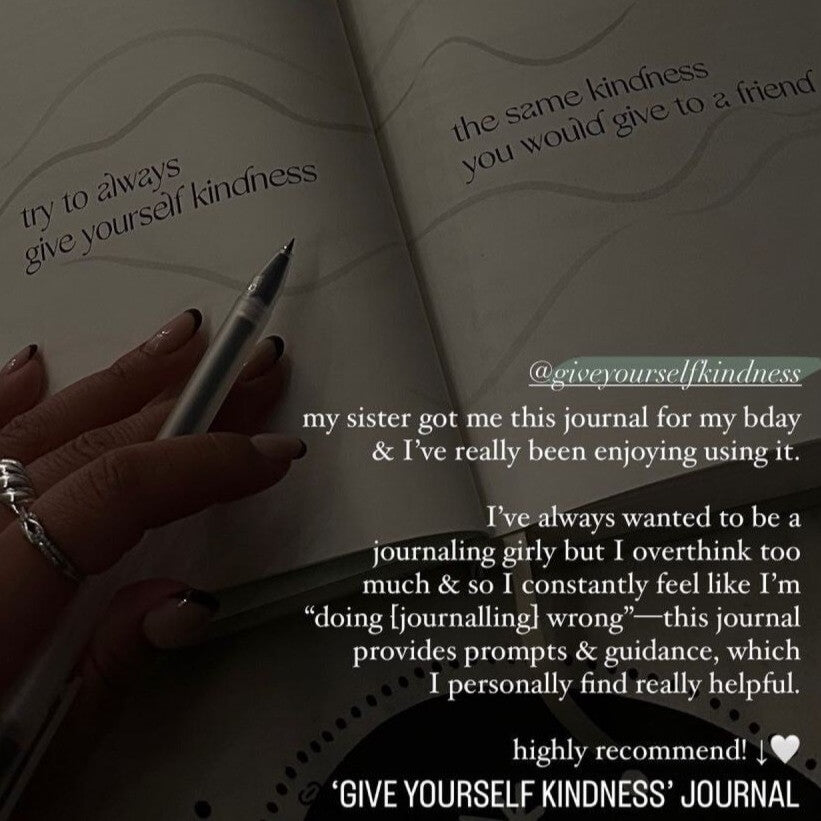
I want to tell you why this exists. I made it because I could not find it. I have felt a lot of what is on this page, and when I went looking for something to help, the guided journals I found made my critical voice louder rather than quieter — more tracking, more scoring, more of a record of what I had not managed. That was the opposite of what I needed.
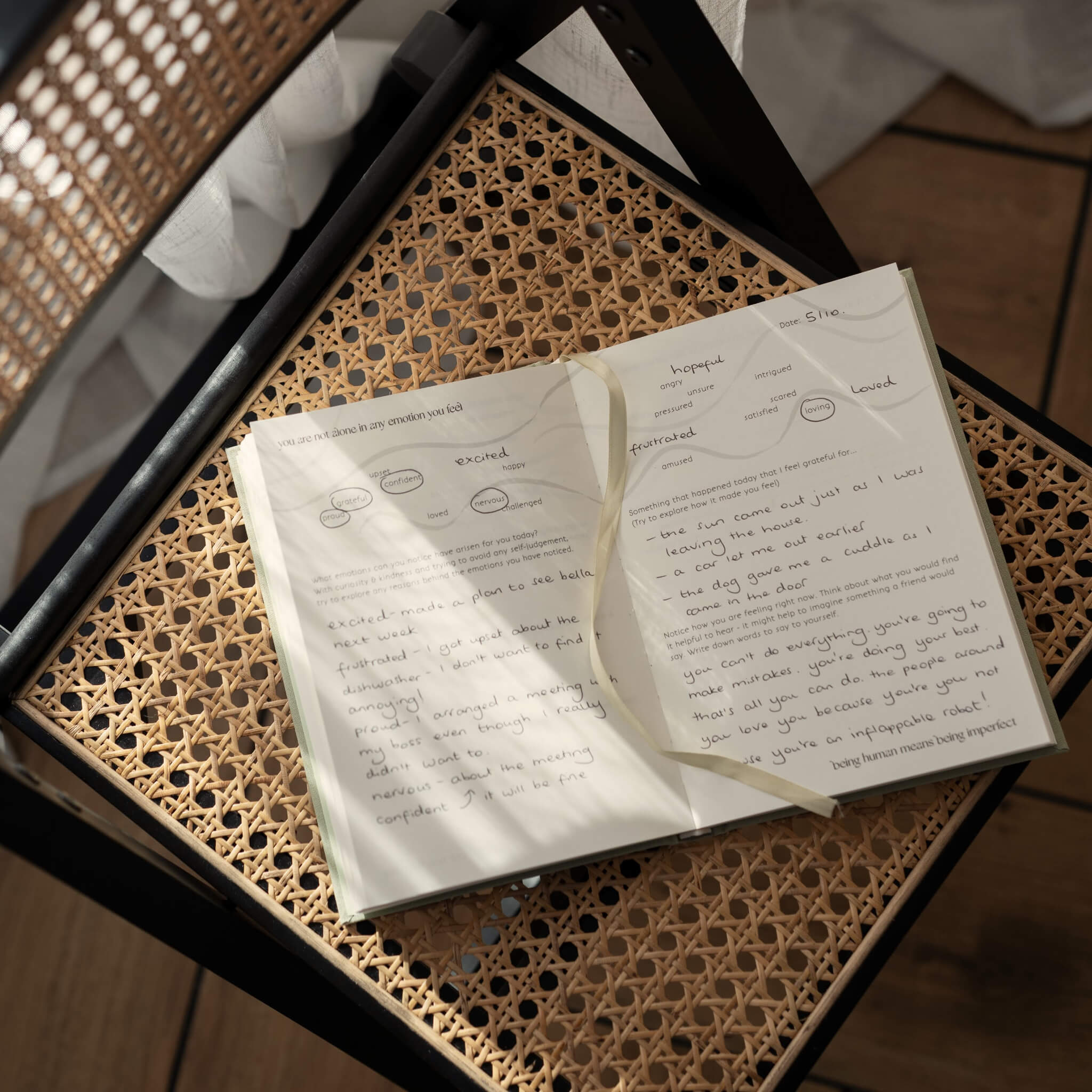
So I made the one I had been looking for, and I made it with clinical psychologists rather than on my own. For this particular situation, the parts that tend to matter are:
- It is undated, so a gap of three weeks is not a row of blank days telling you that you failed at this too
- There is a visual emotion guide on every page, for the evenings when you know you feel awful and cannot get more specific than that
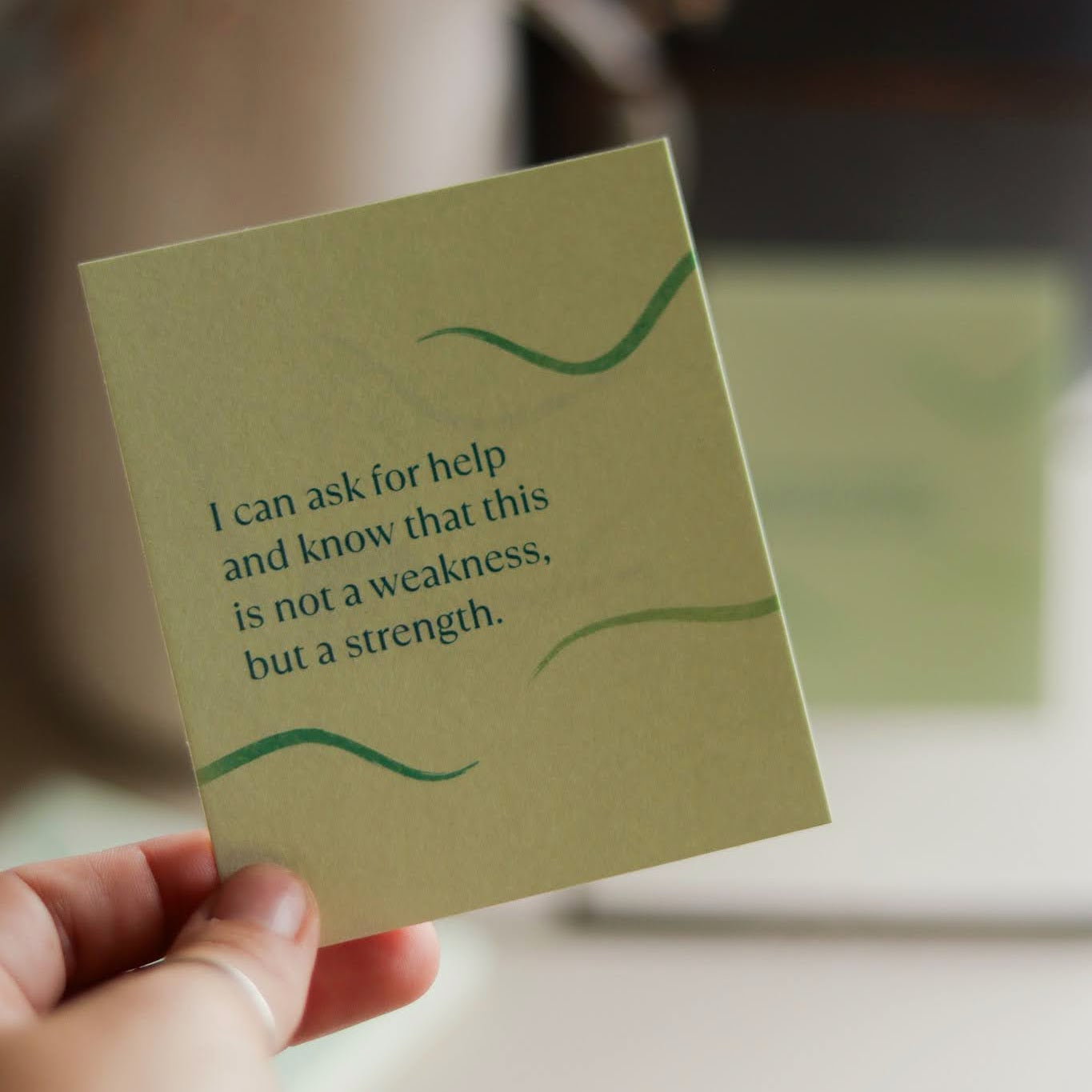
- The prompts model compassionate self-talk rather than leaving you to generate it, which is the hard part when your critic is loud
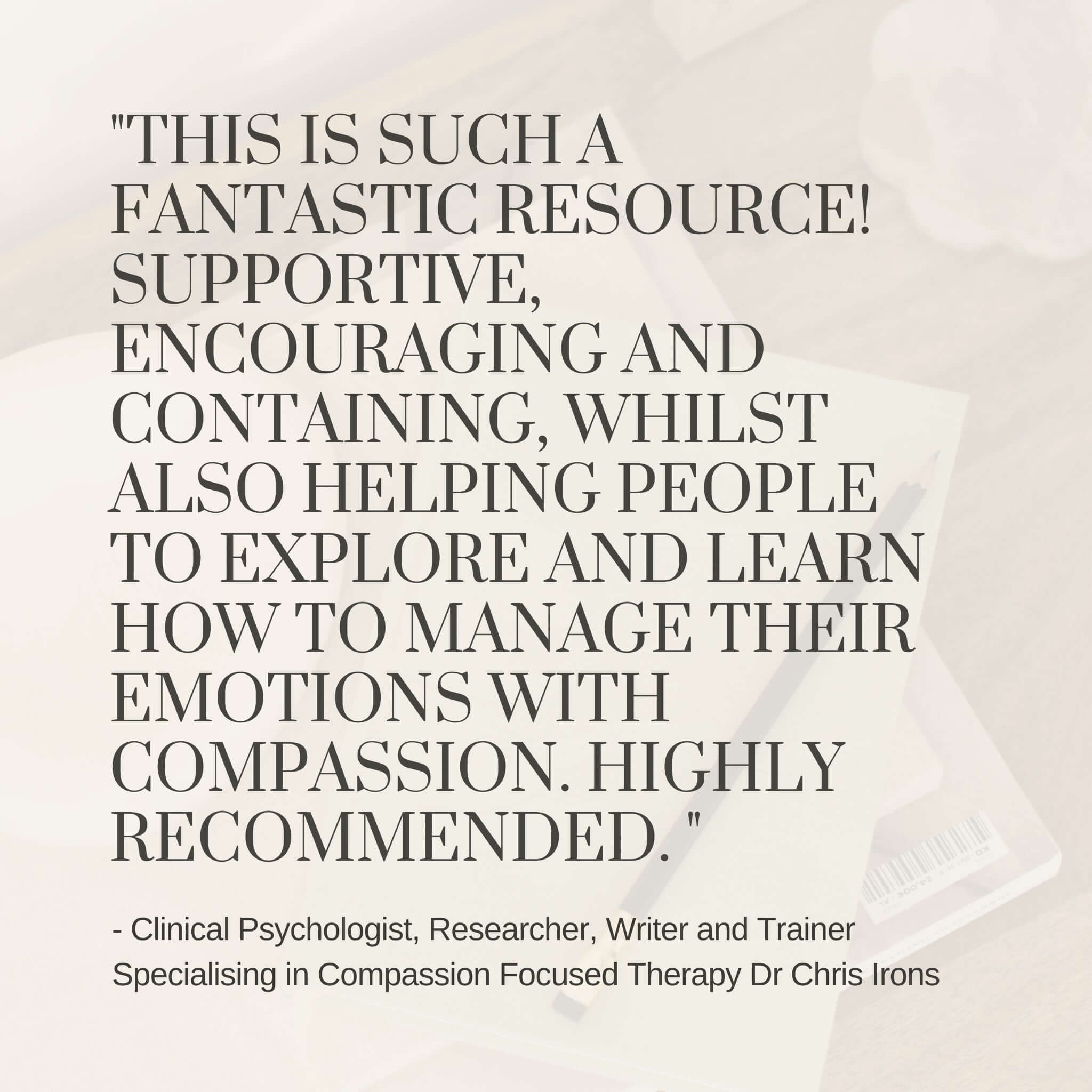
- It has been reviewed by clinical psychologists and is used by therapists with their clients
Questions people ask
Why do I feel physically sick after making a mistake at work?
Because your body responds to the fear of being judged in much the same way it responds to physical danger. Clinical psychologist Dr Maria Tucknott explains that when you make a mistake at work the threat system leaps in, and the body responds as if a real threat is present, with a racing heart, a tight chest and sweating. Those symptoms are an alarm response. They are not a measure of how bad the mistake was.
Why can't I stop thinking about a mistake I made at work?
Because your mind has categorised the mistake as an unresolved danger and keeps rerunning it, looking for a version where you caught it in time. There is no such version, so the loop does not close on its own. It tends to be worst at night or at weekends, when nothing else is occupying you. Writing down one practical next step often helps, because it gives your mind somewhere to put the thread it is trying not to lose.
How long does it take to get over a mistake at work?
There is no fixed timeline, and anyone who gives you one is guessing. What people commonly describe is that the sharpest part, the physical dread and the constant replaying, eases over days rather than weeks, and often eases noticeably once the conversation they were dreading has actually happened. A more useful marker than the feeling vanishing is that the gaps between the thoughts get longer and you catch yourself sooner.
Am I going to get fired for one mistake?
For most ordinary mistakes, no, but nobody can tell you what will happen in your particular workplace. The certainty you feel about being sacked is usually a symptom of the alarm response rather than information about your employer. You are not required to act as though it has already happened. If a formal conversation takes place, that is the point at which you deal with a formal conversation.
Should I tell my manager about a mistake nobody has noticed?
In almost every case, telling them yourself and early is better than being found out later, both for the outcome and for how you feel about yourself afterwards. Hiding it tends to extend the dread rather than end it. A short structure helps: what happened in one plain sentence, what the impact is as far as you know, what you have already done, and what you propose to do next.
Is it normal to cry after making a mistake at work?
Yes. Crying is a common response to a threat response, and it is not a measure of how big the mistake was or of how professional you are. It happens to people at every level of seniority, usually somewhere private, which is exactly why it can look as though it only happens to you. Slow breathing for a couple of minutes can turn the alarm down enough to get through the next hour.
How do I forgive myself for a mistake at work?
Self-forgiveness is not deciding the mistake was acceptable. Dr Frederic Luskin, who directs the Stanford University Forgiveness Projects, describes forgiveness as making peace with something you still do not think was right. In practice that means naming plainly what happened, deciding that you are allowed to stop punishing yourself rather than waiting to feel you have earned it, and putting your energy into repair and into what would prevent it next time.
What do I say to myself after I have made a mistake at work?
Try this: I made a mistake. That is something I did, not something I am. I am not the only person this has ever happened to. Then write down one practical thing you can do about it tomorrow. If the words feel hollow, that is an ordinary first reaction and does not mean you have done it wrong. A kind voice tends to feel unfamiliar before it feels believable.
What is the difference between guilt and shame after a work mistake?
Therapist Clare Karasik, MSW RSW, describes the distinction like this: guilt says I did something bad and tends to move you towards putting it right, while shame says I am bad and makes you want to hide and disappear. The difference matters because guilt points at a repair you can actually make, and shame does not point anywhere. It just makes you less able to do the repair.
Everyone tells me that everyone makes mistakes, and it does not help. Why?
Because it answers a question you were not asking. You already know, factually, that other people make mistakes. What hurts is the private sense that yours means something about you specifically, and a general reassurance does not touch that. What tends to help more is something specific: separating what you did from who you are, and hearing how ordinary the reaction itself is, not just the error.
What if the mistake I made was actually serious?
Then it was serious, and nothing here asks you to pretend otherwise. Self-compassion is not a way of downgrading what happened. It is the state you need to be in to look at it clearly, because it is very hard to face something you did badly while you are also under attack from yourself. If people were affected, the useful question is what repair is available, because self-punishment does nothing for them.
Do I need therapy, or can I work through this myself?
Many people work through a single work mistake on their own, with time, a practice like the ones on this page, and someone to talk to. Therapy is worth considering if the self-criticism goes back much further than this job, or if you are not sleeping or eating for more than a few days, or if the dread is following you into parts of life unrelated to work. Compassion-Focused Therapy was developed specifically for difficulties rooted in shame and self-criticism.
Before you close this page
If you take one thing from all of this, I would like it to be this. The size of what you are feeling is not a measurement of what you did. It is a measurement of how much you care about doing your work well, run through an alarm system that has never been very good at proportion.
You made a mistake. So has every person who has ever done a job, including the ones who look entirely composed to you this week. Most of them just never told anyone, which is the whole reason it feels like you are on your own with it.
Be gentle with yourself tonight. Not because it did not matter, but because you will handle tomorrow better rested and less frightened than you will exhausted and ashamed. There is no right or wrong way to get through this. There is just the next kind thing, and then the one after that.