

You did the thing everybody recommends, and it made you feel worse. I believe you.
This is not a rare reaction and it is not a sign that you are ungrateful, negative, or bad at self-care. It is a documented, sensible response to being handed a page that only has room for one kind of answer on a day when your honest answer was a different kind.
Quick answer
A gratitude journal makes you feel worse when it asks you to produce good things at a time when the truthful answer is that things are hard. The gap between what the page wants and what is actually true does not stay neutral. Your mind fills it, usually with an explanation about you.
Nothing has gone wrong with you. Something has gone wrong with the format, and it is fixable.
Where this page goes
Why trust me: I'm Rachel Smith, a qualified meditation teacher. This exact experience is the reason I ended up making journals at all. I do sell one further down this page, but the five things that actually help are free and above it, and if you take those and buy nothing I will have done my job. More about me →
Exactly what happens, step by step
Most gratitude journals are built around one shape. Three numbered lines, the same question every day.
Three things I am grateful for today...
1. ________________
2. ________________
3. ________________
Here is what that does on a hard day, and it happens fast enough that most people never see the middle of it.
- The page asks for three good things. Not one, not "if any come to mind". Three, numbered, with the lines already drawn.
- Nothing arrives. Or something arrives and immediately feels too small to be worth writing, which is the same thing.
- Your mind explains the silence. This is the part that does the damage, because the explanation is never "this format doesn't suit today". It is "other people manage this", or "I must be an awful, ungrateful person".
- Now you have a second problem. You started the evening struggling, and you have finished it struggling and privately convinced you are ungrateful about it.
That is my own experience, more or less word for word. I would look at those blanks, not be able to fill them in, and my mind would decide to tell me I was an awful, ungrateful person who obviously should be able to think of amazing things. Guess what? The idea of that didn't help. I wrote about it properly here.
The prompt did not just fail to help. It produced new evidence for the case against you, and it did it in your own handwriting.
A therapist on why this happens
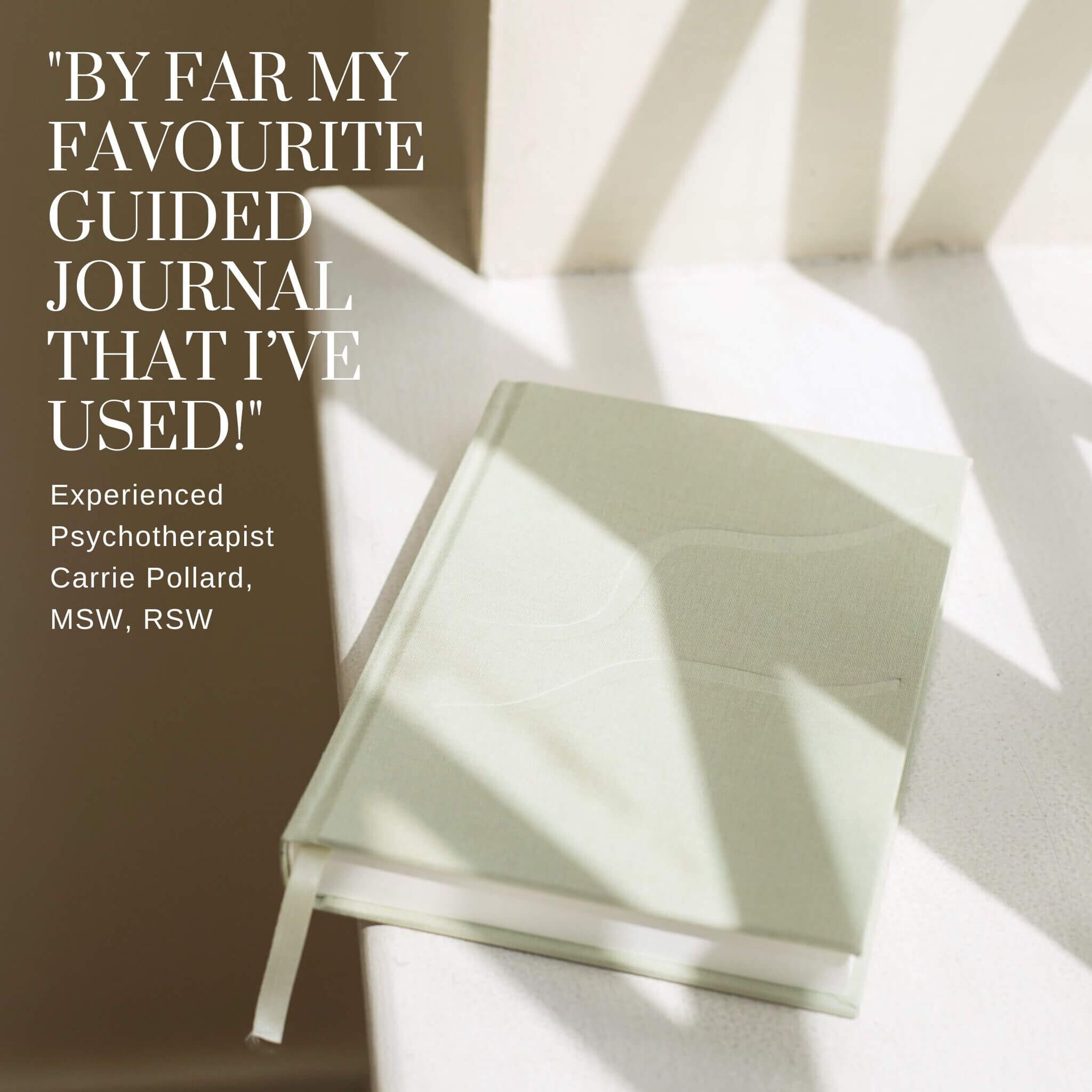
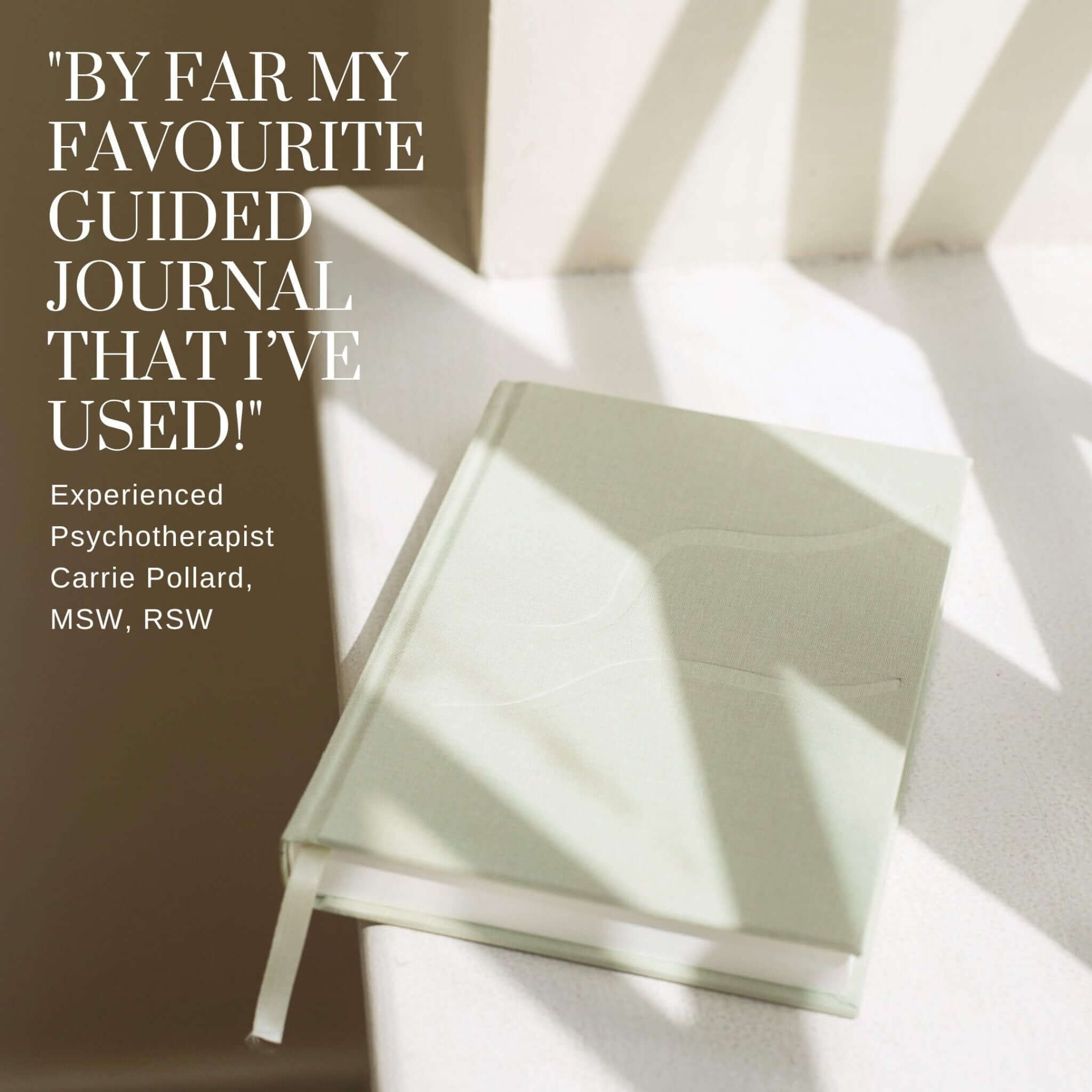
I am not a therapist, so I would rather you heard this from one. Carrie Pollard is an experienced psychotherapist who reviewed my gratitude journal, and she describes the mechanism better than I can.

Carrie Pollard, MSW RSW
Experienced psychotherapist, mom and avid journaler
"Have you ever felt like you were just 'going through the motions' of a gratitude journal? Practicing gratitude is a way to bring balance and perspective to life, it helps us recognize the gifts, glimmers and simple things that make life feel better. However, when gratitude is forced, diminishes difficulties, or triggers guilt or shame (e.g., 'I should be grateful, look at all I have') it leaves us feeling worse, not better."Read Carrie's full review →
"It leaves us feeling worse, not better." Written by a licensed psychotherapist, about the exact thing that brought you to this page. Whatever else you take from today, take that: a professional who does this for a living regards what happened to you as a known effect of a format, not a flaw in you.
Two more things worth knowing before you blame yourself
First: some people's brains genuinely find gratitude harder than others. That is a real difference, not a moral one. It is also trainable. With practice the brain builds the gratitude habit rather like a muscle, which means "this is difficult for me" is a starting point rather than a verdict.
Second: writing is not automatically good for you. When I asked three clinical psychologists about journaling for the blog, one of them was careful to say so directly, and I have kept it on the site ever since because it is more useful than a compliment would have been.

Dr Andreas Comninos
PhD Clinical Psychologist and EMDRAA Accredited Practitioner, with over 15 years of experience
"Certain types of journaling, such as writing about challenging experiences, may stir up strong emotions. It is important to approach intense journaling with care and kindness towards yourself."Read three clinical psychologists on journaling →
And Dr Chris Irons, a clinical psychologist specialising in Compassion Focused Therapy, adds the part that explains why the damage lands where it does.

Dr Chris Irons
Clinical psychologist and specialist in Compassion Focused Therapy, co-director of Balanced Minds
"It could be that it's a fearful part of you that is writing, or an angry or self-critical part... Sadly, our self-critic often has a very narrow, and by definition negative, view on us and our life that is often associated with higher levels of psychological distress, anxiety and shame."Read Dr Irons in full →
Put those together and you have your answer. A rigid gratitude prompt hands the pen to your self-critic and then asks it to write something positive. It will not. It will write about you instead.
When gratitude journaling is most likely to backfire
Not always, and not for everyone. But reliably in these four situations, and if you are in one of them the timing explains a great deal.
Being asked to count blessings while you are missing someone can feel like being asked to move on before you are ready. Gratitude and grief can eventually sit together, but not on a schedule set by a notebook.
Burnout already involves a sense of not doing enough. Adding a nightly task you can fail at, however small, lands on exactly the wrong nerve.
Low mood makes positive memories genuinely harder to retrieve. So the exercise is objectively more difficult for you, and the difficulty then gets read as evidence of your character rather than of your mood.
Sometimes the reason gratitude feels forced is that the situation is legitimately bad. Gratitude is not a lie you should be able to tell more convincingly. If it is not there today, that is information about your week, not about you.
There is more on toxic positivity in journaling here, and more on why gratitude journaling feels hard here.
Five things to do instead
All of these work in a notebook you already own. None of them require you to feel anything you don't.
1. Change the verb from "grateful" to "noticed"
Gratitude is a feeling, and you cannot summon a feeling on demand. Noticing is an action, and you can always do an action. "What did I notice today?" has an answer on every single day of your life, including the worst ones.
Try: What did I notice today that I wouldn't have if I hadn't looked?
2. Ask what got you through, not what you're thankful for
On a hard day, "what helped, even slightly?" is answerable when "what am I grateful for?" is not. The bath. The dog. The fact that it ended. This is still gratitude, it is just gratitude that has been allowed to acknowledge the day was hard.
Try: What got me through today, even a little?
3. Let it be small, and let it be specific
"My family" is the same answer every night and stops meaning anything by Thursday. "The way she said my name when I got in" is different every night, and it is the specificity that does the work, not the size of the thing.
Try: One small specific thing, and one sentence about why it landed.
4. Allow the sentence to have a "but" in it
This is the one that changes everything. "I'm glad my friend rang, but I still cried afterwards." Both halves are true. A journal that only accepts the first half is asking you to edit your own life, and editing is exhausting.
Try: Write the good thing. Then write the honest "but". Leave both.
5. Skip the day, and don't record the skip
If nothing comes, close it. The practice is noticing, not producing, and there will be days when the honest outcome of noticing is that today was bleak. A journal with dates will show you that gap forever. One without dates will not remember, which is exactly why undated matters so much here.
Try: Nothing. Genuinely. Tomorrow is fine.
And one honest caveat. If you are in acute grief or deep depression right now, gratitude journaling may simply not be the right tool this month, in any format, including mine. That is not a failure of nerve. It is a sensible piece of self-knowledge, and putting the notebook down until later is a legitimate decision. Please do talk to your GP or a professional if things are heavy.
If you'd like the prompts written this way already
I made a gratitude journal because I could not find one that included gratitude without lines, numbers and pressure. Everything above is built into it, which is why I can describe it plainly rather than enthusiastically.
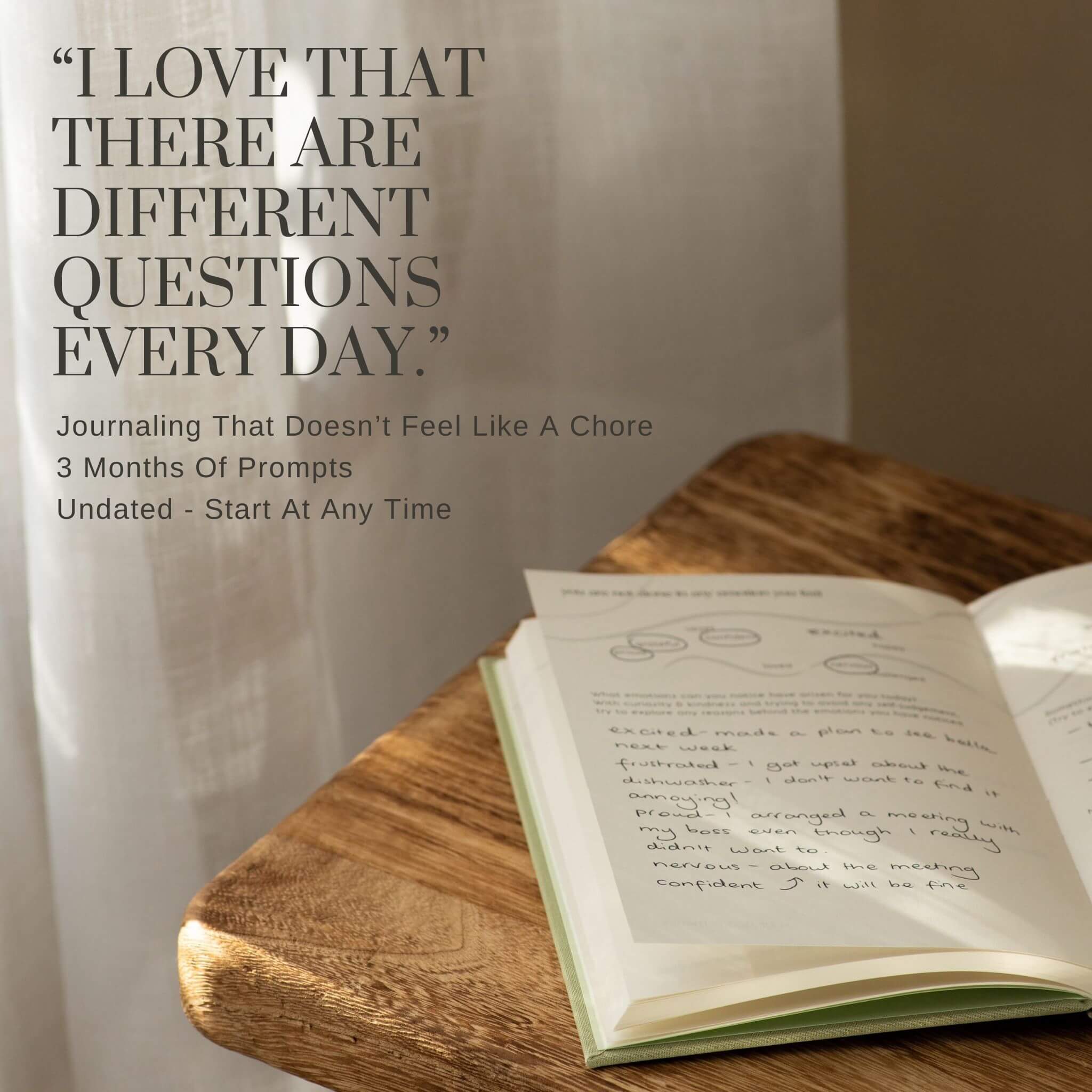
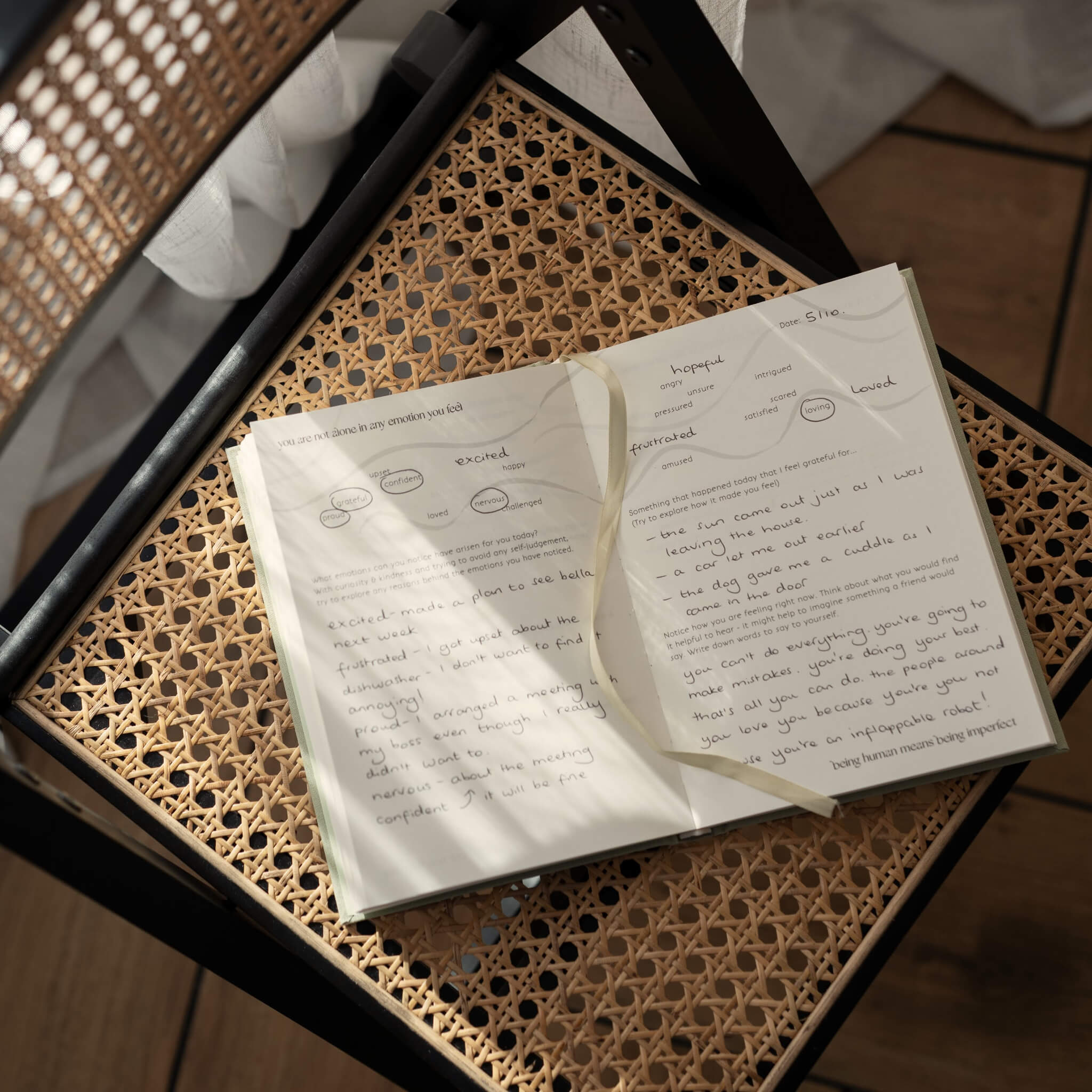
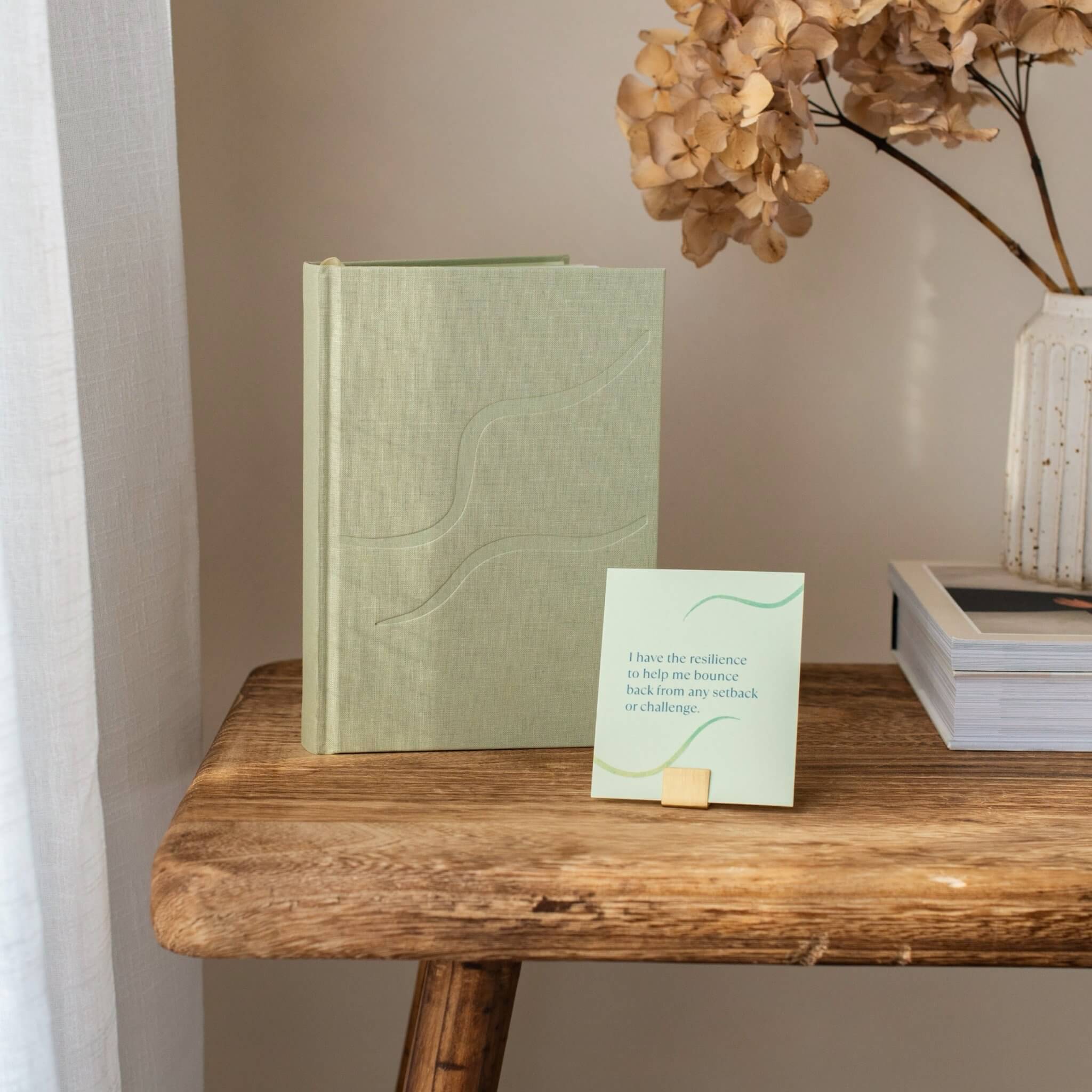
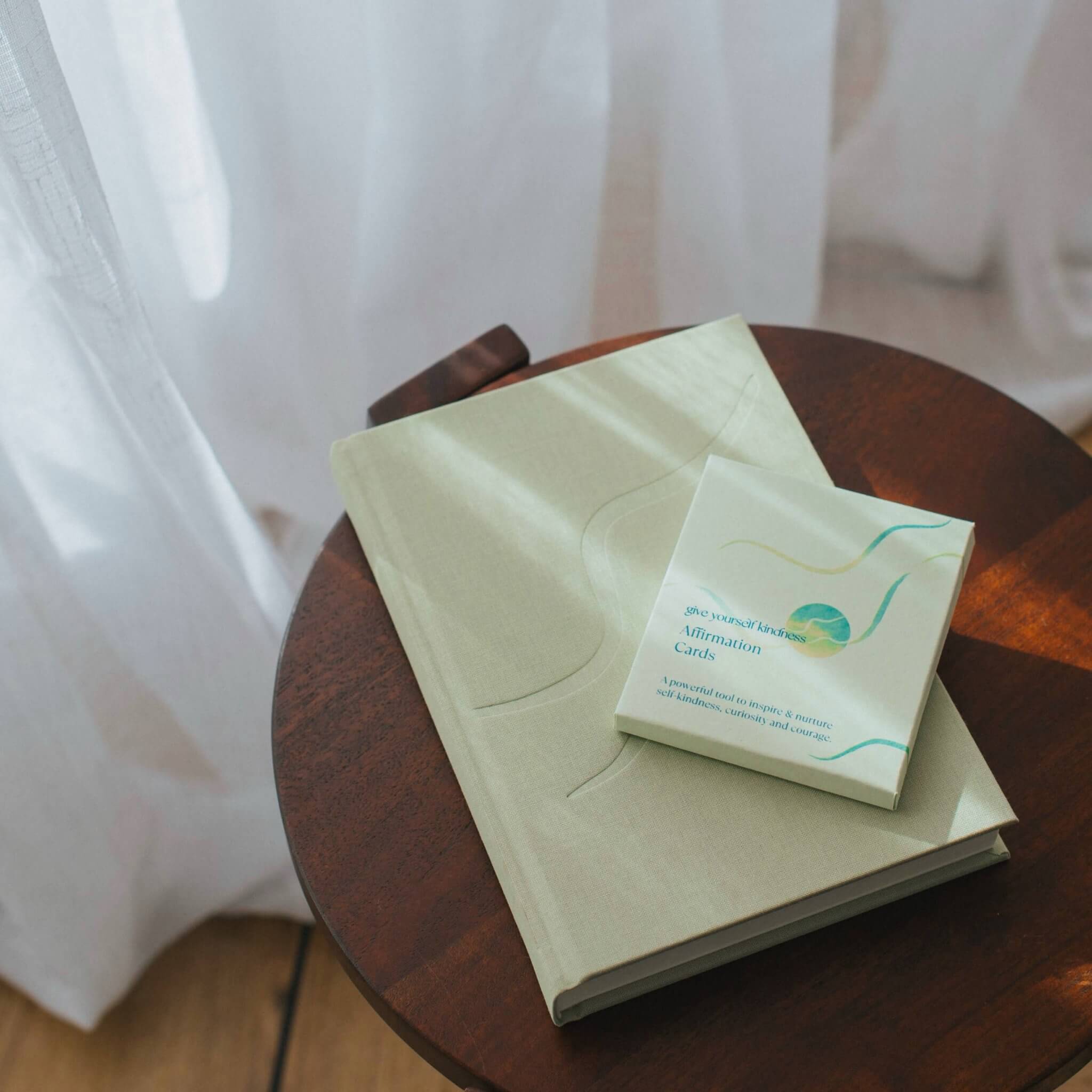
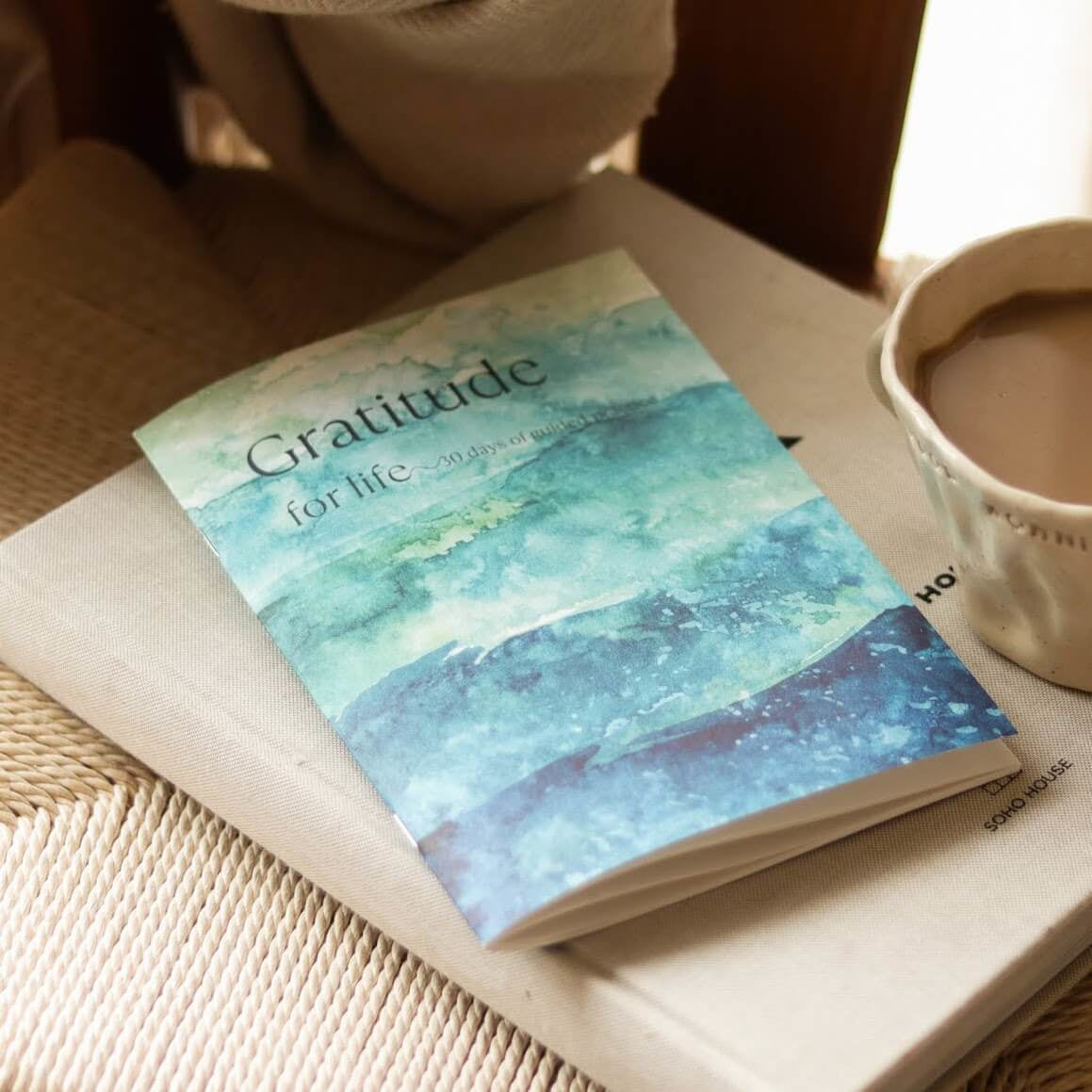
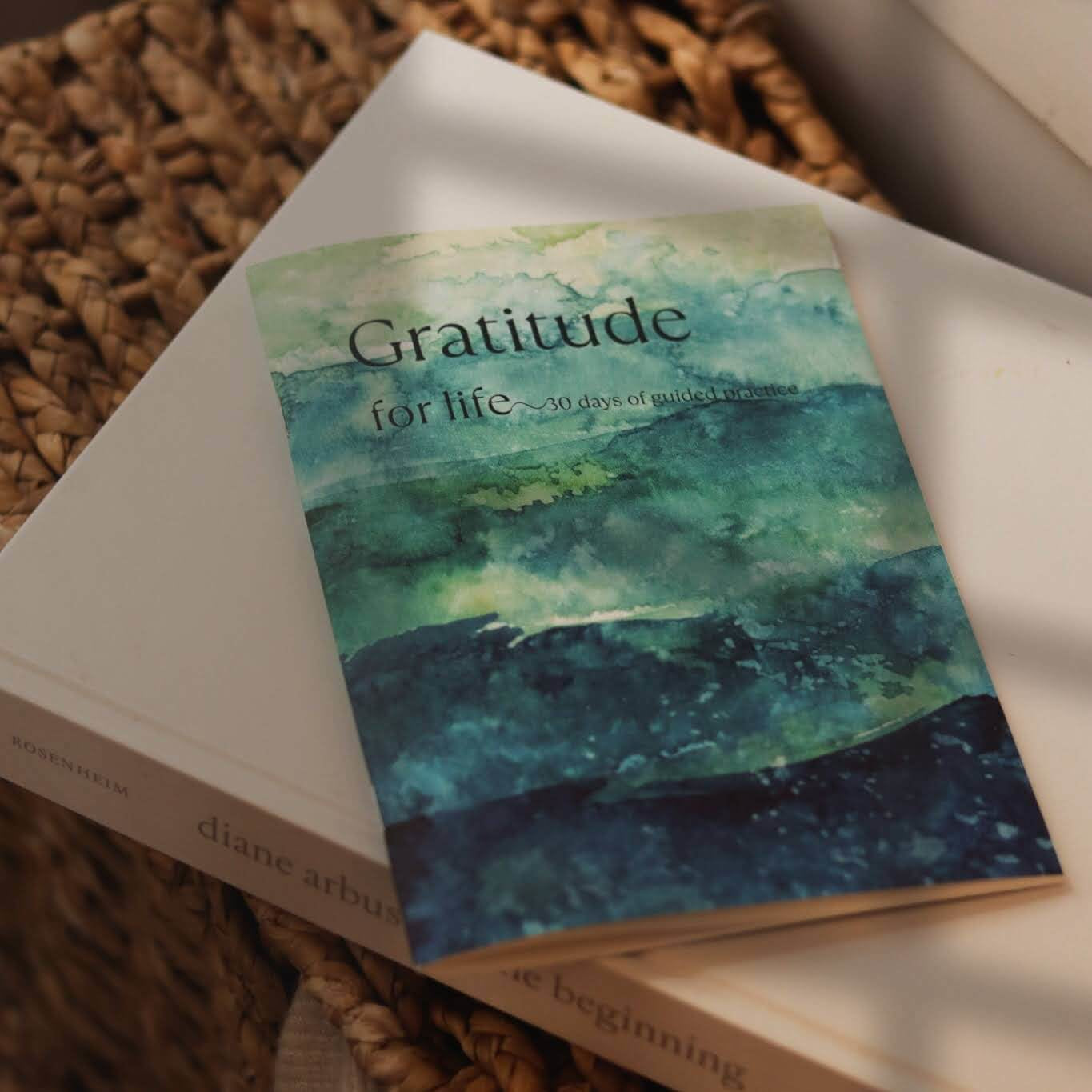
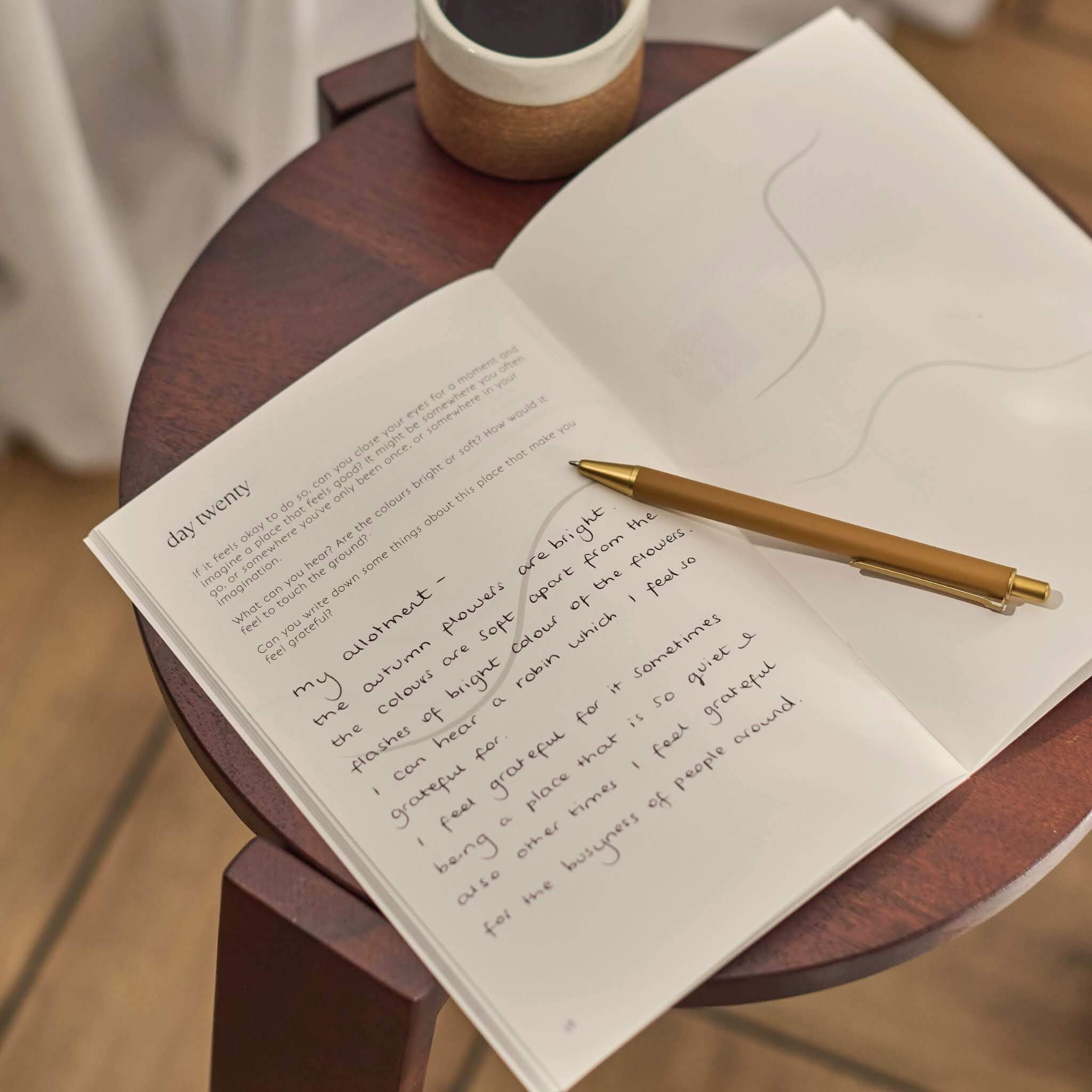
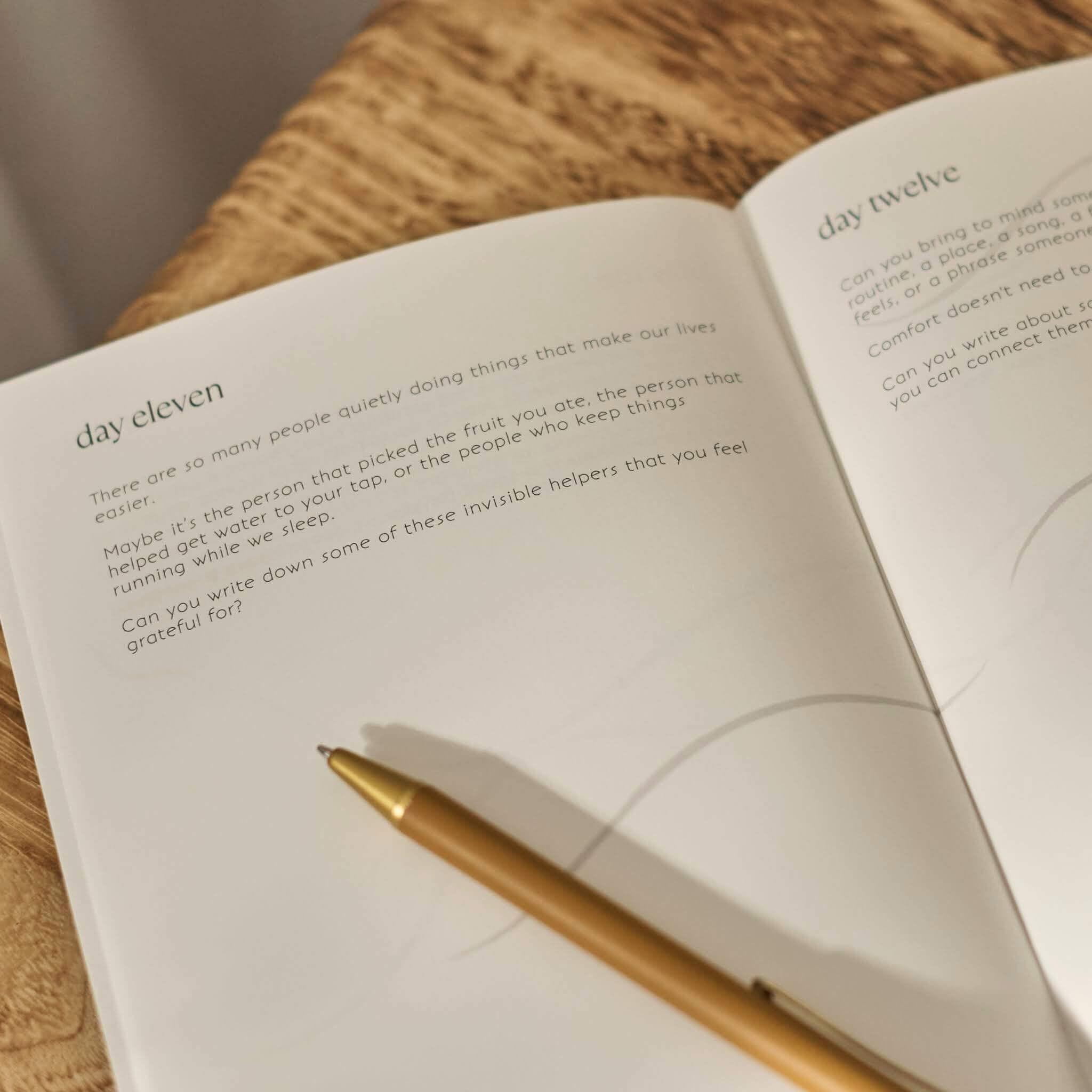
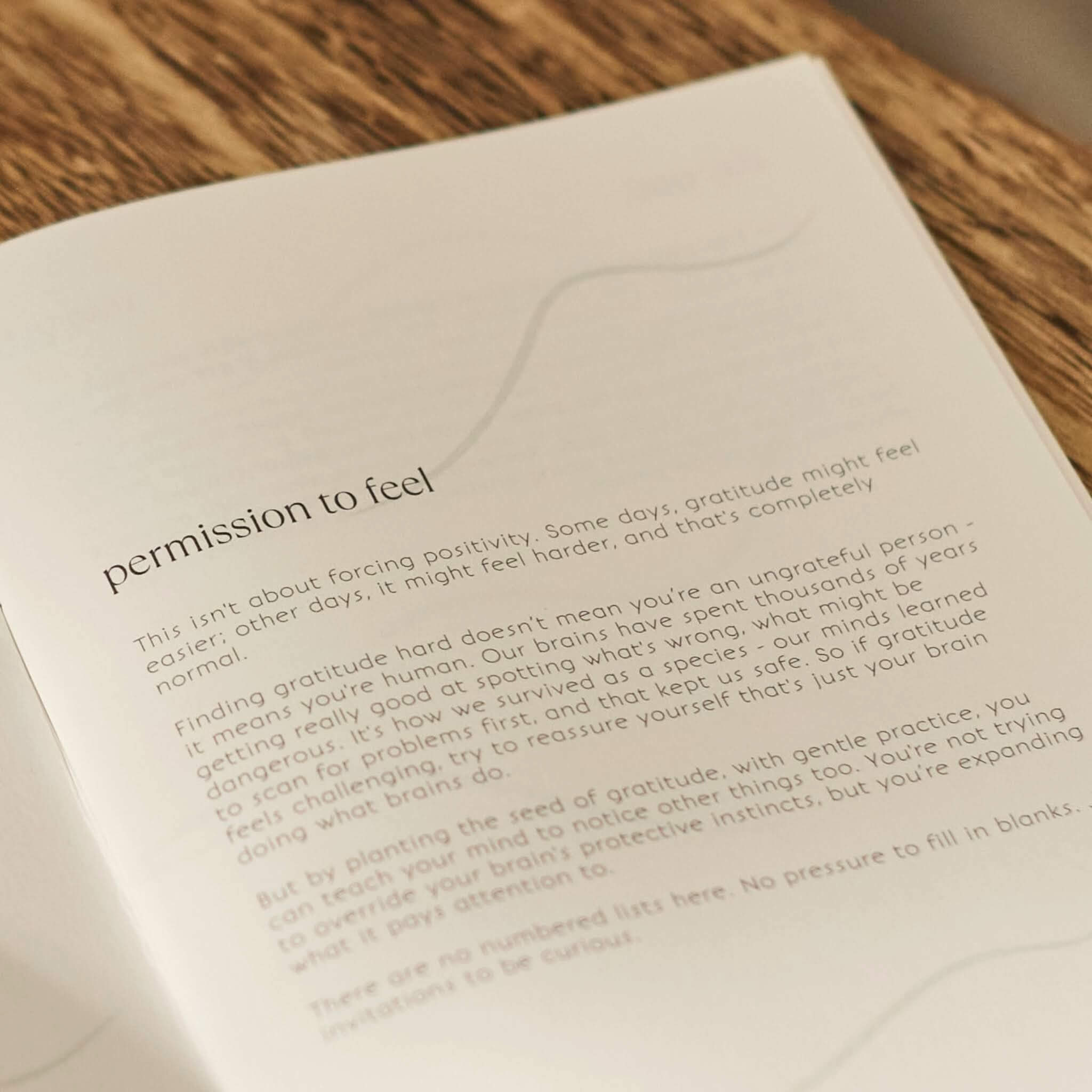
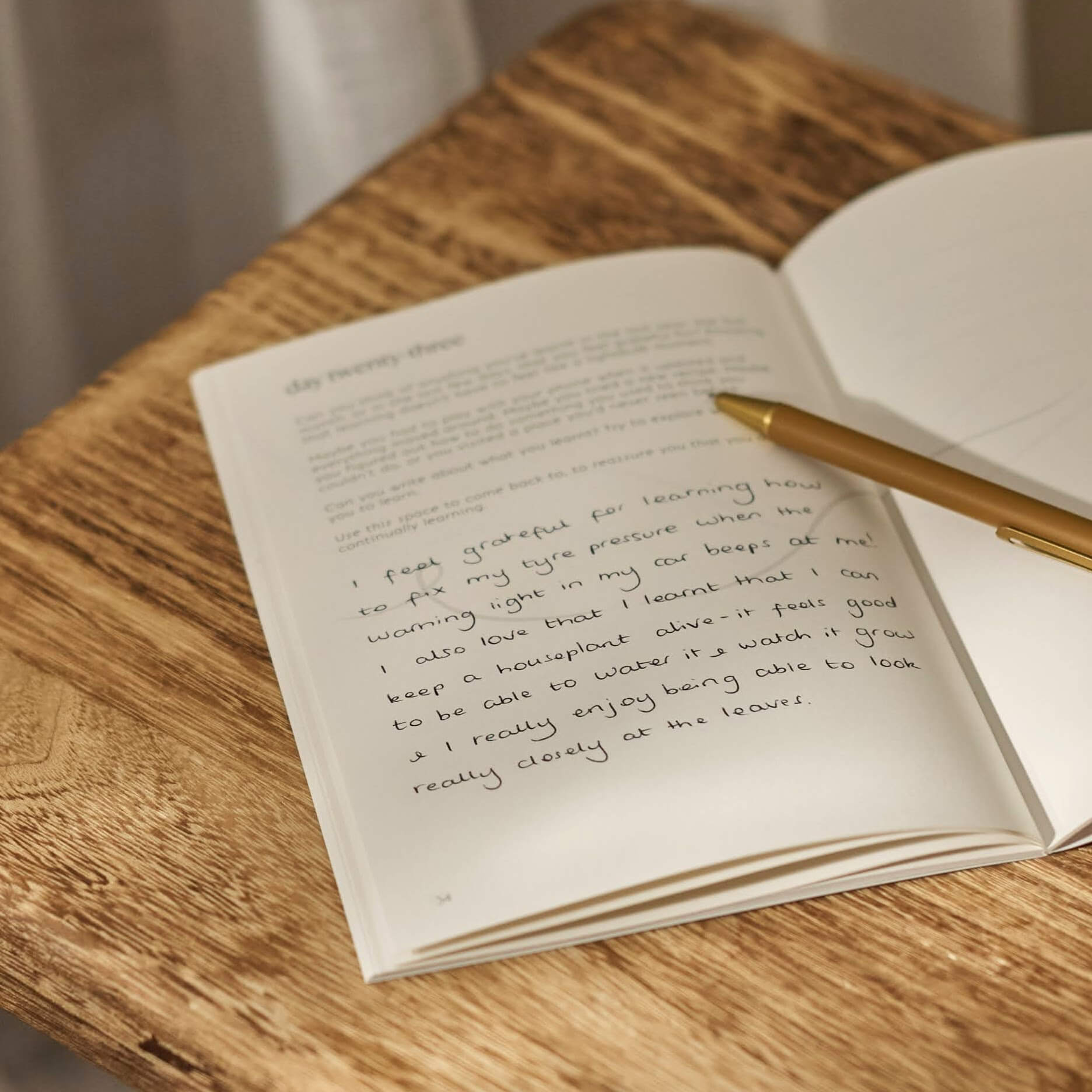
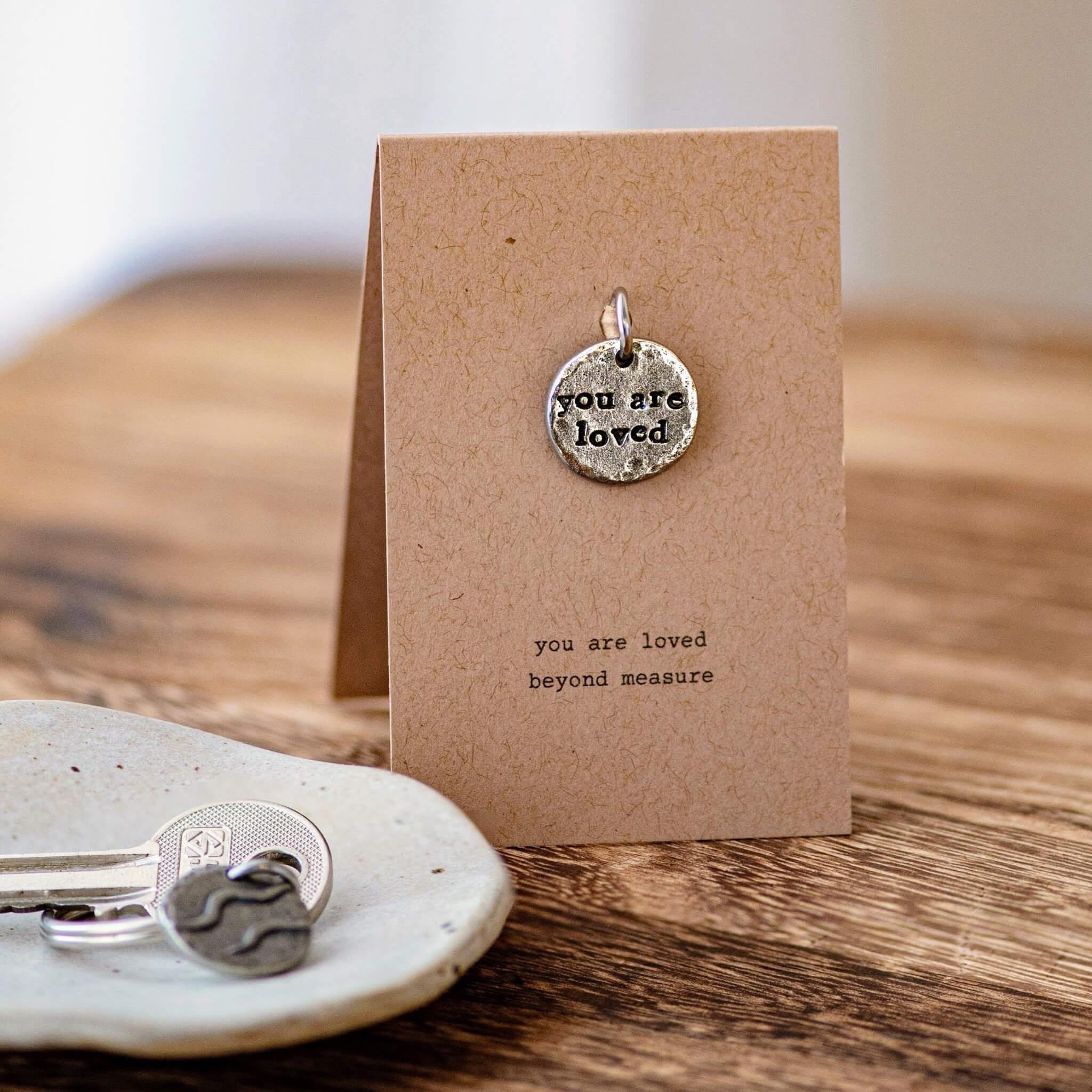
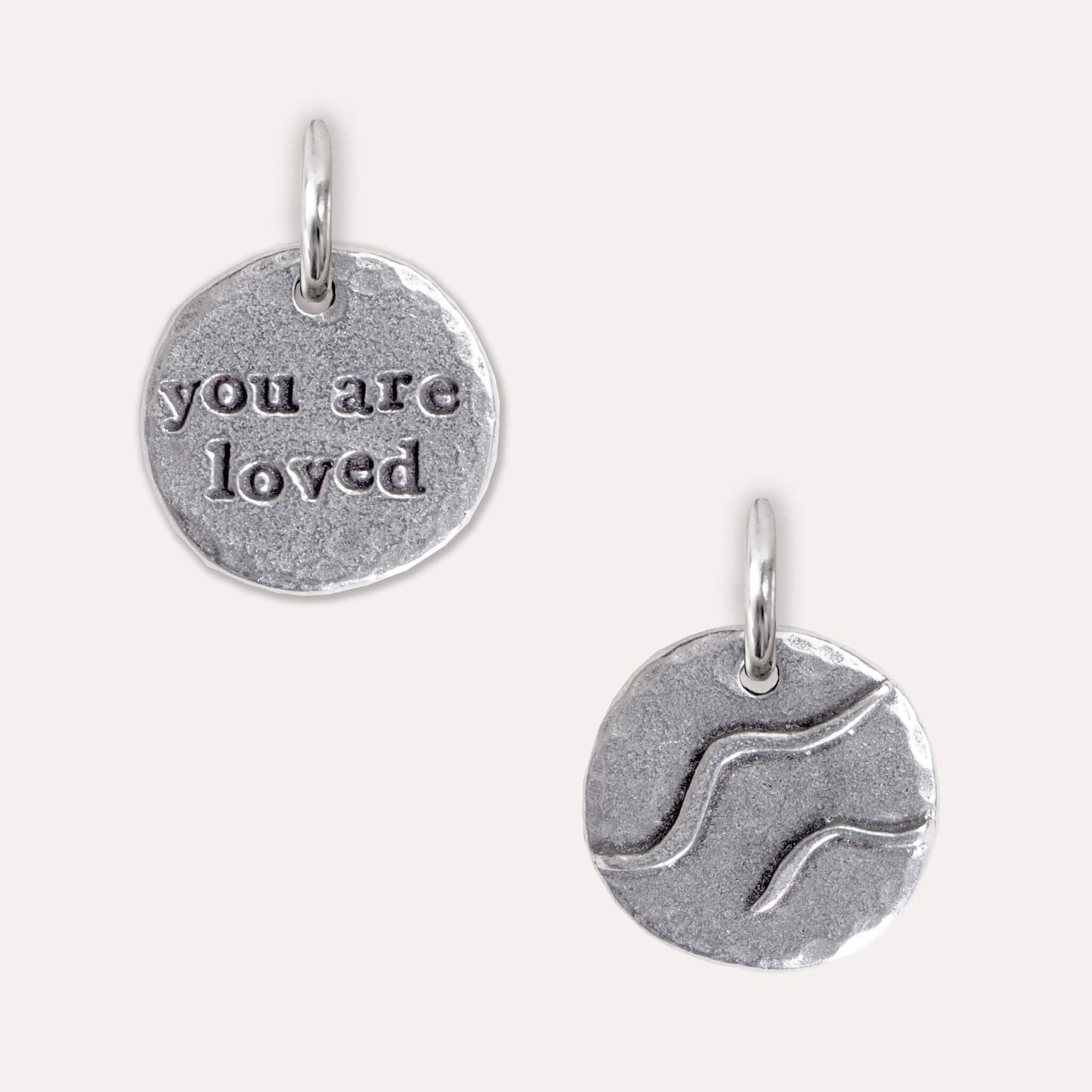
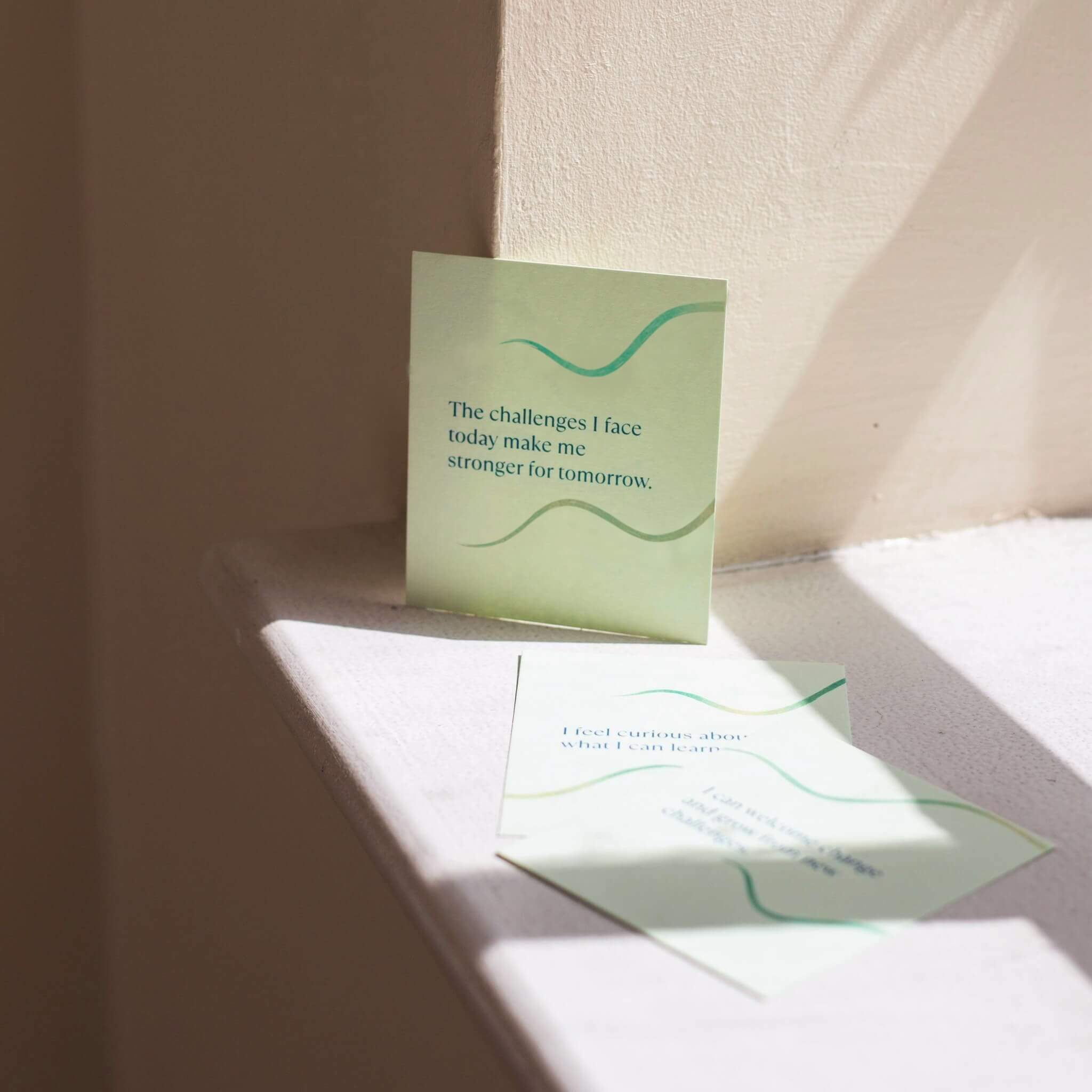
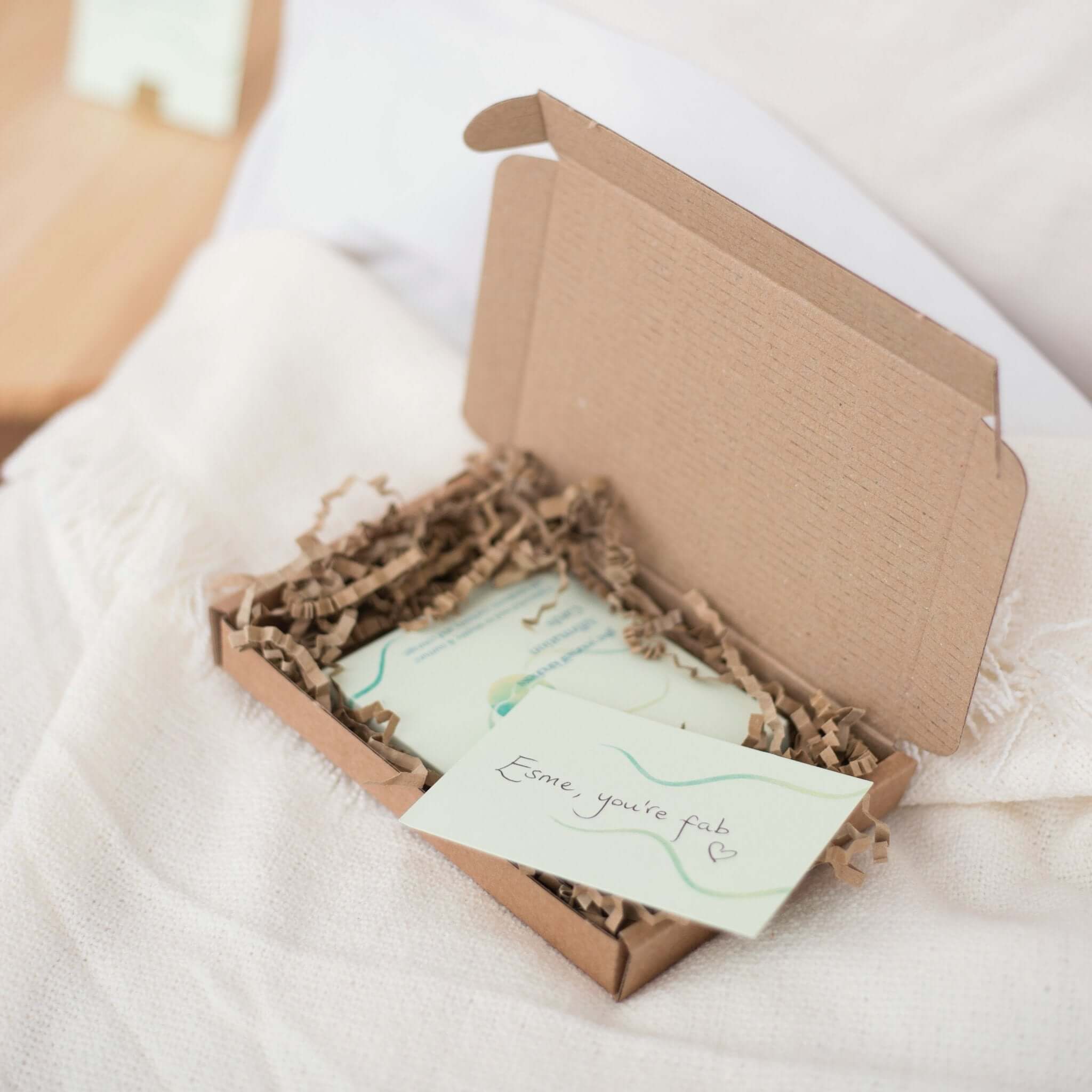
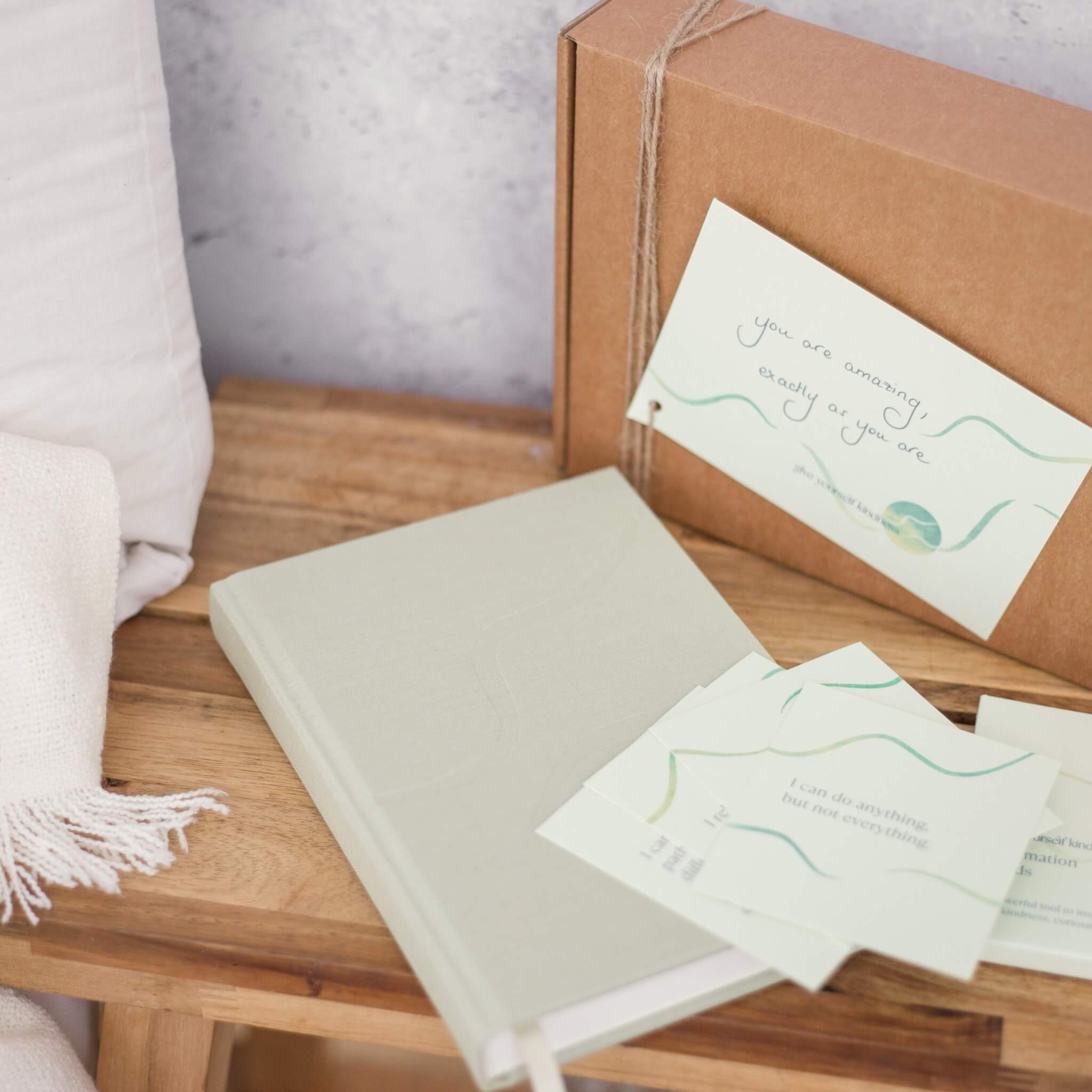
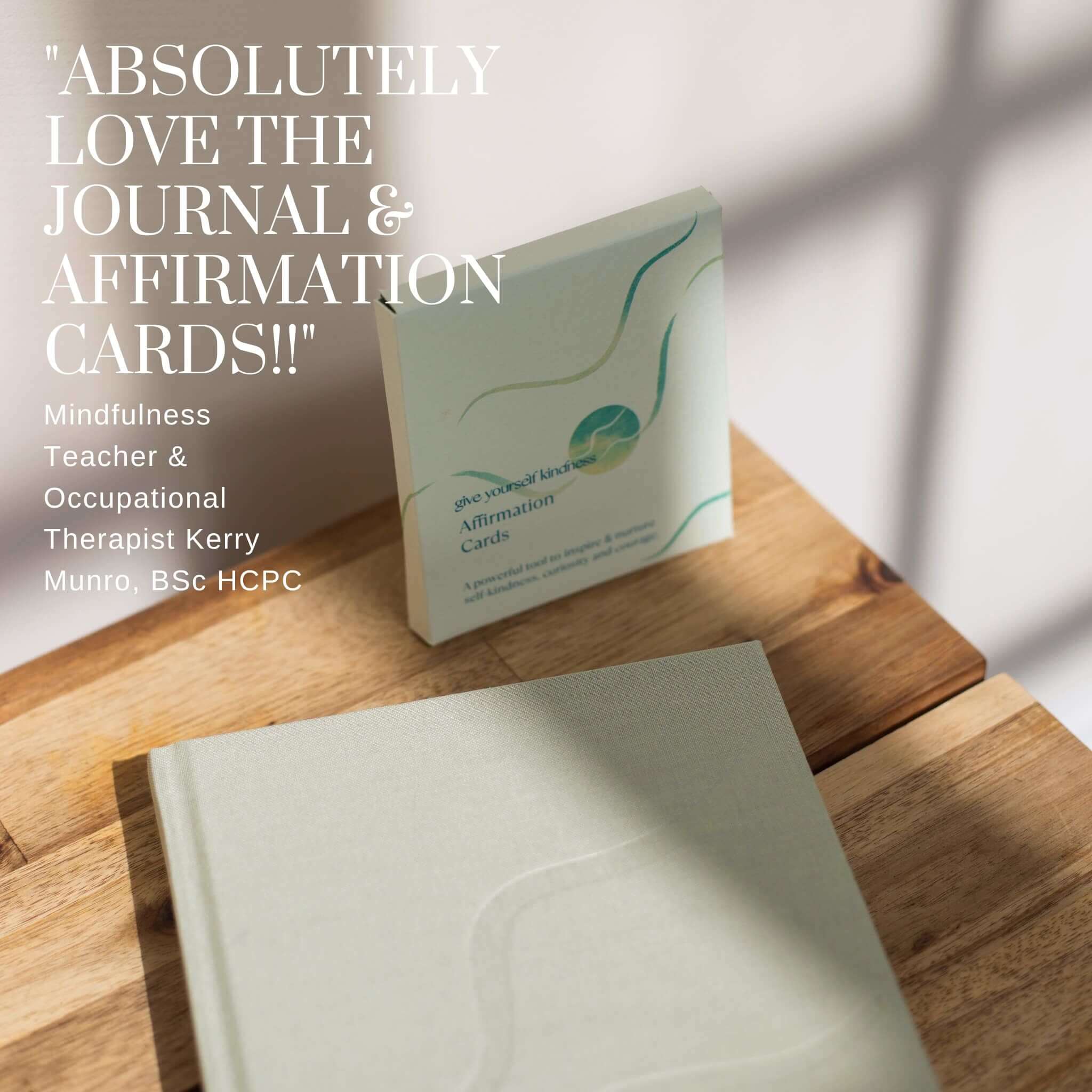
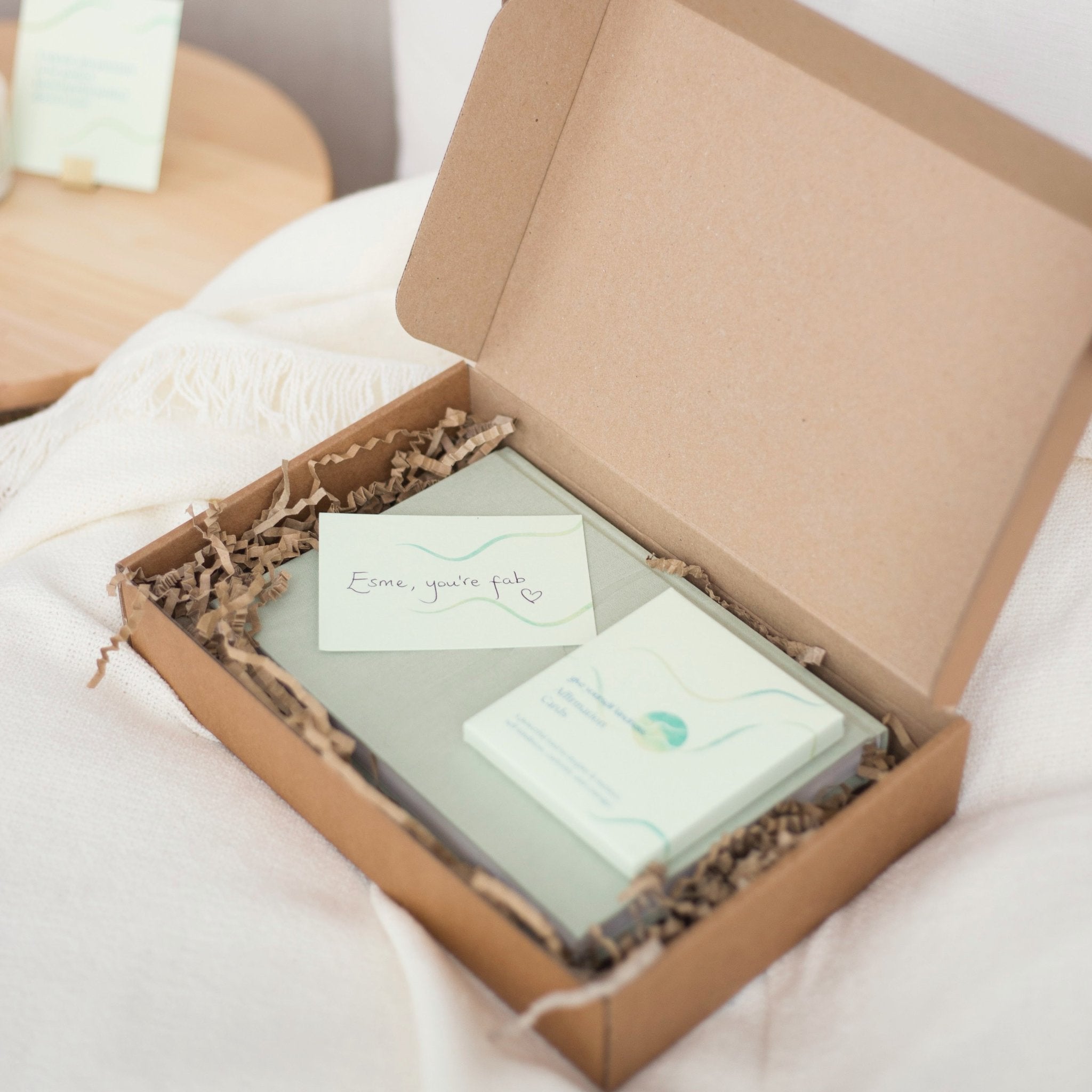
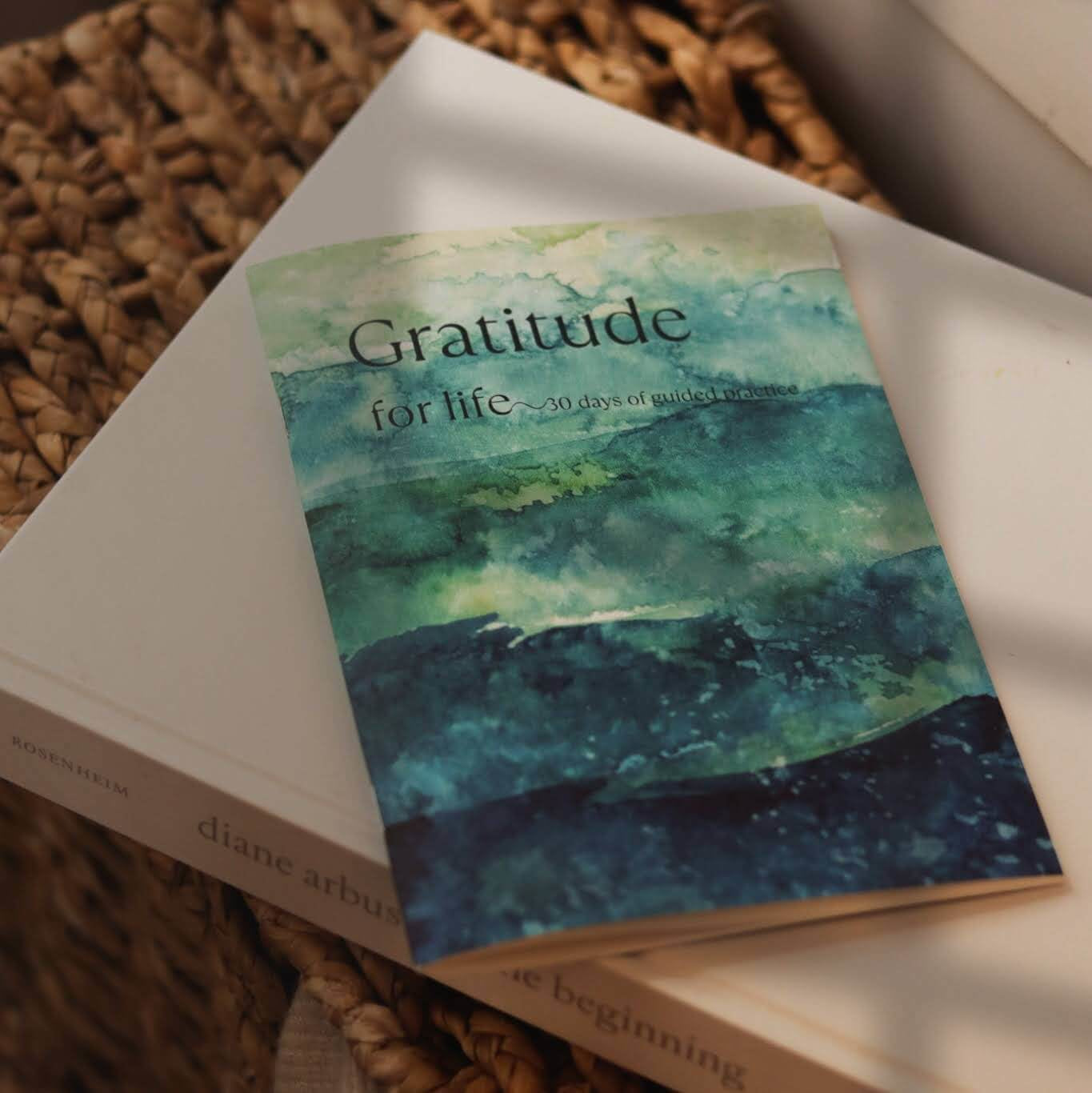
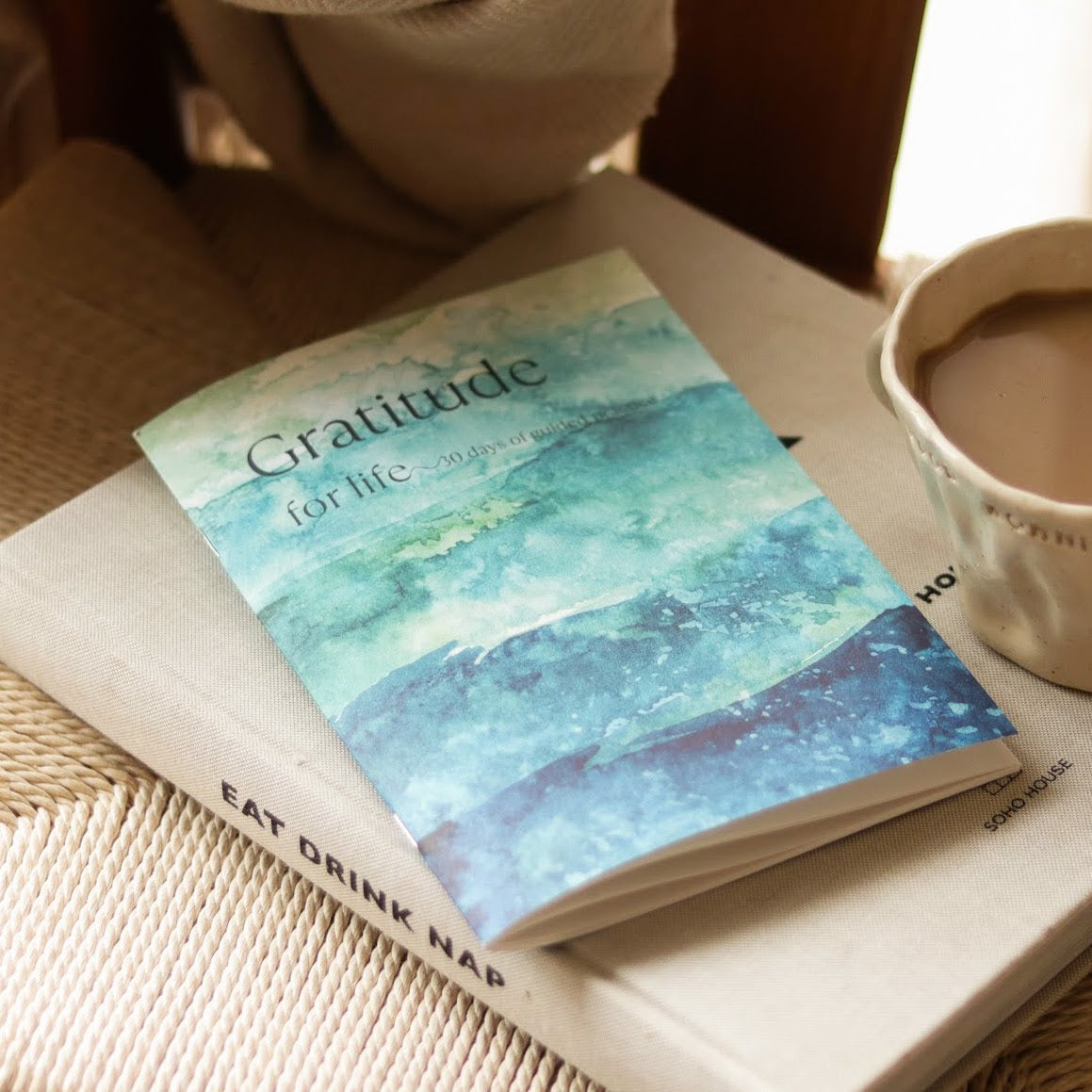
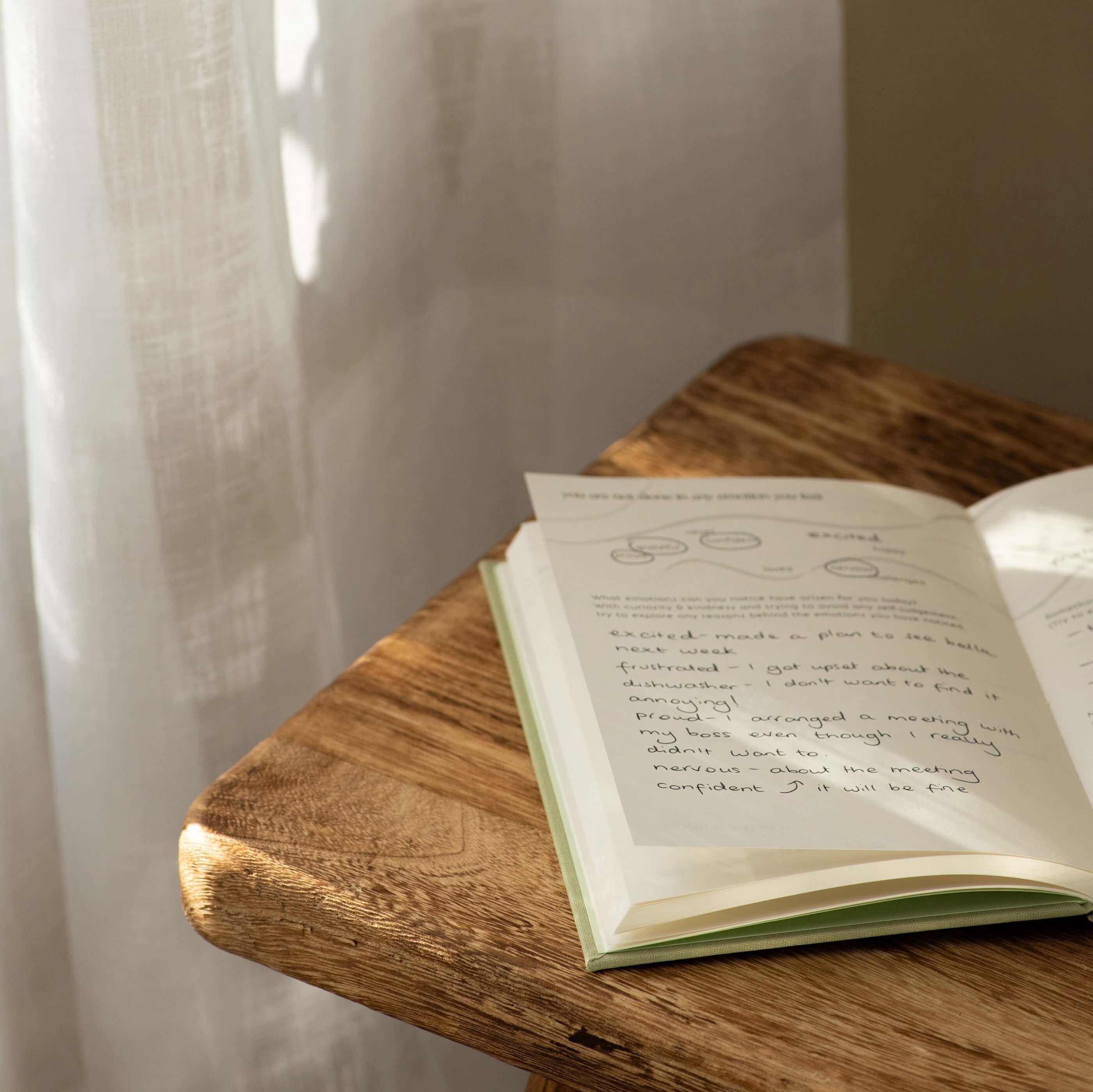
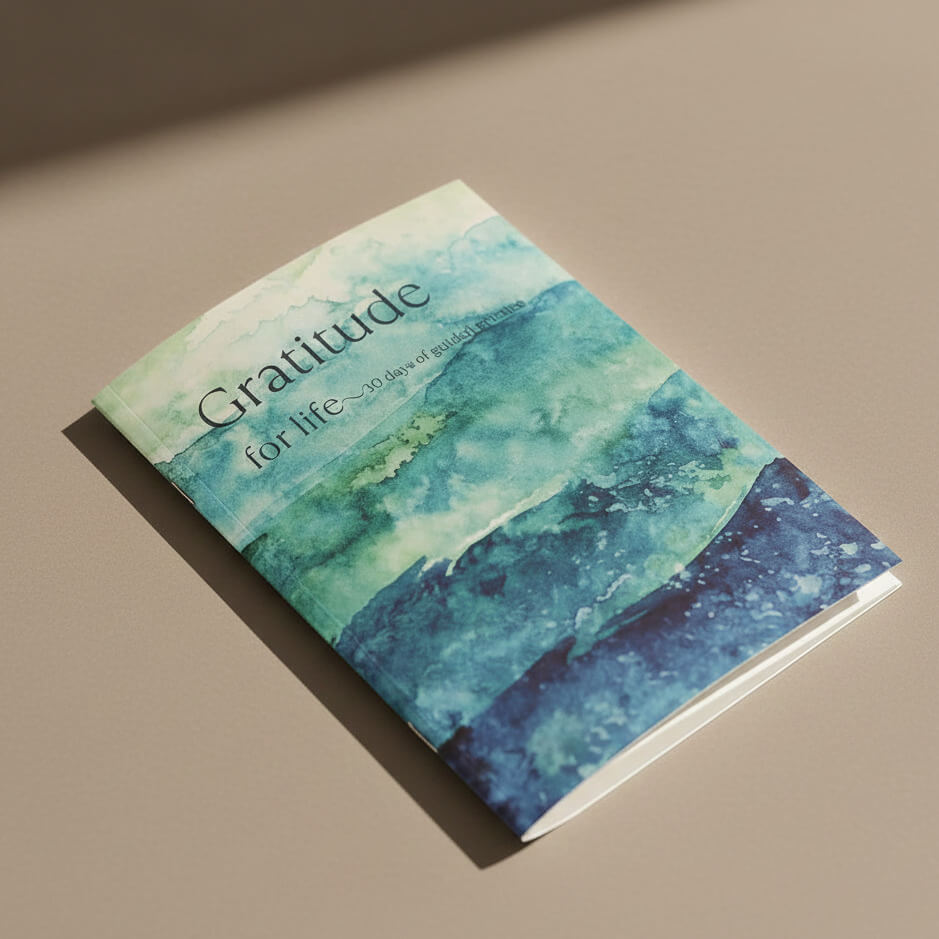
The Gratitude Journal: A 30-Day Challenge. Thirty prompts and thirty different ones, so there is no three-item list to fail at. One day you notice something outside, another day you write a letter you'll never send, one day is a guided meditation instead of writing at all. Undated, so a skipped day leaves no trace. 120gsm paper, luxury textured cover, made in the UK.
Added to your basket. View basket →
Rather than describe it further myself, here is the second half of Carrie Pollard's review, where she says what she found it actually does.
Carrie Pollard, MSW RSW
Experienced psychotherapist, mom and avid journaler. Reviewing The Gratitude Journal: A 30-Day Challenge
"Give Yourself Kindness' journal creates intentional, permission-giving space for our feelings, worries and struggles while noticing things that bring joy, comfort, laughter, hope and connection from the past and present. As an experienced therapist, mom and avid journaler, I've found this journal to balance mindfulness (encouraging us to be in the moment), validation (of ALL our feelings), compassion (connecting with what we need), and of course, gratitude."Read Carrie's review in full →
"Permission-giving space for our feelings, worries and struggles." That is the difference between this and three numbered lines, described by someone with no reason to be generous about it.
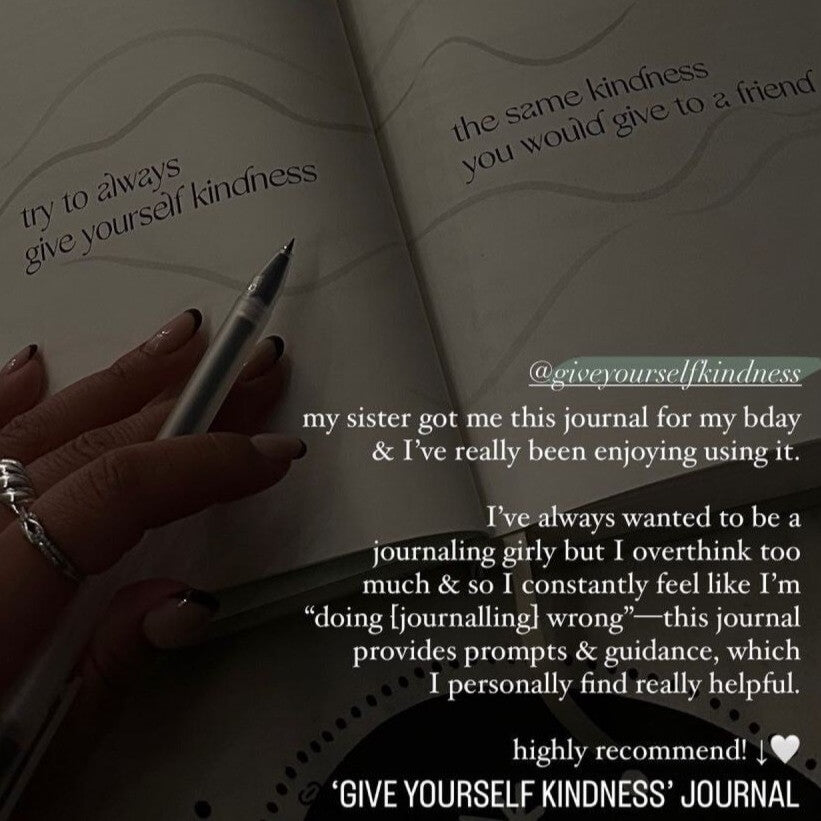
If gratitude was never really the problem and what is actually wearing you down is how you speak to yourself, the gratitude journal is the wrong one. The Give Yourself Kindness Journal at £28.95 works on that directly. Its prompts ask you to write to yourself as you would write to a friend, and it is the journal that has been reviewed by clinical psychologists at Harvard Medical School and the University of Oxford.
And if you'd rather buy nothing, that is genuinely a good outcome too. Take the five reframes above, use the notebook in your drawer, and change the question at the top of the page. The question was always the problem, not the paper.
Common questions
Is it normal for a gratitude journal to make you feel worse?
Yes, and it happens most often to people who are already struggling, which is precisely the group most likely to have been told to try one. Psychotherapist Carrie Pollard describes it plainly: when gratitude is forced, diminishes difficulties, or triggers guilt or shame, "it leaves us feeling worse, not better." The usual cause is a rigid format that requires positive answers on days when the truthful answer isn't positive.
Does this mean I'm an ungrateful person?
No. Finding gratitude hard in a difficult period is a feature of being human under strain, not a character trait. Some people's brains also find gratitude harder than others as a baseline, and that too is trainable rather than fixed. You can be deeply grateful for a great many things and still be unable to list three of them on demand at half past ten on a bad Tuesday.
Should I stop journaling altogether?
Not necessarily, but do change the question. "What did I notice?" or "What got me through today?" are answerable on any day, where "what am I grateful for?" is not. If writing of any kind is consistently leaving you worse than it found you, that is worth pausing on and worth mentioning to a professional.
What's the difference between gratitude and toxic positivity?
Gratitude notices something good and lets it sit alongside whatever else is true. Toxic positivity requires the good thing to cancel the difficult one. The tell is the word "but": genuine gratitude can hold "I'm glad she rang, but I still cried afterwards". Forced positivity cannot, and asks you to delete the second half. More on that here.
Can gratitude journaling work when you're grieving?
Eventually, and gently, and not on a schedule set by a notebook. Early on, being asked to count blessings can feel like being asked to move on before you are ready. If that is where you are, the honest answer is that this may not be the month for it, and that is a reasonable thing to decide.
Are all gratitude journals the same format?
No. Many use a repeated daily list, usually three items, often with dates. Others use a different prompt on each page and no dates at all. The second kind removes both of the mechanisms that cause the problem described on this page, which is why it is worth checking the inside of a journal rather than the cover before buying.
Is there a gratitude journal that doesn't do this?
Look for undated pages, a different prompt on every page, and at least some prompts that don't require you to feel good. The Gratitude Journal: A 30-Day Challenge is mine, is built that way at £10.95, and has been reviewed by psychotherapist Carrie Pollard. This page compares gratitude journals more widely if you would rather look around.