


Quick answer
To write a gratitude journal every day, ask yourself a different question each day, rather than trying harder to answer the same one. Write about one thing in a little detail, and stop after about two minutes. Therapist Fallon Coulombe, NCC, suggests turning your thoughts into questions "so that you have a focus of where your writing can help you go."
 Fallon Coulombe, licensed mental health therapist and National Certified Counselor. Read her tips for beginners
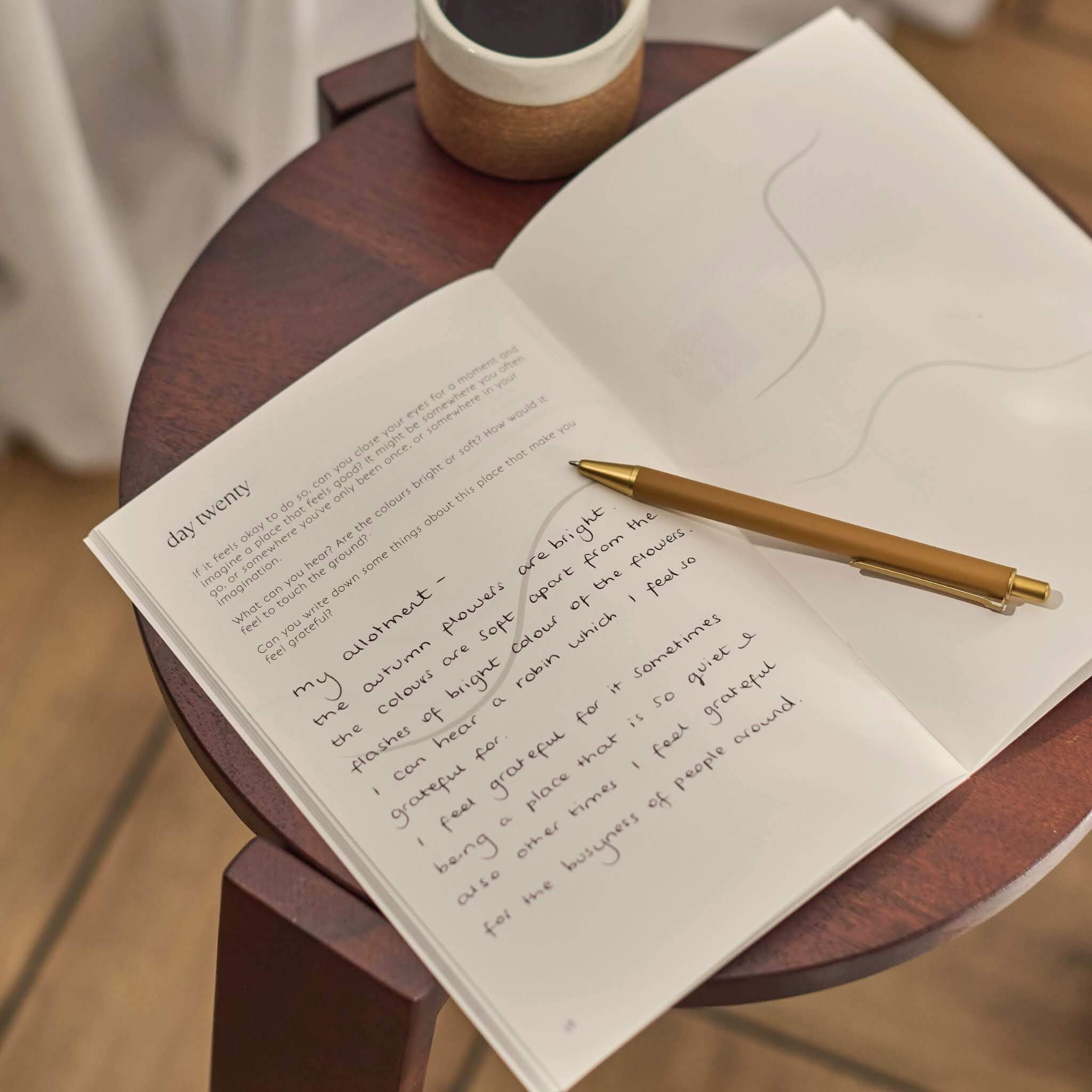
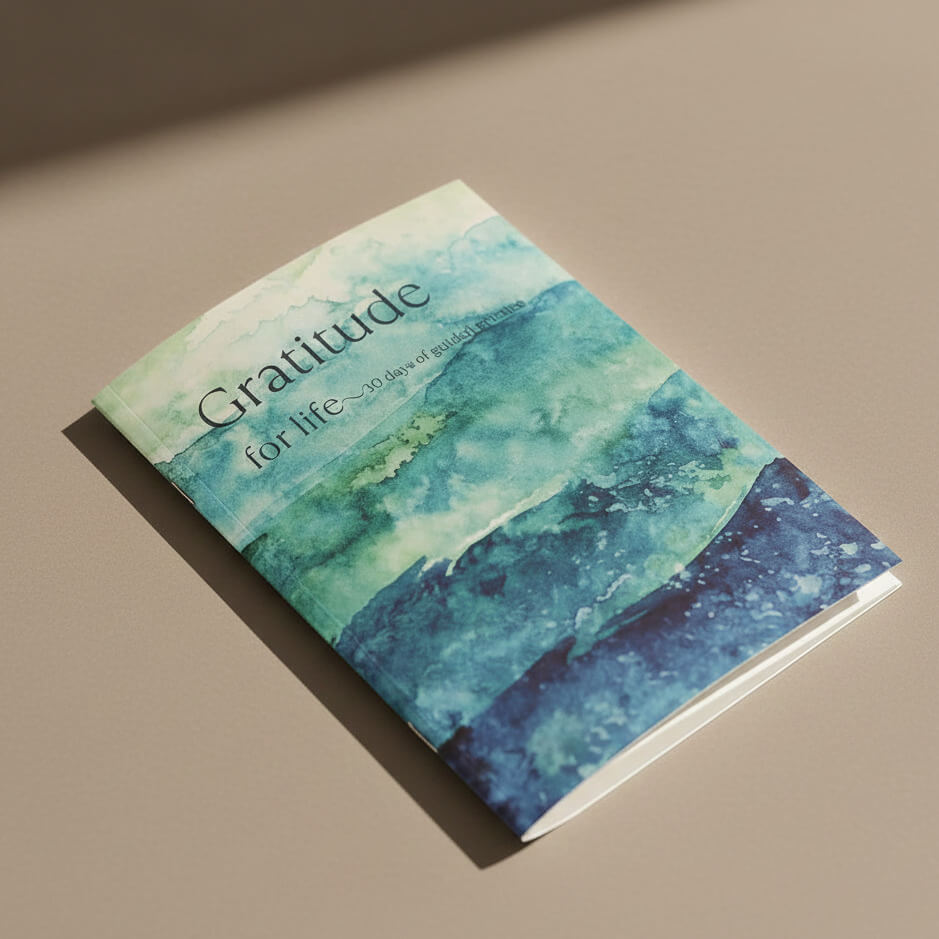
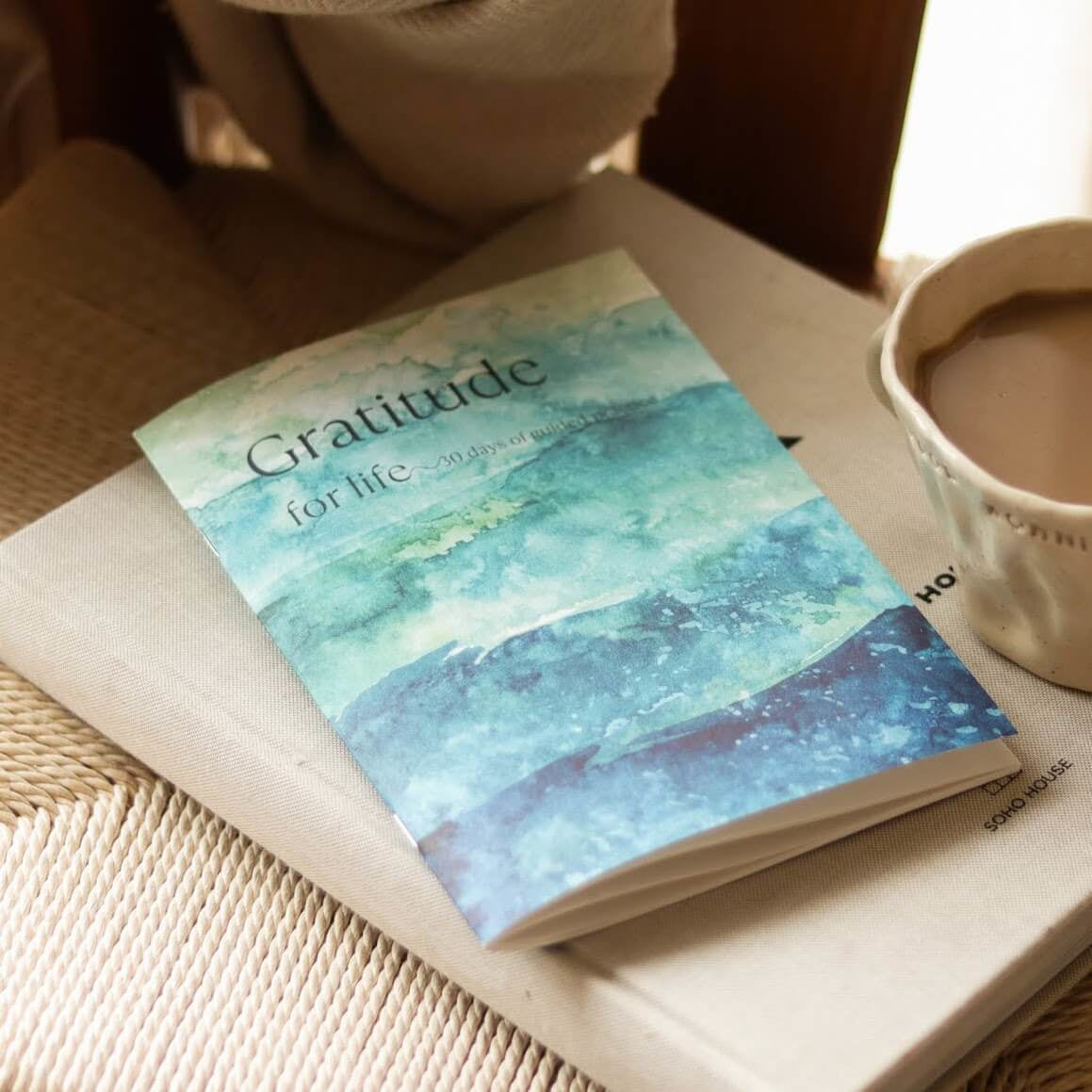
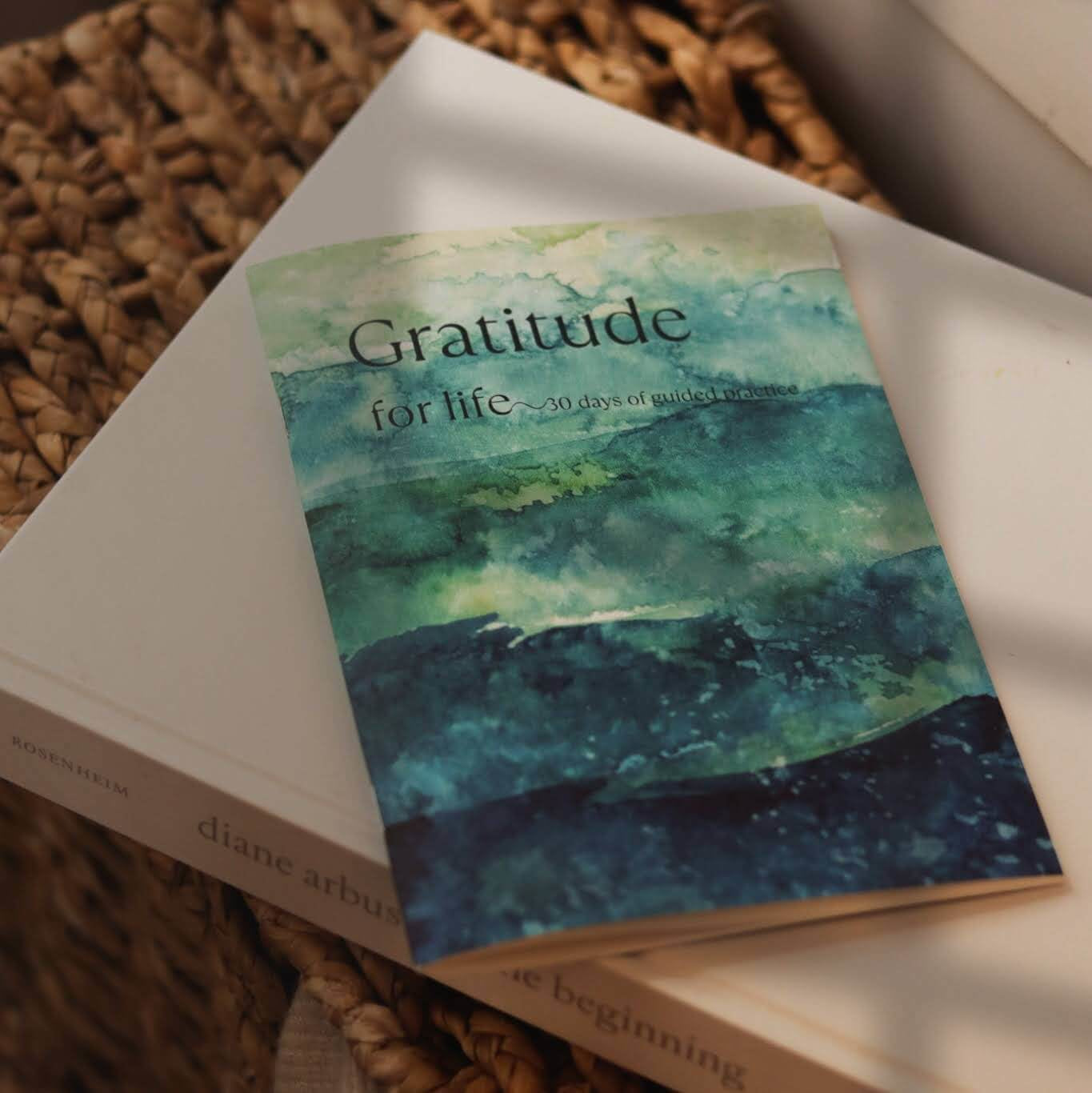
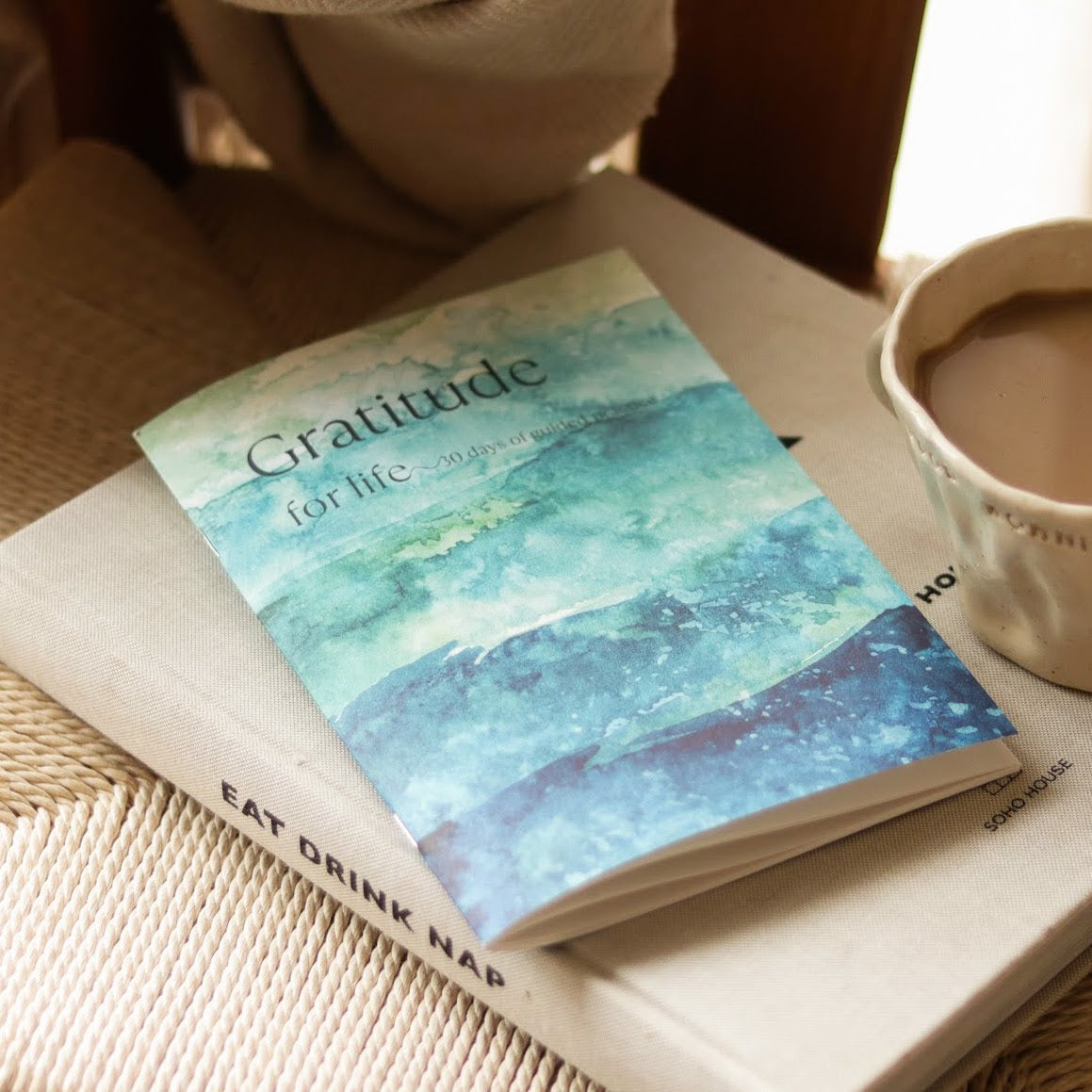
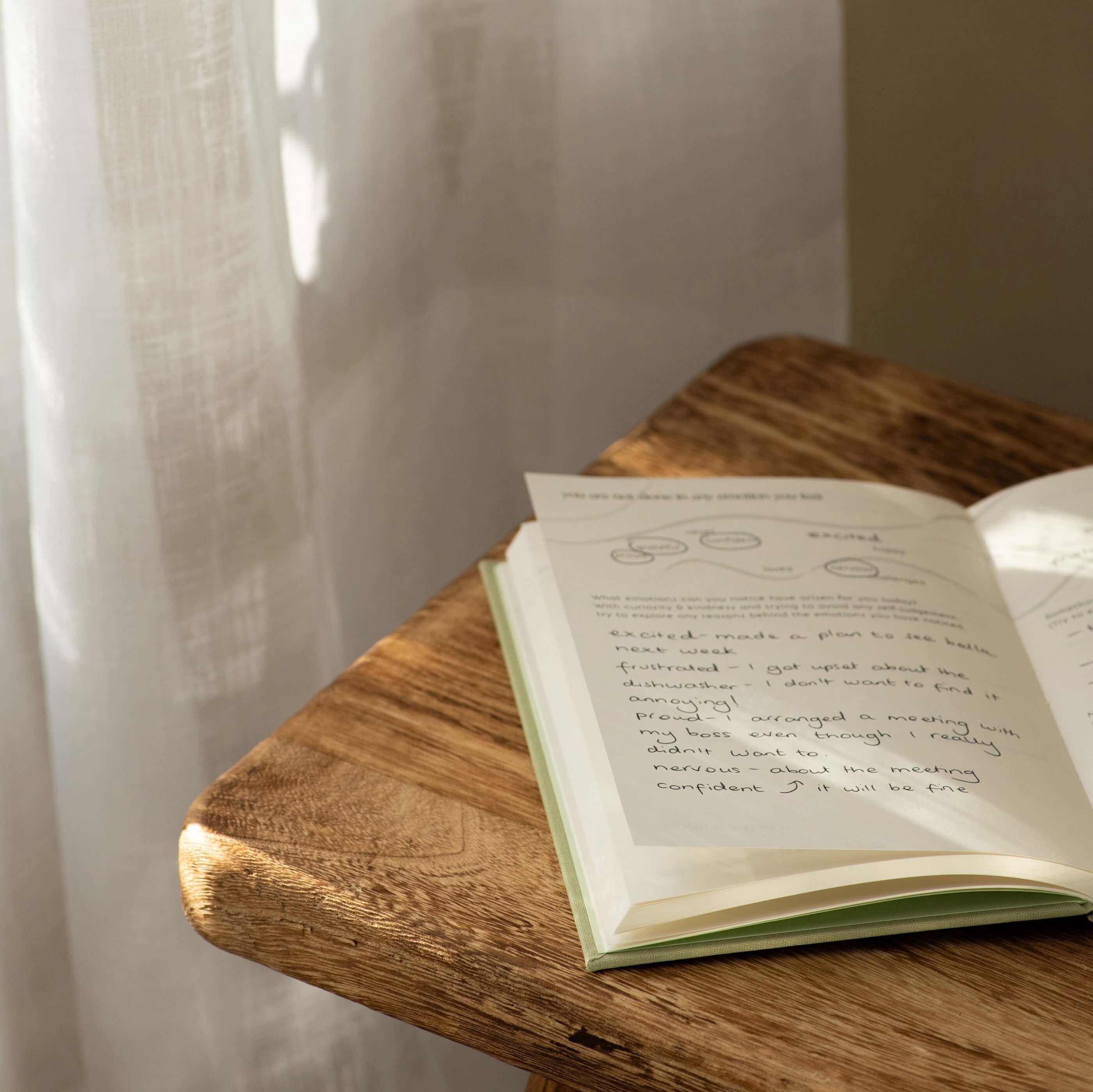
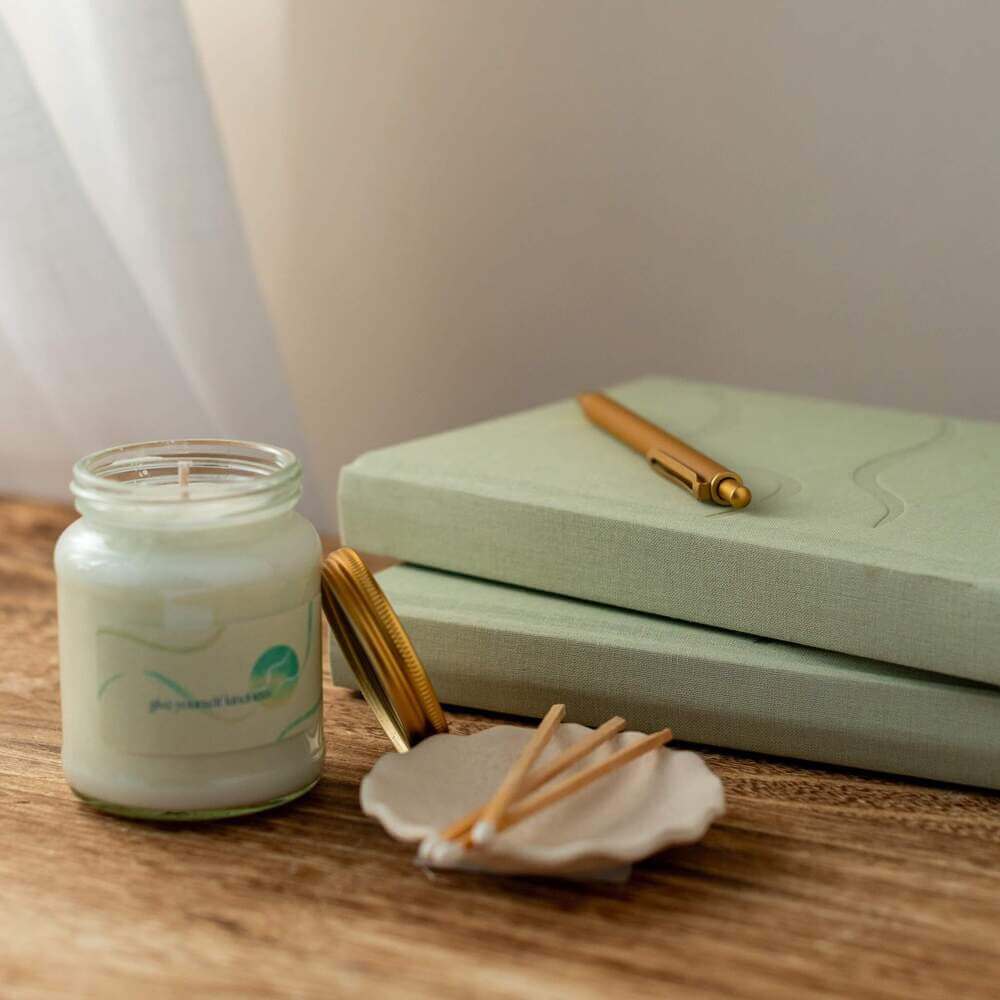
Coming up with a fresh question every evening is hard to keep up. That isn't a failing. It's the reason I made The Gratitude Journal: A 30-Day Challenge, with a different, gently worded question for each of its 30 days. It's about making gratitude easier, and giving you an expert-backed alternative to a gratitude journal with three bullet points every day, which can quickly get boring and repetitive.
I'm Rachel, and I made this page because I used to find gratitude really hard. I'd look at "three things I'm grateful for" with three blank lines underneath, not think of anything straight away, and my mind would decide I was an awful, ungrateful person.
I wasn't, and if that feels familiar, you aren't either. None of what follows will ask you to be more grateful. It will just give you better questions.
About this guide. I'm Rachel Smith, a qualified meditation teacher (DipBSoM, British School of Meditation, passed with distinction) and the founder of Give Yourself Kindness. I'm not a psychologist or a therapist. Everything clinical or research-based on this page is attributed to named, credentialed people, with a link to their full article, so you can read their words for yourself.
Do you have to write in a gratitude journal every day?
No, you don't have to write in a gratitude journal every day, and knowing that up front tends to help people keep going rather than stop. How often you write seems to matter less than whether what you write changes. Daily can work beautifully when the question varies. When it doesn't, writing less often may serve you better.
The best-known research on this is by Robert Emmons and Michael McCullough. They ran their gratitude study two ways: people writing weekly for ten weeks, and people writing daily for about two weeks. The daily version showed the larger effect on positive mood.[1] So daily can absolutely work.
But research summarised by Professor Sonja Lyubomirsky found a different pattern: counting your blessings once a week worked better than doing it three times a week.[2] Doing it more often made it work less well.
I don't think those two findings contradict each other. The daily study gave people an open task each time; the three-times-a-week one repeated a narrow one.
Writing every day seems to work. Writing the same thing every day is what stops working.
Some therapists do encourage a daily habit, and it helps to hear why. Psychotherapist Nina Holle put it first in her tips for beginners.

Nina Holle
Psychotherapist and writer | Draws on psychology, neuroscience and wisdom traditions
"1. Journal everyday - it's like flossing
2. Journal in the evenings to integrate anything unprocessed from the day if you have trouble sleeping…"
What this means for a gratitude journal: a small, regular habit, like flossing, rather than a big effort now and then. The evening also gives you a whole day to look back on.
Read Nina Holle's full tips: 6 journaling tips for beginners, from 6 therapists →And if you'd rather not commit to anything at all yet, psychotherapist Amy Morin suggests a much smaller ask.

Amy Morin, LCSW
Psychotherapist, international bestselling author and host of the Mentally Stronger podcast
"Gratitude is a really powerful tool. Figure out what's one way you could incorporate just a little more gratitude into your life. Try it for a week and see what happens."
What this means for a daily practice: a week is a kinder unit than a streak. If it's doing something for you at the end of it, keep going. If it isn't, change the question rather than deciding you've failed at gratitude.
Read Amy's full article: how gratitude changes your brain, health and relationships →[1] Emmons, R.A. & McCullough, M.E. (2003). Counting blessings versus burdens: an experimental investigation of gratitude and subjective well-being in daily life. Journal of Personality and Social Psychology, 84(2), 377–389.
[2] Lyubomirsky, S., Sheldon, K.M. & Schkade, D. (2005). Pursuing happiness: the architecture of sustainable change. Review of General Psychology, 9, 111–131, as summarised in Lyubomirsky & Layous (2013).
Why gratitude journal entries start to feel the same
Gratitude journal entries start to feel the same because the question stays the same. Ask "what am I grateful for?" every night and the answer usually settles too: family, health, home. After a few weeks you're not really noticing anything. You're filling in a space. Nothing has gone wrong, and it isn't you being ungrateful.
It's how minds work. Clinical psychologist Dr Maria Tucknott explains that the brain evolved to scan for danger first, and that "the human brain became biased toward detecting danger, even when it's not really there." Asking a mind like that to produce good news to the same prompt every night is a big ask. When it goes quiet, it's very easy to decide the problem is you. It isn't.
 From Dr Maria Tucknott's article, How to stop beating yourself up
The fix is small. Change the question, not the answer.
Questions your mind can answer without looking
Examples
- "Three things I'm grateful for" family, health, home
- "What am I thankful for today?" the same three, slightly reworded
- "List your blessings" a category, not a moment
Questions that make you go and look
Examples
- "What went right today that I didn't have to arrange?" the bus was there; someone had emptied the dishwasher
- "What did my body let me do today?" carried the shopping up two flights
- "What's in this room I'd miss?" the lamp my mum gave me
This isn't only my hunch. It's close to what therapists suggest to people starting out.
Fallon Coulombe
Licensed mental health therapist in New Jersey | National Certified Counselor (NCC)
Read Fallon's full tip: 6 journaling tips for beginners, from 6 therapists →"My biggest tip for those beginning to journal is to ask yourself a question and answer it without judgement… Reflect on things you are concerned about and turn these thoughts into questions so that you have a focus of where your writing can help you go."
7 daily gratitude journal prompts, one for each day of the week
These seven daily gratitude journal prompts give you a different question for each day of the week, so you never ask yourself the same thing twice in a row. Each one can only be answered by going back through your actual day. You could copy them into the front of the journal you already use.
- MondayWhat went right today that I didn't have to arrange?
- TuesdayWhat did someone do today that they didn't have to do?
- WednesdayWhat did my body let me do today?
- ThursdayWhat's in this room that I'd miss if it went?
- FridayWhat was easier this week than it used to be?
- SaturdayWhat did I almost not notice?
- SundayWhat got me through this week?
Write your own seven if you'd rather. The only thing I'd suggest is that each one should be impossible to answer without looking back at the day you actually had. For help making a single entry land once you've chosen the question, I've written about how to write what you're grateful for.
What to do when your gratitude journal stops making you feel anything
When your gratitude journal stops making you feel anything, it may be working somewhere you aren't looking. This is the one I hear most, usually as "I'm doing it but it isn't working." The shift tends to happen during the day, not at the desk.
Once you've committed to writing something down each evening, your mind starts anticipating the question. By the second week you might catch yourself half-noticing things during the day: a decent coffee, someone letting you out at a junction, the light on a wall, with a faint oh, that might be one.
That noticing is the practice. The writing is what makes the noticing happen. So a kinder measure isn't did that entry feel moving? It's did I catch myself noticing something at three in the afternoon this week? Most evenings, writing it down feels ordinary. Ordinary is fine.
When the writing becomes somewhere you mark your own homework
The writing can also quietly become a place where you mark your own homework. Professor Willem Kuyken of the University of Oxford names this in his review of my journals.

Professor Willem Kuyken, PhD, DClinPsy
Ritblat Professor of Mindfulness and Psychological Science, University of Oxford | Listed by Web of Science in the top 1% of the most cited scientists in the world
"Writing can be creative, beautiful, resourcing, but it can also invoke an inner critic, rumination and procrastination."
What this means for a daily gratitude journal: a daily practice hands your critic something new to assess every evening. Was the entry good enough? Did you mean it? Would a properly grateful person have found something better than a nice cup of tea? If that sounds familiar, the next section is where I'd start.
Read Professor Kuyken's review alongside the rest →How to keep a daily gratitude journal going: four things that help
To keep a daily gratitude journal going, take the dates off, notice which part of you is writing, let a spoken entry count, and stop at two minutes. Pick one of these, not all four. The most common way a gratitude practice fades is by turning into a system you feel you're failing at.
Stop dating your entries
This sounds trivial, and it may be the biggest one. Dated entries turn every gap into evidence. You flip back, see the 3rd, the 4th, then the 19th, and the page tells you you're someone who doesn't finish things.
Undated, a gap is just a gap. The book stops keeping score. It's why I made my own journals undated.
Notice which part of you is holding the pen
If your entries have gone flat or slightly mean, try writing in the second person: "you needed that walk more than you realised" rather than "I'm grateful for the walk." It might feel odd for an entry or two. Clinical psychologist Dr Chris Irons, a specialist in Compassion Focused Therapy, explains the thinking behind it.

Dr Chris Irons
Clinical Psychologist specialising in Compassion Focused Therapy | Many years in the NHS, now co-director of Balanced Minds
"…it's useful to consider which part of ourselves is doing the journalling… For example, it could be that it's a fearful part of you that is writing, or an angry or self-critical part."
"…CFT tries to support people by initially helping them to develop a compassionate part of self - a part that is wise, strong and caring… Crucially, once developed, we then would use this compassionate part of ourselves to ‘do’ the journalling."
What this means for your gratitude journal: writing "I" can hand the pen to whichever voice is loudest, and for a lot of us that's the critical one. Writing "you" reaches for a different one, closer to the wise, caring part Dr Irons describes. I'd call it worth trying rather than proven.
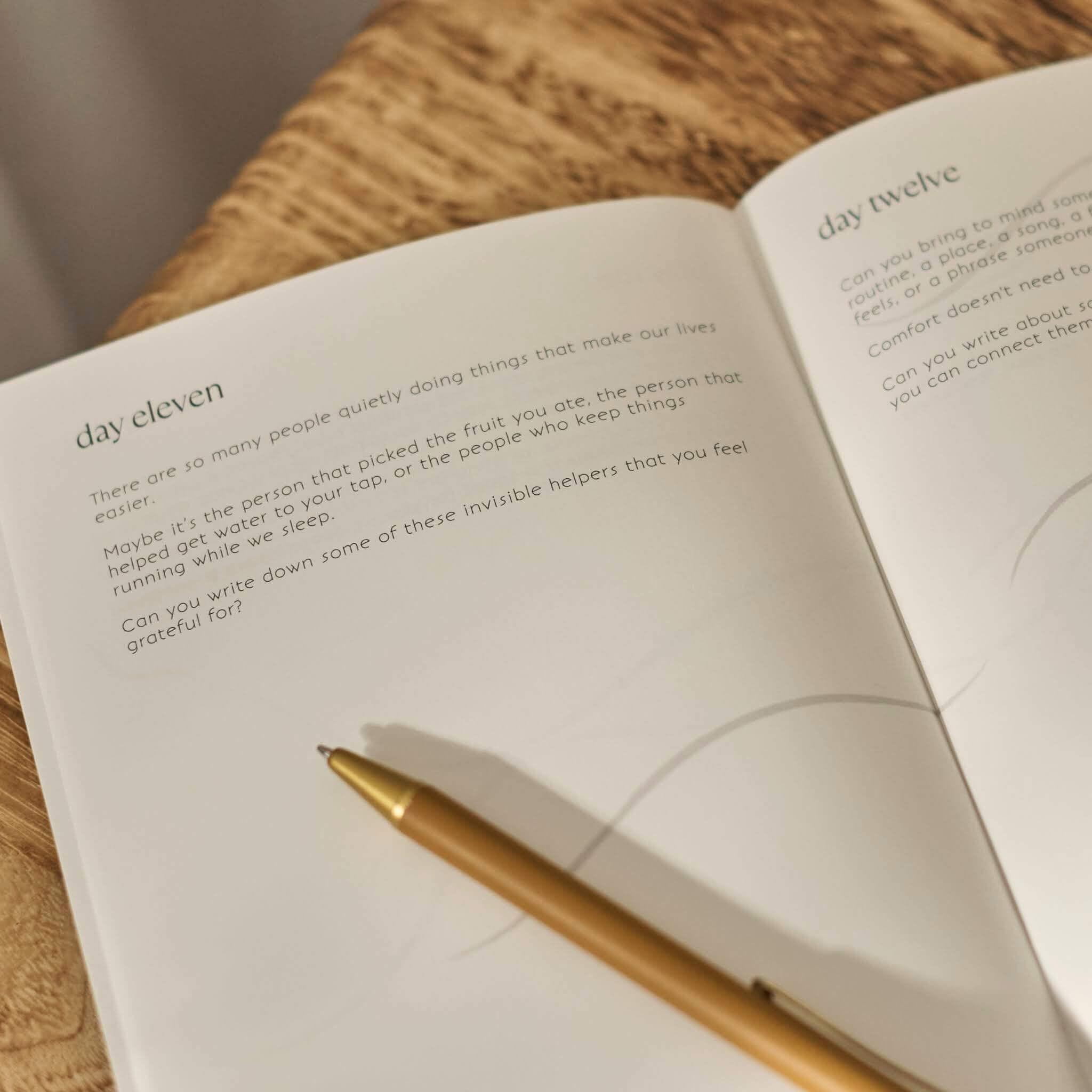
Read Dr Irons's full article: The benefits of journaling, from 3 clinical psychologists →The same idea sits in one of the prompts in my gratitude journal. Day 8 asks:
"Imagine a friend came to you, explaining that they were feeling how you feel right now. Write down what you would want to say to them. Try to say it to yourself."
"Sometimes the most grateful thing we can do is honour whatever we're experiencing in this moment."
There's more on this in speaking to yourself as you would a friend.
Say it out loud on the days you can't write
Walking, in the shower, in the car. Three half-sentences muttered on the way to the bins is a real entry.
The noticing is what matters; the pen is one way of getting there. This also stops a missed evening becoming a missed fortnight.
Set two minutes as a maximum
Not a minimum. A timer running out gives you permission to stop, which can matter more than permission to start.
It also stops a daily practice quietly growing into a twenty-minute obligation you'll resent by March. One sentence is a complete entry.
What to write in a gratitude journal when nothing comes
When nothing comes, write something smaller than feels respectable. Most people stall because they're quietly screening for things that seem worth being grateful about, and by that standard an ordinary Tuesday has nothing in it. Drop the standard, and look for one small, physical thing instead.
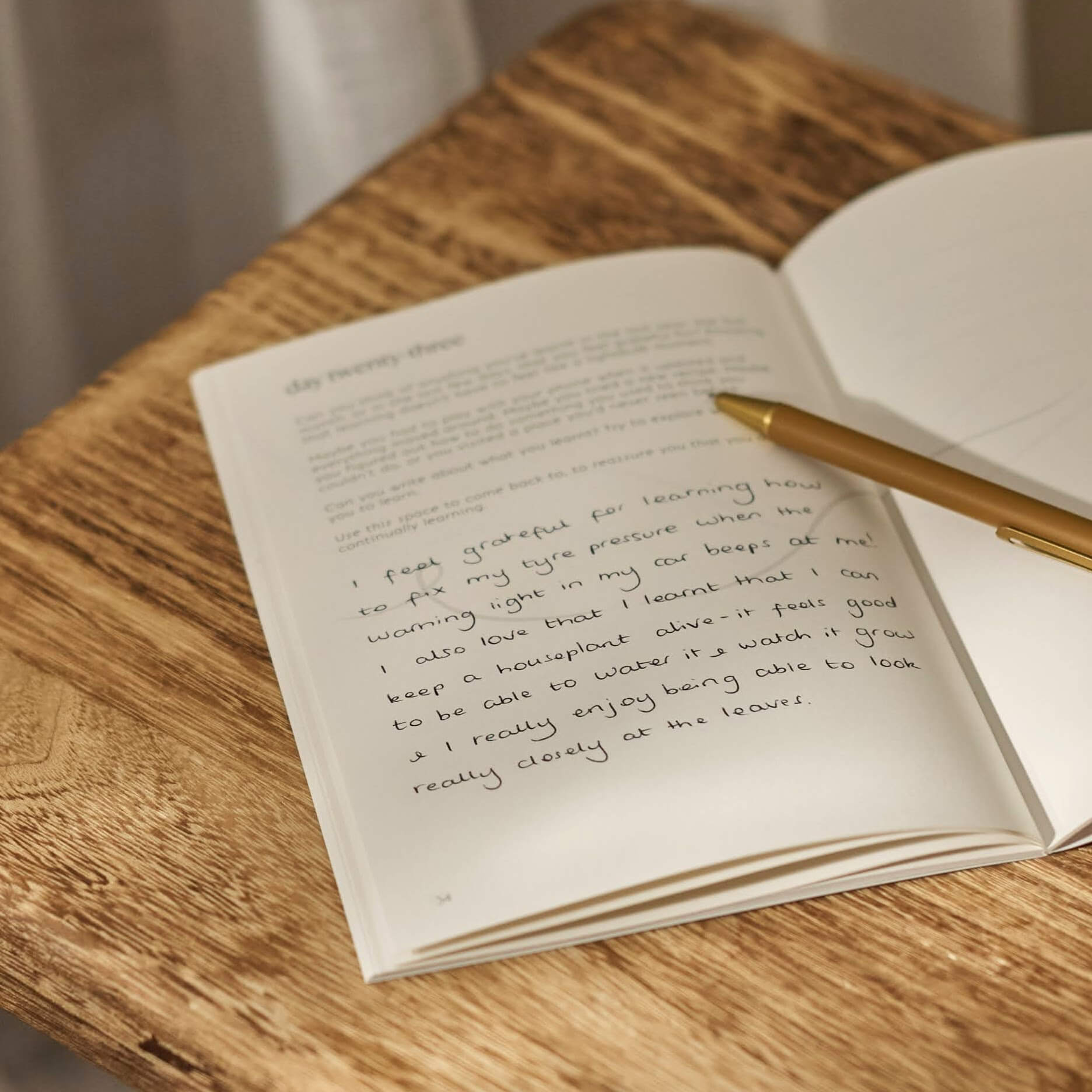
What people write when they're being honest rather than impressive is often startlingly small. Hot water. Clean clothes that were dry when you needed them. The shopping being affordable this week. Having brushed your teeth twice on a day when that was hard. A body that hurt a bit less than yesterday.
Here's what that shift can look like, from the thought that stops you to the entry you could write instead:
The screen: "Nothing happened today. Just work and then telly."
The entry: "The heating came on at six and the flat was warm when I got in. I didn't have to do anything for that."
The screen: "I can't write 'hot shower' again, that's pathetic."
The entry: "The shower again, specifically the bit where the cold came off my shoulders. Two minutes where nothing hurt."
The screen: "Nothing good happened, I just got through it."
The entry: "I got through it. That took something. What helped: I ate lunch, and I went outside at three."
None of the entries found better material. They lowered the bar for what counts, then went into a little detail on something ordinary.
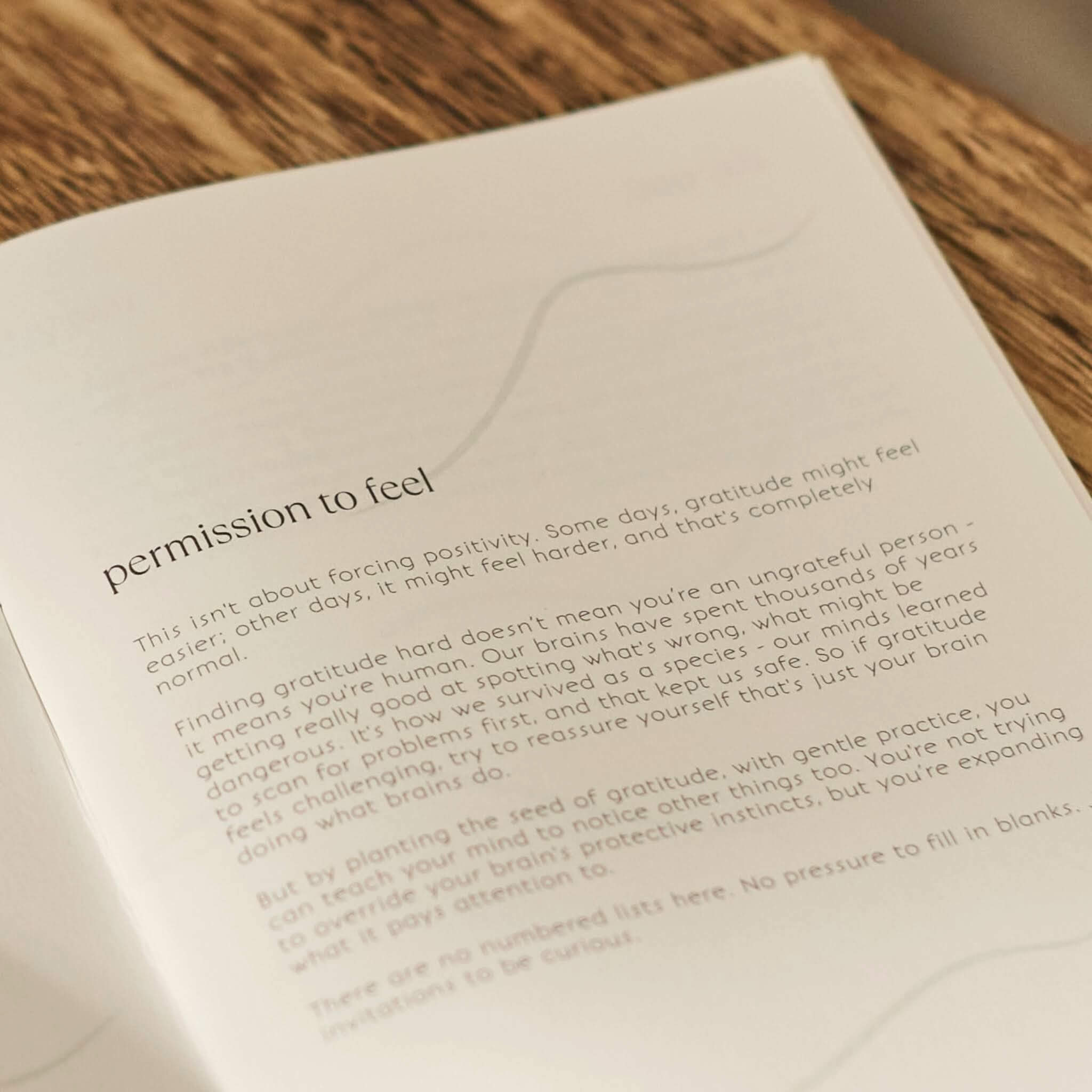
And if nothing comes at all, that's allowed. Finding gratitude hard doesn't mean you're an ungrateful person. It means you're human. If you'd like a running start, I've put together 50 things to be grateful for, written for people who find this hard.
What to write in a gratitude journal on a hard day
On a hard day, write what got you through, what you noticed, or what's true including the difficult part, instead of three good things. A daily practice will land on bad days too. If the only question available is name three good things, the practice starts asking you to pretend, and you'll feel the gap between the page and your life.

Carrie Pollard, MSW RSW
Experienced psychotherapist and avid journaler
Read more: when a gratitude journal makes you feel worse →"…when gratitude is forced, diminishes difficulties, or triggers guilt or shame (e.g., ‘I should be grateful, look at all I have’) it leaves us feeling worse, not better."
Three questions that hold up on a bad day, when the usual one doesn't:
"What got me through today?"
Not what was good. What held. A phone call, a painkiller, a dog, the fact that it eventually got dark and the day ended. This works when nothing was enjoyable, because it isn't asking about enjoyment.
"What did I notice today?"
Swap the word grateful for the word noticed. Noticing has no emotional requirement attached. You can notice something on a day when you can't feel much of anything, and gratitude often turns up quietly once you stop demanding it.
"What's true, including the difficult part?"
Write the "but" in. "I'm glad she rang, but I still cried after." Both halves on the page. Gratitude and pain sit alongside each other in real life, and a journal that can't hold both isn't much use on the days you most need one.
When to look for more support
If you're in grief, burnout or depression, a daily gratitude practice might not be the right tool right now, and stopping isn't a failure. It can sit alongside proper support, but it isn't a substitute for it.
If things have felt heavy for weeks, please consider speaking to your GP or a therapist. That's the kinder move. A gratitude journal is a gentle companion alongside professional support, never a replacement for it. If you're struggling right now, you can call Samaritans free on 116 123, day or night.
Why a daily gratitude journal can be hard to keep going on your own
A daily gratitude journal can be hard to keep going on your own because you have to be the one who asks the question, as well as the one who answers it, every single evening. That's two jobs, and the first one is the one that slips when you're tired. It isn't a sign you're doing it wrong.
Gratitude journaling can be a lovely practice. It also asks for more than it seems to: a fresh question, the patience to look back at the day, and a kind voice when the entry feels thin. Three things help hold that structure when your own energy is low:
- A question already chosen for you, so the first decision of the evening is made.
- A different question each day, so you can't answer on autopilot.
- Wording that invites rather than demands, so a slow night doesn't read as a failed one.
You don't have to hold all of that in your head. That's what a guided journal is for.
A gratitude journal with a different question every day
I should tell you that The Gratitude Journal: A 30-Day Challenge is mine, and why it exists. Every gratitude journal I tried asked me the same question every night, and I decided I was bad at gratitude. It turned out the format was the problem, so I made the journal I needed: a different question each day, and permission for gratitude to feel hard.

The Gratitude Journal: A 30-Day Challenge
- 30 completely different prompts, one for each day, so the question never has time to go stale
- No numbered lists and no blank lines, just invitations to be curious, and permission to skip one that doesn't land
- Undated, so a missed day never becomes a record of a missed day
- A guided gratitude meditation I wrote and recorded, plus QR codes to expert articles on the science of gratitude
A5, premium 120gsm paper, luxury textured cover, made in the UK and sustainably sourced.
Psychotherapist Carrie Pollard wrote this about the journal:
Carrie Pollard, MSW RSW
Experienced psychotherapist, on The Gratitude Journal
Read what therapists and clinical psychologists say →"…Give Yourself Kindness’ journal creates intentional, permission-giving space for our feelings, worries and struggles while noticing things that bring joy, comfort, laughter, hope and connection from the past and present.
As an experienced therapist, mom and avid journaler, I’ve found this journal to balance mindfulness (encouraging us to be in the moment), validation (of ALL our feelings), compassion (connecting with what we need), and of course, gratitude."
A different question every evening, so you only have to answer, and gratitude has room to feel natural again.
Discover The Gratitude Journal →
Questions about writing a gratitude journal every day
How do you write a gratitude journal every day?
To write a gratitude journal every day, change the question you ask yourself rather than trying harder to answer the same one. Ask something different each day, write about one thing in specific detail instead of three in a list, and stop at about two minutes. A set of seven questions, one for each day of the week, is enough to stop the repetition.
Do you have to write in a gratitude journal every day?
No, you don't have to write in a gratitude journal every day, because frequency seems to matter less than variety. Emmons and McCullough found a larger lift in positive mood in their daily study than their weekly one, while research summarised by Professor Sonja Lyubomirsky found once a week worked better than three times. Daily works when what you write varies.
What do you write in a daily gratitude journal?
In a daily gratitude journal, write one specific thing and why it mattered, rather than a list of general categories. “My sister rang while I was cooking and made me laugh” does more than “family”. On flat days, go smaller than feels respectable: hot water, dry clothes, a body that hurt a little less. The only thing an entry needs is to be honest.
Why do I keep writing the same things in my gratitude journal?
You keep writing the same things in your gratitude journal because you keep asking the same question. After a few dozen evenings, your mind answers “family, health, home” before the pen is down. That's your mind being efficient, not you being ungrateful. Change the question, for example “what went right today that I didn't have to arrange?”
Why doesn't my gratitude journal make me feel anything?
Your gratitude journal may not make you feel anything at the desk because the shift usually happens during the day. Once your mind knows it will be asked something that evening, it starts half-noticing things in advance. So a kinder measure is whether you caught yourself noticing something in the afternoon, not whether the entry felt moving.
What is the 3-3-3 journal method?
The 3-3-3 journal method is usually described as writing three things you're grateful for, three things you achieved, and three things you're looking forward to. It's a popular internet format rather than a psychological framework, and versions vary. It can work as a structure, but because its questions never change, the answers can become automatic within a few weeks.
What is the 3-2-1 method of journaling?
The 3-2-1 method of journaling is generally described as three things you're grateful for, two things you did well, and one thing you want to do tomorrow. Like the 3-3-3 method, it's an informal internet format rather than a researched one. It's a reasonable place to start, but if it has gone flat, the fixed structure is the likeliest reason.
What are the four A's of gratitude?
The four A's of gratitude are most often given as appreciation, approval, attention and affection. It's a memory aid that circulates online rather than a model from psychological research, so I'd treat it as a prompt rather than a framework. If it helps you look at your day from four angles instead of one, that's useful.
Is it better to write a gratitude journal in the morning or at night?
It's better to write a gratitude journal whenever you'll actually do it. Psychotherapist Nina Holle suggests journaling in the evenings to integrate anything unprocessed from the day, particularly if you have trouble sleeping, and evening gives you a whole day to look back on. Morning works too. The timing matters less than whether the question changes.
What if I miss a day or a week?
If you miss a day or a week of your gratitude journal, nothing breaks. The only thing that does real harm is deciding you've ruined it and stopping altogether. If missed days bother you, take the dates out, so a gap is just a gap. Picking it up after two weeks isn't starting over. It's just the next entry.
How many things should I write each day?
You only need to write one thing each day, written properly. One thing described in enough detail that you can picture it tends to do more than a quick list of three, and a fixed number creates a quota you can fail at. On days when a list of small things is all you've got, a list is completely fine.
Does gratitude journaling actually work?
Gratitude journaling can work: in the best-known research, daily gratitude writing showed a larger lift in positive mood than weekly writing. Psychotherapist Amy Morin calls gratitude “a really powerful tool” and suggests trying one small change for a week. It seems to work best when what you write keeps changing, rather than repeating the same list.
How long should you write a gratitude journal for each day?
You only need to write a gratitude journal for about two minutes a day. Treat two minutes as a maximum rather than a minimum, so a timer gives you permission to stop, and the practice doesn't grow into an obligation. One honest sentence about one specific thing is a complete entry.
Continue reading
From the therapists quoted here
-
How gratitude changes your brain, health and relationshipsAmy Morin, LCSW, Psychotherapist
-
6 journaling tips for beginners, from 6 therapistsFallon Coulombe, Nina Holle, Carrie Pollard and others
-
The benefits of journaling, from 3 clinical psychologistsDr Chris Irons, Clinical Psychologist, and colleagues
-
How to stop beating yourself upDr Maria Tucknott, Clinical Psychologist
Related guides
- How to start a gratitude journal
- How to write what you're grateful for
- Why gratitude journaling feels hard, and what to do
- Gratitude journal made me feel worse? You're not ungrateful
- What makes a good gratitude journal
- The best gratitude journals compared
- The Give Yourself Kindness Journal, for the hard days as well as the good ones
- Why it's okay to find gratitude hard sometimes
- 50 things to be grateful for
- Speak to yourself as you would a friend
- What mental health experts say about the journals