

What Makes a Good Gratitude Journal
Quick answer
A good gratitude journal supports you rather than tests you: it asks gently, changes every day, and still has something to offer on a hard day. Look for seven things: prompts that invite rather than instruct, a sense that nothing is too small, prompts that change, room for hard days, reassurance that finding it hard is normal, undated pages you can pick back up, and gentle expectations rather than promises of instant happiness.
Psychotherapist Carrie Pollard, MSW RSW, explains why that matters: "…when gratitude is forced, diminishes difficulties, or triggers guilt or shame… it leaves us feeling worse, not better." Finding gratitude hard doesn't make you ungrateful. I made The Gratitude Journal: A 30-Day Challenge to meet all seven.
 Carrie Pollard, MSW RSW, experienced psychotherapist. When a gratitude journal makes you feel worse
Wanting to choose well before you start is a kind thing to do for yourself, and you're in the right place for it. Gratitude journaling is one of the most studied wellbeing practices there is, and one of the easiest to set up badly, through no fault of the person doing it.
I'm Rachel, and I'm writing this because I tried to use gratitude journals to help my mental health, and they made me feel worse. They asked me the same thing every day. Three blank lines. It started to feel like homework, and then it got boring. I thought gratitude was meant to be easy, and that it would make me feel amazing straight away. So when I found it hard, I decided I must be an ungrateful person. Like I was failing. Like there must be something wrong with me.
I've spent a lot of years since then learning about gratitude from brilliant experts around the world, and what I know now is that I wasn't alone in that, and I wasn't ungrateful. The format was the problem, not me. So I made a different kind of gratitude journal, and I write pages like this one, so that nobody else has to sit with the feeling I had.
About this guide. I'm Rachel Smith, a qualified meditation teacher (DipBSoM, British School of Meditation, passed with distinction) and the founder of Give Yourself Kindness. I'm not a psychologist or a therapist. Everything clinical on this page is attributed to named, credentialed people, with a link to their full words, so you can read them for yourself.
What a good gratitude journal feels like: support, not a test
A good gratitude journal feels like support: it invites you to notice, and it never marks what you write. Gratitude can be a lovely practice. But the way a journal asks makes a real difference to how it feels to answer, especially on the days you most want it to help.
When a page asks you to produce something, a blank moment starts to feel like evidence about you. When a page invites you to notice, a blank moment is just a pause. That difference is what the rest of this guide is about.
Carrie Pollard, MSW RSW
Experienced psychotherapist and avid journaler
"Practicing gratitude is a way to bring balance and perspective to life—it helps us recognize the gifts, glimmers and simple things that make life feel better. However, when gratitude is forced, diminishes difficulties, or triggers guilt or shame (e.g., ‘I should be grateful, look at all I have’) it leaves us feeling worse, not better."
What this means when you're choosing a journal: the words on the page matter. A journal that pushes for gratitude can leave you feeling worse than no journal at all. One that makes room for how you actually feel gives gratitude space to arrive on its own.
Read more: when a gratitude journal makes you feel worse →Psychotherapist Amy Morin, who wrote about the science of gratitude for this site, is just as clear that it doesn't need to be big, and doesn't need to be forced.

Amy Morin, LCSW
Psychotherapist, international bestselling author and host of the Mentally Stronger podcast
"It doesn't need to be pages upon pages of why you're grateful for something."
"…If you aren't feeling grateful sometimes, you don't have to force it."
What this means for a gratitude journal: a good one makes a few words feel like enough, and treats a day when gratitude doesn't come as part of the practice rather than a failure of it.
Read Amy's full article: how gratitude changes your brain, health and relationships →Here is the same moment, asked two different ways. The first is the page I kept buying. The second is Day 2 of the journal I made.
The usual page
How it asks
"Three things I'm grateful for today: 1. ___ 2. ___ 3. ___"
A number to hit, the same question every day, and blank lines that stay blank when nothing comes.
A page that invites
How it asks
"Can you think back to the last 24 hours? Can you notice a moment that felt good?… knowing that there are not too few or too many things to notice."
A gentle question, a way in, and no amount you have to reach.
Same day, same person. One page asks you to produce. The other invites you to notice.
What to look for in a gratitude journal: seven signs it helps you feel better, not worse
What to look for in a gratitude journal comes down to seven signs that it will support you rather than test you. Each one comes with a quick way to check it, whether you're holding the journal in a shop or looking at sample pages online.
It invites you, rather than instructs you
A good gratitude journal asks gently, usually as a question, instead of giving you a task to complete. "Can you notice a moment that felt good?" feels very different from "List three things". One is an invitation you can accept in your own way. The other is homework, and homework can be done wrong.
This is the difference I felt most. The journals that turned into a chore were the ones that told me what to produce each evening.
How to check it: look at a sample page. Do you see numbered lines waiting to be filled, or a question you could answer however you like?
Nothing is too small, and any amount counts
A good gratitude journal tells you that a small thing is enough, and that a few words count as much as a full page. Hot water from the tap is enough. A song you like is enough. On a tired evening, knowing that one line counts is often what gets you to pick up the pen.
In my own journal, I wrote it into the pages so nobody has to guess:
"You don't need to fill the space. There is no ‘right’ or ‘wrong’ amount to write. A few words is just as valid as more."
How to check it: does the page make a few words look like enough, or does the layout suggest you've fallen short if you don't fill it?
The prompts change, with lots of ways in
A good gratitude journal asks something different each day, and comes at gratitude through lots of different doors. Your senses, a memory, something that comforts you, something your body let you do, something you made, something you learned. When the question changes, there's usually one door that feels open to you today.
The same question every day is the most common reason a gratitude journal starts to feel repetitive and boring. By week two you're answering it the way you answered it last Tuesday, and the practice quietly becomes admin.
How to check it: compare three sample pages from different parts of the journal. If all three ask the same thing, you're buying the same day printed again and again.
It makes room for hard days
A good gratitude journal lets gratitude and pain sit side by side, and never asks you to find a silver lining. Any daily practice will land on days that are hard. If the only question on the page is name three good things, the journal is asking you to write something you don't believe, and that's when gratitude can start to feel worse, not better.
A kind journal says plainly that some things are just painful. From Day 22 of mine:
"It can be really small, and the gratitude doesn't take away the pain - there can be both."
"Some painful things are just painful - that's allowed and valid."
How to check it: think of a hard day you've had this month. Read three prompts and ask whether you could have answered any of them honestly on that day.
It tells you that finding it hard is normal
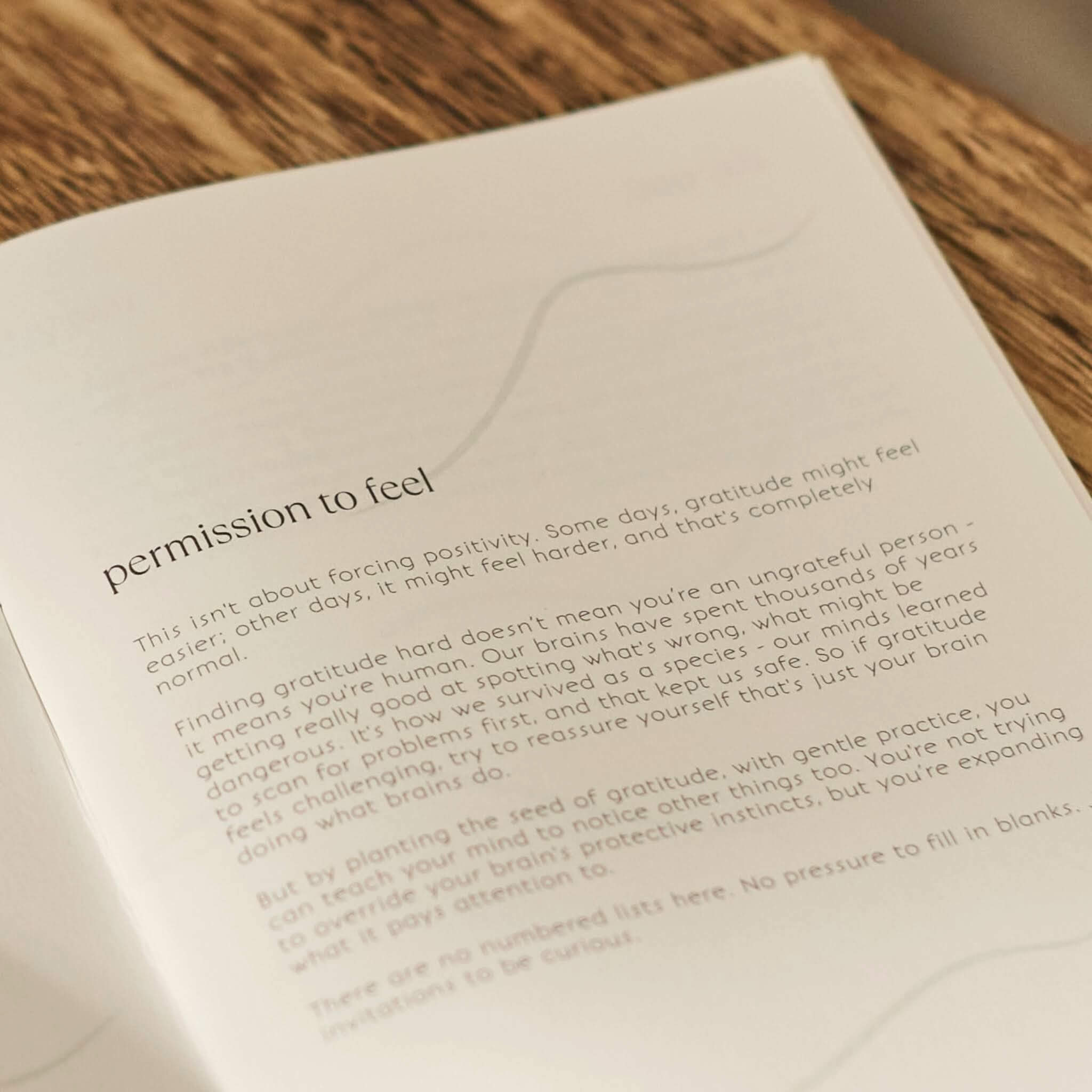
A good gratitude journal explains why gratitude can feel hard, so a blank moment doesn't feel like a sign that something is wrong with you. Minds are very good at spotting what's wrong first. It's how humans have stayed safe. So when gratitude doesn't come easily, that's your brain doing what brains do, not a measure of how grateful you are.
A journal that tells you this at the start changes how every hard evening feels. It's the thing I most needed to hear when I was sure I was an ungrateful person.
How to check it: read the journal's introduction. Does it reassure you that some days will be harder, or does it tell you how you should feel?
You can miss days and pick it back up
A good gratitude journal is undated, and a length you can realistically finish. A dated journal turns a missed week into a row of empty boxes. An undated one lets you stop in January, come back in March, and simply turn to the next page.
Length matters too. Thirty days that you finish can feel like a small kindness. A year-long journal abandoned in February can sit on a shelf feeling like a reproach.
How to check it: look for printed dates or days of the week. "Undated" is usually stated in the description. Then ask whether you'd realistically reach the last page.
It sets gentle expectations, not instant results
A good gratitude journal doesn't promise to transform your mood in five minutes a day. It treats gratitude as a gentle practice that can build over time, with some days easier than others. That way, a day when it doesn't land isn't a sign that something is wrong with you.
I expected gratitude to make me feel amazing straight away. When it didn't, I decided the problem was me. A journal that is honest about what gratitude is, a gentle practice rather than a quick fix, protects you from that. Mine opens like this:
"Some days, gratitude might feel easier; other days, it might feel harder, and that's completely normal."
How to check it: read the back cover and the introduction. Big promises ("feel happier in just five minutes") can set you up to feel you've failed on a hard day. Look for words like "gentle practice", "over time" and "some days it might feel harder".
What good gratitude journal prompts sound like
Good gratitude journal prompts sound like gentle questions with a way in, not tasks to complete. Here are six, word for word from the pages of my own gratitude journal, so you can hear the difference. Each one is labelled with the sign it shows.
- 🌤️ Day 6 · Nothing is too small"Look around you right now. What are some ordinary things that are actually pretty amazing? Maybe it's the movement of the clouds in the sky, or that water comes out when you turn the tap."
- 🛋️ Day 12 · Lots of ways in"Can you bring to mind something that brings you comfort - a routine, a place, a song, a food?… Comfort doesn't need to be exciting or impressive to anyone else."
- 😊 Day 16 · It invites you"Can you write down some things that have made you smile in the last 24 hours, or in the last few days? Knowing that nothing is too small."
- 🫶 Day 8 · Room for how you feel"Imagine a friend came to you, explaining that they were feeling how you feel right now. Write down what you would want to say to them. Try to say it to yourself."
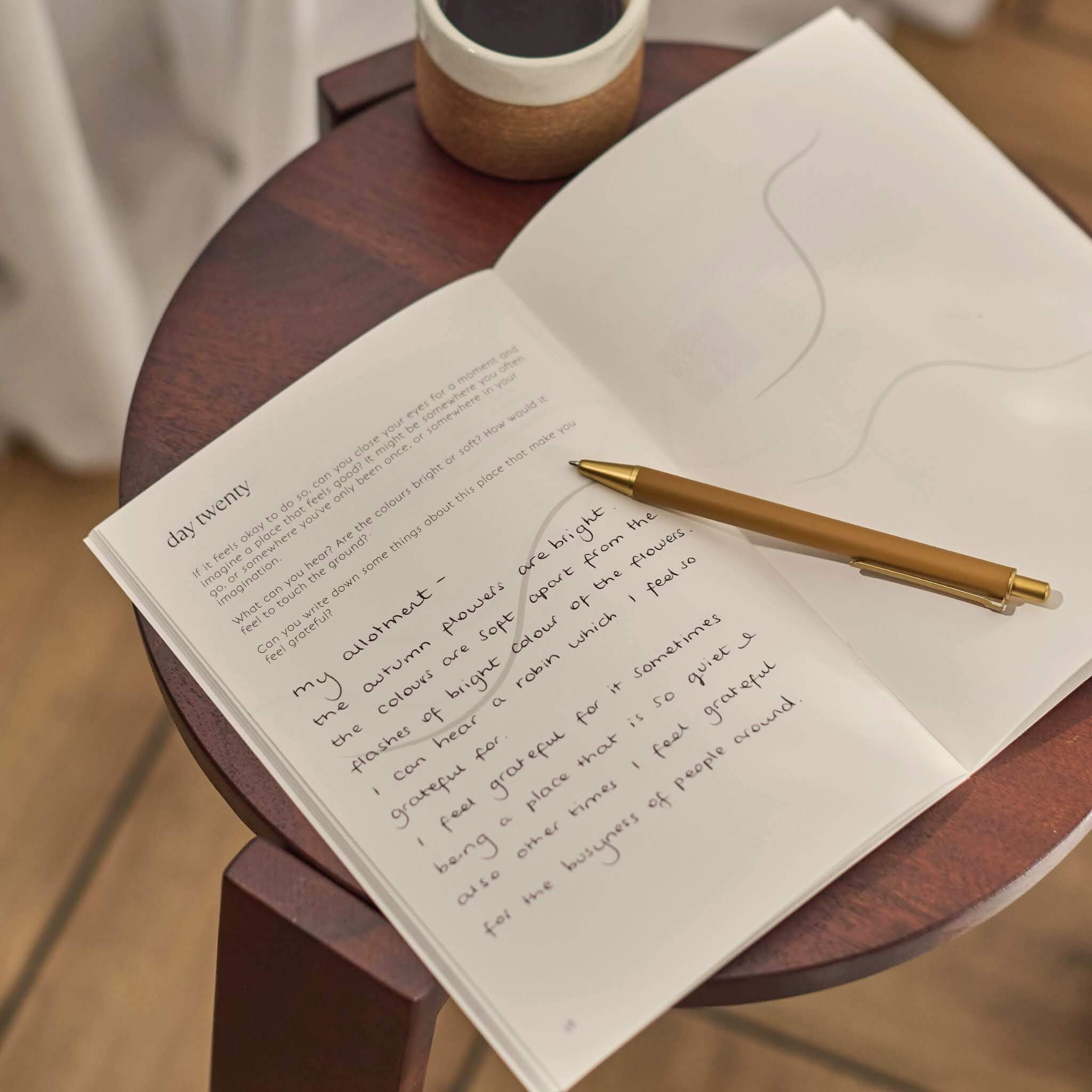
- 🤍 Day 22 · Room for hard days"Think of something that felt painful at the time. When you look back now, is there something within that experience you feel grateful for? It can be really small, and the gratitude doesn't take away the pain - there can be both."
- 🌟 Day 27 · Gentle with yourself"Can you think of something you've done that felt hard? Knowing that there's nothing too small to celebrate. Write down words to congratulate yourself for doing that hard thing."
And the line at the front of the journal that sits behind all of them:
"If a prompt doesn't resonate one day or if it feels too challenging, that's okay. Adapt it or skip it. There is no failure with gratitude."
A quick checklist to use on any gratitude journal
This quick checklist sums up the seven signs, so you can hold any gratitude journal up against it, mine included. Tick what it does:
- The questions are asked gently, not as a list to fill
- It tells you small things and a few words are enough
- The prompts are different on different days
- You could answer a prompt honestly on a hard day
- It explains that finding gratitude hard is normal
- It's undated, and a length you'd realistically finish
- It doesn't promise instant happiness
- The paper and cover are ones you'd enjoy using
Five or more: it's likely to support a real, imperfect practice. Fewer than four: it may be one that starts to feel like homework after a week or two.
Why I made The Gratitude Journal
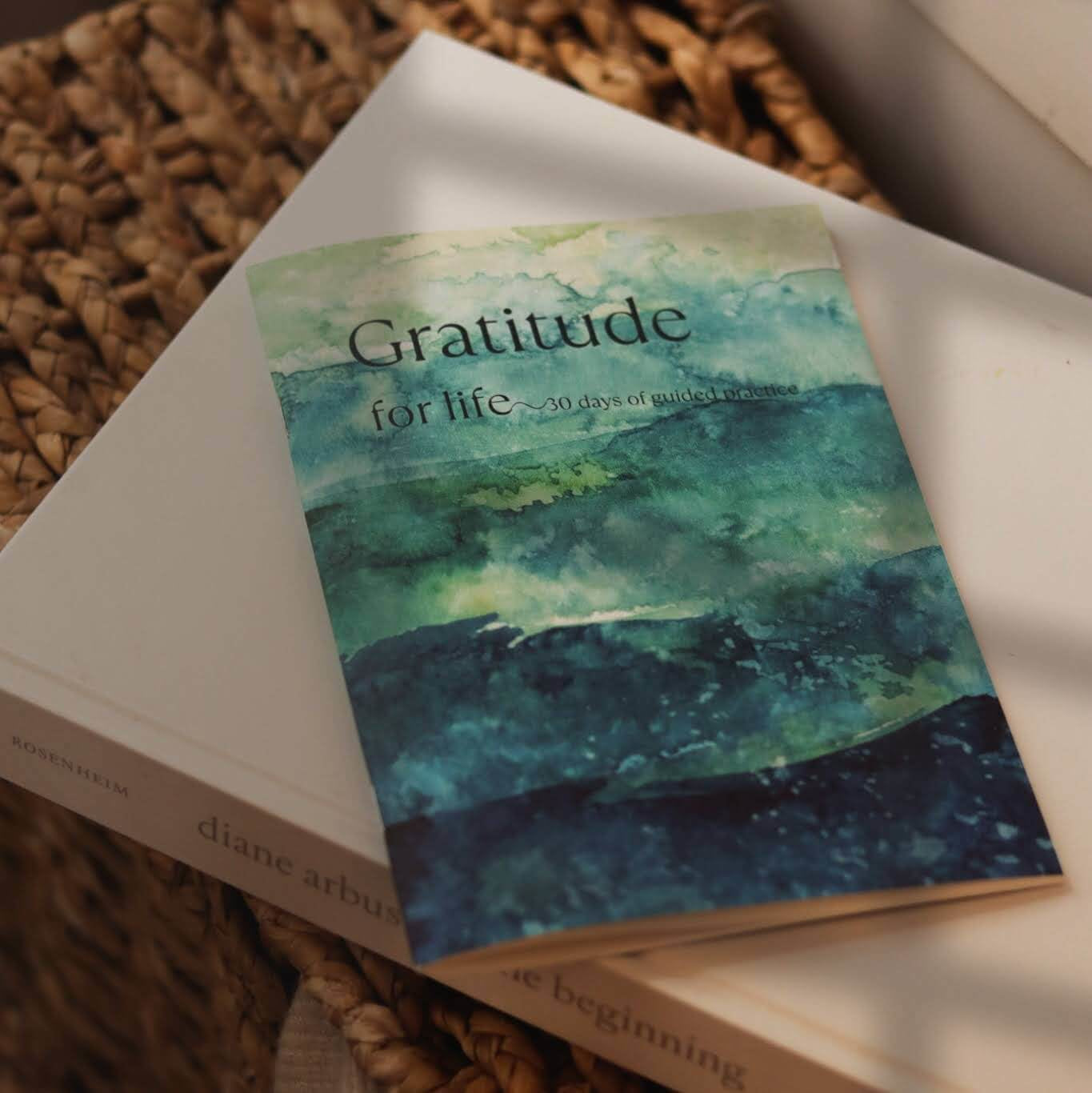
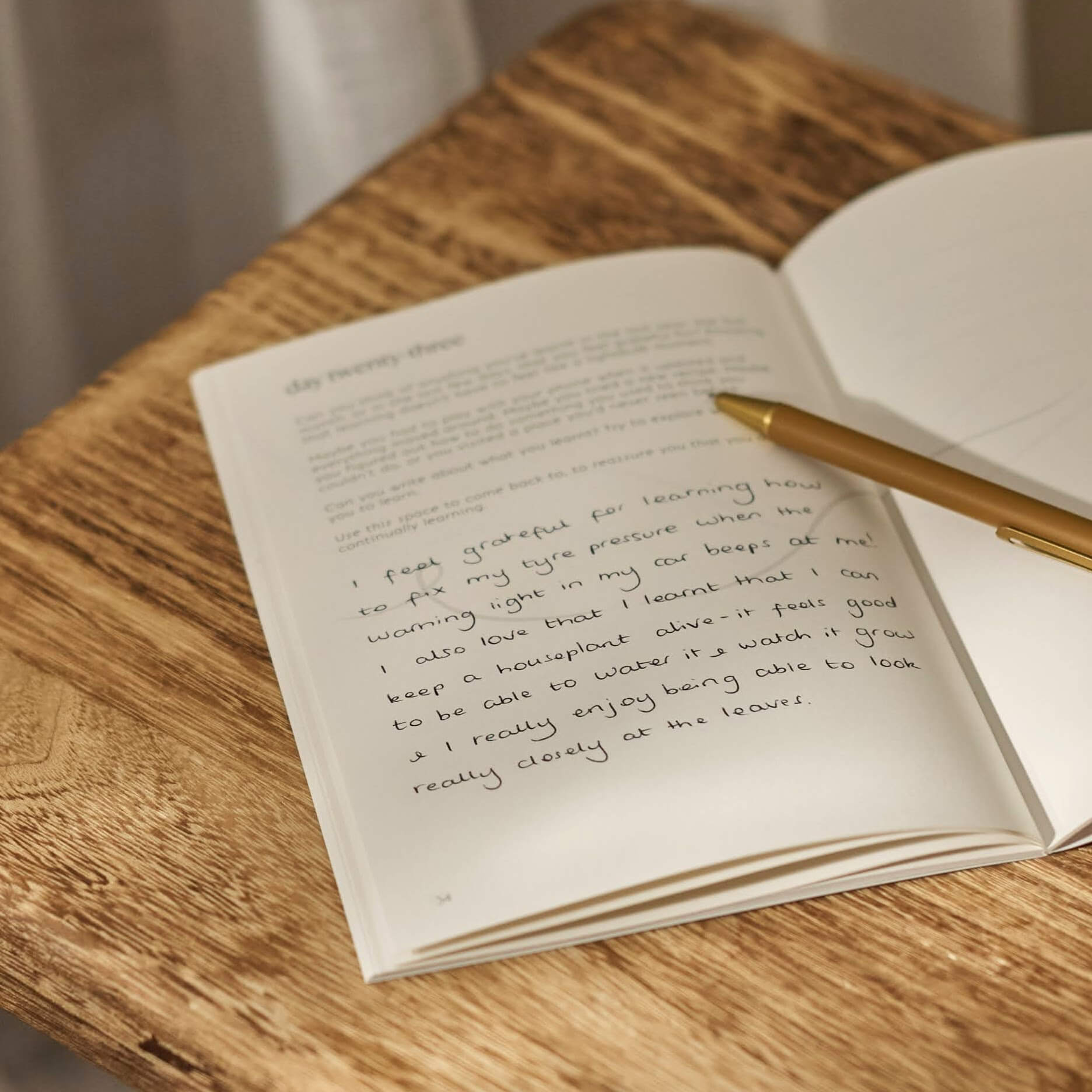
I made The Gratitude Journal: A 30-Day Challenge because I couldn't find a gratitude journal that met these seven signs. I should tell you that it's mine, and why it exists. The ones I bought asked me the same question every day, felt like homework, and had nothing to offer me on the days I most wanted to open them. So I made the journal I needed, and wrote it so that finding gratitude hard is expected, not a failure.
Here's how it meets each of the seven:
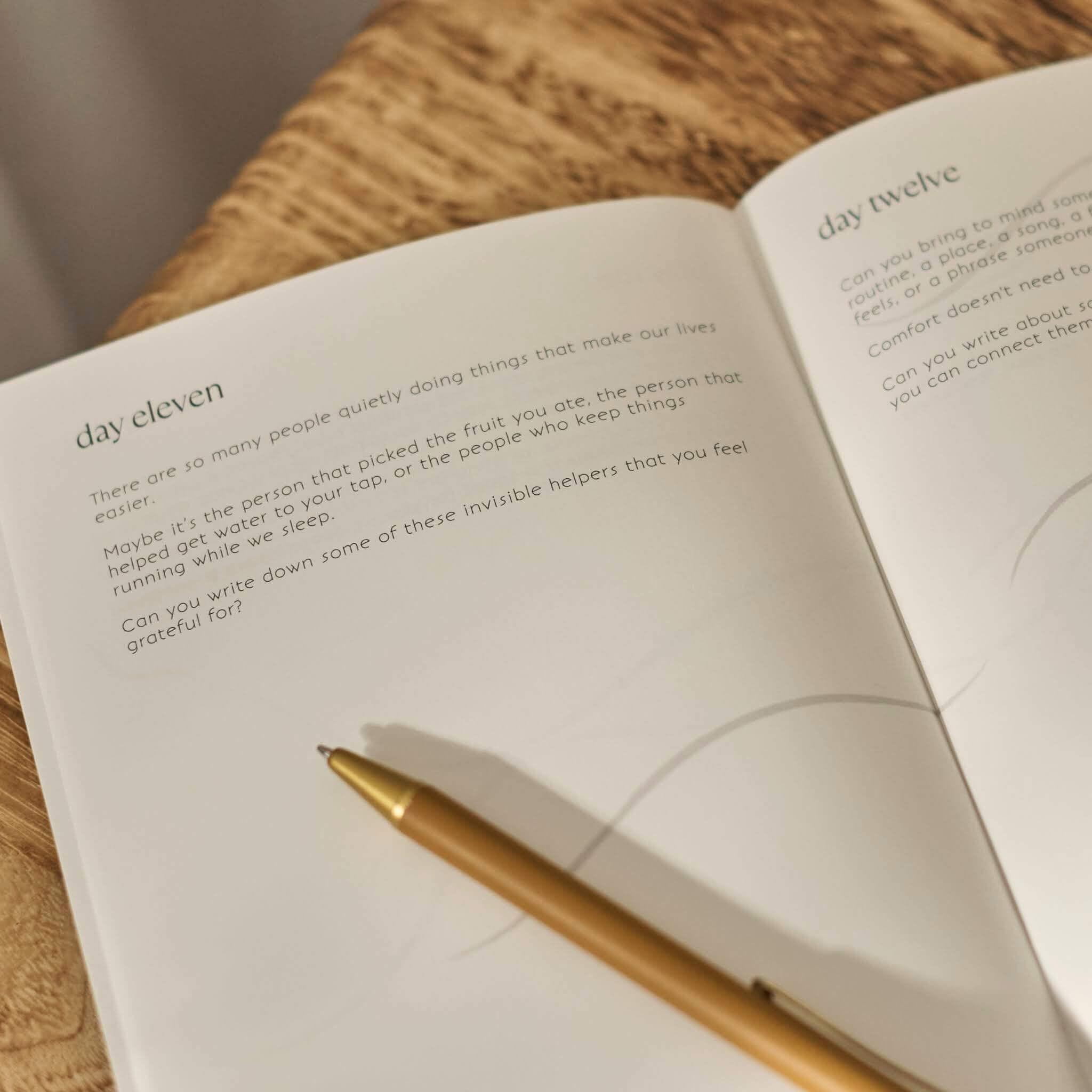
- It invites you: every prompt is a gentle question, with no numbered lists and no blank lines to fill.
- Nothing is too small: the pages say so, again and again, and a few words is just as valid as more.
- The prompts change: 30 completely different prompts, through your senses, memories, comfort, your body, creativity, music and more.
- Room for hard days: prompts that let gratitude and pain sit side by side, and permission to adapt or skip any day.
- Finding it hard is normal: the introduction explains why gratitude can feel hard, and that it doesn't mean you're ungrateful.
- Miss days and pick it back up: undated, and 30 days long, so you can start whenever you're ready and reach the end.
- Gentle expectations: it treats gratitude as a gentle practice, and links to expert articles on what the research says.

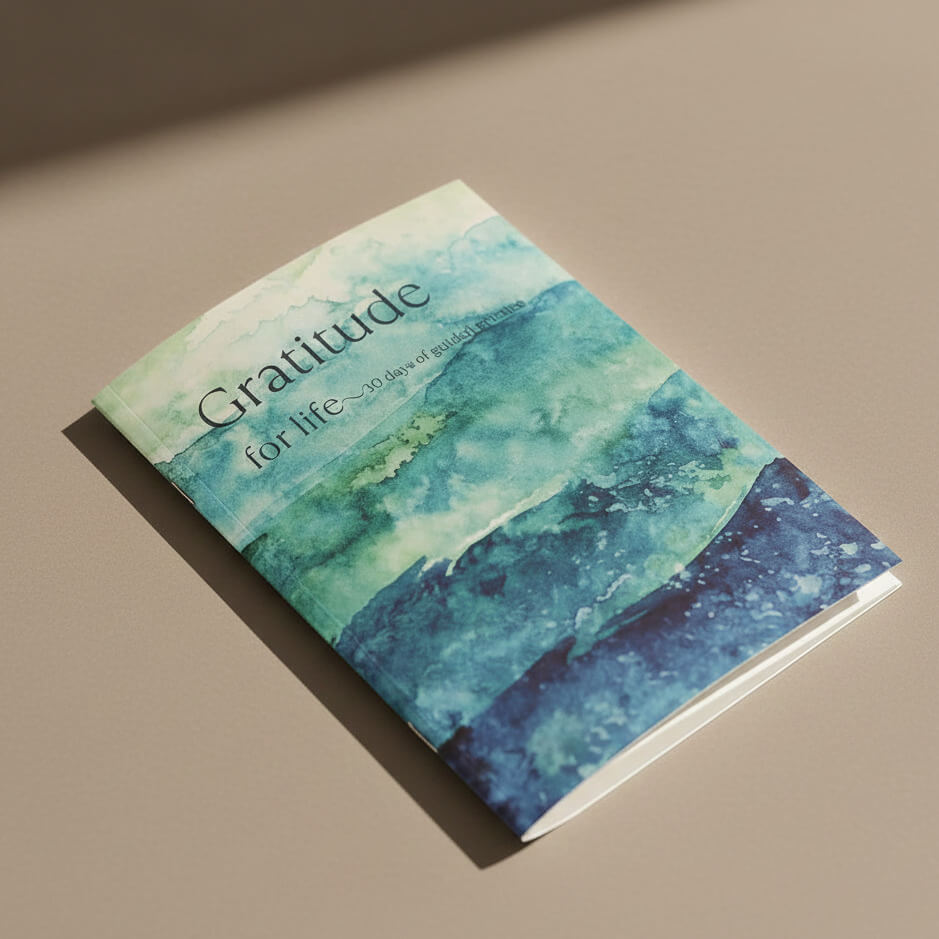
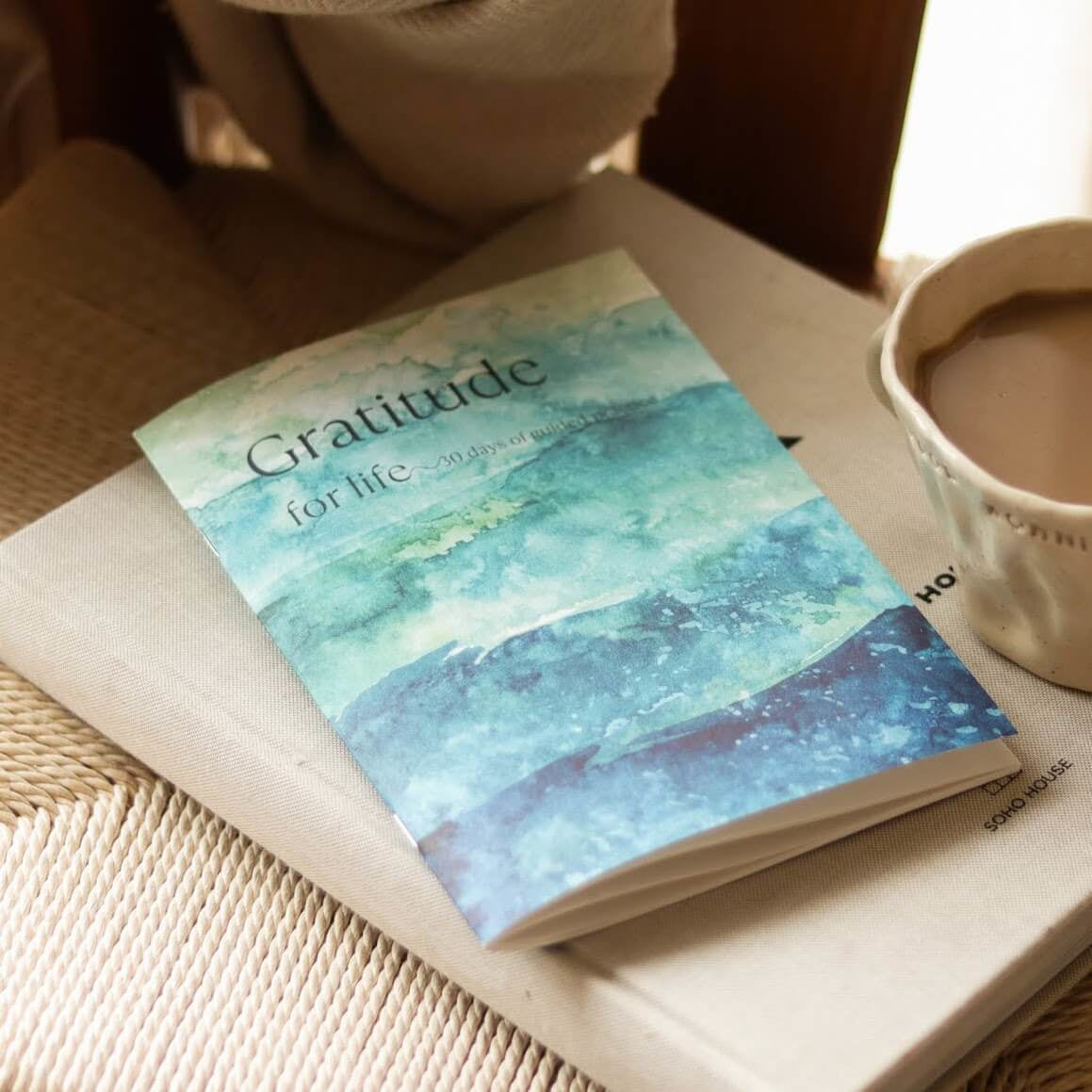
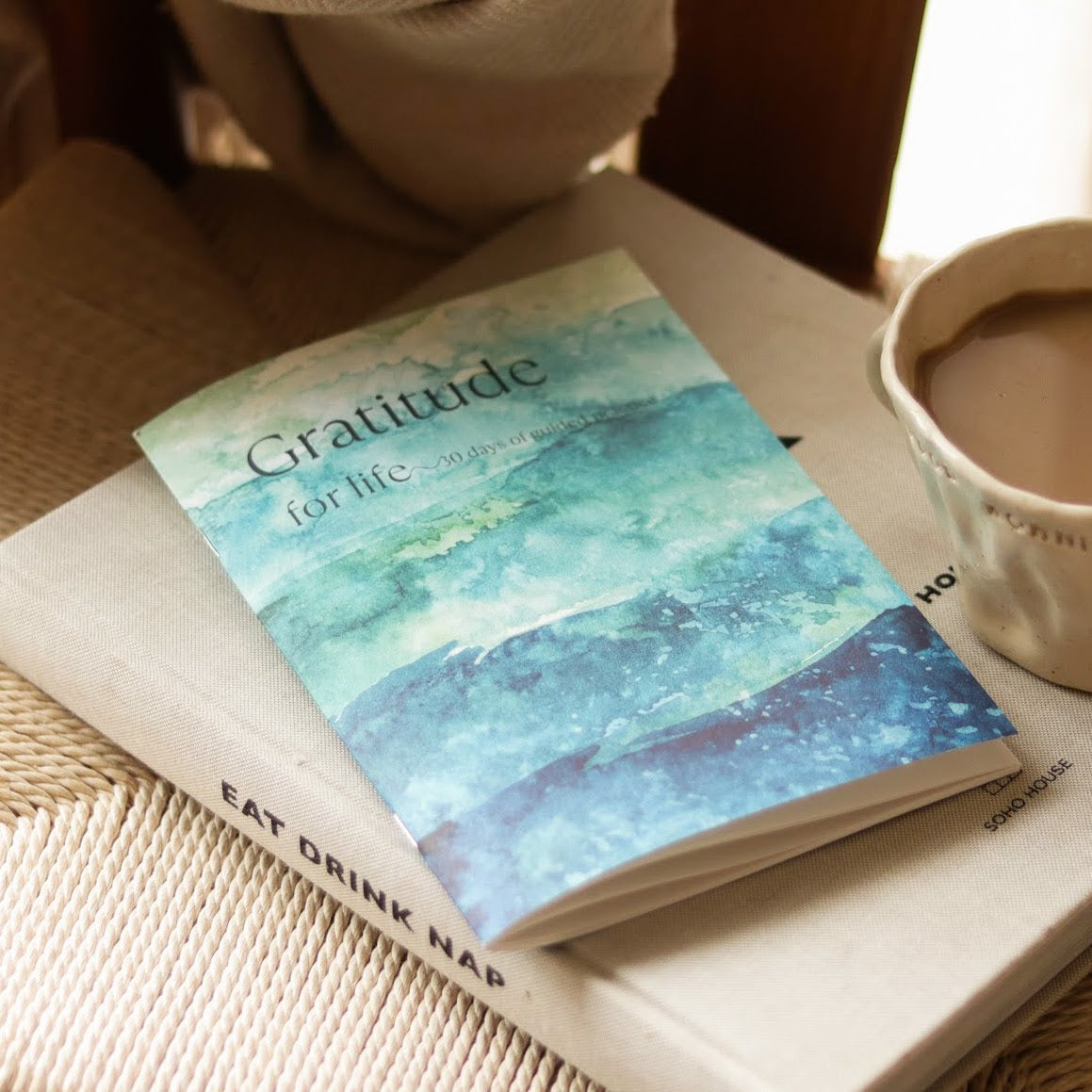
The Gratitude Journal: A 30-Day Challenge
💬 30 different prompts🗓️ Undated🎧 Guided meditation
- A different, gently worded prompt for each of its 30 days
- No numbered lists or blank lines, and permission to skip a prompt that doesn't fit
- Room for hard days, with no forced positivity
- A guided gratitude meditation I wrote and recorded, plus QR codes to expert articles on the science of gratitude
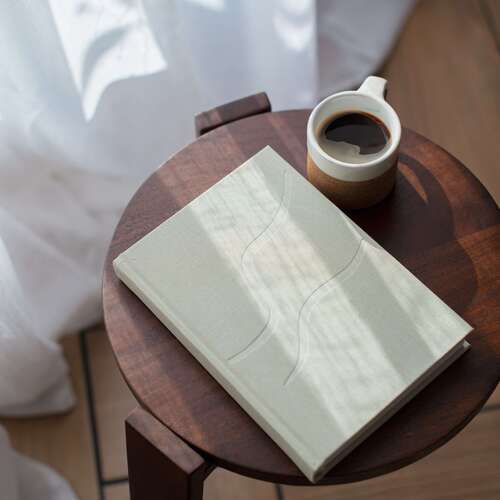
A5, premium 120gsm paper, luxury textured cover, made in the UK and sustainably sourced.
Psychotherapist Carrie Pollard wrote this about the journal:
Carrie Pollard, MSW RSW
Experienced psychotherapist, on The Gratitude Journal
Read what therapists and clinical psychologists say →"…Give Yourself Kindness’ journal creates intentional, permission-giving space for our feelings, worries and struggles while noticing things that bring joy, comfort, laughter, hope and connection from the past and present.
As an experienced therapist, mom and avid journaler, I’ve found this journal to balance mindfulness (encouraging us to be in the moment), validation (of ALL our feelings), compassion (connecting with what we need), and of course, gratitude."
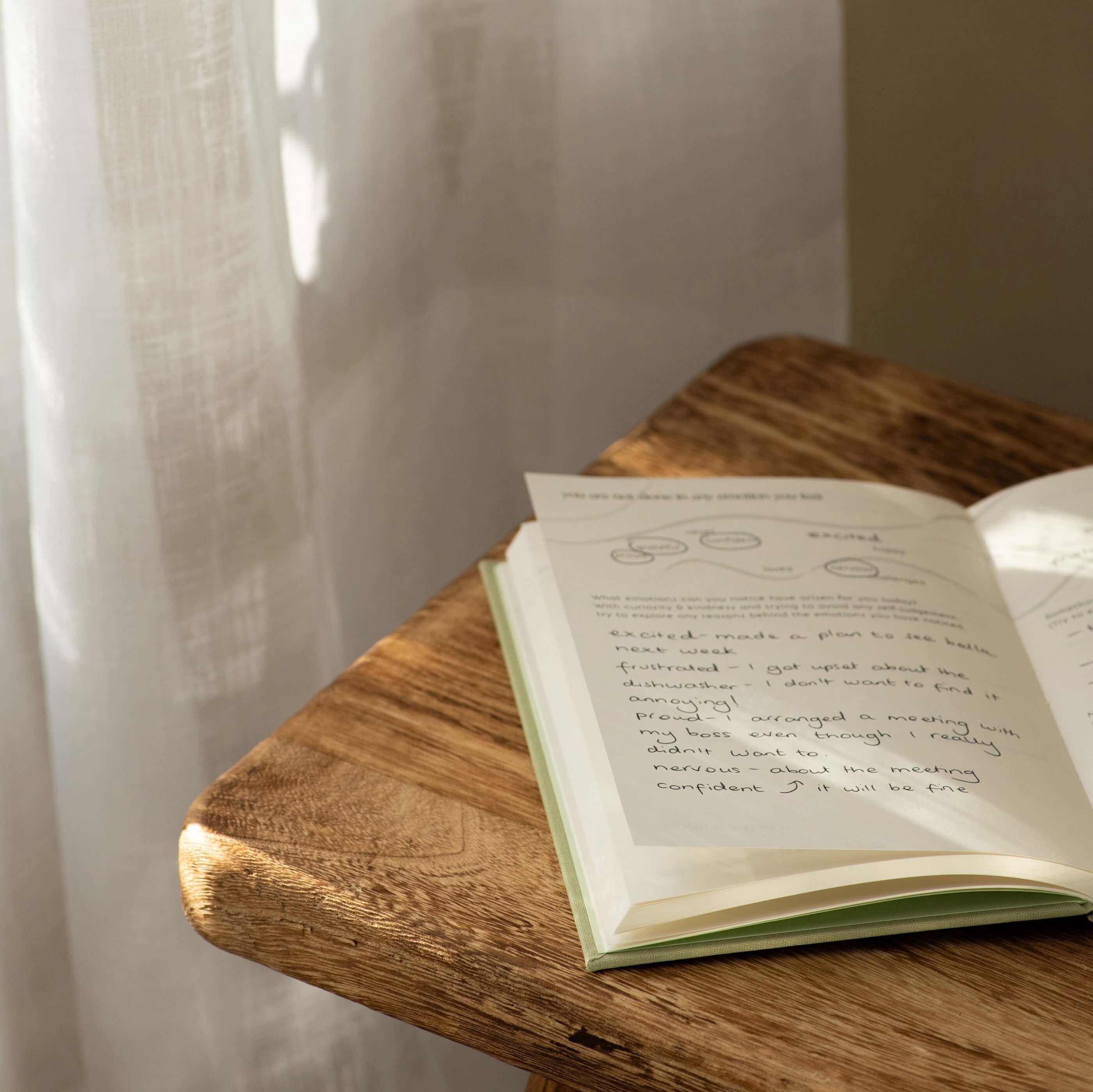
If you'd like gratitude alongside a gentle way of understanding your feelings, The Give Yourself Kindness Journal covers gratitude too, with 90 days of changing prompts and an emotional awareness tool on every page. And if you'd rather see the options side by side, I've compared the best gratitude journals, including ones I don't make.
A gentle question waiting for you each day, so gratitude can feel like support, not a test.
Discover The Gratitude Journal →
Gratitude journal, notebook or app?
A gratitude journal, a notebook and an app can all work, depending on which part of gratitude you find hard. Here's who each one tends to suit.
📓 Best for freedom
A plain notebook
Suits you if you already know what you want to write and find prompts intrusive. There's nothing second-rate about it. The thing to know is that a blank page asks you to come up with the question as well as the answer, which is the part that can get hard on a tired evening.
📱 Best for reminders
A gratitude app
Suits you if your phone is where your habits live, and reminders help rather than nag. Paper has one advantage worth knowing about: there's nothing else on the page, so no notification arrives mid-sentence.
📔 Best when the question is the hard part
A guided journal
Suits you if the question has been the hard part. A good one holds the question for you on the days you have nothing spare, and, judged against the seven signs above, that's the whole of its value.
When to look for more support
If you're in grief, burnout or depression, a gratitude practice might not be the right tool right now, and stopping isn't a failure. A gratitude journal is a gentle companion alongside professional support, never a replacement for it.
If things have felt heavy for a while, please talk to your GP or a therapist. If you're struggling right now, you can call Samaritans free on 116 123, day or night.
Common questions about choosing a gratitude journal
What should a good gratitude journal include?
A good gratitude journal should include gentle prompts that change from day to day, rather than the same three blank lines. Look for wording that invites rather than instructs, a sense that nothing is too small, prompts you could answer honestly on a hard day, undated pages, and an introduction that tells you finding gratitude hard is normal.
Is it better to buy a gratitude journal or just use a notebook?
Whether to buy a gratitude journal or use a notebook depends on which part you find hard. A notebook works well if you already know what you want to write. A guided journal helps when the question itself is the obstacle, because on a tired evening a blank page asks you to come up with the question as well as the answer.
Should a gratitude journal be dated or undated?
A gratitude journal is usually kinder undated. A dated journal turns a gap into a row of empty boxes, which can make stopping feel like failing and restarting feel harder. An undated journal lets you pick up on the next page whenever you come back. Missed days are part of every journaling practice.
How many prompts should a gratitude journal have?
A gratitude journal needs fewer prompts than you might expect, as long as they are all different. A thirty-day journal with thirty distinct prompts offers more variety than a year-long one that repeats the same question every day. What matters is the number of different questions, not the number of pages.
What makes a good gratitude journal prompt?
A good gratitude journal prompt invites rather than instructs, and doesn't need the day to have gone well. It asks gently, often as a question, offers a few examples so you're not starting from nothing, and tells you there's no right or wrong amount to write. It also leaves you free to skip it if it doesn't fit today.
Do you have to write in a gratitude journal every day?
No, you don't have to write in a gratitude journal every day. Daily works well for some people and becomes a chore for others, and a practice you return to twice a week is worth more than a daily one you stop in February. An undated journal with changing prompts makes coming back much easier.
What do I write when I can't think of anything to be grateful for?
When you can't think of anything to be grateful for, change the question rather than forcing the answer. Ask what got you through today, or simply what you noticed, which has no feeling attached. If nothing comes, that's allowed. Finding gratitude hard doesn't make you ungrateful. It means your brain is doing what brains do.
Can a gratitude journal make you feel worse?
Yes, a gratitude journal can make you feel worse, and it isn't a sign that anything is wrong with you. Psychotherapist Carrie Pollard, MSW RSW, explains that when gratitude is forced, diminishes difficulties, or triggers guilt or shame, it leaves us feeling worse rather than better. That's usually a problem with the format, not the person.
Are gratitude journal apps as good as paper ones?
Gratitude journal apps can be as good as paper for people whose habits live on their phone, and reminders help some people. Paper has one advantage: nothing else is on the page, so no notification arrives partway through a sentence. The same seven signs apply either way, from gentle, changing prompts to room for hard days.
How long does a gratitude journal take to work?
A gratitude journal doesn't have a set time to work, and it's kinder not to expect instant results. Psychotherapist Amy Morin suggests finding one way to bring a little more gratitude into your life and trying it for a week. Many people find the first change isn't a mood lift, but noticing small things during the day.
What size and paper should a gratitude journal have?
A gratitude journal in A5 suits most people: big enough to write a paragraph, small enough to keep by a bed or in a bag. Paper of around 100gsm or above takes most pens without showing through. A cover you enjoy holding matters more than it sounds, because a journal you like picking up is one you tend to open.
Is a gratitude journal worth it?
A gratitude journal is worth it if it's one you'll still want to open in a few weeks. Gratitude journaling is one of the most studied wellbeing practices, and psychotherapist Amy Morin calls gratitude “a really powerful tool”. A journal with changing prompts, room for hard days and gentle expectations gives it the best chance of lasting.
Is it better to write in a gratitude journal in the morning or at night?
It's better to write in a gratitude journal whenever you'll actually do it. Psychotherapist Nina Holle suggests journaling in the evenings to integrate anything unprocessed from the day, particularly if you have trouble sleeping. Morning works too. The timing matters less than having a gentle question waiting for you.
How long should a gratitude journal entry be?
A gratitude journal entry can be as long or as short as you like. A few words is just as valid as a full page. Psychotherapist Amy Morin puts it simply: it doesn't need to be pages upon pages of why you're grateful for something. Some days you'll write more, some days a single line, and both count.
What's a good gratitude journal for a beginner?
A good gratitude journal for a beginner asks gentle, changing questions, gives a few examples on each page, and tells you there's no right or wrong amount to write. A shorter length you can finish helps too. I made The Gratitude Journal: A 30-Day Challenge for exactly this, and my guide to the best gratitude journals compares other options.
What do I write when nothing is wrong but I feel flat?
When nothing is wrong but you feel flat, write something small and ordinary rather than waiting to feel grateful. Look around you: water from the tap, a comfortable chair, a song you like. Noticing doesn't need a feeling attached. Some days gratitude feels easier and some days harder, and that's completely normal.
Continue reading
From the therapists quoted here
-
How gratitude changes your brain, health and relationshipsAmy Morin, LCSW, Psychotherapist
-
6 journaling tips for beginners, from 6 therapistsCarrie Pollard, Nina Holle and others
Related guides
- The best gratitude journals compared
- How to write a gratitude journal every day
- How to write what you're grateful for
- Gratitude journal made me feel worse? You're not ungrateful
- How to start a gratitude journal
- What is a gratitude journal?
- Why it's okay to find gratitude hard sometimes
- 50 things to be grateful for
- The Give Yourself Kindness Journal, for the hard days as well as the good ones
- Best guided journals, if gratitude isn't quite what you're looking for
- What mental health experts say about the journals