

In one sentence
A gratitude journal is a notebook you use to write down things you are thankful for, regularly, so that noticing them becomes a habit rather than an effort.
Most are built around a short daily list, traditionally three items. You will also see the practice called counting your blessings, or three good things. Some are undated notebooks with prompts; some are dated diaries with the same question on every page.
That is the accurate definition, and it is also, I think, the reason a lot of people quietly give up on them. "Write down what you're grateful for" tells you nothing about what to do on the day you cannot think of anything. And those are the days you bought it for.
Here is what stopped me, years ago, and it is the thing that eventually made me produce one of my own.
Three things I am grateful for today...
1. ________________
2. ________________
3. ________________
I would look at that, not immediately be able to fill in the blanks, and then my mind would decide to tell me I was an awful, ungrateful person who obviously should be able to think of three amazing things. Guess what? The idea of that didn't help.
And the frustrating part is that gratitude genuinely works. Noticing and writing down what you're grateful for really does counteract the negative bias in our brains, and it really is good for your mental health. The practice was never the problem. The lines, the numbers and the pressure were.
What you'll find on this page
Why trust me: I'm Rachel Smith, a qualified meditation teacher trained with the British School of Meditation. One of the big reasons I made a journal at all was gratitude: I couldn't find one that included it without lines, numbers and pressure. I'll show you what to look for whether or not you buy mine. More about me →
How a gratitude journal actually works
Our brains carry a negativity bias. It kept our ancestors alive, and it means unpleasant things stick more readily than pleasant ones. A gratitude journal is, mechanically, a way of forcing the pleasant ones to get recorded somewhere before they slip.
Writing appears to matter more than thinking. Putting something on paper makes you choose the words, which makes you look at it properly, which is the bit that does the work.
And one thing worth knowing before you start: some people's brains find gratitude harder than others. That is a real difference and it is not a personality failing. It is also trainable. With practice the brain builds the gratitude habit, rather like a muscle. If it feels effortful at first, that is not a sign it isn't for you. I wrote about finding gratitude hard here, and there is a longer piece on the science of gratitude if you want the research.
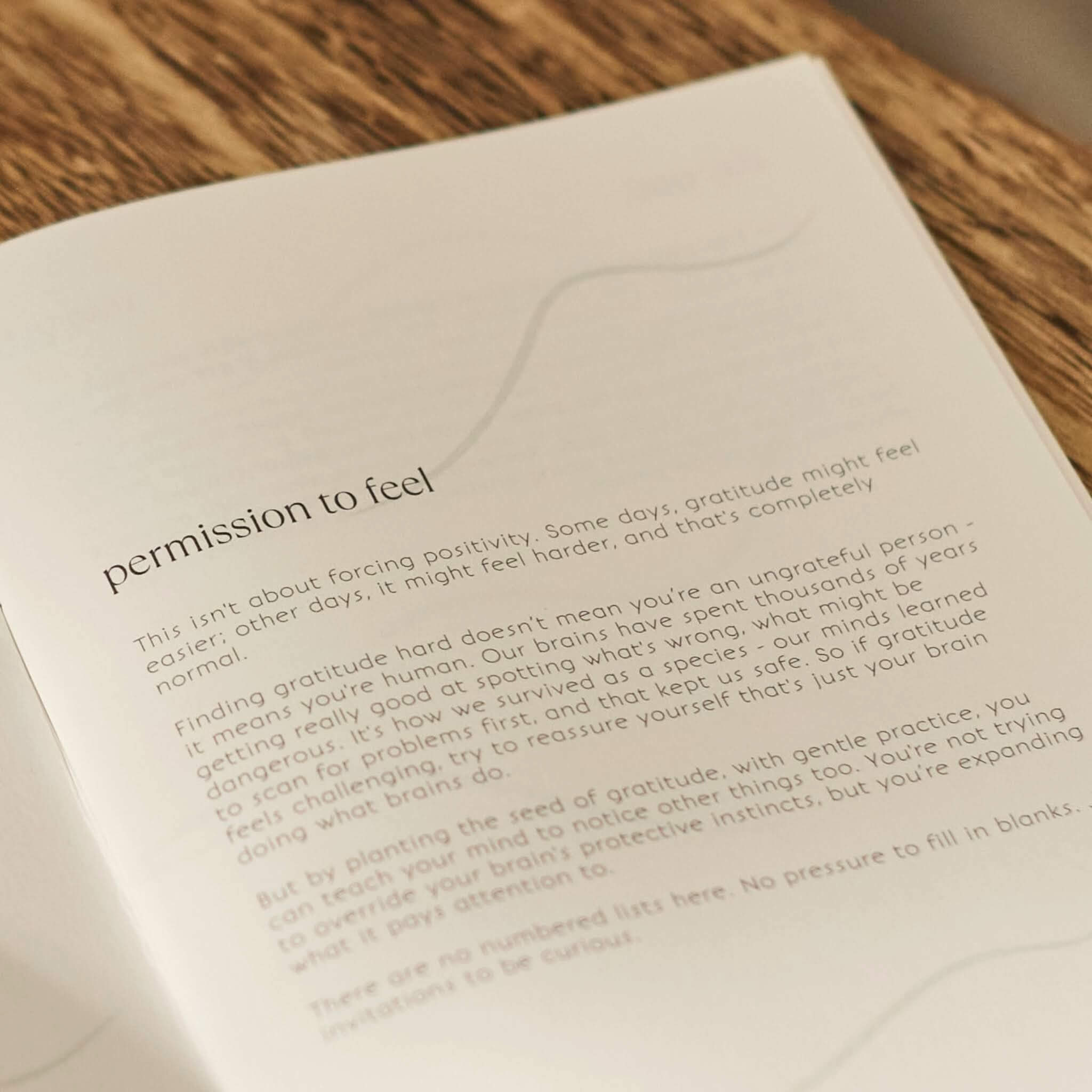
Finding gratitude hard does not make you an ungrateful person. It makes you a person with a normally functioning threat system.
Three ways people actually use one
There is no single correct format. These are the three that turn up most, and the honest trade-off of each.
1. The daily list
Three things, every evening, usually in a dated book. It is the classic and it is genuinely quick.
Suits you if you like routine, you already notice good things easily, and a tick-box format feels satisfying rather than demanding.
Watch out for the autopilot. By week two most people are writing the same three items, and once you can predict your own answer you have stopped noticing anything.
2. The weekly reflection
Once a week, longer, more like a letter than a list. You write about one thing properly instead of three things briefly.
Suits you if daily anything is unrealistic for your life right now, and you would rather do one thoughtful entry than seven rushed ones.
Watch out for the gap. A week is long enough to forget, so this one needs a peg: Sunday morning, the same chair, the same cup of tea.
3. The prompt-led journal
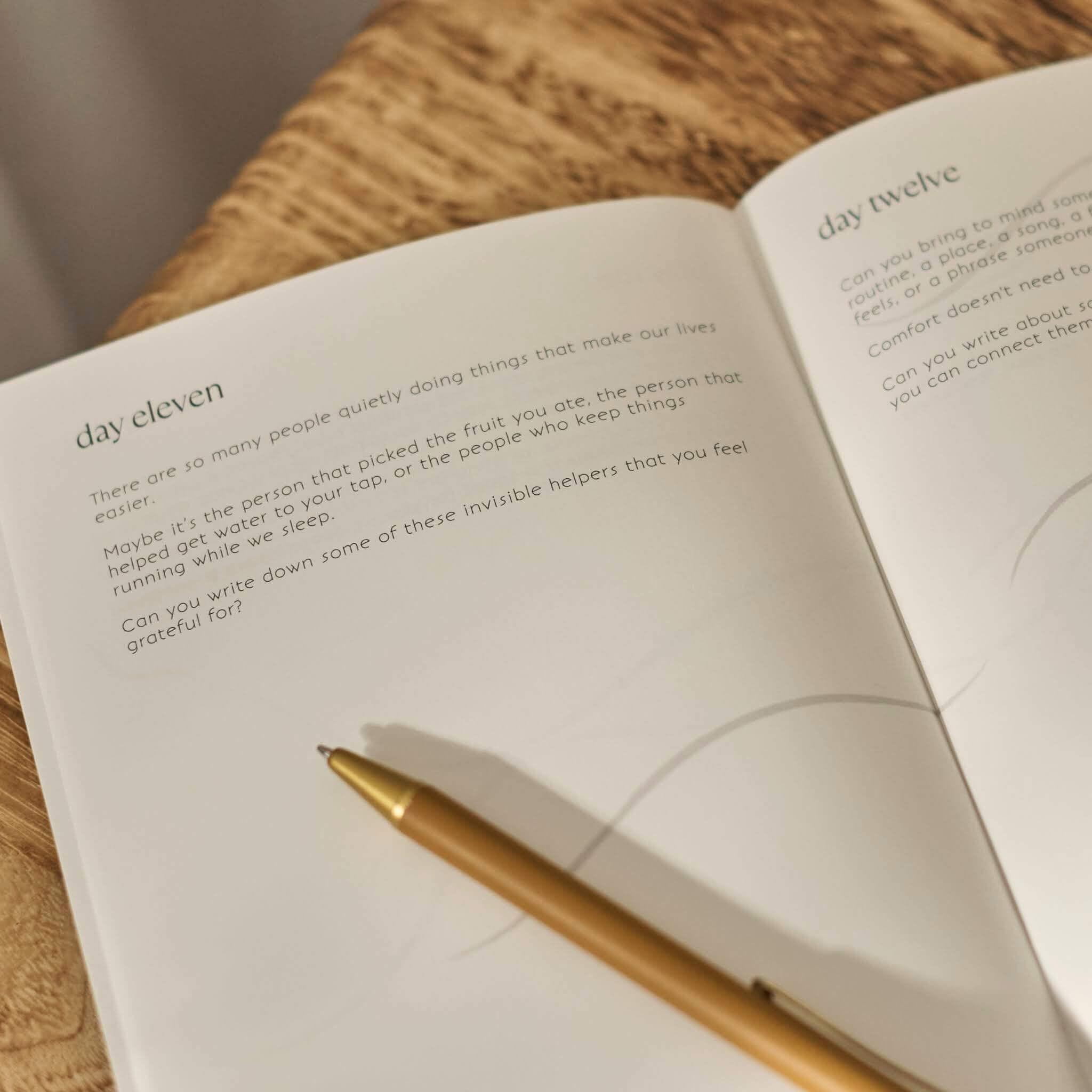
A different question on each page, so you are never staring at the same blank list twice. Some days it asks you to notice something outside, some days to write to someone, some days not to write at all.
Suits you if you have tried the daily list and gone flat on it, or if the blank page is the thing that stops you.
Watch out for prompts that are all relentlessly upbeat. If none of them make room for a difficult week, it will be the difficult week that ends the practice.
If you would like the actual mechanics of writing an entry, rather than the theory, this page walks through how to write what you're grateful for and mean it, and this one covers starting from scratch. Both are free and neither asks you to buy anything.
How to choose a gratitude journal
Four things to look at. They apply to any gratitude journal, on any website, including the ones I don't sell.
- Dated or undated?A dated journal shows you every day you missed. If you already suspect you will not manage every evening, undated removes the only thing that actually makes people stop.
- How long is it?Thirty days is a promise you can keep and a fair test of whether writing suits you. Six months and up is a commitment, and worth making only once you know the answer to that.
- Does every page ask the same thing?This is the one nobody checks before buying and everybody notices by week two. Flick through. If the questions repeat, your answers will too.
- Is there room for a bad day?Look for at least some prompts that don't require you to feel good. A gratitude journal that only works when you're already fine is a journal for people who don't need one.
That fourth point is the one I would weight most heavily, and I would rather you heard why from a therapist than from me.

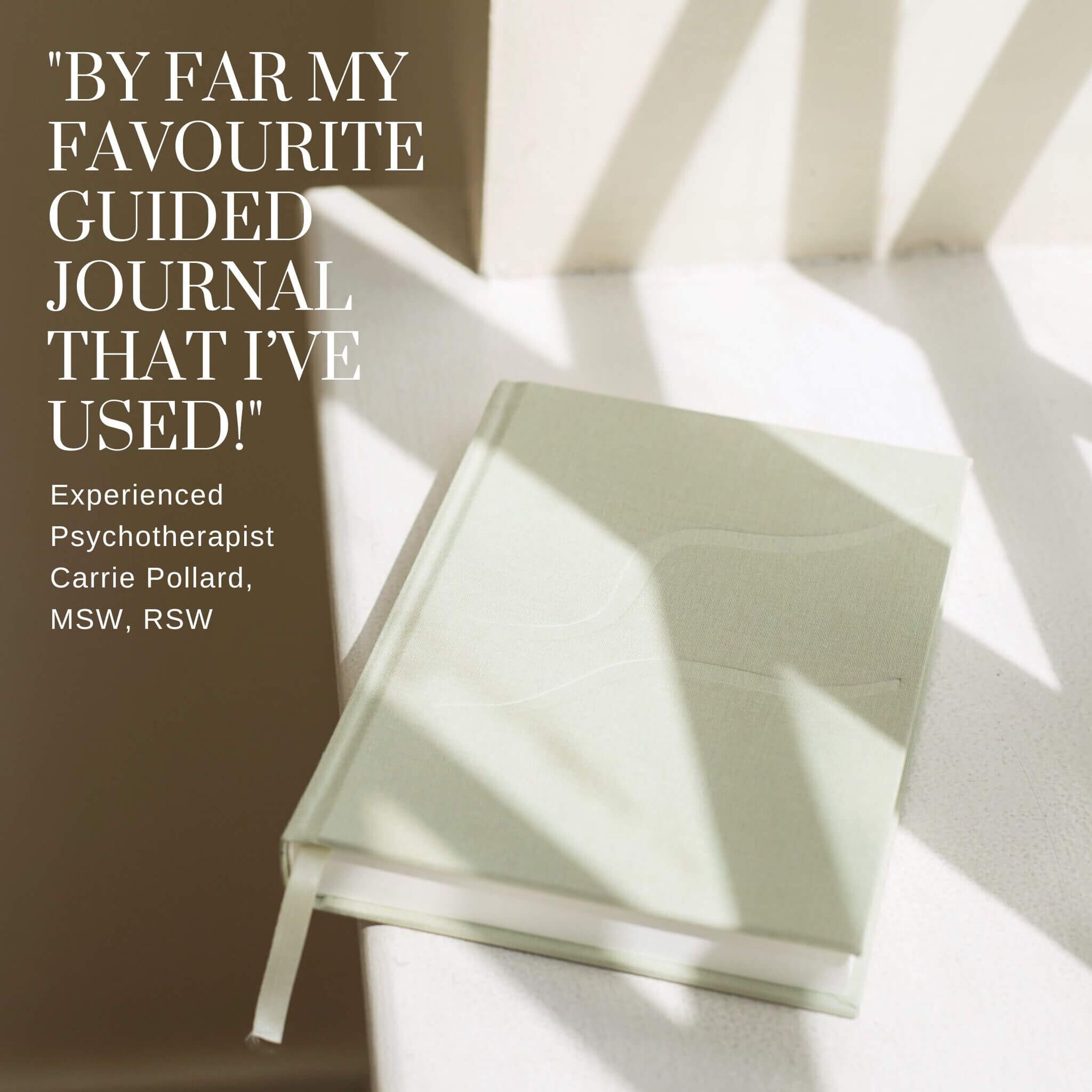
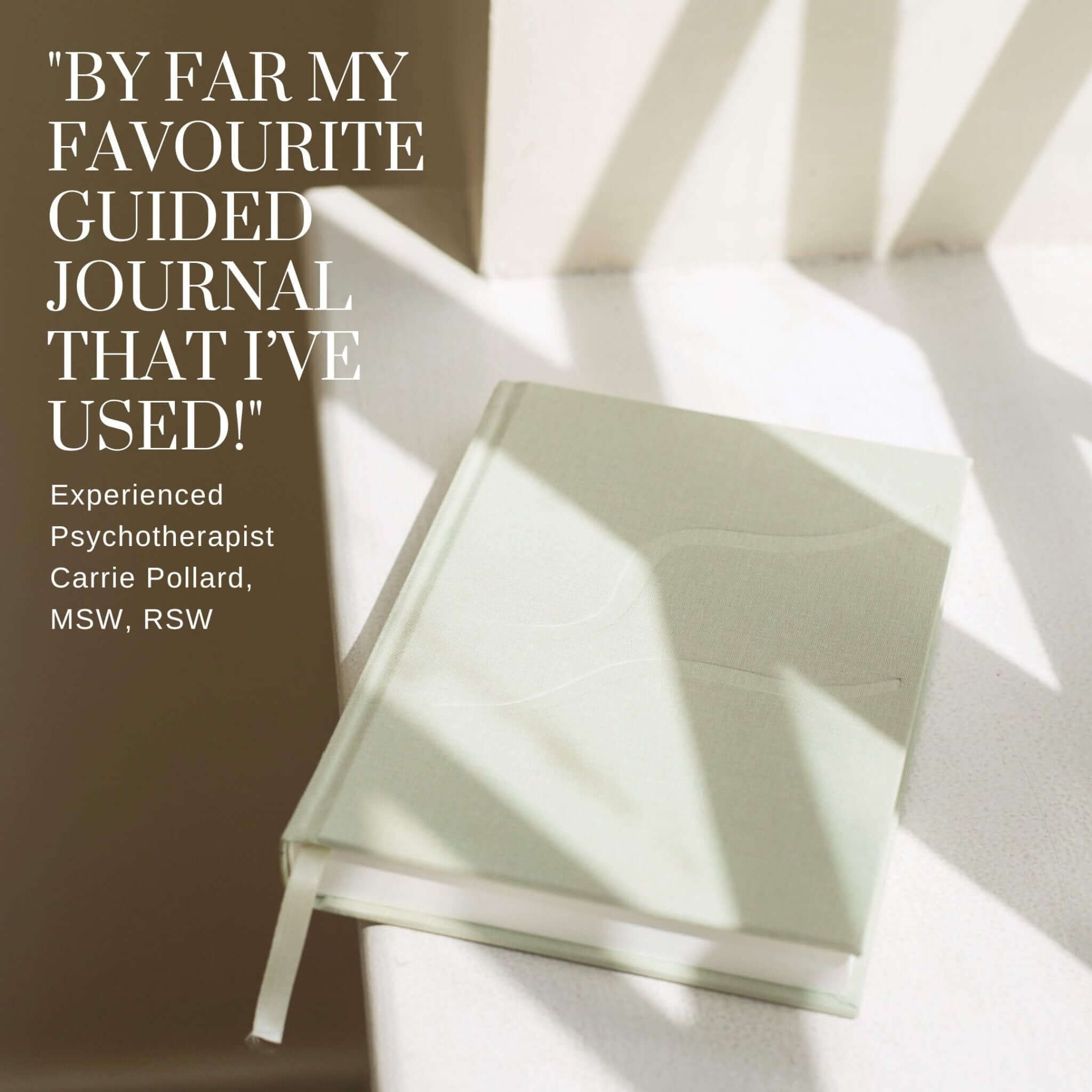
Carrie Pollard, MSW RSW
Experienced psychotherapist, mom and avid journaler. Reviewing The Gratitude Journal: A 30-Day Challenge
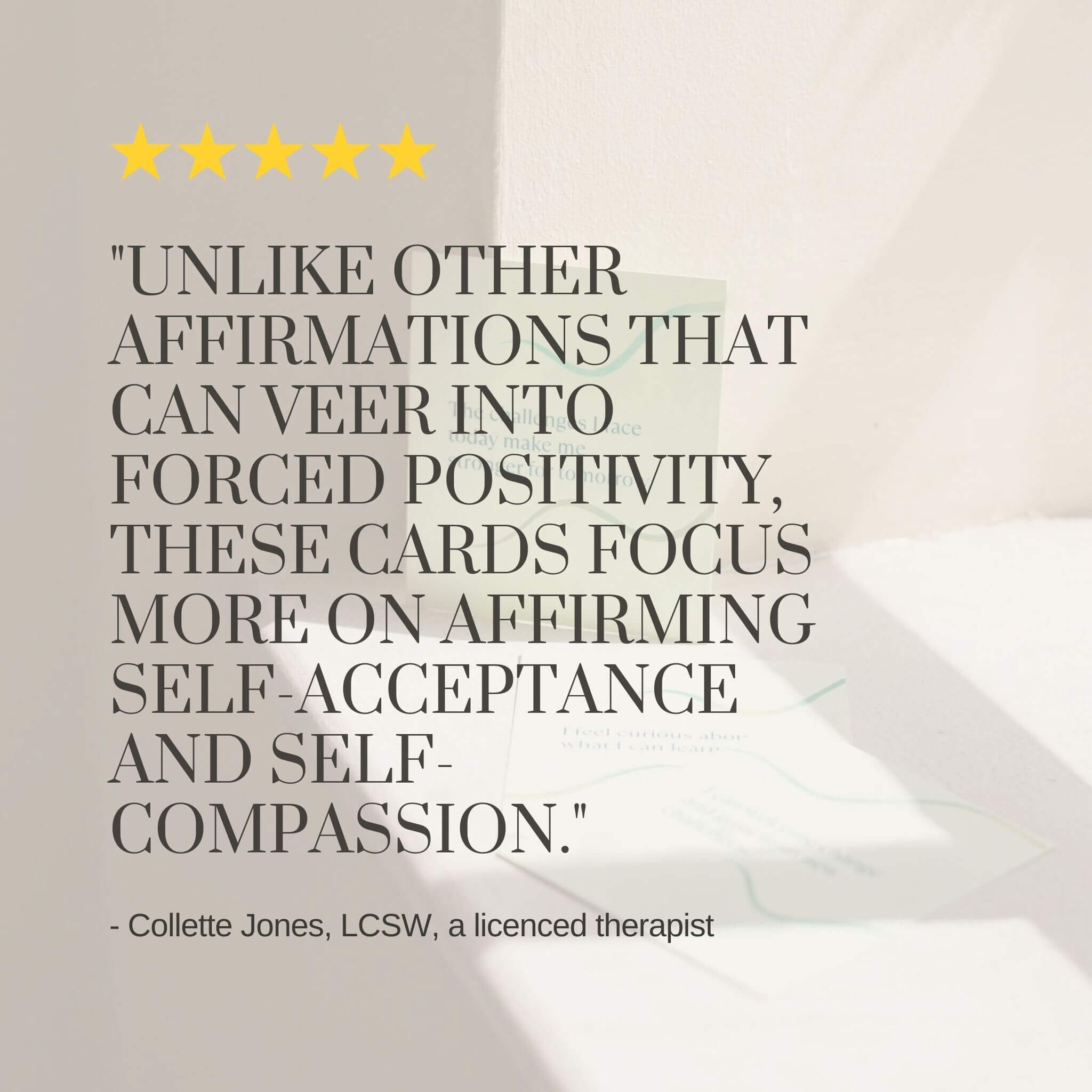
"Practicing gratitude is a way to bring balance and perspective to life, it helps us recognize the gifts, glimmers and simple things that make life feel better. However, when gratitude is forced, diminishes difficulties, or triggers guilt or shame (e.g., 'I should be grateful, look at all I have') it leaves us feeling worse, not better."Read Carrie's full review →
That is the whole test in two sentences. A gratitude journal should bring balance and perspective. If it forces, minimises your difficulties or leaves you feeling guilty, it is doing the opposite of the thing you bought it for, however lovely the cover is.
The two I make
I make two, and only one of them is really a gratitude journal. I would rather tell you which is which than let you find out afterwards.
If you want gratitude specifically
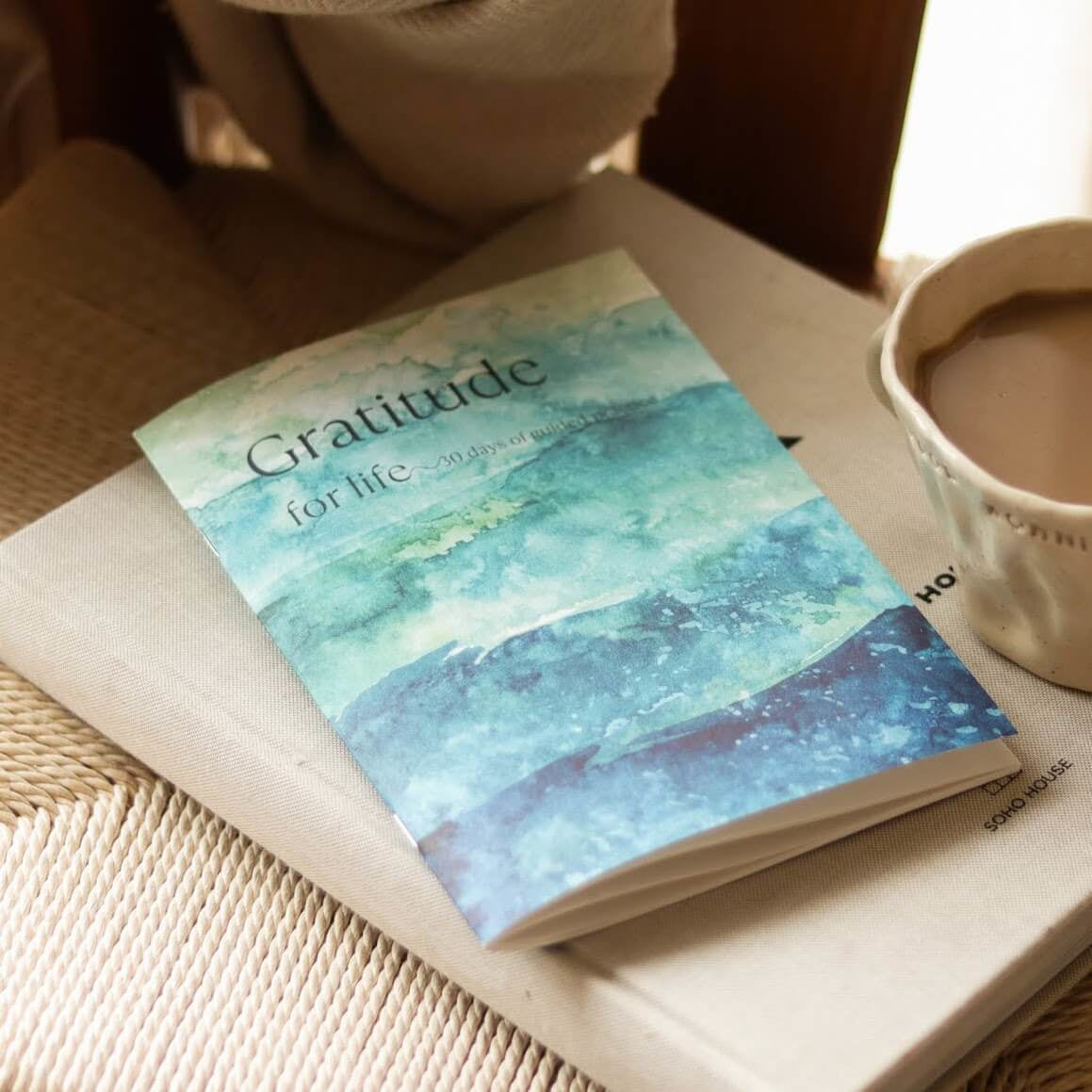
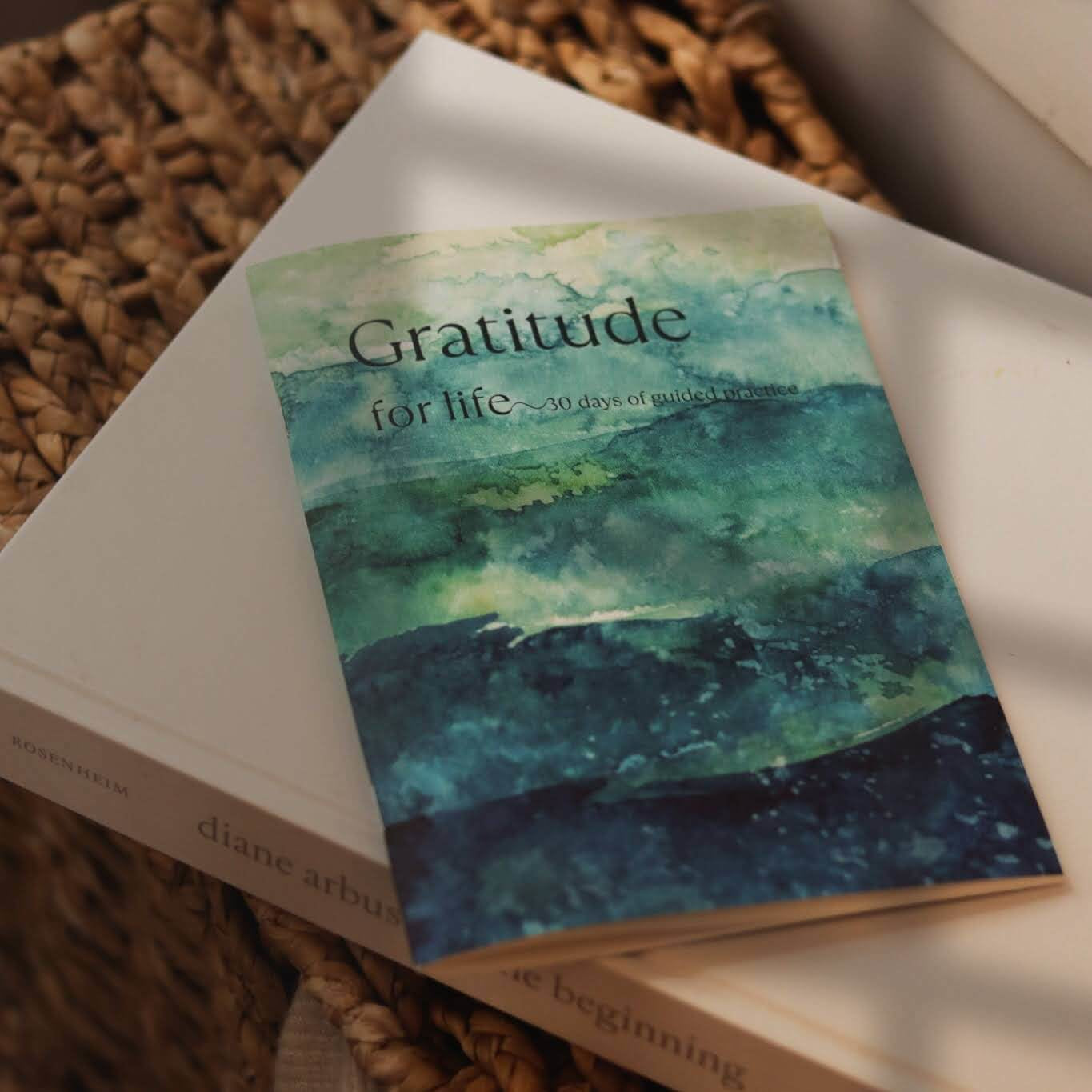
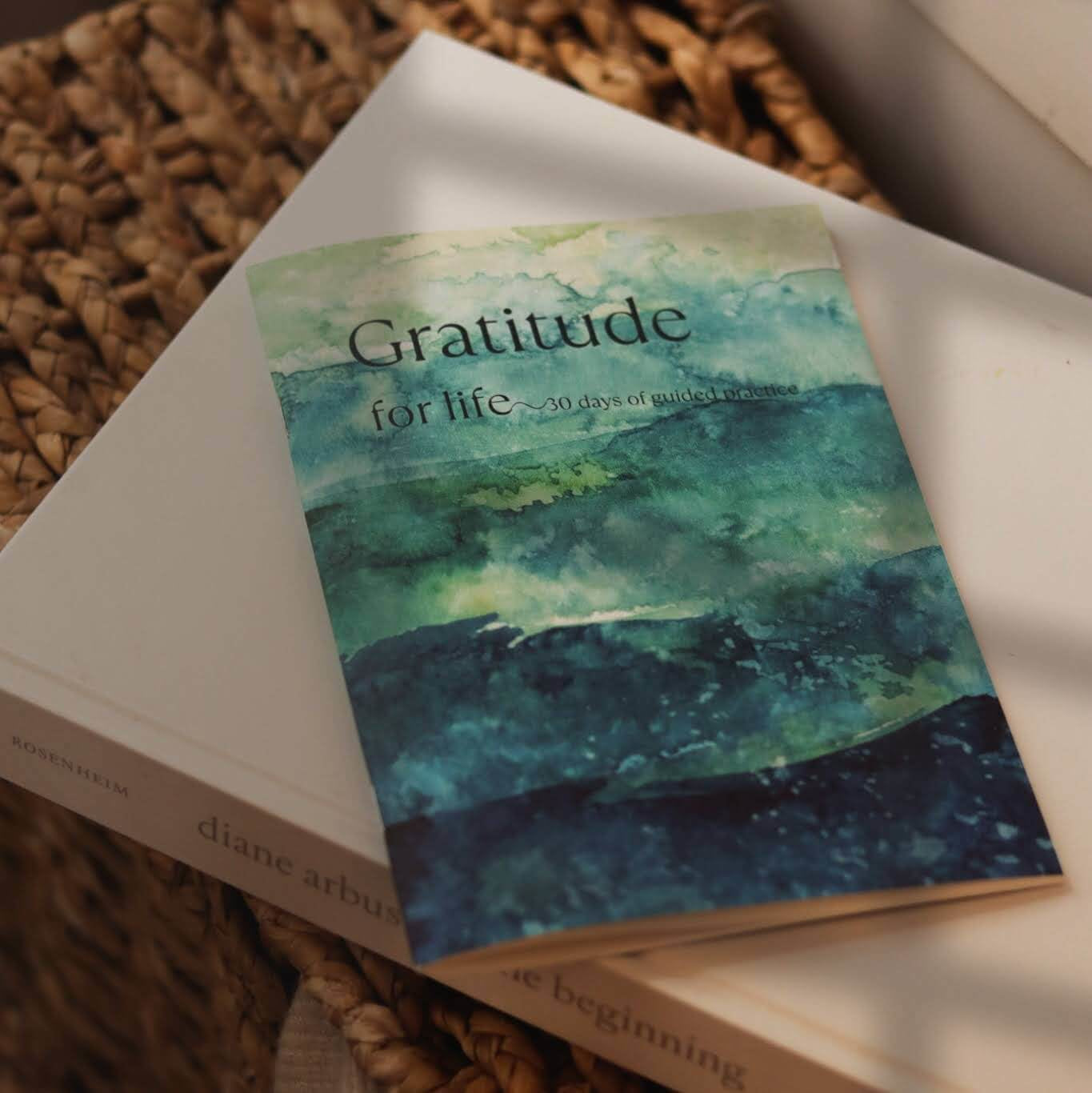
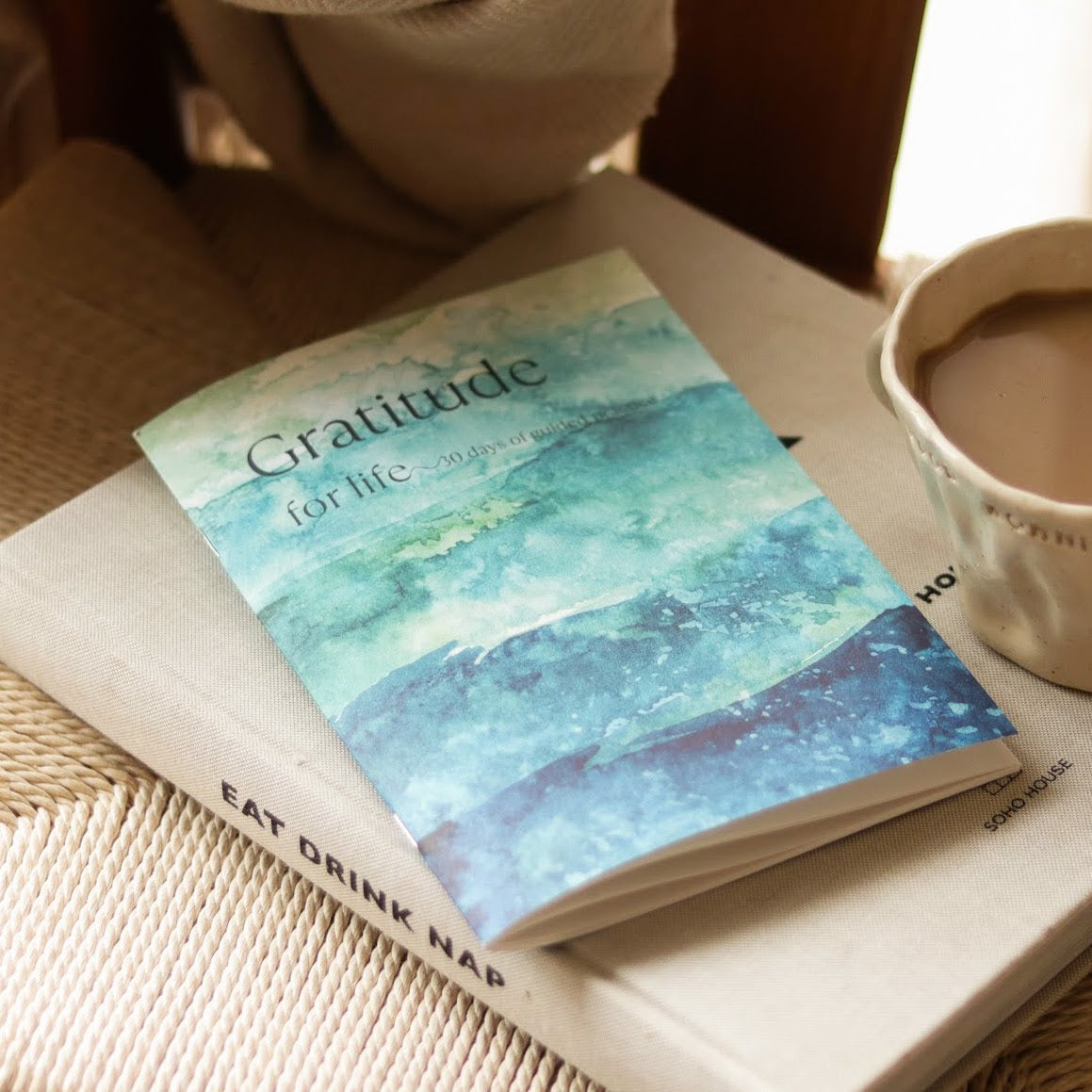
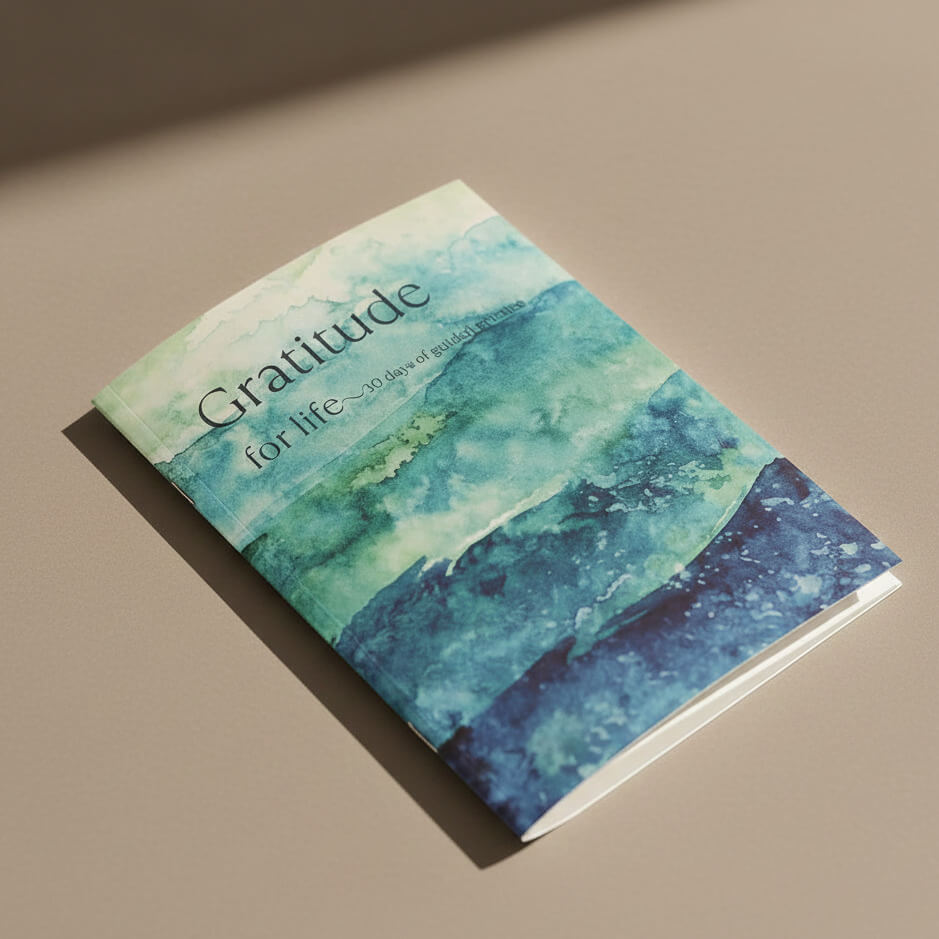
The Gratitude Journal: A 30-Day Challenge
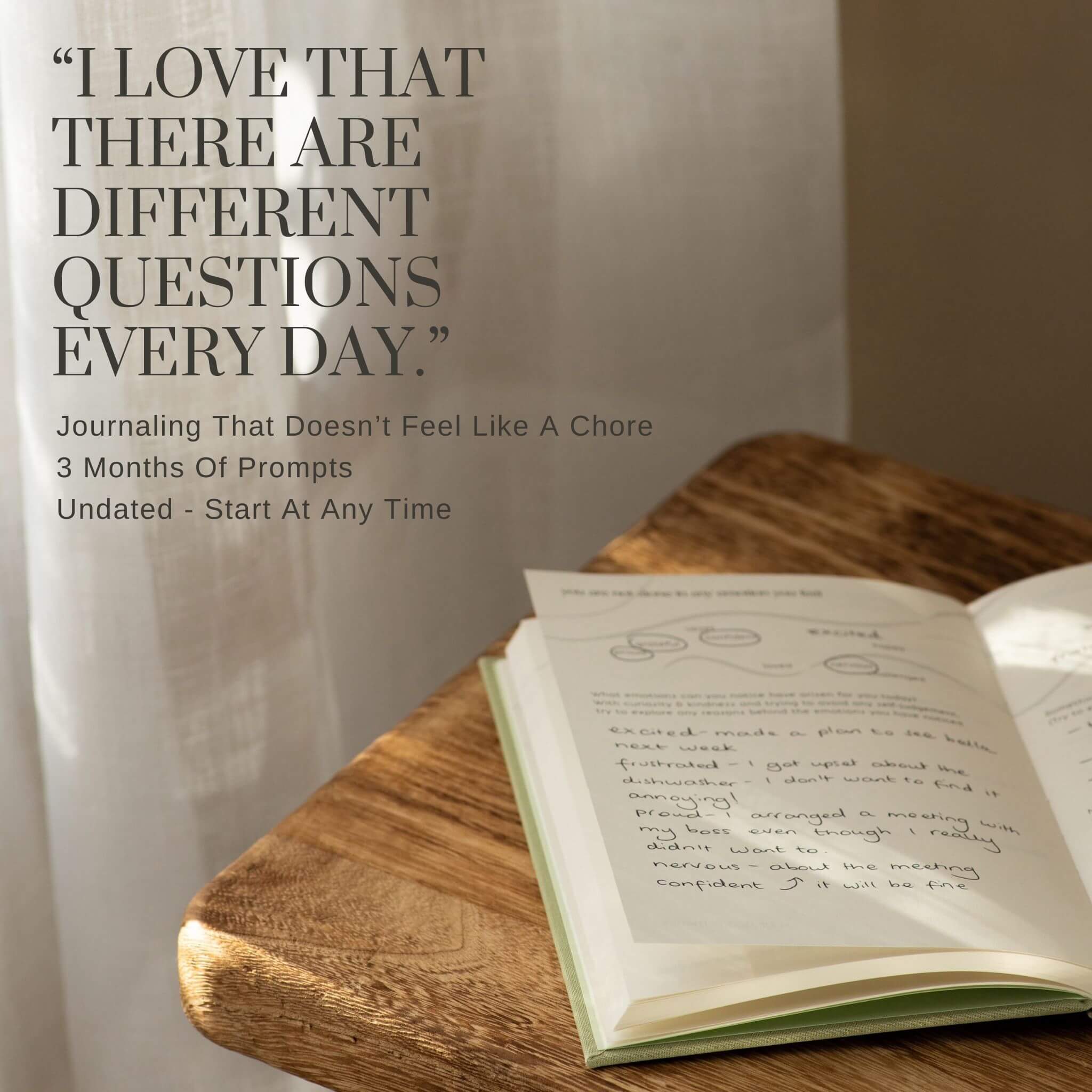
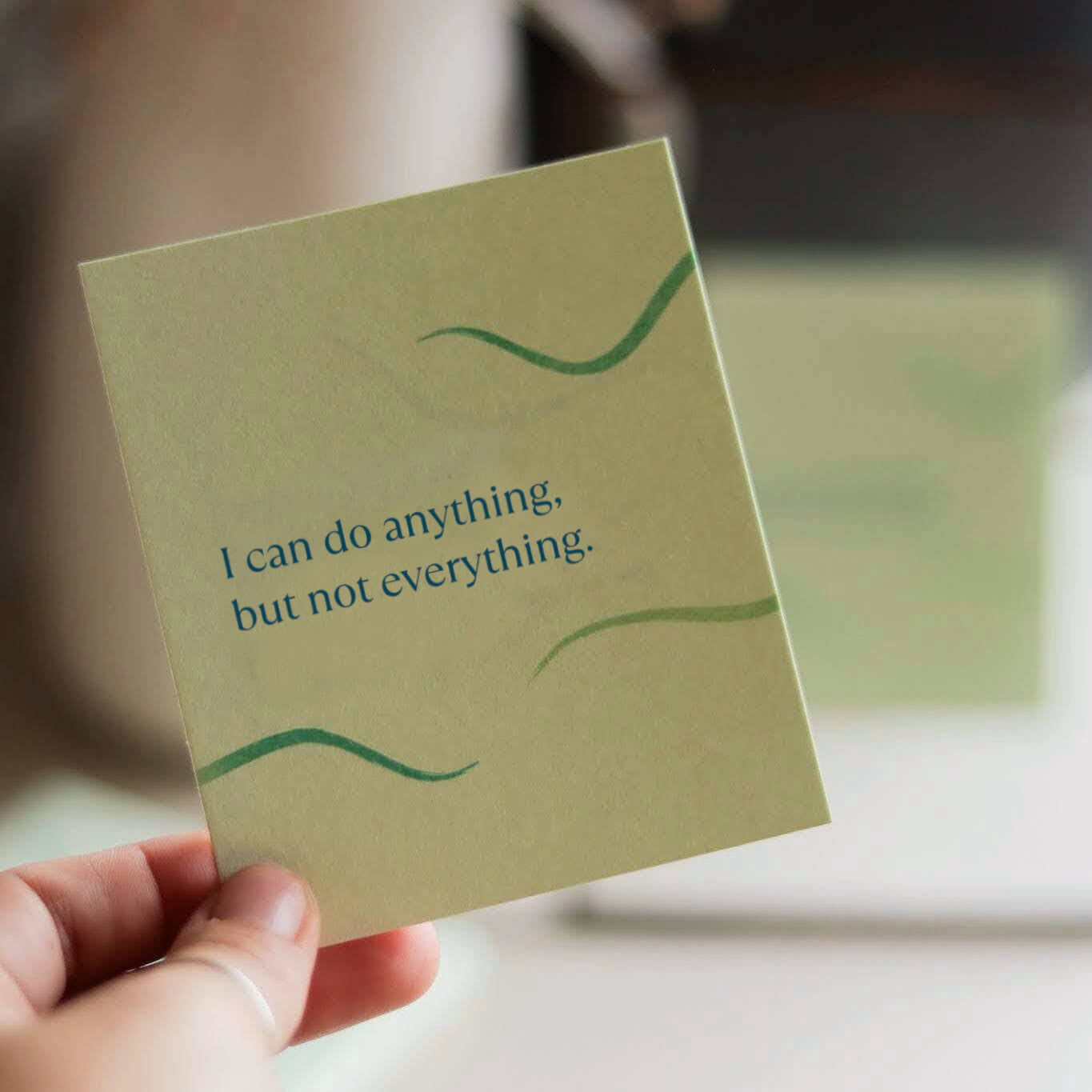
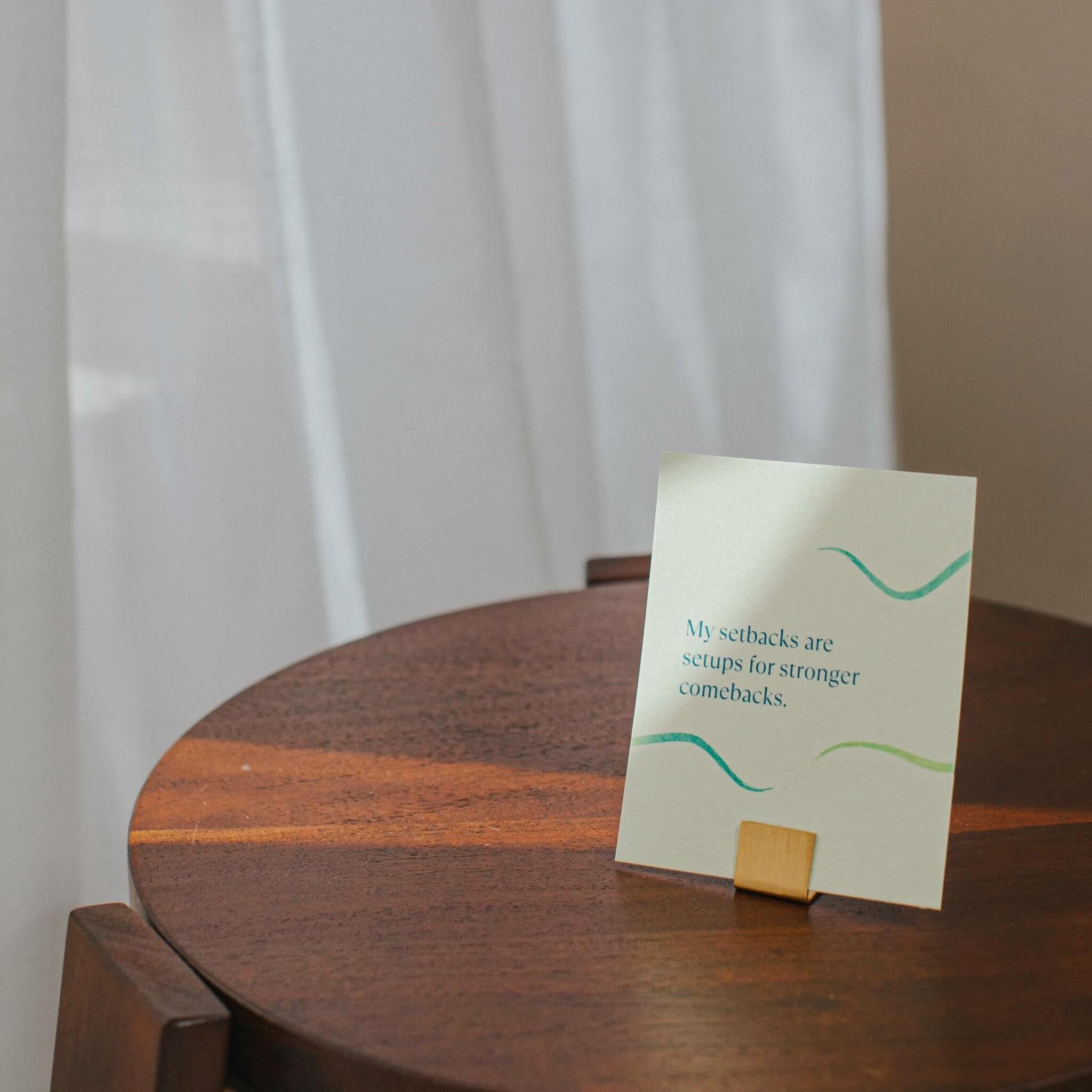
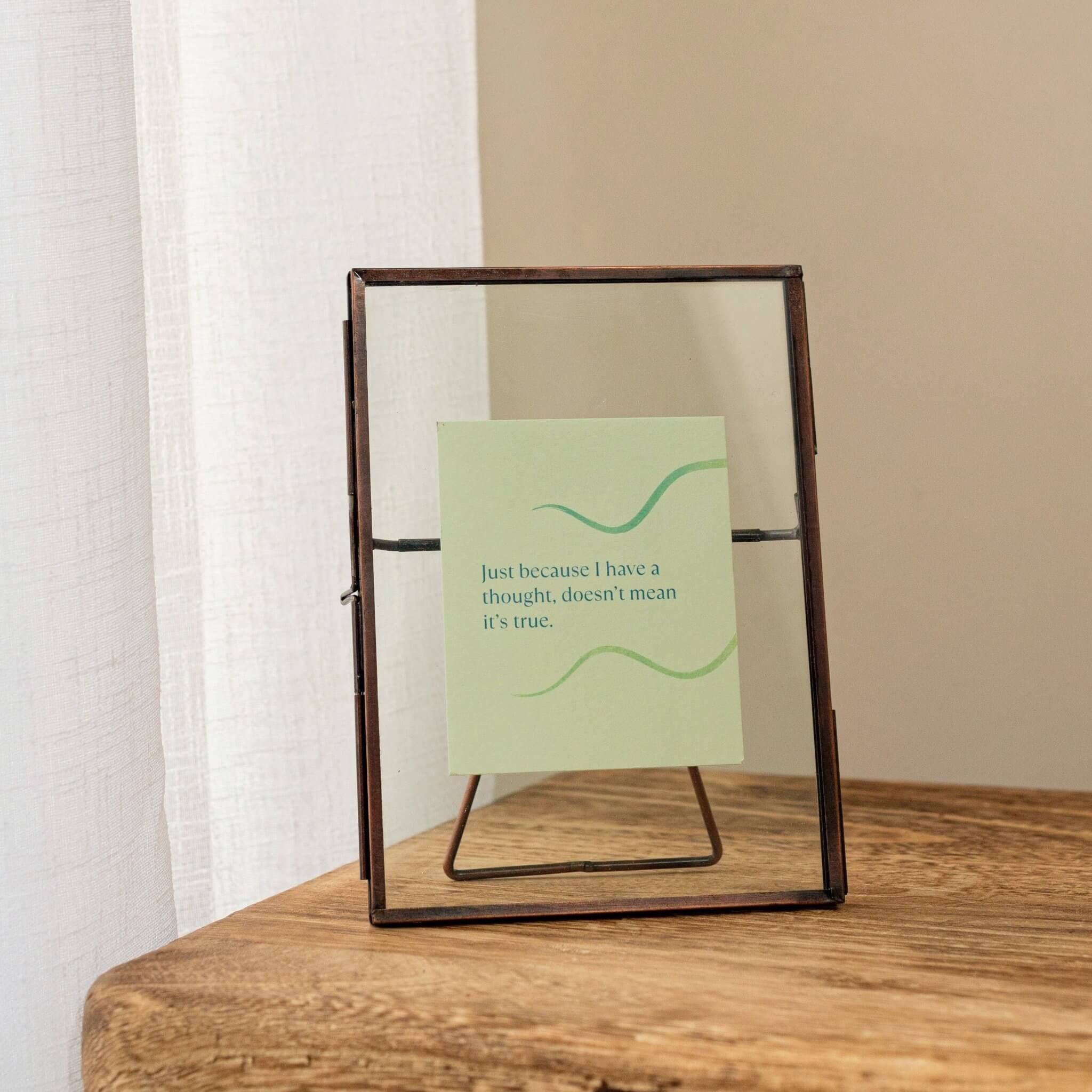
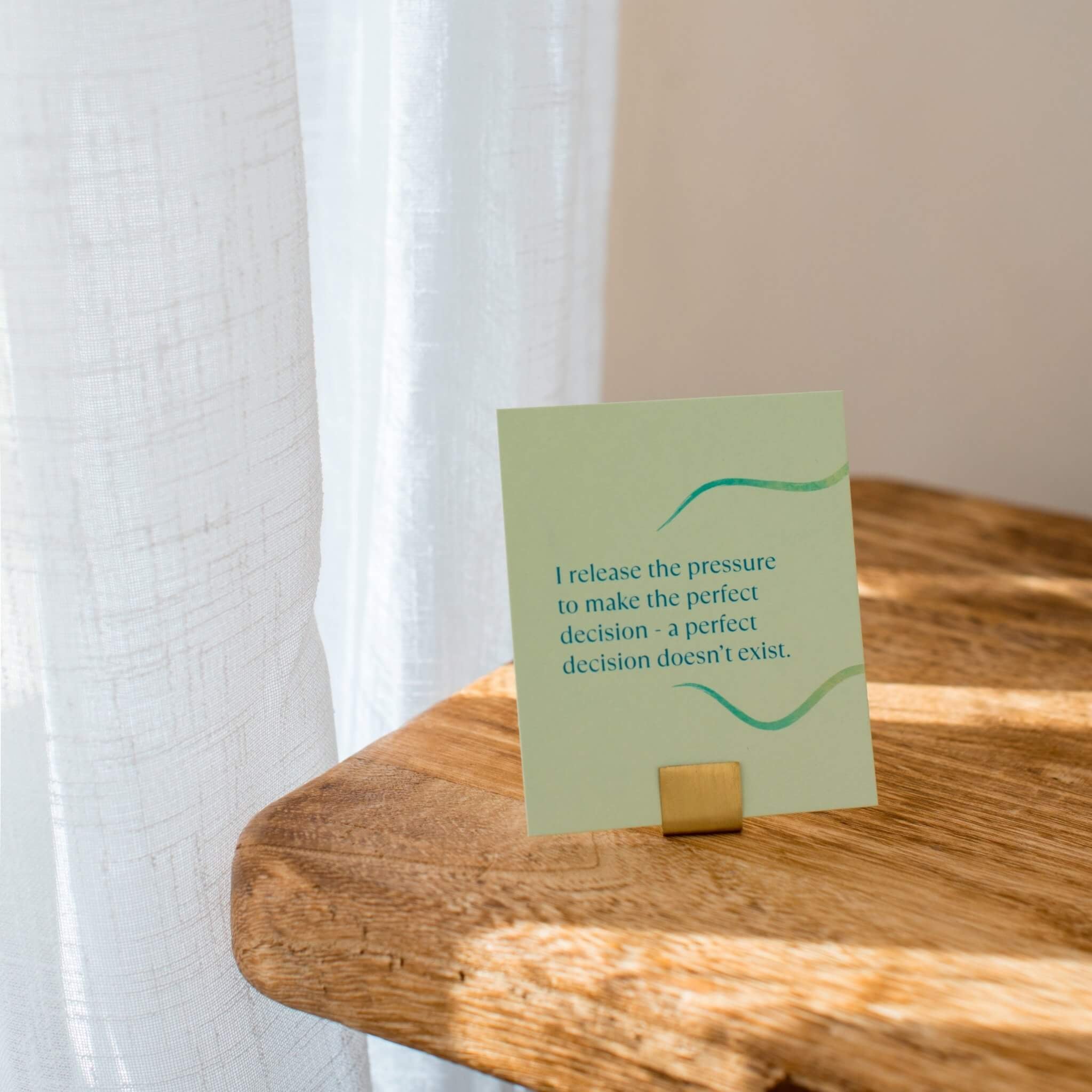
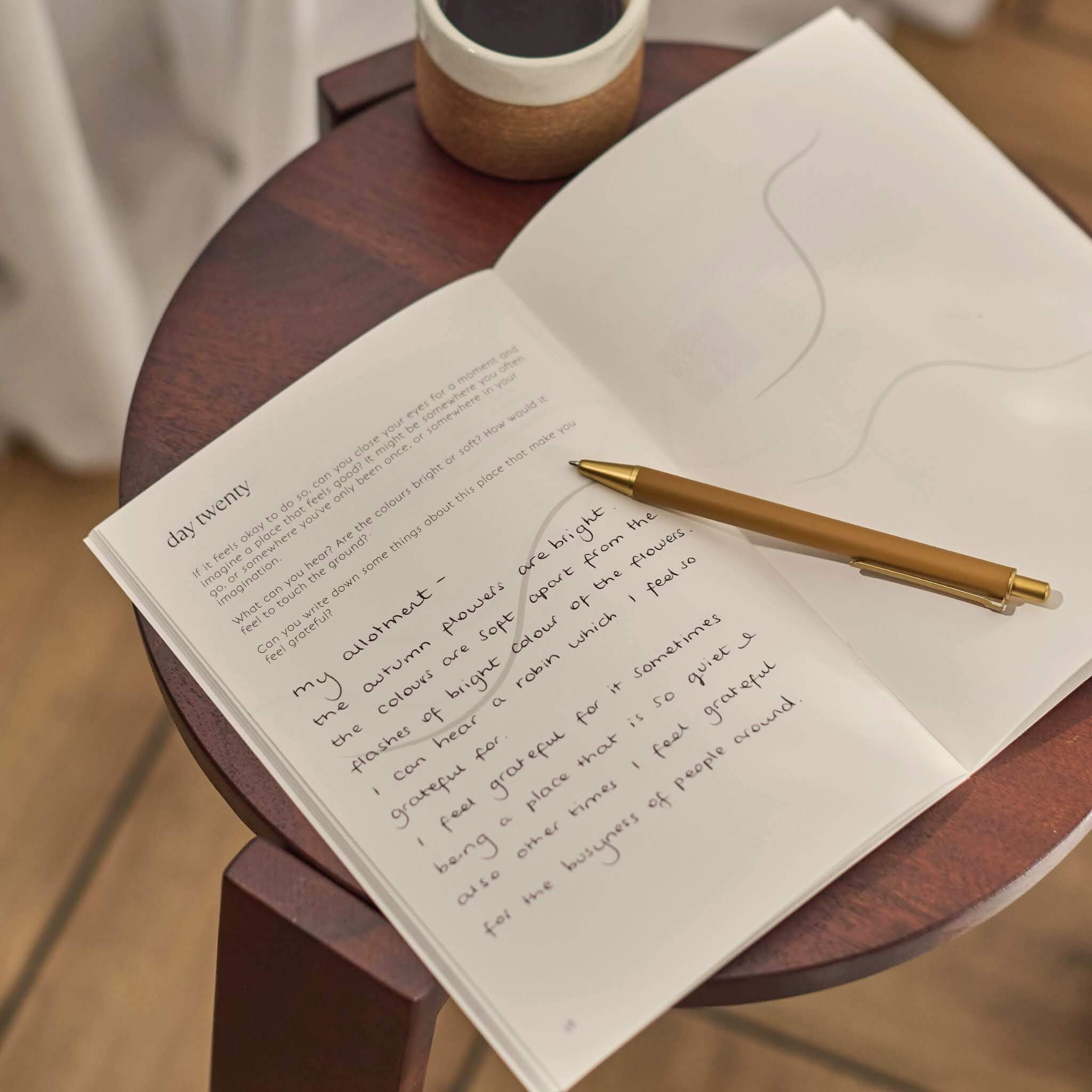
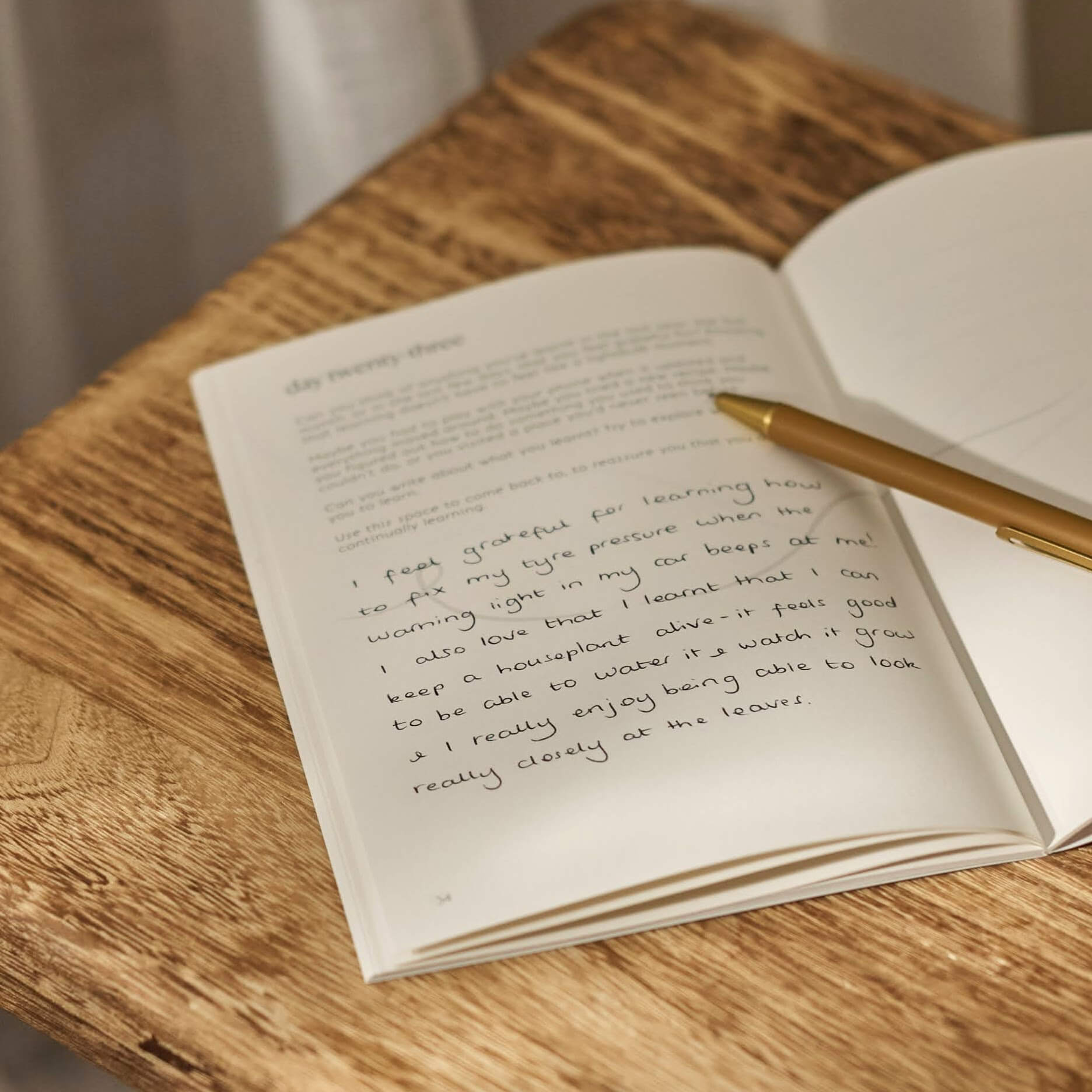
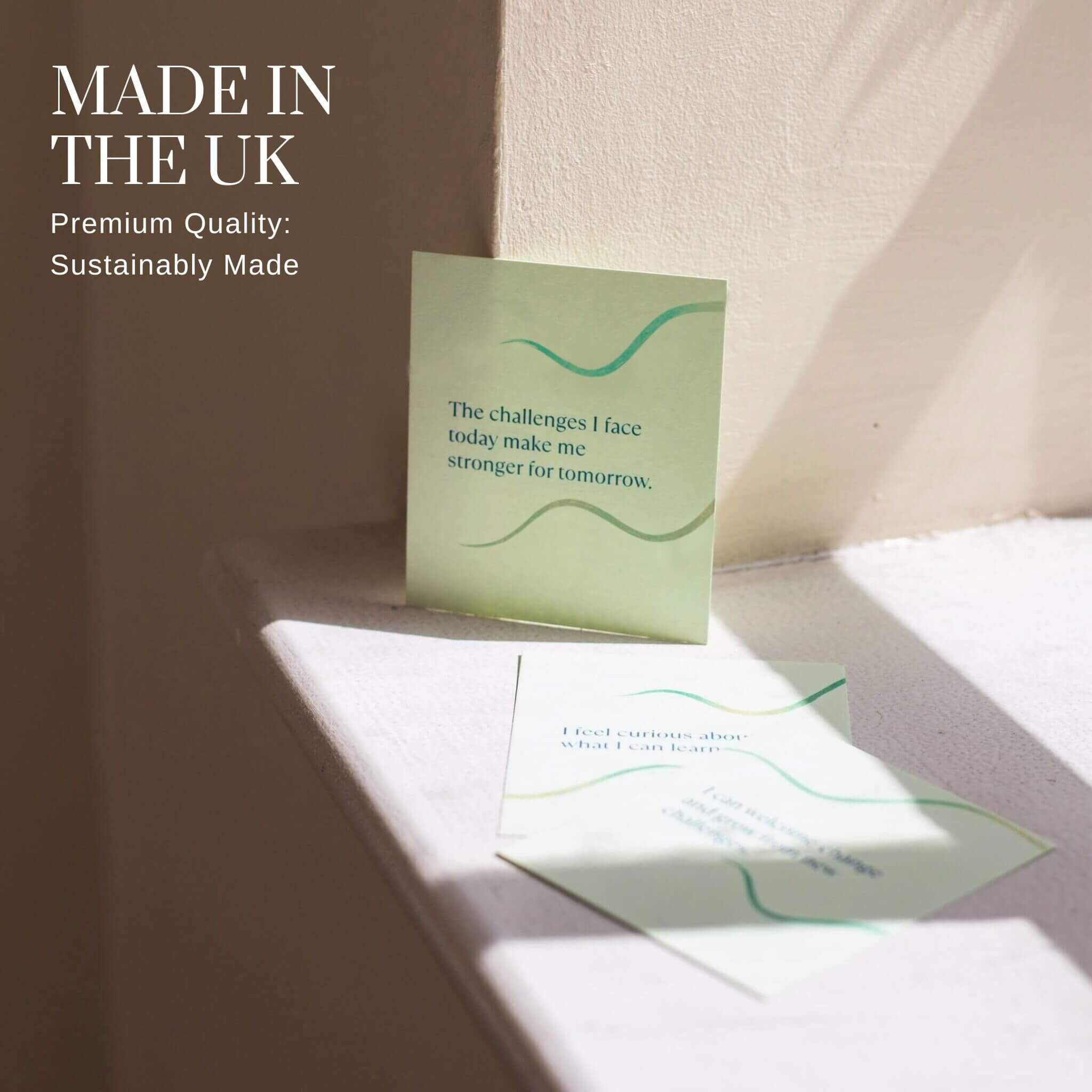
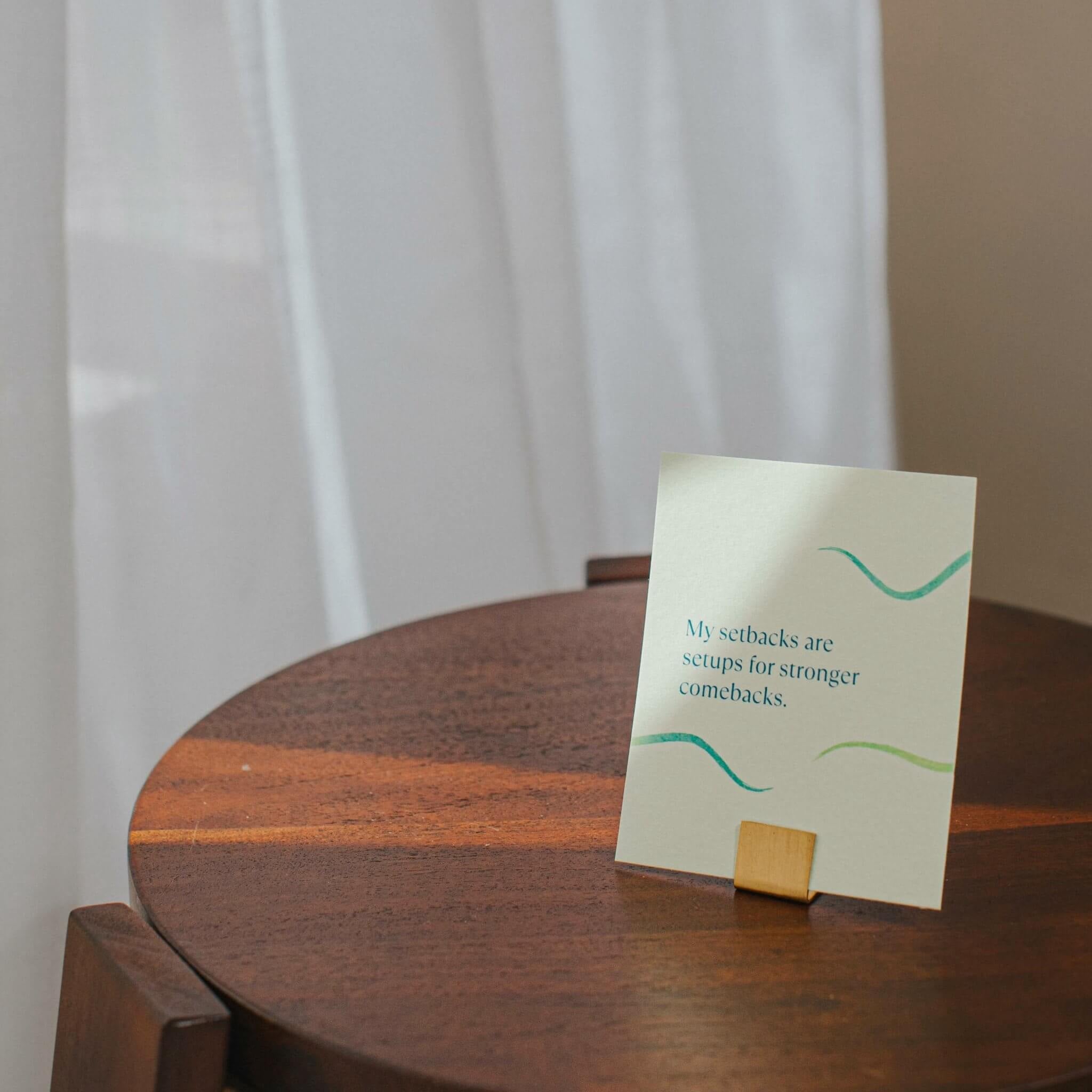
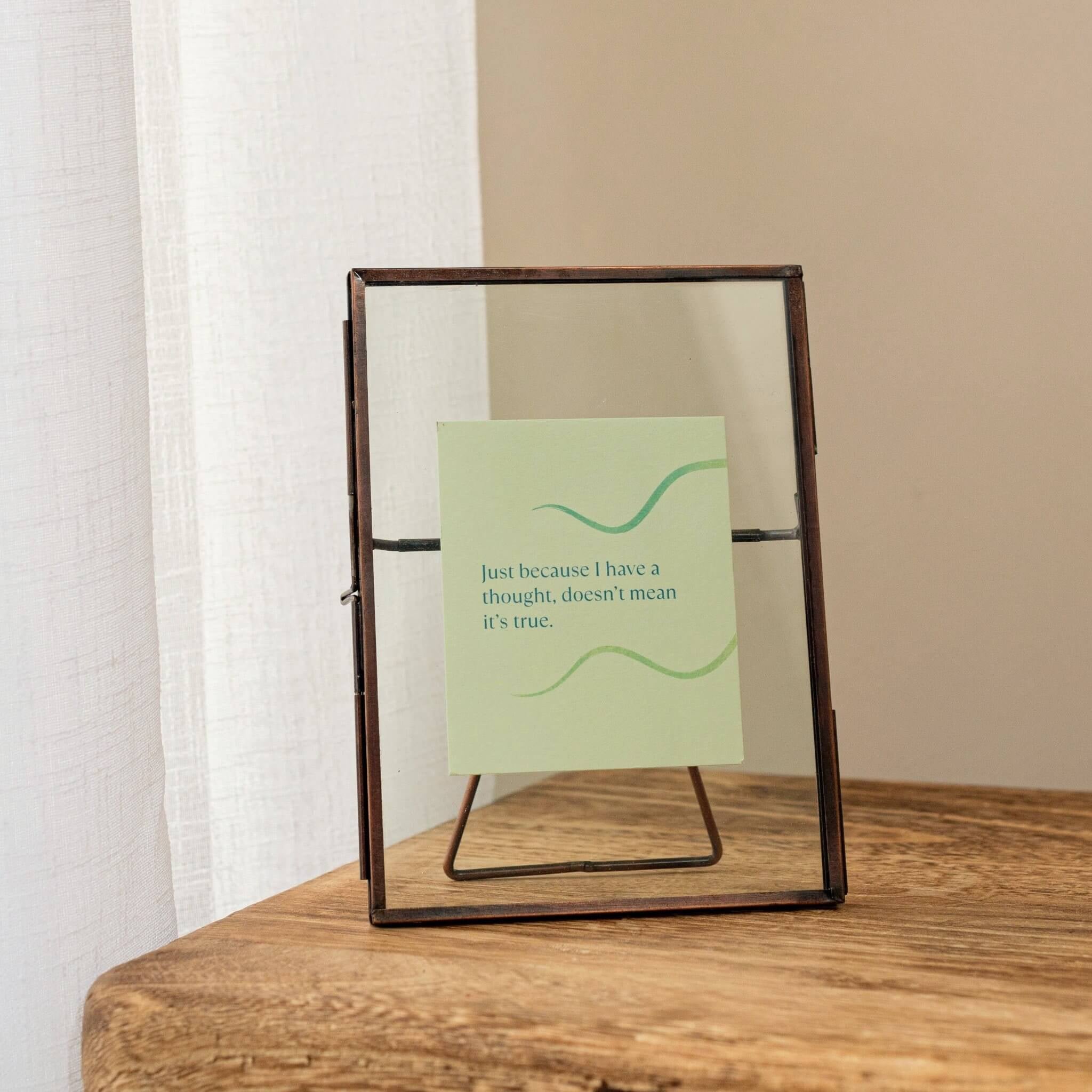
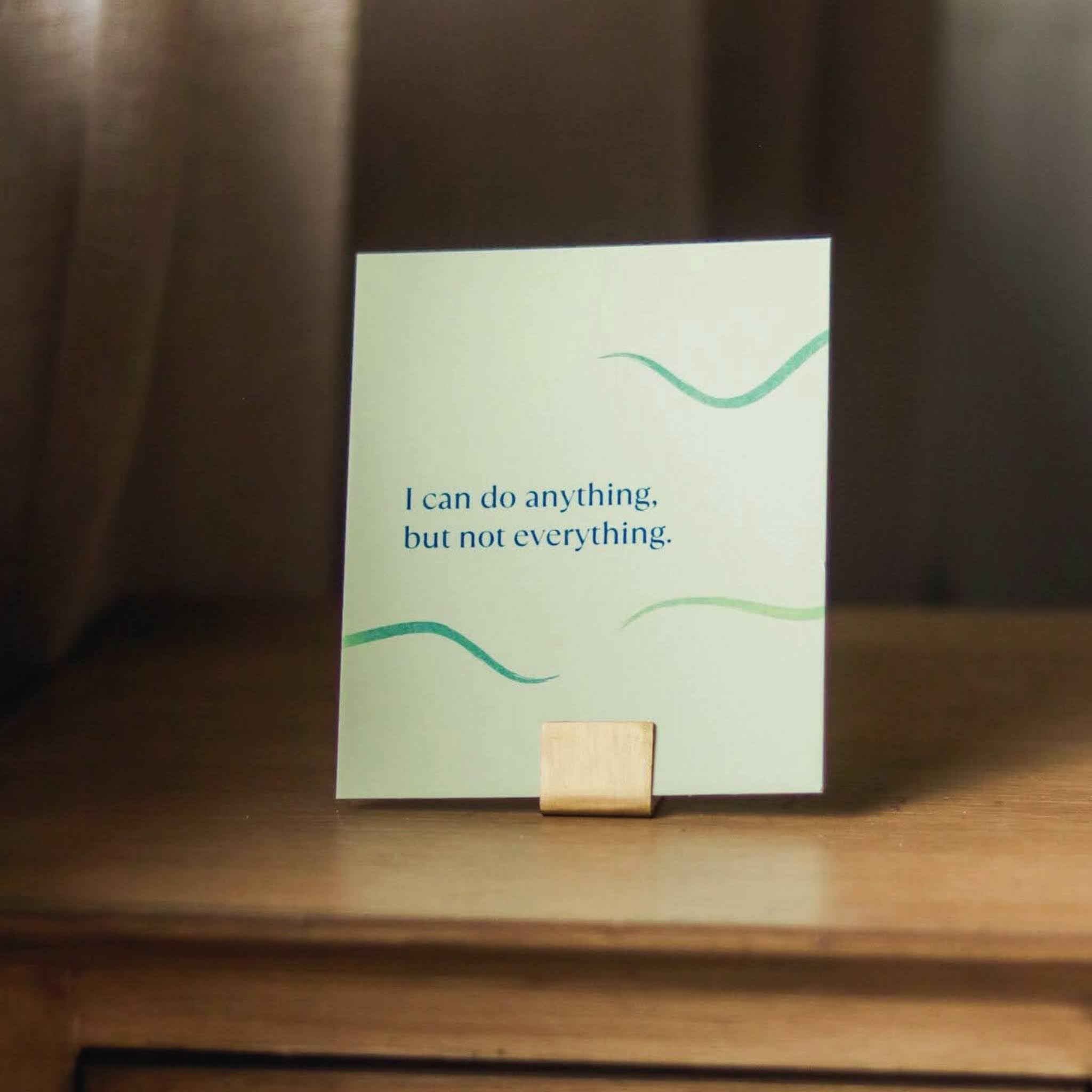
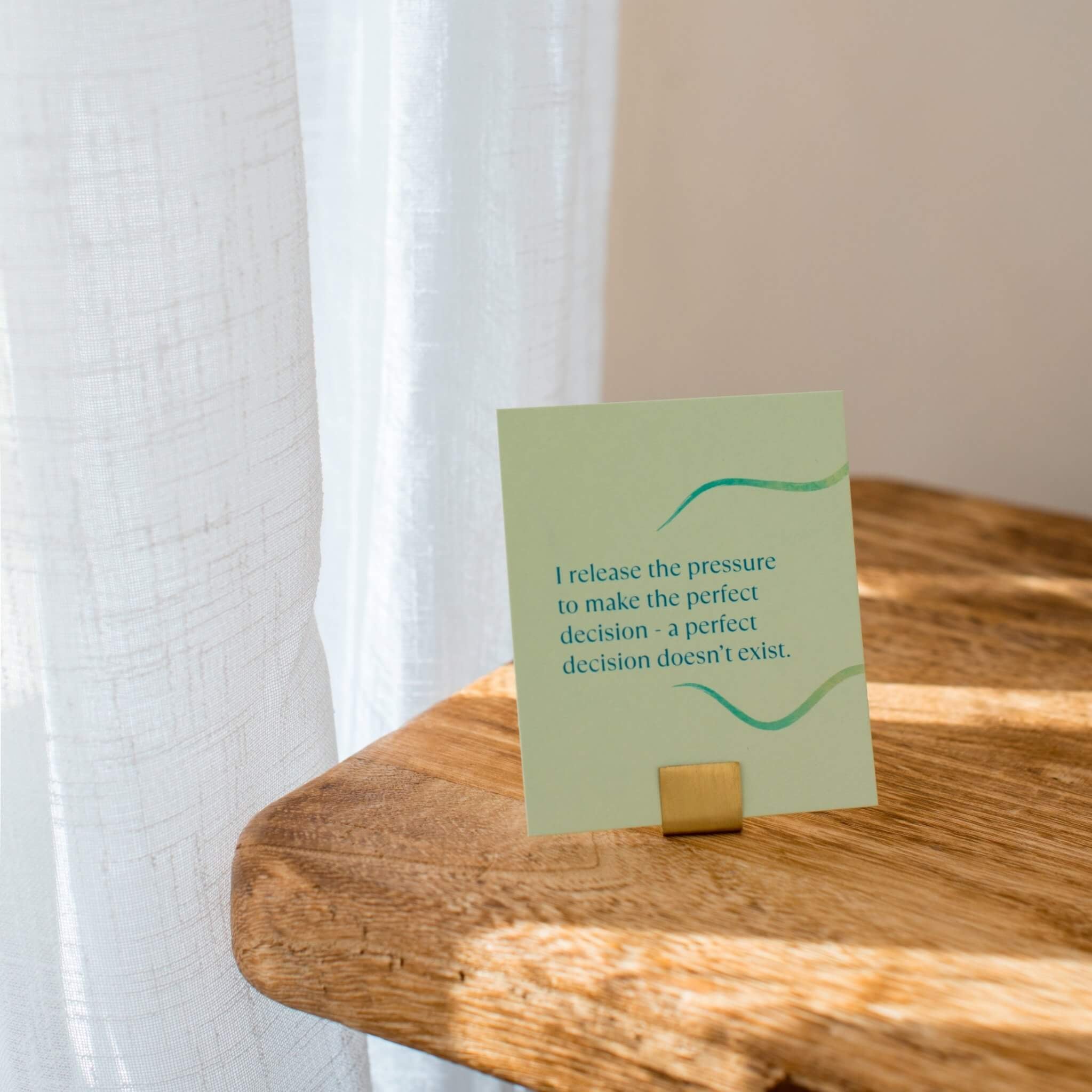
Thirty prompts and thirty different ones. One day you notice something in nature. Another day you write a letter you'll never send. One day is a guided meditation rather than writing at all. No three-item lists, no numbered blanks, and nothing that demands you feel cheerful to take part.
- 30 varied prompts, undated, start any time
- An exclusive guided meditation by a qualified teacher
- QR codes through to expert articles on the science of gratitude
- Reviewed by psychotherapist Carrie Pollard, MSW RSW
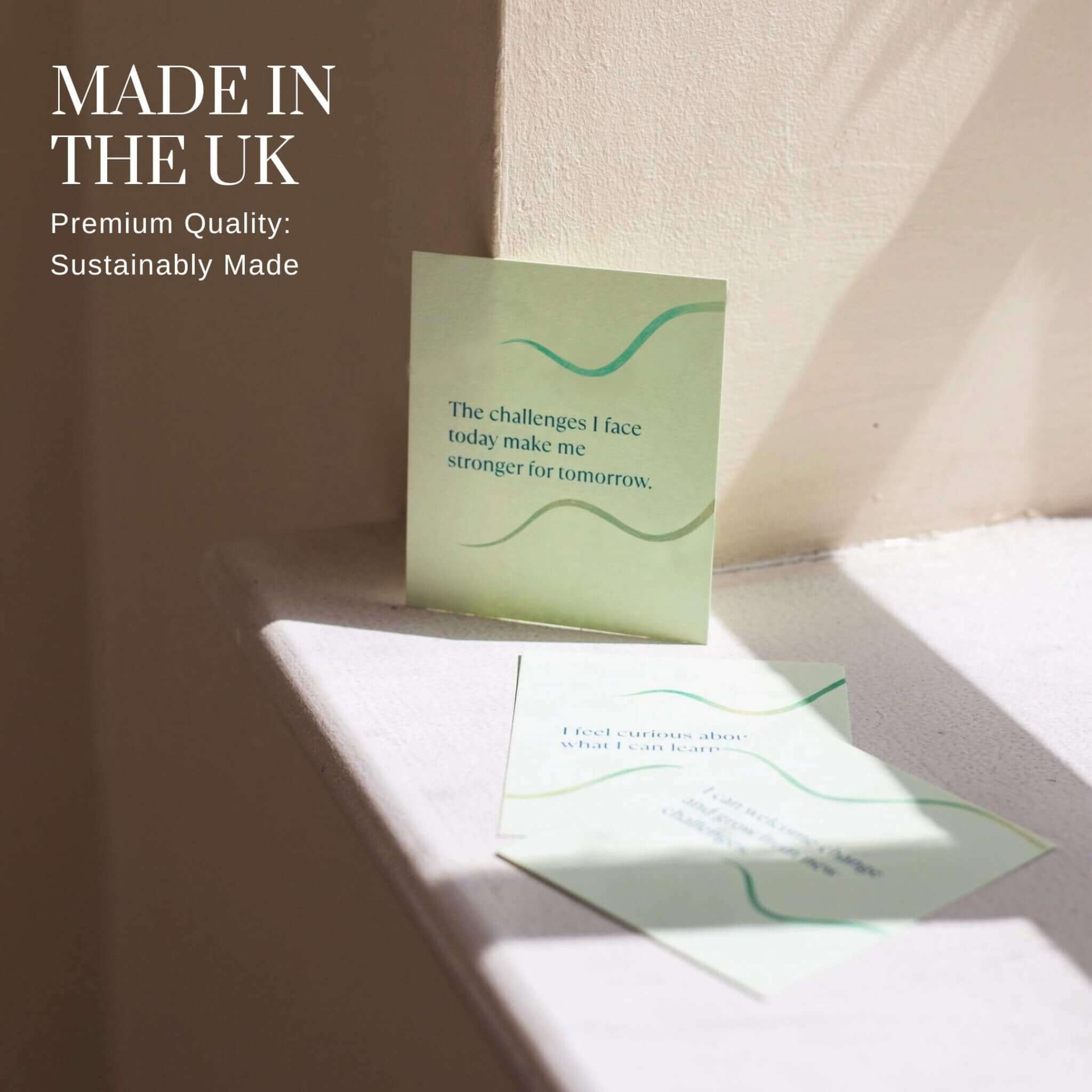
- 120gsm paper, luxury textured cover, made in the UK
Added to your basket. View basket →
This is the one to buy if the word "gratitude" is what brought you here. See full details and photographs →
If gratitude is one part of something bigger
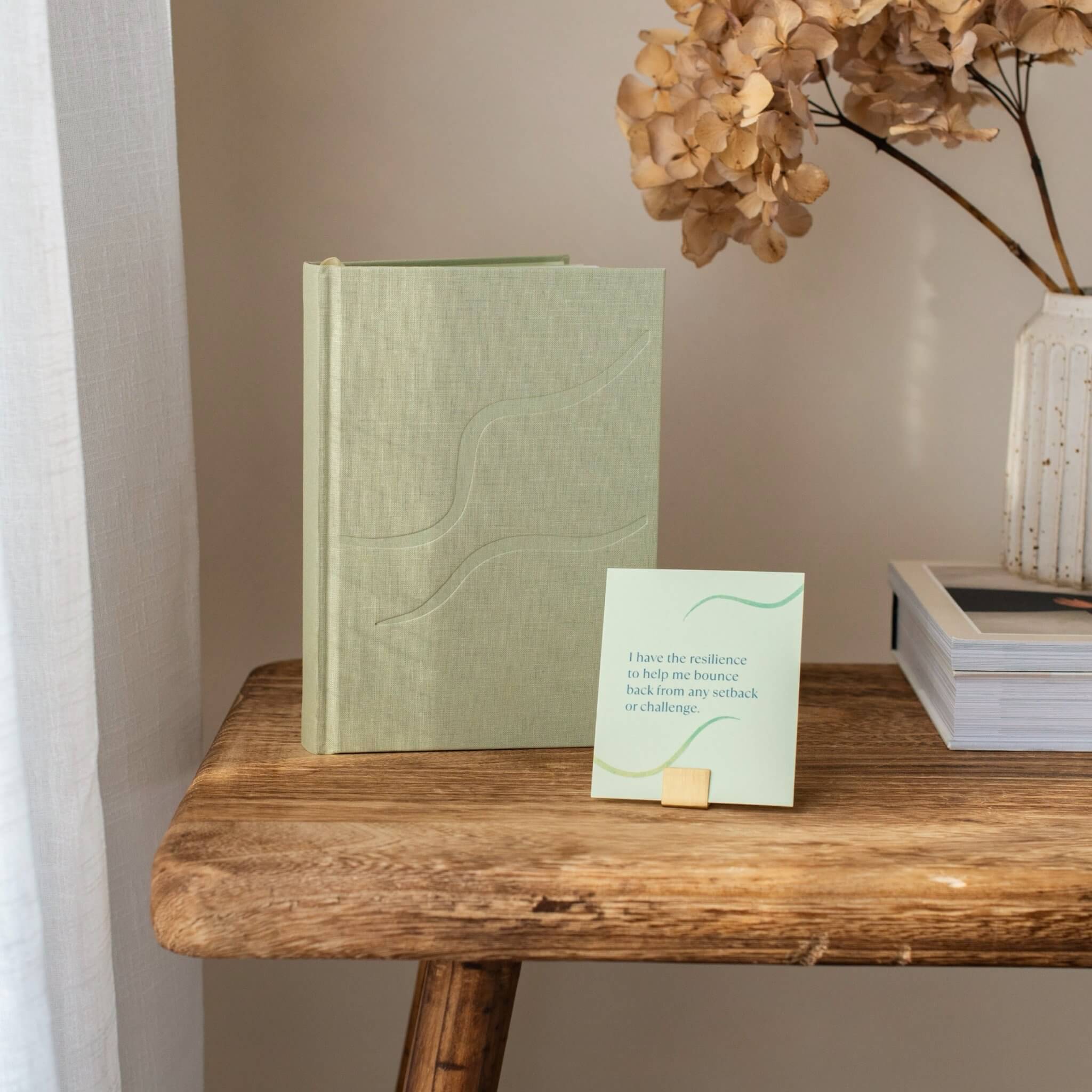
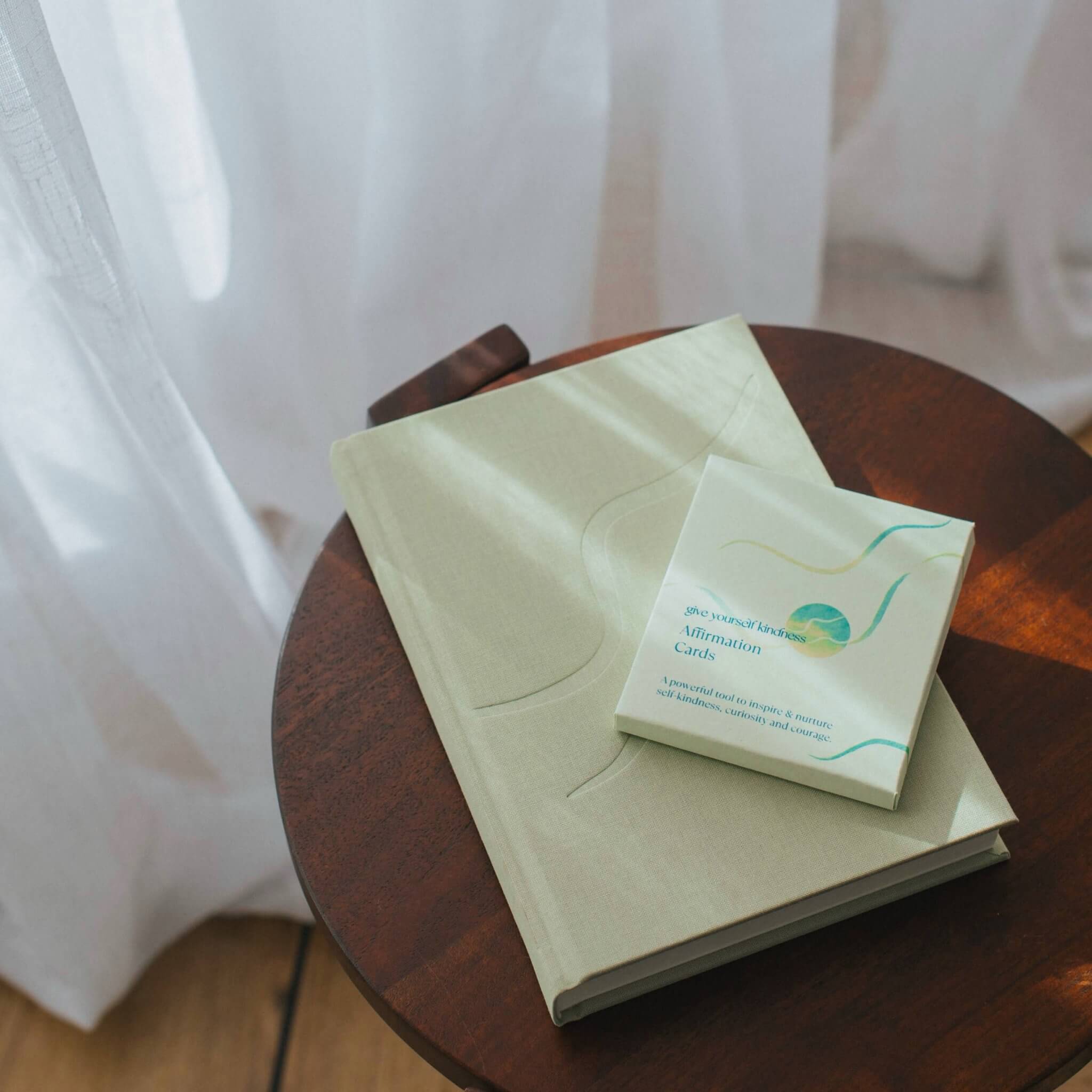
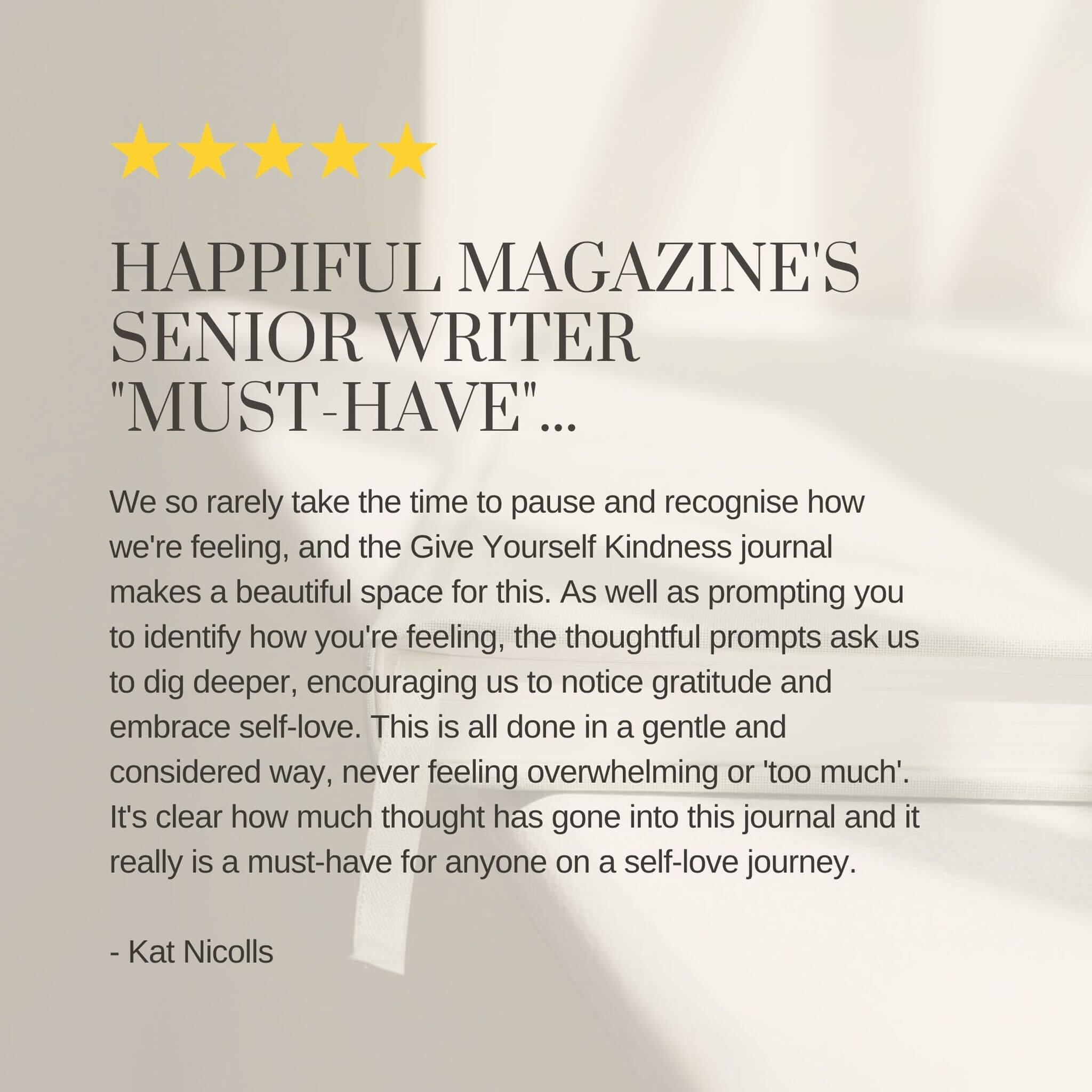
The Give Yourself Kindness Journal
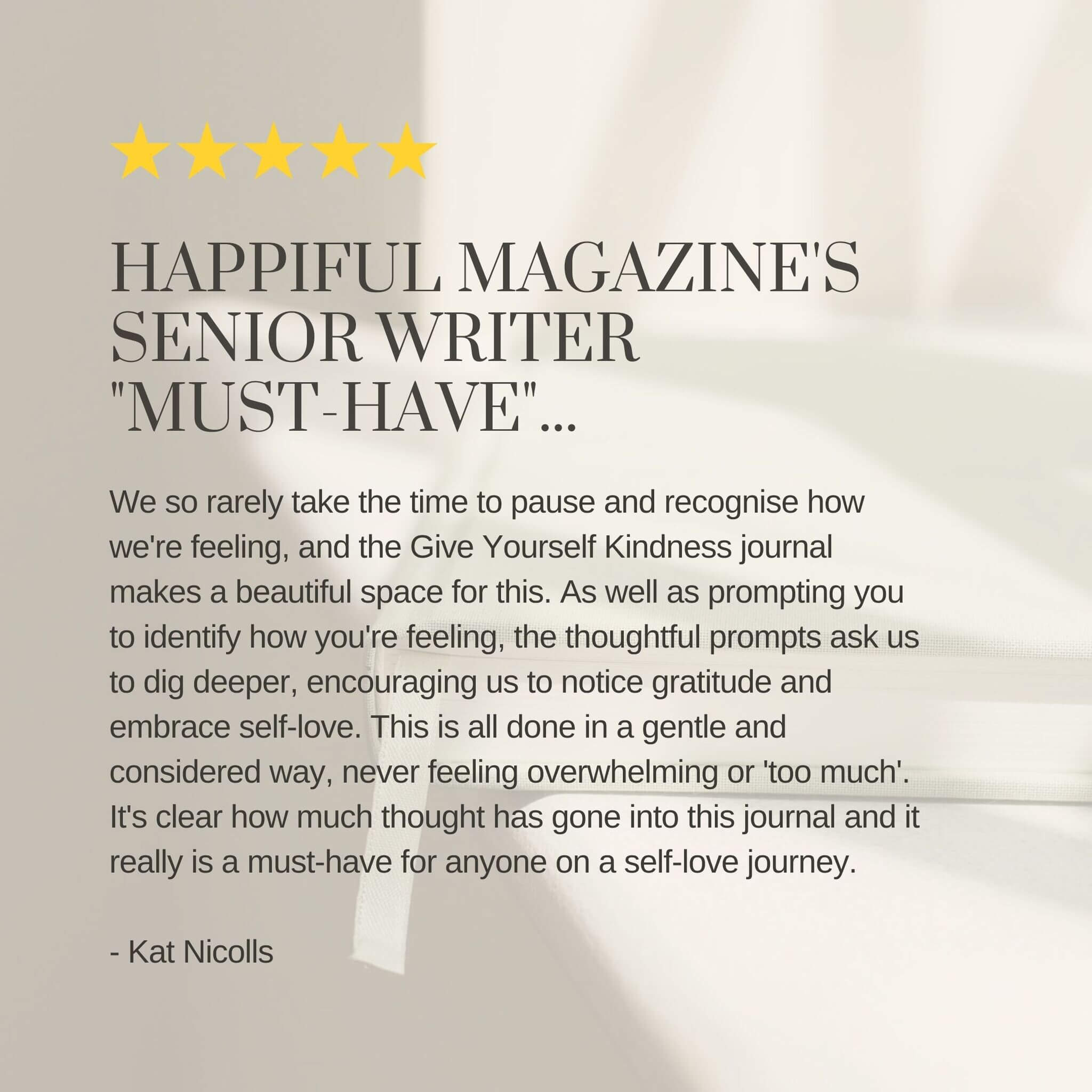
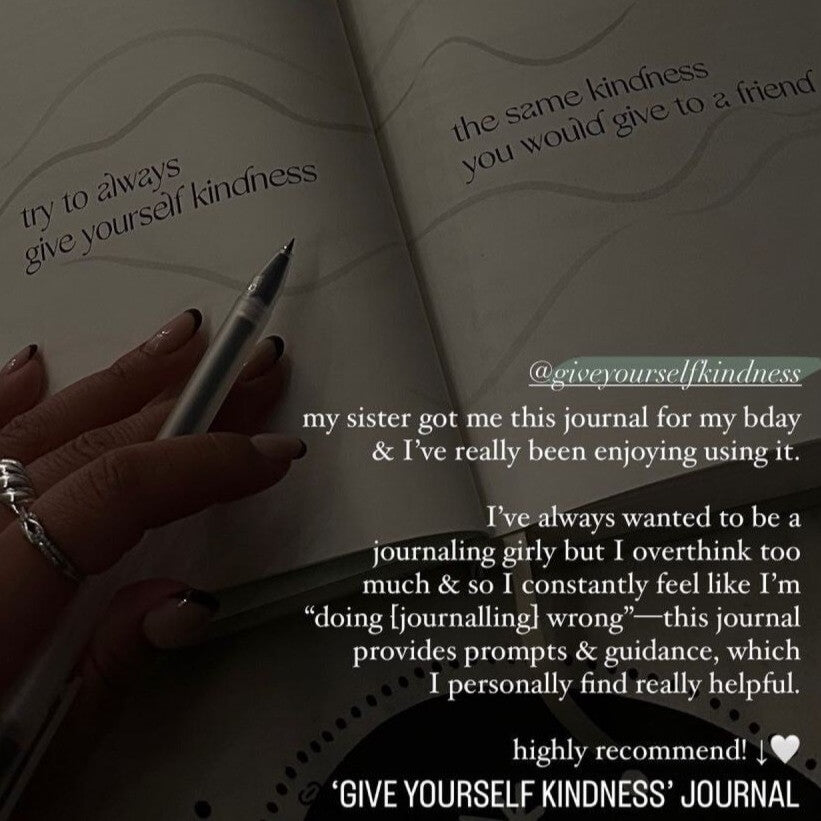
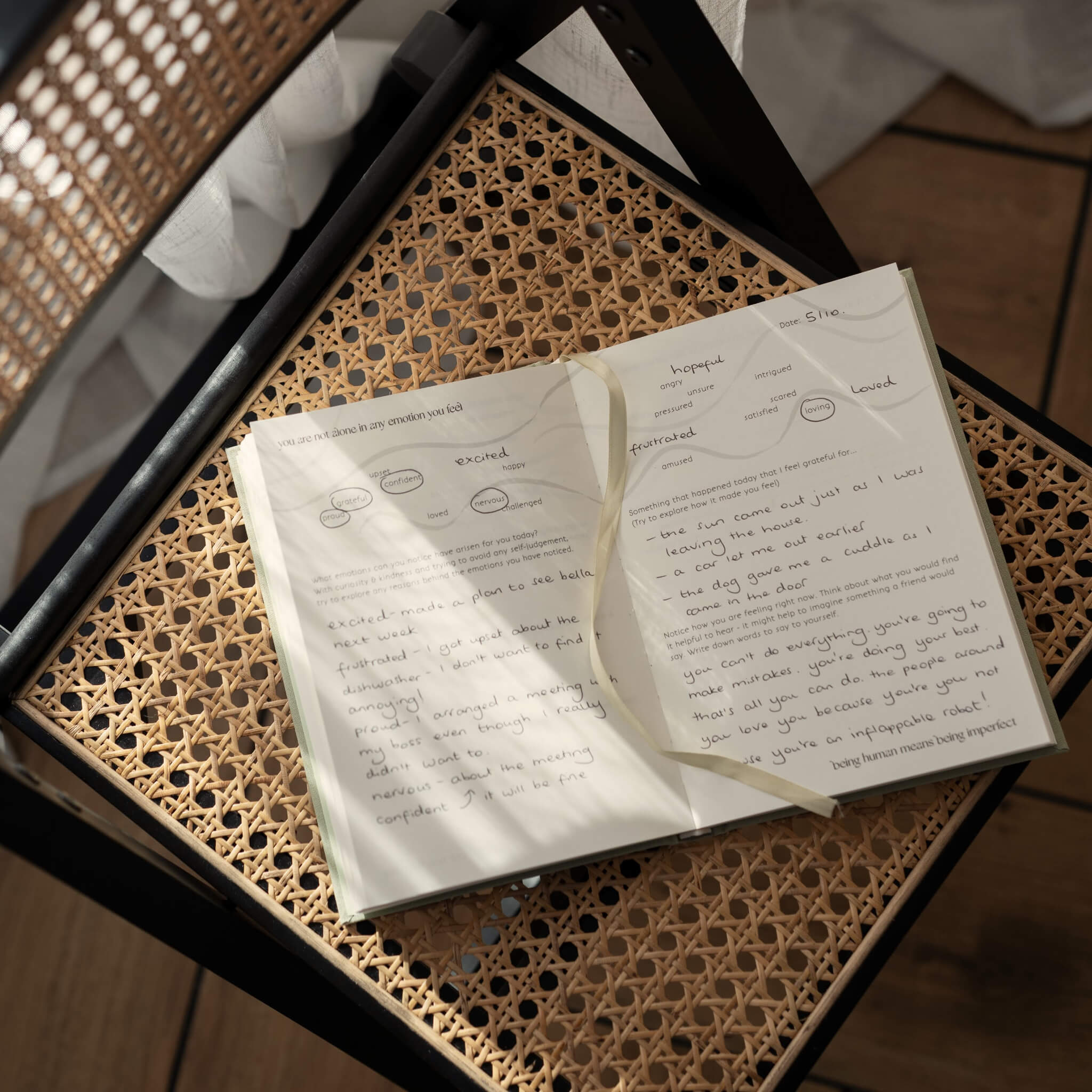
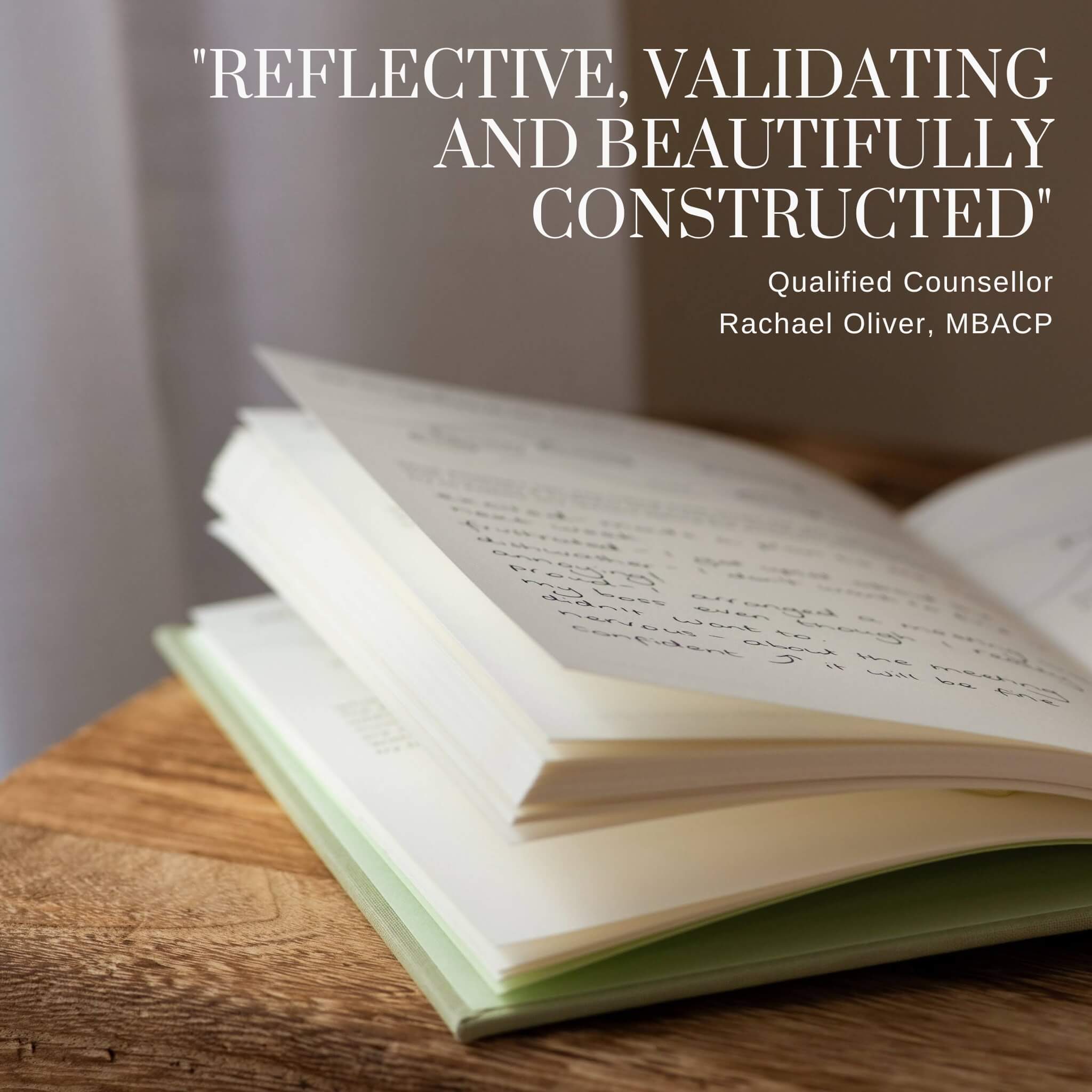
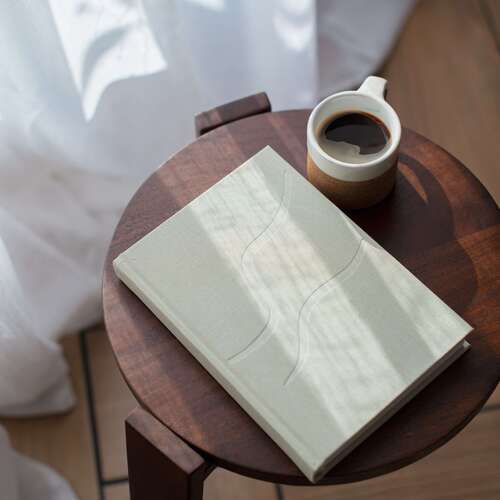
Gratitude is woven through this one, but it is not what it is for. It is for self-criticism, overwhelm and the harsh inner voice, with gratitude appearing as one thread among several rather than the whole point. Buy this if "I'd like to be kinder to myself" describes the problem better than "I'd like to notice more good things".
- 224 pages, three months of undated prompts, every page different
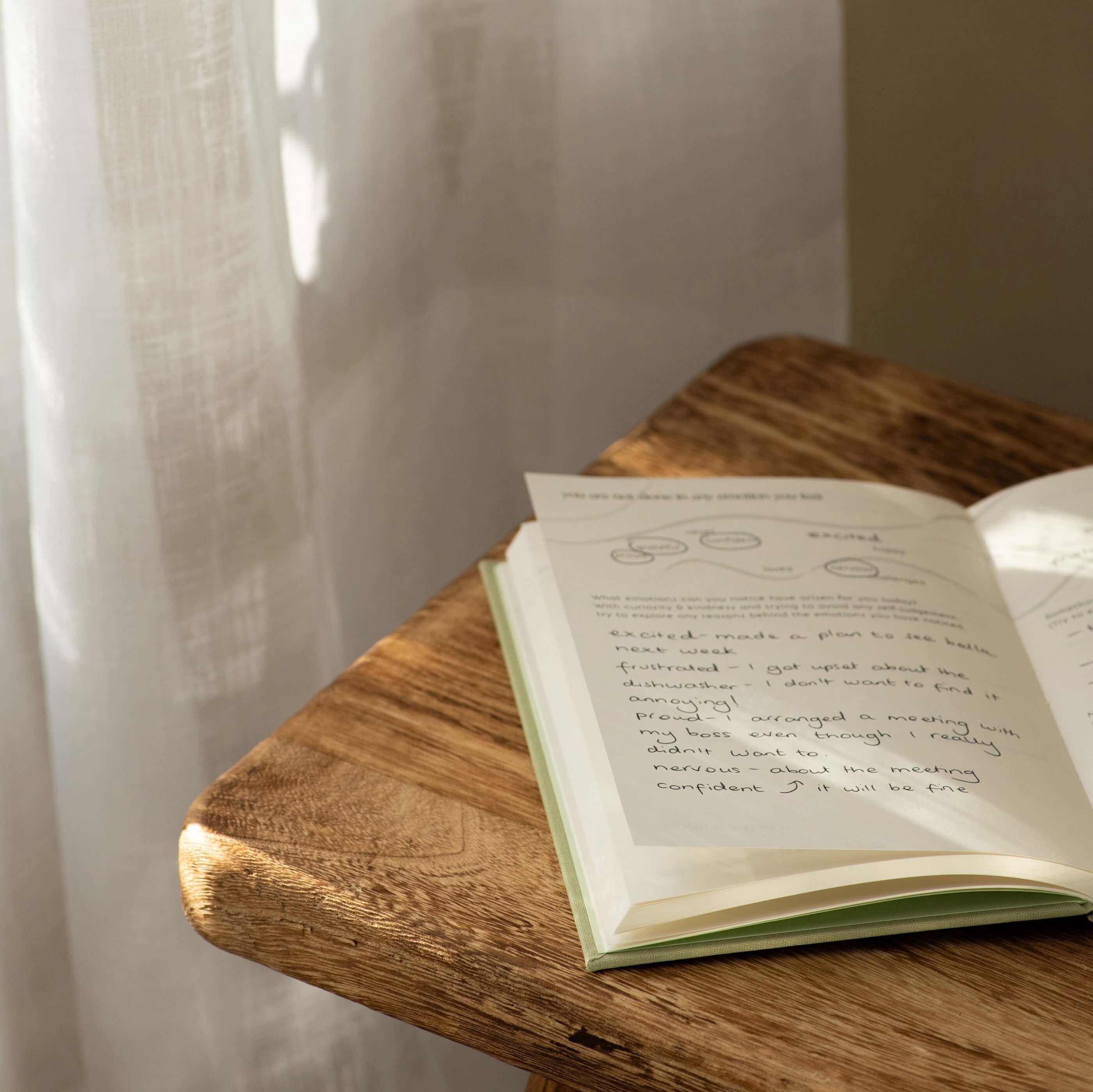
- A visual emotional awareness tool on every page, not just at the front
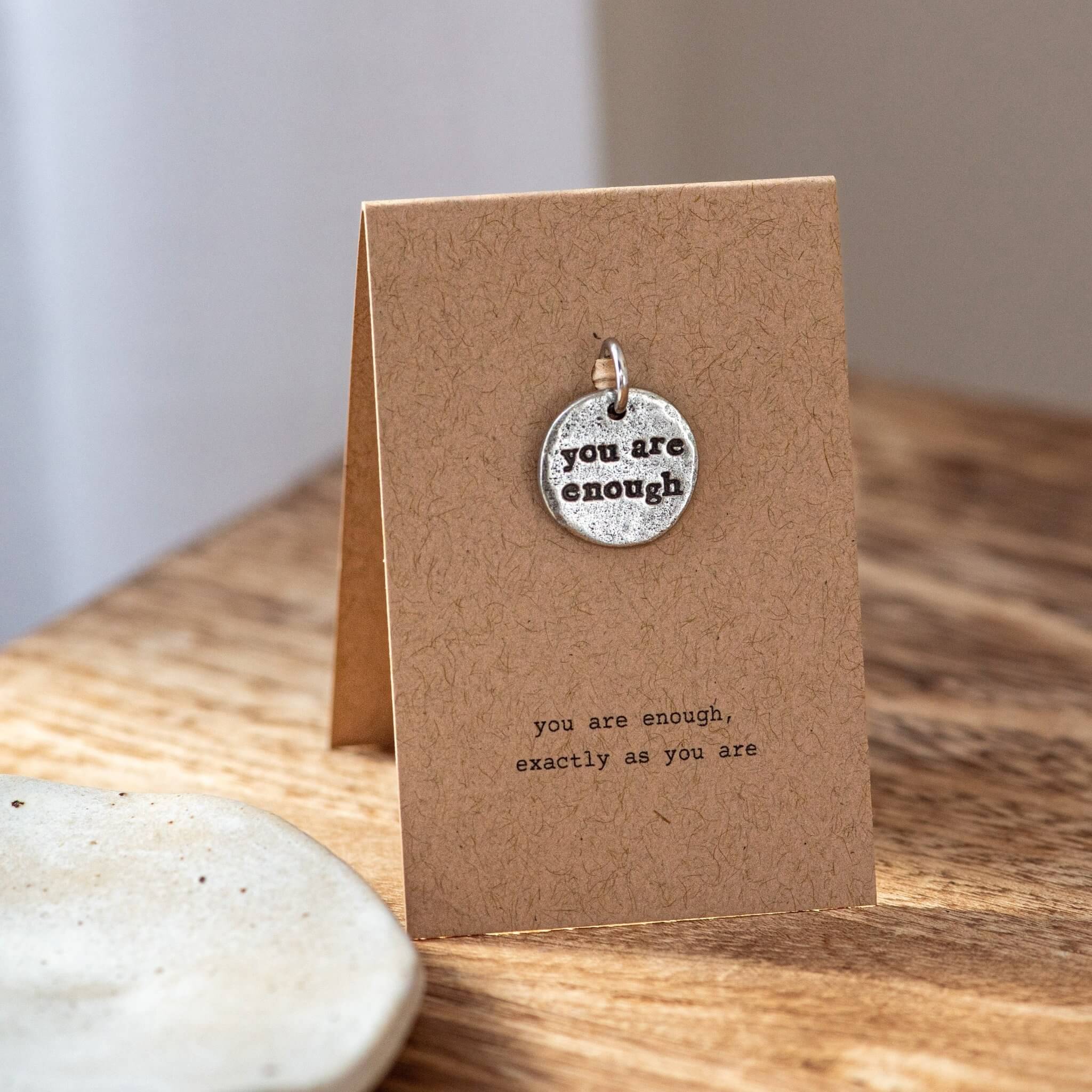
- Over 50 self-care quotes throughout
- This is the journal reviewed by Chris Germer (Harvard), Professor Willem Kuyken (Oxford) and Dr Chris Irons
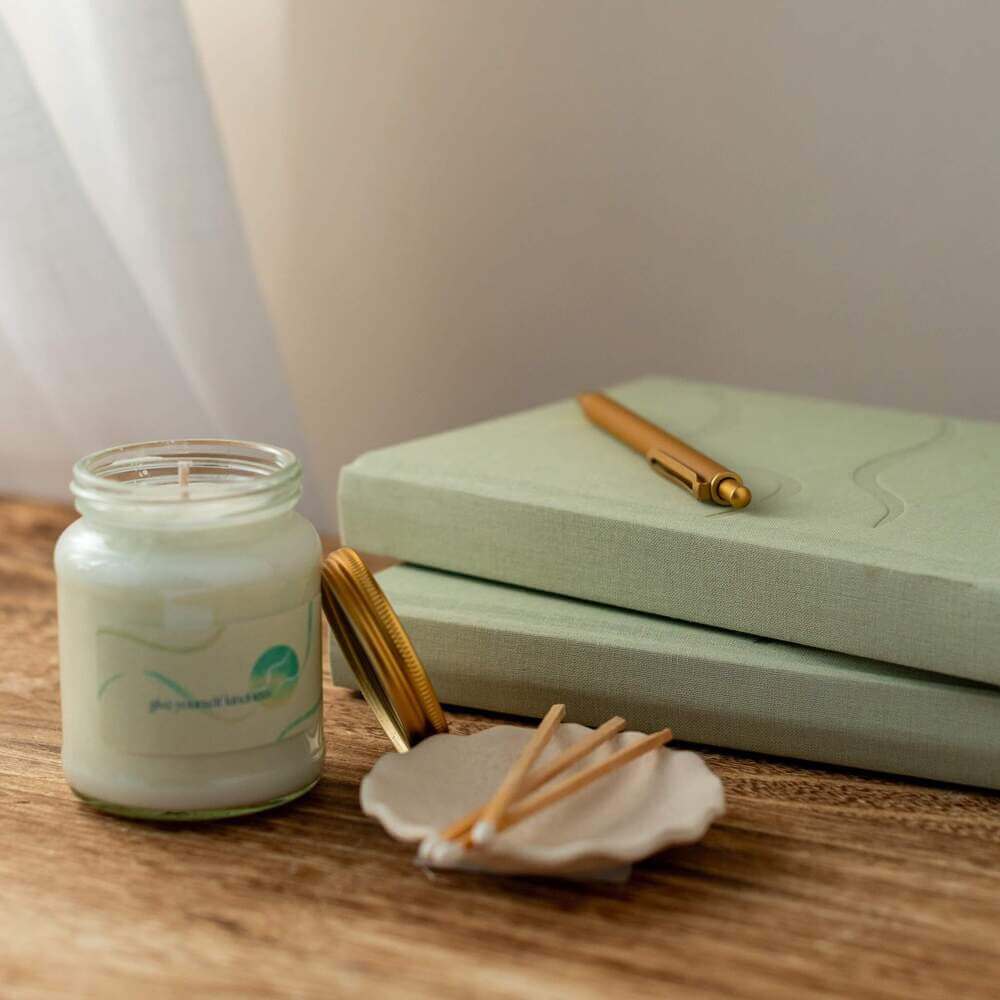
- 120gsm FSC paper, pistachio green cloth cover, wrapped in bespoke tissue paper
Added to your basket. View basket →
See full details and photographs → Or compare gratitude journals more widely here.
And if you already write freely and enjoy it, you do not need a gratitude journal at all. Keep a plain notebook, end each entry with one thing you noticed, and put the money towards something else. The book is not the practice.
Common questions
Can you recommend a good gratitude journal?
If you want gratitude specifically and you would like to find out whether the habit suits you, I would start with a short undated one with a different prompt on each page. Mine is The Gratitude Journal: A 30-Day Challenge, £10.95, reviewed by psychotherapist Carrie Pollard, and thirty pages is a small enough promise to actually keep. If the deeper problem is how harshly you speak to yourself rather than how much you notice, the Give Yourself Kindness Journal at £28.95 is the better fit, and that is the one reviewed by clinical psychologists at Harvard and Oxford.
What do you write in a gratitude journal?
Anything you noticed and were glad of. It does not have to be large or profound: the tea being the right temperature counts, and small specific things generally work better than big abstract ones, because "my family" is the same answer every day and "the way my daughter said my name this morning" is not. Writing why it mattered, even in half a sentence, does more than writing the thing alone.
How often should you write in one?
There is no established correct answer, and the honest one is: often enough that it stays a habit, rarely enough that it stays honest. Daily suits people who like routine. Weekly suits people whose lives will not hold a daily commitment. Both work. What does not work is a schedule chosen because it sounded impressive, then abandoned in week three.
Do gratitude journals actually work?
Gratitude practice has a real research base behind it, and writing things down appears to help more than simply thinking them, because choosing the words makes you look at the thing properly. What matters more than the research, in practice, is whether you will keep doing it, which is why the format of the journal is worth more attention than most people give it. There is more on the science here.
What if I can't think of anything to be grateful for?
That is normal, it is common, and it does not mean you are ungrateful. Some brains find gratitude harder than others, and it becomes easier with practice in the way a muscle does. Psychotherapist Carrie Pollard warns that when gratitude is forced or triggers guilt, "it leaves us feeling worse, not better". On the days when nothing comes, a journal that offers you a different question, or lets you write about what was hard instead, will keep you in the habit. A page of three blank numbered lines will just make you feel worse. More on that here.
Is a gratitude journal the same as a guided journal?
No. A gratitude journal is about one thing: noticing what you are thankful for. A guided journal is a broader tool that uses prompts to cover many kinds of reflection, of which gratitude might be one. If you are choosing between the two, this comparison of guided journals is the place to look.
Should I buy a dated or undated gratitude journal?
Undated, unless you know from experience that a date on the page is what gets you to write. Undated books cannot show you the days you missed, which removes the single most common reason people stop.