


Last Updated: October 14th, 2026 | By: Rachel Smith, DipBSoM (Qualified Meditation Teacher)
Which Gratitude Journal Is Best?
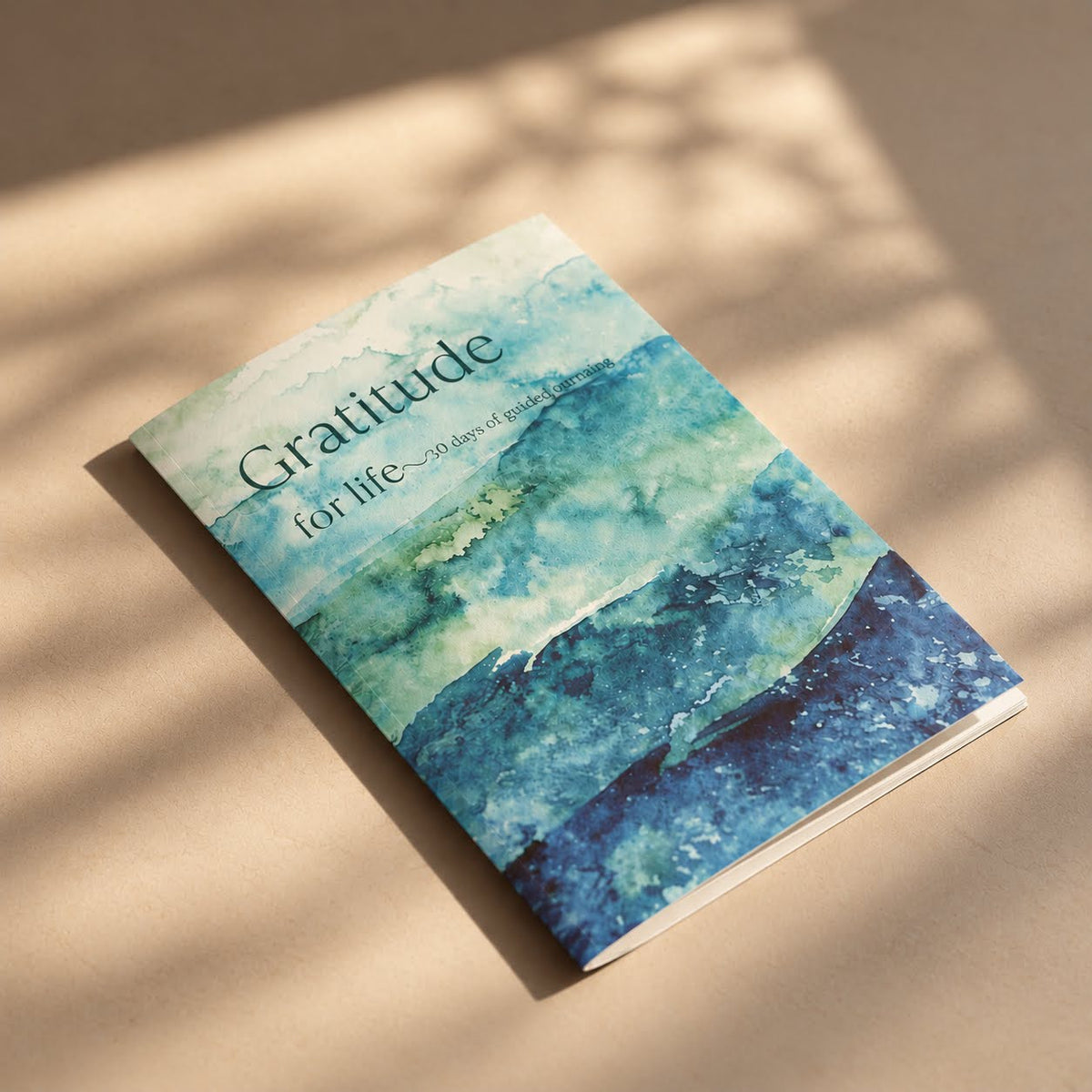
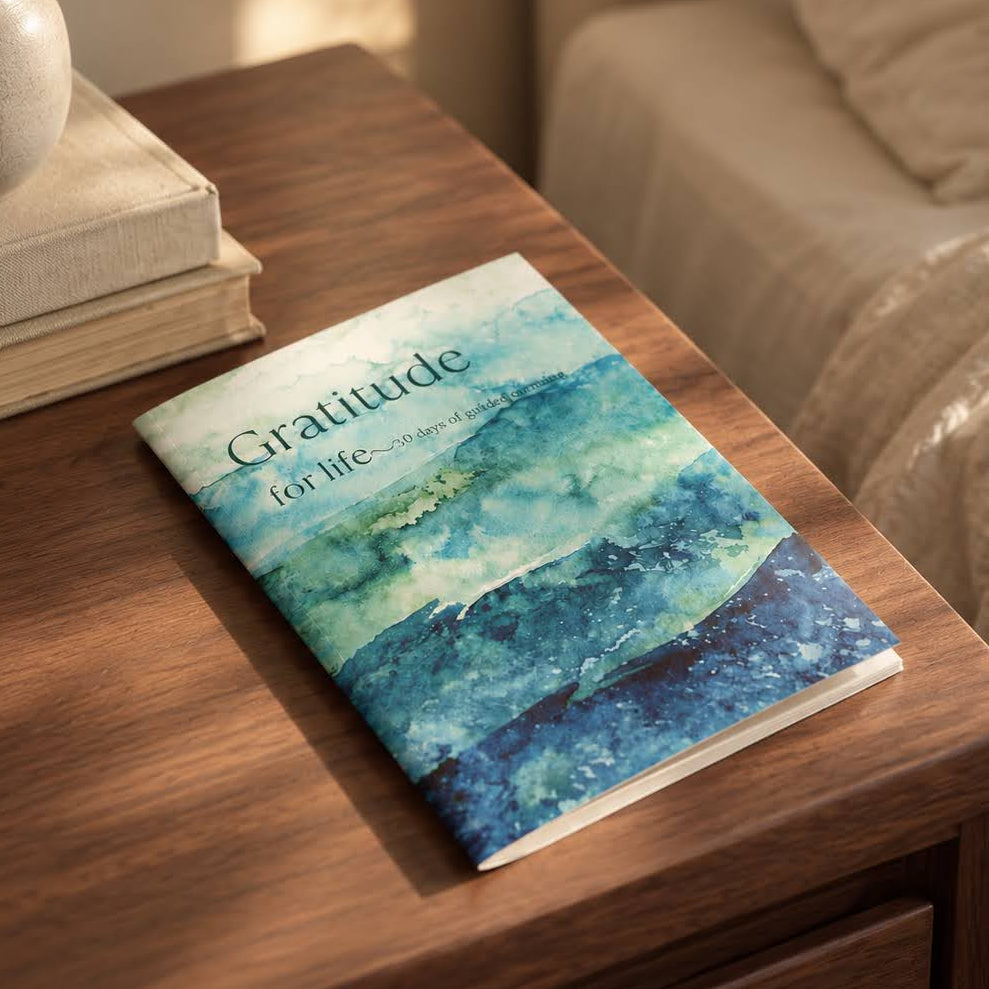
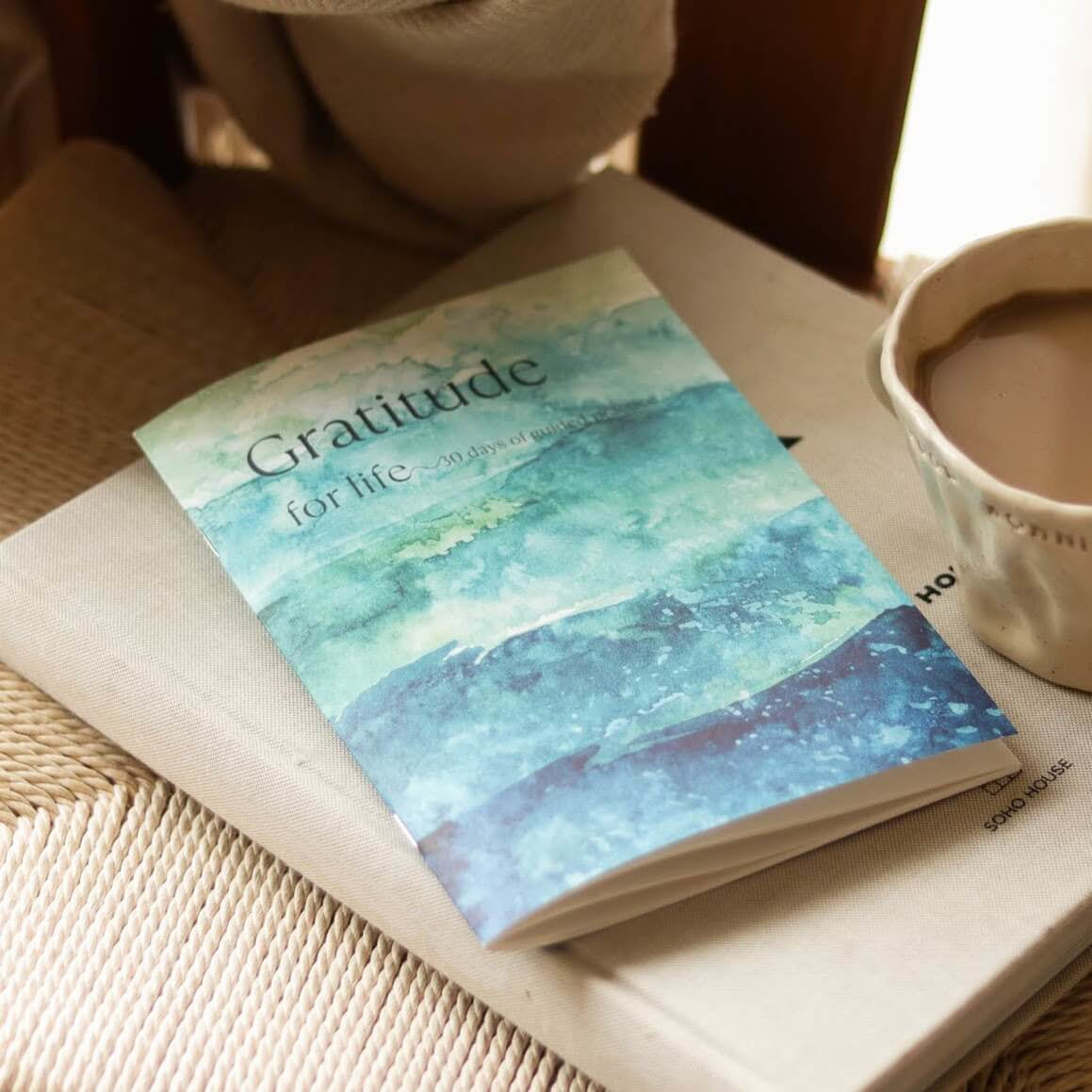
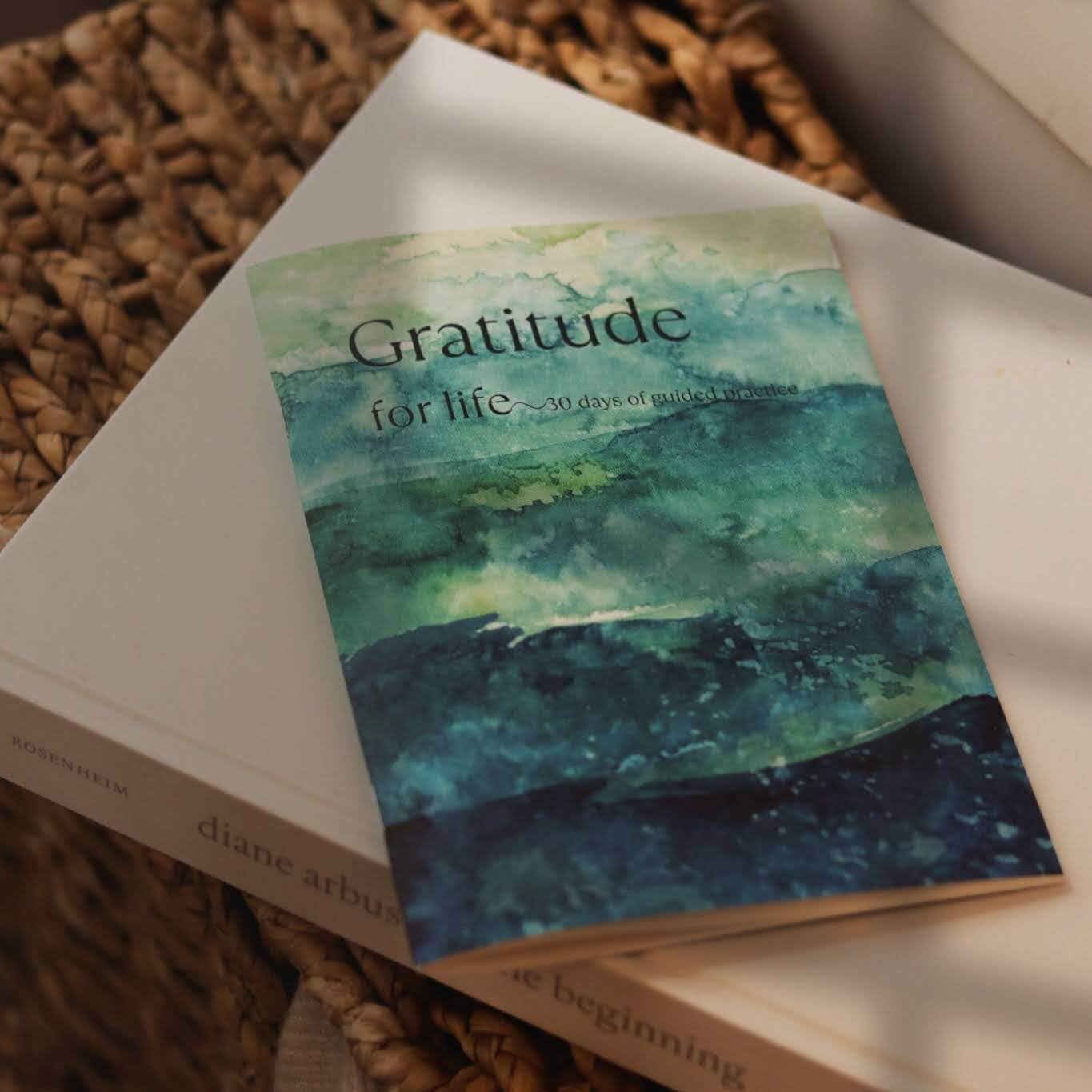
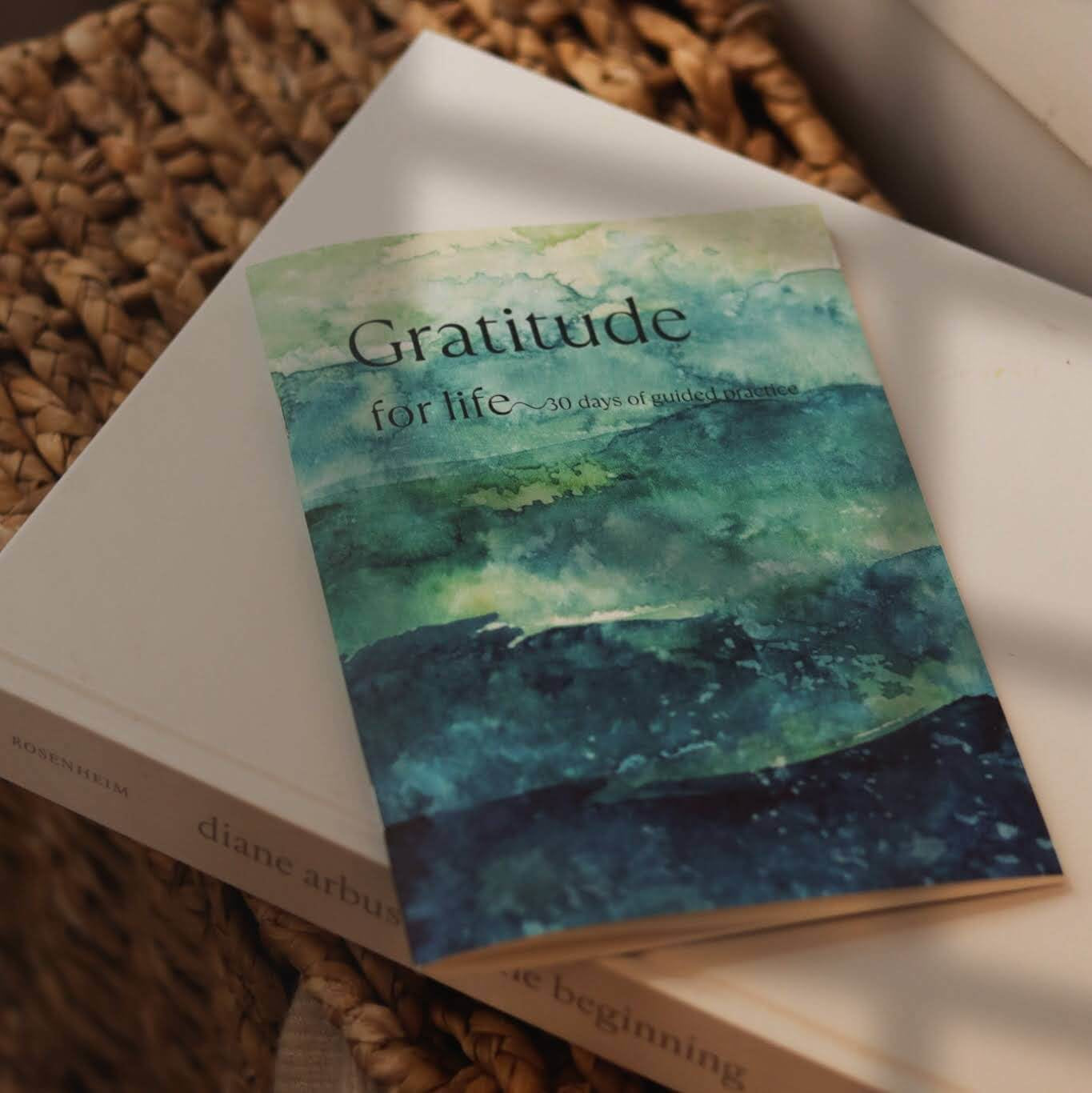
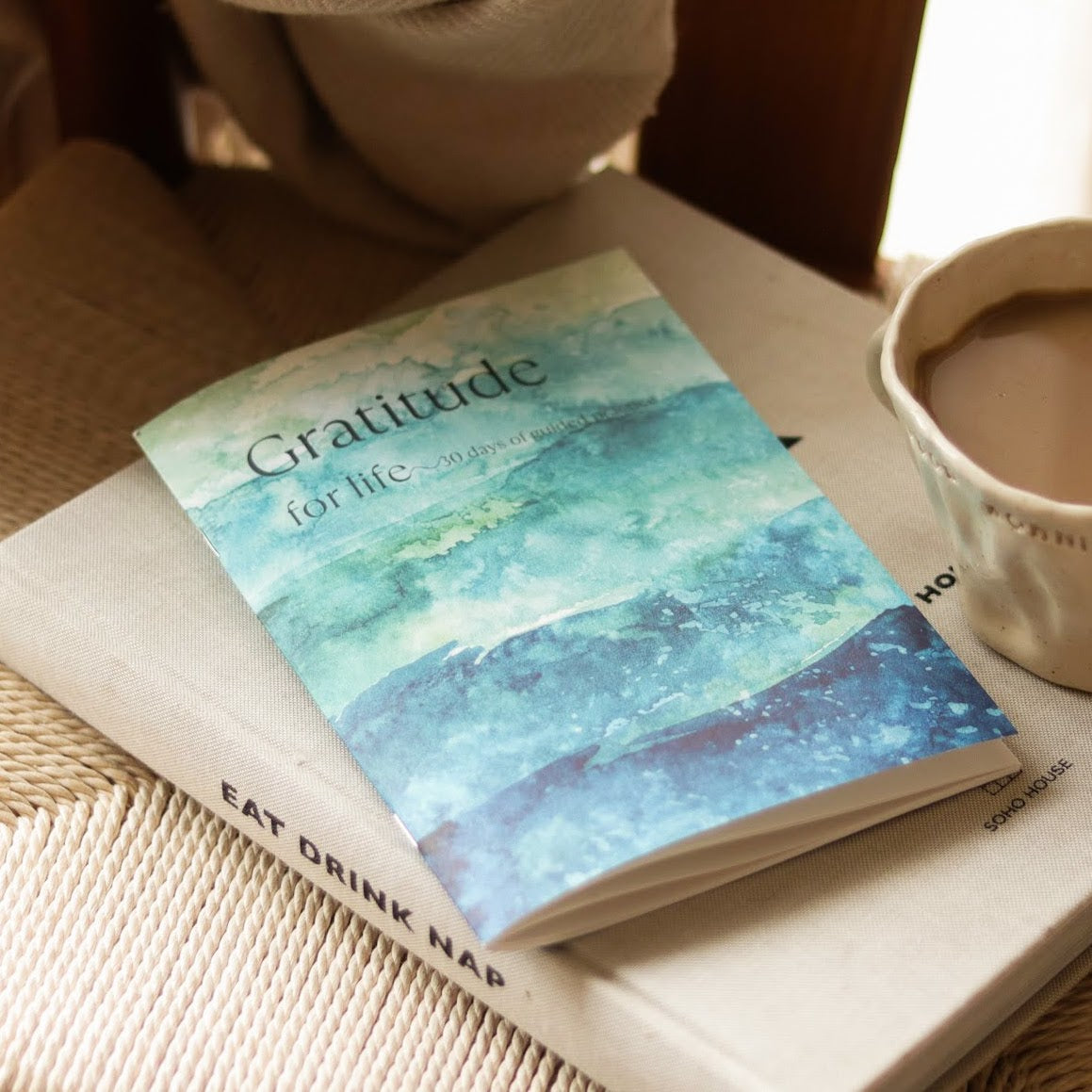
Best for gratitude that feels real: The 30-Day Gratitude Journal, whether you're just starting out or you've found gratitude journaling forced or repetitive. 30 days. A different thoughtful prompt each day. No lists of three.
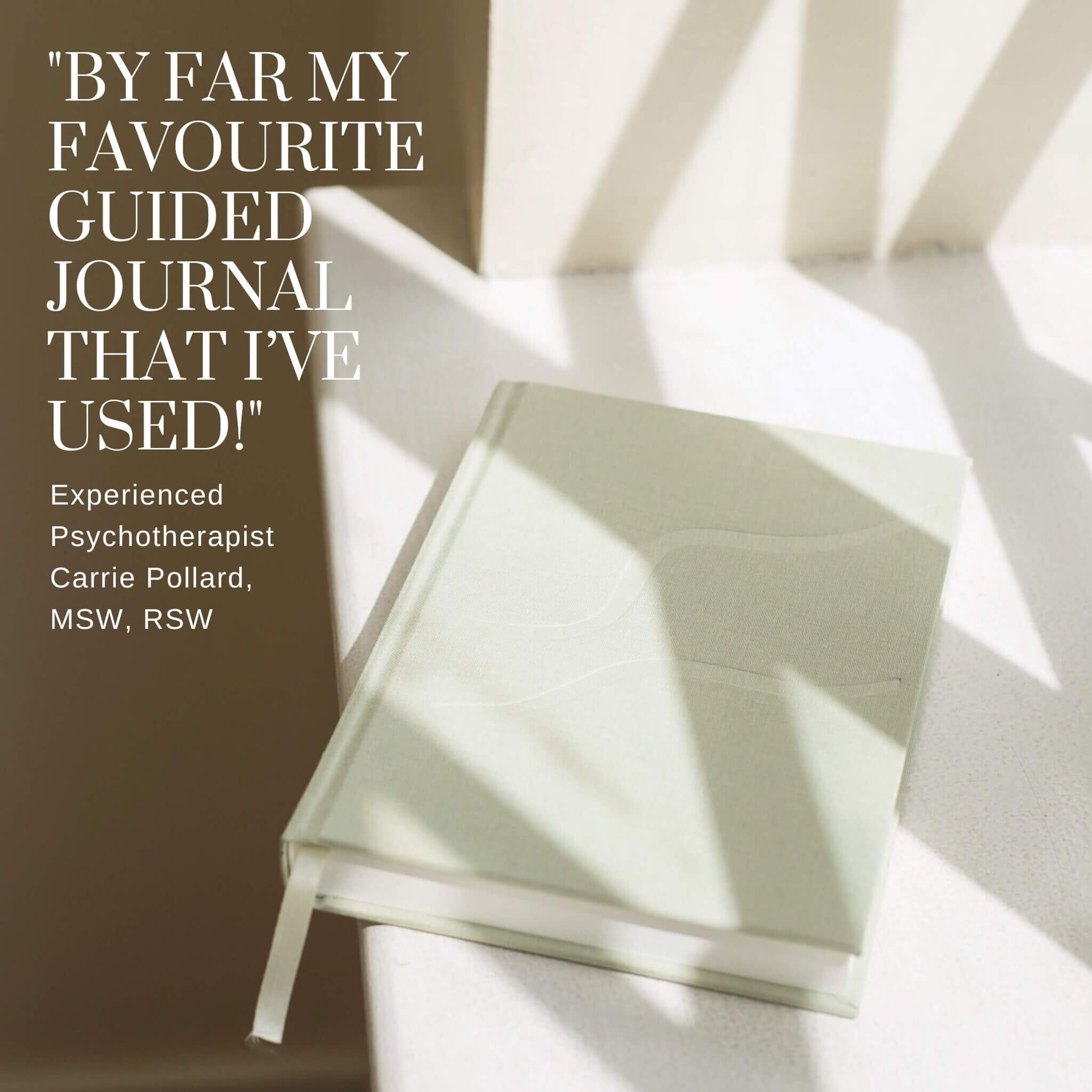
Psychotherapist Carrie Pollard found it balances “mindfulness (encouraging us to be in the moment), validation (of ALL our feelings), compassion (connecting with what we need), and of course, gratitude.”
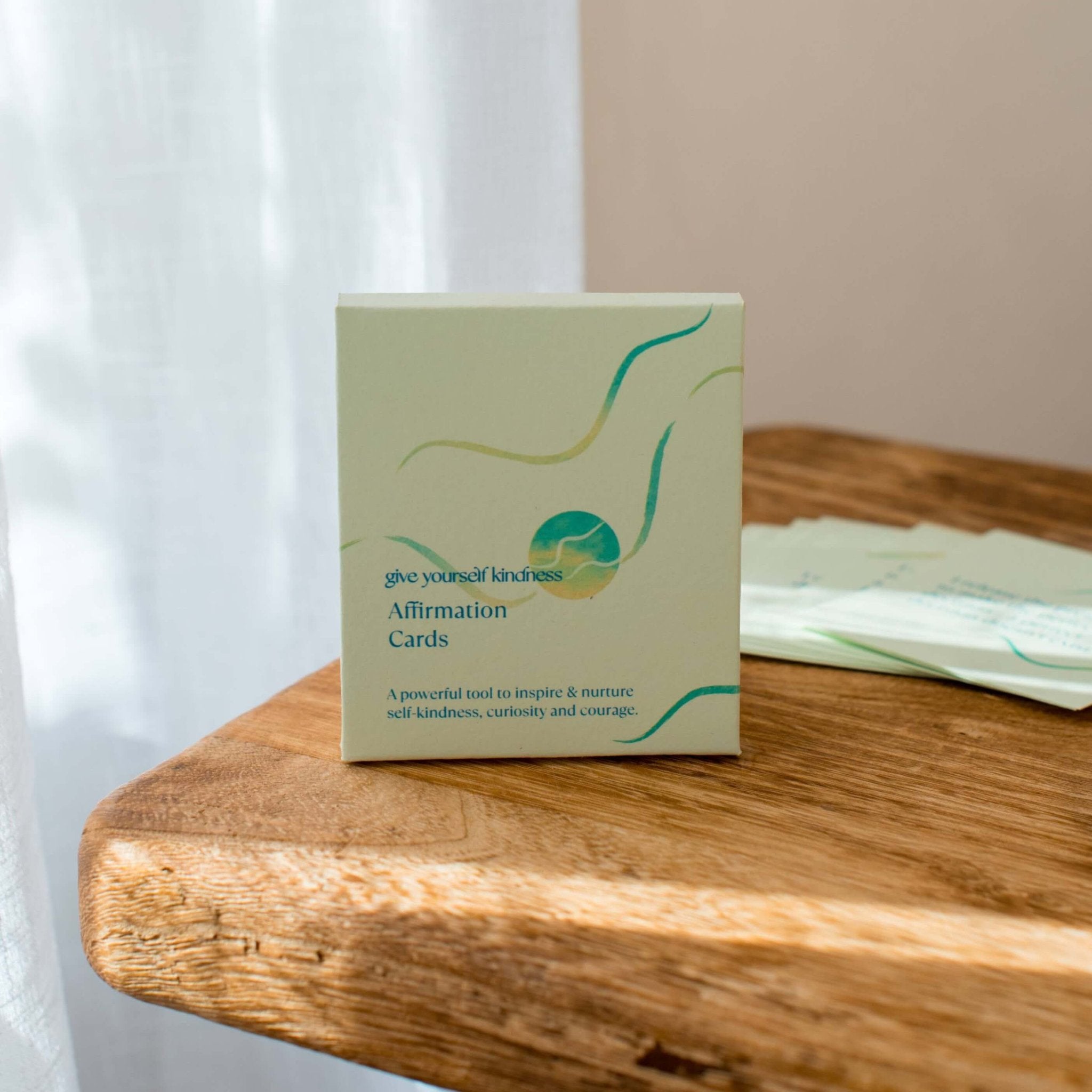
Best if you're hard on yourself: The Give Yourself Kindness Journal. It's the self-compassion journal recommended by Harvard and Oxford psychologists, with an emotion tool on every page, and it also includes gratitude every day.
Psychotherapist Carrie Pollard says it helps you “balance the acknowledgment of the hurt and suffering with gratitude and comfort.”
Which to pick: Want to feel more grateful? Start with The 30-Day Gratitude Journal. Want to be kinder to yourself? Choose The Give Yourself Kindness Journal. They're different practices, so they work well together.
No forced positivity. Every feeling is welcome. Many people find that gratitude starts to feel less like a test and more like something they can come back to.
Want the same quick prompts morning and evening? The Five Minute Journal. Prefer to write freely? A blank notebook. Or compare all six side by side.
About this guide. I'm Rachel Smith, a qualified meditation teacher (DipBSoM, British School of Meditation, distinction). Two of the journals here are mine: The 30-Day Gratitude Journal and The Give Yourself Kindness Journal. I made them because the gratitude journals I tried left me feeling I was failing. I've compared them honestly alongside four I don't make.
On this page: Compare all six · Detailed reviews · For your situation · Decision guide · Common problems · Which of my two · My verdict · FAQs
2026 Gratitude Journal Comparison at a Glance
| Journal | Best For | Unique Feature | Price | Expert Backed? |
|---|---|---|---|---|
| The 30-Day Gratitude Journal | Gratitude that feels real, never forced or repetitive | A different thoughtful prompt each day, no lists of three | £10.95 | ✅ Psychotherapist Carrie Pollard, MSW RSW |
| The Give Yourself Kindness Journal | Being kinder to yourself, especially if you're hard on yourself (includes daily gratitude) | Self-compassion prompts and an emotion tool on every page; gratitude is part of every day | £28.95 | ✅ Harvard & Oxford psychologists |
| The Five Minute Journal | A quick daily routine | The same prompts every morning and evening | US$32 direct | — |
| The 6-Minute Diary | Structure plus weekly reviews | Habit tracking included | £22.90 | — |
| Papier Gratitude Journal | Design and personalisation | Personalised cover designs | From £26 | — |
| Blank Notebook | Complete creative freedom | Fully open | £5–15 | — |
Detailed Gratitude Journal Comparison
The 30-Day Gratitude Journal
What makes The 30-Day Gratitude Journal different

“Practicing gratitude is a way to bring balance and perspective to life—it helps us recognize the gifts, glimmers and simple things that make life feel better. However, when gratitude is forced, diminishes difficulties, or triggers guilt or shame (e.g., ‘I should be grateful, look at all I have’) it leaves us feeling worse, not better. Give Yourself Kindness’ journal creates intentional, permission-giving space for our feelings, worries and struggles while noticing things that bring joy, comfort, laughter, hope and connection from the past and present.”
Carrie Pollard, MSW RSW Experienced psychotherapist, on The 30-Day Gratitude Journal Read what therapists and psychologists say →Is The 30-Day Gratitude Journal right for you?
- Gratitude always ends up being the same three things
- Gratitude journaling has felt forced or fake
- Blank lines make your mind go blank
- You've started journals before and felt guilty when you stopped
- You don't have much time (some days take as little as 5–10 minutes)
- You're new to gratitude and want a gentle way in
- You're looking for a thoughtful, affordable gift (you can add a free handwritten gift note)
- It's 30 days, so if you want a whole year in one book, you'll need something after
- The prompts ask for a little more thought than ticking off a list
- It doesn't follow a morning-and-evening routine
The Give Yourself Kindness Journal (Self-Compassion, with Daily Gratitude)
What makes The Give Yourself Kindness Journal different
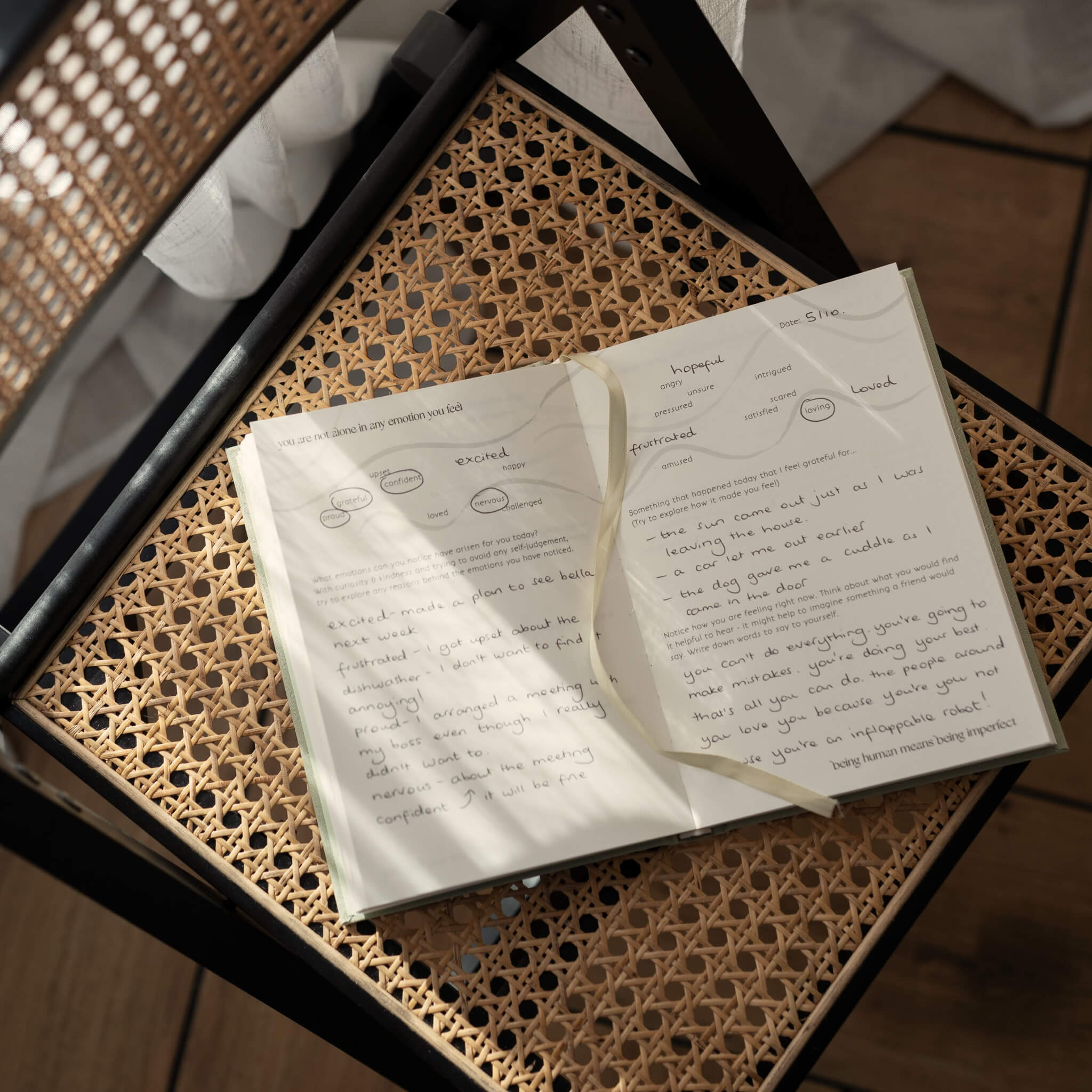
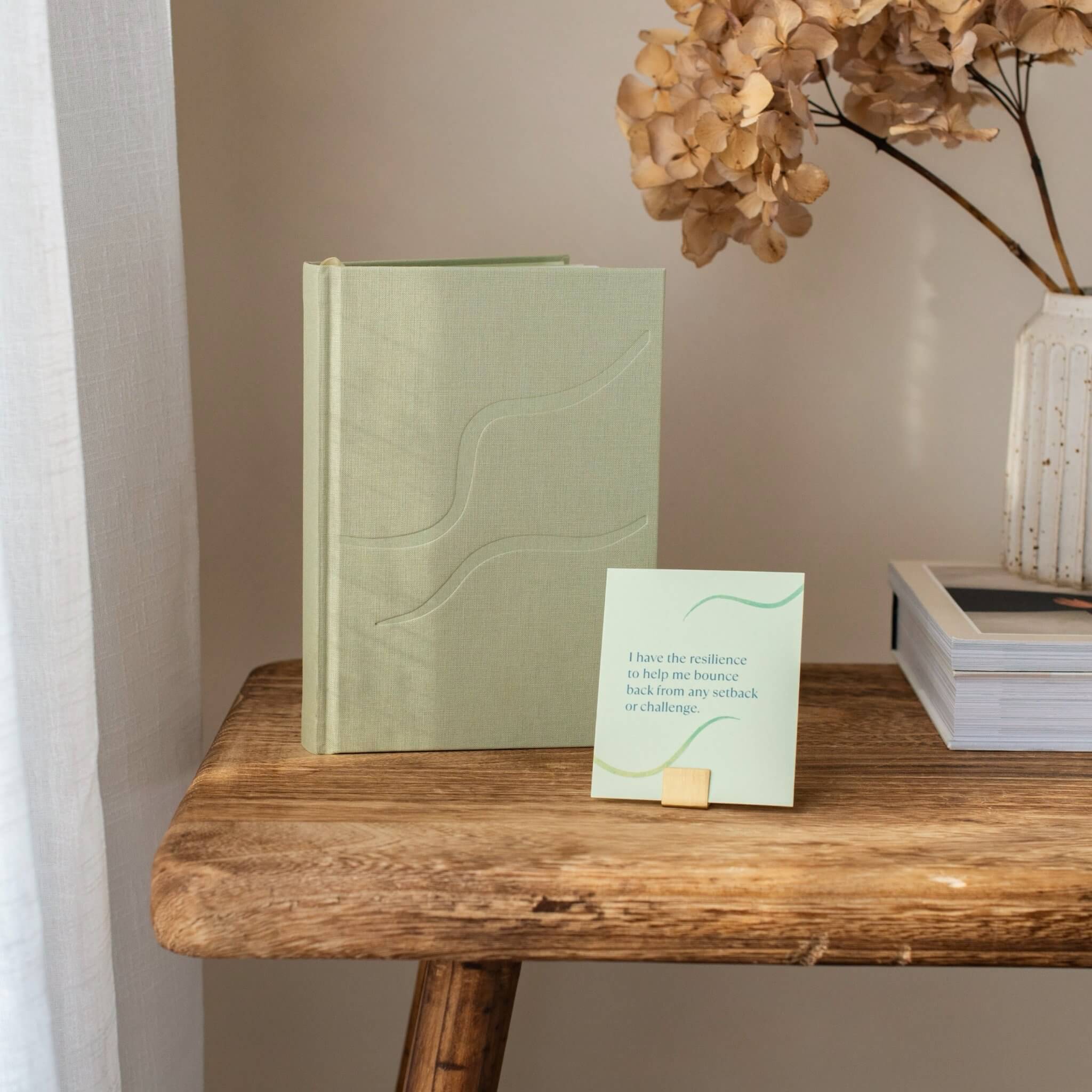
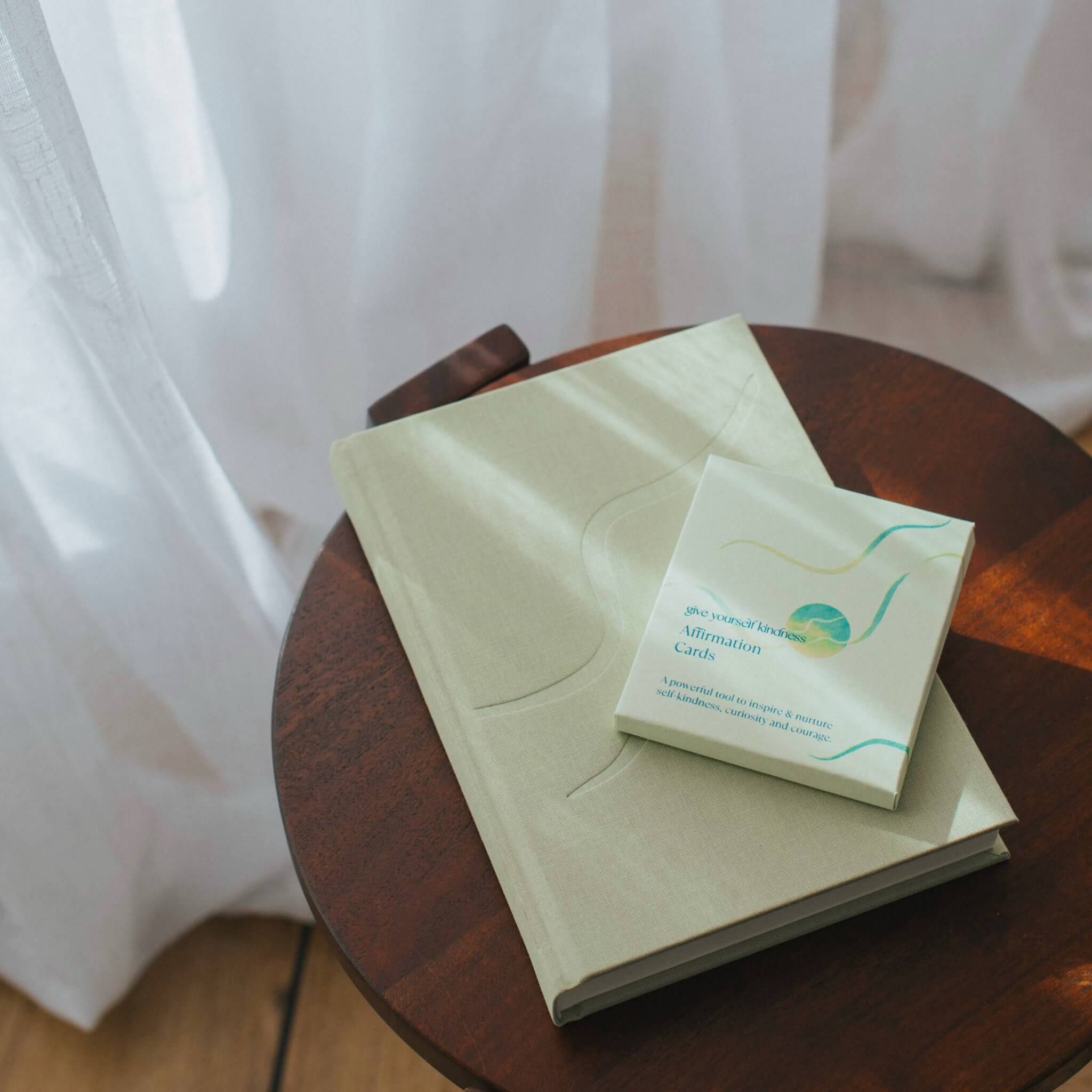
The Give Yourself Kindness Journal is a guided self-compassion journal: it helps you understand your emotions and respond to yourself with kindness instead of criticism. If you're hard on yourself, gratitude on its own can turn into one more thing to get right. Here it sits alongside everything else you feel.

“A warm invitation to make friends with your emotions and yourself!”
Dr Chris Germer, PhD Clinical Psychologist, Harvard Medical School | Co-developer of the Mindful Self-Compassion (MSC) program Read the full expert reviews →
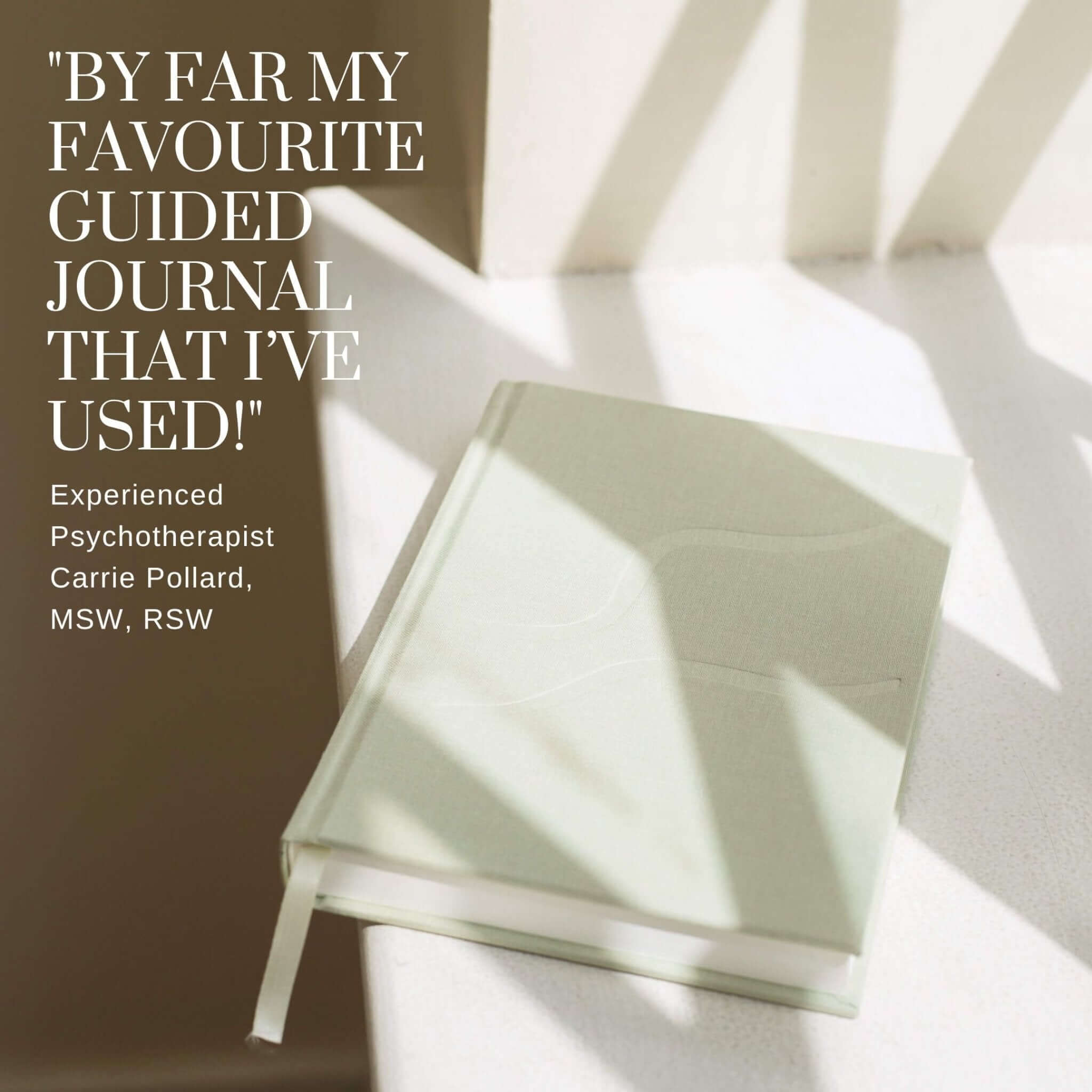
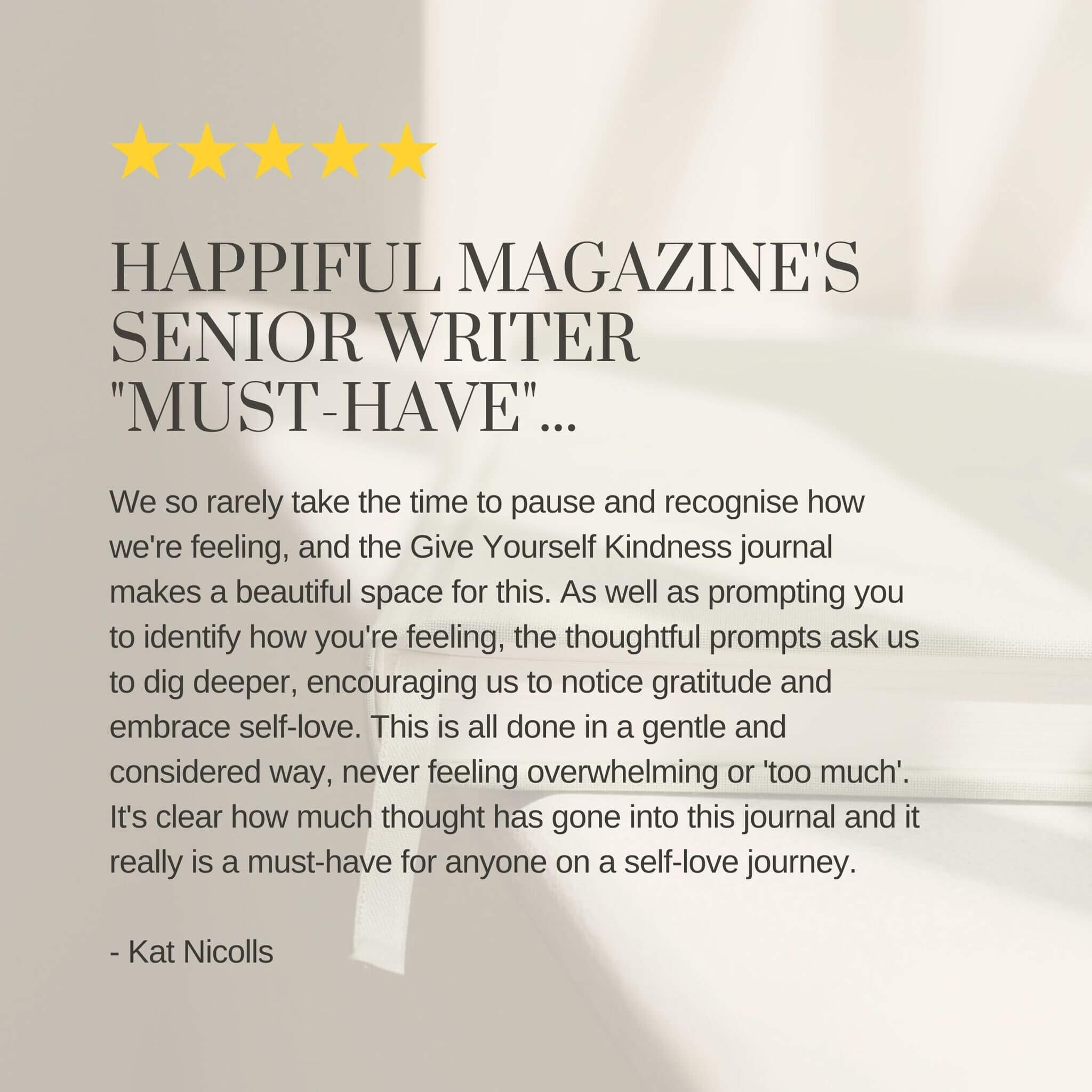
“Being able to identify what you’re feeling and compassionately explore the ‘why’ is central to self-connection and self-growth. The Give Yourself Kindness journal is a steady guide in this process. It helps you: name and process your emotions, identify what you need to cope and/or problem-solve, balance the acknowledgment of the hurt and suffering with gratitude and comfort, and give yourself the same compassion you would a loved one. For me, journaling has been an important practice for insight, reflection and release, and this is by far my favourite guided journal that I’ve used!”
Carrie Pollard, MSW RSW Experienced psychotherapist, on The Give Yourself Kindness Journal Read the full expert reviews →
“…Her journal's are not only aesthetically pleasing, they scaffold my writing. Writing can be creative, beautiful, resourcing, but it can also invoke an inner critic, rumination and procrastination. Rachel has curated the experience to make the writing intrinsically rewarding and the journal something to treasure.”
Professor Willem Kuyken, PhD, DClinPsy Ritblat Professor of Mindfulness and Psychological Science, University of Oxford | Listed by Web of Science in the top 1% of the most cited scientists in the world Read the full expert reviews →
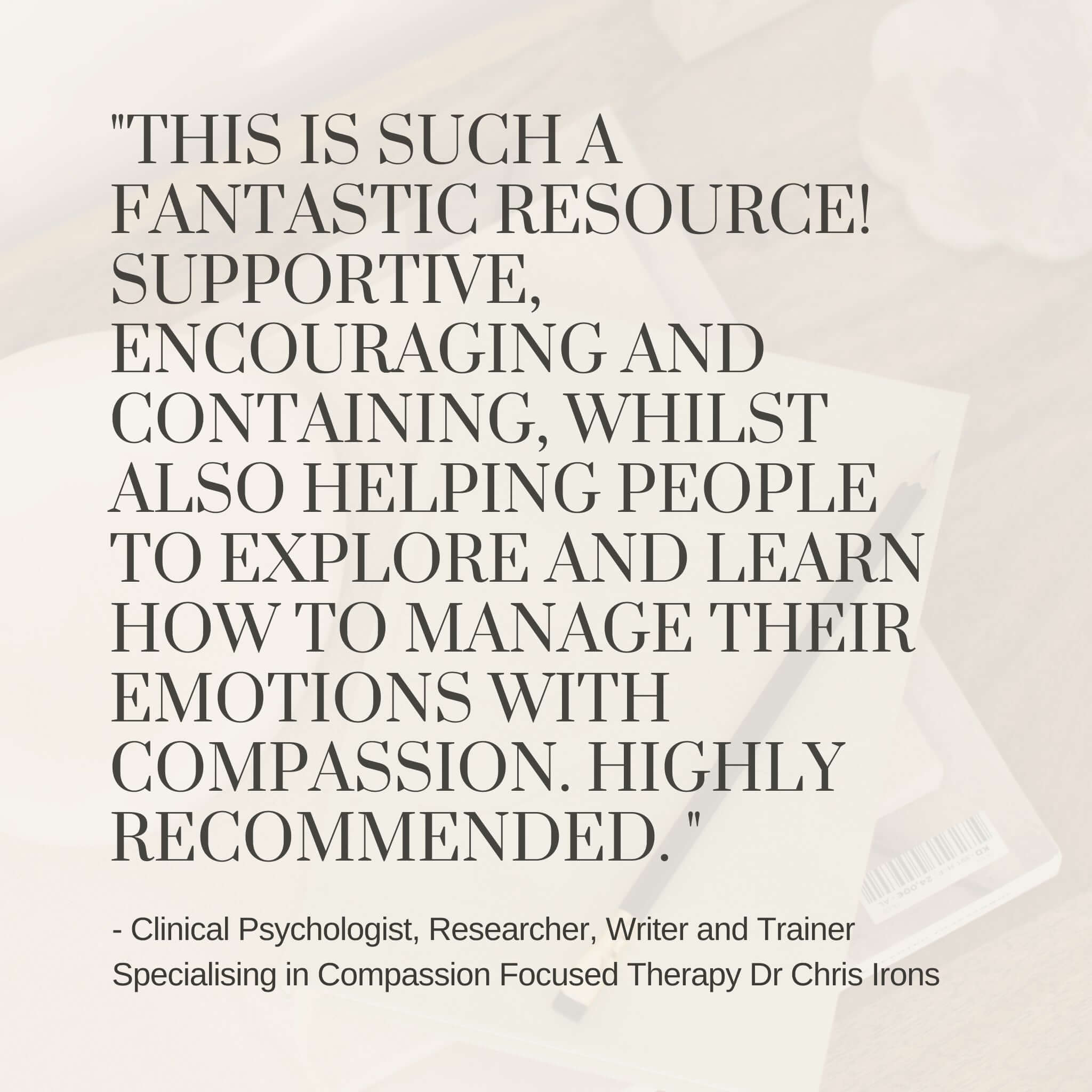
“This is such a fantastic resource! Supportive, encouraging and containing, whilst also helping people to explore and learn how to manage their emotions with compassion. Highly recommended.”
Dr Chris Irons Clinical psychologist, researcher, writer and trainer in Compassion Focused Therapy Read the full expert reviews →
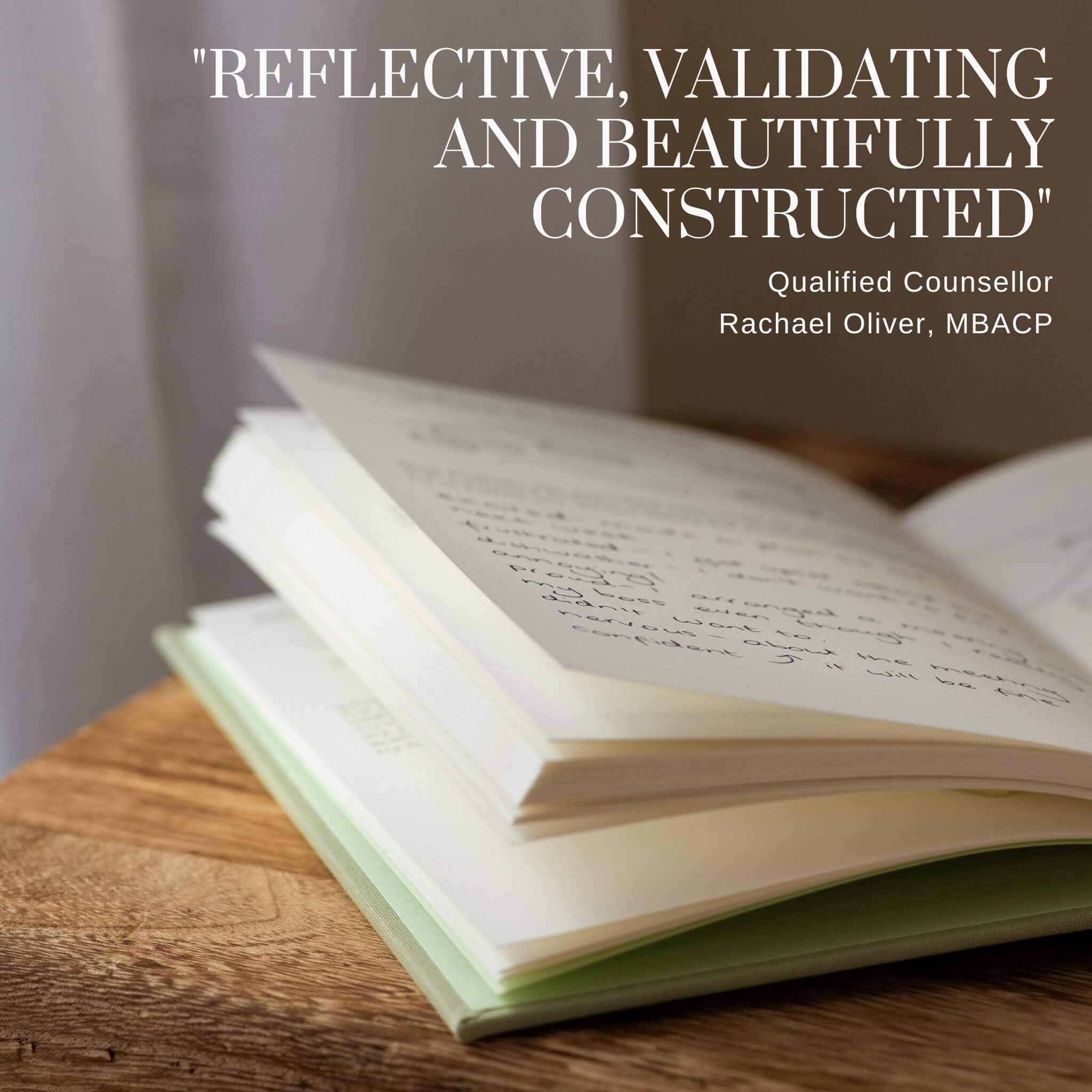
“…I have been using them with my counselling clients for years and feel like for many, it's an absolutely essential tool for helping build self awareness, compassion, reflect on things happening between sessions and collect thoughts and feelings…”
Rachael Oliver, MBACP Accredited counsellor Read the full expert reviews →Is The Give Yourself Kindness Journal right for you?
- You're hard on yourself and would like to speak to yourself more kindly
- You'd like help naming and understanding what you're feeling
- You'd like gratitude to be part of being kinder to yourself, not another test
- You'd like a longer practice (90 days)
- You value a journal reviewed by clinical psychologists and used by counsellors
- It's a self-compassion journal first, so if gratitude is all you want, The 30-Day Gratitude Journal is the simpler start
- It's 90 days, a longer commitment than 30
The Five Minute Journal
What makes this journal different:
The Five Minute Journal from Intelligent Change uses the same structure every day. In the morning: three things you're grateful for, an affirmation and what would make today great. In the evening: the day's highlights and what you learned. It's undated and lasts about six months. That consistency can help build a habit, though some people find the repetition gets boring over time.
Choose this journal if you:
- Want a quick structure with no decisions to make
- Like consistency and routine
- Have very little time (genuinely about 5 minutes)
- Like a morning and evening check-in
The 6-Minute Diary
What makes this journal different:
Similar to The Five Minute Journal, with a little more time: three minutes in the morning and three in the evening, plus space for notes and weekly reflection. It includes prompts for tracking habits and general wellbeing alongside gratitude. At the time of writing it's sold out on the maker's own site, which points buyers to Amazon instead.
Choose this journal if you:
- Want structure with slightly more depth than 5 minutes
- Like weekly review practices
- Want to track habits alongside gratitude
Papier Gratitude Journal
What makes this journal different:
Papier offers its gratitude journal in many cover designs, which you can personalise. The main appeal is the look, which can make it feel special as a gift.
Choose this journal if you:
- Value beautiful design
- Want to personalise the cover
- Are looking for a gift where the look matters most
A Blank Notebook
What makes this approach different:
The simplest option: just you and a blank page. You can write as much or as little as you like, draw, make lists or write paragraphs. Complete freedom means complete flexibility, but it also means coming up with the question as well as the answer, which can be the hard part on a tired evening.
Choose a blank notebook if you:
- Want total creative freedom
- Enjoy designing your own practice
- Already journal and don't need prompts
- Are on a tight budget
Worth knowing:
- It can feel overwhelming without direction
- It's easier to skip when you're stuck
- It's easy to fall into the same entries without noticing
Why Trust This Comparison?
This guide brings together three perspectives:
Personal experience
I'm Rachel Smith, a qualified meditation teacher (DipBSoM, British School of Meditation, distinction). I tried popular gratitude journals while recovering through Compassion Focused Therapy for harsh self-talk. Many of them made me feel worse: the blank lines, the forced positivity, the guilt when I couldn't think of three things. This comparison exists because I needed it myself.
Clinical expert validation
The Give Yourself Kindness Journal has been reviewed and recommended by:
- Dr Chris Germer, PhD: Clinical Psychologist, Harvard Medical School, and co-developer of Mindful Self-Compassion (MSC)
- Professor Willem Kuyken, PhD: University of Oxford, listed by Web of Science in the top 1% of the most cited scientists in the world
- Dr Chris Irons: Clinical psychologist and trainer in Compassion Focused Therapy
Psychotherapist Carrie Pollard, MSW RSW, has reviewed The 30-Day Gratitude Journal.
Used by therapists with clients
Accredited counsellors use The Give Yourself Kindness Journal with their clients between sessions. Accredited counsellor Rachael Oliver MBACP calls it “an absolutely essential tool for helping build self awareness, compassion, reflect on things happening between sessions…”
Which Gratitude Journal for Your Situation?
Why this works: you get the question, so you only need to answer it
Avoid: journals that ask the same question every night
Avoid: formats that ask you to feel grateful on demand
Why this works: gratitude has room to grow when you're not also criticising yourself
Avoid: journals full of forced positivity that might put them off
Avoid: traditional “____, ____, ____” formats
Alternative: The 30-Day Gratitude Journal if you'd like fresh prompts
Why this works: a prompt takes the pressure off before you start
Why this works: you'll be living with the prompts, not the cover
Note: works best if you don't mind repetition
Why this works: finishing a journal feels good
Which Gratitude Journal Should You Choose?
Find your best match based on what you need:
Common Gratitude Journaling Problems (And Solutions)
Why I Created The 30-Day Gratitude Journal
I need to be honest with you: The 30-Day Gratitude Journal exists because I was frustrated.
Every gratitude journal I tried left me feeling like I was doing it wrong. I'd open to those familiar prompts:
“Three things I am grateful for today…
_________________
_________________
_________________”
And I'd stare at those blank lines. Nothing would come to mind. My inner critic would start: “I should be able to think of things. What's wrong with me? I'm so ungrateful.”
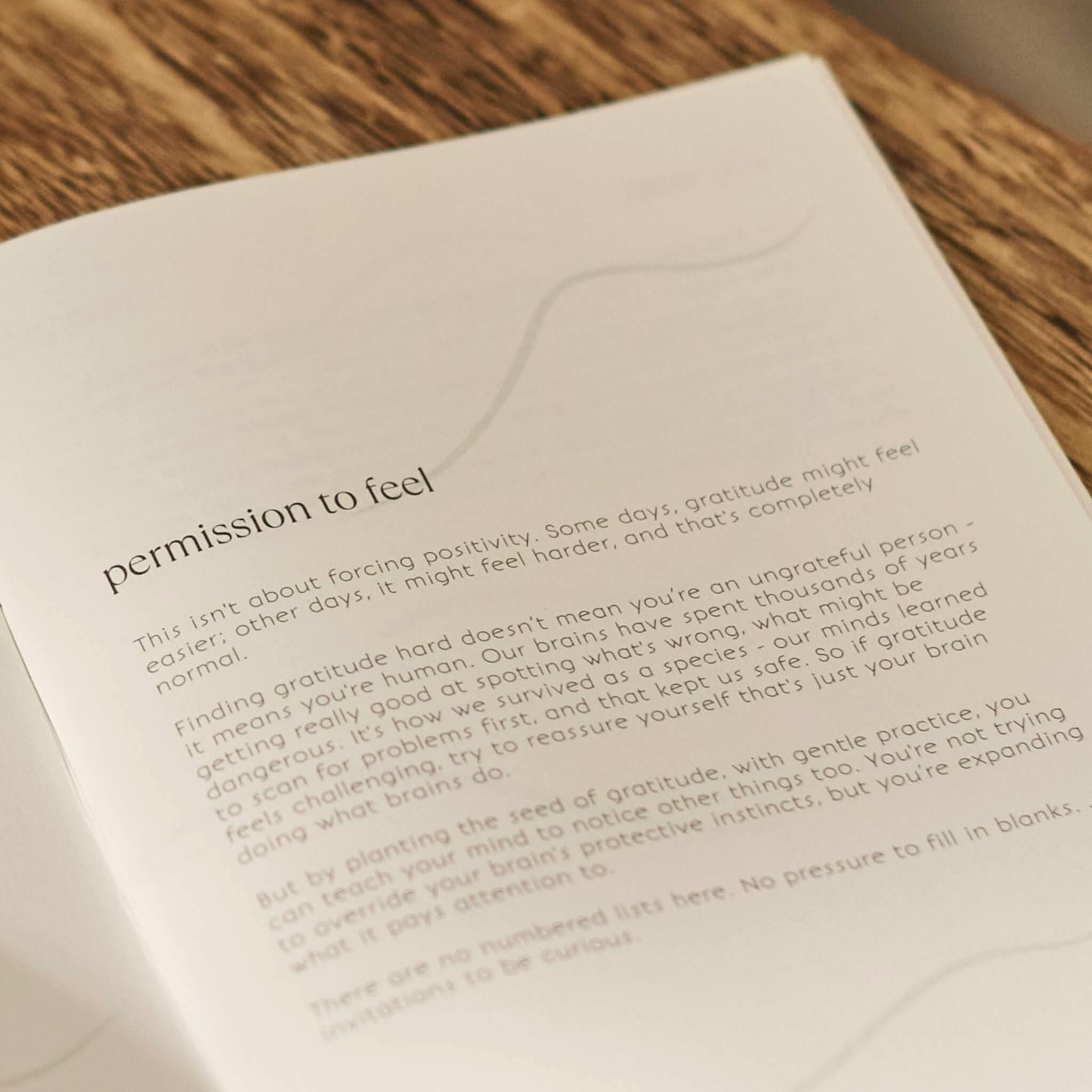
Here's what I've learned since: finding gratitude hard doesn't mean you're ungrateful. It means you're human. Those blank lines weren't helping. They were creating pressure.
What the research suggests
Psychotherapist Amy Morin, writing for Give Yourself Kindness, describes a study by Dr Robert Emmons at UC Davis that found keeping a gratitude journal leads to a 25% increase in happiness. She's just as clear that gratitude shouldn't be forced.

“It's when people try to be grateful at the expense of denying that they feel bad it becomes more like toxic positivity.”
Amy Morin, LCSW Psychotherapist and international bestselling author of the 13 Things Mentally Strong People Don't Do series Read Amy Morin's article on gratitude →The practice itself can be powerful. It's just that many journals make it feel like another thing to get right.
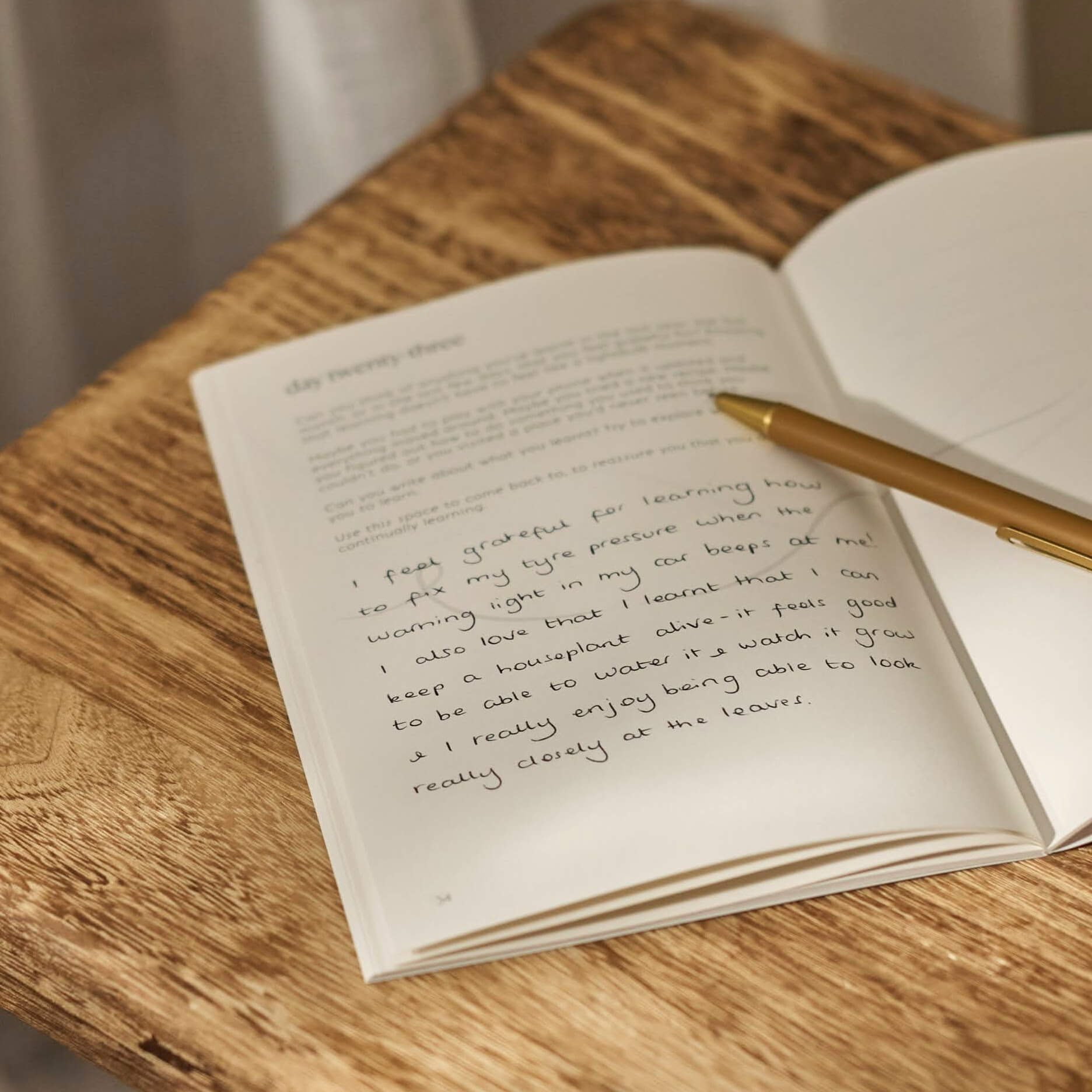
A different thoughtful prompt each day
When I created The 30-Day Gratitude Journal, I wanted to fix everything that had made gratitude feel like failure:
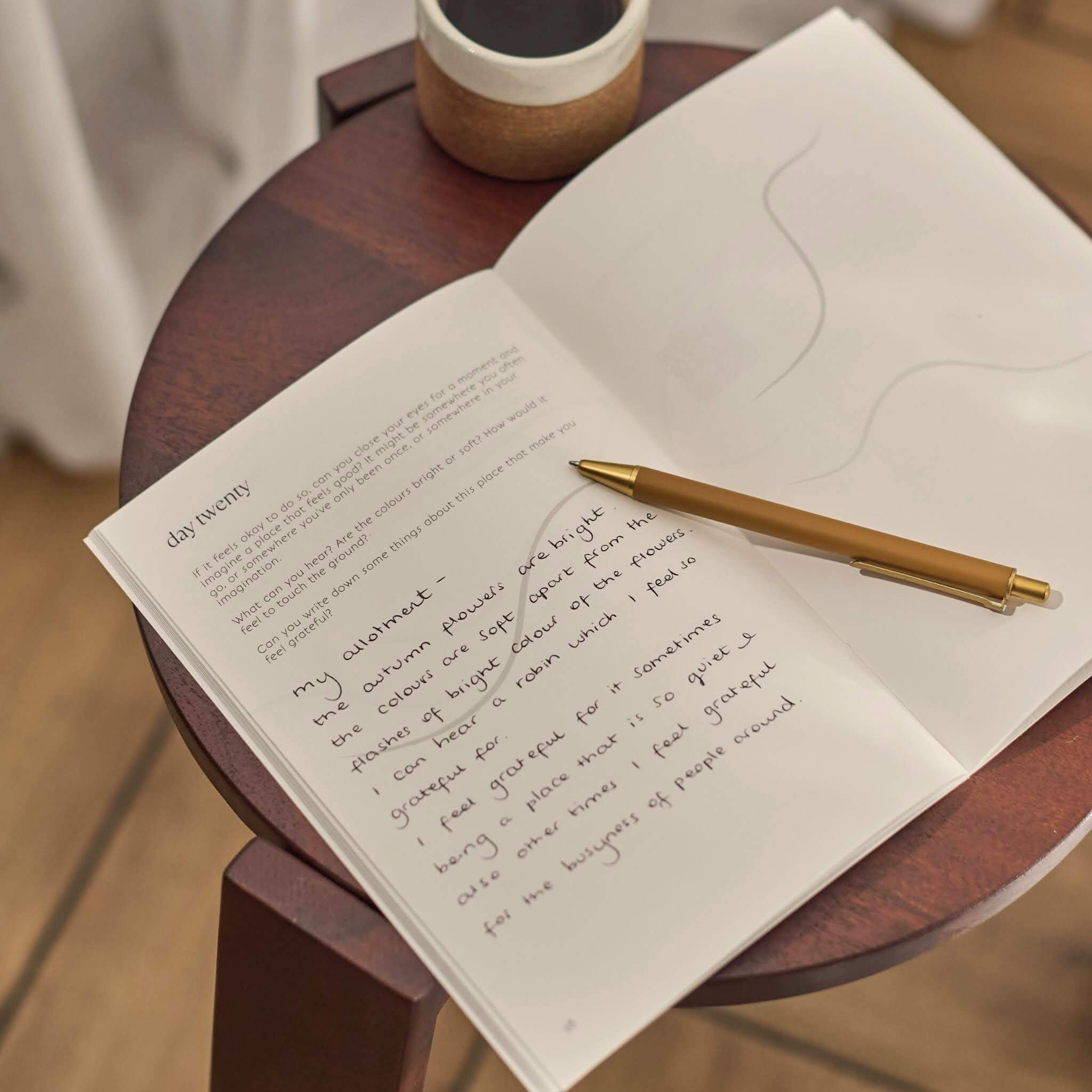
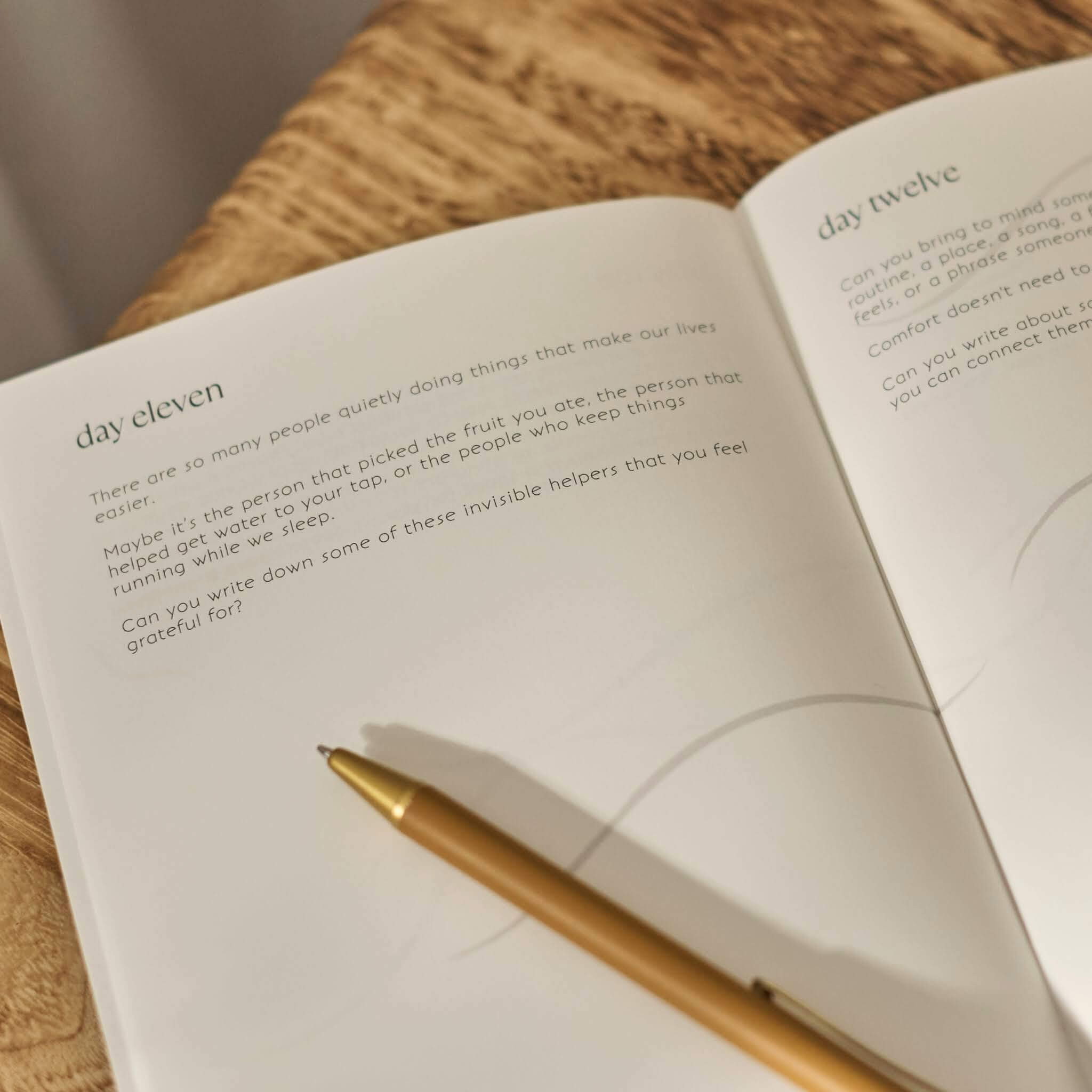
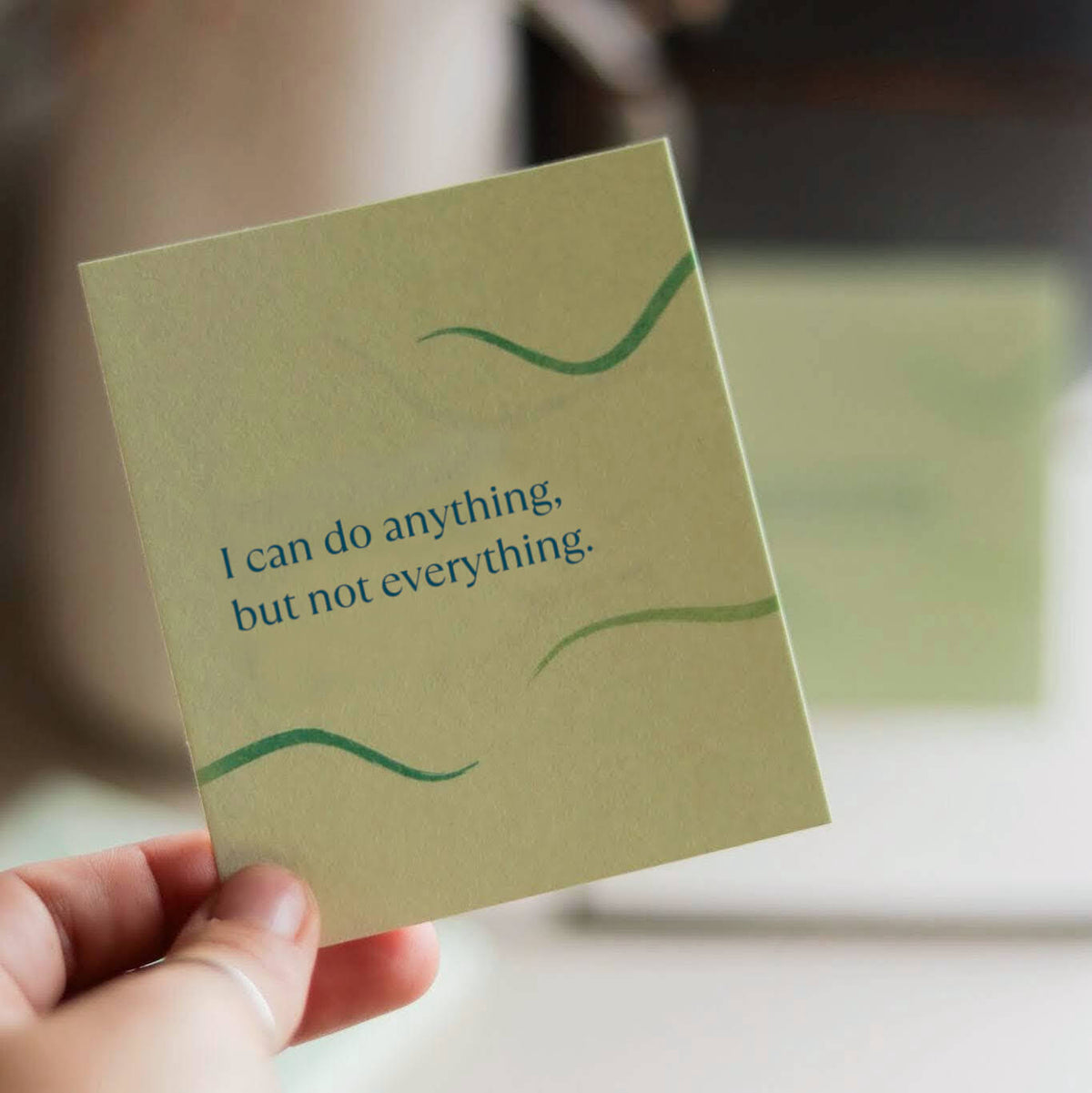
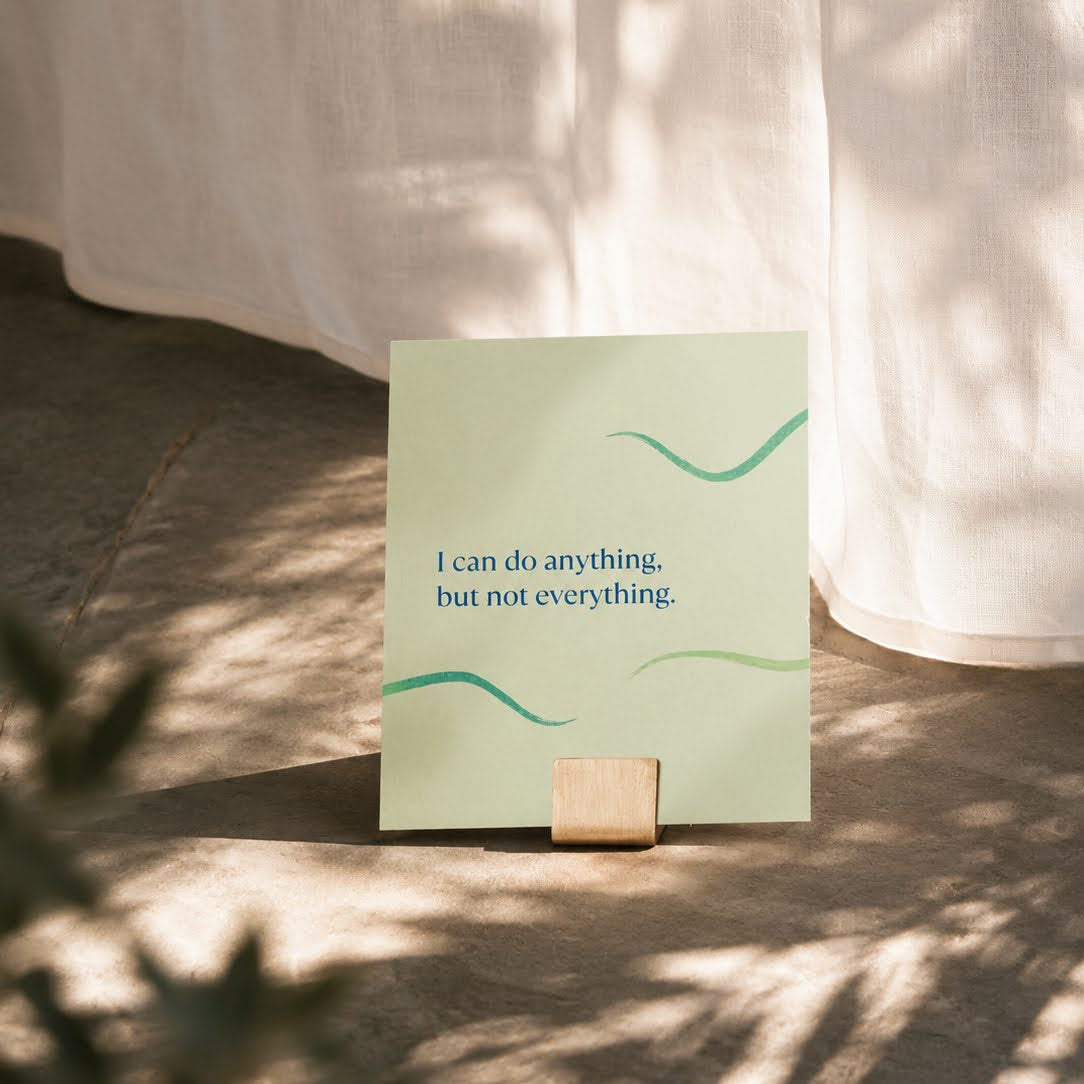
- 30 varied prompts, one for each day. You're never doing the same thing twice.
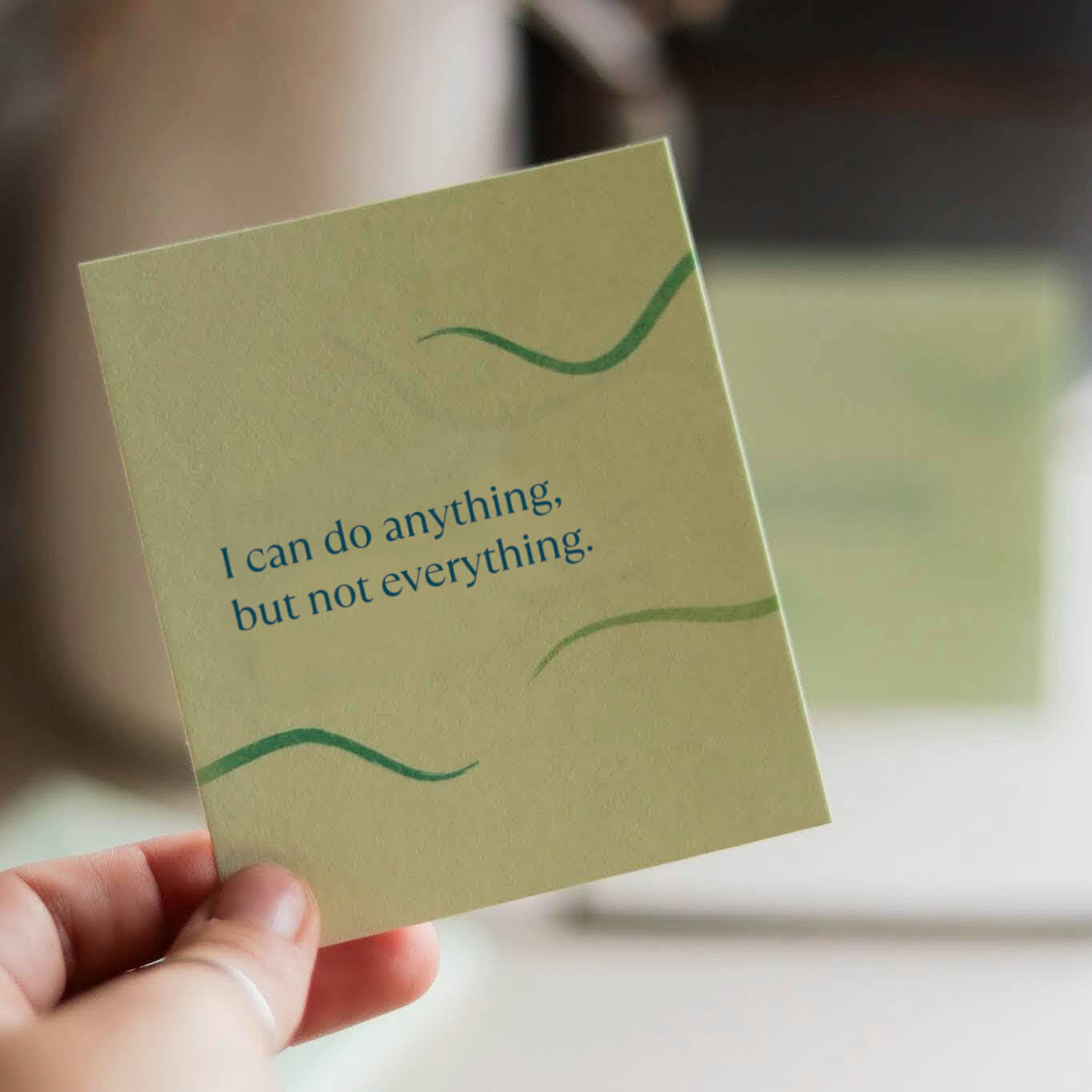
- No lists of three. No blanks staring at you. Just invitations to be curious.
- No forced positivity. Every feeling is welcome. Some days gratitude feels easier, other days harder, and there are prompts for the hard days.
- Space for complexity. Gratitude and pain can sit side by side. Some painful experiences are just painful, and that's valid.
- Your way. Write one word or fill the whole page. Skip a prompt that doesn't resonate.
- 30 days. Long enough to settle into, short enough to finish.
Who The 30-Day Gratitude Journal is for
- Anyone who wants gratitude that feels real, never forced or repetitive
- Beginners who'd like a gentle, guided start
- Anyone who has found gratitude journaling boring, fake or the same every night
- Anyone who freezes at blank lines
- Anyone looking for a thoughtful, affordable gift
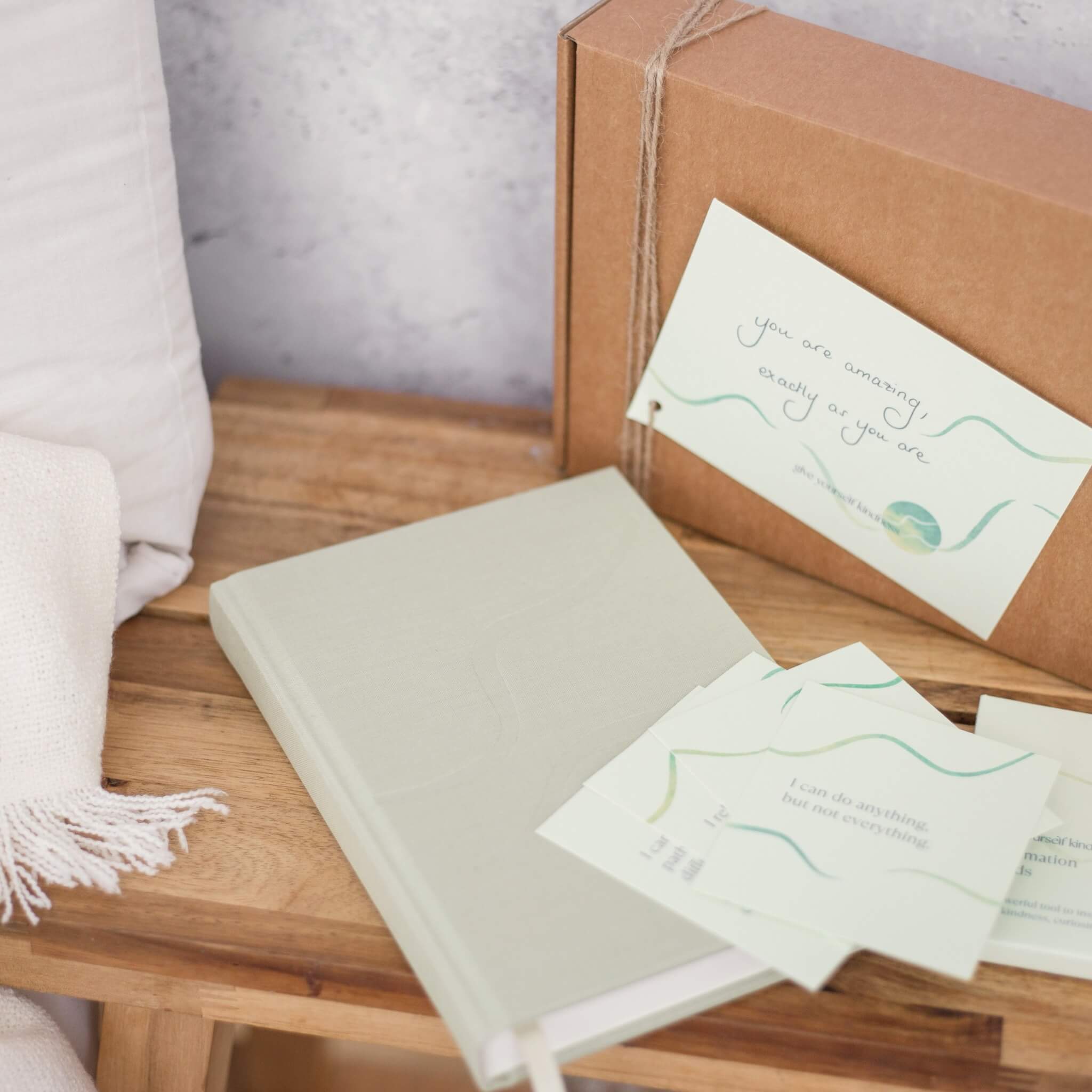
What's inside The 30-Day Gratitude Journal
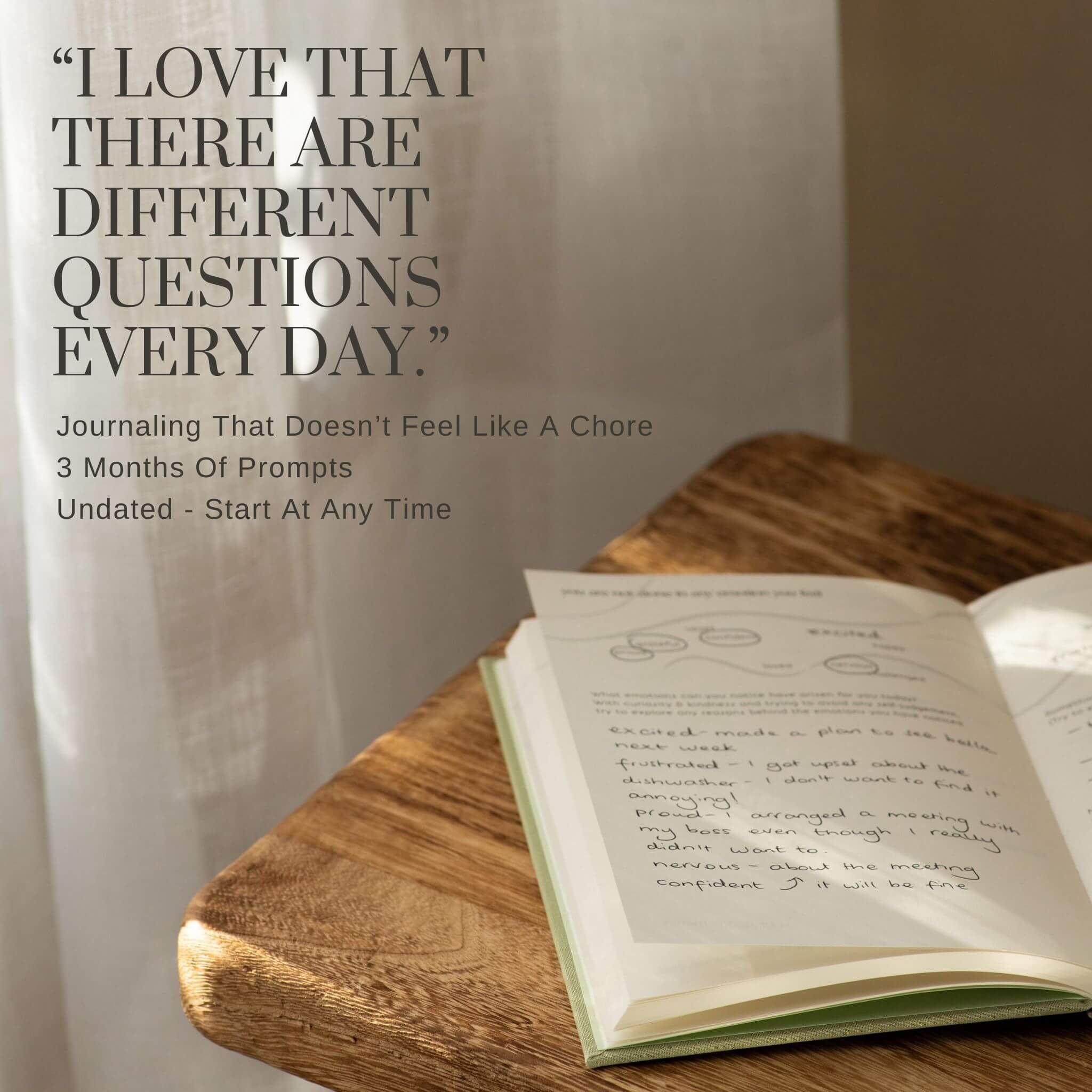
- 30 varied daily prompts, undated, so you can start any day
- Prompts for hard days, so gratitude never asks you to pretend
- An exclusive guided gratitude meditation, written and recorded by me (I'm a qualified meditation teacher)
- QR codes to expert articles on the science of gratitude, including Amy Morin's
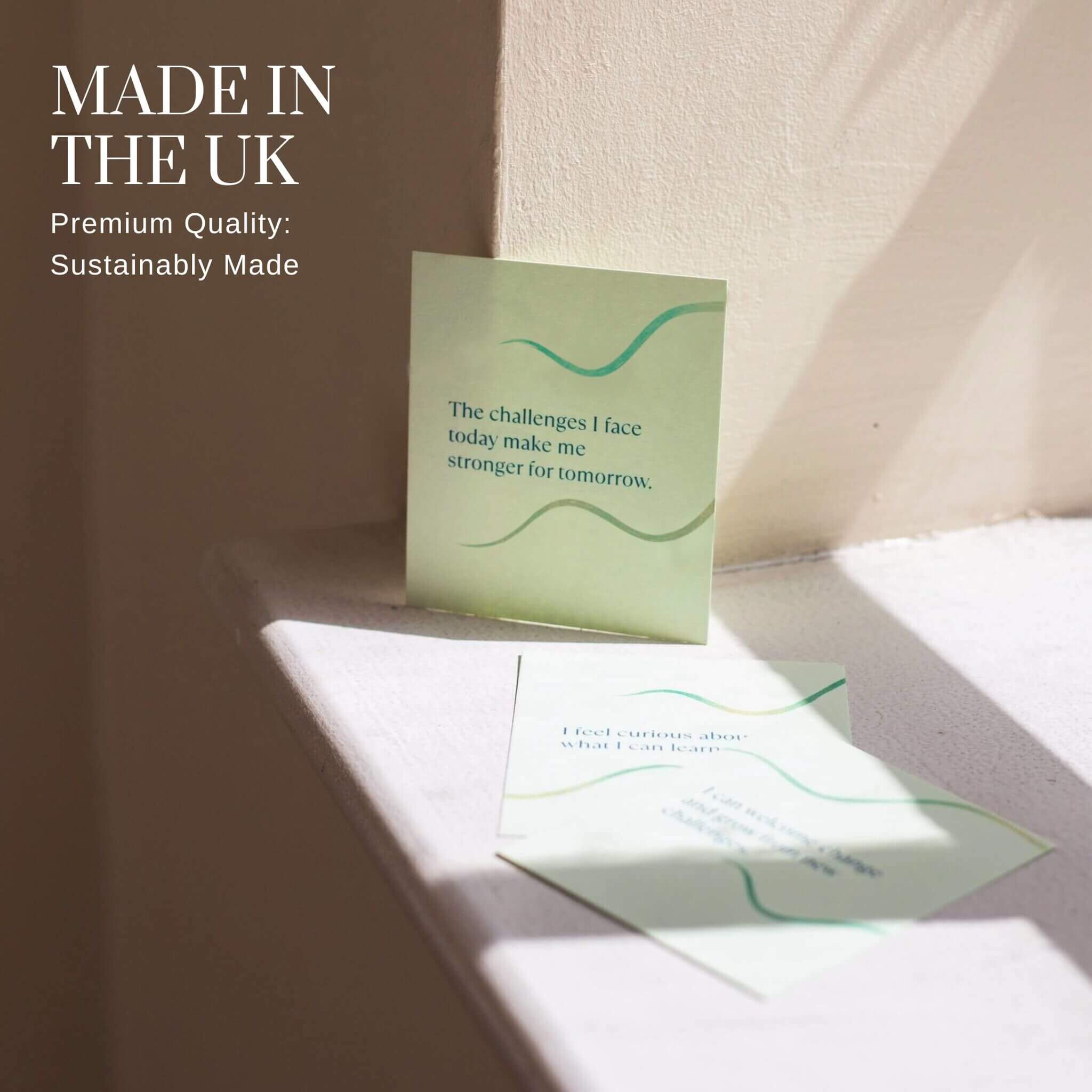
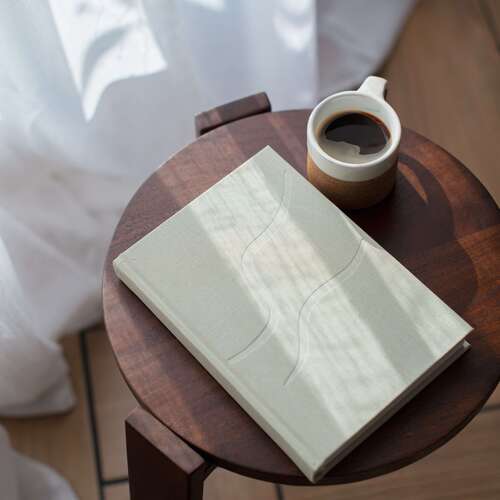
- Premium 120gsm paper and a luxury textured cover, made in the UK and sustainably sourced
Discover The 30-Day Gratitude Journal →
The 30-Day Gratitude Journal vs The Give Yourself Kindness Journal
Want to feel more grateful? Start with The 30-Day Gratitude Journal. Want to be kinder to yourself? Choose The Give Yourself Kindness Journal. Both share one promise: no forced positivity. Every feeling is welcome.
The 30-Day Gratitude Journal: gratitude that feels real, never forced or repetitive.
- 30 days. A different thoughtful prompt each day. No lists of three.
- Prompts for hard days, plus a guided gratitude meditation
- Best for gratitude that feels real, whether you're just starting out or you've found gratitude journaling forced or repetitive
The Give Yourself Kindness Journal: the self-compassion journal recommended by Harvard and Oxford psychologists.
- A guided self-compassion journal: 90 days, with an emotion tool on every page and prompts to respond to yourself with kindness
- Used by accredited counsellors with their clients
- It also includes gratitude every day
- Best for being kinder to yourself, especially if you're hard on yourself
Can I use both?
Yes. They're different practices, so they work well together, one after the other or at the same time.
My Verdict: Which Gratitude Journal to Choose
If you want gratitude that feels genuine, never forced or repetitive, this is where I'd start. A different thoughtful prompt each day keeps it fresh, there are no lists of three, and there's room for hard days. It's also the most affordable journal here. Yes, I made it, and it's the journal I wished existed when gratitude felt like a test I kept failing.
Choose this if you're hard on yourself. It's a self-compassion journal: 90 days of prompts and an emotion tool on every page to help you understand your feelings and respond to yourself with kindness, and it also includes gratitude every day. It's recommended by Harvard and Oxford psychologists and used by accredited counsellors with their clients.
If you like routine and don't mind repetition, its morning and evening structure is quick and easy to keep up.
If you're experienced with journaling and want complete flexibility, a blank notebook gives you total creative control. Just be ready to bring your own questions on the days you get stuck.
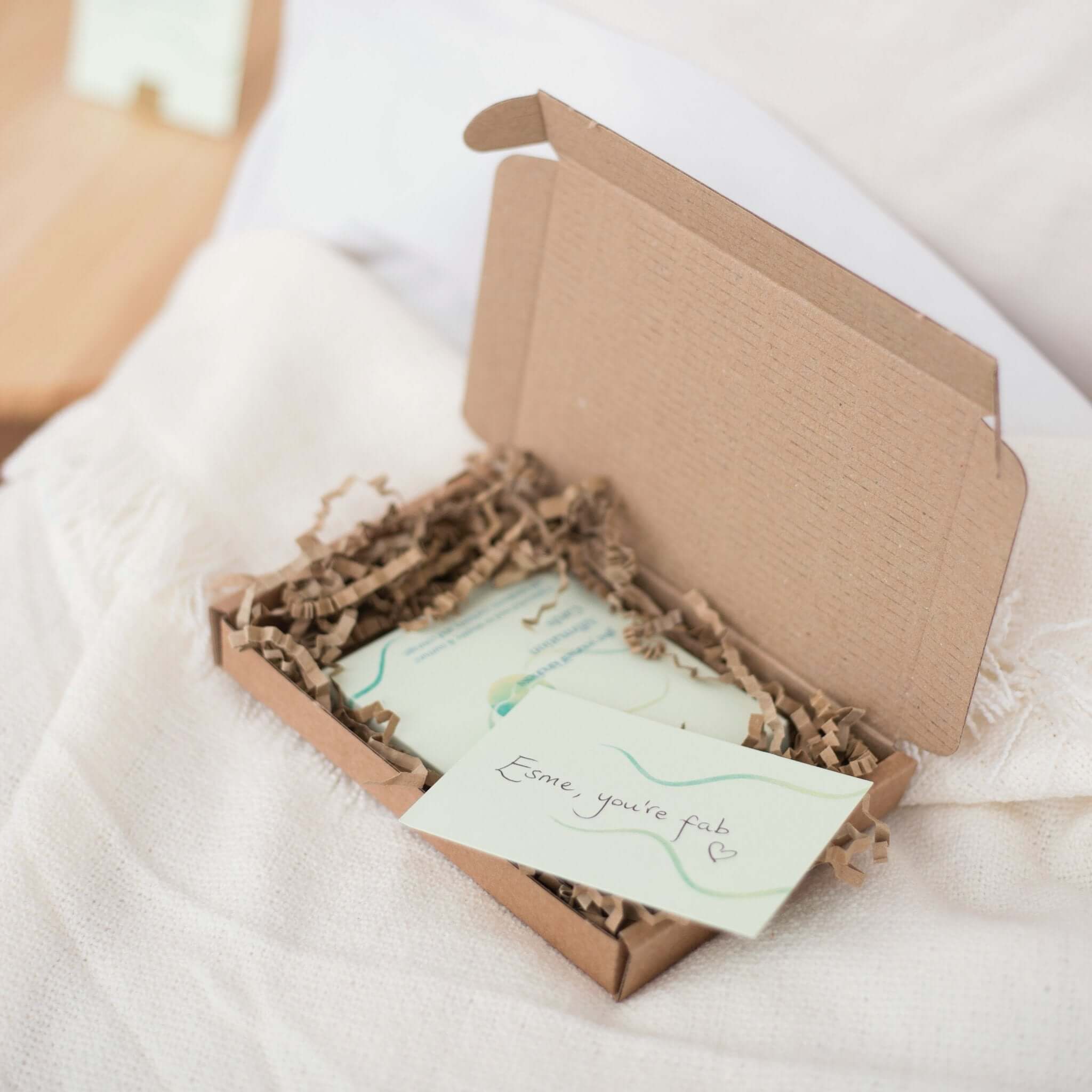
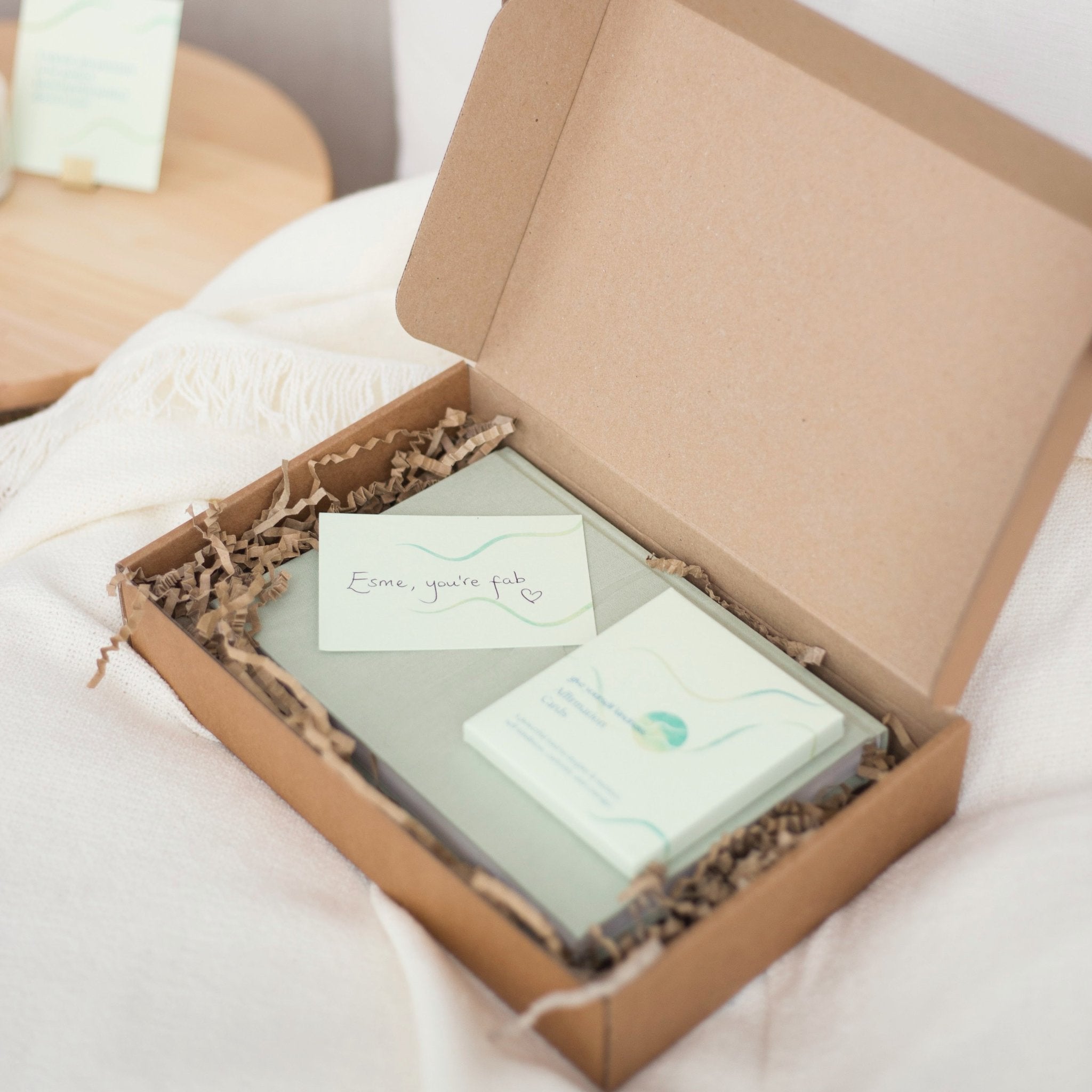
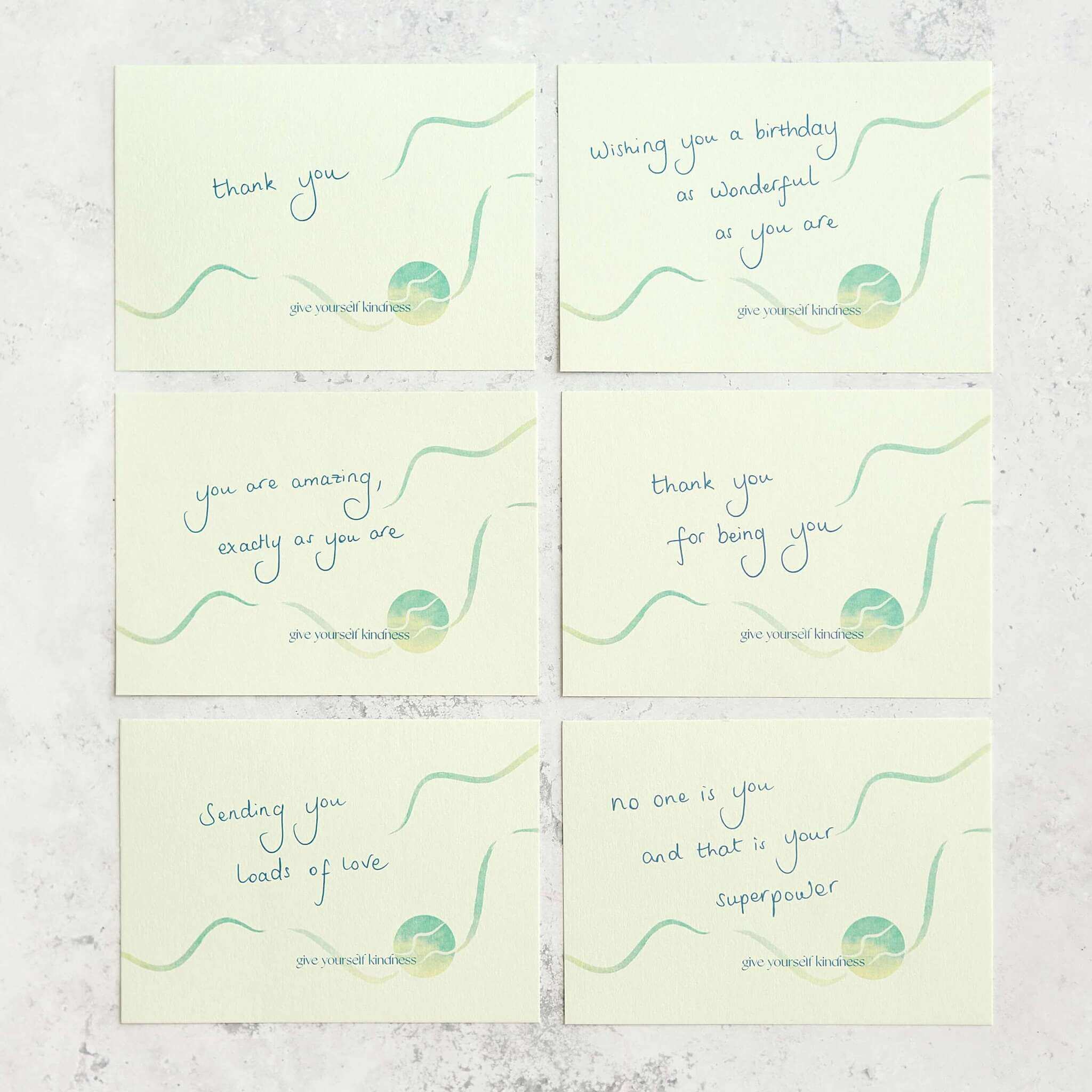
Both make thoughtful gifts. Papier offers personalised covers if the design matters most. The 30-Day Gratitude Journal is a gentle, affordable gift whose prompts welcome every feeling, and you can add a free handwritten gift note. If they're hard on themselves, The Give Yourself Kindness Journal comes wrapped in bespoke tissue paper, also with a free handwritten gift note.
The bottom line: the best gratitude journal is the one you'll want to come back to. Choose by whether you'd like structure or freedom, the same prompts or a different one each day, and whether forced positivity helps you or gets in the way.
If you're tired of lists of three, blank lines and prompts that suggest gratitude is the only feeling allowed, I made The 30-Day Gratitude Journal for you.
And if you're hard on yourself, The Give Yourself Kindness Journal brings self-compassion to every day, gratitude included.
FAQs
What is the best gratitude journal?
The best gratitude journal is the one that still feels real on the days gratitude doesn’t come easily. For gratitude that feels real, never forced or repetitive, I’d start with The 30-Day Gratitude Journal: 30 days, a different thoughtful prompt each day, no lists of three. If you’re hard on yourself, The Give Yourself Kindness Journal is the self-compassion journal recommended by Harvard and Oxford psychologists, and it also includes gratitude every day. For identical quick prompts each day, The Five Minute Journal suits many people, and a blank notebook gives total freedom.
Which gratitude journal is best for beginners?
For beginners, I’d suggest The 30-Day Gratitude Journal. It gives you a different thoughtful prompt each day, so you never face a blank page or the same question twice, and some days take as little as 5–10 minutes. It’s undated, so a missed day doesn’t matter, and 30 days is a length you can finish before deciding what comes next. It also includes a guided meditation I recorded.
Do I need structure in a gratitude journal or is a blank notebook better?
Whether you need structure in a gratitude journal depends on how you get started. If you’re new to journaling or often get stuck, a guided journal like The 30-Day Gratitude Journal or The Five Minute Journal gives you a prompt, so you don’t have to invent the question. A blank notebook offers more freedom but asks more of you on a tired evening. Ask yourself: do prompts help you start, or do they feel limiting?
What makes The 30-Day Gratitude Journal different from other gratitude journals?
The 30-Day Gratitude Journal is different because it asks a different thoughtful question each day instead of giving you three numbered lines. There are no lists of three and no blanks to fill. Some days you notice something in nature, another day you write a letter you’ll never send, and one day includes a guided meditation. There are prompts for hard days too. No forced positivity. Every feeling is welcome.
Does gratitude journaling actually work?
Gratitude journaling might help, and there’s research behind it. Psychotherapist Amy Morin, writing for Give Yourself Kindness, describes a study by Dr Robert Emmons at UC Davis that found keeping a gratitude journal leads to a 25% increase in happiness. How you do it matters, though. Gratitude that feels forced can leave people feeling worse, so a format that welcomes every feeling may suit you better than a daily list.
How long before I see results from gratitude journaling?
How long gratitude journaling takes to make a difference varies from person to person, and I don’t want to promise you a timeline. Some people notice a small shift in what they pay attention to quite soon; for others it takes longer. What tends to matter most is coming back to it gently, even after a missed day, rather than doing it perfectly.
What if I miss a day in my gratitude journal?
Missing a day in your gratitude journal is completely normal and doesn’t undo anything. The 30-Day Gratitude Journal is undated, so you simply pick up the next prompt when you’re ready, without an empty date staring back at you. With a dated journal, skip to today. Being gentle with yourself about a missed day is part of the practice, not a break from it.
How long should I spend on gratitude journaling each day?
How long you spend on gratitude journaling each day is up to you. The Five Minute Journal is designed for about five minutes, and The 6-Minute Diary for about three minutes in the morning and three in the evening. With The 30-Day Gratitude Journal, some days take as little as 5–10 minutes, and other prompts you may want to stay with longer. Write one word or fill the whole page.
What if I find gratitude practice difficult or feel like I’m failing?
If you find gratitude practice difficult, it doesn’t mean you’re ungrateful or failing. It means you’re human. Psychotherapist Amy Morin puts it simply: “you don’t have to be grateful all the time.” The 30-Day Gratitude Journal includes prompts for hard days and gives you permission to skip one that doesn’t land. If numbered lists leave you feeling worse, a gentler, more curious format may help.
Why 30 days instead of 6 months?
I chose 30 days instead of 6 months because 30 days is long enough for gratitude to start feeling like part of your day, and short enough to finish. Finishing a journal feels good. Each of the 30 days has a different thoughtful prompt, so it stays fresh from the first page to the last. Afterwards, you can go through it again, carry on in your own way, or, if you’d like to be kinder to yourself, try The Give Yourself Kindness Journal.
Can I use a gratitude journal if I’m going through a difficult time?
Yes, you can use a gratitude journal when you’re going through a difficult time, but the approach matters. Gratitude that’s forced, or that diminishes what you’re going through, can leave you feeling worse. The 30-Day Gratitude Journal includes prompts for hard days, and gratitude can sit alongside pain without cancelling it out. A journal is a companion to support, never a substitute for it: if you’re struggling, please talk to your GP or call Samaritans on 116 123.
Which gratitude journal is best for gift-giving?
For gift-giving, I’d suggest The 30-Day Gratitude Journal for a gentle, affordable start, or The Give Yourself Kindness Journal if they’re hard on themselves. You can add a free handwritten gift note to either. Papier’s gratitude journals offer personalised covers if the design matters most. Whichever you choose, prompts that welcome every feeling tend to suit more people than forced positivity.
What’s the difference between a gratitude journal and a regular journal?
The difference between a gratitude journal and a regular journal is focus. A gratitude journal gives you prompts that gently turn your attention to what has helped, comforted or mattered to you. A regular journal is open to any thoughts or feelings. You can add gratitude to any journal, but prompts can help on the days when nothing comes to mind.
Should I choose The 30-Day Gratitude Journal or The Give Yourself Kindness Journal?
Choose between The 30-Day Gratitude Journal and The Give Yourself Kindness Journal by what you want most. Want to feel more grateful? Start with The 30-Day Gratitude Journal: 30 days, a different thoughtful prompt each day, no lists of three. Want to be kinder to yourself? Choose The Give Yourself Kindness Journal, the self-compassion journal recommended by Harvard and Oxford psychologists, which helps you understand your emotions and respond to yourself with kindness instead of criticism. It also includes gratitude every day. They’re different practices, so they work well together.
What if gratitude journaling feels fake or forced?
If gratitude journaling feels fake or forced, the format may be asking for a feeling you don’t have that day. Psychotherapist Carrie Pollard notes that when gratitude is forced, “it leaves us feeling worse, not better.” The 30-Day Gratitude Journal doesn’t ask you to be positive. No forced positivity. Every feeling is welcome, and there are prompts for hard days.
What if I always end up writing the same three things?
If you always end up writing the same three things, the format is usually the reason. A journal that asks the same question every night tends to get the same answers. The 30-Day Gratitude Journal asks a different thoughtful question each day, from noticing something in nature to writing a letter you’ll never send, so there are no lists of three to repeat.
Can I use both journals at the same time?
Yes, you can use both journals at the same time, or one after the other. They’re different practices, so they work well together. The 30-Day Gratitude Journal is centred on gratitude, with a different prompt each day. The Give Yourself Kindness Journal is centred on self-compassion and understanding your emotions, and it also includes gratitude every day. There’s no right or wrong order.
Does The Give Yourself Kindness Journal include gratitude?
The Give Yourself Kindness Journal does include gratitude every day, as one part of a self-compassion journal. It’s recommended by Harvard and Oxford psychologists and helps you understand your emotions and respond to yourself with kindness instead of criticism, with an emotion tool on every page. Gratitude sits alongside harder feelings rather than instead of them, so it might suit you if you’d like gratitude without having to feel positive. If gratitude is the main thing you’re looking for, The 30-Day Gratitude Journal is centred on it.
What’s the best gratitude journal for women?
The best gratitude journal for women is the one whose prompts you’ll want to come back to; none of the journals here is made for one gender. What matters more is whether the prompts change, whether there’s room for hard days, and whether it’s a length you can finish. For gratitude that feels real, try The 30-Day Gratitude Journal. If you’re hard on yourself, The Give Yourself Kindness Journal is a self-compassion journal that also includes gratitude every day.
Which gratitude journal has the best prompts?
The gratitude journal with the best prompts depends on what you want from them. If you like the same quick questions every day, The Five Minute Journal does that well. If you’d like a different thoughtful prompt each day, with no lists of three and room for hard days, The 30-Day Gratitude Journal is made for that. The Give Yourself Kindness Journal is a self-compassion journal whose prompts help you respond to yourself with kindness, and it also includes gratitude every day.
Continue reading
From the experts quoted here
-
How gratitude changes your brain, health and relationshipsAmy Morin, LCSW, psychotherapist and bestselling author
-
The benefits of journaling, from 3 clinical psychologistsDr Chris Irons, Dr A. Comninos and Dr J. Mirmelli
-
What clinical psychologists say about the journalDr Chris Germer, Professor Willem Kuyken, Dr Chris Irons and more
Related guides
- Why it's okay to find gratitude hard sometimes
- Why gratitude journaling feels hard
- What makes a good gratitude journal
- How to write a gratitude journal every day
- Toxic positivity in journaling
- 6 journaling tips for beginners, from 6 therapists
- Best self-compassion journals compared
- Best guided journals compared
- Best journals for mental health compared


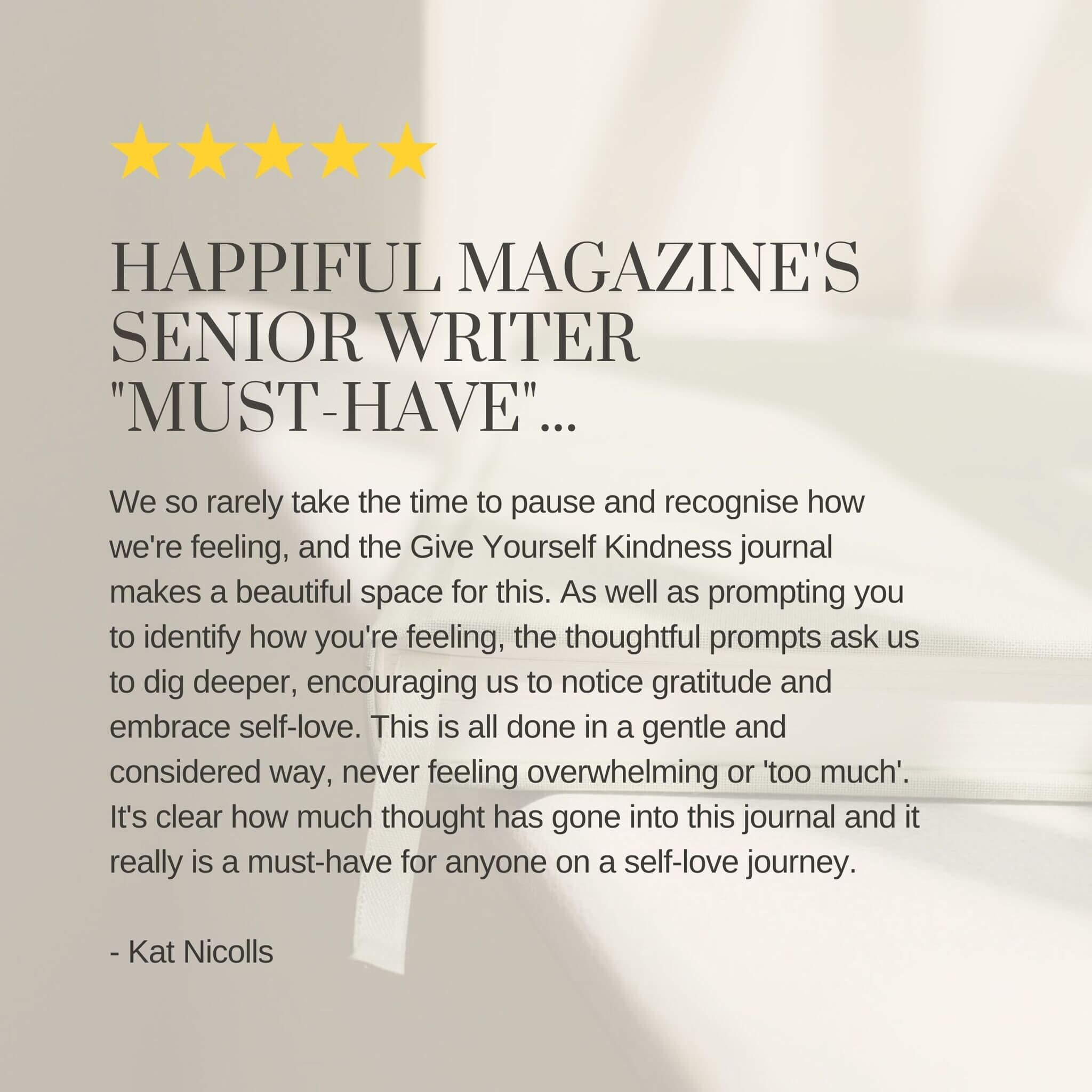
“By far my favourite guided journal that I’ve used!”
“Being able to identify what you’re feeling and compassionately explore the ‘why’ is central to self-connection and self-growth. The Give Yourself Kindness journal is a steady guide in this process.”