



Most affirmation cards aimed at students are, underneath, about achieving.
You'll see "I am capable of getting top grades" and "I am destined for success". Which is a strange thing to hand someone at eleven at night in week nine, when they already suspect they're behind and the whole problem is that everything has become a measurement.
Quick answer
The best affirmation cards for a student are the ones that don't mention grades. Not because results don't matter, but because a card that ties worth to performance just adds another target on a day that already had too many.
Look for wording that gives permission to be a learner: to not know yet, to get it wrong, to change your mind, to be on a different timetable from everyone else.
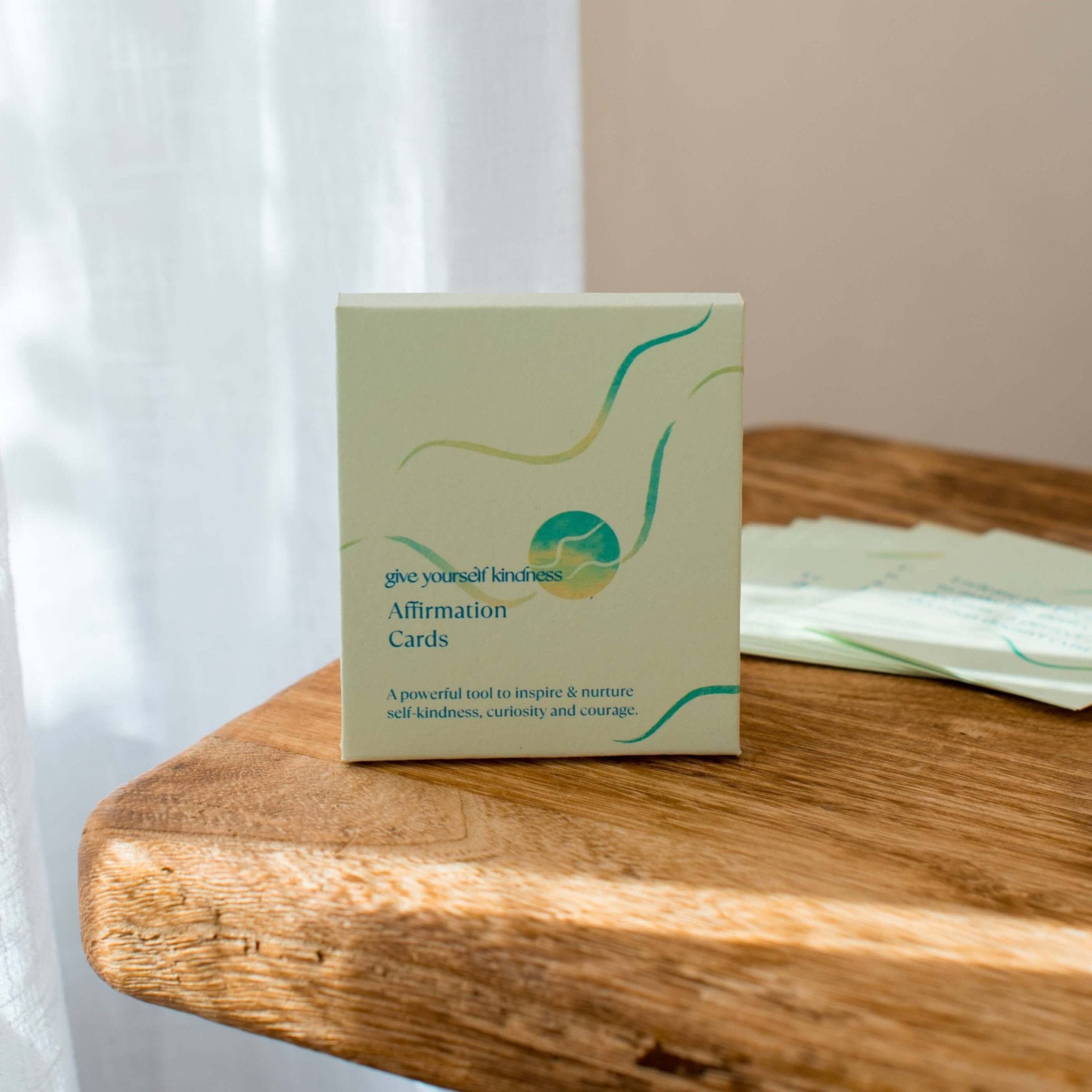
From £13.95 | 20 cards, printed in the UK
All nineteen of the affirmations are written out further down, free. If you want to copy them onto index cards and spend nothing, that is a genuinely good outcome and I'd rather you did that than bought something you weren't sure about.
Why trust me: I'm Rachel Smith, a qualified meditation teacher, and these cards are mine. I wrote them after looking at what was already out there for students and finding almost all of it was cheerleading about success. The thing I needed at that age was permission to be rubbish at something while I learned it, and nobody was selling that. More about me →
Why "you're so clever" doesn't help
Praise aimed at ability sounds supportive and quietly raises the stakes. If being clever is the thing you are, then every piece of work becomes a test of whether you still are, and the sensible response to a test you might fail is to avoid it. That's most of what looks like procrastination at nineteen.
Affirmations do the same thing when they're written about outcomes. "I am destined for success" is not encouragement on the evening you can't understand chapter four. It's one more thing to fall short of.

Annabelle Kyle Dortch, PsyD
Los Angeles based clinical psychologist, specialising in life transitions, relationships, stress, anxiety and the impacts of trauma
"When we engage in self-criticism, we create a nervous system and brain state that is not conducive to learning or facilitating a growth-oriented mindset."Read why self-compassion beats self-criticism →
Not conducive to learning. That is the whole argument for a student, made by a clinical psychologist, and it's more useful than any motivational line. Being hard on yourself is not the price of good work. It measurably gets in the way of the exact thing you're there to do.

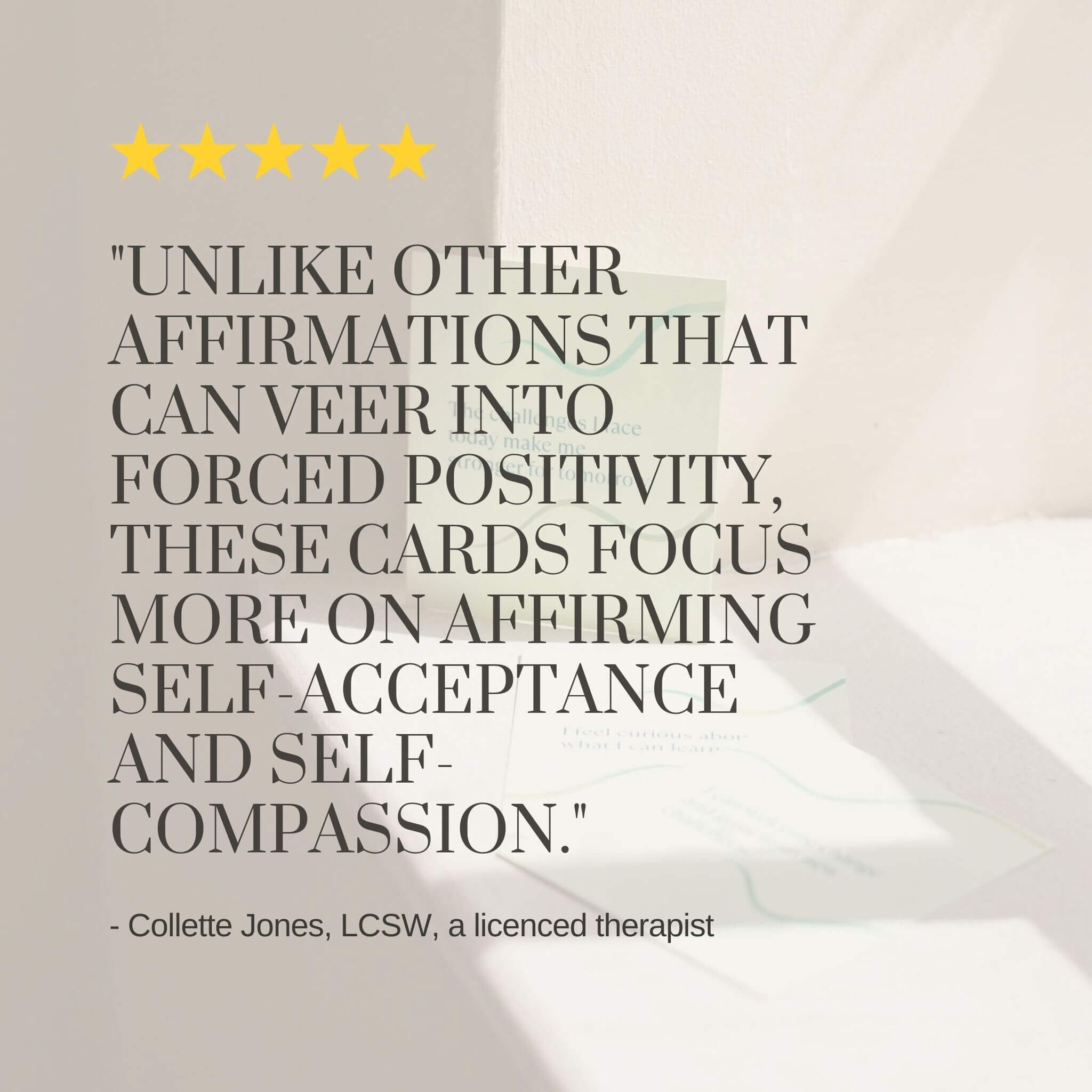
Collette Jones, LCSW
Licensed therapist specialising in teens and adults struggling with perfectionism and high-functioning anxiety
"The excessively high standards that a perfectionist sets for themselves often lead to feelings of shame, burnout, anxiety, and poor self-worth."Read Collette on perfectionism and self-compassion →
A card that raises the bar is not support. It's just the same pressure in nicer handwriting.
What to look for instead
The shift is from achievement language to learning language. Same encouragement, but attached to the process rather than the result, so there's nothing to fail at.
| The moment | Achievement wording | Learning wording |
|---|---|---|
| Stuck on the work | "I am capable of top marks." | "I can do things I cannot do yet." |
| After a bad result | "I always succeed at everything I do." | "I can make mistakes and recognise that they help me grow." |
| Everyone else seems ahead | "I am the best in my year." | "I can honour that my path in life will be different to others." |
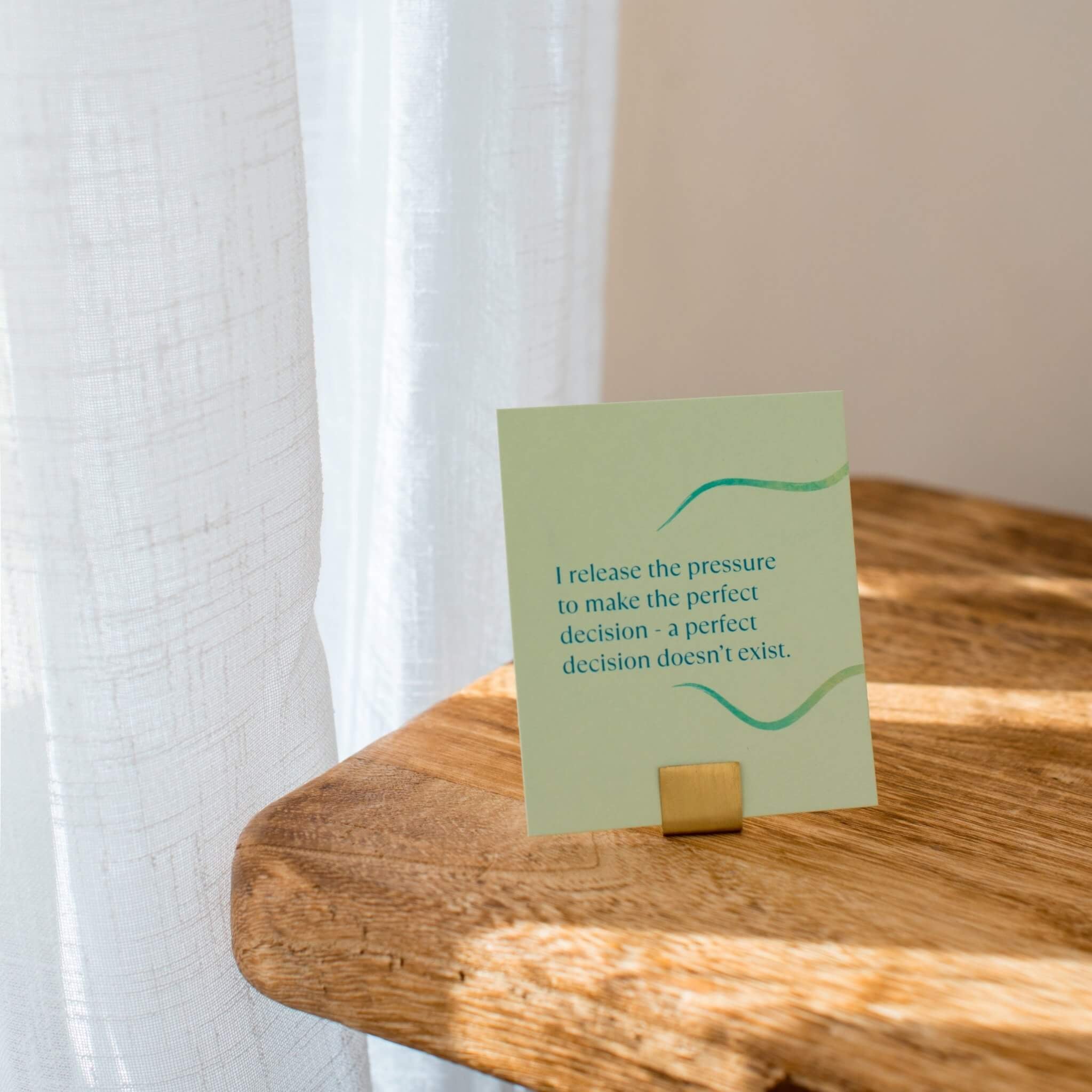
| Choosing a module, a course, a life | "I always make the right decision." | "I release any pressure to make the perfect decision, knowing that a perfect decision doesn't exist." |
Notice that the right-hand column never promises anything. It removes a requirement instead. That's the difference, and it's why these ones survive a bad week when the cheerful ones get put in a drawer.
The nineteen affirmations, free
These are the ones I wrote for students. Copy them out, screenshot them, put one in a phone case. Nothing here is behind a payment.
- I can do things I cannot do yet
- I can make mistakes and recognise that they help me grow
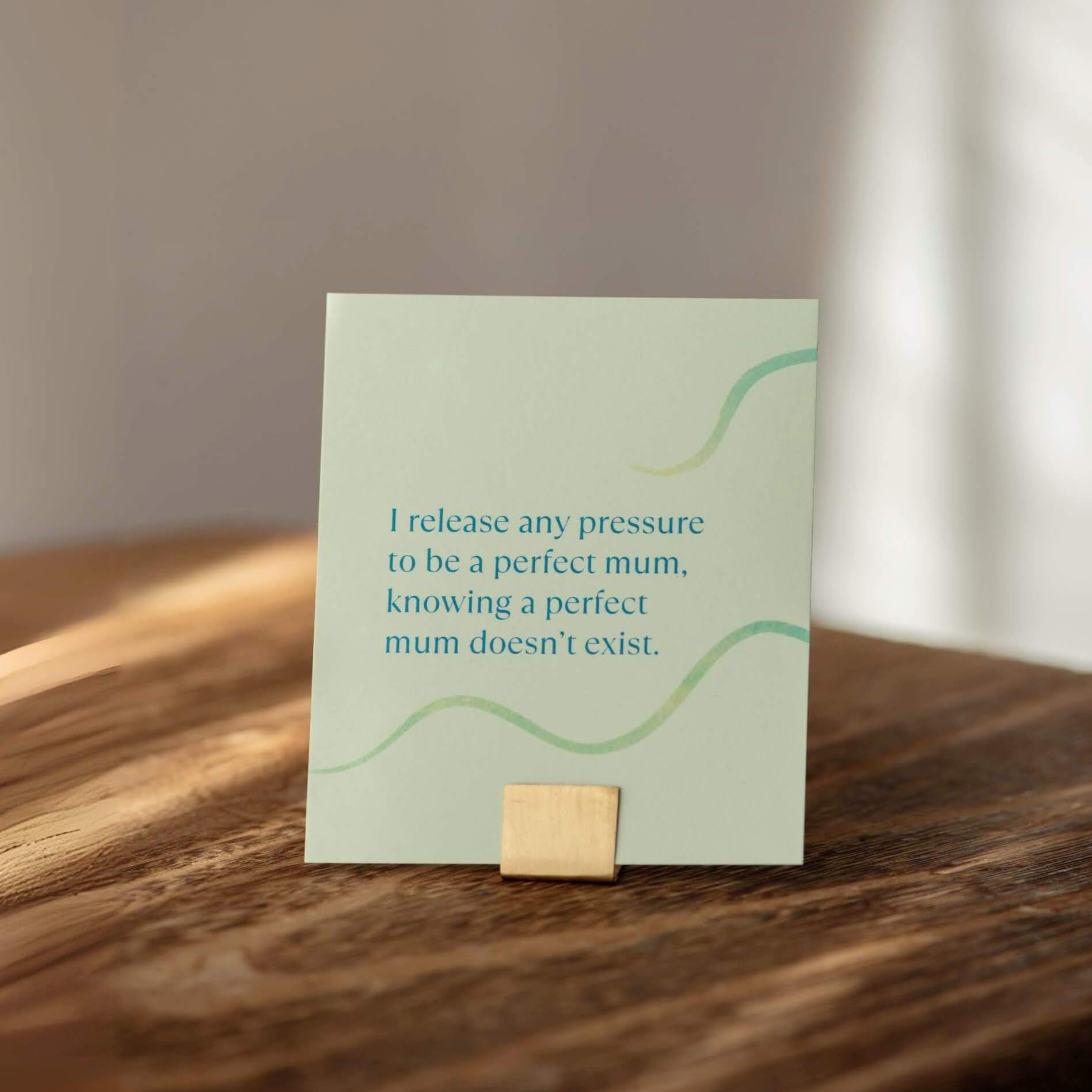
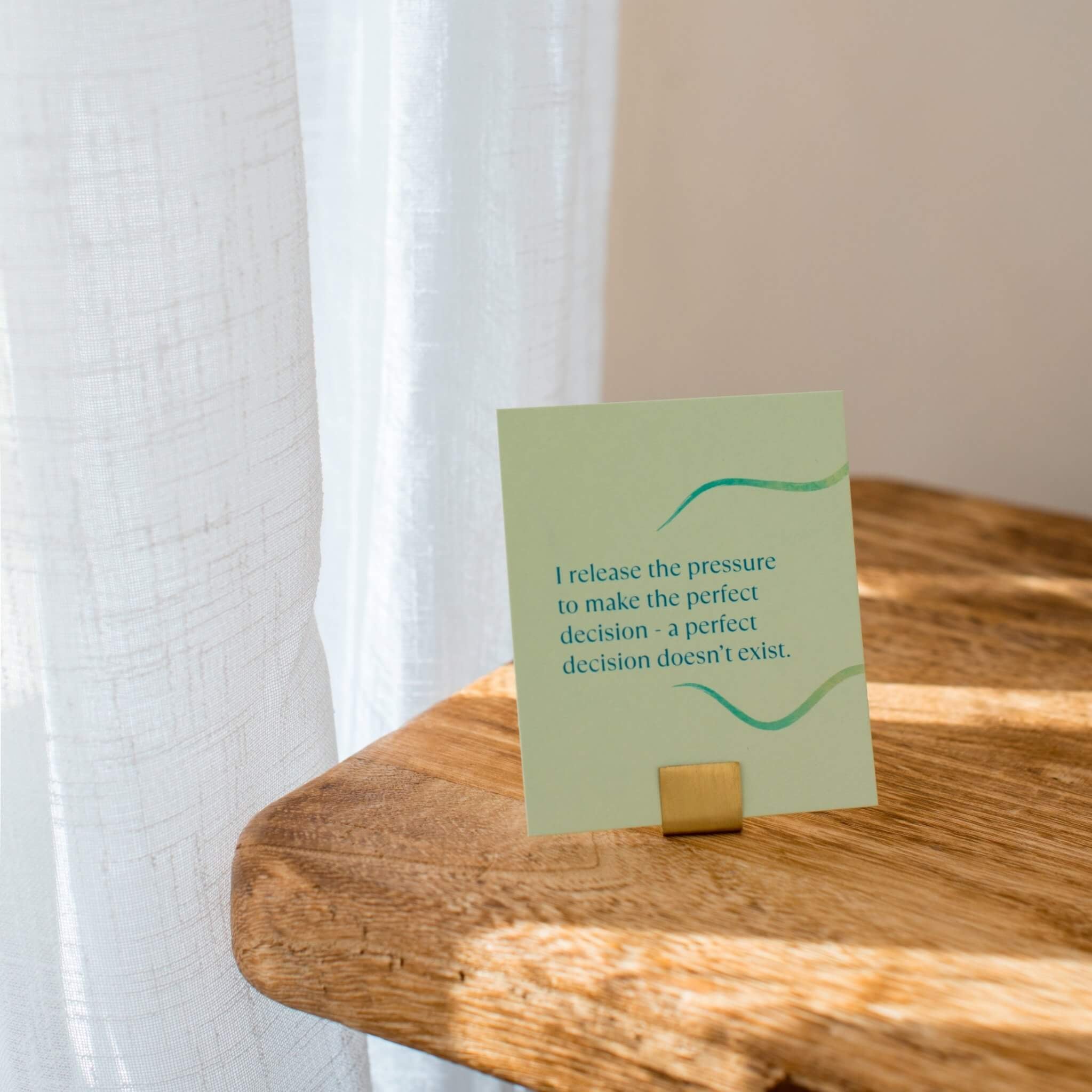
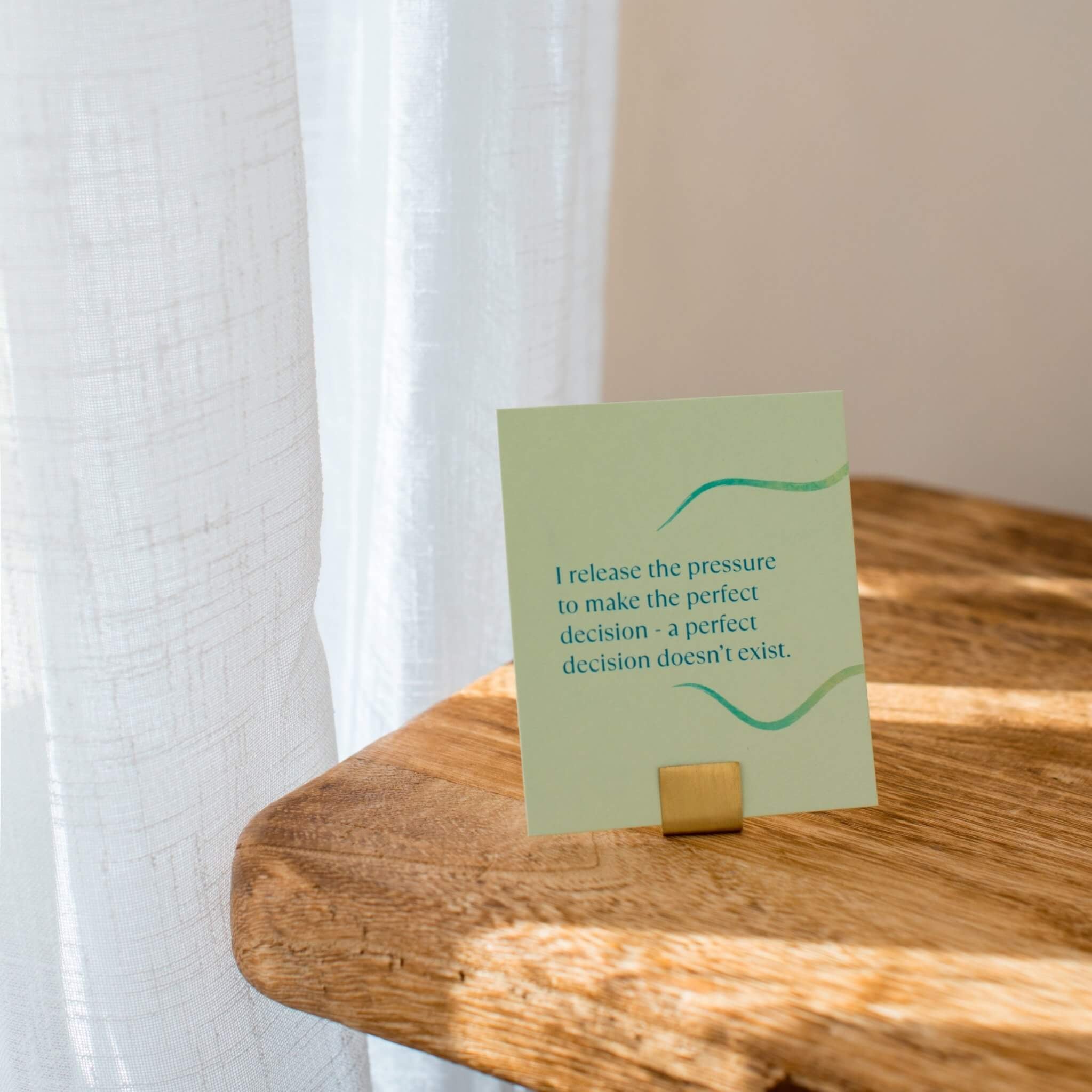
- I release any pressure to make the perfect decision, knowing that a perfect decision doesn't exist
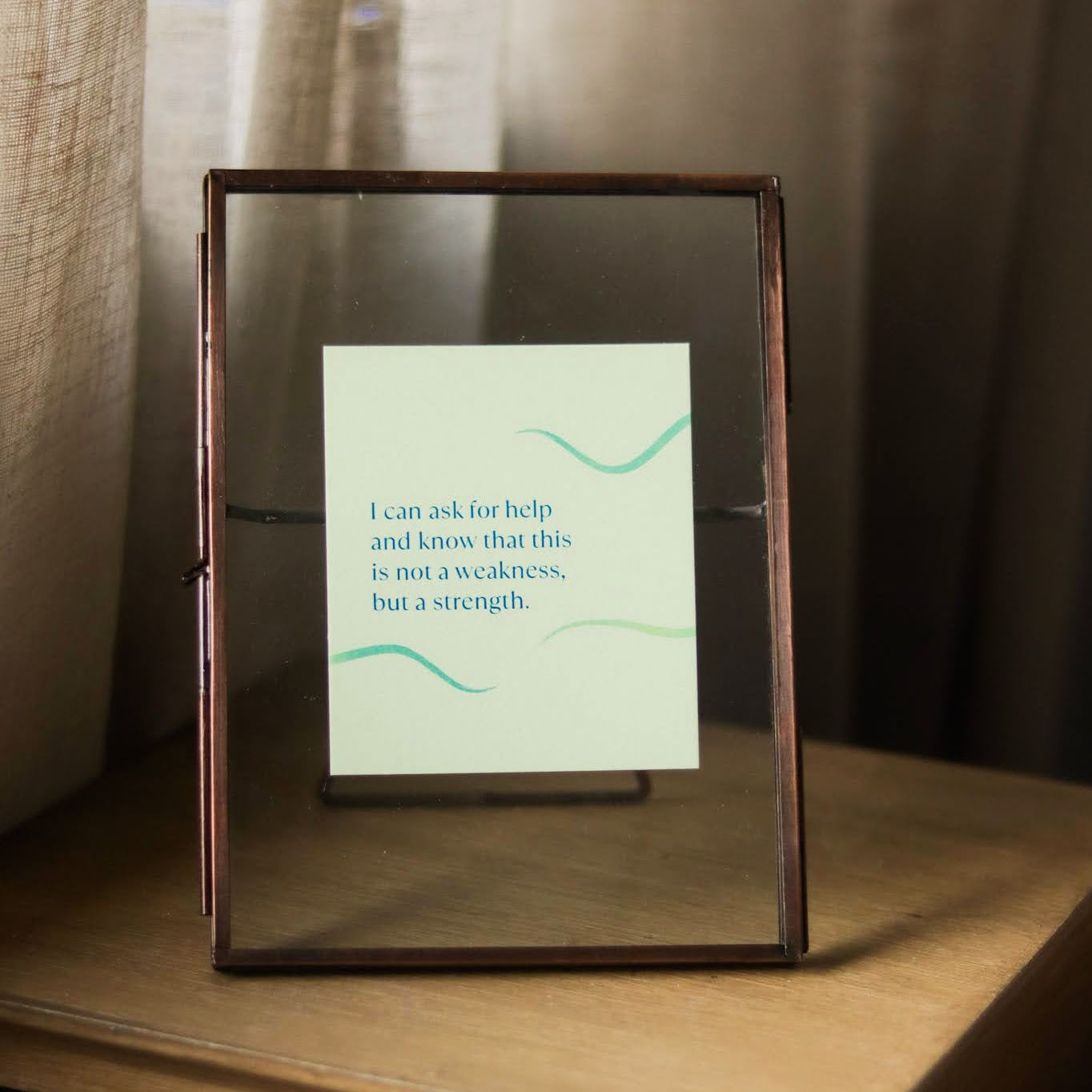
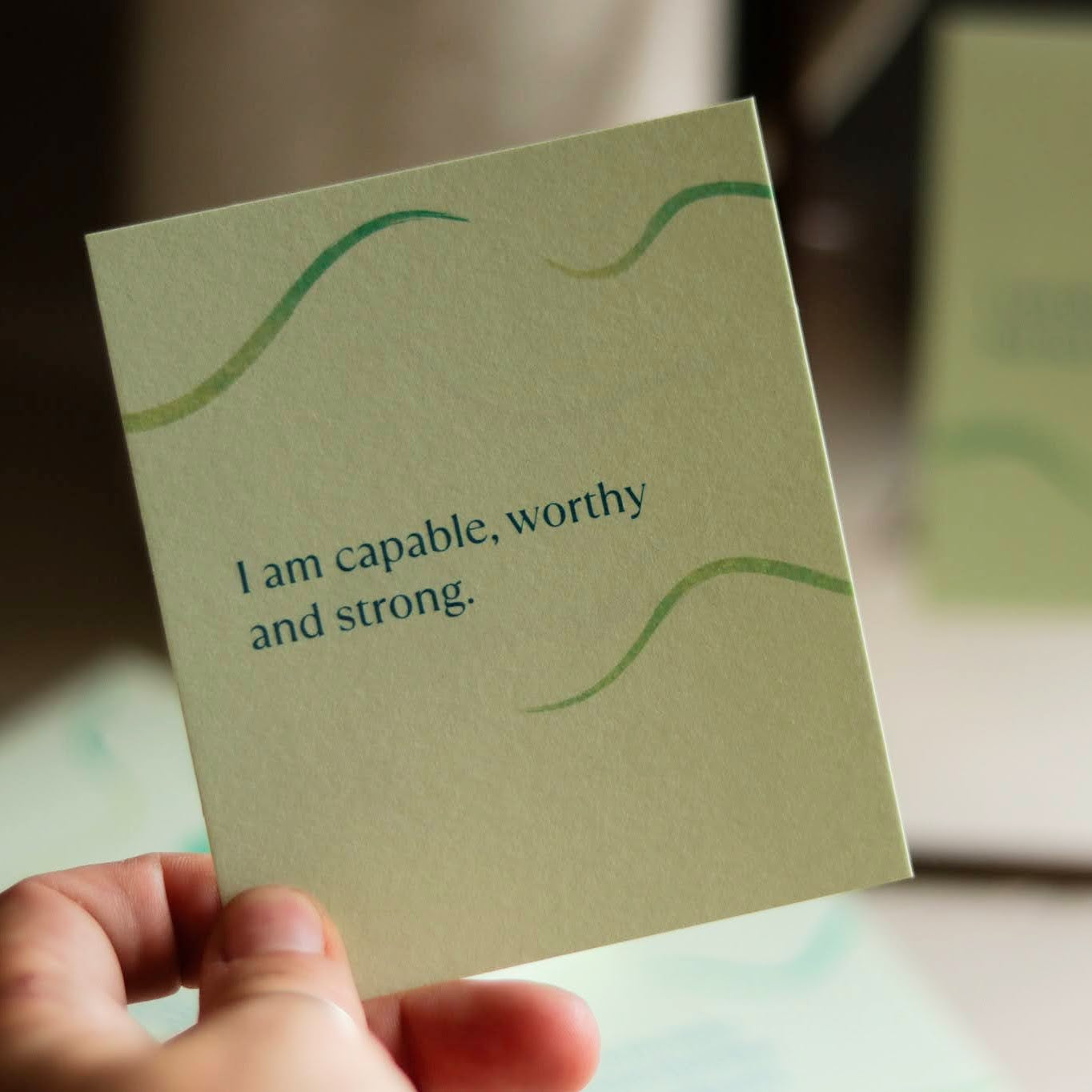
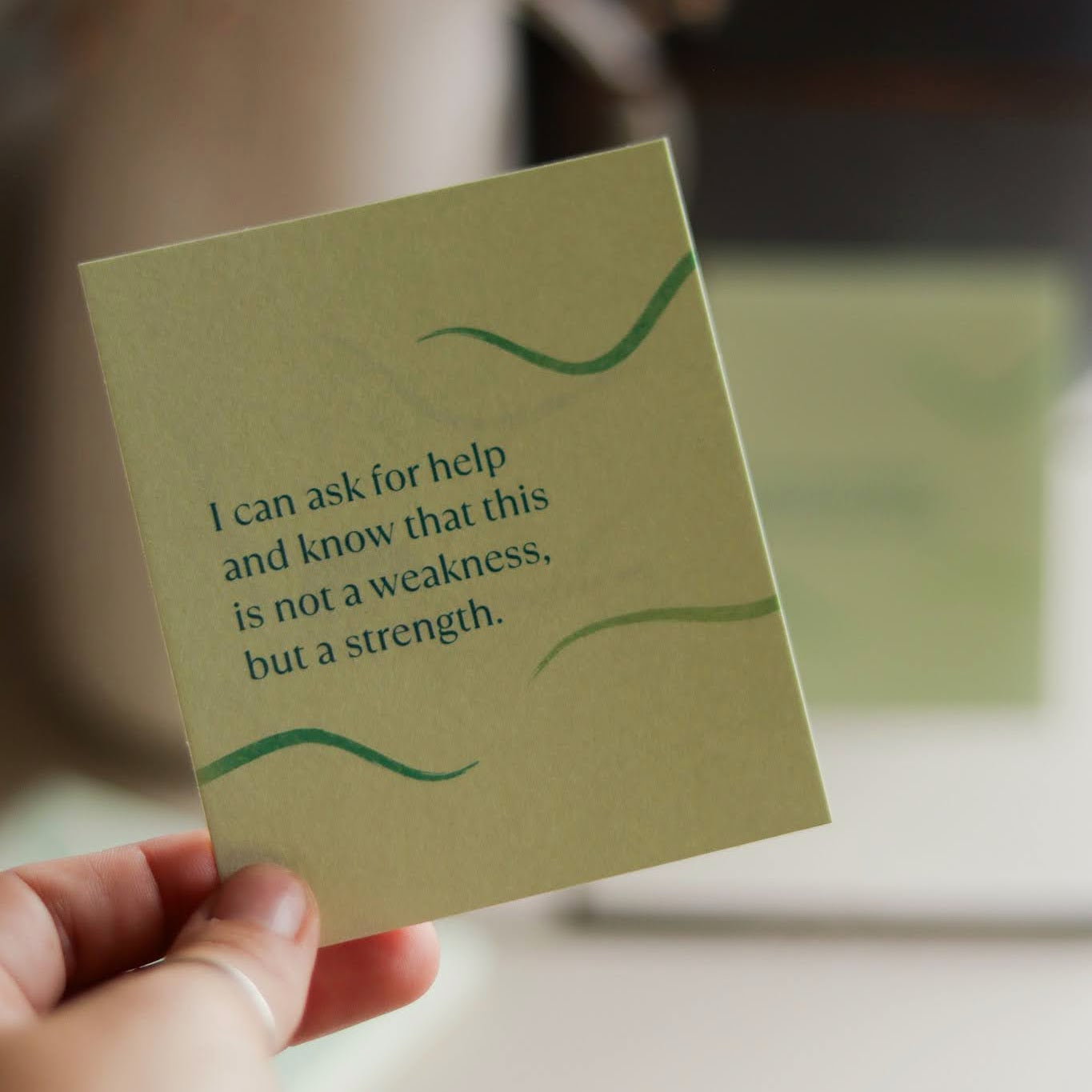
- I can ask for support and know that this is not a weakness but a strength
- I can be proud of myself for doing my best, and know that this is always enough
- I can honour that my path in life will be different to others and reassure myself that I don't need to compare or compete
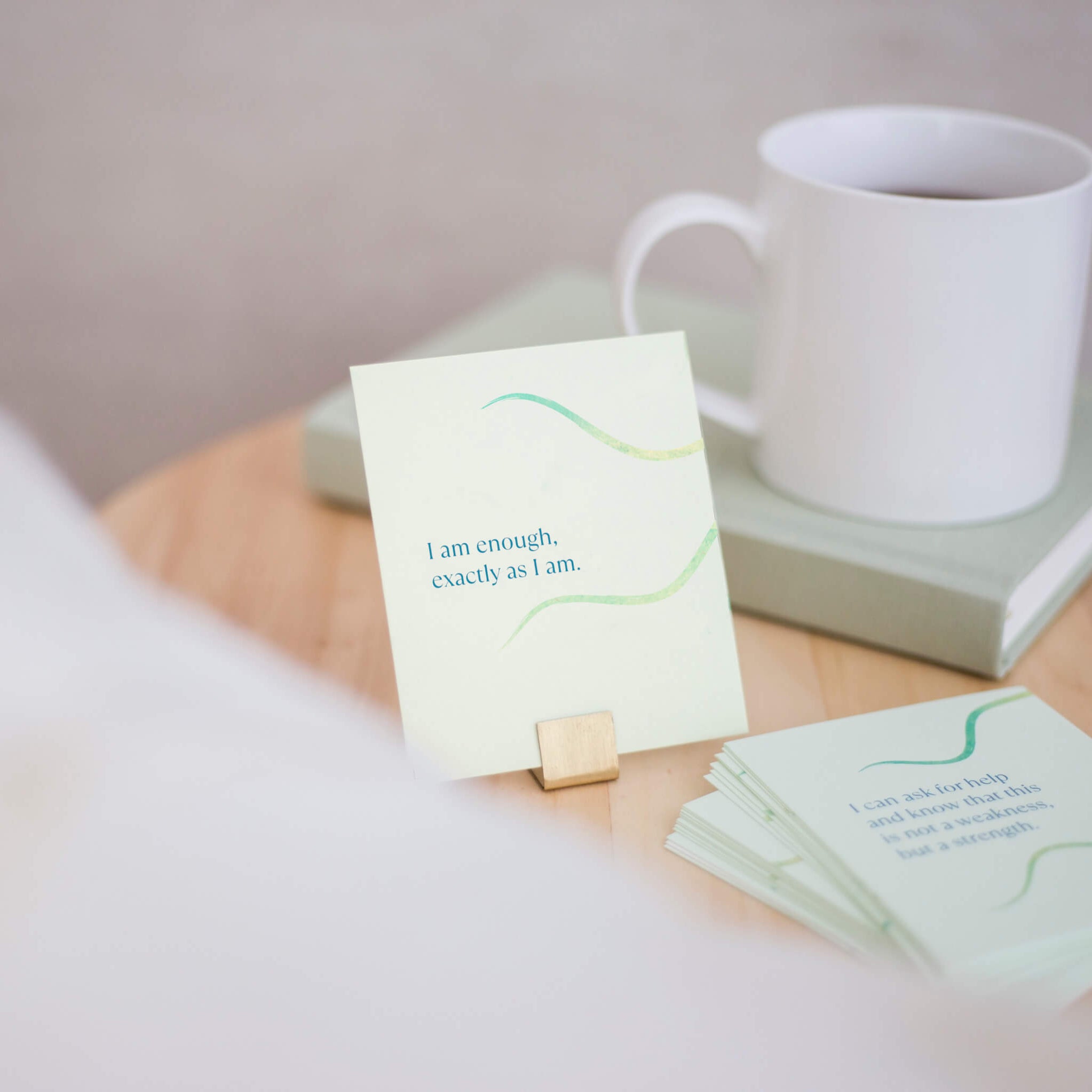
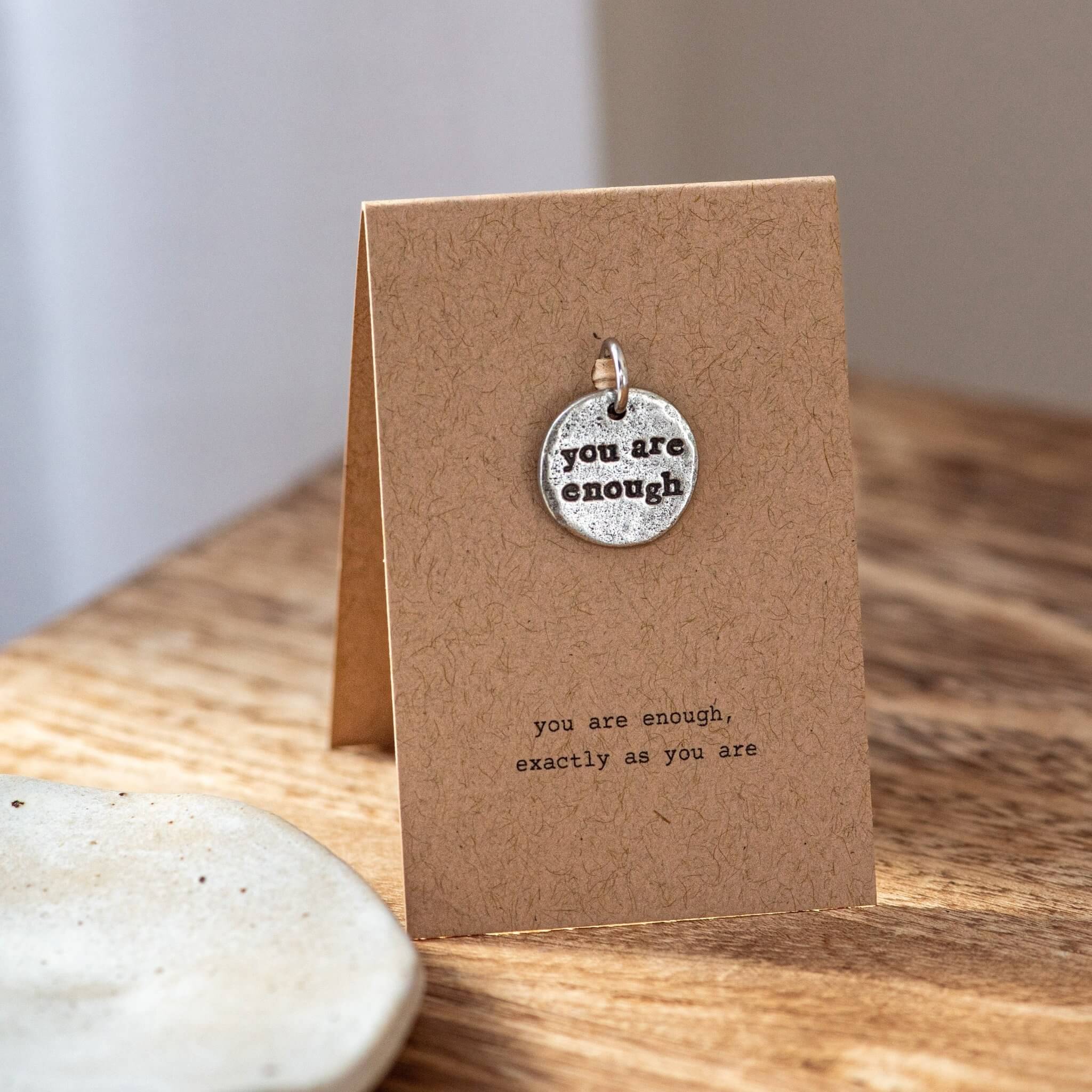
- I am enough, exactly as I am
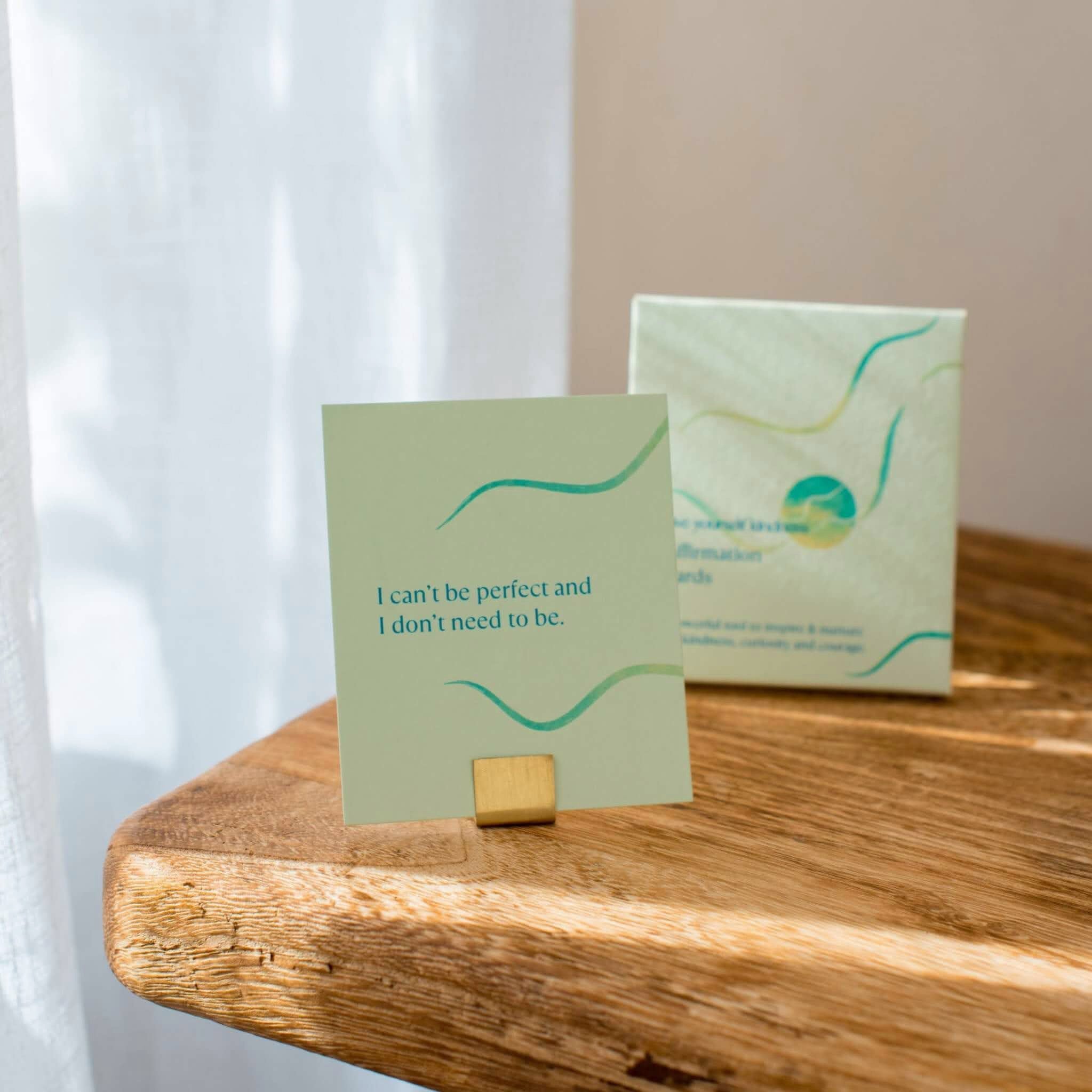
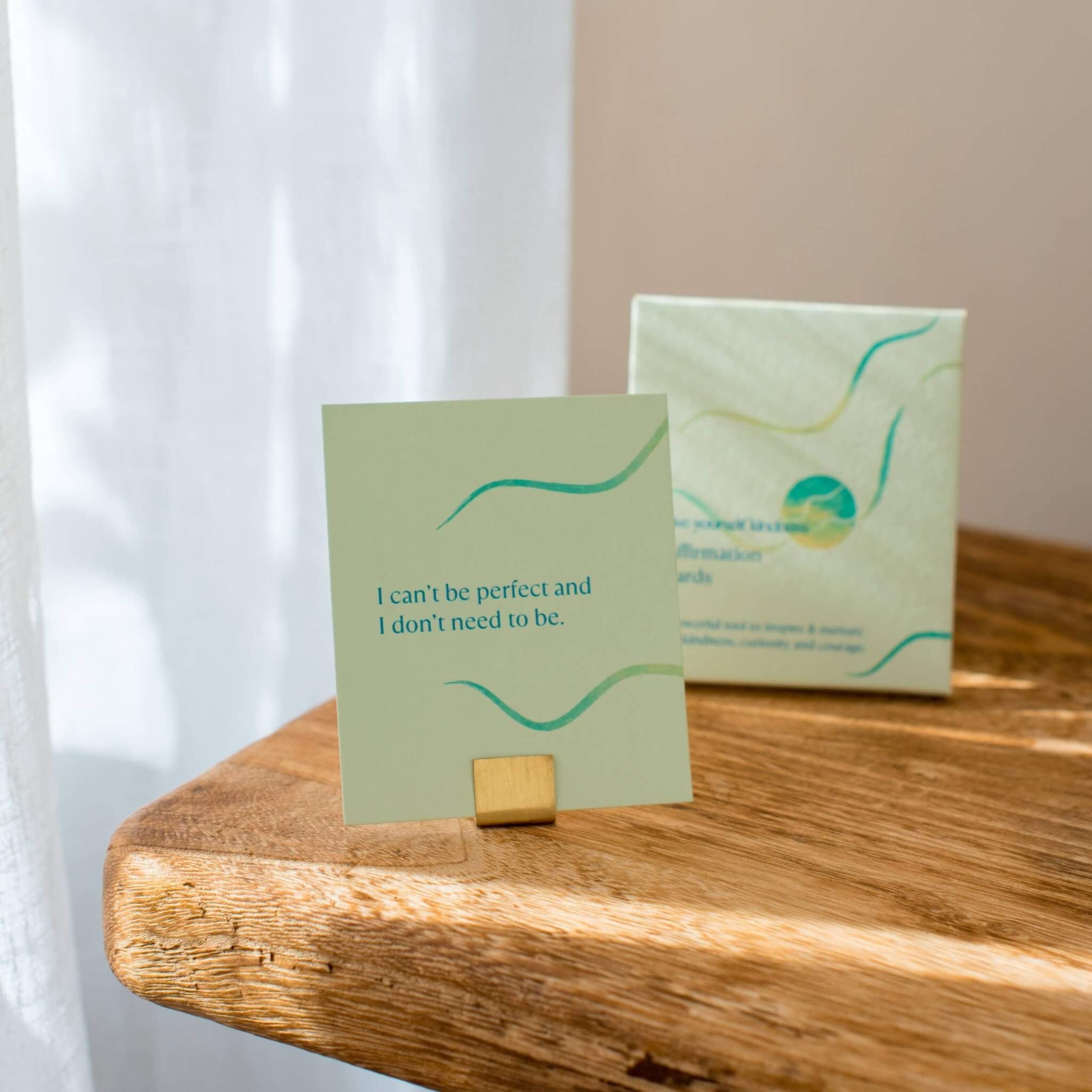
- I release any pressure to be perfect, knowing that perfect doesn't exist
- I am always worthy of respect
- I am as worthy as everyone else
- I have so much to offer
- I accept my strengths and weaknesses and celebrate that we are all unique
- I can change my mind and know that that is okay
- I can remind myself that there is no single definition of success
- I can use my breath as a tool to support myself, and at any time I can take deep and slow breaths to feel more relaxed and energised
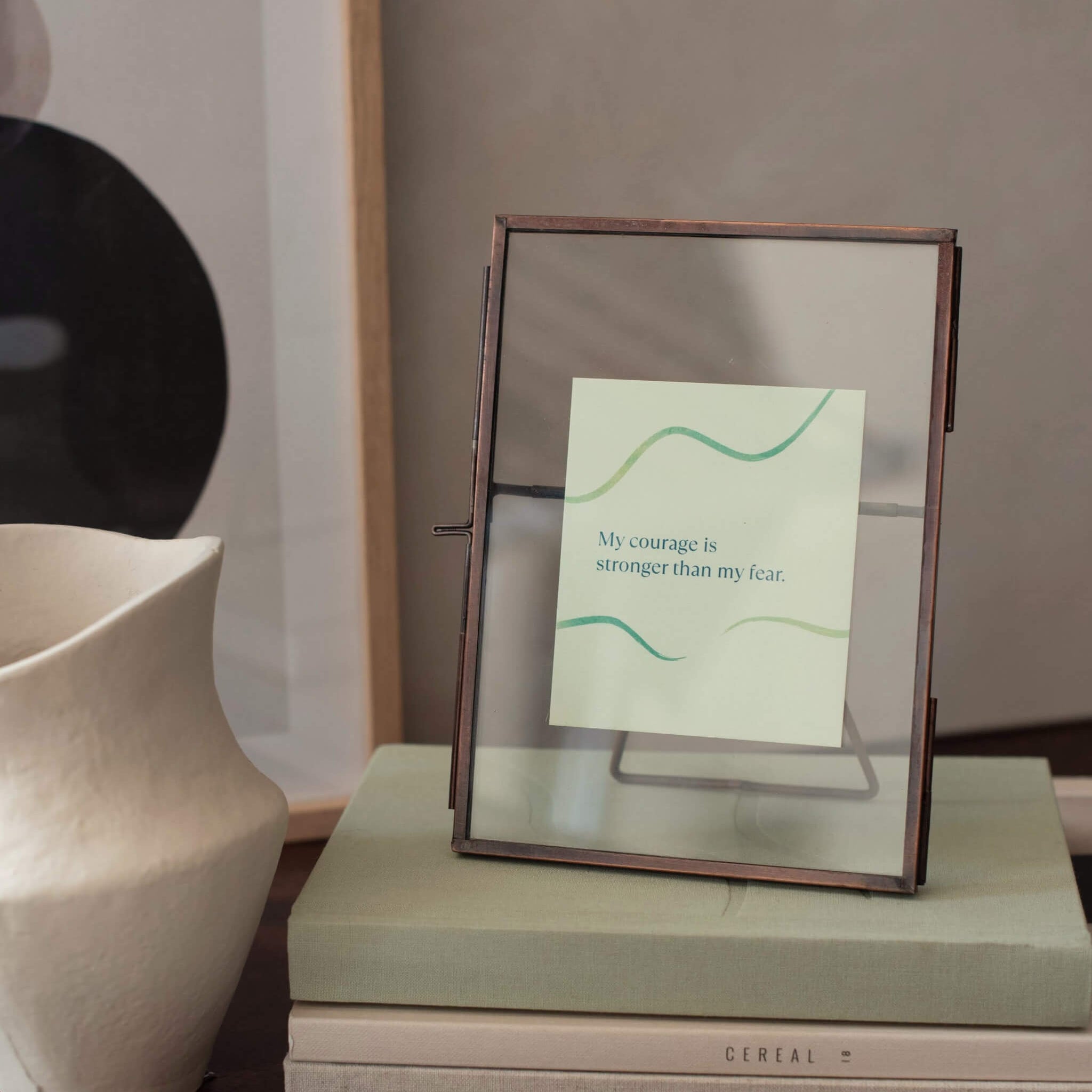
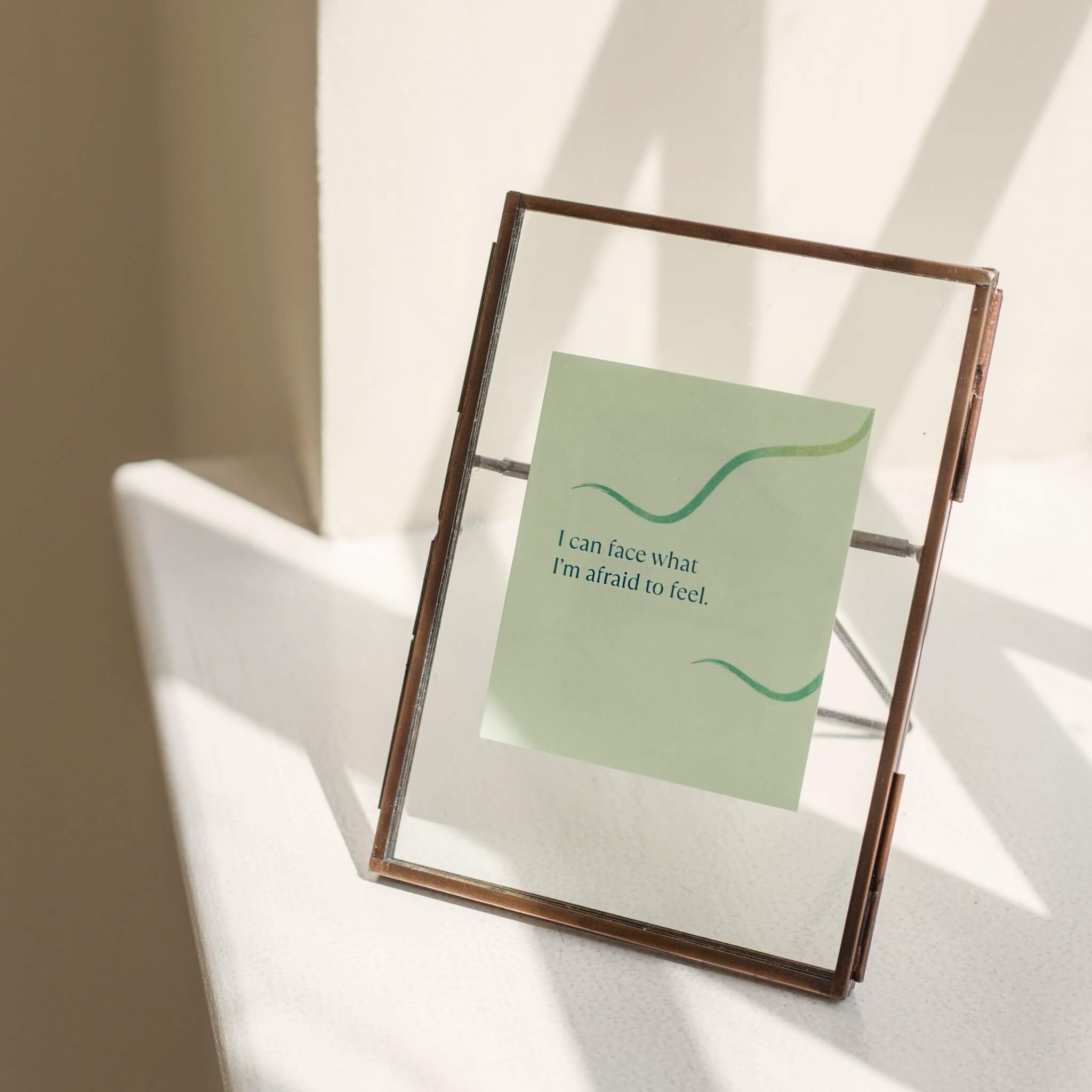
- I have the courage to face my fears, to step outside my comfort zone, and no matter what happens, to give myself kindness
- I can give myself the same kindness I would give to a friend
- I can be gentle with myself when I can't make sense of how I feel, and know that this is normal
- I can embrace change whilst reassuring myself that change is challenging
Read them again and notice what isn't there. No grades. No exams. No mention of a career, a first, a placement or a plan. That absence is deliberate, and it's the entire design brief.
If you'd rather have them printed

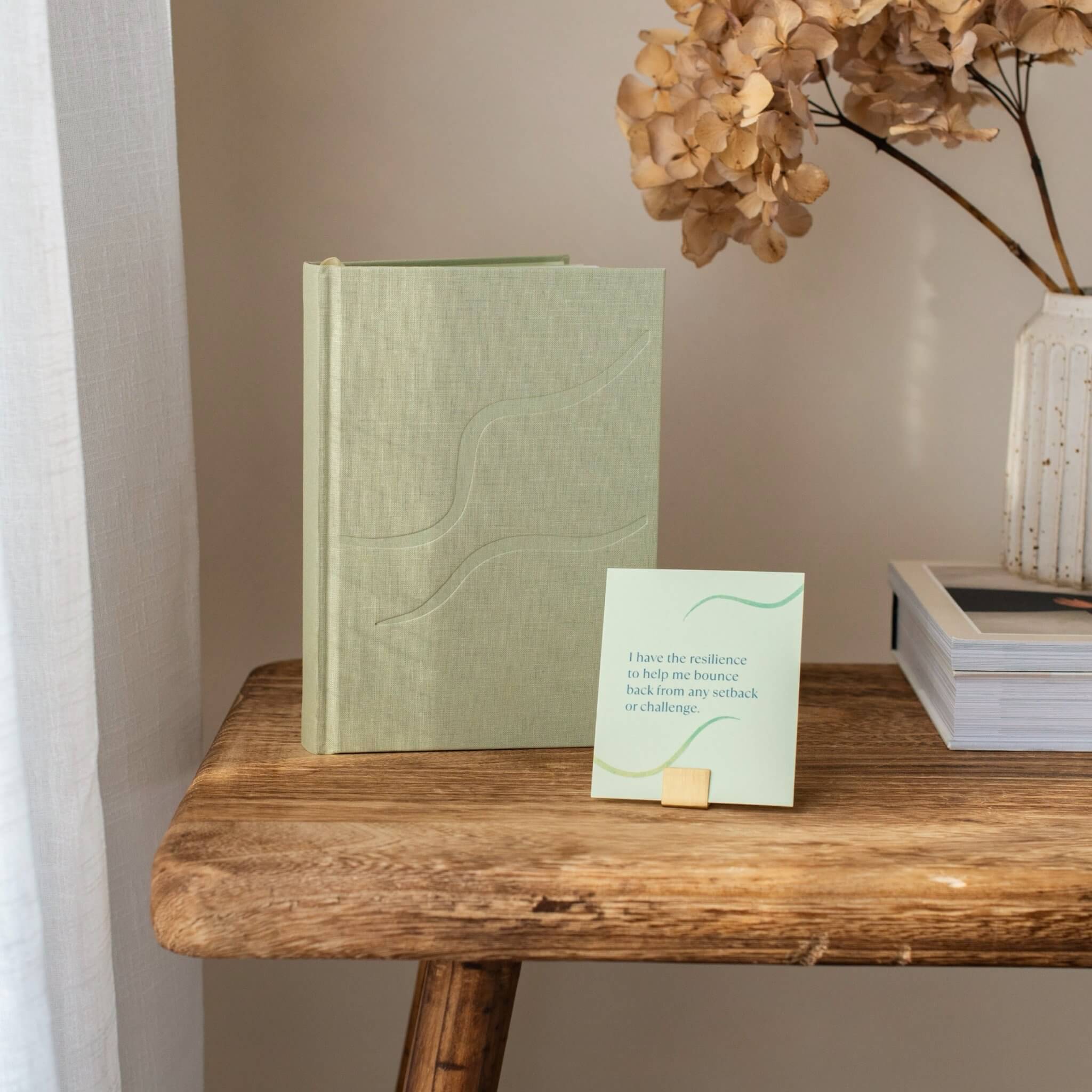
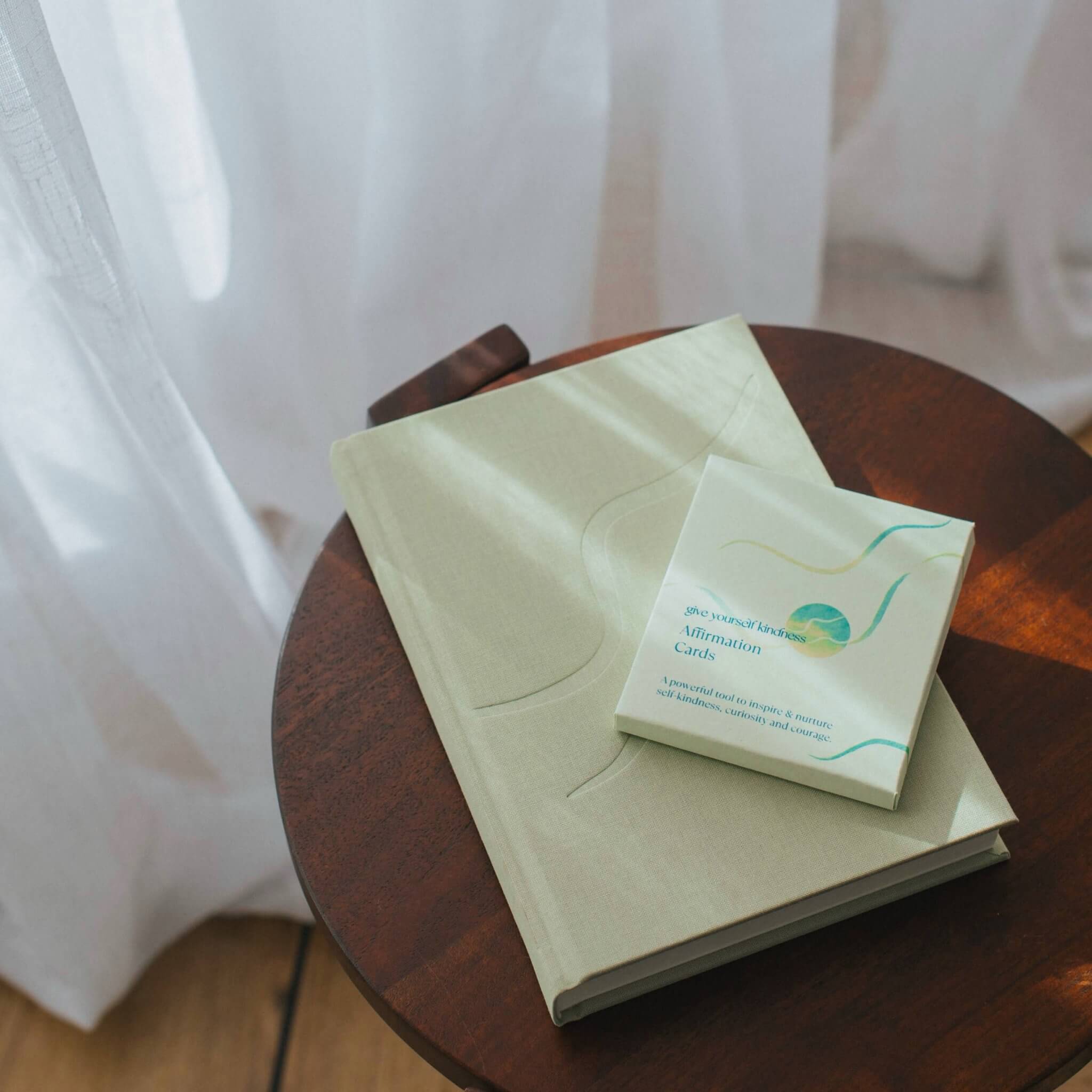
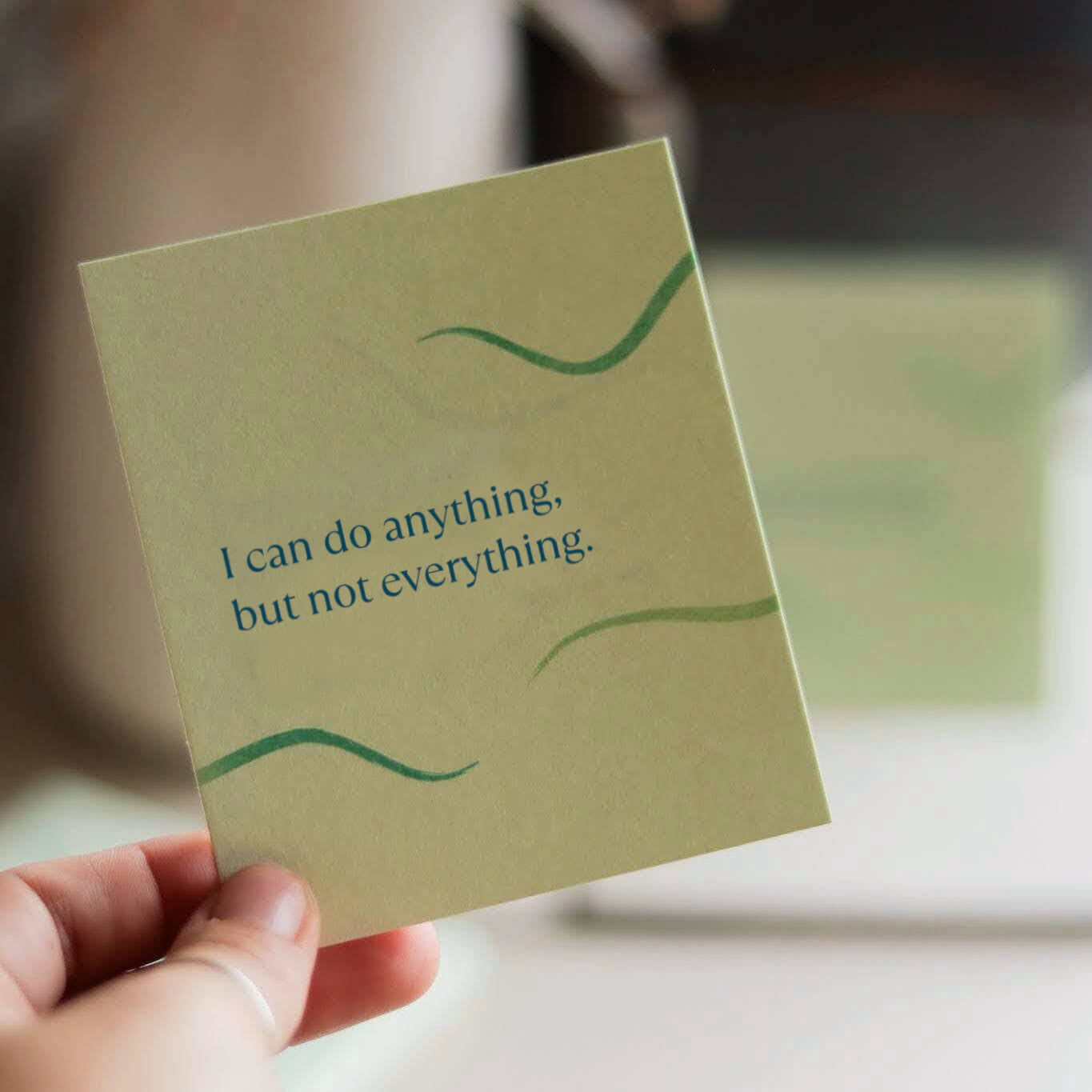
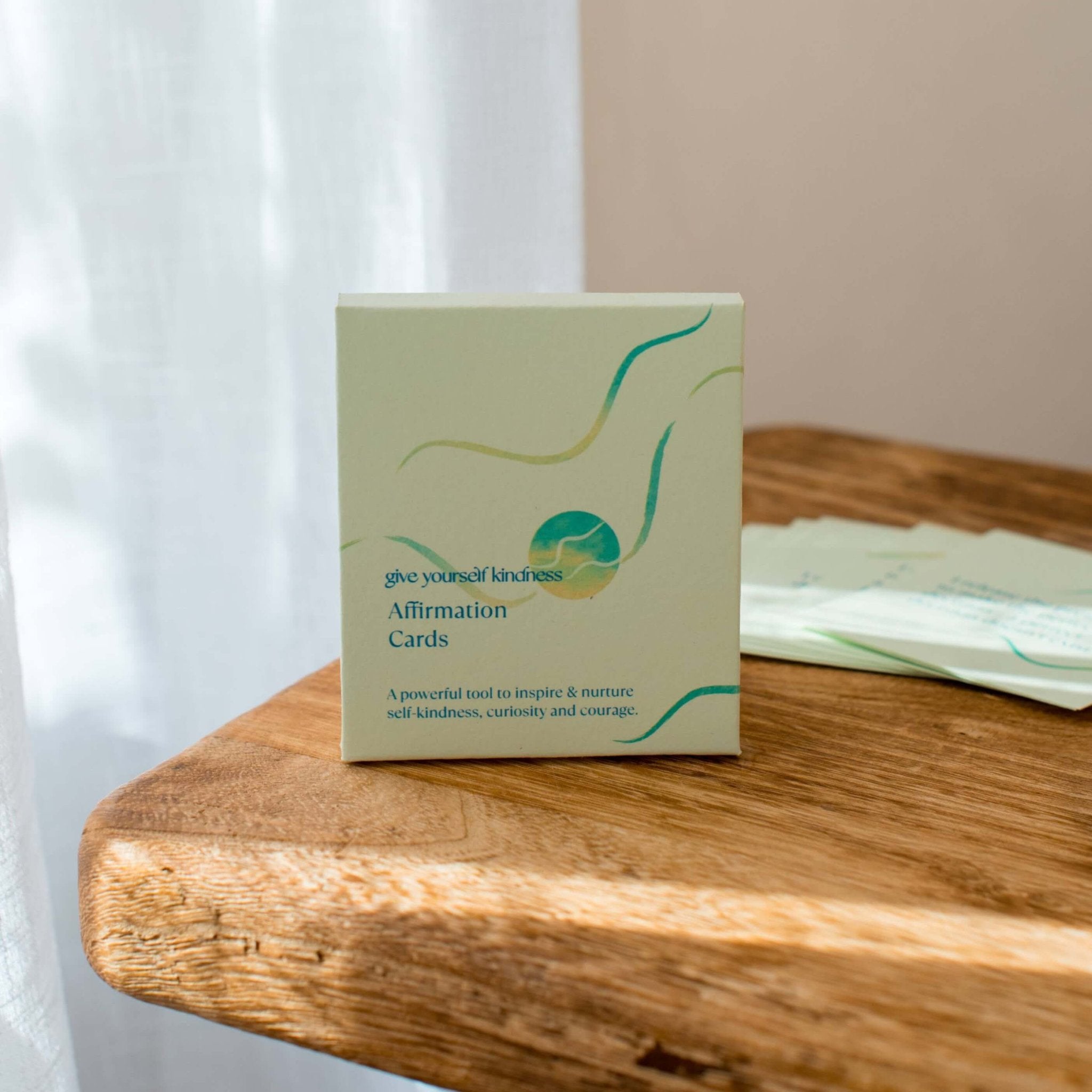
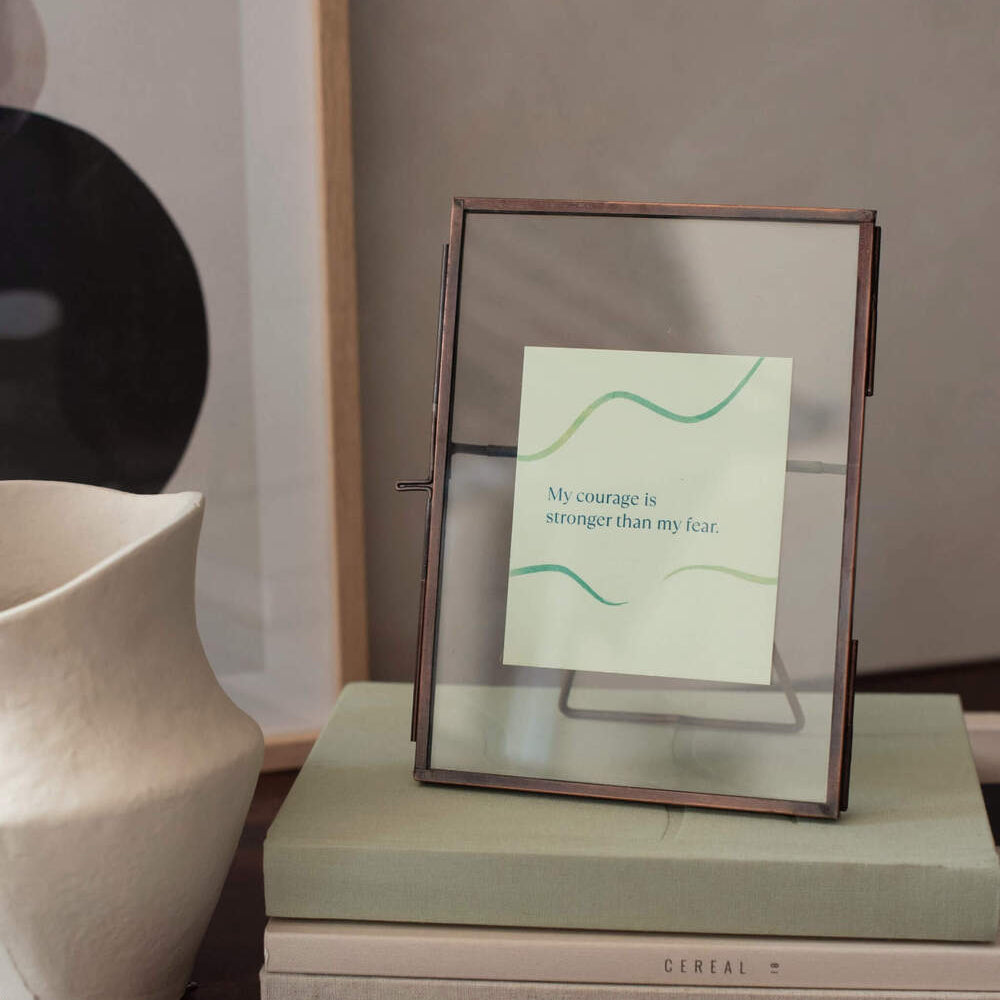
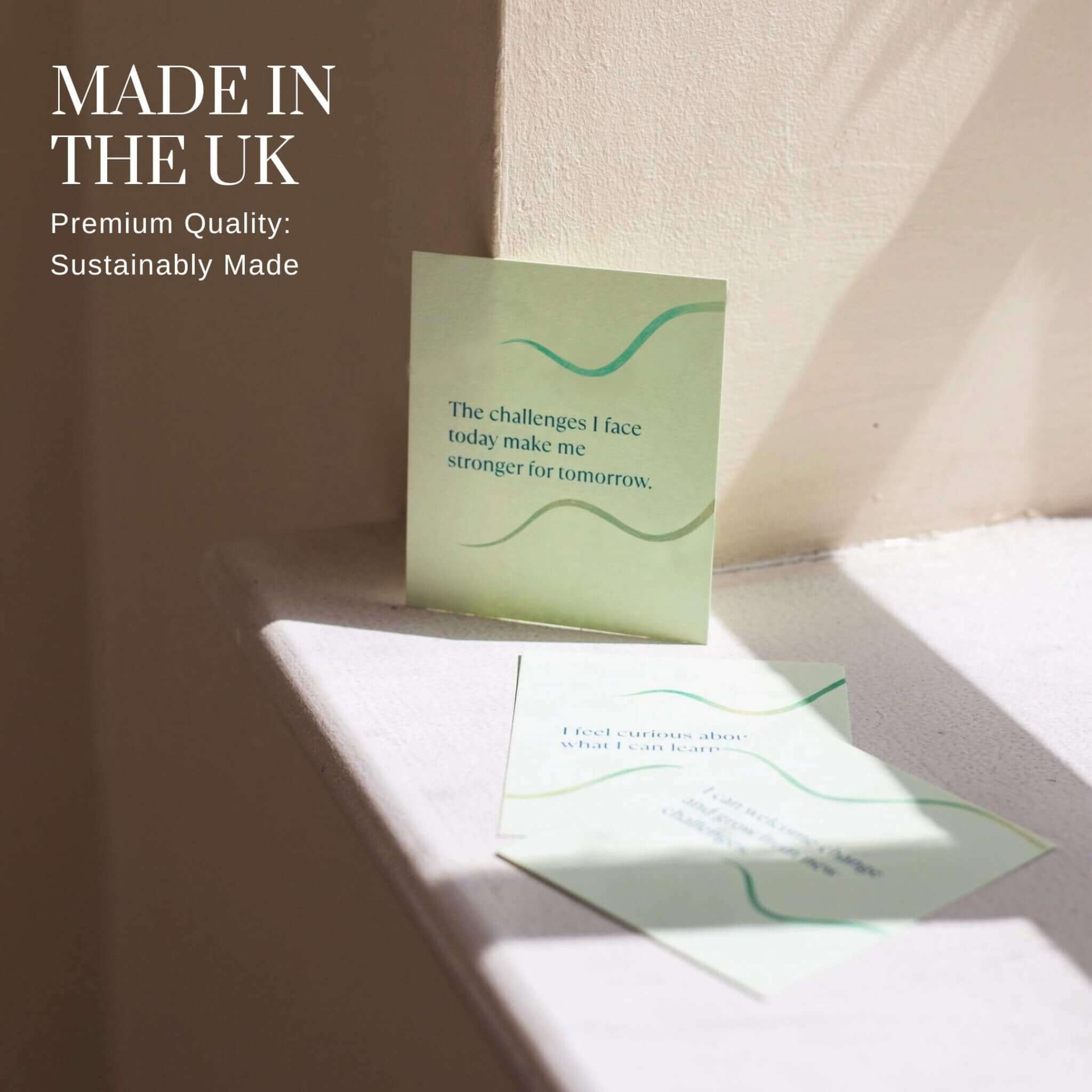
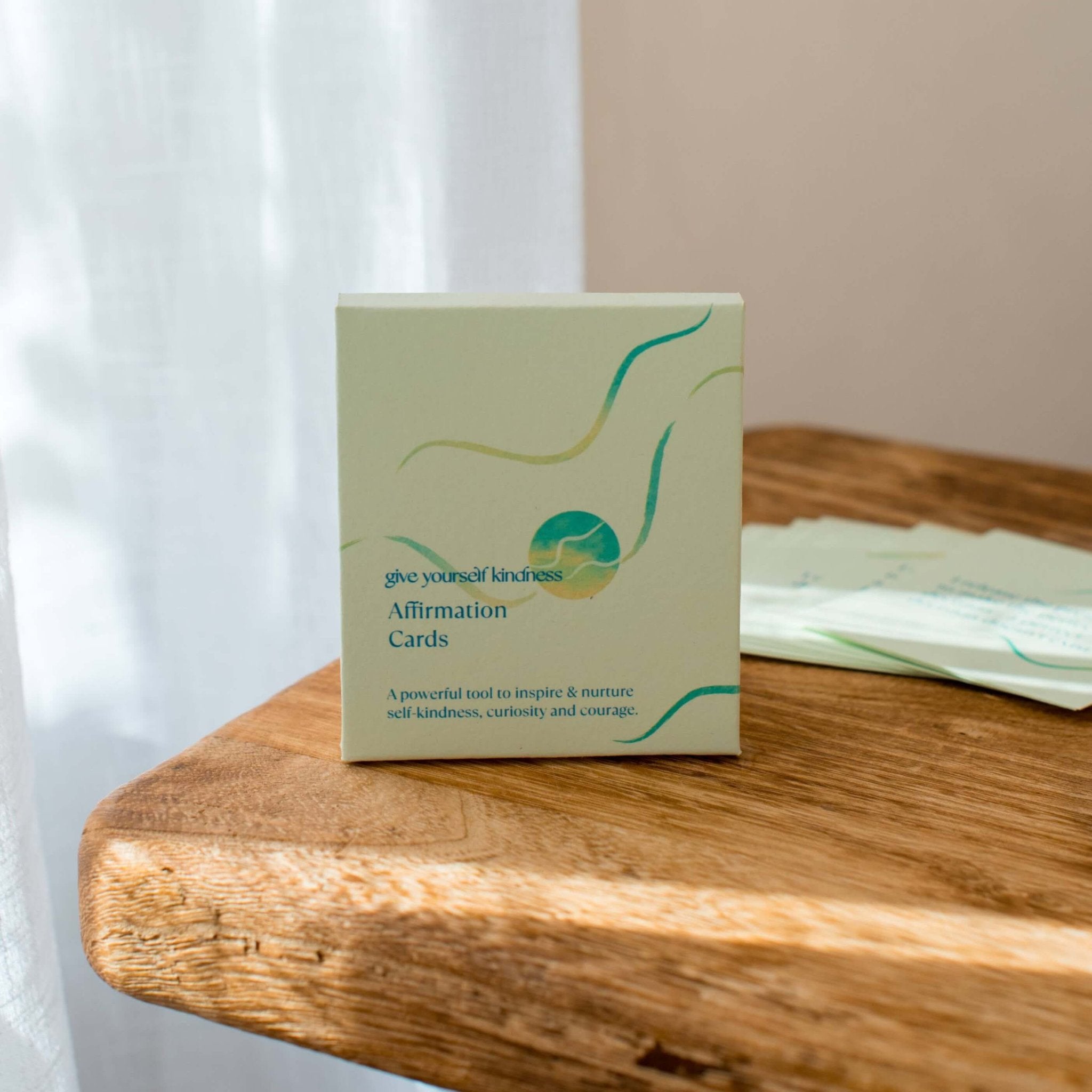
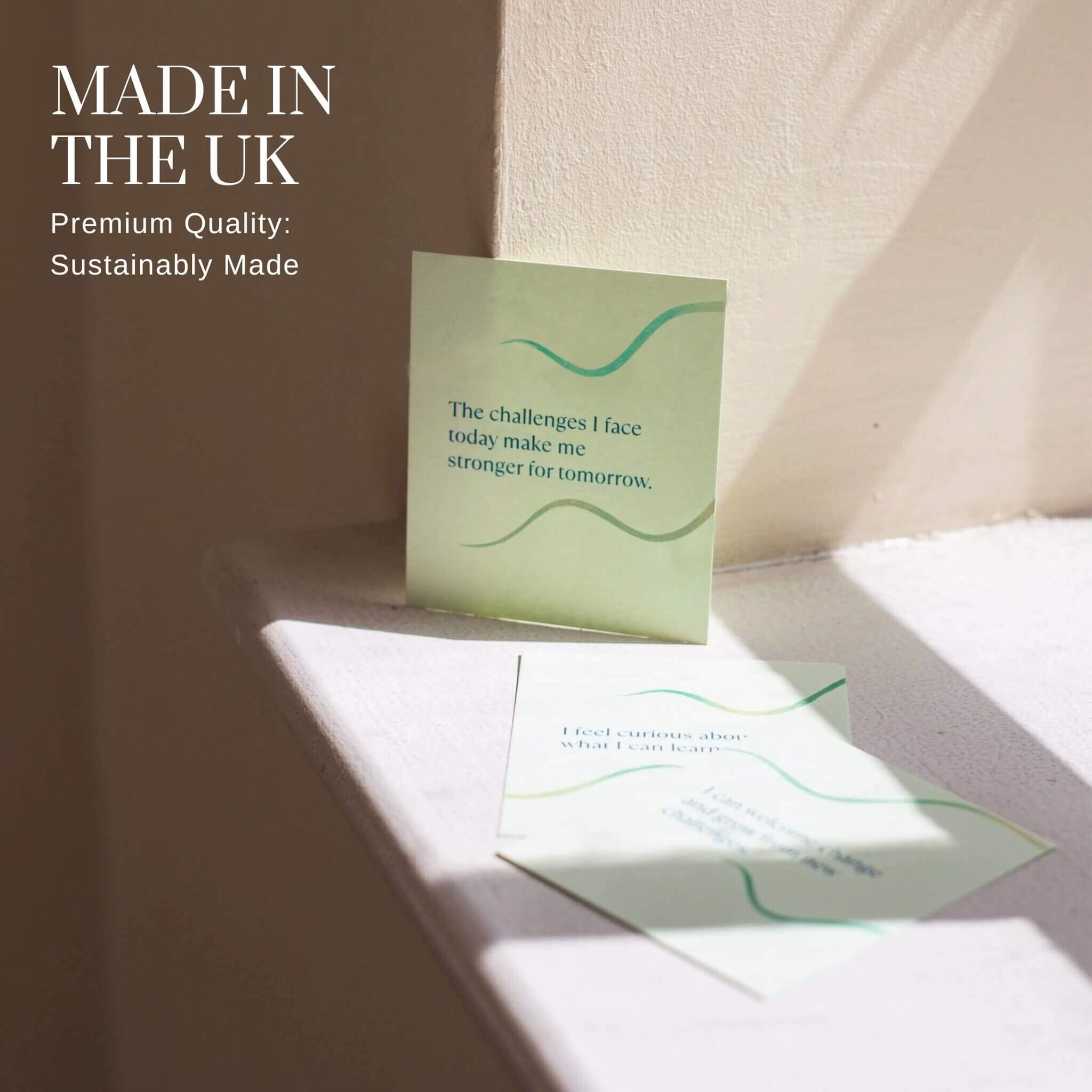
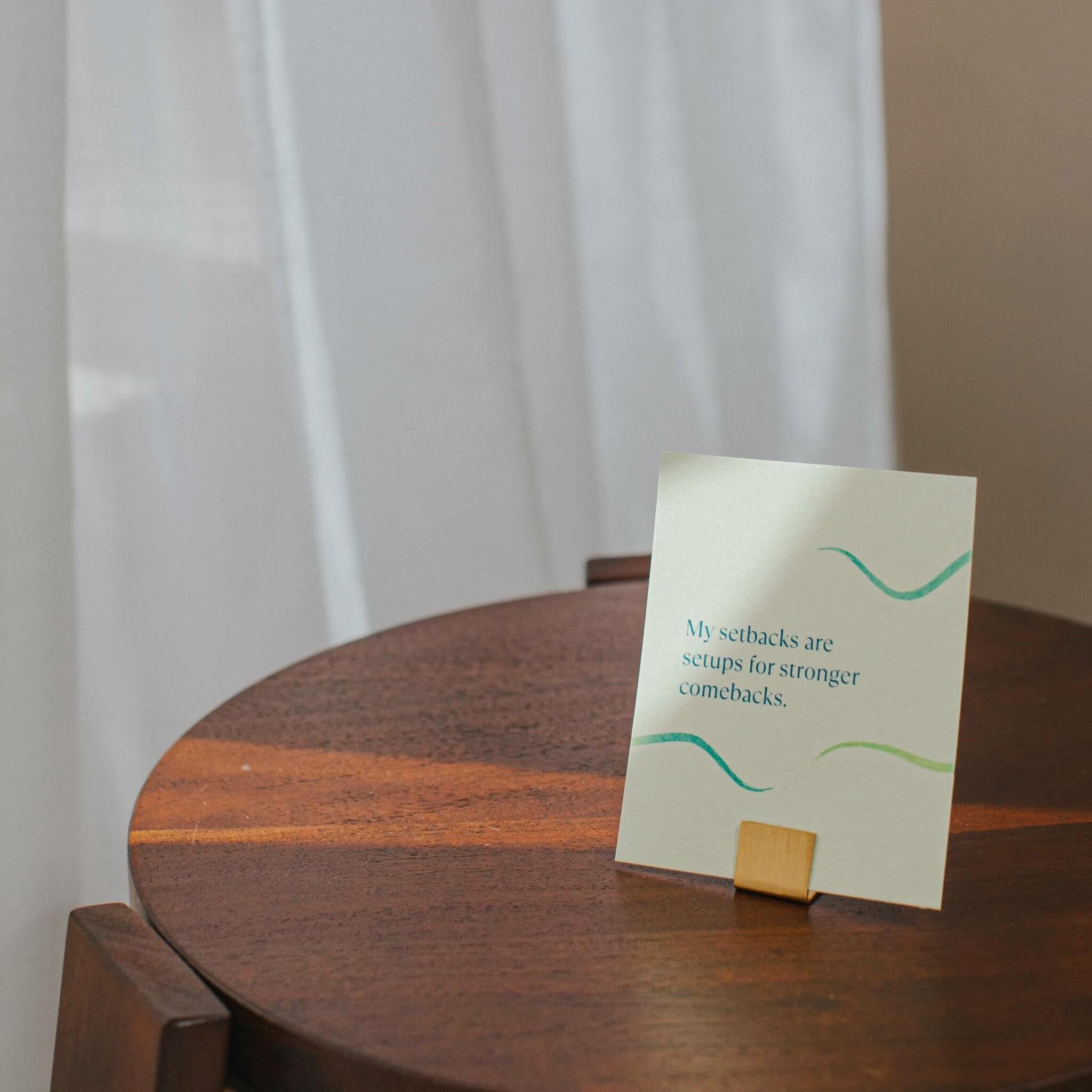
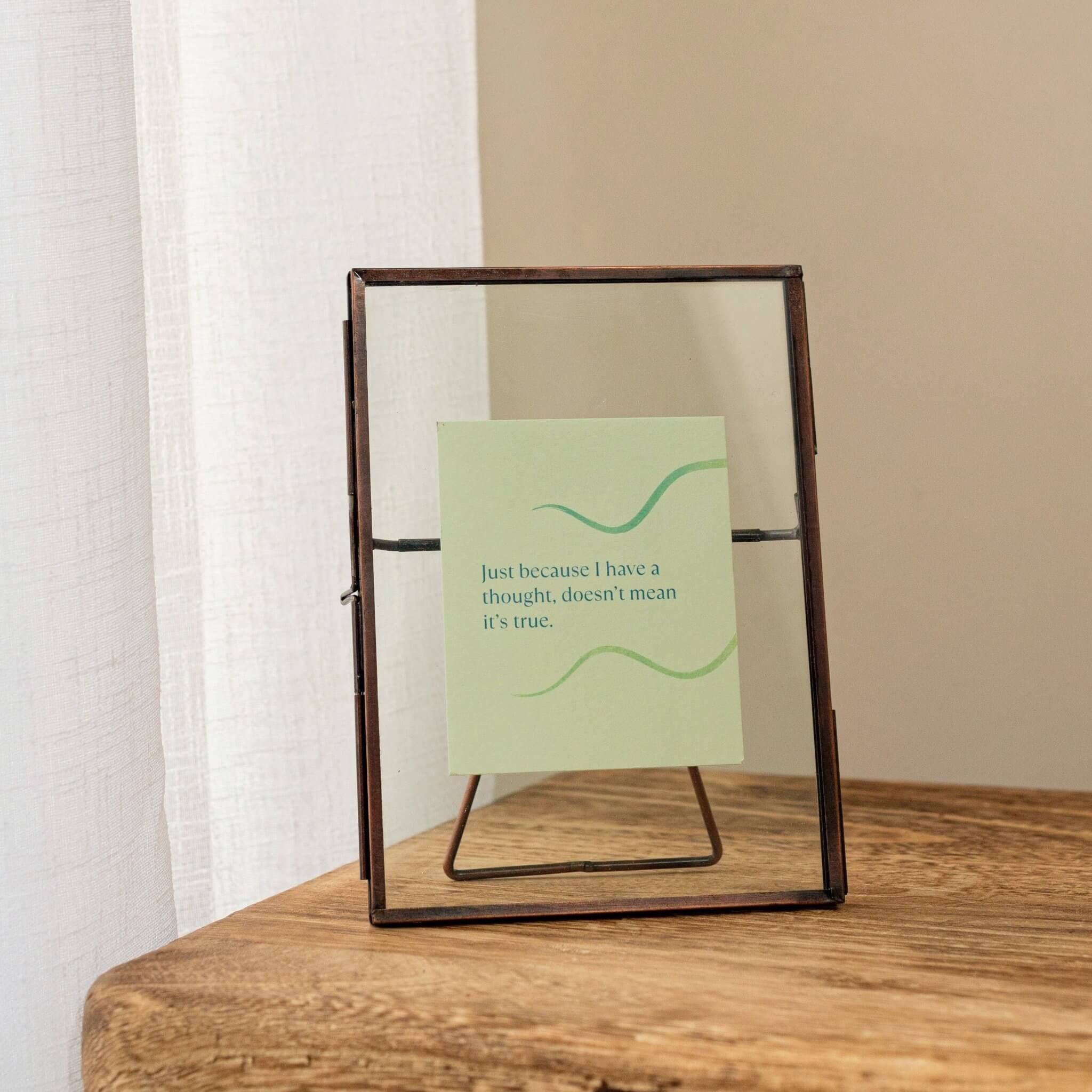
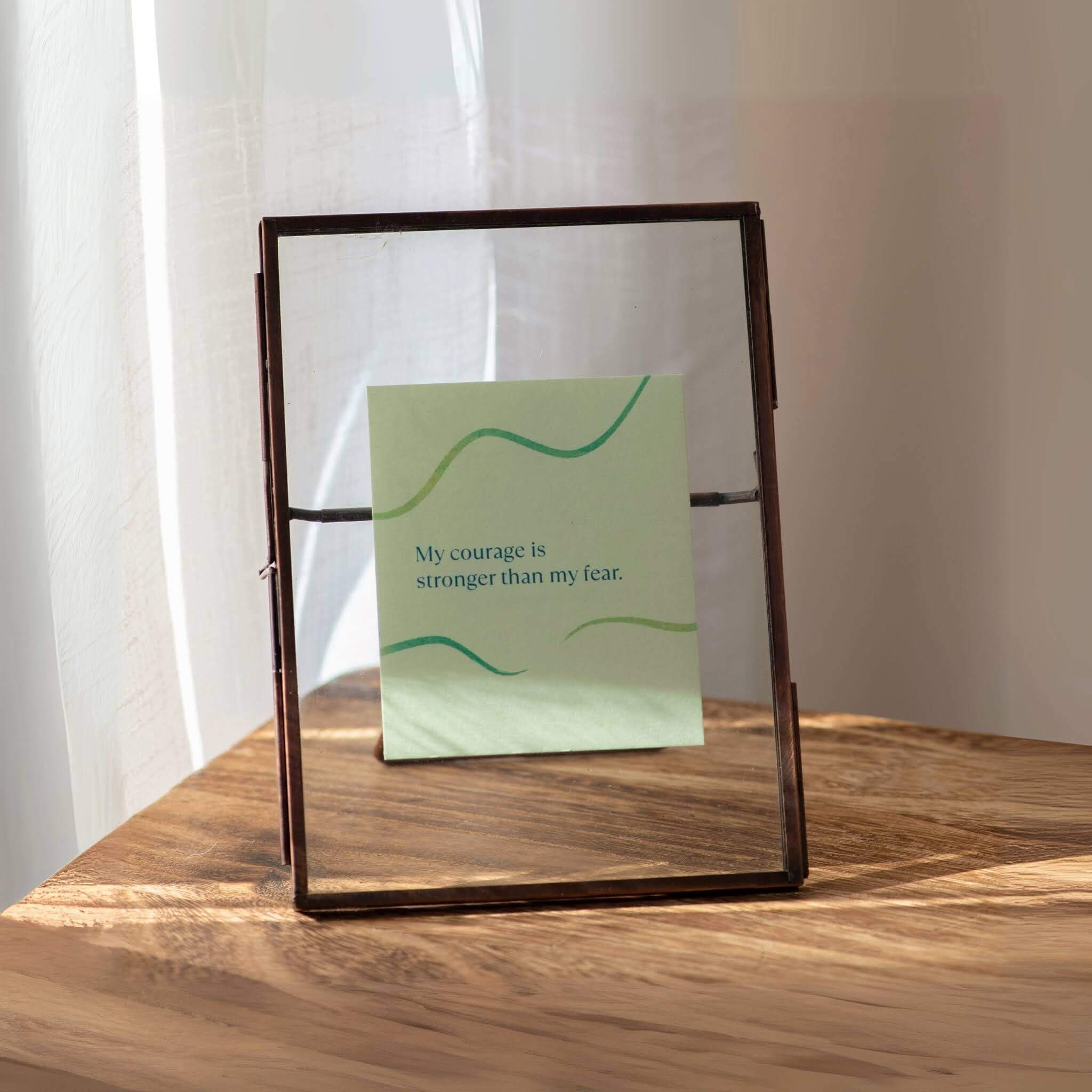
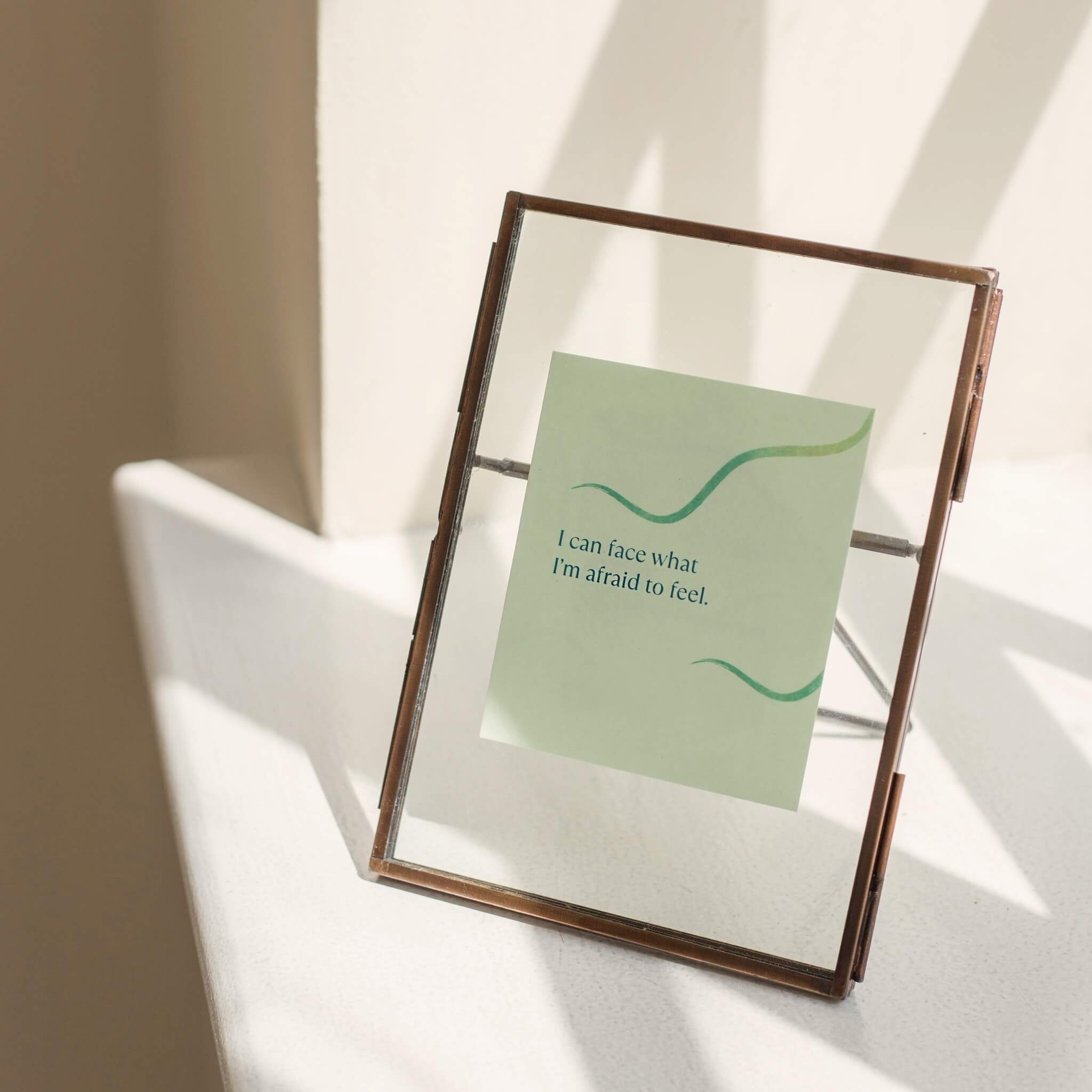
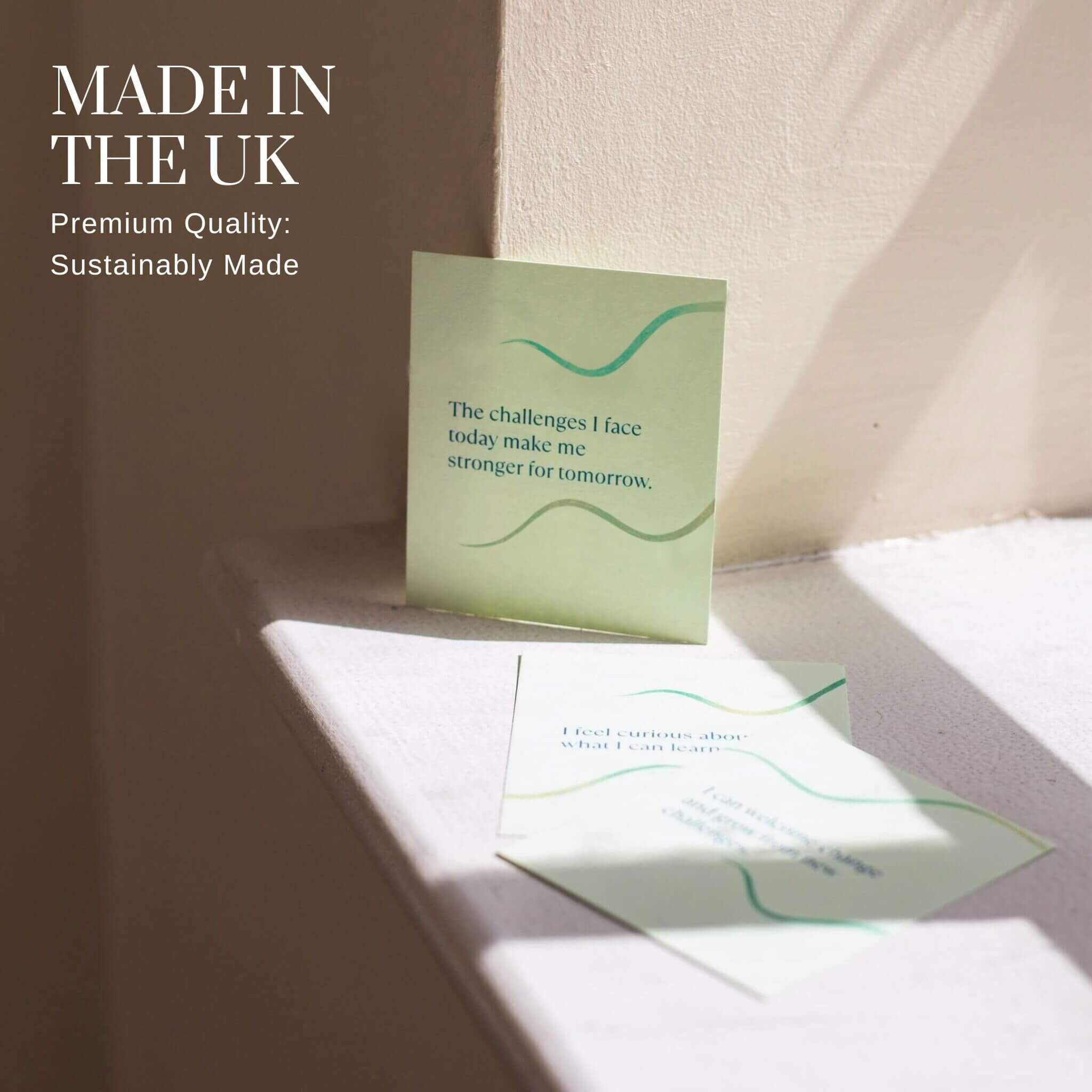
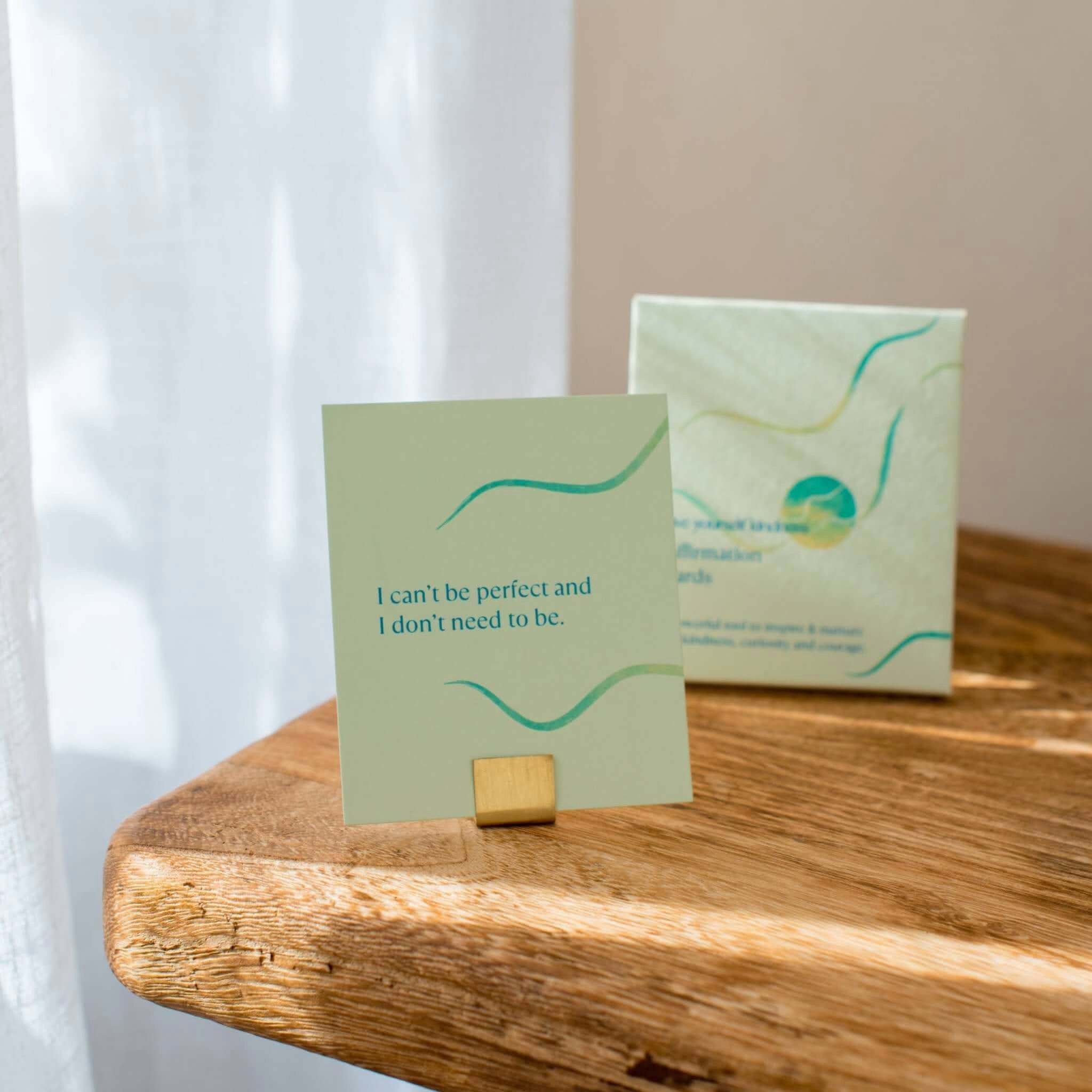
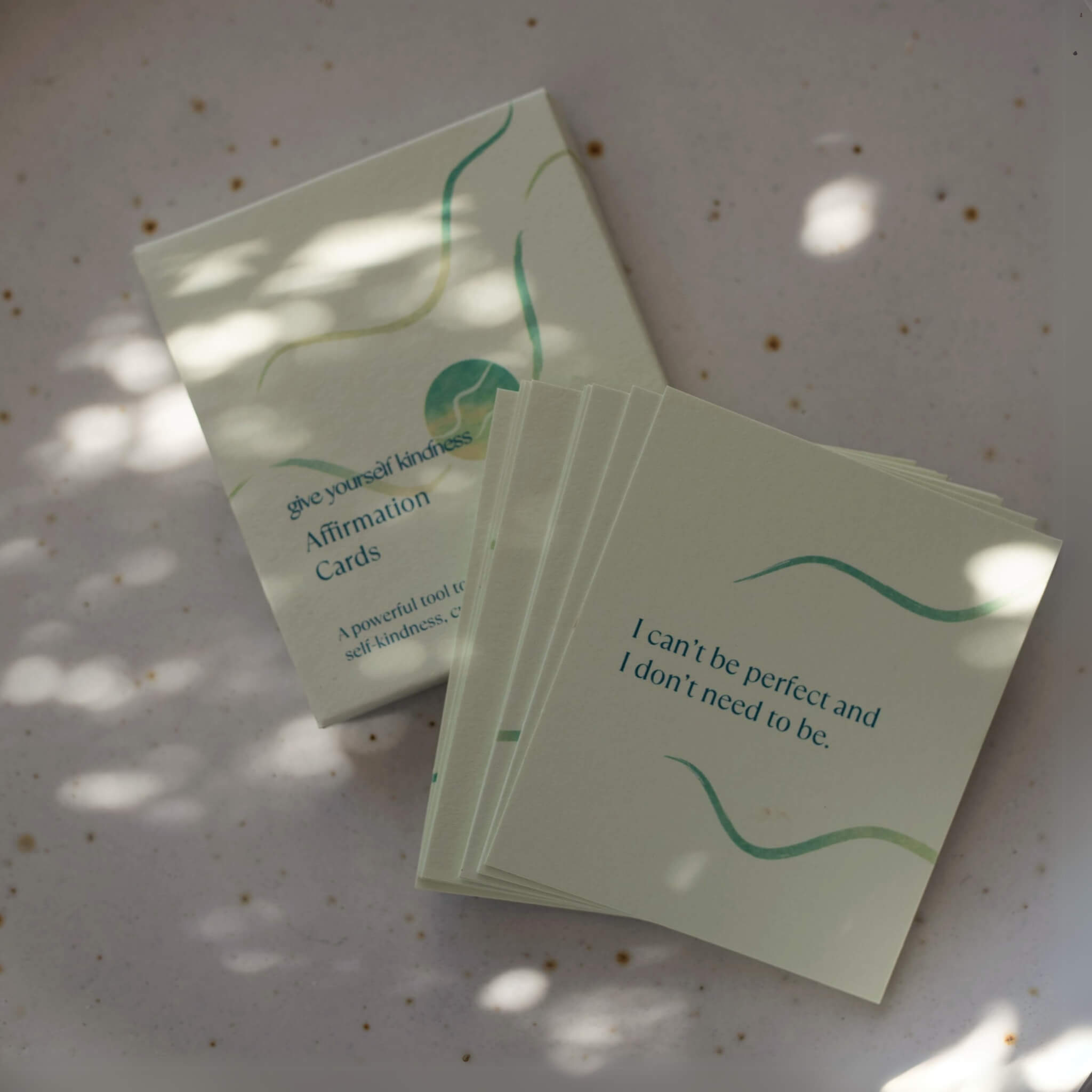
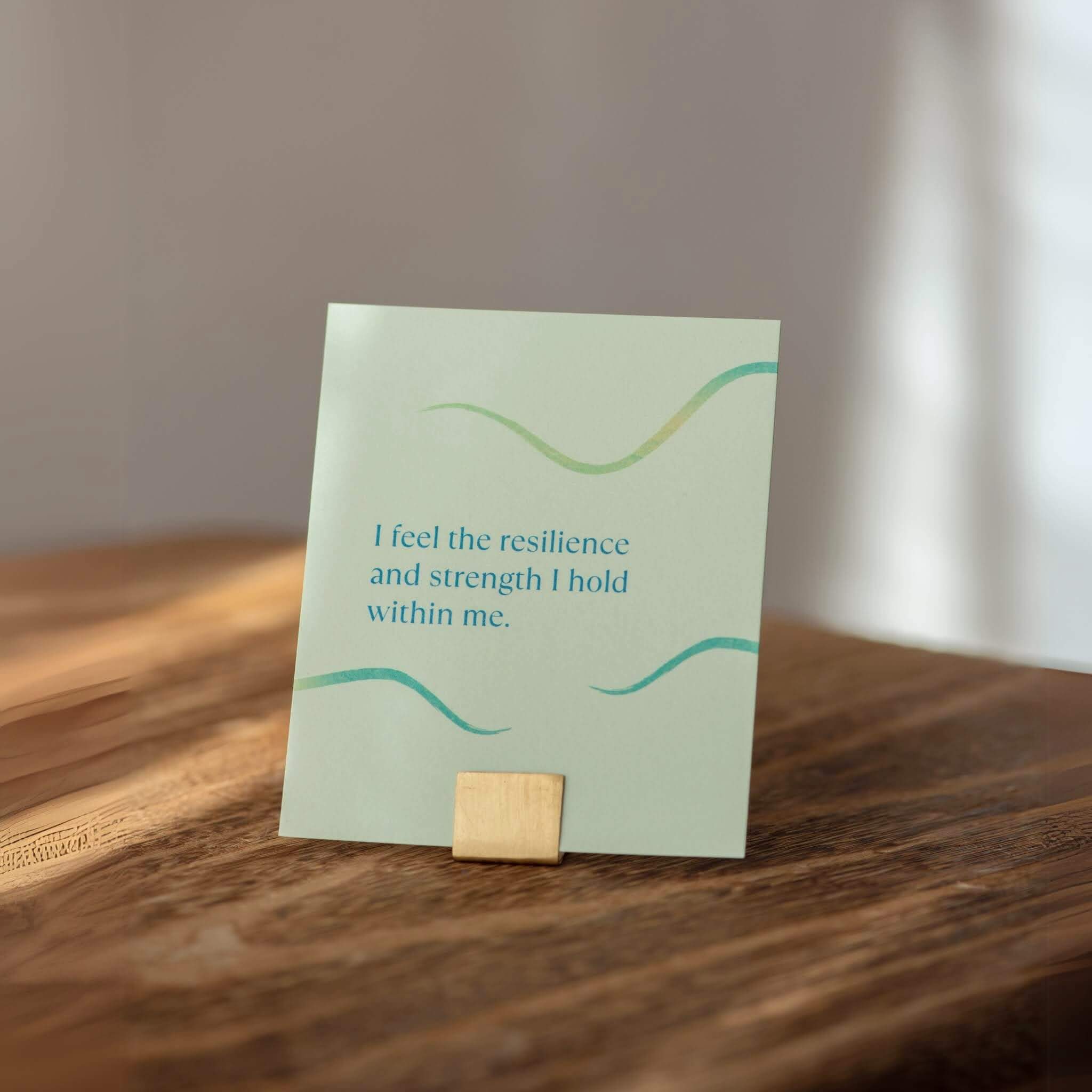
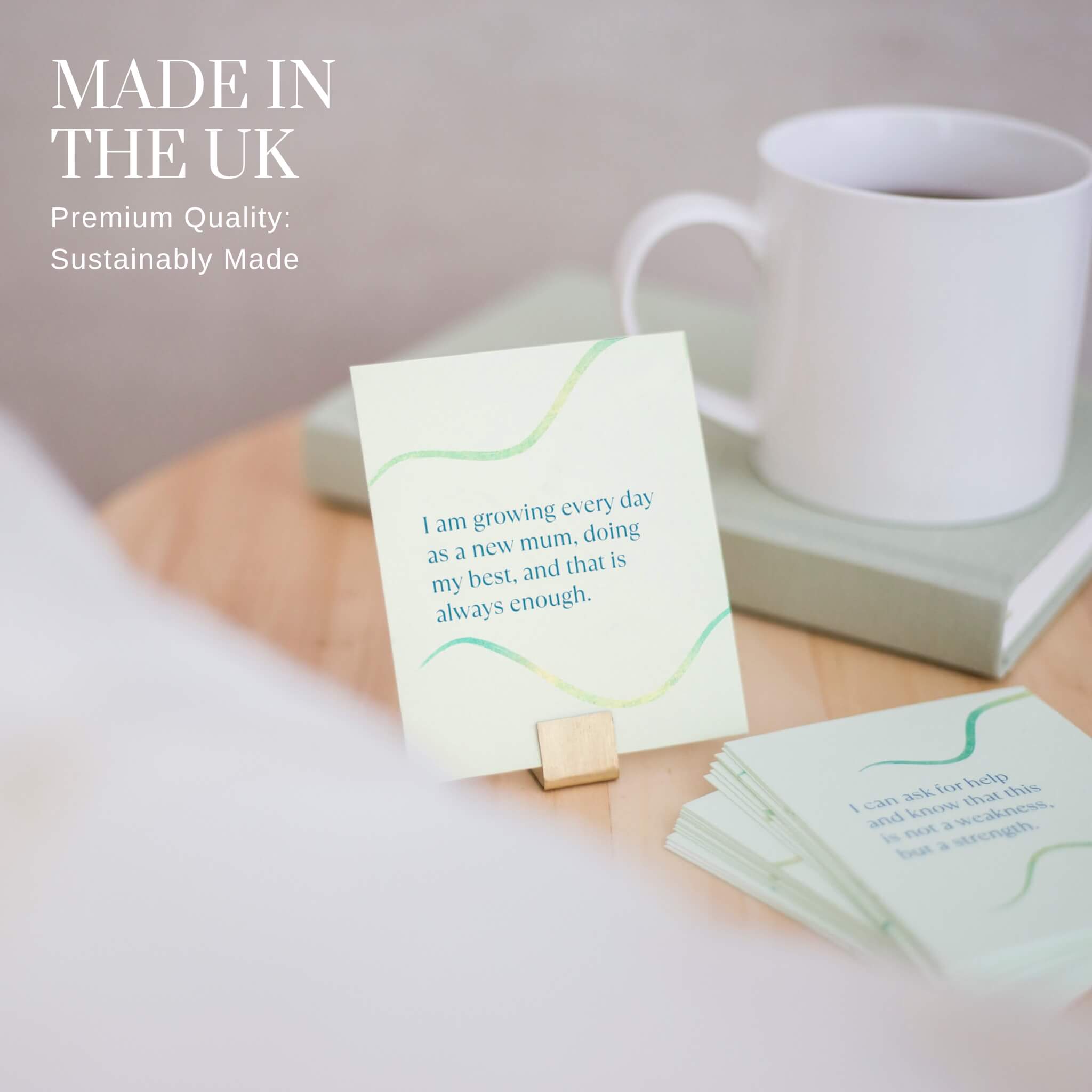
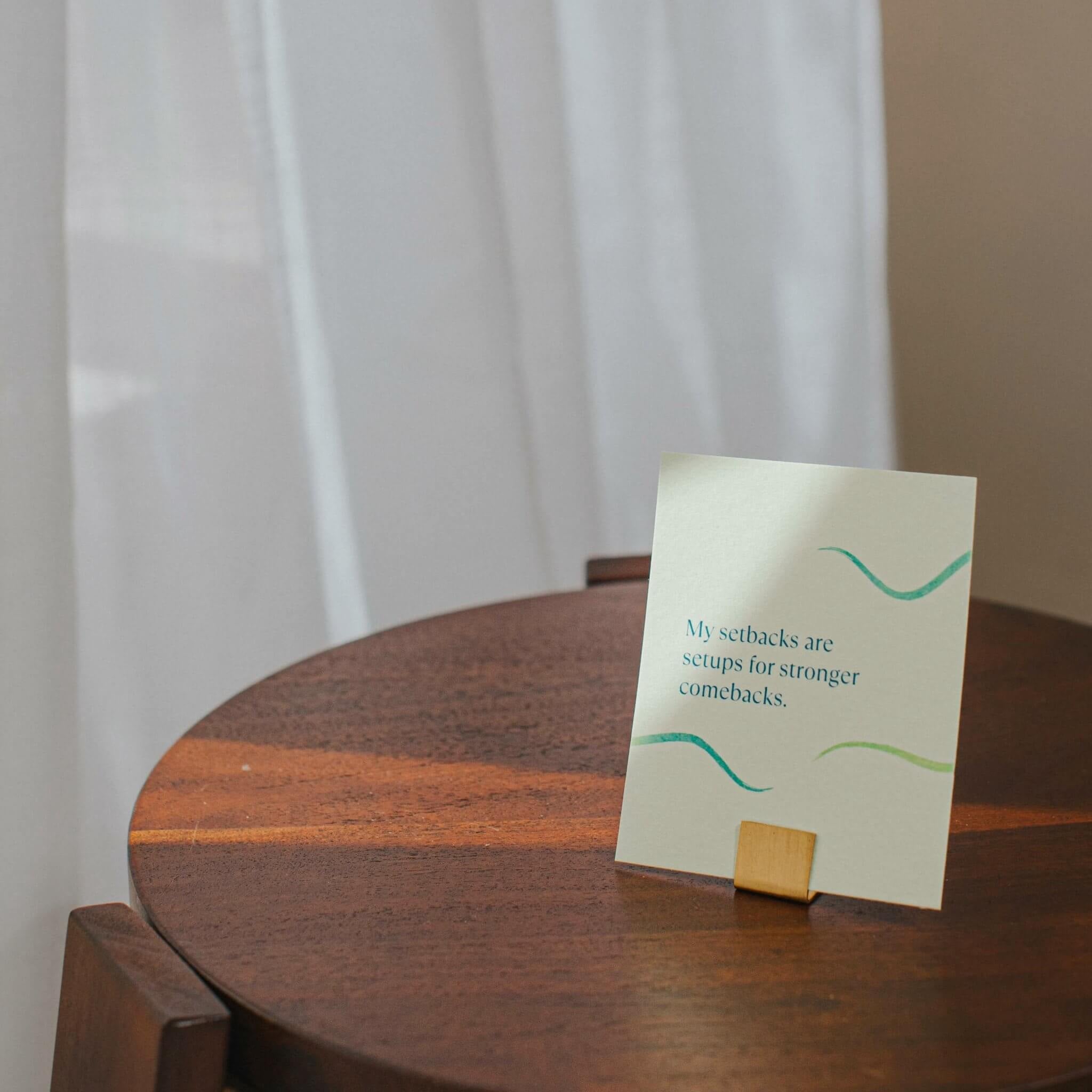
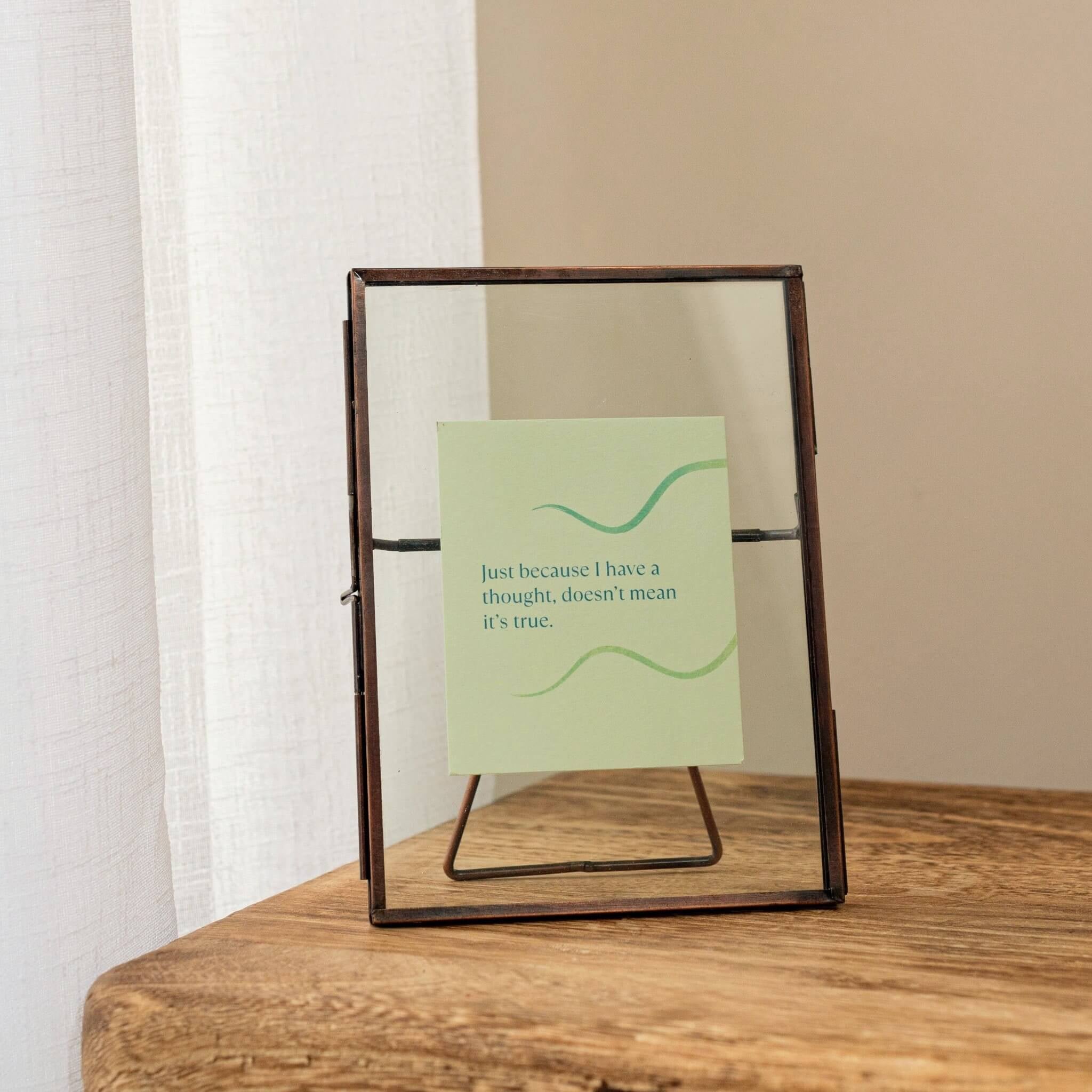
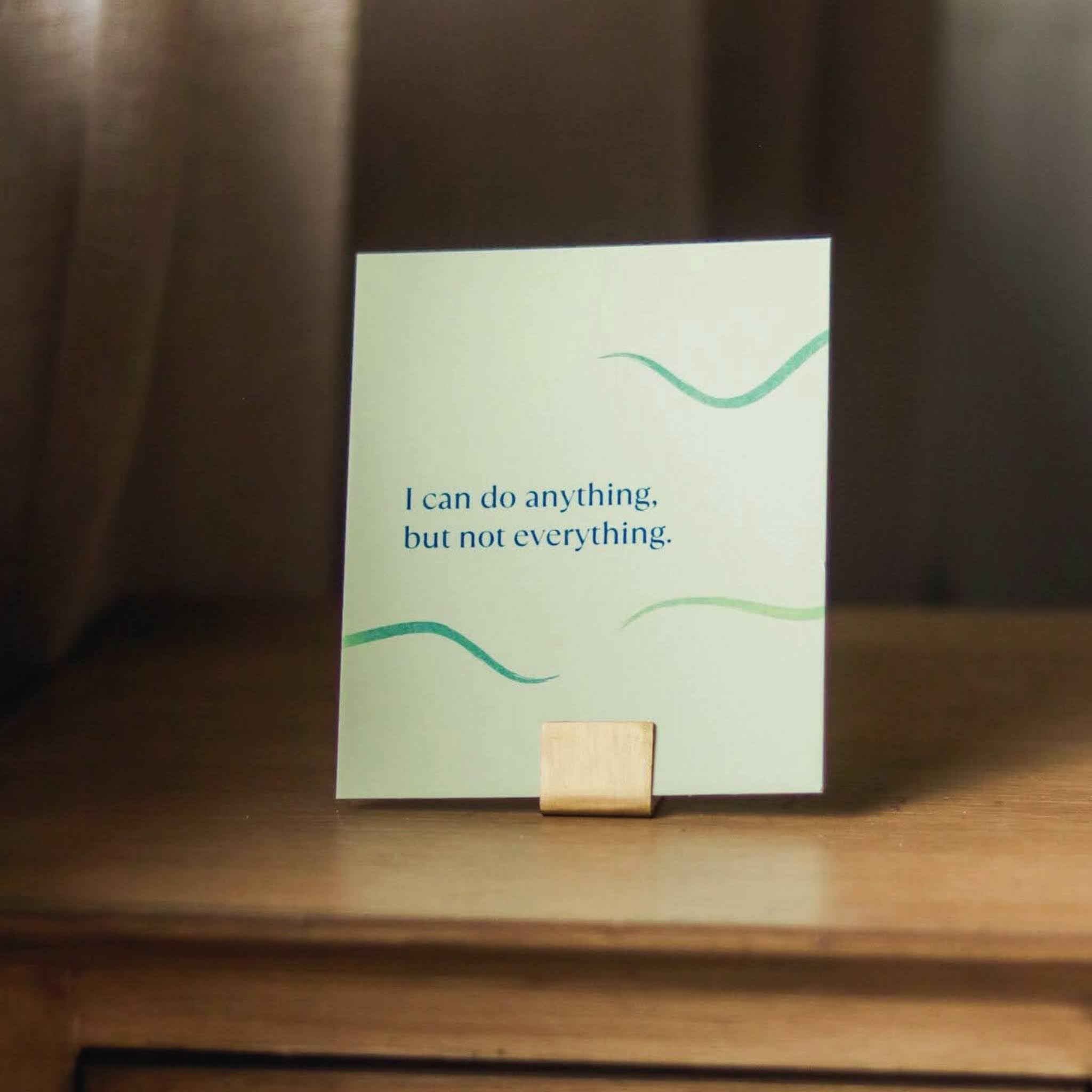
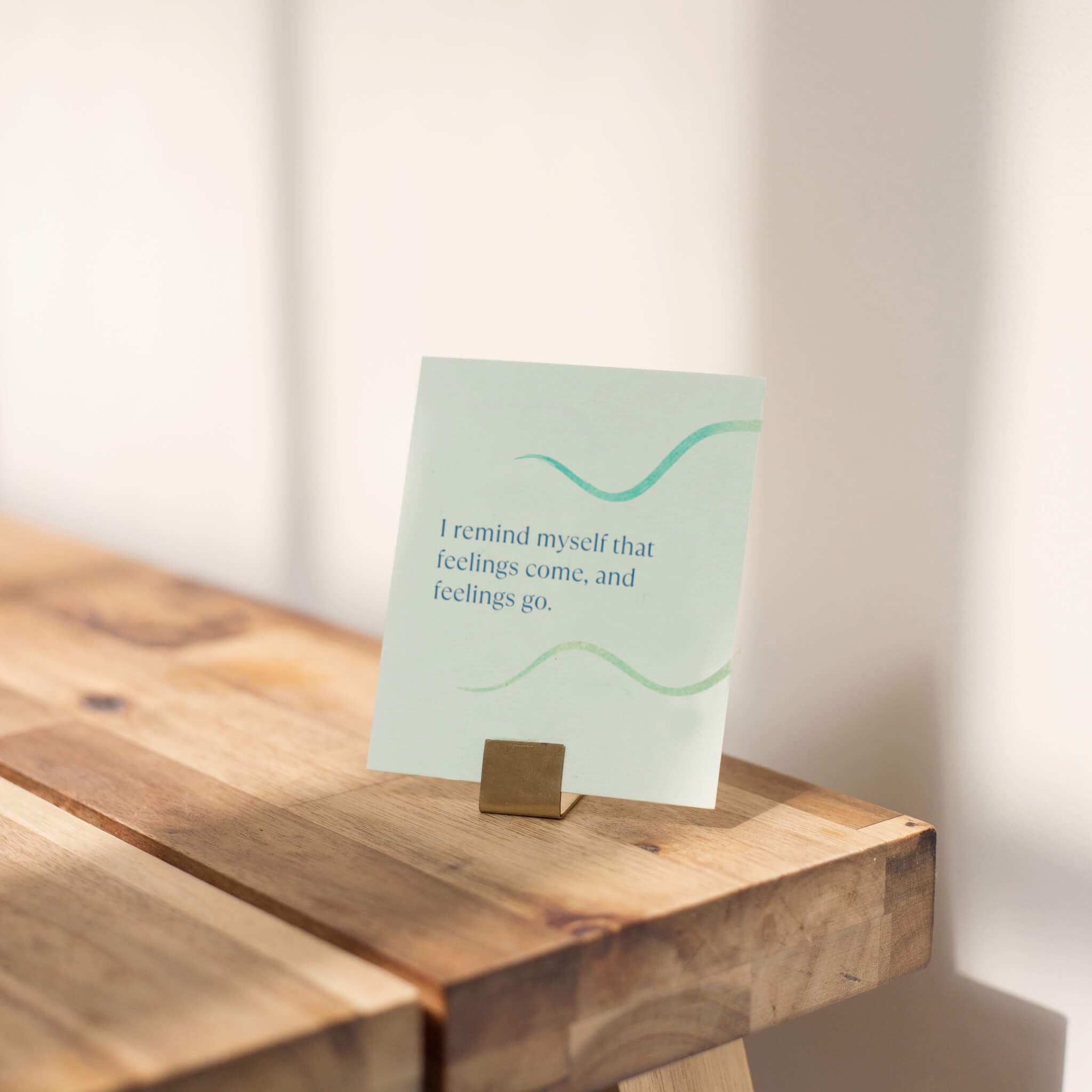
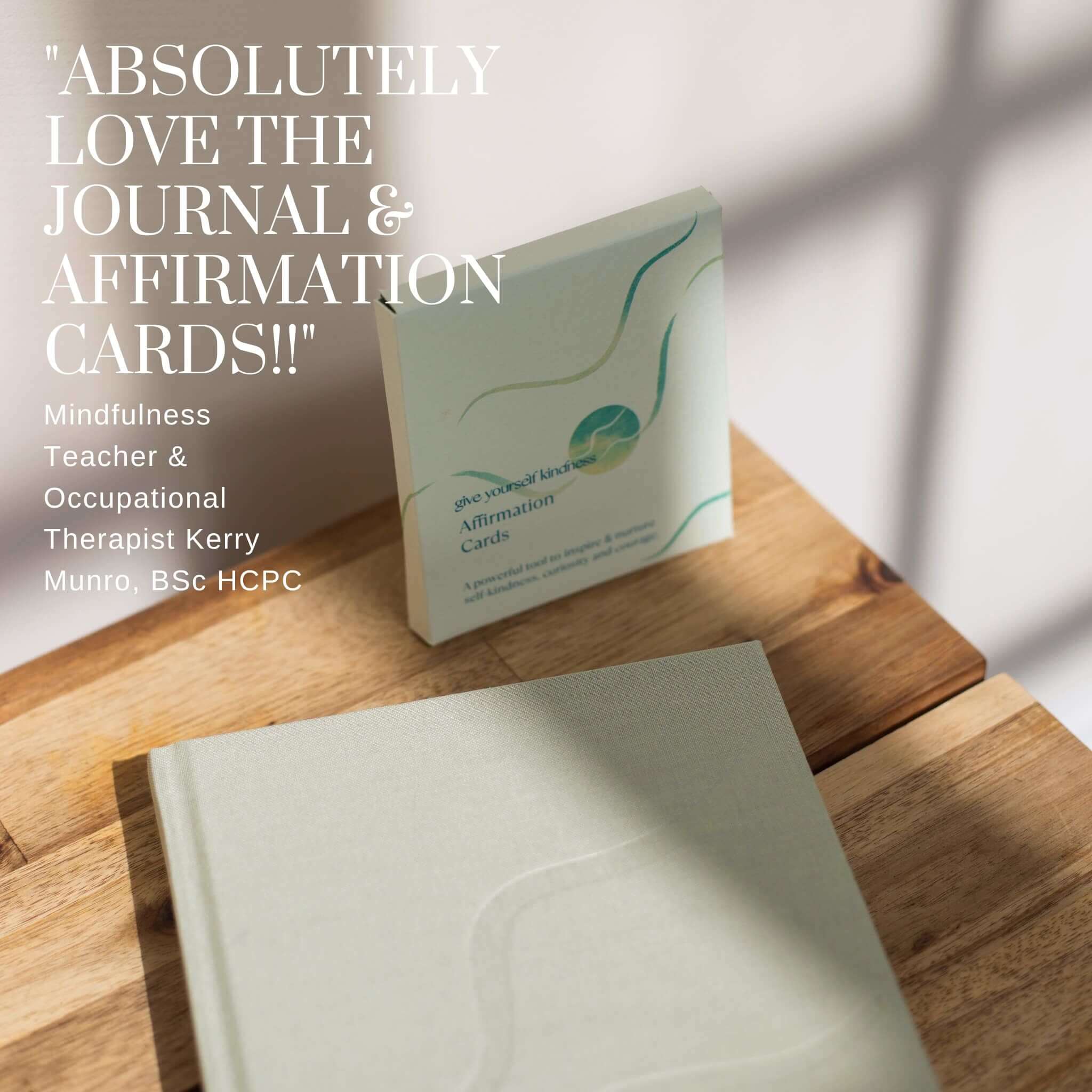
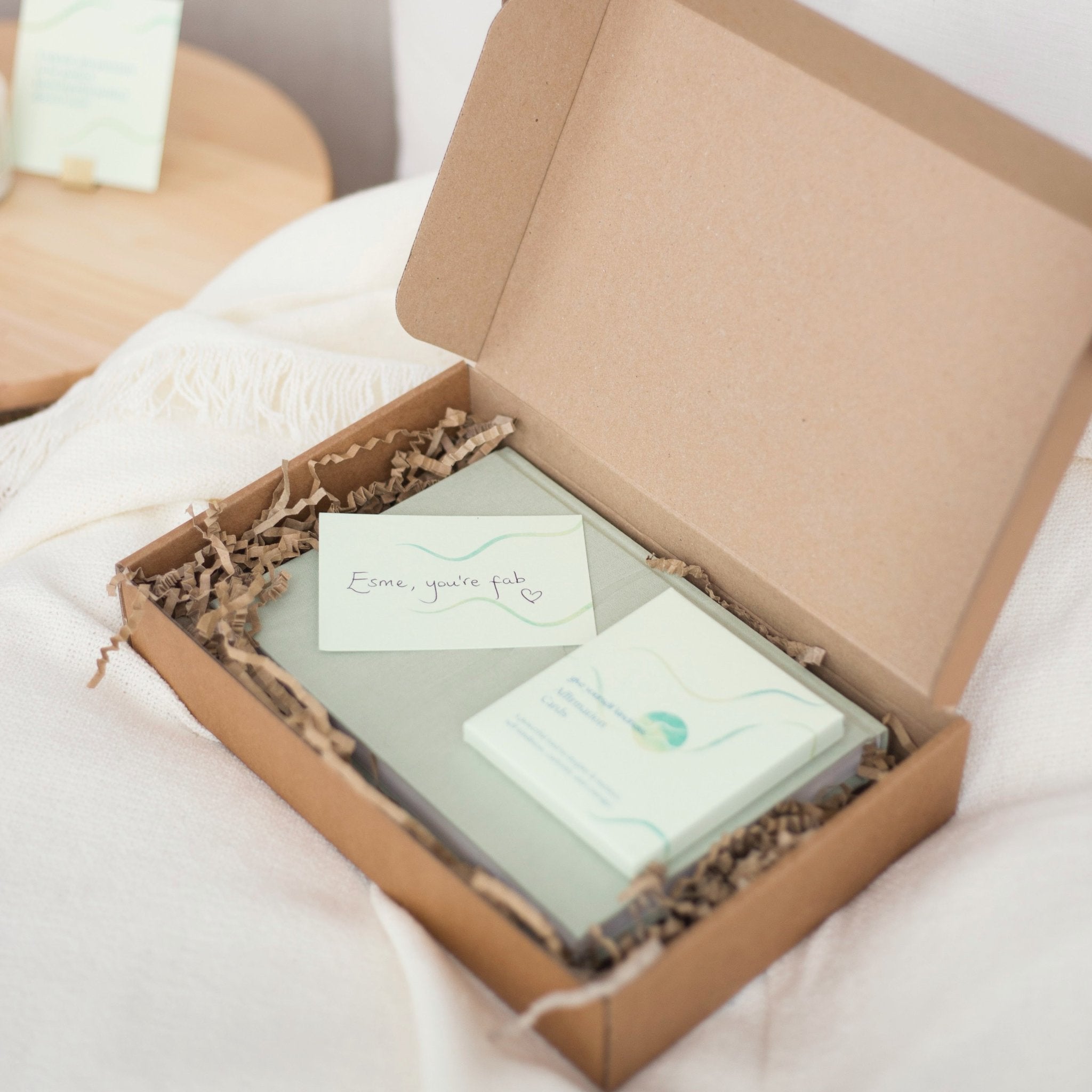
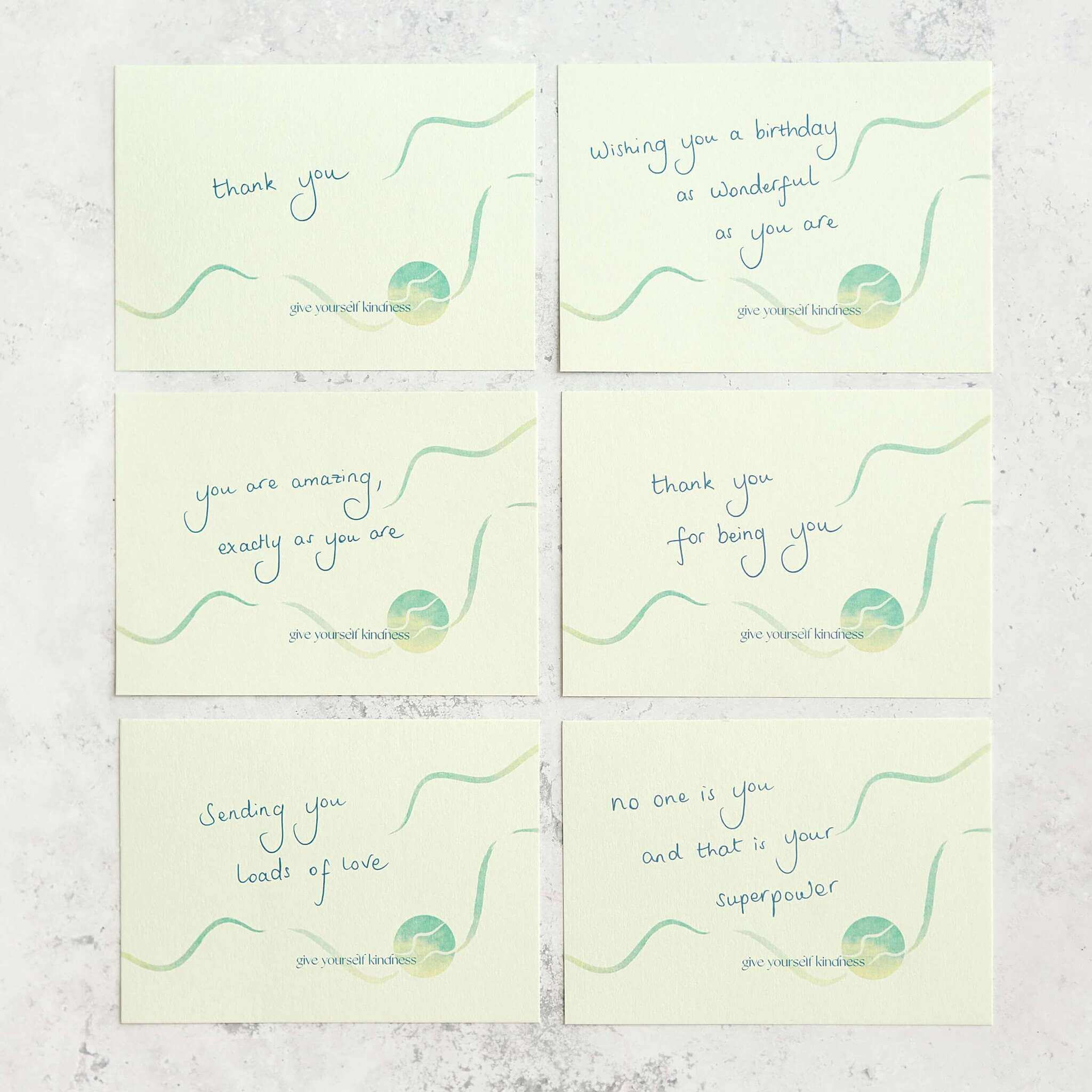
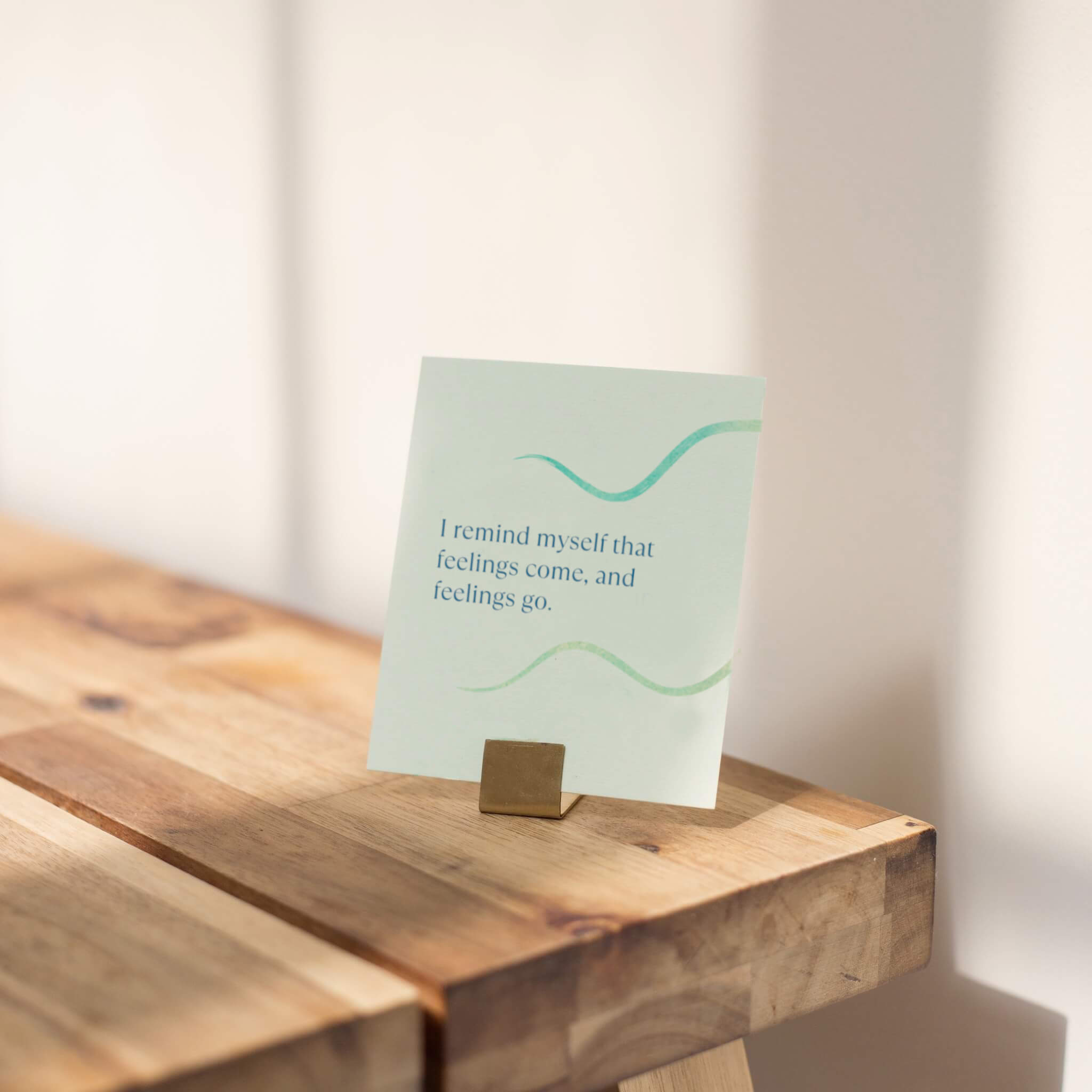
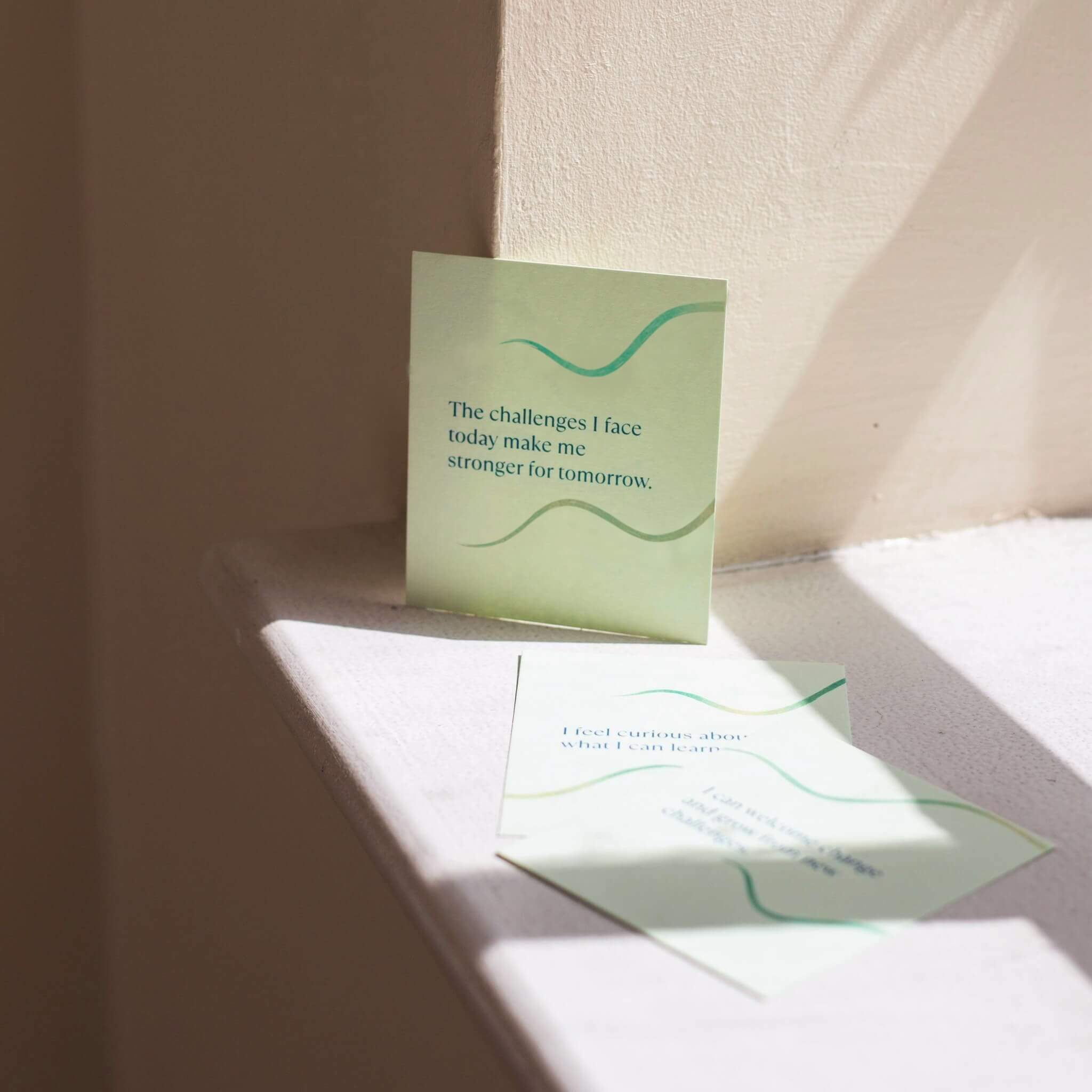
Student Affirmation Cards. The same nineteen plus one more, as 20 cards you can stand on a desk in halls or keep in a wallet. 85mm x 100mm, printed in the UK on luxury 270gsm sustainably sourced pistachio card from FSC-certified forests, in plastic-free packaging.
Added to your basket. View basket →

Margaret Davis, MS, LPC
Licensed therapist. Reviewing the Give Yourself Kindness affirmation cards
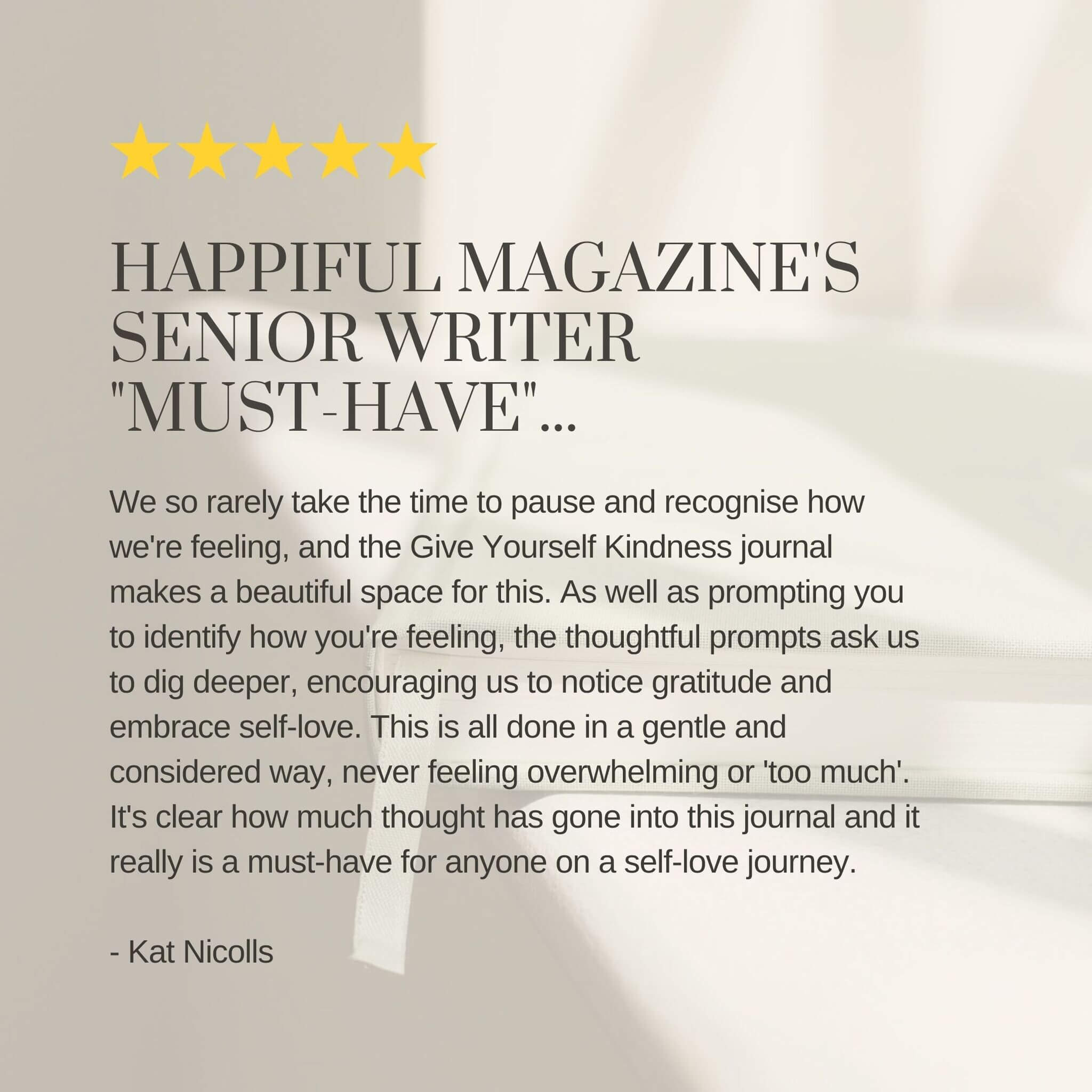
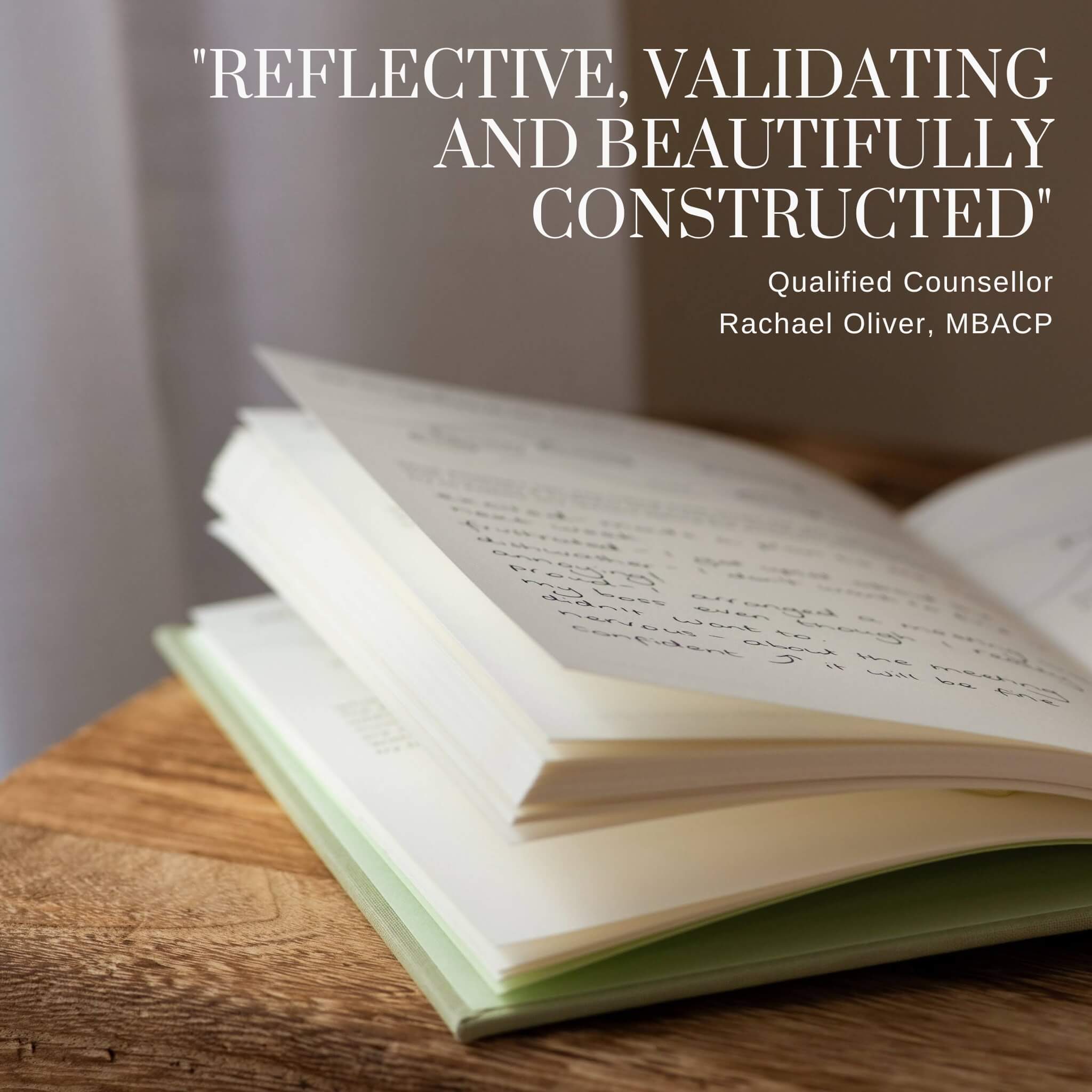
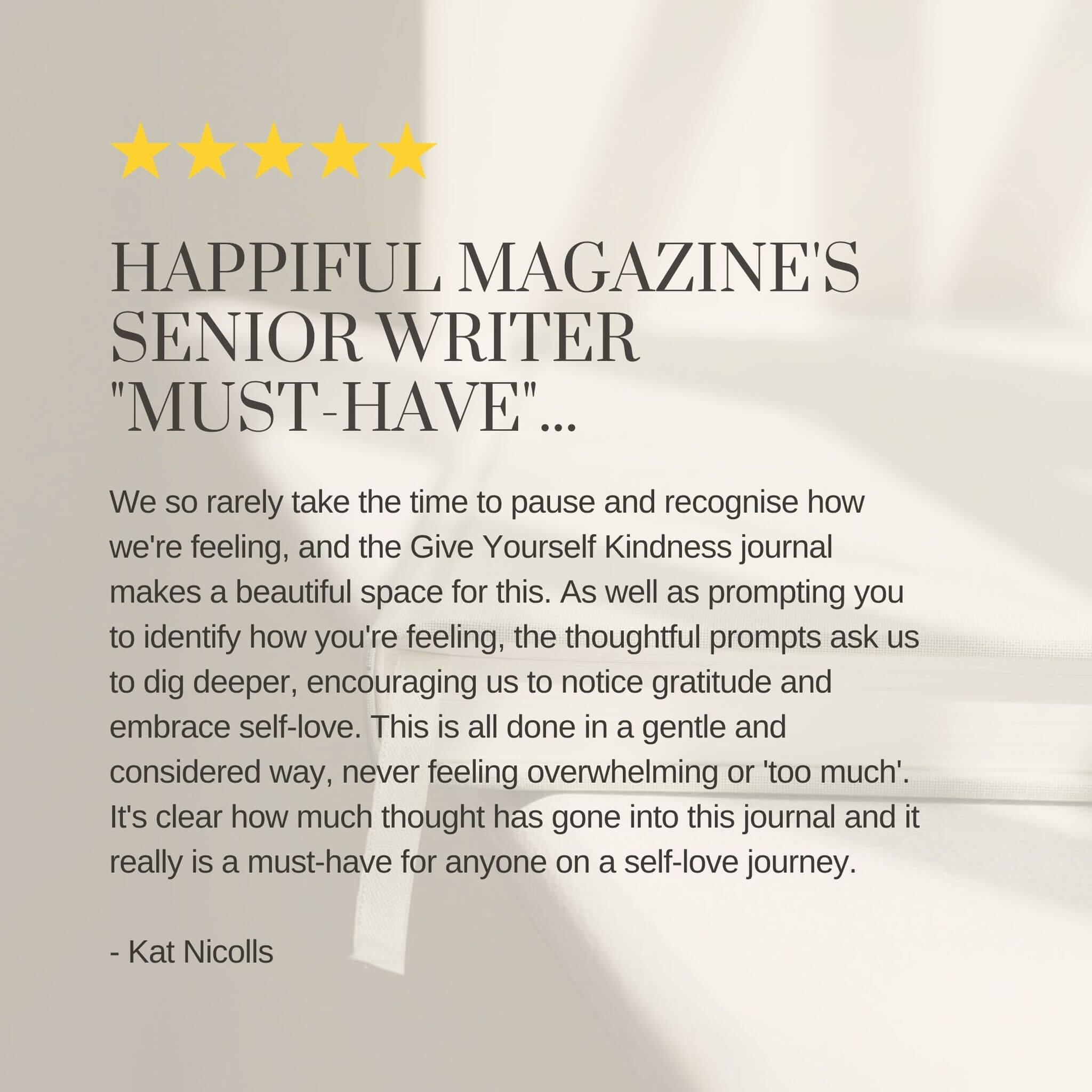
"These affirmations are truly so beautiful and powerful! When I read them, I instantly feel a sense of groundedness and calm. I also love that they are centered around having more compassion and kindness for ourselves. I will definitely be utilizing these with my clients, as well as practicing them myself."See all the expert reviews →
Where these aren't the answer
- If someone is genuinely struggling, cards are not the intervention. Most universities have a wellbeing service and a GP surgery attached, and both are free. Please use them first.
- If the pressure is coming from home rather than from inside, a card on the desk won't touch it, and it isn't fair to expect it to.
- If they've said they find affirmations cringe, believe them. The list above works just as well written in a notebook with nobody watching.
If you're buying these for someone else
Most people who reach this page are not the student. They're a parent, a grandparent, an aunt, or a friend who has watched someone get quieter over a term and wants to do something that isn't nagging them about sleep.
The thing that makes this land or not is the note, not the cards. A gift that arrives saying "work hard" is the pressure again. One that arrives saying "I'm not checking up on you" is a different object entirely.
These work for a disappointing result and a brilliant one, which is unusual. "I can be proud of myself for doing my best, and know that this is always enough" doesn't need to know the outcome before it's true.
Weeks four to seven is when the novelty wears off and the homesickness that nobody warned them about turns up. Something small arriving by post in that window does more than the same thing given in August.
Send it before it starts rather than during. Nobody opens a parcel thoughtfully in the last fortnight, and a card on the desk from week one is one they'll have already got used to by the time they need it.
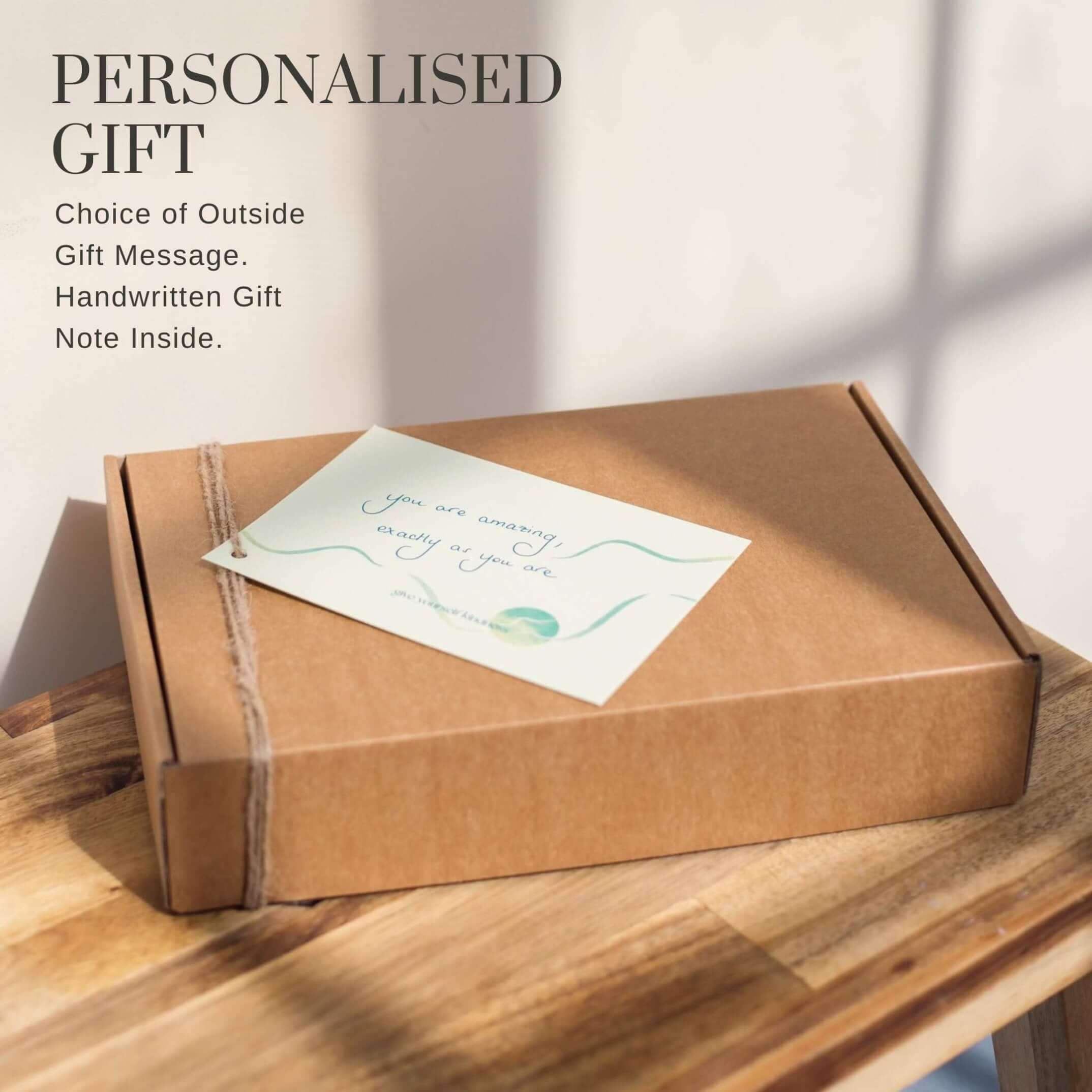
You can post it straight to their halls or house, and add a handwritten note free at checkout by typing it into the order notes. Some things that have worked better than "good luck":
"No advice attached. Just thinking of you."
"You don't have to earn a rest. Love Mum."
"Whatever the results say, it doesn't change anything about you from here."
"Put one on your desk and ignore the rest. That's allowed."
Common questions
What are the best affirmation cards for students?
The ones that talk about learning rather than achieving. Look for wording that gives permission to not know something yet, to make mistakes, to change your mind and to be on a different timetable from everyone else. Avoid anything that promises results, because on a bad week that reads as one more thing to fall short of. The nineteen affirmations on this page are all written that way and you can use them free.
Do affirmations actually help with exam stress?
They help with the self-criticism that tends to travel alongside it, which matters because clinical psychologist Annabelle Kyle Dortch notes that self-criticism creates a brain state "not conducive to learning". They will not do the revision. They are best treated as a way of changing the tone you study in, not a study technique.
What age are these suitable for?
They're written in adult language, so they suit sixth form, college and university rather than young children. The wording assumes someone who is choosing things and comparing themselves to peers.
Are affirmation cards a good gift for a university student?
They can be, with two conditions: keep it small enough that it doesn't feel like a statement, and write a note that takes the pressure off rather than adding to it. Sending it in the first term, or before exam season rather than during it, tends to land better than sending it at a crisis point.
How many cards are in the set, and what are they made of?
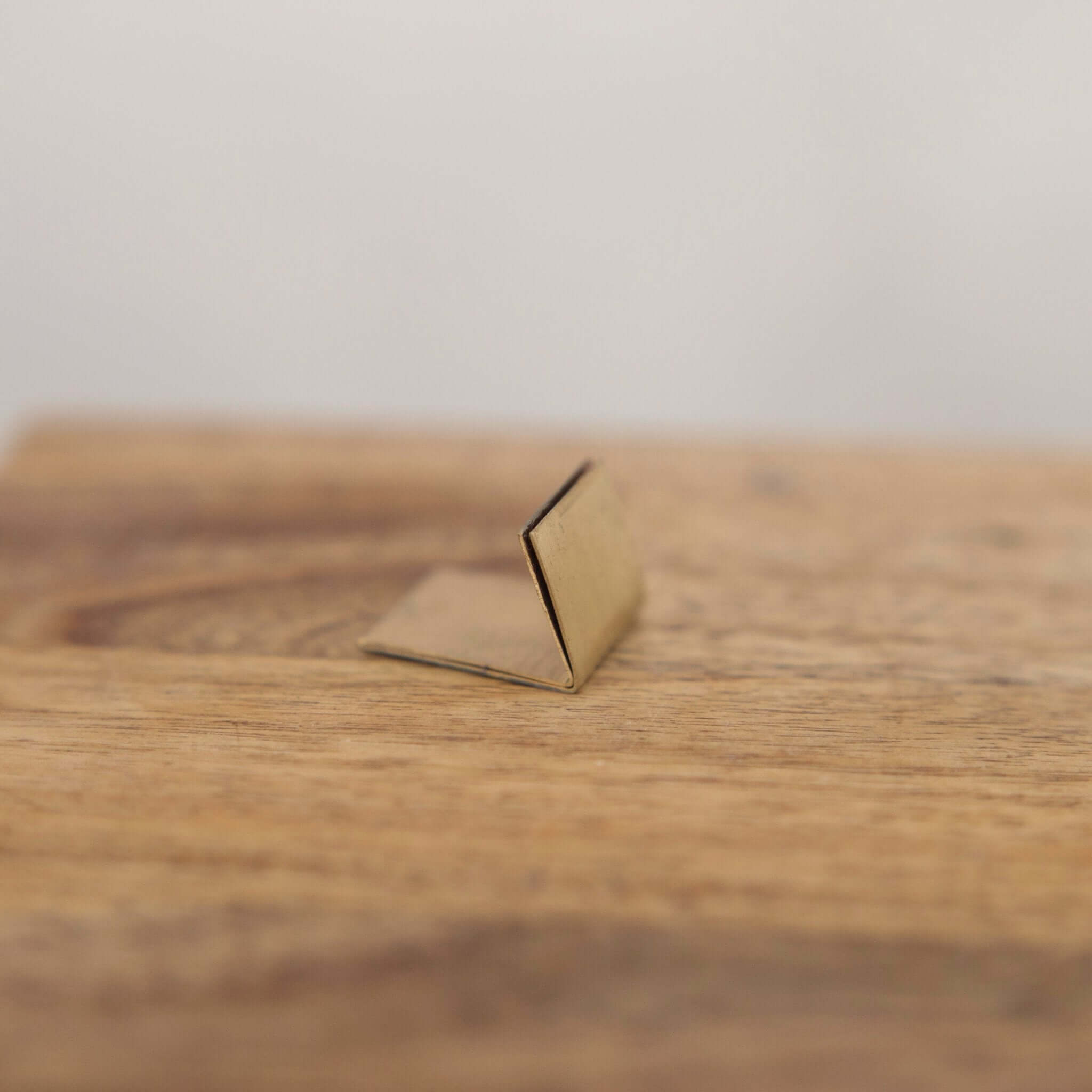
20 cards, 85mm x 100mm, printed in the UK on luxury 270gsm sustainably sourced pistachio card from FSC-certified forests, in plastic-free packaging. You can add a brass stand or a glass frame if it's going on a desk.
My child is really struggling. Is this enough?
No, and I'd rather say so. If someone is genuinely unwell, the university wellbeing service and their GP are the right first calls, and both are free. Cards can sit alongside that. They can't replace it.
You are allowed to be new at something. That is, genuinely, the only message on any of these cards, said nineteen different ways.