






Quick Answer
The best affirmation cards for perfectionism give you permission to be imperfect rather than pushing you to be better. They acknowledge that perfect doesn't exist—and you don't need it to exist.
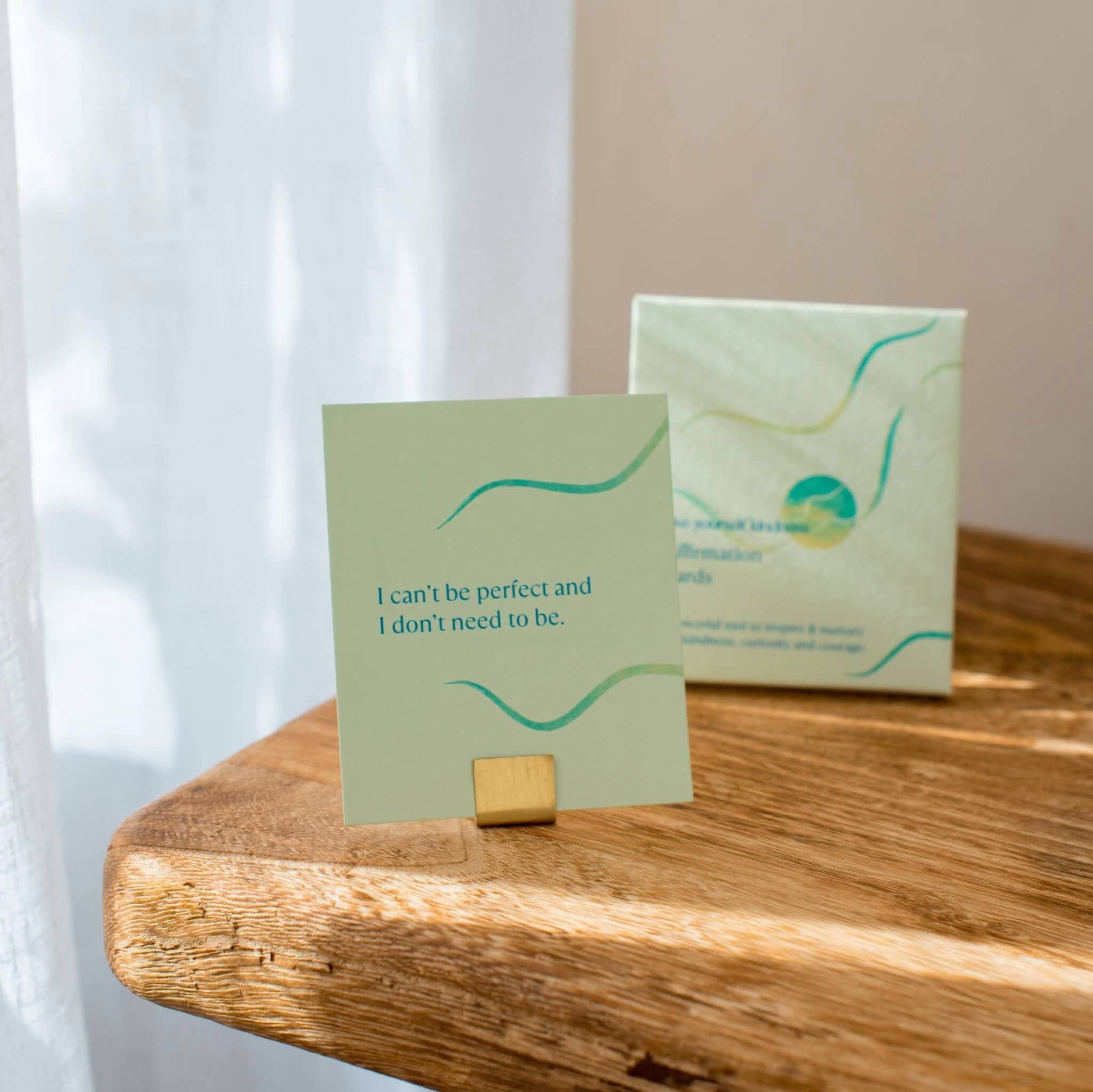
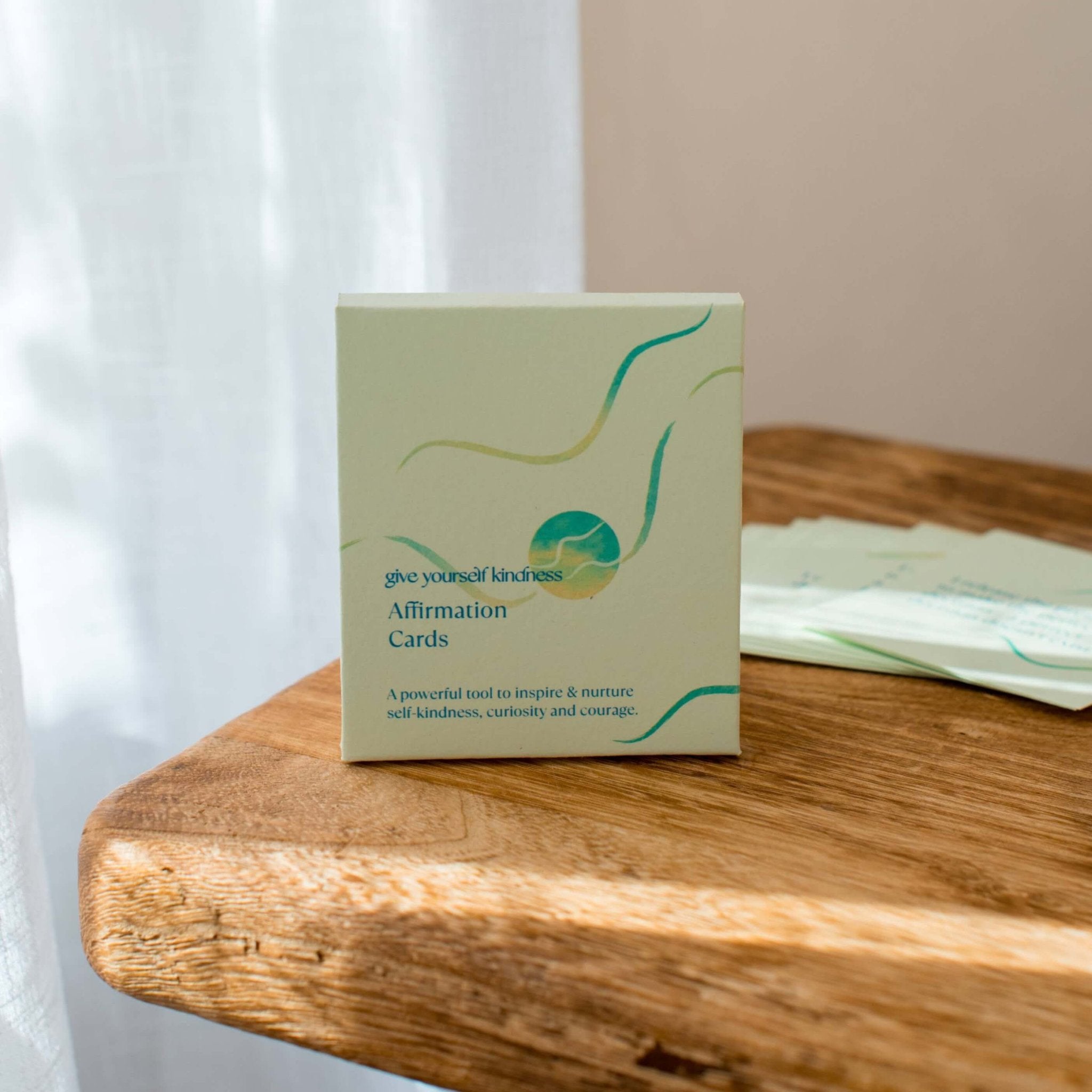
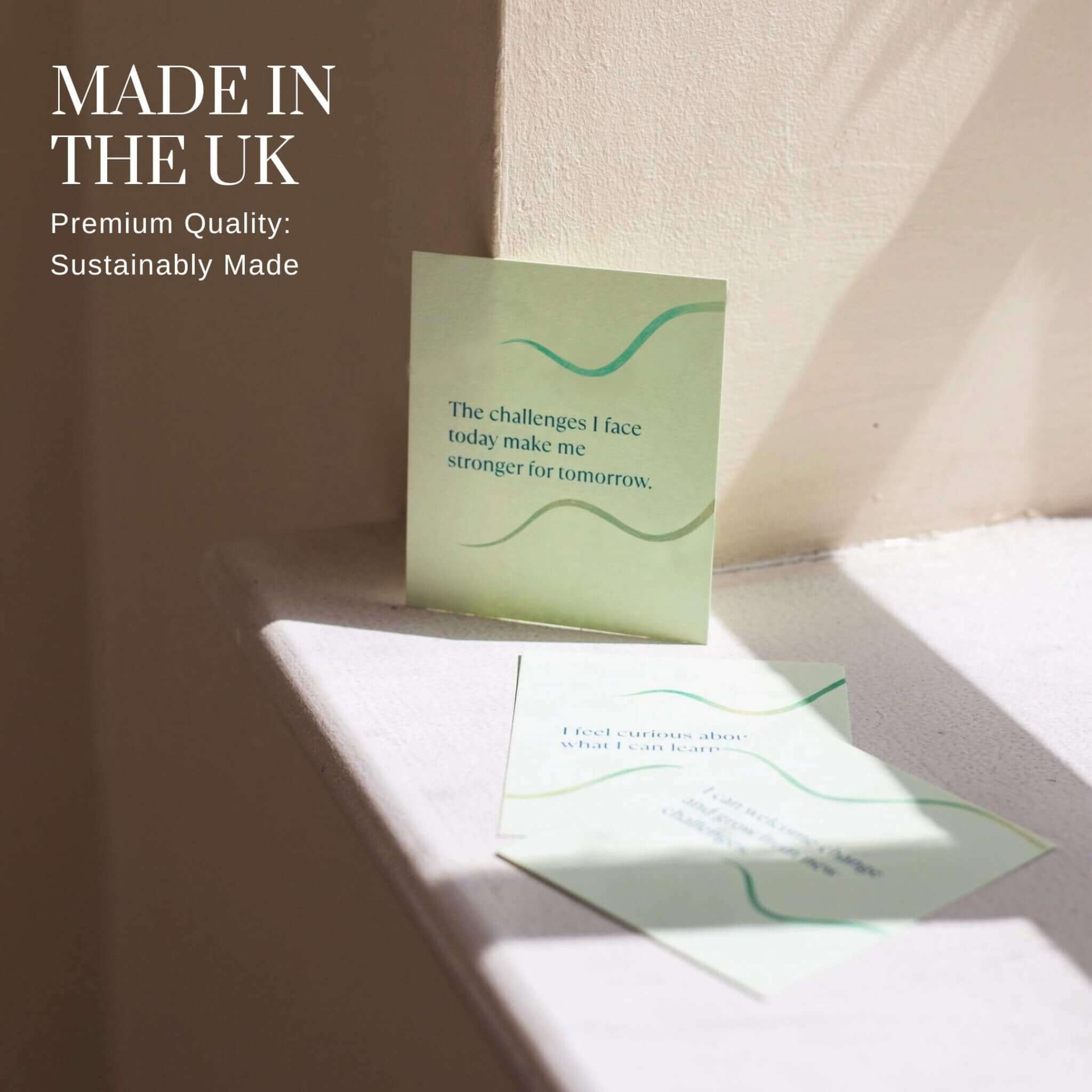
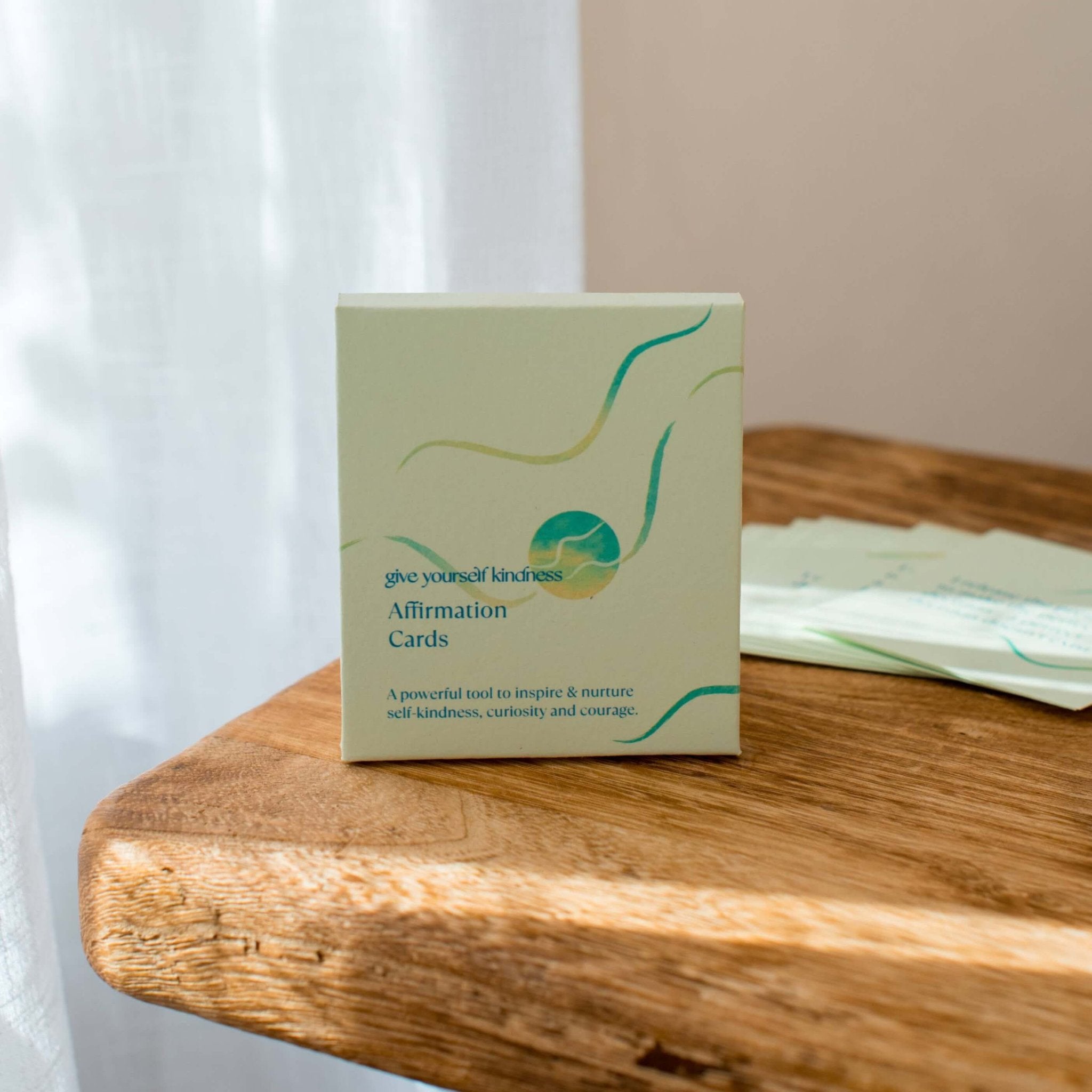
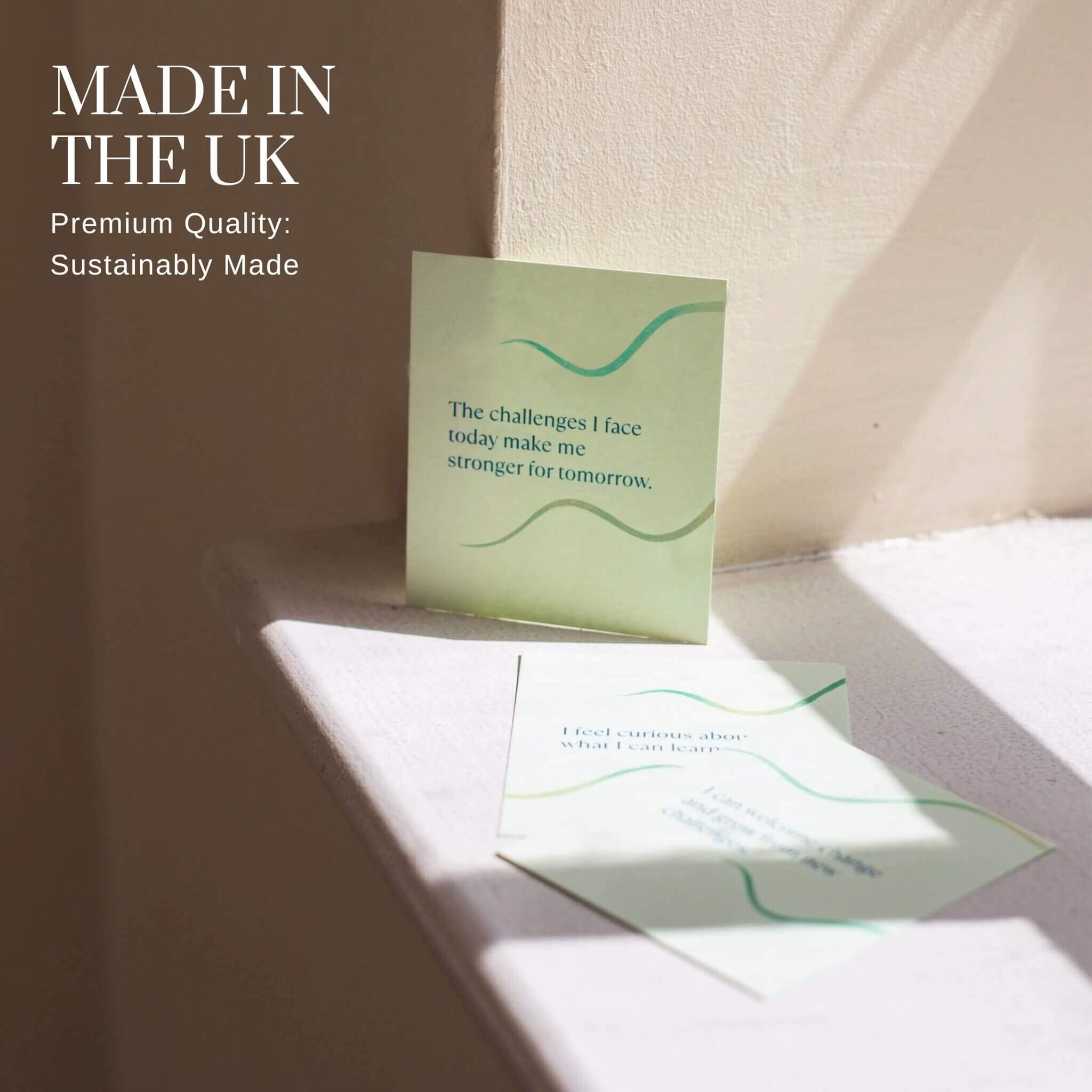
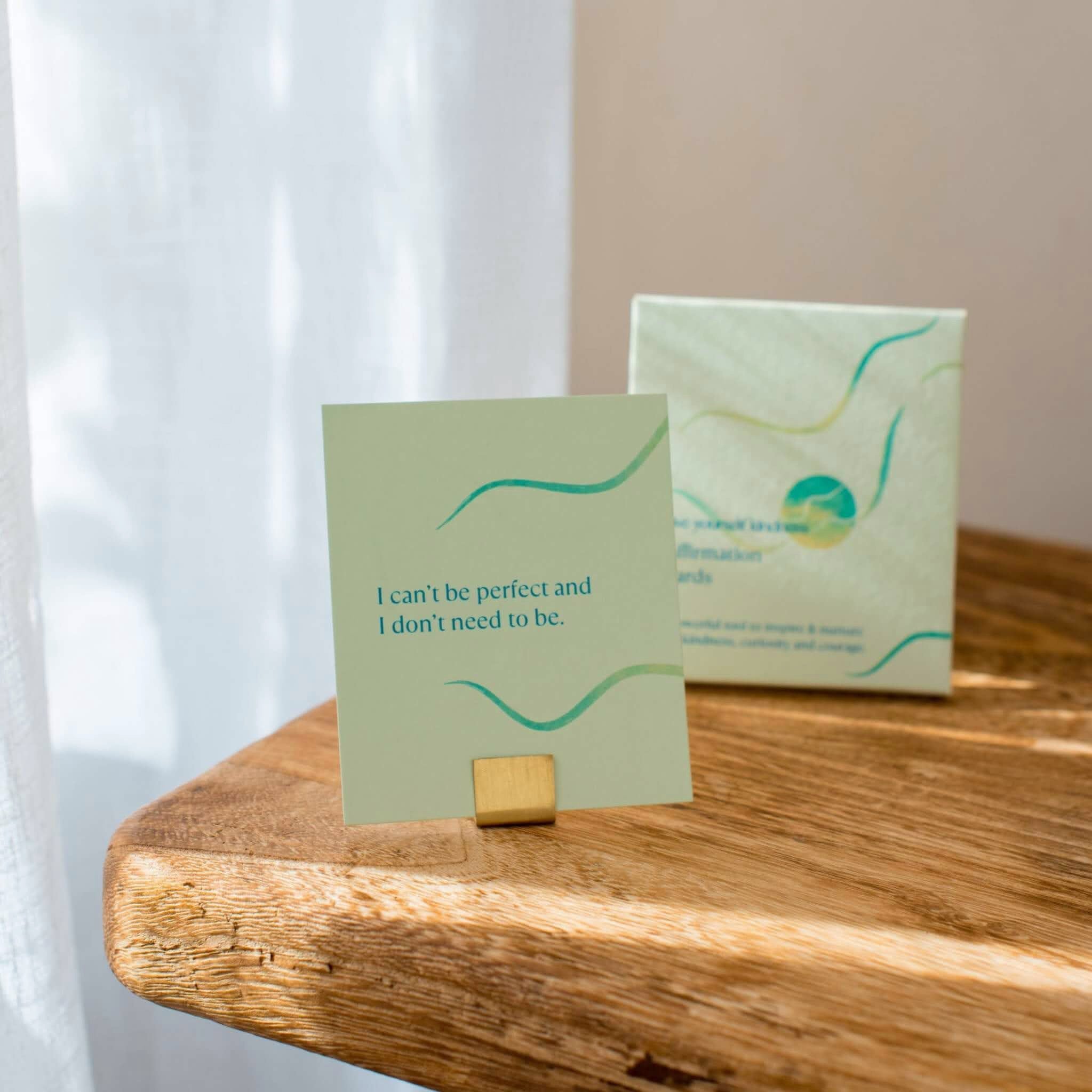
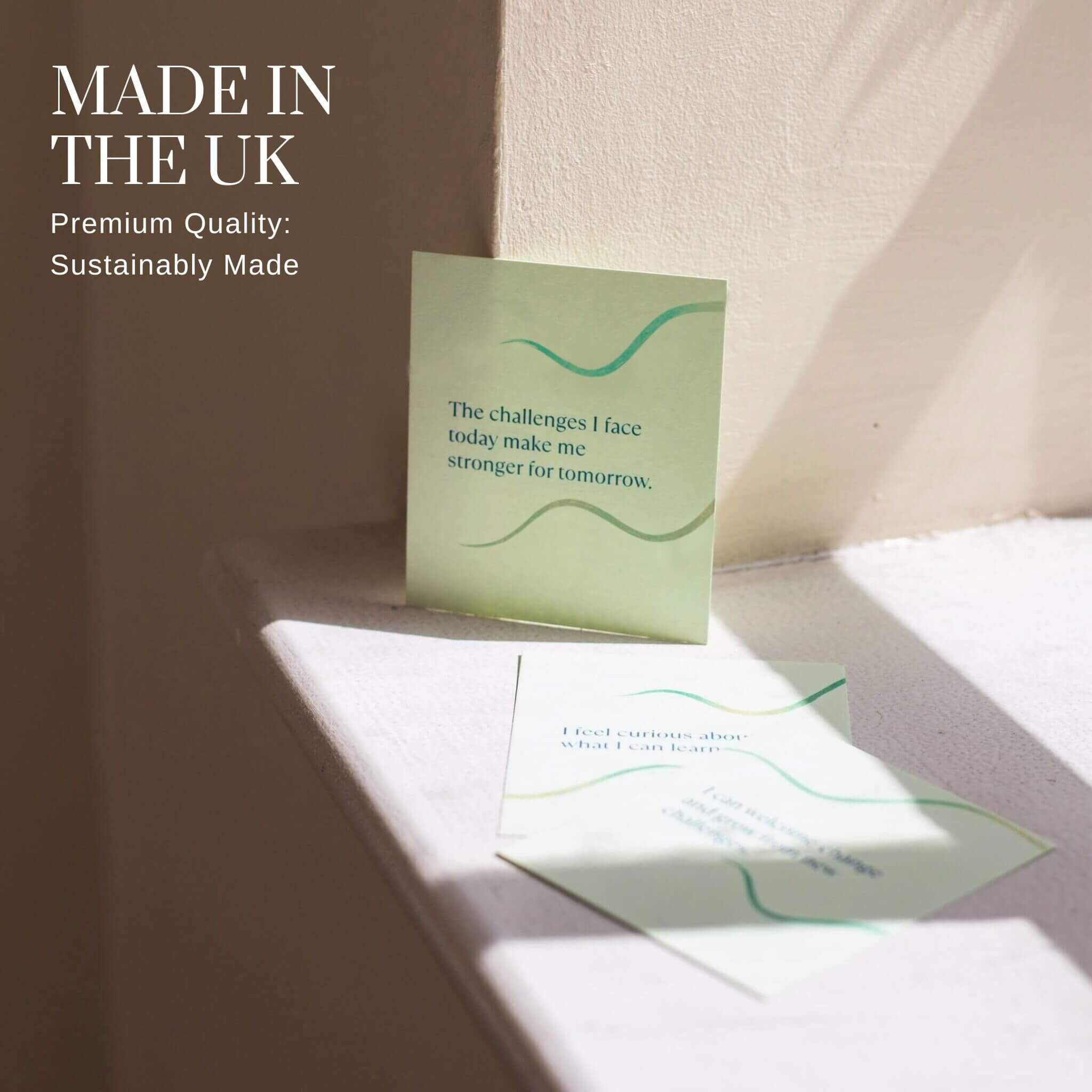
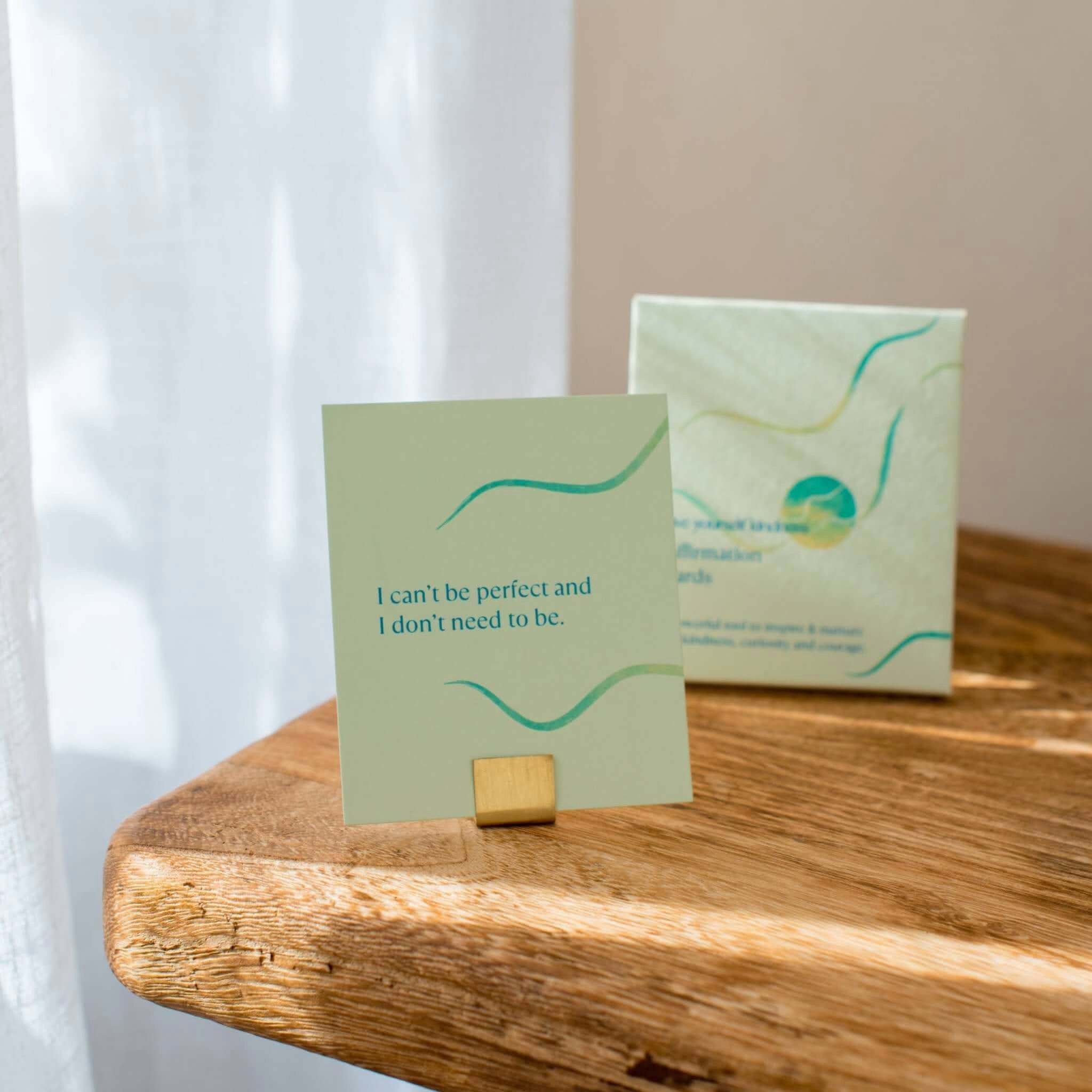
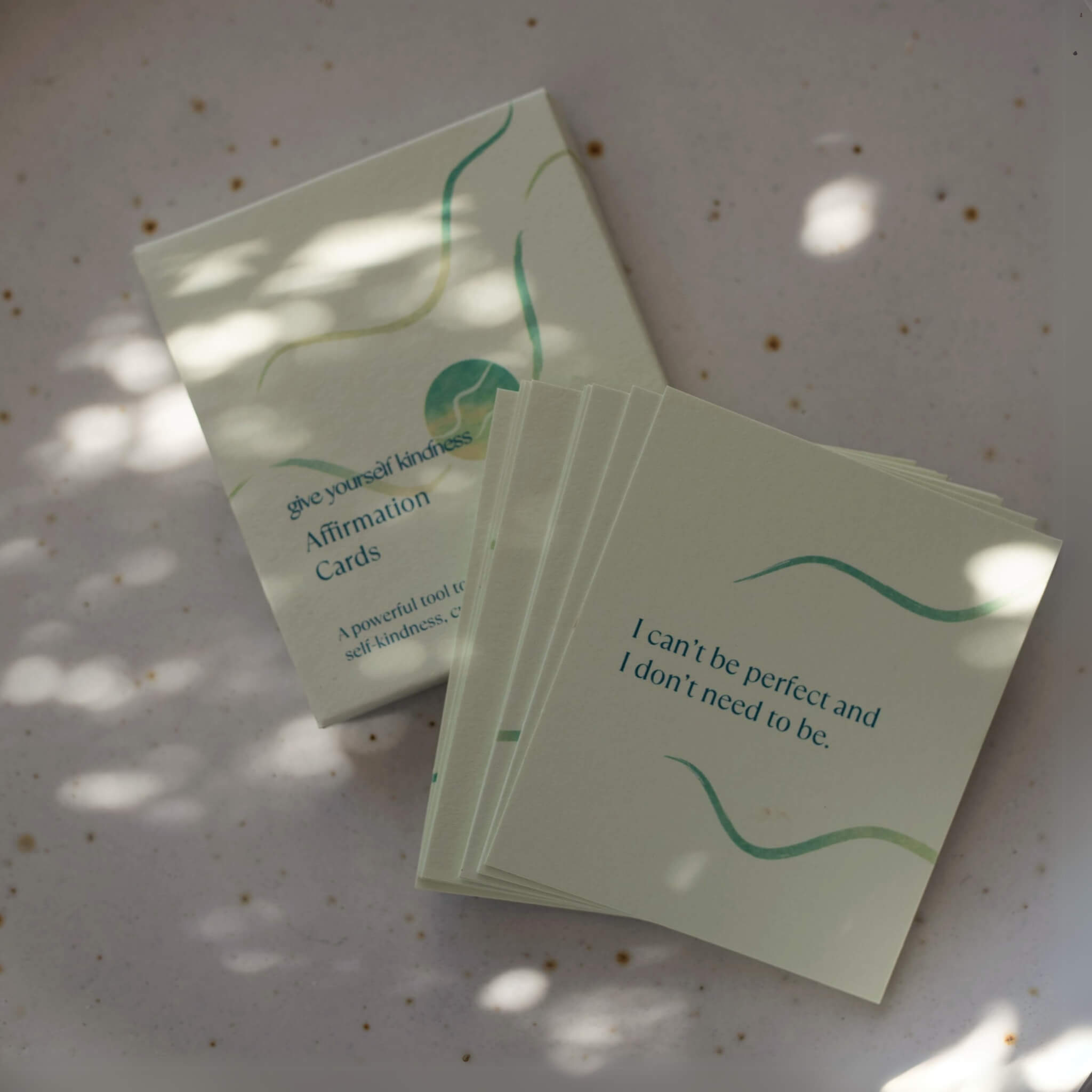
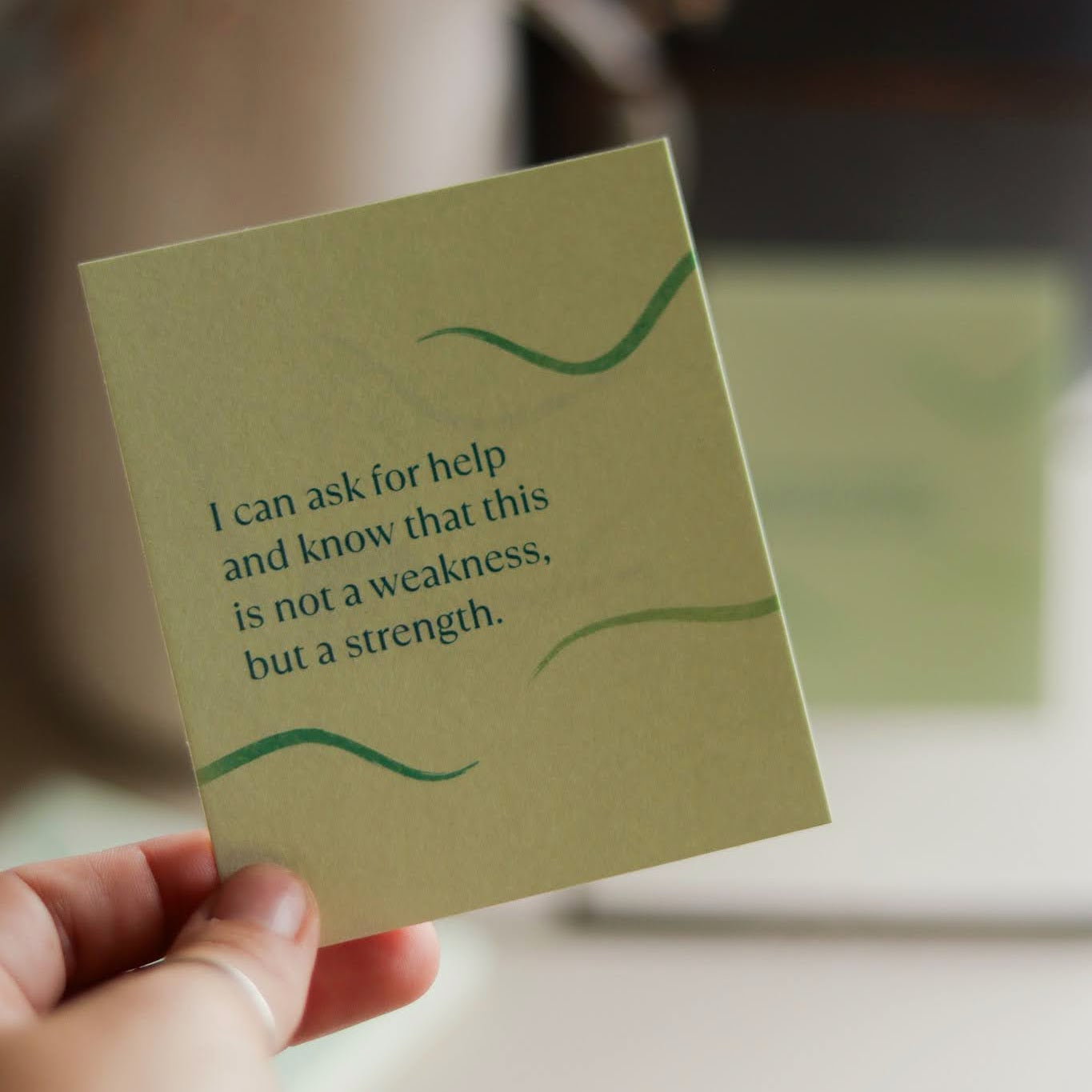
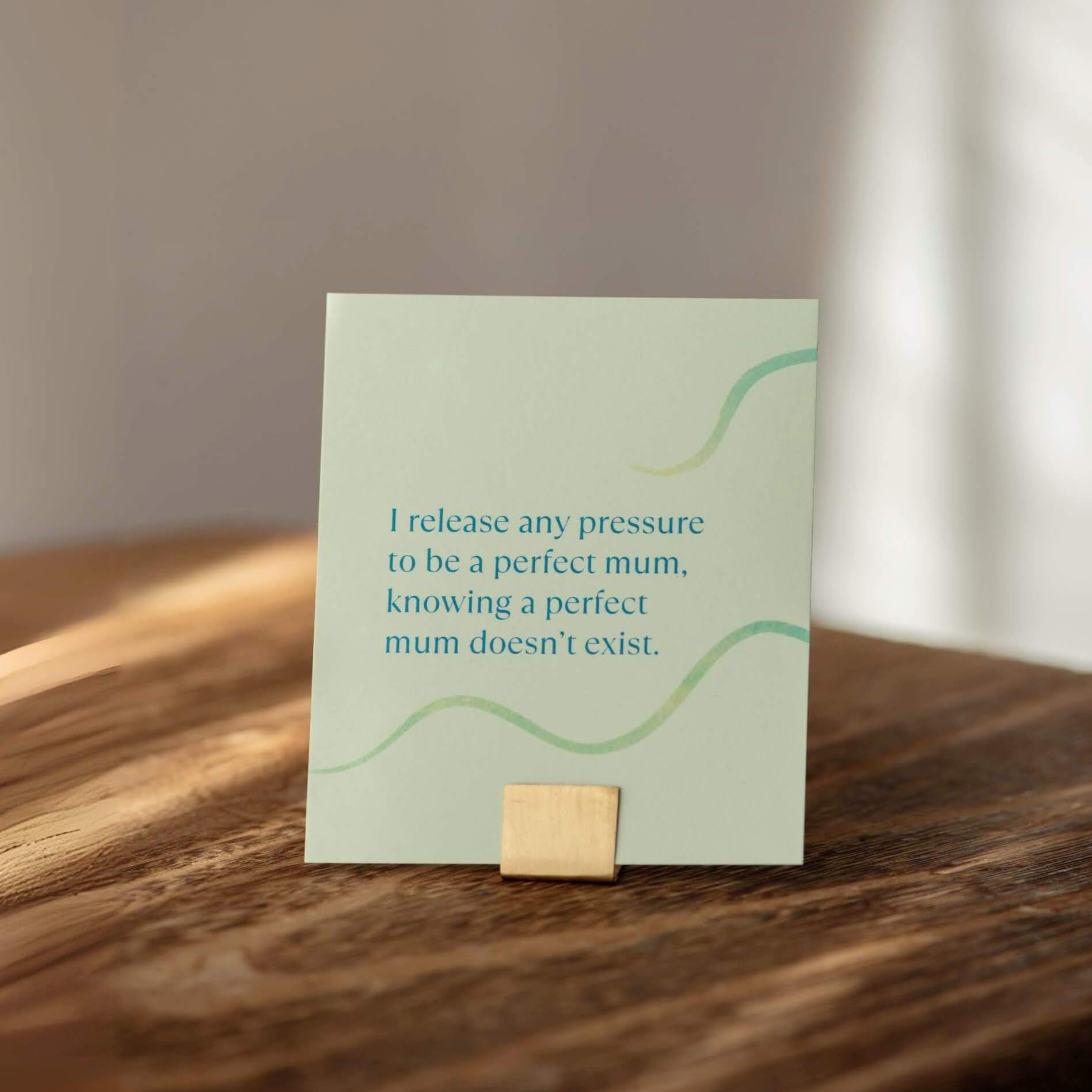
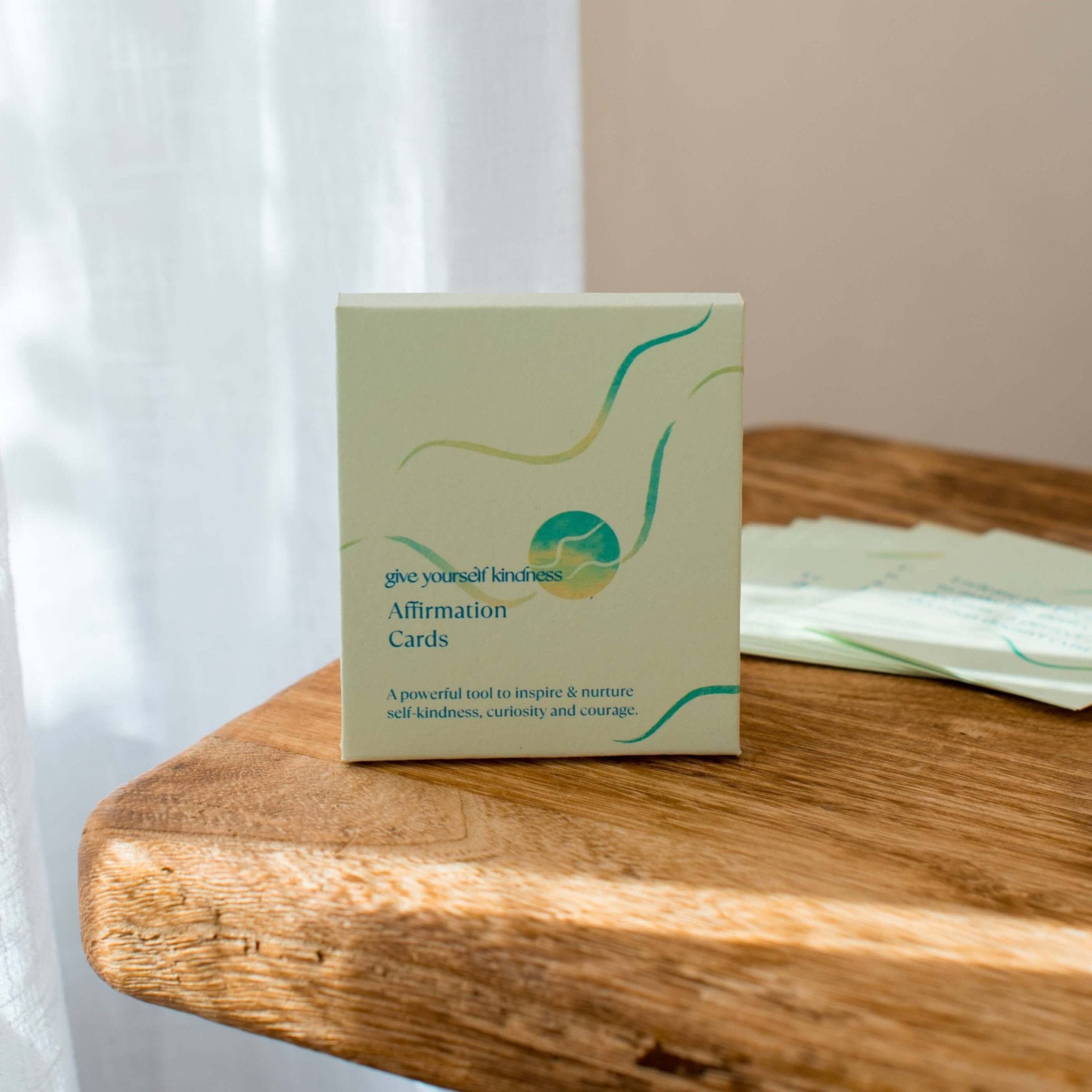
Top recommendation: Give Yourself Kindness Self-Compassion Affirmation Cards — 60 affirmations specifically designed to counter perfectionist thinking. Instead of "You can do anything!" they say things like "I can't be perfect and I don't need to be" and "I release any pressure to be perfect, knowing that perfect doesn't exist." Recommended by therapists who specialize in perfectionism and high-functioning anxiety.
View the Affirmation Cards →On This Page:
- Why Perfectionism Makes Most Affirmations Backfire
- What Perfectionism Actually Is (And Why It's Exhausting)
- Why "You're Amazing!" Doesn't Help Perfectionists
- What Actually Helps Perfectionist Thinking
- Comparison: Achievement vs. Permission-Giving Affirmations
- The Best Affirmation Cards for Perfectionism
- How to Use Affirmation Cards When You're a Perfectionist
- FAQ
Why Perfectionism Makes Most Affirmations Backfire
I used to think affirmation cards were for people who needed a confidence boost. As a perfectionist, I thought I needed the opposite—more discipline, higher standards, better execution.
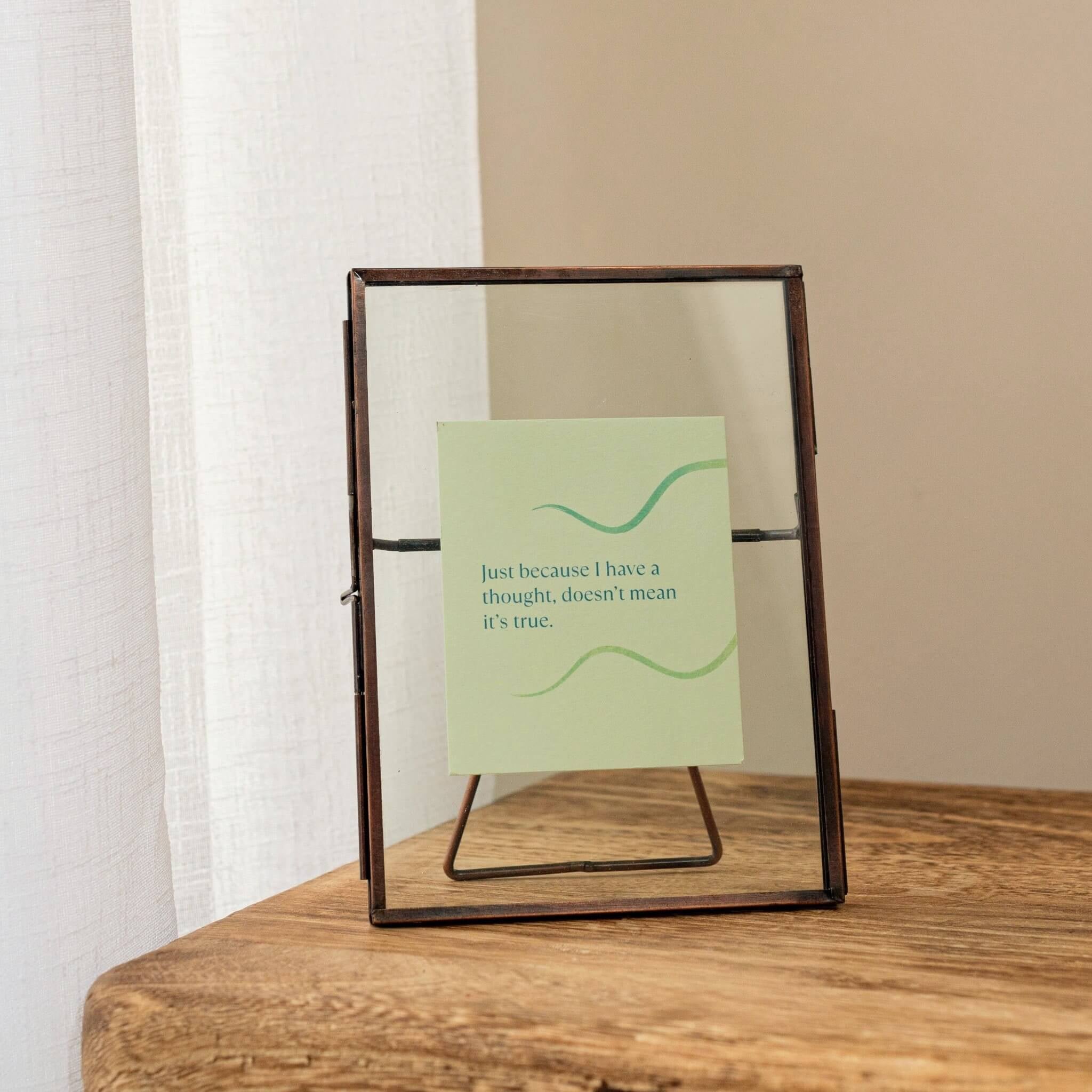
But here's what I didn't understand: Perfectionism isn't about high standards. It's about impossible standards that leave you feeling like you're never good enough.
And when you're stuck in that pattern, reading "You're amazing!" or "You can achieve anything!" doesn't help. It adds more pressure. Your brain translates it to: "See? You SHOULD be achieving more. Why aren't you?"

Collette Jones, LCSW
Practice Owner and Licensed Therapist | Specializes in perfectionism and high-functioning anxiety
"Perfectionism is a trait that is often seen as a positive quality, as it can lead to high achievement and perceived success. However, the excessively high standards that a perfectionist sets for themselves often lead to feelings of shame, burnout, anxiety, and poor self-worth. It can leave us on a never ending hamster wheel of disappointment."
→ Read the full article: Self-Compassion: The Antidote to Perfectionism
That "hamster wheel of disappointment" is exactly what traditional affirmations reinforce for perfectionists. You need something different.
What Perfectionism Actually Is (And Why It's Exhausting)
Perfectionism isn't about doing your best. It's about never feeling like your best is good enough.
Here's what perfectionism actually looks like:
- Never feeling satisfied — Even after accomplishments, the goalpost moves
- Procrastination — You put things off until you have time to do them "perfectly"
- All-or-nothing thinking — If it's not perfect, it's a failure
- Fear of making mistakes — One error feels like proof you're not good enough
- Constant self-criticism — Your inner voice is relentlessly harsh
- Difficulty delegating — "If I want it done right, I have to do it myself"
- Avoiding new challenges — If you can't guarantee success, you don't try
- Burnout and exhaustion — The standards are impossible to maintain
And beneath all of this? The belief that your worth depends on what you achieve.

Dr. Annabelle Kyle Dortch, PsyD
Clinical Psychologist, Los Angeles | Specializes in life transitions, anxiety, stress, and trauma
"When we engage in self-criticism, we create a nervous system and brain state that is not conducive to learning or facilitating a growth-oriented mindset."
→ Read more: Why Self-Compassion is More Effective Than Self-Criticism
Translation: The perfectionist habit of criticizing yourself for not being perfect enough actually makes it harder to grow and improve. It's counterproductive.
Why "You're Amazing!" Doesn't Help Perfectionists
Most affirmation cards use achievement-focused language that reinforces the perfectionist trap.
⚠️ Warning: These Affirmations Make Perfectionism Worse
For perfectionists, achievement-focused affirmations create more pressure and shame. They reinforce the belief that your worth depends on what you accomplish—the exact belief that's causing the problem.
Affirmations That Don't Help Perfectionism:
- "You can achieve anything!" — Adds more pressure to achieve
- "Be the best version of yourself" — Implies you're not good enough as you are
- "Never give up!" — Shames you for needing rest
- "You're perfect just as you are" — Feels untrue to a perfectionist (creates cognitive dissonance)
- "Success is yours!" — Ties worth to success
- "Keep pushing forward!" — More pressure when you're already burned out
Why these fail: They keep you focused on achievement, productivity, and being "better." They don't give you permission to be imperfect. They don't acknowledge that the relentless drive is exhausting.
What Actually Helps Perfectionist Thinking
Research on perfectionism—particularly from Compassion-Focused Therapy (CFT) and self-compassion studies—shows what actually helps:
- Permission to be imperfect (not pressure to be better)
- Acknowledging that "perfect" doesn't exist (so you can stop chasing it)
- Separating your worth from your productivity (you matter regardless of what you achieve)
- Validating that the perfectionist drive is exhausting (not something to push through)
Collette Jones, LCSW
Licensed Therapist specializing in perfectionism and high-functioning anxiety
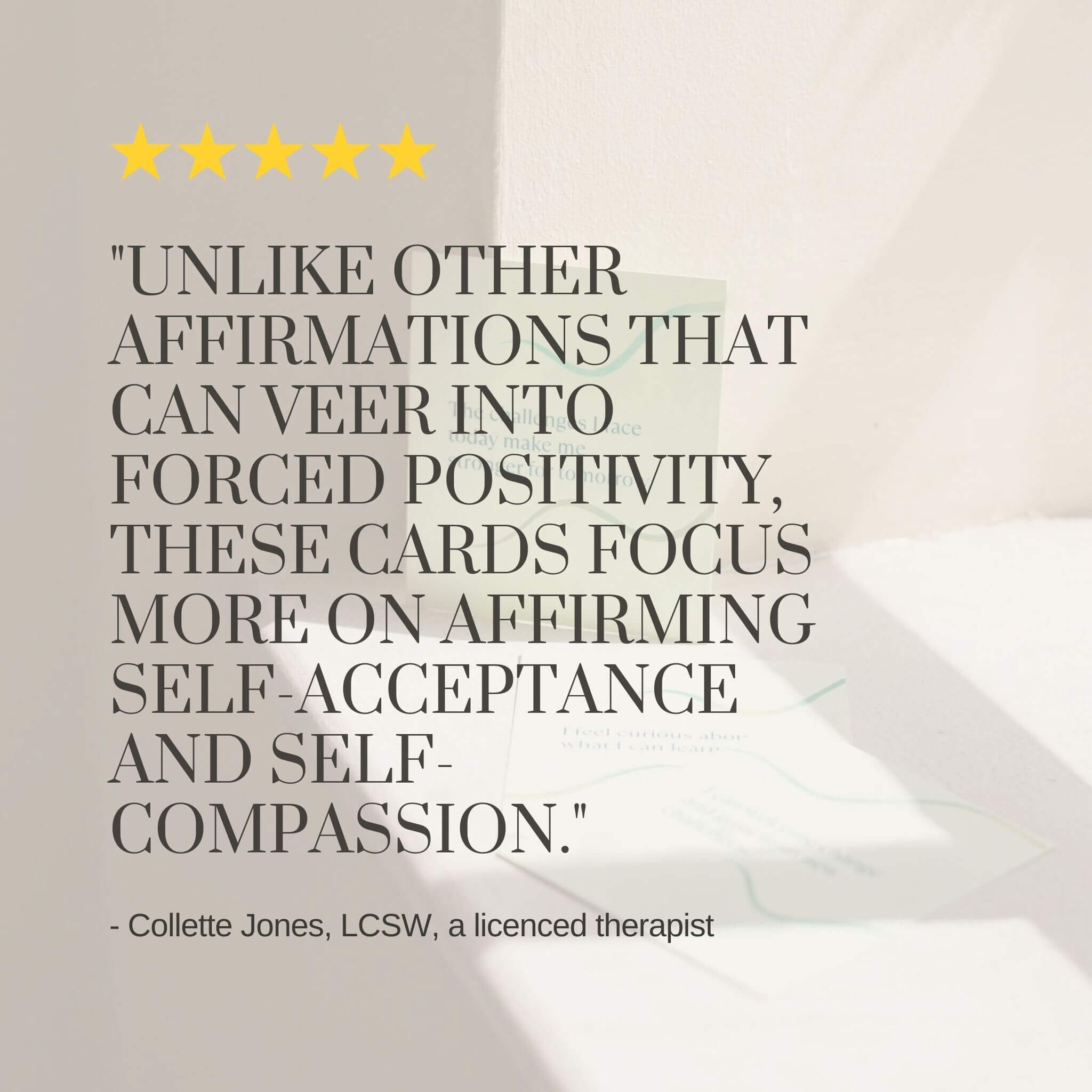
"These cards are a beautiful tool that offer gentle reminders to soothe the mind, ease tension, and cultivate a sense of peace. Unlike other affirmations that can veer into forced positivity, these cards focus more on affirming self-acceptance and self-compassion."
Self-Compassion Affirmations That Help Perfectionism:
From the Give Yourself Kindness Affirmation Cards:
- "I can't be perfect and I don't need to be" — Permission to be imperfect
- "I release any pressure to be perfect, knowing that perfect doesn't exist" — Acknowledges the truth about perfection
- "I am worthy, and this does not depend on my productivity or achievements" — Separates worth from achievement
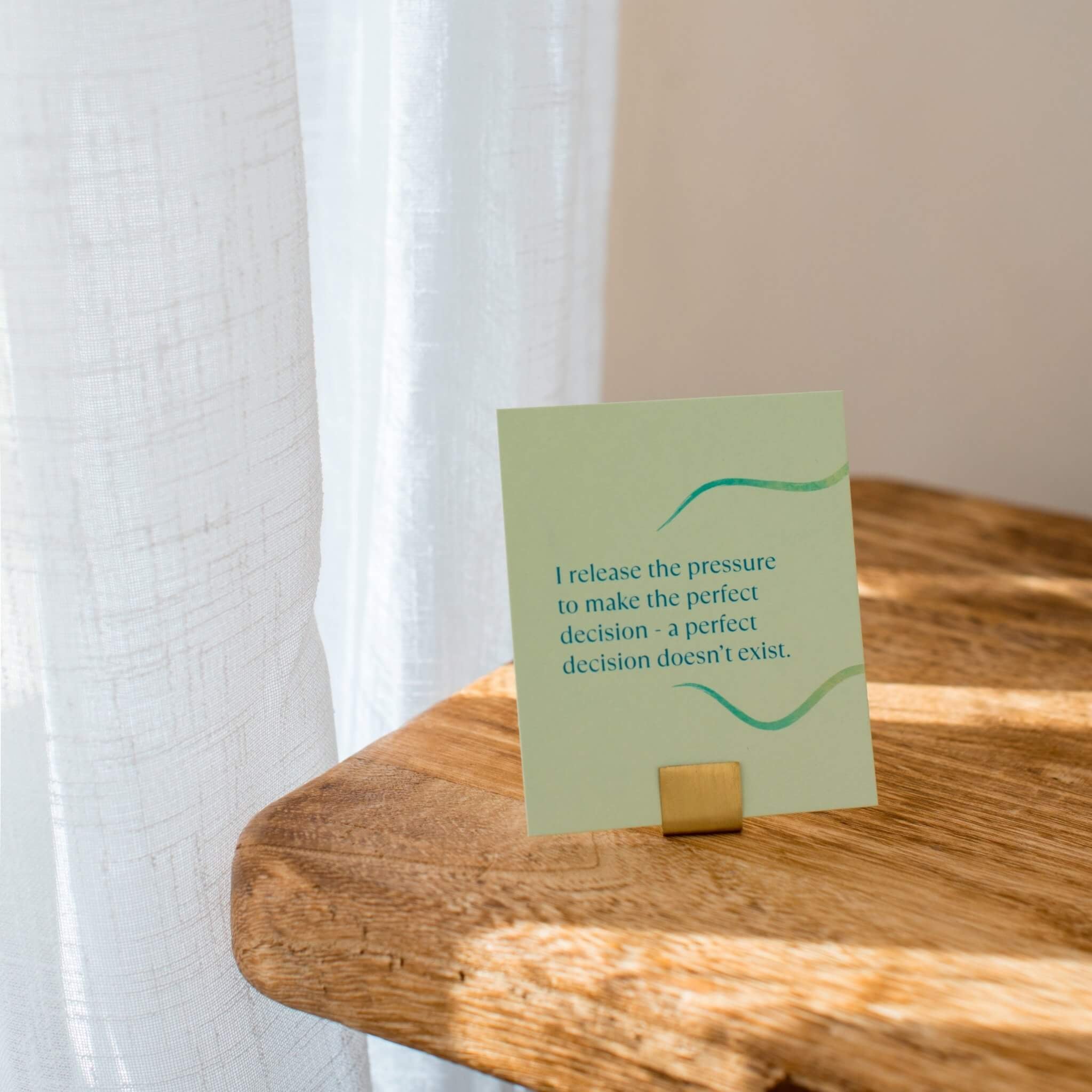
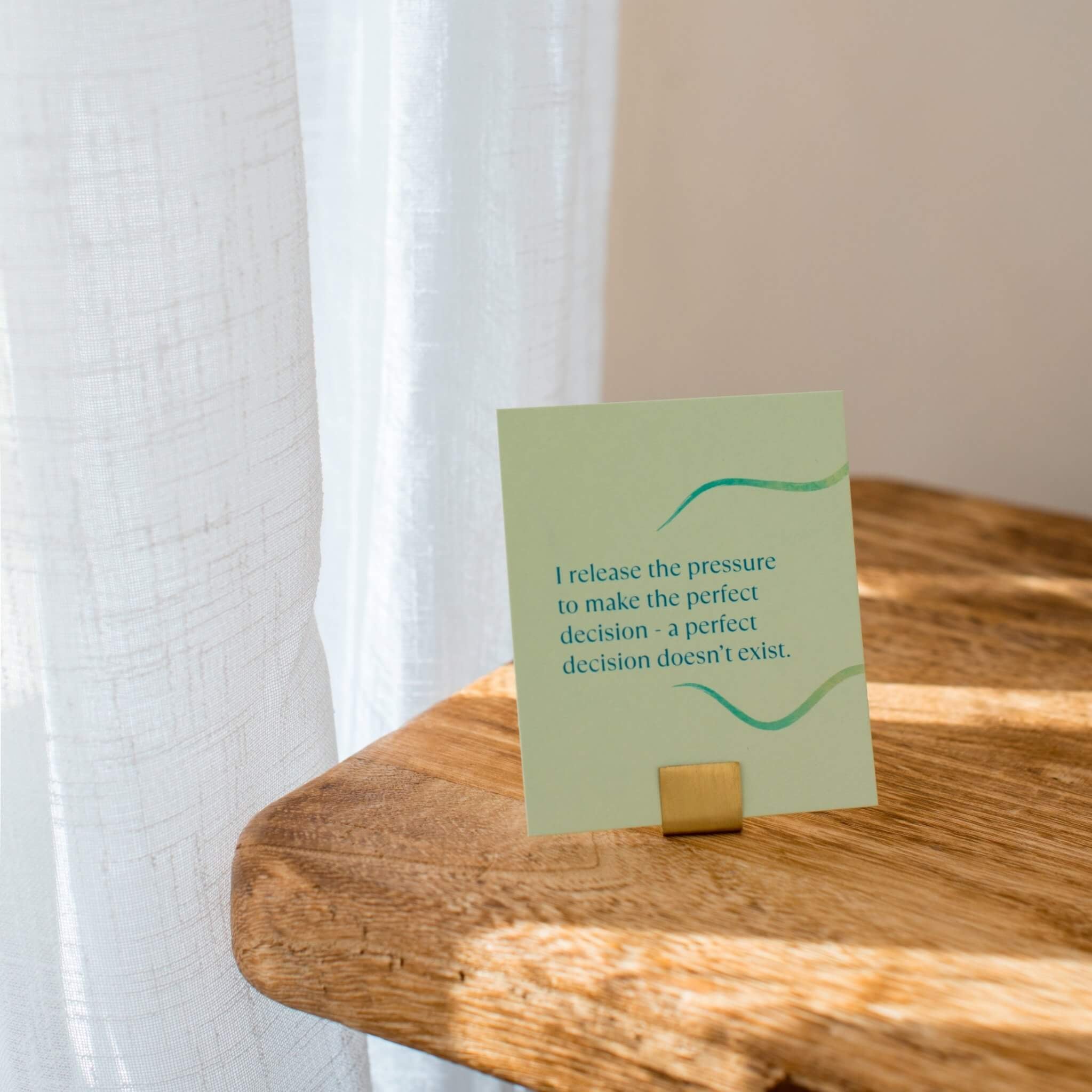
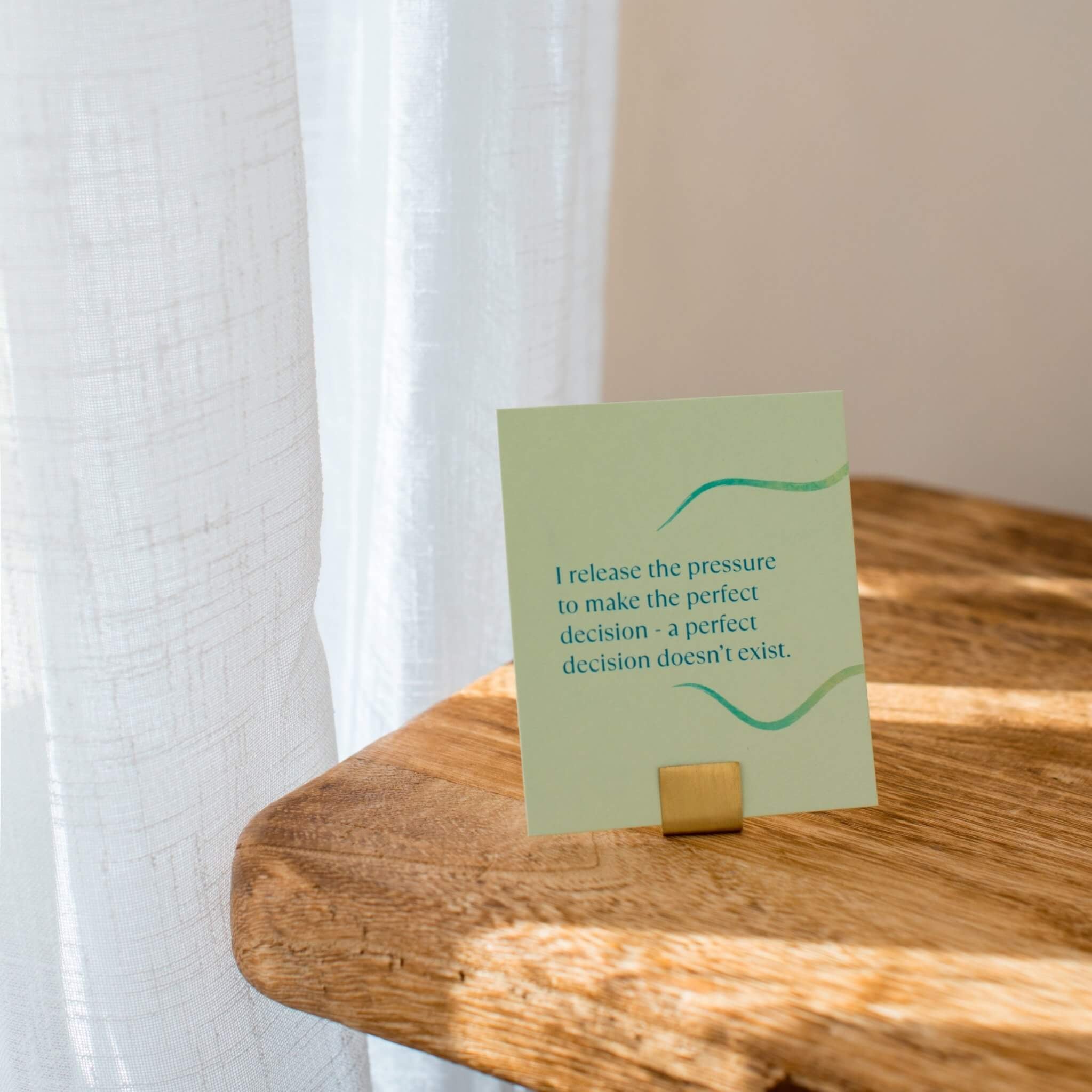
- "I release the pressure to make the perfect decision - a perfect decision doesn't exist" — Reduces decision paralysis
- "I can make mistakes and learn from them, without self-criticism" — Permission to be human
- "Whenever I notice I am saying 'I should', I stop and find another word" — Catches perfectionist language
- "I remind myself that no one was an expert before they were a beginner" — Permission to be a learner
- "I don't need to earn rest to deserve it" — Challenges productivity-based worth
Notice the difference? These don't push you to achieve more. They give you permission to be imperfect and still worthy.
Comparison: Achievement vs. Permission-Giving Affirmations
| Achievement-Focused Affirmation | Permission-Giving Affirmation (Give Yourself Kindness) | Why Permission Works Better for Perfectionists |
|---|---|---|
| "You can achieve anything!" | "I can't be perfect and I don't need to be" | Removes pressure rather than adding it; acknowledges limits are human |
| "Never make mistakes" | "I can make mistakes and learn from them, without self-criticism" | Gives permission to be human; separates mistakes from self-worth |
| "Always give 110%" | "I don't need to earn rest to deserve it" | Challenges productivity-based worth; permits rest without guilt |
| "Be the best" | "I remind myself that no one was an expert before they were a beginner" | Permission to be a learner; reduces fear of not being immediately perfect |
| "Get it right" | "I release the pressure to make the perfect decision - a perfect decision doesn't exist" | Reduces paralysis; acknowledges perfect isn't possible |
| "You're perfect" | "I am worthy, and this does not depend on my productivity or achievements" | Separates worth from performance; unconditional self-worth |
The Best Affirmation Cards for Perfectionism
After experiencing how Compassion-Focused Therapy helped my own perfectionism, I created the Give Yourself Kindness Self-Compassion Affirmation Cards with input from clinical psychologists.
What Makes These Different for Perfectionists:
Why Therapists Recommend These Cards for Perfectionism
These cards were designed specifically to counter perfectionist thinking—giving permission to be imperfect rather than demanding you be better. They're grounded in self-compassion research and recommended by therapists who specialize in perfectionism.
Collette Jones, LCSW
Practice Owner and Licensed Therapist | Specializes in perfectionism and high-functioning anxiety | Uses CBT and Mindfulness techniques
"Self-compassion is important in battling perfectionism because it allows you to let go of unrealistic standards and be more accepting of one's imperfection and humanness."
→ Read the full article: Self-Compassion: The Antidote to Perfectionism
What's Included:
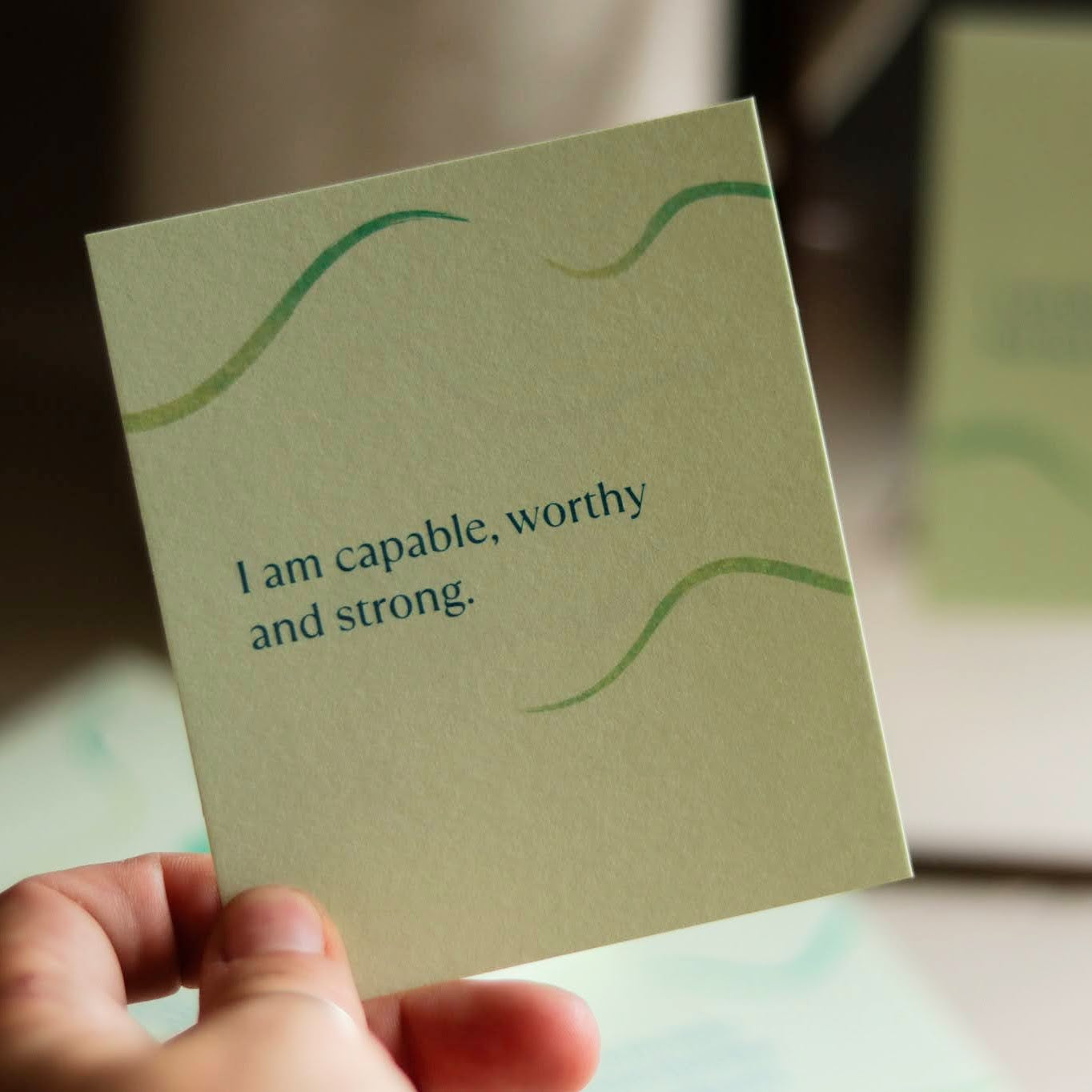
- 60 unique self-compassion affirmations (never repetitive)
- Specifically counter perfectionist thinking patterns without adding pressure
- Give permission to be imperfect rather than demanding excellence
- Grounded in CFT and self-compassion research
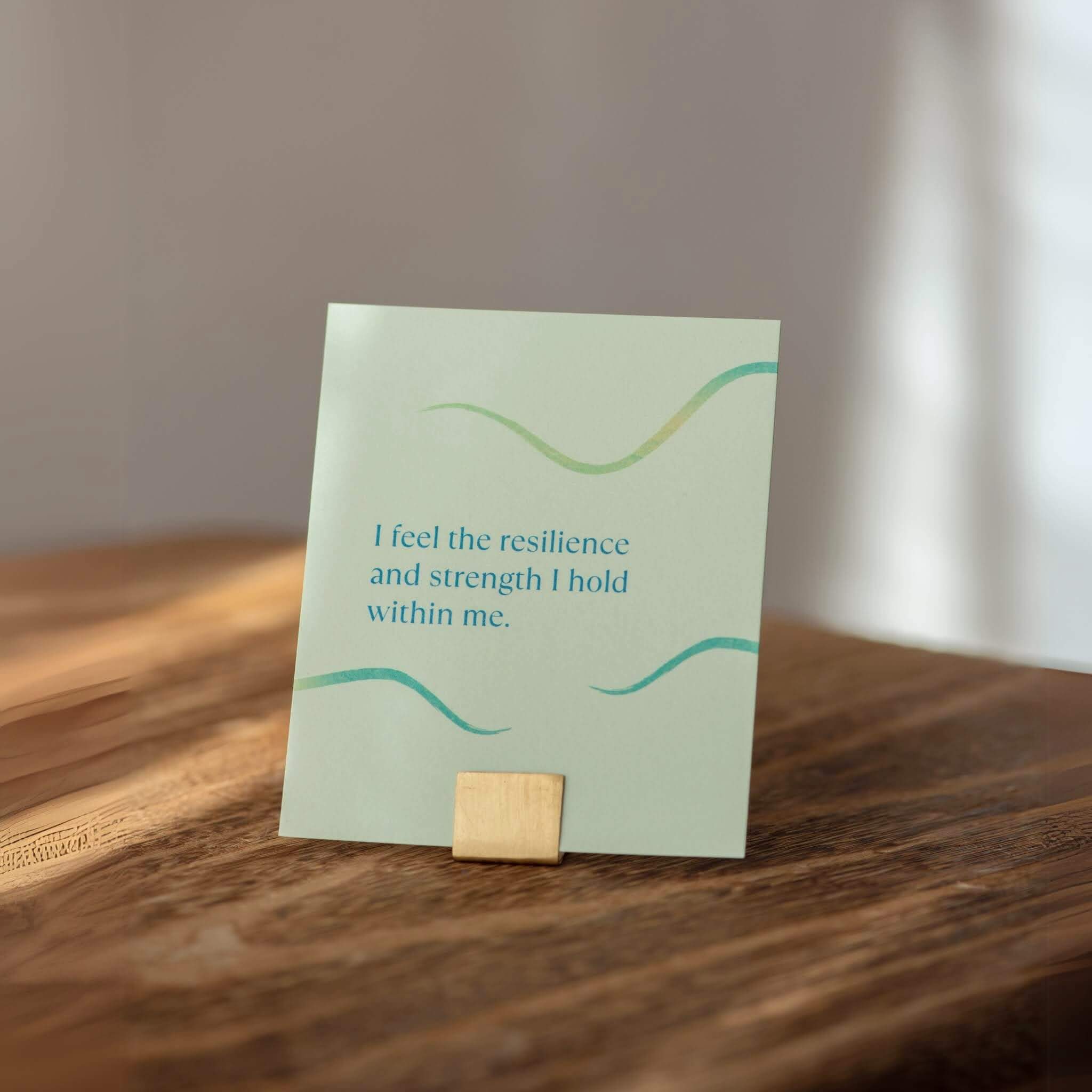
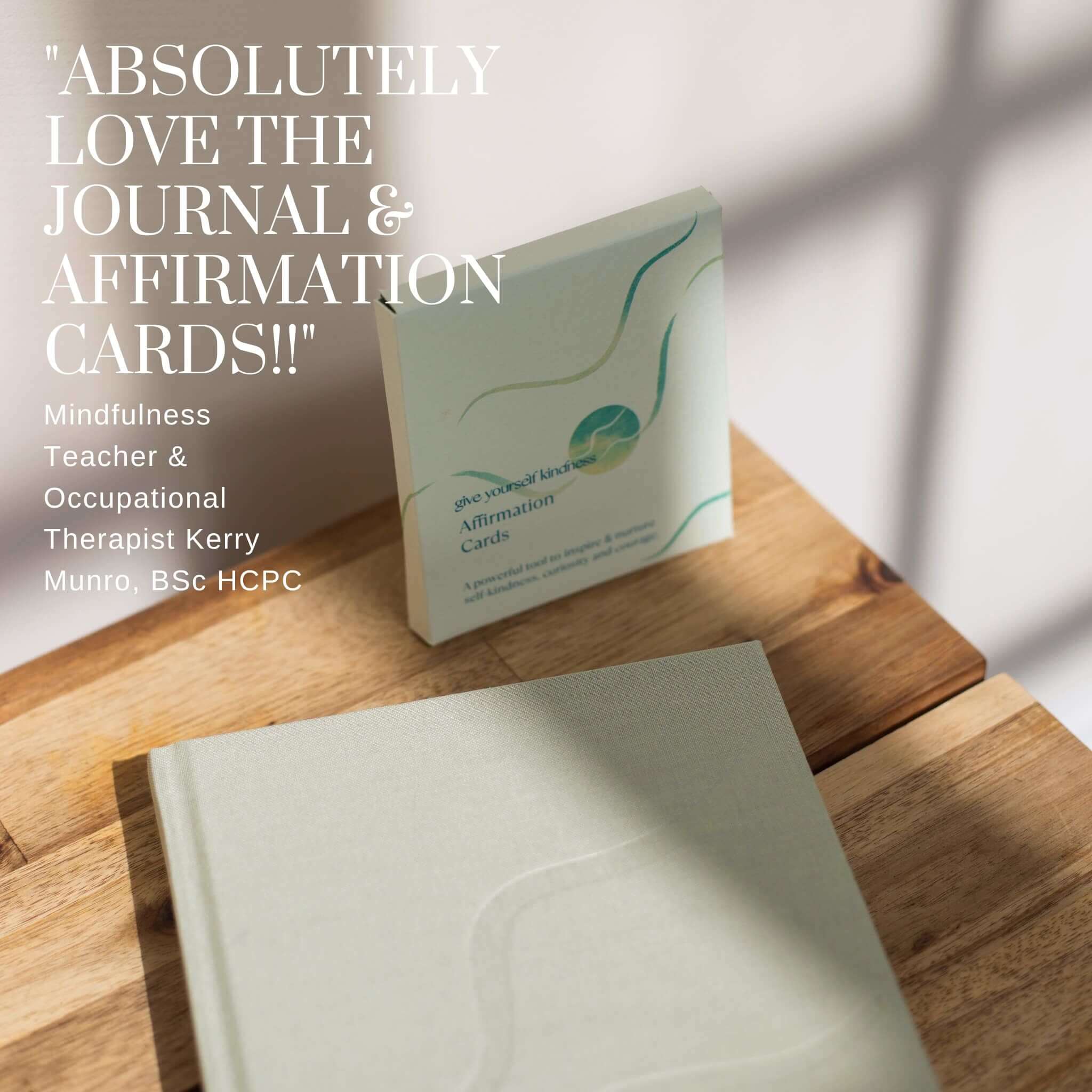
- Beautifully designed on premium cards in keepsake box
- Recommended by therapists who specialize in perfectionism
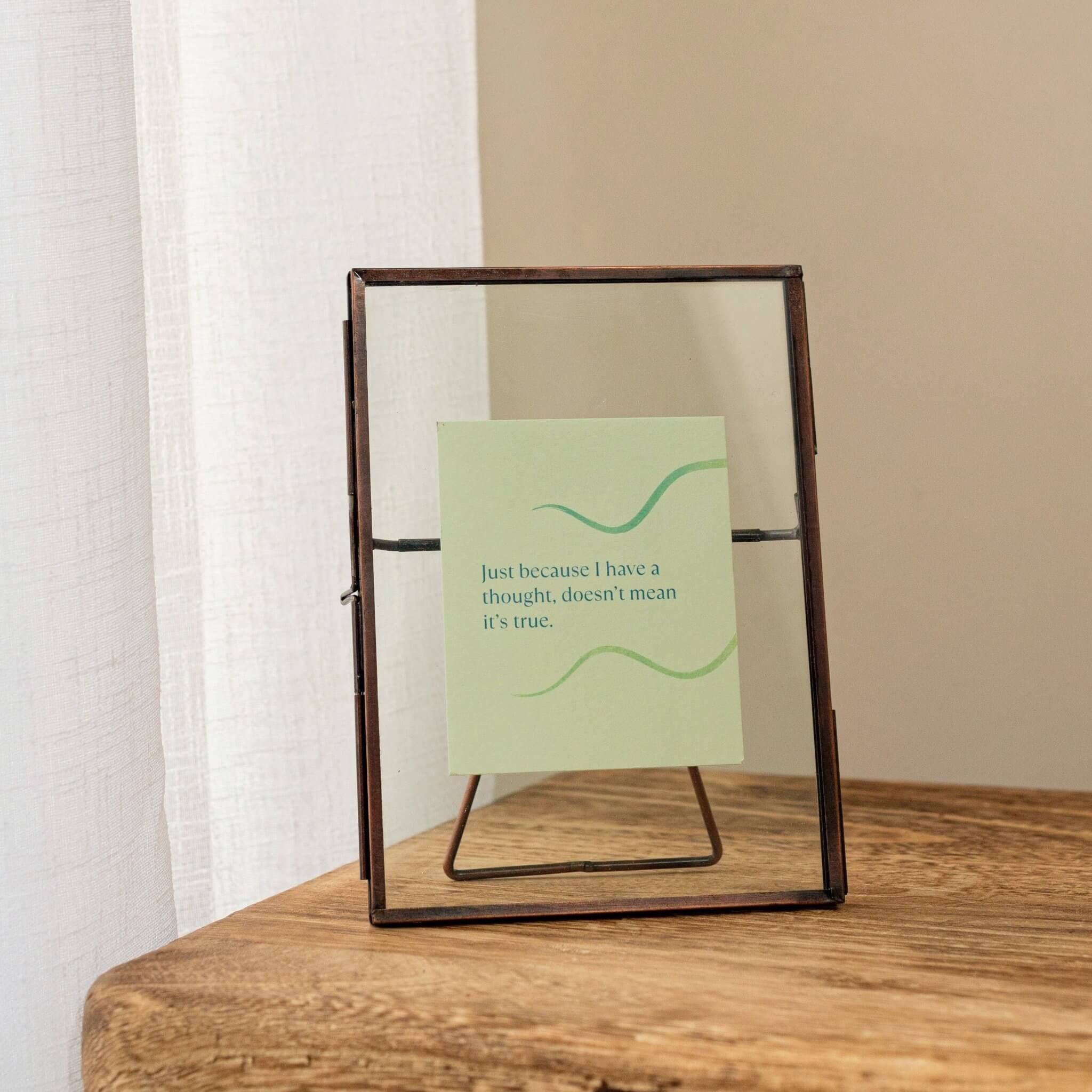
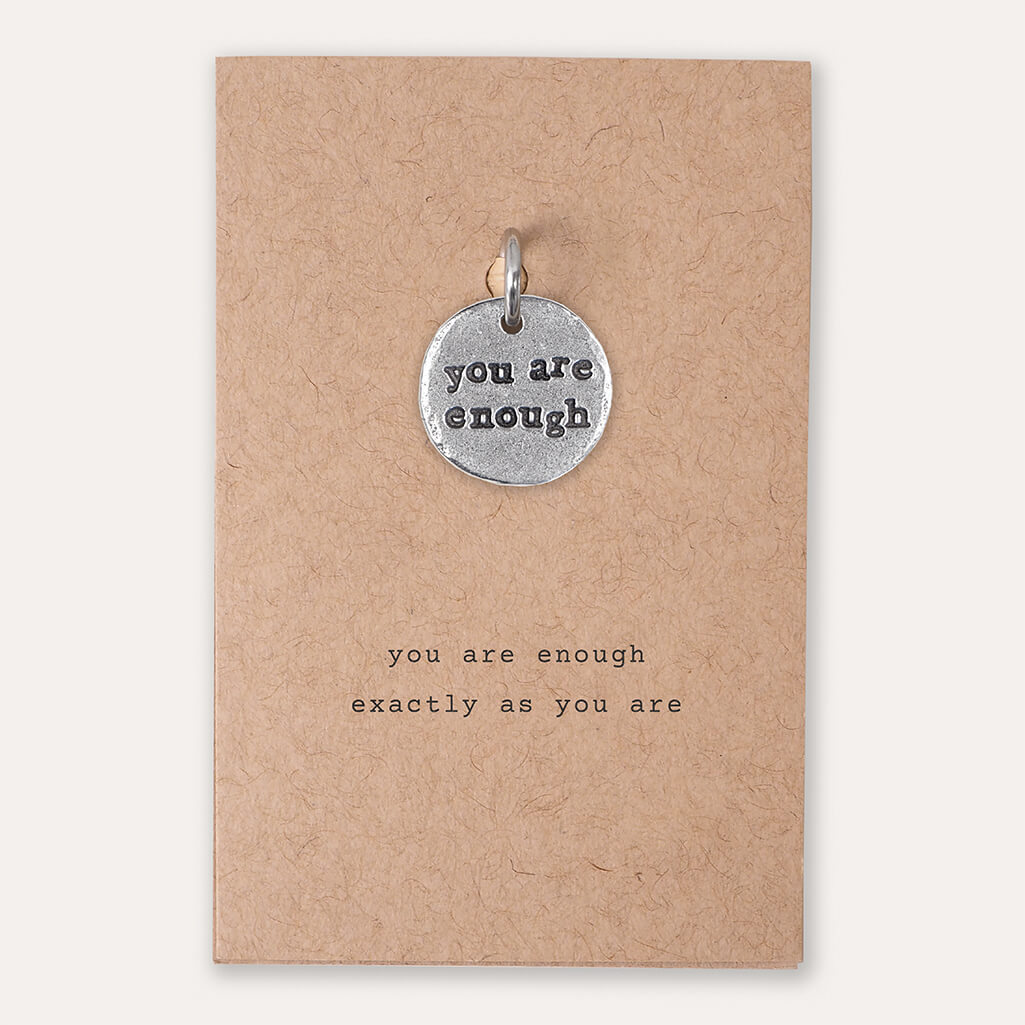
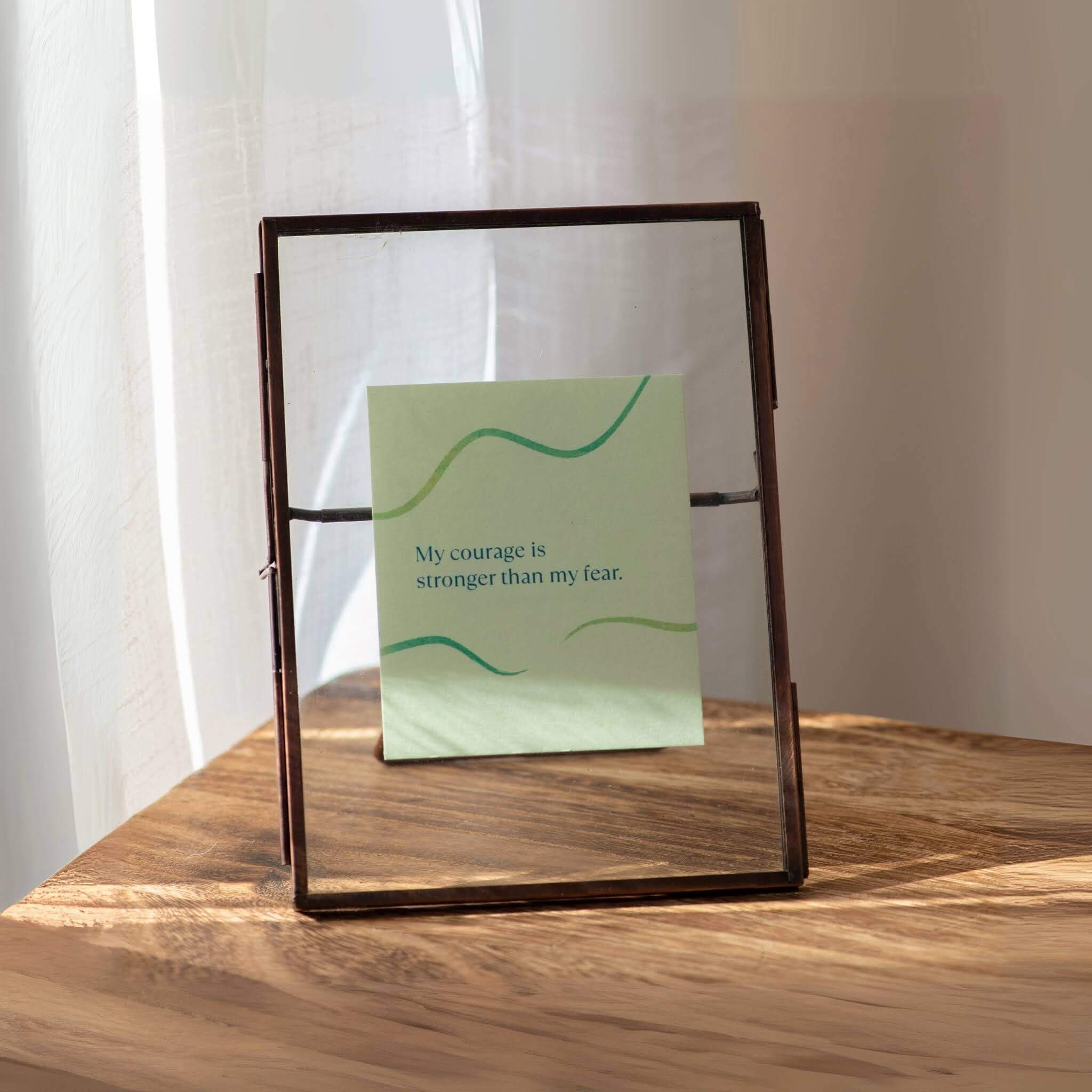
- Optional brass card stand or copper frame available
Sample Affirmations for Specific Perfectionist Patterns:
For "never good enough" thinking:
- "I can't be perfect and I don't need to be"
- "I release any pressure to be perfect, knowing that perfect doesn't exist"
- "I am enough, exactly as I am"
- "I can be proud of myself for doing my best"
For productivity-based worth:
- "I am worthy, and this does not depend on my productivity or achievements"
- "My worth is not dependent on what I have done today"
- "I don't need to earn rest to deserve it"
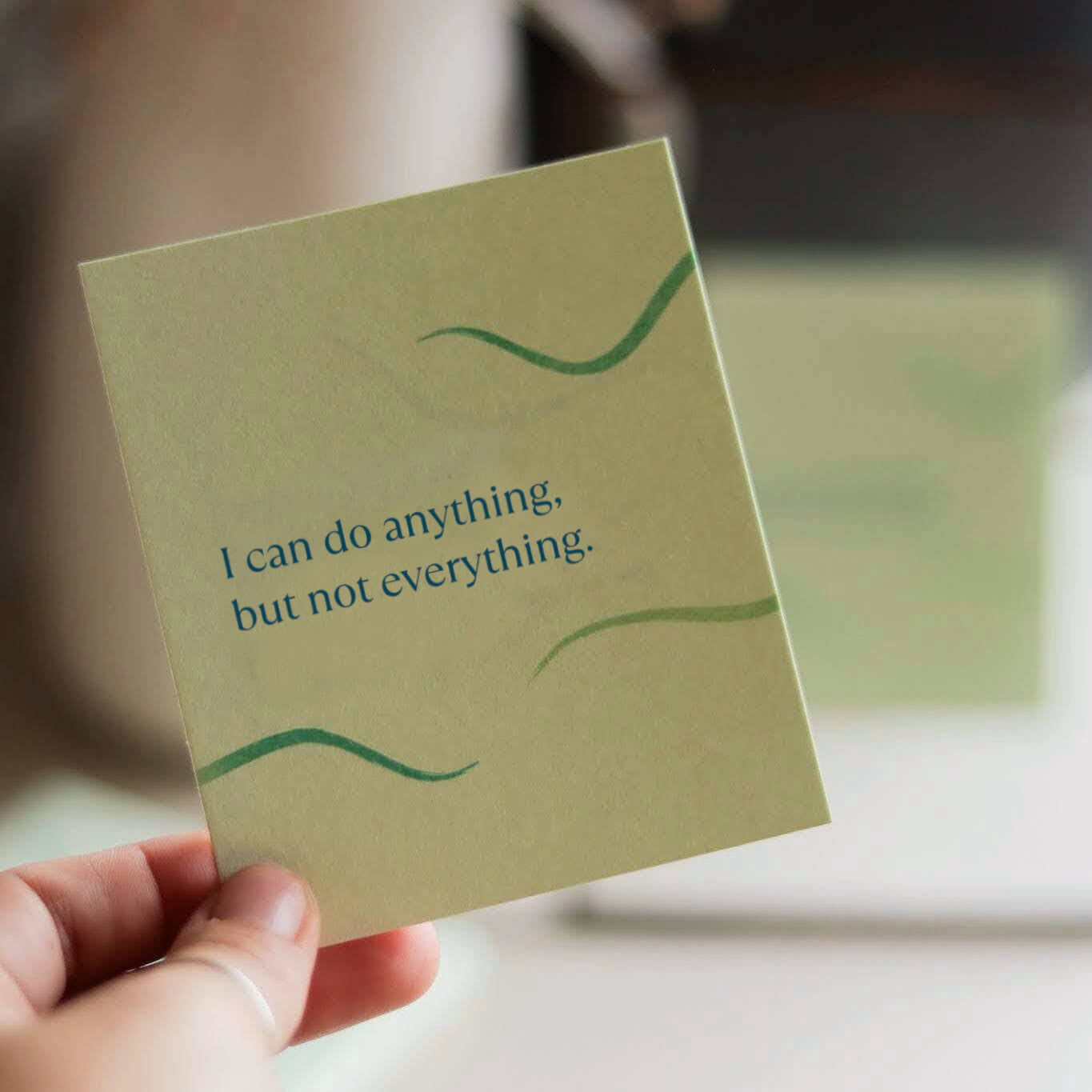
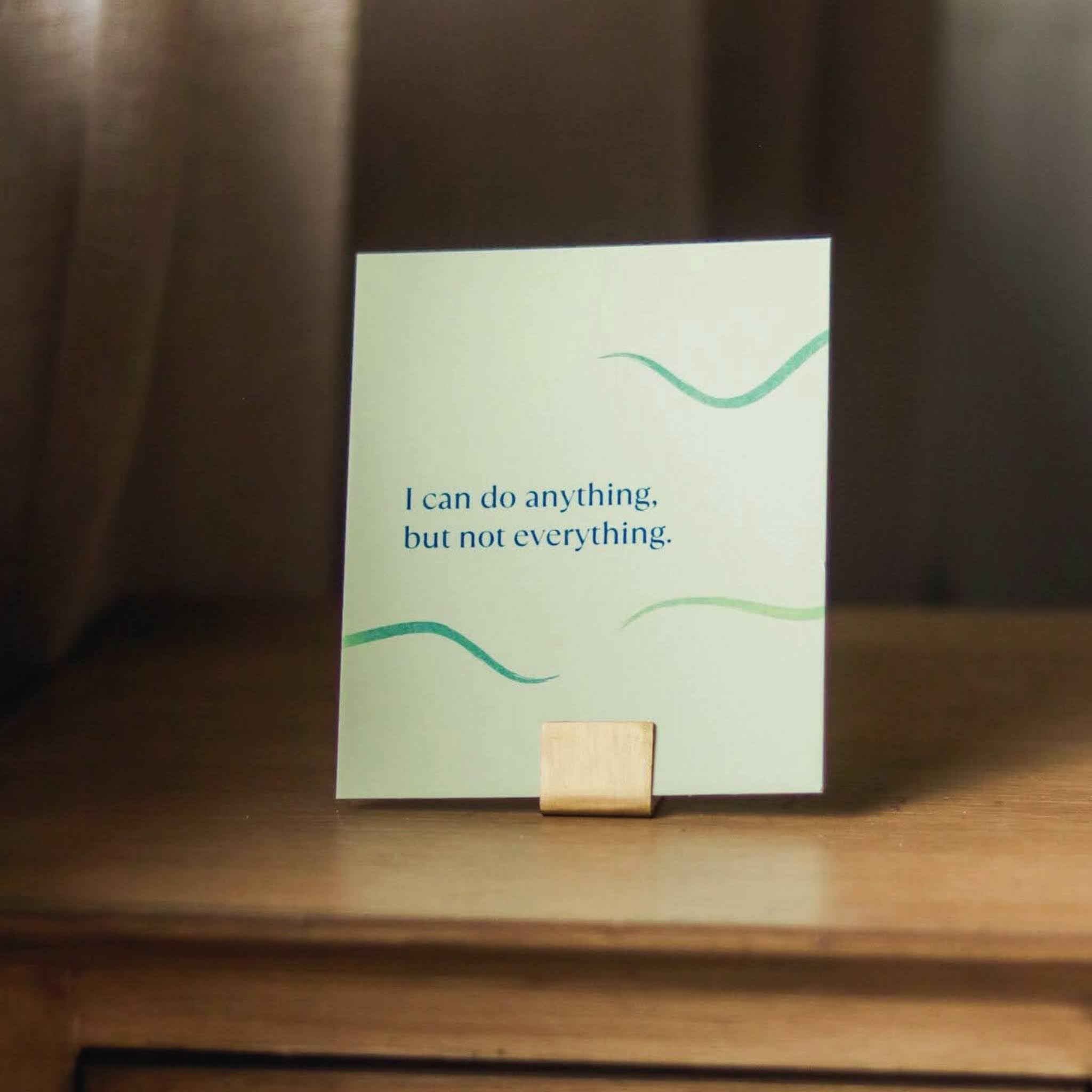
- "I can do anything, but not everything"
For fear of mistakes:
- "I can make mistakes and learn from them, without self-criticism"
- "I forgive myself for what I did when I was learning"
- "I remind myself that no one was an expert before they were a beginner"
For decision paralysis:
- "I release the pressure to make the perfect decision - a perfect decision doesn't exist"
- "I remind myself that there is always a new way to the same outcome"
- "I can change my mind and know that that is okay"
- "I recognise that sometimes the only way forward is to use trial and error and that is okay"
For "should" thinking:
- "Whenever I notice I am saying 'I should', I stop and find another word"
- "I am gentle with myself if I feel things deeply knowing that sensitivity is not a weakness"
- "I can do things I cannot do yet"
For comparison and competition:
- "I don't need to compare or compete. No human on the planet is meant to be the same"
- "I honour that my path in life will be different to others, I don't need to compare or compete"
- "I remind myself that there is no single definition of success"
How to Use Affirmation Cards When You're a Perfectionist
Here's the irony: perfectionists often want to use affirmation cards "perfectly." Let me save you that trap.
The Simplest Way to Start (No Perfectionism Required):
- Pick one card each morning (shuffle and pull randomly—no need to find the "perfect" one)
- Place it where you'll see it (desk, mirror, anywhere visible)
- When you notice it, read it (no pressure to memorize it, believe it immediately, or do anything special)
That's it. Imperfect is fine. Forgetting some days is fine. This is practice in letting things be "good enough."
For Perfectionists Specifically:
When the perfectionist voice says: "I should be doing this perfectly"
Read the card that says: "Whenever I notice I am saying 'I should', I stop and find another word"
When you criticize yourself for missing days:
Read: "I can make mistakes and learn from them, without self-criticism"
When you feel like you're not doing enough:
Read: "I can do anything, but not everything"
What to Expect Over Time:
- Week 1-2: It will feel uncomfortable to give yourself permission to be imperfect. Your perfectionist brain will resist. That's normal.
- Week 3-4: You'll notice small shifts—catching yourself in "should" thinking, questioning whether the standard is realistic, being slightly less harsh when you make mistakes.
- Beyond: The perfectionist voice doesn't disappear, but the self-compassionate voice gets stronger. You have an alternative available.
Read the complete guide on how to use affirmation cards →
Frequently Asked Questions
Will these cards make me less motivated or lazy?
This is the most common fear about self-compassion for perfectionists. But research shows the opposite: self-compassion actually increases motivation because it removes the fear of failure that causes procrastination. When you're not terrified of making mistakes, you're more willing to try. Dr. Bianca Nardini explains that self-criticism creates a stress response that makes you "most likely to revert to familiar behaviors"—meaning harsh self-talk keeps you stuck, not motivated.
Isn't perfectionism what makes me successful?
Perfectionism might drive achievement, but at a cost: burnout, anxiety, poor self-worth, and never feeling satisfied even when you succeed. Research shows you can have high standards without perfectionism—the difference is self-compassion when you fall short. As Collette Jones notes, perfectionism leaves you on "a never ending hamster wheel of disappointment." Success without burnout is possible.
What if I can't let go of needing things to be perfect?
You don't have to let go of everything at once. These cards help you question one perfectionist thought at a time. "I release the pressure to make the perfect decision" doesn't mean making careless decisions—it means acknowledging that perfect decisions don't exist, so you can make good-enough decisions without paralysis. Start small.
How is this different from "lowering my standards"?
Self-compassion isn't about lowering standards—it's about having realistic standards and responding with kindness when you're human. "I can make mistakes and learn from them, without self-criticism" doesn't mean accepting poor work. It means learning from mistakes instead of beating yourself up, which research shows is more effective for improvement.
Can I use these alongside therapy?
Yes. Many therapists who work with perfectionism recommend these cards to clients. They're grounded in CBT and Compassion-Focused Therapy principles. Collette Jones, a therapist who specializes in perfectionism, uses them with her clients. If you're in therapy for perfectionism, you can show your therapist the cards to see how they fit your treatment.
What if reading "I can't be perfect" makes me anxious?
That anxiety is your perfectionist brain resisting the truth. Perfect doesn't exist—but your brain has been operating as if it does. The discomfort is normal when encountering a different message. Start with cards that feel more manageable, like "I remind myself that no one was an expert before they were a beginner." Build up to the ones that trigger more resistance.
How often should I use them?
As often as feels sustainable—which is very different from "as often as you should." Daily is ideal, but missing days doesn't mean you've failed. The goal is practice, not perfection. Even seeing one card a few times a week provides repeated exposure to self-compassion. Do what you can, not what the perfectionist voice demands.
Why I Created These Cards
I'm Rachel Smith, founder of Give Yourself Kindness. I created these affirmation cards after my own experience with perfectionism and the exhausting belief that I was never quite good enough.
Every affirmation card I tried made me feel worse. They either added more pressure ("You can do anything!") or felt unrealistic ("You're perfect!"). When I couldn't find what I needed, I created it—working with clinical psychologists to ensure the cards gave permission to be imperfect rather than demanding I be better.
Licensed therapists who specialize in perfectionism now use these cards with their clients. They exist because research shows this approach actually helps.
Additional Support for Perfectionism
Affirmation cards are one tool. Here are other resources that can help with perfectionism:
Expert-Written Content on Perfectionism:
- Self-Compassion: The Antidote to Perfectionism — Complete guide by Collette Jones, LCSW
- Why Self-Compassion Is So Hard — Dr. Bianca Nardini explains why kindness feels uncomfortable for perfectionists
- Why Self-Compassion is More Effective Than Self-Criticism — Dr. Annabelle Kyle Dortch on what actually helps growth
- How to Stop Beating Yourself Up — Dr. Maria Tucknott on the inner critic
For Deeper Processing:
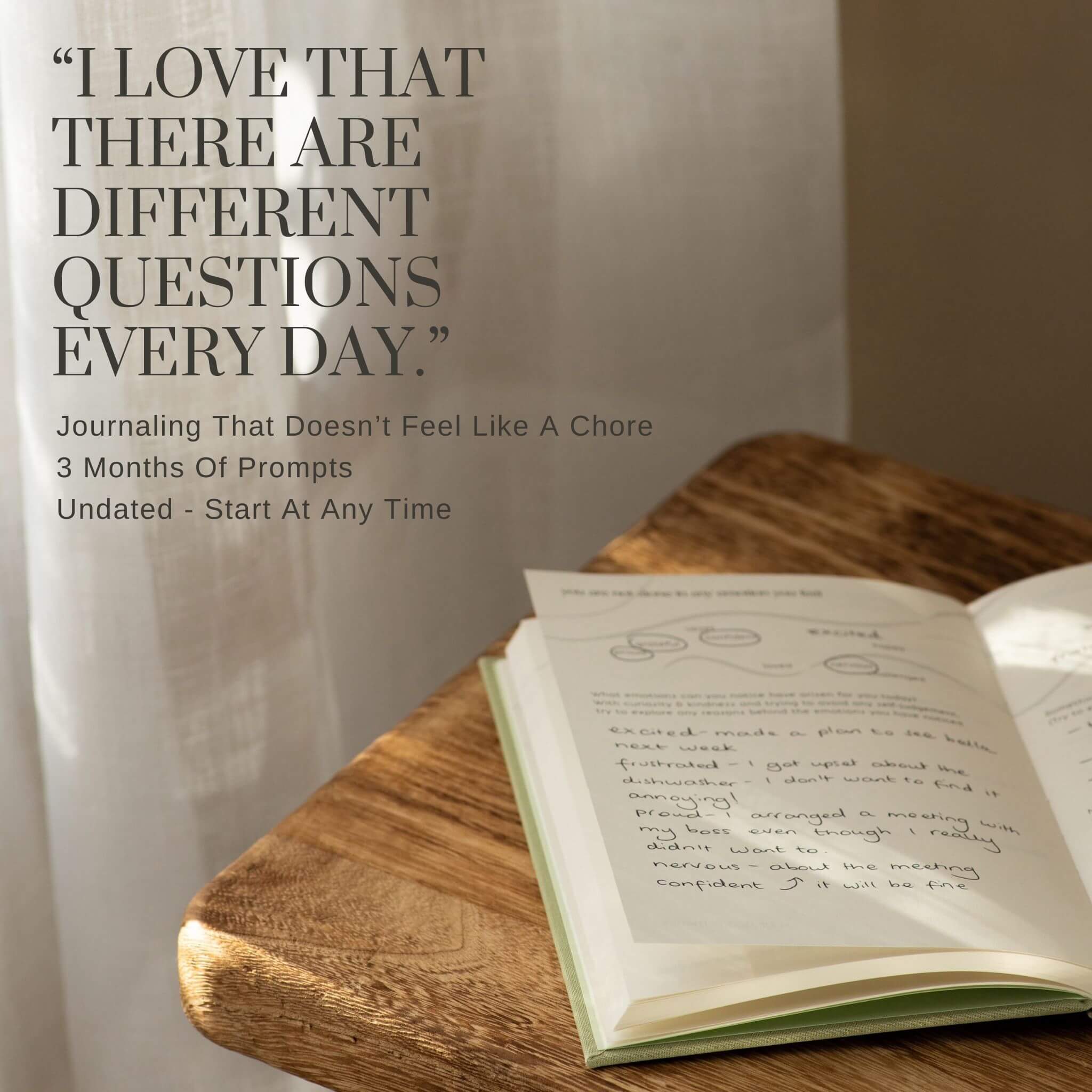
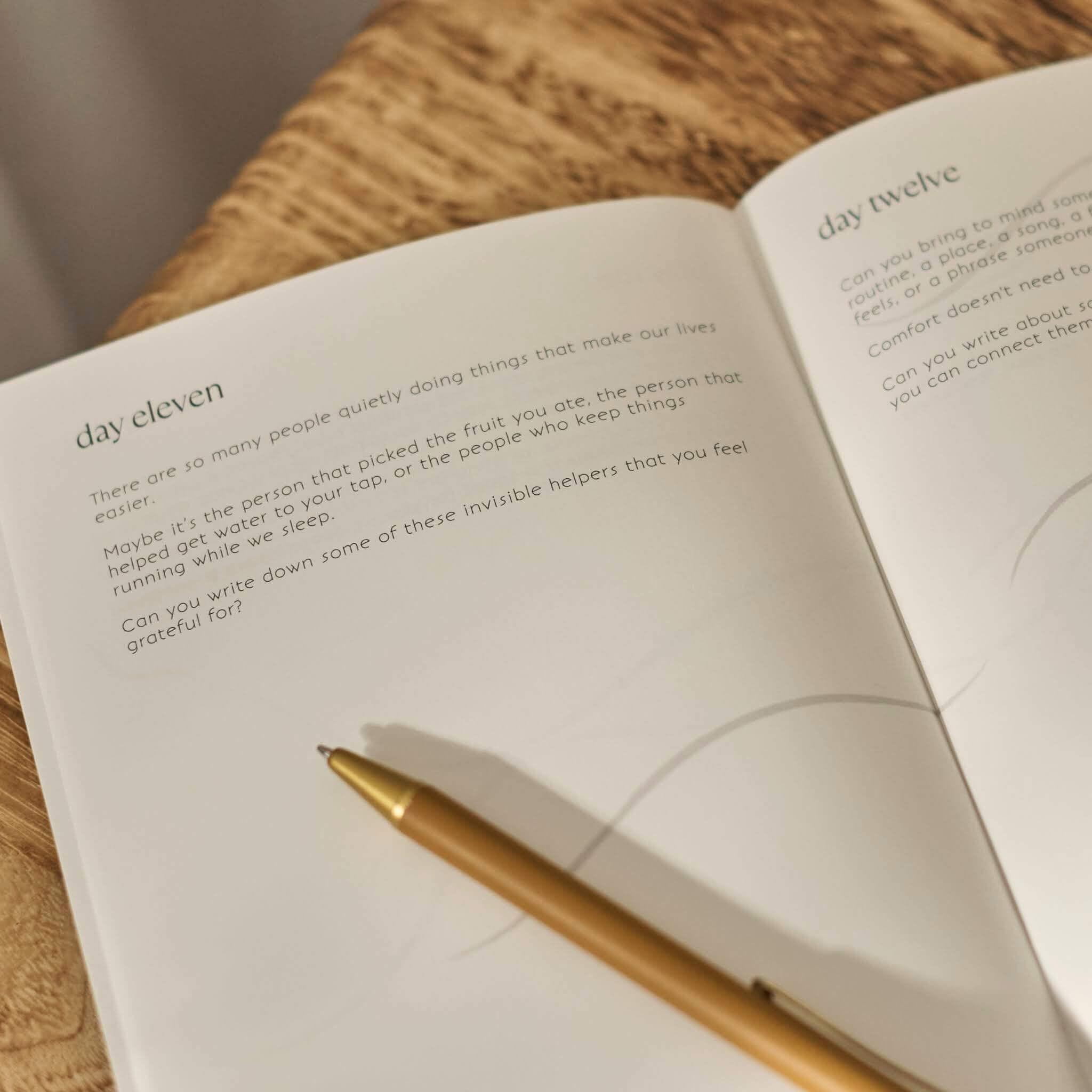
- The Give Yourself Kindness Journal — 90 days of prompts to practice self-compassion and challenge perfectionist thinking
- How to Stop Negative Self-Talk — Techniques that actually work


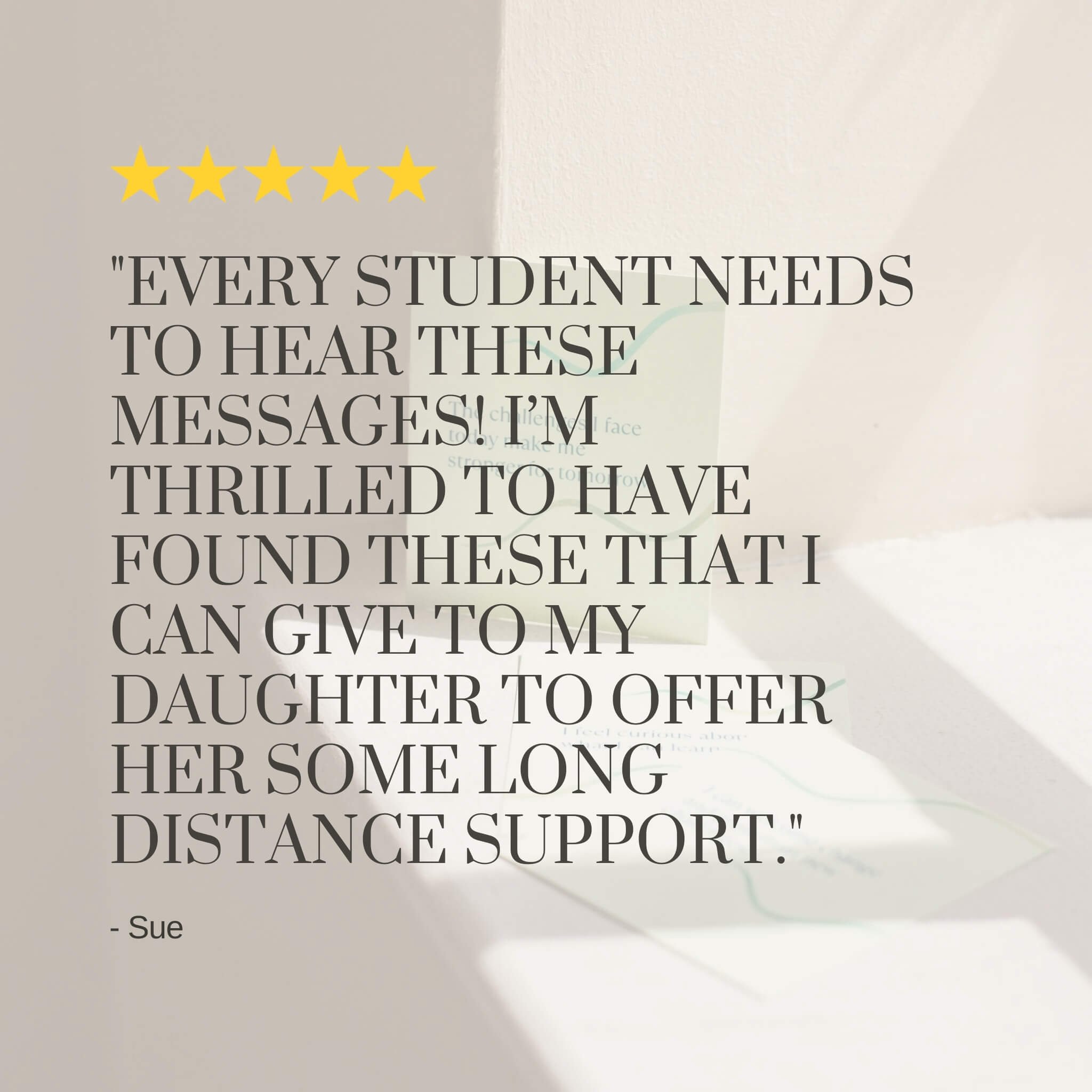
“I instantly feel a sense of groundedness and calm”
Affirmations can be so helpful along our healing journey. And these affirmations are truly so beautiful and powerful! When I read them, I instantly feel a sense of groundedness and calm. They are wonderful reminders for when I need to slow down and reconnect with myself. I also love that they are centered around having more compassion and kindness for ourselves. I will definitely be utilizing these with my clients, as well as practicing them myself. Thank you so much Rachel!