

Start here
If everything is arriving at once and you can't think straight, the words will land better after a minute of settling. So here is the minute first, then three affirmations you can read straight away.
One long breath out
Not a big breath in. A slow breath out, longer than the one in. Do that three times.
A hand where it's tight
Chest, throat, stomach, wherever it's sitting. Rest a hand there and leave it.
Name five things you can see
Out loud or in your head. One sequential task for a mind that's holding twenty.
Now three affirmations, if you'd like them:
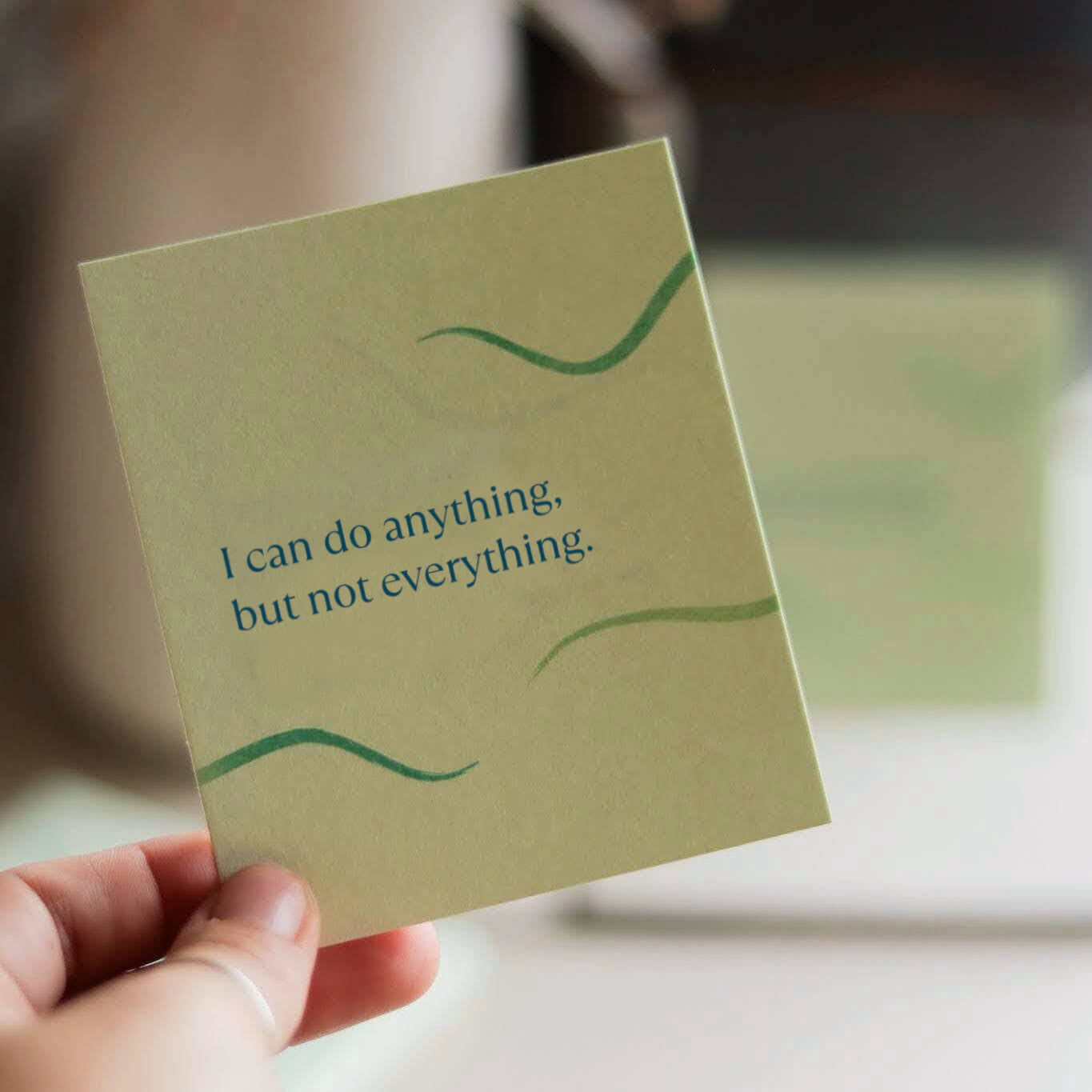
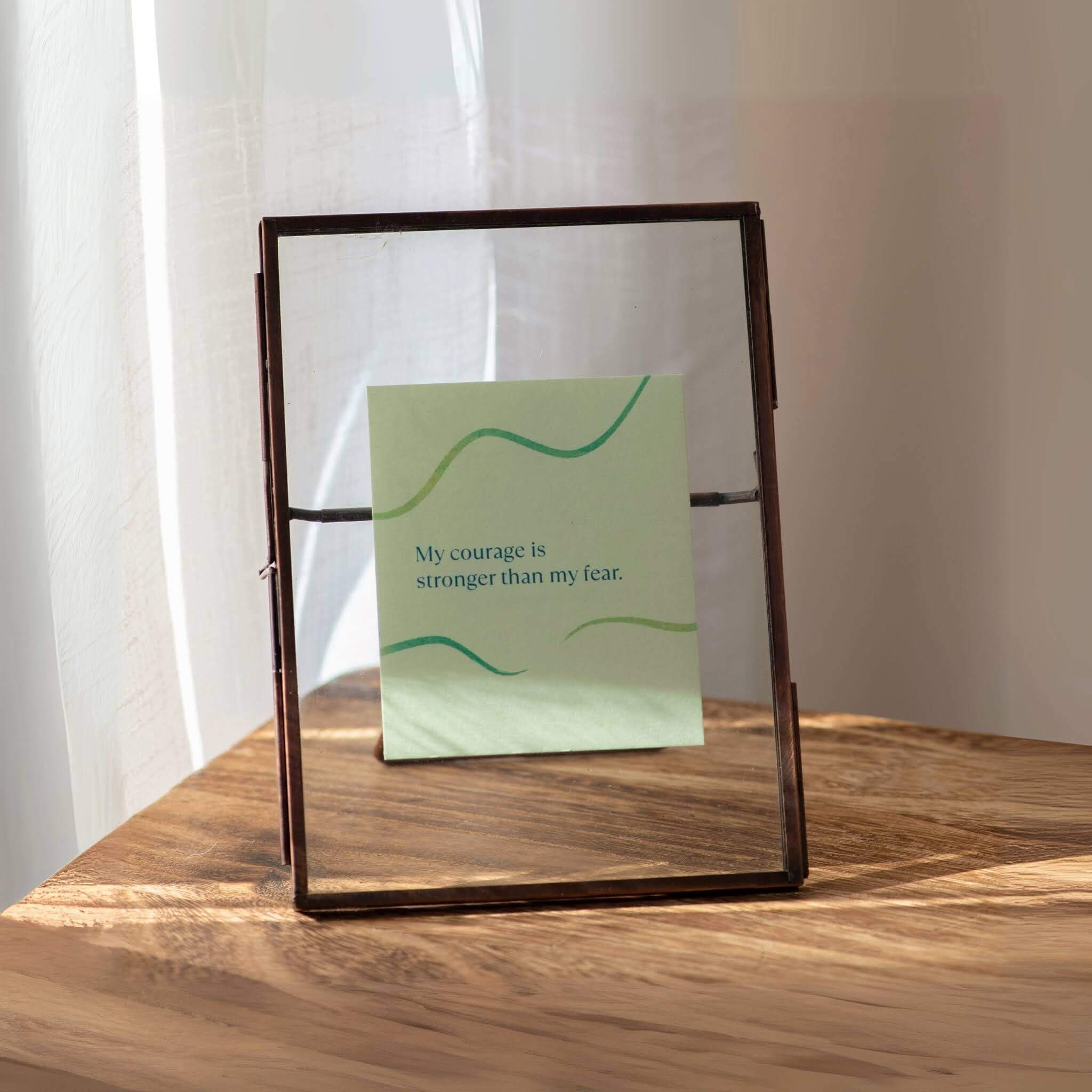
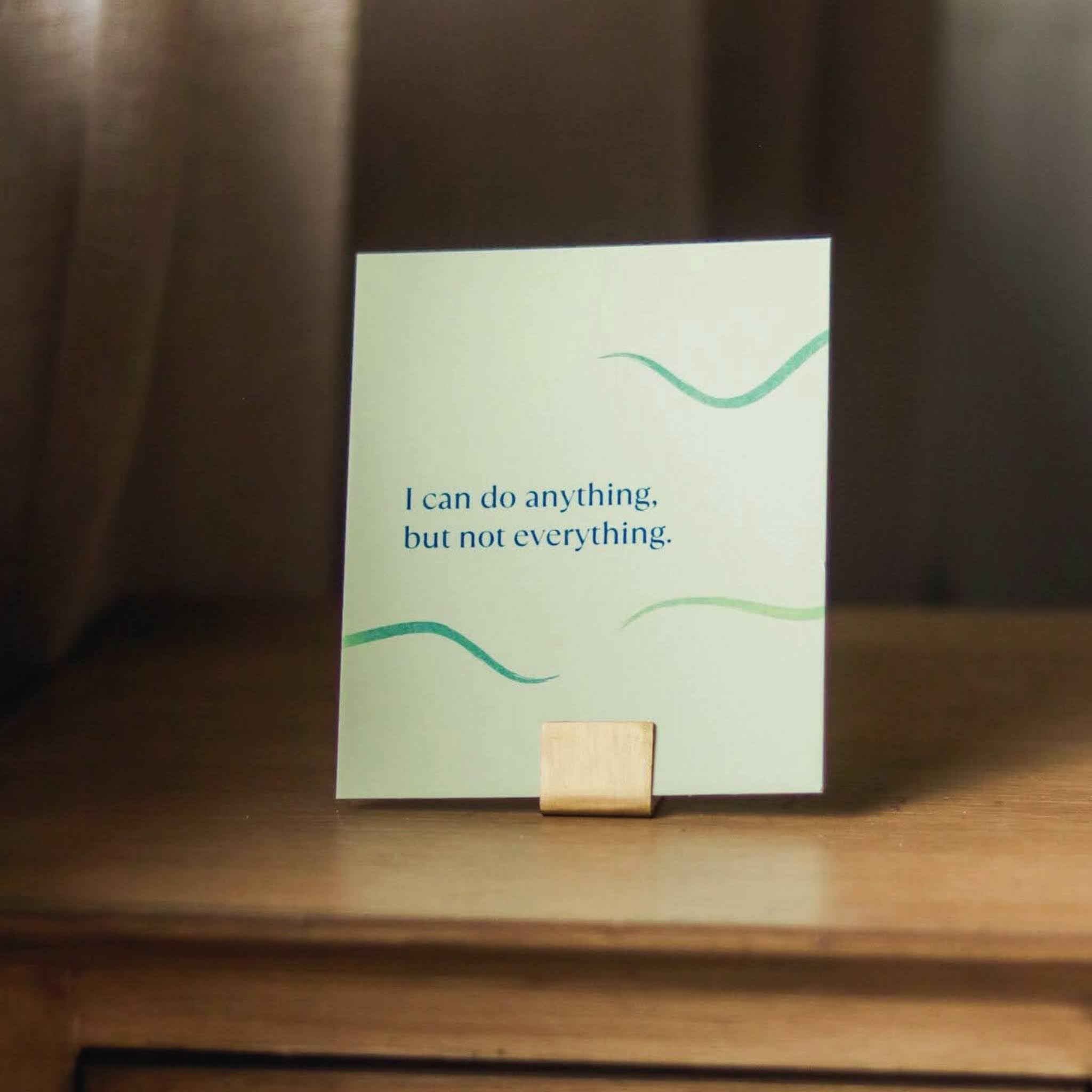
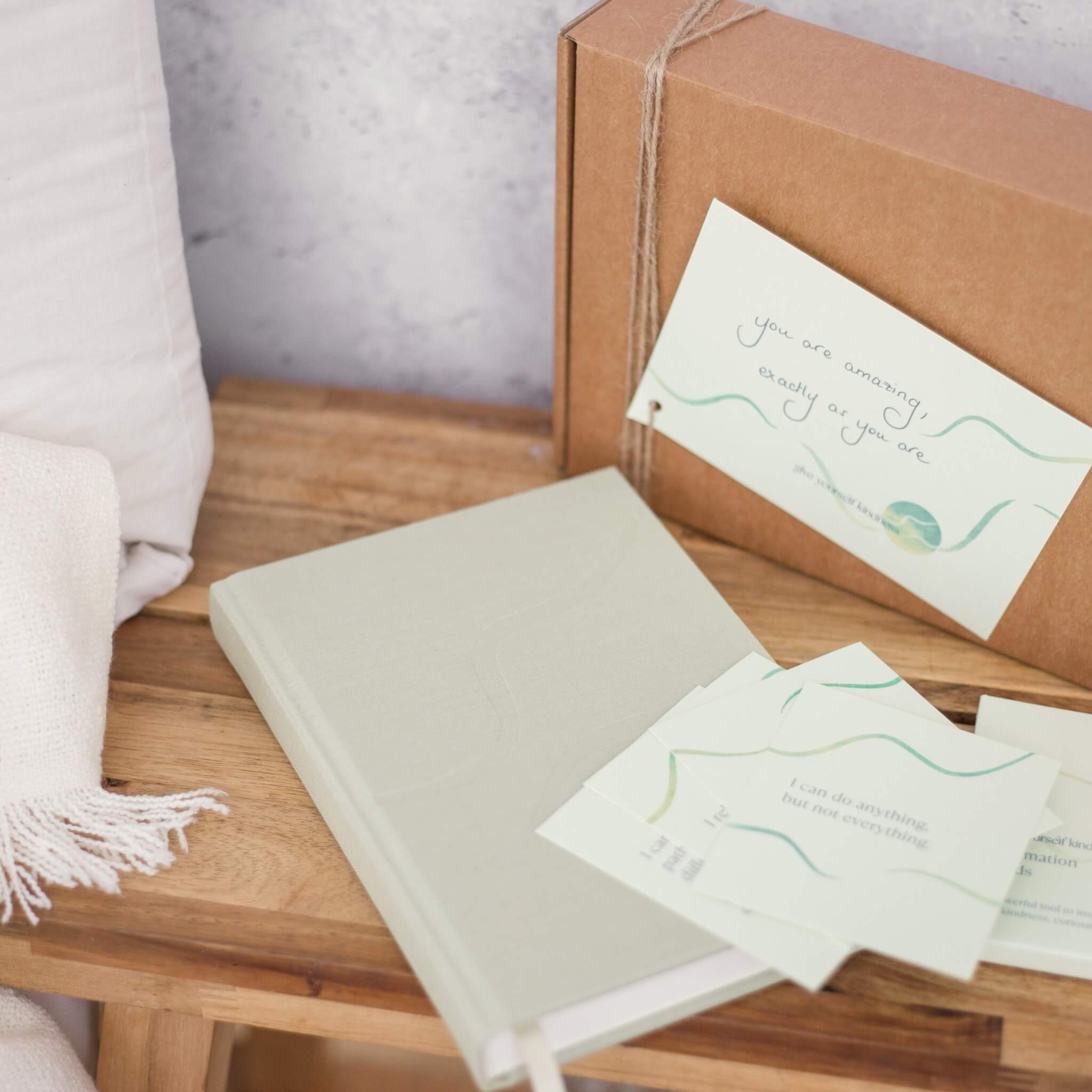
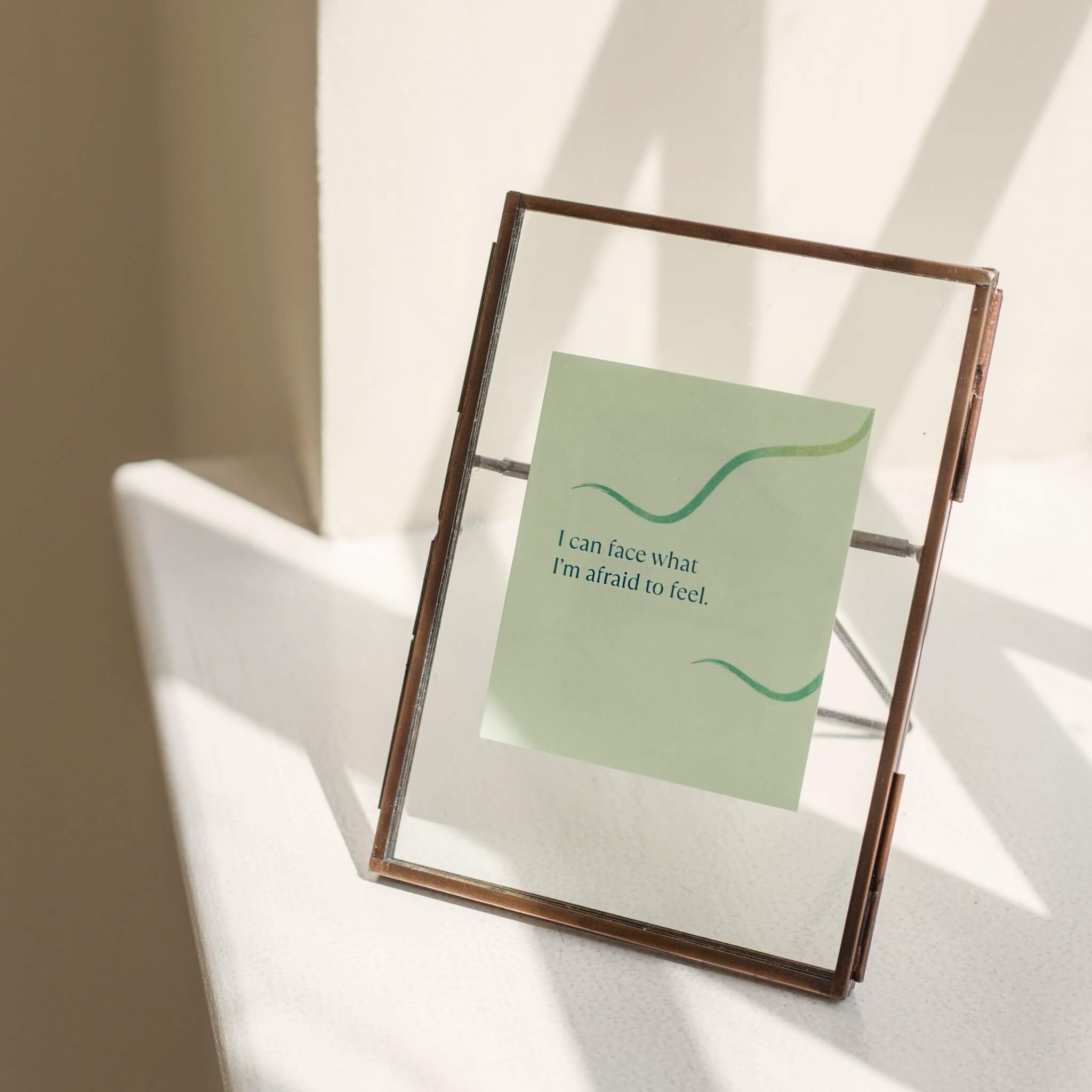
- I can do anything, but not everything.
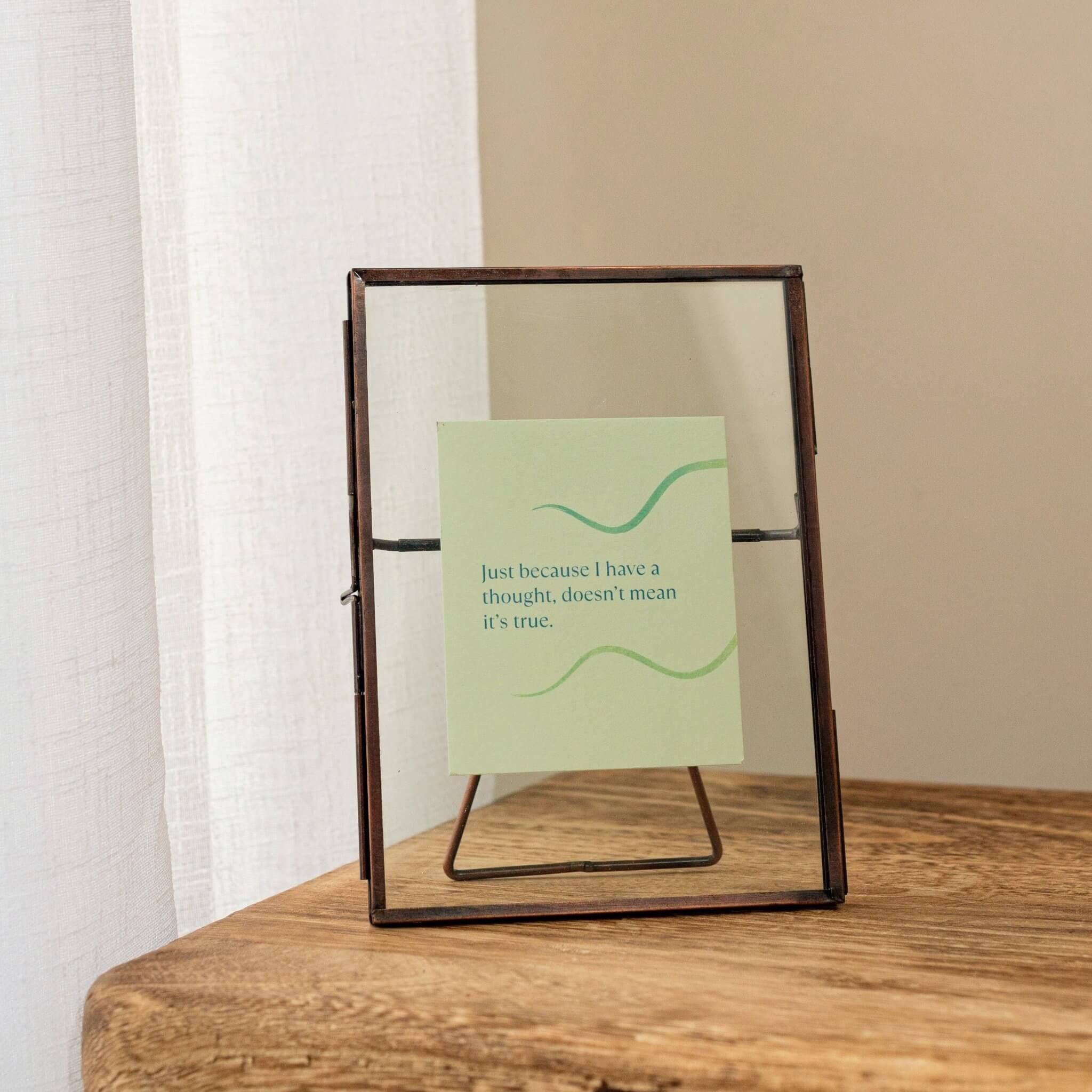
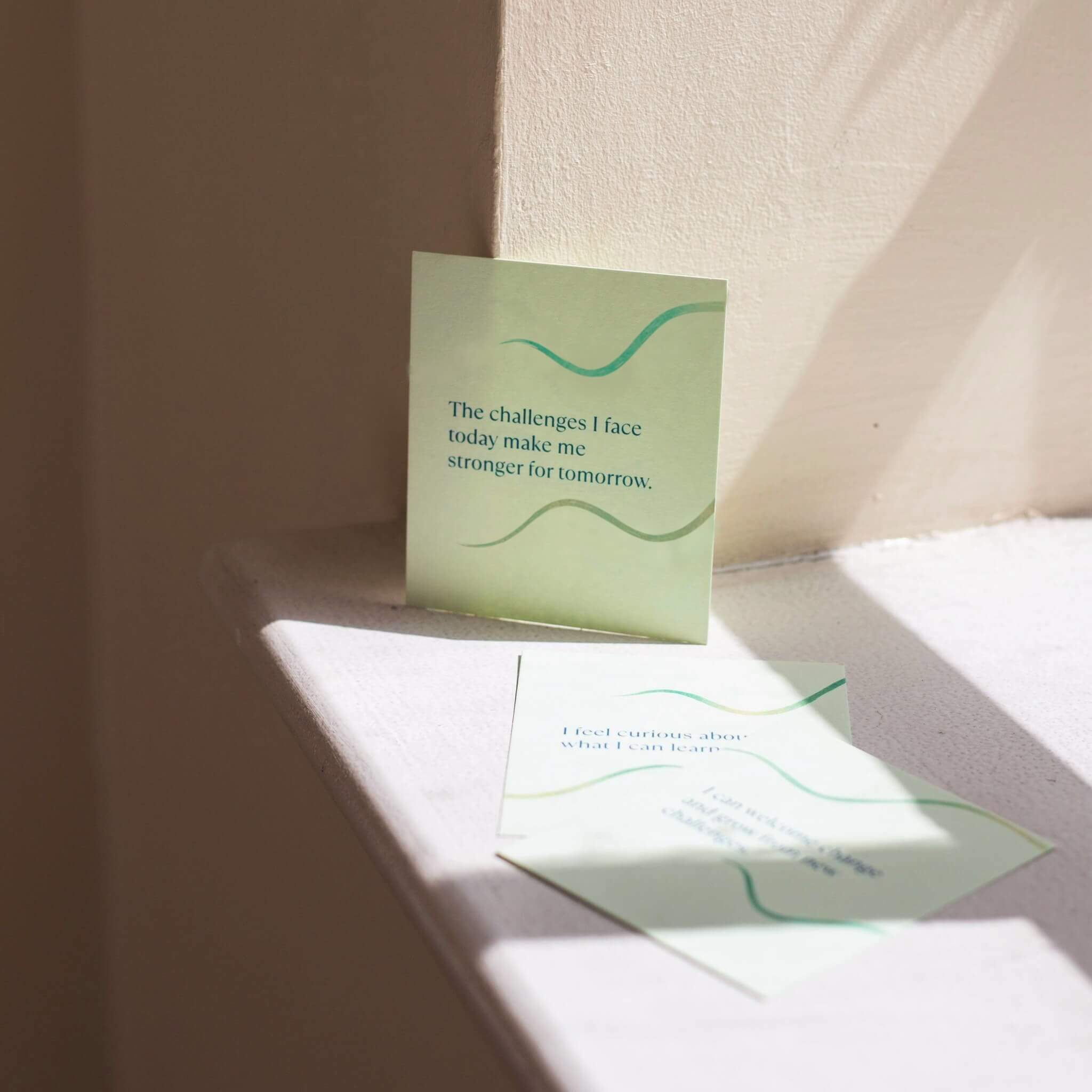
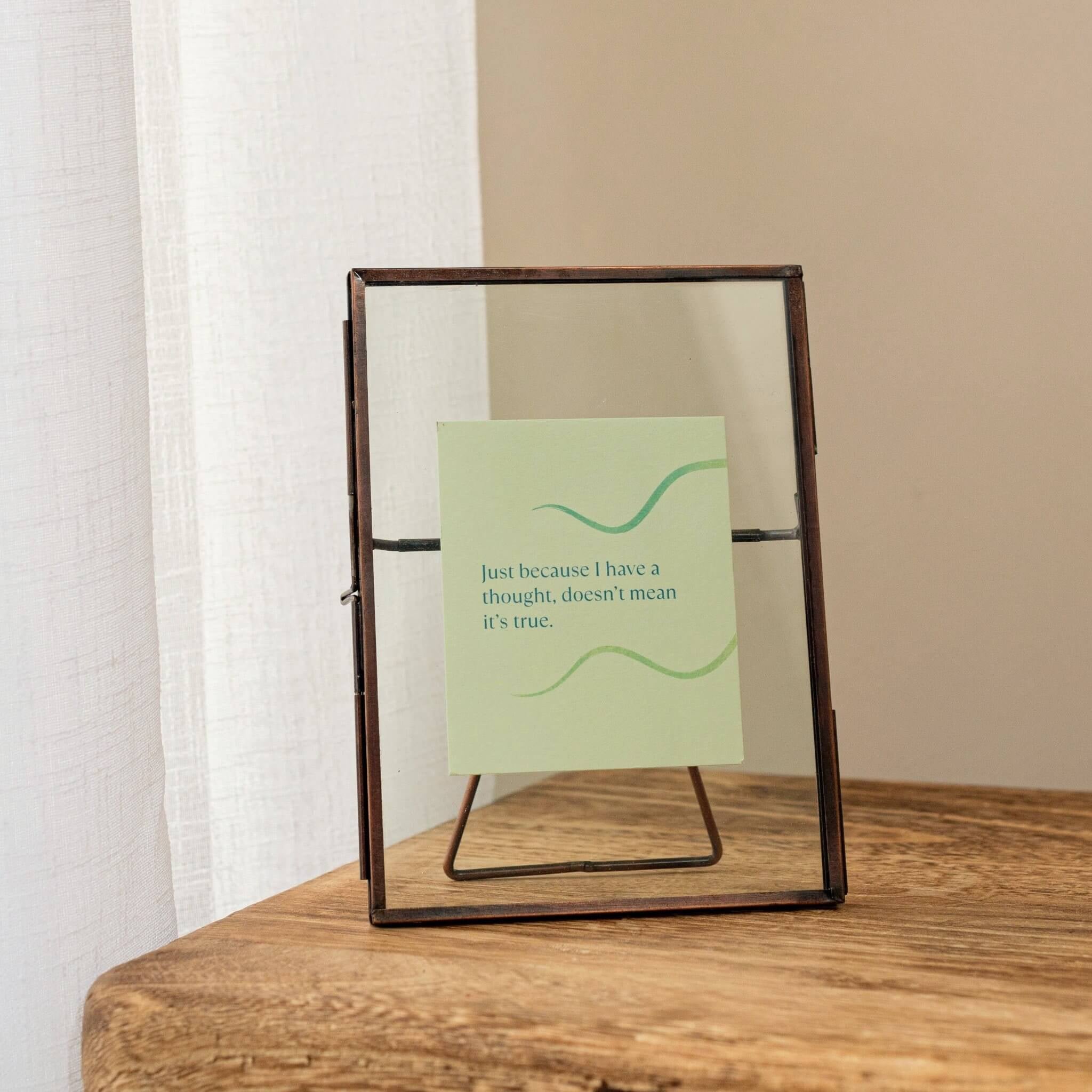
- Just because I have a thought, doesn't mean it's true.
- I can be gentle with myself if I feel overwhelmed and reassure myself that this feeling will pass.
There are 33 more further down, grouped by which kind of overwhelm this is. Nothing to sign up for.
Discover the affirmation cards →On this page
Why everything feels like too much at once
Overwhelm isn't usually one enormous thing. More often it's everything arriving together, with no space between any of it — the work, the messages, the admin, the person who needs something, the thing you forgot. None of it is individually impossible. All of it at once is.
And the part that catches people out is that the thinking goes first. When there's too much to hold, the mind stops being able to sort it, so even small decisions feel enormous and starting anything feels beyond you. That isn't a character flaw and it isn't laziness. It's what a mind does when it's over capacity.
Which is why the practice comes before the words on this page. If you're already flooded, reading a sentence about being calm gives your mind one more thing to hold. A long exhale and one simple sequential task give it something to put down.
Then the affirmations have somewhere to land. There's no right or wrong order, and if you'd rather go straight to the words, that's completely fine too.
33 affirmations for feeling overwhelmed
These are from my own affirmation sets, pulled out and regrouped for this particular state. They're grouped by which kind of overwhelm it is, so you can go to the one that fits rather than reading all of them. You almost certainly only need one.
Everything here is free and yours to use
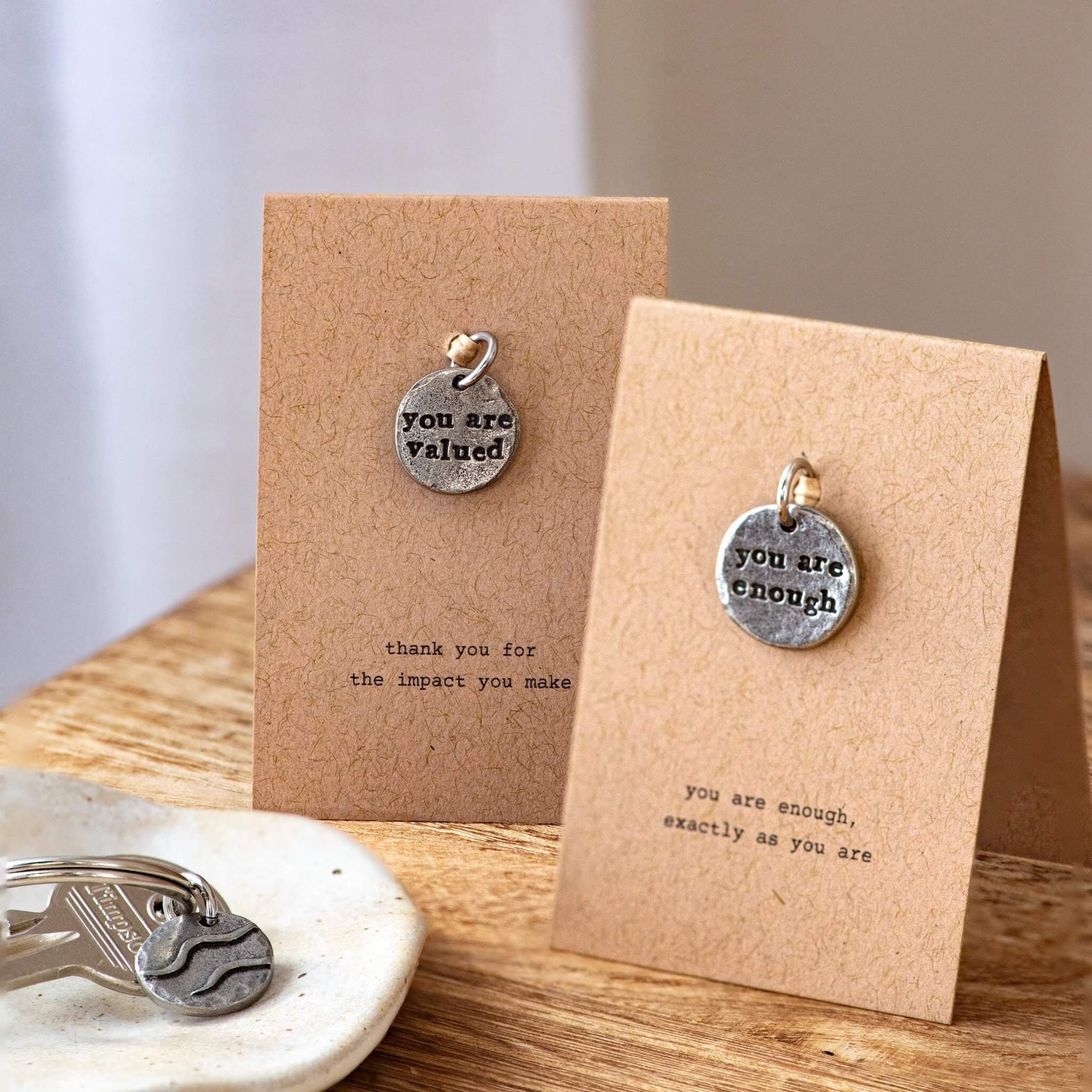
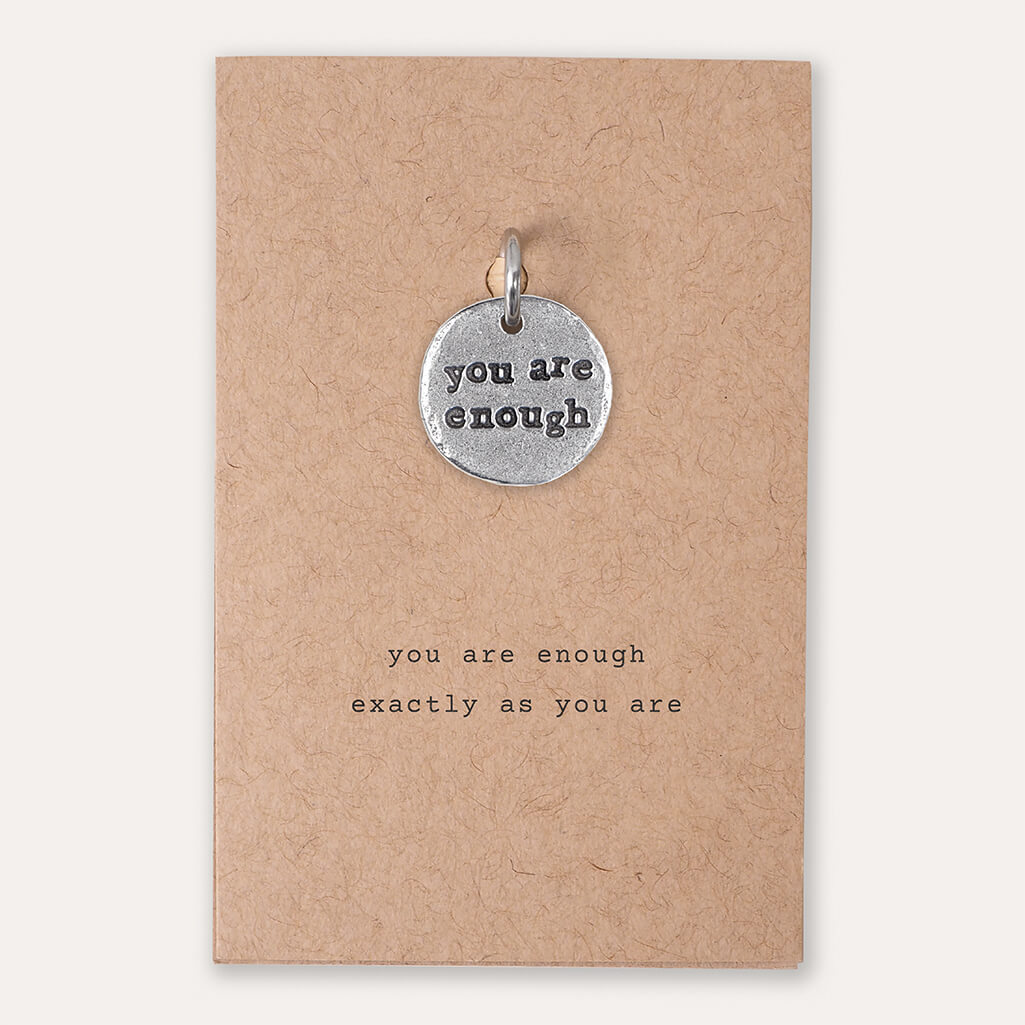
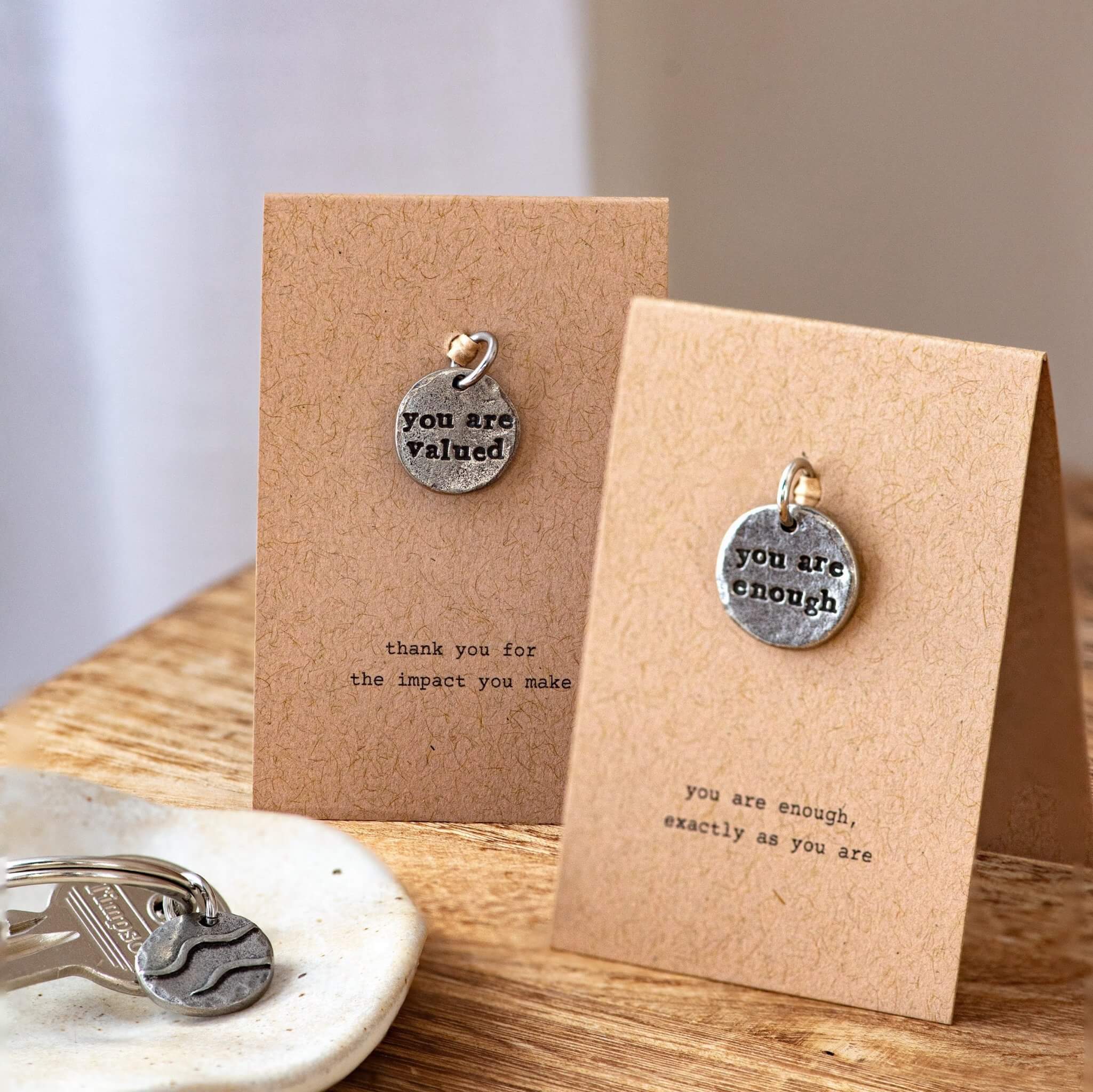
I sell these affirmations as printed cards. But the words aren't the part you'd be paying for, and I'd rather you had them now than after a purchase. Photograph the ones that land. Write them on the back of an envelope. That works.
None of them will ask you to feel positive, and none of them will tell you that everything is fine. When you're overwhelmed, being told to cheer up is one more thing to carry.
When it's all in your head at once
For the version where nothing is individually enormous, but it's all arriving together and there's no room to think.
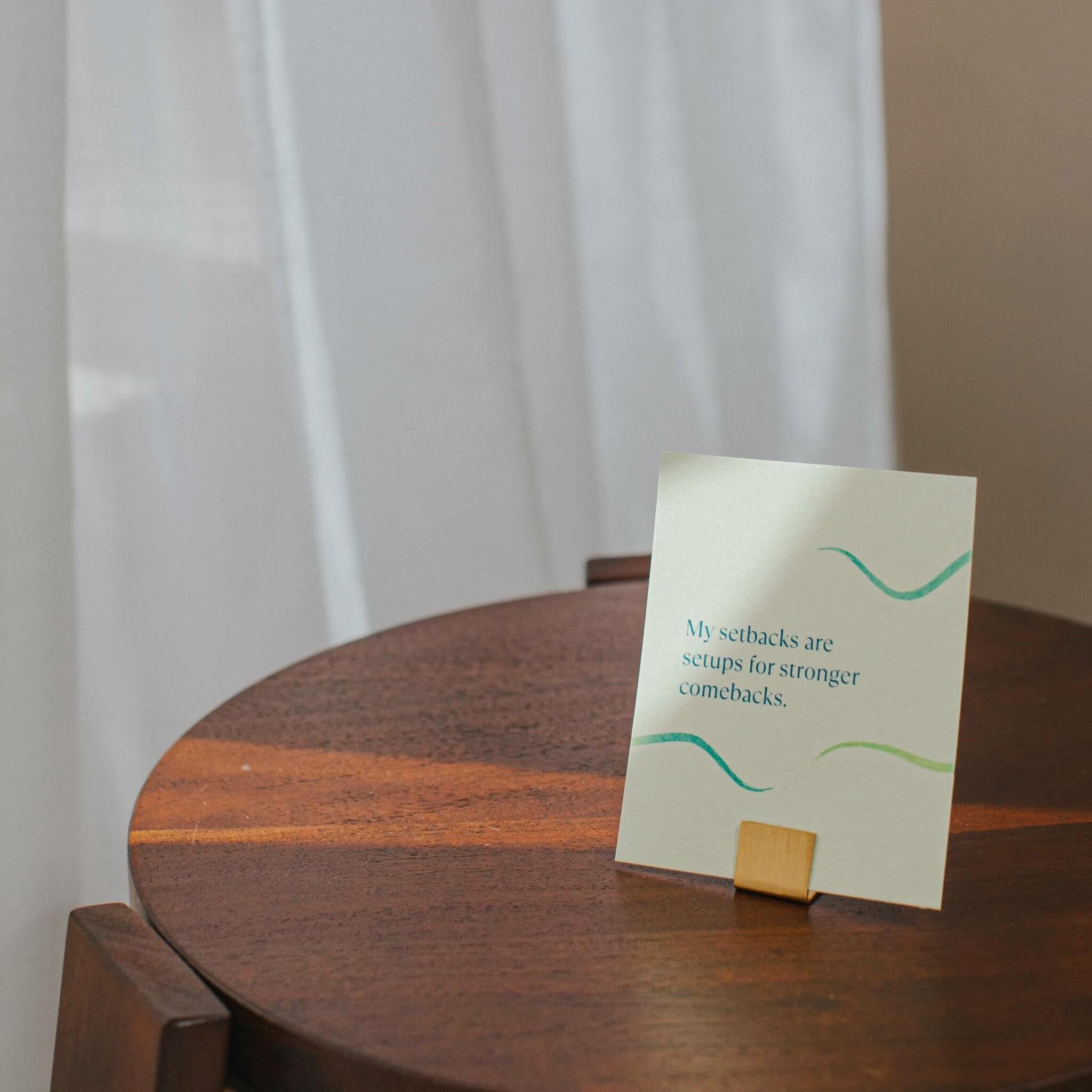
- I can do anything, but not everything.
- Just because I have a thought, doesn't mean it's true.
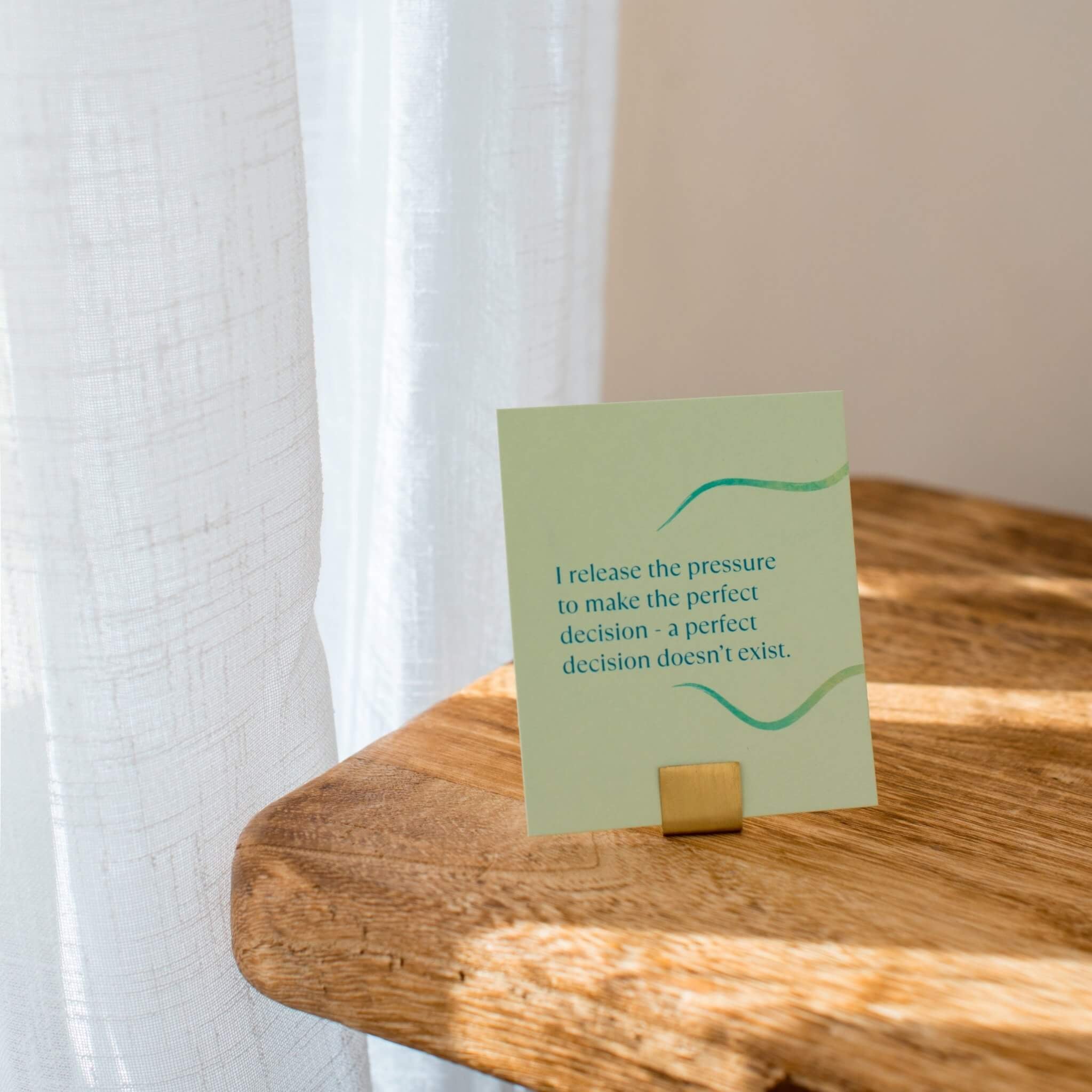
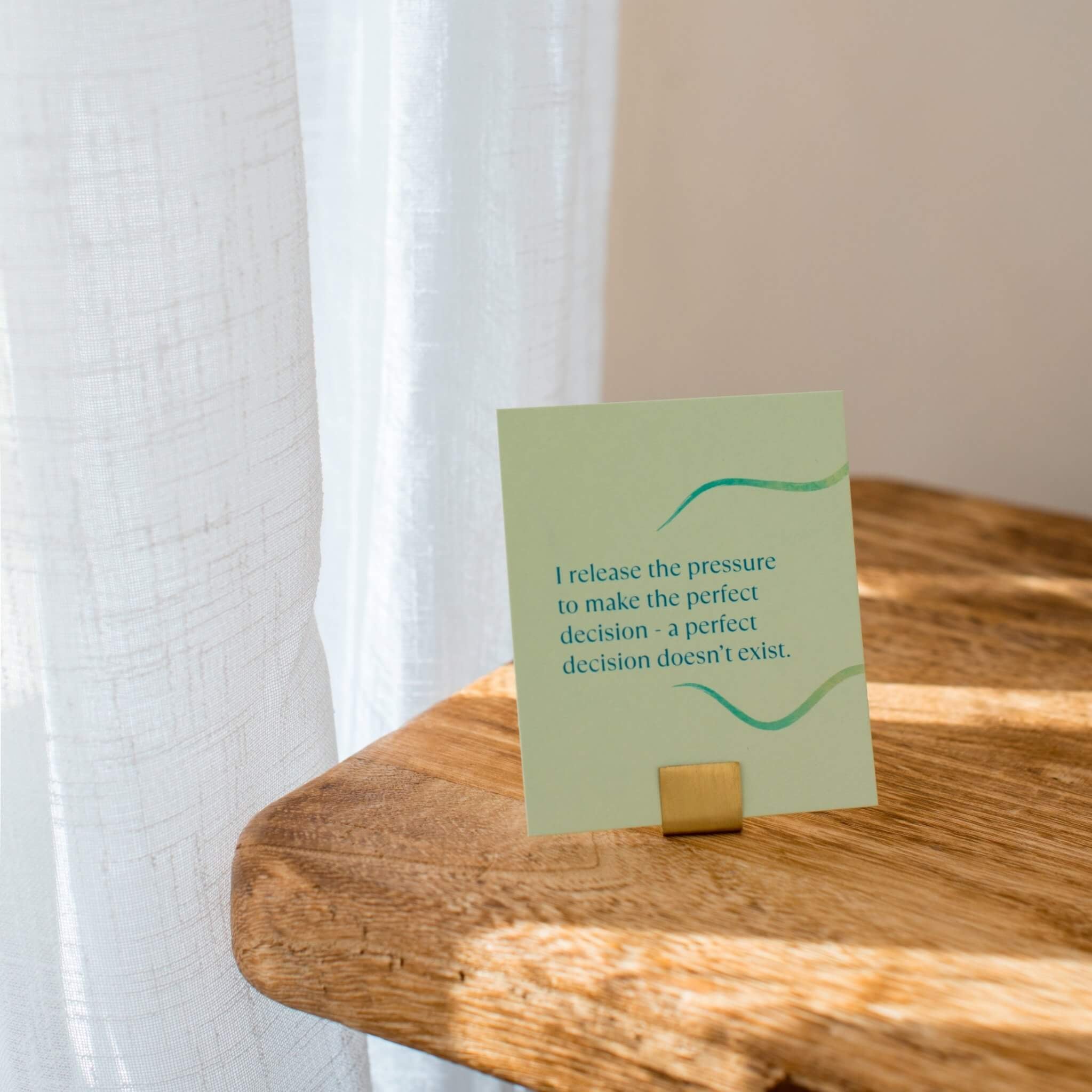
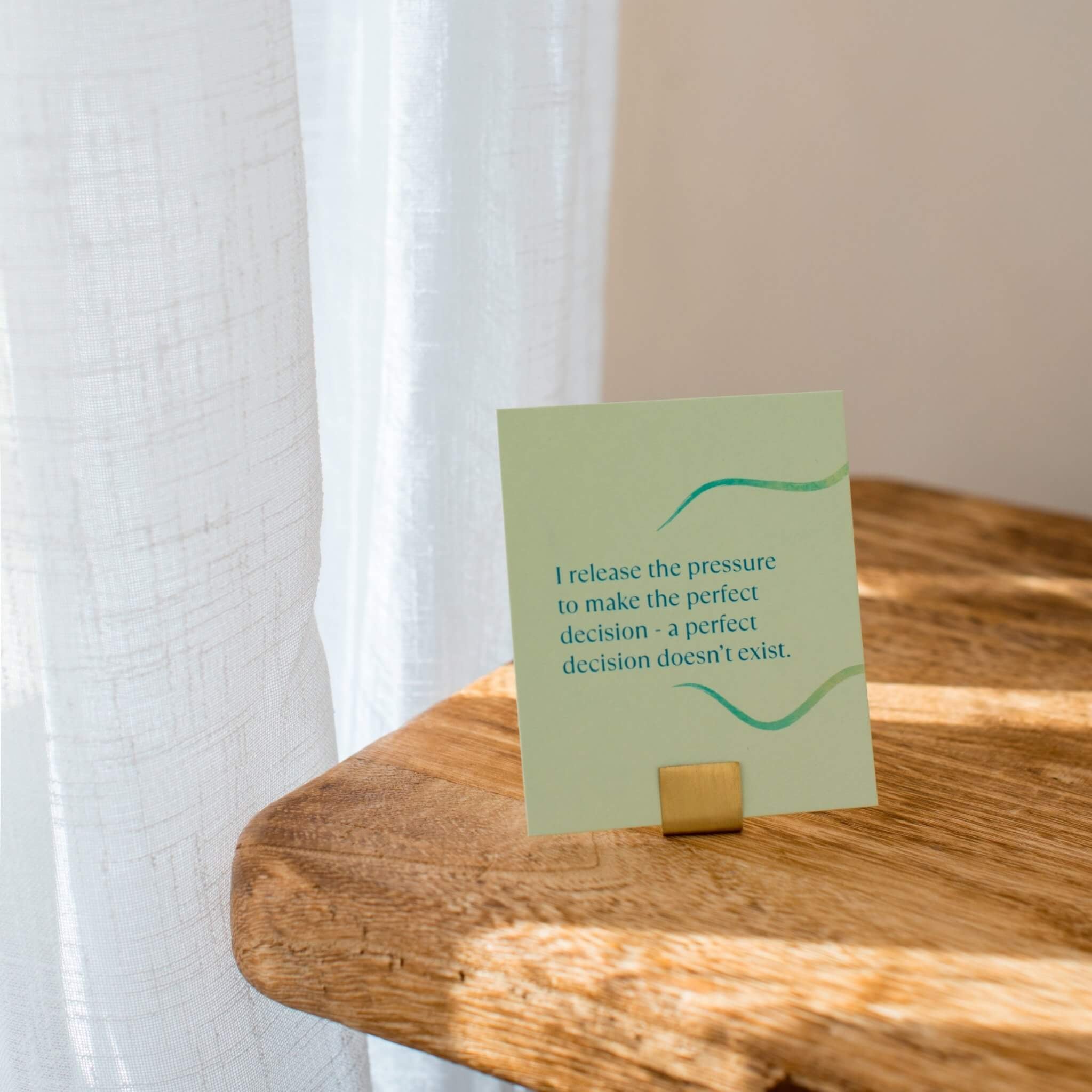
- I release the pressure to make the perfect decision — a perfect decision doesn't exist.
- I remind myself that there is always a new way to the same outcome.
- I can embrace uncertainty. It's okay not to know.
- I can use my breath as a tool to find calm, taking deep, slow breaths.
When you can't work out where to start
For when the list is so long that beginning any of it feels impossible, and not beginning makes it worse.
- I can try, even when I don't feel 100% ready.
- I recognise that sometimes the only way forward is to use trial and error and that is okay.
- I recognise that some things take time — patience is not inactivity.
- I can do things I cannot do yet.
- I can change my mind and know that that is okay.
- I can be proud of myself for doing my best.
When there's too much and no room left for you
For when everyone needs something, the day is full before it starts, and rest feels like something you'd have to earn.
- I am allowed to say no.
- I don't need to earn rest to deserve it.
- I can welcome time to rest.
- My worth is not dependent on what I have done today.
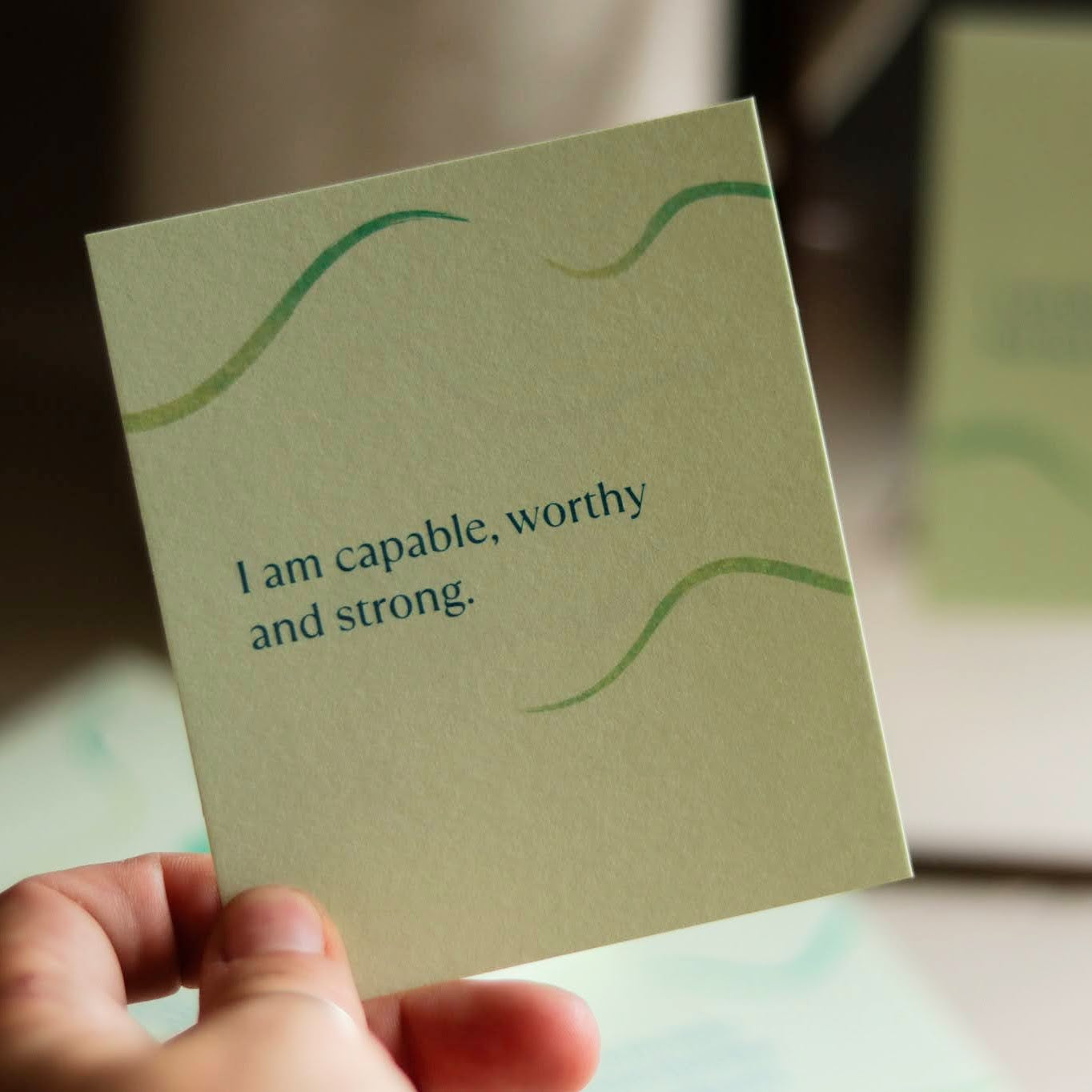
- I am worthy, and this does not depend on my productivity or achievements.
- I can make time for things that bring me joy, without feeling guilty.
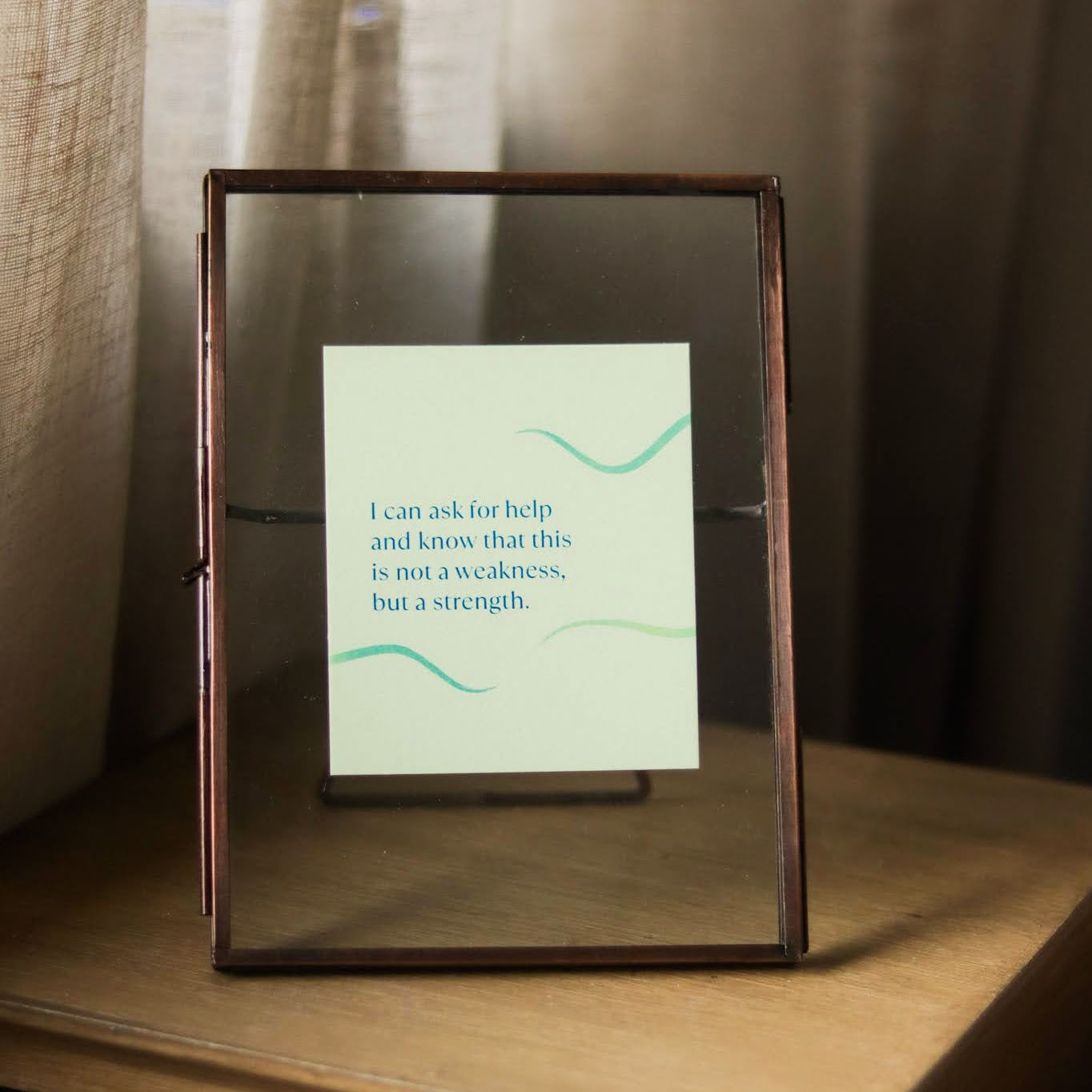
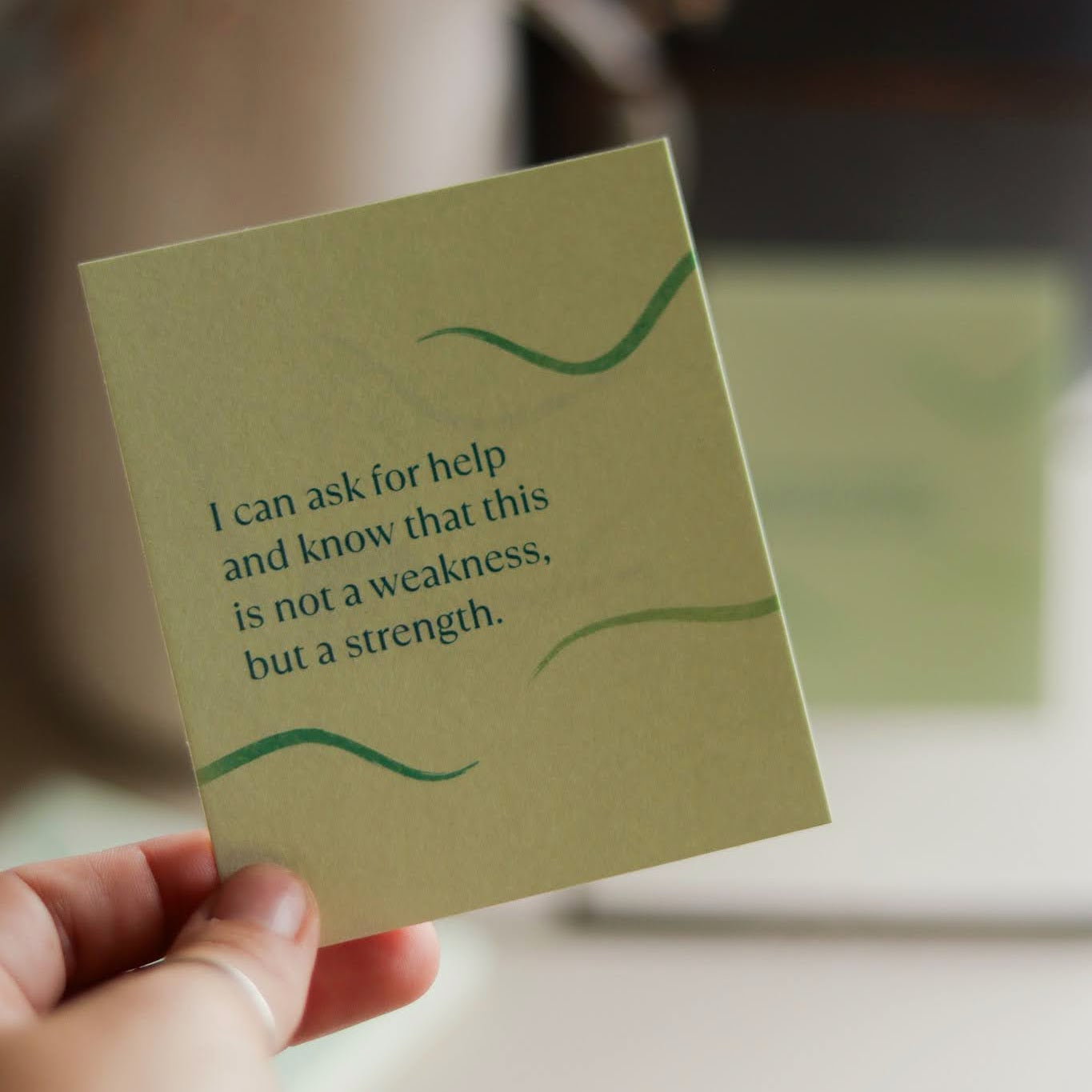
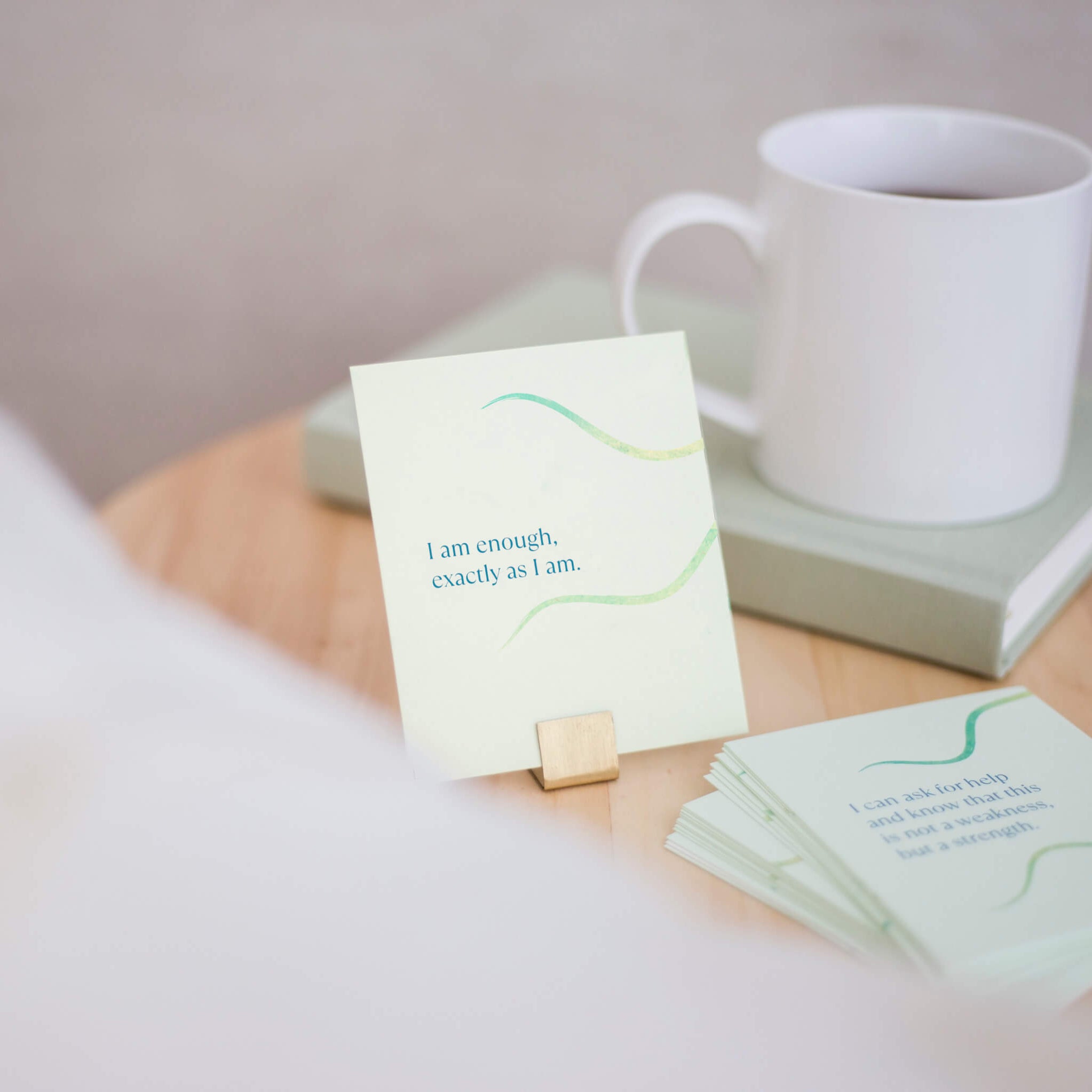
- I can ask for help and know that this is not a weakness, but a strength.
When the feeling itself is too much
For when it's tipped from busy into flooded, and you're closer to tears or to snapping than you'd like to be.
- I can be gentle with myself if I feel overwhelmed and reassure myself that this feeling will pass.
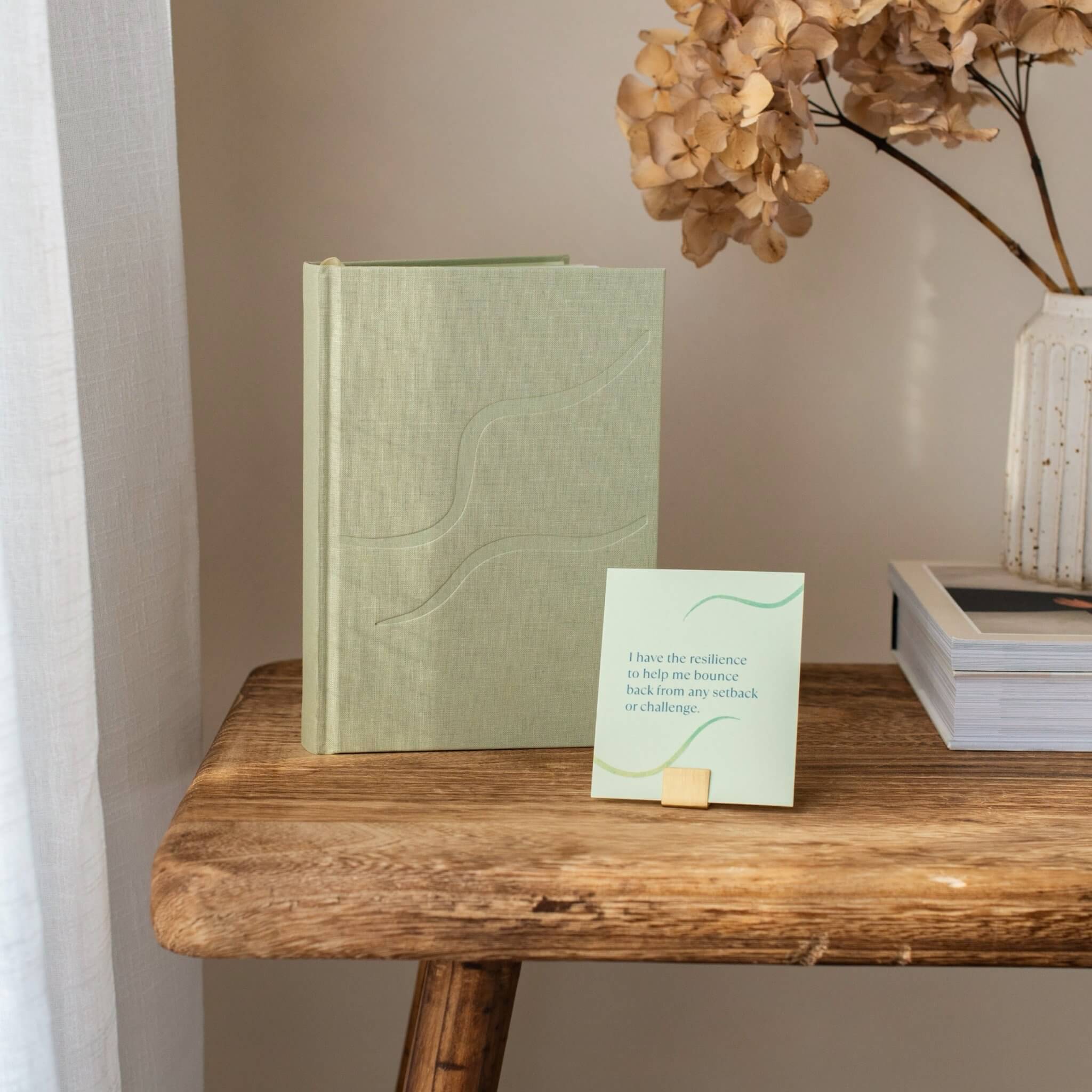
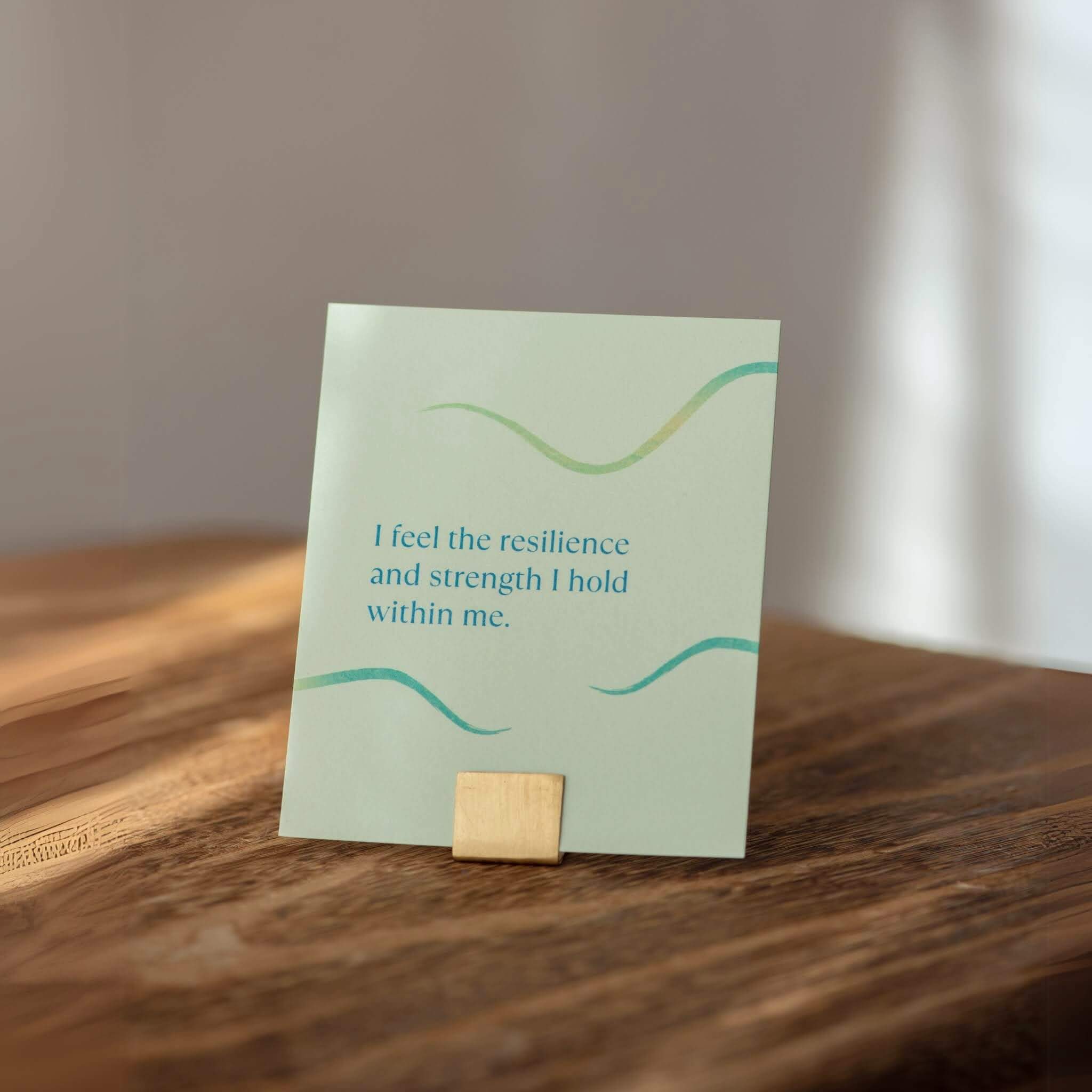
- I have the resilience to navigate overwhelming moments.
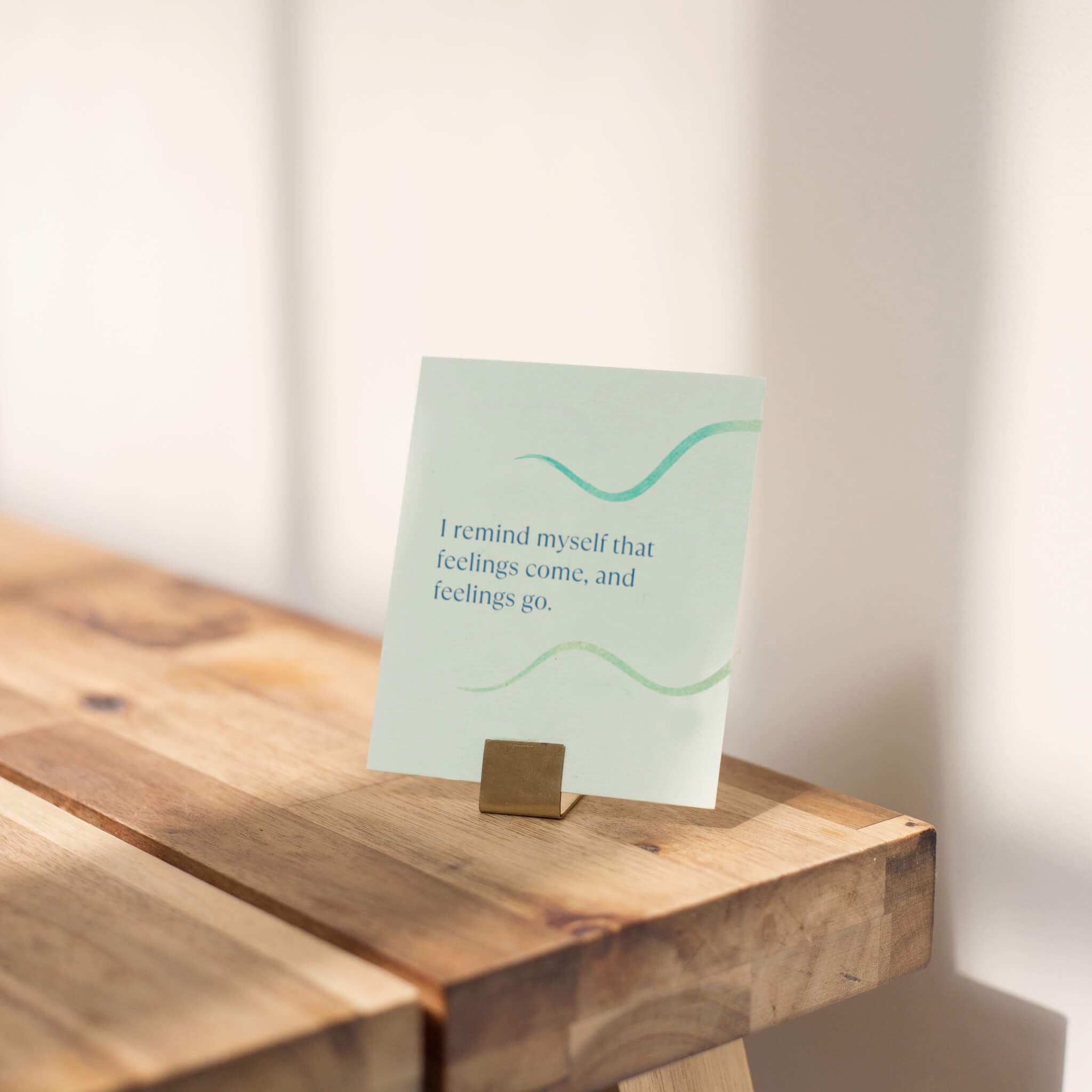
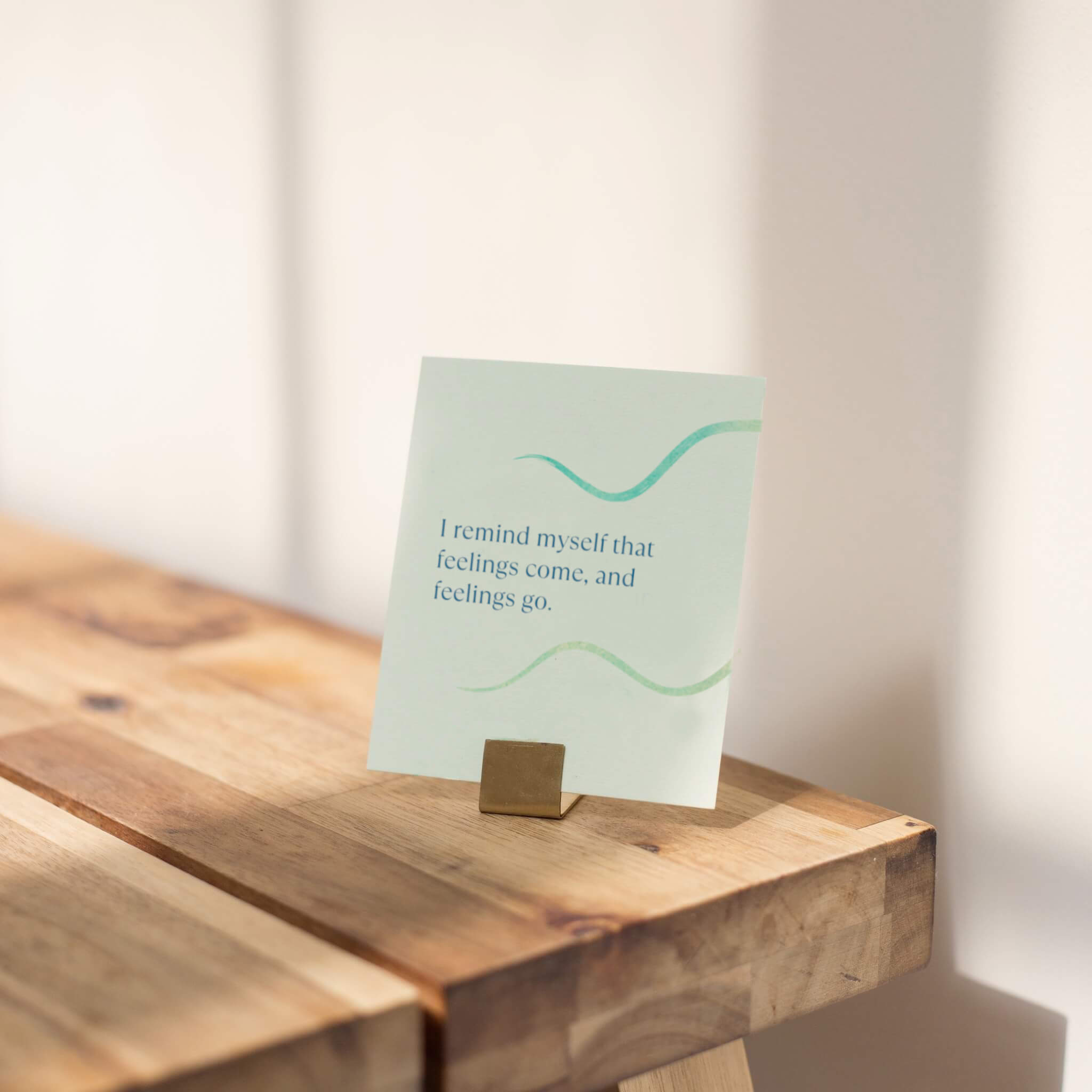
- I remind myself that feelings come, and feelings go.
- I can welcome any emotion, knowing that this feeling will not last forever.
- No matter what emotion I feel, it is never a sign of weakness.
- I am gentle with myself if I feel things deeply knowing that sensitivity is not a weakness.
- I can feel both grateful AND sad, nervous AND excited, brave AND afraid.
When you're being hard on yourself for struggling
For the second layer, where being overwhelmed becomes evidence that you're not coping well enough.
- It is normal to have an inner critic — but I don't have to believe it.
- I choose to give myself the same kindness I would give to a friend.
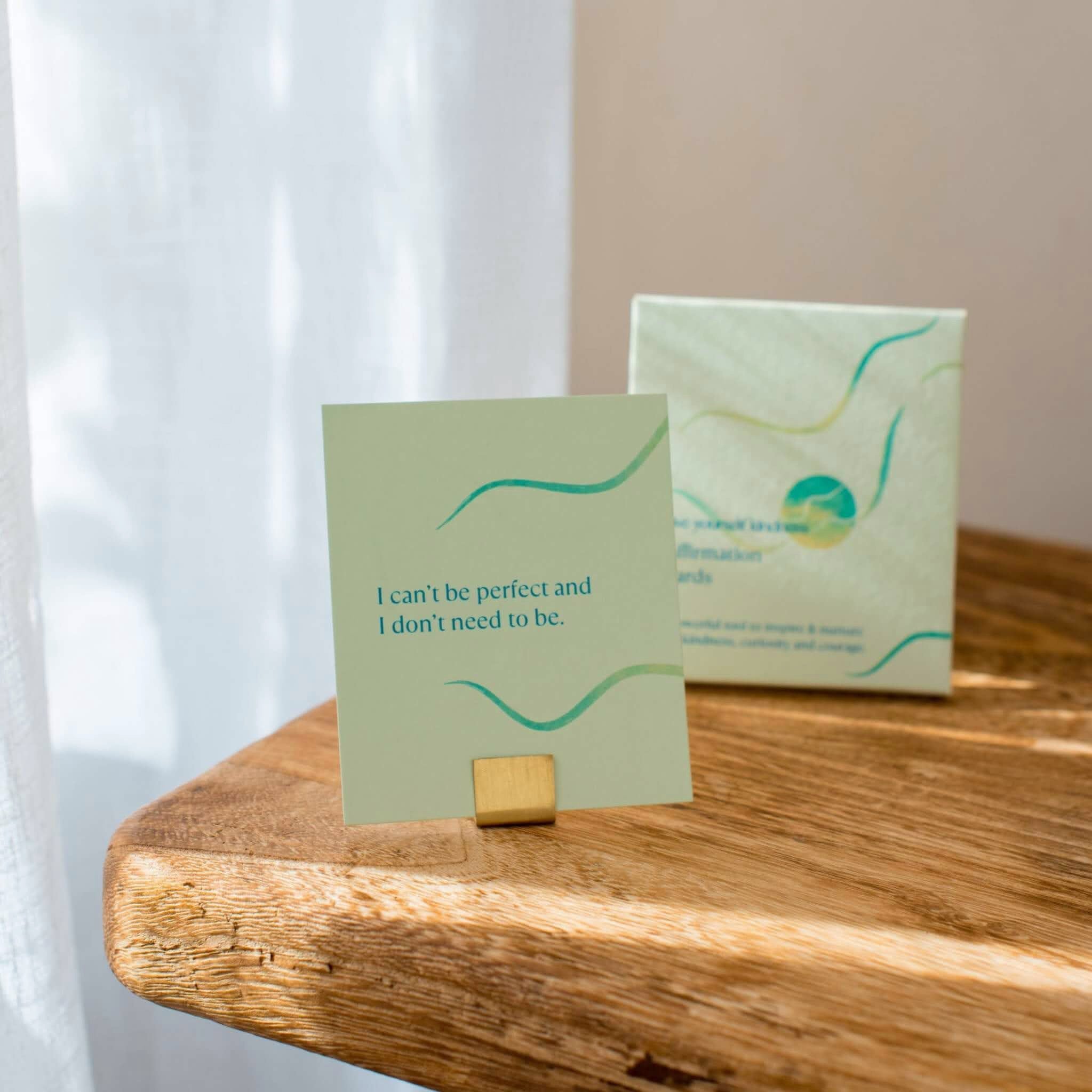
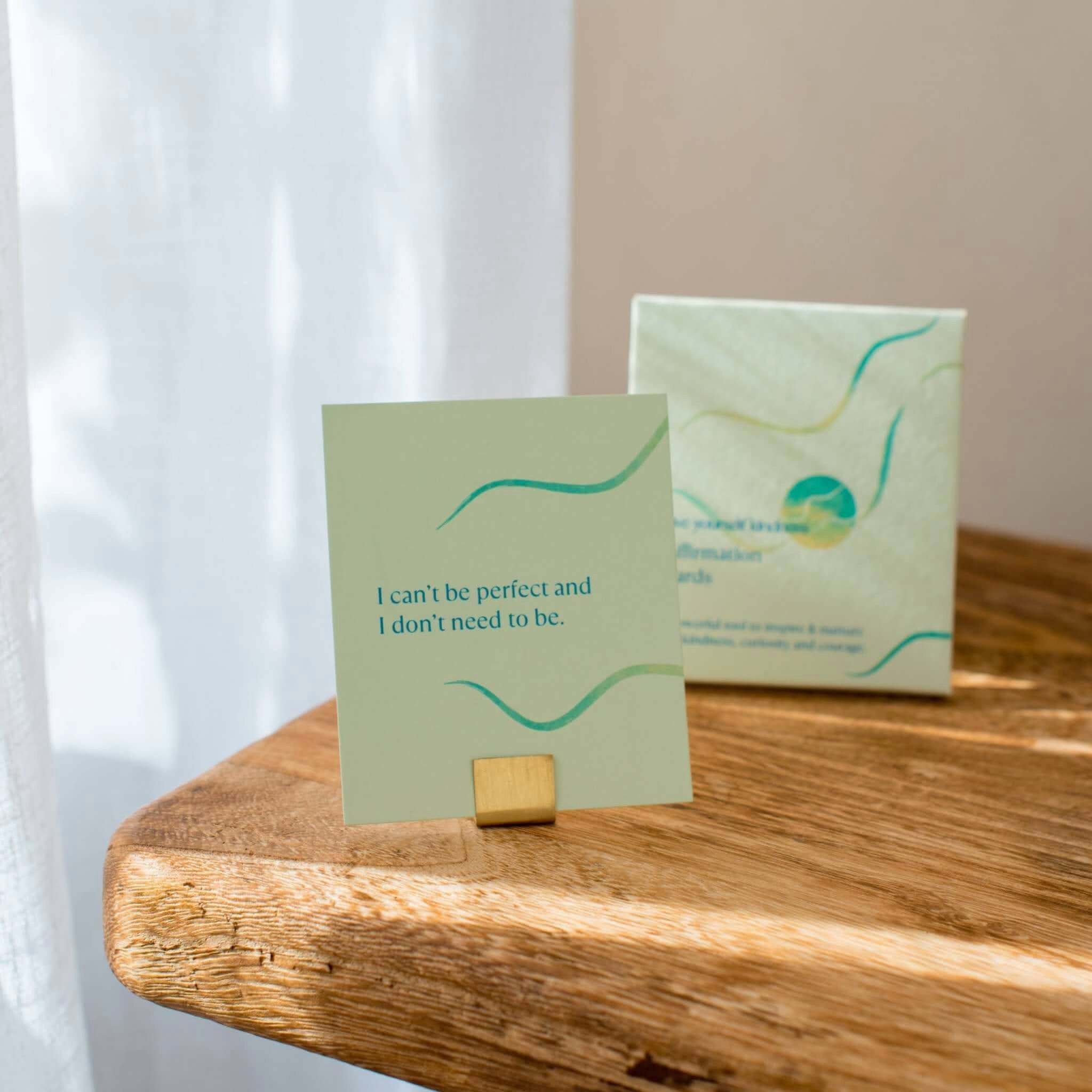
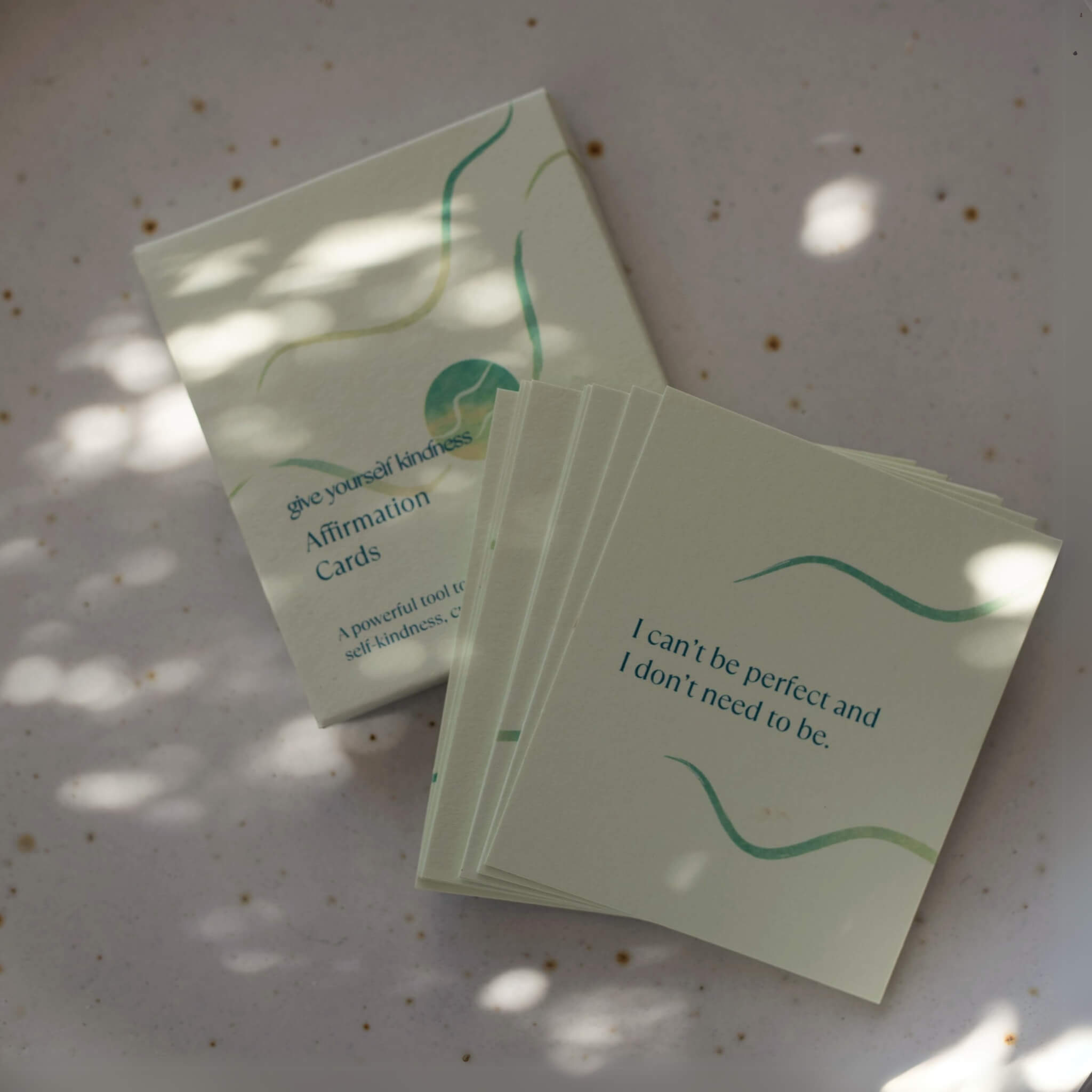
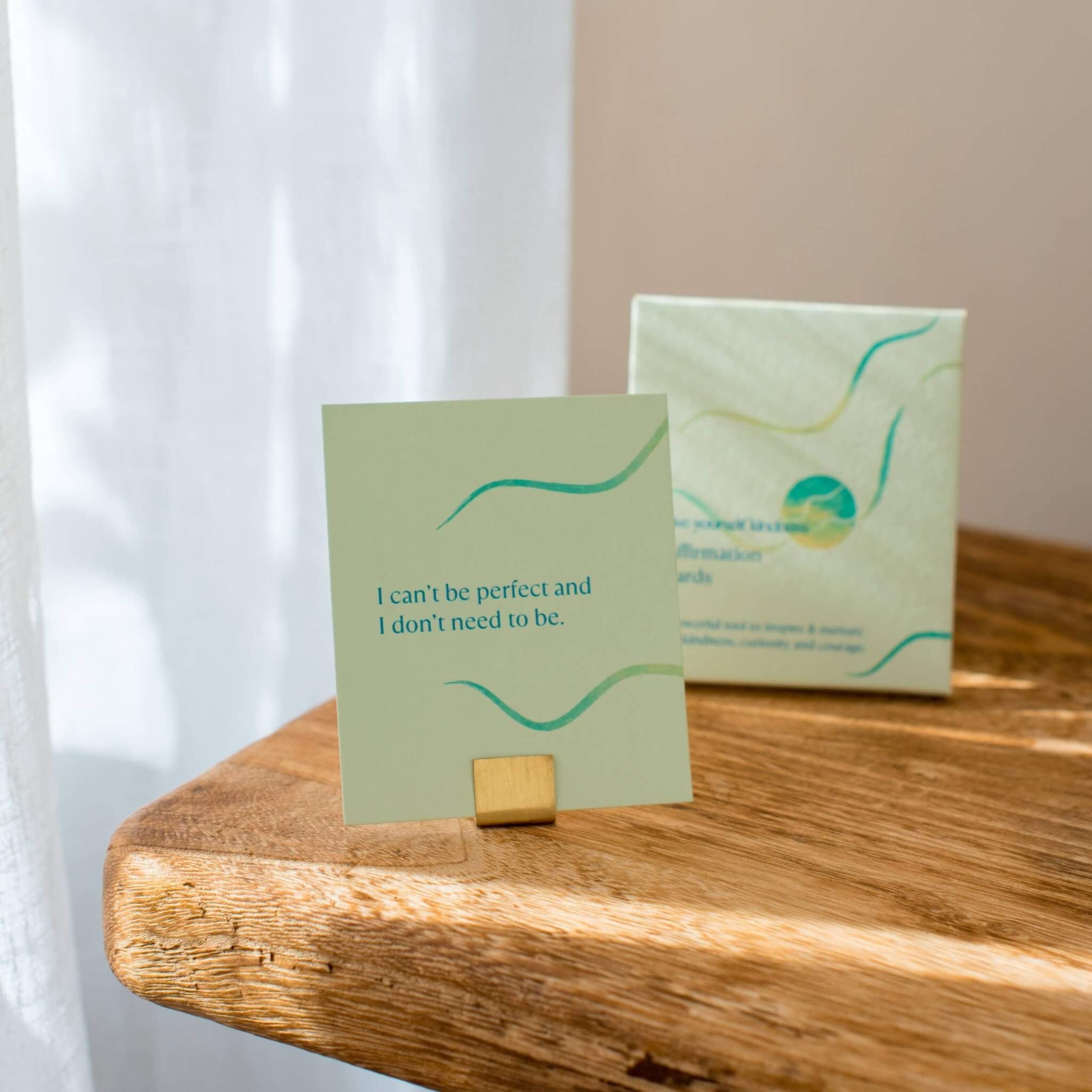
- I can't be perfect and I don't need to be.
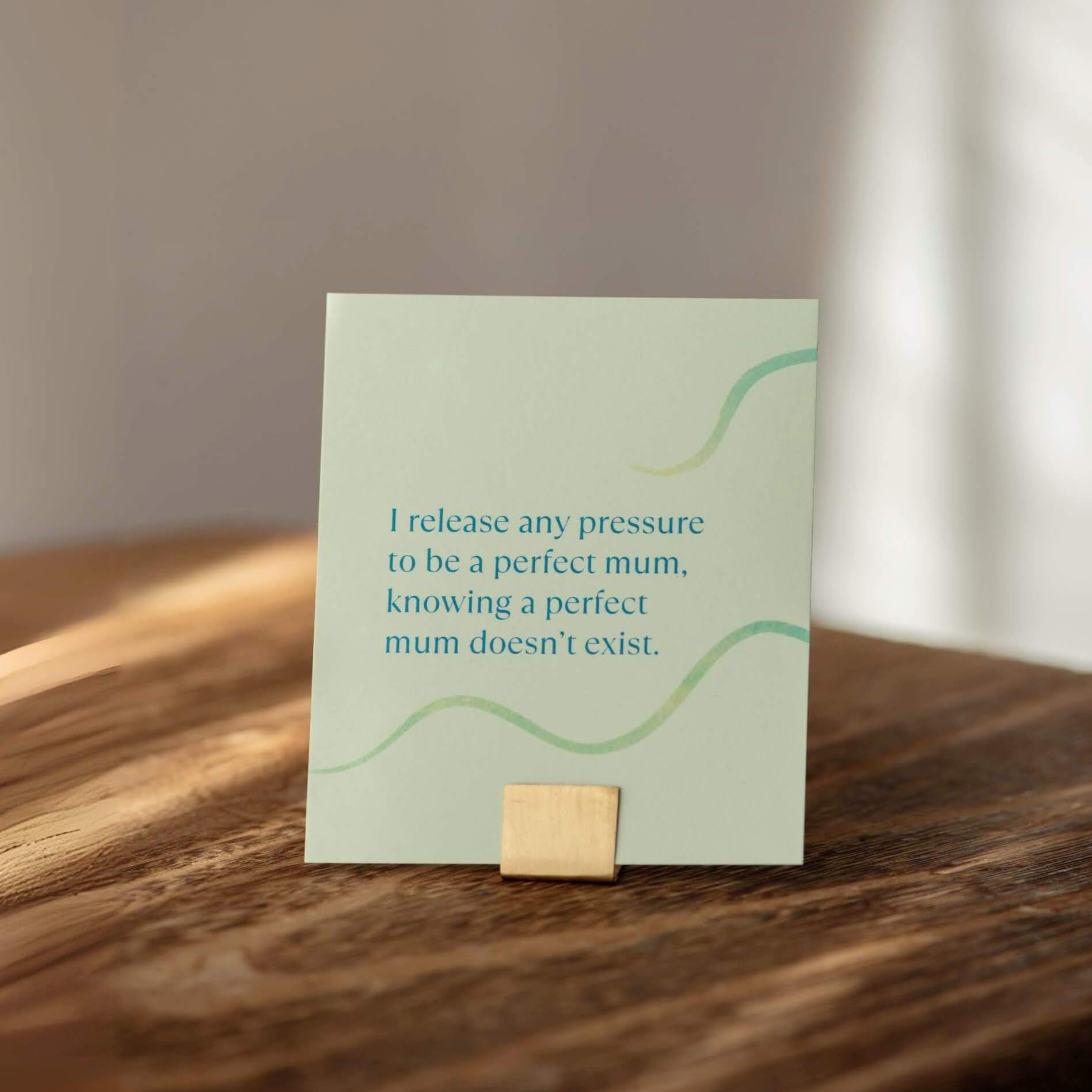
- I release any pressure to be perfect, knowing that perfect doesn't exist.
- Whenever I notice I am saying 'I should', I stop and find another word.
- I recognise that life is hard sometimes — I try to always be gentle with myself.
- We all deserve kindness, and 'all' includes me.
How to use these when you've got nothing left
- Take one. Not one from each group. One, from whichever heading matched. Reading thirty-three of them is another task, and you have enough of those.
- Skip anything you'd argue with. If a line makes you bristle, it isn't the one for today. That's information, not failure.
- You don't have to say it. Reading it counts. Looking at it counts.
- Put it where you'll see it without deciding to. The kettle, the back of your phone, the bathroom mirror.
- Come back to the breath first if the words won't go in. That's normal when you're flooded, and it isn't a sign the words don't work.
If a particular part of this fits better than the rest, there's a set written for burnout and the guilt around resting, one for difficult times, and one for work stress specifically.
A psychologist on riding the wave instead of fighting it
The thing that makes overwhelm so hard to bear is that it feels permanent while it's happening. It doesn't feel like a wave. It feels like the new weather.

Dr Laura Berssenbrugge
Licensed Clinical Psychologist with expertise in anxiety, mood disorders, OCD, stress and trauma-related disorders, and emotion regulation. Her work is grounded in Dialectical Behaviour Therapy, and she is also a registered yoga teacher.
“In the realm of emotions, we often find ourselves riding waves – some gentle, others tumultuous.”
Dr Berssenbrugge wrote about this for me, and the wave is the part worth holding onto when everything is too much. A wave has a shape. It builds, it peaks, and it comes down, and you don't have to do anything clever to make that happen. What you can influence is what you do while you're in it.
“The next time you find yourself riding an emotional wave, remember: you have the power to choose your response and the agency to see it through.”
Read Dr Berssenbrugge's full article on riding the wave of emotions →
She also teaches a grounding technique I've borrowed for the practice at the top of this page. In her article she offers it for anger — “grounding techniques, such as taking 5 deep breaths or naming things you can see from A to Z, can help diffuse the intensity” — and the same logic holds when your mind is carrying twenty things at once. Naming what you can see gives it one job, in order, that it can actually complete.
Why the body comes before the words
When you're overwhelmed, being handed a sentence to believe rarely works, because the state isn't really in your thoughts. It's already in your chest and your shoulders and your breathing, and your thoughts are downstream of that.

Dr Natalie Chua
Clinical psychologist and somatic psychotherapist, specialising in the treatment of eating disorders and trauma
“Every emotion has a bodily correlate.”
The hand-on-the-body step in the practice above comes from Dr Chua's self-soothing article, where she describes finding where the discomfort actually sits — the chest, the forehead, the back of the neck — resting a hand there, and simply staying with it. It's an unglamorous thing that helps more than it sounds like it should.
Is this overwhelm, burnout or anxiety?
These overlap a great deal, and nobody can tell you which one you're in from a web page — if it's persistent, a GP or a therapist is the right person to ask. But people describe them quite differently, and knowing which one you're closer to today might point you somewhere more useful than this page.
Overwhelm
Usually acute and about volume. Too much arriving at once, no space to think, and it eases when the load does.
“I can't think. There's too much.”
You're in the right place — the practice and affirmations above are built for this.
Burnout
Usually gradual and about depletion. Exhaustion that rest doesn't seem to touch, often with guilt attached to resting at all.
“I've got nothing left, and I still feel lazy.”
Anxiety
Often about anticipation rather than volume. A racing mind and physical dread that can be there even on an empty day.
“Something bad is going to happen.”
If it's specifically your job that's doing it, there's a fuller set for work stress, and one for a racing mind at work. And if you'd like to get better at telling any of this apart in the moment, how to identify your emotions has a free list of emotion words on it.

If having the words already there would help
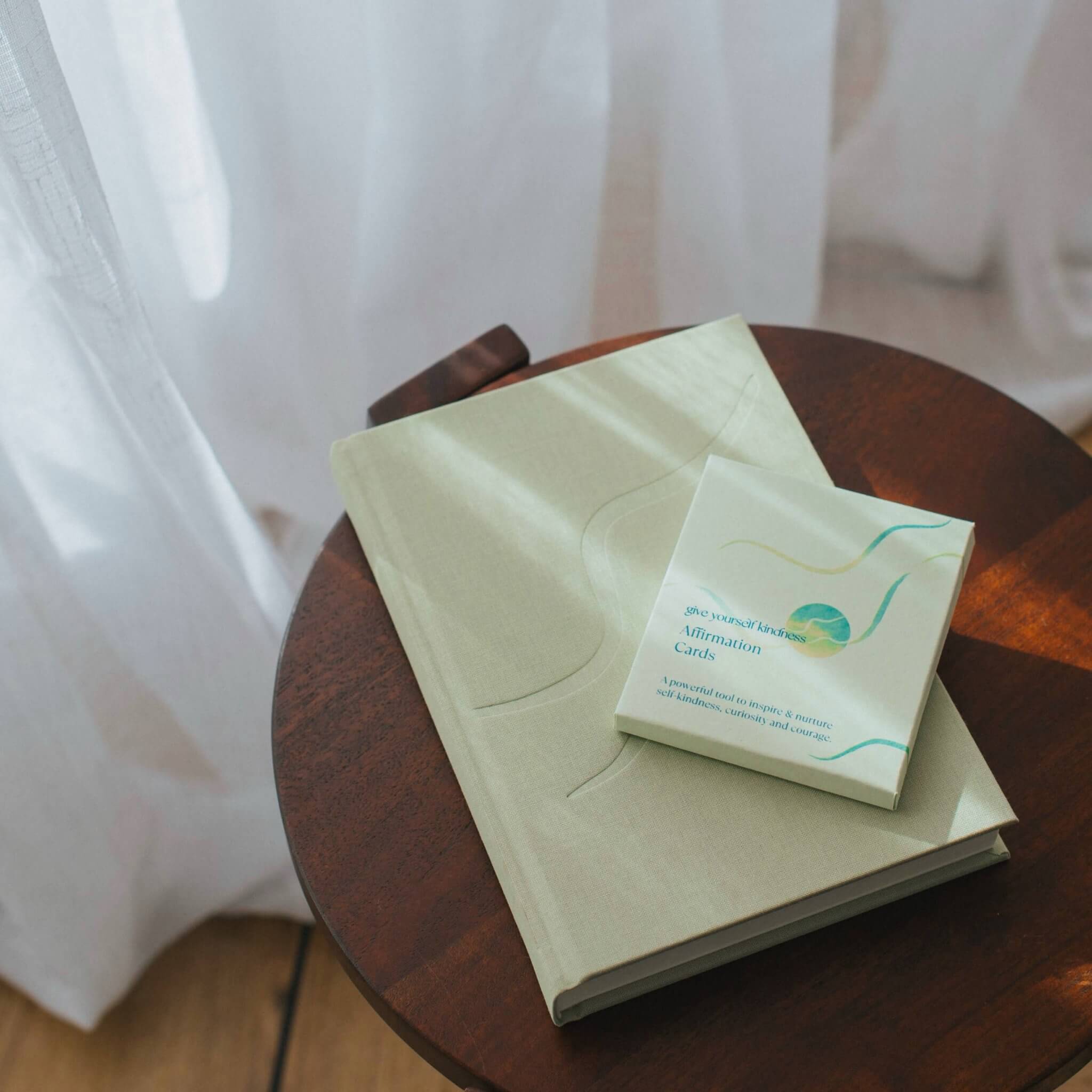
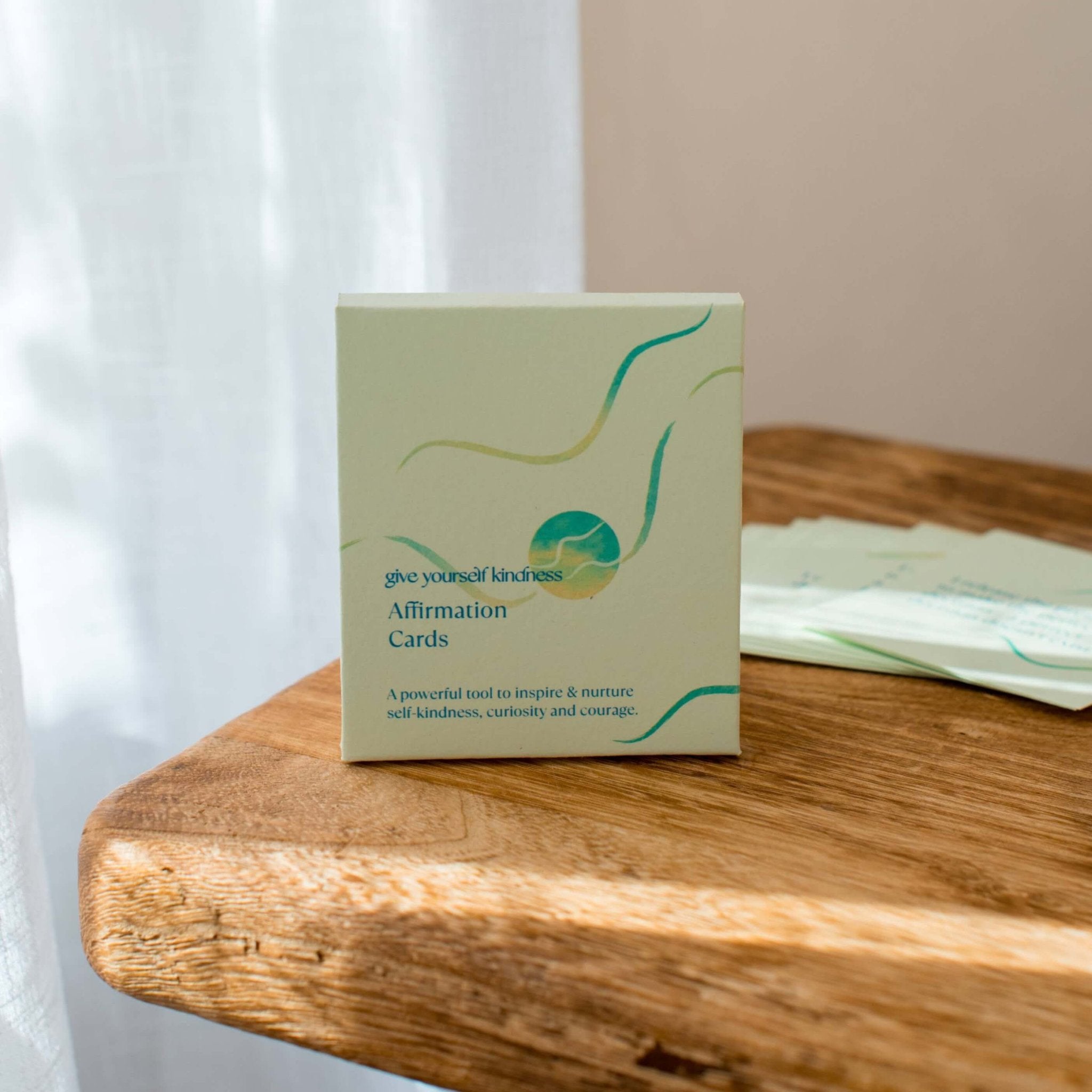
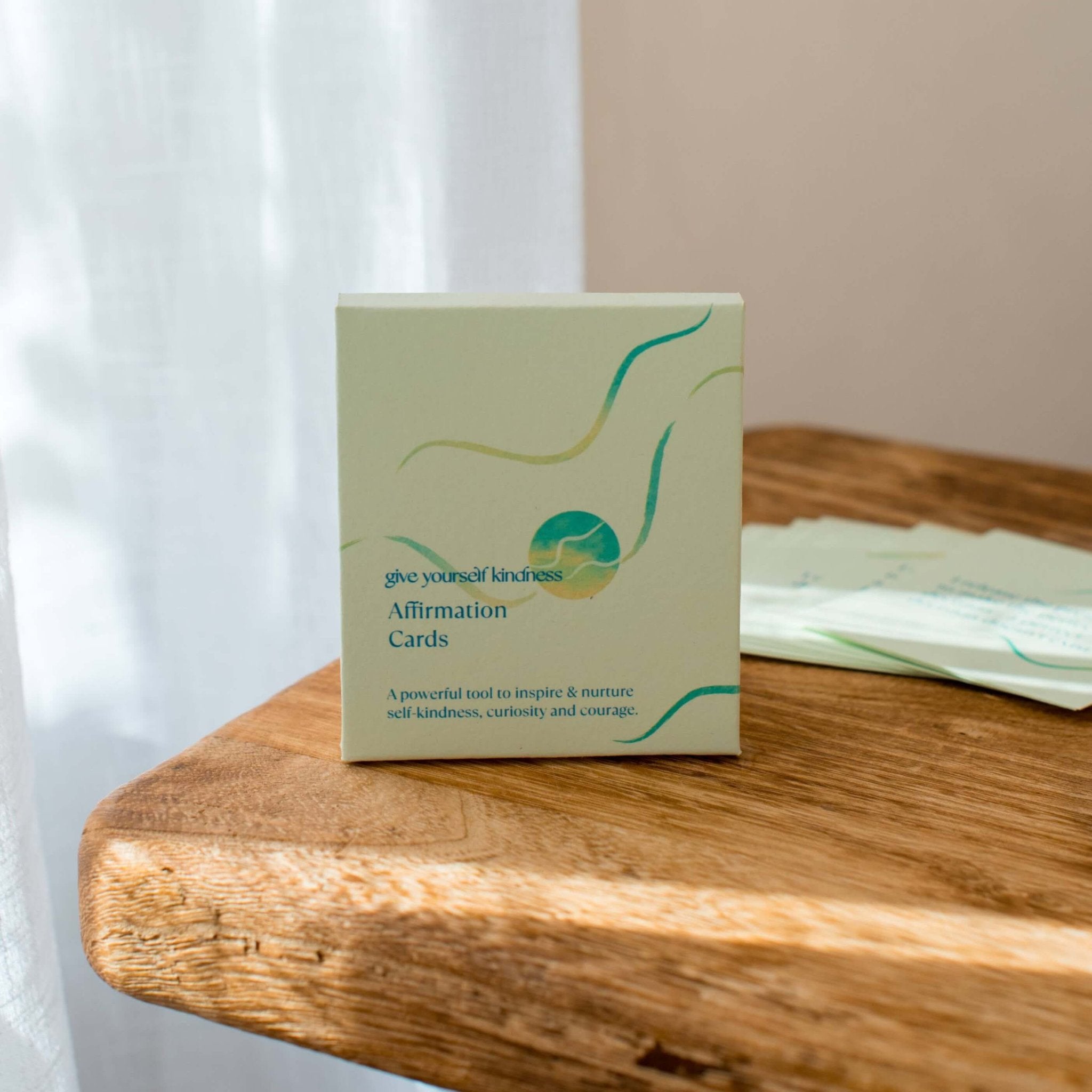
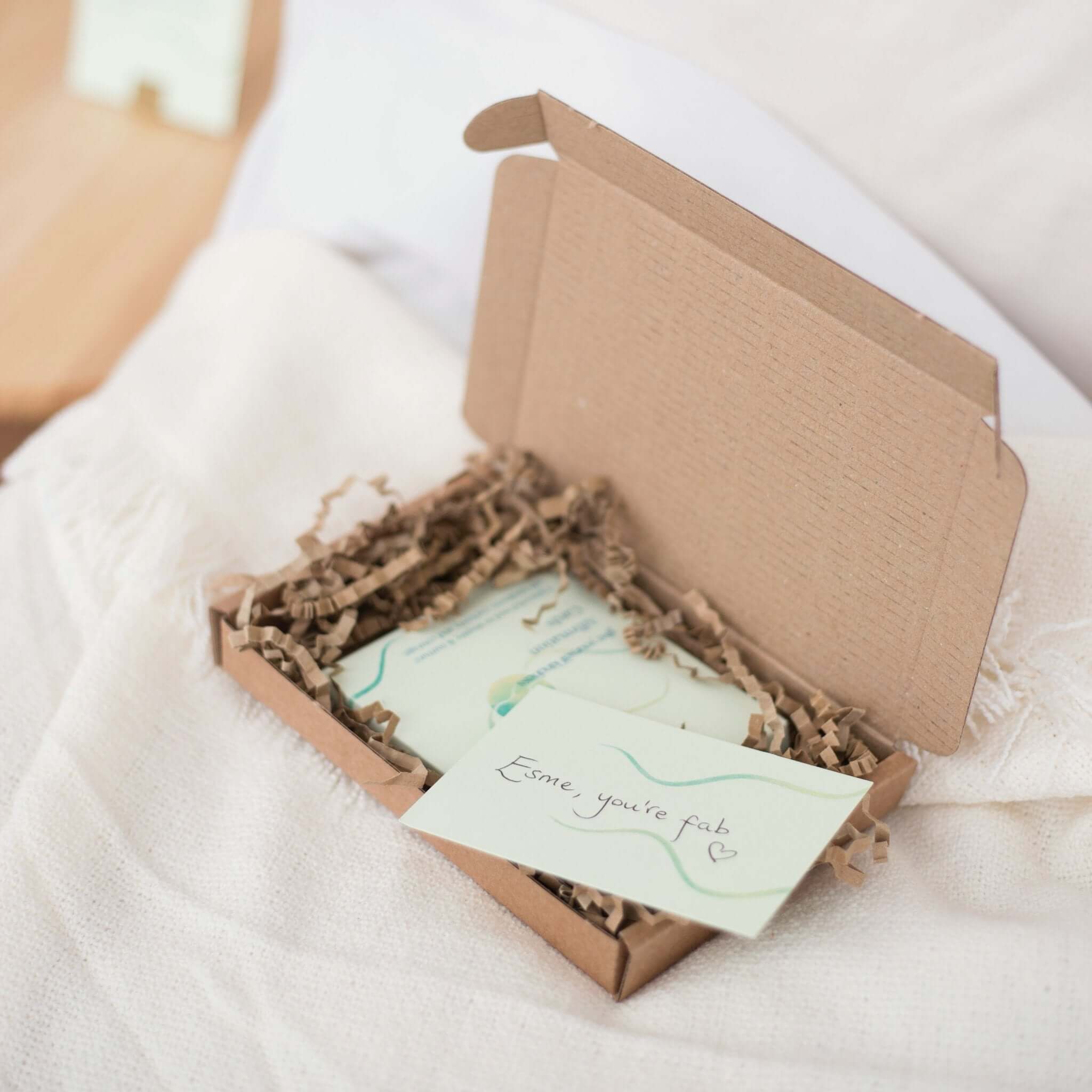
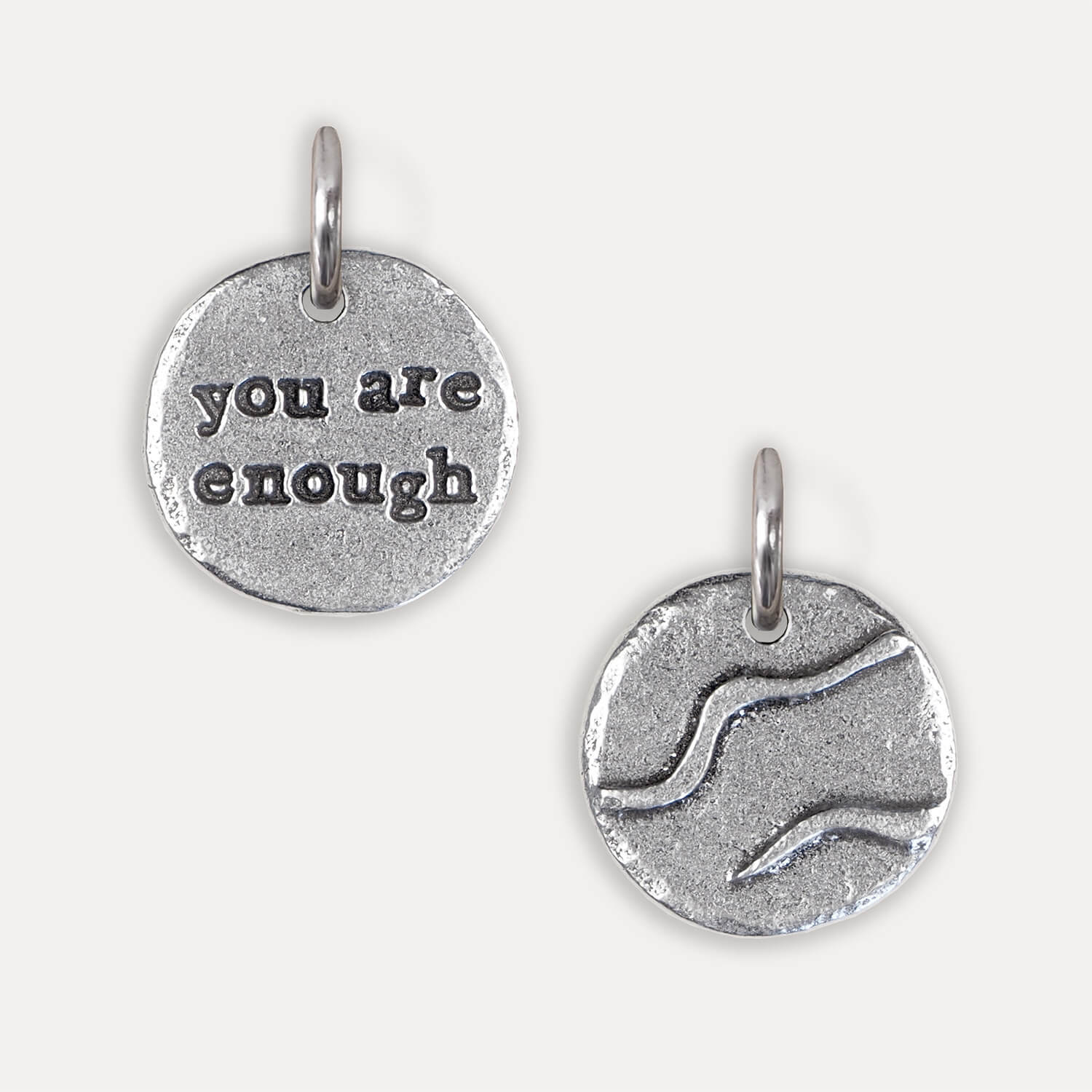
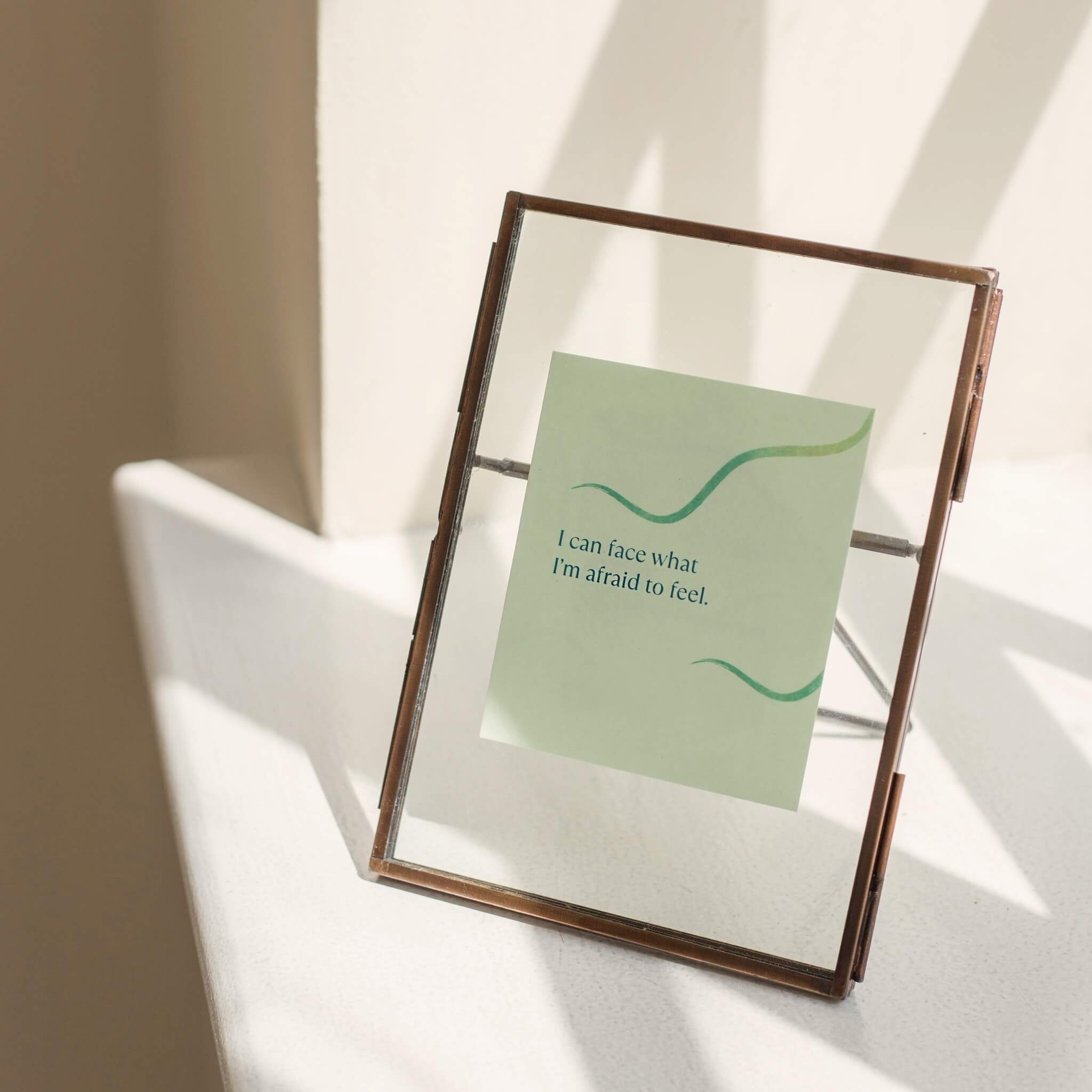
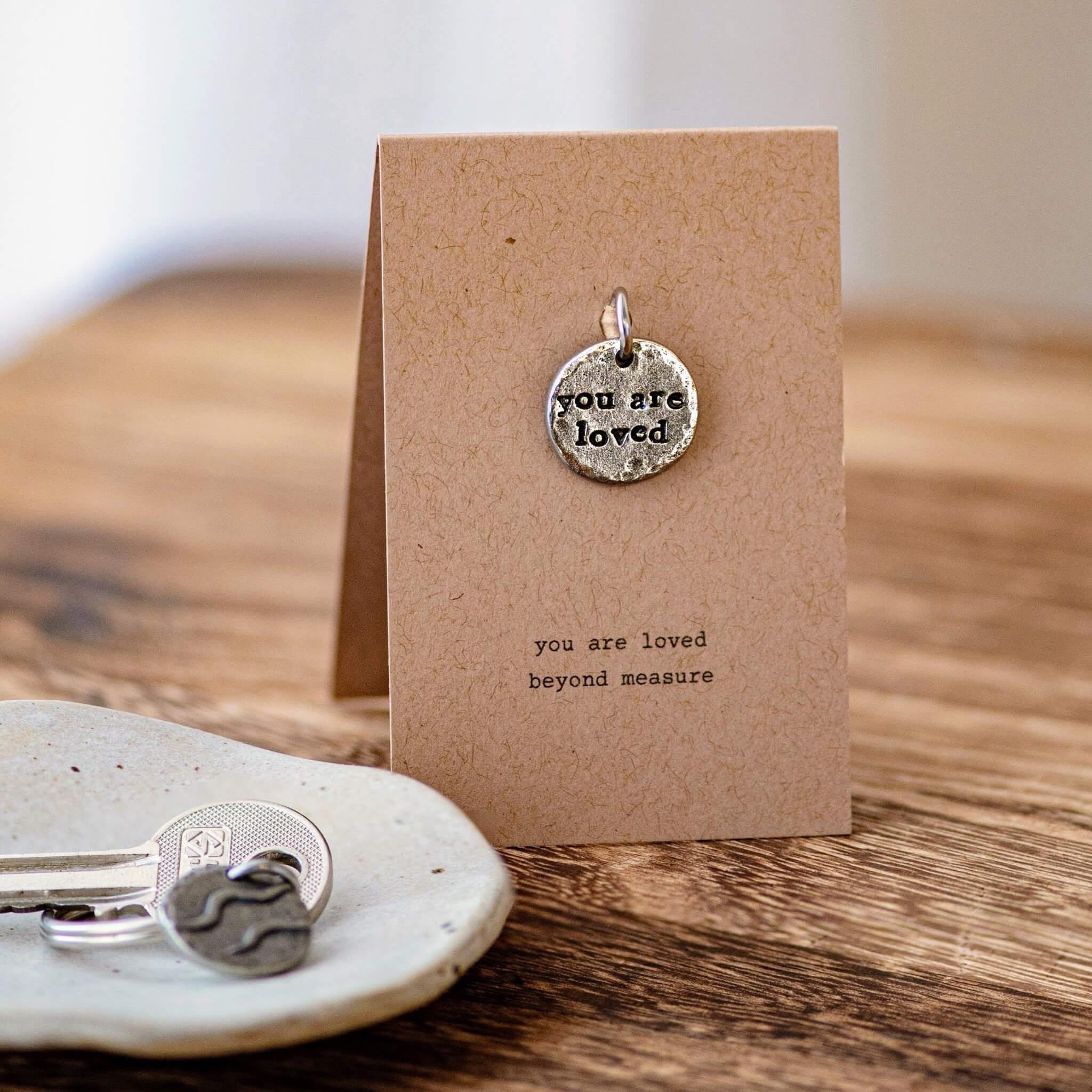
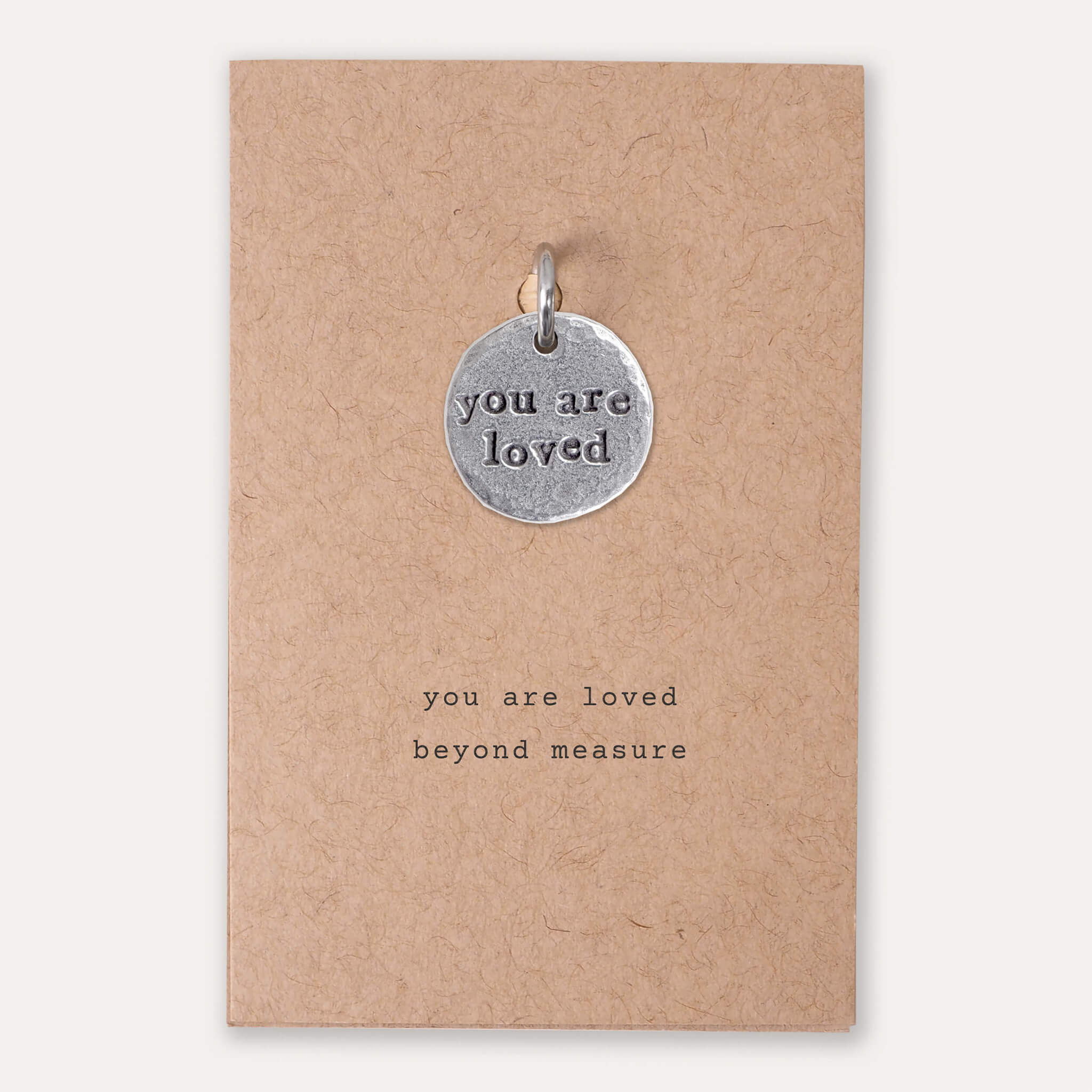
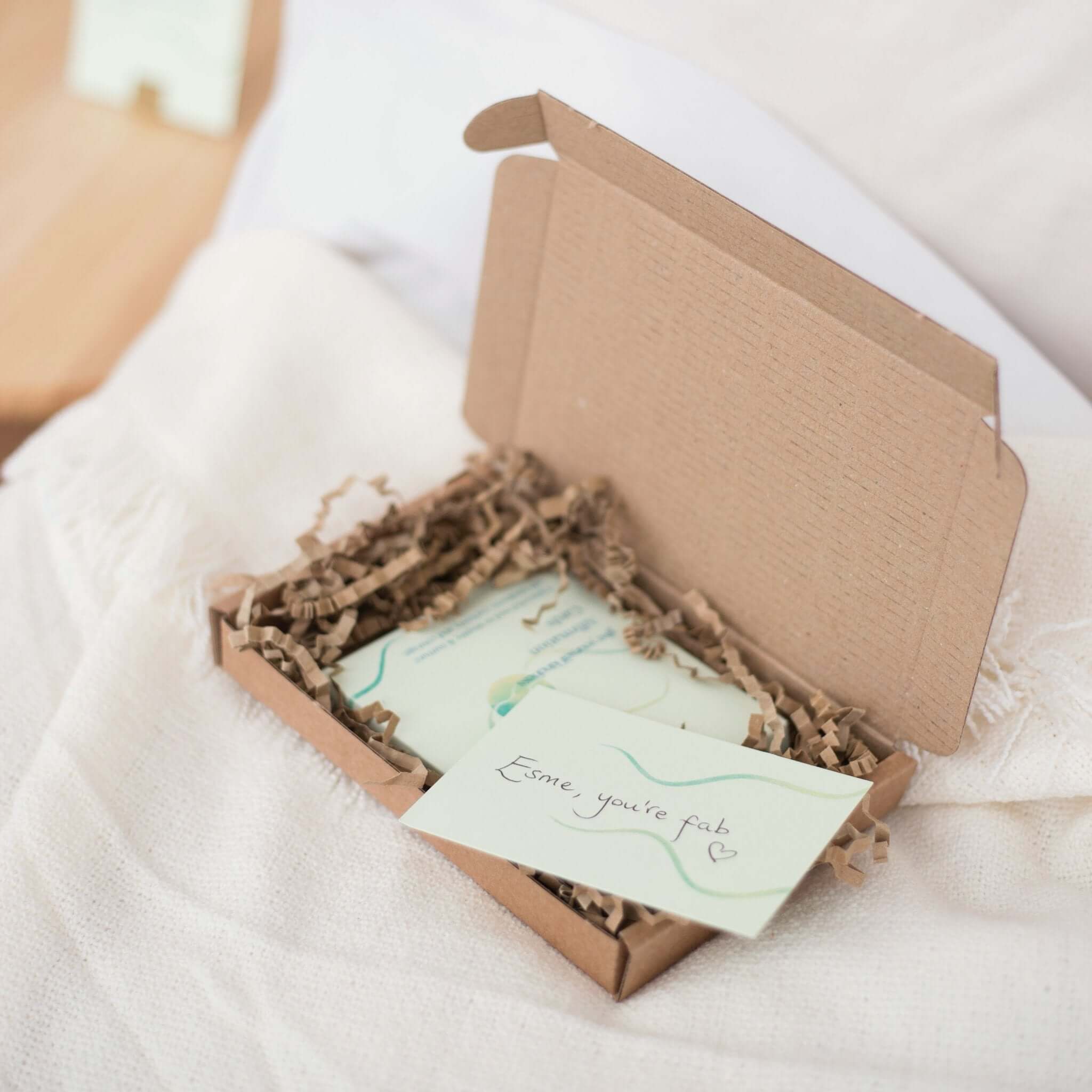
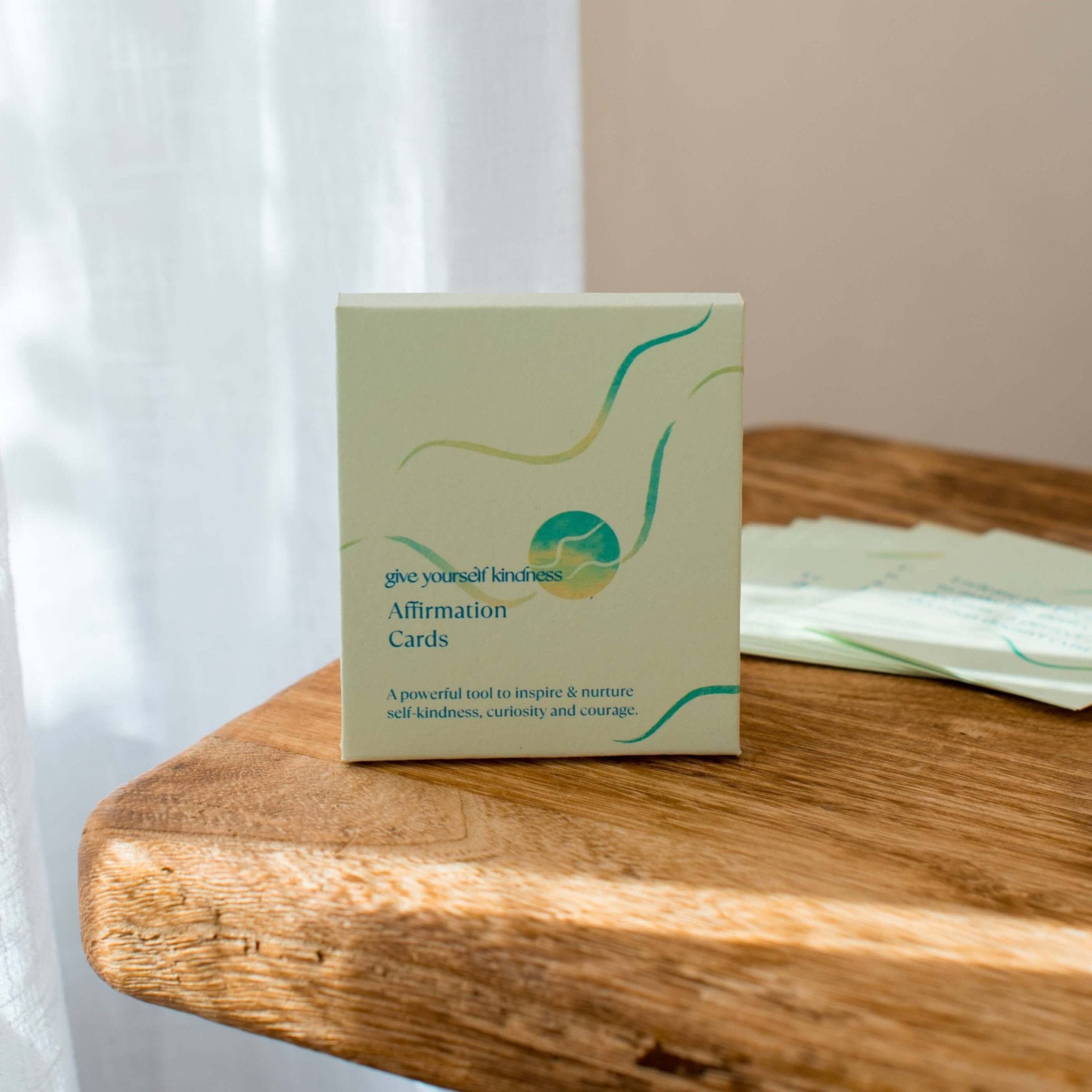
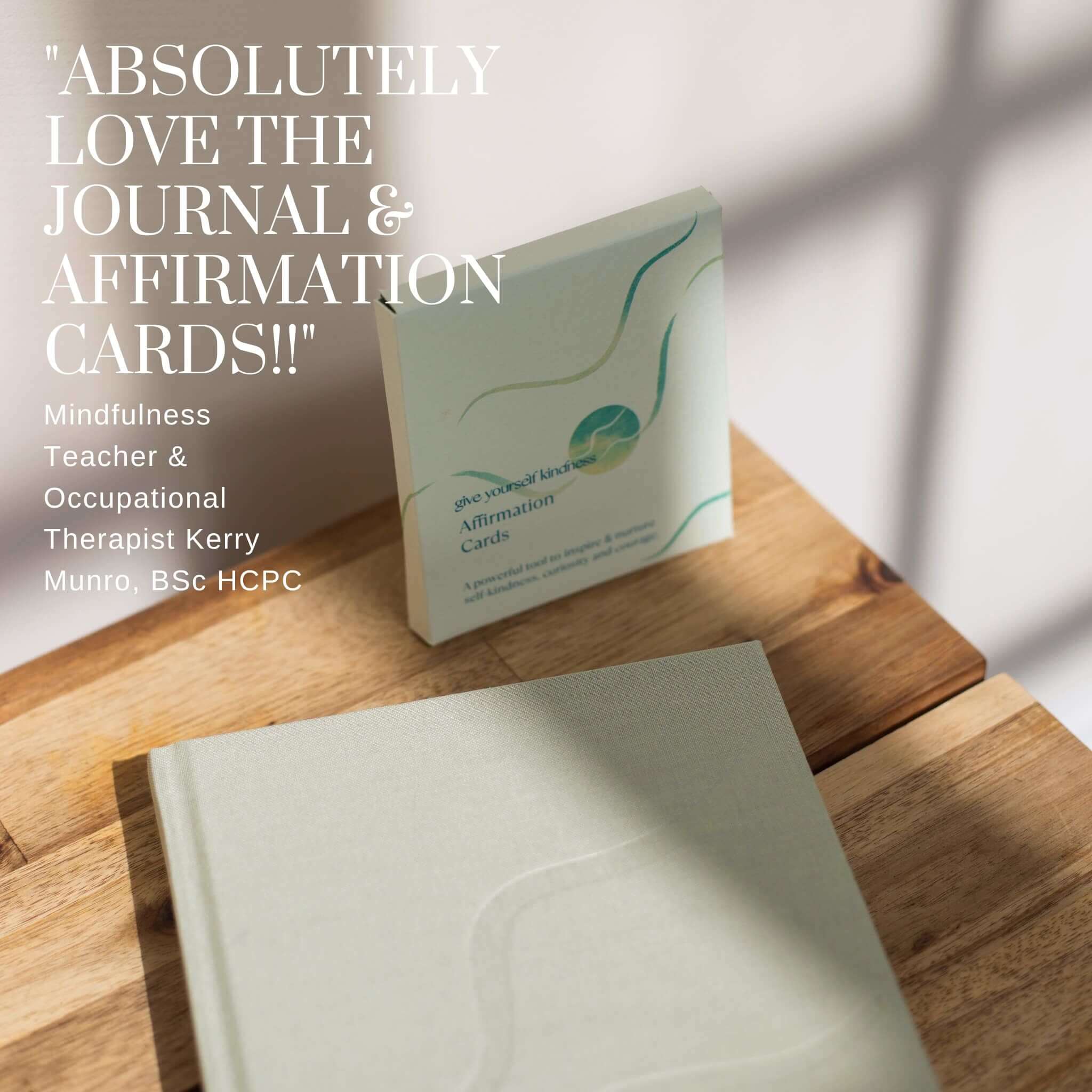
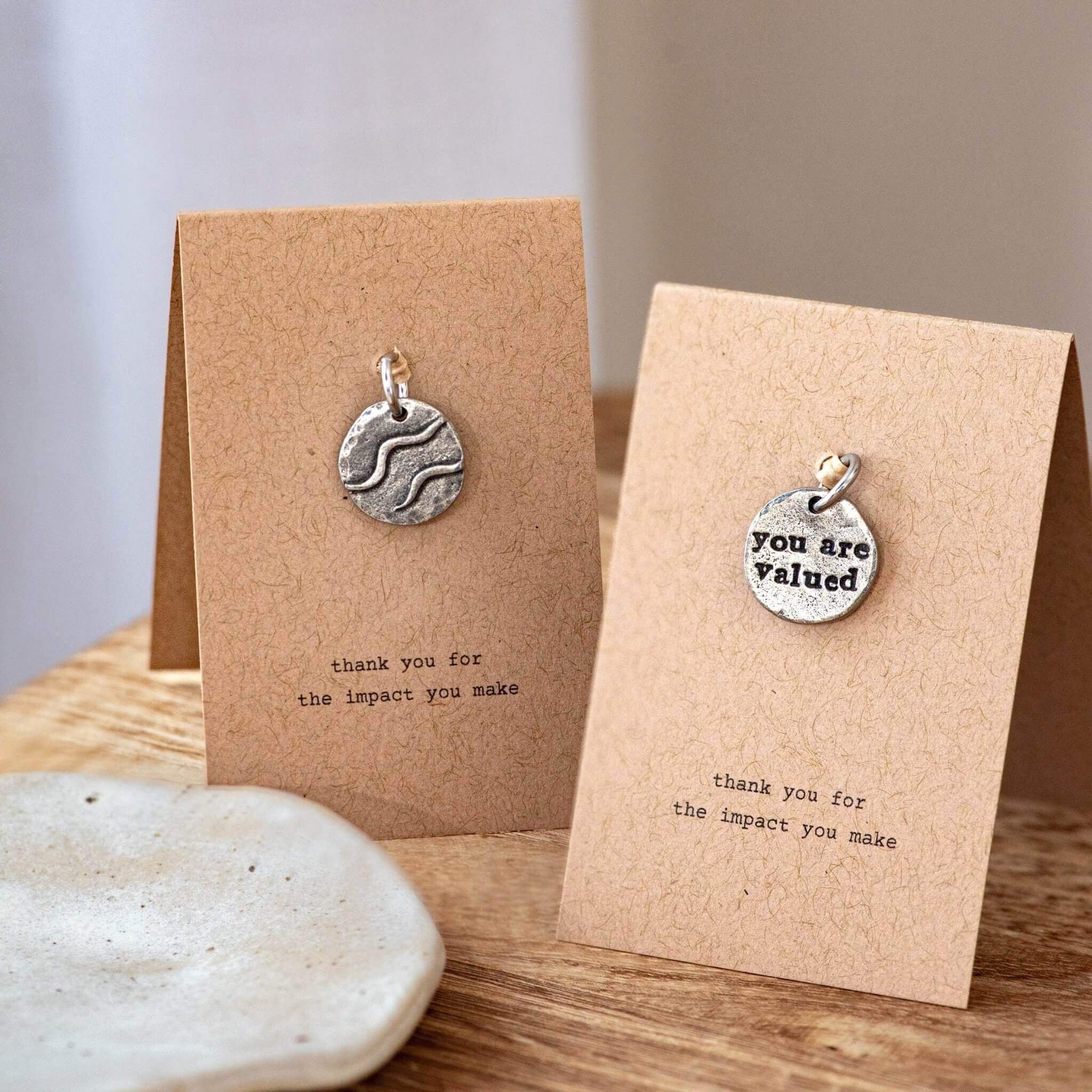
Everything above is free and yours. I make a printed set because the hard part isn't reading a list once — it's finding the right sentence on the morning your head is already full. A card on the desk removes that step. 60 self-compassion affirmations, used by therapists with clients.
Discover the affirmation cards →Or read the honest version first: what they are, who they don't suit, and all 60 affirmations free.
When affirmations aren't the right thing
Three times I'd point you somewhere else
When the overwhelm is accurate. Sometimes there genuinely is too much, and no sentence fixes an impossible week. Affirmations might help you get through it with less self-criticism, and they can't take anything off the list. If something needs to come off the list, that's the real work, and it's allowed to be the priority.
When it doesn't lift. If this is most days rather than a bad week, or it's been going on for months, that's worth taking to your GP. Not because something is wrong with you, but because persistent overwhelm is a thing people get proper help with, and you don't have to earn that by struggling for longer first.
When it's more than you can hold on your own. If you're in real distress right now, please talk to someone. In the UK your GP is a good first step, and Samaritans are on 116 123, free, at any hour. A card is a companion to support, never a substitute for it.
Questions people ask me
What are the best affirmations for when you feel overwhelmed?
The ones that reduce what you are holding rather than adding to it. Affirmations like I can do anything but not everything, I am allowed to say no, and I don't need to earn rest to deserve it tend to land better than statements about being calm, because they give permission rather than asking you to feel something you don't. Pick one, not a list.
Why do small things feel impossible when I'm overwhelmed?
Because the thinking goes before the doing. When there is more to hold than there is room for, the mind stops being able to sort and prioritise, so every task arrives at the same size and choosing between them costs more than it should. It is a capacity problem rather than a character problem, and it eases as the load does.
What is the difference between feeling overwhelmed, burnt out and anxious?
They overlap, and only a professional can tell you which applies to you. As a rough guide, overwhelm tends to be acute and about volume, too much arriving at once. Burnout tends to be gradual and about depletion, an exhaustion that rest doesn't seem to touch. Anxiety is often about anticipation rather than volume, and can be present even on an empty day.
How do I calm down quickly when I'm overwhelmed right now?
Start with the body rather than the words. Three slow breaths out, longer on the way out than the way in. A hand resting wherever it feels tight. Then name five things you can see, which gives a crowded mind one sequential task it can finish. It takes about a minute and it might take the edge off enough for anything else to land.
Can affirmations make overwhelm worse?
They can, if they ask you to believe something that isn't true for you right now. Being told that you are calm when you are not calm gives your mind one more thing to argue with. Wording that gives permission, acknowledges the difficulty, or simply describes what is happening tends to be much easier to accept on a bad day.
I'm overwhelmed and I can't start anything. What actually helps?
Making the first thing smaller than feels sensible. Not the task, but the first visible edge of it, small enough that you can't argue with it. It also helps to accept that you are choosing badly because you are over capacity, not because you are lazy, since the self-criticism that follows not starting is usually heavier than the task itself.
Does the feeling of being overwhelmed pass on its own?
An acute wave of it usually does ease, which is easy to forget while you are inside it, because overwhelm tends to feel permanent rather than temporary. What often does not shift on its own is the situation causing it. If the same wave keeps arriving, the useful question is usually about the load rather than about how you are coping with it.
What do I say to myself when I'm overwhelmed and close to tears?
Something that doesn't ask you to stop. This is hard right now, or I can be gentle with myself if I feel overwhelmed and reassure myself that this feeling will pass. Being near tears when you are carrying a lot is a reasonable response rather than a failure, and trying to talk yourself out of it usually takes more effort than letting it happen.
Is feeling overwhelmed all the time a sign of something more serious?
It can be worth looking into. Persistent overwhelm can sit alongside anxiety, depression, burnout, ADHD and a number of other things, and it is not something you have to work out by yourself. If it is most days rather than a bad week, a GP is a good place to start, and asking early is not an overreaction.
What if I'm overwhelmed because there genuinely is too much to do?
Then the affirmations are not there to fix it, and it would be dishonest to suggest otherwise. What they might do is help you get through the week criticising yourself less, which is not nothing. Alongside that, the more useful question is usually what could come off the list, what could be late, and who could be asked.
Can I use these with a child or teenager who is overwhelmed?
The wording here assumes an adult inner critic, so some of it will not fit a younger person. The breathing and the naming five things you can see are fine at any age. If you are supporting a child through this regularly, their school or your GP can point you at resources written properly for their age, which will serve them better than mine.
One sentence is enough
You do not have to read all of them, and you do not have to believe any of them yet.
Back to the 33 affirmations →