

Quick answer
Affirmation cards can support your mental health when the words are ones you can accept on a bad day, rather than ones you have to believe. If an affirmation feels like lying to yourself, that isn't you failing at it. It usually means the sentence is asking for more than you can honestly give it right now.
Here is the swap that tends to make the difference:
- Instead of I am confident → I can try, even when I don't feel 100% ready
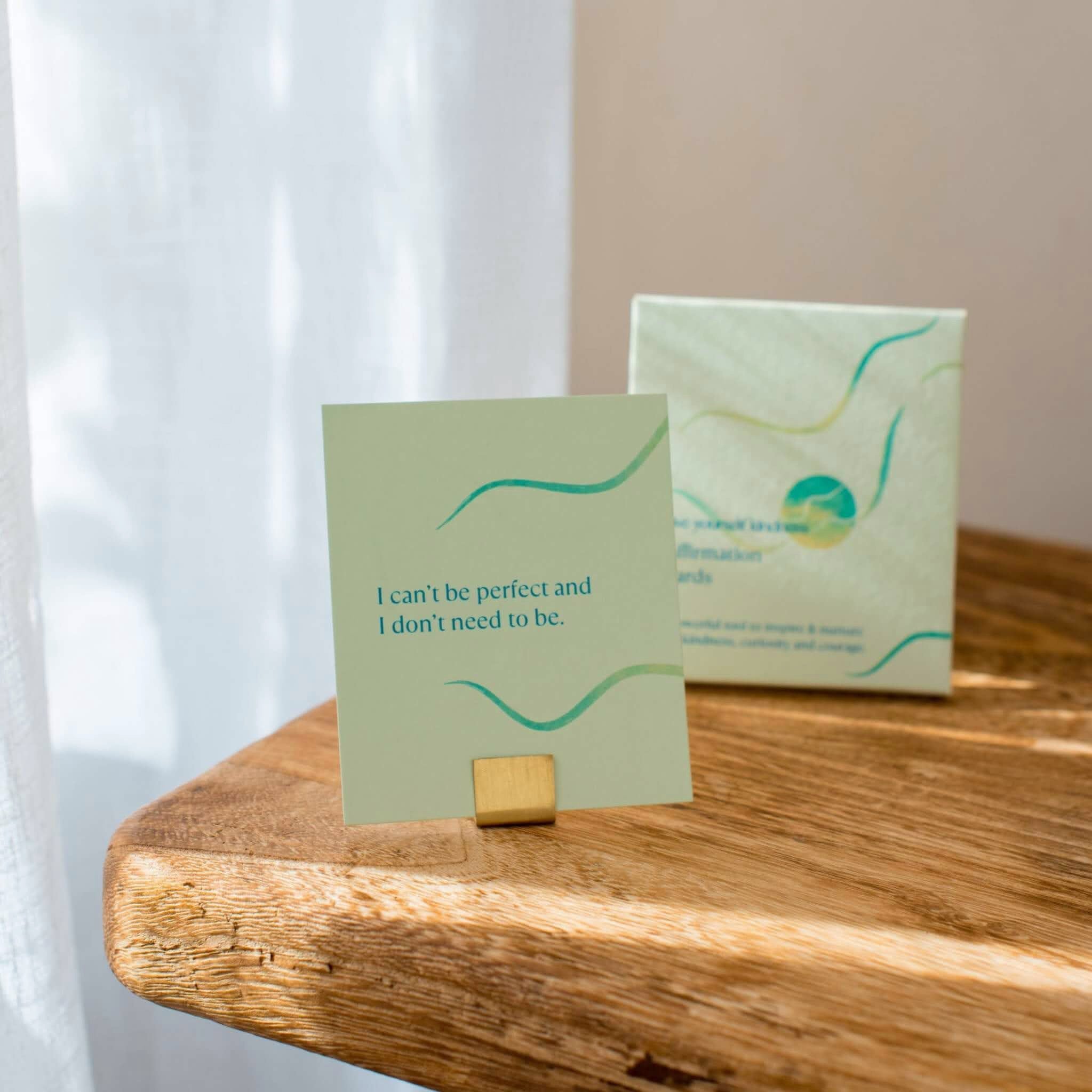
- Instead of I am perfect as I am → I can't be perfect and I don't need to be
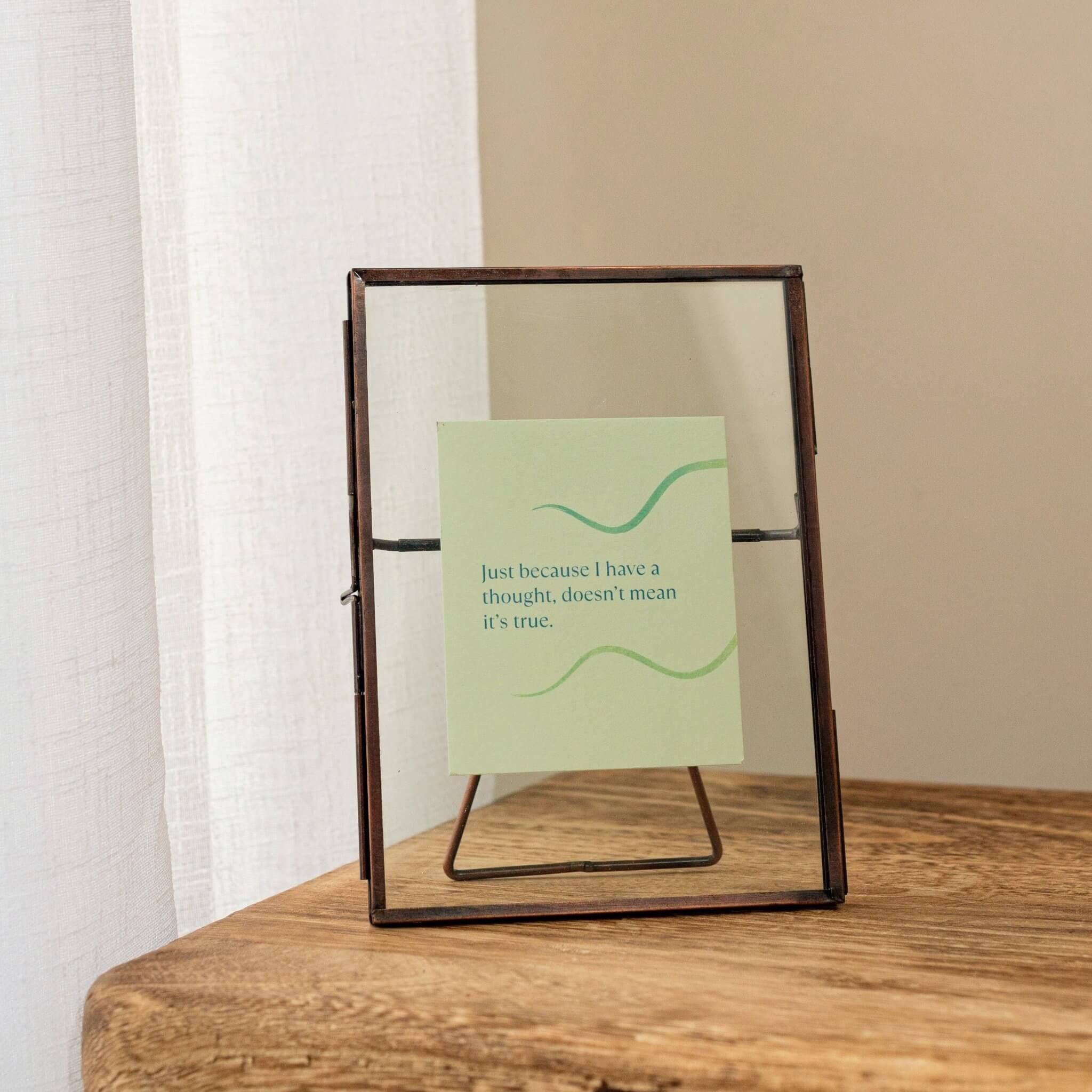
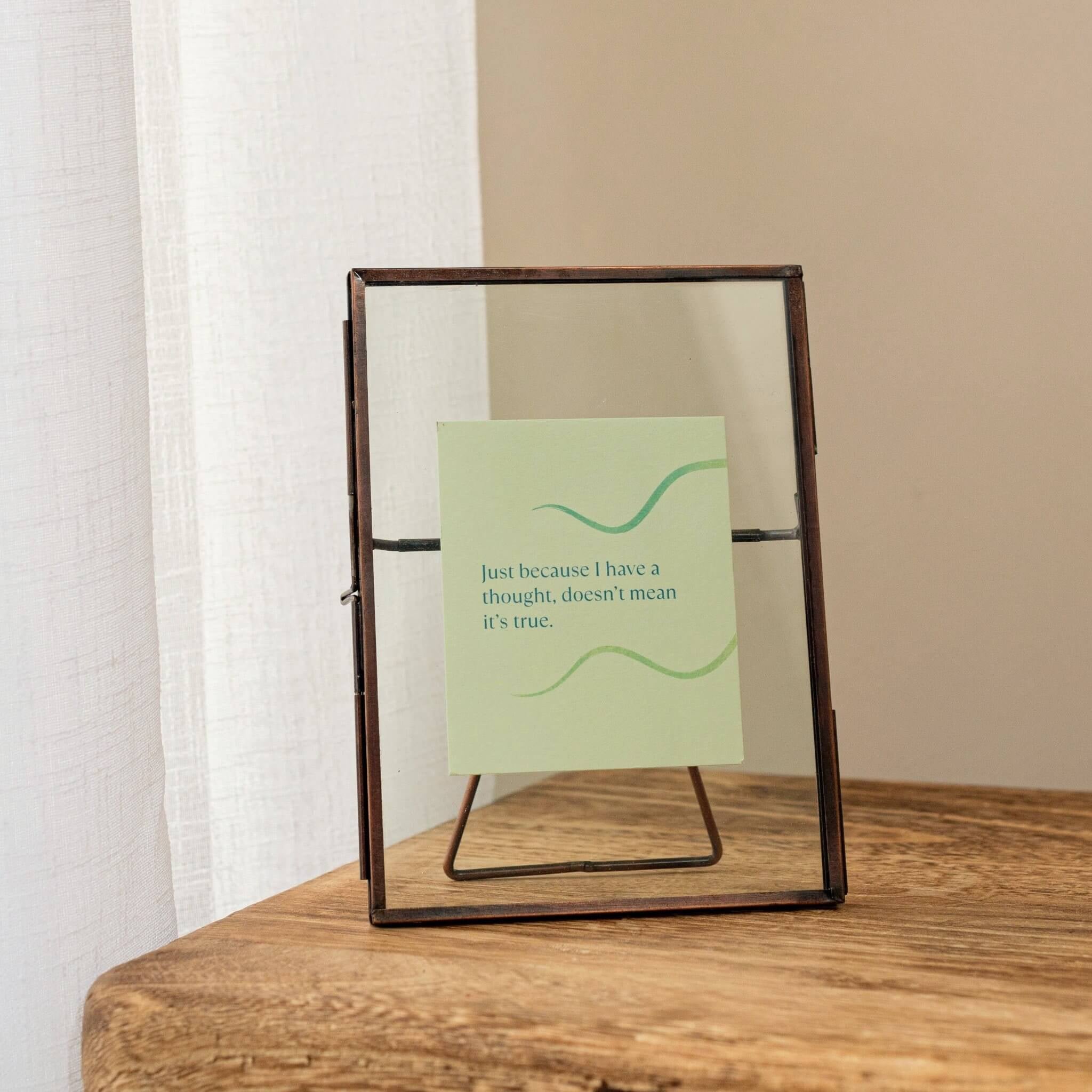
- Instead of my thoughts are positive → just because I have a thought, doesn't mean it's true
Try this first: pick one line from the 60 free affirmations further down this page, one that you can read without arguing with it, and leave it somewhere you'll see it tomorrow morning. That's the whole practice. You don't have to say it out loud and you don't have to believe it yet.
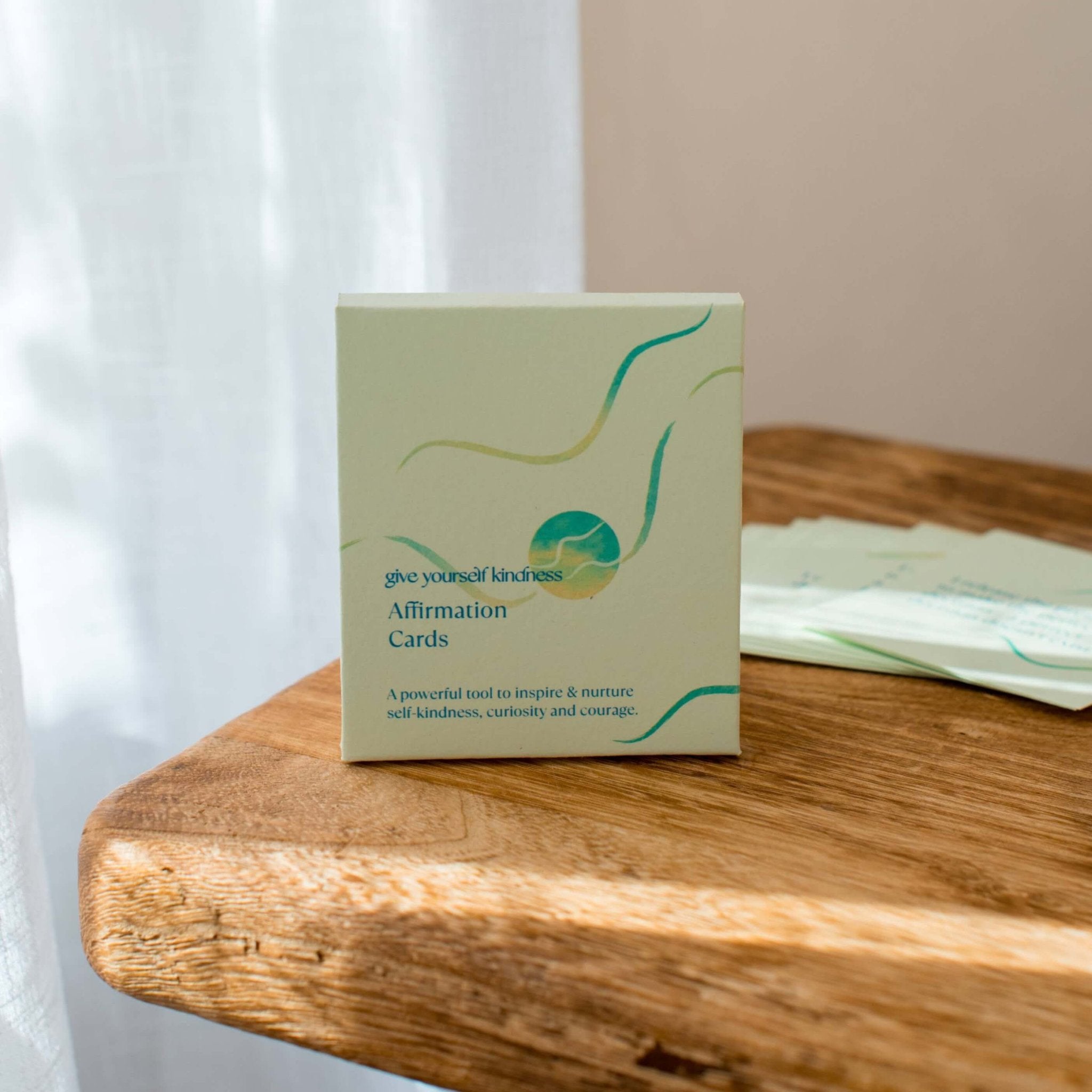
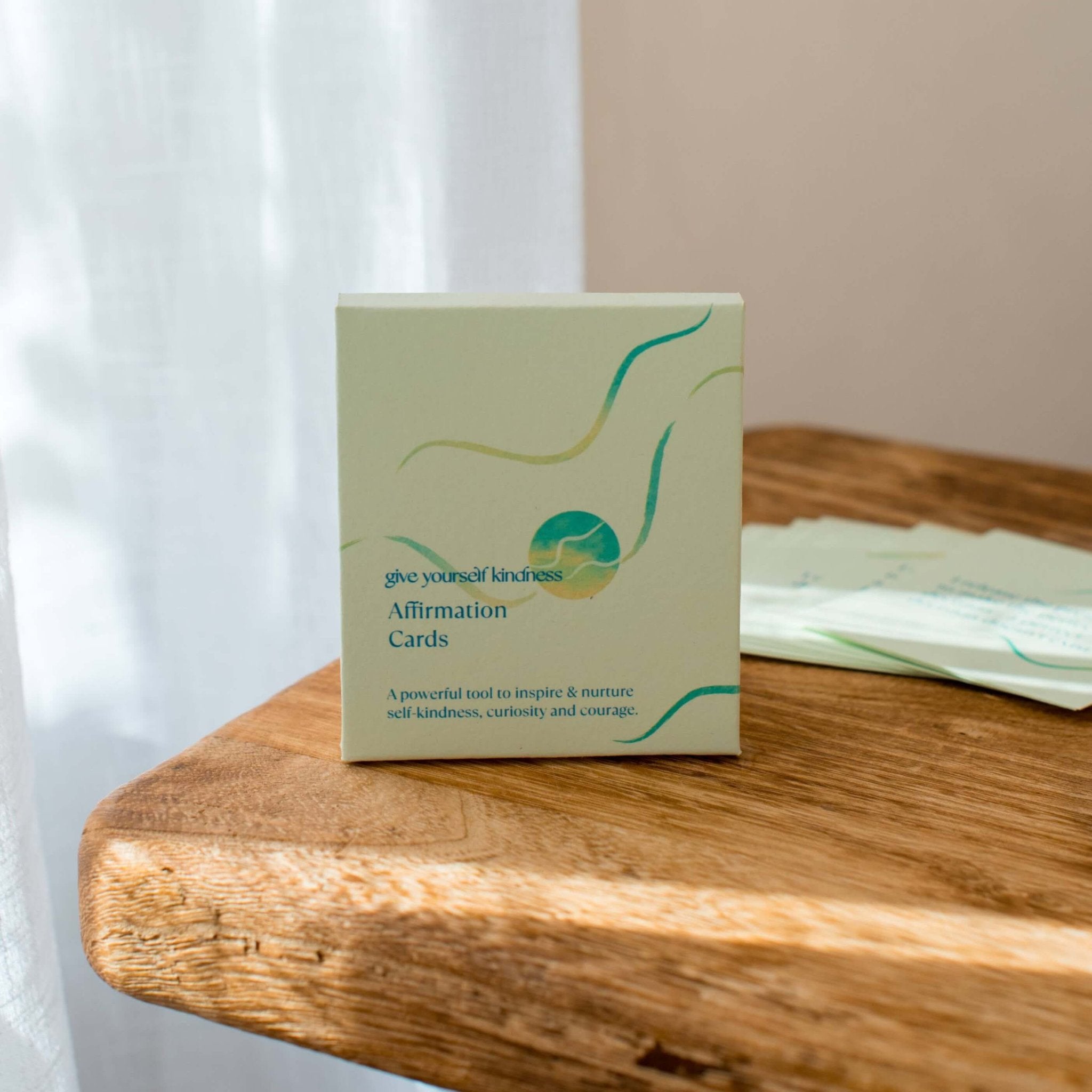
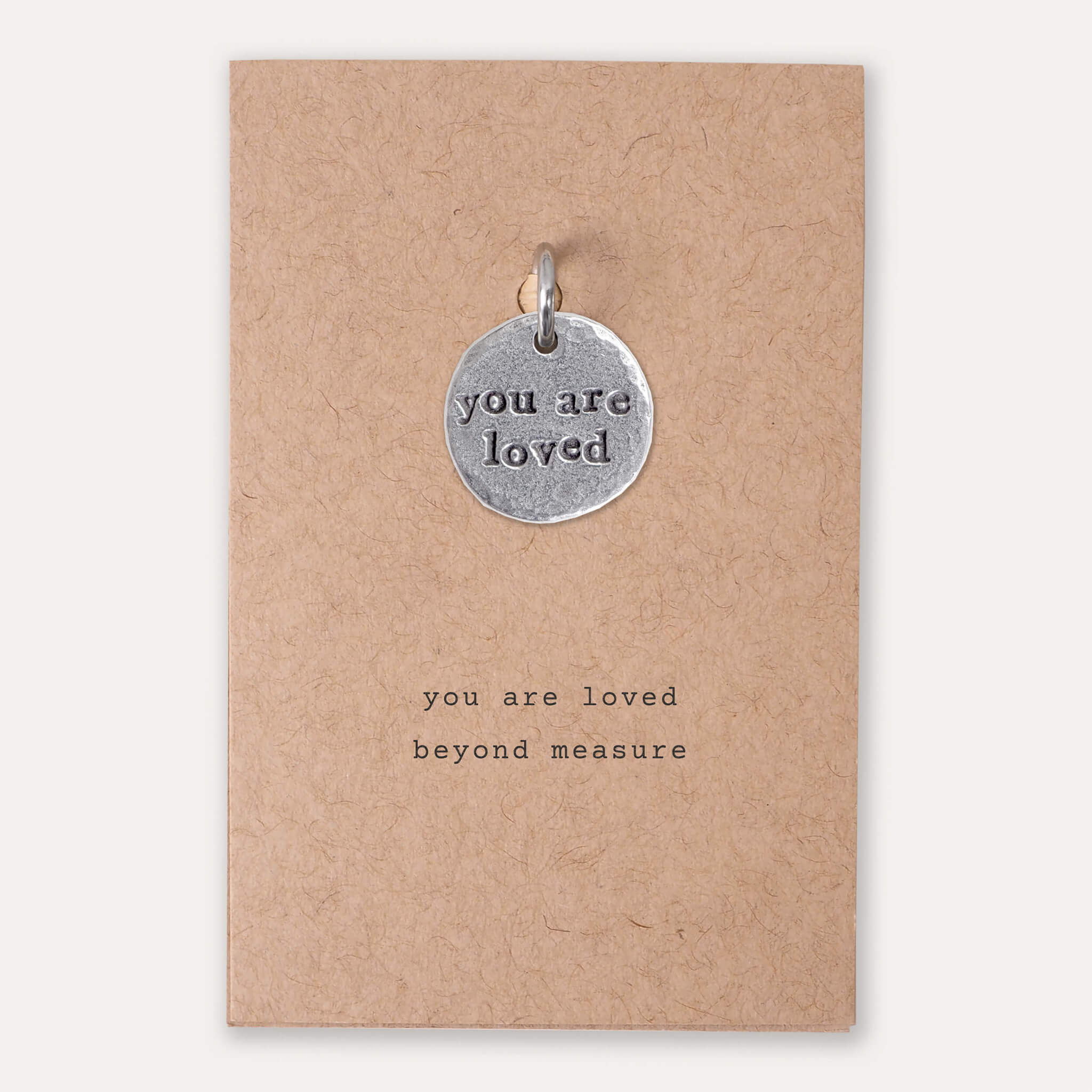
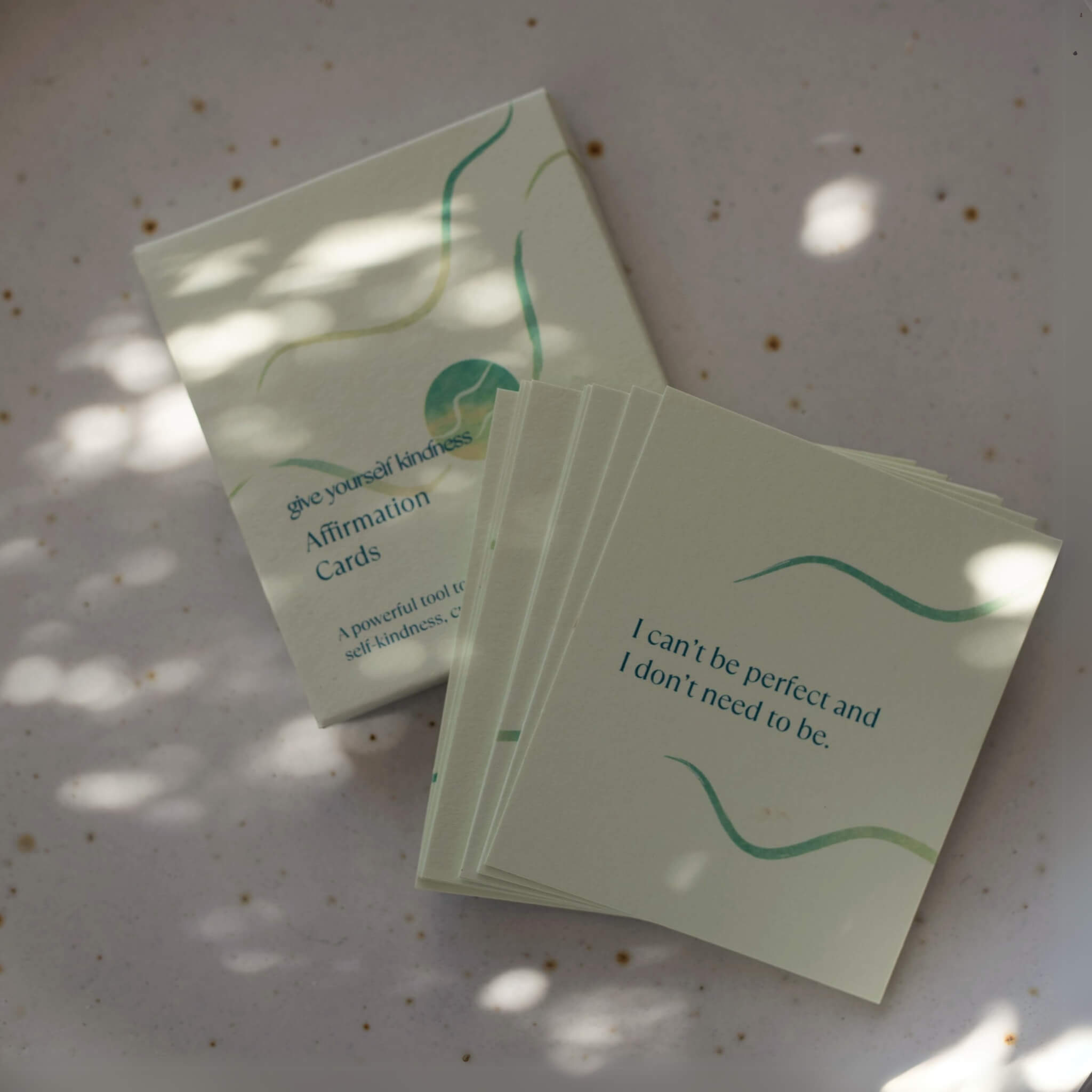
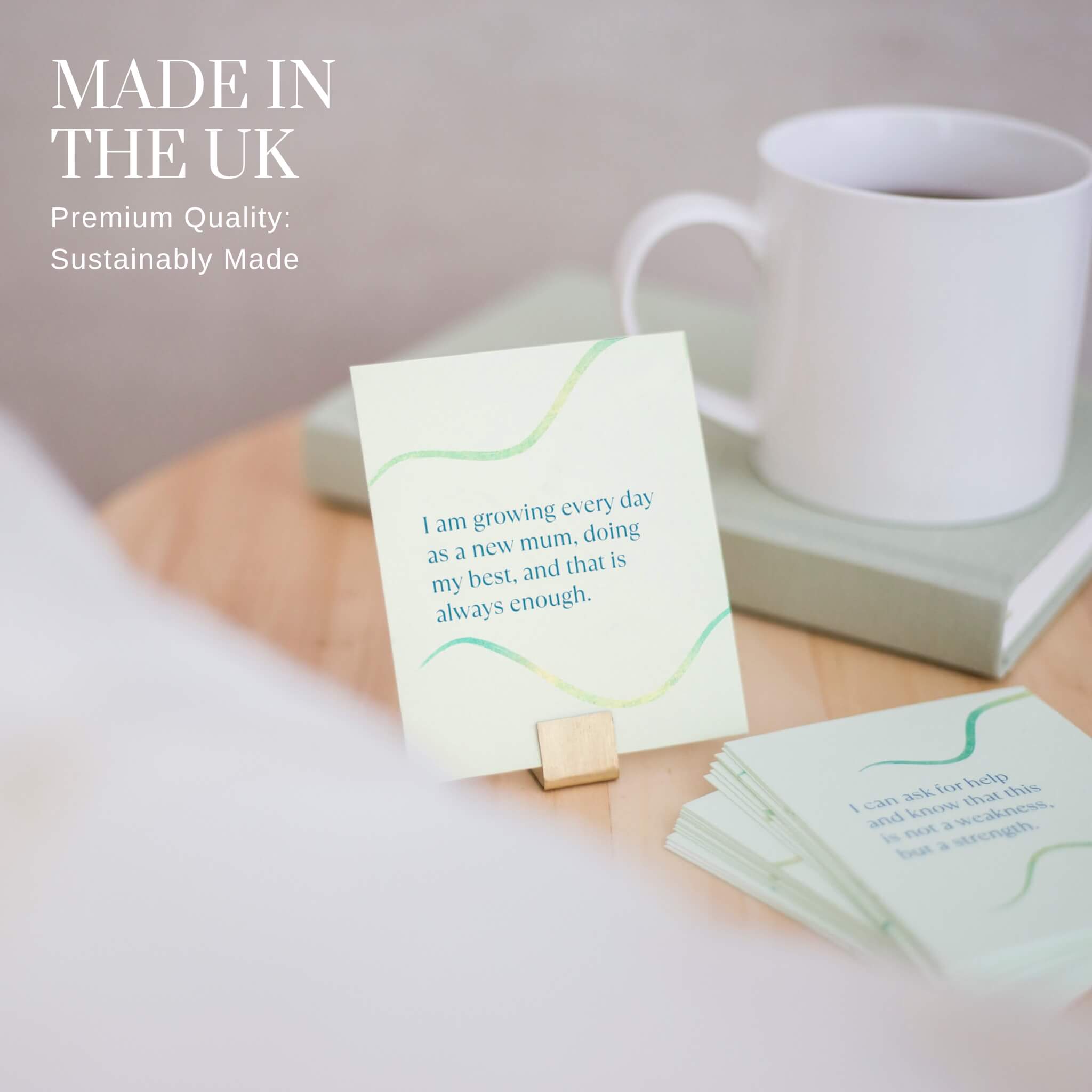
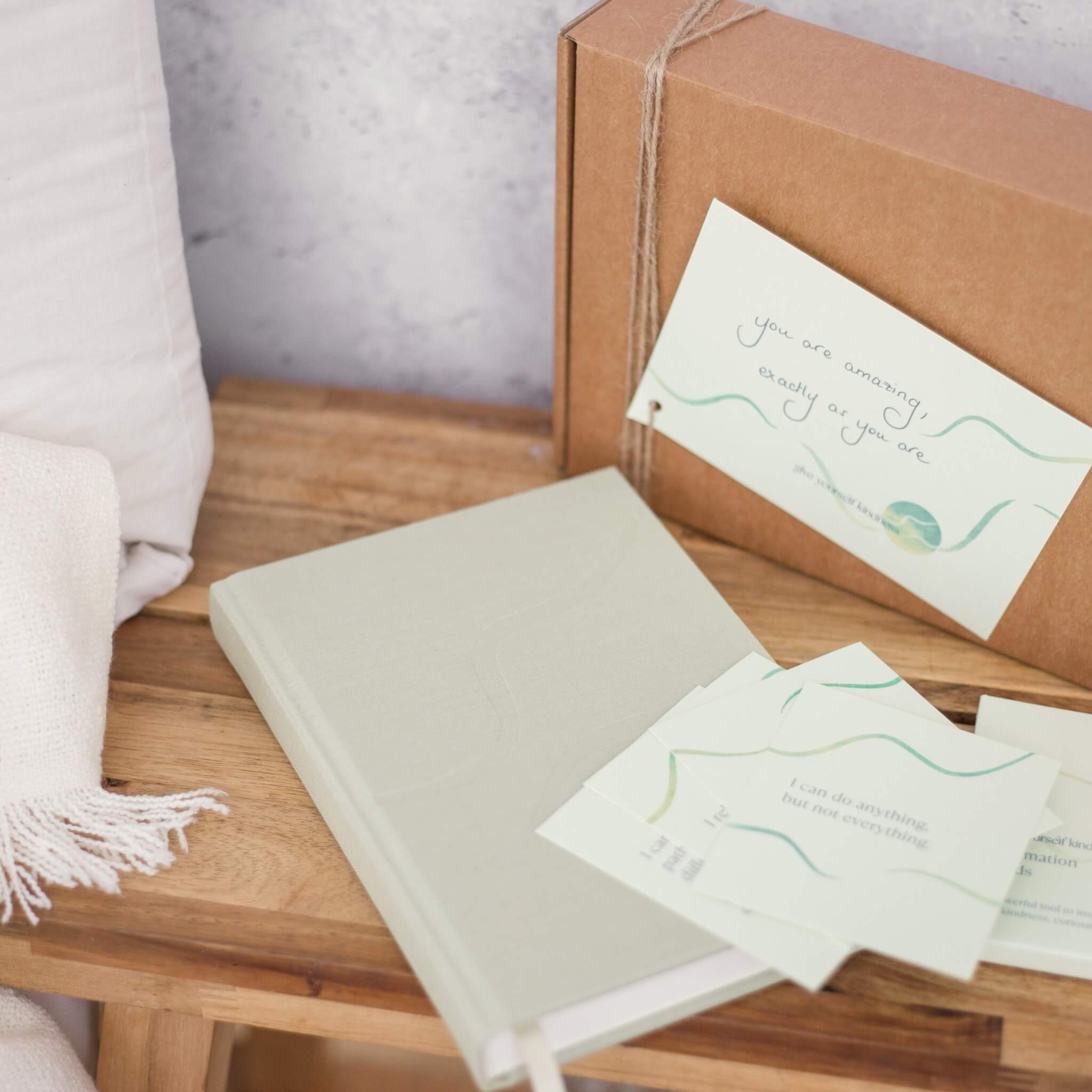
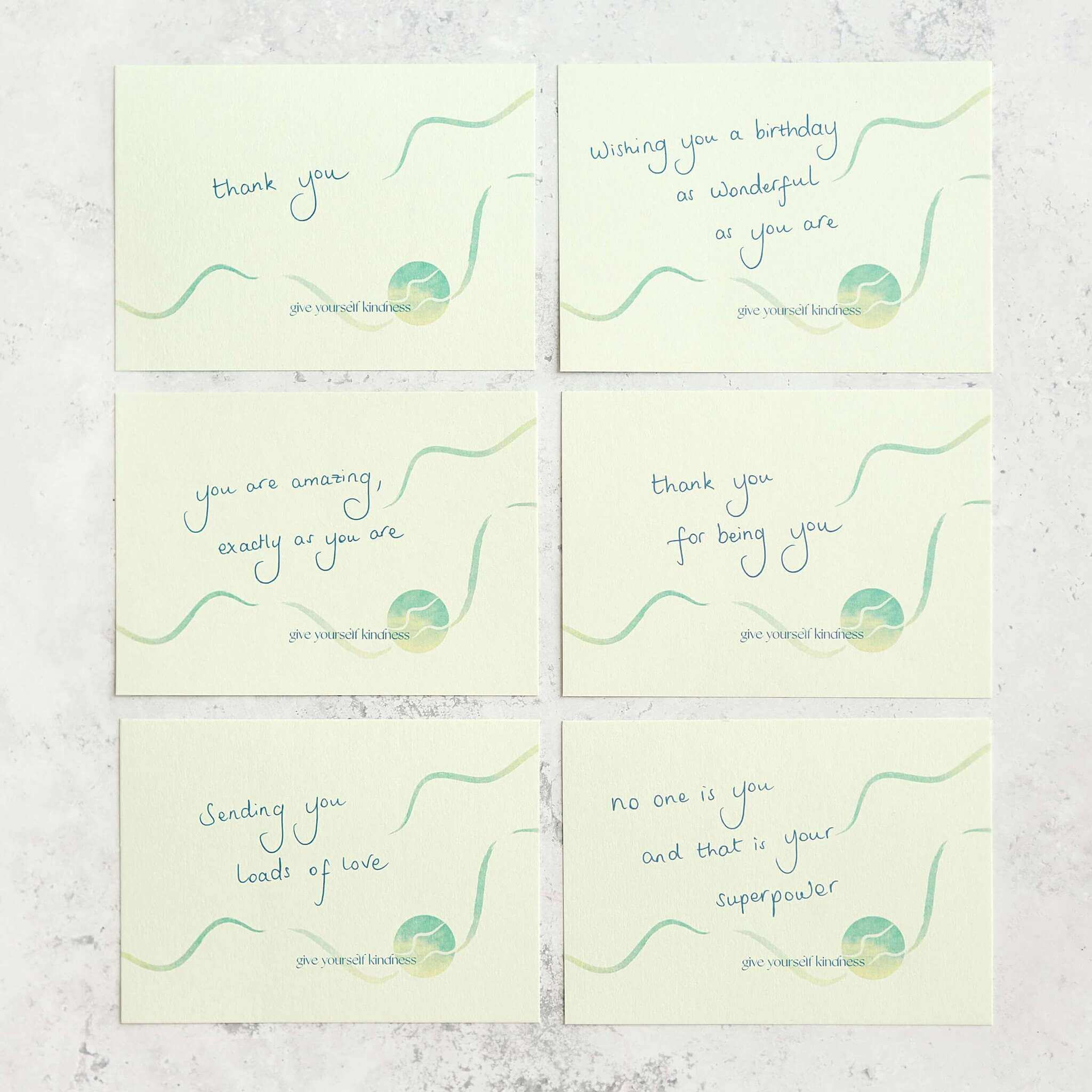
The Give Yourself Kindness Affirmation Cards are those 60 affirmations, printed. They're used by therapists with clients, and by an occupational therapist on a mental health ward.
Discover the affirmation cards →On this page
- Why affirmations can feel like lying to yourself
- 60 mental health affirmations, free, grouped by what you're facing
- The cards these affirmations are printed on
- What an occupational therapist found on a mental health ward
- When affirmation cards aren't the right thing
- How to use them so they actually stick
- Questions people ask me
Why affirmations can feel like lying to yourself
If you've tried affirmations before and the words felt untrue in your mouth, you're in good company — it's the thing people say to me most often. And it's worth saying clearly: noticing that a sentence isn't true for you is not a flaw. It's your mind doing its job.
Most affirmations ask you to declare something. I am confident. I am calm. I love myself. If you're anxious, exhausted or in the middle of something hard, there's a gap between the sentence and where you actually are, and a part of you will point at that gap every single time. The harder you push, the louder that part gets.
The gap is the problem, not you
An affirmation that lands doesn't argue with how you feel. It sits alongside it. So instead of a declaration about who you are, it's usually a permission, a reminder, or something plainly true that you'd forgotten.
That's why so many of the ones below start with I can, I don't have to, or I remind myself. There's nothing to disagree with. You can read one on your worst day and it still holds.
I asked five psychologists whether affirmations actually work, and the short version of their answer was that it depends entirely on the affirmation — on how credible and realistic it feels, and whether it leaves room for the days you feel low. You can read what all five of them said here.
Asks you to believe something
- I am confident
- I am calm and relaxed
- I love myself completely
- Today is going to be a great day
Doesn't need you to believe anything
- I can try, even when I don't feel 100% ready
- I can use my breath as a tool to find calm, taking deep, slow breaths
- We all deserve kindness, and 'all' includes me
- I can be proud of myself for doing my best
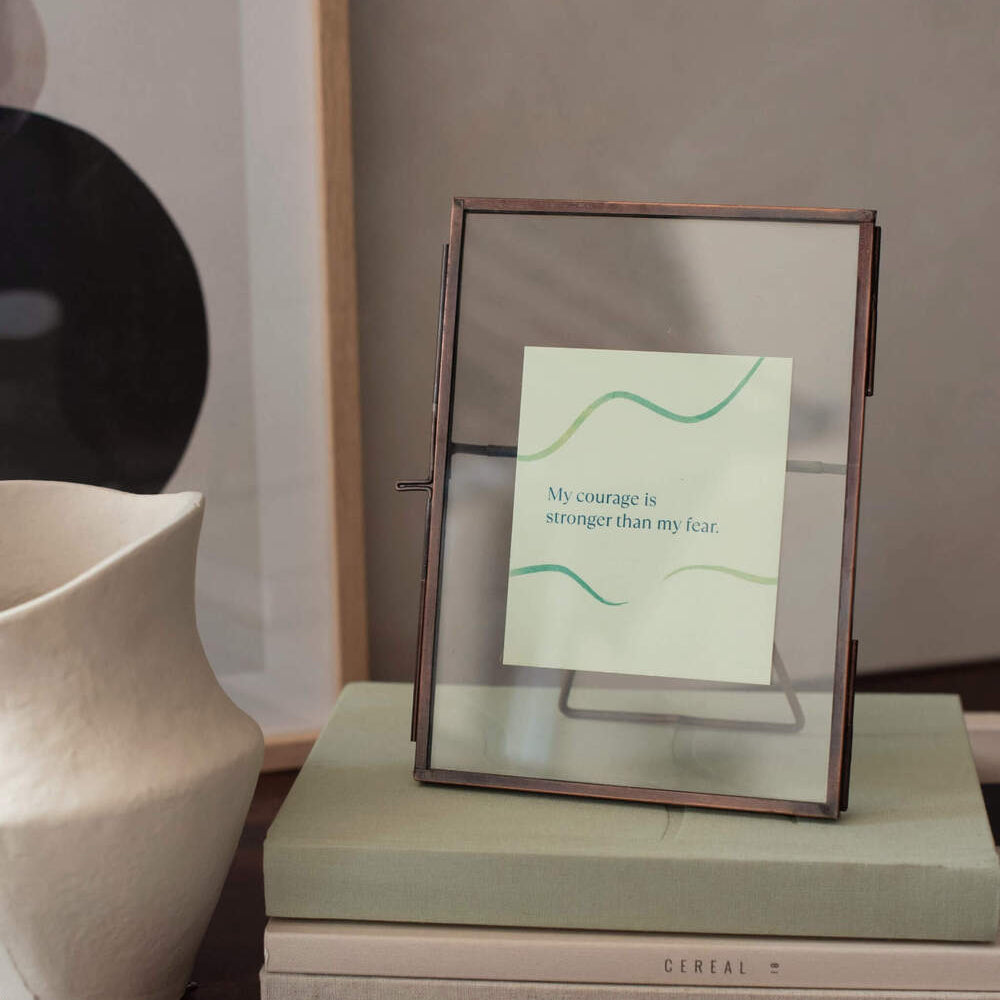
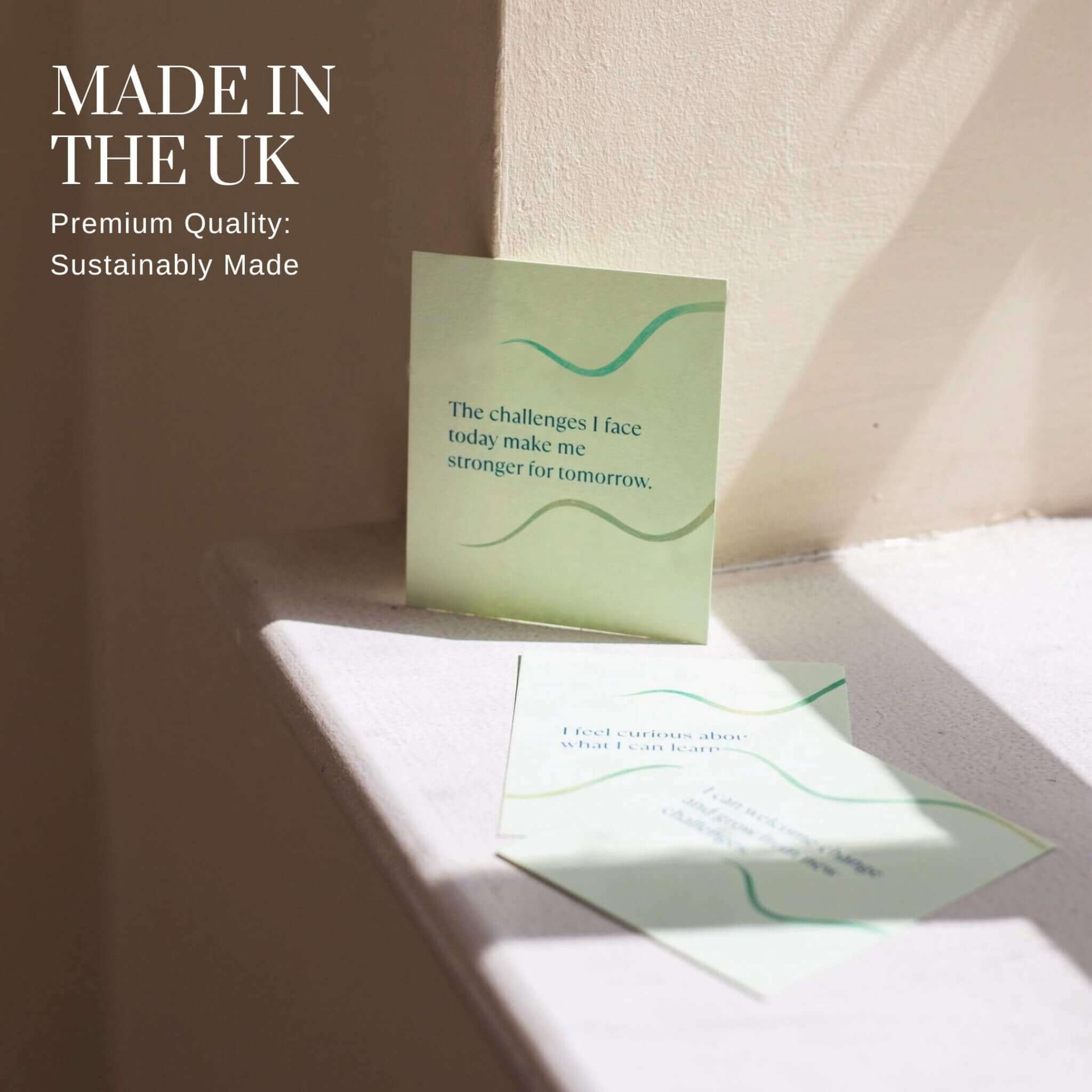
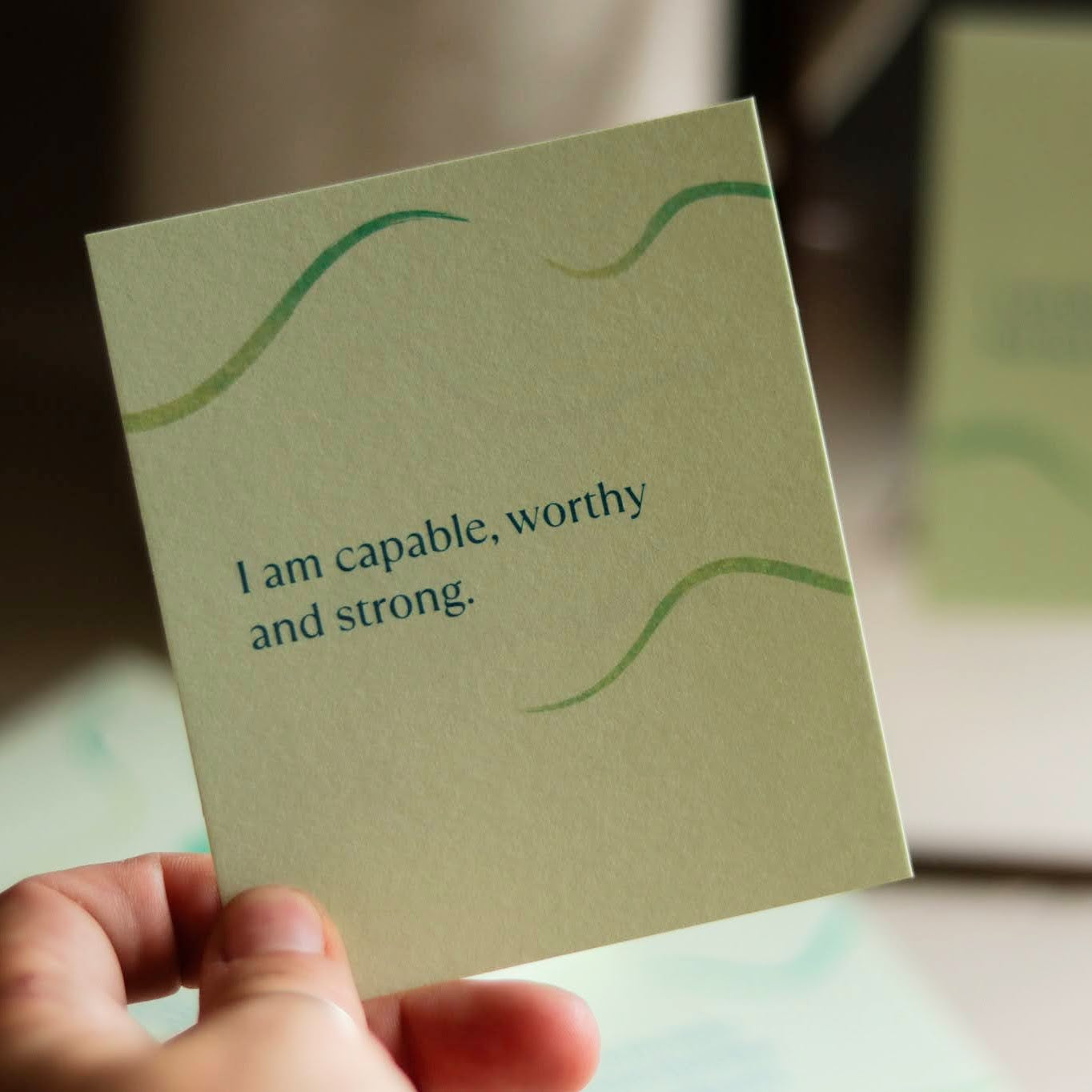
The four on the right are real cards from the set. Every one of the 60 is written that way on purpose — nothing on them requires you to feel positive, and nothing on them will tell you to cheer up.
60 mental health affirmations, free
These are the full 60 affirmations from my card sets, grouped by what you might be facing rather than by set number, so you can go straight to the one that fits today. There's no sign-up and nothing held back. Read them, take a photo of the ones that land, write them on a post-it — they're yours.
Everything on this page is free and yours to use
I sell these as cards, and I'll show you them further down. But the words aren't the part you're paying for. The reason I made a physical set is that the hard part isn't reading a list once — it's having the right sentence in front of you on the morning you actually need it, without having to search for it.
If a piece of paper on your mirror does that job for you, that's a good outcome. Please take these.
When your mind won't stop
- Just because I have a thought, doesn't mean it's true.
- I can use my breath as a tool to find calm, taking deep, slow breaths.
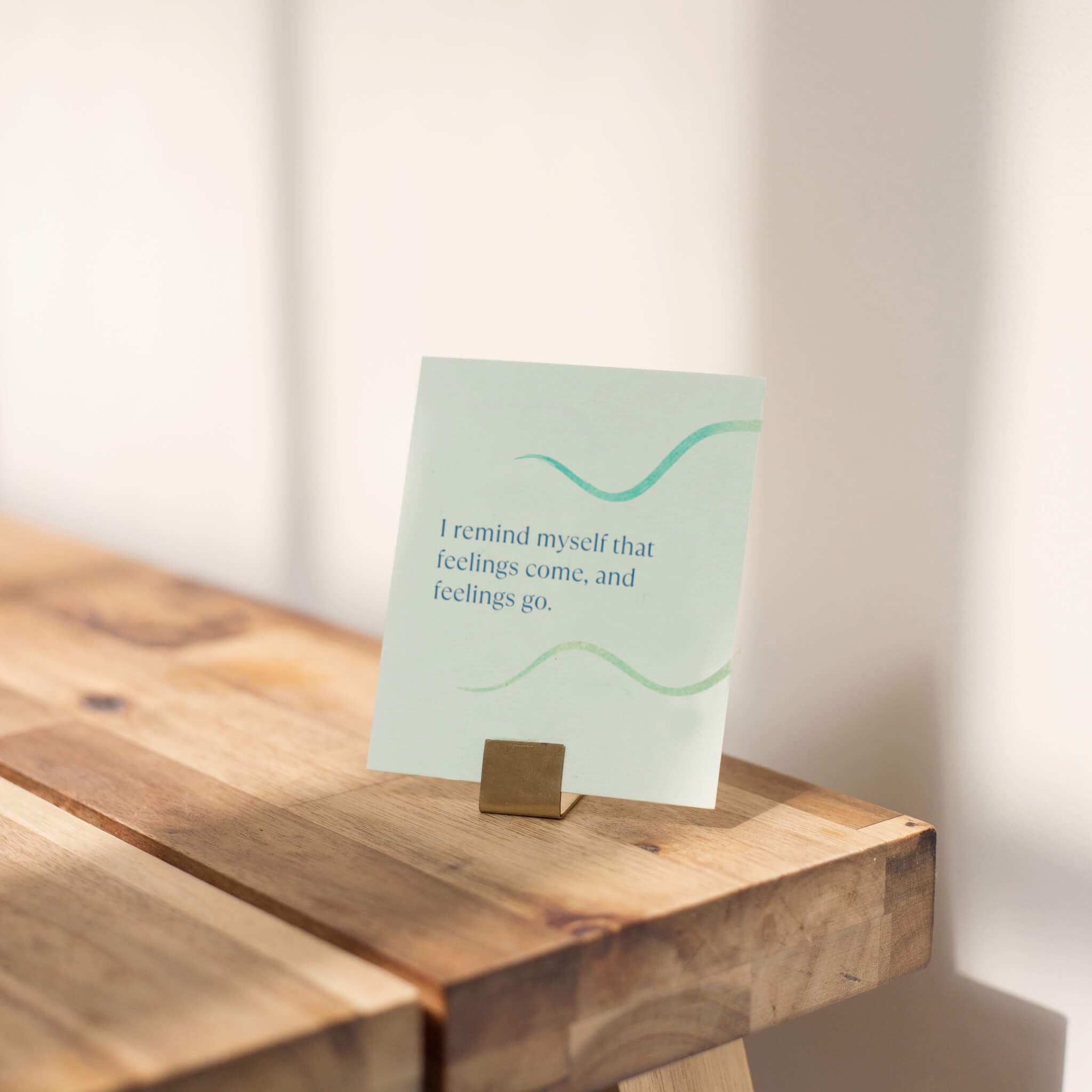
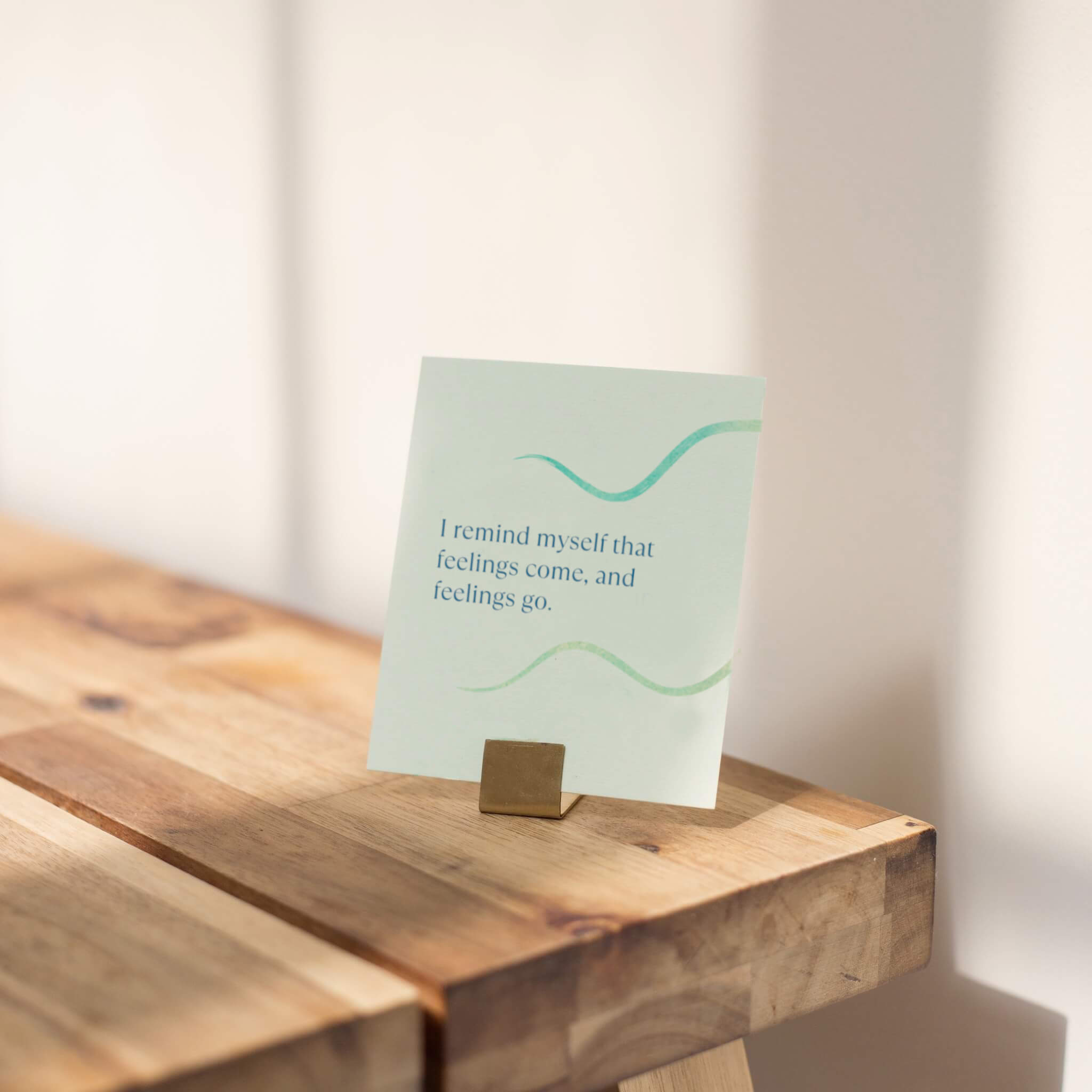
- I remind myself that feelings come, and feelings go.
- I can welcome any emotion, knowing that this feeling will not last forever.
- I can embrace uncertainty. It's okay not to know.
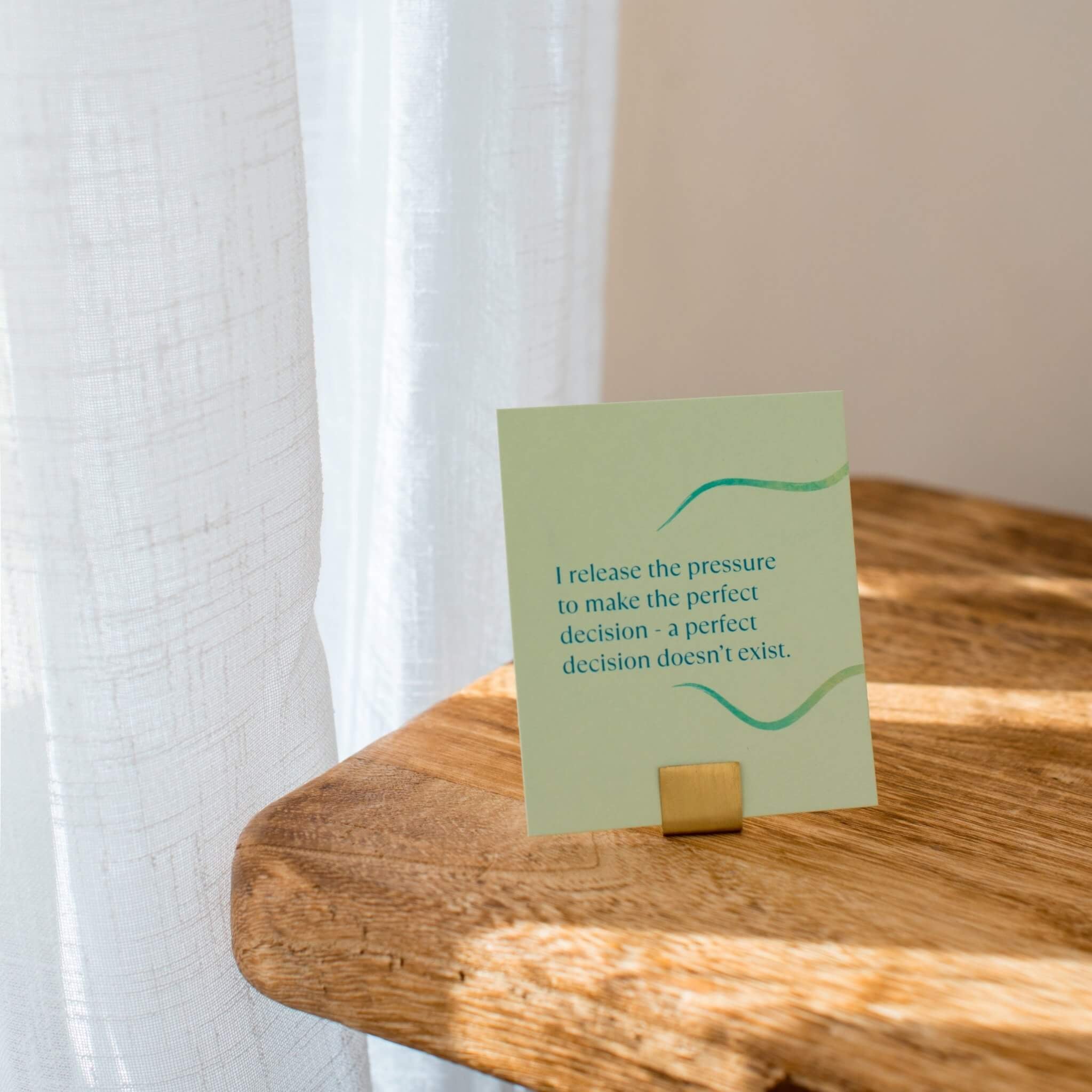
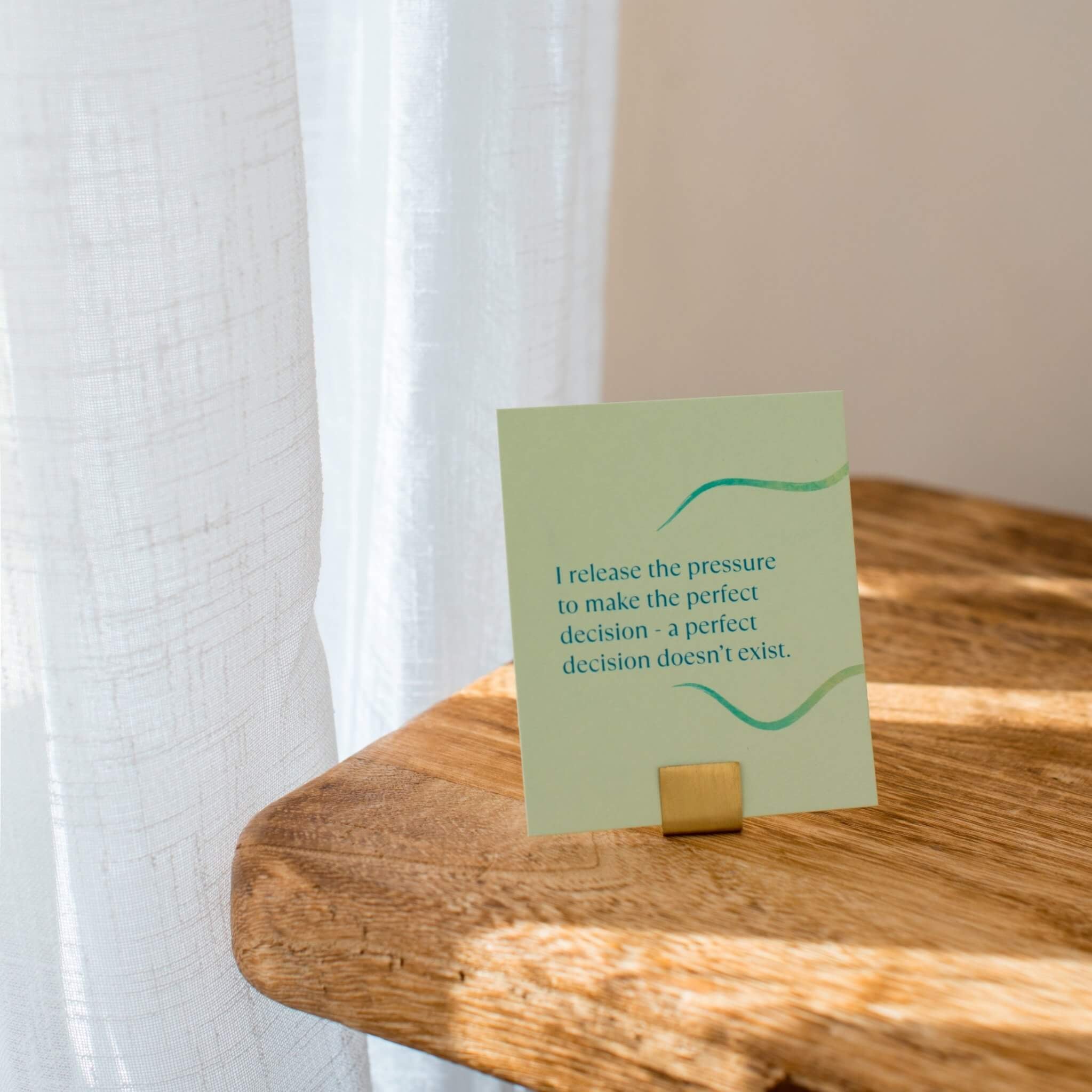
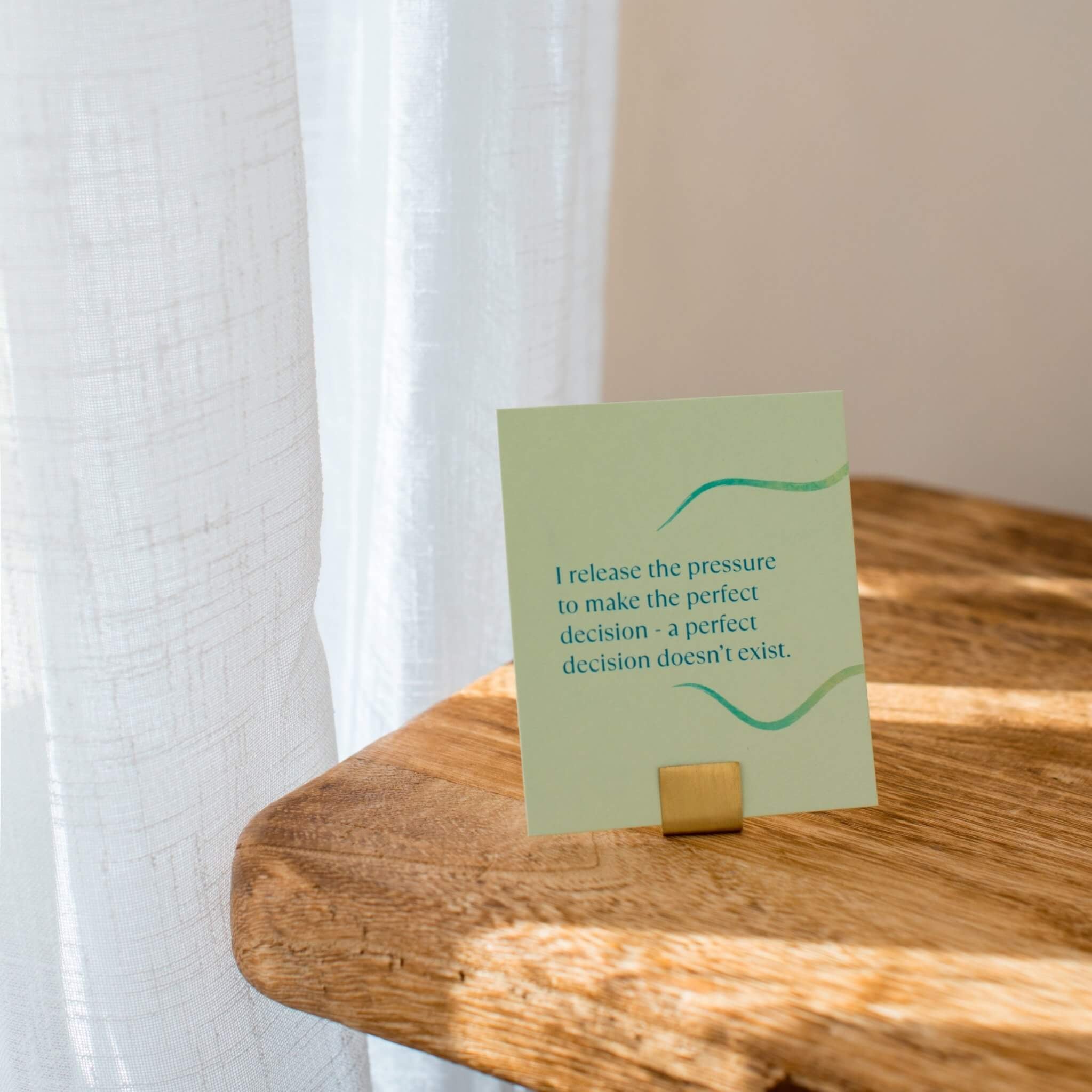
- I release the pressure to make the perfect decision — a perfect decision doesn't exist.
When you're being hard on yourself
- It is normal to have an inner critic — but I don't have to believe it.
- I choose to give myself the same kindness I would give to a friend.
- I think of the advice I would give to a friend, and give it to myself.
- I choose the way I speak to myself, and I choose kindness.
- I can give myself kindness and know that it is not selfish.
- Whenever I notice I am saying 'I should', I stop and find another word.
When you've made a mistake
- I can make mistakes and learn from them, without self-criticism.
- I forgive myself for what I did when I was learning.
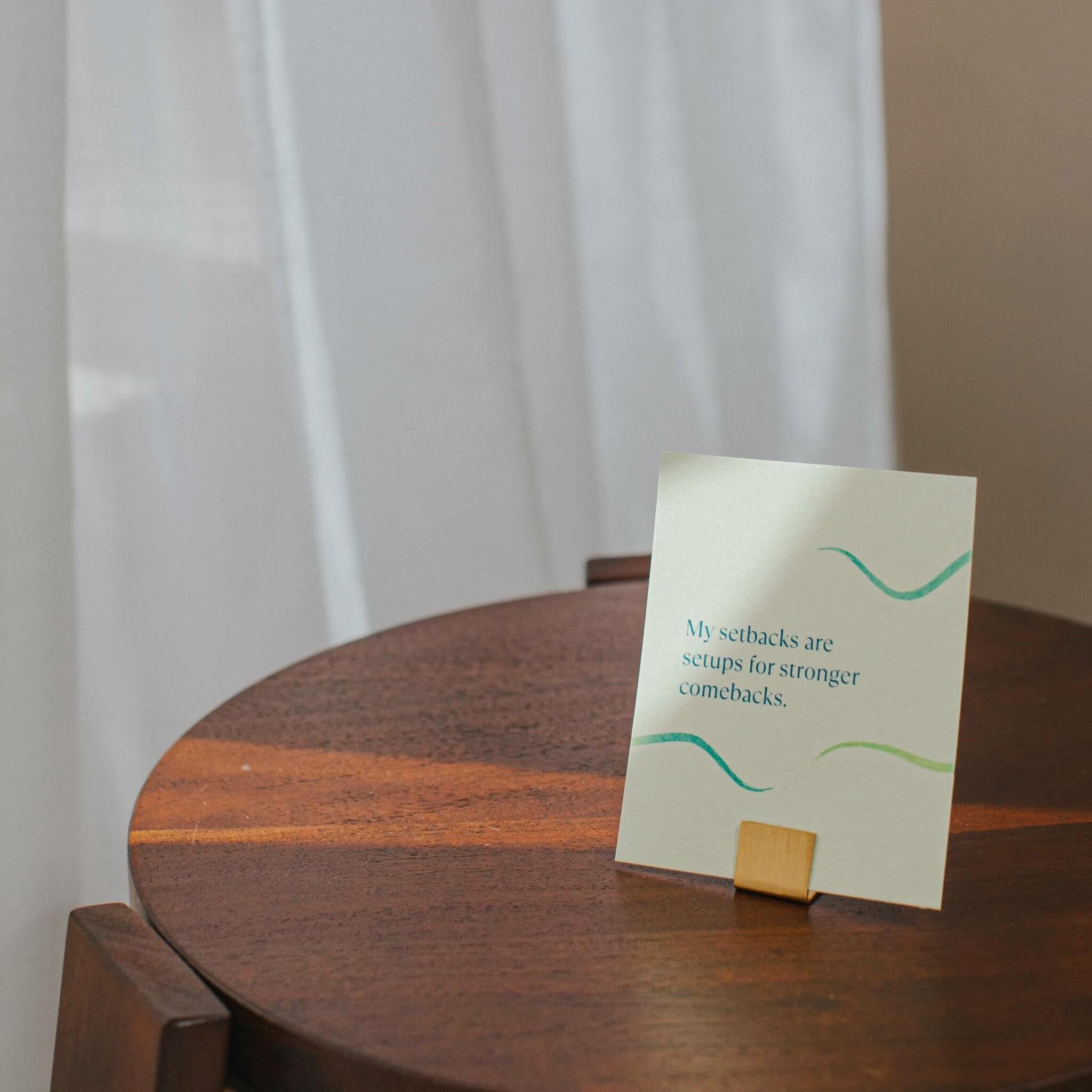
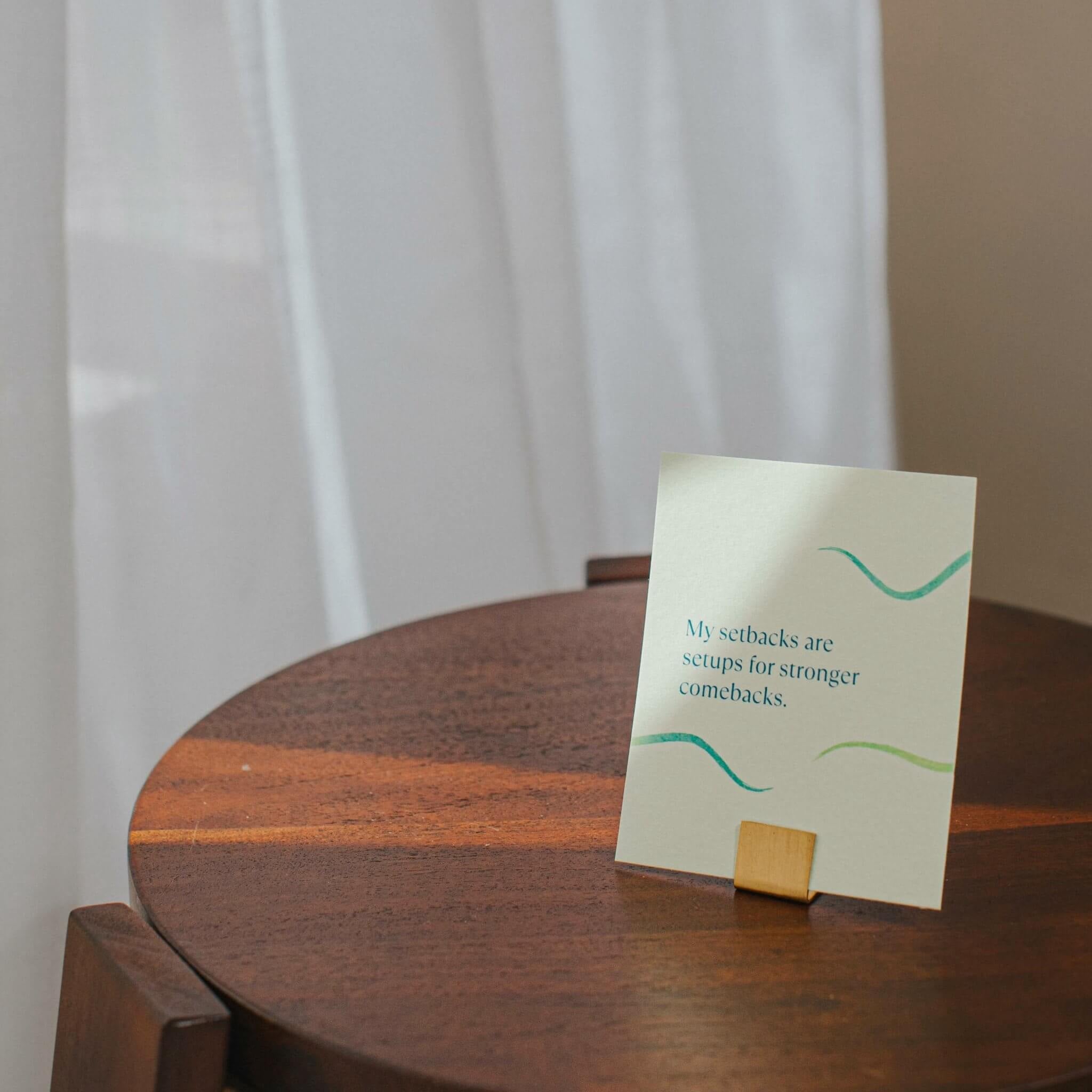
- My setbacks are setups for stronger comebacks.
- I recognise that sometimes the only way forward is to use trial and error and that is okay.
- I remind myself that there is always a new way to the same outcome.
- I can change my mind and know that that is okay.
When perfect feels like the only option
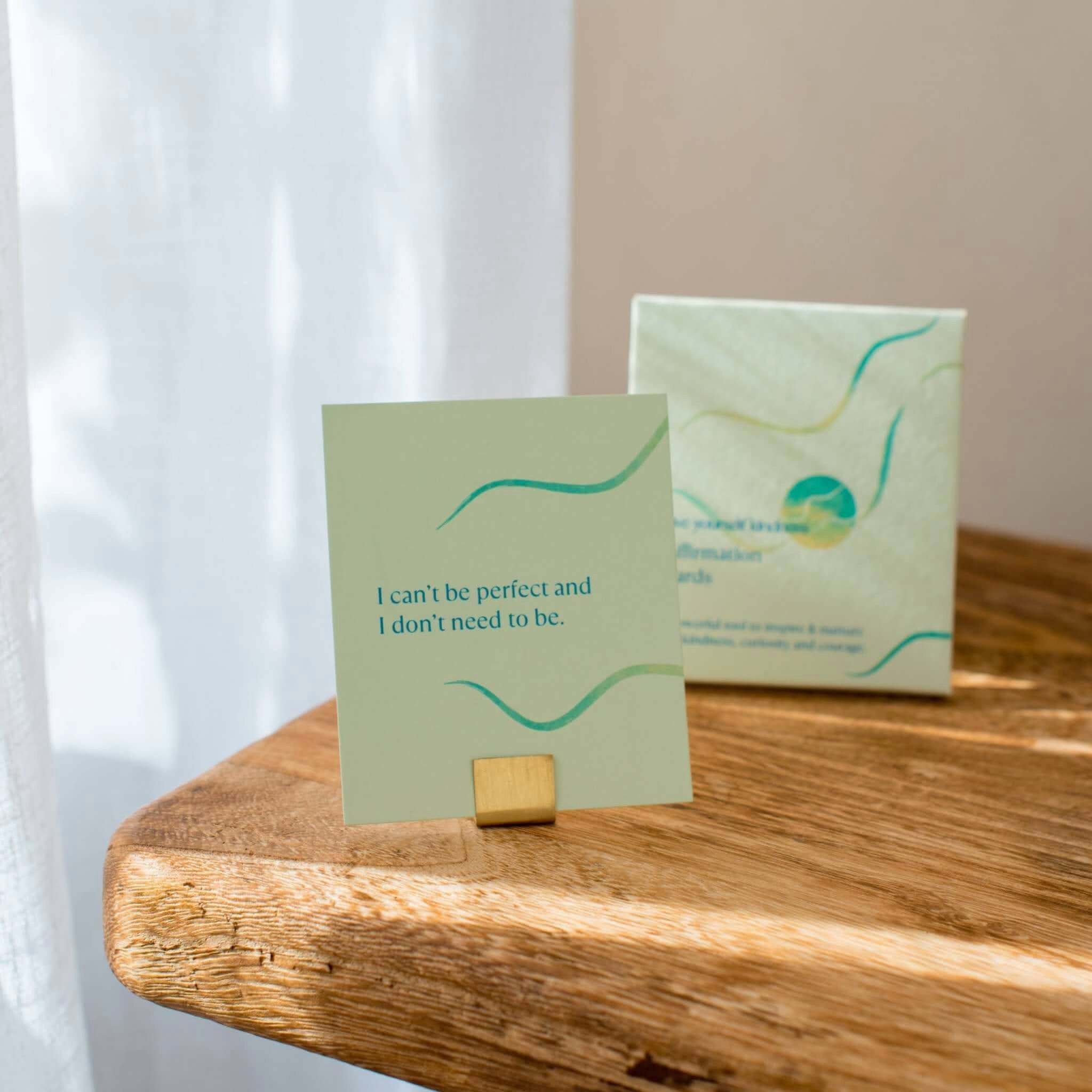
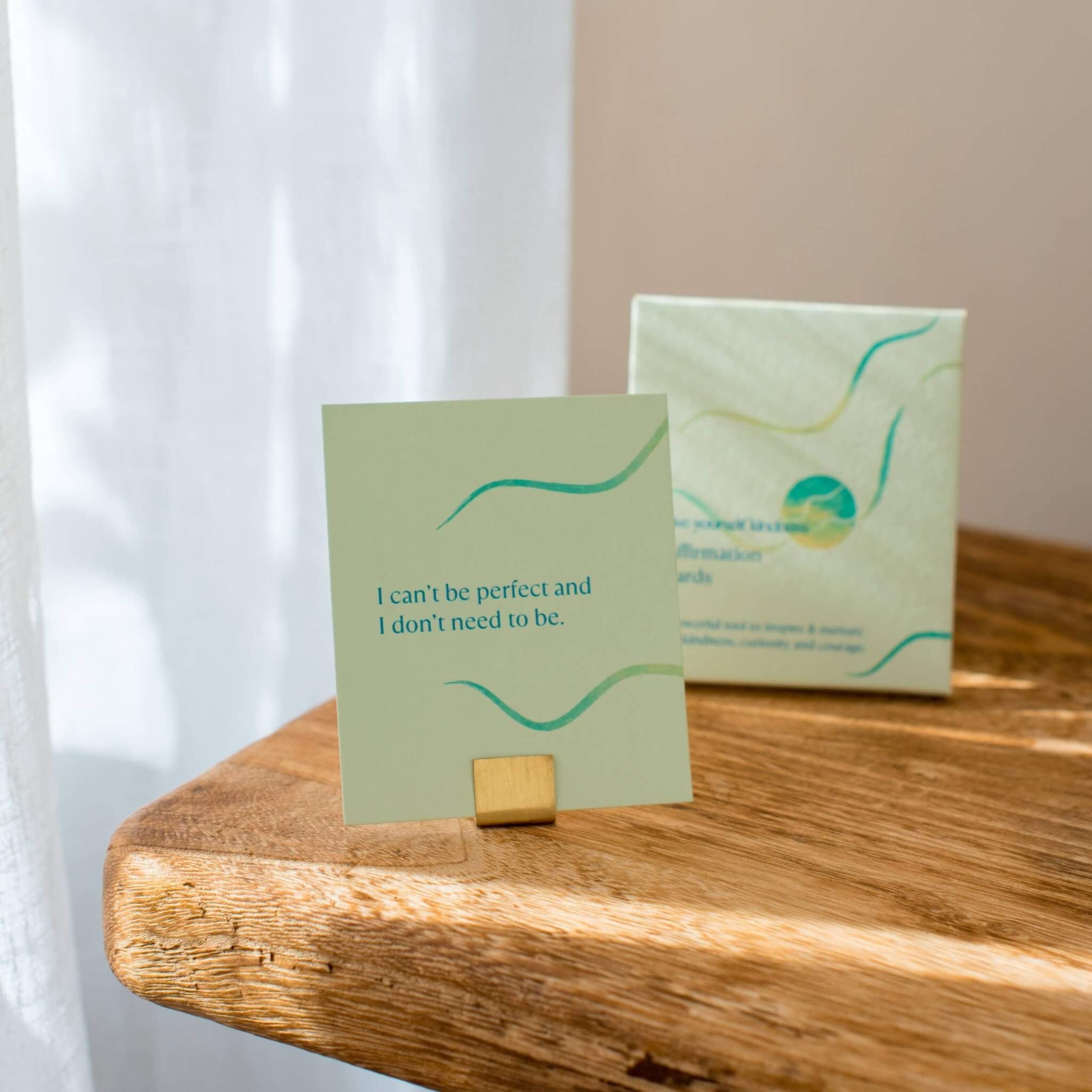
- I can't be perfect and I don't need to be.
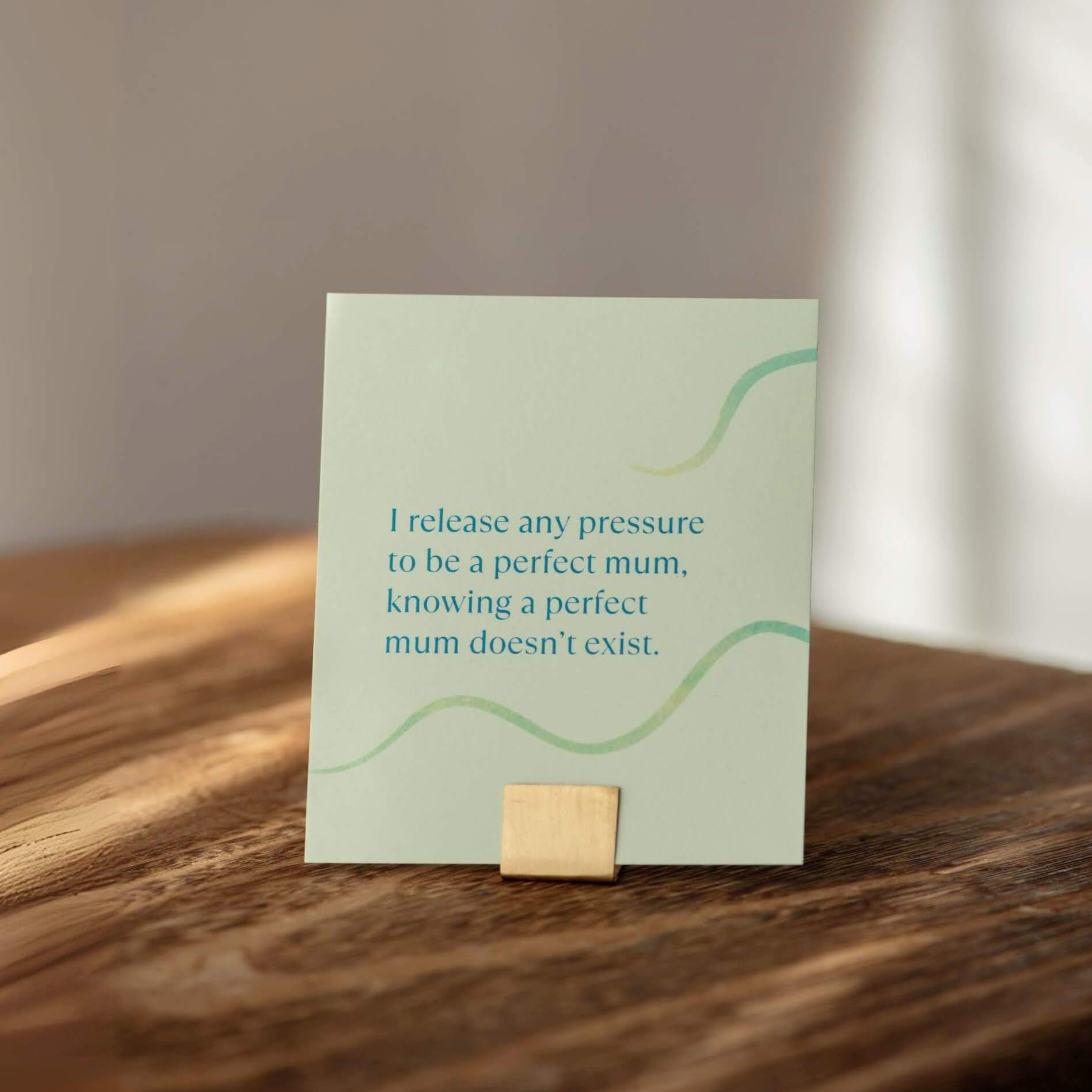
- I release any pressure to be perfect, knowing that perfect doesn't exist.
- My worthiness of love does not depend on being faultless.
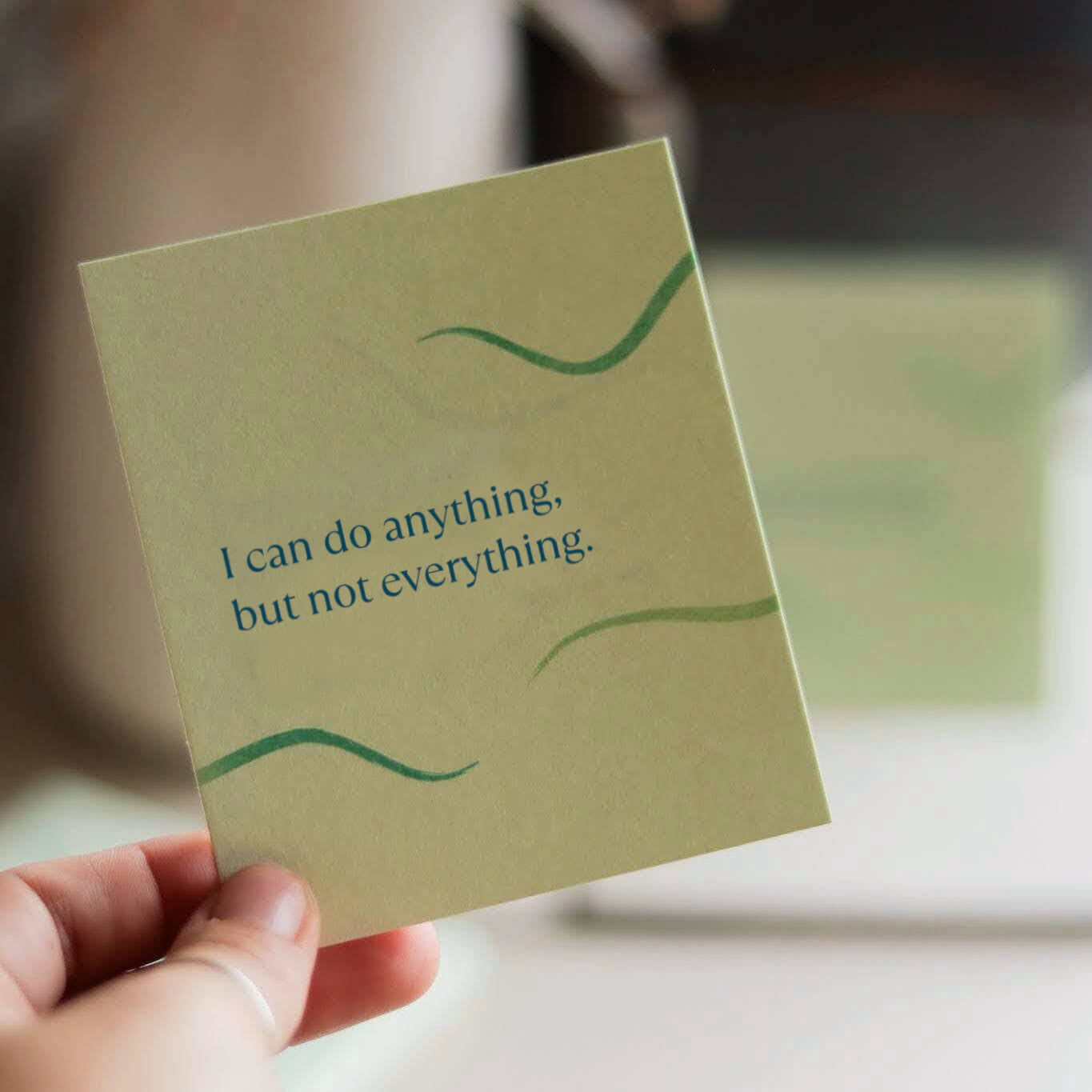
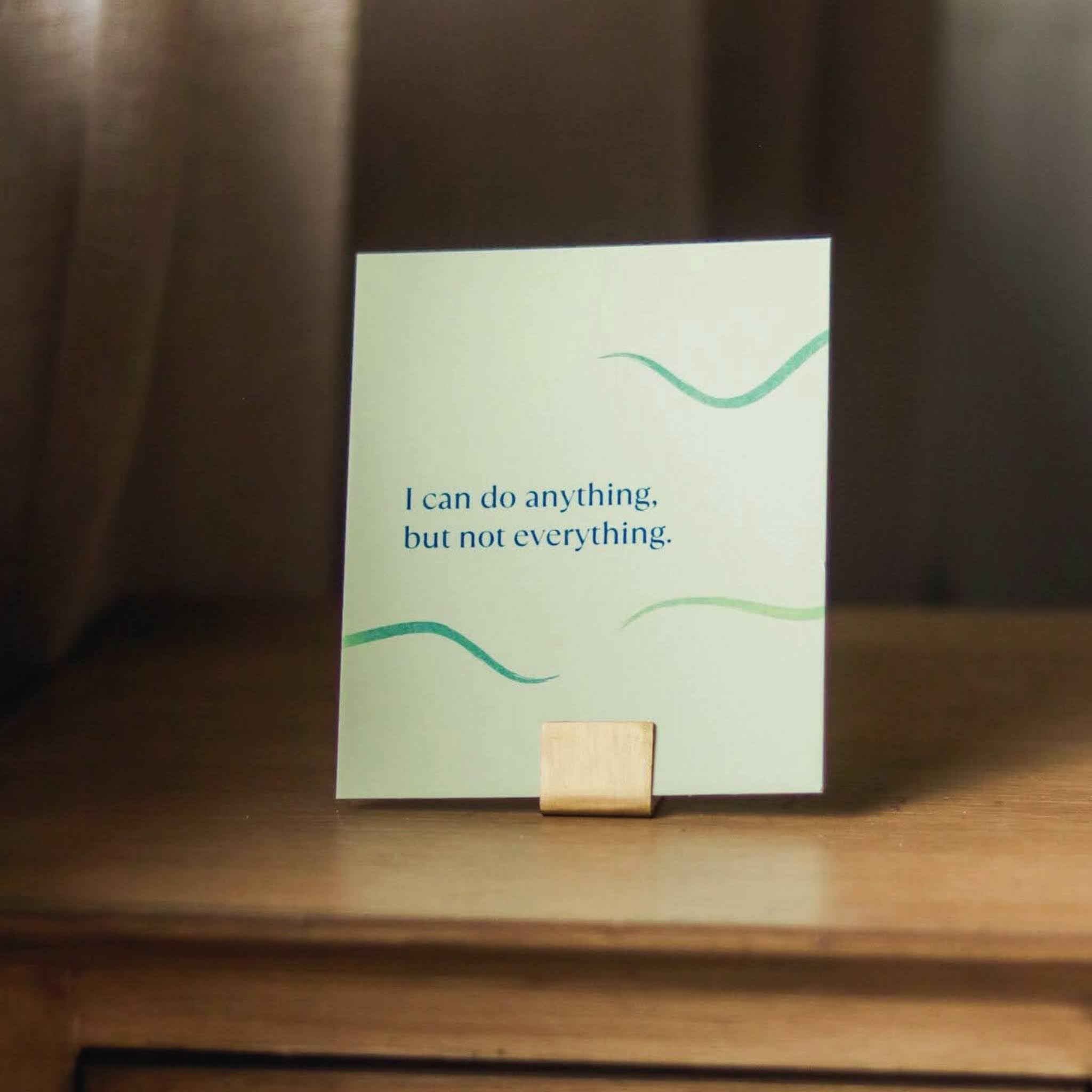
- I can do anything, but not everything.
- I remind myself that there is no single definition of success.
- I can be proud of myself for doing my best.
When you're exhausted and can't seem to rest
- I can welcome time to rest.
- I don't need to earn rest to deserve it.
- My worth is not dependent on what I have done today.
- I am worthy, and this does not depend on my productivity or achievements.
- I am allowed to say no.
- I can make time for things that bring me joy, without feeling guilty.
- I recognise that some things take time — patience is not inactivity.
When you don't feel like you're enough
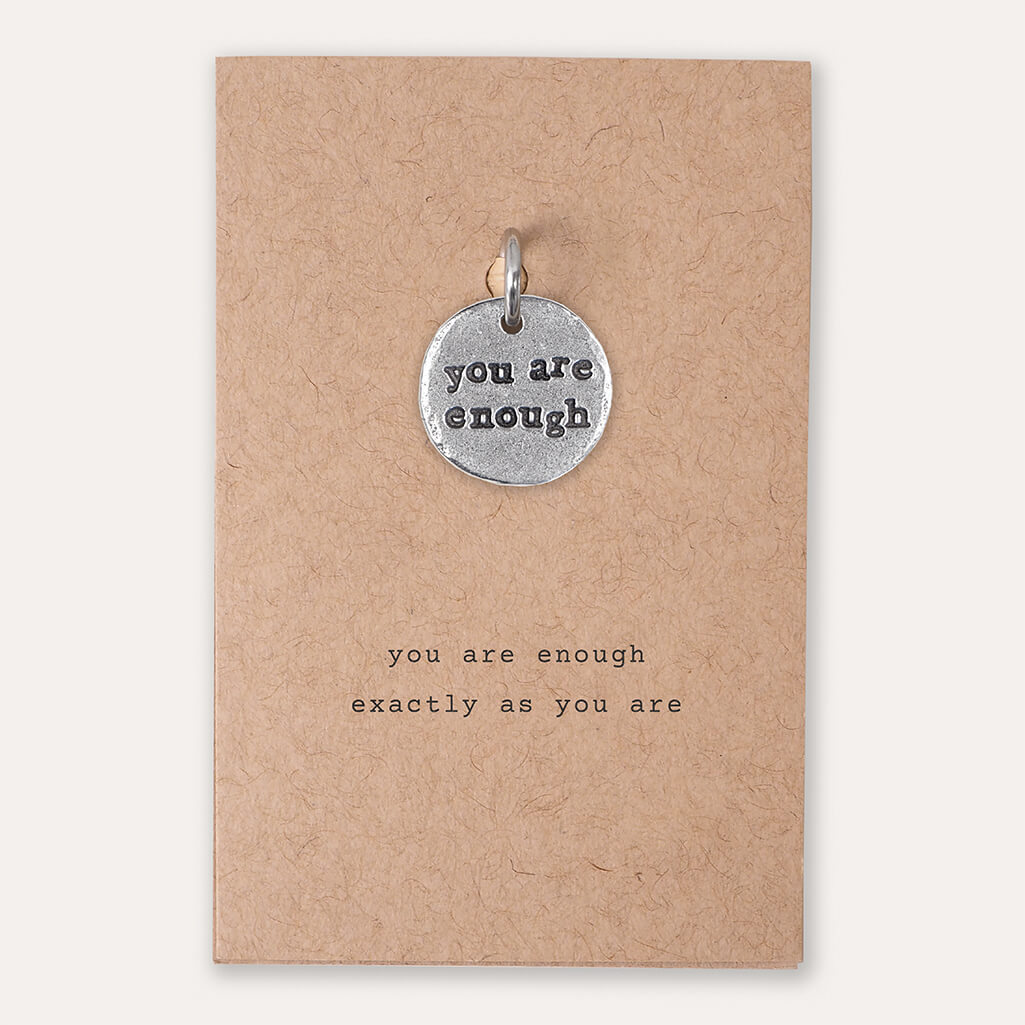
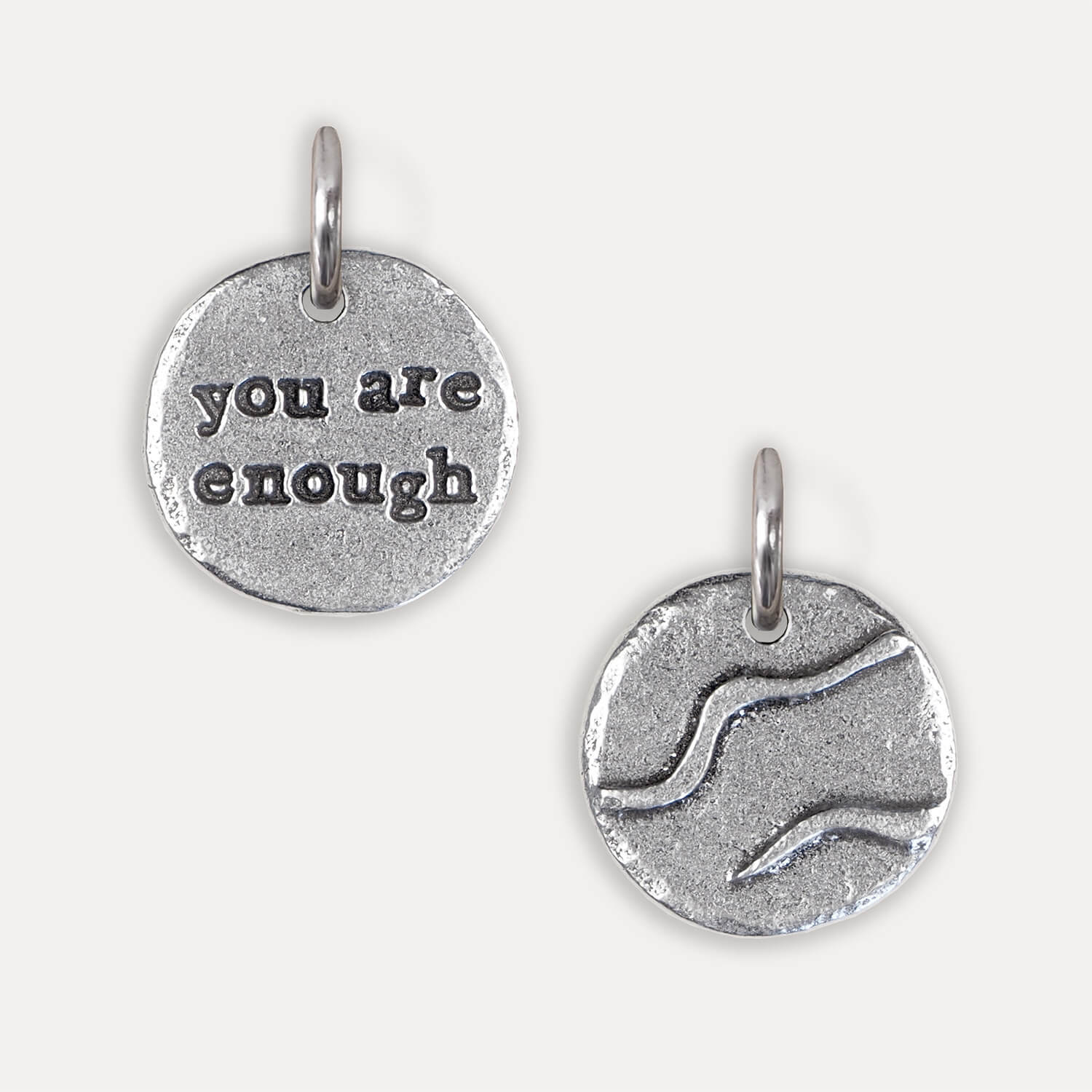
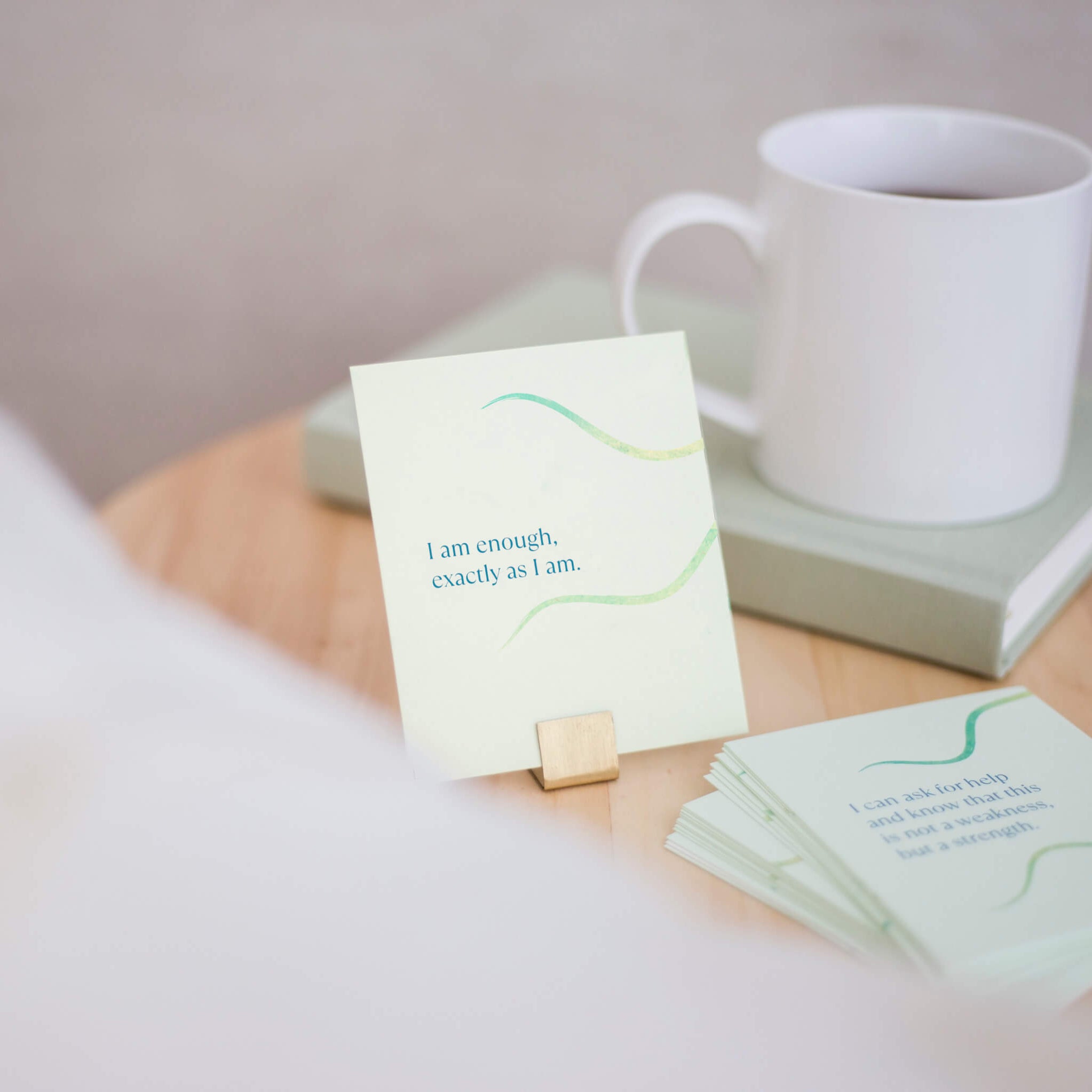
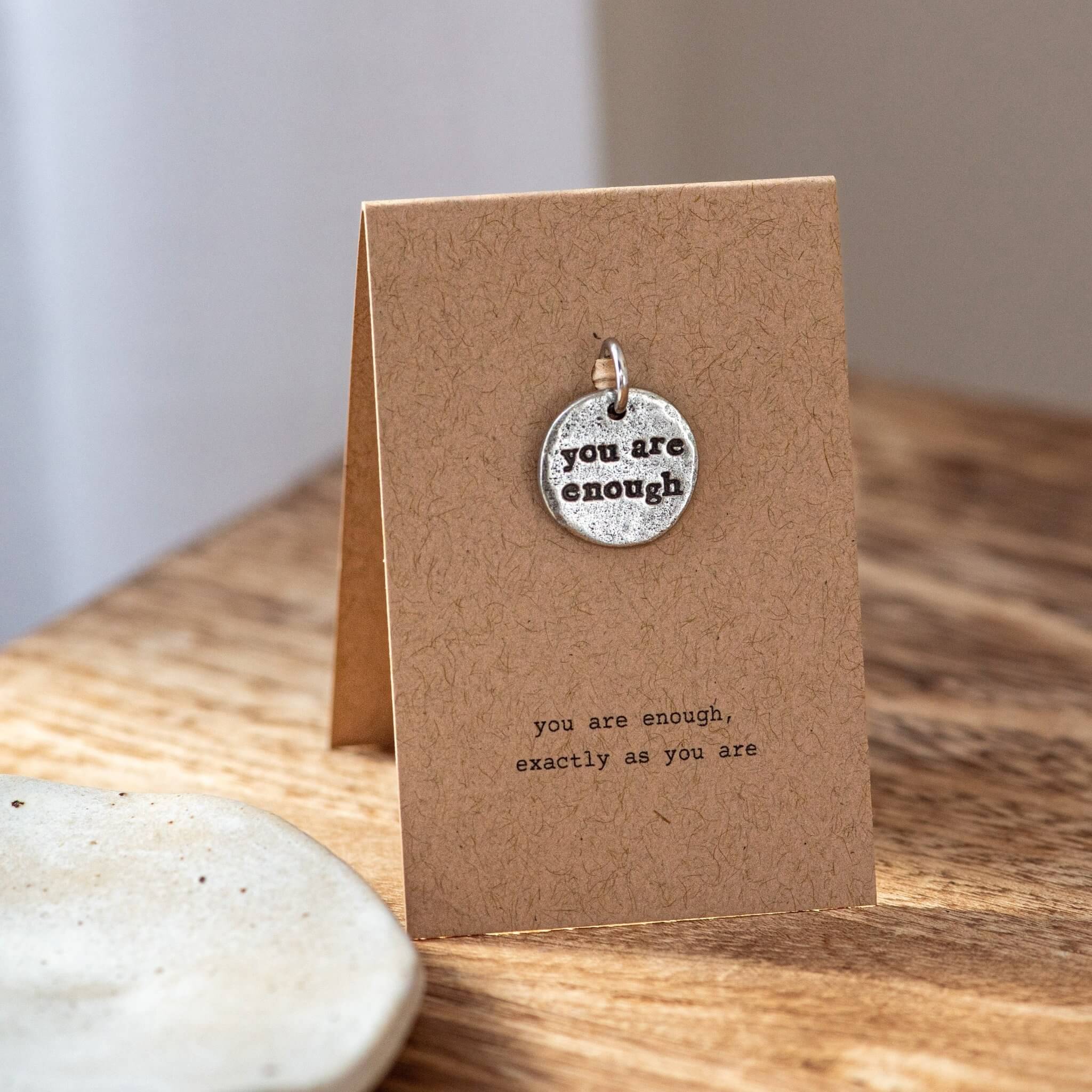
- I am enough, exactly as I am.
- I am worthy now, and this will never change.
- I am deserving of love, compassion and kindness, exactly as I am.
- We all deserve kindness, and 'all' includes me.
- My voice matters. My opinions matter. I matter.
- I am always worthy of respect.
- I can inspire others by being me.
When you're comparing yourself to everyone else
- I honour that my path in life will be different to others, I don't need to compare or compete.
- I don't need to compare or compete. No human on the planet is meant to be the same.
- I remind myself that no one was an expert before they were a beginner.
- The right choice for others isn't necessarily the right choice for me.
- I choose to embrace the journey instead of being fixed on a destination.
When your feelings feel like too much
- No matter what emotion I feel, it is never a sign of weakness.
- I can feel both grateful AND sad, nervous AND excited, brave AND afraid.
- I am gentle with myself if I feel things deeply knowing that sensitivity is not a weakness.
- I recognise that life is hard sometimes — I try to always be gentle with myself.
- I can embrace change whilst reassuring myself that change is challenging.
- I can welcome change and grow from new challenges.
- I celebrate my successes, no matter how big, or small.
When something in front of you feels too big
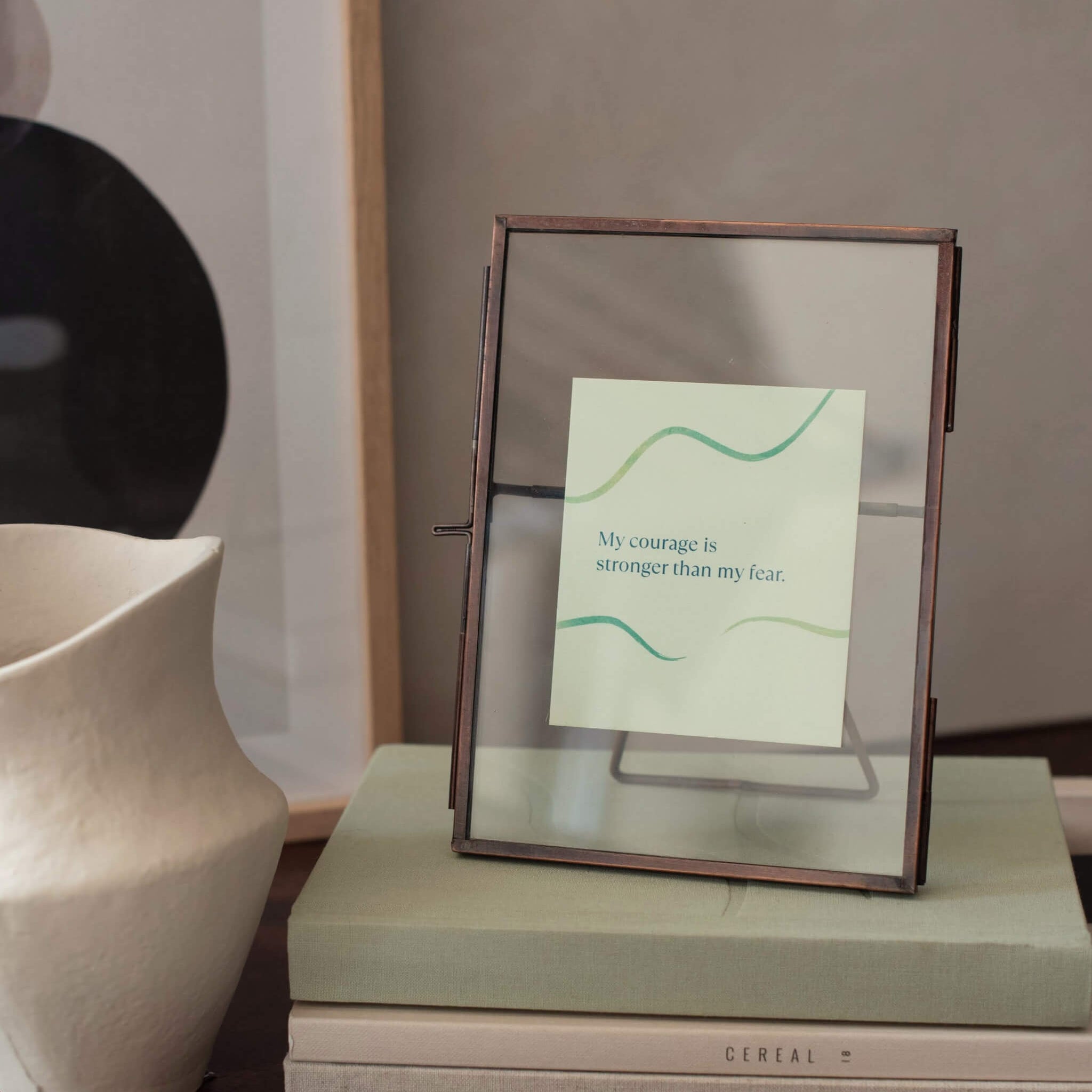
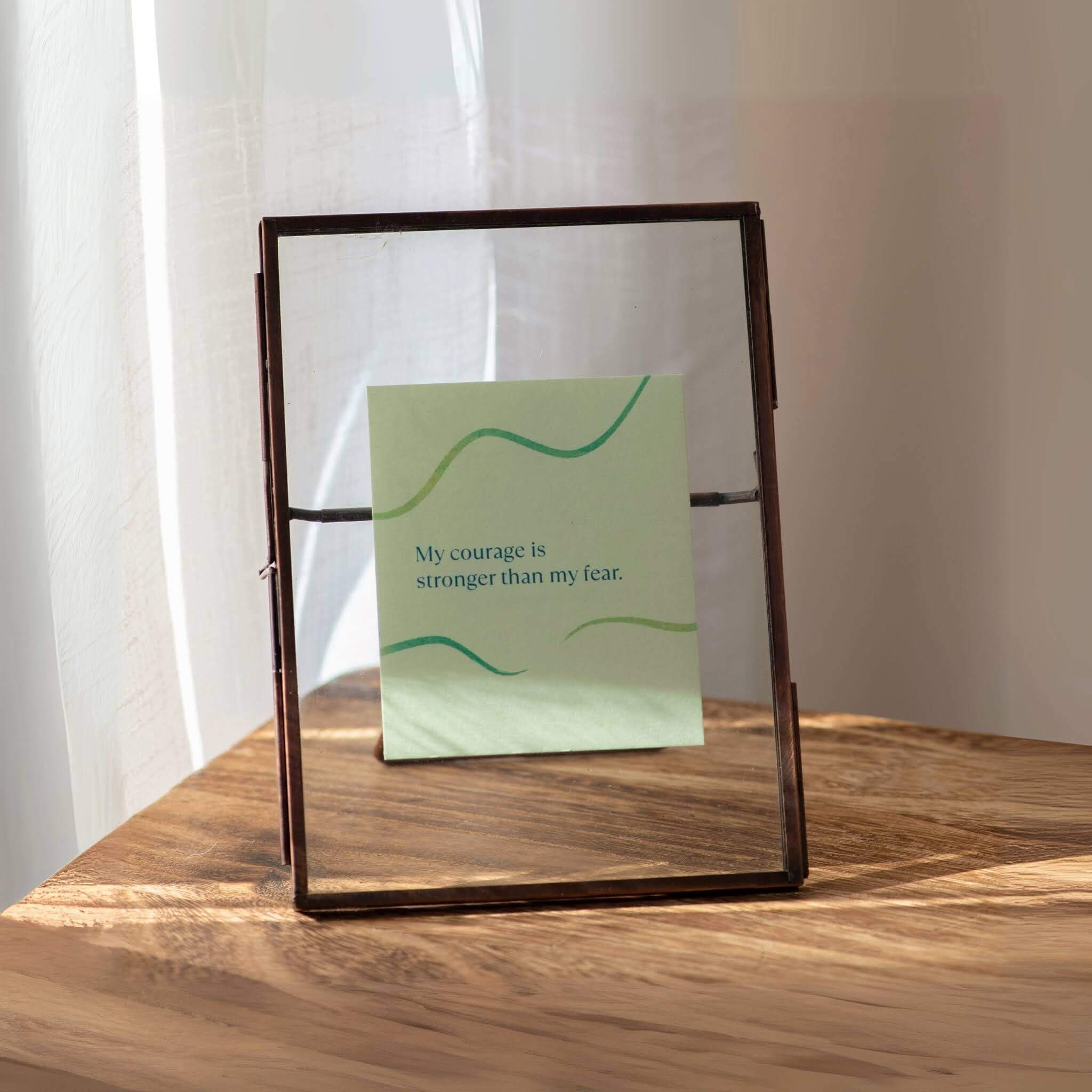
- My courage is stronger than my fear.
- I can try, even when I don't feel 100% ready.
- I have dealt with challenges before, I can deal with challenges again.
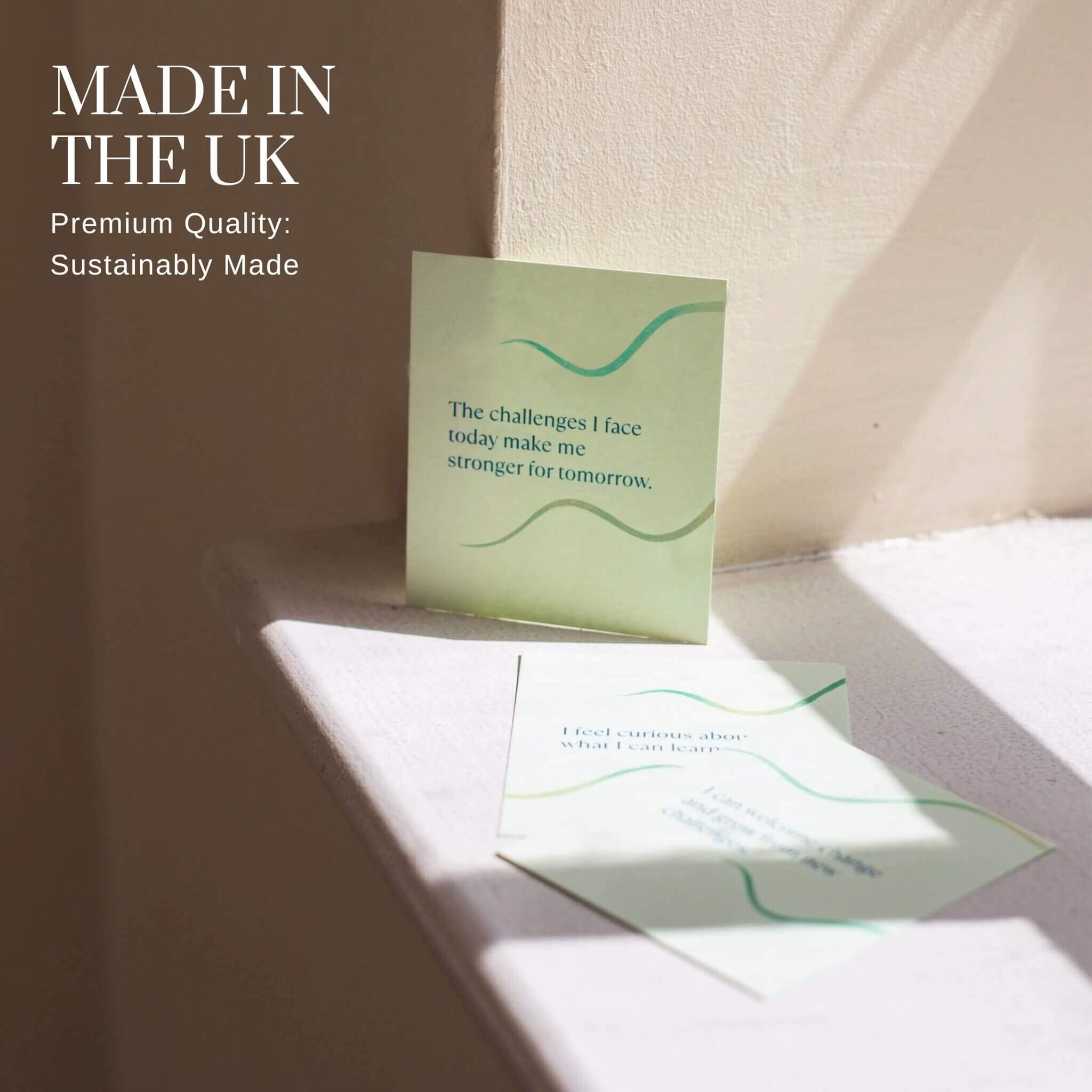
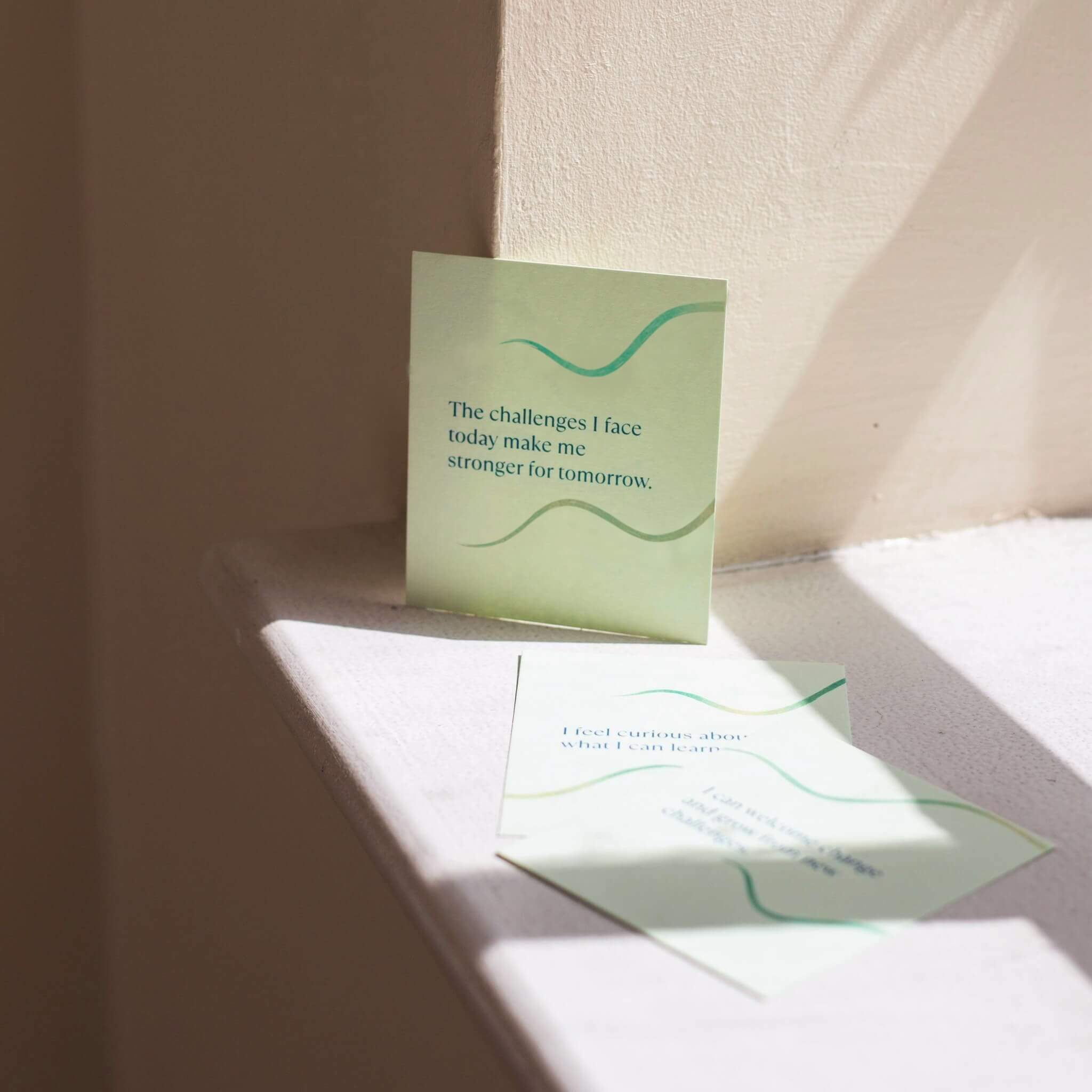
- The challenges I face today make me stronger for tomorrow.
- I can step outside my comfort zone, and no matter what happens, give myself kindness.
- I can do things I cannot do yet.
- I can try something new, make mistakes and grow.
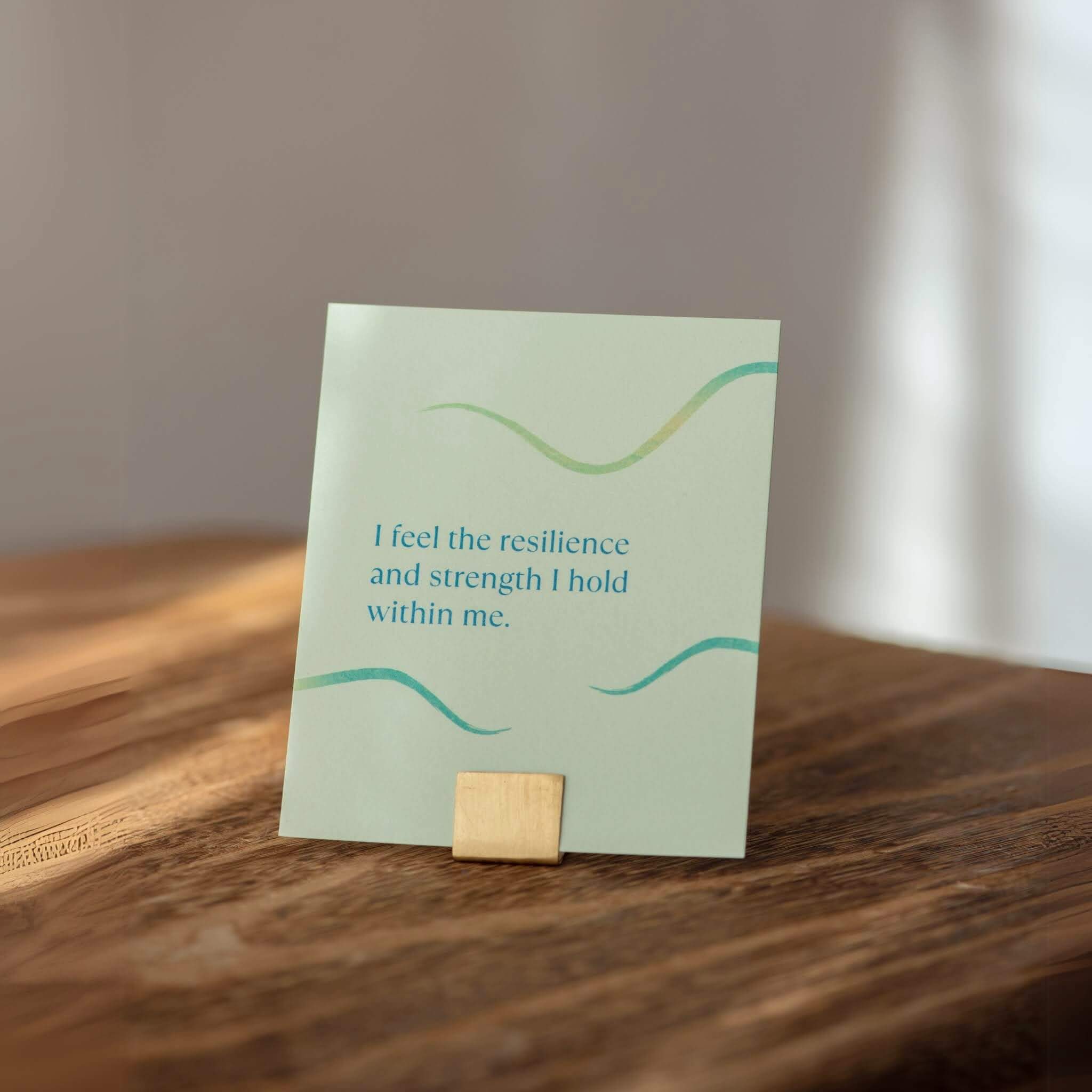
- I can approach challenges with resilience and determination.
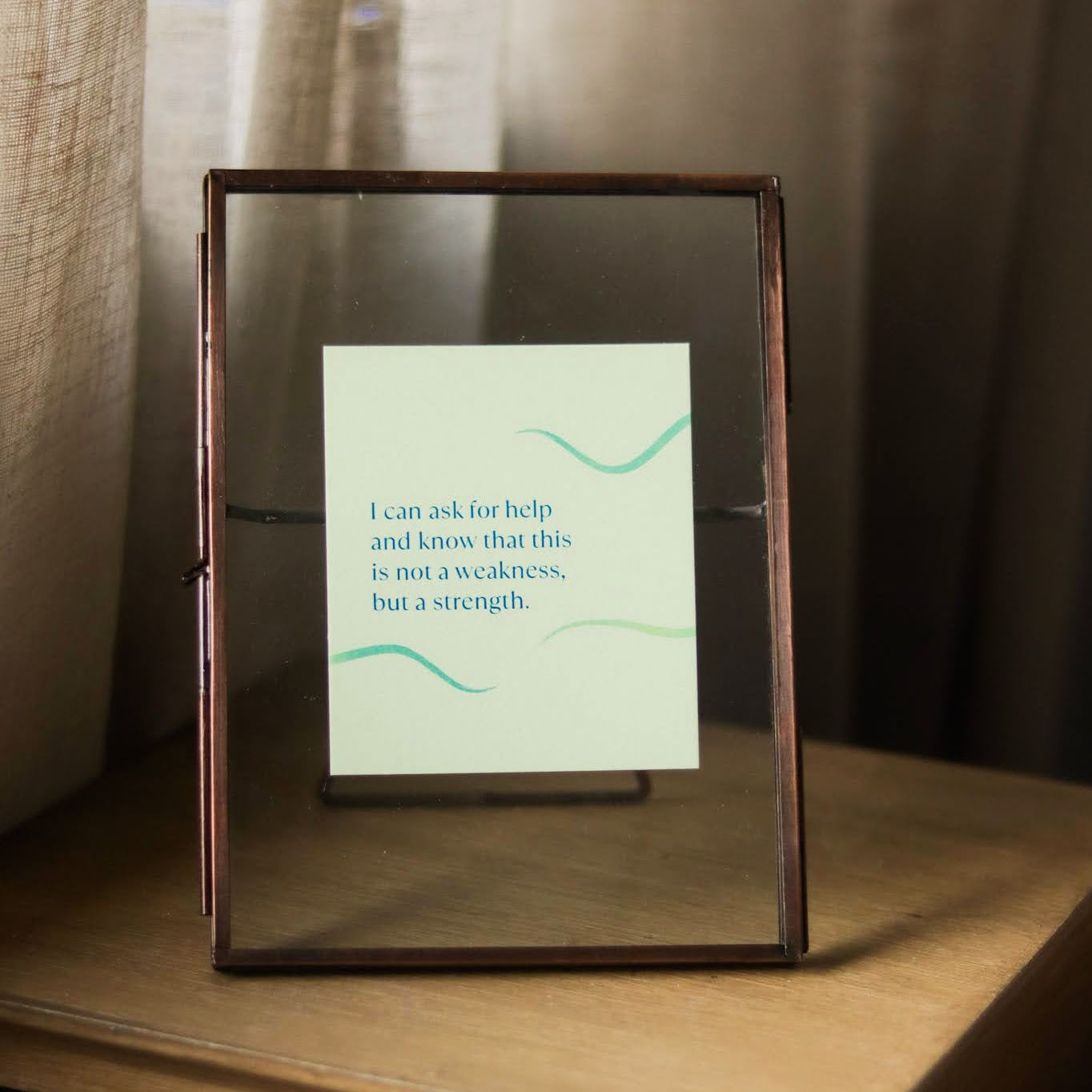
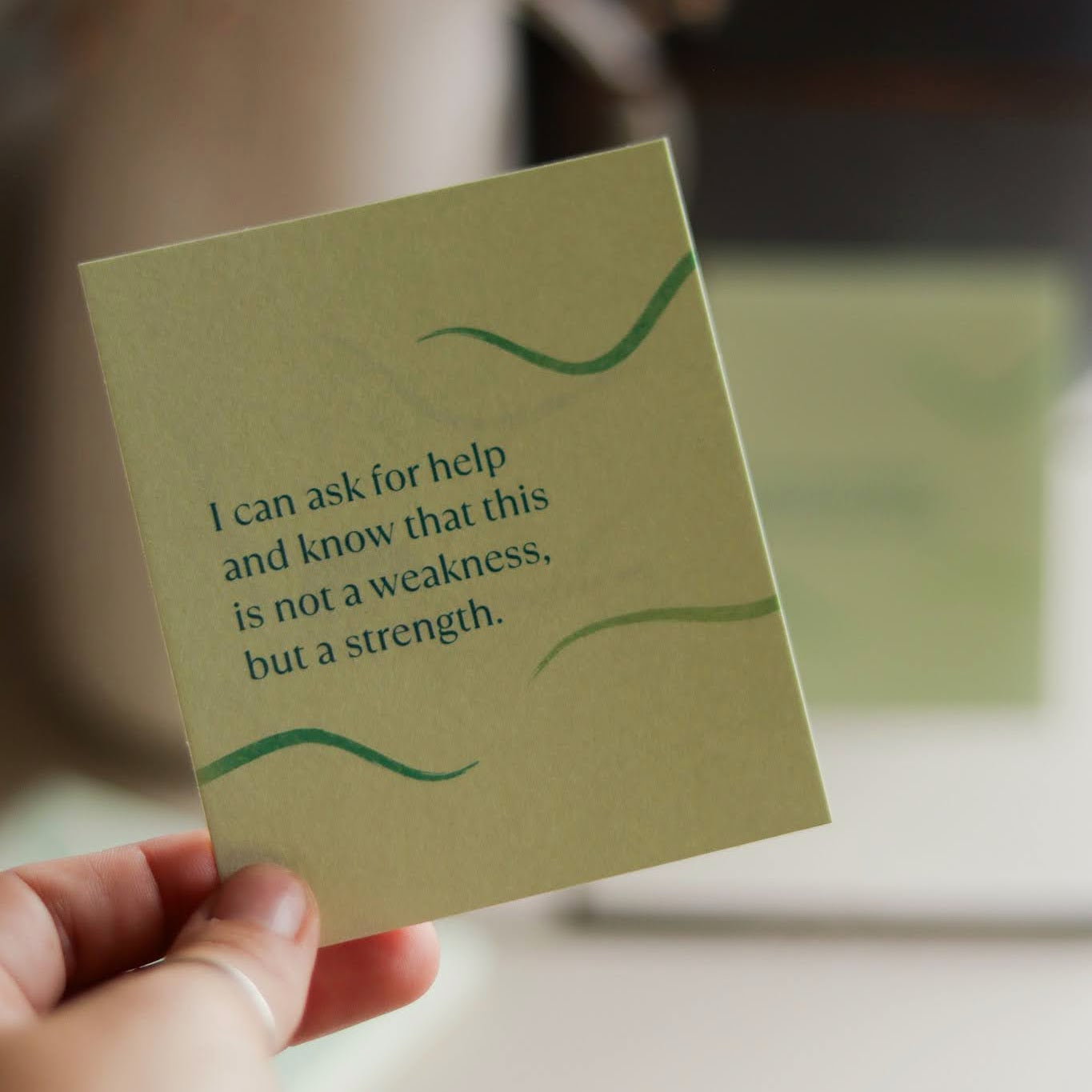
- I can ask for help and know that this is not a weakness, but a strength.
- I can be open and honest with others, even when it makes me feel vulnerable.
How to use this list
- Read them looking for a no. If a line makes you bristle, skip it. That reaction is useful information, not a sign you're doing it wrong.
- One is plenty. You don't need a favourite from every group. Most people come back to the same two or three.
- Put it somewhere you'll be ambushed by it. The kettle, the back of your phone, the inside of a cupboard door. Somewhere you look without deciding to.
- You don't have to say it. Reading it counts. Noticing it counts.
- If none of them fit, write your own. Start it with I can, I don't have to, or I remind myself, and keep it small enough that you can't argue with it.
If you'd like more on the practice itself rather than the words, there's a fuller guide on how to use affirmation cards without it feeling forced, and a gentler set written for self-compassion specifically.
The cards these affirmations are printed on
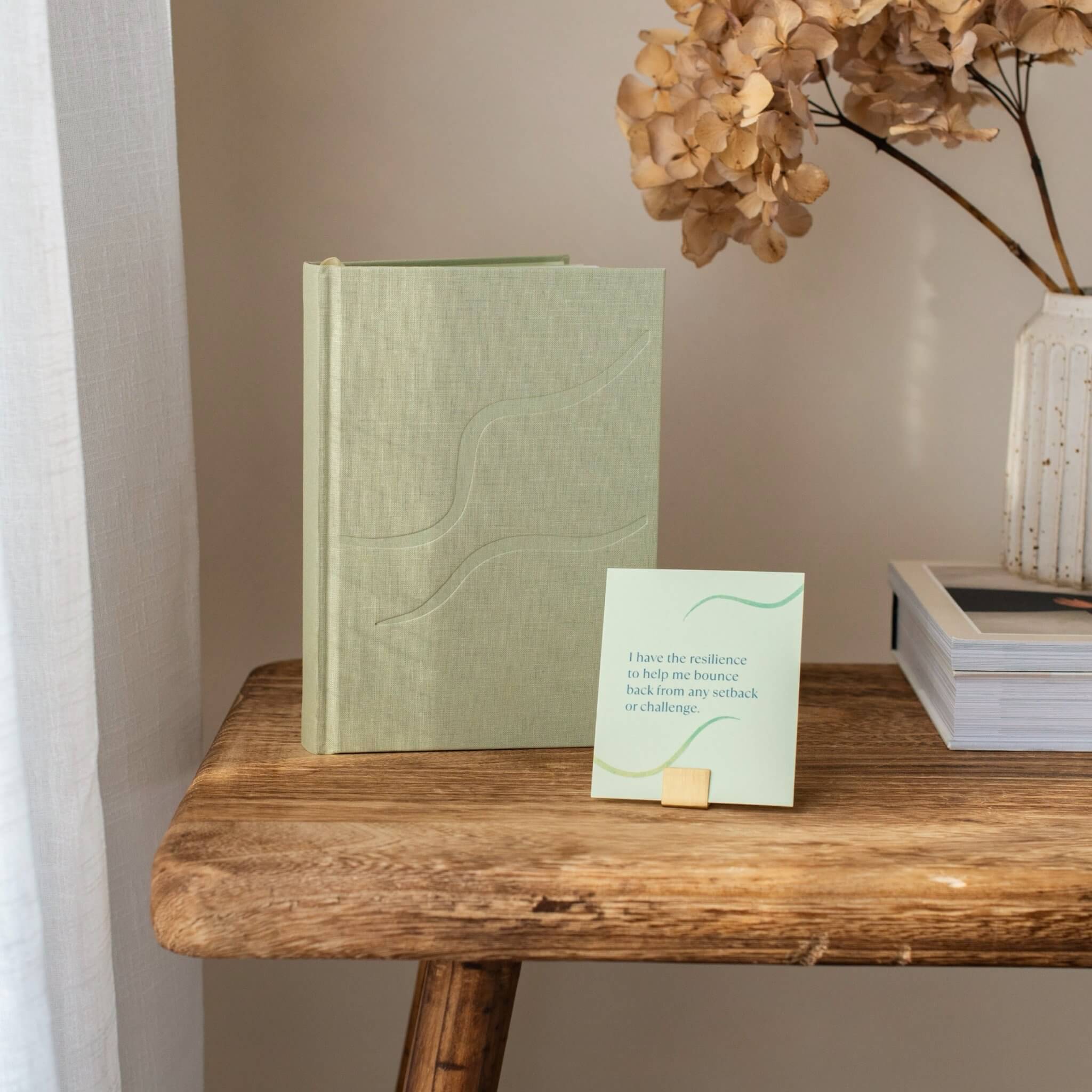
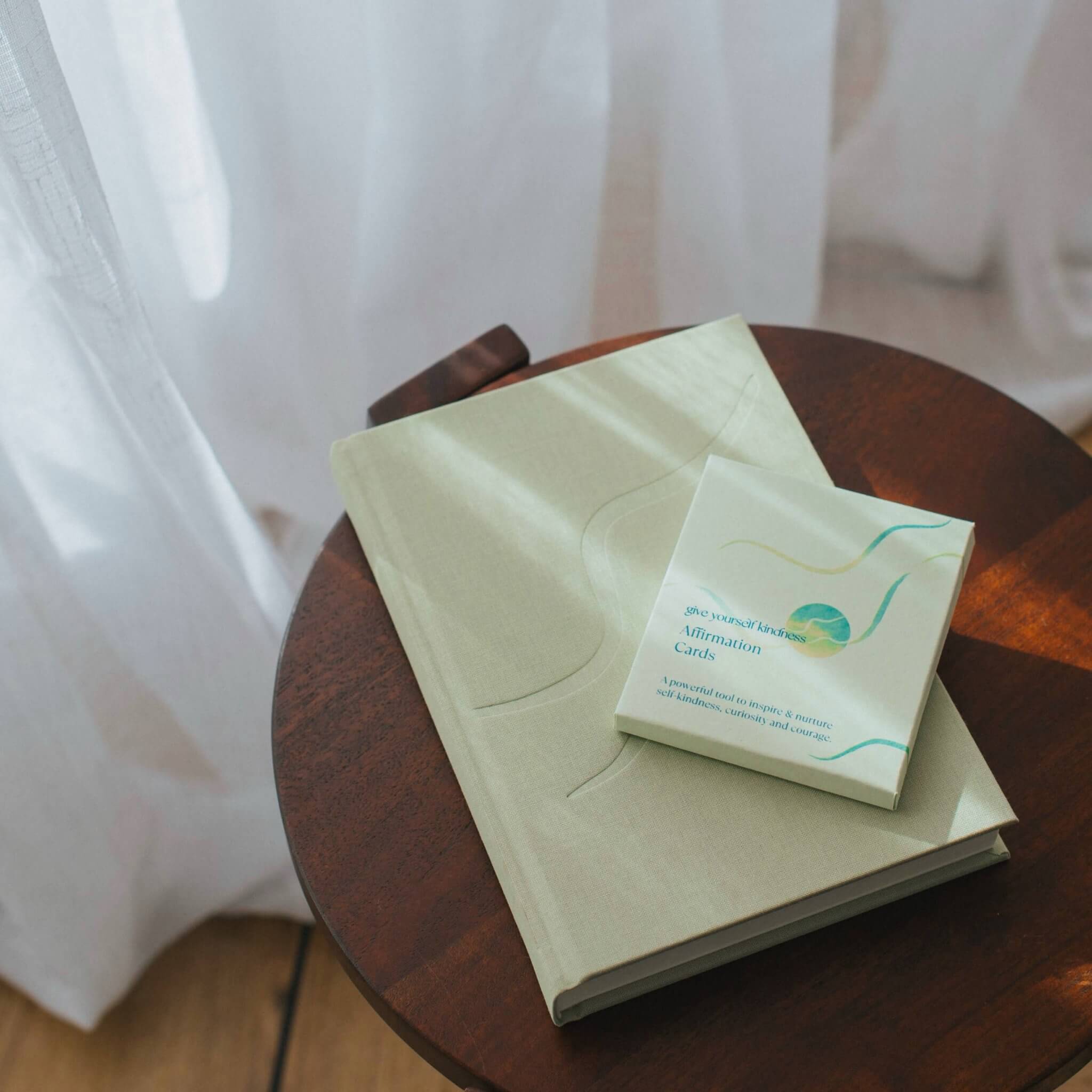
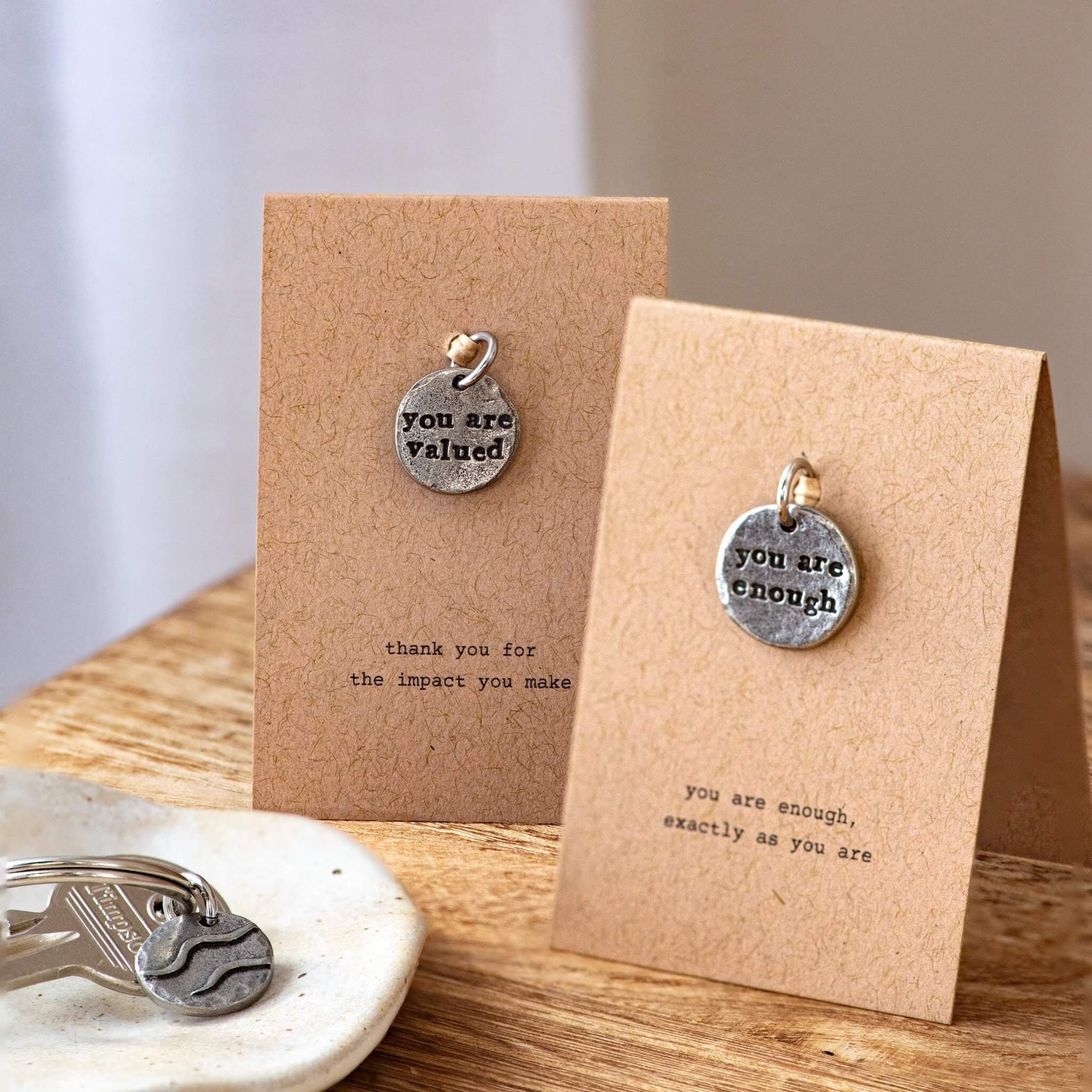
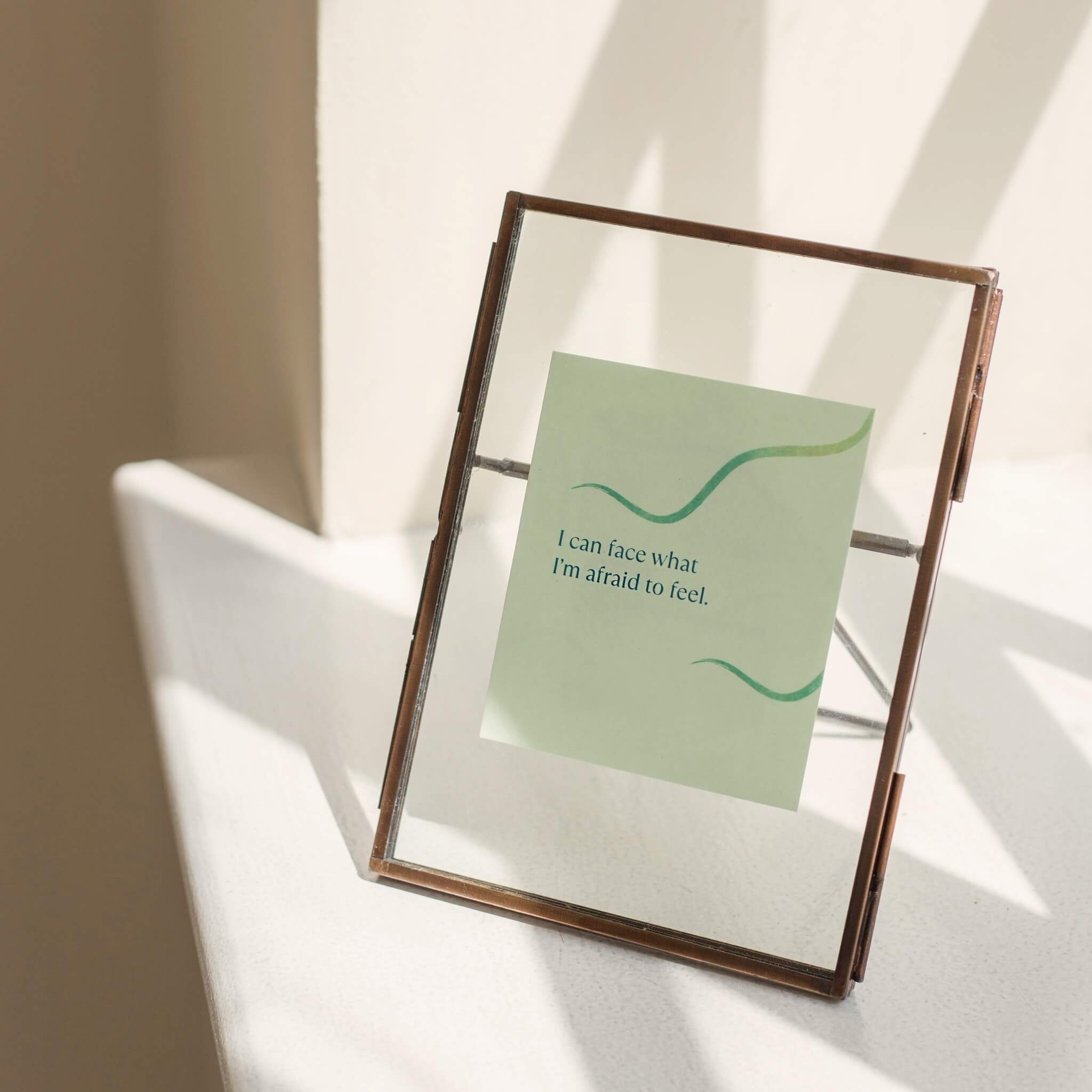
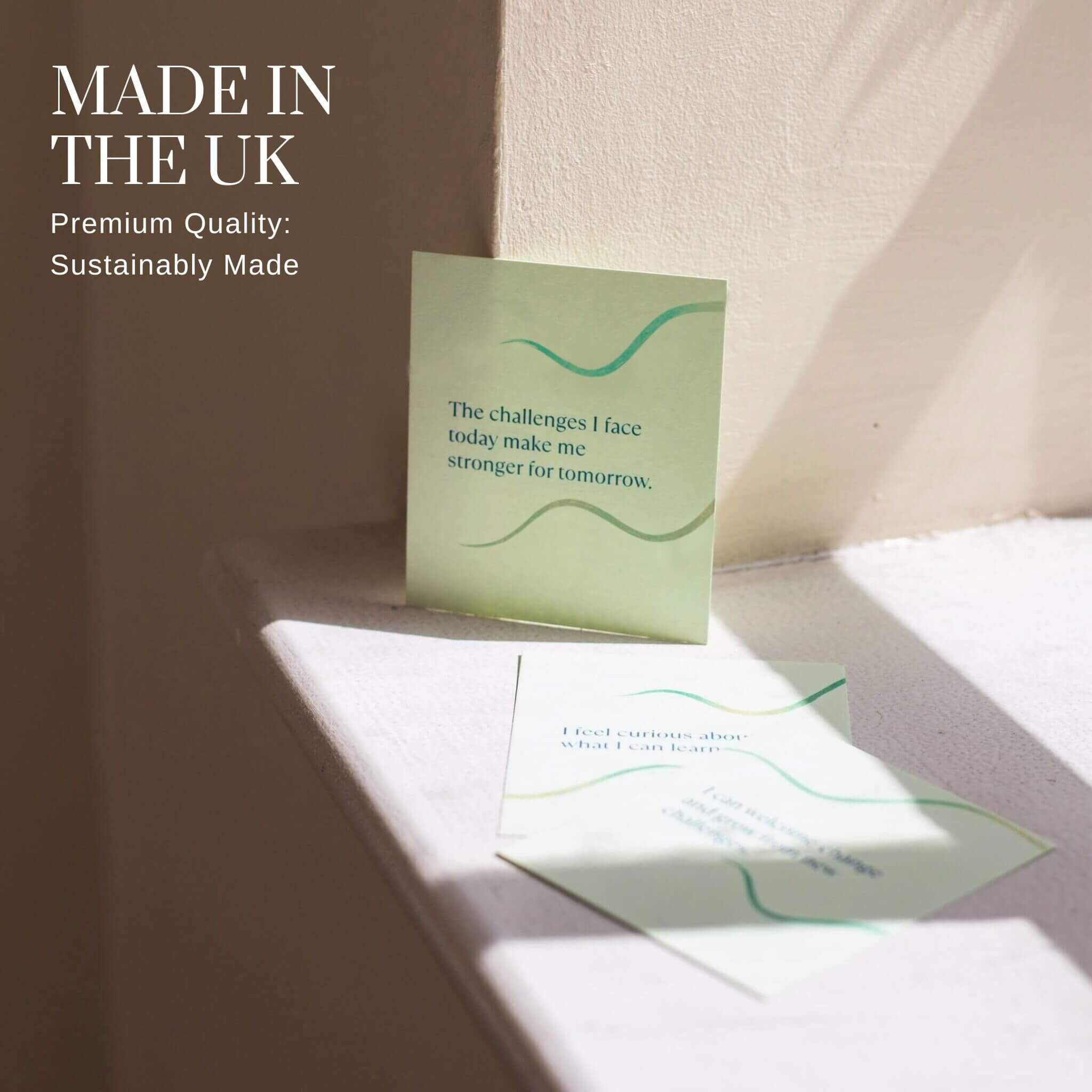
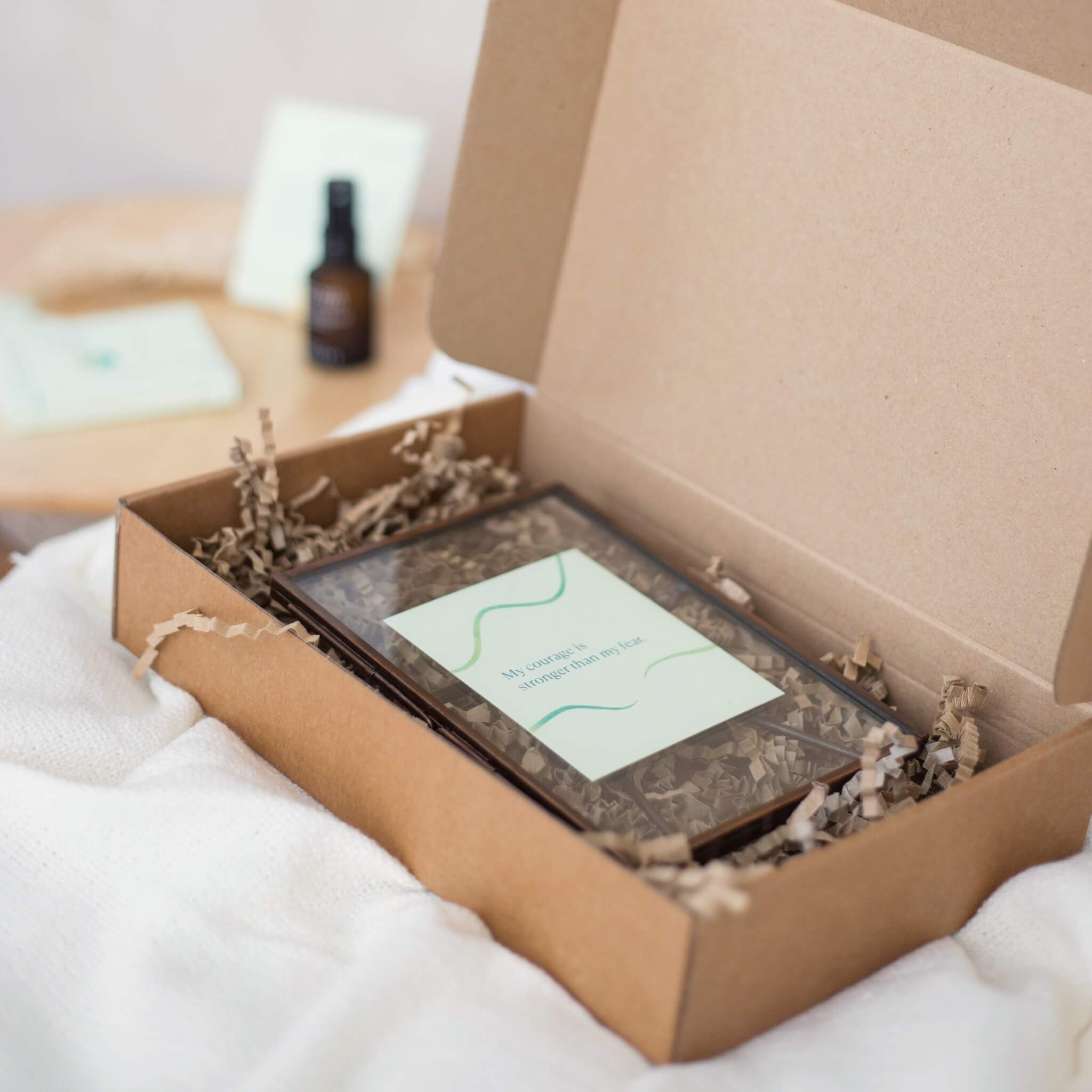
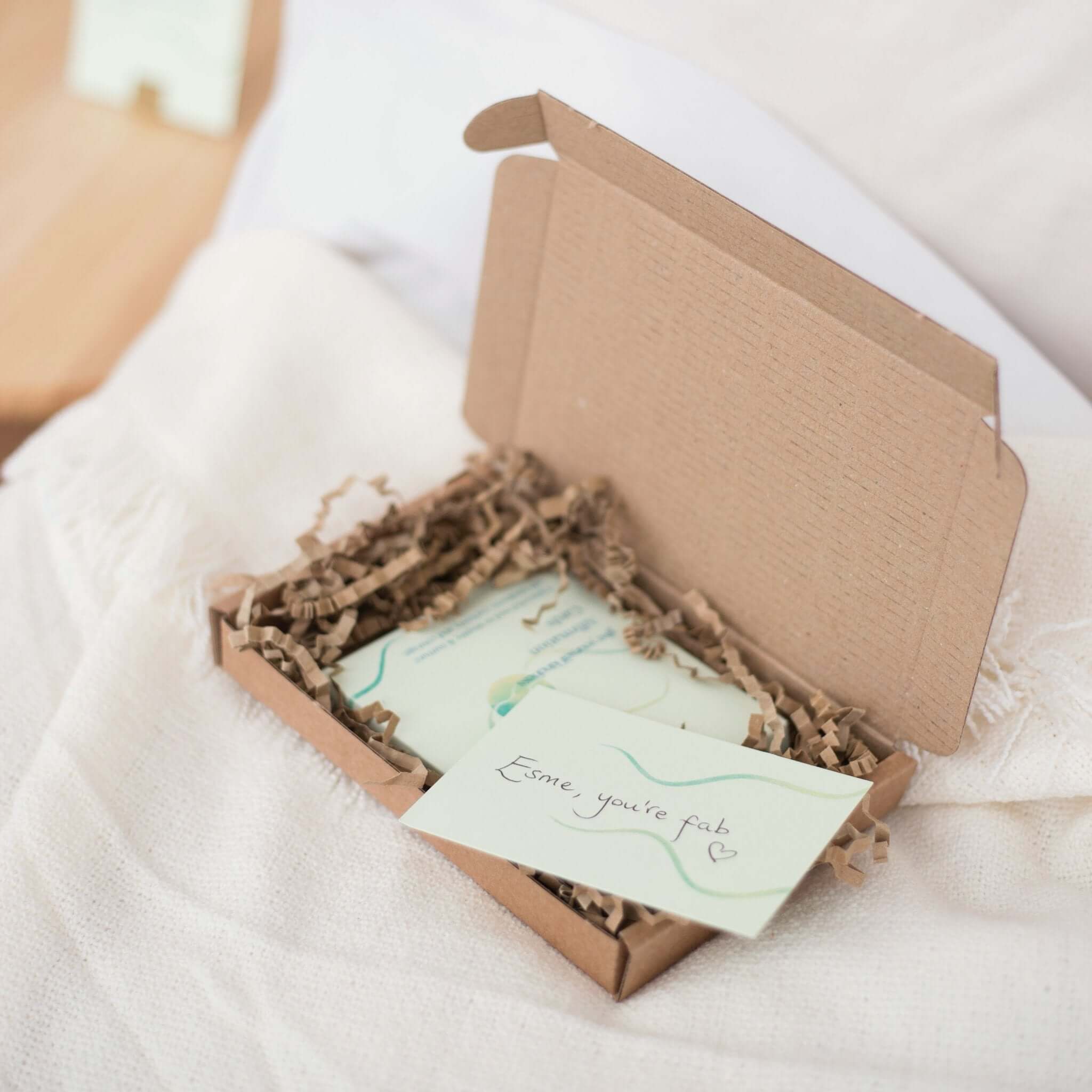
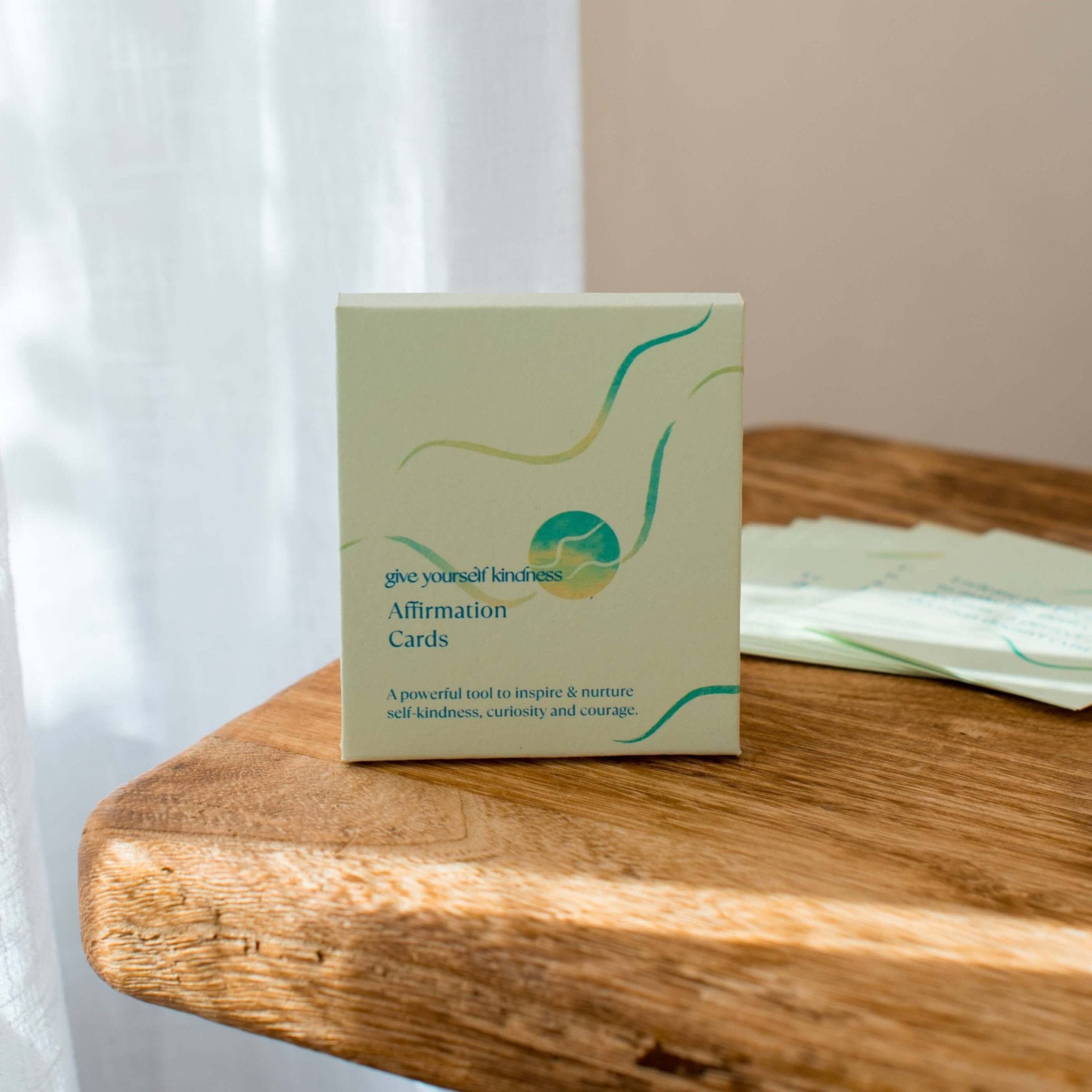
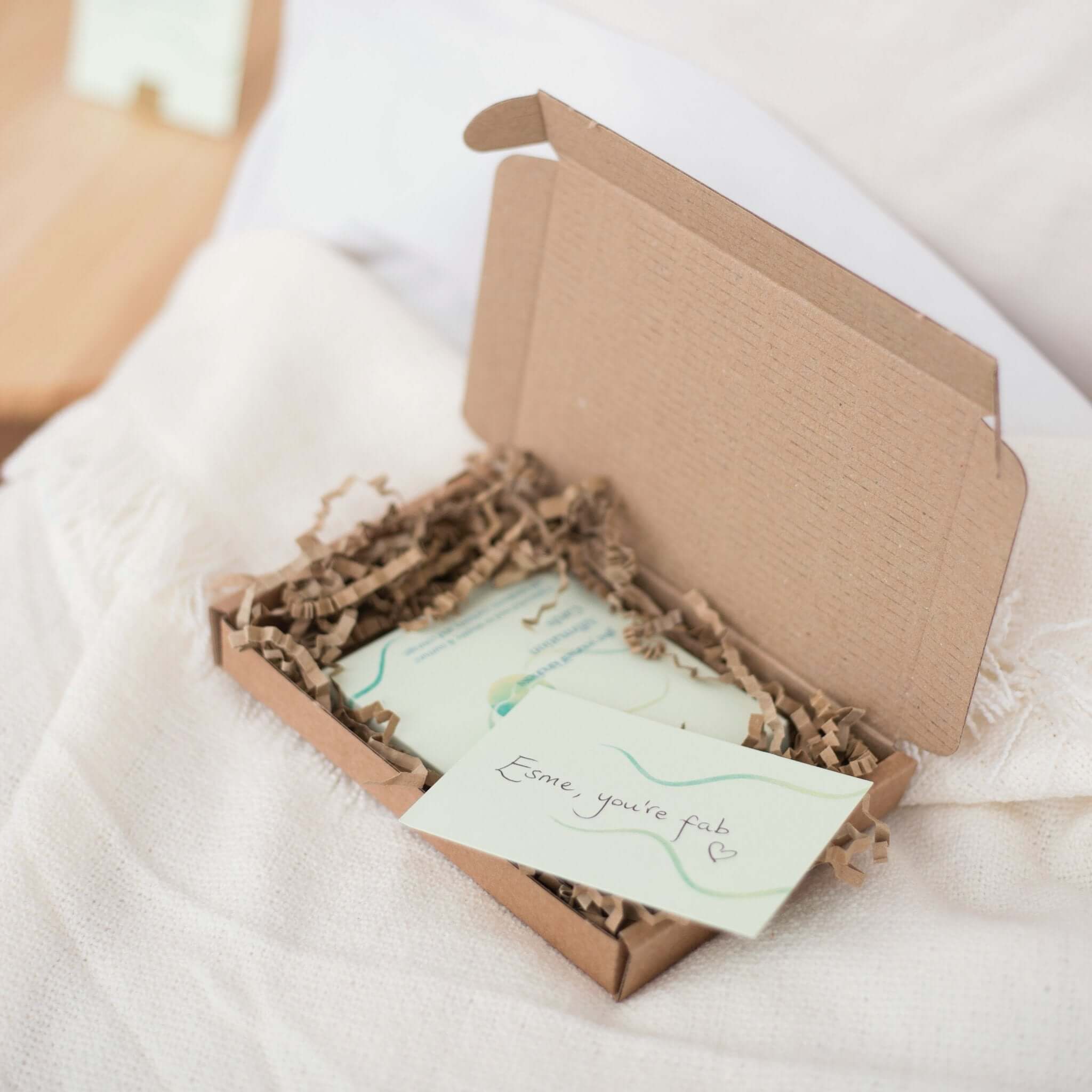
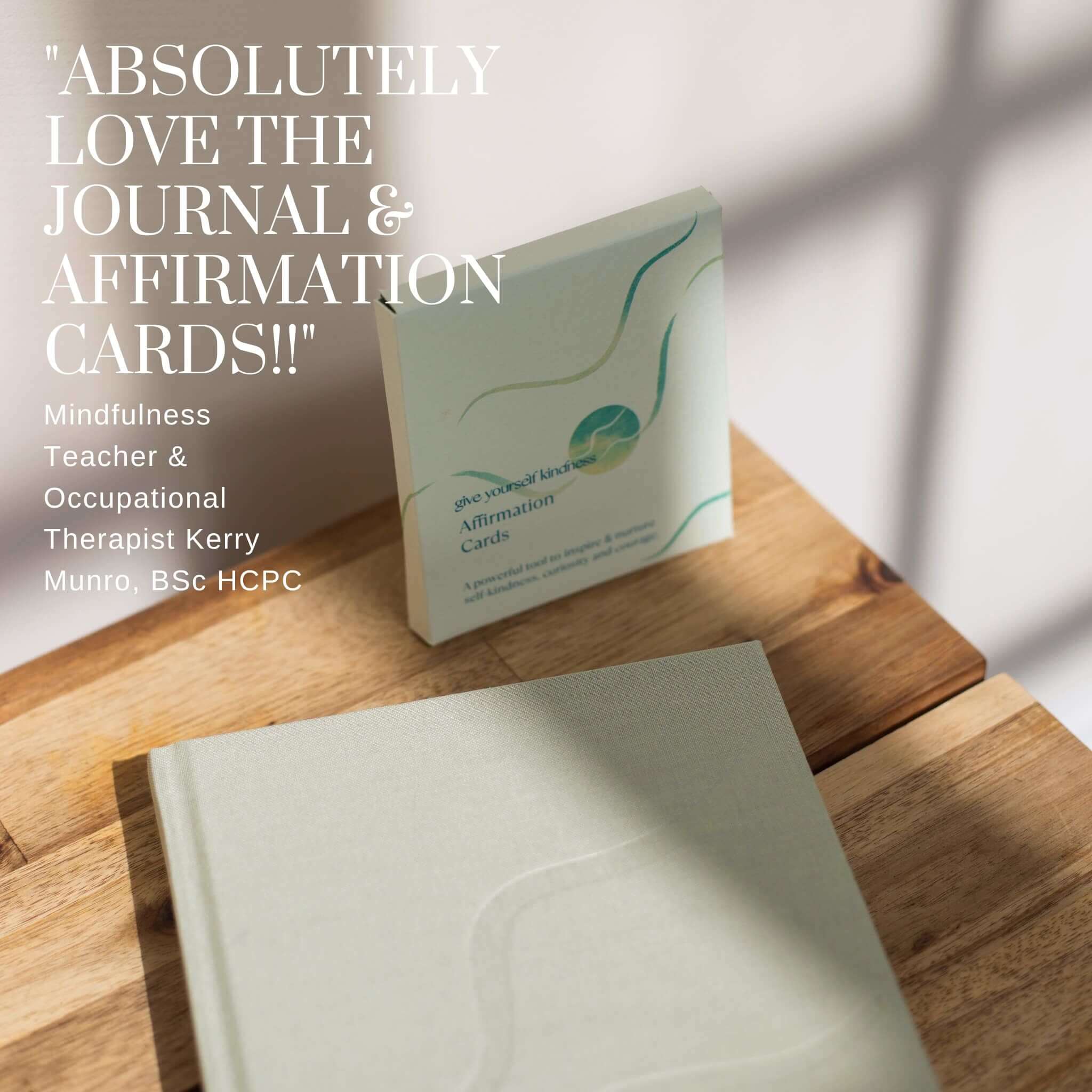
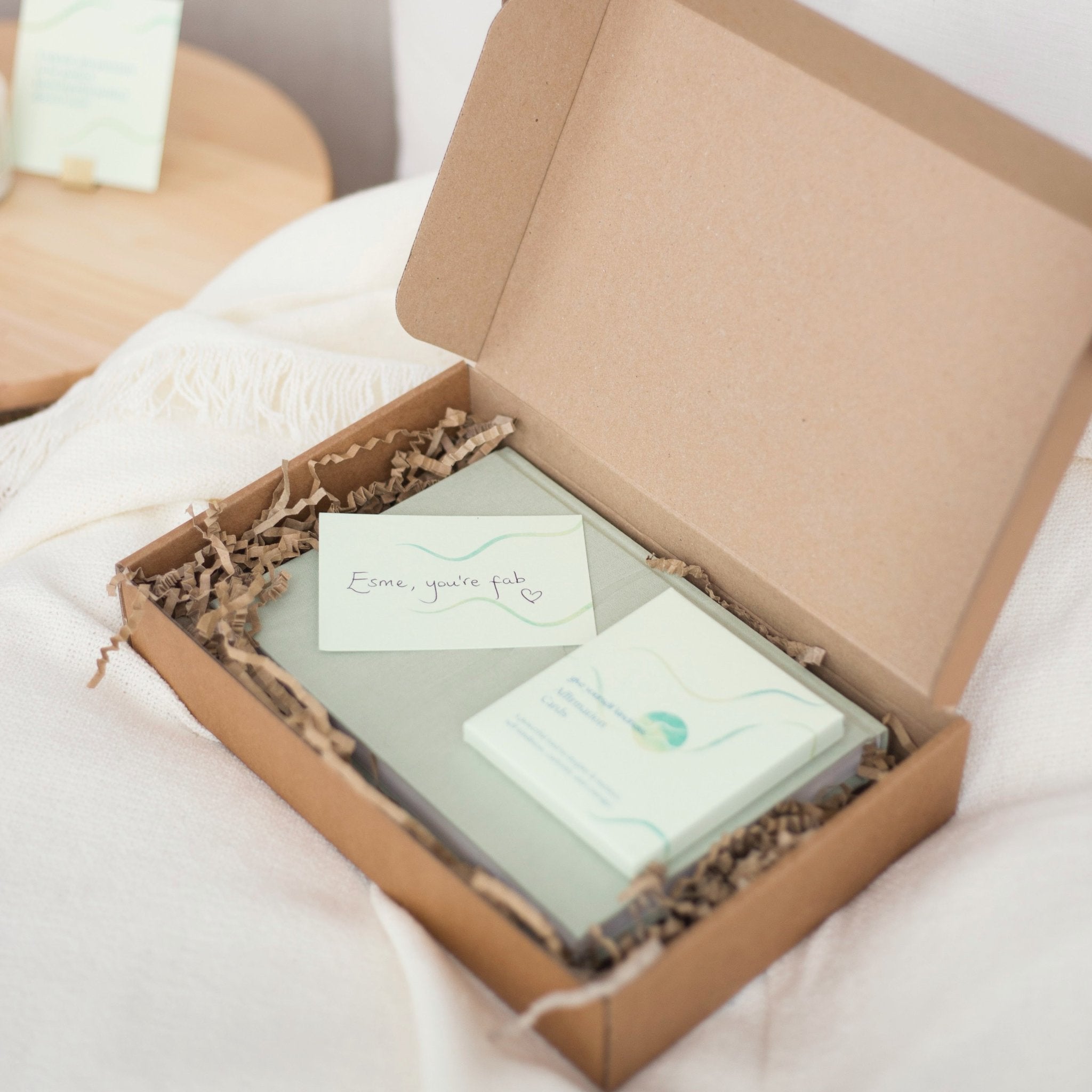
The Give Yourself Kindness Affirmation Cards are the 60 affirmations above, printed on cards you can hold. Three boxed sets of twenty, so you can keep one set by the bed, one at your desk, and give one away.
They came out of my own experience of finding affirmations uncomfortable. I'd assumed an affirmation meant waking up and announcing that everything was fine, and that never once helped me. So I wrote the ones I actually needed instead — using self-compassion rather than positivity, because self-compassion doesn't ask you to pretend.
- 60 unique affirmations across three sets of twenty
- Written around self-compassion, not positive thinking
- 270gsm FSC-certified card, printed in the UK
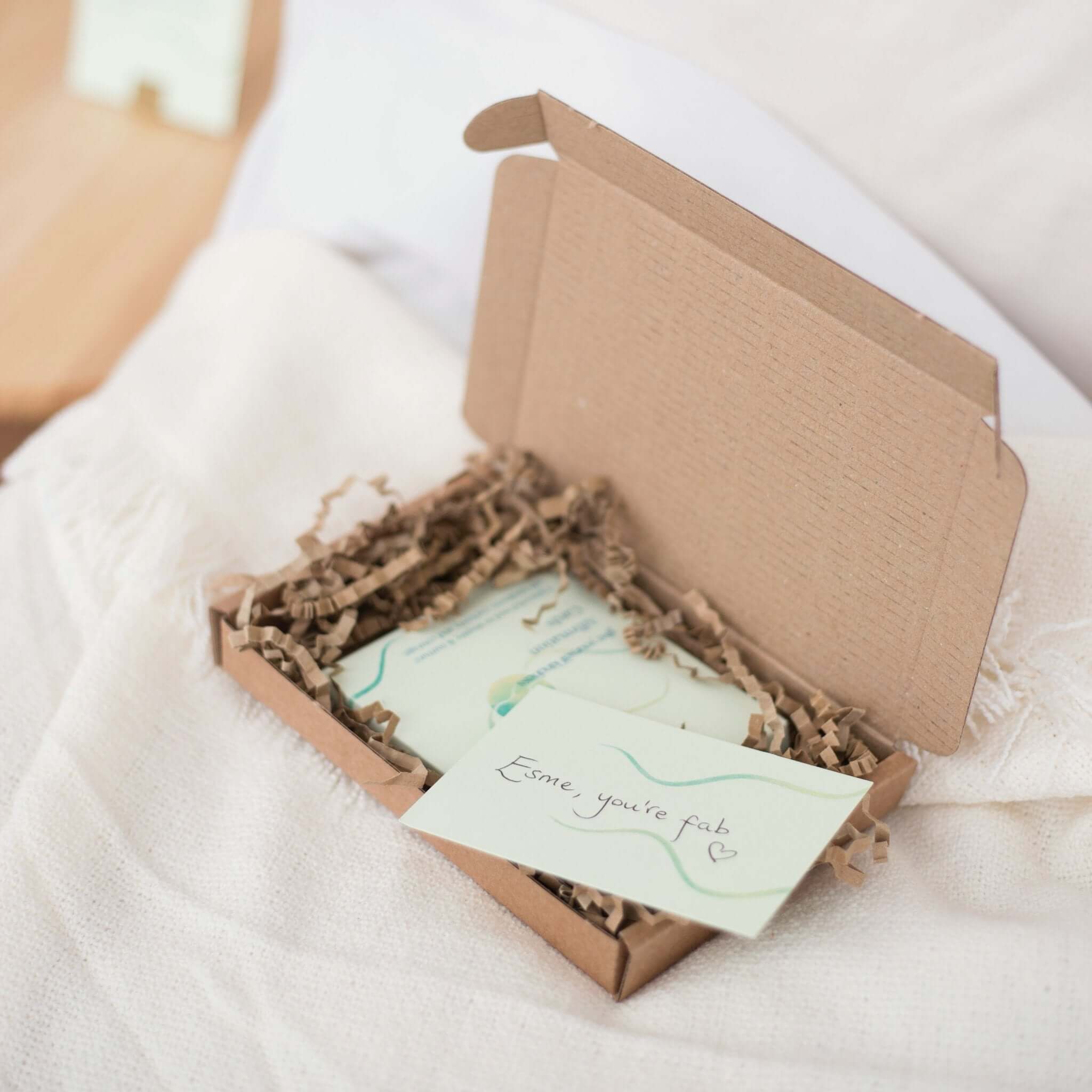
- Plastic-free packaging
- Recommended by licensed therapists, and used with patients on a mental health ward


What an occupational therapist found on a mental health ward
This is the piece of feedback I'm most glad to have, because a hospital ward is the least forgiving place imaginable for a card that rings hollow.

Kerry Munro, BSc HCPC
Mindfulness Teacher and Occupational Therapist, registered with the Health and Care Professions Council
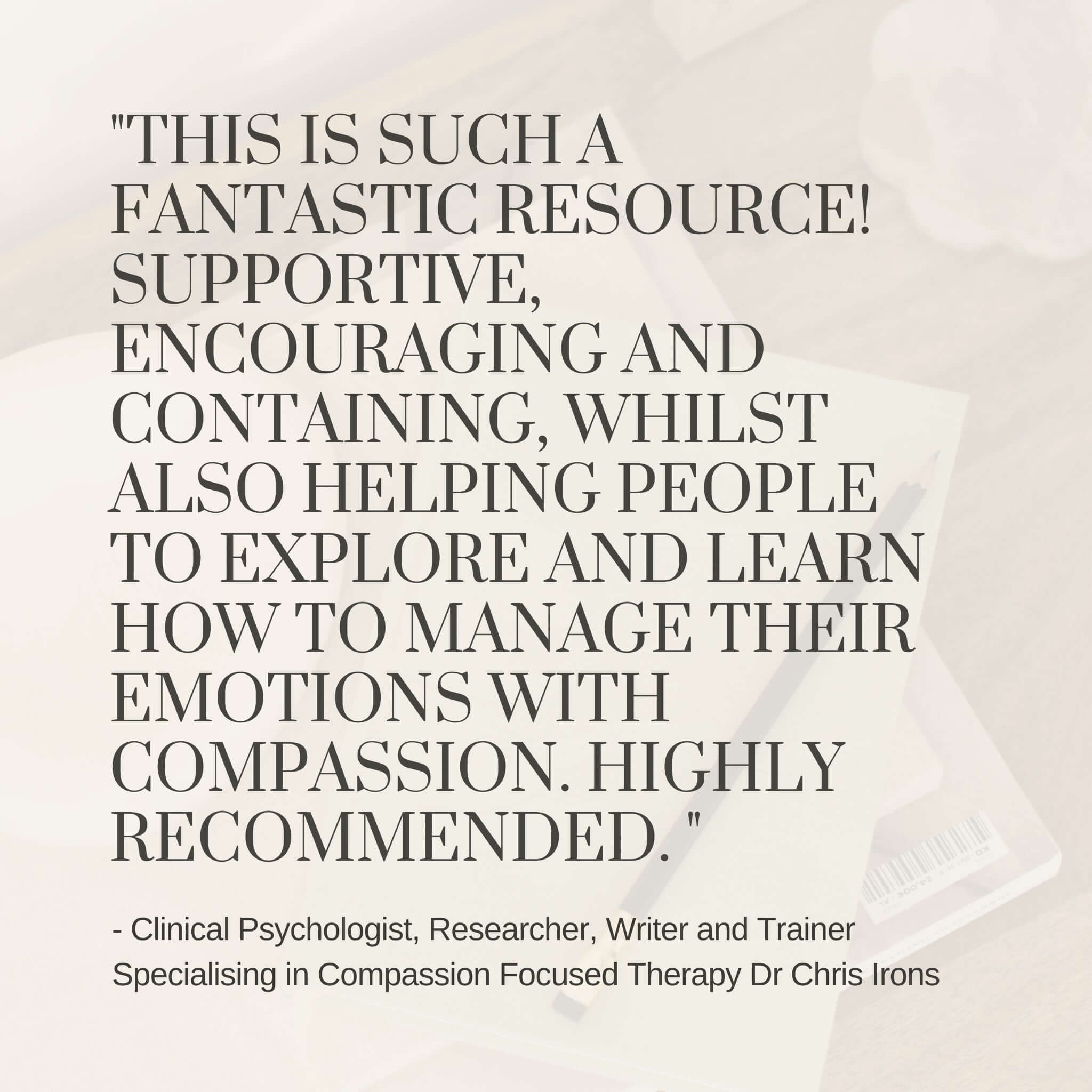
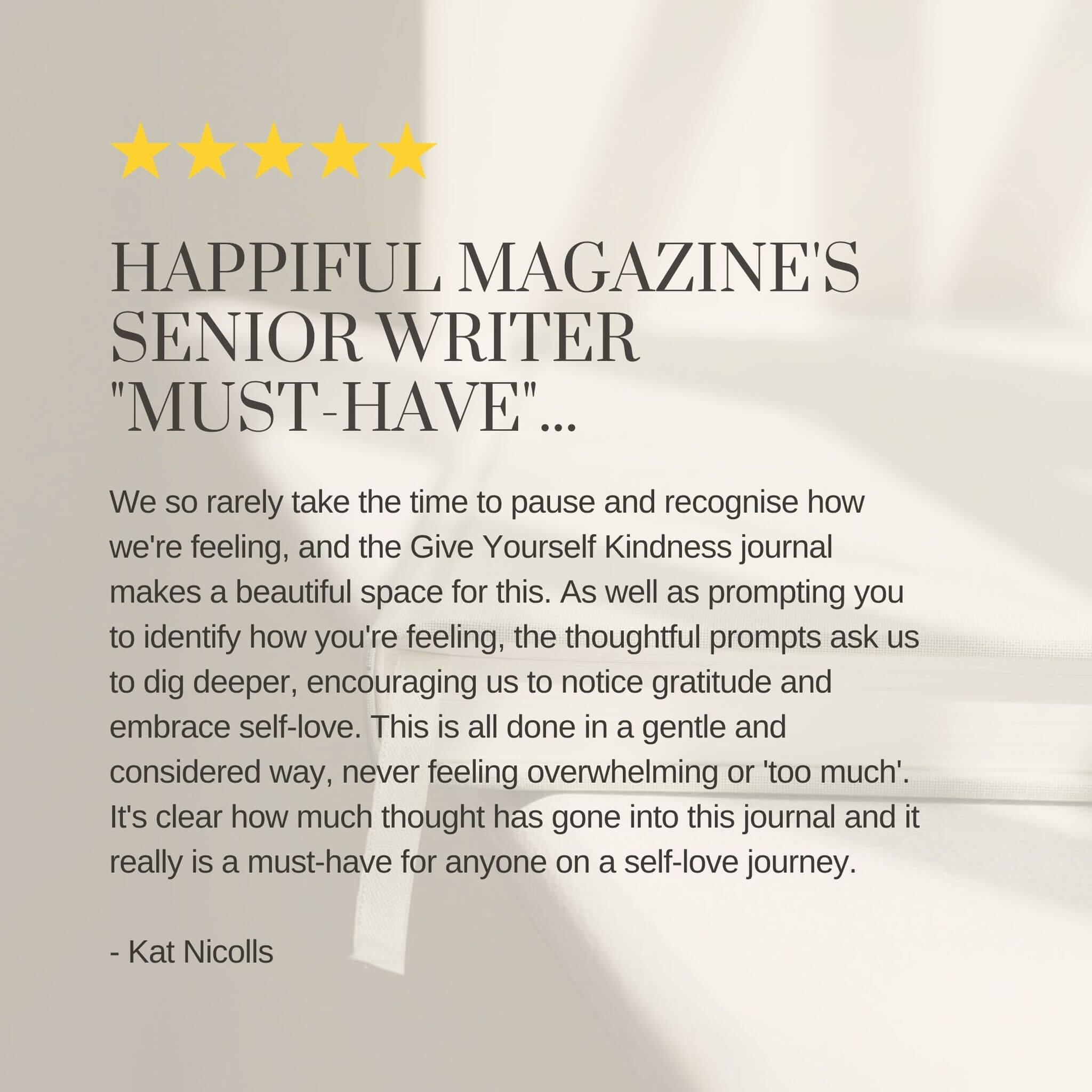
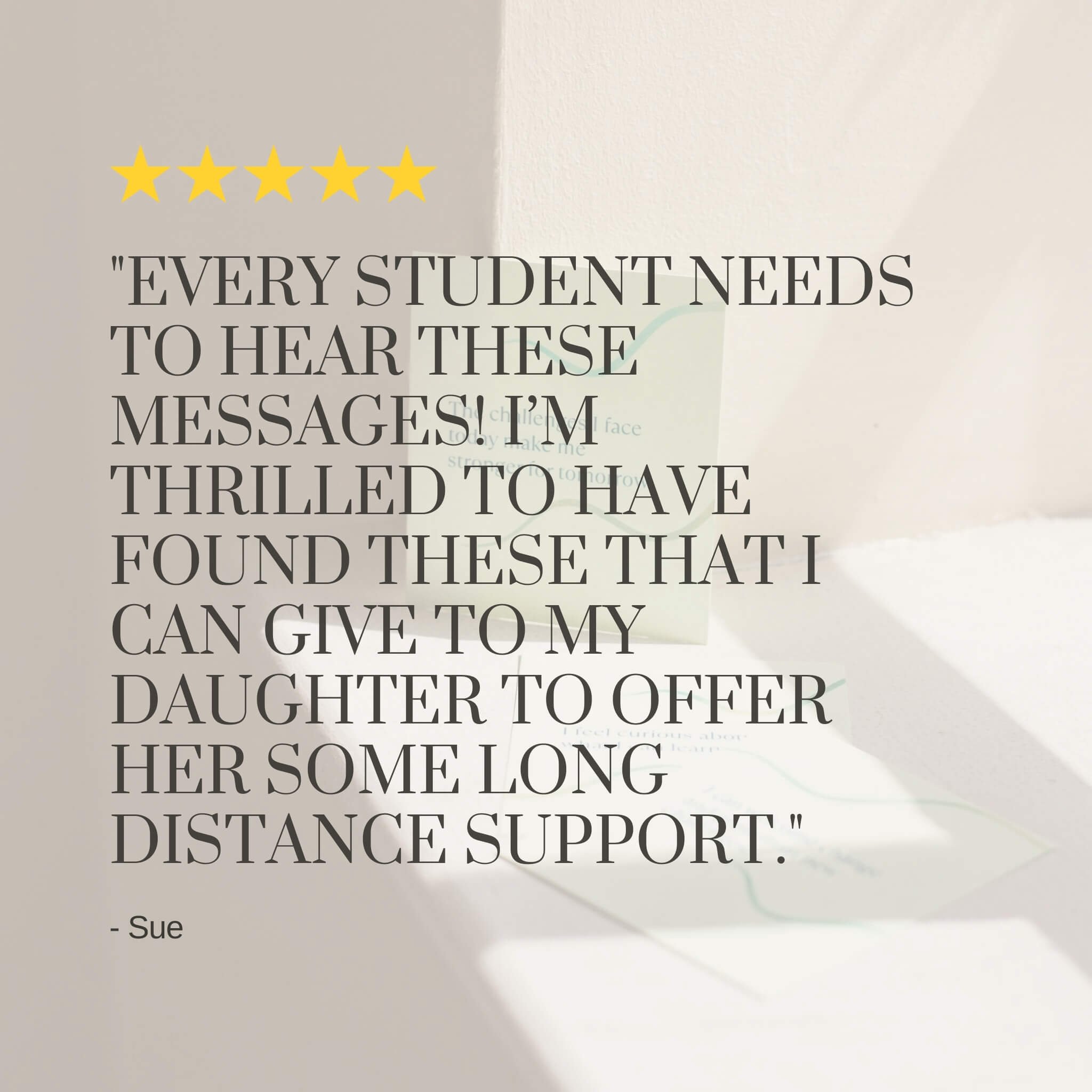
“I've used the self kindness affirmation cards with the patients I work with on a mental health ward at work. The feedback was great! So many people struggle and forget to offer themselves kindness and self-compassion, especially during hard times, when we need it most! These cards help remind us that we deserve to!”
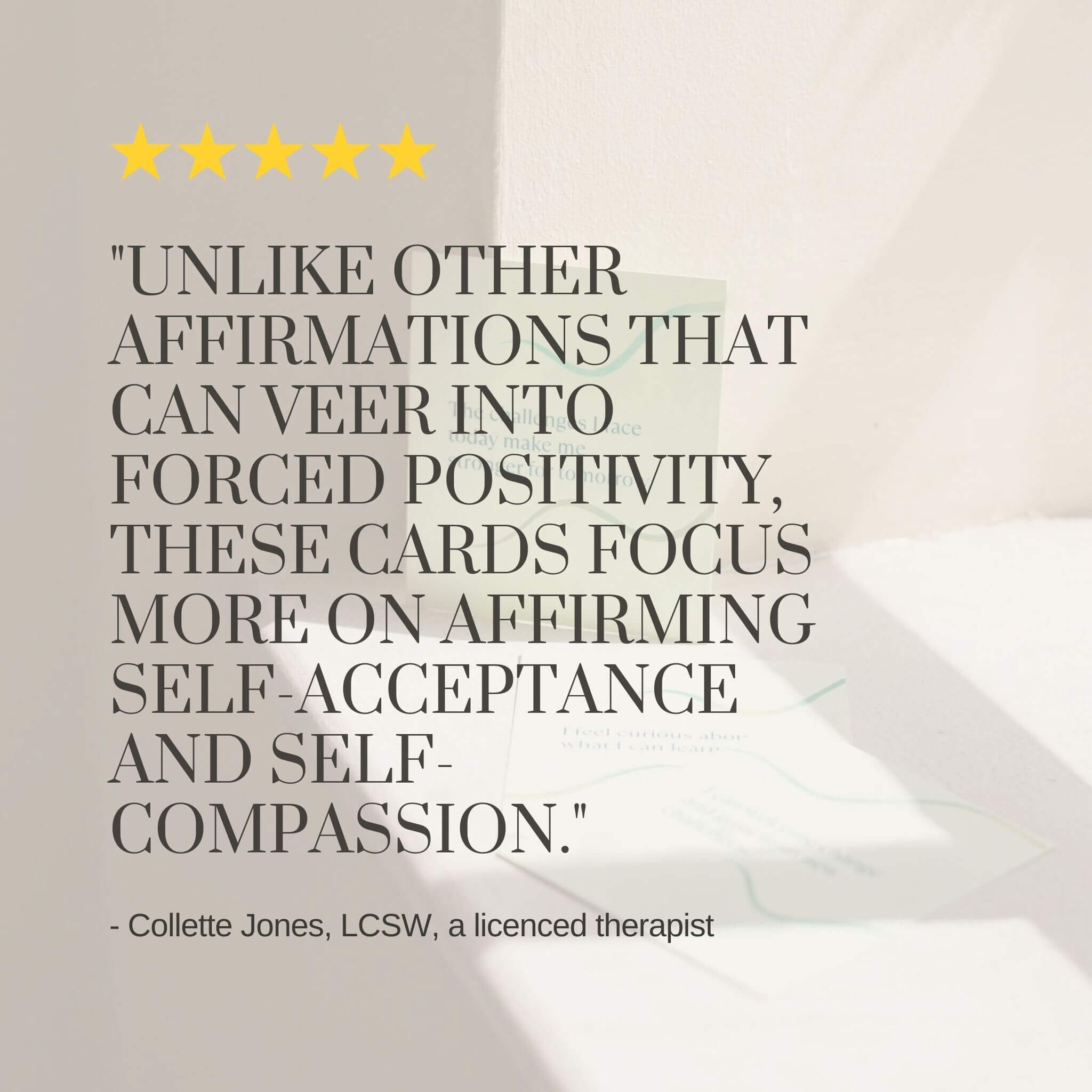
Licensed therapists Collette Jones, LCSW, and Margaret Davis, MS, LPC, also use them with their own clients. You can read what every expert has said in full here.
If you're a practitioner and you'd like to use these with clients, on a ward or in a service, email me at rachel@giveyourselfkindness.com and I'll help.
These might be the ones for you if you'd like to
- be gentler with yourself, and aren't sure where to start
- have something to reach for that doesn't ask you to feel positive
- keep a reminder somewhere visible rather than on a phone you're already tired of
- have something small to use between therapy sessions
- give someone a gift that acknowledges a hard time instead of talking over it
- come back to them after weeks of not touching them, without feeling behind
The Give Yourself Kindness Affirmation Cards
60 self-compassion affirmations across three sets. Written for the days you don't feel positive, and used by therapists with clients.
Discover the affirmation cards →Printed in the UK on FSC-certified card, in plastic-free packaging.
When affirmation cards aren't the right thing
Please don't buy these if any of this is true
If money is tight, take the list instead. Everything on this page is the full set, free. Copy out the five or six that landed, put them where you'll see them, and you have the same thing. I'd genuinely rather that than you spending money you need.
If you want something that lifts and energises you, these will feel too quiet. They're deliberately understated. There's nothing on them that says you've got this or today is your day, and for some people that's exactly the wrong register. That's a real limitation, not false modesty.
If things are very hard right now, a card is a companion, not a substitute. Affirmation cards might sit alongside therapy, medication, a GP appointment or a person you trust — they can't stand in for any of them, and I'd never suggest otherwise. If you're struggling and you're in the UK, your GP is a good first step, and Samaritans are there on 116 123, free, at any hour.
And they're written for adults. The wording assumes an adult inner critic, so they're not designed for children.
How to use them so they actually stick
The most common question I get isn't whether affirmations work. It's when you're meant to use them — in the middle of a bad moment, or as something you do anyway. My honest answer is that the second one is what makes the first one possible. A sentence you've read quietly on ordinary days is the one that turns up when you need it.
Choose the line you can read without arguing with it. One is genuinely enough.
The kettle, the mirror, your desk. Somewhere you look without deciding to.
No pressure to say it out loud and no need to believe it yet. Reading it counts.
If a card lands badly one morning, put it down and pick another. That reaction is information about where you are today, not evidence that you're bad at this. There's no right or wrong here, and nothing to keep up with.
For more on the practice itself, there's a longer guide on how to use affirmation cards without it feeling forced. And if you'd like to read the evidence for whether affirmation cards work at all before you decide, I've set that out on my guide to the best affirmation cards and what makes one effective.
Questions people ask me
What are mental health affirmation cards?
Mental health affirmation cards are printed cards carrying short statements meant to support how you speak to yourself. The ones that tend to help are worded as permissions and reminders rather than declarations, so you can accept them on a difficult day without having to believe something that doesn't feel true yet. They are a small self-care tool, not a treatment.
Why do affirmations feel like lying to myself?
Usually because the sentence asks you to declare something you don't currently believe, which leaves a gap your mind will keep pointing at. It isn't a sign that you are doing it wrong. Affirmations worded as I can, I don't have to, or I remind myself tend to feel more honest, because there is nothing in them to disagree with.
Are affirmation cards suitable if I'm dealing with depression?
They might help as a gentle addition to proper support, but forced positivity often makes low mood feel worse rather than better. If you want to try them, choose wording that acknowledges difficulty instead of talking over it, keep the expectation very low, and treat them as one small kindness rather than something you have to do well.
Can I use affirmation cards alongside therapy or medication?
Yes. Many people use them for the days between sessions, and some therapists give them to clients for exactly that. They are not a replacement for either, and it is always worth mentioning to your therapist or prescriber what you are trying, so it can be part of the same conversation.
Are affirmation cards safe to use in trauma recovery?
They can be, but go carefully. Statements about deserving love or trusting people can feel unsafe rather than soothing in trauma recovery, and pushing through that isn't kind. Smaller, plainer wording is usually easier to tolerate. If you are working with a therapist, it is worth choosing a few cards together rather than alone.
Do mental health professionals actually use affirmation cards with patients?
Some do. Kerry Munro, BSc HCPC, a Mindfulness Teacher and Occupational Therapist, has used my cards with patients on a mental health ward, and licensed therapists Collette Jones, LCSW, and Margaret Davis, MS, LPC, use them with their own clients. They are used as a between-session prompt rather than as a clinical intervention in their own right.
Are free or printable affirmation cards just as good as buying a set?
For the words themselves, yes. All 60 of my affirmations are on this page free, and writing out the ones that land on paper or a sticky note works in exactly the same way. What you get from a printed set is that the right sentence is already there on the morning you need it, without you having to go and find it.
What should I look for when buying affirmation cards for someone who is struggling?
Read the actual wording before you buy, and check whether it acknowledges hard days or only talks about good ones. A card that says today is going to be wonderful can land as a correction when someone feels awful. Wording that gives permission tends to be received more kindly than wording that instructs.
Can affirmation cards replace treatment for a mental health condition?
No, and I would never suggest they could. Affirmation cards might sit alongside therapy, medication, your GP or someone you trust, as one small supportive habit. If things are hard right now, please talk to your GP, and in the UK Samaritans are available free on 116 123 at any hour.
What if I read one and feel nothing?
That is completely normal and it doesn't mean anything has gone wrong. Some cards land on some days and not others. Feeling nothing is a far better outcome than feeling worse, and it usually just means that sentence isn't the one you need today. Put it down and pick another.
Words you don't have to argue with
60 self-compassion affirmations, printed on cards you can keep somewhere you'll see them.
Discover the affirmation cards →