



Quick Answer
The best affirmation cards for anxiety use self-compassion principles—acknowledging that anxiety is difficult rather than demanding you "think positive" when you're struggling. They validate your experience while offering gentle alternatives to anxious thoughts.
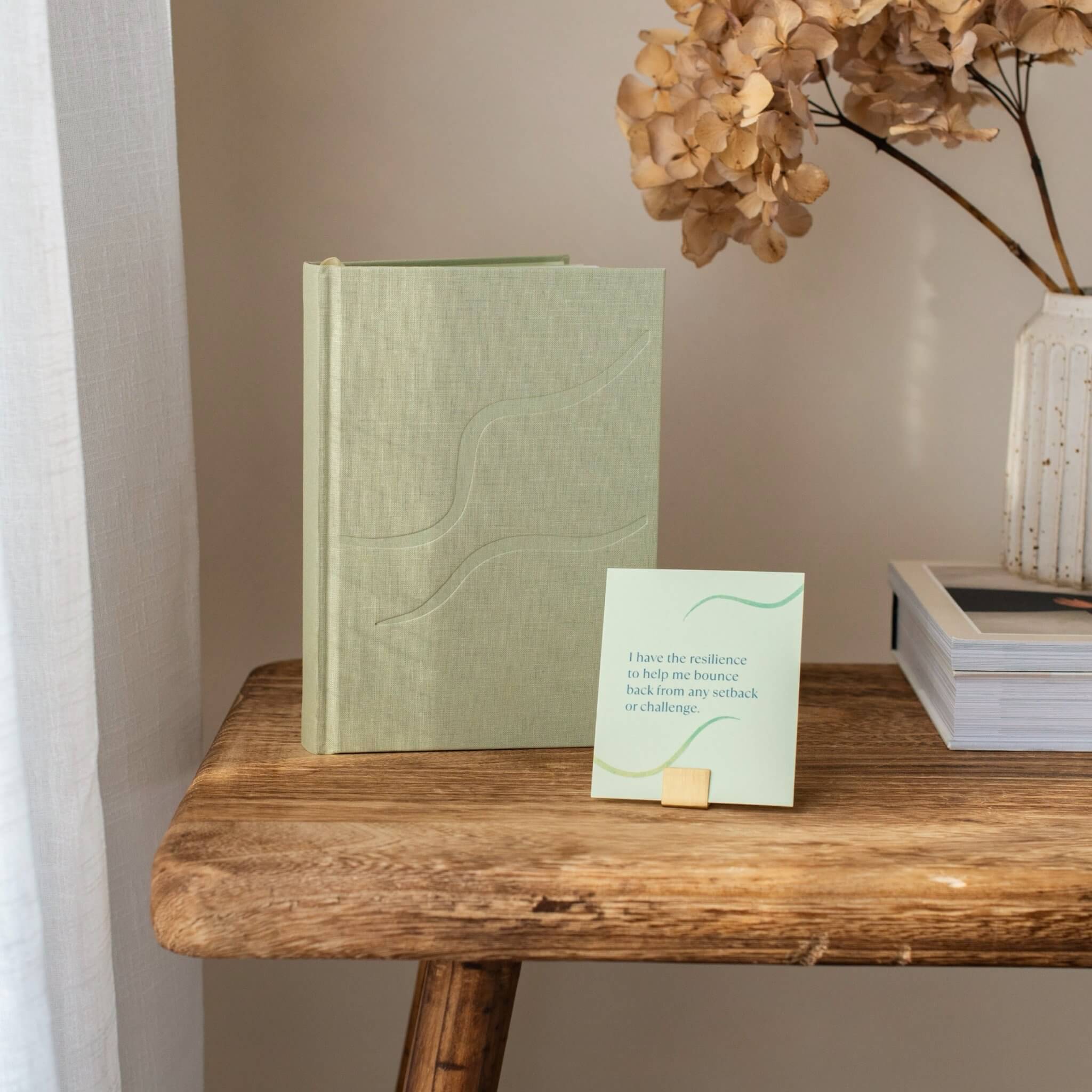
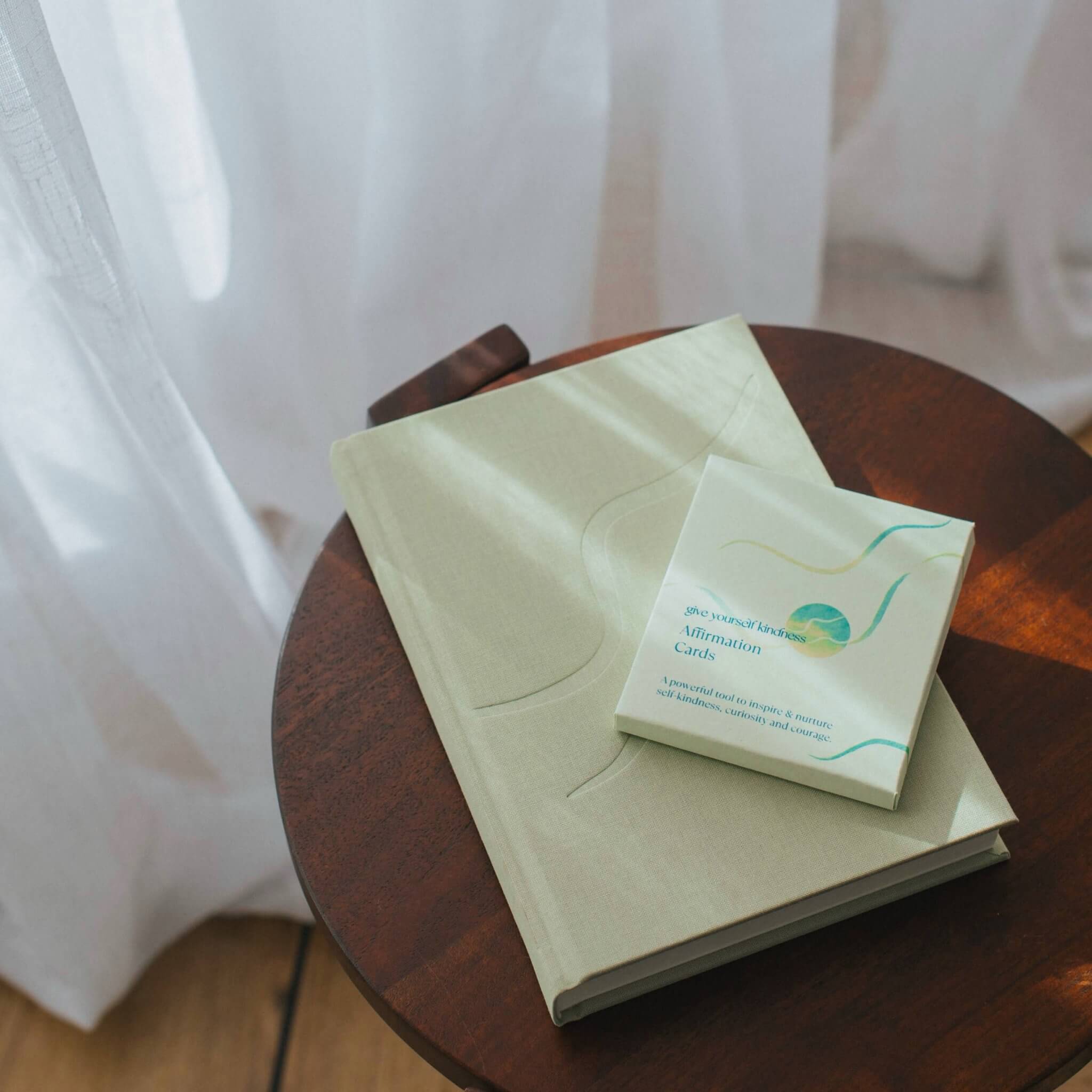
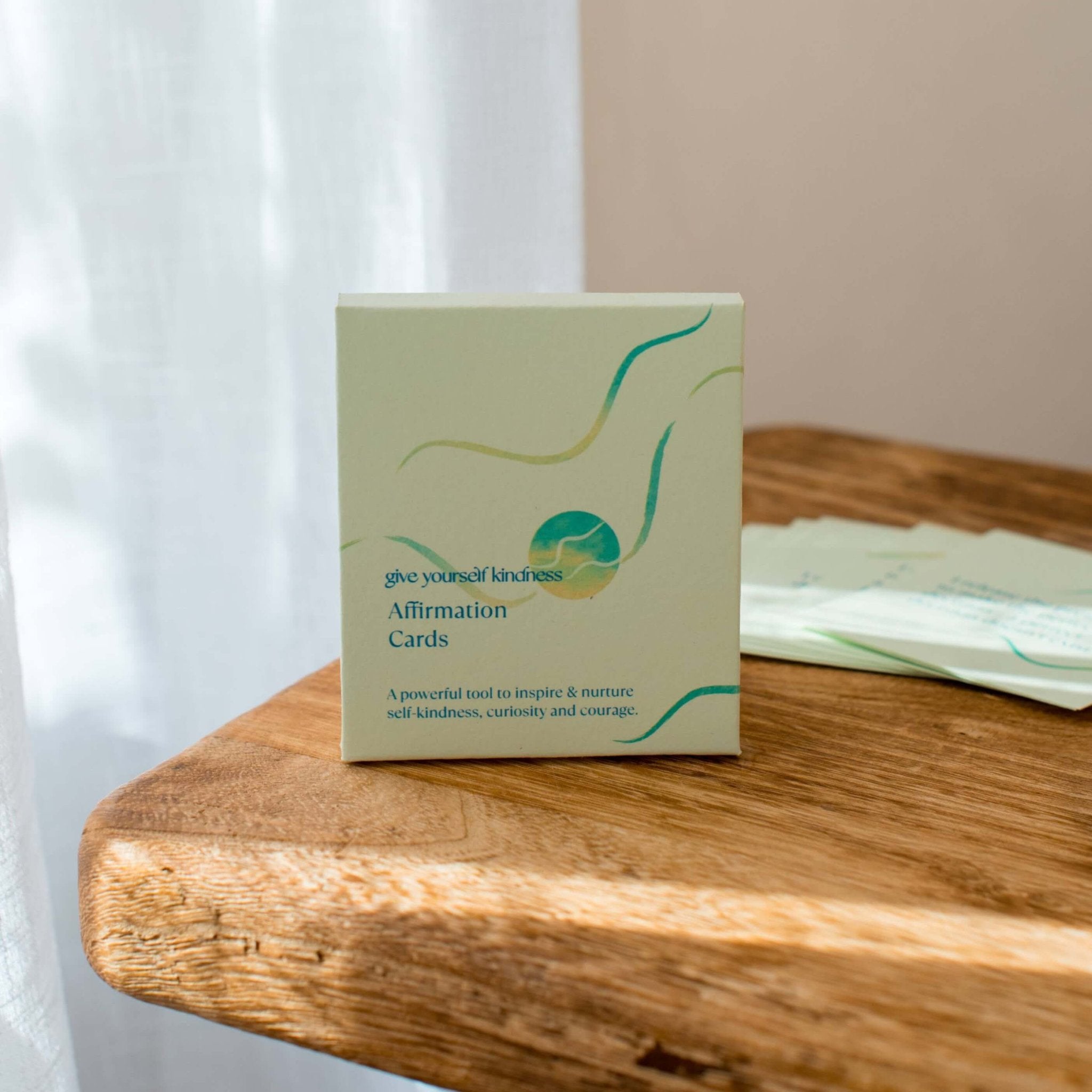
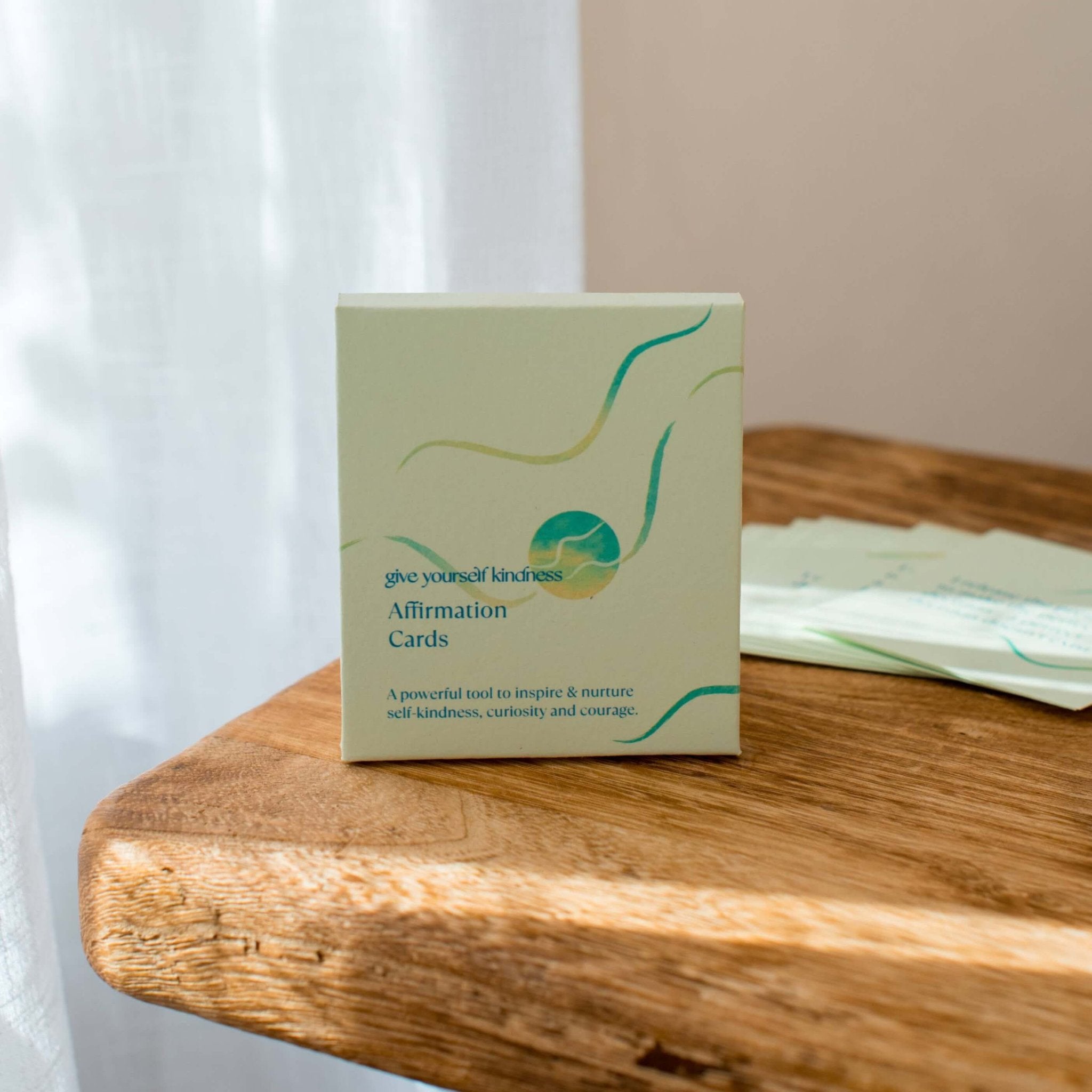
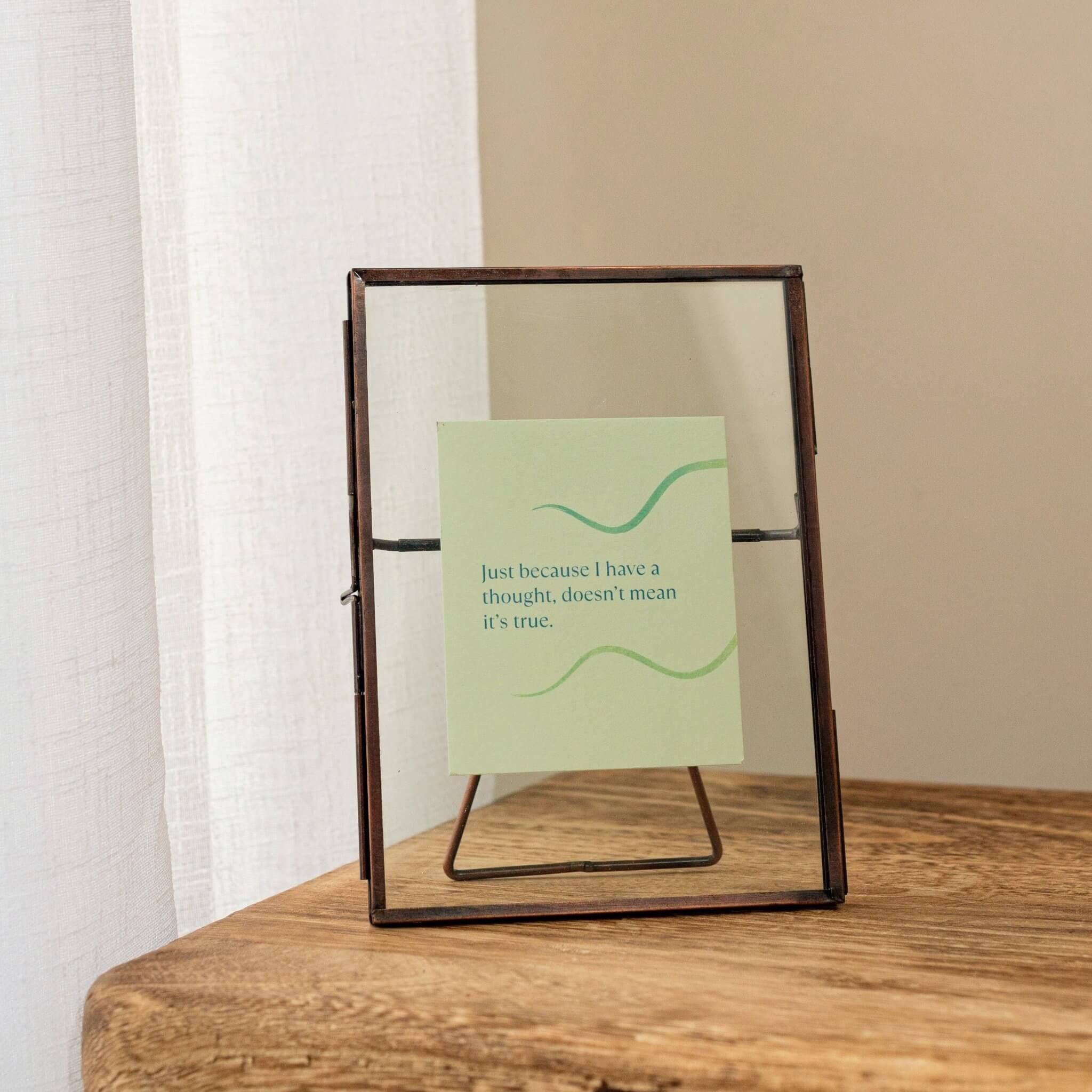
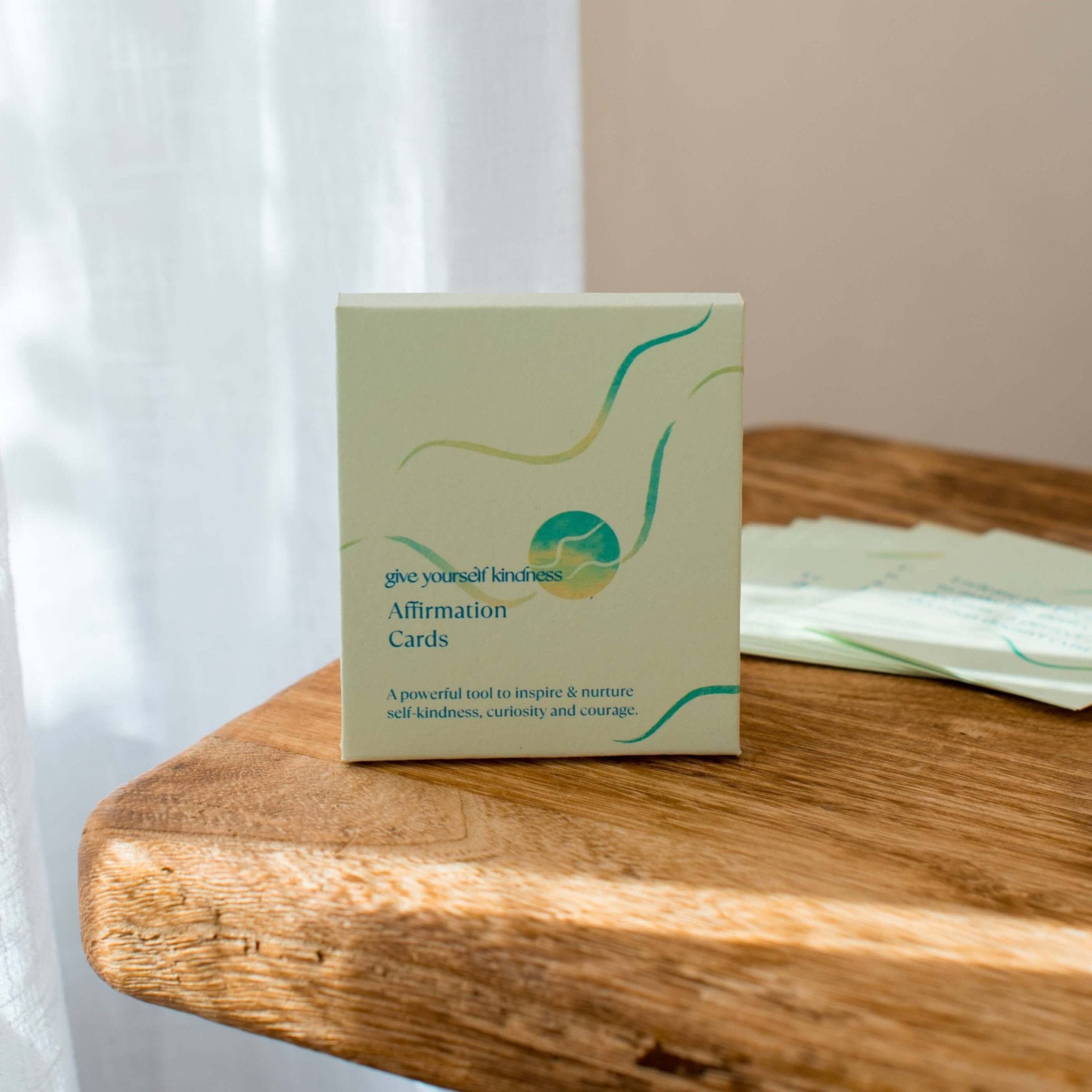
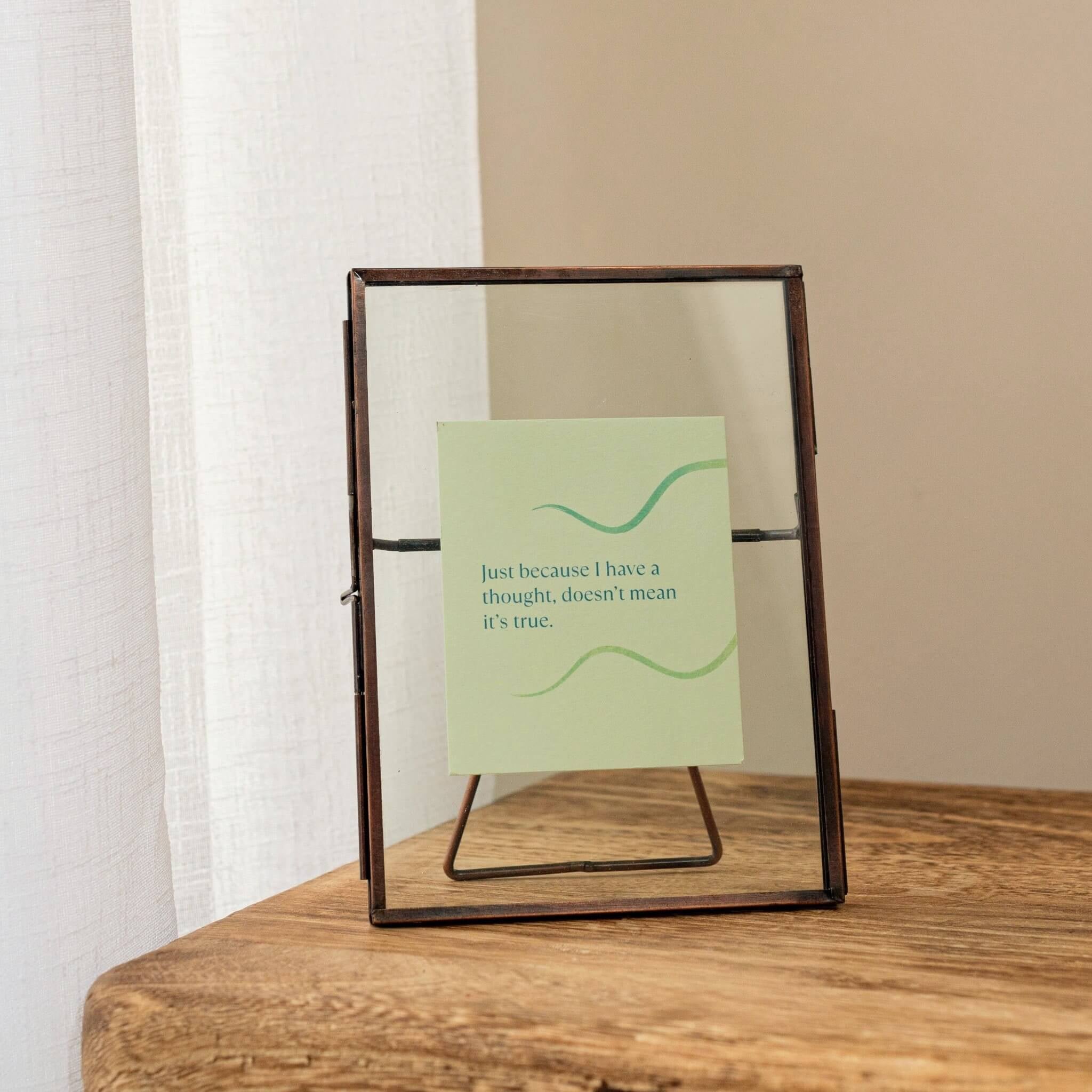
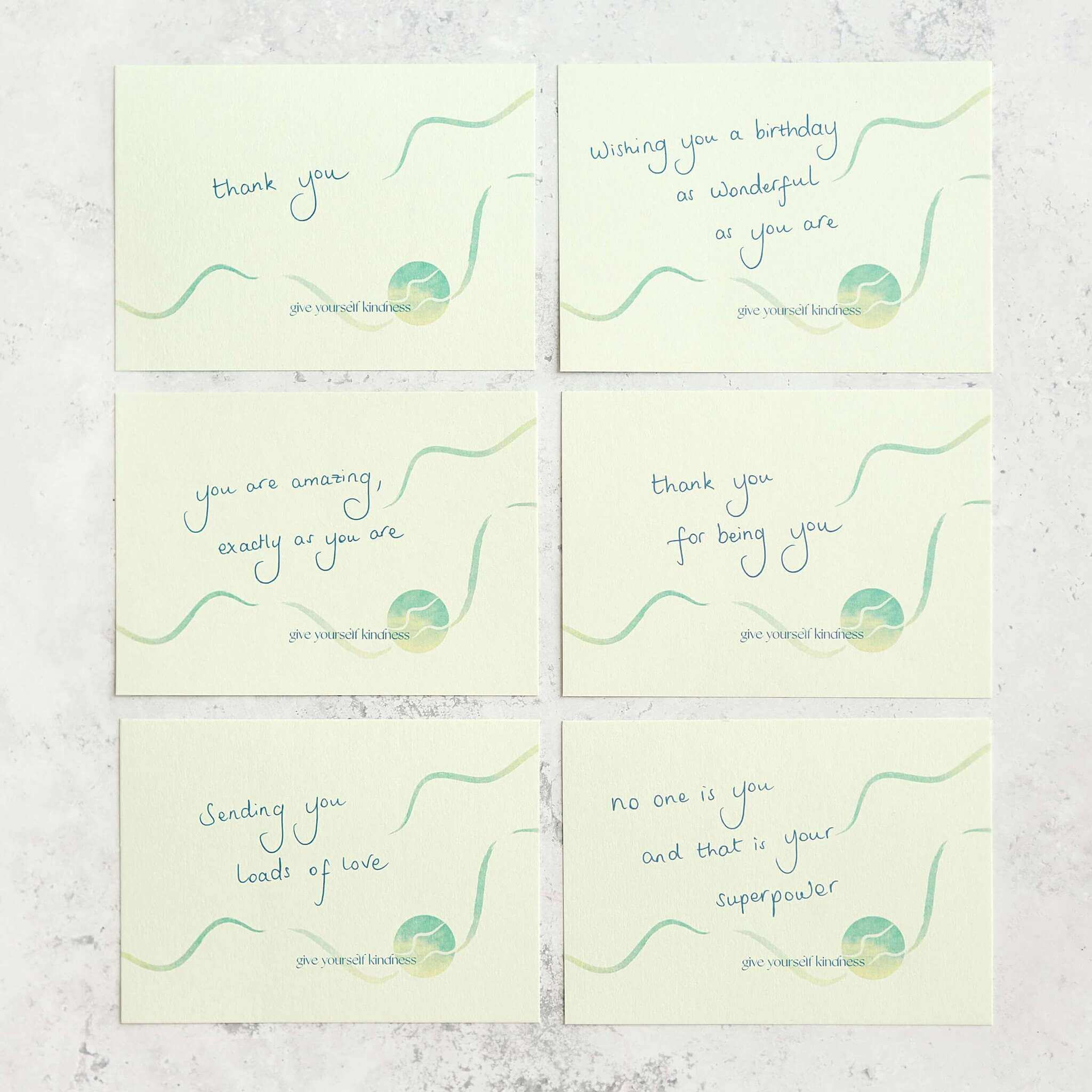
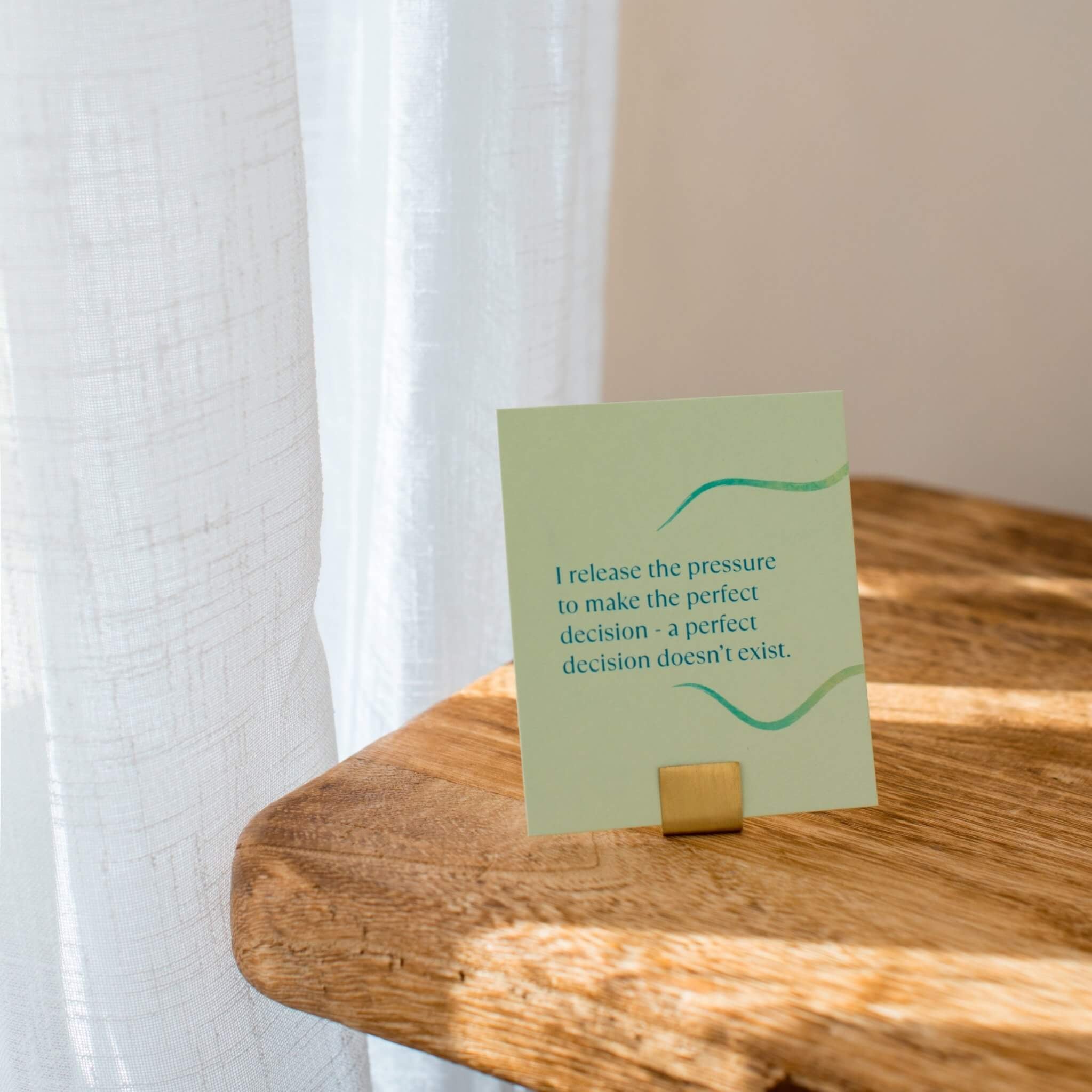
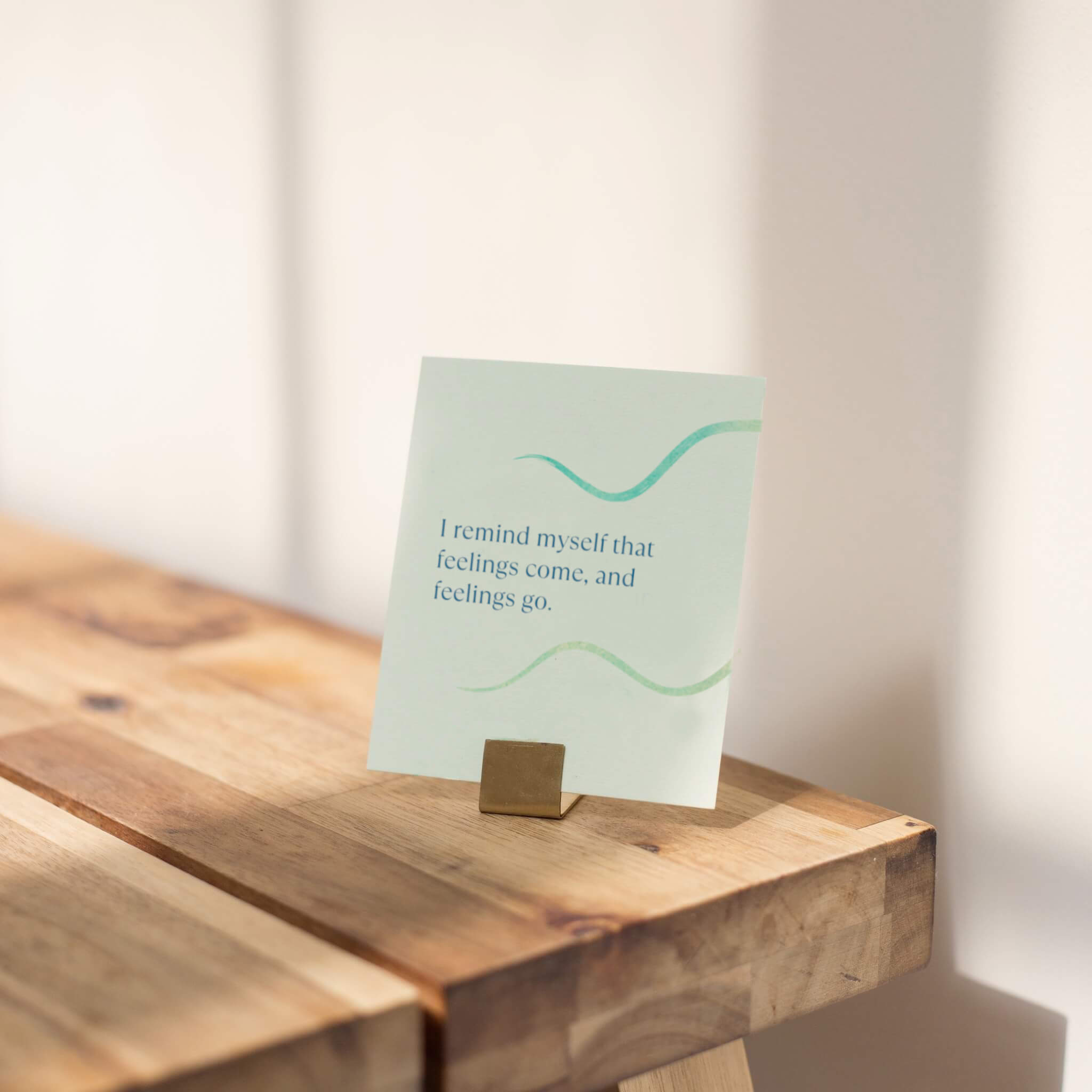
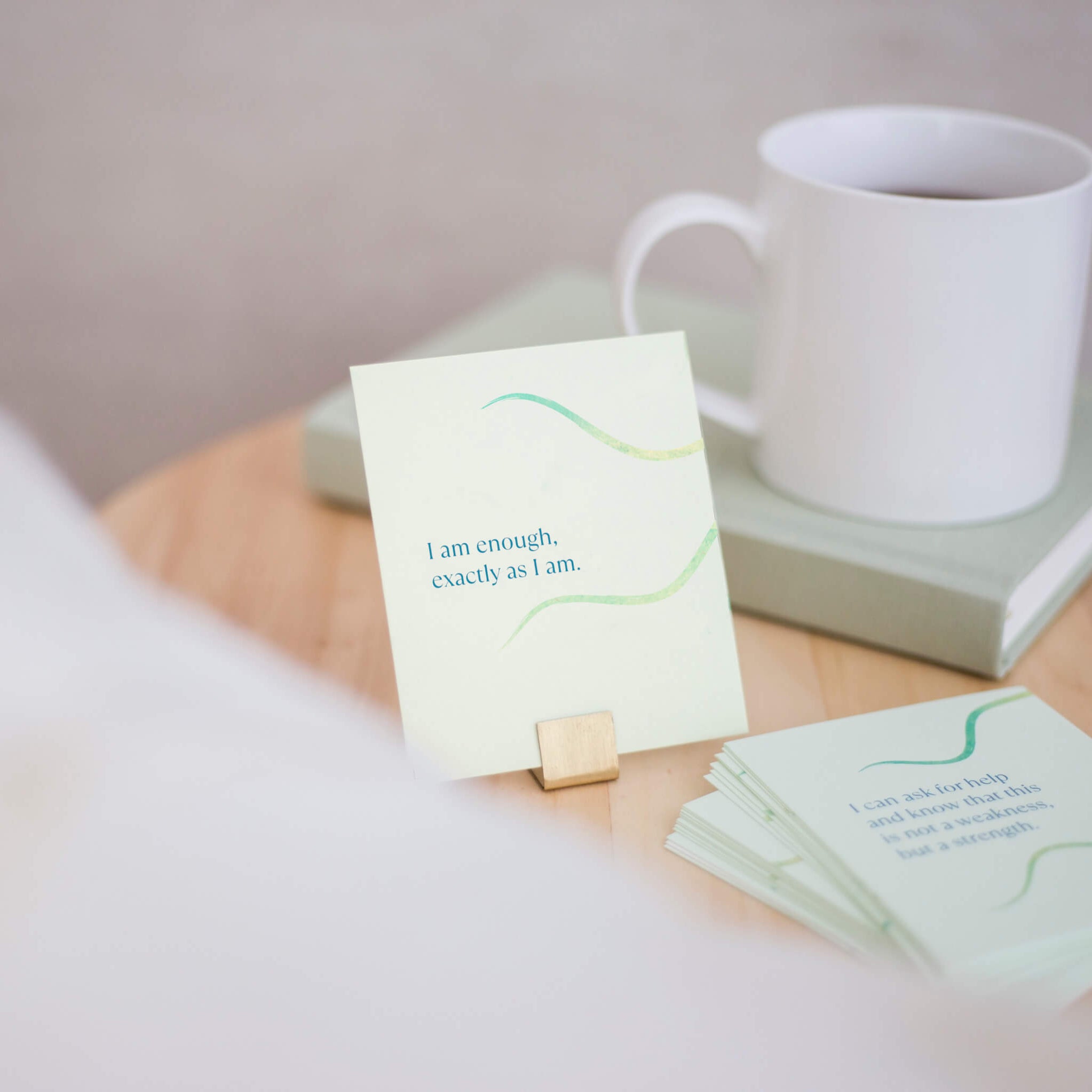
Top recommendation: Give Yourself Kindness Self-Compassion Affirmation Cards — 60 affirmations specifically designed to help with anxious thoughts. Instead of "Don't worry, be happy!" they say things like "Just because I have a thought doesn't mean it's true" and "I can handle today, one moment at a time." Recommended by therapists specializing in anxiety disorders.
View the Affirmation Cards →On This Page:
- Why Anxiety Makes Generic Affirmations Fail
- What Actually Happens When You're Anxious
- Why Most Affirmation Cards Don't Help Anxiety
- What Actually Helps with Anxious Thoughts
- Comparison: Generic vs. Self-Compassion Affirmations for Anxiety
- The Best Affirmation Cards for Anxiety
- How to Use Affirmation Cards for Anxiety
- FAQ
Why Anxiety Makes Generic Affirmations Fail
I used to think affirmation cards were nonsense. When you're anxious, reading "Everything will be okay!" feels dismissive—not helpful. Your brain immediately pushes back: "But what if it's not okay? What if I'm not prepared? What if—"
The anxiety spiral continues. The affirmation didn't help. It made you feel more alone because now you can't even make positive thinking work.
But here's what I learned after working with clinical psychologists: The problem isn't you. The problem is the affirmation.

Dr. Caroline C. Lee, PhD
Licensed Clinical Psychologist specializing in anxiety disorders | Private practice, Orange County, California
"Each day, our minds generate tens of thousands of thoughts, and due to our brain's natural negativity bias, we often affirm negative beliefs about ourselves without realizing it. For affirmations to be effective, they need to resonate with you on a deeper level and feel believable."
→ Read more: Do Affirmations Really Work? I Asked 5 Psychologists
Dr. Lee's point is critical: believability matters. When you're anxious, generic positive affirmations feel like lies. Your anxiety gets louder in response.
What Actually Happens When You're Anxious
Anxiety isn't just "worrying too much." It's your nervous system perceiving threat—even when there isn't one. Your body is trying to protect you.
When you're anxious, you experience:
- Racing thoughts — "What if this goes wrong? What if I mess up? What if—"
- Physical symptoms — Racing heart, tight chest, shallow breathing, tense muscles
- Catastrophic thinking — Your brain jumps to worst-case scenarios
- Self-criticism — "Why am I like this? Everyone else handles this fine"
- Hypervigilance — Constantly scanning for danger
And here's the part many people don't realize: when you criticize yourself for being anxious, your body interprets that as another threat. So the anxiety intensifies.

Dr. Annabelle Kyle Dortch, PsyD
Clinical Psychologist, Los Angeles | Specializes in life transitions, anxiety, and trauma
"When we engage in self-criticism, we create a nervous system and brain state that is not conducive to learning or facilitating a growth-oriented mindset."
→ Read more: Why Self-Compassion is More Effective Than Self-Criticism
Translation: Being harsh with yourself about anxiety creates more anxiety. It's a loop.
Why Most Affirmation Cards Don't Help Anxiety
Most affirmation cards use generic positive thinking that doesn't address what's actually happening when you're anxious.
⚠️ Warning: These Generic Affirmations Can Make Anxiety Worse
For people experiencing anxiety, traditional positive affirmations create a gap between what you're supposed to feel ("calm and confident") and what you actually feel (anxious and overwhelmed). This gap can intensify anxiety and make you feel more broken.
Affirmations That Don't Help Anxiety:
- "Don't worry, be happy!" — Dismisses real anxiety, implies something is wrong with you for feeling it
- "I am calm and confident" — Feels like a lie when your heart is racing
- "Everything will work out perfectly" — Your anxious brain knows this isn't guaranteed
- "I have no fears" — Unrealistic, creates more pressure
- "I am completely relaxed" — When you're not, this makes you feel worse
- "Just breathe and let it go" — If it were that easy, you'd have done it already
Why these fail: They demand you feel differently than you do. They don't acknowledge the anxiety is real and difficult. They don't give you tools to work with anxious thoughts—they just tell you to not have them.
What Actually Helps with Anxious Thoughts
Research on anxiety treatment—particularly Cognitive Behavioral Therapy (CBT) and Compassion-Focused Therapy (CFT)—shows what actually helps:
- Acknowledging anxiety is real and difficult (not dismissing it)
- Creating distance from anxious thoughts (recognizing thoughts aren't facts)
- Responding with self-compassion instead of self-criticism (which calms your nervous system)
- Offering realistic coping statements (not unrealistic positivity)

Collette Jones, LCSW
Practice Owner and Licensed Therapist | Specializes in perfectionism and high-functioning anxiety
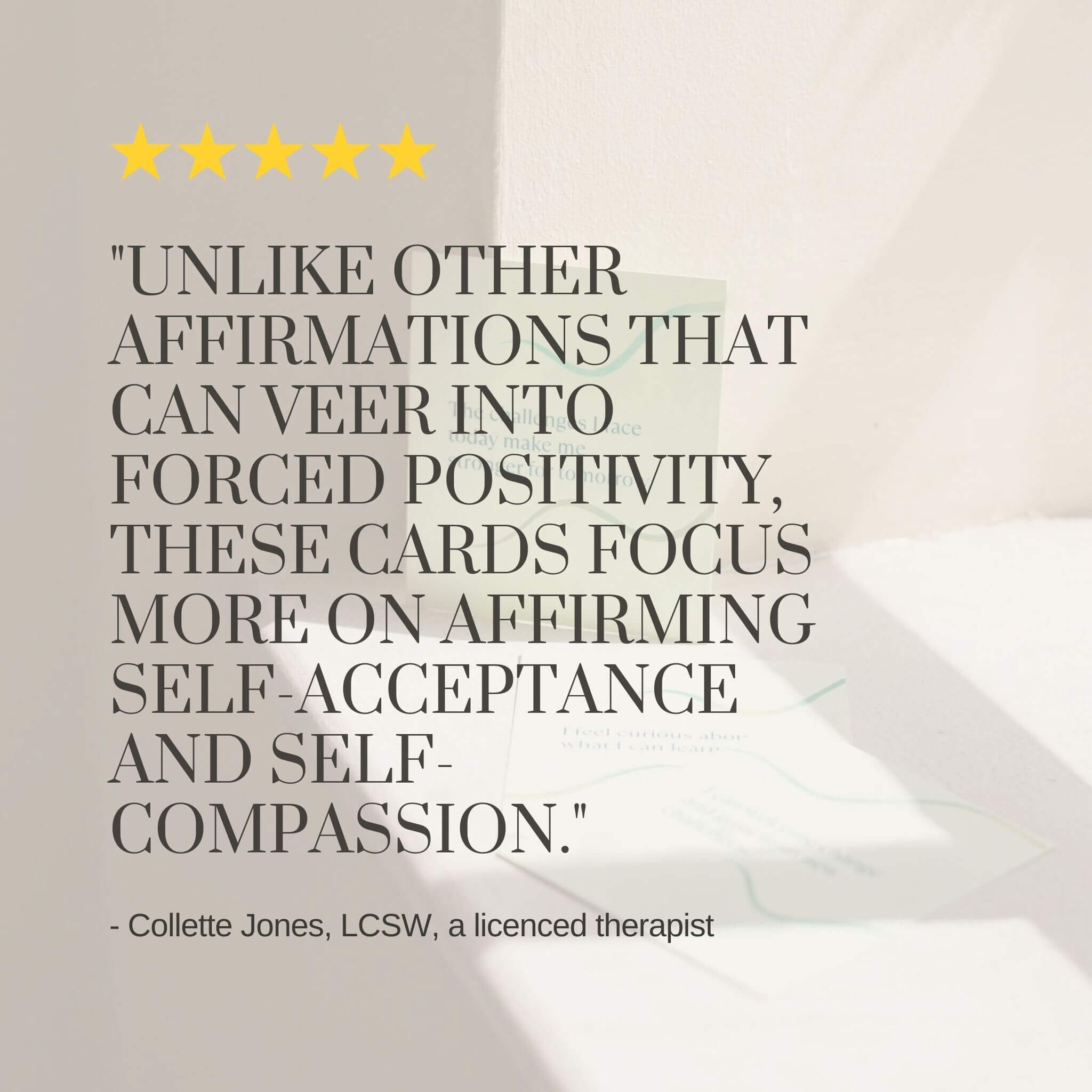
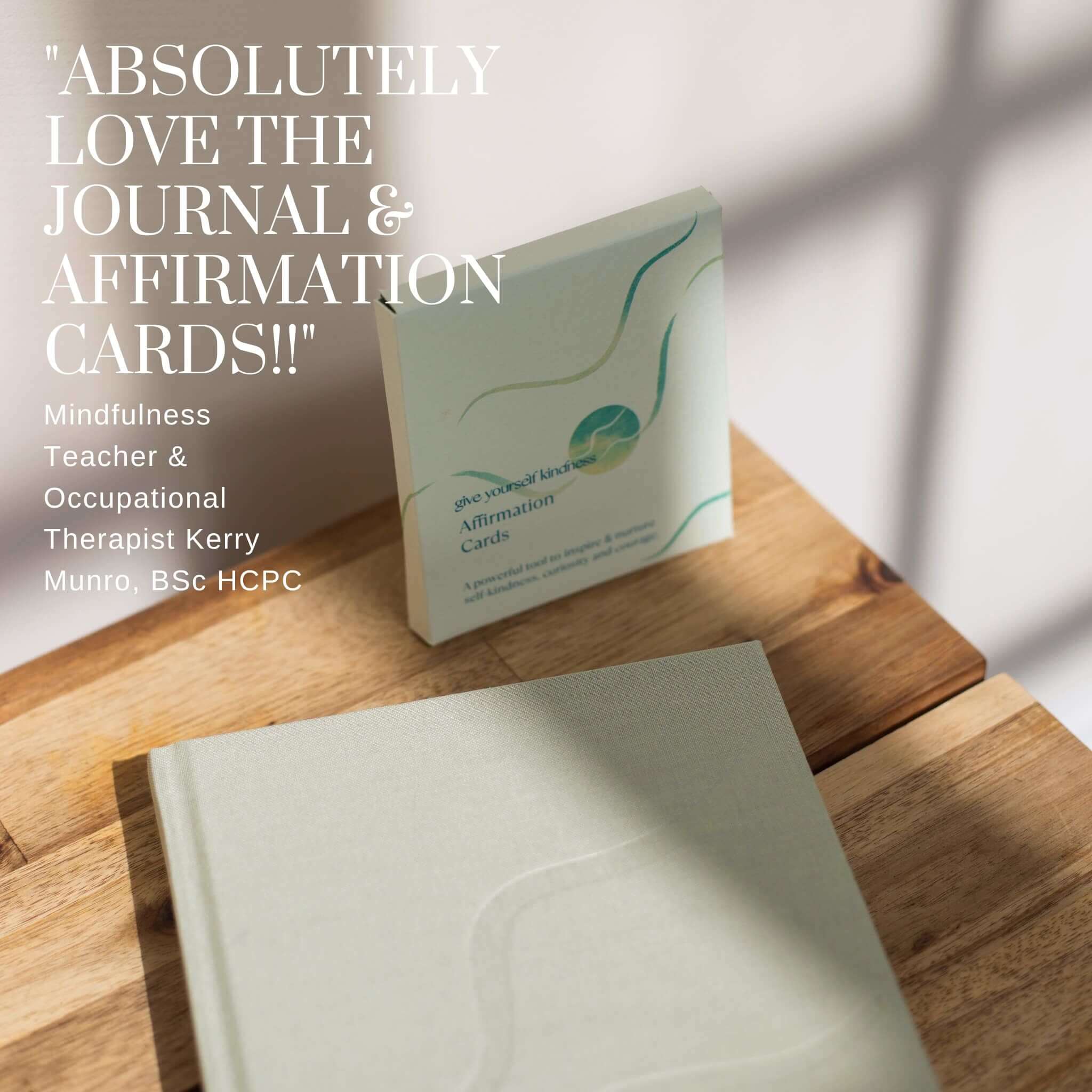
"These cards are a beautiful tool that offer gentle reminders to soothe the mind, ease tension, and cultivate a sense of peace. Unlike other affirmations that can veer into forced positivity, these cards focus more on affirming self-acceptance and self-compassion."
Self-Compassion Affirmations That Help Anxiety:
From the Give Yourself Kindness Affirmation Cards:
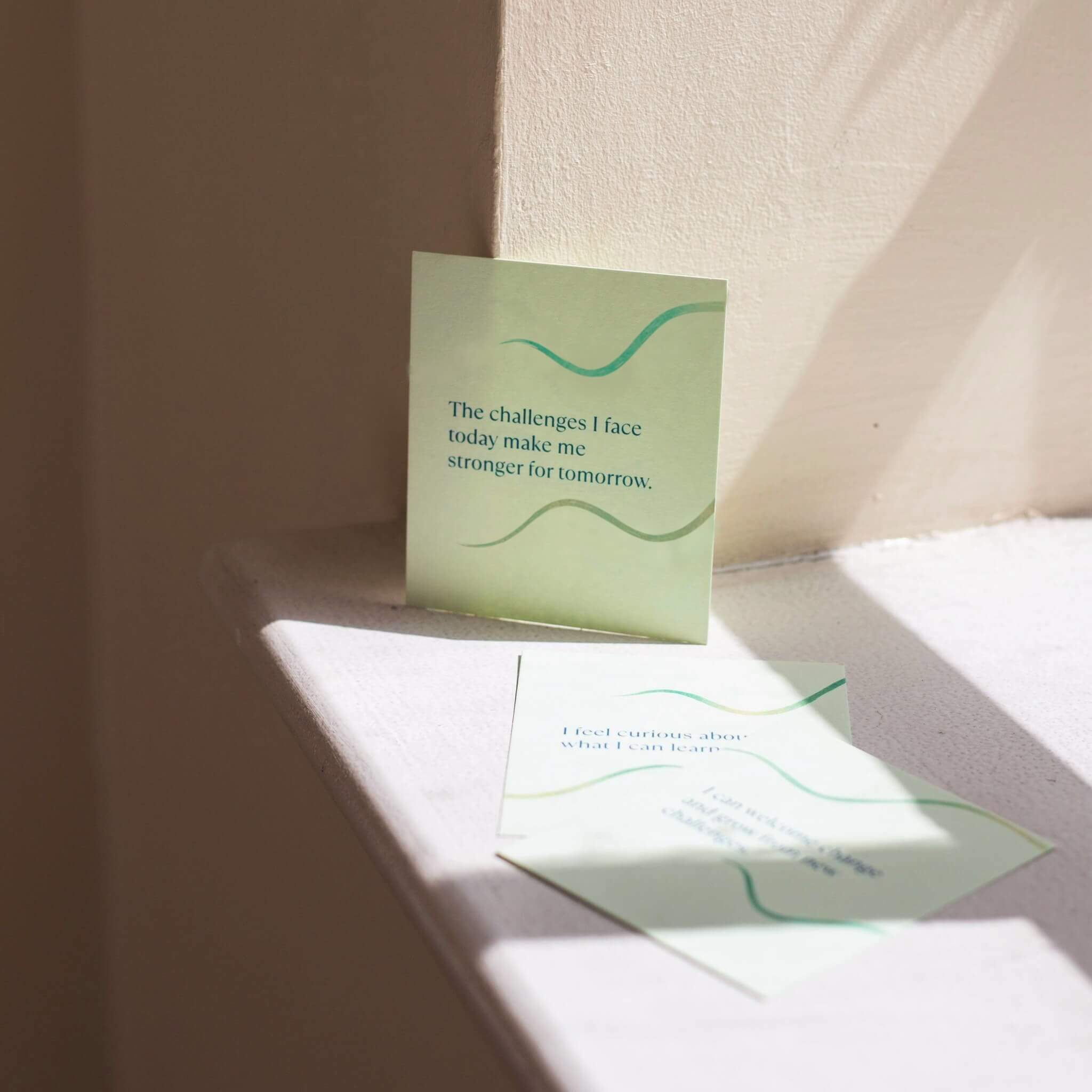
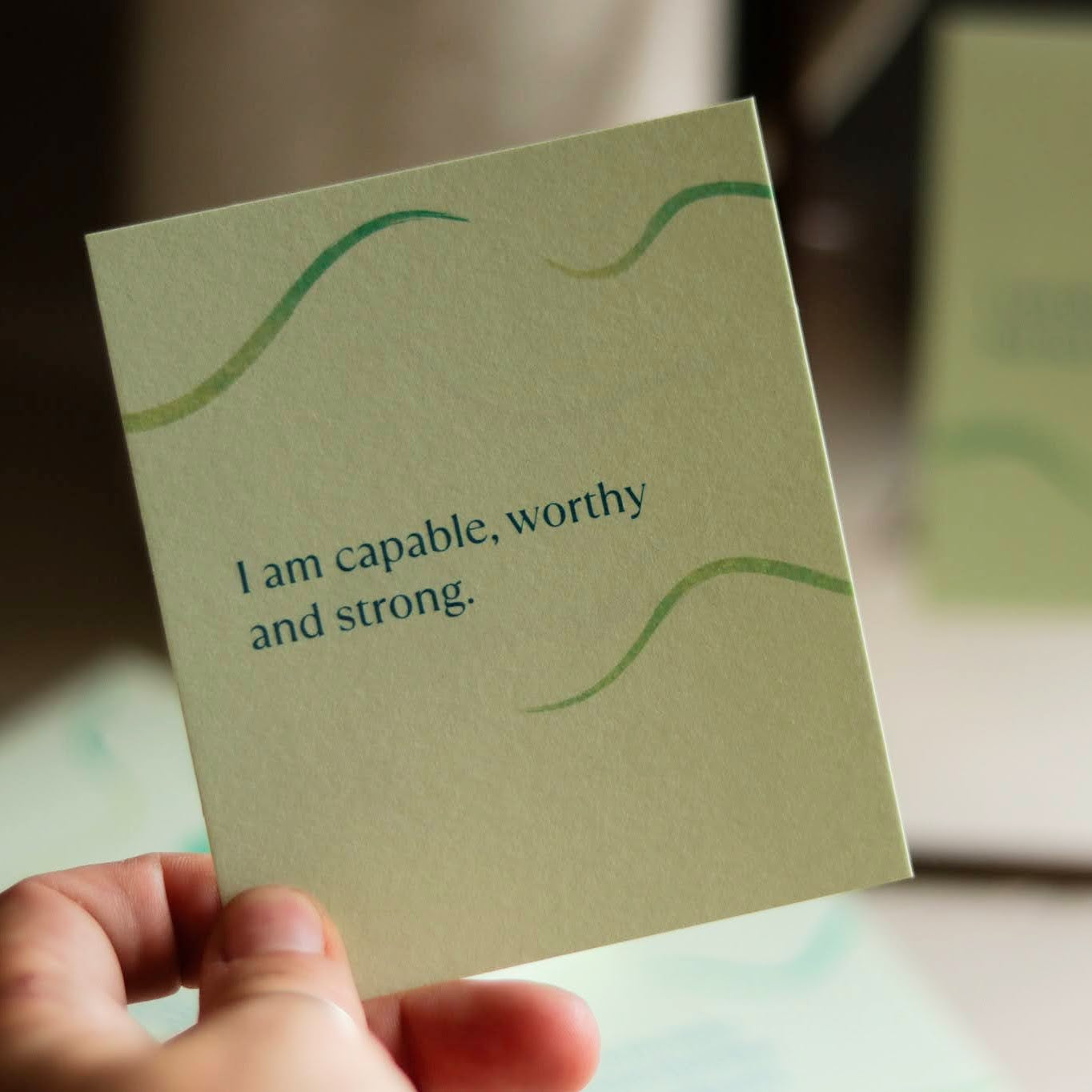
- "Just because I have a thought, doesn't mean it's true" — Creates distance from anxious thoughts
- "It is normal to have an inner critic - but I don't have to believe it" — Normalizes the critical voice
- "I choose to give myself the same kindness I would give to a friend" — Self-compassion practice
- "I can use my breath as a tool to find calm, taking deep, slow breaths" — Practical tool for anxiety symptoms
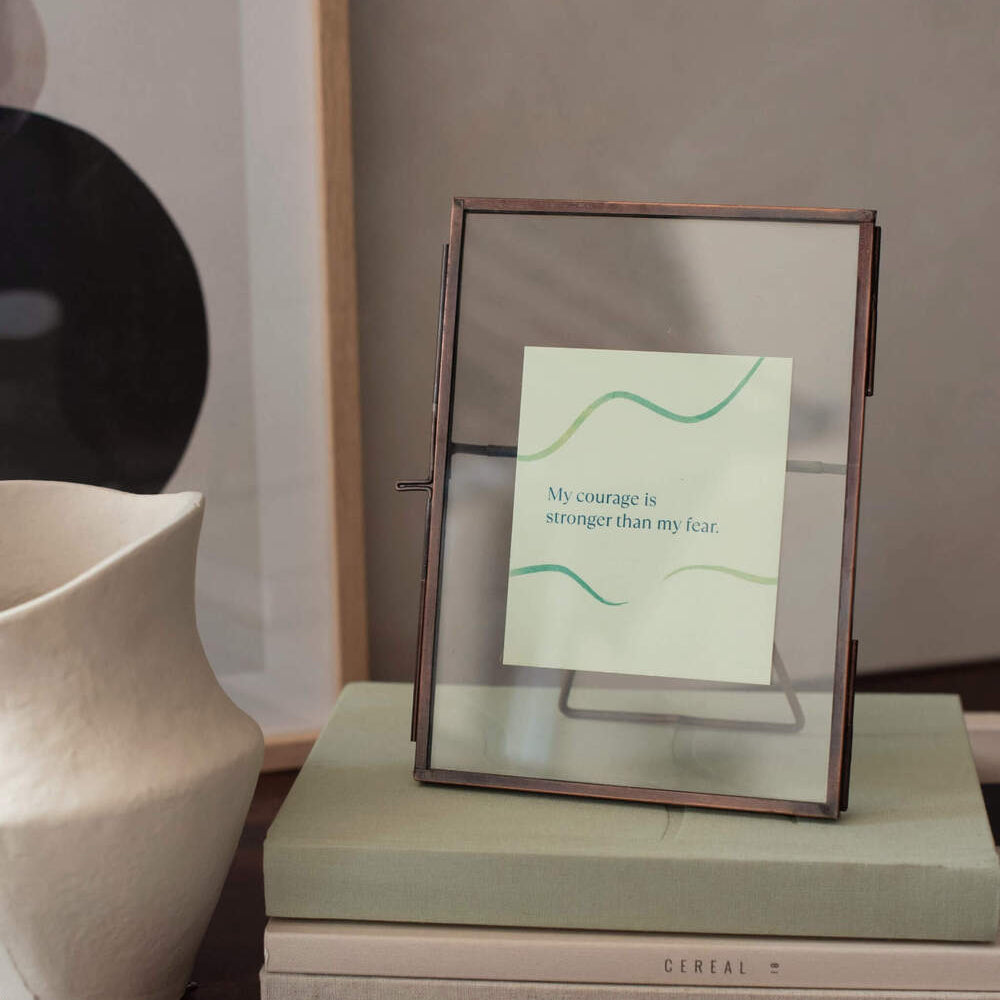
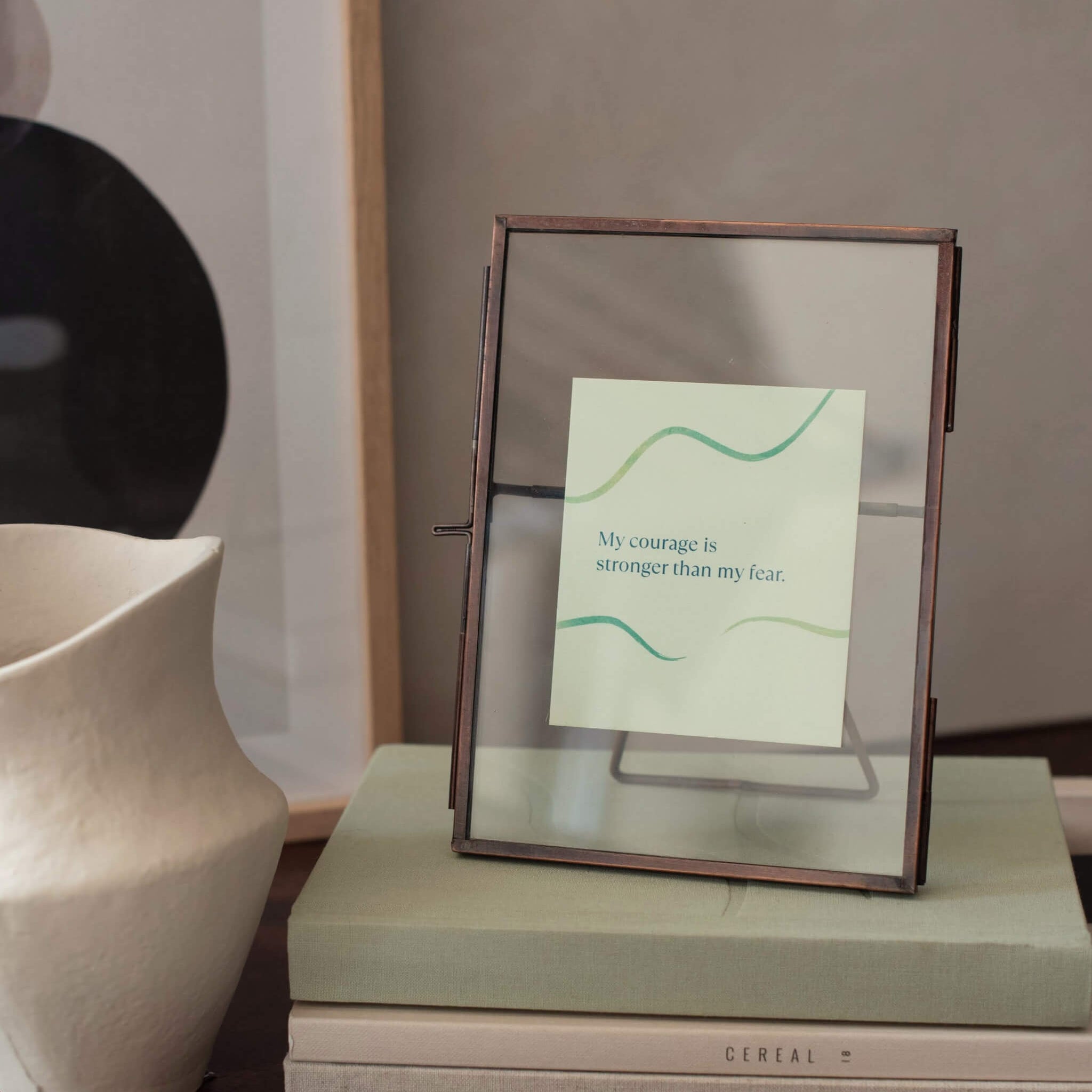
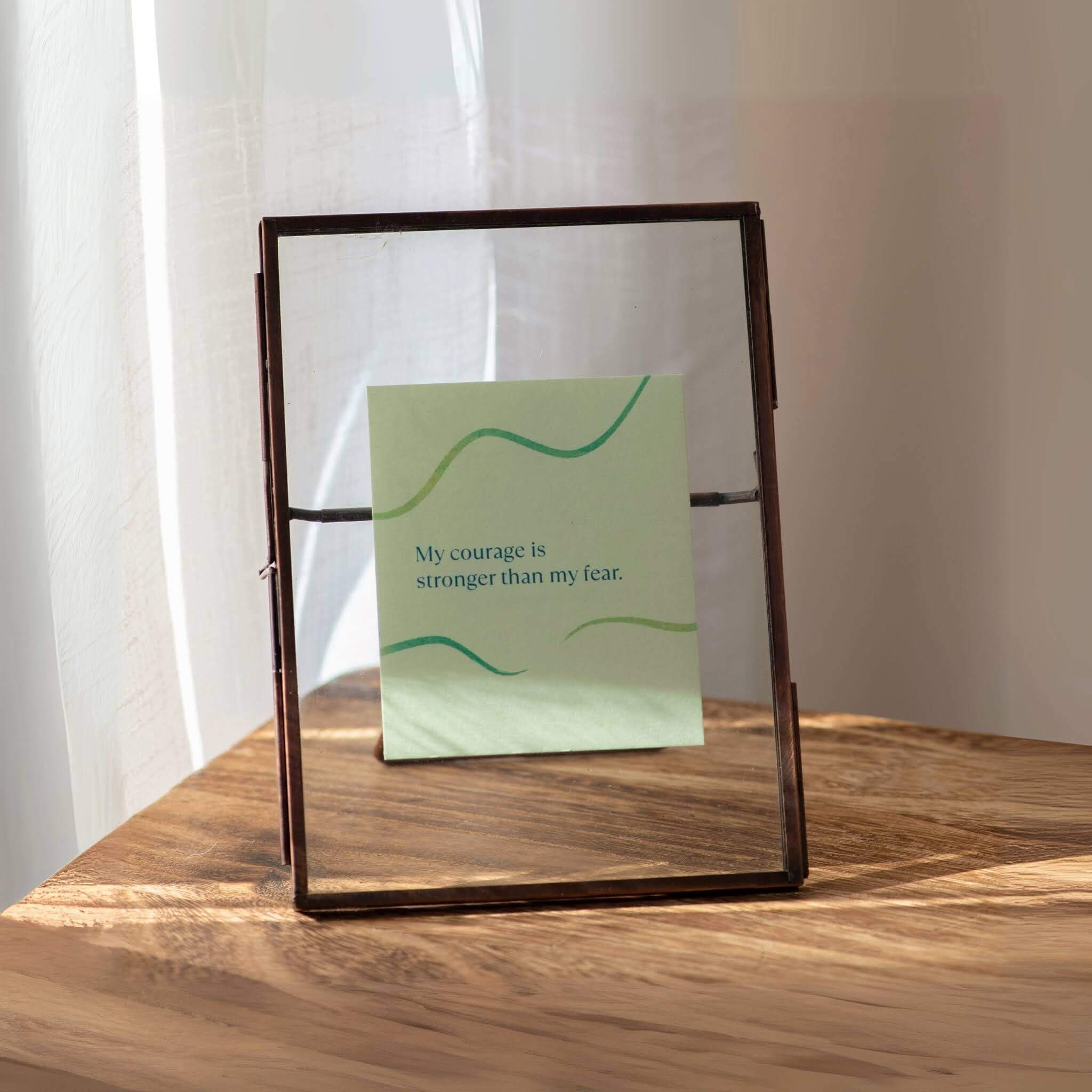
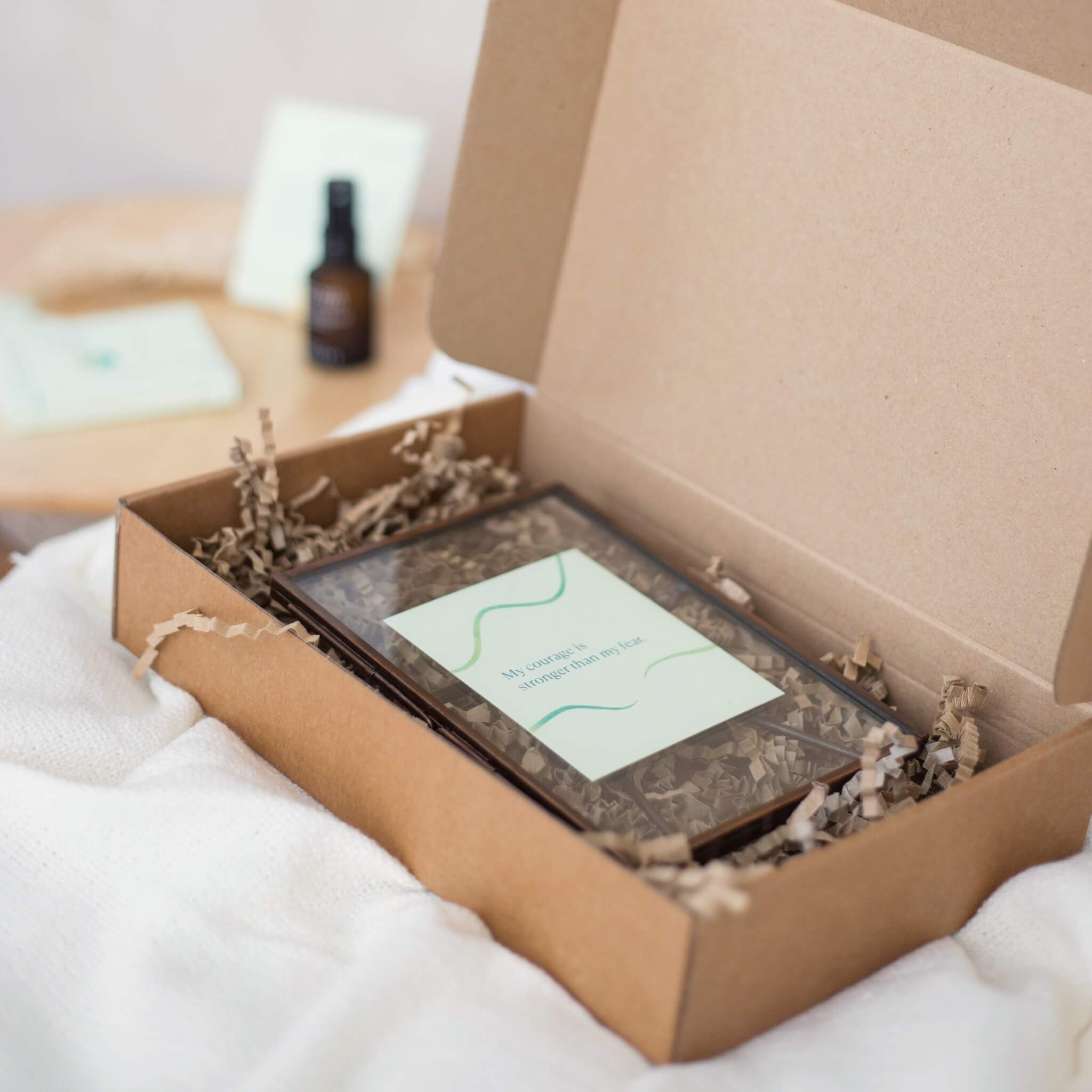
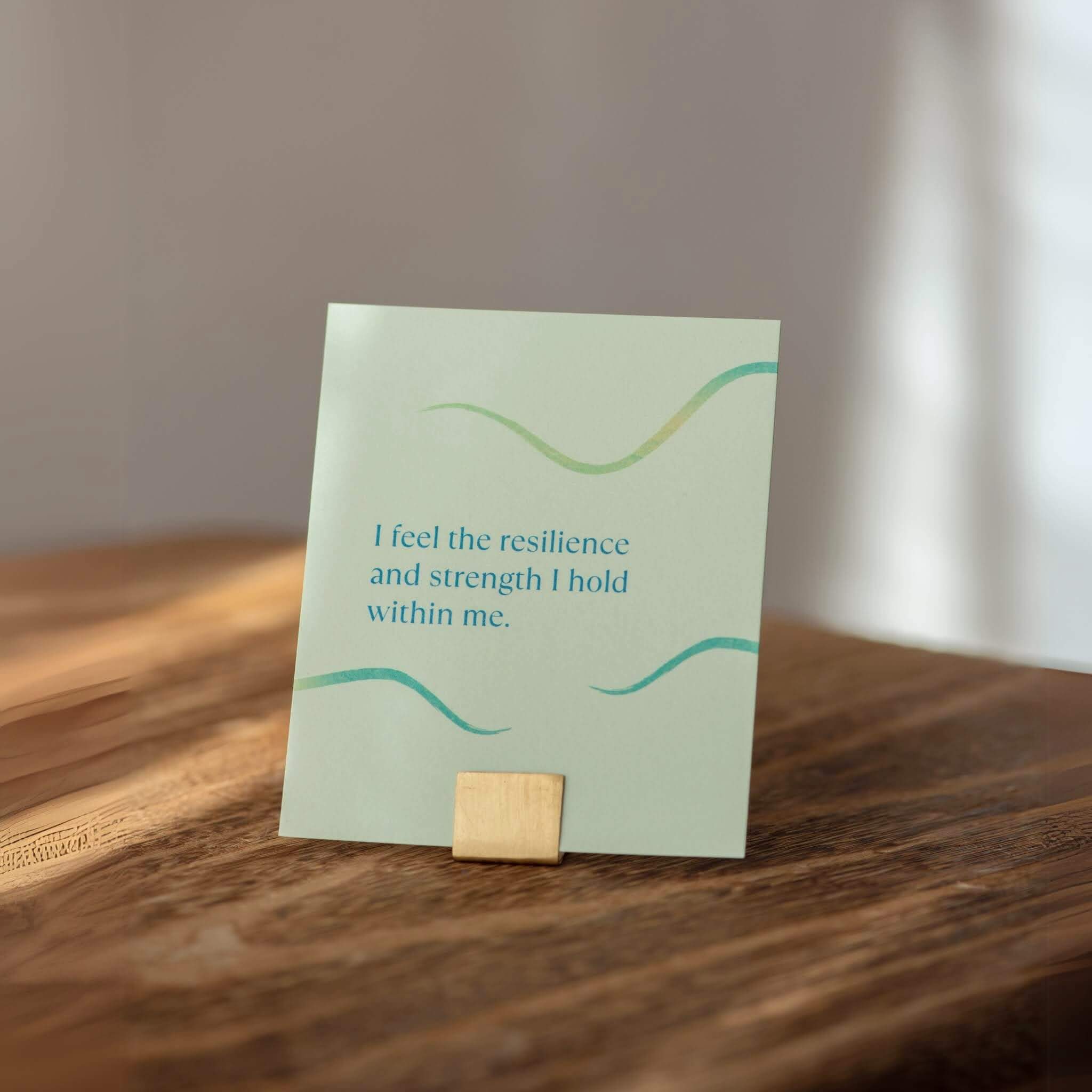
- "My courage is stronger than my fear" — Builds confidence through anxiety
- "I have dealt with challenges before, I can deal with challenges again" — Reminds you of past resilience
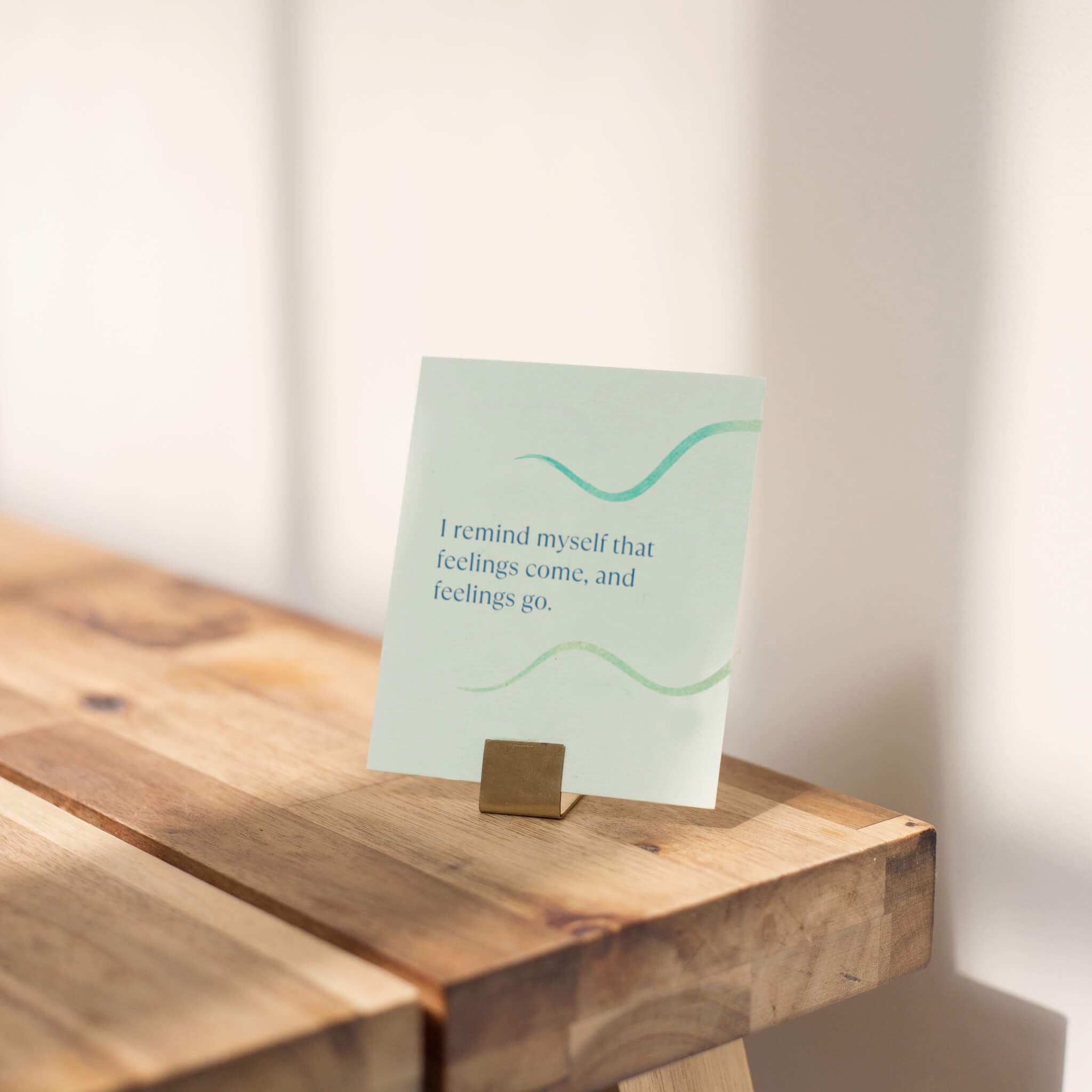
- "I remind myself that feelings come, and feelings go" — Acknowledges anxiety is temporary
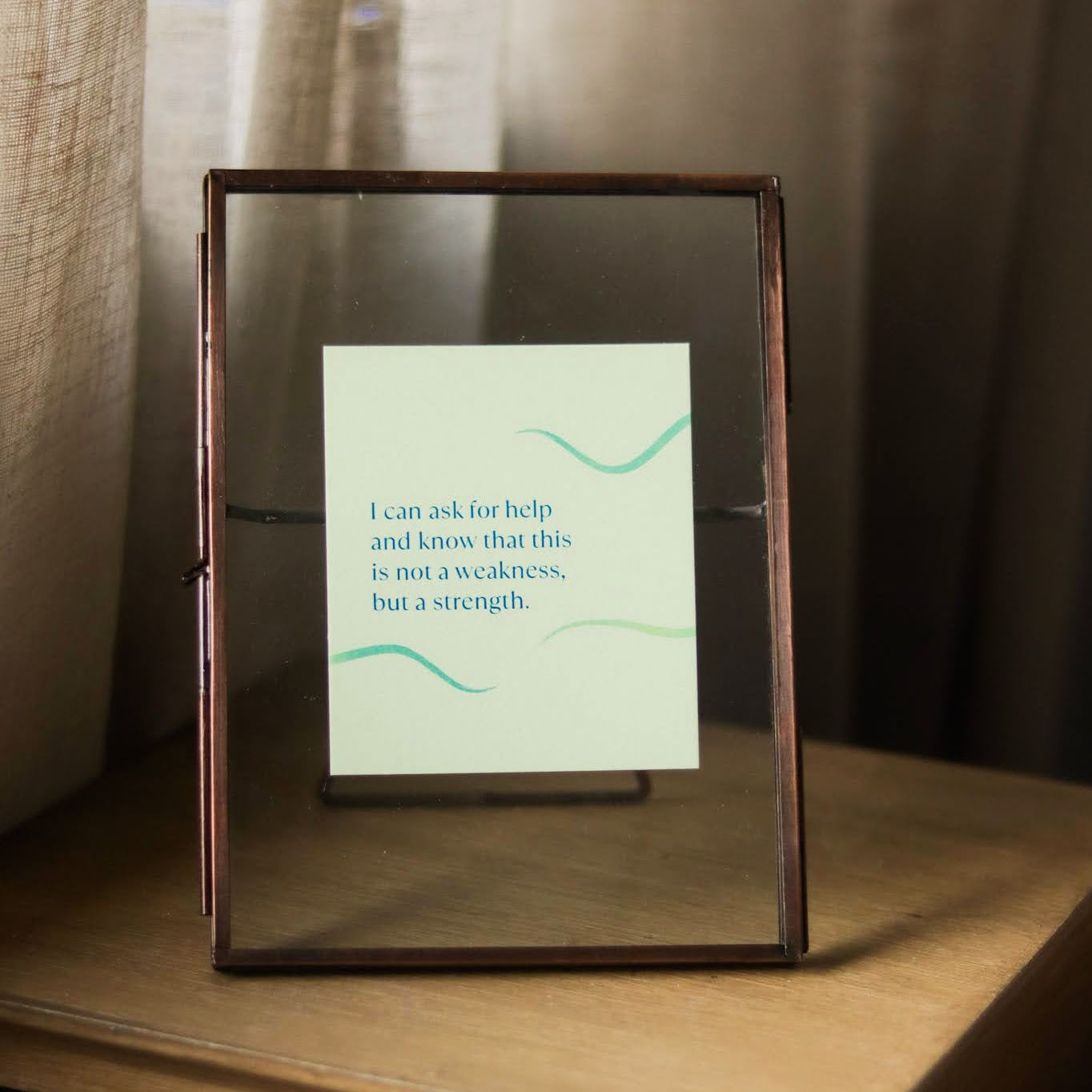
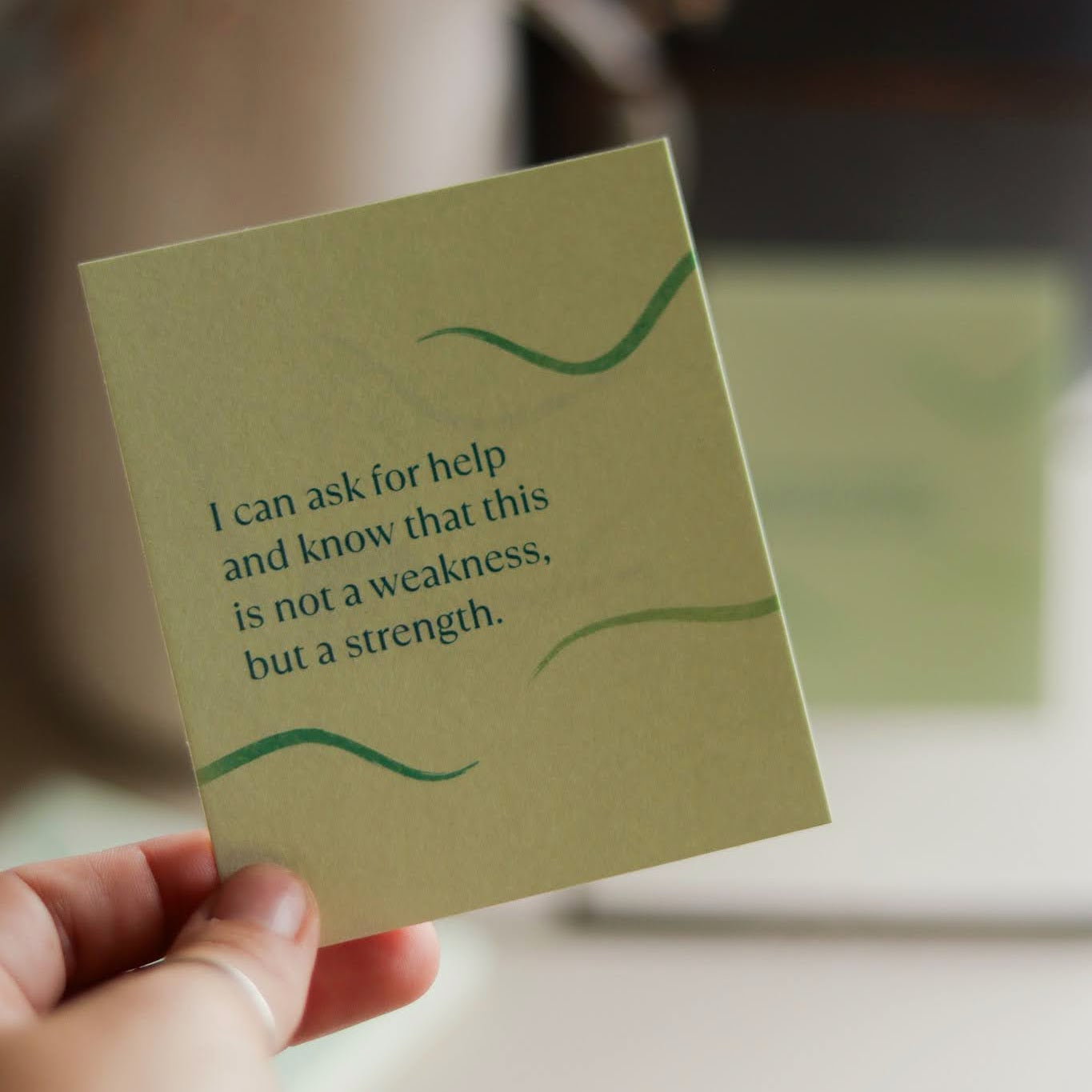
- "No matter what emotion I feel, it is never a sign of weakness" — Validates anxious feelings
Notice the difference? These don't demand you stop being anxious. They acknowledge anxiety is real, validate that it's difficult, and offer compassionate alternatives to the harsh self-criticism that makes anxiety worse.
Comparison: Generic vs. Self-Compassion Affirmations for Anxiety
| Generic Positive Affirmation | Self-Compassion Affirmation (Give Yourself Kindness) | Why Self-Compassion Works Better for Anxiety |
|---|---|---|
| "I am calm and relaxed" | "I have dealt with challenges before, I can deal with challenges again" | Builds confidence through past experience rather than forcing calm |
| "Nothing can bother me" | "Just because I have a thought, doesn't mean it's true" | Teaches you to question anxious thoughts without denying them |
| "I have no fears" | "My courage is stronger than my fear" | Acknowledges fear exists while affirming your strength to face it |
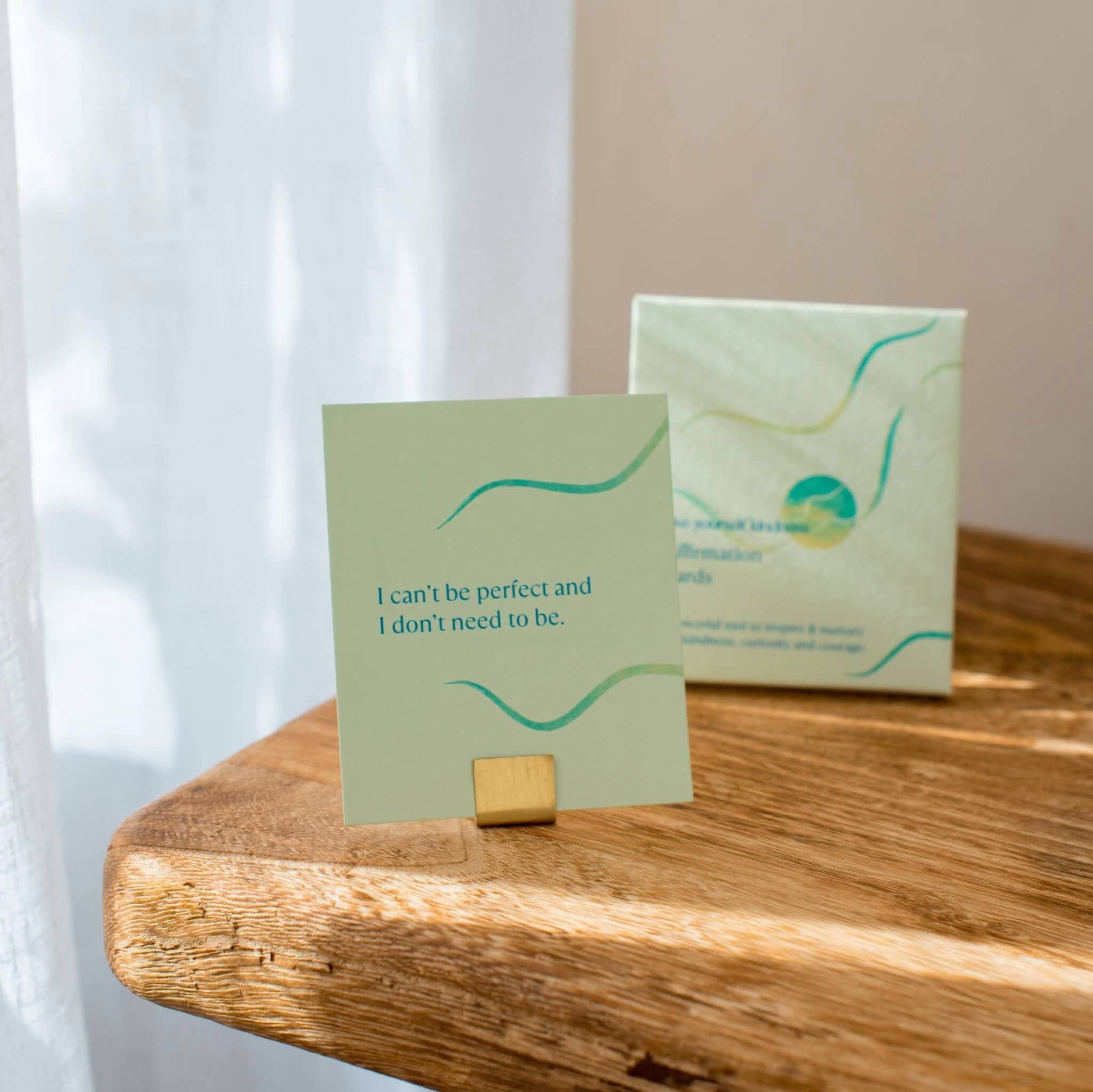
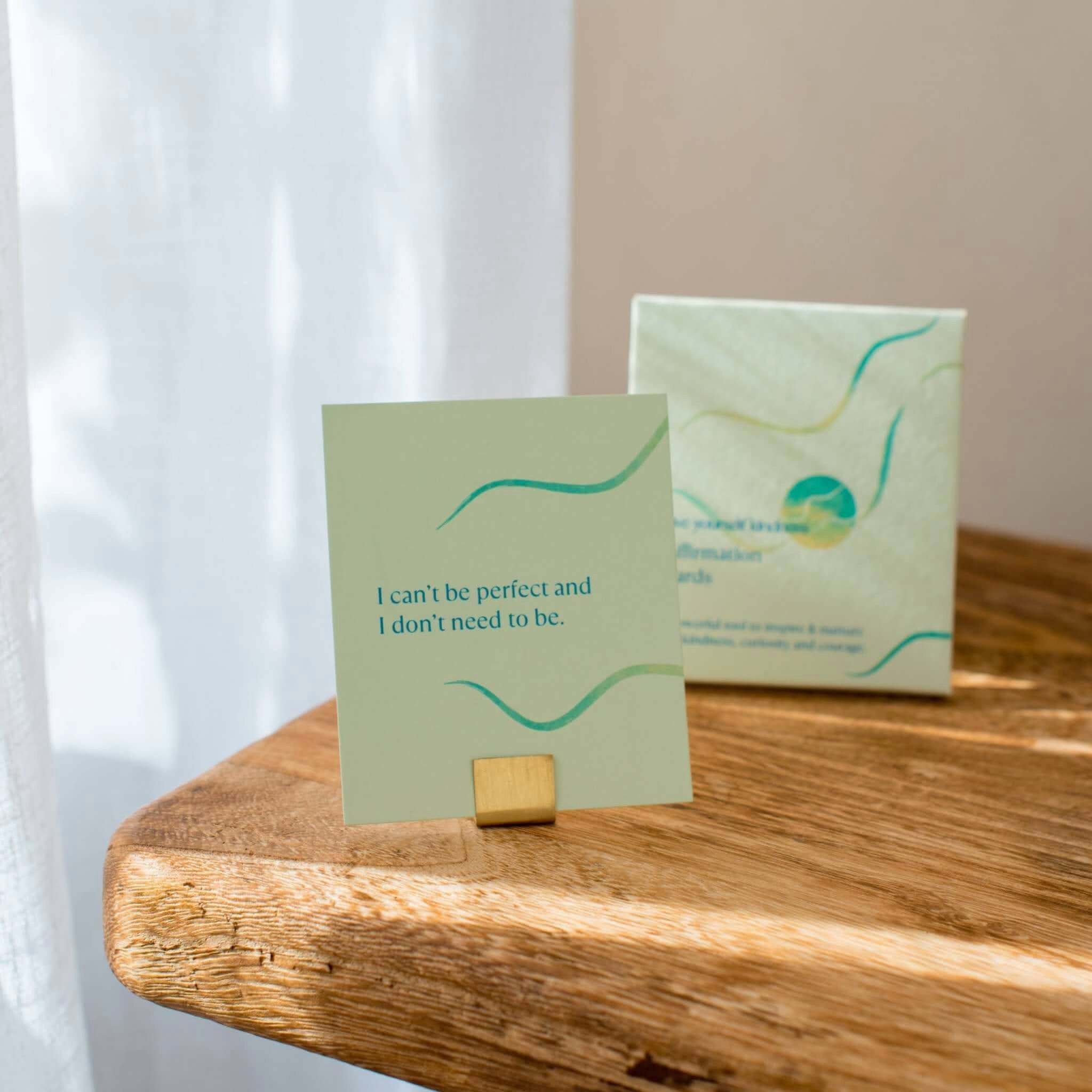
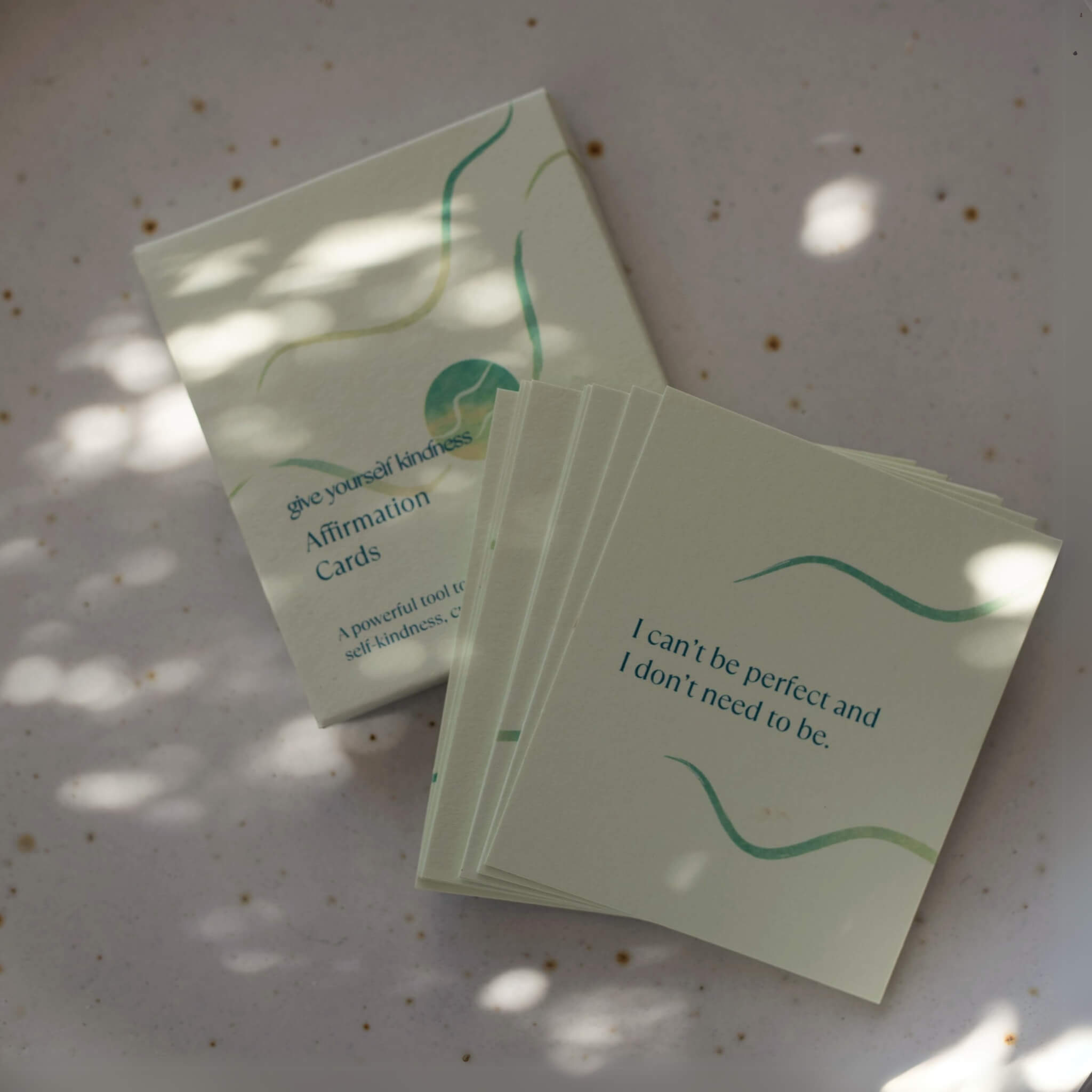
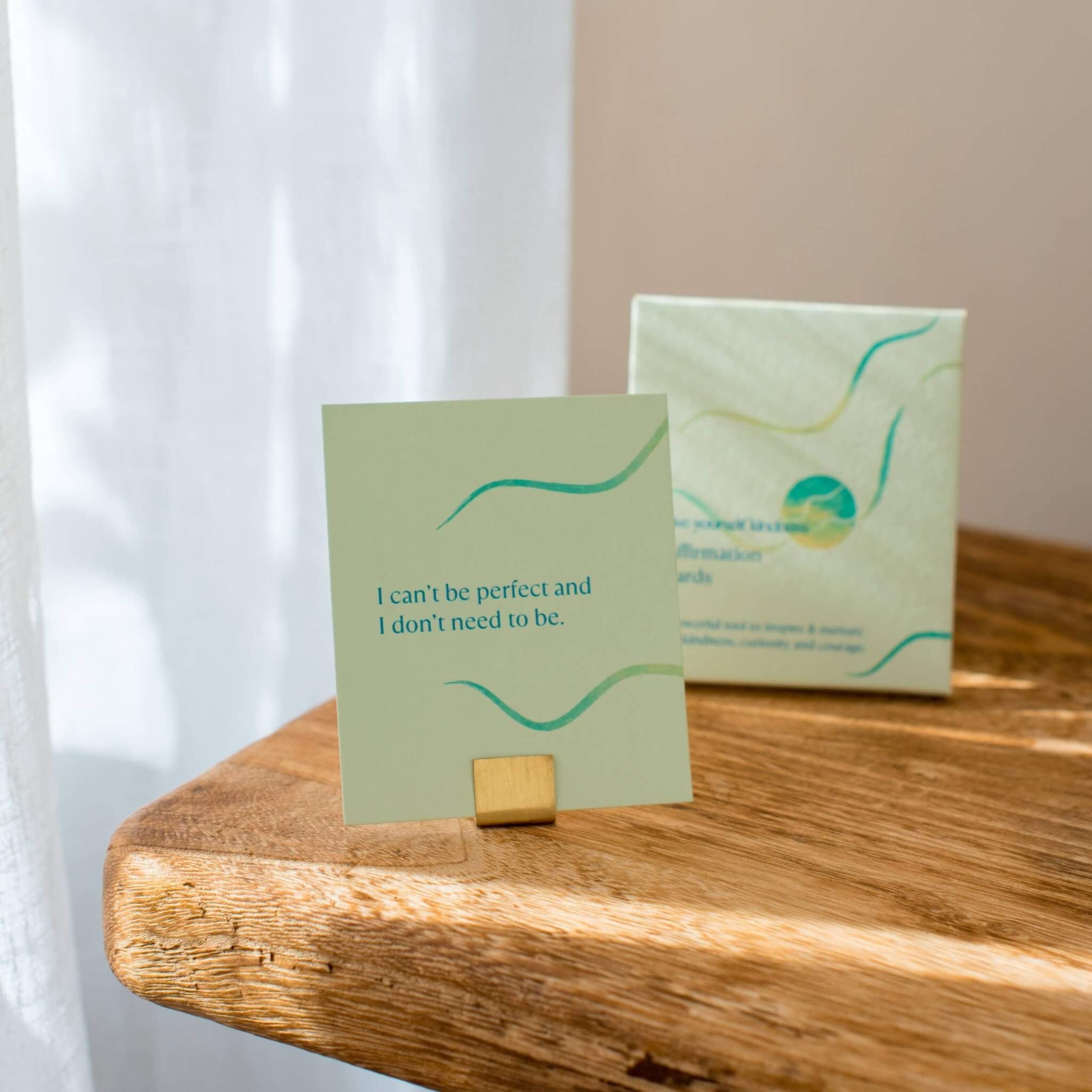
| "Everything will be perfect" | "I can't be perfect and I don't need to be" | Addresses perfectionism anxiety; gives permission to be imperfect |
| "Stop worrying!" | "It is normal to have an inner critic - but I don't have to believe it" | Normalizes anxious thoughts instead of creating shame about them |
| "I never feel anxious" | "I remind myself that feelings come, and feelings go" | Validates that anxiety is temporary and will pass |
The Best Affirmation Cards for Anxiety
After experiencing how Compassion-Focused Therapy helped my own anxiety, I created the Give Yourself Kindness Self-Compassion Affirmation Cards with validation from clinical psychologists.
What Makes These Different for Anxiety:
Why Therapists Recommend These Cards for Anxiety
These cards were designed specifically to address what research shows actually helps with anxiety—self-compassion and cognitive distance from anxious thoughts, not forced positivity or denial of the experience.

Margaret Davis, MS, LPC
Licensed Therapist specializing in anxiety, self-esteem, and self-compassion
"These affirmations are truly so beautiful and powerful! When I read them, I instantly feel a sense of groundedness and calm. They are wonderful reminders for when I need to slow down and reconnect with myself. I also love that they are centered around having more compassion and kindness for ourselves. I will definitely be utilizing these with my clients, as well as practicing them myself."
What's Included:
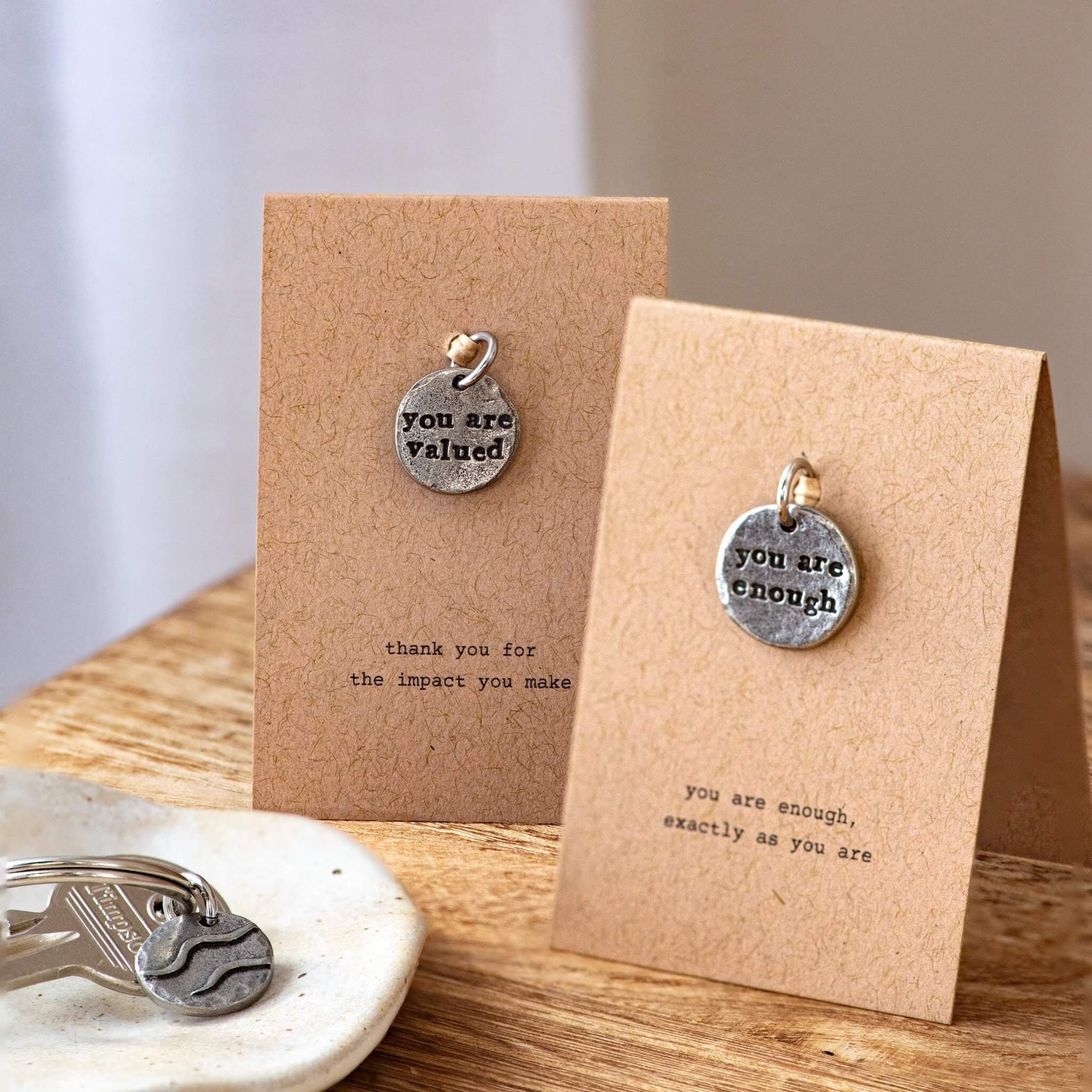
- 60 unique self-compassion affirmations (never repetitive)
- Specifically address anxious thought patterns without toxic positivity
- Validate struggle while offering compassionate alternatives
- Grounded in anxiety research (CBT and CFT principles)
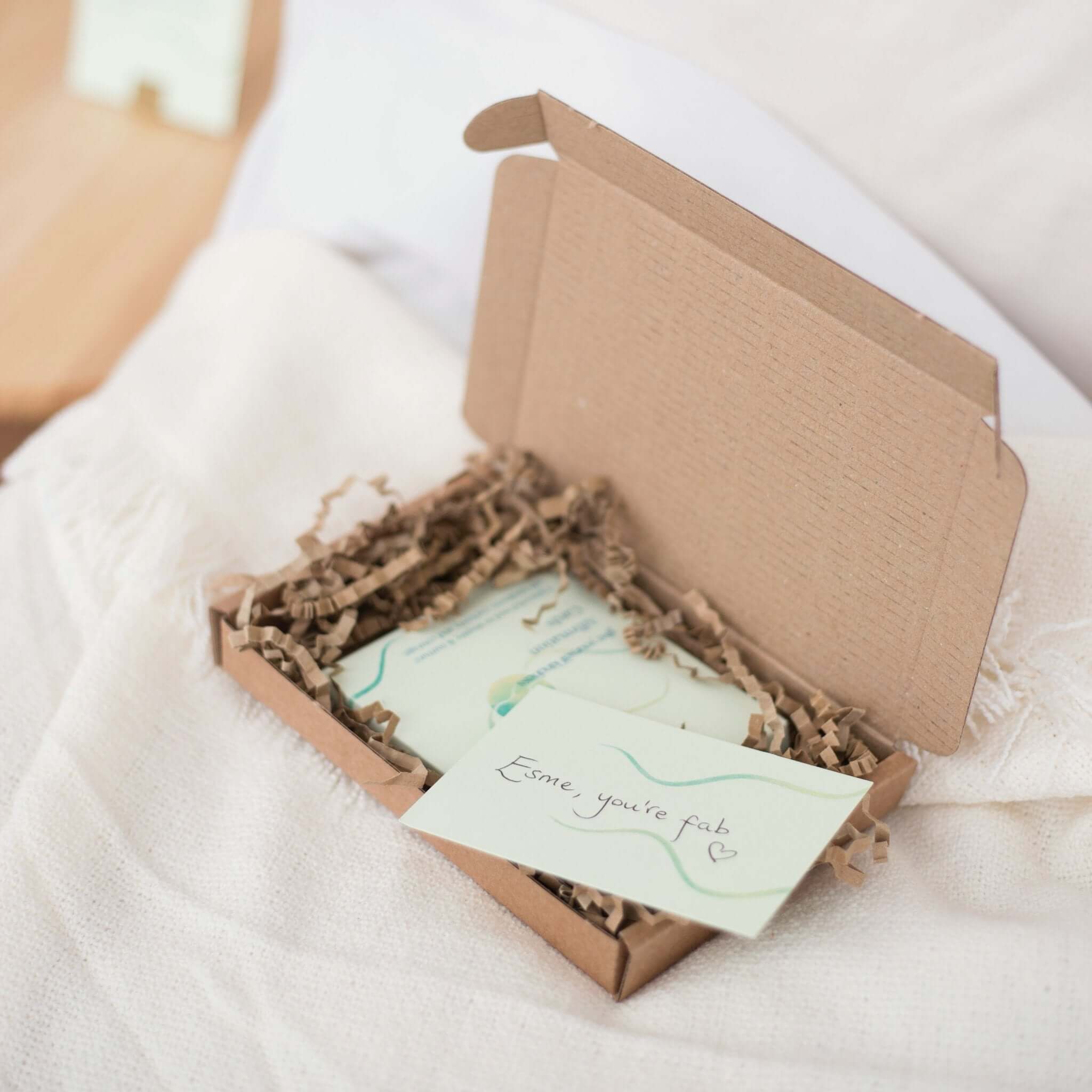
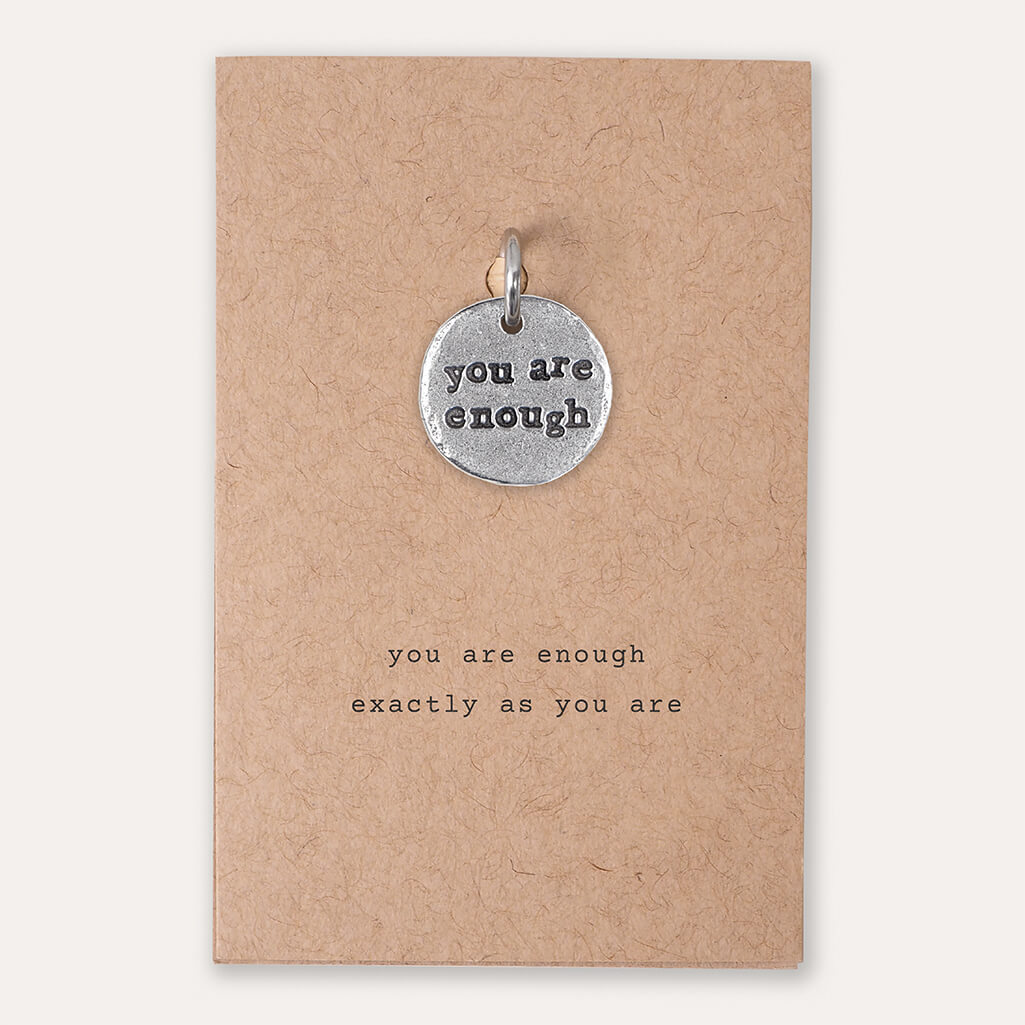
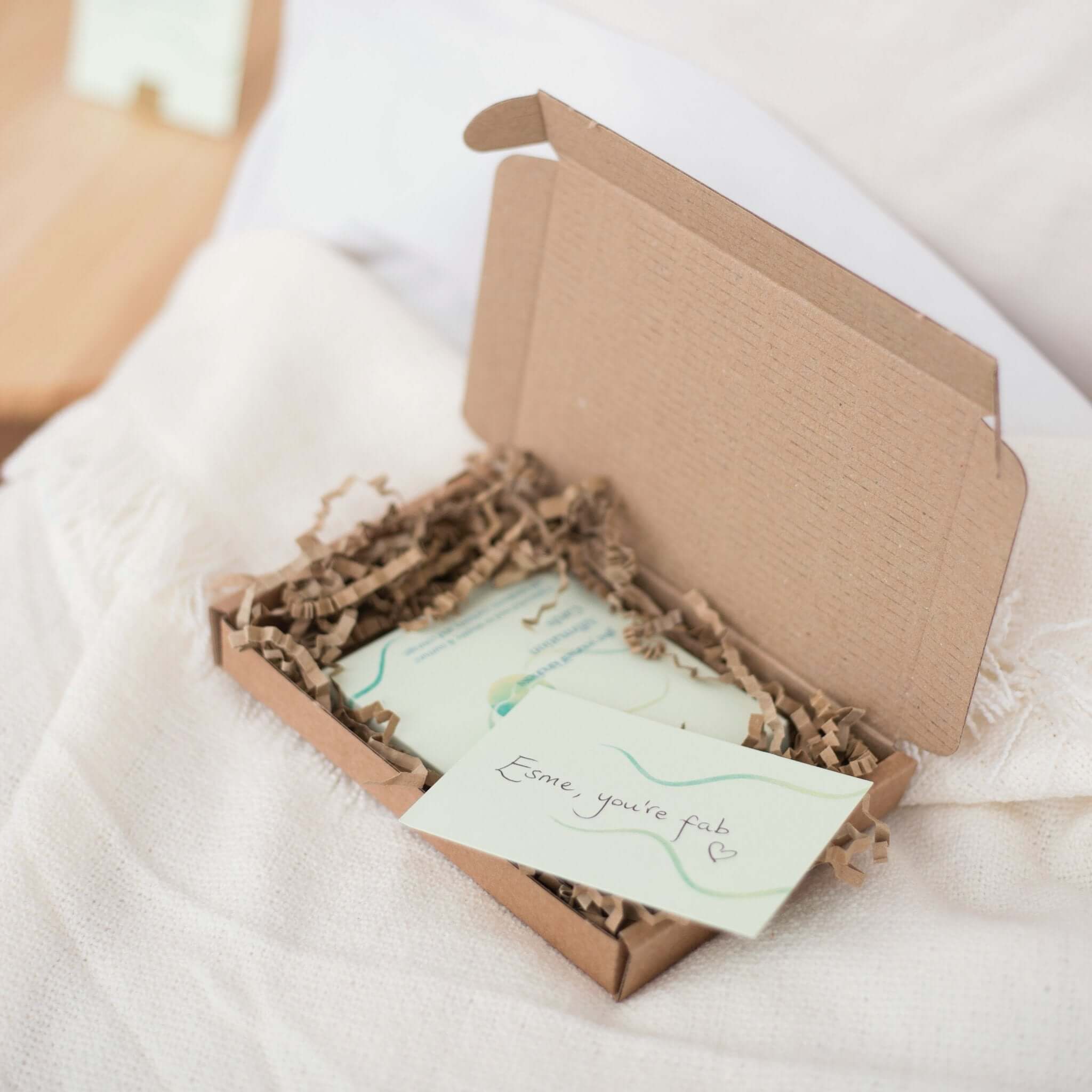
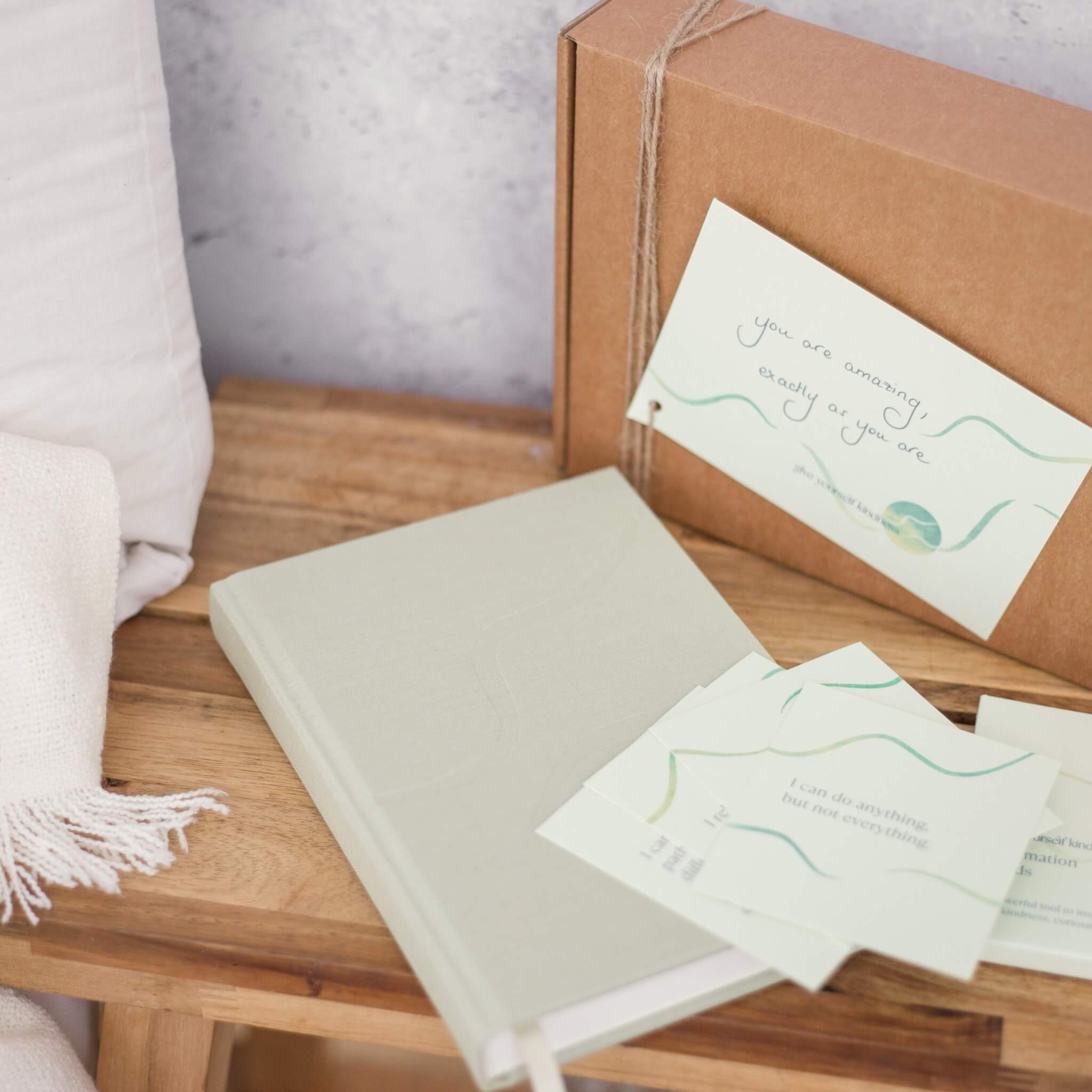
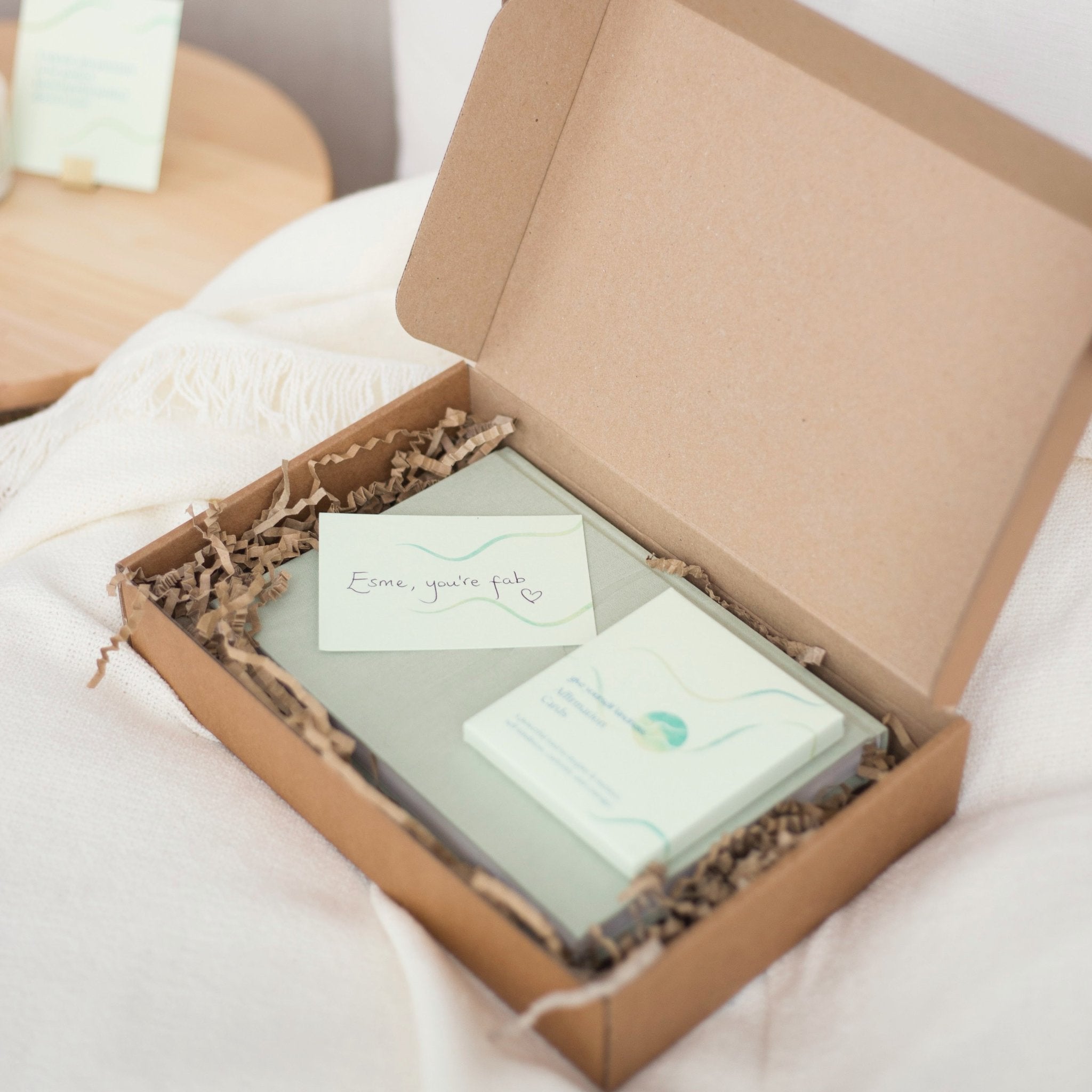
- Beautifully designed on premium cards in keepsake box
- Recommended by licensed therapists who specialize in anxiety
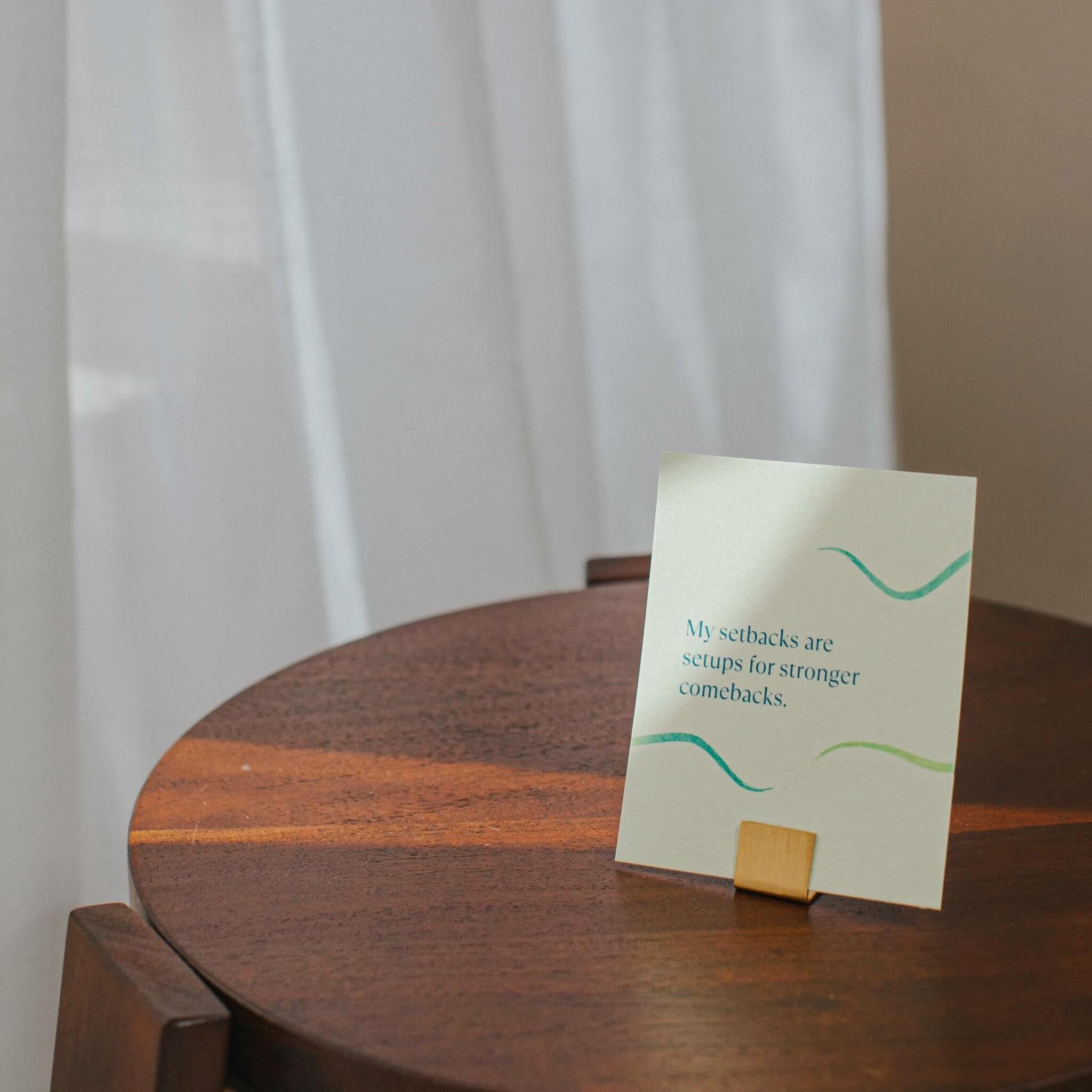
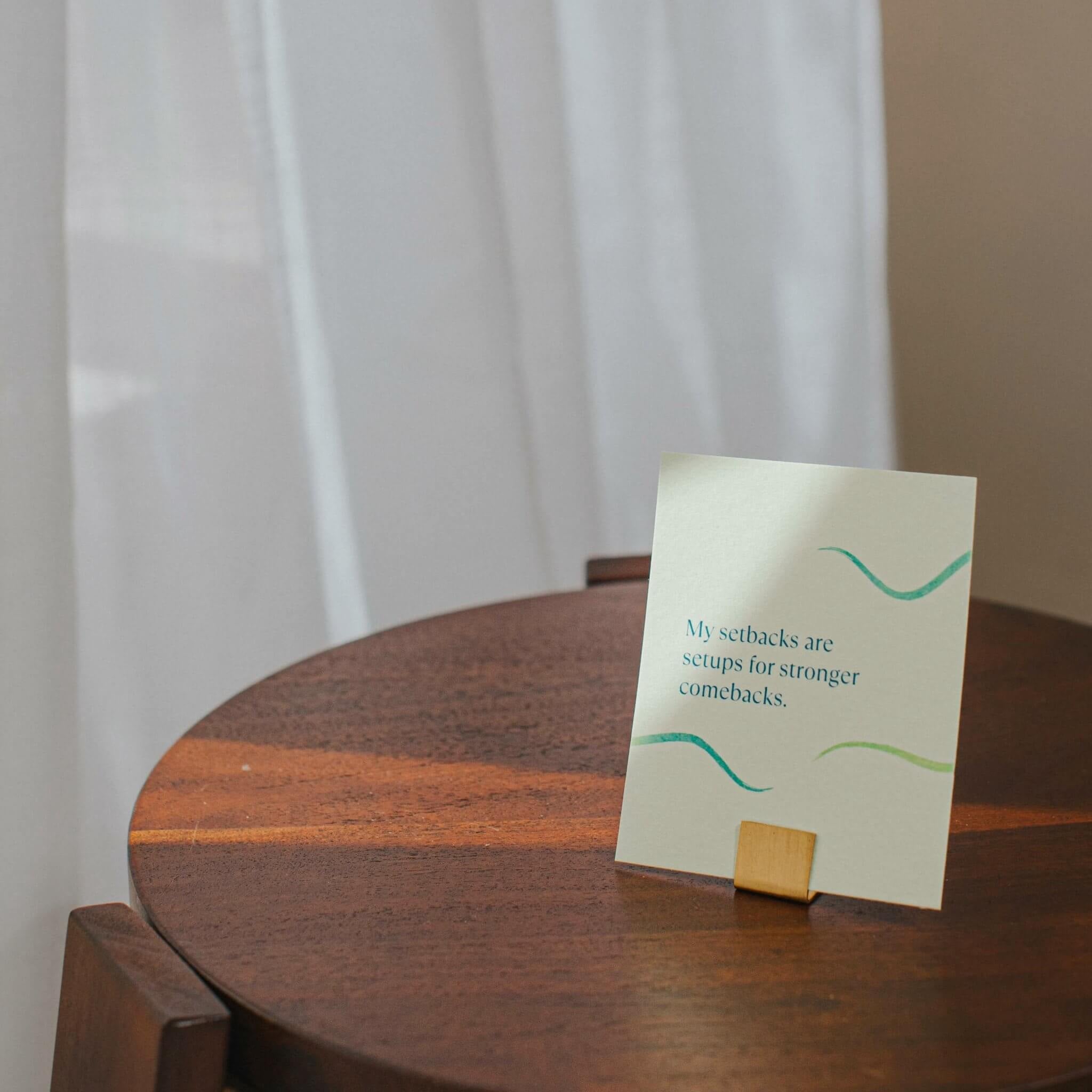
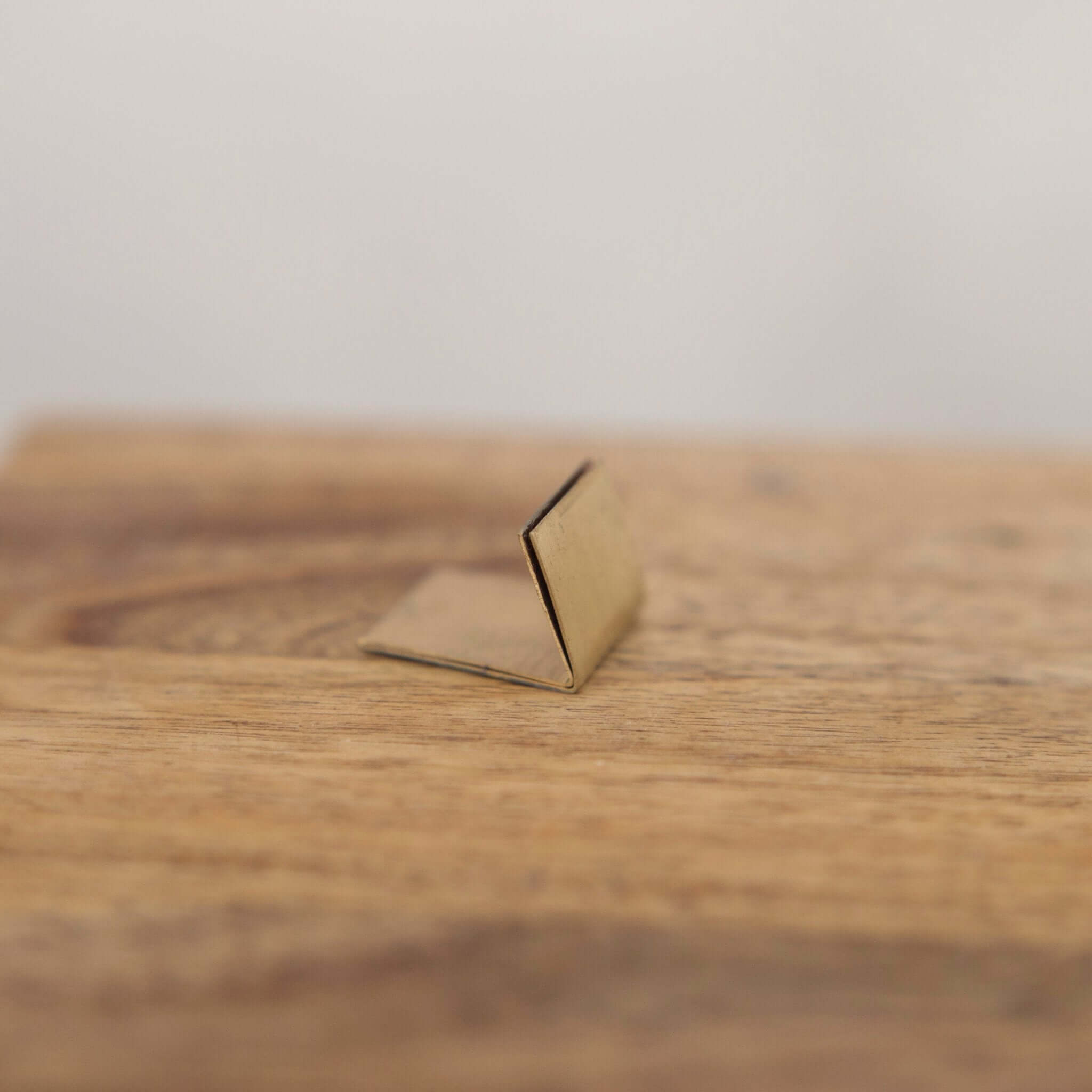
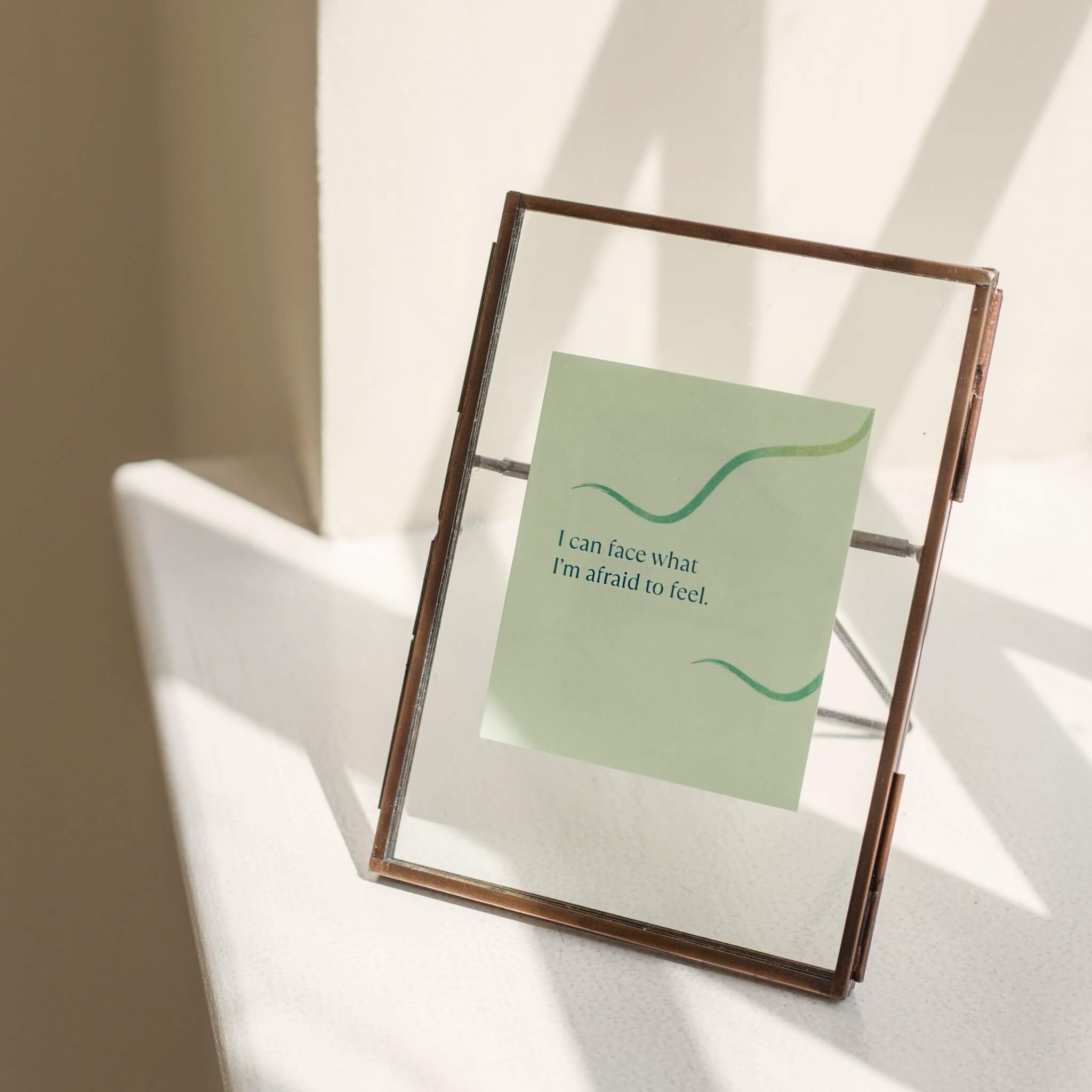
- Optional brass card stand or copper frame available
Sample Affirmations for Specific Anxiety Patterns:
For catastrophic thinking & anxious thoughts:
- "Just because I have a thought, doesn't mean it's true"
- "It is normal to have an inner critic - but I don't have to believe it"
- "I remind myself that feelings come, and feelings go"
For physical anxiety symptoms:
- "I can use my breath as a tool to find calm, taking deep, slow breaths"
- "No matter what emotion I feel, it is never a sign of weakness"
- "I am gentle with myself if I feel things deeply knowing that sensitivity is not a weakness"
For social anxiety:
- "My voice matters. My opinions matter. I matter"
- "I can be open and honest with others, even when it makes me feel vulnerable"
For perfectionism anxiety:
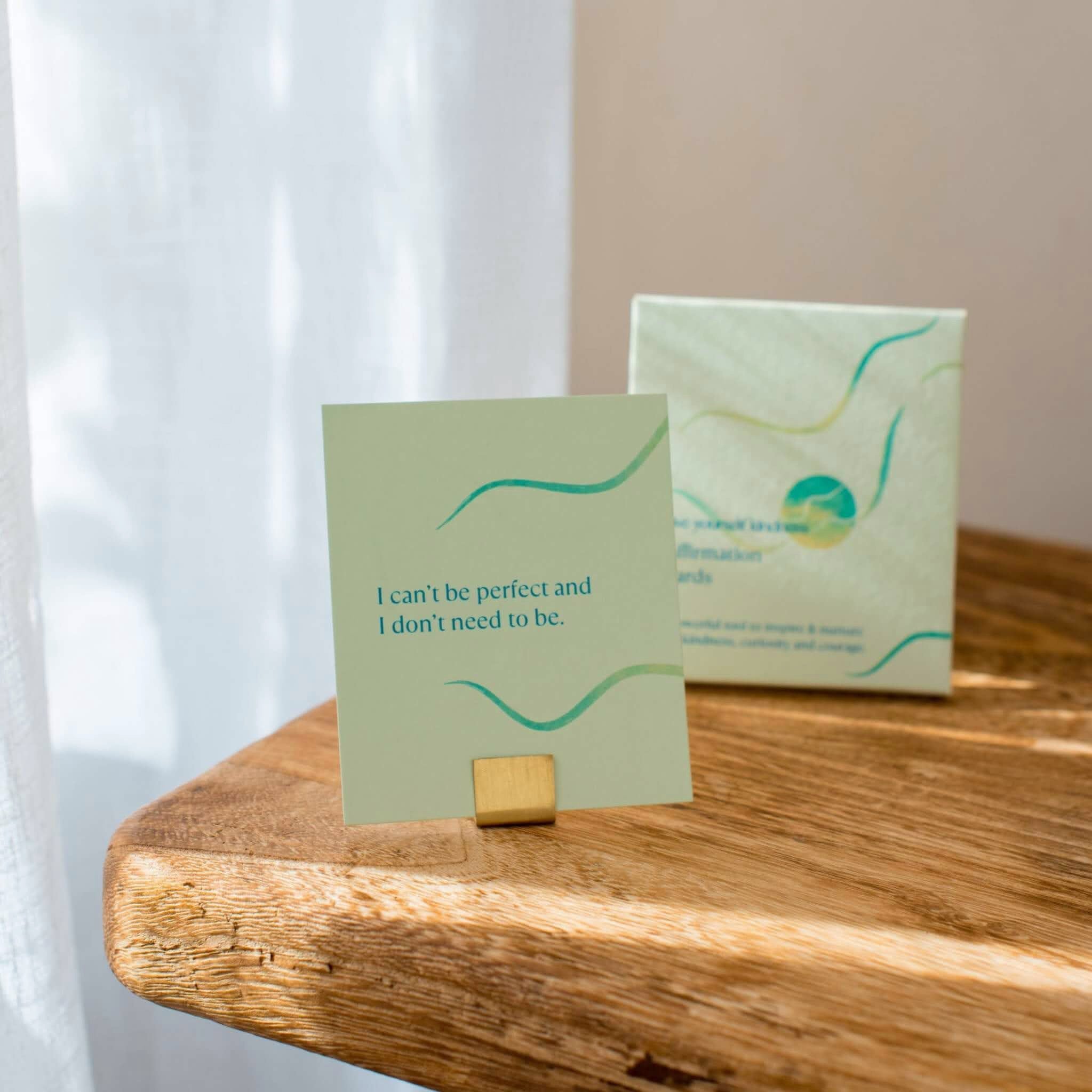
- "I can't be perfect and I don't need to be"
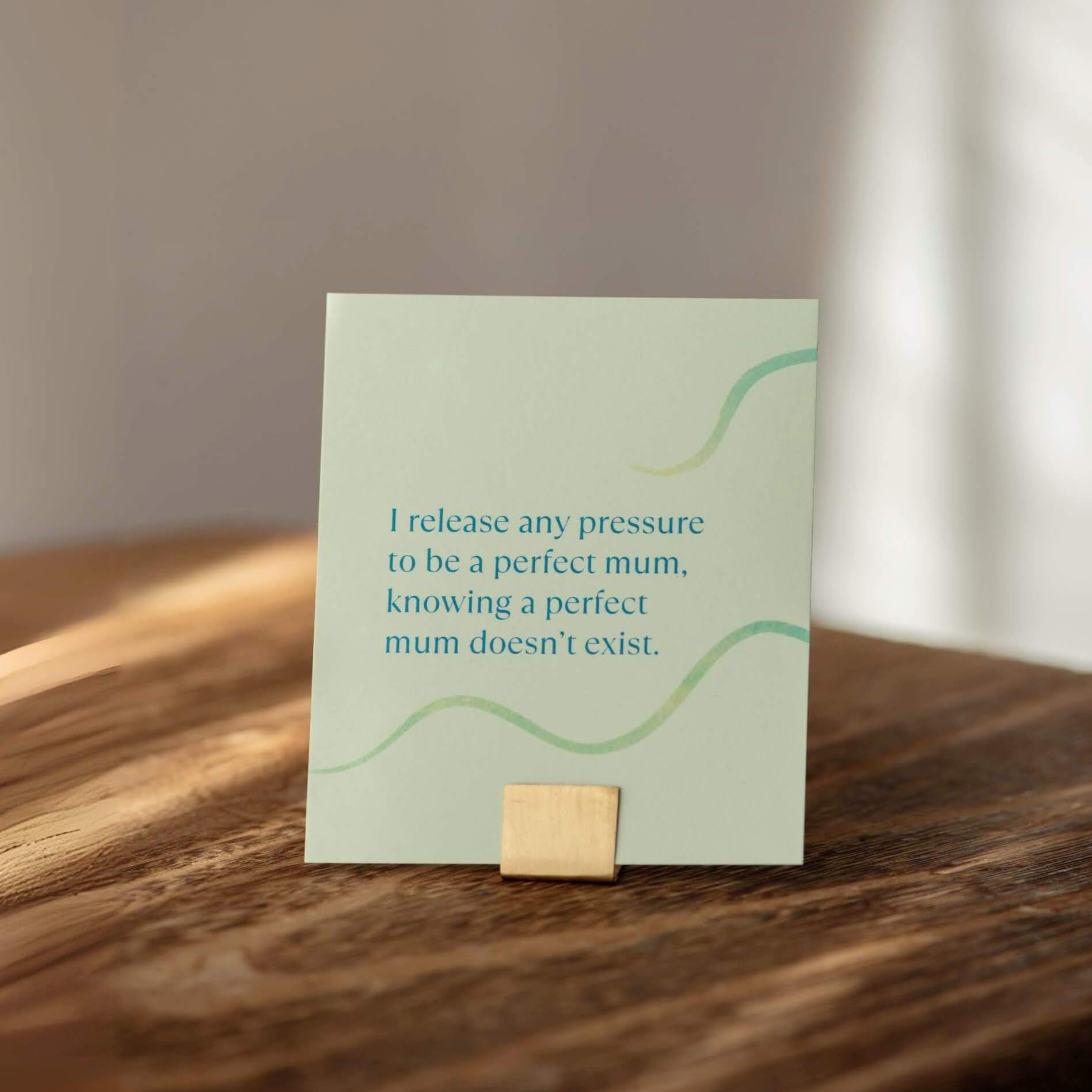
- "I release any pressure to be perfect, knowing that perfect doesn't exist"
- "I am worthy, and this does not depend on my productivity or achievements"
- "I can make mistakes and learn from them, without self-criticism"
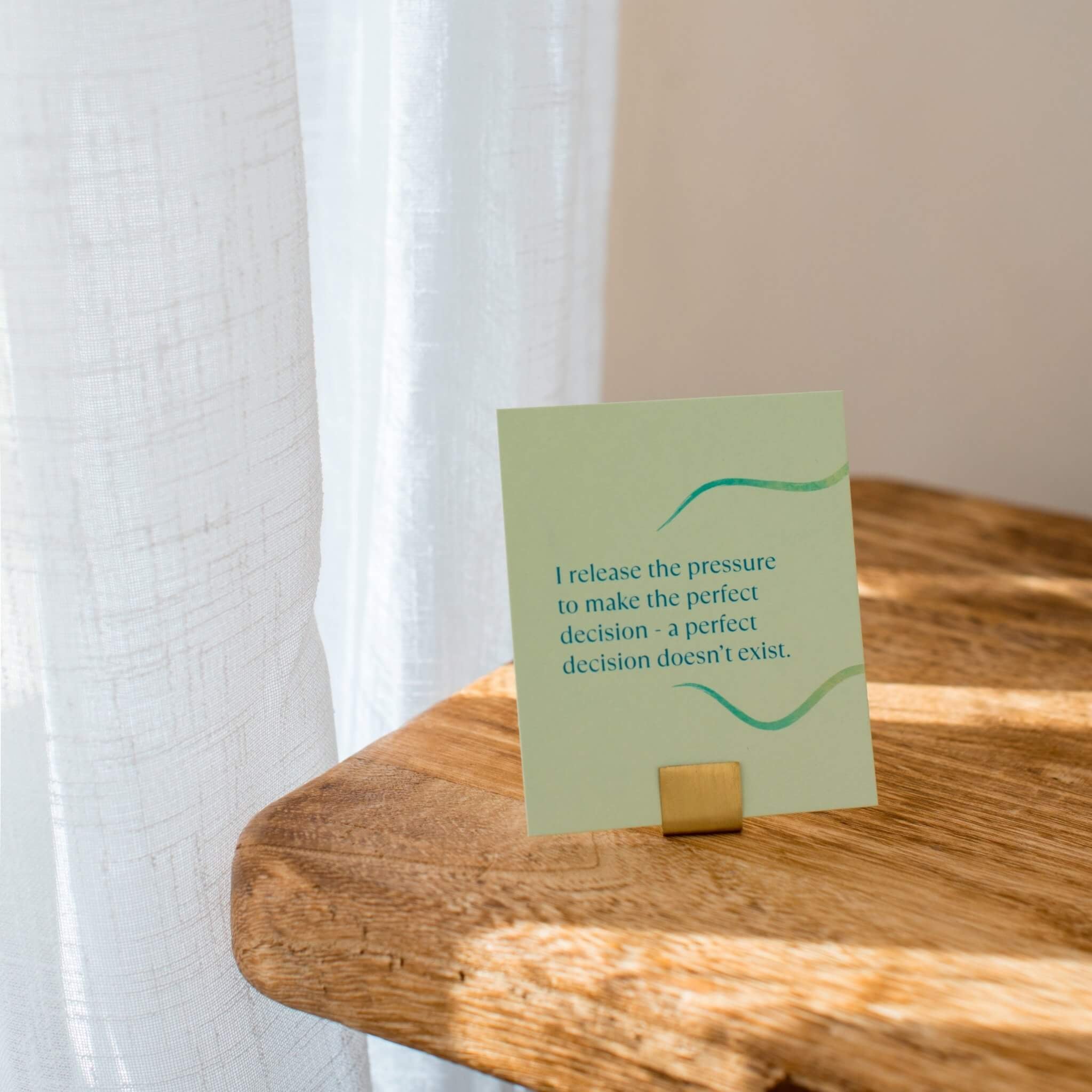
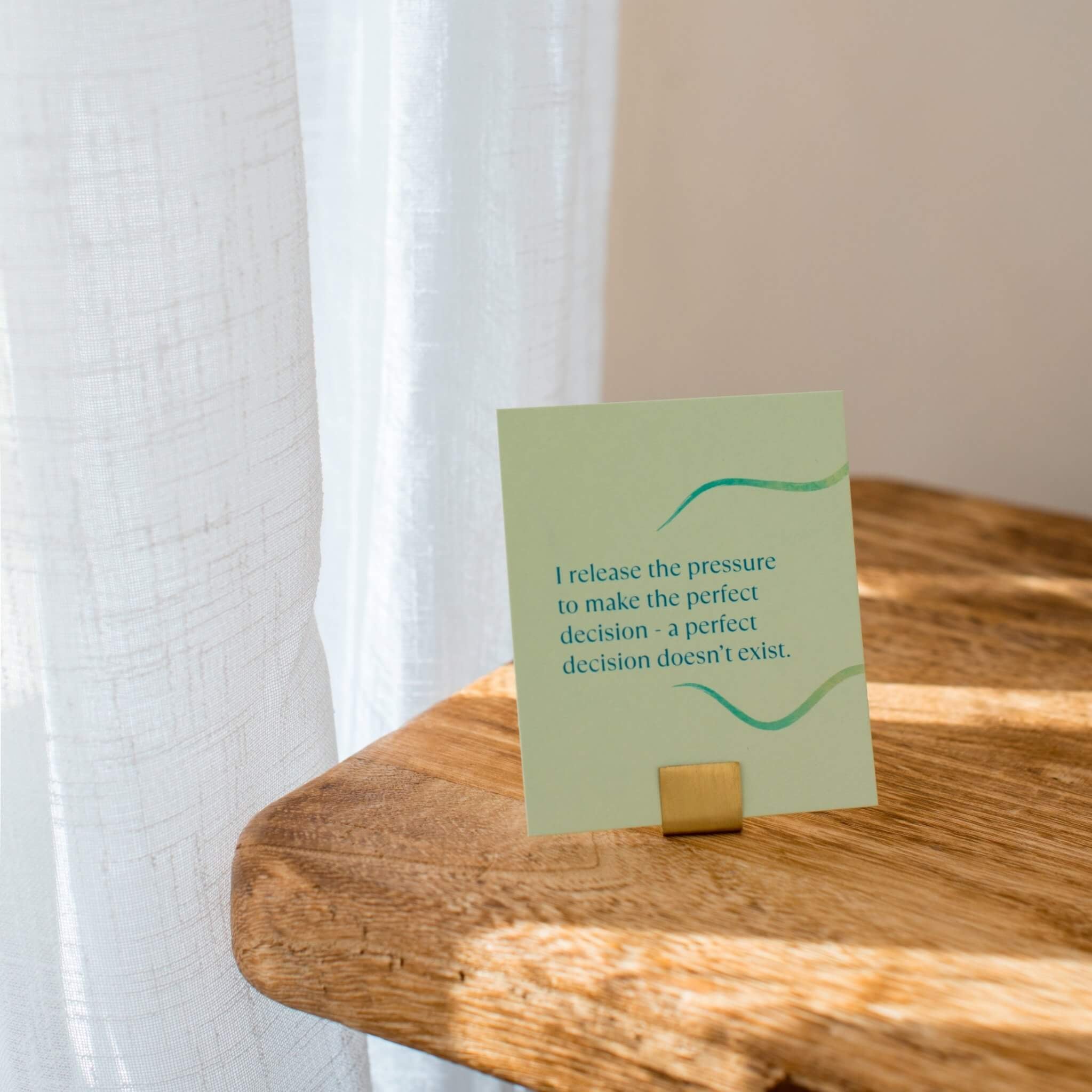
- "I release the pressure to make the perfect decision - a perfect decision doesn't exist"
For general anxiety & building resilience:
- "My courage is stronger than my fear"
- "I have dealt with challenges before, I can deal with challenges again"
- "I choose to give myself the same kindness I would give to a friend"
- "I can welcome any emotion, knowing that this feeling will not last forever"
- "I recognise that life is hard sometimes - I try to always be gentle with myself"
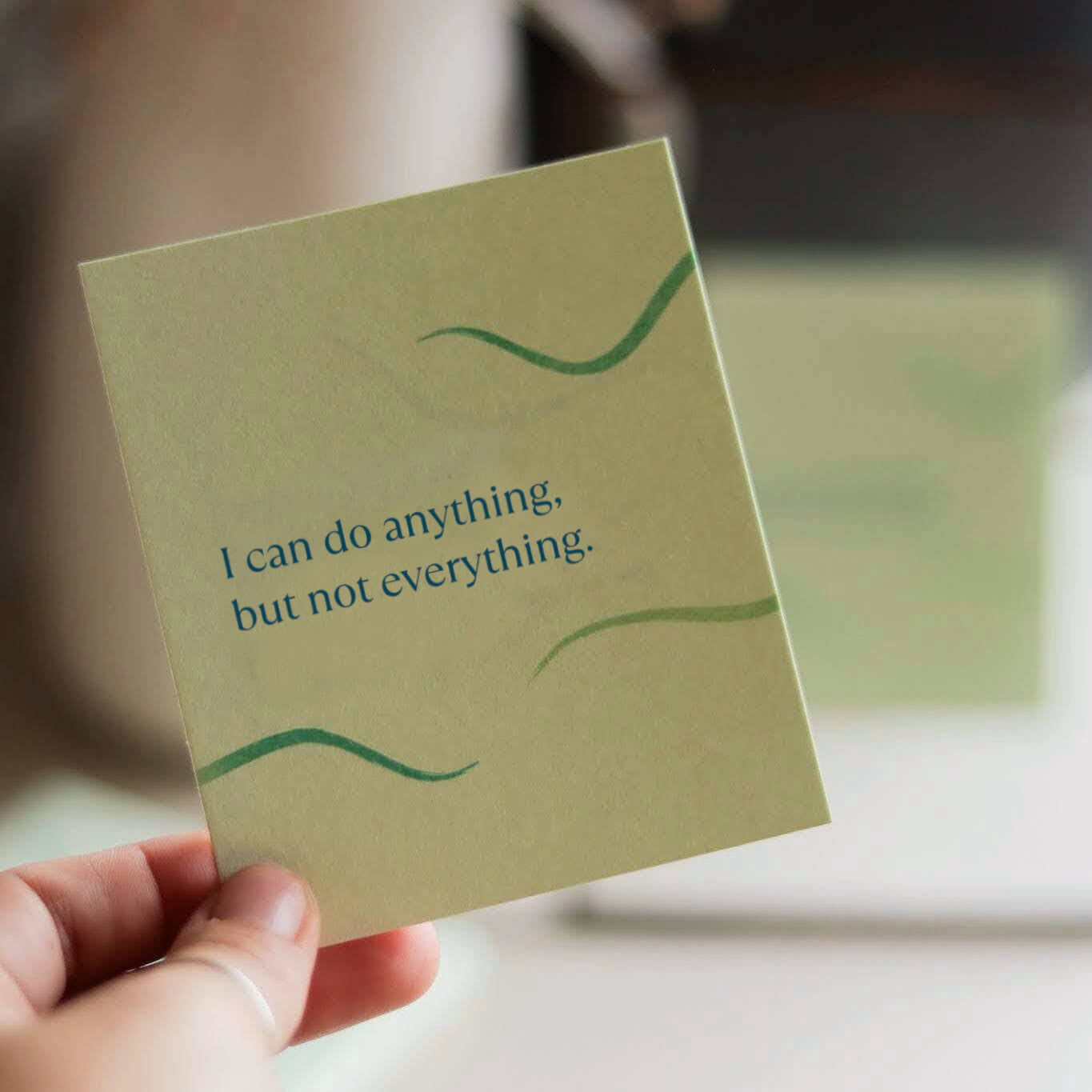
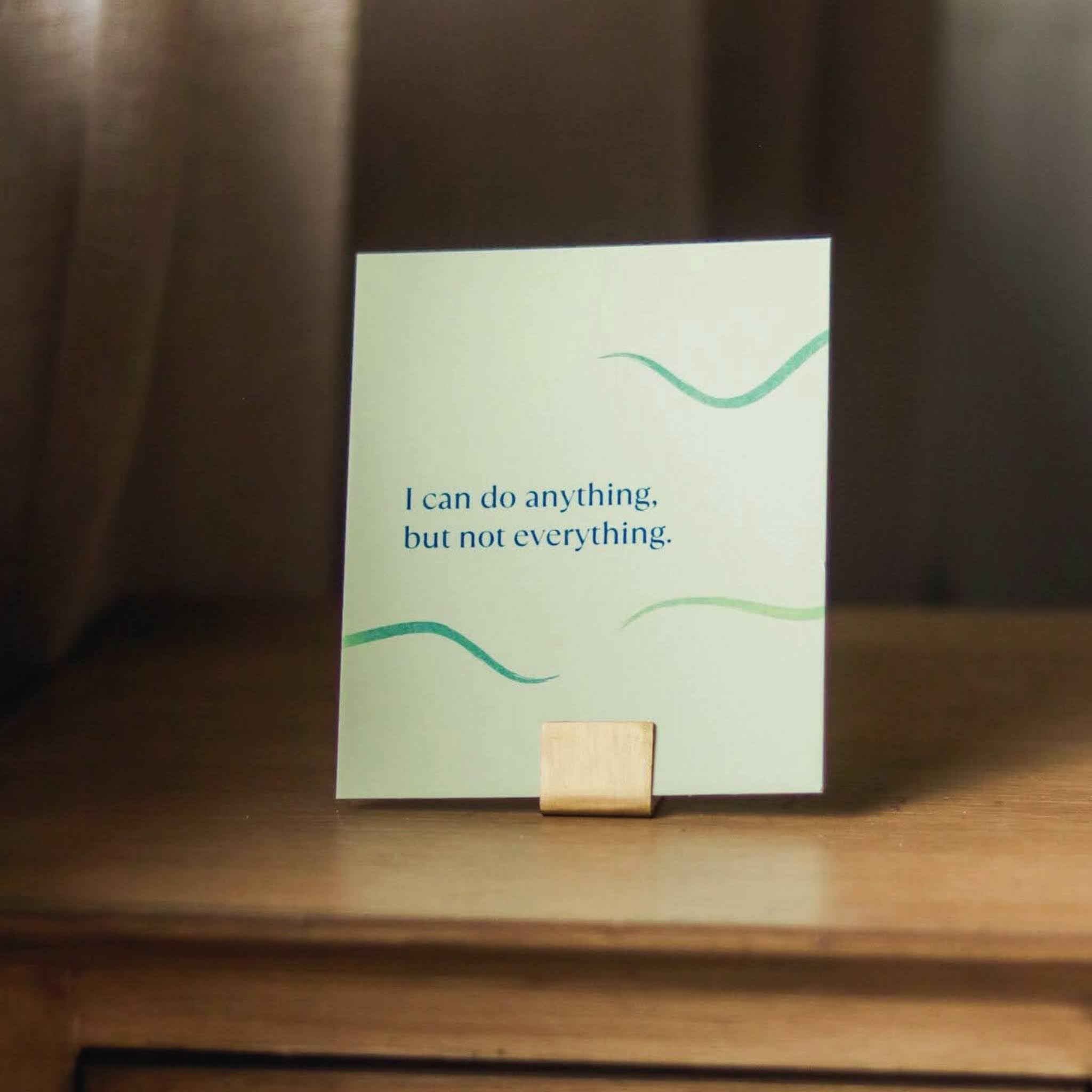
- "I can do anything, but not everything"
How to Use Affirmation Cards for Anxiety
The goal isn't to eliminate anxiety—it's to change your relationship with it. To respond with compassion instead of criticism.
The Simplest Way to Start:
- Pick one card each morning (shuffle and pull randomly, or choose one that addresses your current anxiety pattern)
- Place it where you'll see it when anxiety hits (desk, mirror, pocket, purse—wherever you are when you typically feel anxious)
- When anxiety arises, read the card (no pressure to "make it work"—just read it as a gentle alternative to the anxious thought)
For Acute Anxiety Moments:
Keep the deck accessible. When anxiety spikes:
- Pull a card (any card)
- Read it slowly 2-3 times
- Take 3 deep breaths
- Notice if the harsh self-talk ("Why am I like this?") can soften even slightly
You're not trying to stop the anxiety. You're offering yourself kindness through it.
What to Expect Over Time:
- Week 1-2: The affirmations might feel unfamiliar or even uncomfortable. That's normal—your brain is encountering something different from the usual self-criticism.
- Week 3-4: You'll likely notice the compassionate voice emerging more naturally when you're anxious—catching yourself in self-criticism and responding more gently.
- Beyond: The anxious thoughts still appear, but your response to them changes. Instead of spiraling into self-criticism, you have a compassionate alternative ready.
Read the complete guide on how to use affirmation cards →
Frequently Asked Questions
Will affirmation cards cure my anxiety?
No, and you should be skeptical of any product that claims to "cure" anxiety. Affirmation cards are a tool—not a cure. They help you respond to anxious thoughts with self-compassion instead of self-criticism, which research shows reduces anxiety over time. Many people use them alongside therapy, medication, or other anxiety management techniques. They're a support tool, not a replacement for professional treatment if you need it.
What if affirmations make my anxiety worse?
This usually happens with generic positive affirmations that feel unrealistic ("I am perfectly calm!"). Self-compassion affirmations shouldn't make anxiety worse because they validate that anxiety is real and difficult—they don't demand you feel differently. If any affirmation increases your anxiety, skip that card and choose another. You're in control.
Do I need to believe the affirmations for them to work?
No. Research shows affirmations work through repetition—you're building a new neural pathway for self-compassion. You don't need to believe "I can handle this" immediately. You're creating repeated exposure to a kinder voice until it becomes more familiar than the critical one. This typically takes 3-4 weeks of consistent use.
Can I use these alongside therapy or medication?
Yes. Many therapists recommend these cards to clients as between-session support. They complement evidence-based anxiety treatments like CBT and medication—they don't replace them. If you're working with a therapist, you can show them the cards to see how they might fit into your treatment plan.
Will these help with panic attacks?
They can help as part of your toolkit, but panic attacks require specific techniques (breathing exercises, grounding techniques, etc.). The cards are most helpful for general anxiety, anxious thoughts, and the self-criticism that often follows anxiety or panic. During an acute panic attack, focus on your safety plan first, then use cards afterward for the self-criticism that often follows.
What makes these different from other affirmation cards for anxiety?
Most affirmation cards use generic positive thinking ("Don't worry!" "Be calm!"). These cards were designed with clinical psychology input specifically to use self-compassion principles—acknowledging that anxiety is difficult, validating your experience, and teaching you to respond to anxious thoughts with compassion instead of criticism. They're grounded in research on what actually helps anxiety, not just feel-good platitudes.
How often should I use them?
Daily is ideal for building the new neural pathway, but there's no "wrong" amount. Some people pull one card each morning. Others keep the deck accessible and use them when anxiety spikes. Even seeing one card multiple times throughout your day provides the repeated exposure that helps. Do what feels sustainable, not what creates more pressure.
Why I Created These Cards
I'm Rachel Smith, founder of Give Yourself Kindness. I created these affirmation cards after my own experience with anxiety and the harsh self-talk that made it worse.
Every affirmation card I tried either dismissed my anxiety ("Just relax!") or made me feel more broken for not being able to think positively. When I couldn't find what I needed, I created it—working with clinical psychologists to ensure the cards used self-compassion principles that actually help anxiety.
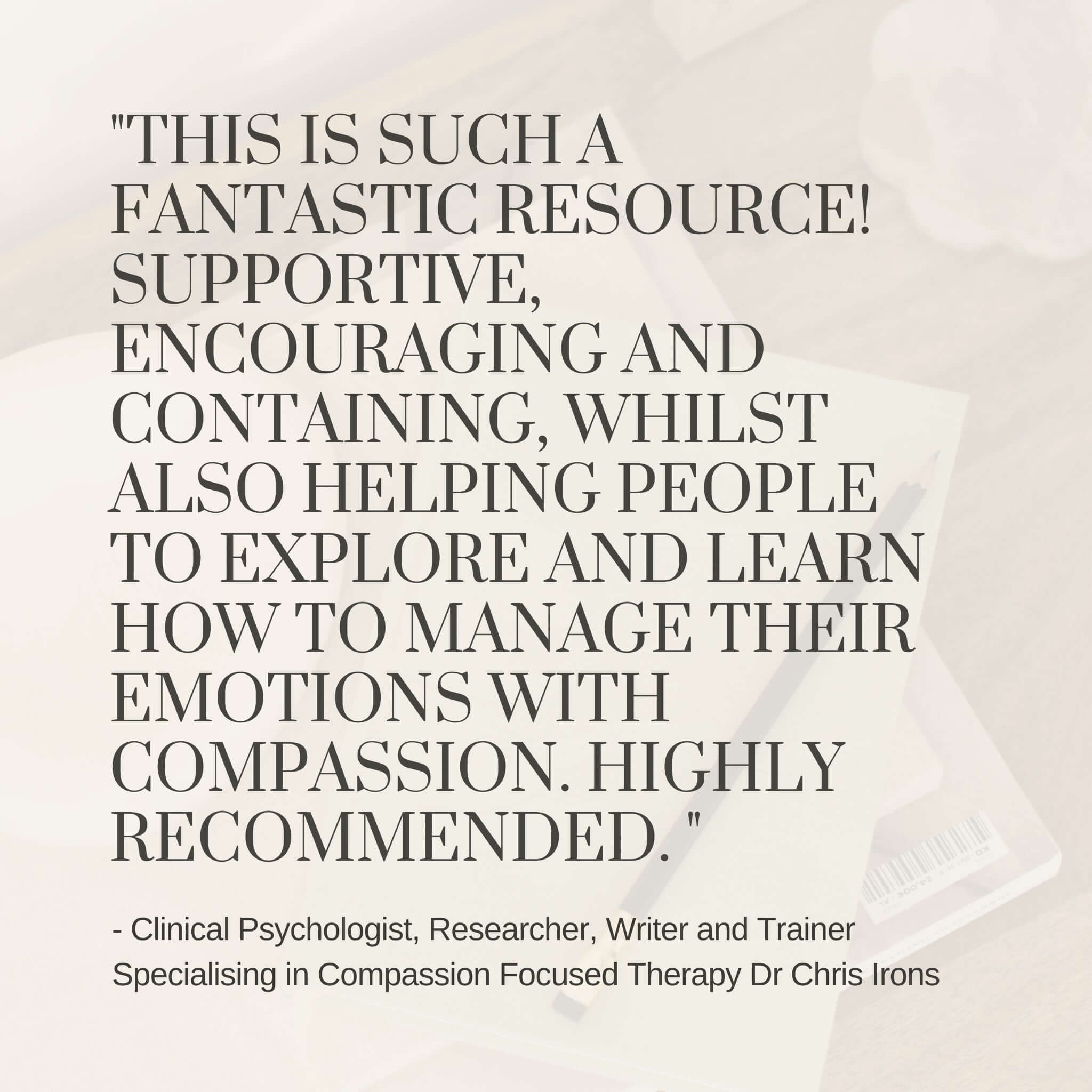
Licensed therapists who specialize in anxiety disorders now use these cards with their clients. They exist because research shows this approach works.
Additional Support for Anxiety
Affirmation cards are one tool. Here are other resources that can help with anxiety:
For Nighttime Anxiety:
- Sleep Affirmation Cards — Specifically designed for racing thoughts at bedtime
- Racing Thoughts at Night: What Actually Helps — Evidence-based techniques from a neuroscientist
For Processing Anxious Thoughts:
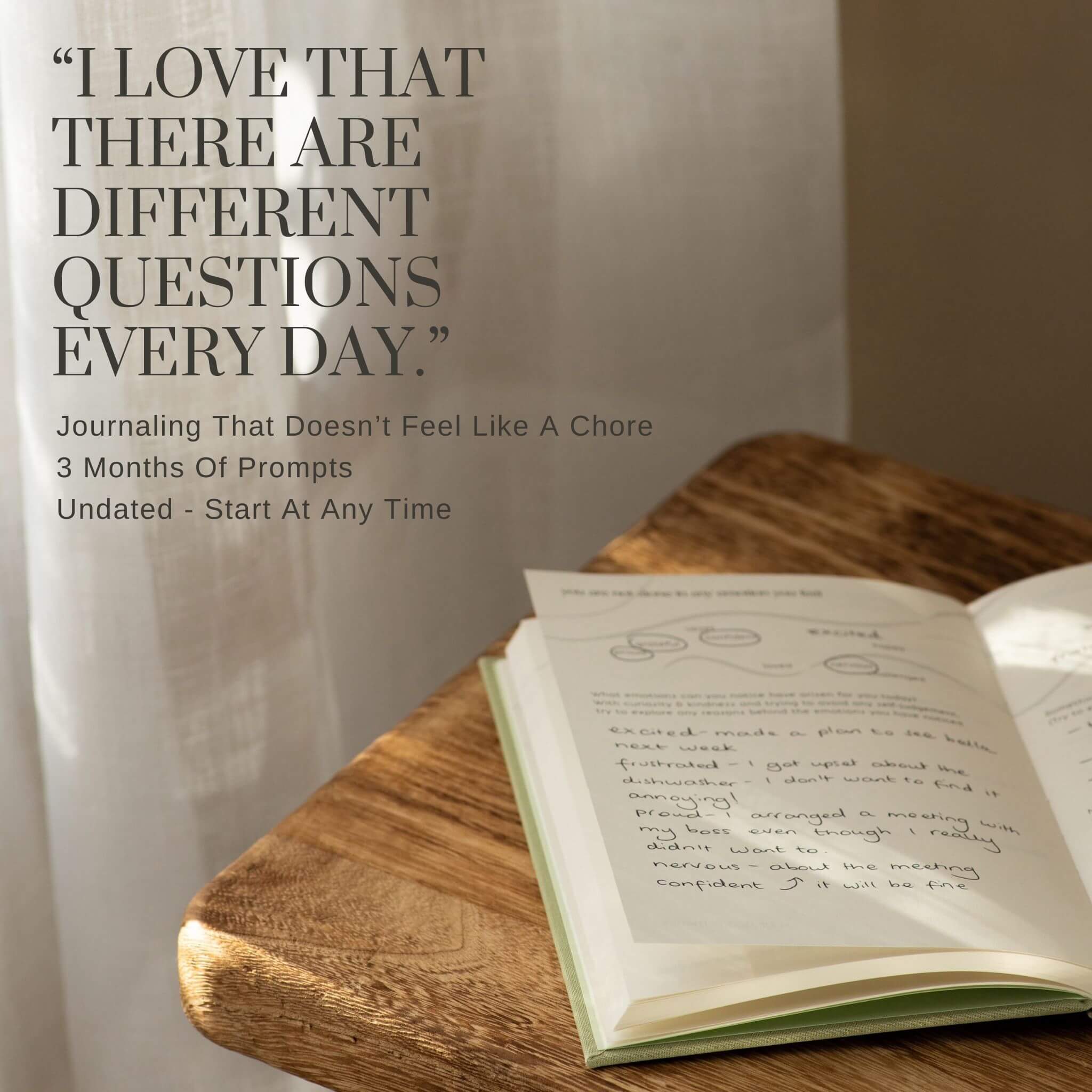
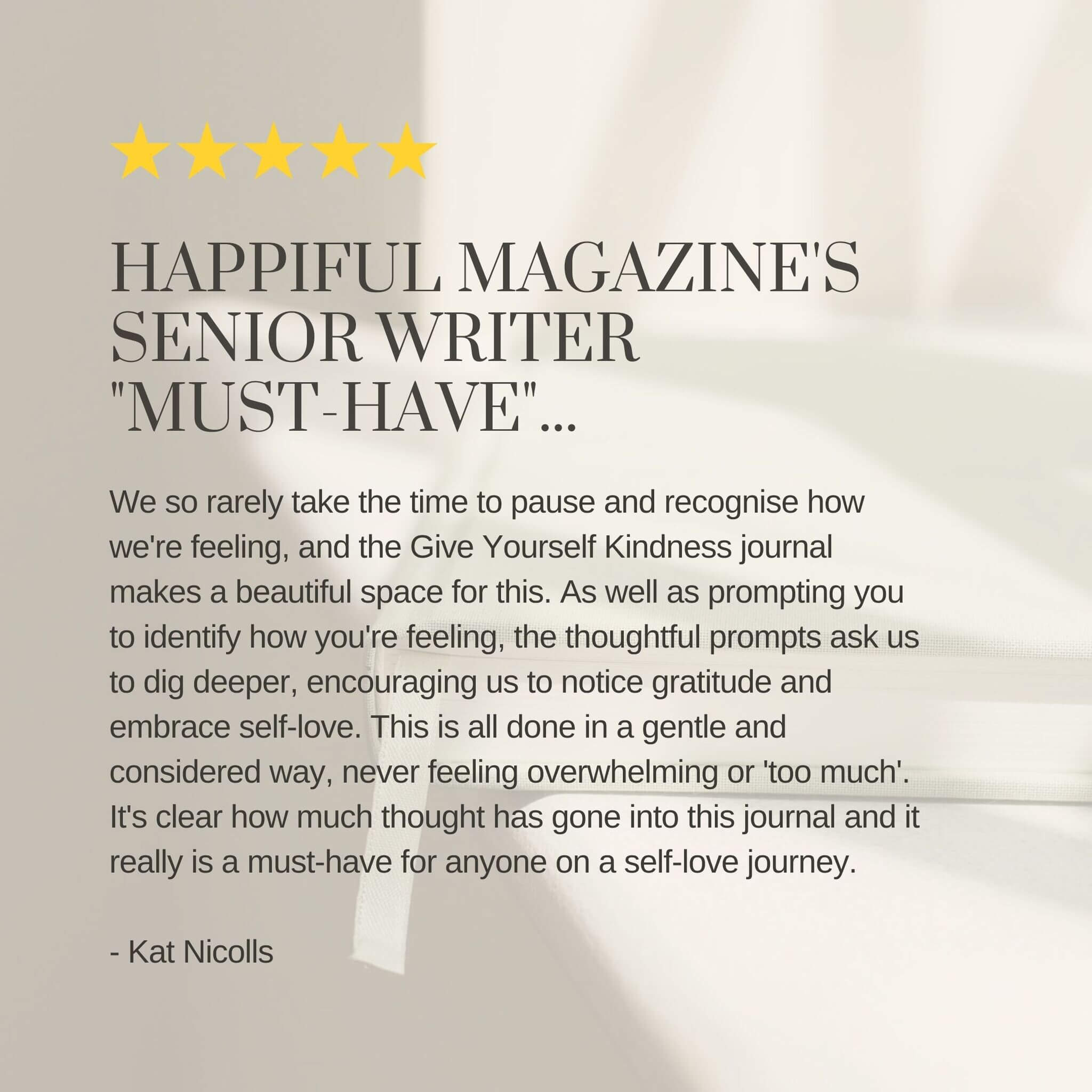
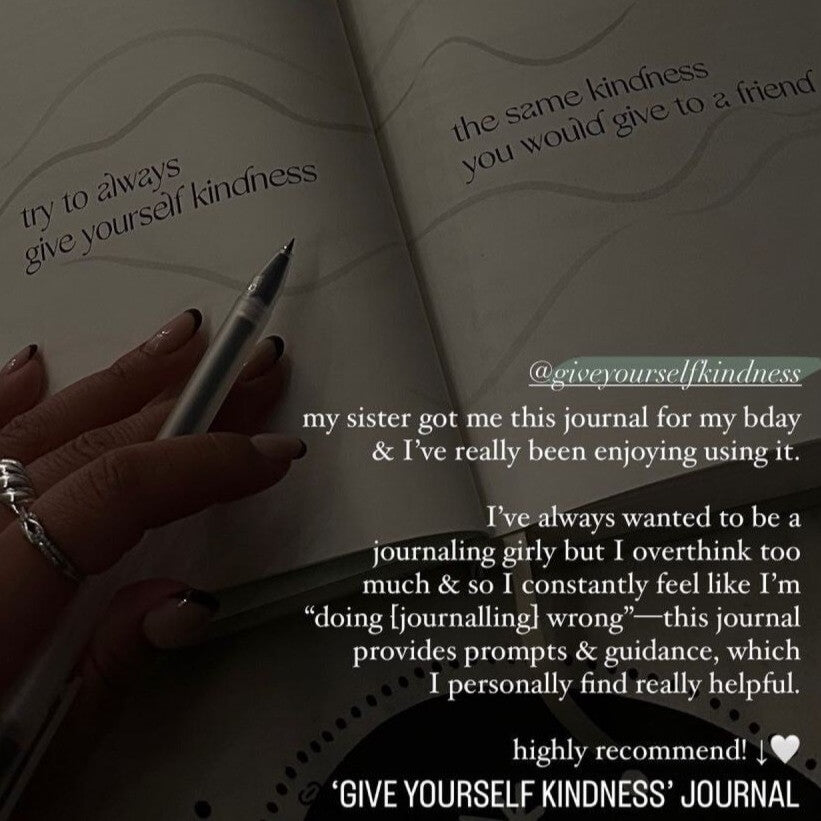
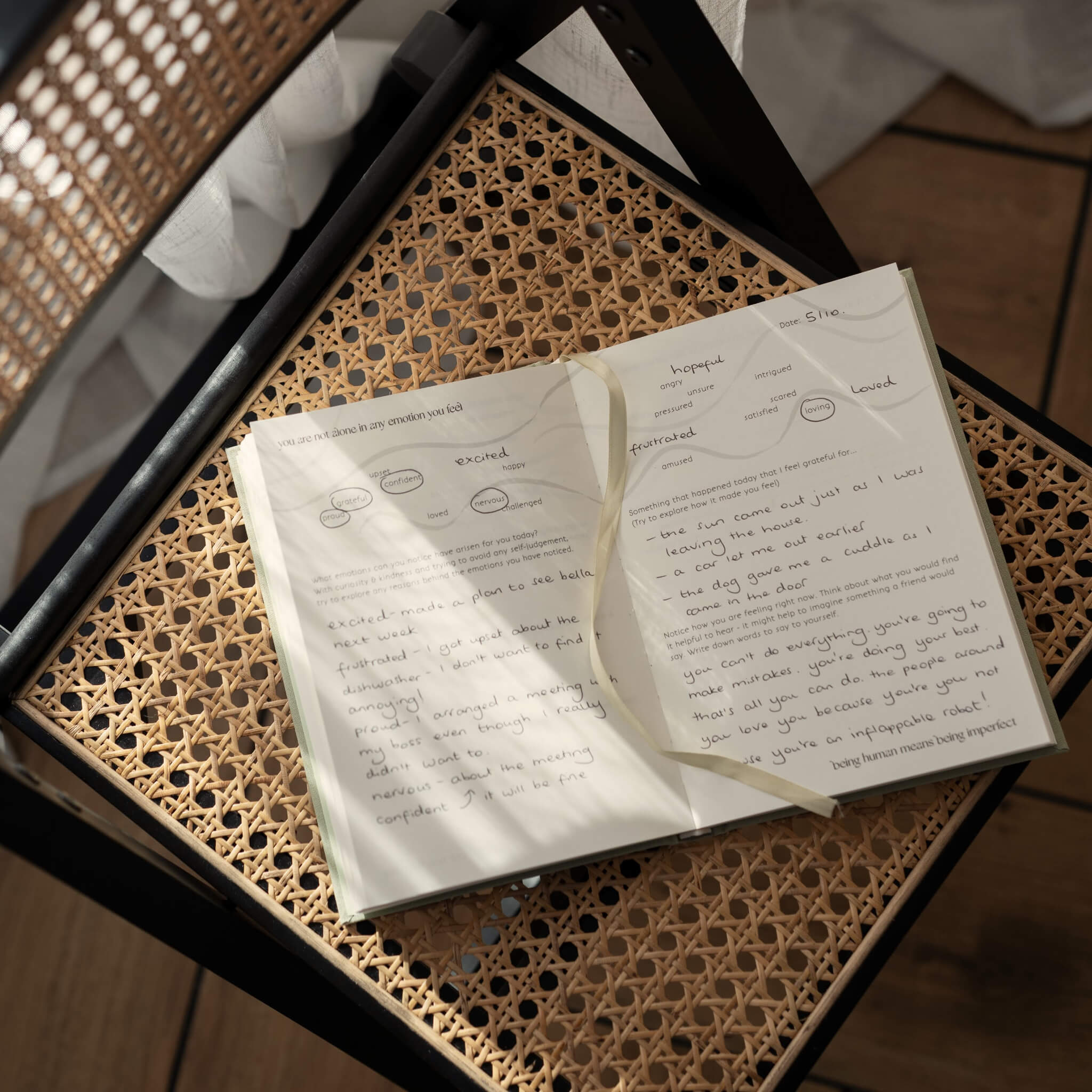
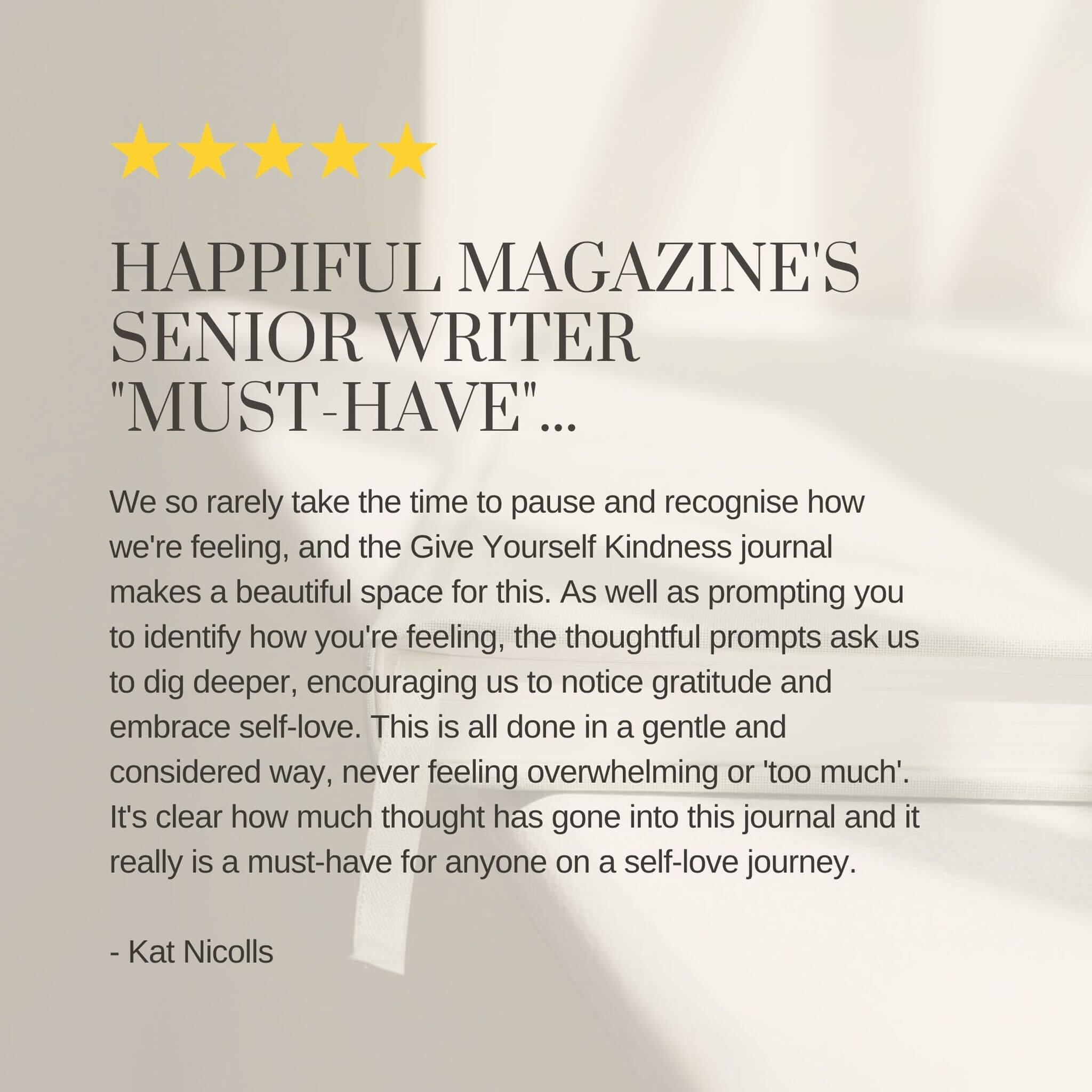
- The Give Yourself Kindness Journal — 90 days of prompts designed with clinical psychologists to process emotions and build self-compassion
- How to Stop Negative Self-Talk — 7 techniques that actually work
Understanding Anxiety and Self-Compassion:
- Why Self-Compassion Is More Effective Than Self-Criticism (by Dr. Annabelle Kyle Dortch, Clinical Psychologist)
- Fear of Self-Compassion: Why Being Kind to Yourself Feels Scary (by Dr. Chris Irons)
- Do Affirmations Really Work? I Asked 5 Psychologists — Evidence-based perspective on when affirmations help

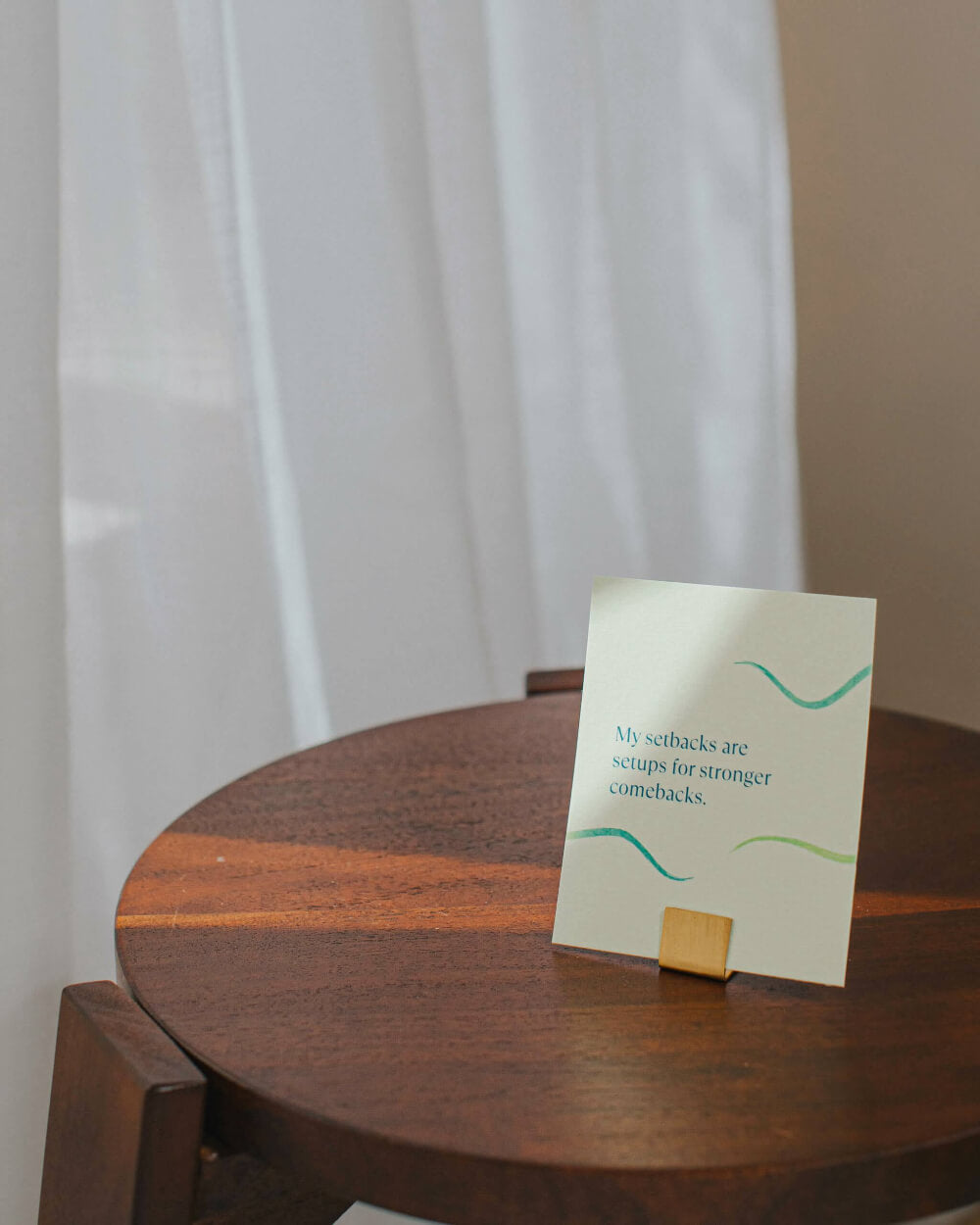
“I instantly feel a sense of groundedness and calm”
Affirmations can be so helpful along our healing journey. And these affirmations are truly so beautiful and powerful! When I read them, I instantly feel a sense of groundedness and calm. They are wonderful reminders for when I need to slow down and reconnect with myself. I also love that they are centered around having more compassion and kindness for ourselves. I will definitely be utilizing these with my clients, as well as practicing them myself. Thank you so much Rachel!