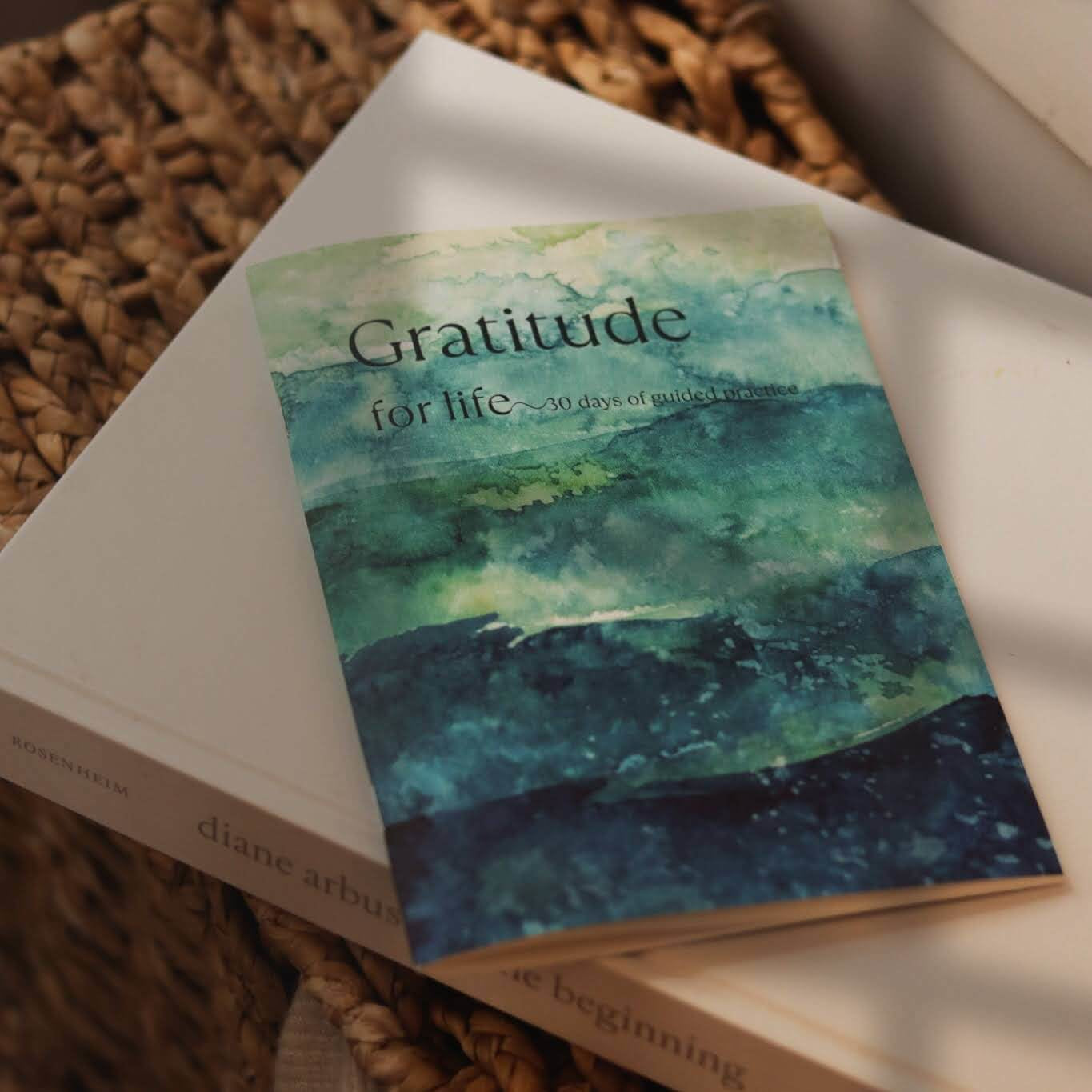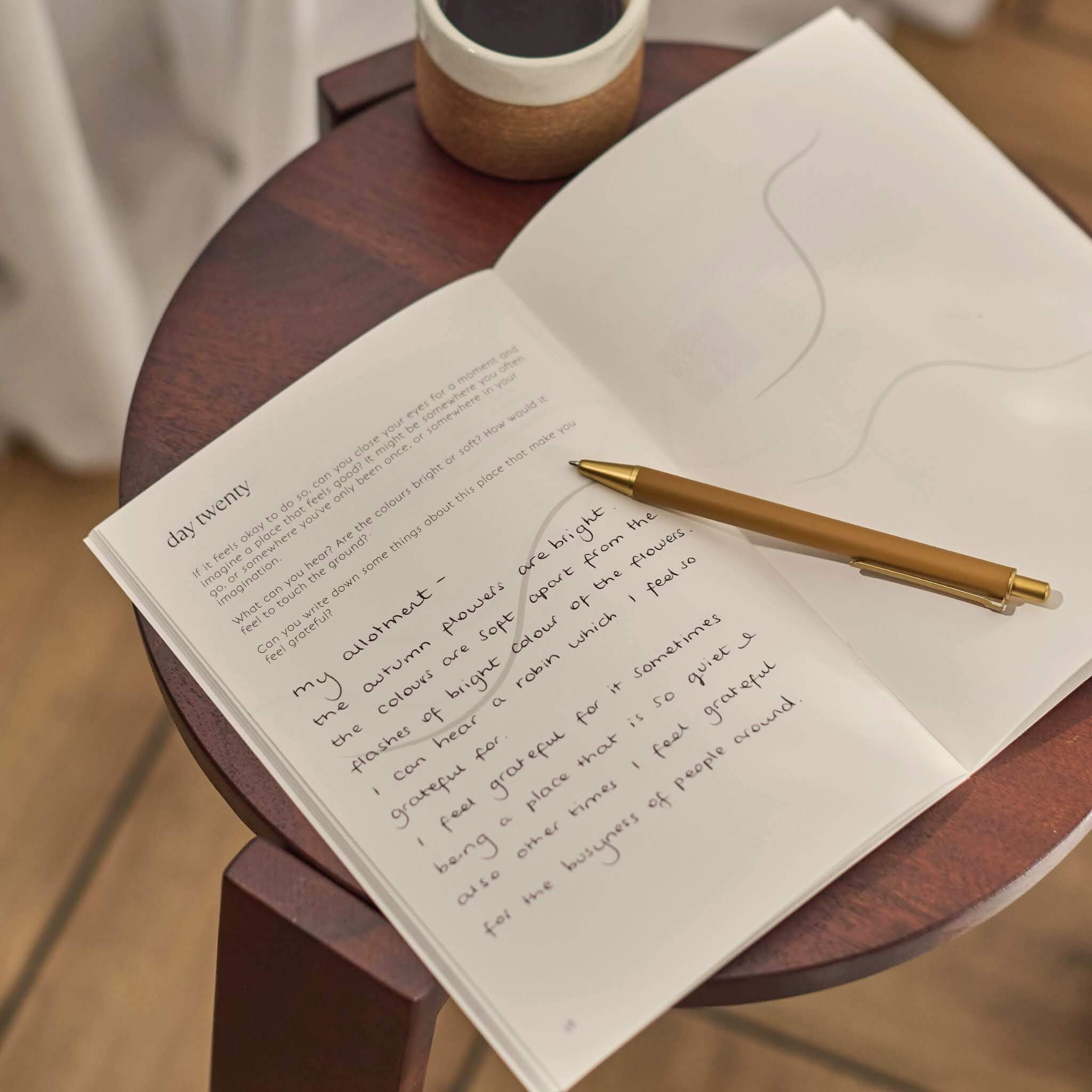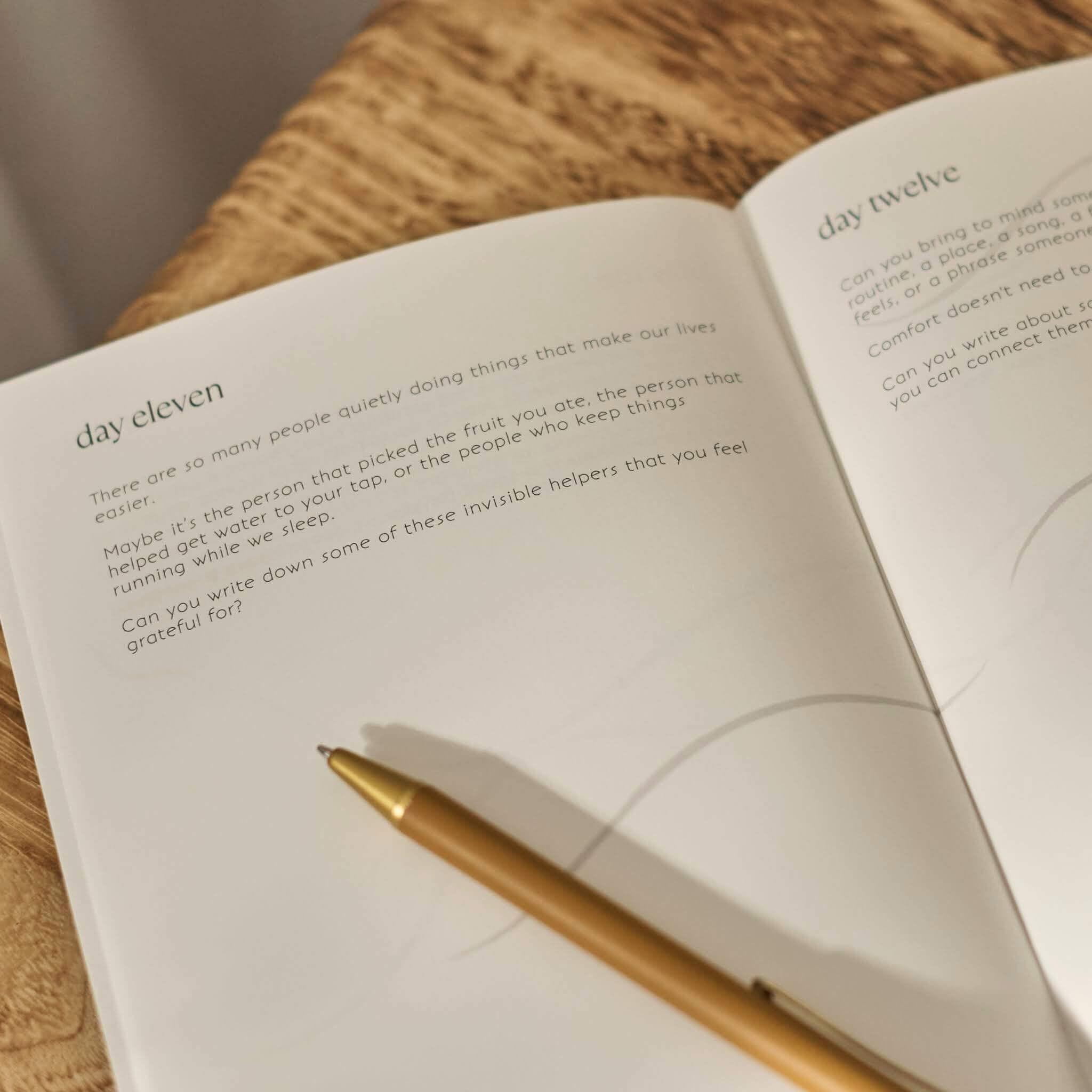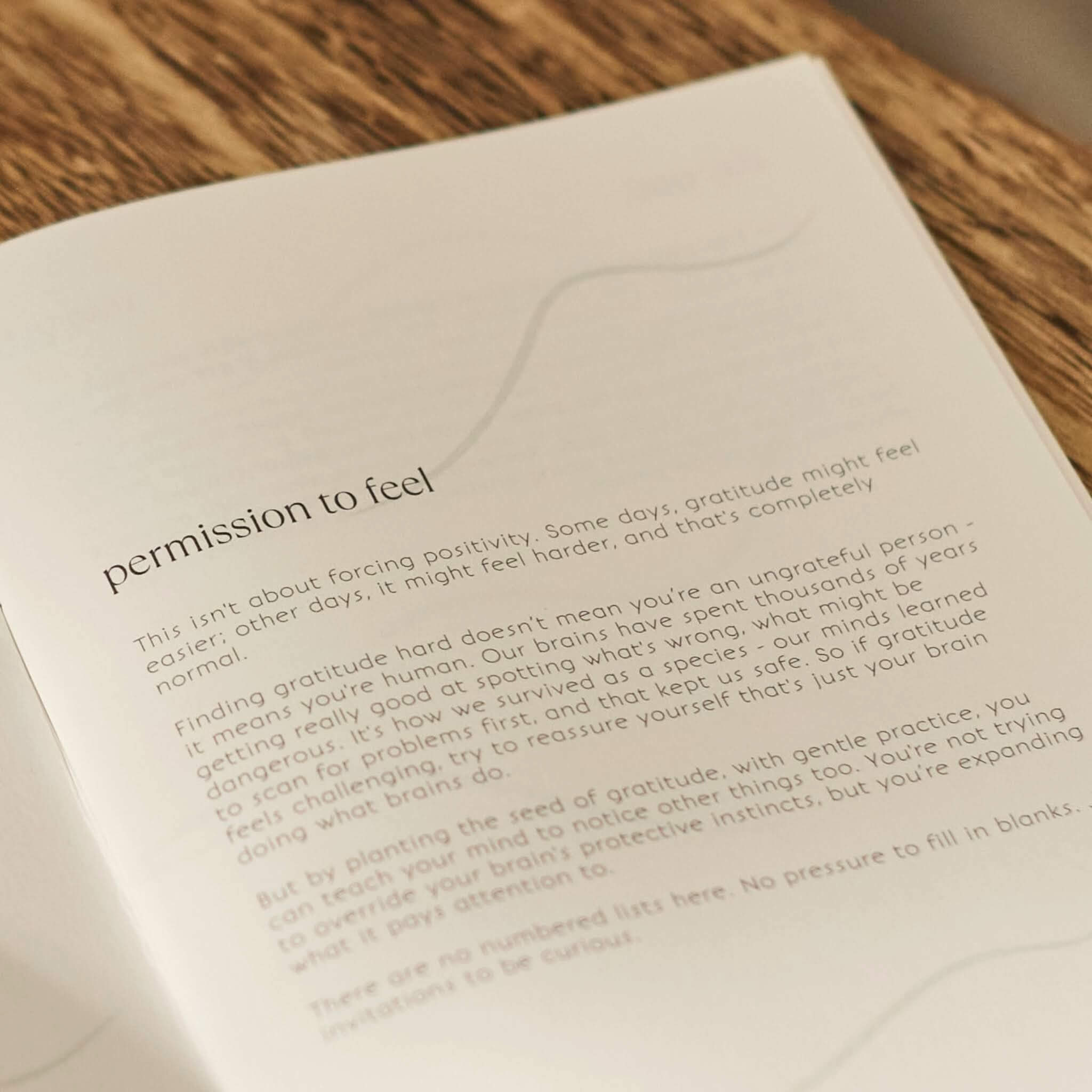



Journaling for self-acceptance, in short
Journaling for self-acceptance means writing about yourself the way you would write about a friend: describing what is true, without adding a verdict about what it says about you. The aim is not to decide you are good. It is to stop the deciding, and that is why it still works on a day when you cannot find one good thing to say.
Wanting to accept yourself as you are, and to be less hard on yourself, is a kind thing to want. You are in the right place for it.
What makes a journal work for this
- It asks you to describe, not to declare. I am enough is a claim your inner critic can argue with. What is true about today is a description, and there is nothing there to fight.
- It gives you the words, so the page is never blank. Self-acceptance is hardest exactly when you have least to give, which is the worst moment to be handed an empty page.
- It turns the kindness back towards you. Most people can already be generous about a friend. A journal built for self-acceptance uses that, rather than asking you to invent warmth from nothing.
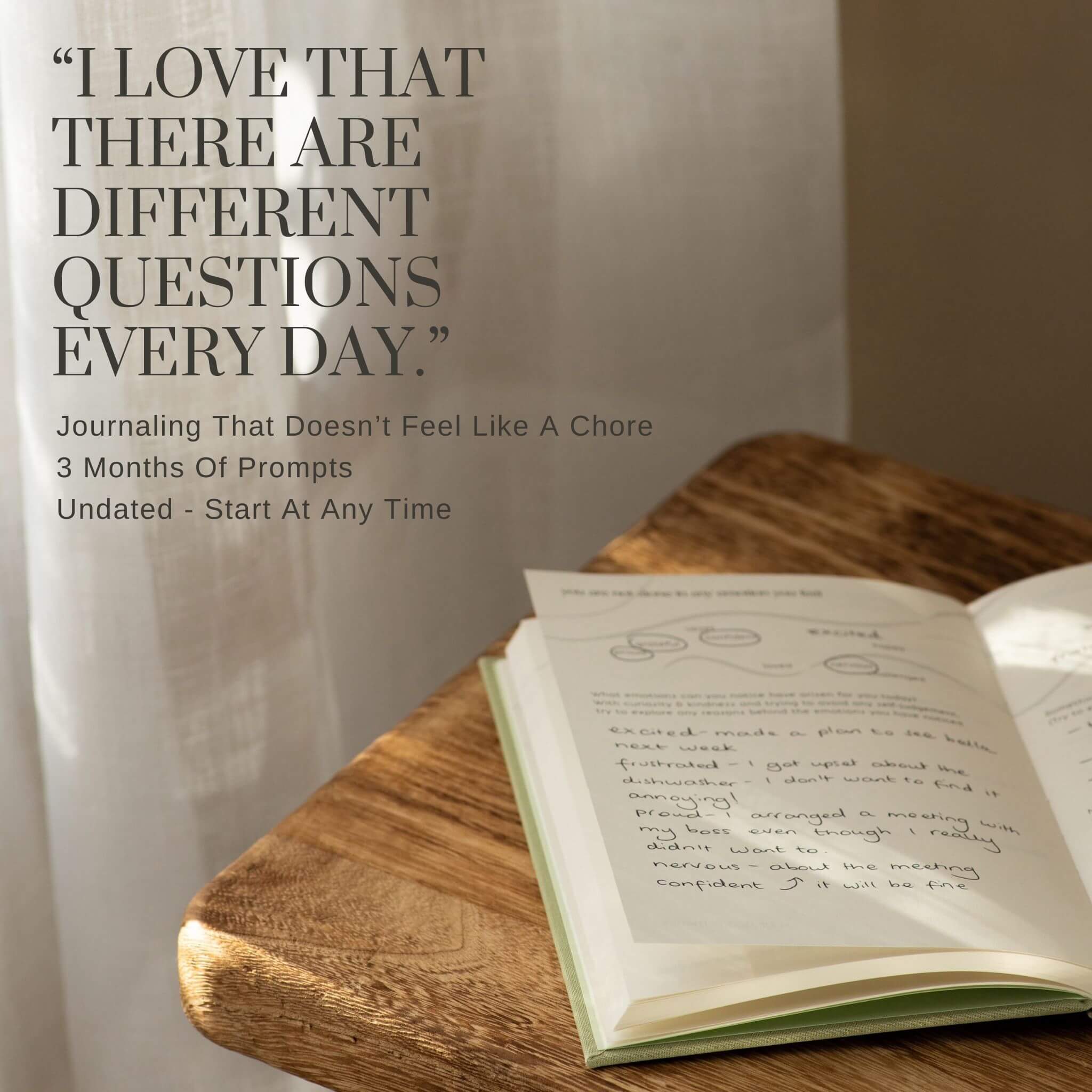
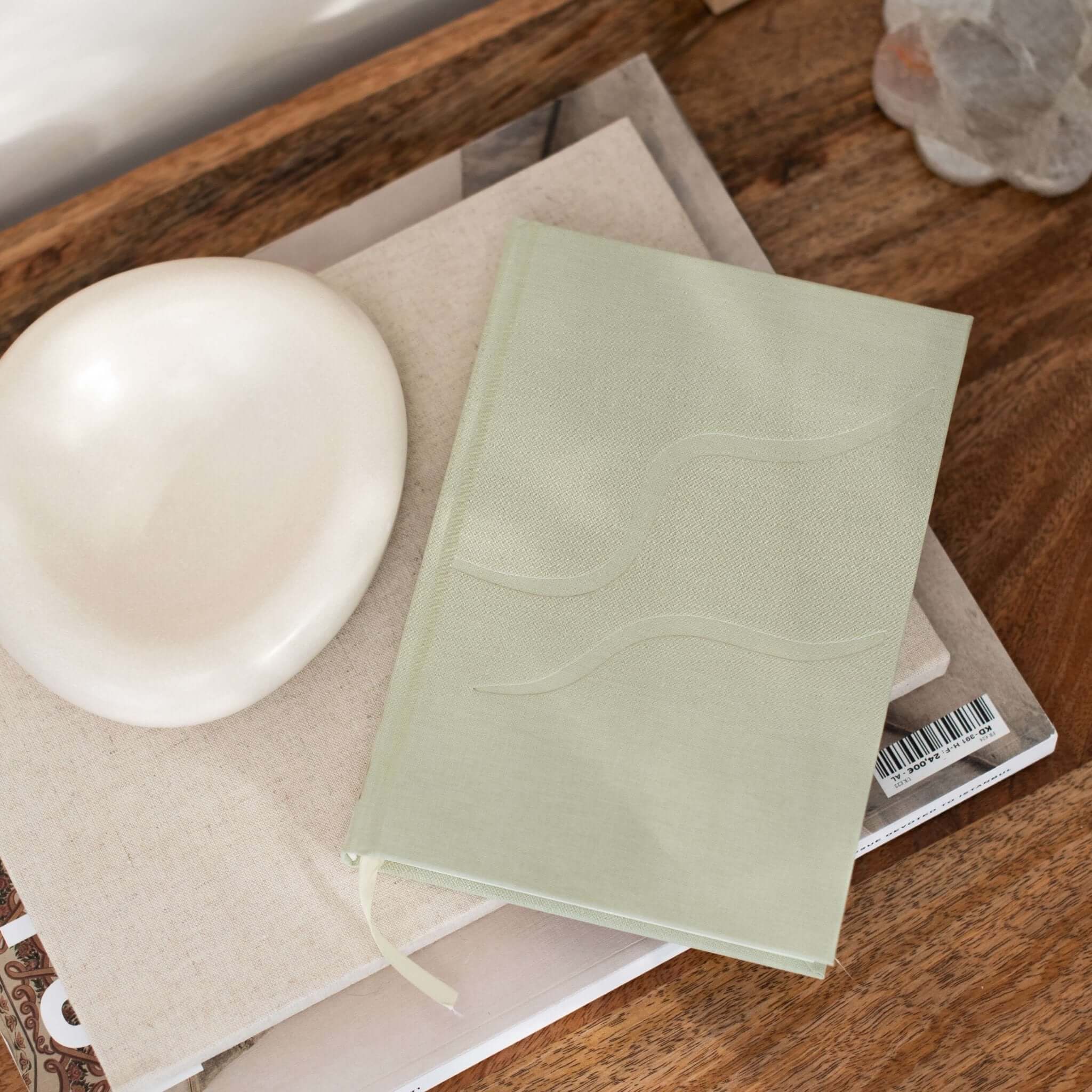
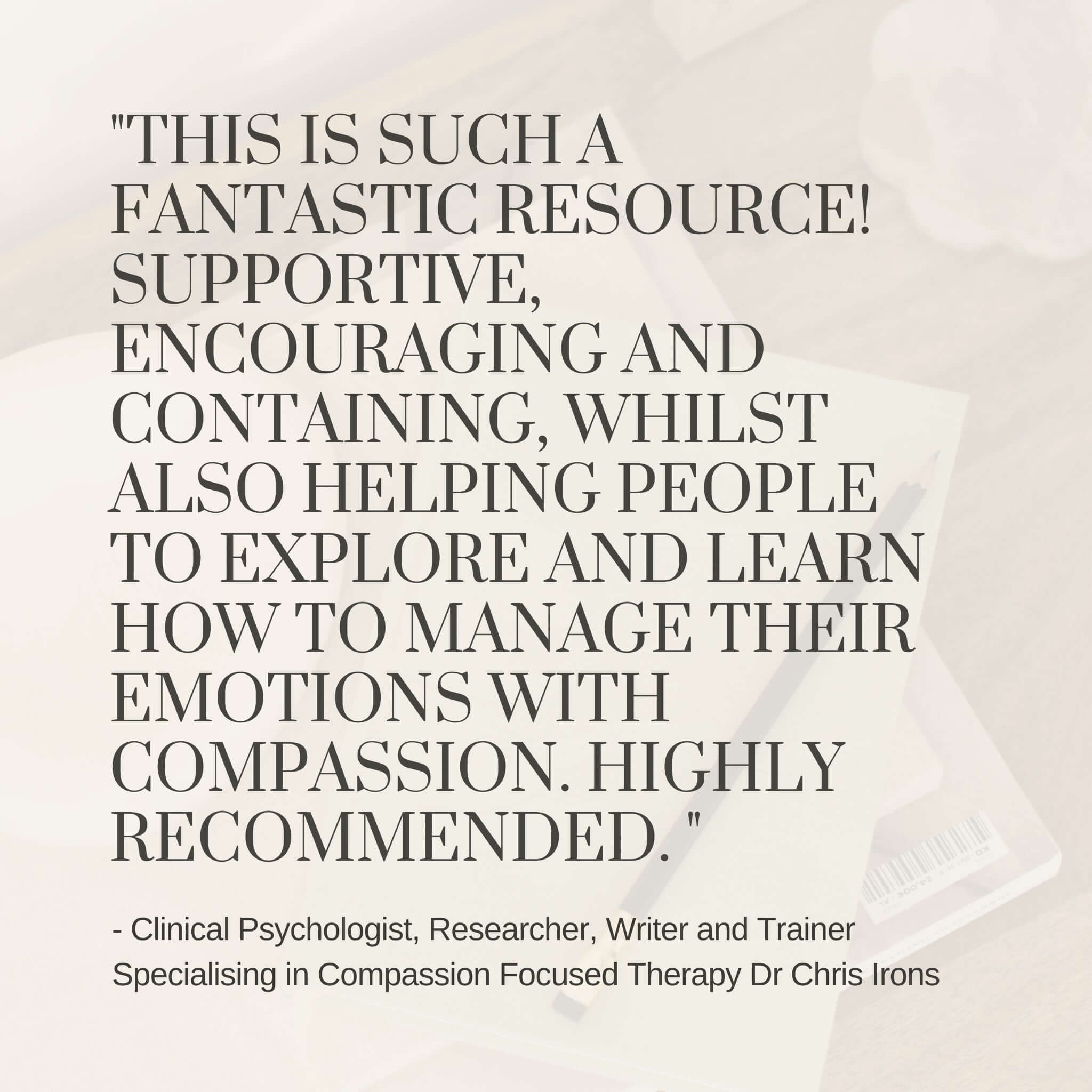
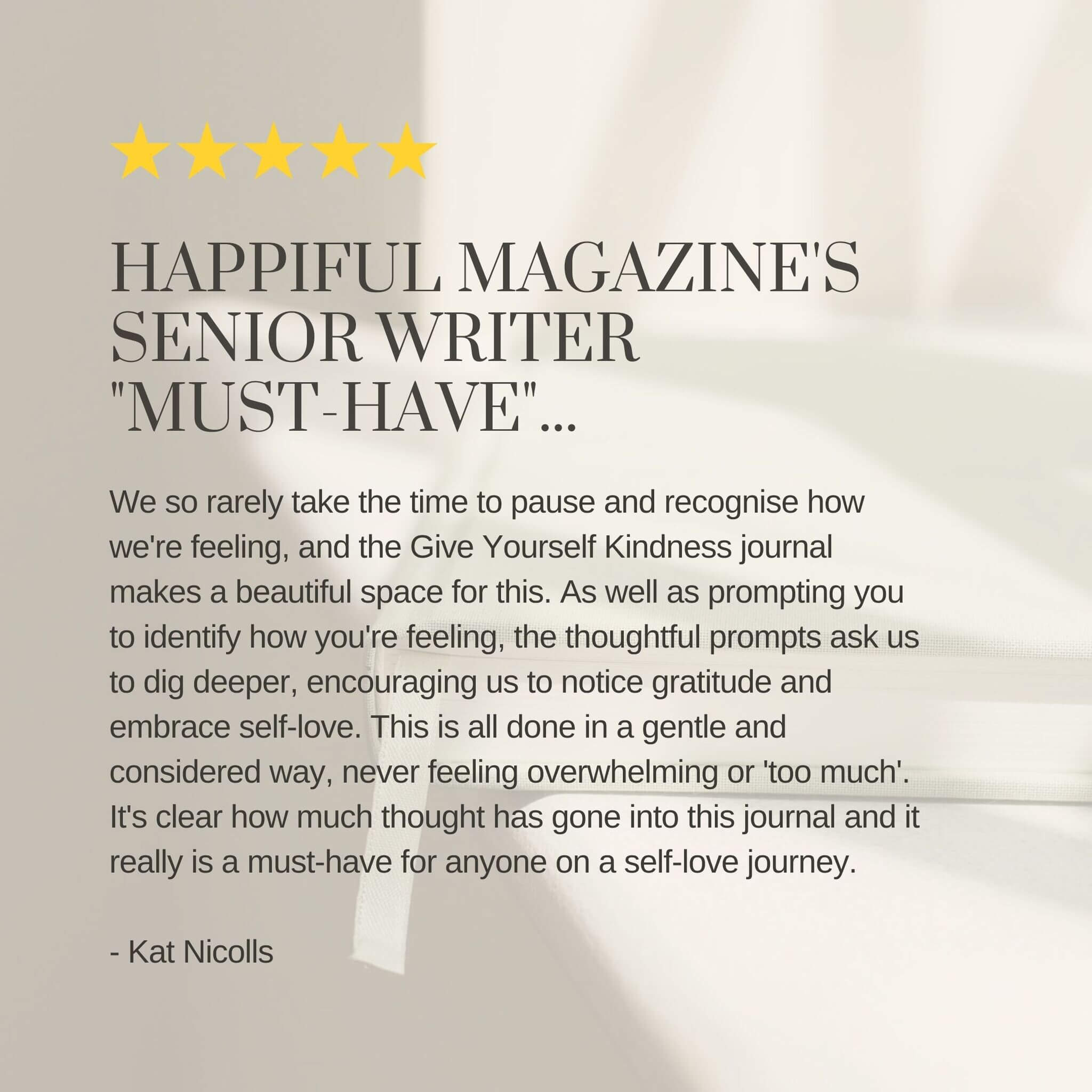
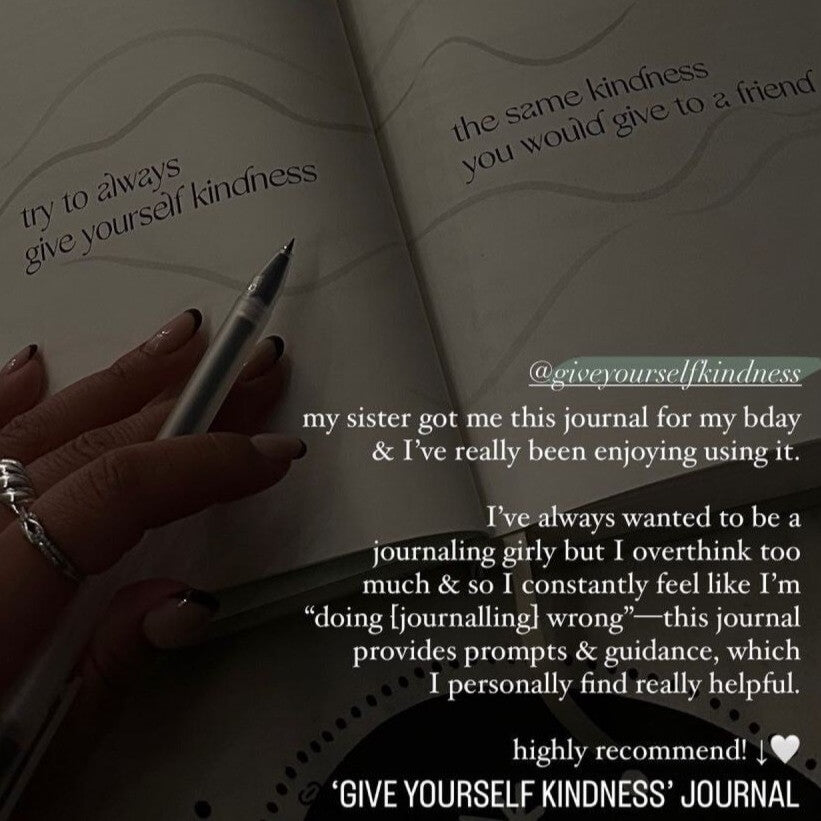
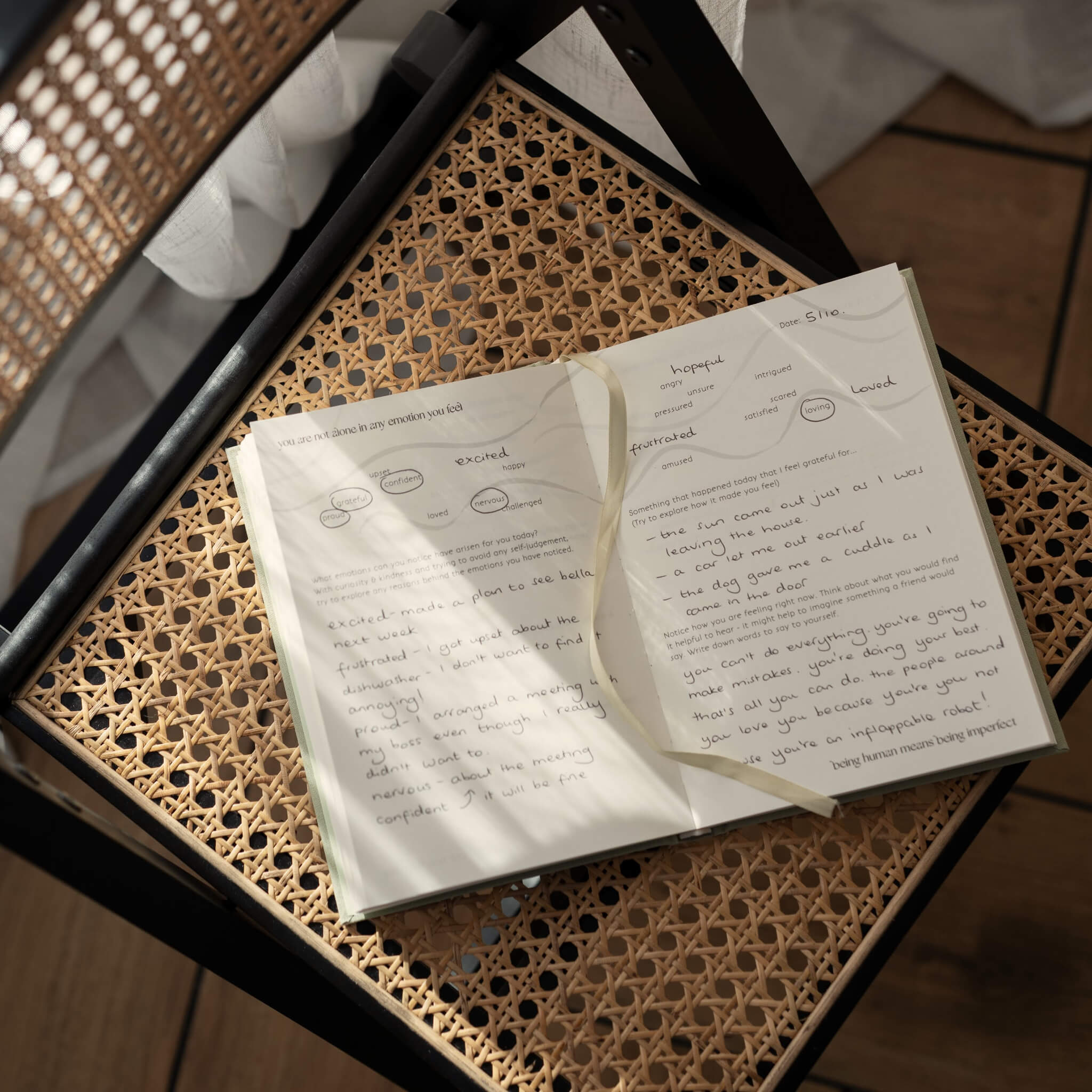
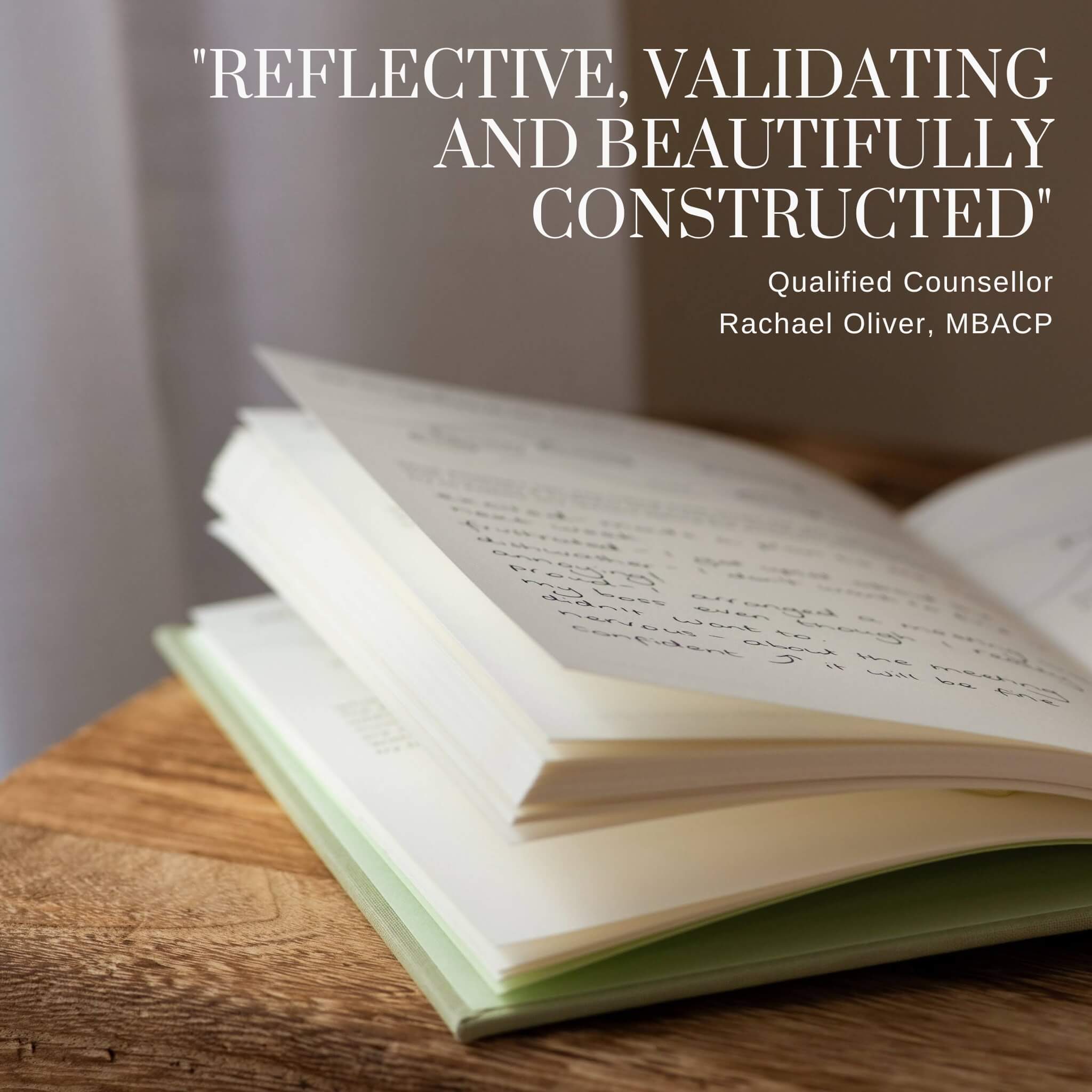
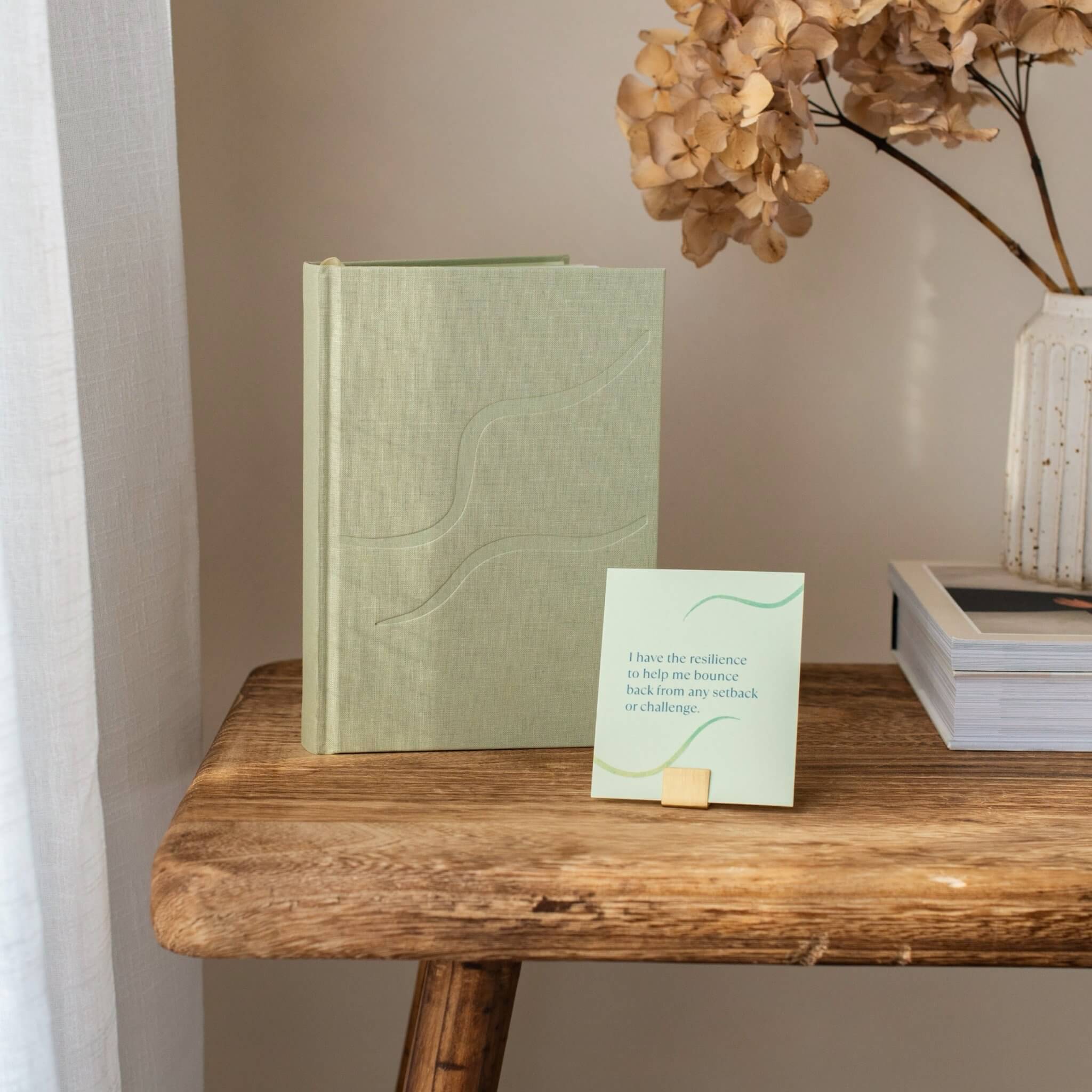
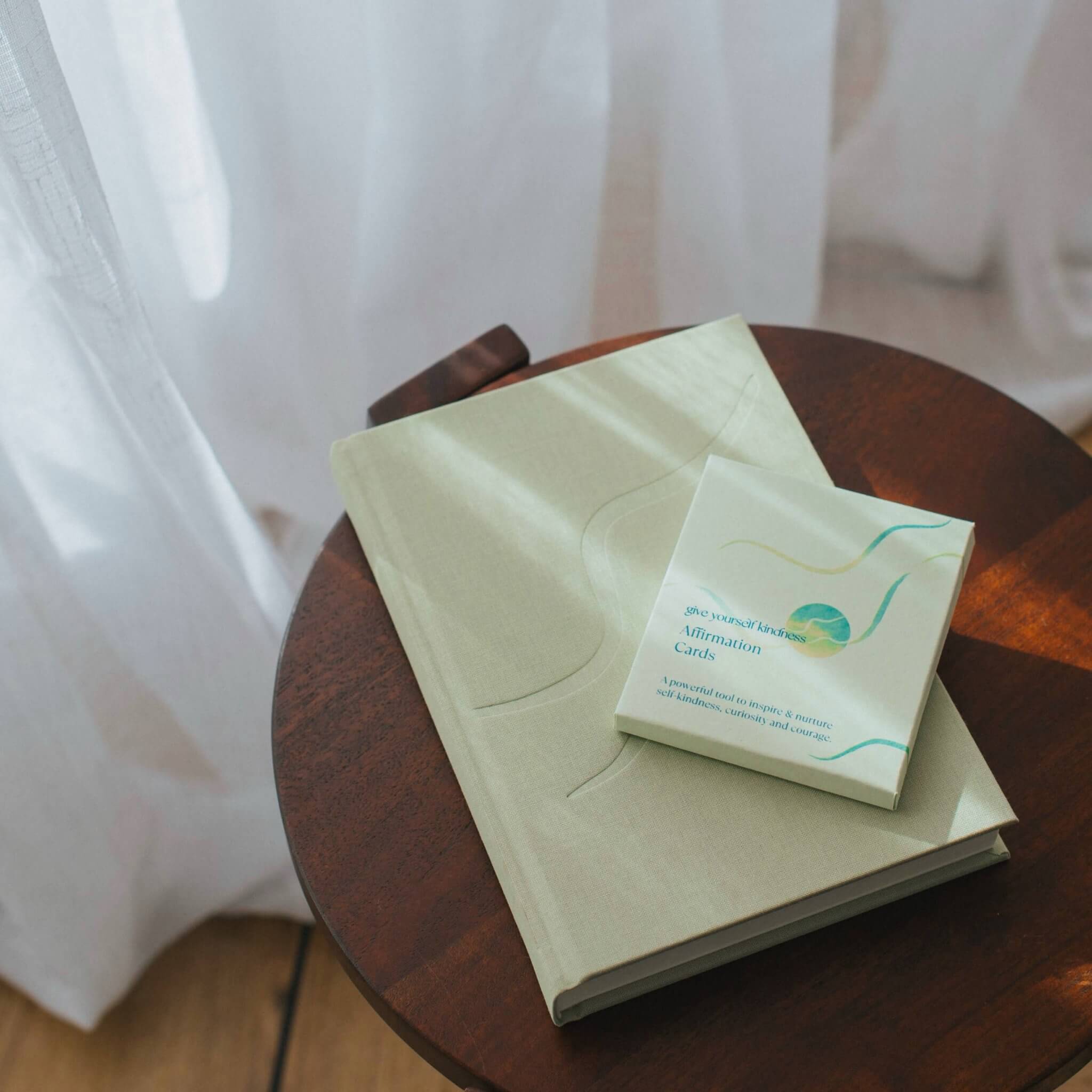
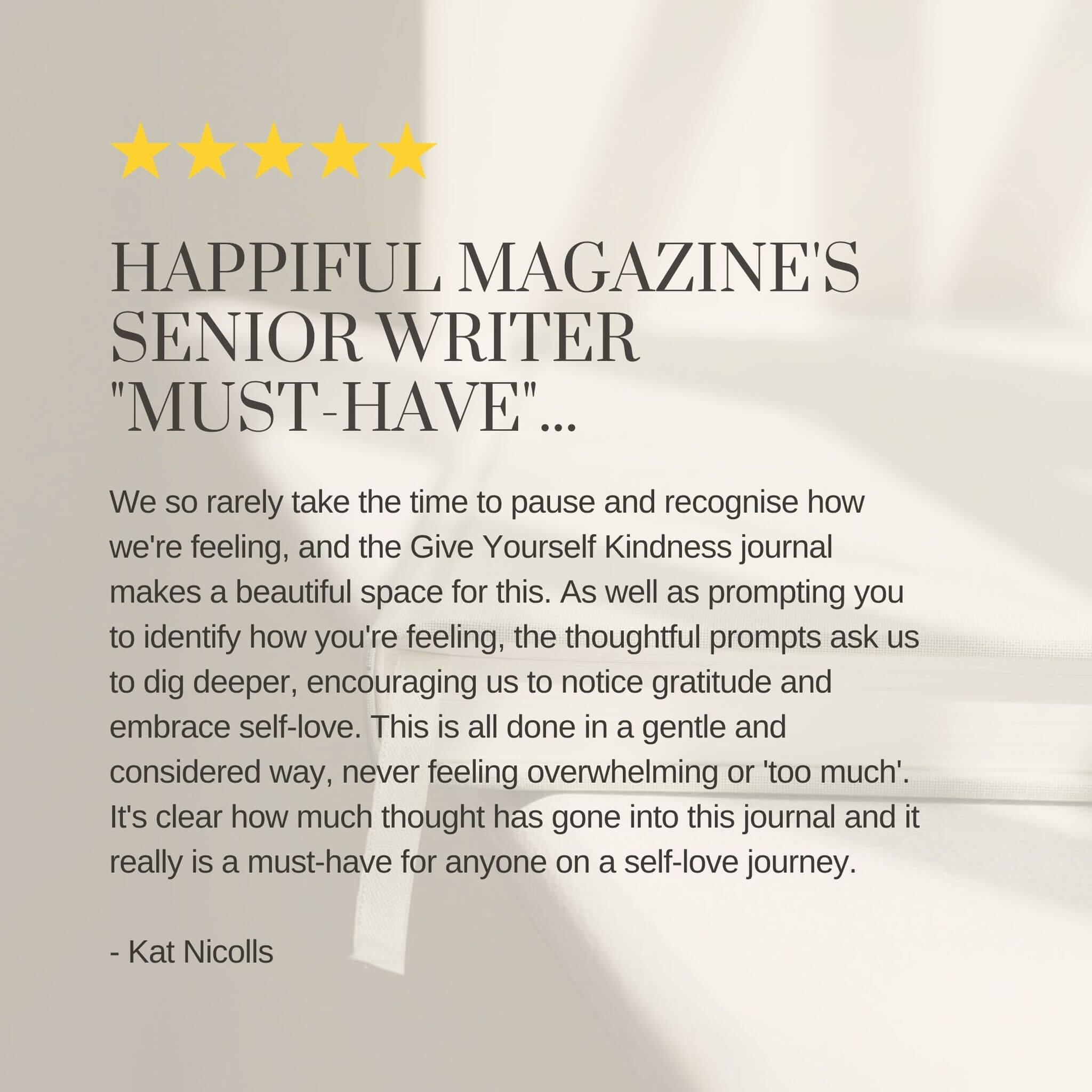
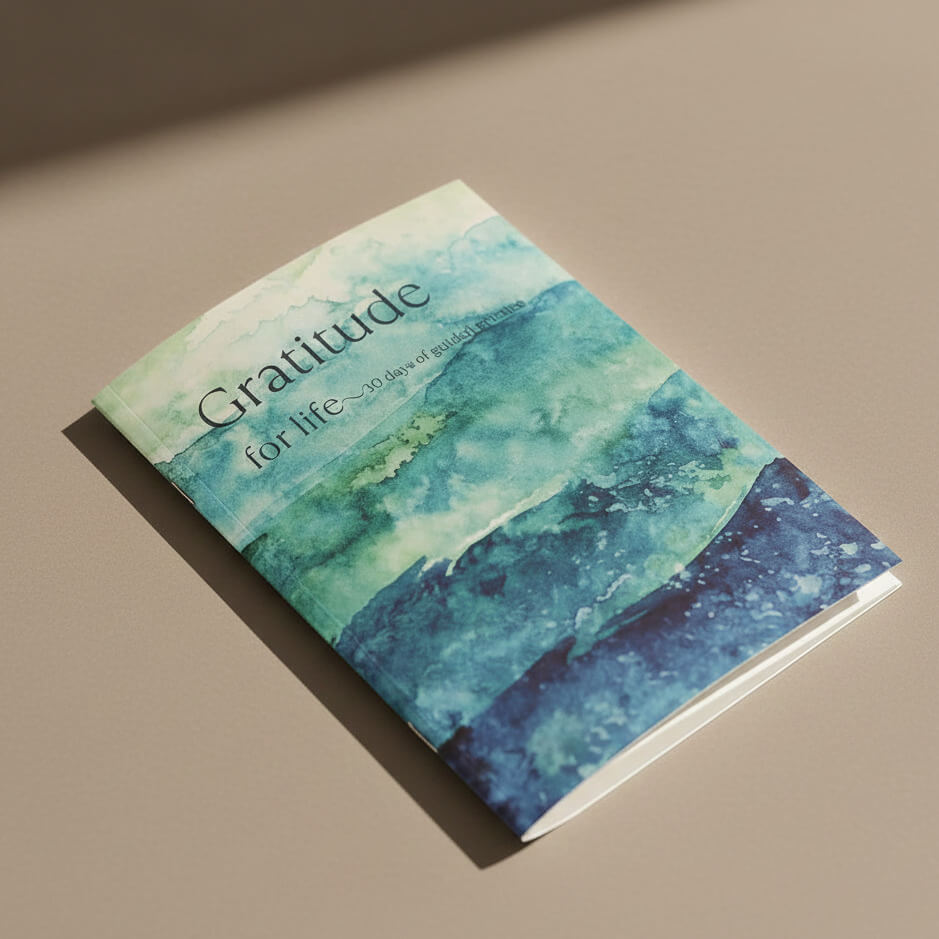
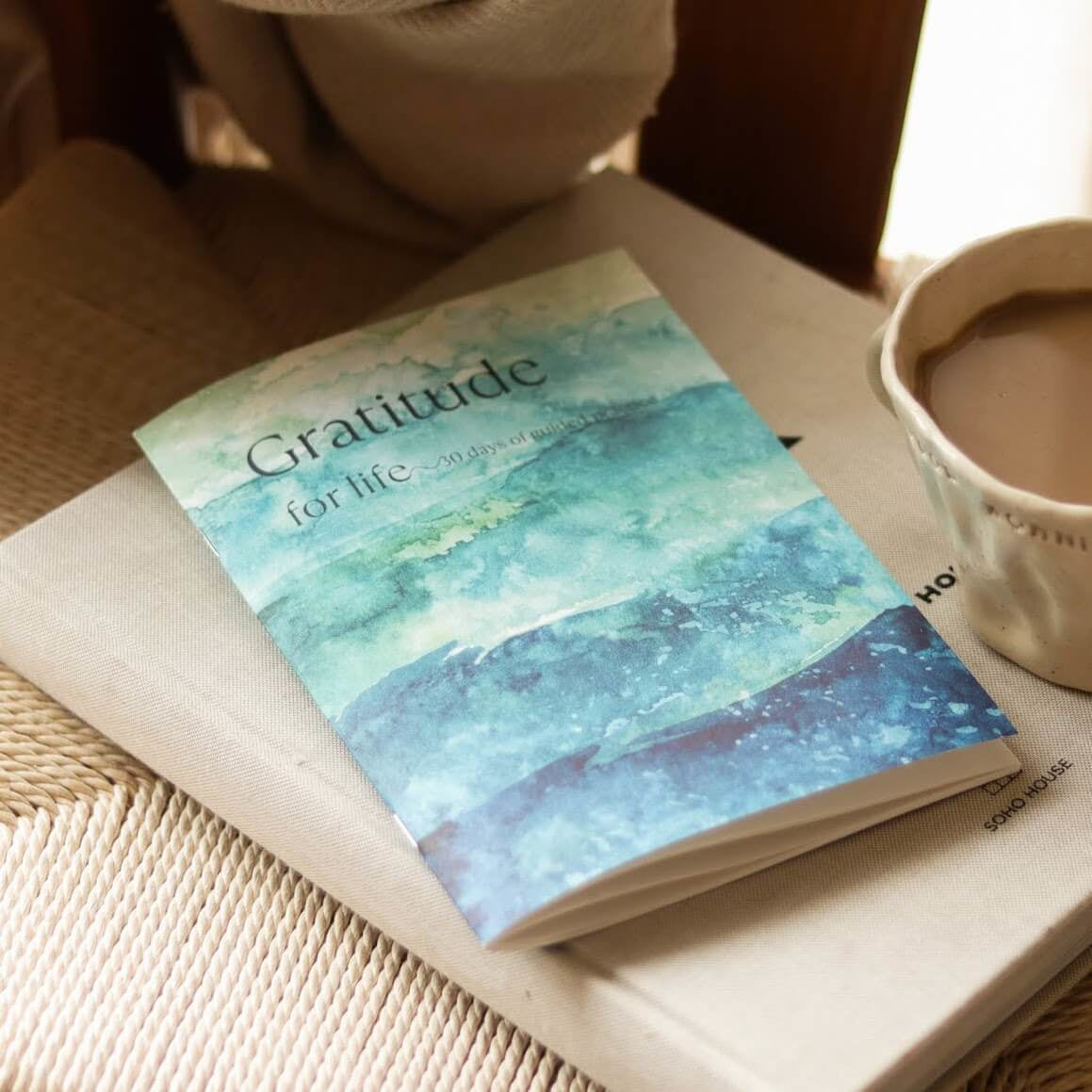
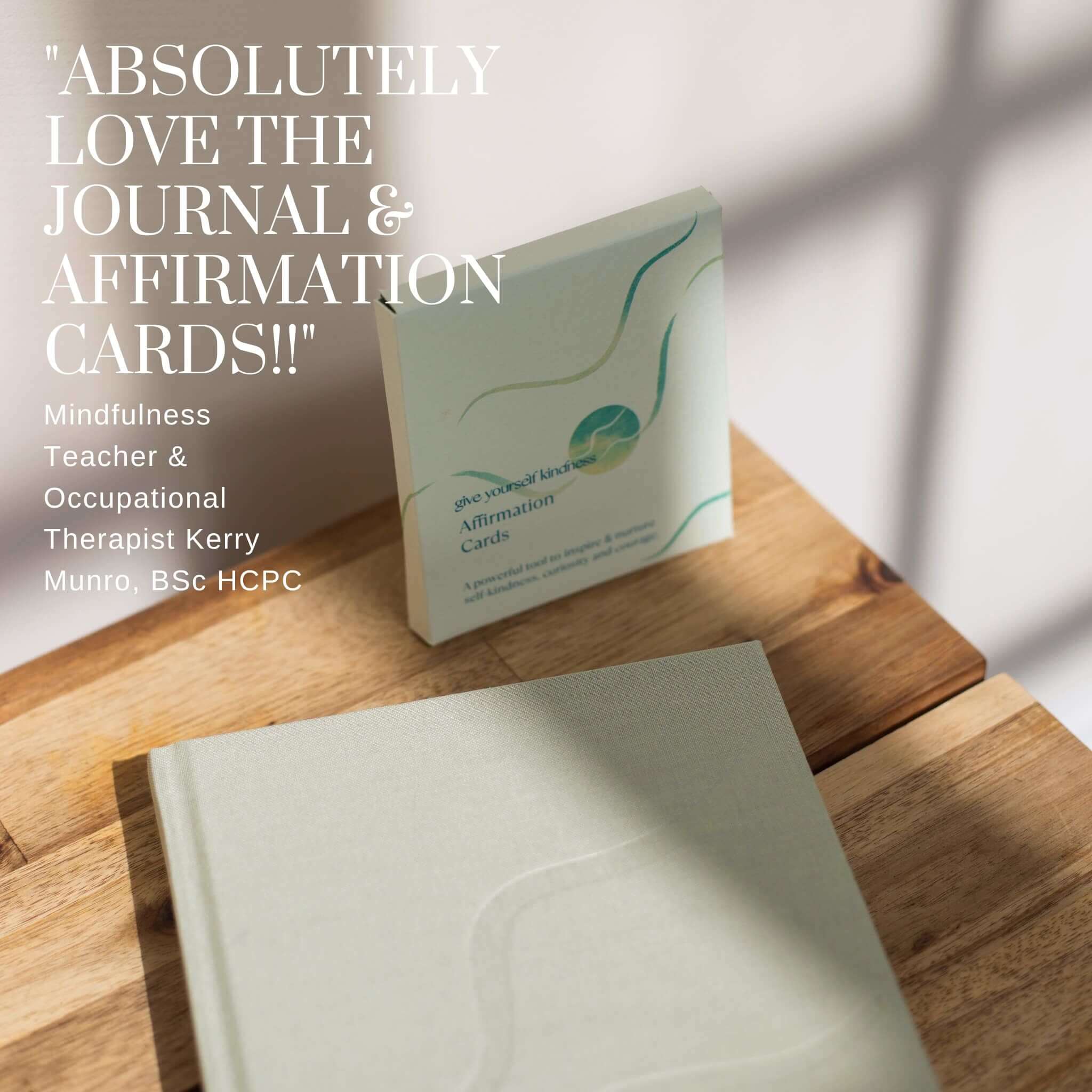
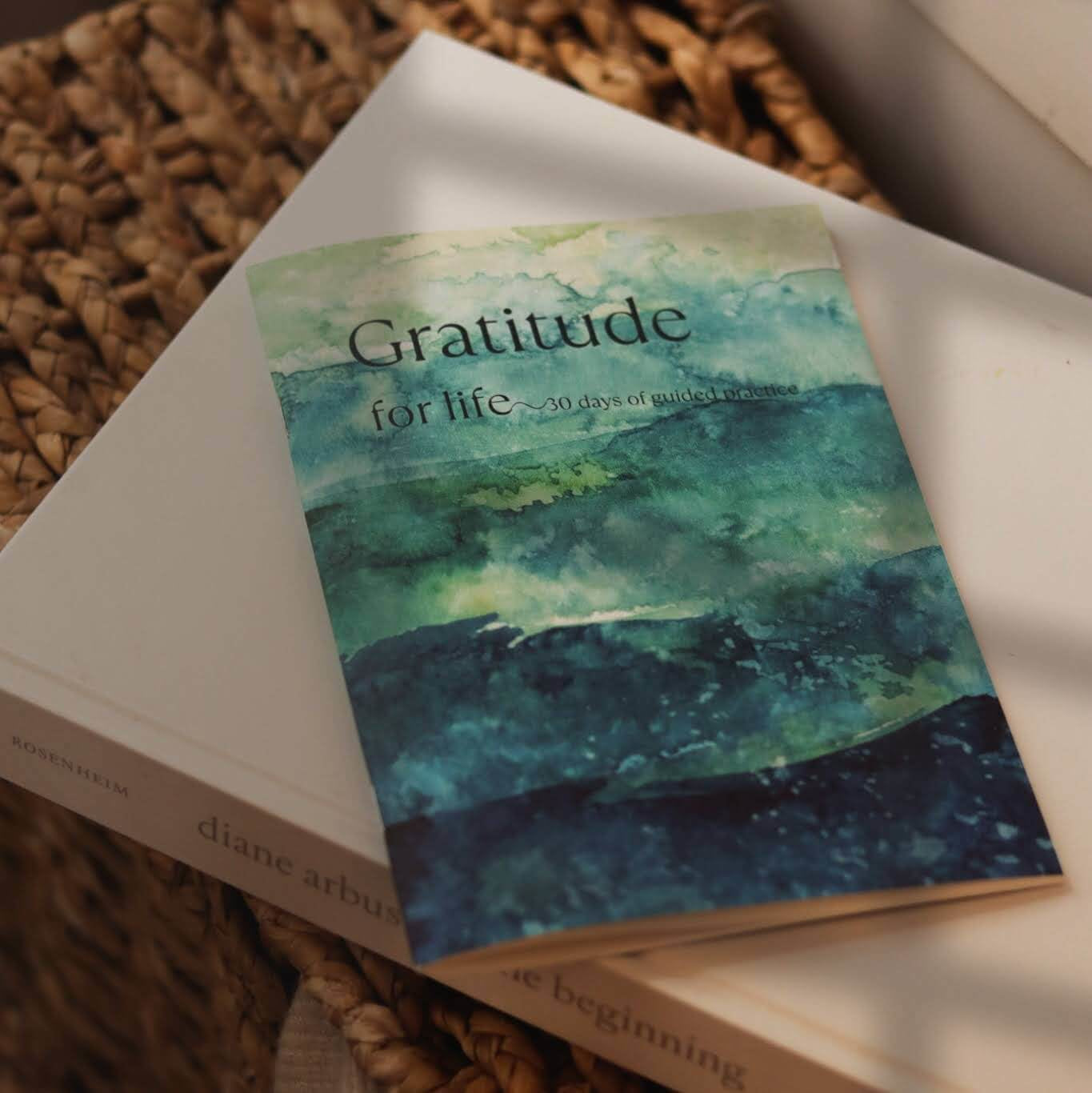
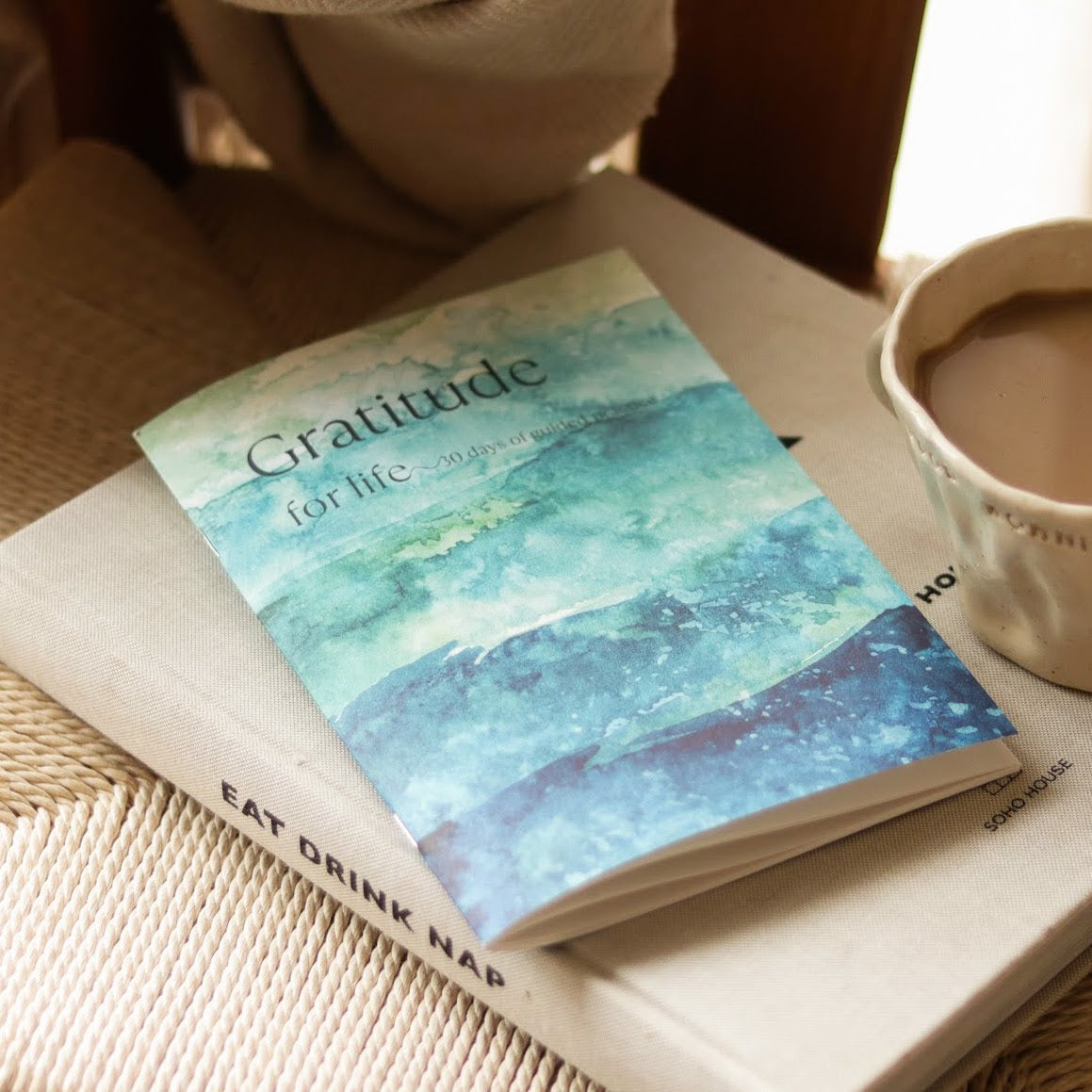
The Give Yourself Kindness Journal is built on all three, and every entry ends with the friend question. It is reviewed by clinical psychologists at Harvard Medical School and the University of Oxford, and used by therapists with clients worldwide.
Discover the journal →On this page
- What self-acceptance actually is
- Why it feels like giving up, and why it is not
- Where the self-criticism is coming from
- What to look for in a journal for self-acceptance
- The questions a self-acceptance journal should ask
- When a kind sentence feels like lying
- What therapists say about this one
- Questions people ask me
What self-acceptance actually is
Self-acceptance gets used interchangeably with self-esteem and self-compassion, and most writing on the subject is really about self-esteem. They are three different things, and the difference decides whether journaling for self-acceptance works for you or quietly makes things worse.
Three things that are not the same
| Self-esteem | Self-acceptance | Self-compassion |
|---|---|---|
| A verdict, in your favour. I am good, I am capable, I am worthwhile. | Dropping the verdict. This is what is true about me at the moment, full stop. | How you treat yourself once the verdict is gone, especially when things go badly. |
| Needs evidence, so it rises and falls with how the week went. | Needs no evidence, which is exactly why it holds on a bad week. | Turns acceptance into something you do rather than something you conclude. |
This matters practically. A prompt built on self-esteem asks you to find proof that you are good, and on a day when you cannot find any, it leaves you worse off than before you opened the page. A prompt built on self-acceptance asks only what is true, which is always answerable.

Joanna Townsend, LCSW
Licensed psychotherapist in Montana, with psychological interests in eating disorders, emotional regulation, self-worth and compassion work. Writing exclusively for Give Yourself Kindness.
Self-acceptance is an avenue for self-compassion because it involves embracing all aspects of ourselves. It means seeing ourselves as whole and worthy even in the face of setbacks, perceived imperfections, and struggle.
Acceptance is about giving ourselves permission to be where we are while also being allowed to change and grow.
Joanna also quotes Carl Rogers, the founder of humanistic psychology, on the same point: the curious paradox is that when I accept myself just as I am, then I can change. Read Joanna's five ways to practise self-compassion →
That second sentence of Joanna's is the one worth reading twice. Permission to be where you are, and permission to change. Not one or the other. Everyone who worries that acceptance means settling has quietly assumed you only get to have one of those.
20 self-compassion affirmations
Grouped by the moment you're likely to need them. Every one of these is a card in the Give Yourself Kindness deck, and they're yours to use whether you buy anything or not.
For embracing imperfection
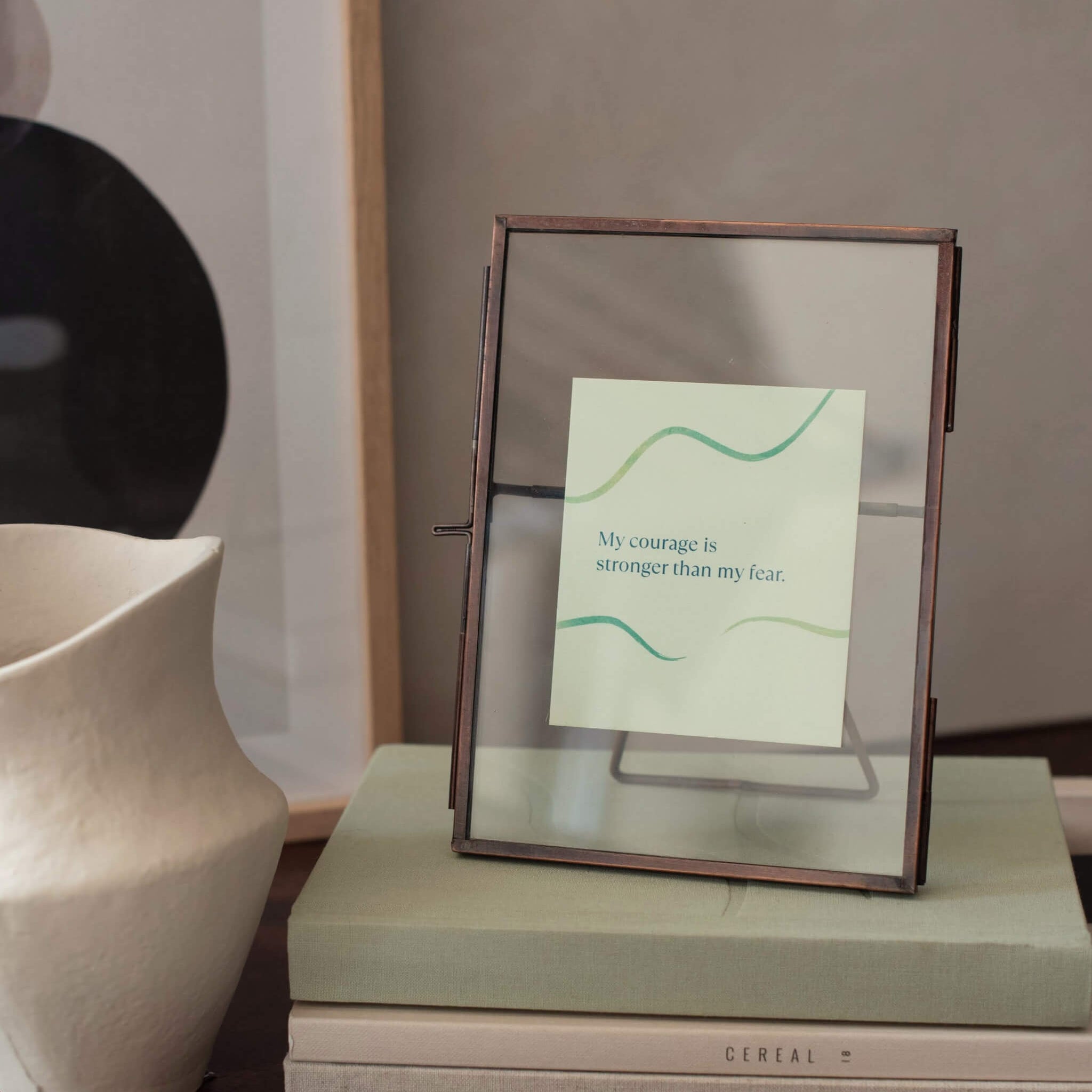
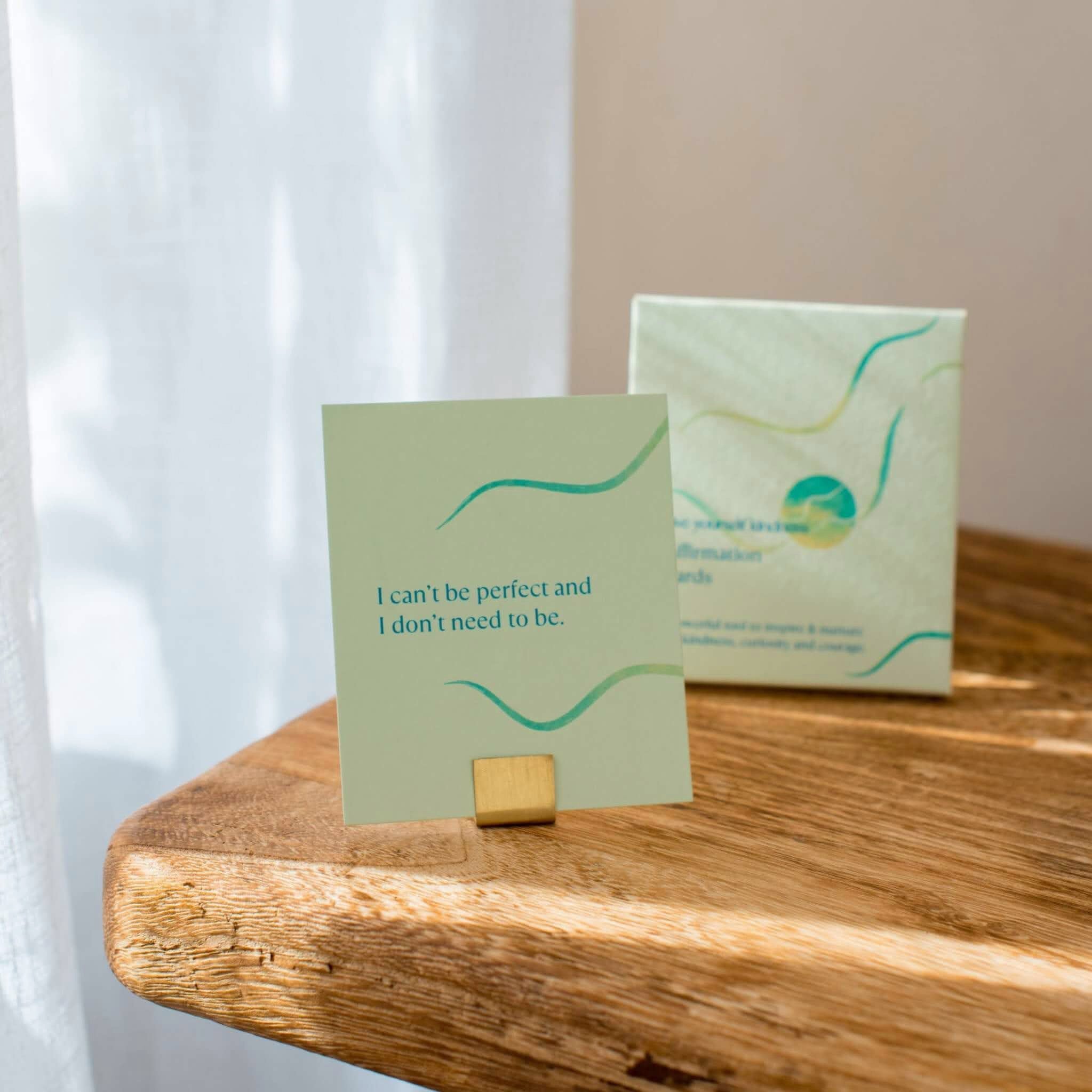
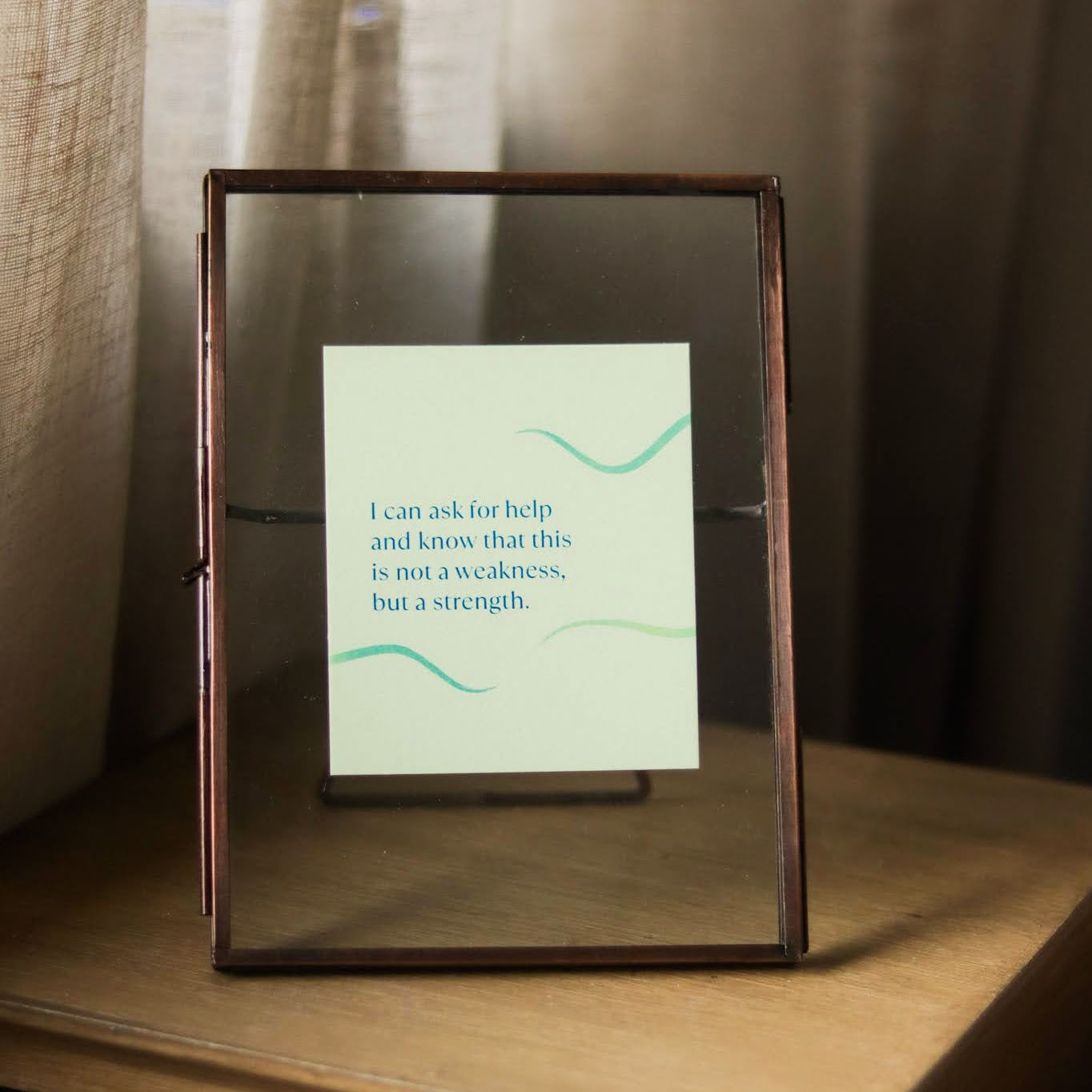
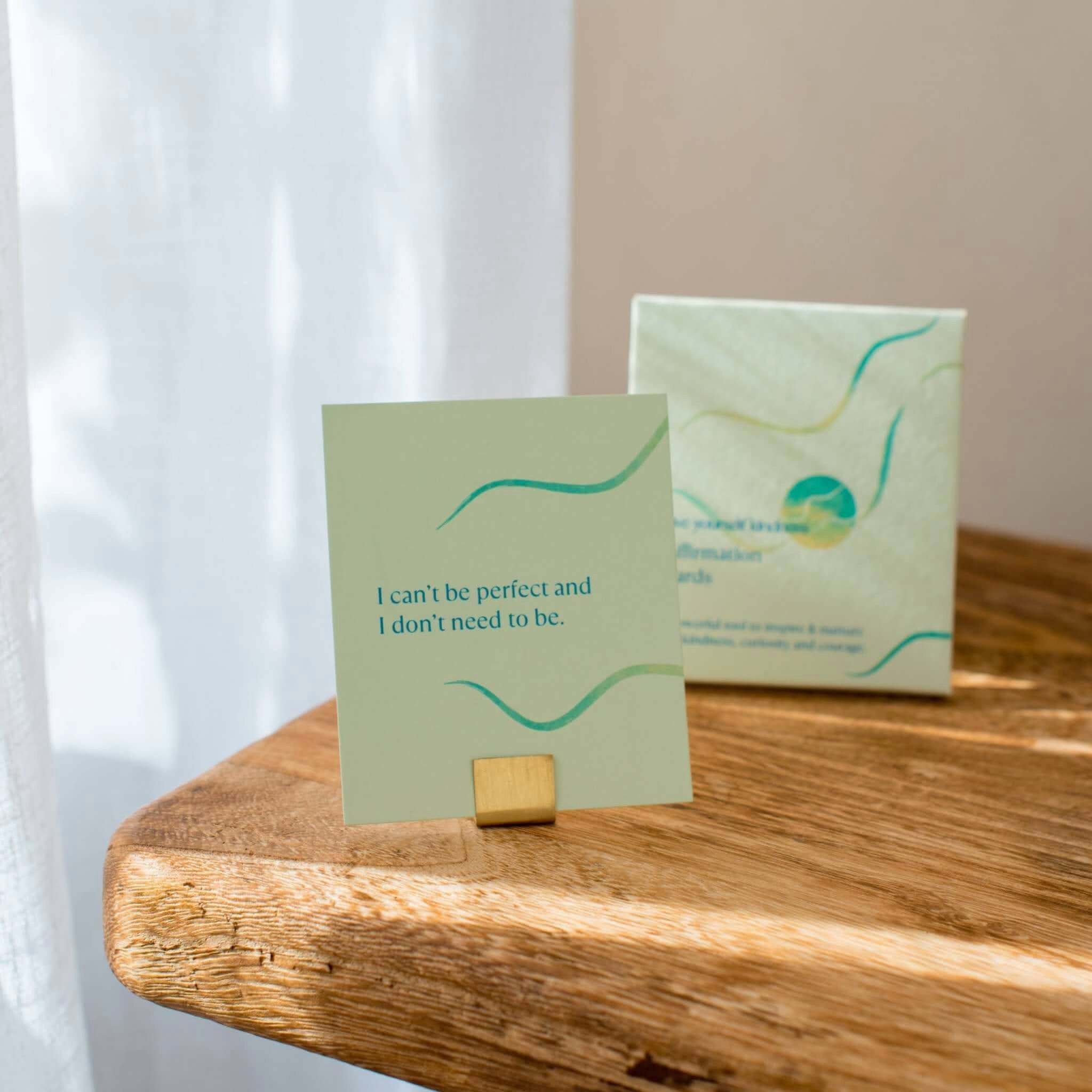
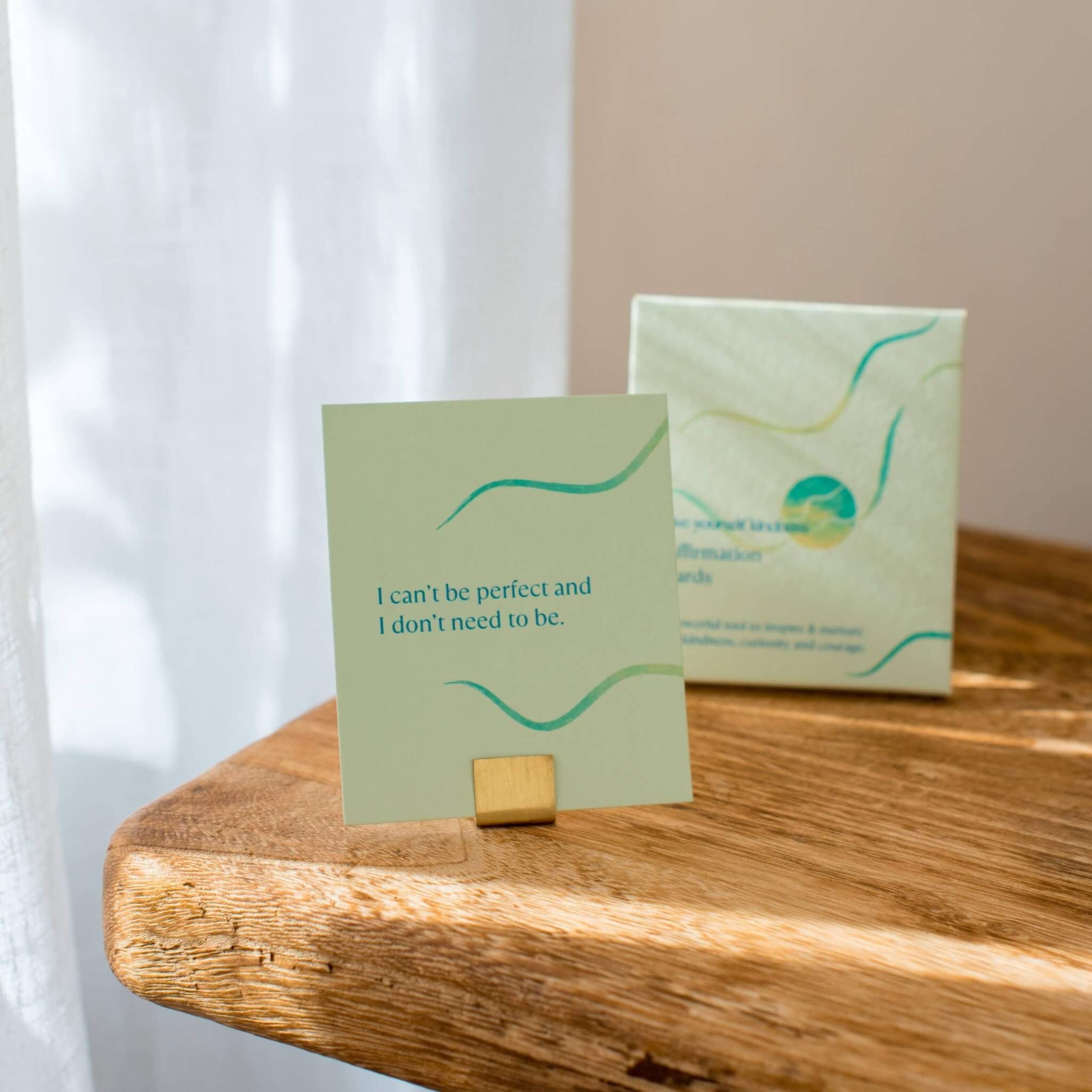
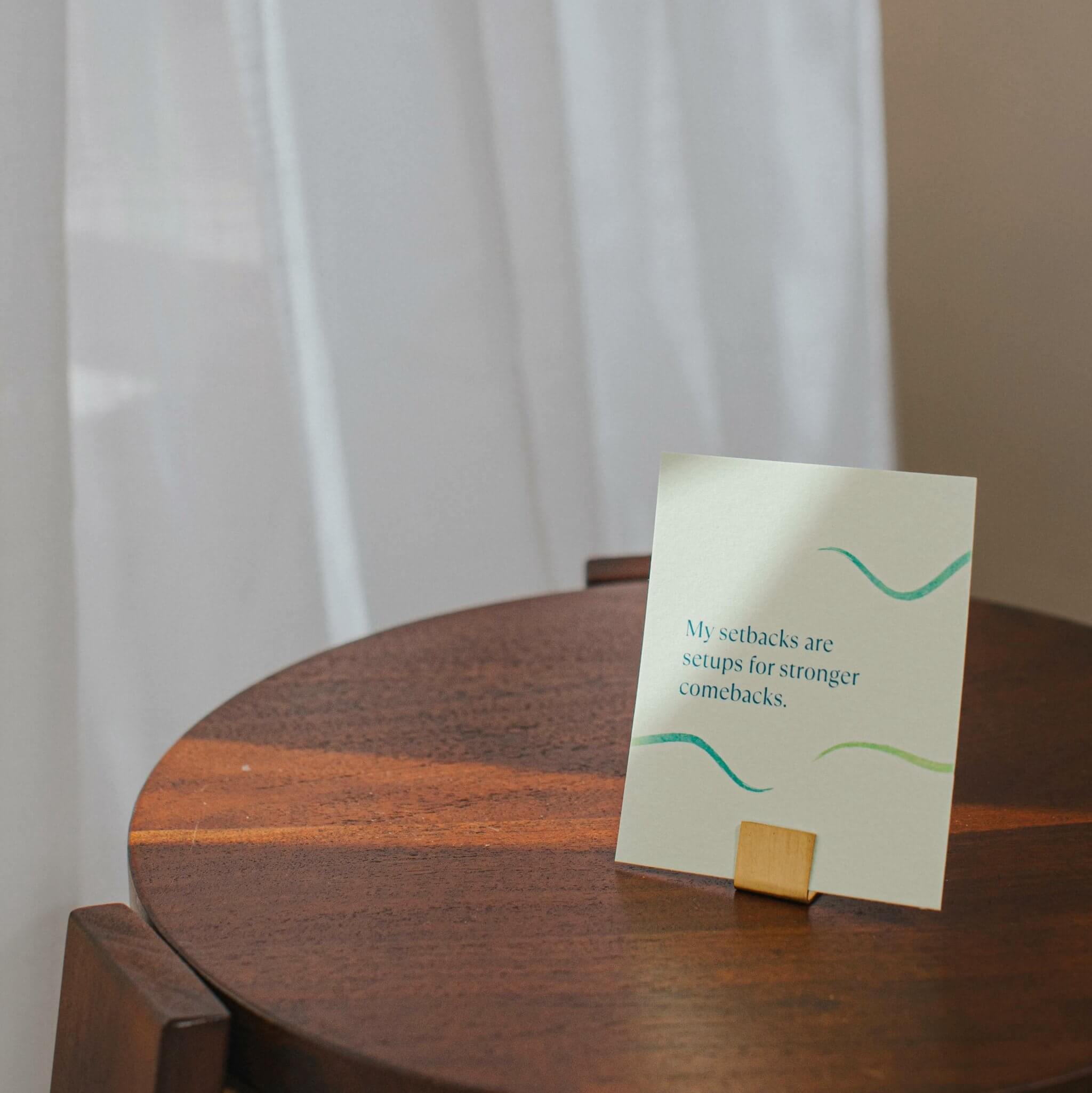
- I can't be perfect and I don't need to be.
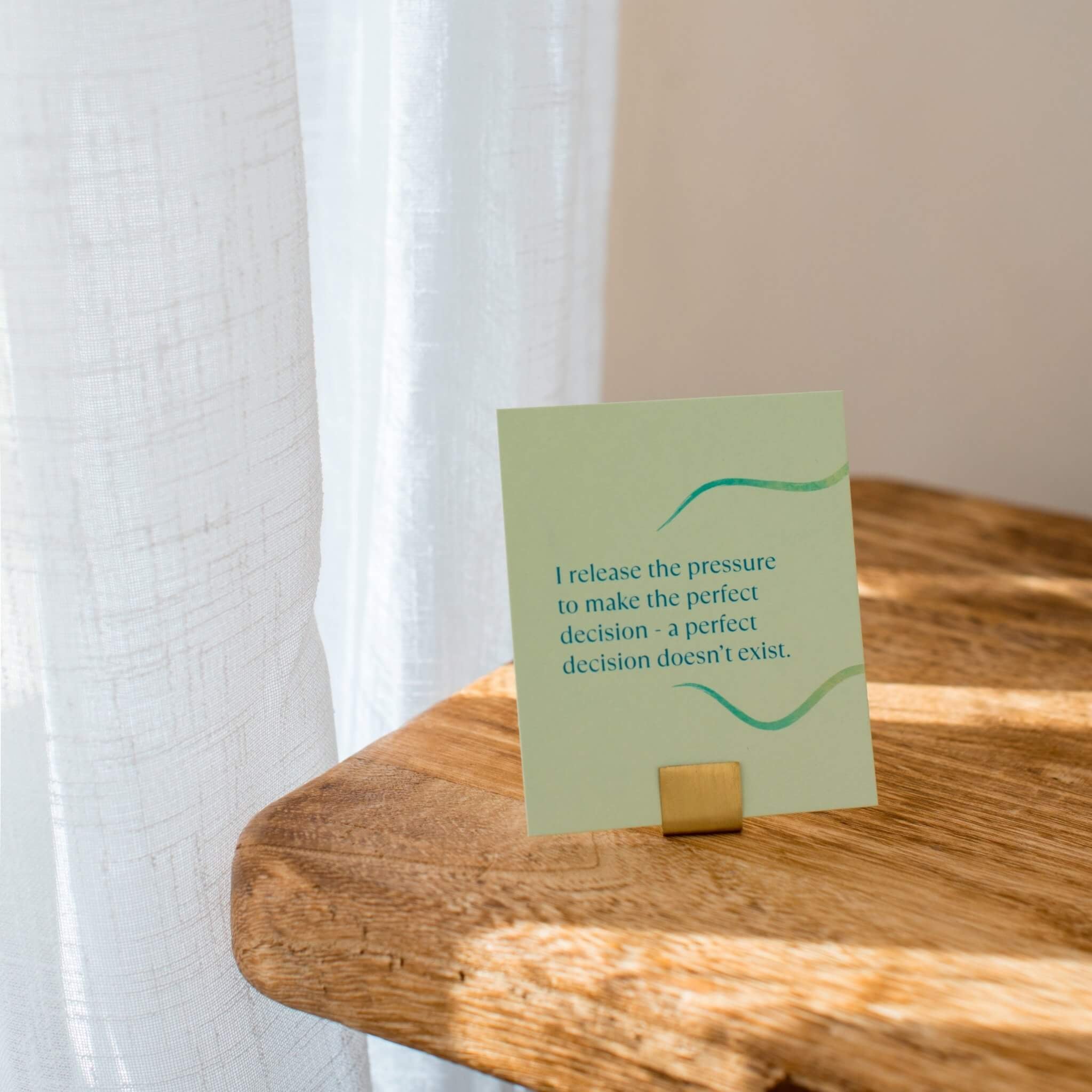
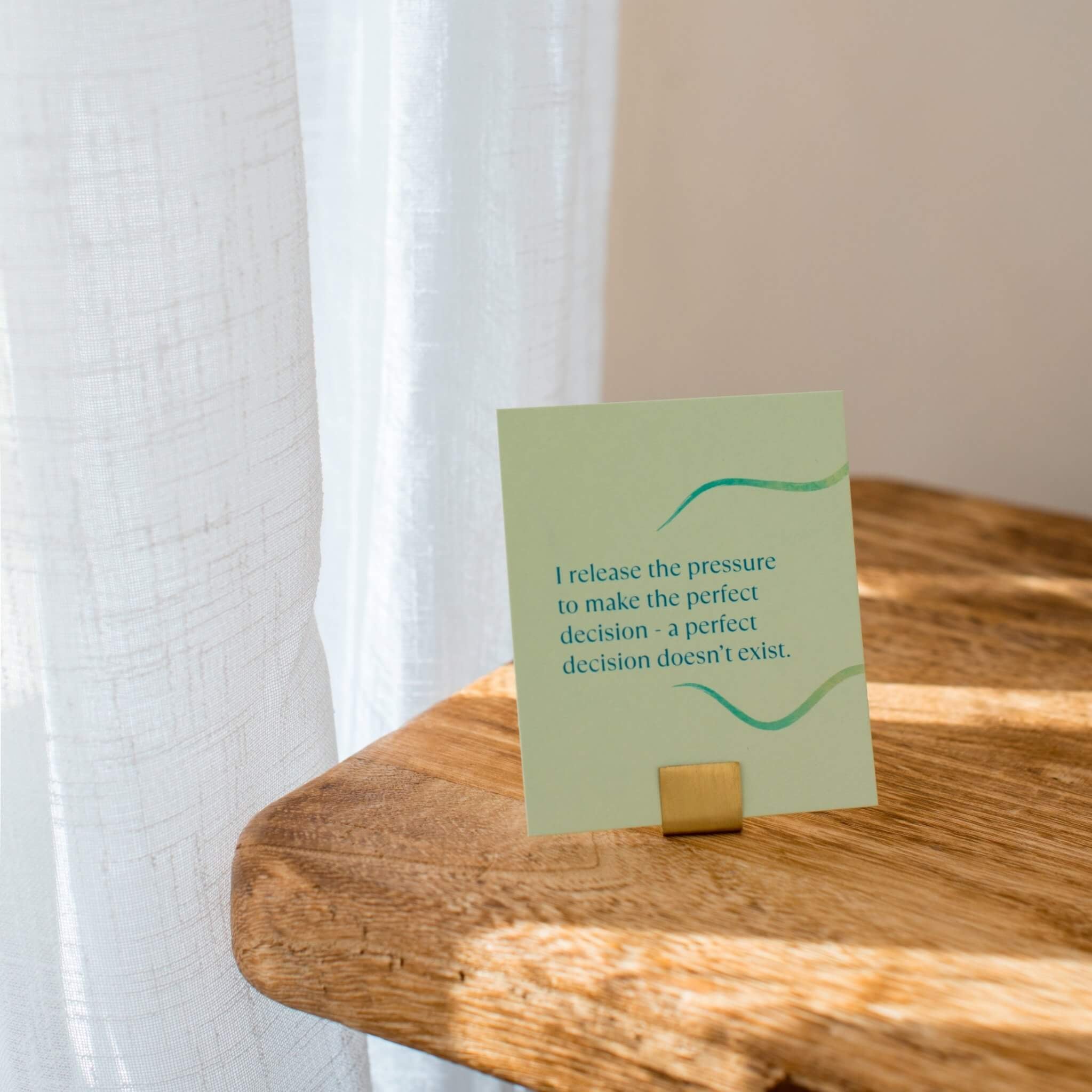
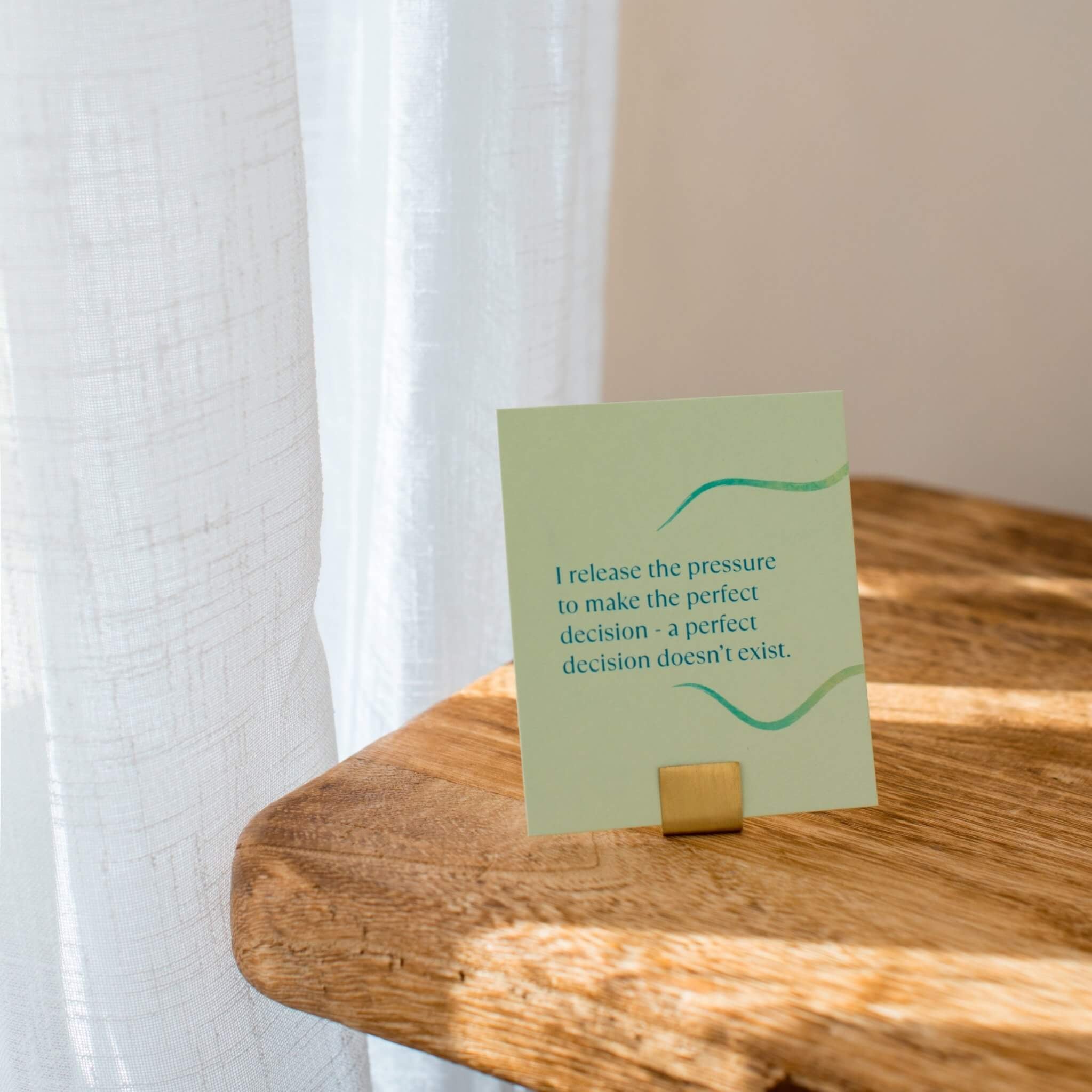
- I release the pressure to make the perfect decision, a perfect decision doesn't exist.
- I can make mistakes and learn from them, without self-criticism.
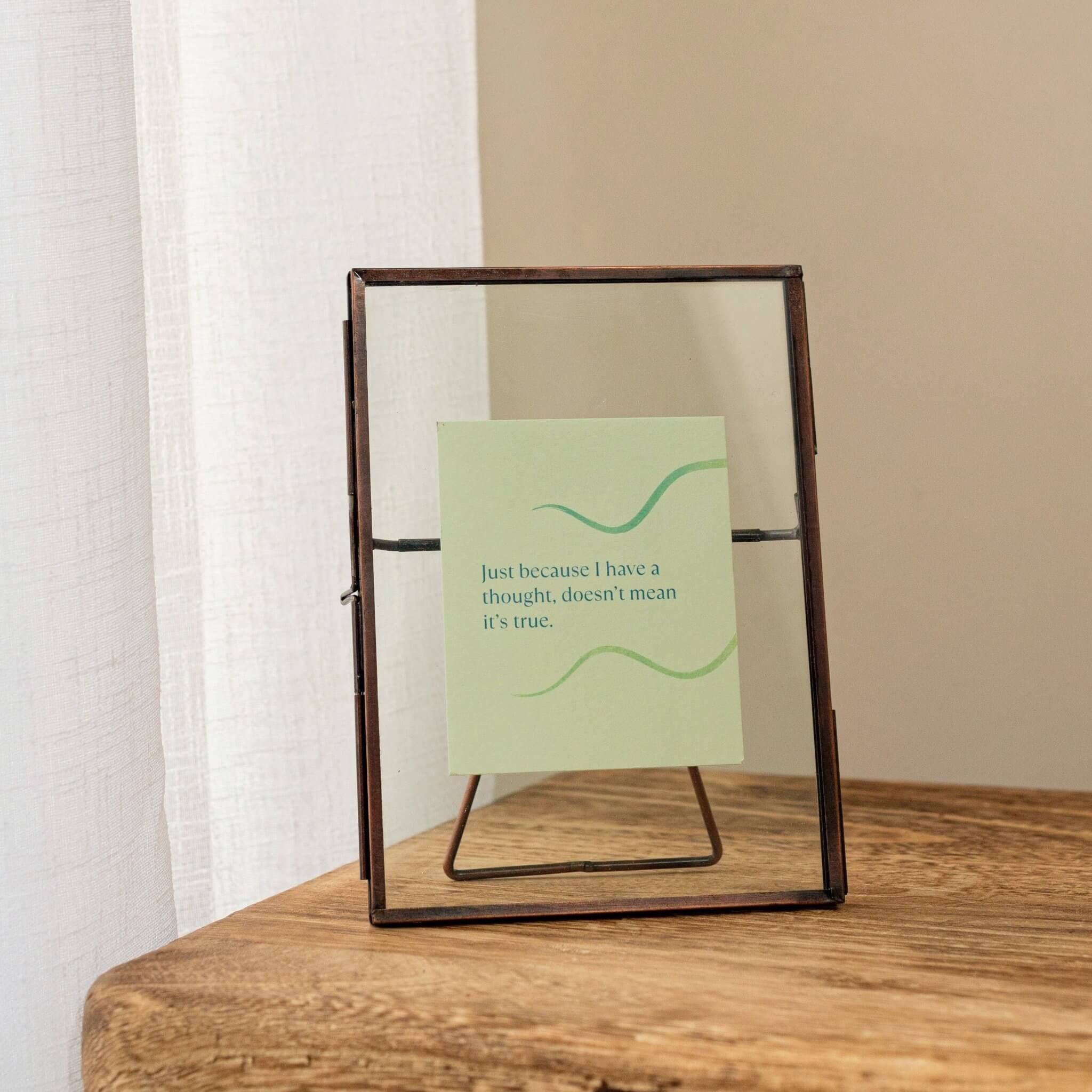
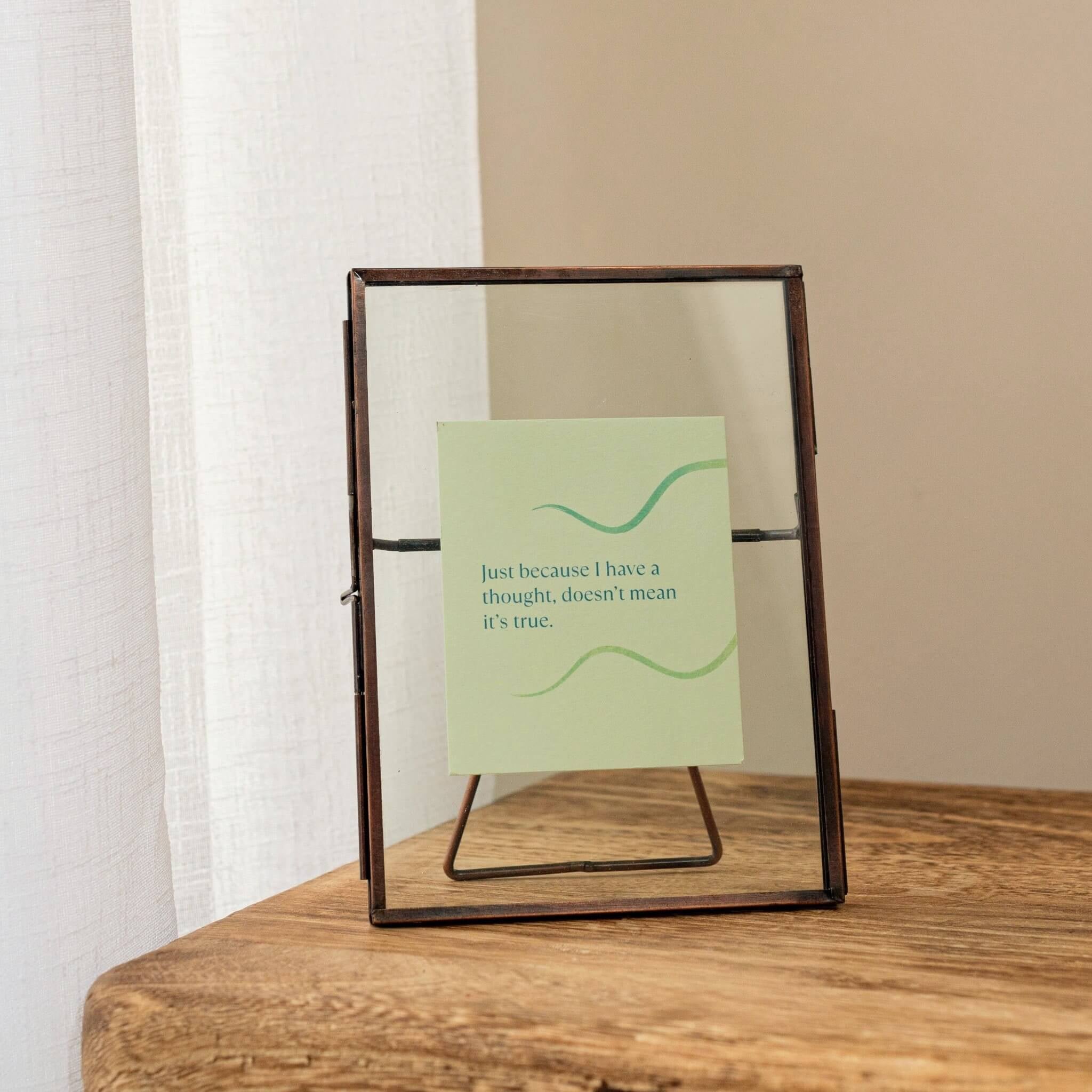
- Just because I have a thought, doesn't mean it's true.
- I recognise that life is hard sometimes, I try to always be gentle with myself.
These are here to remind us that imperfection is part of being human, not a fault to be corrected.

For boundaries and rest
- I can welcome time to rest.
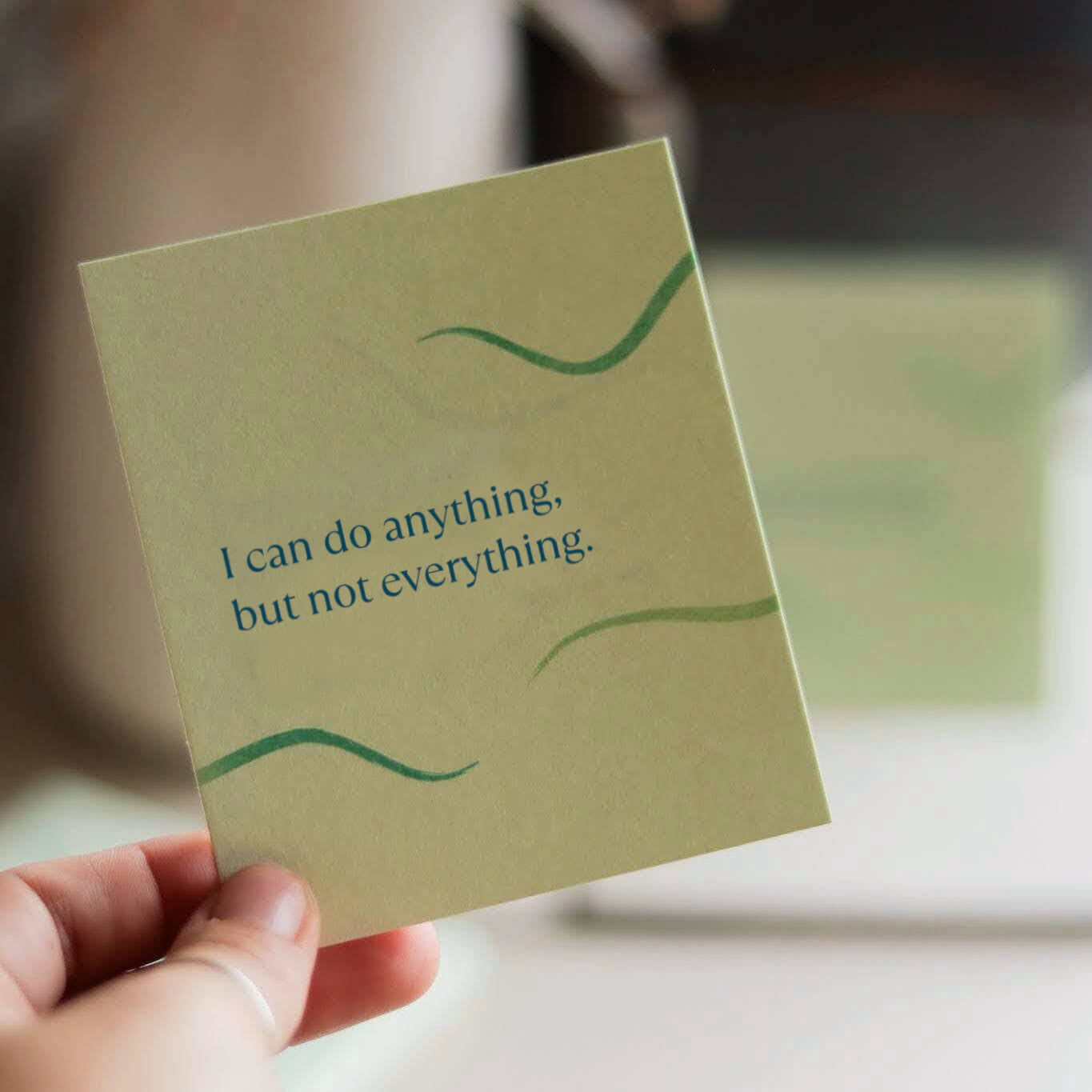
- I am allowed to say no.
- I don't need to earn rest to deserve it.
- I can make time for things that bring me joy, without feeling guilty.
Setting boundaries and allowing yourself to rest isn't selfish. It's an essential part of self-compassion, and these are for the days that's hard to believe.
For processing emotions
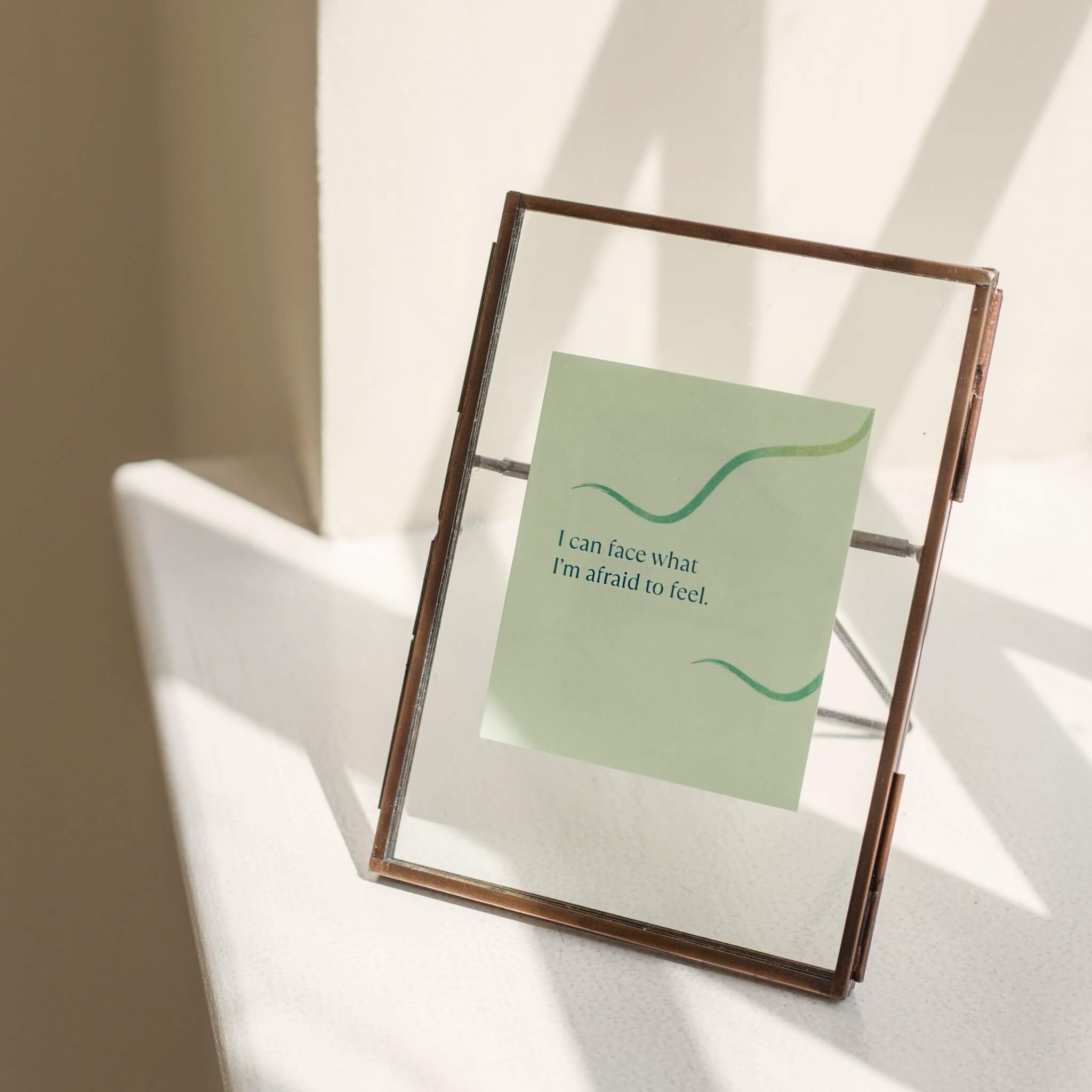
- I can feel both grateful AND sad, nervous AND excited, brave AND afraid.
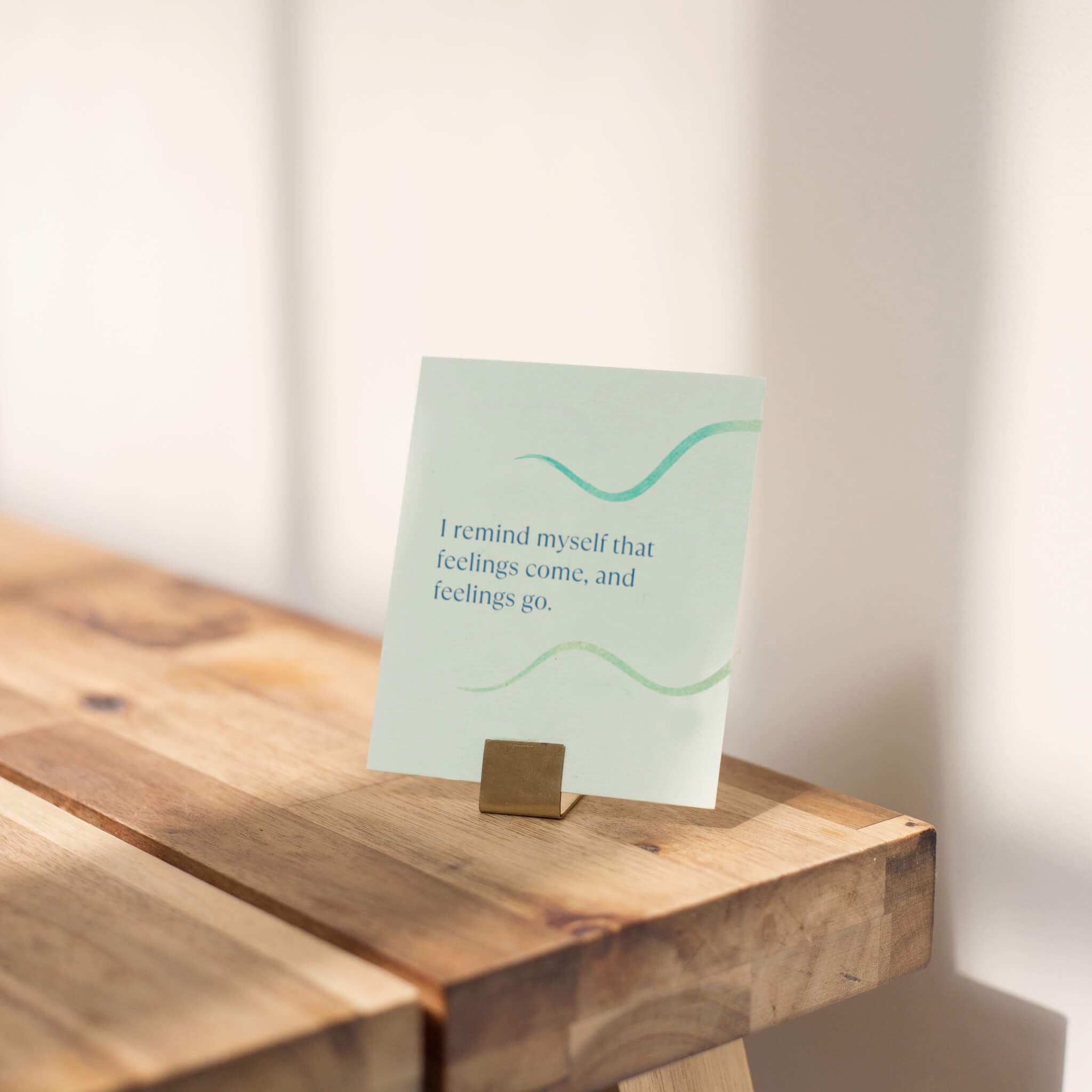
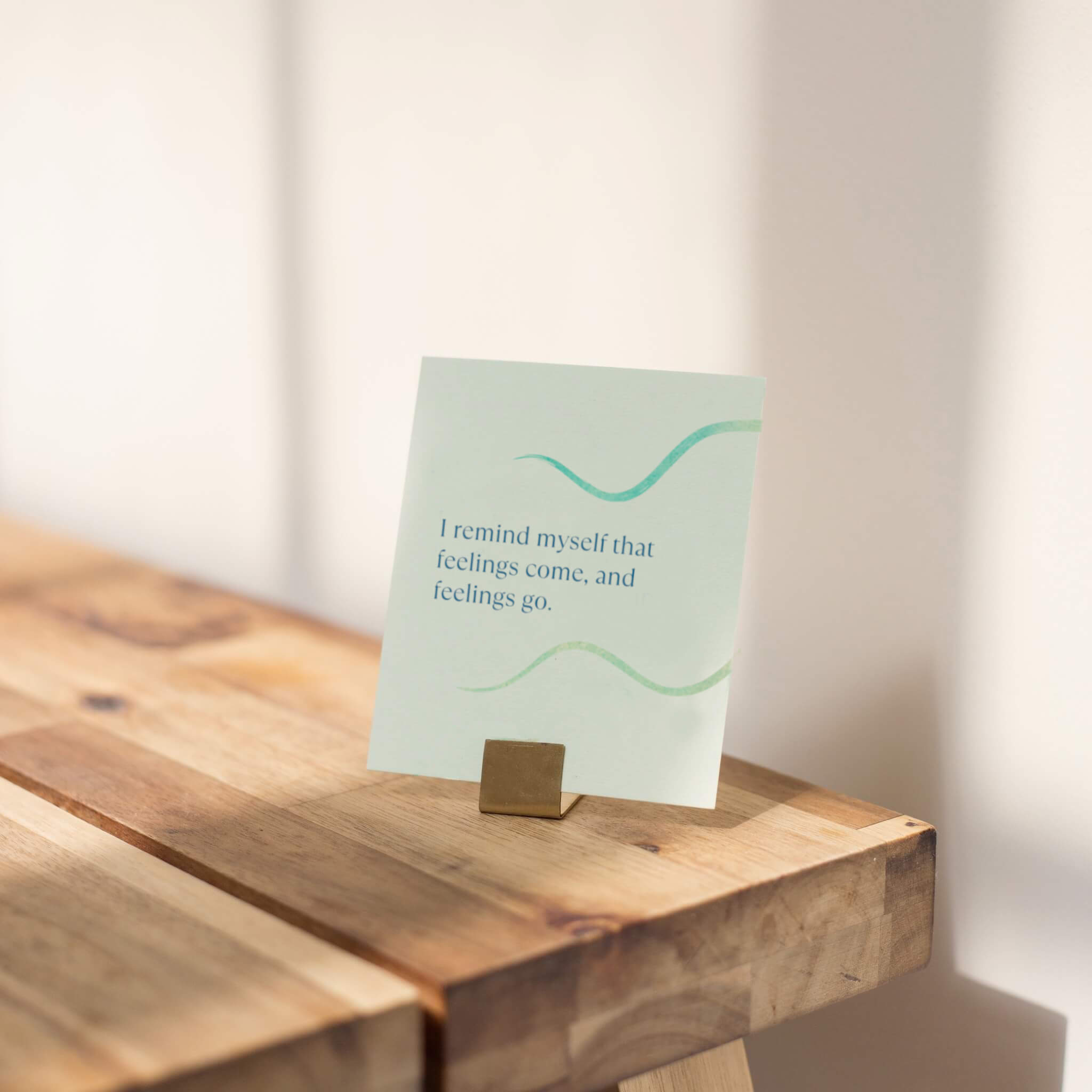
- I remind myself that feelings come, and feelings go.
- I am gentle with myself if I feel things deeply, knowing that sensitivity is not a weakness.
Feeling all of it is part of being human. These help you meet your emotions with understanding rather than judgement.
For growth and learning
- I remind myself that no one was an expert before they were a beginner.
- I recognise that sometimes the only way forward is trial and error, and that is okay.
- I can try something new, make mistakes and grow.
- I choose to embrace the journey instead of being fixed on a destination.
Growth usually means stepping outside what's comfortable. These support you in meeting that with kindness rather than criticism.
For nurturing self-worth
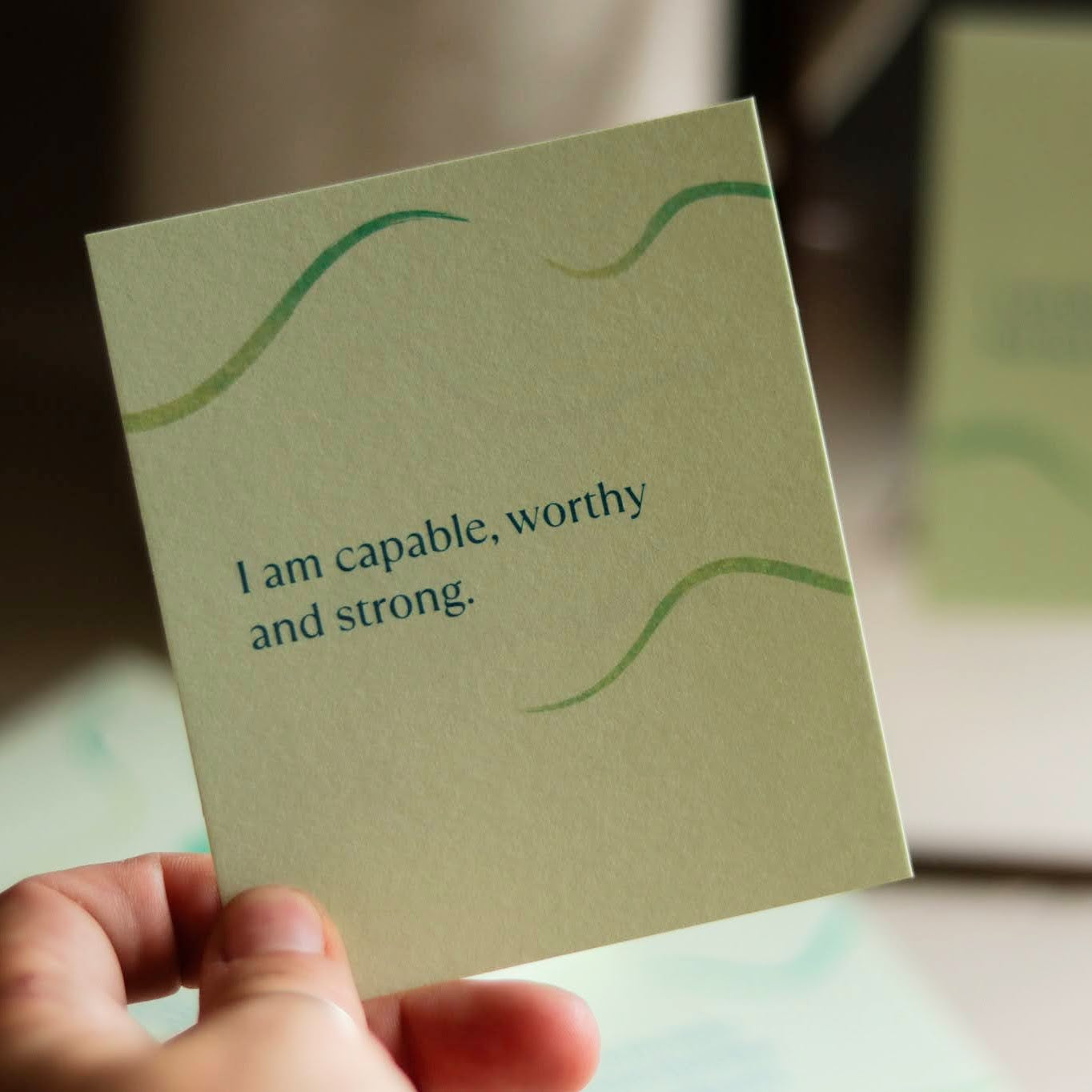
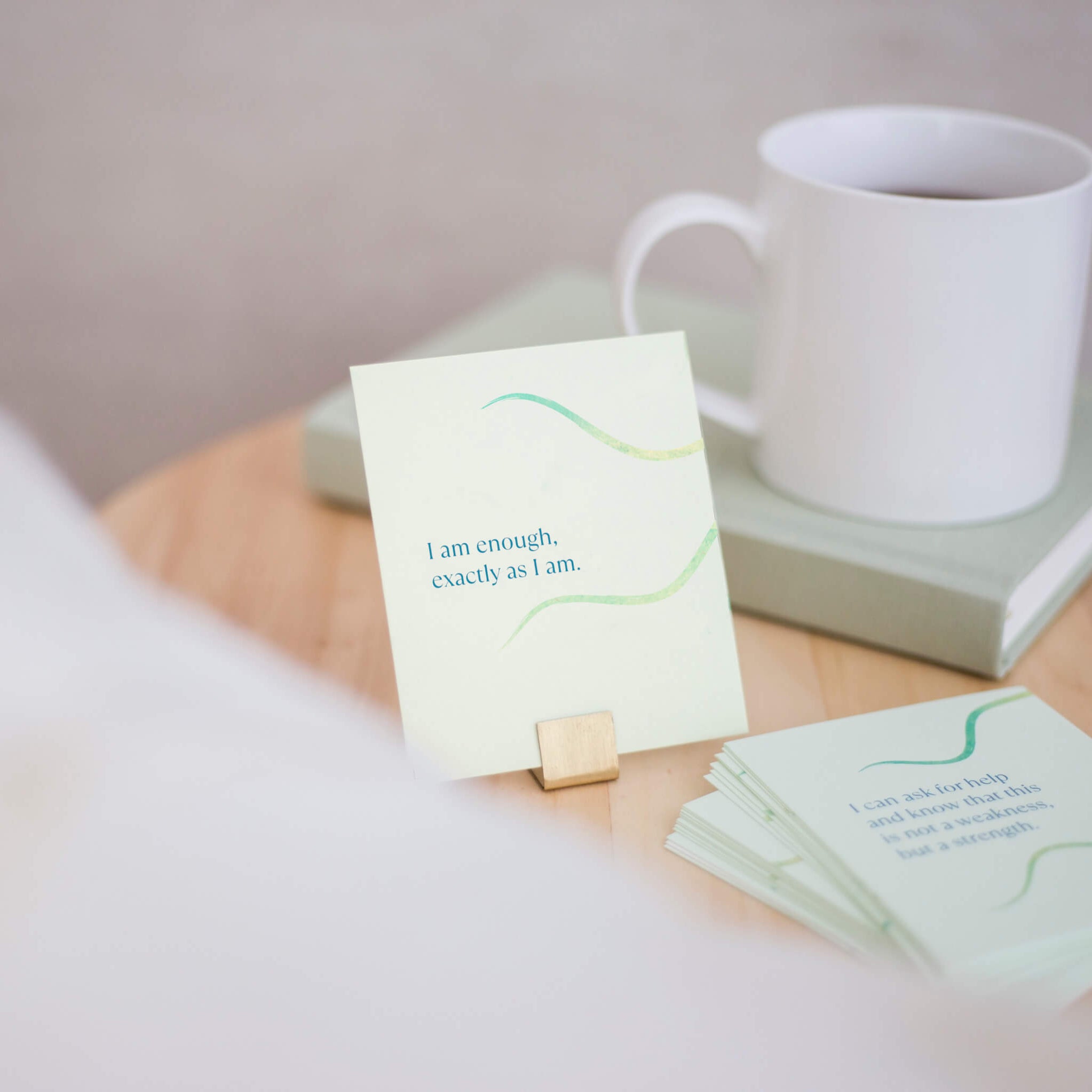
- I am worthy now, and this will never change.
- I am deserving of love, compassion and kindness, exactly as I am.
- My worthiness of love does not depend on being faultless.
- We all deserve kindness, and 'all' includes me.
Your worth isn't tied to what you achieve or who approves of you. It's already there, and it doesn't move.

Which one to reach for, and when
If you'd rather not choose, here's the shortcut.
When everything feels like too much
"I remind myself that feelings come, and feelings go" or "I can welcome time to rest." Both say the same quiet thing: this is not permanent, and you're allowed to stop.
Just after you've made a mistake
"I can make mistakes and learn from them, without self-criticism" or "I remind myself that no one was an expert before they were a beginner." This is the moment the inner critic is loudest, and the moment an affirmation does most.
When you're comparing yourself to someone else
"I am worthy now, and this will never change." Comparison works by making your worth conditional. This puts it back where it belongs.
In the middle of a genuinely hard stretch
"I recognise that life is hard sometimes, I try to always be gentle with myself." It doesn't argue with the difficulty, which is exactly why it holds.
When you need to say no and feel guilty about it
"I am allowed to say no" and "I don't need to earn rest to deserve it." Two of the hardest on the list, and usually the two people need most.
Making them work rather than just reading them
Reading a list once feels good for about a minute. What changes anything is repetition, and repetition needs to be easy or it doesn't happen.
Start with one, not twenty. Choose the affirmation that made you flinch slightly, because that's usually the one closest to something true. Then attach it to something you already do.
- Read it while the kettle boils
- Set it as a phone reminder for mid-afternoon, when the day usually turns
- Write it at the top of a journal page before you write anything else
- Say it out loud once, if you can, because speaking involves more of you than reading
- Keep it somewhere you'll pass, and move it every few days so you keep noticing it
There's a fuller guide in how to use affirmation cards, including what to do when they feel fake.
Joanna Townsend
Psychotherapist
"Self-compassion is a language, a skill, a process. It's something we often have to learn."
Which is the kindest way of putting it I've heard. If these feel unfamiliar in your mouth at first, you're not failing at them. You're learning a language you were never taught, and nobody is fluent in week one.
Read: five ways to practise self-compassion →The same affirmations, somewhere you'll actually see them
The twenty above are yours. The difficulty is that a page you read once is a page you close, and by Thursday the words have gone.
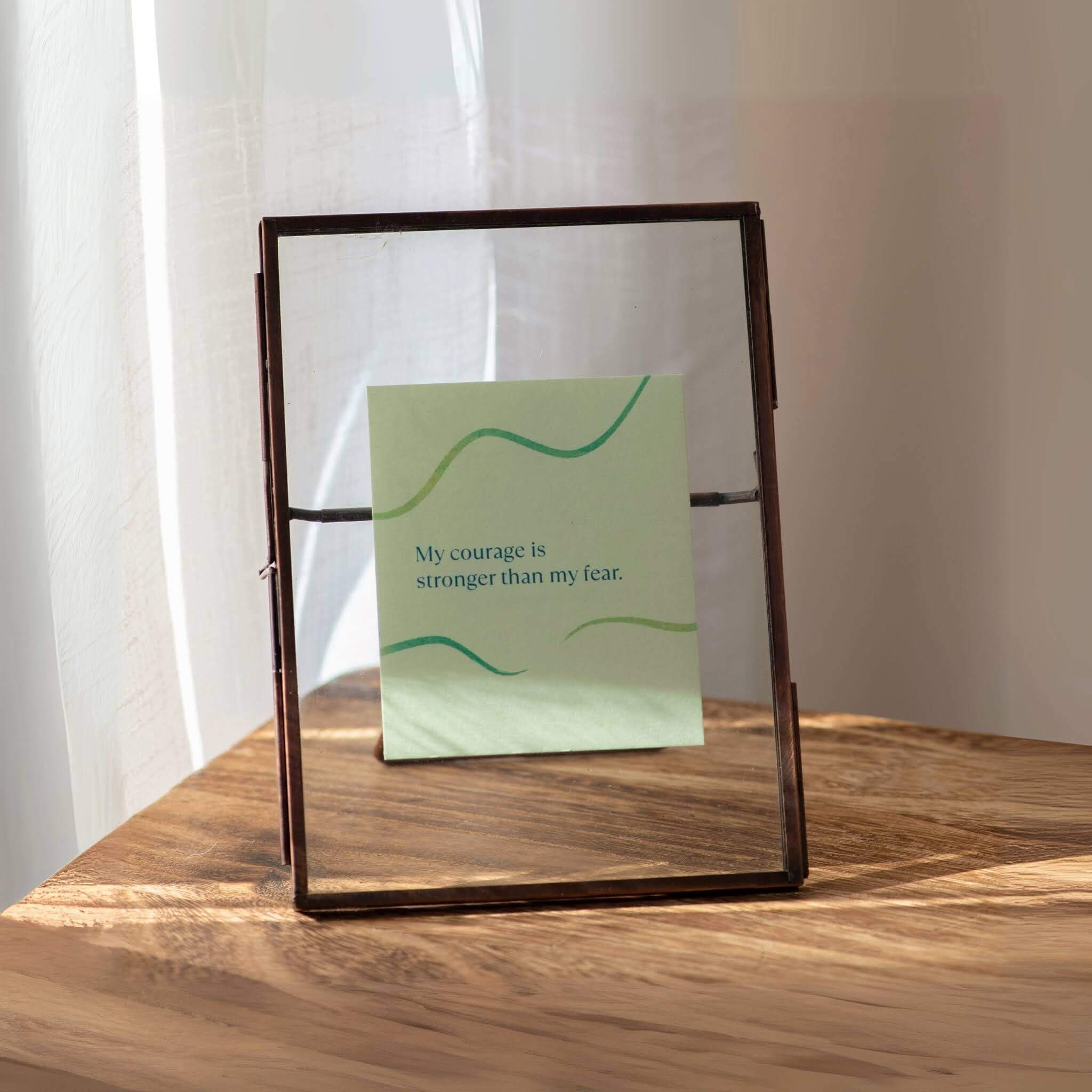
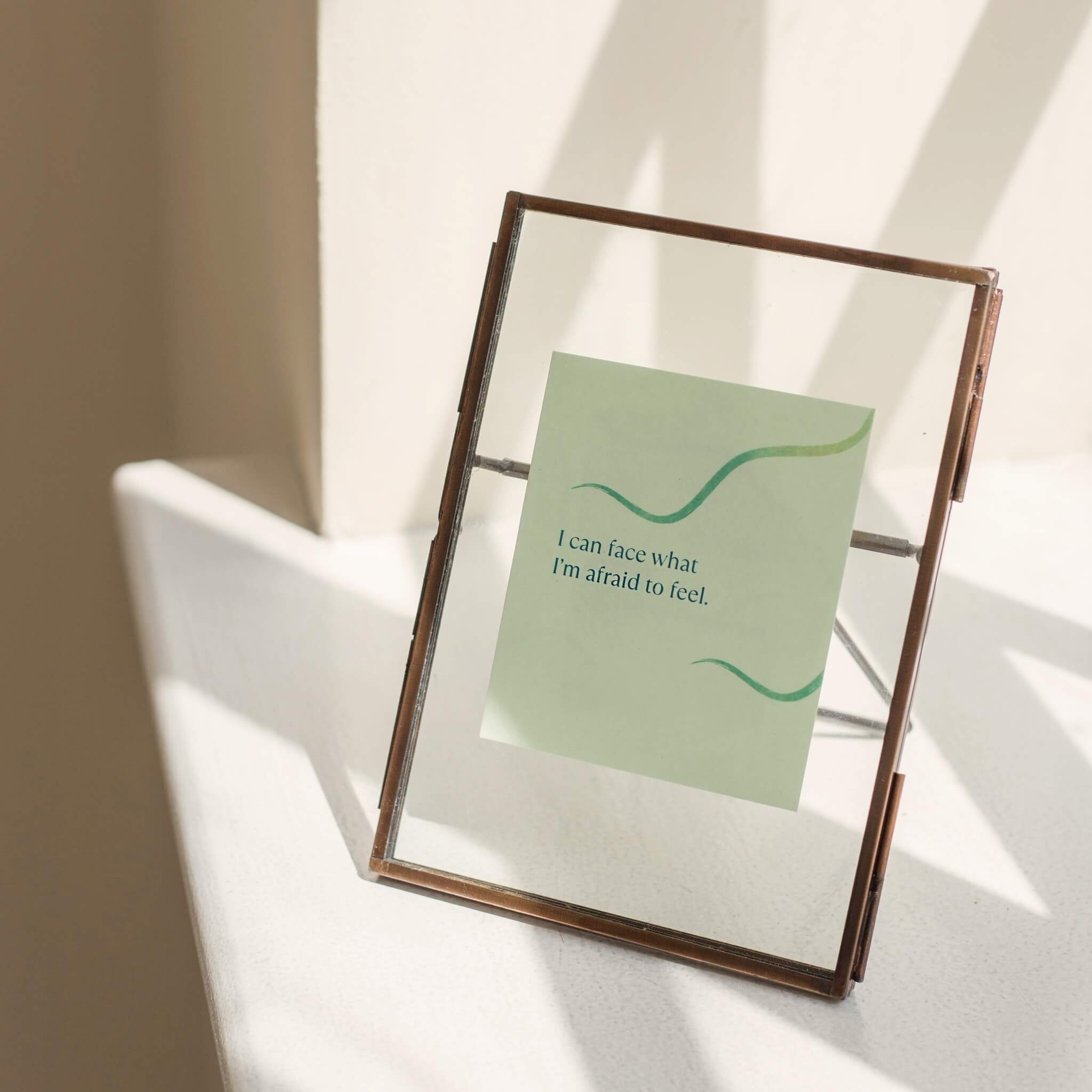
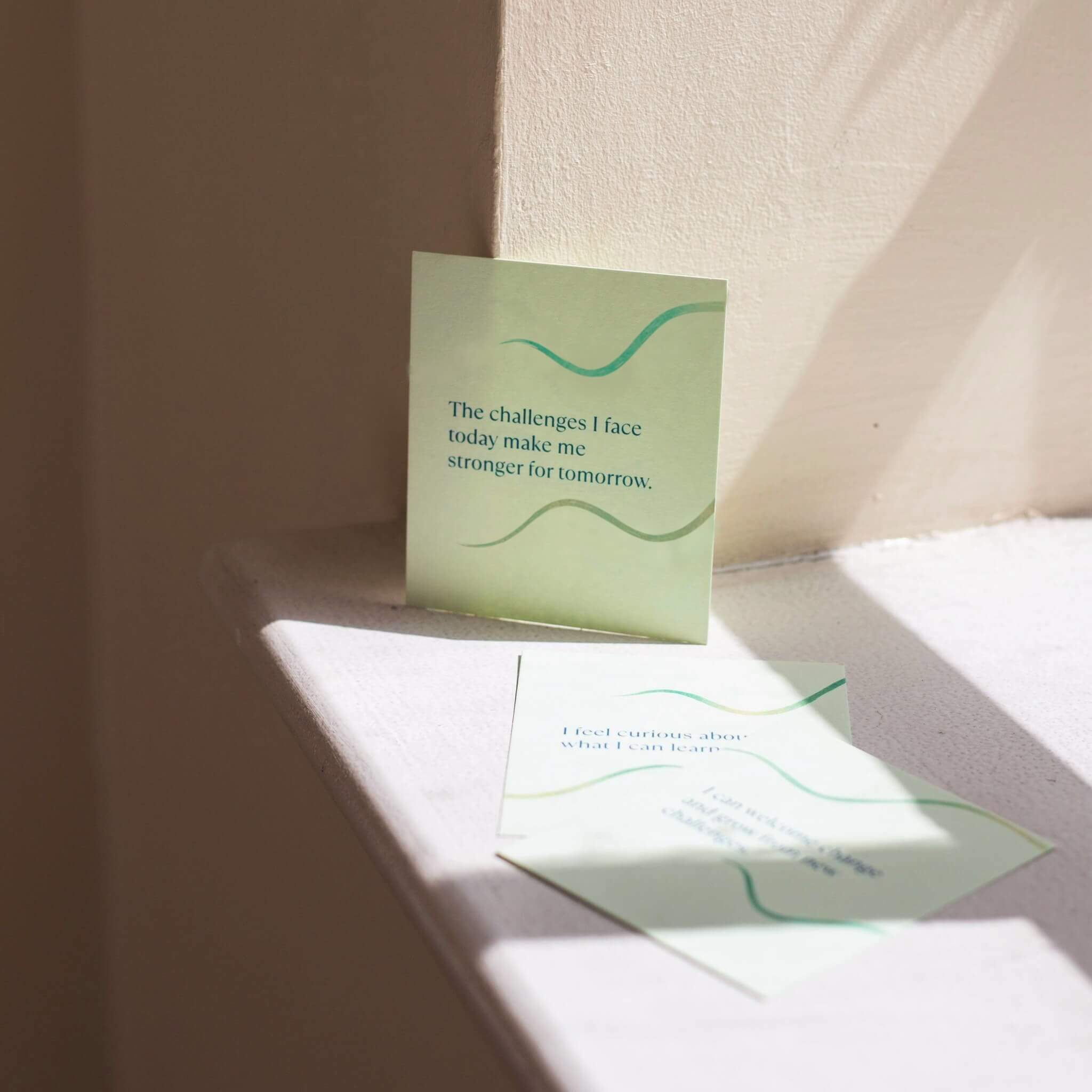
That's the whole reason the deck exists. One card sits where you'll pass it, so the affirmation finds you on the ordinary Tuesday you'd never have gone looking for it. You draw a different one when the first stops landing. And there are sixty rather than twenty, so it doesn't run dry.
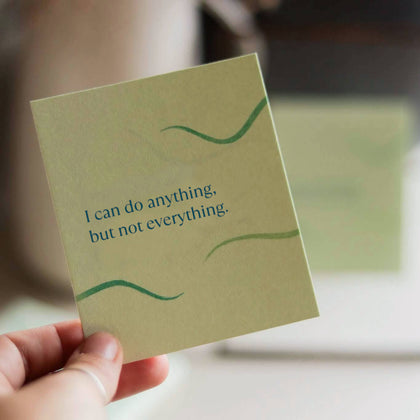
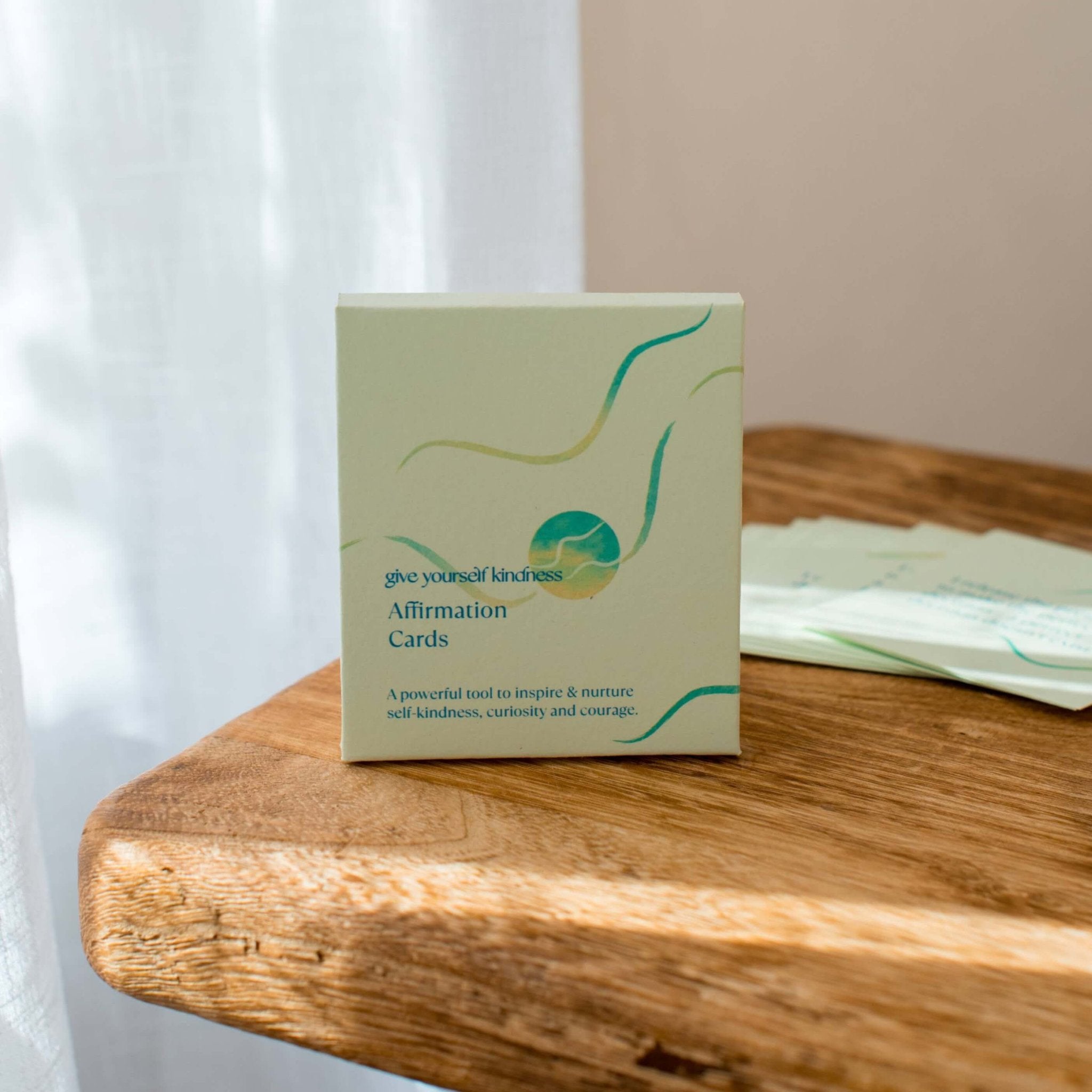
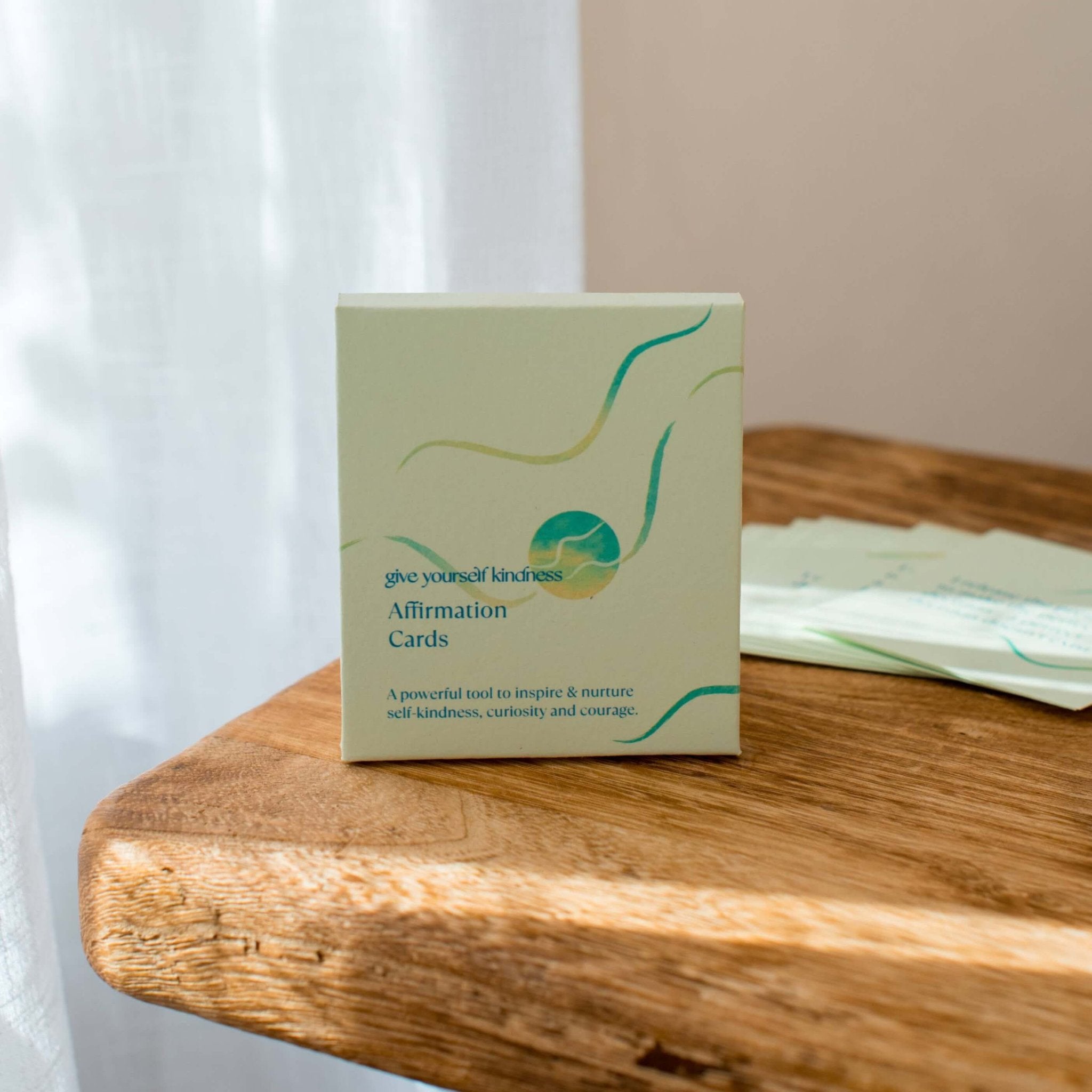
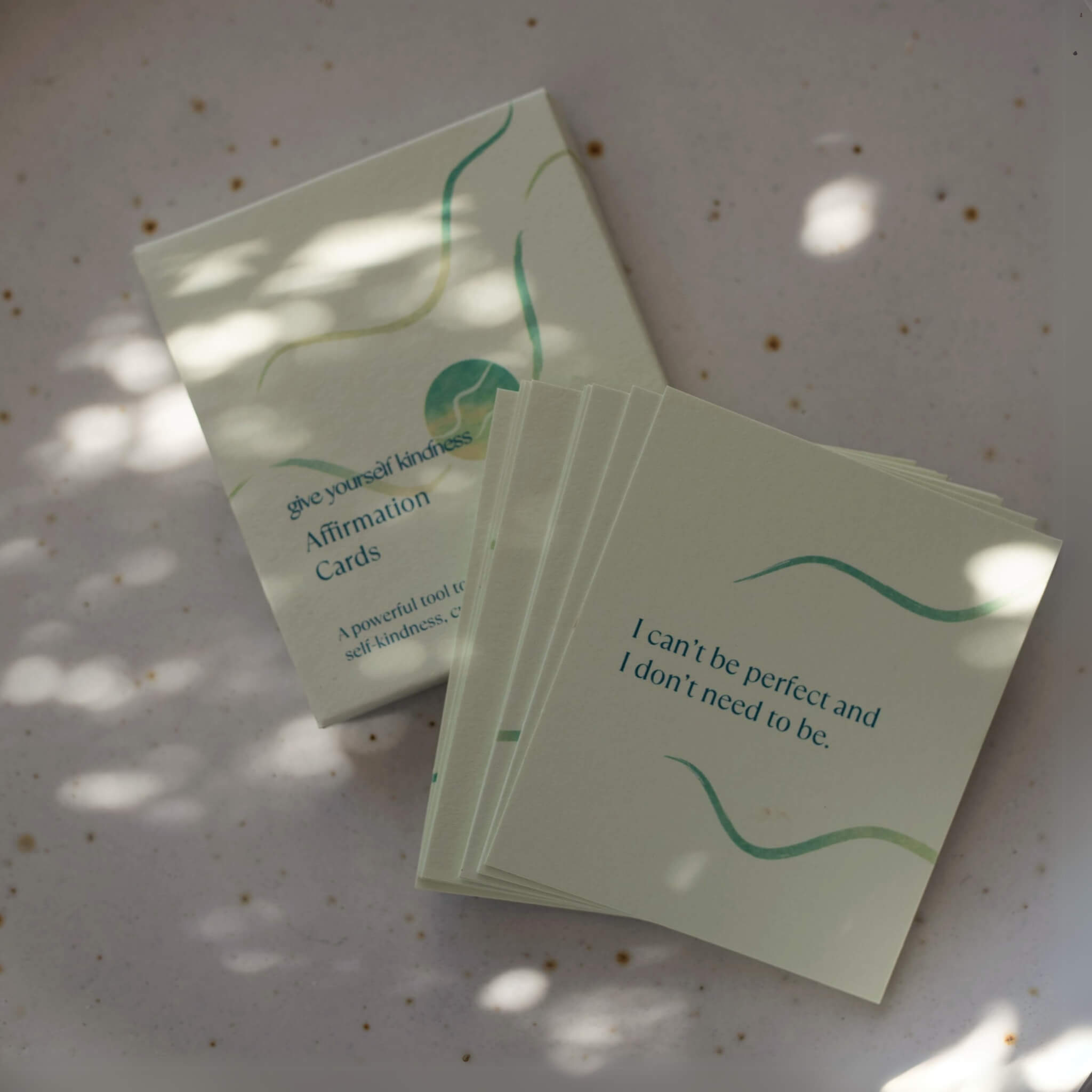
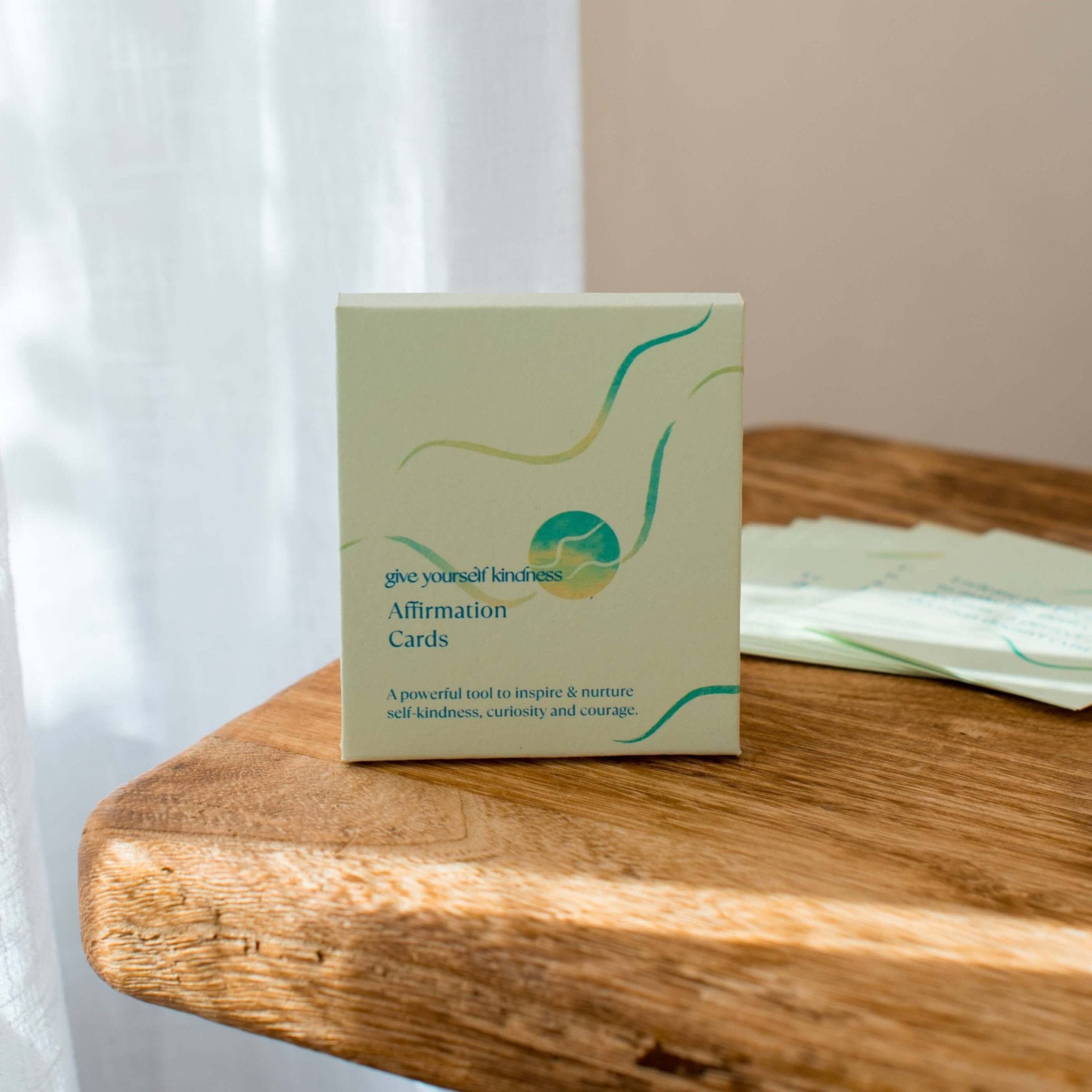
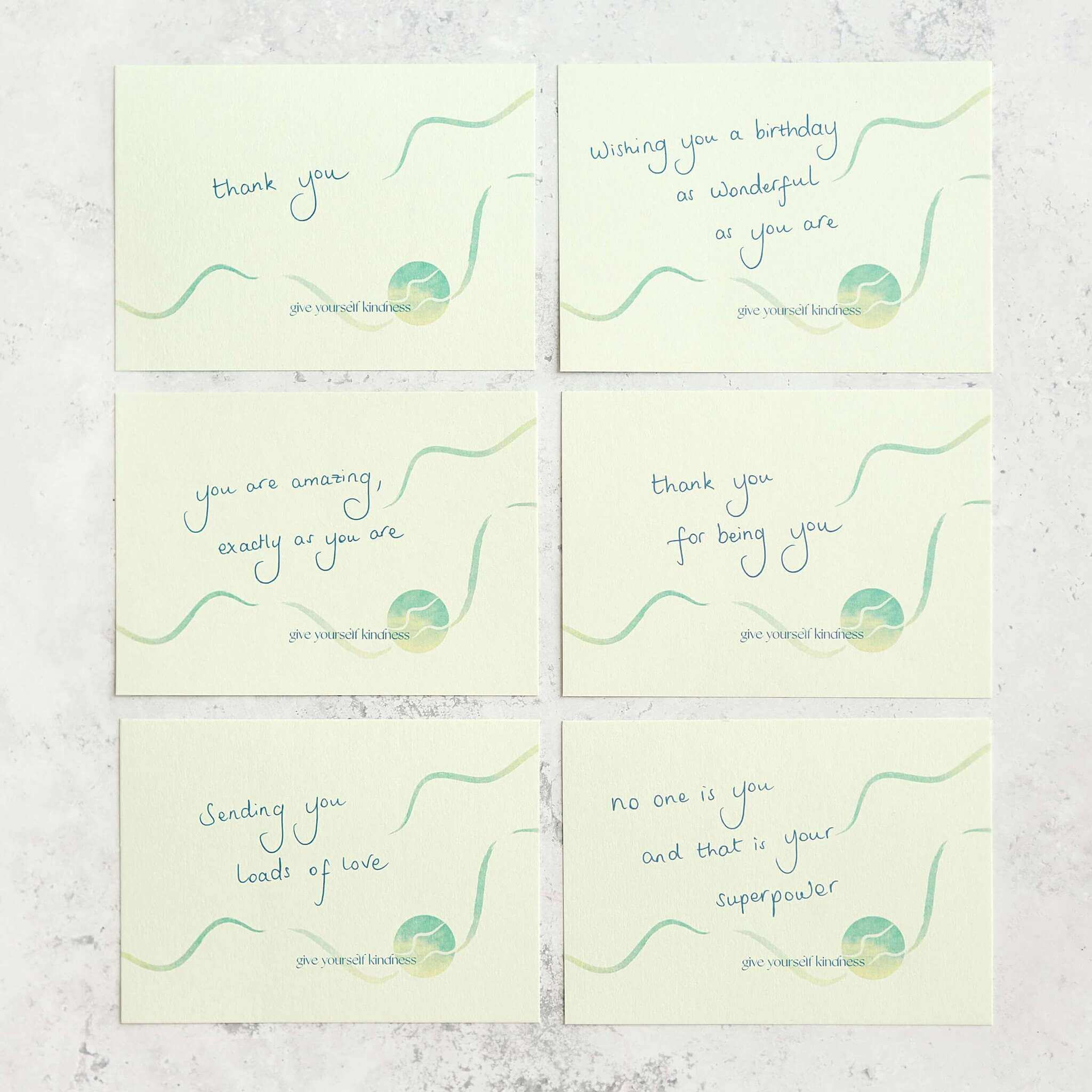
The Give Yourself Kindness Affirmation Cards
Sixty affirmations that never ask you to pretend
- Three boxed sets of twenty, sixty in total. Nothing repeats, and each set is complete on its own, so Set 1 is a proper starting point rather than a sample.
- Written on Compassion-Focused Therapy principles, which is why they acknowledge difficulty instead of talking over it.
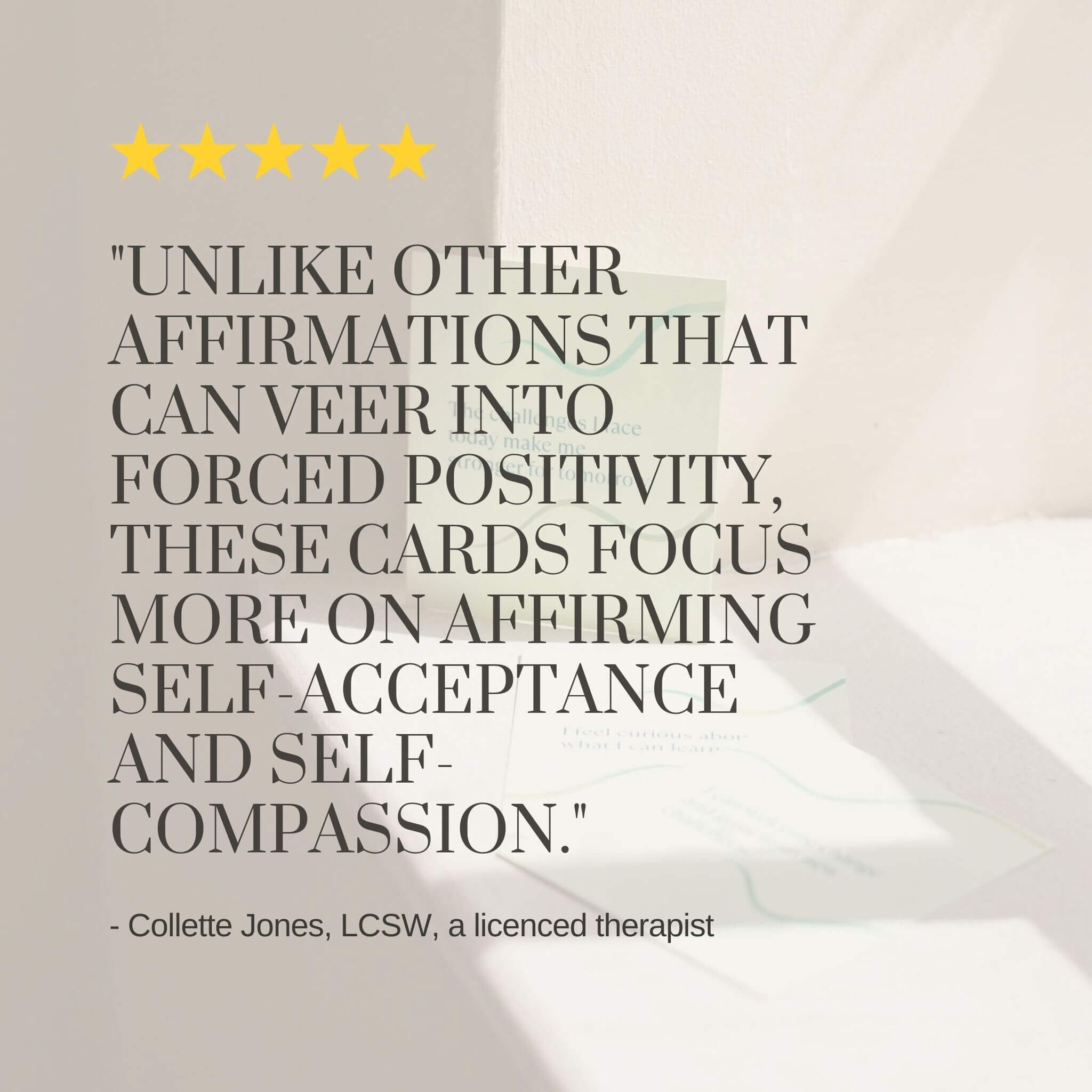
- Recommended by licensed therapists including Margaret Davis, MS LPC and Collette Jones, LCSW, who use them with their own clients.
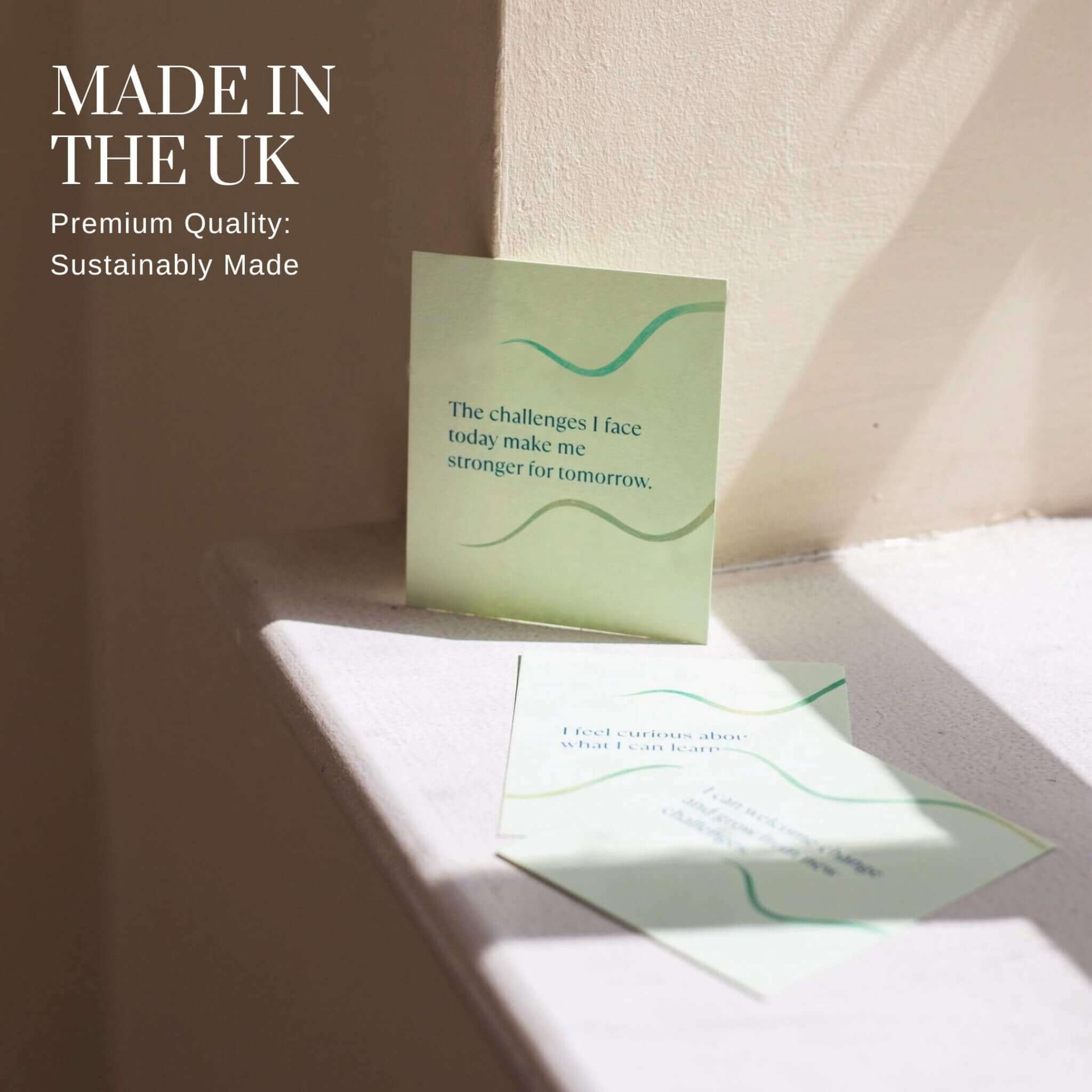
- Printed in the UK on luxury 270gsm card from FSC-certified forests, with plastic-free packaging.
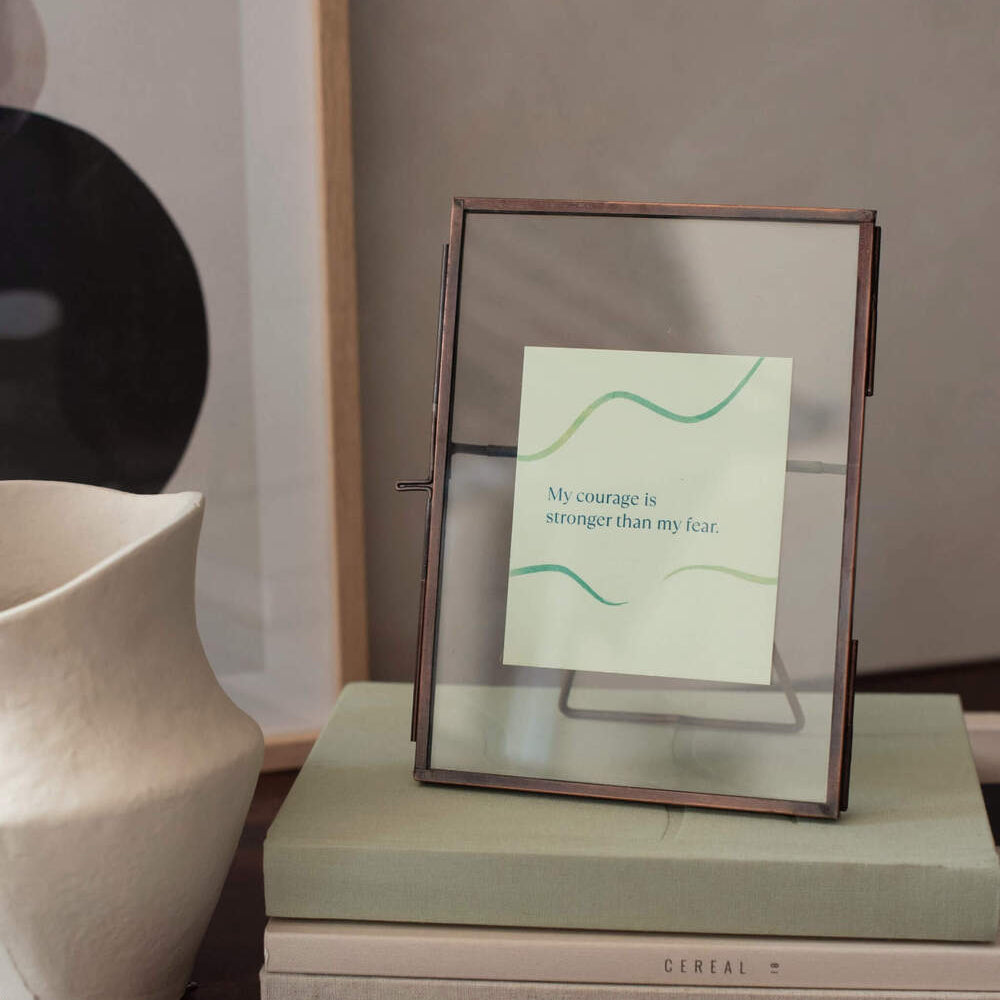
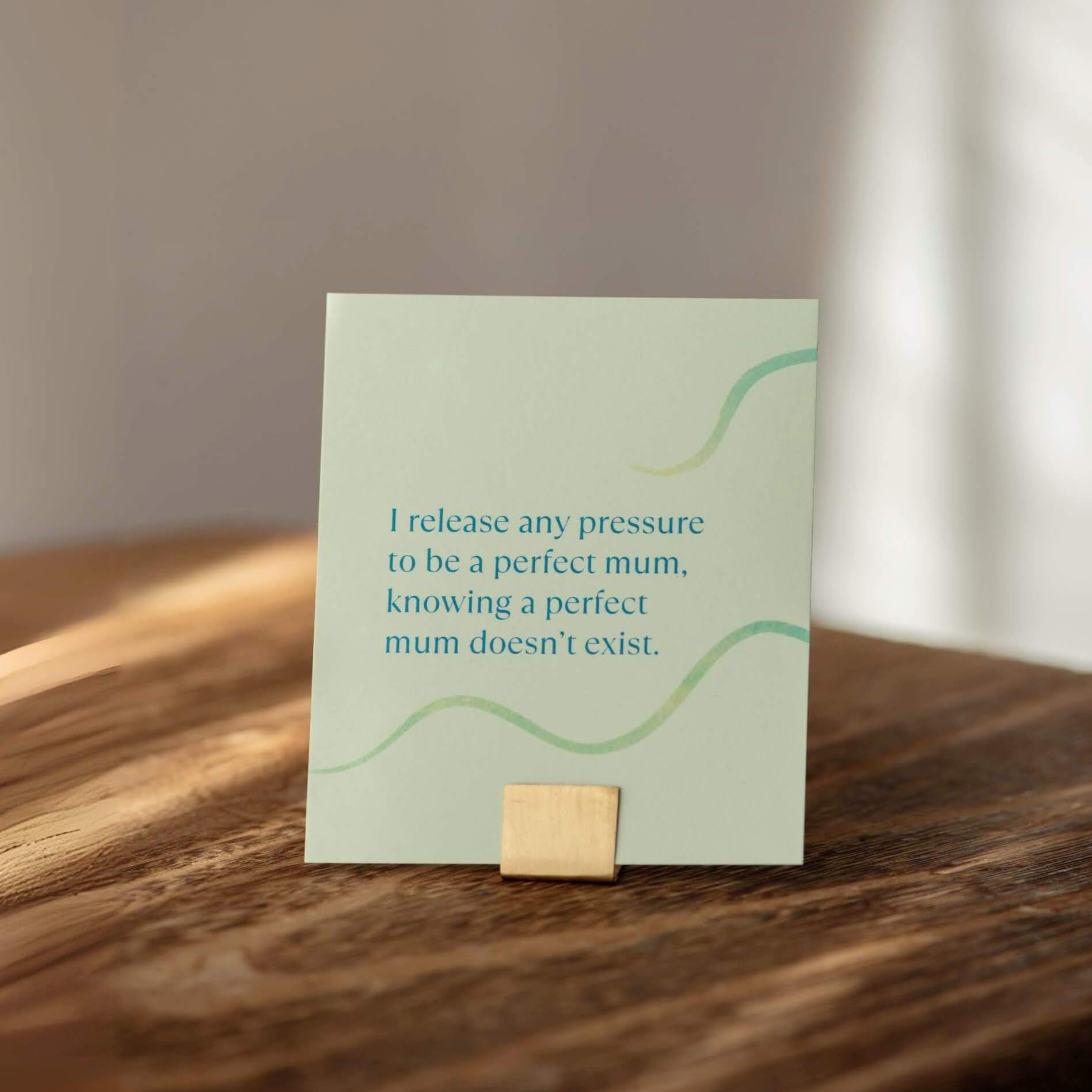
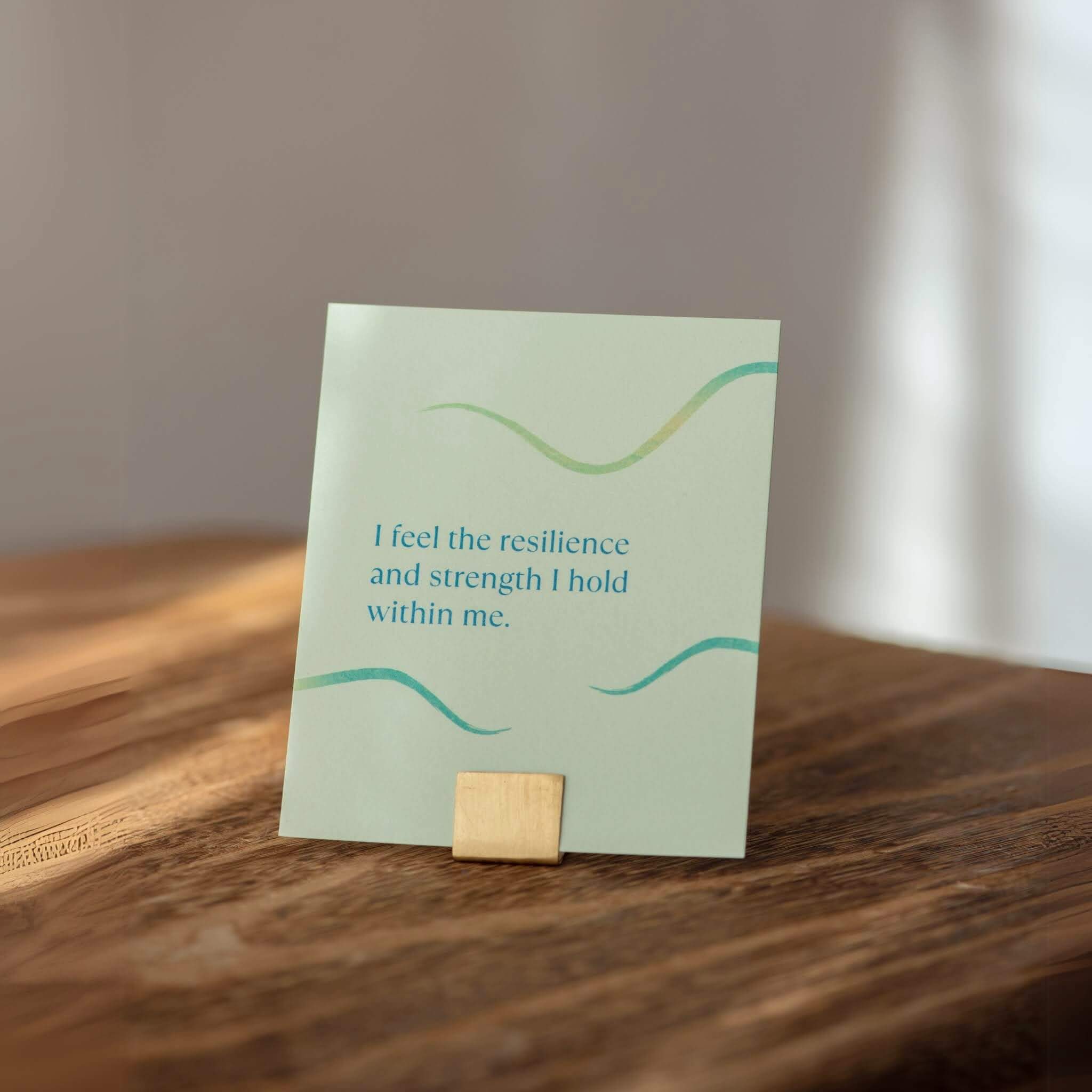
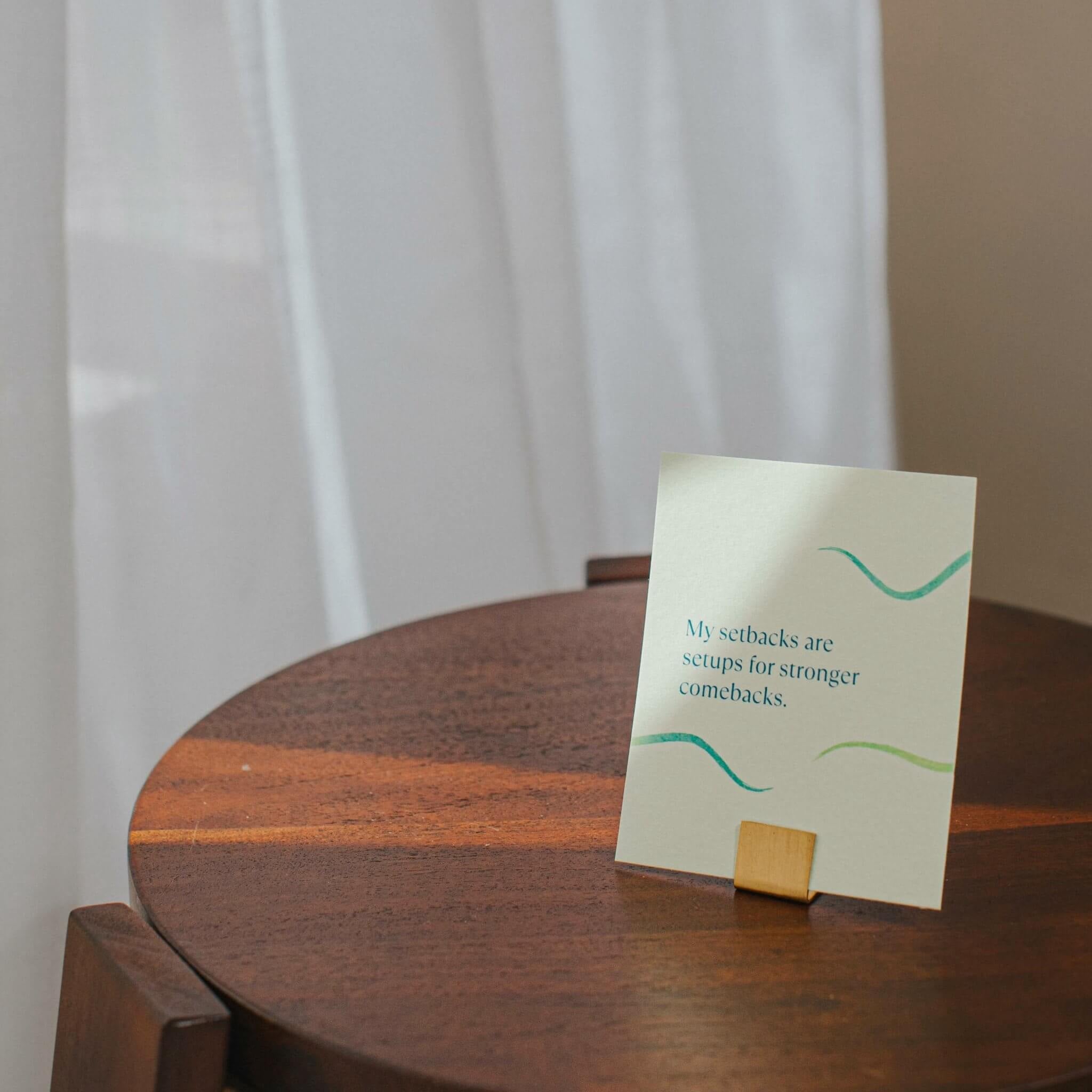
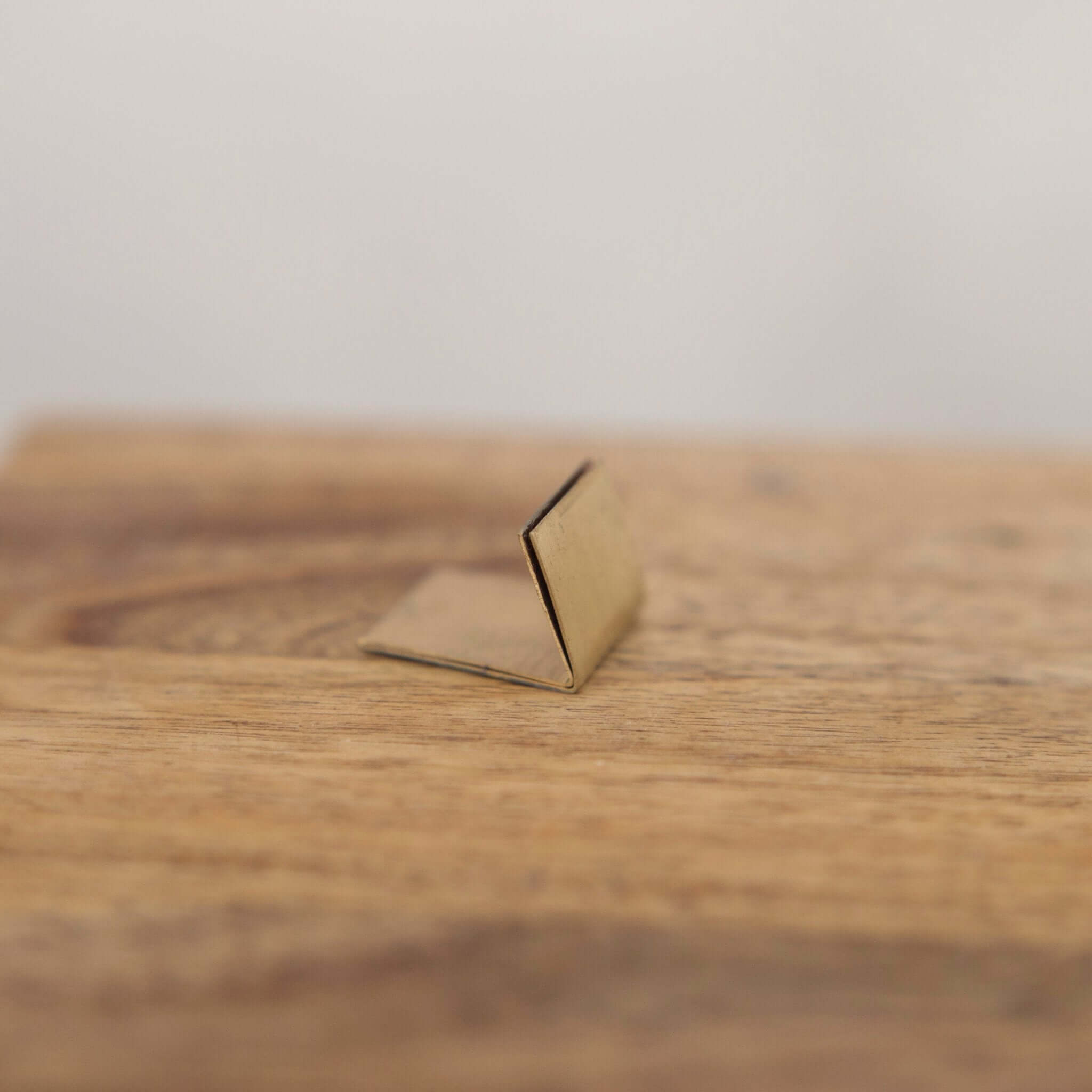
- Add a brass stand for £3, so a card can sit somewhere you'll pass it.
Added to your basket. View basket →
The Complete Collection includes free UK delivery. Free handwritten note if it's a gift, just add your message in the order notes at checkout.

Margaret Davis, MS, LPC
Licensed therapist, specialising in anxiety, self-esteem and self-compassion
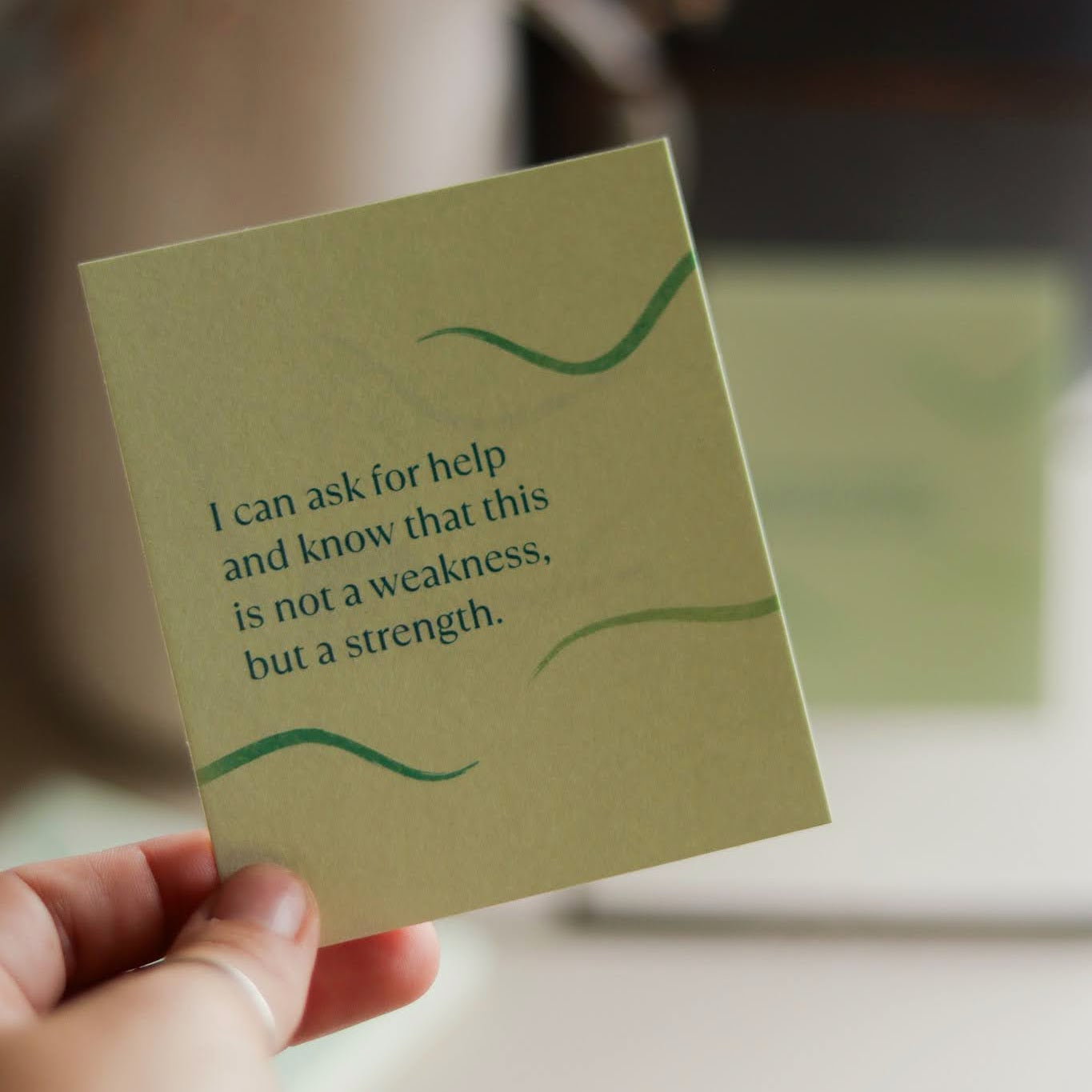
"Affirmations can be so helpful along our healing journey. And these affirmations are truly so beautiful and powerful! When I read them, I instantly feel a sense of groundedness and calm. They are wonderful reminders for when I need to slow down and reconnect with myself. I also love that they are centered around having more compassion and kindness for ourselves. I will definitely be utilizing these with my clients, as well as practicing them myself. Thank you so much Rachel!"Read more reviews from mental health professionals →
Which set? If this is your first deck, Set 1 on its own is the sensible choice and complete in itself. The Complete Collection is worth it if you'd like one by the bed and one on the desk, or you want to keep one and give two away.
Common questions
What is a self-compassion affirmation?
A short sentence you offer yourself in a difficult moment, written to acknowledge the difficulty rather than argue with it. "I can't be perfect and I don't need to be" is a self-compassion affirmation. "I am perfect" is not, because it asks you to claim something you don't believe and leaves you further from yourself when you can't.
Do self-compassion affirmations actually work?
The wording decides it. Research on positive affirmations has found they can be ineffective or even counterproductive for people with low self-esteem, because asserting something you don't believe highlights the gap. Affirmations that make room for the difficulty work differently, and self-compassion is consistently associated with lower anxiety, less rumination and better resilience.
What's the difference between self-compassion and self-love affirmations?
Self-love affirmations tend to assert worth outright, along the lines of "I love myself completely". Self-compassion affirmations are gentler and easier to accept on a bad day, because they only ask you to treat yourself as you would a friend. If self-love language makes you wince, start here instead.
What if they feel fake or uncomfortable?
That's usual, and it eases after a couple of weeks. You're not trying to believe the sentence today, you're making it familiar, and belief tends to follow familiarity rather than lead it. Dr Chris Irons describes self-compassion evoking real fear and resistance in people, so if you feel that, you're in ordinary company.
How many should I use at once?
One. Choose the affirmation that made you flinch slightly, because that's usually the one closest to something true, and stay with it for a week. Twenty read once does far less than one read twenty times.
Can I use these while going through something really hard?
Yes, and this is the kind that suits a hard time, because none of them require you to feel positive. "I recognise that life is hard sometimes, I try to always be gentle with myself" is designed for exactly that moment. If what you're carrying is affecting your sleep, work or relationships, please also speak to a GP or a therapist.
One card, somewhere you'll pass it
Sixty self-compassion affirmations, recommended by licensed therapists, from £13.95.
See the cards →