




Many of us experience anxiety at work, whether it's before a big presentation, during team meetings, or while facing tight deadlines. These feelings are completely normal, yet they can often feel overwhelming and isolating.
What are work anxiety affirmations?
Work anxiety affirmations are gentle reminders that help you respond to workplace challenges with self-compassion rather than self-criticism. They're not about forcing positivity or denying your feelings. They help you acknowledge the anxiety while challenging the commentary that comes with it.
Below are 20 affirmations, grouped by what the anxious voice is actually saying:
- Managing perfectionism, for when nothing feels good enough to send
- Building confidence, for when you're second-guessing your own contribution
- Handling challenges, for when something has gone wrong
- Setting boundaries, for when you can't say no
Why anxiety at work gets louder when you criticise yourself
There's a specific reason work anxiety escalates, and it isn't the deadline. It's the second layer: the commentary about the anxiety itself. Why am I like this. Everyone else copes. I should be better at this by now.

Dr Erika Bach
Licensed clinical psychologist specialising in anxiety, writing exclusively for Give Yourself Kindness
"For many dealing with uncomfortable emotions, there is a lot of judgment and self-criticism involved... While this commentary is meant to 'figure out' or minimize the experience of anxiety, what it does is compound the emotional pain by adding another distressing emotion: shame."
That's the mechanism worth understanding before you read a single affirmation. The self-criticism feels productive, like you're solving something. What it actually does is add shame on top of the anxiety you already had, so now there are two things to manage instead of one.
Every affirmation below is aimed at that second layer, not at the anxiety itself. None of them will talk you out of feeling nervous before a presentation, and none of them try to.
Read: How self-compassion can help us manage anxiety, by Dr Erika Bach →20 affirmations for different work situations
For managing perfectionism
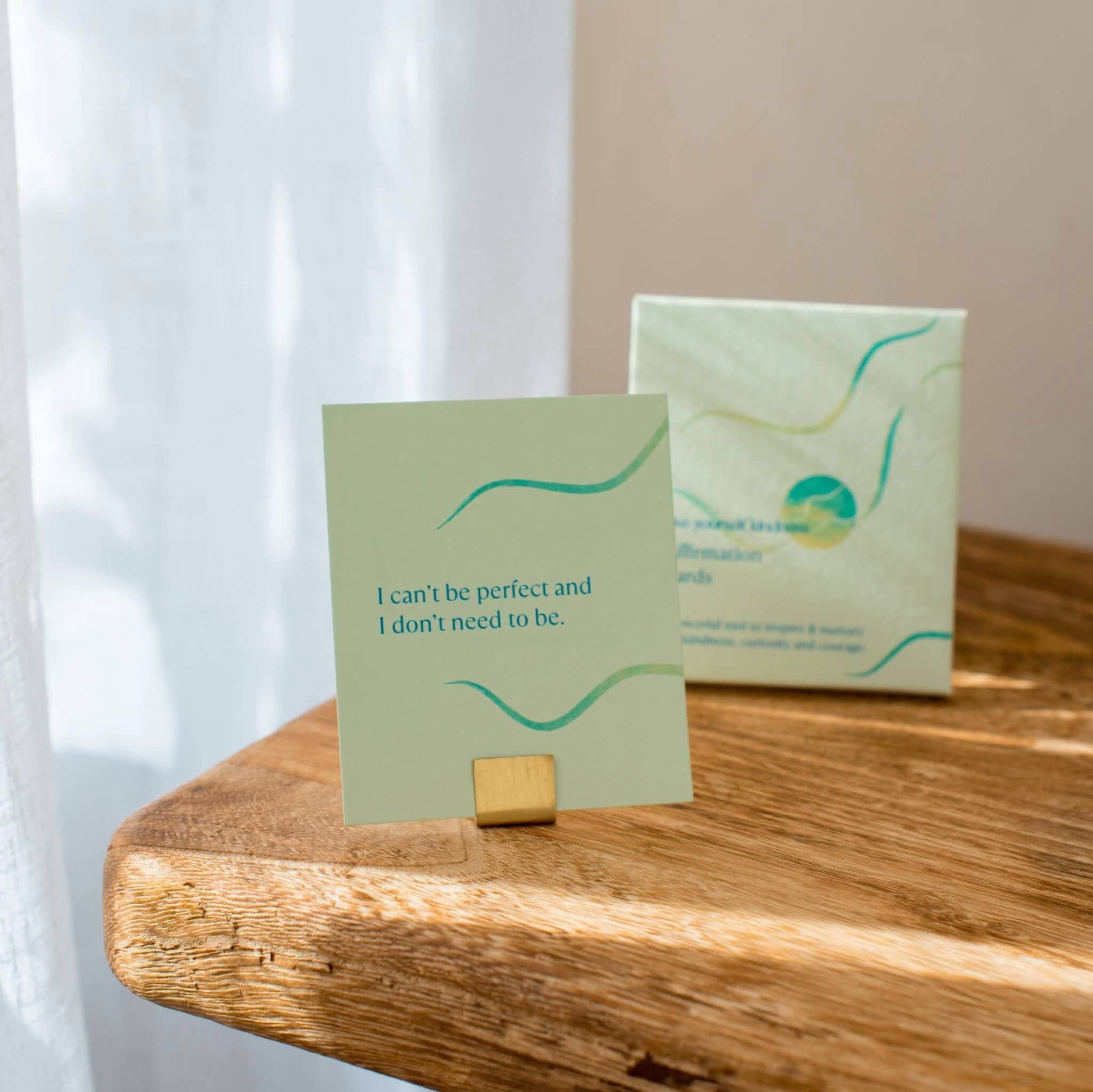
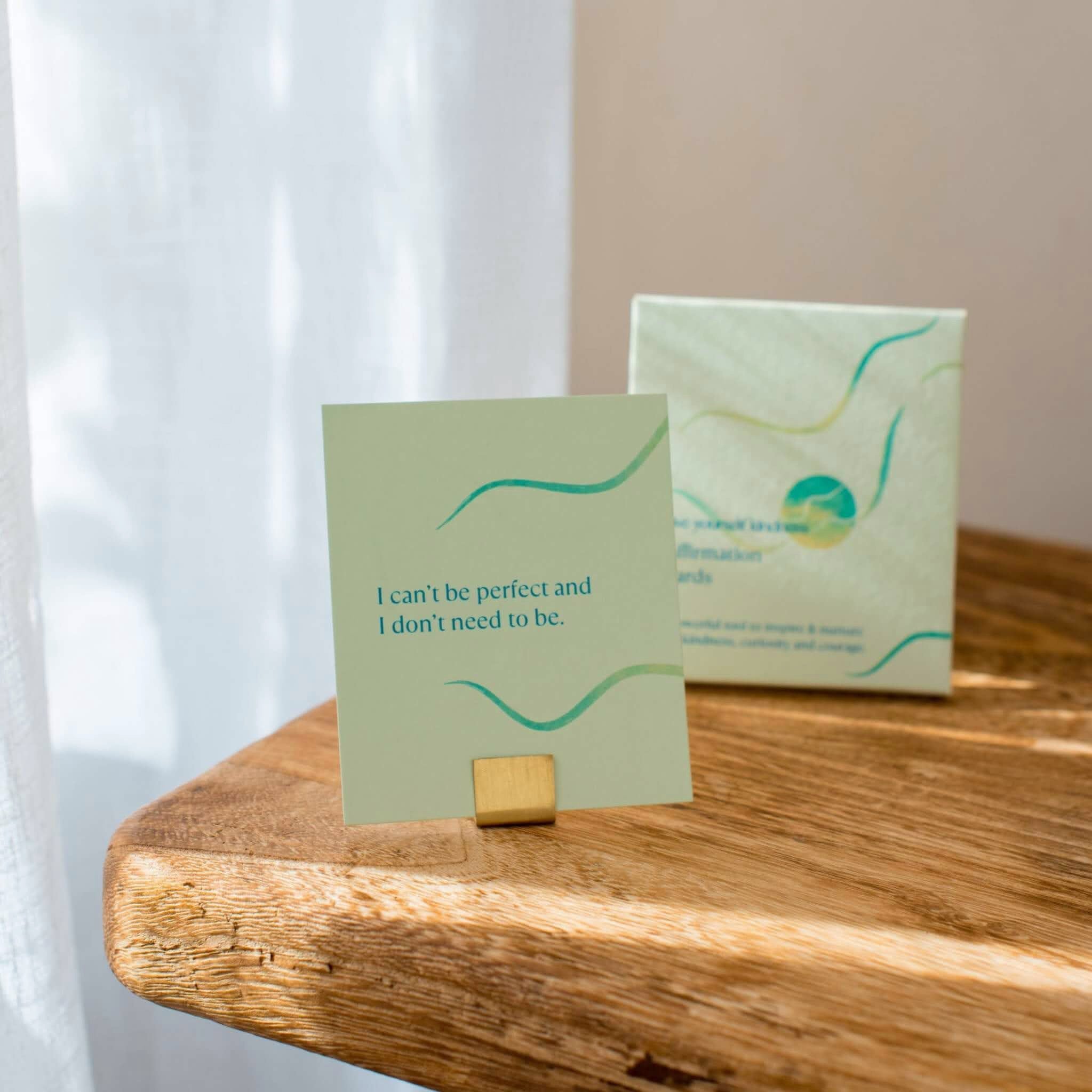
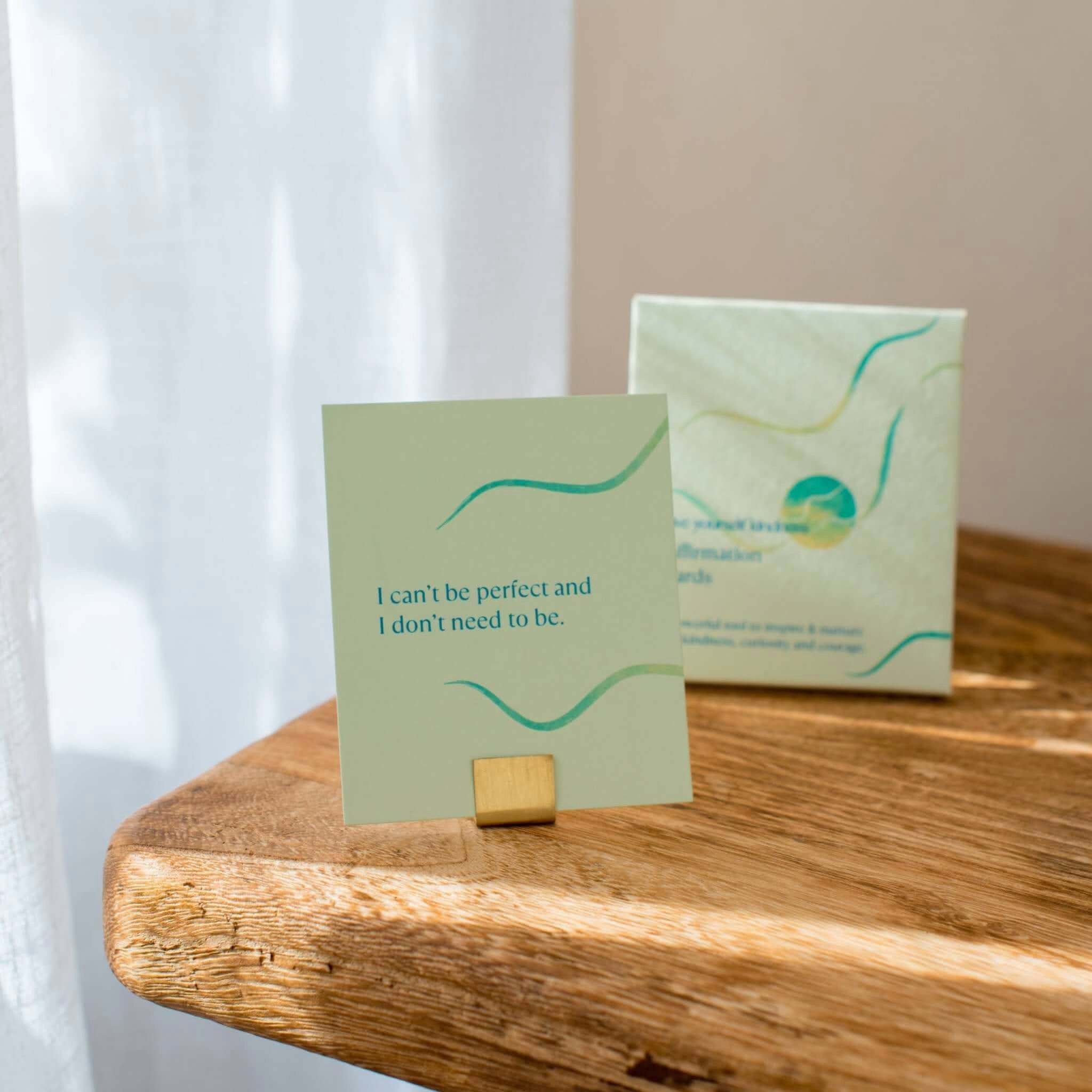
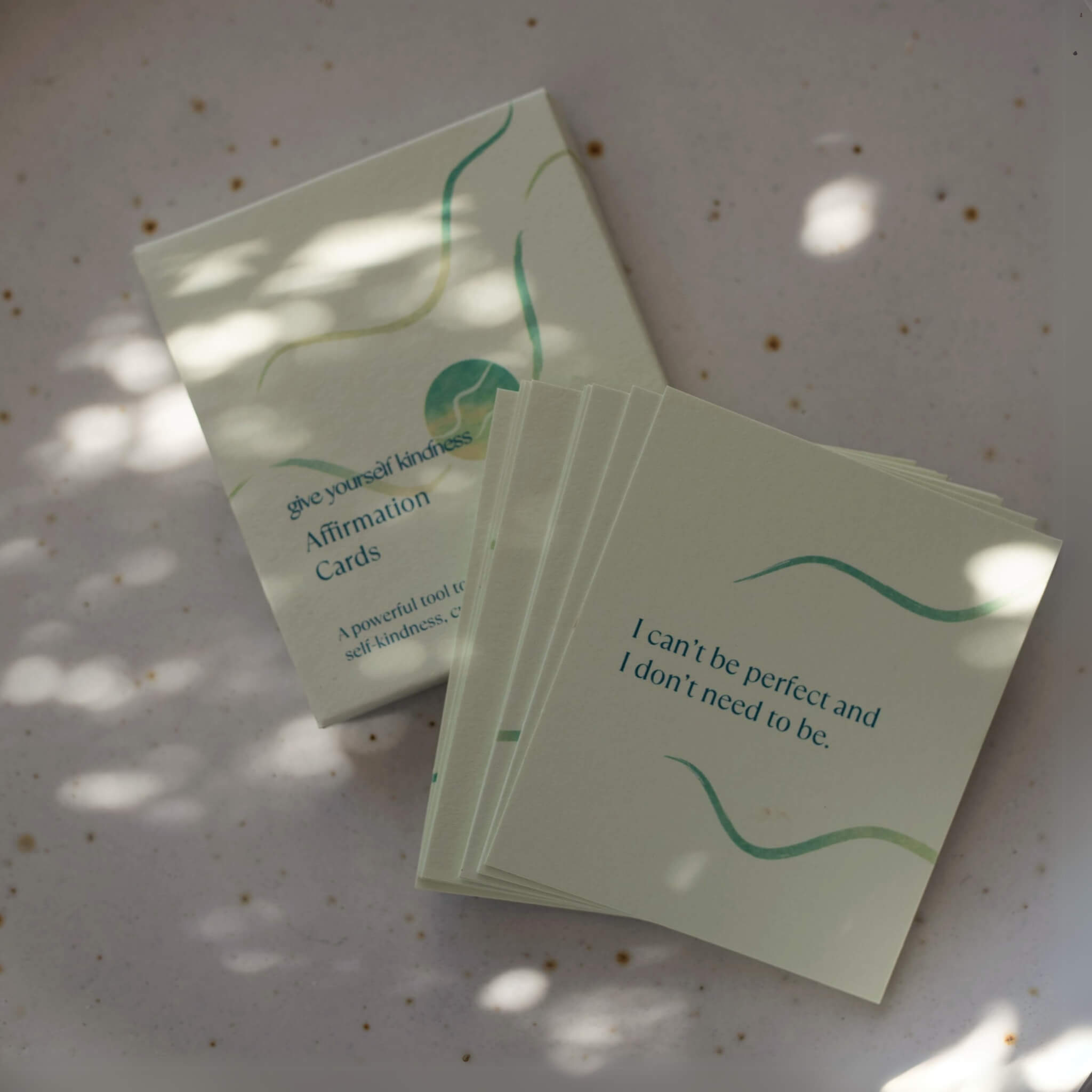
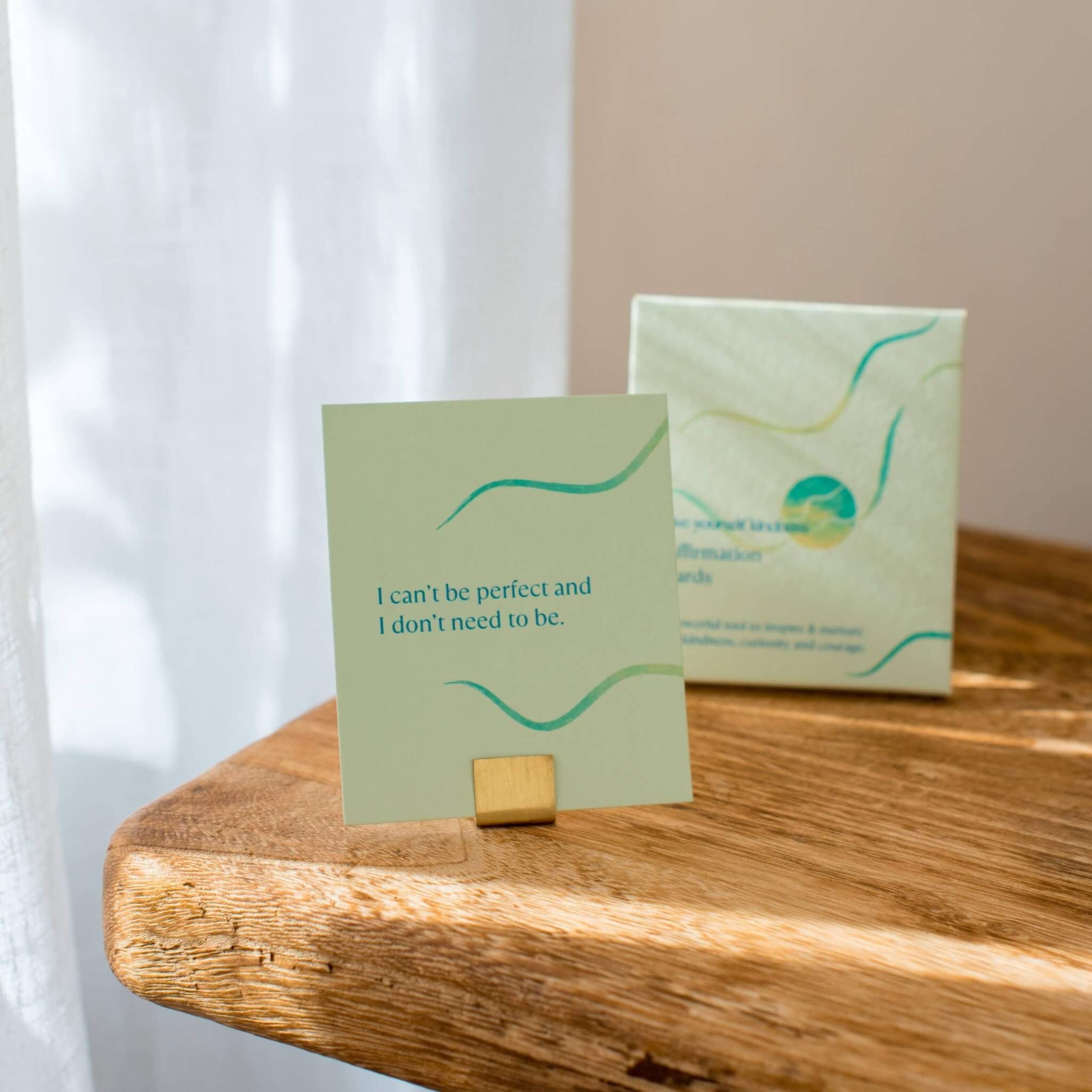
- I can't be perfect and I don't need to be
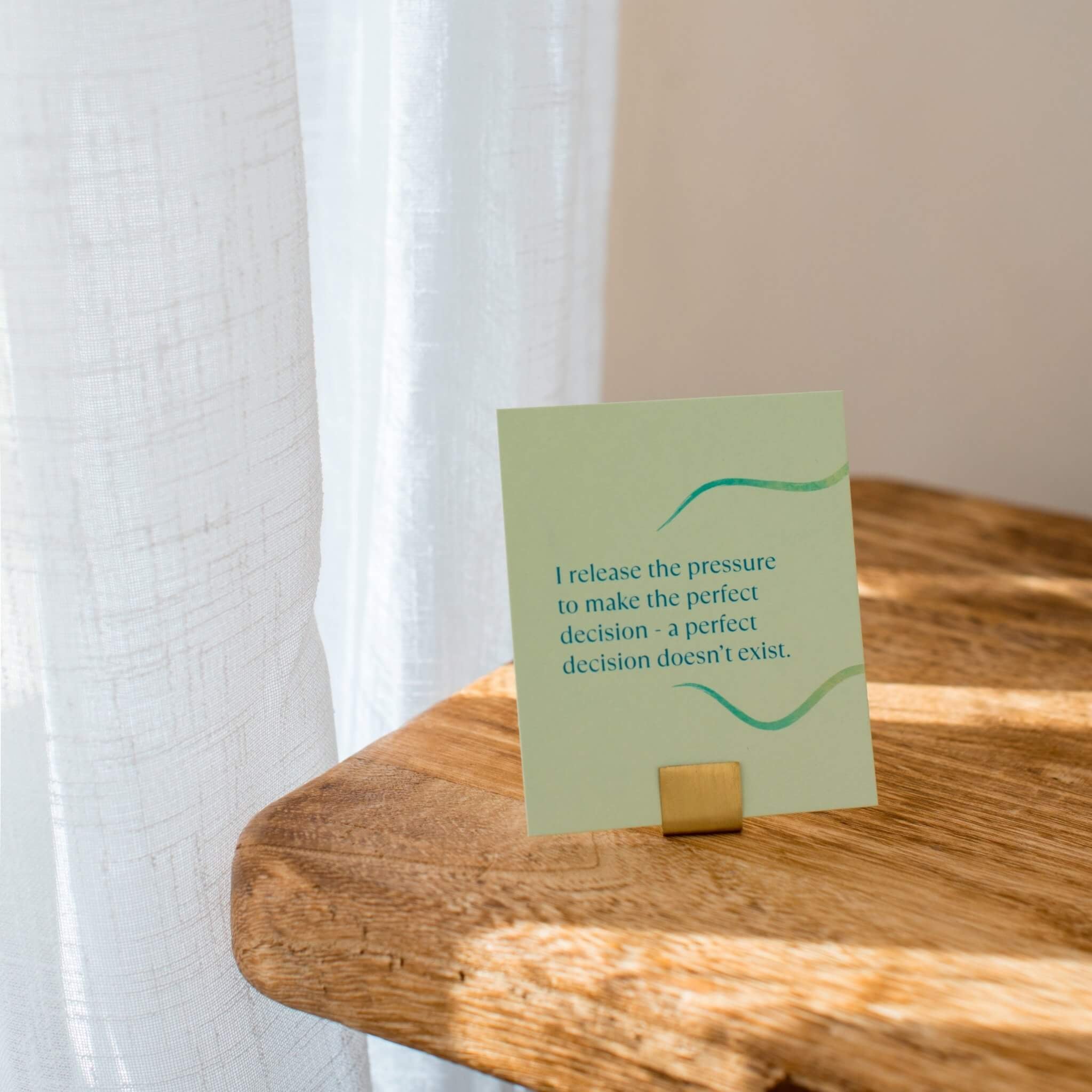
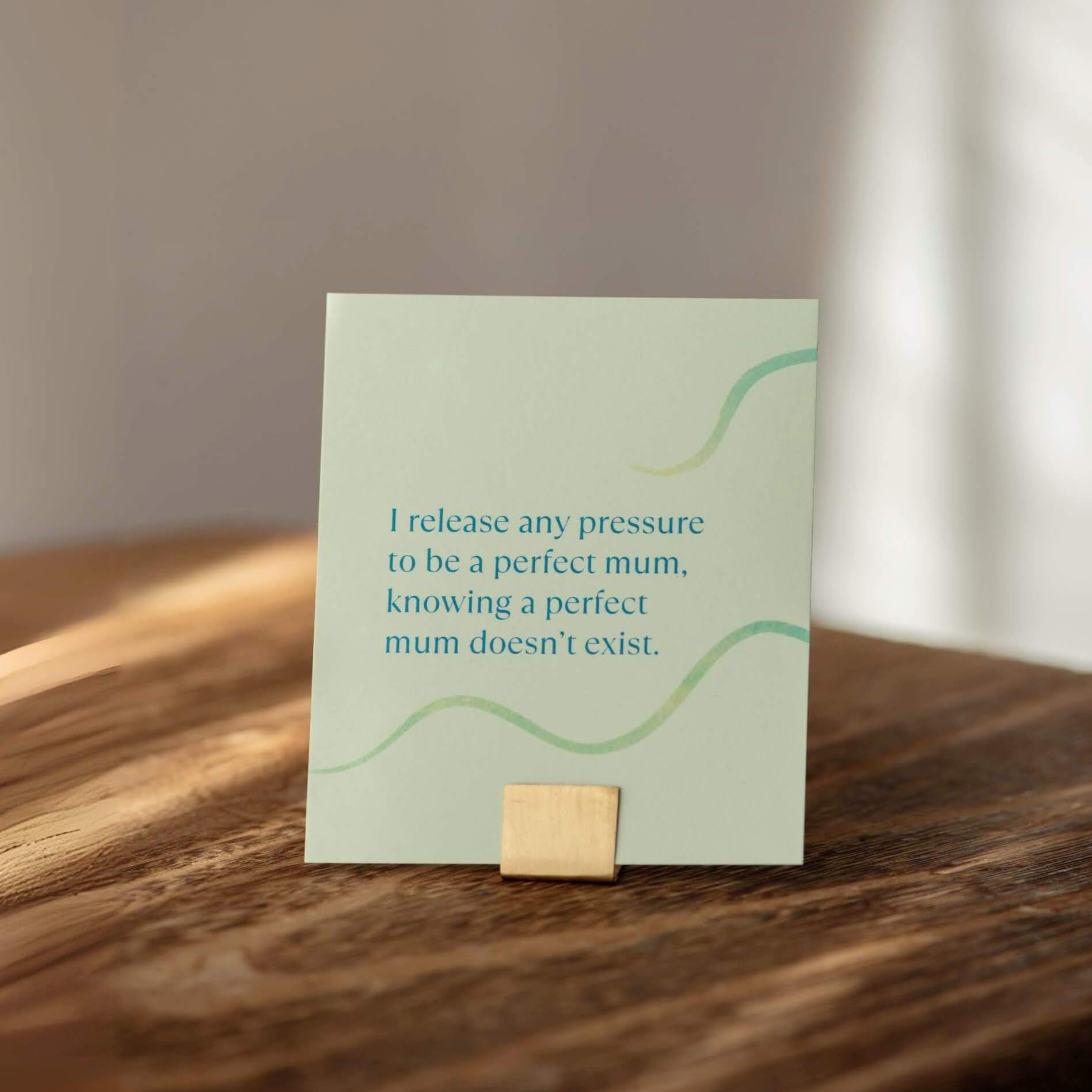
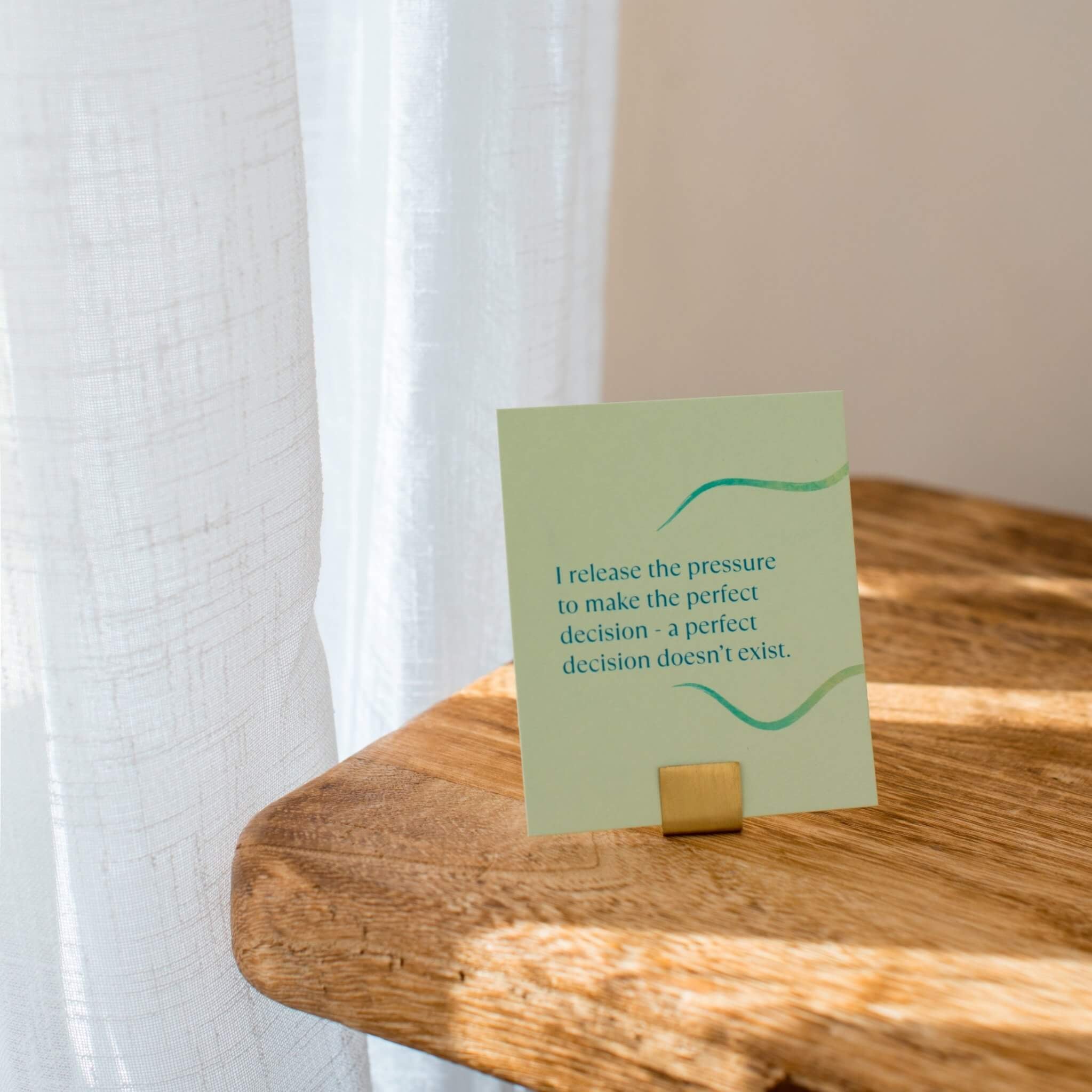
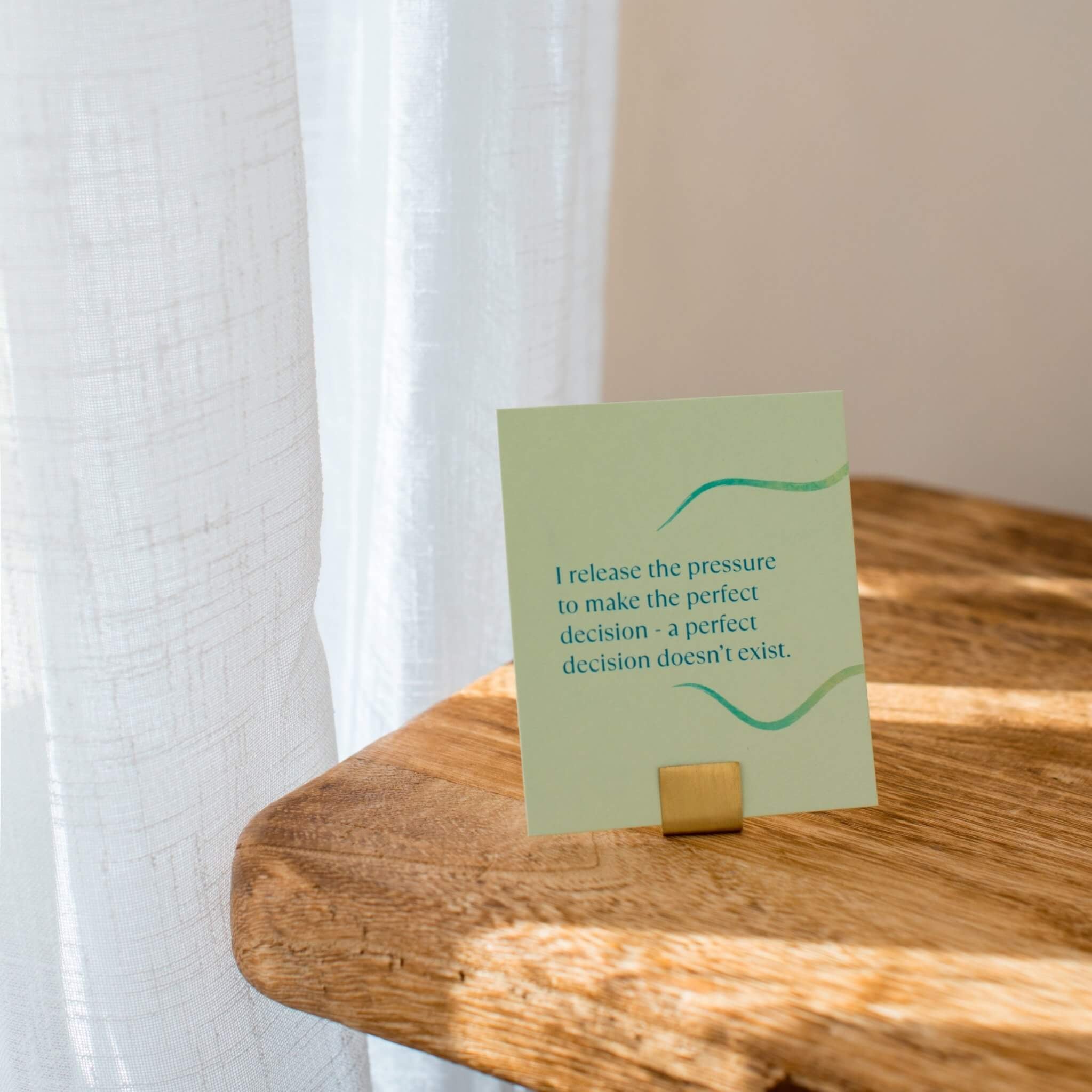
- I release the pressure to make the perfect decision, a perfect decision doesn't exist
- I can make mistakes and learn from them, without self-criticism
- I remind myself that no one was an expert before they were a beginner
- I can try, even when I don't feel 100% ready
These remind us that growth and learning are more valuable than perfection.
For building confidence
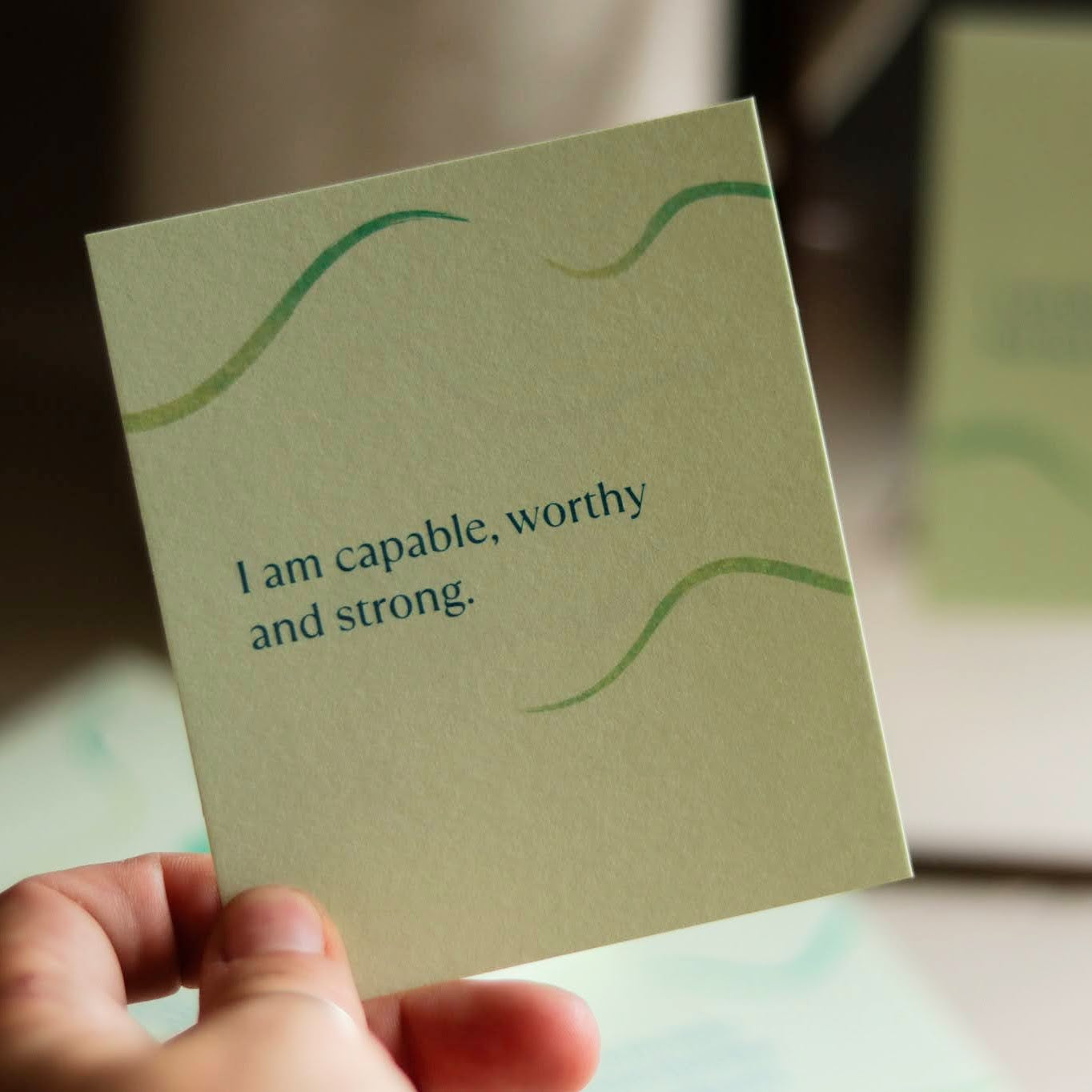
- My voice matters. My opinions matter. I matter
- I bring unique skills and perspectives to my work
- I can collaborate with others and together create amazing results
- I am worthy, and this does not depend on my productivity or achievements
- I can inspire others by being me
Use these to ground yourself in your inherent worth, especially during moments of self-doubt.

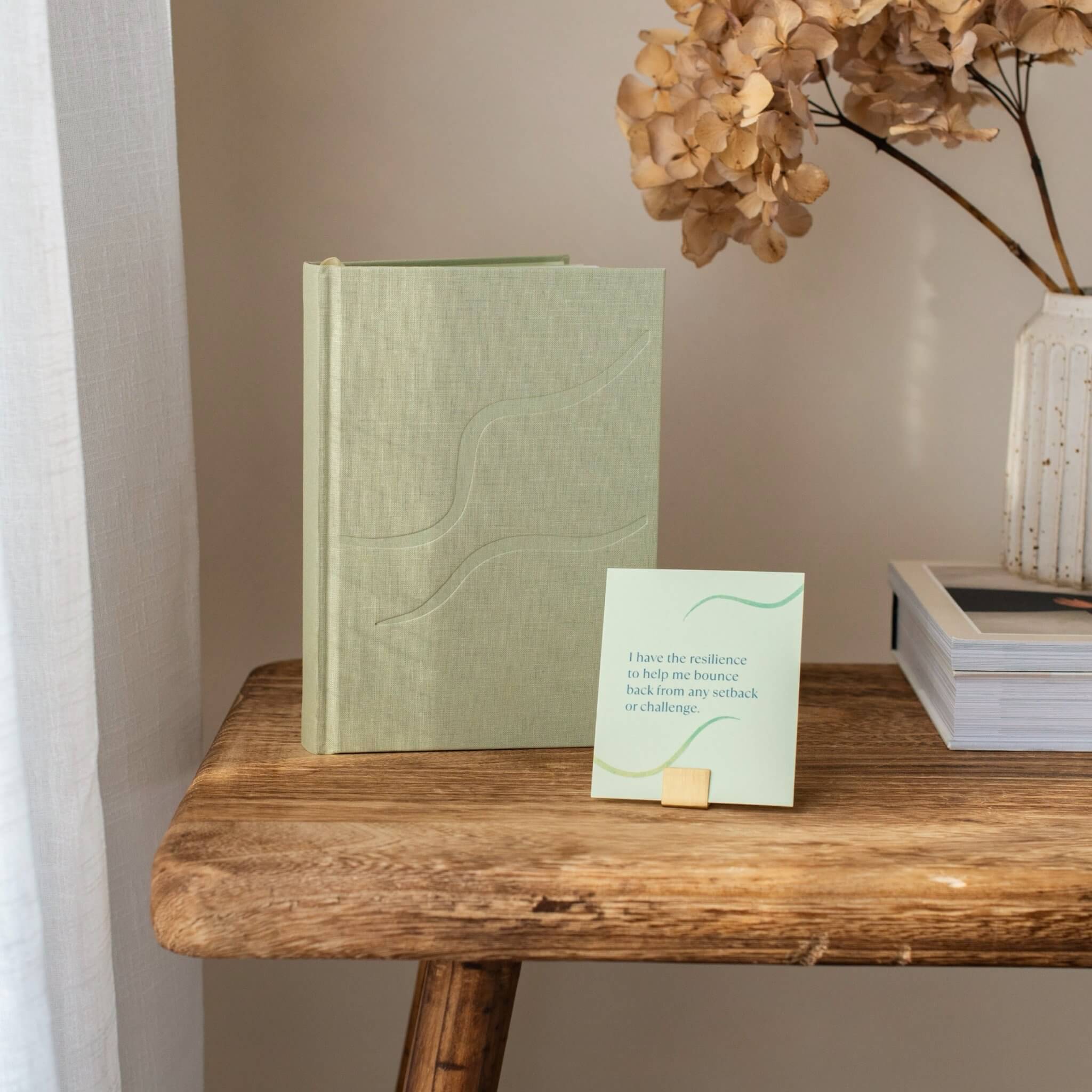
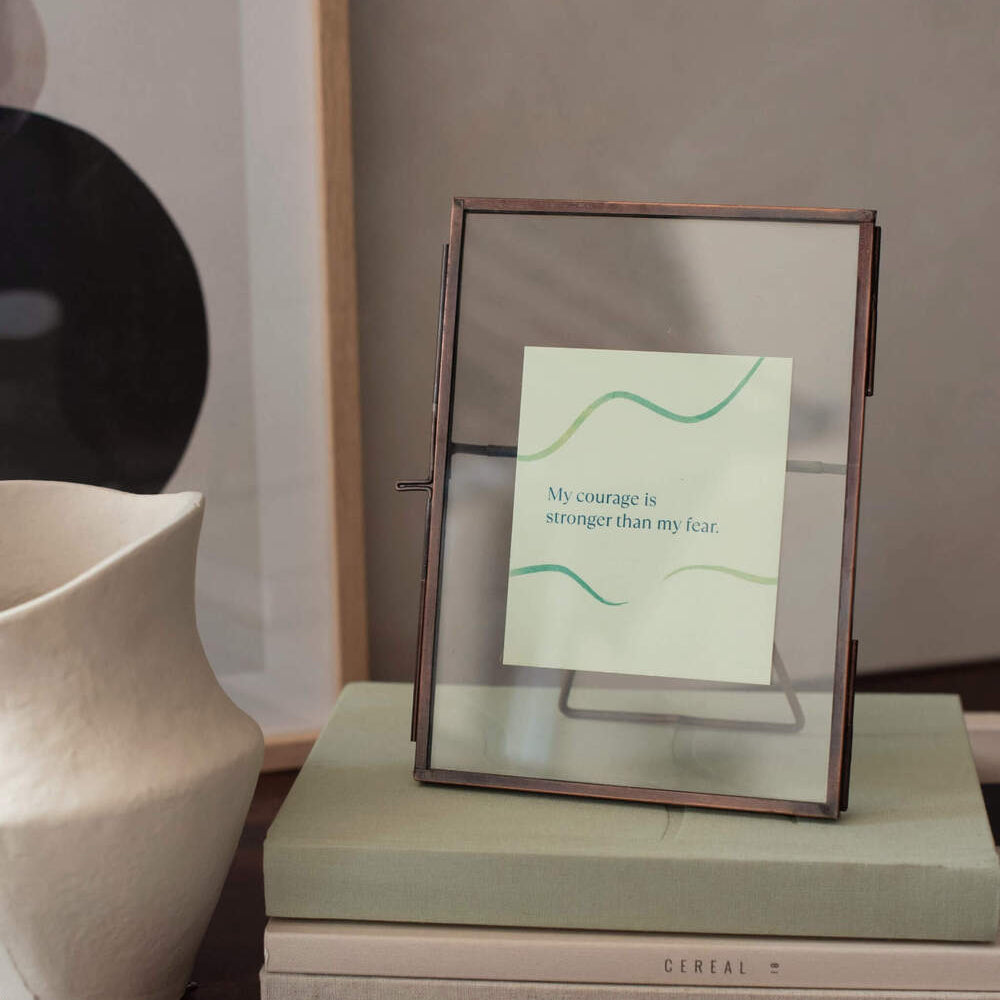
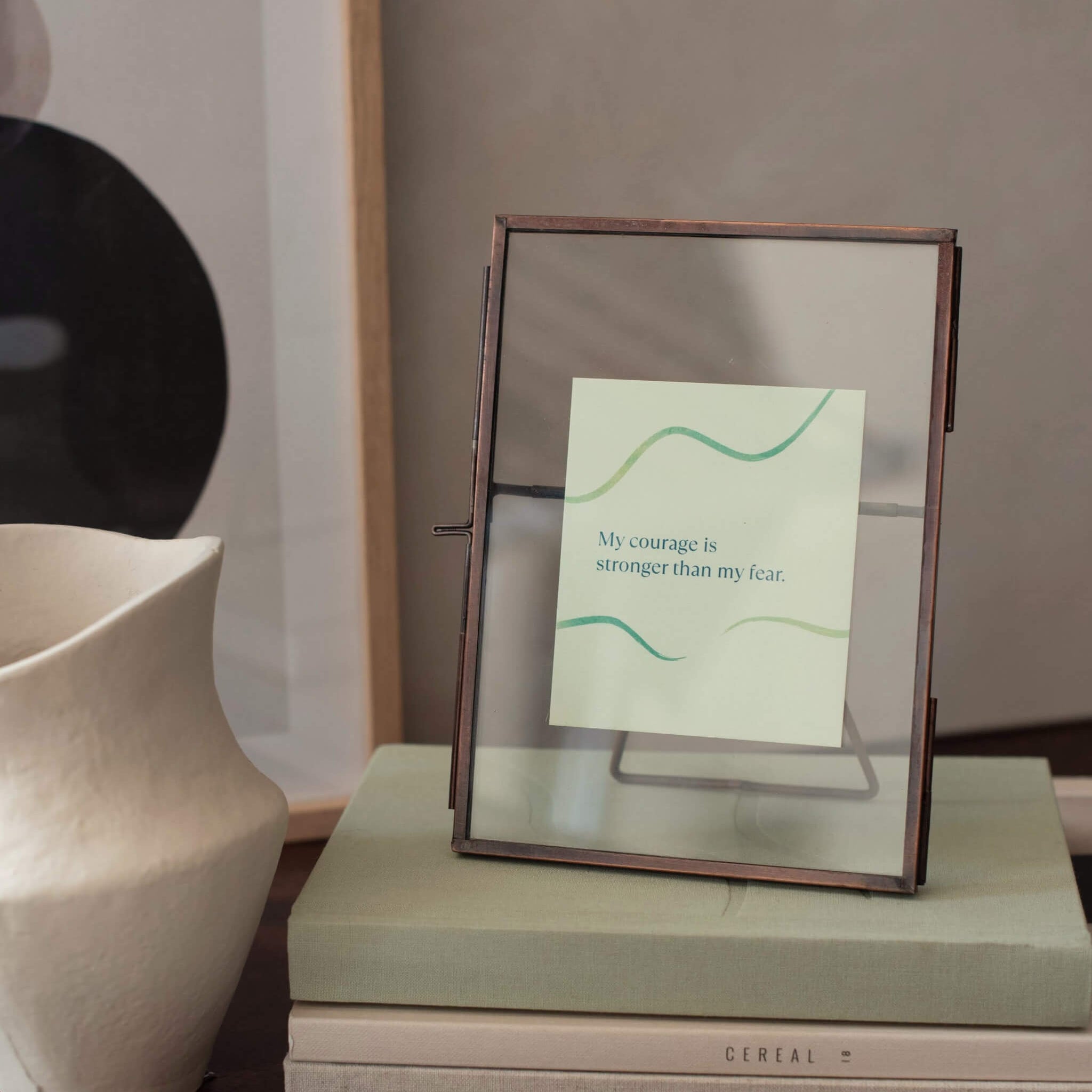
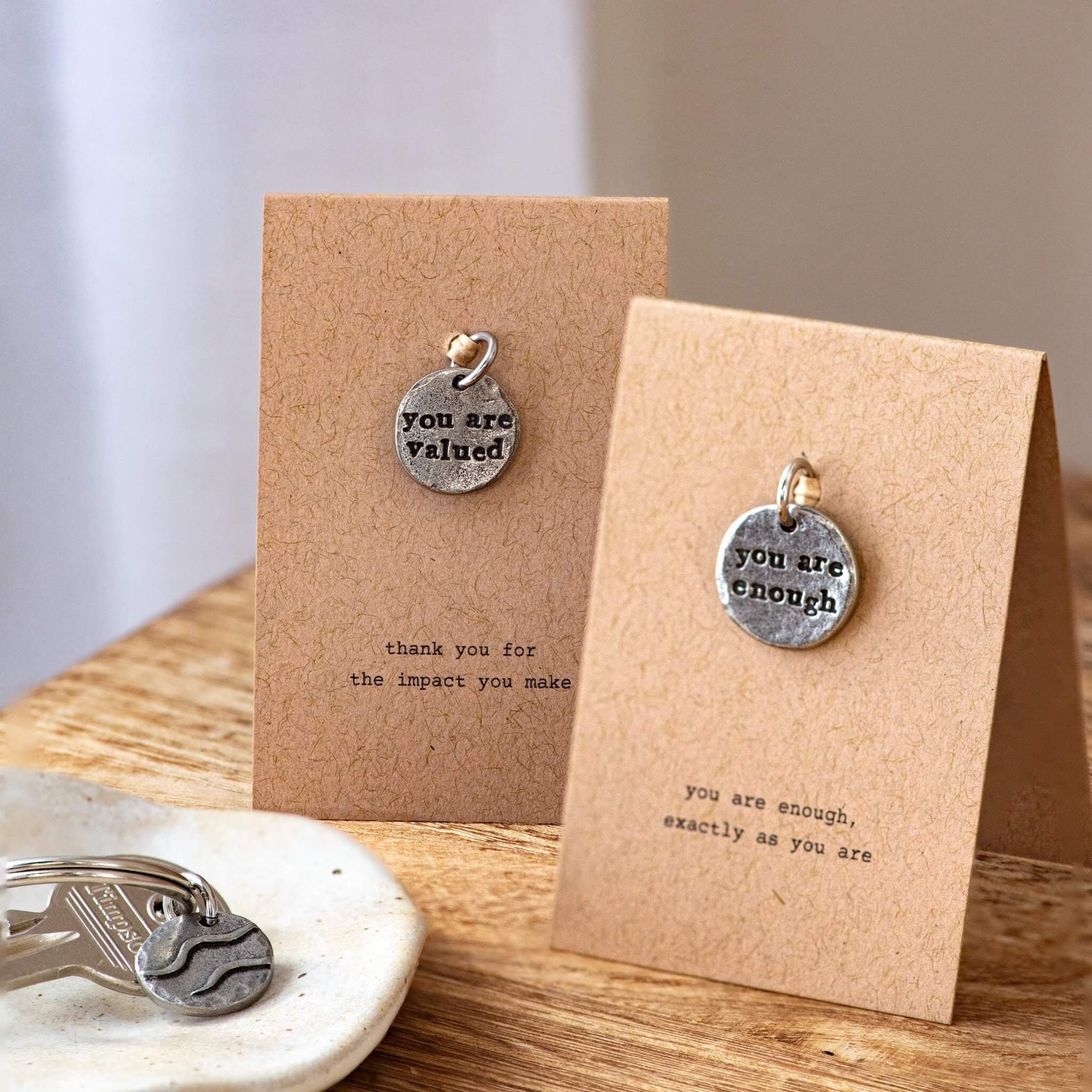
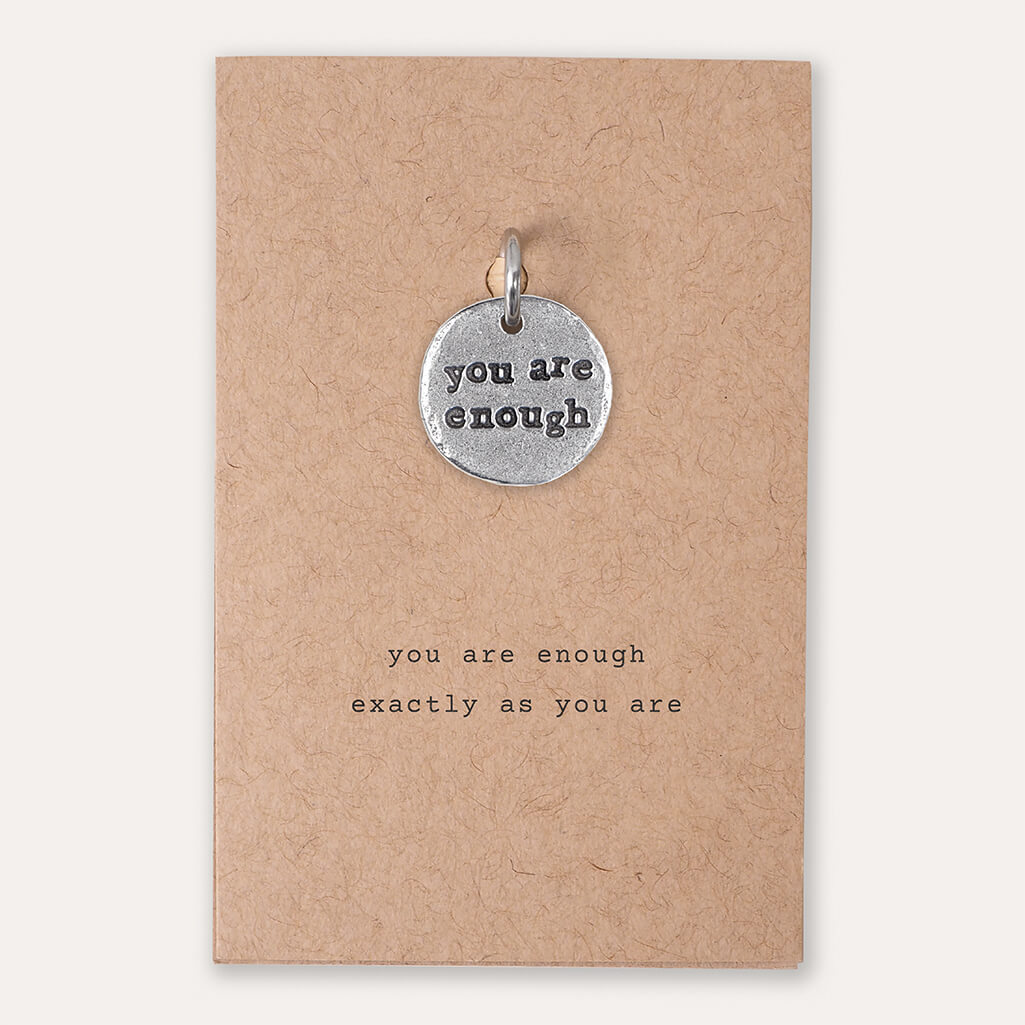
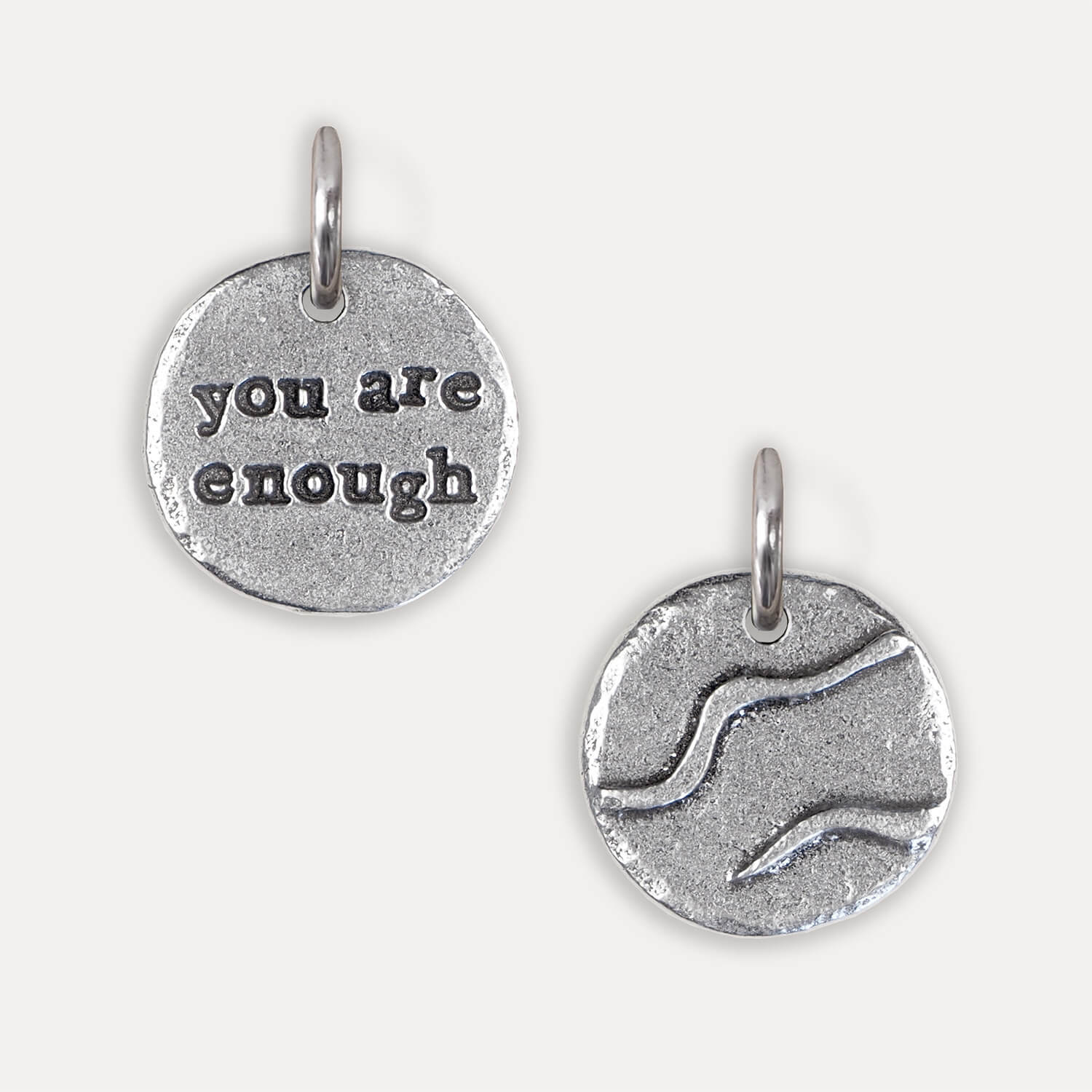
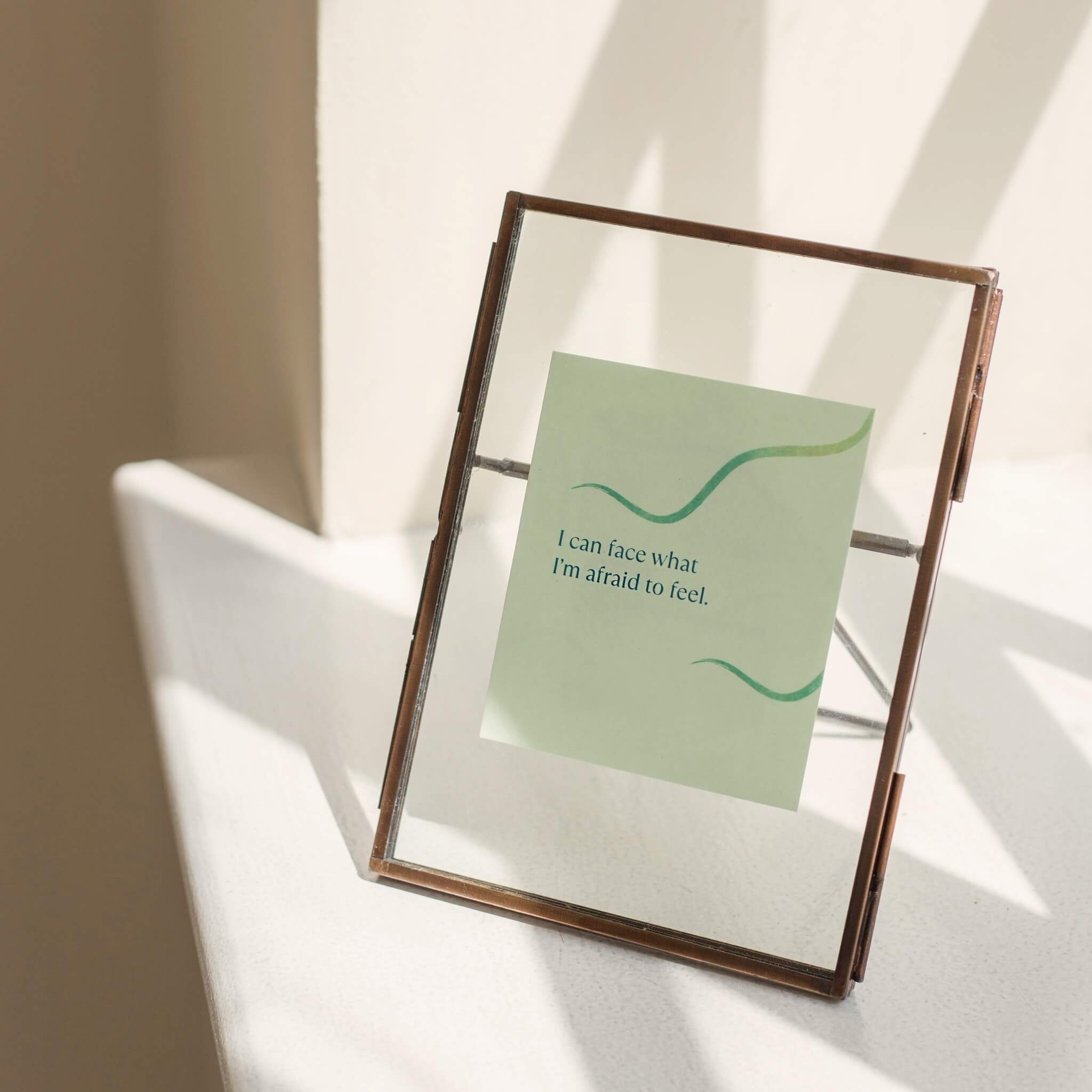
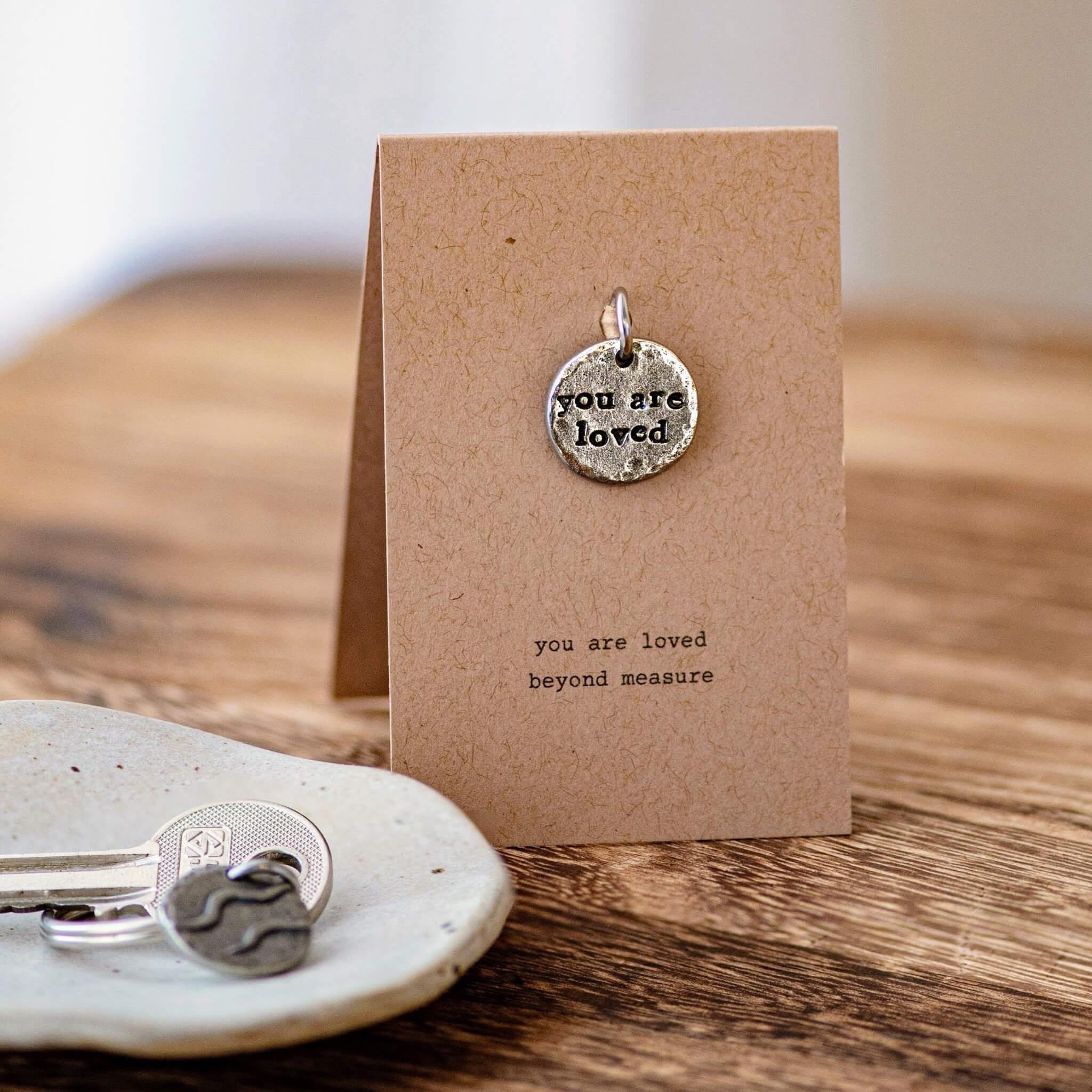
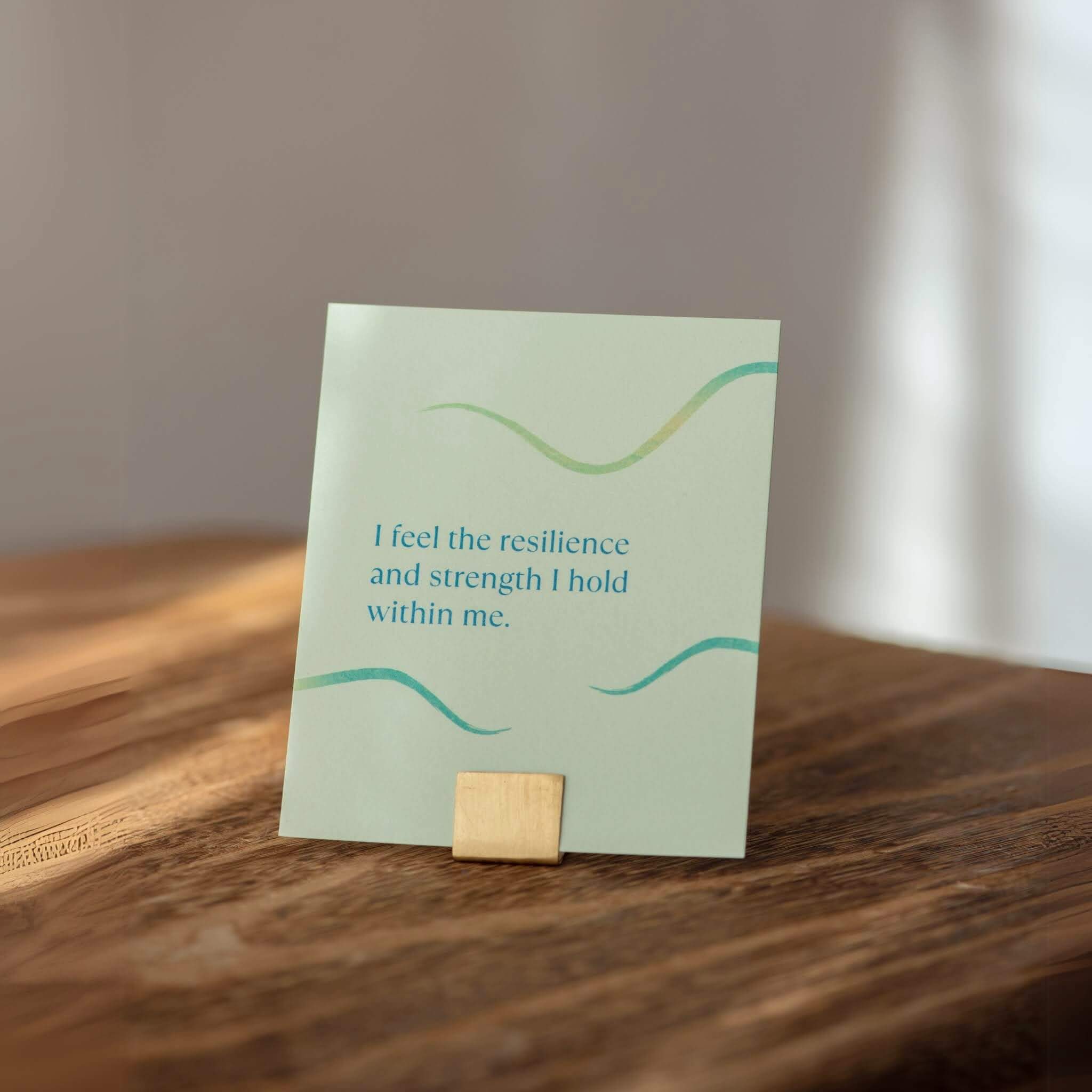
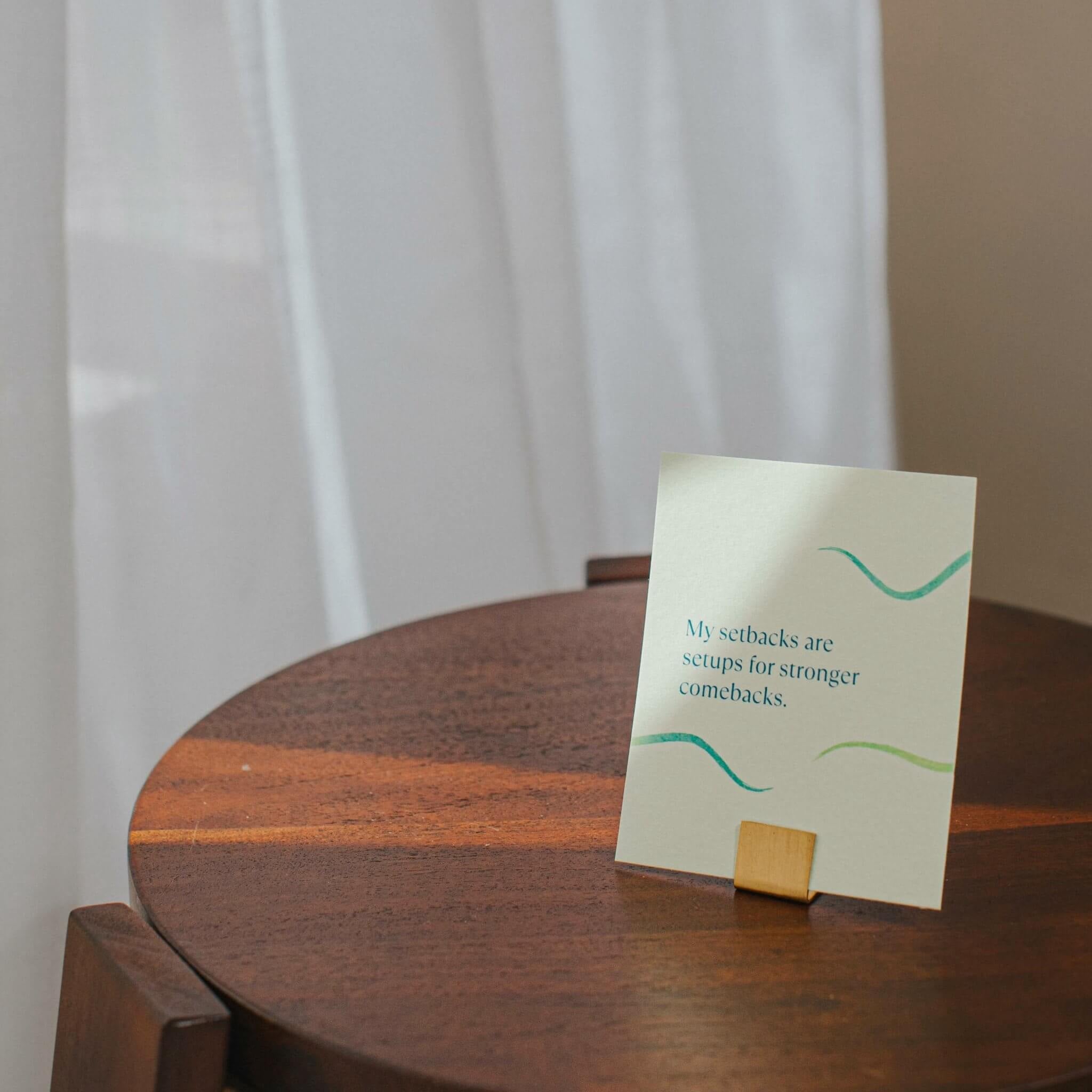
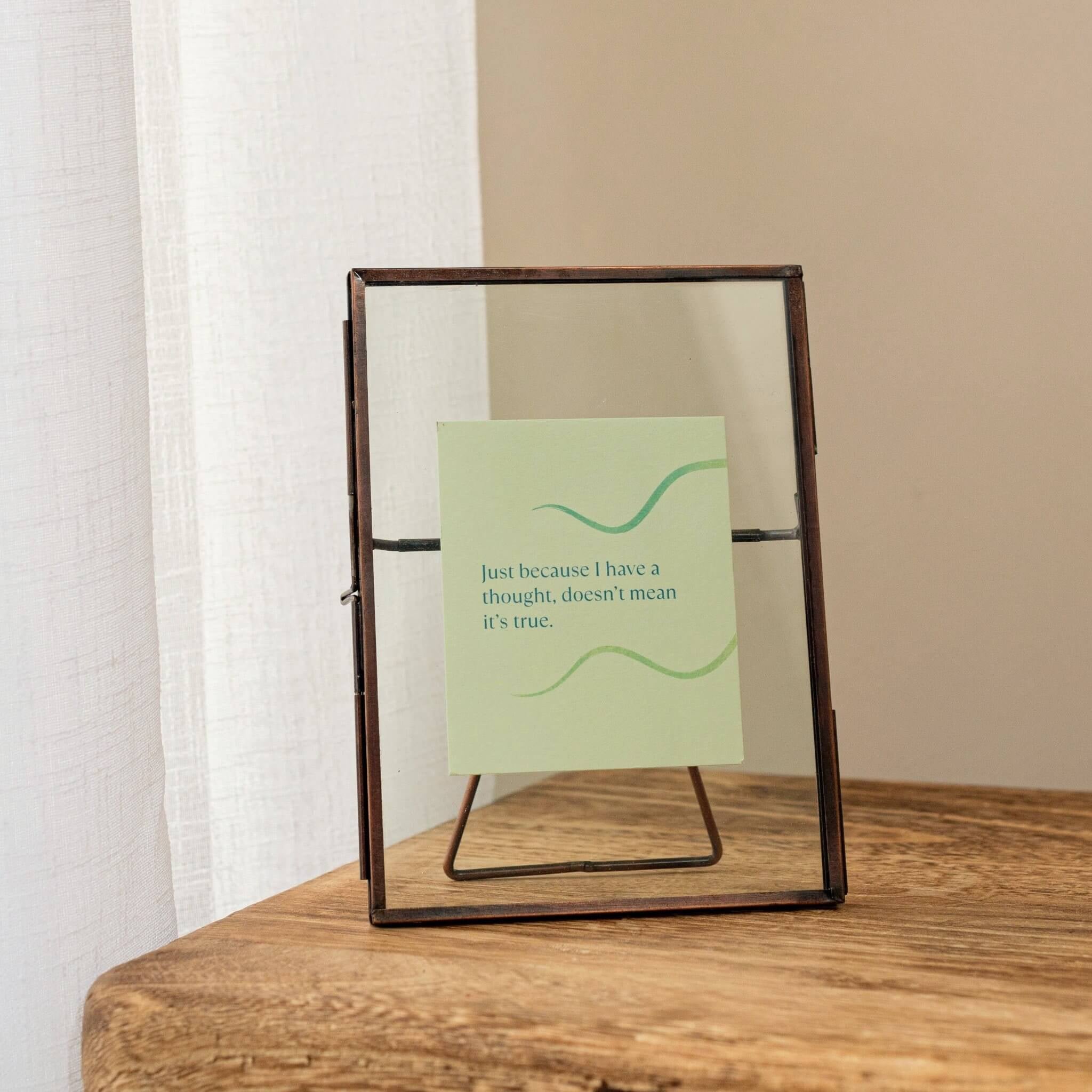
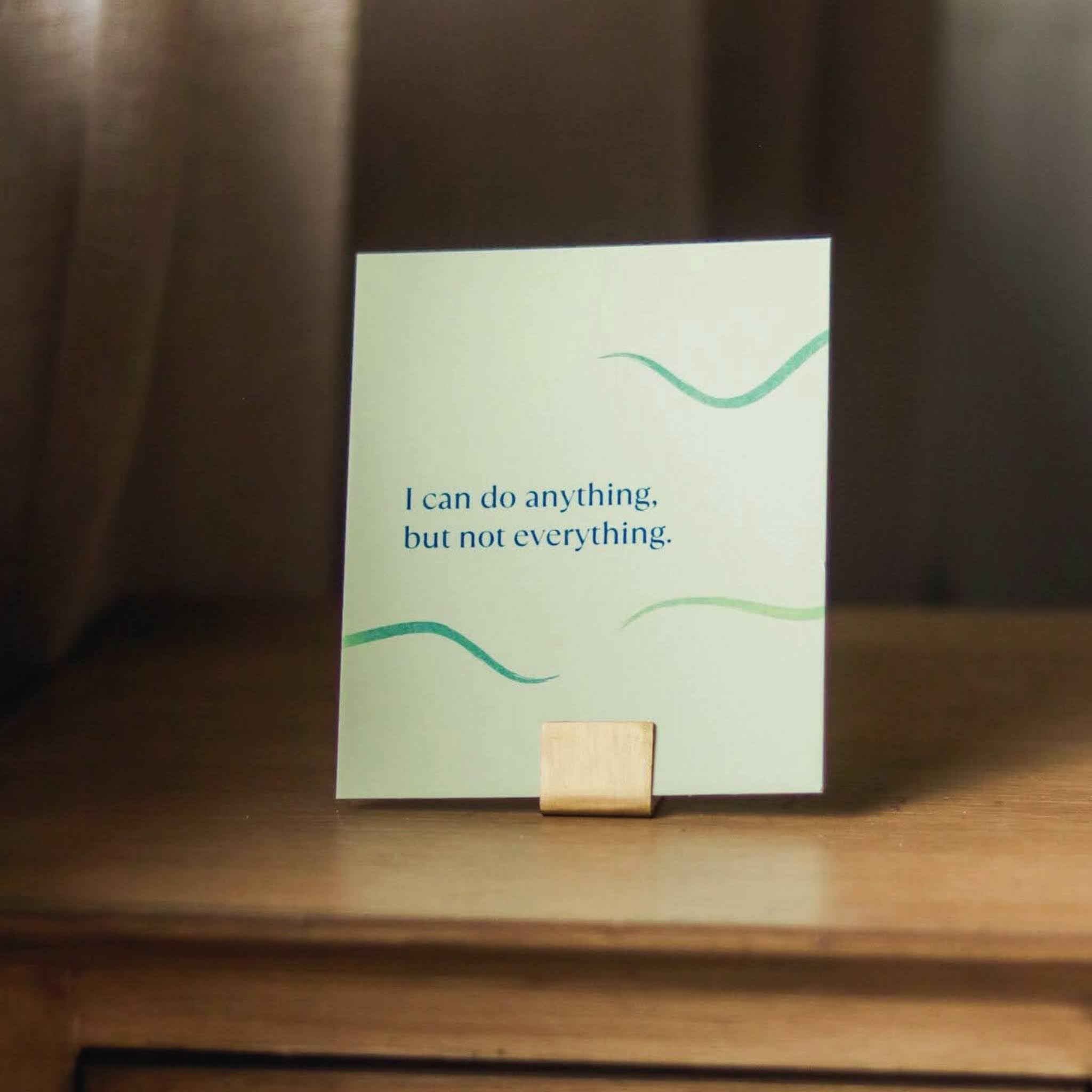
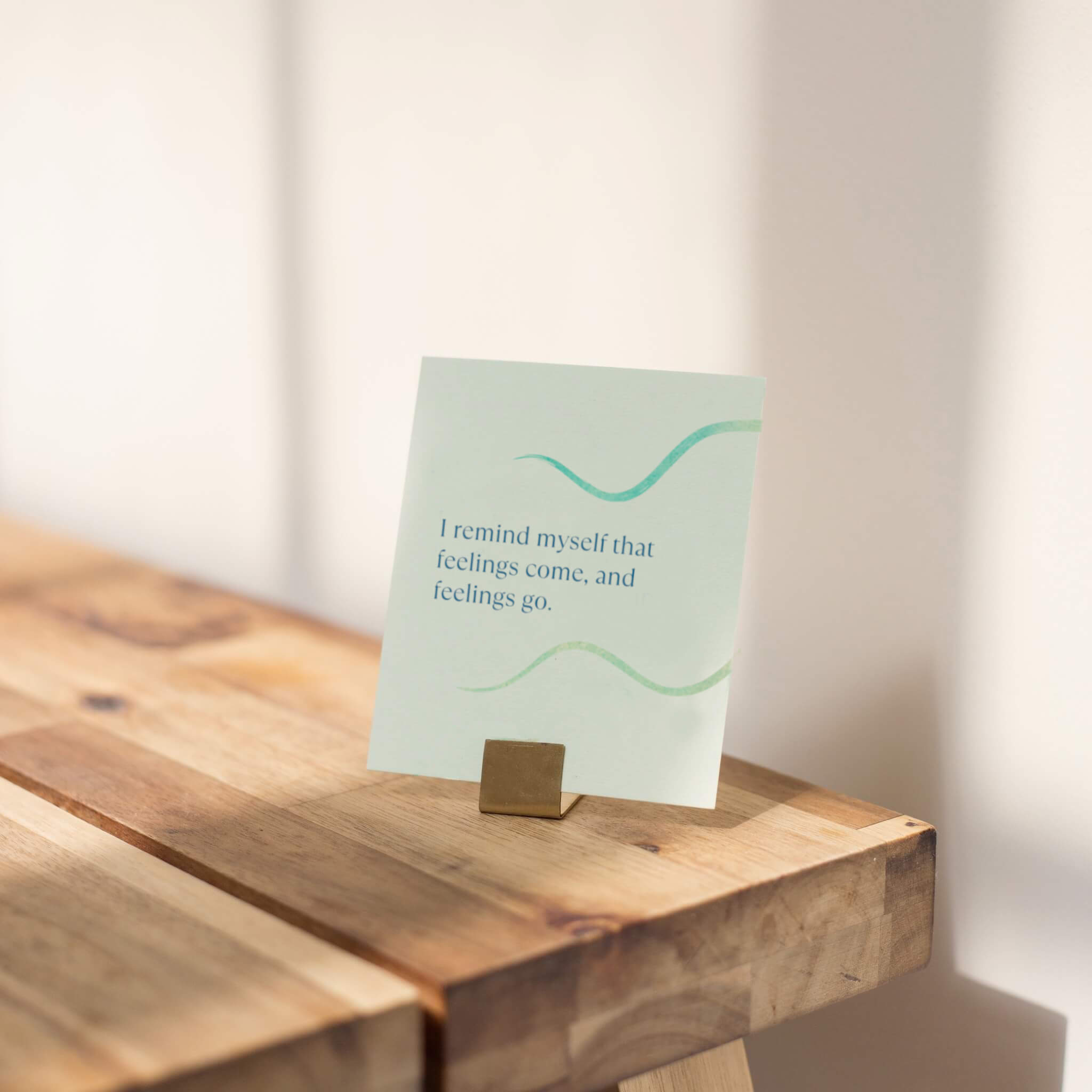
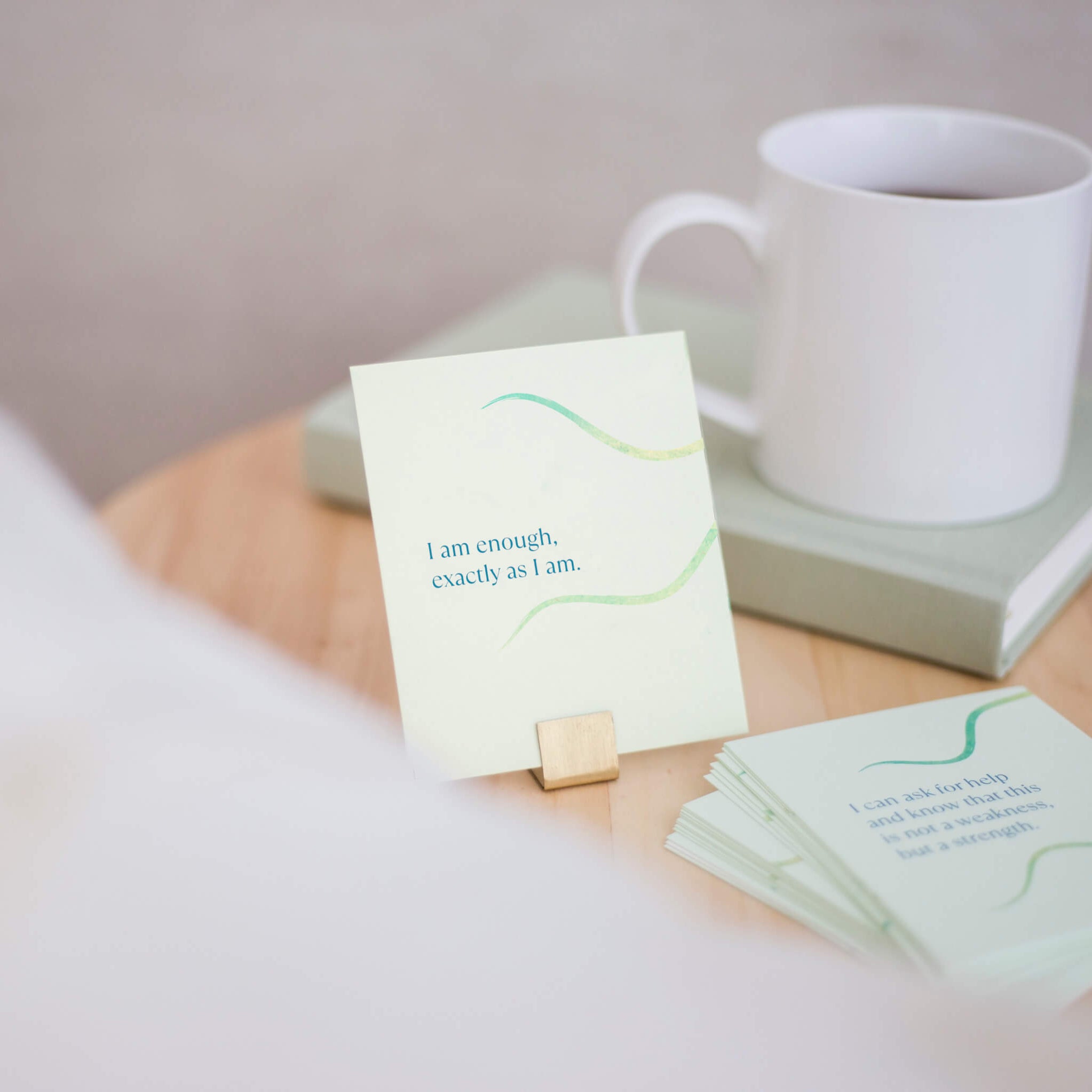
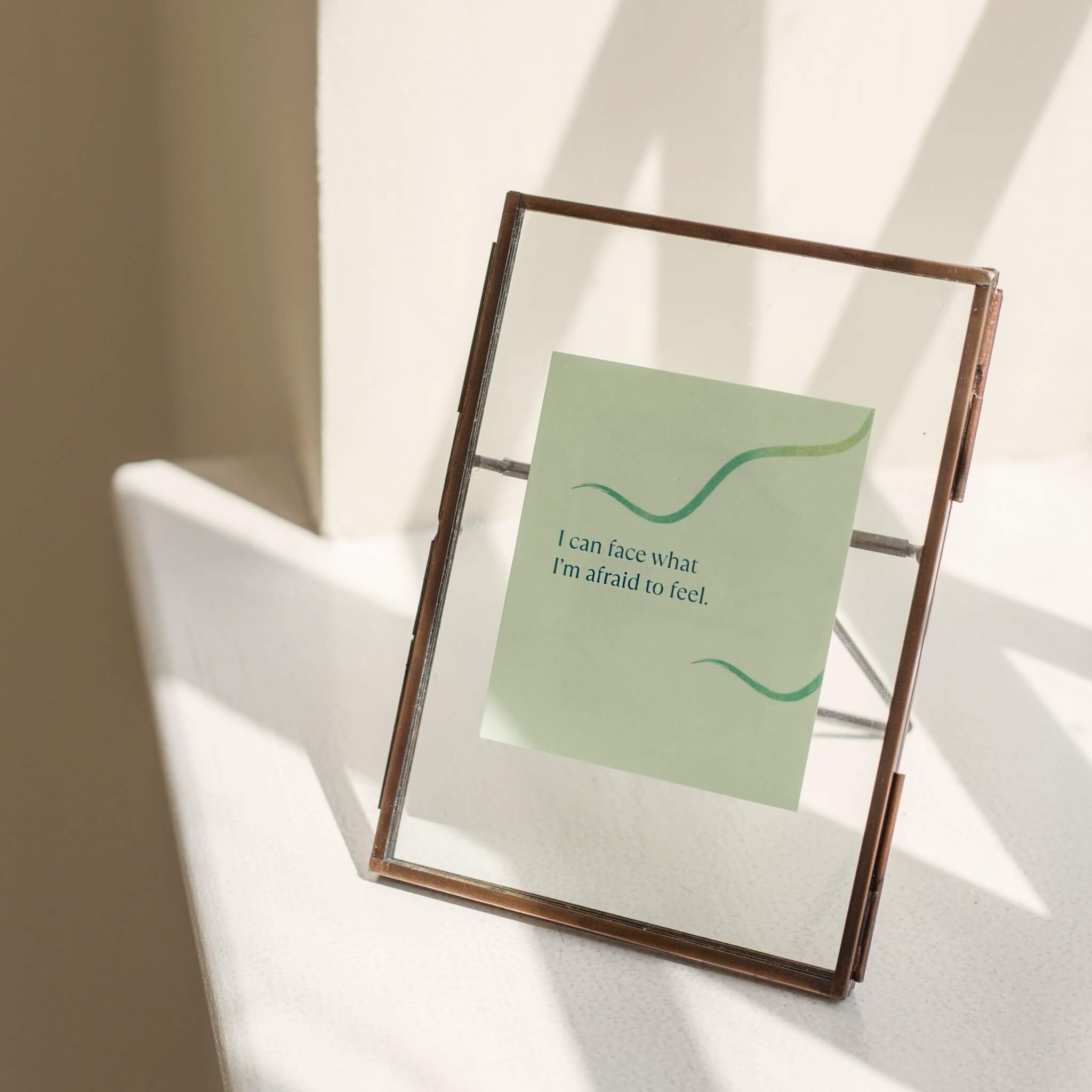
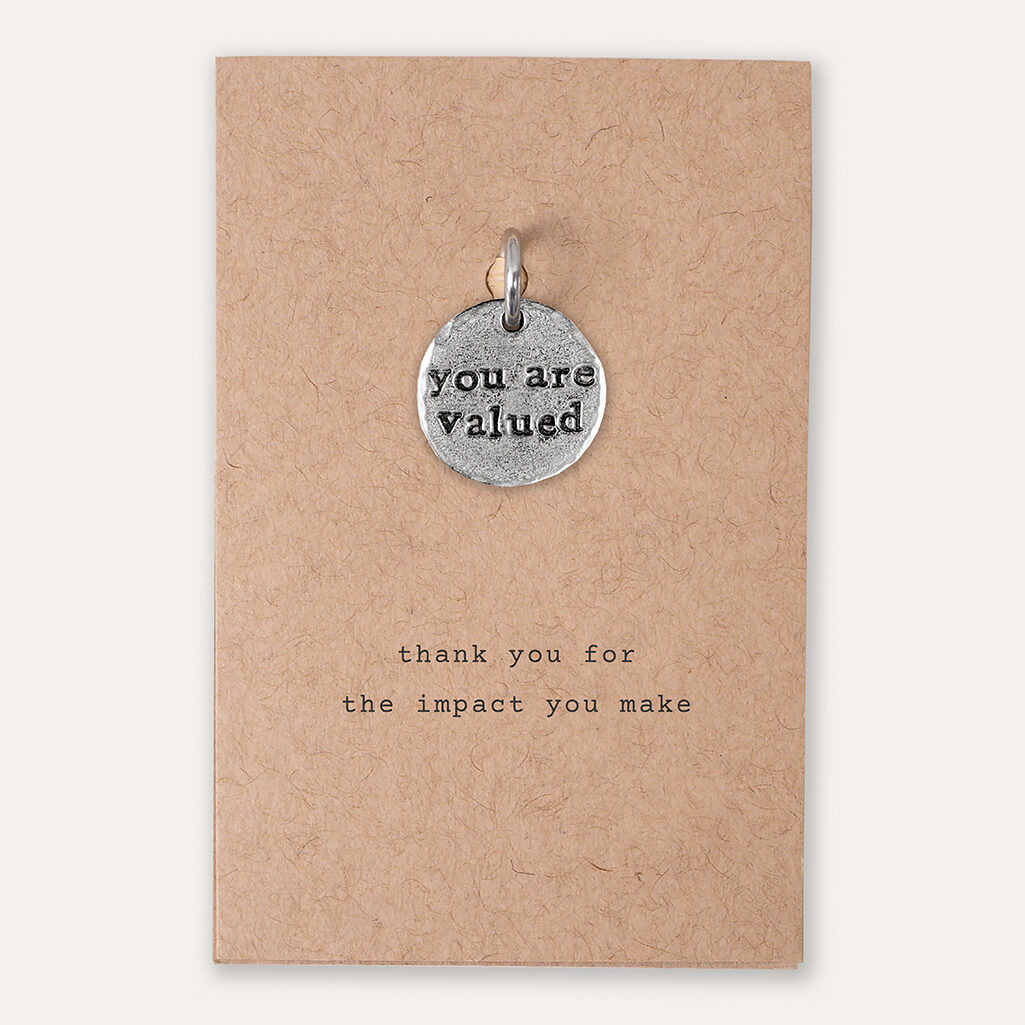
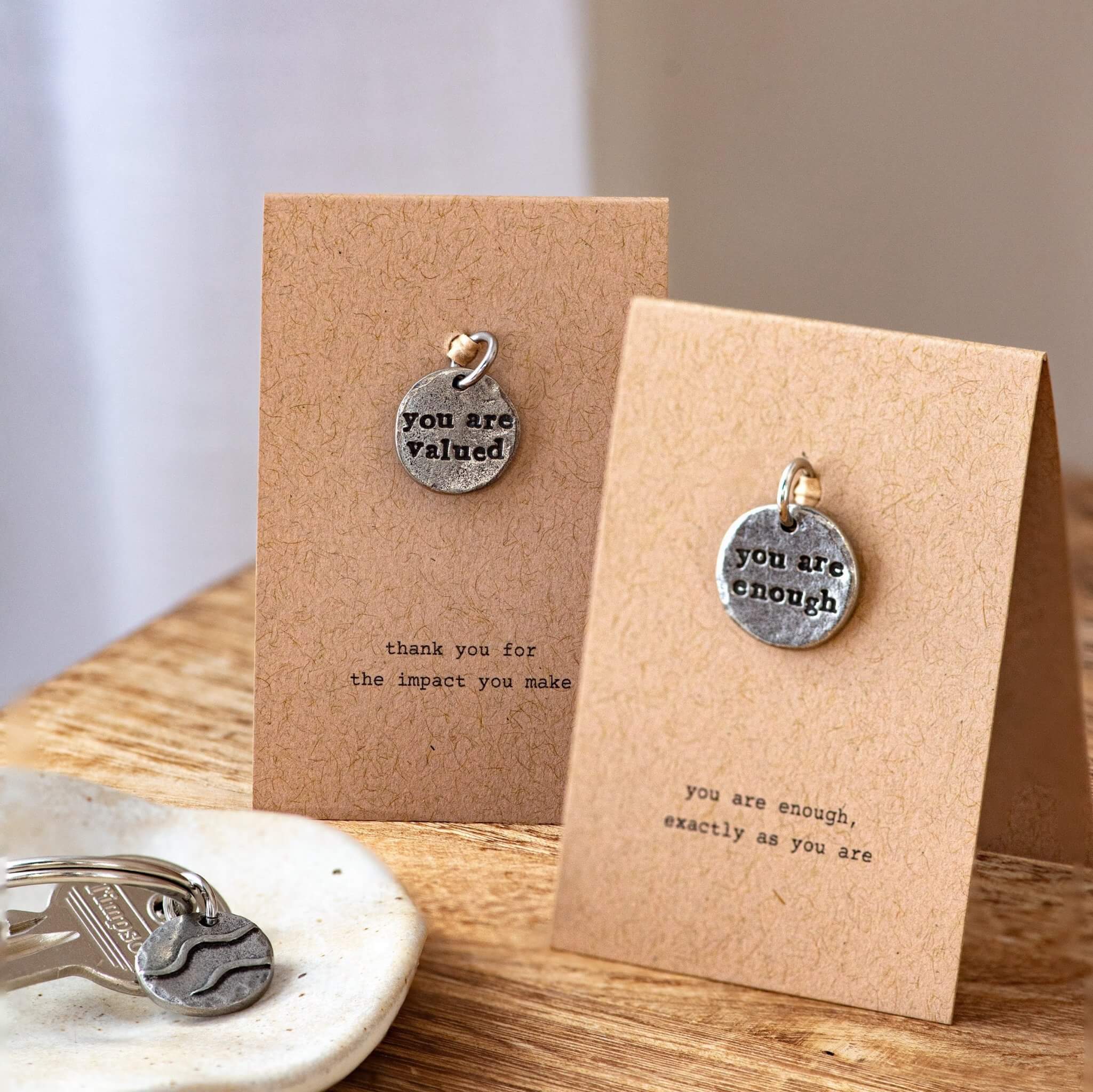
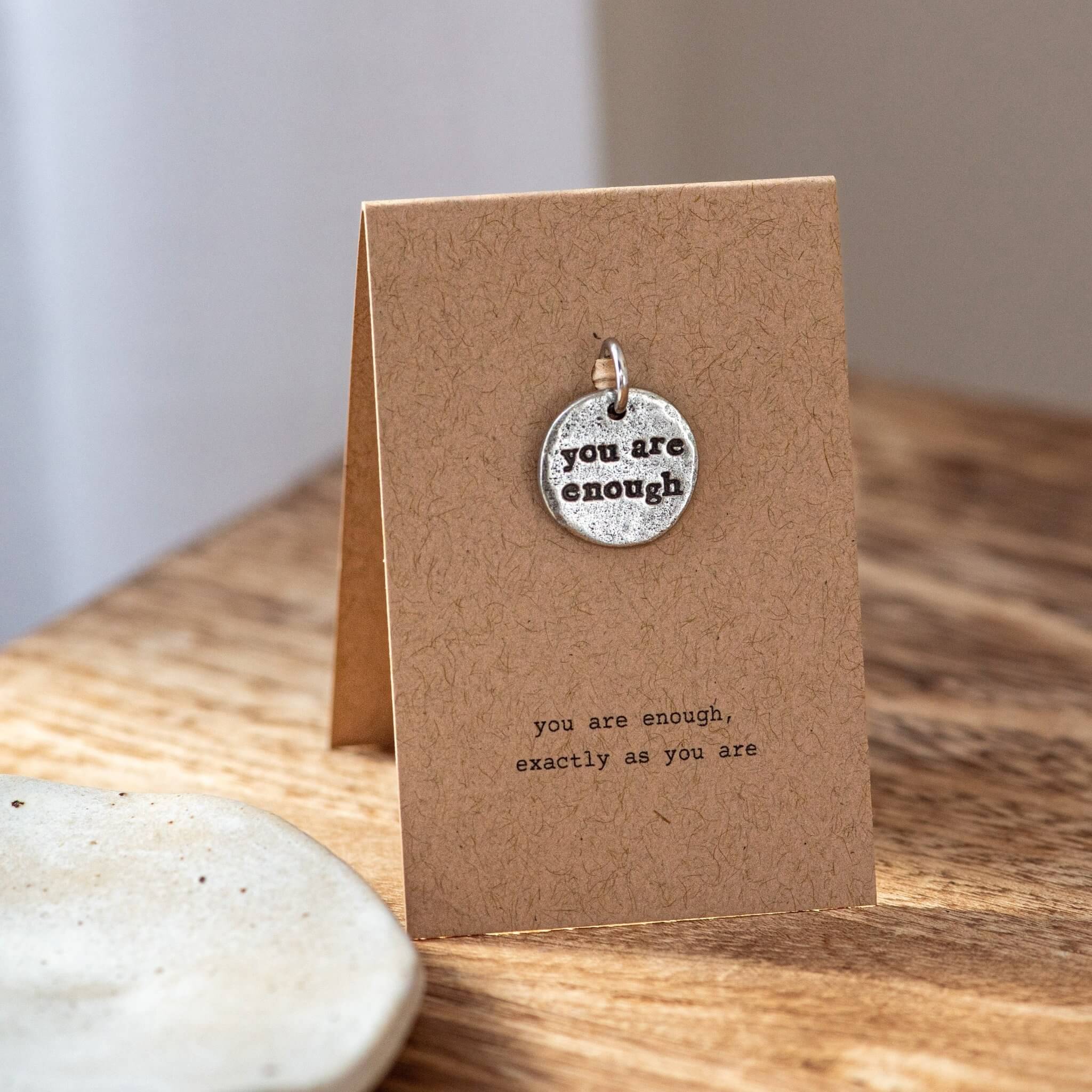
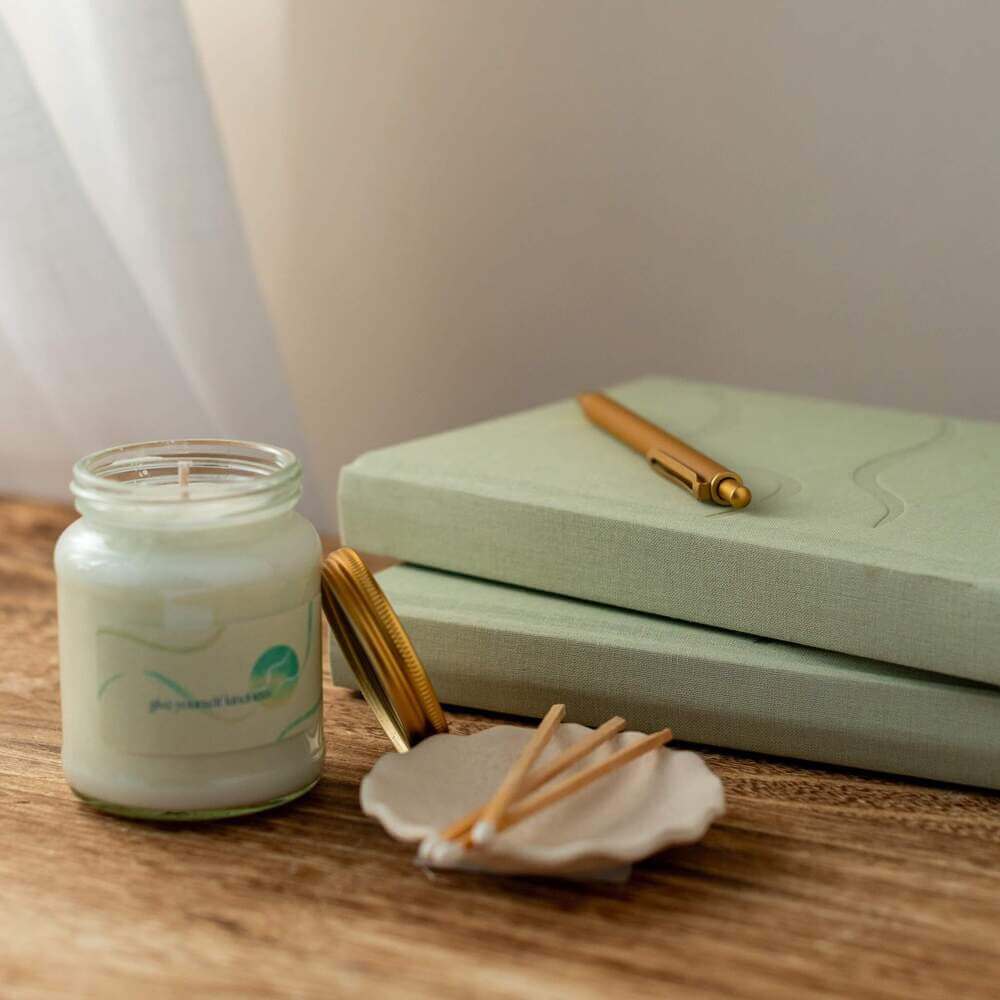
Anxiety doesn't wait until you've opened the right browser tab. It arrives two minutes before the meeting. That's the argument for a card on your desk rather than a page in your history: it's already there when the racing starts, and you don't have to be calm enough to go looking for it.
From £13.95 See the cards →For handling challenges
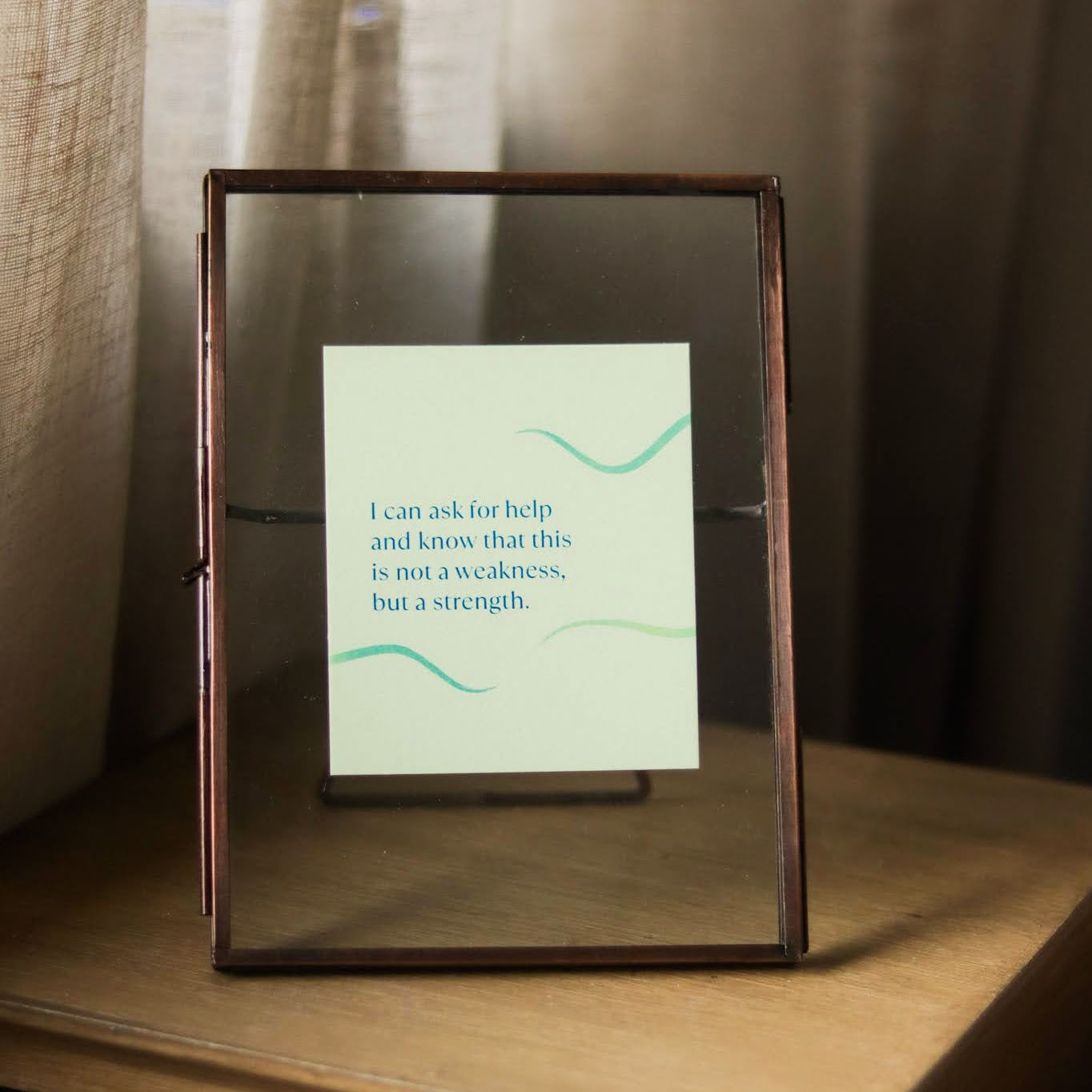
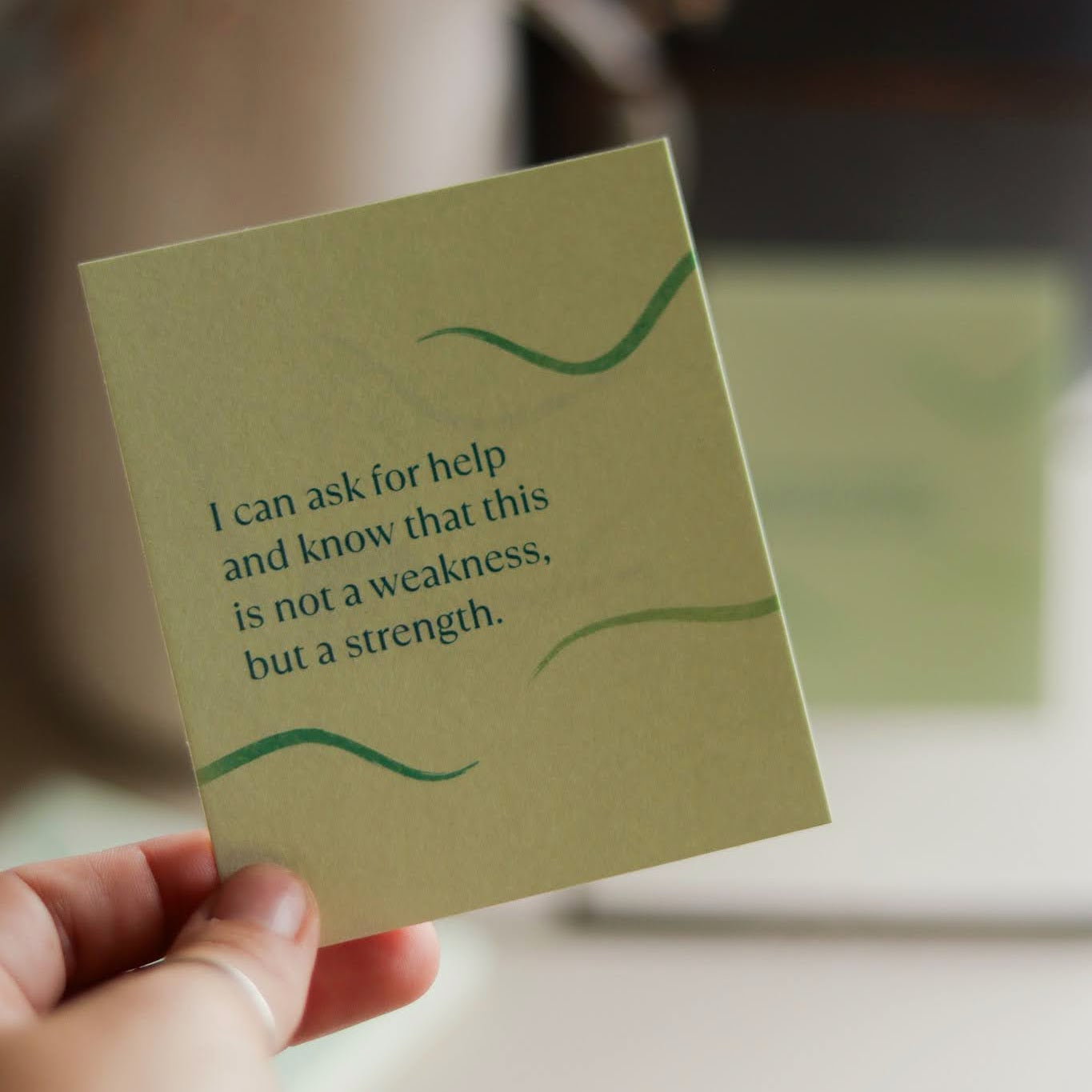
- I can ask for help and know that this is not a weakness, but a strength
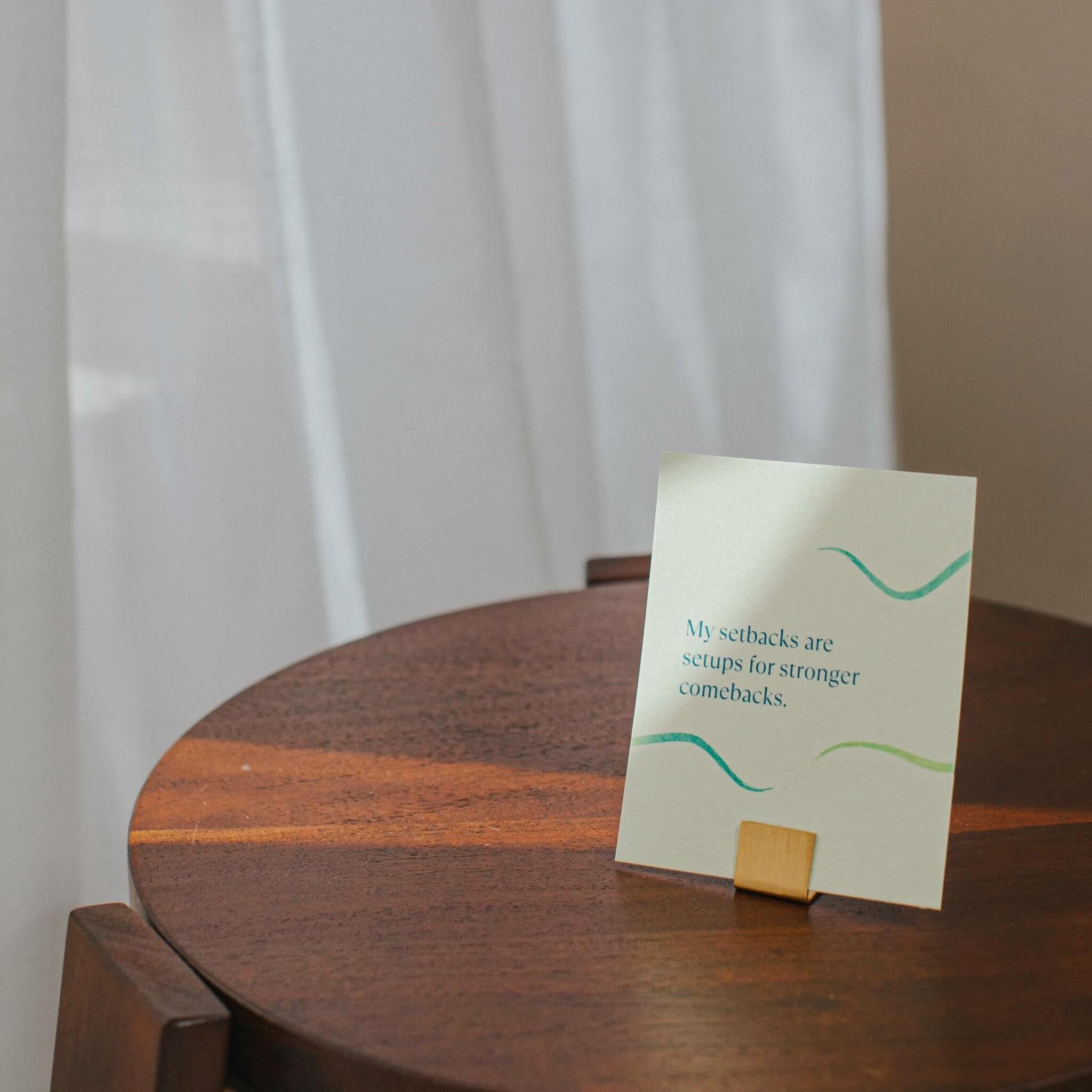
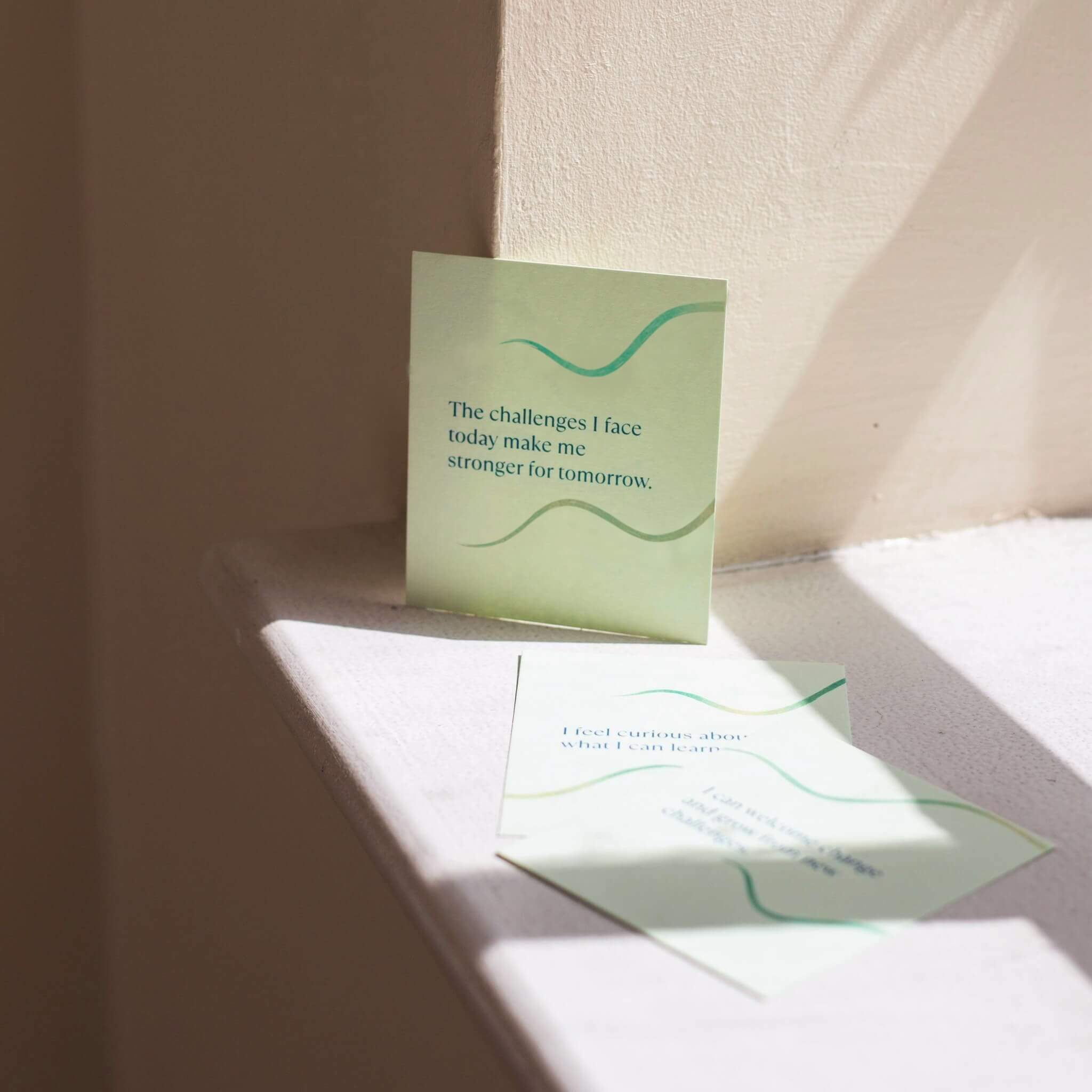
- My setbacks are setups for stronger comebacks
- I have dealt with challenges before, I can deal with challenges again
- I can overcome obstacles and find creative solutions
- I recognize that sometimes the only way forward is to use trial and error and that is okay
These support you in approaching workplace challenges with resilience and self-compassion.
For setting boundaries
- I am allowed to say no
- I deserve to take breaks to care for my wellbeing
- I don't need to earn rest to deserve it
- I can make time for things that bring me joy, without feeling guilty
- The right choice for others isn't necessarily the right choice for me
Setting boundaries isn't selfish, it's essential for sustainable success.
Already there when the racing starts
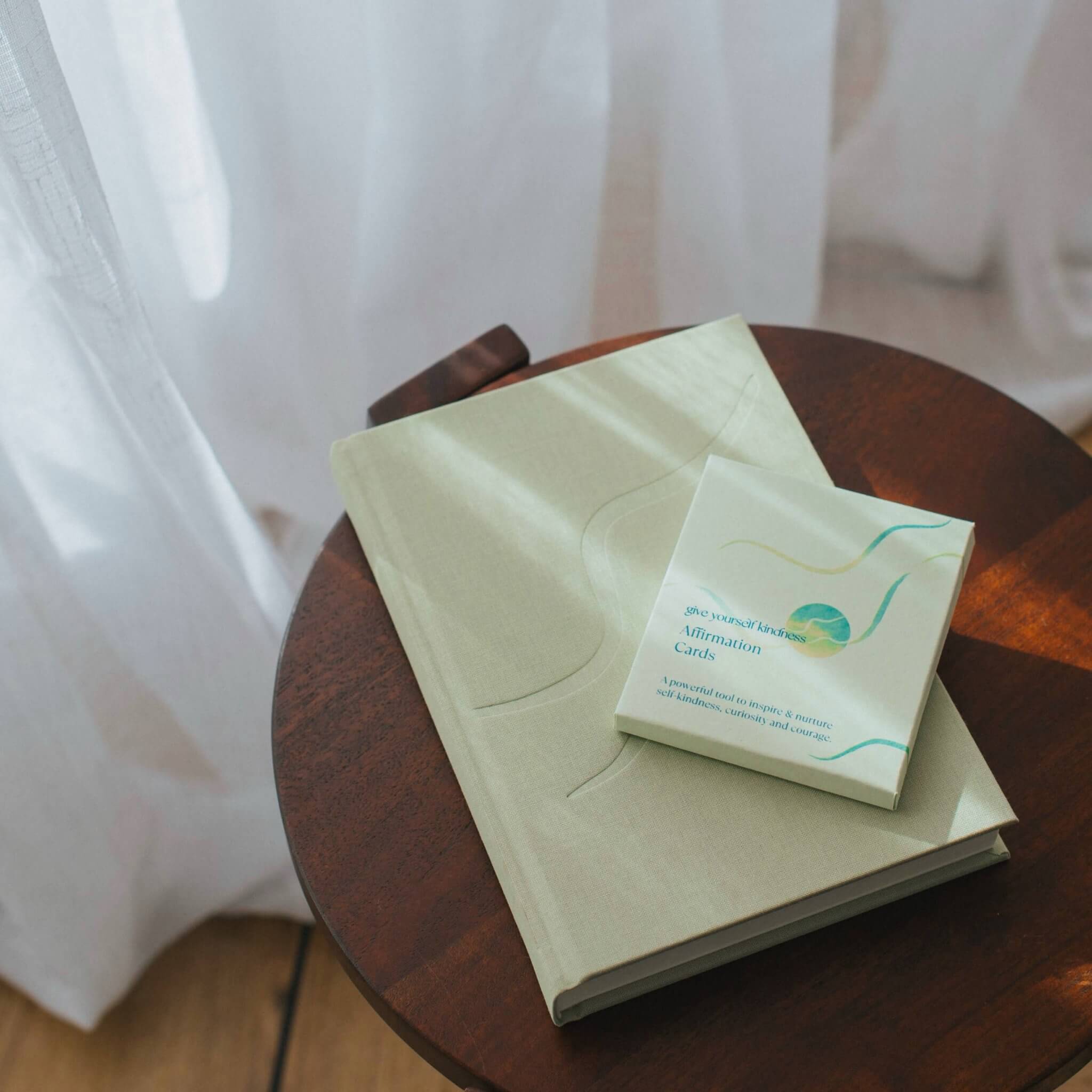
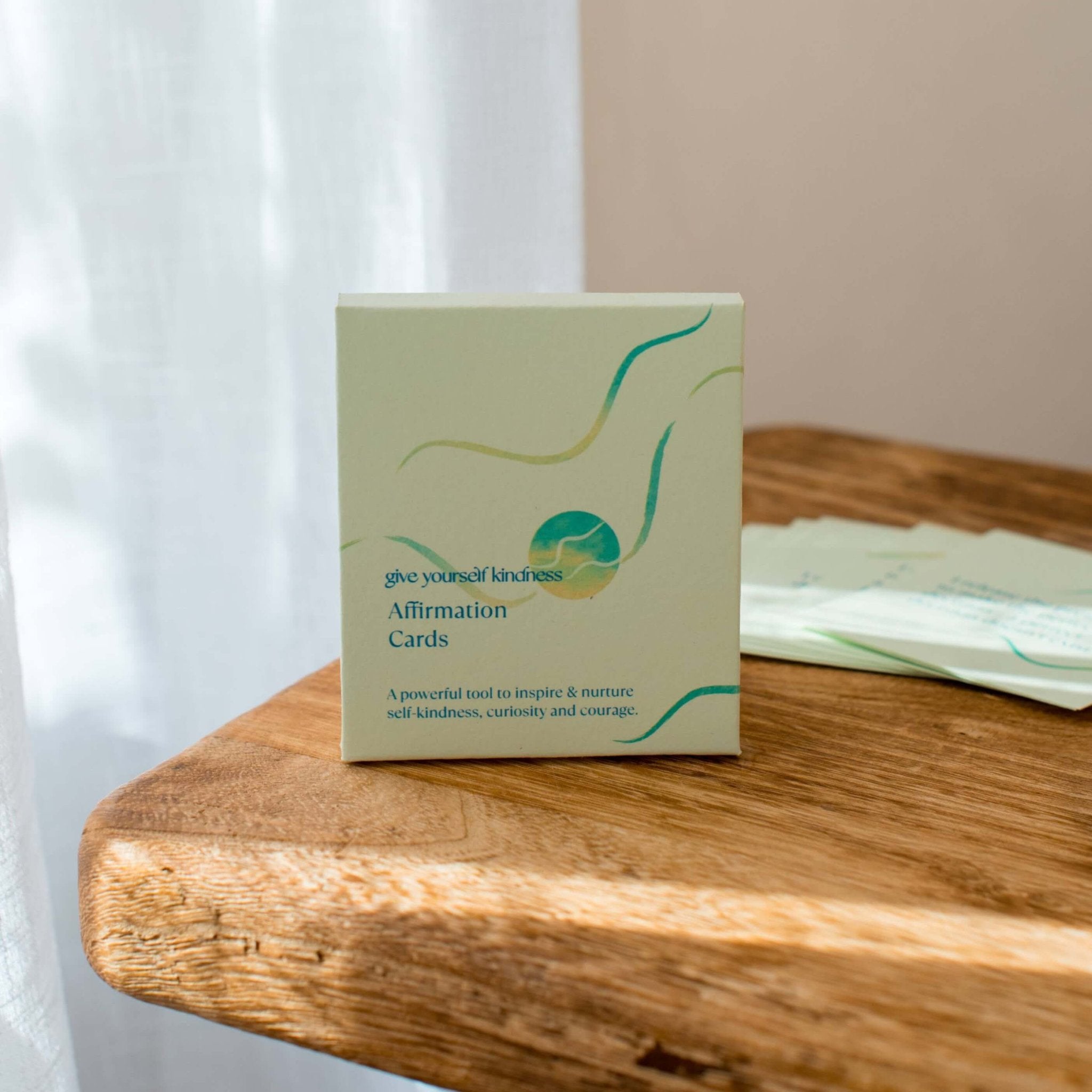
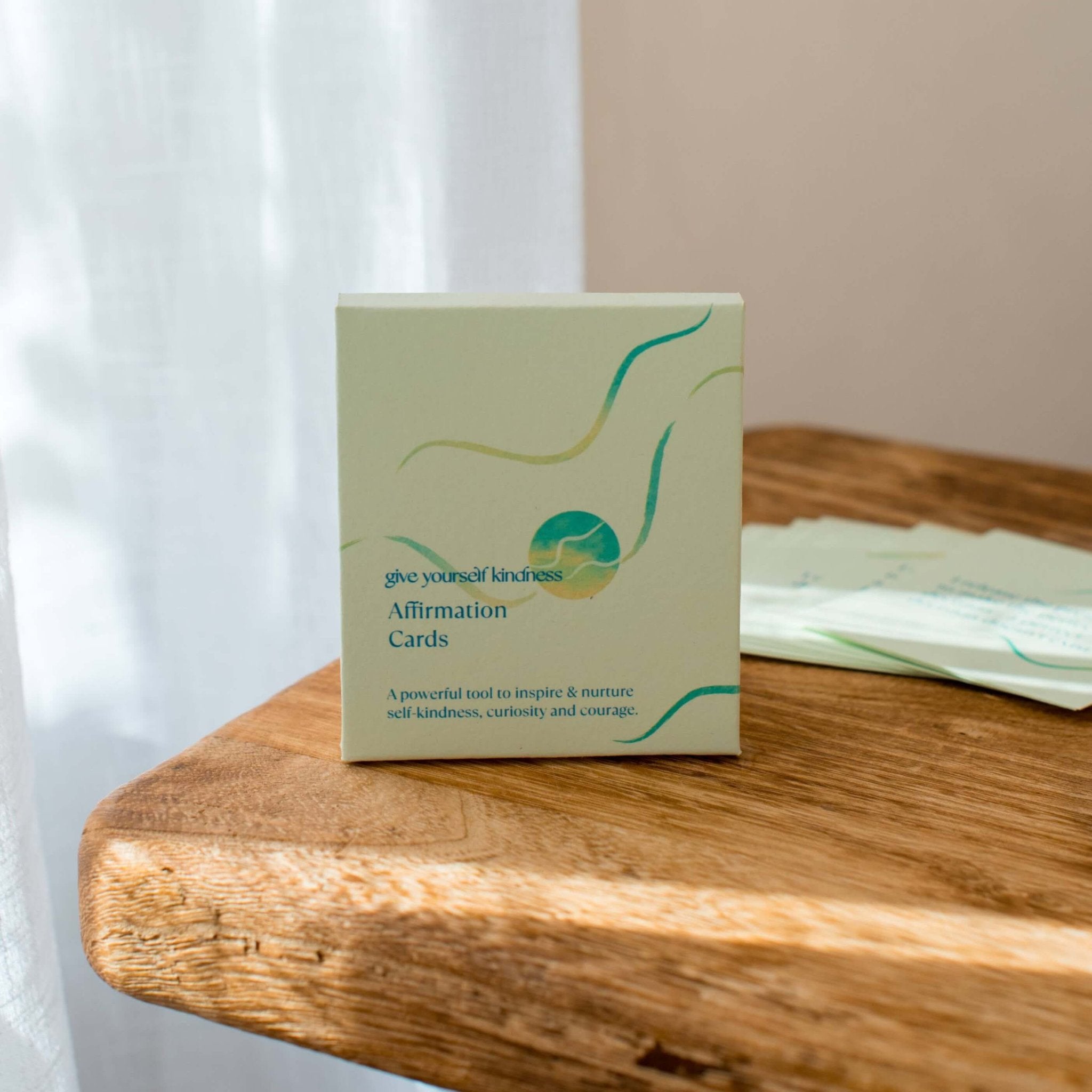
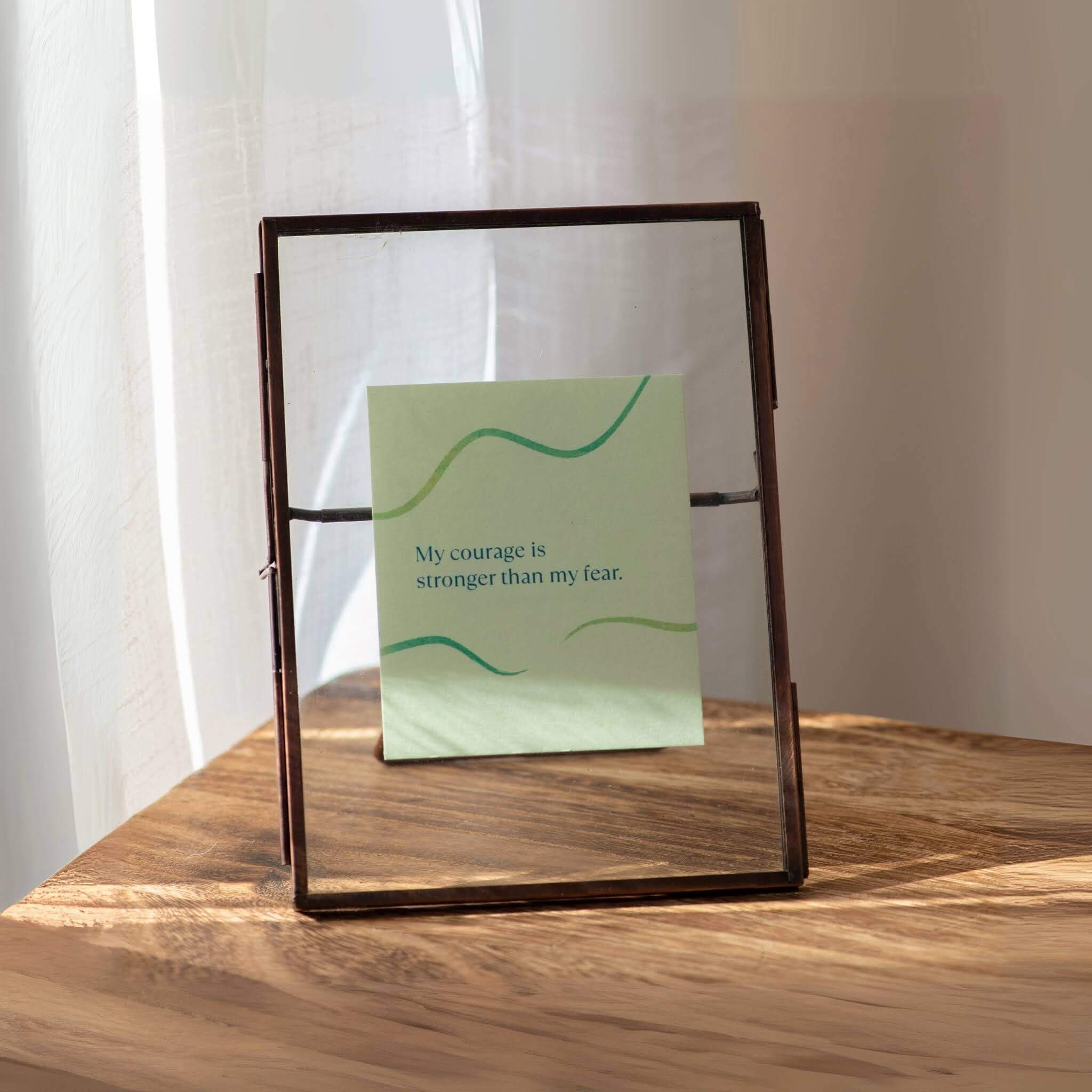
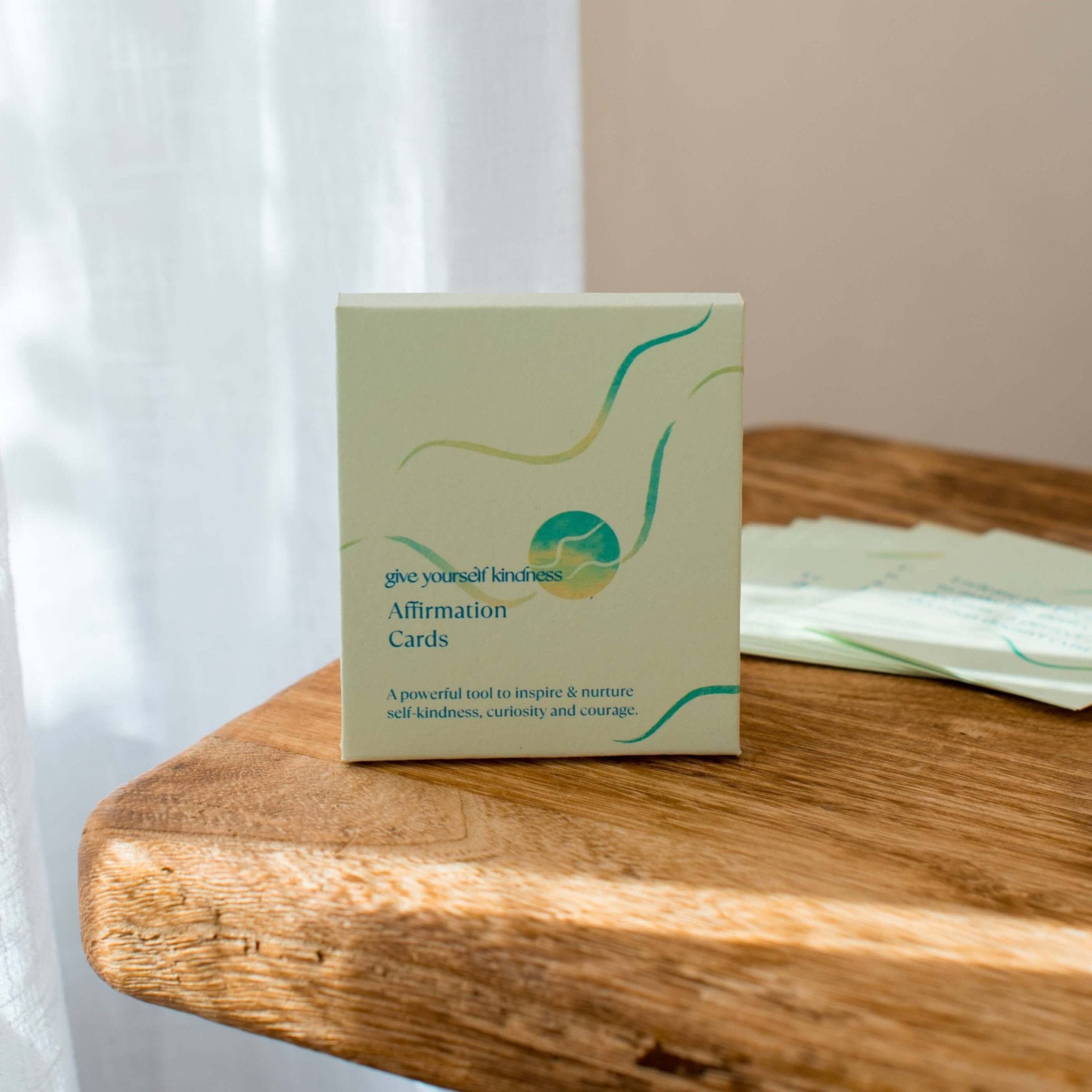
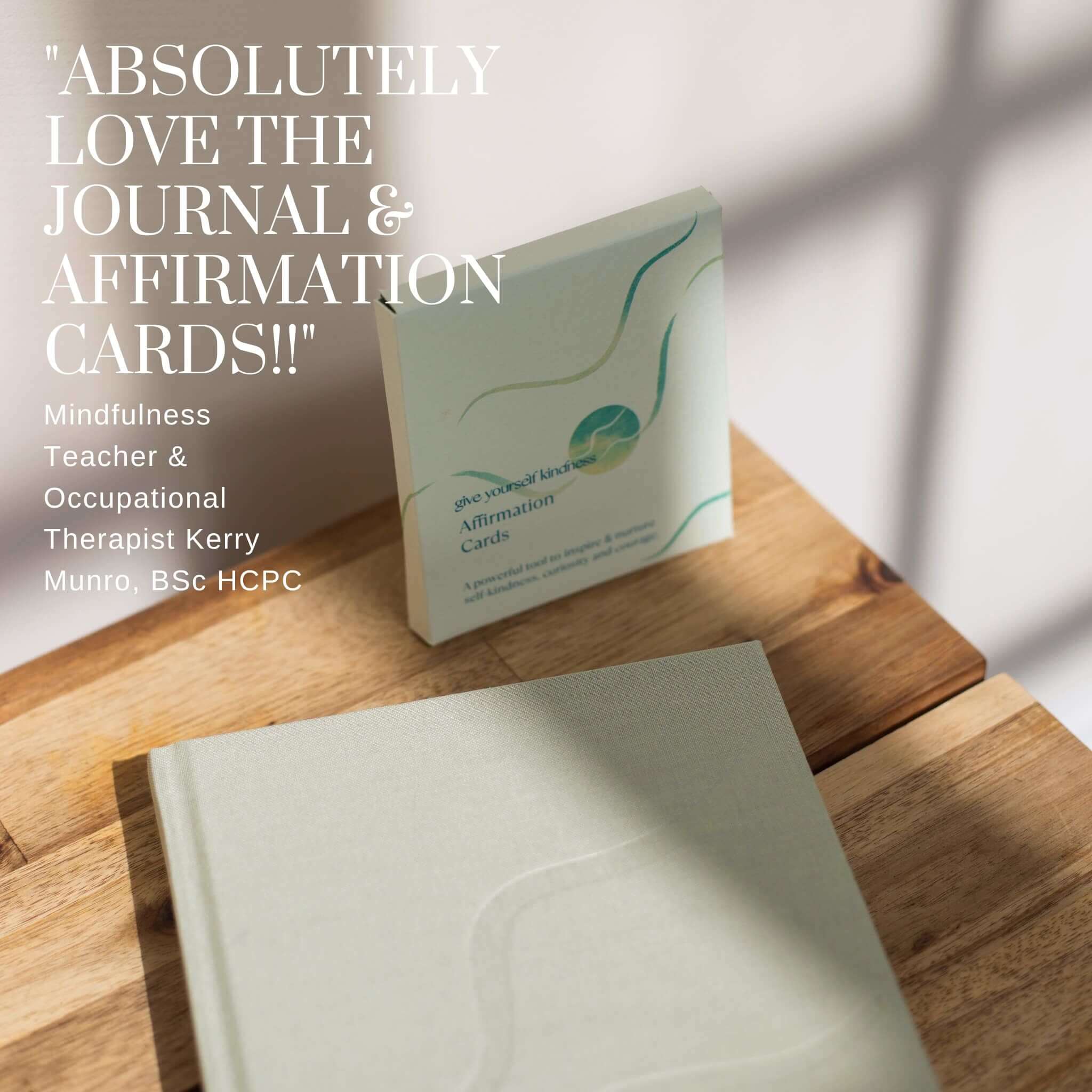
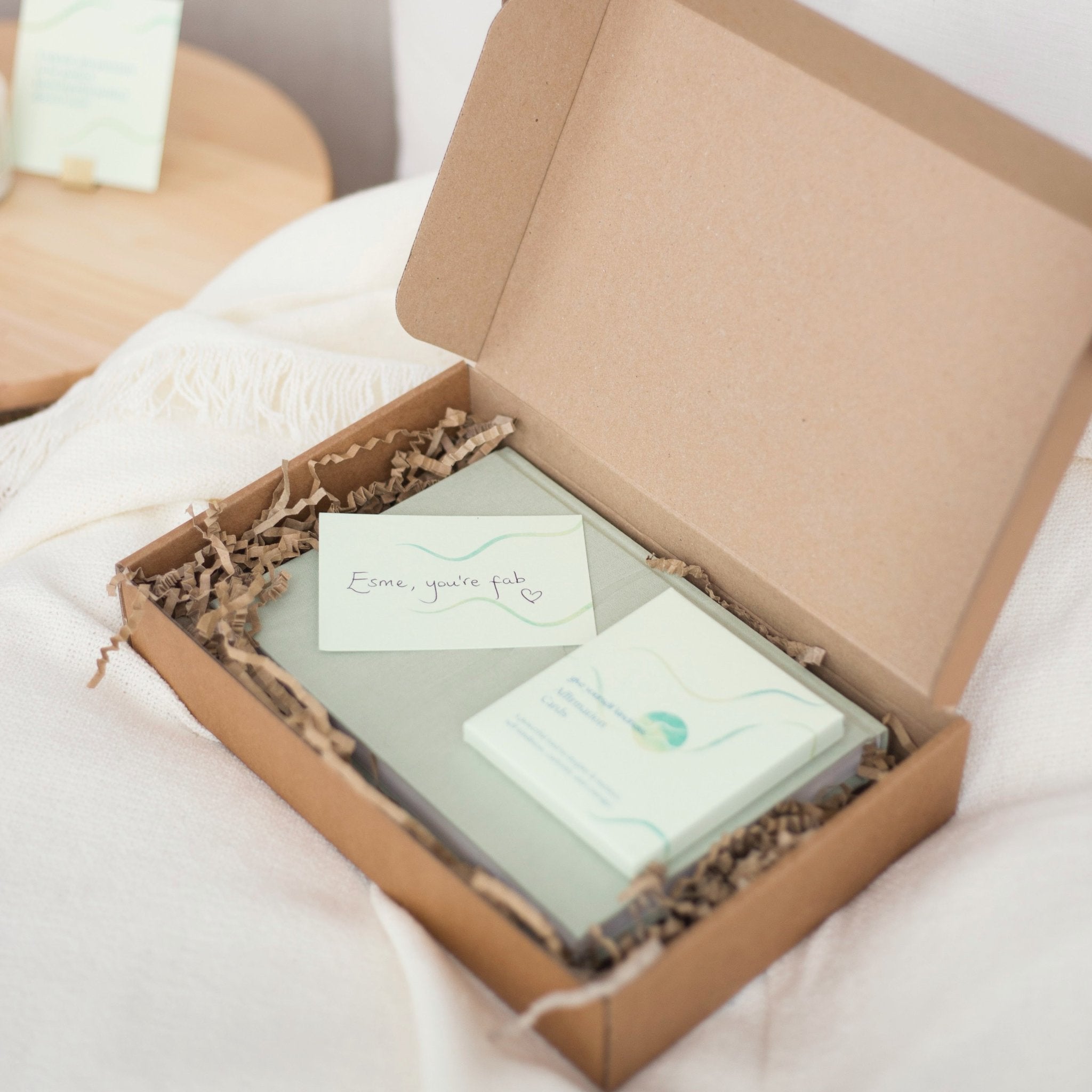
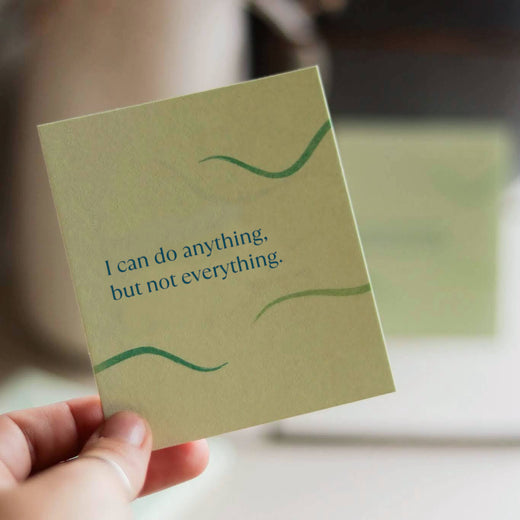
The affirmations on this page come from the Give Yourself Kindness deck, 60 cards built on self-compassion research rather than forced positivity.
The reason that matters for anxiety specifically: you are least able to go looking for help at the exact moment you need it. A card on your desk is already there.


- 60 affirmations across 3 sets, grounded in self-compassion research
- They acknowledge the hard bit instead of talking over it, so they stay believable
- Recommended by licensed therapists, used in real clinical practice
- Premium 270gsm cards, printed in the UK, plastic-free packaging
Added to your basket. View basket →
What therapists say about these cards
 Margaret Davis, MS, LPC
Licensed Therapist
"These affirmations are truly so beautiful and powerful. I instantly feel a sense of groundedness and calm. I'll definitely be utilizing these with my clients, as well as practicing them myself."
Margaret Davis, MS, LPC
Licensed Therapist
"These affirmations are truly so beautiful and powerful. I instantly feel a sense of groundedness and calm. I'll definitely be utilizing these with my clients, as well as practicing them myself."
 Collette Jones, LCSW
Practice Owner
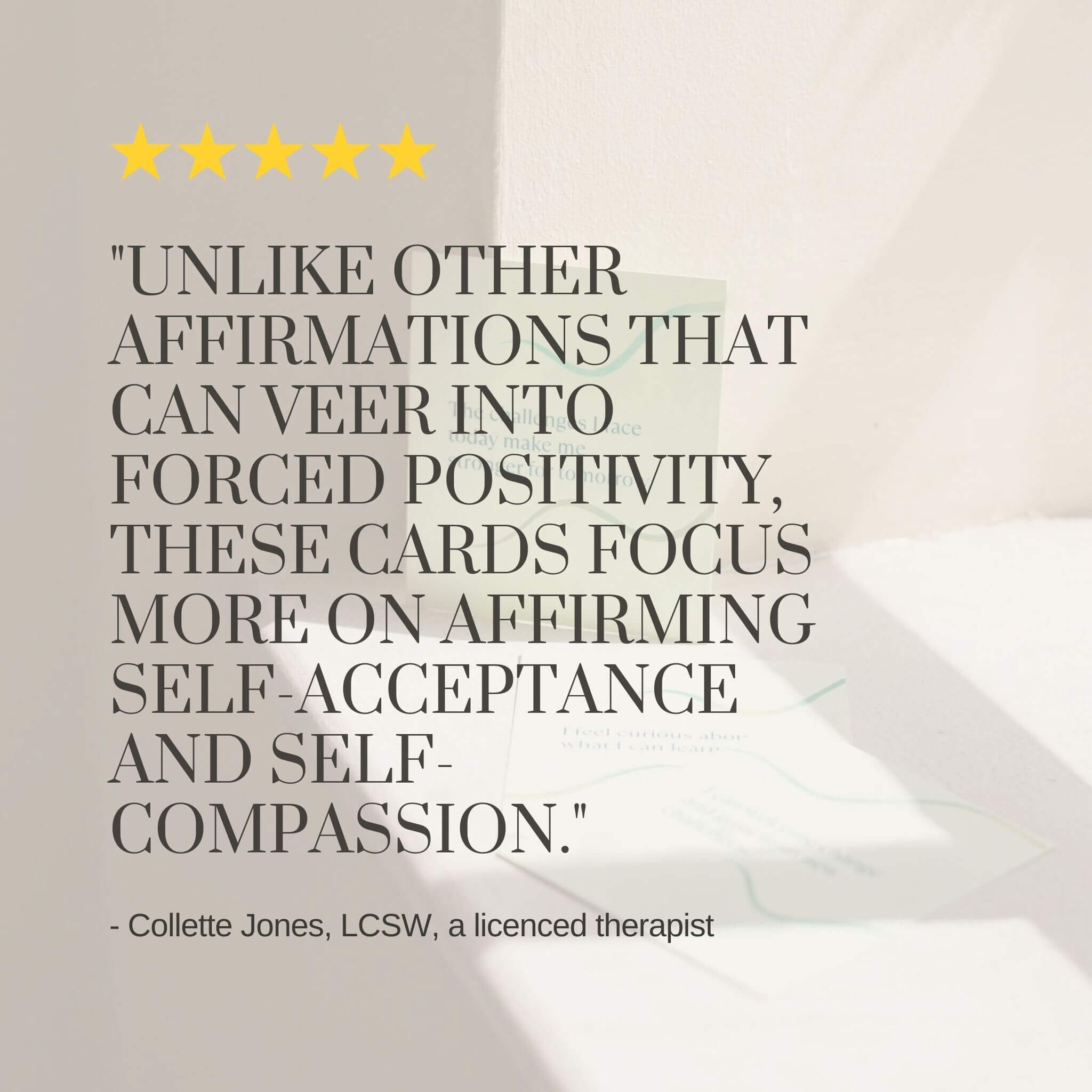
"A beautiful tool that offers gentle reminders to soothe the mind and cultivate peace. Unlike other affirmations that veer into forced positivity, these focus on self-acceptance and self-compassion."
Collette Jones, LCSW
Practice Owner
"A beautiful tool that offers gentle reminders to soothe the mind and cultivate peace. Unlike other affirmations that veer into forced positivity, these focus on self-acceptance and self-compassion."
 Kerry Munro, BSc HCPC
Mindfulness Teacher and Occupational Therapist
"I've used these with patients on a mental health ward. The feedback was great. So many people forget to offer themselves kindness, especially when they need it most."
Kerry Munro, BSc HCPC
Mindfulness Teacher and Occupational Therapist
"I've used these with patients on a mental health ward. The feedback was great. So many people forget to offer themselves kindness, especially when they need it most."
When to use these affirmations
Before presentations or meetings
When nervousness creeps in, try "I can use my breath as a tool to find calm" or "My voice matters. My opinions matter. I matter."
During tight deadlines
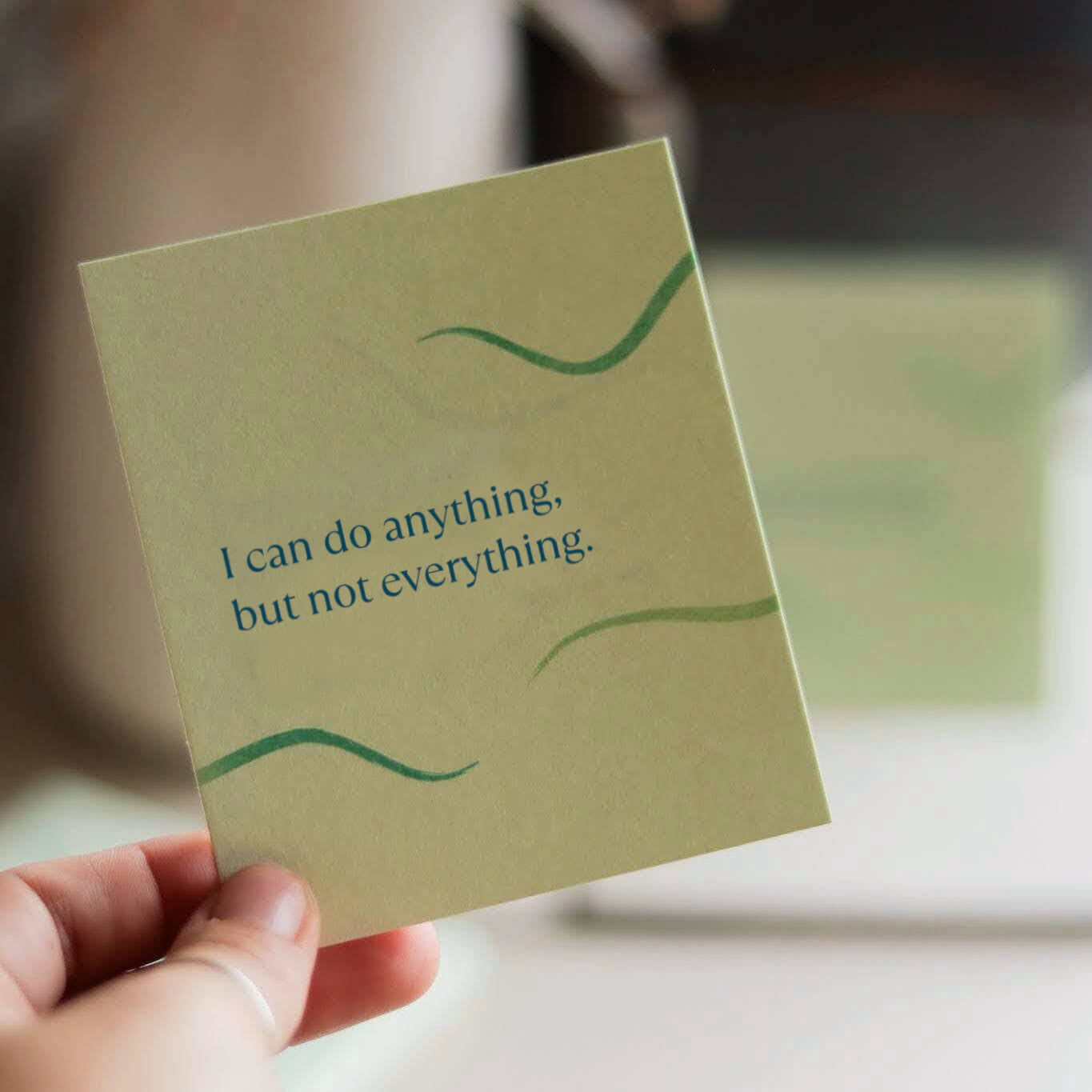
Use "I can't be perfect and I don't need to be" or "I can do anything, but not everything."
After making mistakes
Turn to "I can make mistakes and learn from them, without self-criticism" or "My setbacks are setups for stronger comebacks."
When feeling overwhelmed
Remember "I can ask for help and know that this is not a weakness, but a strength" or "I deserve to take breaks to care for my wellbeing."
During performance reviews
Use "I am worthy, and this does not depend on my productivity or achievements" or "I celebrate my successes, no matter how big, or small."
Making these affirmations work for you
Start small. Choose one or two affirmations that resonate most with you and build them into natural moments of your workday. Try:
- Setting them as phone reminders before important meetings
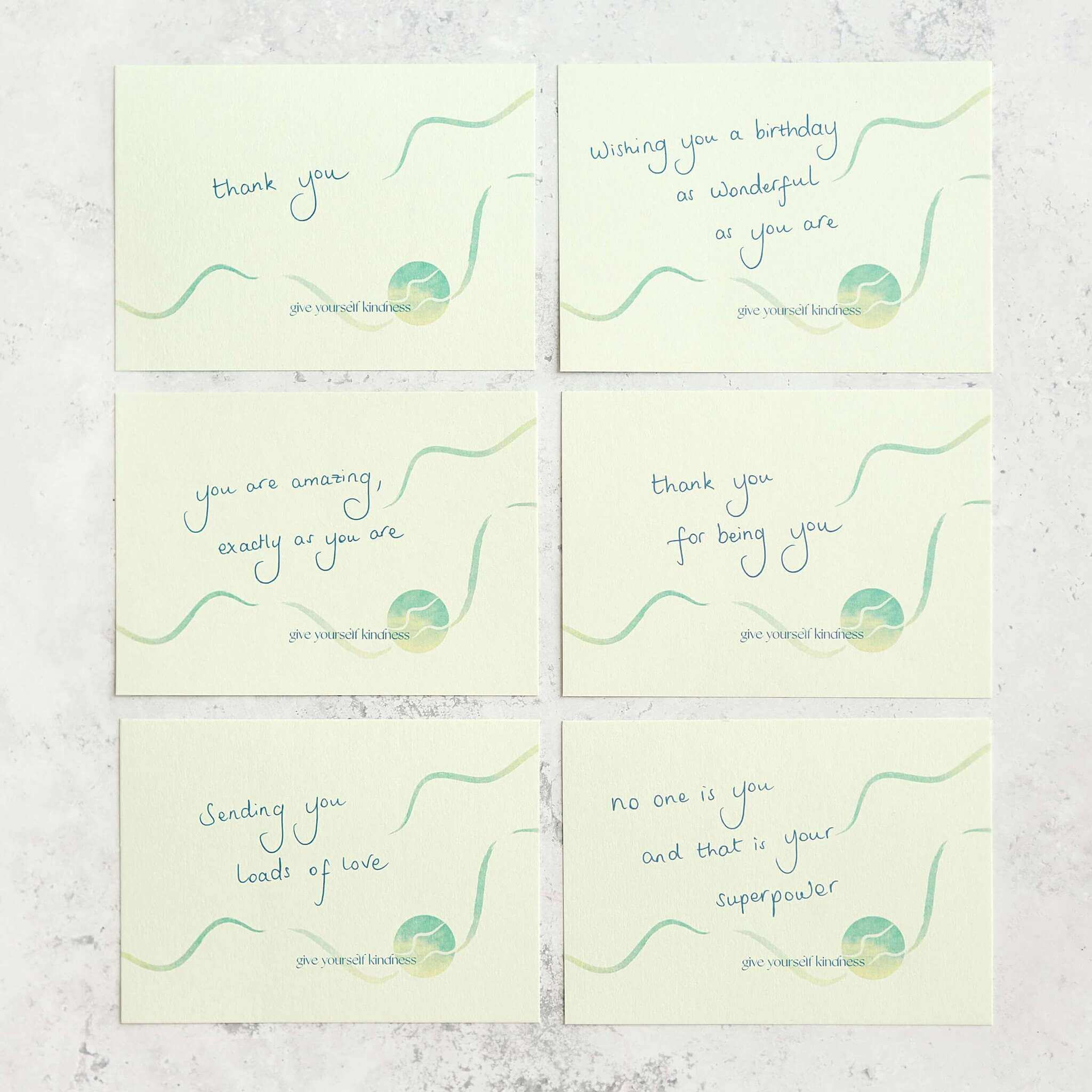
- Writing them on sticky notes for your desk
- Reading them during your morning routine
- Repeating them during stressful moments
- Keeping them visible in your workspace
Anxiety is normal, let self-compassion help
Each time you respond to work anxiety with self-compassion instead of self-criticism, you're building a stronger foundation for tomorrow. You're not alone in experiencing work anxiety, and you deserve to support yourself with kindness through these challenging moments.
Common questions about work anxiety
Do affirmations actually help with work anxiety?
They help with the layer on top of the anxiety rather than the anxiety itself, which is where most of the suffering lives. As Dr Erika Bach explains, self-criticism about being anxious adds shame to the original feeling, so you end up managing two problems. Affirmations that acknowledge the anxiety without judging you for it stop that second layer forming.
What's the difference between work anxiety and work stress?
Stress is usually a response to something happening now, like a workload that genuinely is too big. Anxiety tends to run ahead of events, rehearsing what might go wrong in a meeting that hasn't happened yet. The affirmations differ accordingly: stress responds to permission, anxiety responds to reassurance that you don't have to be certain to proceed.
What should I say to myself right before a meeting?
Something your body can act on rather than something you have to believe. "I can use my breath as a tool to find calm" works because it's an instruction, not a claim about you. Once the physical response settles slightly, "My voice matters. My opinions matter. I matter" has somewhere to land.
What if the anxiety is about something real, like a difficult manager?
Then the anxiety is doing its job, and no affirmation should talk you out of it. Anxiety about a genuinely difficult situation is information, not a malfunction. Self-compassion helps you stay steady enough to act on that information, whether that means a conversation, a boundary, or a decision about the role, rather than concluding you're simply not resilient enough.
Isn't being kind to myself just letting myself off the hook?
It's the most common worry about self-compassion, and the research points the other way. Self-criticism triggers your threat system, which narrows your thinking exactly when you need to plan or problem-solve. Self-compassion keeps you in a state where you can actually look at what went wrong and do something about it.
How long before I notice a difference?
Most people notice their self-talk starting to shift after two to three weeks of regular use. The first week often feels slightly false, which is normal as your brain encounters unfamiliar kindness. Consistency matters more than intensity here.
When should I speak to someone instead?
If anxiety is affecting your sleep, your health, or your ability to do things you want to do, that's worth taking to a GP or a therapist rather than managing alone with a card deck. These affirmations are a support, not a treatment, and they work best alongside proper help rather than instead of it.
Something steady for the two minutes before
The affirmations from this page, plus more, on cards for your desk. From £13.95.
Shop the Affirmation Cards →