






Quick answer
Will journaling help me sleep?
Yes, and the kind of writing you do decides what it fixes. Journaling before bed can help you fall asleep faster by reducing anxiety, clearing mental clutter and giving looping thoughts somewhere to go. In a 2018 sleep-laboratory study, five minutes spent writing tomorrow's to-do list helped people fall asleep an average of nine minutes faster than writing about what they had already done.
But a list only handles logistics. If what keeps you awake is self-criticism, worry or replaying conversations, the writing that helps is noticing your emotions and putting them into words. Naming a feeling has been shown to quieten the brain's threat centre, which a to-do list does not touch.
I am Rachel, and I came to this question because I needed the answer myself. Sleep was hard for a long stretch, and journaling turned out to be one of the things that helped. What I could not find at the time was a straight explanation of which kind of writing does what, and that is what this page is.
I am a qualified meditation teacher, not a clinician, so everything clinical below is attributed to named experts with their credentials, and every study I mention is linked so you can read it yourself.
How does journaling actually help you sleep?
Four things appear to be happening, and they are worth knowing separately because they explain why some kinds of writing work for some people and do nothing for others.
It offloads what your mind is holding
Unfinished tasks sit in working memory and keep being rehearsed. Writing them down transfers them from your head onto paper, so your brain can stop keeping the list alive. Researchers call this cognitive offload.
It calms the brain's threat centre
Putting a feeling into words, a process psychologists call affect labelling, has been shown to reduce activity in the amygdala in response to distressing images. Naming it turns the volume down.
It signals safety to your nervous system
Externalising stress instead of holding it can help your body move out of alert mode. Self-criticism does the opposite: your nervous system reads it as a threat and becomes more alert, which is exactly what you do not need.
It interrupts rumination
Rumination is the same thought circling without resolving. Writing gives the loop a place to land and, crucially, a chance for a different voice to answer it.
The study people quote, and what it actually found
In a 2018 study published in the Journal of Experimental Psychology: General, 57 healthy young adults completed a five-minute writing task and then had their sleep measured overnight by polysomnography in a sleep laboratory. Half wrote a to-do list of tasks for the coming days. Half wrote about tasks they had already completed.
The to-do list group fell asleep around nine minutes sooner. There was a second finding I find more useful than the headline: the more specific the list, the faster they fell asleep. Vague worry written down is still vague worry. "Sort out the thing with work" keeps its hooks in. "Email Sam about the March invoice, 9am" does not.
What this study does not say
It was 57 healthy young adults in a laboratory, not people with insomnia, and it compared two kinds of task writing. It tells you nothing about whether journaling helps when the thing keeping you awake is shame, grief or self-criticism. That question is answered by a different body of research, below.
What a neuroscientist says about the evening specifically

Dr Olena Santangeli, PhD
Neuroscientist and Sleep Expert (BSc, MSc, PhD Med). Child and Adult Sleep Consultant, Caring Sleep Solutions
"In the evening, journaling shifts focus, providing a therapeutic outlet to unwind and process the day's events. Reflecting on your experiences by hand, rather than digitally, encourages a deeper engagement with your thoughts and feelings. This hands-on method has been shown to facilitate a more profound processing of emotions, aiding in stress reduction and anxiety management. By physically writing down your worries, achievements, and reflections, you create a mental space for relaxation, making it easier to transition into a restful state of sleep."Read Dr Santangeli's full guide, written for Give Yourself Kindness →
Note the phrase "by hand". It is one of the few places where the format genuinely seems to matter.
Three bedtime journaling methods, and which problem each one solves
Almost all bedtime journaling advice is one of these three. They are not interchangeable, and picking the wrong one is the most common reason people conclude that journaling does not work for them.
| Method | How it works | Best for |
|---|---|---|
| The bedtime to-do list 5 minutes |
Write a highly specific list of what you need to do tomorrow. The more specific, the better it works. | Quietening racing thoughts about future responsibilities and logistics. |
| Noticing your emotions and writing them down 10 to 15 minutes |
Name what you felt today as precisely as you can, explore what sat behind it, then write back to yourself the way you would to a friend. | Self-criticism, rumination, replaying conversations, worry that is not about tasks. The most common cause of sleeplessness, and the least well served by standard advice. |
| Gratitude journaling 3 to 5 minutes |
Write down a few specific things you were grateful for today, and why they mattered to you. | Shifting what your mind lands on in the window while you are falling asleep. |
Why I would not tell you to do a brain dump
Most versions of this list include unfiltered freewriting, usually called a brain dump: vent everything, get it all out. I understand the appeal, and for some people it is a relief.
I do not recommend it at bedtime, for a specific reason. Venting without direction can rehearse distress rather than resolve it, and at 10pm, when you are tired and already self-critical, an unstructured page is very easy to fill with more criticism. You can finish more wound up than you started.

Dr Chris Irons
Clinical Psychologist. Compassion Focused Therapy researcher and trainer, co-director of Balanced Minds
"It's useful to consider which part of ourselves is doing the journalling... it could be that it's a fearful part of you that is writing, or an angry or self-critical part... CFT tries to support people by initially helping them to develop a compassionate part of self, a part that is wise, strong and caring... Crucially, once developed, we then would use this compassionate part of ourselves to 'do' the journalling."Read the full article: The Benefits of Journaling from 3 Clinical Psychologists →
So the version I would suggest instead is the same act with a direction: notice the emotion, name it, and then answer it kindly. You still get the release. You do not hand the pen to your inner critic.
A caution worth taking seriously
Dr Andreas Comninos, PhD, clinical psychologist and EMDRAA accredited practitioner, notes that writing about difficult experiences can stir up strong feelings, and advises approaching intense journaling "with care and kindness towards yourself", choosing a time when you can look after yourself afterwards. If something surfaces that feels too big to hold on your own, that is worth taking to a therapist rather than to a notebook at midnight.
What should I write if it is feelings keeping me awake?
Three steps, and they take about ten minutes.
- Name the feeling as precisely as you can. Not "bad" or "fine". Was it disappointed, or embarrassed, or lonely, or resentful? Several at once is normal and worth writing down as several.
- Get curious about why, without judging what you find. What happened just before it? What did it seem to be about? You are not looking for a verdict on yourself.
- Write back to yourself as you would to a friend. This is the step people skip, and it is the one that changes how the writing lands.
That third step is the whole difference between processing and ruminating.
What this sounds like in practice
"Why did I say that. Everyone must think I am useless. I always do this. I should have handled it better."
"I feel embarrassed and a bit ashamed about the meeting. If a friend told me this, I would say one clumsy sentence is not who they are, and that they were tired and doing their best."
Same event. Same ten minutes. Very different nervous system by the time you switch the light off.
If naming the feeling is the part you get stuck on, that is extremely common and it is a skill rather than something you either have or do not. My free guide on how to identify your emotions walks through it properly.
Why self-compassion is doing the heavy lifting here

Dr Annabelle Kyle Dortch, PsyD
Clinical Psychologist, Los Angeles. Specialises in life transitions, relationships, stress, anxiety and trauma
"When we engage in self-criticism, we create a nervous system and brain state that is not conducive to learning or facilitating a growth-oriented mindset... From this place of safety and self-compassion, we can actually learn more from our experience and make effective decisions about moving forward."Read the full article: Why Self-Compassion is More Effective Than Self-Criticism →
She also notes that "our mind-body system perceives criticism as a threat", and that when the stress response is activated "the amygdala (the emotion and crisis center of the brain) is very active and the frontal lobe (where we reflect and make decisions intentionally) is offline." A safe place to land is a fair description of the state a body needs in order to fall asleep.
Does gratitude journaling help sleep?
There is direct evidence that it might, and the mechanism is unusually relevant to this page.
Wood and colleagues (2009), in the Journal of Psychosomatic Research, studied 401 adults, 40% of whom scored in the clinically impaired range on the Pittsburgh Sleep Quality Index. More grateful people reported better sleep quality, longer sleep, less time taken to fall asleep and less daytime tiredness.
The link ran through pre-sleep cognitions: the thoughts you have in the window while you are drifting off. Grateful people had more positive and fewer negative thoughts in exactly that window. Which is a precise description of what most people mean when they say their mind will not switch off.
Being straight about the limits: this measured gratitude as a personality trait in the general population. It was not a trial of gratitude journaling as a treatment. It shows the direction is real and explains why, without promising you a result.
Tips that make bedtime journaling actually work
- Keep it to 5 to 15 minutes. Long enough to land, short enough that you do not overstimulate yourself. If you are still writing after twenty minutes you have probably moved from processing into circling.
- Journal 30 to 60 minutes before bed, not in bed. This gives your mind time to settle after writing, rather than taking freshly stirred thoughts straight to the pillow.
- Use paper and pen. Dr Santangeli specifically highlights writing by hand as encouraging deeper engagement, and screens add blue light, which suppresses melatonin at exactly the wrong hour.
- Be specific. The sleep-lab study found specificity predicted how fast people fell asleep. Vague on the page stays vague in your head.
- Write to yourself, not just about your day. Recording events is a diary. Answering yourself kindly is what shifts the loop.
- Journal at roughly the same time each evening. Consistency builds a wind-down cue, so your body starts reading it as the beginning of rest.
- Let missed nights be missed nights. Falling behind is the single most common reason people stop, and a run of blank dates reads like evidence against you. Undated formats exist for this reason.
What if you have tried journaling and it did not help?
This is where I was for years, so I want to take it seriously rather than tell you to try harder.
You were probably writing the wrong thing
If you were listing tasks or recording your day and your mind still raced, that is not a failure of journaling. It is a mismatch. Task writing addresses task worry. It does not touch self-criticism. Switching to naming and answering emotions is a genuinely different activity, not more of the same.
You may have been writing in your critic's voice
An unguided page late at night tends to be filled by whichever part of you is loudest, and at 10pm that is often the harshest one. If journaling has consistently left you feeling worse, this is usually why. Prompts help because they decide who holds the pen.
You might have been doing it too late
Writing until you switch off the lamp is a different experience from writing an hour earlier with the book closed well before bed. Try moving it, before you give up on it.
You stopped after a week, and then felt bad about that
Nearly everyone does. It is not a character flaw and it is not evidence about you. Coming back after two weeks away is just coming back.
If you want something to write in
You do not need to buy anything to try this. A notebook you already own and the three steps above are enough to find out whether writing about emotions helps you, and I would rather you tested it cheaply than took my word for it.
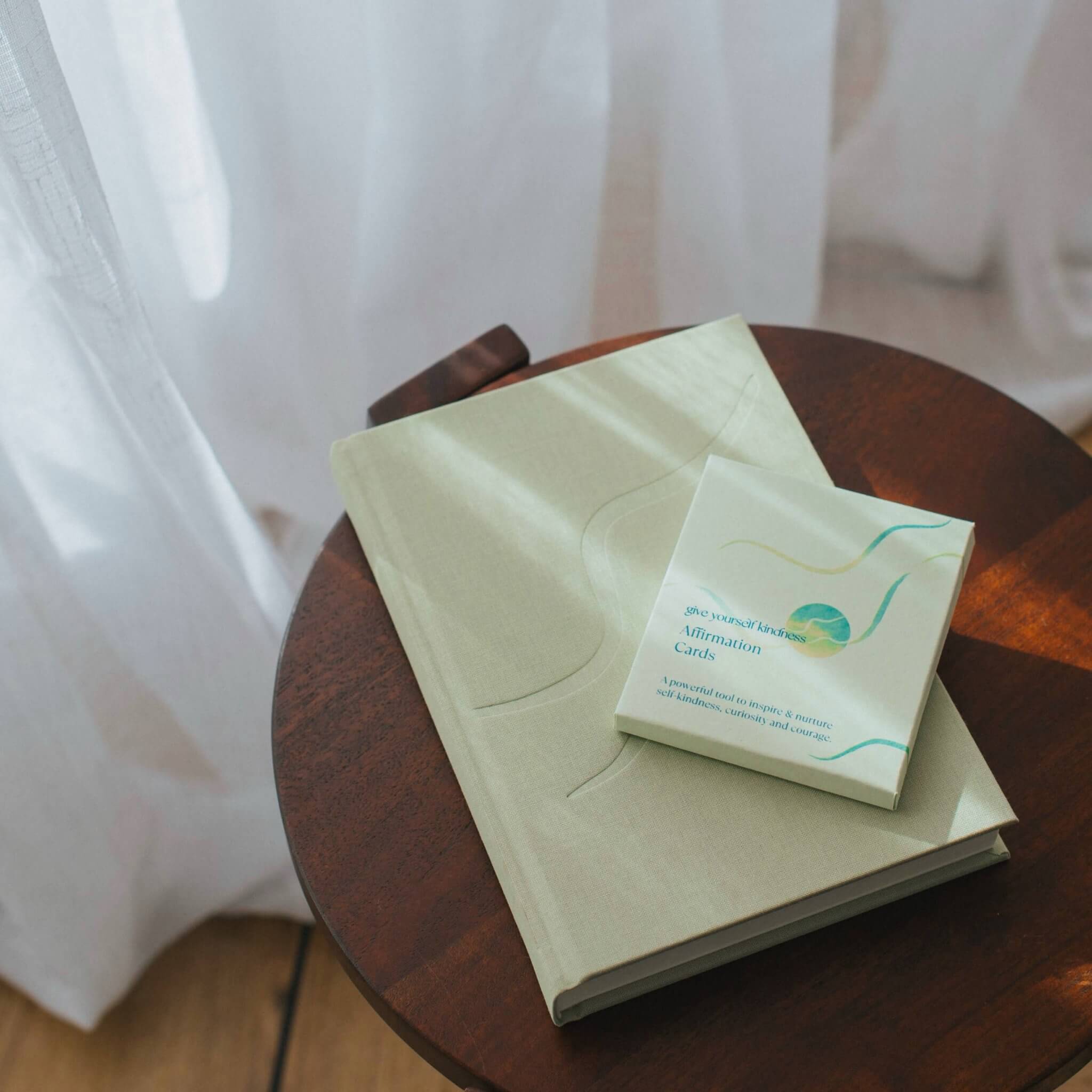
If you would find prompts easier than a blank page, particularly on tired evenings, I have written an honest comparison of the options, including the ones I make, what they cost and who each one is wrong for.

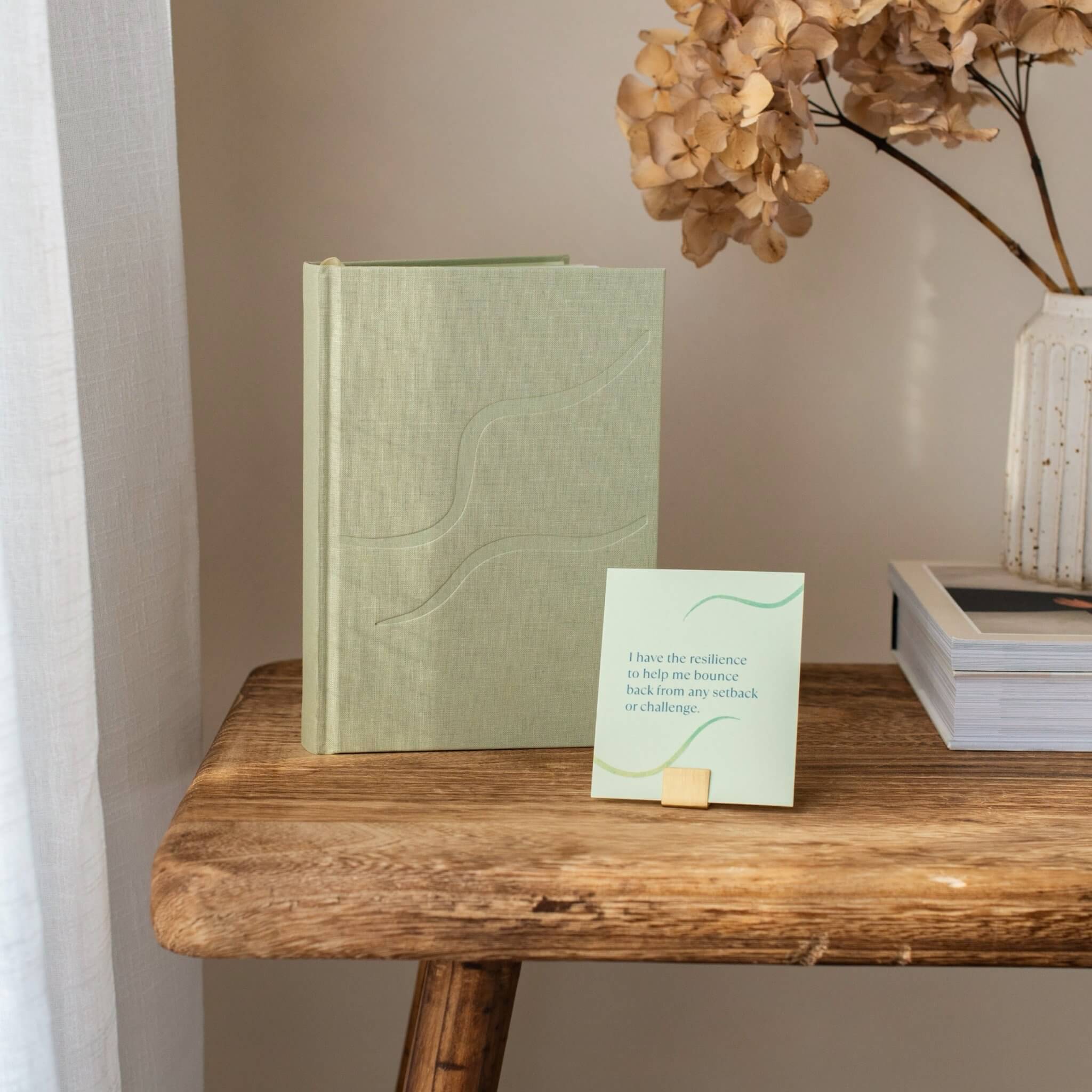
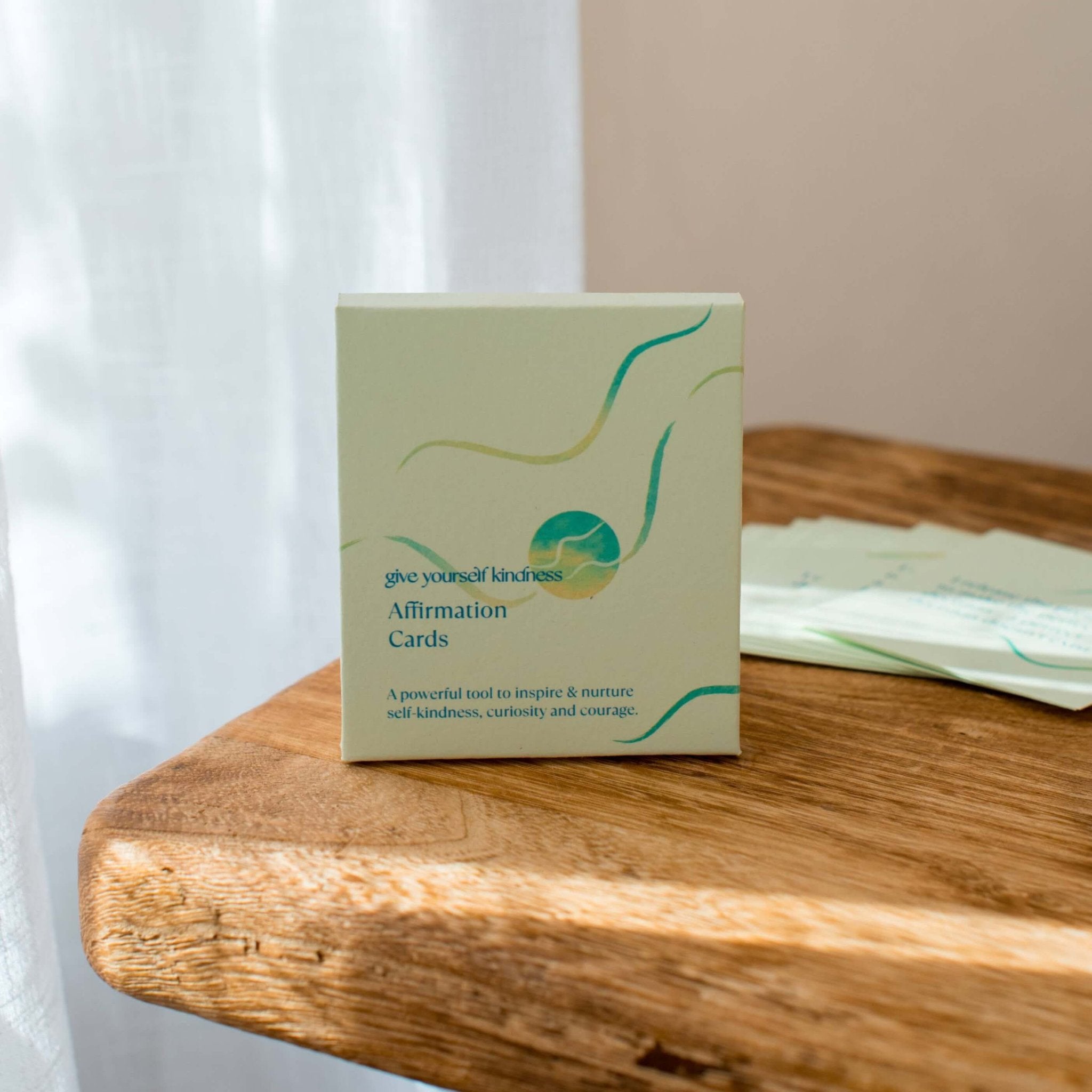
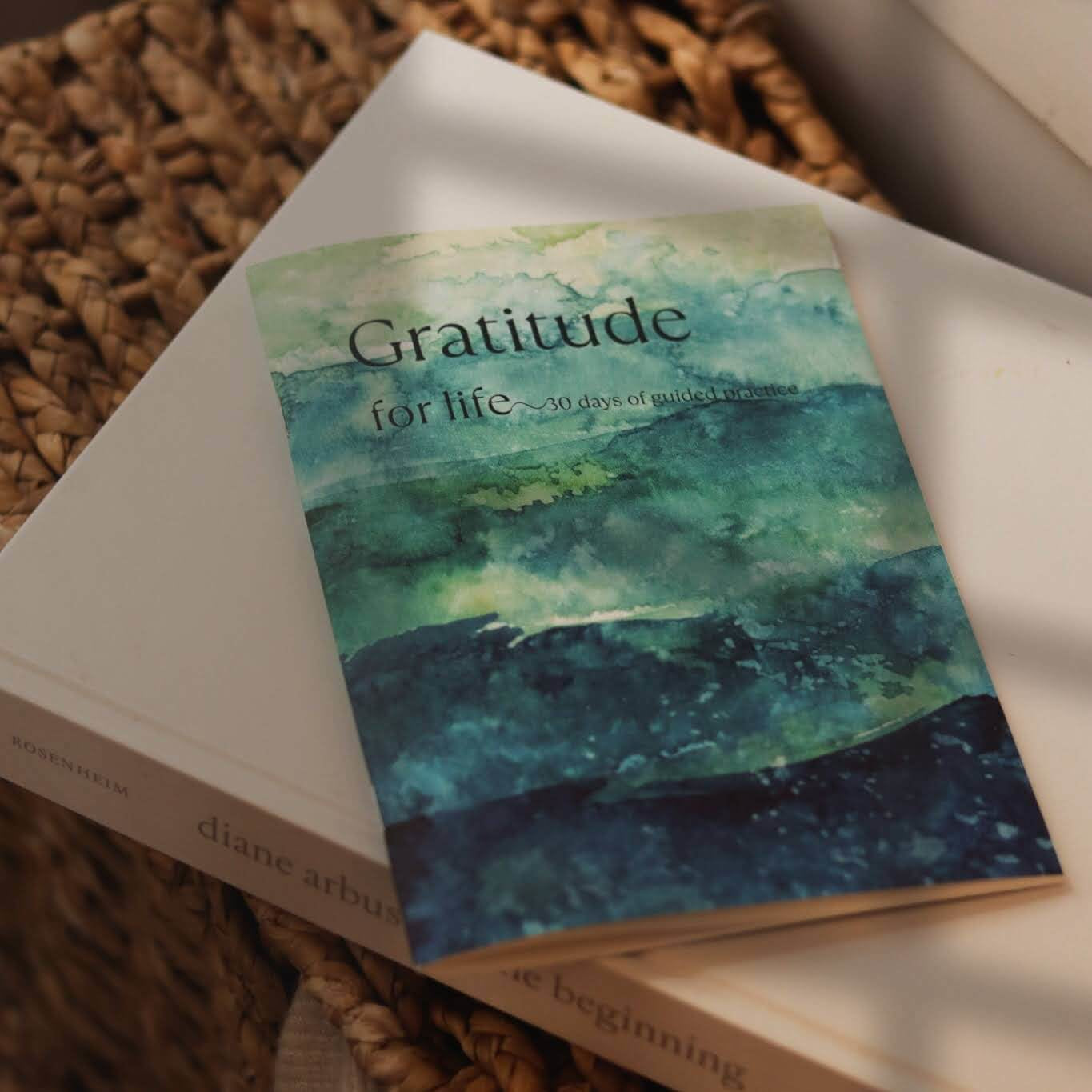
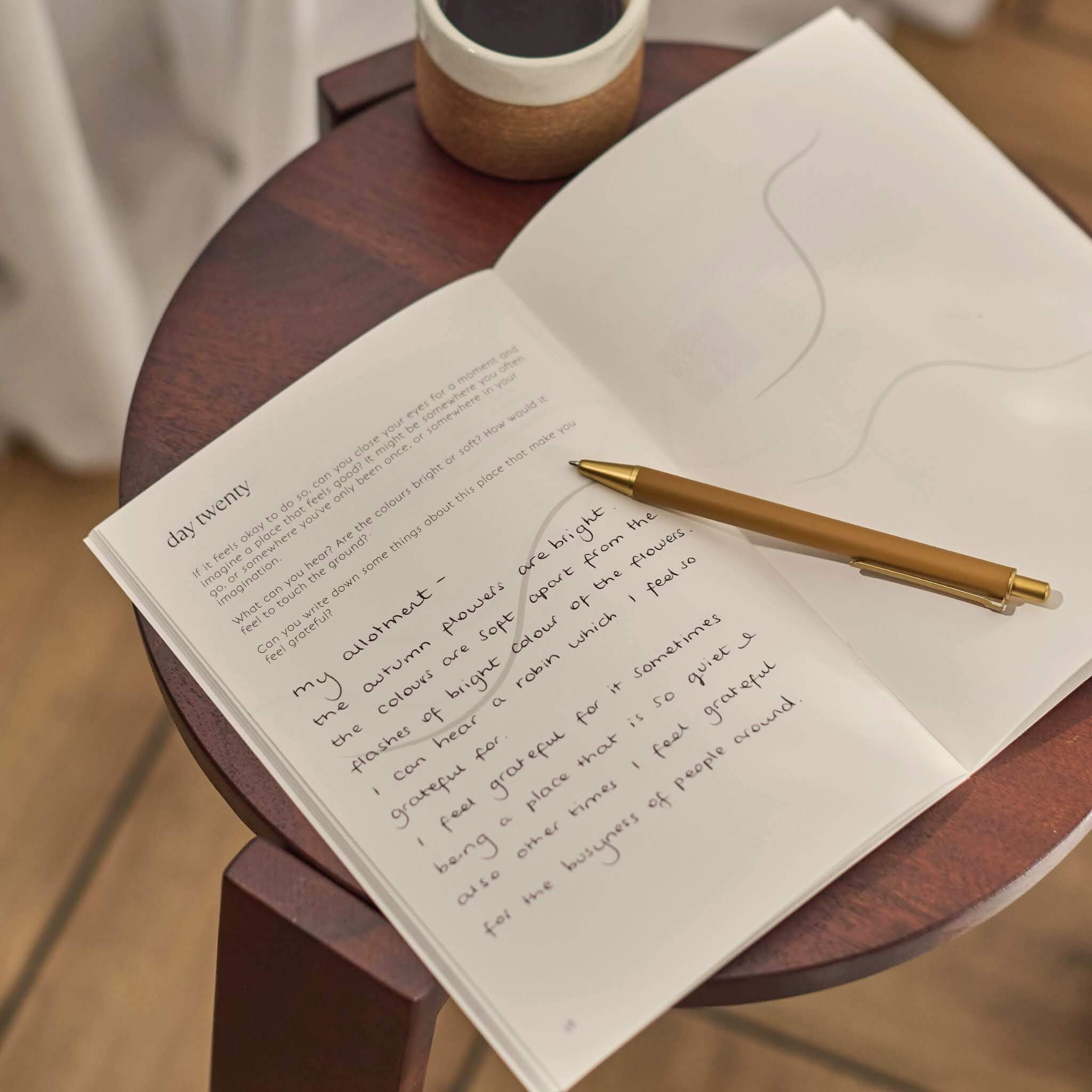
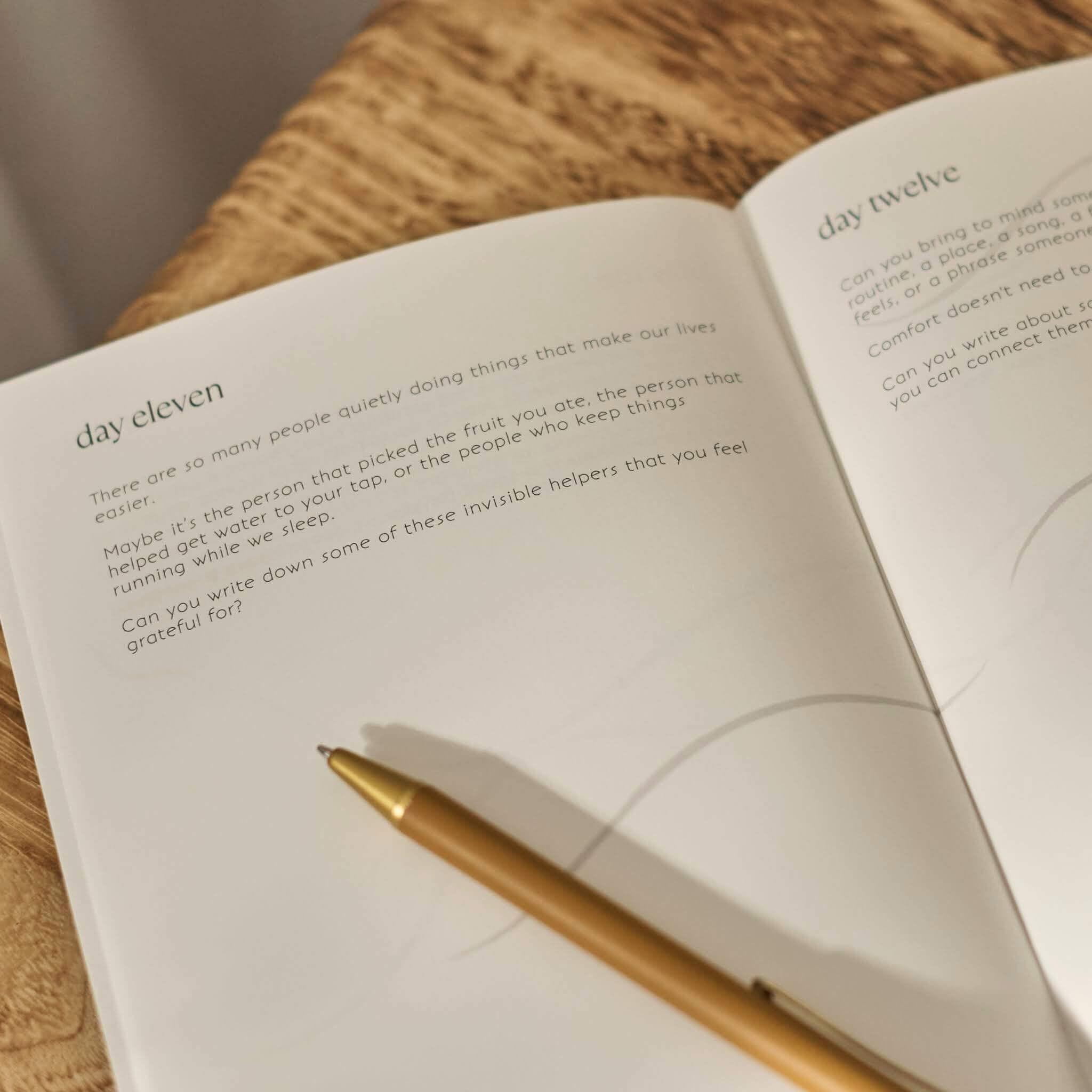
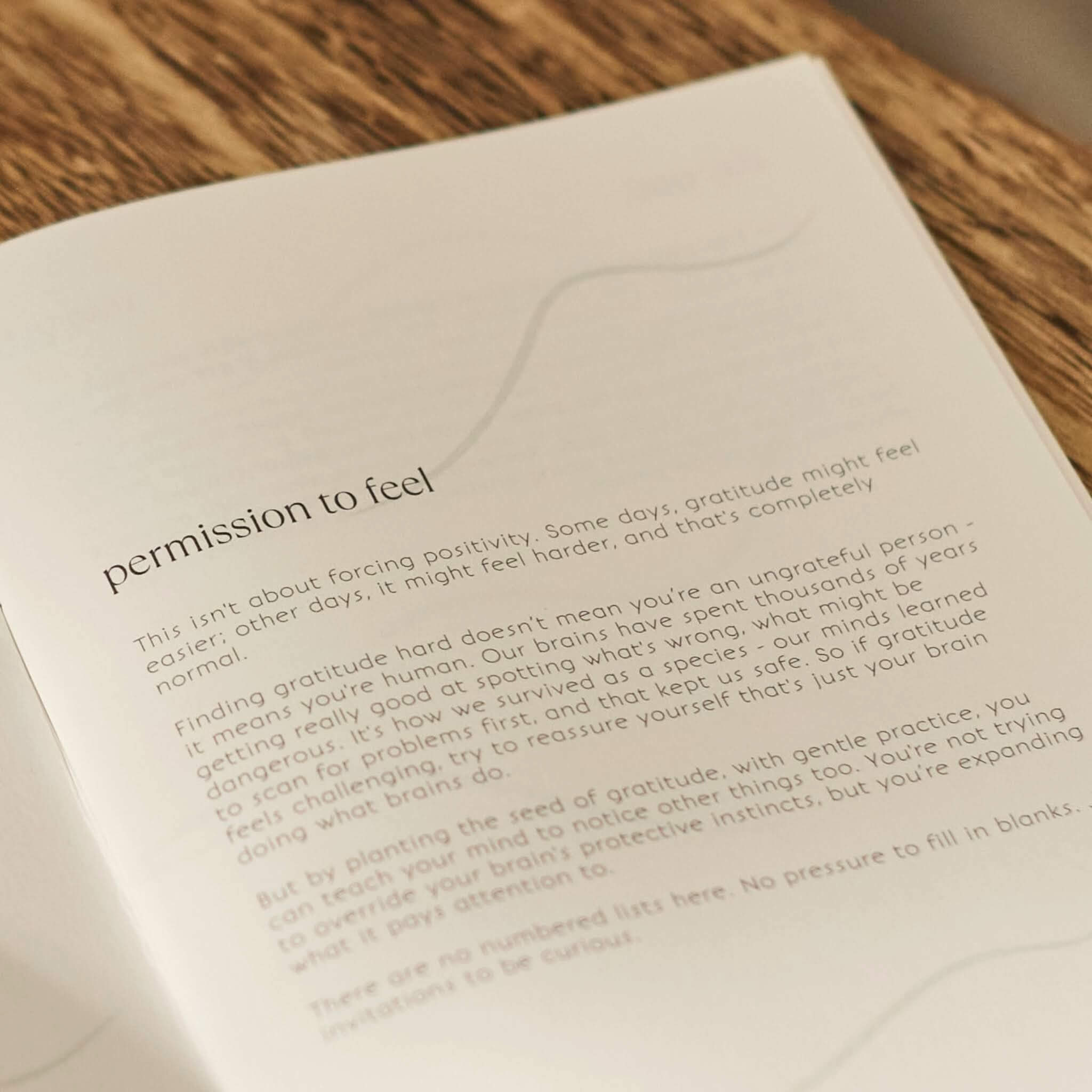
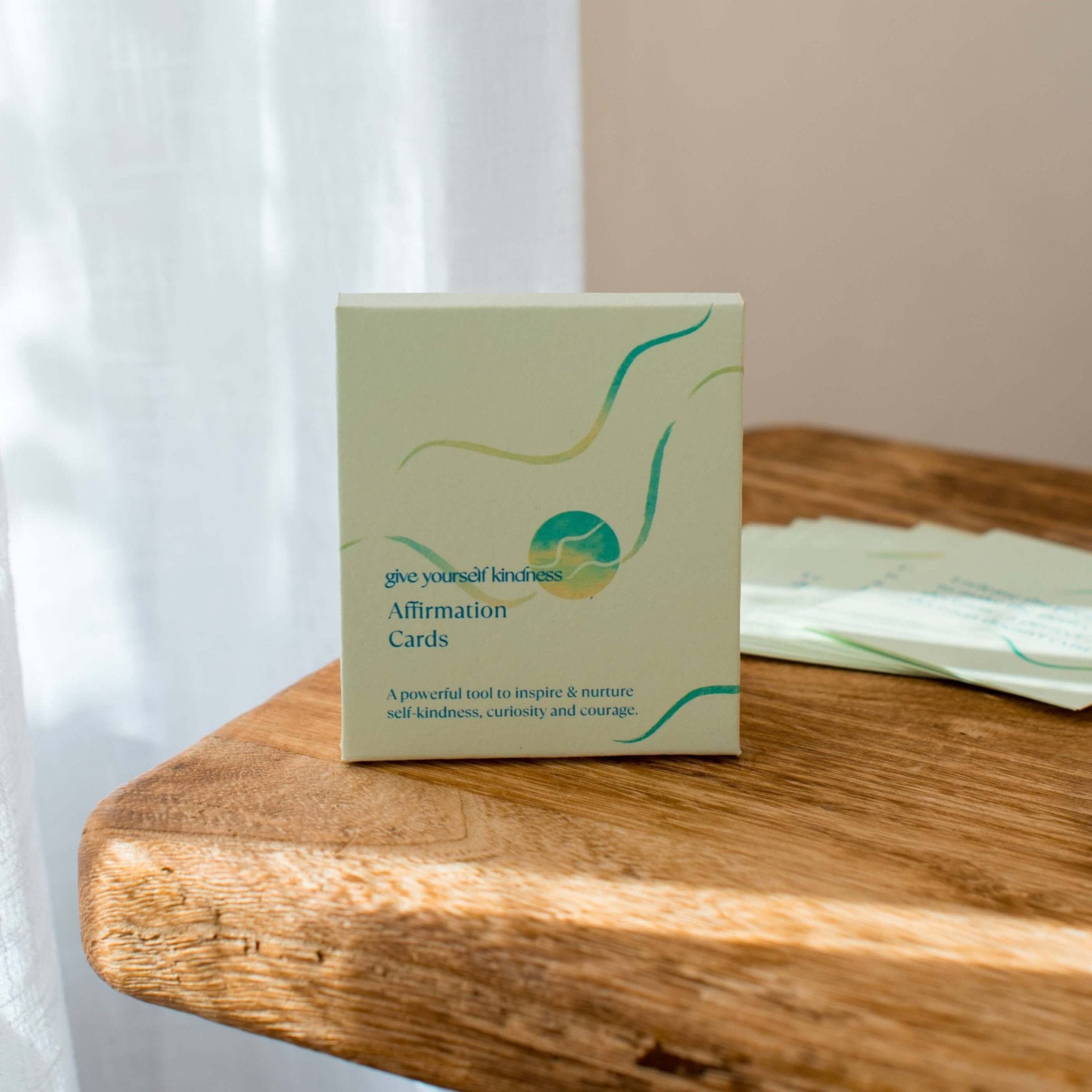
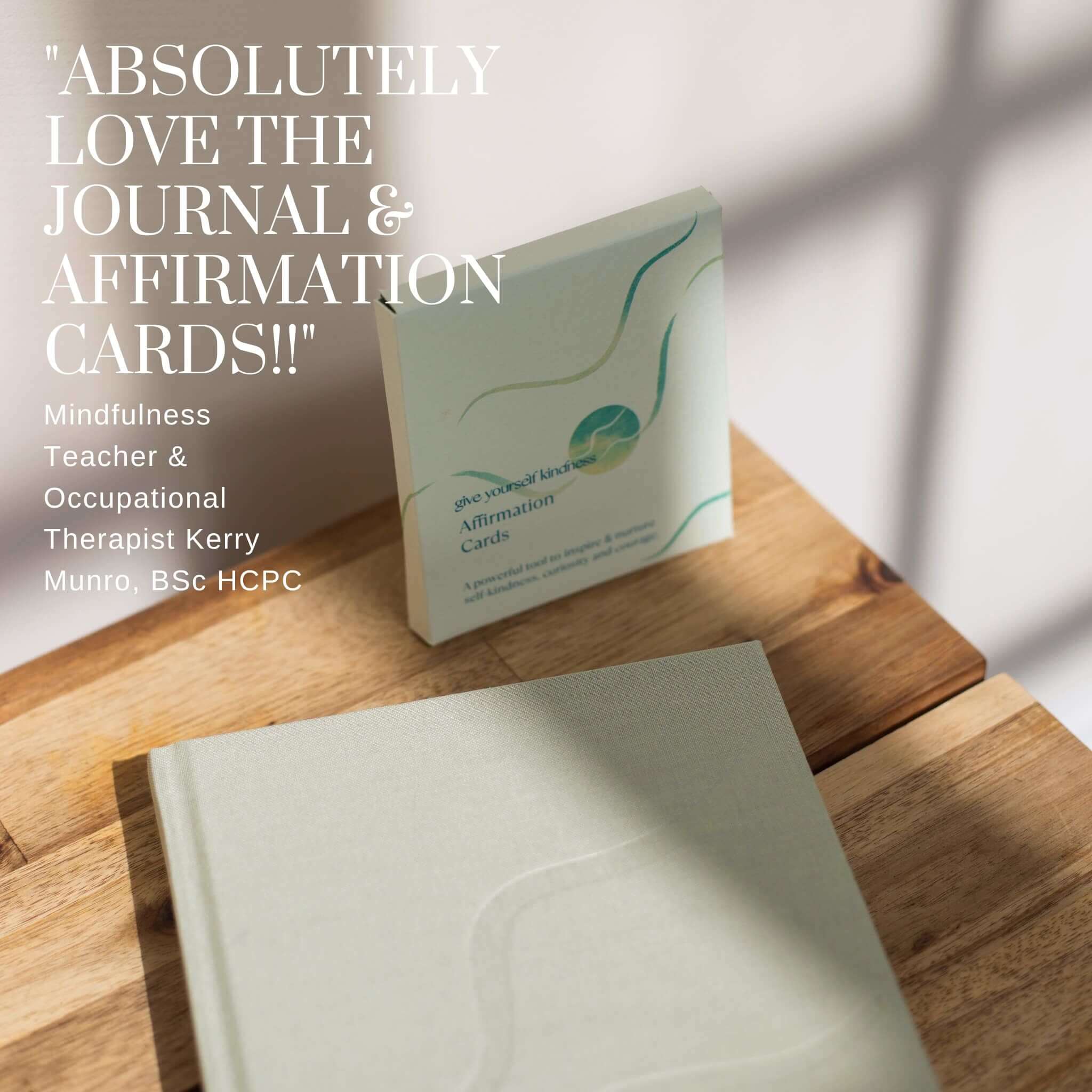
The Give Yourself Kindness Journal, £28.95. The one I made after the lists stopped working. Undated, 224 pages, an emotion guide on every page, and every prompt asks you to answer yourself the way you would answer a friend.
Added to your basket. View basket →
Frequently asked questions
Does journaling before bed actually help you sleep?
Yes, and the type of writing decides what it helps with. In a 2018 sleep-laboratory study published in the Journal of Experimental Psychology: General, 57 adults who spent five minutes writing tomorrow's to-do list fell asleep an average of nine minutes faster than those who wrote about completed tasks, and more specific lists worked better. Writing about emotions works through a different route: naming a feeling in words has been shown to reduce activity in the amygdala, the brain's threat centre. If your wakefulness is logistical, a list is enough. If it is emotional, write about how you feel rather than what you have to do.
How long should I journal before bed?
Five to fifteen minutes is the useful range. Long enough for the writing to land, short enough that you do not overstimulate yourself or drift from processing into circling. If you are still writing after twenty minutes, it is usually worth stopping rather than continuing.
Should I journal in bed or before bed?
Before bed, around 30 to 60 minutes beforehand, with the book closed well before you lie down. This gives your mind time to settle after writing instead of taking freshly stirred thoughts to the pillow. If you are already in bed and your thoughts are racing, a short calming practice such as breathing in for five counts and out for seven is a better fit than writing.
What should I write in a bedtime journal?
It depends what is keeping you awake. For task worry, write a highly specific to-do list for tomorrow. For emotional wakefulness, name the feeling as precisely as you can, get curious about what sat behind it without judging what you find, then write back to yourself the way you would to a friend. That third step is the difference between processing a feeling and rehearsing it.
Is a brain dump good for sleep?
It can bring relief, but I would not recommend unstructured venting at bedtime. Writing without direction can rehearse distress rather than resolve it, and late at night, when you are tired and already self-critical, an open page is easy to fill with more criticism. A better version of the same idea is to notice the emotion, name it, and then answer it kindly, so you get the release without handing the pen to your inner critic.
Does gratitude journaling help you sleep?
There is evidence it may. Wood and colleagues (2009), in the Journal of Psychosomatic Research, studied 401 adults and found more grateful people reported better sleep quality, longer sleep and less time taken to fall asleep. The link ran through pre-sleep cognitions, meaning grateful people had more positive and fewer negative thoughts while falling asleep. This measured gratitude as a personality trait rather than testing gratitude journaling as a treatment, so it shows the direction is real without promising a result. If harsh self-criticism is what keeps you awake, gratitude prompts alone are unlikely to reach it.
Should I journal on paper or on my phone?
Paper. Dr Olena Santangeli, a neuroscientist and sleep expert, highlights that reflecting by hand rather than digitally encourages deeper engagement with your thoughts and feelings. Screens also emit blue light, which suppresses melatonin production at the hour you least want that.
Why does journaling sometimes make me feel worse?
Usually because of whose voice is doing the writing. An unguided page late at night tends to be filled by whichever part of you is loudest, which is often the harshest one, so you end up rehearsing self-criticism rather than resolving it. Dr Andreas Comninos, clinical psychologist, cautions that writing about challenging experiences may stir up strong emotions and should be approached with care and kindness towards yourself. If something surfaces that feels too big to hold alone, it is worth taking to a therapist rather than a notebook at midnight.
How long until journaling improves my sleep?
This varies a great deal. Some people notice calmer evenings within the first week; for others it takes two to three weeks of fairly consistent practice before patterns shift. Consistency matters more than perfection, and journaling a few times a week is more useful than abandoning it because you could not manage every night. If nothing has changed after a month, it is worth speaking to a therapist or sleep specialist rather than persisting alone.
Can journaling replace treatment for insomnia?
No. Journaling is a tool for emotional wellbeing, not a medical treatment, and it is intended to sit alongside professional care rather than replace it. The NHS says to see a GP if changing your sleeping habits has not helped, if you have had trouble sleeping for months, or if it is affecting your daily life in a way that makes it hard to cope. They may offer cognitive behavioural therapy, which the NHS says "can help you change the thoughts and behaviours that keep you from sleeping". Read the NHS guidance on insomnia →
You are allowed to rest
If you have been awake for a long time, night after night, it is exhausting in a way that is hard to explain to people who fall asleep easily. It can also start to feel like something you are failing at, which quietly adds a second layer of tiredness on top of the first.
Nothing on this page is about trying harder. It is about giving the day somewhere to go before you lie down, so your mind has less left to do at 2am. Some nights will still be hard. That is not evidence of anything being wrong with you.