


Quick answer
Which guided journal is best for sleep when your mind won't stop?
If what keeps you awake is emotional, replaying a conversation, being hard on yourself, worrying about tomorrow, then the journal that helps is one that guides you to process feelings rather than list tasks. A to-do list handles logistics. It does not touch self-criticism.
Best for: people whose sleep problems come from self-criticism, rumination, perfectionism or anxiety rather than forgetting tomorrow's tasks.
What makes it different:
- Helps you process emotions before they become racing thoughts at night.
- Validates all feelings. No toxic positivity.
- Guides you to respond with self-compassion instead of harsh criticism.
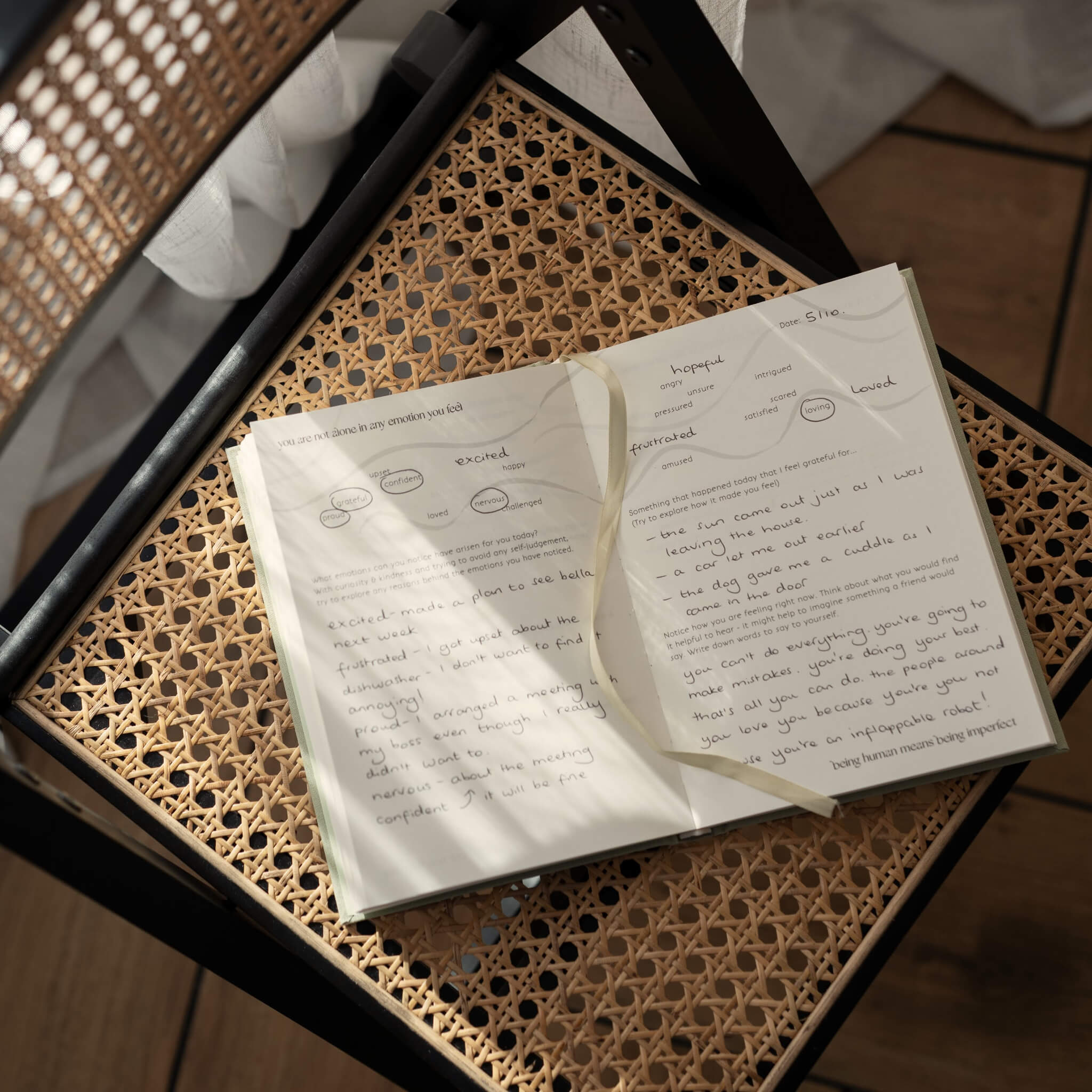
- An emotion identification tool on every single page, not just at the front.
- Undated, so a missed night is never a failure.
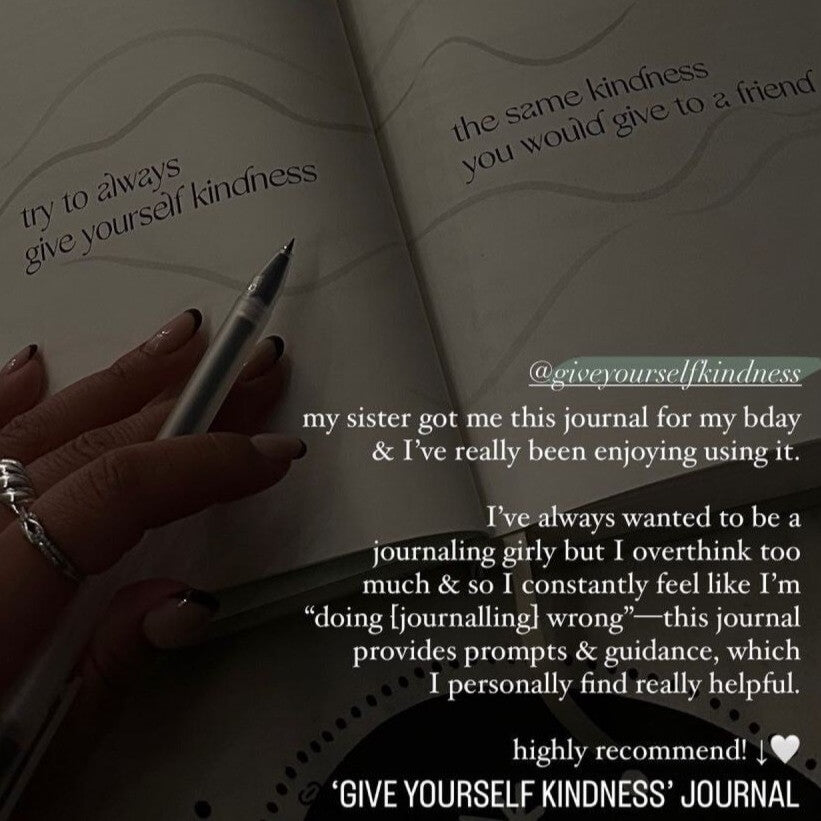
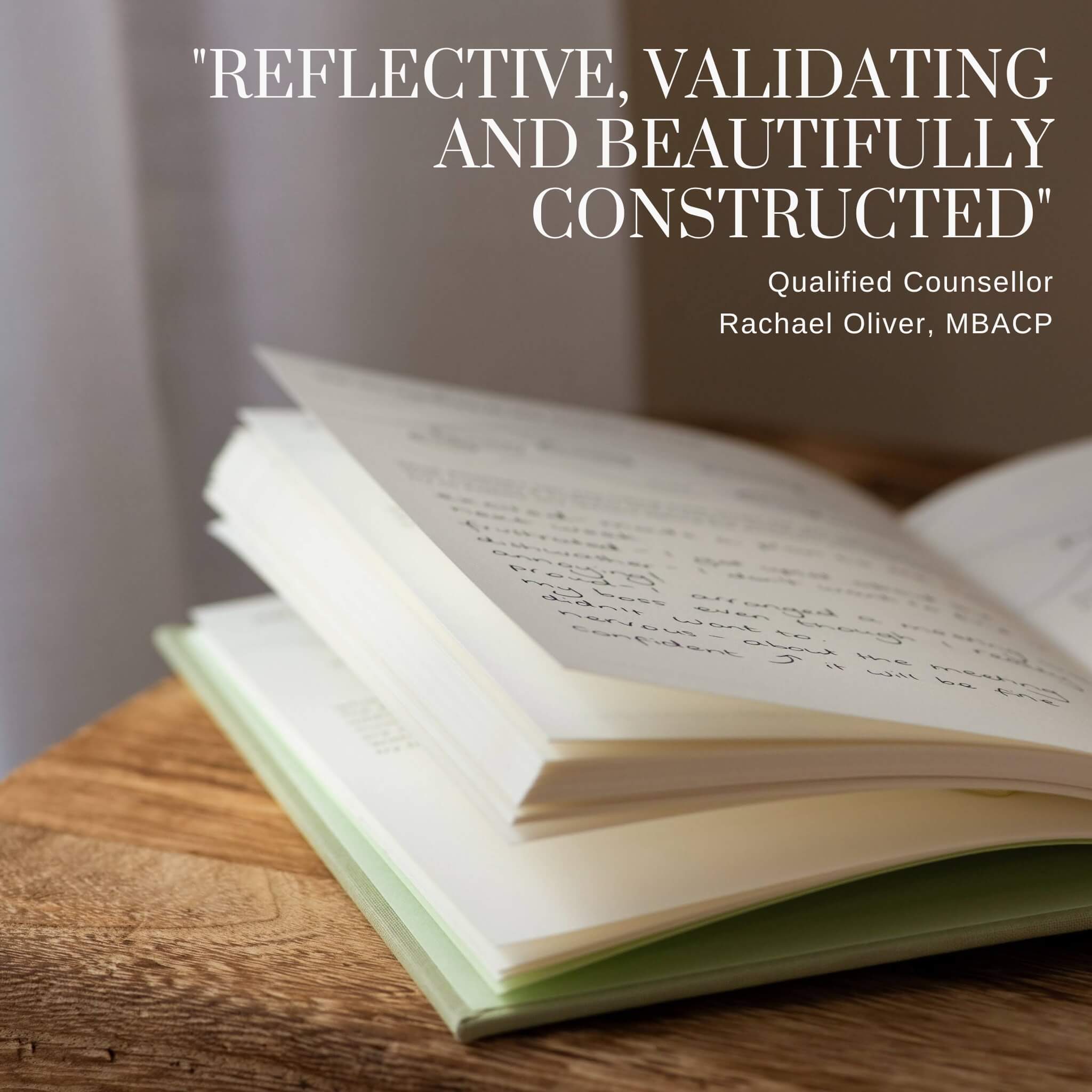
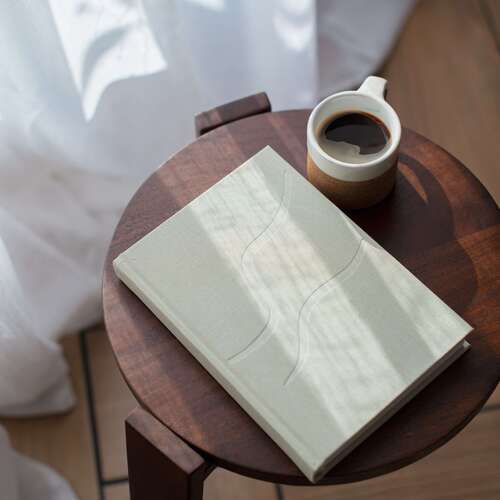
224 pages holding three months of prompts, every page different. Recommended by clinical psychologists at Harvard Medical School and the University of Oxford. Used 30 to 60 minutes before bed.
Added to your basket. View basket →
If you have found your way here at some point in the evening, or possibly much later than that, I want to say first that wanting rest is a kind thing to want for yourself. Lying awake is exhausting and quietly isolating. It is also far more common than it feels at 2am, when it seems like everyone else in the world is asleep.
I am Rachel. I am a qualified meditation teacher, not a clinician, so everything clinical on this page is attributed to named experts with their credentials, and every study I mention is linked so you can read it yourself.
Why do thoughts race the moment your head hits the pillow?
Because your brain is trying to protect you, and it has learned the wrong lesson about bedtime.
Dr Olena Santangeli, a neuroscientist and sleep consultant, wrote an in-depth guide on sleep for Give Yourself Kindness. She describes a pattern that a lot of people fall into without noticing:

Dr Olena Santangeli, PhD
Neuroscientist and Sleep Expert (BSc, MSc, PhD Med). Child and Adult Sleep Consultant, Caring Sleep Solutions
"When we struggle with racing thoughts at bedtime, it's often because we've developed a pattern where anxiety about sleep itself becomes the very thing preventing sleep. Quality sleep is fundamental to our emotional health, cognitive function, and overall well-being, but the pressure to achieve it can work against us."Read Dr Santangeli's full guide: Simple, Effective Routines for Better Sleep →
Here is what is actually happening. When you worry about not sleeping, or judge yourself for still being awake, your nervous system reads that as a threat. Your body responds by becoming more alert, which is the opposite of what you need. Worry about sleep leads to a stress response, which prevents sleep, which produces more worry. Night after night, your brain learns to associate bedtime with vigilance rather than rest.
That loop is why "just try to switch off" never works. You cannot force your way out of a threat response. You can, though, give the emotional material somewhere to go before you lie down.
The pattern it is very easy to fall into
- Write tomorrow's to-do list. This genuinely helps with the logistics.
- Still lie awake replaying today's mistakes.
- Judge yourself for not being able to sleep.
- Worry about how tired you will be tomorrow.
The list addressed the tasks. It did not touch the feelings. This is the specific point where most journaling approaches stop being useful for sleep.
What does the research say about journaling and sleep?
Enough that it is worth knowing before you spend anything. Three findings matter for choosing, and all three are linked so you can read them yourself.
1. What you write about decides what it helps with
In a 2018 sleep-laboratory study published in the Journal of Experimental Psychology: General, people who spent five minutes writing tomorrow's to-do list fell asleep an average of nine minutes faster than people who wrote about what they had already done. If your mind is simply holding tomorrow's admin, that is the kind of writing that addresses it.
Writing about emotions works differently. Naming a feeling in words has been shown to reduce activity in the amygdala, the brain's threat centre, in a 2007 study published in Psychological Science. That is a plausible reason it helps at night when self-criticism rather than admin is what is keeping you up.
2. Writing about emotions helps with sleep specifically
Dr Santangeli explains why the effect shows up at night:
Dr Olena Santangeli, PhD
Neuroscientist and Sleep Expert. Child and Adult Sleep Consultant
"In the evening, journaling shifts focus, providing a therapeutic outlet to unwind and process the day's events. Reflecting on your experiences by hand, rather than digitally, encourages a deeper engagement with your thoughts and feelings. This hands-on method has been shown to facilitate a more profound processing of emotions, aiding in stress reduction and anxiety management. By physically writing down your worries, achievements, and reflections, you create a mental space for relaxation, making it easier to transition into a restful state of sleep."Read the full article, including her morning and evening routines →
Note the detail about writing by hand. It is one of the few places where the format genuinely seems to matter.
3. Gratitude is linked to sleep, through what you think as you fall asleep
This one surprised me when I looked properly. Wood and colleagues (2009), published in the Journal of Psychosomatic Research, studied 401 adults, 40% of whom scored in the clinically impaired range for sleep quality. Gratitude predicted better sleep quality, longer sleep, less time taken to fall asleep and less daytime tiredness.
The interesting part is the mechanism they identified. The link ran through pre-sleep cognitions, the thoughts you have in the window while you are drifting off. More grateful people had more positive and fewer negative thoughts in exactly that window.
Worth being honest about the limits: this was a study of gratitude as a personality trait in the general population, not a clinical trial of gratitude journaling as a treatment for insomnia. It tells us the direction is real and explains why. It does not promise a result.
Why does self-compassion journaling help more than a to-do list?
Because self-criticism is not a neutral thought. It is a threat signal, and your body responds to it as one.

Dr Annabelle Kyle Dortch, PsyD
Clinical Psychologist, Los Angeles. Specialises in life transitions, relationships, stress, anxiety and trauma
"When we engage in self-criticism, we create a nervous system and brain state that is not conducive to learning or facilitating a growth-oriented mindset."Read the full article: Why Self-Compassion is More Effective Than Self-Criticism →
She also describes what happens under stress: "our mind-body system perceives criticism as a threat", and "when our stress response is activated, the amygdala (the emotion and crisis center of the brain) is very active and the frontal lobe (where we reflect and make decisions intentionally) is offline." Calm and connected is a fair description of what a body needs in order to fall asleep. Which is why the question is not only whether you journal, but which part of you is doing the writing.

Dr Chris Irons
Clinical Psychologist. Compassion Focused Therapy researcher and trainer, co-director of Balanced Minds
"It's useful to consider which part of ourselves is doing the journalling... CFT tries to support people by initially helping them to develop a compassionate part of self, a part that is wise, strong and caring... Crucially, once developed, we then would use this compassionate part of ourselves to 'do' the journalling."Read the full article: The Benefits of Journaling from 3 Clinical Psychologists →
This is the difference between a blank page and a guided one. A blank page at 10pm, when you are already tired and already self-critical, is very easy to fill with more criticism. Prompts decide who holds the pen.
Comparing the options honestly
| Option | Price | Time per night | Helps with | Will not help with |
|---|---|---|---|---|
| Give Yourself Kindness Journal Guided, 224 pages, undated |
£28.95 | 10 to 15 min, 30 to 60 min before bed | Self-criticism, rumination, emotional overwhelm, perfectionism, anxiety | Pure task anxiety. Nights you have no energy to write. |
| 30-Day Gratitude Journal Guided, 30 days, undated |
£10.95 | 3 to 5 min | Negative pre-sleep thinking, low-effort evening ritual, starting out | Shame, harsh self-criticism, grief. Prompts alone may not reach these. |
| Sleep Affirmation Cards No writing |
from £13.95 | 2 to 3 min, in bed | Racing thoughts in the moment, exhaustion, sleep anxiety | Processing the day. Cards soothe, they do not unpack. |
| Plain to-do list | Free | 5 min | Logistical worry, forgetting tomorrow's tasks | Any emotional cause of wakefulness |
| Blank notebook | from around £5 | Open-ended | Total freedom, experienced journalers | Structure, emotion naming, guidance away from self-criticism |
Prices are Give Yourself Kindness prices at the date above. Notebook pricing varies widely by retailer.
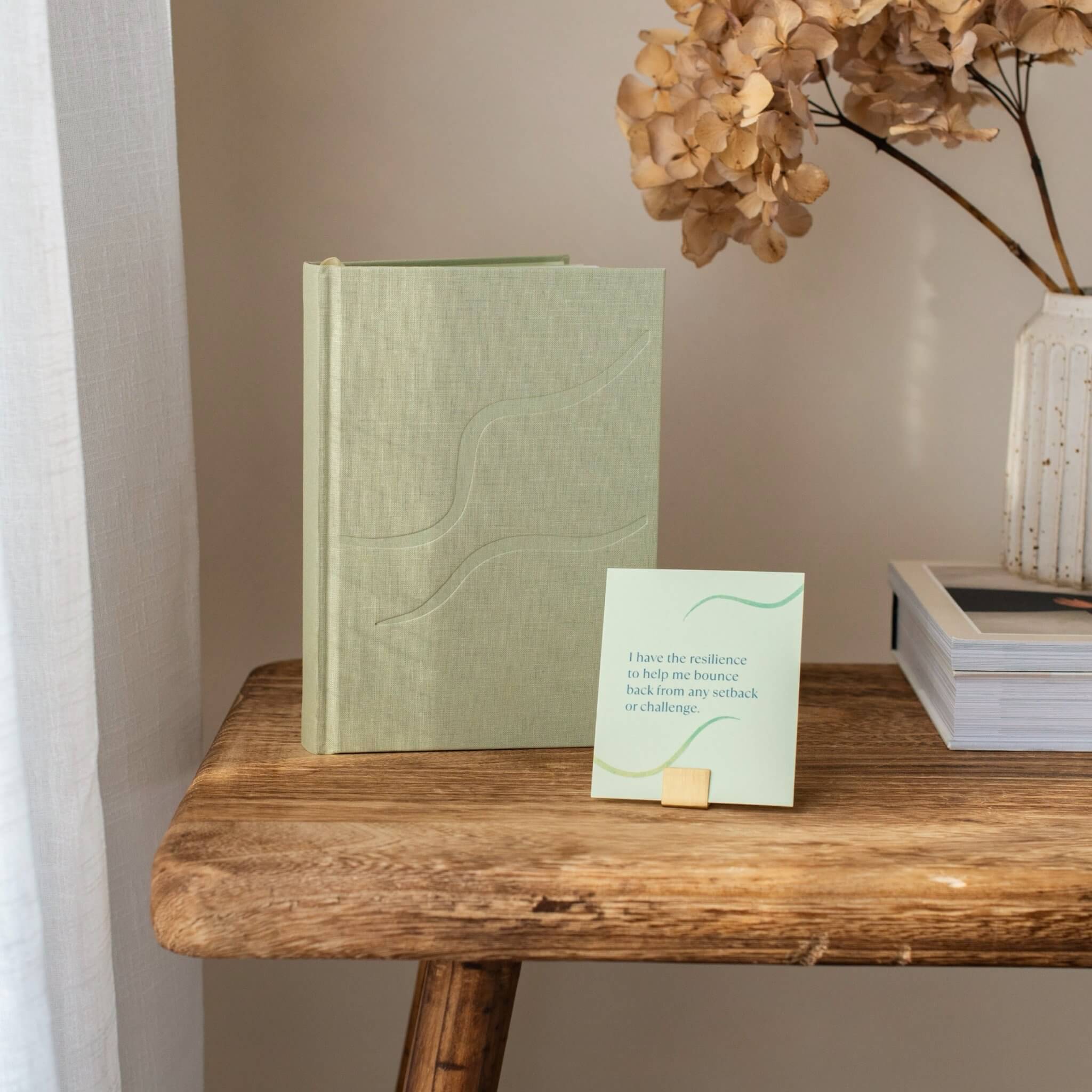
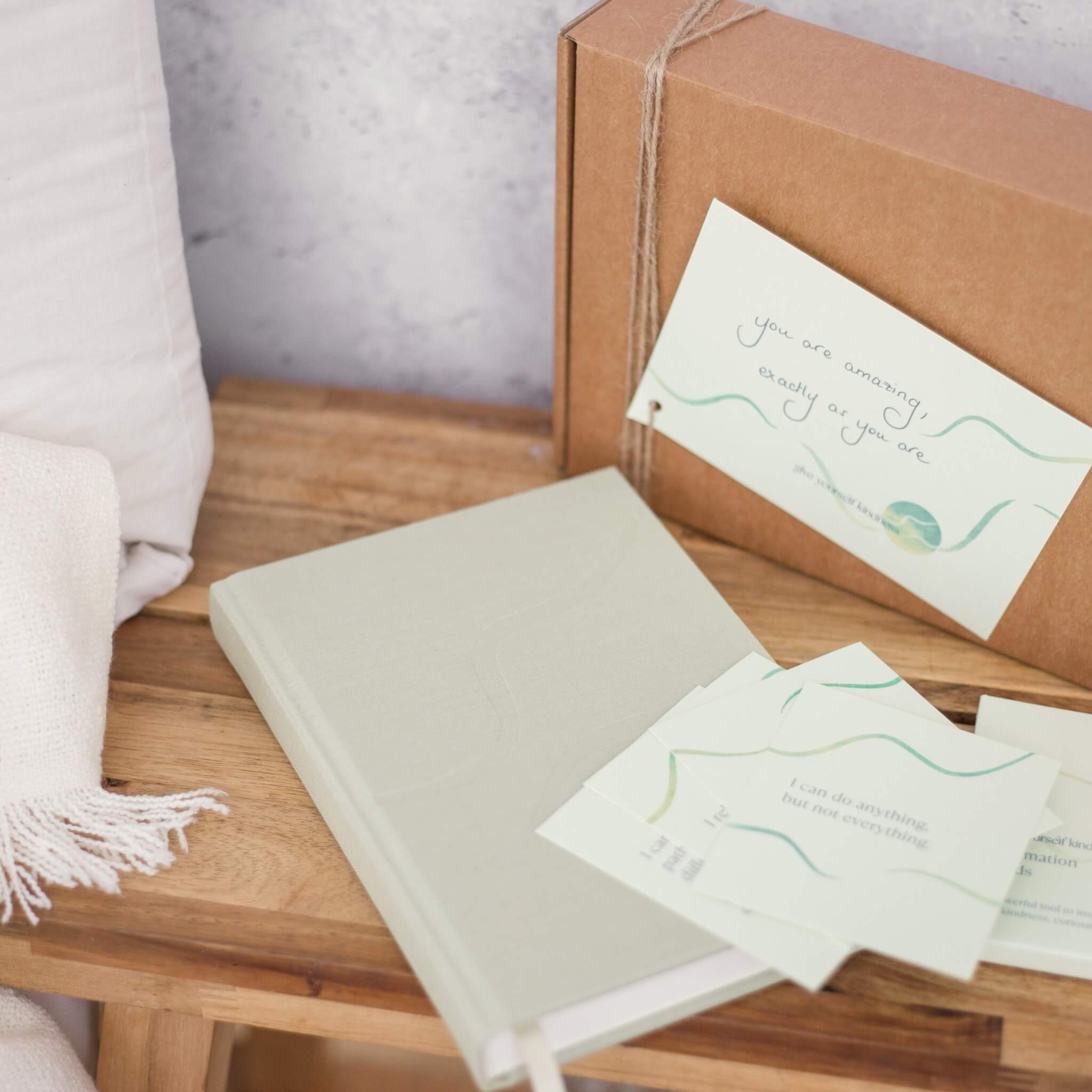
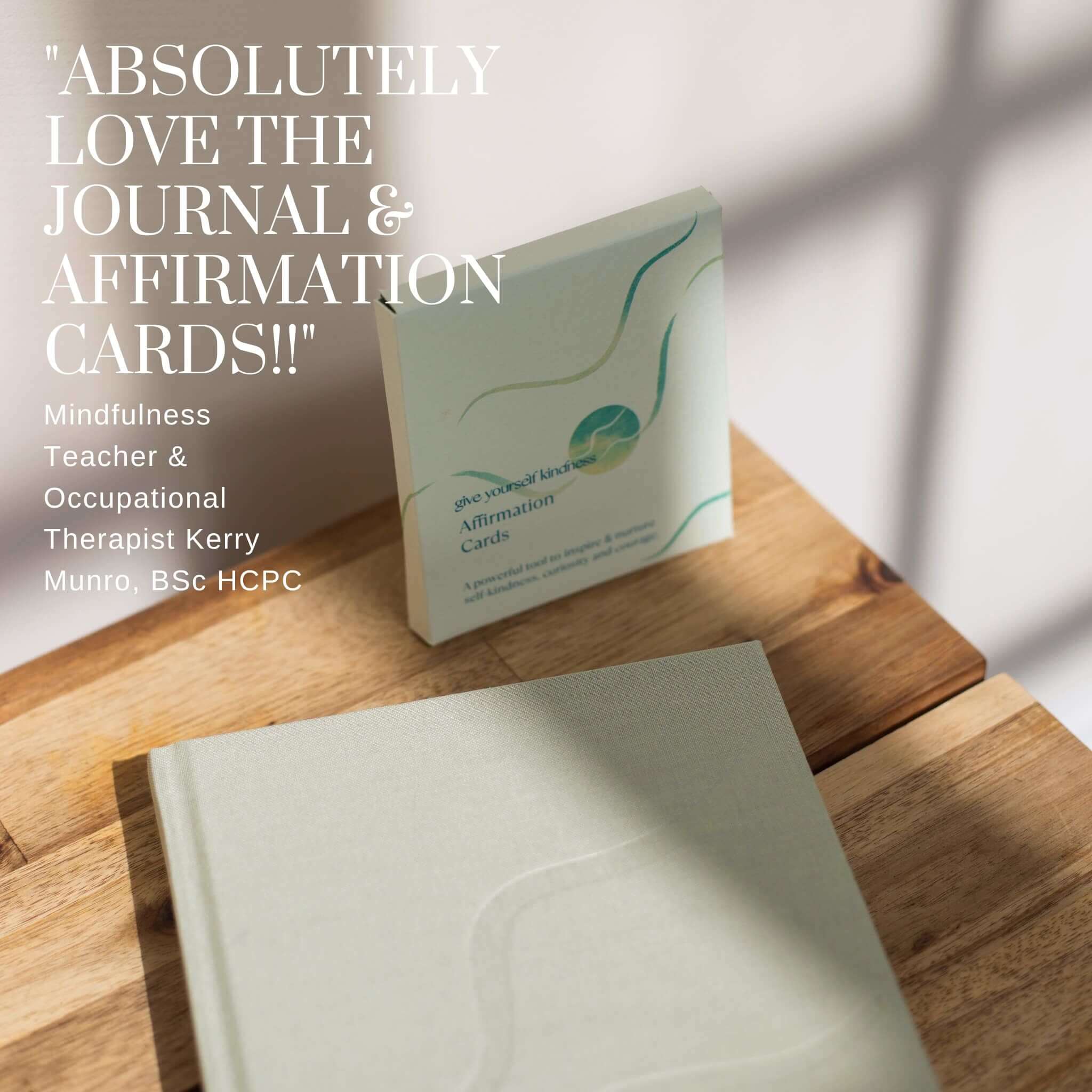
The Give Yourself Kindness Journal

Added to your basket. View basket →
I use it almost every night, roughly half an hour to an hour before bed. That gap matters. It gives your mind time to settle after writing rather than taking a fresh set of thoughts straight to the pillow.
Three months of varied prompts
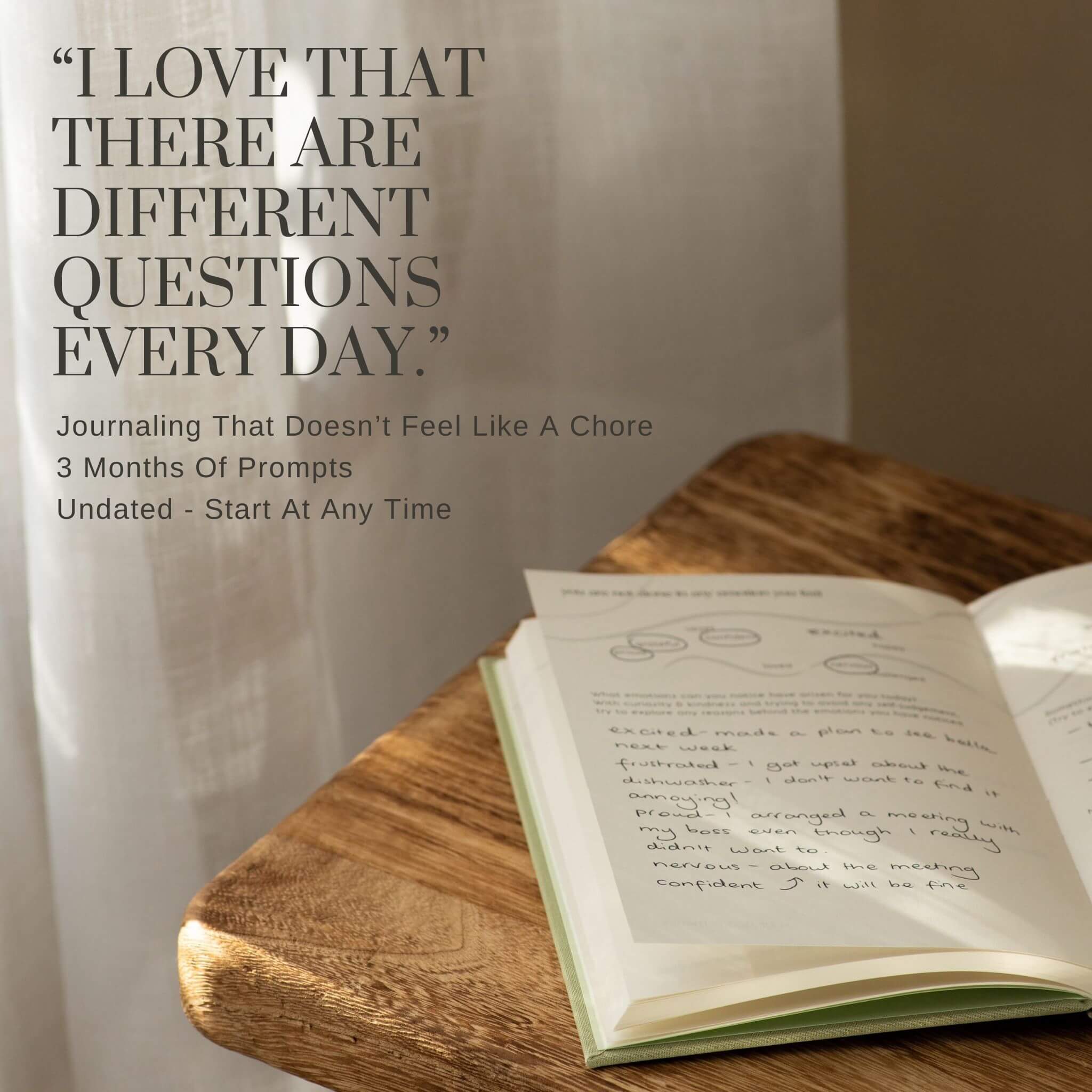
Every page approaches emotional awareness from a slightly different direction, gratitude, challenge, self-talk, needs, values, relationships. Nothing repeats enough to go on autopilot, which is the point where a lot of journals quietly stop working.
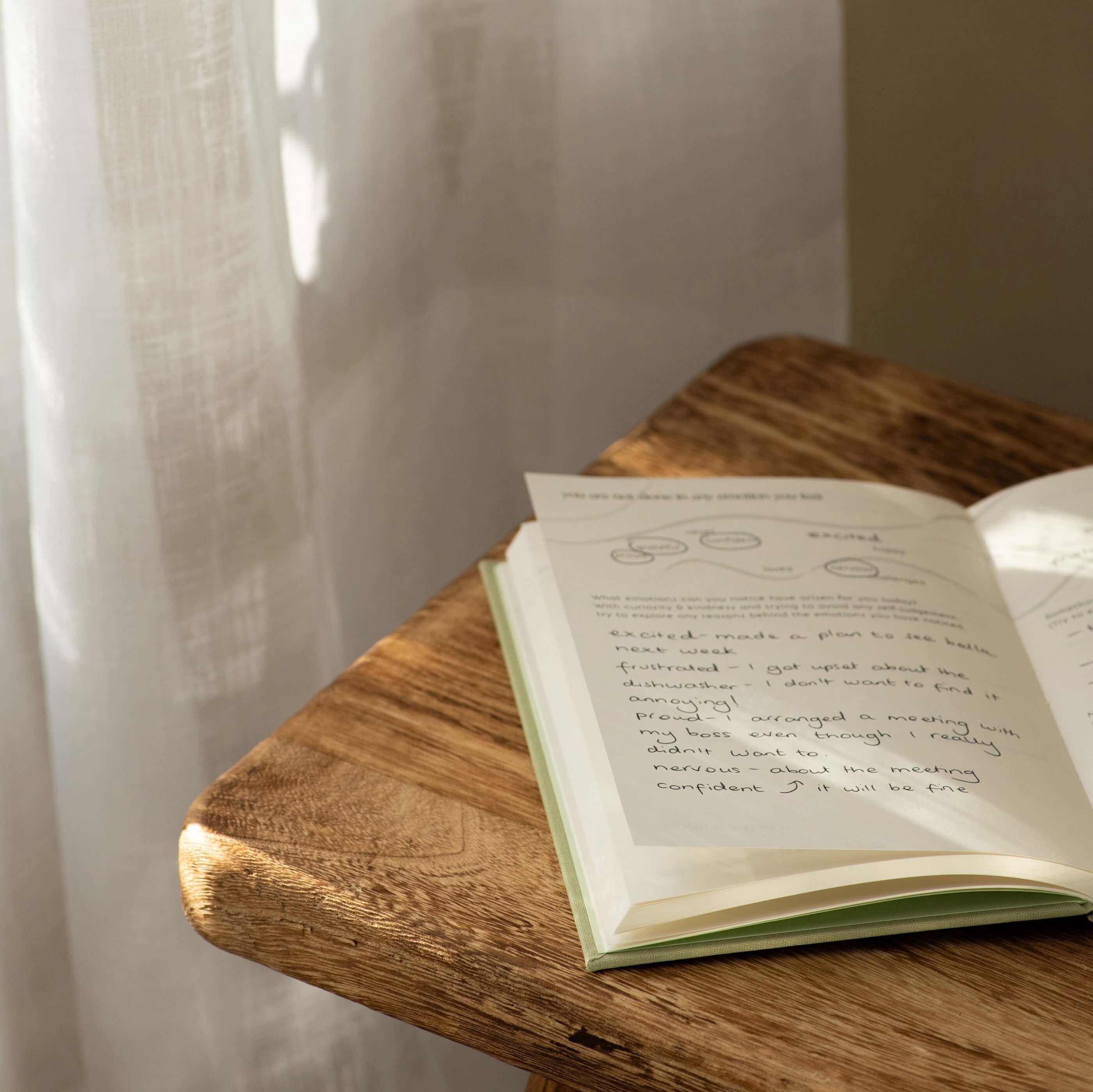
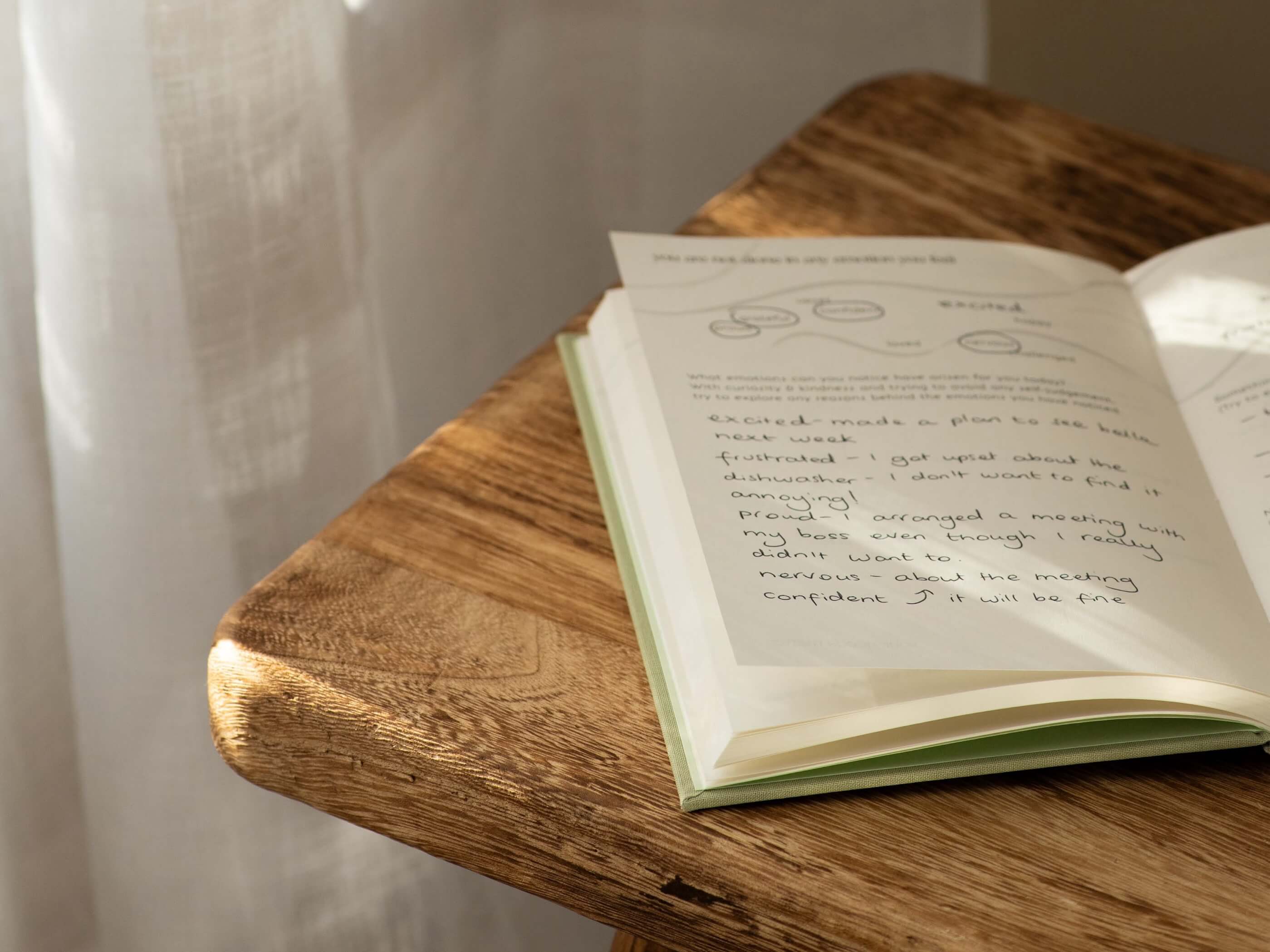
An emotion identification tool on every single page
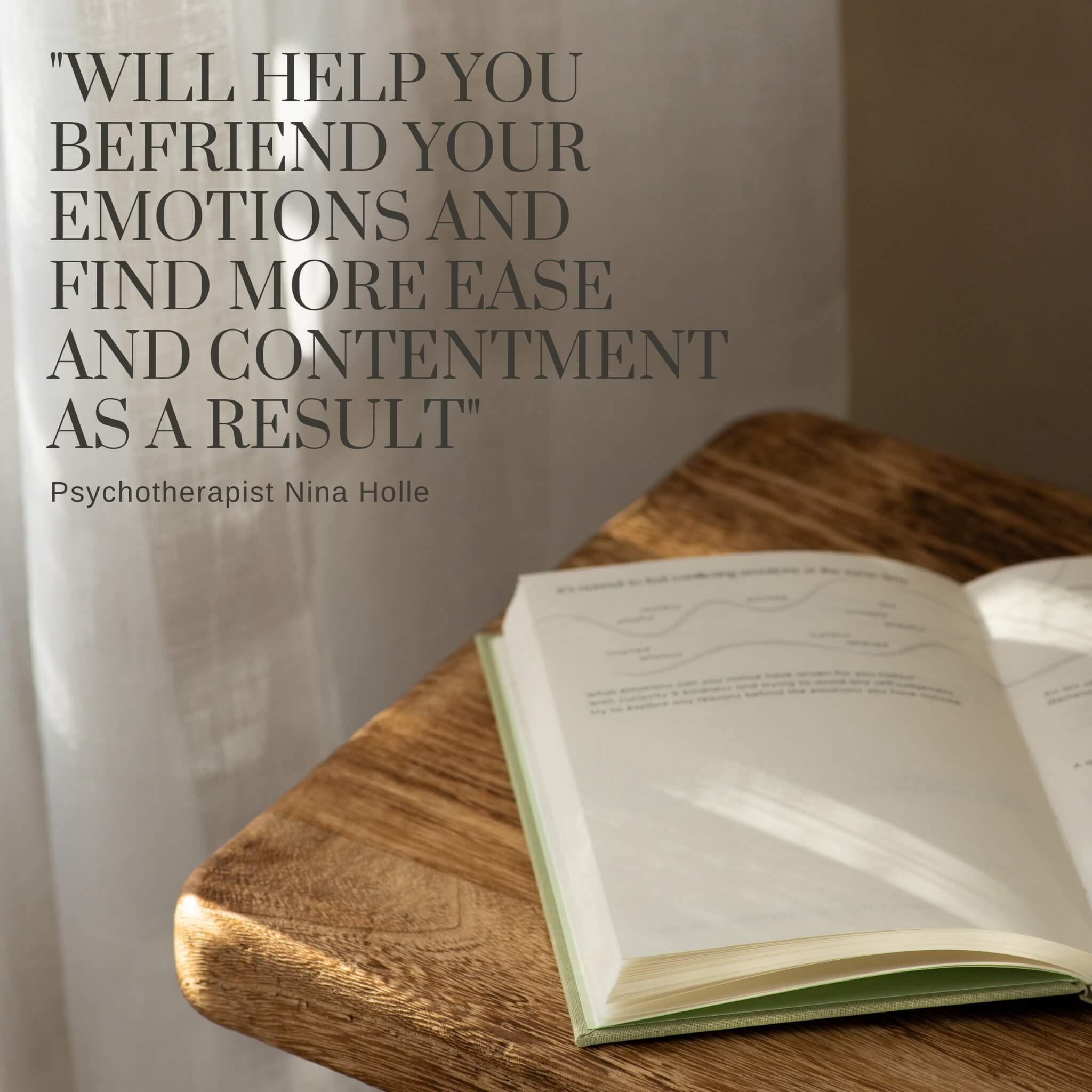
Not tucked in the front where you will forget it. A visual guide helps you find the specific word beyond "fine" or "bad", and you can select several at once, because feelings genuinely do arrive in combinations.
Self-compassion built into the prompts, not added on
The prompts consistently guide you towards responding to yourself the way you would respond to a friend. Two examples from the journal itself:
"What has challenged you today? Talk to yourself as you would talk to a friend, write down what you would say."
"Notice how you are feeling right now. Think about what you would find it helpful to hear, it might help to imagine something a friend would say. Write down words to say to yourself."
Undated, so there is no failure state
Life gets busy at exactly the times you need support most. There are no dates to fall behind on and no empty boxes reproaching you when you come back.
What works
- Targets the emotional cause rather than the symptom
- Recommended by clinical psychologists at Harvard and Oxford
- Validates difficult feelings instead of overriding them
- Emotion tool on every page, not just the front
- No guilt for missed days
- Used by therapists with clients internationally
Honest drawbacks
- 10 to 15 minutes is more than you will have on a genuinely exhausted night
- It asks you to look at feelings, which some evenings you will not want to do
- Best used before bed, not in bed, so it is not the thing to reach for at 3am
- If your wakefulness is purely logistical, this is built for a different problem
- It supports emotional wellbeing. It is not a treatment for insomnia
What clinical psychologists said about it

Dr Chris Germer, PhD
Clinical psychologist and lecturer on psychiatry (part-time), Harvard Medical School. Co-developer of the Mindful Self-Compassion programme, taught to more than 250,000 people worldwide
"A warm invitation to make friends with your emotions and yourself!"

Professor Willem Kuyken, PhD, DClinPsy
Ritblat Professor of Mindfulness and Psychological Science, University of Oxford. Among the top 1% most cited scientists worldwide
"Her journal's are not only aesthetically pleasing, they scaffold my writing. Writing can be creative, beautiful, resourcing, but it can also invoke an inner critic, rumination and procrastination. Rachel has curated the experience to make the writing intrinsically rewarding and the journal something to treasure."Read all professional reviews →

Carrie Pollard, MSW RSW
Experienced psychotherapist
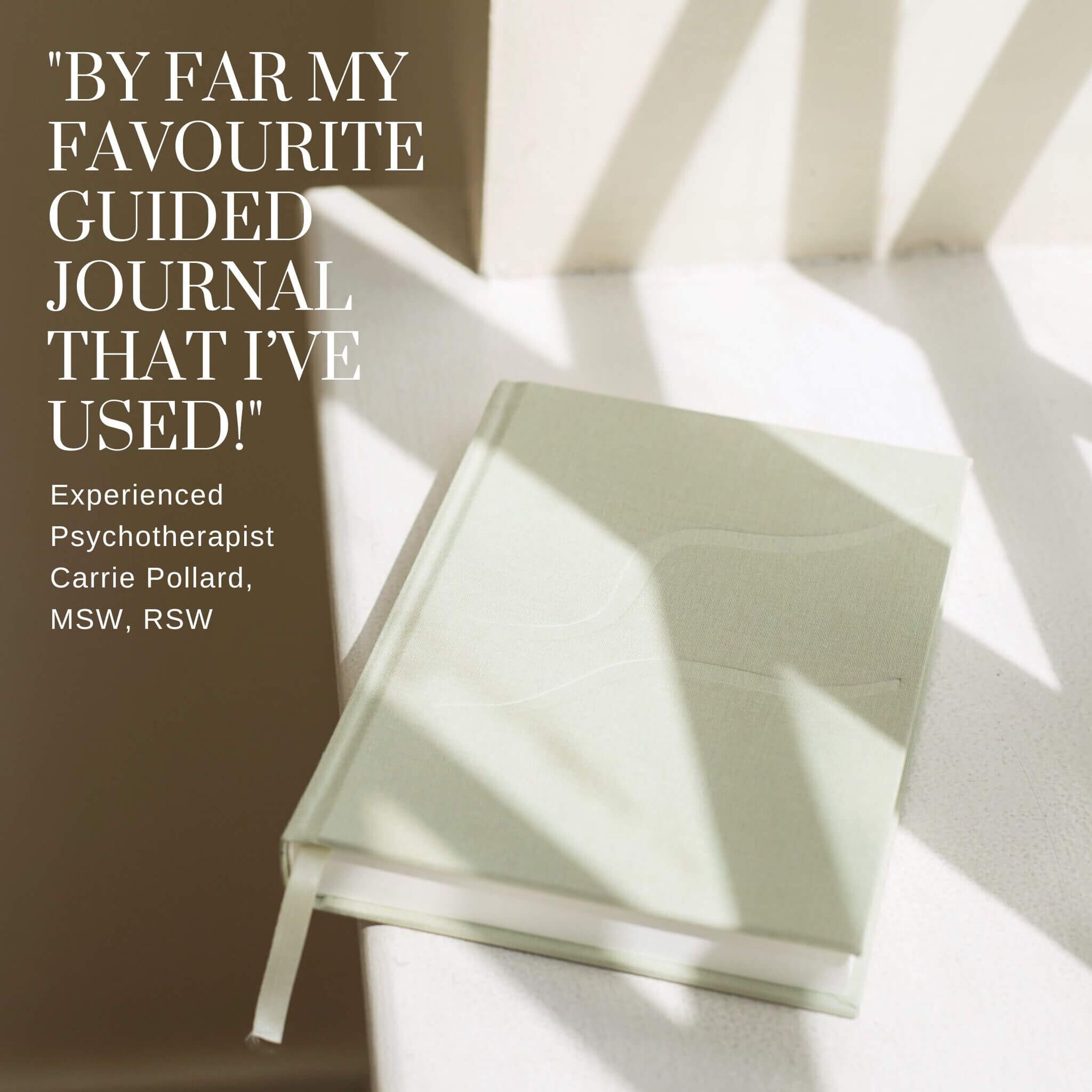
"Being able to identify what you're feeling and compassionately explore the 'why' is central to self-connection and self-growth. It helps you name and process your emotions, identify what you need to cope and/or problem-solve, balance the acknowledgment of hurt and suffering with gratitude and comfort, and give yourself the same compassion you would a loved one. This is by far my favourite guided journal that I've used!"
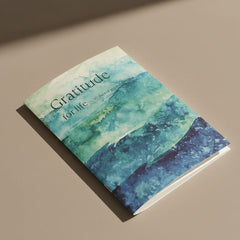
Would a gratitude journal help me sleep?
Possibly, and the evidence for gratitude and sleep is better than I expected before I read it properly. But it depends what is keeping you awake.
Added to your basket. View basket →
The Wood study above found the gratitude and sleep link ran specifically through pre-sleep thinking. If the last thing your mind does before sleep is scan for what went wrong, deliberately practising the opposite in the evening is a reasonable thing to try.
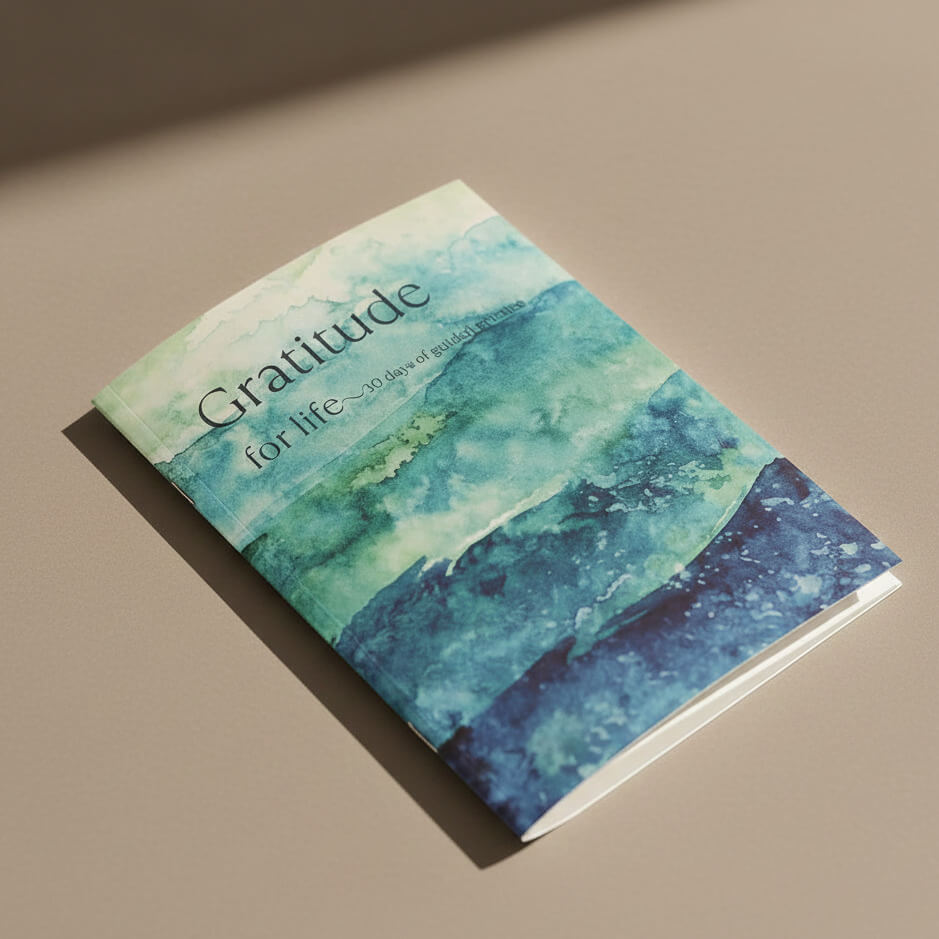
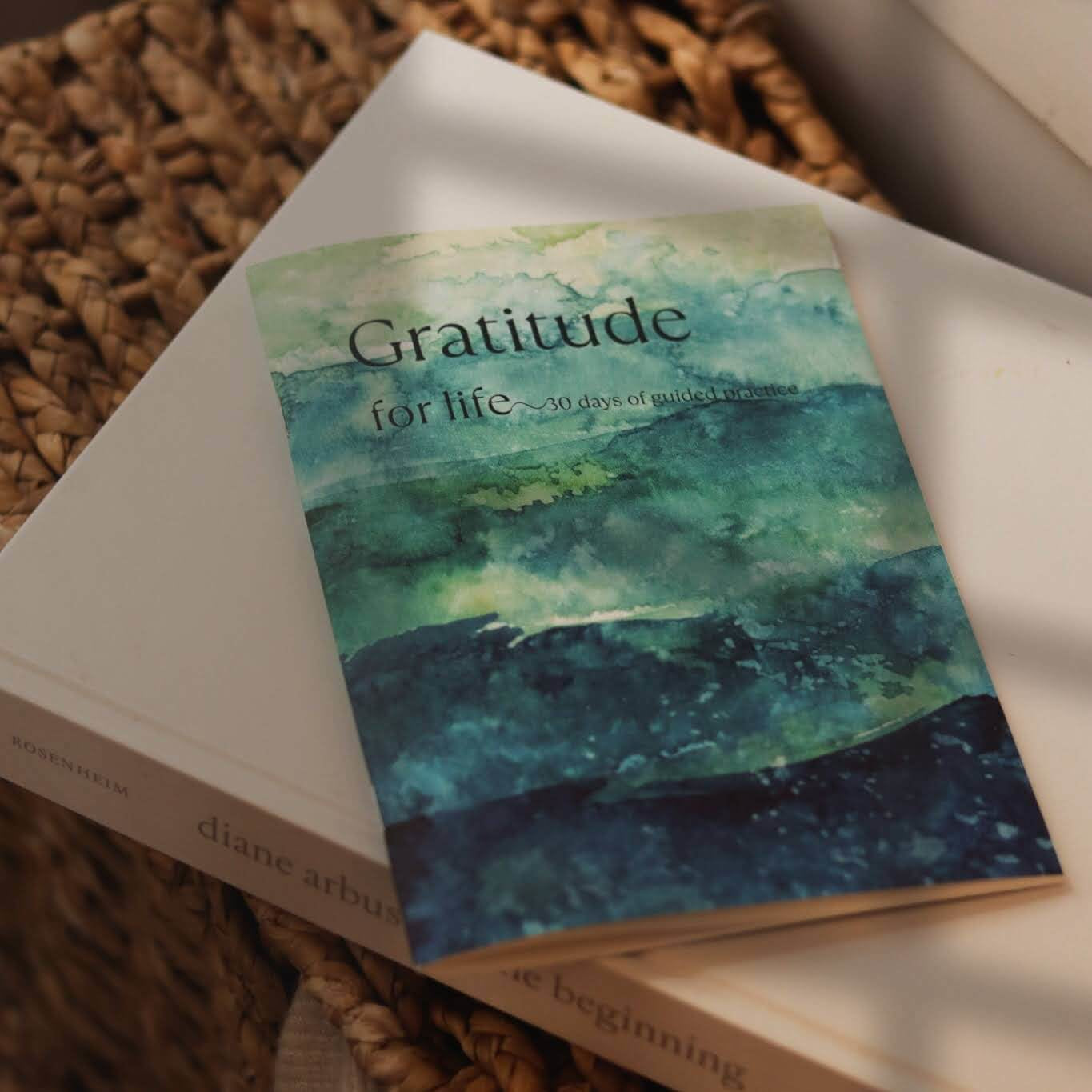
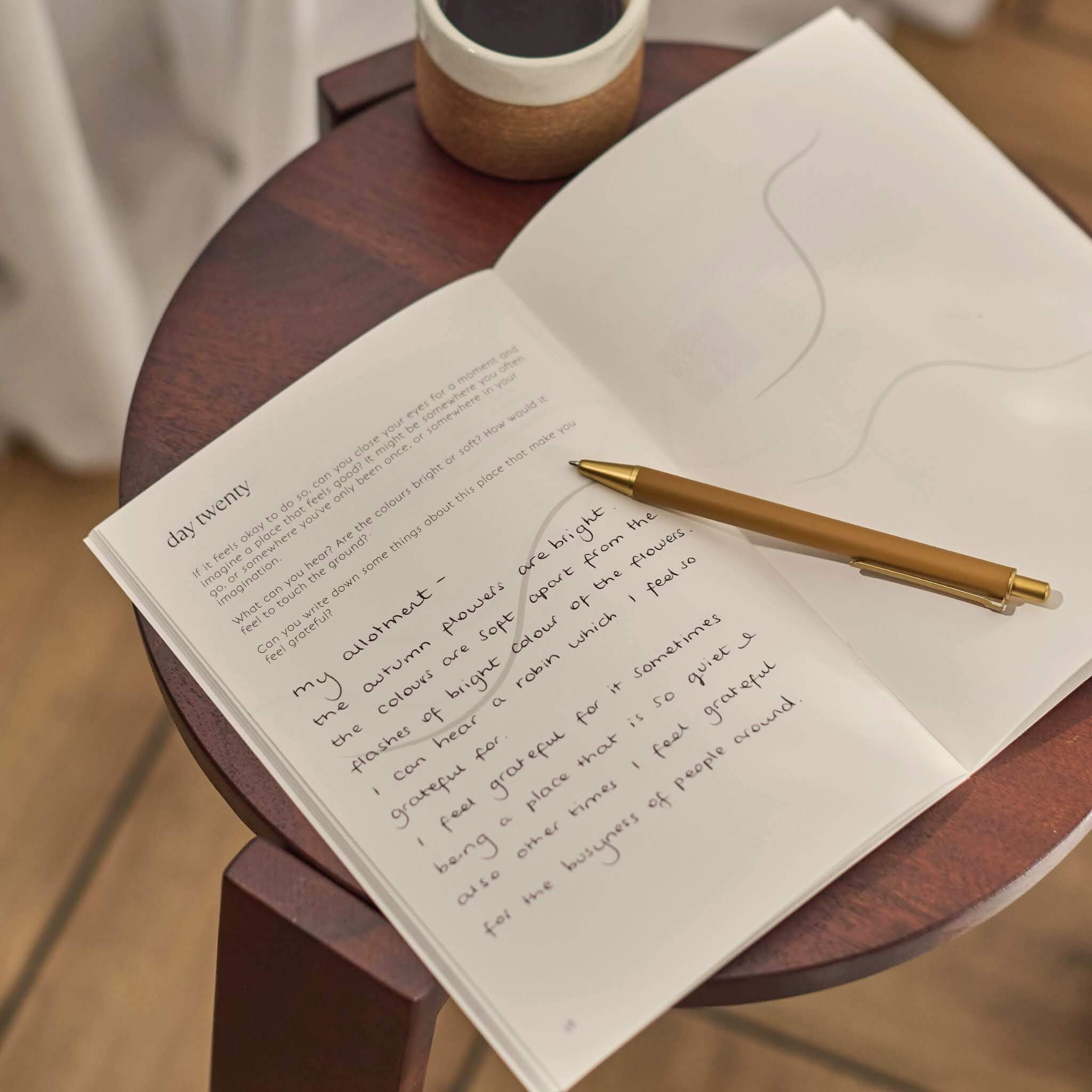
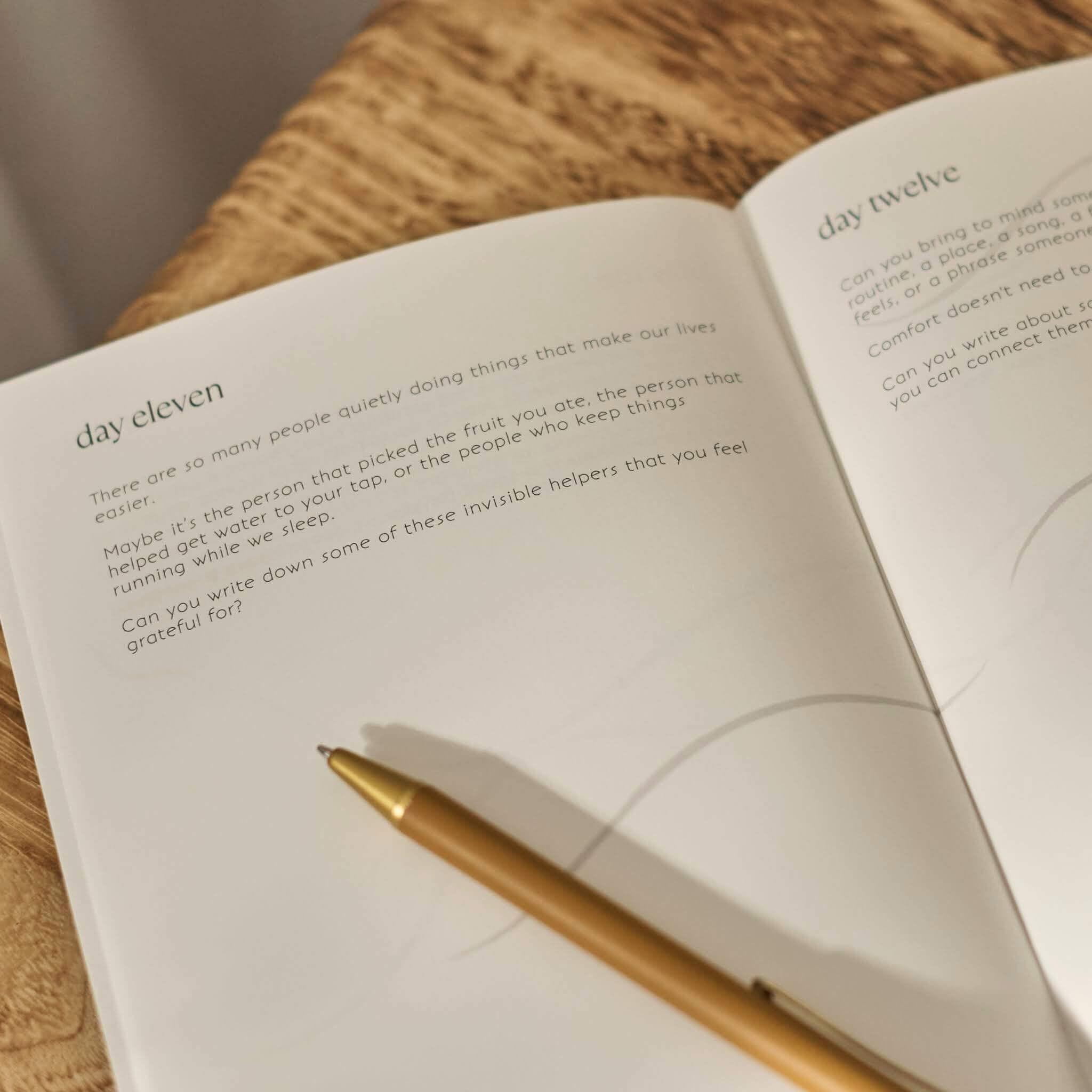
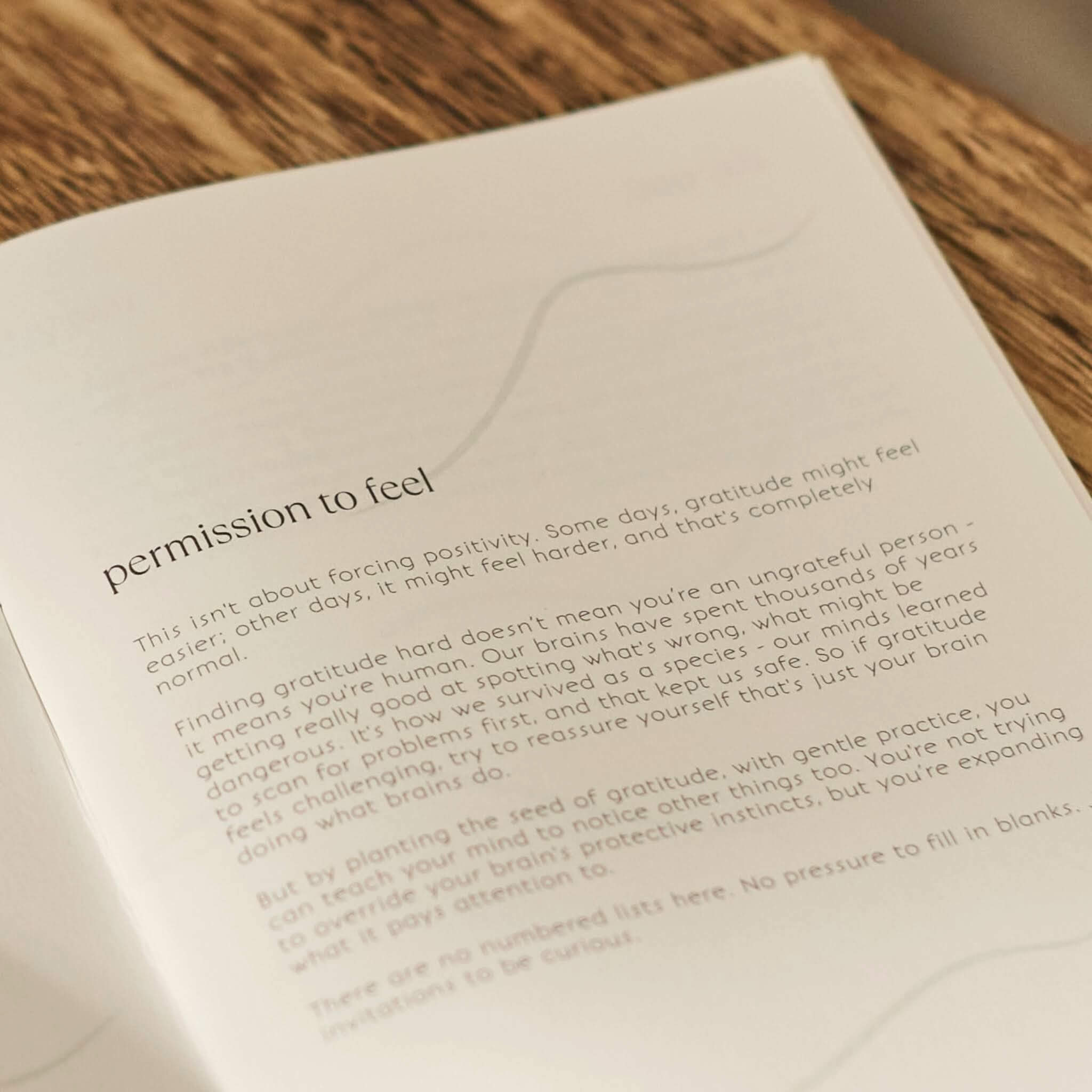
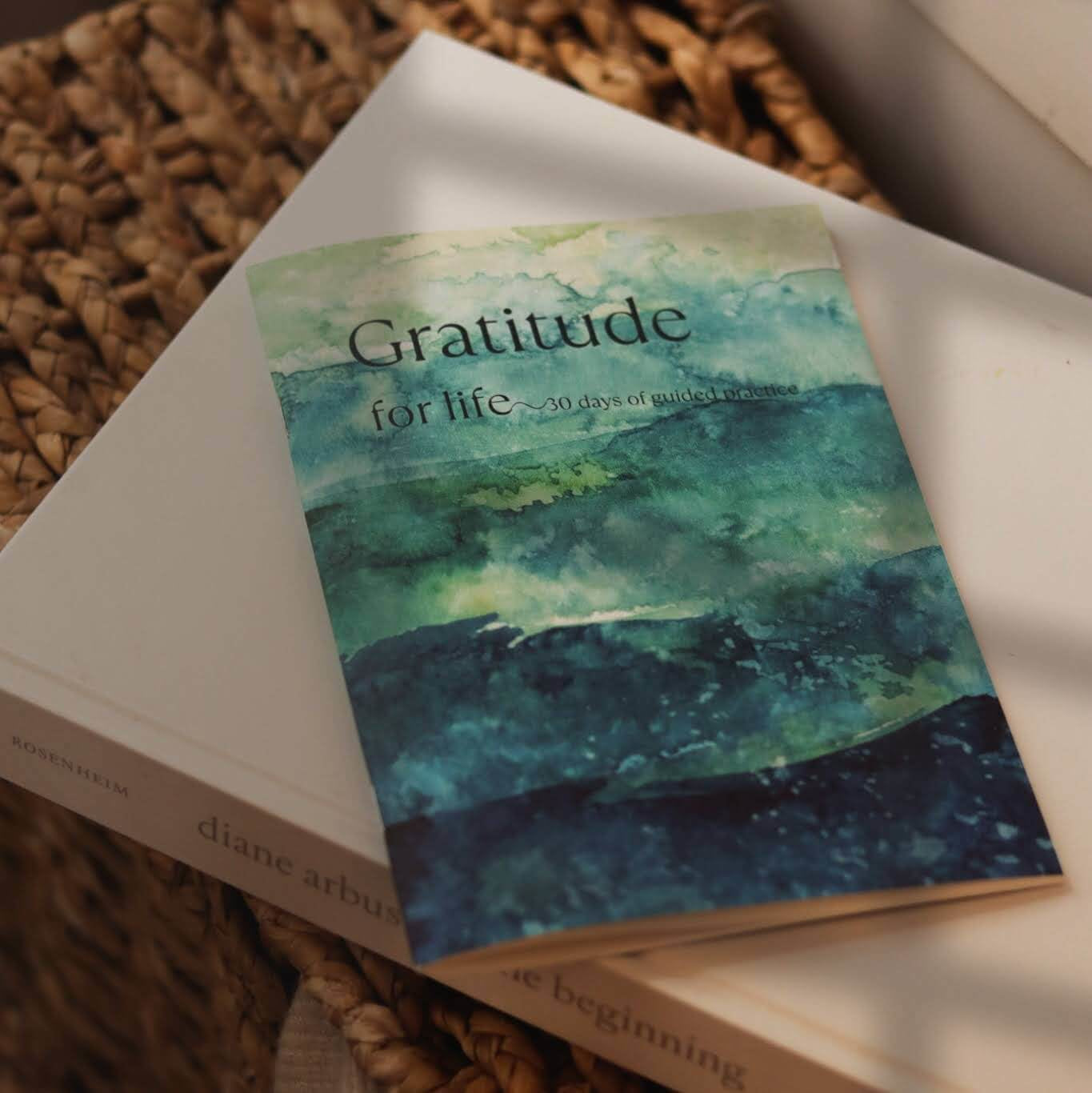
I wrote this one with the same refusal to force positivity. There are no numbered lists and no blanks to fill. From the journal's own opening:
"This isn't about forcing positivity. Some days, gratitude might feel easier; other days, it might feel harder, and that's completely normal. Finding gratitude hard doesn't mean you're an ungrateful person, it means you're human."
It also holds space for the hard things directly. Day 22 asks you to look at something painful and adds: "Some painful things are just painful. That's allowed and valid." That matters, because a gratitude practice that cannot admit difficulty is the kind that makes people feel worse.
- Direct research linking gratitude to sleep quality and falling asleep faster
- Short enough for a tired evening
- Explicitly gives permission for gratitude to feel hard
- Undated, 30 days, finishable
- Includes a guided meditation and QR codes through to the research
- Gratitude prompts alone may not reach shame or harsh self-criticism
- No emotion identification tool, so it does less naming work
- On a genuinely awful day, gratitude prompts can feel like the wrong question
- 30 prompts rather than three months
- The sleep evidence is correlational, not a clinical trial
How I would choose between the two. If the voice keeping you awake is critical, "why did you say that", "you should have handled it better", start with the Give Yourself Kindness Journal. Gratitude will not answer that voice. If your mind simply spins and you want a small, kind ritual to change what it lands on before sleep, the Gratitude Journal is a sensible place to begin. There is more on this in my guide to why gratitude journaling feels hard.
What if I am too tired to write anything?
Then do not write. This is not a failure, and it is one of the most common reasons people abandon evening journaling entirely.
Added to your basket. View basket →
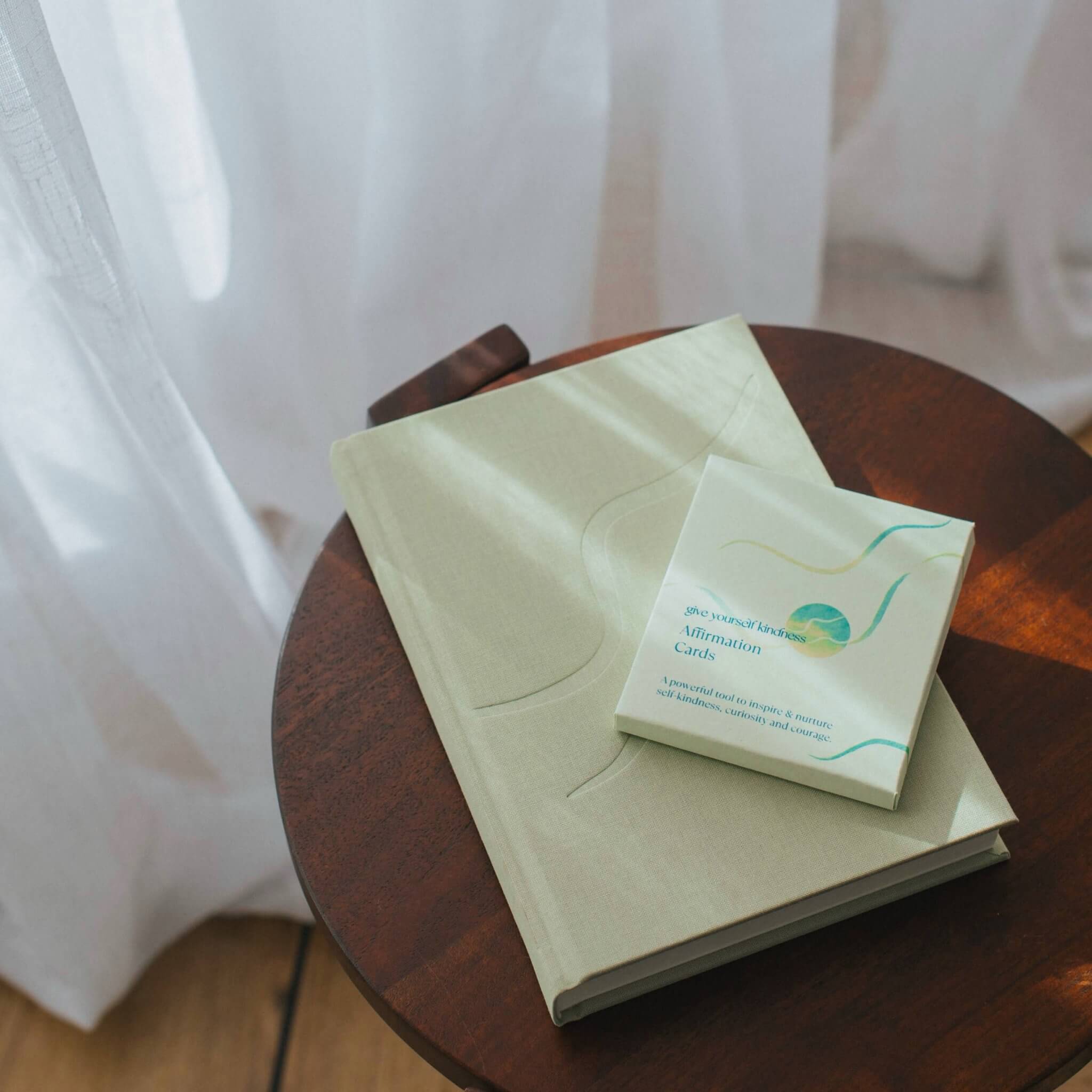
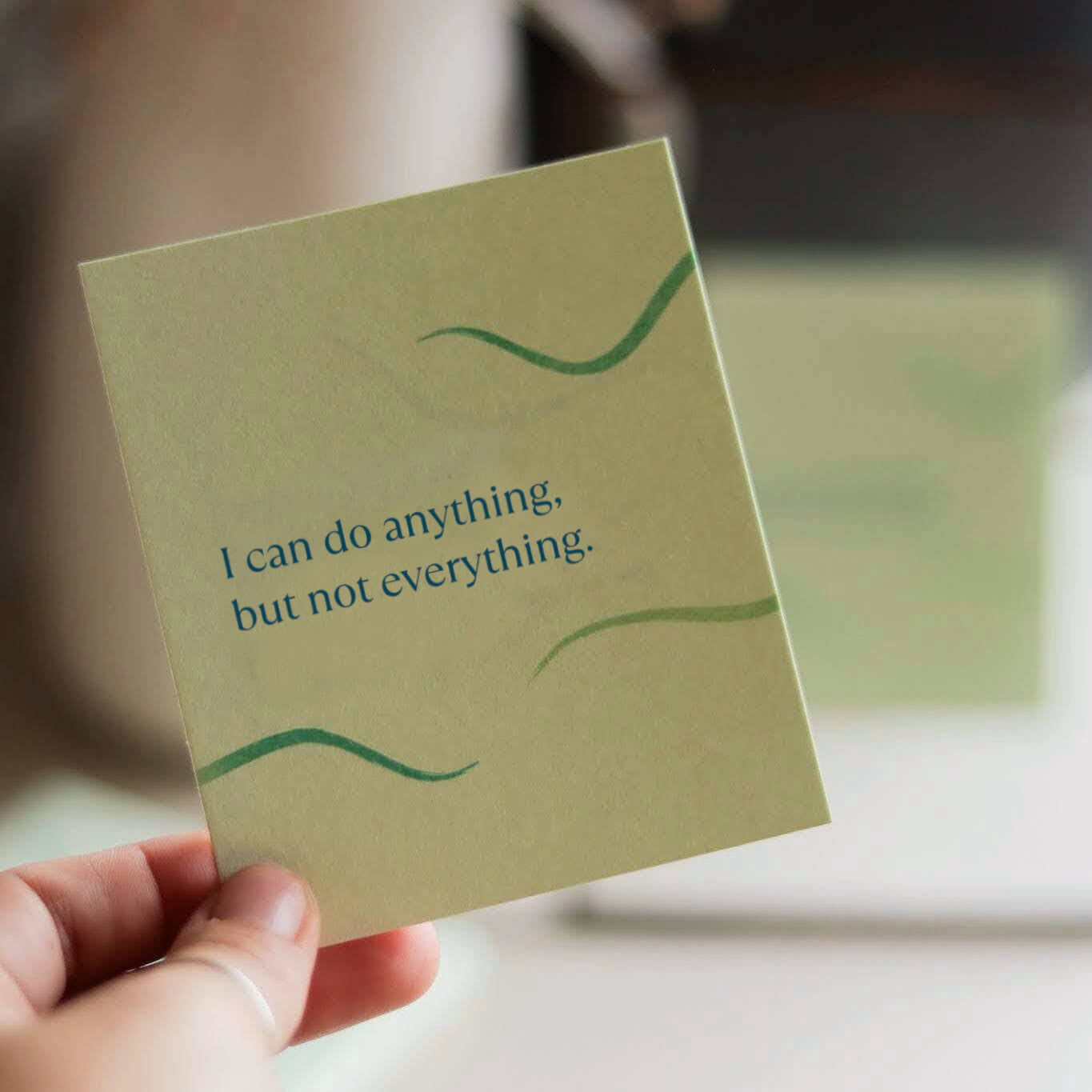
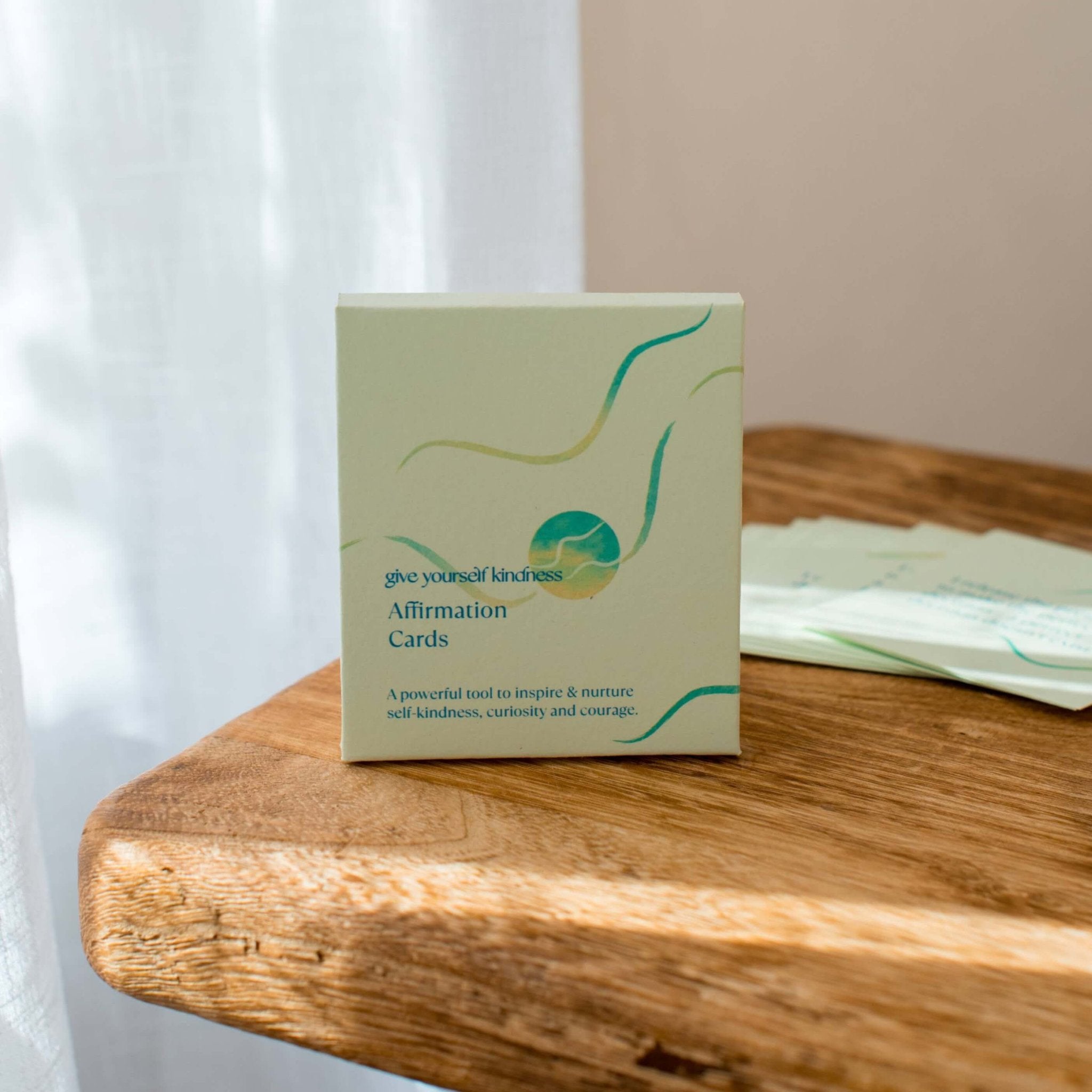
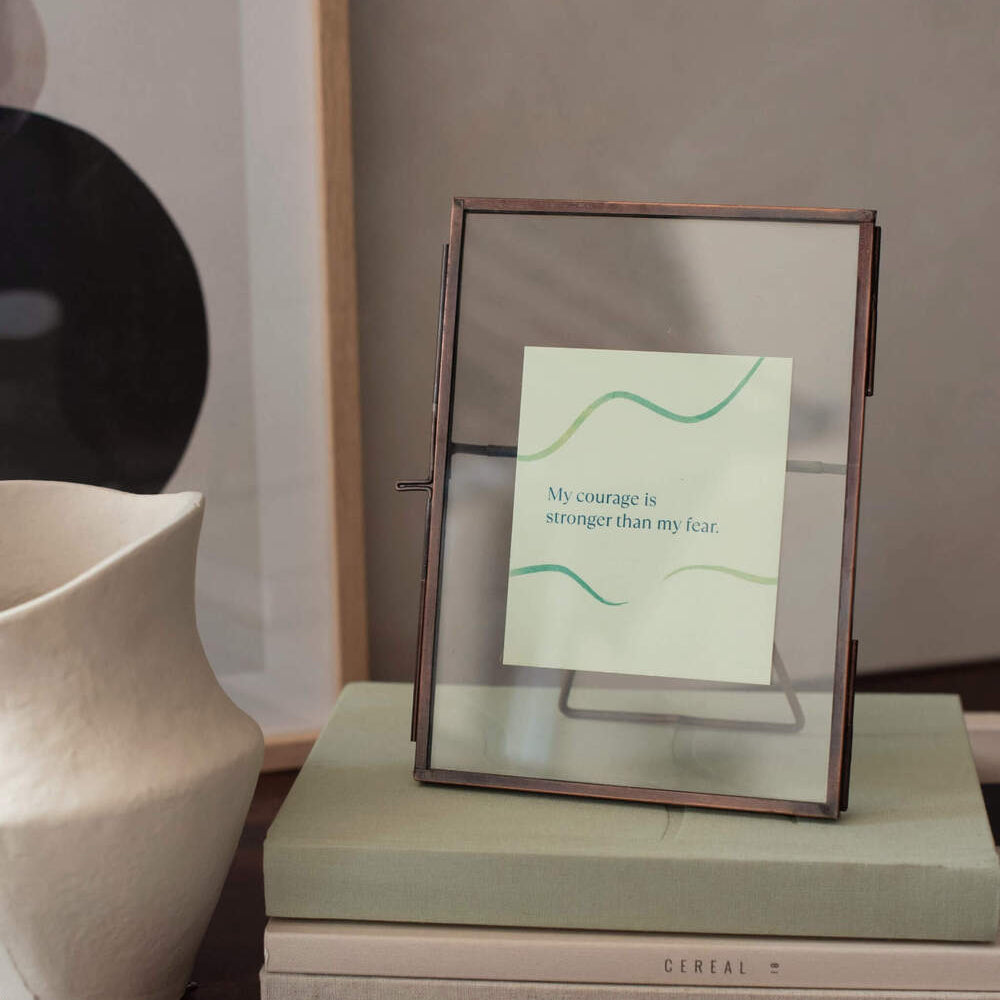
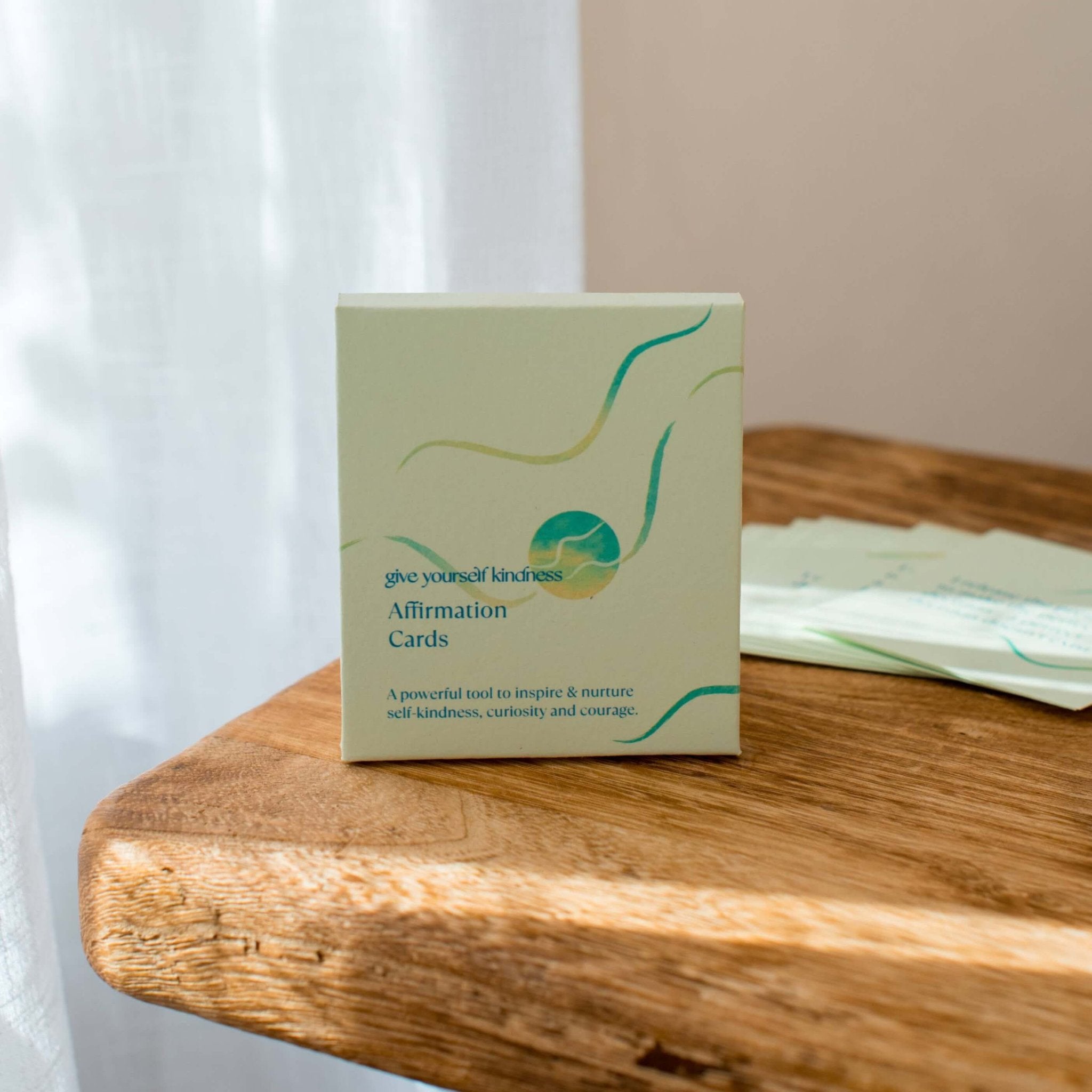
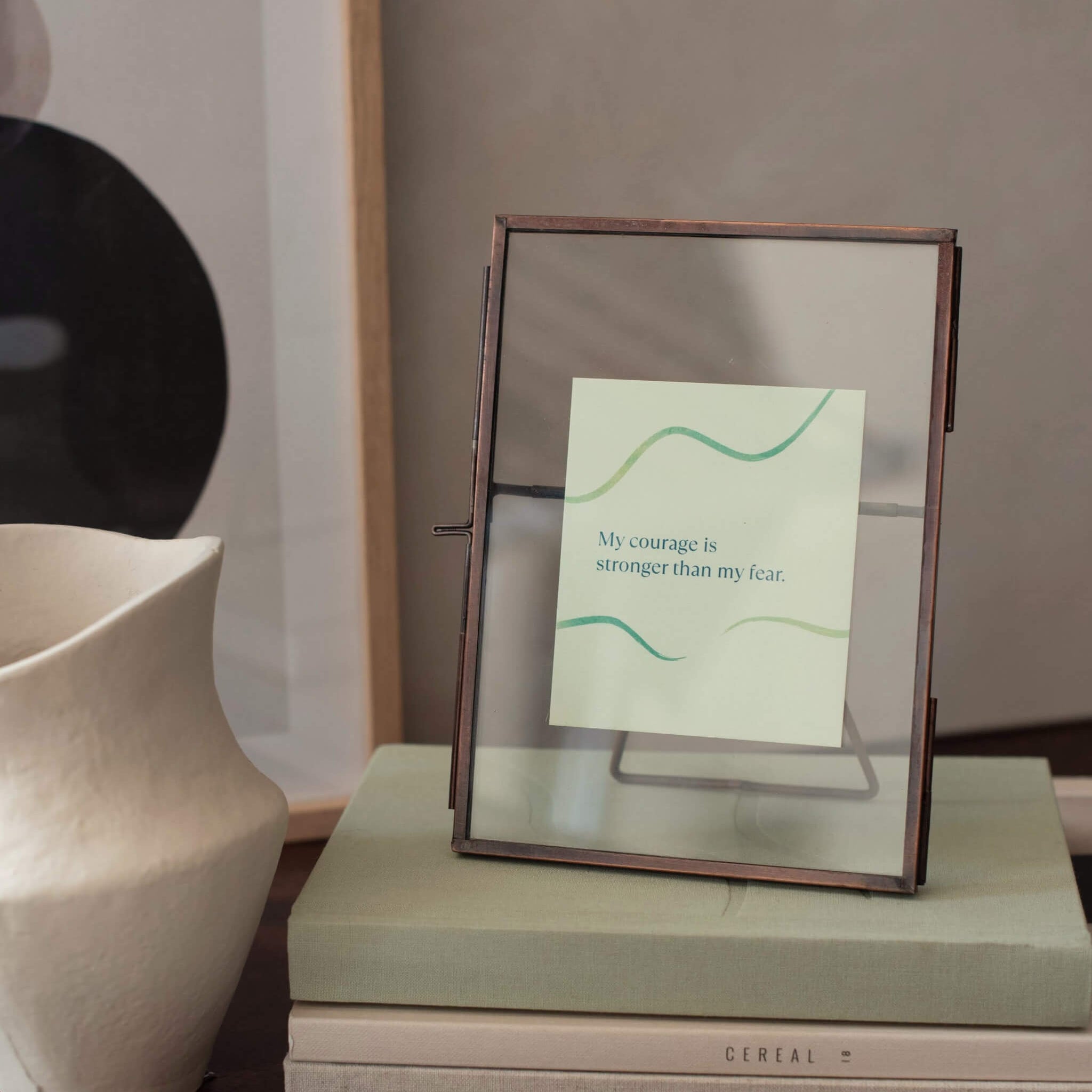
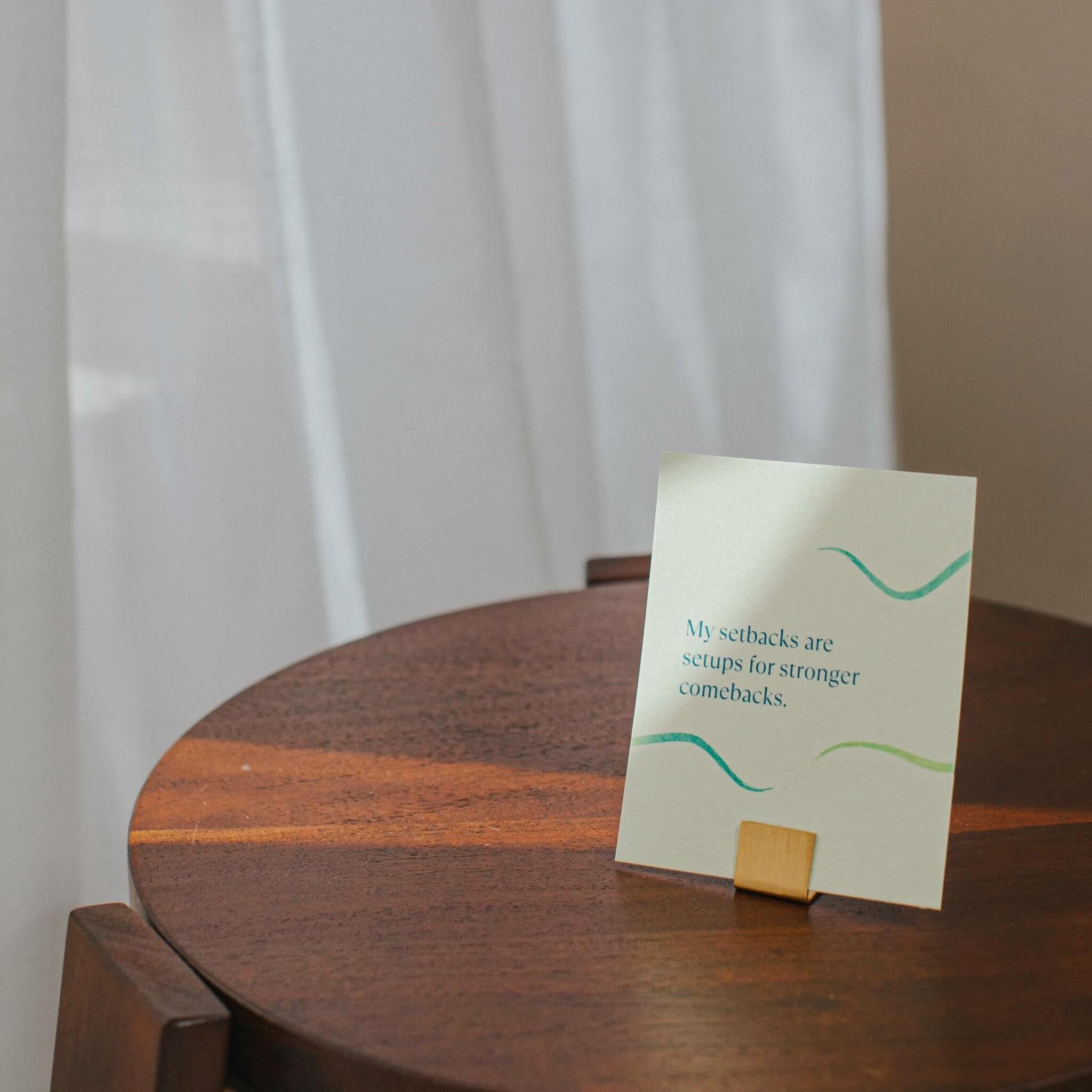
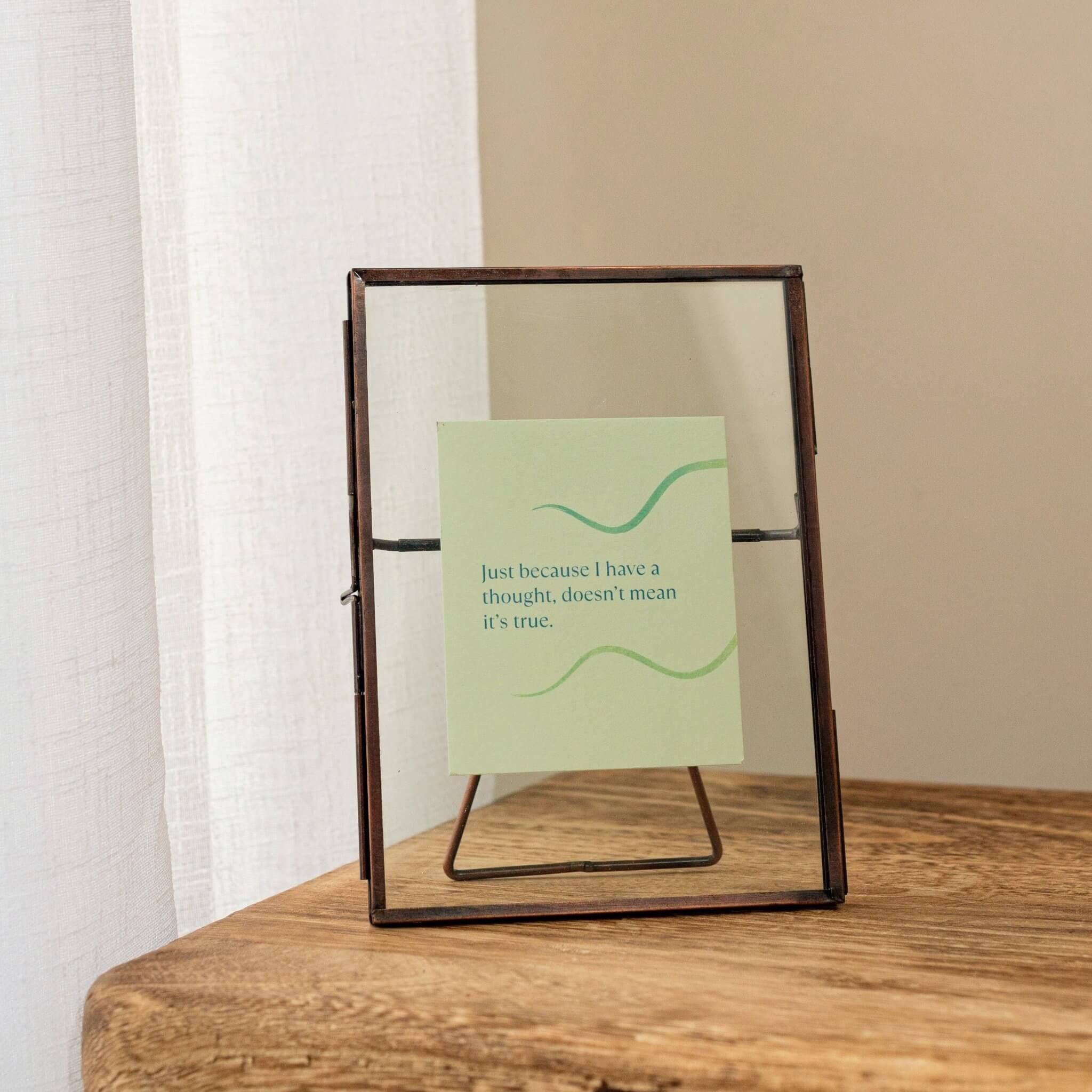
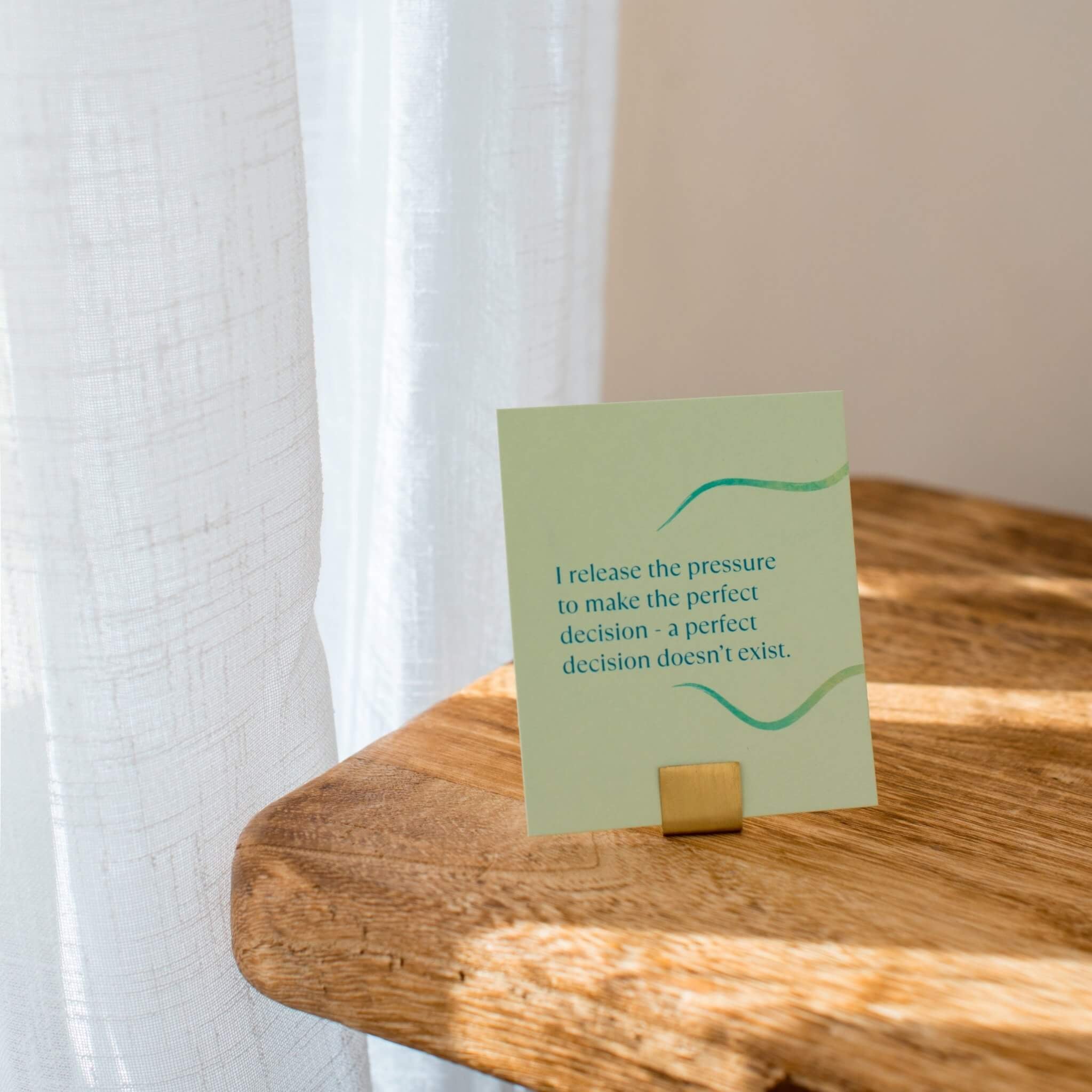
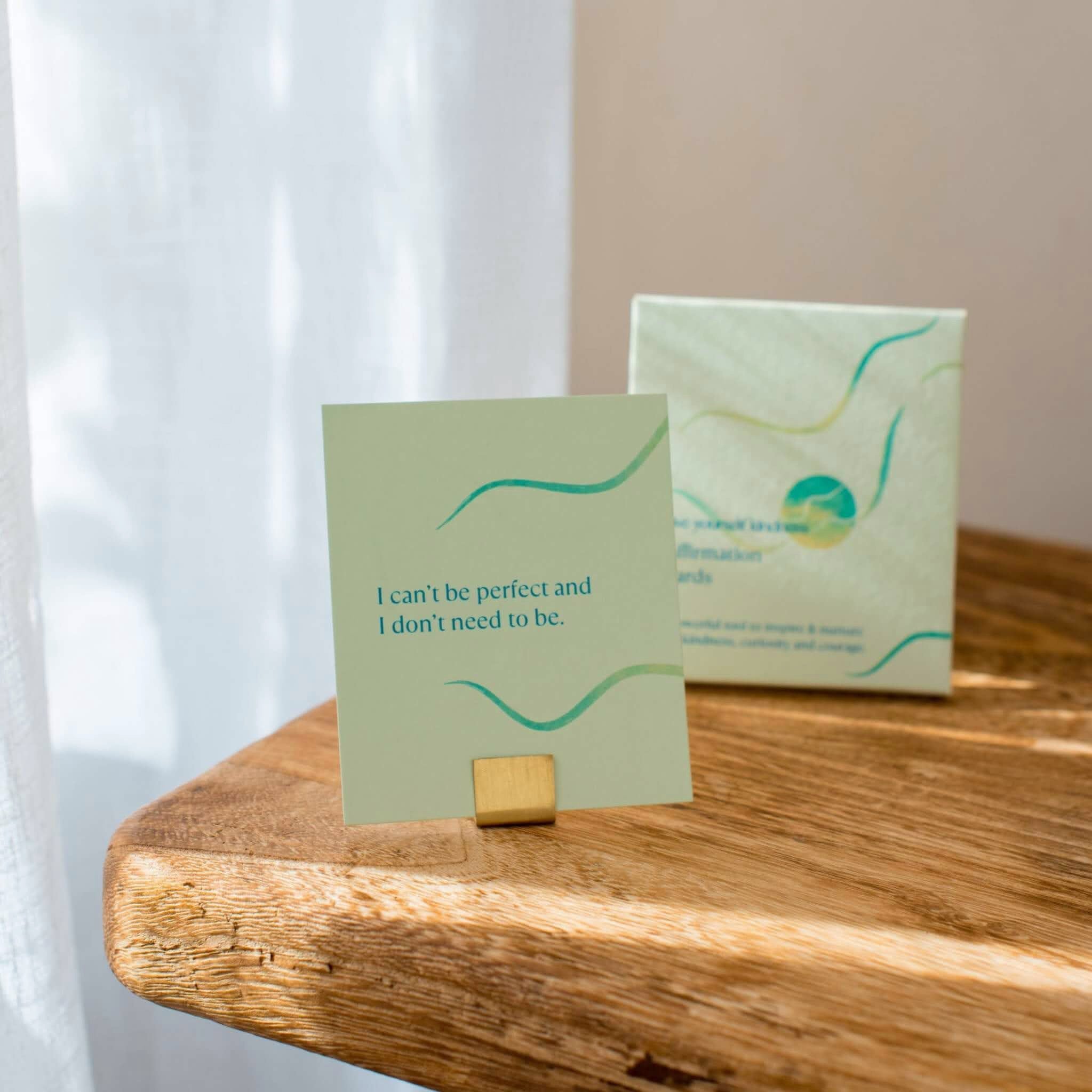
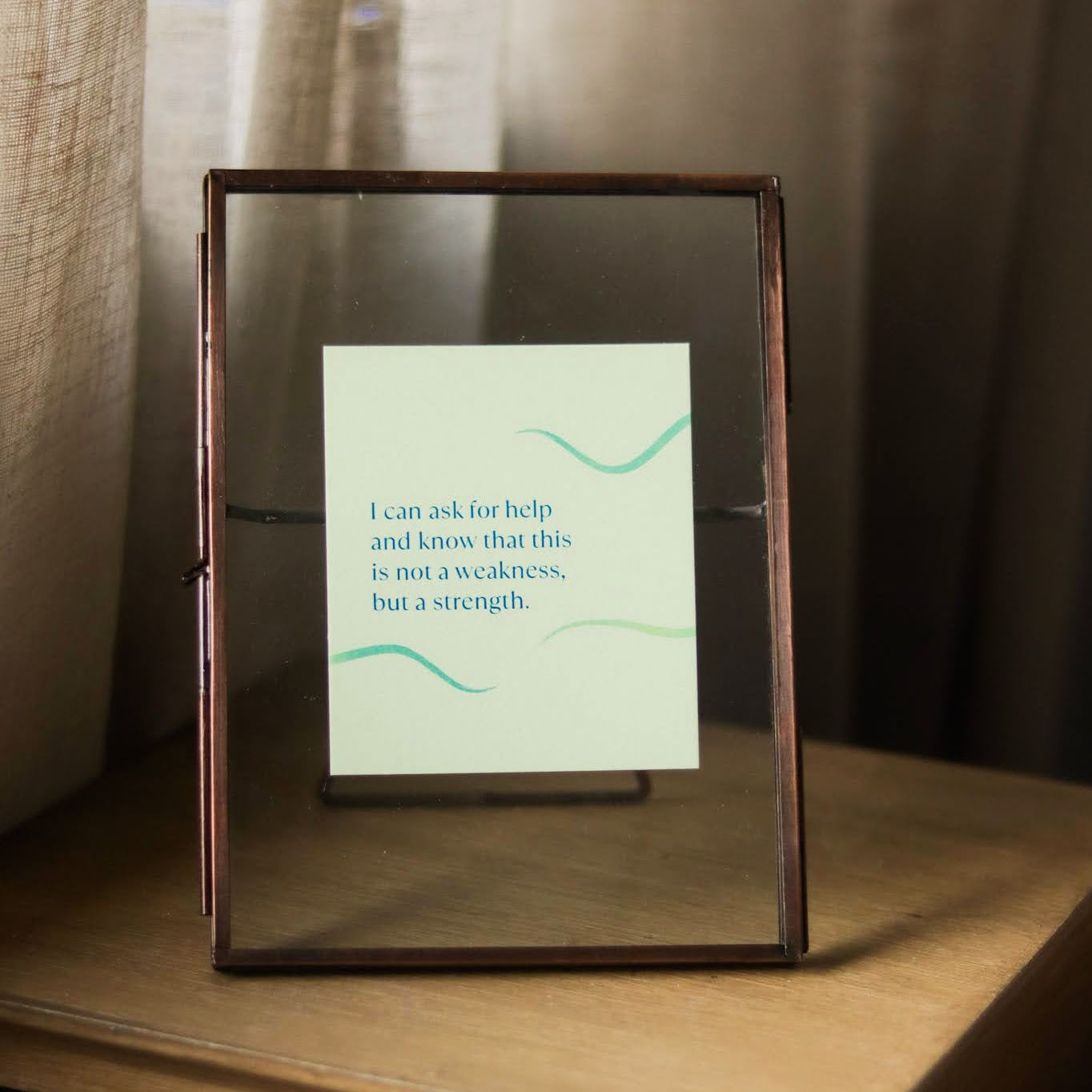
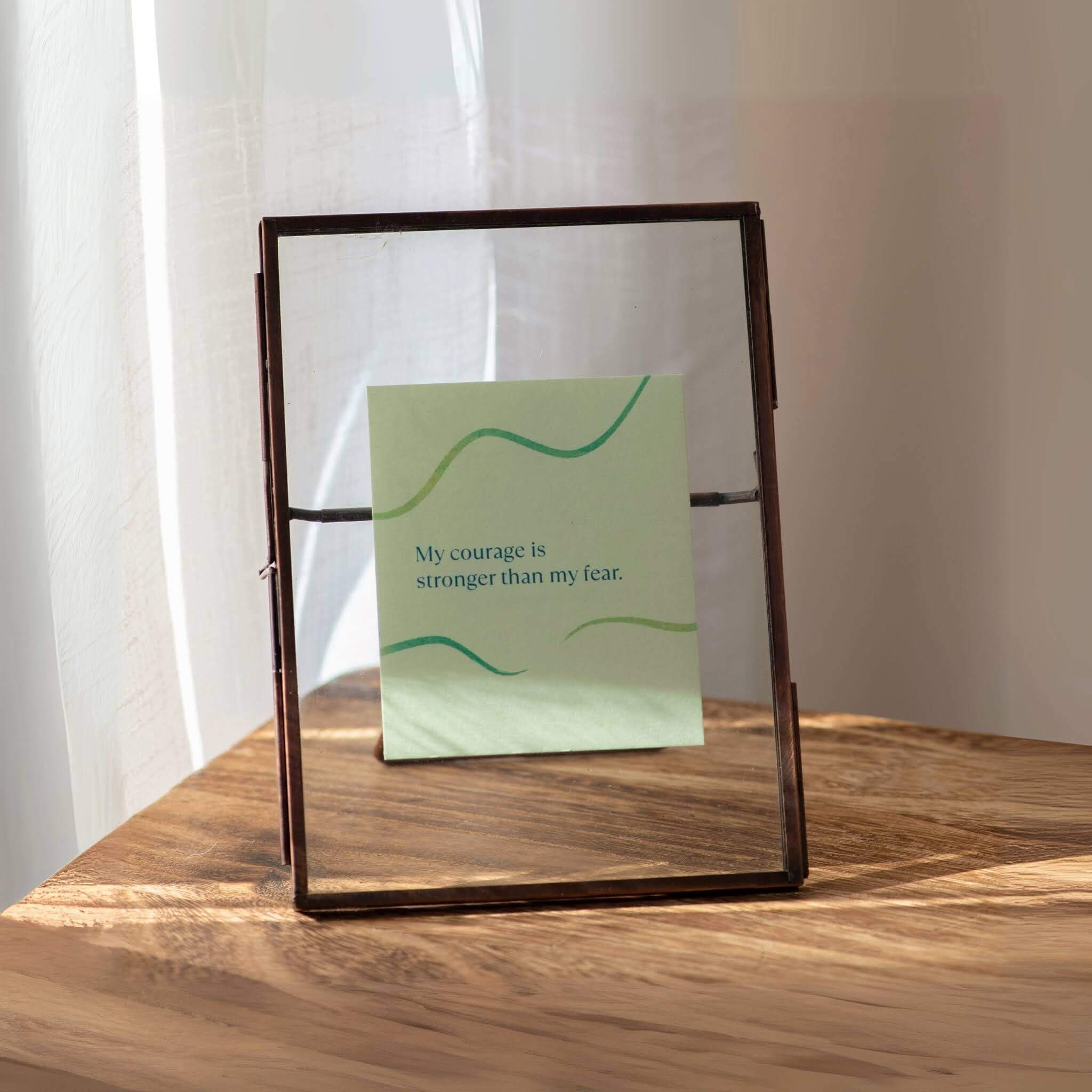
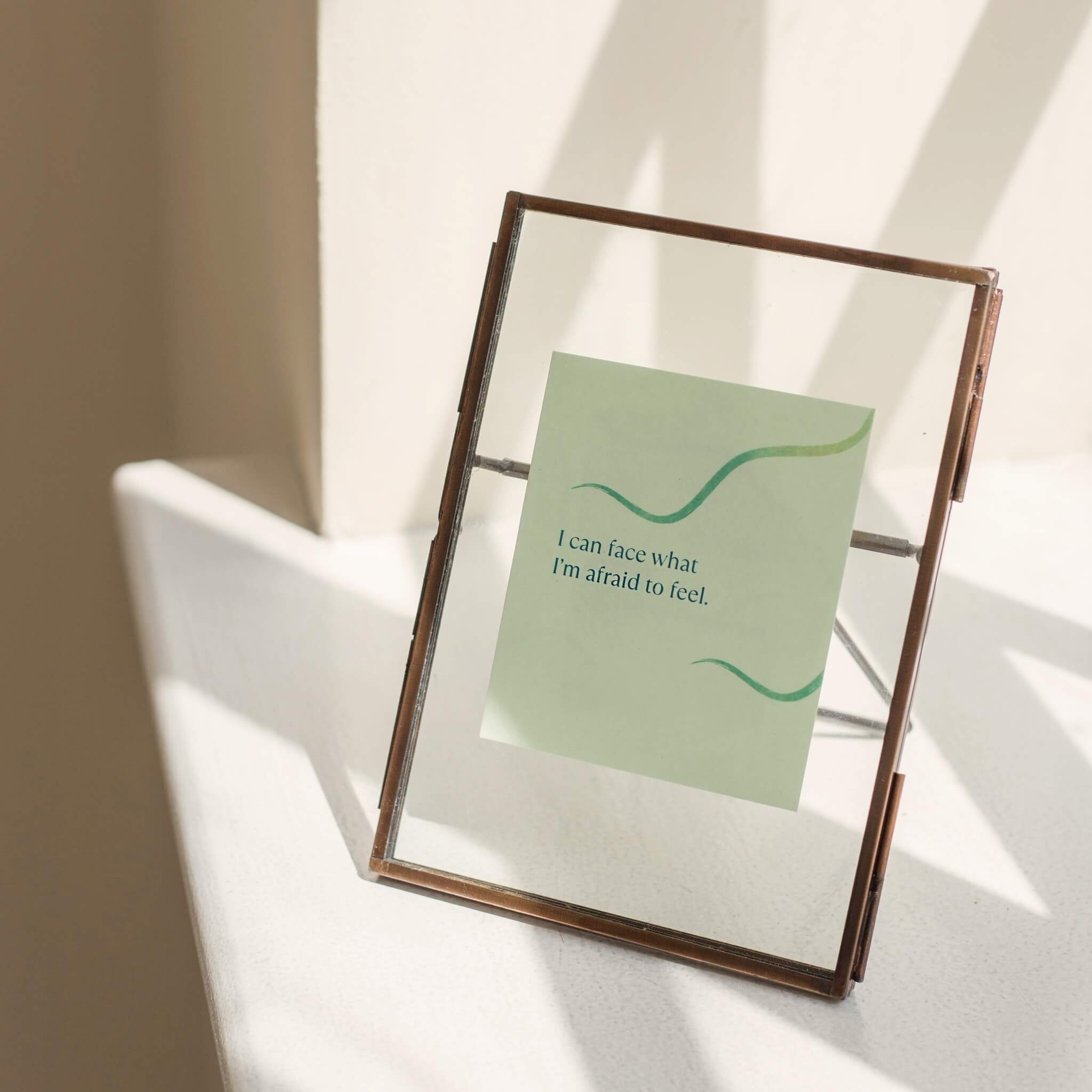
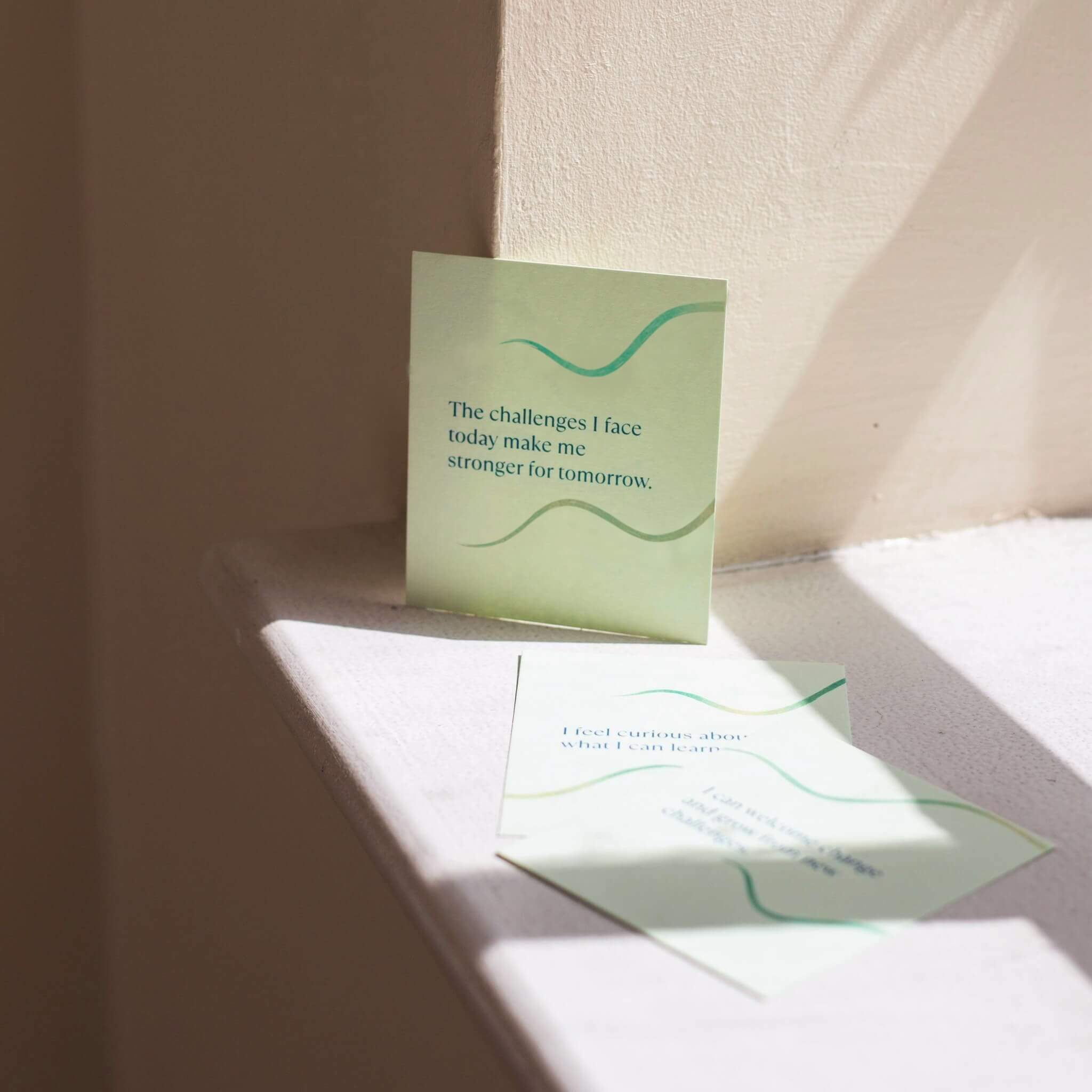
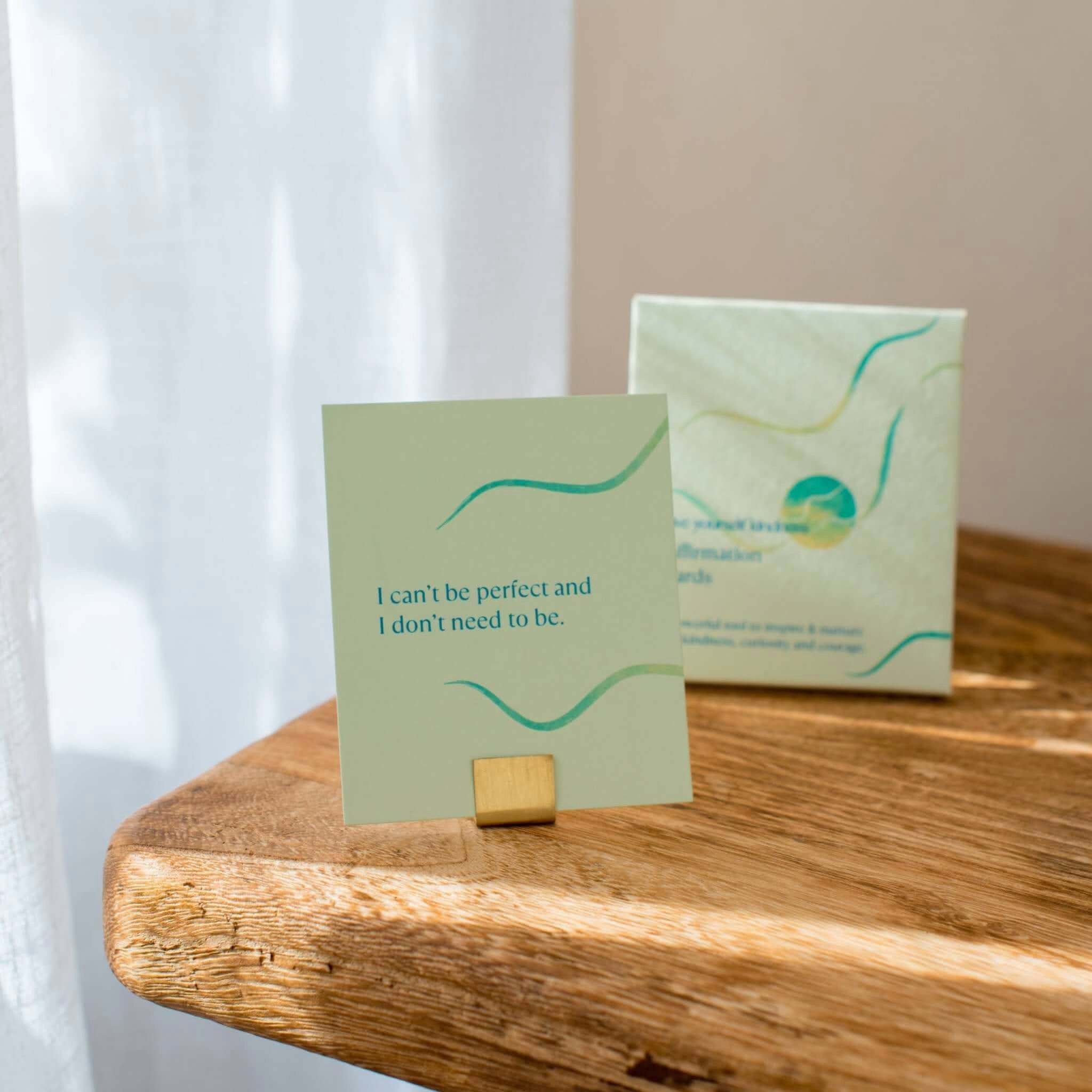
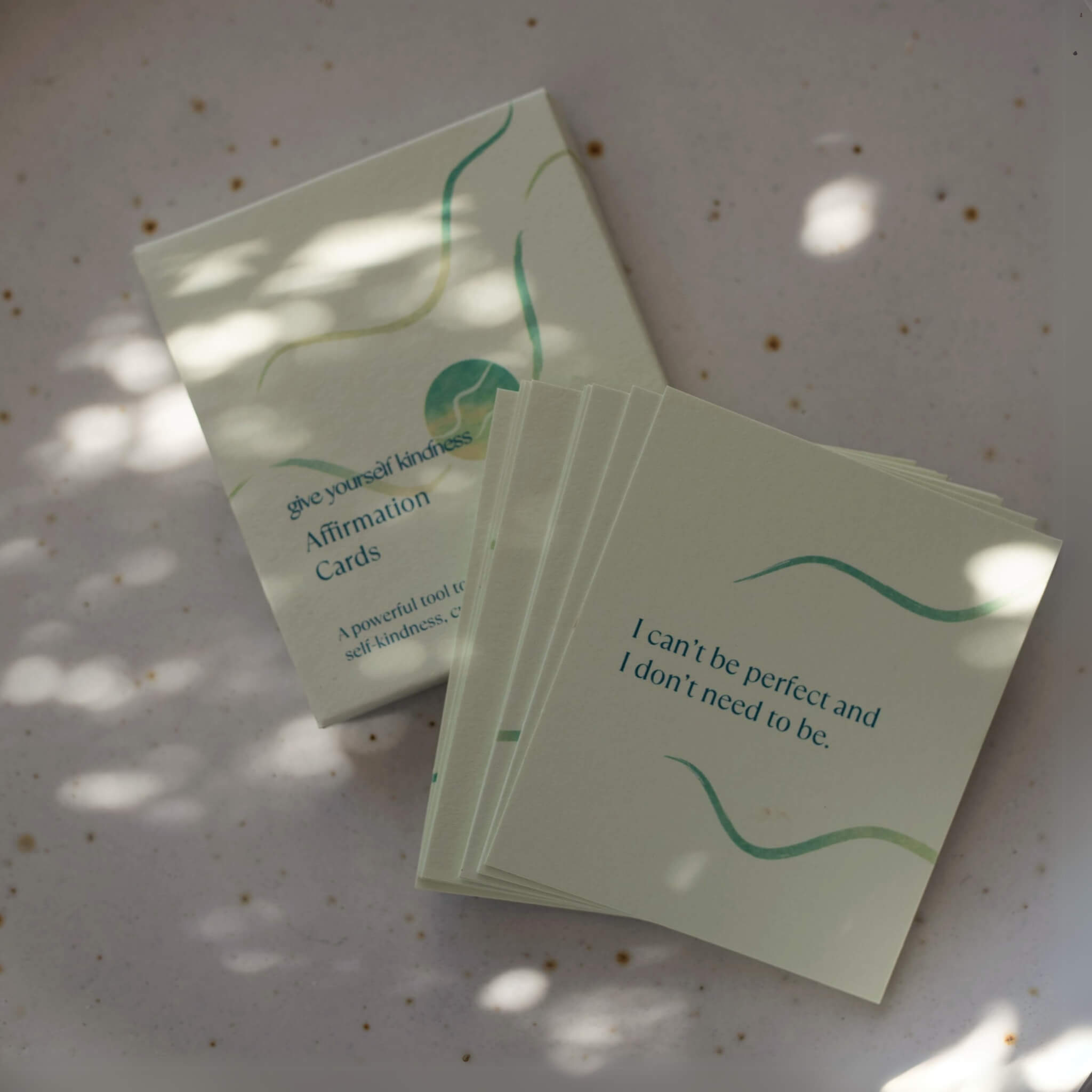
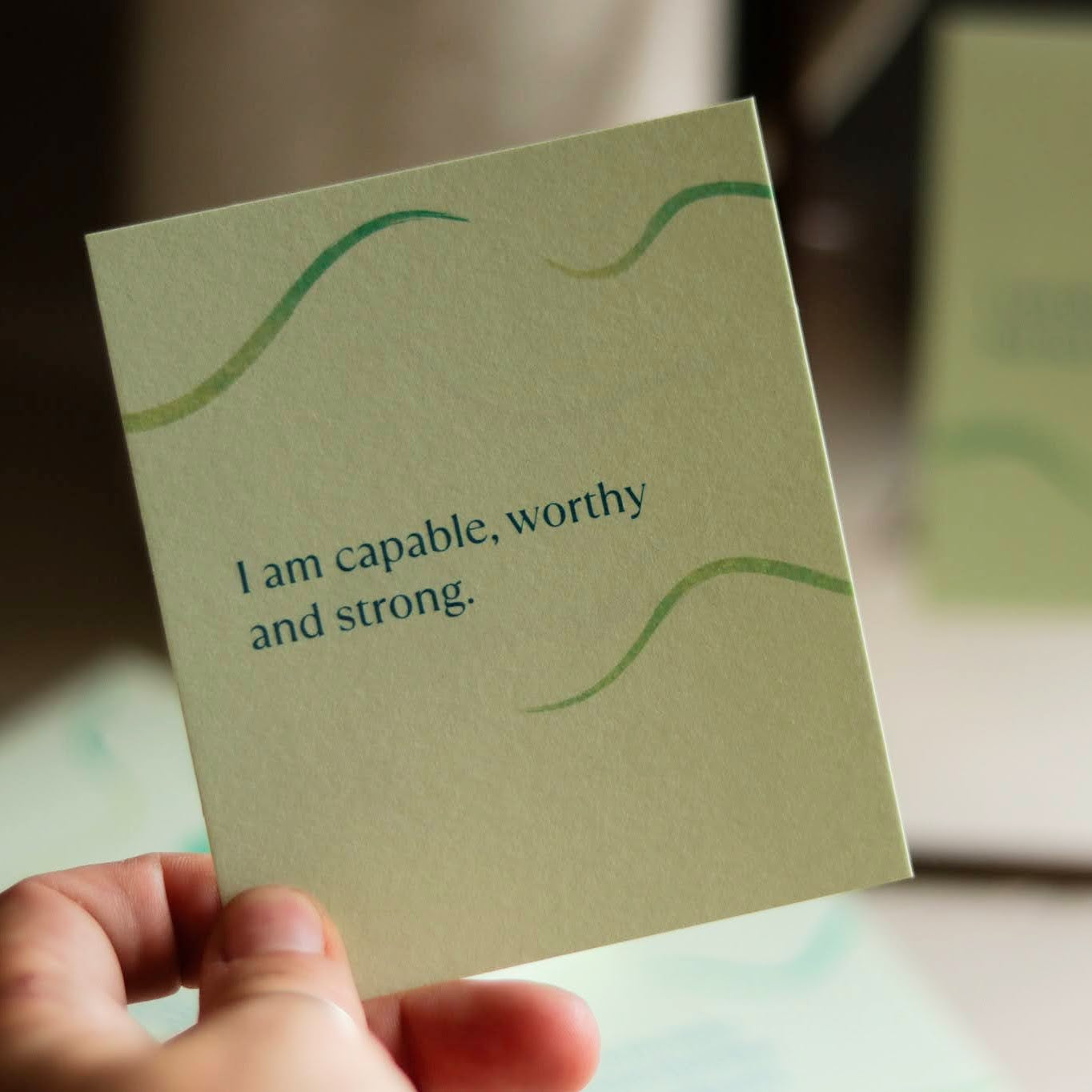
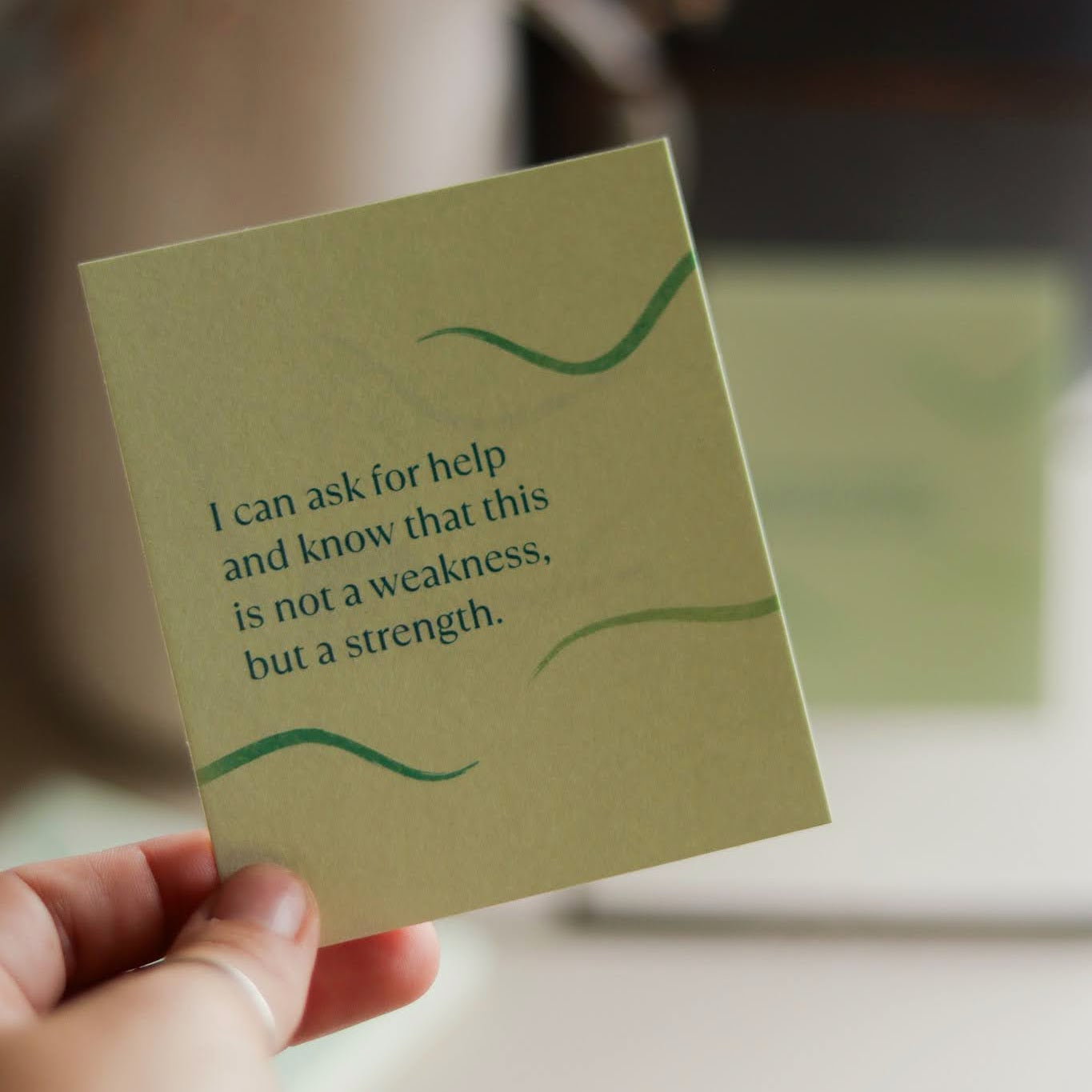
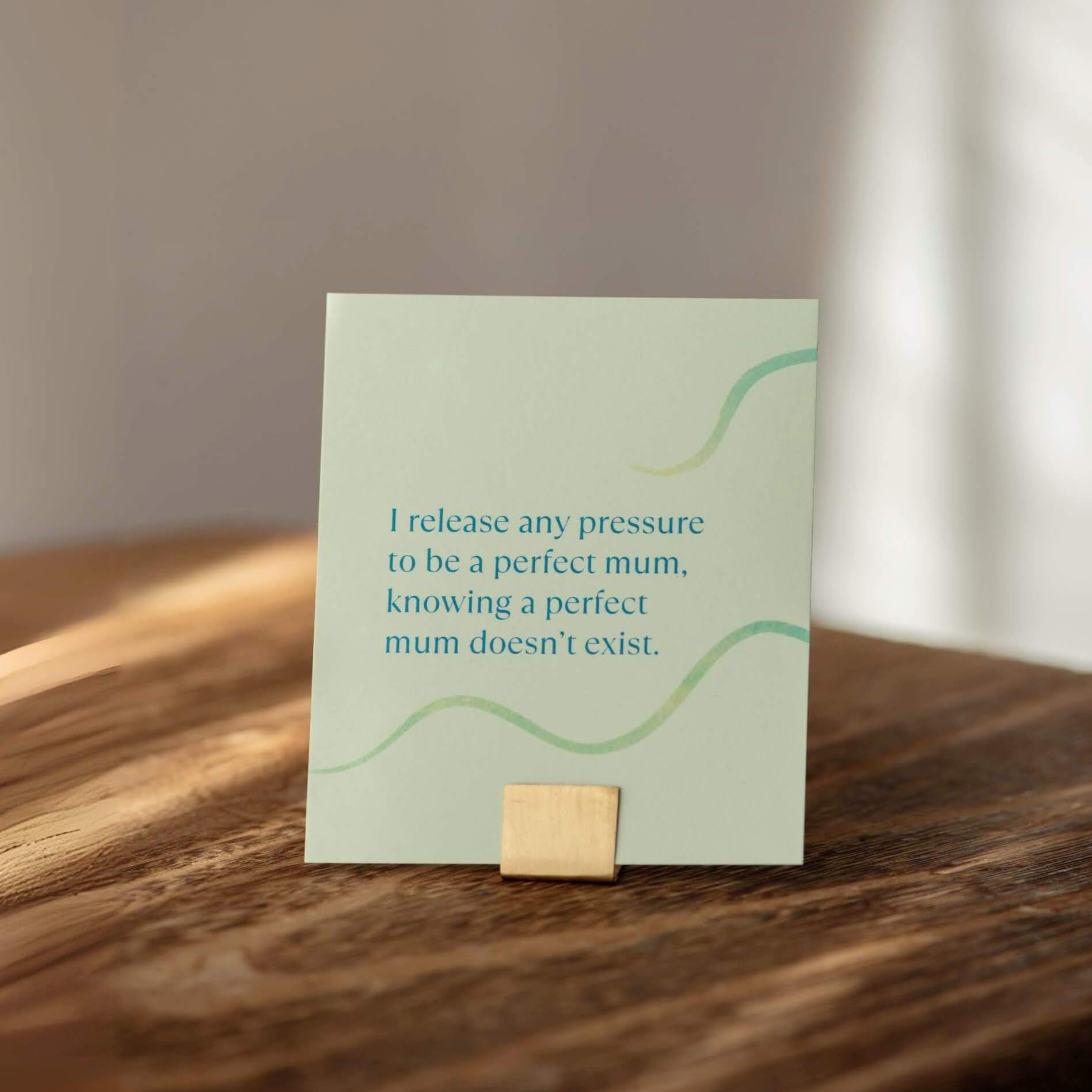
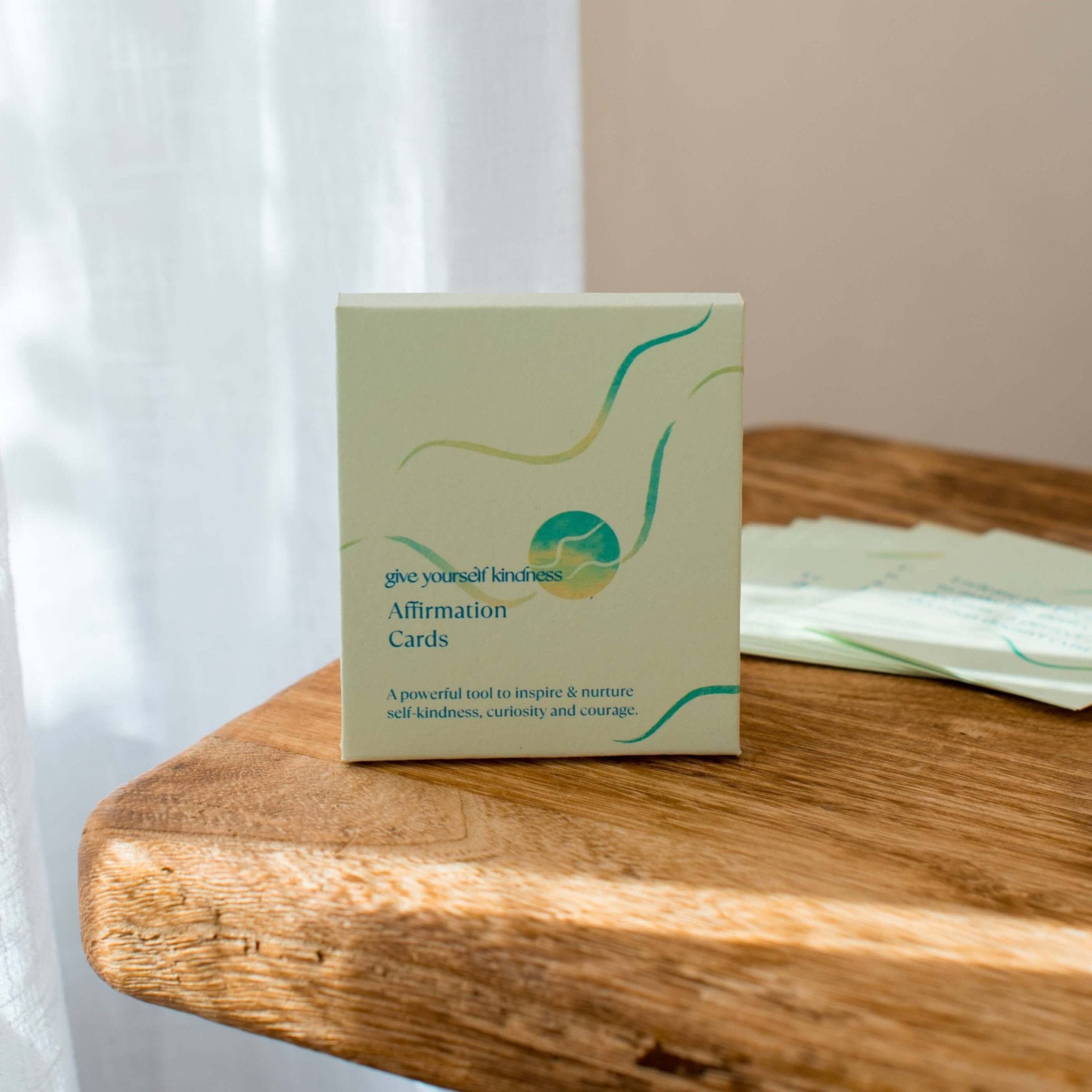
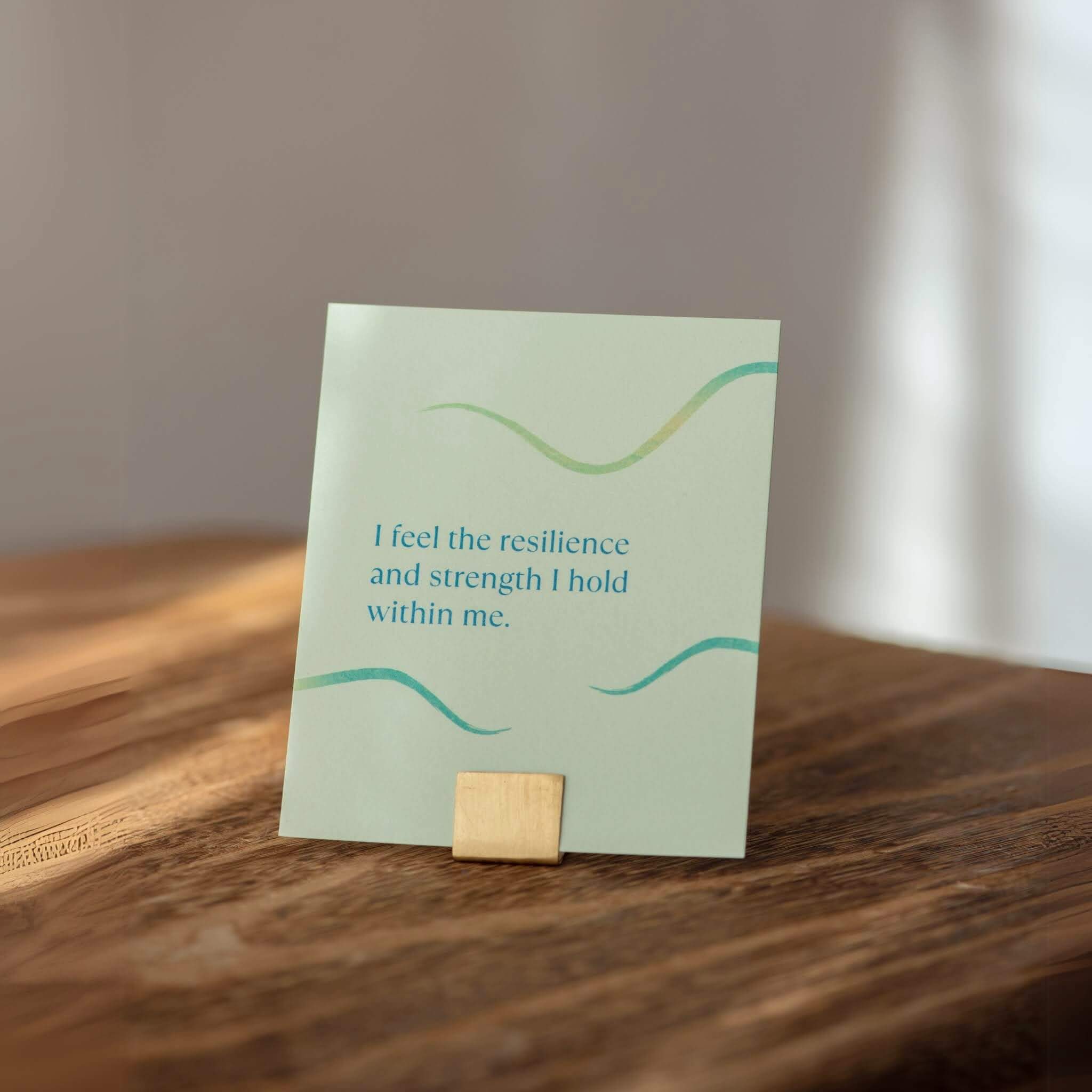
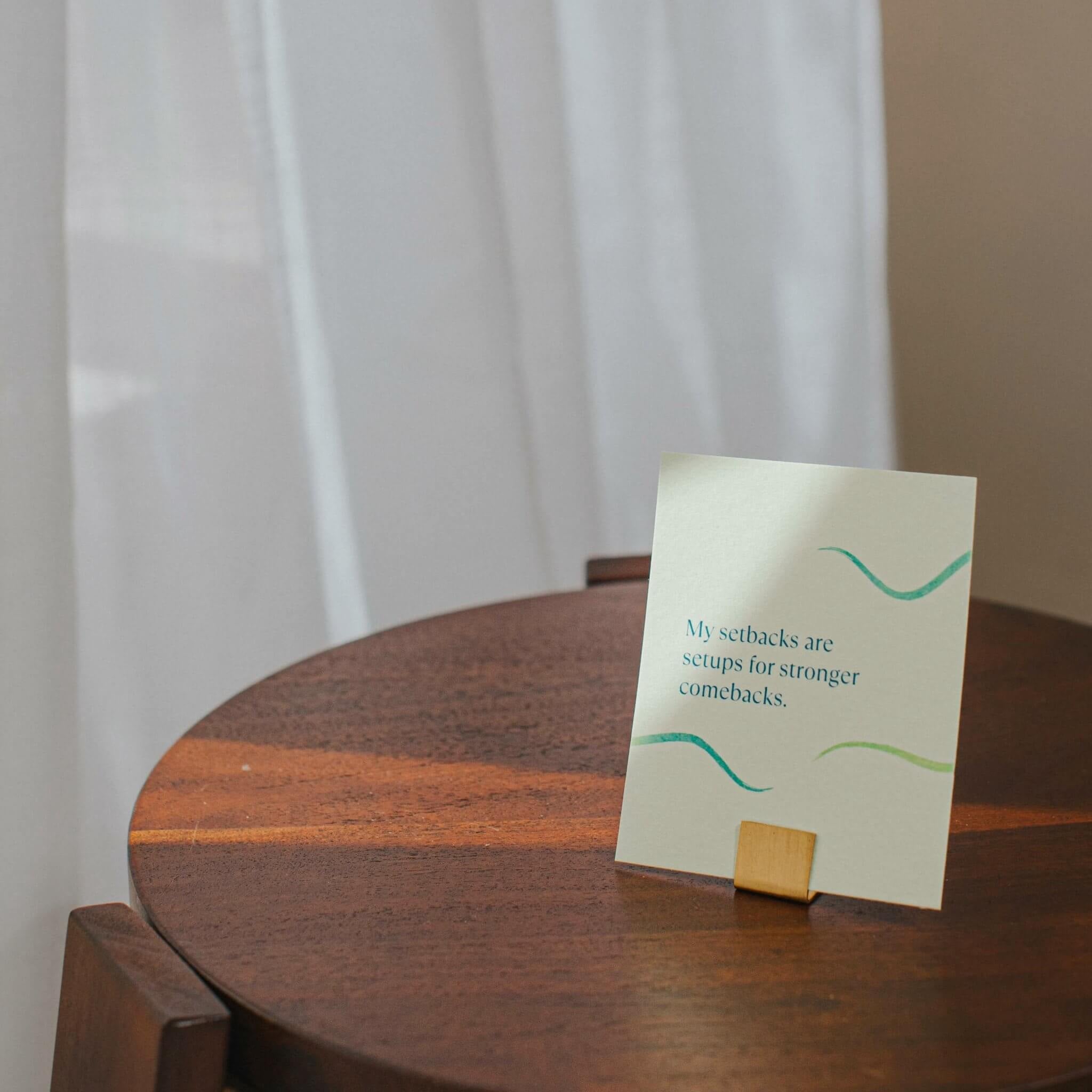
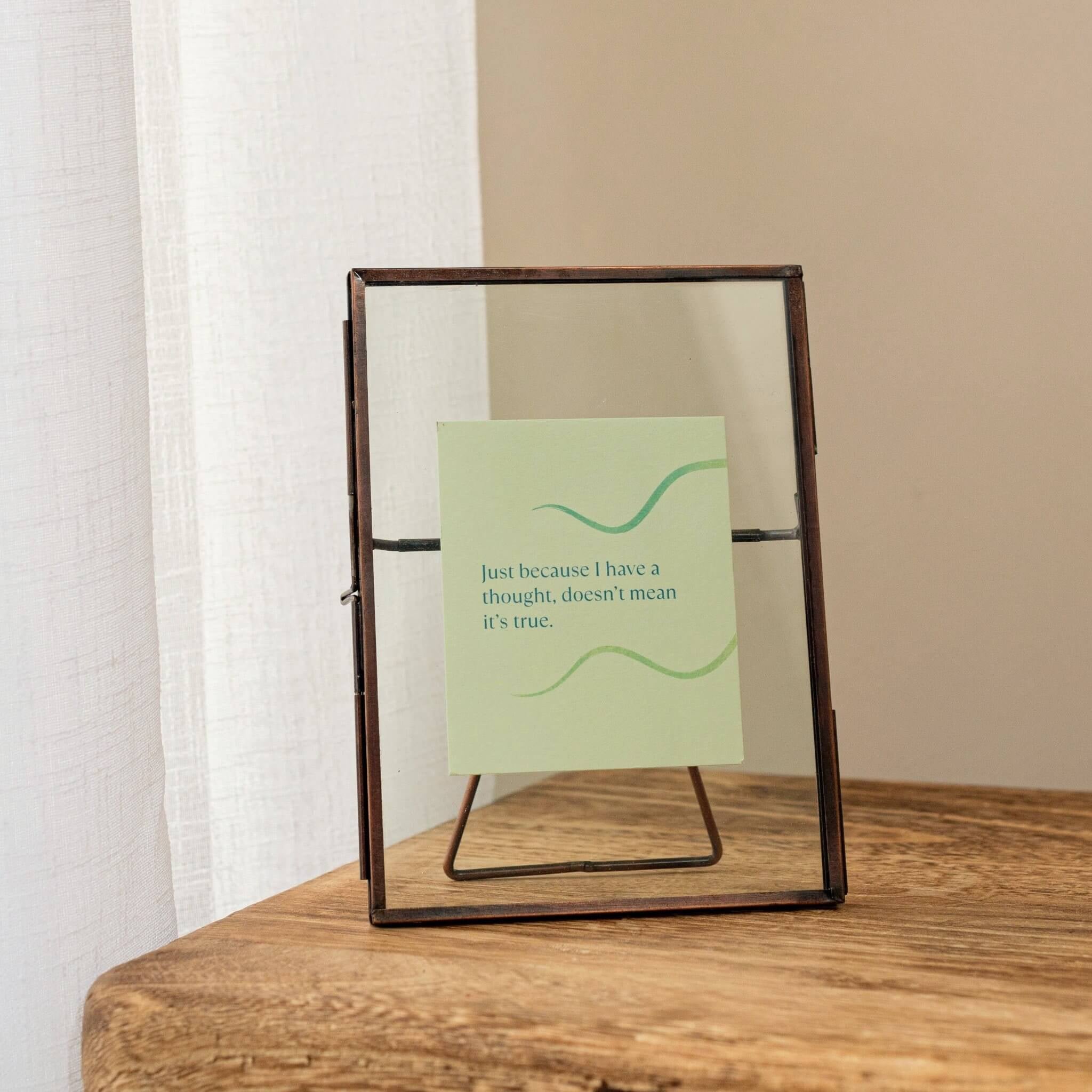
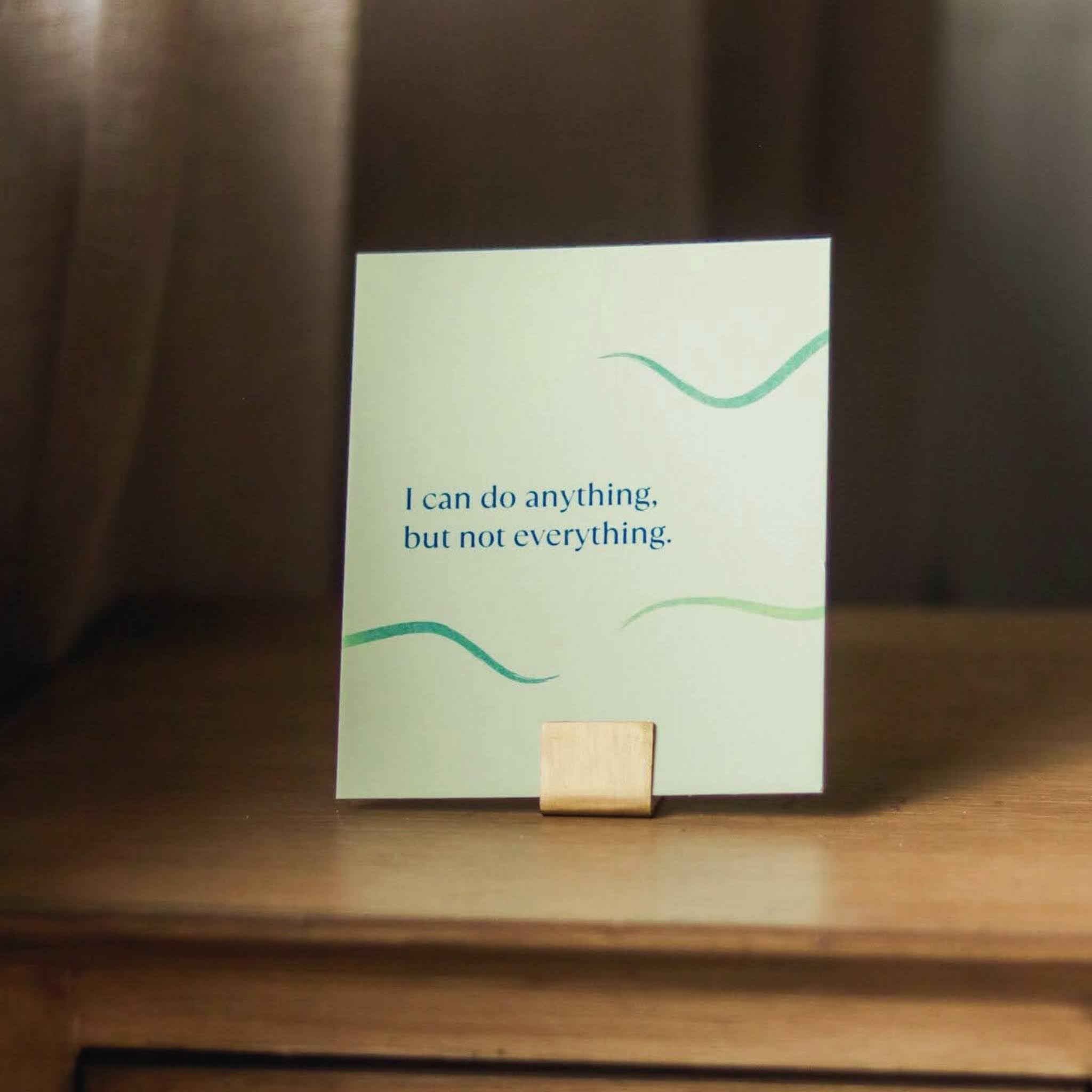
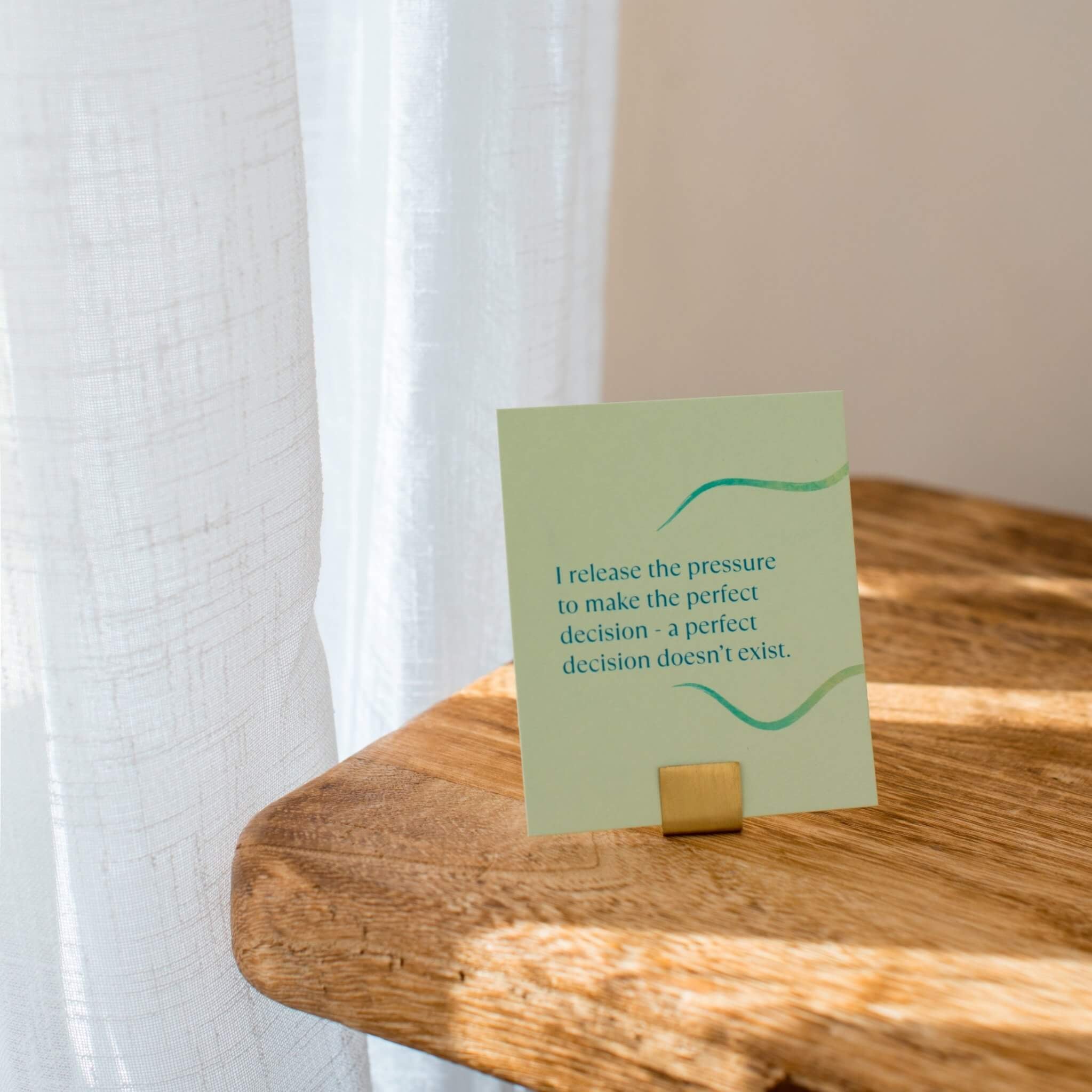
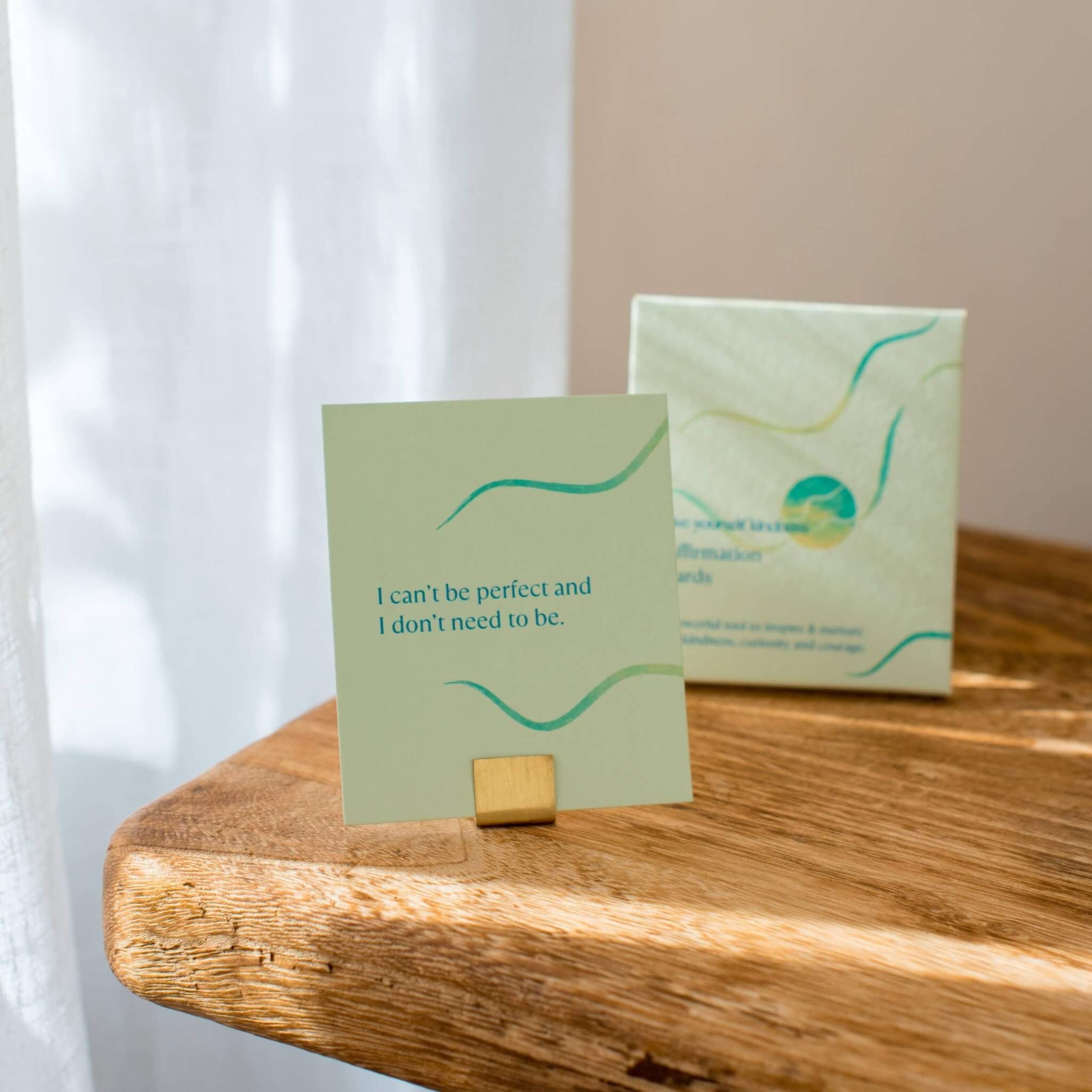
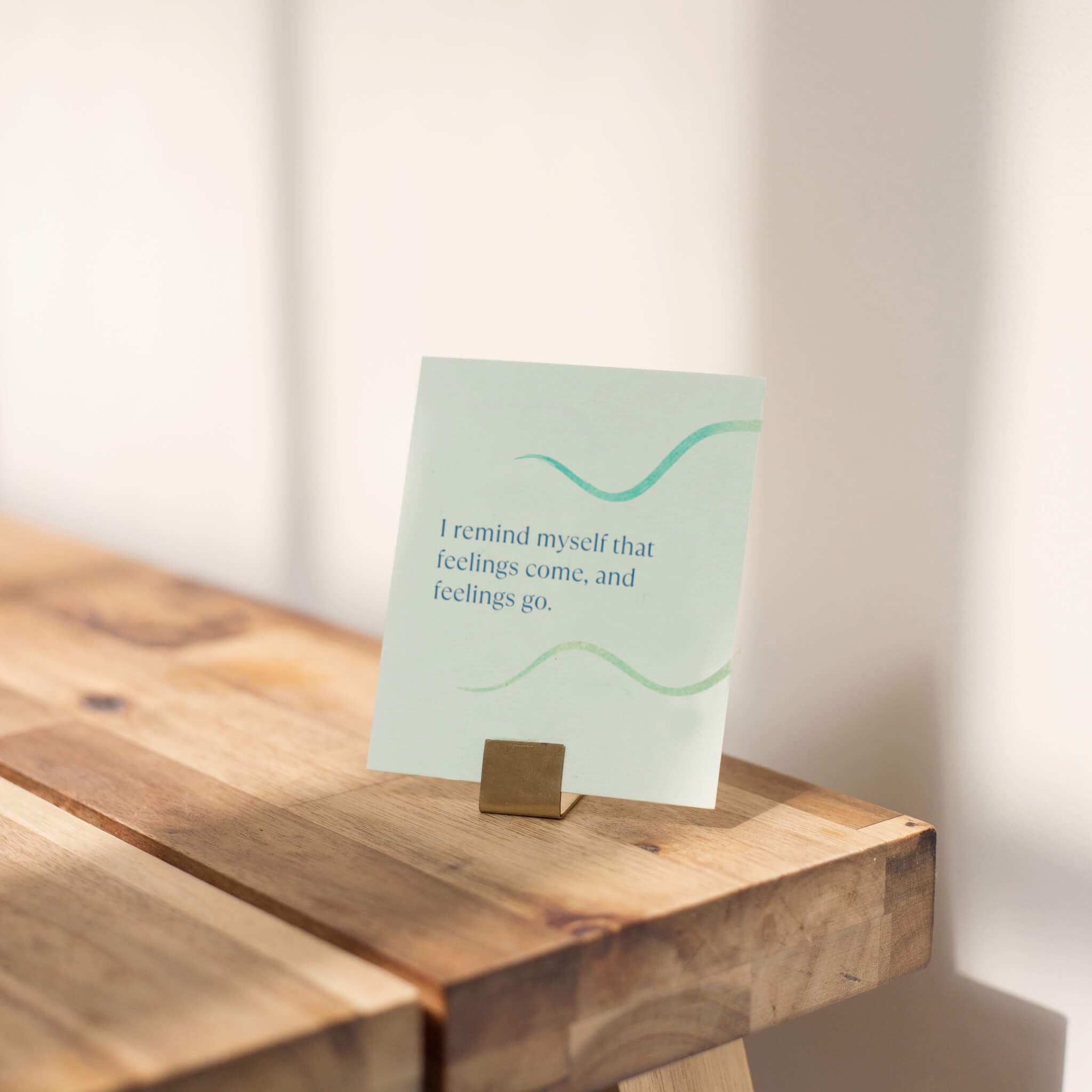
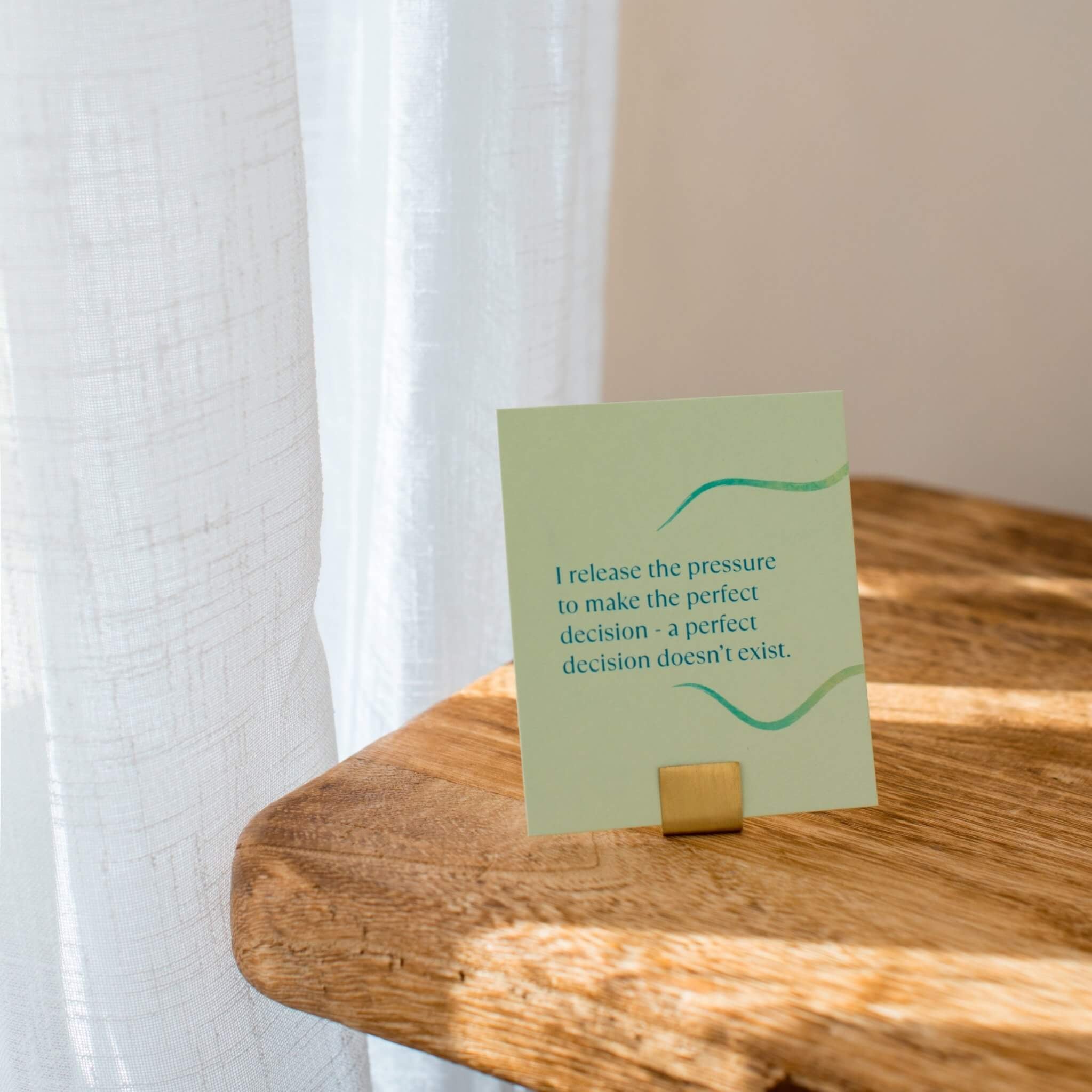
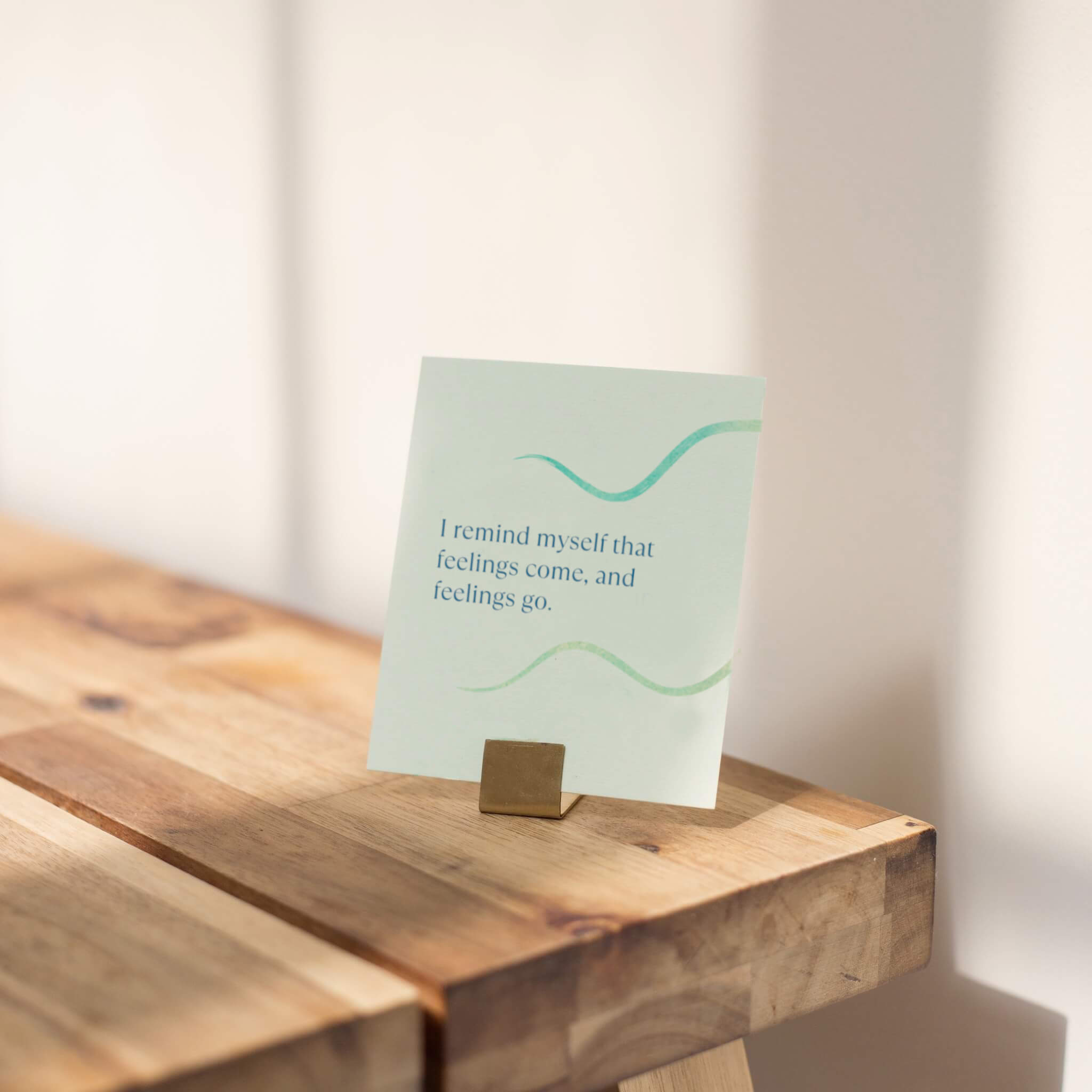
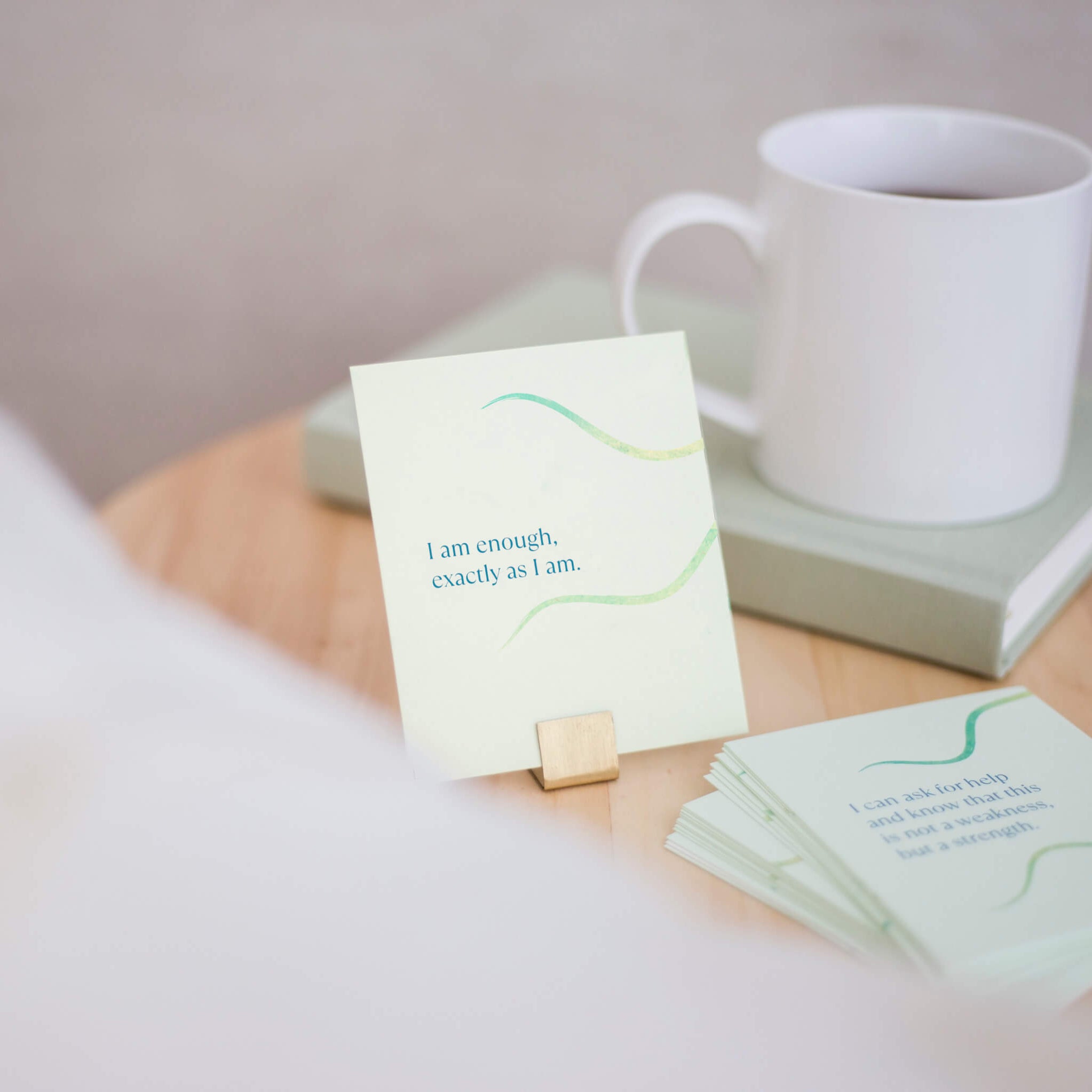
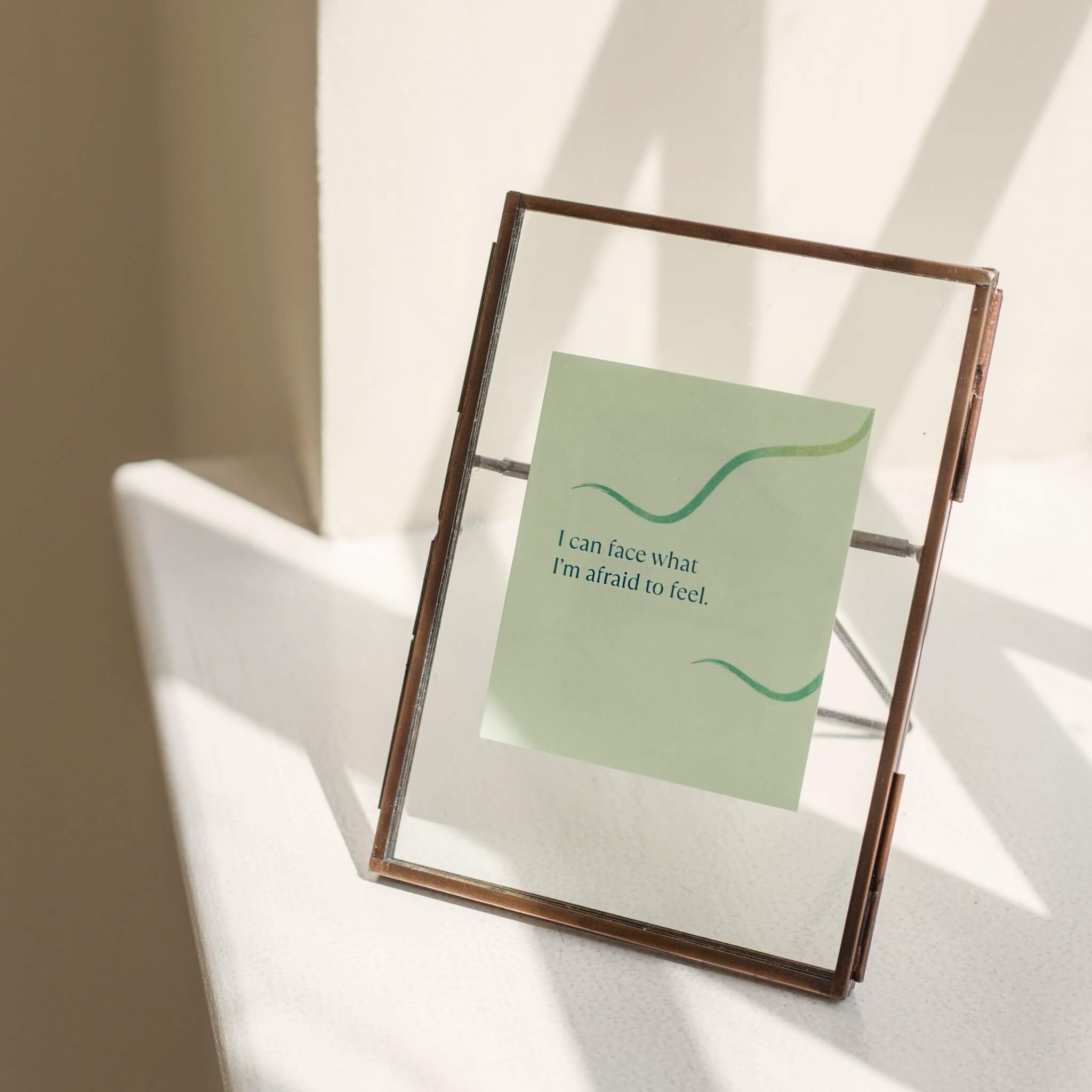
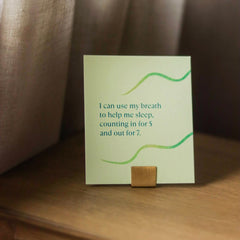
These carry the techniques from the research above in a form you can use lying down: the extended exhale, giving thoughts somewhere to go, and letting go of the pressure to sleep perfectly. Some of the cards read:
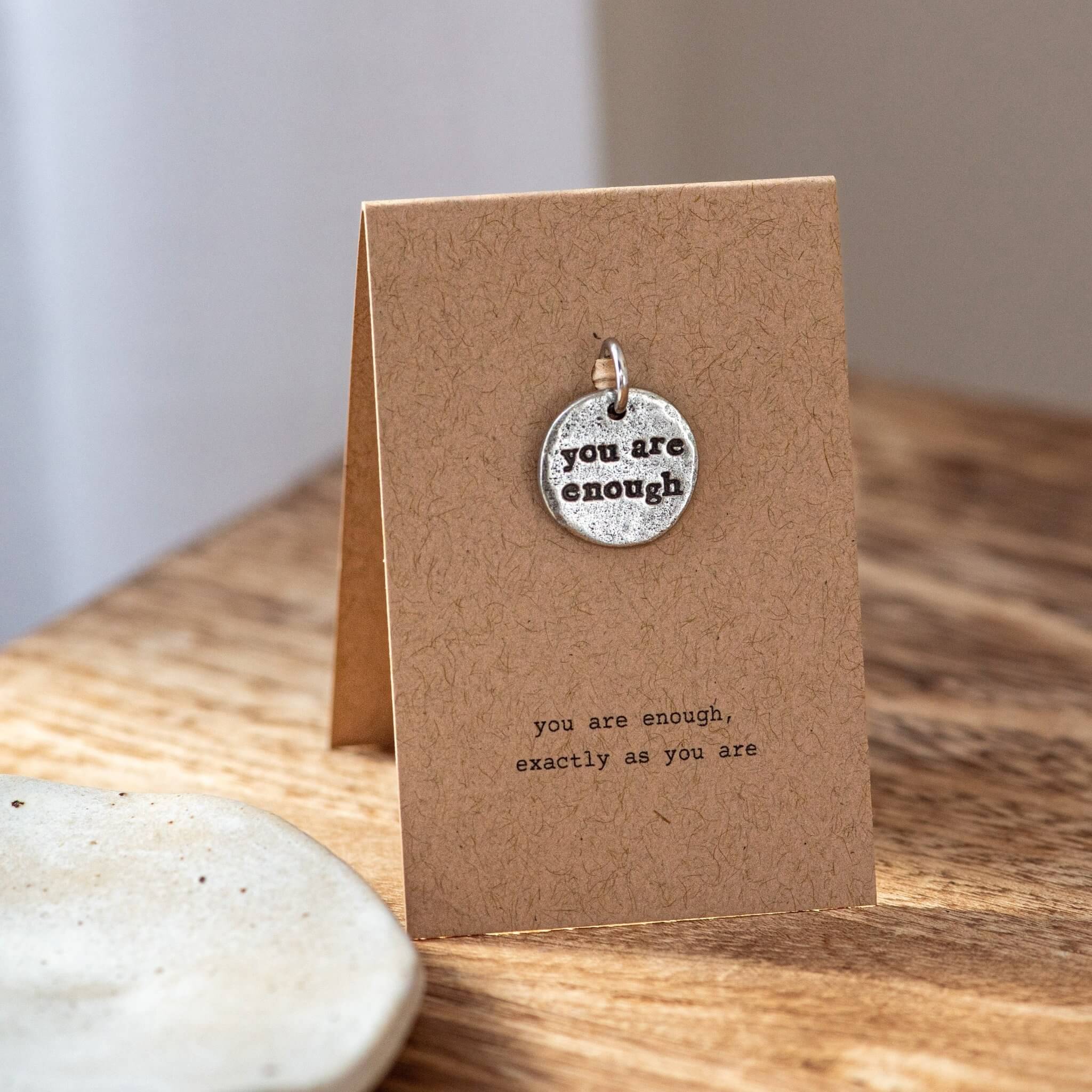
- "Today, I did enough."
- "I release any pressure to have a perfect night's sleep."
- "It's normal that on some days it will take me longer to get to sleep than on others."
- "If I notice any racing thoughts, I can imagine moving them from me to the bedside table. They can wait until the morning."
- "I can use my breath to help me sleep, counting in for 5 and out for 7."
Dr Olena Santangeli, PhD
Neuroscientist and Sleep Expert, on the Sleep Affirmation Cards
"The sleep cards are fantastic. I particularly like how they foster positive thinking, relaxation, and self-compassion, which are key in managing sleep and stress. They wonderfully echo the principles of cognitive-behavioral therapy for insomnia and could be used as an additional tool in conquering anxiety surrounding insomnia."
- Usable when you have no energy at all
- Works in bed, unlike a journal
- Reviewed by a neuroscientist and sleep expert
- Echoes CBT-I principles, the approach recognised for insomnia
- They soothe. They do not process the day
- If self-criticism is the driver, this settles the symptom rather than the source
- Affirmations can feel hollow if you are not ready for them
Using the journal and the cards together
Many people use both, and they do different jobs at different times of the evening:
- 30 to 60 minutes before bed: the journal, to process the day so it does not resurface at 2am.
- In bed, 2 to 3 minutes: a sleep card, to settle whatever is still circling.
You do not need both to begin. If you can only choose one, choose based on energy: the journal if you have some, the cards if you have none.
Which should you choose?
If journaling has made things worse before
"I tried journaling and felt worse afterwards"
This is common and it is not a personal failing. A blank page late at night is an open invitation to the most critical part of you, and repetitive prompts can turn into a nightly performance review. What changes it is prompts that ask you to respond to yourself kindly rather than simply record what happened.
"Writing right before bed makes my mind more active"
Then move it earlier. Thirty to sixty minutes before bed gives your mind time to settle after writing. Journaling with the light still on and the book closed well before you lie down is a different experience from writing until you switch the lamp off.
"I start and then stop after a week"
Almost everyone does, and dated journals make it worse, because a run of blank dates reads like evidence against you. Both of my journals are undated for this reason. Coming back after two weeks away is just coming back.
"I do not know what I am feeling, so I cannot write it"
That is precisely why the emotion tool sits on every page rather than at the front. Naming a feeling accurately is a skill, not something you either have or do not. If this is where you get stuck, my guide on how to identify your emotions is a good place to start, and it is free.
Why I made this journal
After my own recovery through Compassion Focused Therapy, I went looking for a journal that would help me process how I felt before bed rather than organise what I had to do. I had tried the lists. They helped a little, and then I would lie there anyway. "Why did you say that." "You should have done better." The tasks were sorted. My mind was not.
So I made the thing I could not find: a journal that names emotions rather than assuming you already can, that treats all of them as valid, and that guides you towards the voice you would use with a friend. It has since been read and recommended by clinical psychologists at Harvard Medical School and the University of Oxford, and therapists began using it with clients.
I still use it most nights. Not because I am supposed to, but because the evenings I do are noticeably quieter than the evenings I do not.
The verdicts, in one line each
Questions you might have
Is a guided journal better than a blank notebook for sleep?
It depends on how much journaling experience you have and how loud your inner critic is. A blank page late at night is an open invitation to the most critical part of you, and many people find they end up rehearsing self-criticism rather than resolving it. Prompts decide who holds the pen, which is why a guided format tends to suit people whose sleep is disrupted by rumination. If you have journaled for years and already know how to be kind to yourself on the page, a blank notebook costing around £5 is a reasonable choice.
When should I journal for the best effect on sleep?
Around 30 to 60 minutes before bed, rather than immediately before you lie down. This gives your mind time to settle after writing instead of taking freshly stirred thoughts to the pillow. Dr Olena Santangeli, a neuroscientist and sleep expert, recommends evening journaling as part of a wider wind-down routine that also includes reducing screen time and keeping the bedroom cool and dark.
Will a gratitude journal help me sleep?
There is evidence it may. Wood and colleagues (2009), publishing in the Journal of Psychosomatic Research, studied 401 adults and found gratitude predicted better sleep quality, longer sleep and less time taken to fall asleep. The link ran through pre-sleep cognitions, meaning grateful people had more positive and fewer negative thoughts while falling asleep. This was a study of gratitude as a personality trait rather than a trial of gratitude journaling for insomnia, so it shows the direction is real without promising a result. If harsh self-criticism is what keeps you awake, gratitude prompts alone may not reach it.
What should I write in a journal at night if my mind is racing?
Write about how you feel, not only what you have to do. Naming the specific emotion, exploring what is behind it, and then writing the words you would say to a friend in the same situation is more useful for sleep than listing tasks. If you do not know what you are feeling, start there rather than forcing an answer. A guided journal with an emotion identification tool exists for exactly this reason.
What if I have tried journaling before and felt worse?
This is common and it is not your fault. A blank page late at night can become a place where self-criticism gets rehearsed rather than resolved, and repetitive prompts can start to feel like a nightly performance review. What tends to change it is prompts that guide you to respond to yourself with kindness rather than only record events, variety so it never becomes mechanical, and an undated format so a missed week is not a failure.
How is this different from a gratitude journal?
Gratitude is part of the Give Yourself Kindness Journal, but it is not the whole of it. Being asked to list three good things on a genuinely hard day can feel dismissive. The Give Yourself Kindness Journal explores gratitude alongside emotional awareness and self-compassion, so you are not bypassing difficulty. The separate 30-Day Gratitude Journal is a shorter, gentler practice at £10.95 and is a reasonable place to start if you want something small.
Do I need both the journal and the sleep cards?
No. They do different jobs. The journal processes the day 30 to 60 minutes before bed so it is less likely to resurface at 2am. The cards take two to three minutes and work once you are already lying down. If you can only choose one, choose by energy: the journal if you have some, the cards if you have none.
What if I am too tired to journal before bed?
Then do not. Being too exhausted to write is a real and valid state, not a lack of discipline. The Sleep Affirmation Cards require almost no energy and are designed for exactly this. You can add writing later if your energy returns, and there is no need to do everything at once.
Can I use these alongside therapy or medication for insomnia?
These are tools for emotional wellbeing, not medical treatment, and they are intended to sit alongside professional care rather than replace it. Many people use them while also doing CBT-I or taking medication prescribed by their doctor. Dr Olena Santangeli notes that the Sleep Affirmation Cards echo the principles of cognitive behavioural therapy for insomnia. If your insomnia is severe or long-standing, please speak to a healthcare professional.
How long before I notice a difference?
This varies a great deal between people. Some notice calmer evenings within the first week; for others it takes two to three weeks of fairly consistent practice before patterns start to shift. Consistency matters more than perfection, and journaling a few times a week is more useful than abandoning it because you could not manage every night. If nothing has changed after a month, it may be worth speaking to a therapist or sleep specialist rather than persisting alone.
You are allowed to rest
If racing thoughts have kept you awake for a long time, it is tiring in a way that is hard to explain to people who sleep easily. It can also feel like something you are failing at, which adds a second layer of exhaustion on top of the first.
None of the approaches on this page are about trying harder. They are about giving the emotional part of your day somewhere to go before you lie down, so your mind has less to do at 2am. Some nights will still be difficult. That is not evidence of anything being wrong with you.
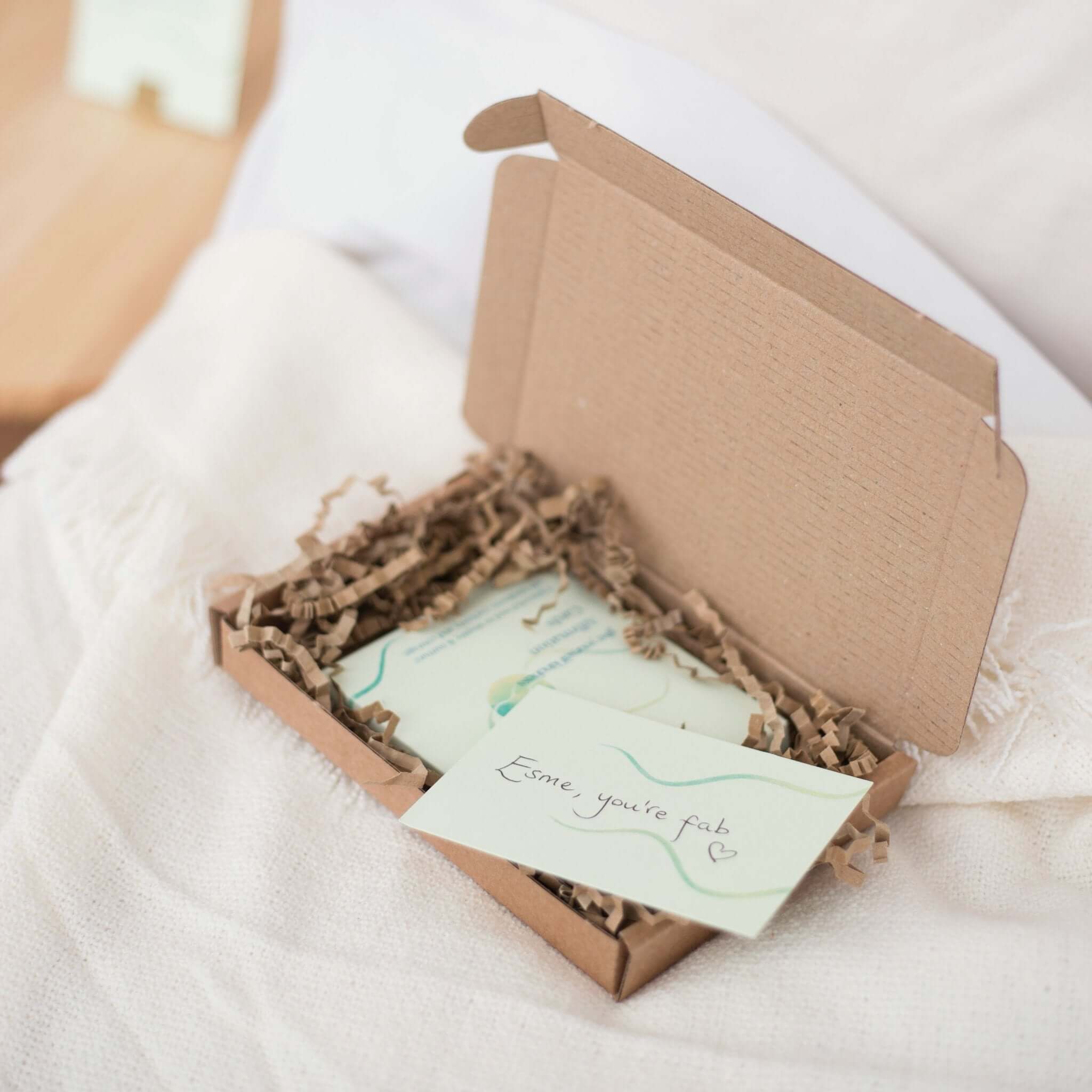
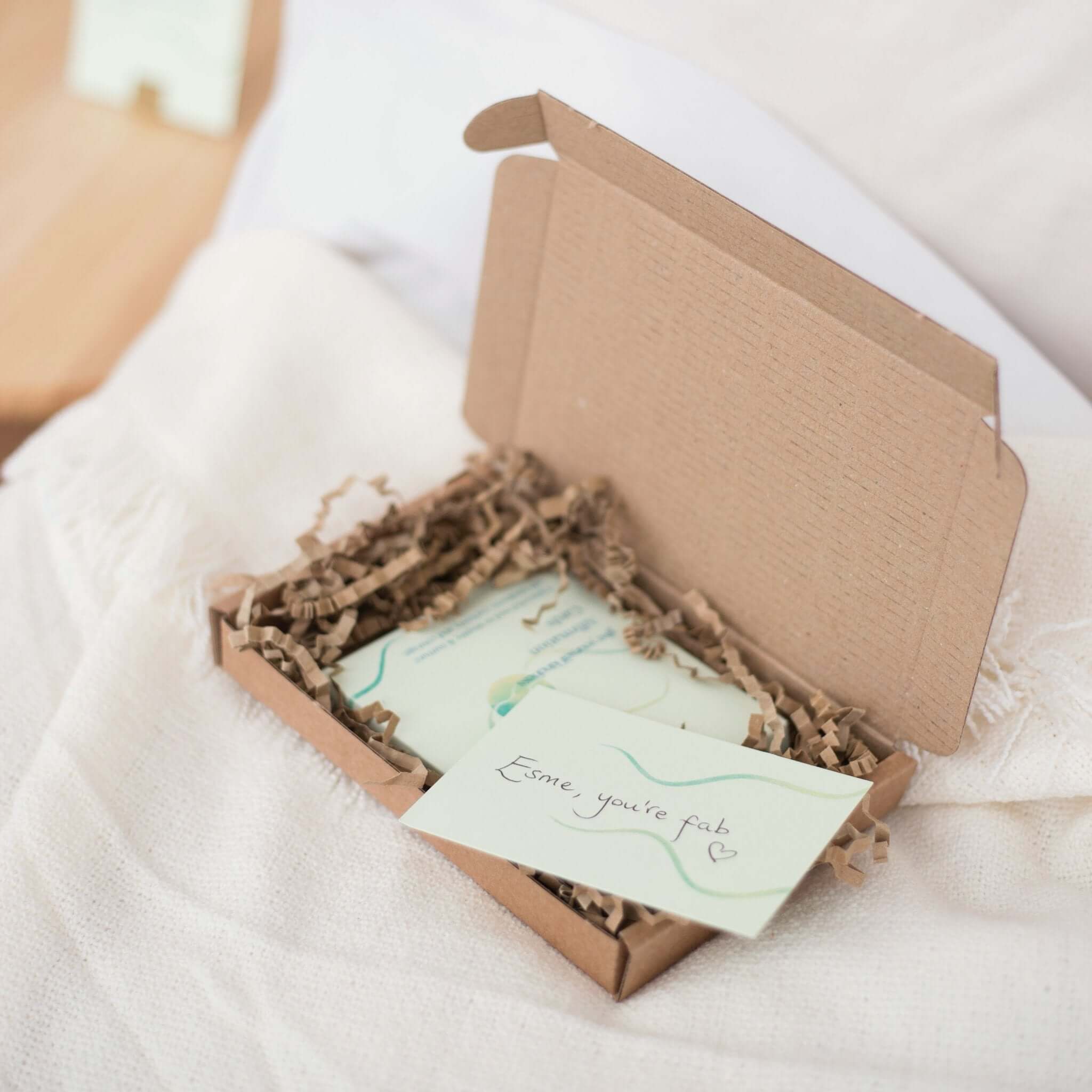
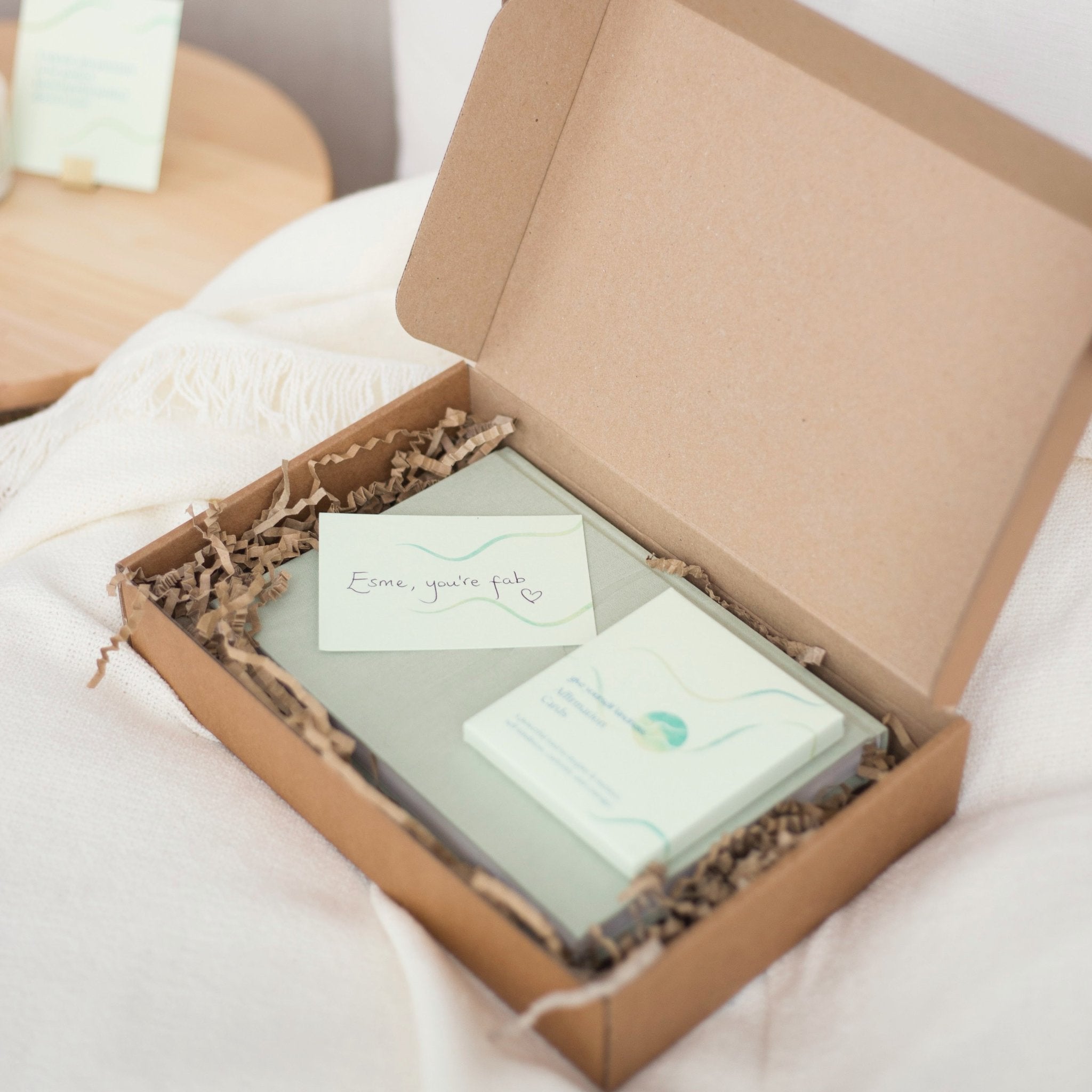
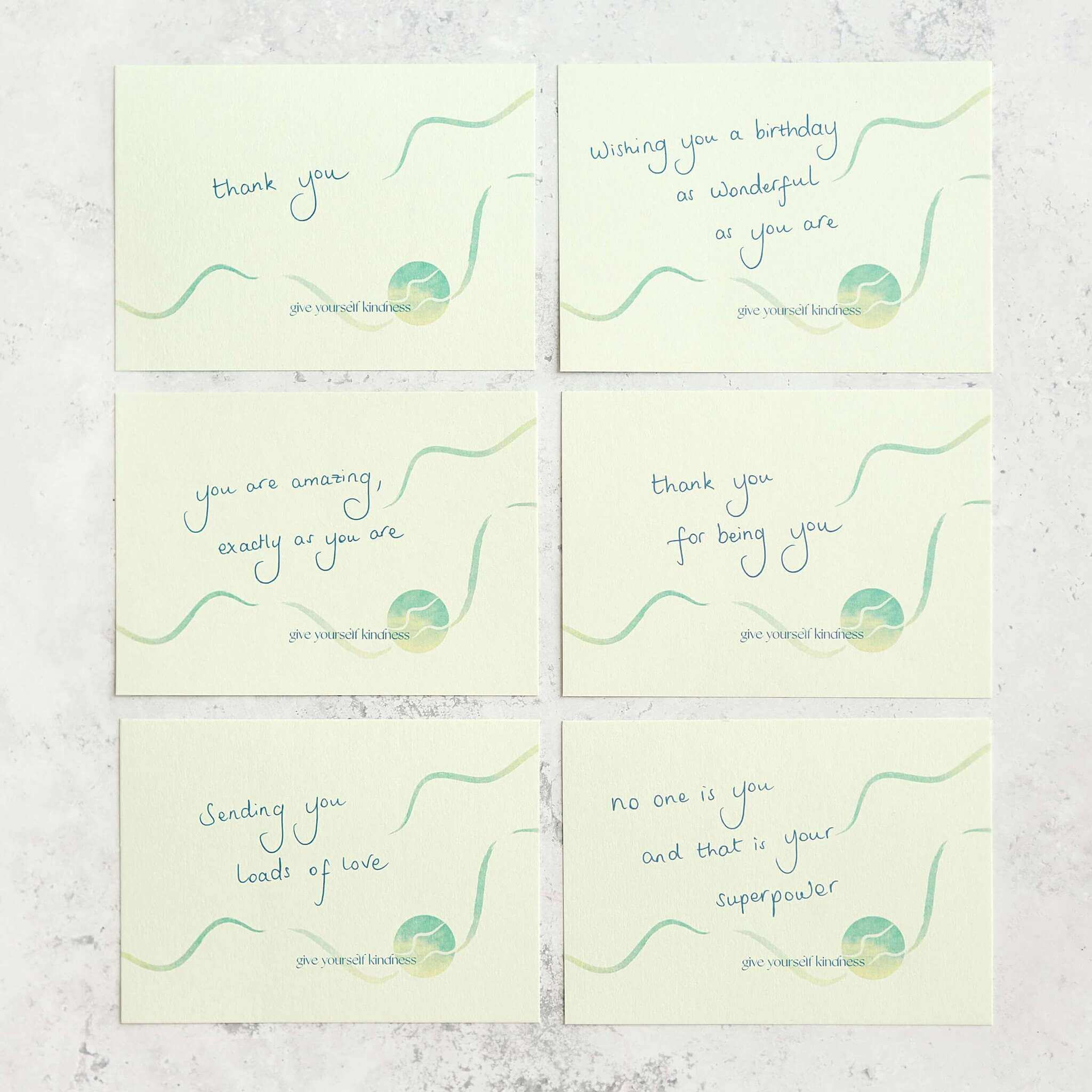
The Give Yourself Kindness Journal, £28.95. Undated, 224 pages, an emotion guide on every page. Free handwritten gift note with every order, tracked UK and worldwide delivery.
Added to your basket. View basket →