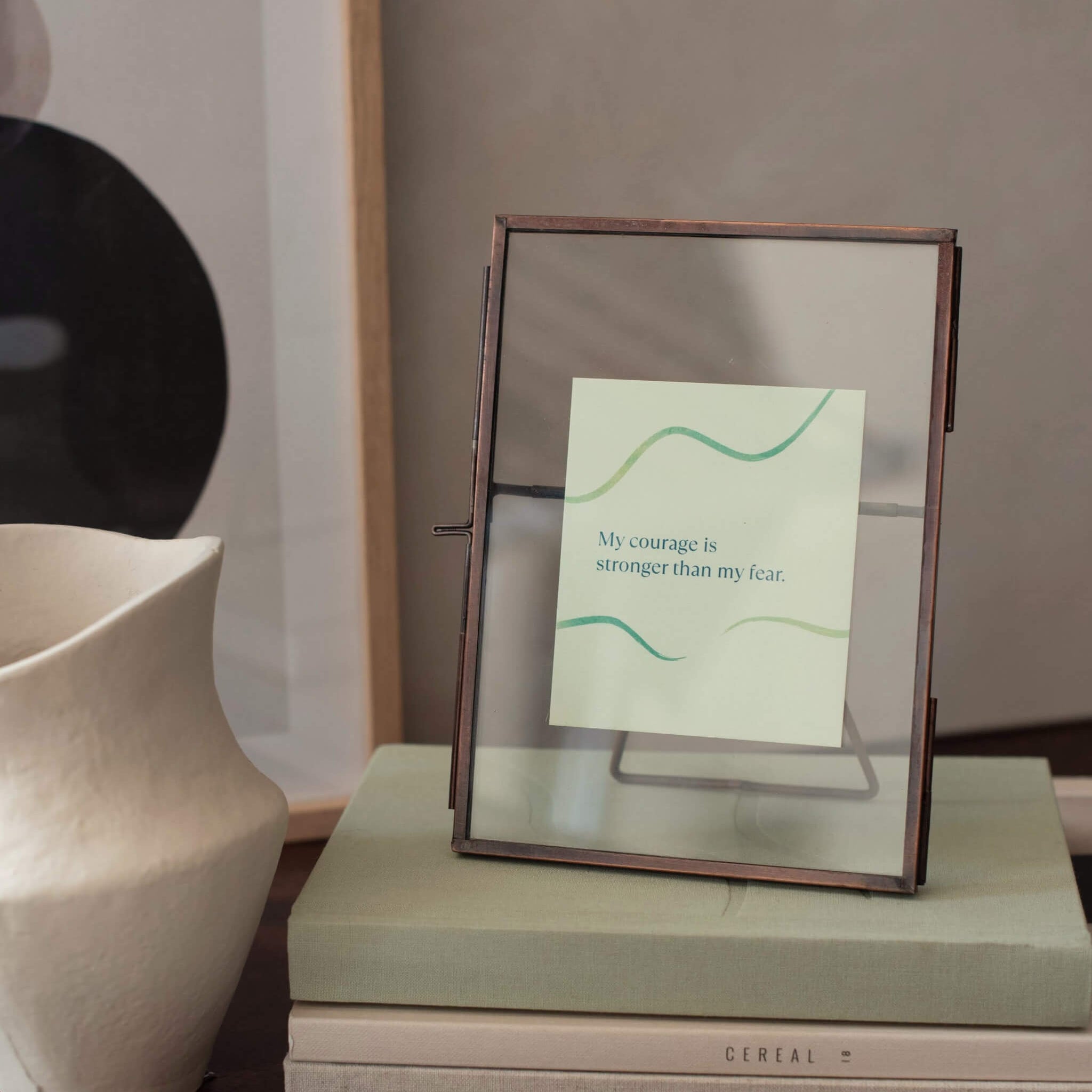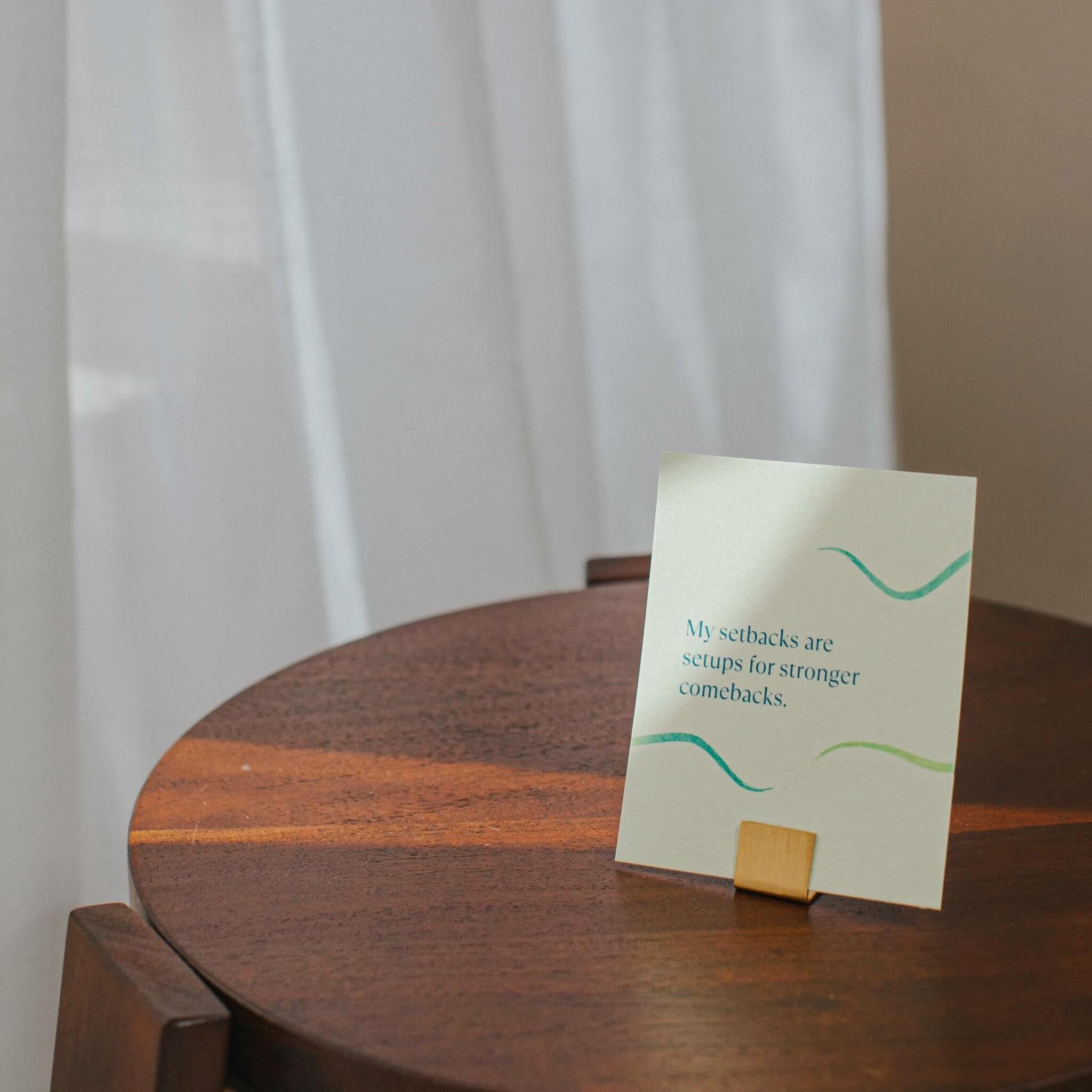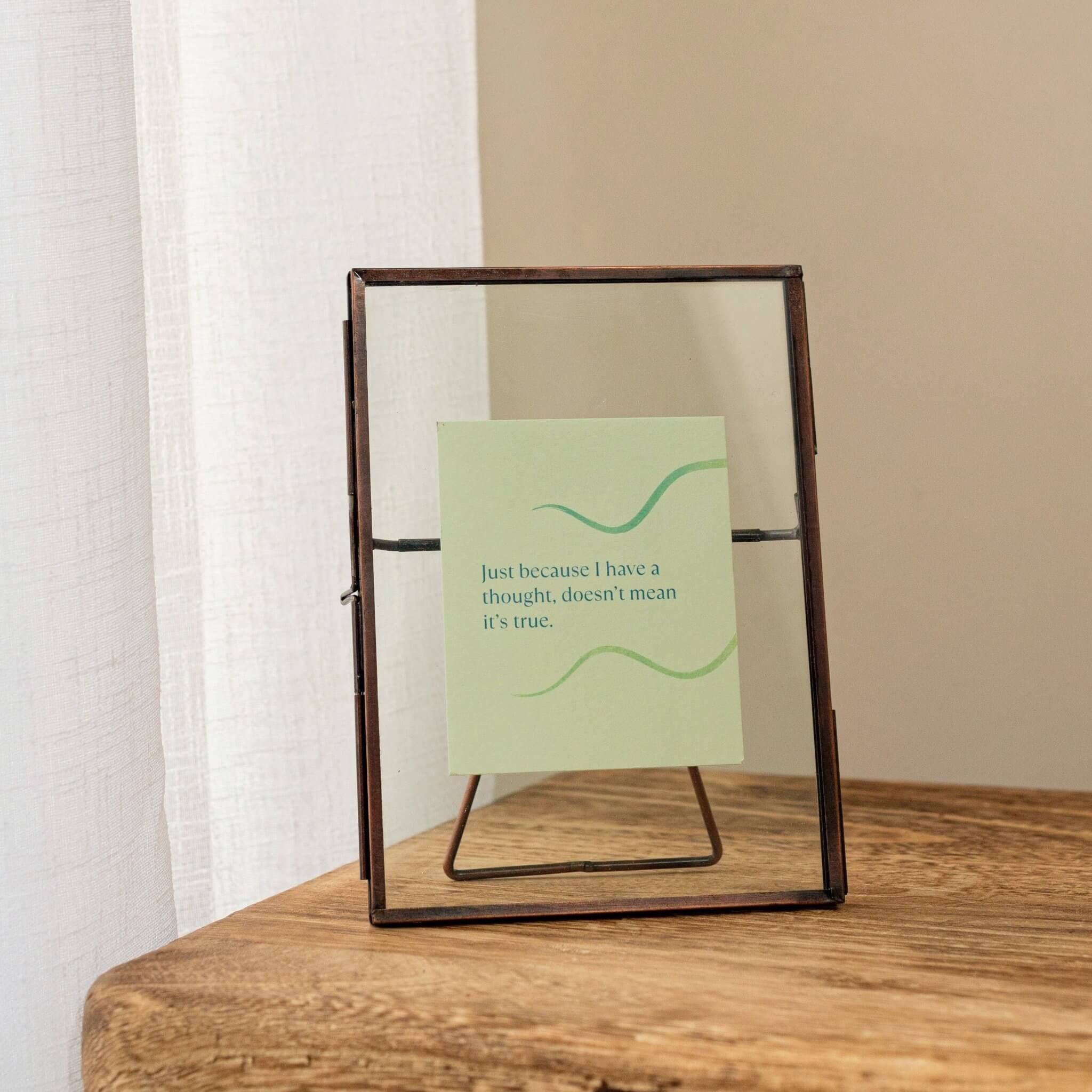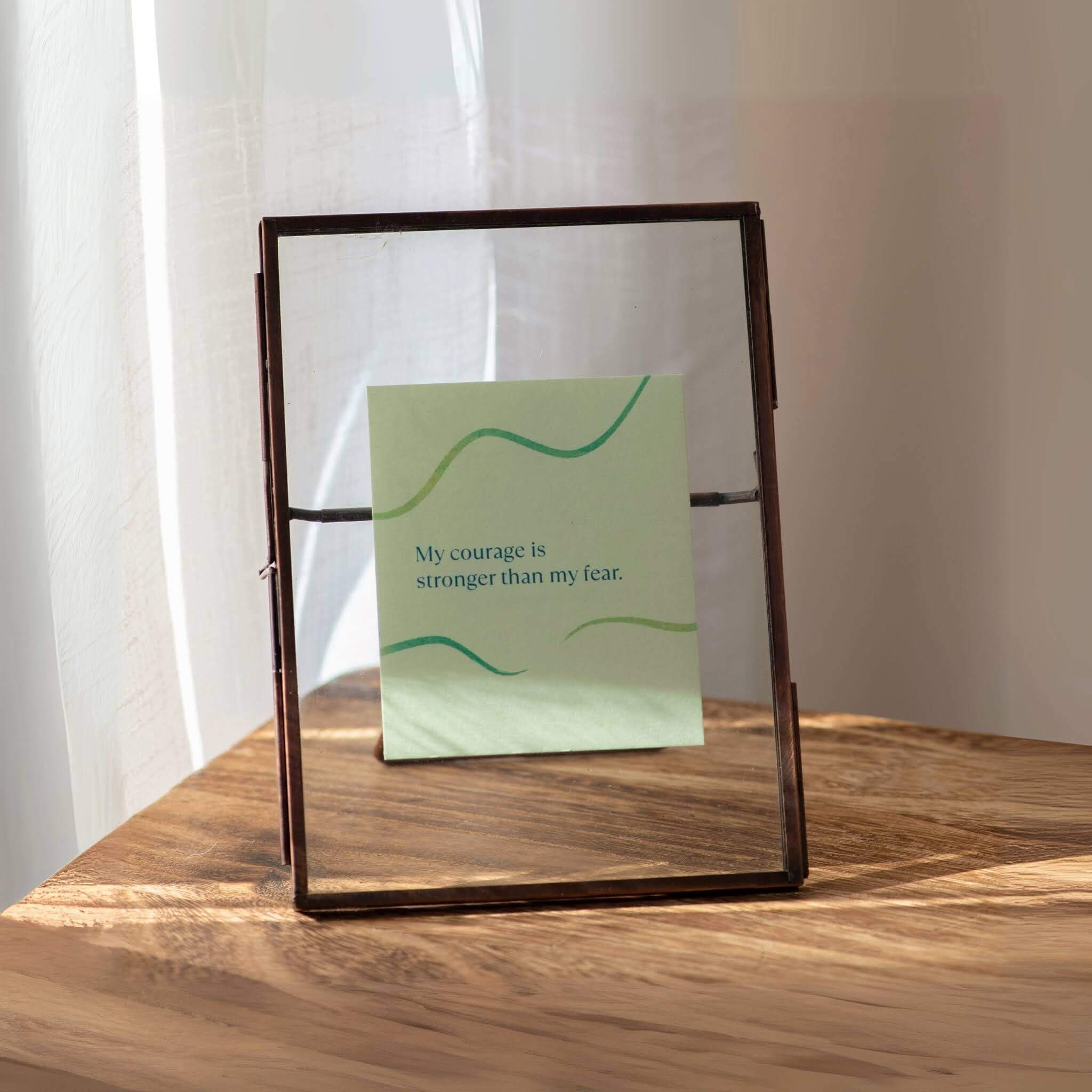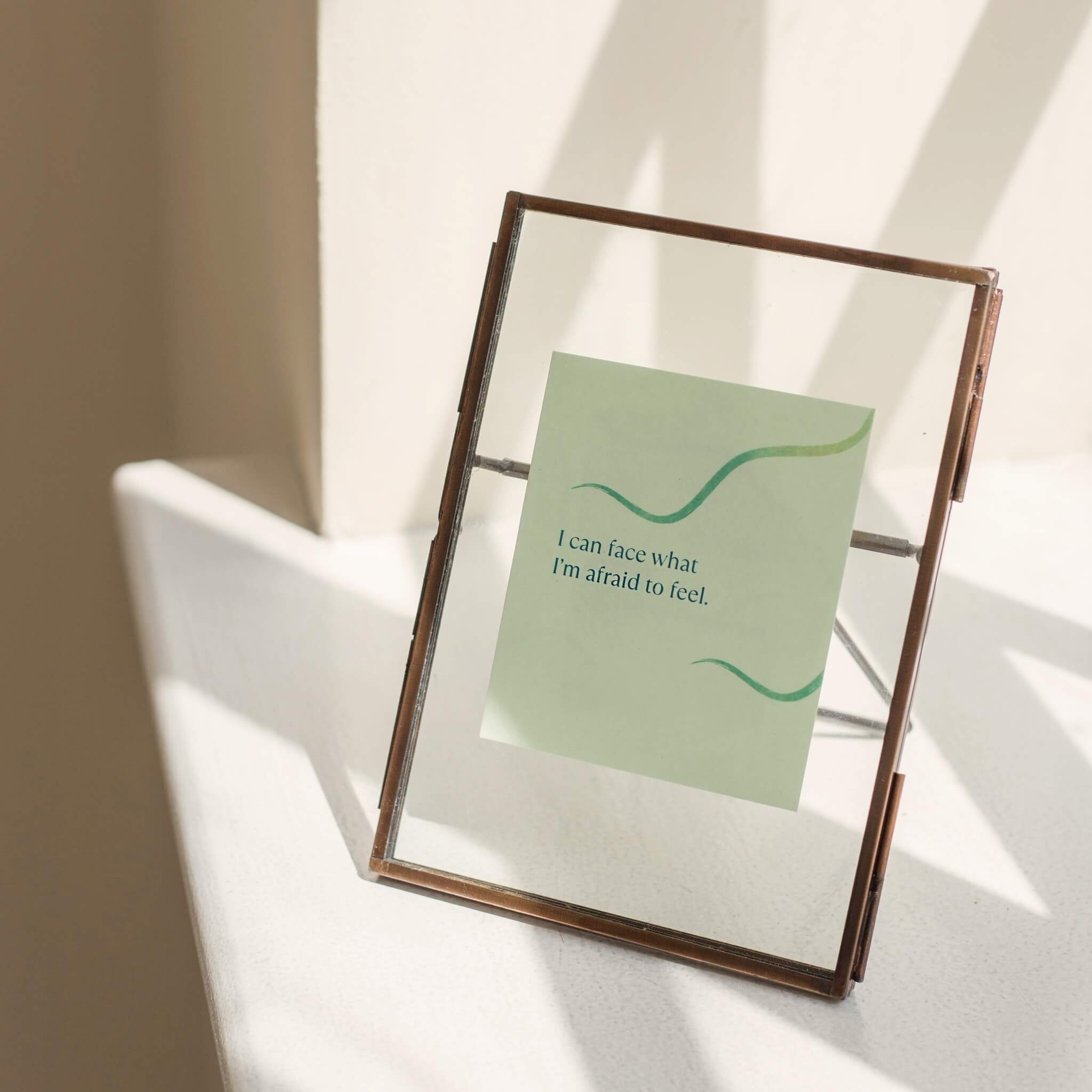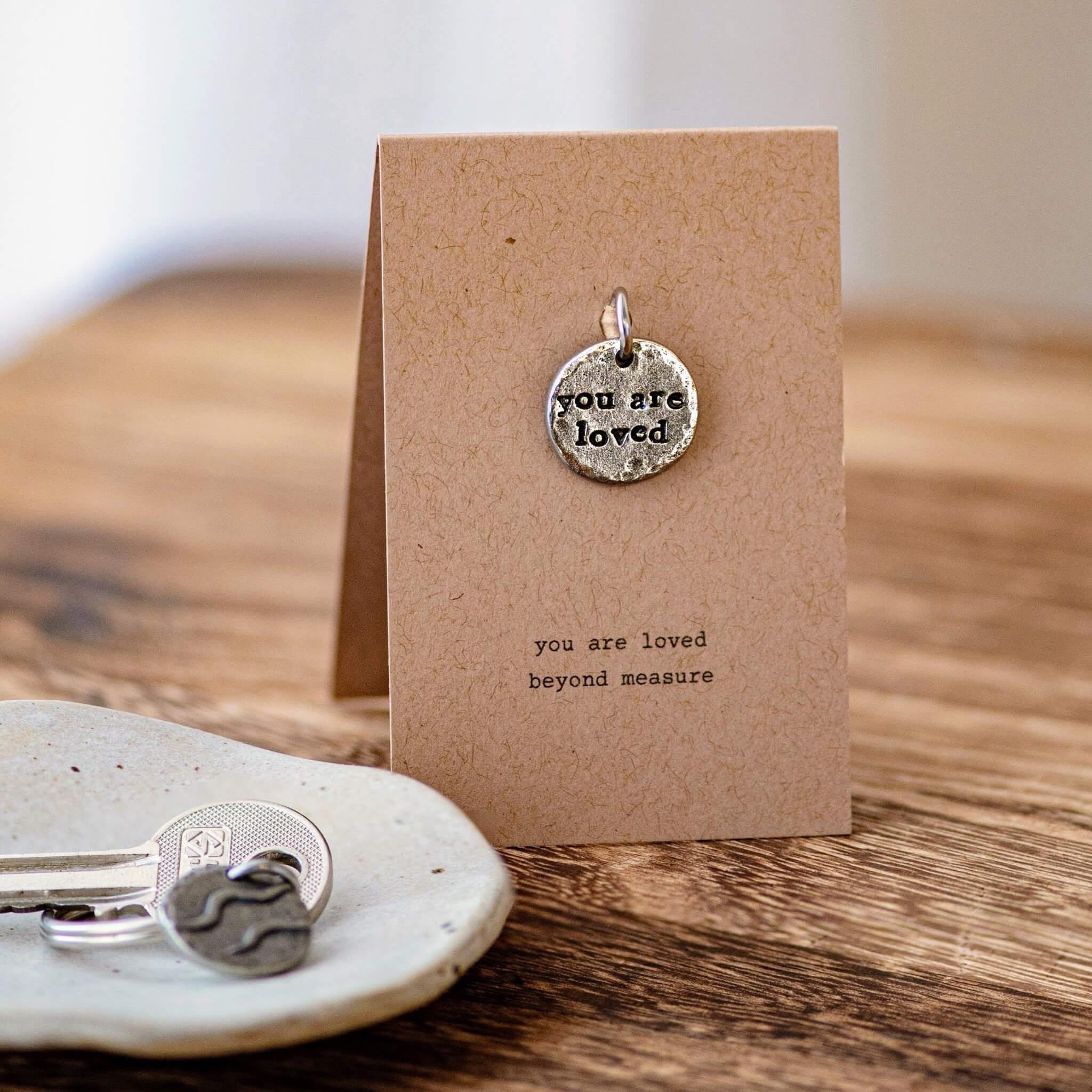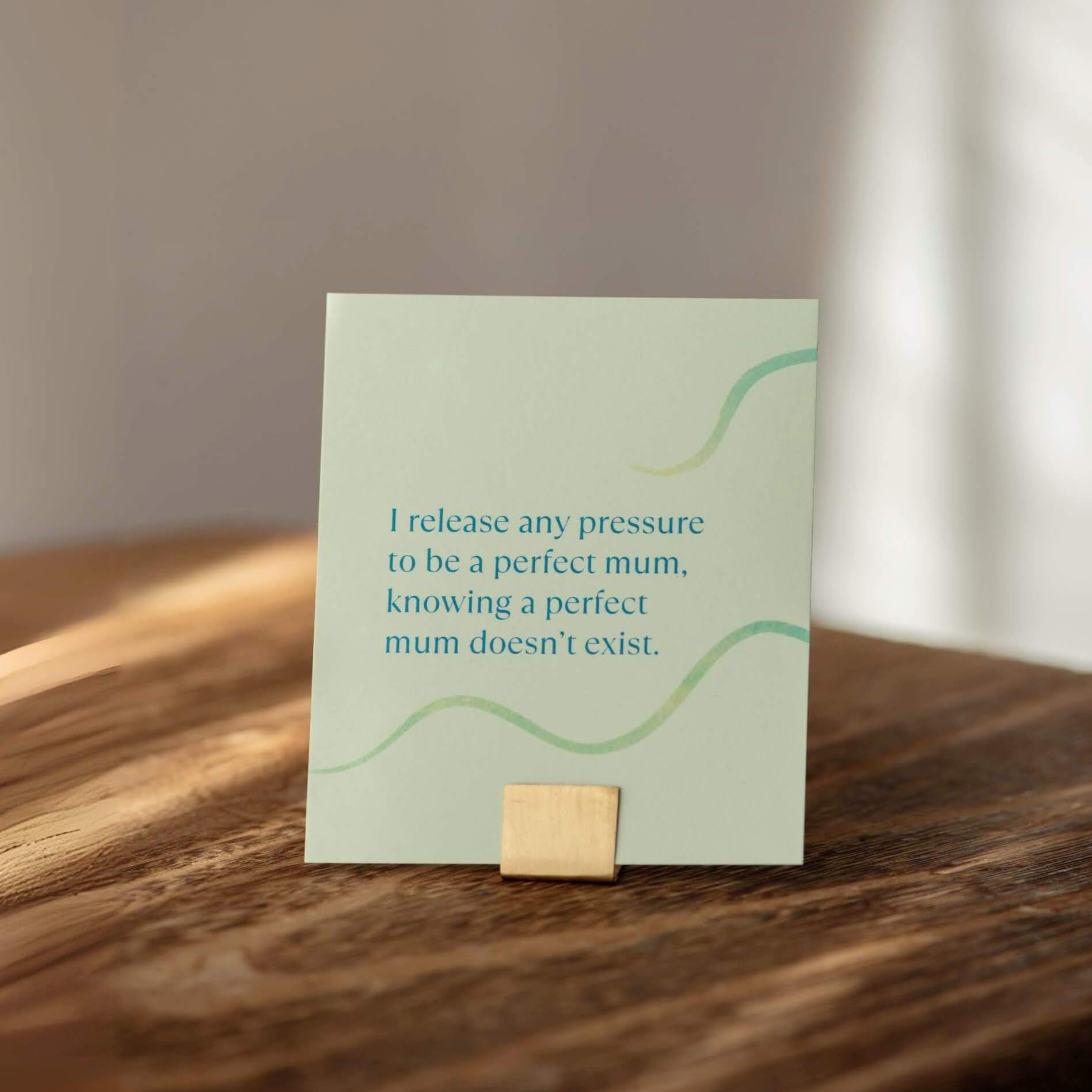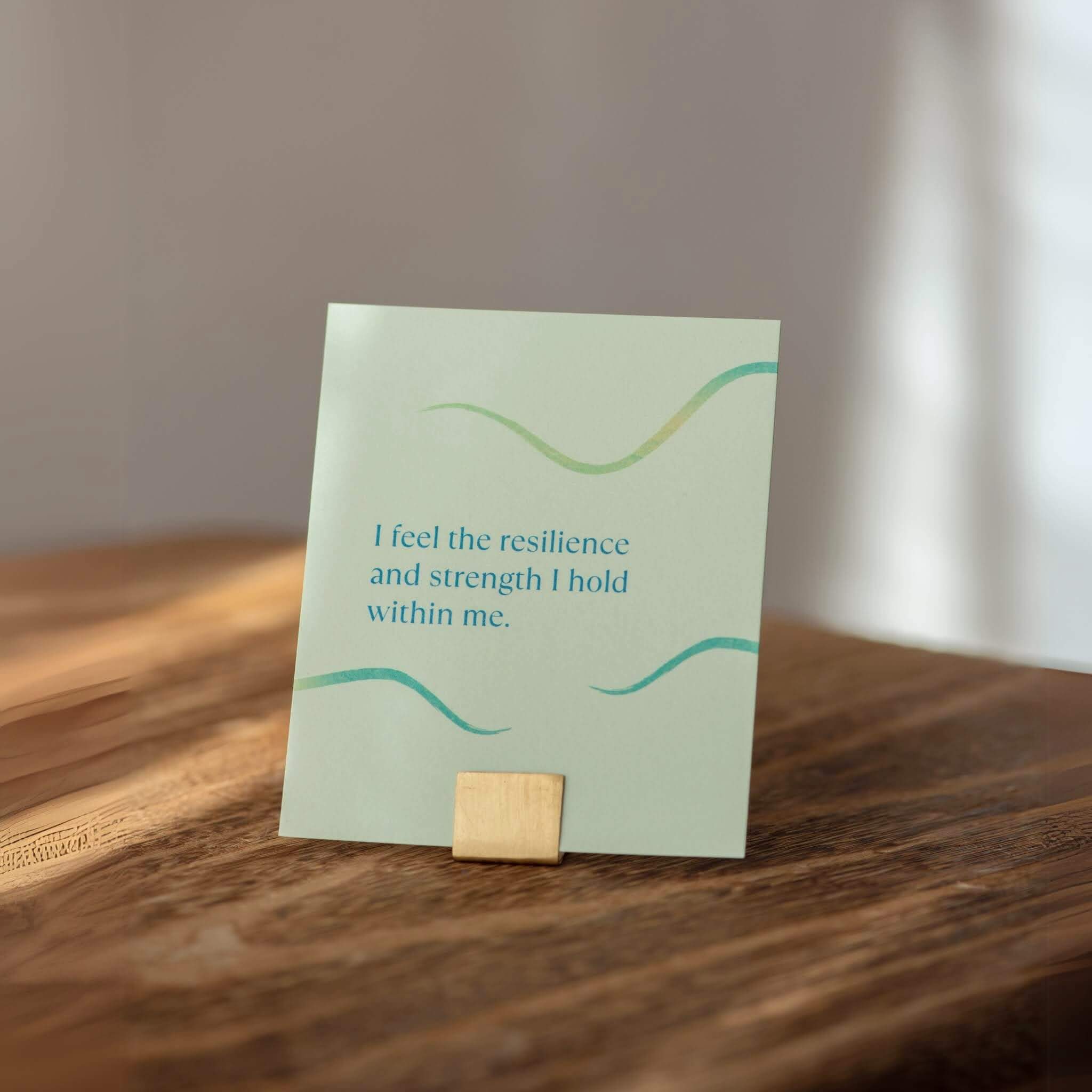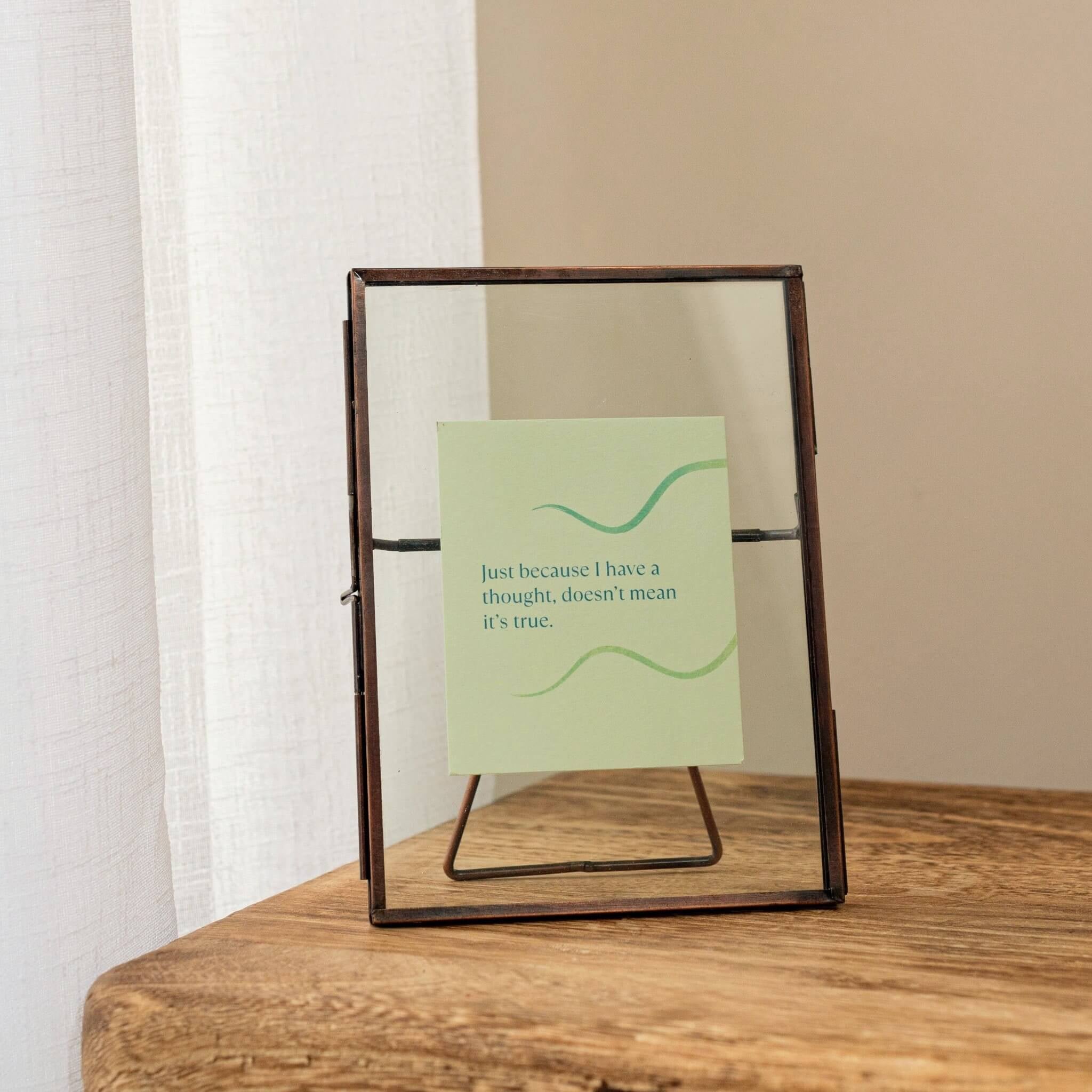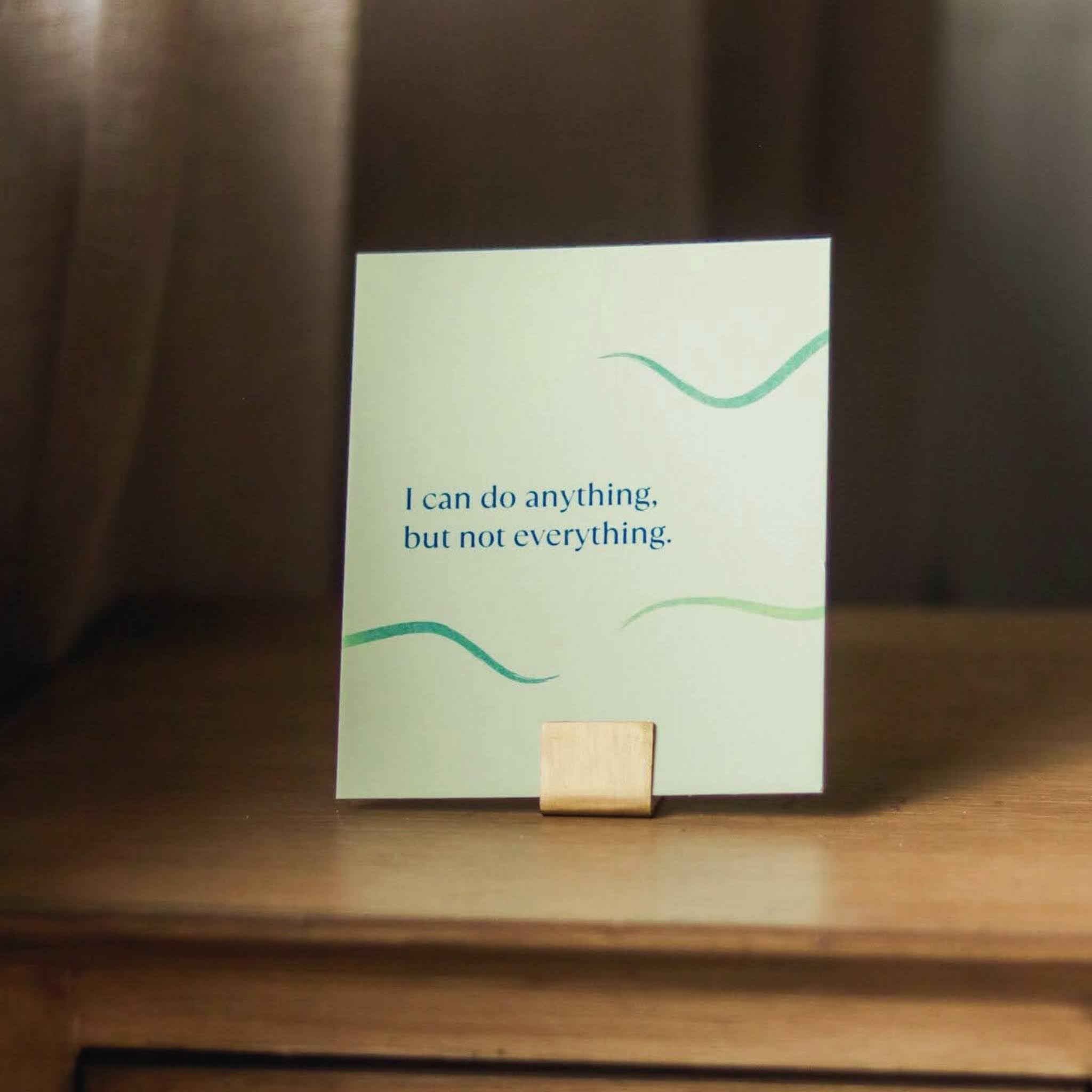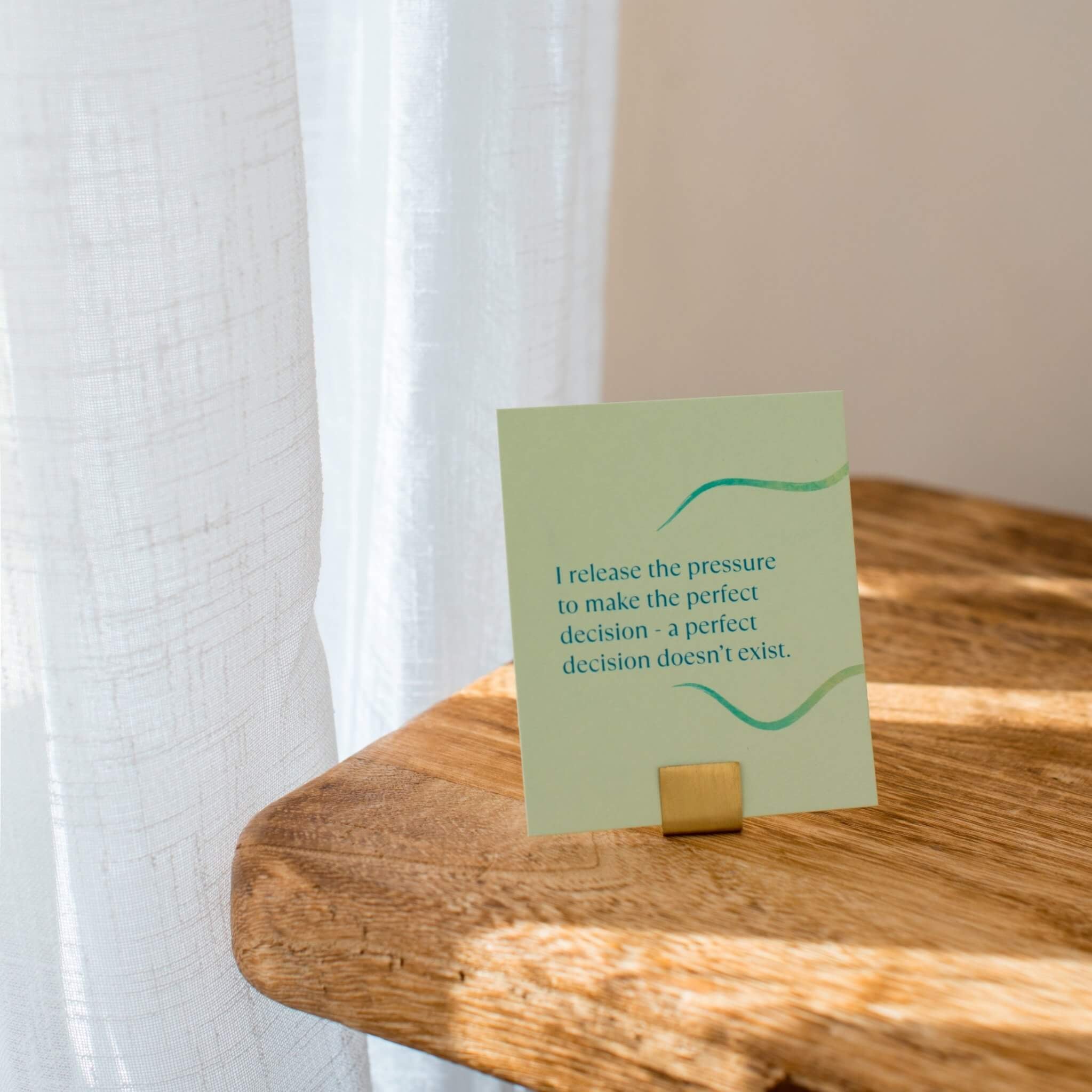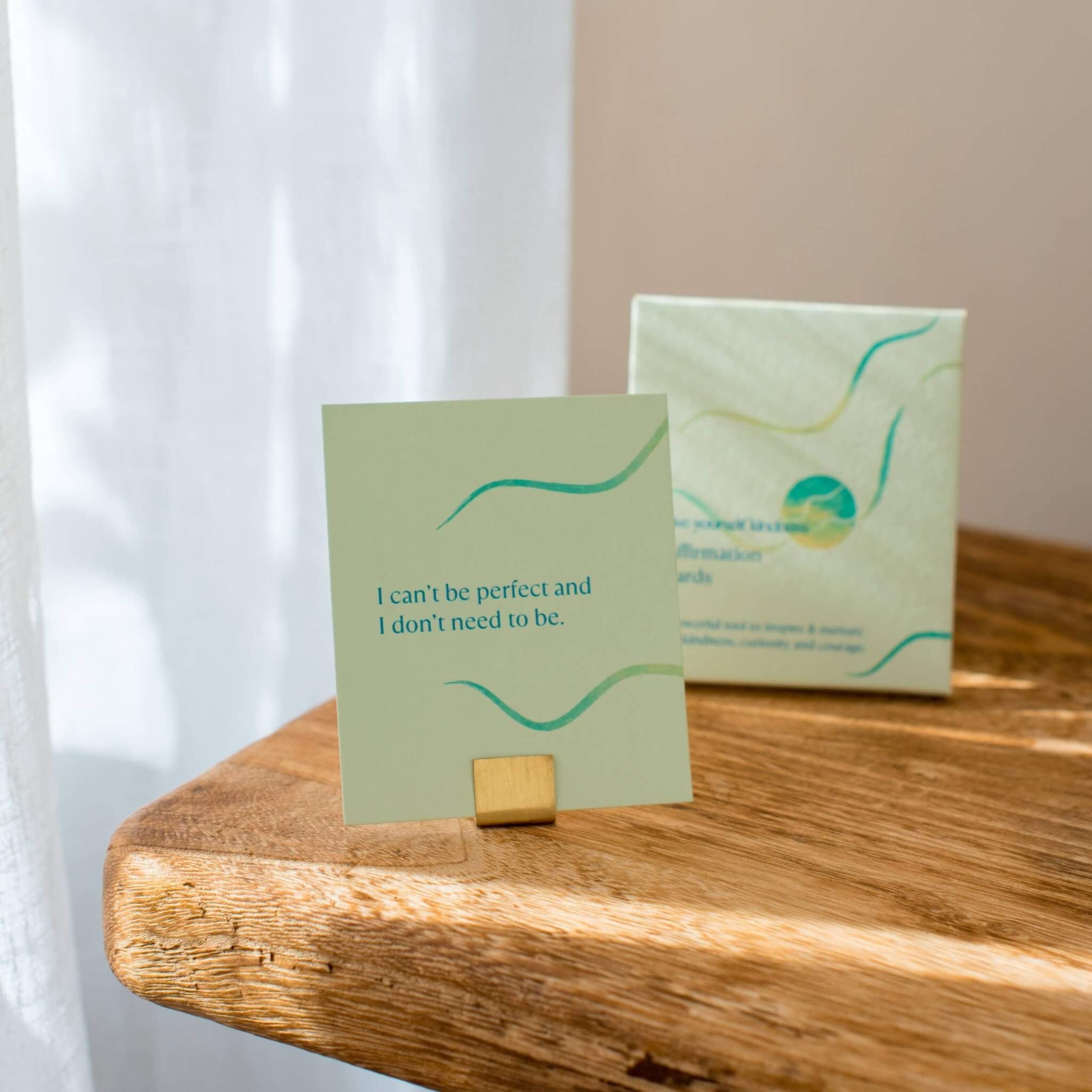




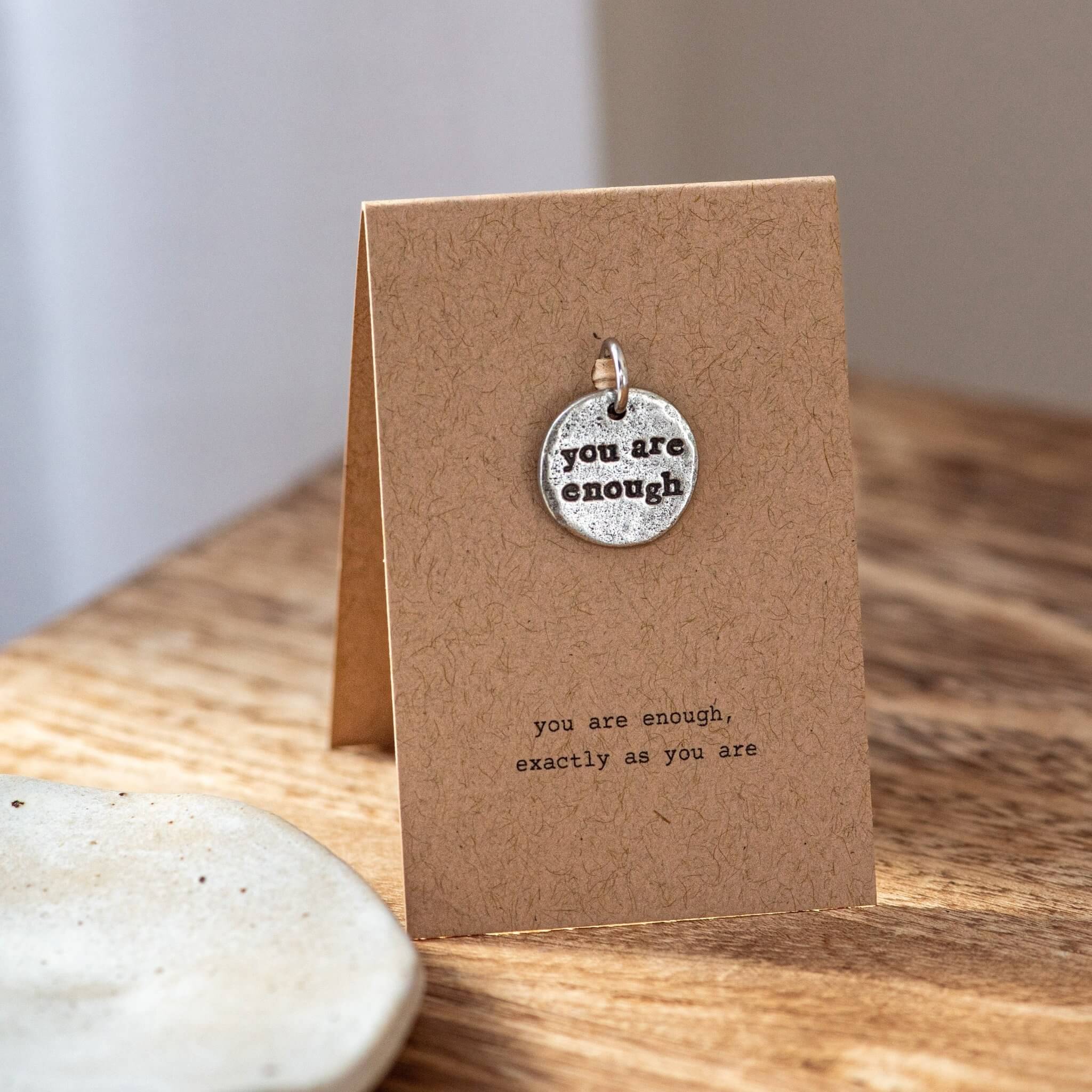

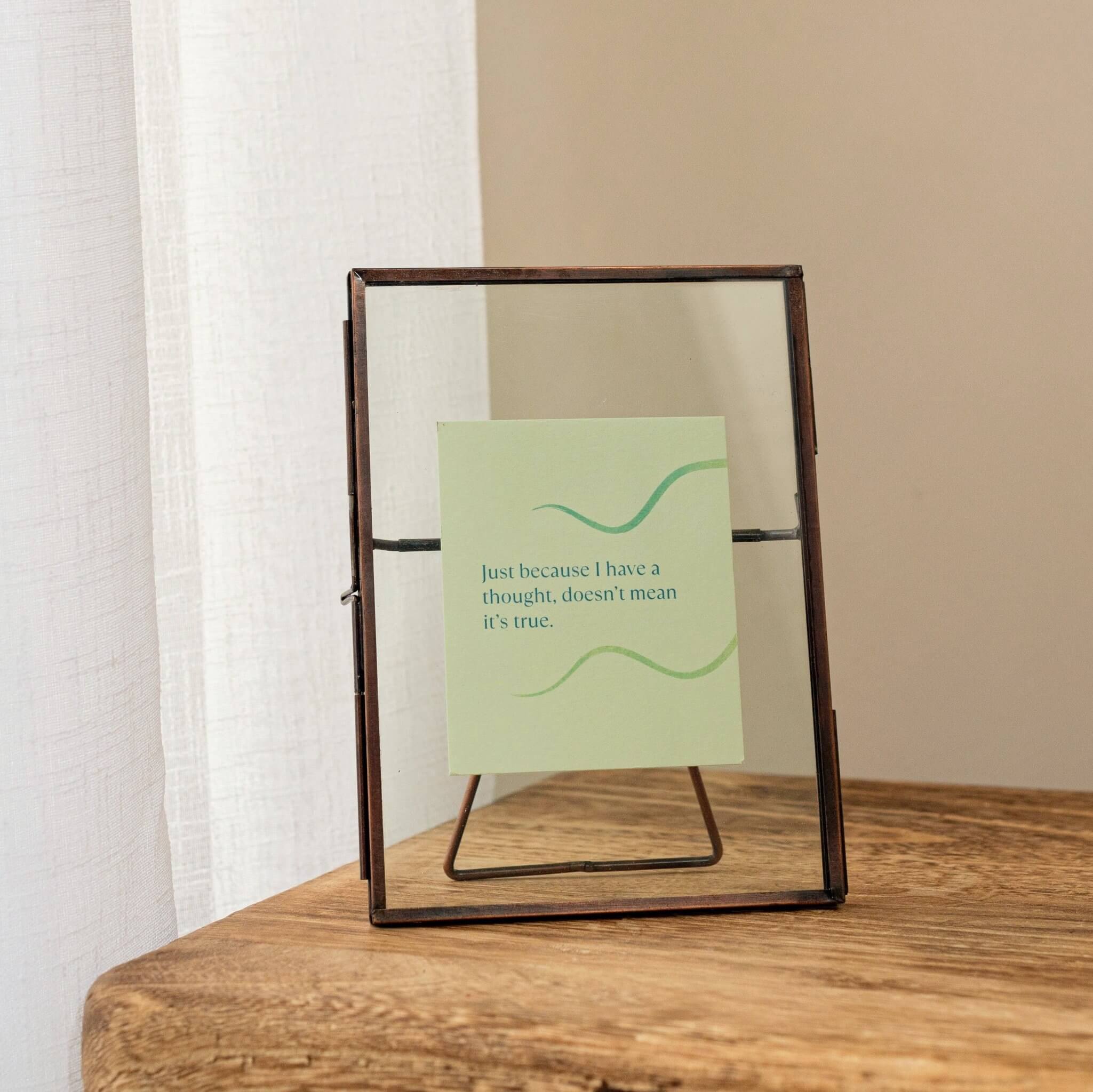
Before I wrote a single one of these, I asked five clinical psychologists whether affirmations actually work. Dr Annabelle Kyle Dortch, PsyD gave the answer that shaped every line on this page: "choose a statement that isn't a far departure from your current reality." Which is why there is nothing here about being a money magnet.
What makes an affirmation realistic?
A realistic affirmation is one you could say on an ordinary Tuesday without your mind immediately producing a list of reasons it isn't true. It leaves room for the difficult thing rather than arguing with it.
They aren't about forcing positivity, and they aren't about pretending a hard day isn't hard. They give you something you can actually say and mean, which is the only kind that survives contact with real life.
Below are 29 affirmations, grouped by what tends to be underneath:
Why most affirmations feel like empty promises
If you have ever rolled your eyes at "I am a money magnet" or "I radiate perfect health", you're not alone.
Some affirmations feel disconnected from reality, especially when you are going through something hard. They can leave you feeling worse, because the forced positivity you are trying to repeat does not acknowledge what you are actually experiencing.
As Dr Chris Irons, clinical psychologist and a leading expert in Compassion Focused Therapy, explains: "True self-compassion isn't about bypassing difficult emotions with positive statements. It's about acknowledging our struggles while supporting ourselves through them with understanding and wisdom."
29 realistic affirmations
When you fear being lazy, but you need rest
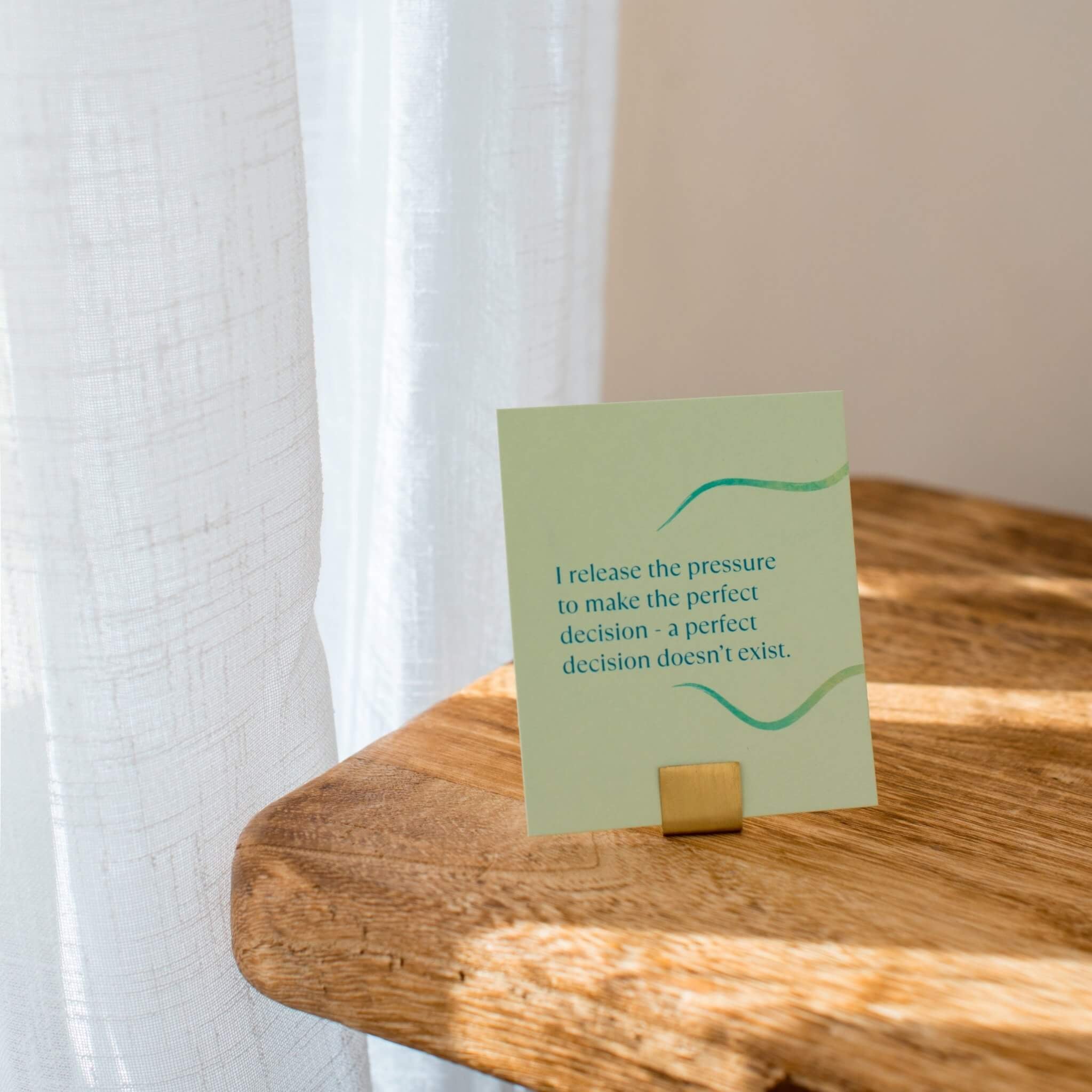
- I don't need to earn rest to deserve it.
- Taking breaks helps me work more effectively when I return.
- My worth isn't measured by my productivity.
When you fear appearing weak
- Having compassion for myself takes courage, not weakness.
- I can be both strong and kind to myself at the same time.
- I can feel both grateful AND sad, nervous AND excited, brave AND afraid.
When you fear emotional overwhelm
- I can acknowledge my feelings without being consumed by them.
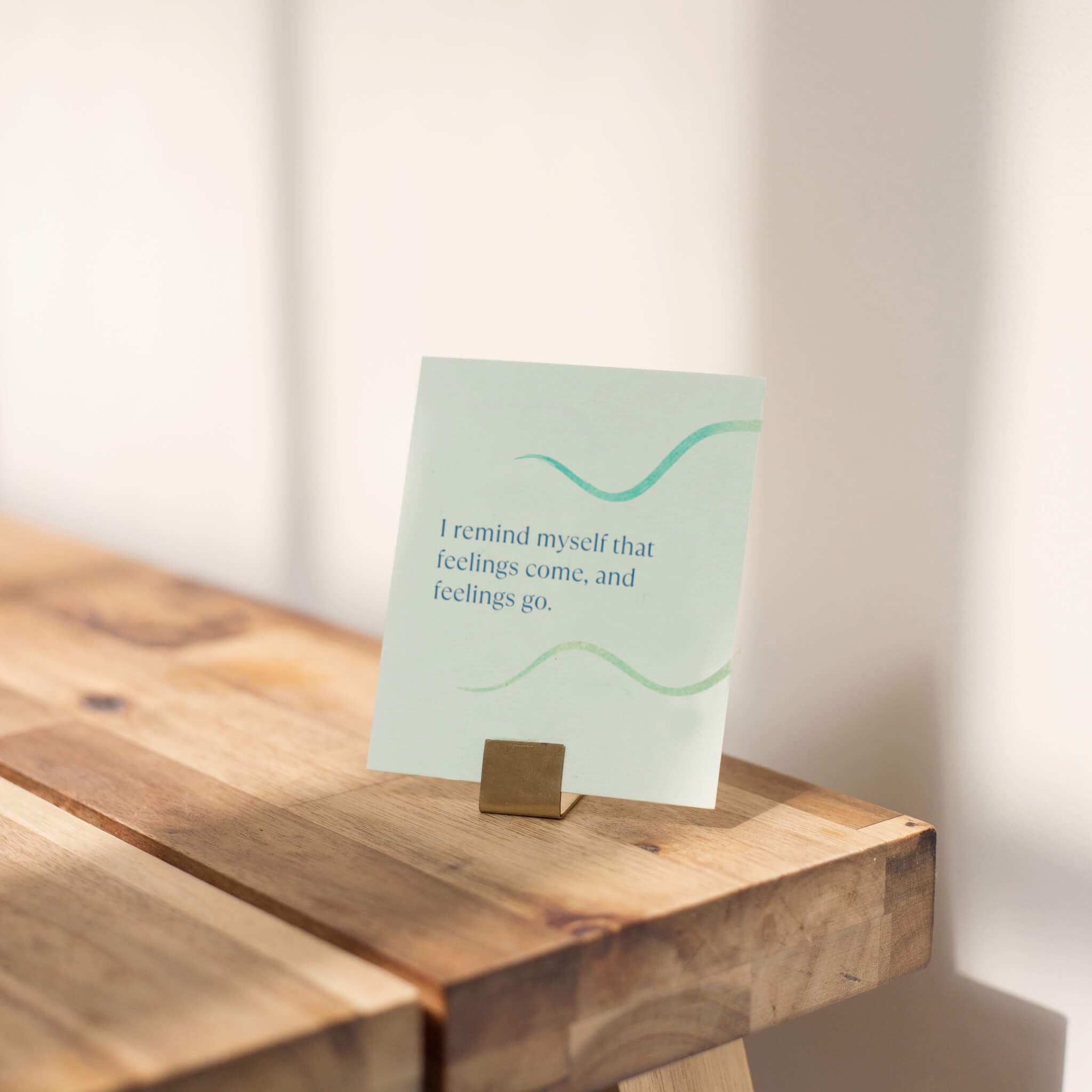
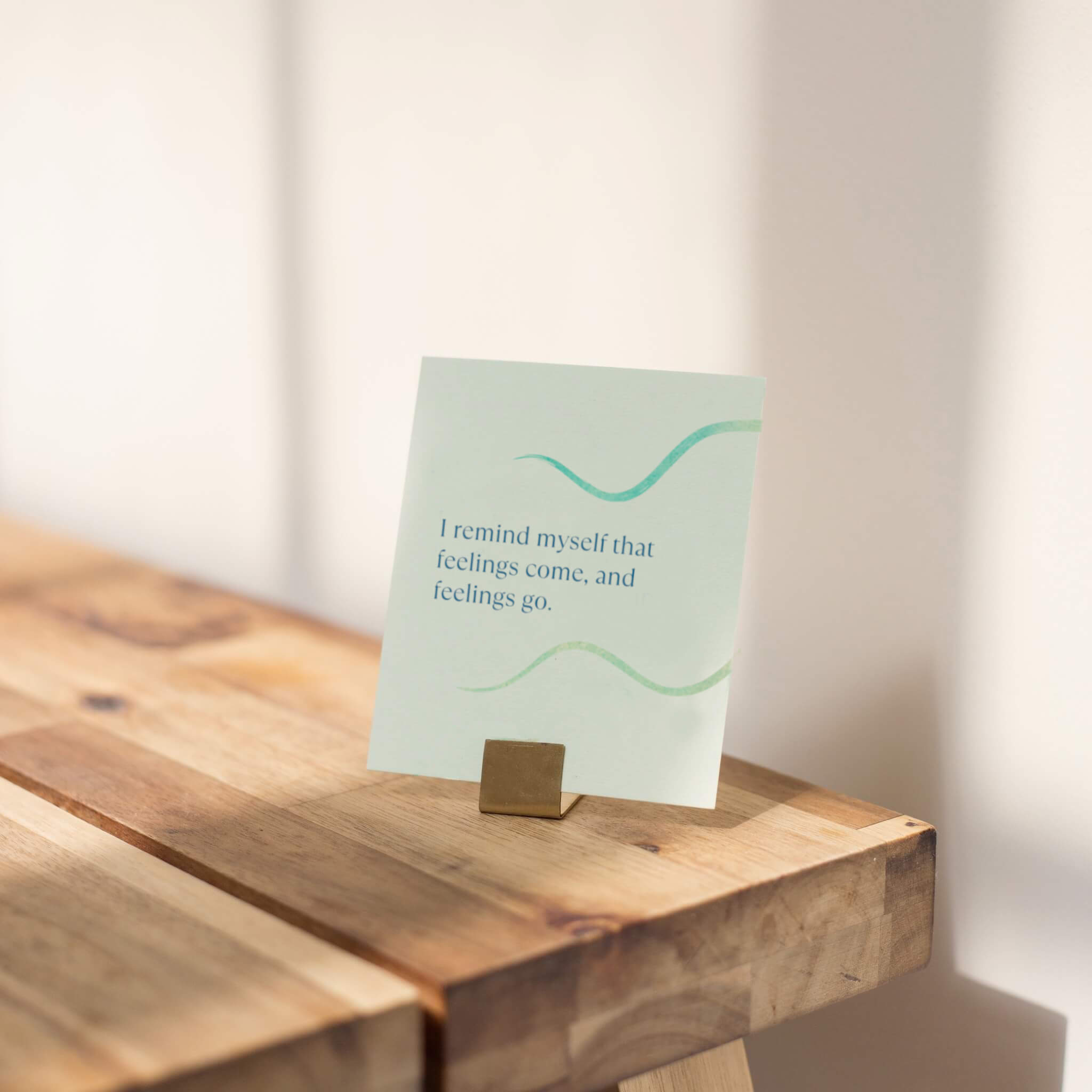
- I remind myself that feelings come, and feelings go.
- I can use my breath as a tool to find calm, taking deep, slow breaths.
When you fear being selfish
- Taking care of myself helps me show up better for others.
- I can give myself kindness and know that it is not selfish.
When perfectionism strikes
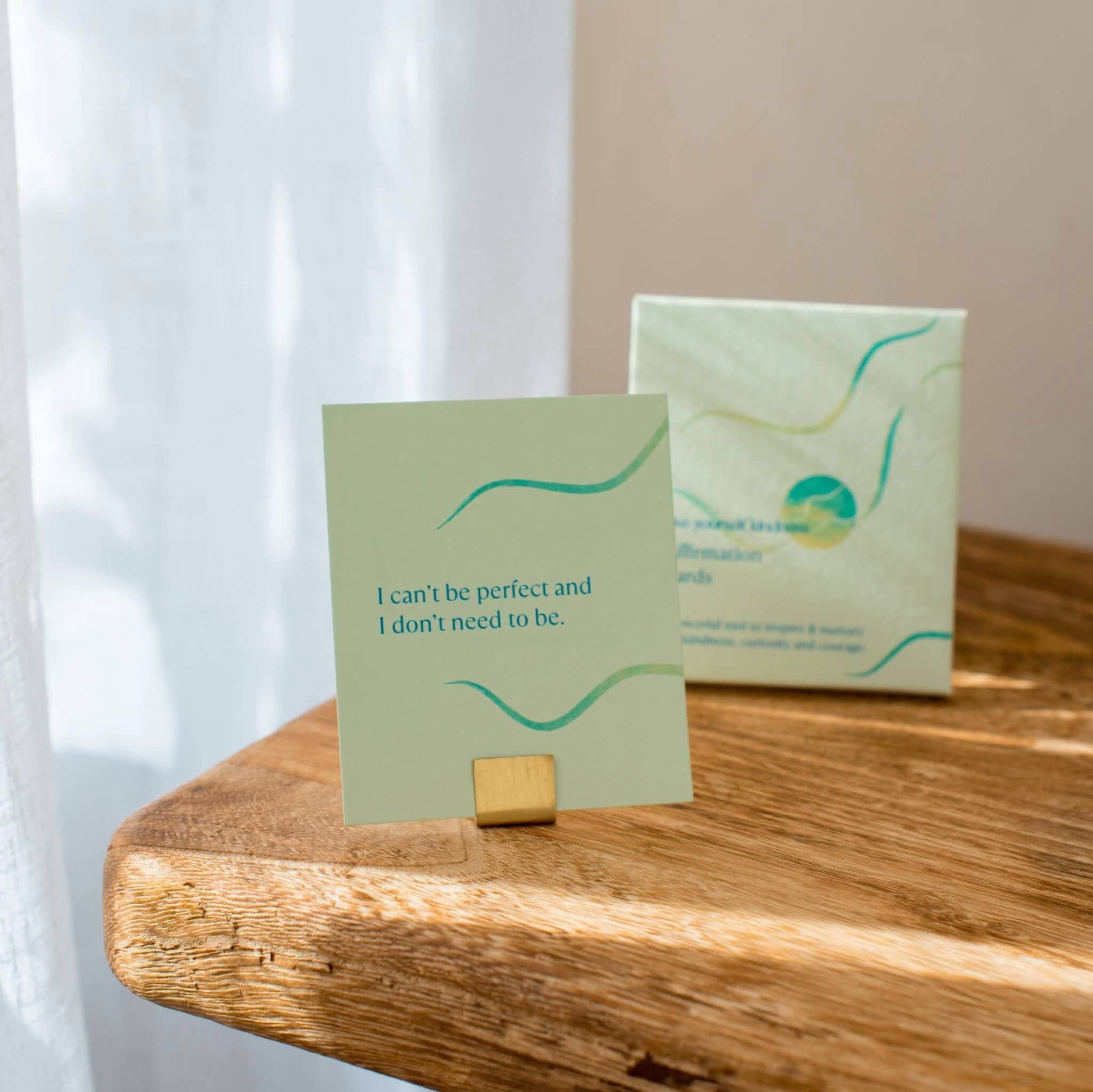
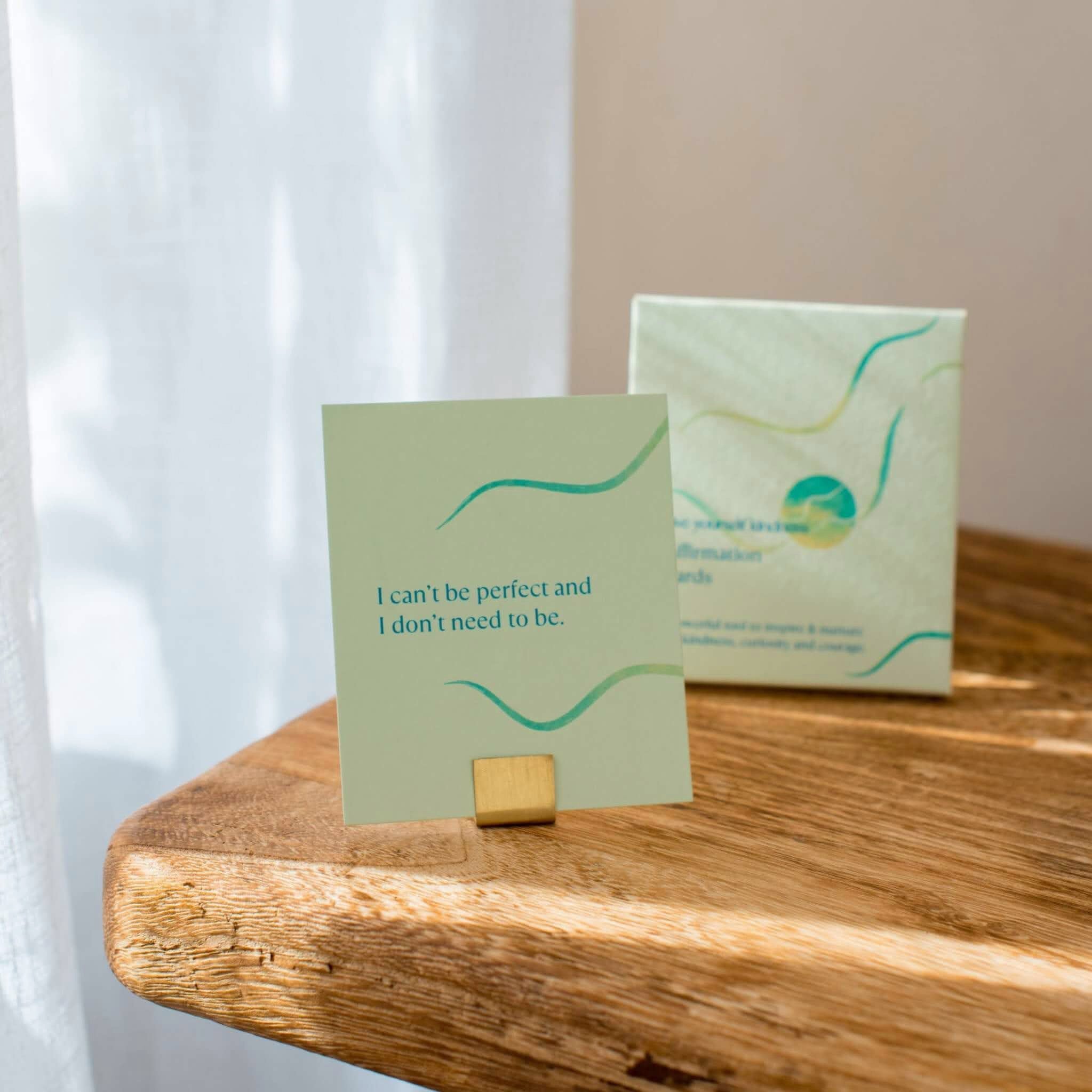
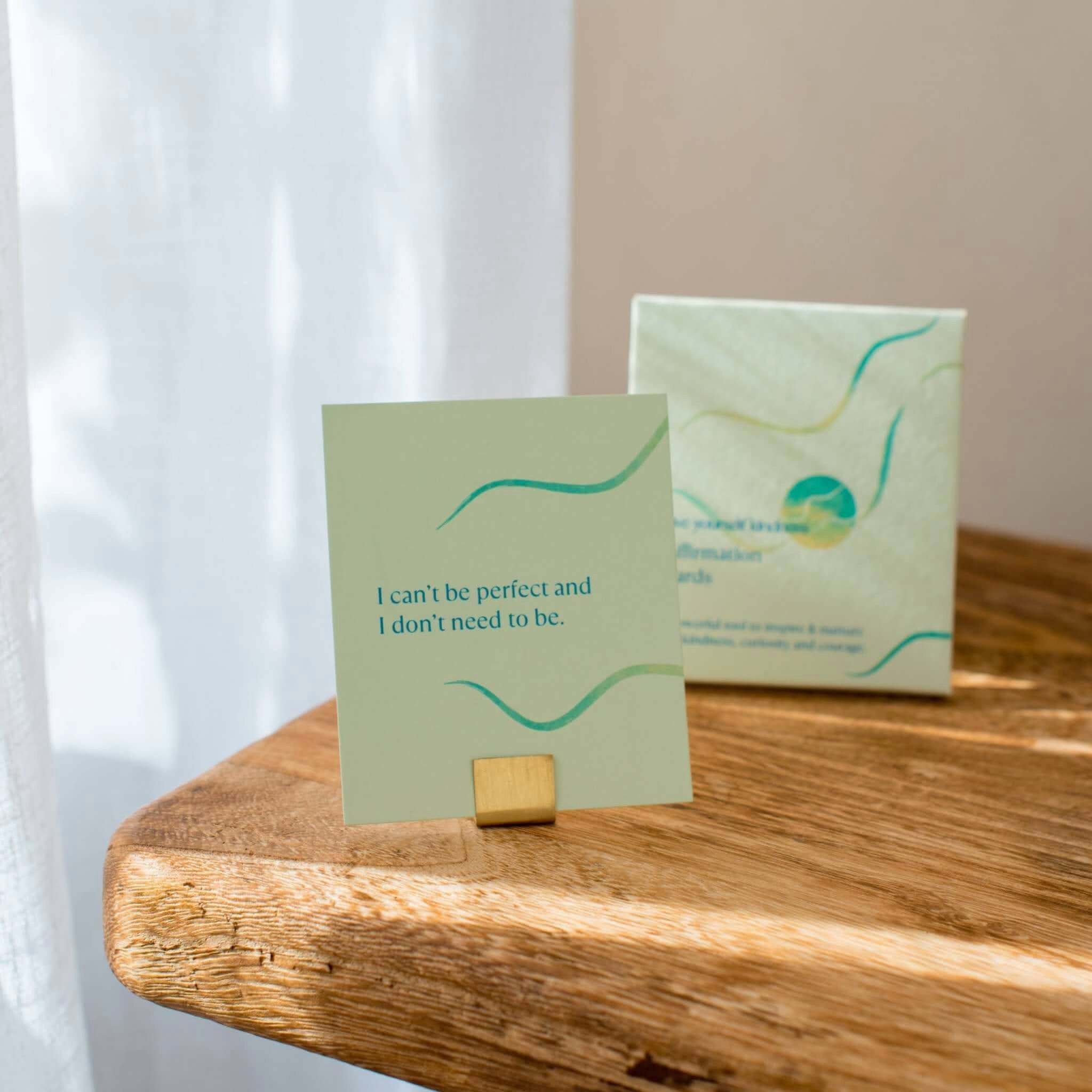
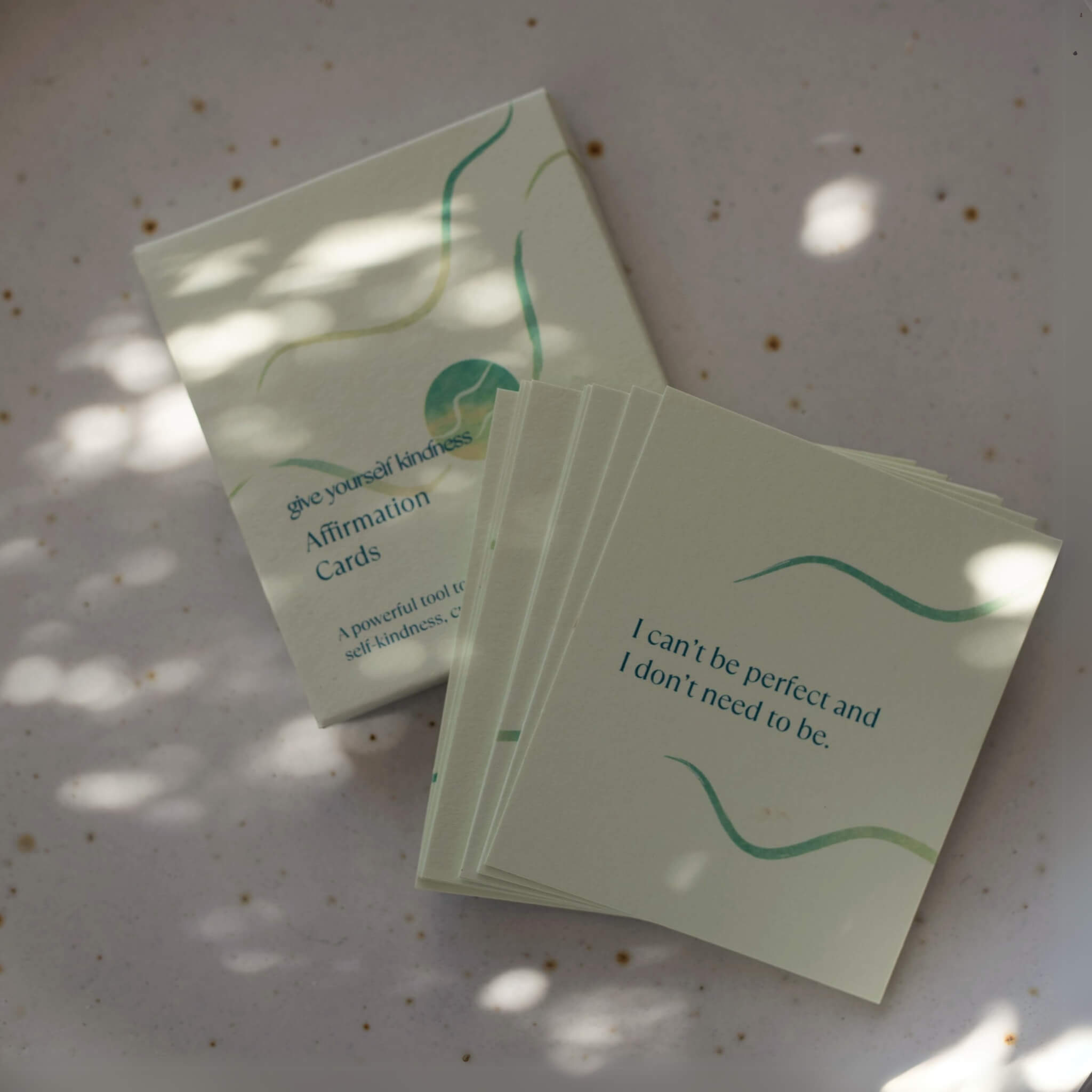
- I can't be perfect and I don't need to be.
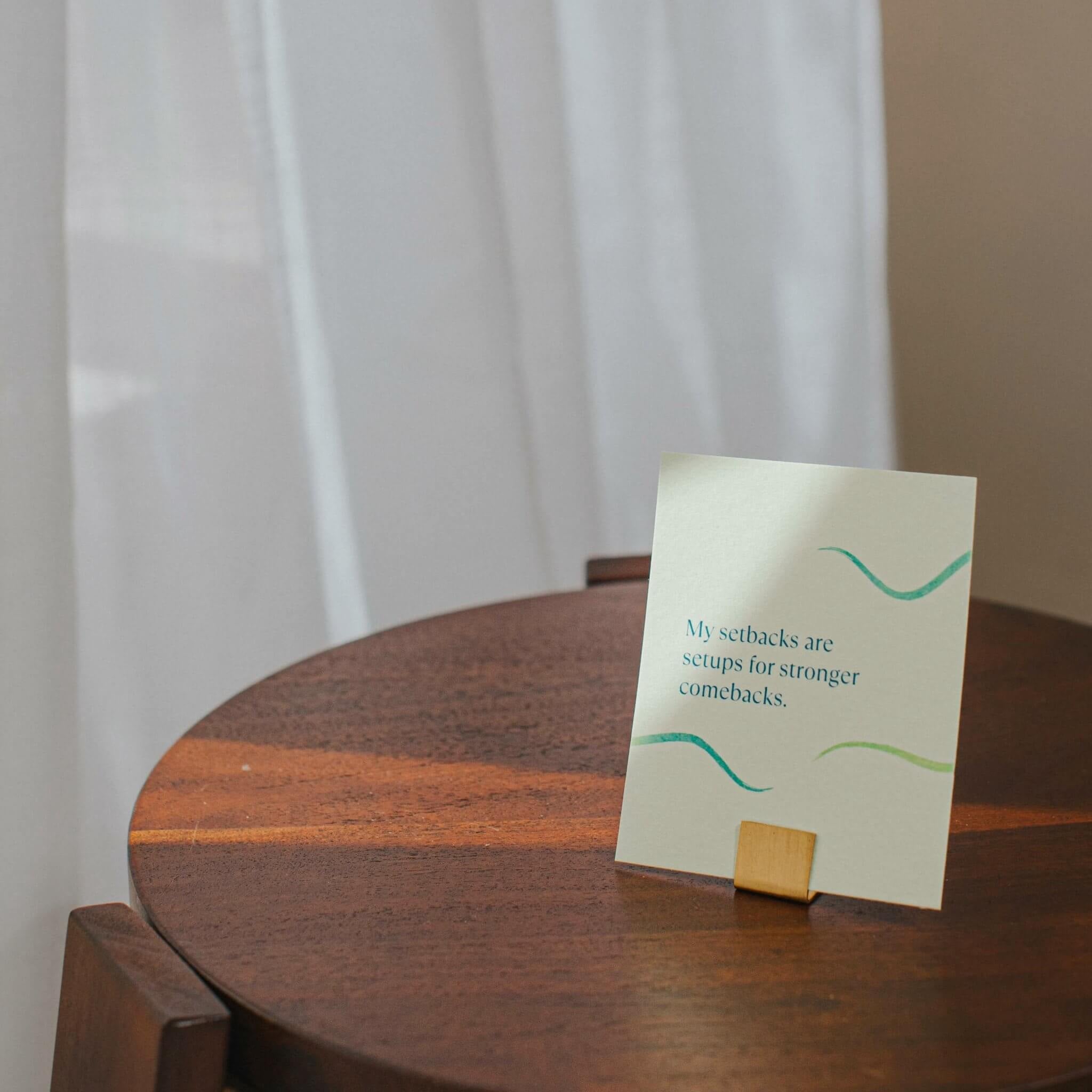
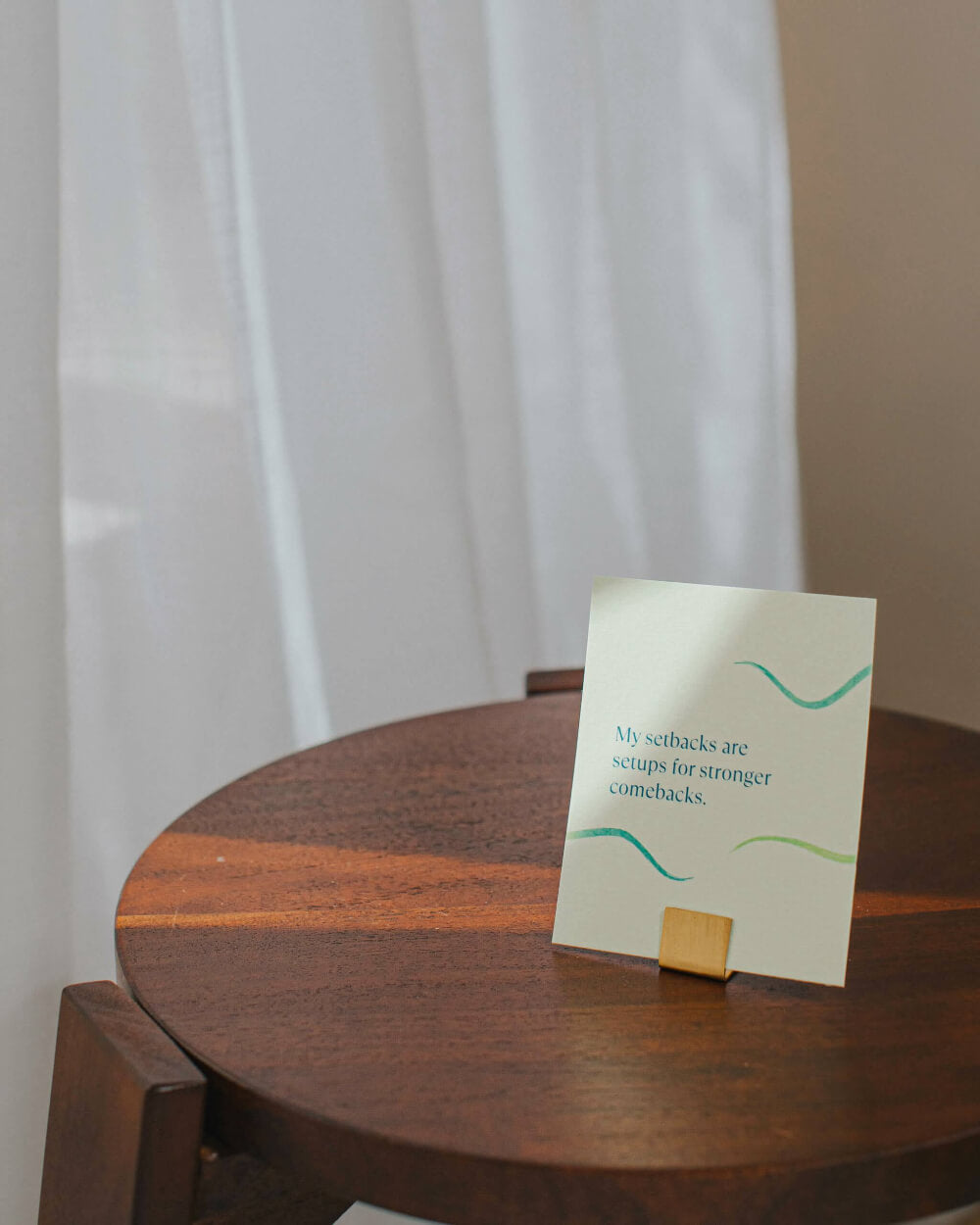
- My setbacks are setups for stronger comebacks.
- I forgive myself for what I did when I was learning.
- I recognise that sometimes the only way forward is trial and error, and that is okay.
When self-doubt creeps in
- My voice matters. My opinions matter. I matter.
- I am always worthy of respect.
- I can try, even when I don't feel 100% ready.
When you feel stuck
- I remind myself that there is always a new way to the same outcome.
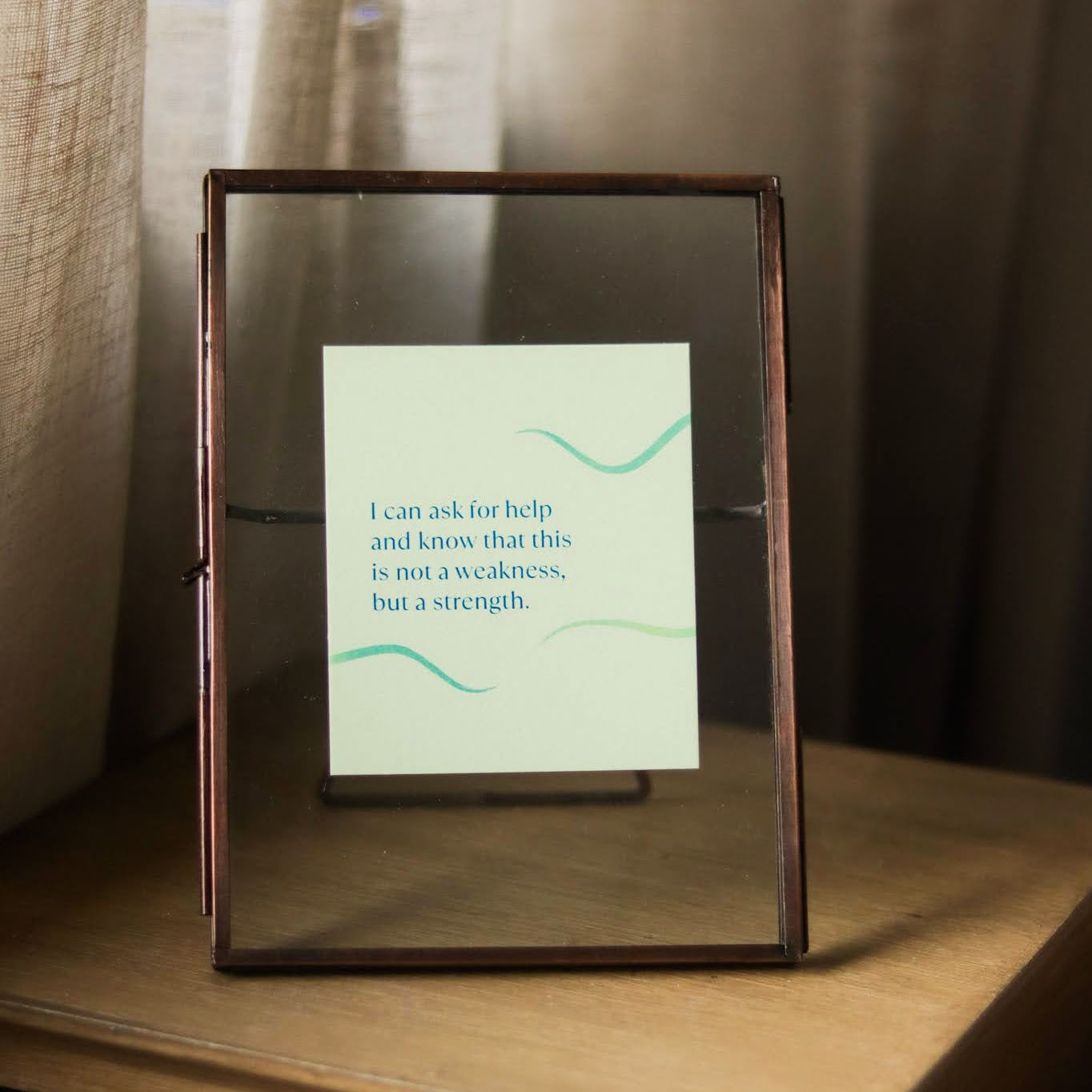
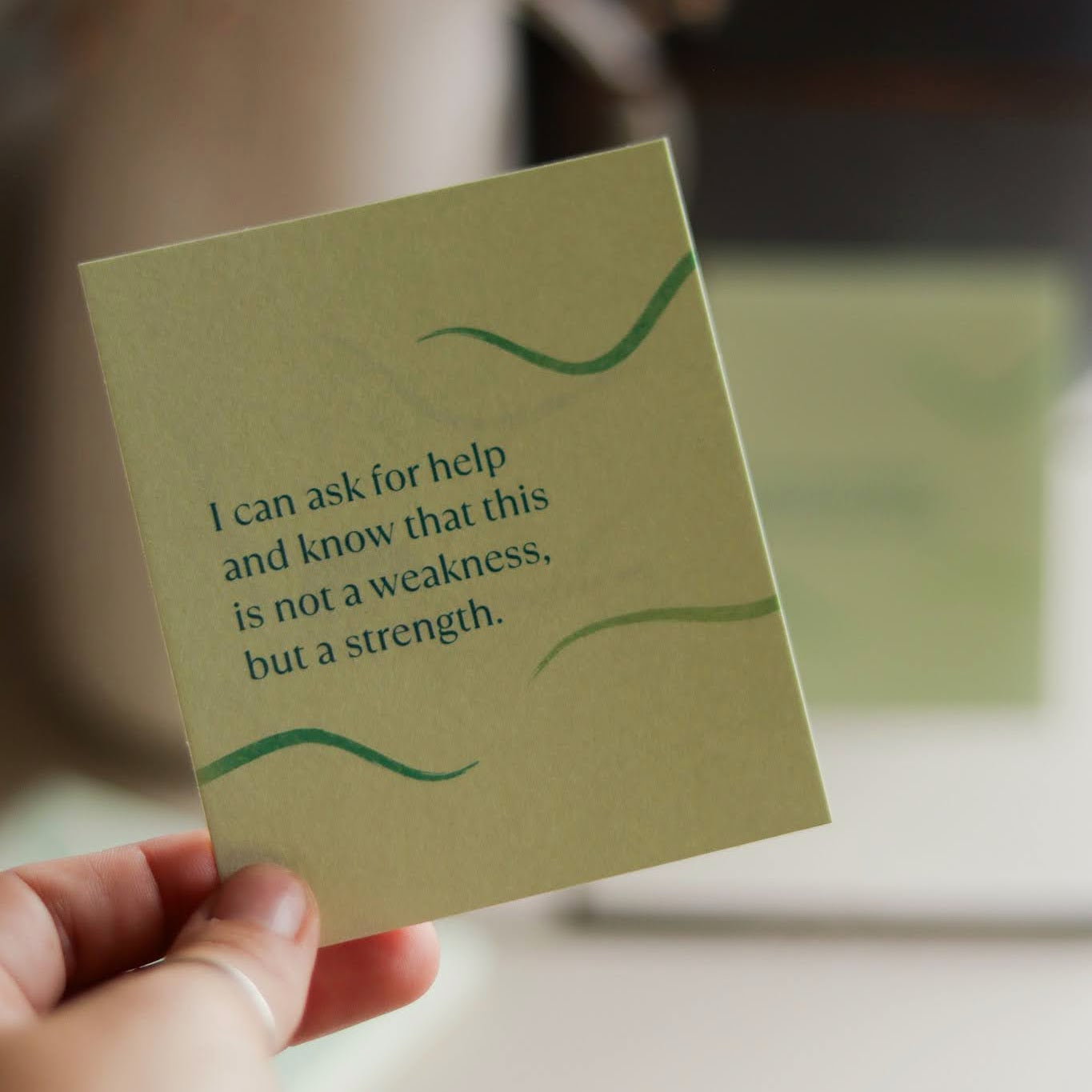
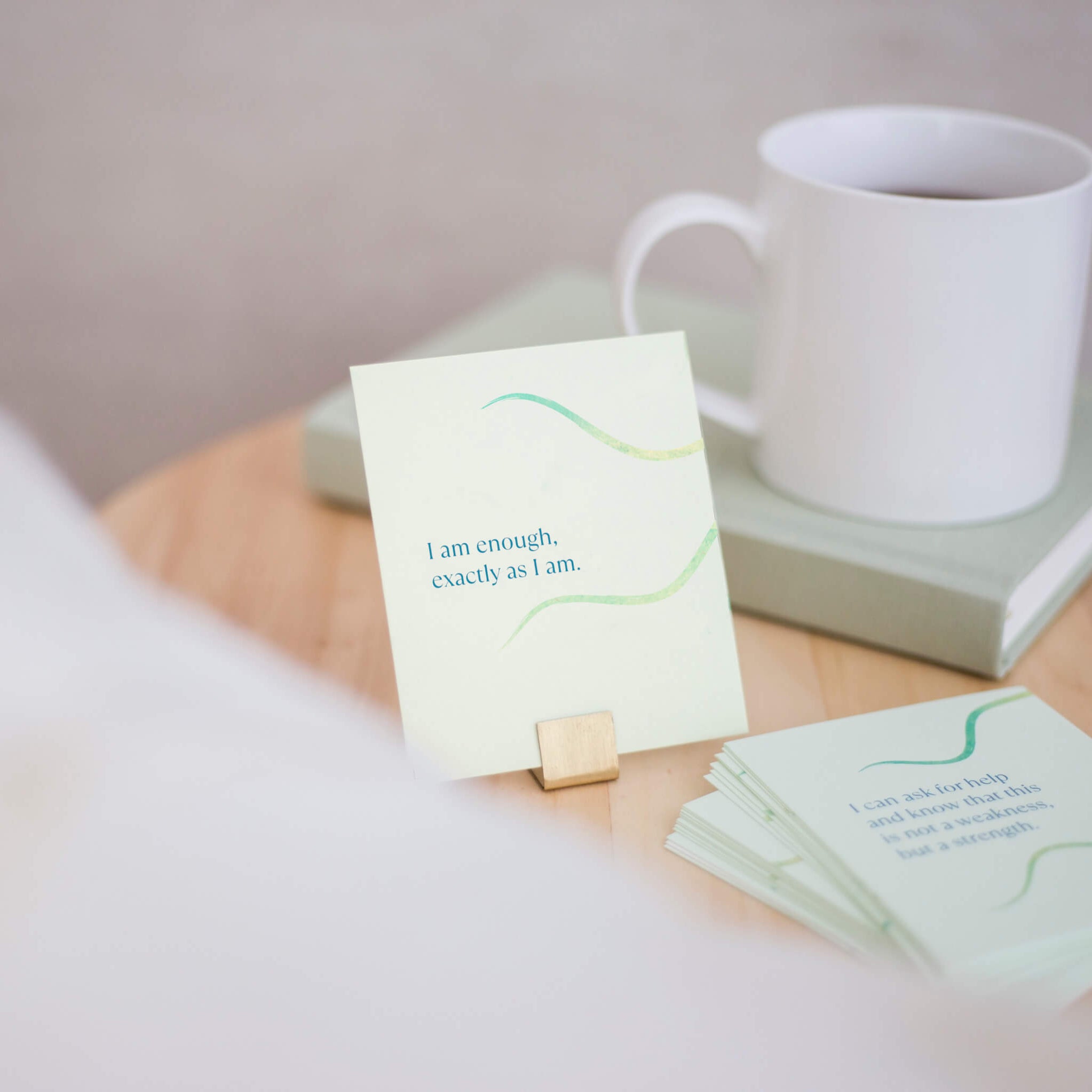
- I can ask for help and know that this is not a weakness, but a strength.
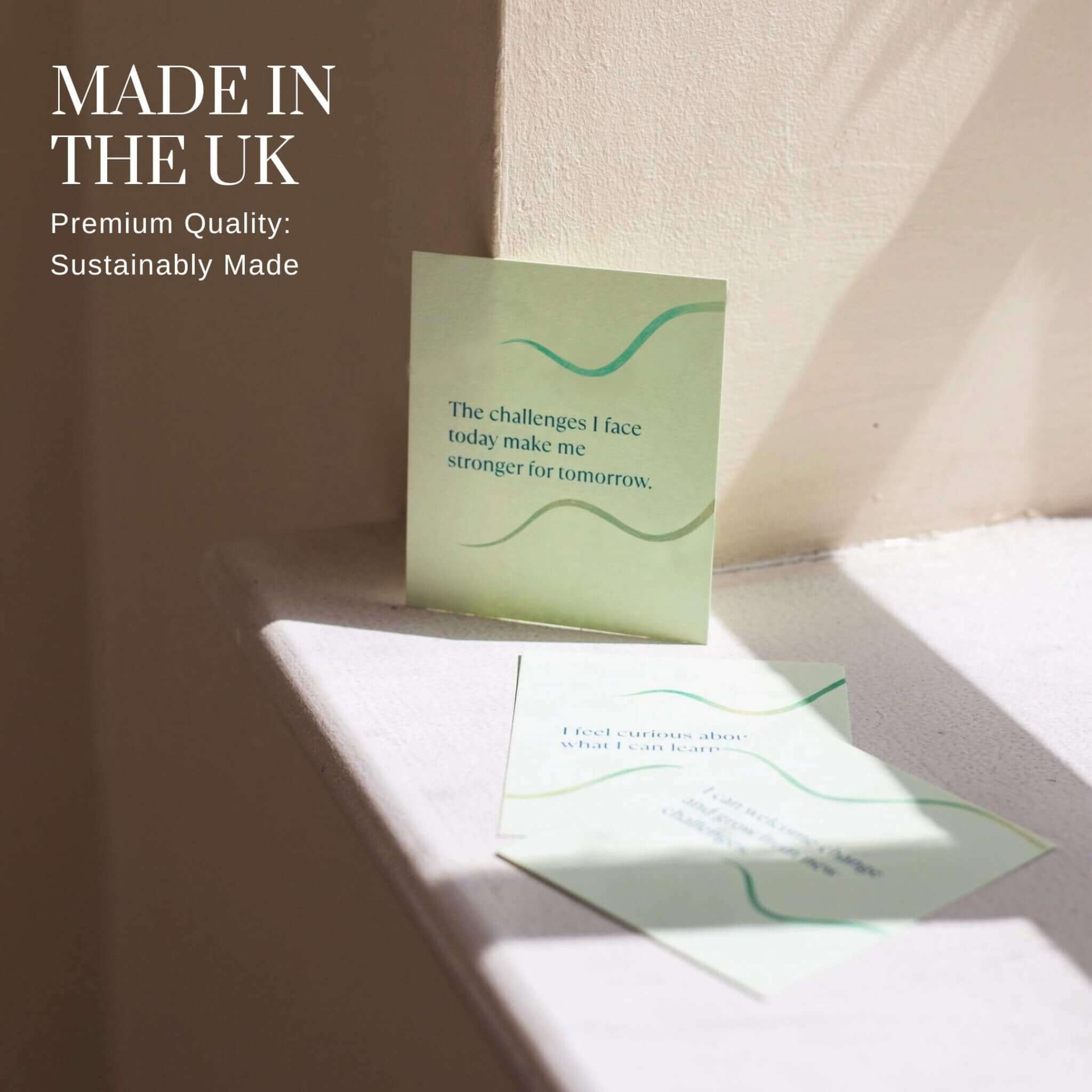
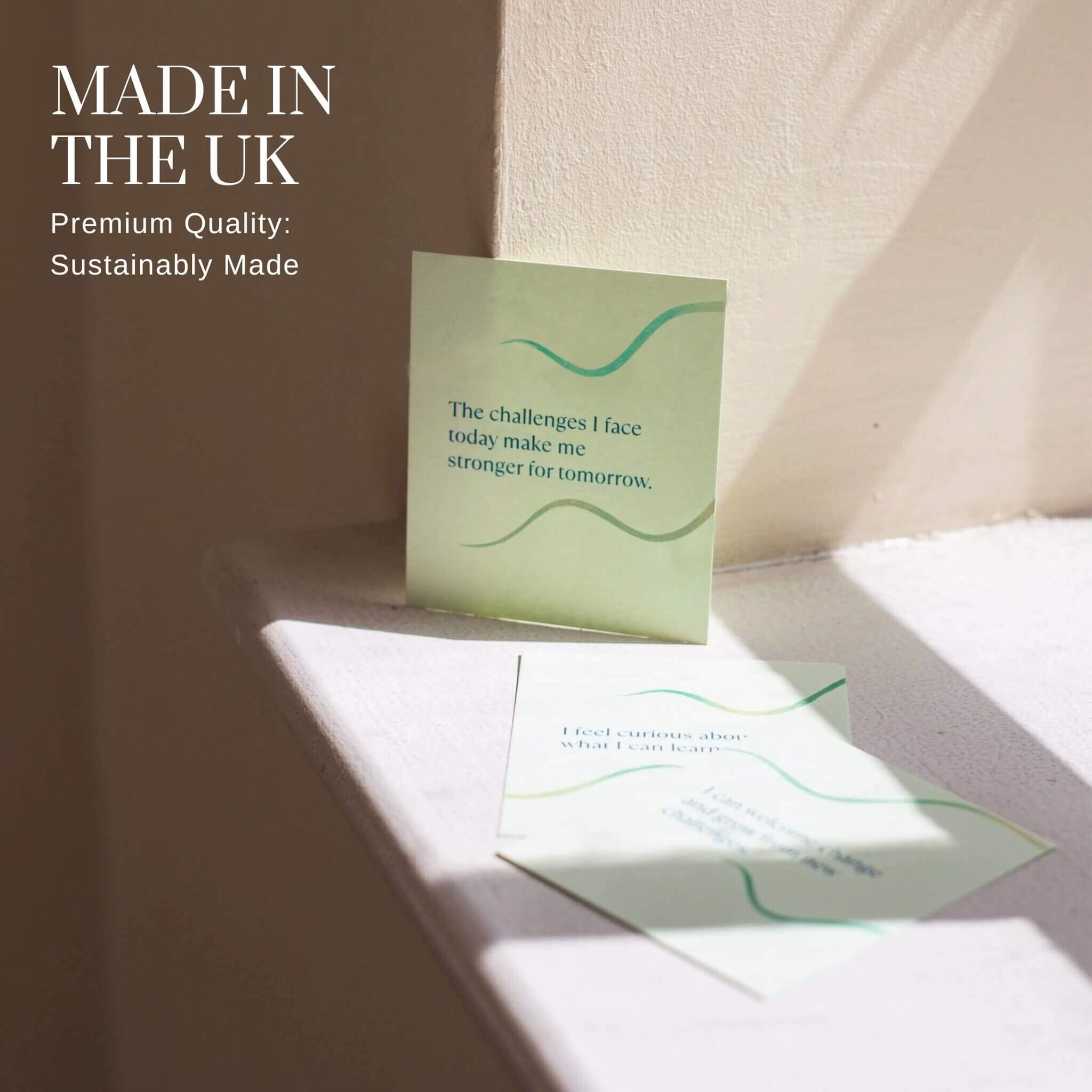
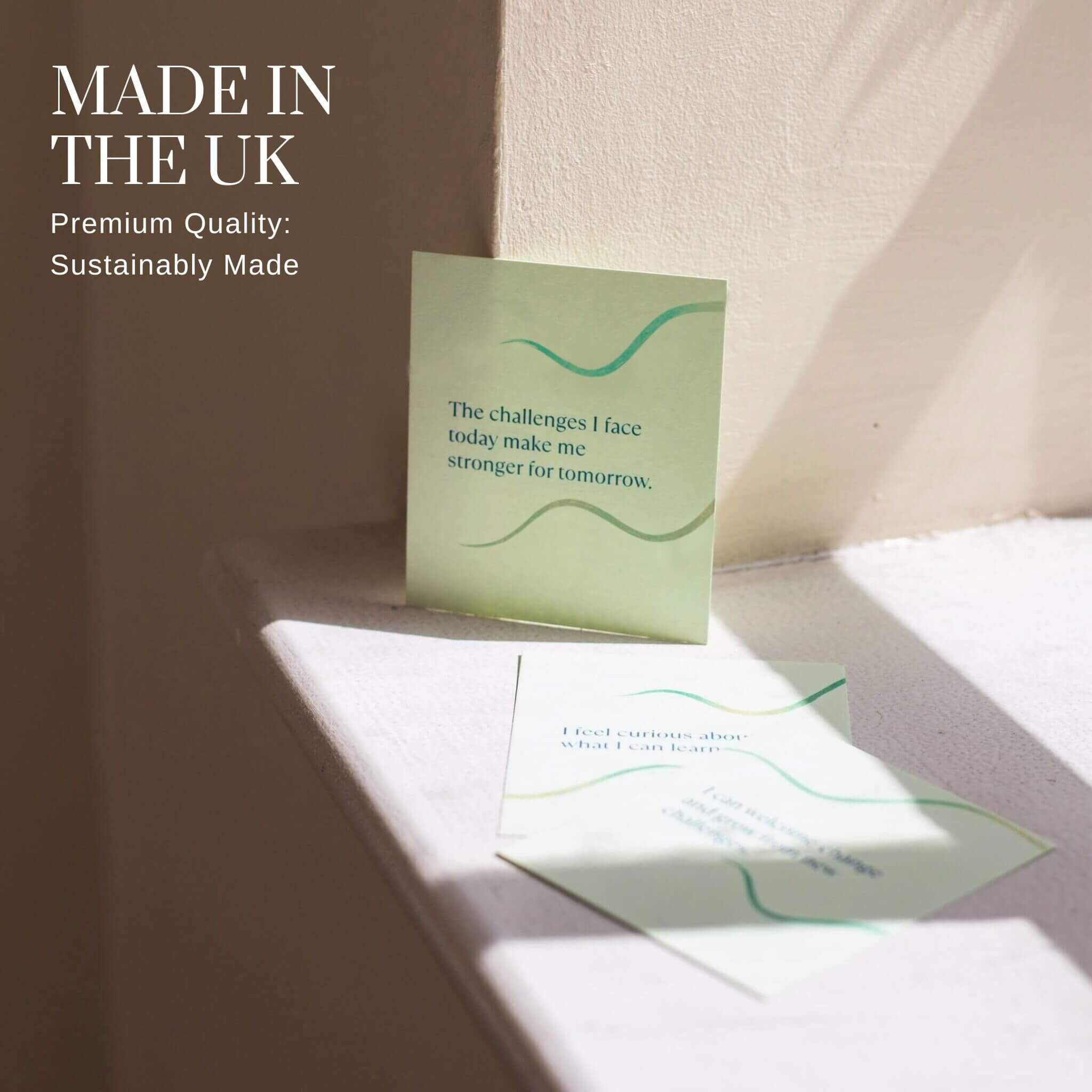
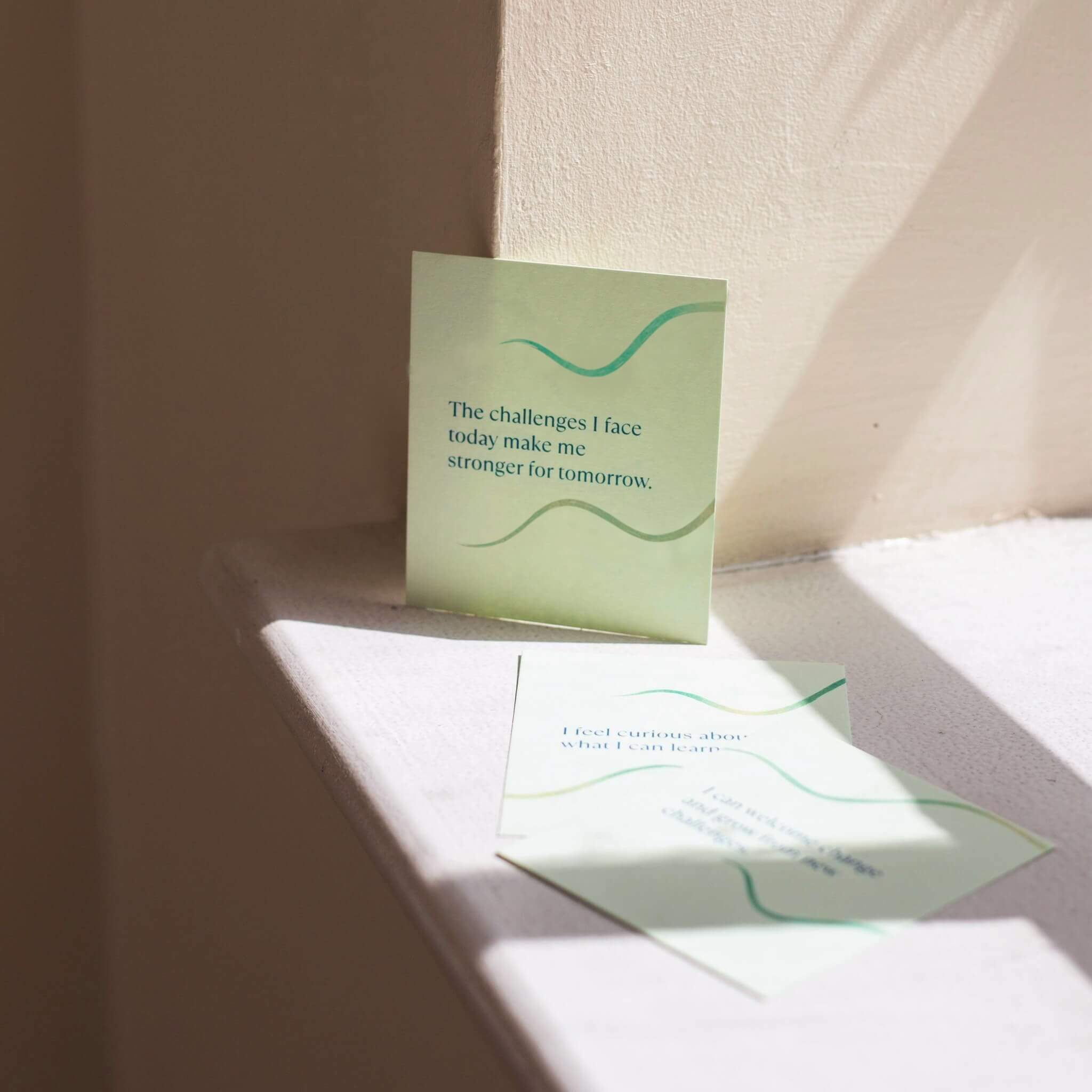
- The challenges I face today make me stronger for tomorrow.
When you're overwhelmed
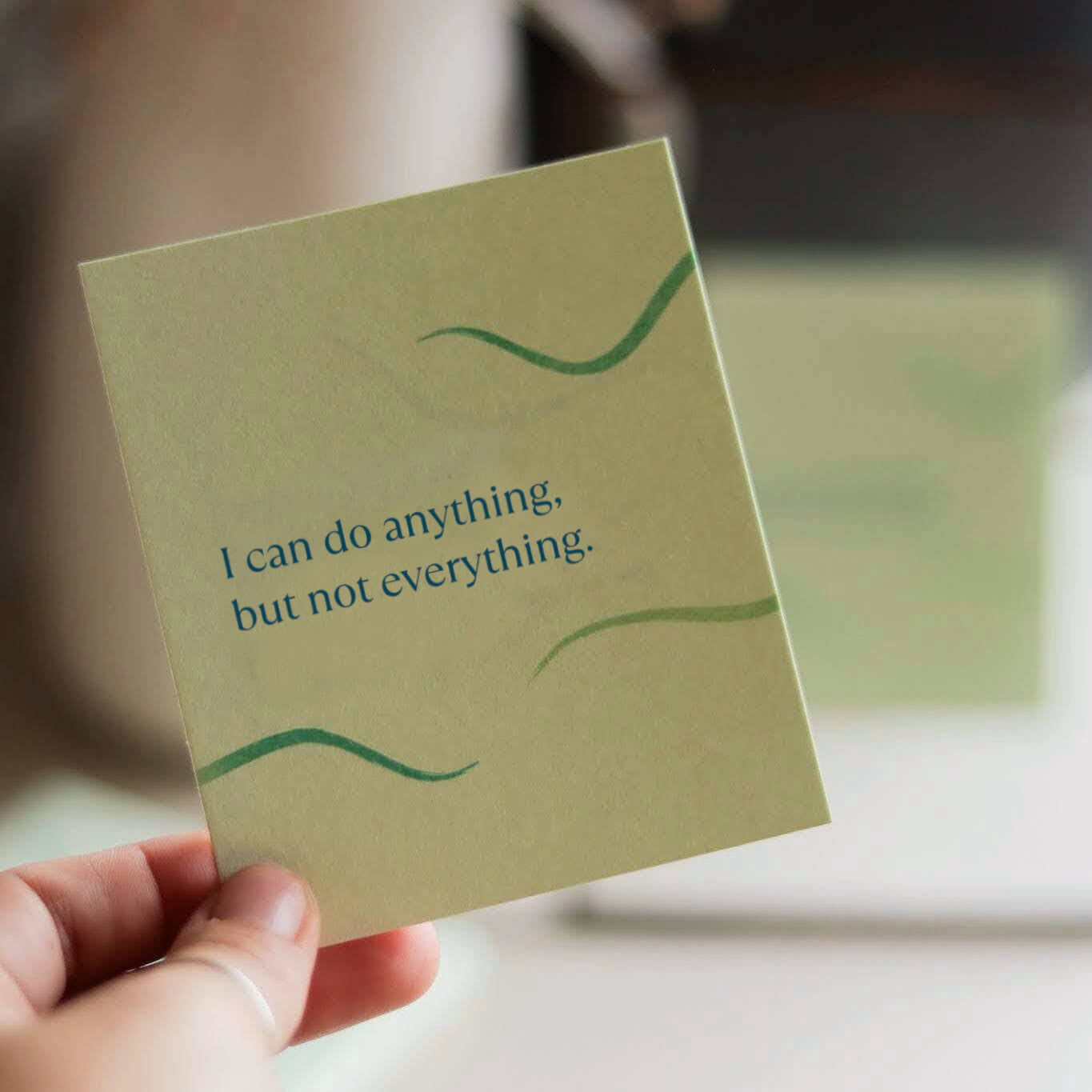
- I can do anything, but not everything.
- I can pause and reset whenever I need to.
- I recognise that life is hard sometimes, and I try to always be gentle with myself.
When you need to set boundaries
- I am allowed to say no.
- The right choice for others isn't necessarily the right choice for me.
- I deserve to take breaks to care for my wellbeing.
- I can make time for things that bring me joy, without feeling guilty.
- I choose the way I speak to myself, and I choose kindness.
How to use them without feeling fake
Even realistic affirmations can feel awkward to say at first. That is extremely common, and it is not a sign this will not work for you.
Start small. Try one affirmation, notice any discomfort, try not to judge it, and carry on anyway.
With time, though not in a straight line, the discomfort usually eases.
The ten-second practice
- Notice when your inner critic appears.
- Take a breath.
- Ask yourself: would I say this to someone I care about?
- Choose the one affirmation that feels most relevant.
- Say it to yourself, silently or aloud.
Weaving them into your day
- Morning routine. Say your affirmation while brushing your teeth. A small habit that sets the tone for the day.
- Phone lock screen. Set one as your lock screen, so you meet it every time you check your phone.
- Before bed. Keep one by the bed. The quiet moments before sleep and just after waking are powerful times to be gentle with yourself.
As Dr Irons reminds us: "Self-compassion is a gradual process that requires persistence and patience. It's useful to be gentle with ourselves as we navigate this journey, and to celebrate small victories along the way."
Will these realistic affirmations actually work?
I care about sharing tools that work, and I have asked myself this exact question. So I went and asked five clinical psychologists. Their full answers are here, and two of them shaped the wording above.
Dr Annabelle Kyle Dortch, PsyD advises choosing "a statement that isn't a far departure from your current reality". That is why the list above contains "I can try, even when I don't feel 100% ready" rather than a promise you would have to argue with.
Dr Michelle Chung explains that "when affirmations are combined with small, real actions, they can help shift your mindset over time". That is why the ten-second practice pairs the words with a breath and a question rather than repetition alone.
Affirmations aren't magic spells
They are permission slips. Reminders that you are human, and that you are doing the best you can with what you have today.
The most powerful affirmation might simply be acknowledging that you're trying. That counts for a lot.
Why the wording matters more than the repetition
This is the part most affirmation lists leave out, and it is the reason the ones on this page are worded the way they are.
In a 2009 study published in Psychological Science, Wood, Perunovic and Lee asked people to repeat the statement "I'm a lovable person". Among participants with low self-esteem, the ones who repeated it felt worse than the people who said nothing at all. Those who were asked to consider how the statement was both true and not true did better.
So if a cheerful affirmation has ever made you feel further from yourself rather than closer, that is a documented effect and not a flaw in you. The fix is not to abandon affirmations. It is to use ones your mind can actually accept today.

Dr Caroline C. Lee, PhD
Licensed clinical psychologist specialising in anxiety disorders, Orange County. Writing exclusively for Give Yourself Kindness
"I am struggling AND healing."Five psychologists on whether affirmations work →
That "and" is the whole technique. It lets the affirmation hold the difficult thing rather than argue with it, which is what makes it survive contact with a bad day. Dr Annabelle Kyle Dortch, PsyD puts the same principle as a rule of thumb in that article: an affirmation works better when it does not depart far from your current reality, and when you follow it with an action. Dr Michelle Chung suggests the simplest fix of all, which is to add two words: not "I am confident" but "I'm learning to be more confident."
Where to keep them so you actually use them
The honest problem with a list on a screen is that you read it once, feel briefly better, close the tab and never see it again. Whatever you do next, put a few of these somewhere you will pass without deciding to.
- Write three on a sticky note for the inside of a kitchen cupboard.
- Make one your phone lock screen for a fortnight.
- Put one in your wallet, folded, where you will find it when you are paying for something on a difficult day.
All of that is free and it works. If you would rather have them printed properly on something that sits on a shelf, that is what I make.

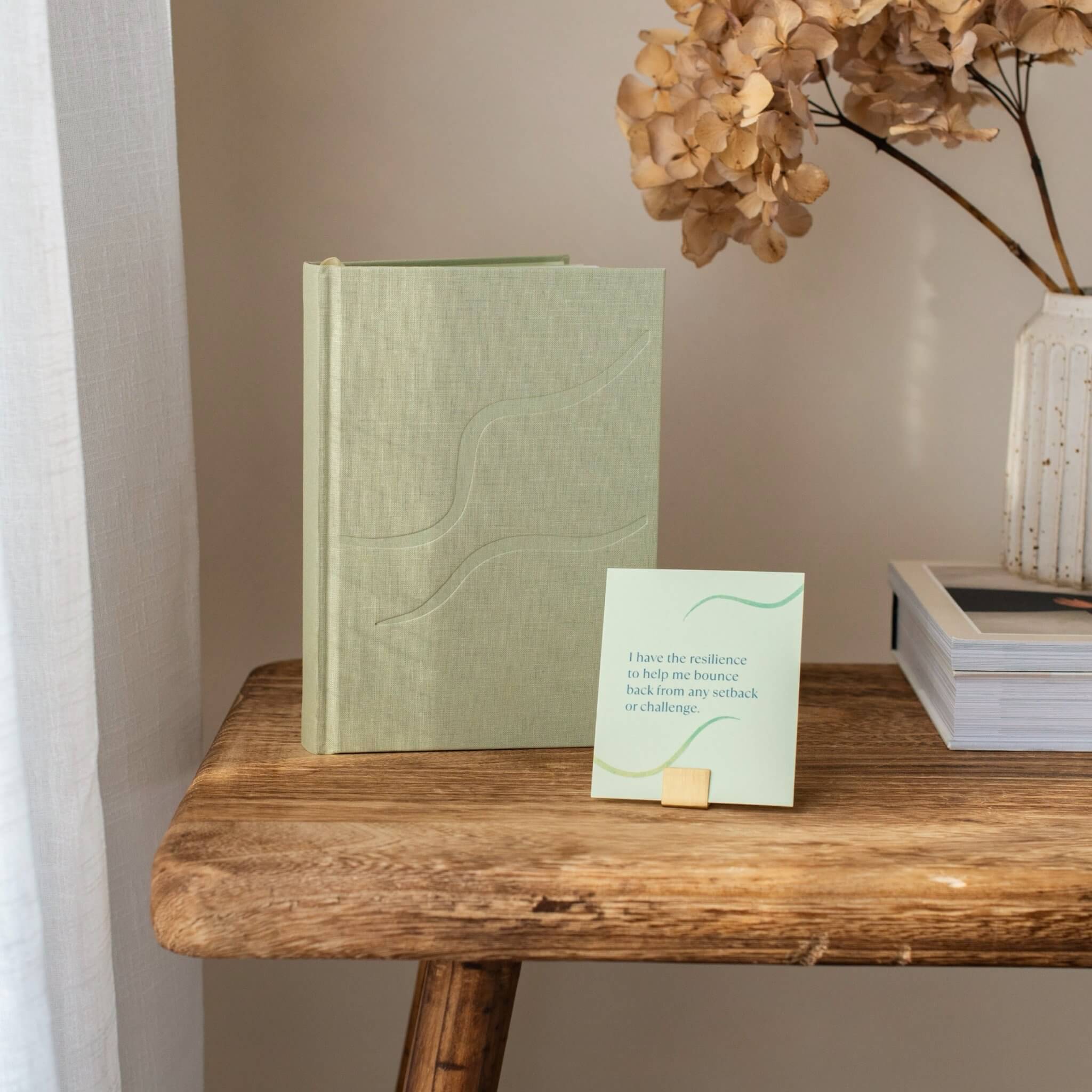
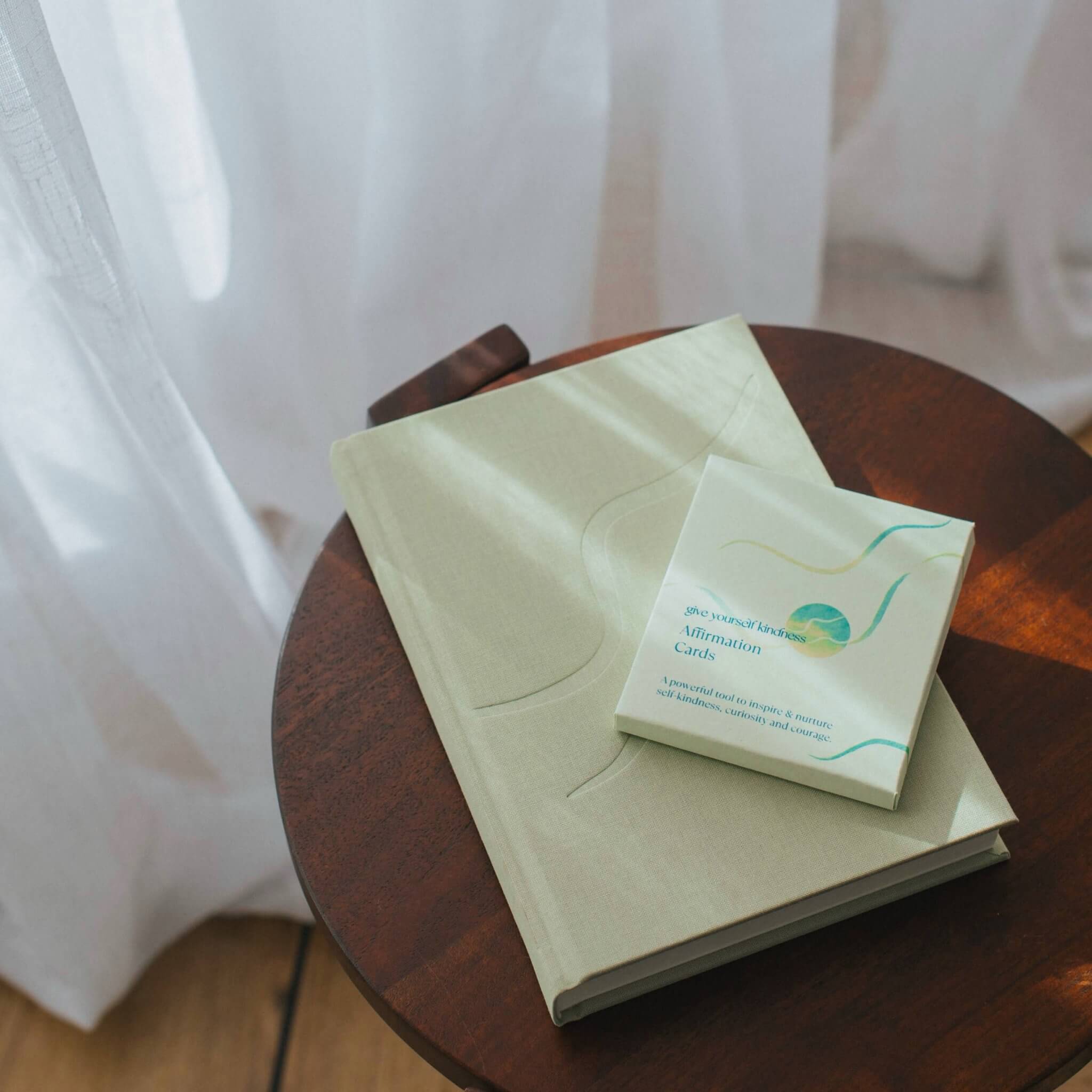
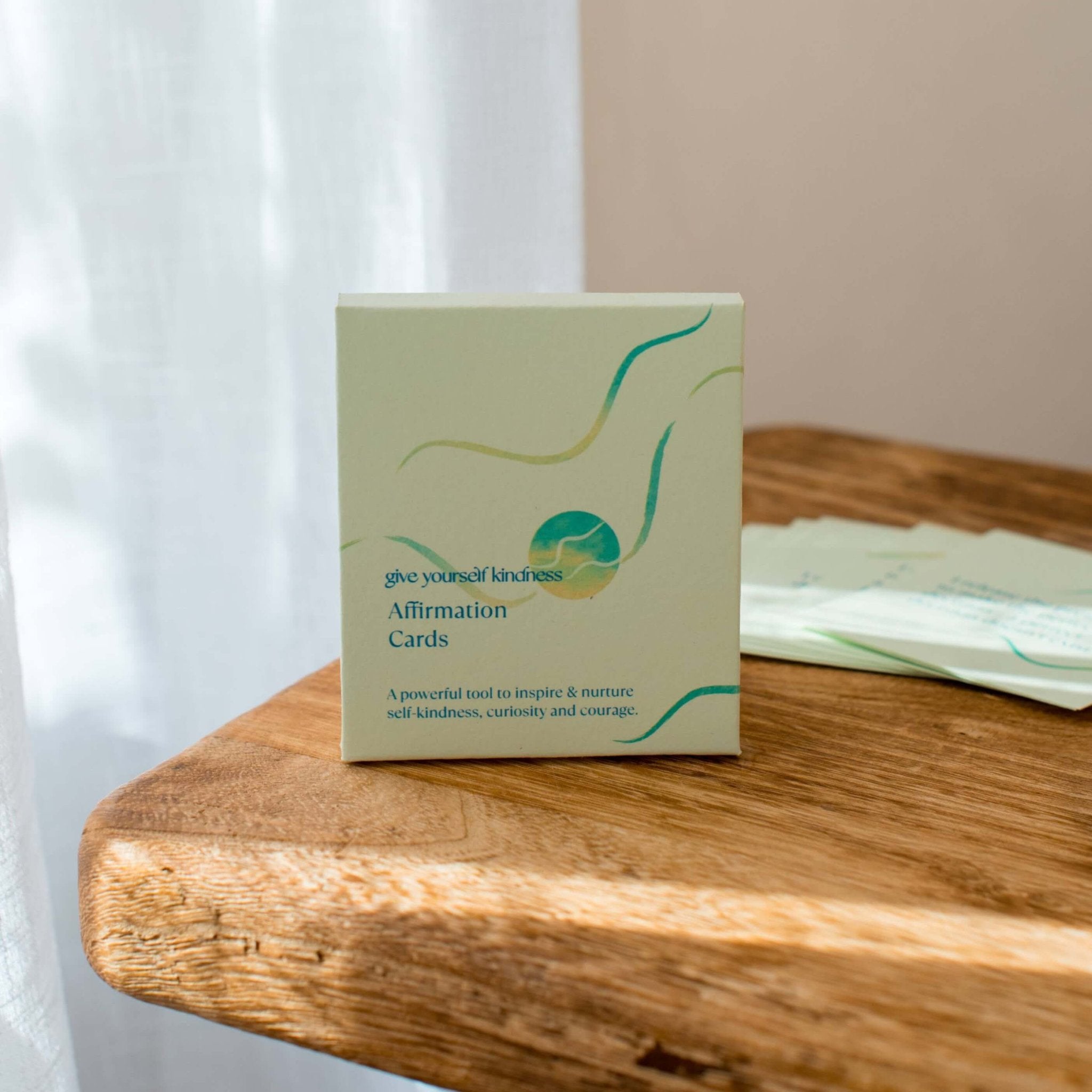
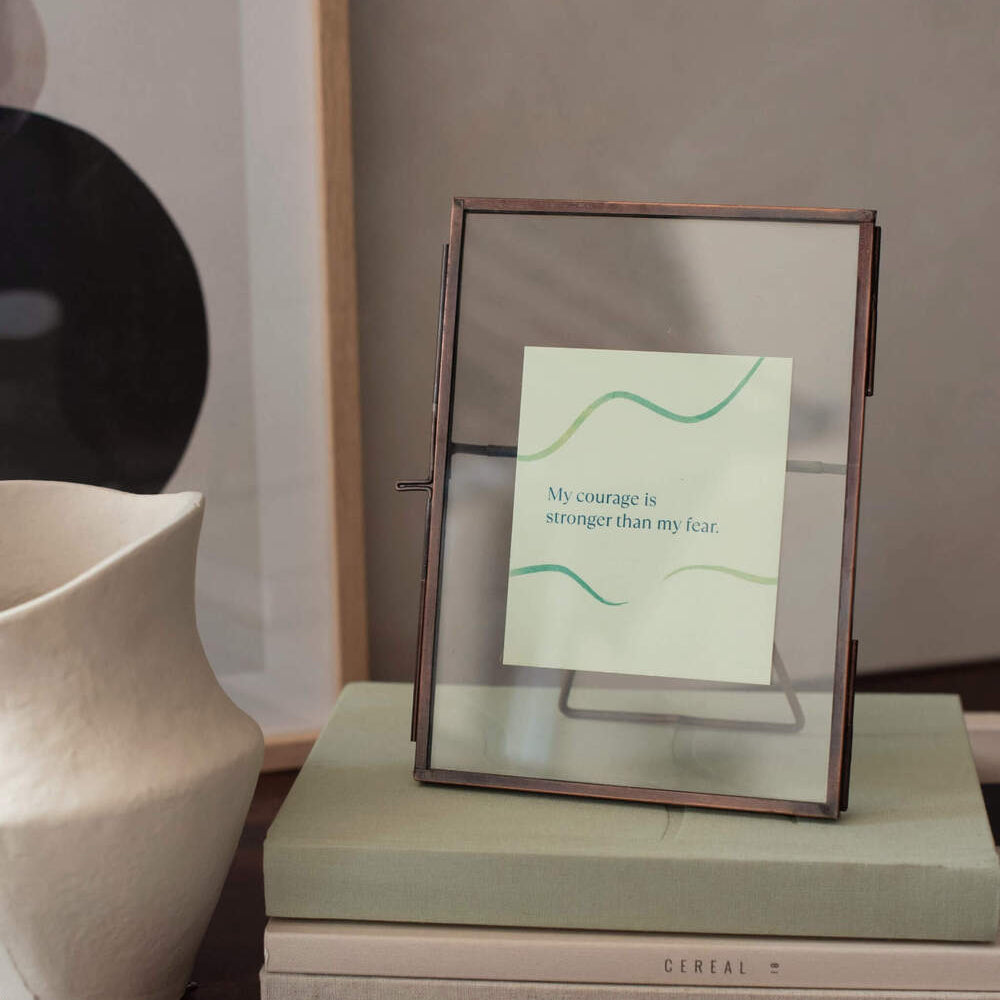
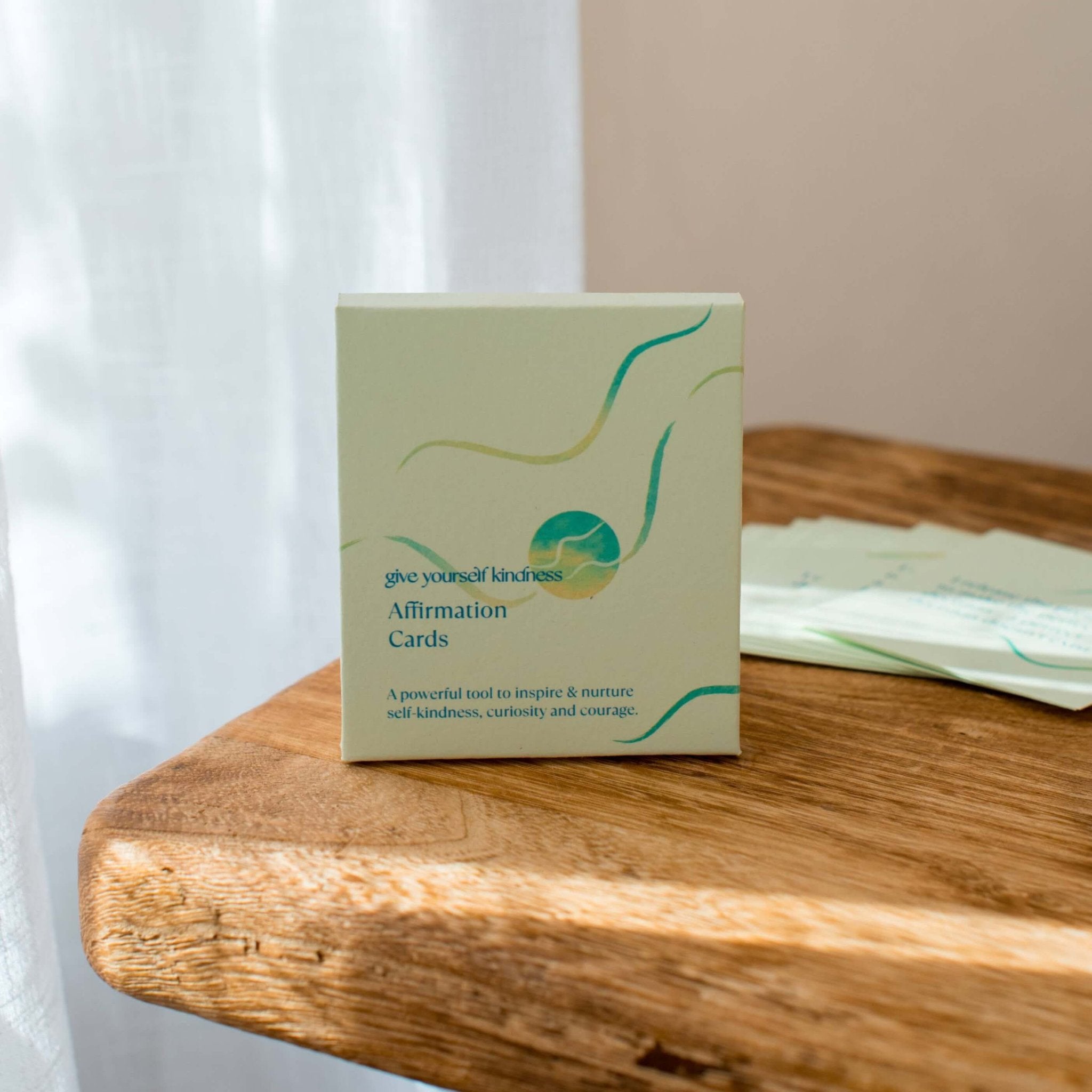
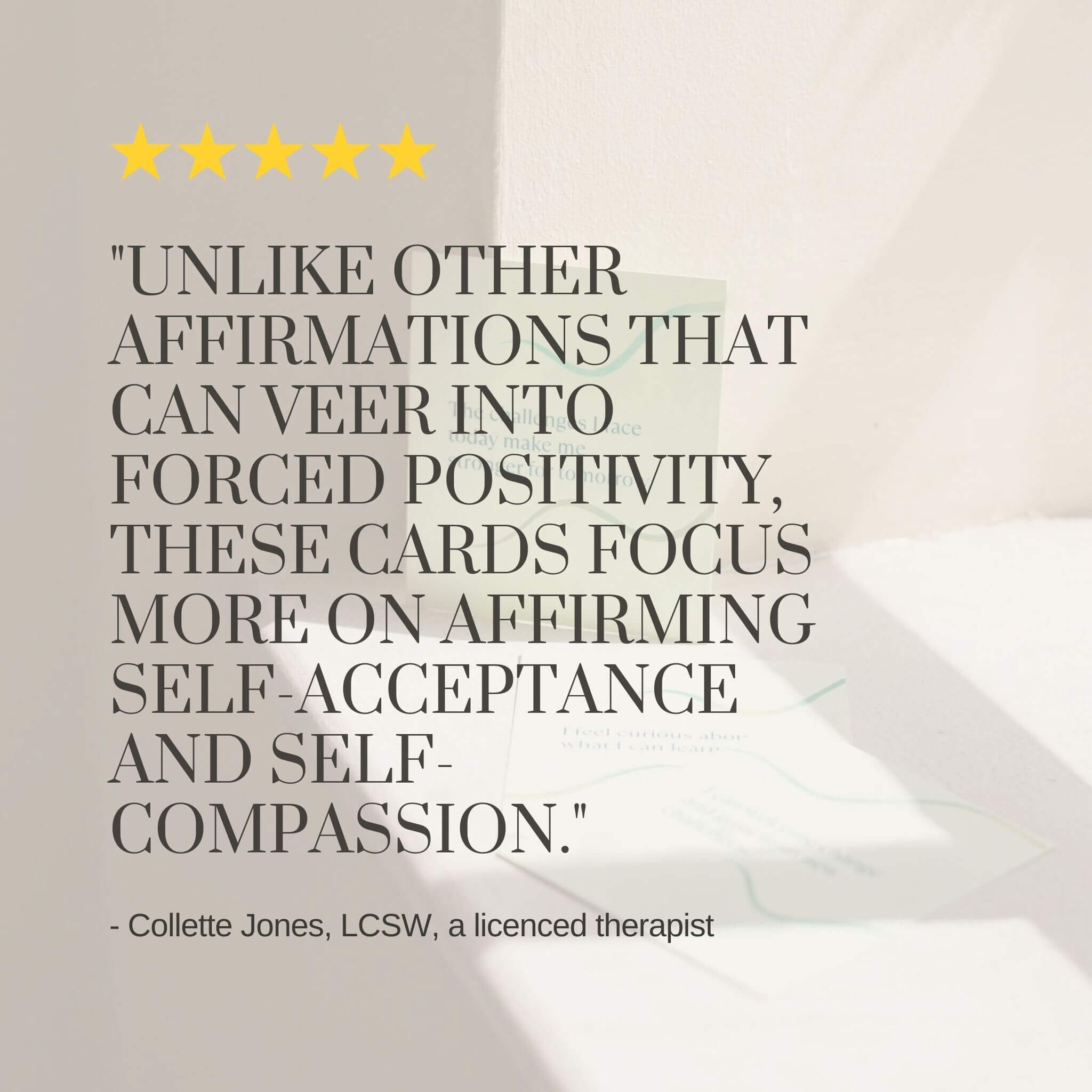
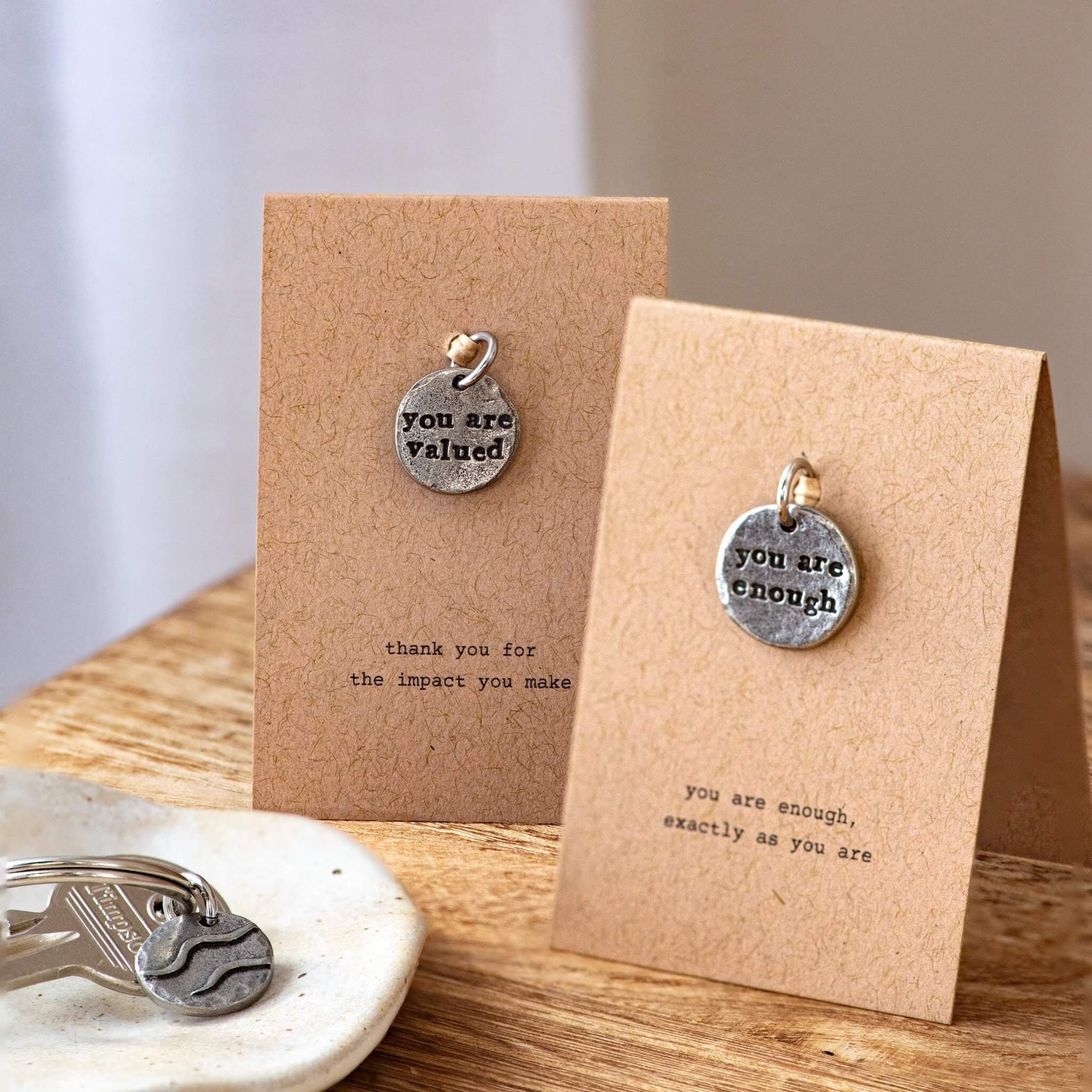
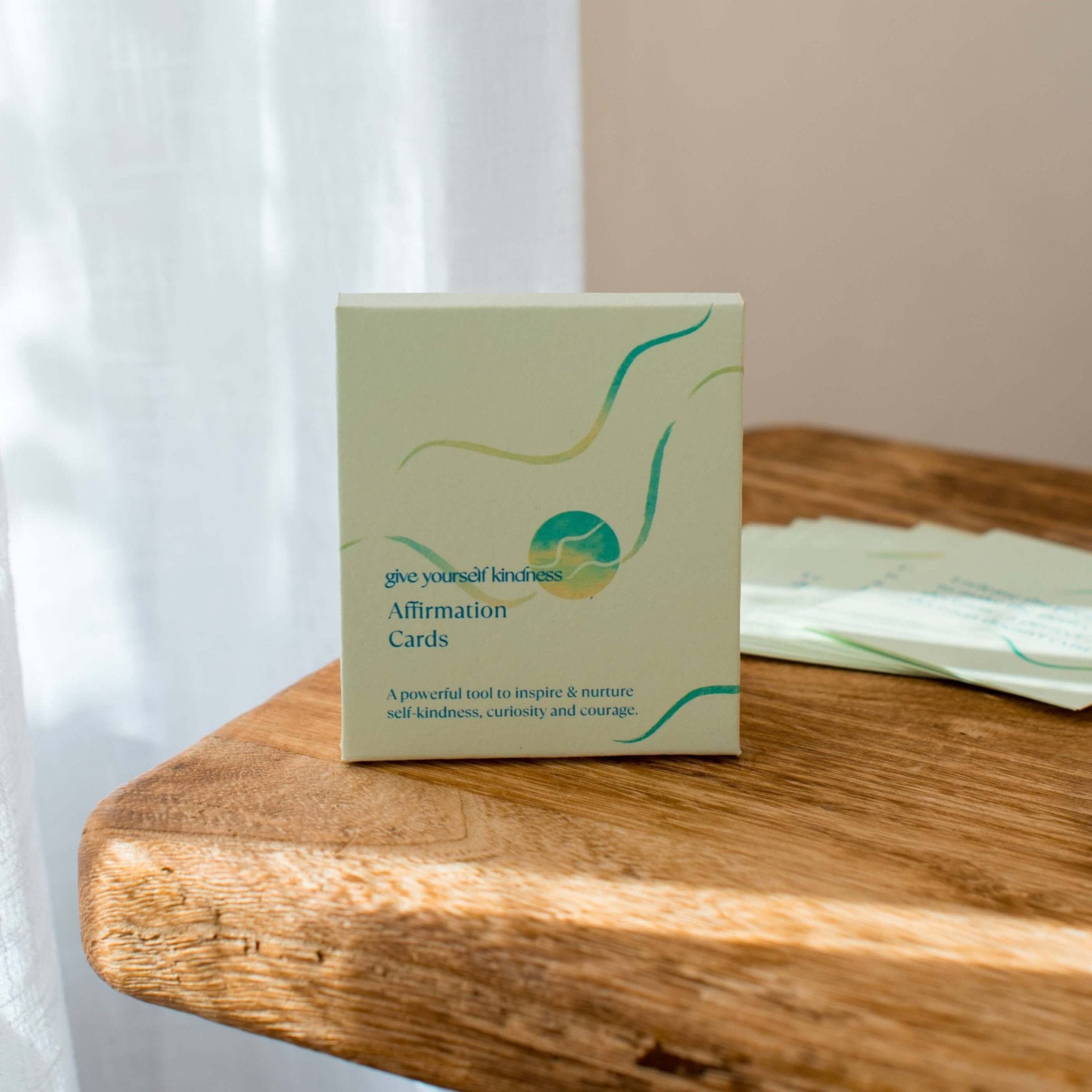
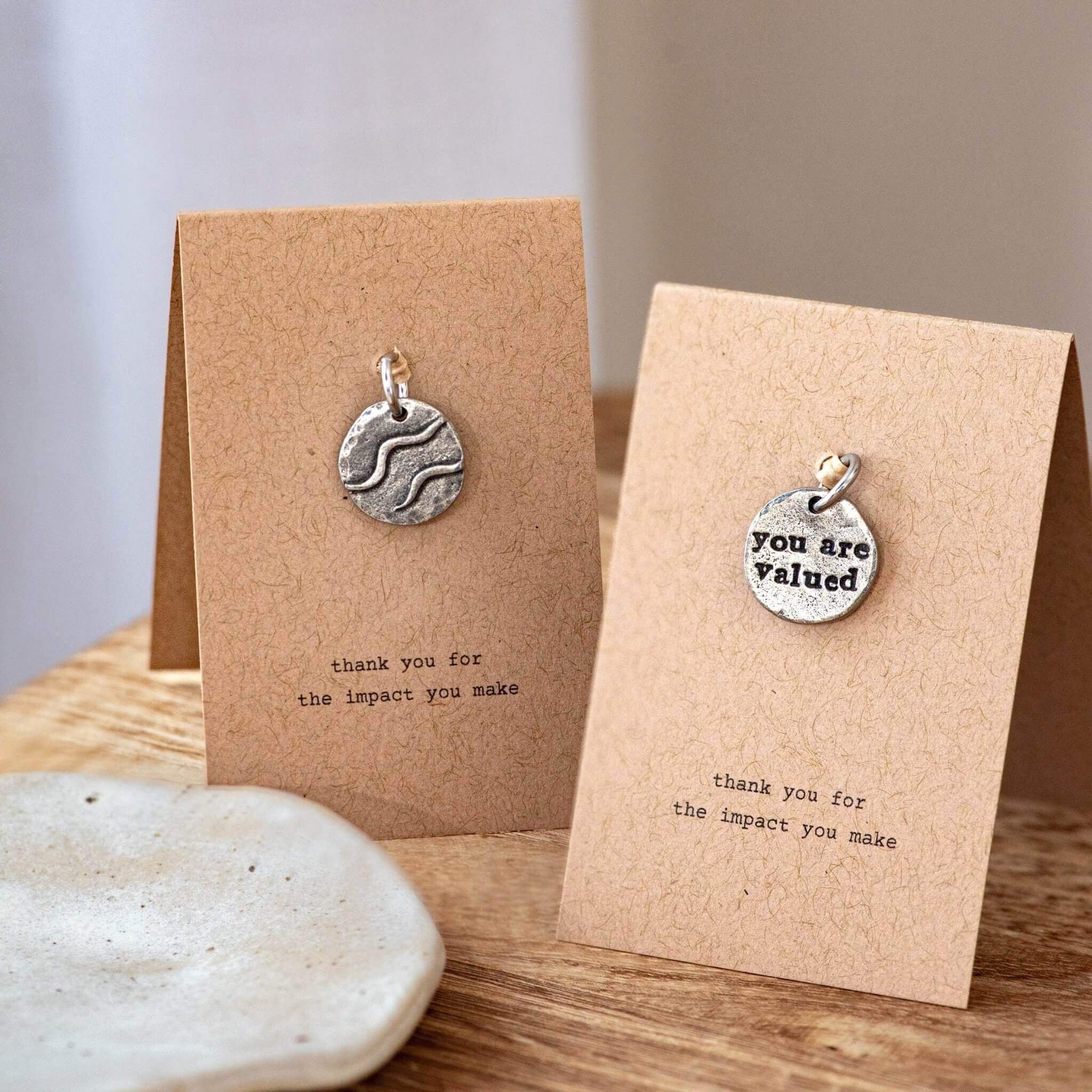
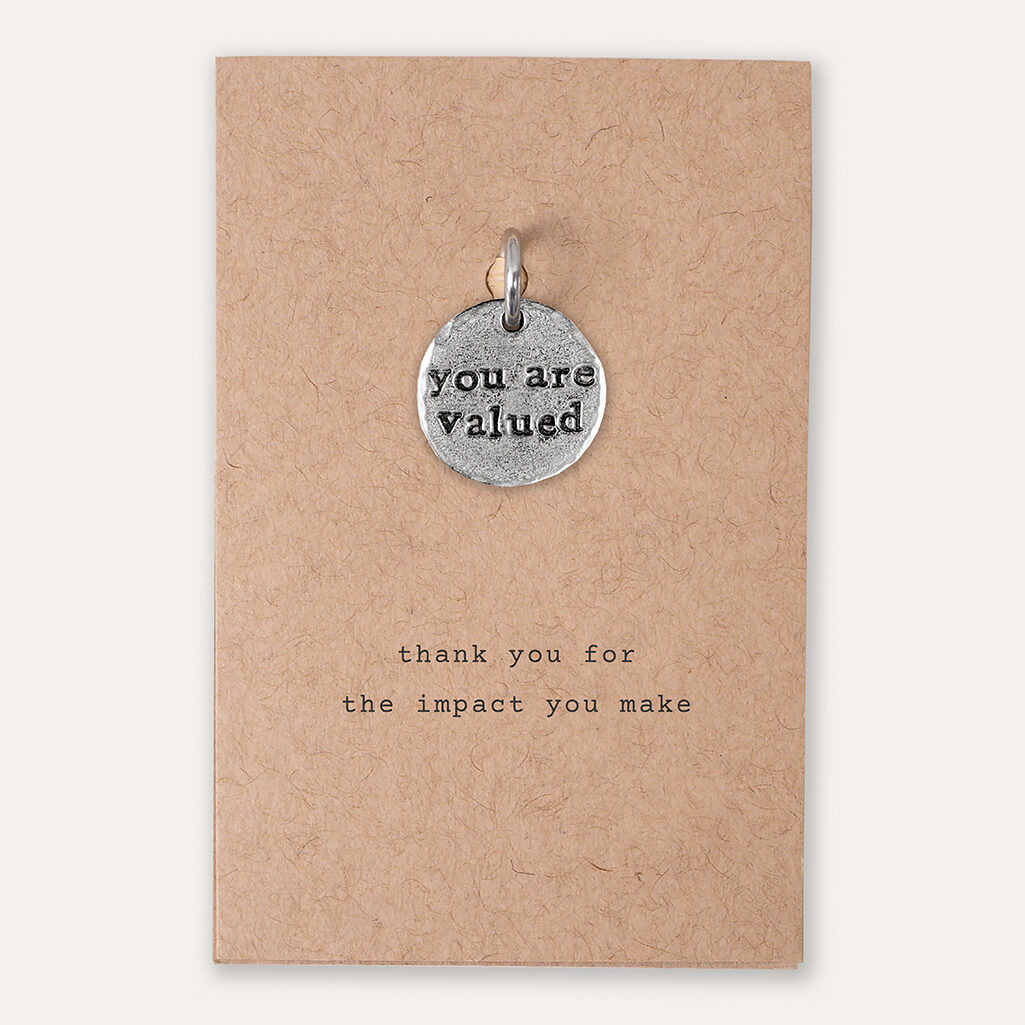
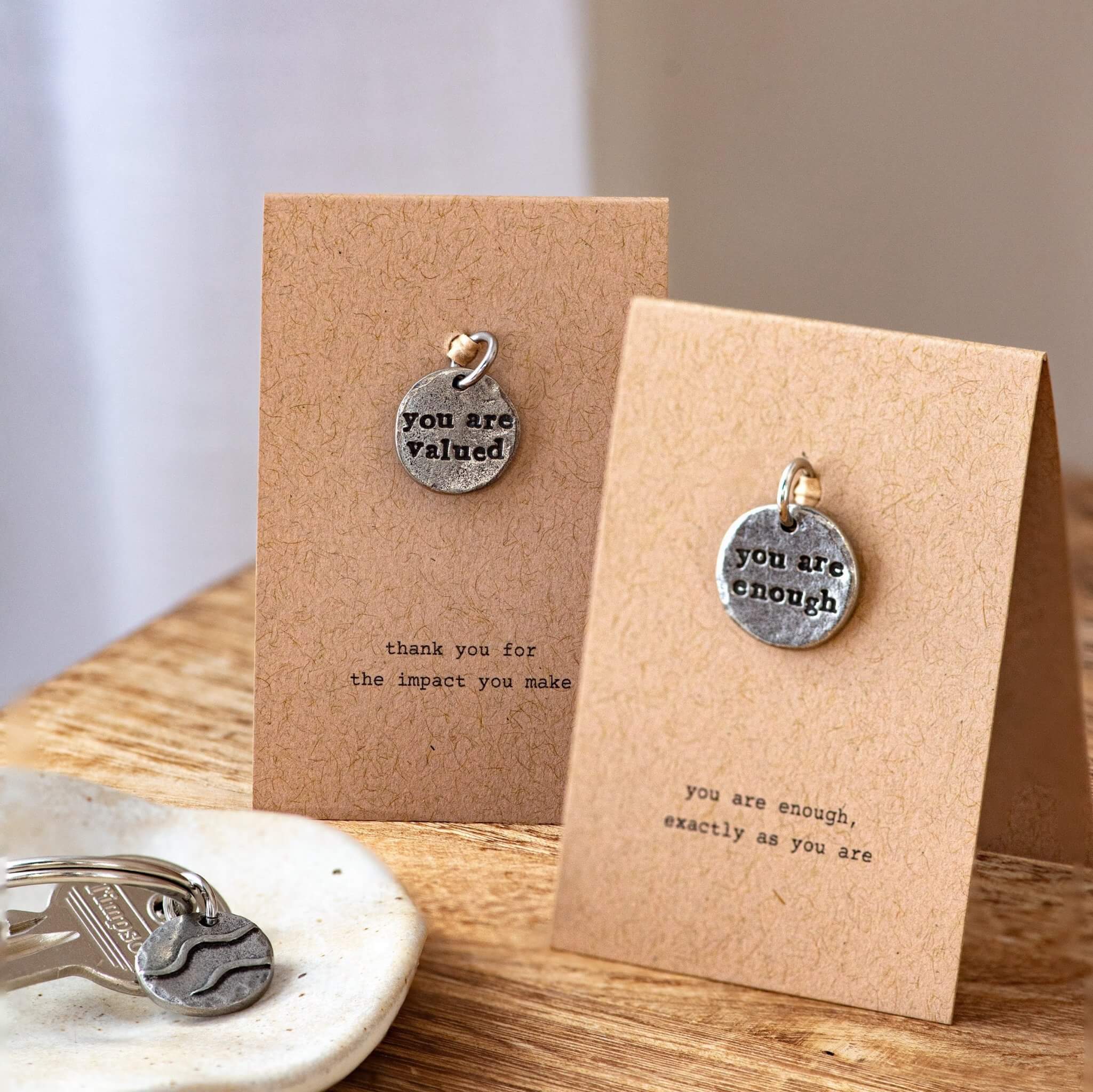
The Give Yourself Kindness Affirmation Cards, from £13.95. Sixty affirmations across three boxed sets of twenty, written in the same register as the ones on this page. Reviewed by licensed therapists Margaret Davis, MS, LPC and Collette Jones, LCSW.
Added to your basket. View basket →
Common questions
Do realistic affirmations work better than positive ones?
For a lot of people, yes. In a 2009 study published in Psychological Science, Wood, Perunovic and Lee found that people with low self-esteem who repeated 'I'm a lovable person' felt worse than those who said nothing, while those asked to consider how the statement was both true and not true did better. A realistic affirmation stays close enough to what you already accept that your mind does not spend the next minute disproving it, which is why it survives a bad day when a cheerful one does not.
Why do positive affirmations make me feel worse?
Because a statement you cannot currently believe invites your mind to produce the counter-evidence, and now you are holding both the original difficulty and a fresh list of reasons the nice sentence is untrue. This is a documented effect rather than a personal failing. The way through is not to abandon affirmations but to shorten the distance between the sentence and where you actually are.
How do I make an affirmation feel believable?
Three adjustments do most of the work. Add 'and' so the sentence can hold the hard thing too, as clinical psychologist Dr Caroline C. Lee does with 'I am struggling AND healing'. Add a direction rather than a destination, as Dr Michelle Chung does with 'I'm learning to be more confident' instead of 'I am confident'. And follow it with one small action, which Dr Annabelle Kyle Dortch, PsyD recommends, because an affirmation that leads somewhere is harder for your mind to dismiss.
How often should I say them?
Less often than most advice suggests, and more deliberately. Repeating a sentence twenty times mechanically does very little; meeting one sentence properly once or twice a day does more. Attach it to something you already do rather than adding a new routine, and if a particular affirmation stops meaning anything, change it rather than pushing on.

“I instantly feel a sense of groundedness and calm”
Affirmations can be so helpful along our healing journey. And these affirmations are truly so beautiful and powerful! When I read them, I instantly feel a sense of groundedness and calm. They are wonderful reminders for when I need to slow down and reconnect with myself. I also love that they are centered around having more compassion and kindness for ourselves. I will definitely be utilizing these with my clients, as well as practicing them myself. Thank you so much Rachel!