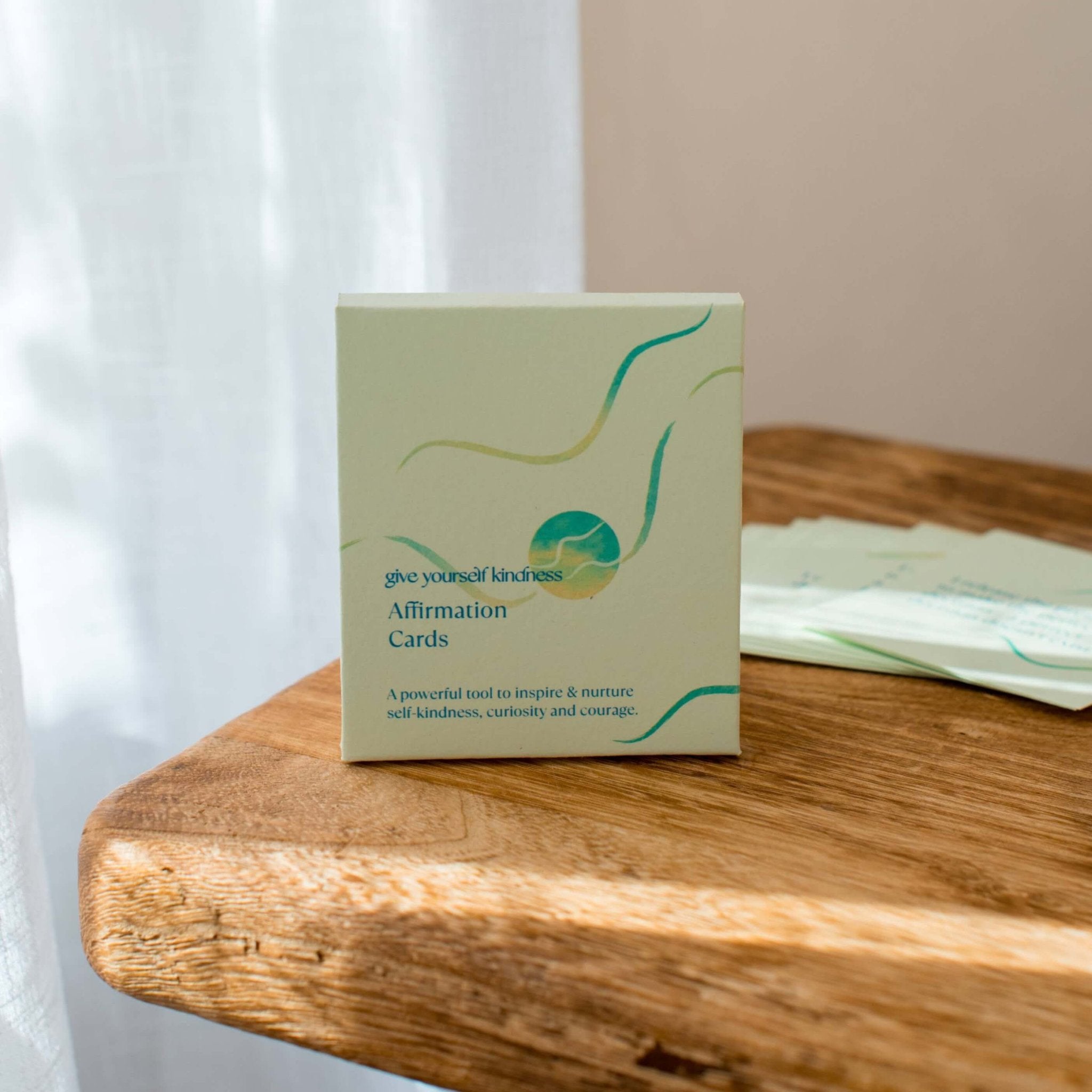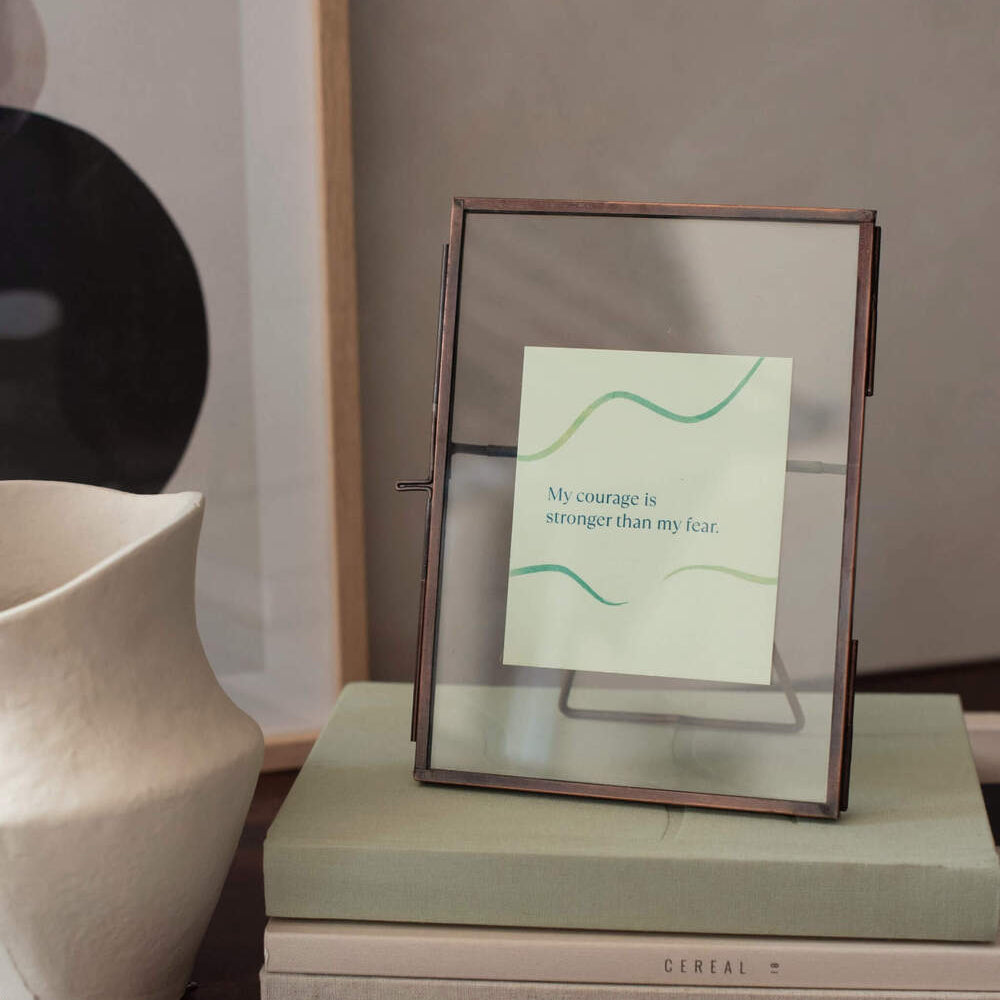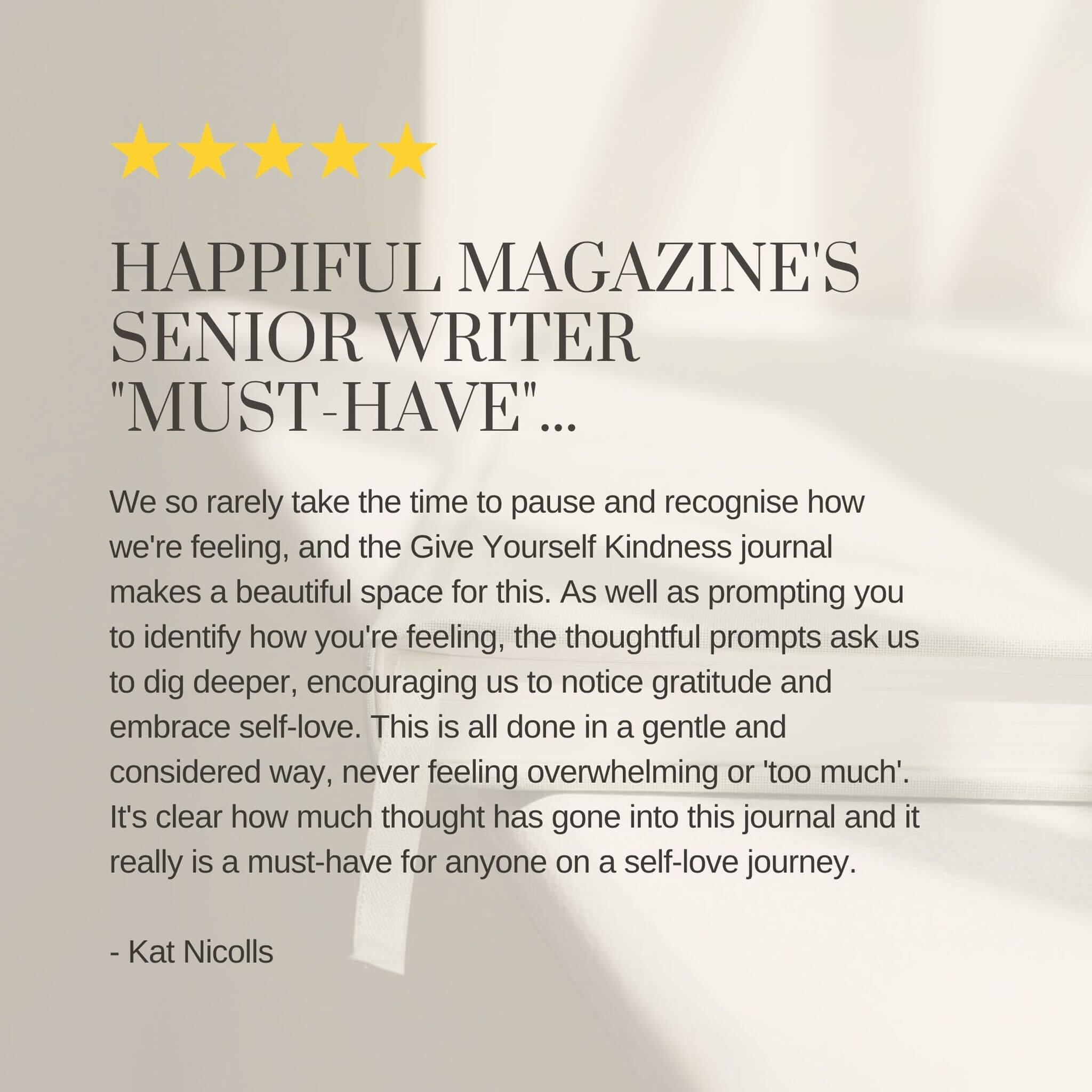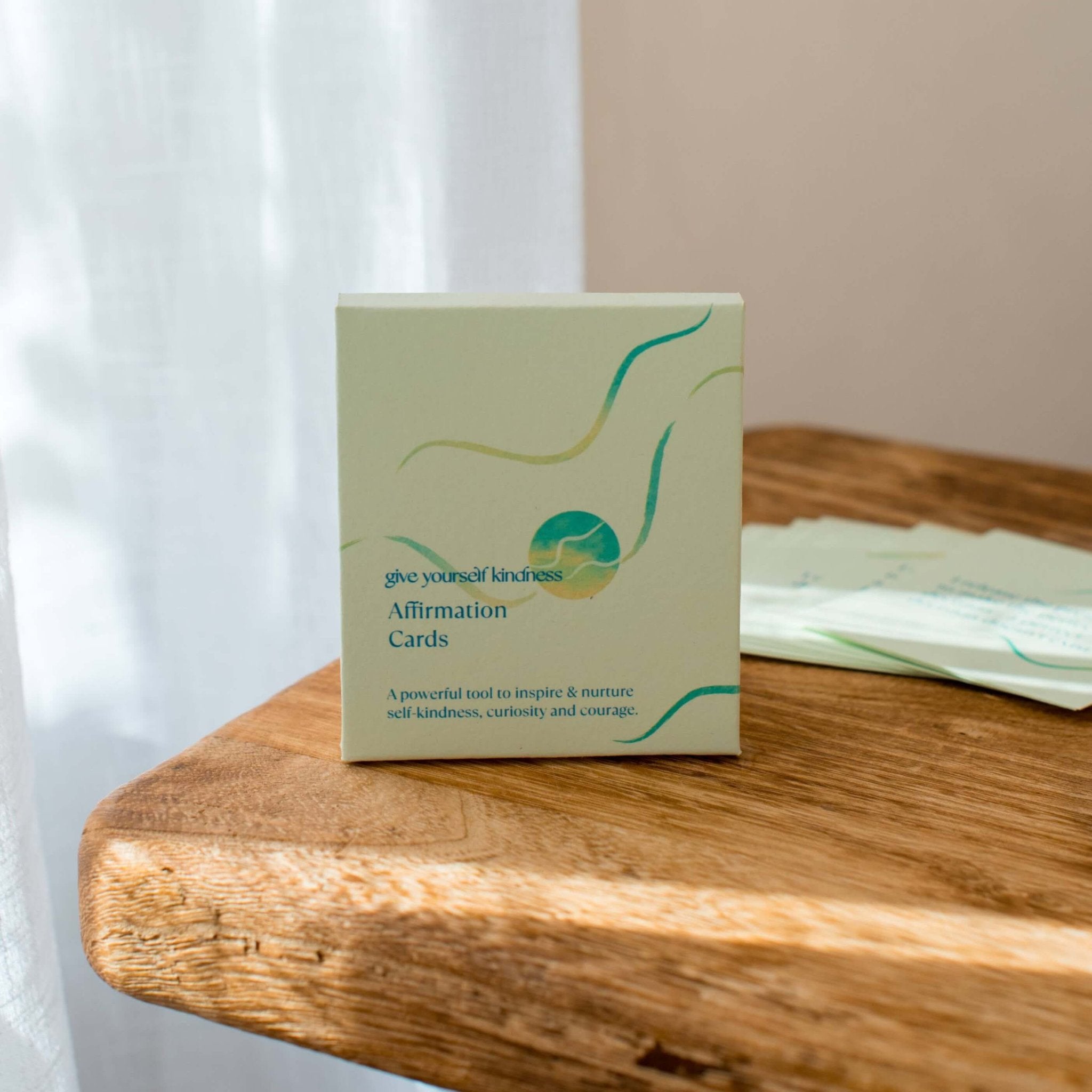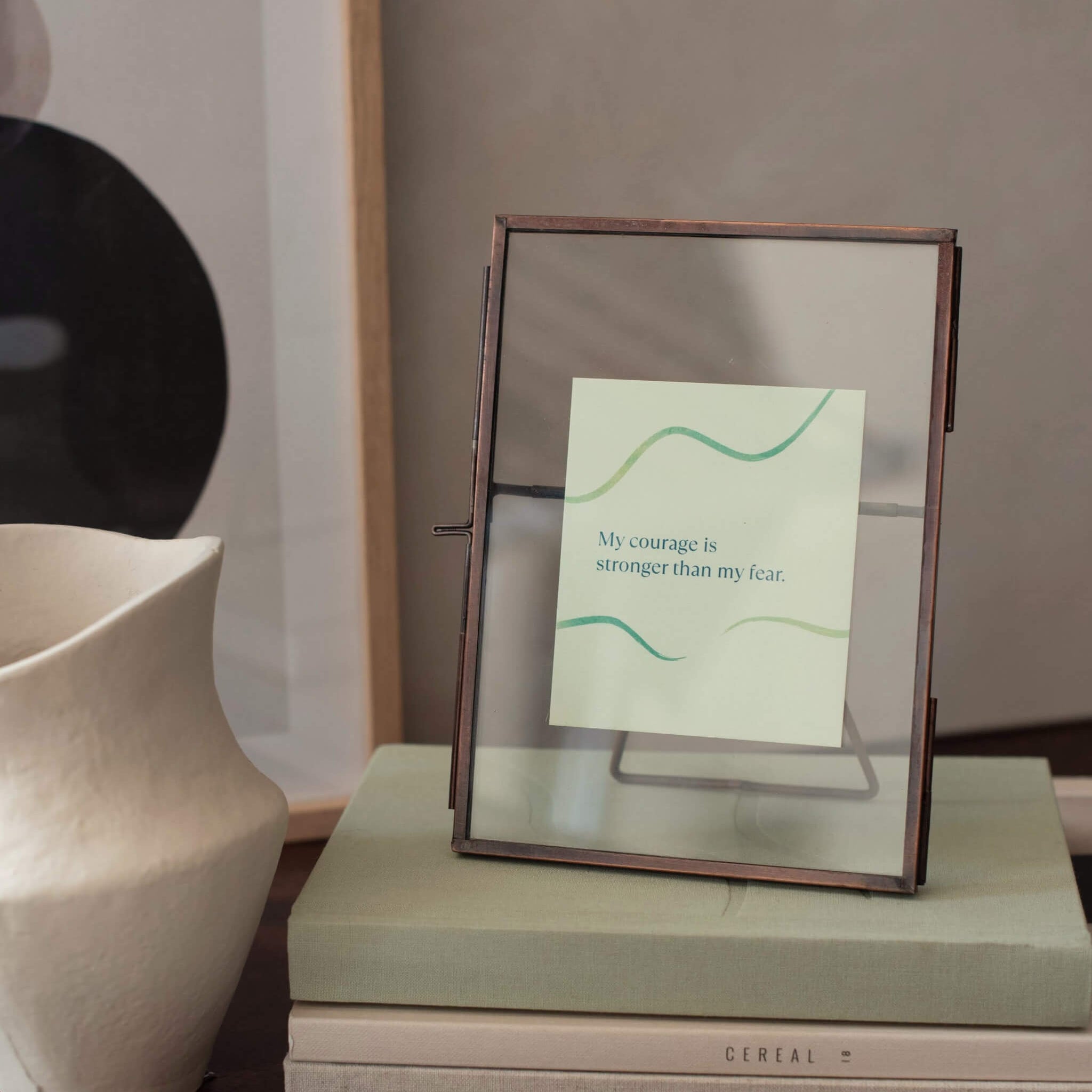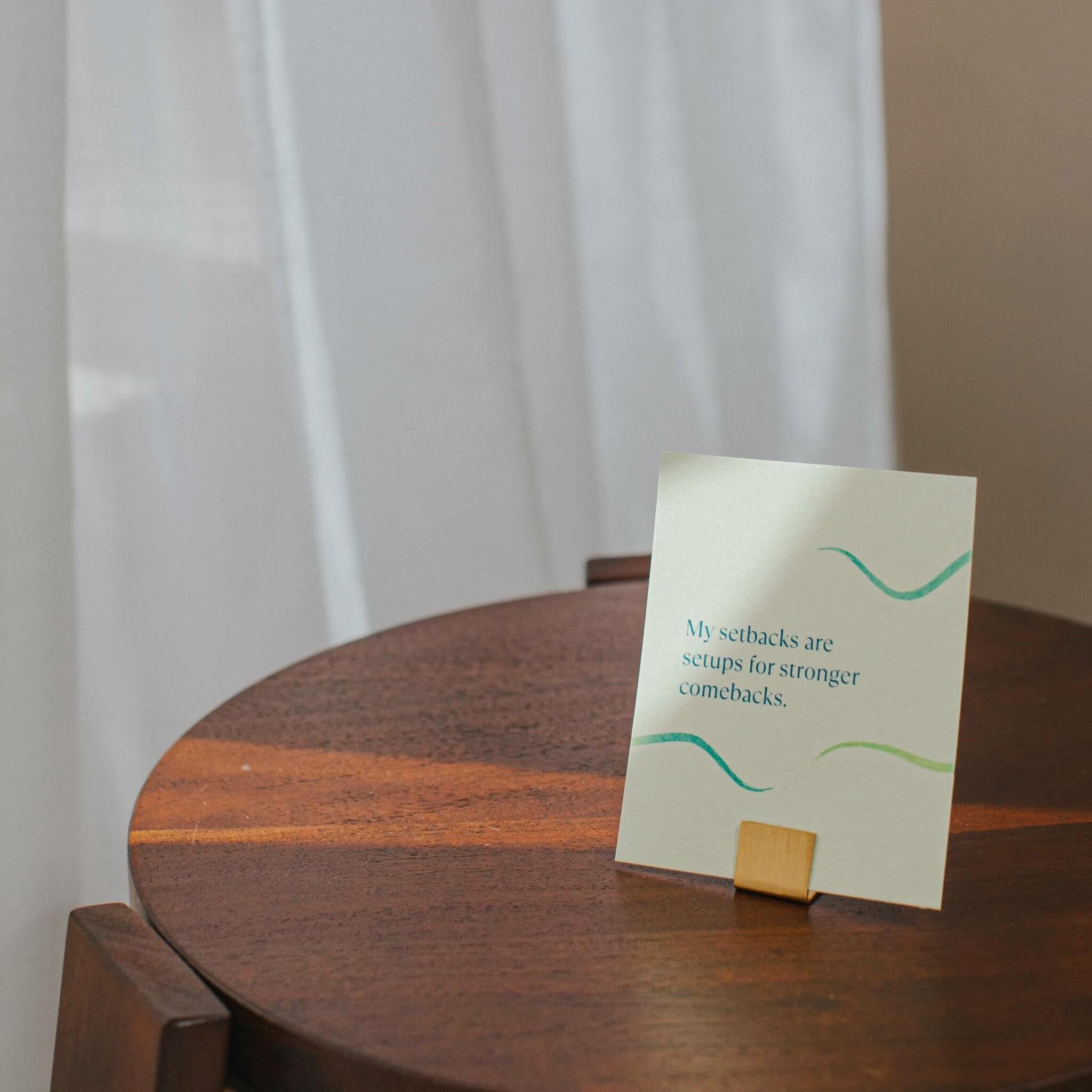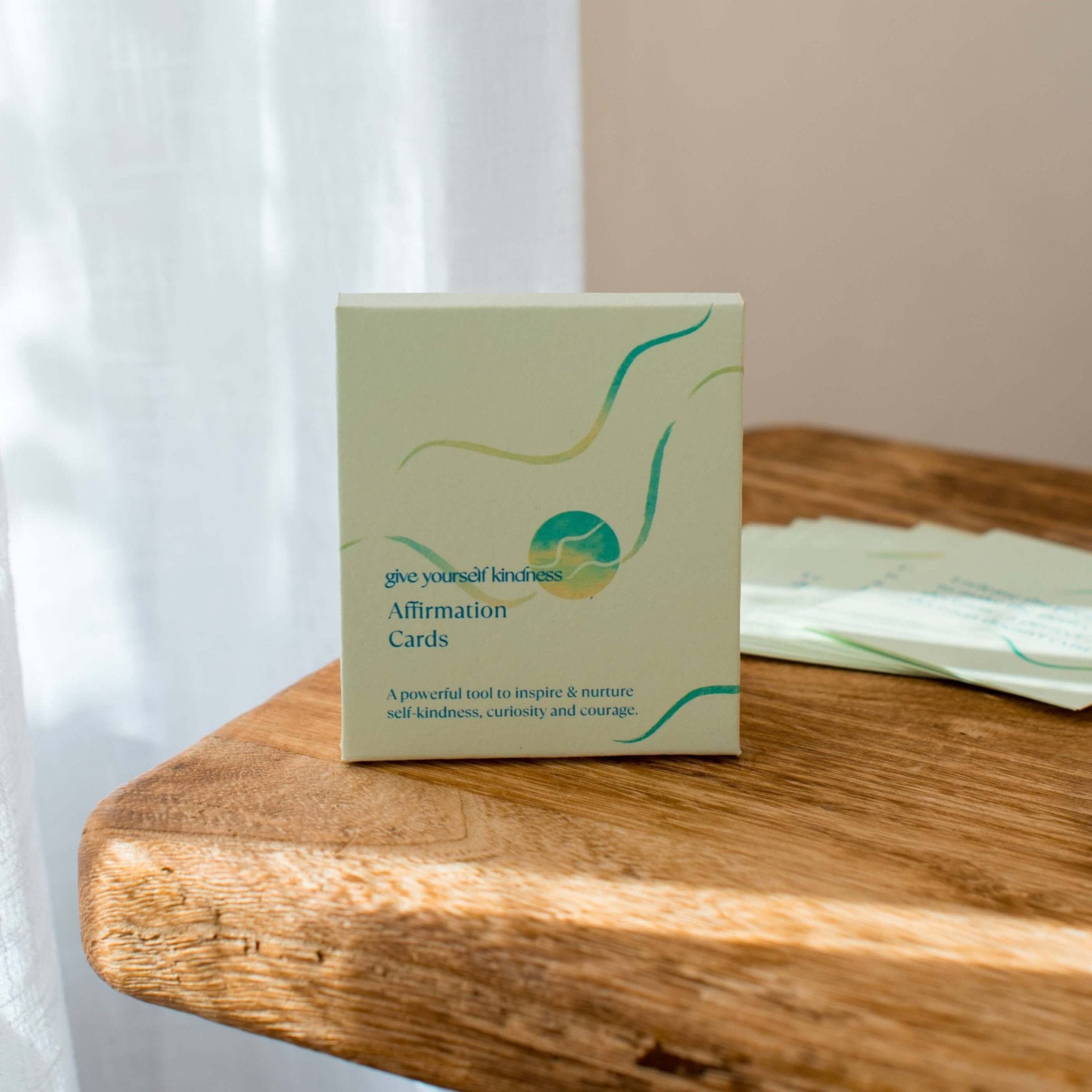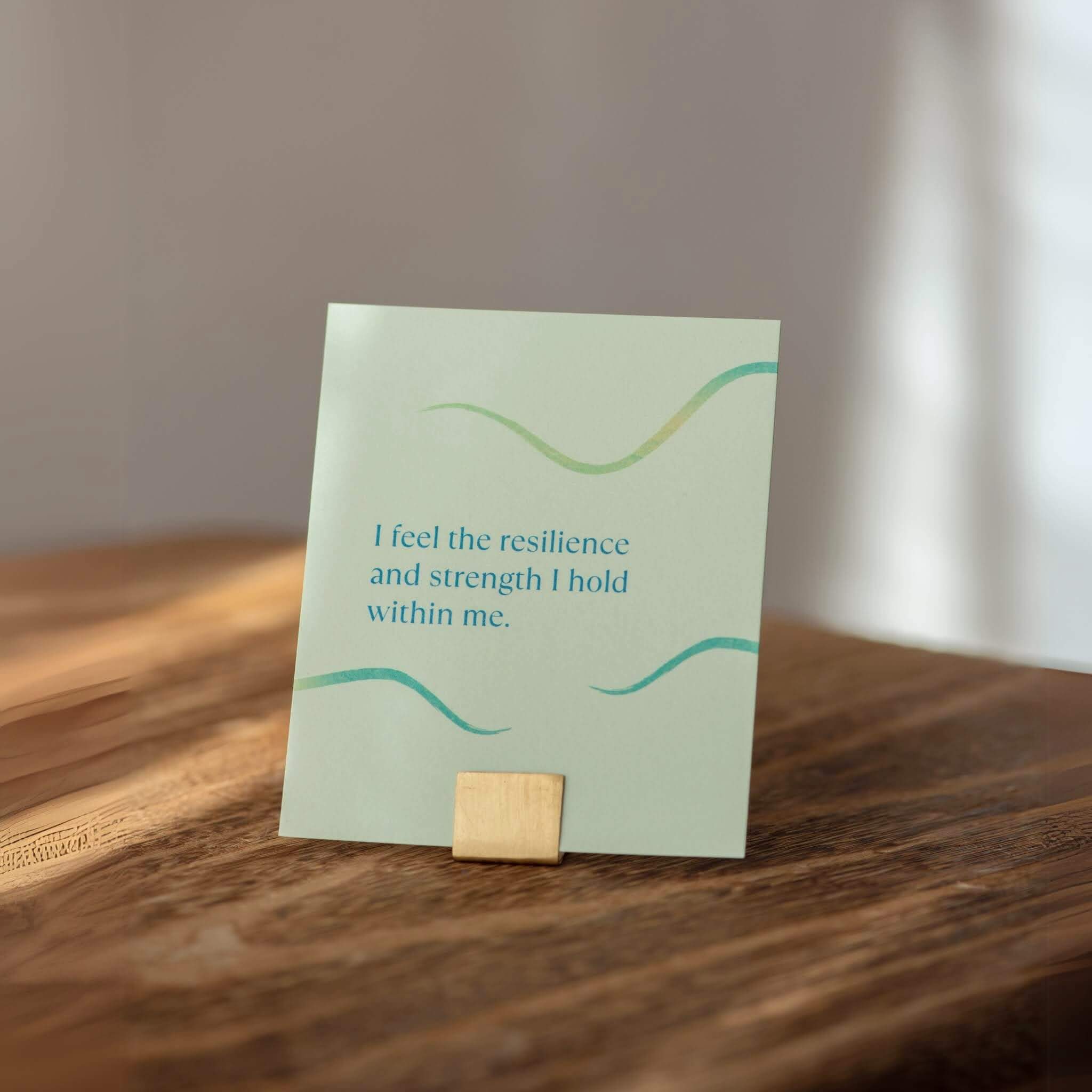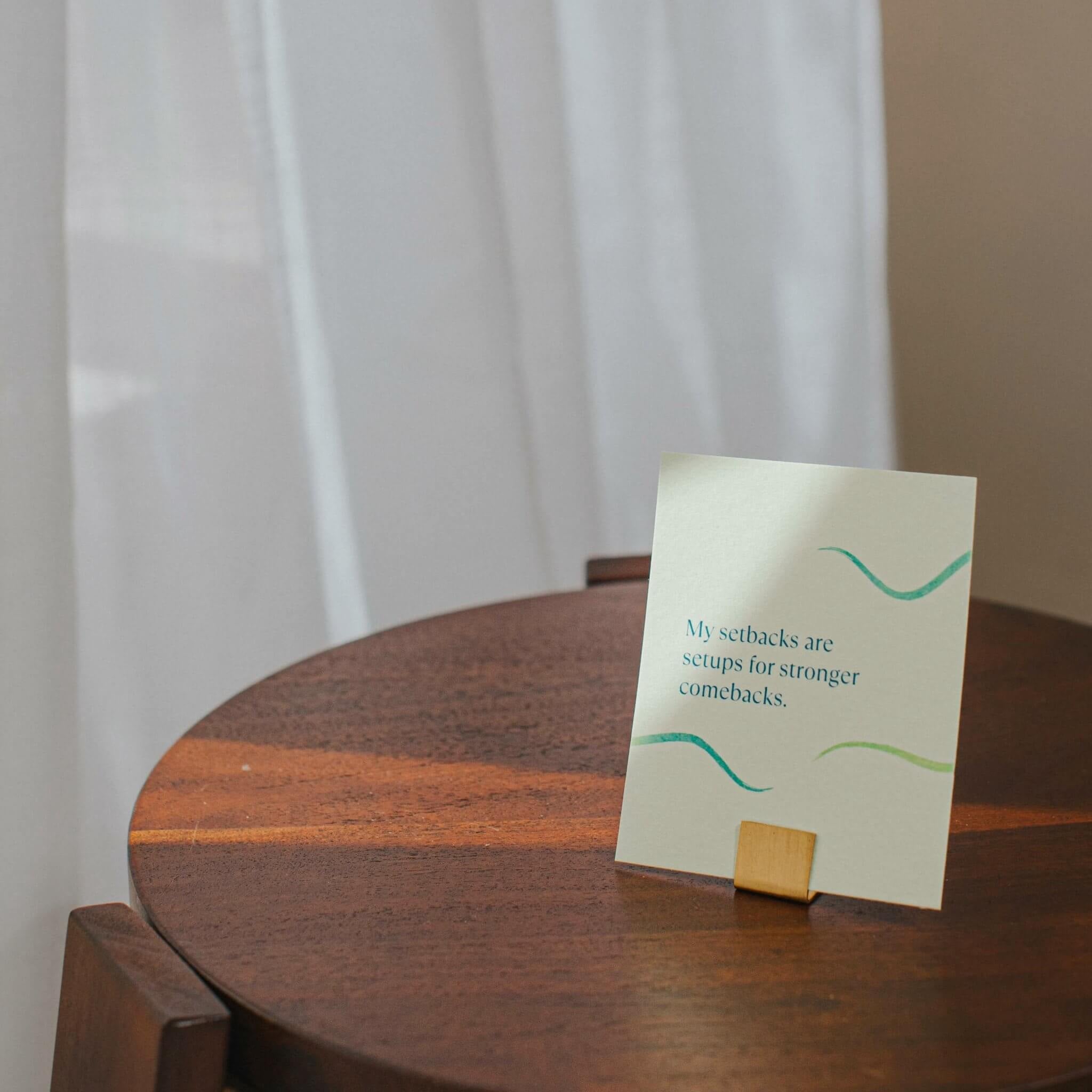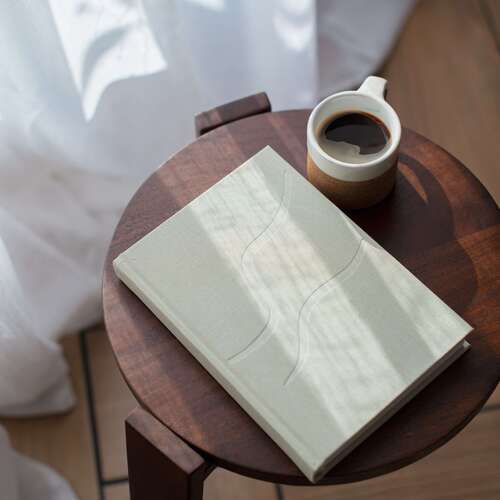



The feelings journal I make, and what makes it different
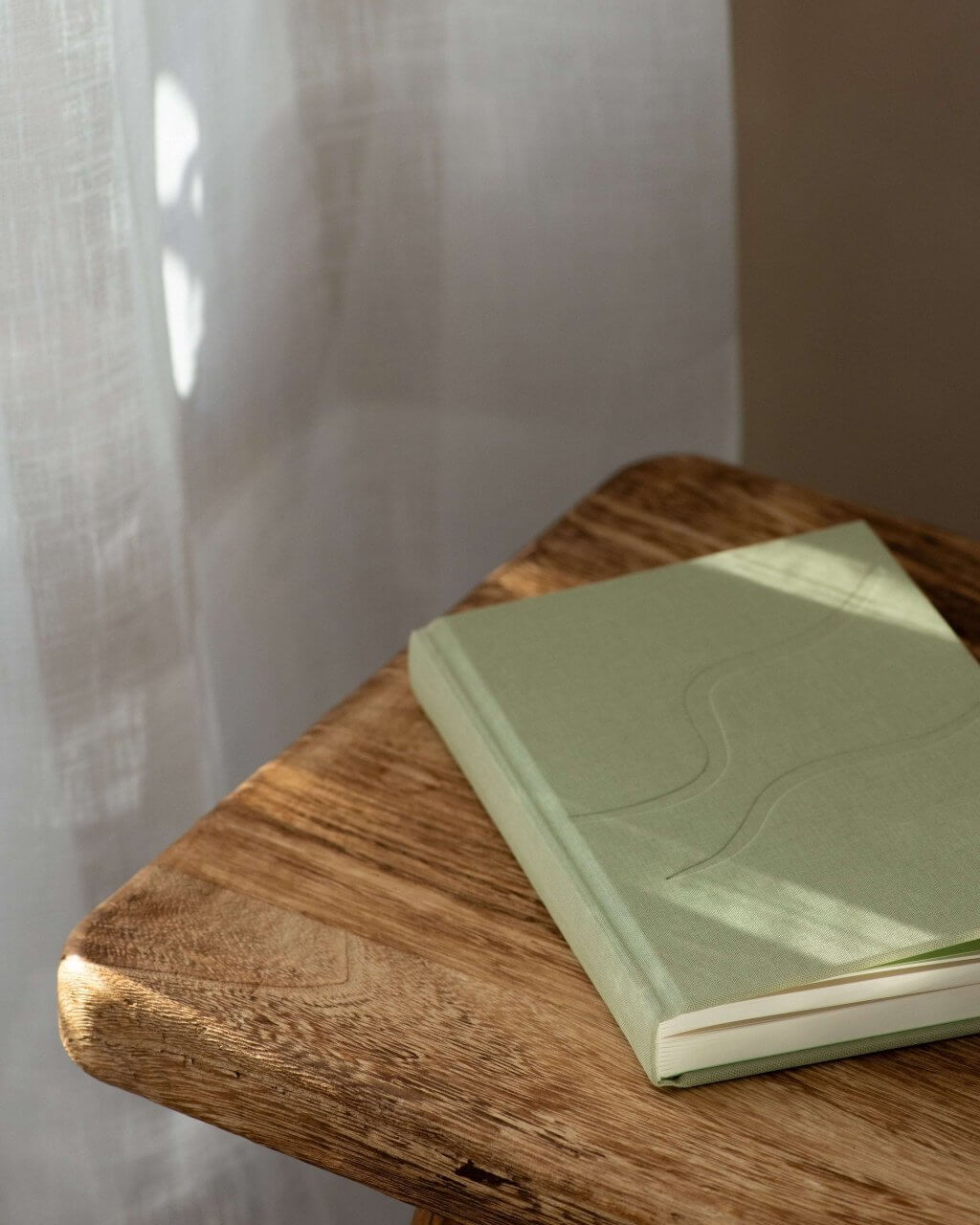
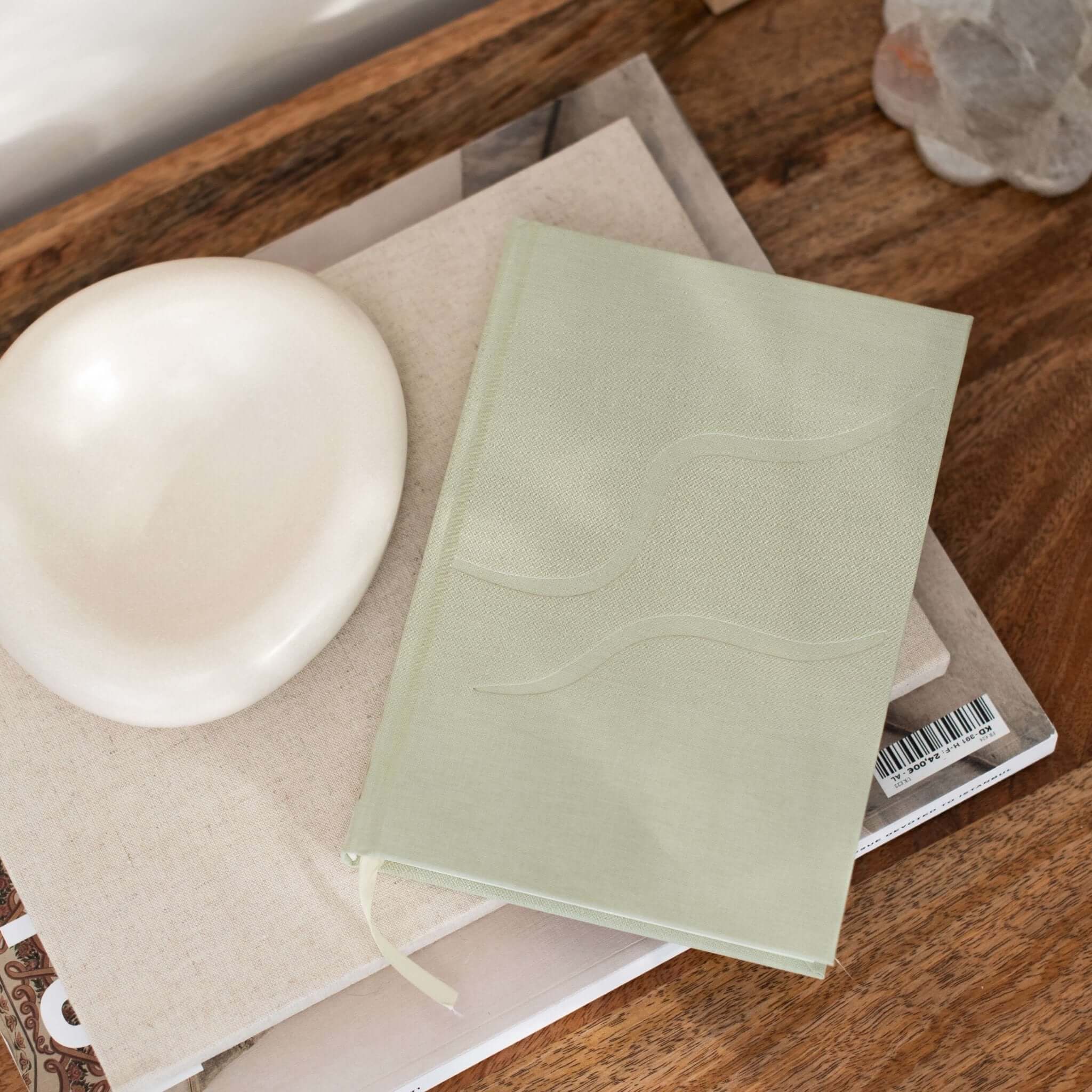
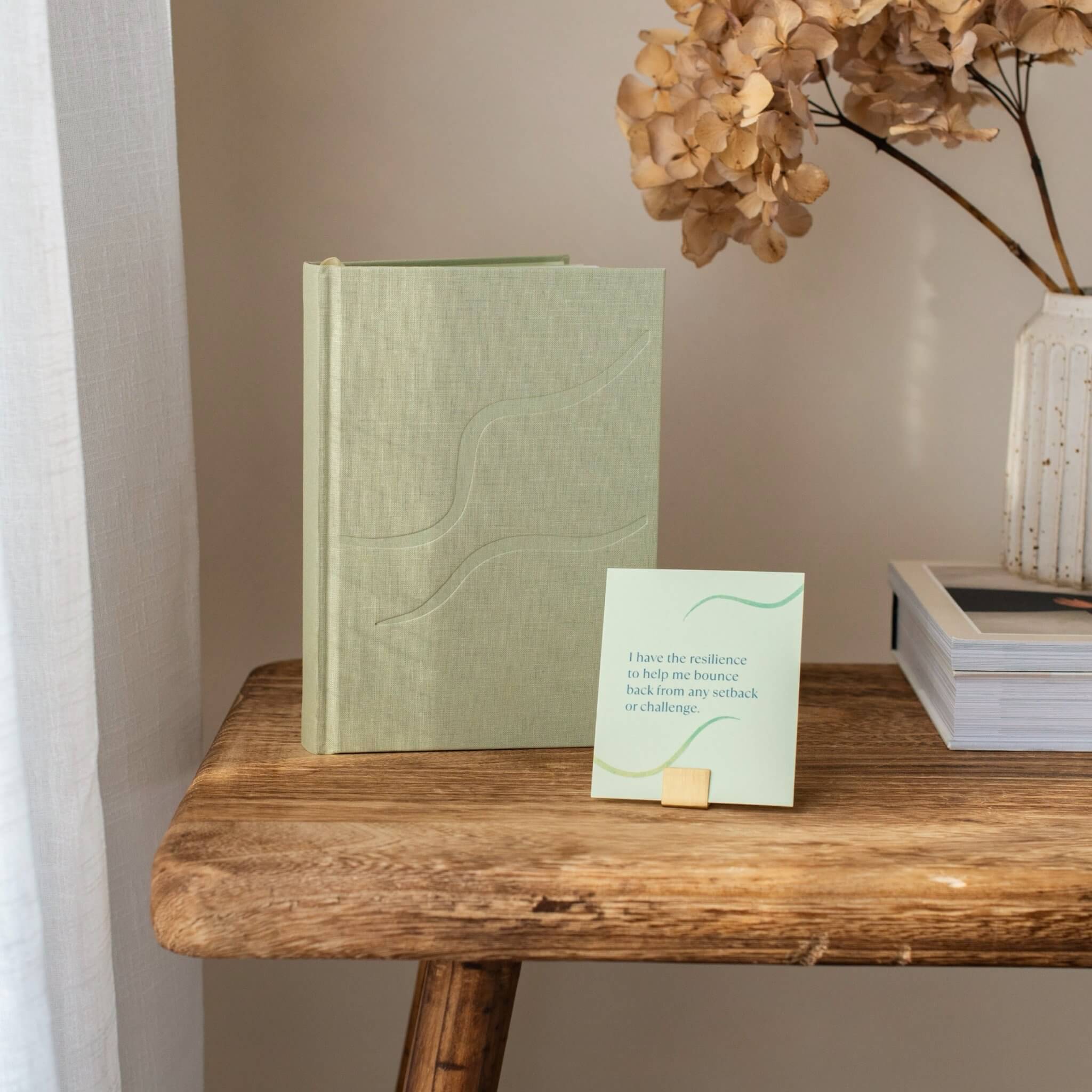
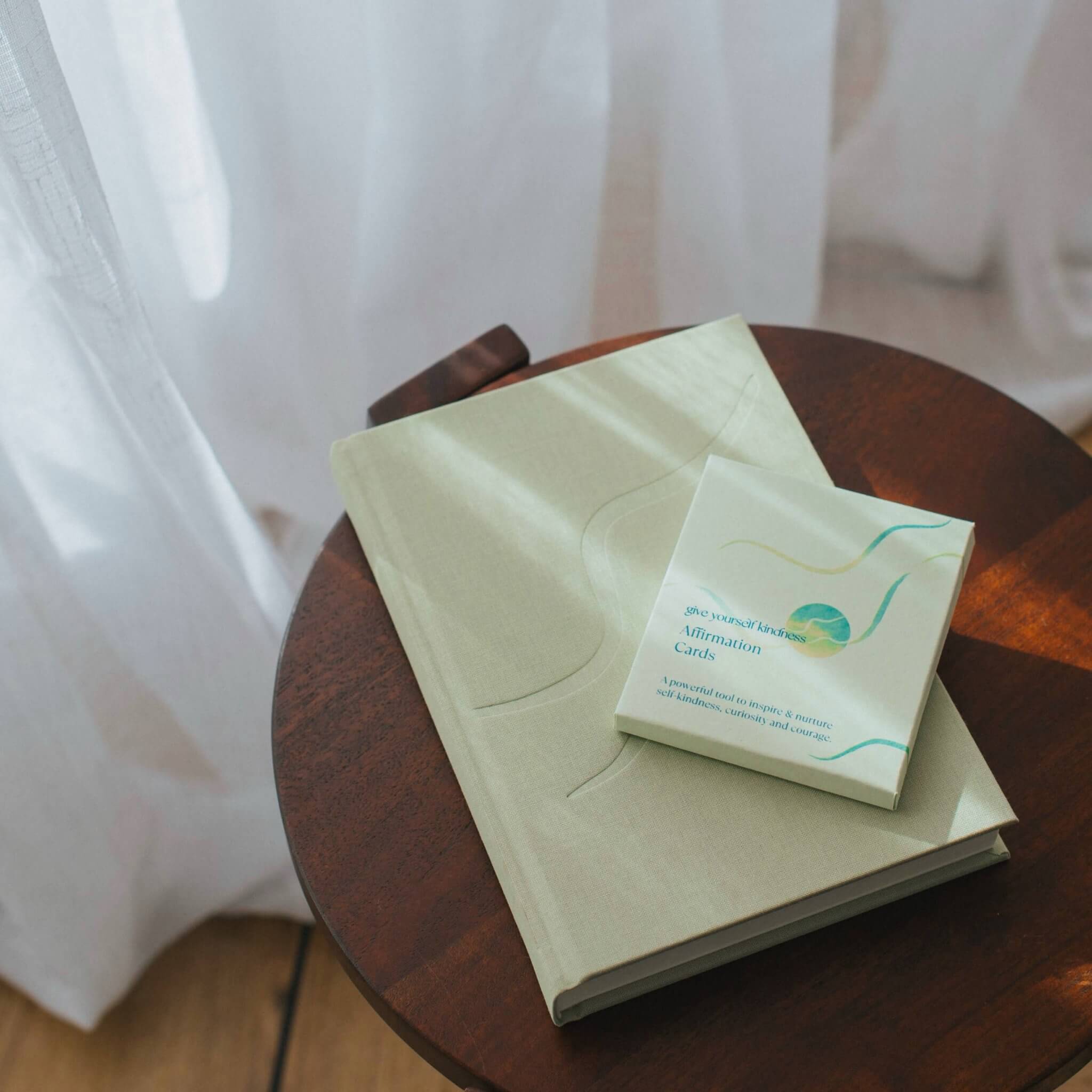
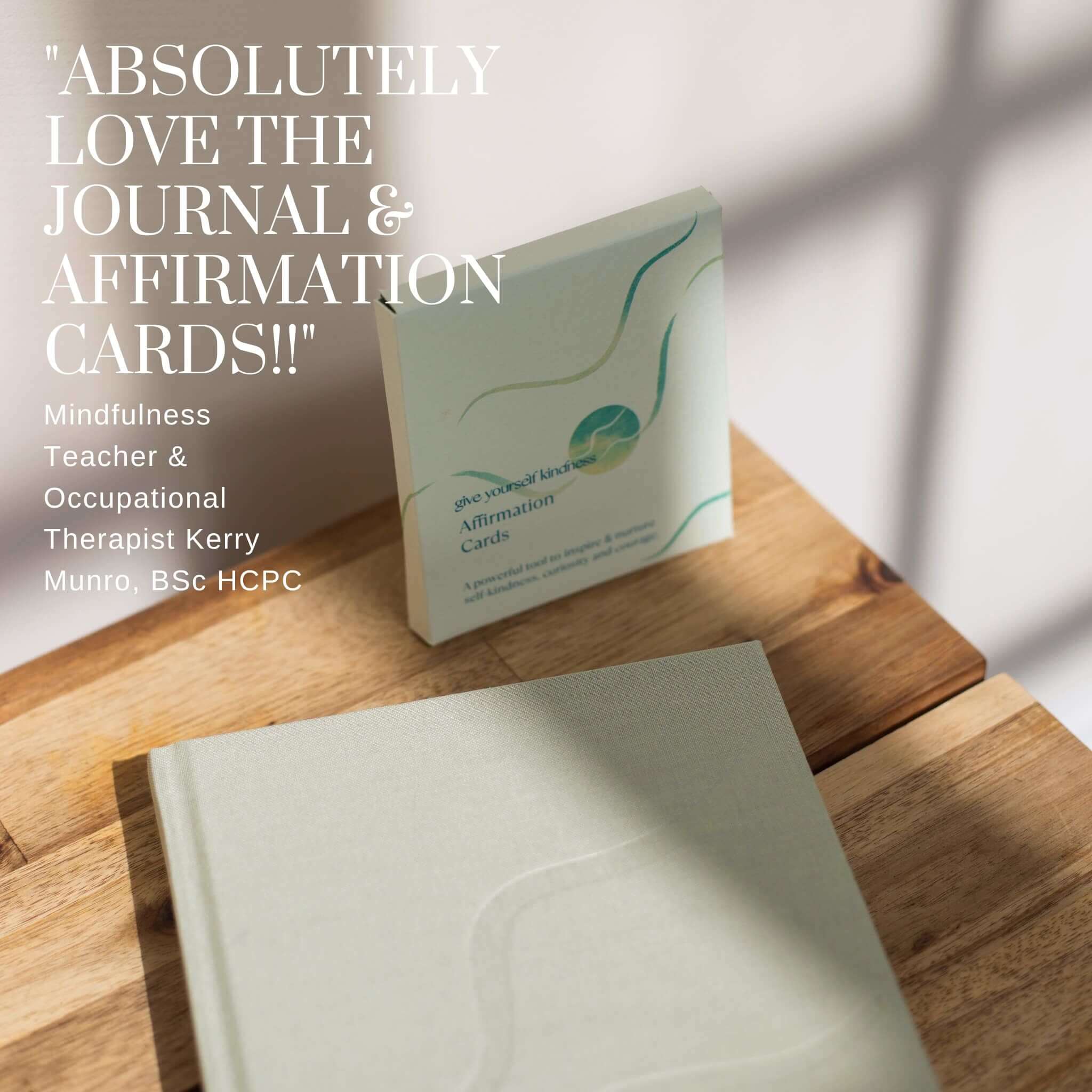
The Give Yourself Kindness Journal is a feelings journal built around one idea: naming a feeling is only half of it, and what you do next is the part that changes things. It is used by therapists with clients worldwide, and reviewed by clinical psychologists at Harvard Medical School and the University of Oxford.
Three things that make it different
- An emotional awareness tool on every single page. Not once at the front. On all 90 pages, so the words are in front of you rather than expected of you. You can circle more than one, because feelings arrive together.
- Ninety different prompts, so it never goes on autopilot. The same question every day stops meaning anything after a fortnight. A new one each entry keeps you actually looking.
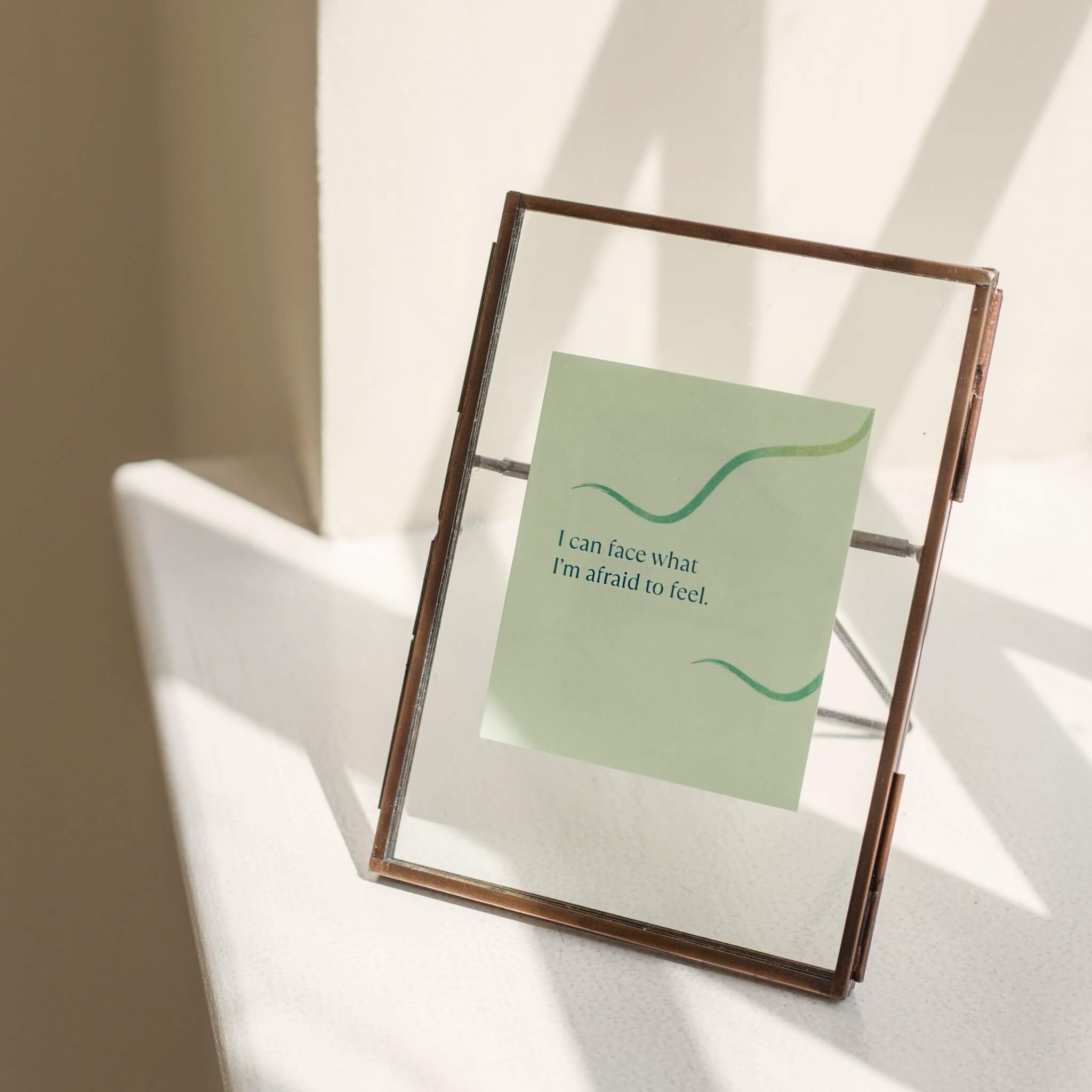
- Every entry ends by turning kindness back towards you. You are asked what you would say to a friend who felt this way. That step is the reason the journal exists.
Want to see it compared?
I have a full guide to guided journals for tracking emotions if you would like the detail.
Is it a gift?
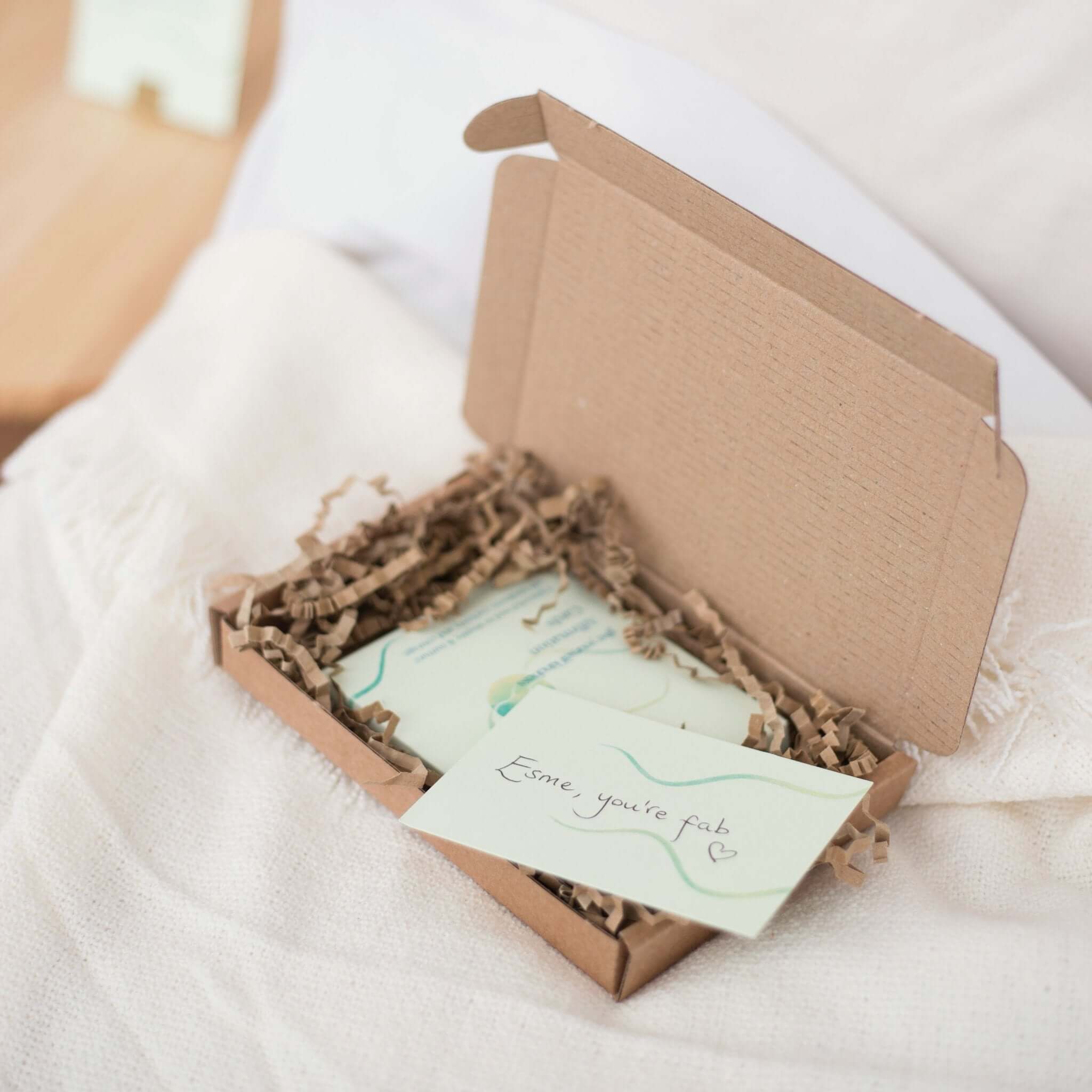
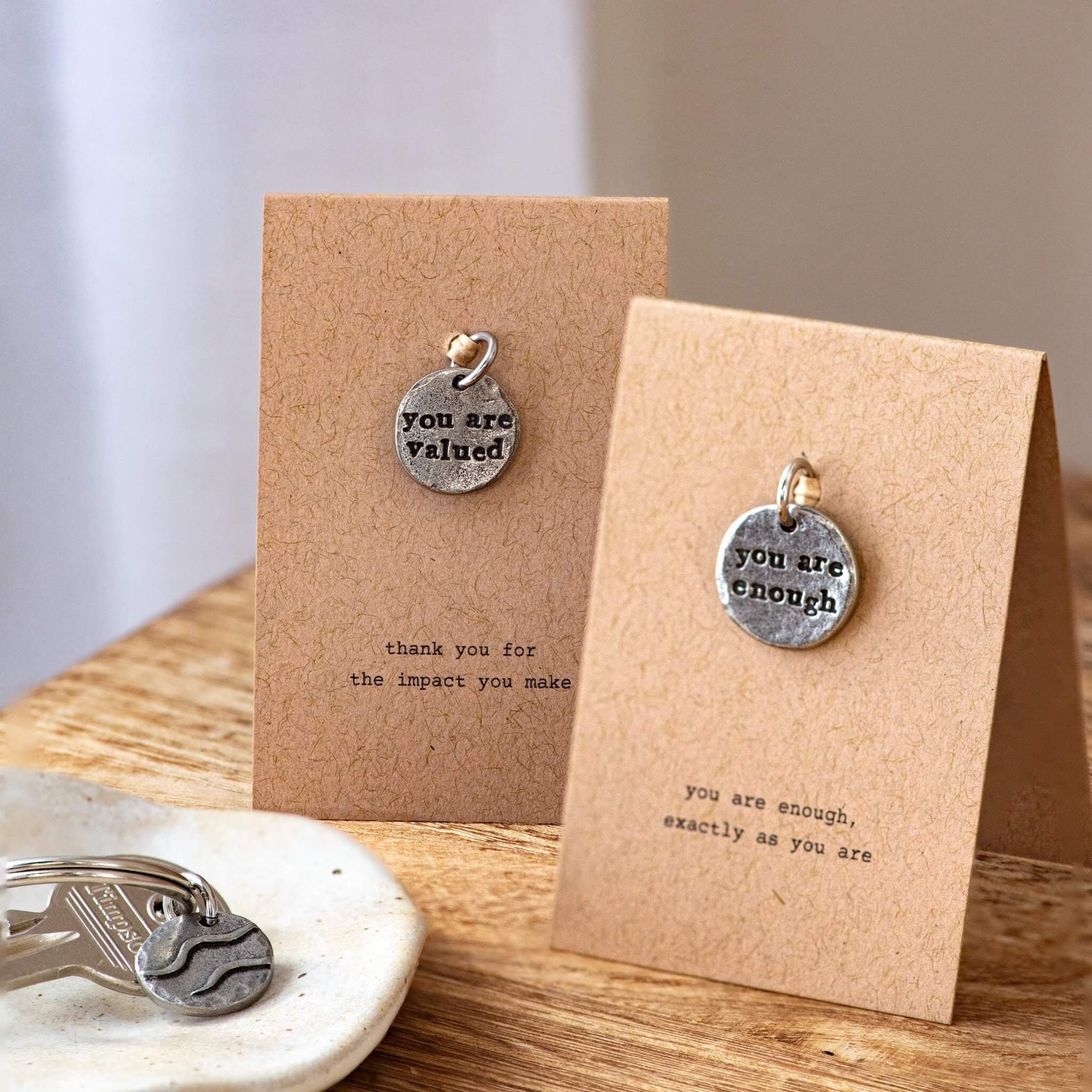
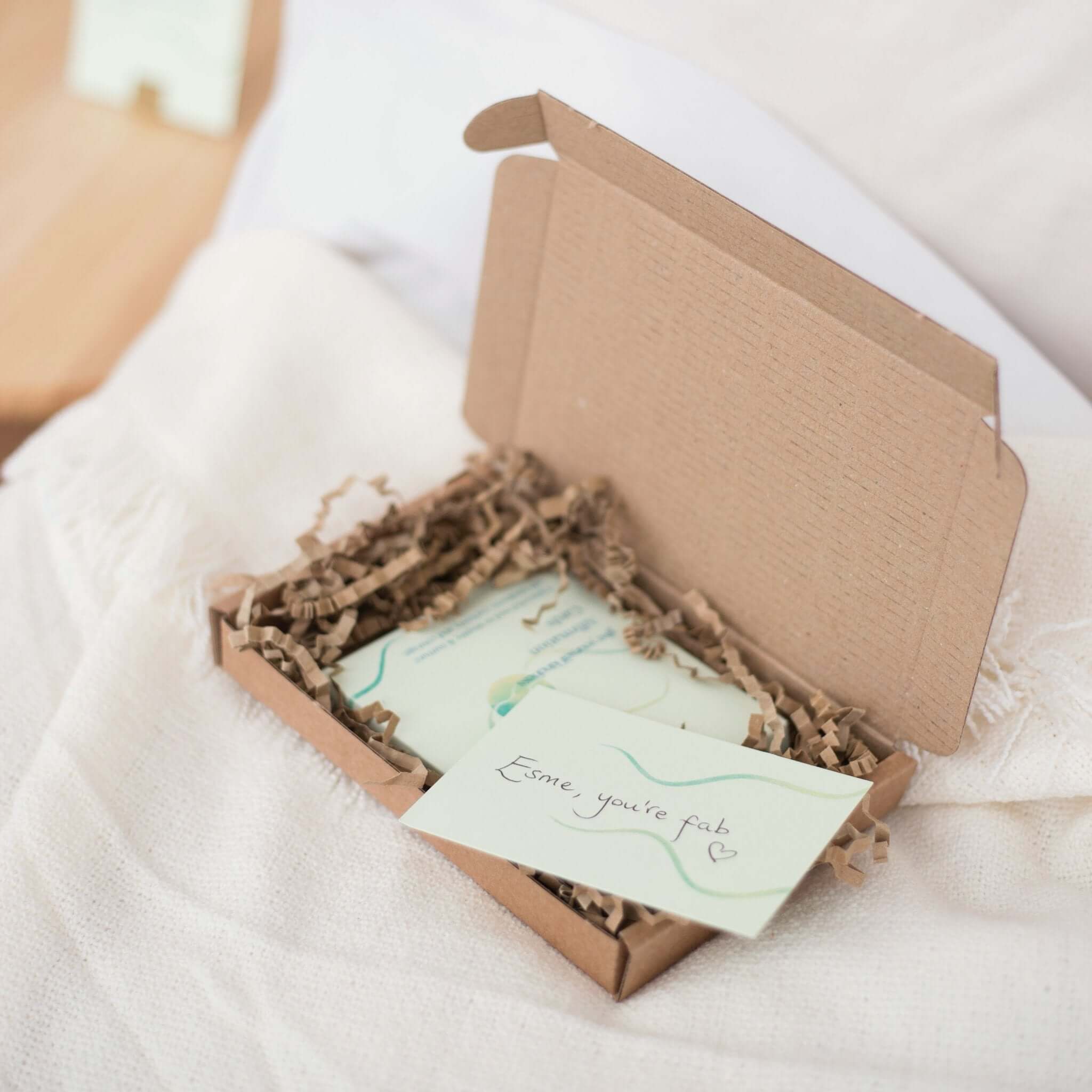
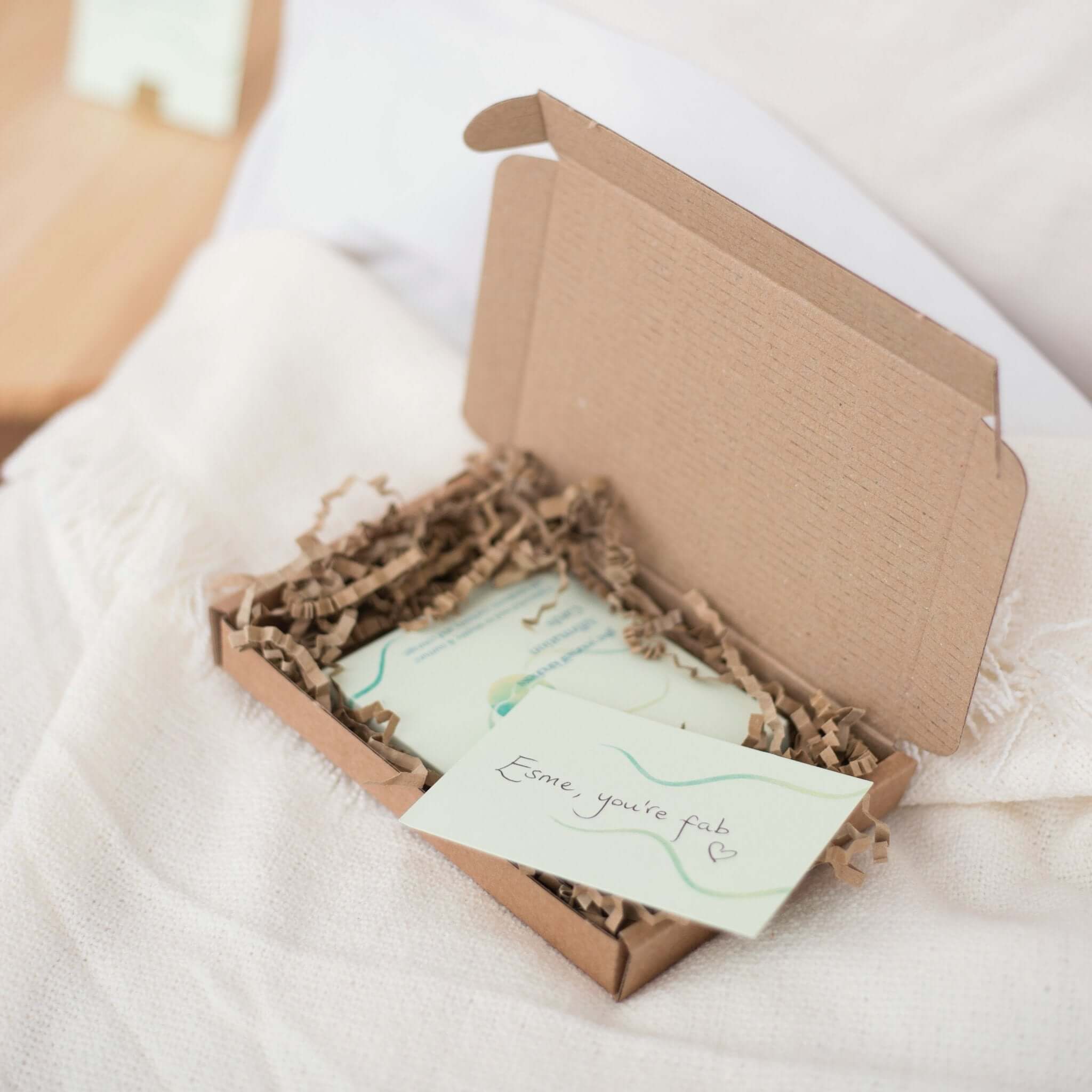
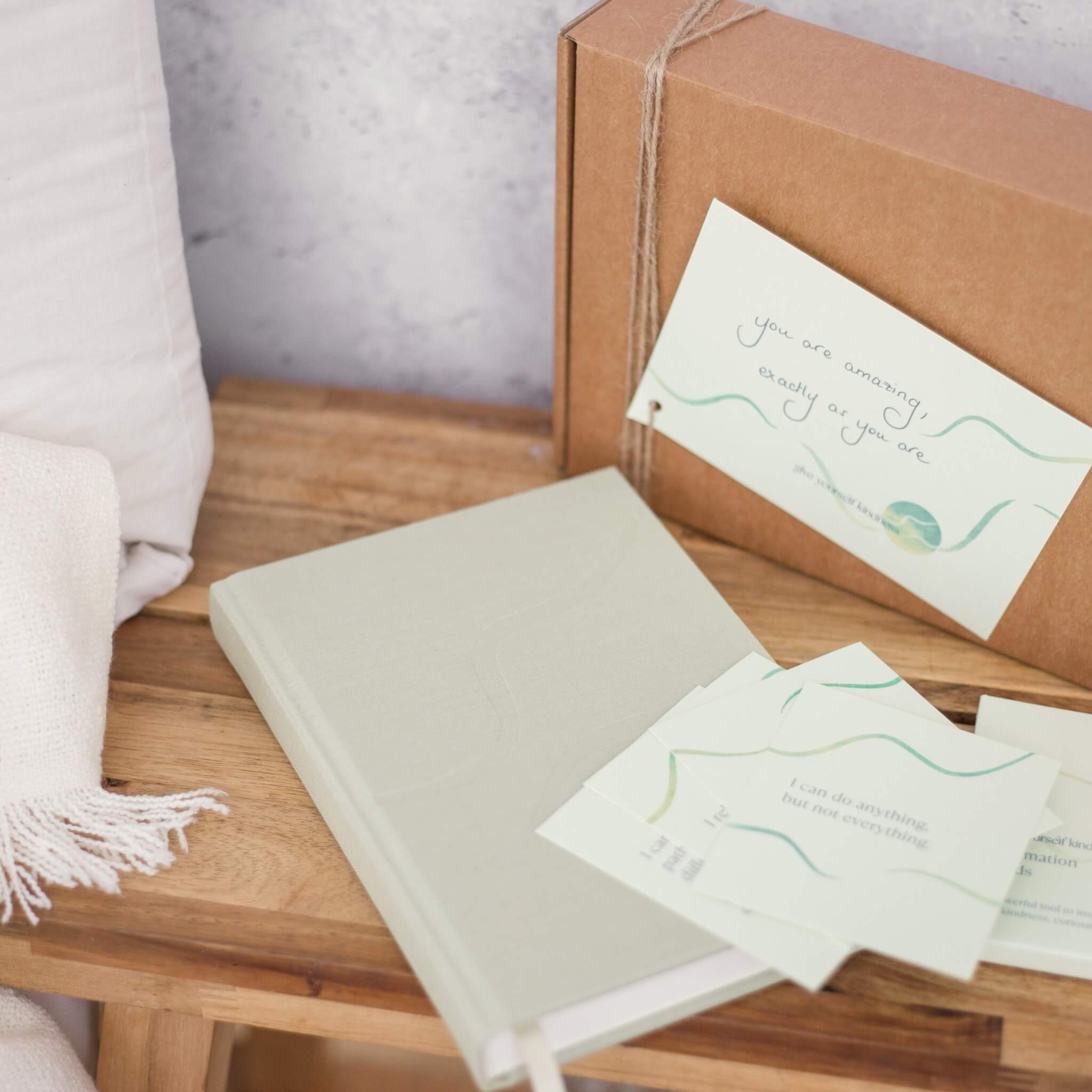
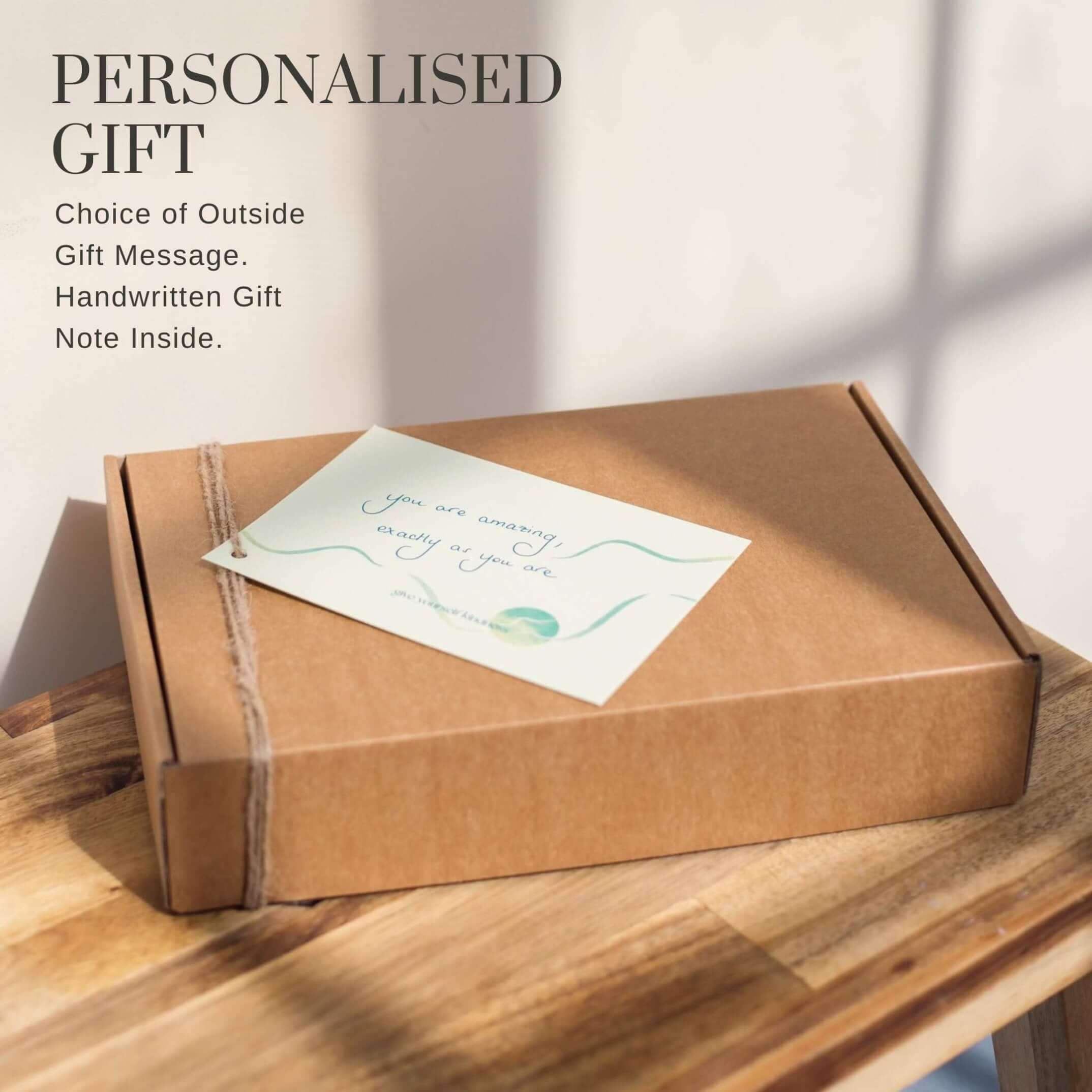
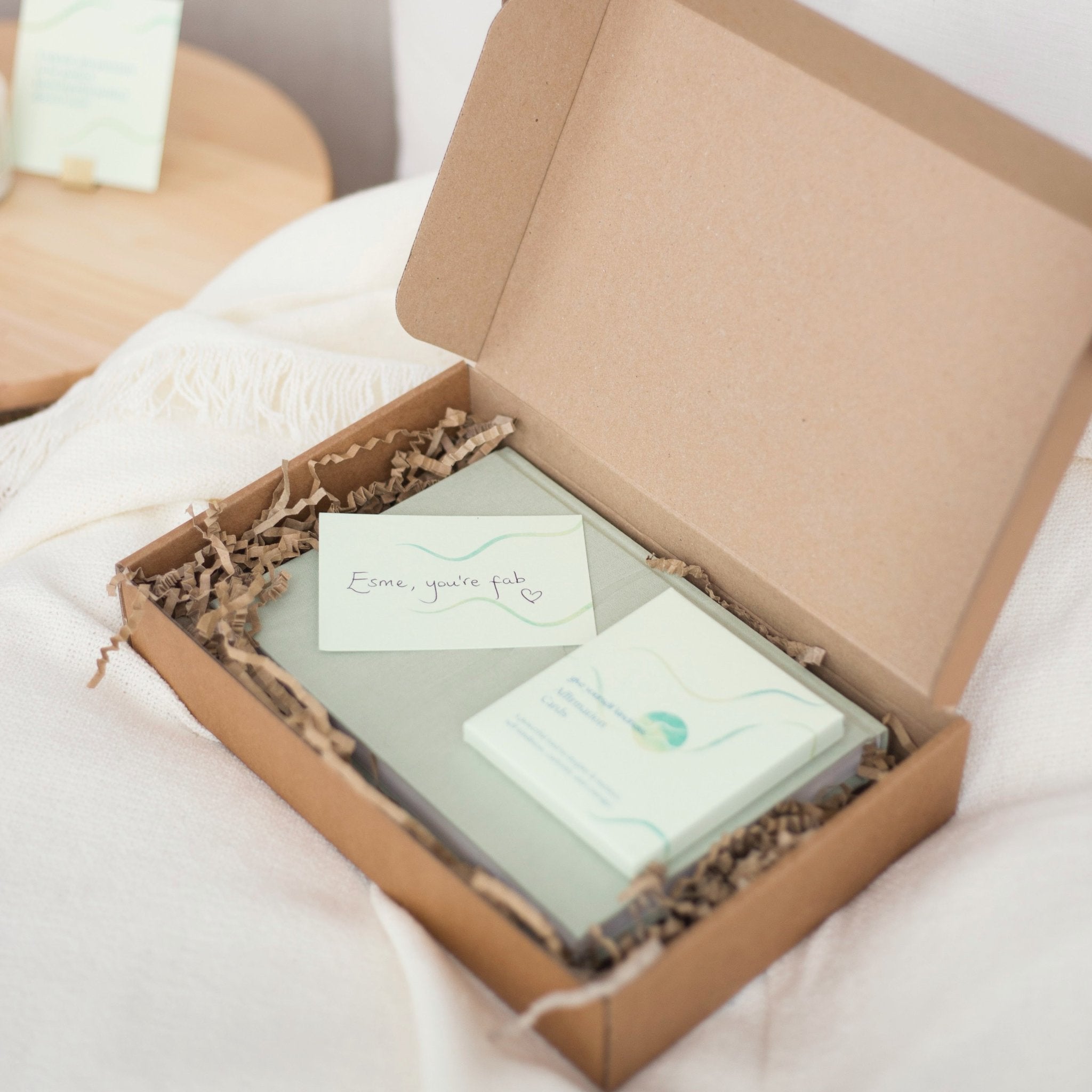
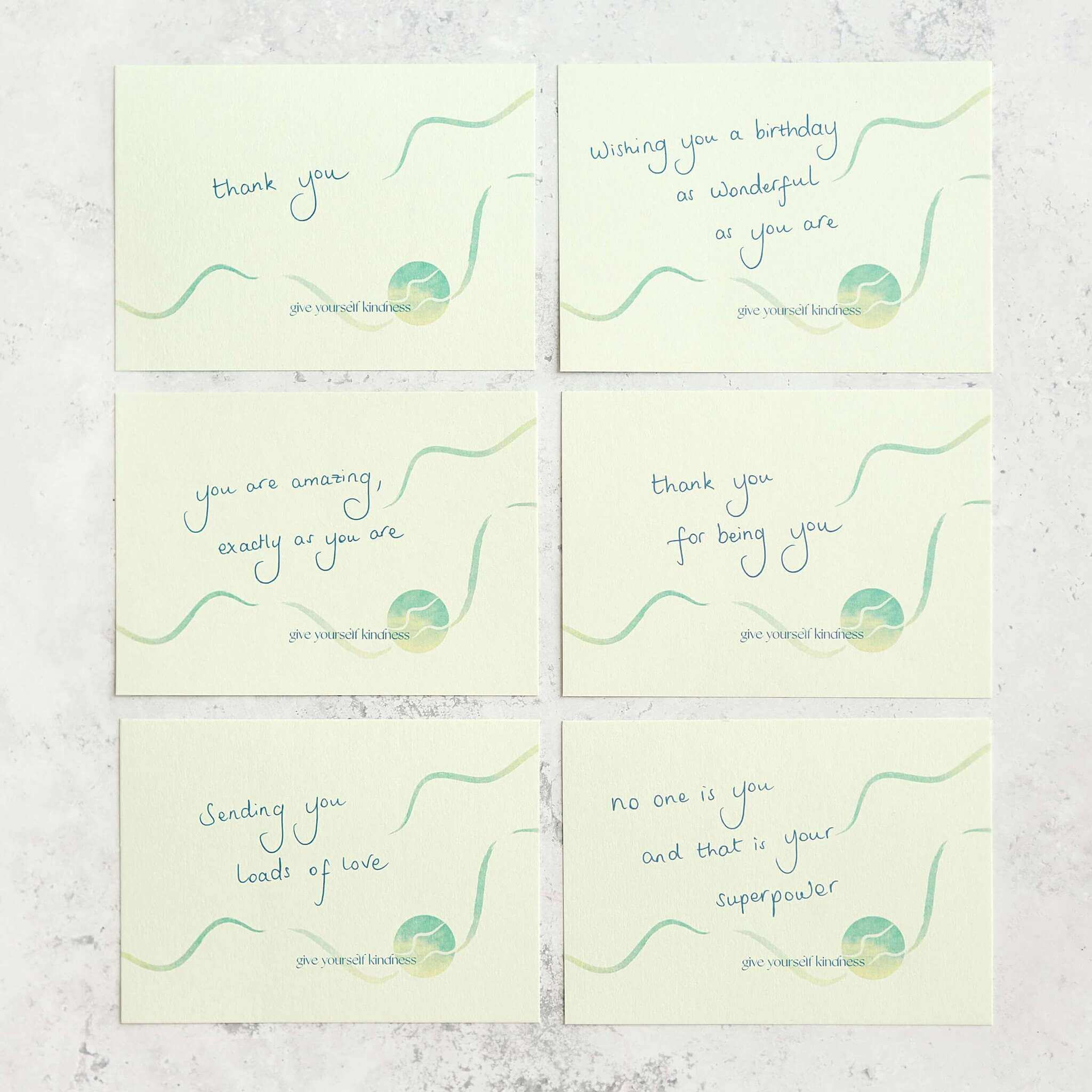
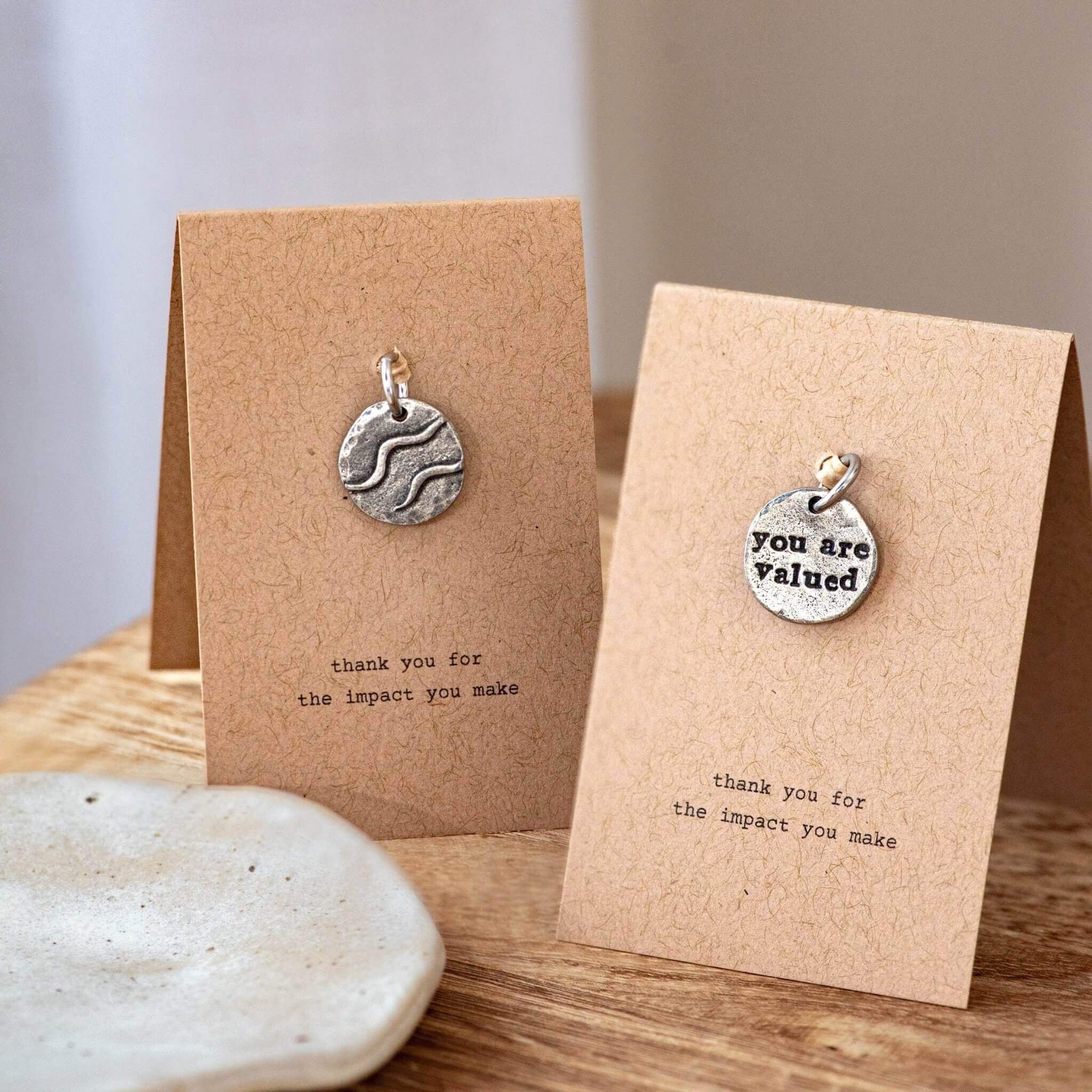
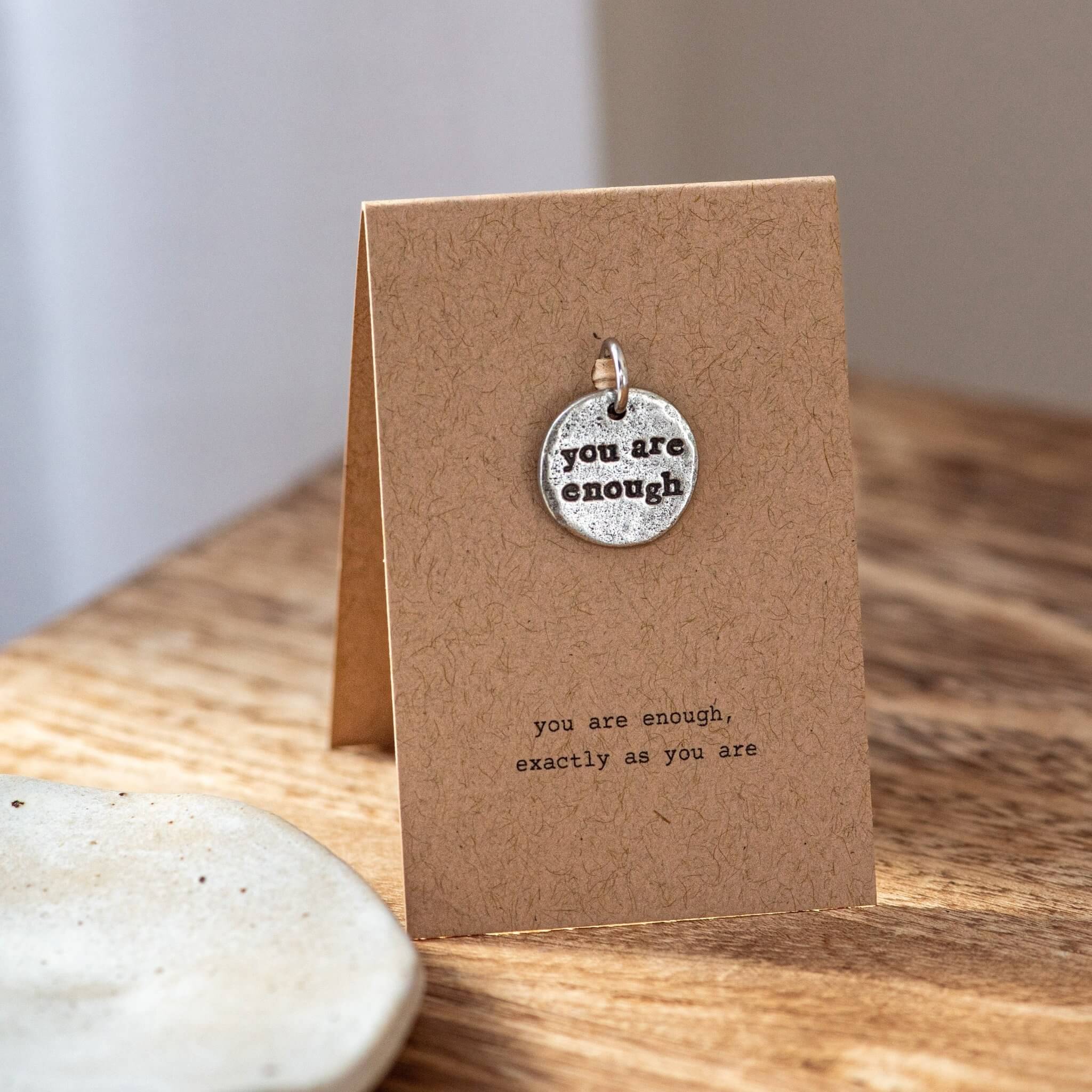
It arrives beautifully, and there is a free handwritten gift note with every order. Just add your message at checkout.
Are you a therapist?
Counsellors and psychotherapists use this with clients between sessions. What to look for when recommending journals.
On this page
Why I made this one
Wanting to understand your own feelings a bit better is a kind thing to want, and you are in the right place for it.
I went looking for a feelings journal during my own recovery from anxiety, and what I found kept asking me the same thing: how do you feel today. Which sounds simple, and was the exact question I could not answer. I knew something was wrong. I had no word for it. A blank page asking me to name it just showed me the gap.
Most of us were never taught this. School covers spelling and long division, and almost nobody gets a lesson in telling apart disappointed, let down and quietly furious. So when the word does not come, that is a gap in what you were taught. It is not a fault in you.
What changed things for me was Compassion-Focused Therapy, and specifically two ideas: that you can be given the words rather than expected to already have them, and that once you have named a feeling, how you speak to yourself about it matters more than the naming did. This journal is those two ideas, on paper, ninety times.
What is inside, page by page
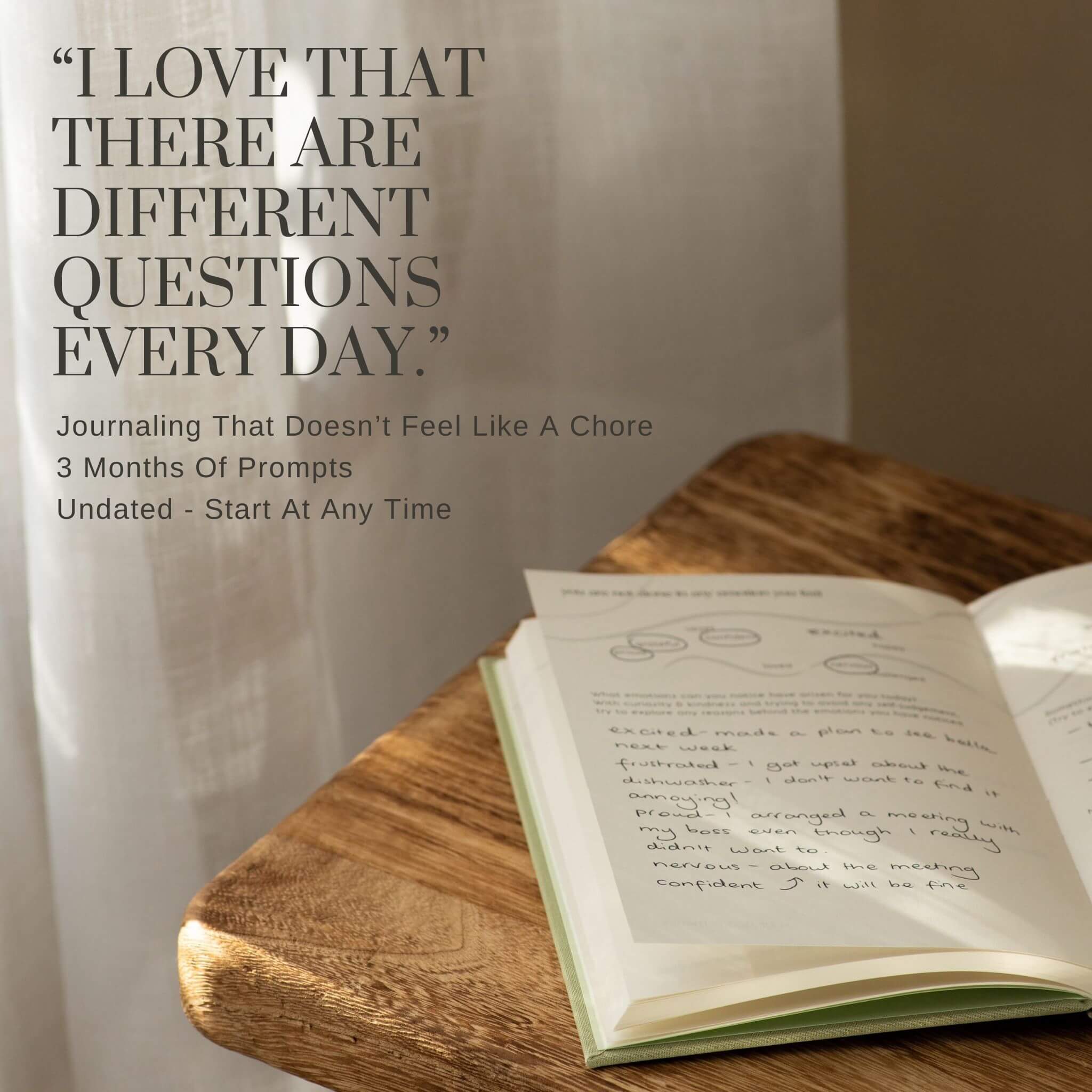
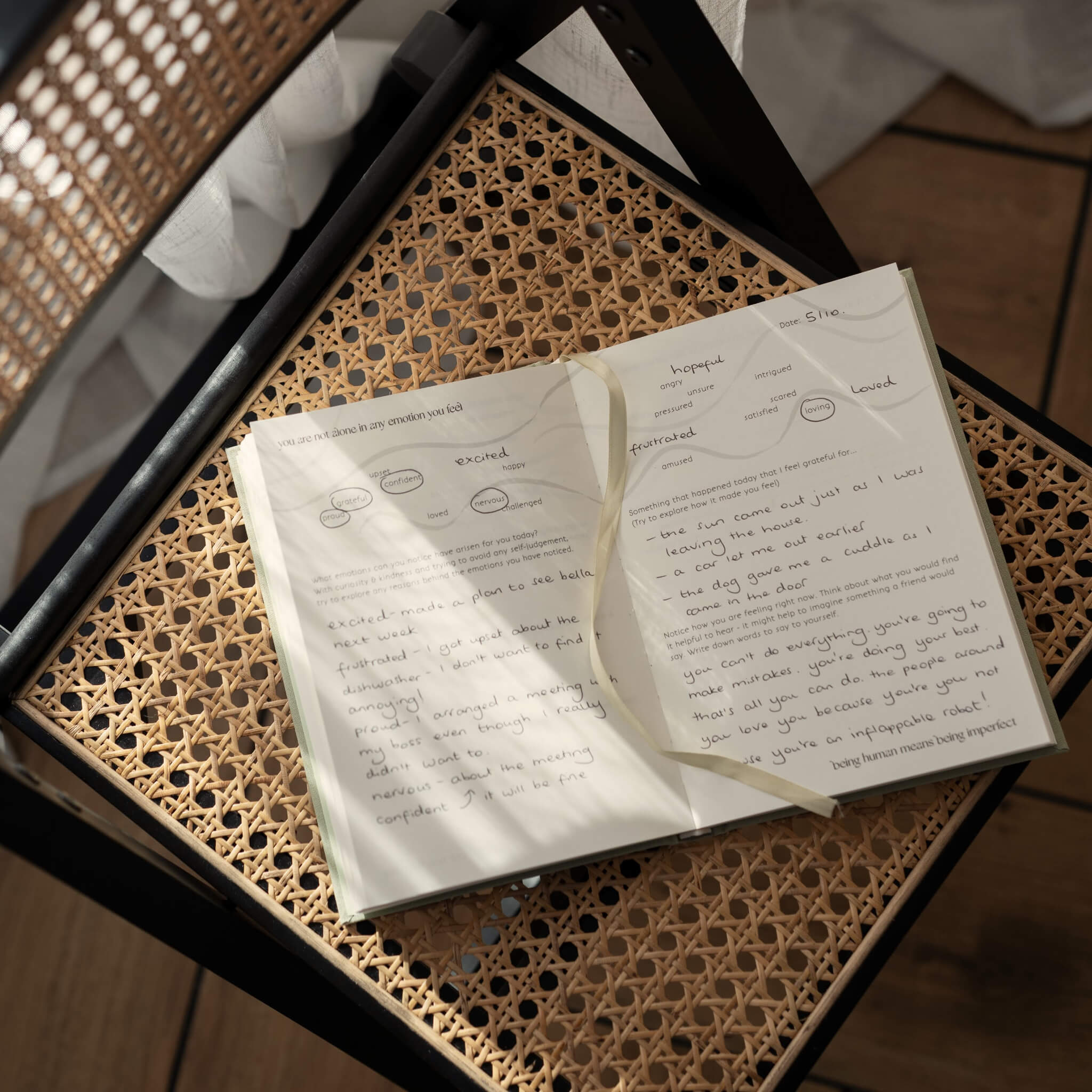
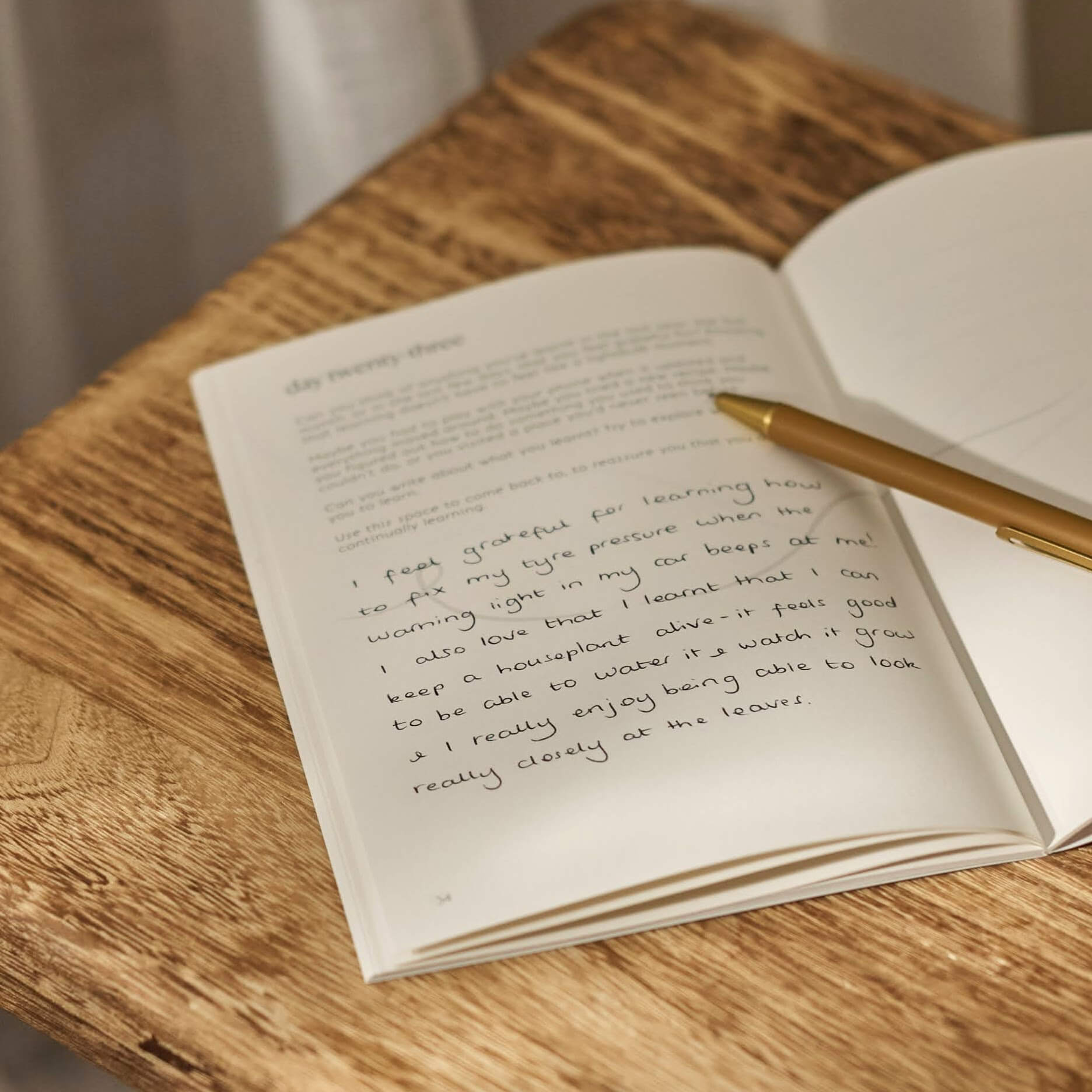
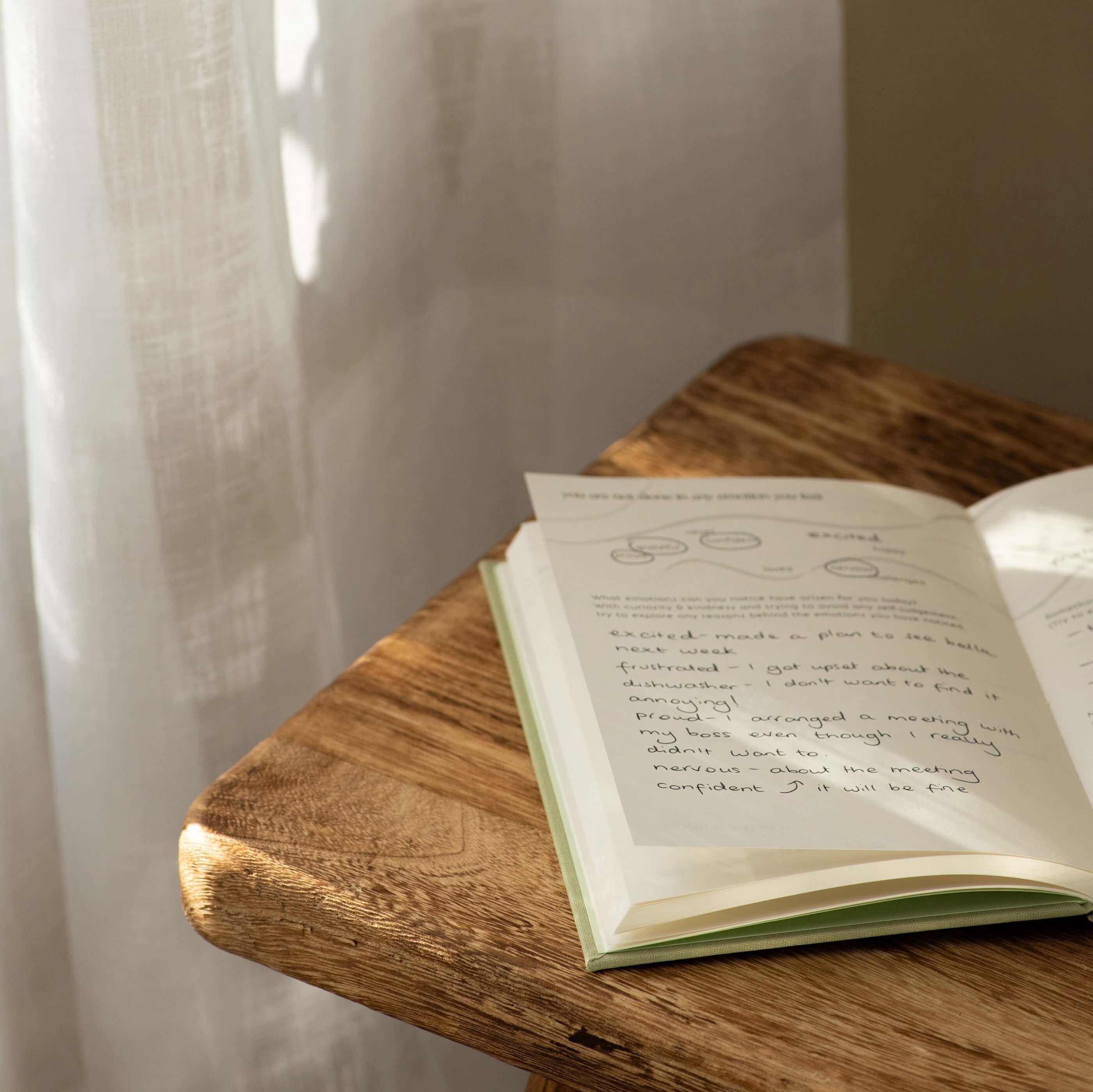
Every entry follows the same four steps, and the prompt in step three changes each time. It takes about five minutes. There is no right or wrong way to fill it in, and no minimum.
One entry, start to finish
The same shape on all 90 pages, so you never face a blank one.
The emotional awareness tool
A visual guide printed on the page itself, with the words already there for you to notice. You can mark more than one, because conflicting feelings at the same time are normal and worth recording together.
What emotions can you notice have arisen for you today?
Getting curious about why
Not why am I like this, but what might this be pointing at. Curiosity keeps it open. Verdicts turn a journal into somewhere your inner critic likes to visit.
With curiosity and kindness, and trying to avoid any self-judgement, try to explore any reasons behind the emotions you have noticed.
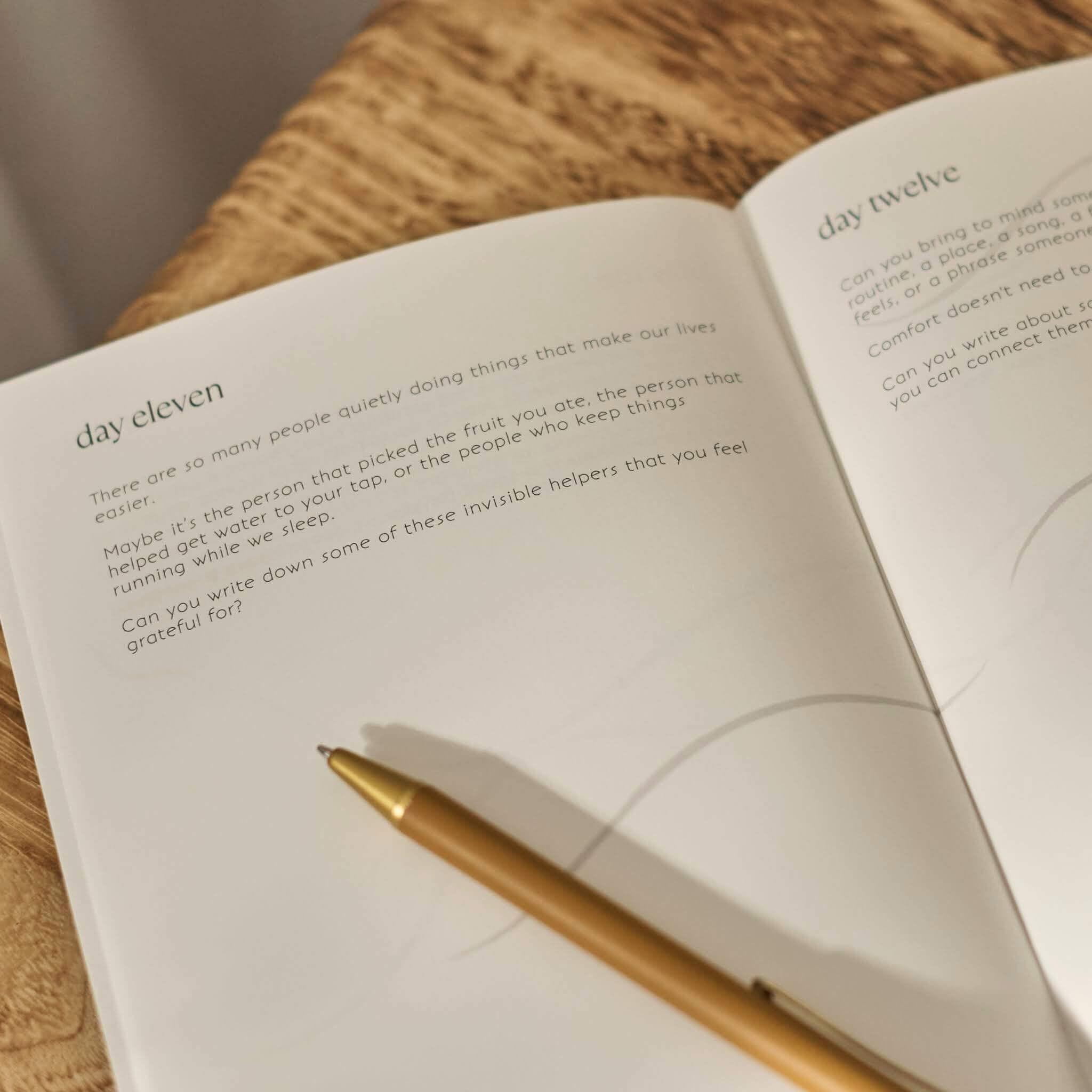
A different prompt every entry
Ninety of them, moving through gratitude, self-talk, needs, comfort and challenge. This is what stops the practice going on autopilot, and it is the thing readers mention most often.
Something that helps me to relax and that I feel grateful for.
Turning the kindness back towards you
The step people skip when they journal alone, and the step that changes things. You write the sentence you would say to a friend, then read it back as though it were addressed to you. Because it is.
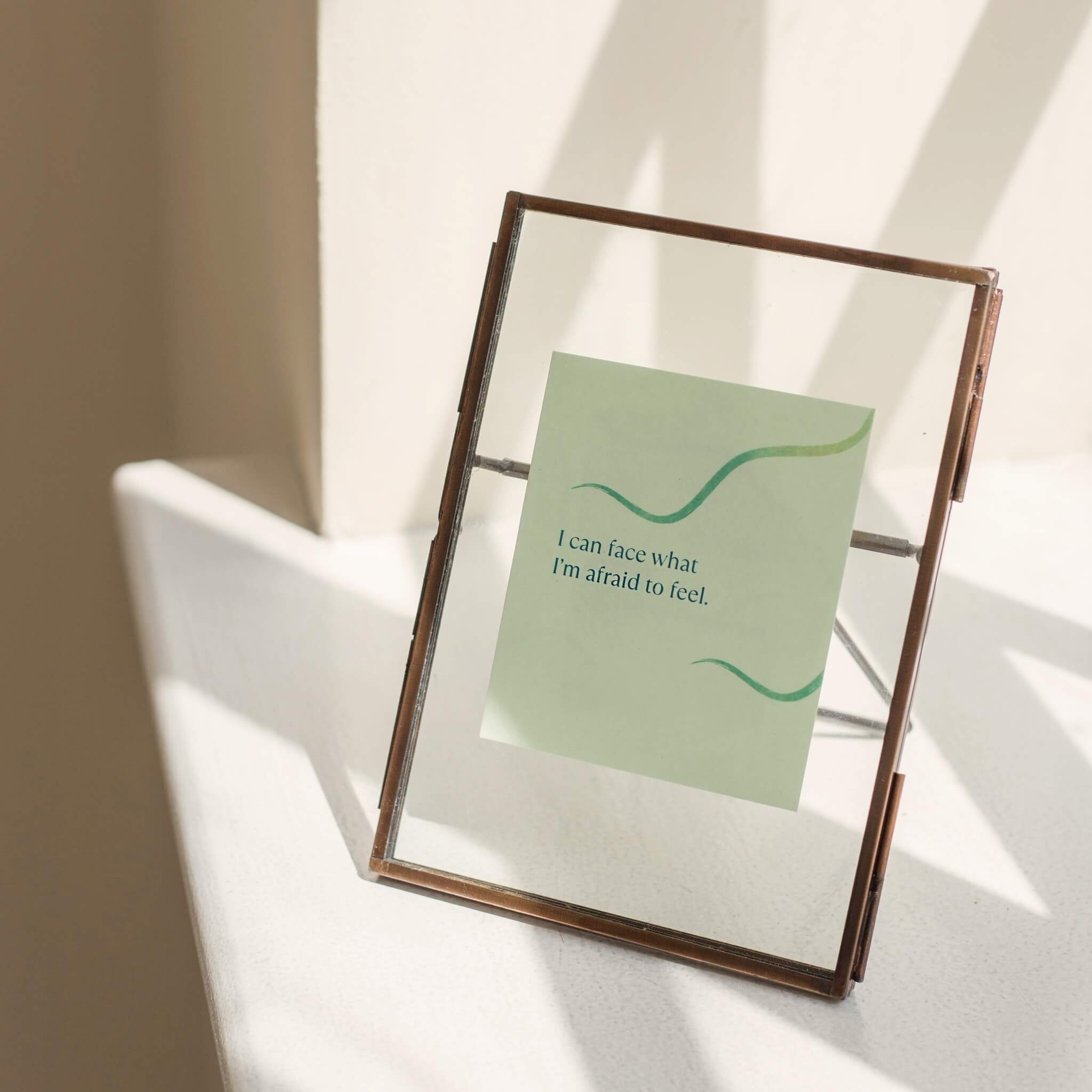
Choose an emotion that you have just noticed. Imagine a friend came to you explaining that they feel that emotion. Write down what you would want to say to them.
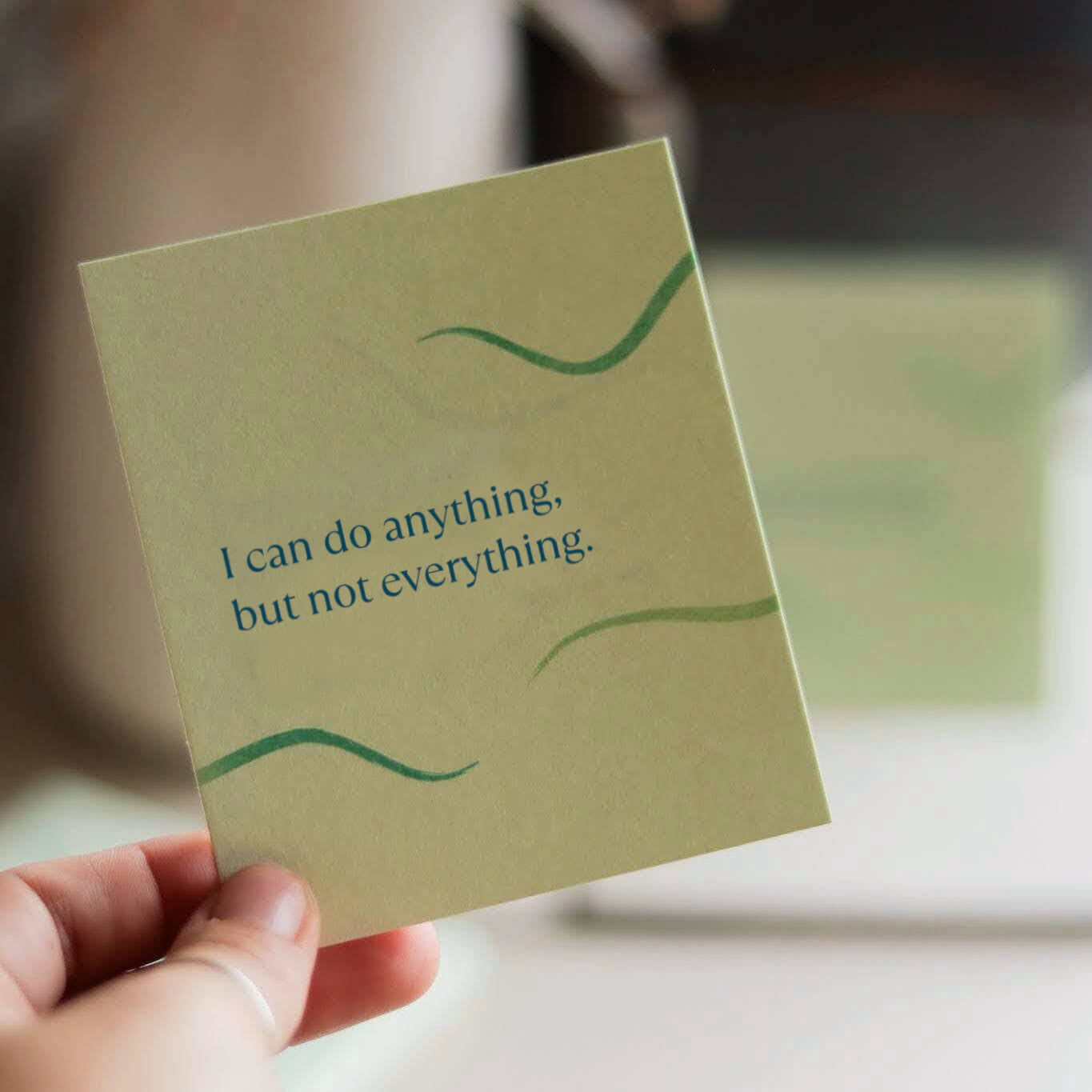
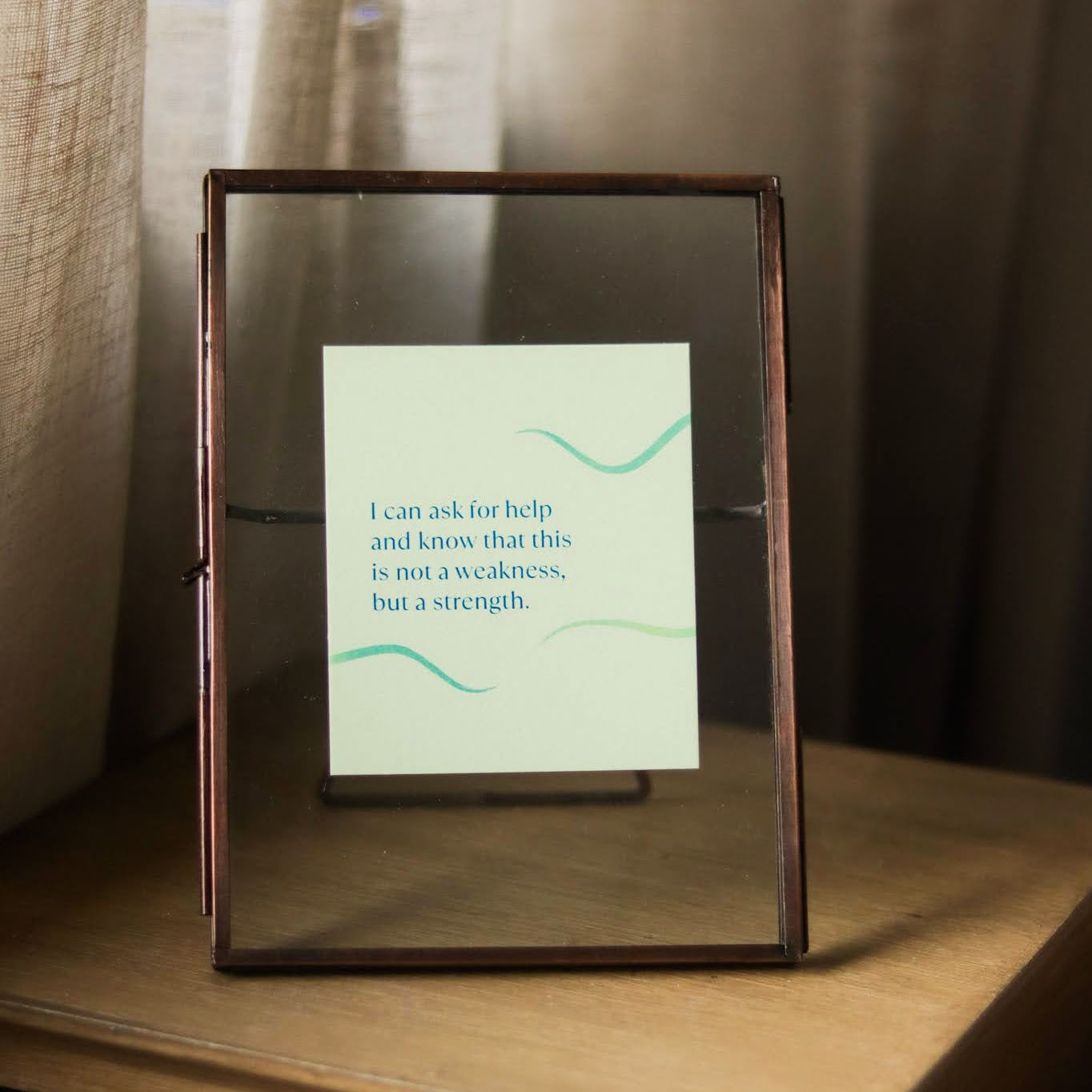
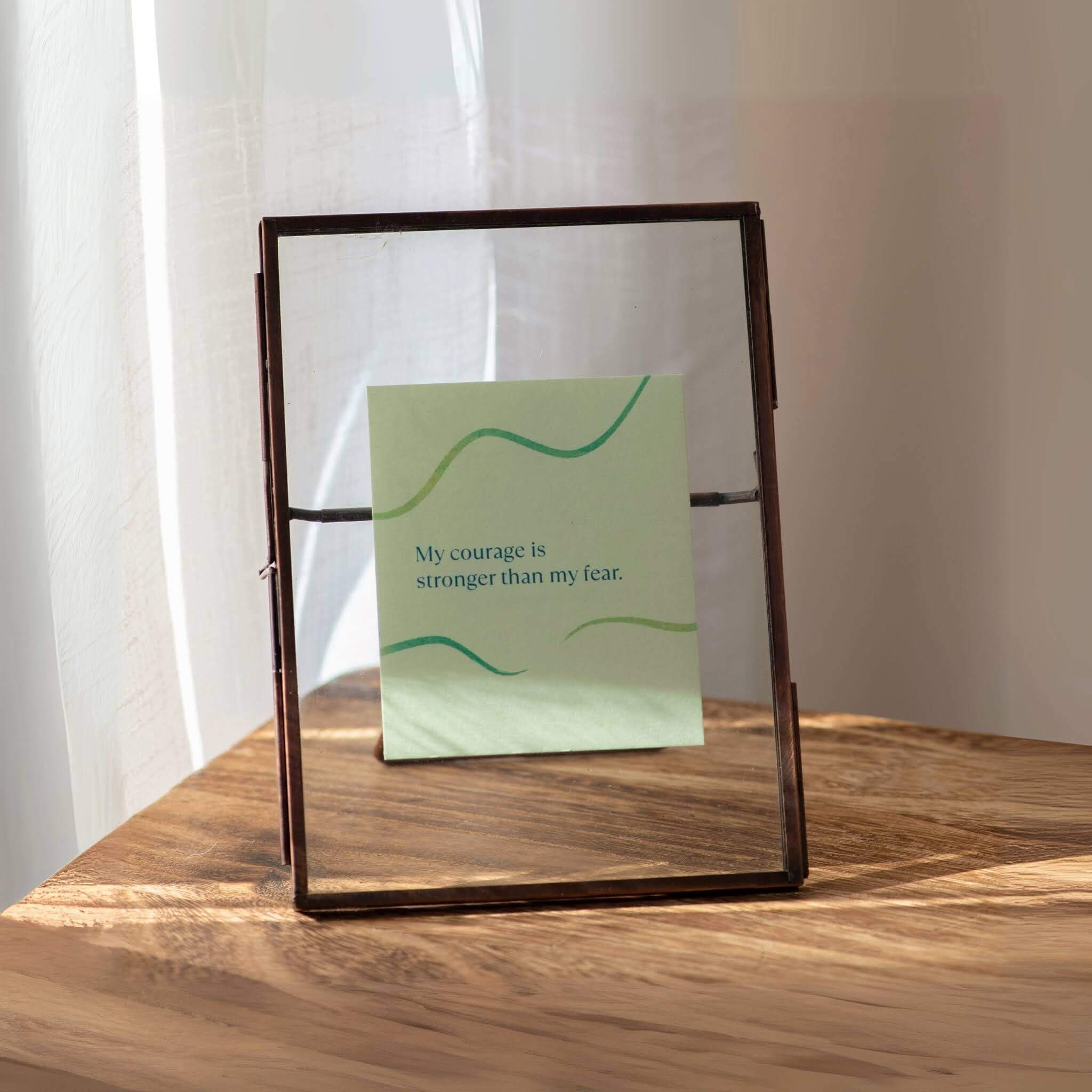
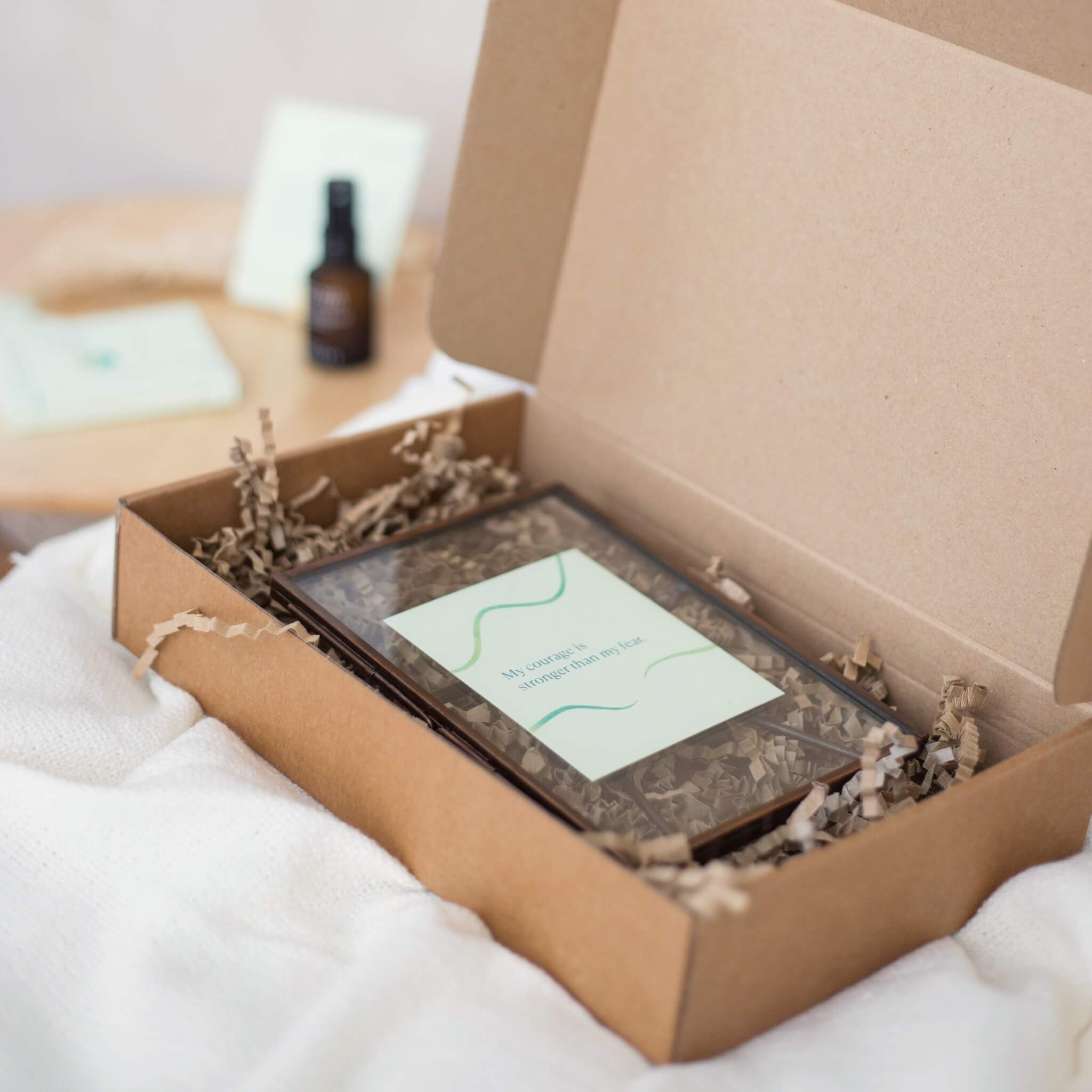
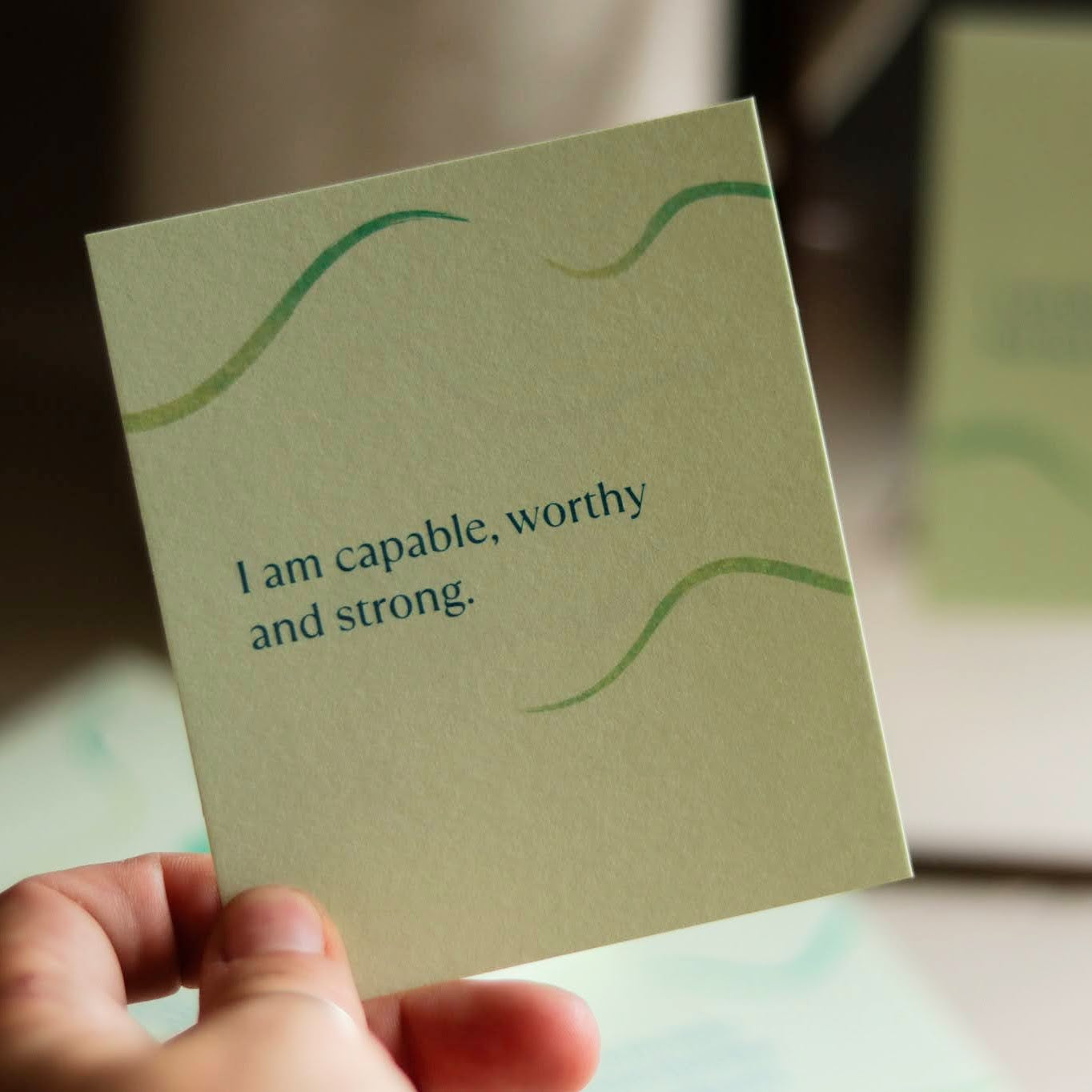
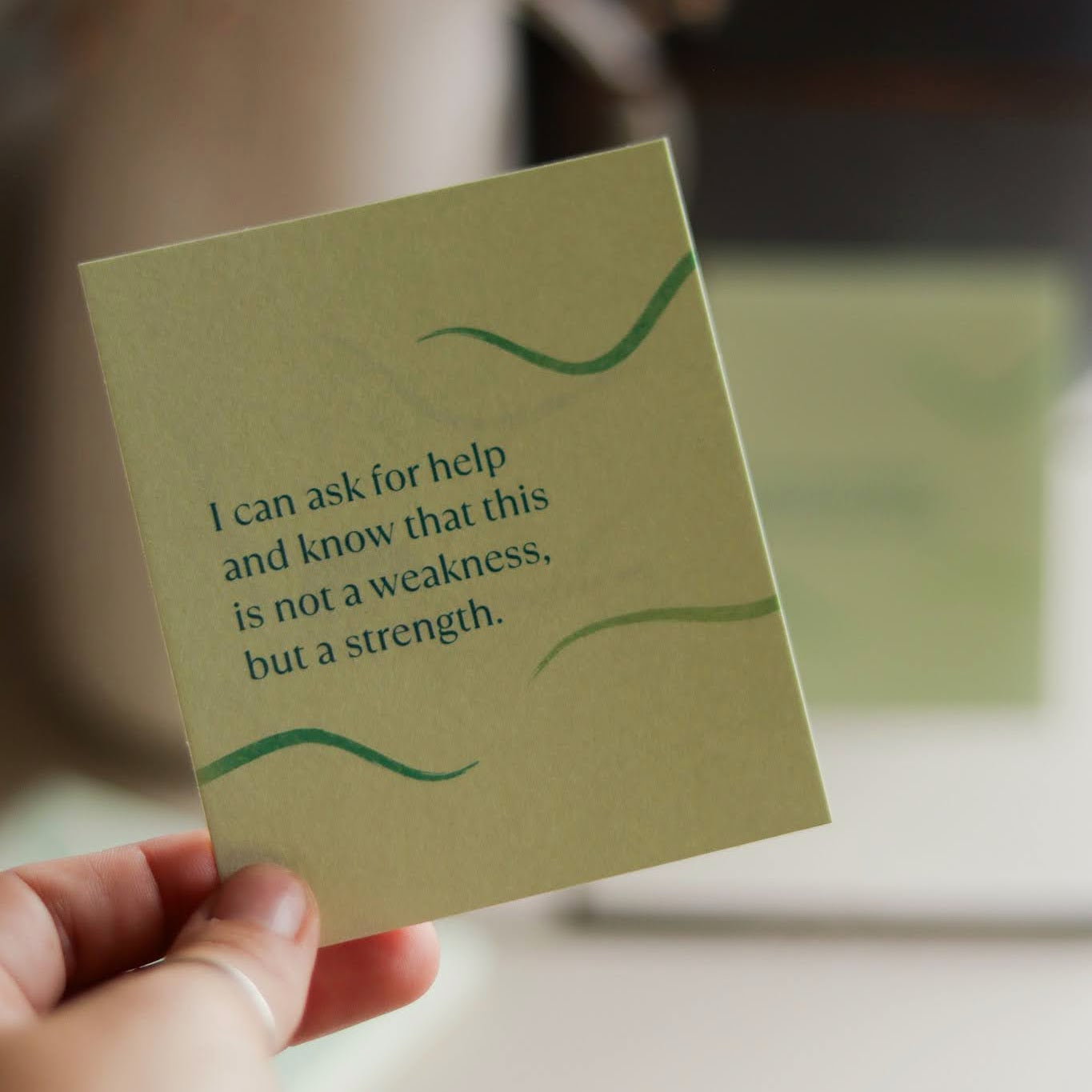
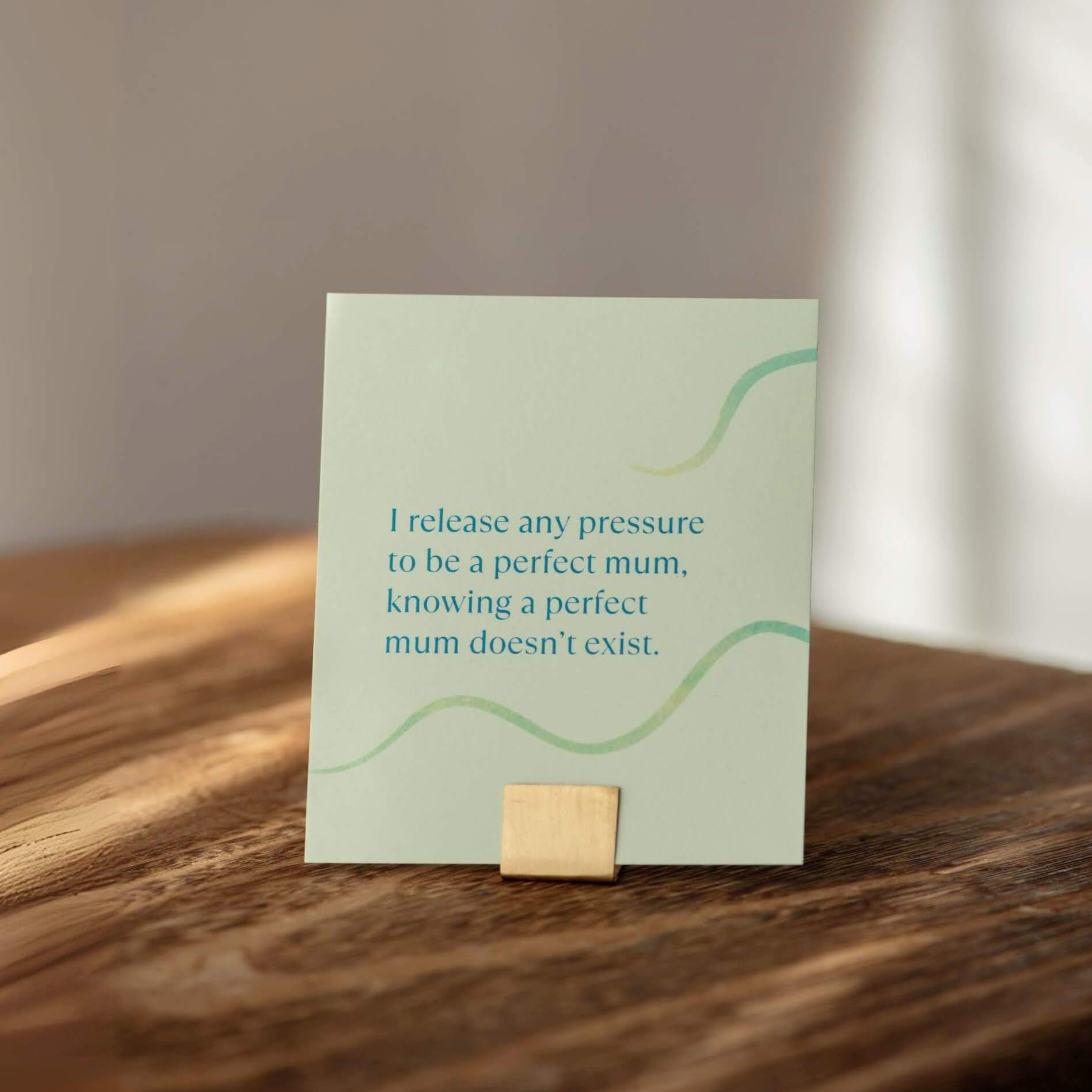
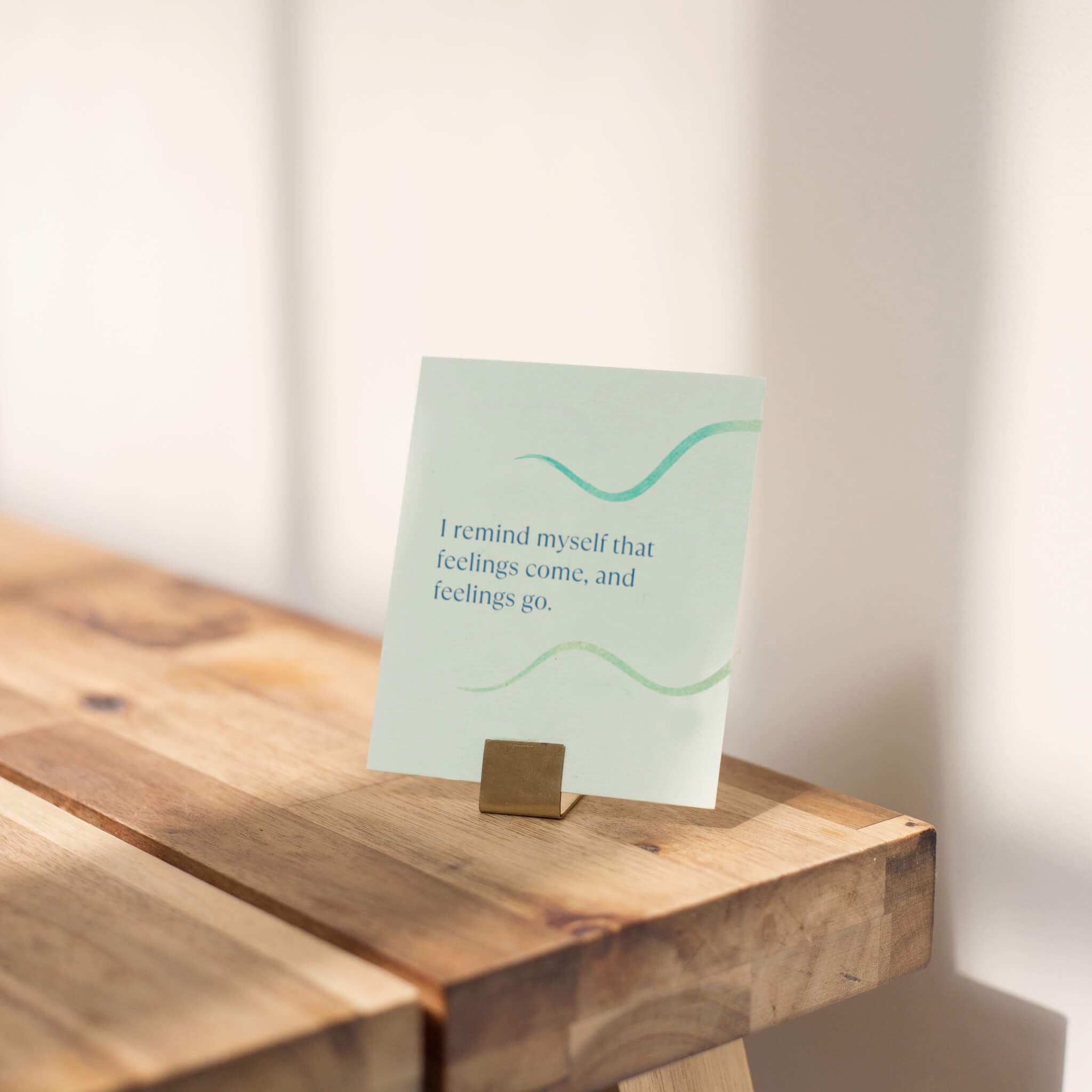
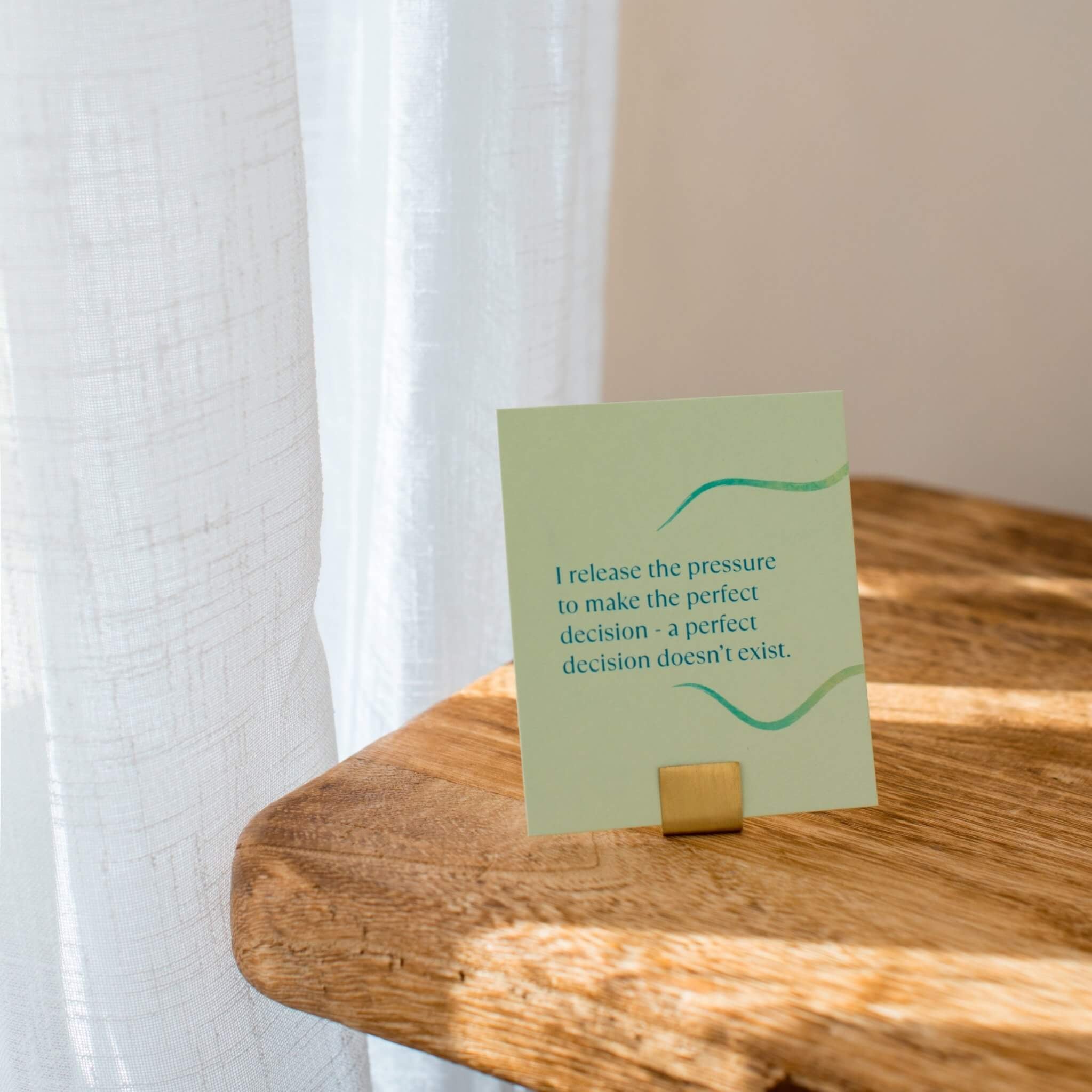
Between the entries there are over 50 gentle reminders, the kind you notice on a bad day. Be careful how you talk to yourself, you are listening. You are not alone in any emotion you feel. It is normal to feel conflicting emotions at the same time.
Why naming a feeling changes it
Putting a feeling into words reduces its intensity. The effect is called affect labelling, and neuroimaging research from UCLA found that naming an emotion was associated with less activity in the amygdala, the part of the brain that handles threat, and more in the prefrontal cortex, which is involved in reasoning. The word gives the feeling somewhere to go.
That is the whole reason the emotion tool sits on every page rather than once at the front. Affect labelling only works if you can reach a word, and most of us hold about half a dozen and reach for fine, stressed or tired to cover everything else. Having the vocabulary in front of you is what makes the mechanism available on the evening you actually need it.
What specific looks like, compared to fine
The journal helps you tell apart feelings that all get called stressed, which is where the useful information lives.
Overwhelmed and behind ask for different things. So do hurt and let down. Once the feeling has its actual name, what you need next usually becomes obvious, and that is the point where a journal stops being a record and starts being useful.

Nina Holle
Psychotherapist and writer, drawing on psychology, neuroscience and various wisdom traditions
This is a wonderful, easy-to-use and transformative journal which will help you befriend your emotions and find more ease and contentment as a result. The journal is rooted in state-of-the-art research that emphasizes the importance of understanding our emotions in order to lower stress and lead a happy and meaningful life. Highly recommended for everyone who is on a journey to find more wellbeing!
Nina also wrote a four step approach to emotions for me, and the line in it that matters most is this: you do not have to identify a feeling correctly in order to look after yourself. Read Nina on embracing your emotions →

Dr Chris Germer, PhD
Clinical psychologist and lecturer on psychiatry (part-time) at Harvard Medical School. Co-developed the Mindful Self-Compassion programme with Kristin Neff in 2010, now taught to over 250,000 people worldwide.
A warm invitation to make friends with your emotions and yourself!
Make friends with is the phrase I would choose too. Not manage, not fix, not get on top of. Read all professional reviews →
What psychologists and therapists say about it
These are real reviews from named, credentialed professionals, several of whom use the journal with their own clients. Every one of them is on my expert reviews page in full.

Carrie Pollard, MSW RSW
Experienced psychotherapist
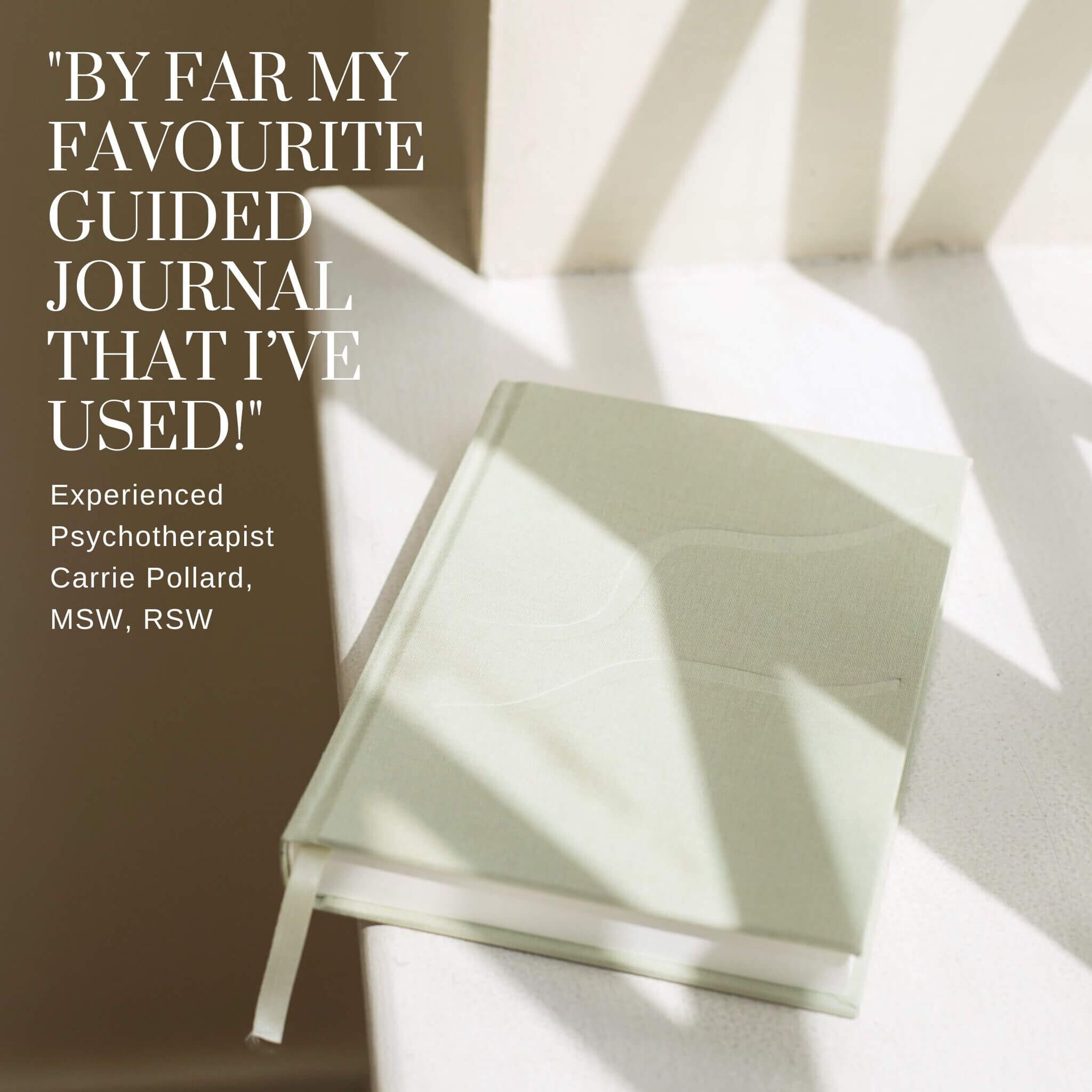
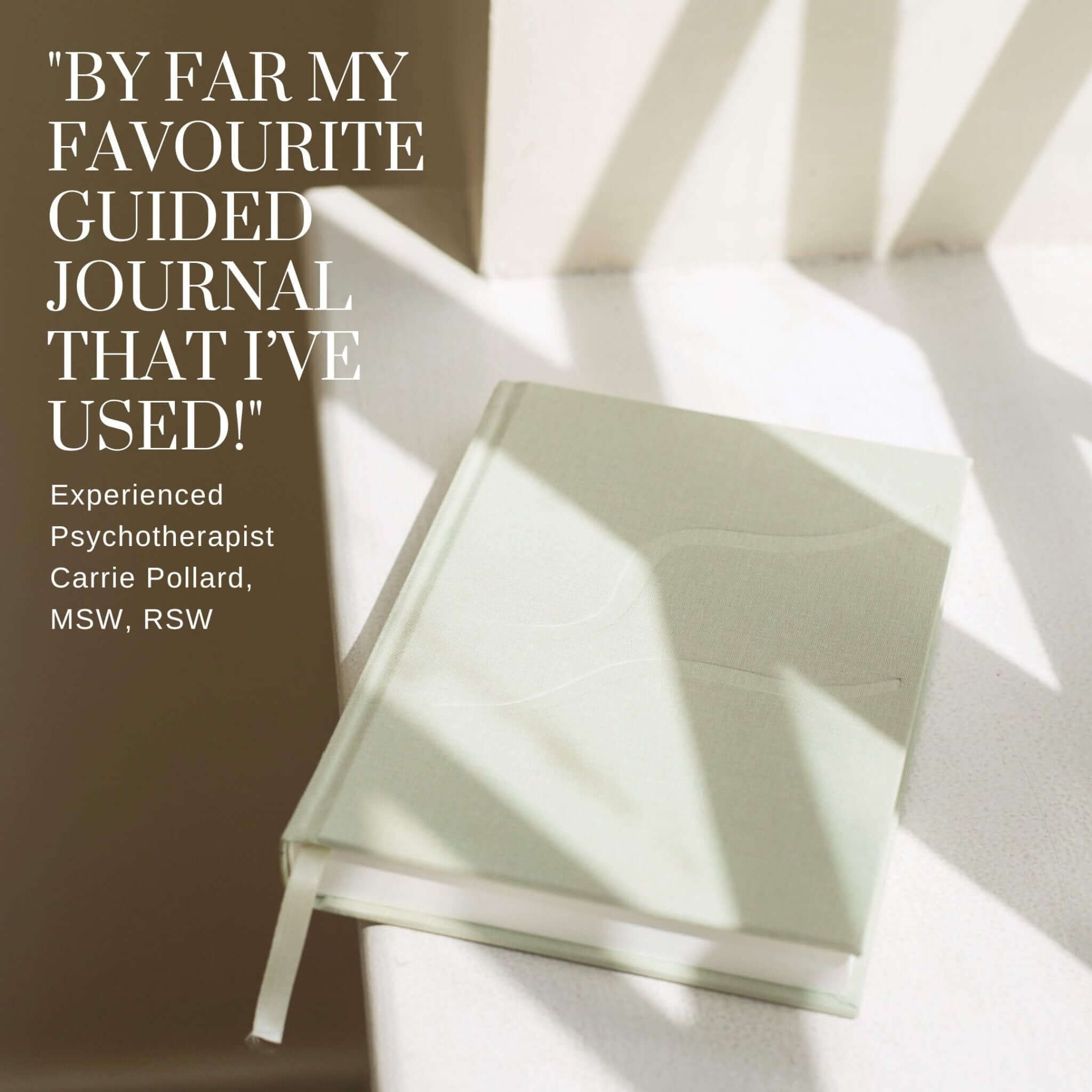
By far my favourite guided journal that I've used!
Being able to identify what you're feeling and compassionately explore the 'why' is central to self-connection and self-growth. The Give Yourself Kindness journal is a steady guide in this process. It helps you:
- name and process your emotions,
- identify what you need to cope and/or problem-solve,
- balance the acknowledgment of the hurt and suffering with gratitude and comfort, and
- give yourself the same compassion you would a loved one.

Michelle Shlafman, PhD., LPC, ACS
Holistic psychotherapist
Out of all the guided journals I've used, this one stands out as my favorite
Understanding your emotions and compassionately exploring their origins is so important for self-connection and personal growth. Give Yourself Kindness journal has been a reliable companion for not only my clients, but myself. It helps you identify and process your feelings, and guides you to figure out what you need to cope or find solutions.

Julie Burke, LPC-S
Therapist and private practice owner
HIGHLY RECOMMEND (100/10) - such a safe & supportive resource
There are affirmations throughout the journal that feel safe and encouraging to feel your feelings/experience emotions in ways that create a sense of safety and are free of judgment for yourself. It is part of the human experience to feel an array of emotions and this journal helps users navigate that.

Deanna Solomon, LCSW
Licensed psychotherapist in California
It's a really calming addition to any morning or evening routine!
The give yourself kindness journal is a lovely tool for self reflection and getting more familiar with your emotions. The questions really encourage acceptance and curiosity of emotions, and I appreciate the focus on self compassion.

Dr Chris Irons
Clinical Psychologist, Researcher, Writer and Trainer Specialising in Compassion Focused Therapy
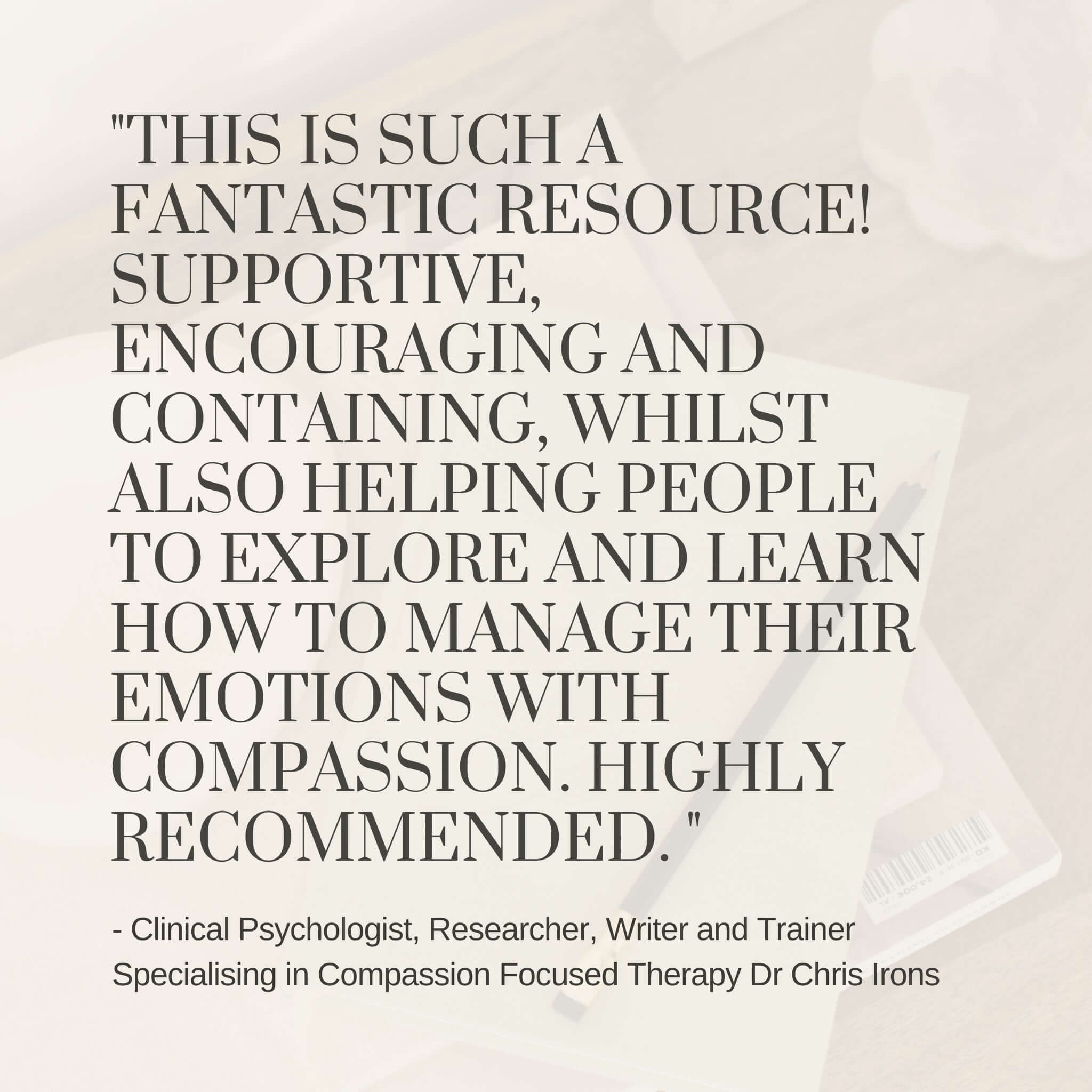
This is such a fantastic resource! Supportive, encouraging and containing, whilst also helping people to explore and learn how to manage their emotions with compassion. Highly recommended.

Willem Kuyken, PhD, DClinPsy
Ritblat Professor of Mindfulness and Psychological Science at the University of Oxford. Among the top 1% most cited scientists worldwide.
Writing can be creative, beautiful, resourcing, but it can also invoke an inner critic, rumination and procrastination. Rachel has curated the experience to make the writing intrinsically rewarding and the journal something to treasure.

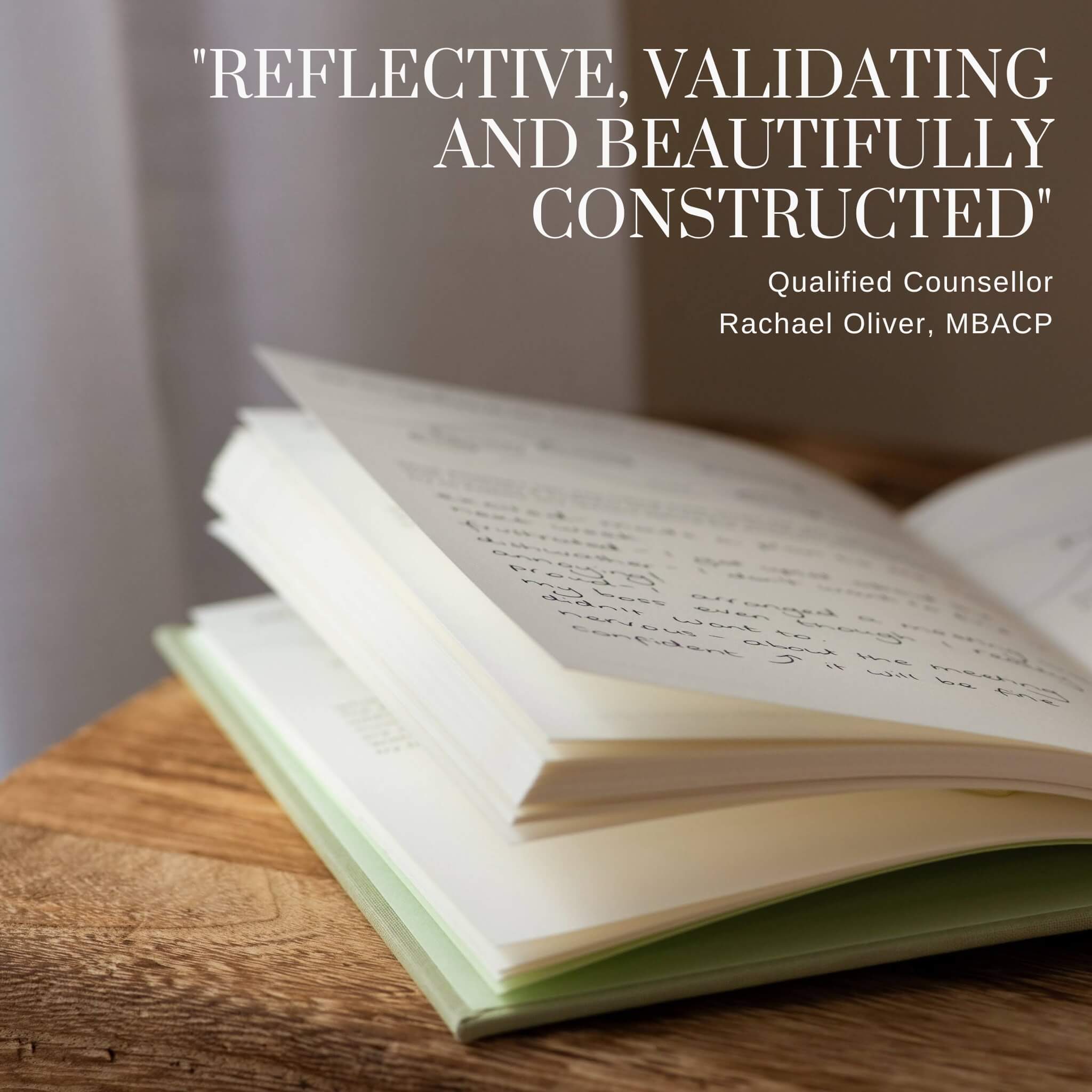
Rachael Oliver, MBACP
Accredited counsellor
Reflective, validating and beautifully constructed
The prompts and areas to think about are helpful to shine light on their feelings, experiences and thought processes. The way the journal is constructed helps validate their entire experience and avoid toxic positivity, encourage reflection and ownership of feelings.
What to look for in a feelings journal
If you are weighing this up, these are the five things that decide whether a feelings journal gets used or ends up in a drawer. They are the things I built this one around.
1. The words should be on the page, not expected of you
A journal that opens with how do you feel today assumes you already have the vocabulary. If you had it, you would not be looking for a feelings journal. The whole skill you are trying to build is the one being asked of you at the door.
2. The prompt should change
The same question every day stops meaning anything after about a fortnight. Your brain fills it in mechanically and you stop actually looking. This is the single most common reason people abandon a guided journal.
3. It should go past naming, into responding
Naming a feeling takes the edge off it. What you say to yourself next is what changes your relationship with it over time. A journal that stops at identification leaves you with a more accurate record of a bad week and nothing else.
4. It should be undated
Dated pages turn a gap into a row of blank days looking back at you, and that guilt is usually what ends the habit for good. Feelings do not arrive on a schedule and a journal should not pretend otherwise.
5. It should welcome every feeling, not just the tidy ones
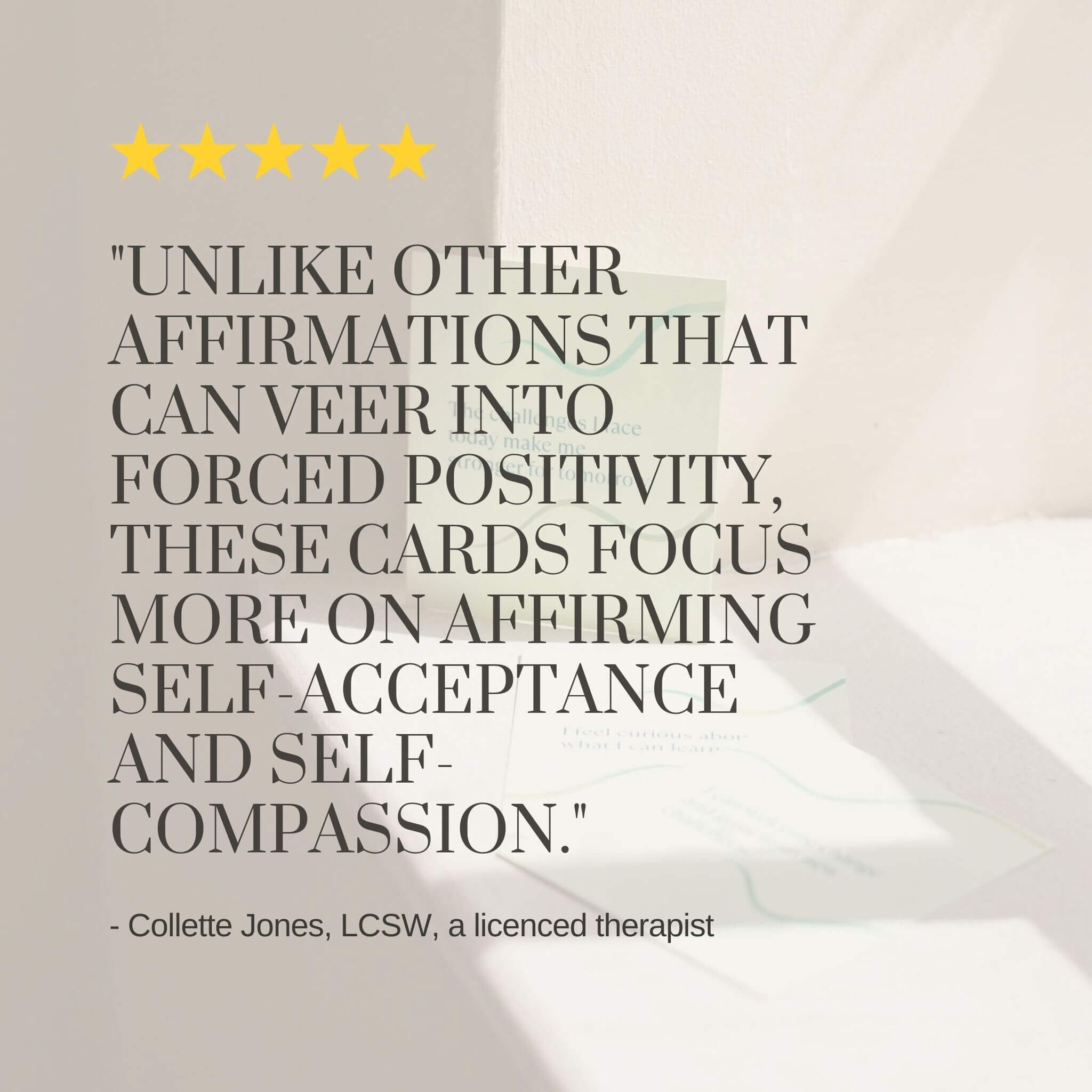
A lot of journals quietly reward you for feeling better. That is where forced positivity creeps in, and on a hard day it makes the inner critic louder rather than quieter. Accredited counsellor Rachael Oliver named exactly this above.
How to use it, from the first evening
Attach it to something you already do
The best time is whichever one you will actually be sitting down for. Beside the kettle, on the bedside table. Attaching it to an existing habit works better than setting a reminder.
Start with the tool, not the blank line
Read down the emotion words first and notice which ones make something in you go, yes, that one. That reaction is more reliable than trying to choose correctly.
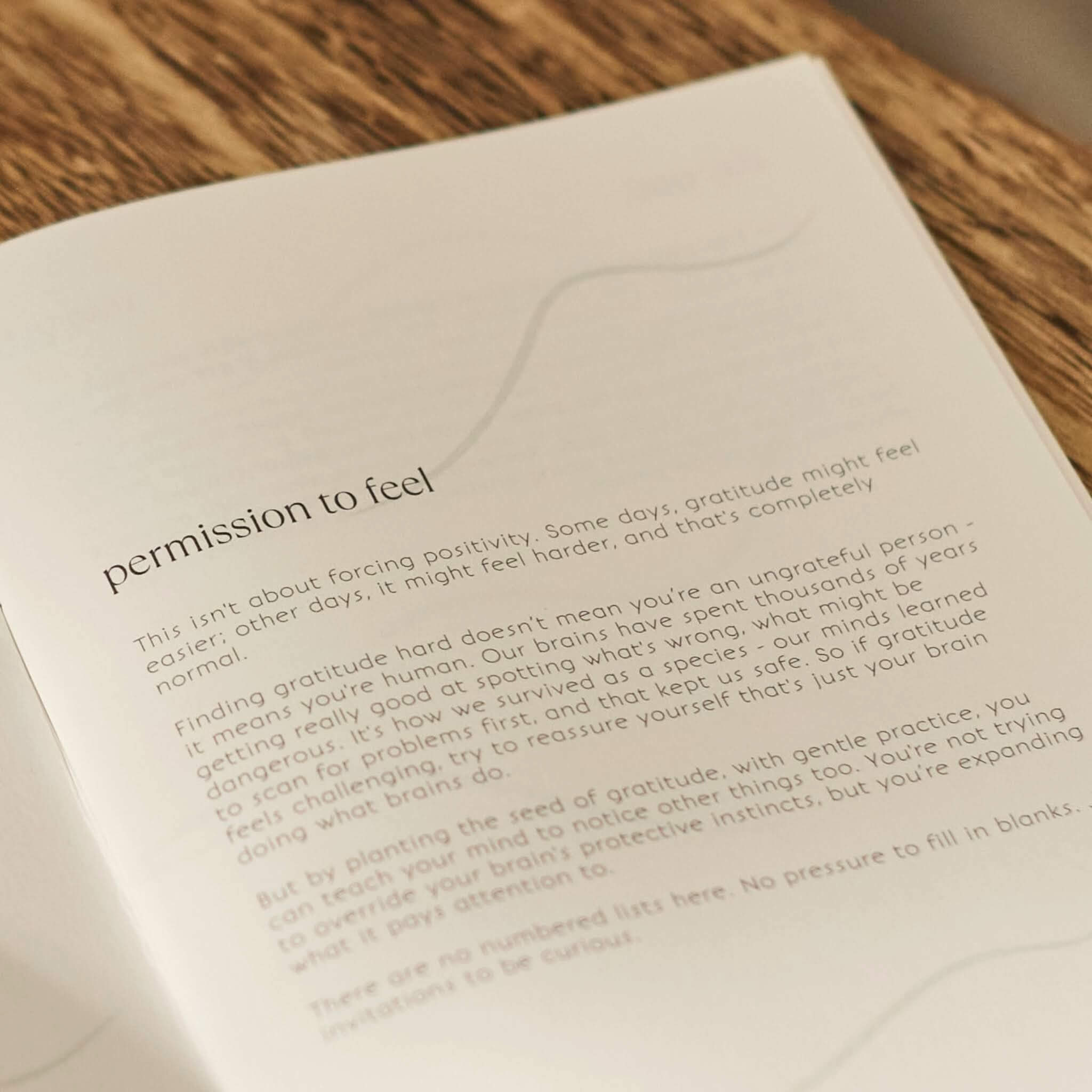
Mark more than one if that is true
Grateful and sad. Relieved and guilty. Proud and exhausted. Recording both is more accurate than picking a winner, and it makes the day make more sense.
Do not skip the last question
The friend question is the one people leave out when they journal alone, and it is the one that changes how you speak to yourself. Three lines is plenty.
The Give Yourself Kindness Journal

- 90 different prompts, so it stays interesting for months rather than days
- An emotional awareness tool on every page, so the words are always in front of you
- Over 50 gentle reminders woven through, for the days you need one
- Undated, so it waits for you without any guilt attached
- Reviewed by clinical psychologists at Harvard Medical School and the University of Oxford
- Used by therapists with clients worldwide
- Free handwritten gift note with every order, if it is for someone else
You deserve to understand what you are feeling, and you deserve to be spoken to kindly about it. That is the whole of what this journal is for.
Discover the journal →Questions people ask me
What is a feelings journal?
A feelings journal is a place to write down what you are feeling and get curious about why, rather than a record of what happened in your day. A diary tracks events. A feelings journal tracks you. A good one gives you the words to use, helps you explore where the feeling came from, and guides you to respond to yourself kindly.
What is the best feelings journal for adults?
The Give Yourself Kindness Journal is the one I make and the one I would point you to. It carries an emotional awareness tool on all 90 pages, a different prompt every entry, and a closing question that asks what you would say to a friend. It is reviewed by clinical psychologists at Harvard Medical School and the University of Oxford, and used by therapists with clients worldwide.
What makes this feelings journal different?
Three things. The words are on the page rather than expected of you, so you are never asked to name a feeling you have no word for. The prompt changes every single entry, so it does not go on autopilot. And every entry finishes by turning kindness back towards you, which is the step that changes how you speak to yourself over time.
What do I write in a feelings journal if I do not know what I am feeling?
Start with the body rather than the word. Where is it sitting, and what is it like. Tight, heavy, hollow, restless, hot. This is very common and it is not a sign you are doing it wrong. As psychotherapist Nina Holle puts it, you can carry on looking after yourself without ever pinning down the name.
What is the difference between a feelings journal and a diary?
A diary answers what happened today. A feelings journal answers what am I feeling and what might it be pointing at. Both are worth keeping and they are not in competition. If you have kept a diary before and found it did not change much, that is because a record of events was never designed to change how you speak to yourself.
How often should I use a feelings journal?
Often enough that it stays familiar, and not so often that it becomes another thing to keep up with. Many people find a few times a week is realistic. Three lines counts. This journal is undated for exactly that reason, so coming back after a fortnight away is met with a clean page rather than a run of empty dates.
Does keeping a feelings journal actually help?
Putting a feeling into words reduces its intensity. The effect is called affect labelling, and neuroimaging research has associated naming an emotion with less activity in the amygdala, the brain's threat centre, and more in the prefrontal cortex. In everyday terms it takes the edge off, and doing it alongside a kind response is what shifts things over weeks.
How long does the Give Yourself Kindness Journal last?
There are 90 unique prompts, so around three months if you write every day, and considerably longer at the few times a week most people settle into. Because it is undated, there is no wrong pace and nothing is wasted if you take a break.
Is the journal dated?
No, it is undated throughout. That is deliberate. Dated pages turn a gap into a row of blank days looking back at you, and that guilt is usually what ends the habit. This one simply waits for you and welcomes you back on the next clean page.
Can I use a feelings journal alongside therapy?
Yes, and many people do. Therapists and counsellors use this journal with clients between sessions, including Julie Burke, LPC-S, and Michelle Shlafman, PhD, LPC, ACS. Bringing what you noticed during the week into a session tends to give you both more to work with.
Does it come with a gift note?
Yes. Every order includes a free handwritten gift note, so if this is for someone else you can add your message in the order notes at checkout and I will write it out by hand. The journal is made to be given, and it arrives looking like something worth keeping.
Where is the journal made?
In the UK, printed locally by a small business, on sustainably sourced paper from FSC-certified forests, with plastic-free packaging. It matters to me that something made to be kind is also made kindly.
One last thing
A journal is a companion to support and never a substitute for it. If things feel heavier than a notebook can hold, please talk to someone. In the UK your GP is a good first step, and Samaritans are on 116 123, free, at any hour. You deserve support, and you do not have to earn it by struggling for longer first.
You deserve to understand how you feel
And you deserve to be spoken to kindly while you work it out.
Discover the journal →Related reading


By far my favourite guided journal that I have used
Being able to identify what you're feeling and compassionately explore the 'why' is central to self-connection and self-growth. The Give Yourself Kindness journal is a steady guide in this process.