



You can't buy someone confidence. But you can buy the thing it grows out of, and that turns out to be a different thing entirely.
Most confidence gifts try to raise someone's opinion of themselves. A book telling them they're a badass. A candle about believing. A print that says she believed she could, so she did.
They're lovely, and for someone who's already doing all right they can be a nice lift. For someone who genuinely doesn't feel confident, they tend to slide straight off, because you're asking them to agree with a flattering opinion their mind has spent years collecting evidence against.
Quick answer
The gifts that actually help build confidence are the ones based on self-compassion rather than self-esteem. Self-esteem is a rating, and a rating is exactly what falls apart on a bad day. Self-compassion doesn't depend on the rating at all, which is why it holds when things go wrong.
That distinction isn't a marketing line. It's a well-established one in psychology research, and I've named the papers further down.
Reviewed by 13 mental health professionals | Free handwritten note
If you're in a hurry: the Give Yourself Kindness Journal at £28.95 is the one I'd send, and the You Are Enough charm at £8.95 is the one to choose if you want something small that won't make a fuss. Everything else on this page is the reasoning.
Why trust me: I'm Rachel Smith, a qualified meditation teacher, and these are my products, so weigh that as you read. I spent years unable to hear a kind word about myself, and I was given a fair few cheerful things in that time that made me feel worse rather than better. That's why everything here was checked by people who are actually qualified before I sold any of it. More about me →
Four gifts, and exactly who each one suits
Ordered by price. All four are mine, all four were read by mental health professionals before I sold them, and I've said plainly where I'd choose something else.
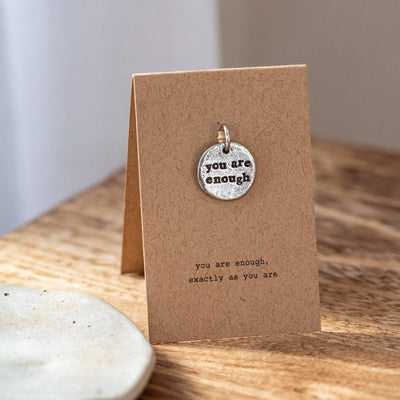
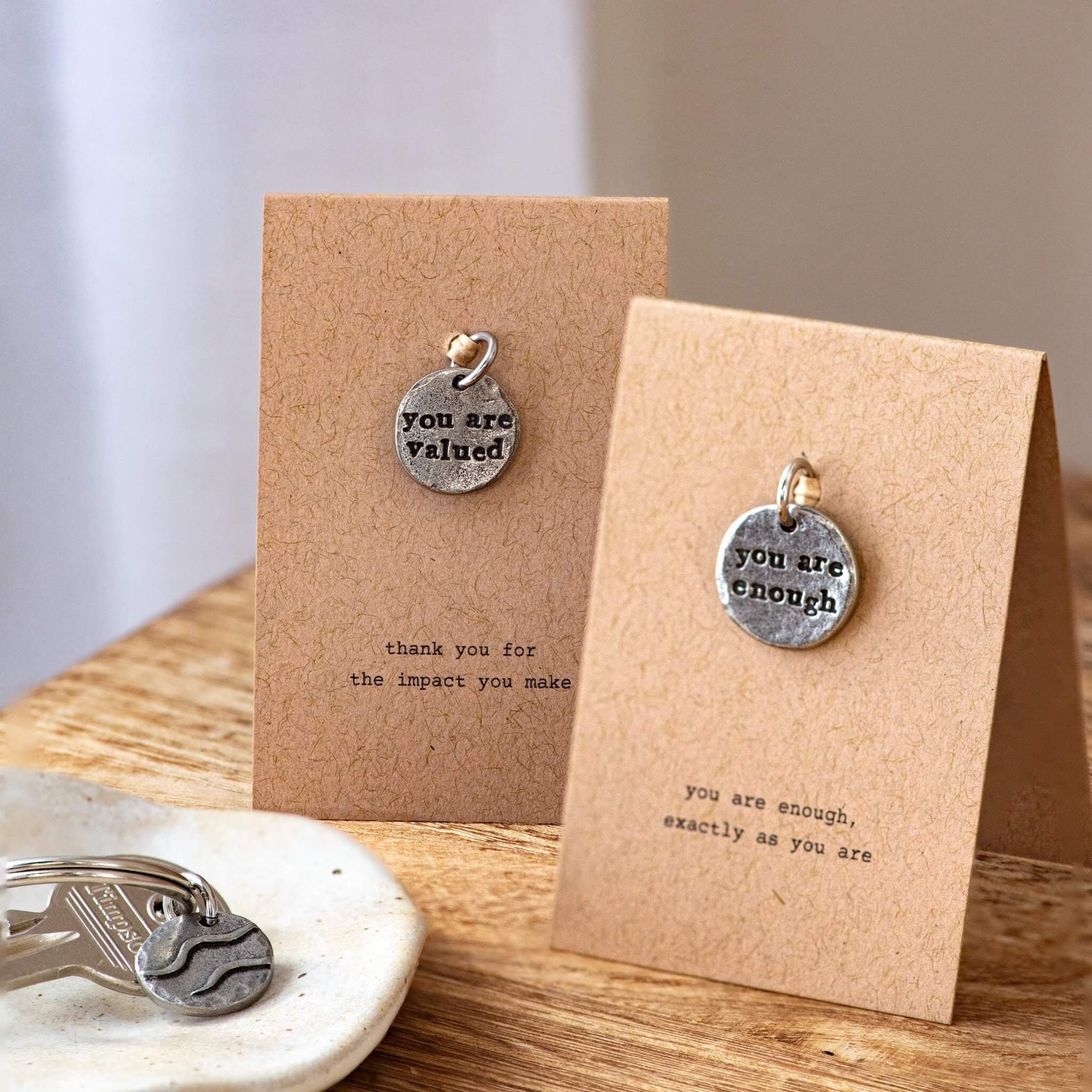
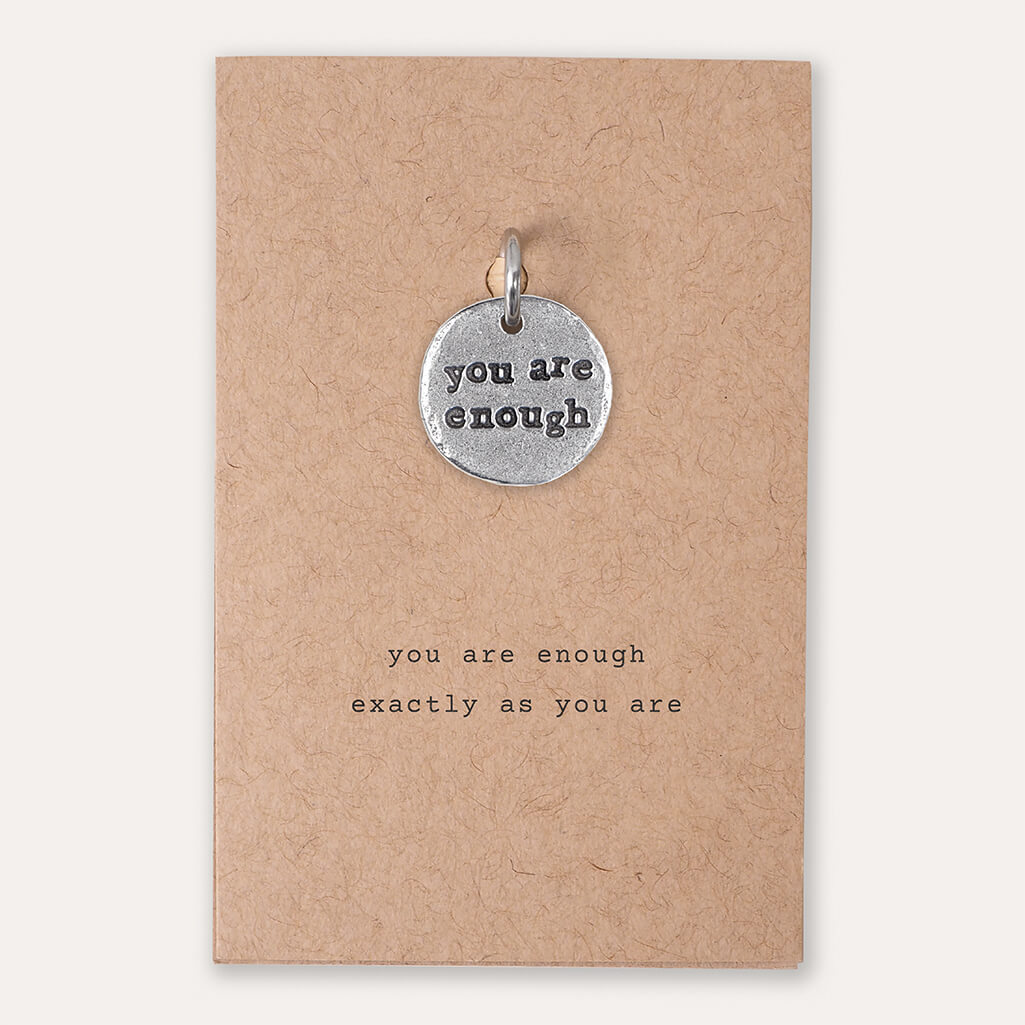
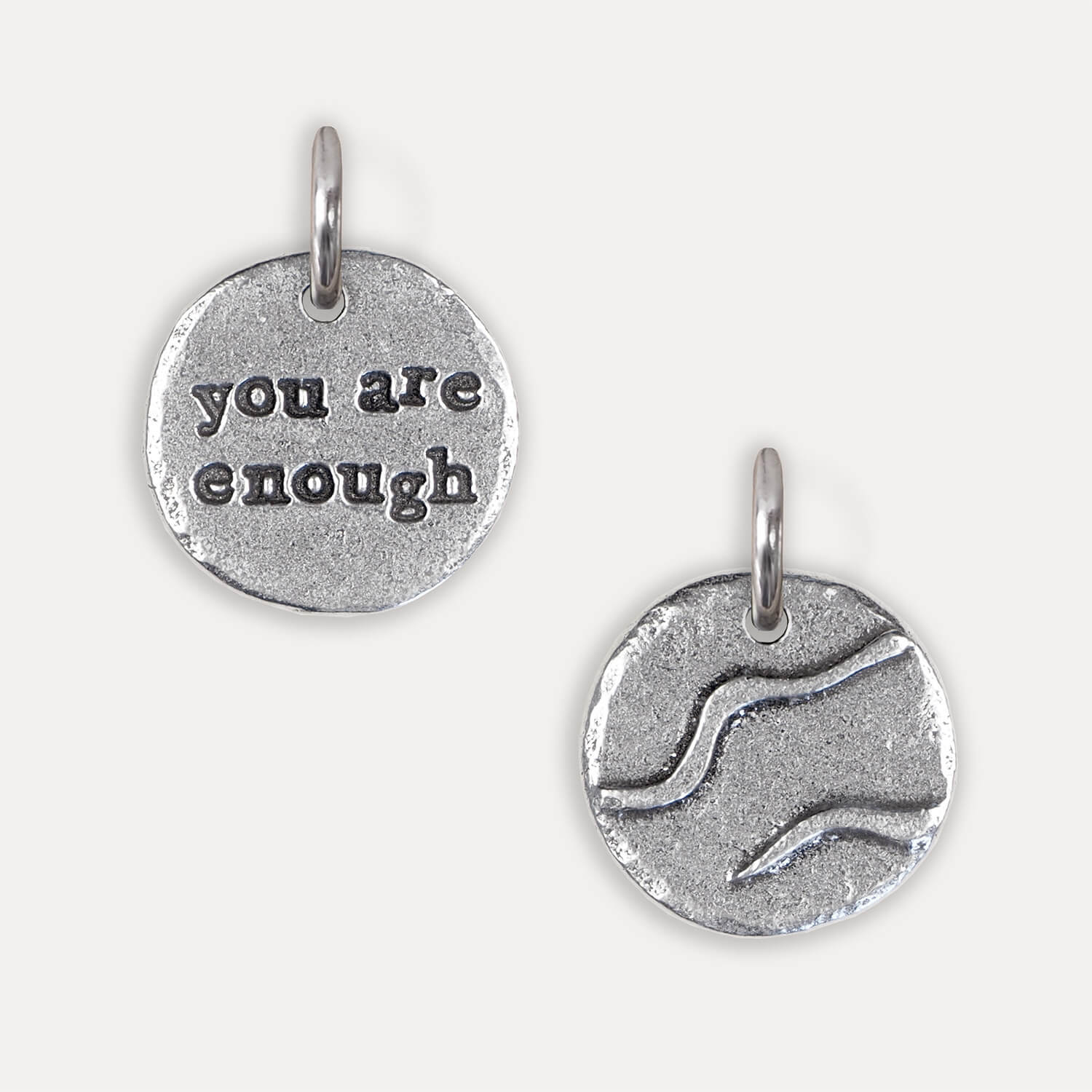
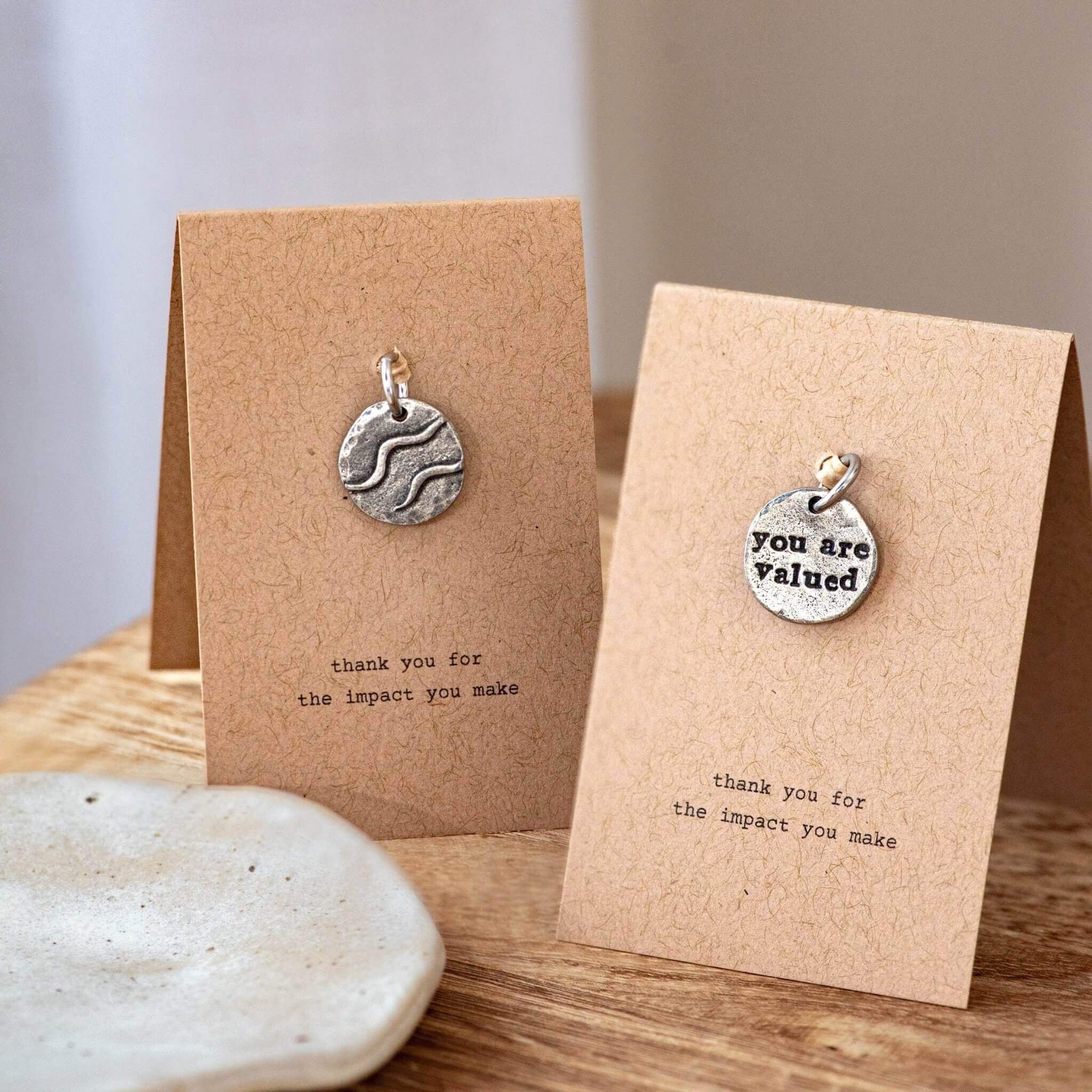
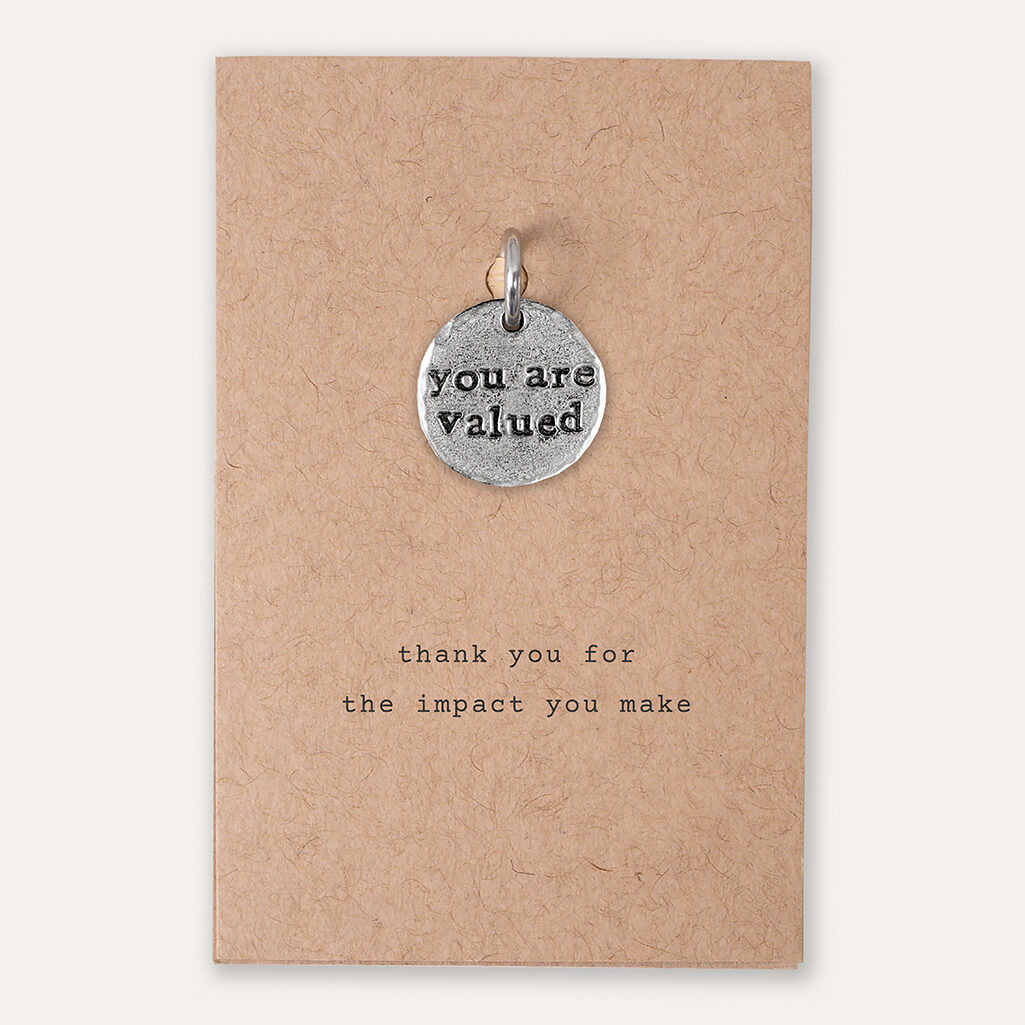
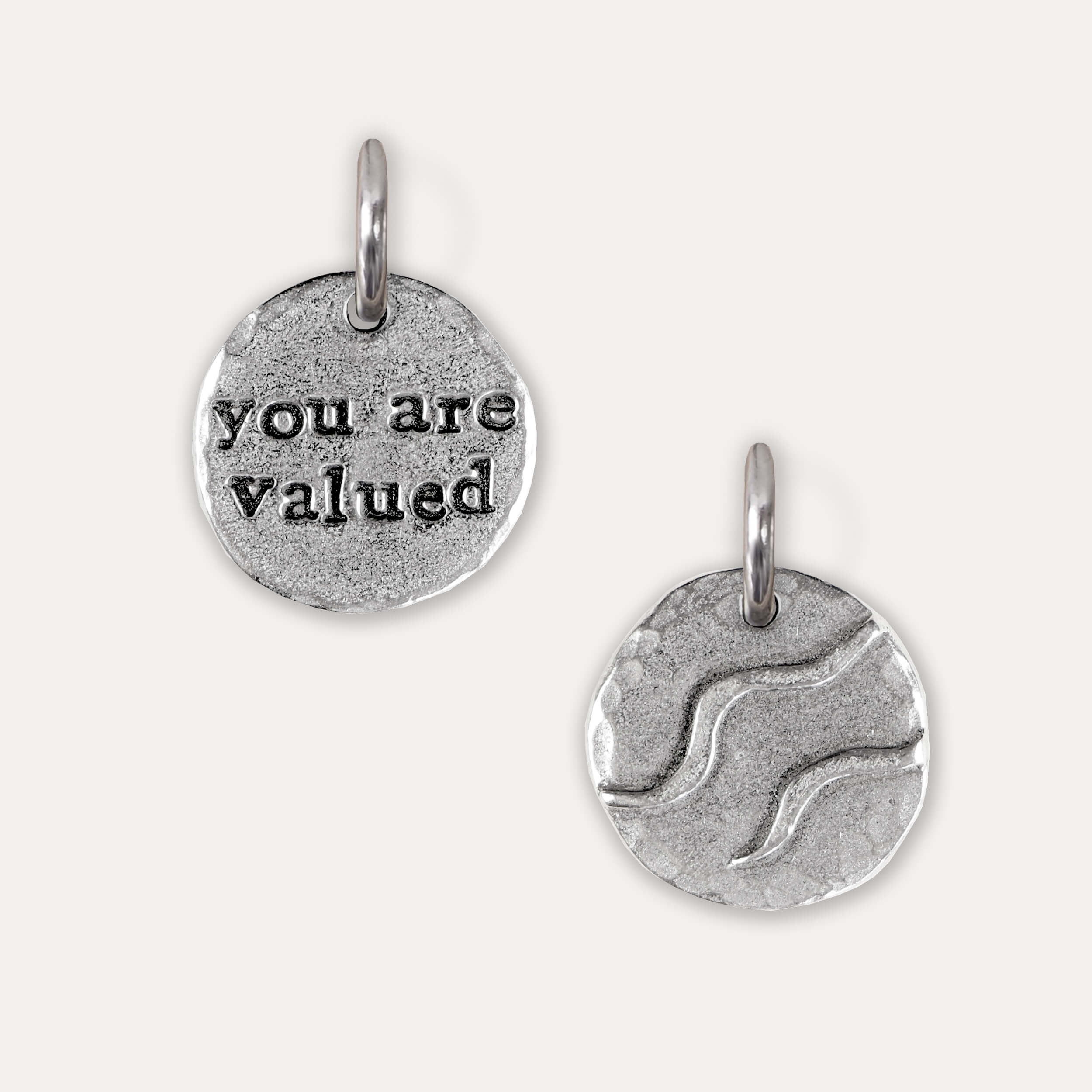
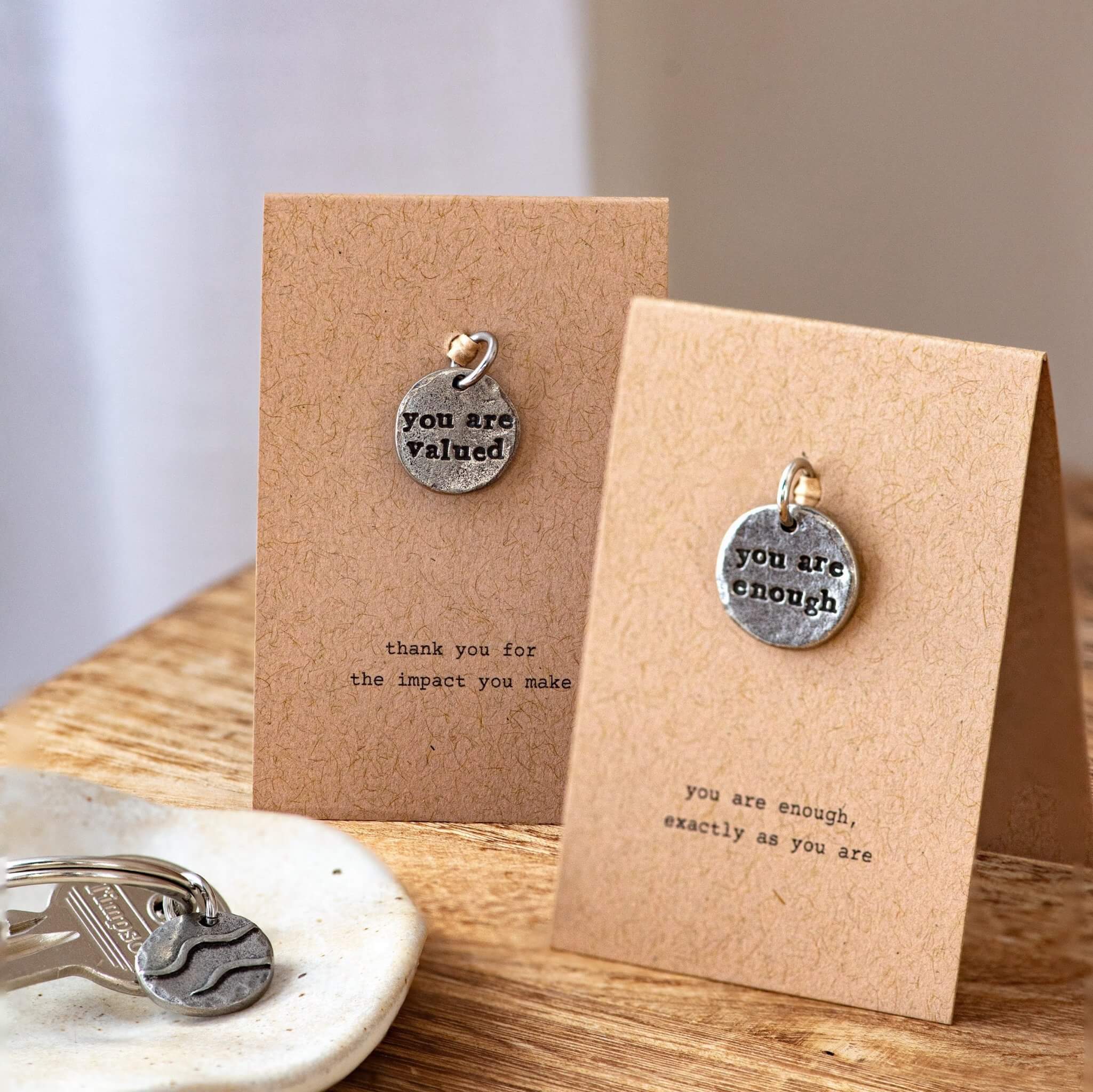
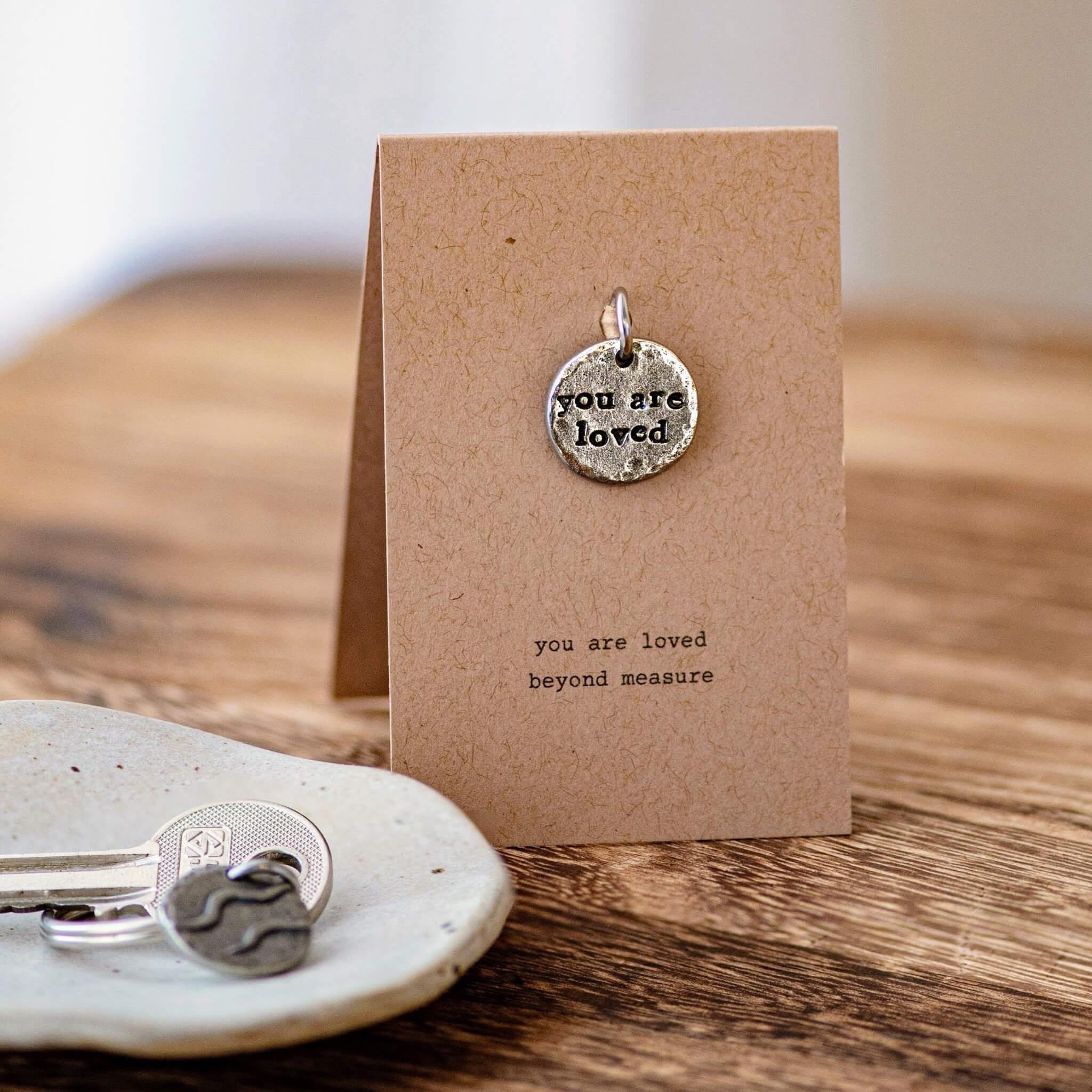
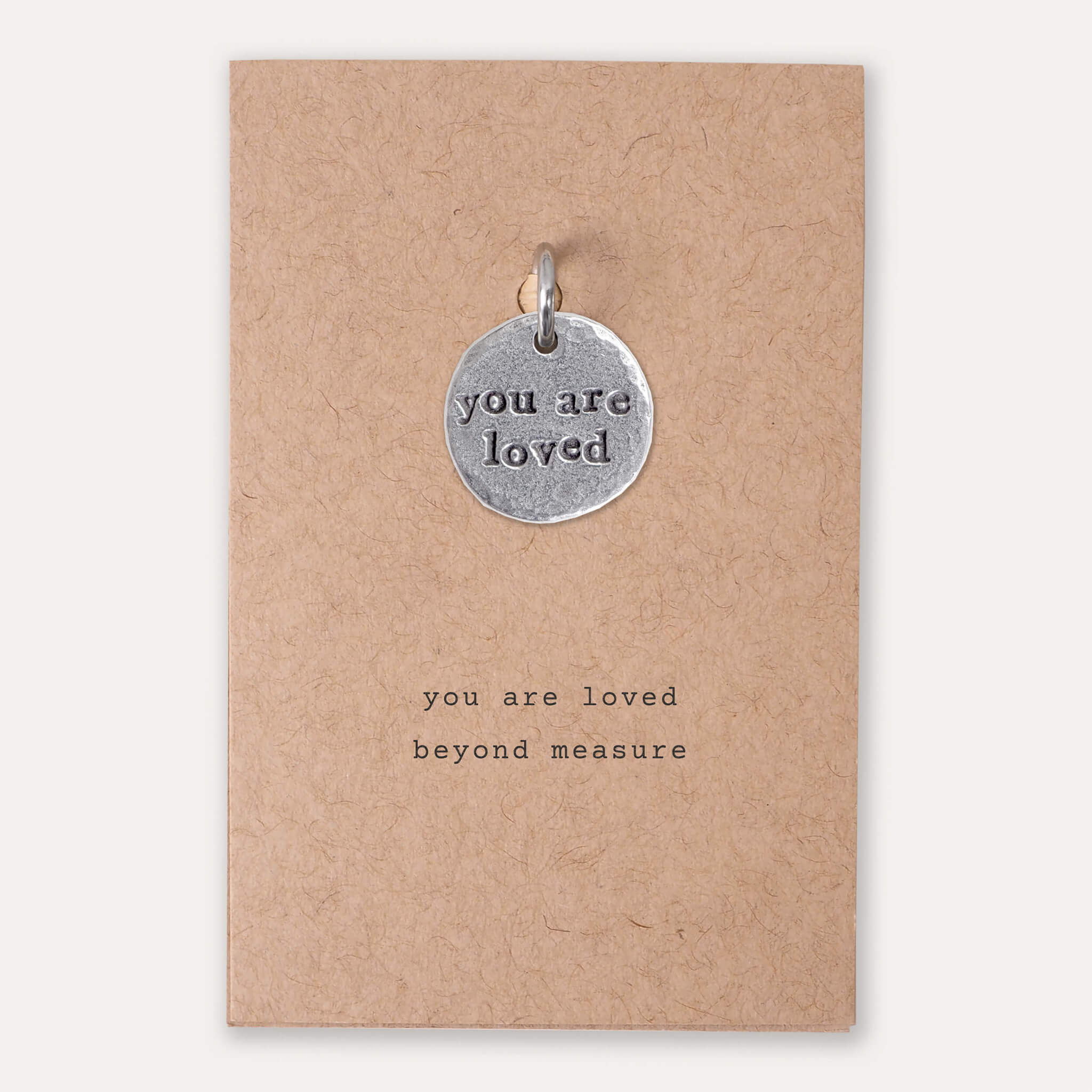
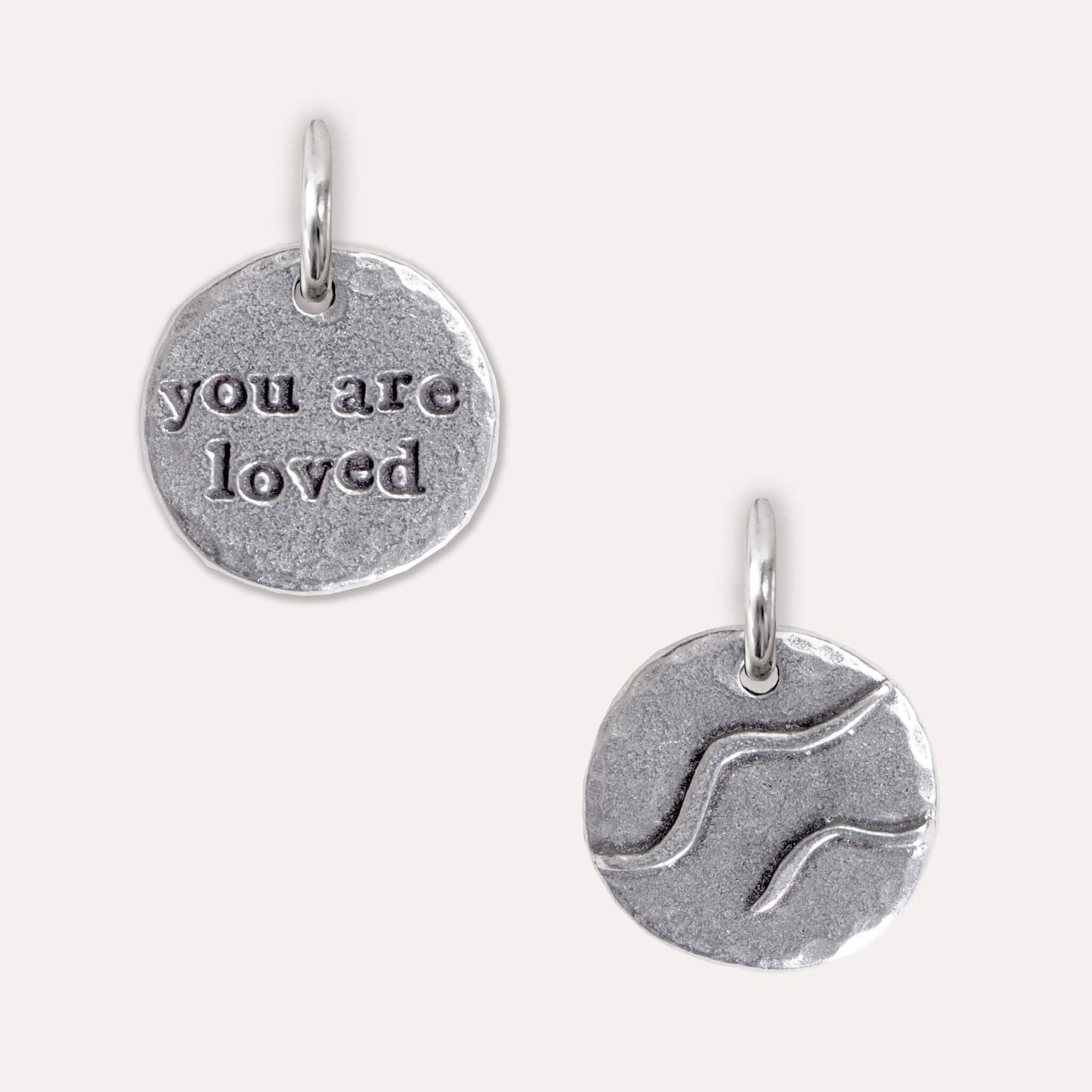
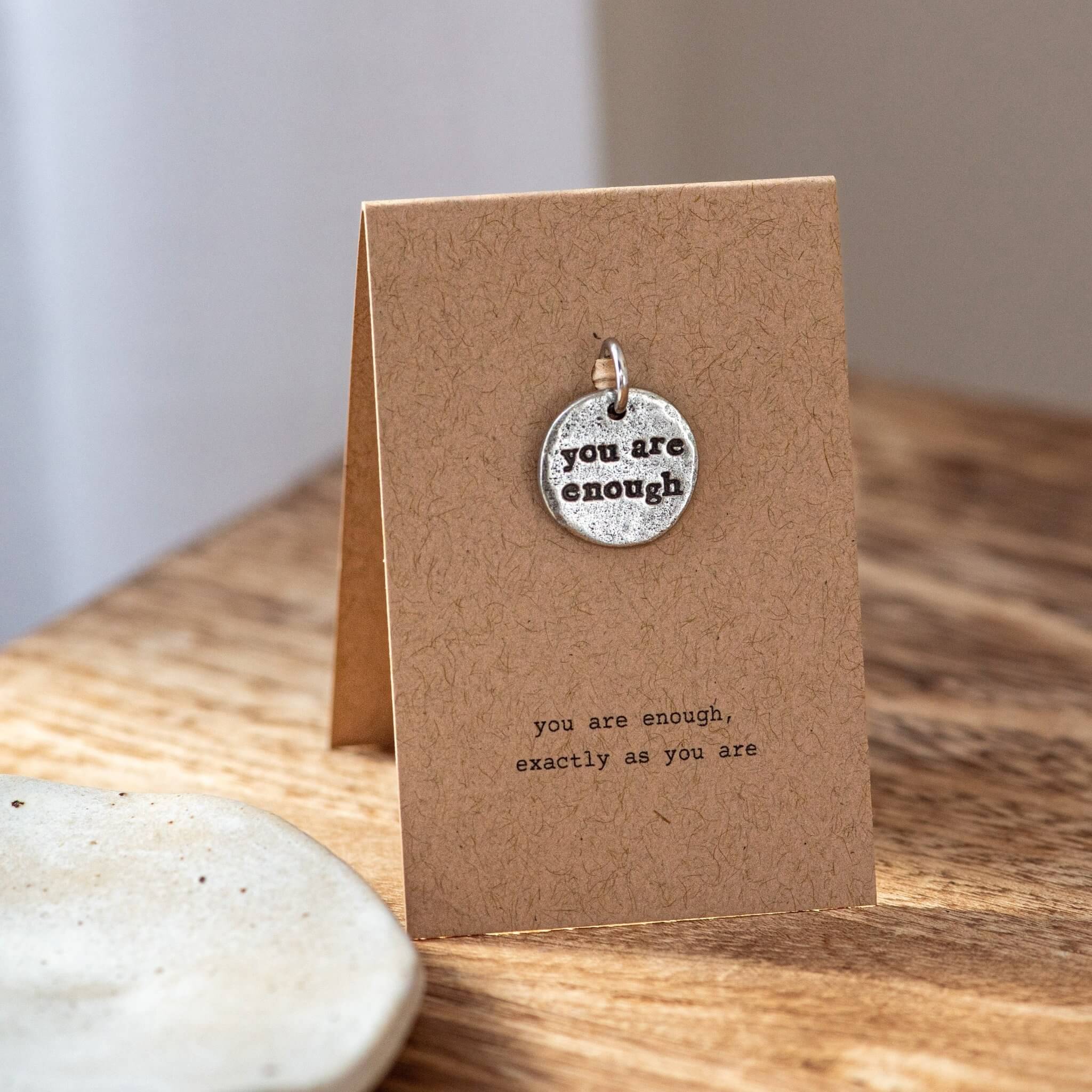
The You Are Enough Charm — £8.95
When you want to say something without making an occasion of it
It goes on their keys, and they hold it several times a day without thinking. Walking into the office. Getting home. Nobody else sees it, and they never have to have a conversation about it.
Three words they'd never say about themselves, said quietly and repeatedly. At this price nobody feels indebted, which matters far more than you'd think for someone who struggles to accept things.
Added to your basket. View basket →
Where I'd choose something else: as a main birthday present it can feel slight. It's perfect as an add-on, or from a friend who wanted to say something without a fuss. Full details →
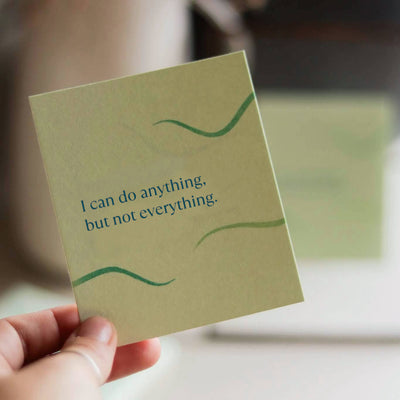
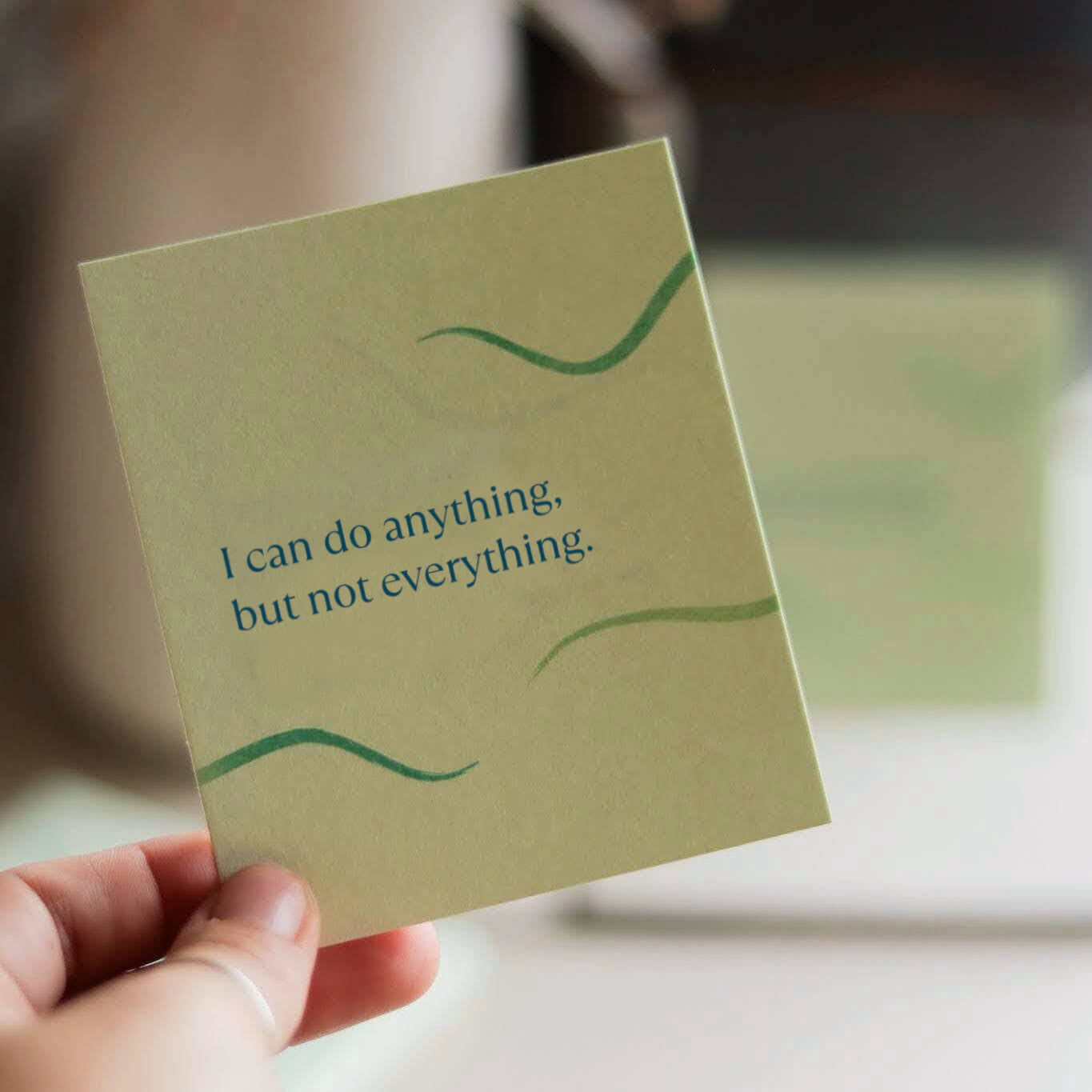
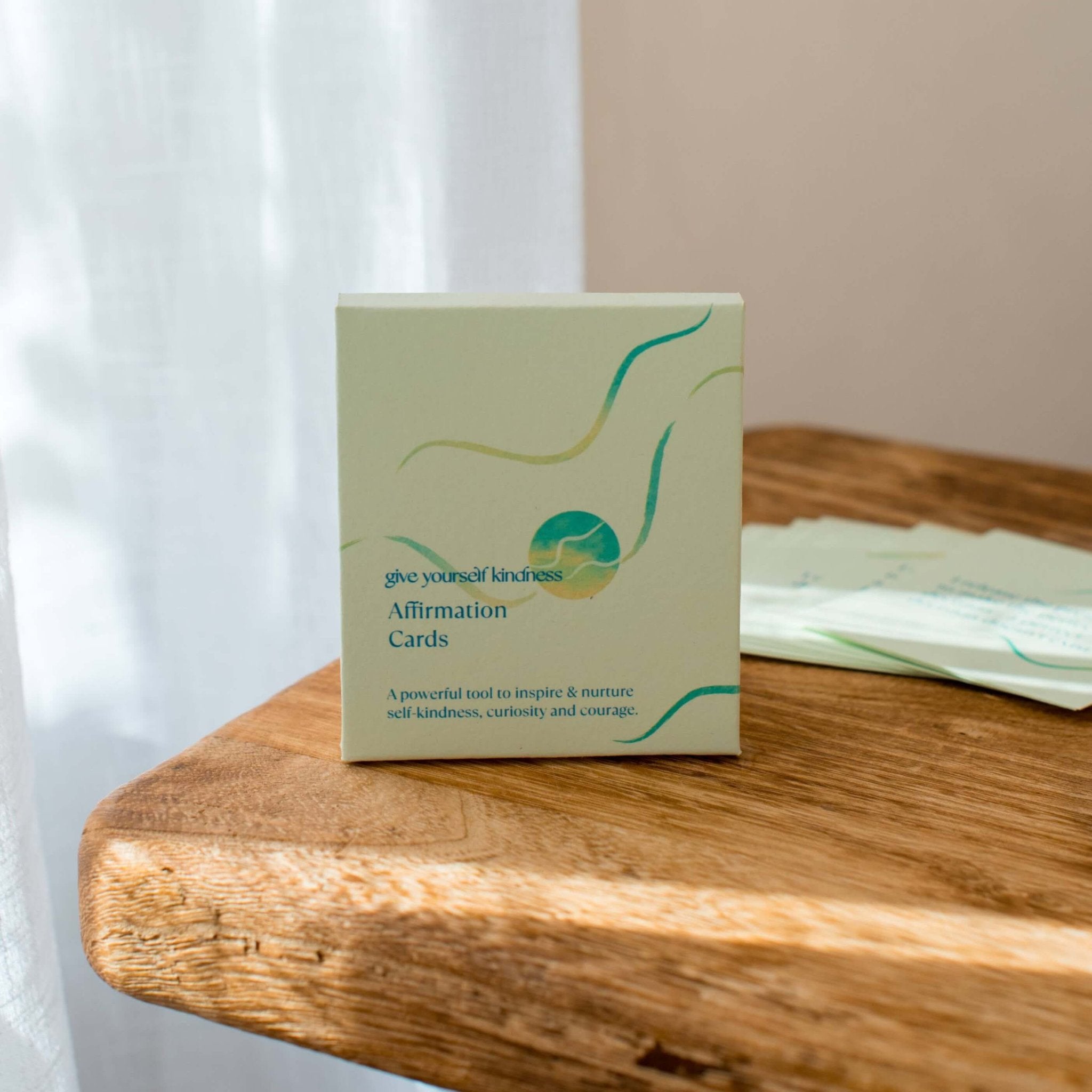
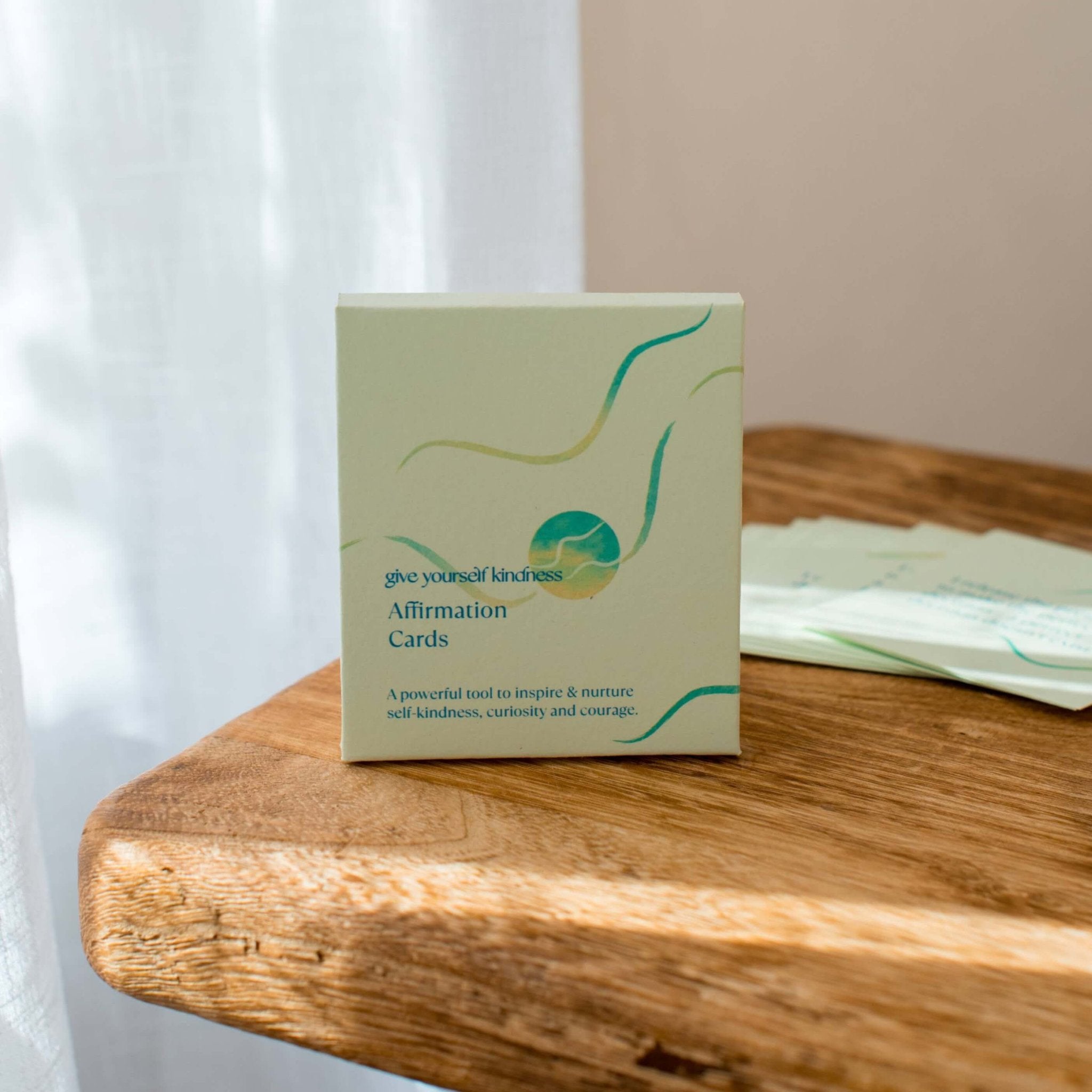
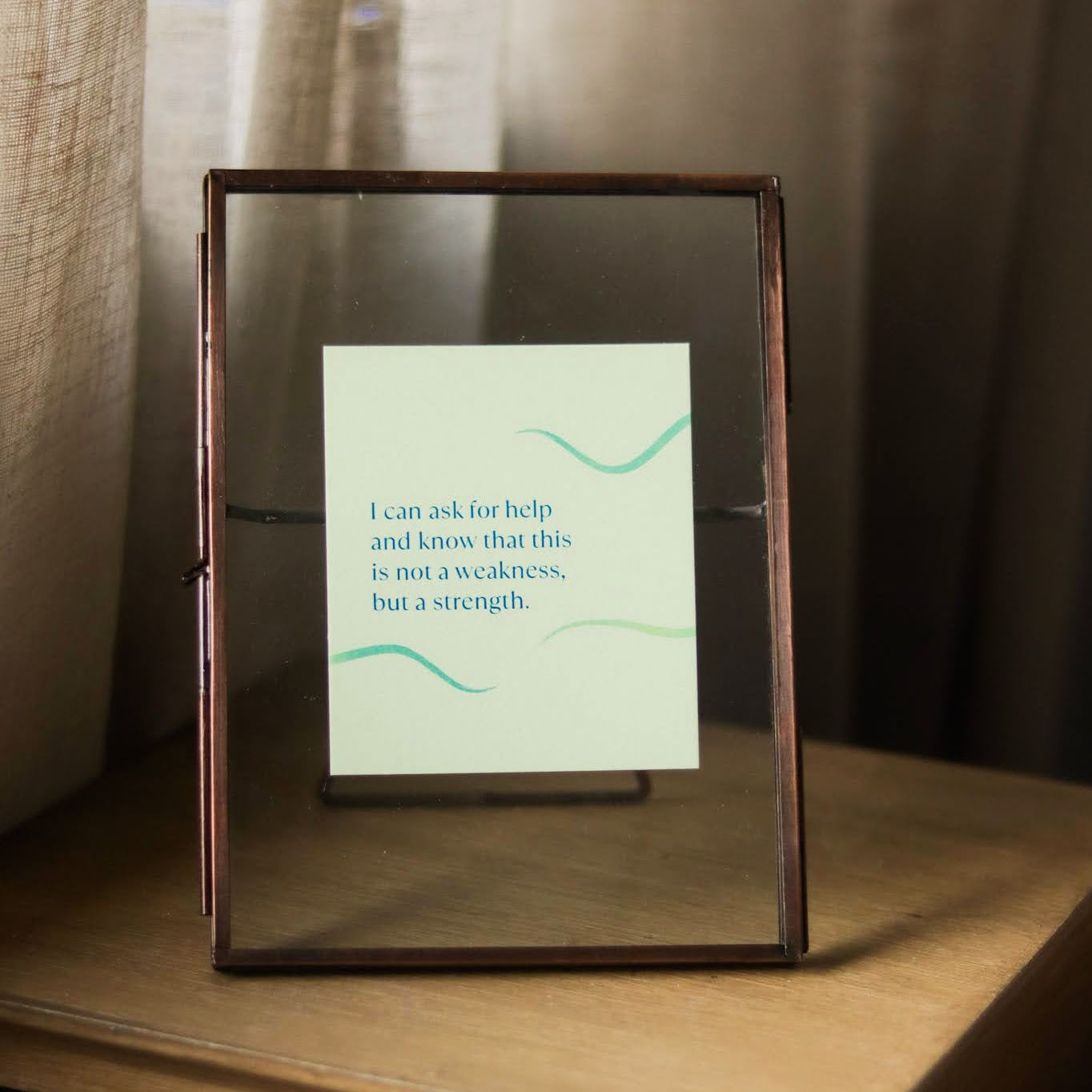
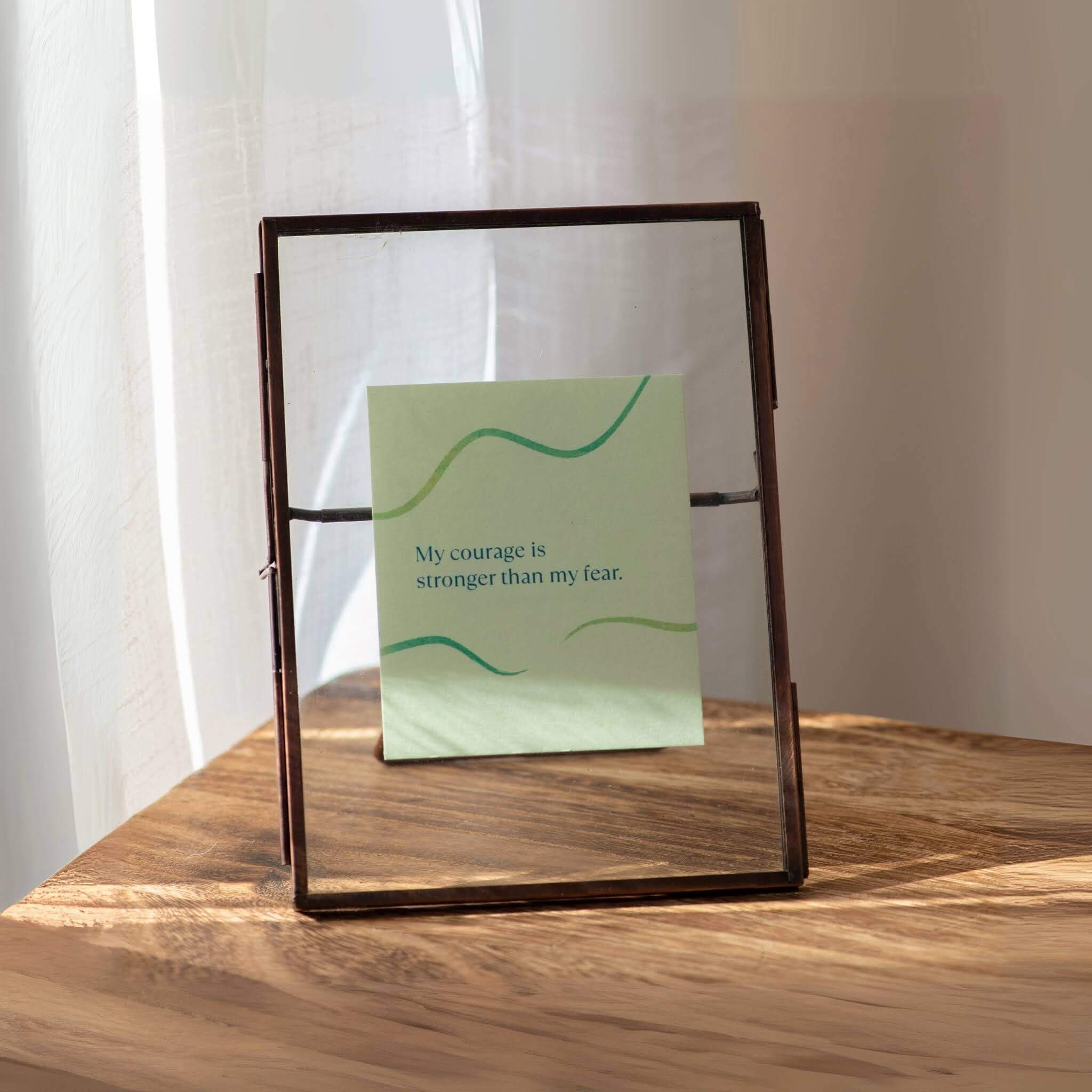
The Affirmation Cards — from £13.95
For someone who has no spare time, or who won't write anything
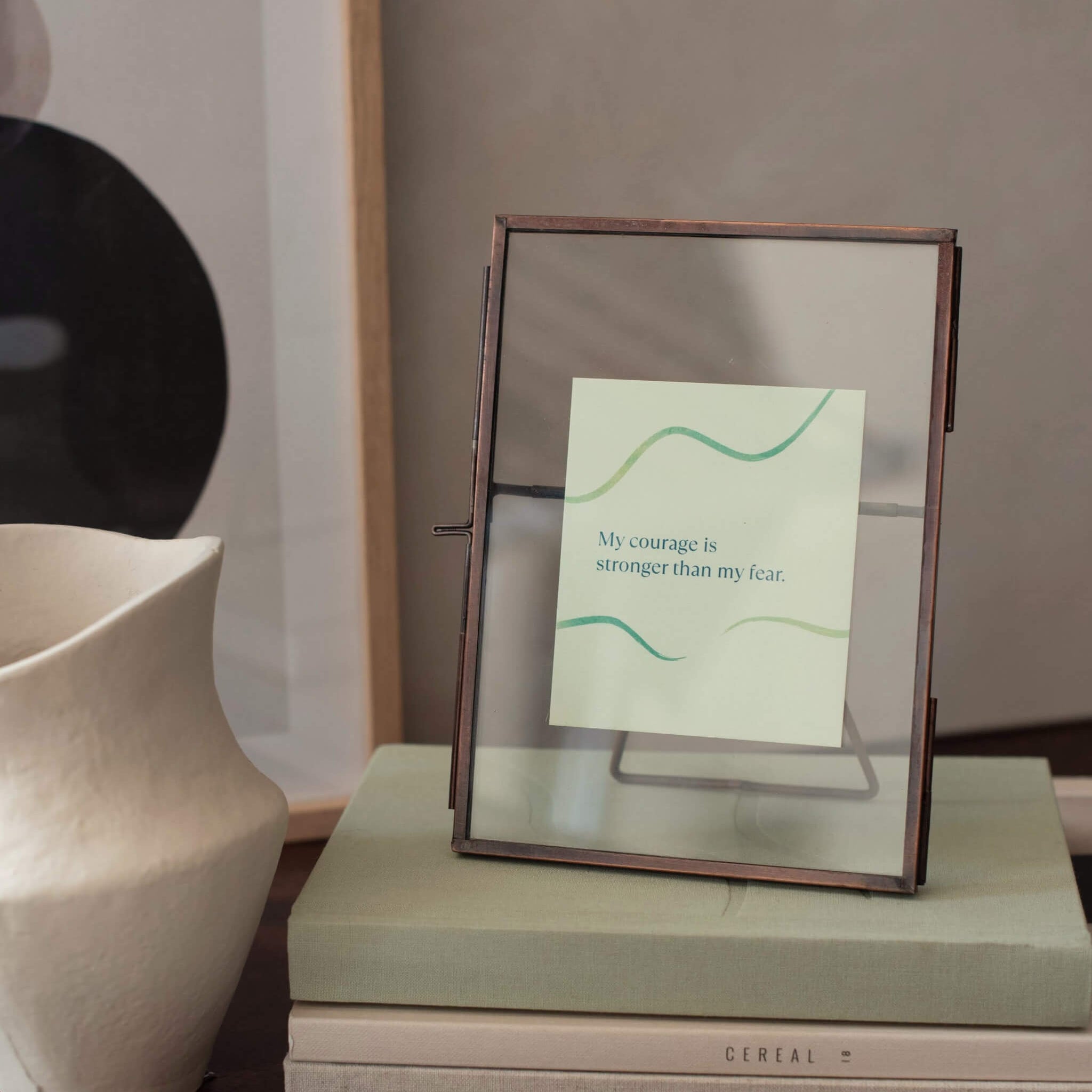
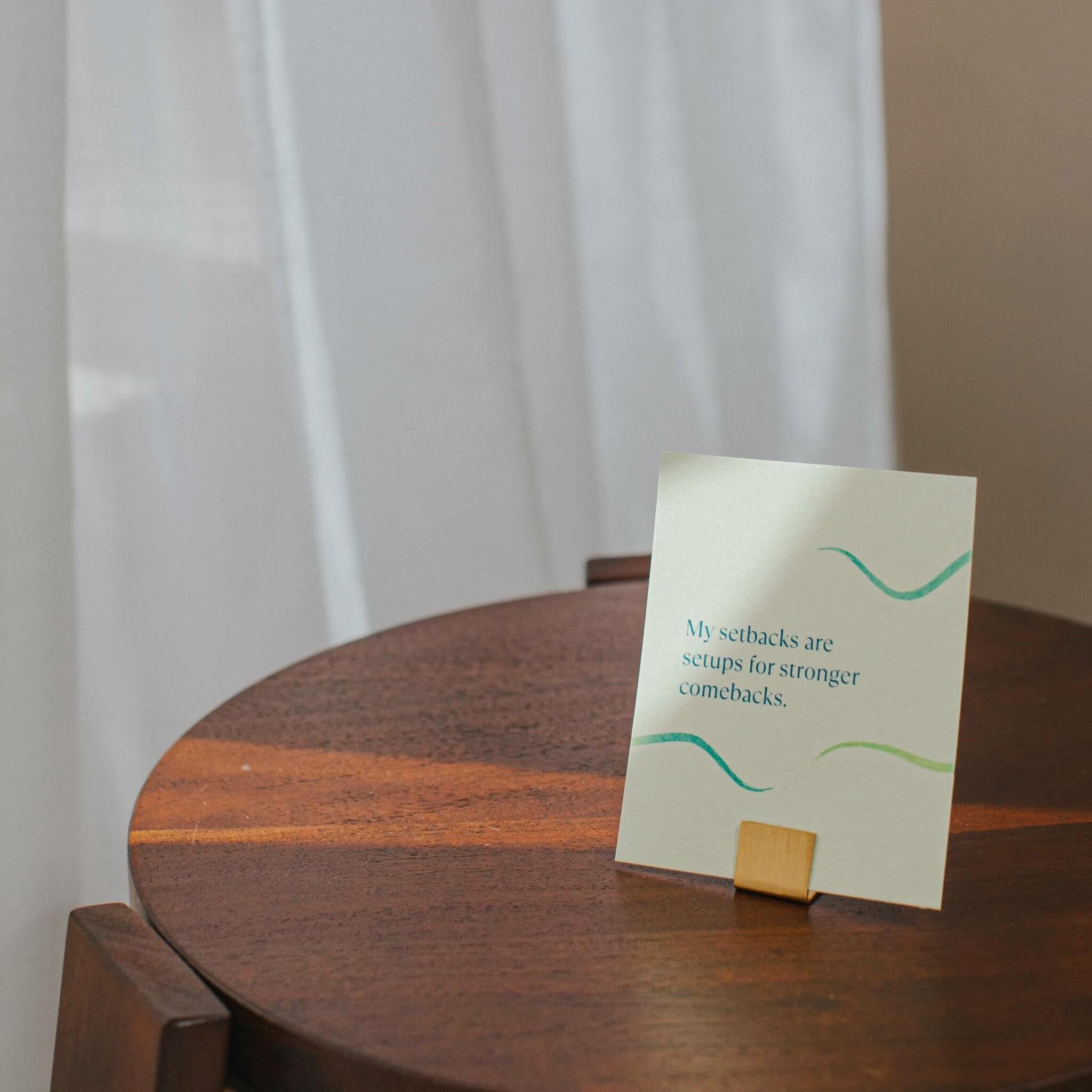
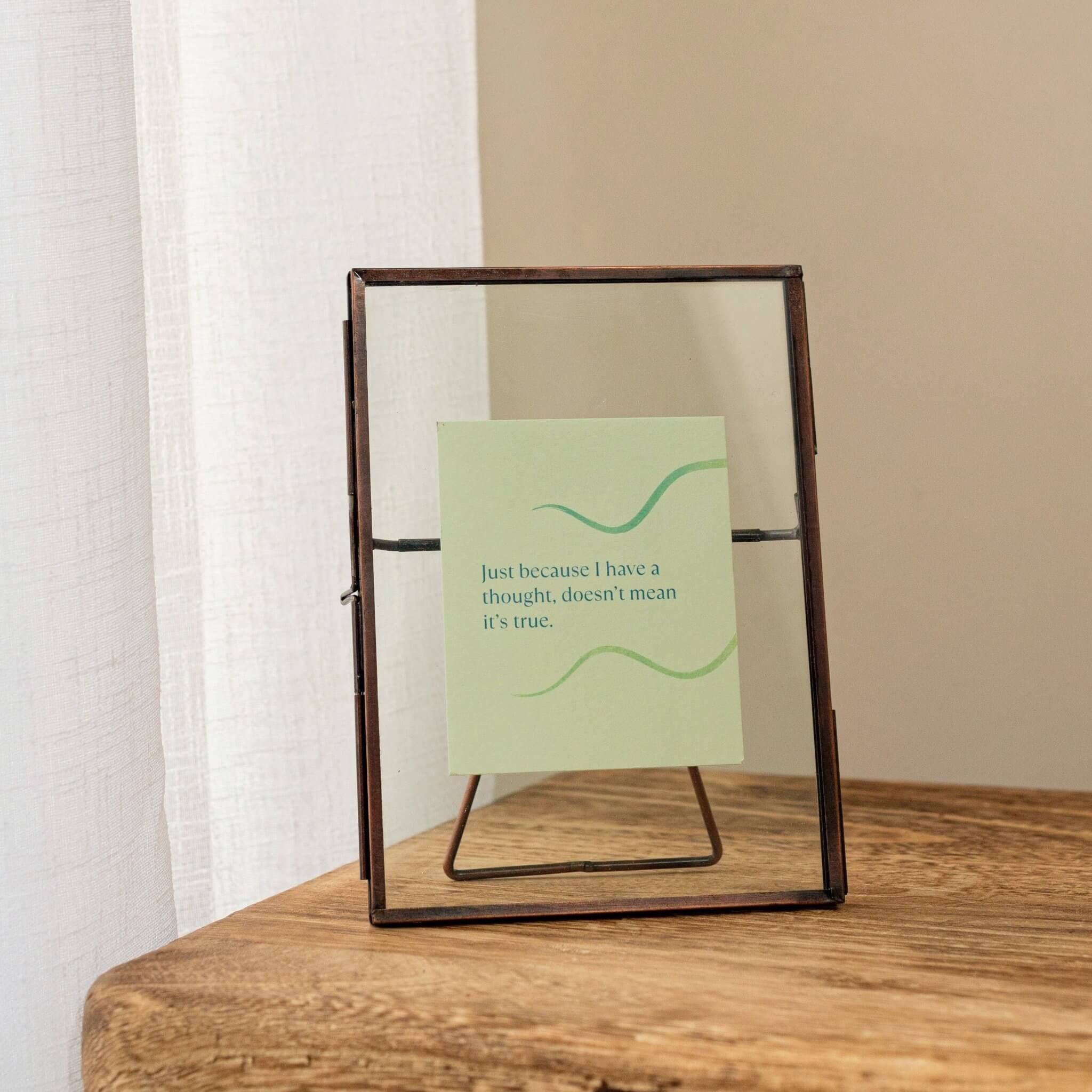
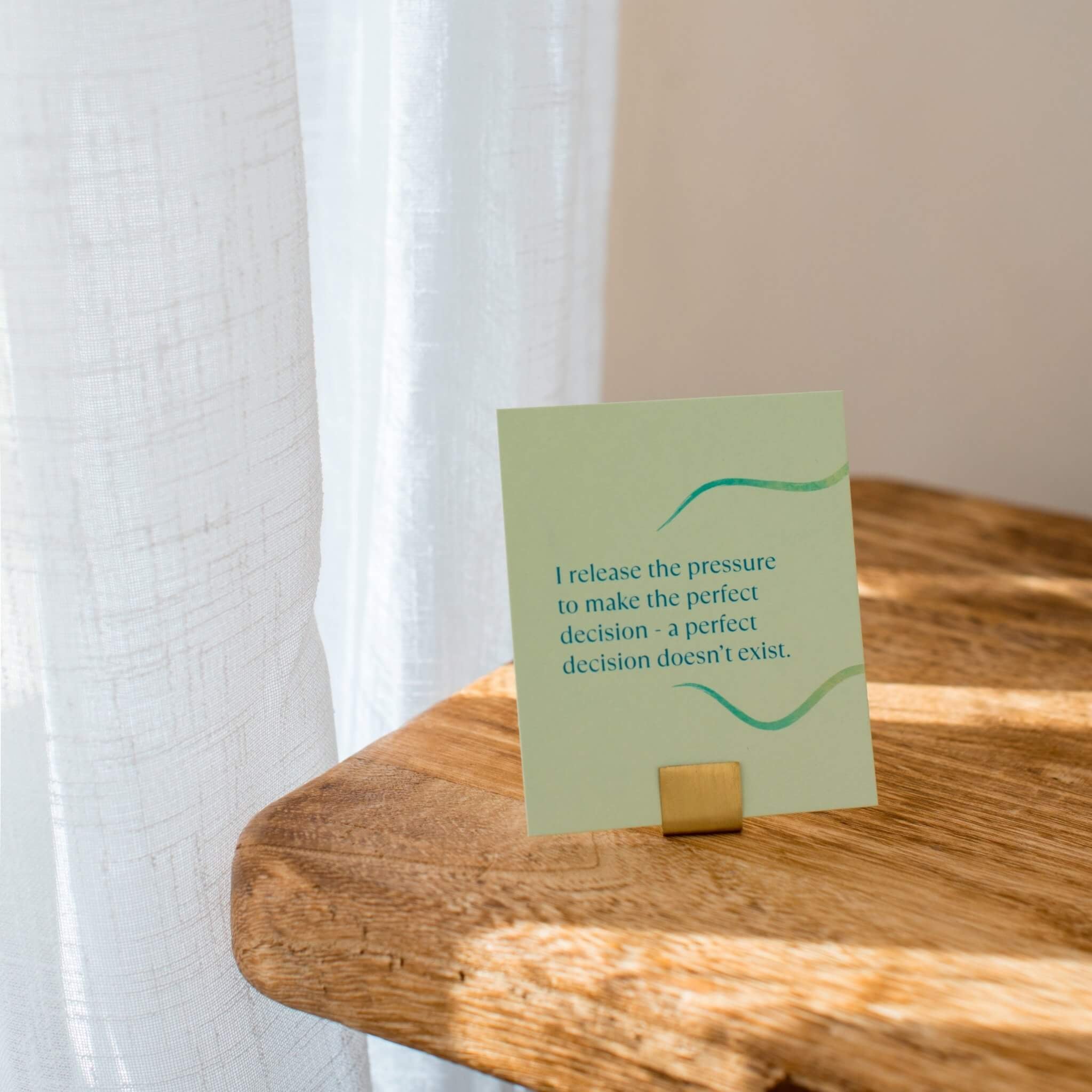
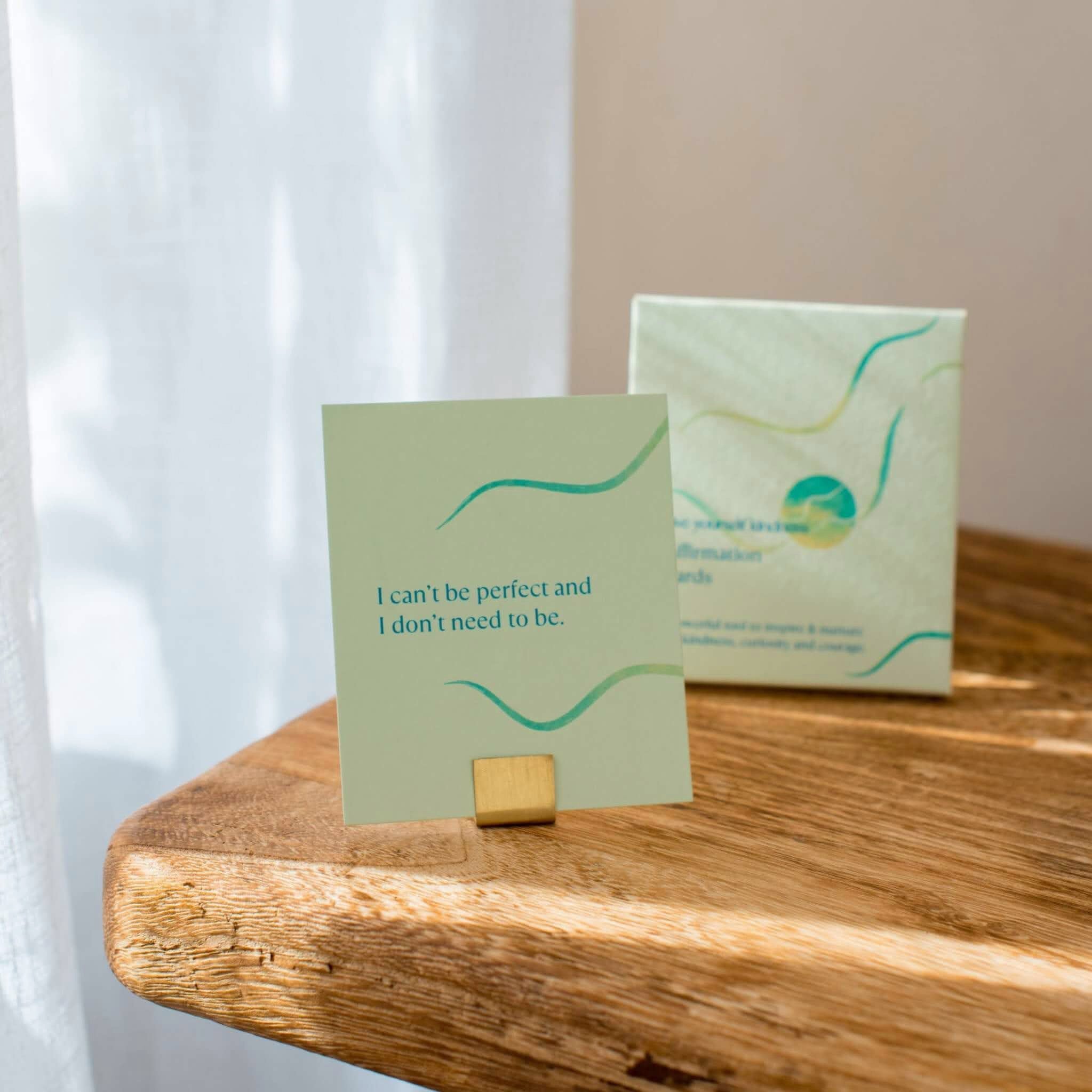
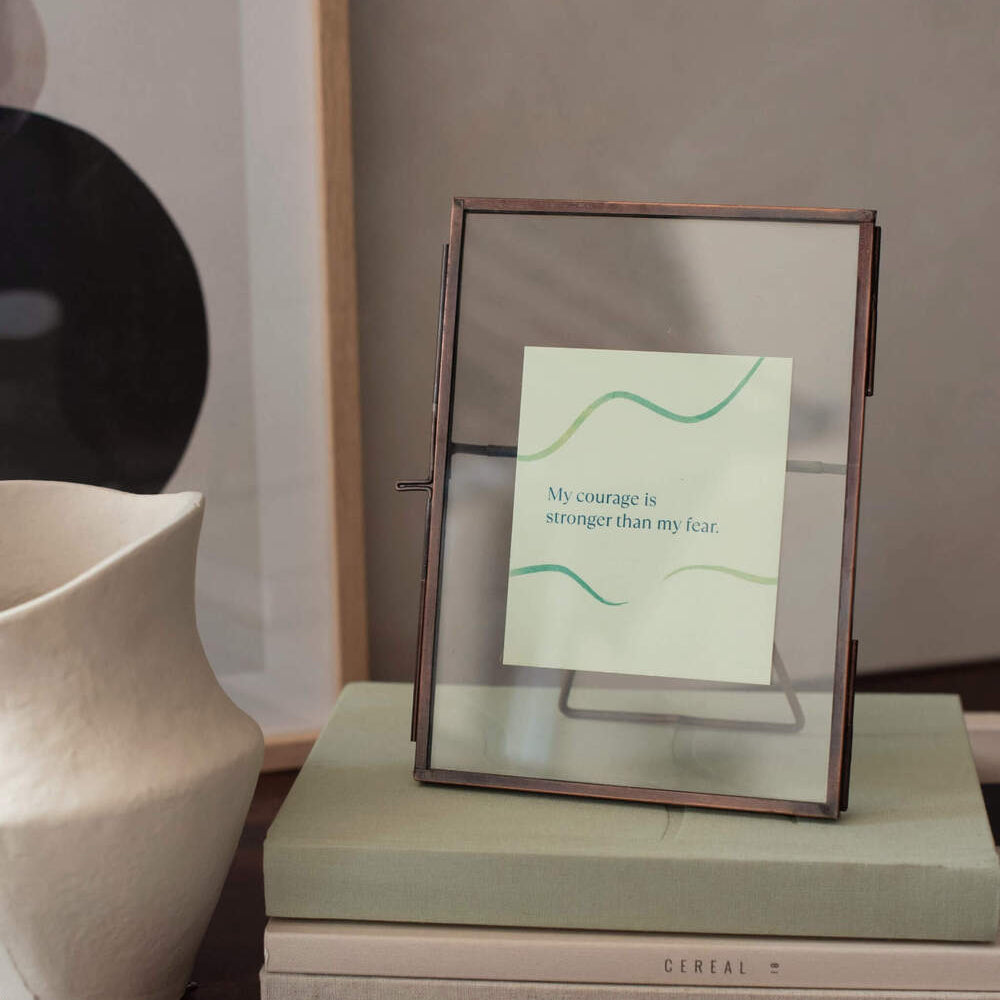
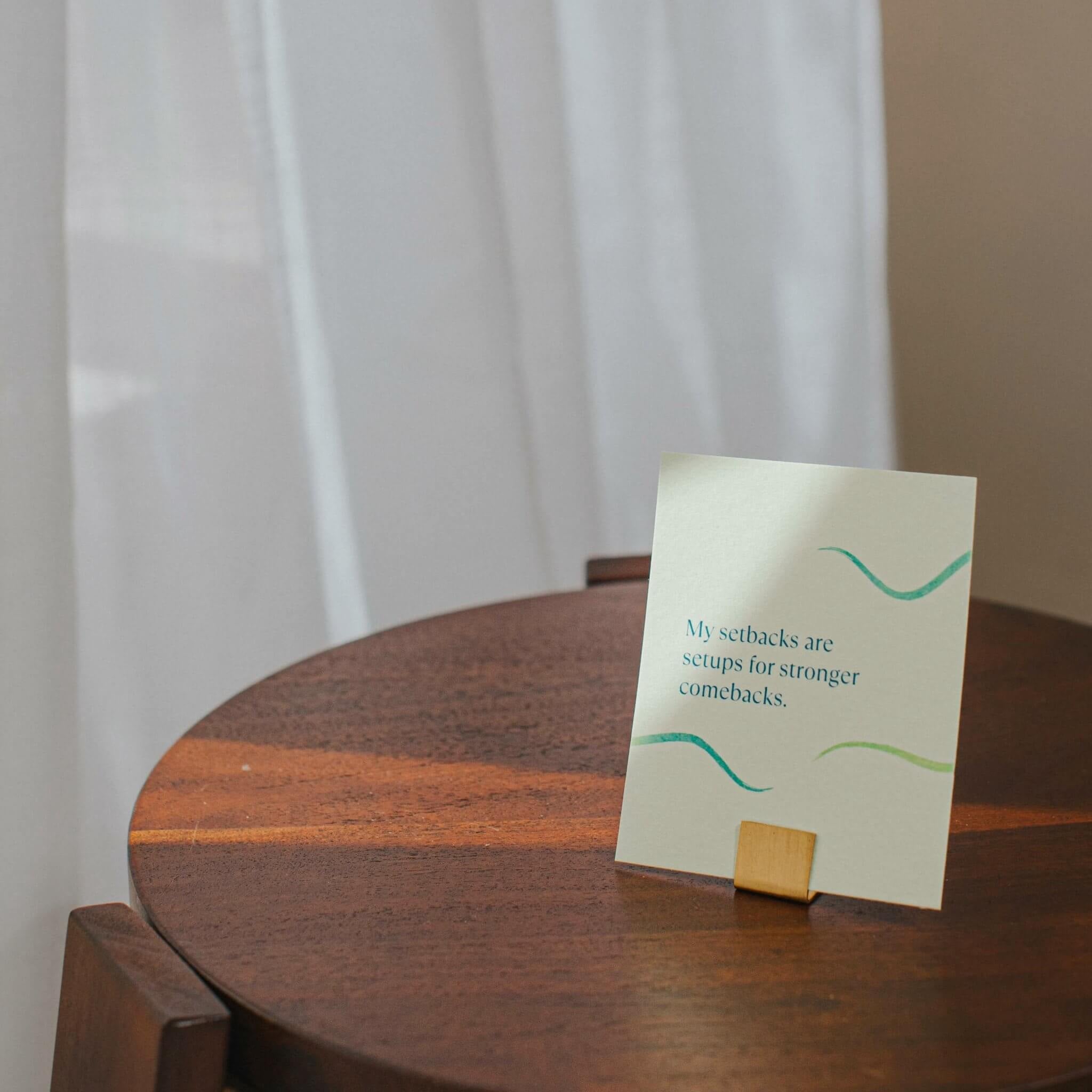
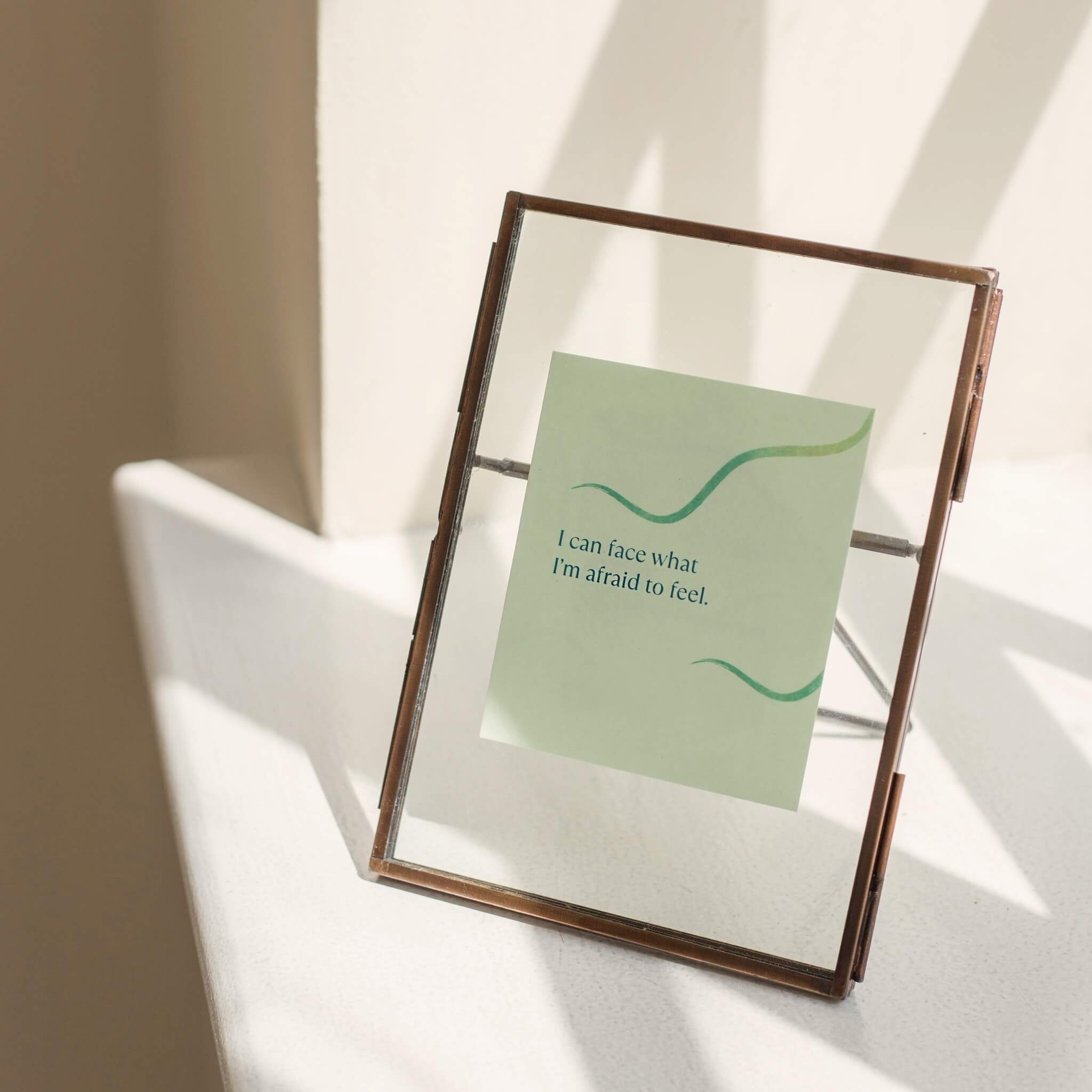
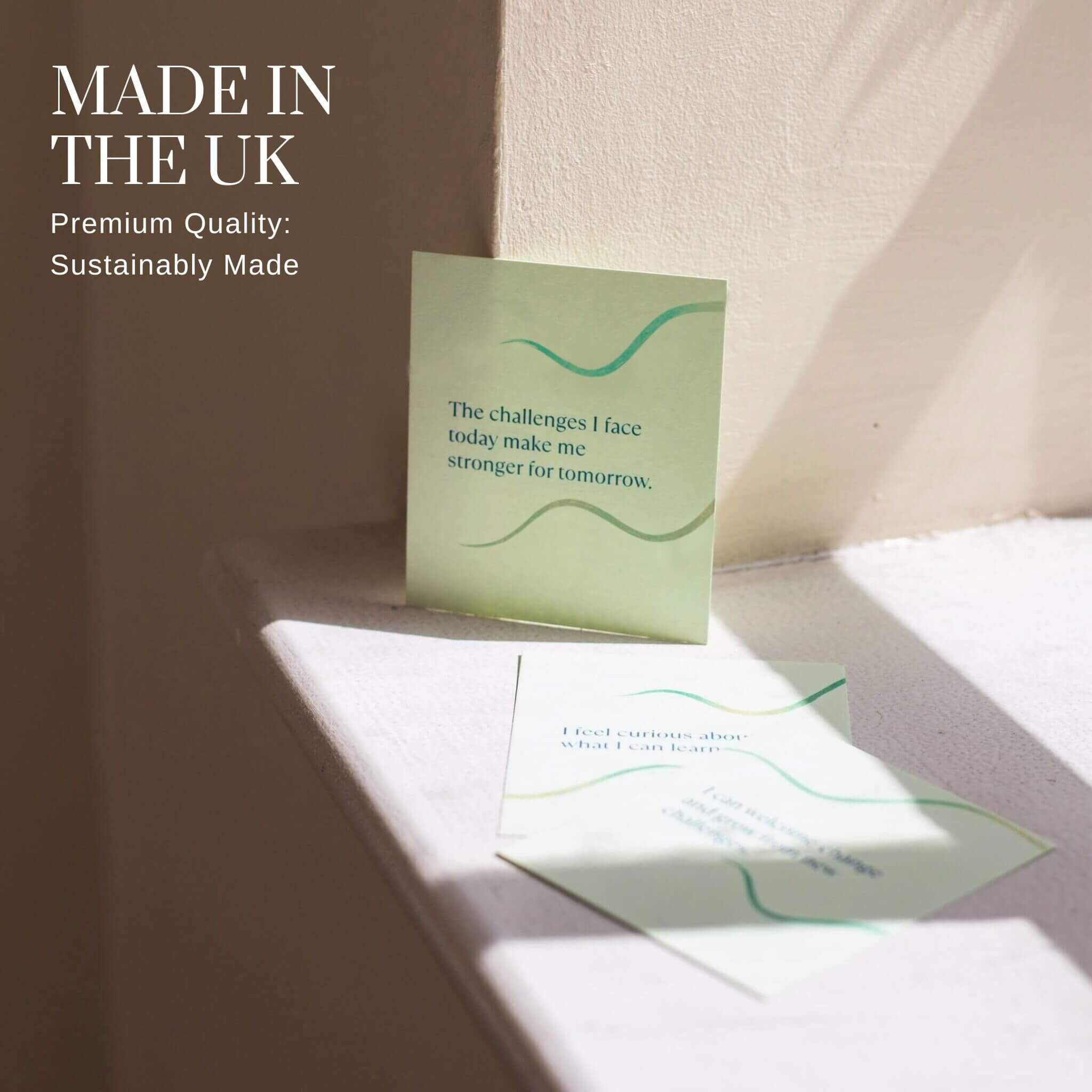
Two in the afternoon, something has gone wrong, and the card propped on their desk says "I can't be perfect and I don't need to be." They didn't go looking for it. It was already there.
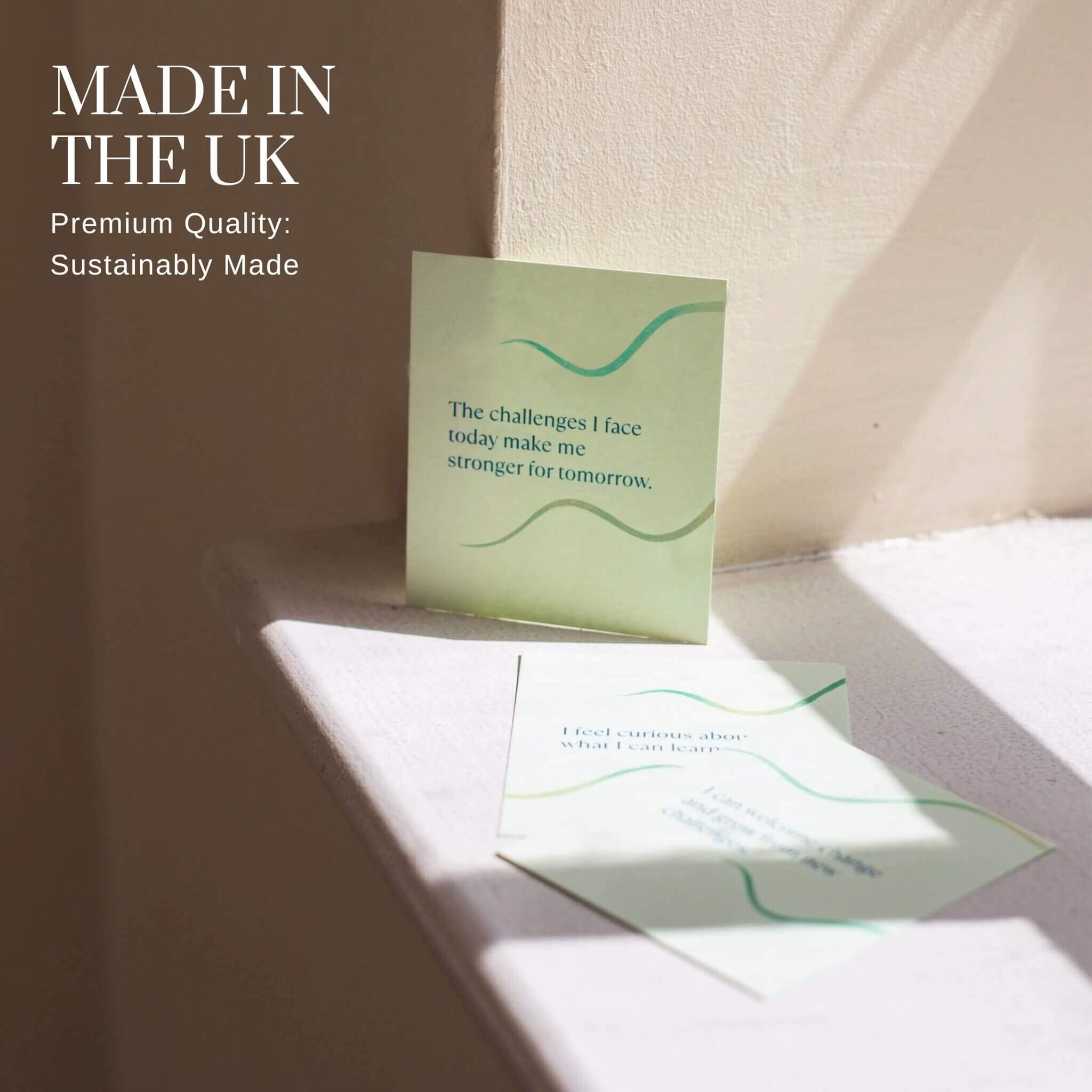
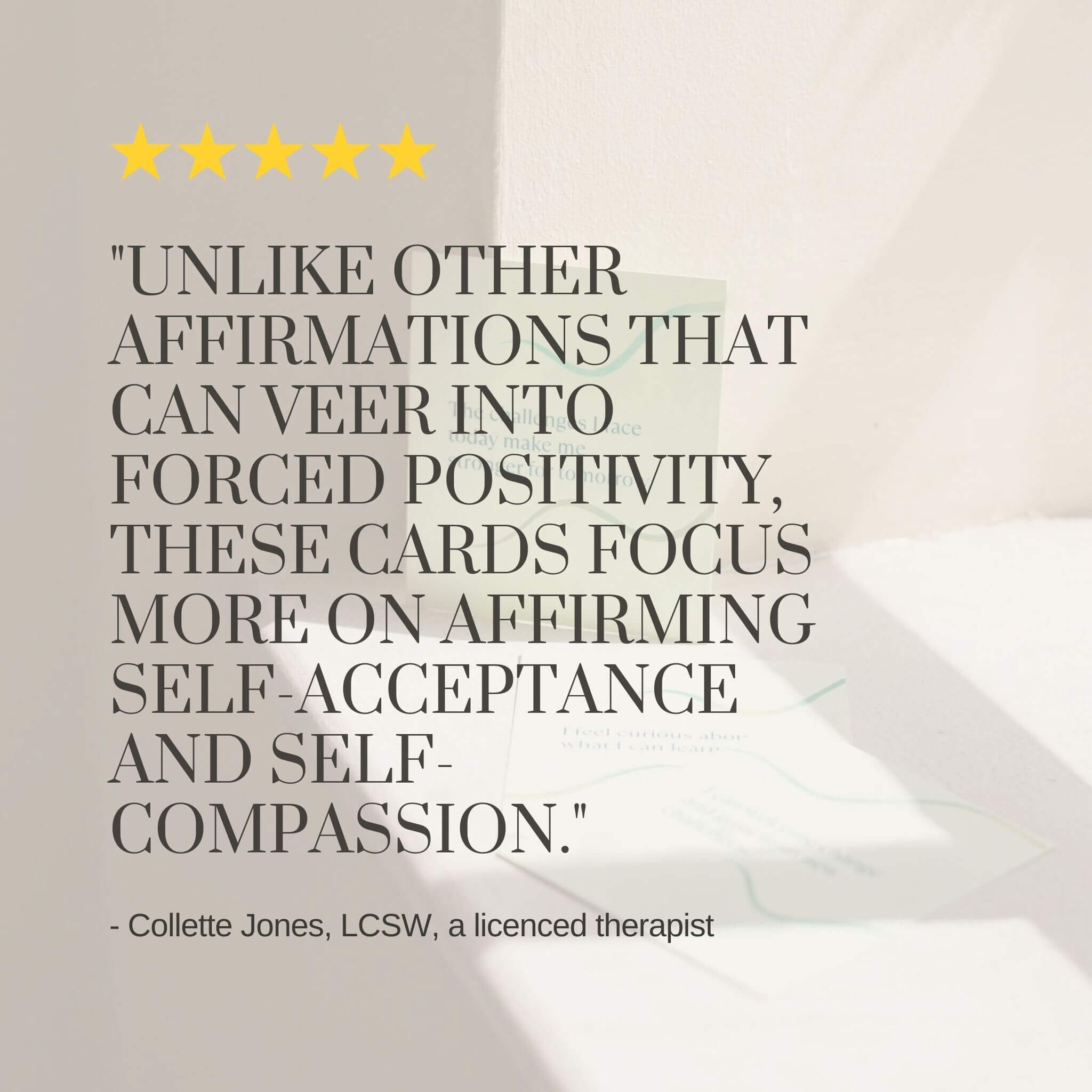
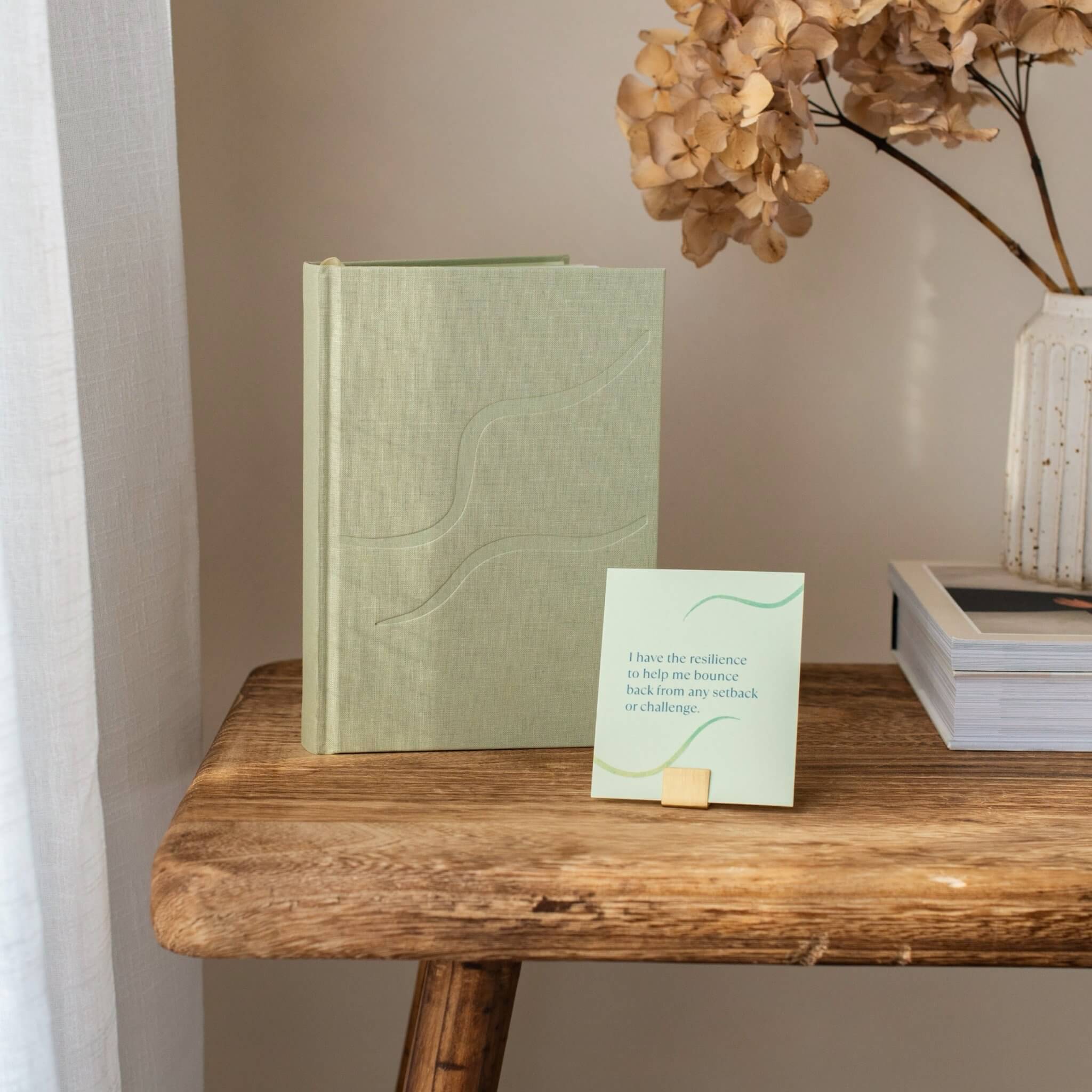
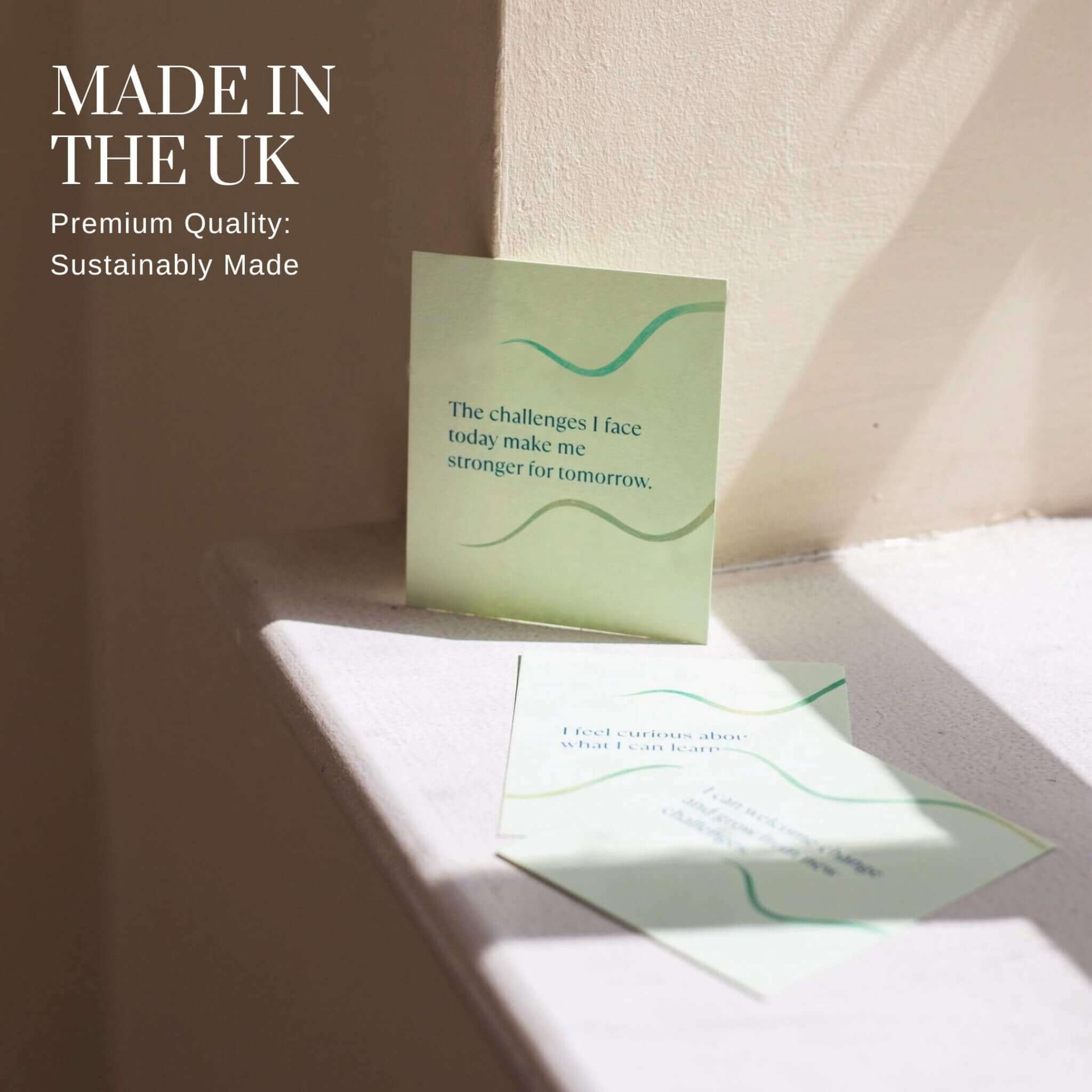
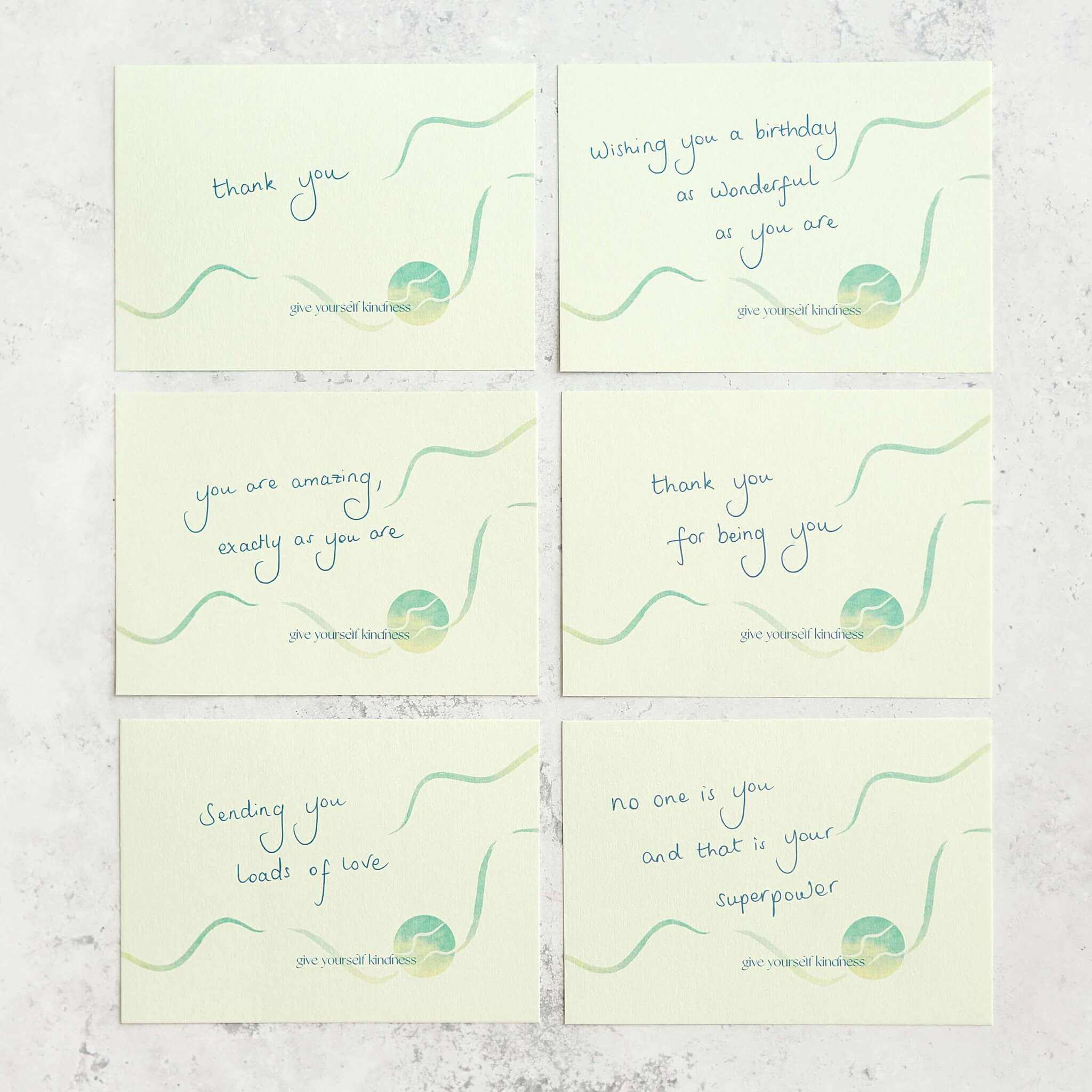
Every card is written on Compassion Focused Therapy principles, which in practice means not one of them tells the reader they're wonderful. They acknowledge the difficulty and then offer something kinder, which is why they don't get the eye-roll that positivity cards get. Three boxed sets of twenty, sixty different affirmations in total, printed in the UK on 270gsm FSC card.
Added to your basket. View basket →
Recommended by licensed therapists Margaret Davis, MS, LPC and Collette Jones, LCSW. Full details →

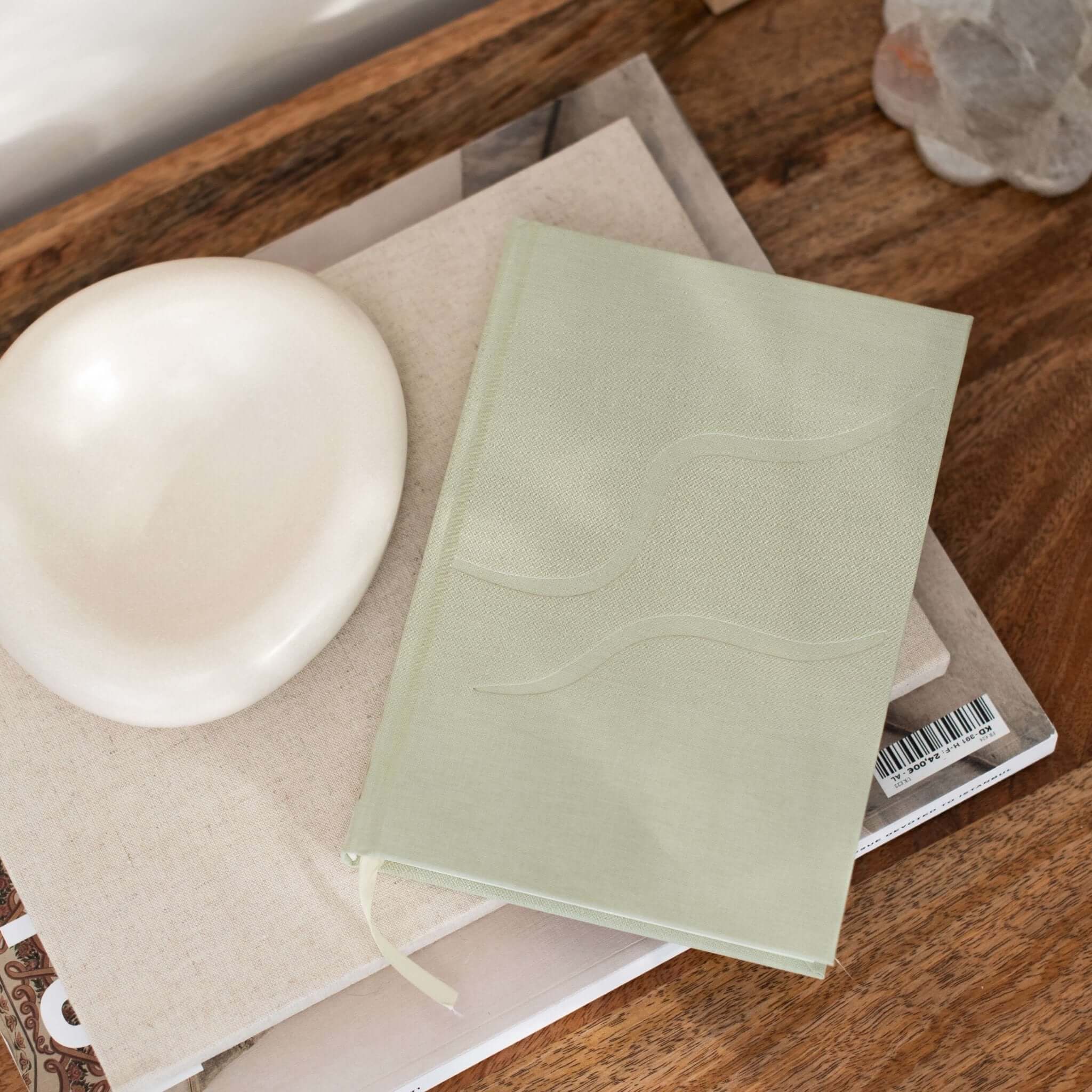
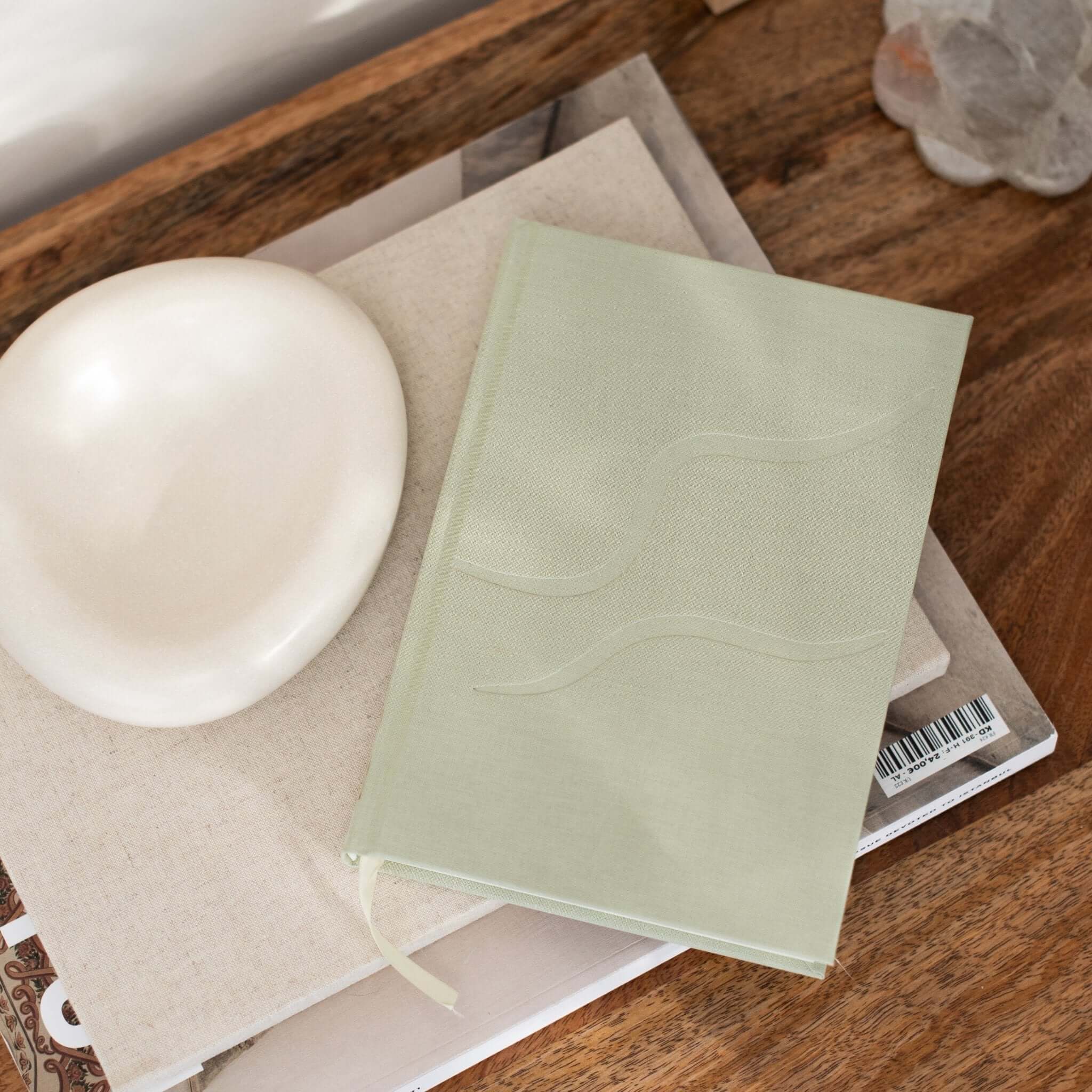
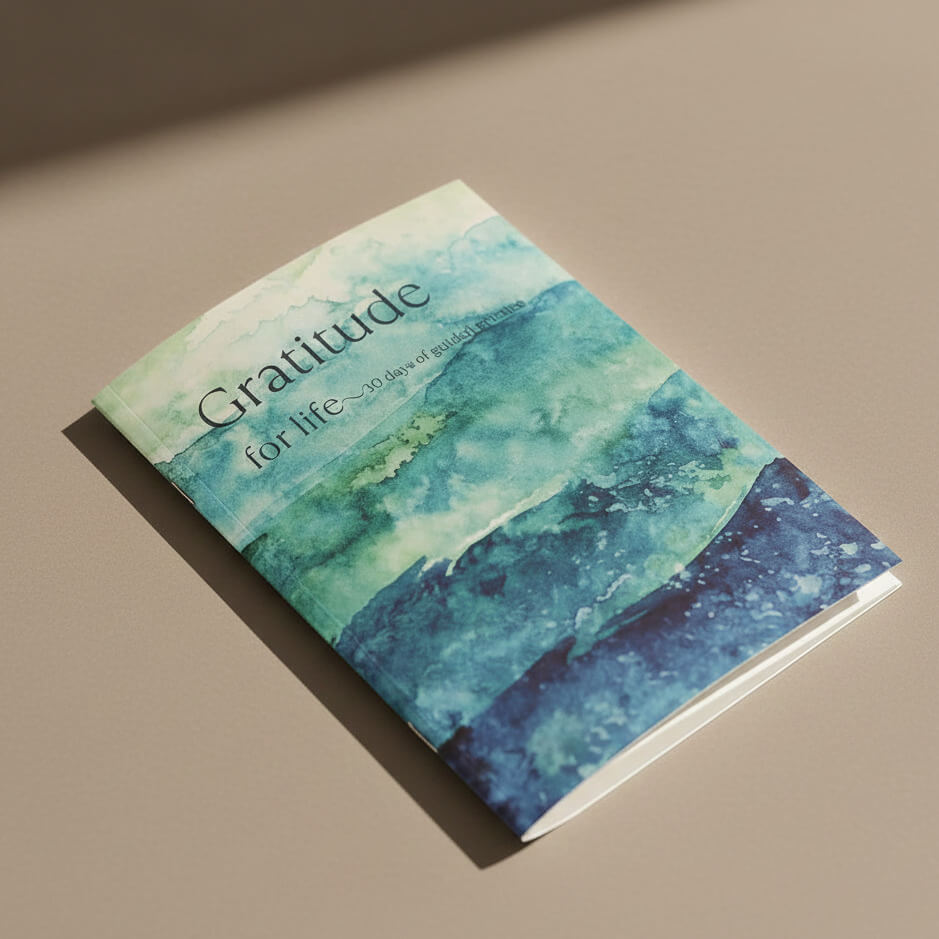
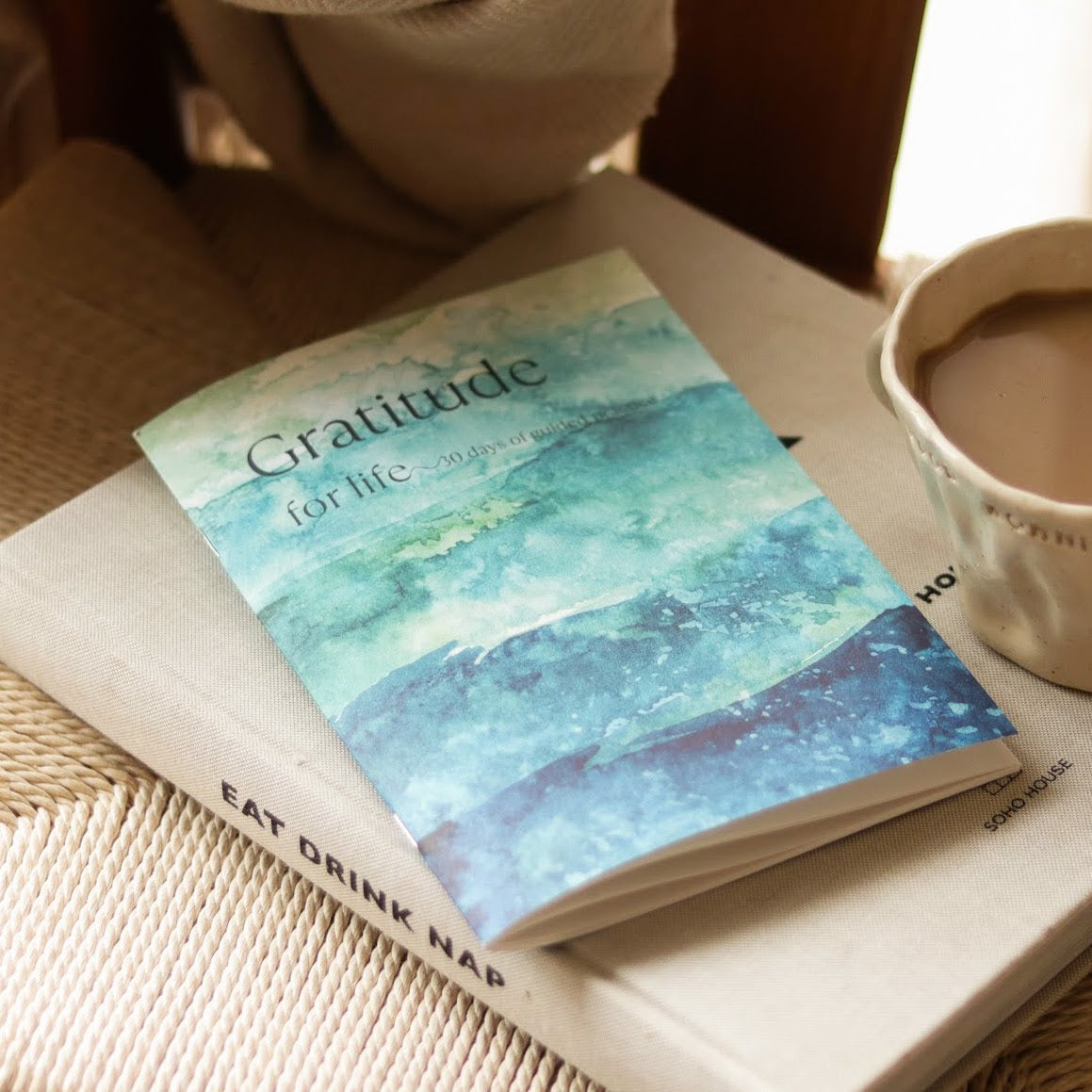
The Give Yourself Kindness Journal — £28.95
The one I'd send, if you're sending one thing
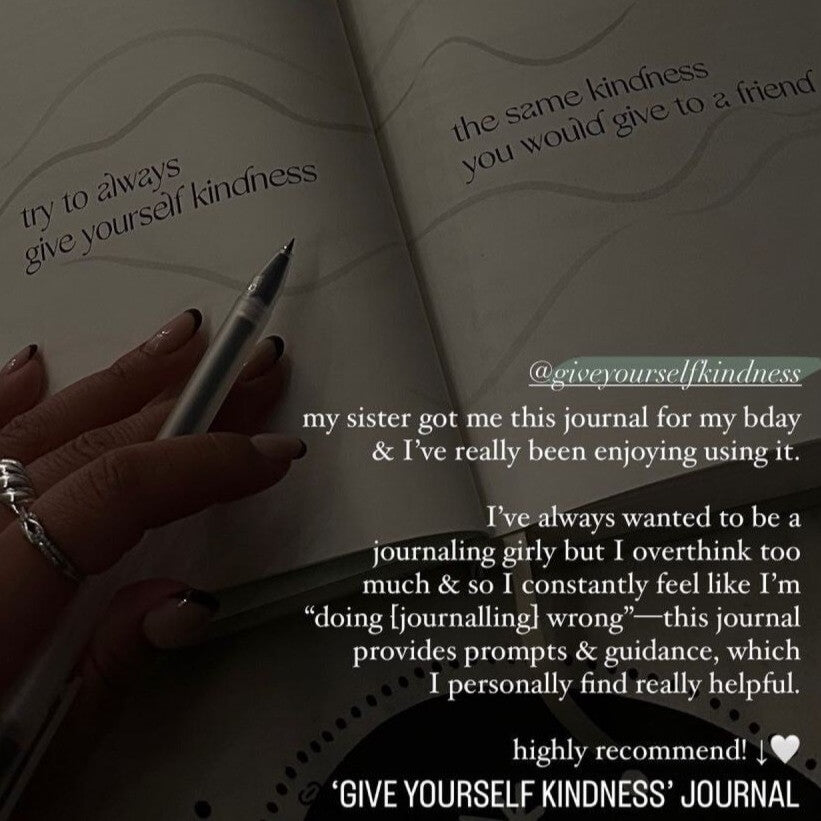
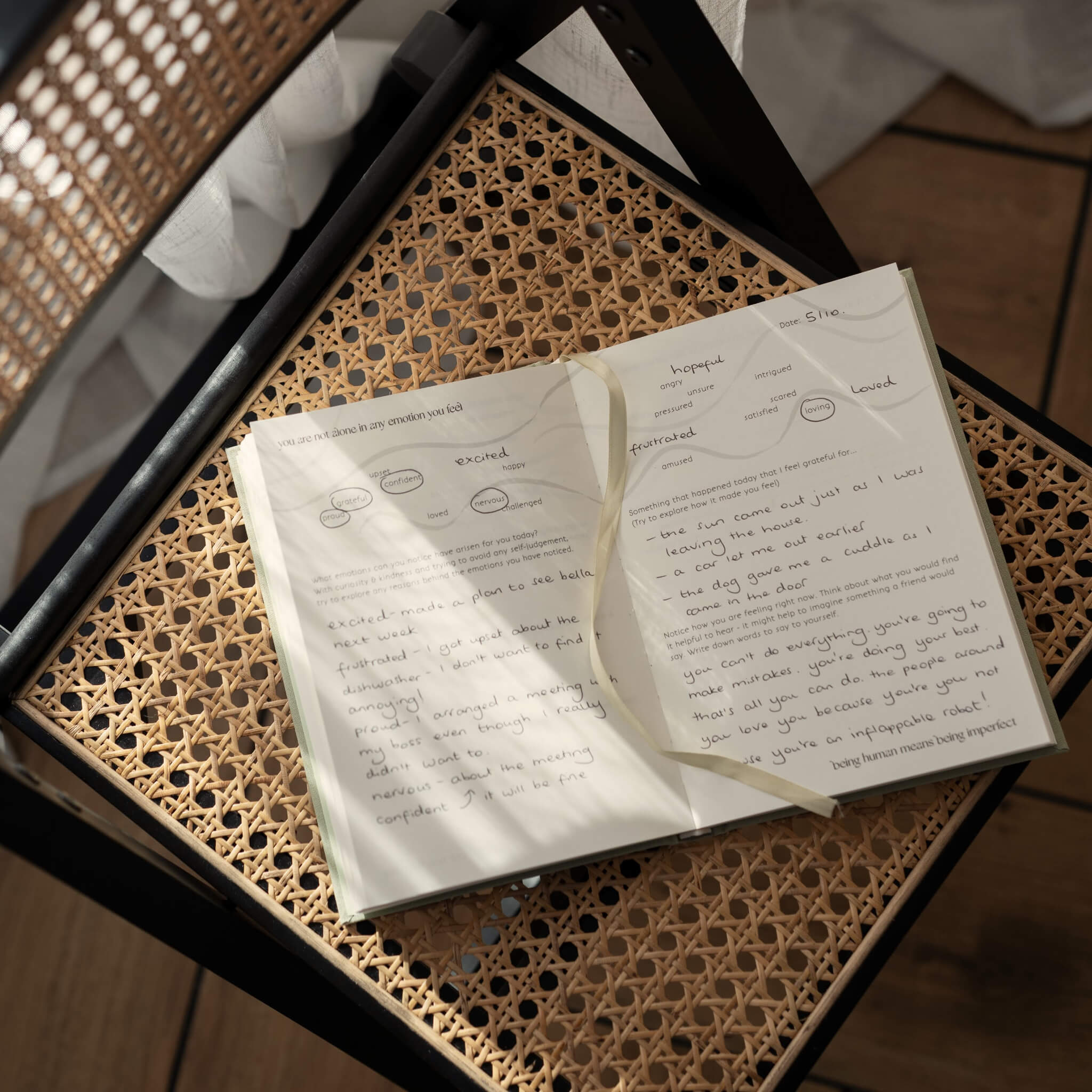
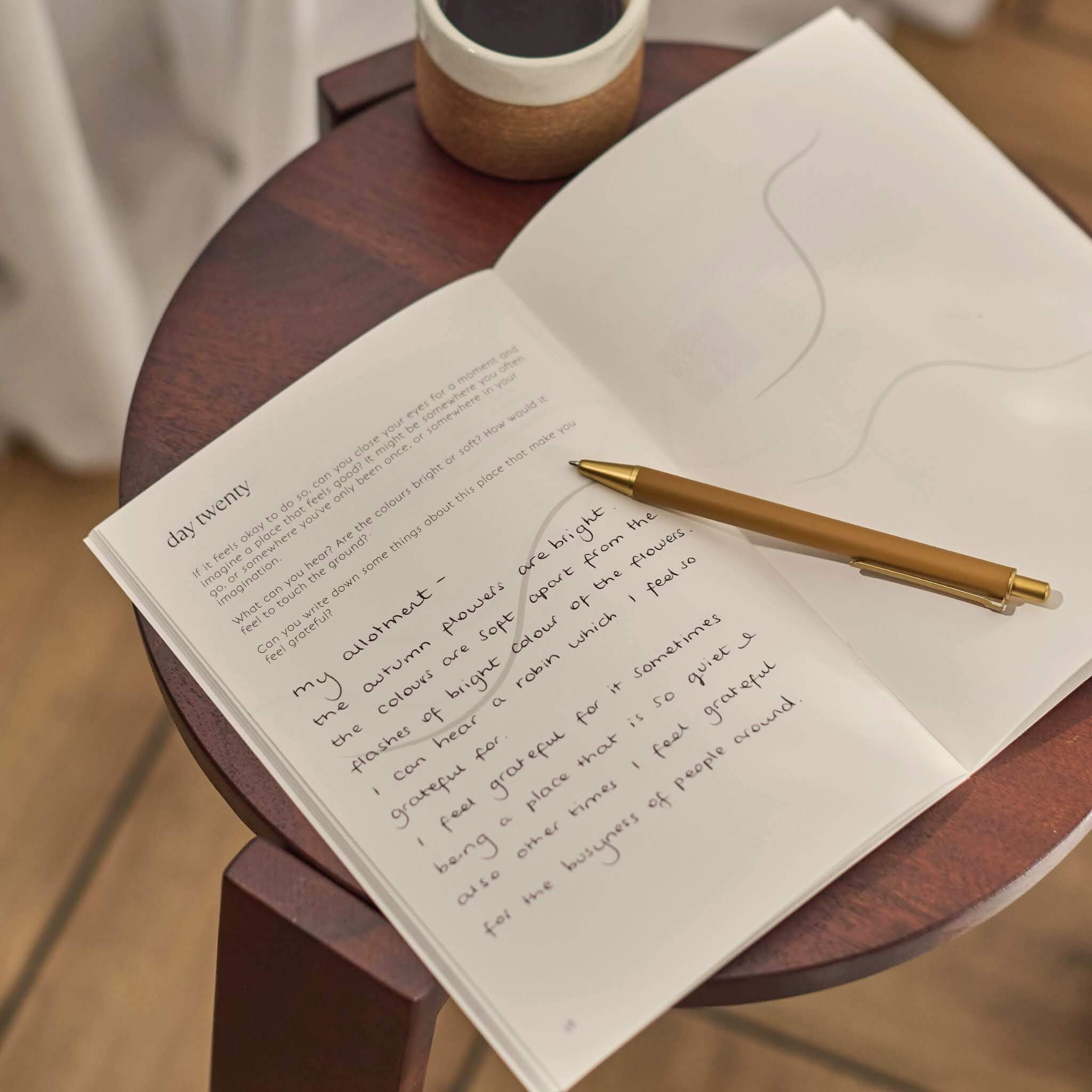
Sunday evening. Something from Friday is still sitting on their chest. The page asks: what has challenged you today? Talk to yourself as you would talk to a friend. They write the kind sentence themselves, in their own handwriting, and that's the version they believe.
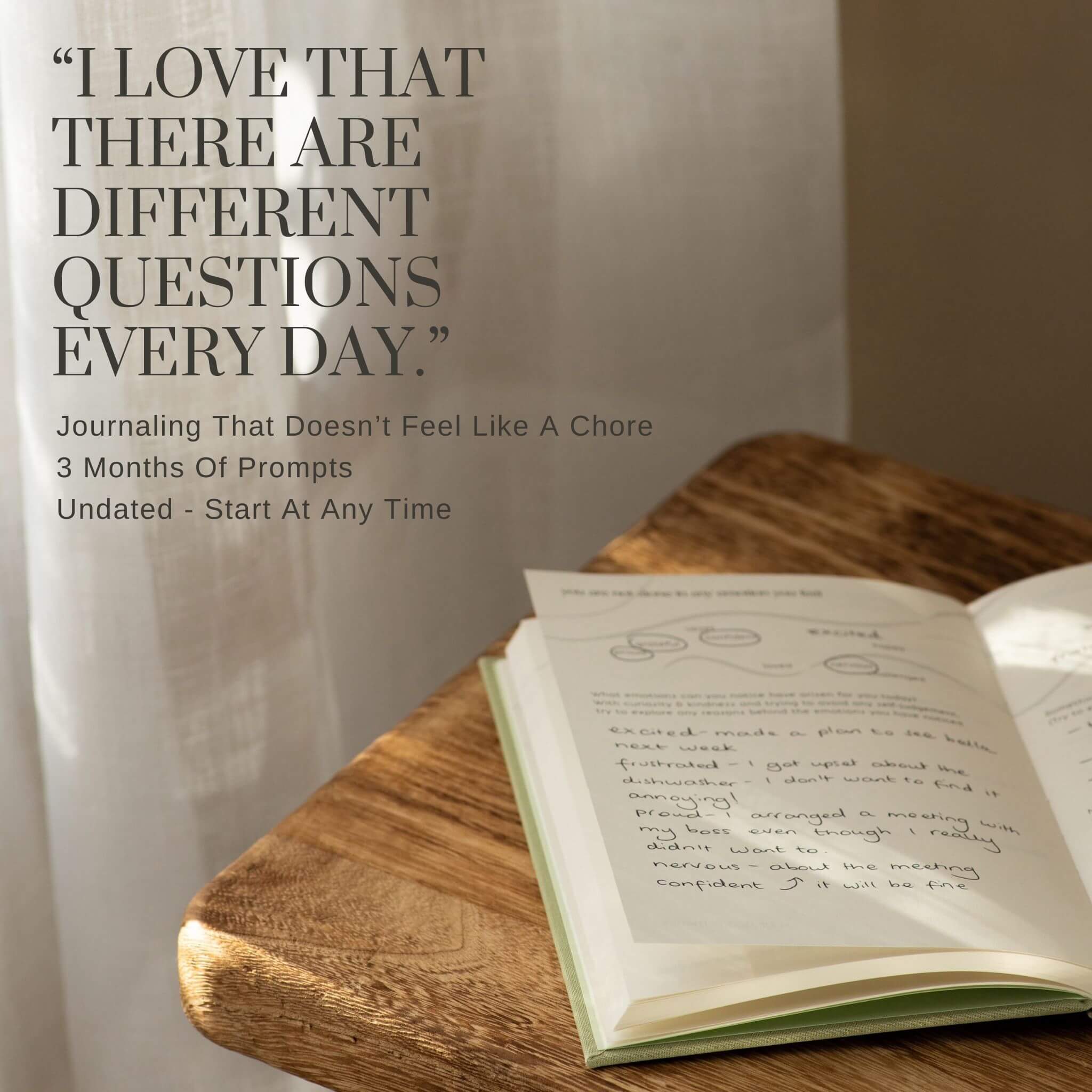
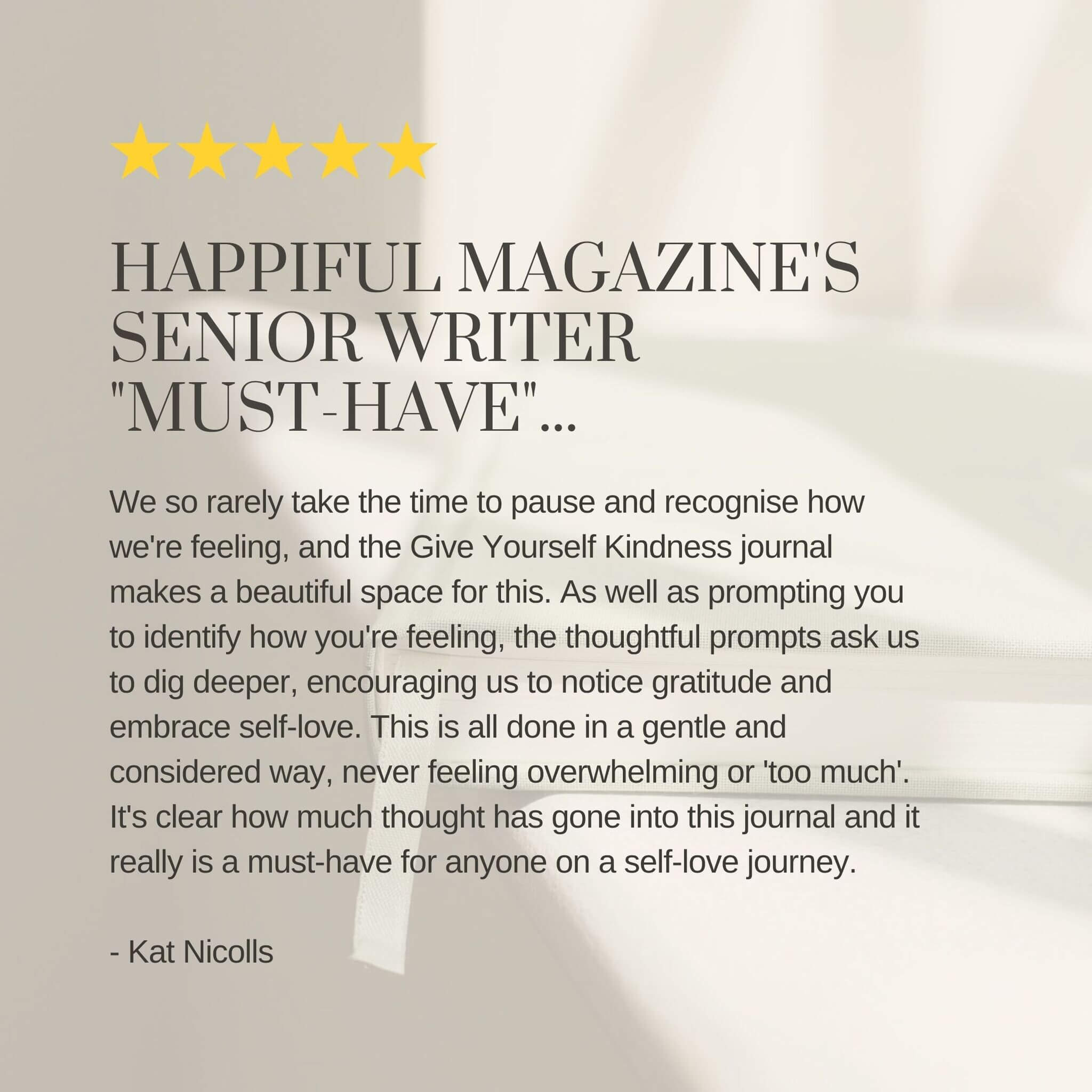
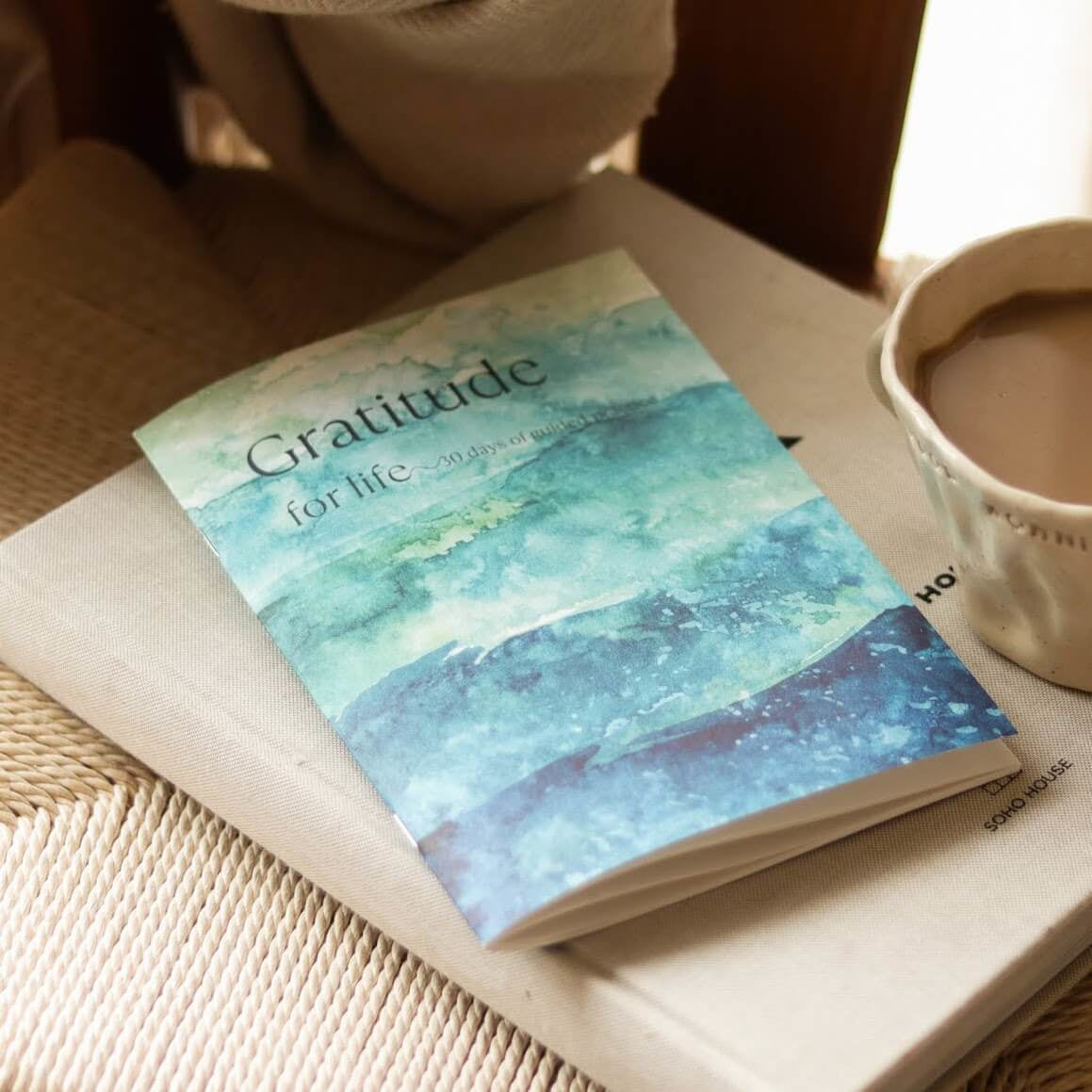
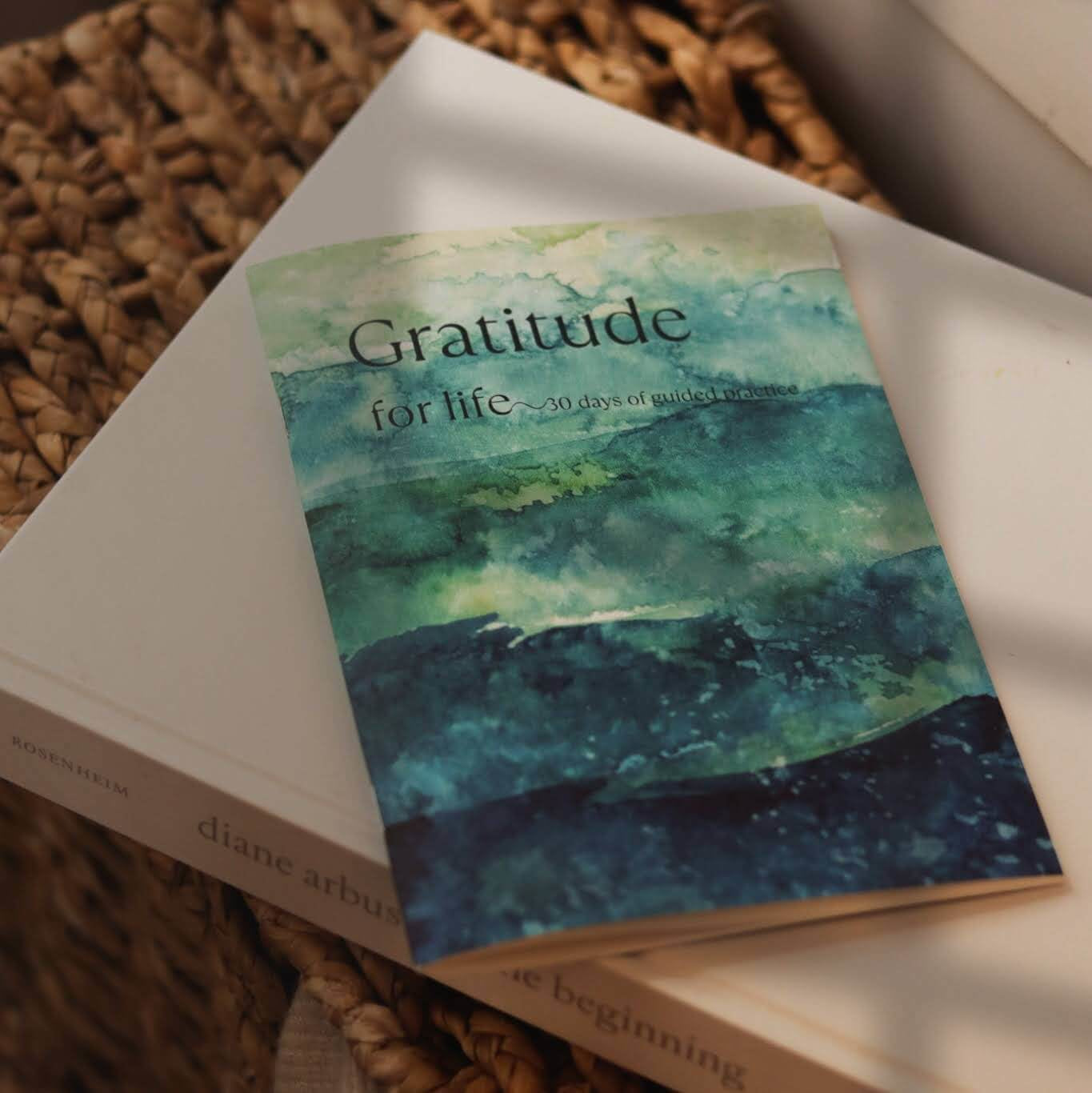
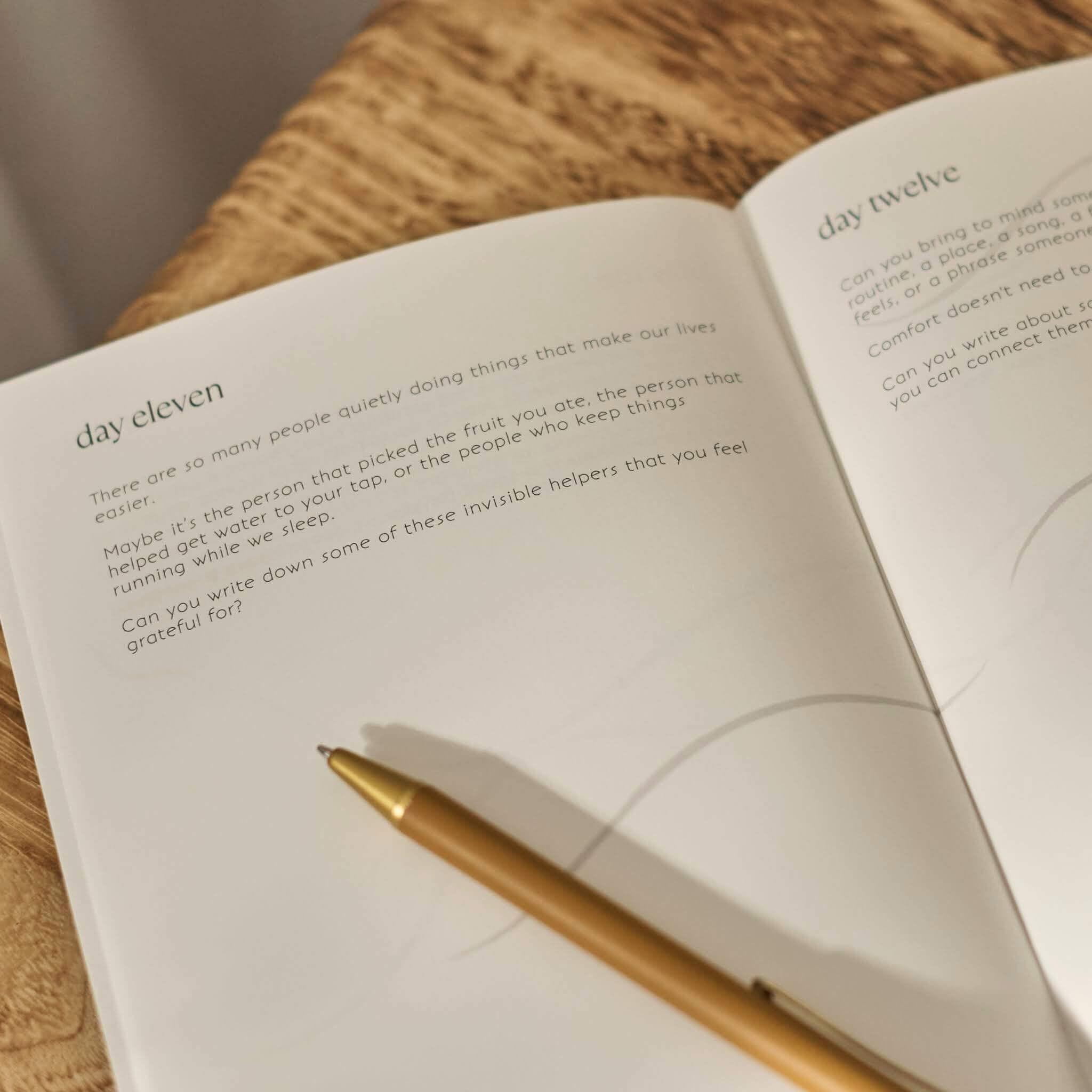
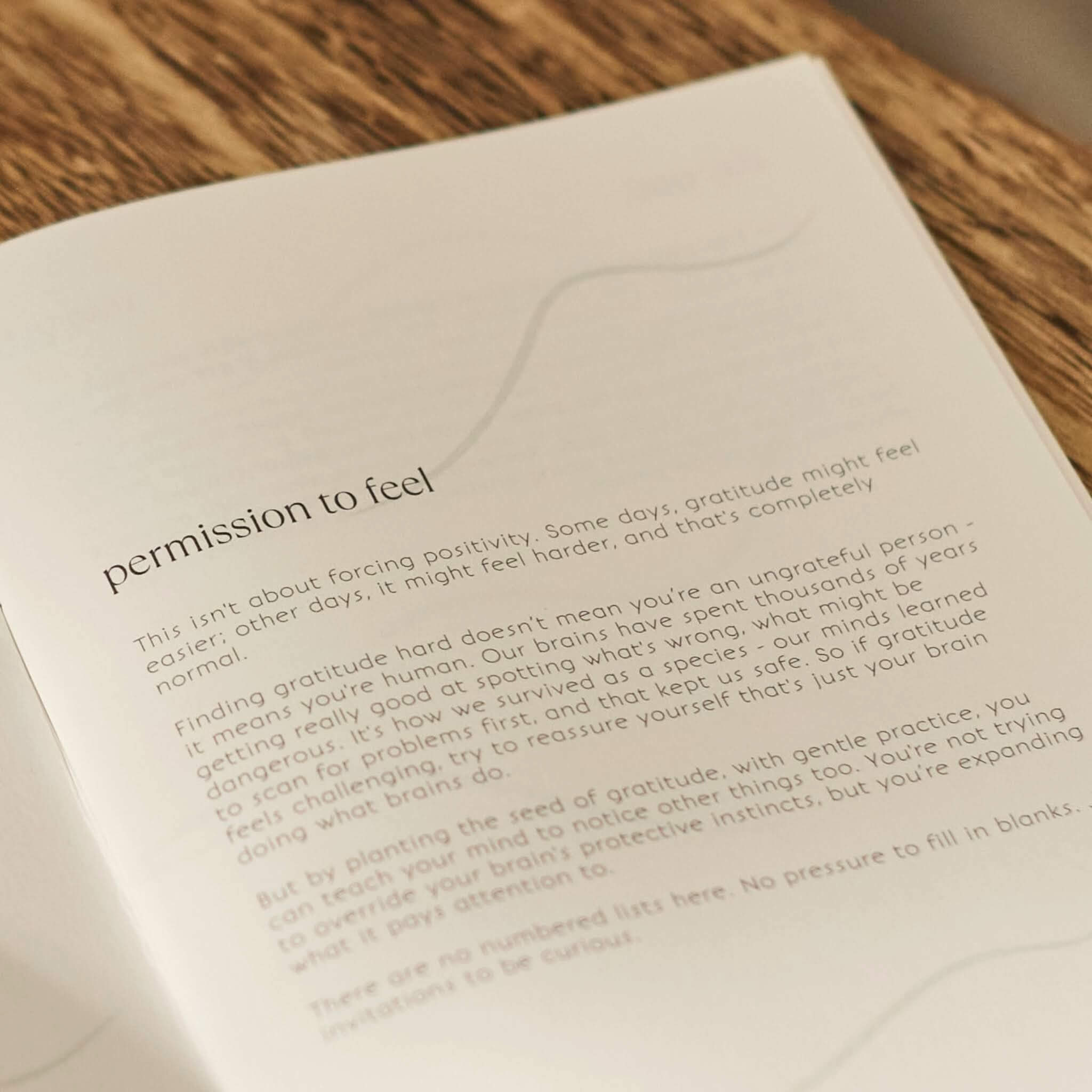
This is the one that builds the thing rather than decorating it. It never tells them they're brilliant, because that would bounce off. It asks questions instead, and a question can't be argued with. 224 pages, three months of undated prompts with every page different, a visual emotional awareness tool on every page, and over 50 self-care quotes throughout.
Added to your basket. View basket →
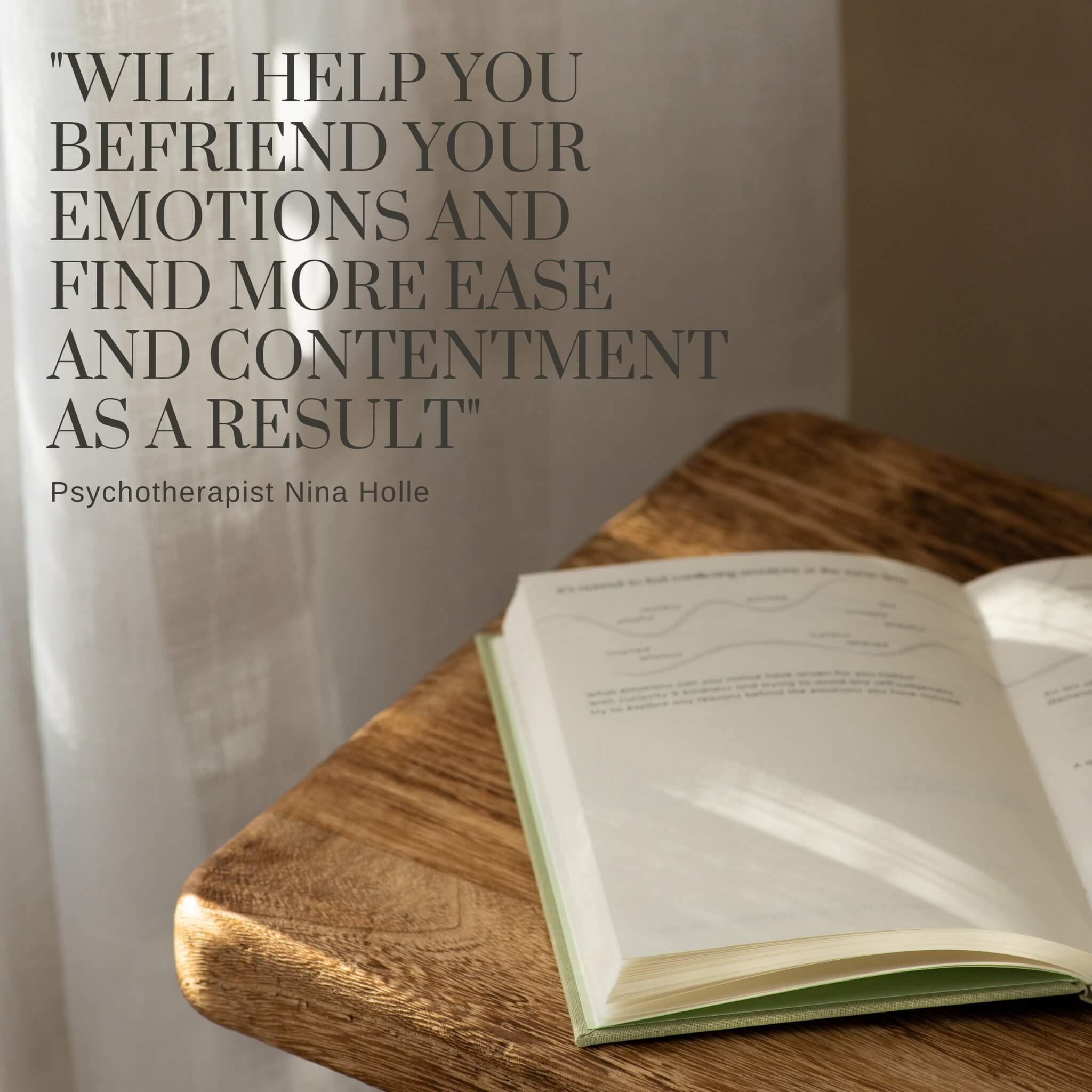
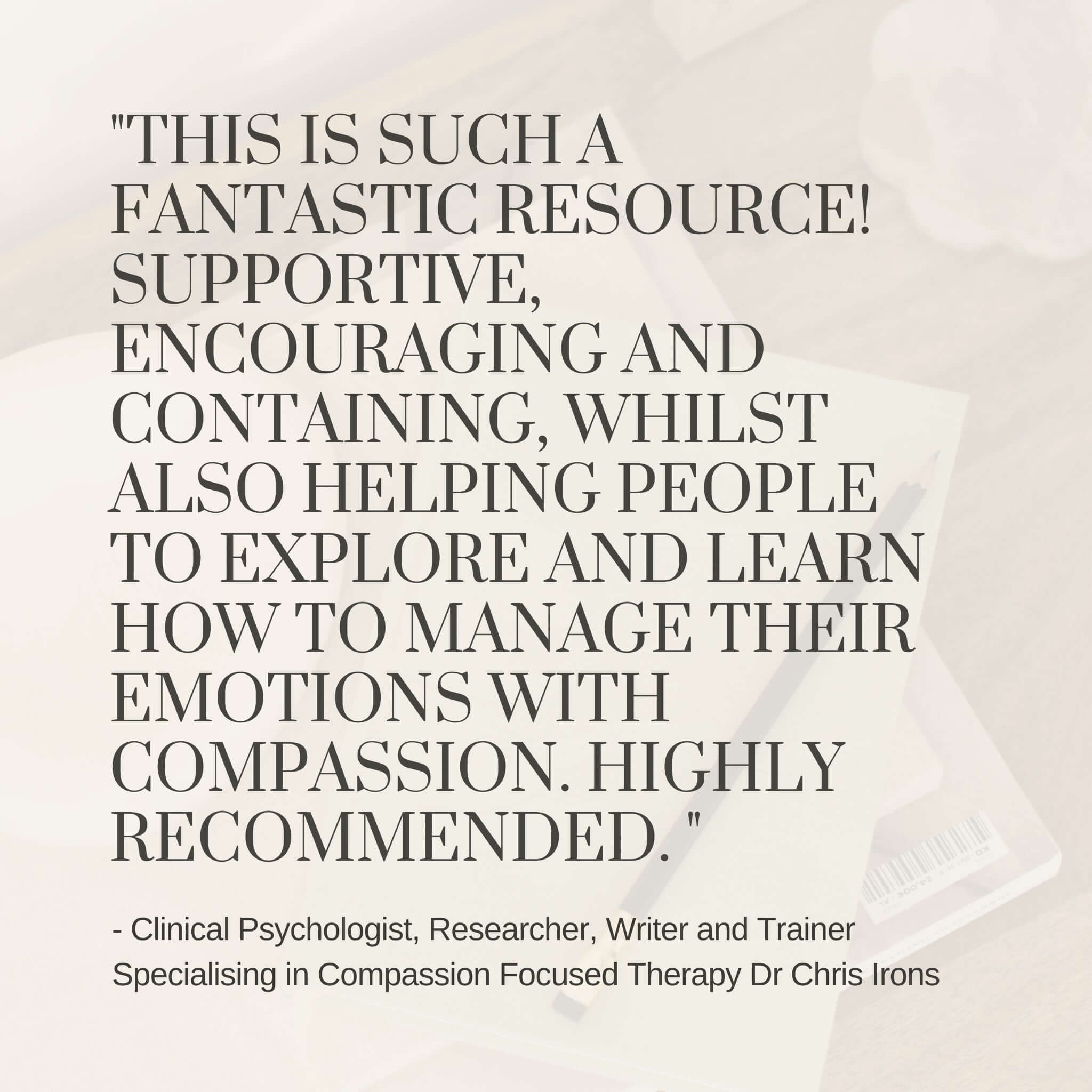
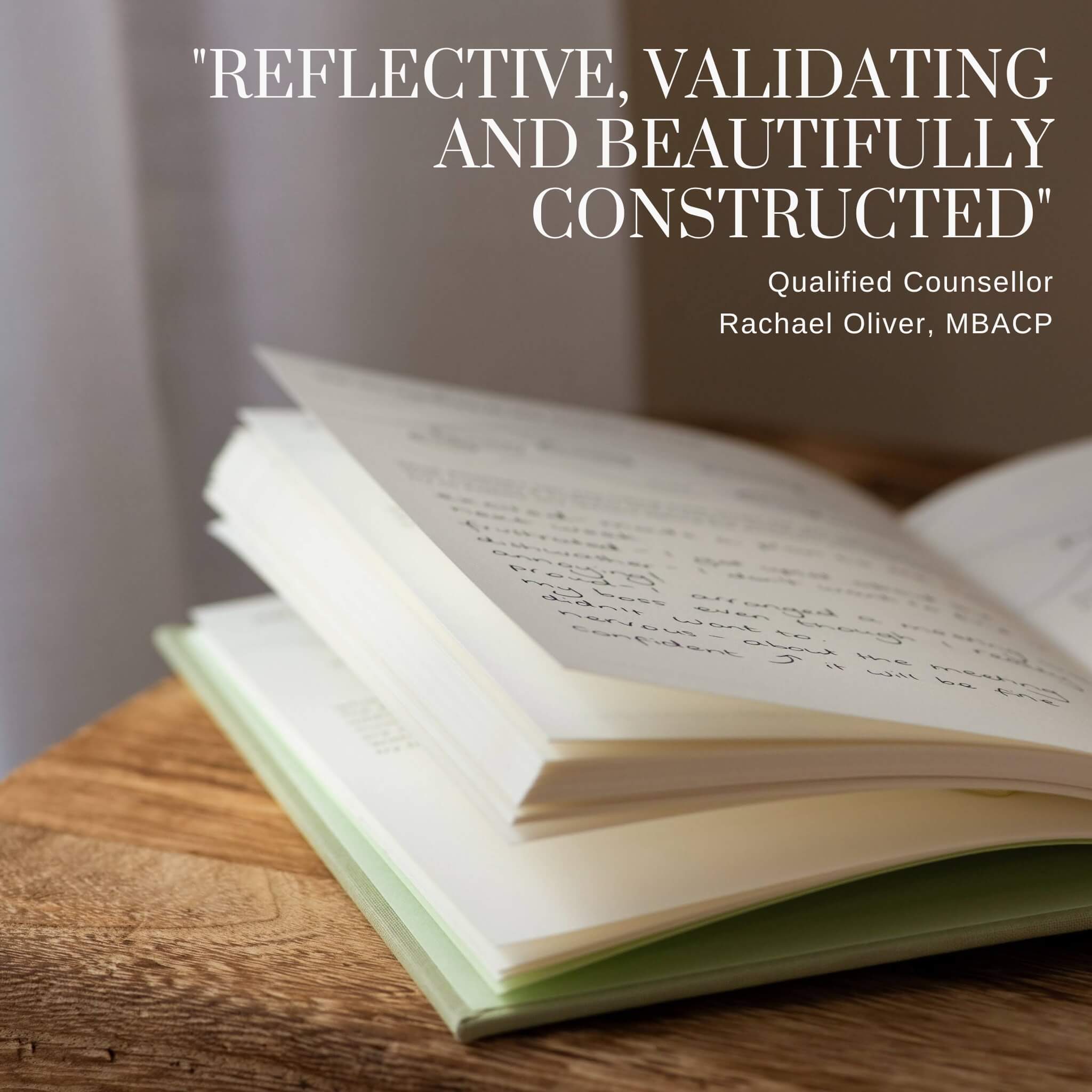
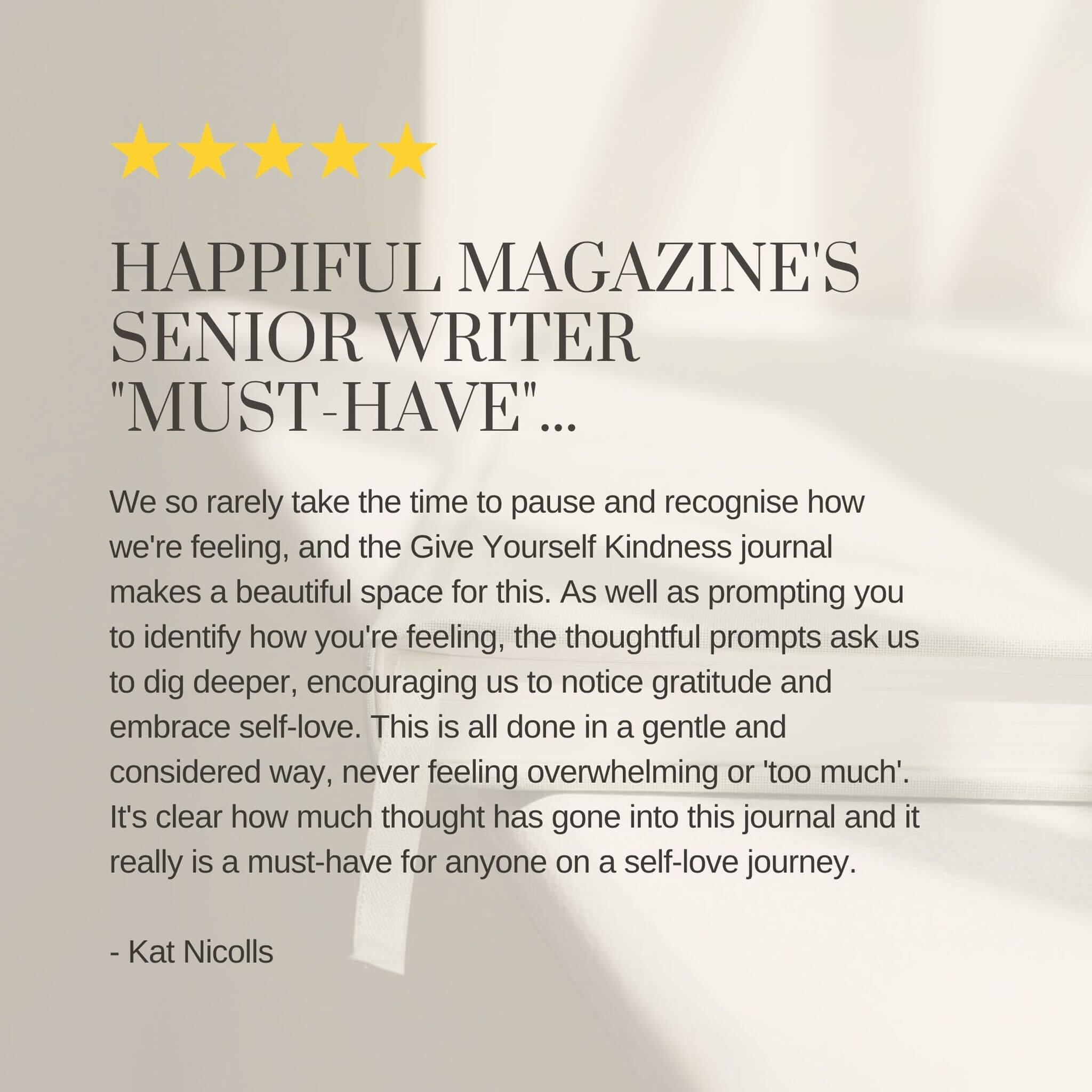
Reviewed by Chris Germer of Harvard Medical School, Professor Willem Kuyken of the University of Oxford and Dr Chris Irons, and used by therapists with their own clients. Where I'd choose something else: if they've said writing isn't their thing, send the cards. Full details →

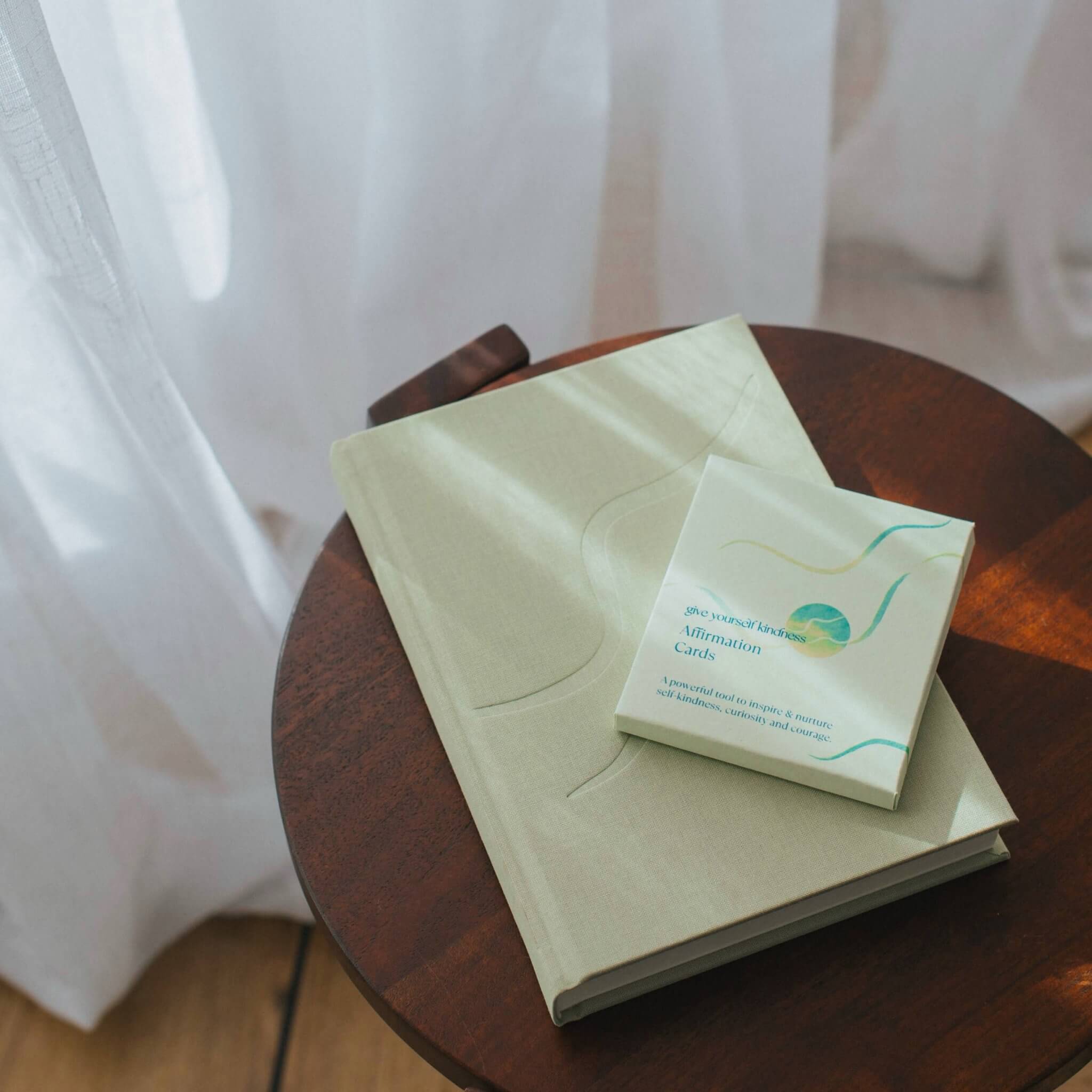
The Journal and Affirmation Cards together — from £38.61
If this is the main present
These aren't a duplicate, they're a pair, and they cover the two different moments. The cards are for the four seconds they have on a bad Tuesday. The journal is for the Sunday when there's a bit more in them. Buying both together costs less than buying them separately, and it looks like a proper gift when it arrives.
Added to your basket. View basket →
Full details and options → Or browse the whole confidence collection →

Chris Germer, PhD
Clinical psychologist and lecturer on psychiatry (part-time) at Harvard Medical School. Co-developed the Mindful Self-Compassion programme
"A warm invitation to make friends with your emotions and yourself!"See all thirteen expert reviews →
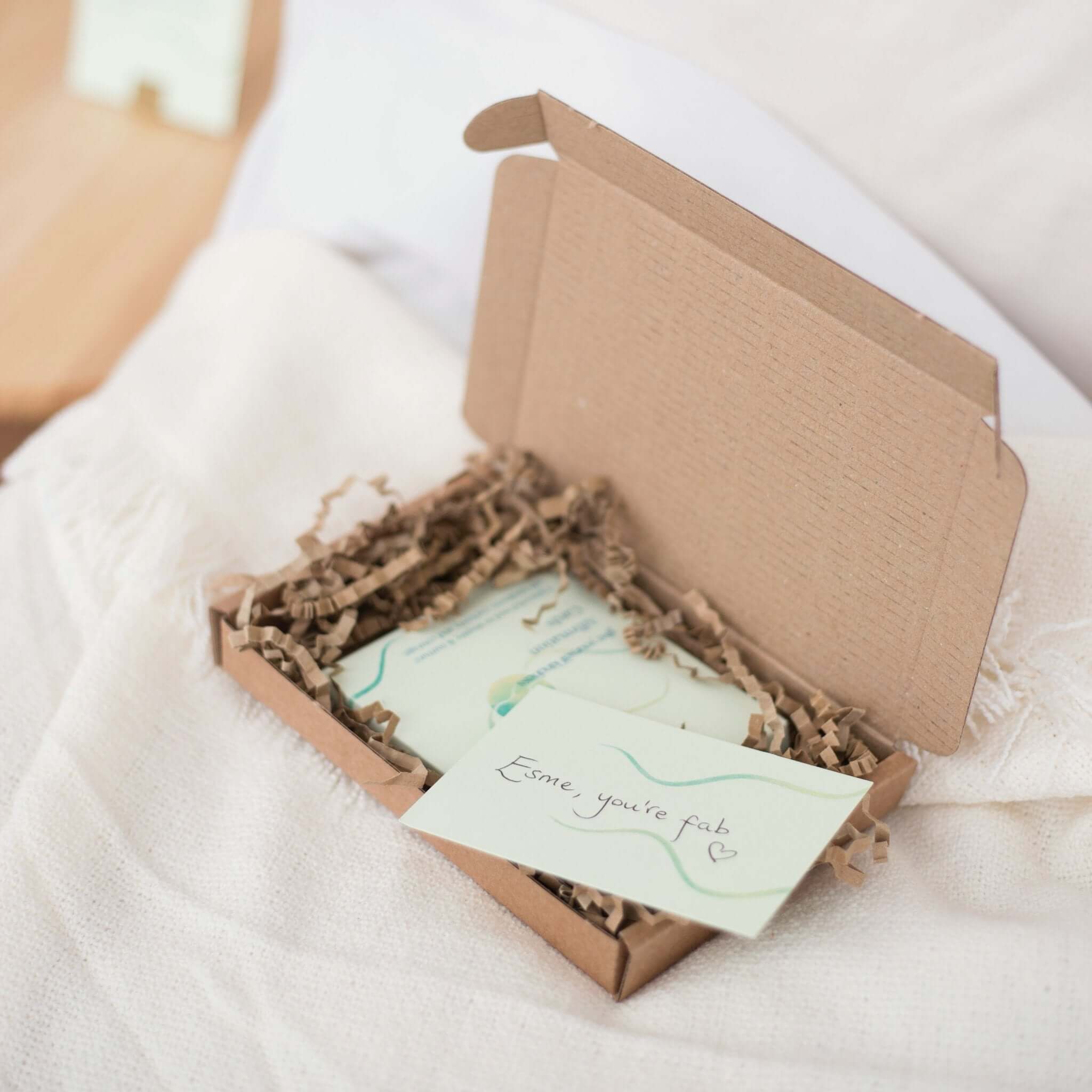
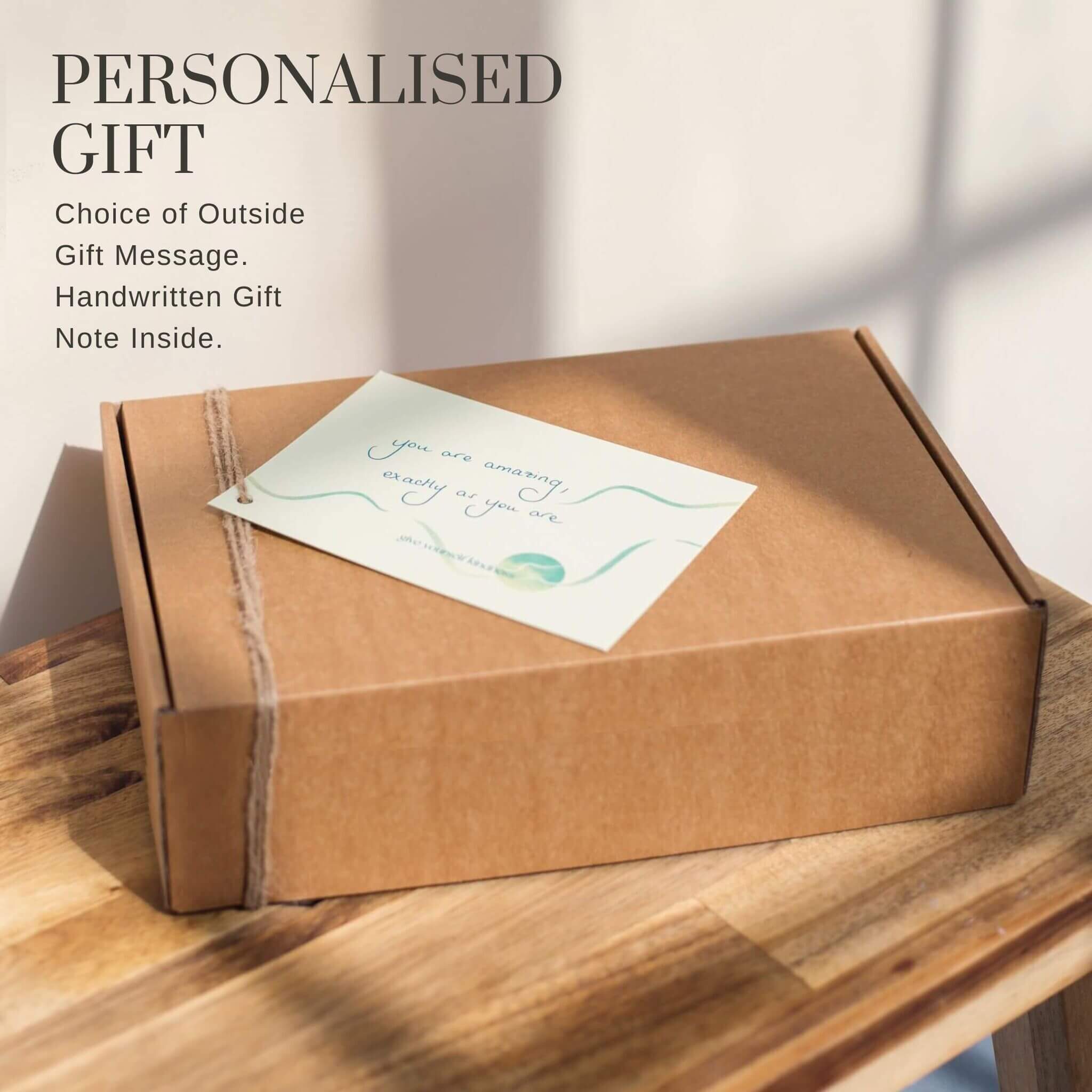
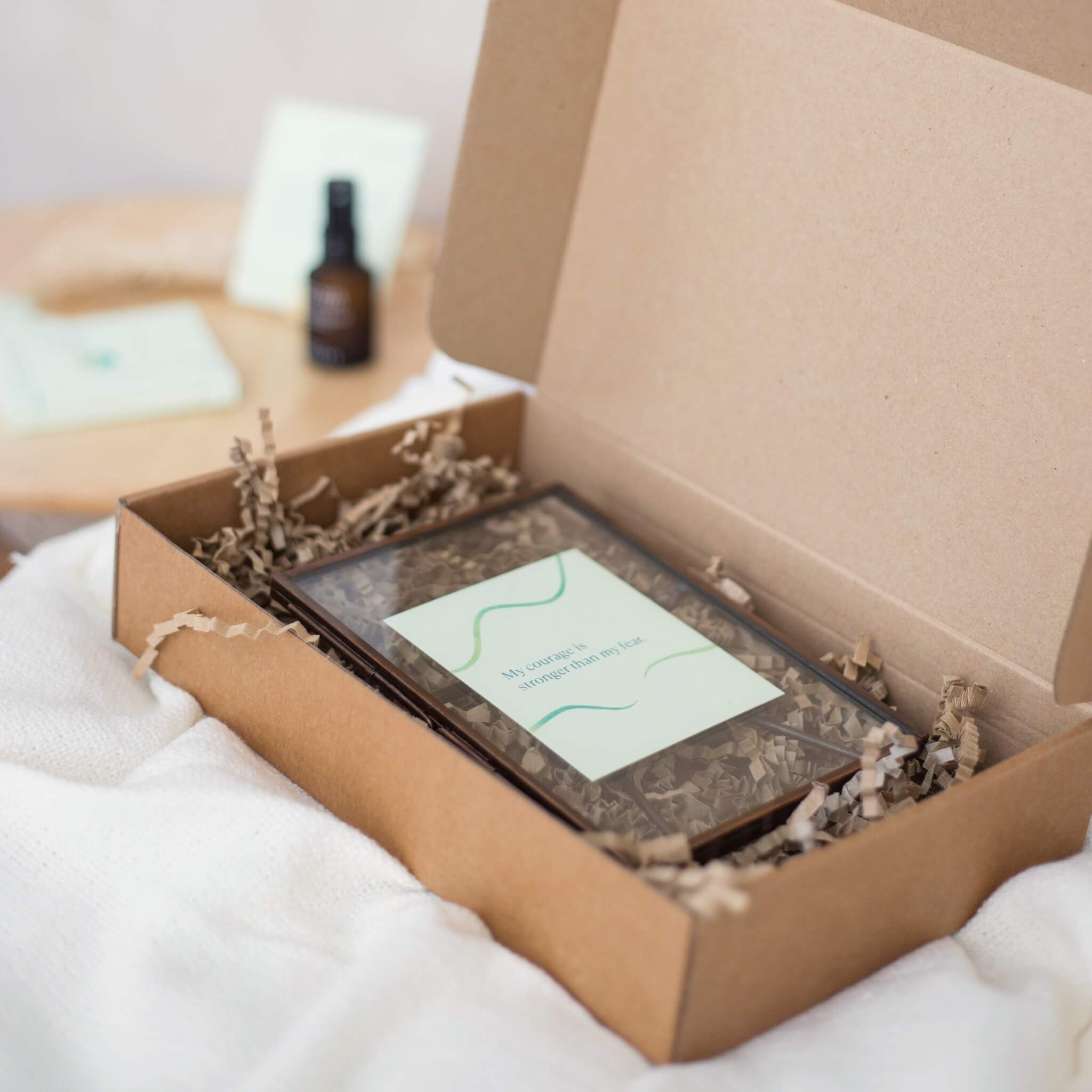
Everything arrives wrapped in bespoke tissue paper, and you can add a handwritten note free by typing it into the order notes at checkout. If you're stuck on what to write, there are some lines here that tend to land better than "you've got this".
Self-esteem and self-compassion are not the same thing
This is the distinction the whole page rests on, and once you've seen it you can't unsee it when you're shopping.
How highly you rate yourself, usually measured against other people or against how today went.
Which means it goes up when things go well and down exactly when you need it most: after the interview, the argument, the mistake.
Most confidence gifts aim here. They try to raise the score.
How you treat yourself, particularly when things have gone badly.
It doesn't require a good score. You can be having an objectively terrible week and still speak to yourself decently, which is why it's still there on the day the rating collapses.
Almost nothing on the high street aims here.
Psychologists have studied these as two genuinely different ways of relating to yourself, and the research is not obscure.
What the research distinguishes
Kristin Neff and Roos Vonk compared the two directly in a paper titled, plainly enough, Self-compassion versus global self-esteem: Two different ways of relating to oneself. A more recent meta-analysis by Muris and Otgaar reviewed how each relates to psychological problems and wellbeing.
And separately, a well-known 2009 study asked people to repeat "I'm a lovable person". Those who already felt good about themselves felt slightly better. Those with low self-esteem felt worse than the group who said nothing at all. The paper is called Power for some, peril for others, which tells you most of it.
Neff, K. D., & Vonk, R. (2009). Self-compassion versus global self-esteem: Two different ways of relating to oneself. Journal of Personality, 77, 23–50.
Muris, P., & Otgaar, H. (2023). Self-Esteem and Self-Compassion: A Narrative Review and Meta-Analysis on Their Links to Psychological Problems and Well-Being. Psychology Research and Behavior Management, 16, 2961–2975.
Wood, J. V., Perunovic, W. Q. E., & Lee, J. W. (2009). Positive self-statements: Power for some, peril for others. Psychological Science, 20(7), 860–866.
The first two are cited in Sophia Spencer's article for Give Yourself Kindness.
A gift that tries to convince someone they're brilliant can only work if they already half agree. A gift that helps them be decent to themselves works on the days they don't.
What that actually looks like day to day
I asked a psychotherapist who spent years in the NHS specialising in exactly this to explain why it makes a difference, because it's a fair question and I'm not the person to answer it.

Sophia Spencer
Specialist CBT psychotherapist with many years in the NHS, including senior roles supervising and training other therapists. Uses Compassion Focused Therapy alongside CBT and ACT
"Think of it this way: when you're kind to yourself, you create an internal safe haven. This doesn't mean the outside world stops being challenging, but rather that you have a secure base from which to face those challenges."Read Sophia Spencer's full article →
A secure base from which to face those challenges. That's a much better description of confidence than a high opinion of yourself, and it's the version that survives contact with a difficult Monday.
She sets out what the studies find in people who practise self-compassion:
- Reduced anxiety symptoms
- Greater emotional resilience
- Improved relationship satisfaction
- Enhanced ability to handle social situations
- Lower levels of perfectionism
Read that list again and notice that it describes a confident person, without the word confidence appearing once. That is the whole argument for buying this kind of gift instead of the other kind.
And the bit people worry about
Almost everyone buying this asks some version of: won't being gentle with themselves make them complacent?

Annabelle Kyle Dortch, PsyD
Clinical psychologist specialising in life transitions, relationships, stress, anxiety and the impacts of trauma
"When we engage in self-criticism, we create a nervous system and brain state that is not conducive to learning or facilitating a growth-oriented mindset."Read why self-compassion beats self-criticism →
The harsh voice isn't what drives people forward. It produces the state least able to change anything. Kindness here is the practical option, not the soft one.
Common questions
What is a good gift to build someone's confidence?
Something built on self-compassion rather than self-esteem. Self-esteem is a rating of how highly you regard yourself, and it drops precisely when things go wrong. Self-compassion is how you treat yourself when they do, so it's still available on the bad day. In practice that means a journal that asks questions rather than making claims, affirmation cards that acknowledge difficulty rather than talking over it, or something small they'll see daily. Avoid anything that requires them to already agree they're wonderful.
Why don't positive affirmation gifts work for low confidence?
Because a positive statement handed to someone whose mind holds the opposite view tends to activate that view rather than replace it. A 2009 study found that people with low self-esteem felt worse after repeating "I'm a lovable person" than people who said nothing at all. It's why a book telling someone they're a badass can land badly on the person who most needs it to be true.
What do you buy someone who doesn't believe in themselves?
Something small enough that they can accept it without feeling indebted, and honest enough that it doesn't require them to feel better than they do. A charm at £8.95 on their keys, affirmation cards from £13.95 for the desk, or the journal at £28.95 if you want the one that does the deeper work. What matters most is that nothing about it implies they should already be fine.
Do confidence journals actually work?
A good one can, though not by telling anyone they're impressive. The ones that help ask questions, so the person answers in their own words and ends up with the kind sentence in their own handwriting, which is the version that gets believed. Look for undated pages, a different prompt every time, and prompts that make room for a difficult day rather than demanding positivity.
Is a confidence gift a good idea if they're actually struggling?
It can be, if it's the right kind, and it's worth being careful. Anything relentlessly cheerful can read as being told to snap out of it. If they're genuinely unwell rather than just low on confidence, the most useful thing is encouraging one appointment with their GP or a therapist. Something like this sits alongside that, not instead of it.
Can you post it directly with a message?
Yes. Everything arrives wrapped in bespoke tissue paper, you can send it straight to their address, and adding a handwritten note is free. Type it into the order notes at checkout and I'll write it out by hand and put it inside.
You can't hand someone confidence, and anything sold on that promise is overselling.
What you can hand them is a kinder way of speaking to themselves on the days it goes wrong. That's the ground confidence grows on, and it's the only bit that's actually giftable.