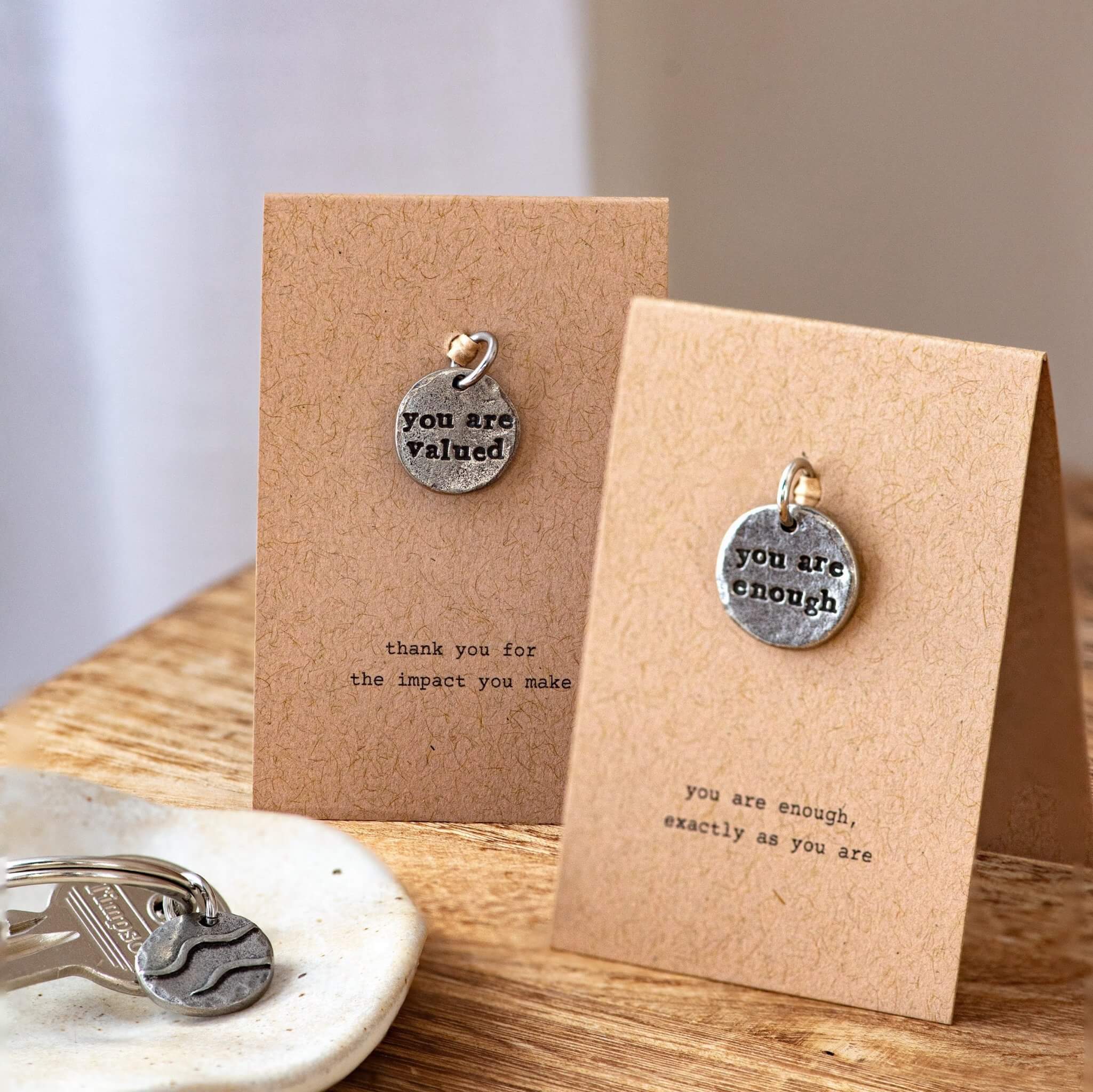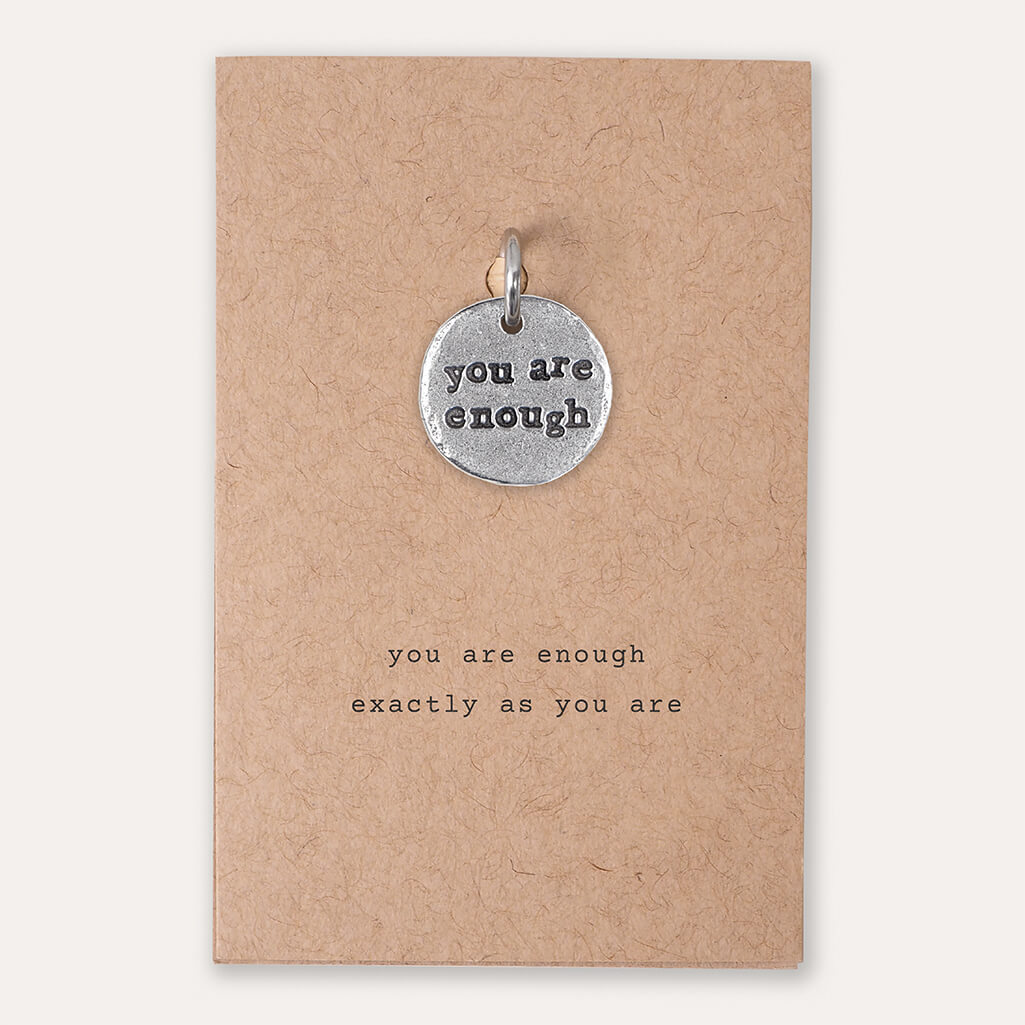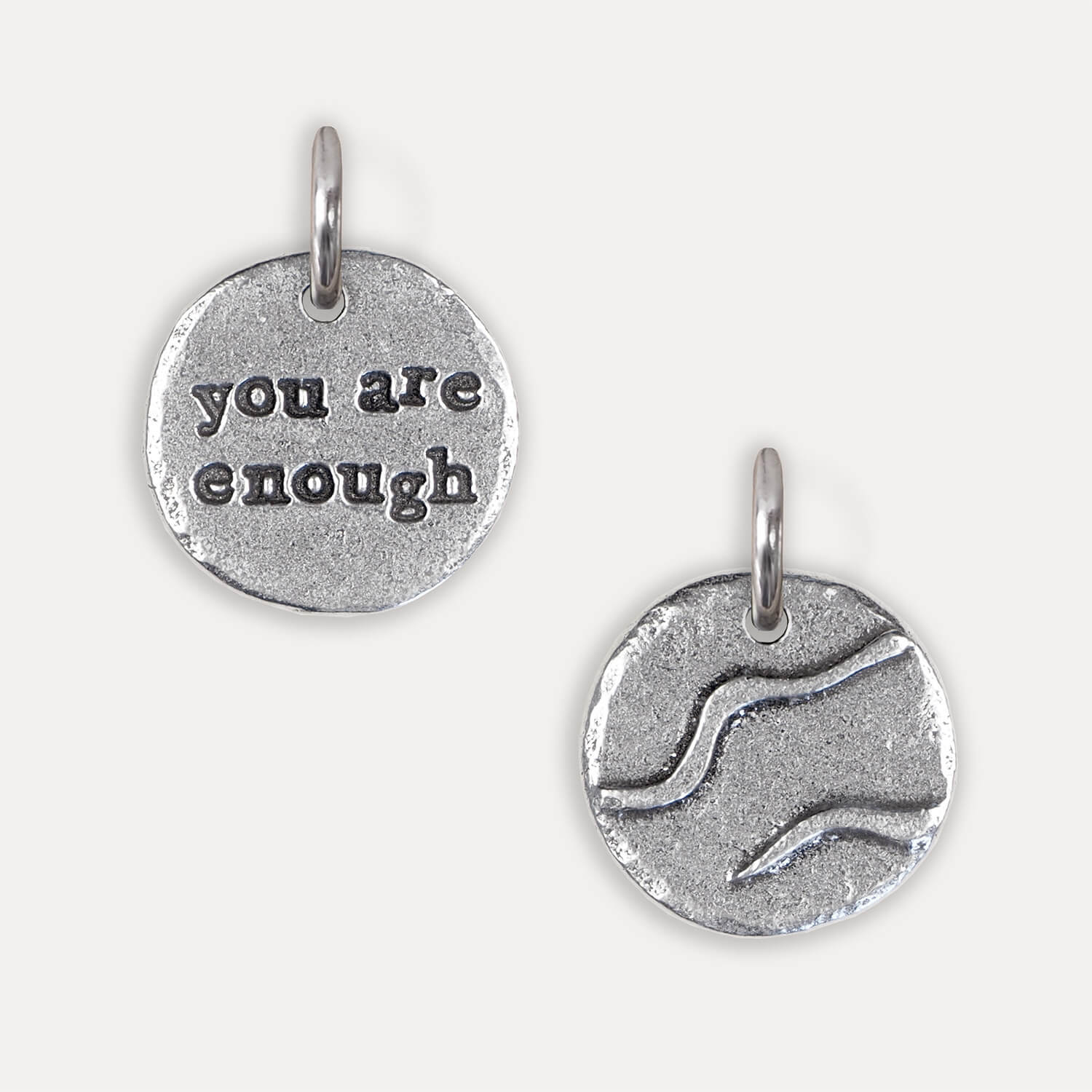


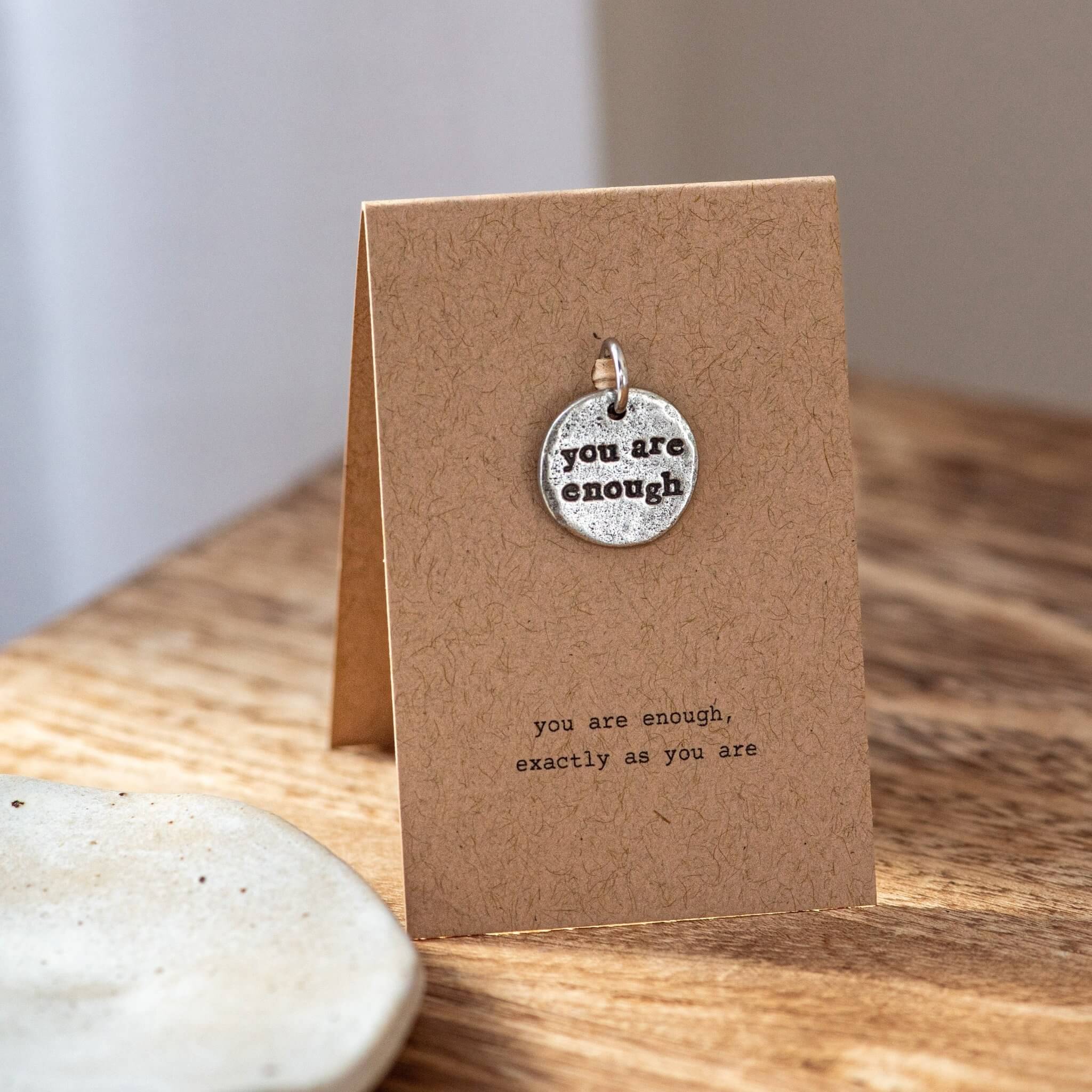

You are enough, exactly as you are.
And if reading that didn't shift anything, please don't take it as a sign that something is wrong with you. It didn't shift anything for me either, for a long time. Some things are true long before they feel believable, and that gap isn't a failing. It's just where you happen to be standing today.
So let me ask it a different way.
Think of someone you love.
If they told you they felt the way you feel about yourself, that they weren't enough, that they were too much, that everybody else had understood something they'd missed, what would you want them to hear?
Whatever came to mind just then, you deserve that too. Not once you've earned it or fixed something first. Now, in exactly the same way they do.
That's the whole of it, really. The rest of this page is about closing the distance between knowing that and feeling it, which is a slower job than anyone admits and a genuinely doable one.
Quick answer
Self-worth grows when you change how you speak to yourself on the hard days. Not by convincing yourself you're impressive, but by becoming someone who stays on your own side when things go wrong.
That's a skill rather than a personality trait, which is the good news: skills can be learned, and they can be practised badly at first. Below are the eight things that helped me most, and what the psychologists I've worked with say about why they work.
If you only do one thing today
Catch one harsh sentence you say about yourself. Just one. Write it down, word for word.
Then underneath it, write what you'd say to a friend who told you the very same thing.
You don't have to believe your version yet. Noticing the difference between the two is the whole first step, and everything else here is built on it. It takes about ninety seconds and it's free.
A quick word on who's writing this. I'm Rachel, and I'm not a therapist. I had low self-worth for years, got better slowly through Compassion Focused Therapy, and spent the time since asking clinical psychologists and therapists the questions I couldn't answer on my own. Everything they told me is published free on this site, and I used it to make the tools I wish I'd been given. So this page is my experience and their expertise, and I've been careful about which is which.
One thing before you start. If this has been heavy for a while, you deserve proper support alongside anything on a website. Your GP is a good first call, Mind has excellent self-esteem guidance, and Samaritans are on 116 123, free, at any hour.
Self-worth or self-esteem? They're not the same thing
This distinction made more difference to me than any single technique, because it explains why so much advice hadn't worked.
How highly you rate yourself, usually measured against other people or against how today went. Which means it rises when things go well and dips just when you were counting on it.
How you treat yourself, especially when things have gone badly. It doesn't need a good score to exist, so it's still there on the difficult days.
Kristin Neff and Roos Vonk studied these as two genuinely different ways of relating to yourself, and a 2023 review by Muris and Otgaar looked at how each connects to wellbeing. Most popular advice aims at the rating. Everything below aims at the relationship, which is the part that holds.
Eight things that helped me most
Roughly in the order they helped. You don't need to do them all, or in order. Pick the one that sounds like your week.
Start with something you can believe today
When we reach for kind words about ourselves, we tend to reach for the biggest ones. A kind sentence lands best when you can almost agree with it already.
There's a well-known 2009 study where people repeated "I'm a lovable person". Those who already felt fairly good about themselves felt better. Those with low self-esteem didn't, and the researchers concluded the statement was simply too far from where they were standing. It isn't that kind words don't work. It's that the distance matters.
Which is exactly what the psychologists I've asked about this say too. Dr Annabelle Kyle Dortch advises choosing something that "isn't a far departure from your current reality". Dr Caroline C. Lee suggests "I am struggling AND healing" in place of something grander. And Dr Michelle Chung's version is "I'm learning to be more confident" rather than "I'm confident".
Wood, J. V., Perunovic, W. Q. E., & Lee, J. W. (2009). Positive self-statements: Power for some, peril for others. Psychological Science, 20(7), 860–866. Five psychologists on what makes an affirmation work →
Notice which part of you is doing the talking
This was the single most useful idea anyone gave me. When the harsh commentary starts, it isn't a fair summary of you arriving. It's one part of you, with a very particular view.
Dr Chris Irons describes it this way: "our self-critic often has a very narrow, and by definition negative, view on us and our life." Narrow is the word that helped me. Not wrong exactly, just working from a tiny and carefully selected pile of evidence.
Answer the harsh thought with a truer one
You don't have to shout it down or replace it with something glowing. You just put a more accurate sentence next to it, and accurate is usually somewhere in the middle.
Not "I ruined everything, I'm useless." Not "I'm brilliant" either, because you won't buy it. Something like: "That went badly, and I'm still learning how to do it." Both halves true, nothing to argue with.
Use the friend question properly, on paper
Everyone quotes this one, and thinking it changes very little. Writing out what you'd actually say to them changes a surprising amount.
The gap between the two versions is where everything useful sits, and seeing it in your own handwriting is far more convincing than anyone telling you you're too hard on yourself.
Let one kind sentence lead to one small action
Words on their own tend to drift. Attached to something you actually do, they start to stick.
Dr Annabelle Kyle Dortch calls this "aligning your behavior with your words", and her example is lovely: "My body deserves respect. Because my body deserves respect I am going to buy clothes that fit and are comfortable to my current body." The action is what turns a nice idea into evidence.
Be gentle about finding it hard
There's a second layer that costs more than the first, and it took me years to spot: struggling with something, and then giving yourself a hard time for struggling.
CBT psychotherapist Sophia Spencer describes it precisely: "we criticise ourselves for being nervous, creating a secondary layer of distress atop the original anxiety." She also names the belief sitting underneath, which is that everybody else finds this effortless. As she puts it, "this couldn't be further from the truth."
Let one person see the real version
Low self-worth is good at keeping you company alone, mostly by suggesting that if people knew how you really felt they'd think less of you. The only thing that tests that is letting somebody find out.
It doesn't have to be everyone, and it doesn't have to be a big conversation.
Let it grow at its own pace
Professor Willem Kuyken of the University of Oxford prefers the word cultivation to affirmation, and I've never found a better way to think about it.
"Cultivation needs the natural conditions of climate, soil, sunlight, temperature... it takes time, like planting seeds and then taking care of them until they grow and mature in their own way and time."
Which means the early weeks feeling unremarkable isn't a sign it isn't working. It's a sign you've planted something. And you'll notice it before you expect to, usually as a small moment where the unkind thought arrives and something in you answers it.
You're not trying to become someone who thinks they're impressive. You're becoming someone who stays on their own side when things go wrong, and that is a far better thing to be.
Tools that make it easier
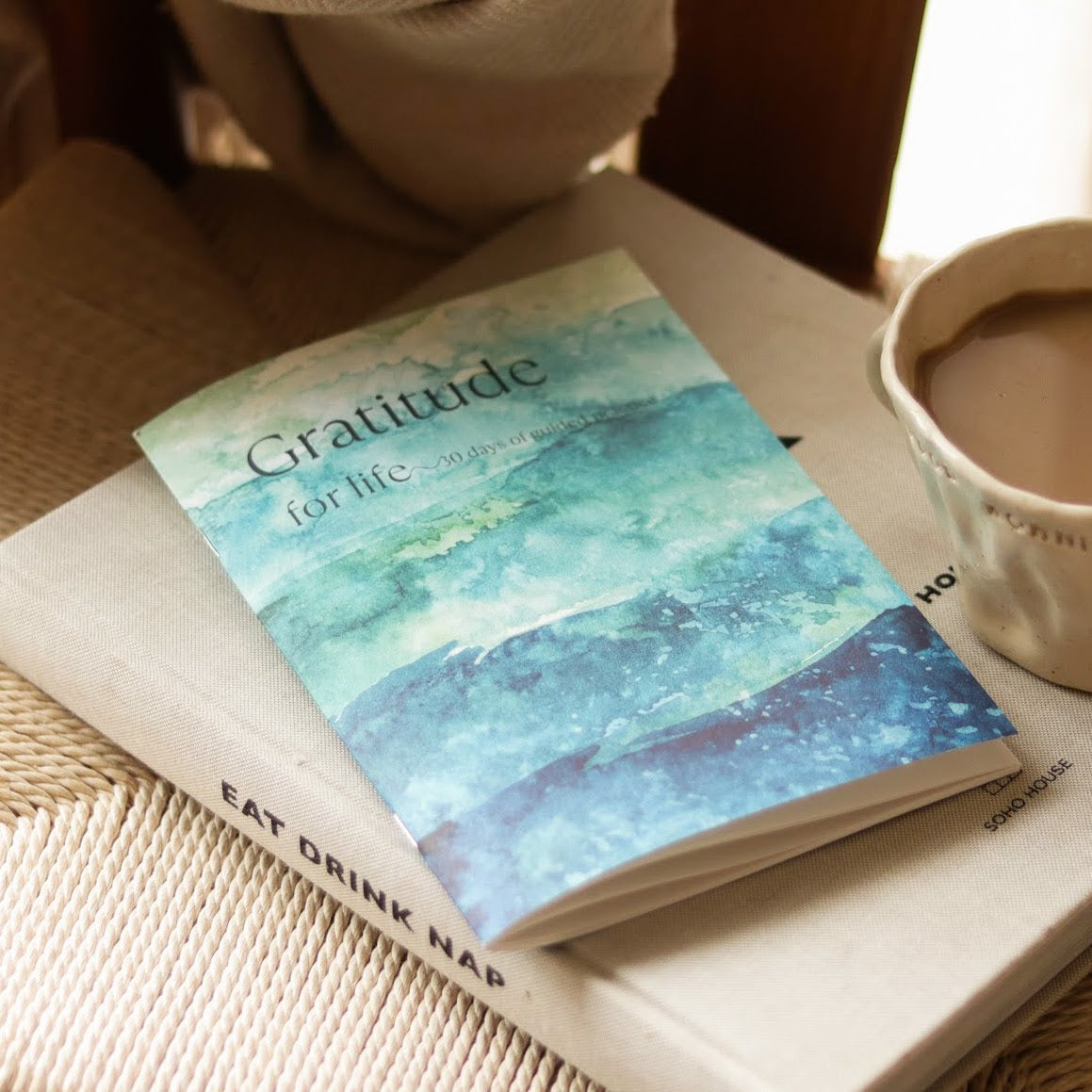
Everything above works with a notebook you already own, and I'd be glad if that's all you took from here.
I make two things, and I made them for one reason: when I was at my lowest, coming up with my own kind question was one job too many. The tools do that part, so the only thing left to you is the answering. Both were read by mental health professionals before I sold a single one, because I remembered too well what it felt like to be handed something meant to help and feel worse.

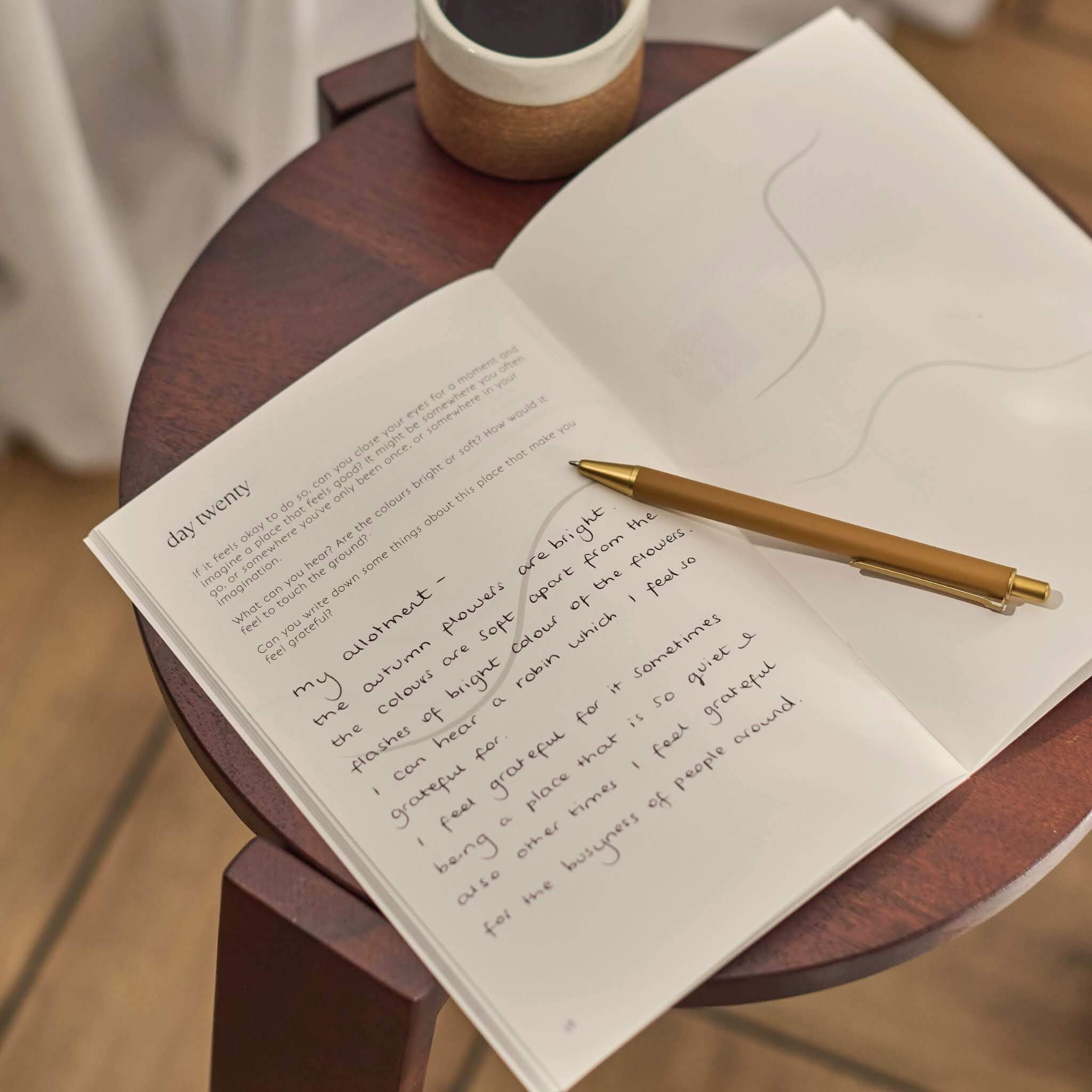
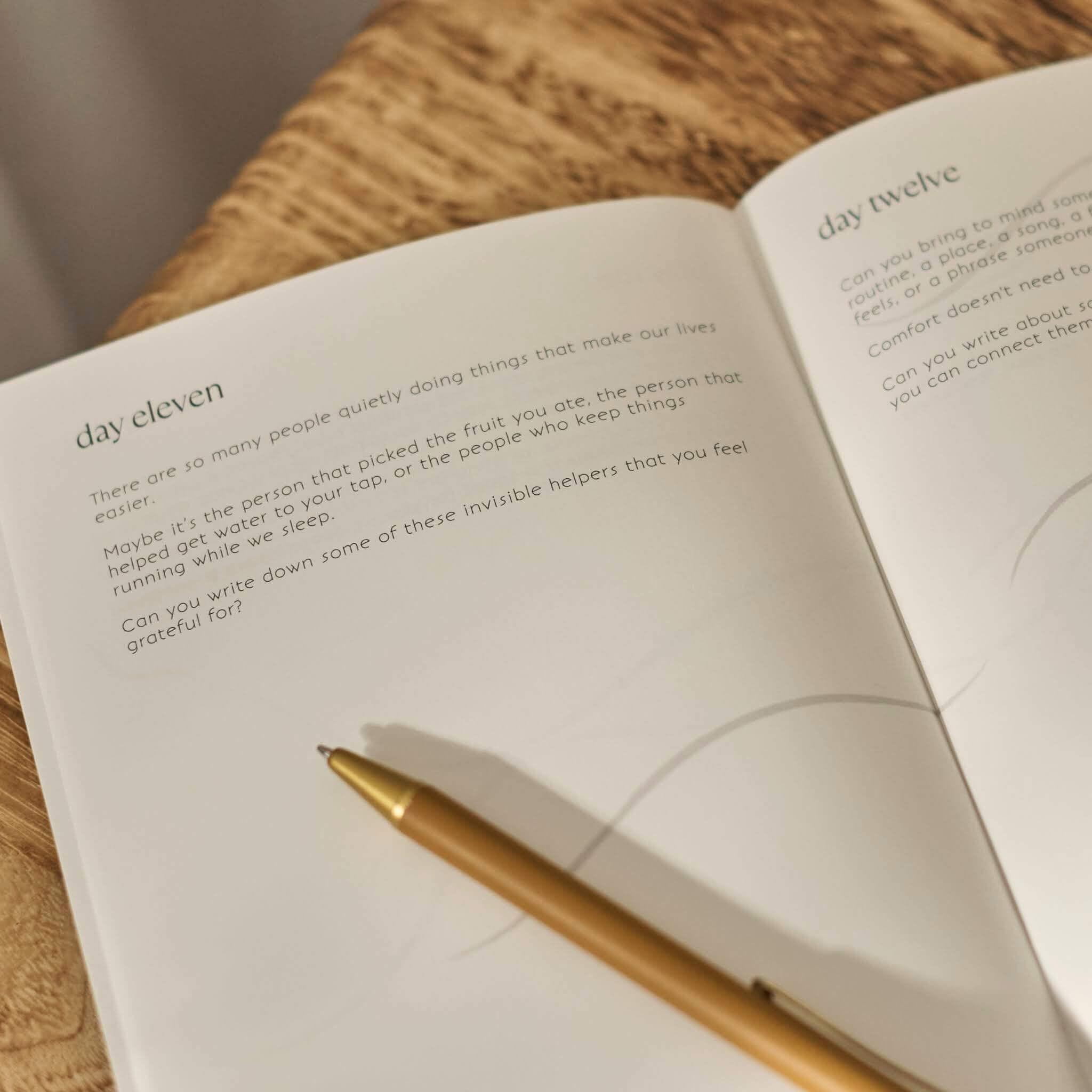
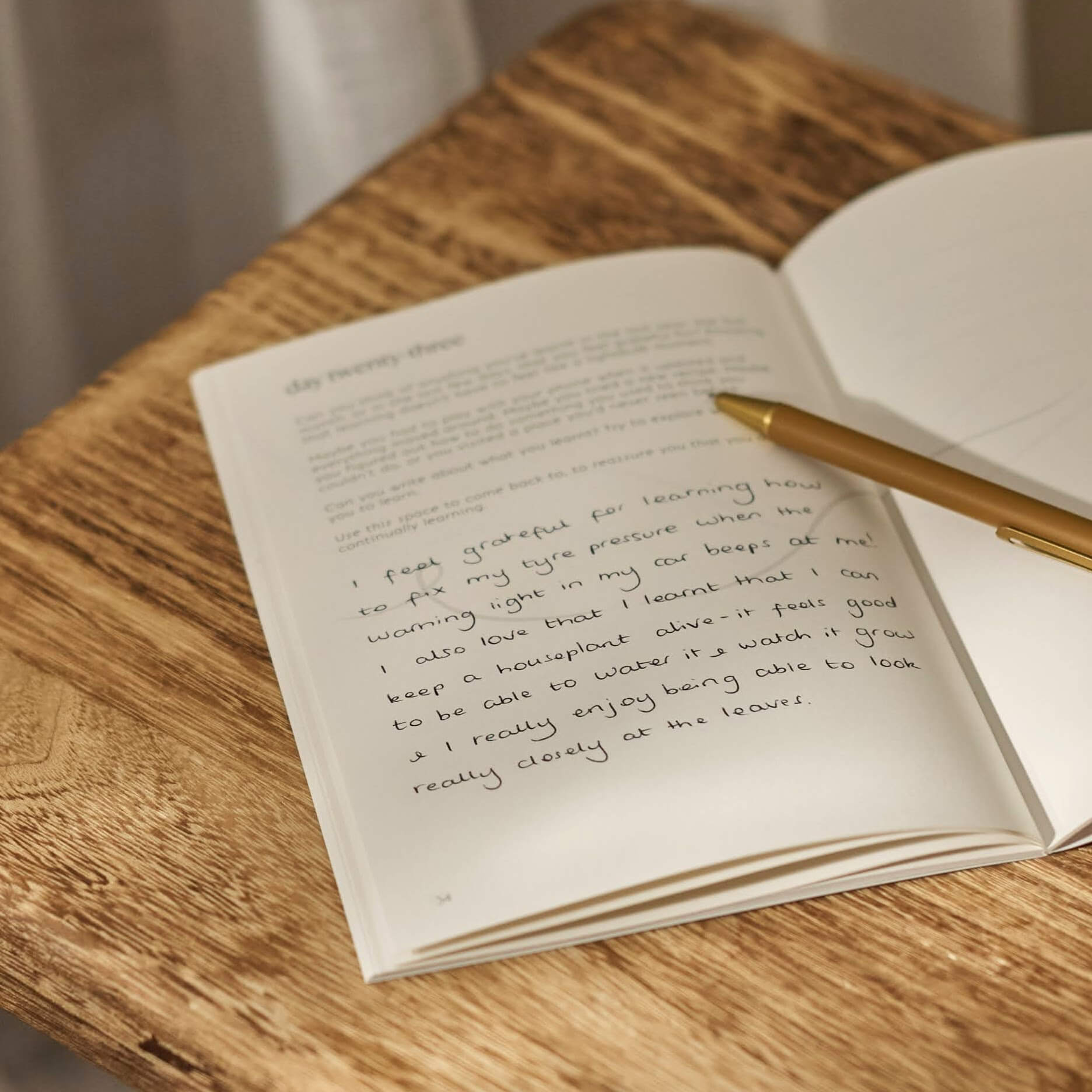
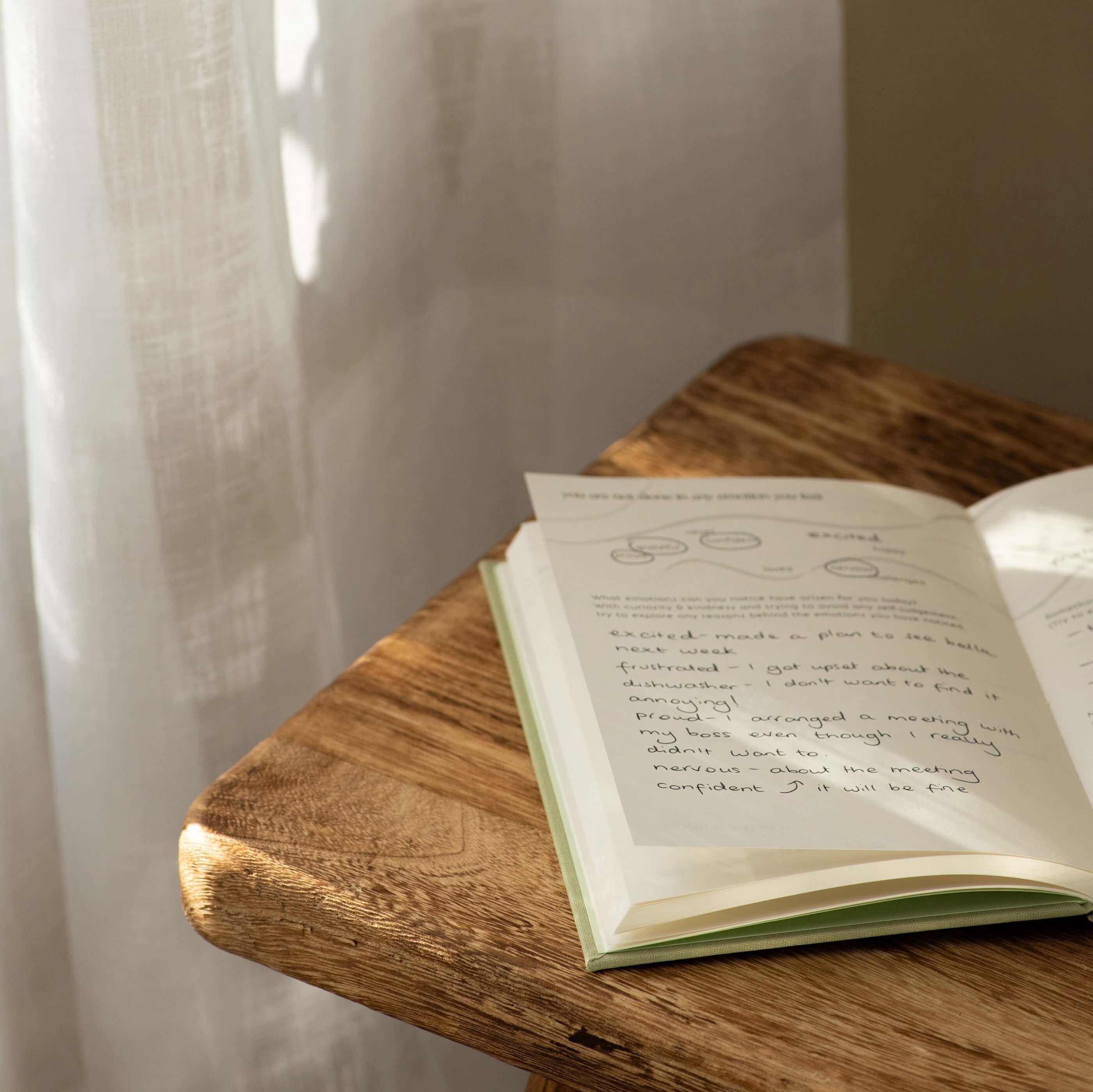
The Give Yourself Kindness Journal, £28.95. For steps three and four. It asks the questions, so the kinder sentence ends up in your own handwriting, which is the version that tends to be believed. 224 pages, three months of undated prompts with every page different, and a visual emotional awareness tool on every page for the days when "fine" is all you can find.
Added to your basket. View basket →
Reviewed by thirteen mental health professionals, including clinical psychologists at Harvard Medical School and the University of Oxford. Full details →

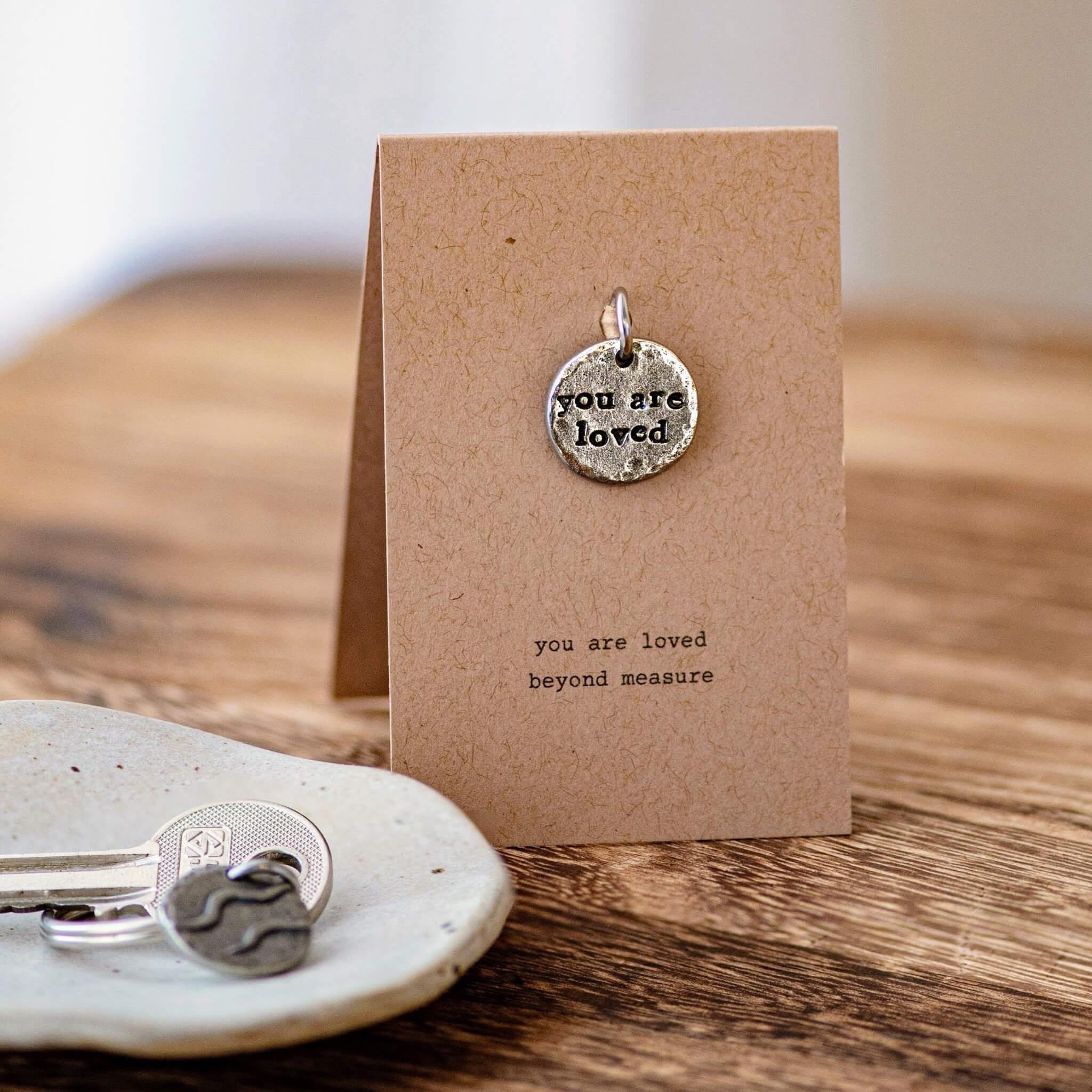
The Affirmation Cards, from £13.95. For step one. Sixty affirmations written to sit close to where you actually are rather than somewhere flattering, so you can believe them on an ordinary day. One on a desk means the kind sentence is already in the room when you need it.
Added to your basket. View basket →
Recommended by licensed therapists Margaret Davis, MS, LPC and Collette Jones, LCSW. Full details →
Questions people ask me
How do I improve my self-worth?
By changing how you speak to yourself when things go wrong. Start by catching one harsh sentence and writing what you'd say to a friend who told you the same thing. Then work on kind sentences you can genuinely believe today rather than flattering ones, notice that the harsh voice is one part of you rather than the whole picture, and attach a small action to each kinder thought. It's a skill, which means it can be learned and it can be done badly at first.
Do affirmations work for low self-worth?
Yes, when they're the right kind, and the difference is worth knowing. Affirmations that force positivity tend to backfire, because asking yourself to feel something you don't creates a gap your mind will point at. Affirmations written close to where you actually are do work, because there's nothing to argue with. "I'm learning to trust myself" lands where "I am confident" bounces. I asked five clinical psychologists about exactly this and published all of their answers here, and it's the reason every card I make is written to be believable rather than impressive.
What's the difference between self-worth and self-esteem?
Self-esteem is a rating of how highly you regard yourself, usually measured against other people or how things are going, so it dips exactly when you were relying on it. Self-worth is about how you treat yourself when things go badly, so it doesn't depend on the score. Psychologists have studied these as two different ways of relating to yourself, notably Neff and Vonk in 2009.
Does journaling help self-worth?
It helped me more than anything else I did on my own. Writing what you'd say to a friend, in full, shows you the size of the gap between how you treat them and how you treat yourself, and seeing that in your own handwriting is far more persuasive than being told about it. Dr Chris Irons makes a point worth knowing: it matters which part of you is doing the writing. That's exactly why guided prompts help, because a good question calls the kinder part of you forward before you start.
How long does it take?
It grows rather than arrives, and you'll notice it sooner than you'd expect. Professor Willem Kuyken uses the word cultivation, comparing it to planting something and tending it. In practice the first sign is small and quite specific: an unkind thought turns up, as it always did, and this time something in you answers it. That's the moment things have started moving, and it usually comes well before you feel any grand sense of self-belief.
Can I do this on my own, without therapy?
A lot of it, yes, and plenty of people do. I'd also say honestly that therapy is what moved things furthest for me. If this has been going on for years, if it's tied to something that happened to you, or if it's affecting your day to day, you deserve proper support alongside anything here. Starting with your GP is a good step and not a dramatic one.
You probably won't wake up one morning certain that you're wonderful, and you don't need to.
What happens is quieter and better. The unkind thought turns up, as it always did, and one day something in you answers it kindly. That's you, on your own side. And you were always worth that.